Results for "Neuve+ou+Labrador+|+3+>+98"
6641 results found.
Fabrication cellule amovible English translation pending
Bonjour à tous,
Je viens de laisser mon fourgon à une gentille famille et je désire fabriquer moi même une cellule amovible pour notre pick-up.
Je ne suis pas à ma première expérience de fabrication de fourgons et je possède déja les panneaux sandwich pour la coque.Si quelqu'un à déjà réalisé cette opération je suis preneur de renseignements sur pleins de petits points (fixation de la cellule, pieds, plans....).
Bonne route 😉
Je viens de laisser mon fourgon à une gentille famille et je désire fabriquer moi même une cellule amovible pour notre pick-up.
Je ne suis pas à ma première expérience de fabrication de fourgons et je possède déja les panneaux sandwich pour la coque.Si quelqu'un à déjà réalisé cette opération je suis preneur de renseignements sur pleins de petits points (fixation de la cellule, pieds, plans....).
Bonne route 😉
Retour de Cayo Guillermo English translation pending
Je reviens de passer 2 semaines à Cayo Guillermo à l'hotel Villa Cojimar.La nourriture excellente, les chambres sont très bien, surtout dans la nouvelle partie, l'équipe d'animation et les spectacles sont bien aussi.Un conseil pour ceux qui si rendront bientôt, apportez vous de l'insecticide car le soir, il y a des moustiques. Le seul point vraiment négatif pour moi, c'est le manque d'eau pour la baignade et les sports nautiques à la marées basse.En effet il faut marché très longtemps dans la mer, voir 1km pour avoir de l'eau au nombril. A la marée haute c'est un peu mieu mais pas terrible.En ce qui me concerne j'ai aimé beaucoup mieux Varadero.Par contre il a fait très beau 12/14 jours pendant qu'à Varadero ils ont eux 4 jours de mauvais temps.
Québécois: bilingues or not bilingues? English translation pending
Suite a une discussion et des opinions divergeantes, je voudrais avoir le point de vue des quebecois (surtout les francophones) sur le bilinguisme au Quebec. A savoir, par rapport a l'anglais, est-ce que les francophones sont dans leur tres grosse majorite : Completement bilingues Se debrouillent pas trop mal Ont le niveau des francais (cad basique) Causent pas anglais (ou veulent pas ?) Bref, est-ce qu'un visiteur qui ne parle pas le francais peut voyager et se faire comprendre sans probleme au Quebec ?
1 mois en Mongolie à vélo cet été! English translation pending
Bongiorno,
je suis en train de me renseigner pour partir un mois en Mongolie. Ayant l'habitude de partir avec mon sac a dos, ce sera une 1ere pour moi en vélo.
Si quelqu'un est intéressé pour m'accompagner qu'il n'hésites pas. Si vous avez une autre proposition à me faire dans une autre contrée reculée de monde alors je suis votre homme.
Ouvert à toute proposition!
je suis en train de me renseigner pour partir un mois en Mongolie. Ayant l'habitude de partir avec mon sac a dos, ce sera une 1ere pour moi en vélo.
Si quelqu'un est intéressé pour m'accompagner qu'il n'hésites pas. Si vous avez une autre proposition à me faire dans une autre contrée reculée de monde alors je suis votre homme.
Ouvert à toute proposition!
Panama -> Costa Rica English translation pending
Salut,
Je retourne visité un ami au Panama au mois de mars. Je voudrais savoir si de Bocas Del toro, il est facile de traverser au Costa Rica pour quelques jours seulement. J'aimerais savoir quel est le moyen le plus facile, le moins dispendieux et enfin si vous connaissez quelques places à visiter au Costa Rica.
J'aimerais que vous me donniez le plus d'informations possibles car je ne connais absolument rien de Costa Rica.


Je retourne visité un ami au Panama au mois de mars. Je voudrais savoir si de Bocas Del toro, il est facile de traverser au Costa Rica pour quelques jours seulement. J'aimerais savoir quel est le moyen le plus facile, le moins dispendieux et enfin si vous connaissez quelques places à visiter au Costa Rica.
J'aimerais que vous me donniez le plus d'informations possibles car je ne connais absolument rien de Costa Rica.
Location de bécanne à Goa (Inde)? English translation pending
Je souhaite louer une bécanne à Goa durant deux semaines. Au mieux une Bullet (Entfield 350), sinon, dans le pire des cas, un scooter.
Qui aurait un bon plan de location pour du matos fiable chez un loueur correct ?
Toutes infos welcome !
Qui aurait un bon plan de location pour du matos fiable chez un loueur correct ?
Toutes infos welcome !
Villa Cojimar Cayo Guillermo English translation pending
Je pars pour cette destination le 12/02/2004. vos commentaire s.v.p La plage, l'hotel, ect. Cette hotel est l'ancien hotel Ventaclub.
Vivre et travailler en Nouvelle-Calédonie English translation pending
Salut à tous!!
Je compte partir en NC avant Juin pour changer un peu de mentalité, de vie et être loin d'un peu de tout ski m'entour en ce moment...
Je recherche en ce moment un travail, un logement et tout ski pourrais m'aider pour pas être perdu la-bàs (chaud kan même...) mais si rien ne venait à arriver il faudra bien partir...
Toutes vos expériences ou autre messages me seront nécessaires ..
Merci à tous
Je compte partir en NC avant Juin pour changer un peu de mentalité, de vie et être loin d'un peu de tout ski m'entour en ce moment...
Je recherche en ce moment un travail, un logement et tout ski pourrais m'aider pour pas être perdu la-bàs (chaud kan même...) mais si rien ne venait à arriver il faudra bien partir...
Toutes vos expériences ou autre messages me seront nécessaires ..
Merci à tous
Vos conseils sur l'Ile Maurice English translation pending
Bonjour à tous et toutes,
L'année prochaine mon mari et moi allons fêter nos 10 ans de mariage et 20 ans de vie commune. J'aimerais lui faire une surprise en préparant un séjour de 3 semaines à l'île Maurice, et pour ce faire, j'aurais besoin de conseils, pour personnes indépendantes cherchant plutôt un bungalows, par trop de loin des villes ou villages, ainsi que sur le budget à compter.
Merci d'avance à tous et toutes.
Pétole
L'année prochaine mon mari et moi allons fêter nos 10 ans de mariage et 20 ans de vie commune. J'aimerais lui faire une surprise en préparant un séjour de 3 semaines à l'île Maurice, et pour ce faire, j'aurais besoin de conseils, pour personnes indépendantes cherchant plutôt un bungalows, par trop de loin des villes ou villages, ainsi que sur le budget à compter.
Merci d'avance à tous et toutes.
Pétole
Hébergement au Portugal English translation pending
Bonjour,
Ayant effectué le tour du Portugal l'année derniére, j'ai une adresse à communiquer à COIMBRA. C'est tres sympa, simple, pas cher du tout et très propre. Les 2 personnes qui ont cette pension sont tout le temps en train de laver !! Elles nous ont prete leur frigo et bien d'autres services!! Souriantes et acceuillantes.Elles parlent plusieurs langues.
Pensào Lorvanense Rua da Sota, 27 3000-392 Coimbra 239 823 481
A part ça evitez l'auberge de jeunesse de Lisbonne en aout qui n'est pas tres propre et bondé ! ou alors juste pour une nuit. La forêt de Busaco est tres belle mais il vaut mieux prendre une journée entiere pour la faire en entier et prevoir une carte et un casse croute !!! On peut y aller de Coimbra en bus depart tôt le matin retour tard le soir : c 'est une tres belle excursion.
Nous avons adoré Lisbonne et Porto. Il y a une fête de la biere à Porto en aôut avec une nourriture pas cher et excellente ! C'est aussi tres bien pour avoir un vrai contact avec la population.
Mention speciale pour l 'auberge de jeunesse de Porto qui est tres classe .Elle ressemble beaucoup plus à un hôtel qu'à une auberge!!! L'accueil y est aussi tres tres chaleureux. Leiria est une ville tres bien pour rayonner, flanner, se reposeret se sentir au portugal . La encore l'auberge de jeunesse est extra !
Pour la locaton de voiture :Leiria possede un loueur de voiture qui ne nous a meme pas demander de caution avant de nous louer une clio neuve climatisée à un prix record!!
Une derniere chose : la mer de la côte est glaciale, plus froide qu'en Bretagne. ...mais les plages sont magnifiques et desertes à certains endroits.( vous pouvez prendre des combi) Nous avons louer une chambre chez l'habitant dans un village de pecheur.Souvenir inoubliable! Bonnes vacances à tous !
Ayant effectué le tour du Portugal l'année derniére, j'ai une adresse à communiquer à COIMBRA. C'est tres sympa, simple, pas cher du tout et très propre. Les 2 personnes qui ont cette pension sont tout le temps en train de laver !! Elles nous ont prete leur frigo et bien d'autres services!! Souriantes et acceuillantes.Elles parlent plusieurs langues.
Pensào Lorvanense Rua da Sota, 27 3000-392 Coimbra 239 823 481
A part ça evitez l'auberge de jeunesse de Lisbonne en aout qui n'est pas tres propre et bondé ! ou alors juste pour une nuit. La forêt de Busaco est tres belle mais il vaut mieux prendre une journée entiere pour la faire en entier et prevoir une carte et un casse croute !!! On peut y aller de Coimbra en bus depart tôt le matin retour tard le soir : c 'est une tres belle excursion.
Nous avons adoré Lisbonne et Porto. Il y a une fête de la biere à Porto en aôut avec une nourriture pas cher et excellente ! C'est aussi tres bien pour avoir un vrai contact avec la population.
Mention speciale pour l 'auberge de jeunesse de Porto qui est tres classe .Elle ressemble beaucoup plus à un hôtel qu'à une auberge!!! L'accueil y est aussi tres tres chaleureux. Leiria est une ville tres bien pour rayonner, flanner, se reposeret se sentir au portugal . La encore l'auberge de jeunesse est extra !
Pour la locaton de voiture :Leiria possede un loueur de voiture qui ne nous a meme pas demander de caution avant de nous louer une clio neuve climatisée à un prix record!!
Une derniere chose : la mer de la côte est glaciale, plus froide qu'en Bretagne. ...mais les plages sont magnifiques et desertes à certains endroits.( vous pouvez prendre des combi) Nous avons louer une chambre chez l'habitant dans un village de pecheur.Souvenir inoubliable! Bonnes vacances à tous !
Passeport contre location en Thailande? English translation pending
quelq'un peus t'il me renseigné :, quand on loue une mobylette en Thailande, es t'il normale que le locateur demande en échange son passport ? n'y as t'il pas un autre moyen comme garantie ?, que ce passerai t'il si il disparaissai ? serai je bloqué dans le pays ?
Ce moyen de garantie me parais un peu dangereux, dois t'on faire confiance ou le risque es majeur.
Es t'il possible de contracté une assurance a la location et quel peut etre le prix pour une petite cylindree?, car le risque d'e faire des dégats es toujours possible vu la circulation à gauche et le non-respect du code de la route. merci d'avance 🏴☠️
Es t'il possible de contracté une assurance a la location et quel peut etre le prix pour une petite cylindree?, car le risque d'e faire des dégats es toujours possible vu la circulation à gauche et le non-respect du code de la route. merci d'avance 🏴☠️
July 2026 Photo Contest Theme: Bridges of the World
The theme for this July’s photo contest is:
Bridges of the World
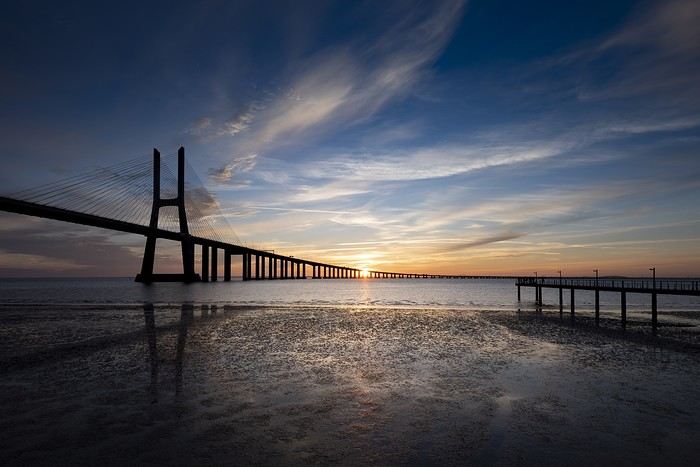 Vasco da Gama Bridge in Lisbon
Here’s the definition of a bridge: “A structure, typically made of stone, wood, or metal, that spans a depression or obstacle (such as a transportation route or waterway) by connecting the two sides or crossing over the obstacle.”
Viaducts, aqueducts, and footbridges will all be accepted.
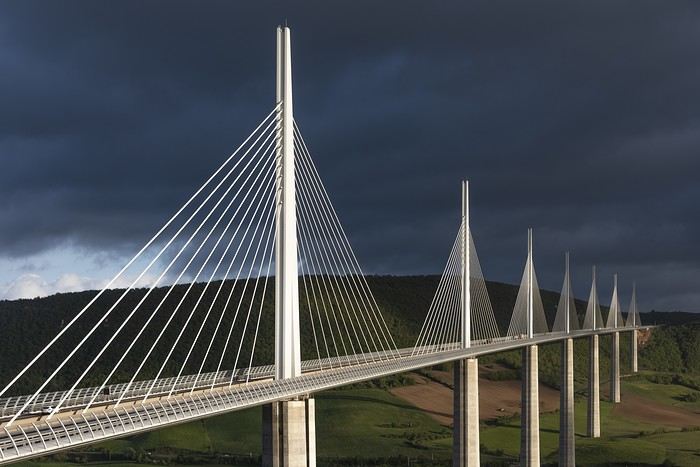 Millau Viaduct
To allow for as many original photos as possible, the bridge can be photographed from the side, below, or above—the main thing is that it’s the focal point of the image.
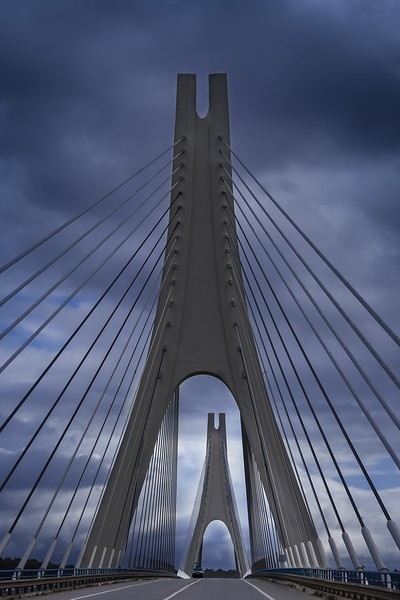 Bridge in the Algarve
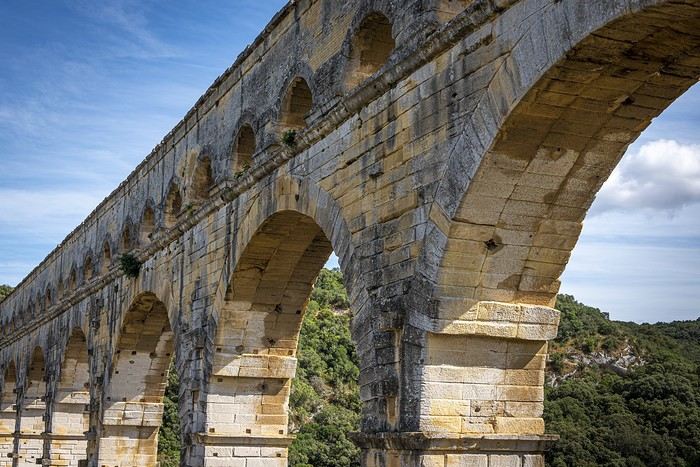 Pont du Gard from below
Details are also welcome, as long as you can still recognize it’s a bridge 😊
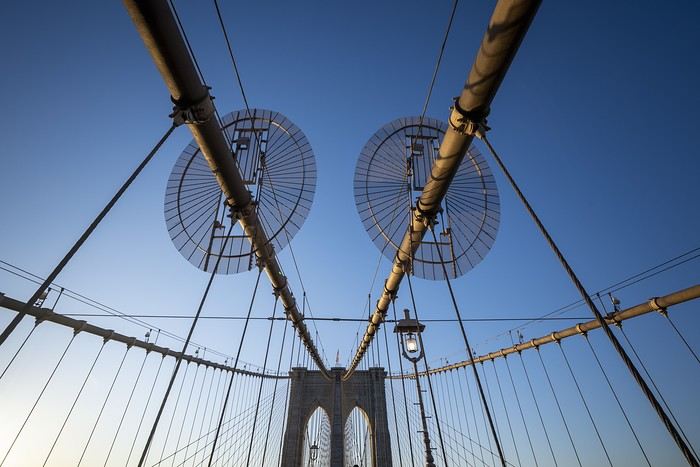 Brooklyn Bridge
Practical details:
Participation: Each VF member can submit up to 3 photos, until Sunday, 26/07 at 11:59 PM Paris time. Each photo must be posted in a separate message, with its number (1, 2, or 3). Don’t forget to add a little explanation (comment, location, etc.).
Voting: Each VF member can vote for the 3 photos they consider the best, based on their own criteria and the theme.
Voting will take place from Monday, 27/07 to Friday, 31/07 at 11:59 PM Paris time.
Selected photos should be listed in order of preference: - 1st photo: 3 points - 2nd photo: 2 points - 3rd photo: 1 point
The winner is the photographer whose photo receives the most points.
Results will be announced on 01/08. In case of a tie, the number of first-place votes will decide. The winner will have the honor of organizing August 2026’s contest.
Photos that have already been nominated (1st, 2nd, or 3rd place) in another contest are not eligible to participate in this one.
This thread is exclusively for contest submissions. Any discussions or comments should be posted in the following thread: Here
Vasco da Gama Bridge in LisbonHere’s the definition of a bridge: “A structure, typically made of stone, wood, or metal, that spans a depression or obstacle (such as a transportation route or waterway) by connecting the two sides or crossing over the obstacle.”
Viaducts, aqueducts, and footbridges will all be accepted.
Millau ViaductTo allow for as many original photos as possible, the bridge can be photographed from the side, below, or above—the main thing is that it’s the focal point of the image.
Bridge in the Algarve
Pont du Gard from belowDetails are also welcome, as long as you can still recognize it’s a bridge 😊
Brooklyn BridgePractical details:
Participation: Each VF member can submit up to 3 photos, until Sunday, 26/07 at 11:59 PM Paris time. Each photo must be posted in a separate message, with its number (1, 2, or 3). Don’t forget to add a little explanation (comment, location, etc.).
Voting: Each VF member can vote for the 3 photos they consider the best, based on their own criteria and the theme.
Voting will take place from Monday, 27/07 to Friday, 31/07 at 11:59 PM Paris time.
Selected photos should be listed in order of preference: - 1st photo: 3 points - 2nd photo: 2 points - 3rd photo: 1 point
The winner is the photographer whose photo receives the most points.
Results will be announced on 01/08. In case of a tie, the number of first-place votes will decide. The winner will have the honor of organizing August 2026’s contest.
Photos that have already been nominated (1st, 2nd, or 3rd place) in another contest are not eligible to participate in this one.
This thread is exclusively for contest submissions. Any discussions or comments should be posted in the following thread: Here
Densha Otaku - A Southern Loop
Here’s my second travel journal since my 2017 one. You can check it out here if you’d like: https://voyageforum.com/forum/densha-otaku-passion-japonaise-d9177495/
This was my first trip back to Japan since the COVID lockdown. Between 2017 (with a short visit in 2018) and 2024, a lot has unfortunately changed. Economic and demographic shifts have led—and will continue to lead—to the closure of many rural railway lines. Fewer residents, fewer travelers, rising operating costs, staffing shortages, and increasingly precarious funding. Then there’s the ever-growing number of tourists who damage everything in their path and frustrate locals. Fortunately, there are still plenty of ways to escape the crowds, even if you do run into groups of Chinese tourists arriving by bus at the Mino Railway Museum or aboard a Kiha 120 crossing the Izumo-Sakane switchback. (Oops, spoiler alert—that’s for my 2025 travel journal.) We’ll see if PM Takaichi has as much success on the ground as he does in his speeches.
I’m lucky to love remote regions and places most tourists don’t know about. Taking public transport—mostly trains—and living like the locals do. That’s what my trips are all about. Those who’ve followed me on these pages know I love trains, especially older ones. These are becoming rarer in regular service, and Japan still isn’t ready to allow even certified museums to run historic trains on public lines, unlike many other countries. I even have my own license to drive historic trams, despite being an IT specialist in my day job. You’ll find some comments that clearly reflect my opinions and experience with the operation and rolling stock of certain lines—sometimes positive, sometimes not.
My trips are always intense. This isn’t about relaxing. It’s about discovering, blending in with locals, being welcomed by associations and museums, and uncovering things most people wouldn’t even imagine exist halfway across the world.
Sorry for the long intro.
This was my first trip back to Japan since the COVID lockdown. Between 2017 (with a short visit in 2018) and 2024, a lot has unfortunately changed. Economic and demographic shifts have led—and will continue to lead—to the closure of many rural railway lines. Fewer residents, fewer travelers, rising operating costs, staffing shortages, and increasingly precarious funding. Then there’s the ever-growing number of tourists who damage everything in their path and frustrate locals. Fortunately, there are still plenty of ways to escape the crowds, even if you do run into groups of Chinese tourists arriving by bus at the Mino Railway Museum or aboard a Kiha 120 crossing the Izumo-Sakane switchback. (Oops, spoiler alert—that’s for my 2025 travel journal.) We’ll see if PM Takaichi has as much success on the ground as he does in his speeches.
I’m lucky to love remote regions and places most tourists don’t know about. Taking public transport—mostly trains—and living like the locals do. That’s what my trips are all about. Those who’ve followed me on these pages know I love trains, especially older ones. These are becoming rarer in regular service, and Japan still isn’t ready to allow even certified museums to run historic trains on public lines, unlike many other countries. I even have my own license to drive historic trams, despite being an IT specialist in my day job. You’ll find some comments that clearly reflect my opinions and experience with the operation and rolling stock of certain lines—sometimes positive, sometimes not.
My trips are always intense. This isn’t about relaxing. It’s about discovering, blending in with locals, being welcomed by associations and museums, and uncovering things most people wouldn’t even imagine exist halfway across the world.
Sorry for the long intro.
Cape Verde island duo: which to choose based on my criteria?
Hi there,
I’ve been looking for a destination for a 2-week trip early next spring, and Cape Verde has been growing on me. (The flight isn’t too long, the temperatures are more than pleasant, and it’s an unknown country for me.)
The thing is, Cape Verde is pretty complicated when it comes to inter-island transfers, and I don’t want to spend my time in airports or on ferries—especially since those transfers aren’t exactly known for their reliability...
So, I’d like to limit internal flights to just 2, meaning the island I arrive on plus one other.
I’ve ruled out the all-inclusive islands: Sal and Boa Vista.
I’m torn between combining Santo Antão + São Vicente or Fogo + Santiago.
The goal of the trip is to see beautiful landscapes, go on day hikes (nothing multi-day), swim a little—though I prefer quiet spots—and enjoy 1 or 2 days in a city, but not much more than that!
In your opinion, which option would be the best, and why?
Thanks! :)
I’ve been looking for a destination for a 2-week trip early next spring, and Cape Verde has been growing on me. (The flight isn’t too long, the temperatures are more than pleasant, and it’s an unknown country for me.)
The thing is, Cape Verde is pretty complicated when it comes to inter-island transfers, and I don’t want to spend my time in airports or on ferries—especially since those transfers aren’t exactly known for their reliability...
So, I’d like to limit internal flights to just 2, meaning the island I arrive on plus one other.
I’ve ruled out the all-inclusive islands: Sal and Boa Vista.
I’m torn between combining Santo Antão + São Vicente or Fogo + Santiago.
The goal of the trip is to see beautiful landscapes, go on day hikes (nothing multi-day), swim a little—though I prefer quiet spots—and enjoy 1 or 2 days in a city, but not much more than that!
In your opinion, which option would be the best, and why?
Thanks! :)
Discovering Assam and Nagaland 2025
Before I begin, I’d like to thank Michèle Buisson and her "Misha’s travel journals," which really helped me plan this trip. It’s tough to find information about this part of India, which is quite different from the "more traditional India." I’m so grateful to her for introducing me to a family who hosted me for 4 nights and 3 days. I can’t wait to return the favor and welcome you all to my place in early July!
Thursday, March 20th. The alarm goes off super early, but I’m already awake—I was too worried I’d sleep through it. I leave the house at 4:00 AM. The rain has stopped, and at this hour, there aren’t many trucks on the road. I arrive at Barcelona Airport easily by 6:20 AM, let the valet know I’m there, and he quickly picks up my car. This time, I’m flying with Etihad Airways again. I booked the ticket during my trip to Cambodia: Barcelona/Kolkata, Delhi/Barcelona for 567 €. At that price, I didn’t hesitate for long—I knew I had to take it. And I’m glad I did because, by the time I returned, the price had gone up to 700 €. I can already hear the reactions: "Wow, how’d you get a ticket for that price? What site did you use? You’re amazing, MarieJo!" One thing’s for sure—I’m really happy with this deal. The flights from Barcelona to Abu Dhabi and Abu Dhabi to Kolkata go smoothly, and we arrive on time at 2:55 AM. There aren’t many people at immigration, so I get through quickly. My luggage isn’t on the carousel yet. After collecting my bag, I check in for my next flight with IndiGo, a 5:40 AM flight to Guwahati, arriving at 7:00 AM. I’m starting to feel pretty tired, so I take a taxi from the airport to Gruham Sojourn Homestay. The house is upstairs, and the neighborhood seems quiet, with restaurants lining the street. The room won’t be ready until 10:00 AM, so I rest on the bench in the meantime. Once in the room, I take a shower—it really helps me feel refreshed. I need to exchange some euros, so I look up a nearby exchange bureau on Google and head out to find it. I locate it easily, and the staff are super friendly. I get a great rate (1 € = 90 INR). I wander around the neighborhood. The train station isn’t far, and small markets line the streets. I head back to my area, walking along the main avenue. About 500 meters from my street, I discover a museum. The visit is fascinating—I see the famous Majuli masks, among other things.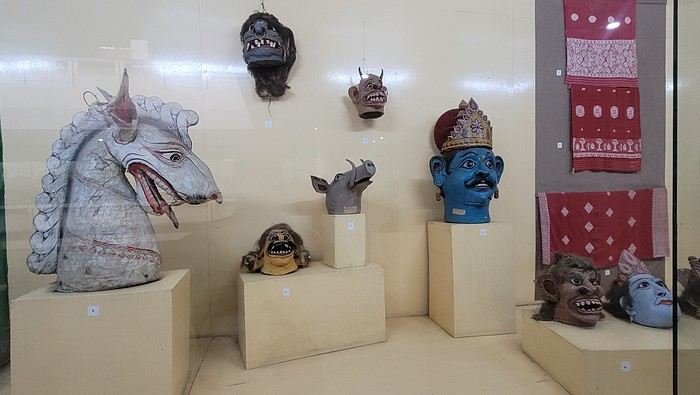

I’m not far from the Brahmaputra River, and the temptation to visit is too strong to resist. I’d hoped to find a promenade along the river, but that doesn’t exist here. I walk back calmly and notice several restaurants in my street. On the doorstep of my accommodation, I spot a pastry shop with cakes that look more like the ones we have in France than the typical ones here in India. A visit is a must, and I’m not disappointed!
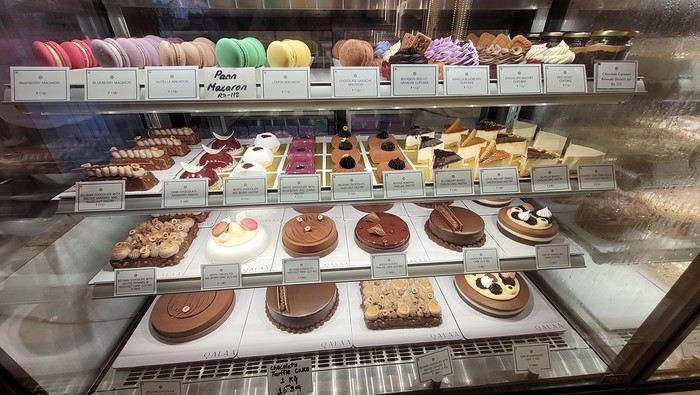
Tonight, I’m dining at a restaurant in the street. The menu is a bit disappointing—burgers, pizzas, pasta—nothing very Indian. So, I’ll go with tomato pasta.
Thursday, March 20th. The alarm goes off super early, but I’m already awake—I was too worried I’d sleep through it. I leave the house at 4:00 AM. The rain has stopped, and at this hour, there aren’t many trucks on the road. I arrive at Barcelona Airport easily by 6:20 AM, let the valet know I’m there, and he quickly picks up my car. This time, I’m flying with Etihad Airways again. I booked the ticket during my trip to Cambodia: Barcelona/Kolkata, Delhi/Barcelona for 567 €. At that price, I didn’t hesitate for long—I knew I had to take it. And I’m glad I did because, by the time I returned, the price had gone up to 700 €. I can already hear the reactions: "Wow, how’d you get a ticket for that price? What site did you use? You’re amazing, MarieJo!" One thing’s for sure—I’m really happy with this deal. The flights from Barcelona to Abu Dhabi and Abu Dhabi to Kolkata go smoothly, and we arrive on time at 2:55 AM. There aren’t many people at immigration, so I get through quickly. My luggage isn’t on the carousel yet. After collecting my bag, I check in for my next flight with IndiGo, a 5:40 AM flight to Guwahati, arriving at 7:00 AM. I’m starting to feel pretty tired, so I take a taxi from the airport to Gruham Sojourn Homestay. The house is upstairs, and the neighborhood seems quiet, with restaurants lining the street. The room won’t be ready until 10:00 AM, so I rest on the bench in the meantime. Once in the room, I take a shower—it really helps me feel refreshed. I need to exchange some euros, so I look up a nearby exchange bureau on Google and head out to find it. I locate it easily, and the staff are super friendly. I get a great rate (1 € = 90 INR). I wander around the neighborhood. The train station isn’t far, and small markets line the streets. I head back to my area, walking along the main avenue. About 500 meters from my street, I discover a museum. The visit is fascinating—I see the famous Majuli masks, among other things.
I’m not far from the Brahmaputra River, and the temptation to visit is too strong to resist. I’d hoped to find a promenade along the river, but that doesn’t exist here. I walk back calmly and notice several restaurants in my street. On the doorstep of my accommodation, I spot a pastry shop with cakes that look more like the ones we have in France than the typical ones here in India. A visit is a must, and I’m not disappointed!
Tonight, I’m dining at a restaurant in the street. The menu is a bit disappointing—burgers, pizzas, pasta—nothing very Indian. So, I’ll go with tomato pasta.
3 weeks in Kazakhstan and Kyrgyzstan, preliminary travel questions
Hi there, 🙂
I’m thinking of taking a trip to these two countries in 2026 (late spring to early summer).
I’d arrive in Almaty and leave from Bishkek, and I’d be driving myself.
I plan to spend 1 week in Kazakhstan and 2 in Kyrgyzstan. The itinerary isn’t set yet.
My preliminary questions are about formalities, hassle levels, and the car.
From what I understand, no visa is needed, the passport must be valid for 6 months after entry, and there’s no longer a requirement to register with the authorities at each stop. In short, once you’re in, no administrative headaches.
Except for permits needed to drive in certain regions?
---/---
About crossing between the two countries:
- On foot - In a rental car
Quick? Easy?
---/---
Are both countries safe? (Meaning you don’t have to stay on guard all the time.) Are the cops corrupt? (A little, a lot, passionately, not at all?)
---/---
Is it better to rent a car for both countries or rent a vehicle in each country?
A 4x4 or something else?
Is accommodation plentiful enough that I can skip a rooftop tent, or is it better to rent a 4x4 with one?
I’ll definitely have more questions later...😉
Thanks for your answers !
I’m thinking of taking a trip to these two countries in 2026 (late spring to early summer).
I’d arrive in Almaty and leave from Bishkek, and I’d be driving myself.
I plan to spend 1 week in Kazakhstan and 2 in Kyrgyzstan. The itinerary isn’t set yet.
My preliminary questions are about formalities, hassle levels, and the car.
From what I understand, no visa is needed, the passport must be valid for 6 months after entry, and there’s no longer a requirement to register with the authorities at each stop. In short, once you’re in, no administrative headaches.
Except for permits needed to drive in certain regions?
---/---
About crossing between the two countries:
- On foot - In a rental car
Quick? Easy?
---/---
Are both countries safe? (Meaning you don’t have to stay on guard all the time.) Are the cops corrupt? (A little, a lot, passionately, not at all?)
---/---
Is it better to rent a car for both countries or rent a vehicle in each country?
A 4x4 or something else?
Is accommodation plentiful enough that I can skip a rooftop tent, or is it better to rent a 4x4 with one?
I’ll definitely have more questions later...😉
Thanks for your answers !
Warm January in Kerala (and a bit of Karnataka)
Hi everyone,
We're back in India for the 7th time (for the other trips, check here:
https://www.unendroitoualler.fr/asie/) ... But this time, no more exploring or trekking! With age, we're just spending a quiet month in southern India, a country we particularly love...
Our journey starts in Kovalam, then Monroe Island, Varkala, Kochi, Kannur, Udupi, and finally, as in recent years, Gokarna.
No problem getting around—there’s the train all along the coast...
Night in Trivandrum
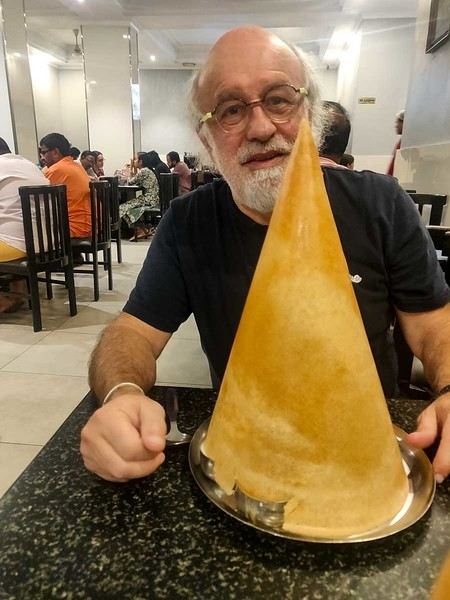
Prepaid taxi to the « Safire Residency », where we stayed last year. This hotel is still just as nice and welcoming (980 INR). Then, dinner at the restaurant « Ariya Niwas » where we enjoyed those delicious dosas again! (We missed them!)
Night in Trivandrum
Prepaid taxi to the « Safire Residency », where we stayed last year. This hotel is still just as nice and welcoming (980 INR). Then, dinner at the restaurant « Ariya Niwas » where we enjoyed those delicious dosas again! (We missed them!)
Bangkok - Chiang Mai - Koh Samui in summer
Hi everyone, I’ve spent two solid months reading the Lonely Planet and pretty much every post about Thailand here, plus French and English blogs. Now I’d love to get your expert opinions on our itinerary.
We’re heading off in August 2025 with our 7-year-old daughter. We only have a maximum of three weeks off, and I’m keeping an eye on flight prices before booking (1400 € per person really stings 😕).
So here’s what I’ve planned—let me know if you spot any major issues or if I’ve been way too "optimistic."
D1 - Arrival in Bangkok / rest, quick visit, overnight stay D2 - More temple visits, etc. D3 - Morning flight to Chiang Mai D4 - More Chiang Mai sightseeing D5 - Day trip to Chiang Rai (guided tour to book: blue and white temple), return to Chiang Mai late in the evening D6 - More Chiang Mai visits / Elephant Nature Park in the afternoon D7 - Morning flight to Koh Samui, sightseeing D8 to D10 - More Koh Samui visits D11 to D13 - Ferry to Koh Phangan D14 to D15 - Ferry to Koh Tao D16 - Return to Koh Samui, then flight to Bangkok D17 - Day trip to Ayutthaya, return to Bangkok in the evening D18 - Flight back to France :(
I know a lot of you recommend heading straight to Chiang Mai to recover from the international flight, but my partner and I NEVER sleep on planes (personally, I’ve been flying to Taiwan since I was little and have never slept more than an hour on a 14-hour flight...), so it’s essential for us to rest upon arrival . That’s also why I opted for domestic flights instead of the sleeper train—I know we’d lose over 10 hours and wouldn’t be able to rest properly in those conditions. And I’m sure you’ll also say BKK > North > South is too much for three weeks, but I really want to see as much as possible. Given how much the flights will cost, I’m not sure when we’ll be able to come back 🏴☠️.
So, questions: 1. Since we’ll only be in Bangkok for a maximum of two nights and need to easily reach the airport with luggage (and a child), which neighborhood should we prioritize? We’d love to experience the evening vibe of Asian night markets, ideally within walking distance of the hotel or just a few metro stops away. I’ve looked at Chinatown, but the BTS seems far... Should we go for somewhere near BTS Saphan Taksin or BTS Krungthonburi? But is the area lively in the evening with food courts, etc.? We’d also like to treat ourselves to a hotel with a pool.
2. Have we planned too many days in the south? Should I skip Koh Tao and just do Koh Samui + Koh Phangan? My partner and daughter aren’t strong swimmers, so we’re looking for beautiful beaches without too much current. Crowded beaches don’t bother us—we just want stunning turquoise waters without killer waves . Going all the way to Koh Tao and then back to Koh Samui to catch the flight to Bangkok seems too stressful. Is it still possible these days (I haven’t seen any recent posts on this) to head to Koh Samui in August and decide on the spot how many nights to spend in Koh Phangan or Koh Tao based on how we feel, booking hotels as we go? Or is that too risky?
If you have any better suggestions for fitting all this in while reducing internal flights, I’m all ears for your great tips
D1 - Arrival in Bangkok / rest, quick visit, overnight stay D2 - More temple visits, etc. D3 - Morning flight to Chiang Mai D4 - More Chiang Mai sightseeing D5 - Day trip to Chiang Rai (guided tour to book: blue and white temple), return to Chiang Mai late in the evening D6 - More Chiang Mai visits / Elephant Nature Park in the afternoon D7 - Morning flight to Koh Samui, sightseeing D8 to D10 - More Koh Samui visits D11 to D13 - Ferry to Koh Phangan D14 to D15 - Ferry to Koh Tao D16 - Return to Koh Samui, then flight to Bangkok D17 - Day trip to Ayutthaya, return to Bangkok in the evening D18 - Flight back to France :(
I know a lot of you recommend heading straight to Chiang Mai to recover from the international flight, but my partner and I NEVER sleep on planes (personally, I’ve been flying to Taiwan since I was little and have never slept more than an hour on a 14-hour flight...), so it’s essential for us to rest upon arrival . That’s also why I opted for domestic flights instead of the sleeper train—I know we’d lose over 10 hours and wouldn’t be able to rest properly in those conditions. And I’m sure you’ll also say BKK > North > South is too much for three weeks, but I really want to see as much as possible. Given how much the flights will cost, I’m not sure when we’ll be able to come back 🏴☠️.
So, questions: 1. Since we’ll only be in Bangkok for a maximum of two nights and need to easily reach the airport with luggage (and a child), which neighborhood should we prioritize? We’d love to experience the evening vibe of Asian night markets, ideally within walking distance of the hotel or just a few metro stops away. I’ve looked at Chinatown, but the BTS seems far... Should we go for somewhere near BTS Saphan Taksin or BTS Krungthonburi? But is the area lively in the evening with food courts, etc.? We’d also like to treat ourselves to a hotel with a pool.
2. Have we planned too many days in the south? Should I skip Koh Tao and just do Koh Samui + Koh Phangan? My partner and daughter aren’t strong swimmers, so we’re looking for beautiful beaches without too much current. Crowded beaches don’t bother us—we just want stunning turquoise waters without killer waves . Going all the way to Koh Tao and then back to Koh Samui to catch the flight to Bangkok seems too stressful. Is it still possible these days (I haven’t seen any recent posts on this) to head to Koh Samui in August and decide on the spot how many nights to spend in Koh Phangan or Koh Tao based on how we feel, booking hotels as we go? Or is that too risky?
If you have any better suggestions for fitting all this in while reducing internal flights, I’m all ears for your great tips
Has overtourism changed your relationship with travel?
Good evening! 🙂,
I’m paraphrasing the title of discussions that were popping up back in 2020. Back then, the obstacles were travel restrictions and all sorts of often very arbitrary "health" rules. Today, it feels like we’re facing an epidemic of wanderlust that’s piling up in certain places—places that keep expanding. Places that end up feeling like wallpaper, just part of the scenery, more or less exotic, since the people, the dominant crowd, are always the same. And they’re especially overwhelming in limited spaces like villages, museums, and other remarkable sites.
Personally, it tends to send my cortisol levels through the roof, leading to desperate attempts to salvage what I can (the stress when I saw a travel journal about eastern Crete—then, phew, at least this little piece of old Greece hasn’t been exposed yet. Maybe it’ll survive a little longer). So, no more weekends in beautiful European cities. So, adjusted visiting hours, but that’s not always enough (I’ll still have to say goodbye to Caravaggio’s *Madeleine* since I can’t have a quiet moment with her anymore, even late in the day). So, outright giving up: I’ll never see Machu Picchu. Too late. So, shifting travel dates to minimize the damage (Uzbekistan was originally planned for Easter—with April 24th and May 1st to limit vacation days—but the anxiety of tourist crowds during that mild climate period, with few days off, led me to reschedule the trip for winter. Short days and possible rain are a thousand times better).
Avoiding crowds has become a fundamental criterion for choosing destinations and timing.
And you? Are you able to tune out this identical crowd everywhere, or has it changed your relationship with travel/tourism?
Catherine
I’m paraphrasing the title of discussions that were popping up back in 2020. Back then, the obstacles were travel restrictions and all sorts of often very arbitrary "health" rules. Today, it feels like we’re facing an epidemic of wanderlust that’s piling up in certain places—places that keep expanding. Places that end up feeling like wallpaper, just part of the scenery, more or less exotic, since the people, the dominant crowd, are always the same. And they’re especially overwhelming in limited spaces like villages, museums, and other remarkable sites.
Personally, it tends to send my cortisol levels through the roof, leading to desperate attempts to salvage what I can (the stress when I saw a travel journal about eastern Crete—then, phew, at least this little piece of old Greece hasn’t been exposed yet. Maybe it’ll survive a little longer). So, no more weekends in beautiful European cities. So, adjusted visiting hours, but that’s not always enough (I’ll still have to say goodbye to Caravaggio’s *Madeleine* since I can’t have a quiet moment with her anymore, even late in the day). So, outright giving up: I’ll never see Machu Picchu. Too late. So, shifting travel dates to minimize the damage (Uzbekistan was originally planned for Easter—with April 24th and May 1st to limit vacation days—but the anxiety of tourist crowds during that mild climate period, with few days off, led me to reschedule the trip for winter. Short days and possible rain are a thousand times better).
Avoiding crowds has become a fundamental criterion for choosing destinations and timing.
And you? Are you able to tune out this identical crowd everywhere, or has it changed your relationship with travel/tourism?
Catherine
21-Day Trip to La Gomera and La Palma
Travel Journal: 21 Days in La Gomera and La Palma
From February 6 to February 26, 2024
Tuesday, February 6 We left around 9 AM with our car, along with Pierre-Paul and Patricia, heading to the Bluepark parking lot in Bartenheim. As expected, we were awaited and left promptly for EuroAirport Basel. Took off at 12:25 PM for a 4-hour-15-minute flight under excellent conditions. Beautiful arrival in Tenerife with Teide in sight under a clear blue sky. Fifteen minutes later, we waited for bus No. 40 to Los Cristianos with quite a few other tourists, but we managed to find four seats. From the bus station, it was a 20-minute walk to our hotel. We checked into a lovely apartment for the four of us, complete with all the comforts. Outside, it was quite warm—at least 25°C! After dropping off our luggage, we went for a stroll. The immediate surroundings of the hotel held no interest for us: a modern, concrete area filled with hotels, bars, tourist agencies, and unappealing restaurants all offering the same bland international cuisine. Pat went to cool off at the pool, unfortunately overrun by loud, drunk English tourists. I took a walk to the paseo maritimo that leads to the port, skirting the seafront. The promenade was pleasant, but it could have been any seaside resort in the world—same old scene: a succession of bars with blaring music where many elderly people sipped cold beers waiting for the sunset, the backdrop a wall of resort-style hotels resembling rabbit hutches! Upon reaching the port, I scouted the route we’d take the next day to the Fred Olsen ferry. Back at the apartment, in the early evening, we looked for a non-touristy restaurant for dinner. Monique stopped a woman to ask her opinion! In this area, she told us, there’s no restaurant that serves Canarian or Spanish cuisine! The only place with decent restaurants is at the port. Off we went to the port, where we sat down at Al Bordo restaurant and ordered a seafood paella for four. Excellent, and at a very reasonable price (36 € for two). We returned to the hotel along the seafront.
Wednesday, February 7
Woke up at 6 AM. Had breakfast in the apartment with what we’d bought the day before at a supermarket. It was still dark when we left on foot toward the port, walking along the calm seafront at this early hour. Forty minutes later, we arrived and waited 10 minutes before the ferry docked. At 9:30 AM, we left the port of Los Cristianos for a 50-minute crossing on a calm sea under a beautiful blue sky. There were quite a few people on this large ferry, but many had no luggage, meaning they were visiting La Gomera for the day and would take the ferry back in the evening. Upon disembarking, we went straight to our rental car agency to pick up the car we’d booked online a few months earlier. It was a nice Peugeot 2008, spacious enough for the four of us and our luggage. We immediately took the beautiful road from San Sebastián that climbs directly into the mountains toward our rental in Vallehermoso. The road was in perfect condition—it seemed brand new, like all the others we’d take on this island later. This side of the island is very arid with little vegetation, and the terrain is particularly rugged, as it is throughout the island. We stopped at our first miradors, which would be followed by many more throughout our Canarian trip. Our first visit was to the small village of Agulo, perched on a promontory above the sea and at the foot of a high cliff. The village features typical Canarian houses with windows flush with the façade and black volcanic stone masonry on white or reddish-brown walls. The first recommended restaurant was already booked for a group, so we settled for the shaded terrace of the excellent El Alameda bar-restaurant. From Agulo, you can access the Abrante viewpoint via a winding road, where the view of Agulo, 600 meters below, is exceptional. A glass ledge over the void lets you test your fear of heights!
We drove to Vallehermoso to do our grocery shopping at the supermarket—a habit that would continue until the end of the trip. Our little house, "Casa rural El Encatadora," is located in a beautiful flower-filled valley a few kilometers west of Vallehermoso. Each of us had a bedroom with an en-suite bathroom, plus a living room, kitchen, and a small terrace overlooking the quiet street at the valley’s end, which didn’t bother us at all.
Thursday, February 8 The good weather seemed to follow us since our arrival in the Canary Islands. This morning, we took the road—still as beautiful and new—toward Arure, high up to the west. The landscape was magnificent, with breathtaking glimpses of the sea far below. In Arure, we parked in front of Conchita’s bar, where a hike (Rother No. 30) starts toward two viewpoints: Alojera, which we reached after 45 minutes on a lovely path. Monique, tired from the first steep climb, stopped at the first viewpoint and hitchhiked back to Arure. Meanwhile, we continued toward the second viewpoint, Los Barranquillos, where the view of the surroundings was partially hidden by misty clouds rising from the sea. The entire mountain is sculpted by ancient, endless terraces climbing until the slope becomes too steep for construction—visible traces of the hard work of past inhabitants trying to survive in a harsh environment. We had a decent lunch at La Conchita bar, then drove to the small seaside town of Puerto la Caleta, sheltered by an immense cliff plunging into the sea. Black sand beach, rough sea—despite our encouragement, Pat didn’t dare to swim! As for the old village of Caleta, it’s perched on the mountainside, and visiting it requires climbing steep, stair-filled alleys to discover a few traditional houses. Back at the casa, dinner in, and card games...
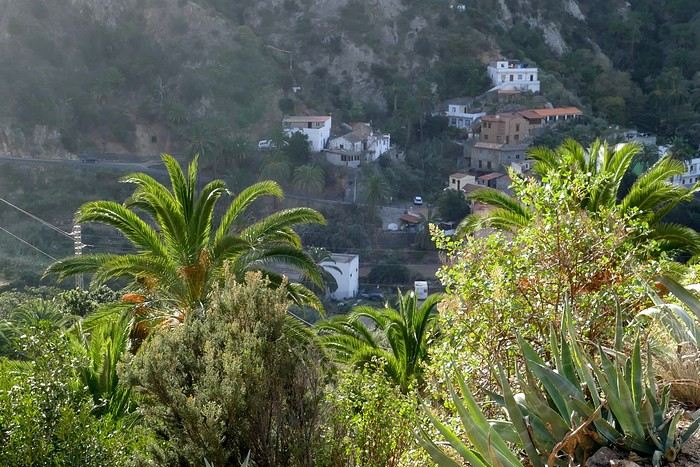 Vallehermoso
Friday, February 9 This morning, the sky was overcast, and the peaks around us were shrouded in clouds. We took the same road as yesterday to hike Las Creces. Quickly gaining altitude, we entered a thick fog—visibility was very limited. We stopped at the Las Creces parking lot; visibility improved, and the sun wasn’t far off. The hike is entirely within a beautiful laurel forest, with the sun playing hide-and-seek, but it wasn’t cold despite the altitude. After finishing the loop trail, we decided to picnic—not there, as it was too chilly—but on Vallehermoso’s beach, where we found a nice picnic area sheltered by large black rocks. A short digestive walk on the surrounding hill to admire the little beach from above. Back in Vallehermoso, we did some grocery shopping, then tried to return to the casa—only to find ourselves locked out because we’d left the key in the lock inside! After several attempts and with the help of Yéli, a relative of the owner we called for help, we were finally able to get back in!
Saturday, February 10
It rained last night, and the sky remained overcast. Monique decided to rest this morning. PP, Pat, and I set off on the hike that starts from the house toward the Marichal reservoir. The sun wasn’t far off, and by 11 AM, it was fully out. The pleasant hike passed by many flower-filled gardens and orchards—orange, lemon, and mandarin trees in fruit. The path climbed gently toward the reservoir, where the view of the Cano rock dominating the landscape was magnificent. The last part of the climb was a bit tough, overgrown with lush vegetation, and the trail was slippery from last night’s rain. We descended via a different, much more pleasant path and returned to the casa just in time for lunch, prepared by Monique. This valley is rich with its many farmers and market gardeners who’ve cultivated the entire valley, taking advantage of the water flowing down from the mountain, captured upstream and redistributed through countless pipes snaking along the paths. Numerous tanks also store water during dry periods. The houses are scattered across both sides of the valley, and these colorful little homes add a beautiful touch to the landscape. The many palm trees give this valley a distinctly tropical feel—you could almost imagine yourself in the Caribbean. Add to that some salsa music drifting from a hut where farmers were working, and the picture is complete. A well-chilled beer apéro capped off a lovely morning. The afternoon was dedicated to rest, relaxation, reading, and games.
Sunday, February 11 The blue sky returned, though a few clouds still capped the highest peaks. Today, we visited Garajonay National Park, which covers the highest central mountains. Up there, we were above the clouds, and the panoramas from the various viewpoints were stunning: first, Cherelepin, accessible from the Laguna Grande parking lot, then Alto de Garajonay, offering an exceptional view of Teide—over 3,000 meters high—emerging from the clouds on Tenerife, far in the distance. We continued to the Los Roques viewpoints, then stopped for lunch at the Degollada de Peraza restaurant, where the view of the barranco was impressive. We descended toward San Sebastián and checked into our new lodging, La Cabezada, located in the countryside about 3 km above San Sebastián. It’s a small apartment adjacent to the owner’s, with a lovely terrace overlooking the surrounding mountains and surrounded by a beautiful garden. Apéro, then dinner on our beautiful terrace.
Monday, February 12 This morning, we went down to visit San Sebastián de La Gomera: its old tower, main street with some beautiful traditional houses, and the Church of the Assumption. Back at the casa for lunch. In the afternoon, Pat, PP, and I set off on the short hike from San Sebastián beach to La Guancha beach. We drove down and parked on the beach. The path climbs along the hill overlooking San Sebastián, passes by the tall Christ statue dominating the landscape, and roughly follows the coast down to the isolated Guancha beach. A beautiful hike under a hot sun, and a swim was welcome, even if the beach and sea access weren’t very comfortable due to large pebbles and quickly deepening water. Apart from two nudist bathers, there was no one on this beach. We returned the same way.
Tuesday, February 13 Rest day. We went down to town to stroll and do some shopping. I took the opportunity to visit the parador, beautifully situated above the city in a lovely garden overlooking the port and town. Together, we went for a cuba libre at the "Cuba Libre" bar, then had lunch at Breñusca (mediocre paella!). Back at the casa, then we went back down to town to see a carnival parade, a "passacalles," which actually passed an hour earlier than scheduled. Oh well.
Wednesday, February 14 Each to their own program this morning. Pat went swimming at San Sebastián beach, Monique rested at the casa, and PP and I set off on the hike from Playa de Avalos to the Ermita de Guadalupe on Playa del Cangrejo. It wasn’t easy to find the right road or the parking spot, but we managed. The path seemed to have suffered landslides, according to a sign at the trailhead! We decided to check it out, ready to turn back if it seemed too dangerous. In the end, apart from one or two slightly tricky spots where we had to climb a pile of rocks, the trail remained passable, though a bit vertigo-inducing in places. The narrow path clings to very vertical cliffs nearly 300 meters above sea level! But what a magnificent view. At one point, the trail runs alongside a wall of basaltic pipes. We returned via the drivable track that parallels the trail a bit lower. Back at the house for lunch. In the late afternoon, we returned to town to attend the "Entierro de las Sardinas" (Burial of the Sardine), which closes the Canarian carnival festivities. While waiting, we strolled through the parador’s gardens and had mojitos in town. Around 9 PM, we heard the noise and cries of the mourners. The procession advanced, led by a large papier-mâché sardine on a float, surrounded by wailing mourners. The procession headed toward the sea, where the sardine was burned, and a mini fireworks display ended the procession. It was all very good-natured, and everyone had fun. We ended the evening with dinner at a good fish restaurant, El Pajar.
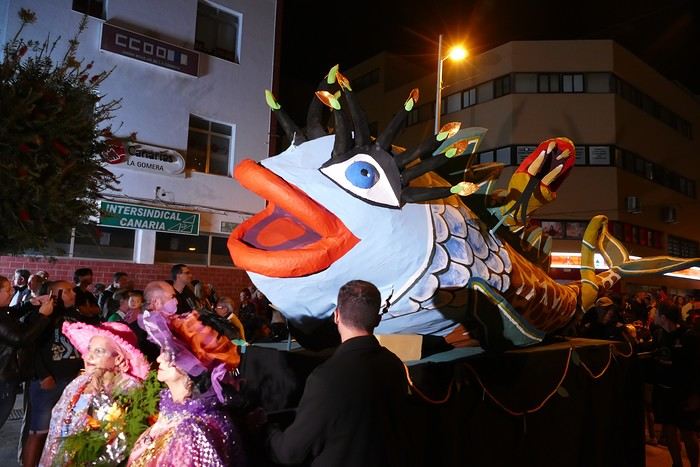 Entierro de la Sardina in San Sebastián de La Gomera
Thursday, February 15
Woke up at 5:15 AM. The only suitable ferry was at 7 AM, which would get us to La Palma by late morning rather than evening. We packed our bags, had breakfast, then headed to the port, left our rental car, and boarded the ferry to Tenerife, from where we’d continue to La Palma. Calm sea, beautiful sun—by 10:30 AM, we disembarked in La Palma. We picked up our car and immediately headed to our new apartment in Breña Alta. It’s a large apartment with a superb terrace facing the sea, fully equipped and very comfortable. The hosts recommended Casa Goyo restaurant, near the airport and close to us. It’s a restaurant with many small rooms, some of which can be reserved for families. The fish-based cuisine (chipirones, pulpo) was excellent, hearty, and reasonably priced. Since it’s in the airport’s flight path, we occasionally heard planes landing. Quick and efficient service. Afterward, we visited Santa Cruz de La Palma, which reminded us of the historic quarters of La Orotava in Tenerife or the capital of Gran Canaria.
Friday, February 16
Beautiful weather, blue sky. We headed to the San Bartolo viewpoint toward the northeast coast, then to the lovely village of San Andrés, which we explored. From there, we walked along the shore to the natural pools of Charco Azul, where we swam in the cool but "swimmable" sea. Back in San Andrés for lunch at the "San Andrés" restaurant on the beautiful church square. Very good fish-based meal. We got back in the car and continued along the north coast to the port of Espindola and the natural pools of Fajana near the Cumplida lighthouse. A fairly strong wind whipped up beautiful waves crashing onto the rocky coast in bursts of foam. Back in Santa Cruz, we stopped at the Mercadona supermarket to buy fresh shrimp for dinner.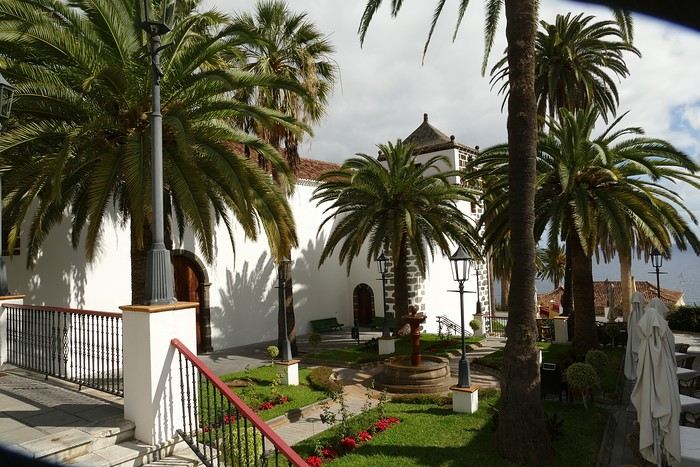 San Andrés
Saturday, February 17
Uniform blue sky, even on the heights. We took the beautiful road that winds up to the summit of the Caldera de Taburiente. Several viewpoints offer 360° views of the entire island and beyond: you can make out La Gomera, El Hierro, and, of course, Tenerife with the perfect triangle of Teide. We parked at the Los Andes viewpoint parking lot and started our hike to Pico de la Cruz along a trail following the ridge, offering superb views into the caldera. We got back in the car and passed by the Roque de los Muchachos astronomical complex, composed of numerous observatories, some with very aesthetic mirror telescopes. We hiked from the Roque de los Muchachos parking lot to the various viewpoints, always as impressive. Picnic on site, then back to Santa Cruz. We stopped by our car dealer because the oil warning light came on—better safe than sorry. The representative reassured us but preferred to give us a Fiat Cross SUV instead.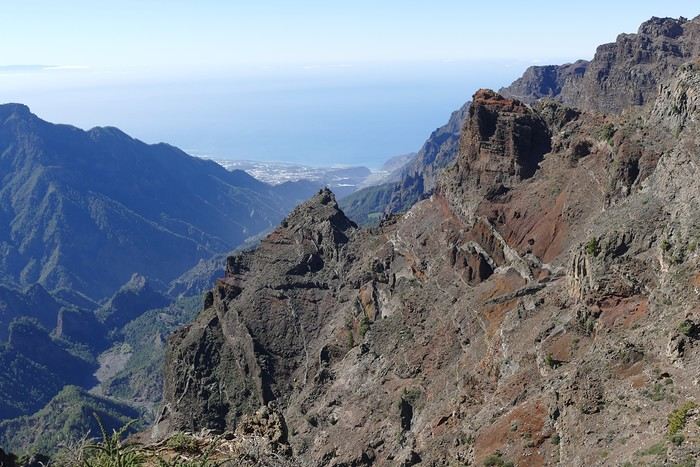 The Caldera de Taburiente
Sunday, February 18 The weather was a bit mixed, with cloudy patches. We set off to hike the Barranco de la Cuba de Galga. Unfortunately, the Los Tilos trail had been closed for several months due to a major landslide. The parking lot by the road was already quite full, and indeed, we crossed paths with many hikers along the way—it’s an easy hike with little elevation gain, which is rare here in La Palma! The beautiful path winds through a very narrow, deep gorge covered in lush tropical vegetation—you’d think you were in a Southeast Asian forest, especially with the humidity in the gorge bringing out earthy and floral scents. Halfway through, Monique turned back while the rest of us continued to the Cuba de Galga. A light drizzle accompanied us on the return. For lunch, we went to Chipi Chipi restaurant in the heights of Santa Cruz. The cool air forced us to leave the lovely terrace for the slightly noisy dining room. The meal was very good and hearty. Afternoon spent resting at our house.
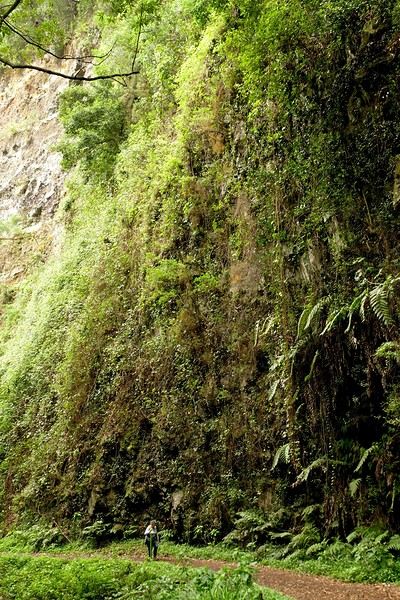 La Cuba de la Galga
Monday, February 19 A few clouds still clung to the nearby mountain peaks. We headed south to Los Canarios. We stopped in front of the small San Antonio Abad church, where a path leads to the viewpoint in 15 minutes. Then we visited the San Antonio Volcano Interpretation Center and climbed to the viewpoint via the trail along the crater’s edge, offering a plunging view into the crater. Then PP, Pat, and I headed toward the Teneguía volcano but turned back given the remaining distance and the intense heat bearing down on us! Plus, the landscape was rather arid and not very interesting. We got back in the car and drove down to the salt flats at the island’s southern tip. The ocean crashes here in large waves, exploding against the volcanic rocks and feeding a "blowhole" carved into the rock. We stopped for drinks at the salt flats restaurant, then headed home.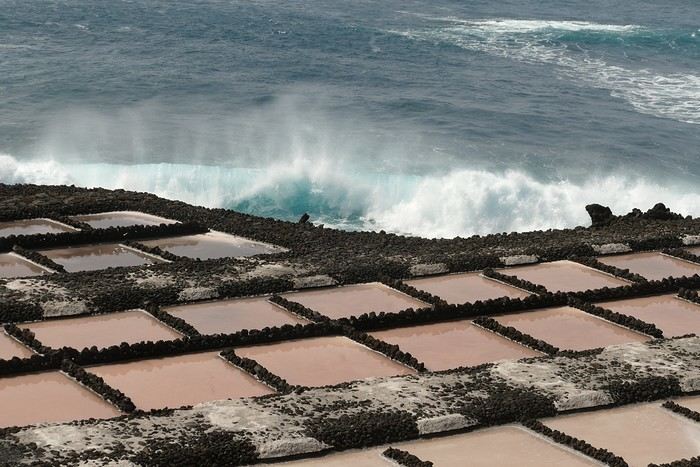 The salt flats in Fuencaliente
Tuesday, February 20 Beautiful weather with a few clouds clinging to the mountains, as usual. A relaxed morning since my parking reservation at La Cumbrecita didn’t start until 1 PM. It takes about 30 minutes from Santa Cruz to reach the valley floor via a beautiful but narrow road toward the end, though there’s very little traffic. Meanwhile, the clouds had disappeared, and the view from the La Cumbrecita viewpoint was superb. We recognized Pico de la Cruz in the distance, where we’d been a few days earlier. We then took the path leading to the Las Chozas viewpoint through a magnificent Canarian pine forest. We picnicked on site, then took the path to the Los Roques viewpoint. We returned the same way since the direct route was closed for construction. Back in Santa Cruz, we visited the Sanctuary of Las Nieves, with its beautiful golden Baroque altar.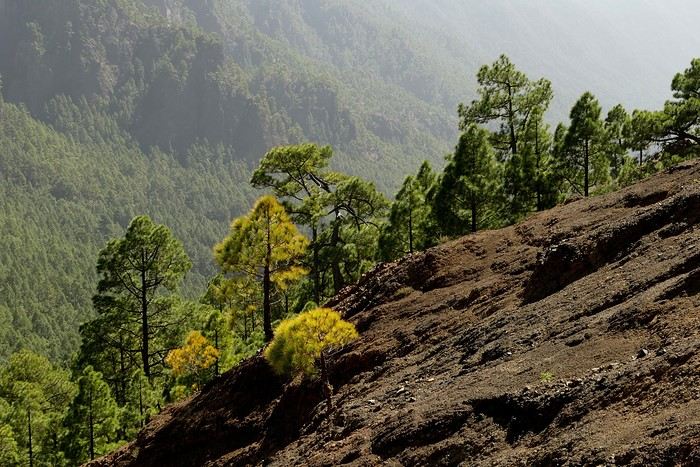 Hike from La Cumbrecita
Wednesday, February 21 After packing our things and loading the car, we left Santa Cruz under a very blue sky for Los Llanos de Aridane, where we stopped to visit this lovely town. The Church of Nuestra Señora de los Remedios has a beautiful coffered ceiling and an original papier-mâché Christ statue from the 16th century. Around it, colorful old Canarian houses brighten the streets of the town center. We took the opportunity to stroll, do some shopping, and finally sat down at La Pergola restaurant for a mediocre lunch. We got back in the car to check into our new house in Arecida. On the way, we stopped at the Mirador del Time, which once again offered an impressive panorama, allowing us—for the first time—to see the damage caused by the Tajogaite volcano eruption in 2021. You can clearly see the still-smoking crater and the large black lava flow covering the landscape down to the sea. We really liked our new accommodation: a local house that’s been renovated on the heights of Arecida, not far from the Canarian pine forest. From several terraces, we have a 360° view of the sea and mountains. We even have a private pool! There are two beautiful, brand-new bedrooms, each with its own bathroom—the best. Plus, we’re on the GR 131 trail that runs along the Barranco de las Angustias toward the northeast.
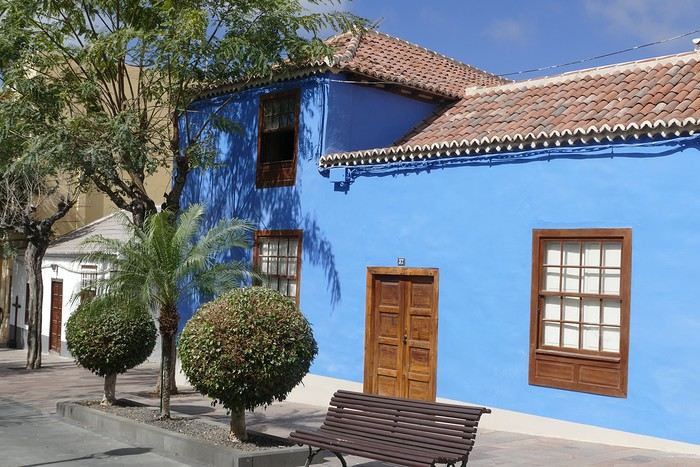 Los Llanos de Aridane
Thursday, February 22 Once again, beautiful weather greeted us when we woke up. We started the GR 131 with the goal of reaching the Torre del Time viewpoint—about 400 meters of elevation gain. The path, quite steep at first, winds through a superb Canarian pine forest. A few viewpoints let you appreciate the sheer drop of the Barranco de las Angustias—watch out for vertigo! At the Torre del Time viewpoint, there’s a nearly 1,000-meter vertical drop. We returned via another path, the PLP1, which meanders first through this beautiful forest, then along lovely flower-filled gardens adjacent to beautiful properties that cascade from the forest down to the road serving these neighborhoods. This afternoon, we tried to get closer to the area devastated by the 2021 lava flows. Several roads are still closed or reserved for residents, while others—brand new—have been rebuilt to open up this densely populated and cultivated region. In some places, the lava flow slightly diverted, sparing some properties that logically should have disappeared. Now, they’re encircled by a massive cooled lava field. In other spots, twisted and charred metal scraps or greenhouse remains protrude from the lava—all that’s left of the former banana plantations. A little higher up, you can see the slightly smoking crater of Tajogaite, responsible for this disaster. Back to Casa Barreros.
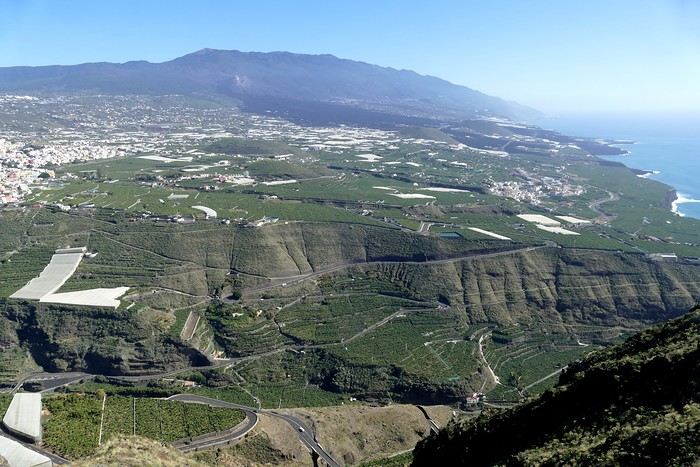 View of Los Llanos and, in the background, the 2021 lava flow
Friday, February 23
Though the sky was still blue, the temperature had dropped due to a chilly wind. By midday, it still rose to 22°C. Today, we headed north, specifically to the town of Tijarafe, where a very narrow road descends to the small port, Porís de Candelaria. The 3.7-kilometer road drops 700 meters in elevation, with gradients up to 30%—it was going to be intense! Indeed, the descent was scary, with the void right next to the very narrow road where passing was impossible except at a few rare spots. Everything went well—there was little traffic at this early hour. From the parking lot at the bottom, a path leads to Porís de Candelaria. It’s surprising to see this small fishing hamlet nestled in the shelter of an immense cave opening onto the sea, which was quite rough today. The sun, at this time of year, would appear late in the cave, which remained in shadow for much of the day. We returned via the same road, strolled through the small town of Puntagorda, and had lunch at El Jardín de los Naranjos restaurant—excellent meal.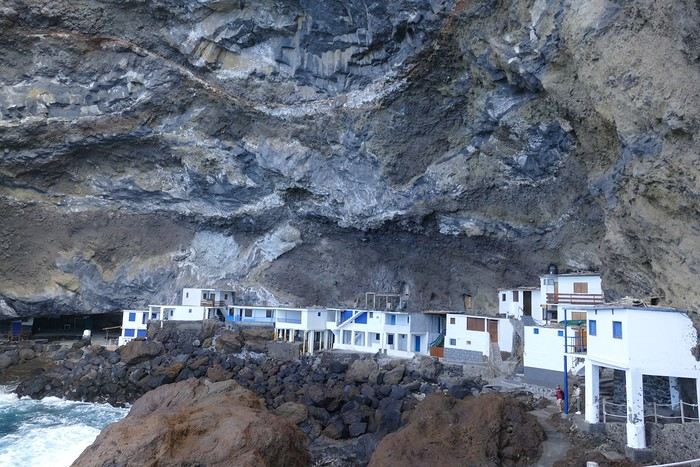 Fishing hamlet of Candelaria
Saturday, February 24 The air was still cool, but the sun was beautiful. While Monique stayed home to rest, the three of us headed to the village of Las Tricias to hike the Buracas Caves trail. We left the car parked on the LP1 road and took the small paved road down to the sign marking the trail’s start. The signage for all the trails we took here, as in La Gomera, was very well done. The path descended steadily, then more steeply toward the caves where the island’s first inhabitants lived—some petroglyphs are still visible in certain caves. The path then climbed back up, passing magnificent dragon trees and more or less elaborate huts occupied by Germans who’ve lived here for many years. Back at Casa Barreros for some rest.
Sunday, February 25 The weather once again blessed us with a beautiful day. This morning, we visited the local produce market held on weekends in Puntagorda. You’ll find agricultural products, crafts, and food to keep you going. A little further on, there’s a glass viewpoint overlooking the barranco plunging toward the sea, with a view of the thrill-seekers trying the zip line right next to it. Lunch at Naranjos—definitely a good spot—with their shrimp and spice tagliatelle. Back home for an afternoon of relaxation.
Monday, February 26 We left Arecida under a cloudy sky. Driving up from Los Llanos de Aridane toward the east, an enormous cascade of clouds poured from the mountain peaks into the Los Llanos plain—very impressive. Arriving in Santa Cruz, we went for a stroll, did some last-minute shopping, then had a final good-quality paella at La Chalana on the paseo maritimo. We left the car in the parking lot and took the 5 PM Olsen ferry to Tenerife on a slightly choppy sea, but the ferry didn’t rock too much. Arriving at 7:15 PM, we dropped off our things near the port in our reserved apartment and went for dinner at Abordo—rubbery chipirones. A digestive stroll among the ever-increasing number of tourists in Los Cristianos—restaurants were packed to the brim, the season is in full swing here. Gone is the calm of La Gomera and La Palma, and the laid-back tourism of German hikers among whom a few French were hiding!
Tuesday, February 27 To make our homemade breakfast more enjoyable, we went to buy pastries at the local bakery, then took one last walk on the paseo along the beaches, mingling with the many mobility scooters driven by elderly or disabled people, joggers, and tourists. Last apéro near the bus station, then off to the airport. After a smooth 4-hour-30-minute flight, we arrived in Basel-Mulhouse at 10:20 PM.
THE END
Conclusion A fantastic trip to two islands with magnificent and diverse nature, where landscapes range from desert-like to tropical depending on exposure to winds and clouds. Thanks to the many beautiful viewpoints, you can truly appreciate these exceptionally dynamic reliefs. A hiker’s paradise, the trails are all very well marked, though the choice of easy or moderate paths for "casual walkers" is quite limited. Another notable advantage, in our opinion, is that these islands are very lightly developed—you’ll hardly see any of those ugly hotel blocks that spoil the landscapes of some other Canary Islands. It’s true that the beaches on these two islands don’t meet traditional international tourism criteria: they’re small, with black sand, and often difficult to access. Special mention for the quality of the road network (except for a few small local roads), which seems brand new, well-paved, and well-signposted. We also enjoyed exceptional weather for February, with fewer than three days of gray or rainy weather out of 21.
Almost all the accommodations we chose met or exceeded our expectations, often at reasonable prices: an average of 98 € per night for an apartment or house with two bedrooms for four people.
All photos can be viewed by clicking this link: https://photos.app.goo.gl/G44pPk4g9PW1rNzg8
Tuesday, February 6 We left around 9 AM with our car, along with Pierre-Paul and Patricia, heading to the Bluepark parking lot in Bartenheim. As expected, we were awaited and left promptly for EuroAirport Basel. Took off at 12:25 PM for a 4-hour-15-minute flight under excellent conditions. Beautiful arrival in Tenerife with Teide in sight under a clear blue sky. Fifteen minutes later, we waited for bus No. 40 to Los Cristianos with quite a few other tourists, but we managed to find four seats. From the bus station, it was a 20-minute walk to our hotel. We checked into a lovely apartment for the four of us, complete with all the comforts. Outside, it was quite warm—at least 25°C! After dropping off our luggage, we went for a stroll. The immediate surroundings of the hotel held no interest for us: a modern, concrete area filled with hotels, bars, tourist agencies, and unappealing restaurants all offering the same bland international cuisine. Pat went to cool off at the pool, unfortunately overrun by loud, drunk English tourists. I took a walk to the paseo maritimo that leads to the port, skirting the seafront. The promenade was pleasant, but it could have been any seaside resort in the world—same old scene: a succession of bars with blaring music where many elderly people sipped cold beers waiting for the sunset, the backdrop a wall of resort-style hotels resembling rabbit hutches! Upon reaching the port, I scouted the route we’d take the next day to the Fred Olsen ferry. Back at the apartment, in the early evening, we looked for a non-touristy restaurant for dinner. Monique stopped a woman to ask her opinion! In this area, she told us, there’s no restaurant that serves Canarian or Spanish cuisine! The only place with decent restaurants is at the port. Off we went to the port, where we sat down at Al Bordo restaurant and ordered a seafood paella for four. Excellent, and at a very reasonable price (36 € for two). We returned to the hotel along the seafront.
Wednesday, February 7
Woke up at 6 AM. Had breakfast in the apartment with what we’d bought the day before at a supermarket. It was still dark when we left on foot toward the port, walking along the calm seafront at this early hour. Forty minutes later, we arrived and waited 10 minutes before the ferry docked. At 9:30 AM, we left the port of Los Cristianos for a 50-minute crossing on a calm sea under a beautiful blue sky. There were quite a few people on this large ferry, but many had no luggage, meaning they were visiting La Gomera for the day and would take the ferry back in the evening. Upon disembarking, we went straight to our rental car agency to pick up the car we’d booked online a few months earlier. It was a nice Peugeot 2008, spacious enough for the four of us and our luggage. We immediately took the beautiful road from San Sebastián that climbs directly into the mountains toward our rental in Vallehermoso. The road was in perfect condition—it seemed brand new, like all the others we’d take on this island later. This side of the island is very arid with little vegetation, and the terrain is particularly rugged, as it is throughout the island. We stopped at our first miradors, which would be followed by many more throughout our Canarian trip. Our first visit was to the small village of Agulo, perched on a promontory above the sea and at the foot of a high cliff. The village features typical Canarian houses with windows flush with the façade and black volcanic stone masonry on white or reddish-brown walls. The first recommended restaurant was already booked for a group, so we settled for the shaded terrace of the excellent El Alameda bar-restaurant. From Agulo, you can access the Abrante viewpoint via a winding road, where the view of Agulo, 600 meters below, is exceptional. A glass ledge over the void lets you test your fear of heights!
We drove to Vallehermoso to do our grocery shopping at the supermarket—a habit that would continue until the end of the trip. Our little house, "Casa rural El Encatadora," is located in a beautiful flower-filled valley a few kilometers west of Vallehermoso. Each of us had a bedroom with an en-suite bathroom, plus a living room, kitchen, and a small terrace overlooking the quiet street at the valley’s end, which didn’t bother us at all.
Thursday, February 8 The good weather seemed to follow us since our arrival in the Canary Islands. This morning, we took the road—still as beautiful and new—toward Arure, high up to the west. The landscape was magnificent, with breathtaking glimpses of the sea far below. In Arure, we parked in front of Conchita’s bar, where a hike (Rother No. 30) starts toward two viewpoints: Alojera, which we reached after 45 minutes on a lovely path. Monique, tired from the first steep climb, stopped at the first viewpoint and hitchhiked back to Arure. Meanwhile, we continued toward the second viewpoint, Los Barranquillos, where the view of the surroundings was partially hidden by misty clouds rising from the sea. The entire mountain is sculpted by ancient, endless terraces climbing until the slope becomes too steep for construction—visible traces of the hard work of past inhabitants trying to survive in a harsh environment. We had a decent lunch at La Conchita bar, then drove to the small seaside town of Puerto la Caleta, sheltered by an immense cliff plunging into the sea. Black sand beach, rough sea—despite our encouragement, Pat didn’t dare to swim! As for the old village of Caleta, it’s perched on the mountainside, and visiting it requires climbing steep, stair-filled alleys to discover a few traditional houses. Back at the casa, dinner in, and card games...
VallehermosoFriday, February 9 This morning, the sky was overcast, and the peaks around us were shrouded in clouds. We took the same road as yesterday to hike Las Creces. Quickly gaining altitude, we entered a thick fog—visibility was very limited. We stopped at the Las Creces parking lot; visibility improved, and the sun wasn’t far off. The hike is entirely within a beautiful laurel forest, with the sun playing hide-and-seek, but it wasn’t cold despite the altitude. After finishing the loop trail, we decided to picnic—not there, as it was too chilly—but on Vallehermoso’s beach, where we found a nice picnic area sheltered by large black rocks. A short digestive walk on the surrounding hill to admire the little beach from above. Back in Vallehermoso, we did some grocery shopping, then tried to return to the casa—only to find ourselves locked out because we’d left the key in the lock inside! After several attempts and with the help of Yéli, a relative of the owner we called for help, we were finally able to get back in!
Saturday, February 10
It rained last night, and the sky remained overcast. Monique decided to rest this morning. PP, Pat, and I set off on the hike that starts from the house toward the Marichal reservoir. The sun wasn’t far off, and by 11 AM, it was fully out. The pleasant hike passed by many flower-filled gardens and orchards—orange, lemon, and mandarin trees in fruit. The path climbed gently toward the reservoir, where the view of the Cano rock dominating the landscape was magnificent. The last part of the climb was a bit tough, overgrown with lush vegetation, and the trail was slippery from last night’s rain. We descended via a different, much more pleasant path and returned to the casa just in time for lunch, prepared by Monique. This valley is rich with its many farmers and market gardeners who’ve cultivated the entire valley, taking advantage of the water flowing down from the mountain, captured upstream and redistributed through countless pipes snaking along the paths. Numerous tanks also store water during dry periods. The houses are scattered across both sides of the valley, and these colorful little homes add a beautiful touch to the landscape. The many palm trees give this valley a distinctly tropical feel—you could almost imagine yourself in the Caribbean. Add to that some salsa music drifting from a hut where farmers were working, and the picture is complete. A well-chilled beer apéro capped off a lovely morning. The afternoon was dedicated to rest, relaxation, reading, and games.
Sunday, February 11 The blue sky returned, though a few clouds still capped the highest peaks. Today, we visited Garajonay National Park, which covers the highest central mountains. Up there, we were above the clouds, and the panoramas from the various viewpoints were stunning: first, Cherelepin, accessible from the Laguna Grande parking lot, then Alto de Garajonay, offering an exceptional view of Teide—over 3,000 meters high—emerging from the clouds on Tenerife, far in the distance. We continued to the Los Roques viewpoints, then stopped for lunch at the Degollada de Peraza restaurant, where the view of the barranco was impressive. We descended toward San Sebastián and checked into our new lodging, La Cabezada, located in the countryside about 3 km above San Sebastián. It’s a small apartment adjacent to the owner’s, with a lovely terrace overlooking the surrounding mountains and surrounded by a beautiful garden. Apéro, then dinner on our beautiful terrace.
Monday, February 12 This morning, we went down to visit San Sebastián de La Gomera: its old tower, main street with some beautiful traditional houses, and the Church of the Assumption. Back at the casa for lunch. In the afternoon, Pat, PP, and I set off on the short hike from San Sebastián beach to La Guancha beach. We drove down and parked on the beach. The path climbs along the hill overlooking San Sebastián, passes by the tall Christ statue dominating the landscape, and roughly follows the coast down to the isolated Guancha beach. A beautiful hike under a hot sun, and a swim was welcome, even if the beach and sea access weren’t very comfortable due to large pebbles and quickly deepening water. Apart from two nudist bathers, there was no one on this beach. We returned the same way.
Tuesday, February 13 Rest day. We went down to town to stroll and do some shopping. I took the opportunity to visit the parador, beautifully situated above the city in a lovely garden overlooking the port and town. Together, we went for a cuba libre at the "Cuba Libre" bar, then had lunch at Breñusca (mediocre paella!). Back at the casa, then we went back down to town to see a carnival parade, a "passacalles," which actually passed an hour earlier than scheduled. Oh well.
Wednesday, February 14 Each to their own program this morning. Pat went swimming at San Sebastián beach, Monique rested at the casa, and PP and I set off on the hike from Playa de Avalos to the Ermita de Guadalupe on Playa del Cangrejo. It wasn’t easy to find the right road or the parking spot, but we managed. The path seemed to have suffered landslides, according to a sign at the trailhead! We decided to check it out, ready to turn back if it seemed too dangerous. In the end, apart from one or two slightly tricky spots where we had to climb a pile of rocks, the trail remained passable, though a bit vertigo-inducing in places. The narrow path clings to very vertical cliffs nearly 300 meters above sea level! But what a magnificent view. At one point, the trail runs alongside a wall of basaltic pipes. We returned via the drivable track that parallels the trail a bit lower. Back at the house for lunch. In the late afternoon, we returned to town to attend the "Entierro de las Sardinas" (Burial of the Sardine), which closes the Canarian carnival festivities. While waiting, we strolled through the parador’s gardens and had mojitos in town. Around 9 PM, we heard the noise and cries of the mourners. The procession advanced, led by a large papier-mâché sardine on a float, surrounded by wailing mourners. The procession headed toward the sea, where the sardine was burned, and a mini fireworks display ended the procession. It was all very good-natured, and everyone had fun. We ended the evening with dinner at a good fish restaurant, El Pajar.
Entierro de la Sardina in San Sebastián de La GomeraThursday, February 15
Woke up at 5:15 AM. The only suitable ferry was at 7 AM, which would get us to La Palma by late morning rather than evening. We packed our bags, had breakfast, then headed to the port, left our rental car, and boarded the ferry to Tenerife, from where we’d continue to La Palma. Calm sea, beautiful sun—by 10:30 AM, we disembarked in La Palma. We picked up our car and immediately headed to our new apartment in Breña Alta. It’s a large apartment with a superb terrace facing the sea, fully equipped and very comfortable. The hosts recommended Casa Goyo restaurant, near the airport and close to us. It’s a restaurant with many small rooms, some of which can be reserved for families. The fish-based cuisine (chipirones, pulpo) was excellent, hearty, and reasonably priced. Since it’s in the airport’s flight path, we occasionally heard planes landing. Quick and efficient service. Afterward, we visited Santa Cruz de La Palma, which reminded us of the historic quarters of La Orotava in Tenerife or the capital of Gran Canaria.
Friday, February 16
Beautiful weather, blue sky. We headed to the San Bartolo viewpoint toward the northeast coast, then to the lovely village of San Andrés, which we explored. From there, we walked along the shore to the natural pools of Charco Azul, where we swam in the cool but "swimmable" sea. Back in San Andrés for lunch at the "San Andrés" restaurant on the beautiful church square. Very good fish-based meal. We got back in the car and continued along the north coast to the port of Espindola and the natural pools of Fajana near the Cumplida lighthouse. A fairly strong wind whipped up beautiful waves crashing onto the rocky coast in bursts of foam. Back in Santa Cruz, we stopped at the Mercadona supermarket to buy fresh shrimp for dinner.
San AndrésSaturday, February 17
Uniform blue sky, even on the heights. We took the beautiful road that winds up to the summit of the Caldera de Taburiente. Several viewpoints offer 360° views of the entire island and beyond: you can make out La Gomera, El Hierro, and, of course, Tenerife with the perfect triangle of Teide. We parked at the Los Andes viewpoint parking lot and started our hike to Pico de la Cruz along a trail following the ridge, offering superb views into the caldera. We got back in the car and passed by the Roque de los Muchachos astronomical complex, composed of numerous observatories, some with very aesthetic mirror telescopes. We hiked from the Roque de los Muchachos parking lot to the various viewpoints, always as impressive. Picnic on site, then back to Santa Cruz. We stopped by our car dealer because the oil warning light came on—better safe than sorry. The representative reassured us but preferred to give us a Fiat Cross SUV instead.
The Caldera de TaburienteSunday, February 18 The weather was a bit mixed, with cloudy patches. We set off to hike the Barranco de la Cuba de Galga. Unfortunately, the Los Tilos trail had been closed for several months due to a major landslide. The parking lot by the road was already quite full, and indeed, we crossed paths with many hikers along the way—it’s an easy hike with little elevation gain, which is rare here in La Palma! The beautiful path winds through a very narrow, deep gorge covered in lush tropical vegetation—you’d think you were in a Southeast Asian forest, especially with the humidity in the gorge bringing out earthy and floral scents. Halfway through, Monique turned back while the rest of us continued to the Cuba de Galga. A light drizzle accompanied us on the return. For lunch, we went to Chipi Chipi restaurant in the heights of Santa Cruz. The cool air forced us to leave the lovely terrace for the slightly noisy dining room. The meal was very good and hearty. Afternoon spent resting at our house.
La Cuba de la GalgaMonday, February 19 A few clouds still clung to the nearby mountain peaks. We headed south to Los Canarios. We stopped in front of the small San Antonio Abad church, where a path leads to the viewpoint in 15 minutes. Then we visited the San Antonio Volcano Interpretation Center and climbed to the viewpoint via the trail along the crater’s edge, offering a plunging view into the crater. Then PP, Pat, and I headed toward the Teneguía volcano but turned back given the remaining distance and the intense heat bearing down on us! Plus, the landscape was rather arid and not very interesting. We got back in the car and drove down to the salt flats at the island’s southern tip. The ocean crashes here in large waves, exploding against the volcanic rocks and feeding a "blowhole" carved into the rock. We stopped for drinks at the salt flats restaurant, then headed home.
The salt flats in FuencalienteTuesday, February 20 Beautiful weather with a few clouds clinging to the mountains, as usual. A relaxed morning since my parking reservation at La Cumbrecita didn’t start until 1 PM. It takes about 30 minutes from Santa Cruz to reach the valley floor via a beautiful but narrow road toward the end, though there’s very little traffic. Meanwhile, the clouds had disappeared, and the view from the La Cumbrecita viewpoint was superb. We recognized Pico de la Cruz in the distance, where we’d been a few days earlier. We then took the path leading to the Las Chozas viewpoint through a magnificent Canarian pine forest. We picnicked on site, then took the path to the Los Roques viewpoint. We returned the same way since the direct route was closed for construction. Back in Santa Cruz, we visited the Sanctuary of Las Nieves, with its beautiful golden Baroque altar.
Hike from La CumbrecitaWednesday, February 21 After packing our things and loading the car, we left Santa Cruz under a very blue sky for Los Llanos de Aridane, where we stopped to visit this lovely town. The Church of Nuestra Señora de los Remedios has a beautiful coffered ceiling and an original papier-mâché Christ statue from the 16th century. Around it, colorful old Canarian houses brighten the streets of the town center. We took the opportunity to stroll, do some shopping, and finally sat down at La Pergola restaurant for a mediocre lunch. We got back in the car to check into our new house in Arecida. On the way, we stopped at the Mirador del Time, which once again offered an impressive panorama, allowing us—for the first time—to see the damage caused by the Tajogaite volcano eruption in 2021. You can clearly see the still-smoking crater and the large black lava flow covering the landscape down to the sea. We really liked our new accommodation: a local house that’s been renovated on the heights of Arecida, not far from the Canarian pine forest. From several terraces, we have a 360° view of the sea and mountains. We even have a private pool! There are two beautiful, brand-new bedrooms, each with its own bathroom—the best. Plus, we’re on the GR 131 trail that runs along the Barranco de las Angustias toward the northeast.
Los Llanos de AridaneThursday, February 22 Once again, beautiful weather greeted us when we woke up. We started the GR 131 with the goal of reaching the Torre del Time viewpoint—about 400 meters of elevation gain. The path, quite steep at first, winds through a superb Canarian pine forest. A few viewpoints let you appreciate the sheer drop of the Barranco de las Angustias—watch out for vertigo! At the Torre del Time viewpoint, there’s a nearly 1,000-meter vertical drop. We returned via another path, the PLP1, which meanders first through this beautiful forest, then along lovely flower-filled gardens adjacent to beautiful properties that cascade from the forest down to the road serving these neighborhoods. This afternoon, we tried to get closer to the area devastated by the 2021 lava flows. Several roads are still closed or reserved for residents, while others—brand new—have been rebuilt to open up this densely populated and cultivated region. In some places, the lava flow slightly diverted, sparing some properties that logically should have disappeared. Now, they’re encircled by a massive cooled lava field. In other spots, twisted and charred metal scraps or greenhouse remains protrude from the lava—all that’s left of the former banana plantations. A little higher up, you can see the slightly smoking crater of Tajogaite, responsible for this disaster. Back to Casa Barreros.
View of Los Llanos and, in the background, the 2021 lava flowFriday, February 23
Though the sky was still blue, the temperature had dropped due to a chilly wind. By midday, it still rose to 22°C. Today, we headed north, specifically to the town of Tijarafe, where a very narrow road descends to the small port, Porís de Candelaria. The 3.7-kilometer road drops 700 meters in elevation, with gradients up to 30%—it was going to be intense! Indeed, the descent was scary, with the void right next to the very narrow road where passing was impossible except at a few rare spots. Everything went well—there was little traffic at this early hour. From the parking lot at the bottom, a path leads to Porís de Candelaria. It’s surprising to see this small fishing hamlet nestled in the shelter of an immense cave opening onto the sea, which was quite rough today. The sun, at this time of year, would appear late in the cave, which remained in shadow for much of the day. We returned via the same road, strolled through the small town of Puntagorda, and had lunch at El Jardín de los Naranjos restaurant—excellent meal.
Fishing hamlet of CandelariaSaturday, February 24 The air was still cool, but the sun was beautiful. While Monique stayed home to rest, the three of us headed to the village of Las Tricias to hike the Buracas Caves trail. We left the car parked on the LP1 road and took the small paved road down to the sign marking the trail’s start. The signage for all the trails we took here, as in La Gomera, was very well done. The path descended steadily, then more steeply toward the caves where the island’s first inhabitants lived—some petroglyphs are still visible in certain caves. The path then climbed back up, passing magnificent dragon trees and more or less elaborate huts occupied by Germans who’ve lived here for many years. Back at Casa Barreros for some rest.
Sunday, February 25 The weather once again blessed us with a beautiful day. This morning, we visited the local produce market held on weekends in Puntagorda. You’ll find agricultural products, crafts, and food to keep you going. A little further on, there’s a glass viewpoint overlooking the barranco plunging toward the sea, with a view of the thrill-seekers trying the zip line right next to it. Lunch at Naranjos—definitely a good spot—with their shrimp and spice tagliatelle. Back home for an afternoon of relaxation.
Monday, February 26 We left Arecida under a cloudy sky. Driving up from Los Llanos de Aridane toward the east, an enormous cascade of clouds poured from the mountain peaks into the Los Llanos plain—very impressive. Arriving in Santa Cruz, we went for a stroll, did some last-minute shopping, then had a final good-quality paella at La Chalana on the paseo maritimo. We left the car in the parking lot and took the 5 PM Olsen ferry to Tenerife on a slightly choppy sea, but the ferry didn’t rock too much. Arriving at 7:15 PM, we dropped off our things near the port in our reserved apartment and went for dinner at Abordo—rubbery chipirones. A digestive stroll among the ever-increasing number of tourists in Los Cristianos—restaurants were packed to the brim, the season is in full swing here. Gone is the calm of La Gomera and La Palma, and the laid-back tourism of German hikers among whom a few French were hiding!
Tuesday, February 27 To make our homemade breakfast more enjoyable, we went to buy pastries at the local bakery, then took one last walk on the paseo along the beaches, mingling with the many mobility scooters driven by elderly or disabled people, joggers, and tourists. Last apéro near the bus station, then off to the airport. After a smooth 4-hour-30-minute flight, we arrived in Basel-Mulhouse at 10:20 PM.
THE END
Conclusion A fantastic trip to two islands with magnificent and diverse nature, where landscapes range from desert-like to tropical depending on exposure to winds and clouds. Thanks to the many beautiful viewpoints, you can truly appreciate these exceptionally dynamic reliefs. A hiker’s paradise, the trails are all very well marked, though the choice of easy or moderate paths for "casual walkers" is quite limited. Another notable advantage, in our opinion, is that these islands are very lightly developed—you’ll hardly see any of those ugly hotel blocks that spoil the landscapes of some other Canary Islands. It’s true that the beaches on these two islands don’t meet traditional international tourism criteria: they’re small, with black sand, and often difficult to access. Special mention for the quality of the road network (except for a few small local roads), which seems brand new, well-paved, and well-signposted. We also enjoyed exceptional weather for February, with fewer than three days of gray or rainy weather out of 21.
Almost all the accommodations we chose met or exceeded our expectations, often at reasonable prices: an average of 98 € per night for an apartment or house with two bedrooms for four people.
All photos can be viewed by clicking this link: https://photos.app.goo.gl/G44pPk4g9PW1rNzg8
Biking Across New York State on the Empire State Trail
From Buffalo to New York City, the Empire State Trail is a 900 km route specifically designed for biking, with 75% on dedicated bike paths.
A special train with bike spaces runs almost the entire route. First along the Erie Canal to Albany, then through the Hudson Valley all the way to the tip of Manhattan. This lets you skip sections and also return to your starting point without having to take a flight. Just be aware that bike spaces need to be reserved and can fill up during peak times. In June, no problem though.
This aspect really appealed to me, since my last trip had kinda put me off biking in the US. But here, 75% on dedicated paths, plus that legendary finish in NYC with your bike—I couldn’t resist celebrating my 70th birthday this way.
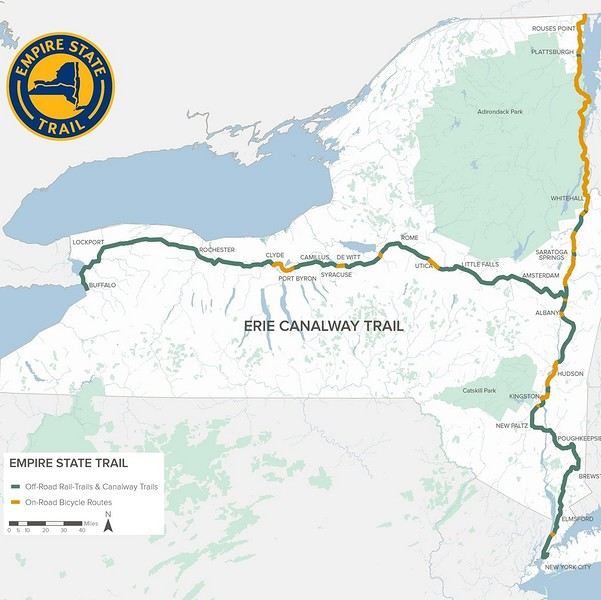 https://empiretrail.ny.gov/map
Two branches to reach NYC: from Buffalo (mostly on dedicated paths) or from Montreal (mostly on roads)
The route was developed in just three years. While it’s popular with cyclists on certain stretches near cities, those who bike the whole thing are still pretty rare.
It’s true that the scenery isn’t exactly breathtaking, and some sections—especially along the Erie Canal—can feel a bit tedious, though they’re very easy since there’s no elevation.
https://empiretrail.ny.gov/map
Two branches to reach NYC: from Buffalo (mostly on dedicated paths) or from Montreal (mostly on roads)
The route was developed in just three years. While it’s popular with cyclists on certain stretches near cities, those who bike the whole thing are still pretty rare.
It’s true that the scenery isn’t exactly breathtaking, and some sections—especially along the Erie Canal—can feel a bit tedious, though they’re very easy since there’s no elevation.
The trail starts in Buffalo, but since my bus from Toronto goes straight to Niagara, I’ll be starting at the falls instead. Plus, that’s where the direct train to NYC departs from (and arrives at).
A special train with bike spaces runs almost the entire route. First along the Erie Canal to Albany, then through the Hudson Valley all the way to the tip of Manhattan. This lets you skip sections and also return to your starting point without having to take a flight. Just be aware that bike spaces need to be reserved and can fill up during peak times. In June, no problem though.
This aspect really appealed to me, since my last trip had kinda put me off biking in the US. But here, 75% on dedicated paths, plus that legendary finish in NYC with your bike—I couldn’t resist celebrating my 70th birthday this way.
https://empiretrail.ny.gov/map
Two branches to reach NYC: from Buffalo (mostly on dedicated paths) or from Montreal (mostly on roads)
The route was developed in just three years. While it’s popular with cyclists on certain stretches near cities, those who bike the whole thing are still pretty rare.
It’s true that the scenery isn’t exactly breathtaking, and some sections—especially along the Erie Canal—can feel a bit tedious, though they’re very easy since there’s no elevation.The trail starts in Buffalo, but since my bus from Toronto goes straight to Niagara, I’ll be starting at the falls instead. Plus, that’s where the direct train to NYC departs from (and arrives at).
Bob Bike Trailer
hi there
After covering thousands of kilometers over the years with front and rear panniers, I’m now facing a problem: broken spokes on the rear wheel.
Once, twice—imagine the hassle of fixing it when you're in the middle of nowhere in the Cévennes!
So, drastic times call for drastic measures! I switched to a reinforced wheel and, following my bike mechanic’s advice, fitted a tire that’s a "tad" wider than the front one.
We set off on our summer adventure feeling confident, and guess what—"BAM"—a broken spoke after just 200 km. Seriously?! Not even that heavily loaded—just around 30 kg, plus my 80 kg. Even with the sturdier wheel, I still ended up with a broken spoke after 300 km! Back to the bike mechanic, and the only explanation: "It’s your pedaling style..." Not convinced at all! So here’s the idea: a Bob trailer! I’m done with this sword of Damocles hanging over my head—it’s a real buzzkill. Has anyone here tried a Bob trailer? Could you share your experiences—pros, cons, etc.? Thanks!!!
We set off on our summer adventure feeling confident, and guess what—"BAM"—a broken spoke after just 200 km. Seriously?! Not even that heavily loaded—just around 30 kg, plus my 80 kg. Even with the sturdier wheel, I still ended up with a broken spoke after 300 km! Back to the bike mechanic, and the only explanation: "It’s your pedaling style..." Not convinced at all! So here’s the idea: a Bob trailer! I’m done with this sword of Damocles hanging over my head—it’s a real buzzkill. Has anyone here tried a Bob trailer? Could you share your experiences—pros, cons, etc.? Thanks!!!
To the Top West End
In this time of general travel-journal scarcity, I’m stepping up to tell you about a far-too-short getaway to the Top West End, a local term for the very northern part of Western Australia, right on the border ( ;) ) with the Northern Territory.
As usual, I didn’t manage to keep it short, but this time I’ve got photos to go with it!
August 2020. Since the opportunities to explore the world are extremely limited right now, all we (R&X) can do is explore our own island! Well, just a part of it, because with the state borders still closed, we’re stuck in Western Australia (WA).
Luckily, we’re pretty fortunate because this state is huge: over 2.5 million km² (that’s more than four times the size of France or 1.5 times Quebec). What’s more, stretching over 20 degrees of latitude between the Antarctic Ocean and the Timor Sea, you’ll find climates ranging from Mediterranean to arid to tropical. That’s actually why we decided to head as far north as possible. Sick of the endless rainy winter in Perth, bring on the heat of the Kimberley... way up Nooorth!
Friday. At the airport, the main terminal was closed (not enough flights), so we ended up in the annex (where flights to the various mines usually depart from). There was no crowd at the gate, and in this huge, single departure lounge, empty seats were plentiful. Only three flights were listed on the screens for the rest of the morning: the first to Coondewanna (?), the second to Darwin, and ours to Kununurra (code KNX).
A cool breeze swept through the half-open corridors along the runways. At the top of the walkway leading to the Fokker 100 (the Airbuses and Boeings are now parked!), a flight attendant greeted us with a basket full of sanitary masks. We were actually the only masked passengers (the staff weren’t wearing them either). With zero Covid-19 cases in WA at the time, the only rule was to maintain social distancing—something pretty hard to do on a full plane!
It was also my first time wearing a mask—it felt weird, pretty uncomfortable, and after a while, painful behind the ears. I really feel for those who have to wear one all day, every day. The flight lasted three long hours, but luckily, I had a good book. From the window, I watched an endless expanse of salt lakes in all shapes and sizes—round, elongated, gray, white, sometimes blue and green—and an infinity of winding, capricious meanders, along with long straight lines that led nowhere. The last half-hour got more interesting as rocky, swollen formations and long, sloping plateaus appeared. Against the vast ochre landscape, green patches became more frequent.
Just before landing, rows of green fields briefly appeared, along with an surprisingly wide river—but we were already rolling down the tarmac. A few hangars, a myriad of small, stationary planes, and a tiny terminal topped with a sign: “Welcome to Kununurra.”
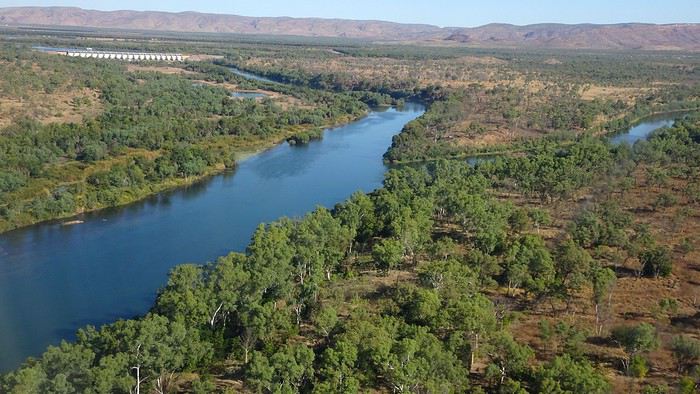
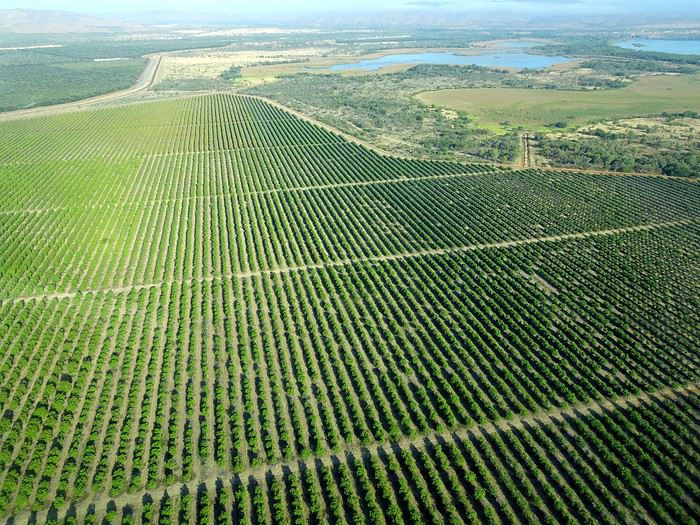
We wanted heat, and here it was—34°C the moment we stepped off the plane! We felt alive again and totally ridiculous in our jeans and sweaters. We quickly grabbed our suitcase and picked up the 4x4 we’d rented—more out of necessity, since only that type of vehicle can access the national parks we planned to visit.
Just four kilometers separated us from Kununurra, a town of 5,000 people founded in 1961 during the construction of the Lake Argyle Dam and the development of the Ord River Irrigation Area Scheme (more on that later). On the horizon, mountain ranges (a bit of an exaggeration, since we know Mt. Meharry, WA’s highest ‘mountain,’ doesn’t even reach 1,250 meters!) and closer to the road, a few irrigation canals cutting through stretches of bush, then a huge park overlooking a small lake lined with reeds.
A row of baobabs (yes, there are baobabs in Australia too!), a series of motels with immaculate lawns, a gas station, and there’s the main street leading to the town center—that is, the parking lots of the two supermarkets, the bottleshop, the pub, the Town Hall, the municipal pool, and the Tourist Office (already closed!), and at the next roundabout, another park, the Presbyterian church, and a few other shops. In short, two or three green blocks that you can explore in no time.
One road leads to the small industrial area and one of the town’s three or four campgrounds, while another heads toward the residential neighborhoods, which look just like the typical suburbs you find in any Australian city—except with tropical vegetation. We stocked up at Coles, an identical copy of the one near our place, and—surprise—the prices were practically the same.
We checked into one of the motels. The receptionist listed the town’s three or four restaurants, insisting that it’s always better to book a table. She recommended the Pump House, a bit outside town on the lake’s edge. “Best spot to watch the sunset, but hurry up.” she told us. It was only 5:00 PM!
When we got there half an hour later, the place was packed, and the sun had already disappeared behind a row of trees! Sure enough, we’d see a few days later that the sunset can be a stunning spectacle—if you wait a bit for the sky (especially if it’s cloudy) to blaze and reflect in the lake’s calm waters. A little disappointed, we headed back into town, where we easily found the other lively spot in town: the pub (nothing like an old English pub). Above the long L-shaped bar, several giant screens (thankfully muted) were broadcasting live footy, rugby league, etc. In one corner, players circled the pool table, while in another, customers were digging into plates of the day’s special. Instead of rooms, there were various patios where groups of friends and coworkers (easily recognizable by the fluoro vests they were still wearing) were gathered. We found a table under a mango tree—unfortunately, a little too close to the guitarist strumming his entire Country Music repertoire, complete with Keith Urban-style tremolos. Guaranteed culture shock!
Since it’s the custom here, we called the Country Club to book a table before the kitchen closed! The CC is the town’s—and even the region’s—fancy spot. Dark decor, modern furniture, dim lighting, and the air conditioning blasting. The twenty or so customers had taken refuge on the vast terrace, lit by torches. The view of the tall eucalyptus trees, illuminated by spotlights shifting from red to blue, was breathtaking.
The menu was minimal, but the grilled salmon was excellent, and the Pavlova (the meringue dessert Kiwis and Aussies have been arguing over since 1906) with melon and watermelon was absolutely divine.
It wasn’t even 9:00 PM, and we were already in bed. Had we already adopted the Top West End’s chicken schedule?!
To be continued... Journal dedicated to Attila
As usual, I didn’t manage to keep it short, but this time I’ve got photos to go with it!
August 2020. Since the opportunities to explore the world are extremely limited right now, all we (R&X) can do is explore our own island! Well, just a part of it, because with the state borders still closed, we’re stuck in Western Australia (WA).
Luckily, we’re pretty fortunate because this state is huge: over 2.5 million km² (that’s more than four times the size of France or 1.5 times Quebec). What’s more, stretching over 20 degrees of latitude between the Antarctic Ocean and the Timor Sea, you’ll find climates ranging from Mediterranean to arid to tropical. That’s actually why we decided to head as far north as possible. Sick of the endless rainy winter in Perth, bring on the heat of the Kimberley... way up Nooorth!
Friday. At the airport, the main terminal was closed (not enough flights), so we ended up in the annex (where flights to the various mines usually depart from). There was no crowd at the gate, and in this huge, single departure lounge, empty seats were plentiful. Only three flights were listed on the screens for the rest of the morning: the first to Coondewanna (?), the second to Darwin, and ours to Kununurra (code KNX).
A cool breeze swept through the half-open corridors along the runways. At the top of the walkway leading to the Fokker 100 (the Airbuses and Boeings are now parked!), a flight attendant greeted us with a basket full of sanitary masks. We were actually the only masked passengers (the staff weren’t wearing them either). With zero Covid-19 cases in WA at the time, the only rule was to maintain social distancing—something pretty hard to do on a full plane!
It was also my first time wearing a mask—it felt weird, pretty uncomfortable, and after a while, painful behind the ears. I really feel for those who have to wear one all day, every day. The flight lasted three long hours, but luckily, I had a good book. From the window, I watched an endless expanse of salt lakes in all shapes and sizes—round, elongated, gray, white, sometimes blue and green—and an infinity of winding, capricious meanders, along with long straight lines that led nowhere. The last half-hour got more interesting as rocky, swollen formations and long, sloping plateaus appeared. Against the vast ochre landscape, green patches became more frequent.
Just before landing, rows of green fields briefly appeared, along with an surprisingly wide river—but we were already rolling down the tarmac. A few hangars, a myriad of small, stationary planes, and a tiny terminal topped with a sign: “Welcome to Kununurra.”
We wanted heat, and here it was—34°C the moment we stepped off the plane! We felt alive again and totally ridiculous in our jeans and sweaters. We quickly grabbed our suitcase and picked up the 4x4 we’d rented—more out of necessity, since only that type of vehicle can access the national parks we planned to visit.
Just four kilometers separated us from Kununurra, a town of 5,000 people founded in 1961 during the construction of the Lake Argyle Dam and the development of the Ord River Irrigation Area Scheme (more on that later). On the horizon, mountain ranges (a bit of an exaggeration, since we know Mt. Meharry, WA’s highest ‘mountain,’ doesn’t even reach 1,250 meters!) and closer to the road, a few irrigation canals cutting through stretches of bush, then a huge park overlooking a small lake lined with reeds.
A row of baobabs (yes, there are baobabs in Australia too!), a series of motels with immaculate lawns, a gas station, and there’s the main street leading to the town center—that is, the parking lots of the two supermarkets, the bottleshop, the pub, the Town Hall, the municipal pool, and the Tourist Office (already closed!), and at the next roundabout, another park, the Presbyterian church, and a few other shops. In short, two or three green blocks that you can explore in no time.
One road leads to the small industrial area and one of the town’s three or four campgrounds, while another heads toward the residential neighborhoods, which look just like the typical suburbs you find in any Australian city—except with tropical vegetation. We stocked up at Coles, an identical copy of the one near our place, and—surprise—the prices were practically the same.
We checked into one of the motels. The receptionist listed the town’s three or four restaurants, insisting that it’s always better to book a table. She recommended the Pump House, a bit outside town on the lake’s edge. “Best spot to watch the sunset, but hurry up.” she told us. It was only 5:00 PM!
When we got there half an hour later, the place was packed, and the sun had already disappeared behind a row of trees! Sure enough, we’d see a few days later that the sunset can be a stunning spectacle—if you wait a bit for the sky (especially if it’s cloudy) to blaze and reflect in the lake’s calm waters. A little disappointed, we headed back into town, where we easily found the other lively spot in town: the pub (nothing like an old English pub). Above the long L-shaped bar, several giant screens (thankfully muted) were broadcasting live footy, rugby league, etc. In one corner, players circled the pool table, while in another, customers were digging into plates of the day’s special. Instead of rooms, there were various patios where groups of friends and coworkers (easily recognizable by the fluoro vests they were still wearing) were gathered. We found a table under a mango tree—unfortunately, a little too close to the guitarist strumming his entire Country Music repertoire, complete with Keith Urban-style tremolos. Guaranteed culture shock!
Since it’s the custom here, we called the Country Club to book a table before the kitchen closed! The CC is the town’s—and even the region’s—fancy spot. Dark decor, modern furniture, dim lighting, and the air conditioning blasting. The twenty or so customers had taken refuge on the vast terrace, lit by torches. The view of the tall eucalyptus trees, illuminated by spotlights shifting from red to blue, was breathtaking.
The menu was minimal, but the grilled salmon was excellent, and the Pavlova (the meringue dessert Kiwis and Aussies have been arguing over since 1906) with melon and watermelon was absolutely divine.
It wasn’t even 9:00 PM, and we were already in bed. Had we already adopted the Top West End’s chicken schedule?!
To be continued... Journal dedicated to Attila
Douze jours à Minorque aux Baléares English translation pending
Je suis à la retraite depuis novembre 2019. Je mets ce temps libre à profit pour (entre autre) compiler notes et photos prises ces dernières années pendant nos vadrouilles autour du monde. Ça date un peu, mais devrait conserver son intérêt, le plupart des endroits visités restent accessibles de la même façon qu'alors.
dimanche 25 septembre 2016
Le réveil à 3h30 est un moment extrêmement pénible. C’est pas du tout dans mes plages horaires ! Mais il fallait bien ça ! On va se rendre compte au long des interminables files d’attente que de monter dans cet avion avant 6 heures va devenir un challenge qui va très vite me mettre sous tension! Ensuite, il n’y a plus qu’à s’affaler sur son fauteuil avec un bon casque sur les oreilles, à écouter de la musique, tout en jetant un coup d’œil au splendide lever du soleil qui déverse ses teintes de rouge jusque sur les parois de l’appareil…
A Majorque, c’est une longue attente de plus de quatre heures, avant de prendre le vol pour Minorque. C’est long ! Sans dire que l’administration aéroportuaire s’est distribuée le budget « chaises » pour s’offrir le tout dernier 4*4 de chez Porsche !
On arrive enfin à destination. Quand l’avion atterrit, il est 14 heures, l’atmosphère est sombre. Dominique et moi, on se regarde, les hublots sont constellés de petites bulles d’eau…Il pleut. Des trombes ! Il fait froid… Ambiance !
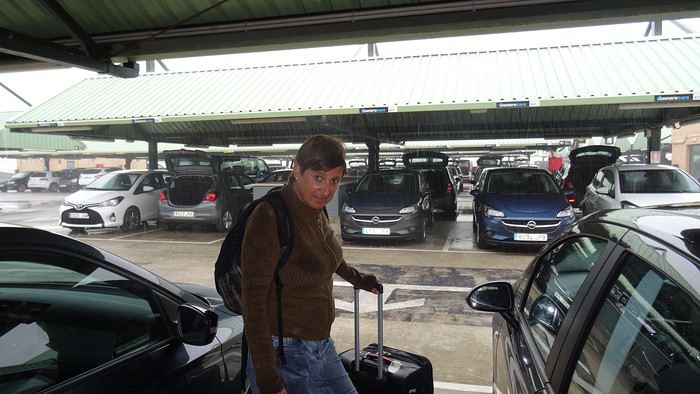
La voiture de chez Herz est une voiture complètement neuve avec GPS et surtout un connecteur MP3. Ça suffit tout à fait à me consoler ! En remontant vers le nord, on s’aperçoit qu’au fil du trajet le climat change complètement. Au nord il fait beau ! L’hôtel est une ancienne ferme retapée à neuf.
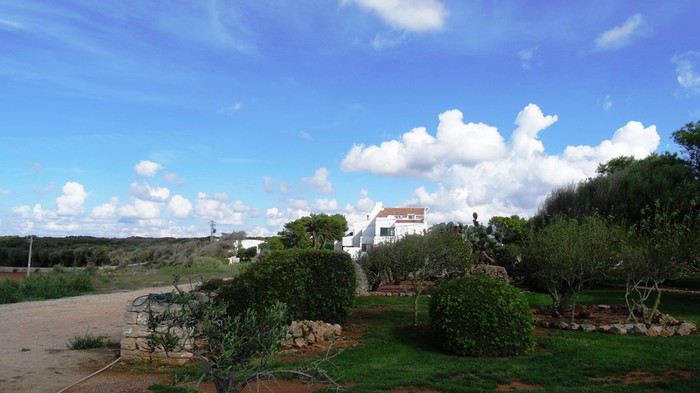
La chambre qu’on nous propose nous laisse cependant dubitatifs. Sans savoir trop pourquoi. Probablement l’absence de balcon. On décide d’aller négocier. Et ça marche. L’upgrade est spectaculaire, la chambre est superbe!
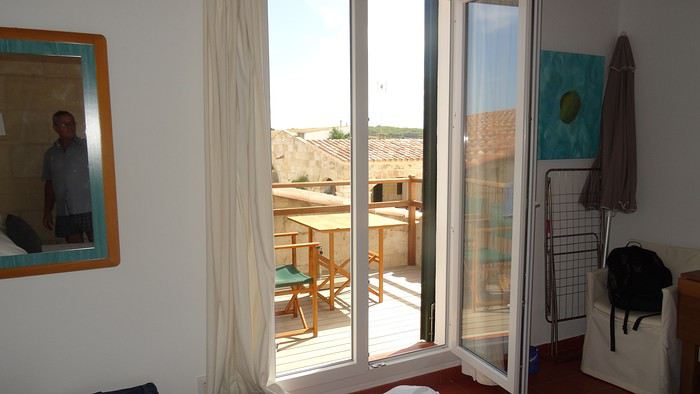
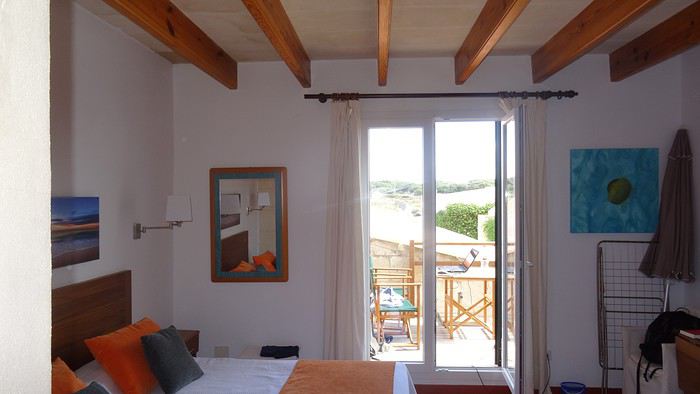
En fait, c’est un petit appartement. Il y a même une cuisine.
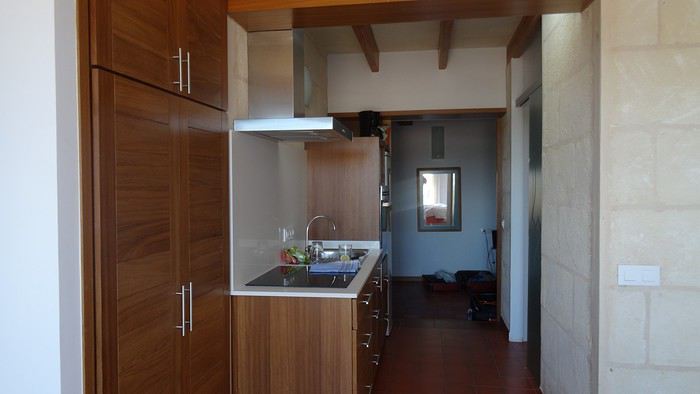
La mer est à 2km500. On décide de les faire à pied. On arrive au petit village qui entoure la Cala Morell. Les maisons sont toutes blanches. Même les toits. Il n’y a aucune exception et c’est assez joli…
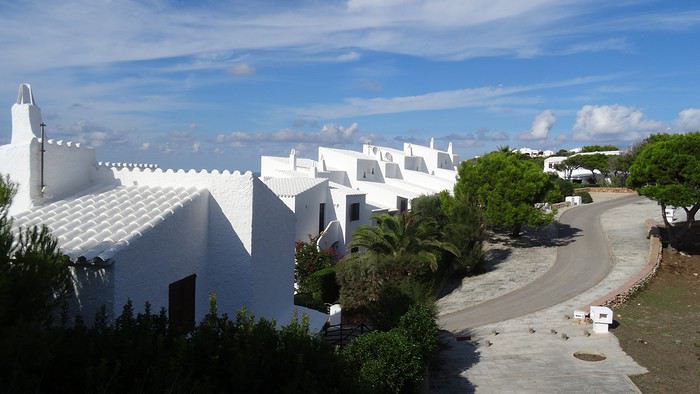
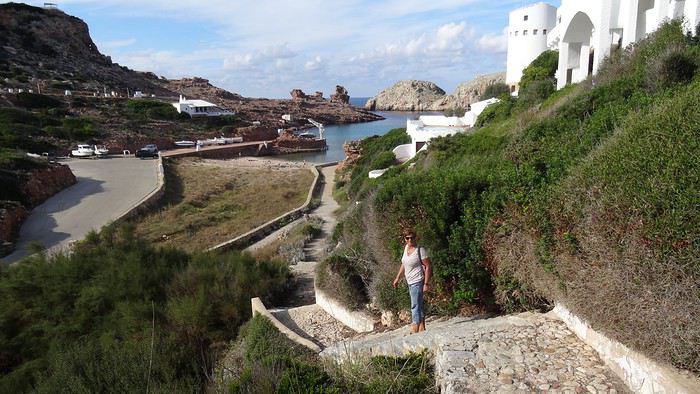
Nous n’avons pas mangé de la journée, alors, quand le patron du resto qui donne sur la plage nous annonce qu’il ferme ses cuisines à 17 heures, soit dans cinq minutes, on se laisse immédiatement embarquer pour un dîner. Une nourriture oubliable, un vin qui pique, mais dans un décor grandiose…
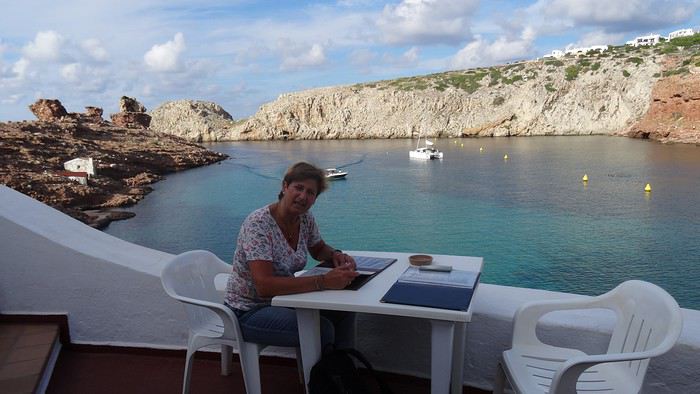
dimanche 25 septembre 2016
Le réveil à 3h30 est un moment extrêmement pénible. C’est pas du tout dans mes plages horaires ! Mais il fallait bien ça ! On va se rendre compte au long des interminables files d’attente que de monter dans cet avion avant 6 heures va devenir un challenge qui va très vite me mettre sous tension! Ensuite, il n’y a plus qu’à s’affaler sur son fauteuil avec un bon casque sur les oreilles, à écouter de la musique, tout en jetant un coup d’œil au splendide lever du soleil qui déverse ses teintes de rouge jusque sur les parois de l’appareil…
A Majorque, c’est une longue attente de plus de quatre heures, avant de prendre le vol pour Minorque. C’est long ! Sans dire que l’administration aéroportuaire s’est distribuée le budget « chaises » pour s’offrir le tout dernier 4*4 de chez Porsche !
On arrive enfin à destination. Quand l’avion atterrit, il est 14 heures, l’atmosphère est sombre. Dominique et moi, on se regarde, les hublots sont constellés de petites bulles d’eau…Il pleut. Des trombes ! Il fait froid… Ambiance !
La voiture de chez Herz est une voiture complètement neuve avec GPS et surtout un connecteur MP3. Ça suffit tout à fait à me consoler ! En remontant vers le nord, on s’aperçoit qu’au fil du trajet le climat change complètement. Au nord il fait beau ! L’hôtel est une ancienne ferme retapée à neuf.
La chambre qu’on nous propose nous laisse cependant dubitatifs. Sans savoir trop pourquoi. Probablement l’absence de balcon. On décide d’aller négocier. Et ça marche. L’upgrade est spectaculaire, la chambre est superbe!
En fait, c’est un petit appartement. Il y a même une cuisine.
La mer est à 2km500. On décide de les faire à pied. On arrive au petit village qui entoure la Cala Morell. Les maisons sont toutes blanches. Même les toits. Il n’y a aucune exception et c’est assez joli…
Nous n’avons pas mangé de la journée, alors, quand le patron du resto qui donne sur la plage nous annonce qu’il ferme ses cuisines à 17 heures, soit dans cinq minutes, on se laisse immédiatement embarquer pour un dîner. Une nourriture oubliable, un vin qui pique, mais dans un décor grandiose…
Montage vélo petit budget pour traverser l'Amérique du Sud English translation pending
Bonjour,
Je voudrais transformer un VTT giant coldrock pour partir en voyage et j'ai fort besoin de conseils car je n'y connais pas grand chose. J'ai un petit budget donc j'essaie de faire au mieux avec peu de moyens. J'adore la montagne et ce qui me fait rêver c'est de traverser l'Amérique du Sud par les Andes, et j'ai bien compris que ce n'était pas le plus simple.
Pour l'instant, voilà où j'en suis : Je pense changer les roues, peut être pour ce modèle de rose bike : https://www.rosebikes.fr/rose-m-zx-19shimano-deore-610-paire-de-roues-vtt-26-717084?product_shape=standard&article_size=26%22 Pour les pneus j'hésite entre marathon tout court, marathon mondial à tringle rigide (moins solides qu'en tringle souple mais moins chers), un mix des deux ou encore mixer avec un marathon racer (très léger et plus roulant) à l'avant. Les plus et plus tour me font peur à cause de leur poids. Ce qui m'interroge le plus est la transmission : le groupe est un Shimano Exage 400 lx en bon état, cassette 13-30, plateaux biopace 28 38 48, mais je pense qu'il me faut un plus petit développement pour passer partout. Pour retrouver les types de développement qu'on voit en vélo de randonnée, à moindre frais, j'ai pensé mettre une cassette 9v 11-40. Ça existe en sunrace mais je n'ai pas idée de la qualité et je ne sais pas du tout si ça marche de mettre ça avec un triple plateau, si ça peut s'adapter au moyeu et au dérailleur (il est à chape longue). Apparemment une chaîne 9v irait avec le pédalier, au delà non. Éventuellement aussi je peux remplacer le plateau de 28 par un 26, ça se trouve d'occase, plus petit il n'y a pas. Sinon changer cassette plus pédalier, voir les autres composants, mais plus cher. Les freins sont des cantilever mais ils marchent bien donc je pense les garder pour l'instant. Aussi je vais changer le cintre et la selle et mettre des sacoches mais ça c'est moins compliqué.
Voilà désolée c'était long, si vous avez des avis des conseils n'hésitez pas !
Je voudrais transformer un VTT giant coldrock pour partir en voyage et j'ai fort besoin de conseils car je n'y connais pas grand chose. J'ai un petit budget donc j'essaie de faire au mieux avec peu de moyens. J'adore la montagne et ce qui me fait rêver c'est de traverser l'Amérique du Sud par les Andes, et j'ai bien compris que ce n'était pas le plus simple.
Pour l'instant, voilà où j'en suis : Je pense changer les roues, peut être pour ce modèle de rose bike : https://www.rosebikes.fr/rose-m-zx-19shimano-deore-610-paire-de-roues-vtt-26-717084?product_shape=standard&article_size=26%22 Pour les pneus j'hésite entre marathon tout court, marathon mondial à tringle rigide (moins solides qu'en tringle souple mais moins chers), un mix des deux ou encore mixer avec un marathon racer (très léger et plus roulant) à l'avant. Les plus et plus tour me font peur à cause de leur poids. Ce qui m'interroge le plus est la transmission : le groupe est un Shimano Exage 400 lx en bon état, cassette 13-30, plateaux biopace 28 38 48, mais je pense qu'il me faut un plus petit développement pour passer partout. Pour retrouver les types de développement qu'on voit en vélo de randonnée, à moindre frais, j'ai pensé mettre une cassette 9v 11-40. Ça existe en sunrace mais je n'ai pas idée de la qualité et je ne sais pas du tout si ça marche de mettre ça avec un triple plateau, si ça peut s'adapter au moyeu et au dérailleur (il est à chape longue). Apparemment une chaîne 9v irait avec le pédalier, au delà non. Éventuellement aussi je peux remplacer le plateau de 28 par un 26, ça se trouve d'occase, plus petit il n'y a pas. Sinon changer cassette plus pédalier, voir les autres composants, mais plus cher. Les freins sont des cantilever mais ils marchent bien donc je pense les garder pour l'instant. Aussi je vais changer le cintre et la selle et mettre des sacoches mais ça c'est moins compliqué.
Voilà désolée c'était long, si vous avez des avis des conseils n'hésitez pas !
Changer de cintre? (à vélo) English translation pending
Bonjour à vous tous,
Je possède un vélo de voyage équipé d'un cintre "plat" mais légèrement cintré vers l'arrière (https://www.cyclo-randonnee.fr/guidon-55/guidon-ergotec-moon-2205.html) qui est sensé donner une position plus "naturelle" aux poignets. Je possède également une paire de cornes pour diversifier ma position. Auparavant j'ai également toujours eu des VTT avec des cintres plats. En m'intéressant un peu à l'équipement des vélos je me rends compte que beaucoup de vélos de voyage / randonneuses sont équipés de cintres de course et maintenant de cintre de gravel. J'aurais donc bien aimé avoir vos avis/retours sur les avantages de ces cintres par rapport à mon combo "cintre recourbé + corne".
J'avoue avoir toujours été réticent sur les cintres de course (je trouvais leur position trop basse et peu confortable) mais n'ai finalement eu que très peu d'occasion d'en essayer et surtout sur des vélos vraiment typés course...
Concernant l'utilisation du vélo, il est assez polyvalent : utilisé plusieurs fois par en pour des randos de quelques jours mais surtout quotidiennement en ville pour des déplacements "rapides et agiles" et également pour des petits passage en forêt ou chemin caillouteux (surtout dans un but de déplacements)
Me conseilleriez-vous de rester tel quel ou de sauter le pas ?
Je possède un vélo de voyage équipé d'un cintre "plat" mais légèrement cintré vers l'arrière (https://www.cyclo-randonnee.fr/guidon-55/guidon-ergotec-moon-2205.html) qui est sensé donner une position plus "naturelle" aux poignets. Je possède également une paire de cornes pour diversifier ma position. Auparavant j'ai également toujours eu des VTT avec des cintres plats. En m'intéressant un peu à l'équipement des vélos je me rends compte que beaucoup de vélos de voyage / randonneuses sont équipés de cintres de course et maintenant de cintre de gravel. J'aurais donc bien aimé avoir vos avis/retours sur les avantages de ces cintres par rapport à mon combo "cintre recourbé + corne".
J'avoue avoir toujours été réticent sur les cintres de course (je trouvais leur position trop basse et peu confortable) mais n'ai finalement eu que très peu d'occasion d'en essayer et surtout sur des vélos vraiment typés course...
Concernant l'utilisation du vélo, il est assez polyvalent : utilisé plusieurs fois par en pour des randos de quelques jours mais surtout quotidiennement en ville pour des déplacements "rapides et agiles" et également pour des petits passage en forêt ou chemin caillouteux (surtout dans un but de déplacements)
Me conseilleriez-vous de rester tel quel ou de sauter le pas ?
Croisière Kiel - New York du 5 septembre 2020 sur le MSC Meraviglia English translation pending
Bonsoir
N'ayant vu aucune discussion ouverte concernant cette croisière , je souhaiterais savoir si d'autres personnes ont réservé cette transat ?
Nous l'avons retenu en décembre 2019 auprès d'Azur Croisières (!) et nous devons régler le solde le 3 juillet ce qui nous pose problème : en effet, nous ne voyons pas comment elle peut être maintenue , étant donné la fermeture des ports canadiens jusqu'au 30 octobre et la situation sanitaire à New-York .
Je suis naturellement au courant de la fameuse ordonnance du 26 mars , mais , si elle est annulée ce qui me semble plus que probable , nous ne voulons pas de l'avoir , car cette croisière est unique et c'est celle-ci que nous voulons et elle n'est pas reprogrammée en 2021 .
D'où ma 2ème question : Azur doit -il alors nous rembourser car rien de semblable ou d'équivalent ne peut-être proposé ?
Merci d'avance pour vos réponses
Christian
Quel patin pour quelle jante? (à vélo) English translation pending
Voilà, cet automne je me suis fait construire deux belles roues en prévision d'un nouveau long voyage à vélo et 2000 kms plus tard je m'aperçois que mes jantes consomment de la gomme à une vitesse folle 😕.
Je suis toujours un peu un blaireau des bois concernant tout ce qui est un tant soit peu technique, donc j'ai besoin des lumières des mécanos virtuoses de ce fil.
J'ai un système de freins sur jante " classique " à cantilevers Deore LX.
Mes jeux de roues précédents, sur lesquels je faisais environ 30 000 kms avant de les remiser au grenier, avaient pour base des jantes Ryde Big Bull. Je n'ai jamais eu aucun souci avec elles, et mes patins duraient vraiment longtemps, même en montagne ou sur des pistes bien poussiéreuses ou boueuses.
Cette fois mon artisan a utilisé des jantes Ryde 19 C x 559. M'apercevant que le freinage n'était pas aussi performant et que je devais ajuster l'étrier en permanence j'ai inspecté ces jantes et je me suis aperçu qu'elles étaient légèrement rainurées ( elles ne sont pas lisses comme celles que j'avais auparavant ). Je pense que c'est ce grain sur la surface qui accélère l'usure de la gomme. Cela va vraiment très vite !
Voici mes questions :
- Quel est l'intérêt de concevoir de telles jantes ? - Y-a-t-il différentes qualités de gomme suivant les marques de patins ( je les achète nus, sans les boîtiers ) ?
L.
Je suis toujours un peu un blaireau des bois concernant tout ce qui est un tant soit peu technique, donc j'ai besoin des lumières des mécanos virtuoses de ce fil.
J'ai un système de freins sur jante " classique " à cantilevers Deore LX.
Mes jeux de roues précédents, sur lesquels je faisais environ 30 000 kms avant de les remiser au grenier, avaient pour base des jantes Ryde Big Bull. Je n'ai jamais eu aucun souci avec elles, et mes patins duraient vraiment longtemps, même en montagne ou sur des pistes bien poussiéreuses ou boueuses.
Cette fois mon artisan a utilisé des jantes Ryde 19 C x 559. M'apercevant que le freinage n'était pas aussi performant et que je devais ajuster l'étrier en permanence j'ai inspecté ces jantes et je me suis aperçu qu'elles étaient légèrement rainurées ( elles ne sont pas lisses comme celles que j'avais auparavant ). Je pense que c'est ce grain sur la surface qui accélère l'usure de la gomme. Cela va vraiment très vite !
Voici mes questions :
- Quel est l'intérêt de concevoir de telles jantes ? - Y-a-t-il différentes qualités de gomme suivant les marques de patins ( je les achète nus, sans les boîtiers ) ?
L.
Après la crise médicale, voici venir la crise économique en Espagne English translation pending
Hola .. désolé, mais pas envie de sourire !!
L'épidémie de Coronavirus a lourdement frappé toutes les économies, mais certains secteurs ont été plus affectés que d'autres, notamment la construction et la vente de véhicules.
A Barcelone se trouve la plus grande, et unique usine européenne de Nissan : 3000 emplois directs et plus de 20.000 emplois indirects.
Or, la direction (nippone) de Nissan, a officiellement communiqué, aujourd'hui, au gouvernement espagnol sa décision de fermer son usine de production implantée dans cette ville. Ce sont ainsi, 3000 emplois, directement dépendant de Nissan qui disparaissent, mais également plus de 20.000 emplois indirects dans la sous-traitance dans toute la région barcelonaise !!
A priori, cette décision, qui était déjà dans les tuyaux depuis quelques temps avait été illustrée depuis un an ou deux, par des incitations aux départs volontaires ou des licenciements, et c'est ainsi que prés de 1600 personnes au cours des derniers mois, avaient quitté le giron du constructeur japonais.
Nissan a déclaré que cette décision est irrévocable, et qu'elle n'en fait pas une sorte de "chantage à l'emploi" pour se voir octroyer des aides sous quelques formes que ce soit !! Cette décision met fin à une présence de 40 ans de la firme japonaise en Catalogne.
Quel que soit le côté vers lequel on regarde, le ciel est bien sombre et de gros nuages noirs sont de plus en plus visibles à l'horizon 😕
Les lits des populistes de tous poils et des extrêmistes de tous bords, partout en Europe, sont en train d'être bien préparés et avec de moins en moins de complexes (cf manif de Vox à Granada). Hasta luego 🤪
L'épidémie de Coronavirus a lourdement frappé toutes les économies, mais certains secteurs ont été plus affectés que d'autres, notamment la construction et la vente de véhicules.
A Barcelone se trouve la plus grande, et unique usine européenne de Nissan : 3000 emplois directs et plus de 20.000 emplois indirects.
Or, la direction (nippone) de Nissan, a officiellement communiqué, aujourd'hui, au gouvernement espagnol sa décision de fermer son usine de production implantée dans cette ville. Ce sont ainsi, 3000 emplois, directement dépendant de Nissan qui disparaissent, mais également plus de 20.000 emplois indirects dans la sous-traitance dans toute la région barcelonaise !!
A priori, cette décision, qui était déjà dans les tuyaux depuis quelques temps avait été illustrée depuis un an ou deux, par des incitations aux départs volontaires ou des licenciements, et c'est ainsi que prés de 1600 personnes au cours des derniers mois, avaient quitté le giron du constructeur japonais.
Nissan a déclaré que cette décision est irrévocable, et qu'elle n'en fait pas une sorte de "chantage à l'emploi" pour se voir octroyer des aides sous quelques formes que ce soit !! Cette décision met fin à une présence de 40 ans de la firme japonaise en Catalogne.
Quel que soit le côté vers lequel on regarde, le ciel est bien sombre et de gros nuages noirs sont de plus en plus visibles à l'horizon 😕
Les lits des populistes de tous poils et des extrêmistes de tous bords, partout en Europe, sont en train d'être bien préparés et avec de moins en moins de complexes (cf manif de Vox à Granada). Hasta luego 🤪
Réouverture progressive des parcs nord-américains English translation pending
Les États-Unis et le Canada ont entamé une réouverture partielle et progressive de leurs parcs et réserves naturelles.
Lire la suite...