Mexico: The Magic of the Yucatán
FR

Translated into English.

Original post
LH
Hello everyone,

What a pleasure to be back on VF after a few difficult years 😎 So, before diving into the topic, welcome back to VF and above all... keep going!

Well, I’m finally picking up my old habit of posting a new travel journal.

Before heading to Mexico in the summer of 2023 with my family (my partner and our two boys, aged 18 and 16), I had somehow convinced myself—though I can’t even remember why—that the Yucatán was too touristy, too cliché, too expensive, and overrated!

The country didn’t particularly appeal to me, but faced with my wife’s insistence—she’d been there years ago, before we met, and had promised to show our sons this incredible place—my arguments didn’t hold much weight.

And thank goodness, because I have to admit she was absolutely right to take us there! In the end, we encountered far fewer tourists than we’d feared (except at a few sites), and the prices, which we’d been told were geared toward American neighbors (US), turned out to be quite affordable. In short, it was pure joy on both counts. All that was left was for the trip itself to be beautiful and memorable—and it was...

1st stop: Isla Holbox and the whale sharks

Holbox (pronounced “Hol-bosh”) is a stunning island where you can relax in an enchanting setting.
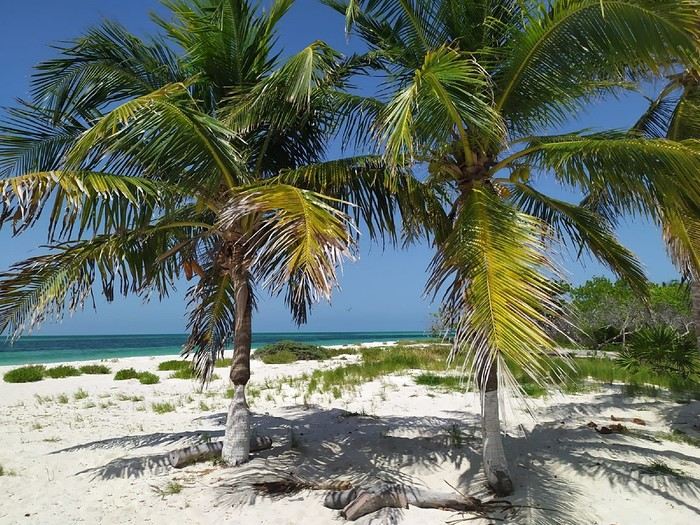


Our main goal in coming to Holbox was to swim with whale sharks. So, the first thing we told our hotel, Los Arcos Holbox, upon arrival was to arrange an excursion with one of the island’s many tour operators: Glendy Tours Holbox. We set off the next morning, bright and early.

The itinerary for this outing is the same for all tour operators (and there are about thirty of them!): roughly two hours by speedboat, then snorkeling with the whale sharks, followed by another boat ride to Cabo Catoche for lunch, then more boating to a fish-filled snorkeling spot before heading back. In total, the excursion can take eight hours—or even longer.
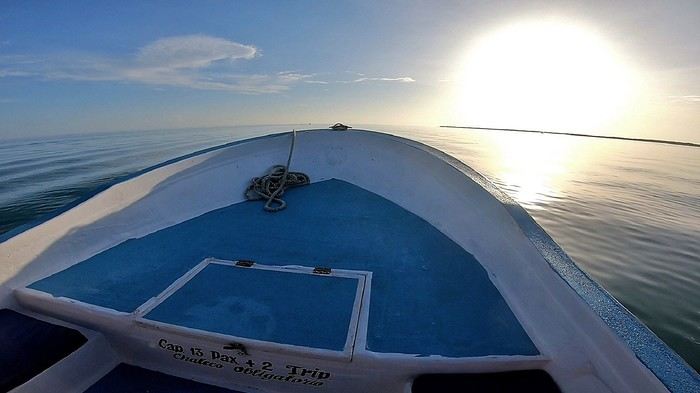


Besides my two sons and me, there were only two other clients on board—a French couple. Our boat was one of the very first to leave, but after ten minutes, the pilot got a radio call. We turned back without any explanation, returning to the departure dock.

There, a young woman who clearly fancied herself a diva was waiting for us. She was Mexican and boarded the boat, snubbing all five of us while flirting with the pilot and guide, who were suddenly all eyes for her. We couldn’t understand how this diva had convinced our tour operator to turn the boat around just to pick her up when she hadn’t even booked and we were already far out. We left 20 minutes late.

The two-hour journey passed surprisingly quickly, and for good reason: we spotted dolphins six times! They were leaping out of the water as they moved. Pure joy. We stopped whenever they were near the boat.


The photo isn’t great—the ultra-wide-angle lens on my GoPro makes the dolphins look smaller—but at least I got a souvenir.

A few flying fish (exocets) also glided a meter or two above the water as we sped along. The false start was forgotten, and the day was off to a fantastic start in this stunning marine environment...

When we reached the area where the whale sharks were supposed to be, the guide explained that we’d now have to scan the sea until we spotted one. It could take five minutes or forty-five, he said, and if we were unlucky, we might not see any at all!

An hour and a half later—still nothing! The captain then headed toward a distant area where about twenty other boats were already gathered.

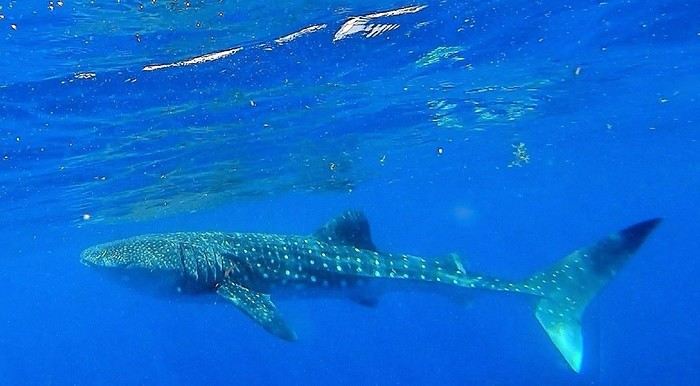
Sure enough, there was a juvenile whale shark (still a good eight meters long) there, and all the boats were lining up to approach it slowly, one by one, so as not to scare the animal. Each boat got about thirty seconds within a few meters of it, engine idling, before making way for the next. We were allowed to approach three times, but we weren’t permitted to dive in. That’s normal—such a crowd of divers around a single animal would stress it out, and here, whale sharks are protected by regulations: swimming with them is strictly controlled. There was even a coast guard boat with us at all times, monitoring everyone’s behavior.

We were torn between the luck of seeing such a magnificent animal, even from the surface, and the discomfort we felt about the absurd situation. All those boats lined up just to catch a fleeting glimpse of the shark for a few seconds—let’s be honest, it was ridiculous. In short, the whole thing was unpleasant, and probably even more so for the shark than for us, though it did keep gulping down kilos of plankton as if nothing were happening...

When it was our turn to approach, I dipped my GoPro into the water at arm’s length and framed the shot blindly, hoping for a decent image of the shark.


On the third and final approach, the sixth passenger on board—the one we’d had to turn back for ten minutes after departure—quietly spoke to the guide and captain after putting on her flippers (even though, I’ll remind you, no one was allowed to dive). She wanted them to ask the coast guard for permission to dive with the shark—just her! She whispered so we couldn’t hear what she was offering in exchange.

The two lackeys complied and shouted the request to the officials in front of all the other boats, with no shame whatsoever. With so many witnesses, the coast guard had no choice but to refuse. The diva wouldn’t let it go and asked them to insist, which they did, but the refusal was firm and final.

On the nearest boats, everyone had heard and was stunned. They openly mocked this bimbo who clearly had no shame. Hidden behind her star sunglasses, she responded with a dismissive smile. Pathetic.

The encounter with the shark ended, and we set off for Cabo Catoche, a site on Holbox Island where we were to have lunch.
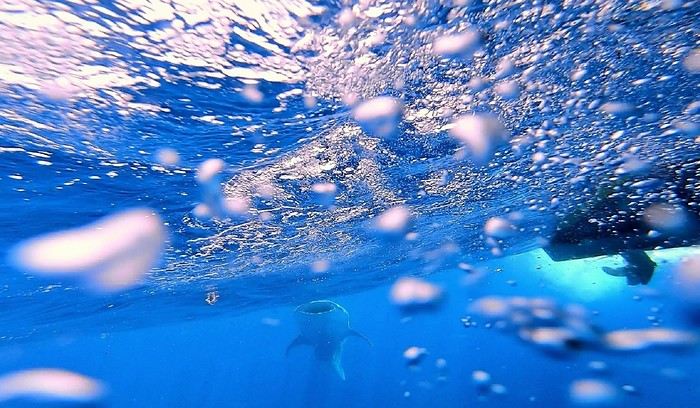


We were a little disappointed not to have had the chance to see the usual school of whale sharks (they’re often dozens swimming together!), but that’s nature’s way, and we knew it.

And then, an unlikely stroke of luck: a boat ahead of us was putting divers in the water with a pair of adult whale sharks. We joined them, and while we were putting on our masks and snorkels, the guide briefed us. He said my sons and I would go first, followed by the French couple and the diva.

But Miss World, clearly unhappy with this order, quietly complained to the guide, who eventually switched the order. It didn’t bother us since we’d only get a minute in the water anyway—what’s a minute more or less?

So the three of them got in the water, and a moment later, they were done. My two sons and I, sitting on the edge of the boat with masks on and snorkels in our mouths, were ready to finally take the plunge. But instead of continuing to follow the shark, the captain was suddenly all eyes for Miss Silicone! He even let go of the wheel for a moment to help her back on board.

One of the two sharks had already left minutes earlier, and the second was swimming farther away. Other boats were arriving, and the captain went to join the queue 100 meters from the shark. Soon, even more boats showed up. There were way too many people, the shark left, and diving was no longer possible.

I was, of course, a little disappointed not to have fulfilled my long-time dream of swimming with a whale shark, even briefly. But I was mostly disgusted for my two boys, who had been so excited about it. I told the guide exactly what I thought and asked for compensation—not for missing out on swimming with the shark (you can never guarantee seeing one, nature isn’t at our beck and call), but for clearly skipping our turn to dive. He promised a refund.

At the end of the day, back on land, he dropped us all off, and as he was about to leave, I reminded him about the refund. He agreed again, calmly got back on board, and sped off as if nothing had happened—just him and the captain, two total cowards. I couldn’t believe it.

Of course, back at our hotel (which had booked this tour operator—Glendy Tours), I explained the situation and asked for my refund again. The receptionist called the manager, who arrived with the guide. Our runaway wasn’t so cocky anymore. Inside, I was fuming, but I kept my cool during the discussion that followed.

Right off the bat, I made a point of looking the so-called guide in the eyes while telling him he’d run off like a coward. I did my best to stay calm, speaking clearly, staring him down the whole time, and repeating several times that he was a coward, in front of the manager, who didn’t say a word. The guide had clearly been told by his boss to keep quiet because he didn’t utter a word during the entire twenty-minute conversation.

Anyway, I’ll spare you the details, but in the end, the manager only offered us another excursion the next day as compensation for the “inconvenience.” It was just snorkeling with fish, not another whale shark trip. He admitted their fault, but since we had to leave early the next morning and had other bookings for the rest of the trip, we couldn’t accept. And he refused to refund us.

On Tripadvisor, Glendy Tours has a mediocre rating (3 out of 5), but more importantly, it ranks 29th out of 36 nautical tour operators rated by customers. I was pretty upset with the hotel for booking such an amateur for us.



If you want to swim with whale sharks in Holbox, you might end up with Glendy Tours. And it might go well—I certainly hope so. But given the price of such an excursion (3,000 pesos per person, about 160 €!), I’d still suggest quickly checking online before you go to see which providers have the best ratings. You’ll have a much better chance of things going smoothly with the top-rated ones than with those as poorly ranked as Glendy Tours.

On the other hand, if you’re a beautiful young woman, you can choose them without worry—you’ll get better treatment than the rest of us...

To wrap up this excursion, I have to mention the “respect for nature” angle that all these tour operators highlight. They tell us they respect the whale sharks: only two or three people can dive at a time, and only for a few minutes, so as not to disturb these gentle giants...

We believed them before we left, but that’s not what we saw. When the sharks are hard to find except for one, everyone rushes it, and only the constant presence of the coast guard prevents the tour operators from putting their clients in the water.

Because for the second shark we saw, when the divers from our boat got out of the water and we left to join the queue while it was our turn to dive, other boats quickly arrived and started swarming the poor shark, which eventually left.

In other words, it’s clear these companies only respect the sharks when they’re being watched.
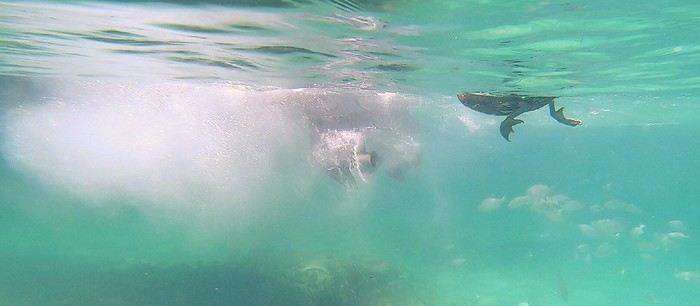
Boat reversing a meter away from a pelican

And for the snorkeling near Cabo Catoche, they attract fish daily by feeding them—a practice that’s normally discouraged. Afterward, these fish can’t feed naturally anymore and become dependent on Glendy Tours and its competitors.

A quick note on the rest of the excursion: Cabo Catoche (the site where we had lunch, on Holbox Island) is the northernmost point of the entire Yucatán. The place is paradise.
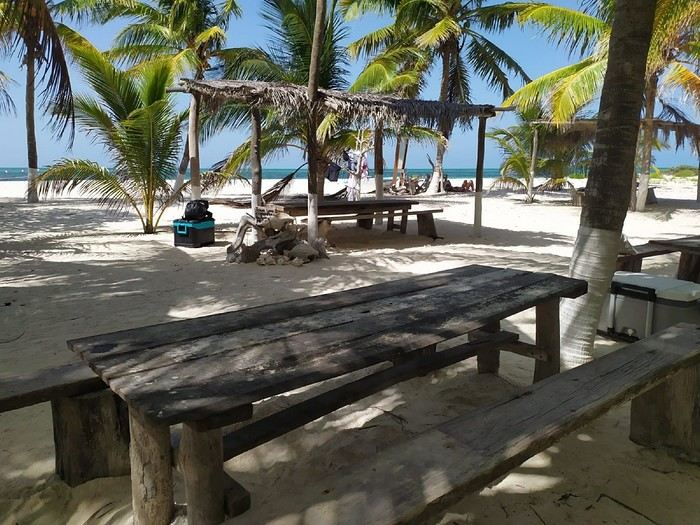


On the way back, we spent half an hour snorkeling at a site that turned out to be fish-filled only because the tour operators had the bad habit of feeding the fish. But this practice, which isn’t respectful of nature, is normally discouraged.
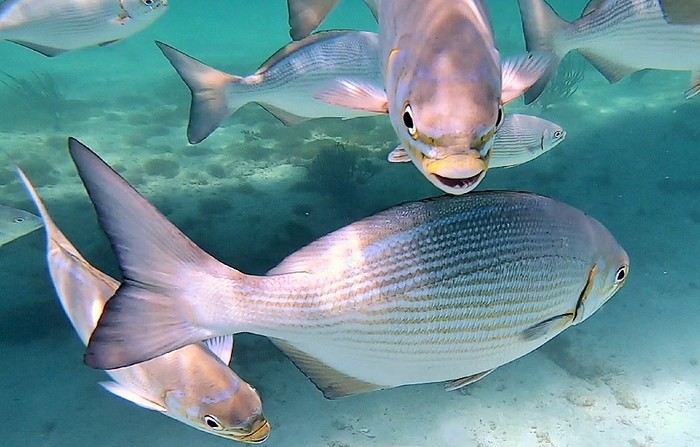


Plus, life jackets—like in many places in the Yucatán—are mandatory!!
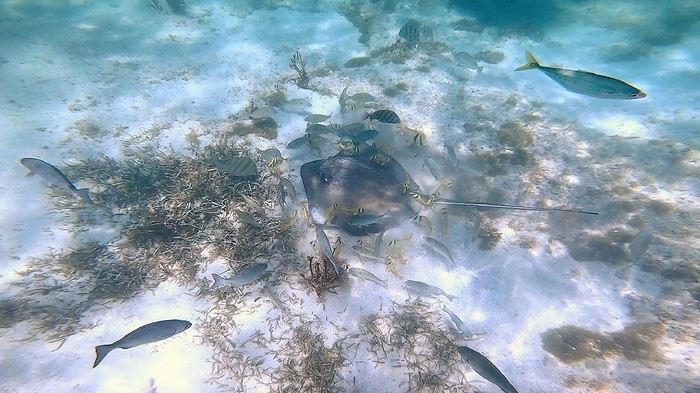


As divers, we didn’t find the site very interesting, but objectively, it should delight those who aren’t used to putting their heads underwater in beautiful dive spots.

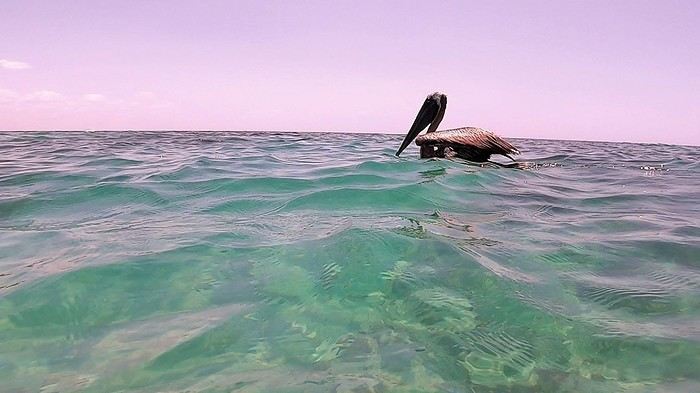
We hated feeling trapped in those life jackets, stuck at the surface, and for me, the highlight was swimming next to a pelican that wasn’t too shy—it was paddling right beside me in green water.

Anyway, it seems we can’t post more than 10 photos at once on VF, so I’ll come back with the rest of the journal in another message. Because after these early trip mishaps, the rest of the journey turned out to be magnificent...
Le blog voyages : http://derrierelhorizon.fr/accueil/
LH Lhorizon Veteran ·
... and here's the rest...

So, I was telling you about my pelican swimming in green waters just a meter away from me—here it is!

To wrap it up, our dream of diving with whale sharks didn’t pan out—unlike us, who stayed on board! But it’s all good in the end since we still have 18 days left to enjoy Mexico, and those guys and their plastic sweetheart aren’t gonna ruin the fun.

The rest of our journey through the Yucatan is actually turning out to be amazing. Even though we didn’t get to dive with whale sharks, in a few days—though we don’t know it yet—we’ll be diving with a wild crocodile…

Bioluminescence

On the far west side of the island (just 15 minutes from the little town of Holbox by golf cart), there’s a famous bioluminescence site: the plankton in the water glows at night.

The photos I’d seen online showed incredibly bright, metallic blue water at night. It was stunning.

If you’ve seen those same images, don’t be fooled: the plankton does glow, but much less than in those photos, and the light isn’t blue—it’s more of a grayish hue. Basically, it’s magical for kids, interesting for the curious, but overall a bit disappointing (there we go again…).

But maybe that bright blue glow depends on the season or water conditions…

The Beaches

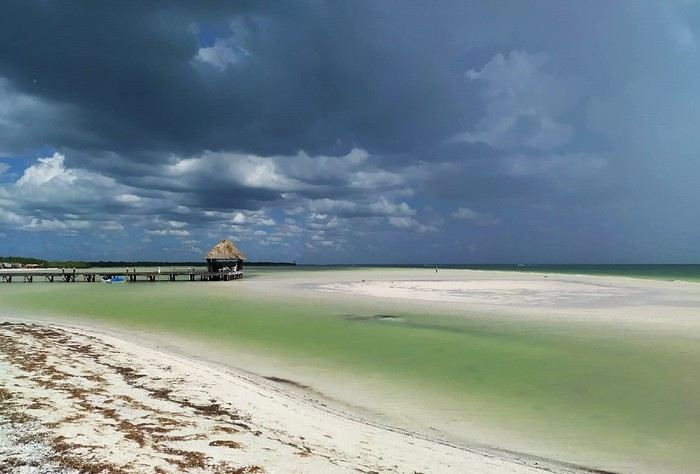
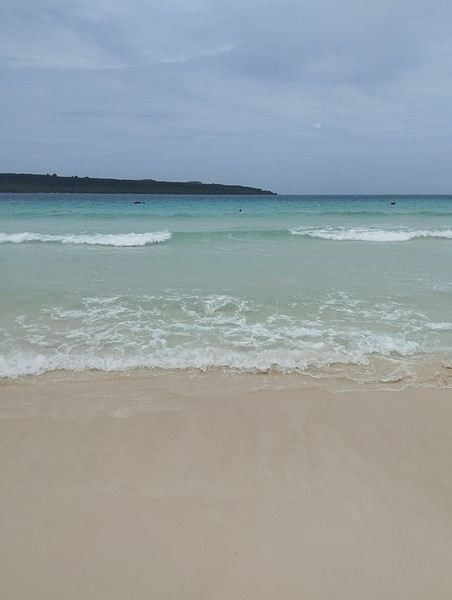
Holbox Island has long, gorgeous white-sand beaches.


In the town of Holbox, they’re taken over by hotels, but as soon as you venture a little farther, you’ll find paradise-like spots: white sand, sea that shifts between green and turquoise, coconut trees…

Street Art

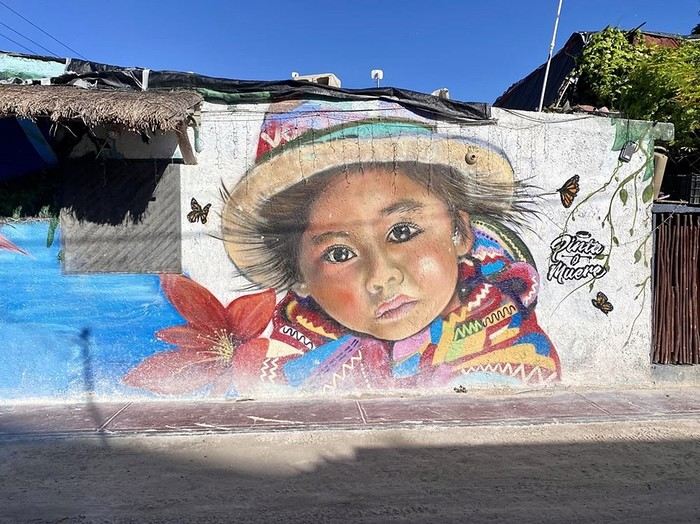
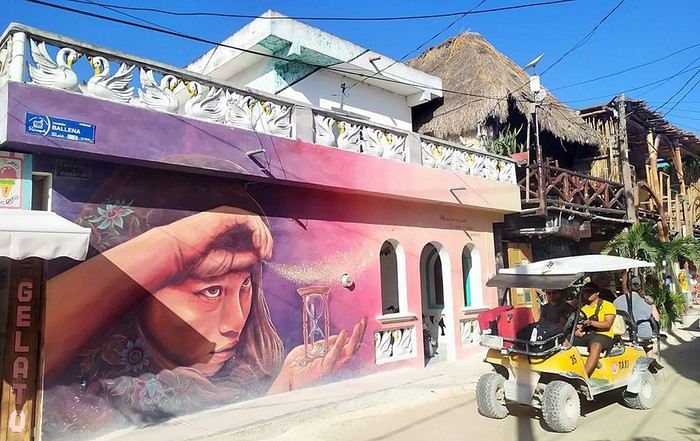
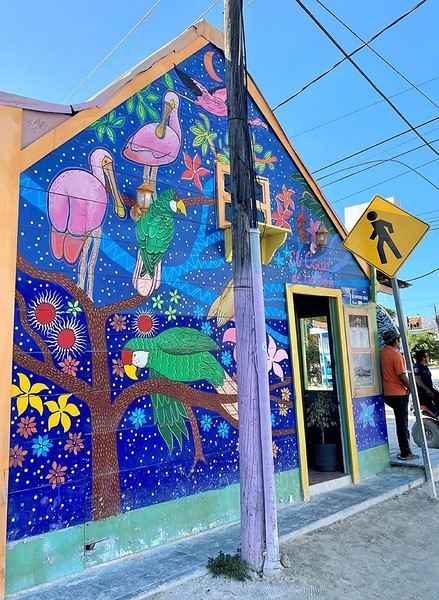
Lots of walls in Holbox are beautifully graffitied. Here’s a little preview.


That’s it for Holbox, but the journey continues...
Le blog voyages : http://derrierelhorizon.fr/accueil/
LH Lhorizon Veteran ·
Second stop: Rio Lagartos and Las Coloradas

After leaving Holbox Island by boat to reach the mainland, we head to Rio Lagartos, still in the northern part of Yucatan.

This small, quiet town thrives on tourism, yet paradoxically, we saw very few visitors.


The great tip is to visit the Ria Lagartos reserve early in the morning, which is why it’s best to arrive the day before.

If you do, you can enjoy the late afternoon (on the day of arrival) to visit the two cenotes of Peten Mac and Chikila, located just outside the town.

The next morning, you visit the biosphere reserve by boat, and in the afternoon, you can head to Las Coloradas.

The Peten Mac Cenote

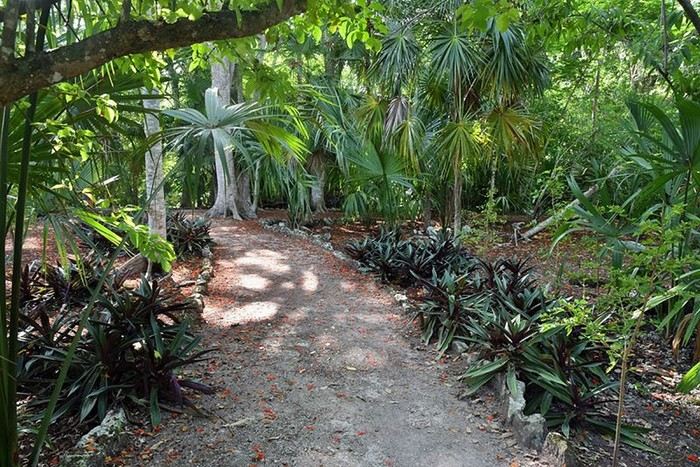
You reach the Peten Mac cenote via a pleasant path winding through the vegetation.


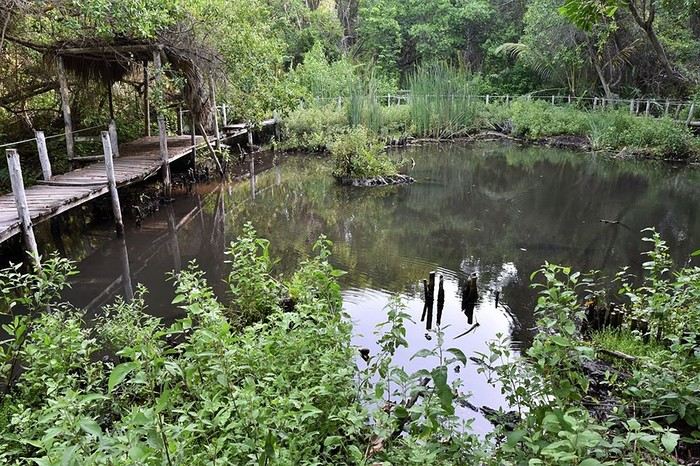
After a few minutes’ walk, the trail opens up to a small, wild cenote, surrounded by a dock and nestled in the jungle.


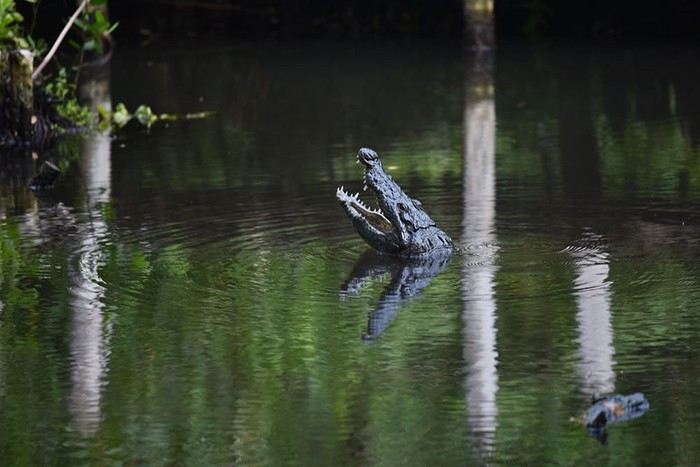
In this cenote live two wild crocodiles that, during our visit, didn’t show themselves right away. While keeping an eye out for the large reptiles, we chat with two local guides. It’s their day off, and they’re wrapping up their fishing trip. They haven’t caught a single fish but are enjoying a few beers in the great outdoors—sometimes, it doesn’t take much to be happy.

We tell them we’d love to see the two crocodiles. Immediately, one of them grabs his fishing rod and taps the water’s surface continuously with the tip.

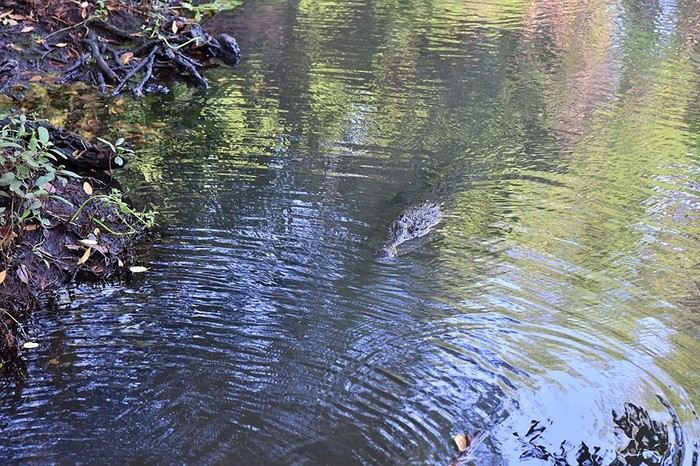
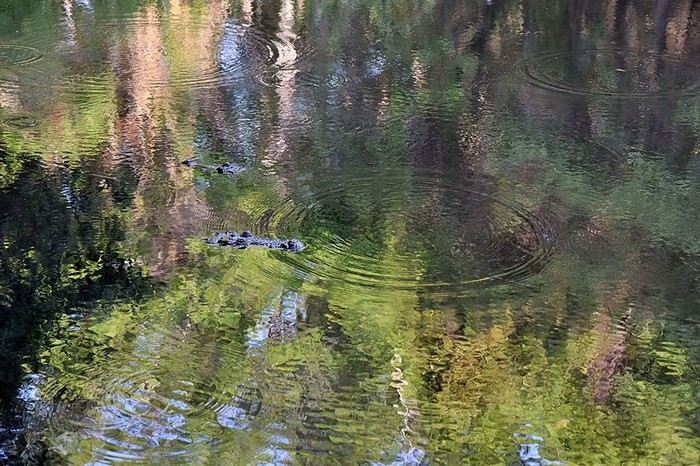
The result is almost instant: within seconds, the first crocodile approaches quickly, almost like a small dog responding to its owner’s call, followed closely by the second. The scene is incredible.


They explain that the few visitors who come here sometimes feed the cenote’s two residents (though feeding wild animals is obviously a practice to avoid, for the animals’ sake). That’s why they rushed over at the guide’s call, hoping for a little snack. The two reptiles stayed for long minutes just a few meters away, floating peacefully on the surface.


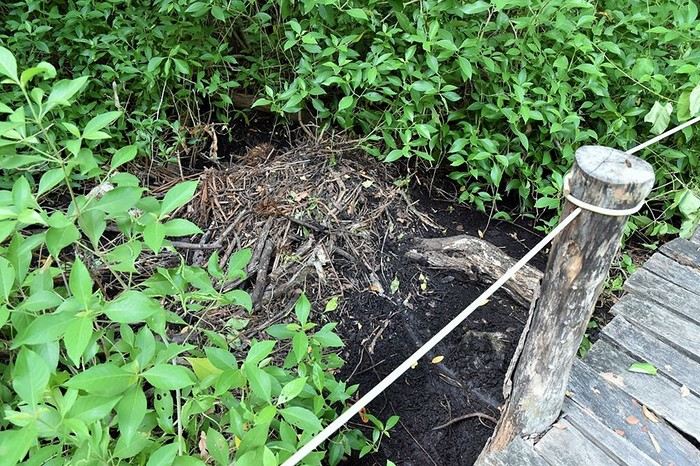
The guide tells us that in the previous days, the female had built her nest near the dock. So, it’s best to avoid that area when the soon-to-be mom is around, because even though this freshwater crocodile isn’t aggressive toward humans, it can become so if it thinks someone’s threatening its nest or eggs.

Mama croc’s nest

While we chat with these two friendly guides, who share fascinating stories about the local wildlife, one of the crocodiles calmly dives with its mouth wide open.


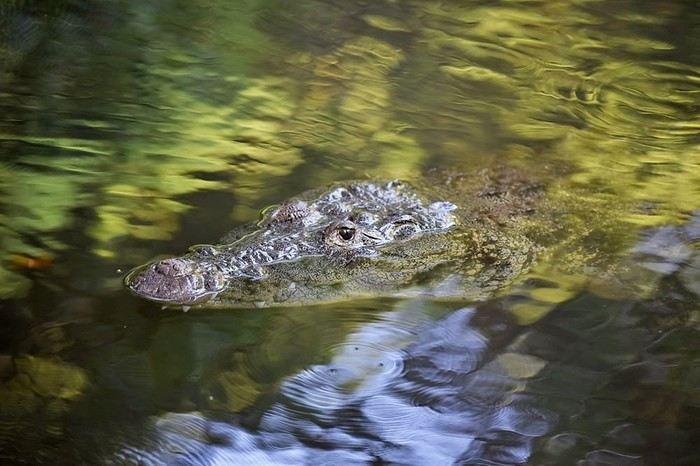
It disappears, but its companion stays on the surface just four or five meters from the dock, allowing me to photograph it up close.


Already 10 photos posted! More to come...
Le blog voyages : http://derrierelhorizon.fr/accueil/
LH Lhorizon Veteran ·
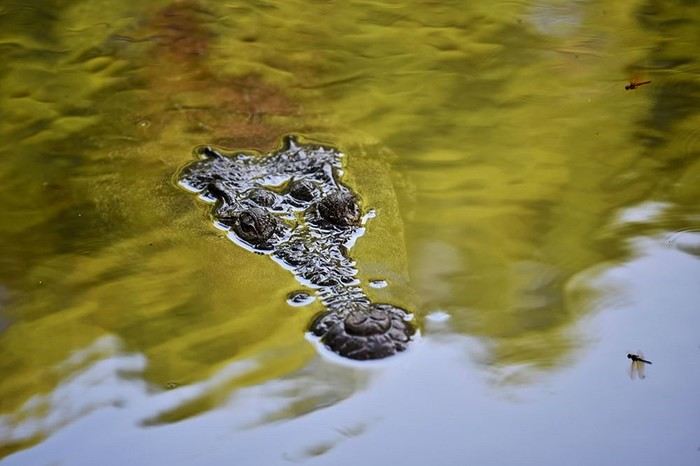
I was snapping photos of this croc up close, as I was saying...

With a few curious dragonflies as a bonus!


Needless to say, unlike most cenotes open to the public in the Yucatan, you can’t swim in the one at Peten Mac! However, this spot, where we didn’t encounter a single tourist during the forty minutes we spent there, is a treat for nature lovers.

We leave the Peten Mac cenote for the Chikila cenote, located just a few hundred meters away.

The Chikila Cenote

Before visiting these two neighboring cenotes (Chikila and Peten Mac), we were clearly told that we could only swim in Chikila because of the two crocodiles living in Peten Mac.

So, as soon as we arrive at Chikila, our two sons put on their swimsuits and get ready to jump into the water to cool off at last, since the atmosphere is stifling with very high temperatures and humidity.

Just as they’re about to dive in, Victor, our oldest son, says this surreal sentence: "We’re all agreed, that kind of crocodile at the bottom—it’s fake, right?"

We weren’t suspicious at all because young kids had just been swimming there, women were washing their laundry with their feet in the water, and the locals had assured us before we came that crocodiles didn’t enter this cenote and that we could swim there without worry.

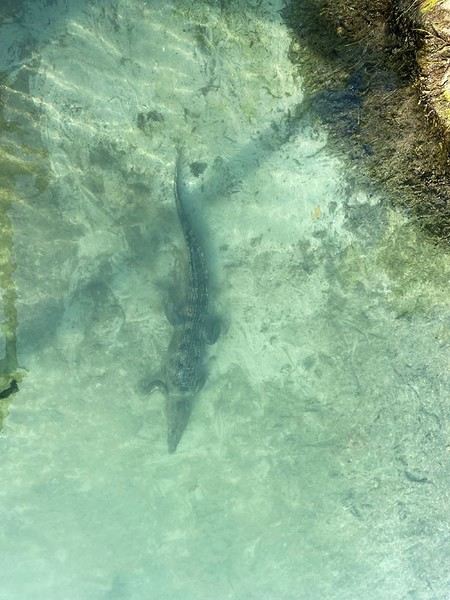
But the creature clearly starts moving at the bottom of the water: the fake crocodile is real!


We’re stunned! We immediately inform the women, who don’t seem particularly surprised and continue washing their laundry as if nothing happened.

The kids who had just gotten out of the water come back to admire the beast, though they don’t dip so much as a toe in this time!

After asking around, it turns out this cenote is connected to the nearby sea by a network of submerged tunnels (like most cenotes, in fact), and even though it’s rare, sometimes a crocodile slips in!

This one isn’t very big, and the locals assure us that the few crocodiles that end up in this cenote have never attacked any swimmers. But we still feel a huge retrospective fright, imagining what could have happened if our sons had dived right next to it.

Once the shock passes, the four of us laugh together about what will, much to our dismay, become a great travel anecdote.

Ria Lagartos, Biosphere Reserve

The main attraction of Rio Lagartos is its biosphere reserve, classified as such by UNESCO. It’s actually called Ria Lagartos, which means "estuary of the lizards" (understand: estuary of the crocodiles!), not to be confused with the town of Rio Lagartos (located just opposite), the "river of the lizards."

The reserve is best visited by boat, ideally early in the morning, because that’s when the animals are just waking up: still half-asleep, they’re easier to observe.


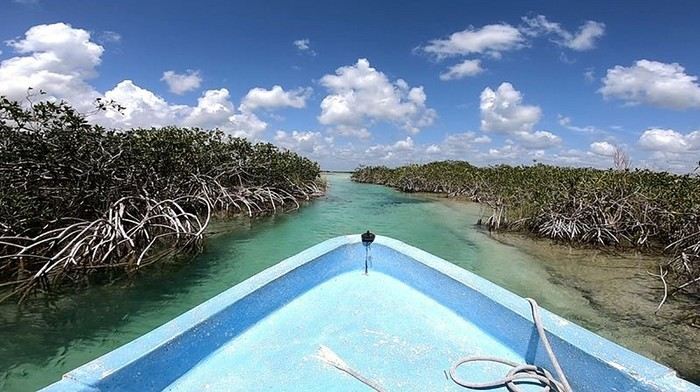
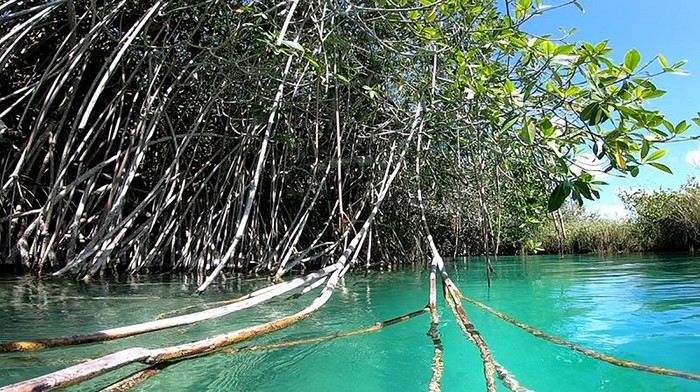
Within minutes, we reach the mangrove on the opposite shore, then navigate through the winding canals.


Ria Lagartos is a critically important area for the conservation of many endangered species. Some animals considered critically endangered, like sea turtles, are protected here.

The atmosphere is one of tranquility and calm, perfectly matching such a natural site.

This protected area allows you to observe many birds everywhere. It also serves as a stopover for a number of migratory birds.


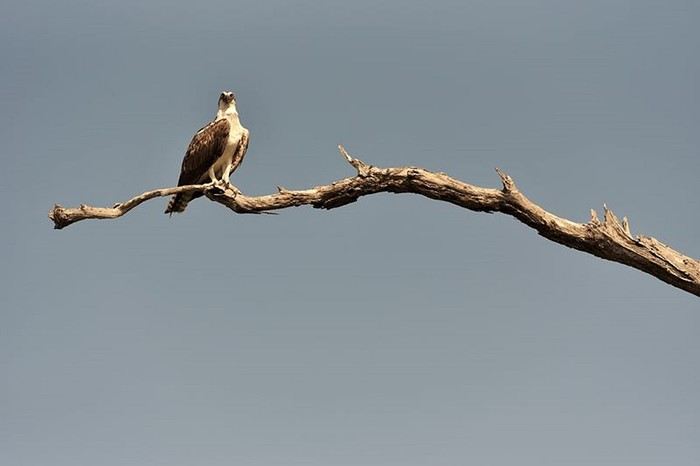
Among all the birds living in the area, we’re lucky enough to spot an osprey. It’s a beautiful raptor with a wingspan of over 1.5 meters, feeding almost exclusively on fish.

The pressure of its talons is so strong that sometimes, when the fish it catches turns out to be too heavy, it may not be able to release its grip and ends up drowning!


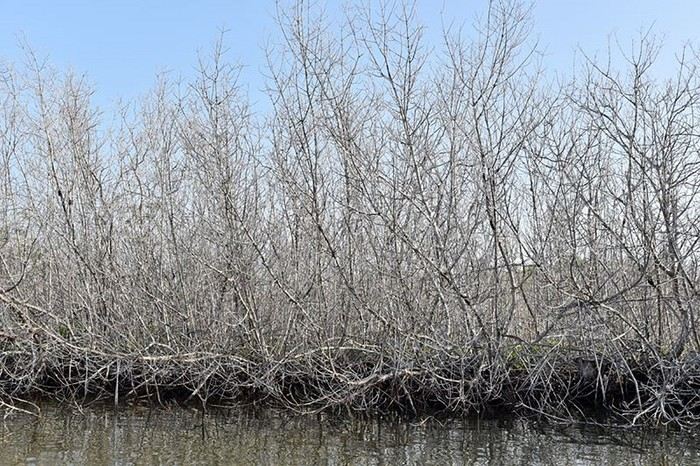
Our guide José explains that a few years ago, part of the mangrove didn’t survive the passage of El Niño (or more precisely, the spread of its global consequences, since El Niño is localized in the Pacific Ocean), a climate phenomenon that causes a significant rise in water temperature.


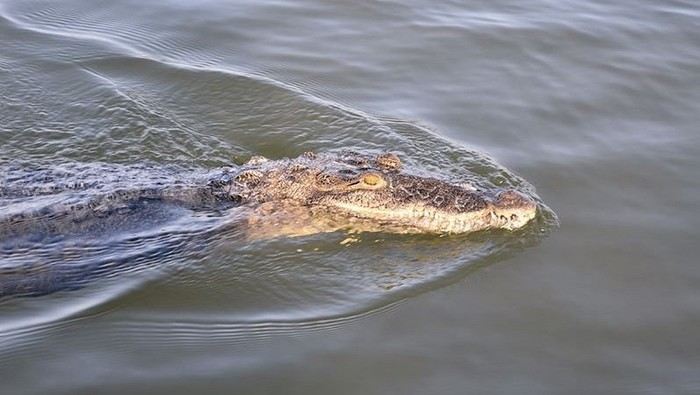
The affected area isn’t very large, but it’s in this seemingly lifeless spot that we spot a crocodile.

Despite showing off its impressive teeth, it generally doesn’t attack humans since it feeds exclusively on fish, birds, and small mammals.


Note that if you want to maximize your chances of spotting a crocodile, you should leave from Rio Lagartos as early as possible, meaning no later than 7:00–7:30 AM. Because as soon as it starts getting hot, these large reptiles tend to hide in the mangrove.

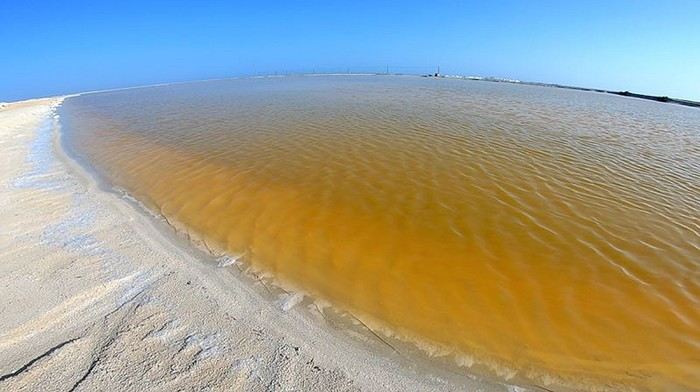
The boat tour continues with a walk through a salt marsh where the water displays surprising colors.


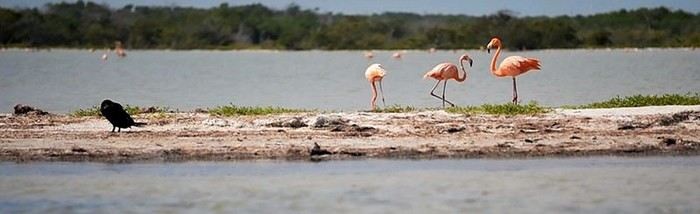
Then we arrive in the territory of the pink flamingos. Here, there are two options: either the guide respects the regulations, which prohibit getting too close to these graceful birds to avoid scaring them, or they blatantly ignore the rules to satisfy their clients, hoping for a tip at the end.

Our guide José, very professional, will conscientiously stay at a distance. Hence the slightly distant photos illustrating this post.


José explains that a few years ago, there were many more flamingos here than today. Boats would approach them very closely and often at high speed, forcing them to fly in front of tourists’ cameras. The tourists were, of course, delighted with their photos, taken at the expense of the frightened flamingos.

And as expected, what had to happen happened: the flamingos left to live elsewhere, far from humans, to have peace. So today, there are far fewer of them in this part of the reserve accessible to tourists, though in the end, we still spot a few dozen.

Note that during these boat tours, if you wish, you can make a stop in the middle of the estuary to cover your body in mud, then rinse off in the water half an hour later. We didn’t do it, but it’s supposedly great for the skin.

The tour ends with the observation of the pink flamingos. Next stop: Las Coloradas...
Le blog voyages : http://derrierelhorizon.fr/accueil/
SC Scot2021 Regular ·
Hi! What a great idea! A new travel journal about the Yucatan! We're heading there for the first time during the two months of next summer with our two boys, aged 15 and 10... I’ll be following your adventures in detail and with pleasure😎

Sylvain
carnet de 8 semaines dans l'Ouest Américain: https://voyageforum.com/v.f?post=10554947;#10554947
LH Lhorizon Veteran ·
Las Coloradas

Las Coloradas is located 25 minutes by car east of Rio Lagartos.

Originally, the current site of Las Coloradas was a place where the Mayas produced salt. This activity continues today: seawater is stored in large basins, then gradually evaporates under the region's scorching sun while its salt crystallizes.

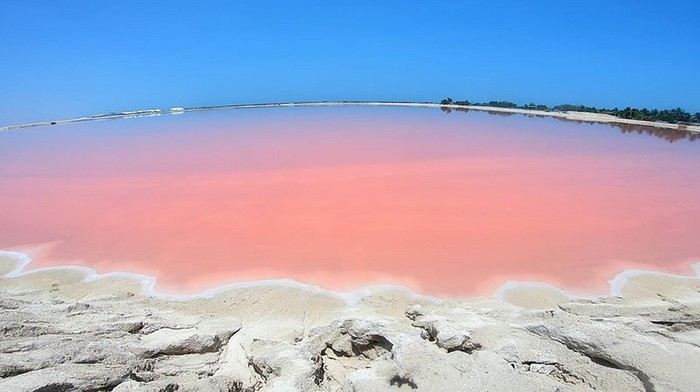
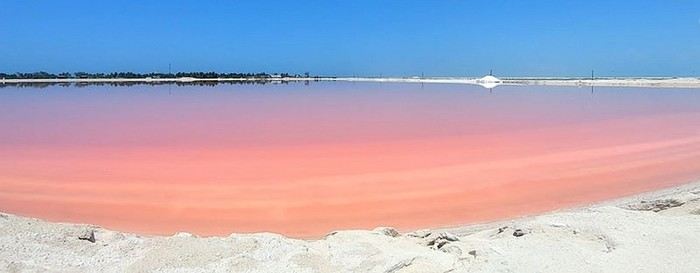
This water is also rich in algae, plankton, and small pink shrimp: it's these that give the water its unique color (as well as the pink flamingos that eat them, by the way). Visually, this landscape is quite spectacular.


A few years ago, this site was almost untouched by tourists. You could even swim in these pink waters to take incredible photos. But since a tourist's drone crashed into one of these basins, polluting it for a while, swimming has been banned.

During our visit (July 2023), the entrance was paid, but above all, it was mandatory to be accompanied by a guide: you can no longer wander freely around here.

And that's nothing compared to what's brewing: the authorities are heavily investing in this site by building large-scale tourist infrastructure all around the salt production plant. The stated goal is clear: to achieve record tourist revenues...


Once these works are completed and the tourist capacity is multiplied tenfold, the question will be whether it's worth it: in our opinion, no.

Indeed, the color of these basins, which you can tour in half an hour, is amazing and photogenic, that's undeniable, but not enough to justify the prices and lack of authenticity that will inevitably come with it.

Okay, I'll stop here for today—I'll publish the rest very soon.

If you've made it this far, thanks for reading! 😎
Le blog voyages : http://derrierelhorizon.fr/accueil/
LH Lhorizon Veteran ·
Hey Sylvain,

We absolutely loved the Yucatán (contrary to my expectations, I must say!) and we hope all four of you have an amazing trip there too.

If you have any questions, feel free to ask along the way in the travel journal—it’ll always be a pleasure to answer...

See you soon.
Le blog voyages : http://derrierelhorizon.fr/accueil/
SC Scot2021 Regular ·
Re - hi there! Diving with whale sharks was one of the things we wanted to do since we’re spending 4 days in Holbox, but reading so many (too many) negative comments about the poor sharks put us off adding it to our to-do list... Diving for just 1 minute in the middle of all that boat chaos? No thanks... Such a shame because it sounded like a dream when we first started researching....
carnet de 8 semaines dans l'Ouest Américain: https://voyageforum.com/v.f?post=10554947;#10554947
69 69Eric Veteran ·
Hi there! The Yucatán isn’t on my to-do list, but I’m happily jumping in on this thread. Between the Miss World vibes, whale sharks, and that crocodile in a cenote where it really shouldn’t have been, I can’t wait to see what’s next… 😉 Lovely photos and such a pleasant read. Thanks!
LH Lhorizon Veteran ·
Hey Éric, thanks for your comment—it really made me laugh! 😏

The next part is coming soon, but it might not be as thrilling 😮. Still, I’m excited to highlight this amazing destination...
Le blog voyages : http://derrierelhorizon.fr/accueil/
LH Lhorizon Veteran ·
To wrap up Rio Lagartos, a quick word on accommodation.

In this small town of 2,000 people, hotels are concentrated along the malecón, so you’re spoiled for choice. If you’ve got a bit of time, you can walk from one hotel to another to compare prices and play the competition.

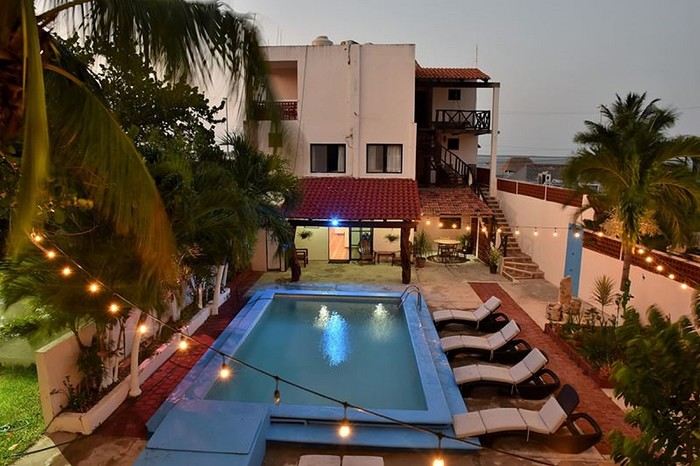
We stayed at Posada El Perico Marinero. The price was steep (123 euros per night for 4), and by far the most expensive accommodation of our entire 3-week trip, but for this stop, I wanted a pool for our sons. And it’s one of only two hotels in the whole town with a pool, which isn’t a luxury given the scorching heat there.

The hotel is slightly off-center, making it a quiet place to stay, and it’s just a 5-minute walk to the tiny downtown area.


The hotel has an on-site restaurant and another great one in the downtown area (a 5-minute walk), for which the hotel receptionists give discount vouchers: Perico Marinero. The food is excellent, the location on the malecón is perfect, prices are reasonable, and the staff is welcoming.


While sipping our aperitif on the terrace, we watched a raccoon calmly cross the street. No complaints—this town, which is also frequented by pelicans, is truly a nature town...

And finally, the guide. Finding one is super easy! You can ask for a guide at the hotel reception, which is what we did at Posada El Perico Marinero. You can also stroll around town, where you’ll quickly become a target for different guides offering their services. However, when you decline, they’re not pushy.

Watch out: there are official guides and others! Usually, the latter are fishermen who take tourists on their boats because it’s much more profitable for them than fishing. But they haven’t received any training for the job and don’t necessarily provide reliable information.

Our guide, Jose Ramos Gamboa, is an official guide known by everyone who offered us their services on the malecón, and they all said he was an excellent guide—even though he was their competitor! In hindsight, we felt the same way. That’s probably why several hotels work with him...

The price: 1,800 pesos (about 95 euros) for a 2-hour tour for 4 people. Instead of negotiating the price like most people, we preferred to negotiate the duration, and Jose agreed to give us a 3-hour tour for the same rate.

If you’re interested, feel free to contact him by phone or WhatsApp: (999) 910 57 83 – By email: contacto@riolagartosdiscovery.com (specify his name: Jose Ramos Gamboa) – His employer’s website: Rio Lagartos Discovery (they offer different types of tours, including nighttime ones).


3rd stop: Valladolid and its surroundings

We left Las Coloradas for Valladolid, heading due south. Along the way, we stopped at the Kikil cenote for a dip. In short, a cenote is a water-filled sinkhole (and it’s *a* cenote, not *a*! 😉). These geological features are usually located in the middle of nature, and swimming in them is often delightful.


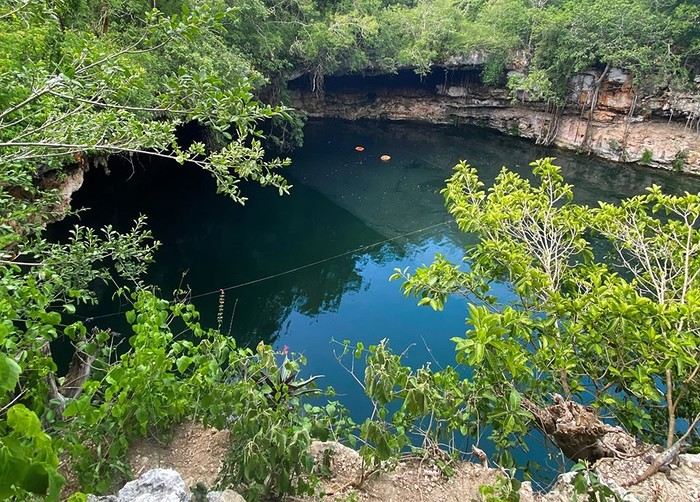
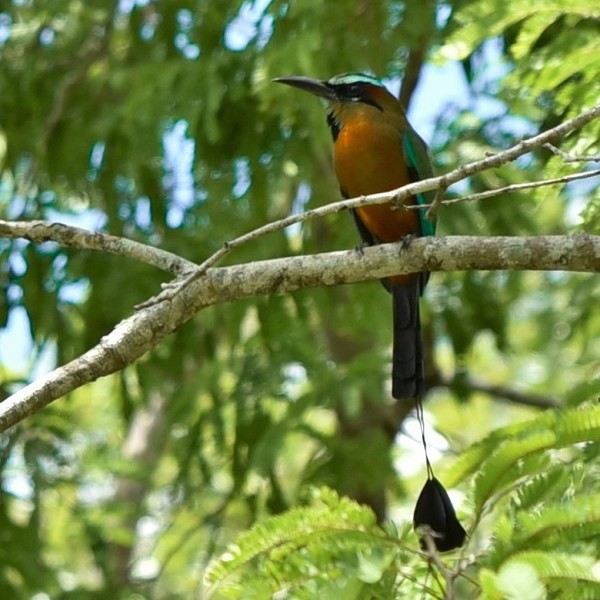
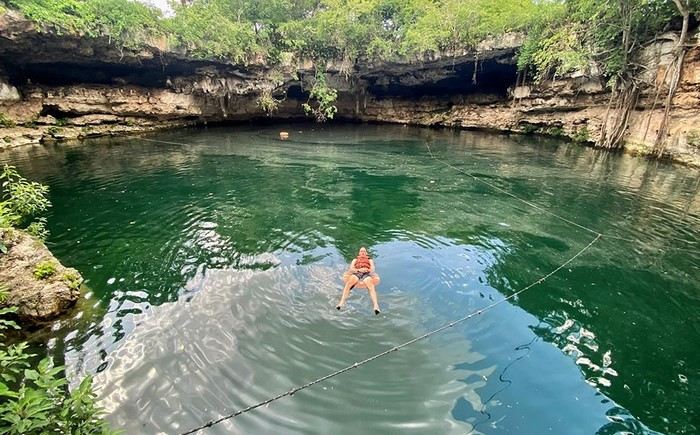
Kikil is frequented by a colorful bird found in large numbers, the turquoise-browed motmot. These pretty, multicolored feathered balls spend their time fluttering above swimmers’ heads to return to their nests, which they’ve built on the cenote’s walls.


It’s a pretty, wild, and uncrowded cenote. The few people there when we arrived didn’t stay long, and we quickly found ourselves alone. Pure bliss.

The only downside: the mandatory life jacket.
There are nearly 10,000 cenotes across the Yucatán Peninsula. Their refreshing waters are so appealing that you’ll likely swim in one (or several) almost every day.

I won’t detail every swim in these often-exceptional natural sites because, let’s be honest, no one’s that interested :smile:. I’ll just describe a few along the way in this travel journal. However, for those who might be curious, I’ve written a detailed article dedicated to these natural wonders: The Magic of Cenotes

The Kikil cenote is a perfect, refreshing stop between Rio Lagartos and Valladolid.

We chose this colonial city not only to visit it but also to explore the region. It’s ideally located for that: Mayan archaeological sites and cenotes are all around. There’s plenty to do.

Of the four colonial cities we visited, Valladolid was the one we liked the least. That said, it’s still pretty, and it’s a human-sized city (50,000 people), unlike Mérida, for example.

In our opinion, the advantage of touring the Yucatán counterclockwise is that you start with Valladolid and end with the stunning Campeche. But of course, everyone has their own preferences!

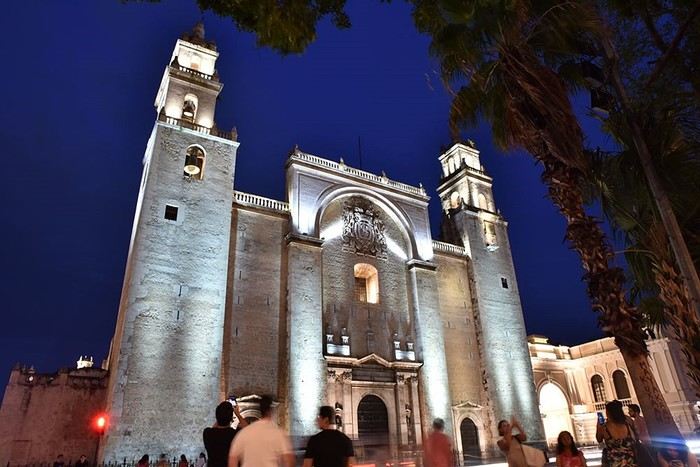
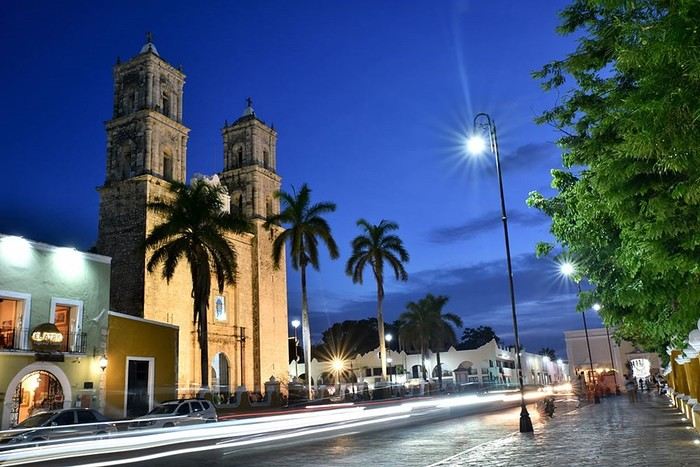
The square is dominated by the San Servacio church, the largest in the city.

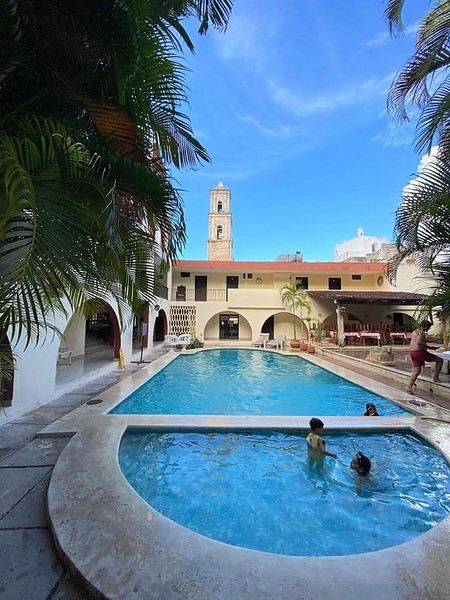
We stayed at Hotel San Clemente for its ideal location: right in the city center! Just cross the street, and you’re at the foot of the San Servacio church, facing the main square.

Its location is exceptional (the best of all the hotels we stayed at in the Yucatán’s colonial cities), and the breakfast terrace by the pool is very pleasant.

Price: 68 euros per night for a room for 4 (in the middle of July, no less).


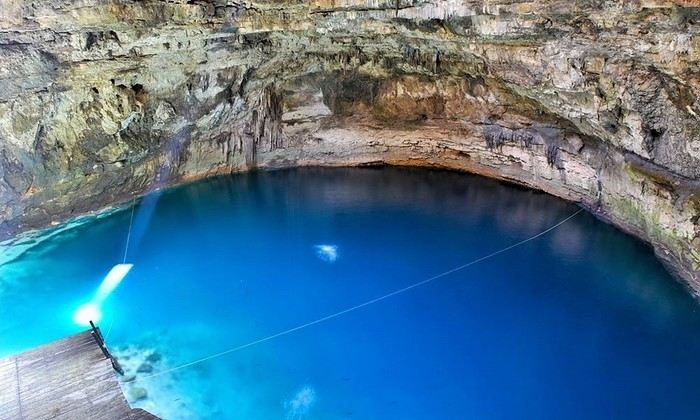
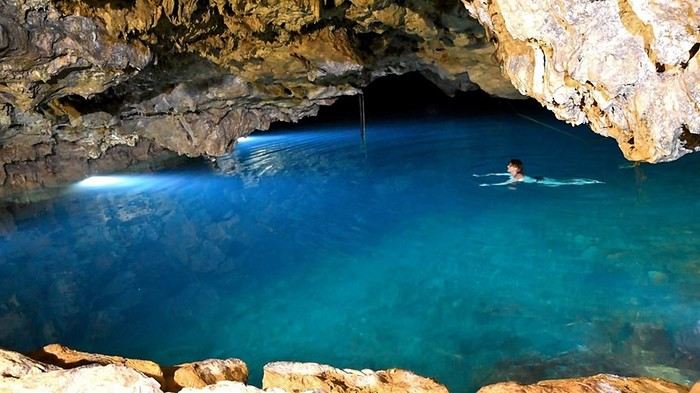
We explored the area, and of all the cenotes nearby, I’ll mention two we really loved and where we often found ourselves completely alone. These are cave cenotes, not the usual open-air ones.

The X’ux Ha cenote:


And the Chihuan cenote:


The atmosphere in cave cenotes is special: the air is very humid, sounds echo, the water is delicious, and you feel privileged to be there.
Le blog voyages : http://derrierelhorizon.fr/accueil/
LH Lhorizon Veteran ·
Without further ado, after nature, let’s move on to ancient stones.

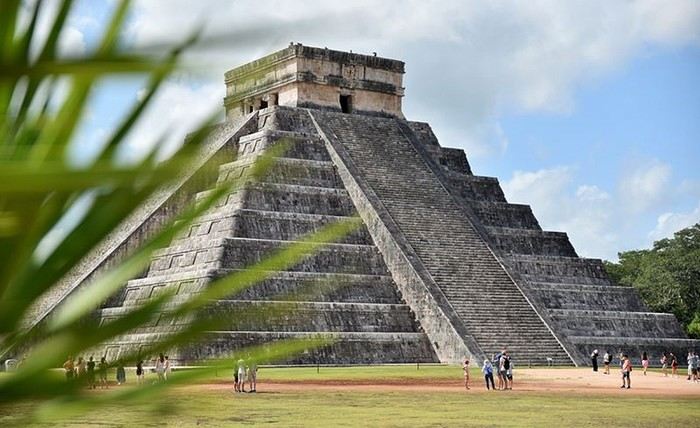
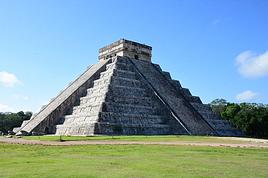
Between Valladolid and Mérida lies what is arguably the most iconic site in the entire Yucatan: Chichen Itza.

It’s an ancient and vast Mayan city that once housed up to 50,000 inhabitants. Today, its most famous structure, world-renowned, is the pyramid of Kukulcan, the feathered serpent god in whose honor it was built.


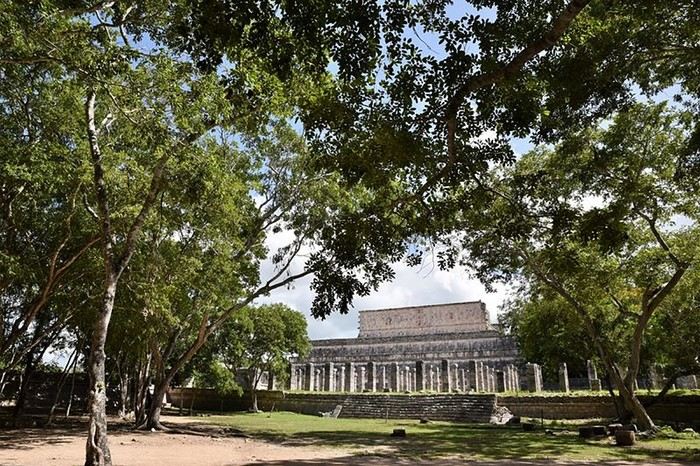
Alright, no need to play tourist guide for this ultra-famous and unmissable Yucatan site—just a few images will do, but this famous Mayan site is truly impressive to visit.

The Temple of the Warriors

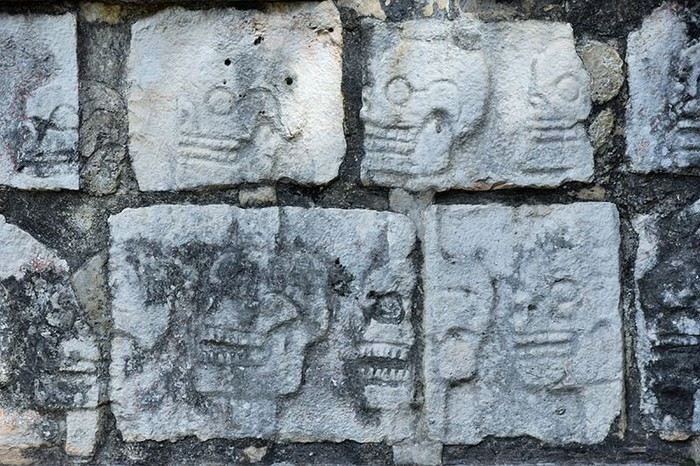
The Tzompantli were sculpted wall sections depicting human skulls impaled on stakes! This violent Mayan practice actually existed.

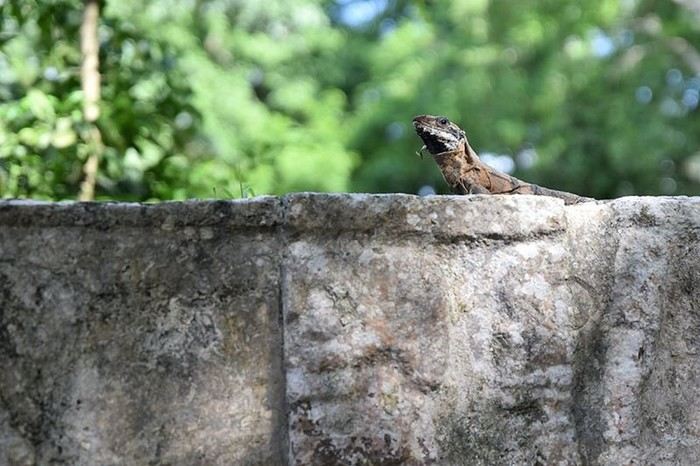
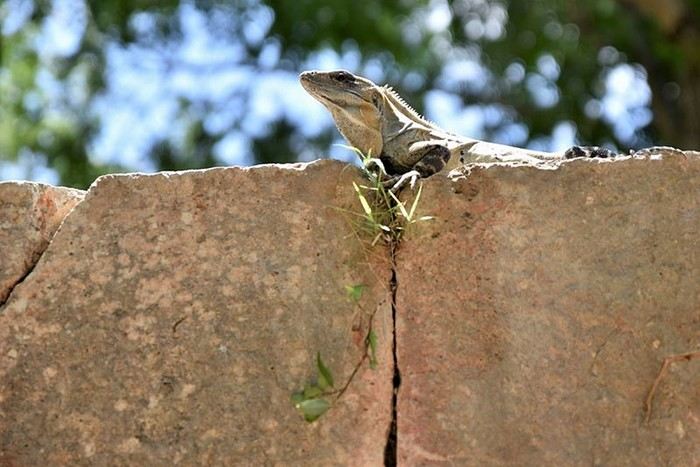
Iguanas are everywhere in Chichen Itza. Even on the skulls of the Tzompantli—no respect from these little creatures.

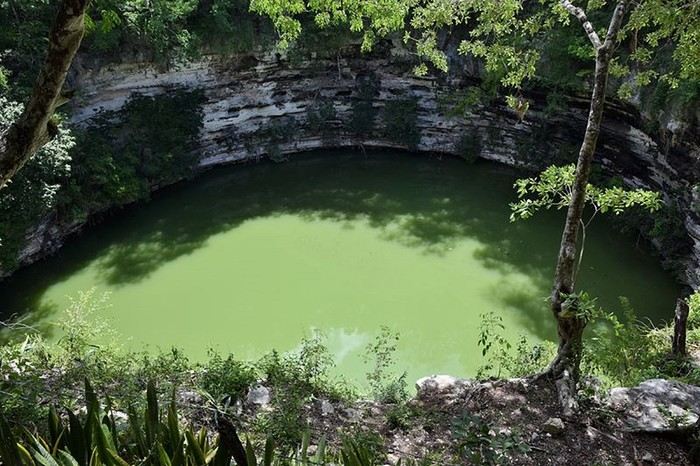
All Mayan cities were built near one or more cenotes, these sinkholes that were the region’s only water source. The Sacred Cenote at Chichen Itza
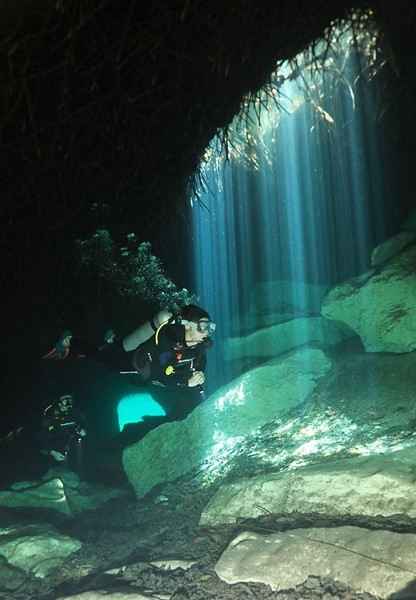
Without further ado, after the ancient Mayan stones, we move on to a nature activity that exists only in the Yucatan and nowhere else in the world: diving in cenotes.

We did two incredible ones with Scuba Tulum, a dive club that gave us an amazing day.

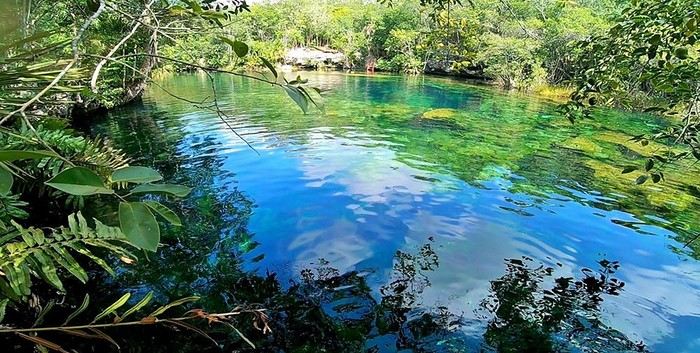
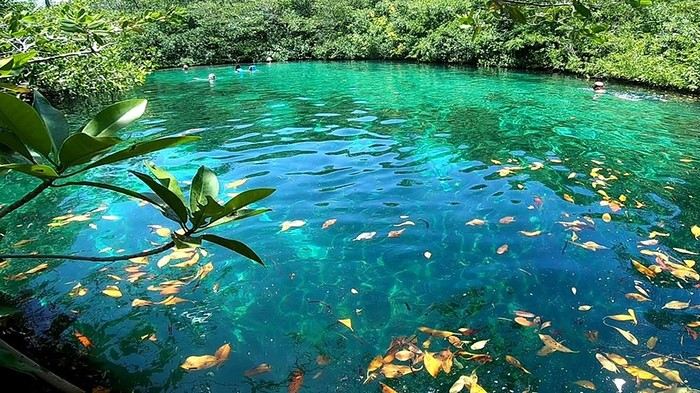
First, we headed to the Ponderosa cenote. Visually, this stunning cenote lives up to its nickname, the Garden of Eden! Nestled in lush vegetation, its inviting water spans nearly every shade of green and blue.


The downside? It’s pretty busy—swimmers, snorkelers, and divers all come to enjoy this gorgeous cenote. But you can still spend half a day or even a full day there—it’s that beautiful, pleasant, and perfectly set up.

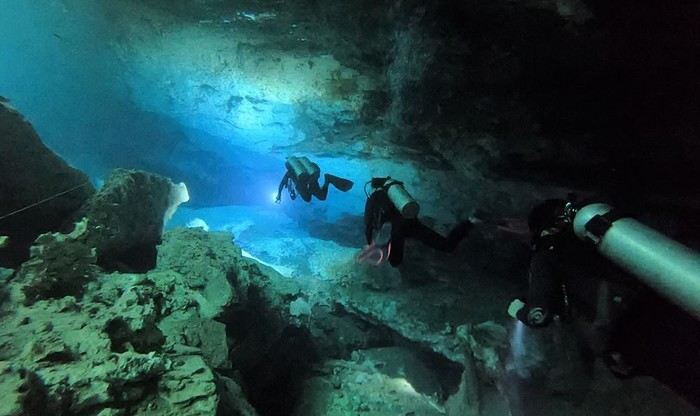
After entering the water in the main pool (the one in the photo above), you dive into a network of underwater galleries and caves. Claustrophobes, beware.

Before the dive, we were warned to swim breaststroke with our fins instead of kicking like in freestyle. Why? In some narrow passages, it prevents damaging the floor and ceiling by hitting them with your fins.


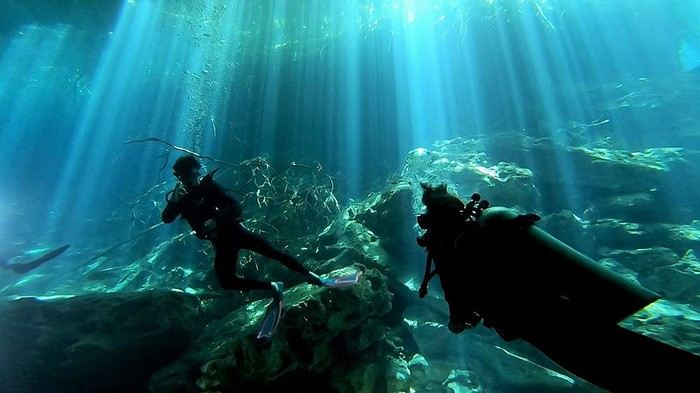
At the end of the tunnel is the highlight: impressive underwater light displays. Looking up, you can see the beautiful mangrove on the other side of the surface, located in a second cenote—this one inaccessible by foot.

Sunrays make their way through the tropical vegetation, then pierce the water’s surface down to the cenote’s depths. It looks like a movie set, but no—it’s just nature.

It’s hard to capture the grandeur and beauty of this dive spot with just a GoPro video still—I’ve got nothing better to show you! But it gives you an idea of what it looks like...


Back in the starting pool, a cute little freshwater turtle swims peacefully among us. A sublime dive.

After getting out of the water, Isella, our dive guide, gives us a choice for the second dive we’ll do in the afternoon: a cenote decorated with countless stalactites, or another in the mangrove where a wild crocodile lives. I’ll mention right away (but I’ll go into more detail later) that this croc is considered non-dangerous to humans by authorities and specialists who monitor it regularly.

Both dives sound amazing, but especially the second—an opportunity like this might never come again. Still, I don’t want to influence my sons, so I ask what they think. “The crocodile sounds cool,” I hear them say. Sold—it’s the croc for us.

I’ve almost reached my photo limit—see you in a bit...
Le blog voyages : http://derrierelhorizon.fr/accueil/
LH Lhorizon Veteran ·
The second dive of the day will be at Casa Cenote. It’s a kind of small lagoon with waters of an unreal, enchanting green. It’s surrounded by lush mangroves.


Its peculiarity is that a wild crocodile has made it home for several years now. Yet, every day, people swim there! And regularly, the reptile even swims among them in the most peaceful way possible. This has been going on for years, and it has never attacked anyone.

At this point in the story, it’s time to debunk a myth: crocodiles aren’t necessarily all man-eaters, far from it. It depends on the species and their geographical distribution. Freshwater crocodiles are generally little to not aggressive at all, unlike saltwater crocodiles.

The crocodile at Casa Cenote is a Morelet’s crocodile. It’s a species of freshwater crocodile that rarely approaches humans, though you should obviously always stay cautious. If threatened or approached too closely, it can become aggressive in self-defense.

Its diet mainly consists of fish, mammals, and birds. No humans.

The Morelet’s crocodile rarely exceeds three meters in adulthood. The one at Casa Cenote, still young, is about two meters long now.

This crocodile has been known to locals for years—so much so that they’ve given it a first name, Pancho, and even an affectionate nickname: Panchito! The creature has become the star of the place, and while swimmers might not be lining up, there are still a few every day who come to swim here. Some even travel from far away just to see it up close! That’s exactly what we did.

The dive begins in what is often crocodile territory: the mangrove.

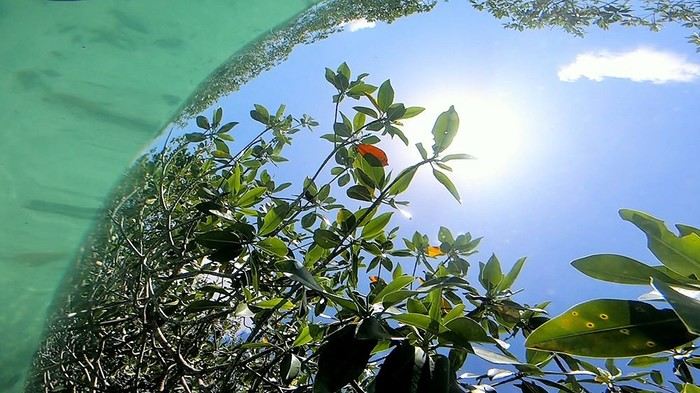
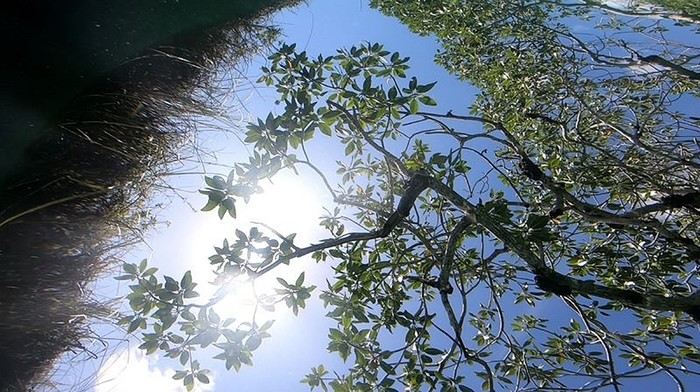
Swimming along this beautiful vegetation with your head underwater while keeping an eye out for a crocodile is a unique experience. The mangrove seen from below is stunning—its many shades of green reflect on the surface, shimmering in the sunlight. I really wish I had a camera that could capture these magnificent images faithfully. Luckily, they’re etched in my memory.


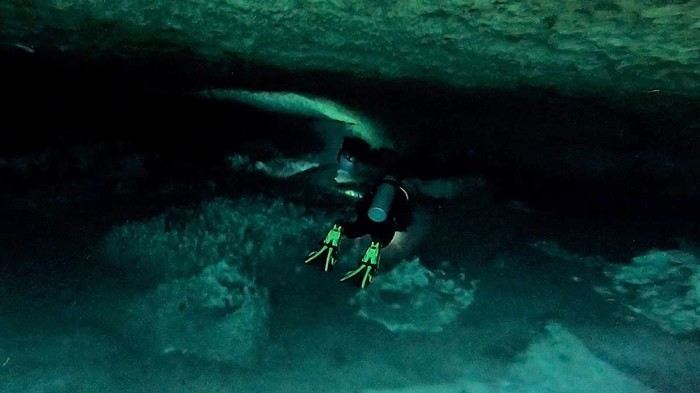
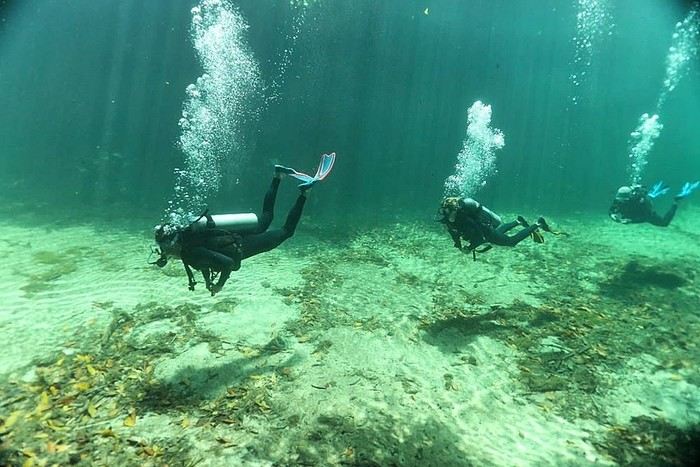
After swimming along the mangrove for a few minutes at very shallow depths (one to three meters), we actually go *underneath* it! That’s how we end up paddling through an unexpected network of tunnels and galleries, even passing through one or two small underwater caves.

This kind of cave diving has its own particularities:

- It’s obviously very dark (which definitely doesn’t help the quality of my photos!).

- Especially in these fully submerged underwater tunnels, it’s impossible to surface for air since there *is* no surface! You even have to sign a waiver (stating you’ve been properly informed) before the dive.

- It’s mandatory to follow the guide line, which our experienced dive guide, Isella, unrolls meter by meter.

- The guide, of course, must have specific certification for cave diving, in addition to the usual scuba instructor qualifications.

- Finally, this cenote connects to the sea through the underwater galleries. A bit of salty seawater seeps into the cenote, but it doesn’t mix with the freshwater. This separation between saltwater and freshwater is called a halocline. Since saltwater is naturally denser than freshwater, it settles at the bottom, where—surprisingly—you can still visually distinguish it from the freshwater. It looks like a large oil slick. As soon as you swim into it, everything becomes murky, a bit like when you open your eyes underwater without a mask. This lack of visibility isn’t the most reassuring when you’re on the lookout for a wild crocodile, but this unsettling experience is worth it.


That’s the setting for this surreal dive.

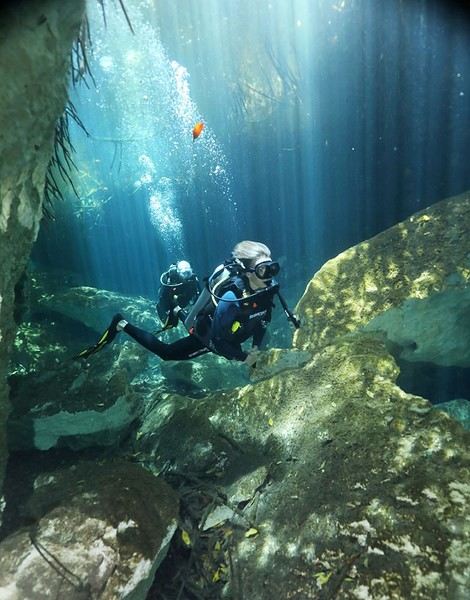
Along this network of underwater galleries, a few gaps in the mangrove above our heads let the sun’s rays through, creating a visually stunning effect.


Oh, and a pro photographer with top-notch underwater gear came to take our picture down there, which explains the much better quality of the images above.


When we exit the tunnel, we know that this is precisely where Panchito’s territory begins. During her pre-dive briefing, Isella explained that our big toothy friend mainly lives in this part of the cenote, right after the galleries.

And sure enough, as soon as we emerge from the tunnels, she immediately waves at us, pointing to the water’s surface. At first, we don’t spot any crocodile. Seeing our hesitation, Isella joins her elbows to form a big V with her forearms and claps her hands together, mimicking a jaw snapping shut!

No doubt about it—Panchito is somewhere around here.

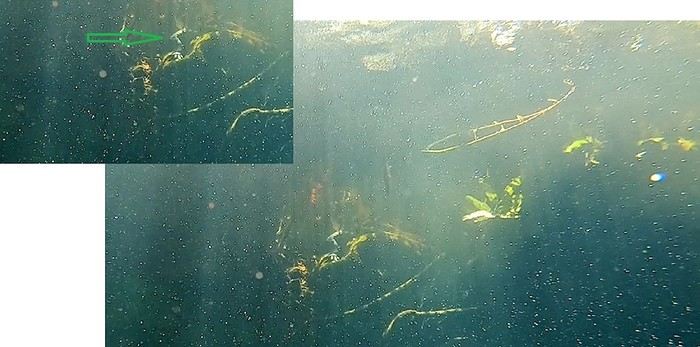
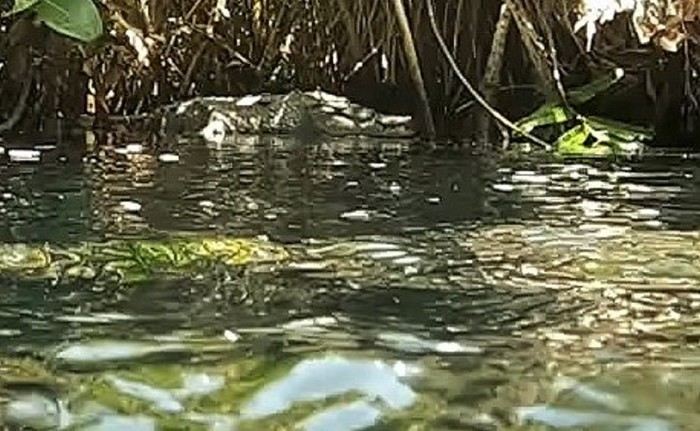
And indeed, we eventually spot his webbed foot just below the surface, gently resting on the mangrove amid the sunlight. The rest of the creature is above the surface, out of sight for now.


Apart from a few root ends, everything is dark around this foot, and the water is full of particles, but the moment is fascinating.

Isella signals that we’re going to surface to see him up close and in full. Naturally, the adrenaline kicks in a little, but not too much—we all feel surprisingly calm.


We wonder what pose we’ll find him in on the other side: Will he be watching us? On the defensive? Mouth open? Well, as it turns out, once we surface, he’s taking a nap!


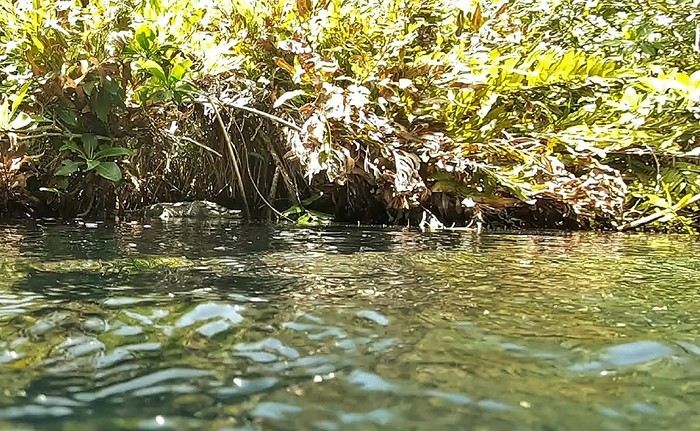
He’s about four or five meters away from us, lazily sprawled on the mangrove in the shade of the vegetation, dozing off. Or so it seems—we can tell he’s still keeping an eye on us with his half-open eye. But he’s obviously no more aggressive than he’s ever been with anyone and rests peacefully, likely used to visitors like us.

It’s impossible to take a decent photo of him because of the ultra-wide-angle lens on my GoPro, which makes Panchito look small and distant. Plus, he’s hidden in the mangrove’s shade, and the strong contrast between the dark shadows of the vegetation and the bright sunlight on the leaves doesn’t help either.


But never mind—the moment is intense for my two sons and me. They take turns asking me to take their picture in front of the creature.

We soak up these two short minutes with this unique companion, who didn’t even flick a scale in the end!

But it’s already time to leave. We put our heads back underwater, hoping he’ll do the same, because apparently, watching a crocodile waddle in the water is worth its weight in gold.

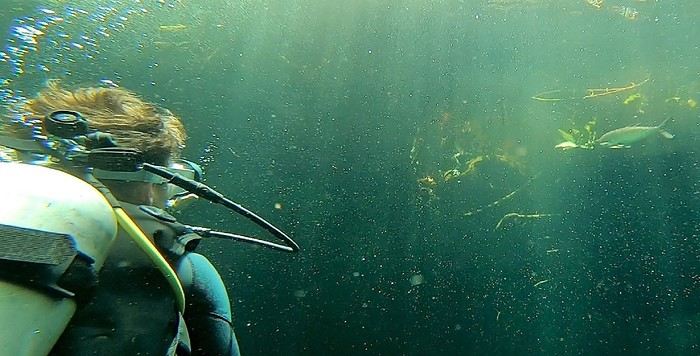
No such luck: Panchito prefers to keep napping, despite the fish below the surface teasing him relentlessly right in front of his teeth. Maybe he’s just digesting his last meal…
Le blog voyages : http://derrierelhorizon.fr/accueil/
LH Lhorizon Veteran ·
The dive is over, we're heading back to debrief.


Before coming to Mexico, I’d read a lot of varied info online about Panchito. So before and after this dive, I asked Isella to help me sort through all that info, since some of it really intrigued me. For example, I’d read that Panchito was only a meter long and wasn’t growing anymore, or that the cenote was closed off and therefore inaccessible to other crocodiles, etc.

With a smile, Isella diplomatically debunked these fake news stories. She explained that this crocodile is regularly monitored by the authorities, who recently measured and weighed him again. He’s grown a bit and put on some weight since the last measurements, which is normal. According to the experts, he’s still at the "adolescent" stage and, at two meters long, currently poses no danger to humans.

She also told us that, like most cenotes, this one is indeed connected to the sea through a network of underwater tunnels. And contrary to what I’d read online, other crocodiles *do* occasionally enter—though it’s rare.

But this big reptile is territorial by nature: he defends his nest, his feeding areas, etc. That’s why any other crocodiles that wander in don’t stick around for long on his turf.

To wrap up—and without further ado—I should mention that the site is generally quite fish-rich overall, which makes this already unique dive even more beautiful.

I only have two small regrets from meeting Panchito: not seeing him swim, and not being able to get a proper photo of him.

Of course, we would’ve loved to see him swim around us, but on the other hand, we could’ve easily not spotted him at all.

In fact, Panchito sometimes leaves the cenote when visitors come to see him, or he might be so well hidden in the mangroves that you can’t detect his presence. Those visitors leave empty-handed, which is why we’re savoring the luck we had to see and approach him—we won’t forget this moment anytime soon.

One important point to emphasize: crocodiles are animals that many people find frightening. And understandably so, given their teeth and the phenomenal power of their jaws. But not all crocodiles are man-eaters, and some—like the Morelet’s crocodile, which is Panchito’s species—aren’t aggressive toward humans.

For comparison, an adult Morelet’s crocodile measures 3 meters and weighs 200 kg. The two most dangerous crocodile species in the world (the Nile crocodile in Africa and the saltwater crocodile in Southeast Asia and Australia) measure up to 6 meters and weigh as much as a ton!

In the end, meeting Panchito was a highlight for us. This unique dive turned out to be one of the most memorable we’ve ever done, thanks to Panchito the croc, of course, but also the underwater tunnels and the beauty of the mangroves—so stunning to observe from below.

Finally, for those interested, I highly recommend Scuba Tulum. They welcomed and guided us wonderfully, especially thanks to Isella, our dive guide, and her colleague on land, Guadalupe. Don’t hesitate to contact them, whether you want to dive with Panchito or elsewhere.

Practical info for those interested in diving in Tulum, with or without Panchito.

1/ First, about Panchito’s cenote: be careful, there are two cenotes named Casa Cenote just a few kilometers apart!

The one we’re talking about in this post is also called Cenote Manatee (or Manatí). That’s where Panchito lives.

Don’t confuse it with the other Casa Cenote, more commonly called Cenote Xpuha, located about twenty kilometers further north.

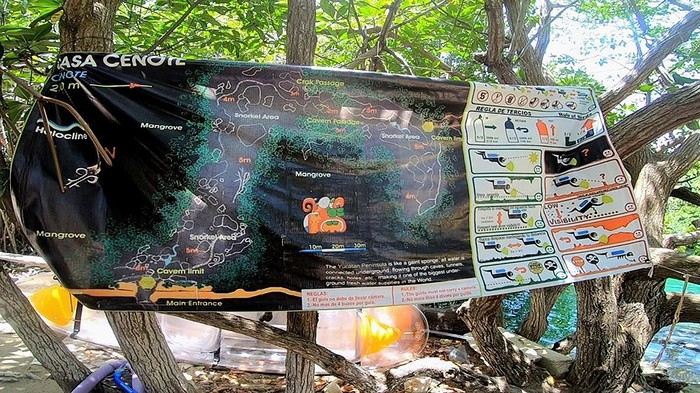
You can also meet Panchito just by swimming, not necessarily diving. There’s a map of the cenote displayed at the entrance.


On the map above, the entry point is at the bottom left (main entrance), and Panchito is most often found in the area at the top right (between Crack Passage and Cavern limit).

Otherwise, for more details, just ask the locals on-site.

2/ We dove with Scuba Tulum – Address: Calle Sagitario Ote. 8, Tulum, QR 77780 – Phone: 01.984.115.2336 – Email: scubatulum@gmail.com

It’s the kind of dive shop we love: simple and friendly welcome, safety standards respected without the usual fuss, some clients but not too many—unlike some places that feel like a factory.

Our two main contacts, Guadalupe and Isella, were always straightforward and open. They patiently answered our many questions and taught us a ton of fascinating things about crocodiles, the nature of the Yucatán, the locals, and their way of life.

Like all dives in Mexico, the price isn’t cheap, but it’s in line with what other dive shops in Tulum charge: 2 dives for 150 € per person (but what dives!). For all cenotes, you also have to add the entrance fee: for Casa Cenote, it’s 200 pesos per person (about 10-11 €).

In conclusion, we have a wonderful memory of the diving experience we had with this shop.

Note that, in addition to dives in the various cenotes in the area, Scuba Tulum also organizes dives in the nearby ocean.

Of course, you can also reach out to the many other dive shops in Tulum, all of which regularly visit this spot.

That’s all for today, see you next time for more...
Le blog voyages : http://derrierelhorizon.fr/accueil/
LH Lhorizon Veteran ·
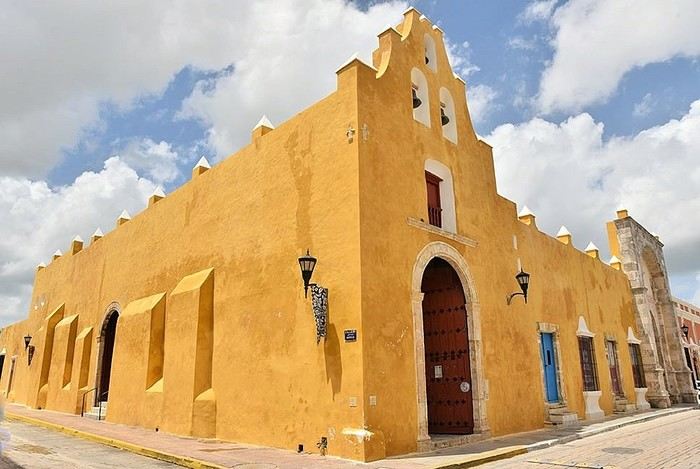
4/ Izamal, the Yellow City

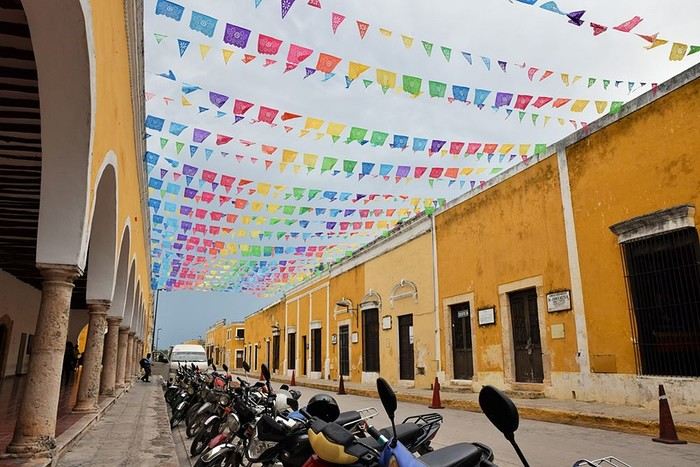
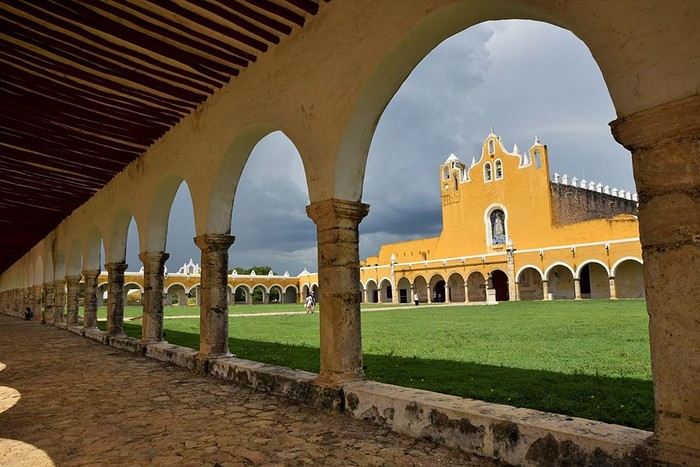
On the road from Valladolid to Merida, there’s a nice little stop to make: Izamal.


It’s a small town (15,000 inhabitants) where the streets are very quiet, and even completely deserted when we visited.


5/ Merida

After the peaceful calm of Izamal, we’re off to discover the bustle of Merida. With its million inhabitants, it’s generally considered the “capital” of the Yucatan.


Like Valladolid, Merida enjoys an ideal geographical location, making it a great base for exploring the surrounding area.


So it’s from here that we’ll visit another renowned Mayan site, Uxmal (78 km away), and take a dip in various cenotes in the area.


Among the sights to see in this big city, we particularly enjoyed the Governor’s Palace. It houses large murals depicting the tragic history of the Mayans, painted by the Mexican artist Fernando Castro Pacheco.


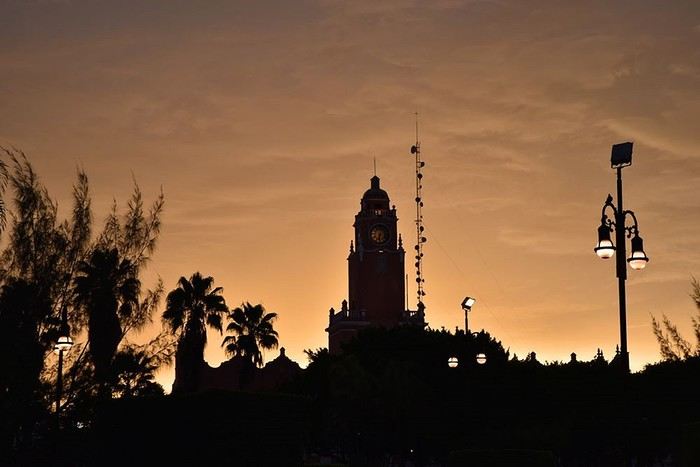
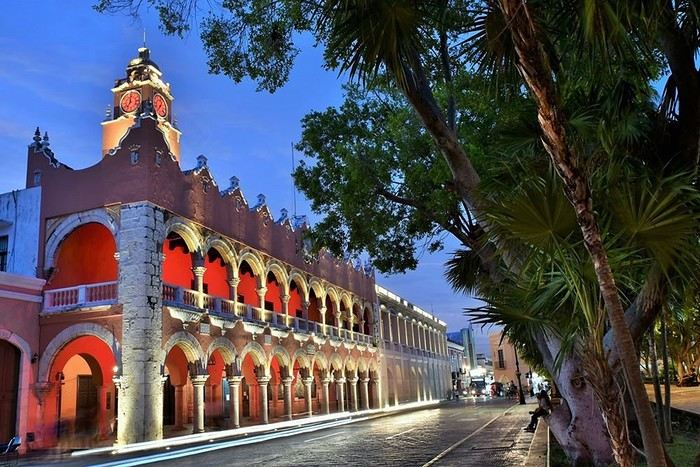
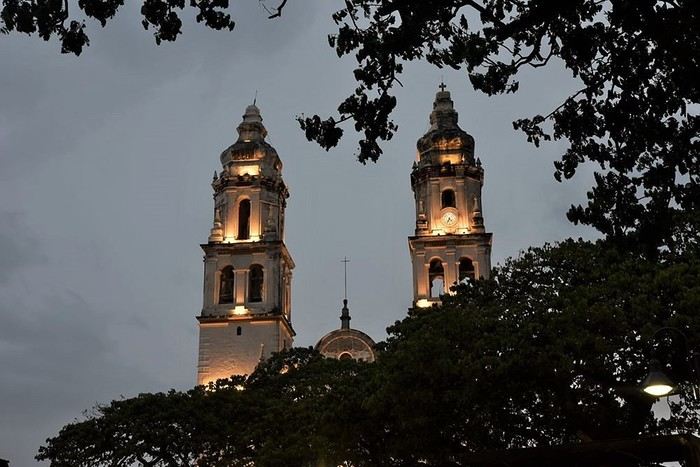
Another must-see is the Municipal Palace. The best time to admire it is at dusk, when its tower and arches light up.


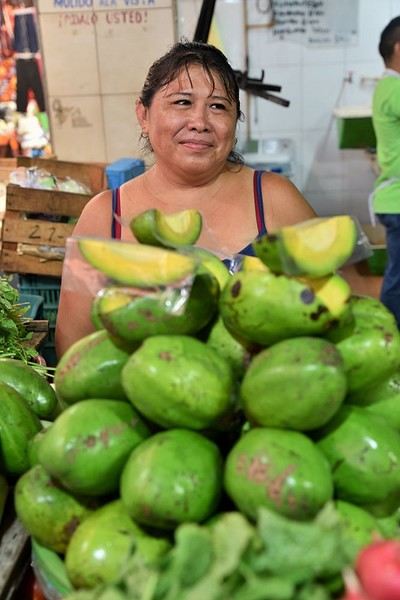
Finally, a classic but effective tip: if you love the colors and scents of Latin markets, you’ll be spoiled for choice in Merida. The San Benito Market and the Santa Ana Market, in particular, are just a few minutes’ walk from the central square.


We leave Merida, a beautiful city steeped in history, for Uxmal.
Le blog voyages : http://derrierelhorizon.fr/accueil/
LH Lhorizon Veteran ·
6/ The Mayan city of Uxmal

For a long time, the Uxmal region (pronounced "Oosh-mahl") had very few inhabitants for a simple reason: cenotes were much rarer in this part of Yucatán than elsewhere, and this water shortage made the area difficult to live in.

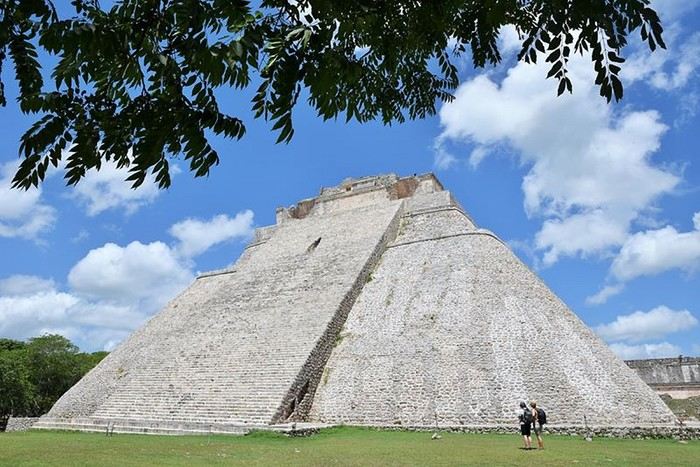
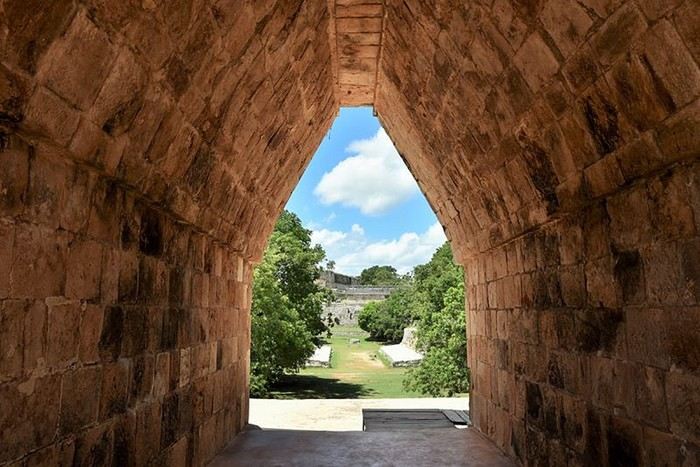
The main building of this wonderful site is the Pyramid of the Magician. It’s also called the Pyramid of the Fortune-Teller, or even the Pyramid of the Sorcerer! And the magic is exactly what happens when you admire this stunning 40-meter-high structure, with far fewer tourists than at Chichén Itzá.


Okay, I won’t bombard you with photos of every building on the site—one or two will do—but Uxmal is really pleasant to visit.

The Nunnery Quadrangle, whose exact purpose experts still aren’t certain about!
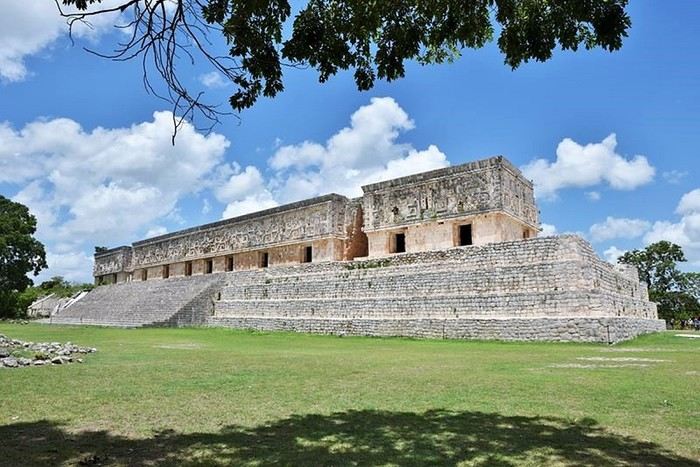
The site is much, *but really much*, less crowded than Chichén Itzá because it’s not on the most touristy routes in Yucatán.

The Governor’s Palace

A little further on, the Governor’s Palace is considered an architectural masterpiece, notably characterized by its great refinement. Its hundred meters of length are decorated with nearly 20,000 small sculpted elements (figures, masks, etc.).

As for the guardians of the old Mayan stones, they’re still there, of course.


7/ The most beautiful colonial city: Campeche

Ah, Campeche! It’s no surprise it’s a UNESCO World Heritage site.


Unlike other colonial cities located inland on the peninsula, Campeche has its feet in the water: it borders the Gulf of Mexico.


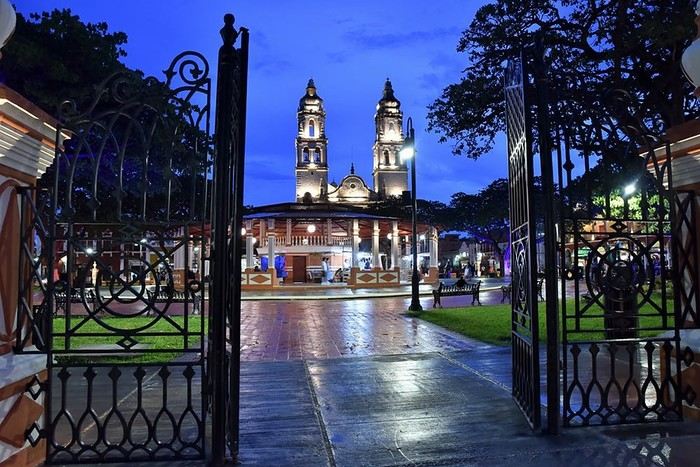
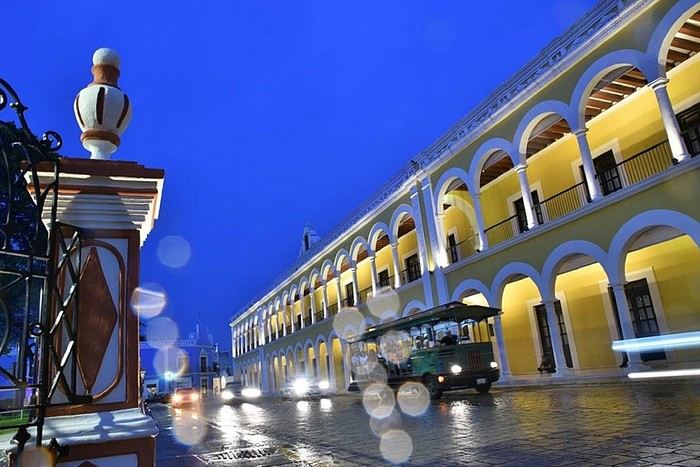
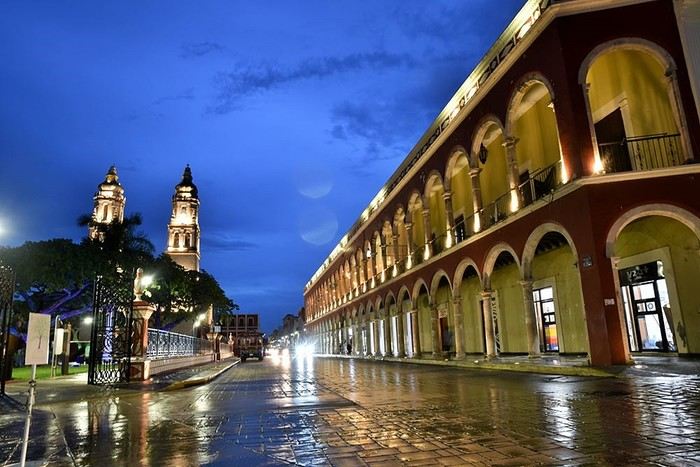
As in many Mexican cities, the central square or *zócalo*, called Independence Square in Campeche, is pretty much the heart of the city.


On each side, it’s lined with lovely arcades: yellow on one side of the square, red on the other.


Le blog voyages : http://derrierelhorizon.fr/accueil/
LH Lhorizon Veteran ·
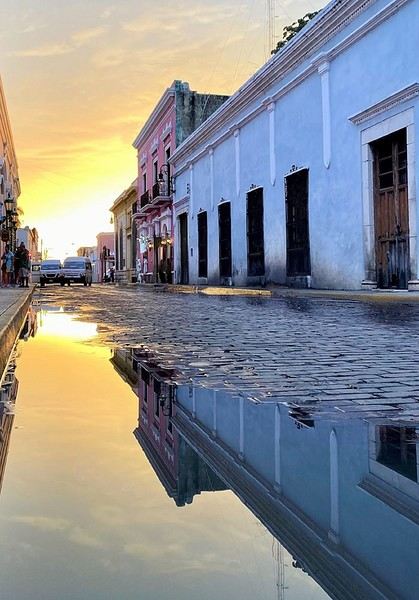
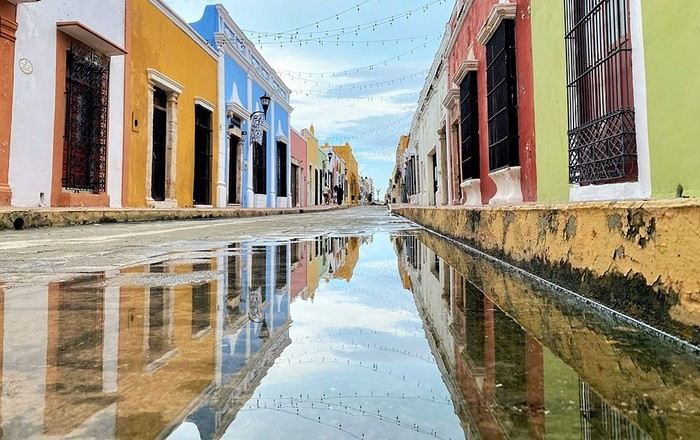
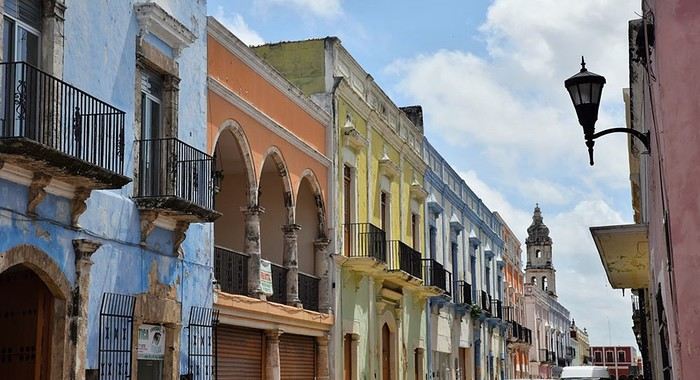
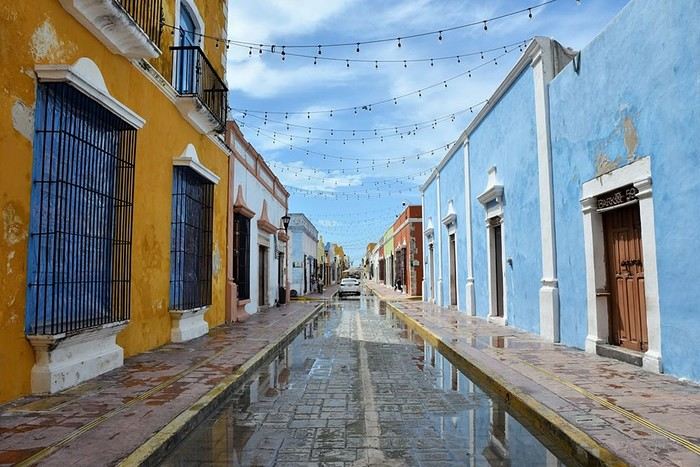
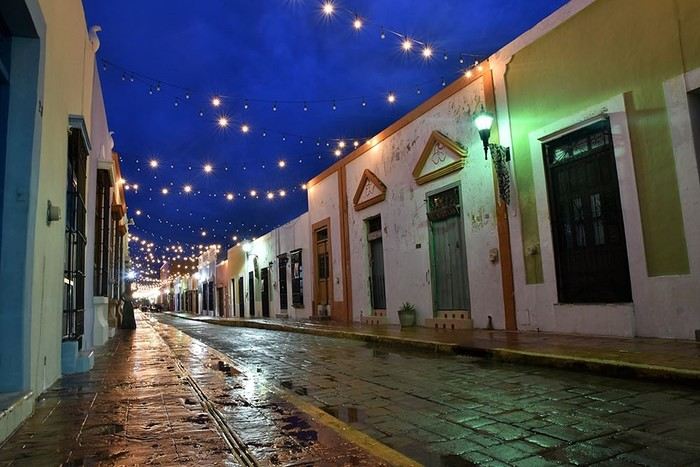
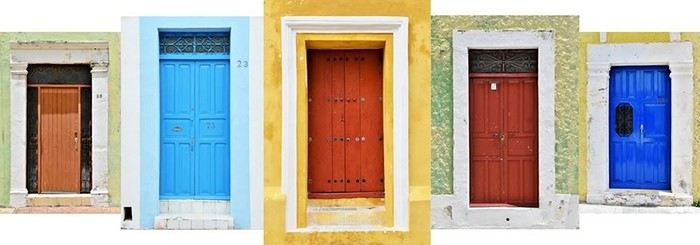
What truly makes Campeche charming are its countless colorful house facades, even if they’re sometimes a bit faded.


The city has a lot of charm and also benefits from a major advantage: it’s not yet too touristy because, much like Uxmal, it’s relatively far from the usual Yucatan travel circuit.


While you can find colorful facades in other colonial cities in the Yucatan, nothing compares to Campeche’s city center—there are so many everywhere!


We absolutely fell in love with Campeche—if we had to recommend just one, it’d be this one.


Our next stop will be one of the most memorable parts of our trip: visiting a new Mayan city, but the most authentic for us since it’s isolated in the jungle and therefore has almost no tourists. And that’s after spending a night in the jungle.
Le blog voyages : http://derrierelhorizon.fr/accueil/
SC Scot2021 Regular ·
Awesome, everything you did is on our itinerary! And wouldn’t Calakmul be the next stop?....
carnet de 8 semaines dans l'Ouest Américain: https://voyageforum.com/v.f?post=10554947;#10554947
LH Lhorizon Veteran ·
Won! 😎
Le blog voyages : http://derrierelhorizon.fr/accueil/
LH Lhorizon Veteran ·
8/ Sleeping in the jungle and visiting the Mayan city of Calakmul

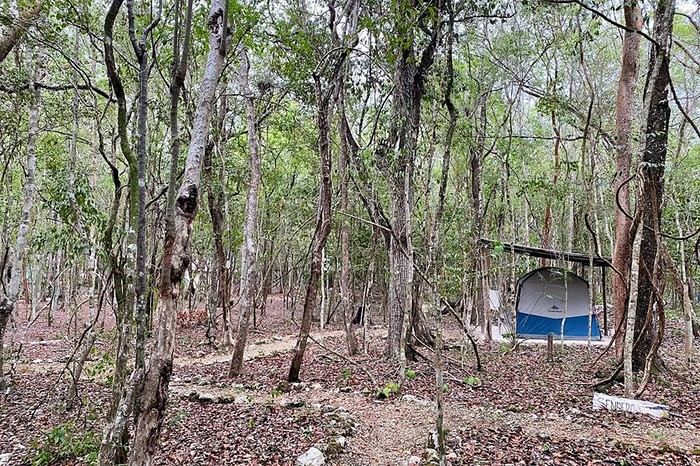
Okay, let me clarify right away—when I talk about sleeping in the jungle, I’m not talking about a Mike Horn-style expedition! It’s simply spending a night in a tent at a small, isolated campsite on the edge of the Calakmul jungle. It’s way better than a basic hotel, and for travelers like us, it’s more than enough to experience something unforgettable and totally out of the ordinary.

This campsite is a bit closer to the Mayan city (52 km) than other accommodations in the area (60 km). Calakmul is so remote that if you get up early and cover that distance, you’ll arrive at the site when it’s... deserted! Having a Mayan ruin in the middle of the jungle all to yourself—pretty cool, right?

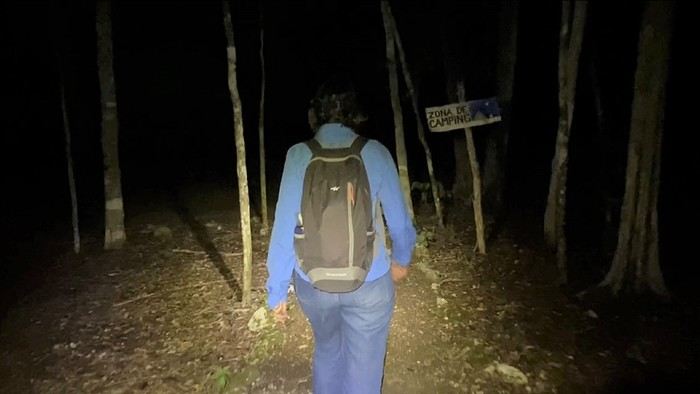
To get to Calakmul, you have to pass through the small village of Conhuas, located on Route 186. Seven kilometers to the south is Campamento Yaax’ Che, in the jungle—that’s where we slept.

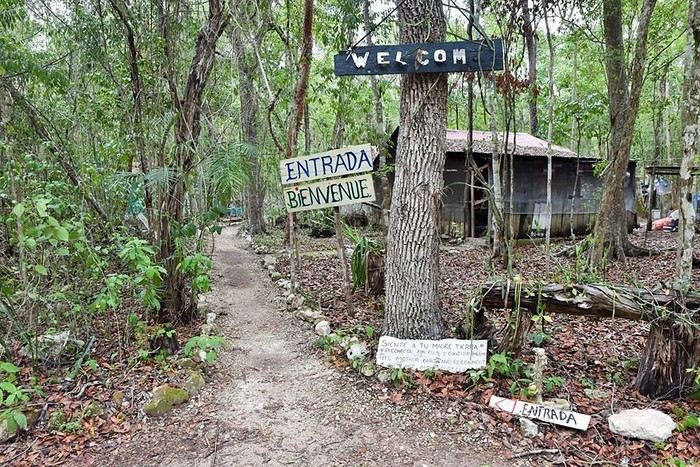
The entrance to Campamento Yaax’ Che
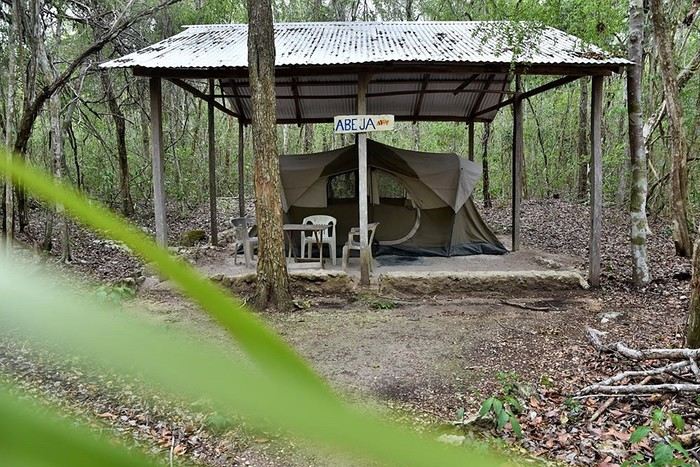
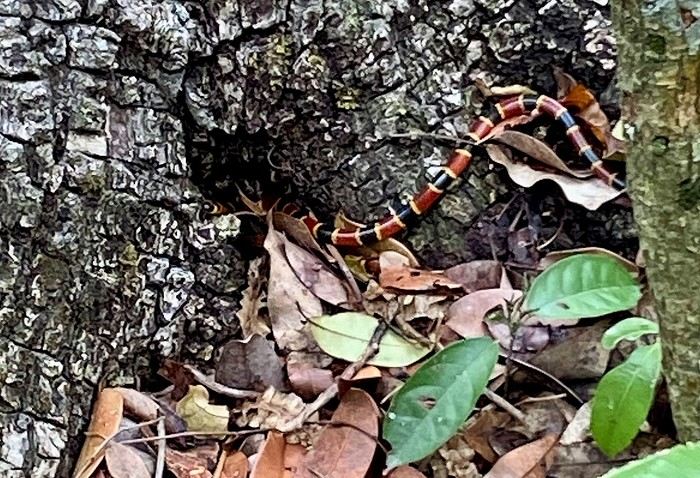
As soon as we arrived, we had what’s apparently a rare experience, but it immediately set the jungle mood. After walking just twenty meters or so—right past the welcome signs in the photo above—we came face-to-face with... a deadly coral snake! The scene was set.


This little reptile is as pretty as it is dangerous—its venom is among the most potent of any snake. So don’t let its modest size (only about fifty centimeters) fool you.

Anyway, we quickly realized we’d have to watch our step, especially once night fell and we’d be walking around by headlamp.

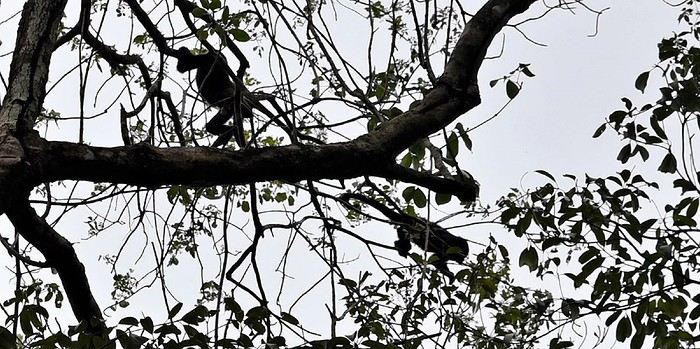
We left our legless friend behind, only to be greeted twenty meters later by two four-legged ones: two spider monkeys playing in the trees above our heads.


In just a few minutes, our first encounter with the locals of this jungle—where we’d be sleeping—exceeded all our expectations.

The third animal to make its presence known wasn’t as cute as the monkeys or as dangerous as the snake: mosquitoes! There weren’t swarms of them, but enough to make us slather on bug spray right away.

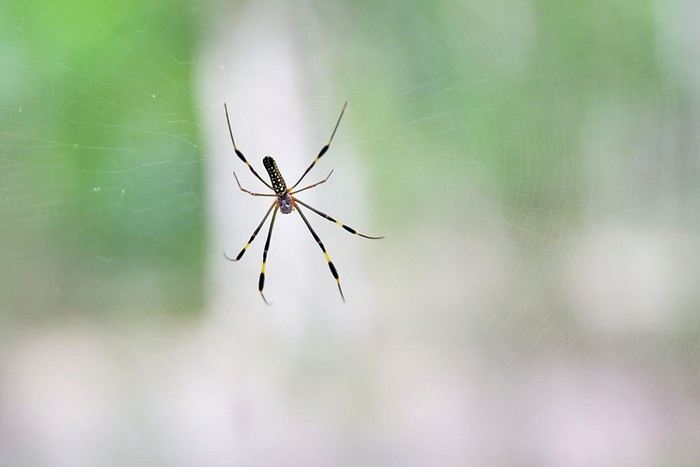
Among the other jungle residents, there’s the nephila. What’s that, you ask? It’s a beautiful spider, about ten centimeters long, graceful and colorful, that weaves the largest web in the arachnid world.


But what’s really impressive is how strong and sticky its web is—even hummingbirds get trapped in it. So strong, in fact, that it’s being studied to improve... bulletproof vests!

Plenty of other animals live in the jungle. Some big cats, like the area’s stars—the jaguar and the puma—roam here, but they’re rare in such a vast space, so spotting them is unlikely. We didn’t see any.

Back to the campsite: it has only nine tents, spaced far enough apart and all sheltered by tin roofs to protect against the heavy seasonal rains.

When we were there, it wasn’t crowded—only two other tents were occupied besides ours, which made our sense of isolation even stronger. Even the managers don’t sleep there.


The comfort is basic, of course, but we knew that before arriving. Inside the tents, there are just mattresses.

In such a setting, the campsite is naturally very eco-friendly: compost toilets, recycling, water collectors—everything is done to protect the environment, which is exceptional here.

There’s obviously no running water or electricity in the area. In each shower, a bucket of water had been prepared for washing, but the murky brown color and opacity quickly put us off the idea of showering—even though we’d been dreaming of it all day.

It’s a bit of a shame, especially since the high humidity made us sweat, but when you’re roughing it, you don’t expect a four-star experience. Still, we savored the chance to spend the night in such an incredible place.

Once settled, we headed back down the same path we’d arrived on. About a kilometer from the campsite is the restaurant Oxte’ Tun, which is also very basic: a tin roof, a few wooden pillars, and no walls. Its simplicity blends perfectly with the surrounding jungle, and like the campsite, it’s exactly the kind of place we came here for.

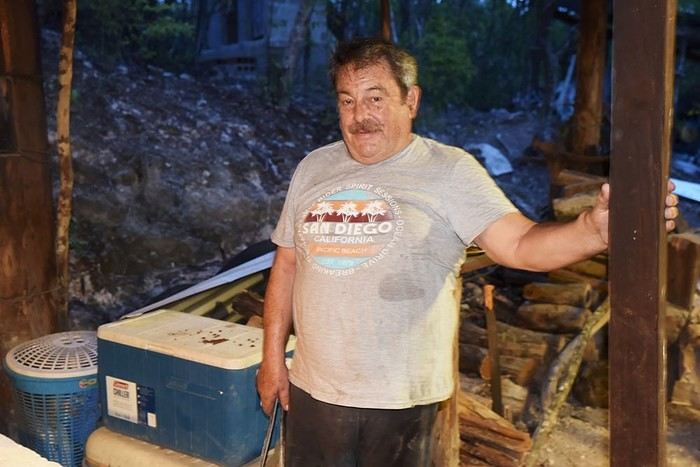
It’s run by locals—Manuel, Laeticia, and Fernando.

Fernando

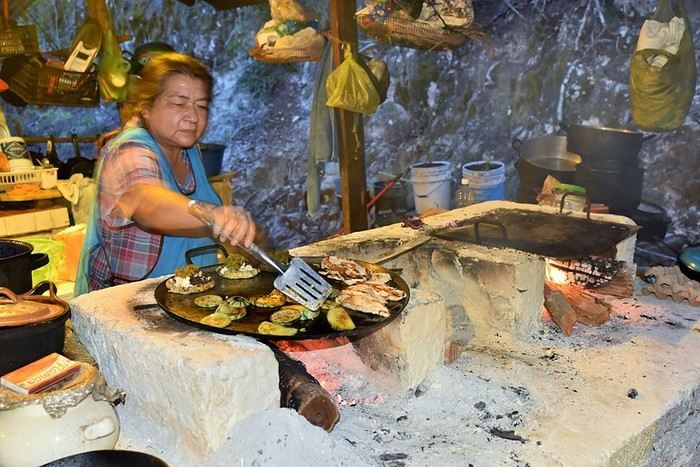
Our first interaction with them wasn’t very warm, so we were a little disappointed. But when we saw Laeticia bustling around her stove, we couldn’t help bombarding her with questions about Mexican cuisine. That broke the ice, and they quickly became friendlier and more welcoming.

Laeticia

Fun fact: Laeticia is a master of Mexican cooking. With the few ingredients she has here, she still managed to treat us to an amazing meal. So if you’re passing through, don’t hesitate to stop at this little roadside gem: Oxte’ Tun.

The sun sets early here, so we did too!

For us, sleeping in the jungle had two big advantages. Practically speaking, we weren’t too far from the Mayan ruins, so we could get there right when they opened the next morning to avoid crowds.

But for travelers like us—who don’t need much to be amazed (and that’s a good thing!)—the real draw was sleeping in such an unusual setting, surrounded by the sounds of the jungle at night.


In the end, we didn’t hear *that* many animals at night, but the ones we did hear made enough noise that you couldn’t miss them!

First, the background music was provided by cicadas—they never stopped. Even though they were loud, it was a pretty effective lullaby.

Then, every now and then, we’d hear monkeys communicating with each other through short, deep growls. They’d call back and forth, even when far apart, so the sounds seemed to come from all around the tent.

Occasionally, we’d hear unidentified cries.

And finally, just before dawn, we’d wake up to the melodic songs of different birds.

Spending a night in such a natural, isolated place has a magical quality—especially when you’re used to the noises and smells of the city.
Le blog voyages : http://derrierelhorizon.fr/accueil/
LH Lhorizon Veteran ·
The problem when you're enjoying listening to the jungle sounds at night is that you don’t get much sleep! Anyway, the night still passes, surrounded by cicadas and monkeys, and it’s the birds that wake us up.

It’s daylight, and we’re heading to the Mayan city of Calakmul, a UNESCO World Heritage site. It’s located 52 kilometers from the campsite. But since the road quickly turns into a dirt track with a 30 km/h speed limit, we have to drive slowly (we’re not here to run over our animal friends). So, it takes about 1 hour and 50 minutes to reach the site.

This track cuts through the jungle, a large part of which is also classified by UNESCO—as a biosphere reserve. So, one UNESCO wonder can hide another…

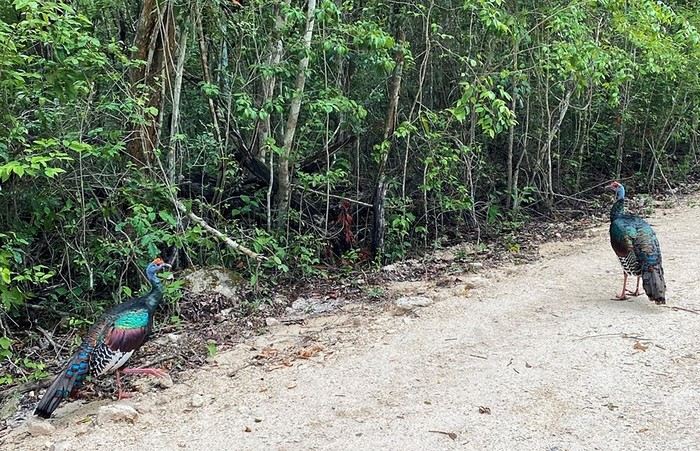
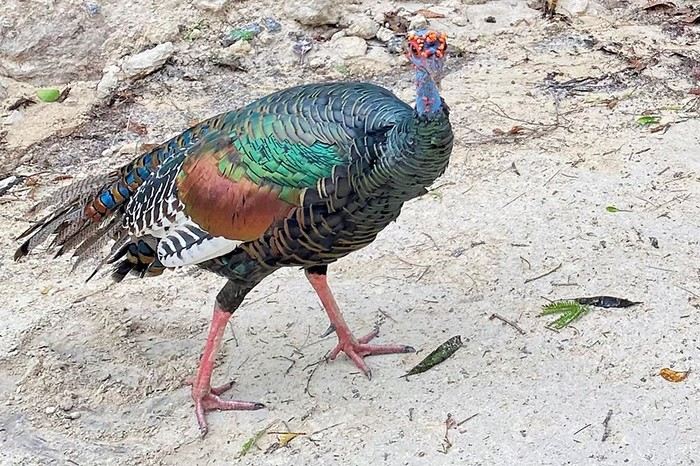
Along the way, we spot ocellated turkeys several times.


These are large birds (nearly a meter long) with beautiful multicolored plumage. Their heads are blue with lots of round, red growths—kind of like warts, but prettier (or at least less ugly)!


Note: The ocellated turkey doesn’t like being photographed! At least, the one I’m trying to capture through the car window pretends to attack us repeatedly—charging at us suddenly, then slowly backing off for a few seconds, only to charge again.

And when I finally decide to drive away to leave it in peace—after all, this is *its* jungle, not ours—it proudly runs after our car, looking satisfied with a smirk on its beak. The turkey won; I admit defeat.

Among the other animals in the reserve—not all of them easy to spot—are jaguars and pumas, spider monkeys and howler monkeys, tapirs…

There are also 350 bird species, including toucans and several types of eagles, vultures, and parrots; 70 reptile species; and nearly 400 butterfly species…

And with 1,500 plant species, the flora is just as impressive.


In short, nature lovers, the Calakmul Biosphere Reserve is made for you…

We got up early this morning, and it paid off—when we arrive at the Mayan site, there are only three cars parked there! It’s incredible, but we’re going to have a Mayan city, and not just any one, almost entirely to ourselves.


Calakmul was a Mayan city that reached its peak around 650 AD. Very powerful at the time, it had up to 50,000 inhabitants.


Today, beyond its history, what makes this city magical for amateurs like us is that the jungle has reclaimed the site over the centuries. It gives the lost city a bit of an Indiana Jones vibe.

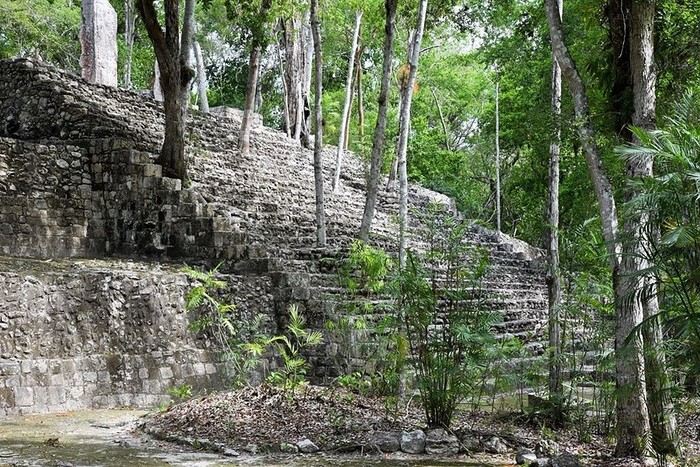
Only about twenty of the 6,000 structures scattered in the jungle have been cleared and are accessible, despite the trees that have taken over these ancient stones.


The natural setting of this historic site is truly impressive.

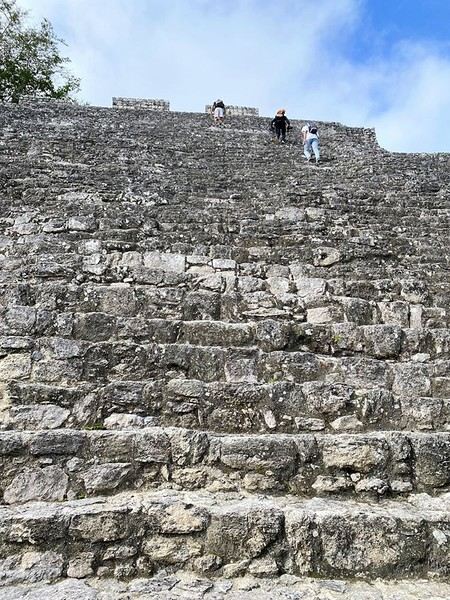
One of the main attractions for visitors exploring Calakmul is that, unlike more famous and crowded Mayan sites like Chichen Itza or Uxmal, you can climb to the top of the pyramids here.

And as always with pre-Columbian pyramids, the climb is steep.


The first pyramid on the itinerary is Structure I. It’s 50 meters tall and faces the site’s main jewel: the second pyramid, or Structure II.

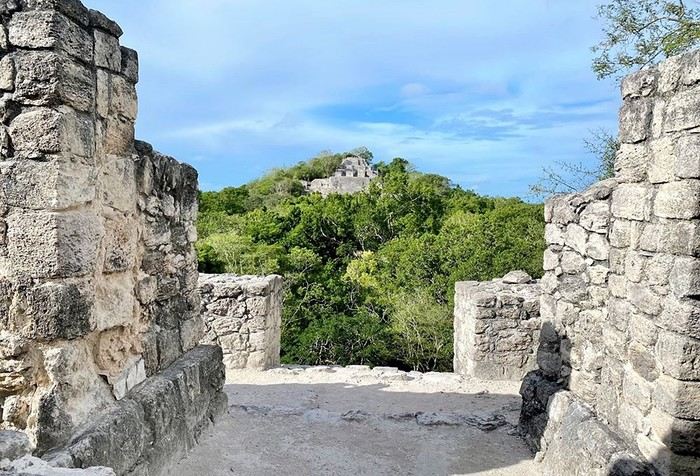
Structure II (in the background) seen from the top of Structure I
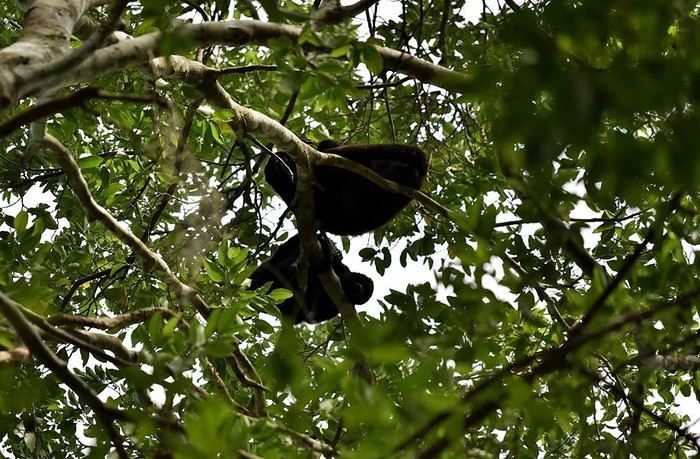
As we climb the first pyramid, we hear distant, incredibly loud animal cries that we can’t identify. We wonder what it could be—maybe a big cat? But it’s only when we reach the second pyramid that we realize: the cries are coming from a group of howler monkeys. Clearly, they weren’t given that name for nothing!


To really understand how impressive the howler monkey’s scream is, you should know that in the entire animal kingdom, it’s one of the three loudest. At 140 decibels, it even beats the roaring deer and the lion (which only reach 110–120 decibels) and isn’t far behind a jetliner taking off (140–170 decibels)! You have to hear it to believe it—it’s truly mind-blowing.

To let loose with their vocal cords, the seven or eight monkeys chose a tree at the foot of one of the most important temple-pyramids in the Mayan world. That’s the magic of the jungle: for us, this wildlife encounter in such a historic place will be unforgettable.

We leave our primate friends—visually, at least, because we can still hear them—as we start climbing the famous pyramid, whose square base measures 120 meters on each side! From the top, you can see the first pyramid we climbed just minutes earlier, swallowed by the endless jungle.

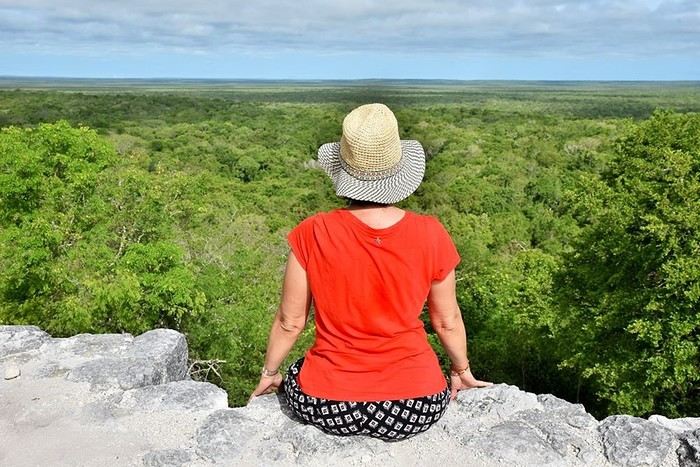
The view from the top of this jewel, rising above the wild vegetation, is breathtaking.


When you think about it, the landscape hasn’t changed much since the time of the Maya. And that’s a good thing.

It’s time to go.

Down below, the monkeys keep letting out their ear-splitting cries
Le blog voyages : http://derrierelhorizon.fr/accueil/
LH Lhorizon Veteran ·
Awesome, everything you did is on our itinerary! And wouldn’t Calakmul be the next stop?....

Sylvain, a lot of visitors only spend two weeks in the Yucatan—sometimes even less—and as a result, they rush through it. It’s a shame.

You’re going to spend two months there with your family, plus one or two other countries, I think (I seem to remember reading that somewhere on VF).

So you’ll see way more than we did—it’s really great. Enjoy this beautiful region that is the Yucatan!

We all loved Calakmul, but I’ve also read some accounts (very few, though) from travelers who thought there wasn’t much to see there.

It’s really a matter of taste, and I hope you’ll all enjoy it (our sons were just a little older than yours when we were there). If you do, take your time: this site, with its mix of nature, wilderness, and history, is totally worth it...
Le blog voyages : http://derrierelhorizon.fr/accueil/
MO Montagnard74 Globetrotter ·
Hello! Campeche, Mérida, Uxmal, Coba, Calakmul—so many places that still resonate deeply with me, vivid memories from my month-long trip to Mexico back in 2012!

But I’m thrilled to see there are still "off-the-beaten-path" sites and "rustic" accommodations I love so much. Here’s to the next adventure! !
"Le véritable voyage de découverte ne consiste pas à chercher de nouveaux paysages, mais à avoir de nouveaux yeux." Marcel Proust
SC Scot2021 Regular ·
Hi, Yes, we’re taking our time, and we’ve already booked our night at the Roots campsite you recommended. We love these situations that push us out of our comfort zone and teach our kids so much!👋🏼
carnet de 8 semaines dans l'Ouest Américain: https://voyageforum.com/v.f?post=10554947;#10554947
LH Lhorizon Veteran ·
Hi Montagnard,

So glad I brought back such great memories for you!

We’d been told so often that the Yucatán was *ultra*-touristy that we weren’t expecting to find ourselves in some spots that were barely visited—or even deserted, like Calakmul. What a fantastic surprise that was.

And while some sites are packed (Chichén Itzá, Mérida, Tulum, etc.), not all of them are! That’s the beauty of taking your time, like Sylvain mentioned earlier—it lets you uncover those hidden gems and enjoy them the way they deserve…
Le blog voyages : http://derrierelhorizon.fr/accueil/
LH Lhorizon Veteran ·
I’ve added tons of photos to my travel journal, but I think videos capture the reality better.

Anyway, before I continue with the story, here’s a quick 2-minute video that gives a pretty good sense of the Yucatán: right here 😎
Le blog voyages : http://derrierelhorizon.fr/accueil/
LH Lhorizon Veteran ·
Before wrapping up the trip (Bacalar, Sian Ka’an, and Tulum), here’s some practical info about Calakmul:

- Yaax’ Che Campground

Operating since 2003, it’s run by a family from a local community. The initial goal was to establish a camp with low-impact environmental infrastructure. Twenty years later, this camp is a success, welcoming tourists while helping preserve the reserve’s environment.

One of the 9 tents at the campground
Contact: serveursturisticos@yahoo.com.mx

Phone: +52.983.101.1921

Address: Campamento Yaax Che in Calakmul, Carretera 186 Escacega – Chetumal KM 98 Entronque a Calakmul KM 7, 24640 Conhuas

To book a tent (or several), the best option is to go through the excellent website of the community tourism association this campground belongs to: Peninsular Alliance for Community Tourism.
Don’t hesitate to check it out—you might find something perfect, as it also lists other interesting, community-based, off-the-beaten-path spots in the Yucatán.

Alternatively, you can also book through the usual platforms: Booking, Agoda, Tripadvisor...

Price: It might seem surprising, but here, the price is inversely proportional to the comfort level! We paid 78 € for a tent for four people (in July). Some might find this rate too high for the amenities, but we don’t—it’s worth it to step off the beaten path in this ultra-touristy Yucatán.

Meals included: A light breakfast (not very filling) is included in the price. You can swap it for a small sandwich for your day visiting Calakmul, since there’s nowhere to buy food in the area.

Note that there are two short nature observation trails around the campground, including a bird-watching tower in the middle of the jungle.

- Admission fees for the Calakmul archaeological site

Here’s how the total access fee breaks down (2023 rates):

1/ At the exit of the small village of Conhuas, you pay a road maintenance fee (104 pesos per person).

2/ 20 km later, you pay the entrance fee for the biosphere reserve (150 pesos per person).

3/ And upon arrival (another 40 km), you pay the access fee for the Mayan archaeological site (90 pesos per person).

The total cost is 344 pesos per person (about 19 € at the 2023 exchange rate).

With all these successive payments, it feels a bit like we’re being milked, but in the end, it’s a small price to pay for such an exceptional site as Calakmul.

Warning: Don’t run out of gas, water, or food!

Calakmul is completely isolated in the jungle—there’s nothing nearby, and it’s far from everything. That’s part of its charm, but it also comes with some drawbacks: you need to plan ahead for gas, water, and food.

For gas:

Fill up well before reaching Conhuas, as gas stations are nearly nonexistent on Highway 186.

Coming from the west, the last gas station we found before Conhuas was in Silvituc (45 km from Conhuas and 105 km from Calakmul).

If you’re coming from the east (Bacalar, Chetumal, etc.), it’s best to fill up in Bacalar, especially if you’re making the round trip from Bacalar to Calakmul (470 km).

For water and food:

Stock up well before reaching Calakmul, or you might go hungry! Not having water while walking in this usually scorching-hot site can ruin your visit.

The best option is to buy food and drinks either in a town you pass through on the way (whether coming from Campeche, Bacalar, or elsewhere) or at a typical roadside shop—but in any case, do it well before reaching Conhuas.

Otherwise, you can still find supplies in Conhuas, but with limited choices, as the stores are small and not well-stocked.

And finally, if you pass the first checkpoint 1 km after Conhuas, at the entrance to the road heading south to Calakmul, your last chance is 6 km further at the Oxte’ Tun restaurant on the right side of the road. There, you can buy small sandwiches. They don’t sell bottled water, but you can refill your empty bottles (don’t make the same mistake we did—keep your empty bottles instead of throwing them away!). They also sell sodas.

9/ Bacalar

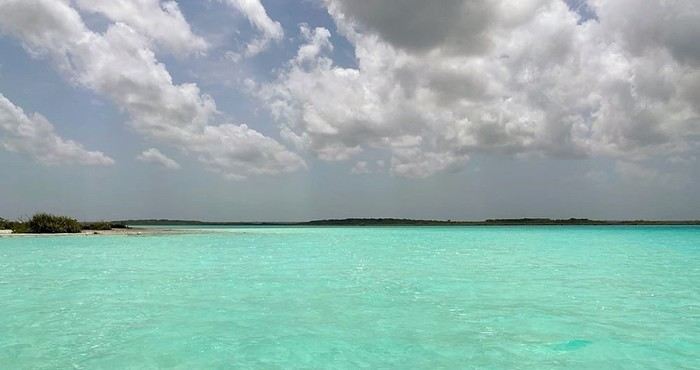
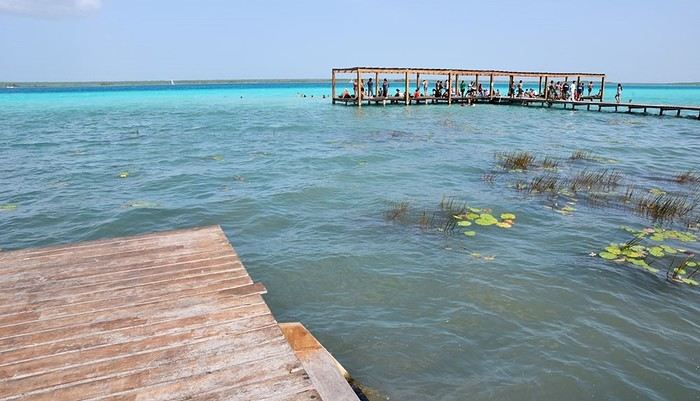
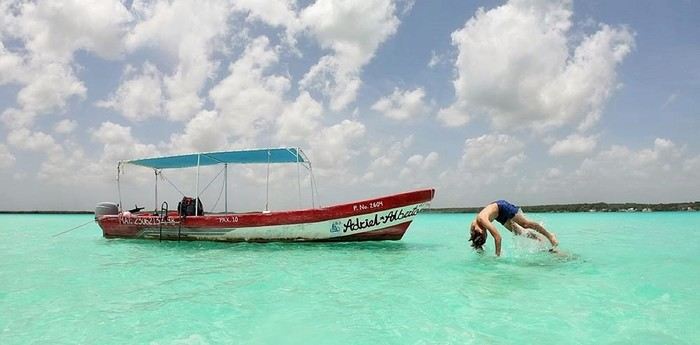
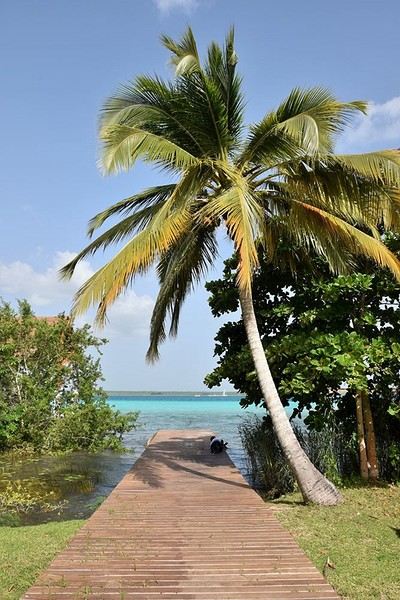
I admit we didn’t stay long enough or make the most of it. It’s a shame because the area is stunning—the colors, especially of the water, are breathtaking and perfect for swimming. The temperature is delightful.


Bacalar Lagoon is nicknamed the “Lagoon of Seven Colors” because of—or rather, thanks to—its different shades of blue, turquoise, and green.


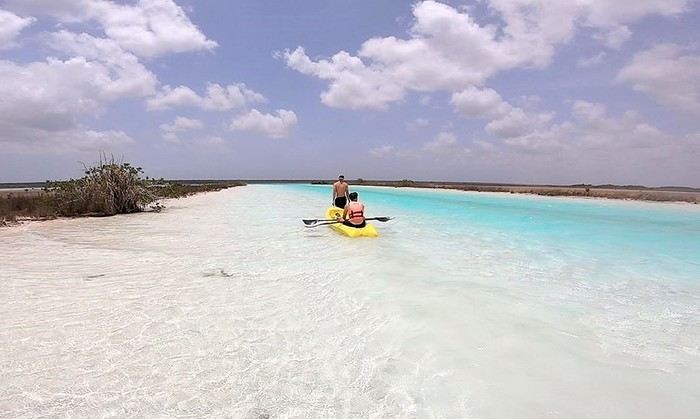
We went to the famous Pirates’ Channel by canoe. First, you have to paddle for a good twenty minutes or more (we had to fight the wind).

Then you arrive at a spot where there’s not much to do except swim and enjoy the scenery.


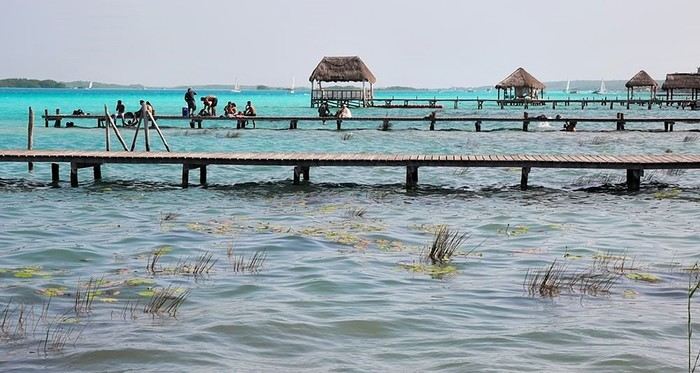
On the way back, we thought we could swim along the shore, but it seems nearly impossible: hotels have taken over the waterfront, and access to the water is privatized. There might be a few public spots, but if so, we didn’t see them.

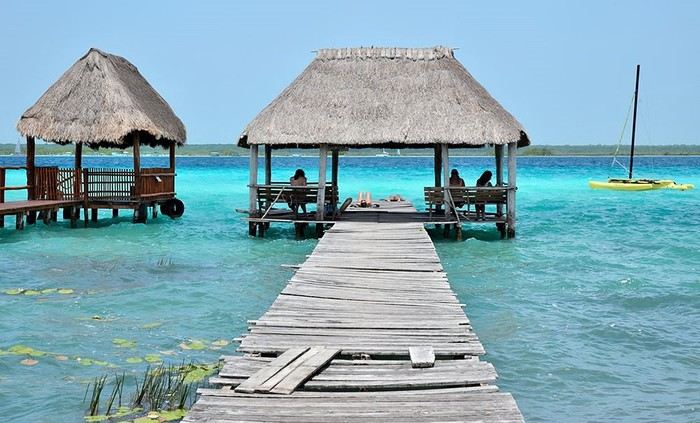
When we thought about heading to a public *balneario* (a free but usually overcrowded small beach area), we found a small, nearly deserted dock nearby:


Here’s what the public *balneario* looks like (in the background):


...and the private docks right next to it:


We also took a short boat tour of the lagoon. We briefly saw a submerged cenote, its circular shape clearly visible.


Then we headed to a new swimming area.


There’s nothing to do there—just savor and enjoy. At that moment, the daily grind of work back in France felt so far away.

One place we loved was a small, friendly restaurant, Baluartes Marina Laguna Azul (Avenida Costera 1, por Calles 20 y 22, Bacalar, 77930). The food and cocktails are good and filling, and ideally, you should go in the evening and ask for the upstairs area—it’s much nicer than the ground floor:
Le blog voyages : http://derrierelhorizon.fr/accueil/
LH Lhorizon Veteran ·
10/ The Sian Ka’an Biosphere Reserve

There are three ways to visit the Sian Ka’an reserve:

- The short excursion from Muyil (2 to 3 hours) - The long excursion from Muyil (5 hours) - The full Sian Ka’an excursion (8 hours).


We chose the first option: the short excursion from Muyil. It unfolds in three stages:

- We start with a visit to the small ancient Mayan city of Muyil - We continue with a short but pleasant trek through the jungle - We finish with a lovely boat ride that ends with an unforgettable swim in the Mayan canals.

Finally, you can do this excursion with or without a guide, and it’s worth noting that you can also head straight to the dock to take the boat if you want to skip the first two stages.

Step 1: The Mayan ruins of Muyil

This is an archaeological Mayan site that isn’t particularly impressive at first glance compared to Chichen Itza, Uxmal, or Calakmul.


That said, this site, nestled in nature where visitors aren’t crowded, is really pleasant to explore.


Inhabited early by the Maya (from around 300 BC to 900 AD), the site’s strategic position allowed its inhabitants to control an important trade route.
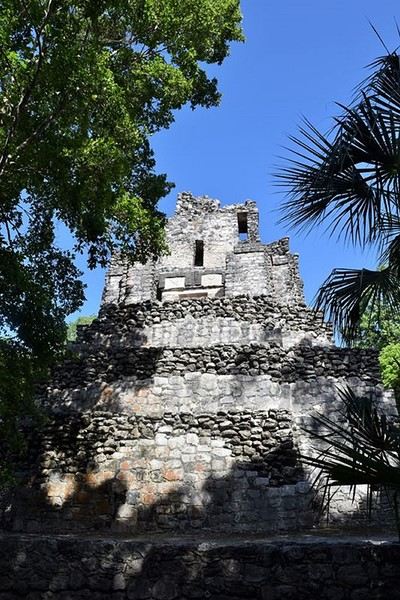
Today, its main archaeological attraction is its stepped pyramid, called El Castillo. It’s also the tallest structure (17 meters).


For reference, you can breeze through the ruins in about fifteen minutes if you’re not too curious, or take an hour or more in slow-travel mode. We took our time—it was just so enjoyable.

Step 2: Short jungle trek

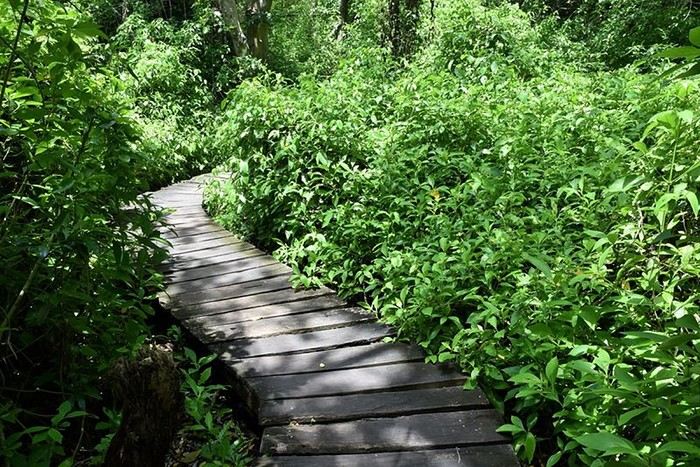
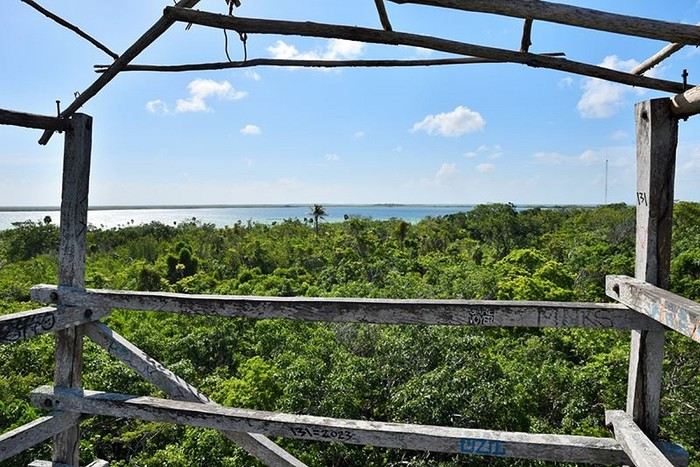
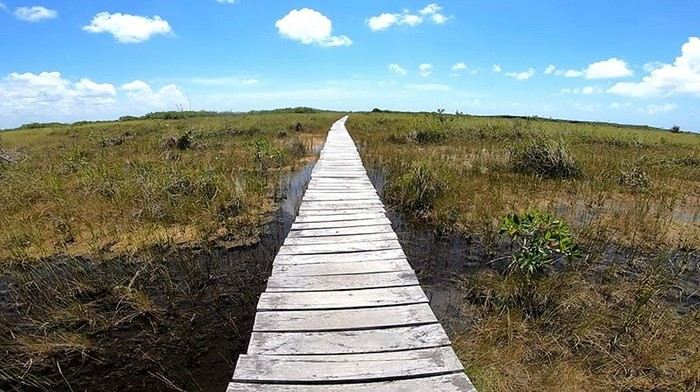
Next, we cross a jungle area on a lovely wooden boardwalk: the Canan Ha trail.


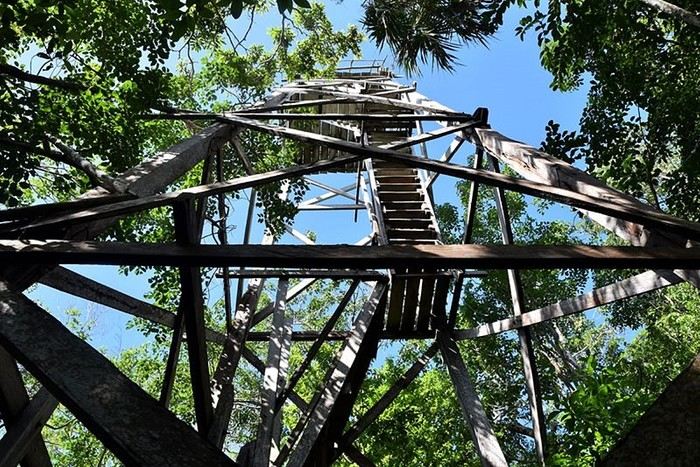
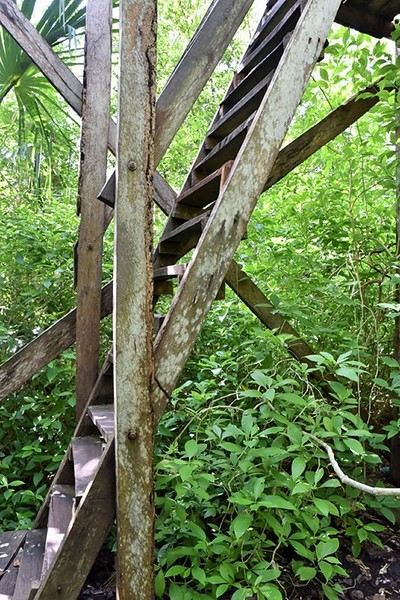
After a 10- to 15-minute walk, we reach an observation tower whose summit sits just above the canopy.


The climb is about as steep as a Mayan pyramid!


The view from the top is worth the detour.


All that’s left is a short walk (5 minutes) before reaching the dock.

Le blog voyages : http://derrierelhorizon.fr/accueil/
LH Lhorizon Veteran ·
Step 3: Boat, lagoon, mangrove, and swimming in the Mayan canals

While the first two steps (ruins and jungle) were already very enjoyable, the third one left a truly unforgettable memory. I’d read about it before going but was skeptical—wrongly so, because it’s really nothing but pure pleasure...


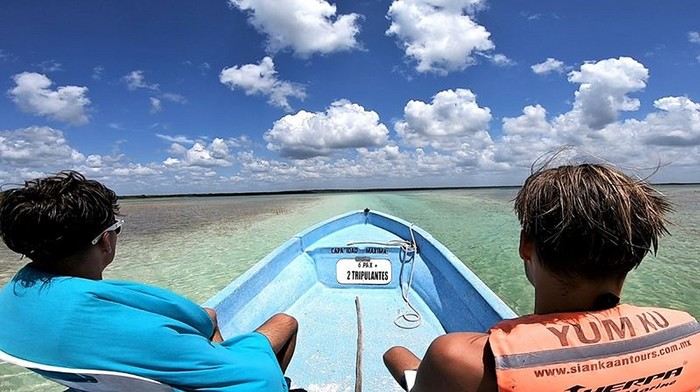
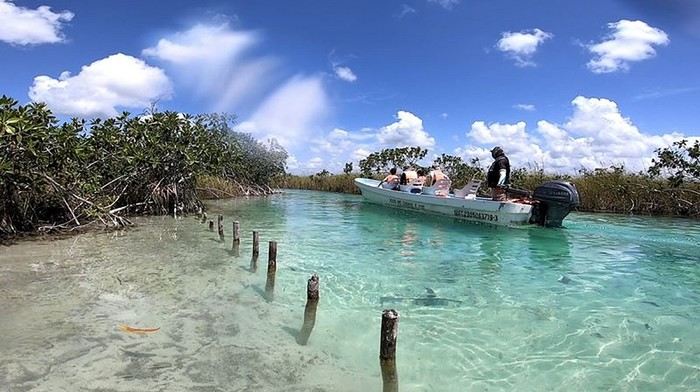
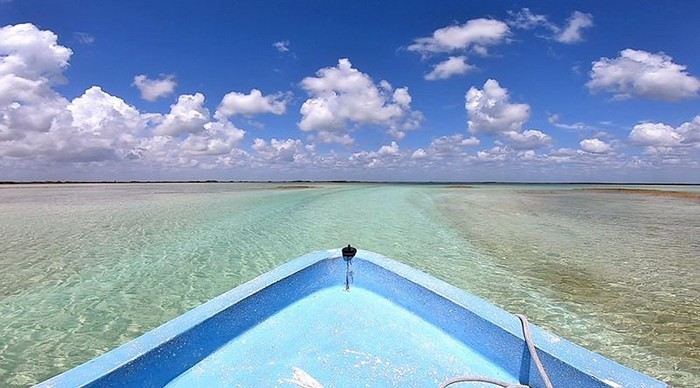
The nautical outing begins with crossing the Muyil lagoon. Shallow and translucent, its water takes on multiple colors: shades of green and blue, white sandbanks, and brown shallows.

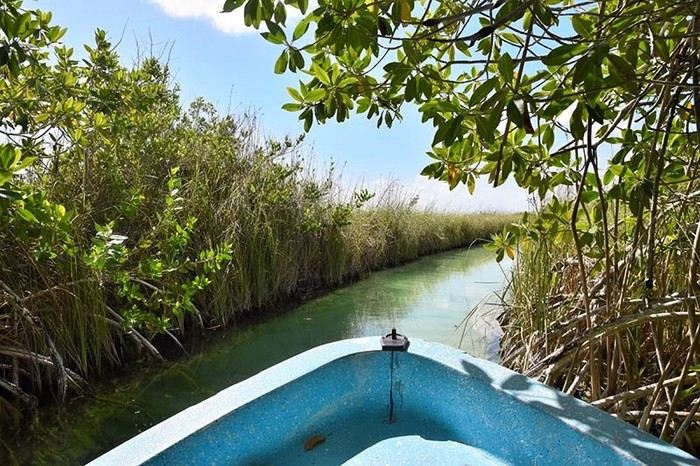
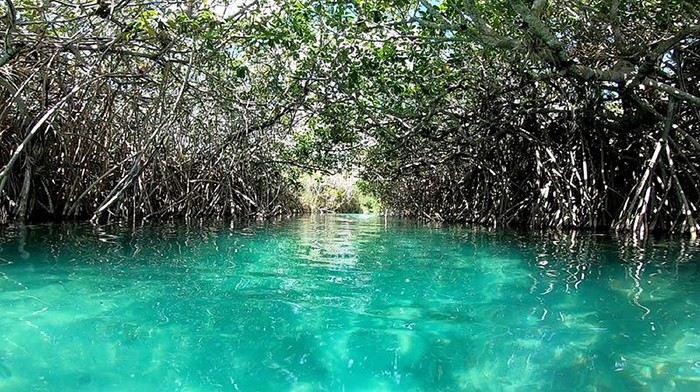
Next, we reach the famous Mayan canals that wind through the mangrove.


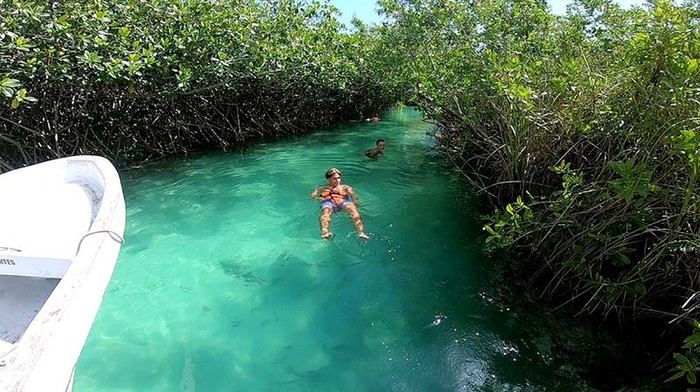
Historically, these canals allowed the Mayans to access fresh water, which was vital for them. Today, we get to swim in them!


Before jumping in, we have to put on a life jacket—not through the arms but through the legs: the idea is to wear it like a diaper!


We might not look particularly cool dressed like this, but it’s surprisingly comfortable, and the sensations in the water are amazing.

The perfect water temperature is also a huge relief from the ambient heat and helps make the moment magical.


All we have to do is let the current carry us gently, without swimming.


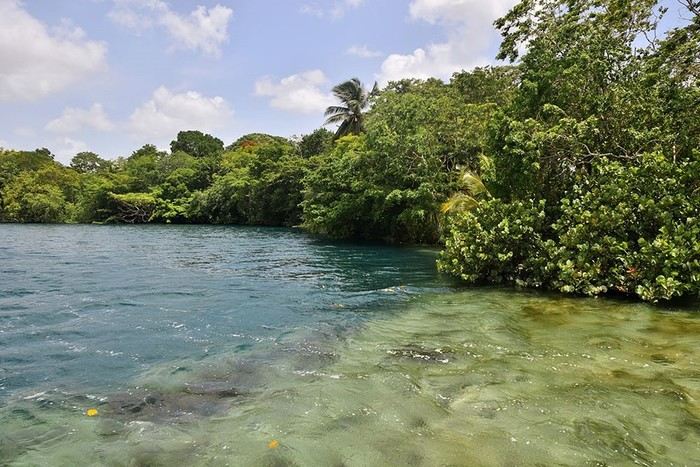
We drift slowly through a beautiful mangrove, in emerald-green water.


For this floating stroll, the boat pilot had announced a duration of about 45 minutes, but you can also prolong the fun: we enjoyed the moment so much that it took us over an hour.

We eventually arrive at a small dock lost in the vegetation, marking the end point. There are two options here: either the pilot came by boat to pick up the swimmers, or he came on foot via a dock through the vegetation, by which we return with him to the boat, still moored where we got into the water.


We returned via this footpath, alone in the middle of nowhere. After a 10-minute walk under the scorching sun, we retrieve the boat.


There’s just about ten more minutes of navigation through the mangrove and the Muyil lagoon in beautiful landscapes to return to the starting dock of Step 3.


From there, you can head to the site exit, either directly (a 5-minute walk) or by retracing the outbound path in reverse (crossing the jungle section and then the archaeological site). We chose the second option to keep enjoying it as much as possible.
To conclude, Sian Ka’an was one of the great surprises of our trip: this outing didn’t look like much at first, but in the end, all four of us really loved it.
Le blog voyages : http://derrierelhorizon.fr/accueil/
LH Lhorizon Veteran ·
Final part...

11th and final stop: Tulum

There’s obviously something for everyone here, but as far as we’re concerned, we didn’t like Tulum. Its only real draw is its archaeological site, which most of us have probably seen in photos all over the place—often presented as iconic of the Yucatán.


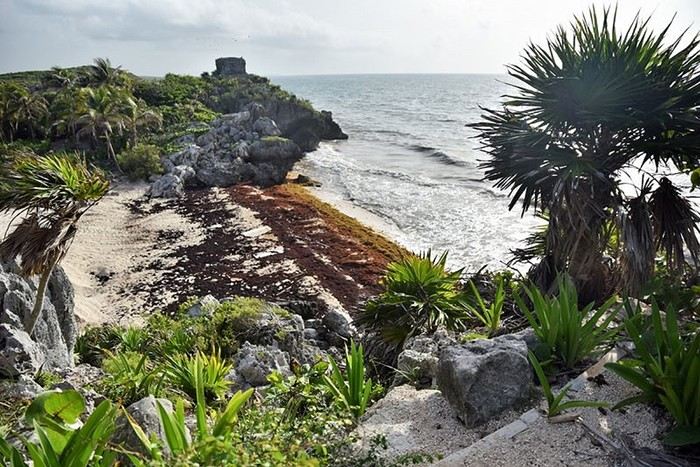
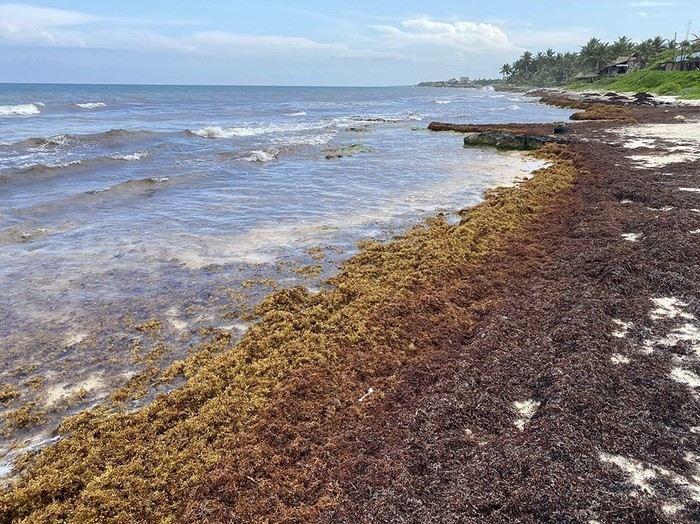
Tulum is a town where the coast is literally taken over by hotels: beach access is almost entirely private. The town itself has zero authenticity. And yet, tourists—many of them American—seem to love crowding into these charm-free hotels, on beaches that are regularly overrun by sargassum.


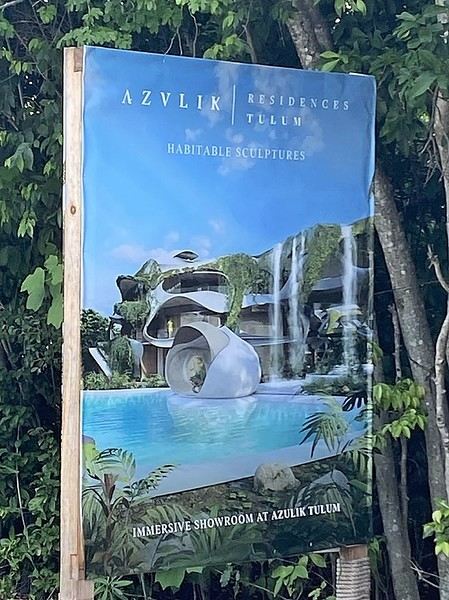
Luxury (and often bizarre) hotel projects keep popping up along the coastline for I don’t even know how many miles, alternating with the ones already there.


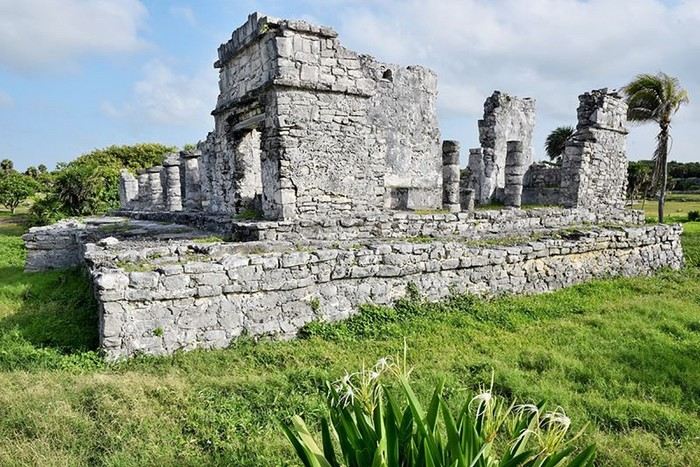
Anyway, we visited the Mayan city of Tulum, which was actually interesting, even if you can explore it pretty quickly.

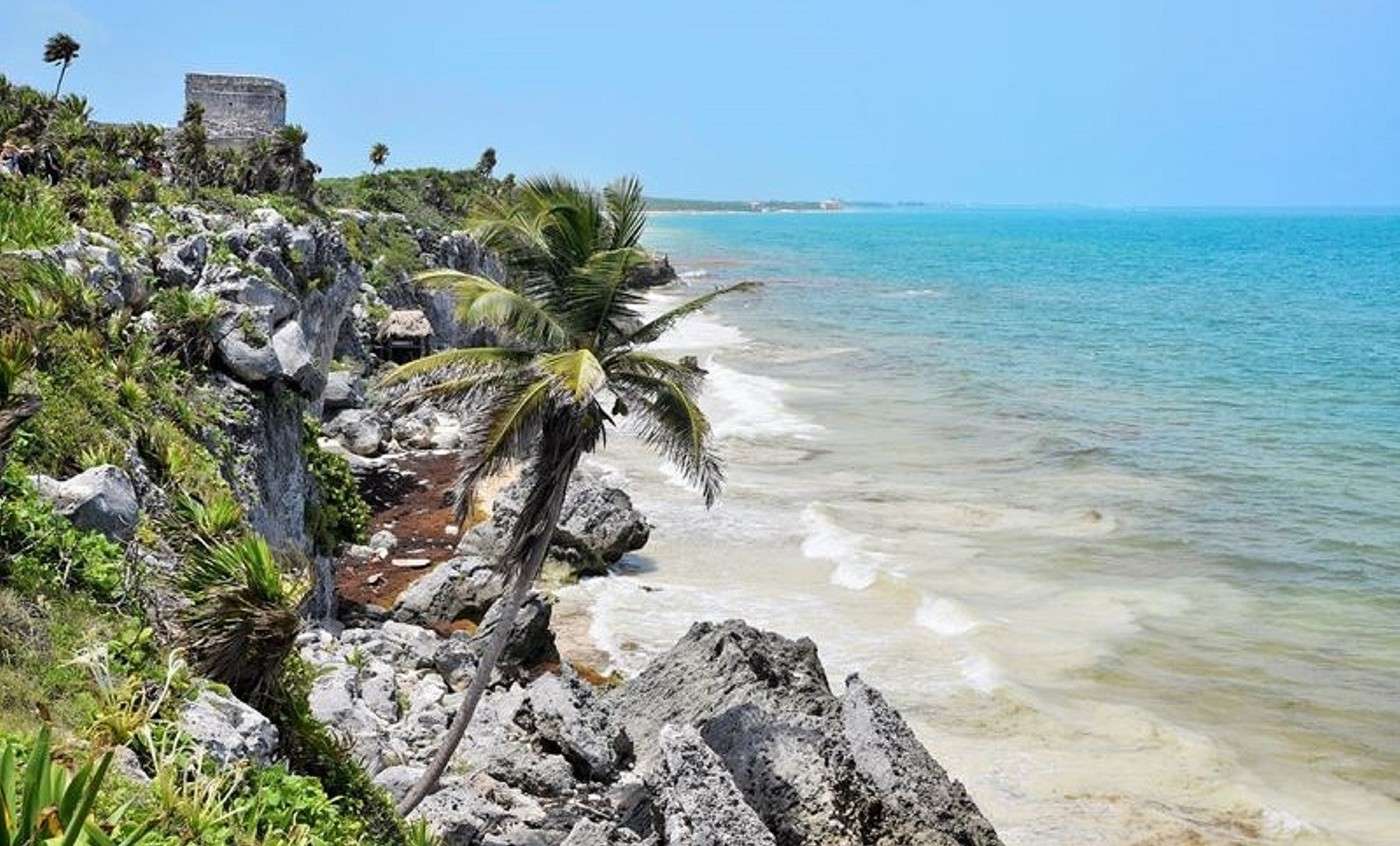
The city was fortified (Tulum means "fence" in Mayan) and located at the highest point on the coast. This allowed it to control maritime trade routes while being virtually impregnable.

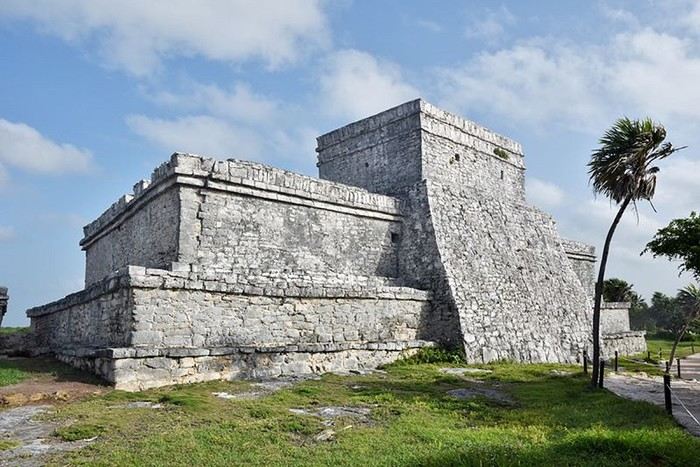
The most iconic building on the site is El Castillo.


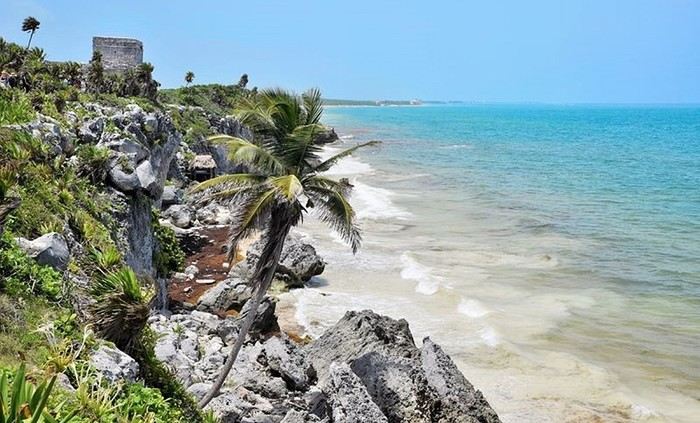
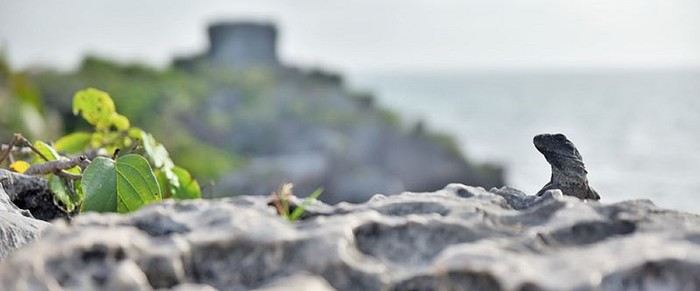
The second structure overlooking the Caribbean Sea, smaller than El Castillo, is the Temple of the Wind God.


This walk among Mayan ruins overlooking the sea is where our Yucatán journey comes to an end.


Thanks for following along with this travel journal! 😎

Adios amigos...

Le blog voyages : http://derrierelhorizon.fr/accueil/
XE Xeta Veteran ·
Hello Lhorizon! So nice to catch up again 🙂 After Indonesia and Bolivia, we’re sharing Mexico too!

We went as a family for the whole of July 2022. Reading your travel journal brought back great memories of photos from Chichen Itza, Izamal, Uxmal, Campeche, Tulum, and Holbox. We made a detour to Chiapas to visit Palenque and the Agua Azul waterfalls. We also stopped at the Kohunlich ruins on the way to Bacalar (like you, we didn’t get to enjoy Bacalar much, but for health reasons 🤪—I’d had an ear infection for two days, and our oldest son hurt his foot in the lagoon when we arrived in Bacalar🏴‍☠️).

On our side, we swam in the cenotes of Yokdzonot (the place is stunning, though we were a bit annoyed that life jackets were mandatory), Chihuan (we loved it just as much as you did), and Kankirixche (phew, no mandatory life jackets—a semi-open cenote with lots of locals and a platform for diving from several meters up).

I totally agree—this region is absolutely beautiful !
LH Lhorizon Veteran ·
Hi Anne,

What a nice surprise indeed! A half-surprise, actually, since I’ll admit I was vaguely keeping an eye out for you

If you’d like—and this goes for everyone reading too—this is an open travel journal: feel free to add your own experiences in the Yucatan so readers can find all the info they need to plan their trip, especially about places I didn’t visit...

Unless you’d rather treat us to another lovely travel journal?...

Thanks for chiming in. I’ll send you a quick PM to catch up and not clutter the thread for everyone...
Le blog voyages : http://derrierelhorizon.fr/accueil/
MO Montagnard74 Globetrotter ·
My history with the Yucatan goes back to 2012, so I’ll just read along instead 😄

One question though: near Tulum, on the way to the Sian Ka’an reserve, there was a beach where you could swim with tons of turtles—I don’t remember the name. Does it still exist?
"Le véritable voyage de découverte ne consiste pas à chercher de nouveaux paysages, mais à avoir de nouveaux yeux." Marcel Proust
LH Lhorizon Veteran ·
Sorry, I don’t have the answer to your question, but I do know there are quite a few turtles around Tulum since the coral reef offshore (I can’t remember if I wrote this in my travel journal, but it’s the second largest on the planet after Australia’s) is home to a large number of fish, marine mammals, and reptiles, including, of course, turtles. So it’s an animal you can often come across in the area.


I’ve heard about Akumal Beach, where you can swim with turtles, but that’s probably not your beach since it’s north of Tulum (not toward Sian Ka’an). Today, the site is reportedly (conditional tense: I read this but haven’t verified it) completely overrun by mass tourism...

Just to add a little backstory, the Tulum area has changed a lot over the years. My wife, who visited a long time ago (over 25 years—how time flies!), didn’t recognize the small, super laid-back fishing village she’d loved so much in what’s now a big city... It’s possible your turtle beach has suffered the same fate, even if it hasn’t been as long since you went for a dip there 🙂
Le blog voyages : http://derrierelhorizon.fr/accueil/
MO Montagnard74 Globetrotter ·
Ugh, I just checked on Google Maps—I think it might be Akumal Beach. It was already a popular spot back then, but you could still snorkel peacefully among the turtles.

Your girlfriend’s comment doesn’t surprise me. Even in 2012, you could feel the real estate pressure everywhere.
"Le véritable voyage de découverte ne consiste pas à chercher de nouveaux paysages, mais à avoir de nouveaux yeux." Marcel Proust
PA Pastani88 ·
Hi there,

Thanks for this amazing discovery! Mexico is my biggest travel dream. Some friends of mine went there in early 2023 and told me it was absolutely worth it. And these beautiful photos along with the whole adventure you describe—it’s exactly what I love.

Thanks for sharing this wonderful post.
TO Torpan Regular ·
Thanks for this beautiful travel journal of this stunning region—I traveled through it the same way you did back in 2019 (*Mexico: A Kaleidoscope of Colors*). I had the same feeling about Tulum, and I loved swimming in the cenotes! Have a great evening! !
SO Sofisonsec Regular ·
Amazing travel journal with beautiful photos! I love Mexico—I’ve been there three times, especially for diving in the sea (with bull sharks) and cenotes. I’ve also visited Mayan sites and the Río Lagartos Biosphere Reserve. I’ve explored the Yucatán Peninsula too, and I just got back from La Paz in Baja California, where I dove with sea lions. I’m heading back next year because the people are so welcoming, the food is great, and it’s a stunning country.
je continuerais à faire très prudemment des choses dangereuses, pour pouvoir les faire longtemps...!
FA FamilleUS Veteran ·
Great job on this travel journal and these beautiful photos! We have wonderful memories of the Yucatan (Christmas 2007 with family).

The Forum is coming back to life...
Nos escapades : Le Maroc, l'Egypte, la Mauritanie, la Tunisie, l'Afrique du Sud, Lanzarote, les Etats-Unis (3 ans), le Canada, le Mexique, la Colombie, le Pérou, la Guadeloupe, la Martinique, l'Indonésie, la Thaïlande, Israël, Dubaï, la Jordanie, la Turquie, et Tahiti... pour l'instant !
LH Lhorizon Veteran ·
Hi Pastani, and thanks for your comment! 🙂

Mexico is my biggest project

So don’t hesitate to ask any questions you might have—I’d be happy to try and answer them, and if I can’t, the other readers of this travel journal will surely be able to help.

Thanks by the way to the last three contributors—Torpan, Sofisonsec, and familleUS—I’m thrilled to have brought back such great memories for you too of this beautiful corner of the world...
Le blog voyages : http://derrierelhorizon.fr/accueil/
MA Macac ·
Hi there, Thanks so much for this wonderful travel journal. I’m heading to the Yucatan in January 2024 and I’m putting together an itinerary that’s similar to yours. Your account has been super helpful! That said, some friends and colleagues are warning me against a self-drive trip because of safety concerns. Did you feel safe, and did you go through an agency? Thanks
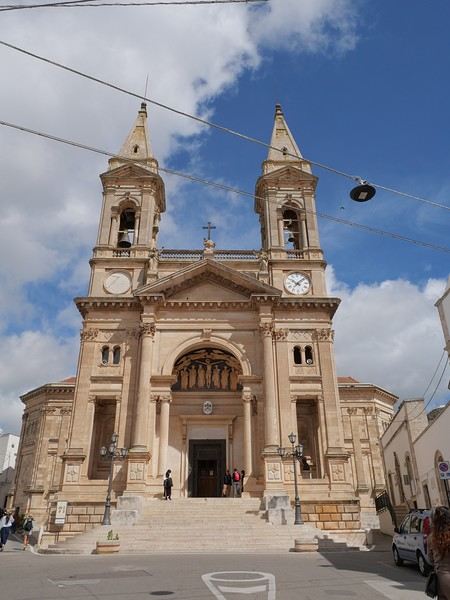
Lechantre
XE Xeta Veteran ·
Hello, Thank you for this wonderful travel journal. I’m heading to the Yucatan in January 2024. I’m putting together my itinerary, which is similar to yours. Your journal has been a huge help. However, friends and colleagues are advising against a self-drive trip due to safety concerns. Did you feel safe, and did you go through an agency? Thanks

Hi Christine, I’ll go ahead and reply to the message addressed to Lhorizon (since they kindly invited me to contribute to their travel journal 🙂). We took a solo trip to Mexico (mainly in the Yucatan, with a detour to Chiapas) in July 2022. No safety issues at all. Some parts of Mexico do have a bad reputation, but the Yucatan isn’t one of them. I had heard about corruption involving law enforcement, though. We didn’t encounter any of that. The only thing that bothered us was a roadblock run by a woman and her young son near the Agua Azul waterfalls (Chiapas), where a "donation" was required to continue our journey (unfortunately common in that area).
SO Sofisonsec Regular ·
Hi Christine,

What you need to know is that the Yucatán Peninsula is the only part of Mexico where the soil is made up entirely of very poor coral reef. So there’s almost nothing that grows there—no livestock, no farming. It was the poorest part of Mexico until 1976, when Club Med bought land and a beach in Cancún. No one believed in tourism back then. Club Med won its bet by creating jobs and making Mexicans realize there was a huge business to be made in tourism.

All that to say, the Yucatán Peninsula is now the most economically prosperous region in Mexico, and tourists are highly protected because it’s their only economic resource.

The only tourists who aren’t welcome there are Russians—they flaunt their money, wads of cash, and jewelry, and Mexicans fear that one day one of their own might snap and kill one for their wealth, damaging the region’s reputation.

I’ve traveled there, taken buses, and visited sites alone without ever having an issue or getting a sideways glance.

However, I was strongly advised not to leave the Yucatán alone.

So if you go, don’t hesitate—just enjoy yourself!
je continuerais à faire très prudemment des choses dangereuses, pour pouvoir les faire longtemps...!
RO Rouquine38 Globetrotter ·
I’m jumping into this travel journal a bit late... I’m only on day two, but I’m happily reliving our 2018 trip memories. Already 6 years ago! 🤪
"Voyager est un triple plaisir : l'attente, l'éblouissement et le souvenir." Ilka Chase
LH Lhorizon Veteran ·
Hi Christine,

Thank you for this wonderful travel story

My pleasure! 🙂

Friends and colleagues advised me against a self-drive trip because of safety concerns. Did you feel safe, and did you go through an agency?

Yes, we felt safe, no, we didn’t go through an agency, and I can confirm what Anne and Sophie mentioned earlier.

Like you, we were warned about safety before our trip there. After doing some research—online and also by talking to different friends and family who had all been to the Yucatan a few months before us—it turned out that safety issues are mostly a problem in other parts of Mexico.

We were told that the Yucatan is very safe because it’s a major financial asset thanks to tourism, which the country really can’t do without. So, they’ve put in the necessary measures to combat insecurity, and you can see it—we regularly saw pick-up trucks full of heavily armed soldiers. For some, it’s unsettling; for others, it’s reassuring. There are also frequent police (or military, I’m not entirely sure) checkpoints on the roads.

To sum up, I’d say you should stay normally vigilant, as you would on any trip, but there’s no need to be paranoid. We never felt the slightest sense of insecurity there.

Anyway, I hope you have an amazing trip in this beautiful part of Mexico...

Lolo
Le blog voyages : http://derrierelhorizon.fr/accueil/

Similar discussions

You might also like