Bonjour !
connaissez vous un site avec lequel on puisse identifier tous les vols arrivant ou provenant d'une ville ?
Par exemple : je voudrais savoir d'où/par où on peut arriver par avion à Cuba, La Havane (ou Santiago)
car je souhaite m'y rendre depuis la Martinique, et le parcours identifié à ce jour serait de passer par Saint-Domingue puis Panama, en 2 jours & 1 nuit environ
Merci d'avance à tous les contributeurs
I got into music with the will
To light up many hearths like Che could do,
To circulate ideas, to advance utopia
Alternating barricades, sharp thought, and poetry.
Mc Solaar, Guérilla
Subscribing without a fight to the slightest line of my itinerary sometimes feels like an illusion. Because there are countries where, despite the fever and enthusiasm, despite the triumphant revolution, certain elements block my path. And if I had planned, for F. and me, a beautiful ascent up Tabouret Hill (Loma del Taburete, 453m), it was without accounting for vegetation as dense as it was thorny, which barred our way after just a few quarters of an hour of walking. Exhausted, I had to face the facts: we wouldn’t go any further. I needed to come up with some kind of Plan B.
But what is this country, an unwitting laboratory of the worst that white civilization has done during its reign? What is this magnificent place—yet another—entrusted to the care of oblivion, just 150 km from the land of freedom? According to Donald Trump, a country supporting terrorism; according to the locals, the vast battlefield of 20th-century ideologies; according to the average tourist, a hot country, a beautiful country, a country where the last illusions of a lost paradise are dying.
On the other side of Havana Bay, we love that statue of Christ blessing the city. There’s something gentle, soothing, in that patriarchal gesture. You’d almost be tempted to forget that at the dawn of the 16th century, those who claimed to represent the Church had no scruples about eradicating the Ciboney and Taíno populations. Worse, you’ll find magnificent this cathedral dedicated to the Virgin Mary, right in the heart of the old city. Under the guise of a civilizing necessity, Havana became, like so many other places, the gilded seat of European pretensions, at the expense of local populations doomed to extermination, then enslaved populations—more or less indigenous—who, you can imagine, didn’t often set foot in this holy place.
Lost in my thoughts, I try to push through this tangled vegetation. Nature reclaims its rights; nature abhors a vacuum. Yes, the well-trodden path of revolution couldn’t stay free of weeds! The road is buried. We give up and turn back, until that fork I’d noted before leaving, which would let us reach the top of the hill by skirting its northern slope.
So the white man arrives, settles, and gets rid of everything that bothers him. He has two unstoppable forces at his disposal: gunpowder and the spiritual certainty of being on the side of an all-powerful god. While the first gives him an unmatched material advantage over his new enemy, the second lets him use the first without feeling too guilty. That’s the magic of this supreme Church: it condemns all forms of pleasure—calling them impurity—while promoting plunder and crime under the cover of evangelization.
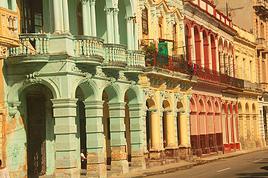
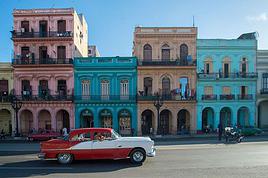
Walking through the city, you find a bit of Algiers, except that here, the decay is almost irreversible. You feel the splendor of the past, a disconcerting image of all vanity, from an era when men knew how to build beauty—especially if they didn’t have to share it. We’ll debate the benefits of colonialism for a long time, while glossing over the fact that those benefits often stopped at the city limits, limits all too obvious to the indigenous people. Havana isn’t just one or a few buildings; it’s an impressive collection of works of art built one after another, in what I think was a spirit of healthy competition. Yes, you find Algiers in this exuberance. As if these distant cities were the receptacle of everything that was best in the lands of origin. Atlantes and lintels, golds, blues, ogives, and monumental windows—exceptional architecture in an exceptional place.
Some streets are clean, swept with care; others are not, scattered here and there with potholes filled with water. A rather persistent smell of urine invades us regularly. We move on. And we look up: Havana is visited with your nose in the air. Because the beauty is truly up there, on those magnificent balconies and terracotta arches. Also because it’s not impossible that a piece of that balcony might suddenly detach, hurling our ends into an overseas tragedy we’d rather avoid. On the ground, here and there, rubble. Inexorably, this city is returning to dust.
My Plan B turns out to be no more successful than the first attempt. After a cheerful progression of a few hundred meters, same outcome, same struggle—the vegetation opposes any revolution: impossible to go around the hill! Once again, we have to turn back. We’ll try Plan C. I reassure myself by convincing myself to stay in the logic of this country: Cuba has been searching for itself for five centuries.
Coffee, tobacco, and sugarcane—the green gold of the colonies—so that money could flow and Europe could enjoy itself. Cuba’s history isn’t original. In reality, all the hot lands at these latitudes suffer the same fate: to serve the white man. While waiting for the awakening of consciences, UN Resolution 1514 and more or less affirmed revolutionary desires. Except that—and this reflection is just my own—if the awakening of consciences and the revolutionary will don’t play into what Resolution 1514 hides, there’s a good chance the said state will become a pariah. Those who don’t follow the American doctrine risk a lot; those who decide to follow Moscow risk everything. Independence was only the barely discreet instrument of American views. Patrice Lumumba will gladly enlighten us on the subject.
Turning back is good. Setting up Plan C is better. I won’t deviate from my goal: we will reach the top of Tabouret, whatever the cost! Near a small country road, I hesitate to change the program. Time is ticking—is it really reasonable to attempt the ascent? Then a tricycle taxi appears, a kind of tuk-tuk powered by an electric moped. I take it as a sign from fate, and we board for the starting point of Plan C.
In Cuba, even before Resolution 1514, independence was assured by a pawn of the United States, Fulgencio Batista. There’s no need to go over the whole history here; we’ll just remember that if you know how to give without counting to your former masters, you can enjoy a facade of freedom. Fidel Castro, on the other hand, didn’t know how to give. It never even occurred to him. That’s why the United States harbors such terrible hatred for this rebellious state, opposed to capitalist values and political prostitution. From there to slowly killing its people for nearly seventy years, one can legitimately cry injustice. But there are other priorities. Oh yes! Greenland...
Do Cubans eat their fill? Does seeing overweight people mean opulence? Food grows, no doubt about it. The soil is fertile, the climate favorable. No, what shocks here is the absolute precarity, the feeling of a people living in survival mode, and the decay of both goods and hope. Where to go? What’s the point? The stubbornness of the United States in wanting to impose its views on the Cuban government is felt much more by an overwhelmed people than by those few elites—caricatures of communism—who instill their vision of happiness with a crowbar. The embargo imposed in 1960; the false-flag attacks—American planes flying the colors of the Cuban revolution during the Bay of Pigs invasion in 1961—the exasperation of placing Cuba on the list of countries supporting terrorism. More recently, Donald Trump decided to heavily tax countries supplying Cuba with fuel. The last time I saw such long lines near gas stations was during my first trip to Romania... in 1991. It’s not for me to judge whether Raúl and his clique are playing fair by thumbing their noses at the West. I don’t hold the ins and outs of this war of egos that keeps the world’s great powers awake. I only caught a glimpse of the poverty of an island in 2026, while we in Europe are buried under an avalanche of the useless and superficial.
At the start of the San Juan baths, we find the trailhead. It climbs steeply. But the weather is relatively mild, thanks to a cold wave hitting higher up in the United States. Dallas is under snow; we’re walking in 16°C, a stroke of luck. We climb over rocks, under fairly decent vegetation, sometimes low but passable. And we succeed in the ascent in an hour. Up there, the top of the hill is somewhat maintained, at a minimum, but maintained, as if to honor Che through an awful monument erected in his glory—a stubborn specimen from those years when good taste was inversely proportional to the delusional ideas of those being honored. Birds of prey (raptors?) circle overhead; the monument is dying, crumbling, falling into ruin. *Hasta siempre*—forever—will be for the words. Nature, erosion, life itself will have the last word over all revolutions.
Back at the foot of the hill, just before a memorable swim, we talk with a family living there in miserable shacks whose stability wasn’t unlike that of the Leaning Tower of Pisa. The grandmother holds an animal, a rodent, by its feet. The grandfather has just killed it; she’s plucking its fur. A few steps away, water boils in a pot. She plunges the beast into the container. Tonight, the family will eat ragondin stew. Further on, another shack where, in a disorder rivaling the filth, a mother breastfeeds while sitting on the edge of a bed. Then, on the way down, we’ll meet a middle-aged man carrying a large jerrycan of water on his shoulder. Are these people happy here, far from the cities and their stakes? Is it too much to ask that they at least have access to electricity, running water, and decent, safe housing?
Outside the old city, Havana reveals wide avenues serving imposing institutions here and there. But whether in the colorful alleys of the old town or on the majestic and austere Plaza de la Revolución, the same feeling moves me: sadness. Seeing that only chaos has come from ideas crushes me. We praise, we sing the revolution—above all, we impose it in people’s minds as a necessity, when it’s nothing of the sort. Revolution is just the fruit of a few tortured minds who, once in power, do nothing better than all those before them. Enjoy power. Impose their views. It’s just a matter of color. Fidel saw red and knew how to persuade—or silence forever—his many detractors. The West sees everything in white, through the prism of human rights, and also knows how to persuade and silence its slightest detractors forever.
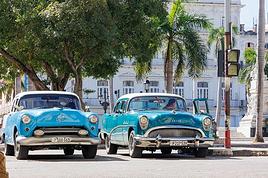
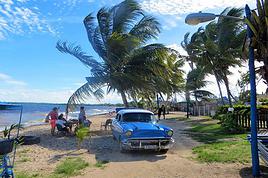
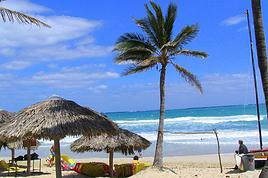
Paradoxically, Cuba survives largely thanks to tourism, a key element—let’s not be afraid to say it—of capitalism. And when a few players pick up the crumbs from transactions, the lion’s share and the foreign currency go to the government. So we won’t go to Varadero, the high place of relaxation overrun by Canadians. Instead, we’ll limit ourselves to crossing the ocean 30 minutes from the capital, at Santa María del Mar, to get an idea of cheaper tourism and to splash around for a few minutes in turquoise water invaded by sargassum. At the heart of the tourist season, we’ll meet few people. Like Havana, and according to its inhabitants, the high season is rather dead. But we won’t have come for nothing: we particularly love this return where, feverish, the taxi driver pushes his Moskvitch 2140 to the max on the highway, singing karaoke versions of hits at the top of his lungs from an onboard DVD player. East/West, the culture clash with a hint of Latino.
It’s time to leave this country of resourcefulness where extremes are very present. We’re leaving a 5-star hotel in front of yet another crumbling building. We’ve known restaurants at 40,000 pesos while in the street people eat for 400. We’ve seen those countless cars from another era and another culture—Pontiac, Lada, Chevrolet, Moskvitch—being overtaken by gleaming Mercedes and other Porsche Cayennes, the prerogative—if it still needed to be demonstrated—of the newly rich in search of recognition. Boarding the plane, we also understand that we’re not just traveling with tourists: there’s undoubtedly a rich and prosperous diaspora, just as there are relatively wealthy Cubans—well, wealthy enough to travel comfortably in the front of the aircraft. Meanwhile, on all the country’s roads, other Cubans try hitchhiking, their wives and children perched on a suitcase by the roadside. The father holds out his arm and holds a few bills in his hand like a card game. Where are they going? Who will pick them up?
Behind me, the gold of the Capitol. I’m told this gold comes from Russia. Like Marx and Lenin’s smoky theories? Like Stalin’s subtle and delicate paternalism? Let’s bet that, like the other buildings crumbling around it, the Capitol will also collapse one day, to avenge the Indians who perished from the diseases and guns of the whites, to avenge the Africans who obliterated their lives so Europeans could enjoy themselves, finally, to avenge all this abandoned people, left to the arbitrariness of democratic or non-democratic elections.
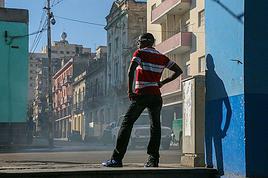
A sign in the street: We understand history. This is the revolution! We understand history. That’s the revolution.
No comment.
Subscribing without a fight to the slightest line of my itinerary sometimes feels like an illusion. Because there are countries where, despite the fever and enthusiasm, despite the triumphant revolution, certain elements block my path. And if I had planned, for F. and me, a beautiful ascent up Tabouret Hill (Loma del Taburete, 453m), it was without accounting for vegetation as dense as it was thorny, which barred our way after just a few quarters of an hour of walking. Exhausted, I had to face the facts: we wouldn’t go any further. I needed to come up with some kind of Plan B.
But what is this country, an unwitting laboratory of the worst that white civilization has done during its reign? What is this magnificent place—yet another—entrusted to the care of oblivion, just 150 km from the land of freedom? According to Donald Trump, a country supporting terrorism; according to the locals, the vast battlefield of 20th-century ideologies; according to the average tourist, a hot country, a beautiful country, a country where the last illusions of a lost paradise are dying.
On the other side of Havana Bay, we love that statue of Christ blessing the city. There’s something gentle, soothing, in that patriarchal gesture. You’d almost be tempted to forget that at the dawn of the 16th century, those who claimed to represent the Church had no scruples about eradicating the Ciboney and Taíno populations. Worse, you’ll find magnificent this cathedral dedicated to the Virgin Mary, right in the heart of the old city. Under the guise of a civilizing necessity, Havana became, like so many other places, the gilded seat of European pretensions, at the expense of local populations doomed to extermination, then enslaved populations—more or less indigenous—who, you can imagine, didn’t often set foot in this holy place.
Lost in my thoughts, I try to push through this tangled vegetation. Nature reclaims its rights; nature abhors a vacuum. Yes, the well-trodden path of revolution couldn’t stay free of weeds! The road is buried. We give up and turn back, until that fork I’d noted before leaving, which would let us reach the top of the hill by skirting its northern slope.
So the white man arrives, settles, and gets rid of everything that bothers him. He has two unstoppable forces at his disposal: gunpowder and the spiritual certainty of being on the side of an all-powerful god. While the first gives him an unmatched material advantage over his new enemy, the second lets him use the first without feeling too guilty. That’s the magic of this supreme Church: it condemns all forms of pleasure—calling them impurity—while promoting plunder and crime under the cover of evangelization.
Walking through the city, you find a bit of Algiers, except that here, the decay is almost irreversible. You feel the splendor of the past, a disconcerting image of all vanity, from an era when men knew how to build beauty—especially if they didn’t have to share it. We’ll debate the benefits of colonialism for a long time, while glossing over the fact that those benefits often stopped at the city limits, limits all too obvious to the indigenous people. Havana isn’t just one or a few buildings; it’s an impressive collection of works of art built one after another, in what I think was a spirit of healthy competition. Yes, you find Algiers in this exuberance. As if these distant cities were the receptacle of everything that was best in the lands of origin. Atlantes and lintels, golds, blues, ogives, and monumental windows—exceptional architecture in an exceptional place.
Some streets are clean, swept with care; others are not, scattered here and there with potholes filled with water. A rather persistent smell of urine invades us regularly. We move on. And we look up: Havana is visited with your nose in the air. Because the beauty is truly up there, on those magnificent balconies and terracotta arches. Also because it’s not impossible that a piece of that balcony might suddenly detach, hurling our ends into an overseas tragedy we’d rather avoid. On the ground, here and there, rubble. Inexorably, this city is returning to dust.
My Plan B turns out to be no more successful than the first attempt. After a cheerful progression of a few hundred meters, same outcome, same struggle—the vegetation opposes any revolution: impossible to go around the hill! Once again, we have to turn back. We’ll try Plan C. I reassure myself by convincing myself to stay in the logic of this country: Cuba has been searching for itself for five centuries.
Coffee, tobacco, and sugarcane—the green gold of the colonies—so that money could flow and Europe could enjoy itself. Cuba’s history isn’t original. In reality, all the hot lands at these latitudes suffer the same fate: to serve the white man. While waiting for the awakening of consciences, UN Resolution 1514 and more or less affirmed revolutionary desires. Except that—and this reflection is just my own—if the awakening of consciences and the revolutionary will don’t play into what Resolution 1514 hides, there’s a good chance the said state will become a pariah. Those who don’t follow the American doctrine risk a lot; those who decide to follow Moscow risk everything. Independence was only the barely discreet instrument of American views. Patrice Lumumba will gladly enlighten us on the subject.
Turning back is good. Setting up Plan C is better. I won’t deviate from my goal: we will reach the top of Tabouret, whatever the cost! Near a small country road, I hesitate to change the program. Time is ticking—is it really reasonable to attempt the ascent? Then a tricycle taxi appears, a kind of tuk-tuk powered by an electric moped. I take it as a sign from fate, and we board for the starting point of Plan C.
In Cuba, even before Resolution 1514, independence was assured by a pawn of the United States, Fulgencio Batista. There’s no need to go over the whole history here; we’ll just remember that if you know how to give without counting to your former masters, you can enjoy a facade of freedom. Fidel Castro, on the other hand, didn’t know how to give. It never even occurred to him. That’s why the United States harbors such terrible hatred for this rebellious state, opposed to capitalist values and political prostitution. From there to slowly killing its people for nearly seventy years, one can legitimately cry injustice. But there are other priorities. Oh yes! Greenland...
Do Cubans eat their fill? Does seeing overweight people mean opulence? Food grows, no doubt about it. The soil is fertile, the climate favorable. No, what shocks here is the absolute precarity, the feeling of a people living in survival mode, and the decay of both goods and hope. Where to go? What’s the point? The stubbornness of the United States in wanting to impose its views on the Cuban government is felt much more by an overwhelmed people than by those few elites—caricatures of communism—who instill their vision of happiness with a crowbar. The embargo imposed in 1960; the false-flag attacks—American planes flying the colors of the Cuban revolution during the Bay of Pigs invasion in 1961—the exasperation of placing Cuba on the list of countries supporting terrorism. More recently, Donald Trump decided to heavily tax countries supplying Cuba with fuel. The last time I saw such long lines near gas stations was during my first trip to Romania... in 1991. It’s not for me to judge whether Raúl and his clique are playing fair by thumbing their noses at the West. I don’t hold the ins and outs of this war of egos that keeps the world’s great powers awake. I only caught a glimpse of the poverty of an island in 2026, while we in Europe are buried under an avalanche of the useless and superficial.
At the start of the San Juan baths, we find the trailhead. It climbs steeply. But the weather is relatively mild, thanks to a cold wave hitting higher up in the United States. Dallas is under snow; we’re walking in 16°C, a stroke of luck. We climb over rocks, under fairly decent vegetation, sometimes low but passable. And we succeed in the ascent in an hour. Up there, the top of the hill is somewhat maintained, at a minimum, but maintained, as if to honor Che through an awful monument erected in his glory—a stubborn specimen from those years when good taste was inversely proportional to the delusional ideas of those being honored. Birds of prey (raptors?) circle overhead; the monument is dying, crumbling, falling into ruin. *Hasta siempre*—forever—will be for the words. Nature, erosion, life itself will have the last word over all revolutions.
Back at the foot of the hill, just before a memorable swim, we talk with a family living there in miserable shacks whose stability wasn’t unlike that of the Leaning Tower of Pisa. The grandmother holds an animal, a rodent, by its feet. The grandfather has just killed it; she’s plucking its fur. A few steps away, water boils in a pot. She plunges the beast into the container. Tonight, the family will eat ragondin stew. Further on, another shack where, in a disorder rivaling the filth, a mother breastfeeds while sitting on the edge of a bed. Then, on the way down, we’ll meet a middle-aged man carrying a large jerrycan of water on his shoulder. Are these people happy here, far from the cities and their stakes? Is it too much to ask that they at least have access to electricity, running water, and decent, safe housing?
Outside the old city, Havana reveals wide avenues serving imposing institutions here and there. But whether in the colorful alleys of the old town or on the majestic and austere Plaza de la Revolución, the same feeling moves me: sadness. Seeing that only chaos has come from ideas crushes me. We praise, we sing the revolution—above all, we impose it in people’s minds as a necessity, when it’s nothing of the sort. Revolution is just the fruit of a few tortured minds who, once in power, do nothing better than all those before them. Enjoy power. Impose their views. It’s just a matter of color. Fidel saw red and knew how to persuade—or silence forever—his many detractors. The West sees everything in white, through the prism of human rights, and also knows how to persuade and silence its slightest detractors forever.
Paradoxically, Cuba survives largely thanks to tourism, a key element—let’s not be afraid to say it—of capitalism. And when a few players pick up the crumbs from transactions, the lion’s share and the foreign currency go to the government. So we won’t go to Varadero, the high place of relaxation overrun by Canadians. Instead, we’ll limit ourselves to crossing the ocean 30 minutes from the capital, at Santa María del Mar, to get an idea of cheaper tourism and to splash around for a few minutes in turquoise water invaded by sargassum. At the heart of the tourist season, we’ll meet few people. Like Havana, and according to its inhabitants, the high season is rather dead. But we won’t have come for nothing: we particularly love this return where, feverish, the taxi driver pushes his Moskvitch 2140 to the max on the highway, singing karaoke versions of hits at the top of his lungs from an onboard DVD player. East/West, the culture clash with a hint of Latino.
It’s time to leave this country of resourcefulness where extremes are very present. We’re leaving a 5-star hotel in front of yet another crumbling building. We’ve known restaurants at 40,000 pesos while in the street people eat for 400. We’ve seen those countless cars from another era and another culture—Pontiac, Lada, Chevrolet, Moskvitch—being overtaken by gleaming Mercedes and other Porsche Cayennes, the prerogative—if it still needed to be demonstrated—of the newly rich in search of recognition. Boarding the plane, we also understand that we’re not just traveling with tourists: there’s undoubtedly a rich and prosperous diaspora, just as there are relatively wealthy Cubans—well, wealthy enough to travel comfortably in the front of the aircraft. Meanwhile, on all the country’s roads, other Cubans try hitchhiking, their wives and children perched on a suitcase by the roadside. The father holds out his arm and holds a few bills in his hand like a card game. Where are they going? Who will pick them up?
Behind me, the gold of the Capitol. I’m told this gold comes from Russia. Like Marx and Lenin’s smoky theories? Like Stalin’s subtle and delicate paternalism? Let’s bet that, like the other buildings crumbling around it, the Capitol will also collapse one day, to avenge the Indians who perished from the diseases and guns of the whites, to avenge the Africans who obliterated their lives so Europeans could enjoy themselves, finally, to avenge all this abandoned people, left to the arbitrariness of democratic or non-democratic elections.
A sign in the street: We understand history. This is the revolution! We understand history. That’s the revolution.
No comment.
la compagnie française, opérant au départ d' Orly en A330 et bientot en A350 va desservir dans quelques mois la Havane, avec certains jours une escale à Santiago, une destination quasiment pas desservie depuis l' Europe
debut des opérations en décembre 2016 avec les A330
Air Caraibes mettra en service l'A350 en mars 2017
http://www.air-journal.fr/2016-06-27-air-caraibes-ouvre-les-reservations-vers-cuba-5165423.html
debut des opérations en décembre 2016 avec les A330
Air Caraibes mettra en service l'A350 en mars 2017
http://www.air-journal.fr/2016-06-27-air-caraibes-ouvre-les-reservations-vers-cuba-5165423.html
Bonjour,
Je pars dimanche pour Holguin, Cuba, plus précisement au Playa Costa Verde et j'aimerais avoir vos commentaires sur votre séjour et j'aimerais savoir si il est permis d'apporter des choses a donner aux employés et si oui, quoi?
Merci
Je pars dimanche pour Holguin, Cuba, plus précisement au Playa Costa Verde et j'aimerais avoir vos commentaires sur votre séjour et j'aimerais savoir si il est permis d'apporter des choses a donner aux employés et si oui, quoi?
Merci
bonjour tout le monde
je suis enseignante à l'élémentaire et j, ai la double nationalité canadienne-Française. Mes parents habitent à Cayenne et j'aimerais savoir la réalité sur le coût de la vie, sur la possibilité de trouver un emploi, Ma mère est décédée l'an passé d'une épidémie de la Dengue et cela me fait peur. Mais en même temps j'aimerais aller dans ce pays. Mon copain est électricien donc il peut se trouver un emploi.
je vous remercie
France
Je souhaite faire toute l'Amérique du sud à moto, départ de la Guyane F sans limite de temps, par contre quelqu'un aurait des infos d'organismes pour acheminer ma moto par mer jusqu'à Cayenne par ex ?
Merci pour les réponses.
Merci pour les réponses.
bonjour,
existe t il des formules club hotels sur les antilles au depart de guyane.
il est tres difficile d'avoir des infos coherentes.
merci de vos conseils /reponses
existe t il des formules club hotels sur les antilles au depart de guyane.
il est tres difficile d'avoir des infos coherentes.
merci de vos conseils /reponses
Bonjour,
Je recherche des infos sur les vols au départs de la guyane française : comment voyager pas cher en habitant à cayenne? de paramaribo ? de macapa?
merci pour vos réponses!
Manue
Je cherche à lire soit des romans dont l'intrigue se déroule à Cuba ou encore des histoires réelles à Cuba. Avez-vous des suggestions?
Quels films avez-vous apprécié se déroulant également à Cuba?
Je suis présentement nostalgique et voudrait m'évader à coût modique...
Merci!
Quels films avez-vous apprécié se déroulant également à Cuba?
Je suis présentement nostalgique et voudrait m'évader à coût modique...
Merci!
En Mars 2003 moi et ma conjointe avons passé une semaine tout inclus a l'hotel Villa Cuba de Varadéro. J'aimerais loué une résidence comme second voyage a Cuba. Par hazard ma cojointe a rencontré un québécois sur la plage qui est propriétaire d'une cantine au Québec. Il passe six mois a Trinidad. Il loue une résidence avec service femme de ménage. Le hic je n'ai pas les coordonnés de cette personne. Si quelqu'un a des coordonné d'endroit de location. Peu importe la localité. Je suis ouvert a vos suggestion. Merci
Shang😎
Shang😎
A compter du 15 septembre Air Caraïbes proposera 3 vols hebdomadaire sur un A330-300 neuf.
Depuis la disparition d’AOM, Air France était seul, peut-être cela fera t’il baisser les prix ?
Par ailleurs j’imagine bien l’immatriculation suivante : F-OCAY.
Je n’ai plus qu’à attendre pour vérifier.
Depuis la disparition d’AOM, Air France était seul, peut-être cela fera t’il baisser les prix ?
Par ailleurs j’imagine bien l’immatriculation suivante : F-OCAY.
Je n’ai plus qu’à attendre pour vérifier.
Bonsoir,
Je dois aller à Cayenne pour un déplacement professionnel pendant 2 semaines. Un de mes collègues m'a fortement déconseillé d'y aller et à même dit à mon supérieur de ne pas m'envoyer là-bas car je risque des agressions physiques!!! on me demande d'être remplacée par un collègue Homme!!! Pourriez-vous s'il vous plait m'éclaircir sur la situation à Cayenne ? est-ce qu'avance mon collègue est vrai ? Est-ce que c'est dangereux pour une femme d'être toute seule làbas?
Je vous remercie infiniment de votre réponse.
Je dois aller à Cayenne pour un déplacement professionnel pendant 2 semaines. Un de mes collègues m'a fortement déconseillé d'y aller et à même dit à mon supérieur de ne pas m'envoyer là-bas car je risque des agressions physiques!!! on me demande d'être remplacée par un collègue Homme!!! Pourriez-vous s'il vous plait m'éclaircir sur la situation à Cayenne ? est-ce qu'avance mon collègue est vrai ? Est-ce que c'est dangereux pour une femme d'être toute seule làbas?
Je vous remercie infiniment de votre réponse.
Cherche compagnie aérienne pour aller à Cayenne à partir de Montréal, et si pas possible je voudrais savoir où atterrir pour me rendre à Cayenne en bus ou petite avion
Bonjour,
Est il possible d'aller à Cayenne depuis un autre pays que la France en vol direct ou qui ne transite pas vers la France ? Et est-il possible d'aller de Cayenne en vol direct pour Papeete ?
Ça paraît bizarre mais c'est comme ça. Est-ce possible ?
Merci car j'ai du mal à trouver un tel truc.
Est il possible d'aller à Cayenne depuis un autre pays que la France en vol direct ou qui ne transite pas vers la France ? Et est-il possible d'aller de Cayenne en vol direct pour Papeete ?
Ça paraît bizarre mais c'est comme ça. Est-ce possible ?
Merci car j'ai du mal à trouver un tel truc.
Bonjour,
Je recherche un cite pour avoir un aller retour Cayenne au meuilleur prix . Peut-on avoir des billets dernière minute ?
Merci
Je recherche un cite pour avoir un aller retour Cayenne au meuilleur prix . Peut-on avoir des billets dernière minute ?
Merci
Bonjour
Je suis actuellement en voyage au Brésil et je rejoins par la suite Cayenne. Pour cela je voudrais prendre le ferry de Belem à Macapa et continuer soit par taxi co ou bus ou par avion.
Pouvez me conseiller pour l'organisation et surtout je le ferais toute seule. De mon côté je n'arrive pas à trouver d'information sur les horaires des ferry je trouve que des infos pour Macapa - Belem
Merci de votre aide :-)
Bonjour, mon vol en provenance de la Martinique fait une escale de 7 heures à Cayenne avant de repartir pour Paris. Puis-je en profiter pour faire un tour en ville?
Anne
Salut a tous.
Je part en guyanne (Cayenne) avec mon travail jusqu'au 6 octobre 2010, puis je dois etre début novembre au Pérou pour une cession Ayahusca avec un Chaman, en avion c'est hors de prix et pas très sympa...
Donc je voudrait le faire par bus, train, bateaux, mais je n'ai aucune idée si c'est faisable en un mois et aussi par ou ce serait le mieux de passer. Dois je faire Cayenne, Caracas, bogota, cali, Quito, Guayaquil, Trujillo puis enfin Lima??? Ou il y a t il d'autres moyen, dont avion, autres trajets....
Tous vos conseils seront les bienvenue, merci a vous!!!
Aurélien
bonjour, 😇
Je cherche un itinéraire routier au départ de CAYENNE en Guyanne 😎pour me rendre à LIMA au Pérou en camping car de 12 m + remorque de 5 m!
Peu importe les kilomètres, je souhaiterais voir le maximum de l'Amazonie!😮
merci, @ +
Je suis actuellement au Nicaragua encore pour quelques semaines.
Et je souhaite à l'issu de mon séjour ici passer deux semaines en Guyane française.
Les destinations en avion depuis Cayenne paraissent très très limitées puisque les vols proposés par les moteurs de recherche me proposent soit de retourner à Paris pour rejoindre ensuite Cayenne ou alors de passer par Miami puis toutes les Antilles françaises!.. J'ai essayé via Caracas, via Bogota, rien! Tout est ultra compliqué...
J'aurais la possibilité de partir de n'importe quelle ville d'Amérique Centrale (San José Costa Rica, Panama City, etc... ) car elle sont facilement accessibles depuis le Nicaragua en bus.
Est-ce que quelqu'un aurait un tuyau pour un bateau qui parte d'une ville que je pourrais rejoindre assez facilement depuis Managua et qui aille jusqu'à Cayenne?
Sinon j'ai vu certains posts sur Caracas Cayenne, mais le trajet me semble hyper long... Quel serait le trajet le plus court (tout en restant abordable) pour faire Caracas Cayenne en bateau, ou par la route?
Merci d'avance de votre aide
Les destinations en avion depuis Cayenne paraissent très très limitées puisque les vols proposés par les moteurs de recherche me proposent soit de retourner à Paris pour rejoindre ensuite Cayenne ou alors de passer par Miami puis toutes les Antilles françaises!.. J'ai essayé via Caracas, via Bogota, rien! Tout est ultra compliqué...
J'aurais la possibilité de partir de n'importe quelle ville d'Amérique Centrale (San José Costa Rica, Panama City, etc... ) car elle sont facilement accessibles depuis le Nicaragua en bus.
Est-ce que quelqu'un aurait un tuyau pour un bateau qui parte d'une ville que je pourrais rejoindre assez facilement depuis Managua et qui aille jusqu'à Cayenne?
Sinon j'ai vu certains posts sur Caracas Cayenne, mais le trajet me semble hyper long... Quel serait le trajet le plus court (tout en restant abordable) pour faire Caracas Cayenne en bateau, ou par la route?
Merci d'avance de votre aide
nous sommes deux et nous aimerions savoir comment voyager de Cayenne à belem dans un premier temps de manière economique et ce par tous les moyens de transport!! Est ce qu'il y en a qui l'ont déjà fait??? pouvez vous nous résumer votre trip?? qu'est ce qui est le plus interressant à voir car nous n'avons qu'un mois et aimerions descendre jusqu'a salvador?? est ce faisable.?? eT EN CE QUI CONCERNE LE LOgement???
Merci de nous répondre car on patauge un peu..
manon et sofiane🏴☠️
Je cherche un moyen pas trop onéreux pour rejoindre Cayenne à partir de Belem .
Toute suggestion sera la bienvenue
bonjour à tous,
je vais m'installer pour au minimum 3 ans en Guyane Française le 1er septembre 2004, je recherche des infos pour voyager dans les pays limitrophes à moindre coût.
Plus particulièrement, l'un ou plusieurs d'entre vous ont ils des renseignements (faisabilité, durée, prix)sur la possibilité de rejoindre le Venezuela depuis la Guyane Française par la route puisque je suppose que c'est le trajet qui reviendrait le moins cher.
De plus, les conseils des guyanais inscrits sur ce forum m'intéressent énormément vu que mon départ approche.
Merci par avance. Mathieu
je vais m'installer pour au minimum 3 ans en Guyane Française le 1er septembre 2004, je recherche des infos pour voyager dans les pays limitrophes à moindre coût.
Plus particulièrement, l'un ou plusieurs d'entre vous ont ils des renseignements (faisabilité, durée, prix)sur la possibilité de rejoindre le Venezuela depuis la Guyane Française par la route puisque je suppose que c'est le trajet qui reviendrait le moins cher.
De plus, les conseils des guyanais inscrits sur ce forum m'intéressent énormément vu que mon départ approche.
Merci par avance. Mathieu
Bonjour,
Serai en Guyane vers Cayenne du 06/08 au03/09 prochain. J'aimerais profiter de l'occasion pour faire une petite incursion de 3 à 4 jours au Brésil et a priori à Bélem, la grande ville la plus proche de la frontière. Tout d'abord est-ce que Bélem vaut le détour et offre suffisamment de choses à voir et à faire pour 3/4 jours ?. Ensuite comment aller de Cayenne à Bélem, à part l'avion (environ 900 euros pour 2 AR, sur air caraibes, ça fait cher), y-a-t-il d'autres possibilités (voiture, bateau, sous-marin, trotinette.....). En voiture est-ce possible depuis la Guyane, je sais qu'il y a le fleuve à traverser (est-ce difficile, trop galère, voir trop dangereux ?) et en bateau combien de temps, quelle compagnie, ...., bon on va laisser tomber le sous-marin et la trotinette..... Merci pour vos réponses, tuyaux et conseils.
Serai en Guyane vers Cayenne du 06/08 au03/09 prochain. J'aimerais profiter de l'occasion pour faire une petite incursion de 3 à 4 jours au Brésil et a priori à Bélem, la grande ville la plus proche de la frontière. Tout d'abord est-ce que Bélem vaut le détour et offre suffisamment de choses à voir et à faire pour 3/4 jours ?. Ensuite comment aller de Cayenne à Bélem, à part l'avion (environ 900 euros pour 2 AR, sur air caraibes, ça fait cher), y-a-t-il d'autres possibilités (voiture, bateau, sous-marin, trotinette.....). En voiture est-ce possible depuis la Guyane, je sais qu'il y a le fleuve à traverser (est-ce difficile, trop galère, voir trop dangereux ?) et en bateau combien de temps, quelle compagnie, ...., bon on va laisser tomber le sous-marin et la trotinette..... Merci pour vos réponses, tuyaux et conseils.
Bonjour!!!!!! pouvez-vous me dire comment je peut voyager moin cher possible entre Cayenne et Macapa??? Desole pour mon francais)))))
bonjour,
je recherche des compagnies aerienne qui propose des vols pas chere!! en effet j ai un petit budget donc merci de me faire pars de vos experiences... en titre jai mis Paris - Cayenne mais le pays d arriver peut varier sur toute l amerique du sud... merci de votre aide ...
je recherche des compagnies aerienne qui propose des vols pas chere!! en effet j ai un petit budget donc merci de me faire pars de vos experiences... en titre jai mis Paris - Cayenne mais le pays d arriver peut varier sur toute l amerique du sud... merci de votre aide ...
BONJOUR 🙂
J'aurais voulu savoir s'il y avait des transports en commun pour faire Cayenne- Saint georges de l'oyapock . ( bus, train..)( svp)
MERCI .
Sophie.
J'aurais voulu savoir s'il y avait des transports en commun pour faire Cayenne- Saint georges de l'oyapock . ( bus, train..)( svp)
MERCI .
Sophie.
Bonjour, je voudrais savoir s'il éxiste un sentier pratiquable et simple entre l'aéroport de rochambeau et cayenne (ou les environs). Si oui comment le trouver ? est-il balisé ? etc...
bonjour à tous,
mon conjoint est muté en guyane pour 2 ans. nous serons à Kourou et je voudrais savoir s'il existe des moyens pour se déplacer facilement entre Kourou et Cayenne. est ce qu'il y a un service de bus régulier? pour quel prix? combien de temps dure le trajet Cayenne-Kourou en voiture?
en fait, nous habiterons Kourou mais je risque d'etre amenée à travailler sur Cayenne et je me demande si c'est réalisable sans craquer au bout de quelques mois!
merci d'avance pour tous vos renseignements 🙂