Nous partons cet été à Cuba du 10 juillet au 16 aout, soit un peu plus de 5 semaines.
Arrivée à Holguín et départ de la Havane.
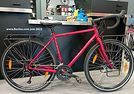
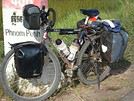
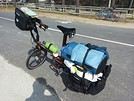
Nous avons opté pour des vélo dit "randonneuse" des sortes de VTC équipés.
Nous pensions descendre sur Santiago, puis remonter tranquillement jusqu'à la vallée de Vinales (sans doute nous faudra-t-il opter pour le train ou le car à un moment). Peut être avez vous des conseils sur le parcours ?
Question logement on comptait opter pour les casas particulares, mais à part la première nuit nous ne pensons pas réserver, parce que c'est une contrainte et que nous avons un peu envie d'aller là où nos roues nous mènerons. Seulement en plein moi de juillet/aout est-ce possible ? Ne risque-t-on pas de se retrouver sans logement ?
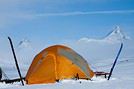
Du coup faut il emmener une tente ? J'ai lu que certains avaient fait du camping sauvage. Des retours d'expérience?
Pour les vélos, que conseillez vous niveau matériel de réparation à prévoir ? (surtout en quelle quantité)
Pour les permis de séjour (visa touristiques), n'y a t il pas d'autre alternative que d'en commander au consulat à Paris (ce qui coute tout de même plus de 50€ par visa) ?
Voilà je sais que ça fait pas mal de questions et j'en oublie plein, mais si vous y êtes allés nous lirons vos conseils avec attention :)
Quel beau pays à explorer à vélo! J'y ai passé 2 mois l'an dernier à vélo. Des très belles rencontres. Je n'ai pas eu le temps d'aller dans la région de Viñales. Mon projet pour l'hiver prochain, à vélo encore une fois. Cuba est un grand pays: Santiago-La Havane=1000km. L'idée de prendre l'autobus quelquefois est bonne pour sauver du temps, surtout entre Bayamo et Camaguey, route où il n'y a rien à voir. Les Cubains sont très respectueux des cyclistes. S'ils vous klaxonnent en venant de derrière c'est seulement pour vous aviser qu'ils sont là.
J'étais arrivé à Holguin et étais reparti de là. J'y avais trouvé une très bonne casa où j'ai pu laissé ma boîte à vélo en toute sécurité car il y avait un garage. Repartirez-vous d'Holguin? ou d'ailleurs?... tout en transportant votre sac à vélo avec vous si c'est le cas. Aller d'est en ouest est mieux car vous risquez d'avoir souvent le vent de dos.
Vous devez amener vos pièces de rechange et outils avec vous. Il n'y a rien à Cuba ou presque. Il y a des mécanos de vélos (poncheros) partout mais n'ont pas les pièces pour nos vélos. Quand même incroyable de voir ce qu'ils peuvent faire avec les moyens du bord. J'avais un pneu et 1 tube avec un kit de "patch" avec moi. Heureusement, je n'en ai pas eu besoin. Aucune crevaison. Par contre, j'ai eu besoin de changer 2 rayons. Apportez vos outils si vous avez besoin de changer un rayon arrière du côté des pignons.
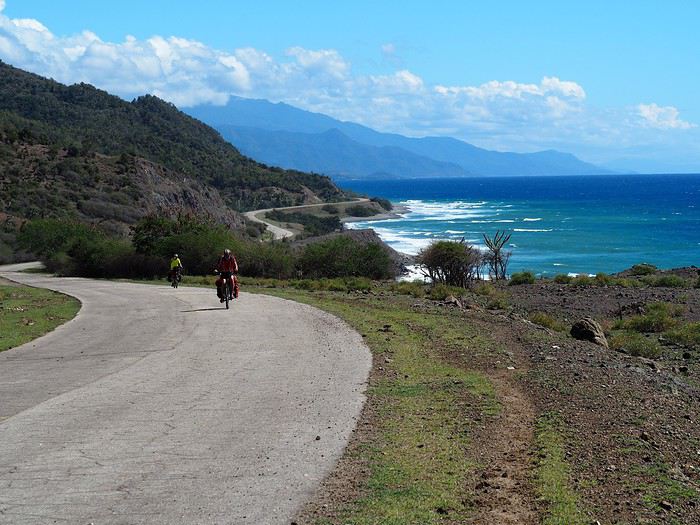
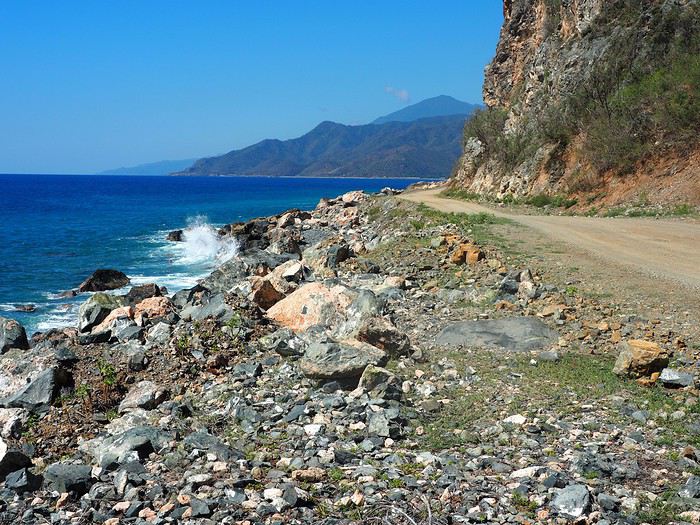
Je ne sais pas si avec vos 5 semaines vous avez pensé vous diriger vers Baracoa depuis Holguin. C'est une si belle région apart la route en très piteux état entre Moa et Baracoa. Je vous recommanderais très fortement de faire la route longeant la côte et la Sierra Maestra entre Santiago et Pilon. Je l'ai faite en 3 jours avec 2 Allemands rencontrés à Chivirico. Route en moins bon état par endroit, côteux par section. Mais la beauté des paysages nous fait oublier ça. Je vous mets 2 photos pour vous faire rêver.
Apart les 2 endroits mentionnés, les routes de Cuba sont très bonnes, asphaltées. J'ai entendu dire par des voyageurs que dans la région de Viñales c'est assez cahoteux.
Pour ne pas avoir à courir les magasins pour trouver des bouteilles d'eau pour la route, j'avais amené des pastilles purificatrices. Très utiles surtout qu'il y a des endroits où il peut être difficile de trouver des bouteilles d'eau, entre Holguin et Baracoa et entre Santiago et Pilon notamment. Question environnementale aussi. J'avais mes 2 bouteilles d'eau de vélo + 2 bouteilles d'un litre sur mon panier. Elles n'ont pas été de trop pour ces 2 régions car il faisait chaud (35 degrés dans la région de Pilon).
Si vous désirez des adresses de casas, il me fera plaisir de vous en recommander. A Holguin, le proprio de la casa (Karel) peut organiser votre transport depuis l'aéroport.
Le prix des casas varie entre 25-30CUC/chambre (30 surtout à Trinidad et La Havane). 3-5CUC pour le pdj, dépendamment si vous prenez avec fromage et jambon ou pas. De 6 à 12CUC pour le souper allant du poulet à la langouste. On mange très bien dans les casas.
Quand vous arriverez changez vos Euros pour des CUC (peso convertible) et prenez aussi des CUP (monnaie nationale) 1CUC=24CUP. Cette dernière est utile pour acheter de la bouffe de rue (pizza, arachides), bouffe dans les kiosques et elle est aussi acceptée dans certains restos (paladars).
Si vous avez d'autres questions, n'hésitez pas.
J'oubliais, je ne vous suggère pas d'amener votre tente pour faire du camping. C'est du poids extra et il est interdit de camper n'importe où, quoique toléré quelquefois. Tout dépend sur qui on tombe. Il y a des campismos avec des cabines mais pas équipés avec des sites pour tentes. Durant l'été ces campismos sont bondés car les Cubains sont en vacances.
Pour les pneus de vélo, j'avais du 32 qui était parfaits.
Pas vraiment nécessaire de réserver d'avance les casas. Il suffit de frapper à la porte avec le symbole de l'ancre bleue. S'il n'y a pas de place, le proprio se chargera de vous en trouver une dans une autre casa. Ils ont tous leur réseau. Ils peuvent faire la réservation de votre casa pour votre prochaine destination.
Suivre la route du côté ouest est l'itinéraire assez typique:Autobus Bayamo vers Camaguey puis vélo à Ciego de Avila - Sancti Spiritus-Trinidad-Cienfuegos -La Baie des Cochons (Playa Giron).
Après la Baie des Cochons , j'étais passé par Jaguey Grande -Varadero-Matanzas- Jibacoa puis La Havane. Autobus La Havane-Santa Clara. Santa Clara-Remedios-Moron à vélo. Puis train vers Ciego de Avila et autobus vers Holguin.
De La Havane, plusieurs cyclistes suivent la côte vers Bahia Honda, Puerto Esperanza, Santa Lucia (Cayo jutias pour sa plage), Viñales, Pinar del Rio, Soroa, etc.
Certains optent pour la route inverse: La Havane-San Diego de Los Baños-Soroa-Pina del Rio-Viñales.
Moi j'apporte toujours mon mato de camping lorsque je voyage à Cuba, même si je n'ai fait du ''sauvage'' que deux ou trois fois. Par contre maintenant je m'en sert chez mes amis Cubains qui demeurent à la campagne.
En trois voyages totalisant treize semaines et 3100 kms, je n'ai jamais utilisé le transport en commun trouvant cela trop contraignant.
J'apporte trois tubes de rechanges pour les crevaisons que je fait réparer chez les ''poncheros''. Il y en a partout. Des rayons aussi, mais j'en ai jamais brisés à Cuba.
Ah oui, moi non plus je ne réserve pas mes ''casas''. On ne sait jamais ce qui peut arriver en route. On voyage à vélo pour être libre. Non !?
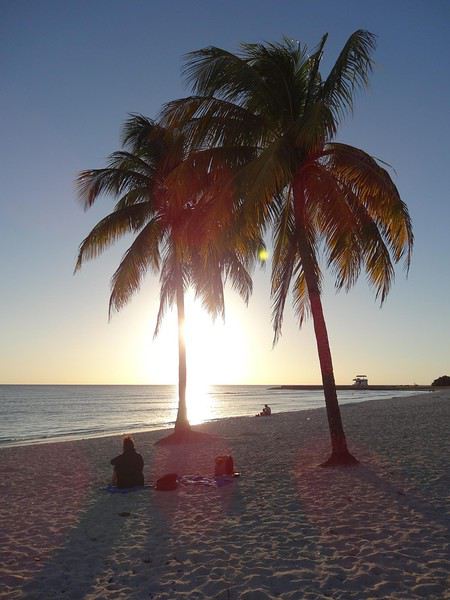
coucher de soleil sur la Baye des c'Cochons , le premier ou deux janvier
bonjour,
moi je n'ai pas voyagé à vélo mais en voiture, fin 2013 - début 2014 .
Mais surtout c'était durant la période de noël et nouvel an et nous n'avions rien réservé hormi la première nuit à l'hôtel et la voiture.
il n'y a eu aucun problème pour trouver des casas particuliers , je me suis inspirée du guide du routard et si nous arrivions à une casa fermée ou pas libre, il y avait toujours quelqu'un pour nous indiquer une autre casa .
Je peux vous recommander la casa de Carlos et Anna a Playa Giron, (Baie des Cochons) ils sont medecin et infirmière et très accueillants ( on avait prévus de passer une ou deux nuits et on est reste 10!). Et par la suite, ils peuvent vous diriger vers des amis , en l'occurrence à Trinidad qui ont de la place ou vous en trouverons.
Donc aucune crainte à avoir il y a toujours de la place, surtout si vous parler espagnol et de plus sud américain, vous vous sentez comme chez vous et êtes très bien accueillis.
Je vous conseille de manger exclusivement dans les cases c'est savoureux et vous pouvez choisir. Les rares fois où nous sommes allés dans de petits restaus, c'était moins bon.
Et surtout, ne faites pas l'erreur que nous avons commises, c'est à dire réserver trois jours à la fin sur un Cayo ( cayo Coco en l'occurrence) ou à Varadero, car c'est touristique et inintéressant .
Bon voyage !
je rêve d'y retourner à vélo d'ailleurs
france
Pour le coté cuisine, je trouve que c'est très formaté et répétitif, sauf quelques exceptions, mais la formation des hotes se ressent dans les menus proposés, alors que toutes les cultures tropicales peuvent pousser sur place .
la langouste congelée ( sauf la sauvage de contrebande qui n'a pas payé sa taxe ) c'est quand même dommage !
bonjour,
Je n'ai as pour ma part eu de cuisine formatée et répétitive ! Chaque matin notre hôte nous demandais ce qu'on désirait pour le souper, et elle allait au marché acheter des produits frais, pêches du jour ! quant aux Langoustes congelées, perso , jamais vu à Cuba , ils n'ont pas de congélateur !!!!
Vous avez certainement été dans les zones "touristiques" du Nord, genre Varadero et les Cayouette et évidement , la , la cuisine est insipide voire même mauvaise.
Parlez vois espagnol ? Car ceci change aussi tout. J'ai pour ma part vécu une année au Honduras, donc je parle l'espagnol avec l'accent et les expressions du coin. Les gens vous accueillent donc différemment du touriste lambda, vous êtes accueilli comme un me, bre de la famille .
bon voyage
"Tous les restaurants que c esoit à Cayo Levisa ou ailleurs utilisent des langoustes surgelées.
A Puerto Esperanza, idem sauf que clandestinement certains propriétaires vous en prosposent mais c'est trés rare.
Le seul endroit ou c'est possible Playa Maguana à coté de Baracoa , sont des langoustes pechees par des jeunes en cachettes "
Ce ne sont pas mes propos mais ceux d'un européen résidant sur place depuis de nombreuses années et pas d'un "guiri" .
Perso, on ne m"a jamais présenté de langouste vivante avant cuisson dans les casas particulares , la seule execption c'était en bord de plage avec des pêcheurs qui se cachaient derrière des buissons pour les cuire sur un brasero de fortune .
c'est vrai qu'avec un mini de maitrise en espagnol ça aide pas mal pour les échanges et pour limiter les arnaques, de là a assimiler les expressions cubaines dont la plupart sont très éloignées de la langue de Cervantes il faut AMHA + années .
ben c'est justement pour ça qu'il faut éviter à tout prix les restaurants , et manger chez l'habitant ! Moi, on m'a toujours présentés les prof
duite frais que la dame nous cuisinait dans sa casa.
Bon, lui etai chirurgiebpn, il avait certainement des filières particolares!
Et quant à une mini maîtrise de l'espagnol, je le parle couramment et avec l'accent du coin. évidement si on a juste quelques notions genre guide Berlitz, on ne comprend rien . Et il faut effectivement savoir que le sud americain, charmeur et sympa , à une bonne tendance à vois entourloupes les "étrangeros"
Ayant vécu une anne dans le coin, je connaissais leur pratiques ....
Mais évitez absolument Varadero et les Cayos, cale n'a aucun intérêt.
bon voyage
Désolé si je ne suis pas rapide mais vos informations nous sont vraiment utiles, nous voilà un peu moins dans le flou !
Il nous reste encore quelques détails à régler, mais pour l'essentiel tout est bon 🙂
Une question, nous pensions réserver un hôtel à La Havane (lieu de départ) et y poster nos housses de vélo pour qu'elles ne nous encombrent pas pendant le voyage, qu'en pensez vous ?
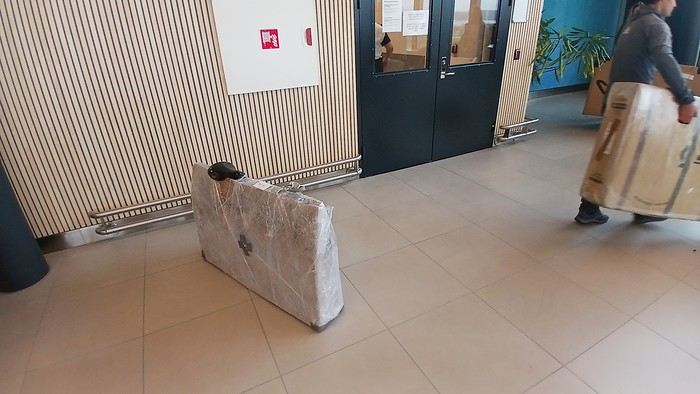
Ca serait une bonne idée. Mais gare à la poste! Il n'est pas assuré que vos housses arriveront à destination. A Cuba l'an dernier j'ai voyagé presque 2 semaines avec 2 Allemands. Ils étaient arrivés à Santiago et repartaient de La Havane. Ils ont transporté leur housse avec eux sur leur vélo. C'est du poids supplémentaire à transporter. Peut-être que la compagnie d'autobus Viazul pourrait les garder en consigne. Les faire envoyer d'Holguin à La Havane et les récupérer au terminus de La havane quand vous y arriverez. J'ignore si cela se fait. Ca ne coûterait rien de se renseigner une fois sur place. Espérant seulement qu'elles seront là quand vous arriverez.
Sinon, vous devrez possiblement revenir à votre point d'arrivée. C'est ce qu j'avais fait avec la casa à Holguin qui avait gardé ma boîte à vélo dans son garage. Si vous désirez plus d'infos pour votre voyage à vélo, des suggestions de casas, il me fera plaisir de vous aider. Je vous ai déjà fourni des infos auparavant.
Nous prévoyons faire du vélo à Jibacoa dans quelques semaines. Avez-vous des itinéraires à nous suggérer et que pensez-vous de l’hotel Villa Jibacoa? Merci
Je vais passer 1 mois 1/2 à Cuba avec un ami. Nous arrivons à Holguin et repartons de La Havane. Nous avons envisagé d'y emmener nos vélos pliables Brompton…
Y en a t-il parmis vous qui ont apporté leur velo de route a Cayo Santa Maria? Est ce que cela en vaut la peine, distance, qualité des routes car on m'a dit…
Nous desirons partir en tout inclus 1 semaine seulement au mois d'avril. Generalement nous allons à Varadero pour faire une centaine de km par jours tout en…
Pars a varadero en janvier et j'apporte mon velo, parcontre je ne trouve le cout du transport nul part sauf de vieux sujet sur ce forum. Si quelqu'un a voyager…
🇷🇼 Cycling in Rwanda: 4 episodes, an off-the-beaten-path adventure
After 3 weeks and nearly 1,200 km by bike across Rwanda, I made 4 videos to share this adventure in a different way: the landscapes, the encounters, the villages… but above all, all those incredible scenes of everyday life.
The 4 episodes are available here:
👉 https://www.youtube.com/playlist?list=PLGnfbxjccWAg
The 4th episode focuses on rural Rwandan life: simple, authentic, and sometimes surprising scenes that you only truly discover when you take the time to travel by bike.
If you have a few minutes, let yourself be transported to Rwanda…
Bonjour,
Nous avons acheté en 2005 la tente MSR modèle vélo (2 places + grand auvent pouvant accueillir 2 vélos). Elle nous a fait un très bon usage, notamment pendant un voyage d'1 an en Afrique. Aujourd'hui, un des arceaux est cassé et nous aimerions le remplacer car c'est le seul problème de la tente... qu'on adore ! Ce sont des arceaux de diamètre 9.35 mm, avec 8 éléments de 49 cm et 2 éléments de 28 cm. Longueur totale une fois monté : 416 cm. En fait 2 grands éléments sont cassés : un section droite et une section courbe. Donc galère à retrouver car le modèle n'existe plus nul part dans le commerce.
Est-ce que quelqu'un aurait ce modèle qu'il n'utilise plus et accepterait de me vendre un arceau ?
Bonjour
y à t, il une voie pour les vélo qui traverse l’Italie pour aller prendre le bateau pour la silice
si oui ou commence t'elle et ou fini t'elle ?
Another long-time dream of Claudio’s: the Petit Mont Cenis pass and the dam at the eponymous lake.
A place where many Italians, including my father, worked in the 1950s–60s.
Faverges → St-Michel-de-Maurienne → Lanslebourg → Petit Mont Cenis → return. 315 km, 3 days. Bivouac at St-Michel-de-M.
Brouter link
Leg One: Faverges → St-Michel-de-Maurienne
Leg Two: St-Michel → Lanslebourg → Mont Cenis Lake → St-Michel
Leg Three: St-Michel → Faverges
And it finally happened in August 2026: in the Maurienne Valley about the famous cycle route known as the V67
Looking for a female travel companion for a cycling trip (arriving by plane in Porto Alegre, Brazil, and cycling toward Montevideo, Uruguay, returning by plane to France from Buenos Aires, Argentina) – 1,500 km
Hello everyone!
I’m planning a cycling trip across Brazil, Uruguay, and Argentina, with a departure set for late October, November, or December. I’m looking for a travel companion to share this long-distance adventure with.
Experience:
I already have solid experience in bicycle touring in Georgia, Kazakhstan, and Kyrgyzstan. Currently, I maintain excellent physical condition by cycling an average of 250 km over 3 days per week (4 hours a day at 20 km/h).
The trip & the pace:
Daily pace: Between 50 and 80 km per day, to make steady progress while taking time to explore.
Accommodation: Flexible and authentic. We’ll alternate between wild camping, campsites, Warmshowers, small guesthouses, and budget hotels depending on opportunities and the weather.
Looking forward to reading your message and planning this amazing journey together!
Hi everyone,
In early April, I’m redoing the Vélo Francette (La Rochelle to Ouistreham), and then I’d like to cycle along the Cotentin Peninsula (which I don’t know at all), follow the coast up to Cherbourg, and then head back down to at least Saint-Malo. I’d love to know if it’s pleasant for cycling—are the roads nice? Not too windy? What are the must-see spots? Any great campsites? All your tips and advice are more than welcome, and I thank you in advance.
Hi there,
I’m planning to bike to meet some friends in Côte d’Ivoire in early November.
I’ll be starting in Abidjan and heading to Abengourou, which is close to the Ghana border.
I’d like to take the trails. Does anyone have recent info on eastern Côte d’Ivoire?
Any tips, safety advice, or must-see stops? I’m open to all suggestions.
Thanks in advance for your help!
Fx
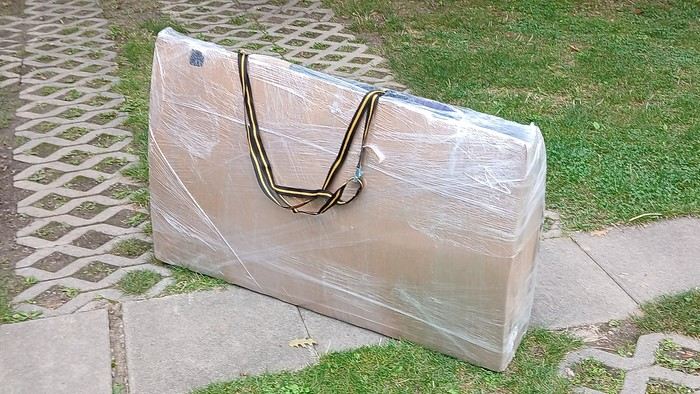
After testing it for three years across various modes of transport, I’m sharing this video of a bike packing case. It’s made from recycled cardboard and shrink-wrapped, with adjustable thickness and added bubble wrap depending on the level of protection you want.
Installing spacers at the fork and chainstays makes the packaging compact. With the fifteen-odd euros for shrink-wrapping at the airport, this case travels really well.
https://youtu.be/_GDJi-GqmkM
- Low bulk (1.10m x 0.70m x 0.25m for a large frame), it fits vertically in train luggage compartments and the total dimensions (x+y+z) don’t exceed 2.40m.
- Two carrying solutions for public transport and easy handling by airport staff (no more tears in the cardboard from openings).
- Discreet packaging when dealing with bus drivers and train conductors, as it looks like an ordinary parcel.
- No need to return to the starting point to retrieve the case from your outbound trip, which you’d otherwise have to store somewhere, or deal with a bulky cover to pack in your panniers.
- You can still check tire pressure through the plastic film without damaging the packaging too much.
Drawbacks: Around 3 hours for this lengthy and meticulous process—removing the wheels, pedals, handlebars, and derailleur without misaligning them, then securing all components to the frame.
If you get a chance to test it, send me your feedback for future improvements.
I just took a trip in Tunisia from Tozeur to Douz, skirting Chott el Jerid to the south. I’m back with the urge to keep going further south via the 4x4 tracks to connect Douz to Ksar Ghilane. Has anyone driven this route recently or explored southern Tunisia?
Thanks for your tips!
fix
😎Fellow traveling cyclists or not, all of you who love travel, the pleasure of physical effort, nature, beautiful machines, people with true passions they seek to fulfill, and who also enjoy reading great literature about all this—the *200* magazine is for you just as it is for me. I should mention I have no financial or other interest in this (in an era where we accuse our politicians of all sorts of vile interests, I prefer to take precautions). I’ve been subscribed since the beginning, and every three months, I get my 130 pages of dreams (the magazine just went from 110 to 130 pages).
It covers everything from the trans-America route to the TCR (Trans Continental Race) from Belgium to a small town in Turkey, with mind-blowing averages—4,000 km and 80,000 m of elevation gain in 8 days and 15 hours for the winner. Let that sink in, and all of it without assistance—accepting a patch could penalize you. There’s also a story about crossing Iran, encountering one of the world’s most welcoming populations, following in the footsteps of Nicolas Bouvier, as well as retirees leisurely traversing France. The common thread in all these stories? Beautiful writing. Take, for example, a stunning article: *"Passengers of the Cold: From Edinburgh to Thurso, at the very north of Scotland, 550 km of moors, coasts, and icy wind. In Thurso, the road ends at a quay, facing the Orkney Islands. We wanted a November trip, off-season. We wanted to surprise winter. Just before the snow."* A sublime piece on the experience of facing adversity and the chance encounters along the road and in the elements.
Before I embarked on my own bike trips, I dreamed a lot about them—from the Atacama to the Gobi, along the Mekong, and not forgetting France. And now, these 130 pages every quarter keep those dreamy vibes alive through stories written in the most beautiful prose.
I’ll stop here because it might sound like I’m advertising, but if you don’t know *200*, I invite you to discover it. It’ll give you wings for the most incredible challenges or simply reinforce your desire for slow rides with your eyes open to others and nature.
A little news to wrap up: Axel Carion and a friend just broke the record for crossing South America from Colombia to Ushuaia in 59 days. On its own, that doesn’t mean much, but I can’t help it—it makes me dream. You should see how he talks about it, the flashes of that wild nature he’s stored away: a snowstorm at Paso Jama and the surreal sight of the suddenly snow-covered Licancabur!
Luc
PS: The magazine is called *200* because a day’s ride starts at 200 km—well, I’ve never done a ride like that since my longest was 167 km (with 18 kg of luggage, mind you), but why not one day? The magazine will explain how to tackle your first 200, and then the question in conclusion: when will you do your first 300?😏
I’ve got my flight ticket sorted—departing in mid-November and returning in mid-March. I’ll arrive in Santiago and leave from Buenos Aires.
I’ve already been to southern Argentina, specifically Torres del Paine National Park, and I’d love to go back to do the full W trek (I only did the shorter version last time).
I also want to do some hiking and maybe even tackle a summit. I climb and occasionally do some mountaineering, so I’ll definitely be going with a guide.
I plan to start around Temuco in Chile, with the idea of heading toward the lakes, then taking the Carretera Austral.
I’m not sure if I’ll go all the way to Ushuaia—it’s supposed to not be *that* worth it, except for the bragging rights of saying you’ve been to the end of the world.
I saw there are lakes in Argentina too.
I don’t have a precise itinerary, but what I’d love is, once I reach the southernmost point of my trip, to take a mini-cruise to see some wildlife. Any tips for that?
What kind of sleeping bag did you take? Is a 0°C (32°F) one enough?
And one last question: white gas stove or can I get by with my gas stove?
I'm developing a free and open-source web app for planning walking and cycling trips (and even car trips). You can create a route by clicking directly on the map to add waypoints, and it can consist of multiple stages. The app provides tools to edit the stages and the overall route, and to display useful information (distances, altitudes, and elevation changes). A relief profile can be shown as a graph for a specific stage or the entire route.
Once the route is ready, it can be exported as a GPX file, which can then be used with a GPS or a mobile navigation app.
The app is built in JavaScript and runs entirely in the web browser. It uses the Leaflet library and several OpenStreetMap-based services. Initially developed for my personal needs (I enjoy hiking and cycle touring), I’d be happy to share it with anyone who might find it useful. It’s free to use, doesn’t require an account, and the source code is available.
hello fellow cycling enthusiasts
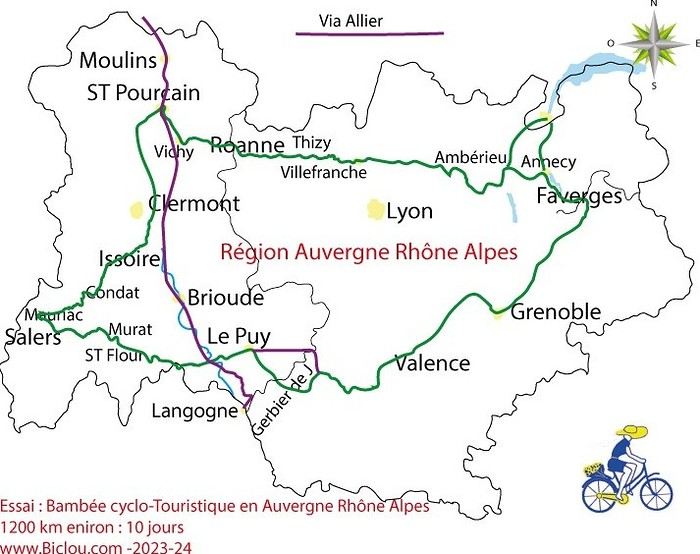
here’s a travel journal of the cycling tour through the Rhône-Alpes Auvergne region by Claudio
zouli
it was the plan
http://cbandiera.free.fr/parcours/auvergne-Ralpes/
the trip was completed
story being posted online soon
1100 km in 11 days
beautiful and varied regions
Hello,
We’d like to go on a 3- to 4-month bike trip starting in December, crossing from Assam (northeast India) to New Delhi via Nepal.
Are there routes with light traffic along the Brahmaputra and through Nepal?
We’re also looking for any info on accommodations, wild camping, local interactions, etc.
Thanks,
Michel
Hello,
Has anyone here had experience using a gas stove in Sardinia and Sicily? I’m wondering if screw-on gas canisters (not the blue Campingaz ones, but brands like Coleman, Primus, etc.) are easy to find.
I’m planning to cycle from Morlaix to Brest (via Roscoff and the V45 coastal route). We’ll start riding on August 16th for 13 days (with stops for island visits, surfing, etc.). Is there a lot of traffic at this time of year? I’ve got two kids, 11 and 13, and we don’t like riding in the middle of cars (we’ve already done the Vélomaritime—Caen to Cherbourg—the Loire route from Orléans to Saumur, the Vélodyssée from Nantes to Royans, and the canals like the Nivernais and Bourgogne, where there were plenty of bike-only lanes, which isn’t the case on this route).
Thanks for your help if you’ve already done this route in late August!
Virginie
Hi there,
I’ve been road cycling for several years, and I’m about to switch to gravel in the next few days—I’m waiting for my bike, which should arrive this week.
I’m planning a bikepacking trip in a few weeks along the Véloroute V81, also known as the Vélosud, from Biarritz to Le Barcarès.
Has anyone here already done this route? Any info is welcome, whether it’s about the route itself, gear, or accommodation. I’ll prioritize staying with locals as much as possible. On that note, I just signed up for the brand-new site *Guidon et Couette* ((www.guidon-et-couette.fr)), which offers free accommodation between cyclists across the country, but there’s almost no one listed along my route!
Thanks in advance.
Laurent.
Hi there, I’m planning a cross-Canada bike trip, and I’ve got a question that might seem silly, but could someone tell me how to pack a bike (in a box, with a fragile sticker... I don’t know) for a flight? Thanks in advance!
This summer, we’re planning to cycle along the EV 19 that follows the Meuse River from Langres all the way to Rotterdam.
My question is about getting back to Nantes.
Do any of you know what the best return option might be? I’d love to hear about your experiences.
I saw that FlixBus doesn’t take bikes.
By train, I think it’s possible but would involve multiple local trains.
We were also wondering if there’s a boat from Rotterdam to Saint-Nazaire that could take passengers with bikes.
Any tips or experiences you can share would be really helpful—thanks in advance!
Have a great evening
I’ve gotten used to crossing Europe by bus to return by bike.
It was really convenient to take the bike without having to disassemble it.
But FlixBus no longer accepts bikes...
What alternatives do you know about?
Thanks.
Hi there,
I’m planning to ride the Dutch section of the EuroVelo 19, from Maastricht to Rotterdam.
Since it’s too complicated to bring my bike on the train, I’m looking to rent one locally.
I’d love any tips or bike rental shop recommendations—I’m struggling to find options even in Rotterdam.
The plan is to rent in Rotterdam, take the train to Maastricht with the bike, then cycle back to Rotterdam.
Thanks in advance for any advice or suggestions!
Nath
I’m planning to build a new touring bike.
I want to prioritize lightness.
That said, I’m tempted by a suspension fork that could offer some comfort on rougher roads.
The recent appearance of gravel suspension forks on the market might meet my needs—at least on paper.
I’m particularly considering the RockShox Rudy Ultimate XPLR fork.
Unlike MTB forks, its travel is short: either 30 mm or 40 mm.
It weighs 1400 g, which is 400/500 g more than a steel fork.
Any thoughts or real-world feedback on this?
I’m also wondering about the durability of magnesium (lower leg) for long-distance bike touring.
And what’s the impact of skipping the manufacturer-recommended maintenance every 50 and 200 hours? That’s bound to happen on a long trip unless you carry extra gear.
More generally, how reliable are these kinds of forks?
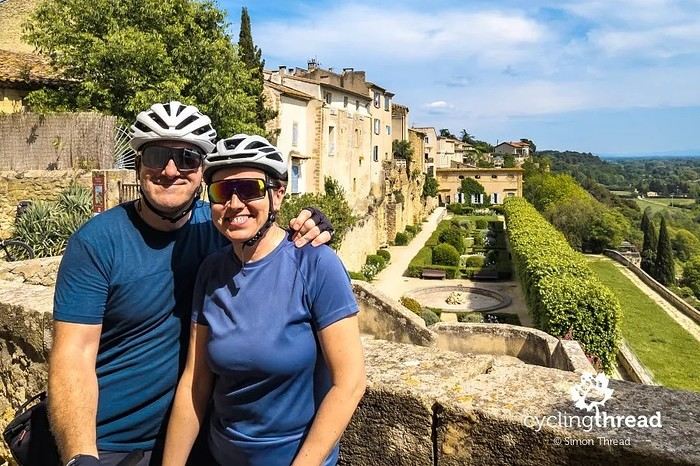
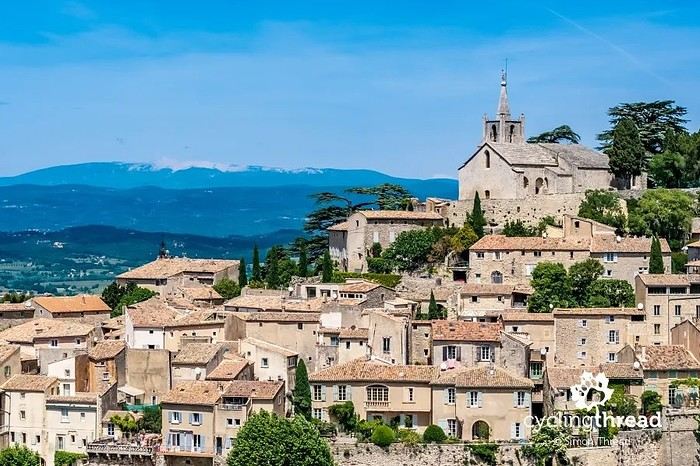
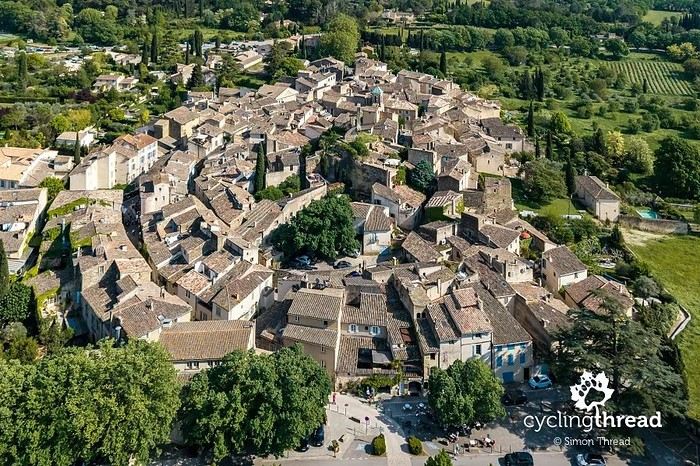
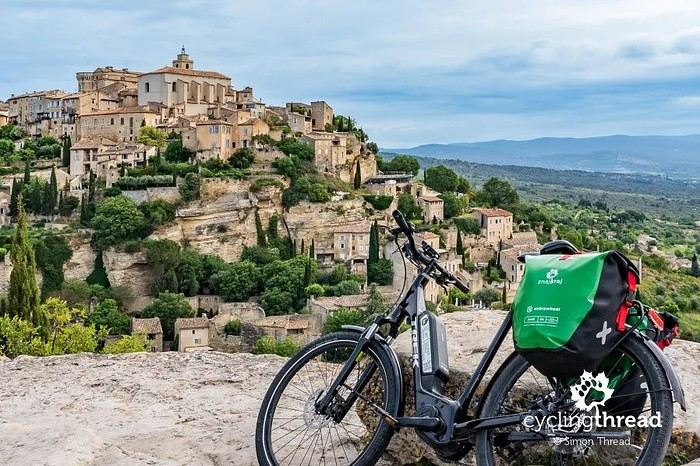
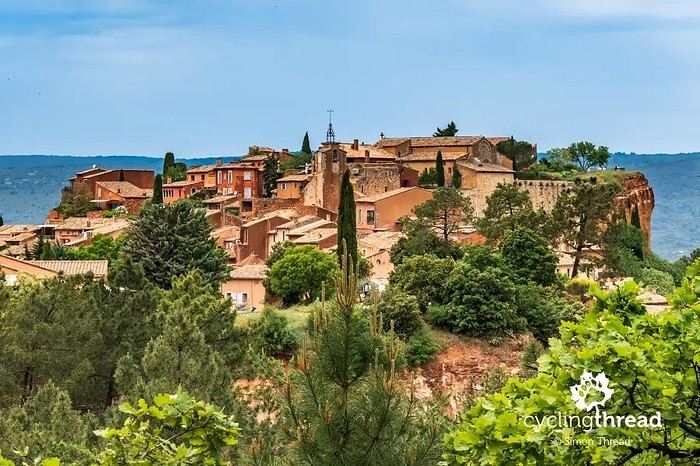
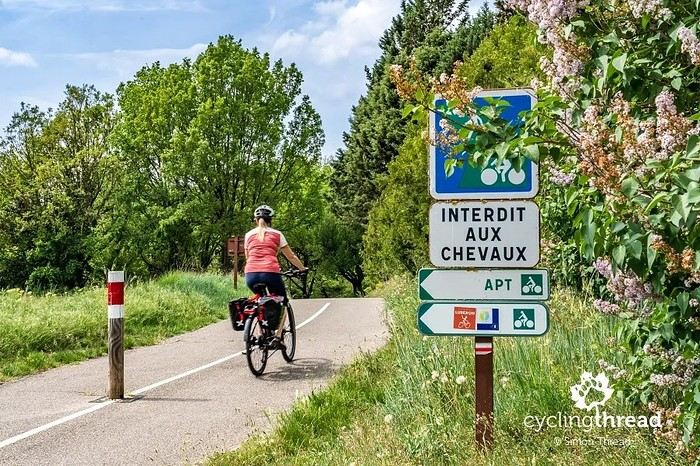
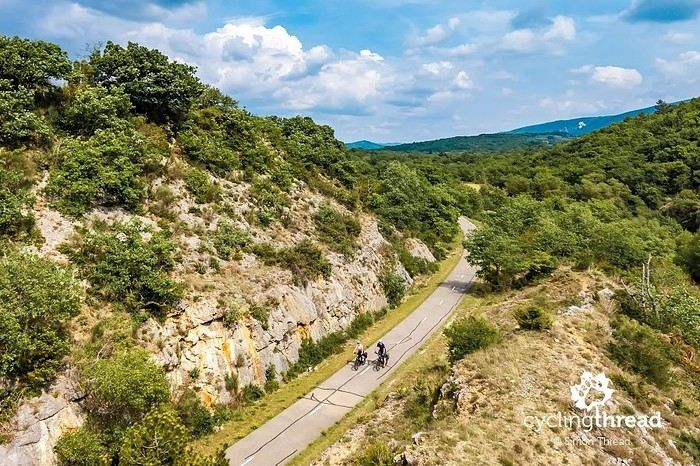
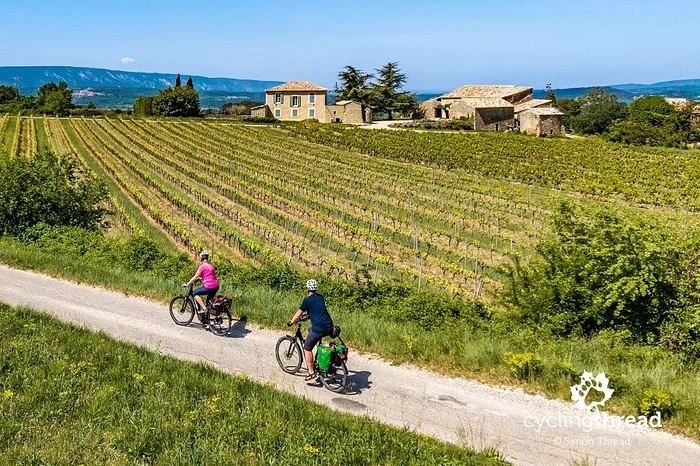
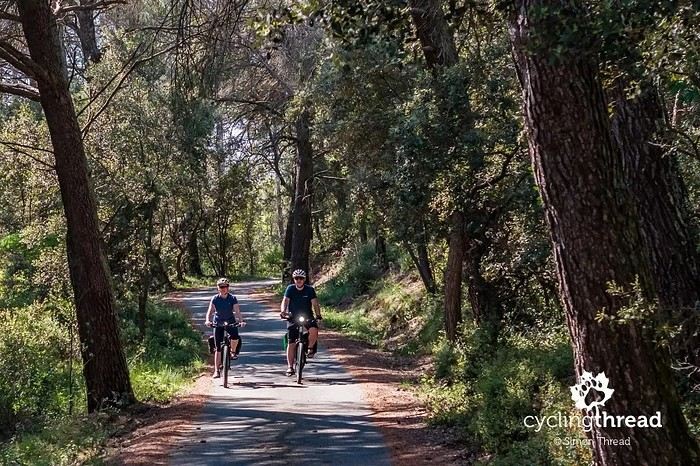
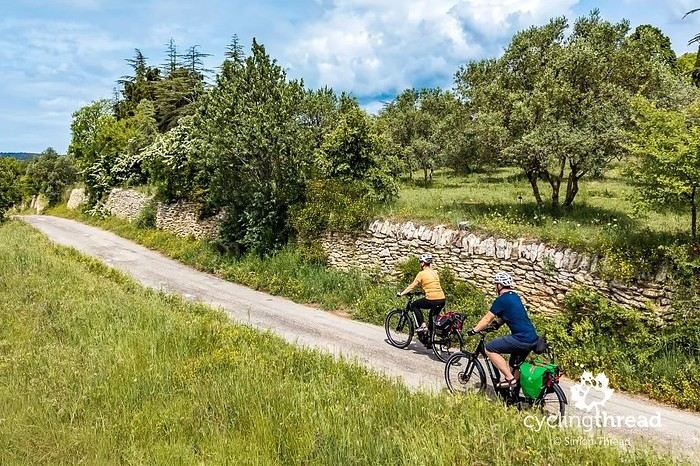
I’m making an exception and creating a separate post this time, since it’s all about France. In May, we spent a week in Provence, specifically in the Luberon, exploring the cycling routes *Autour du Luberon à Vélo*, the *Véloroute du Calavon* (part of EuroVelo 8), and the shorter *Les Ocres à Vélo* route. Together, they gave us an amazing journey through rolling hills, vineyards, lavender fields still green in spring, and some of the most stunning landscapes in southern France.
It was, of course, the perched villages that impressed us the most. We visited Gordes, Roussillon, Bonnieux, Lacoste, Lourmarin, Ménerbes, Oppède-le-Vieux, Cucuron, and Lauris. Many of them are among the most beautiful villages in Provence, and it’s hard not to agree with that reputation.
One interesting point is the route of EuroVelo 8 in this part of the region. The official path mainly follows the old railway line of the *Véloroute du Calavon*, which is very comfortable and safe. But in our opinion, cyclists traveling EuroVelo 8 around the Mediterranean would discover even more treasures if the route passed through villages like Bonnieux, Lacoste, or Oppède-le-Vieux.
We were also pleasantly surprised by how safe cycling felt. Most of the route takes small local roads, but traffic is light, drivers are respectful, and road design really takes cyclists into account. It’s one of those places where you can ride peacefully even without separated bike lanes.
Our full story:
Around Luberon by bicycle - the most beautiful villages of Provence
You can also find all our cycling travel stories on the forum:
Cycling Thread - Europe’s most beautiful bike routes
Hi there, we’re a group of 4 cyclists looking to get from Treviso in Italy to Munich with our 4 non-folding bikes. It seems complicated! Are there any solutions? Thanks so much.
Hi there, we’re planning a Munich to Venice bike trip at the end of June 2026. Getting back from Venice to Toulouse by train with 4 bikes isn’t straightforward. What return options have others who’ve done this trip chosen? Any tips or great deals would be much appreciated. Thanks a bunch! !
Hi everyone,
Happy owner of a Pegasus Estremo bike with a Rohloff hub, which is giving me trouble with the SF11-NCX-FT-E-LITE 700C TS 300/0 fork (serial number TD01329060). It’s starting to show its age, and I’d like to repair it to extend the life of my beloved bike.
The suspension is gone, and there’s an oil leak from the seals.
Does anyone know how to repair it? Where can I find parts that are about fifteen years old? Or where to find an identical replacement fork? Just to clarify, the Magura HS11 brakes are mounted using Firm Tech, meaning they’re on pivots behind the fork, facing the frame.
 coucher de soleil sur la Baye des c'Cochons , le premier ou deux janvier