J'aimerai partir en vélo en Islande en juin 2007.
Je m'interroge sur les conditions météo et l'équipement adéquat : en particulier sur la tente. J'ai une Tente Vaude Taurus ultralight qui a bien supporté les petits grains Irlandais mais résistera-t-elle au grand vent islandais ??
Quelqu'un a-t-il testé ? Concernant les piquets, ceux en alu vendus avec la tente, n'ont pas resisté à une utilisation régulière, faut-il prendre des piquets roches ?
Et puis ou peux-t-on trouver des béquilles pour les roues avants afin d'améliorer la stabilité du vélo à l'arrêt ?
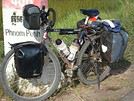
La seule question à laquelle je peux apporter ma contribution, c'est celle des béquilles avants : je ne sais pas s'il existe des béquilles spécifiques (jamais vu) mais j'ai monté une béquille bas de gamme de chez Go S.... sur mon porte bagage Zéfal low rider. Le problème est que le tube du porte bagage est trop fin, il faut donc ajouter 'des épaisseurs' : pas très costaud mais ça suffit pour stabiliser l'avant. On peut même mettre la béquille avant de descendre du vélo. environ 1600 km avec ce système et pas de problème.
Bonjour
Sur le site Vaude>tente Taurus ultra light : tu peux lire "The ideal stormy weather tent with external tent poles"
C'est une tente très profilée, certe construite avec des matériaux ultra léger mais d'excellente qualité ( je possède une Feret ultra light pour mes garçons) .Le double toit est en nylon ribstop(quadrillage très résistants) siliconé étanche 3000mm et le tapis sol est étanche 10000mm donc idéal pour les sols spongieux d'Islande.
Tu n'auras pas besoin de piquets très solide pour sol dur mais plutôt de piquets long pour sol meuble. Quand il y a de l'herbe, c'est humide et mou autrement c'est souvent assez sablonneux .Si tu plantes ta tente dans du sable il faut des piquets de 20 à 25 cm ( en fils de dural ça marche bien) et absolument trouver de gros cailloux à metrre dessus même si le temps semble calme car le vent se lève parfois très vite.On peut aussi remplir de cailloux des vulgaires sacs en plastique que l'on enfouit dans le sable et en passant le piquet dans les poignées.
Dans certains coins tu es dans la cendre volcanique et c'est assez agressif pour le tapis de sol, le "floor protector" semble être une bonne solution pour préserver son étanchéïté ( forme adaptée à ta Taurus, environ 350g et 25€).
Si les arceaux apparaissent par endroit dans les fourreaux du double-toit, tu peux en profiter pour y passer des des cordelettes que tu auras équipé de réglages de tension afin de haubanner ta tente. Sinon tu peux coudre des passants de 15mm de large sur les fourreaux d'arceaux pour y fixer des haubannages.
La Taurus n'est certainement pas aussi adaptée aux tempêtes qu'une tente d'expédition comme la V25 de North Face ou la Fury de MSR mais néanmoins très supérieure à n'importe quelle tente DKT..
Pour le reste de l'équipement, une bonne veste en Goretex est indispensable ainsi que des sacoches étanches genre Ortlieb. Pour les passages de gués si tu t'aventures sur les pistes, des chaussettes en néoprène de plongée ou de planche sont très apréciables.
Si tu as d'autres questions sur l'Islande, n' hésite pas à me contacter.
à+
François
Attention au mois de juin les temperatures peuvent etres encore tres basses
donc s'equiper en concequence.
J'ai moi meme parcouru la peninsule de reykjanne à velo au mois de juin 2003 et j'y suis retourné
cette année mais j'ai laissé le velo en France.trop dure le velo en islande.
Si tu a cinq minutes fait untour sur mon blog.
http://traversee-islande.blogs-de-voyage.fr
bon courage!!!
Merci à tous les trois pour vos précieux conseils ...
Une petite question : la F35 est, d'après mes derniers renseignements devenue la R35 car elle est entièrement goudronnée ... mais elle fait combien de km ? J'ai vu sur ton blog eric, que tu avais marché 5 jours, combien de km/jour ça t'a fait ?
En tous cas je vois que même fin juin les conditions météo sont pas évidentes 😕 Alors je me dis que peut-être je vais laisser le vélo pour la rando+transports locaux ... j'aimerai qd même pouvoir profiter des magnifiques paysages et pas seulement de mes mollets douloureux.🙂
bonsoir florence
Je ne sais pas d'ou tu tiens l'info comme quoi la f35 serait goudronnée.
Il ya en effet une petite partie (12km) au depart de guifoss qui l'a eté recement, mais ca m'etonnerait qu'ils aient eu le temps de realiser le reste (200 km) durant l'été dernier.
Je sais que c'est en projet mais avec les islandais faut pas s'affoler.
De Blonduos à guilfoss il y a exactement 208 km attention il faut rajouter 12 km pour pouvoir dormir seulement à l'hotel à Geysir car à Guifoss il ya juste un restau hyper cher( pour une biere c'est 2 fois le prix de Geysir)😏
Personnellement la premiere etape j'ai parcouru 60 km mais j'y suis allé un peu fort, je l'ai payé par la suite.
Pour un bon marcheur il faut compter 40 km si les conditions sont bonnes (c'est assez plat).
Attention comme je l'ais dit dans mon blog les refuges sont en partie fermés jusqu'à fin juin, prevoir une semaine de vivre hyper caloriques.
Je dois ajouter que pour faire transporter le velo: déja à Roissy ils vont te demander 25 euros et aussi il faut payer un supplément pour les bus en islande.😕
Si non tu peu te faire un circuit dans le sud ouest Partir de Reykjavick pour thinkvellir puis Guilfoss Selfoss redescendre sur la côte et se ballader dans la peninsule de reykjane .
comme ça tu aurra vraiment un aperçu de l'Islande en concentré.
a+ eric
non la 35 n'est pas goudronnée c'est une piste en "tole " assez eprouvante pour les voitures :les boulons de notre galerie se sont rompues, les vis des sieges de notre minibus se sont "devissées " suite au vibrations
Autant pour moi 😊, la R35 n'est pas goudronnée, elle est juste "pontée" (plus de guet à traverser les pieds dans l'eau) ... ceci d'ailleurs est-il exact ?
Avez-vous utilisé les transports locaux ? Les passages des bus sont-ils fréquents en dehors des saisons touristiques ?
si mes souvenirs sont exact il n'y a pas de gués sur la 35 par contre je trouve que les pistes du landmanalaugar sont plus belles et les paysages plus variés :la F225 qui longe l'hekla et la F 208 qui rejoins la route circulaire .pas trop de tole par contre pas mal de gués .la riviere chaude du landmanalaugar est tres agreable (juste la riviere pas le camping!) par contre en juin je ne sais pas si cette piste est ouverte
cote transport j'etais avec mon vehicule
va voir le site d'un très bon copain qui revient de son tour d'islande, et n'hésite pas à le contacter de ma part (fred). je pense qu'il va pouvoir de donner de bons conseils.
La F35 est entièrement pontée donc plus de passage à gué .
En juillet 2005 elle était goudronnée jusqu'à la rivière Sanda, soit 20km au nord de Gülfoss puis sur levée de terre donc en dur et de type "gravel road" jusqu'au lac Hvitarvatn. Ce type de piste sur levée de terre est relativement roulant mais redoutable par vent de travers car les pneus rippent sur la poussière et les graviers et tu maintiens difficilement le cap.
Du lac Hvitarvatn jusqu'à 10 km au nord des sources chaudes de Hveravellir soit 70km, la piste est tracée à même le désert mais ne comporte plus de passage à gué.Lorsque le terrain est plat, elle est plutot bonne mais se dégrade dans les côtes à cause des bus et voitures, peu de passage en tôle ondullée et pas(peu) de sable. Une lame (niveleuse) semble passer régulèrieument, en tout cas bien meilleur qu'en 1990!
Du pont sur la rivière Seydisa (10km nord de Hveravellir) jusqu'à l' usine hydrauelectrique du barrage Blöndolon la piste est sur levée de terre puis alterne avec le goudron jusqu'à la route n°1.
Tu peux suivre au jour le jour l'état des pistes sur ce site http://www3.vegag.is/faerd/island1e.html
Cette année la F35 a été ouverte vers mi juin . La F225 et la F208 vers Landmannalaugar un peu + tard.
Le service de car sur la F26 ( Sprengisandur) n'ouvre que vers le 7 juillet!
Bonsoir,
Bon, tres interessant ce post !
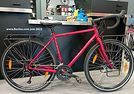
au risque de passer pour une félée... mmm, et l'Islande en Vélo de course, arrangé (autant préciser :-/ ) et roues training (et non les ultra fin bien entendu !) vous en pensez quoi vous autres, ferus de cyclisme ...
c'est que le gros avantage, le poids !!!
merci.
A+
"Il n'y a d'homme plus complet que celui qui a beaucoup voyagé, qui a changé vingt fois la forme de sa pensée et de sa vie." Lamartine
Bonjour
Si tu restes sur la route n°1 qui fait le tour et qui est presque totalement revêtue, il n' y aura pas de problème.
De même tu peux aller jusqu'à Gulfoss et partout où les routes sont goudronnées mais dès que tu rentres dans l'intérieur ( je pense à Landmannalaugar pourtant pas très loin), les pistes t'imposent une section de pneus d'au moins 35 mm de large( 700x35C) ou 26'x1, 50 .
Si tu mets des bagages sur ton vélo de course(dans l'hypothèse où tu peux y fixer des porte-bagages), il va tout de même souffrir, même sur bonne route.
Je te déconseille absolument le sac à dos qui encore plus en Islande à cause du vent (forcément latéral un jour ou l'autre) te déséquilibrera .
Reste la remorque qui reste la meilleure des solutions avec un vélo de course .
à+
François
Attention, 'islande est idéale pour casser le materiel méme quand c'est roulant.
beaucoup de pistes sont revetues de petits graviers et mettent à mal les pneumatiques,
quand au diametre des roues personnellement je prefere voyager sur du 26" qui à mon avis resiste mieux à la charge.
au sujet de la section du pneu il faut aussi penser au comfort pour passer une dixaine d'heures en selle 1.50 c'est vraiment un minimum.
SAlut, et merci pr vos reponses... je vais me renseigner sur les tarifs de velo... mais, :-/ ... ai - je l air si ridicule a vouloir faire cela avec mon "bolide ancienne generation" ... amanagé pr l 'occas'... par contre, pr l poids, cest sur, il faudra limiter au maximum :-p si je prends celui ci ...
Olivia
"Il n'y a d'homme plus complet que celui qui a beaucoup voyagé, qui a changé vingt fois la forme de sa pensée et de sa vie." Lamartine
Bonjour
Le poids du vélo n'est pas forcément un gros problème pour le transport.
Pour aller en Islande à partir de France, il n'y a guère qu' Icelandair et tu devras payer un forfait spécial pour ton vélo de 31€ (en 2005) par voyage. Le vélo et son emballage ne sont pas pesés et tu as le droit à ta franchise de 20kg pour le reste de tes bagages + 6kg en bagages à main(avec la restriction bien sûr pour les liquides, les objets contondants...).
Que tu emportes un vélo de course ou un VTT ou un vélo de voyage ne changera donc rien pour le transport, sauf que le vélo de course n'est pas adapté pour l'Islande.
à+
François
Pour le grand vent, les arceaux de l'ultra-light sont effectivement un peu limites, sauf si la tente est bien dans l'axe du vent. Je ne pense pas qu'il vont casser mais s'il pleut en même temps il peut y avoir des contacts entre le double toit et l'intérieur.
Sinon les arceaux du même modèle pas ultra-light sont beaucoup plus rigides et vont dessus sans problème (j'ai les deux).
Je ne sais pas non plus où on peut trouver une béquille avant (chez koga ?). Par contre il existe un stabilisateur que j'aimerai bien essayer, que l'on trouve chez globetroter sous le nom ésotérique "Hebie Lenkungsdämpfer" (hebie étant la marque).
Si tu essayes ce stabilisateur, je serai curieuse de connaitre le résultat, est-ce vraiment efficace ?
Sinon pour la tente, je m'oriente vers une tente géodisique ou tunnel, mieux adaptée au grand vent, car les "tempêtes islandaises" dont parle François m'inquiètent un peu surtout qu'un soir en Irlande j'ai vu ma tente "s'aplatir".
J'ai déjà trouvé pas mal d'infos sur le forum. Mais j'ai encore des questions: - Où trouver une carte avec le numéro des routes et pistes sur le net? - Vous…
Je prévois de faire un circuit en Islande à vélo avec ma copine cet été, de la mi-juillet à la mi-aout. Après de très nombreuses recherches et lectures…
17 days, 1,400 km, and 17,500 m of elevation gain cycling in northern Vietnam! 🇻🇳 🚴🇻🇳
From the misty Fansipan to the breathtaking landscapes of the Ha Giang Loop, from remote villages to vibrant markets...
I cycled through the north of the country, getting up close with its people—through mud, heat, endless mountain passes, and unforgettable encounters.
Most importantly, I discovered a Vietnam far different from the usual tourist circuits.
Join me on this adventure through a video that captures these 17 days of travel. :)
If Vietnam calls to you, come ride a stretch with me!
Bonjour
quelles sont les moyen les plus simple pour revenir du Cap Nord sans pédaler
train, Bateau, avion ?
qui à déjà fait l’expérience ?
Merci de nous renseigner
Hi,
can anyone give us some tips on how to get to North Cape from Lyon Gerland?
What’s the best route to join the EuroVelo 7?
How many kilometers is it from Lyon to North Cape via EuroVelo 7?
The best month to leave—we’re thinking early May.
Thanks for any advice!
Looking for a female travel companion for a cycling trip (arriving by plane in Porto Alegre, Brazil, and cycling toward Montevideo, Uruguay, returning by plane to France from Buenos Aires, Argentina) – 1,500 km
Hello everyone!
I’m planning a cycling trip across Brazil, Uruguay, and Argentina, with a departure set for late October, November, or December. I’m looking for a travel companion to share this long-distance adventure with.
Experience:
I already have solid experience in bicycle touring in Georgia, Kazakhstan, and Kyrgyzstan. Currently, I maintain excellent physical condition by cycling an average of 250 km over 3 days per week (4 hours a day at 20 km/h).
The trip & the pace:
Daily pace: Between 50 and 80 km per day, to make steady progress while taking time to explore.
Accommodation: Flexible and authentic. We’ll alternate between wild camping, campsites, Warmshowers, small guesthouses, and budget hotels depending on opportunities and the weather.
Looking forward to reading your message and planning this amazing journey together!
I’m planning to leave Nice for Toulouse around 10/15 and I’m looking for tips / great deals regarding:
- The route: I was thinking of taking Nice - Grasse - Draguignan - Salernes - Cadarache - Cavaillon - Arles, then the Camargue, Sète, and the Canal du Midi to Toulouse. The idea is to avoid high-traffic roads and too many steep climbs. Are there any spots to avoid or must-see stops? Since it’s been a while since I’ve been on the road, I was thinking that sleeping indoors might be preferable. If you have any budget-friendly accommodation suggestions along part of the route, don’t hesitate!
Thanks in advance, and if you’re in the area around that time, we could ride together... Ciao.
Another long-time dream of Claudio’s: the Petit Mont Cenis pass and the dam at the eponymous lake.
A place where many Italians, including my father, worked in the 1950s–60s.
Faverges → St-Michel-de-Maurienne → Lanslebourg → Petit Mont Cenis → return. 315 km, 3 days. Bivouac at St-Michel-de-M.
Brouter link
Leg One: Faverges → St-Michel-de-Maurienne
Leg Two: St-Michel → Lanslebourg → Mont Cenis Lake → St-Michel
Leg Three: St-Michel → Faverges
And it finally happened in August 2026: in the Maurienne Valley about the famous cycle route known as the V67
🇷🇼 Cycling in Rwanda: 4 episodes, an off-the-beaten-path adventure
After 3 weeks and nearly 1,200 km by bike across Rwanda, I made 4 videos to share this adventure in a different way: the landscapes, the encounters, the villages… but above all, all those incredible scenes of everyday life.
The 4 episodes are available here:
👉 https://www.youtube.com/playlist?list=PLGnfbxjccWAg
The 4th episode focuses on rural Rwandan life: simple, authentic, and sometimes surprising scenes that you only truly discover when you take the time to travel by bike.
If you have a few minutes, let yourself be transported to Rwanda…
Hi, I'm looking for info on cycling to Nordkapp via the EuroVelo 7. Has anyone done it already, and where’s the best place to start the EuroVelo 7?
Thanks
Hi,
We bought the MSR bike tent model (2-person + large awning that can fit 2 bikes) back in 2005. It’s served us really well, especially during a year-long trip in Africa. Now, one of the poles is broken, and we’d love to replace it since that’s the only issue with the tent—we still love it! The poles are 9.35 mm in diameter, with 8 sections of 49 cm and 2 sections of 28 cm. Total length when assembled: 416 cm. Actually, two large sections are broken: one straight and one curved. It’s a pain to find replacements since this model is no longer sold anywhere.
Would anyone have this model lying around unused and be willing to sell me a pole?
Hi everyone,
In early April, I’m redoing the Vélo Francette (La Rochelle to Ouistreham), and then I’d like to cycle along the Cotentin Peninsula (which I don’t know at all), follow the coast up to Cherbourg, and then head back down to at least Saint-Malo. I’d love to know if it’s pleasant for cycling—are the roads nice? Not too windy? What are the must-see spots? Any great campsites? All your tips and advice are more than welcome, and I thank you in advance.
Hi there,
I’m planning to bike to meet some friends in Côte d’Ivoire in early November.
I’ll be starting in Abidjan and heading to Abengourou, which is close to the Ghana border.
I’d like to take the trails. Does anyone have recent info on eastern Côte d’Ivoire?
Any tips, safety advice, or must-see stops? I’m open to all suggestions.
Thanks in advance for your help!
Fx
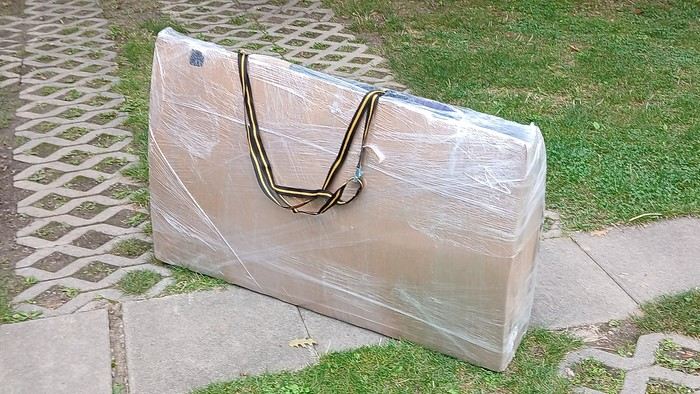
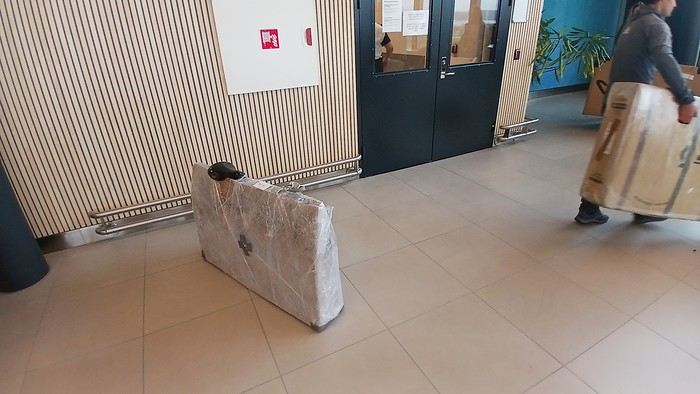
After testing it for three years across various modes of transport, I’m sharing this video of a bike packing case. It’s made from recycled cardboard and shrink-wrapped, with adjustable thickness and added bubble wrap depending on the level of protection you want.
Installing spacers at the fork and chainstays makes the packaging compact. With the fifteen-odd euros for shrink-wrapping at the airport, this case travels really well.
https://youtu.be/_GDJi-GqmkM
- Low bulk (1.10m x 0.70m x 0.25m for a large frame), it fits vertically in train luggage compartments and the total dimensions (x+y+z) don’t exceed 2.40m.
- Two carrying solutions for public transport and easy handling by airport staff (no more tears in the cardboard from openings).
- Discreet packaging when dealing with bus drivers and train conductors, as it looks like an ordinary parcel.
- No need to return to the starting point to retrieve the case from your outbound trip, which you’d otherwise have to store somewhere, or deal with a bulky cover to pack in your panniers.
- You can still check tire pressure through the plastic film without damaging the packaging too much.
Drawbacks: Around 3 hours for this lengthy and meticulous process—removing the wheels, pedals, handlebars, and derailleur without misaligning them, then securing all components to the frame.
If you get a chance to test it, send me your feedback for future improvements.
I just took a trip in Tunisia from Tozeur to Douz, skirting Chott el Jerid to the south. I’m back with the urge to keep going further south via the 4x4 tracks to connect Douz to Ksar Ghilane. Has anyone driven this route recently or explored southern Tunisia?
Thanks for your tips!
fix
😎Fellow traveling cyclists or not, all of you who love travel, the pleasure of physical effort, nature, beautiful machines, people with true passions they seek to fulfill, and who also enjoy reading great literature about all this—the *200* magazine is for you just as it is for me. I should mention I have no financial or other interest in this (in an era where we accuse our politicians of all sorts of vile interests, I prefer to take precautions). I’ve been subscribed since the beginning, and every three months, I get my 130 pages of dreams (the magazine just went from 110 to 130 pages).
It covers everything from the trans-America route to the TCR (Trans Continental Race) from Belgium to a small town in Turkey, with mind-blowing averages—4,000 km and 80,000 m of elevation gain in 8 days and 15 hours for the winner. Let that sink in, and all of it without assistance—accepting a patch could penalize you. There’s also a story about crossing Iran, encountering one of the world’s most welcoming populations, following in the footsteps of Nicolas Bouvier, as well as retirees leisurely traversing France. The common thread in all these stories? Beautiful writing. Take, for example, a stunning article: *"Passengers of the Cold: From Edinburgh to Thurso, at the very north of Scotland, 550 km of moors, coasts, and icy wind. In Thurso, the road ends at a quay, facing the Orkney Islands. We wanted a November trip, off-season. We wanted to surprise winter. Just before the snow."* A sublime piece on the experience of facing adversity and the chance encounters along the road and in the elements.
Before I embarked on my own bike trips, I dreamed a lot about them—from the Atacama to the Gobi, along the Mekong, and not forgetting France. And now, these 130 pages every quarter keep those dreamy vibes alive through stories written in the most beautiful prose.
I’ll stop here because it might sound like I’m advertising, but if you don’t know *200*, I invite you to discover it. It’ll give you wings for the most incredible challenges or simply reinforce your desire for slow rides with your eyes open to others and nature.
A little news to wrap up: Axel Carion and a friend just broke the record for crossing South America from Colombia to Ushuaia in 59 days. On its own, that doesn’t mean much, but I can’t help it—it makes me dream. You should see how he talks about it, the flashes of that wild nature he’s stored away: a snowstorm at Paso Jama and the surreal sight of the suddenly snow-covered Licancabur!
Luc
PS: The magazine is called *200* because a day’s ride starts at 200 km—well, I’ve never done a ride like that since my longest was 167 km (with 18 kg of luggage, mind you), but why not one day? The magazine will explain how to tackle your first 200, and then the question in conclusion: when will you do your first 300?😏
I’ve got my flight ticket sorted—departing in mid-November and returning in mid-March. I’ll arrive in Santiago and leave from Buenos Aires.
I’ve already been to southern Argentina, specifically Torres del Paine National Park, and I’d love to go back to do the full W trek (I only did the shorter version last time).
I also want to do some hiking and maybe even tackle a summit. I climb and occasionally do some mountaineering, so I’ll definitely be going with a guide.
I plan to start around Temuco in Chile, with the idea of heading toward the lakes, then taking the Carretera Austral.
I’m not sure if I’ll go all the way to Ushuaia—it’s supposed to not be *that* worth it, except for the bragging rights of saying you’ve been to the end of the world.
I saw there are lakes in Argentina too.
I don’t have a precise itinerary, but what I’d love is, once I reach the southernmost point of my trip, to take a mini-cruise to see some wildlife. Any tips for that?
What kind of sleeping bag did you take? Is a 0°C (32°F) one enough?
And one last question: white gas stove or can I get by with my gas stove?
I'm developing a free and open-source web app for planning walking and cycling trips (and even car trips). You can create a route by clicking directly on the map to add waypoints, and it can consist of multiple stages. The app provides tools to edit the stages and the overall route, and to display useful information (distances, altitudes, and elevation changes). A relief profile can be shown as a graph for a specific stage or the entire route.
Once the route is ready, it can be exported as a GPX file, which can then be used with a GPS or a mobile navigation app.
The app is built in JavaScript and runs entirely in the web browser. It uses the Leaflet library and several OpenStreetMap-based services. Initially developed for my personal needs (I enjoy hiking and cycle touring), I’d be happy to share it with anyone who might find it useful. It’s free to use, doesn’t require an account, and the source code is available.
hello fellow cycling enthusiasts
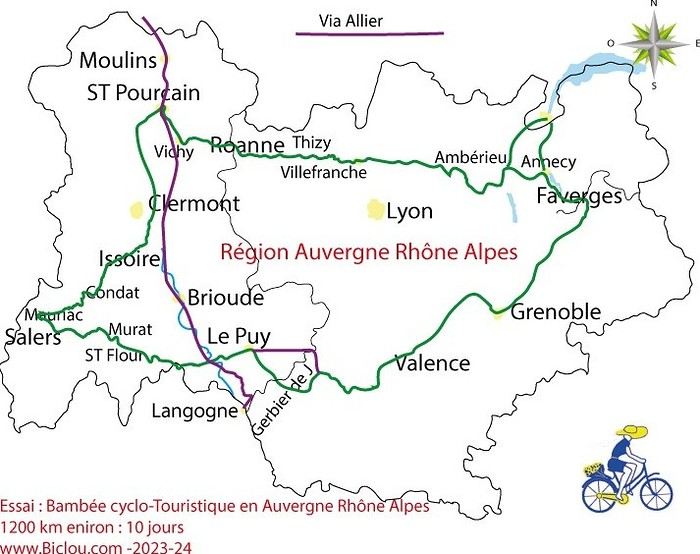
here’s a travel journal of the cycling tour through the Rhône-Alpes Auvergne region by Claudio
zouli
it was the plan
http://cbandiera.free.fr/parcours/auvergne-Ralpes/
the trip was completed
story being posted online soon
1100 km in 11 days
beautiful and varied regions
Hello,
We’d like to go on a 3- to 4-month bike trip starting in December, crossing from Assam (northeast India) to New Delhi via Nepal.
Are there routes with light traffic along the Brahmaputra and through Nepal?
We’re also looking for any info on accommodations, wild camping, local interactions, etc.
Thanks,
Michel
I’m planning to cycle from Morlaix to Brest (via Roscoff and the V45 coastal route). We’ll start riding on August 16th for 13 days (with stops for island visits, surfing, etc.). Is there a lot of traffic at this time of year? I’ve got two kids, 11 and 13, and we don’t like riding in the middle of cars (we’ve already done the Vélomaritime—Caen to Cherbourg—the Loire route from Orléans to Saumur, the Vélodyssée from Nantes to Royans, and the canals like the Nivernais and Bourgogne, where there were plenty of bike-only lanes, which isn’t the case on this route).
Thanks for your help if you’ve already done this route in late August!
Virginie
Hi there,
I’ve been road cycling for several years, and I’m about to switch to gravel in the next few days—I’m waiting for my bike, which should arrive this week.
I’m planning a bikepacking trip in a few weeks along the Véloroute V81, also known as the Vélosud, from Biarritz to Le Barcarès.
Has anyone here already done this route? Any info is welcome, whether it’s about the route itself, gear, or accommodation. I’ll prioritize staying with locals as much as possible. On that note, I just signed up for the brand-new site *Guidon et Couette* ((www.guidon-et-couette.fr)), which offers free accommodation between cyclists across the country, but there’s almost no one listed along my route!
Thanks in advance.
Laurent.
Hi there, I’m planning a cross-Canada bike trip, and I’ve got a question that might seem silly, but could someone tell me how to pack a bike (in a box, with a fragile sticker... I don’t know) for a flight? Thanks in advance!
This summer, we’re planning to cycle along the EV 19 that follows the Meuse River from Langres all the way to Rotterdam.
My question is about getting back to Nantes.
Do any of you know what the best return option might be? I’d love to hear about your experiences.
I saw that FlixBus doesn’t take bikes.
By train, I think it’s possible but would involve multiple local trains.
We were also wondering if there’s a boat from Rotterdam to Saint-Nazaire that could take passengers with bikes.
Any tips or experiences you can share would be really helpful—thanks in advance!
Have a great evening
I’ve gotten used to crossing Europe by bus to return by bike.
It was really convenient to take the bike without having to disassemble it.
But FlixBus no longer accepts bikes...
What alternatives do you know about?
Thanks.
Hi there,
I’m planning to ride the Dutch section of the EuroVelo 19, from Maastricht to Rotterdam.
Since it’s too complicated to bring my bike on the train, I’m looking to rent one locally.
I’d love any tips or bike rental shop recommendations—I’m struggling to find options even in Rotterdam.
The plan is to rent in Rotterdam, take the train to Maastricht with the bike, then cycle back to Rotterdam.
Thanks in advance for any advice or suggestions!
Nath
I’m planning to build a new touring bike.
I want to prioritize lightness.
That said, I’m tempted by a suspension fork that could offer some comfort on rougher roads.
The recent appearance of gravel suspension forks on the market might meet my needs—at least on paper.
I’m particularly considering the RockShox Rudy Ultimate XPLR fork.
Unlike MTB forks, its travel is short: either 30 mm or 40 mm.
It weighs 1400 g, which is 400/500 g more than a steel fork.
Any thoughts or real-world feedback on this?
I’m also wondering about the durability of magnesium (lower leg) for long-distance bike touring.
And what’s the impact of skipping the manufacturer-recommended maintenance every 50 and 200 hours? That’s bound to happen on a long trip unless you carry extra gear.
More generally, how reliable are these kinds of forks?
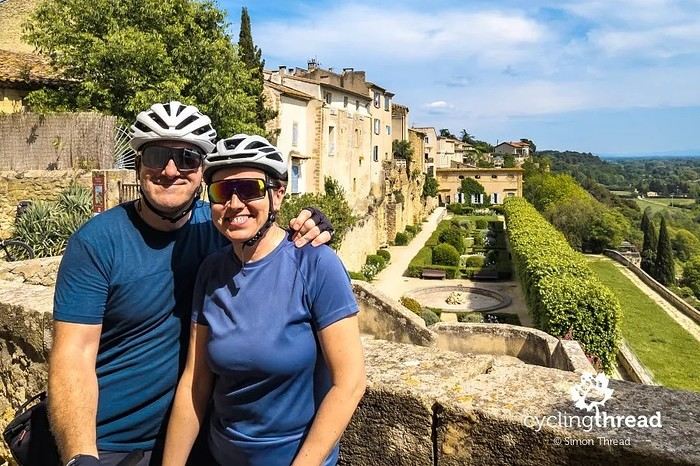
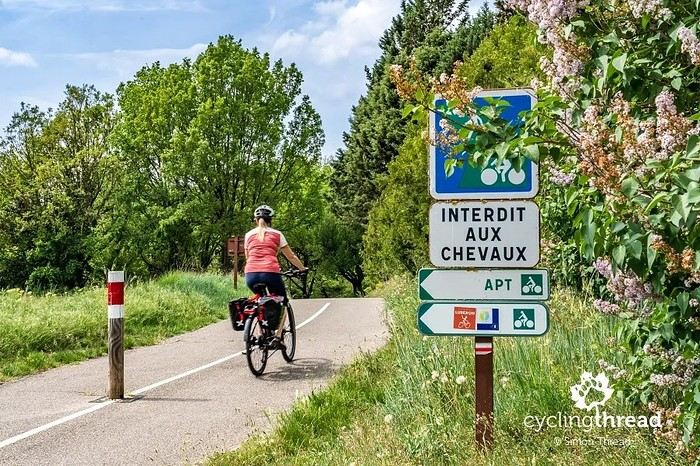
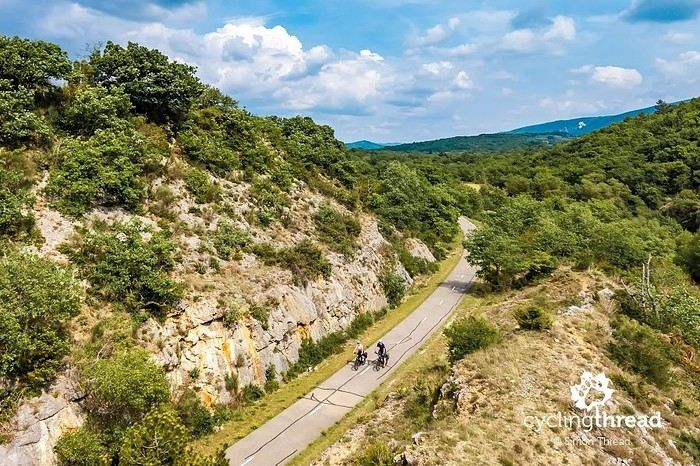
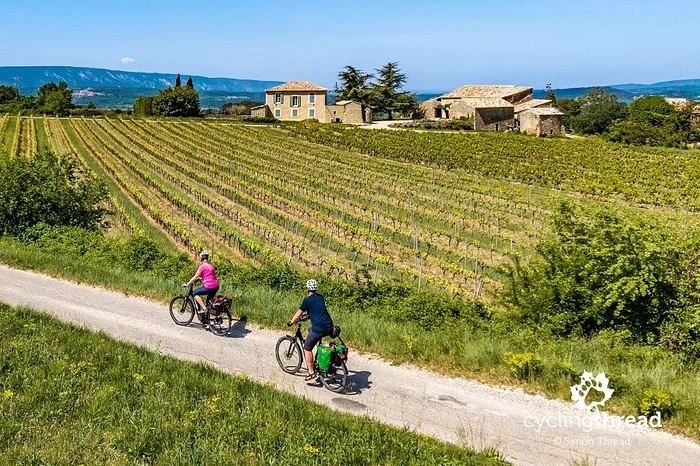
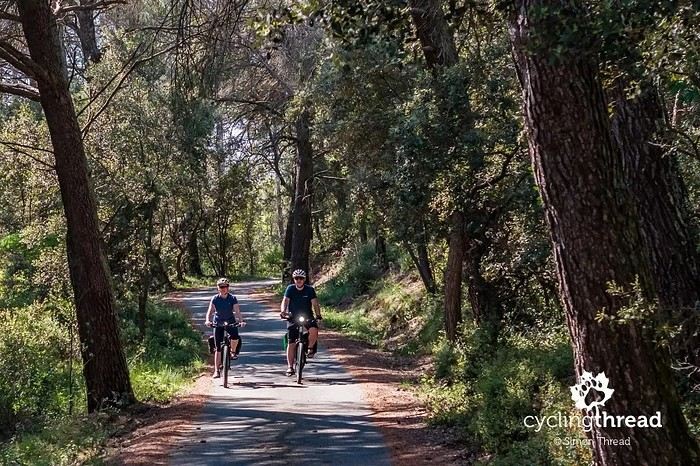
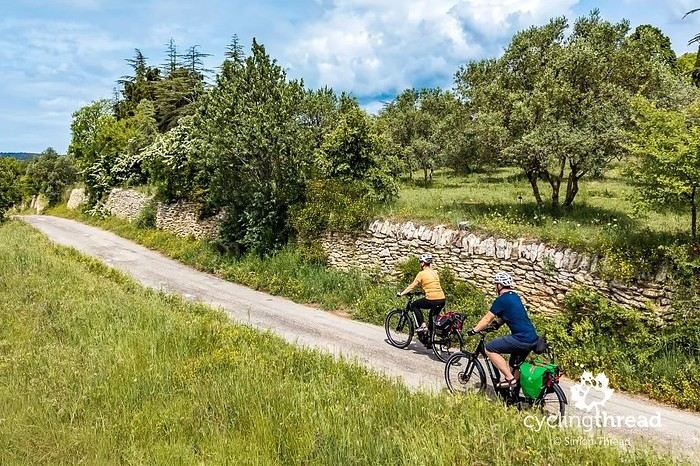
I’m making an exception and creating a separate post this time, since it’s all about France. In May, we spent a week in Provence, specifically in the Luberon, exploring the cycling routes *Autour du Luberon à Vélo*, the *Véloroute du Calavon* (part of EuroVelo 8), and the shorter *Les Ocres à Vélo* route. Together, they gave us an amazing journey through rolling hills, vineyards, lavender fields still green in spring, and some of the most stunning landscapes in southern France.
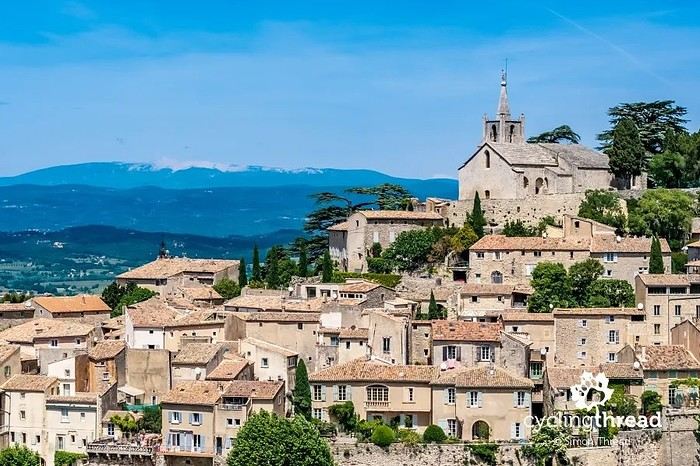
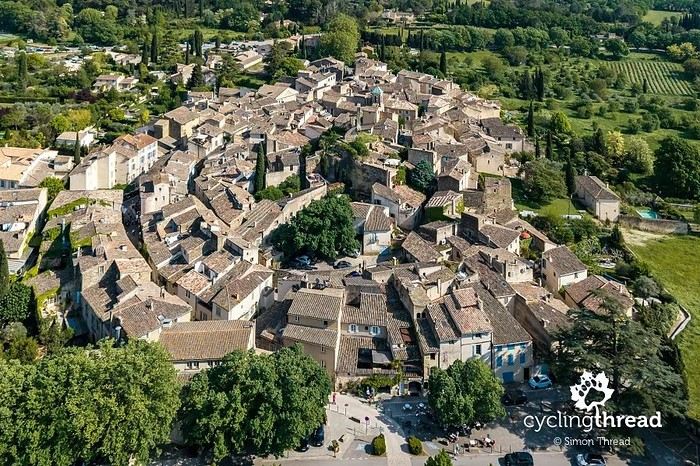
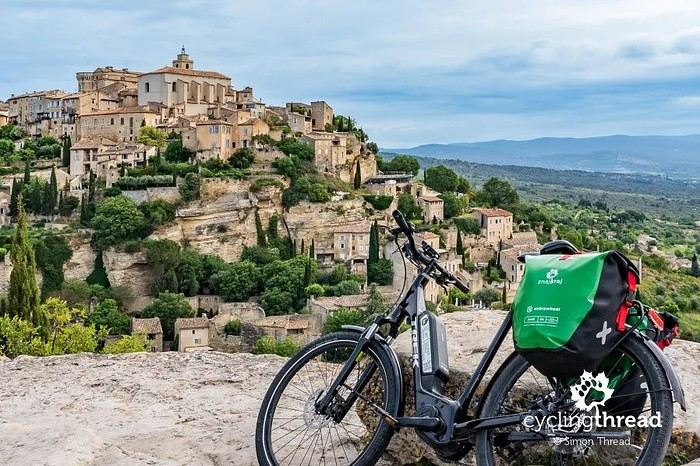
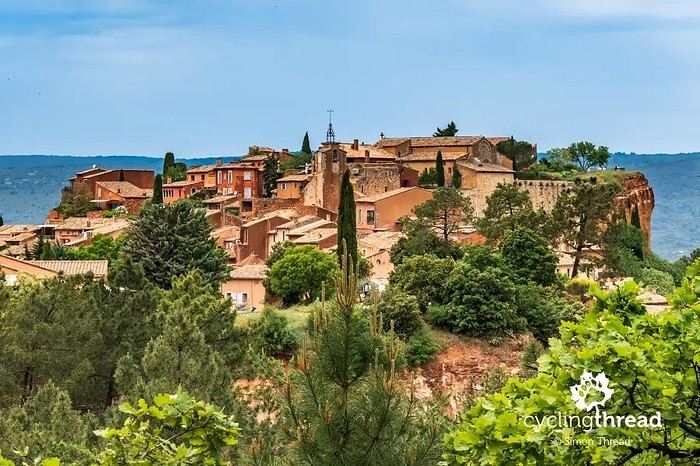
It was, of course, the perched villages that impressed us the most. We visited Gordes, Roussillon, Bonnieux, Lacoste, Lourmarin, Ménerbes, Oppède-le-Vieux, Cucuron, and Lauris. Many of them are among the most beautiful villages in Provence, and it’s hard not to agree with that reputation.
One interesting point is the route of EuroVelo 8 in this part of the region. The official path mainly follows the old railway line of the *Véloroute du Calavon*, which is very comfortable and safe. But in our opinion, cyclists traveling EuroVelo 8 around the Mediterranean would discover even more treasures if the route passed through villages like Bonnieux, Lacoste, or Oppède-le-Vieux.
We were also pleasantly surprised by how safe cycling felt. Most of the route takes small local roads, but traffic is light, drivers are respectful, and road design really takes cyclists into account. It’s one of those places where you can ride peacefully even without separated bike lanes.
Our full story:
Around Luberon by bicycle - the most beautiful villages of Provence
You can also find all our cycling travel stories on the forum:
Cycling Thread - Europe’s most beautiful bike routes
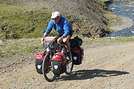

 SAlut, et merci pr vos reponses... je vais me renseigner sur les tarifs de velo... mais, :-/ ... ai - je l air si ridicule a vouloir faire cela avec mon "bolide ancienne generation" ... amanagé pr l 'occas'... par contre, pr l poids, cest sur, il faudra limiter au maximum :-p si je prends celui ci ...