Je commence a faire des recherches sur la possibilité de faire un road trip en vélo de la Havane à Santiago de Cuba. Actuellement je suis aux étapes préliminaires de mon projet et je me donne un ans pour bien préparer mon projet.
Je suis à la recherche du meilleur itinéraire entre ces deux villes, les villes sur le parcours qui valent la peine de s'arrêter, les principals points d'intérêts qu'ils sont des incontournables .
Je suis à la recherche de suggestions de blog sur le sujet, de livres , guide et bien sûr de gens qui on déjà fait cette itinéraire en vélo et qui pourrait m'aidé à mieu me préparer.
J'aurais probablement d'autre question au fur et à mesure de l'avancement de mon projet
J'ai fait 2000km à vélo à Cuba en 2016 pendant 8 semaines. J'y retourne en mars pour un autre 7 semaines car je n'ai pas eu le temps de tout faire et je suis tout simplement tombé en amour avec ce pays. Les Cubains sont accueillants, respectueux et aidants.
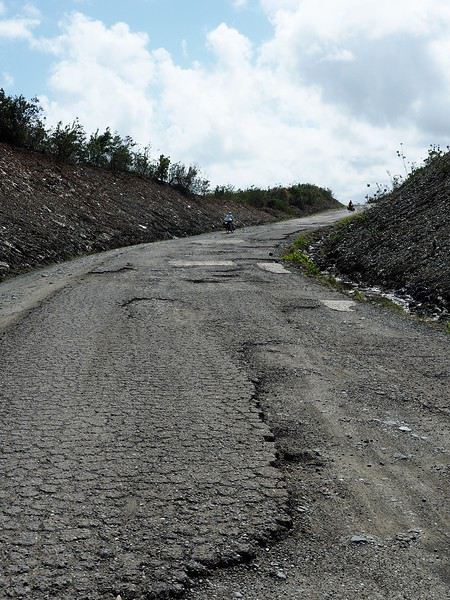
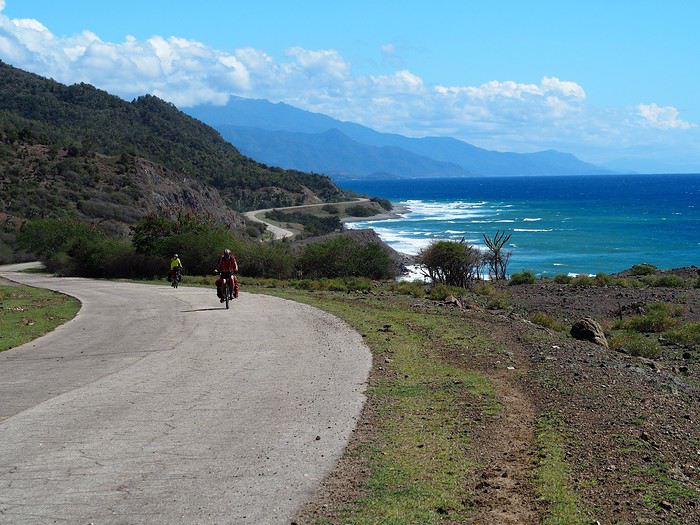
J'étais arrivé à Holguin avec Air Transat. Chanceux, le proprio de la casa avait un garage et j'ai pu y laisser ma boîte de vélo durant mon séjour. Pour ma part, les 2 plus belles régions visitées étaient l'Oriente et la côte sud pour les paysages, la cuisine et les gens. Par contre, c'est dans ces 2 régions que j'ai rencontré les plus mauvaises routes et les plus grandes chaleurs. Mais, je n'ai absolument aucun regret de les avoir faites. Au contraire, j'aimerais bien y retourner. Je te mets mon itinéraire fait: Holguin-Baracoa (photo jointe)-Guantanamo-Santiago-Pilon( la côte longeant la Sierra Maestra: photo jointe)-Manzanillo-Bayamo- Autobus de Bayamo à Camaguey puis Ciego de Avila. Vélo de Ciego de Avila vers Sanci Spiritus- Trinidad-Cienfuegos-Baie des Cochons (Playa Giron)-Jaguey Grande-Varadero-Matanzas-Jibacoa-La Havane puis autobus jusqu'à-Santa Clara. Vélo de Santa Clara-Remedios-Moron-Ciego de Avila. Puis autobus vers Holguin. J'ai pris l'autobus une couple de fois car paysages inintéressants. Quand on voit un champs de canne à sucre, on les a tous vus. J'avais un vélo de route chaussé avec du 32 à la place du 28. Il faut amener nos outils et pièces de rechange car il n'y a rien ou presque à Cuba pour réparer nos types de vélo. Les "poncheros" , mécanos de vélos, sont peu outillés pour réparer nos vélos. Il faut juste voir comment ils réparent les crevaisons. Les Cubains sont respectueux des cyclistes. S'ils nous klaxonnent, c'est tout simplement pour nous avertir qu'ils sont derrière nous. Aucun problème pour le logement dans les casas particulares pour 20-30CUC/soir. Pour infos sur les casas, tu peux aller sur les 2 sites suivants: www.particuba.net et www.cubajunky.com
J'avais aussi le Lonely Planet et l'application maps.me pour les cartes routières et cartes des villes (screen shots).
Un excellent site pour avoir une idée d'itinéraires avec les élévations de la route:
www.wikiloc.com et cliquer sur le symbole de vélo tourisme et puis taper Cuba. Tu auras une variété d'itinéraires que d'autres voyageurs ont faits. Facile à suivre avec la souris.
Si tu veux plus d'infos, n'hésite pas à me contacter.
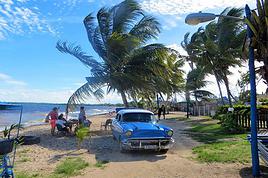
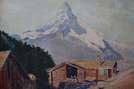
Photo ente Moa et Baracoa. A noter que cette route subit présentement d'énormes travaux de réfection pour éventuellement avoir une liaison par autobus Holguin-Baracoa.... et y développer plus le tourisme. C'est le bon moment d'y aller avant que le tourisme s'y développe trop. Route parcourue avec 2 Belges rencontrés à Moa.
Photo sur la côte longeant la Sierra Maestra enrtre Santiago et Pilon. Route pas toujours belle comme cela mais pas aussi pire qu'entre Moa et Baracoa. Route parcourue avec 2 Allemands rencontrés à Chivirico.
Je trouve fort intéressant l'itinéraire que tu as fait en 2016, je vais la tracé sur carte routière de Cuba pour mieu visualiser l'itinéraire.
Un grand merci pour les liens qu'ils vont mettre d'une grande utilité.
Je vais probablement reprendre contact avec toi , pour faire la réservation de la casa a Holguin que tu mention et pour faire la liste de matériel à apporter à Cuba.
Merci pour les photos , le paysage de la Sierra Maestra et de la mer ouf que sa semble magnifique 🙂
Pas de problème Jérémy. Si tu as d'autres questions, n'hésite pas à me contacter. La beauté des paysages, la tranquilité (pas de trafic, pas de bruit) le long de la côte de la Sierra Maestra nous faisait oublier certaines difficultés rencontrées et surtout la chaleur (35 degrés fin janvier durant la journée pour le trajet de La Mula à Pilon). Je te suggère fortement de mettre l'Oriente et le sud sur ton itinéraire. Par le temps que tu arriveras dans cette région depuis La Havane, si tu arrives là, tu seras en forme pour affronter la chaleur et les côtes.
Il est plus facile de voyager d'est en ouest et du sud vers le nord. On a le soleil dans le dos et, pour la majorité du trajet, la chance d'avoir le vent plus souvent qu'autrement dans le dos aussi.
Dans l'Oriente et le sud, j'avais eu besoin d'une bonne réserve d'eau. Mes 2 bouteilles n'étaient pas suffisantes. J'avais une autre bouteille d'un litre et demi attaché sur mon support. Avant le départ je m'étais muni de pastilles purificatrices d'eau Pristine achetées chez MEC. Elles ont été utiles quoiqu'en général on peut boire l'eau du robinet dans les villes. Je n'ai pas eu de problèmes de santé à ce sujet. Mais, parfois une simple bouteille d'eau peut être difficlie à trouver dans certains villages. Aussi, pour des questions environnementales à utiliser le moins possible les bouteilles de plastique. La veille du départ d'une ville, je mettais mes bouteilles au congélateur.... mais elles ne restaient pas gelées longtemps en cour de route avec la chaleur!!!!!!! Pas eu besoin de la bouteille extra dans les autres régions.
Actuellement je fais quelques recherches sur le forum, j'ai trouvé des discussions interresent sur le sujet et j'ai aussi trouvé quelques blog interresent sur le web.
Actuellement je fais aussi des recherches pour trouver un vélo adapté pour les routes de cuba, bref si tu as des recommandations sur le choix de vélo.
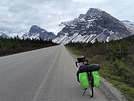
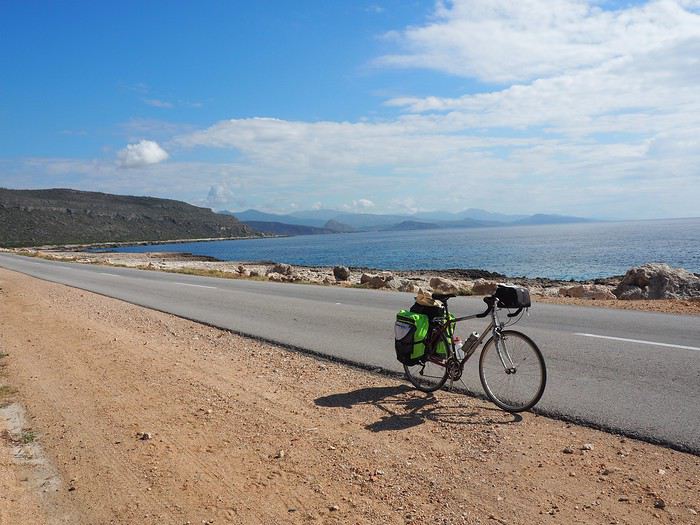
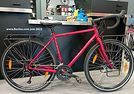
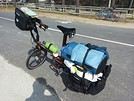
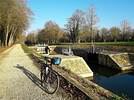
Les routes sont très bien à Cuba excepté dans les régions dont je t'ai parlé et dans la région de Viñales. J'ai un vélo de route touring. Ici, je suis chaussé de pneus 28. Avec les bagages et certaines routes en moins bon état, je me suis chaussé de pneus plus larges, du 32. Ca a fait très bien la job. Aucune crevaison, 1 rayon de brisé... à La Havane. Je touche du bois! Le vélo sur la photo est ce que j'ai, un Mikado d'Iberville.
Sinon, un vélo de touring hybride fera l'affaire. Tu peux demander conseil dans un magasin spécialisé en vélos.
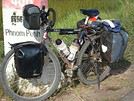
Photo prise entre Baracoa et Imias.
Je vais aller faire un tour à ma boutique de vélo, généralement le proprio est de bon conseil mais les employés cherche plutôt à faire des ventes et ne cherche pas néssairement à nos aider dans notre recherche de vélo qui serait adapté à nos besoins .
Bref je te reviens avec mon choix de vélo dès ma visite à ma boutique.
Ma femme et moi, projetons de partir à Cuba en Novembre prochain, et y faire un petit périple essentiellement en vélo. Nous partirons de la Havane. Je compte…
Nous voyageons 2 mois à vélo à Cuba en Mars Avril 2014. Pour notre arrivée à La Havane le 4 Mars nous recherchons une Casa Particulares agréable et bien placée…
Nous ferons un voyage à vélo a Cuba durant la période des fêtes. Quelqu'un saurait-il s'il est praticable de partir de l'aéroport à vélo? Nous irons vers San…
Je sais que vous pouvez trouver des possibilités de location de vélos avec Wowcuba, cuba rutabikes, canbicuba...et leurs bicyclettes semble très à l’aise...…
17 jours, 1400 km et 17 500 m de D+ à vélo dans le Nord du Vietnam ! 🇻🇳 🚲🇻🇳
Du brouillard du Fansipan aux paysages spectaculaires de la Ha Giang Loop, des villages reculés aux marchés hauts en couleurs...
J’ai traversé le Nord du pays à vélo au plus près de ses habitants, entre boue, chaleur, cols interminables et rencontres inoubliables.
Et surtout, j’ai découvert un Vietnam bien différent des circuits touristiques.
Je vous emmène avec moi dans cette aventure, à travers une vidéo qui retrace ces 17 jours de voyage. 🙂
Si le Vietnam vous attire, venez faire un bout de route avec moi !
Another long-time dream of Claudio’s: the Petit Mont Cenis pass and the dam at the eponymous lake.
A place where many Italians, including my father, worked in the 1950s–60s.
Faverges → St-Michel-de-Maurienne → Lanslebourg → Petit Mont Cenis → return. 315 km, 3 days. Bivouac at St-Michel-de-M.
Brouter link
Leg One: Faverges → St-Michel-de-Maurienne
Leg Two: St-Michel → Lanslebourg → Mont Cenis Lake → St-Michel
Leg Three: St-Michel → Faverges
And it finally happened in August 2026: in the Maurienne Valley about the famous cycle route known as the V67
🇷🇼 Cycling in Rwanda: 4 episodes, an off-the-beaten-path adventure
After 3 weeks and nearly 1,200 km by bike across Rwanda, I made 4 videos to share this adventure in a different way: the landscapes, the encounters, the villages… but above all, all those incredible scenes of everyday life.
The 4 episodes are available here:
👉 https://www.youtube.com/playlist?list=PLGnfbxjccWAg
The 4th episode focuses on rural Rwandan life: simple, authentic, and sometimes surprising scenes that you only truly discover when you take the time to travel by bike.
If you have a few minutes, let yourself be transported to Rwanda…
Bonjour je cherche des renseignement pour monter au cap Nord par l'euro vélo 7
quelqu'un l'a t, il déjà fait et ou est le mieux pour attaquer l'euro vélo 7
Merci
Hi,
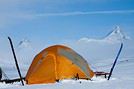
We bought the MSR bike tent model (2-person + large awning that can fit 2 bikes) back in 2005. It’s served us really well, especially during a year-long trip in Africa. Now, one of the poles is broken, and we’d love to replace it since that’s the only issue with the tent—we still love it! The poles are 9.35 mm in diameter, with 8 sections of 49 cm and 2 sections of 28 cm. Total length when assembled: 416 cm. Actually, two large sections are broken: one straight and one curved. It’s a pain to find replacements since this model is no longer sold anywhere.
Would anyone have this model lying around unused and be willing to sell me a pole?
Looking for a female travel companion for a cycling trip (arriving by plane in Porto Alegre, Brazil, and cycling toward Montevideo, Uruguay, returning by plane to France from Buenos Aires, Argentina) – 1,500 km
Hello everyone!
I’m planning a cycling trip across Brazil, Uruguay, and Argentina, with a departure set for late October, November, or December. I’m looking for a travel companion to share this long-distance adventure with.
Experience:
I already have solid experience in bicycle touring in Georgia, Kazakhstan, and Kyrgyzstan. Currently, I maintain excellent physical condition by cycling an average of 250 km over 3 days per week (4 hours a day at 20 km/h).
The trip & the pace:
Daily pace: Between 50 and 80 km per day, to make steady progress while taking time to explore.
Accommodation: Flexible and authentic. We’ll alternate between wild camping, campsites, Warmshowers, small guesthouses, and budget hotels depending on opportunities and the weather.
Looking forward to reading your message and planning this amazing journey together!
Hi everyone,
In early April, I’m redoing the Vélo Francette (La Rochelle to Ouistreham), and then I’d like to cycle along the Cotentin Peninsula (which I don’t know at all), follow the coast up to Cherbourg, and then head back down to at least Saint-Malo. I’d love to know if it’s pleasant for cycling—are the roads nice? Not too windy? What are the must-see spots? Any great campsites? All your tips and advice are more than welcome, and I thank you in advance.
Hi there,
I’m planning to bike to meet some friends in Côte d’Ivoire in early November.
I’ll be starting in Abidjan and heading to Abengourou, which is close to the Ghana border.
I’d like to take the trails. Does anyone have recent info on eastern Côte d’Ivoire?
Any tips, safety advice, or must-see stops? I’m open to all suggestions.
Thanks in advance for your help!
Fx
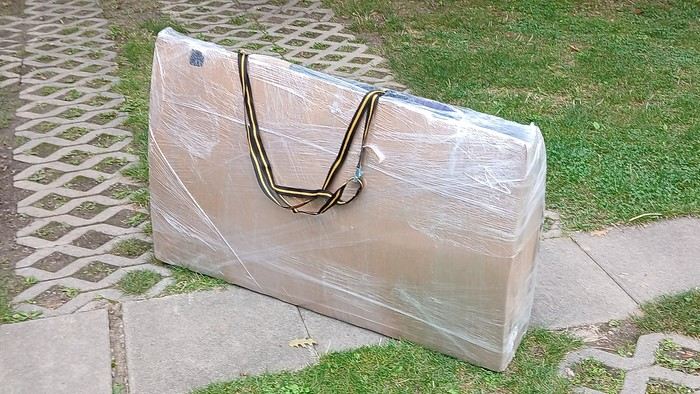
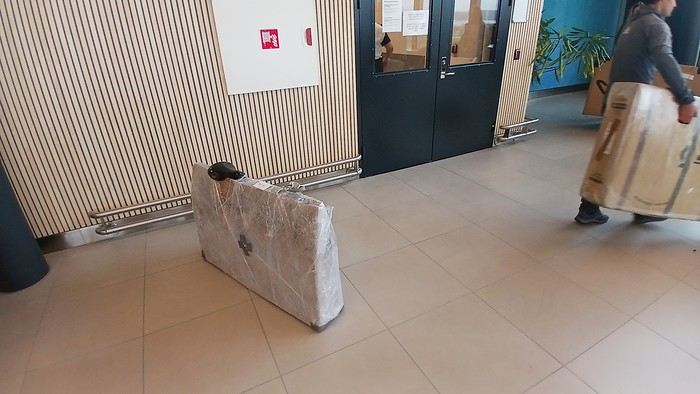
After testing it for three years across various modes of transport, I’m sharing this video of a bike packing case. It’s made from recycled cardboard and shrink-wrapped, with adjustable thickness and added bubble wrap depending on the level of protection you want.
Installing spacers at the fork and chainstays makes the packaging compact. With the fifteen-odd euros for shrink-wrapping at the airport, this case travels really well.
https://youtu.be/_GDJi-GqmkM
- Low bulk (1.10m x 0.70m x 0.25m for a large frame), it fits vertically in train luggage compartments and the total dimensions (x+y+z) don’t exceed 2.40m.
- Two carrying solutions for public transport and easy handling by airport staff (no more tears in the cardboard from openings).
- Discreet packaging when dealing with bus drivers and train conductors, as it looks like an ordinary parcel.
- No need to return to the starting point to retrieve the case from your outbound trip, which you’d otherwise have to store somewhere, or deal with a bulky cover to pack in your panniers.
- You can still check tire pressure through the plastic film without damaging the packaging too much.
Drawbacks: Around 3 hours for this lengthy and meticulous process—removing the wheels, pedals, handlebars, and derailleur without misaligning them, then securing all components to the frame.
If you get a chance to test it, send me your feedback for future improvements.
I just took a trip in Tunisia from Tozeur to Douz, skirting Chott el Jerid to the south. I’m back with the urge to keep going further south via the 4x4 tracks to connect Douz to Ksar Ghilane. Has anyone driven this route recently or explored southern Tunisia?
Thanks for your tips!
fix
😎Fellow traveling cyclists or not, all of you who love travel, the pleasure of physical effort, nature, beautiful machines, people with true passions they seek to fulfill, and who also enjoy reading great literature about all this—the *200* magazine is for you just as it is for me. I should mention I have no financial or other interest in this (in an era where we accuse our politicians of all sorts of vile interests, I prefer to take precautions). I’ve been subscribed since the beginning, and every three months, I get my 130 pages of dreams (the magazine just went from 110 to 130 pages).
It covers everything from the trans-America route to the TCR (Trans Continental Race) from Belgium to a small town in Turkey, with mind-blowing averages—4,000 km and 80,000 m of elevation gain in 8 days and 15 hours for the winner. Let that sink in, and all of it without assistance—accepting a patch could penalize you. There’s also a story about crossing Iran, encountering one of the world’s most welcoming populations, following in the footsteps of Nicolas Bouvier, as well as retirees leisurely traversing France. The common thread in all these stories? Beautiful writing. Take, for example, a stunning article: *"Passengers of the Cold: From Edinburgh to Thurso, at the very north of Scotland, 550 km of moors, coasts, and icy wind. In Thurso, the road ends at a quay, facing the Orkney Islands. We wanted a November trip, off-season. We wanted to surprise winter. Just before the snow."* A sublime piece on the experience of facing adversity and the chance encounters along the road and in the elements.
Before I embarked on my own bike trips, I dreamed a lot about them—from the Atacama to the Gobi, along the Mekong, and not forgetting France. And now, these 130 pages every quarter keep those dreamy vibes alive through stories written in the most beautiful prose.
I’ll stop here because it might sound like I’m advertising, but if you don’t know *200*, I invite you to discover it. It’ll give you wings for the most incredible challenges or simply reinforce your desire for slow rides with your eyes open to others and nature.
A little news to wrap up: Axel Carion and a friend just broke the record for crossing South America from Colombia to Ushuaia in 59 days. On its own, that doesn’t mean much, but I can’t help it—it makes me dream. You should see how he talks about it, the flashes of that wild nature he’s stored away: a snowstorm at Paso Jama and the surreal sight of the suddenly snow-covered Licancabur!
Luc
PS: The magazine is called *200* because a day’s ride starts at 200 km—well, I’ve never done a ride like that since my longest was 167 km (with 18 kg of luggage, mind you), but why not one day? The magazine will explain how to tackle your first 200, and then the question in conclusion: when will you do your first 300?😏
I’ve got my flight ticket sorted—departing in mid-November and returning in mid-March. I’ll arrive in Santiago and leave from Buenos Aires.
I’ve already been to southern Argentina, specifically Torres del Paine National Park, and I’d love to go back to do the full W trek (I only did the shorter version last time).
I also want to do some hiking and maybe even tackle a summit. I climb and occasionally do some mountaineering, so I’ll definitely be going with a guide.
I plan to start around Temuco in Chile, with the idea of heading toward the lakes, then taking the Carretera Austral.
I’m not sure if I’ll go all the way to Ushuaia—it’s supposed to not be *that* worth it, except for the bragging rights of saying you’ve been to the end of the world.
I saw there are lakes in Argentina too.
I don’t have a precise itinerary, but what I’d love is, once I reach the southernmost point of my trip, to take a mini-cruise to see some wildlife. Any tips for that?
What kind of sleeping bag did you take? Is a 0°C (32°F) one enough?
And one last question: white gas stove or can I get by with my gas stove?
I'm developing a free and open-source web app for planning walking and cycling trips (and even car trips). You can create a route by clicking directly on the map to add waypoints, and it can consist of multiple stages. The app provides tools to edit the stages and the overall route, and to display useful information (distances, altitudes, and elevation changes). A relief profile can be shown as a graph for a specific stage or the entire route.
Once the route is ready, it can be exported as a GPX file, which can then be used with a GPS or a mobile navigation app.
The app is built in JavaScript and runs entirely in the web browser. It uses the Leaflet library and several OpenStreetMap-based services. Initially developed for my personal needs (I enjoy hiking and cycle touring), I’d be happy to share it with anyone who might find it useful. It’s free to use, doesn’t require an account, and the source code is available.
hello fellow cycling enthusiasts
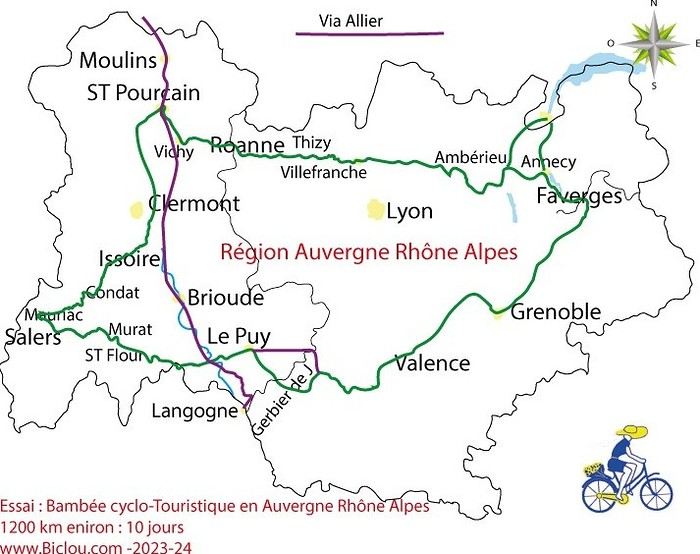
here’s a travel journal of the cycling tour through the Rhône-Alpes Auvergne region by Claudio
zouli
it was the plan
http://cbandiera.free.fr/parcours/auvergne-Ralpes/
the trip was completed
story being posted online soon
1100 km in 11 days
beautiful and varied regions
Hello,
We’d like to go on a 3- to 4-month bike trip starting in December, crossing from Assam (northeast India) to New Delhi via Nepal.
Are there routes with light traffic along the Brahmaputra and through Nepal?
We’re also looking for any info on accommodations, wild camping, local interactions, etc.
Thanks,
Michel
Hello,
Has anyone here had experience using a gas stove in Sardinia and Sicily? I’m wondering if screw-on gas canisters (not the blue Campingaz ones, but brands like Coleman, Primus, etc.) are easy to find.
I’m planning to cycle from Morlaix to Brest (via Roscoff and the V45 coastal route). We’ll start riding on August 16th for 13 days (with stops for island visits, surfing, etc.). Is there a lot of traffic at this time of year? I’ve got two kids, 11 and 13, and we don’t like riding in the middle of cars (we’ve already done the Vélomaritime—Caen to Cherbourg—the Loire route from Orléans to Saumur, the Vélodyssée from Nantes to Royans, and the canals like the Nivernais and Bourgogne, where there were plenty of bike-only lanes, which isn’t the case on this route).
Thanks for your help if you’ve already done this route in late August!
Virginie
Hi there,
I’ve been road cycling for several years, and I’m about to switch to gravel in the next few days—I’m waiting for my bike, which should arrive this week.
I’m planning a bikepacking trip in a few weeks along the Véloroute V81, also known as the Vélosud, from Biarritz to Le Barcarès.
Has anyone here already done this route? Any info is welcome, whether it’s about the route itself, gear, or accommodation. I’ll prioritize staying with locals as much as possible. On that note, I just signed up for the brand-new site *Guidon et Couette* ((www.guidon-et-couette.fr)), which offers free accommodation between cyclists across the country, but there’s almost no one listed along my route!
Thanks in advance.
Laurent.
Hi there, I’m planning a cross-Canada bike trip, and I’ve got a question that might seem silly, but could someone tell me how to pack a bike (in a box, with a fragile sticker... I don’t know) for a flight? Thanks in advance!
This summer, we’re planning to cycle along the EV 19 that follows the Meuse River from Langres all the way to Rotterdam.
My question is about getting back to Nantes.
Do any of you know what the best return option might be? I’d love to hear about your experiences.
I saw that FlixBus doesn’t take bikes.
By train, I think it’s possible but would involve multiple local trains.
We were also wondering if there’s a boat from Rotterdam to Saint-Nazaire that could take passengers with bikes.
Any tips or experiences you can share would be really helpful—thanks in advance!
Have a great evening
I’ve gotten used to crossing Europe by bus to return by bike.
It was really convenient to take the bike without having to disassemble it.
But FlixBus no longer accepts bikes...
What alternatives do you know about?
Thanks.
Hi there,
I’m planning to ride the Dutch section of the EuroVelo 19, from Maastricht to Rotterdam.
Since it’s too complicated to bring my bike on the train, I’m looking to rent one locally.
I’d love any tips or bike rental shop recommendations—I’m struggling to find options even in Rotterdam.
The plan is to rent in Rotterdam, take the train to Maastricht with the bike, then cycle back to Rotterdam.
Thanks in advance for any advice or suggestions!
Nath
I’m planning to build a new touring bike.
I want to prioritize lightness.
That said, I’m tempted by a suspension fork that could offer some comfort on rougher roads.
The recent appearance of gravel suspension forks on the market might meet my needs—at least on paper.
I’m particularly considering the RockShox Rudy Ultimate XPLR fork.
Unlike MTB forks, its travel is short: either 30 mm or 40 mm.
It weighs 1400 g, which is 400/500 g more than a steel fork.
Any thoughts or real-world feedback on this?
I’m also wondering about the durability of magnesium (lower leg) for long-distance bike touring.
And what’s the impact of skipping the manufacturer-recommended maintenance every 50 and 200 hours? That’s bound to happen on a long trip unless you carry extra gear.
More generally, how reliable are these kinds of forks?
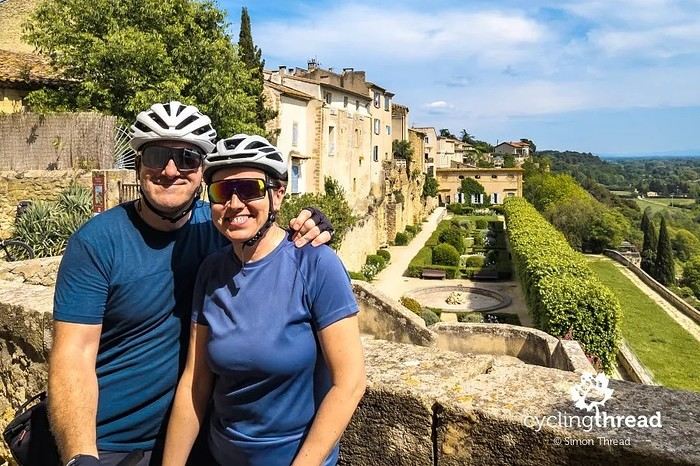
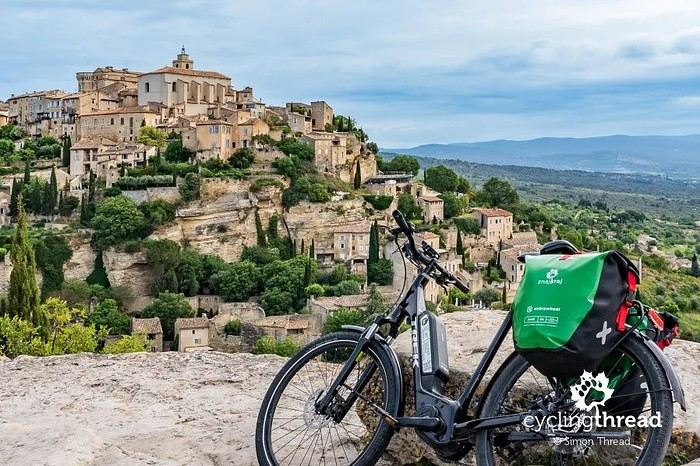
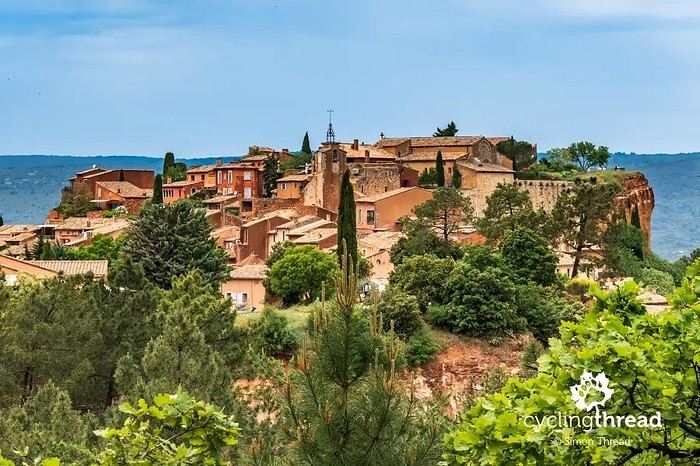
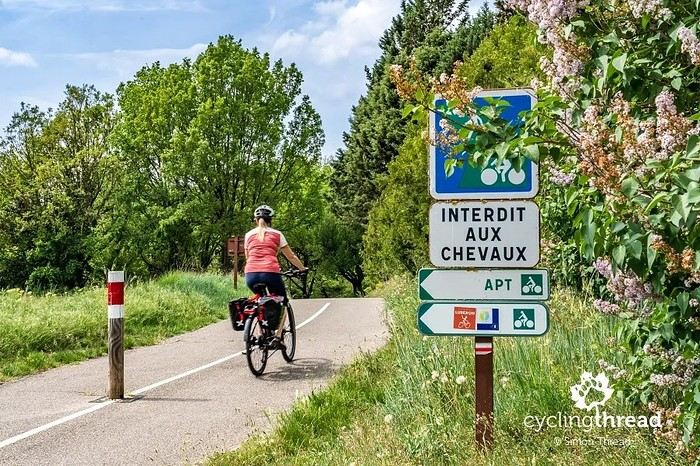
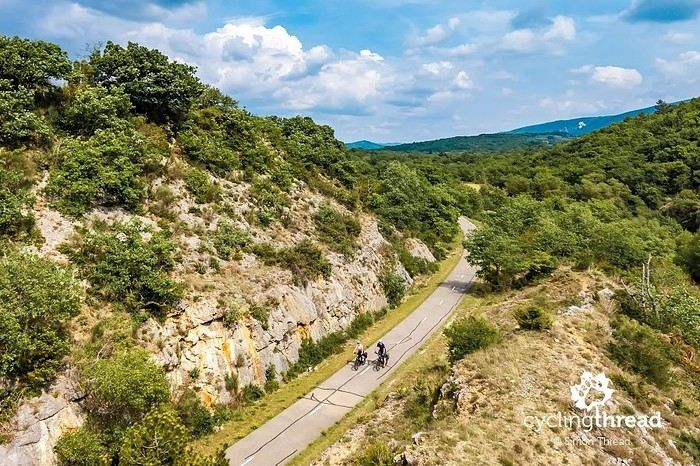
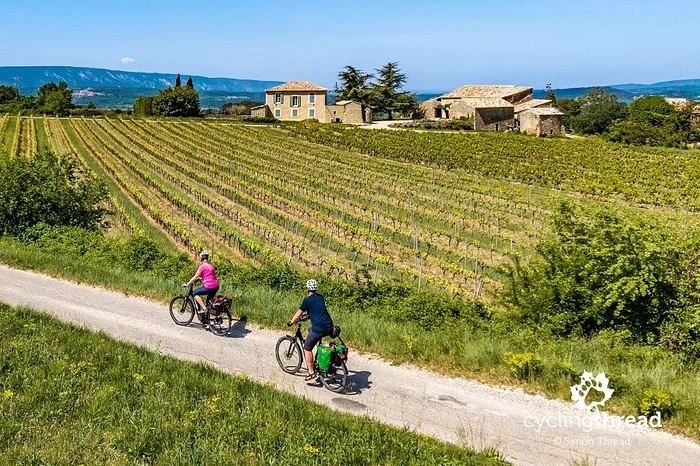
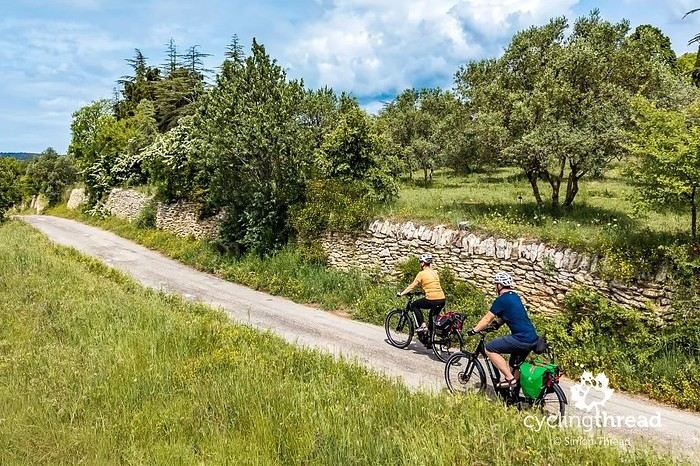
I’m making an exception and creating a separate post this time, since it’s all about France. In May, we spent a week in Provence, specifically in the Luberon, exploring the cycling routes *Autour du Luberon à Vélo*, the *Véloroute du Calavon* (part of EuroVelo 8), and the shorter *Les Ocres à Vélo* route. Together, they gave us an amazing journey through rolling hills, vineyards, lavender fields still green in spring, and some of the most stunning landscapes in southern France.
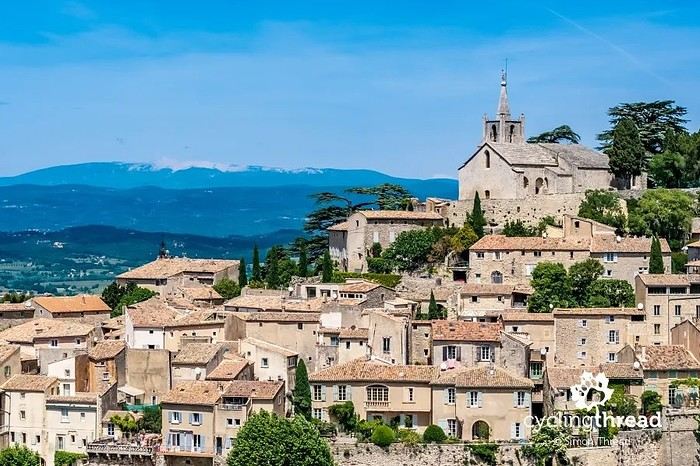
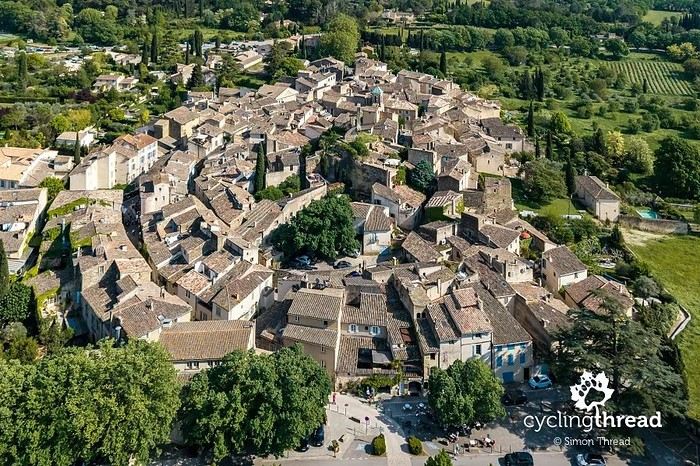
It was, of course, the perched villages that impressed us the most. We visited Gordes, Roussillon, Bonnieux, Lacoste, Lourmarin, Ménerbes, Oppède-le-Vieux, Cucuron, and Lauris. Many of them are among the most beautiful villages in Provence, and it’s hard not to agree with that reputation.
One interesting point is the route of EuroVelo 8 in this part of the region. The official path mainly follows the old railway line of the *Véloroute du Calavon*, which is very comfortable and safe. But in our opinion, cyclists traveling EuroVelo 8 around the Mediterranean would discover even more treasures if the route passed through villages like Bonnieux, Lacoste, or Oppède-le-Vieux.
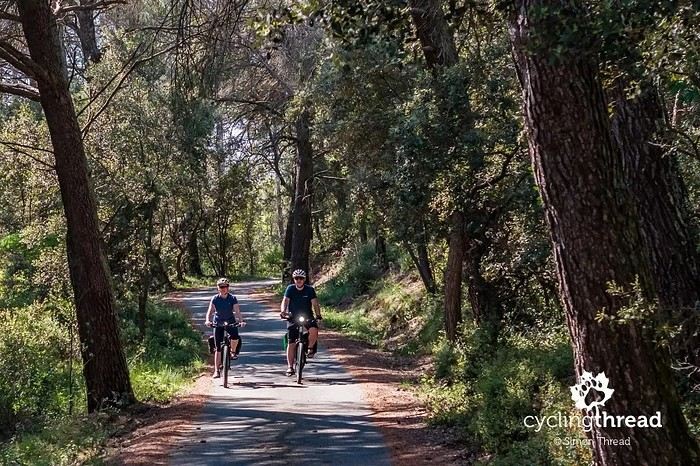
We were also pleasantly surprised by how safe cycling felt. Most of the route takes small local roads, but traffic is light, drivers are respectful, and road design really takes cyclists into account. It’s one of those places where you can ride peacefully even without separated bike lanes.
Our full story:
Around Luberon by bicycle - the most beautiful villages of Provence
You can also find all our cycling travel stories on the forum:
Cycling Thread - Europe’s most beautiful bike routes
Hi there, we’re a group of 4 cyclists looking to get from Treviso in Italy to Munich with our 4 non-folding bikes. It seems complicated! Are there any solutions? Thanks so much.