J'aimerais partir au Japon en avril prochain et je suis en train de me renseigner sur les endroits que je pourrais visiter. Mais avant cela, j'aimerais prendre mes billets d'avion.
Pour éviter trop de déplacements, je compte prendre un billet d'avion "open jaw" en arrivant dans une ville et en repartant d'une autre. J'avais songé à arriver à Tokyo et à repartir de Kyoto, mais j'ai lu sur d'autres forums que des gens conseillaient de faire l'inverse, car il était plus "simple" d'arriver à Kyoto et de finir par Tokyo (de plus, c'est plus facile pour le "shopping" éventuel à la fin du voyage). D'un autre côté, j'ai lu ailleurs qu'il valait mieux arriver à Tokyo pour se retrouver directement dans la foule et mieux profiter du "calme" relatif par la suite.
Quel est votre avis ? Dans quel "sens" vaut-il mieux organiser ce voyage ?
le calme de Kyoto..., ouais, si tu ne prend pas les bus de la ville et que tu va pas dans les temples.
Pour un 1er voyage c'est souvent plus intéressent de repartir par Tokyo car c'est lors du 1er voyage que les gens ont tendance à faire beaucoup de shopping.
PS: Un très bon endroit pour faire du shopping-souvenir à Kyoto c'est devant le Kyomizu-dera.
"Un bivouac c'est un peu comme le dépucelage et la première cuite, une espèce de rite qui fais de toi un homme" (MonsieurHenri du site randonner-léger.org).
Je fais partie de ceux qui conseillent, pour un premier voyage et à des gens un peu anxieux, de commencer par Kyoto et sa région. En effet, Kyoto est beaucoup plus facilement navigable que Tokyo (plan en grille orienté nord-sud), offre un bon mélange de neuf et d'ancien, et permet de visiter différents environnements "les mains dans les poches" sur une journée (campagne, montagne, Nara, Osaka, bord de mer intérieure, voire Hiroshima, ....) avec davantage de facilité que Tokyo.
Ajoutez à celà le fait que l'office du tourisme y est extrêmement bien situé et vous fera vos réservations pour la suite de votre voyage, ça ajoute de la flexibilité à votre séjour, en fonction de ce que vous aurez découvert sur place.
Maintenant, il est certain que la navigation dans Tokyo n'est plus le calvaire qu'elle pouvait représenter il y a 30 ans, lorsque rien n'était indiqué en lettres romaines une fois sorti de l'aérogare et de quelques gares importantes, que la documentation disponible en anglais était limitée et que l'office du tourisme ne gérait pas les réservations ...
Pour le shopping, on en fait tout aussi bien à Kyoto et Osaka qu'à Tokyo.
Conclusion: planifiez en fonction de vos intérêts et des évènements que vous souhaitez voir.
Bonjour,
Maintenant, il ne me reste plus qu'à songer à un petit itinéraire jusqu'à Tokyo. ;)
Salut,
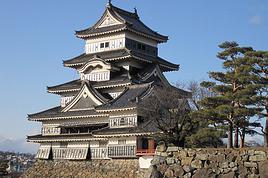
c'est un classique (car il s'agit des deux principales voies de communication entre Kyoto et Tokyo depuis des siècles), mais je te conseille la route du Nord, plutôt que le plus fréquent trajet le long de la côté, sur le Tokaido. Selon le temps dont tu disposes, une halte sur le lac Biwa, à Otsu ou Hikone par exemple, peut faire une belle étape. Puis Takayama, plus touristique, l'ancien point de passage obligé dans les montagnes, pour voir un village traditionnel (Hida-Takayama, à ne pas manquer). Ensuite, tu redescends sur Matsumoto, où t'attend l'un des plus beaux châteaux japonais, un peu moins connu (et du coup, un peu moins pris d'assaut par les touristes), que Himeji. Matsumoto peut constituer un bon point de départ pour des balades dans les Alpes japonaises.
Sur cet itinéraire, tu iras moins vite, mais les paysages sont superbes. Ils montrent un autre Japon sans être obligé de s'éloigner des grands axes.
"Je voudrais évoquer ici ce peuple de grands barbares
en marche à travers dix siècles d’histoire,
des frontières de la Chine à celles de notre Occident."
René Grousset, L’Empire des steppes
Personnellement, je conseille de commencer par Tokyo et de finir par... Tokyo !
Tokyo n'est pas la ville inaccessible et difficile à appréhender que l'on peut s'imaginer avant d'y avoir été. C'est aussi une ville en réalité très calme, très variée. Je trouve bien d'y passer quelques jours dès le départ pour bien se plonger dans le "bain japonais".
Puis d'aller un peu ailleurs, en allant par exemple à Kyoto, très bonne "adresse" en complément de Tokyo pour un premier voyage. Attention à ne pas en faire trop : ces deux villes et leurs environs peuvent déjà occuper largement deux semaines.
Je trouve sympa de revenir ensuite en fin de séjour sur Tokyo. D'abord parce qu'entre temps on s'est familiarisé avec le "mode japonais" et ensuite, cela permet d'avoir un autre regard, sans doute plus juste, sur cette ville qui mérite au moins 6 jours pour laisser entr'apercevoir ses véritables charmes...
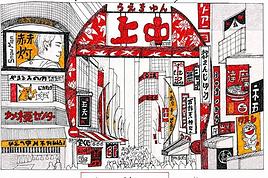
Et bien sûr, les occasions de faire du shopping sont plus nombreuses... de mon point de vue en tout cas. Étant assez peu porté par les choses "traditionnelles" (que l'on trouve au demeurant également à Tokyo, genre kimonos, yukata, vaisselle, bibelots divers...), je prends en revanche un pied colossal à arpenter Shibuya, Shinjuku, Jimbôcho et autres quartiers modernes pour ramener plein de choses sympas et insolites (J-pop, baskets spécial Japon, stylos, papiers...).
Attention aux clichés : Kyoto est plus petit que Tokyo... pas forcément plus calme !
Je fais exactement çà, je passe les premiers jours sur Tokyo histoire de me remettre et pas enchainer encore avec des transports et autres et puis on part sur Kyoto pour 10 jours et nous revenons finir la dernière semaine sur Tokyo pour ses environs et le shopping 😎
Question HS mais qui me turlupine. J'ai lu plusieurs messages sur le shopping à Tokyo ? Il y a quoi de spécial à acheter là ? 😮
"Je voudrais évoquer ici ce peuple de grands barbares
en marche à travers dix siècles d’histoire,
des frontières de la Chine à celles de notre Occident."
René Grousset, L’Empire des steppes
Je pense que tout est une question de temps, d'intérêts personnels, et aussi de niveau d'anxiété et de faculté d'adaptation de chacun.
Tout le monde n'a pas notre capacité à se lancer tête baissée dans la jungle Tokyoïte, armés seulement de notre plan du métro format carte de crédit et de la liste des 100 yens shops, prêts à affronter la Yamanote à l'heure de pointe et résolus à trouver, enfin, le fameux petit restaurant perdu au fond de Nishi-Ogikubo qui sert les fameux yeux de poulpes farcis aux entrailles de seiche marinées ! 😏
Pour le shopping, ben tout dépend de tes centres d'intérêt, mais il y a plein de choses qu'on ne trouve qu'au Japon (j'en ai mentionné plus haut) :
La music locale (J-pop en tête, quelques groupes et chanteuses vraiment pas mal), des DVD de films japonais (mais rarement sous-titrés en français), des sélections de baskets spéciales pour le Japon, des rayons papeterie sympa (stylos permettant d'écrire fin de toutes les couleurs imaginables, blocs notes, grand choix de papier pour origami...).
Pas mal de jouets, bibelots et bricoles qu'on ne trouve pas ailleurs (tous les produits dérivés des studios Ghibli entre autres bien sûr, Hello Kitty, et plein d'autres choses).
Plein de petites choses à grignoter achetées dans les kombinis...
Et bien sûr, pour certains, les fringues, les jeux vidéo... et, plus traditionnel, tout ce qui est kimono, yukata, vaisselle (services à thé, à saké, jolis petits plats de toutes sortes), sans parler d'autres spécialités typiquement asiatique (auto-cuiseur pour riz, le kaki-goli pour faire de délicieuses glaces pilées au Calpis).
Question HS mais qui me turlupine. J'ai lu plusieurs messages sur le shopping à Tokyo ? Il y a quoi de spécial à acheter là ? 😮
La question est plutôt "que ne trouve-t'on pas à Tokyo ?" ...
En gros, faites-vous une liste des choses que vous souhaiteriez trouver au Japon, et vous êtes à peu près certain de les trouver à Tokyo, qu'il s'agisse de traditionnel, moderne, mode, bizarre, délirant, pratique, insolite, ingénieux, beau (et très moche), marrant, ou gastronomique. Et ce n'est pas forcément cher.
J'y ai trouvé des livres anciens en diverses langues, des instruments et ingrédients de cuisine, des merveilles artisanales, des cadeaux épatants à 3 francs 6 sous, des accessoires de couture hyper pratiques, des kimonos anciens, des objectifs pour mes appareils photo, des composants électroniques pour de vieux appareils de sono, du matériel et des pièces moto, des instruments de musique de 5 continents, des estampes modernes et anciennes, bref, de tout.
OK, OK, OK😊
Je payerai pas le billet pour ça, mais je comprend, parenthèse close.😉
"Je voudrais évoquer ici ce peuple de grands barbares
en marche à travers dix siècles d’histoire,
des frontières de la Chine à celles de notre Occident."
René Grousset, L’Empire des steppes
Voilà le Japon c'est pour tout le reste comme n'importe quel voyage: la culture, la gastronomie, le patrimoine, les paysages....... et on ramene toujours des souvenirs des voyages donc forcement le shopping en fait partie
Départ imminent le 27/10. Le séjour sera de 18 jours plein. J’ai encore quelques questionnements sur le mode de déplacements pour certains trajets: Jour 1…
Je suis un peu indécise dans mon itinéraire de Tokyo aux alpes japonaises. Option 1: J-1: Tokyo - Nagano: visite du parc aux singes et de la ville le soir.…
J'établis actuellement un trajet pour 3 semaines au japon pour cet été (sur Juillet Aout) J'arrive à Osaka et repars de Tokyo. Dans mon parcours après Tokyo,…
Je suis en train de preparer notre itinéraire voyage dans le Sud-Est Japon et souhaiterai savoir si c'est faisable dans les 6 jours impartis J1 Arrive a…
Dans le cadre de mon itinéraire il me reste 4 jours disponibles... je pars de yamagata pour rejoindre tokyo, Je me trouve devant un dilemme: - soit rendre mon…
We’re back from a one-month trip to China and wanted to share our itinerary. Hopefully, this can give future travelers some ideas for exploring this beautiful country.
Beijing → Temple of Heaven / Forbidden City
Jinshanling → Great Wall
Zhangjiajie → Tianmen Mountain and Heaven’s Gate
Wulingyuan → Avatar Mountains / sandstone pillars
Fenghuang → riverside houses
Ping’an → terraced rice fields
Tiantouzhai → village / rice terraces
Yangshuo → Li River / karst mountains
Shanghai → skyline with the Oriental Pearl Tower
Our travel journal is available on our travel journal, written day by day. You’ll find lots of photos and some travel tips there.
j'ai réserve mon voyage du 5 au 26 mai 2027 , je commence préparer mon itineraire et chercher des hotels , ( je sais que c'est tot ) et si j'ai trouve des hotels a séoul et a busan , je trouve que ailleurs (Yeosu par exemple ) énormement d'hotel ne sont pas disponible (sur booking par exemple presque tous non disponible ) , l, IA me dit de ne pas m'inquieter car les hotels en coree du sud n'ouvrent leur réservation que 6 mois a l"avance donc c'est normal de voir non disponibles pour la majorite des hotels sur les sites de réservation
Pourriez vous me confirmer cela et evidemment me rassurer (!) , merci beaucoup
philippe
I’m looking for advice from seasoned travelers about a roughly one-month trip to Japan.
From late October to late November 2026.
We often travel in Southeast Asia but have never been to Japan.
Based on what I’ve read, I’d love to hear your thoughts on:
- Is traveling day-to-day, without booking hotels or trains in advance, possible in Japan?
(I’ve read many travel journals and blogs that say everything was booked way in advance… but that’s not how we usually travel.)
- Will the Japan Rail Pass be worth it for us?
(According to an old simulator, I’m looking at around 400 € for trains compared to 570 € for the JRP.)
Here’s our rough itinerary (which may change):
- Arrival Osaka: 3 nights with Nara
- Hiroshima and Miyajima Island: 3 nights
- Kurashiki or Naoshima: 2 nights
- Himeji: 1 night
- Kyoto: 4 nights
- Kanazawa: 2 nights
- Takayama and Shirakawa-go: 3 nights
- Around Mount Fuji: 3 nights
- Tokyo with Nikko: 6 nights (no theme parks)
Departure from Tokyo
We’re arriving as a group of three in Tokyo on Saturday, October 17th, then heading straight to Kyoto by direct train.
On Sunday and Monday, we’ll explore Kyoto, and in the evening, we’ll take a train to Osaka to spend the night.
On Tuesday, we’ll pick up a rental car at Itami Airport for a 6-day/5-night road trip around Shikoku:
- 2 nights in the Iya Valley
- Thursday morning, we’ll head to Matsuyama for 2 nights.
- Saturday, we’ll visit Mima (town, a few temples + overnight stay) and return on Sunday to drop off the car in Osaka.
We’ll leave very early on Monday the 26th by plane for Aomori in northern Honshu, where we’ll pick up another rental car at the airport for a 5-day/4-night trip:
- Day 1: Tsugaru Peninsula (Takayam Inari, Cape Tappi, Kanita); overnight in Kanita
- Day 2: Ferry transfer to the Mutsu Peninsula (cliffs, Lake Usori); overnight in Shimofuro
- Day 3: Head to the Hakkoda Mountains and onsens galore; overnight TBD
- Day 4: Return the car in Aomori by noon and explore the city before taking the train to Tokyo in the evening
We’ll spend Friday night in Tokyo, wander around on Saturday, and head home on Sunday.
Thoughts on the road feasibility of this trip? We’ll be there right in the middle of Koyo season, so it’ll be busy...
I know it’s a lot of driving, but there are two of us who can take turns. We’re not afraid of driving, even in the mountains and on the left side! Just wondering, are we going to be rushing, or is this manageable? AI says it’s all good, but it’s not the one driving...
Any tips for booking accommodations in the Iya Valley? Not many places have email addresses or websites (I know Booking.com exists, but not all listings are on there... and given the season, I think it’s better to book ahead!). Same question applies for northern Honshu.
For the rental car, I’m thinking of going with Alamo since at least it’s in French and straightforward, but are there any direct rental companies with user-friendly websites (Toyota Rentacar, ugh... 🏴☠️)?
Another question: With so many trains, is it even necessary to book them in advance? Can we just go to the ticket counter and grab seats on the spot?
For paying for the rental car, do we need a credit or debit card?
I’m starting to look at neighborhoods in Seoul, and I’m leaning toward staying in a hotel in Insa-Dong—I’ve spotted one really close to Unhyeongung.
Is this a good area—nice and convenient for exploring the city?
Otherwise, I’ve also found another hotel in Yongsan-Gu, right near the station of the same name. Is that station useful for getting around Seoul?
Since I’ll be in South Korea for nearly two months, I plan to spend at least a week in Seoul to recover from jet lag (it takes me a while to adjust...). So, I’d love a neighborhood that’s pleasant and a hotel not too far from a subway station.
Hi,
My departure is coming up soon—two months backpacking in Taiwan, so much to discover! I’d love to hear about your travel experiences.
My main interests are meeting people, understanding how things work, hiking, and nature in general. I’ve also done a lot of reading about Taiwan’s complex situation.
I do stone sculpture.
I also want to visit Orchid Island for its history.
Marie
I could really use your help to finalize our trip to Japan.
We’re heading there for three weeks with my partner, starting November 10th. Our plan was to visit Tokyo, Kyoto, and a few stops in between (nothing too original so far…).
However, we’re more into nature and hiking, so even though we do want to explore Tokyo and Kyoto, we’d like to maximize nature stops between the two. Initially, we’d considered places like Kamikochi, but I understand it’s not accessible this late in the season.
Hi there,
I’d like to do this cycling route over 2 or 3 days. I’m struggling to figure out and find a (good) bike rental that lets me start in Onomichi and drop off in Imabari. Can anyone help with great tips for rentals and accommodations along the route? How do I get back to Onomichi afterward?
Next year, we’re celebrating 20 years of marriage (and travel 🙂), and we’re looking for something new, pretty legendary, and something the teens will enjoy too.
The family council has settled on Japan for now. And it’d have to be a summer trip—no choice there.
The catch: I keep reading that August isn’t the right season for southern Japan. It’s hot, humid, and there’s a risk of typhoons… Okay, but what does that *actually* mean in practice? Are there any travelers who’ve been there during this time? Is it *that* unbearable?
We’re pretty familiar with Southeast Asia—last year, we dealt with scorching heat in Vietnam and insane humidity, plus a typhoon we experienced from a distance, and visiting Angkor in the blazing sun. Is it worse than that?
I’m back with my detailed itinerary for 20 days in South Korea—it’s my first trip to the country. Our idea is to experience a more rural and cultural Korea. Here’s the rough plan: Seoul for 4 nights at the start and 1 night at the end, Gurye for 4 nights, Suncheon for 4 nights, Namhae for 4 nights, and Gyeongju for 2 nights. The goal is to pick a base and explore the surrounding areas. What do you think of this itinerary? Anything you’d change?
thanks
hi everyone, we're heading out for a 12-day trek in the Japanese Alps. We're bringing freeze-dried meals like we always do. We just found out that importing meat is banned, even freeze-dried. Is that true? We already bought them. They're commercially made freeze-dried meals. Online, it's not specified that they have to be "commercially made" because you can make your own freeze-dried food. And since we've heard they're really strict in Japan, can anyone confirm this for us? thanks
I haven’t found what I’m looking for despite my searches!
For a 15-day trip next spring, I’d like to buy a card (preferably an eSIM, but a physical SIM is fine too) that also lets me make calls in the country (to contact a hotel, a tourist spot, etc.).
You can easily find options just for data, but I haven’t come across any that include calls, texts, or even MMS.
Could you recommend something?
hi there
I’m planning a trip in September—here’s my rough itinerary. What do you think? Is it easy to rent a car to get around between my stops? Thanks so much!
Philippe
StopNightsFull daysSeoul44Gurye (Jirisan)43Suncheon43Namhae43Gyeongju21Seoul1—
Hi,
July 2026: I’m writing to you from Dali.
First, I got scammed on Booking—AI-retouched photos. No tourists at this hotel (Yishanju Designer Hotel), and the reality was horrible: dirty, with a disgusting breakfast. It’s better to use Trip.com here.
Next, the old town was an infernal cacophony, packed with tourists who shoved past without a care. Some vendors harassed you to buy things. All the stalls sold the same cheap plastic junk or other uninteresting stuff. The beautiful scenery was ruined by vendors lining 100% of the alleys. Impossible to walk, crushing heat, nothing good to eat except fresh fruit. Horrible experience.
Day 2: We went to Cangshan Mountain by cable car—the ride was short and nothing spectacular. We were at 2,600 m.
My plan was to see Erhai Lake. Unfortunately, I followed the advice of an AI chatbot: take the boat at Langkan Dock. The Didi dropped us off in the nearest area, which was full of charming little alleys but packed with Chinese tourists. The three-wheeled yellow cabs zoomed through the narrow streets, forcing you to hug the walls, on top of the scooters and other pedestrians to deal with. Crossing the neighborhood was hellish and suffocating. Once out, we hit the "corniche," which was also packed with Chinese tourists. The lake’s edge was all pebbles, and everyone was standing around taking photos. I was with my 5-year-old son. I would’ve liked to sit down and let him play with stones by the water, but it was clear we didn’t belong. They were even shoving each other for a shot! There were no boats in sight. In short, we’d had enough, and there was nothing interesting there either.
On the way back, we had to cross that maze again under the scorching sun. My son was braver than me—I even had a little dizzy spell from all the chaos. Add to that Dali’s altitude (2,200 m), so altitude insomnia, fatigue, and vulnerability during the day...
The restaurants weren’t inviting—the staff served sticky rice in a little bucket. The dishes were wrapped, and you had to figure it out yourself. After that, they ignored you completely, even if you were the only tourist.
On the 3rd day, it was time to leave for Shaxi. I hope to see beautiful villages. But honestly, I’m exhausted by this atmosphere where everything is complicated, communication is never smooth, noise is everywhere, and the behavior of some Chinese people is abusive...
Silver lining: not a drop of rain in 4 days and blue skies.
I couldn’t visit the villages in southern Yunnan because of rain and storms there...
But I was expecting to see a few more tourists.
We’re planning a 17-day trip to South Korea in October 2026 with my husband and our daughters, who’ll be 9 years old.
I’d love to get your thoughts on our draft itinerary.
First, some key details:
1/ Jeju Island is a must for us. I’ve personally dreamed of going there for years after reading a novel about it.
2/ Our girls are used to road-trip style travel since they were born, so this kind of trip won’t be an issue for them.
3/ We plan to travel by train, except on Jeju where we’ll rent a car (we already have an international driver’s permit).
Itinerary:
Seoul: 1 arrival day at 10 AM + 4 full days
Gyeongju: 2 days
Busan: 3 days
Jeju: 4 days
Seoul: 2 days
Hi there,
My girlfriend (23) and I (24) are heading to Japan for the first time from October 20th to November 6th. Here’s our itinerary:
6 nights in Tokyo
1 night in Hakone (ryokan already booked)
4 nights in Kyoto (hotel already booked)
2 nights in Osaka
4 nights back in Tokyo
I’d like to book hotels for Tokyo (both stays) and Osaka, but I’ve gotten so many different recommendations.
I’ve read that Shinjuku is the place to be for its huge hub, accessibility, and things to do, but I’ve also heard about Shibuya, Asakusa, and Ueno.
I’ve looked at hotels, and first off, I’m surprised by the prices compared to what I’ve seen on forums (I guess inflation’s hit here too… and maybe I’m late to the booking game?). I’m feeling a bit overwhelmed with all the options.
For our first stay in Tokyo, I’d prefer a hotel (not a residence or Airbnb) since we’ll be arriving at night, and it’s our first time in Japan. It’d be great to have a place with a reception, staff who speak at least a little English, and can give us some guidance. For the second stay, we could consider other options if it’s better.
Budget-wise, we can go up to 150–180 € per night, but if we can save some money to spend elsewhere, that’d be amazing!
I’m open to all recommendations, hotel suggestions, or any other tips for Tokyo (first stay), Osaka, and Tokyo (second stay).
Hi there,
I’m getting ready for a classic tourist trip to China in May 2026.
The "Terres Lointaines" itinerary looks good to me, and the price is interesting.
Has anyone traveled with them before? Any feedback?
Is there a better option?
Thanks so much for sharing your experiences on this!
Michel
I just booked my hotel in Seoul—it’ll be near Unhyeongung, on Samil-Daero 30-Gil—and I’m wondering if there’s public transport from the airport to this address (bus or subway)? If not, what’s the taxi fare? I read it’s around 50 or 60 €.
I’m traveling to Japan with a young adult with autism (ASD) from July 28 to August 8, following a pretty classic route: Osaka, Hiroshima, Kyoto, and Tokyo. I’m looking for a schedule of the most spectacular fireworks displays during that time. So far, the dates for the major *hanabi* events aren’t available online yet. If anyone has them, I’d really appreciate it if you could share!
We’ll be doing a self-drive trip using public transport in May 2026.
On Day 6, we’ll arrive in Hakone by train from Tokyo in late morning. We’ll spend the night in Hakone before heading to Kyoto.
The main goal of this stop is clearly the view (no hiking) of Mount Fuji, not so much exploring Hakone, where the sights seem limited.
I’ve read on the forum that the view is great from Gotemba, but it also takes a good hour by bus to get there. And, apart from that view, there’s nothing else to see in Gotemba!
So, I’m not sure what to choose. Any thoughts? Or alternatives to suggest?
Maybe some spots in Hakone or Gotemba for a great view?
Hi everyone, I’m Julien!
This summer, from late June to late July, I’m planning a one-month solo trip to Japan—my first time!
I’d love to hear your thoughts and advice on the itinerary I’ve put together to explore this amazing country.
Here are the routes I’m considering:
**Option 1: More mountain and nature-focused**
Tokyo: 8 nights, with day trips to Nikko and maybe the Izu Peninsula
Kawaguchiko (Lake Kawaguchi/Mt. Fuji): 1 night. The place looks stunning, but I’m worried Mt. Fuji might not be visible due to the weather
Kyoto: 6–7 nights (including a trip to Nara)
Osaka: 1–2 nights, where I’d like to drop off my things to make the Kumano Kodo easier
Kumano Kodo: 3 nights—an experience I haven’t seen much elsewhere, but I thought it sounded really interesting
Hiroshima: 2 nights
Miyajima: 1 night
Takayama: 3 days
Kanazawa: 3 days (From what I understand, the Osaka–Takayama–Kanazawa–Tokyo route is convenient for transport)
Tokyo: 1 night (return)
**Option 2: More varied but a bit vague in parts**
Tokyo: 8 nights
Kyoto: 7 nights (+ Nara)
Osaka: 2 nights
Kobe + Himeji: just passing through—I’m not sure if it’s worth a night
Naoshima: 1 night—still pretty unclear for me
Takamatsu: 2 nights. An interesting city, but I’m not sure how long to stay
Shimanami Kaido: biking from Imabari to Onomichi, then heading to Hiroshima
Hiroshima: 2 nights
Miyajima: 1 night
Kyushu road trip (Aso + onsens + Fukuoka): 5 nights (also pretty vague—I could fly from Fukuoka back to Tokyo)
Tokyo: 1 night
**Option 3: More balanced/simplified**
Tokyo: 8 nights
Kawaguchiko: 1 night
Kyoto: 7 nights (+ Nara)
Osaka: 2 nights
Koya-san: 1 night
Kumano Kodo: 3 nights
Takayama: 3 nights
Kanazawa: 3 nights
Tokyo: 1 night
A few key points:
I haven’t made any reservations yet, except for the flight tickets.
I know my plans are too packed and will need to be adjusted.
I’m specifically looking for advice on which stops to cut or shorten.
Hello everyone,
Like Cedric13600, I’ve booked a flight ticket for 30 days / 29 nights in September 2026, from Beijing to Shanghai. We’re a couple in our sixties who love independent road trips.
I’d like to draw inspiration from the following private itinerary suggested by a travel agency:
Day 1: Arrival in Beijing
Day 2 to 4: Beijing
Day 5: Datong
Day 6 & 7: Pingyao
Day 8 to 10: Xi'an
Day 11: Luoyang
Day 12: Dengfeng
flight
Day 13 & 14: Chongqing
flight
Day 15 & 16: Lijiang
Day 17: Dali
Day 18: Kunming
Day 19: Jianshui
Day 20 & 21: Yuanyang
Day 22: Travel via Guilin
Day 23 & 24: Yangshuo
Day 25: Guilin
Day 26 & 27: Zhangjiajie
flight
Day 28 & 29: Shanghai
Day 30: Departure from Shanghai
But to do this itinerary independently:
1. This schedule seems very ambitious to me—what do you think?
2. If it’s too packed, what would you remove as a priority?
Thanks so much in advance for your help.
I’m planning a 5-week trip between Yunnan and Sichuan from mid-October to the end of November 2026:
Arriving in Kunming, I’ll do a loop in the far south of Yunnan via Thonghai, Jhiansu, Zhemi, Yuanyang, Nafa, Jinping, Mengzi, and Shilin (visiting markets, villages, and hiking), then head to northern Yunnan/southern Sichuan on the same theme (passing through Kunming again) via Dongchuan, Huize, Qiaojia, Puge, Xichang, Lanba, Butuo, Huolie, Dimo, Riha, Niuniuba, Meigu, Mabian, and Leshan, before arriving in Chengdu (where I’ll take my return flight to Paris).
This would be a trip with a strong ethnic/rural focus. Since I’ve never traveled in China, I’d love to hear your thoughts on doing this solo. Are there public transport options in the region? What tips do you have for traveling through this area as smoothly and enjoyably as possible? I’ve done quite a bit of backpacking in the mountains of northern Vietnam and really enjoyed using local motorbike drivers. Is something like that available in this region (through local tourist agencies or hotels)?
What should I be cautious about? Are local tourist agencies (or hotels) offering tours and guides reliable? If you know of any specialized sites sharing tips or experiences, or names of local agencies, hotels, etc., please don’t hesitate to share them! :)
In short, all your advice (on any topic that comes to mind!) is very welcome.
Thanks so much!
While researching South Korea, I came across the term "templestay," which refers to a Korean program that lets you stay in a traditional temple to discover Buddhism and Korean culture by living like the temple residents and doing activities like making lanterns.
A templestay isn’t just for foreign tourists—on the booking site, I saw that some temples are more geared toward foreigners, with English-speaking monks.
I was wondering if it’s still worth it, especially in temples where the monks don’t speak English?
I'm 69 years old and heading to China, where most tourist sites are free or discounted for me. However, trip.com either refuses to let me book because the sites are free or doesn’t apply the discount. Does WeChat apply this discount if I book through them? How can I just reserve without paying and pay on-site? Is that possible?