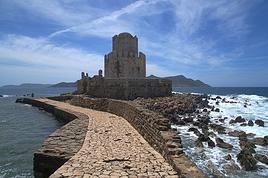
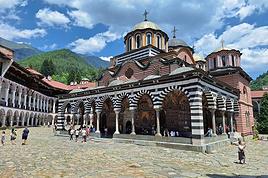
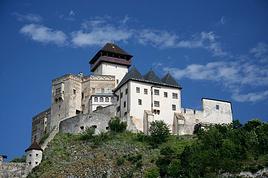
Oui, et moi pas mieux c'était dans les années '70, en Yougoslavie vers la Hongrie et la Roumanie ... je ne me souviens plus que des parfums, des peintures aux jus de fleur et de fruits sur les monastères, l'artisanat local et les toits en bois et les portails décorés, pas trop de contact avec les gens sauf à table dans des routiers familiaux et dans les marchés. On campait...et allait en utilisant le "guide du routard" de l'époque.
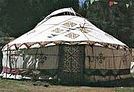
Le plus grand voyageur est celui qui a su faire une fois le tour de lui-même (Confucius) voilà ça continue, sous ma tente aux cinq couleurs...
ca depend de quoi tu parles...il y a un etat qui s'appelle moldavie, mais aussi une region qui a le meme nom en roumanie...celle de roumanie est plus democratique et, implicitement, plus touristique ( et puis, la roumanie va adherer a l'ue en 2007) . des monasteres datant de 1400(peintees a l'exterieur), les villes de iasi(que j'y habite) et de suceava et le relief carstique(1800-1900 metres)...la republique de moldavie n'a pas des montagnes ni de la mer, mais ca vaut la peine...si tu as des autres questions, pose-les-moi
la ville de Iasi(que j'y habite) a ete la capitale de la moldavie historique(y compris la republique de la moldavie) de 1500 a 1860...
Andre, Roumanie
Calatoria este un traseu metaforic - simbol exterior al drumului interior pentru cucerirea absolutului./Le voyage est un tracé métaphorique – symbole extérieur de la route intérieure pour la conquête de l’absolu.
si tu parles de la Republica Moldova, sache que c'est un peu comme l'ukraine: moitie a l;'ouest moitie a l'est. je pense meme que les pro russes sont plus nombreux que les pro roumains. c'est un melange etrange de latinisme et de russissme qui surprend le tourist occidental. Tu trouveras des gens avec des oppinions et facons de penser tres differentes. les deux langues cohabitent: le roumain (langue officielle) et le russe(d'apres certains moldave...officielle aussi lol). les politiques se sont longtemps chamaille sur ce sujet. Je suis allee a Chisinau (kishinev) et Tiraspol il y a 13 ans je ne peux donc pas te donner des adresses utiles. ce que je retiens c'est qu'il y avait l'armee pas loin de notre hotel a l'epoque. Cela a du enormement change!!! A l'epoque on trouvait difficilement qqun qui parlait anglais ou francais. Ca a du change.
En general les gens sont tres sympa et curieux: si tu vas dans la campagne (un melange entre la campagne roumaine et celle ukrainienne) tu seras un peu comme un ours au zoo a devoir repondre a pleins de questions. Mais c'est tres sympa. Attention a chisinau, il parrait que la mafia moldave s'est bien developpe.
voila, cela ne t'aidera pas bcp dans la preparation de ton voyage mais moi, j'aimerai bien connaitre tes impresssions une fois de retour.
n'hesite pas demander conseil a andre, il habite iasi une ville ou il y a bcp de moldaves donc il les connait un peu.
bravo, red fox! tu connais beaucoup sur la moldavie! j'aimerais moi-aussi d'aller un jour en pologne...entre les russes et les allemands...mais je veux te corriger un peu. la langue moldave n'est pas du tout le russe, mais un dialecte tres proche du roumain ( les roumains ne reconnaissent pas cette langue...c'est toujours le roumain)...mais le pays a ete tres "russifie", tout comme les territoires polonaises qui sont aujourdh'hui en bielorussie et ukraine, et il y a beaucoup de "confusions"
Venez visiter l'Europe Centrale et de l'Est
Ca vaur la peine!
Calatoria este un traseu metaforic - simbol exterior al drumului interior pentru cucerirea absolutului./Le voyage est un tracé métaphorique – symbole extérieur de la route intérieure pour la conquête de l’absolu.
jim.... y a bien deux langues qui cohexistent: le roumain (langue officielle) et le russe (langue tres courante). les gens parlent bcp le russe, toujours, surtout les 40-50 ans. enfin, cela a du change depuis ma visite biensur, mais je suis sure qu'il y a toujours bcp de russophones.
en ce qui est de la reconnaissance de la langue moldave....eh bien, les roumains ne la reconaissent pas car elle n'existe pas (ou bien pas encore, peut etre avec l'evolution logique de la langue dans 50ans on aura la langue moldave-un melange entre du vieux roumain+russe....mama mia!). les moldaves ont re-apprit le roumain a partir des livres roumains fournis par le gouv. de bucarest apres '90. mais pour renforcer l'"idee" d'autonomie (ce qu'avant ils n'avaient pas, le pays penchant toujours entre la roumanie-vieille grande mere et la russie-jeune maman) ils ont appele leur langue "moldave". c'est un peu comme le portugais parle au bresil: pareil mais different en meme temps. ca reste du portugais quand meme. le roumain parle en moldavie c'est plus tot du vieux roumain, un peu comme le francais quebecois. mais bon, ca se comprend malgre le tres tres fort accent moldave, qu'on retrouve d'ailleur a Iasi aussi, tu connais ca.
pour ce qui est de la pologne....bon voyage. c'est un pays sympa, entre la russie et l'allemagne comme tu dis, mais bien penche vers les usa. en fait, le gouv s'incline dans la direction du vent. et quand ca soufle de trop, il va pleurer a Bruxelles.
J'y étais 6 jours l'été dernier.
Qu'est-ce qu'on peut en dire... Il y a de beaux paysages, on a parfois l'impression d'être dans la France des années 40 ou 50.
Beaucoup de vignes, des routes atroces. Tu as vite fait le tour de Chisinau, mais la ville n'est pas désagréable.
Si tu veux avoir des informations plus précises...
Comptes-tu t'y rendre prochainement ?
Comme vous avez déjà lu plus haut, la Moldavie s’a changé. Chisinau d’aujourd’hui n’est pas désagréable, car la mafia ne domine pas le rues, il est plus propre, le gens sont plus instruits dans les langues étrangères et les paysans des villages sont bien accommodés avec le modernisme, les touristes aiment y faire des visites.
La langue moldave est considérée par la majore partie, notamment les jeunes, comme artificielle. Nous, la génération des jeunes après les années ’90, avons appris la langue roumaine des manuels édités par le Bucarest et essayons le garder à rester roumaine, comme elle était toujours.
Même si on n’a pas de montagnes, nous avons beaucoup des beaux lieux où on peut bien passer le temps.
j’aimerais bien vous répondre a vos questions par courriel à renat_buga@yahoo.com
C est le pays des NOIX et du VIN ... petit pays principalement roumanophone mais deux régions sont indépendantistes : une région nord au dessus du fleuve PROUT qui est russophone la TRANSNYTRIE et un rond au sud qui est gagaouze la GAGAOUZIE ... LENINE et STALINE ont semé il y a un siècle les germes des discordes en séparant, déportant et russifiant tous ces pays d'Europe centrale.
Aujourd'hui cependant ce qui leur permet de se comprendre et leur fait avoir encore un lien c'est la langue russe. Pour éviter la séparation les autorités moldaves ont renoncé au rapprochement avec la Roumanie et accepté que ces deux régions autonomes aient leurs gouvernements régionaux, leurs hymnes et leurs drapeaux. Aucun problème dans la partie principale très européanisée et qui aspire à être dans l'Europe. Aujourd'hui les familles moitié en Roumanie moitié en Moldavie ont besoin de visas pour se voir la Roumanie étant dans l'Europe et la Moldavie n'y étant pas. Par contre les choses sont moins simples en TRANSNYTRIE où il vaut mieux avoir un contact. On y trouve des gens sympas et comme dans tous les pays de l'ex-URSS et les plus désagréables sont les douaniers et les policiers qui pratiquent le racket ordinaire et quotidien pour mettre du beurre dans les épinards.
Bonsoir, le message date un peu maintenant! Avez vous visité la Moldavie?
En dehors des considérations politiques mêmes si c'est incontournable, j'ai séjourné plusieurs fois en Moldavie chez des amis à Bendéry et j'ai adoré. Je parlais un peu tout petit peu russe et le dico était bien utile! J'ai été accueillie comme une princesse, j'ai reçu énormément de chaleur, de gentillesse et beaucoup de personnes m'ont fait un cadeau...
Certains rapportent des chemins pourris mais ça fait partie du décor!! Allez profiter des bois, des chachliks, des marchés des églises et vous adorerez!!
la Moldavie possède aussi la plus grande cave du monde, les caves de Cricova. Une véritable ville souterraine où sont stocké un nombre considérable bouteilles. On à calculé que l'on avait suffisamment de vin pour donner un verre à chaque habitant de l'Urss! On trouve également dans ces caves une partie de la collection de vin que le ministre d'Hitler Goering (excusez l'orthographe) s'était constitué en pillant les pays envahis. C'est ainsi que l'on trouve entre autre des château neuf du pape de 1936, et des bordeaux tout aussi prestigieux. La plus veille bouteille est une bouteille de vin de Jérusalem de 1903. Iouri Gagarine qui à visité cette cave à déclaré; qu'il avait eu plus de facilité pour sortir de la navette spatial que des caves de Cricova. C'est une des richessse de ce pays.
C'est vrai que j'ai oublié de vanter le bon vin moldave mais il était compris dans les chachlilis!!
Les chachliks sont une spécialité georgienne, mais c'est vrai que l'on en mange d'excellent en moldavie tout comme les pelmenis russes (sorte de raviolis servis avec de la crème et du vinaigre blanc). Le plat national moldave est la mamaliga, à déguster sans modération....
Le vin typique moldave est le Kagor, vin doux rouge fait avec des raisins vendangés tardivement, à découvrir....
Moi, je suis habitant de Moldavie, il est interessant de voir tout que vous ecrivez sur la Moldavie, je croix que pour connaitre plus sur la Moldavie il faut demander un habitant moldave qui connait mieux la situation.
Vous n'avez pas vu les villes ORHEI et SOROCA, Cricova ? N'hesitez pas a les voir.
on n'a pas besoin de visa pour visiter l'Antarctide :)
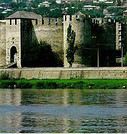
Soroca et sa petite citadelle. J'ai une image romantique de cette ville, lors de ma dernière visite, avec des tsiganes qui jouaient de la musique au bord de l'eau...
Tiens une question Wolful, peut-être seras-tu me répondre, qui a planté tous ses arbres fruitiers sur la route qui mène à Soroca, j'ai été impressionné de voir autant de d'arbres fruitiers
Salut Thierry01, oui je sais qui a plante les arbres frutiers sur la route a Soroca, en periode de l'union sovietique en moldavie ont existe les kolhozes(organisation des gropes des hommes qui travaillent en commun au plantation des arbres, des cultures .. etc ), apres la disparition l'union sovietique les gens ont commence de privatiser diferent teritoires de terre. Voila d'ou provient tout ses arbres....
Vous avez raison sur la culinarie moldave, mamaliga et shashliks sont superbs, ma grande mere le prepare excelement, et moi j'aime faire beaucoup les shashliks...
on n'a pas besoin de visa pour visiter l'Antarctide :)
Est-ce que quelqu'un s'est récemment rendu en Transnistrie (Tiraspol) depuis Chisinau? Je voudrais savoir comment ça se passe. Je sais qu'il y a une carte de…
Hello,
I’m looking for a snowy destination in Europe that’s accessible by car from Lille, not too expensive, and family-friendly. We have two kids aged 4 and almost 9. We don’t ski—we just want to soak up the Christmas vibe, go on short walks, and sled right outside our rental.
We’d considered Slovakia (the Tatras—but that’s 15 hours by car) or the Czech Republic (closer—Jizera Mountains, Korenov). We’re also hoping for some sightseeing (castles, monuments) and that festive Christmas atmosphere.
Do you think the Czech Republic would work for us for a week?
Thanks,
Hi there,
We're heading to Crete at the end of September, staying in a hotel near Agios Nikolaos—Zeus Premium Mirabello Bay.
Has anyone stayed there before, or at least in that area?
What are the possible outings?
Are there buses to get around easily?
Is the weather still pleasant then?
Thanks for your feedback!
Hi there, the island of Limnos (or Lemnos) looks like a great spot for a September trip: not too many tourists at that time, plenty of hiking opportunities, beaches, villages, etc. That said, guidebooks mention an airbase on the island, with some sources saying there are more or less frequent aircraft flyovers. For those who’ve been there—how’s the situation with this? Lots of air traffic or noise issues?
Thanks in advance
I'm currently planning a trip to Cyprus for late October. I have a few questions:
- I plan to visit Nicosia, Paphos, and Ayia Napa. What do you recommend in Ayia Napa?
- Is it easy to get around by bus from one city to another? Or do you have any private drivers to recommend?
- Do you have any hotels to recommend?
Any tips or advice is welcome!
Thanks in advance
Hi! I'm torn between these two destinations. If we go to Crete, we'll probably head to the Chania region and the south, which seems wilder. With 10 days and a car, it should work out. If we choose Sardinia, we haven't figured out the exact area yet. We love hiking, swimming, and eating well. We have 10 days at the end of September and prefer to avoid crowds this year. In May, we went to Menorca and really enjoyed it—great hikes, beautiful beaches, good food, and not too many cars.
Hi,
I'm looking for a private transfer from Istanbul Airport to the historic center of Sirkeci. Does anyone know a company? I've found a few:
GetYourGuide,
Istanbultour24.fr (more interesting because they offer round-trip transfers at a lower price).
If you've used any of these services, I'd love to hear your feedback.
Thanks in advance!
Hi,
I'm looking for info on the Pristina–Skopje bus route.
Can you leave from the main bus station in Pristina?
I’ve also heard about a bus station near the theater...
If anyone has details, I’d love to hear them—thanks!!!!
We want to book our tickets to visit the Acropolis site and the associated museum. For these reservations, we need to specify entry time slots.
For the Acropolis alone: the first slot is at 8:30 AM.
For the museum: 10 AM? 11 AM?
We like to wander around, so here’s our question: if we haven’t finished exploring the site after 1.5 hours, is it possible to go back in after leaving the museum?
We’ll be buying tickets from the official websites—audio guides are mentioned. Any feedback on those? On sites like Get Your Guide, the prices are much higher with the audio guide included, but does that mean better quality?
Hi there,
After booking an Airbnb last January for this summer’s vacation in Sarajevo... My "host" canceled our reservation without any reason—this has never happened to me before.
Of course, now it’s impossible to find a place to stay at a "normal" price in Sarajevo with parking...
So we’re falling back on the capital of the Republika Srpska, Banja Luka, which had already crossed my mind before I booked Sarajevo.
I already have quite a few ideas in mind, without having dug too deep into the region yet.
But if anyone has already been there and has suggestions? Even for restaurants—I’m all ears!
And even if it’s not right next door, I’m planning to spend a day in Sarajevo!
Hi, I’m going to Turkey for 3 weeks. I’ve heard that you can’t book through Booking.com once you’re there and that everything has to be reserved in advance. Is it true that Booking.com doesn’t work in Turkey? Thanks to anyone who’s already been or is there—if it’s true, how do you handle bookings?
I’d love to get your opinions and advice on a destination.
It’s actually for my 19-year-old son who wants to go to Greece with his cousin, who’s the same age.
They’re looking at leaving on October 24th for 7 to 10 days.
For their trip, they want gorgeous beaches where they can swim, beautiful typical villages and historic cities, stunning landscapes, but also lively spots for their nights out. In short, they’re not just going there to laze around—they want to make the most of it...
But here’s the thing: will the weather be too iffy at that time, especially for swimming?
Also, would Crete be the best choice for what they’re looking for?
Then, a travel agent suggested Tenerife instead because of the weather at that time of year—he said the climate there is the same all year round. But will they find landscapes and beaches as beautiful as in Crete?
Hi there,
Our first trip to Greece as a couple. We're planning to spend 7 days in Greece from August 30th to September 5th. We'll reserve 2 days for Athens at the end of the trip. For the remaining 5 days, we want to visit an island—any recommendations? Thanks for your tips and details, we really appreciate it.
Hi,
What tips can you give me for dealing with a car rental scam attempt in Lithuania?
In our case, it’s the Avis-Budget agency in Vilnius trying to scam us.
We rented a car at Vilnius Airport for 2 weeks on July 28, 2019, to return it in Tallinn on August 11.
We brought it back on August 11 at the airport, in perfect condition, and with a full tank at the gas station right by Tallinn Airport.
On the parking lot, the receptionist’s booth was closed. So we had to leave the car in the lot and go to the counter inside the airport. The person at the counter told us their colleague had gone for lunch!
But they refused to come out and do the inspection with us because they were alone at the counter.
They told us we could leave and that everything was fine!!!!
Two days later, we got an email from Avis-Budget with two invoices saying the car was damaged—scratched on both sides—and charging us for a full tank of gas. That’s two bills totaling 800 €!!!! Coincidentally, the deposit was 900 €!
It’s clear this isn’t over!!
Have any of you been through the same nightmare? How did you handle it?
Thanks in advance!
I’m spending 2 weeks in Crete in September and will need a rental car.
I usually go with Europcar, but comparing their offer to what Aegean Rentals has, I see Europcar is charging no less than 400 € more for the same car and similar insurance!
I’d love to hear if others have experience with Aegean Rentals, and if so, whether it was a good one?
Hi,
We’re heading to Greece in early October and will be staying in Kineta, north of the Saronic Gulf, and renting a car.
Is it feasible to visit Acrocorinth, Mycenae, Nafplio, and Epidaurus in a single day?
Thanks for your recommendations!
Hi there!
I’m sharing our itinerary for May/June 2027—23 days. This is our first time in Greece, so we’re starting with the must-see spots. We’re planning another trip later to explore the north, Thessaloniki, Macedonia, and some islands.
- Athens, 4 nights
- Corinth area, 2 nights (Heraion of Perachora, Canal, Acrocorinth)
- Nafplio, 3 nights (Mycenae, Epidaurus, Methana peninsula)
- Gefira, 2 nights (Monemvasia)
- Areopoli, 2 nights (Mani). Maybe add an extra night and stay on the peninsula??? Based on my calculations, the Mani loop is about 100 km—doable in a day, but it’d be a quick trip.
- Sparta or Pikoulianika, 2 nights (Mystras)
- Dimitsana, 2 nights (Lousios Gorge, monasteries)
- Olympia, 2 nights (via Lagkadia?)
- Delphi or Arachova, 3 nights (via the west coast, Galaxidi bridge) (Delphi, Hosios Loukas Monastery)
- And back to Athens.
This is just a rough draft for now. We’re planning to stay in hotels or book through Booking.com. What do you think? Thanks for your feedback and suggestions!
Over the past twenty-five years, I’ve traveled the roads between France and Moldova a good ten times, sometimes via Central Europe, other times via the Balkans.
It was while traveling like this—what I call "hitting the road the slow way"—that I realized something simple: our neighbors' neighbors are very clearly our neighbors too. And that’s not insignificant.
After a break of a few years, I’m planning to hit the road again in September, this time heading to Kosovo, crossing through Bosnia-Herzegovina and Montenegro.
Having gotten a bit older, I’ve no intention of rushing—no need to speed ahead of the music! 😄
I’d rather take my time.
I’m not looking to see everything, but to soak in the atmosphere of the places, always leaving room for the unexpected and for encounters.
I’m especially drawn to culturally immersive, authentic, and welcoming regions: lively villages, backroads, preserved landscapes, markets, local festivals, traditions that are still very much alive... and, why not, a few offbeat, forgotten, or slightly secret spots.
If any of you know Bosnia-Herzegovina, Montenegro, or Kosovo a little, I’d love to hear your suggestions for itineraries, stops, backroads, homestays, village festivals, or local contacts, for example.
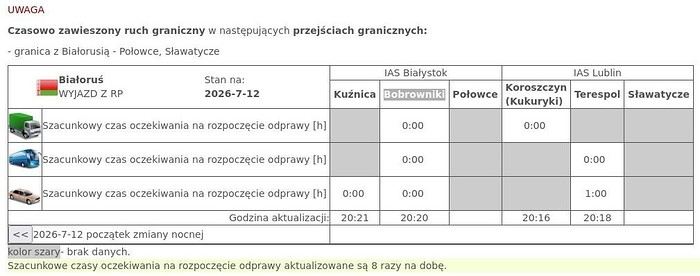
Planning to return to Belarus in mid-August, I just realized that since last September, Poland has reopened several border crossing points, and for buses, this means connections like Białystok-Grodno.
Several bus company routes, like on infobus.eu, take between 3 and 4 hours.
Trains from Warsaw to Białystok take about 1.5 to 2 hours.
This has the advantage of allowing comfortable train journeys with minimal time spent on a bus.
Also, the Terespol-Brest border might have shorter queues if you still prefer a Warsaw-Brest bus.
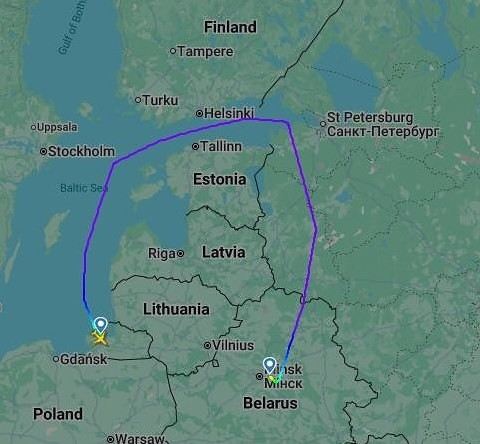
Note that another route to Minsk, if you have a paper Russian or Belarusian visa, is the Kaliningrad-Minsk train. It’s long—around ten or eleven hours—but you can lie down and sleep. An option if you fly into Gdańsk and then take a short bus to Kaliningrad.
There are also Belavia flights from Minsk to Kaliningrad, but they’re expensive. The route is scenic:
In any case, this adds a few more options compared to what’s been available over the last four years.
Hi there.
I’d like to know what the daily budget is for Greece in December. I’ll be landing in Athens and staying there for a week, then heading to some other islands—I don’t have a set itinerary yet. Also, I’ve heard that in December, or early January, the temperature is around 11–16°C. Is that accurate?
Finally, does anyone have a good recommendation for a cheap but clean hotel near the tourist sites? I don’t need a TV or any other extras. Also, is Greece gay-friendly?
I’d like to know the opening hours of physical stores between Germany and Austria, and between Austria and Slovenia, that sell the PAPER STICKER toll vignettes that still exist for 2026—non-digital ones. I don’t think they’re open 24/7, and I can’t find the info anywhere.
Thanks
Hi there,
We’re planning a 3-week trip in late September with our camper van to explore Bulgaria and Romania.
What routes would you recommend, starting from the South?
Is there an option to take a ferry in Italy, and is it worth it?
Thanks for all your tips!😊
Hi there, we’re a young couple and we’d love to go to the Blue Eye (Syri i Kalter) between today (26/06/26) and tomorrow (27/06/26).
Is anyone heading there and could give us a ride? We’re super friendly!
Thanks so much!
We're back. It's still a bit tough to get precise info, so here's a quick trip report!
A good starting point is Shkoder, a really pleasant city. You can easily explore Shkoder itself in a day or two.
Two accessible spots: Valbona and Theth.
In both cases, local travel agencies in Shkoder or online offer round-trip or one-way access packages. Super handy, especially for Valbona.
Valbona and Theth are both very steep! There aren’t many easy hikes for less sporty folks (like me!).
Valbona: The highlight is the amazing 2.5-hour boat ride across Lake Koman. There are day trips from Shkoder, but you’ll only get a short tour of the lake. The best option is to do the full crossing—so spend a night in Valbona (or two if you want to hike in the valley) and return.
Theth is deeply nestled in the mountains. The village at the end of the valley, which is a dead end, has lots of hotels, but they’re pricey. Other hostels are scattered along the mountainside road, but it’s a steep climb down to the village or to the start of the two easy hikes (waterfalls and the Blue Eye). For us, it was a one-hour descent (and ascent!). It’s fine if you have a car; otherwise, keep an eye out for a taxi (cheap) or try hitchhiking—it works really well.
Access from Shkoder to Theth is through an agency. The road is in great condition, and you can also rent a car for 2-3 days in Shkoder. If we did it again, that’s the option we’d choose.
We didn’t do the trek and returned to Shkoder each time. I can’t speak to its difficulty, but we were there in late May, and even experienced hikers had given up because of heavy rain and snow.
Hope this helps! It’s a stunning region you shouldn’t miss.
We’re a Canadian couple, both 77, and we’re already planning our vacation for fall 2027.
Timeframe: mid-September to mid-October... dates are flexible, and we might stay even longer.
Initially, I had planned this itinerary:
Athens (3), Naxos (4), Paros (4), Santorini (4), then a flight to Istanbul (7–10 days!!). This would let us maximize our flights and experience another culture.
That’s a lot of ferries, though... I’ve already cut out Milos.
Our second option would be to stay 2 x 15 days on two different islands, but I’d still keep Istanbul as our next destination... or maybe 30 days on one island that offers the chance to take day trips to other islands where the ferry ride is no more than 2 to 2.5 hours. For example, Naxos to Paros only takes 30 minutes. We could return the same evening or stay overnight.
Naxos seems like the best option!!!
For Istanbul, of course we want to do a day cruise on the Bosphorus and see Hagia Sophia. If we stay 6–7 days, what would be the other main attractions? Are there any points of interest we can reach by local bus?
Hi there!
We bought our tickets to Greece at the end of November 2025, and let’s just say the geopolitical climate has really taken a turn since then with the war started by the United States against Iran. Not to mention all the other conflicts happening around the world 😕... Anyway!
Our flight from Montreal is on May 1st, and I was wondering how things are currently being experienced in Greece.
We were planning to rent a car and had already booked accommodations on three Cyclades islands!!
The oil shortage is also worrying us...
If you could share some insights on this, that would be great!
A little trip report from an 11-day journey to Albania at the end of April 2026, with two friends in their early sixties and beyond...
Our route: Berat, Gjirokastër, Himarë, Tirana
Here are some opinions, tips, and great deals to share:
Flight Round-trip Beauvais-Tirana: Ryanair, 260 € with checked baggage (20 kg) and seat selection. Flight was fine and on time. 2h 30min flight.
Exchange: 1 € was worth 95 lek in April 2026. We were advised to exchange in the airport hall at the Illiria counter (98 lek outside the security zone), saying we wouldn’t find a better rate. However, the exchange rate was 93 lek for 1 euro, while in the city it was 95...
Car rental at Tirana airport for 9 days via Booking.com: 144 € (56 € for the car rental and 88 € for optional full insurance deductible waiver).
Wheego agency: the car was fine, but be careful when signing the contract—they tried to convince us that the insurance taken through Booking didn’t cover everything and insisted we take their own insurance for 250 €... We refused.
After reading about driving in Tirana, instead of starting our trip by visiting the capital, we decided to head straight to Berat upon arrival and return the car at the end of the trip to explore the city on foot. This turned out to be a great choice!
Accommodations: All our stays were booked via Booking.com. Everyone prefers to be paid in euros and in cash—they mention this when booking.
Berat: 2-hour drive from the airport.
Accommodation: Vila Arben Elezi: 135 € for 3 nights with breakfast and private parking. The room was decent and clean but a bit dark, located slightly below ground level near the parking. However, the breakfast on the rooftop was excellent, especially with the stunning view of the "city of a thousand windows." Great location.
Berat was our favorite—there are lovely walks through the different neighborhoods on both sides of the river, each with a very different vibe. The citadel visit is also fascinating, as it’s like a small town within the fortress.
The walk along the river is pleasant, with plenty of restaurant choices. Other restaurants in the old town are also very nice. The White House Restaurant, on the first floor along the road, is good and offers a great view of the Gorica district.
Gjirokastër:
Accommodation: Te Ajdini Guest House: 120 € for 3 nights with breakfast. A private home stay. There’s free parking just before entering the city, a 5-minute walk from the accommodation, which is very convenient since the cobblestone streets are narrow and parking is tricky. Yes, it’s a climb to get to the place, but everything in this city is uphill... The room was bright and clean. Breakfast was very good, hearty, and served in the courtyard with a view of the castle. The guesthouse is a 5-minute walk from the city center (the bazaar) but in a quiet area.
Restaurants: Rrapi and Kujtimi—good and affordable with their little pergolas.
The old town of Gjirokastër is charming but very touristy, with streets packed with souvenir shops and restaurant tables and chairs. Lots of people.
-The bunker visit (near the tourist office) is very interesting: Cold War Tunnel.
The castle offers a beautiful view of the city.
-Visit to the Ottoman house Skenduli: very well done. Don’t forget to climb the ladder facing a trapdoor in the ceiling to see the roof’s framework—it’s like a forest of beams: impressive!
-The bridge Ura e Ali Pasha: A steep 45-minute climb from the city to the site is worth it, but once you reach the viewpoint (which is stunning), you have to go back down a path to reach the bridge. You can drive to the viewpoint, but parking is very tricky.
Around Gjirokastër:
-Just outside the city: Lake Liqeni i Viroit: a nice, ordinary-looking lake, but at the end, there’s a natural spring making the water crystal clear and a brilliant blue—really spectacular, like photos of Blue Eye near Sarandë.
-Drive to Përmet along the gorges: beautiful viewpoints along the way and lovely countryside.
Himarë:
Accommodation: Vila Kosteli: 120 € for 2 nights with breakfast—slightly overpriced for this type of place but very close to a small beach and not far from the promenade with all the restaurants. Private parking, but very tight (4 cars on a tiny lot along the road). The "sea view" room is a bit obstructed by the building across the street. However, the rooftop breakfast view is beautiful. Friendly staff.
Himarë is a pleasant seaside resort, quite calm (but it was April...). There’s a cute promenade with restaurants along the beach. The castle on the heights of Himarë is worth a visit.
Around Himarë:
-Qeparo is worth a quick stop, but Qeparo village is really worth the detour: a village lost in the heights after a scenic drive up from the coastal road—narrow but well-maintained. Beautiful view from the top and a charming village.
-The Big Bunker and Llogora Panorama: take a right turn several kilometers after Dhermi—a road that climbs steeply from the start... A breathtaking winding road that reaches 900 meters in altitude. The view is stunning.
-Several small villages between Dhermi and Himarë are worth a quick stop.
-Porto Palermo Castle is somewhat disappointing.
Tirana:
Taxi from Tirana airport to the city center: 15 € with electric taxis (Green Taxi, Bee Taxi, Do Taxi).
Accommodation: Hotel Nevi Apartment: 63 € for 2 nights. A private apartment in an older building but very clean and well-equipped, with a kitchen and small enclosed balcony.
Great welcome and contact—the owner even booked a taxi for our departure. Very well located, close to the main square, shops, and restaurants. A small supermarket nearby is perfect for stocking up on breakfast supplies.
The city is lively and dynamic, with plenty of green spaces and promenades. Buildings are popping up everywhere, often with surprising architecture—like a building shaped like a face, a huge golden cube, and many others under construction.
-Sky Tower: at the top, a rotating bar offers a 360° view of the city and its buildings. Drinks are a bit pricier than usual, but it’s totally worth it (6 € for a beer or a glass of white wine, 3 € for coffee). We were there for sunset, and it was amazing! A must-do. Arrive early, as it fills up quickly.
-The House of Leaves: a house used for secret surveillance and interrogations during the dictatorship... A great way to learn about the surveillance systems of that era.
-Bunk’Art 2: a bunker in the heart of the city—very interesting, covering the dictatorship period and its system...
-The Pazari i Ri Bazaar: the new bazaar district. The large hall is worth a visit, but souvenir prices are often higher than elsewhere... The area is nice.
Restaurant: Kastrati Restaurant—a bit like a canteen with lots of traditional dishes. It’s on the first floor of a building. Excellent value for money, and the waitress explains the dishes in French.
That’s a little overview of our trip and my personal impressions!
Albania is a beautiful and pleasant country to visit.
If you have any questions, feel free to ask!