Je suis en train d'organiser mon voyage au Tibet.
J'ai parcouru quelque post du forum, et j'aurais beoin de confirmation :
Il est préférable de rentrer par le Tibet ?
Je compte y aller seul. C'est une bonne idée ?
Il faut savoir que c'est mon premier voyage, et je ne veux pas y aller avec une agence
Je cherche un certain depaysement.
Je suis preneur de tout les conseils pour l'organisation
Hello, j'ai vu quelques très belles photos du train Pékin-Lhassa par les hauts plateaux, 2 jours. Evidemment les derniers Tibétains n'aiment pas trop, car cela va encore accroître la pression chinoise...
Mais la route a vraiment l'air belle. Encore faut-il arriver à Beijing.
Pourquoi pas un transsib depuis Moscou? ACtuellement, il y a des vols Paris-Moscou pour 150 dollars par Alitalia A/R, bien sûr le simple course est plus cher (donc, même si tu ne rentres pas par Moscou, ça vaut le coup...)
Pour le transib, voici le tarif, sur le site www.waytorussia.net. Attention, il y aura une petite augmentation, because le fuel, évidemment... Pour ton budget, quelques pièges à éviter : à Moscou, les hôtels sont hors de prix (B&B à 50 euros par personne)... Il te faudrait en passant par Moscou au moins trois visa : Russie, Chine, probablement Tibet, bien que... Prévoir en moyenne 60 euros par visa. Prévoir les vaccins (hépatite multiforme chaudement recommandée pour la Chine même si pas exigé... Bonne pêche!
Route Moscow - Beijing
departure 20 May 2008 at any time
Sort trains by PriceDeparture TimeArrival TimeTravel TimeTrain Number Change time zone BeijingMoscow Change currency USDRUR
Train Info Departs from Dep. date Dep. time Arrives to Arr. date Arr. time Travel time Train Route Class & Price Reserve Train 004 (Trans-Mongolian) Moscow Yaroslavsky 20/05/2008 21:30 Beijing 25/05/2008 14:31 4d 17h 1min Moscow -> Beijing 1st, 544 USD2nd, 278 USD * Places & price notes: 1st class - 2-berth sleeper cabin, 2nd class - 4-berth coupe cabin, 3rd class - platzcart common carriage, (+b) - including breakfast, (+s) - cleaning service included
si tu veux entrer au tibet effectivement il est preferable d'entrer par le tibet...
😉
va voir mon site perso j'explique comment je suis entré seul au tibet, moiaussi c'etait mon premier voyage.
demande moi si tu as encore des question apres avoir lu mon site
Apres quelques heures de recherches, je viens de faire le choix du trajet. J'vous explique tout et vous me dites ce que j'ai oublié 😉
Pour la période ca sera soit au mois de Mai ou Septembre et pour une durée minimin de 3 semaines.
En sachant que je compte passer le plus de temps au Tibet, surtout pour m'impregner de la culture (j'suis un Boudhiste dans l'ame)...
Paris -> Pékin
Pekin -> Lhassa en train (j'ai aucune idée du tarif du billet !!)
Lhassa -> Katmandou (j'ai pas encore trouve comment faire le trajet au moins cher)
Katmandou -> Paris (et là je pleure de revenir 🙁)
1 ou 2 jour a Pékin (histoire de dire de ne pas y aller pour rien)
2 ou 3 jour a Katmandou
Le reste du temps au Tibet
Pour les formalités, d'après ce que j'ai pu lire :
Faut un Visa pour la Chine, un Permis pour Lhassa et un autre Visa pour Katmandou.
Si c'est bien ca, faut compter combien d'argent pour tout ca, et il faut les demander ou ?
Justement coté budget, faut combien a votre avis ?
Le prix donné ici est le prix pour la couchette du bas qui est un tout petit peu plus cher que les autres.
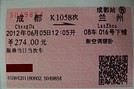
Train T27 : départ beijing west 21.30 jour A, arrivée Lhassa 20h00 jour C, circule tous les jours
le bus Lhassa - KTM n'est pas accessible pour les étrangers officiellement mais certains l'ont pris moyennant arrangement avec chauffeur (vos messages sur VF).
Il te faudra faire ta demande de permis pour le Tibet à Pékin.
Il faut savoir que c'est mon premier voyage, et je ne veux pas y aller avec une agence
Je pense que pour aller autre part que Lhasa, il faut forcement prendre les services d'une agence de voyage agrée par le gouvernement ... histoire de rester sous contrôle.
Personnellement, je pense qu'il serai plus respectueux de passer par le Népal et d'éviter de pendre le train à partir de Pékin.
bonjour,
je suis entraint de prepare un voyage au tibet. je part avec mon frere et peu etre mon neuveu du 23 avril au 7 mai.
nous arrivons a pekin et voulons prendre le train pour lhassa. est il possible de s'arretter a des station pour visite en cour de route. par ou le train passe t'il.
nous voudrion restes 2 jour a lhassa et faire une visite du tibet de 5 jours. es ce possible ? nous aimerion avoir un chaufeur avec voiture ?
est il possible de dormire chez l'abitant
merci pour les reponse
C'est une question de principes. A savoir si tu prend le train, tu cotionne le bien fondé d'une telle ligne de train!
Qui est pour sur une marque de progrès, mais en même temps un progrès mis à profit pour faciliter la colonisation massive qui se déroule au Tibet de nos jours. Sans parlé du faite qu'une telle infrastructure est largement utilisée pour faciliter tout le pillage des ressources naturels, le déplacement massif de troupes ... et tout cela sans le moindre respect de la nature environnent.
Demande à google, il est des 100 d'articles qui parlent des maifaits d'une telle ligne de train.
Voyager au Tibet, pour voir ce qui se passe et être attiré par ce mélange de culture et nature est une bonne chose. Mais il faut aussi vraiment penser a ce qui ce passe la-bas et a l'influence d'un tel afflue de touristes. Lhassa deviens une des destinations des plus précisé! Prendre le train est certainement ce qui a de plus facile et confortable mais aussi c'est cosionner tout ce que ca représentante et engendre.
ce n'est que mon opinion issue de mon expérience et de mes convictions.
si tu evites le train alors il ne reste plus que l'avion.
De toute maniere, il y a des tres nombreux chinois qui arrivent labas et quand tu regardes la ville, il n y a pas bcp de difference par rapport à une ville chinoise.
Le meme probleme existe dans l'ouest de la ville où les masses de chinois qui envahissent partout en "bouffant" la population local.
si tu evites le train alors il ne reste plus que l'avion.
De toute maniere, il y a des tres nombreux chinois qui arrivent labas et quand tu regardes la ville, il n y a pas bcp de difference par rapport à une ville chinoise.
Le meme probleme existe dans l'ouest de la ville où les masses de chinois qui envahissent partout en "bouffant" la population local.
Je rejoint un peut Nemo. Sans vouloire retomber dans un débat mainte fois éculé sur VF, mais si tu ne veut pas cautionné la colonisation Chinoise, ne vas pas en chine, tibet compris ...
Tu ne fait qu'engressé ce que tu combat, et qu'attirer plus de colon attiré par l'argent facil du tourisme et des aides d'état ....
Entre l'avion de Beijing (ou guilin), le train et le bus depuis le Népal, il n'yas que peut de différence, et de polution et de magouille. Dans tous les cas tu donne beaucoup d'argent (tout est relatif) à l'état chinois ...
Maintenant je déplore comme toi la disparition à petit feux de la culture tibetaine (c'est quand même triste la tête de Lahassa). On ne peut pas revenir sur le passé et suplier les Tibetins d'accepter un protectorat anglais ou francais ... ce qui leurs aurait certainement évité de subir la gourmandise de leurs voisins ...
L'ame des tibetin restera trés vive dans d'autre région du tibet, plus au nord (c'est pas gagné pour y aller, 18h de train et de bus depuis Chengdu, et pas un seul occidental, sauf une ONG pour préservé la médecine local), ou à l'est avec toutes les minorités ...
tu ne peux pas rentrer au tibet pat le nepal si facilement et surement pas en individuel.
le mieux comme dit philobate c'est d'eviter d'y aller pour encore plus accelerer la colonisation chinoise. Plus de touriste = accéleration de la colonisation chinoise
Ci j'ai dit ca c'est pas mon intention, je voulait dire que pour ce mettre en accord avec ses principe dagobert ne devrais plus aller sièger à Lhassa ...
Après moi je continut à y aller, mais plus comme il y'as quelques année, je ne passe plus qu'a Lhassa, que pour prendre l'avion ou me ravitailler ... si j'y retourne cette été (putain de JO, les prix sont halucinant) ... je rpart par Xi'an ....
Les prix aux mois de septembre semble plus raisonable, je pense que ce n'est que l'effet JO ...
Les prix du train pour Lhassa eux ne varie pas, et les règles de réservations sont toujours les mêmes ...
Salut
Je rejoint un peut Nemo. Sans vouloire retomber dans un débat mainte fois éculé sur VF, mais si tu ne veut pas cautionné la colonisation Chinoise, ne vas pas en chine, tibet compris ...
Tu ne fait qu'engressé ce que tu combat, et qu'attirer plus de colon attiré par l'argent facil du tourisme et des aides d'état ....
Entre l'avion de Beijing (ou guilin), le train et le bus depuis le Népal, il n'yas que peut de différence, et de polution et de magouille. Dans tous les cas tu donne beaucoup d'argent (tout est relatif) à l'état chinois ...
Maintenant je déplore comme toi la disparition à petit feux de la culture tibetaine (c'est quand même triste la tête de Lahassa). On ne peut pas revenir sur le passé et suplier les Tibetins d'accepter un protectorat anglais ou francais ... ce qui leurs aurait certainement évité de subir la gourmandise de leurs voisins ...
L'ame des tibetin restera trés vive dans d'autre région du tibet, plus au nord (c'est pas gagné pour y aller, 18h de train et de bus depuis Chengdu, et pas un seul occidental, sauf une ONG pour préservé la médecine local), ou à l'est avec toutes les minorités ...
Philo
Vue son record d'exportation et son excédant commercial, la Chine est loin d'avoir besoin des revenues générés par les touristes au Tibet. (http://www.lemonde.fr/web/article/0, 1-0@2-3234, 36-998150, 0.html?xtor=RSS-3208)
N'affirme pas que les chinois est besoin du tourisme au tibet pour vivre, je rappel juste que le tibet est une terre d'exile pour les Hun par ce qu'il y'as le tourisme (et quelques richesses) ... Quand on regarde Hohot qui est dans une province "autonome" (mongolie interrieur) les hun n'on pas défigurer la ville et n'on pas massivement colonisé (un peut quand même).
Il n'yas que peut de touristes las bas ...
Ensuite je respecte complètement ton point de vue, comme le point de vue des personnes prechant l'indépendance du Tibet et qui affirme que le Tibet était le paradie sur Terre avant l'arrivé des méchant Chinois ... ces personnes oublie que la réalité des choses est un peut contrasté...
Les intervention du Dalai Lama me semble trés sage. Néanmoins sans être un acte politique, pour moi aller au Tibet veut dire accepter d'aller dans un pays occuper par l'envahisseur chinois (quand on defant la thèse d'un tibet libre). Les même débat existe pour la Birmanie, ou les pays totalitaires ...
Enfin sa serait domage de ce privé d'une si belle région du monde ...
ENfin pour le bus pour le Népal, y'as pas des problèmes sur la route en ce moment ?
Pour le train "controversé" (je n'ai pas envie de rentrer dans la polémique) si tu comptes le prendre, un tout petit conseil prends si tu le peux la couchette du haut. Pourquoi? Parce que pendant les 48 heures que dure le voyage, elle ne servira pas de siège à tes coéquipiers... c'est tout bête mais si tu veux dormir ça aide. J'ai pris ce train mais dans l'autre sens. Et our avoir testé dans d'autres trains chinois les couchettes dures à plus de 60 par wagon c'est quand même mieux d'être en haut.
Pour ma part, je suis entrée au Tibet par avion via Chengdu, après un petit périple de 10 jours en Chine. C'était donc pour moi logique.
Qu'entends-tu par "c'est mon premier voyage"? premier voyage? ou premier au Tibet?
Un truc tout bête aussi, fais toi un sac à viande... ça permet de mieux se glisser dans les draps des autres....
Le tourisme est un prétexte comme un autre pour encourager les Chinois a immigrer au Tibet. Même si il n'y avais pas de tourisme, le gouvernement trouverai bien un autres moyen de faire des Tibetain une minorité dans leur propres villes.
Je comprend moi aussi très bien ton point de vue. Et bien entendu nous vivons dans un monde ou le contexte géopolitique mondiale est en défaveur de la culture, spiritualité, sans parler de l'environnement. Néanmoins, prendre conscience de la réalité des choses ne nécessite pas forcement y adhérer ; ou même s'y résigner. Je ne voit aucune naïveté en cela ...
La situation en Birmanie n'est pas toute belle non plus, mais n'est pas vraiment comparable.
Il n'y a aucun problème pour prendre le bus entre Katmandou et Lhassa, tourisme oblige ...
Il n'y a aucun problème pour prendre le bus entre Katmandou et Lhassa, tourisme oblige ...
Attention à ne pas induire les gens en erreur ! Tout d'abord, il n'y a pas de bus direct entre KTM et Lhasa (il y a régulièrement des projets d'ouverture de ligne, mais pas concrétisés, ou seulement très brièvement, et ce n'est pas dit que les étrangers auront le droit de la prendre le jour où il circulera vraiment). Ensuite, il est quasi-impossible de se rendre du Népal au Tibet en voyageur indépendant. La Chine exige un permi de groupe qui n'est délivré que par des agences si on s'inscrit à un tour organisé par une agence de Katmandu. L'ambassade de Chine à KTM refusera de faire un visa sans permi, et pas de permi sans agence... On peut donc diffficilement éviter le permi et le visa vu qu'il faut bien passer par la douane entre le Népal et le Tibet.
En fait en lisant le forum, j'ai compris que les billets pour la chine était excessif en juillet et août.
Je me demande si je peux passer par l'inde pour acceder au Tibet.
De plus, est-ce vraiment une bonne période pour partir?
Next year, we’re celebrating 20 years of marriage (and travel 🙂), and we’re looking for something new, pretty legendary, and something the teens will enjoy too.
The family council has settled on Japan for now. And it’d have to be a summer trip—no choice there.
The catch: I keep reading that August isn’t the right season for southern Japan. It’s hot, humid, and there’s a risk of typhoons… Okay, but what does that *actually* mean in practice? Are there any travelers who’ve been there during this time? Is it *that* unbearable?
We’re pretty familiar with Southeast Asia—last year, we dealt with scorching heat in Vietnam and insane humidity, plus a typhoon we experienced from a distance, and visiting Angkor in the blazing sun. Is it worse than that?
Hi,
July 2026: I’m writing to you from Dali.
First, I got scammed on Booking—AI-retouched photos. No tourists at this hotel (Yishanju Designer Hotel), and the reality was horrible: dirty, with a disgusting breakfast. It’s better to use Trip.com here.
Next, the old town was an infernal cacophony, packed with tourists who shoved past without a care. Some vendors harassed you to buy things. All the stalls sold the same cheap plastic junk or other uninteresting stuff. The beautiful scenery was ruined by vendors lining 100% of the alleys. Impossible to walk, crushing heat, nothing good to eat except fresh fruit. Horrible experience.
Day 2: We went to Cangshan Mountain by cable car—the ride was short and nothing spectacular. We were at 2,600 m.
My plan was to see Erhai Lake. Unfortunately, I followed the advice of an AI chatbot: take the boat at Langkan Dock. The Didi dropped us off in the nearest area, which was full of charming little alleys but packed with Chinese tourists. The three-wheeled yellow cabs zoomed through the narrow streets, forcing you to hug the walls, on top of the scooters and other pedestrians to deal with. Crossing the neighborhood was hellish and suffocating. Once out, we hit the "corniche," which was also packed with Chinese tourists. The lake’s edge was all pebbles, and everyone was standing around taking photos. I was with my 5-year-old son. I would’ve liked to sit down and let him play with stones by the water, but it was clear we didn’t belong. They were even shoving each other for a shot! There were no boats in sight. In short, we’d had enough, and there was nothing interesting there either.
On the way back, we had to cross that maze again under the scorching sun. My son was braver than me—I even had a little dizzy spell from all the chaos. Add to that Dali’s altitude (2,200 m), so altitude insomnia, fatigue, and vulnerability during the day...
The restaurants weren’t inviting—the staff served sticky rice in a little bucket. The dishes were wrapped, and you had to figure it out yourself. After that, they ignored you completely, even if you were the only tourist.
On the 3rd day, it was time to leave for Shaxi. I hope to see beautiful villages. But honestly, I’m exhausted by this atmosphere where everything is complicated, communication is never smooth, noise is everywhere, and the behavior of some Chinese people is abusive...
Silver lining: not a drop of rain in 4 days and blue skies.
I couldn’t visit the villages in southern Yunnan because of rain and storms there...
But I was expecting to see a few more tourists.
I’m heading to Yunnan in February 2027.
We’ll be traveling exclusively by train since my daughter gets car sick.
Our itinerary includes:
Kunming
Jianshui
Dali
Shaxi
Lijiang
Shangri-La
I’d love any tips, especially other places to visit (without winding roads) or great hotel, guesthouse, or minsu recommendations.
Thanks!
Claudine
Hey there,
In the sea of VPNs, I'm looking for one to use in China for just a month (free or paid). Which one should I pick? All the ones I've found are for several months or even a year.
I’m planning an itinerary for Hokkaido but I’m struggling to decide if late May to early June will be the right time.
Too early for the flower fields but…
What do you think?
Hi,
Our trip is planned for 20 days in Japan next April. We have a free subscription that would allow us to use 35 GB (I’m a bit confused), but we also need to be able to make phone calls with a French couple traveling with us for a few days, and that seems impossible due to cost... Any solutions for using GPS while keeping those 35 GB? Used to traveling in Southeast Asia, we usually rely on local SIM cards. Is it easy to do the same in Japan?
Thanks for your help!
Best,
Tialou
Hi,
My departure is coming up soon—two months backpacking in Taiwan, so much to discover! I’d love to hear about your travel experiences.
My main interests are meeting people, understanding how things work, hiking, and nature in general. I’ve also done a lot of reading about Taiwan’s complex situation.
I do stone sculpture.
I also want to visit Orchid Island for its history.
Marie
Hi,
I’ve always been used to exchanging my money (€) in town no matter the country (with a "mini exchange" at the airport if needed).
I can’t find any recent posts on this topic from the last few years.
Does anyone have any insights on this? Intrinsic benefits, best places to exchange, etc.?
I arrive at Tokyo Haneda on a Friday around 12:30 PM, and my first night is very close to Shinjuku.
Thanks.
Here are some tips from our 6-week trip (summer 2026) to China, Vietnam, and Cambodia. We traveled as a family of four with two kids aged 15 and 12.
I hope these notes help other travelers!
CHINA
General
You’ll need to download and set up a few apps:
- Alipay and WeChat for payments (I didn’t withdraw a single bill the entire trip)
- Didi for taxis
- Amap = Chinese Maps (works great, especially for subways)
- A translation app (we used Papago, but it sometimes gave weird results)
- Google Lens for translating menus or signs—super handy.
- HelloRide for bikes
- Gemini and ChatGPT for everything: understanding daily life, enhancing visits, checking the weather, finding things.
- HomeExchange if you want to lower travel costs (few listings in Asia except in big cities, often expats)
- Trip.com is very useful, even essential, for trains, domestic flights, and hotels. Like Booking.com, the more you book with them, the more perks you get. So I’d even suggest checking flight tickets on this site, even if it’s a bit pricier. However, buying train tickets is complicated because (1) they only open 15 days in advance, and (2) they sell out fast. Trip.com just promises to buy them as soon as they’re available but doesn’t always succeed. It’s stressful and might force you to change your plans, especially if you’re aiming for a sleeper car and there are no seats left. Watch out for station names—many cities have multiple stations, including a high-speed rail one outside the city.
For internet, we got the Asia plan from Holafly. It worked but seemed much slower than Chinese internet. I regretted not buying a Chinese SIM card because without internet in China, everything is VERY complicated (money, transport, etc.).
For the firewall, we used ExpressVPN, but it wasn’t always reliable. A bit disappointing. Ask ChatGPT for tips with screenshots to improve the settings.
Since we only had one SIM card with internet, we couldn’t rent shared bikes. If I were to do it again, I’d get a SIM for each person, even the kids, because distances in cities are huge. We walked *a lot*. Same goes for buses—it’s tricky with just one internet connection. Better to have a phone per person with internet.
Book your visits as far in advance as possible—they often sell out.
Watch out for power banks: if they don’t explicitly say "3C," they’ll confiscate it. Even if there’s a little airplane logo.
Shanghai
In the evening, the streets leading to the Bund from the metro were so crowded that police were out in force blocking roads. Arrive early. We went around the north side.
Suzhou
Be careful—there are two stations (common in China), and the high-speed rail one is 45–50 minutes from the old town.
The Humble Administrator’s Garden was *packed*—we don’t recommend it. It turned into a marathon day from Shanghai (almost 4 hours from our hotel to the garden).
Beijing
Forbidden City: Don’t go—I know it’s a shame, but it’s too crowded. I couldn’t buy tickets on the official site because of the kids’ passports. We ended up with a guided tour, the only way to get in (tickets sell out fast). The visit was disappointing—bad guide *and* massive crowds. You’ll queue a lot to enter and see certain areas. You’ll be checked often, so pack your bags carefully.
Great Wall at Mutianyu: Crowded. Two hours by bus, and even though we arrived early, people were already leaving! I really think the best option is to leave your big bags in Beijing and stay overnight near the Wall. That way, you’ll have it to yourself a bit more. For transport: get off at Tiananmen Square metro and look for buses with official guides in bright yellow-green vests. No need to buy tickets online—they made me cancel mine to rebook on the spot. Buses leave when full. Note: the cable car and chairlift are separate—if you want to go up one side and down the other, you’ll need different tickets. The endless queue for the toboggan ride put us off.
Quick tip: Incredible swimming spot in Beijing—on the north shore of Houhai Lake, you can swim by crossing the barrier. We did it twice with about ten other people. Bring a swimsuit!
Shapotou Desert
Amazing, but it gets *very* hot in the afternoon. We had a tent (not an air-conditioned bungalow), which was unbearable during the day. We hung out in the restaurant.
The paid activities are fun, except the camels—they look sad. The real highlight is the evening and sunset. The only downside: you can’t explore the desert alone or far—they don’t rent 4x4s, for example.
We stayed at "The Desert Camping Hotel of the Proprietress of Shapotou." They were lovely.
Zhongwei
Gaomiao Temple and its underground: Fun and short—you’ll see quirky Buddhist hell paintings.
Xi’an
Terracotta Army: We took a Didi because for four people, a car was almost the same price as four shuttle tickets. It was packed—chaotic to see properly.
We visited the halls in order: 3, 2, then 1—a good choice.
Hua Shan Mountains: Left before sunrise to arrive when the ticket office opened (7 AM, I think). We were shocked to see so many people already coming down.
45 minutes by bus to the west cable car, then 15 minutes up.
We did the west, south, east, central, then north peaks (in that order) before taking the other cable car down (you can buy the ticket at the top). A beautiful day.
In the city, check out...
Chengdu
Panda Research Center: Like Hua Shan, plan to arrive when the ticket office opens. Already *tons* of people, and it moves fast to see the big pandas before their nap. Have them drop you at the west entrance (not south), or you’ll have to walk uphill.
Leshan Giant Buddha: Interesting. The trip is a bit long (metro, then train, then city bus, then shuttle on-site). We didn’t take the boat option but walked. In the end, you only spend a few minutes at the Buddha’s feet, but it’s a nice day out.
Hotel tip: Panda Enjoy Home Hotel Apartments (Chengdu East Railway Station Dongda Road Branch). The view is insane, and the neighborhood is super convenient and nice. 646 CNY for 2 nights.
Swimming: The municipal pool is an interesting experience, but don’t expect to swim—no one does. Everyone just splashes around where they can stand. The hours are a bit odd, with a break in the late afternoon.
Kunming
The bike path along Dian Lake is pretty and often well-protected from cars. But like everywhere in China, it’s *packed*. Not much to say about visits—the flower market is a wholesale market, not very interesting. The ethnic minorities museum closed right in front of us.
All the big malls are good for shopping.
Dali
We thought we could bike around the lake in two days. Wrong on two counts: First, the lake’s edge is blocked to traffic and reserved for bikes (or tourist mini-buses). So you’re stuck on the main road, which never gives you a view of the lake, with all the trucks and cars. Doing 120 km like that wouldn’t make sense, in our opinion. The rice fields around are nice but not as impressive as elsewhere, so Dali isn’t worth it for that.
The old town, all restored, is pretty but *packed*—thousands of people, especially in the evening.
Hekou (Vietnam border)
Comfortable train from Kunming. In the parking lot, a bus (not well-marked, but Didi is an option) takes you to the border in 15–20 minutes. Short wait at both border posts. Fun to see the two lampposts near the border line: the Chinese one is new, modern, with a surveillance camera (of course), while the Vietnamese one is old and a bit rusty.
VIETNAM
General:
- You’ll need the Grab app for taxis
- Very disappointed with 12Go—it doesn’t show all buses, never connects you with the company, and refuses refunds. Try booking directly with companies like FUTA Bus instead.
- Credit cards are often accepted (supermarkets and modern stores), otherwise, you’ll need cash
Lao Cai
2 km between the border and the train station.
The sleeper bus to Hanoi with Sao Viet is well-organized—it works.
Hanoi
Ho Chi Minh Mausoleum closes early (10:30 AM, I think).
Women’s Museum: Very good, not too long
Temple of Literature: Beautiful, fairly quick
This is where you should buy souvenirs, clothes, and knockoffs—the prices are reasonable, and the sellers are nicer than elsewhere. We recommend Cho Dong Xuan.
Tu Long Bay
We did 2 days, 1 night (so really 24 hours on the boat) with Parfum d’Automne (French-speaking agency), which put us on a Cycad Cruise boat. Cost: 300 € per person—expensive, but it was amazing, super luxurious, and the buffet meals were delicious. We don’t regret the splurge. The only downside: no swimming in the bay (but there’s a pool on the boat). To swim, you’d need a 3-day, 2-night trip to an area not protected by the maritime park.
Phong Nha
If you didn’t do the northern mountains due to time or weather (like us), Phong Nha is a great stop for a motorbike ride. It’s beautiful, especially the mountains west of the city toward the caves.
There are two (small) swimming spots at the Botanic Garden—a pleasant 45-minute walk without stops.
Hotel tip: Sunbeam Village (very friendly, pool, breakfast by the river, motorbike rentals)
Da Nang
Hotel tip: Meridians by Hsuite—you’ll have the beach almost to yourself. You’ll still need to walk 15–20 minutes to the hyper-touristy area if you want to rent surfboards (150–200k VND per hour).
The beach is beautiful, and the water is 30°C—great for a break on a long trip, especially since all transport goes through Da Nang.
Hoi An
45 minutes from Da Nang, so it’s easy to visit in a day, especially since the city isn’t that big and it’s *very* hot.
Cooking class: MS Hanh cooking class—great (the market tour is a bit useless). We don’t recommend the "basket boat" tour—it’s a bit sad on a big brown pond with elderly guides.
Ho Chi Minh City
Ben Thanh Market is a nightmare: starting prices are exorbitant, and the vendors are aggressive. Don’t go.
The War Remnants Museum can be really tough for kids.
Can Tho
Avoid this city. We made the mistake of going to see the floating market—don’t.
Chau Doc
No Grab in the city, but regular taxis.
One day is enough if you go early to the forest and the mountain in the late afternoon.
250k VND per person for the forest and its canals (45 minutes by motorbike)
The sunset at Victoria Nui Sam can be magnificent if the clouds cooperate.
Cheap and good restaurant: Quan Nem Nuong Sau Hiep
Hotel tip: Homestay Khoa (2,250,000 VND for 3 nights)—adorable hostess, full of tips, clean rooms.
The speedboat to Cambodia is more comfortable than a bus. Book with Hangchau a few days in advance—payment in cash on the day (1,640,000 đ).
CAMBODIA
General:
- Issues with the "Bakong Tourists" app—we had to go to a big bank to load money onto it. We barely used it afterward.
Phnom Penh
For us, a day and a half is enough if you want to spend more time elsewhere.
Markets close early (around 6 PM) and are less interesting than in Hanoi, for example.
The Royal Palace has a break from 11 AM to 2 PM, but there aren’t many people in the afternoon.
Siem Reap
Trip with Capitol company—the bus is basic but cheap. Departs at 10:15 AM, 7-hour ride.
Angkor entrance fee: 62 USD per person for a 3-day pass. Tickets are picked up at Angkor Enterprise.
Renting two 125cc motorbikes: 10 USD each, plus 7 USD for gas.
By bike, it took me 25 minutes to reach Angkor Wat’s pools. A basic city bike rental was 1 USD per hour.
Short circuit by motorbike (in reverse): 7 hours with stops everywhere.
Grand tour by tuk-tuk: Only 5 temples, 4.5 hours.
If you want to see lots of monkeys, they’re grouped west of Bayon.
For the temples, we asked Gemini (AI) at each stop to point out details that might interest kids (who can get bored with the repetition). It gave fun facts and things to look for—great for the little ones.
Hotel tip: The Five Senses, run by a Frenchman, Bruno, who knows Cambodia inside out and organizes tours.
Restaurant tip: Wild (only spring rolls, but *so* many varieties—delicious and cheap)
Watch out: 1 hour to the airport, 50 km from the city.
Show tip: The Phare Circus
Has anyone taken the bus recently, especially the Busda bus from Dongsi subway station to Mutianyu or the special tourist bus from Qianmen to Mutianyu? If so, I’d love to hear your feedback!
I’m traveling solo to China on September 18th and I’m completely overwhelmed by all the info out there.
This isn’t my first trip, but it’s still tough to make choices, so I’m open to outside perspectives.
This time, the plan is southern Kyushu with a slightly more off-the-beaten-path twist.
I’m not sure if you’ll be able to help since I’m skipping some of the classics in Kyushu, but you never know.
I’d love to hear your thoughts on whether this itinerary is realistic in terms of time spent in each place, travel time, and the overall pace of the road trip. Just to note, I already have my translated driver’s license.
Here’s the itinerary:
- **Day 1:** YAMAGA / overnight in Yamaga or Kumamoto
Depart from Osaka by train early in the morning to Kumamoto, pick up the rental car, then drive to Yamaga for a visit. Overnight in Yamaga or Kumamoto.
- **Days 2–4:** HITOYOSHI / overnight in Hitoyoshi
Drive to Hitoyoshi for 3 days and 3 nights, including a visit to the town, nearby waterfalls, a walk along the Kuma River, a tea producer visit, and some craft activities.
- **Day 5:** AYA / overnight in Miyazaki
Drive to Aya, visit the town, craft activities, the forest, and the suspension bridge.
- **Day 6:** AOSHIMA - NICHINAN COAST / overnight in Miyazaki
Udo Shrine + Aoshima + scenic drive along the coast.
- **Day 7:** MIYAKONOJO / overnight in Shibushi
Drive to a waterfall, then continue along the Nichinan Coast if there’s anything left to see, or visit Kojima Island.
- **Day 8:** SHIBUSHI
Walk around the port and along the Osumi Peninsula coast, maybe as far as the Kishira/Hetsuka coast, or visit a black pork producer, a market gardener, or a tea producer. Overnight at a farm?
- **Day 9:** KANOYA / overnight in Kagoshima
Visit Ogawara Waterfall, Nishiharadai Park, and Kannon Cave, then Sugawara Shrine, followed by the drive to Kagoshima.
- **Day 10:** KAGOSHIMA / overnight in Kagoshima
Explore the city + whisky distillery in Hioki.
- **Days 11–12:** KOSHIKISHIMA / 2 nights in Koshikishima
- **Day 13:** AKUNE OSHIMA / overnight in Akune
Ferry, then drive to Akune Oshima with a stop at Sendai Taki.
- **Days 14–15:** AMAKUSA / overnight in Amakusa
Drive via Nagashima and visit Shimoshima (Amakusa).
- **Day 16:** AMAKUSA / overnight in Fukuoka
Drive back toward Kumamoto with stops along the way, return the rental car, then take the train to Fukuoka.
- **Days 17–18:** FUKUOKA CITY / overnight in Fukuoka
Possible half-day excursion to Nokonoshima, Munakata, or Nanzoin.
Any thoughts or suggestions?
Too ambitious?
I could add an extra day but would prefer not to if it means less rushing around.
Hi everyone,
To simplify logistics, I'm considering renting a car for 5/6 days in the Japanese Alps before heading to Kyoto solo.
Is driving difficult or even risky in this region?
Thanks for your feedback!
Tara
We’re arriving as a group of three in Tokyo on Saturday, October 17th, then heading straight to Kyoto by direct train.
On Sunday and Monday, we’ll explore Kyoto, and in the evening, we’ll take a train to Osaka to spend the night.
On Tuesday, we’ll pick up a rental car at Itami Airport for a 6-day/5-night road trip around Shikoku:
- 2 nights in the Iya Valley
- Thursday morning, we’ll head to Matsuyama for 2 nights.
- Saturday, we’ll visit Mima (town, a few temples + overnight stay) and return on Sunday to drop off the car in Osaka.
We’ll leave very early on Monday the 26th by plane for Aomori in northern Honshu, where we’ll pick up another rental car at the airport for a 5-day/4-night trip:
- Day 1: Tsugaru Peninsula (Takayam Inari, Cape Tappi, Kanita); overnight in Kanita
- Day 2: Ferry transfer to the Mutsu Peninsula (cliffs, Lake Usori); overnight in Shimofuro
- Day 3: Head to the Hakkoda Mountains and onsens galore; overnight TBD
- Day 4: Return the car in Aomori by noon and explore the city before taking the train to Tokyo in the evening
We’ll spend Friday night in Tokyo, wander around on Saturday, and head home on Sunday.
Thoughts on the road feasibility of this trip? We’ll be there right in the middle of Koyo season, so it’ll be busy...
I know it’s a lot of driving, but there are two of us who can take turns. We’re not afraid of driving, even in the mountains and on the left side! Just wondering, are we going to be rushing, or is this manageable? AI says it’s all good, but it’s not the one driving...
Any tips for booking accommodations in the Iya Valley? Not many places have email addresses or websites (I know Booking.com exists, but not all listings are on there... and given the season, I think it’s better to book ahead!). Same question applies for northern Honshu.
For the rental car, I’m thinking of going with Alamo since at least it’s in French and straightforward, but are there any direct rental companies with user-friendly websites (Toyota Rentacar, ugh... 🏴☠️)?
Another question: With so many trains, is it even necessary to book them in advance? Can we just go to the ticket counter and grab seats on the spot?
For paying for the rental car, do we need a credit or debit card?
I saw there are several "authentic" villages about 90/100 km from Beijing.
Including: Lingshui, Liuliqu, Sangyu, Miaoying, and Cuandixia.
Has anyone visited any of them? I was thinking of choosing Cuandixia—what do you think?
Thanks in advance.
Hi everyone!
It seems there’s a flea market in Tianjin that’s way more interesting than the one in Beijing. I’ve been searching online but can’t find the right one… The one I’m looking for is called gu wan shi chang (my PC won’t display the Chinese characters…). Does anyone have the address and has anyone been there before? The one in Beijing has lost a lot of its charm over the past 10 years, so I wanted to find another. Thanks!
I’m looking for advice from seasoned travelers about a roughly one-month trip to Japan.
From late October to late November 2026.
We often travel in Southeast Asia but have never been to Japan.
Based on what I’ve read, I’d love to hear your thoughts on:
- Is traveling day-to-day, without booking hotels or trains in advance, possible in Japan?
(I’ve read many travel journals and blogs that say everything was booked way in advance… but that’s not how we usually travel.)
- Will the Japan Rail Pass be worth it for us?
(According to an old simulator, I’m looking at around 400 € for trains compared to 570 € for the JRP.)
Here’s our rough itinerary (which may change):
- Arrival Osaka: 3 nights with Nara
- Hiroshima and Miyajima Island: 3 nights
- Kurashiki or Naoshima: 2 nights
- Himeji: 1 night
- Kyoto: 4 nights
- Kanazawa: 2 nights
- Takayama and Shirakawa-go: 3 nights
- Around Mount Fuji: 3 nights
- Tokyo with Nikko: 6 nights (no theme parks)
Departure from Tokyo
I booked my trip from May 5 to 26, 2027. I’m starting to plan my itinerary and look for hotels (I know it’s early!). While I’ve found some in Seoul and Busan, I’m noticing that elsewhere—like Yeosu—most hotels aren’t available (on Booking.com, for example, almost all are unavailable). AI tells me not to worry because hotels in South Korea only open bookings 6 months in advance, so it’s normal to see most of them unavailable on booking sites.
Could you confirm this for me and, of course, reassure me (!)? Thanks so much.
philippe
We’re back from a one-month trip to China and wanted to share our itinerary. Hopefully, this can give future travelers some ideas for exploring this beautiful country.
Beijing → Temple of Heaven / Forbidden City
Jinshanling → Great Wall
Zhangjiajie → Tianmen Mountain and Heaven’s Gate
Wulingyuan → Avatar Mountains / sandstone pillars
Fenghuang → riverside houses
Ping’an → terraced rice fields
Tiantouzhai → village / rice terraces
Yangshuo → Li River / karst mountains
Shanghai → skyline with the Oriental Pearl Tower
Our travel journal is available on our travel journal, written day by day. You’ll find lots of photos and some travel tips there.
I’m starting to look at neighborhoods in Seoul, and I’m leaning toward staying in a hotel in Insa-Dong—I’ve spotted one really close to Unhyeongung.
Is this a good area—nice and convenient for exploring the city?
Otherwise, I’ve also found another hotel in Yongsan-Gu, right near the station of the same name. Is that station useful for getting around Seoul?
Since I’ll be in South Korea for nearly two months, I plan to spend at least a week in Seoul to recover from jet lag (it takes me a while to adjust...). So, I’d love a neighborhood that’s pleasant and a hotel not too far from a subway station.
Hi there,
I’d like to do this cycling route over 2 or 3 days. I’m struggling to figure out and find a (good) bike rental that lets me start in Onomichi and drop off in Imabari. Can anyone help with great tips for rentals and accommodations along the route? How do I get back to Onomichi afterward?
I’m back with my detailed itinerary for 20 days in South Korea—it’s my first trip to the country. Our idea is to experience a more rural and cultural Korea. Here’s the rough plan: Seoul for 4 nights at the start and 1 night at the end, Gurye for 4 nights, Suncheon for 4 nights, Namhae for 4 nights, and Gyeongju for 2 nights. The goal is to pick a base and explore the surrounding areas. What do you think of this itinerary? Anything you’d change?
thanks
hi everyone, we're heading out for a 12-day trek in the Japanese Alps. We're bringing freeze-dried meals like we always do. We just found out that importing meat is banned, even freeze-dried. Is that true? We already bought them. They're commercially made freeze-dried meals. Online, it's not specified that they have to be "commercially made" because you can make your own freeze-dried food. And since we've heard they're really strict in Japan, can anyone confirm this for us? thanks
I haven’t found what I’m looking for despite my searches!
For a 15-day trip next spring, I’d like to buy a card (preferably an eSIM, but a physical SIM is fine too) that also lets me make calls in the country (to contact a hotel, a tourist spot, etc.).
You can easily find options just for data, but I haven’t come across any that include calls, texts, or even MMS.
Could you recommend something?
hi there
I’m planning a trip in September—here’s my rough itinerary. What do you think? Is it easy to rent a car to get around between my stops? Thanks so much!
Philippe
StopNightsFull daysSeoul44Gurye (Jirisan)43Suncheon43Namhae43Gyeongju21Seoul1—