Bonjour
Qui pourrai me procurer la vraie recette du thé à la menthe tel qu on le cosomme au Maroc
Merci
Simple prendre un vieux thé vert .. plein de menthe fraîche, du sucre de canne .. et plein d'eau bouillante ...
Bon je vais fâcher les Marocains et les puriste de ce fameux thé national ..
Son origine n'est pas Marocain .. loin de la .. l'origine viens du fins fond d' bureaux a Londrès .. ou durant la colonie anglaise sur l'inde et le coin .. exploitait le commerce du thé ..
Bien sur très britich, les anglais on pris le premier choix pour eux // puis le 2 même va pour l'Europe et les Amériques ... mais qui faire du 3 ème choix .?? tout ce thé de basse qualité ..
un petit malin c'est dit on va le fourguer dans les pays du magreb .. mais comme il est infeste .. on va leur mélanger avec une plante locale .. qui va tuer le goût de mauvaise qualité ..
La menthe est arriver au bon moment .. c'est comme cela que c'est devenue la boisson nationale Marocaine ..
bon je suppose que vous voulez des preuves ... et oui il y en a et de grosse taille //
Regarder très attentivement la fameuses tellière marocaine .. et vous ales constater que il ya plus que une grande similitude avec les théières anglaises du début du siècle Victorien ..
non seulement ses anglais malin ... vont fourguer le 3 choix ... mais le sucre ( le sucre en pain est également d'origine anglais ... mais tant que on y est on fourgue la tellière .avec..
génial NON?? bien sur ça blesse énormément le Marocain qui va dire que c'est faux ///
mais historiquement ... c'est la vérité ...
Également chez les français ça blesse que de savoir que le croissant du dimanche n;est pas d'origine du pays de voltaire ..
voile pinacolada si ça peut t'aider ...
http://www.civilization.ca/collect/artifact/images/5472082b.gifhttp://www.medinashop.com/fr/categorie.asp?quartier=17&categorie=92
voir la diference ........
salut!
je suis Marocaine et je saias que le thé nous vient des anglais, mais c'est quand même nous qui le faisons cuire tel quel aujourd'hui, vu que les anglais ne le font pas rebouillir.
salut PINACOLADA,
pour la recette du thé marocain (à moins que tu essaie de la demander à un anglais):
tu fais bouillir de l'eau dans une bouilloire, pendant ce temps tu prends une théière en métal pour aller sur le feu, (vaut mieux avoir une gazinière), tu y mets dans cet ordre: menthe, thé et sucre si tu aime le sucre, mais si tu n'aime pas, mets-en un tout petit peu: 4 morceaux
quand l'eau boue, verse-la sur le mélange dans la théière, tu remets aussitôt la théière sur le feu, quand il commence à remonter, et à faire les premier frémissements, tu enlève la théière, surveille bien car sinon, ça déborde!!
pour le thé il se vent dans des supermarché en boite verte "thé vert de chine" ou chez les maghrébins. pour le thé vert il ne faut pas en mettre beaucoup car il est assez fort, une petite cuillère suffit. Il se boit chaud:le premier verre sera doux, le deuxième bon et le troisième fort...
avec des petits gâteaux c'est mieux. bon thé!🙂
luxor
je suis allé l'autre jour dans un restau Tunisien où ils nous ont fait un thé, mais alors là vraiment délicieux. J'ai demandé au serveur tunisien son secret et il m'a dit qu'il faut que les feuilles de menthe bouent en meme temps que l'eau, c'est ce qui donne un gout plus prononcé. Il faut rajouter aussi beaucoup de sucre...
Il nous l'a servi avec des pignons... délicieux!!
tiens voila une recette du thé à la menthe...
mets l'eau sur le feu dans un recipient à part (chez nous on le mets dans un recipient sous forme d'une grande thière)....
tu attend à ce que l'eau bouille et commence à dégager la vapeur..."c'est important"...
tu mets du thé dans une thière en métal... a peu près 2 grdes cuilleres pour 1/2litres...
tu verses dessus de l'eau bouillie... renfermes la thiere et laisse la pdt 1min sans remuer... verses après dans un verre et gardes ce verre...
verses ensuite de l'eau bouillie dans la thiere et laisse pd 1min tout en remuant débarsse toi du résultat.. refais cette dernire operation une deuxieme fois...
mets de la menthe dans la thiere en la découpant... mets dessus du sucre...
mets le premier verre que tu as garder et verses dessus de l'eau bouillie jusqu'à remplir la thiere...
mets sur le feu jusqu'à ce que ca commence à remonter...
laisse reposer le tt pdt 5min...
avant de servir... tu fais une operation ...
tu verses un verres et tu le retournes à la thiere..
refais ce geste quatre à cinq fois...
bonne dégustation...
rend moi compte...
Meziene, si Hakim, mezien esidi, walekeine il ne faut surtout pas oublier l'encourtournable "shebaa"!!! Toujours melanger avec la menthe en hiver!! Je ne sais pas comment dit le "shebaa" en français, mais ça rajoute encore un gout pronocer!! Tres bon!! Voilà!! Bismillah mes freres!😉
Attand on trouve de lasinthe de bonne qualité au Maroc ???!!!
Information extremement intéressante pour moi. Mon arrière grand père préparait une infusion dans un alcool avec beaucoup de sucre (loin de l'alcool tant décrier en france) !!
Je rêve de la refaire, mais je ne trouve pas d'absinte de bonne qualiter en france, et les pieds que j'ai ne pousse pas trés bien !!!
Hé oui, on trouve de l'absinthe de bonne qualité au Maroc !...
Ici, tu devrais pouvoir en trouver au marché d''Aligre (paris 12ème) ou dans les épiceries Arabes du côté de Barbès
Quelques conseils de culture, si tu trouves des graines...
I’m from West Africa and I’d love to introduce a Russian friend to a traditional product from my region: soumbara.
For those who don’t know, soumbara is a condiment made from fermented néré seeds. It has a pretty distinctive smell and a very strong, salty, fermented, umami-rich flavor. In West Africa, we mainly use it to add flavor to sauces, with rice, vegetables, meat, etc.
I’m curious to know, from Russian cuisine lovers: which traditional Russian dish do you think soumbara would pair particularly well with?
I’m looking for a real Russian dish where the combination could be interesting—not just rice or an adapted African dish.
Hi there, we’re heading to Cagliari for one night in April, staying at a hotel without a restaurant. Would you happen to know of a restaurant near Via Giuseppe Garibaldi for a typical dinner that’s not too pricey? Thanks.
I’m looking for typical Catalan restaurants in Barcelona! Any suggestions for areas or little hidden spots?
I know to avoid places like La Rambla, the beachfront restaurants in Barceloneta, and anywhere where they greet you with a menu asking if you want to eat, but are there any specific restaurants to avoid? Any bad experiences or unpleasant surprises?
I’m heading to Barcelona in early May—it’s my first time there. I’d love to hear your suggestions for restaurants (ideally near the tourist center, Las Ramblas). That said, I’m happy to travel if needed. I’m looking for a place renowned for its gastronomy, a spot serving typical Spanish or Catalan food, or somewhere with a unique vibe you wouldn’t normally find... In short, which restaurant did you love most during your stay in Barcelona?
Maybe you already use it in your recipes? Just to let you know that here in Quebec, the maple water harvest has started in several regions. The next step will be to boil this water to turn it into syrup. A sweet nectar, it works well in salad dressings, desserts, with salmon, and more. 😋
If you ever pass through here, don’t miss the chance to visit one of our wonderful sugar shacks. You can taste maple taffy on snow, among other things. 😄
Do you drink wine with your meal, and how often—every day, just on weekends, or only occasionally for special events?
What are your favorite wines, from which country, and what grape variety?
I drink wine with my evening meal every day. I’m particularly fond of wines from Australia and Spain—I really like grape varieties like Cabernet Sauvignon and Shiraz.
Leaving in 15 days for Brittany, specifically the southern Finistère and Bénodet...
Tourists expected to boost the culinary restaurant industry!
Haven’t read the guide for latecomers yet, and I’m really wary of online reviews.
Where can I eat without getting ripped off, enjoy quality food—crêperies, seafood, nice atmosphere...
Thanks to all you savvy foodies!
The title might surprise you, but you’ll understand my point of view.
1/ MEAL STRUCTURE
I’m talking about the standard meal, not the one for those who have to budget for financial reasons (generally fewer in northern and central Italy than in France, but more in the south, which makes up 35% of Italy—Eurostat figures), nor for those (mostly women) watching their figure.
The tradition (once the meal of the well-off, widespread among the general population in the 1950s) starts with soup or pasta (or rice, gnocchi, ravioli, lasagna)—this is the *primo piatto*.
Next comes meat or another animal-based product (fish, cured meats, eggs, etc.)—the *secondo piatto*, which can be replaced by cooked vegetables (the only known example in France: eggplant parmesan).
If the meat dish doesn’t already include vegetables, one is served. Salads, whether green or tomato-based, are side dishes, not starters.
The meal ends with dessert—no difference from French habits: cheese, fruit, or sweets.
*Antipasti* (appetizers) are reserved for festive meals or receptions and are served *in addition* to the main courses at the start.
4 practices unknown in France:
- If the menu includes pasta and ham, you start with the pasta.
- If the menu includes pasta with a meat sauce and fish, you start with the pasta too.
- Pasta is never a side dish for meat.
- It’s not unusual for Italians to start with pasta in a meat sauce and then have a meat dish—most do this several times a week.
Modern adaptations:
- People eat pasta less often (on average 5 times a week, according to recent figures) and soups, which are being replaced by *antipasti*.
- The main meal is now mostly dinner, so it’s much heartier, while lunch isn’t usually eaten at home.
2/ THE CUISINE
What do we know in France? Pizza, pasta Bolognese, carbonara, arrabbiata, ravioli, and lasagna. Fried scampi, Milanese or Bolognese cutlets, carpaccio, and finally tiramisu.
In short, a few basic dishes, but nothing of the gastronomy—whether regional traditions or high-end restaurants.
2 anecdotes:
**Bolognese sauce**
In Italy, the most common homemade sauce is a meat-and-tomato-based sauce called *ragù* (pronounced *ragoo*). Every region, even every town and family, as well as every restaurant, has its own recipe. *Ragù alla bolognese* is just one of these countless *ragù*—and no one in France knows the real recipe (I can share it with those interested). The name *bolognese* given abroad to any *ragù* comes from a canned sauce manufacturer who once branded their product that way. Until the early 1960s, it was called *sauce à la viande* (meat sauce).
**Pizza**
Before World War II, it was practically unknown north of Rome.
Today, Italy is one of the countries where it’s eaten the least (twice as much in France, four times as much in Germany).
Top 15 Brazilian eating habits that surprise the French 😮
Brazil is a multicultural country, and its history has shaped a very unique cuisine, influenced by European, African, Japanese, and Indigenous traditions. Its food culture is quite different from what we’re used to in France, and Brazilian eating habits often surprise French travelers exploring the land of samba and soccer.
We live in Réunion and we're looking for places where we can learn to cook authentic Réunionese Creole cuisine.
We're based in Saint-Denis and are searching in that area.
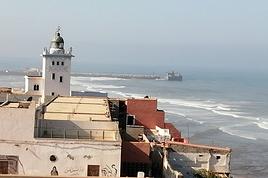 18 days of bliss in Morocco!
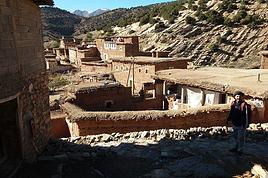 Happy Valley or Ait Bougmez
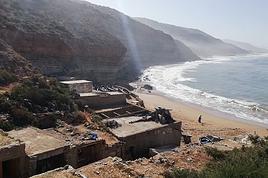 Beautiful stops and sites discovered in Morocco in March
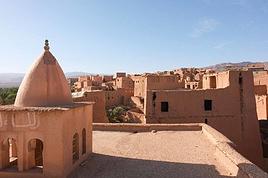 Trip to Morocco in September-October 2025, in our camper van
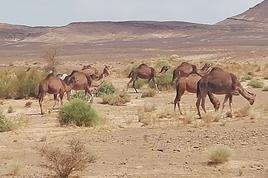 Family trip from Marrakech to the desert
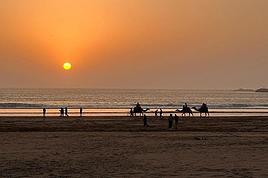 Spring getaway in search of Moroccan sunshine
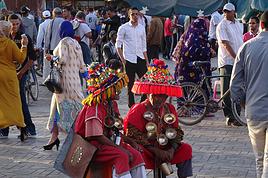 Adventure in Morocco
 Marrakech 2025: My First Steps as a Private Guide