Leaving in 15 days for Brittany, specifically the southern Finistère and Bénodet...
Tourists expected to boost the culinary restaurant industry!
Haven’t read the guide for latecomers yet, and I’m really wary of online reviews.
Where can I eat without getting ripped off, enjoy quality food—crêperies, seafood, nice atmosphere...
Thanks to all you savvy foodies!
A typical dish from Brittany is *kig ha farz*—you can try it in Plounéventer. It’s delicious and well-known.
Sure, it’s not *exactly* where you live, but it’s worth making a detour for!
Honestly, there isn’t really a gastronomic—or even culinary—tradition in Brittany. In the past, people mostly ate potatoes, pork, buckwheat crêpes, eggs, and drank cider and *lait ribot* (buttermilk).
If you’re traveling in the summer along the touristy coast, I wouldn’t get your hopes up.
Check what has a good reputation on Tripadvisor—it might be "crêperies" that build dishes around crêpes or pizzerias, which can sometimes be a pleasant surprise.
*Kig-ha-farz* is a very local dish; I’ve only tried it once in my life, even though I lived in Brittany for decades. It’s a kind of beef and vegetable stew with semolina. You won’t find it in Bénodet.
Leaving in 15 days for Brittany, southern Finistère and Bénodet to be exact...
Tourists expected to revive the culinary restaurant industry!
Haven’t read the "late guide" yet, very skeptical about online reviews...
Where can I eat without getting ripped off, enjoy good quality food, crêperies, seafood, and a nice atmosphere?
Thanks to the savvy foodies!
I don’t know Bénodet very well, to be honest—it’s kind of a mini La Baule in Cornouaille... and personally, I don’t know any restaurants in that area either.
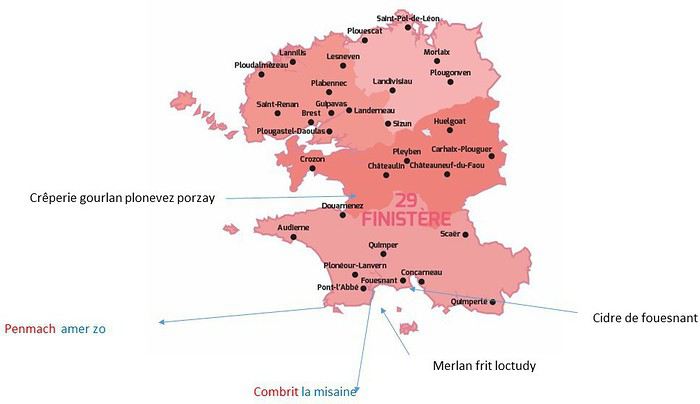
Otherwise, *Au Merlan Frit* in Loctudy has a great reputation.
A bit pricey, but really good (the must-try is the lobster or spiny lobster stew. Langoustines, etc... and FYI, their eggs are edible too 😉, I just saw a review on TripAdvisor). In Cap Sizun, *l'Étrave*—it’s been a while since I’ve been there, but I still remember that stew.
*Au Pilleur d'Épaves*, also in Cap Sizun, is excellent!
For crêpes, it’s like going to grandma’s—with the bill to match (though cheaper than others). That’s *Mme Gourlan* in Plonevez-Porzay. It’s my favorite crêperie. But careful—don’t show up there acting like you do in your post!
For cider: "All the thirsty drinkers sing the praises of Fouesnant cider" ("the best cider in the world," according to Frédéric Le Guyader) 😉. The ones from *Cidrerie Menez Brug* are pretty good!
If you’re staying in a gîte or campsite, check out the fishmongers too—but watch out in summer, langoustine prices skyrocket because of tourists 😛! Galatheas are cheaper and just as good, but there’s less of them for sale and they sell out fast. See if they’re still selling them straight off the boat in Guilvinec—it’s been a while since I’ve kept up with that, but it was still happening not long ago. It’s a fun outing too.
You’ll find moules-frites everywhere, sometimes to go, and grilled sardines too...
Yes, you're right to emphasize that.
There are a few family-run crêperies with a good reputation like that, but, how should I put it... Anyway, you absolutely have to book ahead and arrive exactly at mealtime.
For crêpes, it’s a bit like going to grandma’s with the bill (but cheaper than others)—it’s at Mme Gourlan’s in Plonevez-Porzay. It’s my favorite crêperie. But be careful, don’t show up to her place the way you did in your message!
You really don’t know kig ha farz at all—there’s no semolina in that dish!!! It’s not a local specialty; it’s made all over Brittany!!! There are plenty of other excellent restaurants all along the southern Finistère coast. Once again, you’re talking nonsense!!! Bravat choaz emman zo na fin na zot!!!!
What can I tell you? 🤪
I was born in Brittany, I live here, and I see what restaurants offer.
Kig ha farz is a local specialty from northern Finistère, specifically the Léon area, and I only learned of its existence well past my twenties.
You rarely find it in restaurants, except in a few inns that have made it their specialty. It’s more of a dish for local festivals, like an alternative to grilled pork or mussels and fries. You might occasionally find it as a prepared dish in supermarkets, but it’s still quite rare.
I mention semolina because it’s flour cooked in a somewhat coarse way, somewhere between polenta—aside from the corn—and Czech knedlíky.
Does Ducono plan to eat it during his tour of southern Brittany? From what I read, no, and I don’t think the opportunity would even come up anyway.
Michel
vous connaissez tres mal le kig Ha farz , il n yas de semoule dans ce plat !!! ce n est pas un plat local on le fait partout en Bretagne !!! il y a d autres part d excellent restau partout sur la cote sud finisterienne , une fois de plus vous racontez n importe quoi !!! Bravat choaz emman zo na fin na zot !!!!
I don’t know what you mean by "la route des légendes"—it’s probably just a touristy name that locals here don’t use or even know. I’ve never heard of it. If you can find *kig ha farz*, though, it’s in Léon, the coastal vegetable-growing area west of Morlaix.
Read that you could find some along la route des légendes.
Now restored, this picturesque thatched-roof village offers a unique atmosphere where everyone can find something to enjoy. You can eat there and try the famous kig ha farz
Oops, mistake—it’s actually the Côte des Légendes:
https://www.cotedeslegendes.bzh/
and the village of Meneham:
Today restored, this picturesque thatched-roof village offers a unique atmosphere where everyone can find something to enjoy. You can eat there and taste the famous kig ha farz.
I was born on Sein Island, and I used to eat *kig ha farz* every two weeks—made by my grandma and my mom. It’s one of the great classics of southern Finistère!
It’s not semolina; in *kig ha farz*, the *far* (a type of dough) is cooked in a vegetable and meat broth inside cloth bags. We usually use two types of flour for two types of *far*: wheat flour and buckwheat flour. So, two bags of *far* for one *kig ha farz*.
I was born in southern Finistère myself, and I’d never even heard of it until I was over 20.
Everyone agrees it’s a dish from Léon, I think; seeing it called a classic of southern Finistère really puzzles me.
I’d struggle to find a restaurant serving it within a 30-kilometer radius; as I mentioned, it’s more of a dish for association or village celebrations.
Your grandmother must have been quite unique...🤪
je susi ne a Sein et du kig a ha farz j en ai manger tous les 15 jours fait pas ma grand mere et ma mere , cest un des grans classiques du sud finistere
PS: How old are you to have been born on Île de Sein? Births there are extremely rare.
Back in the day, there were no helicopters, and when I was born, there was a storm—neither the Enez Sun nor the lifeboat could cross the Raz de Sein...
Home births aren’t unheard of here; the last one was just 4 years ago
In the region, don't miss going to Pointe du Raz, Baie des Trépassés, and Pointe du Van. Douarnenez is also interesting for its floating museum of old sailing ships...
The highlight of the region is taking the boat from Audierne/Sainte-Evette to Île de Sein (1h15 crossing), where you'll find excellent restaurants. Notably, the restaurant d'Armen, where a top-level chef works (their lobster stew is amazing, among other things).
At Pointe du Raz, in the gallery, there's a crêperie run by Mr. Pichon, the best crêpe maker in France.
Well, you're self-catering, so a bit of home cooking is possible.
Great idea with La Poste. I did the same when I arrived in Brittany.
As for restaurants, mixed results.
But for the markets, excellent tips!
We haven’t been disappointed since—you can find everything you want, and there are loads of "caterers" cooking up amazing recipes right in front of you (grandma’s recipes, of course!).
Our approach: arrive around 9:00 AM, scope out the longest lines, buy, and then we feast.
I don’t know the southern markets well, but if you head north, we can share our favorite spots.
Cheers,
PS: Ménéham is busy even in February.
From Bénodet in July, expect about a 2-hour drive each way.
Closer by, there’s Locronan and Douarnenez. Your wife might be less "reserved" there.
I don’t think it’s escaped your notice that Bénodet is a bit of a posh spot.
Since you can cook, you’ll often save money by doing it yourself. Nothing beats grilling a fish or whipping up some shellfish and seafood.
You could head to the Concarneau Fish Market or the covered markets if you’re not early risers.
If you’re a fan, Belon flat oysters will blow you away.
Don’t miss the rare pink clams from the Glénan Islands—they’re half the price of the gray ones (because, being true Breton clams, they gape as soon as they leave home ).
You’ll find sardines in abundance, and then there’s the tuna.
It’s a good idea to ask at the post office, but I don’t share your opinion on that.
The counter staff have other professional priorities rather than chatting about this kind of topic.
Nothing’s free at the post office.
The tourist office is there to handle that task.
I don’t think you can still buy fish near the auction at the "Thief’s Slipway."
At the auction itself, it’s never possible.
For albacore tuna, July is too early—or just borderline.
Michel
You could go to the Concarneau Fish Market or the covered halls if you’re not early risers.
If you’re a fan, the flat oysters from Belon will delight you.
Don’t miss the rare pink clams from the Glénan Islands—they’re half the price of the gray ones (Because, being true Bretons, they yawn as soon as they leave the area 😏)
You’ll find schools of sardines, and then the tuna will arrive.
For Mme Gourlan’s crêperie, you *must* book, especially for lunch. Also, I think she only does lunch service now due to her age, but she and her granddaughter might open in the evenings in July-August (check, since I’m not entirely sure). If you go for lunch, there’s a nice walk nearby afterward at Sainte-Anne-la-Palud (beautiful beach, dunes, and chapel). You could even stop by Locronan in the morning—it’s not far—and since many shops don’t open before 11 a.m., going early is much quieter in July (though warm afternoons are also nice, since most people head to the beach). Mme Gourlan’s crêperie is between Locronan and Sainte-Anne-la-Palud, so it’s not far. There’s a small free parking lot just before Locronan, on the left at the roundabout if you’re coming from Douarnenez. If you’re coming from Quimper, you’ll need to head toward Douarnenez. The parking lot usually has space in the morning; otherwise, parking costs 4 € if nothing’s changed 🤪 (complain directly to the town hall if you’re unhappy—the tourist office can’t do much 😉 ). !
I’m not that surprised a grandmother from Sein made kig ha farz, because in the past—I can’t remember exactly when—fishermen from Léon used to stop over in Sein. The Breton spoken in Sein even shares some traits with the one from Léon.
When I was a kid, there was a workers’ and banquet restaurant in Confort (Cap Sizun) that served it too, but only in autumn-winter, I think. As far as I know, that was the only one. Otherwise, it’s true that it’s mostly served at festivals or events, like in Pont-Croix (a lovely little medieval town by the Goyen River) in September for the Breton wine fair.
For albacore tuna, I think Ducono should be able to find some in July. From what I remember, the tuna boats from Douarnenez left for the Azores as early as June, as soon as the anticyclone settled there for 3 weeks to a month, depending on the catch. We’d get albacore then, and those were still the old boats that fished with a rod. But given the nice weather already in May and the water temperature, I don’t think there’ll be any problem eating Atlantic albacore in July.
From what I remember, the peak season for albacore tuna in the southern ports of Finistère is still August, or even late August. Whether it's already available for sale in mid-July is something to check... Possible.
By the way, tuna caught by rod?
Nowadays, fishing isn’t done that way anymore, but for a long time, albacore tuna wasn’t caught by rod but by trolling, using outriggers. This fishing was entrusted to ships—trawlers, decommissioned—that were only equipped for a few weeks in the summer for this popular and likely profitable activity.
I’m not that surprised a grandmother from Sein made *kig ha farz*—back in the day, I can’t remember exactly when, fishermen from Léon used to stop over in Sein. The Breton spoken in Sein even shares some traits with that of Léon.
When I was a kid, there was a banquet and workers’ restaurant in Confort (Cap Sizun) that served it too, but only in autumn-winter, I think. As far as I knew, it was the only one. Otherwise, it’s true that it’s mostly served at festivals or events, like in Pont-Croix (a lovely little medieval town by the Goyen River) in September for the Breton wine fair.
For albacore tuna, I think Ducono might find some in July. From what I recall, the tuna boats from DZ left for the Azores as early as June once the anticyclone was there for 3 weeks to a month, depending on the catch. We’d get albacore, and those were still the old boats that fished with rods. But given the nice weather already in May and the water temperature, I think there’ll be no problem eating Atlantic albacore in July.
Yes, that's it, with outriggers of course—I couldn’t remember the name!
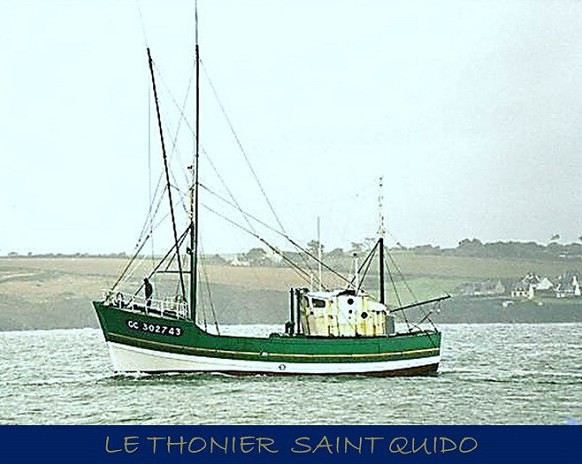
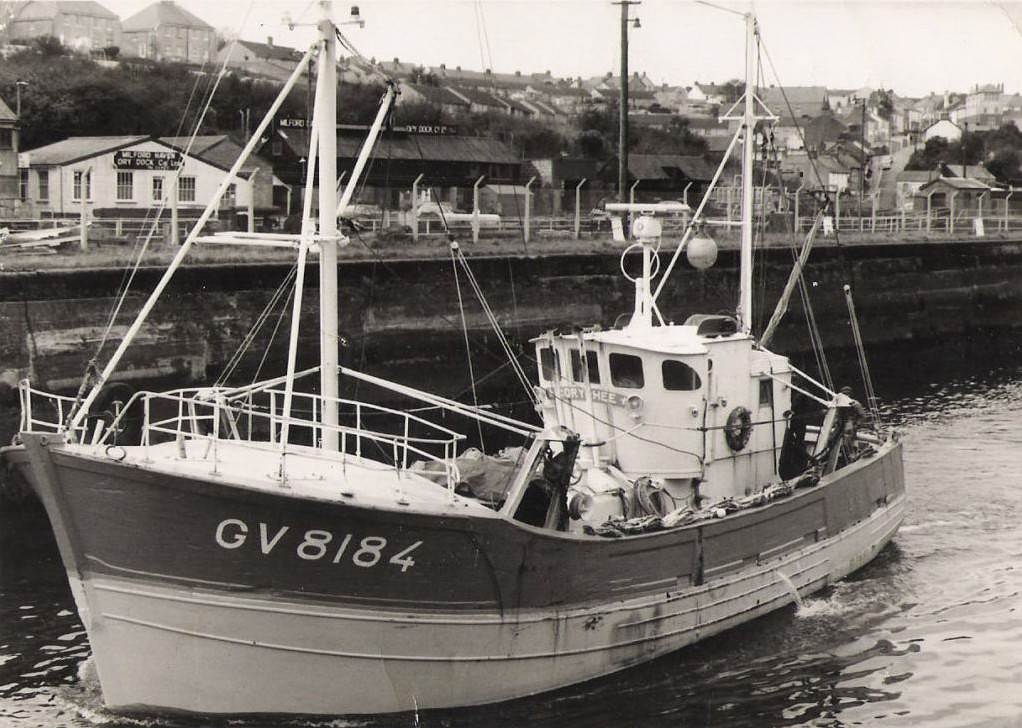
The heart of the season is definitely August, but I know of at least one boat for sure, *Le Coryphée*, that always left very early. After that, it depended on the weather conditions, but being the first to reach the fishing grounds near the Azores and returning before the others was part of the skipper’s upbringing—he started as a sailor at 14. By the late '80s, the skipper was an old-timer, and his boat was too, just before he retired. We don’t see these kinds of boats anymore, and hardly anyone would want to set sail under those conditions today. Apparently, those were some crazy trips. He wasn’t the only one leaving that early, though. I know because I’m close with a guy who sailed on it, and I’ve eaten *godaille* (fisherman’s stew) on the way back—top-quality stuff, freshly caught!
They could leave as early as June, and that was in the late '80s to early '90s. Like others, the boat ended up in Africa, this one in Senegal, where unfortunately it was badly damaged due to a mistake when returning to the port of Dakar—almost a waste. But back then, it was either that or scrapping it with the new regulations here!
So if they left in June, by July we’d have albacore tuna. They’d do three to four trips of 3 weeks to a month. Yes, these were boats adapted for summer fishing, equipped with outriggers—thanks for the word! Annoying memory lapse, and I just put ‘rods’ out of laziness, knowing it wasn’t quite right but that someone would get what I meant (and you did ).
I’ll check out your link later—sounds interesting! Have a great day!
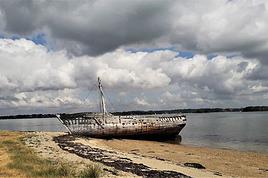
PS: *Le Coryphée* looked like the one in your photo, exactly like that—well, what it used to be.
Well, you should know the goals that postal workers have both at the counter and in delivery.
Mail carriers have to deal with extended rounds.
I figure they don’t have time to give tourists tips on restaurants and the prices they charge, and it’s not really part of their job anyway.
In Bénodet, you can always try asking your questions.
Have a great Breton stay.
No way, in a tourist town on the Channel, I asked a mail carrier where to eat well... he told me, "Definitely not here, they're all tourist scammers," which seemed obvious when I saw the menus.
Thanks to his great tip, I ended up in a restaurant 5 km away—cheaper, good, and friendly...
Is this the only response you can give me, with no argument?
I’m not making any mistake—this is the reality of today’s La Poste agents. Postal workers are there to complete a task; they don’t have time for anything else.
Is this the La Poste from your grandfather’s era?
I started working at the post office back in '80.
At the end of the year back then, the Minister of PTT would call his finance colleague:
"Hey Léon, I need 500 million to wrap up the year," and just like that, we’d finish the year in the black.
I worked in a department with a 2-hour morning break for ping-pong or a 2-hour tarot session in the afternoon.
The internet killed paper mail.
The change in status for postal workers...
That said, I have complete faith in my Breton colleagues to find me great restaurants and send my postcards properly!!!!
... still, I totally trust my Breton colleagues to find me great restaurants and send my postcards properly!!!!
You can!
No matter what M-A thinks, your Breton colleagues are just as "old-school" as my grandpa.
They still have the idea of "service" and are way less bitter than M-A would like!
PS: For brut cider, you can find excellent ones at Leclerc.
Have a great Breton stay and enjoy your time!
But avoid asking your Breton colleagues questions that aren’t part of their job—their workload is already enough, okay? They’re there to forward your postcards, not to recommend the local restaurant.
The old-school post office doesn’t exist anymore; you’ve got to keep up with the times.
I don’t want anything at all, really—I’m just being realistic and objective. What exactly is the service being provided here? Giving information to tourists—is that part of it? What an idea. You don’t seem to realize that all services at La Poste are paid for. Do some research if you think I’m wrong; I’m open to debate.
Dry cider is a must... the sweet stuff is like rosé—we leave that to the Parisians.
Loïc’s got a point, some of it’s not too bad
😏!
There have always been fans of *traoù dous* (sweet cider) in Brittany, and for the guys, it’s more like *c’hwero*—a super dry farmhouse cider (or pronounced *feo*, actually). You can still find some around Fouesnant or St Evarzec, from what I know. It’s artisanal, made only in small private orchards by enthusiasts, whether they’re in an association or not. Leclerc doesn’t know a thing about it—*tuff*! 😛
A storyteller who specializes in tradition can tell you all about it (gotta provide proof, after all):
https://www.palemon.fr/essais/1582-contes-et-histoires-du-pays-du-cidre.html
I’m not sure if postal workers in every post office have time to give recommendations, but I’ve seen some do it while I watched the minute hand on the post office clock creep toward the last pickup. Just introduce yourself with: *"Hé freï, I’m one of the crew too!"* These days, postal workers even ship bottles—the label can double as a postcard, just signed: *yec’hed mat!* Or a little teasing: *Who drinks apple juice first thing in the morning always has a rosy complexion!* 😇 (Okay, *first thing* is mostly for the rhyme—don’t take it too literally).
Anyway, I’m joking—just lightening the mood a bit. But watch out for the *bleus* (cops) on the road early in the morning, especially since it’s *biniou* season. 😉
The first and last pick-up 😉😉
Sending bottles by La Poste is possible if you want, but you’ll need good packaging, and the shipping cost won’t be cheap 🙂
I completely agree with you—artisanal cider is still better than the one mentioned by Ducono. "The Bretons are always right," as the brand says.
You’re setting them up for some tricky and intense moments. 😏
We used to find this kind of cider just 10 or 15 years ago in some grocery stores, mostly rural ones. It has absolutely nothing to do with big-brand cider, even the dry kind mentioned here. I don’t even think you can imagine what it’s like if you’ve only ever drunk supermarket cider.
There have always been fans of *traoù dous* in Brittany, and for the guys, it’d be more like *c’hwero*—a super dry farmhouse cider (or pronounced *feo*, actually). You can still find some around Fouesnant or St Evarzec, from what I know. It’s artisanal and only comes from small private orchards run by passionate folks, whether they’re in an association or not. Leclerc doesn’t stand a chance with this stuff, *tuff*! 😛
A storyteller who specializes in tradition can tell you all about it (gotta provide some proof, after all):
https://www.palemon.fr/essays/1582-contes-et-histoires-du-pays-du-cidre.html.
They’ll definitely appreciate a good bowl of brut cider in a crêperie, and they’ll rush to buy some good bottles of artisanal cider to bring back for friends and family—it’s a lovely, locally inspired gift. Just make sure the bowl isn’t locally made, though!
Between mass-produced cider and artisanal cider, you can really taste the difference right away.
With the cider I’m telling you about, some digestive upsets are to be expected.
"some tricky and urgent moments" ???????😮😮
They’ll no doubt love a good bowl of brut cider in a crêperie, and they’ll rush to buy some good bottles of artisanal cider to bring back for friends and family—it’s a lovely, locally inspired gift. That said, the bowl of cider shouldn’t be locally made.
Between mass-market cider and artisanal cider, you can immediately taste the difference.
Cuisines du monde › France › Bretagne · 16 replies
Présentement au Canada je n'ai pas oublié mes recettes dont celle de la pâte à crèpe car elles sont bien entendu différentes du Canada/USA. C'est plutôt sympa…
Cuisines du monde › Pologne / France › Bretagne / Ouest · 5 replies
Je recherche dans la région de NANTES, VANNES ou REDON, un magasin pour acheter des produits de POLOGNE, pour faire un repas entre amis, une des invitée est…
I’m from West Africa and I’d love to introduce a Russian friend to a traditional product from my region: soumbara.
For those who don’t know, soumbara is a condiment made from fermented néré seeds. It has a pretty distinctive smell and a very strong, salty, fermented, umami-rich flavor. In West Africa, we mainly use it to add flavor to sauces, with rice, vegetables, meat, etc.
I’m curious to know, from Russian cuisine lovers: which traditional Russian dish do you think soumbara would pair particularly well with?
I’m looking for a real Russian dish where the combination could be interesting—not just rice or an adapted African dish.
Hi there, we’re heading to Cagliari for one night in April, staying at a hotel without a restaurant. Would you happen to know of a restaurant near Via Giuseppe Garibaldi for a typical dinner that’s not too pricey? Thanks.
I’m looking for typical Catalan restaurants in Barcelona! Any suggestions for areas or little hidden spots?
I know to avoid places like La Rambla, the beachfront restaurants in Barceloneta, and anywhere where they greet you with a menu asking if you want to eat, but are there any specific restaurants to avoid? Any bad experiences or unpleasant surprises?
I’m heading to Barcelona in early May—it’s my first time there. I’d love to hear your suggestions for restaurants (ideally near the tourist center, Las Ramblas). That said, I’m happy to travel if needed. I’m looking for a place renowned for its gastronomy, a spot serving typical Spanish or Catalan food, or somewhere with a unique vibe you wouldn’t normally find... In short, which restaurant did you love most during your stay in Barcelona?
Maybe you already use it in your recipes? Just to let you know that here in Quebec, the maple water harvest has started in several regions. The next step will be to boil this water to turn it into syrup. A sweet nectar, it works well in salad dressings, desserts, with salmon, and more. 😋
If you ever pass through here, don’t miss the chance to visit one of our wonderful sugar shacks. You can taste maple taffy on snow, among other things. 😄
Do you drink wine with your meal, and how often—every day, just on weekends, or only occasionally for special events?
What are your favorite wines, from which country, and what grape variety?
I drink wine with my evening meal every day. I’m particularly fond of wines from Australia and Spain—I really like grape varieties like Cabernet Sauvignon and Shiraz.
The title might surprise you, but you’ll understand my point of view.
1/ MEAL STRUCTURE
I’m talking about the standard meal, not the one for those who have to budget for financial reasons (generally fewer in northern and central Italy than in France, but more in the south, which makes up 35% of Italy—Eurostat figures), nor for those (mostly women) watching their figure.
The tradition (once the meal of the well-off, widespread among the general population in the 1950s) starts with soup or pasta (or rice, gnocchi, ravioli, lasagna)—this is the *primo piatto*.
Next comes meat or another animal-based product (fish, cured meats, eggs, etc.)—the *secondo piatto*, which can be replaced by cooked vegetables (the only known example in France: eggplant parmesan).
If the meat dish doesn’t already include vegetables, one is served. Salads, whether green or tomato-based, are side dishes, not starters.
The meal ends with dessert—no difference from French habits: cheese, fruit, or sweets.
*Antipasti* (appetizers) are reserved for festive meals or receptions and are served *in addition* to the main courses at the start.
4 practices unknown in France:
- If the menu includes pasta and ham, you start with the pasta.
- If the menu includes pasta with a meat sauce and fish, you start with the pasta too.
- Pasta is never a side dish for meat.
- It’s not unusual for Italians to start with pasta in a meat sauce and then have a meat dish—most do this several times a week.
Modern adaptations:
- People eat pasta less often (on average 5 times a week, according to recent figures) and soups, which are being replaced by *antipasti*.
- The main meal is now mostly dinner, so it’s much heartier, while lunch isn’t usually eaten at home.
2/ THE CUISINE
What do we know in France? Pizza, pasta Bolognese, carbonara, arrabbiata, ravioli, and lasagna. Fried scampi, Milanese or Bolognese cutlets, carpaccio, and finally tiramisu.
In short, a few basic dishes, but nothing of the gastronomy—whether regional traditions or high-end restaurants.
2 anecdotes:
**Bolognese sauce**
In Italy, the most common homemade sauce is a meat-and-tomato-based sauce called *ragù* (pronounced *ragoo*). Every region, even every town and family, as well as every restaurant, has its own recipe. *Ragù alla bolognese* is just one of these countless *ragù*—and no one in France knows the real recipe (I can share it with those interested). The name *bolognese* given abroad to any *ragù* comes from a canned sauce manufacturer who once branded their product that way. Until the early 1960s, it was called *sauce à la viande* (meat sauce).
**Pizza**
Before World War II, it was practically unknown north of Rome.
Today, Italy is one of the countries where it’s eaten the least (twice as much in France, four times as much in Germany).
Top 15 Brazilian eating habits that surprise the French 😮
Brazil is a multicultural country, and its history has shaped a very unique cuisine, influenced by European, African, Japanese, and Indigenous traditions. Its food culture is quite different from what we’re used to in France, and Brazilian eating habits often surprise French travelers exploring the land of samba and soccer.
We live in Réunion and we're looking for places where we can learn to cook authentic Réunionese Creole cuisine.
We're based in Saint-Denis and are searching in that area.
Après l'âpre débat "Paella, avec ou sans chorizo ?", je vous propose de disserter sur le thème de "Gazpacho ou Salmorejo ?".
Suggestion de Hannnnah qui voulait torpiller le post Paella... 🤪
N.B.: On évitera de de divaguer vers des choses baptisées "gaspacho", genre "revisité", du type "gaspacho de courgette"...
Le gazpacho connaît une grande notoriété, assez récente d'ailleurs, au point de se retrouver en "briques" dans les supermarchés (alors "Gaspacho", avec S).
Le salmorejo est beaucoup moins connu, sans doute parce que ce mot est imprononçable par un non-hispanophone, au même titre que, par exemple, relojería...
Le gazpacho, comme la paella, peut être fait de multiples façons. Lorsqu'on circule en Espagne, on ne déguste jamais deux fois le même, d'un restaurant à l'autre. Les composants varient, la texture varie, du plus fluide au plus épais, avec ou sans "garniture". Toujours délicieux.
Pour le salmorejo, en revanche, il n'y a qu'une seule recette, et la voici, en copié/collé sur le post suivant.
En ces temps de confinement, il devient assez difficile de voyager.
Mais il nous reste encore cependant une façon de voyager : la table !
C'est pourquoi j'ai eu l'idée de cette nouvelle discussion. Vous qui avez voyagé, vous avez très certainement ramené de vos voyages des recettes qui vous ont plu et qu'il vous arrive de refaire chez vous, avec les moyens du bord, parce qu'elles ont ce petit goût inimitable de voyage.
Amis internautes, je vous invite ici à nous faire partager vos meilleures recettes. A vos claviers !
bonjour,
avec mon épouse on envisage 4 jours à LONDRES....début septembre
j'ai peur de mal manger c'est pourquoi je vous sollicite pour trouver des restaurants
qui font une cuisine étrangère de qualité à des prix corrects???
je pense prendre un hôtel proche du centre: est ce que je peux trouver ce type de restaurant ou est ce qu'il est préférable de se déplacer dans des quartiers en métro pour trouver???
merci: PS 1er voyage en ANGLETERRE...donc j'ai peut être des préjugés???
les restaurants pour touristes en FRANCE faut faire gaffe ...de moins en moins qui cuisinent eux-mêmes donc les ANGLAIS??? je sais pas quoi penser???
merci
Bonjour je suis en train de préparer notre voyage à l île maurice je préfère m organiser à l avance et regarder de près tous les petits détails
Donc je souhaite connaître les très bons restaurants pour manger en couple à flic en flac et sur le reste de l ile tout en restant sur des restaurants typique de l ile
Je vous remercie
je viens de découvrir le resto roumain à Bordeaux (il y qu'un seul, d'après ce que j'ai compris)
je serais curieux d'avoir votre avis sur la cuisine roumaine. si vous la connaissez déjà je voudrais savoir votre opinions, et si vous n'avez jamais goûté je voudrais savoir quelles sont vos attentes, a quoi vous pensez si vous voyez en flânant sur les rues de vos villes "Resto roumain", est-ce que vous allez entrer ou non?
je voudrais savoir aussi, à part votre réponse, qu'est-ce que vos ami(e) pourraient penser de cette cuisine roumaine, et cela pour se former une idée plus générale.
je lance ce thread parce que j'ai l'impression qu'on est un peu réticents. serai-t-il "étrangère" ou "roumaine" qui est à la base de cette réticence?
bien sur, je peux me tromper, c'est seulement mon avis, suite à des discussion avec Marga, la patronne de ce resto, et suite à des discussion avec mes collègues, qui, la plus part d'eux, seront plus intéressés par une pizza que essayer ce resto.
En ces temps de confinement (ou de dé.........) , nous nous remémorons nos voyages passés. Que vous en reste-t-il côté culinaire?
Je reprends là un document qui m'a été communiqué par un TO avec qui je voyage en Ethiopie. Il décrit parfaitement le plat national , digeste ou indigeste , que l'on mangera forcément lors d'un passage là bas.
En Ethiopie, encore plus qu’ailleurs, le repas tient du moment de convivialité et de partage. Ici, manger ne se conçoit ni seul, ni sans Injera. Lors de votre séjour, il vous sera impossible de ne pas goûter, ne serait-ce qu’une fois à cette large crêpe légèrement fermentée et véritable plat national.
L’hôte dispose le plat, tapissé au fond d’une épaisse injera, au milieu de la tablée de convives puis dépose sur la galette légèrement acidulée légumes, sauces, viandes. Chacun des invités déchire un petit bout de la crêpe pour récolter les accompagnements en petit tas et les porte à sa bouche. Il vous faut bien entendu oublier que votre main gauche existe et ne vous servir que de la droite.
Les garnitures terminées, il vous reste encore à déguster, tous ensemble, l’injera imprégnée de la saveur des mets engloutis. Vous l’aurez compris l’injera sert tout à la fois d’aliment, de récipient et de couverts.
Pour obtenir cette galette spongieuse qui vous laissera sur le palais cette sensation aigrelette et subtilement amère unique, il vous faut combiner farine de teff et eau. Pour obtenir la fermentation souhaitée et idéale de cette pâte, on ajoute un liquide jaune clair appelé ersho. Ce processus peut durer jusqu’à trois jours avant la cuisson.
Le Teff, une céréale très ancienne …
Le teff, principal ingrédient de cette spécialité culinaire, est une céréale inconnue des régions occidentales. Cette graine endémique et sans gluten possède des vertus nutritives prodigieuses. Hautement nourrissante, elle contient 15 % de protéines, 3 % de matières grasses et 82 % de glucides complexes. Extrêmement riche en fer, le teff renferme vingt fois plus de calcium que le blé ou l’orge. Source infinie de fibres alimentaires, cette céréale apporte aussi à l’organisme une grande quantité d’autres minéraux dont l’organisme a besoin tels le manganèse, le phosphore, le magnésium, le cuivre… De plus, le teff compte un autre petit miracle à son actif, puisqu’il contient de la levure symbiotique, ce qui signifie qu'aucune n'a besoin d'être ajoutée pendant la préparation de l'injera.
Mais au grand avenir
Heureuse ironie du sort, la culture du teff, une des plus anciennes de l’humanité se révèle une de celles promises au plus grand avenir. Avec ses nombreux apports nutritifs, la connaissance du teff s’est largement répandue chez les végétariens et les vegans du monde entier. Depuis longtemps, les personnes tenues de suivre un régime sans gluten l ‘ont adopté. D’ailleurs, les éthiopiens obtiennent avec l’injera les deux tiers des protéines journalières lors du jeûne orthodoxe durant lequel il ne faut consommer aucun produit animal. Alors, si votre hôte en signe de respect, de bienvenue, d’affection porte lui-même la première part du repas à votre bouche selon la tradition du « guscha », ne soyez ni surpris ni offusqué et pensez que les meilleurs athlètes éthiopiens ont été élevés ainsi "
A vous maintenant de nous faire connaître les spécialités culinaires dégustées lors de vos voyages. On s'en lèche les babines par avance.
"
Nous partons au mois d'août à Orange, Caderousse plus précisément et nous voulions connaître un peu la région sous un angle "bio/filière courte"
Est-ce que vous connaissez des producteurs de légumes bio (ou agriculture raisonnée) dans ce coin là ? Si oui, que cultivent-ils ?
Je pose la même question pour de la viande ? Ou bien, quelles sont les bonnes boucheries du coin (car je n'ai pas envie d'aller dans un hypermarché pour acheter du tout venant). ?
Faute de clients grâce au corona et avec des loyers pharamineux à payer, j'ai le grand regret de vous informer que les fameux restaurant Porte d'Annam et A la folie à Hanoi sont définitivement fermés. Les trois autres restaurants de Didier Corlou, Madame Hien et La Verticale à Hanoi et le Co Mai à Hoi An rouvrent le 1er juin
Bonjours..... a tous ceux qui prenne l'apéritif avant le repas....🙂
Je recherche pour me confectionner un " Perroquet " une marque de menthe thaïe ou équivalente a la notre ....Ainsi qu' un endroits/magasin ou grande surface dans la province de Chaiyaphum ou je peux acheter du Ricard ou du Pastis....😛
Bonjour,
Étant réunionnais je cherche une plantation de fraise pour cuisiner un gâteau ? Connaissez vous le gâteau fraise - mélisse ? Et la plage à marée basse c ok ? 🙂
Bonjour,
Petit voyage culinaire à Montmartre, j'ai mangé dans un resto Venezuelien et depuis j'ai déjà essayé 2fois d'en faire mais j'y arrive pas, alors si quelqu'un a une recette de la pâte a arepa je l'a prend avec plaisirs.
Dans la région de Baracoa (Yumuri) à une certaine saison , du rio remonte en direction de la mer à la pleine lune des poches chargés d'alevin de poisson .
C'est un met délicat
Les villageois les pechent font secher les TETIS sur des plaques de tole
C' est un met délicat, ne pas hesiter de demander à vos propriétaires de vous en cuisiner
Impossible de parler de tradition culinaire et de cuisine au Laos sans évoquer le Laap Kaï ! On vous en proposera dans tous les restaurants laotiens.
Il existe différentes variétés de Laap : Laap Kai au poulet, Laap Sinh à la viande, Laap Pet au canard, Laap Pa au poisson...
Le Laap pourrait se traduire par "salade à la viande (ou au poisson) et aux herbes".
C'est un plat complet, sain et économique particulièrement savoureux à cuisiner de préférence aux beaux jours !
Recette à retrouver sur mon blog https://www.heleneetlacledeschamps.fr/
Aujourd'hui, je vous emmène dans les cuisines de Bali pour apprendre à cuisiner le Mie Goreng.
Une recette simple à base de nouilles sautées accompagnées de légumes, d'une petite omelette coupée en lamelles et de morceaux de poulet ou de crevettes.
Le Mie Goreng (Mie signifie nouille) et le Nasi Goreng (Nasi signifie riz) sont deux plats incontournables durant un séjour à Bali.
Bon appétit !
https://www.heleneetlacledeschamps.fr/a-table/mie-goreng-bali/
J’ai découvert le Dal Bhat à Kathmandou lorsque je faisais une mission de congé solidaire auprès de l’association WCN (Worldlife Conservation of Nepal).
C'est « le plat national du Népal » qui se consomme à toute heure de la journée et qui est servi à volonté dans tous les restaurants…
"Dal" signifie riz et "Bhat" bouillon de lentilles.
C’est un plat riche au niveau nutritif, sain et économique composé de riz, d'un bouillon de lentilles, d'un curry de légumes et d'achards.
Vous pouvez aussi l'accompagner de viande si vous souhaitez une version non végétarienne.
Vous trouverez la recette traditionnelle du Dal Bhat sur mon blog de voyage et cuisines du monde "Hélène et la Clé des Champs" :
https://www.heleneetlacledeschamps.fr/a-table/recettes/recette-dal-bhat-nepal/
A défaut de pouvoir voyager, je vous invite à faire un tour dans les cuisines du monde.
Aujourd'hui, je vous propose une recette de momos au poulet.
Les momos sont originaires du Tibet, mais ont franchi les frontières pour faire complètement partie de la culture gastronomique du Népal et de l'Inde. C'est au Népal que j'ai dégusté mes premiers momos alors que j'effectuais un congé solidaire à Kathmandou et, c'est dans le nord-est de l'Inde dans la région de Darjeeling que j'ai appris à les cuisiner dans la famille de mon amie Karishma.
Vous pouvez remplacer le poulet par d’autres viandes ou du poisson ou en faire une version végétarienne.
Vous trouverez la recette détaillée des momos au poulet sur mon blog "Hélène et la Clé des Champs"
https://www.heleneetlacledeschamps.fr/a-table/momos-poulet-nepal-inde/
Bonjour
Nous partons en Grèce en septembre et j aimerai visiter une fabrique de feta... dans une ferme de préférence... J ai cherché sur internet mais je n'ai rien trouvé. Auriez vous une adresse ??? D avance merci
Bonne journée