Depuis quelque temps .. il fleurit le phénomène thé vert en boisson (et pas mal de dérivées ). dans Bangkok et en Thailande en général .. es un phénomène de mode ??
En tout cas pour les voyageurs .. assoiffer .. lire ce petit article ( pris sur le net ) .. et si l'envie vois dit .. acheter ..
les prix vont entre 15 et 25 bt .. cela ne peut pas faire de mal ???.. d;'autant plus que indirectement vous favoriser l'économie des différentes ethnies du nord .. qui du coup ne sont pas obliger de se donner en spectacle pour les touristes .. et peuvent Bien subvenir a leur besoins, et garder leur traditions ..
c'est l'occasion se faire un petit intermède a coca. pepsi . et autres composantes chimiques .?
Plante utilisée par les chinois 2.500 ans avant J.C., le thé vert est apprécié depuis des siècles au Japon et ce sont les jésuites au XVème siècle qui l'ont introduit en occident.
Les feuilles de thé vert sont recoltées jeunes et rapidement séchées et roulées. Contrairement au thé noir, il est non fermenté et donc riche en tanin. Ses principaux composants sont la théophylline et la théobromine. Le thé vert et aussi riche en caféine, théine et vitamine C.
Le thé vert est stimulant, il a une action tonique et excitante pour lutter contre la fatigue. Des études ont mis en valeur le rôle antioxydant du thé vert, ainsi il peut être recommandé dans la prévention de l'apparition des maladies cardio-vasculaires et l'arthérosclerose. Le thé vert facilite l'élimination rénale de l'eau, il est connu aussi pour faciliter le métabolisme des graisses en réserve dans notre organisme et est donc très utile pour aider à la perte de poids dans certains types des surcharges pondérales généralisées (obésité) ou localisées (cellulite).
Le thé vert est un véritable amincissant et tonique, mais il peut provoquer le soir des troubles du sommeil Pour le rendre moins excitant, il faut augmenter le temps d'infusion afin que les tanins puissent se diffuser plus largement.
Cher Thuan, cela fait déjà de nombreuses années que le thé vert est à la mode en France pour toutes les raisons (bonnes ou non) relevées dans l'article cité.
C'est vrai le "green tea" j'en entend parler depuis que je suis là. Et ma femme faisait systématiquement le plein quand lors de nos passages chez Lotus.
Mais un "petit nouveau" est apparu récemment : le thé blanc. La bouteille ressemble à celle de la photo, mais affiche "white tea". Maintenant, c'est systématiquement plein de white tea.
Le thé vert est un véritable amincissant et tonique, mais il peut provoquer le soir des troubles du sommeil Pour le rendre moins excitant, il faut augmenter le temps d'infusion afin que les tanins puissent se diffuser plus largement.
Contrairement à une idée largement répandue : c'est une erreur de réduire le temps d'infusion du thé !
Thé blanc : délicieux et parfumé, c'est la folie du moment.
Thuan, tes photos sont de vrais chefs d'oeuvre : tu as une réserve inépuisable de ces clichés dont tu illustres tes réponses à la vitesse de l'éclair !
Je suis bien d'accord avec toi Thuan (comme souvent) que cela profite a nos amis Thais et que l'on va par la meme a l'encontre de l'empire Coca..chouette !!!!
C'est d'ailleurs ce que je bois le plus souvent lorsque je suis sur place, par contre pur ne pas enduire en erreur tout le monde il faut rappeler que les vertues du the vert ne sont exactes que si le the est un vrai the vert, c'est a dire des feuilles de The ......et la en l'occurence.....c'est un peu comme les sachets (certains vendus hors de prix) en France qui font la fortune des fabricants et le desarroi de ceux qui l'emploient !!!
De plus, le vrai the qui fait mincir, qui nettoie, etc....(en realite, c'est une aide, pas un remede !!) c'est le the noir (et oui) au gout de terre (pas tres bon pour ceux qui sont pas habitues) qui en plus arrive a faire descendre le tax de Cholesterol de facon convaincante sui il est prit regulierement !!!
Quant au the blanc, c'est un the pour faire dormir (pour aider a faire....) repute apaisant mais la encore, il faut qu'il soit en bourgeon ...
Voila quelques infos receuillis durant quelques voyages en Chine aupres de gens assez competent en la matiere, cela dit, je ne uis pas un "pro" du the, seulement un passione qui invite tout le monde a s'y mettre !!
😉
Comme je suis un nul en matière de la compositions et des résultats .. du the je n'ai fait que copier un petit passage sur le net .. je n'ai aucune prétention de dire que le the est bon ou mauvais .. j'en bois par goût simplement .. et pour mètre un peut moins de euros dans la poche de coca ..
maintenant je suis prêt a vous lire les spécialistes de cette boisson qui n'est pas désagréable ..
tu as raison le piaf .. je me suis posée la question également .. mais je l'ai poster plus pour ceux qui vont venir ou de futur voyageurs, , qui se pose la question entre la boisson bien chimique .. et ces bouteilles écris en thaïe ..
En espérant que le thé l'emporteras de temps en temps .. ce post n'est pas une révolution simplement une parenthèse dans le comportement humain .. il est tellement facile de dire un coca .. que ça en deviens grave ..
je ne suis pas un anti coca .. mais si j'ai le choix .........
disons que c'est un post un peut plus sur un comportement que sur un produit ..
personnellement j'aime la canne a sucre en jus .. zut je n'ai pas de photo !!!
OUI olivier il y en a pour tout les gouts ..
He Thuan,
j'espere que tu n'avais pas mal pris ma reponse, loin de ma pensee de vouloir donner uen lecon a qui que ce soit !!!
c'etait simplement une info et quelques petites explications !!!
et comme on devait deja se voir il y a quelques mois...que j'etais un peu trop a la bourre, j'en profiterai pour te ramener du "vrai the" (hihihi....) si ca te dit !
A+ donc !
Super photos Thuan, comme d'hab 😉
J'ai déjà vidé un sacré paquet de ces bouteilles ... et de Singha ou de Chang aussi 😊 Ma marque préférée est Unif, je trouve que leur thé "original" a un petit goût de jasmin ...
Je n'ai pas eu le réflexe d'en prendre des photos, mais il y a aussi des chips au thé vert en Thaïlande 🤪 ... résultat non garanti ! Tu as goûté ?????
Les Thés Oolong de Thaïlande rivalisent avec les meilleures oolong de Chine et de Taïwan à la fois par leur goût et leur style. Cependant, ils ne sont guère connus par les connaisseurs de thé. La production de thé dans les hautes montagnes de la Thaïlande a été créé dans les années 1980 par des immigrants chinois. Ce sont des petits producteurs indépendants du nord des montagnes de la Thaïlande qui cultivent le oolong organique aux vertus anti-oxydante et amaigrissante. Ces Thés sont vendus dans les meilleurs magasins en Europe et aussi en faible quantité dans le marché du thé aux États-Unis, du fait de leur petites productions.
Les thés Oolong organique de Thaïlande ne se trouvent donc malheureusement pas facilement du fait de leur petites productions. Le thé Oolong organique du Projet Royal de Thaïlande est pratiquement introuvable en Europe et comme le Wawee et le Chaboom ces thés n ont absolument rien a envier a ceux de Chine et de Taïwan, bien au contraire ! (la Thaïlande exporte du Wawee pour Taïwan).
Le Thé Oolong organique de Thaïlande a des vertus anti-oxydante et amaigrissante. (on parle aussi de "Thé Bleu" quand on parle du Oolong de Thaïlande).
rien qu'en voyant sa j'ai l'eau à la bouche
il n'y a que du thé vert ? ou peut on trouvé du Thé blanc thaïlandais ?
peut on ramener du Thé facilement ( formalité doiniere etc )
prendre une tasse de thé c'est toujours un Plaisir :)
le oolong organique aux vertus anti-oxydante et amaigrissante
Bsr,
Je bois du thé, mais malheureusement il n'est pas amaigrissant, quelquesoit son "cru":il est diurétique, donc la perte de poids est une perte d'eau. Ce qui est bien dommage.
le Thé est anti cholestérol et donc anti oxydant sa c'est reconnu depuis longtemps
même si certain thé sont meilleur, ces propriété sont en majorité
à attribuer à la théine, le principe actifs qu'on retrouve dans toute les sorte de thé
sous divers dosage
mai le thé amaigrissant c'est pas uniquement du marketing non ?
pour bruler des calories, il faut plus que lever le coudes ...
Tu as tout a fait raison martok 21, cette histoire de the vert qui fait maigrir....il faudrait un peu arreter le mythe🙁, certes il est duiretique mais cela ne lui donne pour autant des qualites d'amaigrissant , quant au Oolong de Thailande, il n'a rien de Thai puisque les plantations viennent de la Chine voisine .... qu'importe , c'est vrai qu'il est bon mais n'equivaut pas les meilleurs Oolong chinois et plus precisement celui provenant de Taiwan !
Pour les amateurs il y a un endroit pas tres loin de Bangkok (Patumtabi) ou l'on peut trouver du tres bon the vert bio (important desormais !!!) mais je n'ai plus l'adresse exacte j'essayerai de retrouver ca a l'occcasion.
Pour le the blanc, non pas de production en thailande, malheureusement !
Tu as tout a fait raison martok 21, cette histoire de the vert qui fait maigrir....il faudrait un peu arreter le mythe🙁, certes il est duiretique mais cela ne lui donne pour autant des qualites d'amaigrissant , quant au Oolong de Thailande, il n'a rien de Thai puisque les plantations viennent de la Chine voisine .... qu'importe , c'est vrai qu'il est bon mais n'equivaut pas les meilleurs Oolong chinois et plus precisement celui provenant de Taiwan !
Pour les amateurs il y a un endroit pas tres loin de Bangkok (Patumtabi) ou l'on peut trouver du tres bon the vert bio (important desormais !!!) mais je n'ai plus l'adresse exacte j'essayerai de retrouver ca a l'occcasion.
Pour le the blanc, non pas de production en thailande, malheureusement !
//quant au Oolong de Thailande, il n'a rien de Thai puisque les plantations viennent de la Chine voisine .... qu'importe , c'est vrai qu'il est bon mais n'equivaut pas les meilleurs Oolong chinois et plus precisement celui provenant de Taiwan ! // :
Pour info, j ai mes thés oolon organique de Thaïlande : le wawee (c est une montagne en Thaïlande et ne fait pas que du oolong !) et le chaboom (qui lui est aussi chiang rai montagnes) mais ce nom est une marque (pas de montagne de ce nom), le projet royal est comme son nom l indique ;-) et oui du oolong mais montagne chiang mai : je vais me procurer les thés directement a ces diffèrent endroits et petits producteurs, OUI EN THAÏLANDE DANS LEUR PRODUCTION !
Les Thés Oolong de Thaïlande rivalisent avec les meilleures oolong de Chine et de Taïwan à la fois par leur goût et leur style. Cependant, ils ne sont guère connus par les connaisseurs de thé. La production de thé dans les hautes montagnes de la Thaïlande a été créé dans les années 1980 par des immigrants chinois. Ce sont des petits producteurs indépendants du nord des montagnes de la Thaïlande qui cultivent le oolong organique aux vertus anti-oxydante et amaigrissante. Ces Thés sont vendus dans les meilleurs magasins en Europe et aussi en faible quantité dans le marché du thé aux États-Unis, du fait de leur petites productions.
Les thés Oolong organique de Thaïlande ne se trouvent donc malheureusement pas facilement du fait de leur petites productions. Le thé Oolong organique du Projet Royal de Thaïlande est pratiquement introuvable en Europe et comme le Wawee et le Chaboom ces thés n ont absolument rien a envier a ceux de Chine et de Taïwan, bien au contraire ! (la Thaïlande exporte du Wawee pour Taïwan).
faut arrêter dire n importe quoi sur le oolong de Thaïlande ! ;-) et de dénigrer ces thés qui , oui, n ont rien a envier a ceux de chine et Taïwan :
buver du thé oolong de Thaïlande organique et vous verrez bien !
pour le amaigrissant : chacun pense ce qu il veut et le prouve scientifiquement si je puis dire....... ;-)
pour le thé blanc en Thaïlande (production) , je vais voir vu que j ai juste entendu parler donc je vais voir cela.......
moi , petite femme aimant le thé depuis trés longtemps , je pense pouvoir dire mais je ne suis pas une pro comme vous messieurs que le thé de Thailande provient bien de chine comme nous le dit notre ami sidartha que je connais un peu et qui a travaillé dans les plantations chinoises durant quelques temps , comme il m'avait expliquer, il faisait de nombreux allers et retours comme durant son boulot pour ramener des thés de qualité qu'il aimait bcp faire partager à ses amis , j'ai eu cette chance même si je ne suis pas une amie à lui je précise !
j'ai pas trop l'impréssion qu'il délirait , maintenant je sais qu'il trouvait du thé vet dans le nord du pays aussi , je sais pas si c'était du oolong et je sais pas non plus son origine.
quant au thé blanc, ma marchande (vietnamienne) m'a toujours assurée qu'il provenait du Fujian amais il est trop cher pour moi de toute manière !
venez en Thaïlande (je suis en Thaïlande et me procure ces thés , comme je l ai dit, dans les productions en Thaïlande) ! et vous verrez bien qu il y a des plantations de thés de oolong organique das les montagnes de chiang rai et chiang mai ;-)
il est indiqué dans mes messages antérieur : ou l on peut les trouver le oolong organique de Thaïlande .
pour la vertu amaigrissante chercher bien ;-)
vertu amaigrissante avec des thés ne veut pas dire que l on va perdre des kg loooooooooooooooooooool si non cela se saurait ;-) mais oui vertu amaigrissante...
oualalal, toi il faudrait que tu te calme (justement le thé blanc est super bon pour çà, MDR ) je te trouve trés agréssif et si c'est comme çà que tu comptes faire la promo de tes thés , je pense que c'est mal parti mais bon, tu as l'air d'être un grand conaisseur dont ce n'est pas moi qui vais te contrarier , pas d'inquiètude😊
pour moi tout va bien et mon but est juste de faire connaitre le thé oolong DE THAÏLANDE organique ;-)
Juste pour le fun : ;-)
Le thé blanc, une boisson anti-obésité ?
LaNutrition.fr, le 07/05/2009
Le thé blanc permettrait de réduire l’obésité en régulant le stockage des graisses.
Le thé est-il un bon « brûleur » de graisse ? Apparemment oui d’après une étude parue dans la revue Nutrition & Metabolism journals.
Des chercheurs allemands ont voulu savoir quels sont les effets de substances naturelles sur les cellules qui stockent la graisse : les adipocytes. In vitro, ils ont cultivé des adipocytes prélevés sur des humains et ils les ont mis en contact avec des extraits de thé blanc.
Résultat : « les extraits de thé inhibent l’expression des gènes associés à la production de nouveaux adipocytes, diminue le métabolisme de stockage de la graisse et rend plus disponible la graisse contenue dans les adipocytes existants », explique le docteur Marc Winnefeld, auteur principal de l’étude.
Ces résultats montrent que le thé blanc pourrait constituer un traitement naturel de l’obésité.
Comme le vert ou le noir, le thé blanc est issu d’un arbre à thé, Camellia sinensis, mais contrairement à eux, il n’a subit qu’une faible transformation depuis la récolte. Les feuilles conservent donc beaucoup de propriétés des feuilles fraîches du thé.
Marc Winnefeld; Jörn Söhle; Anja Knott; Ursula Holtzmann, et al., “White Tea extract induces lipolytic activity and inhibits adipogenesis in human subcutaneous (pre)-adipocytes”, Nutrition & Metabolism journals
pour moi tout va bien et mon but est juste de faire connaitre le thé oolong DE THAÏLANDE organique ;-)
Juste pour le fun : ;-)
Là, tu n'es pas très franc puisque tu disais dans tes premiers posts de t'écrire pour en acheter. Je pense au contraire que tu t'es inscrit sur VF pour promouvoir ton business.
Pour en revenir au sujet, je suis du même avis que sidartha, j'ai goûté du bon oolong de Thaïlande, mais pas aussi bon que ceux de Taïwan.
acheter ou informations ..... personne n est obligé d acheter quoi que ce soit, chacun est libre heureusement ;-)
Après les gouts et les couleurs .......
Moi je préfère ceux de Thaïlande et je me demande pourquoi Taïwan achète du oolong de Thaïlande ? lol un chinois/thaï qui vend a Taïwan (il parlait pas bien le thaïlandais).
encore pour le fun ;-) :
"les goûts et les couleurs, ça ne se discute pas" pensez-vous que cette affirmation soit fondée?
Bonjour,
Je trouve qu'il est très dur de juger un Oolong, 2 paquets du même producteur n'oront déja pas forcément le même gout, alors allez le comparer avec d'autres? Pour moi on aime ou on aime pas, surtout on s'habitue! Des collègues de boulot (pas du tous buveur de thé) mon avoué qu'au début il ne sentait pas forcément les odeurs et les gouts, après peut de temps il commence a sentir et par la suite il finisse par apprécier.
Le thé blanc permettrait de réduire l’obésité en régulant le stockage des graisses.
Le thé est-il un bon « brûleur » de graisse ? Apparemment oui d’après une étude parue dans la revue Nutrition & Metabolism journals.
Des chercheurs allemands ont voulu savoir quels sont les effets de substances naturelles sur les cellules qui stockent la graisse : les adipocytes. In vitro, ils ont cultivé des adipocytes prélevés sur des humains et ils les ont mis en contact avec des extraits de thé blanc.
Résultat : « les extraits de thé inhibent l’expression des gènes associés à la production de nouveaux adipocytes, diminue le métabolisme de stockage de la graisse et rend plus disponible la graisse contenue dans les adipocytes existants », explique le docteur Marc Winnefeld, auteur principal de l’étude.
donc si je lis bien:
1/ Je mets mes cellules graisseuses dans un tube à essai
2/ je verse du thé
3/ les graisses brûlent
4/ je maigris
...euh... y'a quelque chose qui m'échappe...IN VITRO VERITAS?...🤪
Je me permets de faire remonter ce sujet car justement je me posais la question du thé en Thaïlande.
Il me semblait naturel d'en trouver facilement partout, que ce soit dans les magasins pour s'en préparer chez soi ou dans les restaurants ou les gargotes sur les trottoirs.
Est-ce le cas ? Ou bien faut-il vraiment insister et chercher ?
En fait je suis un grand buveur de café et comme notre séjour sera d'environ 3 mois, je me prépare dans ma tête à oublier le café car j'ai constaté qu'à part l'Italie, le café hors de France est im-bu-va-ble !
Aurons-nous le loisir de boire du thé chaud à peu près comme on le souhaiterait ?
Merci de vos prochaines réponses.
(tant que ce n'est que le sujet qui est "remonté" ... 😉)
Pour ma propre expérience (je ne suis pas goûteur pro et ne vend rien),
le très bon thé est aussi difficile à trouver que le très bon café ...
Et réciproquement, le café courant (*) ou le thé "du même métal" que vous
boirez partout, c'est de la m... pas chère 😉
(dans la plupart des petits restos thaïlandais que je connais, la théïère chaude
et pleine vous est donnée systématiquement ...)
Hors Bangkok (où on trouve tout, bien sûr), vous trouverez les meilleurs
produits dans les "Makro" (par exemple, ici le café "BonCafé" (sic)).
(*) : Pour ma part, le "pire café" que j'ai bu, je l'ai bu à Yala, la petite cuiller
tenait "debout" toute seule (café "turc"), aucune quantité de sucre ne pouvait
adoucir son âcreté et -surtout- des palpitations cardiaques et des "suées" s'en
sont suivi (et c'est pas drôle lorsqu'on conduit).
Merci MengWan, mais je n'ai pas besoin d'adresses pour du café ! 😉😉
Ok pour les infos sur le thé "courant", et tant pis s'il n'est pas génial. Ce sera toujours mieux que de se gaver de coca (ou de bière !)
Le café turc il faut savoir l'apprécier. Et d'abord être averti de ce qui vous est arrivé ! Il faut im-pé-ra-ti-ve-ment laisser le verre se décanter. Tous les éléments "solides" doivent avoir eu le temps de descendre au fond du verre. Sinon évidemment c'est imbuvable, on peut même sentir le café crisser sous les dents comme du sable...
Et il ne faut jamais chercher à le sucrer non plus, impie !!
Sinon, oui, il est bien trop fort pour nos palais délicats et il peut provoquer des palpitations. Faut pas en abuser, c'est tout. 😏
Ben, oui, impie, mécréant, parpaillot, iconoclaste ... tout ce que vous voulez 😉
Par contre, si un jour vous passez par Yala (attendez un peu, en ce moment
"çà craint grave"), essayez le café "local", on en reparlera 😎
NB:Je connais le café "turc" depuis longtemps, en Pologne on opérait de cette
façon depuis "toujours" : c'est le produit lui-même qui était de la m...
(la faute au "communisme" ?)
Hi everyone,
I’ll be in western Malaysia for 20 days in January and February.
I’m coming from southern Thailand to Ipoh for the Thaipusam festivities.
Then it’s off to Pangkor Island.
I’ll finish up in Malacca for the Chinese New Year celebrations before heading to Singapore.
I’ve got a 6-day gap.
I was thinking of going to K.Lipis for the jungle train and heading to Dabong, but the caves might not be open.
Any suggestions around K.L.?
Day treks?
A stopover between K.L. and Malacca?
Thanks
Hello everyone! I’m heading off solo in February and wanted to share my rough itinerary with you. Does this sound doable?
PS: I’m not really into beaches.
D1 Departure on February 17, 2027
D2 Arrival in Kuala Lumpur – stroll through Chinatown and visit the Petronas Towers
D3: Kuala Lumpur – Chow Kit Market, Batu Caves, Little India, Bukit Bintang downtown area
D4: Early morning bus to Malacca. Explore Malacca in the afternoon and evening
D5: Another 2–3 hours in Malacca in the morning, then bus back to Kuala Lumpur. Merdeka Square area. Stay in Chinatown
D6: Bus trip to Kuala Tahan. Night tour
D7: Morning – canopy walk and Bukit Terisek hike. Afternoon – off to Lata Berkoh
D8 & D9: 2-day jungle trek in Taman Negara National Park
D10: Head to Cameron Highlands
D11: Morning hike through the plantations. Afternoon still to be decided
D12: Morning – excursion to Mossy Forest and Sungei Plantation. Afternoon bus to Ipoh
D13: Morning – Mirror Lake / Sam Poh Temple area. Afternoon – explore downtown Ipoh
D14: Morning train to Penang. Afternoon – wander around Georgetown
D15: Morning – Penang Hill and Keh Loh Temple. Afternoon – Georgetown
D16: Bus to Butterfly Garden and Spice Garden. Late afternoon – Burmese and Thai temples
D17: Morning flight to Singapore. Afternoon – Chinatown and Marina Bay tour
D18: Morning – Gardens by the Bay area. Afternoon – Boat Quay, Clarke Quay, Kampong Glam
D19: Morning – The Ridges area and Botanical Garden. Afternoon – Little India, then back to Chinatown before 11:15 PM return flight
D20: Morning arrival
Hi, I’ve read that these two volcanoes are super popular and that there are *tons* of people for sunrise, especially in July. I’m looking for firsthand accounts from anyone who’s done it later, around 9–10 a.m.
Thanks for your help!
Laëtitia
I’m heading to Cambodia at the end of December 2026 – January 2027 for 3-4 weeks. Since I’ve already visited Cambodia twice, my itinerary is a bit different this time—I’d love to explore Botum Sakor Park, Chi Pat, the Tatai region, and the Cardamom Mountains. I’m traveling solo. If you have any tips on transportation, excursions, treks, sights, or accommodations in the area, I’d really appreciate it. Thanks for your feedback!
Has anyone traveled with the Laos travel agency ADV ?
I’m planning a trip to Laos and have received several quotes. Among them, this agency’s seem very reasonable, and so far, the interactions have been positive.
I’ve found a few positive reviews online, but I’d love to hear from travelers who’ve actually booked with them: how’s the organization, guide quality, accommodations, on-the-ground responsiveness, etc.
Thanks for sharing your experiences!
First stop on our discovery of the peninsula: Amphawa. It’s our first night in Thailand (we arrived at Suvarnabhumi at 8:50 AM).
Our initial plan was to explore the area before heading further south. The Mae Klong Railway Market is tempting... but what else is there to do????
We’ll be there on a Wednesday, and from what I’ve read on the forum, some say there’s absolutely nothing to do during the week—no floating market, barely any shops open, no restaurants, etc.
Others, though, say the place is actually more charming without the weekend crowds.
Could you share your thoughts? Missing the floating market is one thing, but if it’s really a ghost town on Wednesdays, I might just drop our bags somewhere else.
Amphawa seemed like a good first stop, just 1.5 hours from the airport, but I’d still like to settle somewhere a bit lively for our first evening.
We’ll be there at the end of October.
Thanks!
Hi,
I wanted to visit the plantations in the morning with GetYourGuide or by just showing up.
How much time should I really plan for?
I’d like to catch either the 3 PM or 5 PM bus back to KL.
Thanks
Hi,
I wanted to get some info about the cable car and the bridge—I see lots of different options...
How much time should we allow for these two activities? If we arrive around 4 PM, will we have enough time to visit without rushing?
Thanks
Hi there,
I didn’t plan to return to Thailand this year, but my health conditions mean it’ll be the best place for me to stay between two trips to India. The tourism setup there is so well-organized that it’s the most "comfortable" country for a short visit. Thailand feels too sanitized for my taste, and there’s too much religion, Buddha, and the King, but it’s still the best option given how my health has been evolving. I’d considered two weeks in ThaTon for hiking, but I got too sick from the burn-offs during my trips to the mountains around Chiang Rai. So I’m not sure where to go this year. Definitely not the sea, touristy spots, or the mountains with burn-offs...
Hi,
On September 1st, we're heading to Kalimantan for six weeks, probably from Pontianak to the Derawan Islands.
I've scoured this site, which is usually my go-to 😉, and others like VoyageForum, but recent info is pretty scarce.
I'd love any tips on places you've visited—our itinerary is still a work in progress.
We're two couples traveling with backpacks, using buses, boats, guesthouses, and homestays.
Thanks in advance!
Hi fellow travelers,
First trip to Vietnam.
We’ll be arriving in Ho Chi Minh City during Tet.
Is it complicated to find accommodation and get around during this period?
Any tips would be welcome.
Thanks for your replies.
Hi! I’d like to split my trip into two parts: 15 days in Phuket and 15 days in Krabi. Do you know if I can rent a car and drop it off in Krabi when I fly back to France?
Thanks for your feedback!
Have a great Sunday!
Martine
Hello,
After 1 night in Khao Sok, I’d like to find a 2 Days 1 Night package on the lake.
After reading a lot, I decided to "break the bank" and treat ourselves to a private tour—mainly to avoid the crowds.
But after contacting several operators, they offer "private tours" that are very expensive (around 700 €), yet in the details, the boats can only leave from the pier at 10 AM like everyone else. (I was hoping to leave much earlier.) The morning program is the same for everyone too (private or not). They drop us off at noon at our floating hotel (I’d chosen Phupha Waree). Free afternoon (swimming or kayaking in front of the hotel). We head back by boat for a 1-hour sunset ride. And the next morning, we leave the hotel at 8 AM to be at the pier by 9:30 AM at the latest—end of the trip.
So basically, we’re paying a lot for a private tour just to do the same thing as everyone else at the same time.
Or maybe I just had bad luck in my search.
I contacted Panida Ladi, who’s very popular on forums. We’d agreed on a private tour that matched my request (departure from the pier at 8 AM, very personalized itinerary). We settled on the itinerary and price, she asked for a Wise transfer for a 30% deposit, confirmed receipt of the deposit. Then 30 minutes later, she messaged me to say she was canceling everything because it was impossible to do the requested tour—and promised a quick refund of my deposit.
So here’s my question: Who’s done a *real* private tour on this lake? Who can recommend a reliable agency? Is it even really possible to do a private tour here?
I’m searching for a real gem for my 3rd stay in Koh Lanta: a lovely, high-quality hotel right by an easily accessible beach in a lively spot.
If you know of anything that fits what I’m looking for and want to share, don’t hesitate!
Hi, is anyone there in Flores right now? According to some websites, everything is closed and the situation is tough. But our guide says it's fine. Who should we believe? We're supposed to leave on September 2nd. Thanks to anyone in Flores at the moment!
Hi dear community,
I'm planning to visit Cambodia this winter, right after Christmas, for my first solo trip and my first trip to Asia. For two weeks (yes, I know it's short, but I really can't do more...). I have two main desires: Siem Reap and the countryside, the villages, the Mekong...
What do you think of this itinerary? Arrival in Siem Reap, departure from Phnom Penh.
SR: 5 days (1 day for arrival, 3 for the temples, 1 for the lake and its villages)
Kratie (stop on the way to Mondolkiri): 3 days (1 day of travel, 2 days there)
Mondolkiri/Sen Monorom: 4 days (1 day of travel, 1 day there, 2 days of treks)
PP: 3 days (1 day of travel, 2 days of sightseeing)
I think I need to cut one day somewhere if I travel from Saturday to Saturday or Sunday to Sunday. In Kratie, maybe? Or in PP? And I'll miss the boat trip that everyone recommends (SR-Battambang), but I don't see where to fit it in. Unless I do a PP-PP loop starting in the east, skip Kratie or just stay one night, then SR, then PP.
In my timing, Mondolkiri seems closer than Ratanakiri, which also tempted me a lot! Will it be too complicated alone? I'm thinking of using local guides or a small local agency for a nature and village getaway.
I've read that Siem Reap is very crowded between Christmas and New Year's. I could also do the circuit in the opposite direction. But I thought it would be easier to get familiar with the country by arriving in a touristy area—I might be wrong...
Thanks for your advice and opinions!
Hi everyone.
I’m planning my trip, and based on all the posts I’ve read, this country is amazing.
Of course, I’ve got a ton of questions for you.
Here’s a possible itinerary: Vientiane - Vang Vieng - Phonsavan - Sam Neua - Nong Khiaw + villages - Phongsali - Luang Namtha and the area - Udomxai - Huay Xai - Luang Prabang and back to Vientiane.
What do you think?
We’re planning to prioritize local transport—is it possible to do this loop?
We’d also love to go kayaking, but I’m not sure if the season’s right or where the best spot is.
For trekking—I read that Phongsali is the most authentic spot to visit villages and see wildlife. Do you know of a reliable agency and a guesthouse with reasonable prices?
Is it worth taking a slow boat for a stretch on the Mekong, and if so, which route?
For accommodations, is it better to book through Booking.com and Agoda or look when we arrive?
Are mosquitoes bad in Laos, and should we take malaria prophylaxis?
What’s the average daily budget (accommodation, food, visits)?
Is renting scooters a good option for exploring towns, and if so, which ones?
From what I’ve read, it’s best to carry cash—euros or dollars? Is it risky to walk around with that much cash?
I’ve still got tons of questions. Thanks to anyone who can help, and I’m open to all tips, info, etc.
Thanks again
Hi there,
I’m planning a family trip (my wife and I, both 47, and our two sons, aged 5 and 12) to Malaysia for the last week of June and the first two weeks of July 2027.
We used to love road trips as a couple, then as a trio, but since our second child arrived, we’ve taken a break with "camping village" style trips.
Now feels like the right time to get back to our old habits, while adjusting the pace for the kids.
We’re craving Asia. We’ve been lucky enough to visit Thailand, Indonesia (Bali and Lombok), and Sri Lanka before.
Friends have raved about Malaysia, so we’re definitely tempted.
For those who know and love Malaysia, what would be a good itinerary starting from Kuala Lumpur, with a maximum of 3-4 stops? We’d like a mix of culture, nature, and relaxation (just to clarify, we’re not big beach fans). All of this without rushing, of course.
Hello,
We’re a family of four with two teens aged 16 and 18. We’re heading to Thailand this summer. We’ll arrive in Bangkok and plan to take a flight to Luang Prabang.
I’ve seen there are some great visits and excursions to do (temples, markets, waterfalls) and maybe even venture a bit north to places like Nong Khiaw, Muang Xay, Muang Ngoy, or Oudom Xay.
But I’ve also heard about the Bokeo region with the Gibbon Experience.
Since we won’t be able to do everything, I’d love to hear about your experiences, impressions, and advice on the two options I’m considering, especially since we’ll be meeting family in Chiang Mai, Thailand, afterward.
Option 1: A loop from Luang Prabang heading slightly north, then a flight from Luang Prabang to Chiang Mai.
Option 2: A few days in Luang Prabang, exploring within a few dozen kilometers around, then heading to Bokeo province for the 2-day/1-night Gibbon Experience. For this option, I saw on Rome2Rio that it’s possible to book a ferry trip on the Mekong from Luang Prabang to Huay Xay—they mention about 8 hours. But is that realistic? What type of boat is it?
Then, to get to Chiang Mai, there aren’t many options—bus or minivan—but how does crossing the border work?
Finally, for those of you who’ve been to Laos in August, what was the weather like?
We’ve already visited Thailand, Vietnam, and Cambodia during the same period over the past four years and weren’t really bothered by bad weather.
I’m starting a discussion about guides in the Mekong Delta because we’ve just finished our trip in this region and had a hard time finding a French-speaking guide. We had Thanh—she speaks French really well and travels all over the delta region, including Ho Chi Minh City. She’s super friendly and flexible. I recommend her wholeheartedly. If it can help someone...
Feel free to contact us for her number.
Hi everyone,
I couldn’t find any recent info on Kuching.
Can anyone recommend a hotel or guesthouse for under 100 RM that’s nice and affordable? No dorms, please.
Also, does it rain a lot in November, and is it still worth visiting Semenggoh or Bako?
We’ll be arriving in Phnom Penh this coming January and we’re thinking of starting our trip with a stop in Kampong Cham, then Kratie.
After Kratie, we’re considering heading toward Siem Reap with a stop in Kampong Thom.
That said, I’m not really sure how long the Kratie–Kampong Thom journey might take or how complicated it is.
Does this stop on the way to Siem Reap seem like a good idea to you?
If we don’t visit the Sambor Prei Kuk site, are there still any walks or sights worth checking out in Kampong Thom?
Silly question—backpack or hard-shell suitcase for the Sepilok, Kinabatangan, Tioman, KL trip?
I’m struggling to fit all my son’s and my stuff into the 70L backpack... and I’m thinking a suitcase would be easier, but I’m not sure if it’ll work for getting around.
After a stay on Koh Phayam this coming November, I’d like to spend 2 or 3 days on Koh Phra Thong before heading further south.
Do you think it’s doable to leave Koh Phayam early enough to catch the 10 AM boat from Khura Buri to Koh Phra Thong? The next one isn’t until 4 PM, which would cost me a whole day.
I’m planning a trip to Indonesia, specifically Sulawesi and Java, in September for 10 days.
I don’t know this part of the world at all—any advice is welcome!
I’ll be traveling solo and would also love tips on meeting other travelers or locals.
Hello everyone,
Not long ago, I used to travel as a couple, but my husband has since passed away, and I’ve decided to set off again. The trip I took to Cambodia in January 2025 did me a world of good.
I’m now considering Thailand, a destination we never included in our plans because even 15 years ago, people said it was too touristy. Still, I’m thinking about the itinerary below, but I don’t feel up to arranging buses, trains, or guides on my own while I’m there. I’m looking for one or more drivers and have been in touch with an agency, but their offers are just copy-paste group tours that I don’t want.
So, if you have any contacts, experiences, or advice, I’d be so grateful if you’d share them with me. Here’s my rough plan:
Arrival in Bangkok
Ayutthaya (2 nights)
Kanchanaburi (2 or 3 nights)
Sangkhlaburi/Sai Yok (3 nights)
Sukhothai (2 nights)
Lampang (I’ve planned 3 nights, but that might be a bit much—it depends on what time I arrive in the city)
Chiang Mai
Chiang Dao
Pai
Chiang Rai
I was thinking about the Mae Hong Son loop—thoughts?
What do you think about staying overnight at the Golden Triangle?
When I look online, of course, I can find agencies that organize tours to national parks, etc.
I’m retired but in great physical shape. I’d rather go hiking than sit in hot springs with crowds of tourists who’ve all arranged meet-ups. I don’t want to spend a day at an elephant camp, and I don’t want to visit Karen villages.
I’d love to hear your advice.
Thank you all,
Hi everyone,
Could you share your thoughts on my 3-week itinerary?
We’re a small group (family + friends) of 12 people, planning to leave around January 21, 2027.
Here’s my itinerary:
3 nights in Bangkok
4 nights in Chiang Mai
3 nights on Koh Samui
3 nights on Koh Phangan
4 nights in Krabi
4 nights in Phuket
I’m also open to any great tips you might have...
Thanks, everyone! Alain.
Hi there,
We’re planning a 3-week family trip next summer with our three kids, who’ll be 8, 8, and 7 years old.
After some research, we’re leaning toward Malaysia to combine nature/forests and paradise beaches. The idea is to introduce our kids to the country’s culture, nature, and wildlife.
We want a great trip but without splurging on luxury options like high-end lodges and resorts. We’re looking for comfort with a touch of authenticity—basically, a good middle ground.
I’ve started putting together an itinerary and would love your expert advice and tips to help us build this amazing trip with our little ones.
Day 1: Departure from France
Day 2: Kuala Lumpur
Stay at a hotel near the airport or KL Sentral.
Just one night.
Day 3: Morning flight to Sandakan (Borneo).
Stay in Sepilok
Day 4: Sepilok:
* Orangutan Center
* Malayan Sun Bear Center
* Rainforest Discovery Centre
Day 5: Depart for Kinabatangan.
Boat safari in the late afternoon.
Day 6: Sunrise safari.
Jungle walk.
Evening safari.
Day 7: Final safari.
Return to Sandakan.
Flight to Kuala Lumpur, then to Kota Bharu (or overnight transit depending on schedules).
Day 8: Transfer to the port.
Boat to the Perhentian Islands.
Days 9 to 13: Perhentian Besar
5 full days.
* Snorkeling
* Hiking
* Turtle watching
* Wild beaches
* Relaxation
Day 14: Return to the mainland.
Bus or private car to Taman Negara.







 Je n'ai pas eu le réflexe d'en prendre des photos, mais il y a aussi des chips au thé vert en Thaïlande 🤪 ... résultat non garanti ! Tu as goûté ?????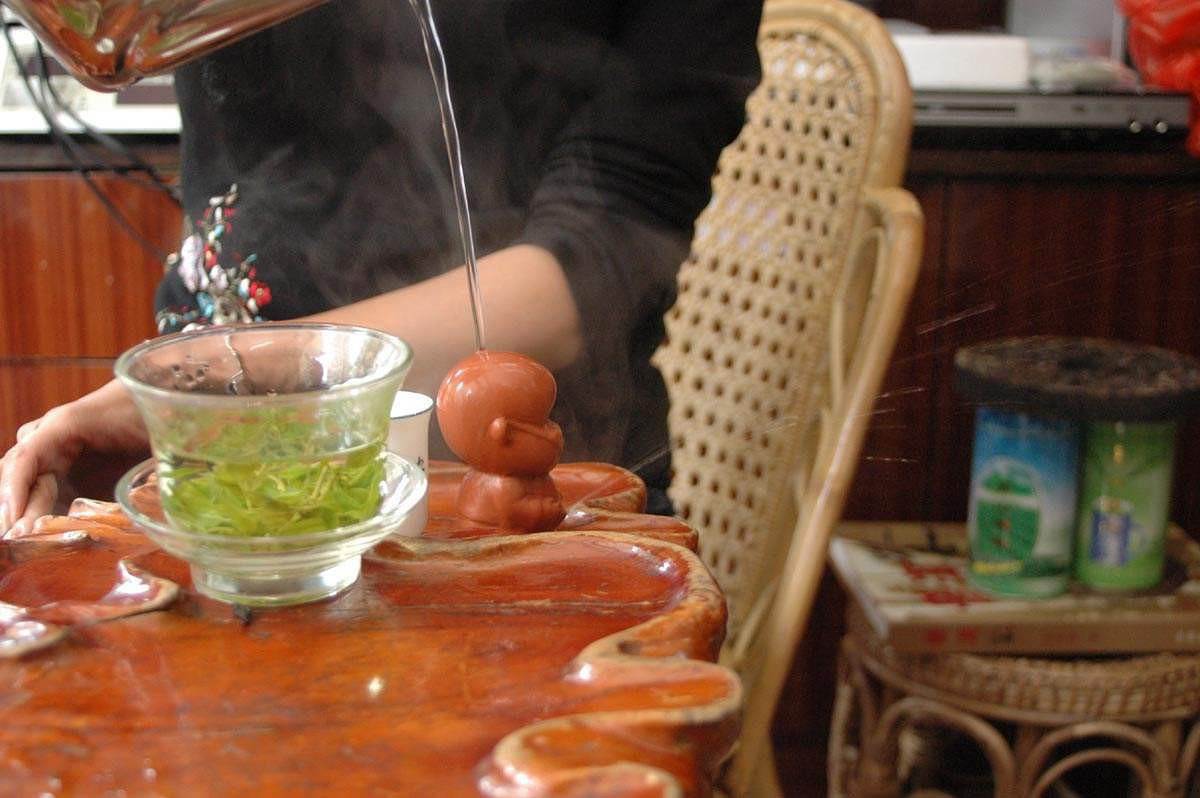




 LaNutrition.fr, le 07/05/2009