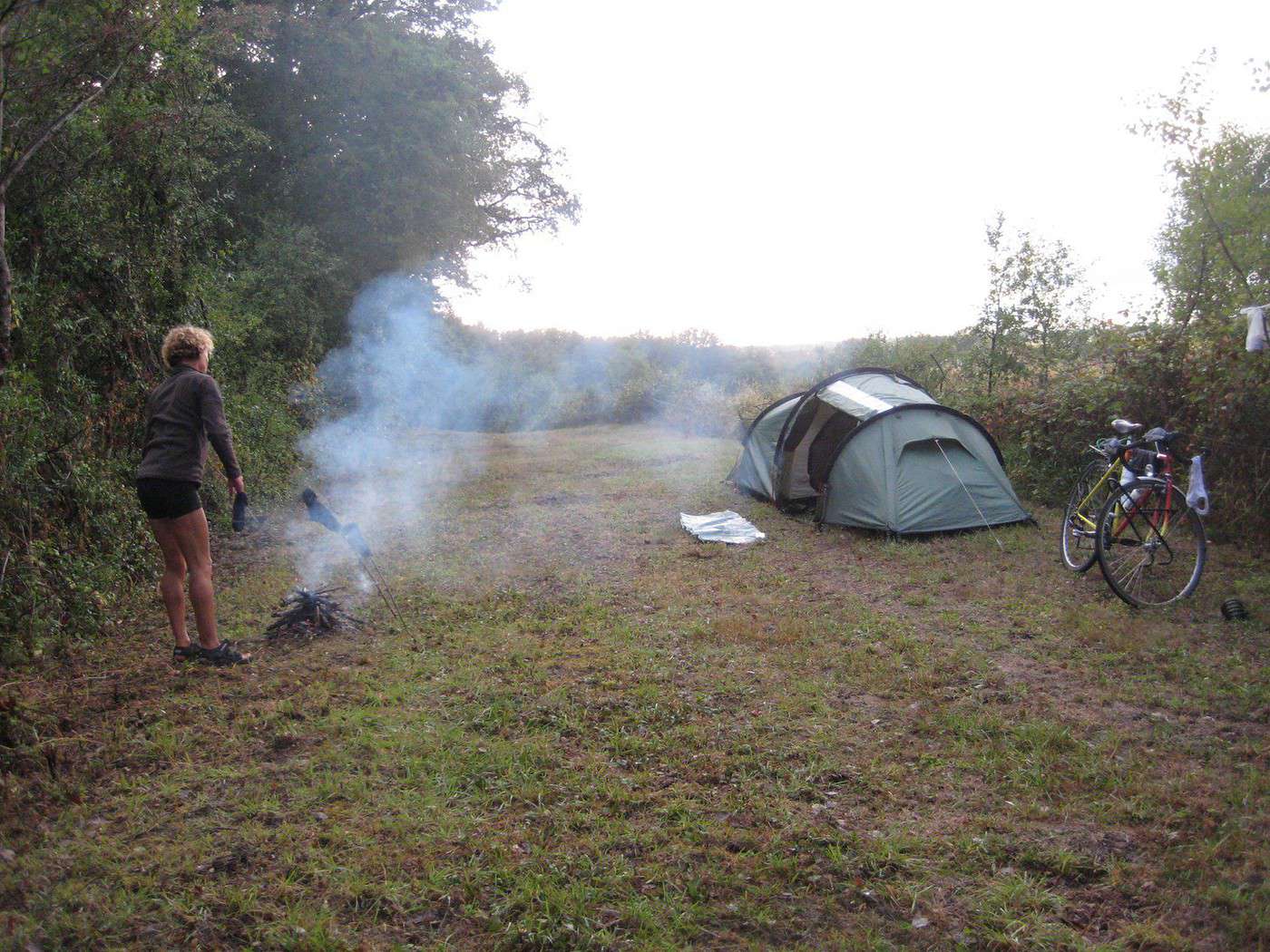
Premier sujet d'un randonneur débutant (avec tente) sur un sujet que je n'ai pas vu traité dans ce forum.
Juste une question suscitée par les conditions météo actuelles, à combien de jours de pluie consécutifs évaluez-vous qu'une randonnée en vaut encore la peine ? 😏
C'est certainement très subjectif. J'ai par exemple l'impression d'être beaucoup plus gêné par la pluie que par la chaleur ou le froid.
Le ressenti n'est pas non plus le même quand on sait qu'on aura un lit chaud et douillet à l'étape, par rapport à un bivouac. Et pas le même en vélo qu'à pieds.
Ma deuxième question, qui découle de la première : quelle confiance accordez-vous aux prévisions météo ?
(question qui fera sourire ceux qui partent au long cours et qui n'en tiennent pas compte !)
J'ai l'impression de me laisser trop influencer, au point d'avoir déjà repoussé une randonnée d'une semaine en voyant 4 jours de pluie sur 6 alors que c'était finalement meilleur que prévu, et que j'aurais sans doute pu la faire. C'est trop bête et on se traite de tous les noms d'oiseaux, je m'en suis voulu d'avoir manqué cette occase de rando par ... crainte ?
Peut-être trop influencé par un environnement obsédé par le confort ? c'est sûr qu'il y a comme une sorte de crainte latente (je n'ai plus 20 ans non plus...!). Mais après tout, c'est peut-être juste une réticence à essayer de faire passer ?
Il y a évidemment aussi la qualité du matériel emporté pour faire face aux intempéries, mais ce n'est pas tout à fait la question posée.
Je serais bien intéressé de savoir si certains d'entre vous se sont donnés des critères (genre tempête du siècle ou tremblement de terre...), ou si vous partez de toute manière avec l'idée qu'on verra bien, et comment vous vous en débrouillez.
Cela me sera certainement utile, ainsi qu'à d'autres. Merci d'avance.
Olivier
La pluie en soit, ne me dérange pas trop. Surtout à cette époque de l'année ou même dans le nord de l'Europe, elle tombe rarement sans discontinuer sur plusieurs jours. D'ailleurs moi je m’arrêtes assez vite quand il pleut et j'en profite pour faire une pause, une sieste ( j'adore le son des gouttes qui tombent sur la tente, ça m'endort ), des courses, prendre un café et discuter, etc ...
Le seul truc qui me détruit le moral, c'est l'humidité qui en résulte parfois ; le bivouac marécageux, le duvet humide, les fringues qui sèchent pas etc ...
Pour faire les deux, je trouve aussi que c'est plus un problème à pied car trouver un bon endroit pour s'abriter/bivouaquer est plus difficile, plus long.
Maintenant je sais que l'erreur à faire, c'est de vouloir avancer goutte que goutte 😛
Bonjour,
Je ne m'occupe pas des prévisions meteo car je n'y crois pas trop. En été il pleut pas souvent, et rarement plus de qq heures en France. De toute facon je suis équipé pour m'en protéger. Mais à l'étranger c'est pas la meme chose. En Aout 2010, 48h non stop de pluie en Allemagne. On attends qq heures et puis on se dit "faut y aller", ca va s'arreter le soir et ca s'arrete pas, le lendemain pareil. J'ai du monter ma tente mouillée sur une pelouse détrempée. Tout mes vetements étaient humides. Je les ai séchés dans une laverie automatique. Sur trois semaines de voyage Paris Prague, j'ai eu 10 jours de pluie, uniquement en Allemagne. Pendant un moment j'avais de la pluie tous les soirs vers 19h.
L'année suivante j'ai été au Portugal...
Ça doit être sympa le vélo couché dans ces cas là : ça fait baignoire 😛
Mon pire souvenir, Irlande septembre 2009 : 12 jours de flotte quasi non stop sur 15 de rando à pied. Tous les soirs, je devais planter ma tente sur une éponge gorgée d'eau en essayant de la faire tenir comme je pouvais, avant de me résoudre finalement à exploser mon budget dans les B&B. Lacs et rivières en crues, même les Irlandais n'en revenaient pas. Pour une fois, j'étais vraiment soulagé de rentrer ...
La pluie ne me dérange pas s'il s'agit d'e quelques bonnes averses sur le vélo car on sèche très vite en pédalant mais il est clair que sous la pluie le plaisir n'est plus le même et mieux vaut donc que ça ne dure pas trop longtemps.
Le plus à craindre finalement c'est de finir la journée trempée sous une pluie continue en devant encore s'installer sous la pluie le soir. Là je te rejoins, l'humidité toute la nuit jusqu'au réveil use vite l'organisme physiquement et moralement. Ca m'est arrivé récemment, aucun camping d'ouvert dans le secteur où j'étais, j'ai opté pour la chambre d'hôtes et c'est appréciable quand le temps est vraiment mauvais, surtout au mois d'avril quand les températures peuvent être encore basses, mais ça doit rester occasionnel selon moi car camper fait partie intégrante du voyage.
Bonjour,
Tout d'abord pour résister à la pluie. Il faut s'organiser un peu. (je pense). Une cape à vélo. Une casquette(car je porte des lunettes). Une tente séparer en deux. le DT a l'arrière sur le vélo et la chambre et le duvet dans une sacoche avant.Pour les chaussures les sandales c'est le top. s'acchèche très vite. ça c'est pour l'été.
L'hiver je me recouvre de goretex manteau+pantalon+sur-chaussures
Ensuite rouler sous la pluie fait partie du charme du voyage.Je regarde jamais la météo je m'adapte. En plus la pluie créer des lumière super sympas en fin de journée; idéale pour les photos.
je dirais
pluie du matin n'arrête pas le pèlerin, surtout si il a une bonne pèlerine, sauf si celle ci est trop câline
en principe il pleut rarement plusieurs jours de suite toute la journée, sauf .. en 2013
un équipement adéquat bien sur
il ne faut pas mépriser les gros orages et les épisodes cévenoles et les crues
cb
Claudio de la Faverges.
Bonjour amis cyclotouristes, claude passionné de voyages à vélo favergien et défenseur du cycliste.
plus la carte bleue est foncée et plus le bagage est léger
en anglais "the more the card is blu the less the luggage is heavy"
en aout 2007 il pleuvait bcp et longtemps au nord de l Espagne et en France, c etait infernal
j avais croisé un cycliste (riche) a Santander qui avait décidé de louer une voiture et de partir vers l andalousie. parfaitement compréhensible
1 c est la lumière qui rends belle la nature. et on est en vacances aussi. pas des masos !
2 l humidité peut gâcher completement le voyage à mon avis si ça dure trop
en 2007, à la fin de mon voyage (nord Espagne) mes chaussures étaient moisies et bonnes à jeter !
irratrappables. j avais roulé sous pluies battantes plusieurs jours
humidité => developpement des bacteries
si on ne peut pas secher les fringues ça ne va pas
faut pas que ça soit tous les jours
la tente : si ça se mouille dedans alors et qu on seche pas alors là c est une cata
donc perso j essai de choisir mes randos en fonction de la meteo et donc peu de temps avant le départ !
faut dire que je reste en france en general, et aussi je voyage en solo donc j ai une grande liberté de choix
je regarde "où y a t il du soleil maintenant ?"
et hop j y vais !
j essai aussi dorénavent de privilegier les parcours dans la nature, sans bagnoles et bruit
tiens : de meme il y a 3 ans canicule dans le sud, coté de Narbonne : c etait le seul endroit ou il y avait du soleil en France sur la carte de meteo !! donc j ai pris un billet de train de nuit et hop
seulement apres c etait la canicule. air irrespirable
alors je me suis rabbatu sur le canal du midi pour me proteger
d ailleurs je n arrivais à monter les pré-pyrenées avec mes sacoches ! mon idée de départ etait de faire Narbonne Hendaye
j ai fait Narbonne > canal du midi vers le nord et puis un moment je suis redescendu vers le sud ouest
plus long mais sans la canicule et le dénivelé inadapté à mon chargement
si on est en groupe, si on planifie à l avance un voyage loin ce systeme n est pas faisable bien sûr
les meteos extremes peuvent gacher un voyage, oui je le crois
C'est sur que la pluie non-stop, au bout de quelques jours ça devient plus possible.
Mais, si on arrive à sécher de temps en temps au cours de la journée en pédalant, si on arrive à garder l'intérieur de la tente sèche, le duvet sec, si la température est assez élevée (perso, je pars toujours en juin et septembre)... alors il faut imaginer ce que l'on ferait en vacances avec la même météo.
Faire du vélo s'accommode assez, je trouve, avec la pluie... on a pas froid, on ne s'ennuie pas (si le paysage reste sympa). Je garde un très bon souvenir de la partie allemande du Danube sous la pluie, les paysages n'en étaient pas moins beaux, et rouler dans la boue avait un certain charme.
Que ce soit un peu l'aventure augmente, je trouve, le plaisir... et ça crée des souvenirs pittoresques.
Le plaisir de trouver du réconfort, dans une toute petite toile de tente, sous une pluie diluvienne après une étape difficile...ça peut être délicieux.
Pour couper avec le train monotone de la vie quotidienne, ça peut être le top.
Mais bien sur, comme pour tout ce qui est bon, c'est une affaire de dosage...
11 jours de pluie consécutif maximum. Bien sûr il ne pleuvait pas du matin au soir mais c'était systématique, toujours une averse en fin d'après midi pour te tremper avant de planter le tente. L'histoire de réenfiller les vêtements mouillés le lendemain :)
Le voyage est différent de la rando à la journée. Quand tu regarde par la fenêtre avant d'aller rouler et qu'il pleut, forcément tu n'a pas envie, ou alors il faut avoir un objectif en vu. Mais quand tu es en voyage, tu n'a pas le choix, donc tu roule sans te poser de questions.
Après si tu as tous les vêtements de mouillés, que tu range la tente trempé tous les jours et que la situation s'éternise, c'est vrai que ce n'est pas marrant, mais ça arrive rarement aussi.
Choisi tes itinéraires en fonction. Une averse quand il fait 40° c'est différent que quand il en fait 15. D'un côté tu n'a pas froid et sèche dans la foulé, de l'autre tu es congelé et mouillé pour le restant de la journée !
Je viens justement de m'en prendre une bonne cette après midi, ça faisait longtemps, mais ce n'était qu'une sortie éclair d'une heure, pas de quoi être traumatisé :)
Après si tu as tous les vêtements de mouillés, que tu range la tente trempé tous les jours et que la situation s'éternise, c'est vrai que ce n'est pas marrant, mais ça arrive rarement aussi.
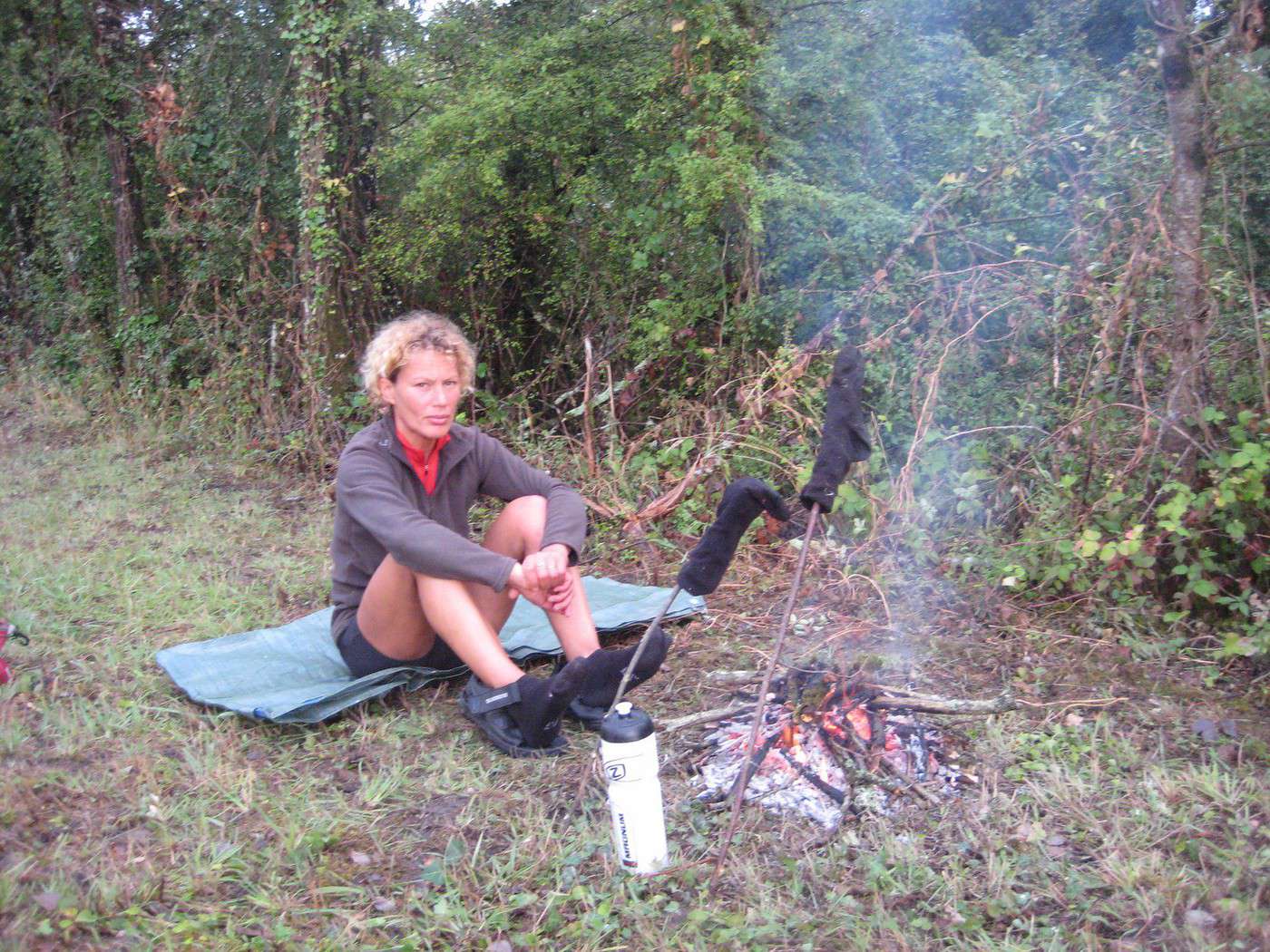
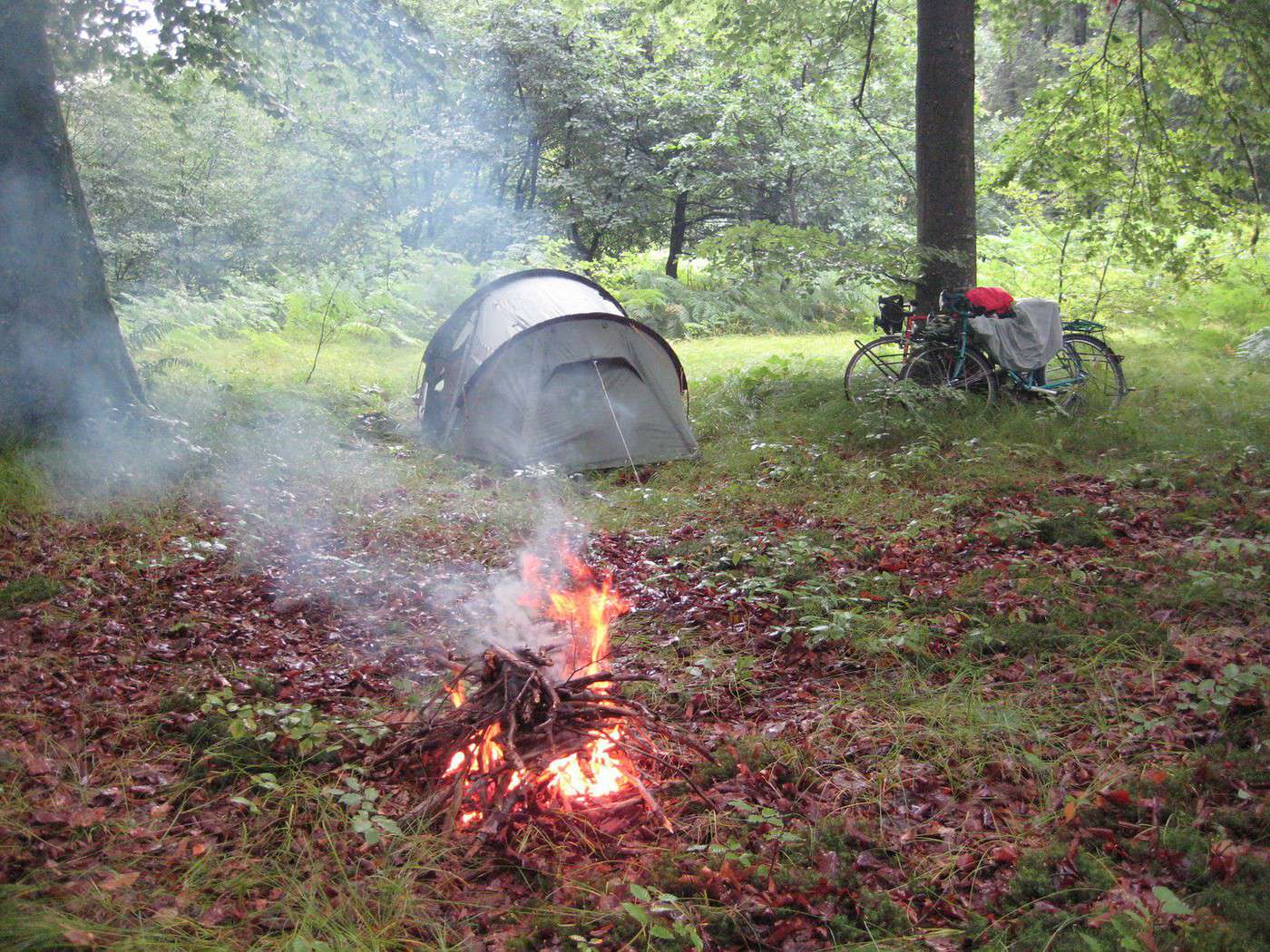
Lorsqu'il pleut pendant plusieurs jours, la solution en image😎
Encore une astuce: pour éviter d'avoir trop d'humidité sous la tente, rein de tel qu'une bougie allumée en plus c'est romantique😛
En 2011, un peu avant le 14 juillet, j'ai pris un orage le soir en arrivant à Mulhouse, le lendemain pluie, le surlendemain idem avec météo en mauvaises prévisions, plus rien de sec, abandon, retour à la maison pour me sécher. En allant à la gare de Mulhouse j'ai rencontré 4 cyclistes de Douai qui allaient jusqu'à la mer noire, pas découragés par la pluie. Il en ont tellement reçu qu'il ont fini par capituler plus loin, voir leur blog: http://4avelo.canalblog.com/
Quand tout est mouillé le moral tombe et j'arrête, "il n'y a plus d'essence dans la mobylette".
"Ne cherche pas à suivre les traces d'un autre, cherche plutôt à savoir ce qu'il cherchait."
Merci collectif pour toutes ces réactions, car dans chacune il y a quelque chose à prendre (apprendre !), qui pour sa philosophie, qui pour un truc utile, qui pour une expérience à garder en mémoire.
La réponse et les remerciements ont un peu tardé puisque j'étais en train d'essayer de mettre tout cela en application !
Pas de grosse pluie, mais déjà le truc de désolidariser le double toit de la tente a été bien utile quand on n'a pas trop le temps de chanter en attendant qu'ça sèche (condensation).
Super !
NB : je ne sais pas où caser cette info, mais en redescendant la Drôme, les crues ont littéralement englouti le sentier ! le souci, c'est que si c'est indiqué sur place (au dernier moment), ce n'est pas indiqué à l'avance, donc quand on s'en aperçoit, il faut se refaire un bout de chemin en arrière... c'est très spectaculaire car on sort d'un tournant... sur un surplomb de plusieurs mètres. Cela fait bizarre !
On peut resister longtemps avec la pluie pourvu que l'on est le soir des vêtements secs et un duvet sec.
La journée selon la saison : veste gore-tex, pantalon gore-tex, cape, sandales pour l'été et bottes caoutchouc l'hiver.
Prévoir des arrêts abrités.
lorsque l'on voyage à vélo, l'on est toujours tributaire du temps donc s'équiper en conséquent afin d'y faire face, comme dis précédemment, le principal étant de dormir le soir au sec et au chaud. Le couchage, duvets et tapis de sol voyageant toujours dans un boudin étanche.
Par expérience, la meilleure des choses à faire lorsque la pluie persiste pendant plusieurs jours, c'est de s'arrêter dans un endroit abrité et attendre.
Hi,
what are the easiest ways to get back from Nordkapp without pedaling—
train, boat, or plane?
Has anyone already done this?
Thanks for sharing your tips!
Hi, does anyone have recent info on the Shikoku pilgrimage? We’re traveling as a pair by bike, and I plan to camp whenever possible because from what I’ve seen, accommodations are pretty expensive, especially for long trips. I’d love any info or tips—thanks in advance! Aichatou
I’m planning to leave Nice for Toulouse around 10/15 and I’m looking for tips / great deals regarding:
- The route: I was thinking of taking Nice - Grasse - Draguignan - Salernes - Cadarache - Cavaillon - Arles, then the Camargue, Sète, and the Canal du Midi to Toulouse. The idea is to avoid high-traffic roads and too many steep climbs. Are there any spots to avoid or must-see stops? Since it’s been a while since I’ve been on the road, I was thinking that sleeping indoors might be preferable. If you have any budget-friendly accommodation suggestions along part of the route, don’t hesitate!
Thanks in advance, and if you’re in the area around that time, we could ride together... Ciao.
Hi,
I need to arrive in Thessaloniki by bike at the end of September and I plan to head to Istanbul along the coast.
Could anyone help me pick the best route? Safety, difficulty.
Thanks in advance.
Marc
Hi everyone! Thanks for welcoming me to the forum :)
I’m preparing for a long trip heading to Nepal, with stops along the way depending on my mood, work needs, and the season. I cycle a lot, but this will be my first big touring adventure. I’d like to camp regularly to keep costs down, so I’ll be riding on all kinds of surfaces: smooth and rough roads, main highways and rocky paths to find my camping spots, flat terrain and the occasional steep slopes.
For my bike model, I’m prioritizing durability, versatility, and repairability. From that perspective, I prefer a steel frame and fork with rim brakes since I’m used to them. I’ve narrowed my choices down to four models:
- The VSF Fahrradmanufaktur T-700 LTD (1400 €): steel frame, aluminum fork, hydraulic rim brakes, 28" wheels, 40mm tires, 36 spokes (2 mm), lightweight rear rack (max 20 kg), no front rack included, smallest gear ratio of 0.72, weight of 13.9 kg.
- The VSF Fahrradmanufaktur TX-400 (2200 €): steel frame and fork, hydraulic rim brakes, 26" wheels, 50mm tires, 36 spokes (2.34 mm), front and rear racks included (40+18 kg), smallest gear ratio of 0.71, weight of 15.9 kg.
- The Genesis Tour de Fer 30 (2150 €): steel frame and fork, mechanical disc brakes, 28" wheels, 36 spokes, 40mm tires, front and rear racks included (27+10 kg), smallest gear ratio of 0.77, weight of 15.9 kg.
- The Rockrider ADTV 900 from Decathlon (1700 €): aluminum frame and fork, mechanical disc brakes, USB port, 28" wheels, 47mm tires, 28 spokes, front and rear racks included (40+20 kg), smallest gear ratio of 0.71, weight of 17.1 kg. This is the successor to the Riverside Touring 900, which was a hit.
I’ve got a few questions:
1/ Should I go for 26" or 28" wheels for my trip? 26" wheels seem better for rough terrain, but 28" wheels feel more comfortable on roads. I’ve also read that 26" tires/tubes are easier to find.
2/ Do you recommend a steel frame and fork over aluminum? I’m guessing a high-quality aluminum frame and fork would be better than a low-quality steel one, right?
3/ Regarding the smallest gear ratio, is 0.71 a good number for a loaded bike in the mountains?
4/ Finally, what do you think of these four models for my project? My heart leans toward the TX-400—it seems to combine the versatility and robustness I’m looking for. But the price difference with the T-700 LTD is making me think twice!
Thanks so much for reading and sharing your thoughts!
17 days, 1,400 km, and 17,500 m of elevation gain cycling in northern Vietnam! 🇻🇳 🚴🇻🇳
From the misty Fansipan to the breathtaking landscapes of the Ha Giang Loop, from remote villages to vibrant markets...
I cycled through the north of the country, getting up close with its people—through mud, heat, endless mountain passes, and unforgettable encounters.
Most importantly, I discovered a Vietnam far different from the usual tourist circuits.
Join me on this adventure through a video that captures these 17 days of travel. :)
If Vietnam calls to you, come ride a stretch with me!
Hi,
can anyone give us some tips on how to get to North Cape from Lyon Gerland?
What’s the best route to join the EuroVelo 7?
How many kilometers is it from Lyon to North Cape via EuroVelo 7?
The best month to leave—we’re thinking early May.
Thanks for any advice!
Looking for a female travel companion for a cycling trip (arriving by plane in Porto Alegre, Brazil, and cycling toward Montevideo, Uruguay, returning by plane to France from Buenos Aires, Argentina) – 1,500 km
Hello everyone!
I’m planning a cycling trip across Brazil, Uruguay, and Argentina, with a departure set for late October, November, or December. I’m looking for a travel companion to share this long-distance adventure with.
Experience:
I already have solid experience in bicycle touring in Georgia, Kazakhstan, and Kyrgyzstan. Currently, I maintain excellent physical condition by cycling an average of 250 km over 3 days per week (4 hours a day at 20 km/h).
The trip & the pace:
Daily pace: Between 50 and 80 km per day, to make steady progress while taking time to explore.
Accommodation: Flexible and authentic. We’ll alternate between wild camping, campsites, Warmshowers, small guesthouses, and budget hotels depending on opportunities and the weather.
Looking forward to reading your message and planning this amazing journey together!
Another long-time dream of Claudio’s: the Petit Mont Cenis pass and the dam at the eponymous lake.
A place where many Italians, including my father, worked in the 1950s–60s.
Faverges → St-Michel-de-Maurienne → Lanslebourg → Petit Mont Cenis → return. 315 km, 3 days. Bivouac at St-Michel-de-M.
Brouter link
Leg One: Faverges → St-Michel-de-Maurienne
Leg Two: St-Michel → Lanslebourg → Mont Cenis Lake → St-Michel
Leg Three: St-Michel → Faverges
And it finally happened in August 2026: in the Maurienne Valley about the famous cycle route known as the V67
🇷🇼 Cycling in Rwanda: 4 episodes, an off-the-beaten-path adventure
After 3 weeks and nearly 1,200 km by bike across Rwanda, I made 4 videos to share this adventure in a different way: the landscapes, the encounters, the villages… but above all, all those incredible scenes of everyday life.
The 4 episodes are available here:
👉 https://www.youtube.com/playlist?list=PLGnfbxjccWAg
The 4th episode focuses on rural Rwandan life: simple, authentic, and sometimes surprising scenes that you only truly discover when you take the time to travel by bike.
If you have a few minutes, let yourself be transported to Rwanda…
Hi,
We bought the MSR bike tent model (2-person + large awning that can fit 2 bikes) back in 2005. It’s served us really well, especially during a year-long trip in Africa. Now, one of the poles is broken, and we’d love to replace it since that’s the only issue with the tent—we still love it! The poles are 9.35 mm in diameter, with 8 sections of 49 cm and 2 sections of 28 cm. Total length when assembled: 416 cm. Actually, two large sections are broken: one straight and one curved. It’s a pain to find replacements since this model is no longer sold anywhere.
Would anyone have this model lying around unused and be willing to sell me a pole?
Hi everyone,
In early April, I’m redoing the Vélo Francette (La Rochelle to Ouistreham), and then I’d like to cycle along the Cotentin Peninsula (which I don’t know at all), follow the coast up to Cherbourg, and then head back down to at least Saint-Malo. I’d love to know if it’s pleasant for cycling—are the roads nice? Not too windy? What are the must-see spots? Any great campsites? All your tips and advice are more than welcome, and I thank you in advance.
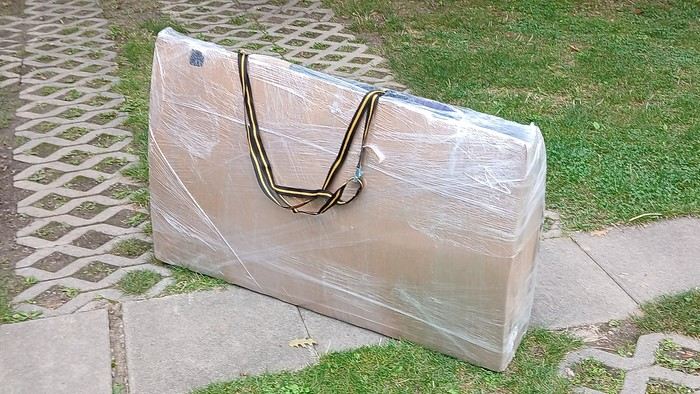
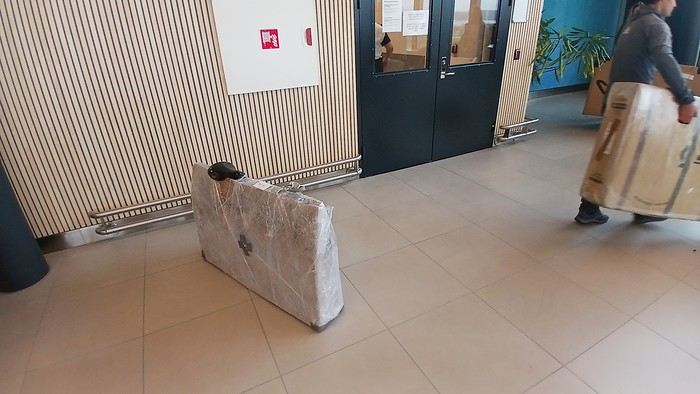
After testing it for three years across various modes of transport, I’m sharing this video of a bike packing case. It’s made from recycled cardboard and shrink-wrapped, with adjustable thickness and added bubble wrap depending on the level of protection you want.
Installing spacers at the fork and chainstays makes the packaging compact. With the fifteen-odd euros for shrink-wrapping at the airport, this case travels really well.
https://youtu.be/_GDJi-GqmkM
- Low bulk (1.10m x 0.70m x 0.25m for a large frame), it fits vertically in train luggage compartments and the total dimensions (x+y+z) don’t exceed 2.40m.
- Two carrying solutions for public transport and easy handling by airport staff (no more tears in the cardboard from openings).
- Discreet packaging when dealing with bus drivers and train conductors, as it looks like an ordinary parcel.
- No need to return to the starting point to retrieve the case from your outbound trip, which you’d otherwise have to store somewhere, or deal with a bulky cover to pack in your panniers.
- You can still check tire pressure through the plastic film without damaging the packaging too much.
Drawbacks: Around 3 hours for this lengthy and meticulous process—removing the wheels, pedals, handlebars, and derailleur without misaligning them, then securing all components to the frame.
If you get a chance to test it, send me your feedback for future improvements.
I just took a trip in Tunisia from Tozeur to Douz, skirting Chott el Jerid to the south. I’m back with the urge to keep going further south via the 4x4 tracks to connect Douz to Ksar Ghilane. Has anyone driven this route recently or explored southern Tunisia?
Thanks for your tips!
fix
😎Fellow traveling cyclists or not, all of you who love travel, the pleasure of physical effort, nature, beautiful machines, people with true passions they seek to fulfill, and who also enjoy reading great literature about all this—the *200* magazine is for you just as it is for me. I should mention I have no financial or other interest in this (in an era where we accuse our politicians of all sorts of vile interests, I prefer to take precautions). I’ve been subscribed since the beginning, and every three months, I get my 130 pages of dreams (the magazine just went from 110 to 130 pages).
It covers everything from the trans-America route to the TCR (Trans Continental Race) from Belgium to a small town in Turkey, with mind-blowing averages—4,000 km and 80,000 m of elevation gain in 8 days and 15 hours for the winner. Let that sink in, and all of it without assistance—accepting a patch could penalize you. There’s also a story about crossing Iran, encountering one of the world’s most welcoming populations, following in the footsteps of Nicolas Bouvier, as well as retirees leisurely traversing France. The common thread in all these stories? Beautiful writing. Take, for example, a stunning article: *"Passengers of the Cold: From Edinburgh to Thurso, at the very north of Scotland, 550 km of moors, coasts, and icy wind. In Thurso, the road ends at a quay, facing the Orkney Islands. We wanted a November trip, off-season. We wanted to surprise winter. Just before the snow."* A sublime piece on the experience of facing adversity and the chance encounters along the road and in the elements.
Before I embarked on my own bike trips, I dreamed a lot about them—from the Atacama to the Gobi, along the Mekong, and not forgetting France. And now, these 130 pages every quarter keep those dreamy vibes alive through stories written in the most beautiful prose.
I’ll stop here because it might sound like I’m advertising, but if you don’t know *200*, I invite you to discover it. It’ll give you wings for the most incredible challenges or simply reinforce your desire for slow rides with your eyes open to others and nature.
A little news to wrap up: Axel Carion and a friend just broke the record for crossing South America from Colombia to Ushuaia in 59 days. On its own, that doesn’t mean much, but I can’t help it—it makes me dream. You should see how he talks about it, the flashes of that wild nature he’s stored away: a snowstorm at Paso Jama and the surreal sight of the suddenly snow-covered Licancabur!
Luc
PS: The magazine is called *200* because a day’s ride starts at 200 km—well, I’ve never done a ride like that since my longest was 167 km (with 18 kg of luggage, mind you), but why not one day? The magazine will explain how to tackle your first 200, and then the question in conclusion: when will you do your first 300?😏
I’ve got my flight ticket sorted—departing in mid-November and returning in mid-March. I’ll arrive in Santiago and leave from Buenos Aires.
I’ve already been to southern Argentina, specifically Torres del Paine National Park, and I’d love to go back to do the full W trek (I only did the shorter version last time).
I also want to do some hiking and maybe even tackle a summit. I climb and occasionally do some mountaineering, so I’ll definitely be going with a guide.
I plan to start around Temuco in Chile, with the idea of heading toward the lakes, then taking the Carretera Austral.
I’m not sure if I’ll go all the way to Ushuaia—it’s supposed to not be *that* worth it, except for the bragging rights of saying you’ve been to the end of the world.
I saw there are lakes in Argentina too.
I don’t have a precise itinerary, but what I’d love is, once I reach the southernmost point of my trip, to take a mini-cruise to see some wildlife. Any tips for that?
What kind of sleeping bag did you take? Is a 0°C (32°F) one enough?
And one last question: white gas stove or can I get by with my gas stove?
I'm developing a free and open-source web app for planning walking and cycling trips (and even car trips). You can create a route by clicking directly on the map to add waypoints, and it can consist of multiple stages. The app provides tools to edit the stages and the overall route, and to display useful information (distances, altitudes, and elevation changes). A relief profile can be shown as a graph for a specific stage or the entire route.
Once the route is ready, it can be exported as a GPX file, which can then be used with a GPS or a mobile navigation app.
The app is built in JavaScript and runs entirely in the web browser. It uses the Leaflet library and several OpenStreetMap-based services. Initially developed for my personal needs (I enjoy hiking and cycle touring), I’d be happy to share it with anyone who might find it useful. It’s free to use, doesn’t require an account, and the source code is available.
hello fellow cycling enthusiasts
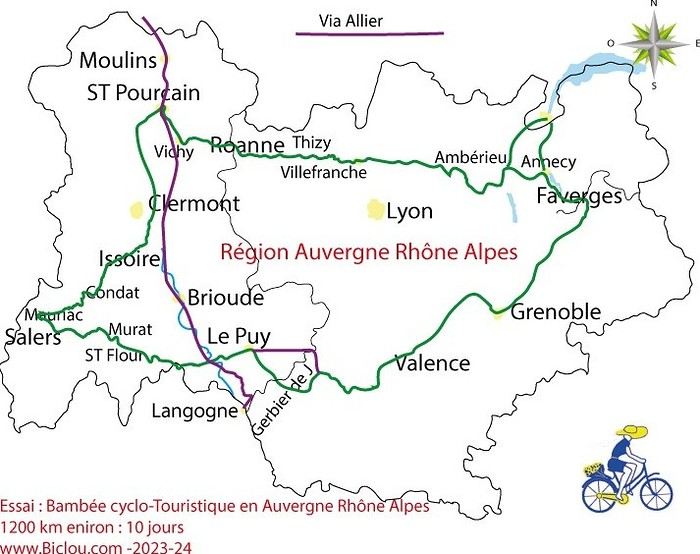
here’s a travel journal of the cycling tour through the Rhône-Alpes Auvergne region by Claudio
zouli
it was the plan
http://cbandiera.free.fr/parcours/auvergne-Ralpes/
the trip was completed
story being posted online soon
1100 km in 11 days
beautiful and varied regions
Hello,
We’d like to go on a 3- to 4-month bike trip starting in December, crossing from Assam (northeast India) to New Delhi via Nepal.
Are there routes with light traffic along the Brahmaputra and through Nepal?
We’re also looking for any info on accommodations, wild camping, local interactions, etc.
Thanks,
Michel
I’m planning to cycle from Morlaix to Brest (via Roscoff and the V45 coastal route). We’ll start riding on August 16th for 13 days (with stops for island visits, surfing, etc.). Is there a lot of traffic at this time of year? I’ve got two kids, 11 and 13, and we don’t like riding in the middle of cars (we’ve already done the Vélomaritime—Caen to Cherbourg—the Loire route from Orléans to Saumur, the Vélodyssée from Nantes to Royans, and the canals like the Nivernais and Bourgogne, where there were plenty of bike-only lanes, which isn’t the case on this route).
Thanks for your help if you’ve already done this route in late August!
Virginie
Hi there,
I’ve been road cycling for several years, and I’m about to switch to gravel in the next few days—I’m waiting for my bike, which should arrive this week.
I’m planning a bikepacking trip in a few weeks along the Véloroute V81, also known as the Vélosud, from Biarritz to Le Barcarès.
Has anyone here already done this route? Any info is welcome, whether it’s about the route itself, gear, or accommodation. I’ll prioritize staying with locals as much as possible. On that note, I just signed up for the brand-new site *Guidon et Couette* ((www.guidon-et-couette.fr)), which offers free accommodation between cyclists across the country, but there’s almost no one listed along my route!
Thanks in advance.
Laurent.
Hi there, I’m planning a cross-Canada bike trip, and I’ve got a question that might seem silly, but could someone tell me how to pack a bike (in a box, with a fragile sticker... I don’t know) for a flight? Thanks in advance!
This summer, we’re planning to cycle along the EV 19 that follows the Meuse River from Langres all the way to Rotterdam.
My question is about getting back to Nantes.
Do any of you know what the best return option might be? I’d love to hear about your experiences.
I saw that FlixBus doesn’t take bikes.
By train, I think it’s possible but would involve multiple local trains.
We were also wondering if there’s a boat from Rotterdam to Saint-Nazaire that could take passengers with bikes.
Any tips or experiences you can share would be really helpful—thanks in advance!
Have a great evening
I’ve gotten used to crossing Europe by bus to return by bike.
It was really convenient to take the bike without having to disassemble it.
But FlixBus no longer accepts bikes...
What alternatives do you know about?
Thanks.
Hi there,
I’m planning to ride the Dutch section of the EuroVelo 19, from Maastricht to Rotterdam.
Since it’s too complicated to bring my bike on the train, I’m looking to rent one locally.
I’d love any tips or bike rental shop recommendations—I’m struggling to find options even in Rotterdam.
The plan is to rent in Rotterdam, take the train to Maastricht with the bike, then cycle back to Rotterdam.
Thanks in advance for any advice or suggestions!
Nath