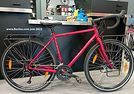
My partner wants to change her touring bike because it’s not quite the right size for her.
We don’t want touring bikes that are too heavy.
Travel shouldn’t mean hardship—it’s not a punishment.
I’ve had just one bike myself: a Specialized mountain bike for ages, with plastic mudguards, and I’ve ridden through 14 countries with it, plus our weekend trips. It’s super sturdy.
My wife would like a mountain bike that’s lightweight but tough enough to add a rack, with a rigid front fork, 26 inches, smooth-rolling, not too expensive, and that’s about it.
Anyone have good feedback or recommendations on a brand?
Thanks
There are plenty of good mountain bikes, hybrid bikes, and touring bikes for traveling.
Good bike shops and good sellers make a difference.
After that, it all comes down to budget.
First tip: get a bike that fits your size and feels comfortable to ride—everything else depends on that.
I think I’ve got something on that (no guarantees):
http://cbandiera.free.fr/matos/premier-velo-tableau.php
Claudio has a Trek that originally cost 400 €
and was later refurbished.
The price went up after that.
http://cbandiera.free.fr/matos/fanette.php
But originally, it was 400 €—
a solid frame.
The downside of this mountain bike is that the bottom bracket axle is a bit higher than on a hybrid bike.
Claudio de la Faverges.
Bonjour amis cyclotouristes, claude passionné de voyages à vélo favergien et défenseur du cycliste.
plus la carte bleue est foncée et plus le bagage est léger
en anglais "the more the card is blu the less the luggage is heavy"
Whatever.
If you have that much experience, you don’t need this forum.
You should know that a touring bike’s frame is specifically designed for travel.
Form follows function—don’t mix everything up, even if anything is possible.
Hardtail mountain bikes with no rear suspension and rigid forks don’t really exist anymore... You might still find that kind of bike second-hand (we’re keeping our "old mountain bikes"—they were Lapierre titanium frames... probably won’t find a better frame). But there are limits: for example, I can’t fit disc brakes, which is the only "upgrade" I’d happily make.
If you can’t find one, there are some great XC/trail hardtails with no rear suspension, and you can still find "rigid forks" to replace the hydraulic fork (maybe you could negotiate a trade-in for the hydraulic fork when buying new?). Personally, that’s what I’d consider if I had to replace mine. The "bike touring" bikes on the market are a bit pricey for my taste, and often way too heavy.
An Uber-like ride instead?
Personally, with my lightweight touring bike (13 kg all in, including the Tubus racks), it's awesome and still nothing to report after over 30,000 km. And yet it's not even a touring-specific bike—I just heavily customized it to my liking.
Personally, since I also ride trails, I prefer a hydraulic suspension fork. Plus, I wouldn’t even save a kg with a rigid fork. And actually, I use 7005 aluminum frames, but I bought them back in 2012—same with the forks—so I could have V-brakes.
My partner’s bike for Africa was almost the same, but with a chromoly steel frame from Specialized if I remember right, and the fork was assembled with the top part second-hand from one place and the bottom from another shop, because a high-end hydraulic fork with V-brake mounts is impossible to find these days.
Happy trails, Pierre
tout le monde prétend que la Terre est ronde, mais ne le croyez pas, en fait elle est plate bien sûr!
http://mandolpierre.overblog.com
Any mountain bike from the 80s would do the trick since they had rigid forks and rim brakes.
You should check out old Decathlon steel frames—they were solid.
If you live near Germany, the second-hand market there is way bigger.
A good frame with sturdy wheels is what matters; the rest is less important, I’d say.
Trek used to sell (or still does?) the Trek 820, which was their entry-level model and made a great touring bike with a few tweaks. The new version, unfortunately, has a hydraulic fork.
Surly Troll
All the mounts are designed for all kinds of accessories, brake systems, and drivetrains—it's a real Swiss Army knife.
I don’t own one, but I’d love to! Though for me, it’d be its big brother, the Ogre.
You can also find just the frame-and-fork kit if you already have gear.
Personally, I went for a Koga World Traveller 29, and I swapped the original handlebar for a butterfly one, changed the pedals to Shimano with one side for SPD cleats and the other side flat (so I decide when I want to clip in), and replaced the saddle with a Brooks B17. Sure, it’s not a cheap bike, but I don’t regret the investment at all.
First off, you should tell us what kind of trips you’re planning! Long-term travel or just day rides in the area?
I’ve been passionate about bike travel since this summer but haven’t done any long trips yet. However, I’ve done several rides of over 150 km a day on my old entry-level MTB, and let me tell you, spending 8 to 9 hours a day pedaling becomes almost unbearable with all the back pain and saddle soreness. If your partner is thinking of long rides, I’d really recommend not skimping on comfort.
First, some bike shops offer ergo-scanners that adjust your position on the bike to the millimeter based on your body shape. I went that route myself, and I have zero regrets. Also, when you’re talking durability, that often means a steel frame, so the bike will be relatively heavy. My Koga weighs just over 17 kg fully loaded, but it rolls so smoothly that I ride faster than I did on my old bike, which must’ve weighed around 10–12 kg. The Koga World Traveller 29 has a triple-reinforced aluminum frame, a rigid fork, and comes with two water bottles.
Why insist on 26 inches? A 29er requires less effort to maintain the same speed as a 26-inch bike, absorbs bumps and vibrations better (a real plus for comfort), and these days almost all manufacturers are switching to 29 inches, so finding tires anywhere in the world isn’t an issue. The only downside compared to a 26" is slower acceleration (not a big deal—you don’t need to sprint on a touring bike).
Will the bike be heavily loaded with the rider’s weight plus luggage? If so, the World Traveller has hydraulic brakes, which are a real advantage over V-brakes when descending with a heavy load. It also comes with a dynamo hub and a 40-lux front light (a proper headlight) for those who want to ride at night sometimes.
I’m not here to push Koga—I’ve only tested their trekking bikes—but they’re designed for travel (though they also make road bikes). These bikes are built to be sturdy, easy to repair, with parts that are relatively easy to find anywhere in the world. Paired with the ergo-scanner, they’re super comfortable. The butterfly handlebar is also a big plus for comfort since it lets you change positions frequently, which really reduces back pain. The Brooks B-17 saddle is legendary—it requires regular maintenance during the break-in period, but it pays off after a few hundred kilometers. I’d advise against starting a long trip before it’s properly broken in, though for me, it was comfortable from my very first rides.
To sum up, I’d recommend starting by asking yourself the right questions:
- What will the bike be used for (weekend rides or long-term travel)?
- A lot of luggage or just a little?
- Rides of 3–4 hours a day or more like 8–9 hours?
- Capable of handling all types of terrain or mostly asphalt?
- Traveling self-sufficiently or not (dynamo hub or not)?
- Etc....
Thanks to everyone who replied—I just need to make my final choice now!
I should’ve started with the basics, you're right.
So:
For long-distance trips—7 hours a day on the bike
Budget: max 1500 €
Under 16 kg
No dynamo in the hub (we ride enough during the day, no need to add to it at night)
She’ll use butterfly handlebars
All types of terrain, but mainly roads
Average load for a woman (she’s not bringing her ironing board or vacuum cleaner, and of course the heaviest thing is her handbag 😜)
hi everyone,
I think when you're looking for a travel bike, the key criteria are: 1) reliability, 2) comfort, and 3) efficiency.
1) Reliability:
because when you're traveling, you won't necessarily find a mechanic at every trail turn, and besides, you've got other things to do!
so
steel frame because it's virtually indestructible and can be repaired.
simple and repairable drivetrain with 8 or even 9 gears at a push
rim brakes because disc brakes are way too fragile and really hard to repair (even mechanical ones)
clincher tires (no tubeless)
a rigid fork is more reliable and can even be relatively comfortable on a touring bike if it's good quality.
2) Comfort:
again, a steel frame (quality one!) beats aluminum.
leather saddle, but that's really a personal choice...
multi-position handlebars.
3) Efficiency:
even when you're touring, a bike with a bit of efficiency is still nice. Again, a well-made steel frame is ideal.
Why shouldn't aluminum be used in a bike frame?
the only reason manufacturers use this material is that it can be welded on automated assembly lines, or manually with less skill than required for welding a steel frame with 0.5mm tubes.
Since this metal has no elasticity, the frame undergoes heat treatment after manufacturing. It comes out with interesting mechanical properties but they don't last. (messenger cyclists in the 90s used 2 aluminum frames per season because after a few months, the frames lost their responsiveness)
to attach a rack, you need eyelets on the frame. On an aluminum frame, the threading is obviously in aluminum, so it's very fragile.
Finally, aluminum production is incomparably more polluting than steel.
And to finish, the weight argument doesn't hold up for a second.
the difference between aluminum and steel of equivalent quality for touring doesn't exceed 500-700g. So it's a very marginal difference on a bike that, when loaded, will easily exceed 30kg!!!
What wheel size?
26" is still by far the most common size worldwide. Then 700c can be a good choice for those who don't go too far off-road, and hybrid bikes are quite common now.
As for 27.5" and 29", their distribution is still limited.
Now you just need to find a good quality steel frame and fork that isn't a worn-out second-hand one or junk made from heating pipes.
And that's not easy!
In France, you should look at custom builders. Otherwise, Germany or England still have manufacturers working with this noble metal.
It's no longer a problem to find tires almost anywhere in the world.
I wish you good luck finding a tire that's anything other than 26 inches (and apparently Chinese-made) in many countries where bike touring is practically nonexistent!
It's true that in some countries it's more complicated than others, but I think it's also a matter of organization. Almost every long-distance bike tourist travels with spare tires. Personally, when I set off on my world tour, I plan to bring a set of winter tires and another all-terrain set that can handle any type of surface.
I've read tons of books about people who've cycled around the world, and it's clear that a good touring bike—even if you pay more—means minimal damage compared to a low-end bike. I know someone who's been traveling for over two years now on a Koga, and aside from the chain, they haven't had any breakdowns. Punctures are rare. I read somewhere (can't remember where) about a couple who rode over 10,000 km without a single flat. The World Traveller 29 has rims with 40 spokes, and believe me, that's solid... On my cheap bike, I messed up a turn on a descent and ended up in a field—result: the rim was completely wrecked, and about 125 € in costs for a new one. I guarantee that with the Koga, the damage would've been minimal, if any.
Otherwise, yes, steel frames are easier to weld than aluminum ones. On my Koga, it's reinforced aluminum, just as strong as steel. Just look at the finish to see it's built to last—there are almost no welds (the frame is practically one piece), except near the pedals and the rear rim. You'd really have to try to damage the frame. Of course, we're not immune to accidents, but in that case, whether it's aluminum (reinforced or not) or steel, I think the frame would be toast either way...
Koga has a lot of experience in designing bikes made for travel. Many well-known bike tourists trust them (like Marc Beaumont or Tilmann Waldthaler, among others).
That said, everyone has their own choices—I'm not disputing Mazzzz's advice, as it's good. I'm just sharing my experience and the comparisons I've been able to make in practice. And I'll say it again: for me, covering 150–160 km in a single day on my old bike versus my Koga is just absolutely incomparable in terms of comfort.
Now, as they say, two opinions are better than one. It's up to Nounours to decide. :) But anyway, with their budget, a Koga isn't an option.
Regarding the steel vs. aluminum debate, I’d still love to know why this metal—so criticized and almost considered dangerous based on some arguments (I had a good laugh reading that pros needed 2 frames per season in the aluminum era, while in the steel era they needed 4)—is used for stems, handlebars, seat posts, and wheels. In short, components that need to be strong, rigid, and durable. But I’m not waiting for or asking for an answer—these debates are bottomless pits best avoided.
Nounours, setting aside these useless controversies (steel vs. aluminum; 26"/700/27.5/29; touring bike vs. MTB vs. hybrid, etc.), but to answer your question: there’s an importer in my department (Vaucluse) who sells steel frames or bikes in 26", with a rigid fork (or suspension fork if you ask for it), or even e-bikes. He’s a German guy based in Méthamis—I don’t know him personally, but his ads sometimes pop up on leboncoin. His website is here.
Example of what he builds in the touring MTB style:
Yeah, 8xc, I think you're right—it's one of those bottomless debates.
The bike you just posted looks really good. That said, I have some doubts about disc brakes... Everyone has their own preference, but it’s still something to think about.
PS: I still wanted to bring up dynamos. Good lights aren’t just for nighttime—being visible in thick fog is always a plus for safety. Plus, it gives better autonomy for the E-Werk setup. Of course, a solar panel could work too... Anyway, everyone has their own travel style—the main thing is to have fun!
Almost every long-distance cycle tourists carry spare tires.
Personally, I'm "small-framed," so for me, the question of 29-inch wheels doesn’t even come up—they’re too big. But even if I had the choice, I’d stick with 26-inch wheels because I often travel in less touristy countries, with a preference for mountainous regions, so I really need to limit the weight of my gear. Not only do I not want to carry spare tires, but there’s no way I’d bring spare rims either. After all, you’re never safe from an accident, even a minor one, that could bend a wheel. I know that with 26-inch wheels, I’ll be able to find repair parts at least in big cities wherever I go.
Reinforced aluminum is just as strong as steel.
Yes, it’s rare for a good frame to fail, and Koga bikes are well-made. But watch out for racks—they’re much more fragile. I was able to get a steel rack welded at a body shop in the middle of Kyrgyzstan; with an aluminum rack, I would’ve had to redistribute my luggage into other panniers until the next big city—it wouldn’t have been practical at all! (I probably would’ve had to leave some stuff behind, I think)
Yes Meg2, I get your point. That said, I'm not very tall either (5'8"). For my part, I plan to travel relatively heavy since I carry a lot of gear, but I still try to go for the lightest weight possible for each piece of equipment (without breaking the bank, though). I also love the mountains, but I live in northern Switzerland in a pretty hilly region, so I'm fairly well trained for climbing passes (though I train without any load). As for rims, we agree! I'm definitely not bringing any with me.
Regarding the rear rack, my Koga is equipped with the famous Tubus Logo in CrMo steel. So no big issues with welding it back together.
Hi Michel, I didn’t take the time to read all the replies—I just skimmed a few. Here’s my quick take.
I have a mountain bike and a Trek with 700c wheels. On rough terrain, I’m almost as comfortable on my Trek as on my mountain bike, but as soon as I hit the road with the MTB, I feel like I’m glued to the ground. Even in the Vosges forests, I tend to take my Trek instead of the MTB.
On the Trek, I’ve got Mavic rims—the most expensive part of my bike. It performed amazingly in the Atacama, during 4,000 km of easy riding around the Mekong, and crossing the Alps or the Pyrenees...
Price: aluminum Trek frame, super-solid Mavic wheels, good Shimano bearings, front and rear racks—max 1,200 €, 13 kg. (Rear rim alone cost 250 €.)
I won’t dive into technical details since I’m not a bike mechanic at all.
The sloped frame makes it a unisex bike (works for men and women).
In short, against popular opinion, I’m a huge fan of 700c wheels no matter the terrain.
From November 6 to 9, I did my Lyon-to-Vosges crossing in 4 days without tackling too many mountains—the weather was threatening. I rode through the Ain gorges, the Jura vineyards (it climbs!), a bit along the Doubs, the Chaux forest, across Haute-Saône, and Cornimont in the Vosges. 377 km, 3,950 m of elevation gain in 4 days—but I chickened out and stayed in hotels every night, even though I had all the gear to camp. I discovered *poulet à la concoyotte* with a *poulsard*—absolutely sublime!
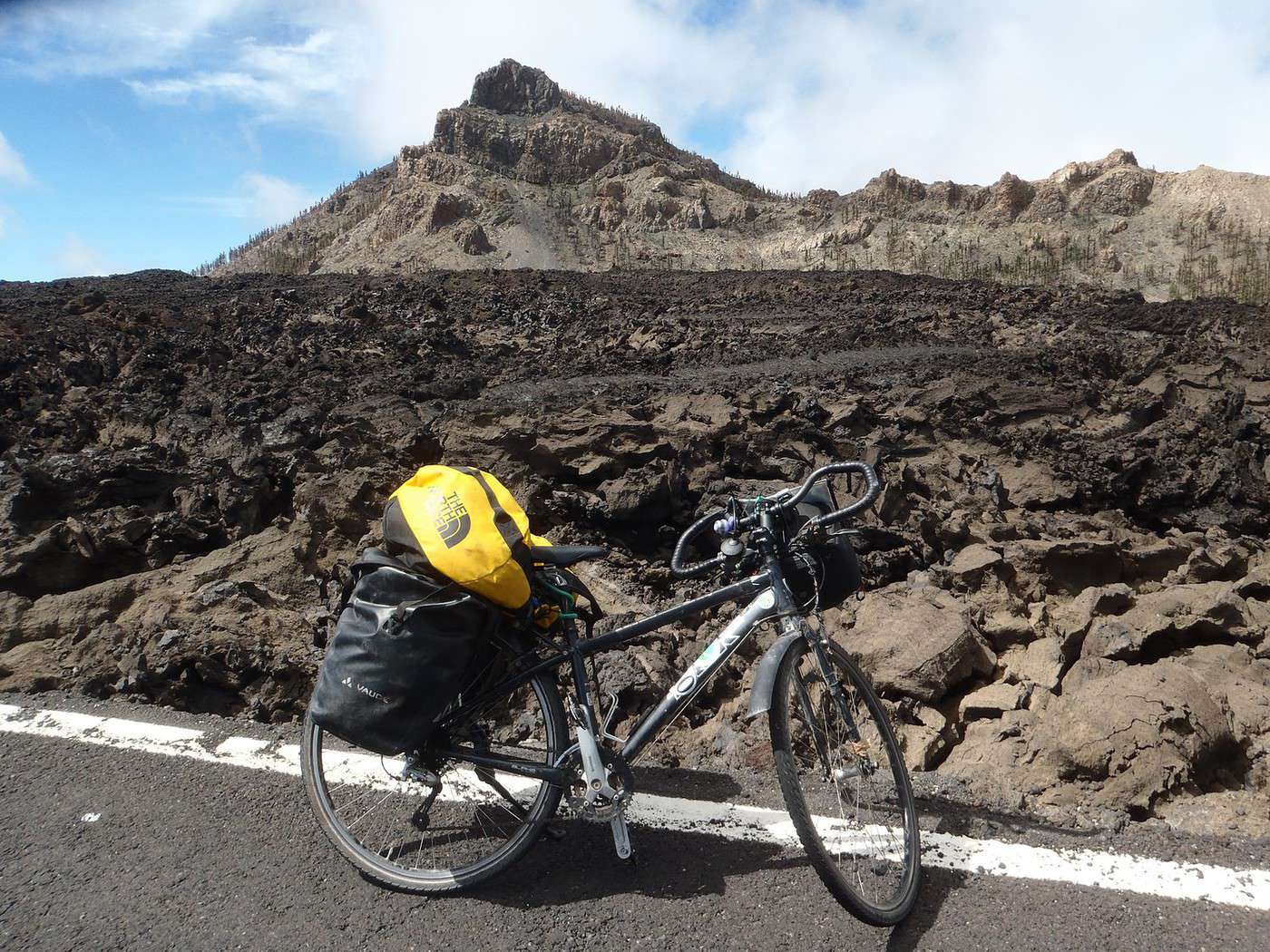
PS: Here’s a photo of my bike—this was in the Canary Islands.
Totally agree with you on the poulsard and chicken with cancoillotte!!!!
When it comes to wheel sizes, the debate never ends: sometimes the differences in performance are just a matter of feel... but most often and most likely, it's about the wheel's inertia (the moving masses, etc.) which depends on several factors—the wheel diameter, of course, but also the weight of the tires, rims, tire efficiency (inflation pressure, tread pattern...).
In short, even if when traveling you might choose more inertia (less crisp acceleration but better speed retention), wheel size isn't the only factor...
But hey, what really matters is the trip and the joy it brings us!!!
Hey Luc,
there are so many great suggestions on this site that we’re even more undecided now.
Sylvie rode through Vietnam, Paraguay, and Turkey on a hybrid bike, but the problem came when we headed to Cameroon—out of 1,200 km, over 800 km were rough tracks. The Schwalbe Marathon tire on the front wheel didn’t fit (it rubbed against the frame).
So for that trip, we outfitted my old Sun mountain bike for travel instead.
To get clearer answers, I’m going to start a new discussion:
Who wants to gift a touring bike to my wife?
Otherwise, keep it simple—it’s not the most expensive bike that’ll go the farthest or be the best fit. You can still ride around the world on pre-war clunkers.
Here’s a great gallery of several "fannettes" (that’s for Claudio from Faverges), not exhaustive but it shows all the gear that can be useful for bike touring. Let your imagination run wild—anything goes! :)
And this one is one of my favorites. Hats off—beyond the gear, you still need some serious motivation!
Wishing you both amazing adventures ahead.
Psyclopathe.
suffering from an extreme love of bicycles.
mais je me soigne ... je deviens autophobe.
My partner wants to change her touring bike, which isn’t quite the right size for her.
We don’t want touring bikes that are too heavy.
Travel shouldn’t be a hassle—it’s not a punishment!
I’ve had the same bike for ages: a Specialized mountain bike with plastic mudguards. I’ve taken it through 14 countries, on weekend rides, and it’s still super sturdy.
My wife is looking for a mountain bike that’s lightweight yet tough enough to add a rack, with a rigid front fork, 26-inch wheels, smooth to ride, not too expensive—and that’s about it.
Anyone have good feedback or recommendations for a brand?
Thanks
I use my Lapierre Pro 200: solid and lightweight. I’m really happy with it. There’s also a higher-end model, but it’s pricier.
"On croit qu'on fait un voyage mais c'est le voyage qui vous fait et vous défait."
Nicolas Bouvier. L'usage du monde
Thanks so much!
We were waiting for winter to give us some guidance before deciding with all these options, but there’s no winter this year.
Still, even if we don’t go with the same bike as you, I hope you won’t throw rocks at us. 🏴☠️
See you later!
Awesome!
Hope you find the perfect fit!
In the meantime, I’ll recommend the Lapierre again. Especially for its weight (around 10kg for my height = 1.61m) and durability. Everywhere I go, bike mechanics tell me: "And never part with that one!"
Where are you planning to ride "this winter"?
And remember... "A Lapierre that rolls, gathers no...!"
"On croit qu'on fait un voyage mais c'est le voyage qui vous fait et vous défait."
Nicolas Bouvier. L'usage du monde
Uhhhhh... I'd need to speak English first to improve it!
But the site is awesome, plus it has translation!
And the photos! The photos are gorgeous 😲
Thanks
For travel, you need something sturdy and rugged.
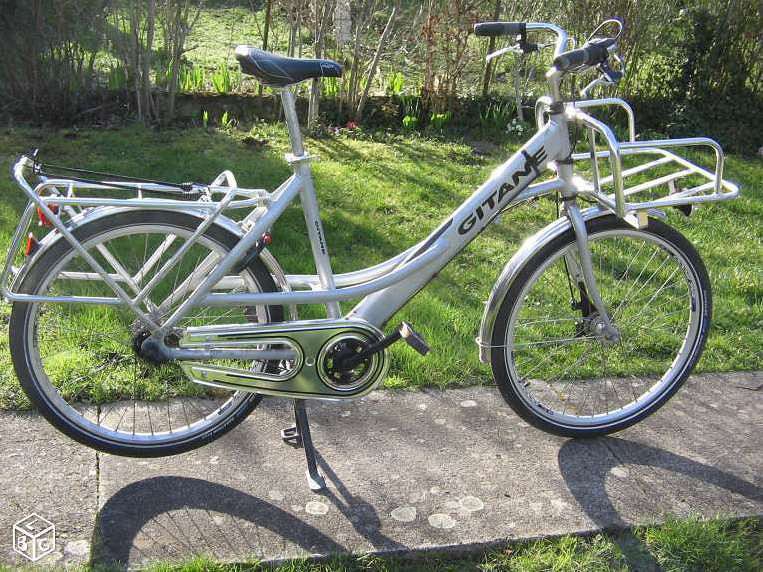
For a good deal, I really like the "postman’s bike": tough, fairly lightweight, with big and very big aluminum racks, hub gears, etc... and obviously the king of the city!!
I’ve got two and I’m selling one for 350 €!
If interested: phone: 06.66.86.61.07
J'entend entreprendre un périple de 8 mois en Asie du sud-est entre décembre 2008 et Aout 2009 avec un ami. J'aimerais savoir si un vélo cyclotourisme est…
Nous sommes un couple de retaités en bonne forme physique et pratiquons occasionnellement le vélo. Pouvons-nous envisager raisonablement la descente de la…
Etant déjà allé sur les Tours du Paine et le Fitz Roy, je me rappelle bien que le chemin de randonnée (hormis quelques segments particuliers à fort dénivelé)…
Je prévois de faire la traversée du Jura bientôt. Cependant je n'ai plus de vélo. J'aimerais donc des conseils pour un vtt coûtant environ 500 euros. Je peux…
Voyager à vélo › France › Est / Belgique · 9 replies
Je suis un peu intimidé quand je vois les projets décrits dans cette rubrique. Celui que je prévois avec qq copains est bien plus modeste. Nous pensions rouler…
Hi,
I need to arrive in Thessaloniki by bike at the end of September and I plan to head to Istanbul along the coast.
Could anyone help me pick the best route? Safety, difficulty.
Thanks in advance.
Marc
Hi everyone! Thanks for welcoming me to the forum :)
I’m preparing for a long trip heading to Nepal, with stops along the way depending on my mood, work needs, and the season. I cycle a lot, but this will be my first big touring adventure. I’d like to camp regularly to keep costs down, so I’ll be riding on all kinds of surfaces: smooth and rough roads, main highways and rocky paths to find my camping spots, flat terrain and the occasional steep slopes.
For my bike model, I’m prioritizing durability, versatility, and repairability. From that perspective, I prefer a steel frame and fork with rim brakes since I’m used to them. I’ve narrowed my choices down to four models:
- The VSF Fahrradmanufaktur T-700 LTD (1400 €): steel frame, aluminum fork, hydraulic rim brakes, 28" wheels, 40mm tires, 36 spokes (2 mm), lightweight rear rack (max 20 kg), no front rack included, smallest gear ratio of 0.72, weight of 13.9 kg.
- The VSF Fahrradmanufaktur TX-400 (2200 €): steel frame and fork, hydraulic rim brakes, 26" wheels, 50mm tires, 36 spokes (2.34 mm), front and rear racks included (40+18 kg), smallest gear ratio of 0.71, weight of 15.9 kg.
- The Genesis Tour de Fer 30 (2150 €): steel frame and fork, mechanical disc brakes, 28" wheels, 36 spokes, 40mm tires, front and rear racks included (27+10 kg), smallest gear ratio of 0.77, weight of 15.9 kg.
- The Rockrider ADTV 900 from Decathlon (1700 €): aluminum frame and fork, mechanical disc brakes, USB port, 28" wheels, 47mm tires, 28 spokes, front and rear racks included (40+20 kg), smallest gear ratio of 0.71, weight of 17.1 kg. This is the successor to the Riverside Touring 900, which was a hit.
I’ve got a few questions:
1/ Should I go for 26" or 28" wheels for my trip? 26" wheels seem better for rough terrain, but 28" wheels feel more comfortable on roads. I’ve also read that 26" tires/tubes are easier to find.
2/ Do you recommend a steel frame and fork over aluminum? I’m guessing a high-quality aluminum frame and fork would be better than a low-quality steel one, right?
3/ Regarding the smallest gear ratio, is 0.71 a good number for a loaded bike in the mountains?
4/ Finally, what do you think of these four models for my project? My heart leans toward the TX-400—it seems to combine the versatility and robustness I’m looking for. But the price difference with the T-700 LTD is making me think twice!
Thanks so much for reading and sharing your thoughts!
Hi,
what are the easiest ways to get back from Nordkapp without pedaling—
train, boat, or plane?
Has anyone already done this?
Thanks for sharing your tips!
17 days, 1,400 km, and 17,500 m of elevation gain cycling in northern Vietnam! 🇻🇳 🚴🇻🇳
From the misty Fansipan to the breathtaking landscapes of the Ha Giang Loop, from remote villages to vibrant markets...
I cycled through the north of the country, getting up close with its people—through mud, heat, endless mountain passes, and unforgettable encounters.
Most importantly, I discovered a Vietnam far different from the usual tourist circuits.
Join me on this adventure through a video that captures these 17 days of travel. :)
If Vietnam calls to you, come ride a stretch with me!
Hi,
can anyone give us some tips on how to get to North Cape from Lyon Gerland?
What’s the best route to join the EuroVelo 7?
How many kilometers is it from Lyon to North Cape via EuroVelo 7?
The best month to leave—we’re thinking early May.
Thanks for any advice!
Looking for a female travel companion for a cycling trip (arriving by plane in Porto Alegre, Brazil, and cycling toward Montevideo, Uruguay, returning by plane to France from Buenos Aires, Argentina) – 1,500 km
Hello everyone!
I’m planning a cycling trip across Brazil, Uruguay, and Argentina, with a departure set for late October, November, or December. I’m looking for a travel companion to share this long-distance adventure with.
Experience:
I already have solid experience in bicycle touring in Georgia, Kazakhstan, and Kyrgyzstan. Currently, I maintain excellent physical condition by cycling an average of 250 km over 3 days per week (4 hours a day at 20 km/h).
The trip & the pace:
Daily pace: Between 50 and 80 km per day, to make steady progress while taking time to explore.
Accommodation: Flexible and authentic. We’ll alternate between wild camping, campsites, Warmshowers, small guesthouses, and budget hotels depending on opportunities and the weather.
Looking forward to reading your message and planning this amazing journey together!
I’m planning to leave Nice for Toulouse around 10/15 and I’m looking for tips / great deals regarding:
- The route: I was thinking of taking Nice - Grasse - Draguignan - Salernes - Cadarache - Cavaillon - Arles, then the Camargue, Sète, and the Canal du Midi to Toulouse. The idea is to avoid high-traffic roads and too many steep climbs. Are there any spots to avoid or must-see stops? Since it’s been a while since I’ve been on the road, I was thinking that sleeping indoors might be preferable. If you have any budget-friendly accommodation suggestions along part of the route, don’t hesitate!
Thanks in advance, and if you’re in the area around that time, we could ride together... Ciao.
Another long-time dream of Claudio’s: the Petit Mont Cenis pass and the dam at the eponymous lake.
A place where many Italians, including my father, worked in the 1950s–60s.
Faverges → St-Michel-de-Maurienne → Lanslebourg → Petit Mont Cenis → return. 315 km, 3 days. Bivouac at St-Michel-de-M.
Brouter link
Leg One: Faverges → St-Michel-de-Maurienne
Leg Two: St-Michel → Lanslebourg → Mont Cenis Lake → St-Michel
Leg Three: St-Michel → Faverges
And it finally happened in August 2026: in the Maurienne Valley about the famous cycle route known as the V67
🇷🇼 Cycling in Rwanda: 4 episodes, an off-the-beaten-path adventure
After 3 weeks and nearly 1,200 km by bike across Rwanda, I made 4 videos to share this adventure in a different way: the landscapes, the encounters, the villages… but above all, all those incredible scenes of everyday life.
The 4 episodes are available here:
👉 https://www.youtube.com/playlist?list=PLGnfbxjccWAg
The 4th episode focuses on rural Rwandan life: simple, authentic, and sometimes surprising scenes that you only truly discover when you take the time to travel by bike.
If you have a few minutes, let yourself be transported to Rwanda…
Hi, I'm looking for info on cycling to Nordkapp via the EuroVelo 7. Has anyone done it already, and where’s the best place to start the EuroVelo 7?
Thanks
Hi,
We bought the MSR bike tent model (2-person + large awning that can fit 2 bikes) back in 2005. It’s served us really well, especially during a year-long trip in Africa. Now, one of the poles is broken, and we’d love to replace it since that’s the only issue with the tent—we still love it! The poles are 9.35 mm in diameter, with 8 sections of 49 cm and 2 sections of 28 cm. Total length when assembled: 416 cm. Actually, two large sections are broken: one straight and one curved. It’s a pain to find replacements since this model is no longer sold anywhere.
Would anyone have this model lying around unused and be willing to sell me a pole?
Hi everyone,
In early April, I’m redoing the Vélo Francette (La Rochelle to Ouistreham), and then I’d like to cycle along the Cotentin Peninsula (which I don’t know at all), follow the coast up to Cherbourg, and then head back down to at least Saint-Malo. I’d love to know if it’s pleasant for cycling—are the roads nice? Not too windy? What are the must-see spots? Any great campsites? All your tips and advice are more than welcome, and I thank you in advance.
Hi there,
I’m planning to bike to meet some friends in Côte d’Ivoire in early November.
I’ll be starting in Abidjan and heading to Abengourou, which is close to the Ghana border.
I’d like to take the trails. Does anyone have recent info on eastern Côte d’Ivoire?
Any tips, safety advice, or must-see stops? I’m open to all suggestions.
Thanks in advance for your help!
Fx
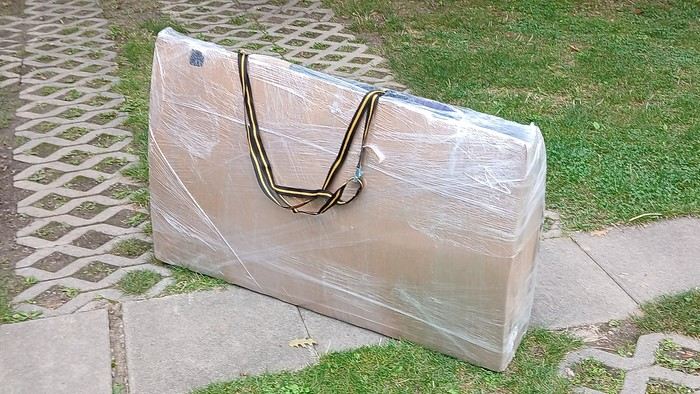
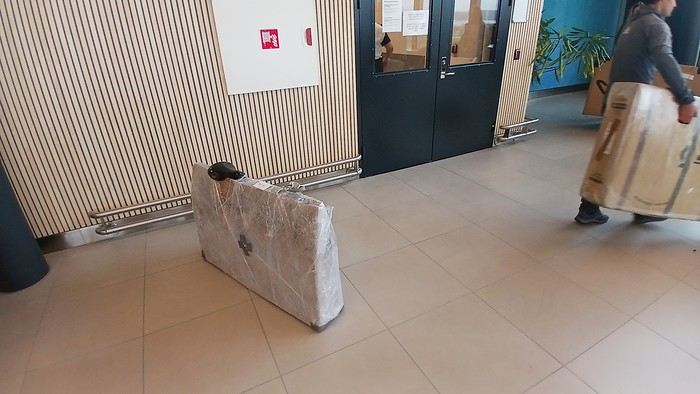
After testing it for three years across various modes of transport, I’m sharing this video of a bike packing case. It’s made from recycled cardboard and shrink-wrapped, with adjustable thickness and added bubble wrap depending on the level of protection you want.
Installing spacers at the fork and chainstays makes the packaging compact. With the fifteen-odd euros for shrink-wrapping at the airport, this case travels really well.
https://youtu.be/_GDJi-GqmkM
- Low bulk (1.10m x 0.70m x 0.25m for a large frame), it fits vertically in train luggage compartments and the total dimensions (x+y+z) don’t exceed 2.40m.
- Two carrying solutions for public transport and easy handling by airport staff (no more tears in the cardboard from openings).
- Discreet packaging when dealing with bus drivers and train conductors, as it looks like an ordinary parcel.
- No need to return to the starting point to retrieve the case from your outbound trip, which you’d otherwise have to store somewhere, or deal with a bulky cover to pack in your panniers.
- You can still check tire pressure through the plastic film without damaging the packaging too much.
Drawbacks: Around 3 hours for this lengthy and meticulous process—removing the wheels, pedals, handlebars, and derailleur without misaligning them, then securing all components to the frame.
If you get a chance to test it, send me your feedback for future improvements.
I just took a trip in Tunisia from Tozeur to Douz, skirting Chott el Jerid to the south. I’m back with the urge to keep going further south via the 4x4 tracks to connect Douz to Ksar Ghilane. Has anyone driven this route recently or explored southern Tunisia?
Thanks for your tips!
fix
😎Fellow traveling cyclists or not, all of you who love travel, the pleasure of physical effort, nature, beautiful machines, people with true passions they seek to fulfill, and who also enjoy reading great literature about all this—the *200* magazine is for you just as it is for me. I should mention I have no financial or other interest in this (in an era where we accuse our politicians of all sorts of vile interests, I prefer to take precautions). I’ve been subscribed since the beginning, and every three months, I get my 130 pages of dreams (the magazine just went from 110 to 130 pages).
It covers everything from the trans-America route to the TCR (Trans Continental Race) from Belgium to a small town in Turkey, with mind-blowing averages—4,000 km and 80,000 m of elevation gain in 8 days and 15 hours for the winner. Let that sink in, and all of it without assistance—accepting a patch could penalize you. There’s also a story about crossing Iran, encountering one of the world’s most welcoming populations, following in the footsteps of Nicolas Bouvier, as well as retirees leisurely traversing France. The common thread in all these stories? Beautiful writing. Take, for example, a stunning article: *"Passengers of the Cold: From Edinburgh to Thurso, at the very north of Scotland, 550 km of moors, coasts, and icy wind. In Thurso, the road ends at a quay, facing the Orkney Islands. We wanted a November trip, off-season. We wanted to surprise winter. Just before the snow."* A sublime piece on the experience of facing adversity and the chance encounters along the road and in the elements.
Before I embarked on my own bike trips, I dreamed a lot about them—from the Atacama to the Gobi, along the Mekong, and not forgetting France. And now, these 130 pages every quarter keep those dreamy vibes alive through stories written in the most beautiful prose.
I’ll stop here because it might sound like I’m advertising, but if you don’t know *200*, I invite you to discover it. It’ll give you wings for the most incredible challenges or simply reinforce your desire for slow rides with your eyes open to others and nature.
A little news to wrap up: Axel Carion and a friend just broke the record for crossing South America from Colombia to Ushuaia in 59 days. On its own, that doesn’t mean much, but I can’t help it—it makes me dream. You should see how he talks about it, the flashes of that wild nature he’s stored away: a snowstorm at Paso Jama and the surreal sight of the suddenly snow-covered Licancabur!
Luc
PS: The magazine is called *200* because a day’s ride starts at 200 km—well, I’ve never done a ride like that since my longest was 167 km (with 18 kg of luggage, mind you), but why not one day? The magazine will explain how to tackle your first 200, and then the question in conclusion: when will you do your first 300?😏
I’ve got my flight ticket sorted—departing in mid-November and returning in mid-March. I’ll arrive in Santiago and leave from Buenos Aires.
I’ve already been to southern Argentina, specifically Torres del Paine National Park, and I’d love to go back to do the full W trek (I only did the shorter version last time).
I also want to do some hiking and maybe even tackle a summit. I climb and occasionally do some mountaineering, so I’ll definitely be going with a guide.
I plan to start around Temuco in Chile, with the idea of heading toward the lakes, then taking the Carretera Austral.
I’m not sure if I’ll go all the way to Ushuaia—it’s supposed to not be *that* worth it, except for the bragging rights of saying you’ve been to the end of the world.
I saw there are lakes in Argentina too.
I don’t have a precise itinerary, but what I’d love is, once I reach the southernmost point of my trip, to take a mini-cruise to see some wildlife. Any tips for that?
What kind of sleeping bag did you take? Is a 0°C (32°F) one enough?
And one last question: white gas stove or can I get by with my gas stove?
I'm developing a free and open-source web app for planning walking and cycling trips (and even car trips). You can create a route by clicking directly on the map to add waypoints, and it can consist of multiple stages. The app provides tools to edit the stages and the overall route, and to display useful information (distances, altitudes, and elevation changes). A relief profile can be shown as a graph for a specific stage or the entire route.
Once the route is ready, it can be exported as a GPX file, which can then be used with a GPS or a mobile navigation app.
The app is built in JavaScript and runs entirely in the web browser. It uses the Leaflet library and several OpenStreetMap-based services. Initially developed for my personal needs (I enjoy hiking and cycle touring), I’d be happy to share it with anyone who might find it useful. It’s free to use, doesn’t require an account, and the source code is available.
hello fellow cycling enthusiasts
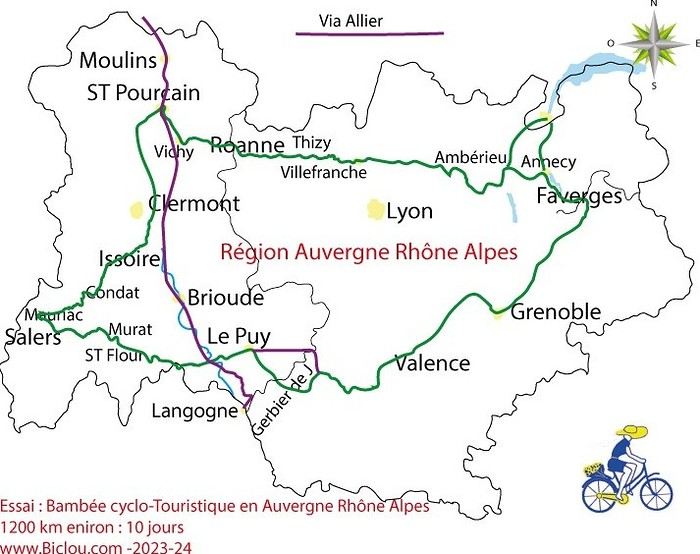
here’s a travel journal of the cycling tour through the Rhône-Alpes Auvergne region by Claudio
zouli
it was the plan
http://cbandiera.free.fr/parcours/auvergne-Ralpes/
the trip was completed
story being posted online soon
1100 km in 11 days
beautiful and varied regions
Hello,
We’d like to go on a 3- to 4-month bike trip starting in December, crossing from Assam (northeast India) to New Delhi via Nepal.
Are there routes with light traffic along the Brahmaputra and through Nepal?
We’re also looking for any info on accommodations, wild camping, local interactions, etc.
Thanks,
Michel
I’m planning to cycle from Morlaix to Brest (via Roscoff and the V45 coastal route). We’ll start riding on August 16th for 13 days (with stops for island visits, surfing, etc.). Is there a lot of traffic at this time of year? I’ve got two kids, 11 and 13, and we don’t like riding in the middle of cars (we’ve already done the Vélomaritime—Caen to Cherbourg—the Loire route from Orléans to Saumur, the Vélodyssée from Nantes to Royans, and the canals like the Nivernais and Bourgogne, where there were plenty of bike-only lanes, which isn’t the case on this route).
Thanks for your help if you’ve already done this route in late August!
Virginie
Hi there,
I’ve been road cycling for several years, and I’m about to switch to gravel in the next few days—I’m waiting for my bike, which should arrive this week.
I’m planning a bikepacking trip in a few weeks along the Véloroute V81, also known as the Vélosud, from Biarritz to Le Barcarès.
Has anyone here already done this route? Any info is welcome, whether it’s about the route itself, gear, or accommodation. I’ll prioritize staying with locals as much as possible. On that note, I just signed up for the brand-new site *Guidon et Couette* ((www.guidon-et-couette.fr)), which offers free accommodation between cyclists across the country, but there’s almost no one listed along my route!
Thanks in advance.
Laurent.
Hi there, I’m planning a cross-Canada bike trip, and I’ve got a question that might seem silly, but could someone tell me how to pack a bike (in a box, with a fragile sticker... I don’t know) for a flight? Thanks in advance!
This summer, we’re planning to cycle along the EV 19 that follows the Meuse River from Langres all the way to Rotterdam.
My question is about getting back to Nantes.
Do any of you know what the best return option might be? I’d love to hear about your experiences.
I saw that FlixBus doesn’t take bikes.
By train, I think it’s possible but would involve multiple local trains.
We were also wondering if there’s a boat from Rotterdam to Saint-Nazaire that could take passengers with bikes.
Any tips or experiences you can share would be really helpful—thanks in advance!
Have a great evening
I’ve gotten used to crossing Europe by bus to return by bike.
It was really convenient to take the bike without having to disassemble it.
But FlixBus no longer accepts bikes...
What alternatives do you know about?
Thanks.
Hi there,
I’m planning to ride the Dutch section of the EuroVelo 19, from Maastricht to Rotterdam.
Since it’s too complicated to bring my bike on the train, I’m looking to rent one locally.
I’d love any tips or bike rental shop recommendations—I’m struggling to find options even in Rotterdam.
The plan is to rent in Rotterdam, take the train to Maastricht with the bike, then cycle back to Rotterdam.
Thanks in advance for any advice or suggestions!
Nath