Travel journals · Asie du Nord-Est
FR

Many threads here are in French, the community’s main language. English translations are added over time.

PA
Patbill 2 days ago
A Slightly Less Touristy Japan
Hi everyone, I’m Patrick, 67 years old, a seasoned traveler (already 22 trips outside Europe). In autumn 2025, I took my first 3-week trip to Japan, with stops in Tokyo, Kamakura, Matsumoto, Kamikochi, Takayama, Kanazawa, Kyoto, Nara, Osaka, Koyasan, Tokyo again, and Nikko. I wanted to go back in May 2026 and explore some lesser-known places to complement my first trip. Last year, there were four of us traveling together to discover Japan (a fairly classic itinerary). This time, I’ll be traveling solo for part of the trip and with a couple of French friends for the rest. The weather was gorgeous in May, averaging around 25°C, with two very hot days in Kyoto and only two rainy days. As usual, I organized everything myself, gathering plenty of information from various sites, including this one.

Transportation: An ICOCA card is essential. I got a 5-day Kansai-Hiroshima pass because I took the shinkansen between Hiroshima and Osaka three times, and it paid for itself quickly.

Accommodations: Mostly through Booking. No issues at all. Average cost was 46 € per night.

Meals: For breakfast, I alternated between buying food at a konbini to eat in my room or on the train and grabbing something at local cafés. For lunch and dinner, I tried to vary my meals as much as possible—lots of sashimi, sushi, and ramen. Okonomiyaki in Osaka and Hiroshima. Oysters in every form (raw, grilled, fried) in Onomichi and Hiroshima. A variety of seafood (shrimp, shellfish) in Hiroshima and Matsumoto. Fish whose names often escaped me, but notably mackerel and eel (unagi). Tempura and gyoza. Chicken skewers (yakitori) and one teppanyaki meal. One omakase meal (9 different dishes). In the end, not much meat aside from a few yakitori skewers. No splurges on super expensive wagyu or Kobe beef. Average dinner cost: 4,800 yen, drinks included.

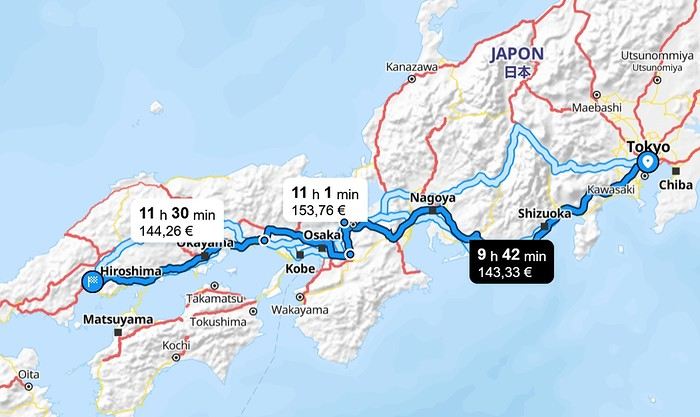
The Itinerary: Day 1: Departure from Brussels Day 2: Arrival in Osaka Day 3: To Himeji, then Kurashiki Day 4: To Fukuyama, then Tomo no Ura, then Onomichi Day 5: Cycling the Shimanami Kaido Day 6: To Takahara, then Hiroshima Day 7: To Kyoto to attend the Aoi Matsuri parade Day 8: To Miyajima Day 9: Hiroshima, then Kyoto Day 10: Southern Kyoto Day 11: Northern Kyoto Day 12: Final day in Kyoto, then to Nagatsugawa Day 13: Start of the Nakasendo Trail (Magome to Tsumago) Day 14: Second day of the trail (Kiso Fukushima) Day 15: Third day of the trail (Narai), then Matsumoto Day 16: To Mt. Fuji (Kawaguchiko) Day 17: To Tokyo Day 18: Excursion to Enoshima and Kamakura Day 19: Flight home, with a 10-hour layover in Hong Kong Day 20: Arrival in Brussels
Open
NA
Nathalie971 2 weeks ago
From Southern Shikoku, between land and sea, to the blue waters of Miyakojima and finally the Tokyo metropolis
From Southern Shikoku, between land and sea, to the blue waters of Miyakojima and finally Tokyo’s megacity

Hi everyone,

I have to admit, I really hesitated before deciding to write this travel journal... Writing one takes a lot of time and energy, and since this is my 4th trip, I wondered if it would even interest anyone other than myself (both for the discovery and the writing). But after a few people asked, "Are you going to write a journal?" and especially after rediscovering the joy of reading other travelers’ journals about Japan or elsewhere on this forum, I’ve decided to share my 4th installment in the Land of the Rising Sun here.

The itinerary: 27 full days, from late May to late June 2025, right in the middle of the rainy season, including:

-->13 days in Shikoku, from Kochi (Kochi Prefecture) to Matsuyama (Ehime Prefecture)


-->7 days in Miyakojima (Okinawa Prefecture)


-->7 days in Tokyo


The trip was decided on fairly last-minute again this year.

Since I regularly check flight prices to track fluctuations for this destination even without concrete plans, stumbling upon a slightly cheaper direct flight (900 €) than what I’d seen in previous months (around 1,200–1,400 € on average) for a Paris-Tokyo route with Japanese airline ANA was too tempting to resist the urge to return to this enchanting country. After much hesitation between exploring the San’in region (Matsue, Tottori, Yamaguchi) and Southern Shikoku, the decision was made—I took the plunge! The ticket is booked: Paris to Kochi with a layover in Tokyo, all with ANA, the airline I’d been dreaming of... for 1,120 € per person. Okay, it’s not cheap, but it’s better than in 2023.

Departure in 2 weeks! Now I just have to get everything ready!

Intense prep work over these next 2 weeks to:

finalize a more precise itinerary and reach an agreement—yep, because even though we both love Japan, our preferences differ slightly, and we have to choose between exploring new places or revisiting beloved spots... decide how much time to spend in each area without rushing while still exploring research places that might interest us and watch videos about Japan book accommodations: yes, it’s possible to do this on the spot, but last year, we realized that last-minute options were pretty expensive, so we’re booking ahead—though we’ll keep a few options open in case better deals pop up later reserve rental cars order yen check the weather regularly and wonder if choosing the *tsuyu* (rainy season) was really a good idea—are we going to be drenched the whole time???

"What hard work," you might say! Going to Japan for a month—what a tough life! Despite this being my 4th trip, the excitement is just as intense as the first time.

The only small downside is that when we booked the flight, there weren’t many seats left, so we’re only sitting together on the international return flight. Plus, on the way there, we have middle seats. Another lingering question: what French-language films will be available? According to the internet, the selection seems limited. Oh well, these are just minor details—it’s already time to fly! PS: I’ll be posting slowly and irregularly... so for those interested, be patient, and maybe set an alert...
Open
TO
Torpan 3 weeks ago · Tulipe57
Japan: First Discovery!
Here’s a little story about my first trip to Japan with my partner. We went for our first visit from October 29 to November 13, 2024.

I had planned this entire trip back in November 2020, but given the health situation at the time, I had to cancel...

Here’s the classic route we took:

We booked everything ourselves and got a regional pass for the area from Kyoto to Hiroshima. The hotels were reserved 3 months in advance on Book... and Agod... (1030 € for 2 people for 13 nights = 80 €/night). For the flight, we chose a Qatar Airways flight with a layover to break up the long journey (950 € per person). We also got a pass on the same site (Japan-Experience) to take the train connecting Narita Airport to Shibuya Station (the N'EX Narita Express). Since the airport is 75 km from central Tokyo, we opted for this mode of transport, even though there are cheaper alternatives. After reading various posts on VoyageForum, I understood how important it was to have a Welcome Suica card to pay for public transport (subway, tram, bus, boat throughout the country), and we were able to buy one at Narita Airport. It turned out to be super useful! After a long but smooth journey, we found ourselves at Narita Airport in the evening. Even though we had a pass for the Narita Express, we had to go to a counter to make a reservation for the train (mandatory). Then, once we arrived at Shibuya Station, we took the subway for 2 stops and finally reached our hotel, exhausted (Hotel Asia Center of Japan – 270 € for 3 nights with breakfast included).
Open
FA
Fabhyène 3 weeks ago · Tulipe57
Draw Me Your Japan...
Hi there!

I’m inviting you on a stroll through my drawings—a completely subjective, far from exhaustive, and totally personal take, since it’s based on my own sketches. I put this travel journal together after returning in late 2024, mostly using felt-tip pens and pencils, with a few collages thrown in. I worked from our personal photos.

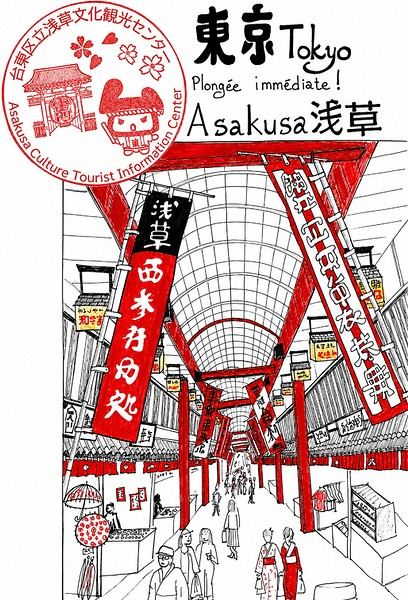
Let’s start with the shotengai...


Our first "wow" moment came as we stepped out of the subway in Asakusa, the Tokyo neighborhood where we’d booked our hotel for our first five nights. Exhausted after our long flight, we finally arrived and took an exit that led straight into a shotengai—one of those covered shopping streets that pop up in city centers and flourished between the 1950s and 1980s.

It was an instant aesthetic shock, like a close encounter of the third kind between the modern city, a typical Asian market with its street stalls, the vintage vibe of the arcade, the sheer abundance of goods, and the bustling crowd—a mix of tourists, pilgrims (thanks to nearby Senso-ji Temple), and locals (it’s a very working-class area). In the end, it set the tone for a feeling we’d experience throughout the trip. Wherever we went, shotengai turned out to be fantastic spots for finding little restaurants, shops, or even fresh produce. Some are like real mazes, like in Kyoto, where we spent ages trying to relocate a restaurant we’d loved ;-)

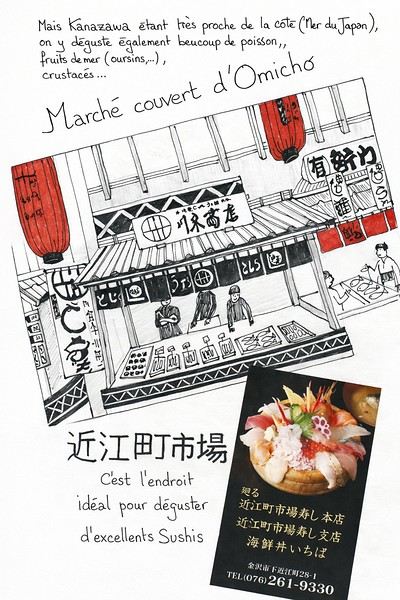
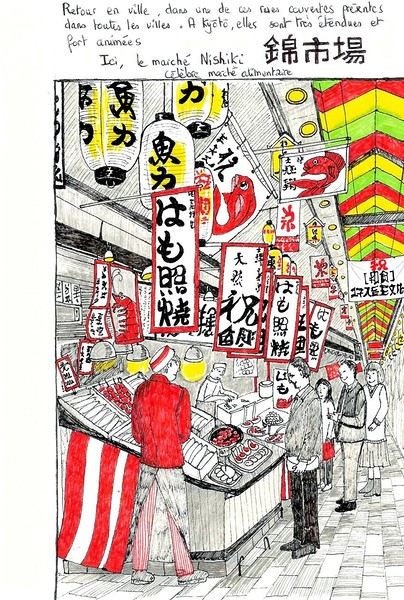
In Kanazawa, the Omicho Market: And in Kyoto, Nishiki Market:

To be continued...
Open
SE
Serow 2 months ago
Densha Otaku - Lesser-Known Regions
Autumn 2025 marks my 11th trip to Japan. I’ve neglected the south for too long, so like last year, it’s my main destination again.

We’ll revisit some familiar spots, but of course, we’ll also try plenty of new things. This trip feels a bit strange—no more of that initial magic, but on the other hand, we’ve really explored some off-the-beaten-path and private locations. The variety of regions, landscapes, and vehicles I’ve photographed is pretty remarkable. In search of vintage trains and threatened lines, I think my future trips will follow the same vibe.

After the 2017 and 2024 travel journals, it’s time to dive into Japan’s lesser-known side—all by public transport, of course. Day 1, arrival in Tokyo

The timing won’t be like other years since we arrive at Narita in the mid-afternoon after a layover in Hong Kong.

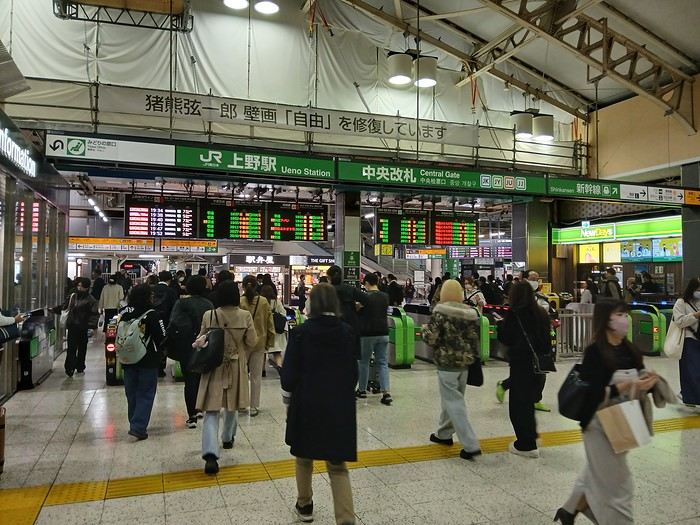
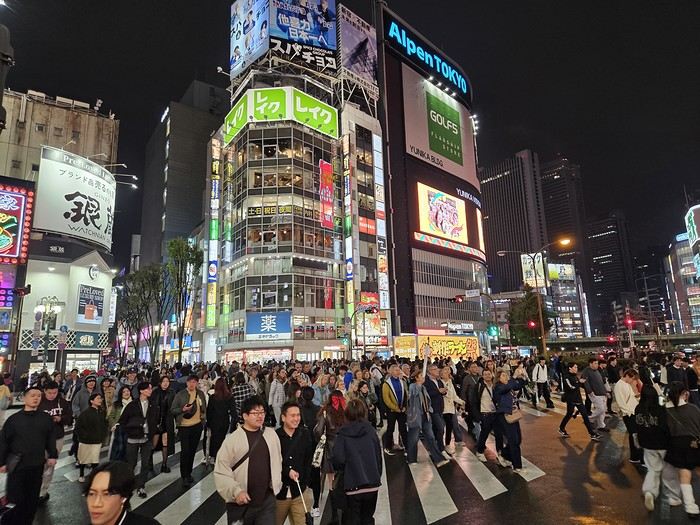
The only real mission for this afternoon is picking up tickets for the next day. And already, the first travel stress: I’ll have to rewrite the entire day because the Revaty Kinu 109 to Kinugawaonsen is fully booked, just like all the morning trains. So instead of a relaxed start exploring Ueno, I’m back to scrutinizing schedules. I manage to snag something last-minute after struggling for hours. Then, I wait for a message from Seiichi to meet up for dinner. Meeting friends on the first day and staying up late with jet lag—like I said, this trip isn’t like the others.

A great evening at a place I love.


Open
SE
Serow 2 months ago · BeneFukuoka
Densha Otaku - A Southern Loop
Here’s my second travel journal since my 2017 one. You can check it out here if you’d like: https://voyageforum.com/forum/densha-otaku-passion-japonaise-d9177495/

This was my first trip back to Japan since the COVID lockdown. Between 2017 (with a short visit in 2018) and 2024, a lot has unfortunately changed. Economic and demographic shifts have led—and will continue to lead—to the closure of many rural railway lines. Fewer residents, fewer travelers, rising operating costs, staffing shortages, and increasingly precarious funding. Then there’s the ever-growing number of tourists who damage everything in their path and frustrate locals. Fortunately, there are still plenty of ways to escape the crowds, even if you do run into groups of Chinese tourists arriving by bus at the Mino Railway Museum or aboard a Kiha 120 crossing the Izumo-Sakane switchback. (Oops, spoiler alert—that’s for my 2025 travel journal.) We’ll see if PM Takaichi has as much success on the ground as he does in his speeches.

I’m lucky to love remote regions and places most tourists don’t know about. Taking public transport—mostly trains—and living like the locals do. That’s what my trips are all about. Those who’ve followed me on these pages know I love trains, especially older ones. These are becoming rarer in regular service, and Japan still isn’t ready to allow even certified museums to run historic trains on public lines, unlike many other countries. I even have my own license to drive historic trams, despite being an IT specialist in my day job. You’ll find some comments that clearly reflect my opinions and experience with the operation and rolling stock of certain lines—sometimes positive, sometimes not.

My trips are always intense. This isn’t about relaxing. It’s about discovering, blending in with locals, being welcomed by associations and museums, and uncovering things most people wouldn’t even imagine exist halfway across the world.

Sorry for the long intro.
Open
CL
Clairelis 3 months ago
Xi'an: My impressions from 10 years ago
It's raining in Xi'an, and I'm taking the opportunity to jot down a few notes. Don’t bother reading everything—I’m mostly writing this for my mom, who’s hungry for details and keeps track of my trip on the map of China and on Google. We took a high-speed train from Beijing to Xi'an, which is in the middle of China, about 1,300 km away. The journey takes around 6 hours. The landscapes are flat and quite dry. I didn’t see any individual houses in this country. In the cultivated areas, there are clusters of properties all built on the same model: a square of walls with a built-up section leaning against the back wall. We passed through gigantic cities, each time feeling like we were arriving in Manhattan. After spending several weeks in Siberia, one of the least populated regions in the world, the contrast is harsh. Xi'an isn’t some small backwater where a farmer discovered the Terracotta Army in 1974—it’s a metropolis of 9 million people. The city center is enclosed by a rectangular wall, the best-preserved in the world. An evening stroll through the old town is a source of amazement at every step. First, there are crowds everywhere—you could say that wherever we went in China, there was a lively atmosphere. The illuminations on the wall and the ancient buildings are stunning. Most people wear sneakers, in all colors, which might be explained by the long distances they have to cover. We first stopped by a public park where there was a dog owners' club. All the dogs were having a blast together. The Chinese love beautiful dogs, often long-haired breeds like Samoyeds, Scottish Collies, Saint Bernards—what about the others? Do they eat them? The Chinese adore fish—they’re everywhere: aquariums in restaurants and hotels, ponds. A small clay pot in front of a shop, and boom—three goldfish inside. Poor things!

Next, we saw groups of people squatting on the ground making fires. It was the eve of the Qingming Festival, and it’s a custom to buy fake money to burn as an offering to ancestors. On another square, people were flying kites. It looked like they were soaring kilometers into the sky and getting tangled, but they untangled themselves and kept flying... We then found a street overflowing with street food stalls, packed with a noisy, bustling crowd. Lots of skewers of unidentified animals—or worse, according to Claude, unidentified *parts* of animals. I tried a few specialties but stuck to the sweet stuff. We eventually found some nougat that was good, and with our usual bananas—which are delicious in China—we made a meal of it. Of course, we visited the Terracotta Army. It took us 3 hours to get there. At the information center in the train station, I asked which bus to take. I showed a photo of the buried soldiers, and the young woman looked at me with a bewildered, desperate expression. It was like showing the Eiffel Tower to an information desk at Gare de Lyon... She finally wrote down a number on a piece of paper and sent us 34 km back to our starting point. We got to admire the outskirts: endless rows of 40-story buildings. It’s terrifying... If this were in France, we’d immediately wonder about crime in this kind of housing, but apparently, that’s not associated with it in China. In fact, we ask ourselves a lot of questions, and this dive into a world we struggle to understand raises so many. I try to find answers on Bing, but there’s not much out there. I can’t wait to get Google back.
Open
ES
Estonien 5 months ago
Naha & Osaka, Japan - June 2025
It’s an understatement to say that Japan is a world apart. All around me, people exclaim: "How lucky you are to be able to go there! I’ve always dreamed of visiting, of finding myself in that culture blending tradition and technology!" Yes, they’re right. Until the moment their dreams become reality and things appear as they truly are, without the filter of fantasized preconceptions. Because in the collective unconscious, Japan indeed seems like a civilization—if not neutral—at least stripped of any social maturation. As if it had emerged all at once from its canonical ages, offering only the best of its traditions, and as if those traditions were undoubtedly the foundation of its extraordinary discipline. Yet, as always, the truth is far more complex. Modern Japan is likely shaped by its millennia-old traditions. But that Japan is also the result of its own uncertainties and contradictions. I’ve always been wary. I’ve never understood why the cleaning women on the platform bow when the train arrives. At some point, too much discipline, too much deference—it makes you smile, it raises questions.

Finally, thanks to F., a dream is coming true! Not the dream of going to Japan—a country I’ve visited more than any other, except for Réunion and the UK—but the dream of completing the fastest round-the-world trip of my career. Indeed, due to the restrictions imposed by the Russians*, the plane flies over the Caucasus and China on the way there; on the return, it gracefully heads toward the Arctic after skirting the Aleutian Islands, Alaska, and Greenland. So, in nearly 26 hours of flight, I complete my 6th round-the-world trip. A round-the-world trip with just one stopover. Or two, if you count our impromptu detour to Okinawa.

(* In response to Western sanctions, Russia closed its airspace to Western airlines on February 28, 2022, except for Air Serbia, Turkish Airlines, Pegasus, and Belavia. This decision adds 2 to 3 hours to flight times and, incidentally, increases operating costs.)

The empire of noise. The empire that dazzles. In Japan, the auditory and visual space is constantly fed. No respite. You have to be strong. Navigating public transport feels like playing the most advanced video game: moving between language barriers and a different organization, the hero tries to ignore the numerous visual and auditory distractions. Mostly auditory, though. Because in Japan, there’s a culture of noise that has undoubtedly inspired our national railways. Everything must be announced. So, here and there, all along the route, we find agents whose sole role is to endlessly repeat safety messages through megaphones more or less suited to the situation. The result is a constant murmur, a kind of tinnitus, a subtle but incessant buzz that fades only at bedtime and returns with a vengeance at first light, when we descend back into the supposedly sterile depths of Osaka’s subway. "To go right, please turn right, kudasaï. When descending the stairs, please mind the steps, kudasaï. To go straight, please take the left corridor, kudasaï." That *kudasaï* ("please" in Japanese), I assure you, has permanently lodged itself in my auditory cells.

Screens are no exception; the brain is constantly stimulated. But paradoxically, passengers massively retreat into their own worlds via their screens. Literally glued to their phones, earbuds firmly in place, people escape into the virtual aisles of a furniture store, a game, a movie... In the train cars, raised voices are rare. The field is clear for announcements and other jingles. Each stop is announced by a little tune unique to each station. Simply incredible.

If we usually judge a country by the welcome its inhabitants offer, in Japan, we’re left wanting. Indeed, the Lost in Translation* spirit doesn’t just apply to verbal exchanges—it applies to everything, especially non-verbal communication. In Japan, me, the slightly North African Corsican, I’m at a loss. I speak loudly, I gesture, in front of a hotel concierge just as lost. Each for our own reasons. Yes, he speaks some English, but we can’t seem to connect. It’s a losing battle trying to find a bit of compassion from a local who’s far from familiar with Western concerns. I try to buy tickets for the World Expo? I run into a systematization as rigid as it is abrupt, which the concierge can’t seem to navigate. While we might still have a shred of common sense, here in Japan, everything is digitized. Soon, no one will be surprised that a QR code becomes essential just to go to the bathroom.

(* Film by Sofia Coppola, released in 2003, which explores isolation, unease, Japanese culture, and language through the experiences of two protagonists.)

In the end, we get that ticket for the Expo. After providing personal information on yet another account created for the occasion, we buy electronic tickets—a QR code, then—to regulate the comings and goings, the souls and aspirations of all these wandering beings scattered across the globe. And it’s probably for the best... Because we’ll be tens of thousands of visitors—100,000 to 150,000 per day—walking the aisles of this enormous improvised amusement park, a kind of delirious superstructure surrounded by the Grand Ring, the largest wooden construction in the world. Inside the park, the pavilions, flagship vessels of their respective countries, compete in ingenuity, proportionate to their GDP, to attract visitors. But you have to wait up to two hours to visit the most popular ones! Fortunately, about a hundred countries can be explored without waiting in shared, more spacious areas. What will I remember from this adventure? The beauty of that wooden structure, despite any environmental or financial considerations—200M € for barely renewable elements; a certain poetry, even magic, in the expression of this event—conversing with Juliette Petit, the splendid representative of Vanuatu, had something indescribable; a close-up experience of Japanese discipline when it came time to return to the subway after that epic evening—thousands upon thousands of people converging at the same time toward a single place without any interruption in the flow.

But my real passion is the countryside. So, I’ll especially remember that brief escape, on the very first day, to the Mino-o waterfall, where the journey itself was already enchanting. Quickly leaving the underground lines, our train speeds through the city’s endless expanse and drops us at the foot of a hill, the abrupt edge of the urban sprawl. The slope was too steep to build anything? We leave behind an impressive hotel, a capitalist eyesore defying the laws of elevation to tackle the climb toward the waterfall. A bucolic walk where the stroller can choose between a paved path or more epic trails. Here and there, stalls, temples, everywhere, a certain serenity. The city’s pulse gives way to a magnificent spectacle magnified by giant sequoias. From the depths of a ravine, we try to glimpse the sky beyond the foliage. Everything is oversized. Here, you can breathe.

***

In reality, Japan has never undertaken any real work of memory. Aside from a few feeble gestures to appease Washington in its choice of Asian partners, one wonders if the Japanese have ever truly grasped the horror they were forced to participate in. While our Judeo-Christian society has more or less assimilated the notions of forgiveness and self-questioning, where does Japanese society stand, juggling a millennia-old Zen philosophy and the unabashed Machiavellianism of an emperor utterly possessed? Is it just me, or does there float in the atmosphere a kind of unease, a malaise, an awkward relationship with reality? For me, bowing to a train as it enters the station is just the result of a poorly directed moral dilemma...

Ah, how distant is the time of sakoku, that closure of the country—both concrete and ideological—that was in vogue for two centuries. Because if no one could enter, no one could leave either! A boon for neighboring countries. But from 1854, following the skirmishes of Commodore Matthew Perry, who demanded Japan’s participation in trade, the country suddenly became aware of the disparities separating it from the West. Bring Japan up to the level of other nations? Industrialization, competition, search for raw materials... Hirohito (1901–1989) emerges on the scene, a bit expansionist and willing to stop at nothing to achieve his goals. Above all, he knew how to use, in his own way, the incredible capacity for self-sacrifice of his people...

We protest, we condemn, we all rally behind an acceptable discourse when it comes to discussing the use of the atomic bomb. Yet, we forget one essential thing: Hiroshima wasn’t enough to make Hirohito yield. While we’re bombarded with anti-fascist elements, as if the sole purpose of school curricula were to prevent us from voting for the National Rally, we completely overlook those events of rare cruelty that took place on the other side of the globe at a time contemporary with Nazi atrocities. Why? Because it was farther away, on the other side of the world? Because we must both condemn the use of nuclear weapons and Nazism? What a dangerous game. Killing civilians is beyond comprehension, everyone agrees on that. But hasn’t Japan ever been guilty of such atrocities? Our empathy is legitimate; it won’t, however, remove from my mind the idea that there was no other solution. Nagasaki is the most telling proof of that.

At least in France, in school textbooks, Hitler will have completely overshadowed the existence of people crueler and more abject than him. Certainly, Adolf was a deeply disturbed man whom events propelled to power. But I’m justified in believing that his approach was probably more humane than that of Joseph Stalin at the height of his art*. And if Hirohito followed the same line as Hitler, in the sense that he represented the superior race, he would apply with conviction what was Stalin’s credo: contempt for his own people when sending them to slaughter, and an even fiercer contempt for the human race when it didn’t have the good fortune to be Japanese. Just look at how China was invaded and by what means millions of Chinese were annihilated, burned, deported, buried alive! Operation Scorched Earth or Three Alls Policy for kill all, burn all, loot all? No comment. Even today, the Japanese are convinced they waged a patriotic war, when clearly, that war served only vague ideological (and certainly economic) interests.

(* "In many ways, Hitler’s National Socialism was far more humane than Communism: it wasn’t unthinkable to speak to the SS or the Gestapo, and dissuading them from sending you to a prison camp wasn’t utopian. To some extent (compared to the Communists), you could still expect a semblance of justice. All those who lived under Hitler and under Communism will tell you: as the front lines shifted, they always managed to end up in Germany, where, though it was a strange place ruled by a madman, life went on. Under Communism, there was no life; totalitarianism was absolute. Probably, Hitler’s conservatism prevented him from fully imitating Bolshevism." Seraphim Rose in The Revolutions of the 19th and 20th Centuries (circa 1970))

In Naha, we visit two strategic sites: the Imperial Navy headquarters and Maeda Escarpment, in Urasoe, better known as Hacksaw Ridge. I love this confrontation with history. In the hand-dug tunnels of the headquarters, we meet Japanese people seeking information. They’re not responsible for this tragedy. Neither are we. I would have liked to tell them that, to hug them, to move on. To finally believe in those peace messages displayed here and there. Yes, it’s curious to read those calls for peace* when no real work of memory** has been undertaken. Two civilizations, two perspectives, a profound misunderstanding. When I analyze the waste of that war—and particularly the waste of those Pacific battles—like Peleliu in autumn 1944 and Okinawa in spring 1945—I can’t bring myself to share in the pathological patriotism that reigns within these walls. There, the room where the last message of Admiral Minoru Ōta was transmitted in Morse, praising the merits of the archipelago’s people. A tangled mix that, yes, is charged with positive emotions but, no, won’t remove from my mind the idea that this people was completely conditioned, completely disconnected from reality. Allying with the Axis powers? Invading the South Pacific? And finding that noble! Everyone sees things through their own lens.

(* Peace Declaration by Denny Tamaki, Governor of Okinawa, June 2020. ** "Recognizing the atrocities committed by one’s country requires a mix of democratic culture and self-confidence that is more the exception than the rule." Dominique Moïsi in Les Échos, April 30, 2015)

Okinawa. 200,000 dead. Stemming from bushido, the way of the warrior, this conditioning reached its peak with the kamikaze philosophy in particular and suicide in general. So, schematically, here’s how things went: as the island was encircled—Peleliu, Iwo Jima, Okinawa—and all hope was lost, the order was given to kill ten American soldiers before taking one’s own life. The deceit of this system, where surrender is synonymous with dishonor, involves creating tunnels and secret pockets where Japanese soldiers hide and from which they emerge. Long before the atomic bomb, the knell of their war had sounded. Hiroshima and Nagasaki are just the result of human pride, of which Hirohito’s reign is the finest example. Why was this henchman of Satan left in place until his death? I don’t understand. While the humiliation inflicted on Germany repeatedly was abject, especially for its people, the absence of any real and pressing accountability for Hirohito in this large-scale carnage he instigated leaves room for the wildest interpretations. As if to underscore my point, Emperor Naruhito visited Okinawa the same day we did, paying his respects to the inhabitants who fell in battle. I looked at the faces in the monorail serving the south of the island. There were elderly people who undoubtedly lost their parents eighty years ago. To what extent can they blame this tragedy on the delusional visions of their leaders?

On Maeda Escarpment, I salute the courage of Desmond Doss, that conscientious objector who fought to serve his country while refusing to ever carry a weapon. There, at the top of a steep ridge, you can see to the north the Allies’ advance, while to the south, the slope is gentler down to Shuri, in front of the headquarters. The underground is a Swiss cheese filled with enemies. Desmond works as a medic. He manages to save 75 wounded from certain death by evacuating them at night from the battlefield using makeshift ropes. Back in Osaka, far from the somewhat dilapidated tropical islands, I rediscover the splendor and grandeur of Japan’s second-largest city. To tell the truth, and this applies to Okinawa too, the density is so insane on this archipelago that you sometimes wonder if it’s not just one giant city spread across the vast territory. Because between Tokyo and Osaka, while there are some mountains and forests, it’s the city that dominates; during rush hour, a rapid train connects the two cities every five minutes. We get lost in rather quiet alleys parallel to the main streets, only to find ourselves in the covered and lively galleries of Dōtonbori. We’re looking for a place to eat—above all, we’re trying to navigate the unlimited options stretching endlessly along the sidewalks. It’s absolutely mind-blowing. And while I introduce F. to a part of history that our Western societies have quickly forgotten, he initiates me into Japanese gastronomy despite my well-known aversion to Asian food. But nothing beats having a master in the field! We feast on okonomiyaki, Japanese pancakes expertly prepared and served on a teppan embedded in our table.

Night falls on Japan, and I still haven’t found the answer. Like in Singapore, one can praise the calm and serenity of human relationships, the delicacy that may just be hypocrisy, the politeness, the discipline. But above all, we notice that in the absence of freedom, in the absence of madness, poetry struggles to take root, boredom looms, as does real madness. Bushido still exists, honor is there and must be preserved. But the youth drowns in electronics and in willingly sterile cults (otaku), unable to discern what’s essential, failing to believe in their dreams. You have to succeed? Young people commit suicide because of school bullying, the slightly older ones because of work-related difficulties or marital problems. Nothing exceptional, we might say—average*—but you’d expect better from a country so well-organized, a country that makes so many Westerners dream. Yes, night falls on Japan. Empire of noise, empire of the senses, a very strange land where you find clean toilets in subway corridors but where the very meaning of life seems stifled by the mirages of technology. Above all, a civilization deprived of a penance that would prove salutary. We’re caught between two waters. Those of a shallow modernity without depth or anchor; those of a past that was majestic but irreparably tainted by the demonic madness of an overly adored emperor.

How can one fully thrive when guilt has no outlet?

(* France and Japan share a common statistic of 17 suicides per 100,000 inhabitants, which, depending on density, means 30 per day in France and 70 in Japan...)
Open
MA
Max68 5 months ago · Girardinpho
Road Trip in Japan: Kyushu - Chugoku - Shikoku - Kyushu
Hi everyone,

It’s been a while since I last posted... so I’m jumping back in with this amazing trip we took in October 2025:

We’re doing this trip with fellow traveler friends who, like us, have already been to Japan. That means we can aim for a different side of Japan, away from the usual tourist circuits. That’s why I opted to rent a car instead of relying on trains. I was drawn to the castles and the samurai-novel atmosphere.

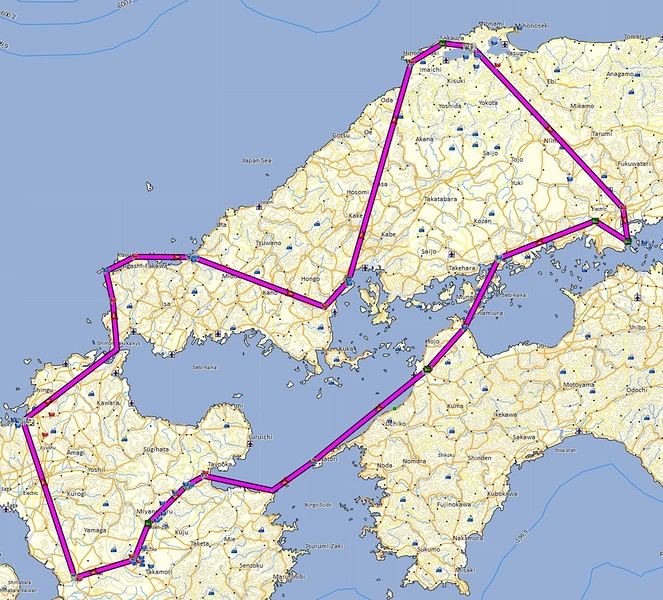
When I plotted the sites I wanted to visit on Google Maps, it suggested a return route via the island of Shikoku, so it turned into a nice loop around the Seto Inland Sea between Kyushu, Chugoku, and Shikoku.

The trip will be just the four of us, doing it all independently. I rented a car from Budget in Fukuoka. Before heading over, I watched several videos to get an idea of what to expect—road signs, parking, and general driving behavior. In Japan, they drive on the left, but that’s not an issue since in Southern Africa we also drive on the “wrong side of the road,” so I’m used to it. For accommodations, after checking with two agencies, I decided to handle it myself. It saved a significant amount of money, and I was able to choose exactly what I wanted. I know I can be picky about the type of lodging I want, especially in Japan where you can really treat yourself. We stayed in some stunning ryokans, once in little cabins run by monks next to a temple, and more.

Here’s the route: Fukuoka - Hagi - Miyajima - Matsue - Okayama - Kurashiki - Matsuyama - Yufuin - Kurokawa - Kumamoto - Fukuoka

Here we gooo...
Open
PA
Patbill 6 months ago
Three beautiful weeks during the Japanese autumn
I’m sharing our three-week trip to Japan from late October to mid-November 2025. There were four of us—my partner and a couple of friends. I’ve traveled often with my friend Christian (Bolivia, Argentina, Costa Rica, Namibia, Laos), but this time our partners joined us. The rough itinerary: Arrival in Tokyo. Visiting Shinjuku/Shibuya districts + day trip to Kamakura 5 days in the Japanese Alps, from Matsumoto to Kanazawa (via Kamikochi, Hirayu Onsen, and Takayama) 5 days in Kyoto Nara, Osaka, Koyasan Return to Tokyo (Asakusa district), with a day trip to Nikko We booked our flights well in advance (9 months ahead): the flight cost 1086 € per person. Compared to over 2000 € if we’d booked for the same dates just 3 months prior. For accommodations, we mostly used Booking.com. The onsen was booked via Japanican, and in Kyoto, we stayed in an Airbnb. We also made 5 train reservations a month in advance on Klook or directly on the train’s website.

Day 1: Departure from Brussels (October 24, 2025) Early morning takeoff at 6 AM to Munich (1.5-hour layover) with Lufthansa, then a 12-hour flight with ANA, arriving the next morning at 7 AM at Tokyo Haneda.

Day 2: Arrival in Tokyo Airport formalities were quick. The eSIM we bought before leaving activated as soon as we landed (10 GB plan with Saily—more than enough for our mobile internet needs, mainly Google Maps and Google Translate). We’d received 4 ICOCA cards from our neighbors, which we loaded with 15000 ¥ each. We took the Keihin train, then the Yamanote Line. It’s easy to navigate since everything is in English, and each station is announced on scrolling displays in English too.

We got off the Yamanote Line at the station just after Shinjuku because it’s easier to exit that massive station with our luggage. So we ended up in Shin-Okubo, right in the Korean district. A 10-minute walk took us to Villa Fontaine Hotel. A great hotel, well-located north of the Kabukichō district. The room even seemed bigger than we’d expected.

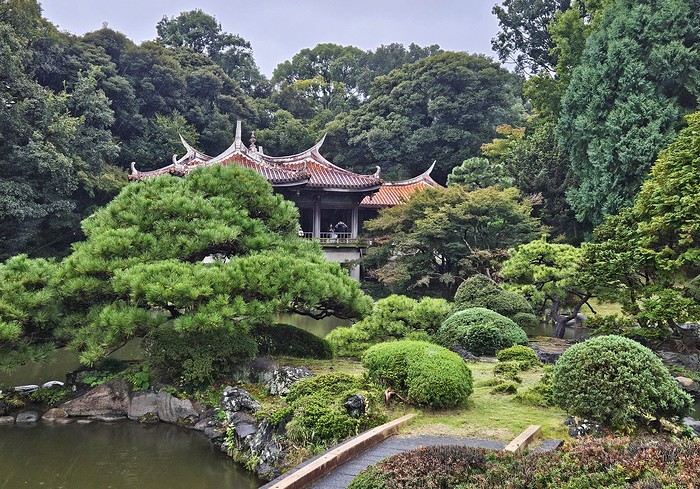
It was 15°C, but it rained—and kept raining on and off all day. Belgian weather, basically. We went for a walk in Shinjuku Gyoen Park. Not as pretty in the rain, but the big greenhouse was interesting.

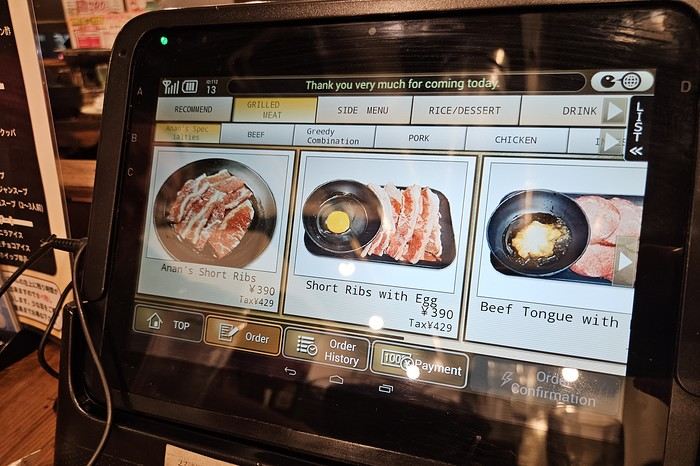
Then our first ramen (hearty and for 1000 ¥—pretty much the price of all our ramen during the trip). We headed back to the hotel since check-in was after 3 PM. Shower and relax before going out for dinner. Dinner was barbecue at Shichirin Yakiniku Anan (1700 ¥ each—good and cheap). Ordering via tablet wasn’t easy, but luckily it was in English.

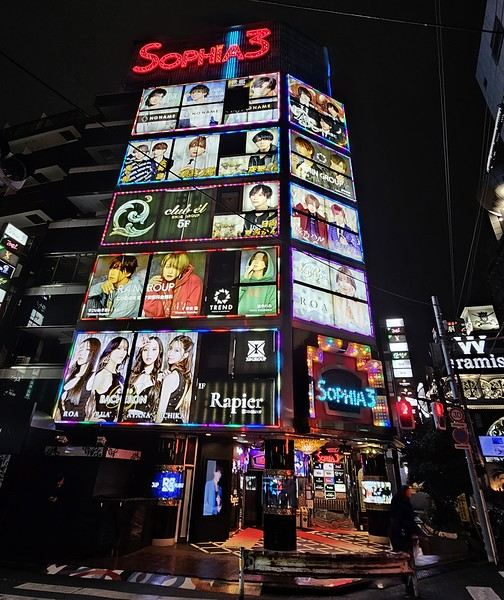
We ended the evening with a stroll through Kabukichō before a well-deserved sleep.

Open
VI
Vilabel 6 months ago
Travel Journal - 28 Days in China in August 2025
Hi everyone! I’m sharing a modest travel journal from my trip to China in August 2025.

There wasn’t much room for improvisation on this trip—everything was planned in advance. Since August is peak season, I decided to book train tickets early, and once that was set, I reserved all the accommodations too. I got everything on Trip.com.

I bought the flight tickets back in March from Hainan Airlines. They were super expensive, but with these travel dates, I couldn’t exactly dream of a bargain!

I picked up e-SIMs valid for a month from Free just before departure: 10 € for the e-SIM + 19.90 € for a one-month plan with 35 GB of data abroad.

No need for a VPN with these e-SIMs, but D. still got one—a multi-device plan for 5 € with a discount from Let’s VPN, valid for a month. It was for evenings at the hotel on Wi-Fi to avoid burning through the 35 GB with video.

I downloaded Alipay, WeChat, Amap (Baidu Maps), and Trip.com. We also have Google Translate and Maps.me—absolute must-haves.

We’re ready to go!

I’ve been waiting for this day for nearly 15 years!! I travel a lot, but this one—this is MY TRIP 🙂 It’s been postponed so many times: because I wanted to do it with the right person, because I have a Turkish stamp in my passport and heard they don’t issue visas with that, because of COVID... and then China introduced a 30-day visa exemption, and that was the green light! Ugh, they forced us to take our vacation in August this year—far from ideal—but no more delays. Saturday, August 2, 2025: it’s finally the big day!

Days 1 and 2: We got dropped off at Charles de Gaulle at 9:30 AM. I supposedly checked in online, but only for the first flight and without getting the boarding pass... Might as well scrap online check-in in that case. So, we spent over an hour in line at the counter to get them. We didn’t have any checked luggage—just our backpacks as carry-ons—so this was a step we’d never had to deal with before, but whatever, it’s done. No wait at passport control, 5 minutes through security, a quick walk around the terminal, 10 minutes in the boarding area, and it was already time to board. Departure around 12:45 PM, arrival in Chongqing at 4:50 AM. We had a few hours of layover before our next flight. Went through immigration, connecting flight control, and security. Pro tip: check your next flight’s boarding gate right after immigration. We never saw it displayed again anywhere in the terminal.

The Free e-SIMs work—phew!

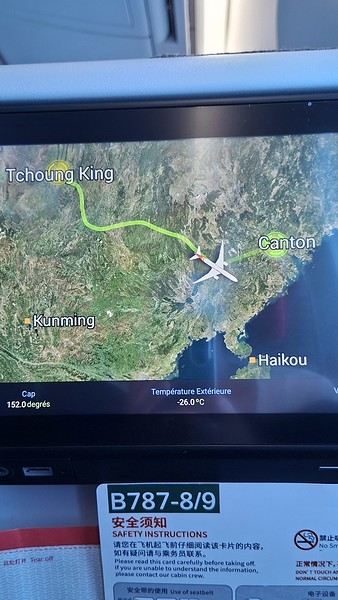
Took off at 9:30 AM, arrived in Guangzhou (Canton) at 11:20 AM in the rain. I love how Chongqing is translated as "Tchoung King" on the screens in the plane—very French!


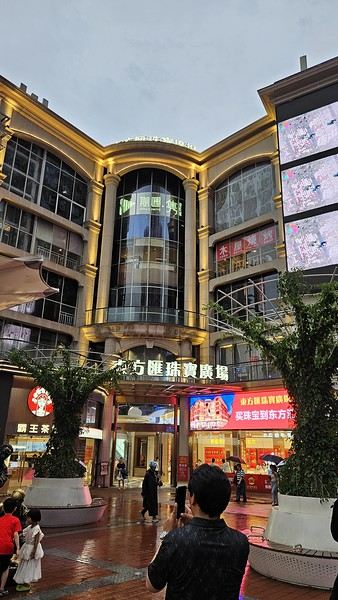
During my first two trips to China, we paid for everything in cash, but this time, we’re going all-in on Alipay and WeChat. I still brought the leftover change from previous trips—it might come in handy. At the metro station, they showed us a QR code to buy tickets via WeChat. There were probably machines and even a ticket counter, but we didn’t see them, and buying via WeChat was pretty simple. 8 yuan to Changshu Lu, which is 22 stops. So far, so good. Then, we had to find the hotel, which wasn’t on Google Maps, Maps.me, or Amap... Easy 😎! We found it without too much hassle, though. Dropped off our stuff and went out to eat. 55 yuan for two claypots with fish/eel, rice, cabbage, and purple eggplant. When we left, it was pouring. We grabbed our umbrellas and set off to explore the neighborhood: Enning Road (we’ll come back later to check out a specific spot), Shangxiajiu (the pedestrian shopping street), Baohua Road... The area is pretty diverse—one street to the next, it’s like stepping into a different world.


There weren’t many people around, probably because of the rain. We grabbed a quick street food dinner and went to bed—we were exhausted. We struggled to stay awake until 11 PM to adjust to the time change as quickly as possible. There’s a 6-hour time difference.
Open
BL
Bluequark 7 months ago · Max68
Three weeks in Japan with the family
Hi everyone,

Actually, we ended up going to Japan almost by chance. I’d caught glimpses of the country during business trips, and it had been on my “wish list” for a while, but I thought we’d go “when the kids were grown up.”

But this summer (2016), the kids couldn’t agree on a destination—their wishes were completely opposite. Then, realizing that flight tickets weren’t outrageously priced—and having read that Japan wasn’t as expensive as people think—we, the parents, suggested Japan… while warning that it would be scorching hot and humid and that no one should complain. Our eldest (18) was immediately thrilled: “Oh! Mom! I’ve always dreamed of going to Japan!” She convinced her brother (16) that it was the perfect destination. Deal sealed: we’re going to Japan, but no one complains about the heat.

After some forum discussions and family brainstorming, I settled on the following itinerary. One non-negotiable shaped part of our choices: being in Hiroshima on August 6th to attend the lantern floating ceremony. To avoid overloading the trip with extra transport, we skipped Nara, Nikko, and Kamakura.

Day 1 - Arrival at 8:30 AM in Osaka – Kyoto - around the station Day 2 - Kyoto - East - night: Kyoto Day 3 - Kyoto - North and center - night: Kyoto Day 4 - Osaka (stroll with Osaka Safari) - Fushimi Inari -night : Kyoto Day 5 - Train - Naoshima - night: Uno Day 6 - Teshima -night: Uno Day 7 - Naoshima – Hiroshima - night: Hiroshima Day 8 - Hiroshima – Commemorations - night: Hiroshima Day 10 - Miyajima- night: Miyajima Day 10 - Miyajima - Himeji Castle - night: Osaka Day 11 - Osaka - night: Osaka Day 12 - Kyoto - West -night: Osaka Day 13 - Kanazawa to Ainokura - night: Ainokura Day 14 - Shirakawa-go - Takayama - night: Takayama Day 15 - Kamikochi night: Takayama Day 16 - Takayama - return to Kanazawa night: Kanazawa Day 17 - Kanazawa -night: Kanazawa Day 18 - Travel to Tokyo (Shibuya) -night: Tokyo Day 19 - Tokyo (visit with Tokyo Free Guide – Yoyogi Park - Meiji Shrine - Harajuku - Takeshita-dori - Omote Sando - Odaiba) - night: Tokyo Day 20 - Tokyo (with Tokyo Safari) - night: Tokyo Day 21 - Tokyo (Tsukiji, Hama-Rikyu Onshi Teien, Asakusa and Senso-ji, Kappabashi, Ameyoko, and Ueno) - night: Tokyo Day 22 - Tokyo (Shibuya-Yoyogi Park again - Ikebukuro - Shinjuku (Tokyo Metropolitan Government Building, Omoide-yokocho, Golden Gai) - night: Tokyo Day 23 - Tokyo (Yanaka – Ueno – Edo-Tokyo Museum - Takashita-Dori again - back to Shibuya) - departure at 10:50 PM for Paris

(You can access the published days directly by clicking on them).

The itinerary perfectly matched our expectations: a good pace, a wide variety of visits, the must-sees, but also a first taste of rural Japan. If we were to do it again, I’d do exactly the same (except for the back-and-forth between Kyoto and Osaka on Days 4 and 12, which were due to my desire to explore Osaka with Osaka Safari). Of course, we had to skip some sights, especially in Kyoto where we missed a few “highlights,” but that was a deliberate choice—I’d limited our time in the city, which is known for being stifling in summer.

For accommodations, we mixed Airbnb apartments and quadruple rooms in guesthouses and ryokan. It worked out perfectly. The apartments gave us more space and the chance to dine in some evenings, while the guesthouses and ryokan helped us experience Japanese customs.

First, a quick recap: all four of us were enchanted by our trip. Japan is a constant source of wonder, just like the preface of *Tokyo Sanpo* by Florent Chavouet describes—I’ll take this opportunity to plug the book, which I read with great pleasure after our vacation. That’s exactly it: everything is a reason for amazement. Everything is so different from home. I wanted to photograph everything around me constantly. I promise, I won’t say “photograph like a Japanese” anymore—during this trip, *I* was the Japanese. And I better understand the culture shock Japanese travelers experience in Europe.

As a friend of mine put it: “It’s simple—they have ten fingers, so they count in base 10. Otherwise, they do everything differently from us.” Well summarized.

Another thing: everything is easy. Everything seems to have its place and be exactly where it should be. The smallest detail seems to have been thought out to make life easier. Things that come to mind: the incredibly well-designed signage in train stations and the subway, the ubiquitous public toilets, designated smoking areas, those hyper-detailed maps with all the useful information available at every place we visited… These maps are so well done that we got into the habit of picking them up systematically. It’s that simple: I came back to Paris with a complete collection. And when we arrived in Takayama by car, our first stop was at the train station to get THE map. But this order goes beyond all these practical elements. There’s a certain *je ne sais quoi* that makes you feel like everything is exactly where it should be. Even during rush hour, in the crowds, people manage to avoid each other in a smooth, collision-free flow—the opposite of the Paris metro. Anyone who’s experienced certain transfers in Paris at certain times will understand.

The exquisite politeness of the Japanese and their desire to be helpful are another highlight of the trip. Every person we met tried to help us and make our lives easier. It was really great.

Oh! I almost forgot: Japan’s hyper-safe side. I’ve rarely felt as safe as I did in Japan. No need to keep an eye on your belongings—they’re not going anywhere. One example among many: in Tokyo, Japanese women leave their bags open with their smartphones casually placed on top. Even I could’ve taken them without them noticing, let alone a pickpocket… No wonder France is seen as dangerous.

That said, I’m not claiming Japanese society is flawless. The role of women and gender relations are downright shocking and archaic from our European perspective. I also don’t think I could live in such a codified society, where the individual is so dissolved into the collective. But for a vacation, it’s simply delightful. On that note, I recommend *Nââânde?!* by Eriko Nakamura, which I discovered after our trip on the recommendation of our eldest’s friend. It’s the story of a Japanese woman married to a Frenchman living in Paris, recounting her astonishment at French habits and customs. Even though I tried to be careful, I’m sure I made quite a few blunders.

As for the climate, it didn’t stop us from enjoying our trip. Sure, we were hot—*really* hot—but by protecting ourselves from the sun (hat for me, caps for the others, plus umbrellas—Japanese-style parasols) and drinking liters and liters of water, it was manageable and didn’t bother us too much, even if we probably had a slower pace than we would’ve with milder weather. That said, with small children, we would’ve struggled more.

Last point before diving into the trip details: the cost. Despite what I’d read, traveling in Japan is still expensive. I’m not talking about our specific trip, where—using our daughter’s 18th birthday and our 20th wedding anniversary as an excuse—I splurged on a few extras that drove up the cost. I was particularly surprised by the price of quadruple rooms, which is roughly the same as two double rooms. So for a family, that’s a significant extra cost. The various paid sites in Kyoto also add up. As for food, it’s generally cheap, but it would be a shame not to budget for a few extras to try some less affordable specialties—like Hida beef in our case.
Open
CH
ChrisEtLolo 12 months ago
Sharing our one-month Japan trip itinerary
✈️ Our travel journal from our one-month experience in Japan 🇯🇵

We’re sharing our trip from July 2025. A pretty classic itinerary for a first visit to Japan, between Osaka and Tokyo.

Our humble journal is available on our TRAVEL JOURNAL, written day by day. You’ll find lots of photos there.
Open
NA
Nathalie971 last year · Capucine33
Kyushu between Fukuoka and Nagasaki in autumn 2024 (Japan)
Fellow travelers,

Don’t they say "never two without three"? It seems so. Here I am again on the forum to share—and let’s be honest, indulge a bit of selfish pleasure—by recounting the story of this third installment in the Land of the Rising Sun.

Where? It’s all in the title. On the island of Kyushu in southern Japan, more precisely in the northwest between Fukuoka and Nagasaki. I hope to take you along with me for 19 nights and 18 full days this autumn of 2024. On the itinerary: gastronomy, crafts, festivals, waterfalls, encounters, and leisurely strolls in all simplicity.

A last-minute flight booked just 7 days before departure, and the route evolved regularly based on whims and accommodation availability, eventually settling on this:

- 5 nights in Fukuoka: Fukuoka city, Ukiha, Itoshima, Dazaifu, Yanagawa - 4 nights in Hasami, Nagasaki Prefecture: Okawachiyama, Arita, Takeo, Kashima, Yobuko, Karatsu, Kabeshima - 6 nights in Nagasaki: Ureshino, Higashi-Sonogi, Nagasaki city, Unzen, Sotome - 4 nights in Fukuoka: Karatsu, Fukuoka city

Most of the trip was done by car for practical reasons—easier access to certain places and freedom of movement—but also for the sheer joy of it. Despite slow traffic at times, driving in rural Japan is a delight.

If the program interests you, see you soon for the start of the journey.
Open
OL
Oltean 2 years ago · Torpan
Kyoto, Shinkansen, Tokyo: three first-timers in Japan via Air China
Hi everyone,

The idea of visiting Japan goes back a year now. I remember because I was looking for cheap flights to Europe from Paris. Surprisingly, the round-trip to Japan with Air China was just as affordable—if not cheaper—than many European destinations.

So, the tickets were booked. Three seats (including one for a 12-year-old), ten days over Easter 2018, AirBnB accommodation. Of course, in ten days, you visit without *really* visiting—you only scratch the surface. Just the classics: Kyoto, temples, moonlit rivers; the Shinkansen; and Tokyo, gardens, wandering, high-tech, and... maids.

I have to admit, we don’t know much about the country, and the thought of how we’d manage is a constant source of worry. What if this trip reveals my inability to open up to other cultures?

We board the first Air China flight with that question on our minds.
Open
SA
Sarana 2 years ago · Nimou74
On the Silk Road: Chronicles of a Sixty-Something Traveling Completely Independently
From Beijing to Khiva: China, Kyrgyzstan, Tajikistan, Uzbekistan Chronicle of anecdotes, highlights, and other adventures that marked this eight-week journey in 2018.
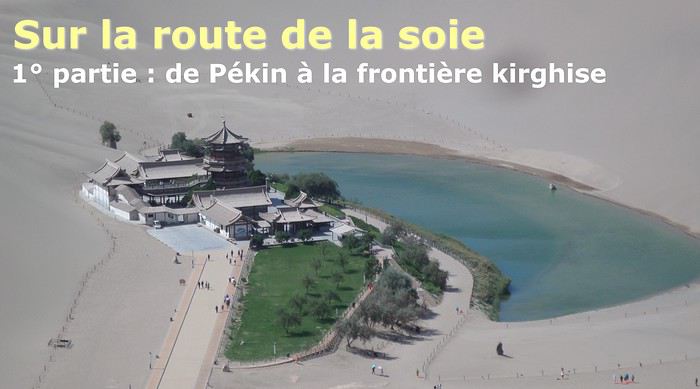


The Chinese Far West More than 30 years after my first trip to eastern China, I finally fulfilled an old dream: traveling solo from Beijing to the far west, discovering Xinjiang, the Uyghur people and the oppression they endure, the oases of Turpan and Kashgar, the Taklamakan Desert, the end of the Great Wall... The route was covered by train.

MENU PART 1: CHINA

1- Beijing (Jiankou) : the authentic Great Wall, without tourists 2- Cycling in Beijing, the best way to get around 3- Beijing : departure for the far west 4- Jiayuguan : getting by without English 5- Jiayuguan : scams and heritage 6- Dunhuang : abundance in the middle of the desert 7- Turpan : the Uyghurs under heavy surveillance 8- Kashgar : love at first sight for the old city 9- Kashgar : China’s recipe for controlling the populace 10- Tashkurgan : what on earth was I thinking going there! Kyrgyz border: a surreal epic Photo album from the 80s, contributions from other travelers (page 2)

1- JIANKOU Finding the authentic Great Wall, without tourists or a guide Friday, August 24, 2018 Thirty years later, I didn’t feel like revisiting the Great Wall at Badaling or any other overcrowded site. I chose to explore it at Jiankou, in its wildest, most authentic, and unrestored section, starting from a lost village deep in a valley—though it wasn’t *that* lost, since it had everything for communication.
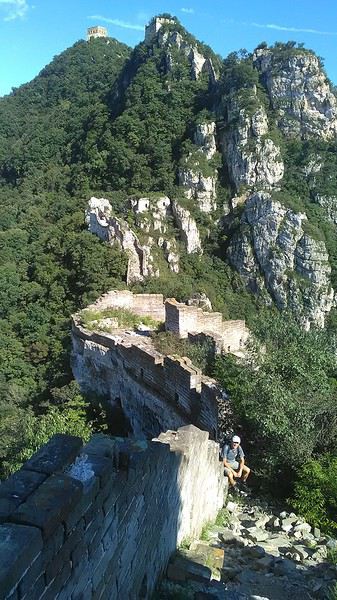


No need to pay for a taxi to get there—by timing it right, you can take the bus for just a few yuan. You have to get off at Xizhazi, the bus terminus. Be careful, there are only two buses a day in each direction. At the Xizhazi bus stop, I met a young couple who’d arrived with zero information about what to expect. We hiked the three of us toward the restored section of Mutianyu.

Still, be cautious With GPS and a topographic map (OpenTopoMap), you can set off without a problem or guide. The trail up to Jiankou is easy and well-marked. The trails down are too. But be careful—once you’re on the Wall, it’s real mountain hiking, with easy but dangerous climbing sections (over sheer drops). Not for amateurs or those afraid of heights! But what a reward. The Wall all to yourself, where it’s at its most daring. Truly mesmerizing.

More photos...

2- BEIJING The best way to get around the capital Sunday, August 26 The best way to explore the city is still by bike. Most are in a bike-share system, but you need to use an app—WeChat, the app that does everything, like monitoring your every move. No way I was installing that.
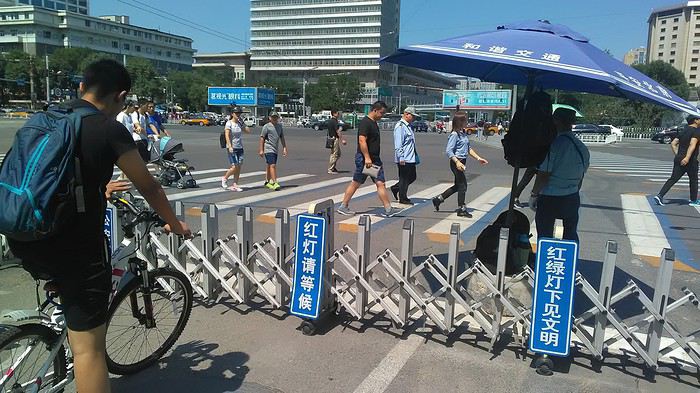


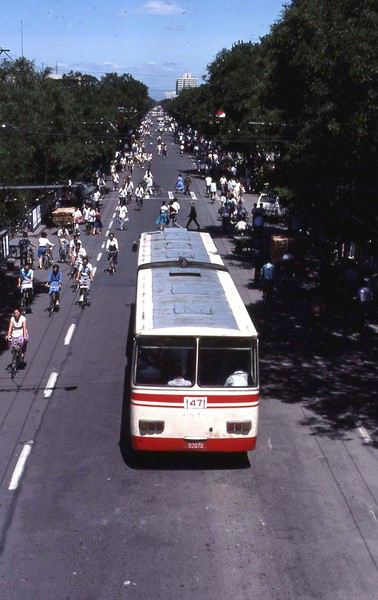
I found one at a rental shop near the hostel. The key is to quickly learn local traffic customs to minimize risks. Bike lanes are wide along the avenues.

But you still have to: - Watch out for anything parked on the bike paths—the most annoying are people napping or talking on the phone in their cars - Keep an eye on everything coming the wrong way—the list is long - The worst is right turns on red, which in Chinese traffic rules seem to have priority Once you get the hang of it, it’s fine. The city is huge but flat, so you can just wing it.

3- BEIJING By train to the far west Sunday, August 26 Beijing West Station is the size and operates like an airport. With your e-ticket from the agency, you first have to pick up your ticket at the special "English" counter, after passing through security. With your ticket in hand, you have to exit and enter through the boarding waiting area—not the platform—after a second security check.
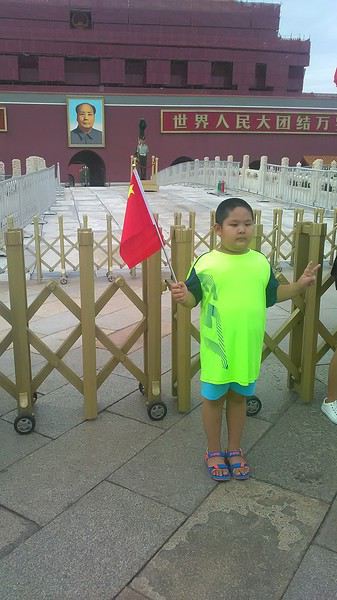
Then you find the right hall and wait for the sign to finally access the platform. In the end, it works pretty well given the incredible number of passengers to manage. Everywhere in Beijing, I saw that the Chinese have mastered crowd flow management.

Nice surprise: second-class carriages are clean, air-conditioned, and bright. Perfect, since I was in for 20 hours. One uniformed attendant per carriage, mobile meal service—luxury! Small downside: no luggage space. Hauling your suitcase up to the top bunk is quite a workout. I was in the middle, so it wasn’t too bad. The landscape, though, whether rural or urban, is pretty bleak. That should change once we leave the eastern plains.

Of course, I got my first police visit, with a thorough passport check and bag search. I was warned—going to the Chinese far west exposes you to this kind of hassle. But they were polite and respectful.
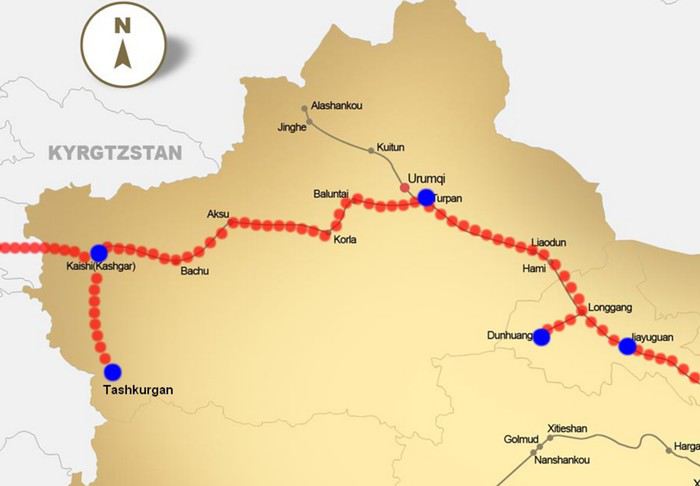
The Chinese Far West

4- JIAYUGUAN Getting by without English Monday, August 27 At the gates of two deserts (Gobi and Taklamakan) and at the foot of the Tibetan highlands, the Great Wall ends at Jiayuguan. Here, I found the deeper China I’d somewhat rediscovered during my bike ride, even if now everyone gets around on electric bikes and I’m no longer stared at like an alien.
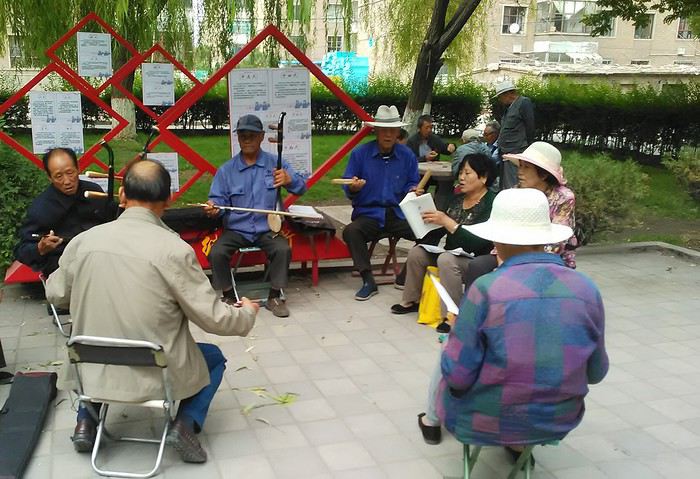


Prices are nothing like Beijing: you can find a full meal for 2 €, and my bike cost 7 € for two days. Plus, few people speak English—neither the owner of the HI hostel where I stayed, nor the ticket sellers at the sites, let alone the servers at the small eateries where I ate. Everything is written in Chinese. So I had to use the little Chinese I know to communicate about essentials. It makes the locals laugh to see a European trying to speak their language, but it earns respect. With Google Translate’s help, I managed.

Rant: With their avenues blocked for construction for kilometers without warning, and new roads not yet on maps, I must’ve taken 15 km of detours. More photos...

5- JIAYUGUAN Scams and heritage Tuesday, August 28 The Great Wall doesn’t exactly end at the fort I visited yesterday but 10 km further, at the entrance to a river gorge at the foot of the mountains. All that’s left is a badly damaged tower (more like a mound of earth) and a section of clay wall, similar to the one I biked yesterday.
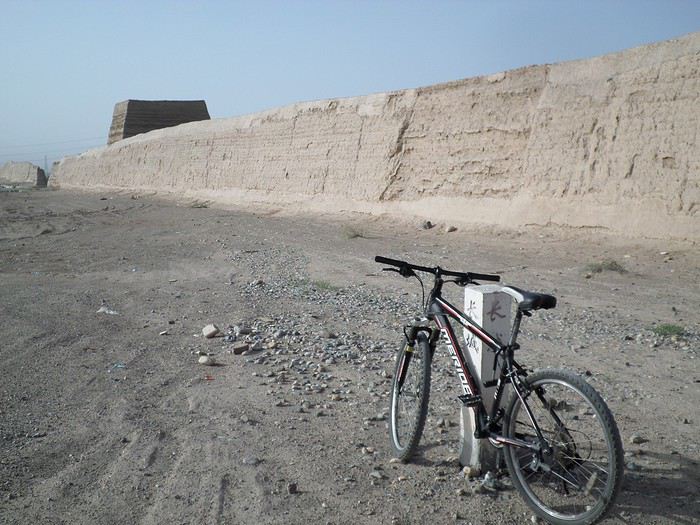


This morning, I hopped on my bike, determined to venture into the desert to see this highly symbolic site. First, you access it via a wide, brand-new road with not a soul in sight. Just before the site, I came across a grand welcome gate, very period-style, but it’s actually the inevitable toll booth.

Behind the gate, the road continues straight to the site, which you can see in the distance—at least 2 km away—the remains of the tower and wall. I had to leave my bike here. Fine. I went to the ticket counter and asked the price: 120 yuan! I couldn’t believe it—over 15 € for a simple mound of earth.

I showed my displeasure to the attendant, who couldn’t care less, and immediately turned back. 120 yuan—that’s the price for a new road, a fancy gate planted 2 km before the site just to force you to take a shuttle, and employees with nothing to do all day... Now I understand why I didn’t meet anyone!

Heritage China is a bit pricey Generally, sites are expensive for the country’s standard of living, but travelers are supposed to have money, so why hold back? I even gave up on the Forbidden City—reservations required days in advance (or on the black market at an impossible price). I prefer to keep the memory of my first visit, when entry must’ve cost a few dozen cents, and there were only a handful of visitors.

This morning, I took a taxi to see remarkable tombs of common people from the 3rd to 6th centuries. They’re small vaulted caves made of painted bricks, depicting scenes of daily life. Very pretty and moving. But even here, though the price was more reasonable, I was left wanting—only one of the 16 tombs is open to visitors, and it’s apparently not the most beautiful.

The authentic China—at least what’s left of it... Wandering the impersonal avenues of the city, you stumble upon a market. There, you still find traditional China—small shops with questionable hygiene, Go players, musicians, and even a dental prosthetist. The last refuge for those untouched by modernity. More photos...

6- DUNHUANG Abundance in the middle of the desert Wednesday, August 29 Well, I thought the landscape would be less bleak as I headed west. Nope. The only distraction in this expanse of dark, clayey sand is the forests of pylons and wind turbines, plus wild camels racing each other.
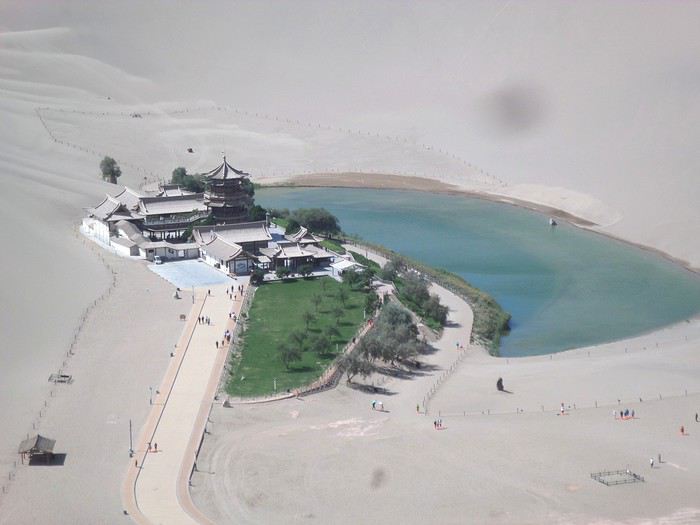
However, Dunhuang, the gateway to the Taklamakan, is by far the most pleasant Chinese city I know. There’s a real city center you can explore on foot. It’s hot but not unbearable, with a light, dry breeze. Much nicer than Beijing. The Han Chinese are still the majority, but the Muslim Uyghurs are more numerous, and the muezzin’s call to prayer echoes around the mosque.

The most surprising thing is the abundance and diversity of fruits and vegetables. You wonder how it all grows here. Well-irrigated, the desert sands are very fertile. Here, raisins have subtle, mysterious flavors, and the lamb really tastes like lamb.

Today, I visited the must-see Mingshashan, a dune complex next to which Pila is a molehill. The Basque Country, but covered in sand... More photos...

7- TURPAN The Uyghurs under heavy surveillance Friday, August 31 Surveillance cameras everywhere in the city, armed police stationed at intersections, in front of public buildings, at the entrance and inside tourist sites, police stations on every corner, patrols on foot or by car, khaki uniforms even for middle schoolers... here, the Han Chinese are in the minority, and you can feel it. Turpan feels like a city under siege.
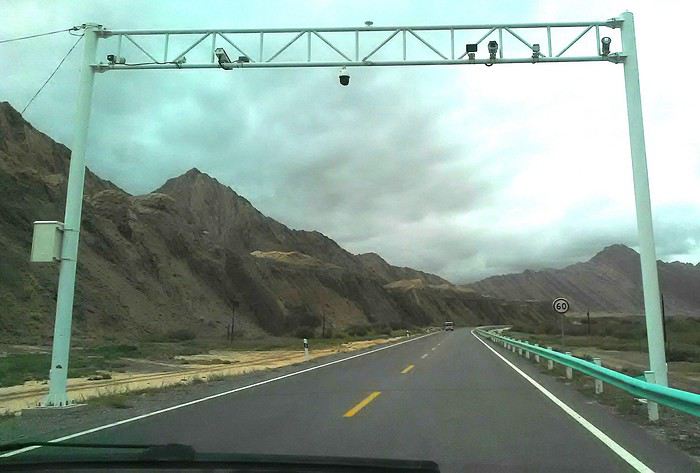


To enter the youth hostel where I stayed, there’s even a security gate, and the receptionist (a Han, like everyone in tourism) wears a bulletproof vest! Reassuring. Still, you don’t feel particularly threatened here, especially as a European. The troublemakers are the Chinese, not the Uyghurs. Generally, China is a very safe country for visitors.

Smile, you’re on camera! I was biking on an avenue when the car in front of me got flashed for driving slowly. I quickly understood why when I got flashed too.

Here, the official time is Beijing time, but it gets dark two hours later. It’ll be even worse in Kashgar. Trickier to manage: everything is displayed in Chinese and Arabic. Nothing in English. Choosing a menu is a shot in the dark. Apart from a few young Chinese, no one here speaks English, and my Chinese doesn’t seem very understandable...

Mogao, the end of the road for the Han Yesterday, near Dunhuang, I went to Mogao, a complex of decorated caves with Buddha sculptures and paintings. Stunning, but so crowded! Luckily, here in Turpan, Chinese tourists barely venture out. So I visited a Silk Road ghost town with only a handful of other visitors and under a howling wind.

The modern Chinese city is swallowing up the old Uyghur neighborhoods—only a museum-like district remains in the center, and pockets of resistance on the outskirts are doomed to disappear soon. More photos...

8- KASHGAR A (relative) love at first sight for the old city Sunday, September 2 After three overnight trains, here I am in the far west of China, nearly 4,000 km from the capital. Despite the omnipresent police and an old city preserved UNESCO-style, Kashgar is my Chinese love at first sight.
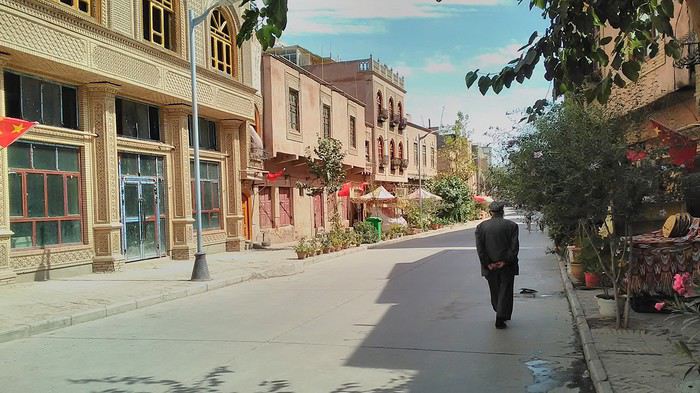


Finally, Chinese... well, sort of, because we’re in Uyghur territory here—a Turkic people with nothing culturally in common with the Han, the eastern Chinese. It started badly yesterday at Turfan station, where after three security gate passes, at least five passport checks, and a bag search, three adorable policewomen confiscated my antibacterial lotion because it had a flammable logo...

Then came the welcoming committee of armed cops at Kashgar station. Once all that was over, they left me alone—except you still have to go through security checks like everyone else to enter the old city, the bazaar, the livestock market... The further west you go, the more the siege mentality is evident. Luckily, the border isn’t far...

Despite the inevitable destruction-reconstruction, the city center has been well preserved. Thankfully, because it’s a very original style, a mix of local and colonial. I love it, even if it’s a bit too artificial, sanitized, and watered-down, and rather empty of residents. On the Silk Road, the city was famous for its great food. And it still is—rarely have I seen such richness and abundance of food! And not just scorpions or snakes. More photos...

9- KASHGAR China’s recipe for controlling the populace Saturday, September 1 Xinjiang, along with Tibet, is a "sensitive" area of rebellion in the eyes of Chinese authorities. As a result, the state has these regions and their populations under total control. Tourists also feel the consequences, even if they’re not at risk of re-education camps.
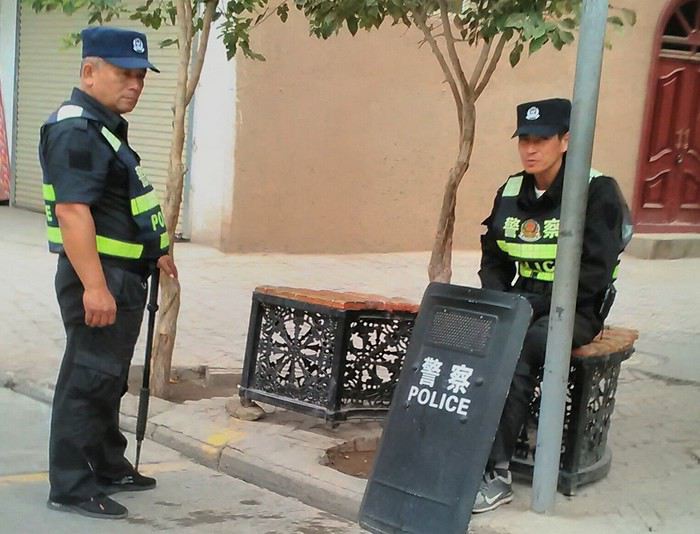
- Putting barbed wire and anti-ramming barriers around sensitive sites (schools, big hotels, government buildings...) - Installing traffic surveillance gates with cameras and photo flashes (for all vehicles passing, including bikes) throughout the city and even in the countryside - Posting uniformed guards with tasers, batons, or huge baseball bats every 100 meters - Training the Han population (ethnic Chinese) in self-defense with sticks, preferably in the morning on the street. Men and women of all ages - Starting school with the national anthem, doing military exercises, and receiving political indoctrination, all neatly lined up in the courtyard. (The dream school for any teacher) - Placing a snitch in uniform (a pseudo-guard) in public gathering places, like youth hostels. Mine spends the day loafing around the courtyard - Putting Chinese flags everywhere on the streets to remind everyone who’s in charge - Installing security gates at every entrance to areas frequented by tourists (thanks for that) but not just there - Never photographing cops, or else! I tried, but it’s not easy...

With all that, you can stroll around safely Not much crime! As for the amount the Chinese state spends to maintain such a system, it’s staggering! A third of the Han living in Xinjiang work in security. Today, I wandered freely around old Kashgar, which is quite large after all. More photos...

10- TASHKURGAN What on earth was I thinking going there! Wednesday, September 5 First, there’s the taxi—pretty crappy, with a driver who doesn’t speak a word of English and won’t stop smoking. Over six hours in that... shared with a completely out-of-it American.
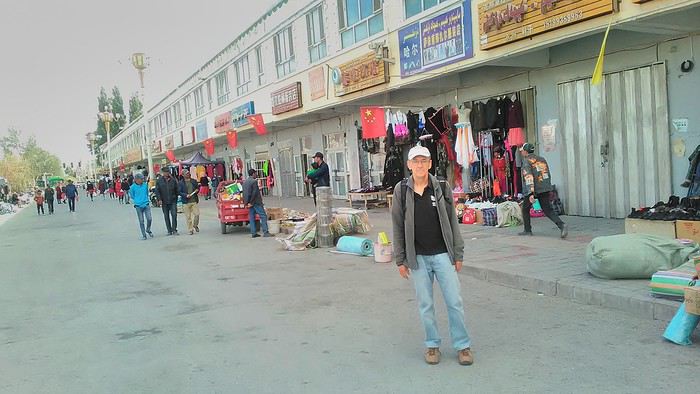


Then there are all the checkpoints along the way. I won’t go on—you know the drill by now.

After that, there’s Tashkurgan—a town with nothing to see, nothing to do. Deserted as soon as night falls. There’s this huge youth hostel and a few lost Chinese tapping away on their smartphones, chain-smoking. This lost American-European crowd, swapping tips on how to enter Pakistan or Tajikistan.

Luckily, there’s the Chinese Pamir Highway, lined with peaks over 7,000m. There’s the feeling of no longer being in China, with a population whose features are Middle Eastern. And these Tajik women with their stunning hairstyles and vibrant costumes. There’s the fact of having reached the westernmost Chinese city, far from crowds and tourist sites. A sort of end of the world. More photos...

11- KYRGYZ BORDER A surreal epic Thursday, September 6 The road from Kashgar to the Kyrgyzstan border is a little over 200 km and passes through beautiful landscapes of colorful, desert-like mountains with acrobatic folds. That’s the bucolic part of the trip.
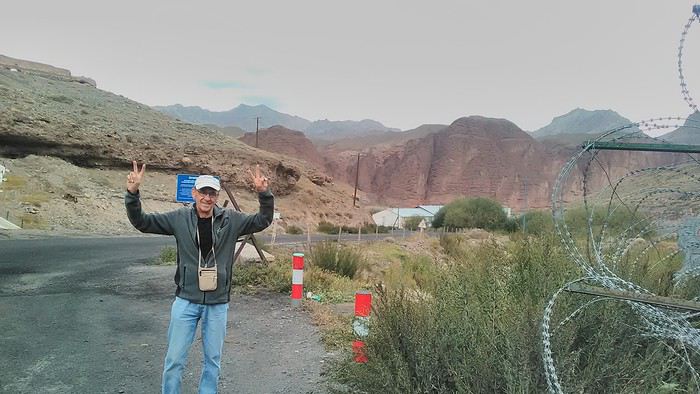
Yesterday, I managed to gather four people to rent a minibus to reach the border more easily: a Spaniard and an Argentine I’d already met in Turpan, and two New Zealanders who responded to the ad left at the hostel.

Absurdity and paranoia of Chinese authorities The highlight was crossing the town of Wuqia, 50 km past Kashgar. After tallying up with my fellow sufferers, we must’ve passed about ten checkpoints with: - Passport checks: 14 times, sometimes by two cops side by side - Bag checks: 4 times - Smartphone checks: 2 times, with deletion of "non-compliant" photos, and registration of your IMEI in the exit log!... Absurd and surreal at the same time, since my camera stayed in my bag, my apps are in French, and my photos have been online for ages...

With all that, we arrived just as the last checkpoint before the no man’s land marking the border between the two countries was on lunch break. And bam! Another 1.5-hour wait, alongside truckers who were much more used to this than we were.

What to think? The cops themselves aren’t fooled. They play the role they’re asked to, but sometimes you can coax a smile out of them—they realize how ridiculous the situation is.

What’s the point? That’s the big question my companions and I were tempted to answer with "to piss people off." To show you your place isn’t here, but with the other tourists, over there in the east, in Shanghai, Xi’an, or Guangzhou.

As for you, a traveler from a democratic country, you really experience this as aggression, humiliation, a violation of your private space. And yet, I’m respected, they speak to me properly. Today, I better understand what a Palestinian or a citizen of an occupied country might feel daily. A unique experience! Thanks, China.

And to top it off, the cherry on the cake! It’s still this glowing button you press to rate your passage after clearing the last obstacle before the exit stamp. I was so surprised it turned off before I could react. The Spaniard, with great humor and irony, had time to vote "excellent." In the end, he wasn’t wrong—you can hardly do better!

PS: I ditched my buddies at the border. They didn’t want to pay for a taxi to continue. So I took a direct taxi to Osh. The first 100 km are fabulous. I couldn’t take many photos, but I’ll be back on Monday to go to Tajikistan.

More photos...

The rest of the Silk Road, Part 2, in these travel journals: Kyrgyzstan, Tajikistan, Uzbekistan.
Open
EL
Elcoyote69 2 years ago · Anneorange
Taiwan: The End of the Natives
I’d heard—and rightly so—about the incredible kindness of Taiwanese people. I had just spent a few weeks in Korea, a country of teddy bears, where the locals loved telling me about a place full of… more teddy bears. It was going in circles.

So I arrived in Taipei with stars in my eyes, ready to face all that generosity. Yet, surprisingly, the guard posted in front of the presidential palace wasn’t exactly courteous. And then, the countless military vehicles really struck me. Have you ever seen a teddy bear driving a tank?

I spent most of my evenings in a bar along a very large avenue. I’d go alone and always find company—men, women, it didn’t matter as long as I could blend into this new country, discover its people, their culture, their history.

The heat made me sweat nonstop, my beard had grown back, I was wearing a black T-shirt as worn-out as possible, and my face bore the marks of several months in Russia and Korea. In short, I looked like the perfect globetrotter—the kind I’d probably dreamed of being as a kid.

So there I was, sitting at the bar, deep in conversation with a Taiwanese friend, when a fight broke out between an Italian and an American—two drunk, stupid beasts. Shouting, shoving, we kicked them out. Well, *we* didn’t. My friend didn’t move; I was the only one who reacted, letting my temper get the better of me. He looked at me and said, without malice, that white guys had also fought two days earlier. I turned my head toward the room—I was the only foreigner. I was used to it, but tonight was different. The looks in the mirror were full of distrust. I felt like an idiot for all the others. I felt like an idiot. I said goodbye to my friend; I was convinced I’d never see him again. As I headed toward my hostel, my brain was racing. Asia had confronted me with a side of travel I didn’t know. I’d always managed to blend in, to go unnoticed, but when your features and skin color prevent that, the game changes. And this hyper-globalization, this hyper-communication, the fact that poor guys like me can enjoy travel—is it really a good thing? Does it create an expectation, a need for a mass of tourists who couldn’t care less about the country they’re visiting? No, really, I felt like an idiot. And then all those damn tanks, and what’s with those dozen tents in front of the presidential palace? It intrigued me. It was late, but there was movement. Hey! Hey! How are you? Good, just a little drunk. Ha ah aha! What are you doing here? Why are there so many military personnel around you? Ha ha ah! You can come if you want! Oh really? Yeah, yeah!

I climbed over the fence and learned. I learned that in the mountains to the east of the island, the island’s natives still live. I learned that their culture is disappearing, that they themselves are disappearing. That nothing is being done to preserve the very origin of this country. That all those tanks and military personnel were there for about thirty cheerful troublemakers who had made the trip. Because by being there, they were announcing: *Yes, we’re still here.* I spent the rest of the evening with them until early morning. They showed me how to weave my own shoes (flip-flops), plied me with endless coffee, laughed when a cop took my picture and I shouted, *Yes, I’m a French spy*, and gave me a bracelet. I left with a new look in my eyes. This trip will end as it began, but the next one will be different. I’ll be prepared; it won’t just be an escape or an adventure. Travelers destroy more than they preserve—it’s not easy to tip the scales, but I’m going to try anyway.
Open
JE
Jemaflor 2 years ago · Nimou74
Two Sides of China: Urban Shanghai and Rural Yangshuo


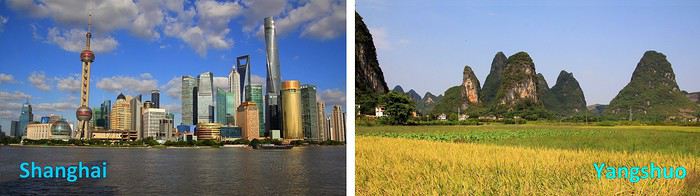
Vast, diverse, and multifaceted China! During a recent journey across part of this fascinating country, I enthusiastically discovered so many aspects of it. But such variety seems hard to condense into a single story. So, for this travel journal, I’ve focused on two main facets of China. First, a modern and urban China—the sprawling city of Shanghai—and then, in a second part, a China that’s the complete opposite: a rural and more traditional side explored around Yangshuo, where nature is absolutely stunning. Ready for a tour of China, city first, then countryside? Travel stories, descriptions, and impressions are on the program, with plenty of room for photos. Enjoy the journey and happy reading!

--

Urban China: Shanghai

As soon as you explore the city, it’s clear: the Chinese wanted to turn Shanghai—once a small fishing village—into a showcase of a modern, powerful, and forward-looking China. The megacity is immense, with around 24 million people bustling through its avenues or stuck in monstrous traffic jams at the foot of some of the world’s tallest skyscrapers. Towers so high they almost touch the sky—well, almost. But this gigantism is just one side of this southern metropolis in the Middle Kingdom.

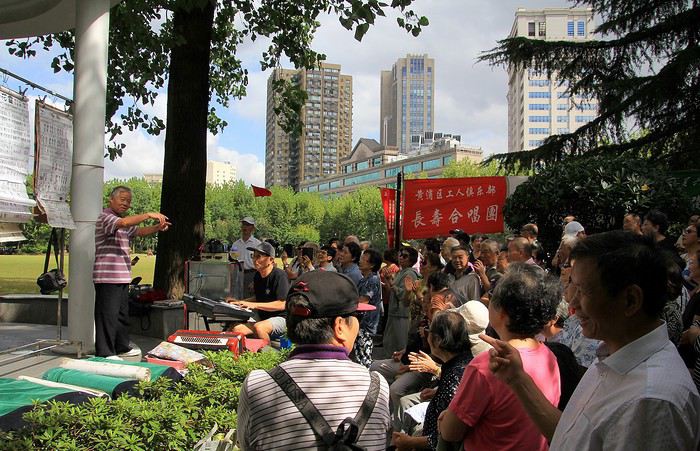
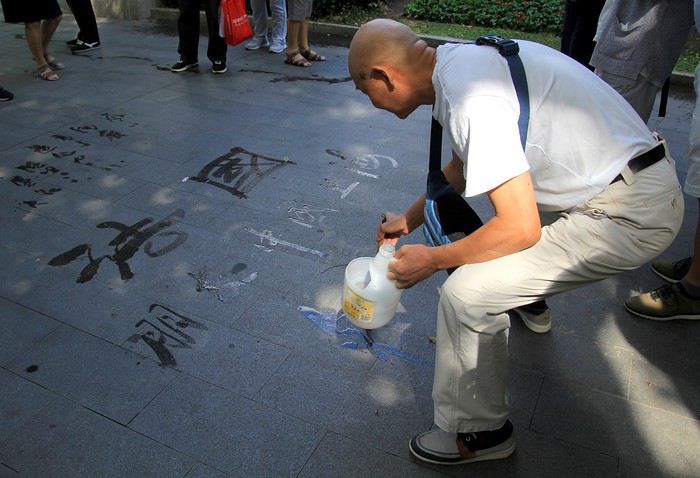
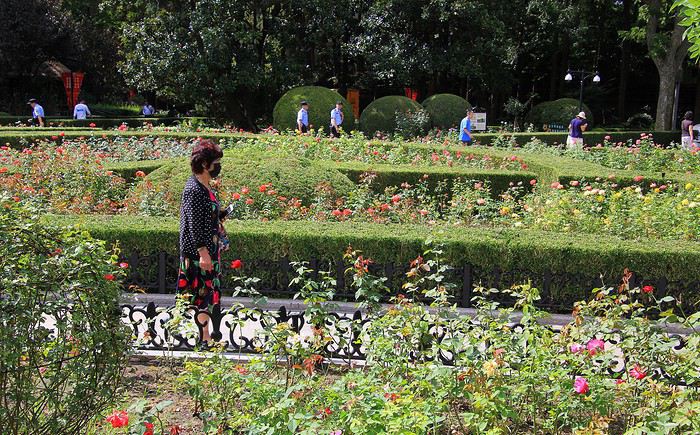
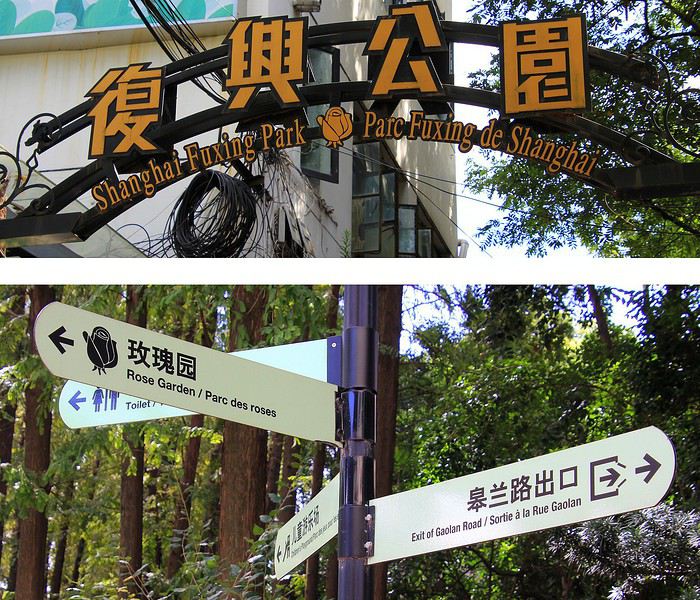
Away from the towers and business districts, you discover another side of Shanghai—more traditional and, some would say, more human. This is where my travel story begins: on a quiet morning among smiling, relaxed locals. We’re in one of the city’s parks, specifically Fuxing Park.


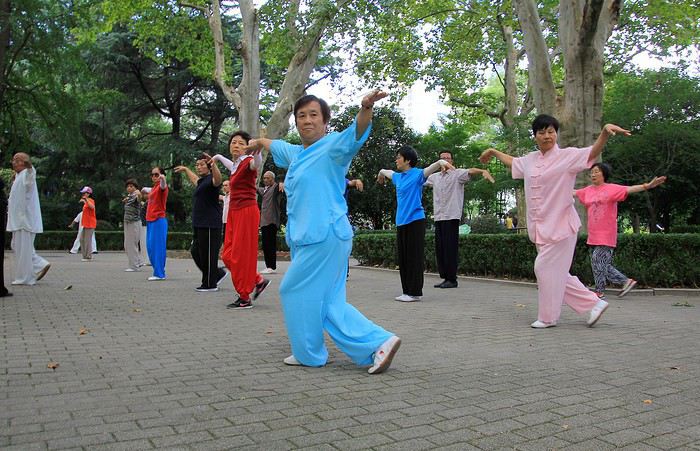
As everyone knows, the Chinese love practicing Tai Chi Chuan, in groups or solo, so it’s no surprise to see so many here, moving slowly and precisely through their sequences. Here’s a first group, their movements and postures perfectly coordinated.


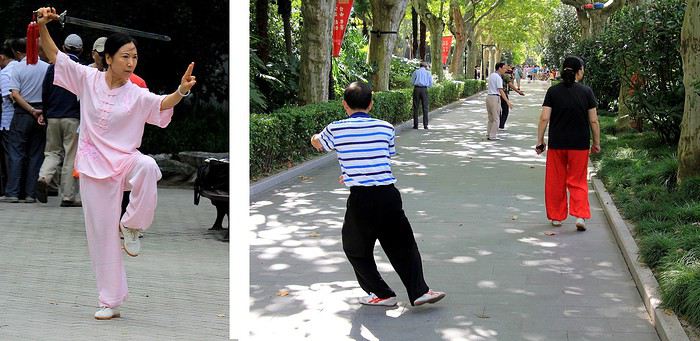
In another alley, a lone practitioner is deep in concentration, executing his movements with focus. I watch him for a few moments, discreetly and from a distance, so as not to disturb him. To his right, a woman in bright red pants keeps walking, almost as if she’s marching in place. A strange ballet: a series of steps forward, then backward, and so on...

Nearby, this elegant athlete (or artist) performs Tai Chi with a sword—almost like a choreography, her movements resembling a true sword dance.


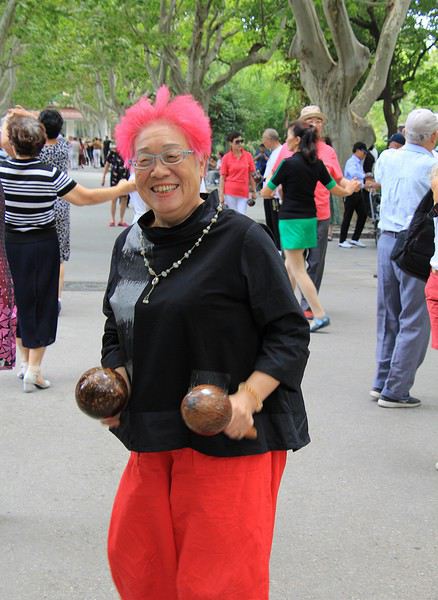
Further on, the atmosphere is more relaxed and melodic. People are playing music and dancing joyfully, like this woman with her colorful, original hairstyle, all smiles with maracas in hand. You almost want to clap along—her energy is so contagious!


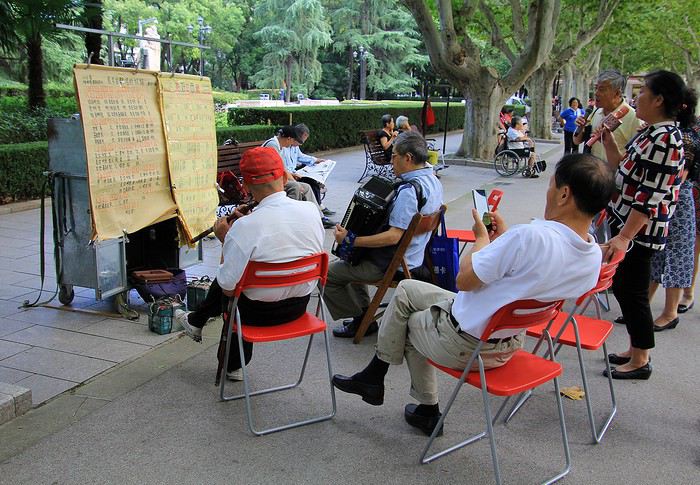
The mood is lighthearted among this group of retirees. Their choir alternates between patriotic hymns and lighter songs. Someone must have told them some French people were watching, because suddenly they start singing an old French tune: « Vive le vent, vive le vent d’hiver... » And the cheerful choir leader invites us to sing along—all together! The result was a fun cacophony: us in French, them in Chinese. But it was so charming!

These Chinese locals definitely passed on their good mood. It’s a joy to see all these retirees—you can imagine them leaving their small apartments to get some fresh air and meet up in the park for these morning activities. But let’s not kid ourselves: while they seem so happy and content with those big smiles, most of them probably didn’t have an easy life. Food shortages, draconian regulations, propaganda, the one-child policy—just to name a few! No, what many endured in their daily lives didn’t always give them reason to smile so brightly. But now, they’re making the most of it, and as I wrote earlier, it’s wonderful to see them like this.

Encouraged by these shared moments, I decide to keep going. Without hesitation, I join a Tai Chi session. I tried my best to follow the movements of my neighbors practicing this traditional exercise, but I’ll admit—it wasn’t easy!


This artist, especially attentive, rewards us with a calligraphed phrase about France. A lover of Chinese calligraphy, he writes these sinograms in ancient characters directly on the ground. Is it writing or drawing? It’s hard to say—the result is so aesthetic. An ephemeral phrase, written in water that slowly fades as it dries, before disappearing entirely.


As we walk, we approach one of the park’s exits—so beautifully flowered. These flowerbeds and their blooms hint at the name of this charming place: Parc des Roses—and it’s even written in French!


--

We’re now in the former French Concession of Shanghai, which explains the French inscriptions. The era of foreign concessions in Shanghai is an old story, dating back to the 1840s—a time when China opened its market to international trade. Several nations, including European ones, established trading posts in the city. There were British, American, Japanese, Russian, Italian, German, and French communities. This part of Shanghai was under French administration for a time, starting in 1846.


Some buildings in the area still bear witness to that time, like these ones, with bikes and scooters passing by. The architecture popular at the time blended European influences with the style of Shanghai’s elegant residences: stone arches above entrances, brick walls, and pleasant inner courtyards. Large homes often divided into several apartments today.


--

Traditional Chinese architecture shines in all its splendor at this tea house. With pagoda-style roofs—corners turned up toward the sky—refined colors and decorations, and a small corner tower on the right, this Huxinting Pavilion dates back to 1784. It was built in the middle of a pond, offering beautiful reflections. A truly charming spot where you can savor the subtle flavors of Oriental teas in the interior rooms.


Just steps from this picturesque spot, don’t miss the Yuyuan Pavilions and Garden. The whole complex is stunning and gives a glimpse of imperial-era homes and parks from the Ming Dynasty.


Pass through the entrance gate to enter this opulent property, well protected by a high surrounding wall. On one of them, a dragon sculpture sprawled at full length—about 7 meters—is impressive. The symbol represents power but also happiness.


Created in 1577 by the Pan family, wealthy dignitaries of the time, the visit takes you from pavilions with poetic names like the Pavilion of Three Ears to the Pavilion of Spring’s Announcement. Charming!


The interiors are decorated with woodwork from walls to ceilings, where beautiful Asian lanterns hang. But the real charm is outside. These shaded gardens, rustling with bamboo, are adorned with several ponds surrounded by impressive rock formations. A world that recreates (in miniature) the mountain and water landscapes of rural China.


This historic Yuyuan Garden, in the heart of the city, took about 18 years to design and build (pavilions and gardens). Its current appearance is the result of a faithful renovation—much needed, because in 1942, during the so-called Opium War, British officers made it one of their residences. It was partly destroyed by bombings, and later, French troops ransacked it after an attack on their concession.


The site is still under construction—maintenance and renovation—with scaffolding as proof. The garden’s enclosure was set to close for work the day after our visit (for a few weeks, until the end of October 2019). That’s probably why crowds of visitors were rushing in, making the atmosphere a bit less peaceful than this beautiful architectural ensemble might suggest. For the photos, I had to be a bit clever, avoiding the crowds to give an impression of tranquility—this historic place deserves it.

--

To be continued in the next post...
Open
TO
Toth 6 years ago
Pékin et le grand mur
Bonjour à tous,

J'essaie d'évacuer un peu les carnets de ces dernières années, je m'attaque à celui-ci car il est assez court. J'ai deja fait un carnet sur la Chine ici : https://voyageforum.com/v.f?post=6937738;#6937738 . Lors de ce précédent voyage je ne mettais pas rendu à Pekin, trop éloigné du Sichuan et Guizhou, j'ai saisi l'opportunité d'un voyage pour le travail à Qingdao pour faire un crochet d'une semaine à Pekin. Essentiellement voir les classiques que la ville a à offrir mais aussi aller voir le fameux mur. C'est donc en Février 2018 que se passe ce carnet, encore loin du Covid.

J'ai eut la chance qu'un ami chinois me propose d'être mon guide et s'occupe de moi pendant toute la durée du séjour, j'étais loin d'imaginer que ça aller atteindre un tel niveau 😎. Il faisait un froid mordant, mais beau et sec, peu, voir pas de pollution quand je m'y trouvais.

On verra dans ce carnet:

1. La cité interdite (pour moi tout seul😉) 2. Le grand mur, ou muraille de Chine 3. Le palais d'été 4. Pas oublier la gastronomie! 5. Au détour d'un coin de mur

Open
TO
Toth 6 years ago
Japon, ici et là, pérégrinations sur trois mois


Japon, ici et là, Pérégrinations sur Trois Mois

J’ai récemment passé 3 mois au Japon (j'y suis toujours alors que je rédige ce carnet), à Tsukuba, dans le cadre de mon travail, de Aout à Octobre, j’ai donc eu l’opportunité des weekends et des jours fériés pour explorer ici et là.

Au programme de ce carnet:

Lac Biwa et alentours (Kyoto, Mont Hiei) Hakone Kosagoe et Edo Mura Wonderland Obuse, Yudanaka et Nagano Niigata

Plage de Omi-maiki (lac Biwa).

1. Lac Biwa et alentours

Étant au mois d’Aout, durant la période de Obon -Tous les japonais prennent des vacances à ce moment là-, j’ai cherché un endroit ou se baigner. Les billets d’avion pour Okinawa que j’avais déjà fait il y a quelques années, étaient tout simplement hors de prix à cette période de l’année. J’ai alors cherché quelque chose de plus proche de Tokyo. La péninsule de Izu semblait être une excellente option, mais encore une fois, les hotels étaiant bien trop chers durant Obon. C’est alors que j’ai commencé à regarder du côté du lac Biwa. Le plus grand lac du Japon, eau propre et plage de sable, assez étendu pour trouver un hotel/guesthouse dans des prix raisonnables. J’ai donc résidé à Hiezan-Sakamoto dans une maison traditionnelle à 50m du lac. Sur tout le pourtour du lac il n’y a que quelques plages pour se baigner, j’ai testé, Omatsu-zaki, Omi-maiko et OMI-SHIRAHAMA.


Plage de Omatsu-zaki (lac Biwa).

Plage de Omi-maiki (lac Biwa).
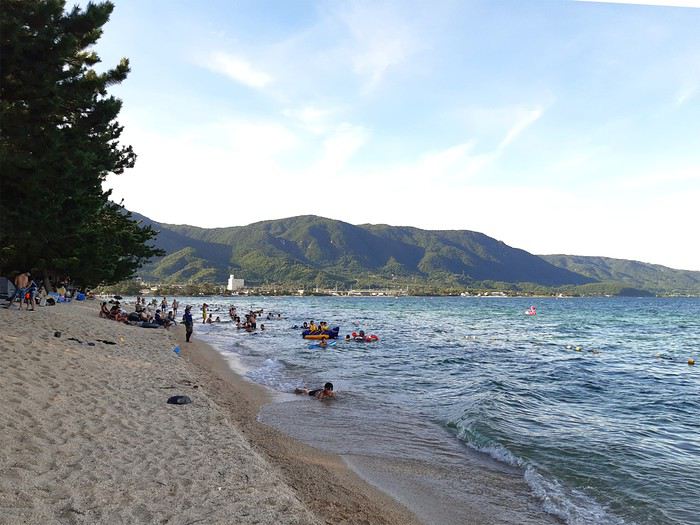
A la sortie du métro Omi-Takashima, on va à droite pour Omatsu-zaki et à gauche pour Omi-maiko. Omatsu-zaki est très jeune, première fois pour moi (en 6 voyages au Japon) que je me frottais à la jeunesse « déluré » japonaise, utilisant les même outils et artefacts que la nôtre mais en version plus Japonaise quand même (moins hard-core). Ca donne, musique à fond, bières, barbecues, grandes tentes déployées, jeux de force parfois, jet-ski au loin, mais le tout bonne enfant malgré tout, on est au Japon hein.. La plage en elle-même est très agréable, de l’ombre, eau limpide, petite vaguelette, cailloux grossiers proche du bord mais rien de bien méchant. Par contre, il y a du monde ! Il faut arriver tôt pour avoir une bonne place et un peu de tranquillité, je suis arrivé à 15h, donc j’ai pris ce que je pouvais. La plage de Omi-maiki est bien plus familiale et tranquille, bien que là encore il faut arriver tôt pour avoir un coin à l’ombre, la bande de sable étant mince, si on n’est pas sous les arbres au fond, ben on est en plein soleil. Ici aussi, la vue est belle, l’eau limpide, chaude et pas de vague*. Finalement la plage de Omi-Shirahama, fut un désastre, en effet sans voiture personnel, je me suis arrêté à la station Omi-takashima et j’ai demandé à un taxi de m’emmener au plus près de la plage avec le support de google map, il m’a baragouiné un nom de plage puis m’a amené à une espèce de resort beach avec plein de jeux, au bord du lac avec entrée payante. Ne voulant pas payé pour un resort-beach, je décide donc, de partir à pied pour Omi-Shirahama, mais avec 38°C et pas d’ombre, passant proche de la station, après 20 minutes de marche dantesque, mon crâne, mes bras, mon dos, mes jambes, ruisselant (c'est pour bien comprendre l'abandon du but initial 😏), j’ai décidé de changer de spot et de retourner aux plages précédentes, choix plus sûr.

* Tout étant relatif, je précise que j’ai passé mon enfance sur la côte atlantique sud, donc pour moi des vagues ça commence à 1m au-dessus de la ligne d’eau J .

Note: Désolé pour la qualité des photos, elles viennent pour l'essentiel de mon smartphone.
Open
TR
Travel1234 6 years ago · Caro96
Aventures et mésaventures au cours d'une année en Chine
Les aventures et mésaventures au cours d'une année en Chine d'août 2017 à Juillet 2018. Première semaine : J’arrive à l’aéroport de Shanghai pour deux changements importants dans ma vie. Premièrement, je vais vivre pour la première fois en dehors de mon pays natal. Ensuite, je quitte le cocon familial et le lycée pour rentrer tout seul dans l’enseignement supérieur. A peine arrivé, 2 problèmes : ma valise est perdue et je ne trouve pas la personne censée venir me chercher. 3 heures plus tard, je quitte l’aéroport sans ma valise. Je discute avec une autre élève, coréenne mais ayant vécu plusieurs années en Argentine. Quand j’arrive à ma résidence, je discute longuement avec Ritvik, un indien ayant habité à Hong-Kong. Peu après, je sors dans la rue. Mes deux toutes premières impressions de la Chine : le « sink tofu », du tofu fermenté que l’on sent à 20 mètres, et des hauts parleurs publicitaires dans la rue faisant un vacarme insupportable. Le deuxième jour, deux surprises : ma carte bleue ne fonctionne pas, et le VPN que j’avais installé pour pouvoir accéder à Google et Gmail non plus. Je discute avec un tunisien qui travaillait comme avocat qui m’alarme sur le cout de la vie dans le centre de Shanghai, se plaignant que le café y est 3 fois plus cher qu’à Tunis. Samedi, premier week-end. Pas de repas disponibles à l’université, il faut donc me débrouiller tout seul. Tiens, essayons cette brochette de tofu que propose un vendeur. Non, deux bouchées suffisent à me donner la nausée. Pas grave, allons dans un des restaurants à côté. Des tas de photos de plats avec de la viande, et des inscriptions uniquement en chinois. Impossible de faire comprendre que je suis végétarien. Et ici, bien que l’on soit officiellement à Shanghai, on est dans la banlieue lointaine, et il y a pour seul choix les petits bouis bouis locaux. Incapable de trouver quelque chose sans viande et poissons, je décide de rendre un taxi jusqu’au centre-ville. C’est là que l’on réalise que Shanghai n’est pas réputé la plus grande ville du monde pour rien. 1 heure 30 de route jusqu’au centre, avec partout des barres de béton à l’infini. Mais la surprise en valait la peine. Après toute une semaine dans la banlieue éloignée, je m’imaginais tout Shanghai comme pauvre et rustique, avec uniquement des bouis-bouis, et aucun du confort auquel on est habitué en occident. Mais soudainement, en arrivant au centre, je découvre un autre univers. Des centres commerciaux de luxe à chaque coin de rue, quantité de restaurants somptueux, des chinois roulant en voiture de luxe partout. Pour mon esprit fatigué habitué à une vision rustique de la Chine, tout cela apparait comme un mirage dans un désert, ou une image 3D transplantée par un ordinateur. Je déjeune dans un restaurant végétarien où l’on m’offre un menu en anglais, avec une décoration bobo moderne exactement comme on en trouve en occident, ce qui est assez différent des bouis bouis que j’ai visité 2 heures plus tôt. La Chine peut définitivement offrir 2 versions aux expatriés selon là où ils habitent. Après avoir repris de forces au cours d’un bon repas, je découvre pour la première fois le centre de Shanghai. En résumé, j’ai l’impression que c’est une succession de centres commerciaux et résidences ultra luxueuses entrecoupées par des quartiers restés encore très populaires. Le soir, retour en taxis dans la banlieue et la Chine profonde. Dimanche, je dois déjeuner avec deux français, qui me donnent une adresse de rendez-vous. Prévoyant la sûreté, je pars 4 heures avant. Il s’avère que j’ai bien fait de prendre de l’avance. Pour une raison inconnue, le taxi me dépose au-loin du centre-ville, pas du tout à l’adresse inconnue (et il ne parle évidemment bien anglais). Je déambule perdu dans un centre commercial (avec un Carrefour) et je m’arrête pour reprendre mes esprits dans un restaurant pour expatriés où je mange des frites de patate douce. Un serveur m’indique la location d’une station de métro tout proche. Comme souvent à Shanghai, celle-ci est immense, chaotique, et tout est mal indiqué. Après avoir passé 20 minutes pour m’acheter un billet, je monte dans un métro. 15 minutes plus tard, je me rends compte que je ne vais pas du tout dans la bonne direction et que je suis encore plus perdue. Heureusement, je rencontre quelqu’un du personnel qui m’aide et me donne une feuille avec des indications en chinois et en anglais. 40 bonnes minutes plus tard, j’arrive enfin au lieu de rendez-vous, où je rencontre les deux français. Ils m’invitent à déjeuner dans un restaurant occidental à l’intérieur d’un centre-commercial. Nous discutons longuement, et ils s’avèrent que l’un des deux à passer toute son enfance dans la rue à côté de là où j’habitais à Paris. Après déjeuner, ils me font découvrir un supermarché spécialisé dans les produits importés. Je souhaite acheter quelques fruits, jusqu’à ce que je découvre qu’une petite boite coute 9 euros ! Comme me l’explique le français : « ici c’est comme le Bon Marché à Paris, on y achète certaines choses spéciales, mais ce n’est pas là que l’on remplit le panier pour la semaine ». Je prends ensuite le métro pour aller visiter le Bund, cet endroit mythique. Même si cela est ultra touristique, cela n’en reste pas moins magique.
Open
NA
Nathalie971 6 years ago
Escapade japonaise à Shikoku, Kyushu, Yakushima et Tokyo
Bonjour à tous,

Ici, vous trouverez la suite de notre périple au début de l'automne au Japon, qui aura duré 5 semaines et demi en tout, de fin septembre 2019 à début novembre 2019.

La suite, eh oui, car il y a un premier carnet intituléA la découverte du Japon : de Tokyo à l’archipel des Ryukyu (okinawa). Pour ceux que cela intéresserait, je vous mets les liens : Dans cette première partie, se trouve le récit de notre voyage à :

Tokyo (1ére partie), Kyoto et à Miyakojima (okinawa).

J’avais entamé l’écriture de la seconde partie du voyage mais visiblement voyageforum a supprimé ce deuxième carnet portant le même titre + Partie 2 et je ne le découvre que maintenant car je n’avais pas écrit depuis quelques temps. Qu’à cela ne tienne, je redémarre un second carnet avec un nouveau titre afin de partager la suite de notre voyage.

Dans cette deuxième partie, vous trouverez les lieux suivants :

A Shikoku: Takamatsu, Kotohira, La vallée de l’Iya, , Tokushima et Naruto, L’île de Yakushima, A Kyushu : Kagoshima, Chiran, Ibusuki, Takachiho, et Kumamoto, Et pour finir Tokyo (2éme partie). et "la conclusion"
Open
JE
Jemaflor 6 years ago
Chine: Au fil de l'eau du Yangtse
Le fleuve Yangtse et ses célèbres trois gorges … un vrai rêve de voyageur. Voilà ce que je vous propose de découvrir à travers ce récit d'une balade fluviale singulièrement dépaysante au cœur de l'immense Chine. Le long fleuve est majestueux surtout lorsque son cours traverse les fameuses gorges qui en ont fait sa renommée. Quant au nom de Trois Gorges, il vous évoque probablement celui d'un barrage hydroélectrique unique au monde, il sera évidemment abordé mais à la fin de ce carnet de voyage. Des impressions et des descriptions et beaucoup de photos pour illustrer ce compte rendu de périple fluvial. Êtes-vous fin prêts à embarquer ? Alors, bienvenue à bord.

--

Un voyage fluvial débute comme il se doit dans un port. Ici, ce sera Chongqing. La ville est impressionnante et démesurée. Presque à perte de vue ce ne sont que gratte-ciel, tours et blocs d'immeubles où s'empilent des milliers d'appartements et où s'entassent des millions de Chinois. La vision est oppressante … en tout cas, c'est l'image que je garde en mémoire de Chongqing, la tentaculaire mégapole du centre de la Chine. Pour vous impressionner un peu plus, on vous parle de cette ville comme la plus vaste de l'Empire du Milieu avec une population estimée à 32 millions d'habitants, la population de cette cité serait l'équivalent de la moitié de celle de la France ! Bon, en y regardant d'un peu plus près on s'aperçoit que ce chiffre effrayant correspond en fait au nombre d'habitants de la région puisque Chongqing est le nom de l'agglomération mais également celui du territoire (un peu plus grand que la superficie de la région française de la Nouvelle Aquitaine). Donc, ironiquement j'aurai envie de préciser que la cité de Chongqing ne compte qu'une petite vingtaine de millions d'habitants !

Après avoir traversé cette étourdissante concentration de buildings et puis après avoir longé la « forêt » d'immeubles alignés tout le long des collines surplombant la rivière Jialing, nous voici au bord de l'autre cours d'eau de l'agglomération, bien plus célèbre, le fameux Yangtse. Le but de notre étape dans cette région.


En contrebas, le mythique fleuve paraît presque encombré avec un va-et-vient incessant entre navires de transport et bateaux de promenades sans oublier la présence à quai de plusieurs navires de croisières. Un port fluvial et un fleuve, à l'image de la ville, trépidants. Nous voici donc prêts à embarquer. La pensée de quitter l'immense et si grouillante ville de Chongqing n'est pas pour nous déplaire … déjà on s'imagine navigant lentement dans un décor naturel de gorges hautement spectaculaires. Pour l'instant, on le constate, le lit du Yangtse est particulièrement encaissé, il nous faut descendre par un long escalier fixé sur ces berges pour le moins pentues, puis emprunter un brinquebalant pont flottant, traverser un, puis encore un second bateau de croisière pour enfin atteindre notre navire. Ouf !


Quant à nos bagages, les porteurs locaux se les disputent. Un portage traditionnel avec un bâton sur l'épaule : un, puis deux bagages de chaque côté et voilà plus de 80 kg sur le dos … Aïe, aïe ! Un vrai travail de forçat, que ne faut-il endurer pour gagner sa vie ! Merci messieurs et respect.


La nuit est maintenant tombée sur la ville et sur l'imposant fleuve, place à un superbe festival de couleurs et de lumières. On en oublie la concentration de barres de buildings pour admirer le spectacle. En fond de panorama des façades illuminées toutes constellées de lumières celles des appartements avec en prime juste sur la berge qui nous fait face un bâtiment de style palais asiatique, aux lignes dorées et étincelantes comme parées de guirlandes lumineuses.


Le ballet des navires anime le décor, les couleurs scintillent. Un moment vert puis jaune avec de virer au rose, splendide ! Ajoutez au tableau des reflets et la représentation devient féerique ! Cette version rose est du plus bel effet.


En se tournant du côté opposé, vers le cœur de la ville, quelques gratte-ciel nous toisent avec leurs originales architectures. Ils paraissent gigantesques, normal pour des gratte-ciel mais c'est plutôt leurs lignes incurvées qui surprennent, on pourrait voir là un effet de déformation due à l'angle de prise de vue … mais non, on ne rêve pas , ces immeubles ont bien ce surprenant aspect légèrement courbe.


Une dernière vision depuis le pont supérieur du bateau en direction du pont illuminé, on l'aperçoit en fond d'image … car il est temps de rentrer à l'intérieur, la brume nimbe le décor et de plus une bruine commence à nous mouiller.

La nouvelle va vite se répandre parmi les voyageurs. Quoi ? le bateau ne partira pas comme prévu ce soir ? Le commandant est seul maître à bord et il a pris cette décision. Le motif ? Des pluies abondantes ont gonflé le débit du Yangtse, les eaux sont hautes et les courants s'affolent en tout sens … Le long fleuve tranquille s'est transformé en quelques heures en un tumultueux cours d'eau. Les manœuvres pour quitter le port puis la navigation paraissent trop périlleuses pour envisager un départ imminent. Dont acte ! Et pendant ce temps, dans le salon à l'intérieur du navire … la croisière s'amuse ! Il fallait bien que je la place cette expression devenue culte, c'est fait !


Un moment de convivialité entre une partie de l'équipage, quelques officiers et les croisiéristes. Le Century Diamond est un bateau de croisière à taille presque humaine … rien à voir avec le gigantisme des paquebots des «cruises » à l'américaine avec leurs milliers de passagers à bord. 110 mètres de long et 130 cabines qui probablement n'était pas toutes occupées à cette date, cela donne à bord une ambiance bon enfant. Pour cet apéritif de présentation, l'ambiance est chaleureuse , les sourires sont de mise et l'on trinque avec entrain. L'occasion pour moi de converser avec un membre du staff de direction, et entre deux gorgées d'un vin chinois champagnisé de lui poser la question qui brûle les lèvres de nous tous : sait-on finalement jusqu'à quel moment est reporté le départ. Avec un large sourire comme savent faire les asiatiques, il nous rassure : « Tomorrow at dawn, for sure! ». Ça s'arrose, tiens ! Et hop un autre flûte de vin sera vite avalée.

--

Quelques bruits, une sensation de mouvement … je suis à peine éveillé, j'ouvre un œil puis les deux et réalise que nous quittons le port. Adieu Chongqing et bonjour la découverte d'une partie du fleuve Yangtse. Au programme, quatre jours de cabotage jusqu'au célèbre barrage des Trois Gorges soit 648 kilomètres de navigation au fil de l'eau.


Les lueurs de l'aube n'ont pas encore fait disparaître les ombres de la nuit mais à travers la fenêtre de la cabine j'observe le décor qui défile très lentement : passage sous un pont et croisement de plusieurs embarcations. La photo prise est floue, un peu bougée par manque de luminosité. Finalement elle correspond parfaitement au souvenir que je garde des ces instants celui d'un paysage fluvial embrumé … comme mes yeux à demi réveillés.

Un peu plus tard, un peu plus loin … le jour est à présent levé mais ne triomphe pas complètement des brumes du petit matin, elles estompent encore l'horizon et les silhouettes des montagnes.


Fini les visions agressives de l'urbanisme galopant qui sévit dans les villes chinoises, ici, dans ce secteur du fleuve, il n'y a de place que pour une nature florissante, celle de la Chine profonde de l'intérieur du pays … de l'eau, des montagnes et une végétation verdoyante. Que cela fait du bien à voir ! voilà un panorama des plus apaisants, on apprécie et on contemple, sans retenue aucune. Avec une vitesse de croisière de quelques 20 à 25 kilomètres/heure, on a tout le temps de profiter des paysages du célèbre Yangtse. Le troisième plus long fleuve du monde (après l'Amazone et le Nil), en effet il serpente sur 6300 kilomètres depuis les hauteurs des montagnes du Tibet jusqu'à la Mer de Chine où il se jette un peu nord de Shanghai. Le cours du Yangtse le fait voyager à travers pas moins de onze régions chinoises, il se fait successivement torrent montagneux puis méandre après méandre se faufile entre des gorges escarpées et de larges vallées pour s'étendre enfin en un immense delta. Quelques 700 affluents viennent rejoindre le lit principal et gonfler son débit, environ 30 000 m³ seconde !

Depuis le pont supérieur, le belvédère est idéal pour ne cesser d'observer les berges.


Là, c'est une ferme traditionnelle qui domine le fleuve et surtout une belle plantation de bananiers. Des arbres tropicaux aux larges palmes qui témoignent du climat local, c'est à dire chaud et plutôt humide.


Ici, c'est une simple embarcation qui attire mon regard. Mais où est le pêcheur ? A bien l'observer, on constate que c'est une balise, elle est surmontée d'un lampe pour son éclairage nocturne et elle sert donc à délimiter le chenal de navigation. Il y en a ainsi tout le long des rives du Yangtse, après en avoir ainsi longé plusieurs je ne les confond plus avec de simples barques de pêcheurs. Finalement cette forme imitant une embarcation est bien vue pour intégrer ces repères parmi cet environnement fluvial. Autre avantage, on peut facilement les déplacer selon la hauteur des eaux.


D'autres balises, blanches et rouges jalonnent régulièrement les rivages du fleuve comme on peut le voir sur ces deux photos. Nous sommes en septembre et par endroits, déjà quelques feuillages jaunissent, apportant une belle touche automnale à ces rivages. En de nombreux passages, les berges semblent confortées par des rochers dont les strates (à droite) présentent d'étonnantes courbes. L'impression de solidité, qualité reconnue de la roche, est ici atténuée par cet aspect de mouvement. Comme si la pierre était aussi molle qu'une pâte à modeler. Au bas du long escalier, un pêcheur solitaire taquine les poissons, une image classique des bords de ce fleuve.


D'autres pêcheurs sont embarqués sur de simples barques comme celui-ci qui tire vaillamment son filet. Je ne suis pas sûr qu'il ait apprécié les petites vagues provoquées par le passage de notre navire. Pardon pour le dérangement.

Les rivières qui se jettent dans le grand Yangtse sont particulièrement nombreuses, je l'ai déjà évoqué précédemment. Ainsi, la continuité des rives se trouve-t-elle souvent entaillée, sauf lorsqu'un pont à été construit. C'est le cas en cet endroit où ce pont enjambe la rivière affluente. Tiens, voici un train qui apparaît, c'est parfait pour « animer » ma photo.


Vous vous en doutez, le grand et long Yangtse n'est pas seulement une fleuve utilisé pour les seuls bateaux de croisières. De même, les rivages ne sont pas seulement constitués de paysages de campagnes bucoliques destinées à dépayser les touristes. Avant tout, le fleuve est une voie navigable principalement dédiée aux transports commerciaux. Lors d'une croisière sur son cours on ne s'étonnera pas de croiser en permanence une multitude de péniches, de cargos et de portes containers. Ils transitent chargés de marchandises et de matériaux, de port en port et de ville en ville.


Peu à peu, les rivages se font moins nature et la végétation cède la place à des entrepôts, des silos, des usines et maintenant à un port. Sur les quais d'imposantes grues oranges font comprendre que l'on retrouve une Chine industrielle et urbaine. D'ailleurs, à proximité se profilent de hauts immeubles bâtis à touche-touche !


Cette portion des bords du fleuve n'est pas vraiment des plus esthétiques … et si on rentrait à l'intérieur du bateau ? D'autant que comme sur toute croisière d'agrément, des animations sont au programme. Ce matin, il est prévu une démonstration de peinture. Une peinture originale de tradition chinoise : de la peinture sur verre …. mais en peignant l'intérieur de petits vases. Un talentueux artiste nous fait une démonstration et nous explique la technique. Et me voilà pinceau et vase aux mains.


Les poils recourbés du pinceau sont sensés faciliter le travail … mais cela ne me paraît pas du tout évident. Il ne faut surtout pas trembler et à vrai dire cela me donne l'impression d'essayer de peindre avec la main gauche alors que je suis droitier ! Bon, la tentative ne m'a pas convaincu. On pouvez s'en douter, il faut de l'expérience et du travail pour réussir un début de décoration présentable aussi je préfère admirer le travail réalisé par l'artiste (photo vase de gauche).
Open
WI
Willemspie 6 years ago · Caro96
Tibet en individuel sac à dos en 1998, randos, autostop...
LHASSA Le 31 mars 1998 je prends l'avion de Chengdu, j'ai acheté le vol avec le permis à une agence locale. L'avion part à 7 heures, je vois le Gongga Shan, ensuite couvert. A l'aéroport, on ne perd pas de temps, aucun contrôle, un minibus neuf nous emmène à Lhassa, Le trajet est déjà long, sur une bonne route le long du fleuve, dans une large vallée, les montagnes sont saupoudrées d'un peu de neige fraiche. Je discute avec Didier, un Français qui prend quelques jours de vacances de son job à Shanghai et nous prenons ensemble une chambre à l'hôtel Yak, très bien, avec un balcon. Lhassa ressemble en grande partie aux villes chinoises, mais ici nous sejournons dans les quartiers tibétains. Il fait froid, surtout le vent, et on ressent l'altitude. Nous trouvons le Tashi, le restaurant Népalais simple qui sert de quartier général aux backpackers étrangers avec un menu à l'avenant, bon on y mange très moyennement. Après une ou deux heures de repos, nous faisons un tour de l'énorme marche du Barkhor, Parmi les étals, de grandes mottes de beurre ! Beaucoup de Tibétains sont habillés de manière traditionnelle. Le soir nous dinons dans un restaurant tibétain peu touristique. 1/4 Nous allons visiter le Jokhang, on brule de l'encens à l'entrée, les pèlerins se prosternent sur le ventre. A l'intérieur il faut suivre le flot en sens impose pour entrer dans les petites chapelles, on monte aussi sur le toit. Didier loue un velo, je vais au Potala avec son dédale d'immenses salles, on ne se bouscule pas, quelques visiteurs tibétains. Je retrouve Didier à la sortie et nous dejeunons de thukpa et de the au beurre salé dans une petite échoppe, entourés de mendiants. Je continue un tour à pied dans le coin, un petit temple sympa, les chortens et les fresques sur les rochers derrière, puis je continue dans le Lhasa moderne et ses supermarchés. On n'a pas le droit de visiter tout le Tibet par soi même, le soir je discute au Tashi avec d'autres voyageurs pour un tour organisé a Samye, mais cela coute cher, nous devrions être 6 pour remplir le 4x4, et finalement cela ne se fera pas. Je vais plutôt voyager seul aux endroits qui sont autorisés. SERA 2/4 Nous allons à la boulangerie et achetons un picnic. A 10 heures 30 nous prenons le minibus numéro 5 pour le monastère de Sera, avec les pèlerins tibétains, on fait ensemble le tour des principaux halls et chapelles, il y a des moines et de l'activité. Puis nous profitons du plein air, nous trompons dur à flanc de coteau au dessus du monastère jusqu'à un autre petit ou nous sommes bien accueillis. Nous jouissons d'une belle vue sur Lhassa et ses énormes banlieues modernes. Nous voulons assister a la séance de débats des moines, mais cela nous est interdit. Après cela, nous revenons crevés. Nous dinons au Third Eye d'un très bon repas népalais, le service a été lent. GANDEN 3/4 Je me lève à 6 heures, je sors dans le noir et le froid dans la ville endormie pour attraper l'unique bus de pèlerins qui va au monastère de Ganden, avec ses sièges très serres et tous remplis. La bonne route se transforme en piste et cela se termine par 20 ou 30 lacets. Je suis venu seul, je suis les tibétains à l'intérieur, les moines sont sympas, dans une salle ils prient et dans une autre ils chantent. Plusieurs grands bâtiments ont été reconstruits récemment dans un style ancien, je visite l'imprimerie des prières. A l'extérieur, je fais le tour de la kora, très tranquille. Je monte ensuite un chemin vers un petit sommet avec un peu de neige, pour mon picnic. Belle vue sur la vallée avec ses hameaux, les champs bruns, les troupeaux de yaks. Le bus revient à 1 heure, je suis assommé par l'altitude. 4/4 Didier retourne a Shanghai, du coup je change de logement pour un hôtel moins cher, le Kirey, des rangées de chambres simples sur plusieurs étages autour d'une cour, avec des sanitaires communs. La chambre est propre et tranquille, et je rencontre Michel, un Français qui séjourne souvent au Tibet, on discutera beaucoup et il va me conseiller utilement. J'ai attrapé un rhume, je me repose, je me ballade aussi dans le vieux quartier jusqu'au Jokhang et la mosquée. Le restaurant Tashi, possède une copie du meilleur guide du Tibet, le très épais 'Tibet a pilgrimage guide' de V.Chan, qui couvre des endroits peu connus, décrit des randonnées avec des cartes schématiques, je l'étudie pour préparer la suite du voyage. Le soir je trouve dans le quartier un excellent petit restaurant sichuanais avec un menu en Anglais, le Yuyi, qui sert d'énormes portions. DREPUNG 5/4 J'ai un problème dans le haut du dos et je ne me sens pas assez en forme pour déjà commencer des excursions aventureuses loin de Lhassa. Je vais juste en minibus au monastère de Drepung, j'en fais le tour, y compris les bâtiments en ruine à l'arrière, je me promène le long d'un ruisseau et monte à flanc de coteau jusqu'au petit temple de Gephel Ritro, aussi des etables ici. Je reçois du the tibétain et du pain. Le temps change vite entre soleil, greles, et nuages esthétiques. TSURPHU 6/4 Je continue ma tournée des monastères. Tôt le matin, je vais prendre le bus des pèlerins pour Tsurphu, déjà plus éloigné au bout d'une piste affreuse dans une vallée scénique, villages, paysans savourant leur champ avec des yaks. Je suis mal assis à l'arrière et très secoué, il y a un seul autre touriste. Tsurphu est un grand monastère, en travaux, avec beaucoup de jeunes moines, et domine la vallée. Les pèlerins viennent ici pour la bénédiction à 12 heures de la réincarnation d'un lama très vénéré, le Karmapa, un enfant de 12 ans , mais je n'y vais pas. Je préfère faire la kora et aller manger mon picnic dans la montagne, j'ai pris l'habitude d'acheter des pains ronds chez un boulanger musulman.
Open
SA
Sarana 6 years ago · Bricouille
Été 1985 : un voyage de noces hors du commun dans la Chine pop
Deuxième séjour à Pékin en 2018, je discute à l'auberge avec une voyageuse : "Pékin ! Ici on vit vraiment dans un autre monde." "Peut-être, mais alors que dire du Pékin des années 80. Une autre planète !" Ceux qui découvrent cette Chine du 21° siècle ne retrouveront guère que des fragments de celle que je vais raconter ici, comme j'ai pu le constater par moi-même. (Voir mes carnets sur la route de la soie.)

Ce sera donc un carnet "impressions de Chine", ce qui m'est resté de plus marquant. Les quelques photos jaunies que j'ai pu sauver sont scannées et de mauvaise qualité. Merci à Jacqueline et Jean-Pierre pour leur contribution photographique, entièrement d'époque elle aussi.

AU MENU

Préambule - le contexte politique et économique du pays Chapitre 1 - Un voyage qui s'annonce pas très romantique, c'était prévu... Chapitre 2 - Pékin : le trafic de monnaie. Illégal mais indispensable. Chapitre 3 - Pékin 1985-2018 : du Moyen-Age à la révolution technologique. Immersion comparative. Chapitre 4 - Pékin : un billet de train pour Xi'an ? Pas si simple que ça. Chapitre 5 - Le "qi feng shui". Le soigneur se fait soigner. Chapitre 6 - Xi'an : «mei yo», la réponse favorite des fonctionnaires. Chapitre 7 - Vol au-dessus de la jungle. Le coucou arrivera-t-il à bon port ? Chapitre 8 - Chongqing : le bal, ou la vie sexuelle des jeunes chinois. Chapitre 9 - Croisière pop sur le Yangtse. Chapitre 10 - L'hôtel à rats. C'est à Wuhan, comme par hasard. Chapitre 11 - Canton : à la recherche de xiao Wu. Chapitre 12 - Canton : un train sous haute surveillance. Chapitre 13 - Hong Kong : dur retour à la civilisation. Albums : les photos d'époque signées Jacqueline et Jean-Pierre. A partir de la page 5 Témoignages et photos d'époque. Merci aux différents contributeurs. A partir de la page 6. Ne manquez pas le Tibet et le Xinjiang !

PREAMBULE : le contexte politique et économique Comment voyager dans ce pays encore très fermé, obscur, énigmatique, dont en Europe on ne connaît guère la mentalité, les règles de fonctionnement, dont on ne perçoit à l'étranger que quelques images soigneusement filtrées par la censure. Comment se déplacer, se loger, se nourrir, sans moyen de communication, sans réservation d'hôtel ou de train, sans connaître la langue , sans aide, sans guide, sans assistance, sans carte bleue...

1984, date clé pour le voyageur Après trente années de communisme à marche forcée, de campagnes idéologiques calamiteuses pour les populations, de luttes intestines pour le pouvoir, le pays n'arrive pas à décoller économiquement. L'écart grandit avec les nations développées. Mais avec le rétablissement des relations diplomatiques avec les Etats Unis en 1979, le nouveau président, Deng Xiaoping, tient enfin sa revanche et entame sa longue marche vers le progrès. Les fossiles maoïstes de la "longue marche", des "cent fleurs", du "grand bond en avant", les criminels de la "grande révolution culturelle prolétarienne", représentés par la "bande des quatre", tous ceux qui l'avaient évincé du pouvoir et condamné à l'oubli au fin fond d'une province, le sont à leur tour.

Le "révisionniste", comme l'a appelé la veuve Mao, lance ses réformes de libéralisation et d'ouverture de l'économie : « Peu importe qu'un chat soit blanc ou noir, l'essentiel est qu'il attrape les souris ! » Parole du maître.

Parmi ces réformes : l'ouverture au tourisme. Jusqu'à présent, pour visiter le pays, il fallait obligatoirement, soit passer par un tour opérateur avec guide et circuit programmé, soit demander des autorisations de voyage pour un nombre limité de destinations. Très peu pour moi. Mais en 1984, monsieur Deng supprime le permis de circuler et ouvre quasiment tout le pays aux visiteurs. L'info provoque un déclic : - C'est l'occasion ou jamais. L'année prochaine, ce sera la Chine. Et en sac à dos! Et ce sera aussi notre voyage de noces...

Nous aurons le privilège d'être parmi les premiers voyageurs occidentaux à tenter l'aventure. Je pourrai enfin mettre en pratique ce que j'ai appris de chinois à la fac et réaliser un vieux rêve. A nous la Chine, à nous la découverte de ce pays mystérieux et fascinant. Quelle réalité se cache derrière ces images édulcorées de bonheur populaire que nous distillent les images officielles ? Comment vit-on réellement dans ce pays ? Quel accueil réserve-t-on aux impérialistes occidentaux ?


Wuhan, 1985 : slogans révolutionnaires pour mini gardes rouges

CHAPITRE 1 : un voyage qui s'annonce pas très romantique, c'était prévu... Eh oui, juste mariés, il y a peut-être plus glamour comme destination. Bon, Venise, on connaît déjà. Quoi de mieux qu'une telle aventure pour forger un couple ? Pendant toute l'année, je peaufine le projet : itinéraire, transports, hébergements... Les guides de voyage sur la Chine ne sont pas nombreux, il n'en existe d'ailleurs qu'un en français. Pour ce qui est de l'itinéraire, c'est à peu près établi, pour le reste, ce sera au coup par coup, improvisation et opportunités. L'aventure quoi. Juste qu'on dispose d'un mois entre l'atterrissage et le retour à Hong-Kong. Pour l'itinéraire, ce sera donc Pékin - Hong Kong, mais par où et comment ? C'est le grand mystère, même si certains incontournables sont au programme : la Grande Muraille, Xi'an et son armée en terre cuite, la croisière sur le Yang Tse Kiang...

Août 1985 : Hong Kong, premiers pas en extrême-orient Munis d'un joli visa sur notre passeport et d'un billet d'avion Hong Kong - Pékin acheté en agence en France, nous débarquons à Hong Kong pour y passer une nuit avant de repartir pour Pékin le lendemain, L'atterrissage au-dessus de la ville est spectaculaire, l'avion louvoie entre les immeubles pour plonger vers la piste au raz de l'océan, un véritable tour de manège à sensations. Pas trop le temps d'explorer la ville, mais le dépaysement est déjà total. Et pourtant, ce n'est rien à côté de ce qui nous attend...

Ca commence plutôt mal Aéroport de Hong Kong, le lendemain. Nos billets sont valables, pas de problème, seulement : - Désolé, mais vous n'avez pas confirmé votre vol, l'avion est complet. Il va falloir attendre deux ou trois jours... Eh oui, en 1985, il faut confirmer son vol la veille par téléphone. Dans l'excitation et l'émotion, nous avions complètement oublié la consigne. Zut alors, deux ou trois jours de perdus sur le projet, c'est beaucoup trop. - Attendez ici, peut-être il y aura des places si des voyageurs ne se présentent pas. Longue attente plutôt anxieuse, et quelques minutes avant le décollage, petit signe de l'employé : - C'est bon, il reste deux places, vous pouvez partir.


Pékin : avenue Xidan. Photo : Jacqueline et Jean-Pierre

Dès l'aéroport, j'ai senti le choc... Une simple piste en béton, pas d'avion en attente, un trafic aérien quasi nul, un bâtiment à la chinoise, usé et vieillot à souhait, des gardes en uniforme. L'aéroport est encore une base militaire, accessoirement civile pour quelques rares liaisons vers l'URSS et les pays d'Asie. Il n'y a rien dans ce qui fait office de hall d'accueil, une pièce de quelques dizaines de mètres carré tout au plus.

Contrôles minutieux, file d'attente, les militaires ne sont pas très souriants, et le comité d'accueil pas très... accueillant. On n'est pas là pour rigoler, surtout avec ces étrangers qui débarquent de Hong Kong, la zone capitaliste. Eh oui, Hong Kong chinois, ce sera dans une dizaine d'années. D'ici là...

Des billets de Monopoly ?! Un simple bureau dans un recoin fait office de banque. Vite, changer nos travelers chèques en dollars. Ben oui, la carte bleue, ça n'existe pas encore. Derrière son boulier, l'employé fait ses calculs à une vitesse incroyable et me rend le change. Surprise : j'ai une liasse de jolis billets tout neufs dans la main, mais ils n'ont rien à voir avec la monnaie locale. La preuve, il n'y a pas le portrait du grand timonier, mais des jolis dessins de monuments et paysages ! Ca ressemble davantage à des billets de Monopoly.

C'est quoi ce truc ?

Une bonne affaire, mais un gros risque En fait, c'est une monnaie spéciale réservée aux étrangers. Nous allons vite apprendre deux choses. - Un, cette monnaie n'est pas utilisée (et même interdite) par les chinois dans leur vie quotidienne. Elle est réservée aux étrangers et ils doivent payer avec. - Deux, elle est très recherchée par quelques autochtones, car c'est la seule monnaie ayant un équivalent dollar. A l'époque, le yuan chinois ne vaut absolument rien, il n'est pas convertible dans une autre monnaie. Pire que le kopeck. Du coup, notre monnaie "spécial étrangers" fait l'objet d'un trafic formellement interdit et sévèrement réprimé par les autorités.

Mais comment faire si tu veux voyager en dehors des circuits touristiques et des grands hôtels, juste prendre le bus par exemple ou manger dans une gargote. Ca, les autorités n'en ont cure. Un étranger, ça dort dans les hôtels de luxe, ça prend l'avion ou le train en première classe, ça mange dans les grands restaurants. Mieux encore, ça voyage en groupe avec un guide.

Pas d'autre solution, il faudra changer au black Dans la rue, avec les petits trafiquants locaux. Il y a même un cours « officiel » du change : un yuan de Monopoly contre trois yuans de monnaie populaire. A l'époque, un yuan, c'est à peu près un franc. Une sacrée bonne affaire ! Le tout, c'est de ne pas se faire pincer. Les rumeurs les plus folles courent sur les peines encourues pour les trafiquants, mais aussi pour les étrangers qui se font pincer. C'est d'ailleurs marqué sur certains documents. Si les peines de prison ferme ont de quoi dissuader le voyageur, il faudra quand même prendre le risque, pas le choix. Une des nombreuses absurdités du système.


Pékin : place Tian An Men. Photo : Jacqueline et Jean-Pierre

Mise à l'épreuve 1 : trouver un hébergement... Sortie de l'aéroport, c'est l'après-midi. Quelques taxis attendent, réservés aux privilégiés du régime et aux étrangers. Mais nous ne savons même pas où nous allons, juste en ville, et on verra après. Donc ce sera le bus, celui-ci prend la monnaie de Monopoly. C'est notre premier transport en commun, direction le centre ville, à une vingtaine de kilomètres. Très bien, mais où aller, à qui demander un tuyau, un renseignement, une bonne adresse ?

L'aéroport étant en rase campagne, la route bordée d'arbres qui conduit à Pékin centre ressemble à une de nos départementales. De part et d'autres, c'est le défilé des paysans, le plus souvent à pied, tirant des charrettes à bras, quelques fois à bicyclette ou en tracteur. Pour nous occidentaux déjà rodés aux autoroutes, c'est un choc. Ici, pas de voiture individuelle : les véhicules à moteur, c'est juste des camions, quelques bus et de rares taxi, c'est tout .

La carte de Pékin n'indique rien d'autre que le nom des rues, impossible de savoir où se trouve tel service, hôtel, restaurant... Il faut se débrouiller. Les quelques éléments écrits et oraux de chinois que je possède, je vais vite devoir les mettre à l'épreuve. L'anglais ici, on connaît pas.

Juste à côté de nous est assise une jeune femme, bien de sa personne, sans doute un cadre du parti ou d'une grande entreprise. Elle semble plus amène que les autres voyageurs, plus disposée à rendre service. J'entame la conversation comme je peux. Après les échanges d'usage : - Nous sommes français, c'est notre premier voyage en Chine. Connaissez-vous un hôtel sur le trajet du bus qui nous accepterait ? Coup de chance, la femme nous en indique un non loin d'un arrêt, elle nous dira quand il faudra descendre.

Mise à l'épreuve 2 : et qui accepte les étrangers... L'hôtel n'est pas facile à trouver, tout se ressemble ici et rien ne permet de discerner au premier coup d'oeil la fonction d'un bâtiment. Ce n'est même pas écrit « hôtel » à l'entrée. Finalement nous poussons la porte de ce qui semble être ce que nous cherchons. Un étroit couloir sombre, un guichet, une sorte de réception, on dirait un peu un hôtel. Le type de l'accueil est très surpris de nous voir ici, mais oui, c'est bien un hôtel, sauf que : - C'est interdit aux étrangers, vous ne devez pas rester ici ! - Mais comment faire alors ? Le type décroche son téléphone, puis, au bout d'un moment : - Prenez le bus et descendez à cet arrêt, vous y trouverez un hôtel pour vous.

C'est ainsi que nous découvrons que nous ne pourrons pas loger comme on veut dans le pays. La plupart des hôtels sont interdits aux étrangers, il faut toujours aller à l'hôtel spécial « wai guo ren». Oui, mais ce n'est pas forcément indiqué. Quant à dormir chez l'habitant, ce n'est même pas la peine d'y songer, c'est interdit. De plus, quand on voit dans quoi vivent les gens en ville, le peu d'espace dont ils disposent, ça ne donne pas vraiment envie de se faire inviter.

Je ne me souviens plus comment nous avons fait pour trouver le bon bus et le bon arrêt, juste que ça n'a pas été facile du tout. La contrôleuse du bus a tiré une drôle de tronche quand je lui ai tendu le billet de Monoploy, mais elle n'avait pas le choix. Un mao le ticket, dix centimes de franc. Premier aperçu du coup de la vie : trois fois rien. Dans le bus, tous les regards sont fixés sur nous...

Pas de doute, il faut absolument trouver de la monnaie locale, et le plus vite possible. On ne va rien pouvoir faire avec cette monnaie de m... Et quand par hasard ils sont acceptés, on y perd sacrément au change, car ils nous rendent l'argent en monnaie locale. C'est une arnaque gouvernementale bien calculée !

Prochain épisode : le trafic de monnaie
Open
GA
Galak75 6 years ago · Sofinerazel
De Tokyo à Osaka en passant par Ishigaki
En lisant le chouette carnet de voyage de Nathalie971 je me suis dit que c'était vraiment bien de partager son parcours. Bon je serai sans doute moins détaillé ;) Jour 1 jeudi 20 fevrier. Nous partons en famille à 4 : mon conjoint et mes enfants qui ont 11 et 14 ans. Arrivée à Tokyo le soir. Nous rejoignons la famille de mon conjoint qui vit et travaille à Tokyo. Quartier de Minato-ku joli quartier résidentiel : petites rues très étroites et immeubles assez bas. Soirée donc familiale avec repas quasi français ;) Jour 2 nous devons faire traduire nos permis à la Jaf. je conseille d'ailleurs de le faire plutôt depuis la France car cela fait perdre quand même un peu de temps. On y est vers 11 heures et ils seront prêts en fin de journée. A pied on rejoint le Hama-rikyu gardens. On l'avait déjà beaucoup aimé lors de notre premier voyage il y a 6 ans.... Il fait très beau et on se balade entre les arbres déjà en fleurs pour certains. J'aime beaucoup ce parc : les verts intenses qui se détachent des grands immeubles qui bordent le parc. Il y a très peu de monde. Ensuite nous prenons le Yurikamone rail pour rejoindre Odaiba. La plage est en travaux : les ouvriers préparent les gradins pour les JO de cet été. Les anneaux eux sont déjà tout prêts ! Le petit restau de plage est fermé alors On déjeune dans le centre commercial. Et c'est très bon ! avant de repartir séance photo devant le robot de 20 mètres de haut. On voulait poursuivre en bateau vers Asakusa mais on est obligé de repasser à la Jaf pour nos permis :( On en profite pour se balader dans le quartier au pied de la Tokyo Tower.
Open
MO
Mouriann 6 years ago
La Corée nous a enchantés
Depuis le temps que je dis que je dois faire ce carnet de voyage !! Le temps passe. Allez, un peu de courage que diable! Nous sommes partis à 6 entre le 31 juillet et le 24 août 2019. Pourquoi diantre la Corée du sud ? J'ai un mari nageur qui fait les championnats du monde de natation master et .. comme vous l'aurez deviné, ils avaient lieu en Corée et plus précisément à Gwangju. Nous sommes donc partis à deux couples (deux maris nageurs) et avec un de nos enfants chacun. Nous avons fait un grand circuit circulaire de Séoul à Séoul. Nous avions loué une voiture depuis la France. Pour cela, et sur les conseils de la fille d'une amie qui vit là-bas, nous sommes passés par le site lotte rentacar. Je n'étais pas très emballée car il faut laisser les coordonnées de son passeport mais franchement, la location s'est merveilleusement bien passée et nous avons même eu une belle surprise au moment de prendre la voiture ainsi qu'à la fin. J'y reviendrai. Nous avons également réservé un pocket wifi que nous avons pu retirer à notre arrivée à l'aéroport de Séoul. Côté logement, nous avons un peu tout testé : l'auberge de jeunesse (possibilité d'avoir des chambres privées avec salles de bain très propres et dans lesquelles nous avons eu les lits les plus confortables du séjour), les hanoks très classes ou plus modestes (et on sent bien la différence d'épaisseur de futon ! Dos sensibles s'abstenir) et un hôtel plus international. Pour ce qui en est des repas, nous y sommes souvent allés au pif et nous n'avons jamais eu de mauvaise surprise. Ah, une chose à retenir : s'il y a du rouge dans le plat c'est que ça pique ! Je reviendrai sur les repas au fur et à mesure de mon récit. On trouve de l'eau partout dans les temples. L'eau est parfaitement potable. Et c'est très agréable en été quand il fait très chaud. Les paiements : les CB internationales fonctionnent la plupart du temps. Sinon, possibilité de retirer de l'argent dans les distributeurs ou au guichet de certaines grandes banques. Nous n'avons pas eu de souci. Le temps : chaud chaud chaud. La pluie ? Pas tant que ça au final mais nous avons peut-être eu de la chance. Par contre, quand il pleut, il pleut bien ! L'avantage, c'est que comme il fait chaud on sèche vite.

Allez c'est parti. Samedi 31 juillet

Après un voyage d'un peu plus de 10h au départ de Roissy, nous sommes arrivés à l'aéroport international de Séoul. Rien de particulier pour le passage de la douane. Ensuite, il faut avouer que nous avons un peu galéré pour trouver dans l'aéroport le lieu pour retirer notre pocket wifi puis la voiture de location. Mais nous y sommes arrivés dnas un temps assez raisonnable. Nous avions réservé une Kia Carnival. Elle est vendue pour 9 personnes mais franchement, les 3 dernières doivent être des enfants ! Nous avons eu peur un instant que les bagages ne rentrent pas alors nous avons un peu joué au tangram😛 ... Première bonne surprise du voyage, le prix que nous avons payé était bien inférieur à celui qui m'avait été indiqué sur le devis en ligne ! En partant de l'aéroport nous avons eu droit à une magnifique pluie battante

Et à une suite interminable de bouchons ...
Contrairement à ce que l'on pourrait croire, nous ne sommes pas arrivés en fin de journée mais bien au petit matin. Et là sur la route il devait être autour de 10h du matin.... Notre premier logement se trouvait à Sokcho. Entre le GPS de la voiture programmé en anglais par l'agence de location avant de nous confier la voiture et l'application NAVER sur le téléphone (pas de google maps en Corée du Sud), nous avons trouvé le bon chemin pour nous rendre à Chuncheon. Le but était d'y arriver pour manger à midi. Heureusement pour nous, la pluie a cessé en cours de route, les bouchons ont disparu et le paysage est devenu plus vert.
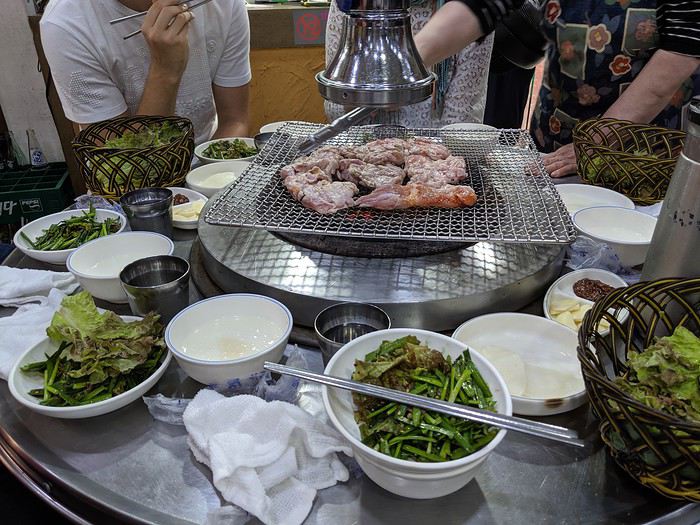

Pourquoi nous arrêter à Chunchéon ? Nous avions repéré une rue où on sert une spécialité de poulet pimenté : le dagkgalbi. Impossible de rater la rue


Le poulet est servi au barbecue avec des légumes. Nous avons pu choisir 3 assaisonnements différents de poulet. Un seul était trèèèèès épicé. Les restaurateurs se sont montrés adorables pour nous expliquer comment manger tout ça.

Nous avons voulu faire un petit tour dans la ville, mais nous n'avons trouvé qu'un petit temple.
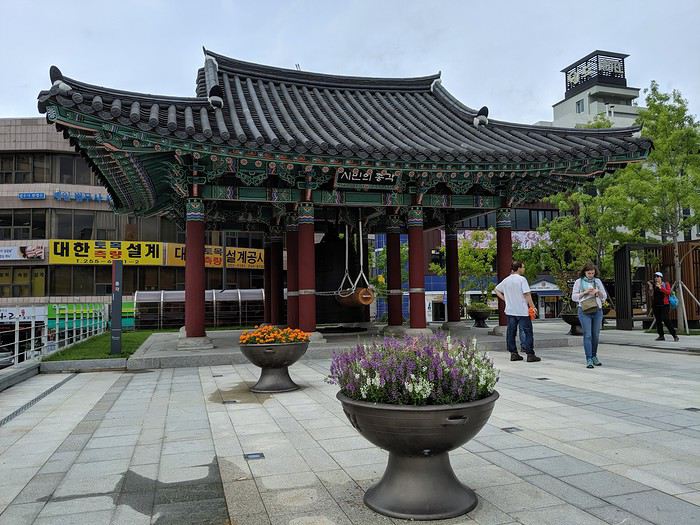
Nous avons repris la route pour Sokcho, mais très vite nous avons du nous arrêter car nous avons été rattrapés par le décalage horaire. Gros coup de barre général. Nous nous sommes arrêtés en pleine campagne pour dormir une bonne heure. Nous sommes arrivés en fin d'après-midi à Sokcho. Le temps de vider la voiture, nous installer dans nos chambres, nous ne sommes partis dîner que vers 19h. Ouille errreur car à cette heure là beaucoup de restaurants ferment. Nous en avons dégoté un petit qui servait des plats de nouilles. Parfait nous sommes nous dit ! Sauf que les nouilles sont servies froides, et même très froides car on trouve dans le bol des morceaux de glace.
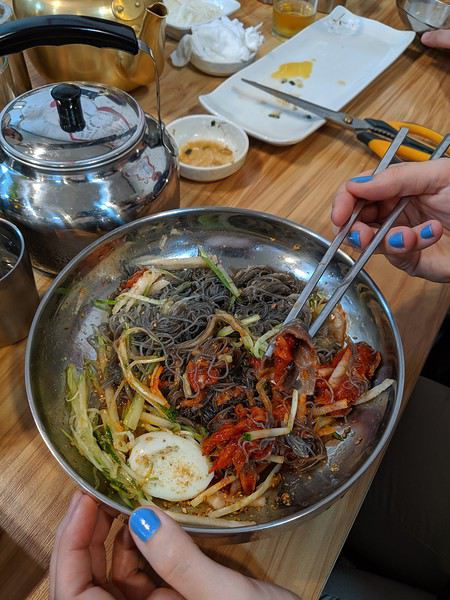
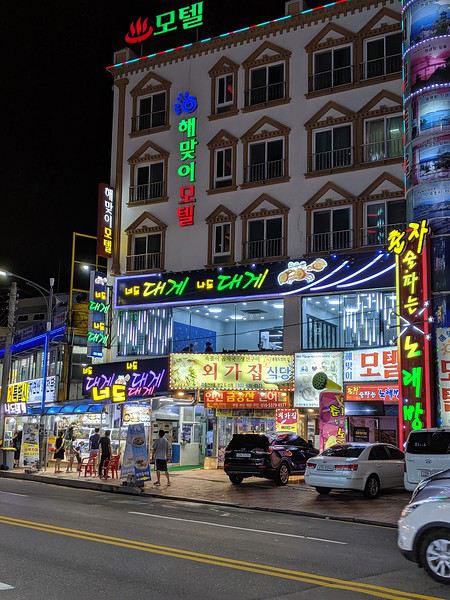


Il a fallu rajouter du sucre, du viandox froid (ça en avait le goût en tous cas😛), du lait de riz (pas facile de déterminer exactement ce que c'était) et un peu de vinaigre. Alors le rouge ça pique, le truc blanc c'est un demi oeuf dur, le gris ce sont des pates et le reste de la pomme effilée et ??? On va dire que ce n'était pas mauvais mais très spicy ouille ouille ouille. On m'appelait lèvres de feu à la fin du repas !!!! 20h passées, il fait nuit noire. Nous avons quand même voulu marcher un peu dans les rues vers le port. Beaucoup de néons Et de jolis petits temples

Ce soir là nous n'avons pas eu de mal à nous endormir ...
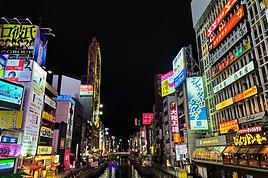
Open
NA
Nat1009 6 years ago
Le Japon sous les sakuras avril 2019
Bonjour, Nous sommes partis à 4 (quinquagénaires), 2 semaines au Japon du 30 mars au 14 avril 2019. Notre circuit était très classique : Tokyo, Kyoto, Nara, Hiroshima, Miyajima, Osaka. Pourtant il n'a pas été si facile que ça à établir car beaucoup de choses nous tentaient : Nikko, Hakone, les Alpes japonaises.....Puis ensuite comment équilibrer le temps passé dans chaque ville..Que voir ? Bref il m'incombe très souvent l'organisation de nos voyages, qu'ils soient en famille ou bien entre amis et j'avoue que le Japon a été un vrai casse-tête. Merci à tous les "spécialistes" sur ce forum qui m'ont aidé, inspiré.

Plus qu'un retour détaillé de notre voyage qui va ressembler à beaucoup d'autres et n'ayant pas un talent particulier pour la photographie qui me permette de me distinguer, je voualis juste vous faire part de nos expériences sur place. Vols Partant de Toulouse, nous avons réservé nos billets le 12 juillet 2018 : vol IBERIA Toulouse-Madrid-Tokyo à l'aller Osaka-Tokyo-Madrid-Toulouse au retour. Rien à redire, prestations correctes, films récents et nourriture acceptable. 570 euros. Hébergements Tous les hôtels ainsi que la maison à Kyoto ont été réservés par Booking sauf à Miyajima où j'ai réservé directement sur le site de l'hôtel. J'ai choisi des hôtels standards mais placés à coté des transports en commun. Le budget le plus élevé a été à Miyajima où nous avons voulu faire l'expérience du dîner kaseiki (567 euros/4 en pension complète). Au total, le budget hébergement sera de 947 euros. Visites Nous avons choisi de prendre des guides francophones 2 jours à Tokyo et Kyoto, 1 jour à Nara , 1 jour à Osaka et aussi de participer à un Hiroshima safari et un Kyoto safari nocturne. Nous n'avons pas regretté ce choix car cela nous a permis de rencontrer de belles personnes et aussi de comprendre certains aspects du Japon parfois déroutant. Cela a donné lieu à de beaux échanges. Bine sûr cela a un coût : 437 euros par personne. Transports JR PASS 14 jours 344 euros Transports annexes : 110 euros par personne

En ce qui concerne le budget visites et repas, il dépend bien sûr des goûts de chacun. Nous n'avons pas choisi des restaurants gastronomiques mais nous nous sommes pas privés et les tentations sont grandes au Japon car on peut manger sucré ou salé à tous les coins de rue. Je me suis découverte une passion pour le matcha et j'ai goûté toutes ses déclinaisons. Quant à mes compères, ils ne sautent aucun repas. Bref, un budget d'environ 320 euros par personne boissons comprises et de 62 euros pour les droits d'entrée.

Au final un budget de 2810 euros/personnes tout compris pour 15 jours sur place.

Je sais que je vais en faire hurler sur ce forum car c'est un budget élevé et que bien sûr on peut voyager pour moins cher au Japon mais tout dépend des prestations choisies.

Notre circuit : 3.5 jours à Tokyo (4 nuits) 4.5 jours à Kyoto ( 5 nuits) 1 jour à Nara (nuit à Hiroshima) 1 jour à Hiroshima (2 nuits) 1 jour à Miyajima (1 nuit) 1 jour à Himeji (nuit à Osaka) 1 jour à Osaka (2 nuits)

Nos impressions : Pour moi qui ait passé des heures à préparer ce voyage, une bonne surprise sur place. Tout a été beaucoup plus simple que supposé avant le départ. Aucun problème dans les transports, plus compliqué au restaurant mais cela nous a valu de bonnes surprises et d'autres moins (une salade d'algues quand je pensais commandé un plat de pâtes, la photo était trompeuse), de grands moments au supermarché et sur les marchés, du monde certes mais gérable et en tous les cas pas cette sensation parfois oppressante que l'on peut ressentir dans d'autres pays d'Asie du fait de cette discipline et rigueur que l'on rencontre partout, pas énormément de contacts avec les japonais mais quelques belles rencontres (un cours d'origami improvisé dans le train). Nous avons beaucoup aimé voir la célébration de cette période des sakuras avec tous ces stands de nourriture et cette vie nocturne. La nuit à Miyajima a été magique car l’île se vide alors de ses touristes. J'aurai bien aimé passer plus de temps à Hiroshima que j'ai trouvé plus sereine que les autres villes.

Au final une grande envie de découvrir d'autres coins du Japon.
Open
NA
Nathalie971 6 years ago
A la découverte du Japon, de Tokyo à l'archipel des Ryukyu (Okinawa)
Bonjour à tous,

Rentrée il y a déjà un mois d'un merveilleux voyage au Japon, je me lance aujourd'hui à écrire mon premier essai de carnet de voyage. Il s'agit là de bien sûr, remercier tous les contributeurs de ce forum avec lesquels j'ai échangé ou simplement lu au travers de leurs carnets de voyage et questionnements, mais aussi de partager mon voyage qui fut en un mot "génialissime". Pourquoi? car, ce séjour fût un enchantement et comme nombre d'entre vous, je fais désormais partie de la catégorie des gens qui souhaitent avoir la chance d'y retourner un jour.

Pour commencer, voici les éléments contextuels du voyage:

Origine du projet de voyage: Mon compagnon rêvait depuis longtemps de découvrir le Japon. Pour ma part, je ne saurai expliquer pourquoi mais cela m'intéressait oui mais sans plus et peut être après être allés dans d'autres pays avant. Originaire des îles, j'ai un faible pour les plages paradisiaques...Et c'est au salon du tourisme que j'ai découvert par hasard que le Japon en possédait et ce fût un déclic pour moi car je me suis dit ce pays remplit tous nos critères de voyage... hormis le budget... mais bon ça y'est c'était décidé le Japon serait le pays pour lequel on accepte de casser la tirelire, une sorte de voyage de noces sans mariage 😉. Ce fût également le déclic pour mes beaux-parents. Étions tous plutôt libres en termes de disponibilité, nous nous sommes décidés mi-mai, un tour sur internet juste pour regarder les prix d'un billet d'avion histoire de voir.... et voilà les billets internationaux étaient achetés avec un départ prévu 4 mois et demi plus tard, fin septembre.

Typologie: Voyage de tourisme loisirs et familial, parents et enfants adultes (30 et 65 ans) Durée: 5 semaines et demi, 38 jours/37 nuits Période: l'automne au japon, de fin septembre à début novembre 2019 Organisation: par moi-même avec guides papier, sites internet d'échange et de partage (voyageforum, kanpai) et divers blogs de voyage. Aucun guide sur place.

Modes de transports utilisés: A pied, métro, bus, voiture en location, avion Type d'hébergements: guesthouse, hôtels de chaînes, ryokan, auberges de jeunesse, Budget global: environ 24 500 euros pour 4 personnes adultes Activités: spirituelles (temples, sanctuaires), gastronomiques, nature( jardins, balades), sports aquatiques (rafting, snorkelling) , détente (onsen, plage) Lieux visités:

Tokyo (ueno, tsukiji, ginza, marunouchi, asakusa), Kyoto (gare, château, marché nishiki, arashiyama, gion, fushimi inari), Miyakojima, Shikoku (Takamatsu, Kotohira, Vallée de l'iya, Tokushima), Yakushima, Kyushu (Kagoshima, Chiran, Ibusuki, Takachiho, Kumamoto) , Tokyo (shinjuku, shibuya)

Pour Shikoku, Yakushima et Kyushu, il vous faut aller sur un 2éme carnet. Le site a limité le nombre de photos, j'ai donc dû créer un 2éme carnet intitulé "Escapade japonaise à Shikoku, Kyushu, Yakushima et Tokyo".

Détails du budget:

Les déplacements:

Vols internationaux: 800 euros/ personne en A/R Paris Tokyo avec une courte escale (1h30/2h) à Helsinki en Finlande avec la JAL Vols internes (5): 700 euros/personne avec différents compagnies ANA, JAL et Jetcost 1 bus de nuit Tokyo-Kyoto en confort, 58 euros/ personne avec willer express 4 locations de voiture (miyakojima, shikoku, yakushima, kyushu): 1 300 euros au total pour 3 semaines, soit 13 euros/ jour/ personne

Les hébergements:

7500 euros pour 4 personnes pour 36 nuits soit environ 104 euros/couple ou 52 euros/ personne sachant que dans ce prix étaient inclus 14 petits-déjeuners, et 4 dîners kaiseiki, avec comme critère de recherche impératif 2 chambres séparées pour chaque couple, situation géographique de l'hébergement plutôt centrale et choix de toilettes privatives le plus souvent

Le reste: alimentation, sorties, essence, péage, et achats personnels

environ 2 600 euros/ personne soit environ 69 euros/ jour/ personne
Open

Recommended for you

Previous Page 1 of 8 Next