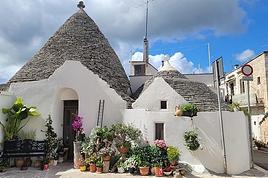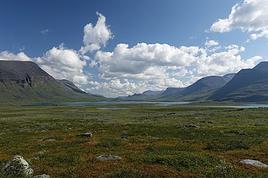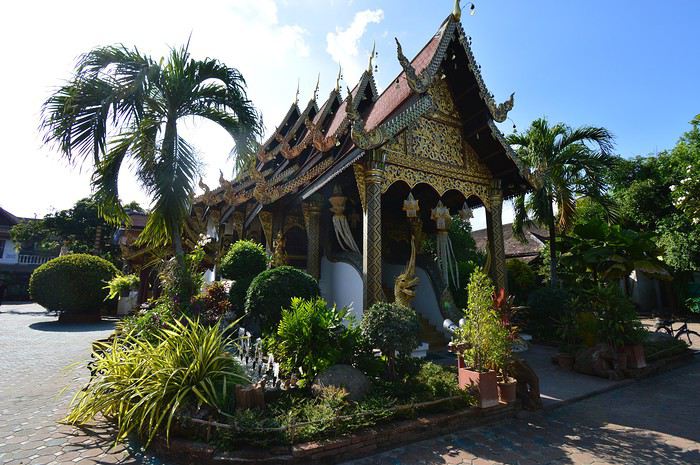
La Lozère semble un département oublié sur ce forum , tout comme dans la vie d'ailleurs .
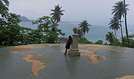
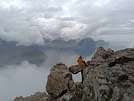
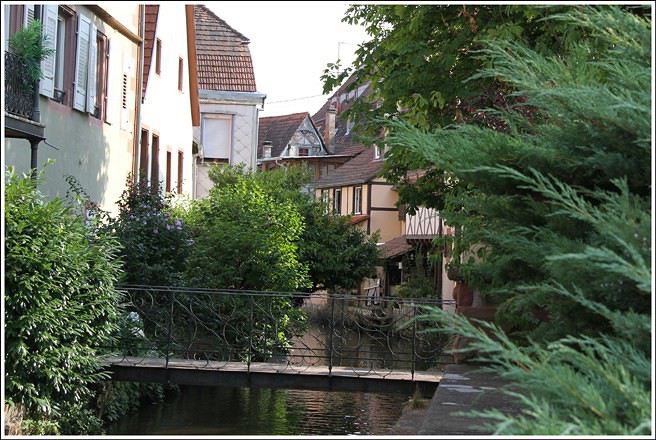
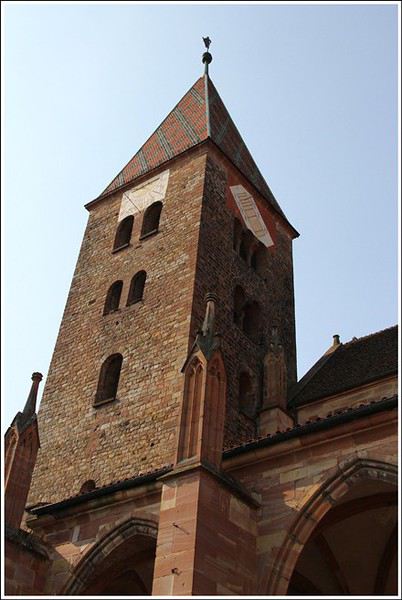
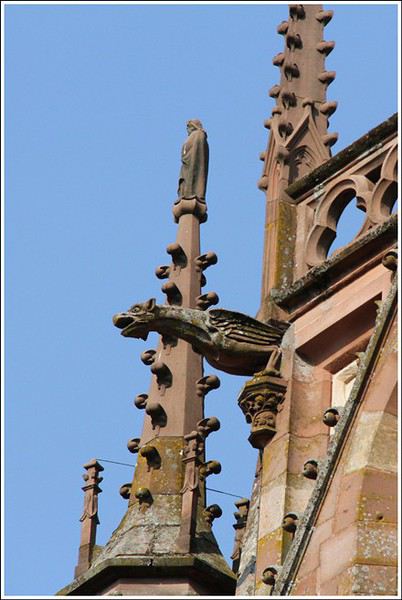
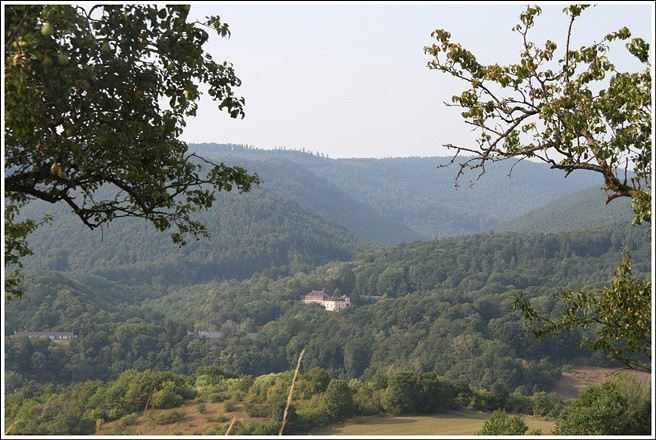
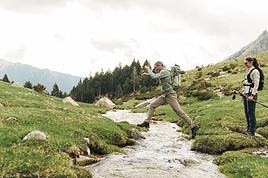
Alors si vous aimez vous balader dans des lieux tranquilles , dépaysants , dans des paysages dont certains rappelent la Mongolie , dans d'autres des formes ruiniformes , observer le vol des grands vautours fauves dans les gorges de la Jonte et du Tarn je vous propose quelques photos de ces endroits que j'aime et où jeme balade depuis une trentaine d'année et où je me suis baladée à la mi Avril avec quelques digressions sur Le plateau du Larzac , à cheval sur l'Aveyron et la Lozère .
.
Nous arrivons directement au départ des gorges de la jonte , notre hébergement se trouve au milieu de ces gorges , entre Le Rozier et Meyrueis .
Le Rozier petite bourgade où la jonte rejoint les gorges du Tarn :
Le village posséde trois terrains de camping , cote à cote , avec une belle vue :
Another trip planned during Covid. Actually, for 2020, I had three trips booked, with tickets purchased and everything.
This one to Uzbekistan was planned for April 2020. We postponed it to April 2021, but it was canceled again, and we couldn’t reschedule for April 2022 because our friends who were coming with us were busy. So, we chose summer, knowing the temperatures would likely be very high.
We left as a group of five: a couple we usually travel with and one of their friends, whom I knew. She was traveling alone and had dreamed of this trip but didn’t want to go by herself.
For organization, we went through an agency to handle the train tickets and our trip to the Aral Sea. It’s not my usual style, but back in 2020, we were already in touch with them, and they were very understanding during the two cancellations. It wasn’t easy, given the economic crisis Covid caused, especially in Uzbekistan.
Again, I’m writing this travel journal from memory since I didn’t take any notes. (It’s good to give your brain a workout now and then!)
Day 1: Off to Tashkent
We flew in the afternoon to Istanbul, had a 2-hour-15-minute layover in Turkey, and then took an overnight flight to arrive early in the morning in Tashkent.
Problem (again): just before taking off from Saint-Exupéry, the plane had an issue with the landing gear. We waited two hours, and after a few hammer and wrench adjustments, we finally took off. Of course, by the time we arrived in Istanbul, it was a mad dash through the airport to catch our connecting flight.
We landed at 7:30 AM in Tashkent, and of the five suitcases in our little group, two were missing (one of ours and the solo traveler’s). Big problem because we were leaving at 2:30 PM by train for the Aral Sea, and we wouldn’t be near an airport again for three days. Plus, at the small airport in the Uzbek capital, no one spoke English (or French, or the Ardèche dialect). Fortunately, we had booked a guide for a quick morning tour of the capital. We had seven hours to kill, and it seemed smart to do it this way (and yes, sometimes we do think ahead).
With him speaking English and, more importantly, Uzbek, the delivery of our suitcases was arranged.
So, we set off to explore the capital. It’s very Soviet in design—wide avenues and ugly buildings.
We visited the Khasti Imam historical complex (first name to pronounce at your own risk—there will be plenty more during the trip).
Lots of "oohs" and "aahs" about how beautiful it was, but in the end, compared to what we saw later, it was really just small potatoes.
We checked out Chorsu Bazaar, the city’s large covered market. The guide was friendly and gave us plenty of tips for the rest of the trip. He suggested a restaurant, which we accepted, so we could get familiar with local customs. The good thing was, it didn’t seem like a tourist trap.
Next, we headed to the train station because our train was at 2:30 PM. The guide left us, and then another problem arose. While going through security, one of the staff made it clear that our train was canceled and our ticket needed to be changed to the train leaving around 8:20 PM. Heatwave moment (it was 38°C).
Our issue was that we were supposed to arrive in Nukus (our destination) at 6:00 AM and take a minibus for a round trip to Moynaq and the Aral Sea (four hours each way). The plan was to spend 2-3 hours there and return, so a 10-11-hour timeline. Leaving at 6:00 AM made it doable, but with the train now leaving at 8:20 PM, we’d arrive in Nukus at noon, which messed up the rest of the plan.
I was fuming at the agency (I really don’t like using agencies), so I called the local contact, who quickly sent our guide back (because trying to communicate, change tickets, and get information was tough).
I asked the manager to find us flight tickets to make up for the delay, but nothing—zilch—was possible.
We were stuck!
My buddy and I were determined to get to Moynaq, but the women in the group were less motivated.
No choice but to board the train for an overnight journey. We had a cabin for two (and our friend had one to herself). Big scare at first—no AC, and it felt like 150°. They told us it would work once the train started moving, which it did.
A frugal meal in the dining car (spaghetti with meat—the only dish on offer) and we had a good night’s sleep.
The +: Finally, we’re here!
The -: A lot of hassles to start the trip
My train to Mathura is at 2 PM, and we’ll arrive an hour late—all good. I booked a hotel on booking, but unfortunately, it’s really far from the ghats. Walking there is out of the question—what a shame.
The hotel itself is fine, and there are several restaurants right across the street, which will be handy for dinner. This won’t be an exception, though—starting at 10 PM, they must wake up because I can hear them talking loudly, and music is playing along. My room faces the entrance, so it’s going to be tough. At midnight, I ask them to lower the volume, but they don’t listen. By 1 AM, I lose my temper, and this time, everything stops. Finally, I can get some sleep—until 4 AM, when they start up again for a little while before quiet returns until 6 AM. But when do they sleep? The noise never seems to bother them—it’s unbelievable, and I’m finding it harder and harder to tolerate. It makes a huge difference.
The next morning, as I leave, they tell me they’ll give me another room for the following night. Oh, two nights like that wouldn’t be possible—I’m exhausted.
I head out to explore the ghats and take a rickshaw, which I share with a family, to Vrindavan, a city of temples dedicated to Krishna. I visit several while wandering through the lively streets, surrounded by a crowd of devotees. By 1 PM, I’m near the Bankey Bihari Temple, but I can’t go in—it just closed. Nearby, there are restaurants, so I take the opportunity to grab my usual aloo paratha with a lassi.
The work women do here is incredibly hard, and their pay must be miserable.
I want to leave Vrindavan for Govardhan.
Two young guys on a motorcycle in front of the temple approach me, and the driver offers to take me part of the way. I’m pretty skeptical, but he insists, and I eventually agree. I didn’t fully understand what was happening. Once on the bike, his friend hops on too, and suddenly I’m sandwiched between them for a multi-kilometer ride—*travel Indian-style*. We quickly drop off the friend, and I breathe easier for the rest of the trip. At an intersection, he stops—Govardhan is straight ahead, but to get to his village, he needs to turn right. We wait for the bus for a few minutes, and he flags it down so I can hop on and continue my journey. What an adventure.
Hi there,
It’s not always easy to pick where to stay in national parks... like Kruger, for example.
Below is an attempt to decode the different types and options...
Remember, to book in a national park, you do it through the Sanparks website, except in KwaZulu-Natal (KZN Wildlife).
Choosing the type of camp that suits you:
· Main Rest Camps, Satellite Camps, Bushveld Camps, Overnight Hides, Bush Lodges, Camp Site, Luxury Lodges
Main Rest Camps
These camps are usually quite large, even very large, like Skukuza. They have a fence! You can move around freely inside these camps at night with a torch. Staff are available, and there are security guards. Shops are more or less well-stocked but have the basics. You’ll find souvenir shops, restaurants, bars, and most often a pool. Depending on your choice, there are camping spots, chalets, huts, etc., with varying levels of comfort. Shared kitchens, shared bathrooms, or private facilities in each accommodation (see below).
This isn’t the "wild" version but rather the more luxurious and secure option.
Bushveld Camps
Smaller and more intimate, with some amenities, but no restaurants or shops. Check if there’s a fence.
Satellite Camps
Always close to the main camps (more or less). As a rule, you check in at the main camp. Comfort level is lower than the options above. Check if there’s a fence.
Camp Site + Overnight Hide
The wildest level. That says it all.
Bush Lodges + Luxury Lodges
Bush lodges: exclusive environment. Since I haven’t tried them, I can’t give any tips.
Luxury lodges: well, the name says it all. This is Kruger’s version of a private game reserve lodge. Game drives with a ranger in an open vehicle. Accommodation ranges from luxurious to very luxurious. Meals and lodging are of the same standard.
But even so, the game drive rules are the same. Sure, you get exclusive access to a small area, but you can’t leave the marked trails, and normally, the return time to camp is exactly the same.
The rule actually says that exceptionally, if there’s a great opportunity within x meters, they *might* go off-trail.
First case in the far south: a very flexible ranger and an amazing game drive.
Second case: a mediocre ranger and a boring game drive.
Note that some may only offer lodging.
Personally, I think the added value can be excessively expensive.
Choosing your accommodation within a camp.
This depends on the camp. Below is an attempt to decode.
Camp site: just a spot, that’s it. Access to facilities like toilets, shared kitchen, etc.
Huts: basic amenities, usually just a fan.
Safari tent: the name says it all. It’s already set up.
Bungalow: well, it’s a bungalow, and a guest house is a bungalow for a group.
Decoding:
AC = air conditioning. Fan = fan. Private or shared toilets. Private or shared bathroom. Equipped kitchen or shared. Terrace. Perimeter or not. View or not.
First 2–5 letters — the type of accommodation.
CK = Campsite
EH/EA/EB = Hut (AC, so air-conditioned)
ES = Hut (fan only)
CTT/ST= Safari Tent
LBVST = Safari Tent with bush view
LRVST = Safari Tent with river view
BD/BA = Bungalow with private (and equipped) kitchen
BG/BE = Bungalow with shared kitchen
F, G or CO = Guesthouse or Cottages (more than one bedroom)
Number after the letters — number of beds
2, 3, 4, or 6 beds.
The base price is for 2 people. There’s an extra charge for each additional person.
The last letter, if present, indicates a particular feature.
U = Perimeter — close to the camp’s edge
V = Perimeter + view (e.g., river)
Z = For disabled access
L = Large spot (camping)
D = DSTV (television)
E = Enclosed veranda
I’m planning my upcoming trip from North to South Vietnam for May 2026. There’ll be two couples in their sixties and older...
I’ve received proposals from three agencies with a driver and French-speaking guide.
The one I’ve chosen, which is often mentioned in this forum, suggests this itinerary, and I’d love to hear your thoughts:
HANOI, arrival on 04/29/26, 2 nights
BAC HA, 1 night
HA GIANG, 1 night
NAM DAM, 1 night
DONG VAN, 1 night
BAO LAC, 1 night
BA BE, 1 night
HANOI, 1 night
NINH BINH, 2 nights
HALONG BAY (BAI TULONG), 1 night
HUE, 2 nights
HOI AN, 3 nights
SAIGON, 1 night
CAN THO, 1 night
SAIGON, 1 night
I’d like to know if the stop in Nam Dam is worth staying overnight or if we should just visit and continue to Dong Van.
Also, would it make more sense to fly from Hoi An to Can Tho and finish with 2 nights in Saigon instead?
That’s what I’d like your input on. Thanks in advance, and have a great summer! 🌞
Monique
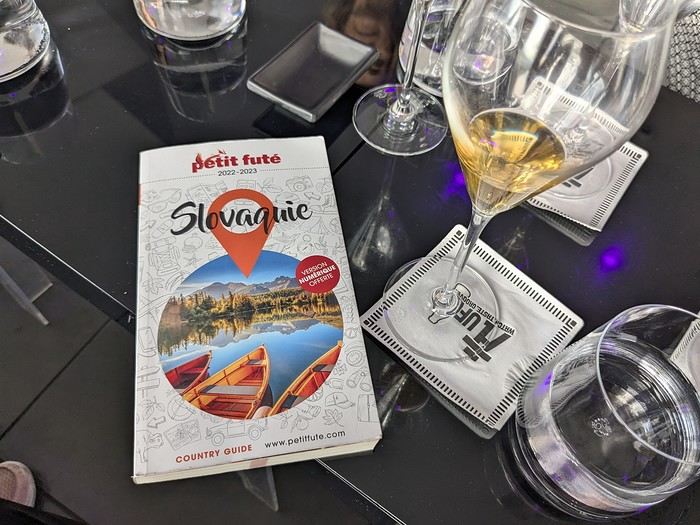
Hello and welcome aboard this travel journal.
We’re heading to Slovakia together!
Why this country?
After visiting Hungary, Slovenia, Romania, and Poland in recent years, I’ve fallen in love with Eastern European countries. I adore the Slavic soul, its Austro-Hungarian villages, the gentle landscapes, the Carpathian Mountains, and that slightly mysterious atmosphere.
Slovakia evokes a certain imagination with its deep forests, medieval castles, and cobbled villages.
After seeing photos of the High Tatras—especially Lake Štrbské Pleso and Spiš Castle—I thought, "Let’s do it! We’re going!"
So, will Slovakia live up to what I imagine?
We’ll find out together.
We decided to travel as a group of six (five adults and a six-year-old child), by car (we needed two).
Here’s the day-by-day itinerary for this family trip, which started with a 3-day stay in Vienna (see the dedicated travel journal):
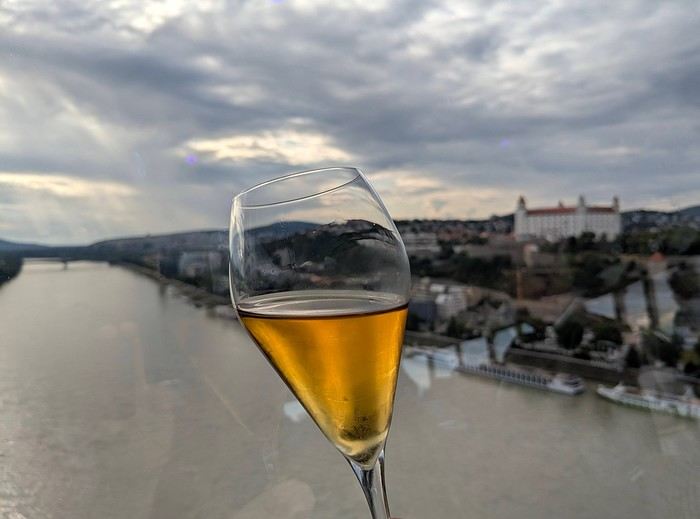
The itinerary:
Day 1: Drive from Vienna to Banská Štiavnica and visit the town, then drive to Handlová
Day 2: Bojnice Castle, the village of Čičmany, and a walk in the treetops at Bojnice, return to Handlová
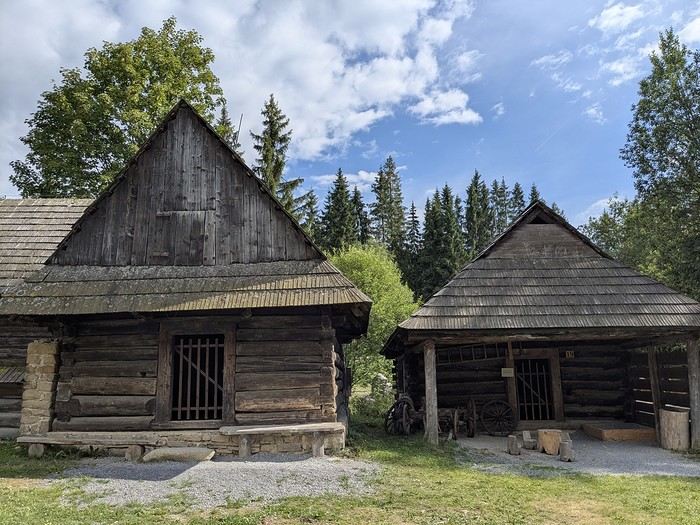
Day 3: Depart for Orava, visit Orava Castle and the Orava Skansen, drive to Veľký Slavkov
Day 4: Visit Slovak Paradise—its gorges, lakes, and ice cave—overnight in Veľký Slavkov
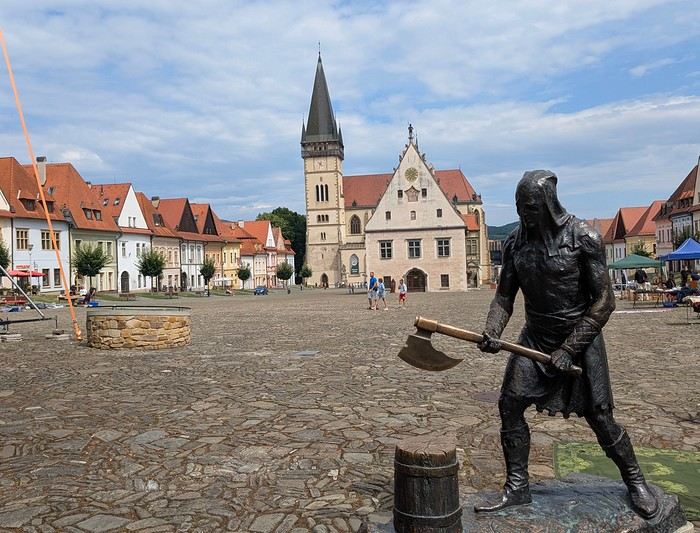
Day 5: Visit Bardejov, the "Death Road," wooden churches, and Ľubovňa Castle, overnight in Veľký Slavkov
Day 6: Walks and hikes in the High Tatras, Lake Štrbské Pleso, Solisko summit, treetop walk in Ždiar, overnight in Veľký Slavkov
Day 7: Drive to Košice, visit Spiš Castle, Tokaj wine route in Veľká Trňa, overnight in Košice
Day 8: Visit Košice, overnight in Košice
Day 9: Drive to Bratislava, stop at the Aragonite Cave in the Slovak Karst, overnight in Bratislava
Day 10: Visit Bratislava, overnight stay
Day 11 and 12: Return to France
Budget:
I’m giving prices for 2 adults / 1 child.
Slovakia is more expensive than it seems, and some expenses shouldn’t be underestimated.
Transportation:
Tolls and gas from France: 500 € round trip
Slovak vignette for one month: 17.10 €
Gas is fixed at 1.49 € per liter (E10)
Parking at sites (all paid by the day, even in the most remote villages, even if you stay for just an hour). Payment is often required in cash upon arrival: total 63 €
We didn’t pay at Spiš (we arrived before the cashier) or Ľubovňa (we arrived after the cashier left). Parking at Orava Village was free. In Košice and Bratislava, we parked for free at our accommodations.
Public transport in Bratislava and Košice: 1-1.2 € for a bus ticket. Vending machines are available at some stops; otherwise, buy via SMS (Slovak phones only) or official sales points.
Accommodation:
We mostly chose houses so we could cook ourselves and save on food. I’ve rated our satisfaction with these accommodations from 1 to 5 stars.
Padua: DC Hotel: 1 night, 77 € *****
Handlová: Chata Remata: 2 nights, 120 € *****
Veľký Slavkov: Aplend: 4 nights, 220 € **
Košice: Luxury Old Town Loft 320m²: 2 nights, 120 € *****
Bratislava: Hotel Viktor: 2 nights, 138 € ***
Brescia: Hotel Antica Fonte: 1 night, 82 € *****
Total: 757 €
Food:
Groceries at Lidl for 5 meals for 3: 100 € (really cheap)
Restaurants: 10-15 € per dish, ice cream 1-2.4 € per scoop, crêpes 8-12 €, a glass of wine 6-10 €... total: 500 €
Visits:
There are discounts for seniors and children, which is great.
We spent nearly 600 € in total, which is a lot.
However, it’s a cultural destination with many castles, museums, caves, wine cellars, and nature activities: cable cars, canopy walks, paid hikes (Slovak Paradise gorges)...
In the end, this trip to Slovakia cost nearly 2500 € for 3.
We also need to add the Vienna portion to that.
Now, here’s the day-by-day account of this beautiful journey.
Bonjour
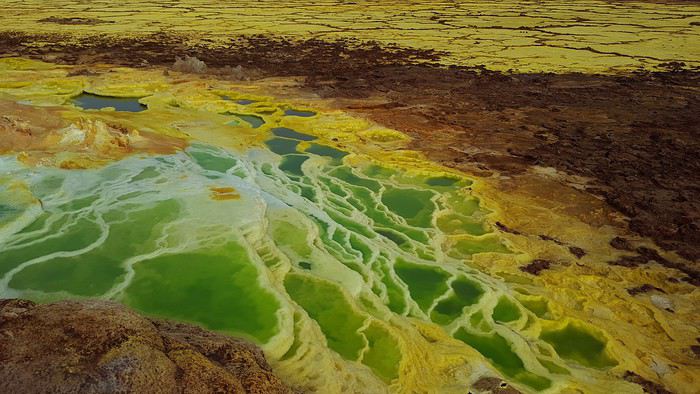
je viens de terminer un petit article de mes notes, photos, impressions, ressenti... sur les 2 semaines de visites en Ethiopie: Abyssinie, Erta Alé, Dallol
Vous pouvez le lire sur le lien ci-dessous
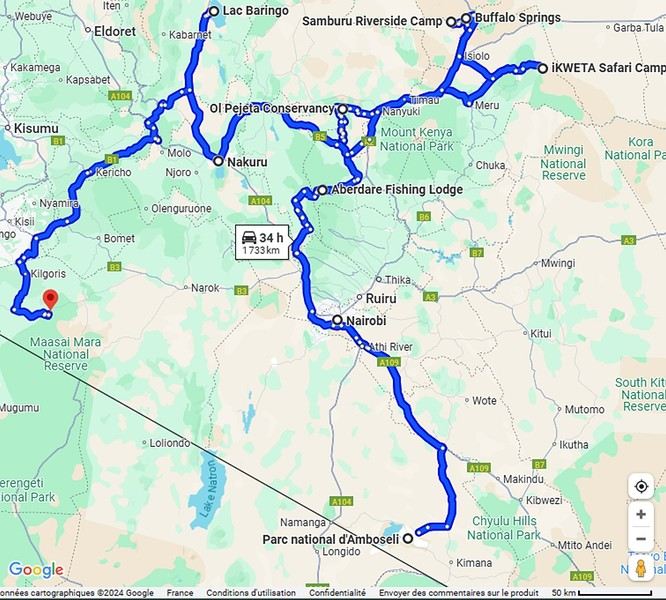
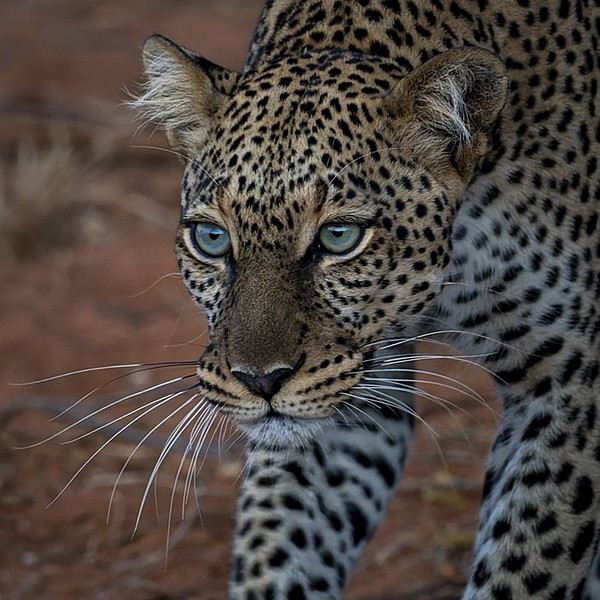
Back on the forum, I’m starting to write up two 3-week trips to Kenya in August 2021 and 2023.
In 2021, Quynh and I traveled with Régis (Rjulie95 on VF). Our son joined us in Baringo for the second half of the trip.
In 2023, we went with two friends who’d been dreaming of seeing wild animals ever since we got back from Kenya. We didn’t need much convincing to go with them!
The two itineraries are almost identical (well, when you love something...) but we did make a few tweaks.
- The first part of the trip was with a local driver/guide, Félix, who was recommended by Sylvie56. Sylvie and her husband Ben are Kenya enthusiasts—they’ve been there countless times, always with Félix... and for good reason! He’s fantastic!
- The second part was with Melting Pot Safari, an agency that adapted to our photography needs. Tony Crocetta, the co-founder (along with his Kenyan friend Simon Chebon), is a wildlife photographer himself.
Here are the itineraries for both trips, including accommodations:
In 2021:
Day 0: Paris / Nairobi - 67 Airport Hotel
Day 1: Nairobi / Amboseli - Simba Cottage
Day 2: Amboseli - Simba Cottage
Day 3: Amboseli / Aberdares - Fishing Lodge
Day 4: Aberdares - Fishing Lodge
Day 5: Aberdares - Fishing Lodge
Day 6: Aberdares / Samburu - Riverside Camp
Day 7: Samburu - Riverside Camp
Day 8: Samburu - Riverside Camp
Day 9: Samburu / Nakuru - Merica Hotel
Day 10: Nakuru / Baringo - Tumbili Cliff Lodge
Day 11: Baringo - Tumbili Cliff Lodge
Day 12: Baringo - Tumbili Cliff Lodge
Day 13: Baringo / Maasai Mara – Meltingpot Bush Camp
Day 14 to 18: Maasai Mara – Meltingpot Bush Camp
Day 19: Maasai Mara / Nairobi – Roussel Guest House
Day 20: Nairobi / Paris
In 2023:
Day 0: Lyon / Paris / Nairobi - 67 Airport Hotel
Day 1: Nairobi / Meru - Ikweta Camp
Day 2: Meru - Ikweta Camp
Day 3: Meru - Ikweta Camp
Day 4: Meru / Samburu - Riverside Camp
Day 5: Samburu – Riverside Camp
Day 6: Samburu / Buffalo Springs – Samburu Simba
Day 7: Buffalo Springs / Ol Pejeta – Sweetwater Camp
Day 8: Ol Pejeta / Amboseli - Simba Cottage
Day 9: Amboseli - Simba Cottage
Day 10: Amboseli - Simba Cottage
Day 11: Amboseli / Nakuru – Lake Nakuru Lodge
Day 12: Nakuru / Baringo - Tumbili Cliff Lodge
Day 13: Baringo - Tumbili Cliff Lodge
Day 14: Baringo - Tumbili Cliff Lodge
Day 15: Baringo / Maasai Mara – Meltingpot Bush Camp
Day 16 to 20: Maasai Mara – Meltingpot Bush Camp
Day 21: Maasai Mara / Nairobi / Paris
Here’s an itinerary—it’s not exactly what we did, but a combination of both.
Ready to join us on safari to see some wild animals?
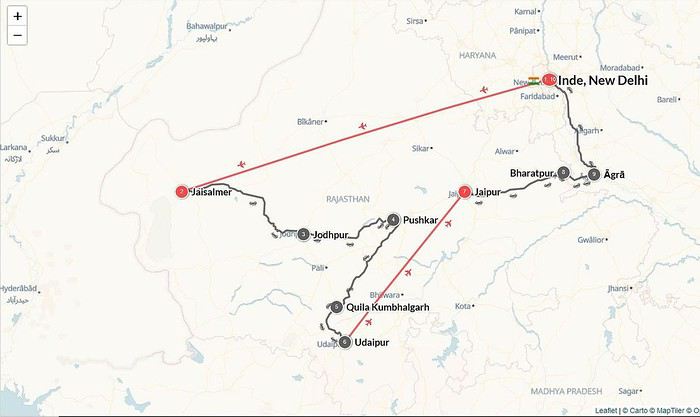
Valérie (Alexval2), m'ayant convaincu de publier ce carnet sur notre circuit au Rajasthan, je me jette à l'eau et vous livre ce qui sera mon premier carnet de voyage 🙂
Mais d'abord pourquoi l'Inde? Cette question a déjà été abordée sur le forum. Pour ma part j'avais des images d'Epinal devant les yeux: les maharadjahs, les palais, les éléphants et des amis qui m'en faisaient un retour dithyrambique.
On a déjà été en Asie et on souhaitait faire quelque chose de différent. On n'a pas été déçu.
Donc, après quelques centaines d'heures 😛 de recherches sur les forums, blogs et guides divers et variés, la région du Rajasthan s'imposait pour une première découverte.
Nous sommes arrivés à établir ce circuit, très classique, mais structuré par un passage obligé pour la foire aux chameaux de Pushkar. J'avais lu des compte-rendu et vu des vidéos sur cette foire, tous très engageants; on verra par la suite ce qu'il en a été.
Comme à mon habitude, tout était réservé, car je n'aime pas perdre mon temps à chercher des solutions une fois sur place.
Le vol Air France est arrivé à l'heure prévue 23h15. On avait bien lu les recommandations et après avoir récupéré les valises, on va au Pre paid taxi booth.
On récupère le reçu et 2 charmants garçons nous prennent les valises pour nous amener au taxi. Arrivés au taxi, ils nous réclament 500 rps pour le portage. Bien évidemment je résiste et le chauffeur nous venant en aide, ce sera seulement 200 rps. Welcome in India.
On convient avec le chauffeur, sympa, qu'il vienne nous chercher à l'hôtel (Ibis, bon petit déjeuner) pour le vol vers Jaisalmer. Il est 2 h du mat, on s'écroule dans nos lits mais la nuit sera courte car le réveil est à 5h.
My buddy Christian and I (Patrick) are off for 28 days in Argentina in March.
We’ve already shared several trips as a duo (Bolivia Peru, Namibia, Laos, Costa Rica).
Since we’re starting from the idea that at our age (65) we won’t be coming back here—there are just too many other corners of the world to discover—we did the "grand tour" of Argentina, with 6 domestic flights to make the most of our 28 days.
Here are our stops:
1) Departure from Brussels to Buenos Aires via Madrid
2) Arrival and first contact with Buenos Aires
3) Early morning flight to Ushuaia. Boat trip on the Beagle Channel
4) Ushuaia: hikes in Tierra del Fuego National Park
5) Ushuaia: last hike and flight to El Calafate
6) El Calafate to El Chaltén by bus. First hike
7) El Chaltén: hike
8) El Chaltén: hike
9) El Chaltén: hike and bus back to El Calafate
10) El Calafate: Perito Moreno Glacier
11) Flight to Bariloche. Car rental and surrounding areas
12) Seven Lakes Region
13) Nahuel Huapi National Park region
14) Flight to Salta. Car rental
15) To Tilcara
16) To Humahuaca
17) To Purmamarca
18) To Jujuy via the salt flats
19) To Cafayate
20) Around Cafayate
21) To Cachi
22) Back to Salta
23) Flight to Iguazu
24) Waterfalls on the Argentine side
25) Waterfalls on the Brazilian side and flight to Buenos Aires
26) Buenos Aires
27) Return flight
28) Morning arrival
Happy reading!..
Grand est Canadien. Les cantons de l’Est, la Gaspésie, le New Brunswick, l’Acadie et la nouvelle écosse
Des forêts, des lacs des phares, des parcs et des rencontres
Pour résumer ce voyage : supers rencontres, des parcs magnifiques, des animaux sauvages, et des Rangers de Parcs passionnés et passionnants.
Parc du Bic, de Gaspésie, de Forrillon, de l'île de Bonaventure, Parc des Hautes terres de Cap-Breton, Hopewell RocK
Mes conseils :
N'hésitez pas à aller vers les Rangers des parcs, voir les animations qu'ils organisent, c'est vraiment très intéressant.
Si vous souhaitez voir des animaux sauvages, soyez matinaux.
Les km se font plutôt bien; il n'est pas bien plus fatigant de faire 500km au Canada avec une voiture automatique et de grandes lignes droites où la circulation est fluide, que de faire 120Km sur les petites routes d'Irlande...
Essayez d'aller voir un film Québecois soit au cinéma, soit à la TV.
Pour le traversier, anticipez. le prendre au moins 1 fois est une bonne expérience.
pour le reste, une fois que vous savez ce que vous souhaitez voir, allez y à l’instinct, c'est facile.
Le Voyage :
Arrivée à Montréal le 02/09. Repas en famille nous testons le pudding chômeur maison.
Nous avons passé 3 jours à visiter les cantons de l’Est, l’Abbeye de Saint Benoit du Lac, Bolton, Magog (sa foire au vin et ses orages) Gramby, Bromont et son petit lac, son Spa…
Gaspésie, New Burnswick, Nouvelle écosse :
Nous ne nous sommes pas arrêtés à Québec ni aux chutes de Montmorency, nous les avions déjà visités lors d’un précédant voyages, sinon, prévoyez une journée supplémentaire et un arrêt dans la jolie ville de Québec.
J 1 : Départ le 05/09 pour Saint Fabien et le parc du Bic réputé pour son littoral, ses paysages marécageux et ses phoques communs (brochure). Soit 500km. nuit à St Fabien
Tout au long de la route, se succéderont des barachois, sortes de plans d'eau, situés généralement à l'estuaire d'une rivière séparés de la mer par un cordon littoral de gravier, de sables ou de galets. Ils sont parfois constitués d'eau douce, parfois d'eau salée. L'eau douce du fleuve saint Laurent et l'eau salée de la mer se mélangent jusqu'à la hauteur de l'île d'Orléans. Et il y a une marée mesurées jusqu'au pont des Trois-Rivières.
Visite du parc du Bic et observation de la mue des phoques avec les rangers du parc. plus de photos du parc
J2 et 3 : Destination Sainte Anne des Monts environ 200Km. La route des phares nous guide😉.
2 nuits à sainte Anne des Monts pour petite Randonnée au Parc de la Gaspésie (brochure) et ses paysages sublimes entre monts, forets, rivières et Lac. Nous n’avons vu ni Caribous, ni Orignaux, mais du sommet du Xalibu (ballade d’environ 5h A/R bien balisée) vue à 360° sur le mont Jacques Cartier et le Mont Albert. plus
C'est le parc préféré de Muriel. il représente pour elle ce qu'elle imaginait des forêts, rivières et lacs Canadiens. Vous pouvez également loger directement dans le Parc. c'est mieux (surtout au bord du lac Cascapédia). mais c'est plus cher 😕
J 4 à 6 : Départ pour le Parc de Forillon (brochure) près de Gaspé (200Km). Magique... Nous avons eu de la chance; nous sommes tombés presque nez à nez avec une maman ours et ses petits (ours bruns). c'était énorme. nous avons eu la chance de voir des castors au travail...
Notre gîte était hors norme quelle chance ; un Ranch au milieu des bois. Nous y sommes restés 3 nuits. c'est mon parc préféré. suite photos Forillon
Gaspé en Mi'gmaq signifie fin des terres. Mais pour Jacques Cartier, c'est le début du pays. Le 6 juillet 1534, lui et son équipage entre en contact avec les premiers Amérindiens de la nation Mi'gmaq au large de la baie des chaleurs. le 24 juillet 1534, il met pied à terre à Gaspé, y implante une croix de 30 pieds, revendiquant la région pour le roi de France ils y rencontrent les Iroquois du Saint Laurent.
Visite de l'île de Bonaventure (brochure) et ses 100000 fous de Bassan photos parc Bonaventure.
Sans oublier notre premier Homard fraîchement pêché et cuit acheté à une poissonnerie sur le port.
J 7 : Nous terminons le tour de la Gaspésie avec arrêt à Campbeltown (300 Km) avant de traverser le New Brunwick. Arrêt à la ferme Bourdage tradition. On aurait pu pousser jusqu’à Caraquet, cela aurait été mieux. Pluie toute la journée.
J 8 : départ à destination du Parc national des hautes terres de Cap-Breton en nouvelle écosse. Avec nuit à Moncton pour couper la route en deux (500Km). Nous nous somme arrêté en Acadie. Région vraiment atypique avec des personnes vraiment très sympathiques et ouvertes. Le New Brunwick est couvert à plus de 80% de forêts, c’est impressionnant de camions et de ratons laveurs morts sur le bord de la route.
Couché de soleil à Hopewell Rock prévoyez la crème anti moustique. il y en a des milliers, c'est horrible. photos
J 9 à J 11 : Départ pour Sydney (500Km) pour 3 jours à la découverte du parc des hautes terres de Cap-Breton. Si vous avez le temps, arrêtez vous au "Train Station inn à Tatamagouche"; j'adore le concept. on peut y manger, y dormir ou juste regarder.
Le tour du Parc des hautes terres de Cap-Breton fait plus de 300Km. photos. notre appartement était à North- Sydney. Un peu loin de Cheticamp (2h de route) et 1h30 de l'entrée du Parc. Mais la route est en elle même belle. Nous aurions du trouver un logement plutôt sur Cheticamp ou Ingonish. Mais au moment de la location, nous pensions aussi visiter Louisbourg. Mais ça faisait trop.
J 12 : c’est le retour. Mais il reste plus de 1500Km. Nous avions prévus de rentrer en s’arrêtant au "Pays de la Sagouine", héroïne locale sortie de l’imagination d’Antonine Maillet et incarnée par une actrice locale formidable : Viola Leger. Un super lieu de spectacle et de passion. A ne pas manquer si vous en avez l’occasion. Nouvelle nuit à Moncton pour couper le trajet (550 Km)
Retour à travers la Gaspésie et la vallée de la Matapédia, réputée pour sa pêche au Saumon, nous y avons croisé un Haut Savoyard installé depuis 15 ans, qui vit de la pêche (magasin) et fait du traîneau à chien en hiver.
J 13 : Ensuite, tout ne s’est pas réellement passé comme prévu. Nous devions prendre le traversier à Rimouski pour nous rendre à Tadoussac et le Fjord du Saguenay. Mais contre temps à cause de la tempête Florence tous les bateaux restaient à quai. nous tentons de prendre le traversier à Trois-Pistoles, mais là aussi tous les trajets étaient annulés. L’autre unique moyen pour traverser était un détour à Québec, soit 500km. Donc nous décidons de dormir ce 17/09 à Trois-Pistoles. (Nous avions fait bien 600Km voire 700Km dans la journée).
J 14 et J 15 : nous changeons nos plans, direction Trois Rivière et le parc de la Mauricie pour un petit survol du parc en hydravion. Et là, rencontre formidable au gîte de la vielle caisse (traduisez le gîte de l’ancienne banque). L’accueil y est très chaleureux, le déjeuner très copieux, le spa extérieur le soir même sous la pluie, c'est super. Nous avons fait notre vol avec hydravion aventure. Équipe vraiment très sympa, c'était à proximité de notre gîte. Nous y reviendrons, visiter cette rive du Saint Laurent😉.
Retour en Famille, pour une fin de séjour tranquille avec petite ballade sur le mont de Bromont, visite du musée Bombardier et détour par les vignobles et achat de quelques bouteilles souvenir.
Bromont est la station de ski locale, ouverte jusqu’à minuit en WE.
Nous étions 10 jours trop tôt par rapport aux couleurs et à la récolte des canneberges. je pense que c'est à voir.
si nous retournons, nous essayerons de combiner un trip au nord du St Laurent (Mauricie Lac Saint Jean, Saguenay), la récolte des canneberges et une journée au festival de Saint Tite. ça doit être énorme...
En résumé :
Des Parcs, des forets, mais aussi des plaines, des champs, des fermes et des Phares, des plages, de petits ports de pêche, des ballades, des moments en famille, des rencontres...
Coût du Voyage :
Nous avons dépensé 3400€ souvenir compris pour 2. le taux de change avec le dollar canadien était assez intéressant.
Avion : 830€ pour 2
Hébergements : 750€ pour 14 nuits soit une moyenne de 54€/nuits en B&B et airbnb (ne sont pas compté les hébergements en famille).
la location de la voiture : 600€ pour 3 semaines +350€ pour l'essence. nous avons fait plus de 6000Km. Cela fait beaucoup mais reste possible. Nous souhaitions aller au New-Brunswick et la Nouvelle écosse.
l'entrée dans les parcs coûté environ 8$ canadiens par personne. Nous n'avions pas pris de pass, car certains pars sont des parcs nationaux (Forillon), d'autre des parcs nationaux du Québec, et d'autre ne sont ni l'un ni l'autre.
L'hydravion nous a coûté 99$ par personne pour 30 min.
pour les repas, nous avions une glacière pour faire un minimum de cuisine en appartement ou auberge. nous avons mangé au restaurant 4 soirs.
Don’t they say "never two without three"? It seems so. Here I am again on the forum to share—and let’s be honest, indulge a bit of selfish pleasure—by recounting the story of this third installment in the Land of the Rising Sun.
Where? It’s all in the title. On the island of Kyushu in southern Japan, more precisely in the northwest between Fukuoka and Nagasaki. I hope to take you along with me for 19 nights and 18 full days this autumn of 2024. On the itinerary: gastronomy, crafts, festivals, waterfalls, encounters, and leisurely strolls in all simplicity.
A last-minute flight booked just 7 days before departure, and the route evolved regularly based on whims and accommodation availability, eventually settling on this:
- 5 nights in Fukuoka: Fukuoka city, Ukiha, Itoshima, Dazaifu, Yanagawa
- 4 nights in Hasami, Nagasaki Prefecture: Okawachiyama, Arita, Takeo, Kashima, Yobuko, Karatsu, Kabeshima
- 6 nights in Nagasaki: Ureshino, Higashi-Sonogi, Nagasaki city, Unzen, Sotome
- 4 nights in Fukuoka: Karatsu, Fukuoka city
Most of the trip was done by car for practical reasons—easier access to certain places and freedom of movement—but also for the sheer joy of it. Despite slow traffic at times, driving in rural Japan is a delight.
If the program interests you, see you soon for the start of the journey.
In this travel journal, you’ll find a list of all the activities we did during our road trip through the Gaspésie.
Videos are embedded throughout the summary. Just click on the image to start the video.
To jump to a specific post, here are the relevant links:
Gaspé - Forillon National Park - Interpretation Center
Gaspé - Forillon National Park - Mont-Saint-Alban Trail
Gaspé - Forillon National Park - La Chute Trail
Gaspé - Forillon National Park - Les Graves Trail
Percé - Rivière-aux-Émeraudes Waterfall
Percé - Bonaventure Island National Park
Percé - Hike at the Foot of Percé Rock
Percé Geopark - Suspended Glass Platform
Percé Geopark - Magic Forest Loop
Percé Geopark - Belvedere Trails
Percé Geopark - Springs and Les Pieds Croches Trails
Percé Geopark - Crevasse Trail
Percé Geopark - Grande Coupe Trail
Percé Geopark - Grotto Path
Bonaventure - Le Malin de la Rivière Bonaventure
Maria - Grand Sault Waterfall
Carleton-sur-Mer - Les Saults Waterfall - Éperlan Trail
Matapédia - Two Rivers Belvedere
Saint-Alexis-de-Matapédia - Dream Horizon Belvedere
Saint-André-de-Restigouche - Heart of the Plateaus Belvedere
Saint-André-de-Restigouche - Picot Waterfalls
Saint-Alexis-de-Matapédia - Robitaille Stream Waterfalls Trail
Saint-Alexandre-des-Lacs - Philomène Waterfall
Saint-Ulric - Ti-Mé Waterfall
Alright, I'm diving into this Hawaiian travel journal!
I hope lots of you will follow along because the destination is absolutely charming. 🙂
Just a heads-up—I might take a while to finish it.
The trip took place from February 20th to March 3rd, 2025 (11 days total, with 9 days on-site).
It was a trip with my friend Christelle, with whom I’ve already traveled to Iceland and Morocco in recent years.
We’re totally on the same wavelength, with the same expectations and desires, which makes things a lot easier (and, as a bonus, it helps cut down the final bill).
Being the generous soul I am, I asked Christelle which country she wanted to visit.
Her answer: Asia, since I’ve never been, or Namibia...
Hawaii is basically the same thing, right?!!
All thanks to the search comparator—I stumbled upon round-trip tickets from Paris to Honolulu for 580 € per person during school holidays, with a layover in Canada (I don’t get to choose my vacation dates).
We jumped on it on August 28th (didn’t take much convincing).
For info, I always check flight tickets during the last week of August or the first half of September because there are always amazing deals.
Nine days on-site is short, so we had to make some tough choices for the islands we’d visit (I’m only listing the main ones):
- Oahu: the most urbanized but also home to Honolulu, Pearl Harbor, and some stunning beaches.
Kauai: the Garden Isle. It’s the island from *Jurassic Park*, with lush vegetation—so it’s pretty rainy.
Big Island: volcanoes, volcanoes, and more, but also things like night snorkeling with manta rays.
Maui: very touristy, with a magnificent volcano, the Road to Hana, and the ultimate spot for whale watching (and we were there right in the middle of whale season).
We limited ourselves to two islands to avoid rushing, and in the end, we picked Kauai (non-negotiable) and Oahu (which saved us an extra domestic flight and, since we were there in winter, let us experience the BIG WAVES on the North Shore).
We would’ve loved to visit Big Island, but we’d already seen volcanoes in Iceland, and the island is huge—we just didn’t have enough time.
Maui was recently hit by a major wildfire and is also the most expensive island (along with Kauai).
We were really hoping to see humpback whales (my favorite animal) on both Oahu and Kauai.
Hawaii is far, and it’s worth the effort. The journey went smoothly.
I took a 40-minute bus ride and a 1h32 RER trip just to get to Roissy, then a 9h15 flight to Calgary, with a two-hour layover before a 6h45 flight to Honolulu.
11 hours of time difference, arriving at 10 PM local time.
And you know what? (spoiler alert) I’d do it a thousand times if I got the chance.
Cela fait quelques temps que je n'avais plus écrit de récit, mais ce dernier voyage en Islande m'a redonné l'envie d'écrire, tant pour les sublimes paysages que l'on y a découvert que pour notre aventure riche en rebondissements!
Ce voyage en Islande s'intègre dans notre tour du monde que nous avons commencé en août 2019. Nous (Sandrine et Flo) sommes partis à l'époque en avion avec notre bébé, Lena qui avait à peine 5 mois. Nous avons crapahuté dans le Pacifique pendant 5 mois puis nous sommes rentrés faire une petite pause pour revoir la famille. C'était juste avant le COVID, fin janvier 2020.
La suite a donc été quelque peu chamboulée... Pour la seconde partie de notre tour du monde, nous devions réceptionner un nouveau véhicule: un pick-up neuf avec une cellule dans lequel nous comptions vivre pendant plusieurs années. A cause du confinement, nous avons réceptionné la cellule avec plusieurs semaines de retard et avec la fermeture des frontières, nous avons dû revoir tous nos plans.
Nous avons donc décalé notre départ pour l'Islande de plus d'1 mois 1/2, en sautant dans le premier bateau accessible aux français à la sortie du confinement! Nous avons pour objectif d'y passer 3 mois, de début juillet à fin septembre, dans notre nouvelle cellule. Notre porteur est un Toyota Hilux que nous avons acheté neuf sur lequel nous avons fait un installé un plateau sur lequel repose la cellule et que nous avons ensuite préparé pour ce voyage (lames renforcées + boudins pneumatiques, snorkel, protections de chassis et pneus tout terrain...). L'objectif est de pouvoir faire un maximum de pistes en Islande sachant que c'est déjà notre 3ème séjour là-bas (3 semaines en été en 2016 avec un Durango, puis 1 semaine en hiver en 2018).
Je débute donc notre récit ici! En plus des photos, je vous propose également d'y intégrer nos vlogs que nous publions désormais sur une base hebdomadaire depuis notre départ en juin, en espérant qu'ils vous plaisent aussi :-)
SOMMAIRE DU RÉCIT
La remontée jusqu'au Danemark
L'horrible traversée en ferry
Le sud des fjords de l'Est
Hi there!
It’s been nearly 6 years since I last posted here or on my travel blog. But I’m back, at least for one post! I’m returning with a dream trip we took in April 2023: a stay at Walt Disney World in Florida.
We went for 10 days. Ten days at an amusement park might seem like a lot, but you should know that Disney isn’t just one park—it’s 4 parks and 2 water parks (only one was open during our trip). So we split those 10 days across 5 parks, which worked out to about 2 days per park.
The four main parks each have a different vibe:
Magic Kingdom: The most famous one, the one that most resembles our Disneyland Paris. It’s home to several "lands" (Adventureland, Frontierland, Fantasyland, Tomorrowland, Liberty Square, and Main Street USA). This is the park where you’ll find the iconic castle, the symbol of the parks.
Disney’s Hollywood Studios: It’s a bit like the studios at Disneyland Paris, with the well-known Tower of Terror and Toy Story Land. It also features the stunning Star Wars: Galaxy’s Edge (a must-see, even if you’re not a Star Wars fan).
Animal Kingdom: A very nature-focused park, divided into several sections, including representations of Africa and Asia, as well as the breathtaking Pandora – The World of Avatar.
Epcot: The park of countries, where different nations are represented around a large circular lake—including France!
The water park that was open during our stay was Typhoon Lagoon. We spent a morning there lounging and swimming before heading to Disney Springs (the equivalent of Disney Village in France). We’re not big on pools or chilling out, so we didn’t stay long, but there was no time limit.
We chose to stay at the Disney’s Art of Animation hotel, a Resort (huge, like everything there!) with 4 themed areas: Nemo, Cars, The Lion King, and The Little Mermaid (where the rooms for 4 people or fewer are located).
Here’s the itinerary we followed for those 10 days:
Day 1: Flight at 7:35 AM–4:40 PM (with a layover in London), stroller pickup, then shuttle bus to our hotel
Day 2: Day at Magic Kingdom
Day 3: Day at Hollywood Studios
Day 4: Day at Animal Kingdom
Day 5: Day at Epcot
Day 6: Day at Hollywood Studios
Day 7: Relaxing day at Typhoon Lagoon and Disney Springs
Day 8: Day at Magic Kingdom
Day 9: Day at Epcot
Day 10: Day at Magic Kingdom
Day 11: Morning at Hollywood Studios, then shuttle bus to the airport, stroller return at the airport, flight at 7:05 PM–1:50 PM (next day)
We rented the stroller from Kingdom Stroller. The rental process was super easy—everything was done online. On the day we arrived and the day we left, there was no staff at the counter, but the stroller was ready with a tag bearing our name. When we left, we just dropped it off at the designated spot, still with no one checking...
We used the Mears Connect shuttle: you pick a day and time for them to pick you up at the airport and your hotel. Everything went smoothly, no surprises.
For planning, you’ll need to decide in advance which parks you’ll visit each day because a reservation is required (just like in Paris now). I’d recommend making a schedule ahead of time.
Same goes for restaurants—figure out which ones you’d like to eat at beforehand. Some work like fast food and don’t require reservations, while others, the "Table Service" restaurants, operate like traditional restaurants and need to be booked in advance to guarantee a spot. These can be reserved 60 days before the first day of your visit, and that applies to all the restaurants for your entire stay (e.g., if you’re going from February 1st to 11th, you can make reservations for the whole trip 60 days before February 1st).
Not essential, but we found them super handy: MagicBands. These are connected bracelets you buy on-site (not cheap, of course) that let you, once linked to your account in the app, open your hotel room, enter the parks, validate Lightning Lane reservations at attraction entrances, and even make purchases (if you’ve linked a credit card). We got the cheapest ones and loved them!
As for the trip’s wrap-up, if I were to do it again,
... I’d do almost everything the same: The schedule and restaurant reservations I planned were perfect!
... I’d change one thing: Maybe I wouldn’t plan two full days at Epcot because it was the park we enjoyed the least. Some attractions (like the amazing Guardians of the Galaxy: Cosmic Rewind) were great, but it was really hot, the park isn’t shaded, and it felt stifling when the weather was scorching. That said, I don’t regret it because a big storm hit on our second day, forcing us back to the hotel.
That’s all for now—I’ll be back soon with photos from each park and the hotel. You’ll see, it was incredible!
See you soon! :)
Friday, April 18
Night in Guwahati
Before leaving the guesthouse, I drop off a small bag that I’ll pick up when I return.
I take a tuk-tuk at 7:40 AM to get to the sumo departure point for Shillong, the capital of Meghalaya.
My bag is loaded onto the roof, my seat is assigned, and we have to wait for the car to fill up.
While waiting, I watch the street come to life. I have fun photographing the different modes of transport passing by.
Time passes faster when you’re occupied.
We leave at 8:20 AM, and the driver does door-to-door service along the way. We make our first stop for 25 minutes at 9:10 AM, then another for breakfast at 10:10 AM. The scenery is very different from Assam and Nagaland. We drive alongside a pine forest and a large lake. There are beautiful viewpoints, but the driver isn’t stopping for sightseeing, so I have to settle for looking through the car windows.
We finally arrive in Shillong at 11:45 AM. The driver stops in the middle of nowhere, so I have to walk up the street to find a taxi. I flag one down, and he agrees to take me to my new guesthouse, the Rockski Boutique Bed & Breakfast. No sooner do I arrive than a storm with a heavy downpour welcomes me.
When I arrived in Guwahati at the end of October, I’d booked a guide with a car for this week. There’s no public transport to get from village to village, so I had to take a car to visit.
The tourism manager, Sachin, sent me a message to let me know that the driver, Welbis, will pick me up tomorrow morning at 8 AM.
The temperature is much cooler here—only 19°C.
At 2:30 PM, the rain stops, and I take the opportunity to explore the city. I start with the cathedral. Today is Good Friday, so I’m going to see how it’s celebrated here. Meghalaya is a Catholic state. The cathedral isn’t far from the guesthouse—it’s huge and all blue.
I arrive during mass, and it’s impossible to enter—the faithful are numerous outside in the parking lot. Giant screens broadcast the ceremony.
Ce carnet a pour but d'aider les futurs voyageurs éventuels (du moins je l'espere), car on trouve très peu d'informations sur cette archipel éloigné (merci a Lolodesiles et Ayis qui ont répondu à mes questions pour préparer ce voyage)
Contexte
4ème voyage en couple en Indonésie après Java-Bali en 2011, Flores-Komodo en 2013, Sulawesi en 2016, chaque fois en 3 semaines, notre dixième voyage en Asie du Sud-Est.
Nous voyageons comme les années précédentes, avec un itinéraire théorique, qui est souvent modifié en fonction des rencontres, des conseils d'autres voyageurs, de la fatigue, de nos envies du moment, etc
Aux Moluques, il sera modifié en permacence, surtout en fonction des transports.
Une seule réservation de logements : les 1eres nuits a Ambon à notre arrivée.
Itinéraire prévu, a affiner sur place : Ambon - iles Banda - iles Lease - Ternate -Tidore, Halmahera (entre Sofifi et Tobelo) - Morotai et archipel voisin sans nom
Vol Lyon-Paris-Singapour sur Air France (428€ A-R) avec bon repas, champagne et vins (on aime bien notre petit confort pour partir en vacances 😏), puis Singapour-Jakarta-Ambon (Air Asia + Garuda)
Vol retour Ternate-Jakarta-Singapour sur Lion Air, 3 jours de visite à Singapour, puis retour.
1er épisode : Ambon-Banda
Notre guesthouse réservé 2 jours avant le départ est a 45 min de l'aéroport d'Ambon, proche de la plage de Natsepa (nord-est de Leihitu) : plage assez quelconque tranquille en semaine mais bondée le dimanche (on a pu voir la différence) bordée par une série de warung.
Cette journée au temps pluvieux nous permet de nous réacclimater avec l'ambiance de ce pays qu'on aime tant.
Notre "Solim Guesthouse" est une belle maison avec salon-salle manger, jardin, pour 15€/nuit pour 2 avec copieux petit déjeuner.
Les repas du soir se font au Gaba Gaba, bon resto a 2 pas, au bord de l'eau, conseillé par notre hote. Pour info, il est sur le Lonely P, et c'est peut-être la seule adresse du LP-Moluques qui correspond a ce qui est écrit (les autres soit sont inexistant, soit n'ont rien a voir avec ce qui est annoncé 😠)
Les 2 jours suivants, le propriétaire hyper sympa nous prête son scooter. On part à la découverte des villages cotiers du nord de Leihitu (la partie ouest de l'ile d'Ambon à la forme curieuse).
Lavage du linge et des camions dans le même cours d'eau
La plage de Liang décrite comme la plus belle de l'ile n'existe quasiment plus (réchauffement climatique ou autre ?), mais les couleurs sont magiques.
On continue 25 km en direction d'un spot de snorkeling indiqué par notre logeur, par une magnifique petite route déserte qui traverse de minuscules villages dans les plantations de girofliers (ah ces odeurs inoubliables!), de superbes criques, une forêt extrêmement dense.
On est interpelé des dizaines de fois par les "Hello Mister", ce qui sera la règle de chaque journée passée aux Moluques. A chaque arrêt, on pose pour entrer dans les smartphones des habitants du coin, ils ne doivent pas voir souvent des touristes.
On demande notre chemin pour le spot de snorkeling (pas facile, on ne maitrise pas l'indonésien a part Selamat pagi, siang, sore .... et autres formules de politesse), pas grand monde connait (surtout qu'on ne sait jamais dans quel village on est) mais finalement on arrive dans un petit village, ça a l'air d'être ici 🙂
On demande a un habitant de nous y mener en bateau (pas possible par la terre).
Le spot fait tout au plus 100m de long, mais les coraux sont en bon état (visiblement pas dynamité par les pêcheurs comme souvent dans ce beau pays ou les méthodes de pêche sont expéditives et tant pis pour la nature😠!) et les poissons sont nombreux et variés. Le site est très chouette, c'est un bon début avant les Banda. On est assez content d'être seuls sur ce site ... on ne sait pas encore que ce sera le cas partout pendant ce voyage, ou ne verra pas un touriste !
Après 2 jours de repos, départ le matin pour le port de Tulehu , objectif les iles Banda. On sait que le trajet est souvent compliqué : le ferry Pelni passe 2 fois par mois, mais ne correspond pas a nos dates, l'avion Suzi Air de 10 places est toujours plein (pas possible de réserver, il faut aller sur place le lundi et le vendredi) et souvent annulé a cause des conditions météo, donc on se rabat sur le speedboat du mardi (qui est aussi annulé en cas de vagues ou de vent), le suivant étant le samedi
On est habitué aux ports indonésiens avec la foule, les bateaux rouillés, personne qui parle anglais, mais on se sent quand même vite perdu : en effet quand je demande le speedboat pour Bandaneira, on me fait de grands gestes, puis quelqu'un m’emmène a la "capitainerie", puis on me dit qu'il n'y a pas de bateau, puis on veut me vendre des tickets, d'autre me disent "No boat", , etc...
Heureusement on est abordé par un habitant parlant anglais, qui me confirme que le speedboat est en panne, et que le prochain sera samedi s'il est réparé, sinon plus tard. 🤪 😠
On prend un très gros coup au moral, on est venu ici pour les Banda ..... 🙁
On se dit qu'attendre 5 jours pour un hypothétique bateau n'est pas possible, alors on prend la décision de filer directement vers les Moluques du Nord, ce qui était prévu mais plus tard. On est tellement déçu qu'on n'a plus envie de rester dans les parages : les iles Lease ne nous font pas envie malgré ce qu'on a pu lire et Seram mériterait un voyage a elle seule avec ses ethnies retirées dans les montagnes impénétrables.
Très très grosse déception, car on rêvait des Banda depuis des mois, avec son fabuleux tombant du même style que celui de Bunaken, ses iles recouvertes de muscadiers, etc .... j'avais lu que Banda fait partie du top 5 mondial avec Bunaken (magnifique on y est allé en 2016), Komodo (fabuleux on y est allé en 2013), Sipadan et un autre spot que j'ai oublié.
On part en taxi à Ambon (45 min de route) dans une agence de voyage acheter des billets d'avion pour Ternate, il y a un vol quotidien en ATR72 a 12h ça tombe bien.
Ambon est la capitale des Moluques du sud (ou du centre c'est selon !) avec 300000 habitants. Bien que la ville ne paraisse pas désagréable, , on ne s'y arrête pas.
Dans l'avion, on est une dizaine de passagers seulement pour 72 places. Les hôtesses sont superbes comme toujours chez Wings Air, il est évident qu'ils les embauchent sur leur physique 😊
Escale a Bacan, une piste au milieu des cocotiers qui dessert une toute petite
ville, puis survol de quantité de volcans, dont le dernier domine la ville de Ternate
I’m starting a travel journal about the amazing round trip I took in August 2022 with a big circuit through the US West.
Here’s what I posted on another travel forum back when VoyageForum hadn’t yet regained its freedom. 😉
Hello!
We got back yesterday in the middle of the afternoon, and here’s a quick first take on the 2022 round trip.
Has America changed? You could say that, yeah. For better? For worse? Who knows.
A massive circuit—nearly 8,000 kilometers, actually around 5,000–6,000 miles.
Round-trip flights went smoothly, except for Air France on the way back, which let a rather large dog in the cabin with an owner who let it roam around the plane. Cool, Air France... Outrageous!
The rough itinerary: Salt Lake City. Jackson Hole–Grand Teton. Yellowstone. Cody. Rock Springs. Moab–Arches–Canyonlands. Monument Valley. Grand Canyon. Bryce Canyon. Zion Park. Las Vegas. Death Valley. Mammoth Lakes. Tioga Road. Mariposa. Yosemite Valley. San Francisco.
Tourists on site—a sociological study:
Italians: Always nice but just as loud as ever!
Hispanics: Same as the Italians, just a different language.
Germans: *Ein, zwei, ach mein Gott!* Order and discipline!
Americans: Still no manners whatsoever. Pathetic. I’m only talking about the tourists, not the locals who work there.
Quebecers: Pure joy!
English-speaking Canadians: Same as the Americans.
Asians: For the Japanese, it’s perfect. But the others from the Middle Kingdom... Let’s not start a war over this. There’s already Ukraine going on. And yet...
Israelis: Still no manners. The Kibbutz kids are the bane of this country.
French: Some excellent, some very good, some good, and some... not much.
Note that tourists in the northern part of the trip were much better behaved than those in the south. "Hello," "Goodbye," offering a hand? Etc. Few Asians in Grand Teton and Yellowstone. Lots of locals. The same goes for hotel staff in the northern part—more attentive. Really cool!
On the other hand, we were pretty surprised not to encounter any African-American locals in Montana, Wyoming, Utah, or even Arizona—whether tourists or employees. It’s quite striking, to be honest.
The Hotels:
Holiday Inn - 206 South West Temple, Salt Lake City, UT 84101, United States.
A modern but soulless hotel. Basically, a place to pass through. Minimal breakfast.
Miller Park Lodge - 155 North Jackson Street - Jackson Hole, Wyoming.
Not a hotel but a luxury motel. 750 € for two nights!! No breakfast. Huge room where you could hold a tea dance!!
Well-located. No staff.
Only room of the month-long stay that was fully redone during those two days.
Best Western Weston Inn. 103 Gibbon Avenue, West Yellowstone, MT 59758
Well-located, not far from the park entrance. Minimal breakfast. Friendly staff.
Room refreshed every two days.
Best Western Sunset Inn. 1601 8th St, Cody, 82414-4134
Very good. Quiet. Good breakfast. Friendly staff.
Baymont by Wyndham 2717 Dewar Drive, Rock Springs, WY 82901
Very good. Quiet. Good breakfast. Friendly staff.
Too many pets that should be "not allowed." Hello, hygiene!
Wingate by Wyndham Moab. 126 South Highway 191, Moab, 84532
End of the "family" hotels. Start of the tourist hotels.
Too many pets that should be "not allowed." Hello, hygiene!
Minimal breakfast.
Hampton Inn Kayenta. US Highway 160, Kayenta, AZ 86033, United States
A stopover hotel run by the Navajos. Friendly staff wearing masks. Lots of people.
Too many pets that should be "not allowed." Hello, hygiene!
Minimal breakfast.
La Quinta by Wyndham Williams. 1100 Cataract Lake Rd, Williams, AZ 86046, United States
Finally, Route 66 for 500 meters!
The staff is there. Nothing more.
Too many pets that should be "not allowed." Hello, hygiene!
Minimal breakfast.
BEST WESTERN PLUS Ruby's Inn. 26 South Main Street, Bryce Canyon City, UT 84764, United States
A factory!!!
Great Hispanic or Romanian staff! A liquor store in the hotel! Awesome!
Very good breakfast, but go early because the crowd—and the jerks—are there!
Too many pets that should be "not allowed." Hello, hygiene!
BEST WESTERN Casino Royale - 3411 Las Vegas Boulevard South, Strip, Las Vegas
Good hotel at a reasonable price.
No breakfast, but Denny’s is next door.
Quiet hotel despite the casino. Friendly staff.
No memory of seeing any pets!
Shilo Inn Mammoth Lake. 2963 Main Street, Mammoth Lake
Disastrous! Ineffective security system. Fire doors propped open with wooden wedges.
Tiny breakfast room. No staff in the room. Tables not cleaned. Minimal breakfast.
Gross pool.
Rooms need work. No, the whole hotel needs to be redone. They say they’re renovating. They’d be better off tearing it down.
Too many pets that should be "not allowed." Hello, hygiene!
Very bad memory.
Apparently, there’s supposed to be staff in this hotel.
Quality Inn Yosemite Valley Gateway. 4994 Bullion Street, Mariposa, CA 95338
Hotel or motel? Booking should clean up its listings!
No room refresh! Minimal breakfast.
The staff is there. Nothing more.
Comfort Inn by the Bay. 775 Van Ness Avenue, Marina District, San Francisco
No room refresh in four days! Minimal breakfast.
Friendly and helpful staff.
Well-located. Depends on what for, but well-located.
And then there are those who steal apples from the breakfast to put in their bags in the morning, those who fill up their famous US water bottles with orange juice from the breakfast pump, those who don’t clear their tables—I could go on. And also, those who don’t say hello or respond to a greeting!
Met some super nice French people (in the northern parks)! They’ll recognize themselves!
And the magic phrase that opens doors with Americans: "Do you speak French? OK, good!" Laughter guaranteed!
Don’t try that with Asians who run souvenir shops in big cities—they have no sense of humor unless it’s about the color of the green bill.
The park rangers are always available! Great!
And 5,000 photos to sort and organize, plus a few hours of dashcam videos!
Well, here we go,
despite the lack of info on Zambia, I managed to pull off this pretty special trip.
I’d posted asking for tips but got very few replies. So I leaned heavily on Giradhino’s travel journal to plan the route.
The context:
After visiting Kenya, then Namibia, then Botswana, I wanted to see another Southern African country—hence Zambia.
This time, we’re two couples: us (of course) and our friends we’ve traveled with to the last two countries mentioned.
The idea was to do a self-drive trip, picking up a 4x4 at the airport and figuring it out as we went.
We rented our fully equipped vehicle from Hemingways, an agency in Livingstone. Great agency (really), I’ll talk more about them later.
It came with rooftop tents and all the gear for cooking and everything...
However, our goal was to sleep in lodges and only use the tents as a last resort. Mission accomplished—we never even unfolded the tents. Guess we’re getting old 🙂
The route (summary):
Lusaka - Kasanka NP - Bangweulu NP - Mutinondo - Kapishya - North Luangwa - South Luangwa and back to Lusaka.
That said, let’s hit the road for this travel journal of a pretty lively trip.
Reminder: I’m more of a filmmaker, so I’ve got tons of footage but very few photos. The ones I have were taken on my phone, so they’re not great quality. My wife’s the one who handles that side of things.
Day 1:
At 9 a.m. sharp (or close enough), we leave the Lyon area, heading to Paris CDG. Our flight’s at 9:30 p.m., but it’s a busy Saturday with holiday traffic, so we play it safe to avoid jams—especially since the Olympics (hosted in Paris, in case you didn’t know) are causing extra traffic issues.
We’re relaxed and happy to be on our way. The drive goes smoothly. We take the eastern route around Paris to reach a hotel with parking at a better price than the airport lots. We leave the car there, and a shuttle takes us to Terminal 2. Bad luck—we’re actually flying from Terminal 1! The transfer between terminals is quick, though, so no stress.
After the usual formalities (with Rwandair), we end up in the Duty Free.
A rare rant-free moment: Usually, I let off steam in my travel journals now and then, but this time it’s the opposite. I had a terrible memory of CDG and had been avoiding it for years. But this time—Olympics effect? A big change? What a pleasant surprise! The staff were plentiful and super friendly at every pre-flight step, making everything easier. Comfortable seats for waiting to board. Well done, CDG!
We buy Ricard, Jack Daniel’s, and Get 27 to handle any situation that might come up.
We board on time, and that’s when our adventures with Rwandair really begin. Yep, the first hiccup!
We’d booked our tickets back in October and (since we don’t hold back!) had paid extra for preferred seats on all our flights.
Since October, we’d received emails about schedule changes—just a few minutes here and there.
Unfortunately, we never got an email saying that *on top of* the schedule change, the plane’s configuration had also changed.
So when we boarded with our seats (all four of us together at row 25), we were furious to see that the preferred seats were now row 23. We’d been *completely* scammed. We’d paid extra to end up in seats we’d been trying to avoid!
You could say Rwandair double-dipped on the same seats. What a rip-off!
We tried to negotiate an upgrade, but the flight was full.
So our flight to Kigali started with a real sense of anger.
Here’s the recap of a little week we spent as a couple in Saint Petersburg in early May 2019, just before the *annus horribilis* of Covid. Since then, there’s also been the war in Ukraine, which has made things quite complicated, but tourist stays in Russia are still possible (see the discussion thread for the post-2022 situation).
Looking back, early May was a bit too soon in the season—the trees were just starting to bud, and the wind was pretty chilly. It’s better to go at the end of May to enjoy the gardens.
Below is our 5-day itinerary. I’d brought along the inevitable Lonely Planet and the Blue Guide to Saint Petersburg, just to get a basic understanding of the architecture of the buildings I’d be admiring. I’d prepared two complementary routes on G**gle Maps in advance to cover the essentials of the city center in two days. That left the other days completely free for the big highlights: the Hermitage Museum and Peterhof Palace.
We tried to adapt based on the weather, visiting Peterhof and its gardens on what was *supposed* to be the nicest day. We’d saved the Hermitage for a day when the weather was really bad, but in the end, we had more or less the same weather every day (sunny but windy and chilly).
Itinerary:
Day 1: City center north of Nevsky Prospect, up to the fortress (Route 1 on the map)
Day 2: Peterhof
Day 3: City center south of Nevsky Prospect up to Mariinsky (Route 2)
Day 4: Canal boat tour during the day + nighttime boat ride on the Neva
Day 5: Hermitage
Evening activities:
On the 3rd day, we saw an opera at the Mariinsky I,
On the 4th day, we saw a ballet at the Mariinsky II, then headed back to the embankments at half past midnight for a nighttime cruise on the Neva—magical!
Hi everyone,
The years go by and Machu Picchu has been on our "to-do list" for a few decades now...
But Peru is, fortunately, so much more than this legendary site...
We went as a couple for a 15-day trip.
For the first time, we delegated the logistics to a local agency (Paprika in Arequipa). This agency offers "classic" small-group tours and the option to do it privately, which we chose.
No complaints—they were perfect for organizing transportation, hotels, and French-speaking guides.
The "classic" southern Peru loop is: Lima, Paracas, Nazca, Arequipa, Colca, Titicaca, Cusco, Sacred Valley, Cusco. Nothing very original... but why get creative when there’s already so much beauty to discover?
We opted for a shorter loop, skipping Paracas/Nazca because the small planes in Nazca weren’t a unanimous hit, and it saved us dozens of hours on the bus.
But we added a stop at Palccoyo (the rainbow mountains) between Titicaca and Cusco.
It might seem like a shame, but we don’t regret it at all.
Pourquoi faire du vélo (VTT) le long du canal entre les 2 mers : latéral à la Garonne de Bordeaux à Toulouse, du Midi de Toulouse à la Méditerranée ?
Ce canal ayant étant créé pour relier la Méditerranée à l'Atlantique sans faire le tour de l'Espagne, a sur toute sa longueur un ancien chemin de halage (pour tirer les barges).
Comme ce chemin est interdit à la circulation (sauf aux véhicule de service des Voies Navigables de France), il n'y circule pas d'automobile (c'est dangereux, bruyant et ça pue).
Le canal d'entre les 2 mers a été réalisé pour le transport de marchandise, il traverse donc un grand nombre de villes que vous pouvez découvrir sans vous intégrer dans la circulation. Vous pouvez vous y ravitailler ou y dormir. Vous découvrirez les paysages variés de la campagne toujours dans la sérénité apportée par le calme et le lent écoulement de l'eau du canal. Le plus souvent à l'ombre des arbres qui ont été planter pour retenir les berges par leur racines.
Il vous suffit de suivre le tracé de ce ruban bleu ou plutôt vert sans avoir à consulter une carte pour suivre son itinéraire. Mais surtout l'avantage majeur c'est que c'est plat !
Bien sûr sur le canal du Midi l'eau descend depuis le seuil de partage des eaux de Naurouze à l'Est vers la Méditerranée et descend à l'Ouest vers Toulouse. Bien sûr sur le Canal latéral à la Garonne l'eau s'écoule vers Bordeaux. Mais cette pente est pratiquement imperceptible et c'est un atout majeur lorsque l'on veut voyager en vélo plusieurs jours avec des bagages.
Quand je dis vélo je devrais plutôt dire VTT car si le chemin de halage a par endroit été remplacé par une piste cyclable goudronnée il ressemble le plus souvent à un chemin de terre parfois agréable à rouler parfois empierré et souvent encombré par les racines des magnifiques arbres qui le bordent.
Depuis que le canal a été classé au patrimoine mondial de l'UNESCO, des aménagements sont en cours mais ce n'est pas demain que l'on pourra joindre Bordeaux à Sète en vélo de course. Et j'ai peur que les premières parties de la chaussée soient dégradées avant que le reste soit terminé.
On peut d'ailleurs tomber sur des travaux en cours pour la réalisation de cette piste cyclable. C'est ce qui m'est arrivé lors de ce printemps 2007 en avance.
Dimanche 11/03 Valence d'Agen 08h15 Toulouse (Rangueil) 16h30
97 Km en 8h15 6h sur le vélo
Départ sur le chemin récemment goudronné le long du Canal Latéral à la Garonne, les premières écluses et en approchant de Moissac la piste devient un billard jusqu'à Castelsarrasin où après le port Cousteau on retrouve le classique chemin de halage en terre avec ses cailloux, ses racines et ses trous de ragondin. Enfin pas pour longtemps car je tombe sur les ornières crées par les tractopelles et les bulldozers qui heureusement sont en repos dominical. Un tas de gravats plus haut que moi barre toute la largeur du chemin. Je ne souhaite pas faire demi-tour pour retrouver le précédent pont et rouler sur l'autre rive pas plus praticable (herbe dense). Pas facile de porter un vélo avec des sacoches pleines alors je le hisse et passe plusieurs monticules. Je continue parfois à pied ne sachant pas jusqu'où se font les travaux. Autre bulldozer, heureusement que le terrain est sec. En fait les travaux vont jusqu'à Montech et le chemin est impraticable. Je conseille donc de prendre la N113 qui est parallèle (c'est ce que j'ai fait au retour).
A Montech la célèbre pente d'eau est au repos en attendant les touristes. Pour de nombreux kilomètres je retrouve le traditionnel chemin de halage. Puis plus on approche de Toulouse plus le revêtement s'améliore et plus il y a de cyclistes et de piétons jusqu'au centre ville où y a un trafic incessant de cyclistes surtout d'étudiants en allant sur Rangueil.
Lundi 12/03 Rangueil 09h10 Revel 16h30
86 Km en 7h20 5h30 sur le vélo
Dés que l'on arrive sur Toulouse, on effectue un 90° pour suivre le raccordement entre le canal latéral et le canal du Midi.
Direction Est on passe devant la péniche qui vend les célèbres souvenirs à la Violette de Toulouse.
Une véritable piste cyclable a été réalisée pendant 50 Km jusqu'à Port Lauragais. C'est un vrai bonheur pour les Toulousains et les voyageurs. Des sanitaires ont été installés ou partagés avec les aires de repos de l'autoroute. Ce qui permet de s'approvisionner en eau (Bien sûr les vélos sont interdits sur aires ASF mais des supports judicieusement placés permettent d'attacher sa monture et de rentrer à pied).
A port Lauragais c'est encore une aire de repos qui se partage entre usagers de l'autoroute, de la piste cyclable et les navigateurs. On trouve ici cafétéria, restaurant et hôtel, boutique de souvenirs régionaux.
Mais le grand plaisir c'est d'arriver au seuil de partage des eaux de Naurouze où l'eau s'écoule d'un côté vers la méditerranée et de l'autre vers l'Atlantique.
Là j'ai décidé de quitté le canal du Midi qui continue vers Castelnaudary avec un chemin de halage beaucoup moins roulant pour suivre la Rigole qui alimente le canal en eau depuis le bassin de Saint Ferréol. Pour moi ce fut un retour à la source un peu comme un pèlerinage en hommage au génial Pierre Paul Riquet concepteur de ce magnifique ouvrage. J'ai donc suivi le sentier de service qui longe la rigole. C'est en fait une variante de GR 653 qui mène à Revel en longeant ce cours d'eau artificiel.
Il est alimenté en eau de la Montagne Noire et je craignais de devoir suivre une pente importante. Il n'en est rien car la rigole serpente sur 40 Km en s'écoulant doucement sous les arbres. C'est mieux qu'en rêve : un chemin de terre assez roulant avec le crissement de feuilles ou des épines des pins sous les roues sur lequel je n'ai croisé que quelques pêcheurs... Et pour soulager les fesses douloureuses les derniers km sont en terre battue, un paradis (Moto quad s'abstenir) où l'on croise davantage de promeneurs et cyclistes.
Mardi 13/03
Après une nuit réconfortante à Revel j'ai attaqué la matinée par le tour à pied du Lac de St Ferréol. Une randonnée de 10 km très agréable que je déconseille au Vététistes à moins d'avoir le pied montagnard et le mollet musclé. Sinon vous pouvez aussi vous y rendre par la route. Il y a au moins 2 hôtels prés du lac.
Après-midi début du retour vers Le Tarn et Garonne par le même chemin avec le même plaisir.
Total 378 km de souffrance et de bonheur pour lesquels je dois remercier les conseils généraux et régionaux qui subventionnent, les VNF qui entretiennent et les bénévoles qui balisent les chemins de randonnée.
Et tu ne crois pas que tu exagères un peu avec tes 378 km de bonheur et le paradis de la rigole ?
Bon c'est vrai que ce n'était pas toujours aussi idyllique parfois le chemin était carrément pierrique... mais j'ai eu un temps magnifique et les paysages sont si beaux (eau, soleil, végétation)… Sous la pluie ou dans la boue c'eut été moins drôle.
Là tu déblogues complément çà veut dire quoi pierrique ?
Pierrique c'est pire que pierreux. J'en connais un Pierrick et c'est un dur.
Et pourquoi Facteur4 ?
C'est l'objectif pour la France de réduire par 4 l'émission de gaz à effet de serre pour 2050.
J'y participe en allant travailler 3 fois sur 4 en vélo.
Et ton cassoulet ?
Là je plaide coupable. J'ai mangé le meilleur cassoulet de ma vie à l'hôtel du Midi à Revel. Mais il a été très productif en méthane. J'ai eu tellement mal au ventre que cela m'a empêché de dormir et que j'ai écrit mes cartes postales entre 3 et 4h du mat.
Que de bons souvenirs !
Following my first trip from May 1st to 11th, 2025:
-Flight: easyJet Geneva-Olbia 11:50 AM-1:20 PM (306 € for 2) + 102 € for checked baggage (408 € total)
-Flight: easyJet Cagliari-Geneva 12:45 PM-2:25 PM (308 € for 2)
-Car rental: Olbia-Cagliari (rental: 338.31 € + 120 € for one-way drop-off) + 320 € mandatory insurance imposed by Centauro) 778.31 € total
*May 1st:
***OLBIA: arrived at the airport at 3:15 PM: 1-hour delay with EasyJet! 😕
Car rental issue**
Big scam with B Rent (hard to find their counter because of poor signage—they demanded an extra 320 €! But after 5.5 hours, Centauro also charged 320 € for insurance!!!) On top of that, we only got the car at 6:30 PM.
Due to the delay, we went straight to our accommodation after grocery shopping.
-Bandi House via Mastru Giogliu, San Teodoro 0039 338 852 8569
70 € (very nice apartment, spacious, great welcome from Paola but hard to find)
-Nearby: San Teodoro: stagno (birds) Lonely Planet p.159
*May 2nd:
-Heading to Isola Tavolara: boat from San Paolo. It was a holiday weekend, and all the Sardinians plus tourists were heading to the island. Everyone wanted to visit the cave and all the beaches—so crowded we gave up.
Plus, we had to wait for the first departure at 11 AM with a return no earlier than 2 PM, and all boats left at the same time, so everyone ended up at the cave simultaneously!
GUIDES: Green Guide p.140 and Lonely Planet p.158
-Capo Coda Cavallo: beautiful spot with a stunning beach (reserve)
-EAST COAST: Budoni, Posada, La Caletta (port) with many white sand beaches
*Orosei (Green Guide p.102, Lonely Planet p.201) and Galtelli (lovely medieval village)
*Dorgali (Green Guide p.96, Lonely Planet p.205): don’t skip Pasticceria Mulas (exceptional pastries at very reasonable prices)
-Agriturismo Nennelle in Loculi: great welcome at this fairly new site—a farm with sheep. Large room with private bathroom and outdoor tables/chairs. Small fridge, kettle, and coffee machine. 54 0039 3495343765 €
***May 3rd:***
-Hike to Gola Su Gorropu: magnificent 4-hour trek (Lonely Planet p.205, Green Guide p.96)
-Arbatax: Rocce Rosse: stunning red porphyry rocks at the end of the port (Green Guide p.87, Lonely Planet p.210)
-Aer Sana in Arzana: a remote village with a very narrow, picturesque road (there’s actually a second one). Via Don Bosco No. 12. 68.60 €
0039 347 9601599
Great welcome from Bruna/message—decorated with lots of taste and care. One room with private bathroom and a super well-equipped shared kitchen.
***May 4th:***
-Supramonte National Park and Gulf of Orosei (Green Guide p.98, Lonely Planet p.201)
-Arzana-Ussassai-Seui-Sadali-Goldoni
-Aritzo: small village on a slope—very friendly locals
-Antonio Mura Museum: Sardinian expressionist painter
-Ethnographic Museum: quite comprehensive
-Spanish Prison "Sa Bovida" (prison under Spanish rule where people were imprisoned for witchcraft)
-Antico Restauro: Via Umberto 38, Fonni. Small Sardinian house in the village with little light but tastefully decorated. Warm welcome from Mario Loddo. 65.02 €
*May 5th: Gennargentu Massif and Supramonte
-Orgosolo: Lonely Planet p.190, Green Guide p.123
-Nuraghe di Tiscali (Green Guide p.122, Lonely Planet p.207): allow over 1 hour of hiking to reach a slope with a cave (good shoes required)
-Arrival in Nuoro: large city. Via Salvatore Manniri 39 (0039 33118617847). French expat living in Sardinia—very large, well-designed apartment on the 5th floor. 73 €
*May 6th:
-NUORO (Lonely Planet p.186, Green Guide p.112)
.Museum of Sardinian writer Grazia Deledda (1871-1936), Nobel Prize in Literature 1927
.Sardinian Ethnographic Museum
-Ulassai: Stazione dell’Arte Maria Lai (1919-2013) (Lonely Planet p.212, Green Guide p.85). Major climbing spot in a charming little village
-Jerzu: "La Finestra sulla Volla" Via Umberto I 551 0039 3403754751
72 € apartment with 1 bedroom, 1 bathroom, and 1 kitchen
*May 7th: OGLIASTRA:
-Jerzu to Tortolì via Barisardo: quite difficult route through narrow streets in various villages!
Return to Porto Corallo, Capo Ferrato (Green Guide p.64)
-Hotel in San Vito: "Su Furriadroxiu" Via Lamarmora 35/37 0039 3501041432
61.20 € (Green Guide p.65)
*May 8th:
-San Vito
-Armungia (Green Guide p.65): small village at 566 m with nuraghe and museum + fresco "Homage to the Sassari Brigade"
-Goni: cork oak forests and Nuraghe di Pranu Muteddu (60 aligned menhirs and tombs) (Green Guide p.66, Lonely Planet p.197)
-San Vito: restaurant "La Capinera" Via Nazionale 80, 09040: very good
-From Villasimius to Costa Rei: Lonely Planet p.65, Green Guide p.60
.Punta Molentis: white sand, rocks, but very touristy
-Capo Carbonara: military zone, not much to see
-Accommodation in Cagliari: Villa Volta 18, Monserrato 0039 3480640592: 74.70 €
Well-equipped studio, city center, quiet
*May 9th:
-Visit to Cagliari with underground tunnels Regina at the foot of the citadel (elevator) (Lonely Planet p.48, Green Guide p.32)
.Castello, prefecture, San Maria church
.Charming and picturesque Villanova district
-Barumini (Green Guide p.70, Lonely Planet p.90): Nuraghe di Su Nuraxi, 1500 BC with its tower and fortifications—the largest Sardinian site (UNESCO)
Entry: 15 € with mandatory guided tour
-Parco della Giara di Gesturi (basaltic plateau): great for hiking
Presence of the Sardinian pony: small Sardinian horse
-Accommodation in Sanluri: 2 Via Giacomo Mozart 0039 3495343765: 80 €
*May 10th:
-Beautiful Isola di San Pietro: ferry from Portovesme to Carloforte (round trip) 33.50 € with car (Green Guide p.318, Lonely Planet p.81) 15 km long and 15 km wide
.Carloforte: peaceful little town with its palazzi and colorful houses
.Tonnara della Punta: former tuna cannery—can be visited by reservation
.Capo Sandalo: with its lighthouse (nice little trail to hike)
.La Caletta: beaches and cliffs
.Punta delle Colonne: 2 trachyte formations—very pretty
-TOTAL: 2432 € for 2
-1400 km by car: 160 € for gas (between 1.60 and 1.76 €/L)
-Food, including 2 restaurants: 265 €
-Accommodation via Booking: 685 €
-Flights: 614 € for 2
-Car: 708.50 € + one-way drop-off: 120 € + mandatory insurance of 320 € (not planned!)
Aruba is a small island in the Dutch Caribbean located off the coast of Venezuela. It’s part of the ABC islands (Aruba, Bonaire, Curaçao).
After visiting the island of Curaçao a few years earlier, we decided to explore Aruba in November 2023.
We stayed for three weeks in an Airbnb-style accommodation and rented a vehicle for the entire period to visit the various tourist attractions on the island.
These are listed below.
You’ll find several supermarkets (Carrefour, Super Food, Jumbo, etc.) as well as a wide variety of restaurants.
*****
Note:
Please be aware that since July 2024, Aruba has implemented a $20 sustainable development tax for visitors arriving by air.
This tax is payable via the online ED Card platform during the ED card application process to enter Aruba.
I invite you to continue reading this travel journal and watch the videos that will help you discover this sunny destination.
*****
Videos are embedded throughout the summary. Click on the image to start the video.
To jump to a specific post, here are the relevant links:
Noord - California Lighthouse
Noord - Bubali Bird Sanctuary
Paradera - Casibari Rock Formations
Santa Cruz - Ayo Rock Formations
Bushiribana - New Natural Pool (Cave Pool)
Noord - Bushiribana Gold Mill Ruins
Santa Cruz - Natural Bridge
Oranjestad - Hooiberg
San Nicolas - Seroe Colorado Natural Bridge
Spanish Lagoon Mangrove Trail
Shoco Habitat - Spanish Lagoon
Oranjestad - Balashi Gold Mill Ruins
San Nicolas - Lourdes Grotto
Arikok National Park - Daimari Beach, Boka Keto Beach (Moro), Conchi Natural Pool
Arikok National Park - Boca Prins Beach
Arikok National Park - Fontein Cave
Arikok National Park – Quadirikiri Cave
Arikok National Park – Hike to Sero Arikok
Oranjestad & Noord - Walking tour
San Nicolas and its murals
San Nicolas and its mosaic street benches
The famous seafood restaurant Zeerover
Noord - Snorkeling around the Baboo shipwreck
Noord - Arashi Beach
Noord - Boca Catalina Beach
Noord - Boca Catalina Beach - Snorkeling
Noord - Snorkeling at Tres Tapi - Turtle and Ray
Noord - Snorkeling at Malmok Beach - Flying gurnards
Noord - Hadicurari Beach (Fishermen's Huts)
Noord - Palm Beach
Noord - Eagle Beach
Noord – Manchebo Beach
Oranjestad - Divi Beach
Oranjestad - Druif Beach
Oranjestad - Surfside Beach
Pos Chiquito - Mangel Halto Beach
Savaneta - Santo Largo Beach
Savaneta - Battata Beach
San Nicolas - Rodgers Beach
San Nicolas - Baby Beach
San Nicolas - Baby Beach - Snorkeling
San Nicolas - Bachelor’s Beach (Boca Tabla)
San Nicolas - Boca Grandi Beach
San Nicolas - Colorado Point - Snorkeling at Bachelors Beach
San Nicolas - Grapefield Beach
Hike - Blackstone Beach via Natural Bridge
Noord - Wariruri Beach
I’ll repost here the comments I gave in reply to Camidav – see their post https://voyageforum.com/forum/partir-10-jours-bresil-en-autonomie-d10702249/.
As we’ve said several times, 10 days is short for Brazil! But it’s still enough for a “little introduction.” My very recent experience (April 2025) with a 2½-week itinerary might give you some ideas. To start, here’s the route:
- - Saturday, March 29: departure from Lisbon and arrival in São Paulo with LATAM
- - 2 nights in São Paulo
- - Monday, March 31: bus from São Paulo to Paraty
- - Monday 31, Tuesday 1st, and Wednesday, April 2: 3 nights in Paraty
- - Thursday, April 3: bus from Paraty to Angra dos Reis, then ferry > Ilha Grande
- - Thursday 3, Friday 4, and Saturday, April 5: 3 nights in Abraão, on Ilha Grande
- - Sunday, April 6: speedboat > Conceição de Jacareí, then bus > Rio de Janeiro
- - Sunday 6, Monday 7, Tuesday 8, and Wednesday, April 9: 4 nights in Rio
- - Thursday, April 10: flight with LATAM from Rio to Foz do Iguaçu
- - Thursday, April 10: one night in Foz do Iguaçu
- - Friday, April 11: visit to Iguaçu Falls on the Brazilian side, then crossing the border to Puerto Iguazu
- - Friday 11 and Saturday, April 12: 2 nights in Puerto Iguazu
- - Saturday, April 12: visit to the falls on the Argentine side
- - Sunday, April 13: return to Brazil, LATAM flight > São Paulo
- - Sunday 13 and Monday, April 14: 2 nights in São Paulo
- - Tuesday, April 15: flight from São Paulo > Lisbon with LATAM, arriving Wednesday the 16th.
So, it’s clear I’m writing this now from Puerto Iguazu (Argentina), and the end of the trip is near: back to São Paulo and then the flight to Lisbon. I’ll of course share more about all this in the following messages.
We stayed in Iceland from August 27 to September 13, 2023. Actually, this was our second trip to the island.
During our first visit, we rented a camper van from Snail Motorhome Rental, a family-run business that provided outstanding service.
Unfortunately, we discovered that this company no longer exists.
So, we rented a camper van through a third party, specifically via the Nordic Travel Group website.
We chose City Car Rental, located near Keflavik Airport, because the rental cost was really appealing.
Apart from the quality of the sleeping bags and the size of the pillows we rented, our experience with this company was very positive.
We noticed a significant increase in tourism since our last trip in 2015.
Several sites have been redeveloped, and parking is now paid in many places.
Accommodations have multiplied, not only near major cities but also in remote areas.
One notable advantage, however, was discovering the wide variety of food products available in supermarkets. In 2015, the selection was very limited.
I invite you to continue reading this travel journal and watch the videos that will let you explore this destination, which has everything to charm outdoor enthusiasts.
Videos are embedded throughout the summary. Click on the image to start the video.
To jump to a specific post, here are the relevant links:
Hlauptungufoss, Midfoss and Bruarfoss
Geysir, Blesi and Strokkur
Gullfoss
Brúarhlöð Canyon
Faxafoss
Kiðjabergsvöllur – Belvedere
Kerið Crater
Reykjadalur Valley – Hike to the hot springs
Seljalandsfoss
Gljúfrabúi Waterfall
Seljavallalaug – One of Iceland’s oldest geothermal pools
Skógafoss – Fimmvörðuháls hiking trail (partial)
Kvernufoss
Plane wreck at Solheimasandur
Dyrhólaey Peninsula
Reynisfjara Beach – Puffins and seals
Vík í Mýrdal
Fjaðrárgljúfur Canyon
Skaftafell National Park – Svartifoss, Magnusarfoss & Hundafoss
Svínafellsjökull Glacier
Hofskirkja Church
Fjallsárlón Glacial Lagoon (West)
Fjallsárlón Glacial Lagoon (East)
Jökulsárlón Glacial Lagoon
Litlanefsfoss and Hengifoss
Rjúkandi (Rjúkandafoss)
Stuðlagil Canyon
Selfoss and Dettifoss
Krafla – Viti Crater Lake
Krafla – Leirhnjúkur Lava Field
Hverir Geothermal Site (Námafjall)
Hverir – Hverarönd Geothermal Site – Blue Lagoon
Grjótagjá – Hot Spring Cave
Stóragjá – Hot Spring Cave
Goðafoss
Akureyri Zipline
Hofsós – Pool by the Skagafjörður Fjord
Víðimýrarkirkja Church
Hvítserkur Rock – The Troll of Northwest Iceland
Gislahellir (Gisli's Cave)
Dynjandi (Fjallfoss) – One of Iceland’s most beautiful waterfalls
Hellulaug (Natural hot spring pool)
Stykkishólmur – Stykkishólmshöfn Port
Kirkjufell & Kirkjufellsfoss
Ólafsvík – Bugsfoss
Lóndrangar Basalt Columns
Arnarstapi
Ytri-Tunga Farm – Seal watching
Deildartunguhver Hot Spring
Hraunfossar & Barnafoss
Exploring Reykjavik
Reykjavik – Whale Safari – Whale watching
Raufarholshellir Lava Tunnel
Gígvatnsvatn Lake (Green Lake/Graenevatn)
Seltún Geothermal Site (Krýsuvík)
Kleifarvatn Lake
Blue Lagoon Thermal Spa
Gunnuhver Geothermal Site
Reykjanes Peninsula – Reykjanesviti Lighthouse
Reykjanes Peninsula – Valahnúkamöl – Reykjanestá
Ægissíðufoss
Super Jeep excursion to Landmannalaugar
Hiking in Landmannalaugar
Scenery along the way
We arrived on the island of Madeira (Portugal) at the beginning of May 2023 and stayed for 5 weeks.
This island is renowned for its rich cultural heritage, its famous hikes through lush landscapes, and its seaside resorts. It offers an unforgettable experience for nature lovers.
In this travel journal, you’ll find a list of the many activities we did during our stay to explore the different attractions of this magnificent island.
These attractions are categorized to make it easier to search based on your interests, if needed.
Videos are included throughout the summary. Please click on the image to start the video.
To jump to a specific post, here are the appropriate links:
HIKES:
Calheta - PR19 Caminho Real do Paúl do Mar
Santana - Ribeiro Frio - PR11 Vereda dos Balcões
Sao Vicente - Gingas - PR16 Levada Fajã do Rodrigues
Rabaçal - PR6.1 Levada do Risco & PR6 Levada das 25 fontes
Rabaçal - PR6.2 Levada do Alecrim & PR6.3 Vereda da Lagoa do Vento
Caniçal - PR8 Vereda da Ponta de São Lourenço
São Jorge - PR18 Levada do Rei
Ponta do Sol - PR7 modified - Levada Nova & Levada do Moinho
Machico - PR5 Vereda das Funduras
Funchal - PR1 Vereda do Areeiro (Pico do Areeiro to Pico Ruivo)
Funchal - PR1 Vereda do Areeiro (Pico Ruivo to Pico do Areeiro)
Funchal - PR1.2 Vereda do Pico Ruivo (outbound)
Funchal - PR1.2 Vereda do Pico Ruivo (return)
Porto Moniz - Fanal Forest
Porto Moniz - PR14 Levada dos Cedros
Ribeira Brava - PR17 Caminho do Pináculo e Folhadal (Encumeada)
Ribeira Brava - PR17 Caminho do Pináculo e Folhadal (Lombo do Mouro)
Ribeira Brava - PR17 Caminho do Pináculo e Folhadal (Bica da Cana)
Santana - PR9 Levada do Caldeirão Verde
Lamaceiros - Levada Ribeira da Janela
Ribeiro Frio - PR10 Levada do Furado
Tabua - Levada da Nova (Eastern Sector)
Tabua - Levada da Nova (Western Sector)
Boa Morte - Levada do Norte
Verada da Levada do Facho - Levada do Norte (South)
Vale Paraiso - Levada da Serra do Faial
Porto Moniz - PR13 Vereda do Fanal
Referta - Levada do Castelejo
Porto da Cruz - Levada do Castelejo
Estanquinhos - Pico Ruivo do Paul da Serra
Boaventura - Levada de Cima & Levada da Acha Grande
SEASIDE RESORTS & NATURAL POOLS:
Natural pools of Seixal
Seixal Naval Club Seaside Resort - Natural pool
Natural pools of Porto Moniz
Funchal - Lido Seaside Resort
Santana - Foz da Ribeira do Faial Seaside Resort
Câmara de Lobos - Salinas Seaside Resort
Porto Moniz - Aquário/Cachalote Natural Pools
Funchal - Doca do Cavacas Seaside Resort
Funchal - Ponta Gorda Seaside Resort
Caniço - Roca Mar Hotel Seaside Resort
Caniço - Lido Galoma Seaside Resort
Calhau de São Jorge Seaside Resort
Ribeira Brava Seaside Resort
BEACHES:
São Jorge Beach
Calheta Beach
Seixal - Laje Beach (Jamaica)
Porto de Seixal Beach
Caniço - Reis Magos Beach
Machico - Machico Beach (Banda d'Além)
Machico - São Roque Beach
Machico - Ribeira Natal Beach
Caniçal - Prainha Beach
Porto da Cruz - Alagoa Beach
TOWNS:
Stroll through the town of Ponta do Sol
Stroll through the town of Câmara de Lobos
Stroll through the town of Ribeira Brava
Stroll through the town of Funchal
Funchal - Wicker toboggan ride
Stroll through the town of Machico
Stroll through the town of Santana
Stroll through the town of São Vicente
São Vicente Caves Park
VIEWPOINTS:
Calheta Region
Ponta do Sol Region
Ribeira Brava Region
Câmara de Lobos Region
Funchal Region
Santa Cruz Region
Porto Moniz Region
São Vicente Region
Santana Region
Machico Region
On the road in Madeira
WATERFALLS ALONG THE WAY
Ponta do Sol - Anjos Waterfall
Sao Vicente - Água d'Alto Waterfall
Seixal - Córrego da Furna Waterfall
And off we go again for what’s certainly our last trip to the American West... After the disaster of September 2022, the diabetes flare-up, and the pulmonary embolism, we’re spending ten days in the spots we missed and some unlikely places.
After flying over Scotland, still English,
Greenland, still Danish,
And Lake Huron, still half Canadian,
We land early in Detroit... a nightmare of an airport. A long, dreadful baggage check process, but we still make it to gate A10 just in the nick of time—only for disaster to strike!
My passport has my first and last name, my boarding pass has my first and last name, BUT not on Delta’s computer—so we’re denied boarding!
We head to the Air France-Delta-KLM desk, where an employee listens to us sympathetically. He books us two seats on an 8:30 AM flight to SF...
Then passes us off to two colleagues who offer us a night in a hotel... and send a message to the baggage service to keep our checked luggage safe...
In the end, we go to bed earlier, wake up earlier, but since we’ll still get some sleep on the plane, we might be able to look back on this whole mess with a smile... well, we hope so, anyway.
10:17 PM in Detroit—time to sleep. Our clean clothes and toiletries are in the plane.
We’ll bounce back!!;