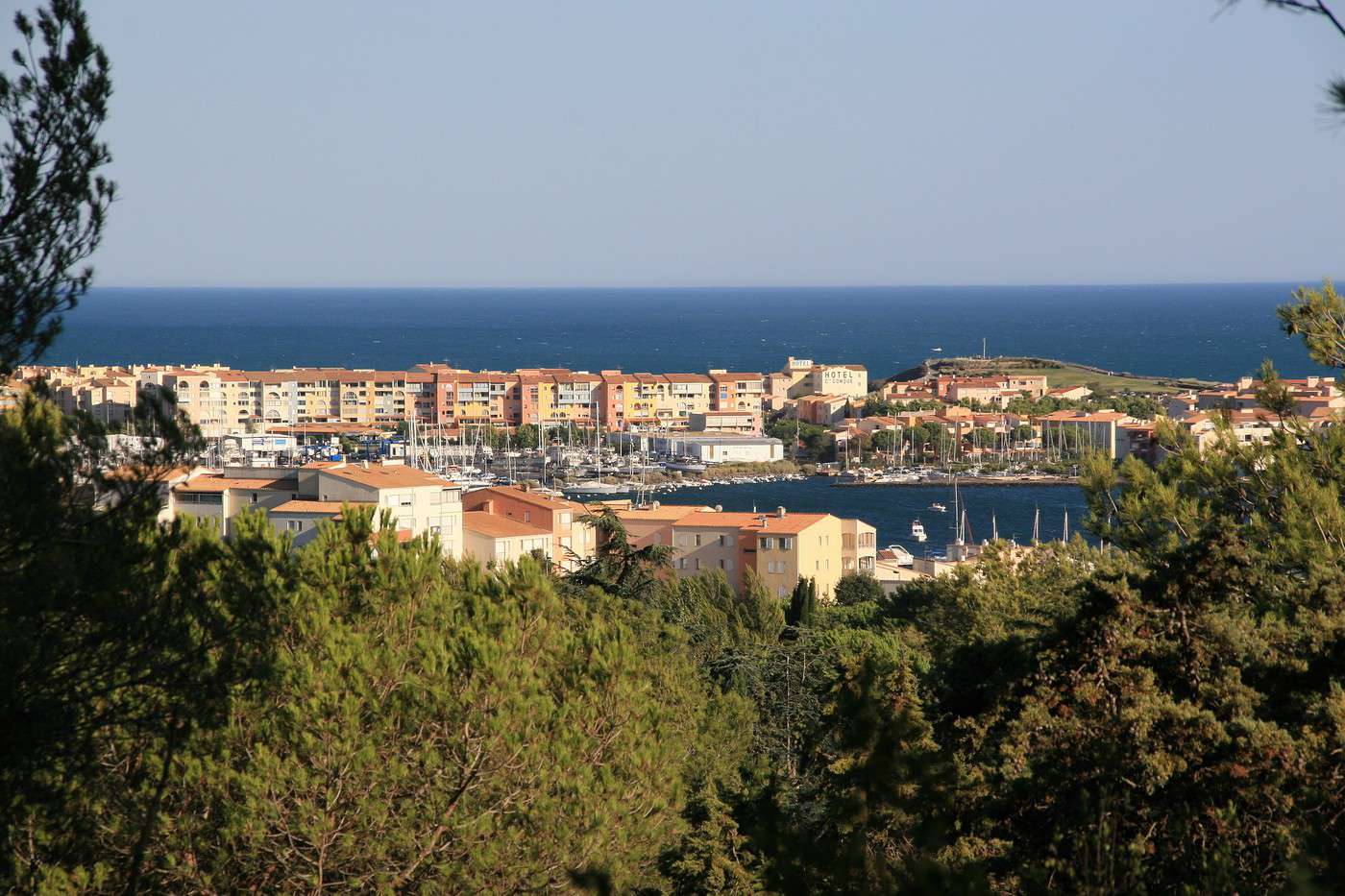
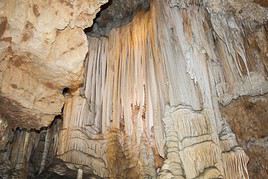
Linked to Montpellier and its coastline, which hosts some of the best-known seaside resorts in this part of the Mediterranean (Agde, La Grande-Motte, Palavas...), Hérault is undeniably a summer relaxation-holiday destination. That said, its appeal isn’t limited to the coast—its hinterland, toward the Massif Central, offers plenty of pleasant spots to explore. Among them are charming villages (Minerve, Olargues, Saint-Guilhem-le-Désert...), as well as the Haut-Languedoc Regional Nature Park and natural cirques (Mourèze, Navacelles), gorges (including those of the Hérault River), and caves (Clamouse, Demoiselles...).
Linked to Montpellier and its coastline, which hosts some of the best-known seaside resorts in this part of the Mediterranean (Agde, La Grande-Motte, Palavas...), Hérault is undeniably a summer relaxation-holiday destination. That said, its appeal isn’t limited to the coast—its hinterland, toward the Massif Central, offers plenty of pleasant spots to explore. Among them are charming villages (Minerve, Olargues, Saint-Guilhem-le-Désert...), as well as the Haut-Languedoc Regional Nature Park and natural cirques (Mourèze, Navacelles), gorges (including those of the Hérault River), and caves (Clamouse, Demoiselles...).
What to Do in Hérault
Climate and Weather
Most of the department enjoys a Mediterranean climate (hot and windy, especially along the coast). However, the mountainous areas in the northwest experience an oceanic influence, while those in the north have a temperate continental climate. That said, like the rest of the Mediterranean South, sunshine is abundant, and rainfall is rare—except during "Cévenol episodes", when it can be extremely heavy.
With the creation of Cap d'Agde in the 1970s, the town became one of the main marinas on the Mediterranean coast and a highly popular seaside resort. With the creation of Cap d'Agde in the 1970s, the town became one of the main marinas on the Mediterranean…
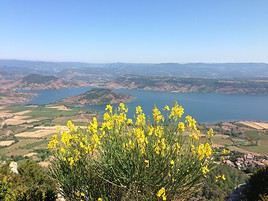
Between Lodève and Montpellier, the small town offers visitors a collegiate church and a medieval castle. You can also enjoy Lake Salagou (hiking, water activities) in the municipality.
Overview of Clermont-l'Hérault
Between Lodève and Montpellier, the small town of Clermont-l'Hérault offers visitors a collegiate church and a medieval castle. You can also enjoy Lake Salagou (hiking, water activities) located in the municipality.
Key Details
Type of place: small town.
Tourist interest: ★ (worth a stop if you are in the area).
Location: in the Hérault department, between Lodève and Montpellier.
The Saint-Paul collegiate church, the old Guilhem fortress castle (12th century), and a few historic residences are the main architectural attractions in the town.
Lake Salagou★★ This pretty reservoir lake has become a spot for swimming and water sports. Its surroundings are also popular for hiking and mountain biking.
In the Surrounding Area
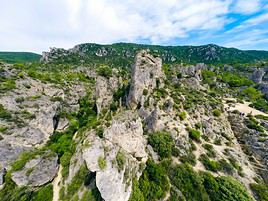
Mourèze Cirque★★ This is a stunning natural cirque with unique shapes formed by erosion. It is located in the commune of Mourèze.
With its marina set against rows of pyramid-shaped and "futuristic" buildings, the town’s urban design rarely leaves visitors indifferent...
Beaches of La Grande-Motte★ The resort has four beautiful beaches on its western side, offering over 7 kilometres of fine sand.
Climate and Weather
The town enjoys a typical Mediterranean climate: very sunny, with mild winters and hot, dry summers. Rainfall occurs mainly in autumn, particularly around October-November. The wind is also a common feature and can sometimes blow in strong gusts.
The local climate is Mediterranean, with plenty of sunshine, mild winters, and hot, dry summers. Rainfall occurs mainly in autumn, particularly around October-November. The wind is also very present and can sometimes blow in strong gusts.
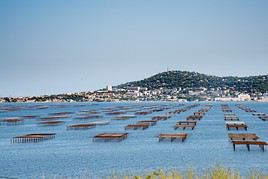
Lake Thau★ The largest body of water in Occitanie is a major tourist site in the region. Beyond beach activities, it is home to several charming small towns along its shores, most notably Sète.
Climate and weather in Mèze
The town has a Mediterranean climate, very sunny, with mild winters and hot, dry summers. Rainfall occurs in autumn, particularly in October and November. The wind is very present and can sometimes blow in strong gusts.
Located in a wine-growing area (the "Minervois"), this commune is listed among the "Most Beautiful Villages of France" and boasts a stunning natural setting.
Overview of Minerve
Located in a wine-growing area (the "Minervois"), the commune of Minerve is listed among the "Most Beautiful Villages of France" and boasts a stunning natural setting.
Key Facts
Type de lieu: village.
Intérêt touristique: ★★ (worth seeing).
Localisation: roughly between Carcassonne and Béziers, in the Hérault department.
In a stunning natural setting, the former Cathar stronghold offers visitors the remains of its fortress and ramparts, its narrow streets, and its old buildings.
Hurepel Museum of Cathar History★ This museum recounts the Albigensian Crusade against the Cathars, which took place in the 13th century across the southwest of France.
The city offers a very beautiful and lively historic centre with the Place de la Comédie, as well as more modern and "designer" districts like Antigone.
Key Facts
Type of place: main city.
Tourist interest:★★★ (recommended).
Location:
Latitude/longitude: 43°36'N, 3°52'E.
Distances:
Local time:Heure : 18457.
Population: 285,121 inhabitants and around 610,000 for the urban area (2017).
Montpellier has a typically Mediterranean climate, very sunny, with mild winters and hot, dry summers. Rainfall occurs in autumn, particularly around October-November. As for the wind, it is fairly common (though the city is one of the least windy in the region) and can sometimes blow in gusts.
Antigone ★ This Montpellier district was designed by architect Ricardo Bofill in 1978. Revolutionary for its time, its style is inspired by ancient Greek architecture (... and some of its statues). Interesting for architecture or urban planning enthusiasts.…
Among the (quite extensive) selection of interesting sites to see around Montpellier: Agde ★★ With the creation of Cap d'Agde in the 1970s, the town became one of the main marinas on the Mediterranean coast and a highly popular seaside resort. Aigues-Mortes…
Perched on its hill, crowned by its 15th-century bell tower, the former medieval fortified town offers a charming setting with its old buildings and narrow streets.
Olargues Museum of Folk Arts and Traditions★ This museum traces the history of local life through collections of tools (from prehistoric times to the present day), paintings, and reconstructions of workshops.
This museum traces the history of local life through collections of tools (from prehistoric times to the present day), paintings, and reconstructions of workshops.
Overview of the Museum
This museum traces the history of local life through collections of tools (from prehistoric times to the present day), paintings, and reconstructions of workshops.
Tourist interest:★ (worth a stop if you are in the area).
History of the Folk Arts and Traditions Museum
Museum Collections
Practical Information
Location:
Address: Escalier de la Commanderie, 34390 Olargues.
Palavas-les-Flots Beaches★ Stretching 7 kilometres, the beaches of Palavas offer all the usual activities of Mediterranean beaches. Very popular, they have plenty of hotels, residences, and campsites nearby.
Albert Dubout Museum★ The town has a "double museum" linked to this French illustrator and painter: one dedicated to Albert Dubout and another to a local narrow-gauge train he loved.
Climate and weather
The local climate is typically Mediterranean: very sunny, with mild winters and hot, dry summers. Rainfall occurs mainly in autumn, particularly around October-November. The wind is often present and can sometimes blow in gusts.
Stretching 7 kilometres, the beaches of Palavas offer all the usual activities of Mediterranean beaches. Very popular, they have plenty of hotels, residences, and campsites nearby.
Overview of Palavas Beaches
Stretching 7 kilometres between Carnon to the east and Villeneuve-lès-Maguelone to the west, the beaches of Palavas offer all the usual activities of Mediterranean beaches. Very popular, they have plenty of hotels, residences, and campsites nearby.
Key Details
Type of place: beach.
Tourist interest:★ (worth a stop if you are in the area).
The town has a "double museum" linked to this French illustrator and painter: one dedicated to Albert Dubout and another to a local narrow-gauge train he loved.
Overview of the museum
The town has a "double museum" linked to this French illustrator and painter: one dedicated to Albert Dubout and another to a local narrow-gauge train he loved.
Tourist interest:★ (worth a stop if you are in the area).
History of the Albert Dubout Museum
Collections on display
Practical information
Location:
Address: Redoute de Ballestras, Parc du Levant, 34250, Palavas-les-Flots.
Set in a magnificent landscape along the Compostela pilgrimage routes, the village has preserved its medieval character with its narrow streets, old buildings, and especially its beautiful abbey, dating from the 11th century.
Gellone Abbey Museum★ In the monks' refectory room, the collection of cloister sculptures plus the sarcophagi of Saint Guilhem and his sisters.
This dynamic port is also the third-largest urban area in the department. Visitors come to explore its city centre, canals, and especially its famous maritime cemetery. The town also boasts beautiful beaches and borders the Étang de Thau, the largest lagoon…
The town has a Mediterranean climate, very sunny, with mild winters and hot, dry summers. Rainfall occurs in autumn, particularly around October-November. The wind is ever-present and can sometimes blow in (very) strong gusts.
The largest body of water in Occitanie is a major tourist site in the region. Beyond beach activities, it is home to several charming small towns along its shores, most notably Sète.
Overview of Lake Thau
The largest body of water in Occitanie is a major tourist site in the region. Beyond beach activities, it is home to several charming small towns along its shores, most notably Sète.
Key facts
Type of place: lake.
Tourist interest:★ (worth a stop if you are in the area).
Features:
Surface area: 75 km².
Altitude: sea level.
Site environment
Wildlife and flora
Precautions
Climate and weather
The region has a Mediterranean climate, with plenty of sunshine, mild winters, and hot, dry summers. Rainfall occurs in autumn, particularly around October-November. The wind is also very present and can sometimes blow in strong gusts.