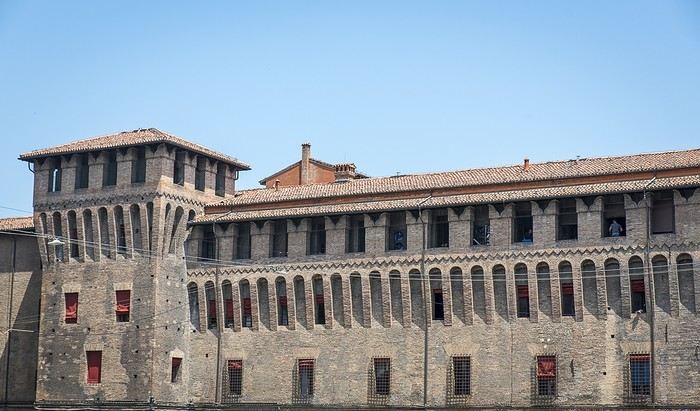
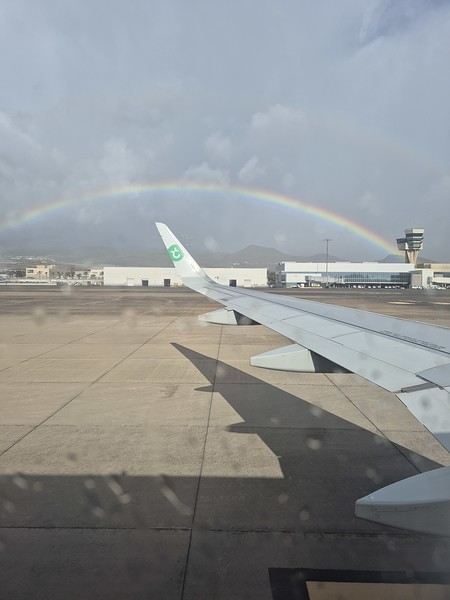
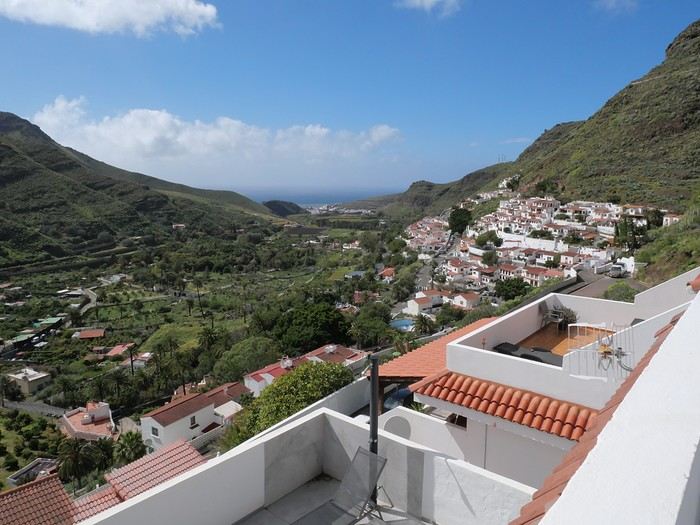
Kyushu between Fukuoka and Nagasaki in autumn 2024 (Japan)
FR

Translated into English.

NA Nathalie971 Regular ·
Day 7 - Kashima

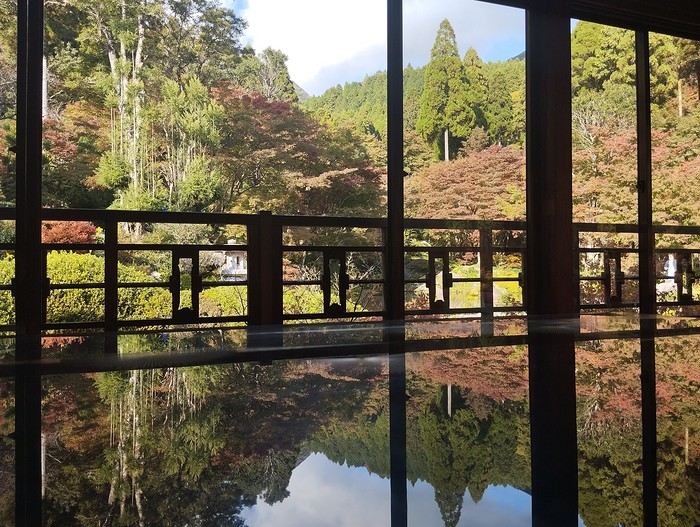
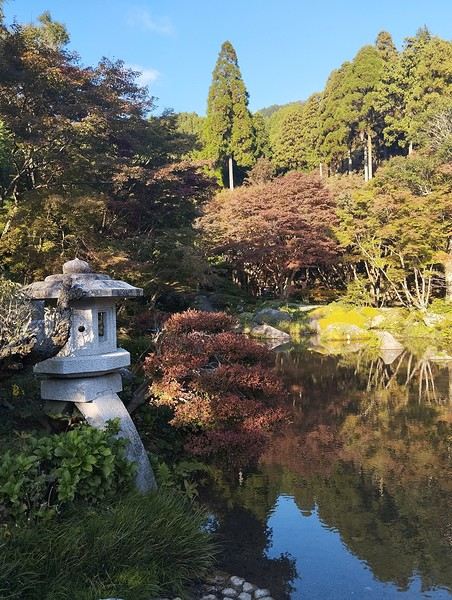
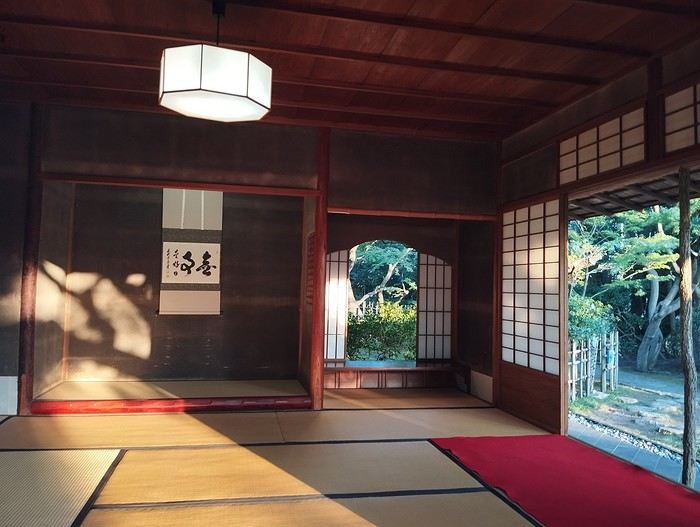
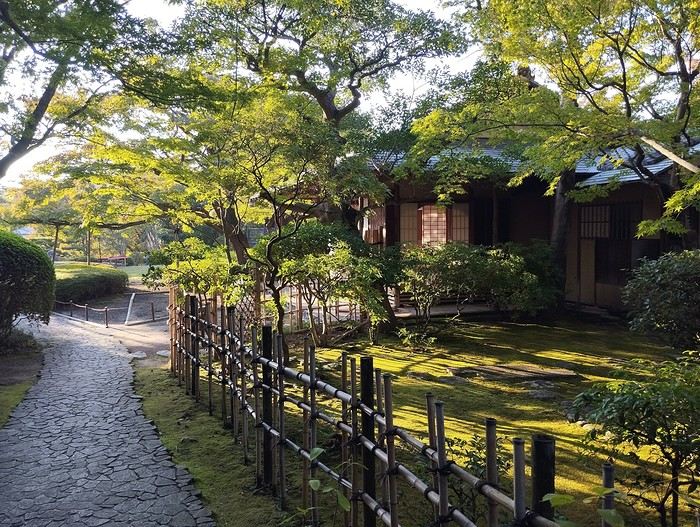
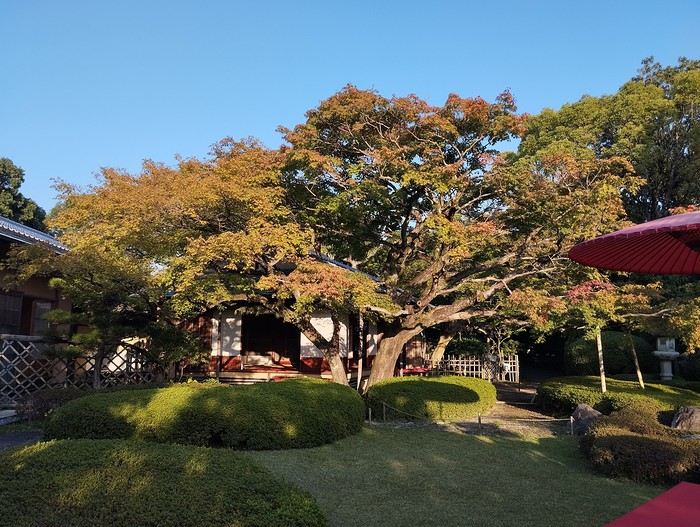
We hit the road again toward our morning destination, Mifuneyama Rakuen Garden in Takeo. The GPS didn’t take us to the right spot. I’ll notice this happened several times during the trip, and it’s often better to follow the directional signs you see on the road as you get closer to places. Still, we sorted out the access issue quickly. The parking lot was full, but we found a small spot. At the entrance, a woman was running the local products shop and selling tickets. The shop had dried/candied peaches—we grabbed a pack for those midday snack attacks. For the garden entry tickets, you could combine them with another ticket for an evening sound-and-light option. We hesitated a bit but ultimately decided against it, and we were right to do so.

I’ll say it straight away: this was the first visit on our trips to Japan that left us disappointed. Why? 1- The garden looked untended, almost like a fake garden left to go wild. You could tell the upkeep was minimal, and in Japan, that’s really unusual. At least, we’d never seen anything like it before. We were kind of shocked and just didn’t get it. 2- The garden’s highlight, a field of flowers (azaleas) at the foot of a mountain, didn’t wow us. That said, it wasn’t the right season, so we’ll give it that. 3- Most of the other spots in the garden held no interest for us and were overgrown. 4- The garden didn’t give off any sense of serenity or leisurely strolling, and there were few places to sit and take it all in.

This review only reflects our visit and how we felt that day. Maybe in another season... Everyone should make up their own mind.


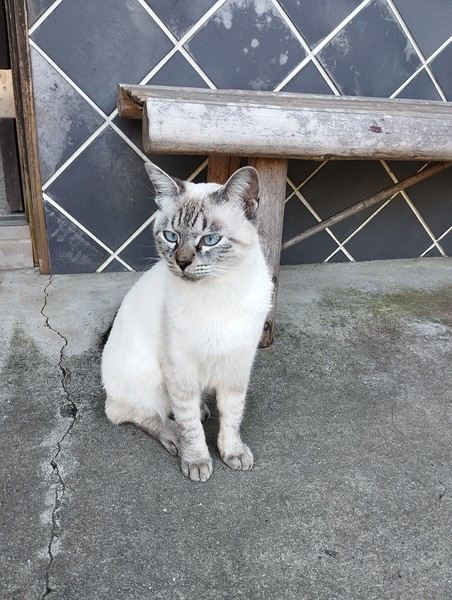
Luckily, a cute, curious, and not-too-shy *neko* at the entrance and exit was there to cheer up visitors missing out on beautiful gardens.

https://voyageforum.com/forum/decouverte-japon-tokyo-archipel-ryukyu-okinawa-d9857265/ https://voyageforum.com/forum/escapade-japonaise-shikoku-kyushu-yakushima-tokyo-d9999494/ https://voyageforum.com/forum/kyushu-entre-fukuoka-nagasaki-automne-2024-japon-d10654938/
NA Nathalie971 Regular ·
Day 7 – Kashima continued

Still under a blue sky, we drive this time to the city of Kashima, and more precisely to the Yotoku Inari-jinja shrine, one of the three most famous Inari temples in Japan.

The parking lot is large and paid. You have to enter your license plate number at the very modern ticket machine. No way to cheat—there are identification cameras.

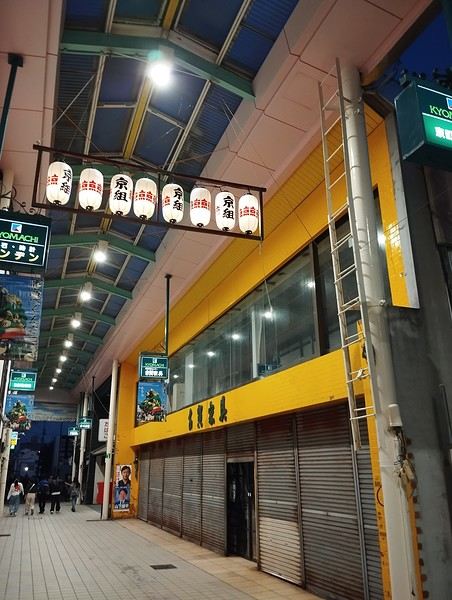
We first stroll through the Yotoku Monzen shopping street before settling into one of the restaurants.

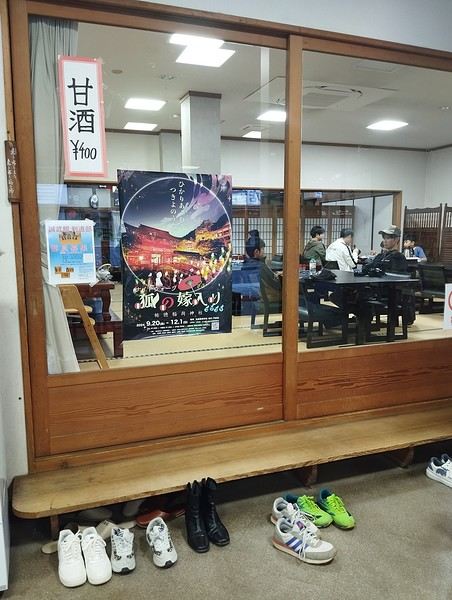
You have to take off your shoes before entering the dining room.


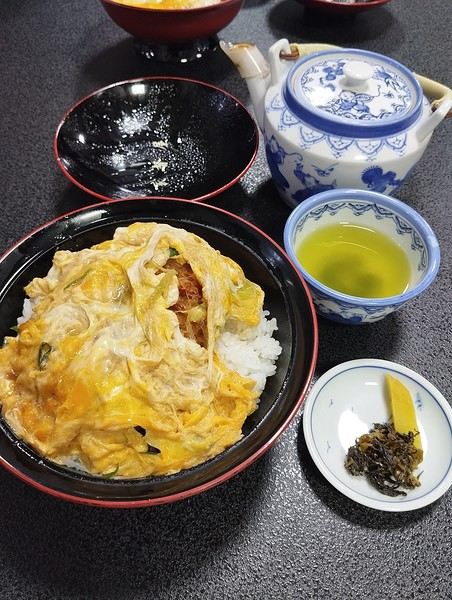
We eat a really good katsudon, some karaage (fried chicken), and an inari sushi (fried tofu stuffed with vinegared rice), all accompanied by unlimited green tea.

The meal is delicious and filling. The service is friendly and pleasant. All for a modest sum of 14 € for two.

https://voyageforum.com/forum/decouverte-japon-tokyo-archipel-ryukyu-okinawa-d9857265/ https://voyageforum.com/forum/escapade-japonaise-shikoku-kyushu-yakushima-tokyo-d9999494/ https://voyageforum.com/forum/kyushu-entre-fukuoka-nagasaki-automne-2024-japon-d10654938/
NA Nathalie971 Regular ·
Day 7 - Kashima continued

Now it's time to visit the Yutoku Inari Shrine. It's a major tourist spot in Saga Prefecture, so we're not alone, but it's still quite manageable.

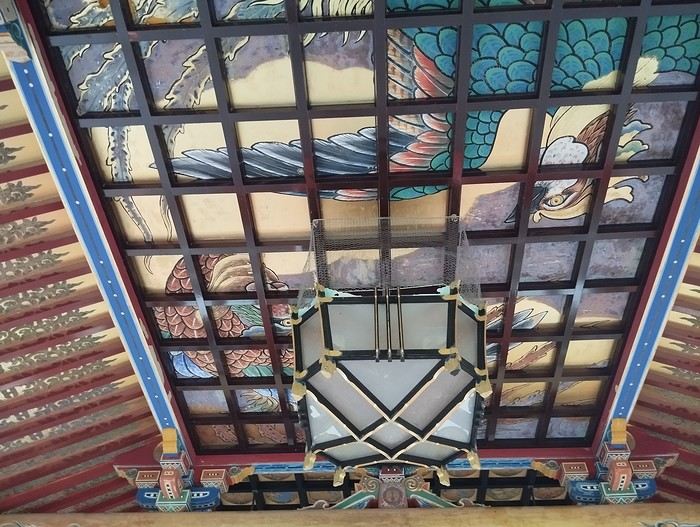
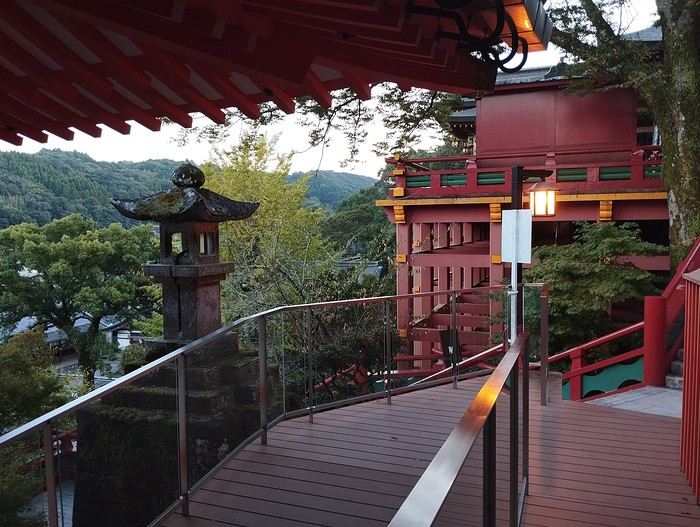
The shrine, nestled against a rocky hillside and very colorful, has a majestic yet understated feel. It's perched on wooden beams 18 meters high.

Many elements catch the eye and define the perceived beauty of this place of worship. There are notably: - the bridge over the pond with its usual koi carp

- the mural paintings


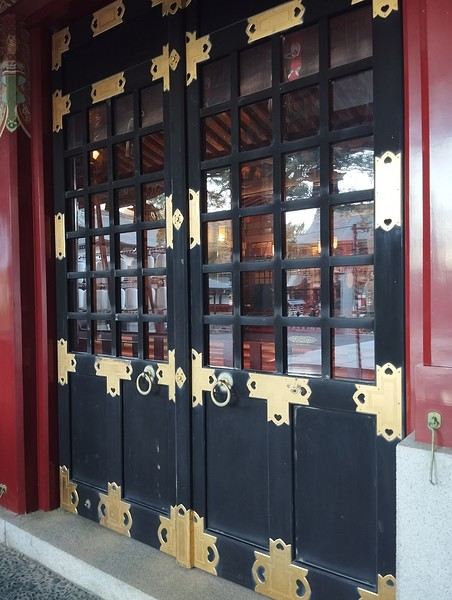
- a very beautiful black and gold gate


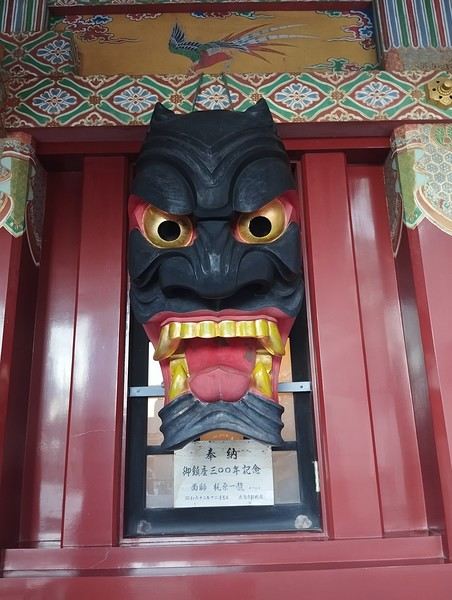
- a gigantic black and gold Tengu mask


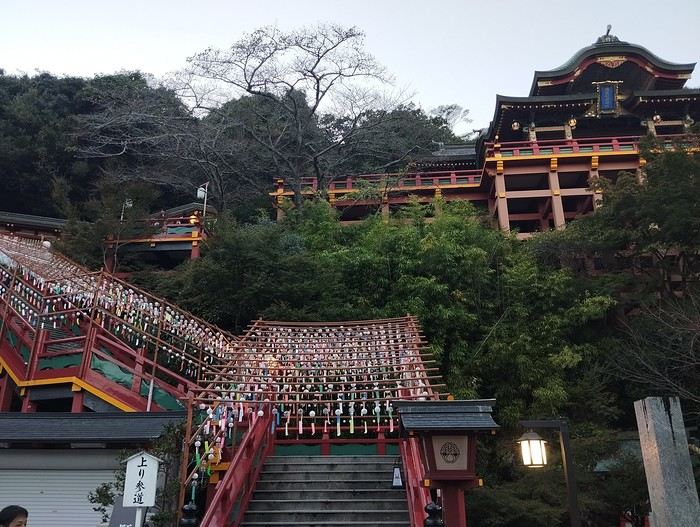
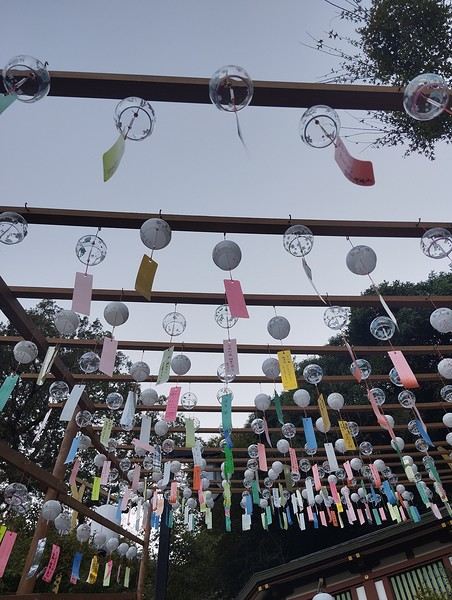
- the beautiful staircase leading to the main building, with its bells floating and ringing in the air


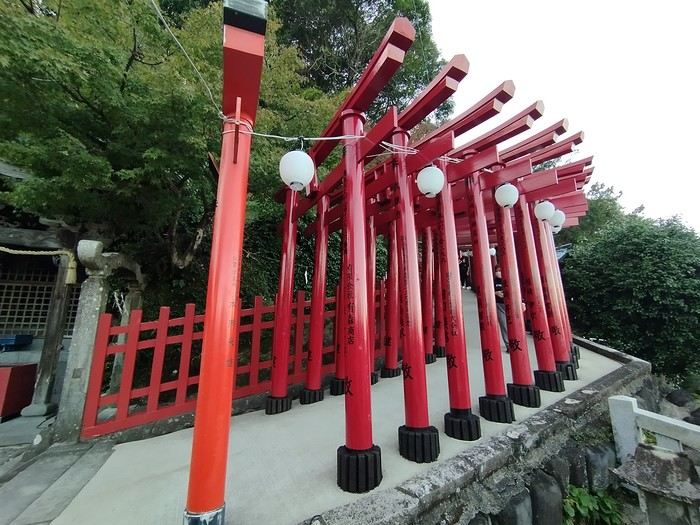
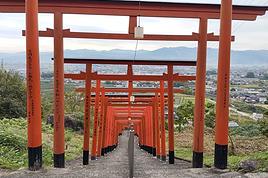
- this tunnel of torii


- the view of the valley and the shrine from the two upper levels


- the mini shrines

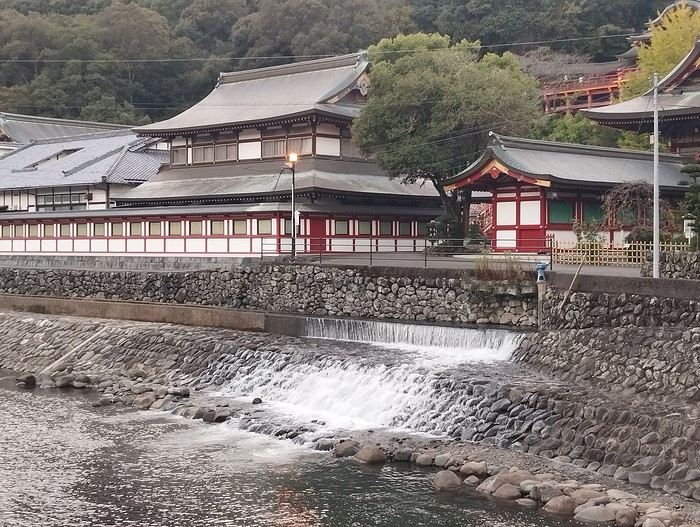
- the view of the river at the foot of the temple and the temple at sunset


We enjoy the visit. We won't be able to visit the last shrine at the very top because access is closed—too bad, as there's supposedly a beautiful view of the Ariake Sea from up there.

On our way down, a young man calls out to me. What follows is a conversation of the deaf in Japanese. I thought this young man was a Japanese tourist asking me (or so I believed) what time the temple closes. It took five long minutes of going in circles before I finally understood that he was simply telling me the temple was closing and it was no longer possible to go up. I was thinking to myself, why would a Japanese person ask a foreign tourist what time it closes?

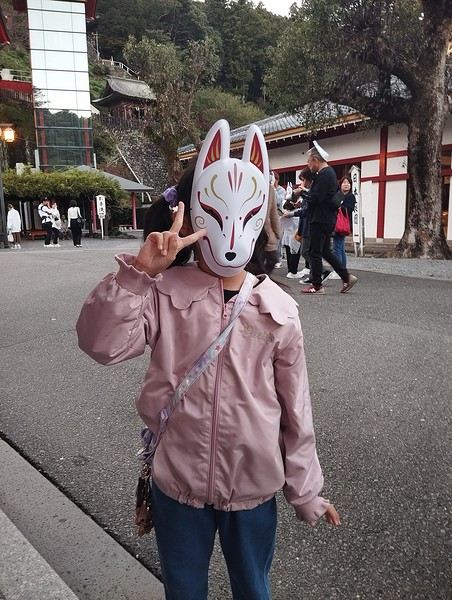
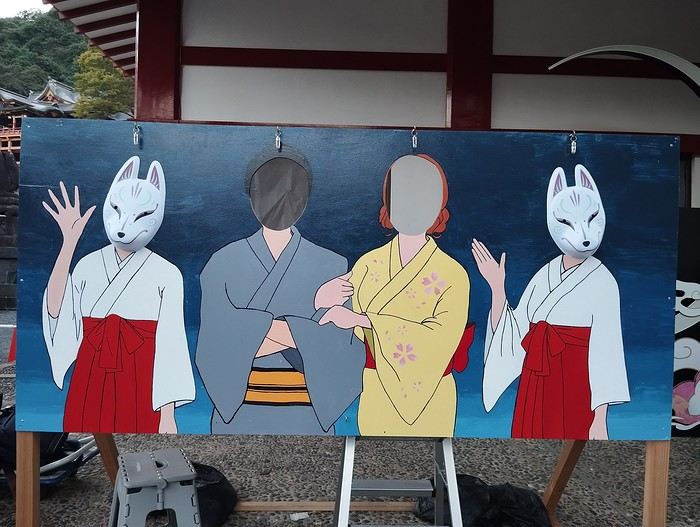
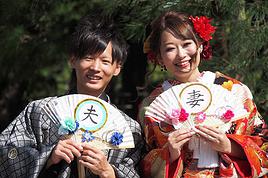
As we leave, at the entrance, a crowd gathers. Many of them are wearing masks featuring the fox, which represents the deity Inari. This deity is dedicated to prosperity and agricultural crops. A family kindly agrees to pose for a photo but prefers to let their daughter be photographed.


This family explains that there's an ascent dedicated to the deity tonight. That's why so many people are queuing up to buy fox masks and, who knows, take a souvenir photo. Everything is planned.


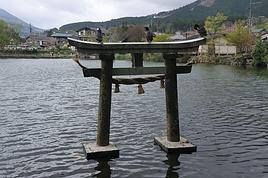
We then return to the parking lot just across the street. We take a quick detour to the shrine on the other side of the hill before leaving. It was too late to go to the shopping district nearby. We try to go to the floating torii at Tara but turn back because night is falling too quickly.
https://voyageforum.com/forum/decouverte-japon-tokyo-archipel-ryukyu-okinawa-d9857265/ https://voyageforum.com/forum/escapade-japonaise-shikoku-kyushu-yakushima-tokyo-d9999494/ https://voyageforum.com/forum/kyushu-entre-fukuoka-nagasaki-automne-2024-japon-d10654938/
NA Nathalie971 Regular ·
Day 7 - Kashima/Ureshino wrap-up

Since it’s still a bit early to eat, we turned around and headed back home, knowing we’d stop somewhere along the way for a meal. Meanwhile, we discovered new chains of stores/supermarkets that we always enjoy exploring.

A few finds:

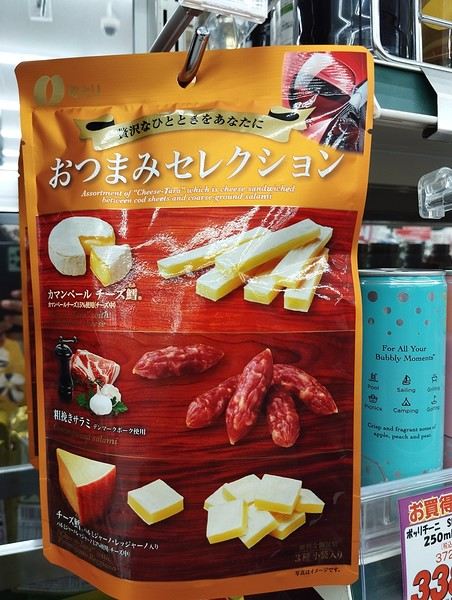
- A bell to call a salesperson in the beauty section - A beauty area to test products - A French-style apéro bag with sausage and cheese


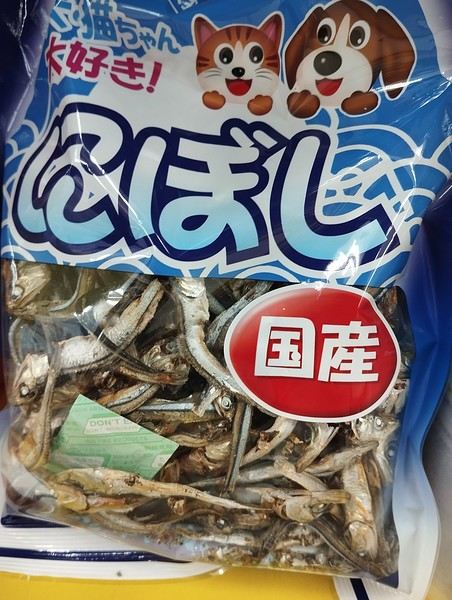
- Small whole fish in the dog food section


Eventually, we dawdled a bit too long, and it’s now a little late to find a place to eat. At 8 PM in the countryside, it can get tricky. So we keep our eyes peeled because restaurants aren’t on every corner around here.

I spot a family leaving a restaurant, stop in front of them, roll down the window, and ask if it’s still open. They tell me no. Thanks, okay, we keep going. We hit the road again and stop five minutes later because there’s an area with maybe 2 or 3 restaurants. As soon as we get out of the car, people head toward us, and I quickly realize it’s the same family I just asked. They explain they made a mistake—the restaurant *is* still open. Great, we’ll go there. But the woman insists on calling for us. Turns out the restaurant is closing, so it’s not possible. The story could’ve ended there, but Japan never runs out of ways to help. Finding us a restaurant becomes their mission for the evening. We chat a bit—oh, you’re French, not American, incredible! The woman tells her son, "You can speak English." The kid, a little shy, laughs. English probably isn’t his thing. "What do you like to eat?" "Anything, but we want to eat Japanese." They think it over. The woman suggests Joyfull, a Japanese chain that stays open late and is everywhere. But the husband realizes we want something good, so he tells his wife, "Joyfull isn’t what they need." They think some more and come up with a sushi restaurant. "Okay, follow us in your car," they say. We’re now trailing this family in their white car, driving *very* slowly to make sure we don’t lose them.


We arrive in front of the restaurant after circling around Takeo a few times. While the woman goes to ask, the dad rushes over to tell us to wait—she’s checking. No problem. But no luck—it’s closed. And off we go again, another stop on a busy, lively street in Takeo. Same routine: the woman goes to ask, and Mr. tells us to wait. Being helped like royalty—*AHAHA*—we say *daisobu* (no problem), we’ll wait, though we feel a little bad for keeping them so long, but they won’t leave us. This time, it’s a tempura restaurant. The chef is outside and explains it’s closed. The woman tells him who we are and that she’s looking for a good restaurant for us. Passersby stare. The chef clearly makes a suggestion. We’re off again. Another stop in front of a restaurant in a small alley. Same deal—Mr. tells us to wait, and Mrs. goes inside. Jackpot this time—the restaurant is open!

The family opens the restaurant door for us, walks us in, hands us off to the sushi chef, and says goodbye. We would’ve loved to thank them more and invite them, but they’d just eaten. Plus, the restaurant staff was already busy setting our table, so it was hard to do much else. This family spent a good half-hour driving us around the city to find a restaurant. Even though we’re used to it, we’re still sometimes amazed by these gestures. What *omotenashi* (Japanese hospitality)!

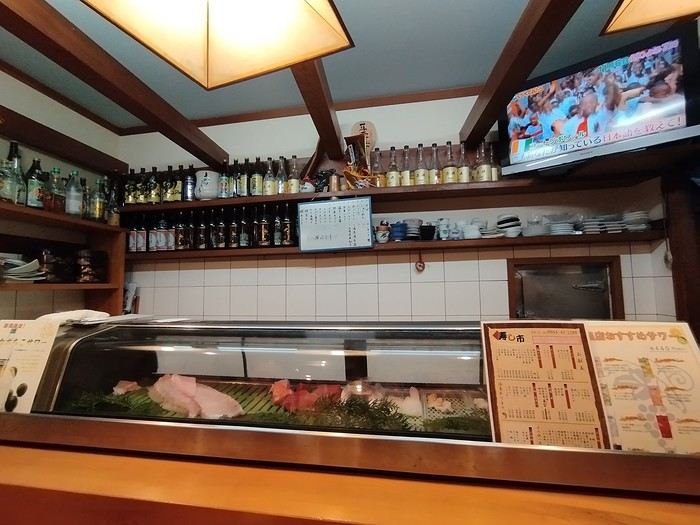
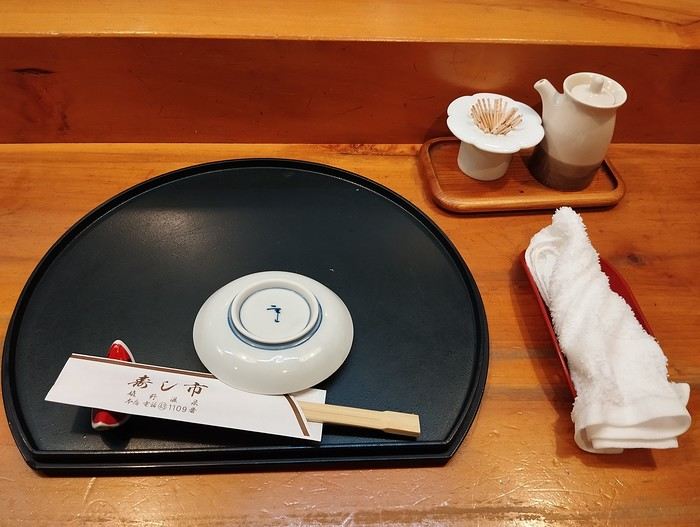
We’re seated at the bar. The restaurant’s vibe is cozy: warm wood, small private rooms with sliding rice-paper panels, Japanese decor, a TV playing a baseball game, and a relaxed chef. We go for an omakase menu—chef’s tasting menu. They always ask if we eat certain fish, so it’s pretty personalized.

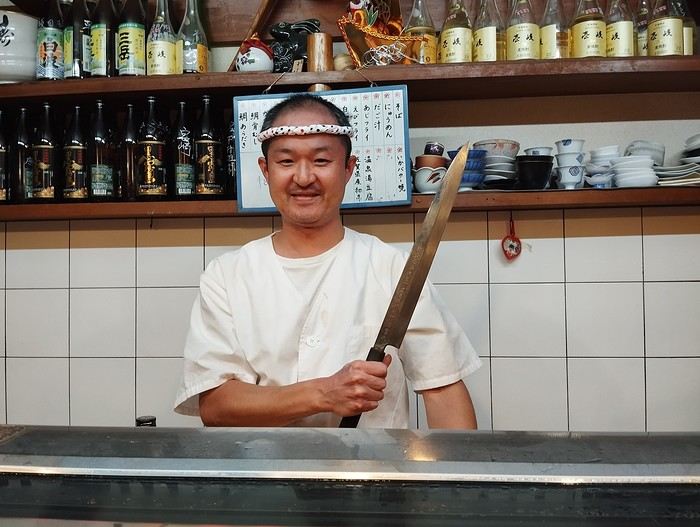
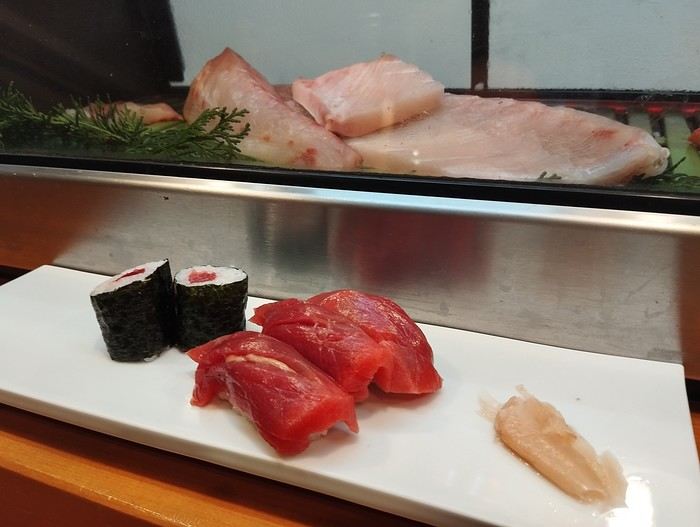
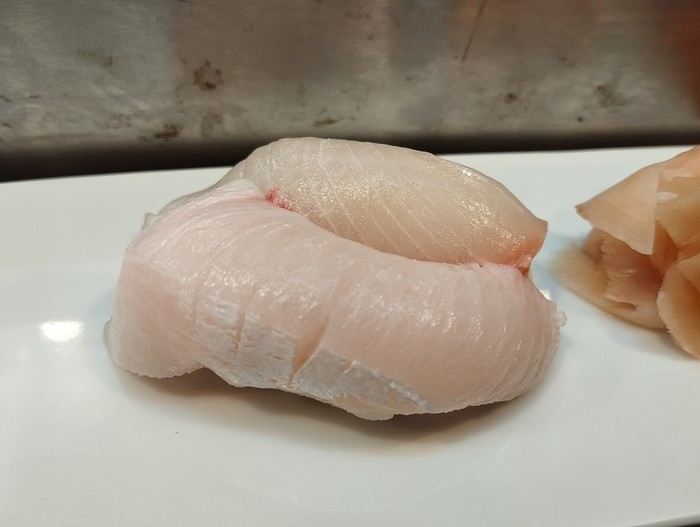
The conversation flows easily with the chef since we speak a little Japanese, he speaks a little English, and for more complex topics, we use a voice translator now and then. The evening unfolds with simple but *very* good sushi—super fresh, with some new fish discoveries—and great chat. We learn he’s from Osaka, has lived here for 24 years, and has been a sushi master since he was 18. He’s a dad of three. He recently went fishing with a friend and caught a big tuna. His former sushi master left him a beautiful Japanese knife engraved with his name (the master’s name), and he’s really proud of it. He even poses for us happily. He’d love for tourists to discover Ureshino because it has a lot to offer, in his opinion (onsen, beautiful nature, near the sea, great food, etc.). He asks us to tell French people to come. We teach him the word *gingembre* (ginger) in French. All in all, we have a great time thanks to the chef and the family who brought us here. The evening ends on these lovely encounters.


https://voyageforum.com/forum/decouverte-japon-tokyo-archipel-ryukyu-okinawa-d9857265/ https://voyageforum.com/forum/escapade-japonaise-shikoku-kyushu-yakushima-tokyo-d9999494/ https://voyageforum.com/forum/kyushu-entre-fukuoka-nagasaki-automne-2024-japon-d10654938/
NA Nathalie971 Regular ·
Day 8 - Yobuko

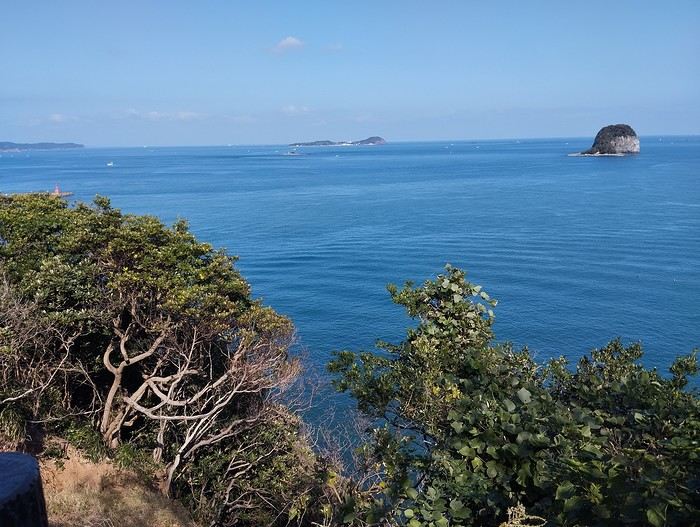
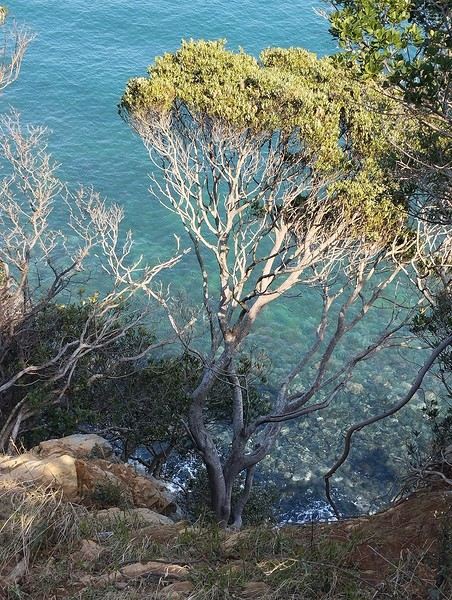
The day starts under a bright sun and a beautiful blue sky. We hit the road heading towards Yobuko. It takes us about 1 hour 30 minutes to get there. Just before arriving at our destination, the panoramic landscape on our right delights us. A small rest area tempts us to park and take a closer look. It’s a Mediterranean-style scene that greets our eyes: a lush green coastline and crystal-clear blue sea. We also spot a harbor further down in the distance, where a few fishing or cruise boats seem to be leaving—I’m not sure which. With the heat, we’d love to dive into the water.


Walking a little along the coast, we come across a Japanese grandmother... The conversation starts up. She’s really enthusiastic. She walks here every day. Well, she also told us a lot of things we didn’t understand, but we listened attentively before saying goodbye from the heart.

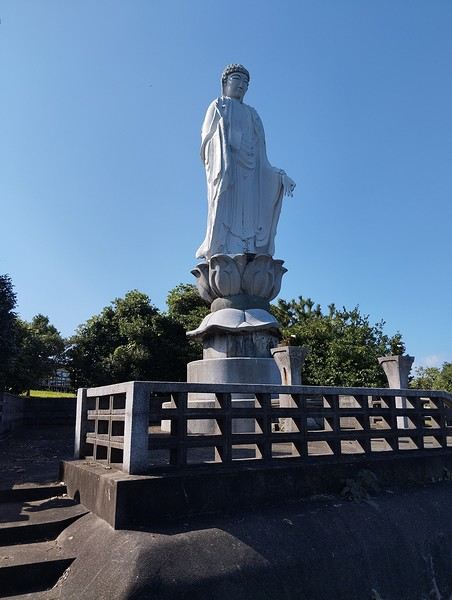
A little further on, a pure white Buddha statue stands overlooking the sea. It’s said to protect those heading out to sea.


We then return to the car to continue toward the morning’s goal, which we reach 10 minutes later.

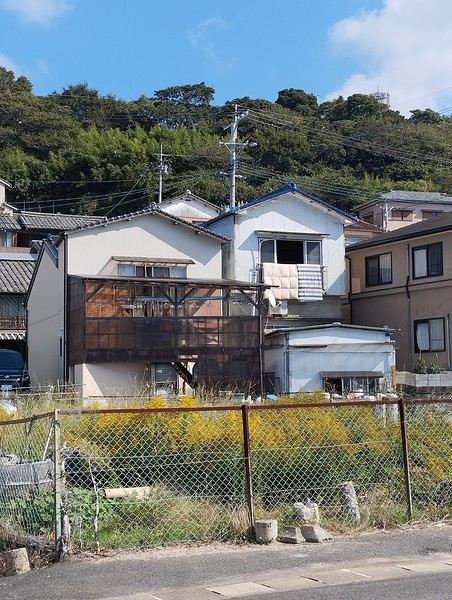
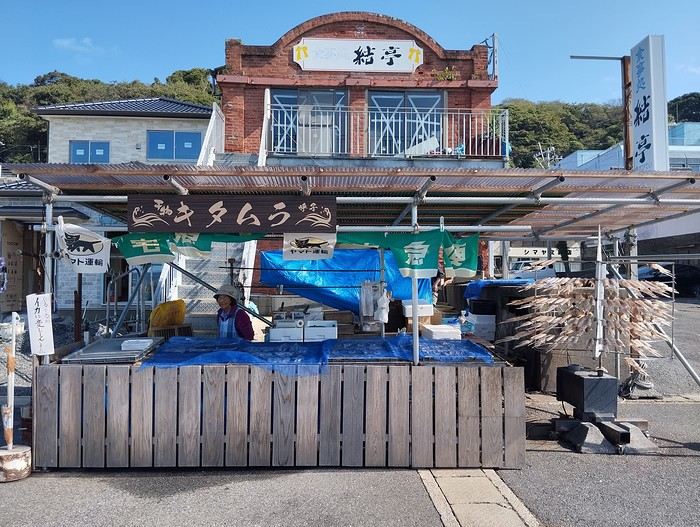
Yobuko is a small town centered around the harbor. It’s quaint and charming.


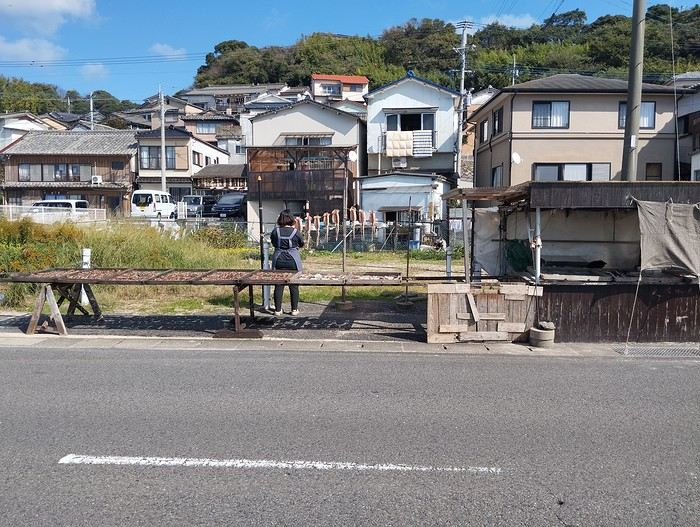
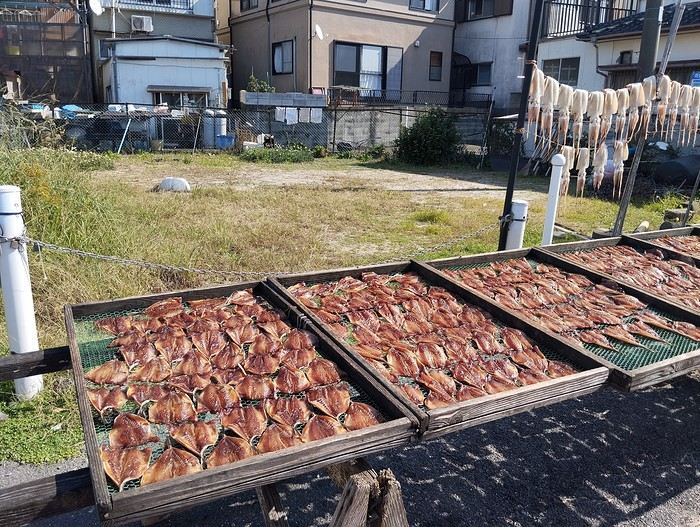
Beautiful fish, including lots of squid, are displayed on the stalls. The prices aren’t posted, but after chatting with a local couple, we learn it’s 1000 yen for 2 squid. They look really appetizing. I don’t know if they’re good—we don’t buy any.

The vendors offer to show us the squid on the rotating dryer. The woman doesn’t want to be photographed too closely because she’s self-conscious about her teeth.


The water in the harbor is clean and transparent. You could almost dive in.

Another vendor is selling dried mackerel. She offers us a taste. It’s melt-in-your-mouth delicious. I wonder if there’s some kind of glaze on it. Either way, it’s really good, even though mackerel isn’t usually my thing.


Drying the squid takes several weeks to reach maturity. The vendor is actually drying some herself, and she has several racks with squid at different stages of drying.

A cat keeps watch.


Near the area with a few restaurants and a local products shop, as well as the main parking lot, many people are fishing. A gentleman tells me there are lots of fish called *kuru*—well, if I understood correctly.

As we approach the restrooms, there’s a tourist information board. We walk over to check it out alongside others. A cheerful group is there. The conversation starts easily. They laugh at my accent—how to put it... very *franchouillard*... making some words hard to understand for many Japanese, especially "furansu" (French). Luckily, in the group, one woman understands because she’s been to France before and plays interpreter for the "difficult" words. It’s a group of retired friends from different parts of Kyushu (Saga, Fukuoka, Beppu, etc.) who’ve come on a camping trip for a few days. They advise us against visiting the Nanatsugama Cave, which you can see by boat. After this fun and friendly exchange, it’s time to say goodbye.

We take a quick look at the local shop. Of course, there’s plenty of fish.

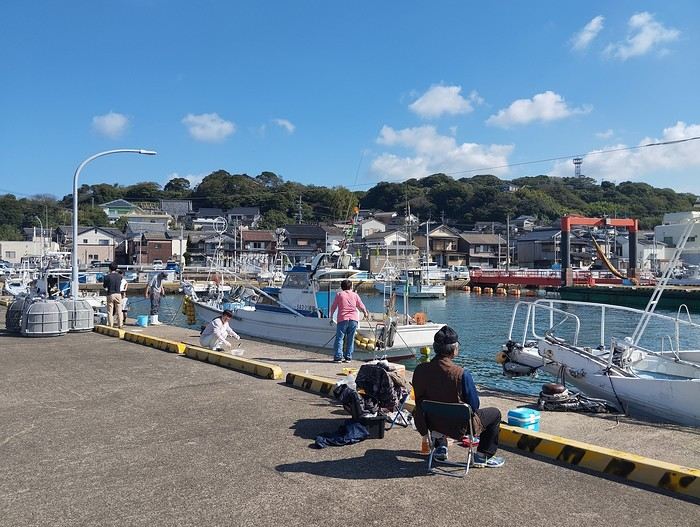
We walk out to the jetty. Lots of families are gathered to enjoy fishing together. They’re fishing for *kuru*. The atmosphere is peaceful.


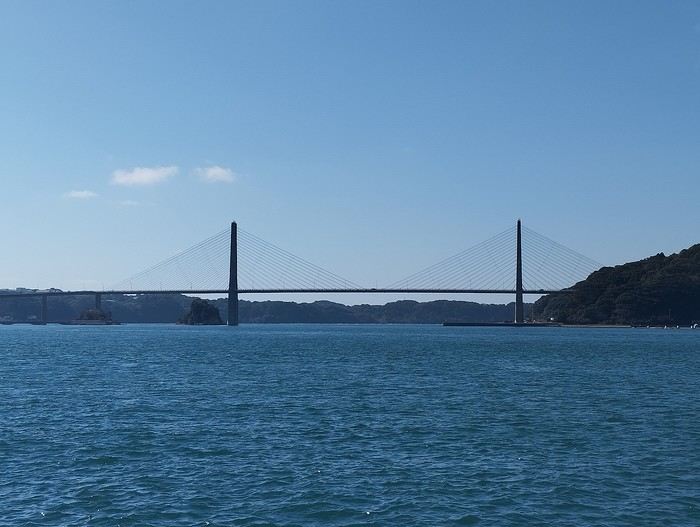
The bridge we see leads to Kabeshima Island.


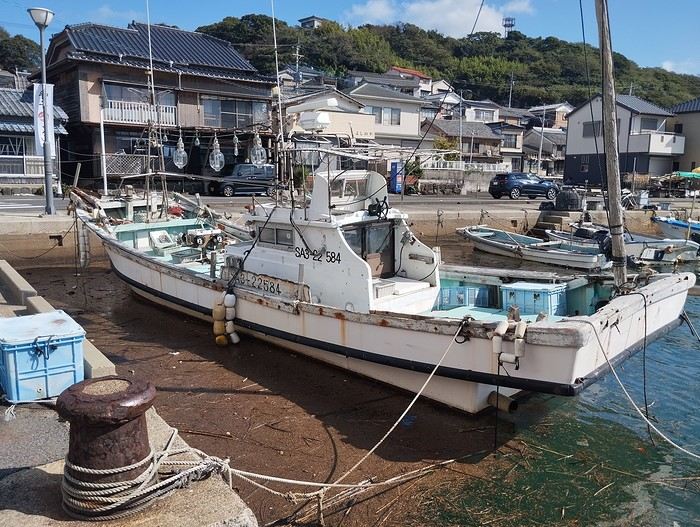
Plenty of boats are docked at the marina.

https://voyageforum.com/forum/decouverte-japon-tokyo-archipel-ryukyu-okinawa-d9857265/ https://voyageforum.com/forum/escapade-japonaise-shikoku-kyushu-yakushima-tokyo-d9999494/ https://voyageforum.com/forum/kyushu-entre-fukuoka-nagasaki-automne-2024-japon-d10654938/
NA Nathalie971 Regular ·
Day 8 continued - Kabeshima

We then set off again to head to Kabeshima Island. We had thought about visiting the caves, but we can’t do everything, and after chatting with the group earlier, we decide on the island that’s been catching our eye.

The architecture of the bridge is stunning, and crossing over the water is impressive.

We make a very quick first stop at the port. A few fishermen are busy waiting for a catch. One of them looks at us... he seems a bit rough and less happy to see us. Are we deep in the countryside?!! Hahaha, we won’t go check. Kabeshima’s port faces Yobuko’s port but is much quieter.

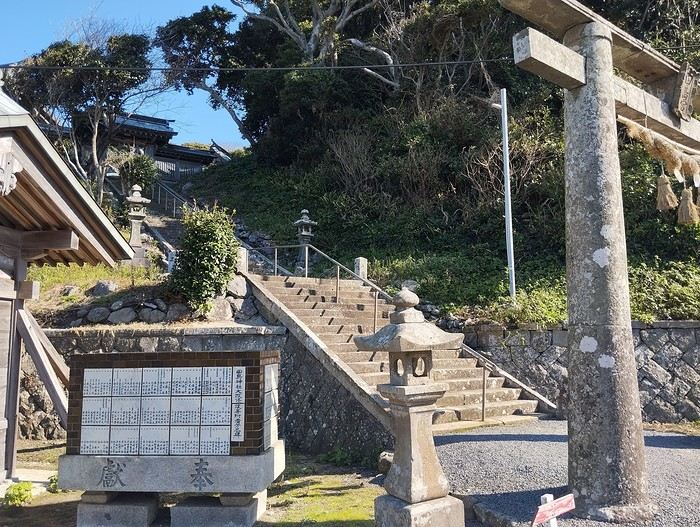
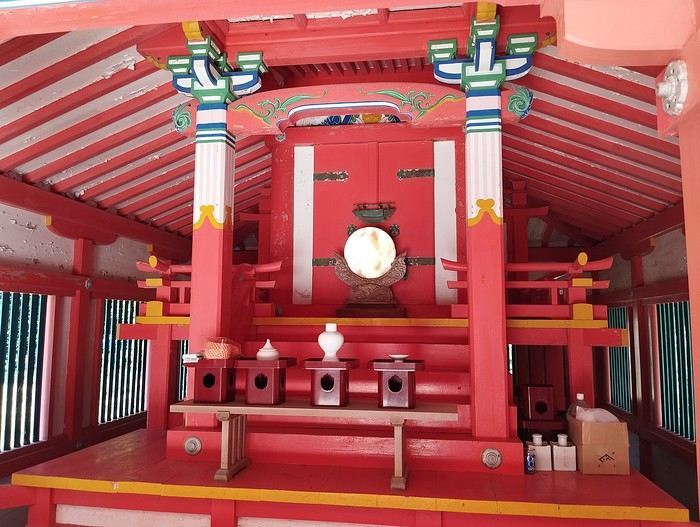
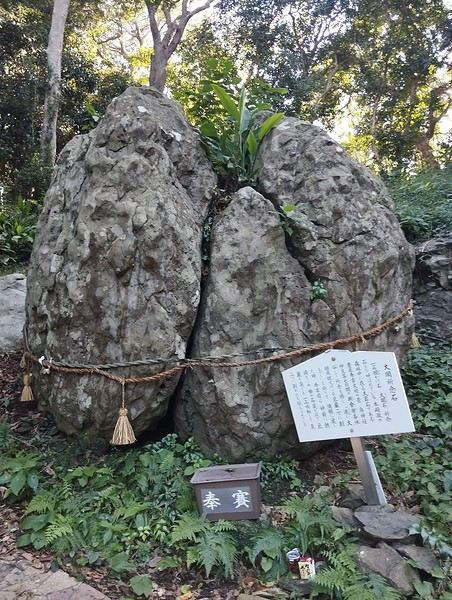
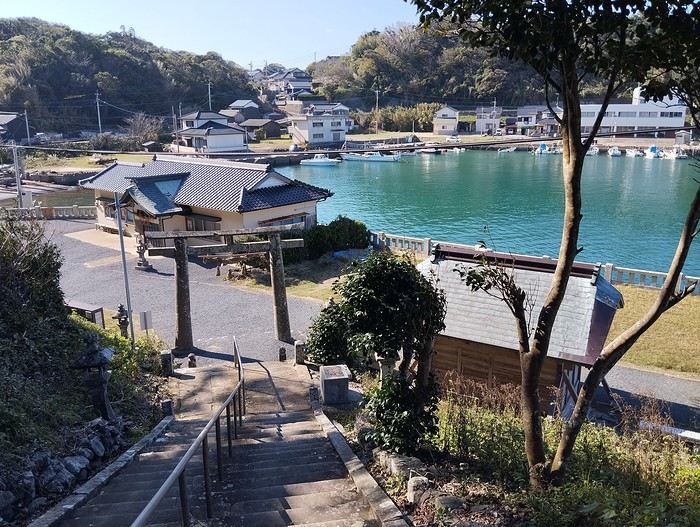
Three minutes later, we park the car again. The Tashima Shrine is nestled by the water, at another port. The atmosphere there is even more peaceful—birds flying, the warm sun beating down, a few houses facing the sea, and this silence filling us. The setting is sublimely simple. We pass through the torii, the entrance gate to the shrine, then climb the steep stone steps to reach the main building. There are several buildings, one of which is very colorful. The shrine is linked to Matsura Sayohime, a legendary figure who was said to have turned to stone after waiting for her beloved. This legend is represented by a well-known rock that is considered the body of the kami at Sayohime Shrine, a secondary shrine of Tashima Shrine. We have the place completely to ourselves. When we go back down another staircase, the turquoise blue of the sea is framed by the gate leading to the stairs: a living painting, utterly captivating. This visit, this place, wins us over with its raw, unadorned simplicity—like a bubble outside of time.


To savor this atmosphere, we treat ourselves to a refreshing drink at the small stand right across from the shrine entrance. The hut is tiny—just enough to make something to sustain us—and a few tables outside. Two young women run the place. A man there when we arrive warns them that two foreigners are heading straight for the shop. We recognize the moment of worry in their welcoming but slightly stressed smiles. Dare I say that this moment, which only lasts a few seconds, I find amusing, like a little imp. The two women are charming, and we order our drinks: an iced matcha latte and a strawberry soda. We sip them while taking in the view in front of us.


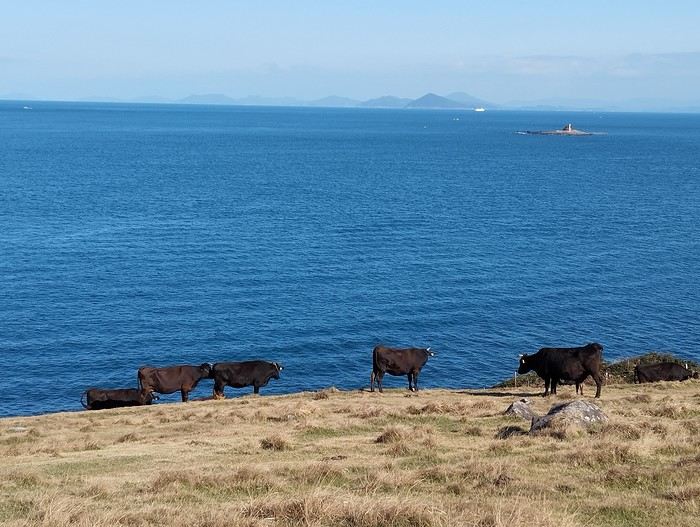
After this little break, we get back in the car and head to the end of the island at Cape Hizen. The road gets very narrow at the end, where it’s impossible for two cars to pass. We cross paths with a vehicle that backs up to let us through. Luckily, a tiny parking lot with three spots is waiting for us. We have to reverse into it, otherwise getting out would be tricky given the tight space. A Japanese woman returning to her car watches me park (and I did it very poorly, so I had to maneuver several times to get it right), but when I get out, she congratulates me as if I’d just completed the Paris-Dakar, she’s so surprised to see foreigners here—and in a car, no less. Though driving there is actually very easy. Maybe one day, if I can drive on a narrow road in Pakistan, I’ll raise the flag, but for now, I’m just laughing. Right at the entrance, there’s a cattle farm. The cows are peacefully grazing in the grass.


We then walk about a kilometer to reach the cape. There are two other parking lots along the way (the second one is just as small), but it’s nicer to walk and enjoy the view.

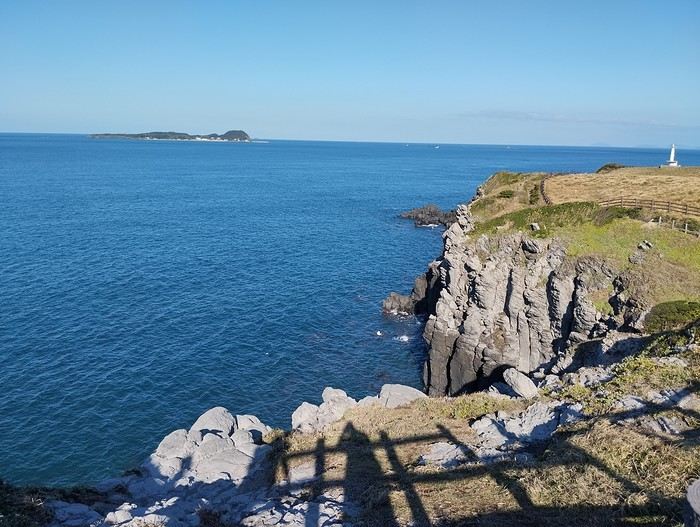
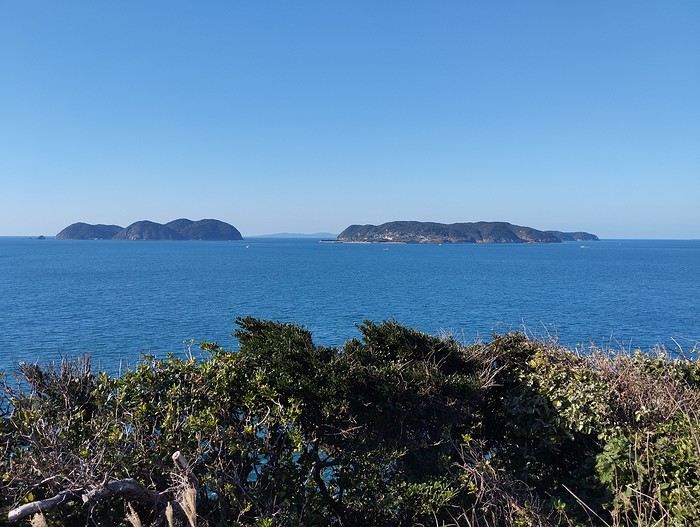
At the cape, we can see several small islands and the rugged coastline. It’s beautiful, and the moment is lovely.


Since we’ve planned to go to Karatsu for a festival and there’s a bit of a drive, we don’t have time to explore more. So, the festival is to be continued.
https://voyageforum.com/forum/decouverte-japon-tokyo-archipel-ryukyu-okinawa-d9857265/ https://voyageforum.com/forum/escapade-japonaise-shikoku-kyushu-yakushima-tokyo-d9999494/ https://voyageforum.com/forum/kyushu-entre-fukuoka-nagasaki-automne-2024-japon-d10654938/
NA Nathalie971 Regular ·
Day 8 - Karatsu continued and conclusion

We easily reach the city of Karatsu in 30 minutes, not without stopping at a konbini to grab some fried chicken since we hadn’t eaten lunch.

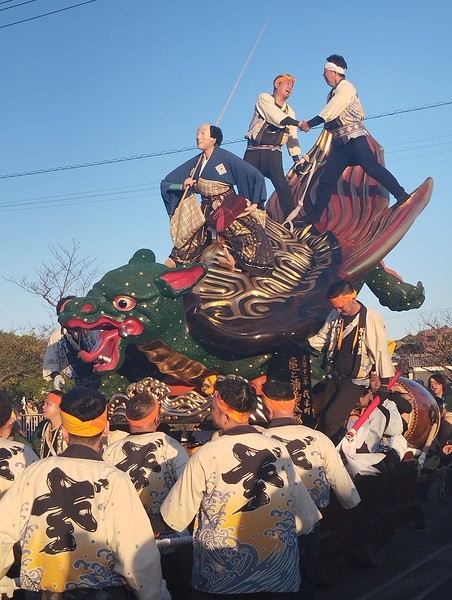
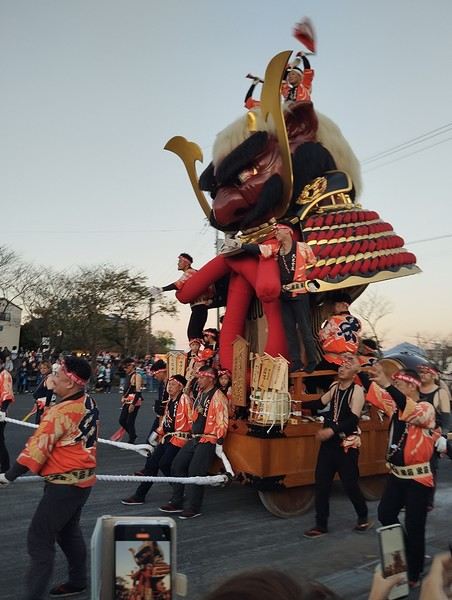
As mentioned earlier in the travel journal, the goal of coming to Karatsu was to attend a matsuri (festival): the Karatsu Kunchi. It takes place over three days, from November 2nd to 4th every year. It’s been around for over 400 years and celebrates the abundance of harvests.

The matsuri (festival) starts at 5:00 PM. We weren’t sure exactly where it was happening, but we arrived in the area and finding a parking spot turned out to be a bit tricky. Several streets were closed due to the festival, many parking lots were full, and we couldn’t park at a supermarket without risking getting stuck when we needed to leave. We drove around for a while before spotting spaces under the railway tracks. There was no sign indicating the parking was paid, so—if you’ve read the previous entries—you know we’ve already had the rental car locked in a parking lot twice, and the "trauma" is still fresh. We didn’t want to end up in the same situation when we came back for the car. So, I flagged down two people passing by. Apparently, no problem. Well, we *hope* we made ourselves clear.

All that was left was to find where the matsuri was happening. We walked along the railway tracks. Other people were out on the street too, so I asked them. Surprised to see foreigners here, they were very welcoming and pointed us in the right direction. They were heading there too. The festival was starting at 5:00 PM, just 10 minutes away. We walked briskly, and a few minutes later, we spotted a crowd waiting for the show to begin.

We could tell our arrival didn’t go unnoticed. Two foreigners in Karatsu—it’s probably not an everyday sight. We felt people looking at us with curiosity in their eyes. Some, already in high spirits (maybe thanks to the biru—beer), talked to us, and we exchanged smiles.

After hesitating a bit about the best spot to watch the parade, we positioned ourselves—without realizing it—near the parade’s final stop, close to the station. No matter where you stood, there were plenty of people there to enjoy the show. The crowd was very family-oriented, but not exclusively. All generations were present.

What were we about to see?

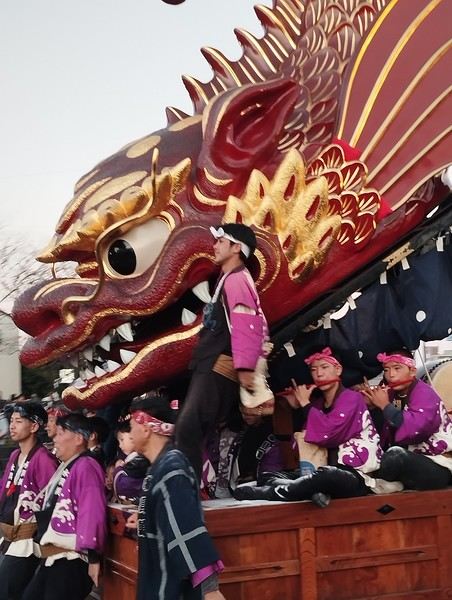
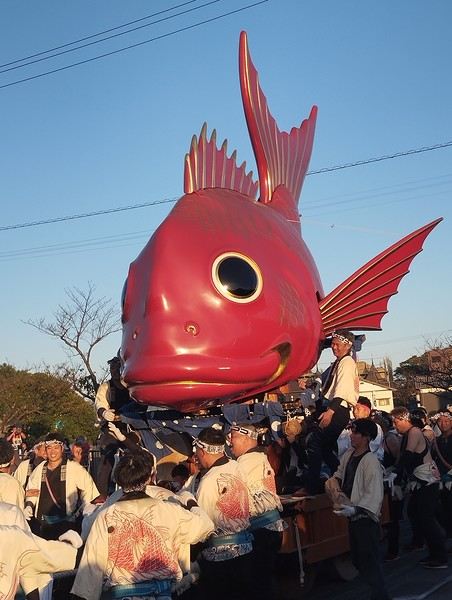
The Kanchi Matsuri is a 400-year-old festival where 14 large floats called "hikiyama" (meaning "mountains on wheels") parade through the streets over three days. Apparently, the second day is the best because the floats go to the beach. The floats are made from lacquered wood, Japanese paper, bamboo panels, and gold or silver leaf. They stand 7 meters tall and weigh between 2 and 5 tons. They take the shape of mythological creatures, dragons, samurai helmets, and famous warriors. These floats were all built in the 19th century, with each one taking between 3 and 6 years to construct. The 14 floats represent the 14 towns in the area. The floats are pulled by locals (the "hikiko"), each wearing straw sandals and the tunic of their neighborhood. Each group parades with distinct colors. The procession is set to the rhythm of Japanese drums and flutes while the hikiko pulling the floats chant in unison and with energy: "En-ya!, En-ya!, En-ya!" or "Yoy-sa, Yoy-sa!, Yoy-sa!" to celebrate the harvest’s abundance and business prosperity.

We witnessed a festival full of energy and good vibes. It was really enjoyable. The floats were truly impressive in size and were beautiful, colorful moving works of art. The hikiko pulled the floats with vigor and joyfully chanted to the gods: "En-Ya! En-ya!, En-ya!" The drummers and hikiko played off each other, drawing the crowd into a festive and simple atmosphere! Here’s a mix of photos from the festival:


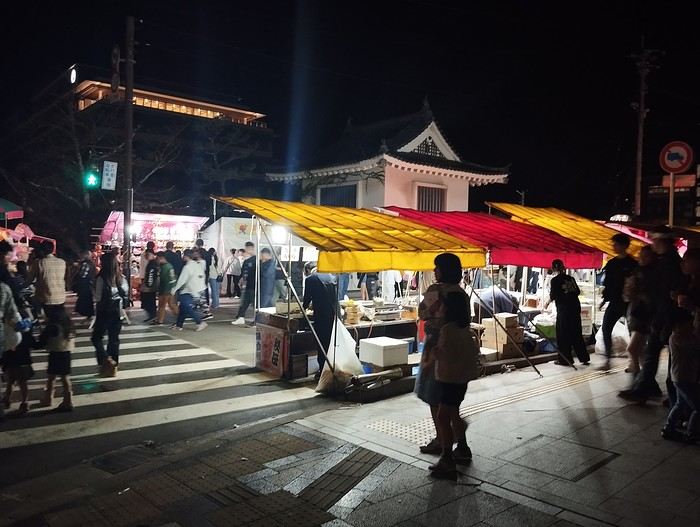
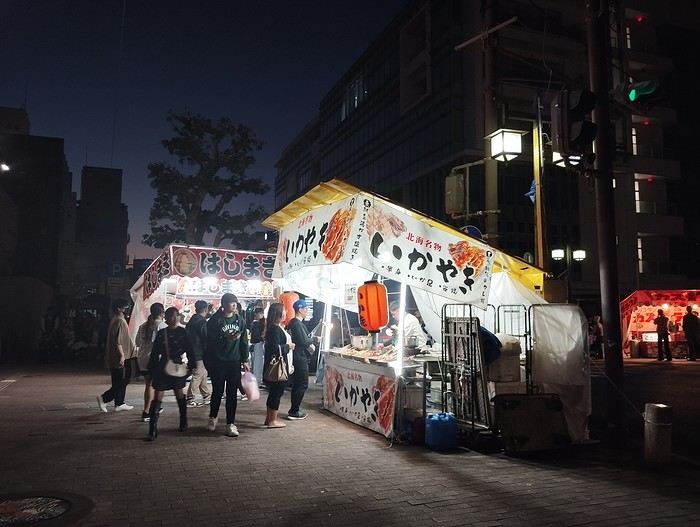
The matsuri lasts an hour, so starting at 6:00 PM, people head to the various street food stalls scattered around the city center.


The street energy shifts, and the different groups of hikiko return to their neighborhoods to celebrate together.


We weren’t hungry yet, but I needed to use the restroom, and it was dark. Since we couldn’t visit Karatsu (like the beach or the castle), we wandered through the alleys and shopping streets until we reached a small shopping center called Maizuru Shopping Plaza. The term "shopping center" seems exaggerated—it was more like a tiny mall inside a supermarket, part of which was closed. During a quick break on one of the benches, we ran into a foreign couple. My French instinct made me say "bonjour" in French for no particular reason, and they responded in French too. So, we weren’t the only foreigners at this local festival. Even though we prefer interacting with locals, running into fellow countrymen is always nice, no matter the country. The exchange was limited to a "bonjour" and a smile.

We decided to explore the mall and supermarket. On our way back down to the ground floor via the escalator, we ran into the French couple again. This time, we took the time to get to know each other and chat about our respective trips in this country. It was their second trip, and one of them had decided to learn Japanese after their trip last year. We took a quick souvenir photo, exchanged numbers to send it, and after an hour of chatting, it was time to continue our journey.

We’d been on the move a lot today and felt more like sitting down in a restaurant than grabbing quick street food, despite the pleasant atmosphere. We walked around aimlessly but noticed that many restaurants were closed. After a while, seeing that we’d wandered into very quiet streets, I asked a "couple" where we could find a good, open restaurant. They asked what we wanted to eat: yakitori sounded good, but we were open to anything. The young man—clearly in a festive mood (he’d already had a few drinks)—thought of a restaurant. He called, but it was closed. They explained that most restaurants were closed or closing early (8:00–9:00 PM) because of the matsuri and the yatai (street food stalls). The couple offered to take us somewhere. It was a chance to chat with some very enthusiastic young people—helped by beer, it seemed. While the young man said hello to some people nearby, we continued talking with the young woman. She asked if we drank alcohol and then invited us to a party. We were up for it, but the young man was much less enthusiastic than her, so they backed out. No problem—the young woman gave me her girly business card, we took a souvenir photo, and she told us to have fun!

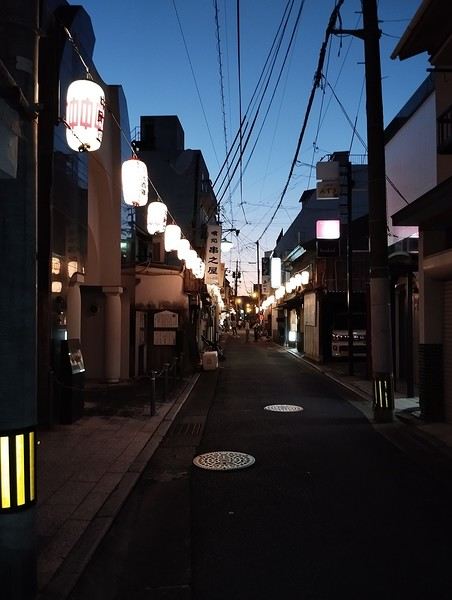
We decided to keep looking for a restaurant in other streets, some lively, some not, but all beautifully lit by lanterns. Given the time, it was tough—most places still open weren’t taking new customers. We eventually went back to the car, figuring we’d find something on the road or, worst case, stop at a konbini.


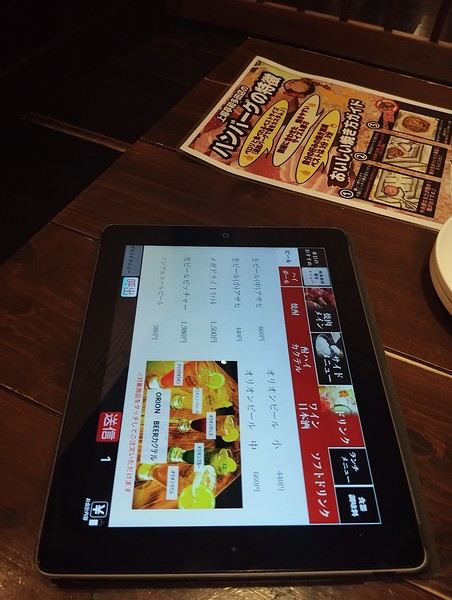
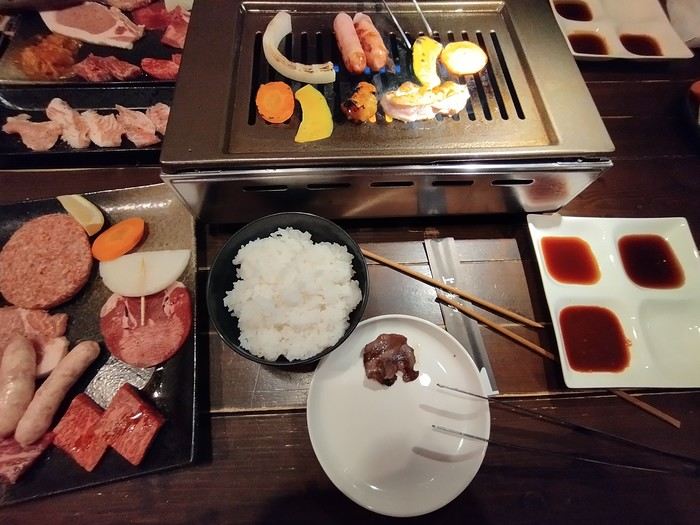
In the end, we stopped at a yakiniku place in a shopping area. We were seated in a private room, which is always a nice touch at restaurants. To order, everything was on a tablet written entirely in Japanese. There was no Wi-Fi, so two waitresses kindly helped us by translating the different pages and placing our order. The Japanese service was a delight. The yakiniku was basic, but it did the job of feeding us. We drove back to our place in about an hour to an hour and a half.


To be continued: ARITA
https://voyageforum.com/forum/decouverte-japon-tokyo-archipel-ryukyu-okinawa-d9857265/ https://voyageforum.com/forum/escapade-japonaise-shikoku-kyushu-yakushima-tokyo-d9999494/ https://voyageforum.com/forum/kyushu-entre-fukuoka-nagasaki-automne-2024-japon-d10654938/
NA Nathalie971 Regular ·
Day 9 - Arita

The day starts with brunch at the konbini. An improvised hot dog with a sausage and Japan’s thick, fluffy sliced bread, seasoned with ketchup and mustard. These condiments come in small individual packets—just press them together, and the ketchup and mustard come out so you can spread them on your sandwich without even getting your hands dirty. Another super practical example of everyday simplicity.

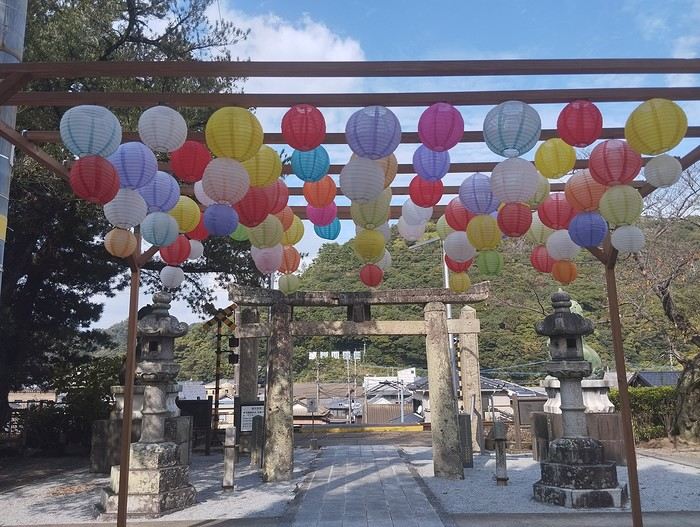
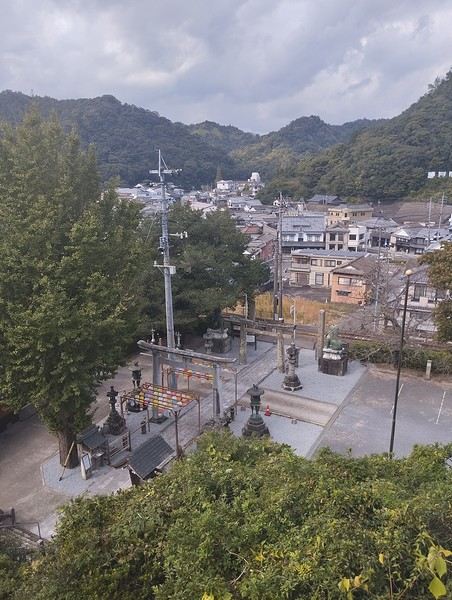
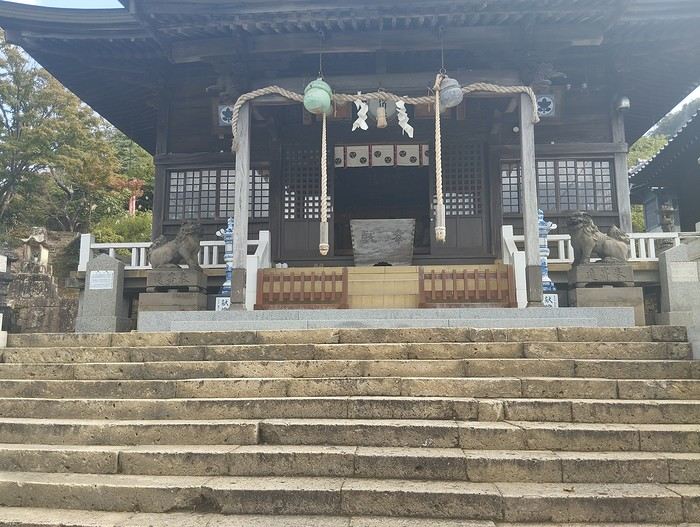
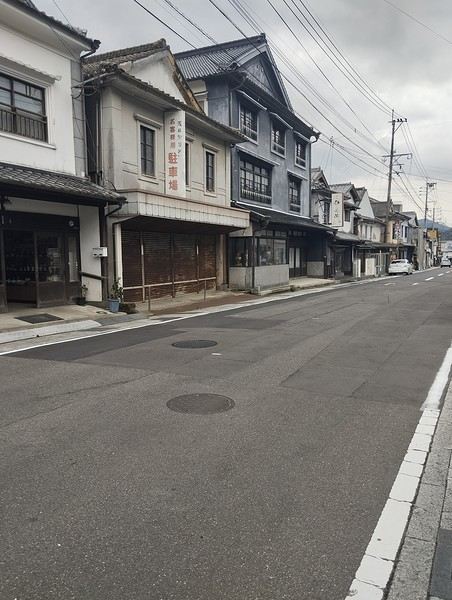
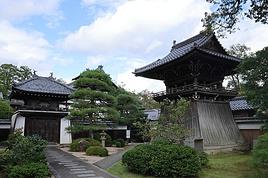
Then it’s off to Arita. We begin with a visit to Tozan-jinja Shrine. This shrine protects the city and ensures the prosperity of the porcelain trade, which is the heart of the local economy. The shrine is easily accessible, located parallel to the main street—just cross the railway tracks.


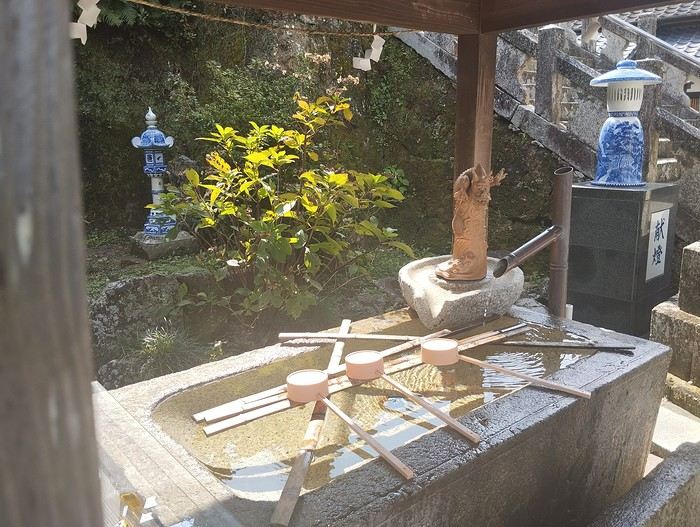
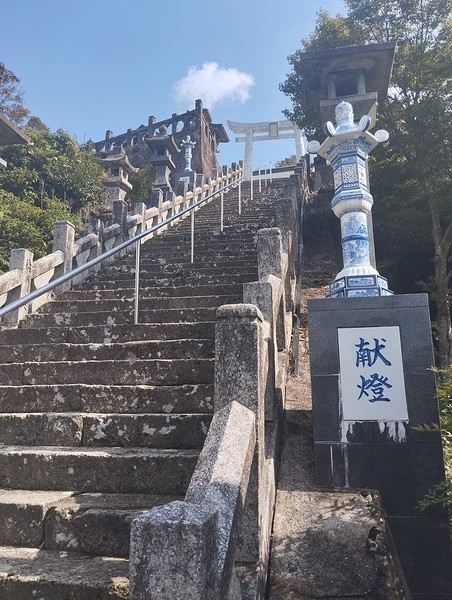
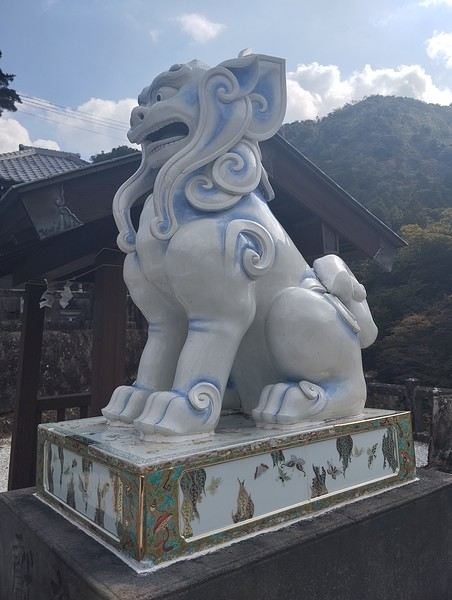
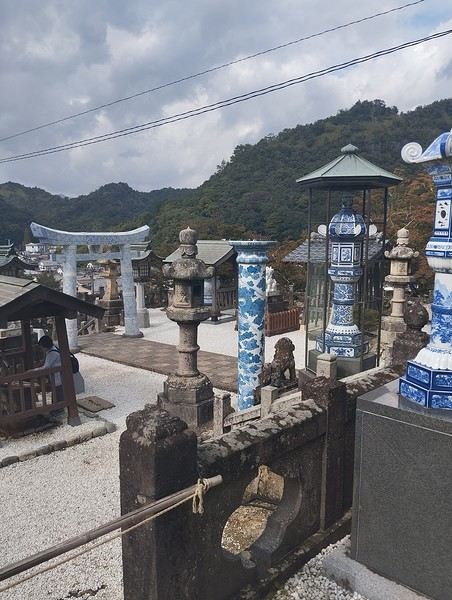
The shrine is situated on the slopes of Mount Renge'ishi. The shrine isn’t large, but it has an original decoration. Many elements are made of porcelain, whereas they’re usually stone. You’ll find a porcelain torii, lanterns, and ema. It’s really pretty and a nice change. From the esplanade of the main building, there’s a lovely view of the city and the surrounding nature.


https://voyageforum.com/forum/decouverte-japon-tokyo-archipel-ryukyu-okinawa-d9857265/ https://voyageforum.com/forum/escapade-japonaise-shikoku-kyushu-yakushima-tokyo-d9999494/ https://voyageforum.com/forum/kyushu-entre-fukuoka-nagasaki-automne-2024-japon-d10654938/
NA Nathalie971 Regular ·
On this sunny morning, there were only a few people around, neither at the sanctuary nor in the streets.


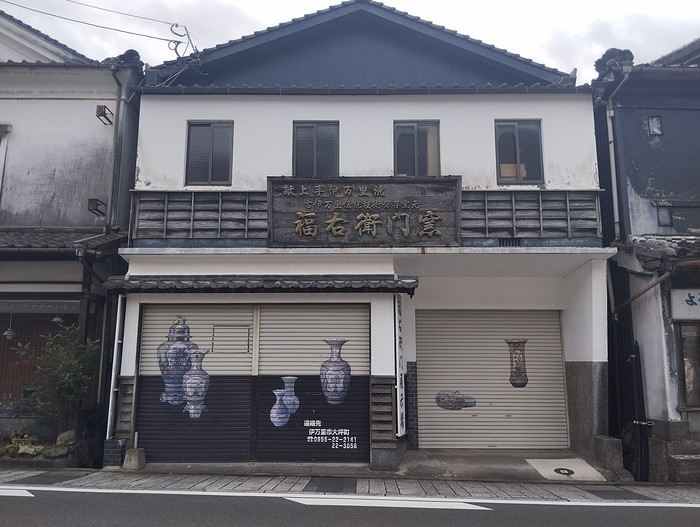
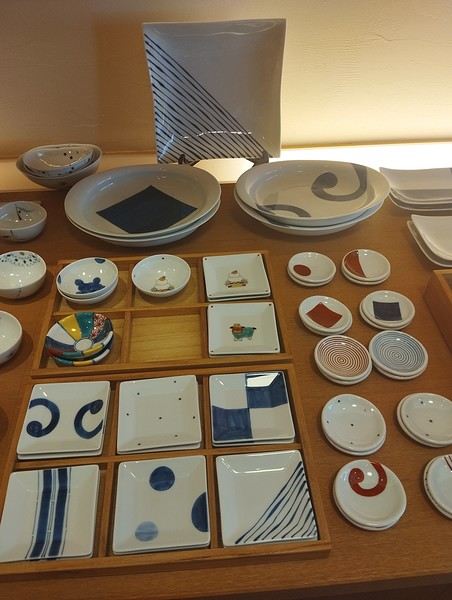
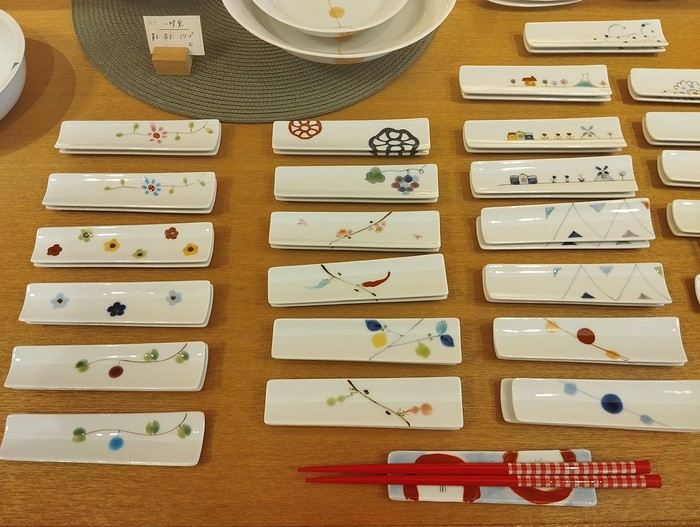
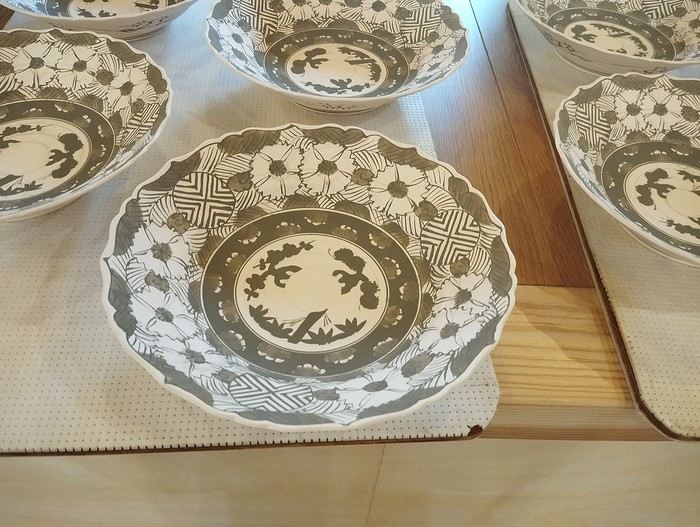
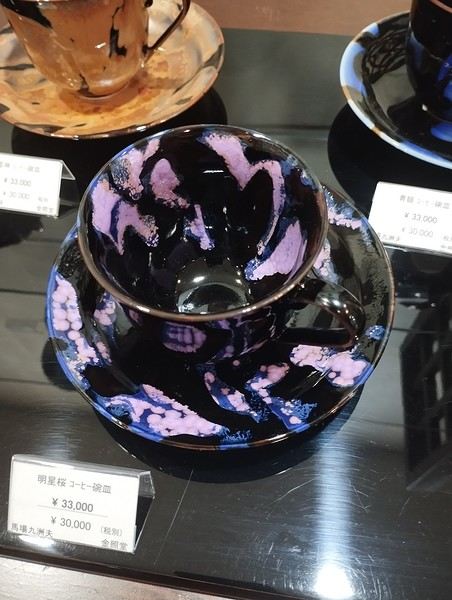
We then continued with a visit to a few ceramics shops. Each shop has its own unique style.


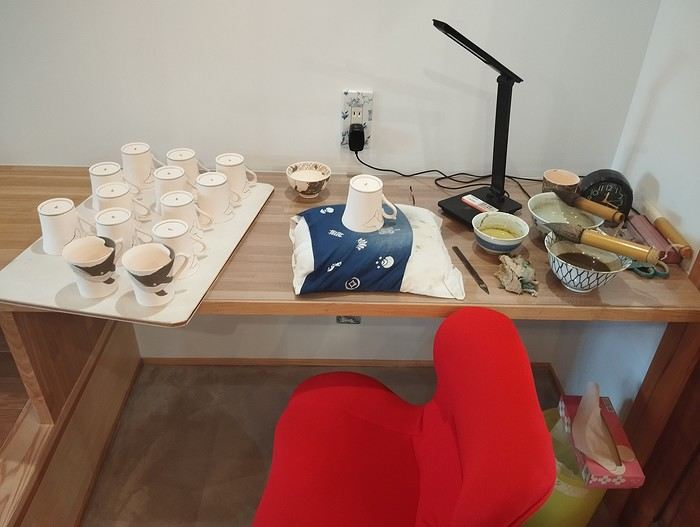
In one of the shops, we struck up a conversation with the manager. We learned that she’s the 4th generation carrying on the tradition of making and selling ceramics. The painting part is even done in the back of the shop by the woman we were talking to.

https://voyageforum.com/forum/decouverte-japon-tokyo-archipel-ryukyu-okinawa-d9857265/ https://voyageforum.com/forum/escapade-japonaise-shikoku-kyushu-yakushima-tokyo-d9999494/ https://voyageforum.com/forum/kyushu-entre-fukuoka-nagasaki-automne-2024-japon-d10654938/
NA Nathalie971 Regular ·
Even though we didn’t buy anything, the conversation continued warmly, with a few laughs shared along the way. We realized that it doesn’t take much to break the ice or at least ease the initial reserve, shyness, or awkwardness to create a friendly exchange.

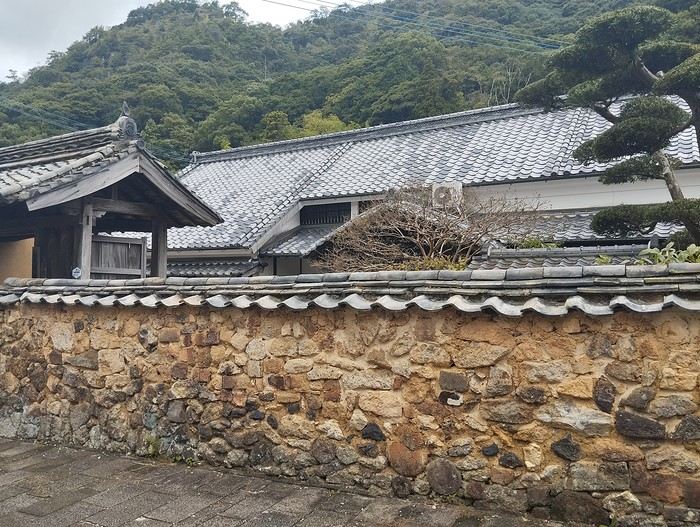
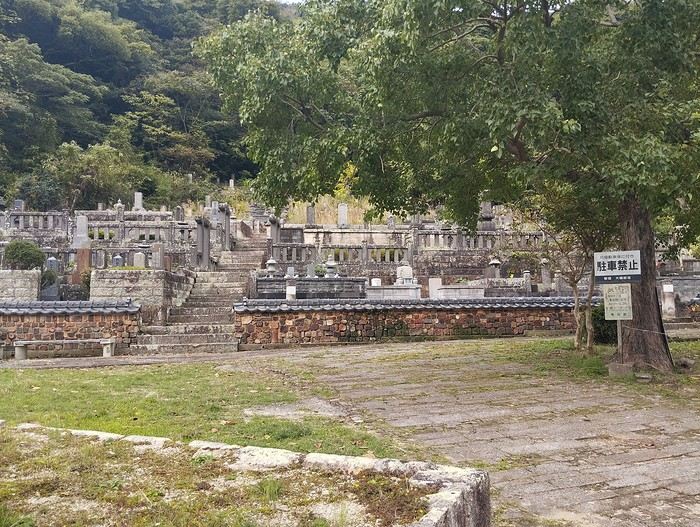
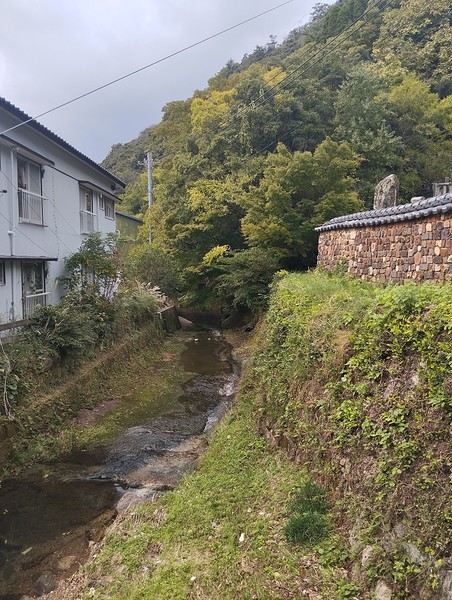
Afterward, we headed to a parallel street that also clings to the mountainside. Here, the street is even quieter than the main one but charming with its stone walls and small canal. The low walls surrounding the houses are a brownish-orange color, known as "Tombai" style. These bricks come from the kilns where the city’s porcelain is fired, and when they’re worn out, they’re reused to build the walls. The cemetery is elevated, and it exudes a sense of serenity.


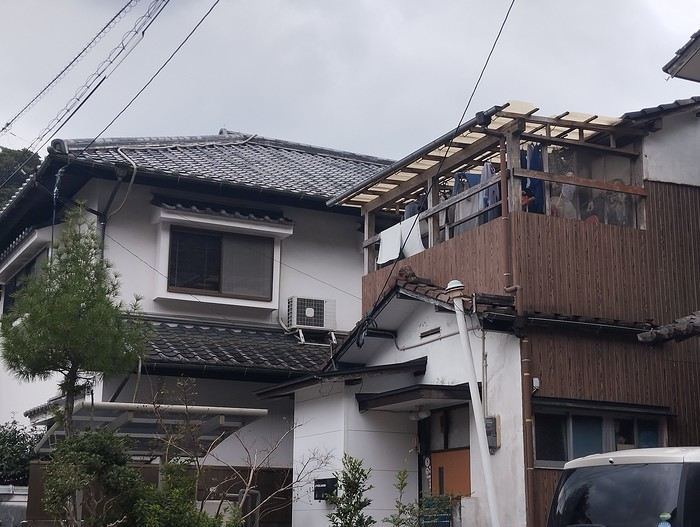
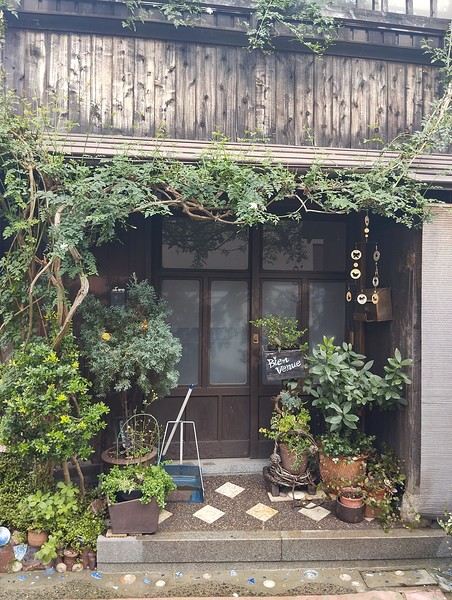
There are some lovely old houses, and you can sometimes spot pieces of ceramic used as decoration.

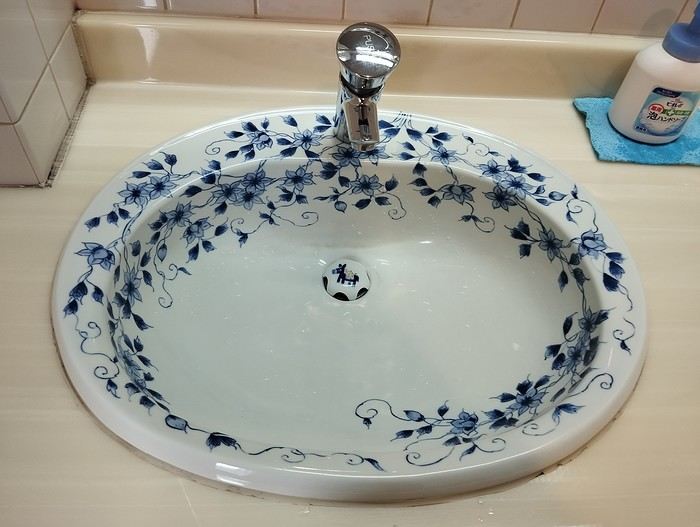
A little later, we stopped by the tourist office, which had a very relaxed and family-friendly vibe due to its size and the approachable service. A quick trip to the restroom revealed some lovely ceramic decorations on the light switches and sinks—very floral!

https://voyageforum.com/forum/decouverte-japon-tokyo-archipel-ryukyu-okinawa-d9857265/ https://voyageforum.com/forum/escapade-japonaise-shikoku-kyushu-yakushima-tokyo-d9999494/ https://voyageforum.com/forum/kyushu-entre-fukuoka-nagasaki-automne-2024-japon-d10654938/
NA Nathalie971 Regular ·
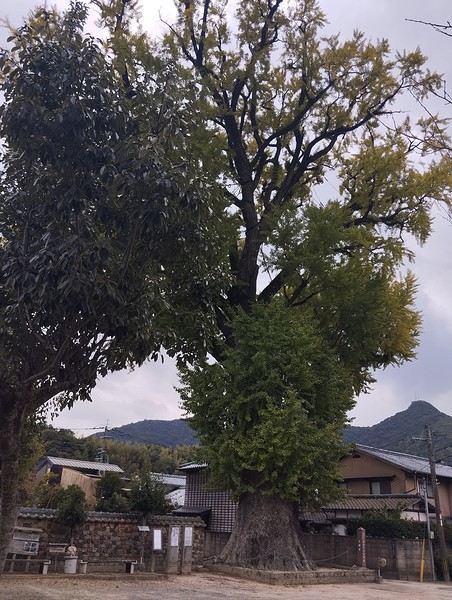
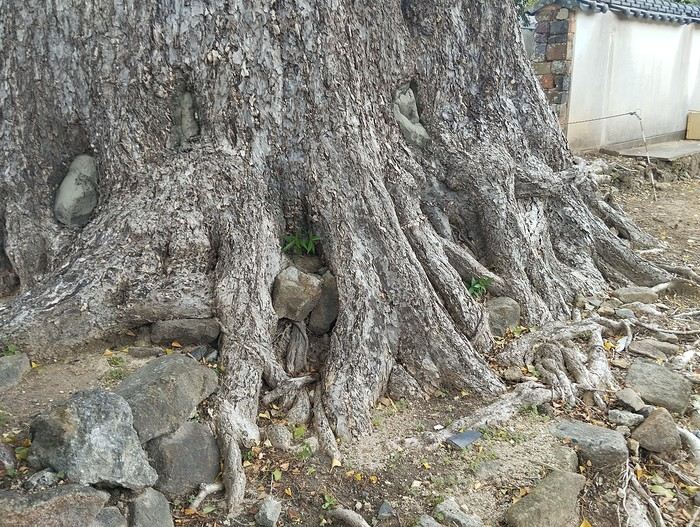
After that, we drove a little further to see an impressive ancient ginkgo tree, around 1,000 years old and about 30 meters tall. It stands on a small square at the foot of a children's playground, within the grounds of the Izumiyama Sarasvati shrine.


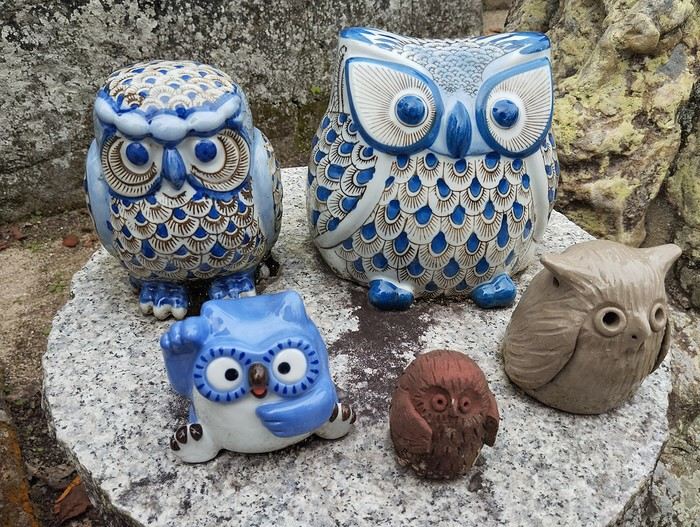
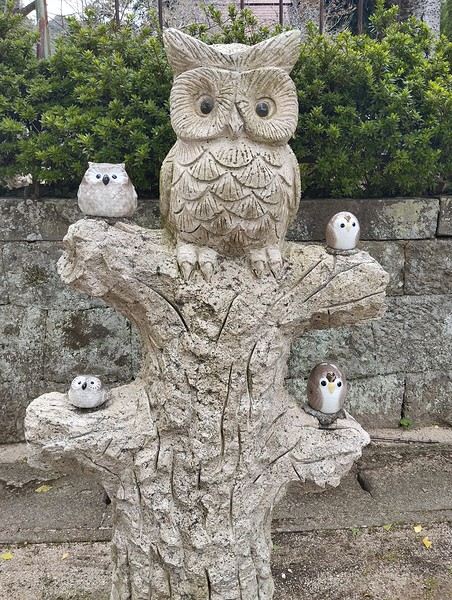
What’s really charming is the collection of owls scattered all over the place—some in ceramic, others in stone—each with a different face. Here are a few of them:


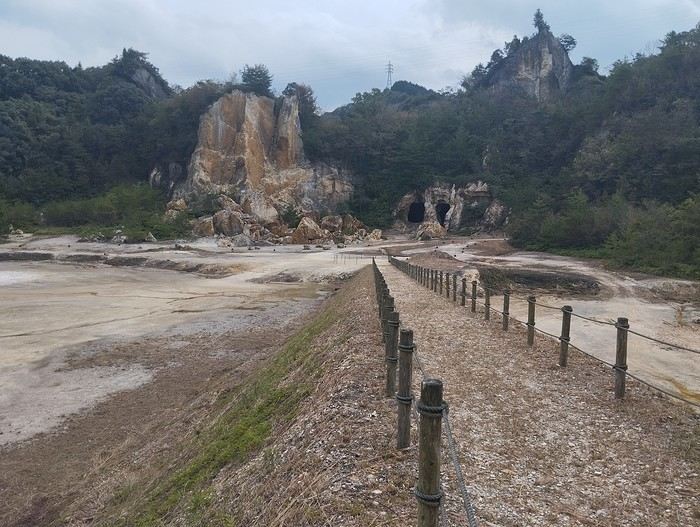
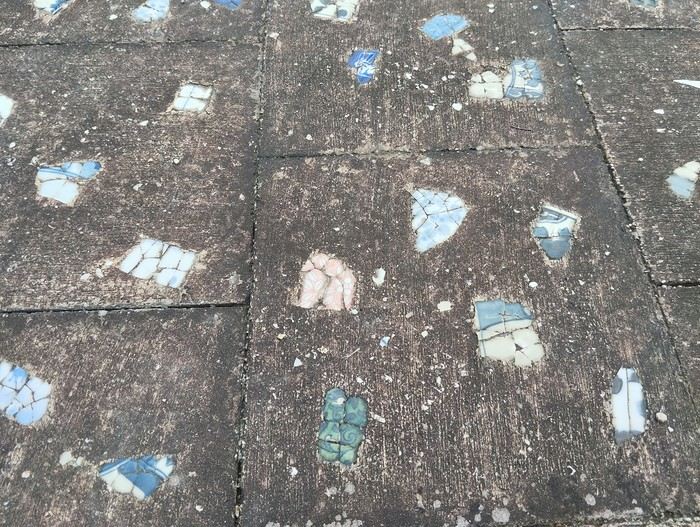
Finally, we ended up at the old quarry a bit further down the main street. Here, ceramic fragments are scattered all over the ground.


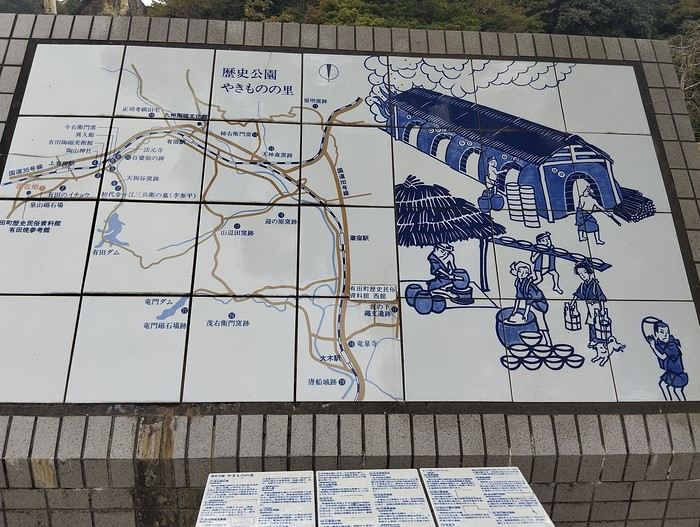
Not far away, there’s a ceramic map of the region.

https://voyageforum.com/forum/decouverte-japon-tokyo-archipel-ryukyu-okinawa-d9857265/ https://voyageforum.com/forum/escapade-japonaise-shikoku-kyushu-yakushima-tokyo-d9999494/ https://voyageforum.com/forum/kyushu-entre-fukuoka-nagasaki-automne-2024-japon-d10654938/
NA Nathalie971 Regular ·
After this picturesque stroll, we’re craving nature. But first, we stop at a local supermarket. The selection of ready-made meals is pretty interesting and cooked on-site. We also find a soda we’ve never seen before—a peach soda, which is actually really nice. We reach Ryumon Gorge in about 15-20 minutes by car.

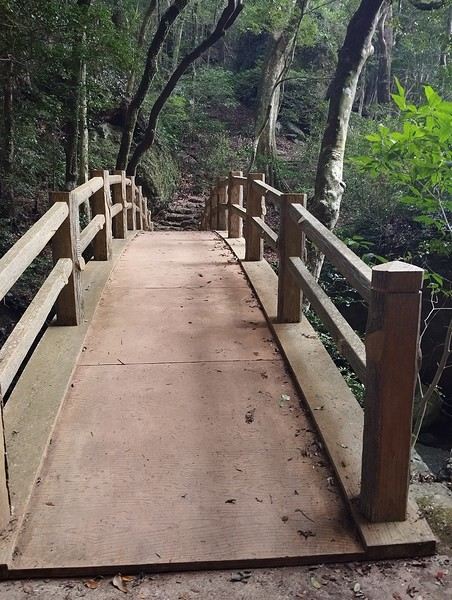
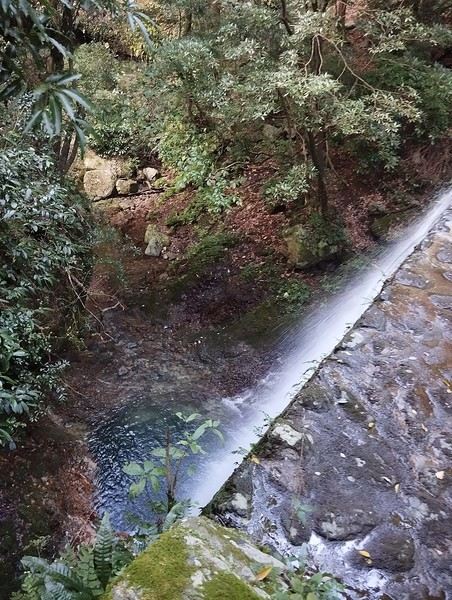
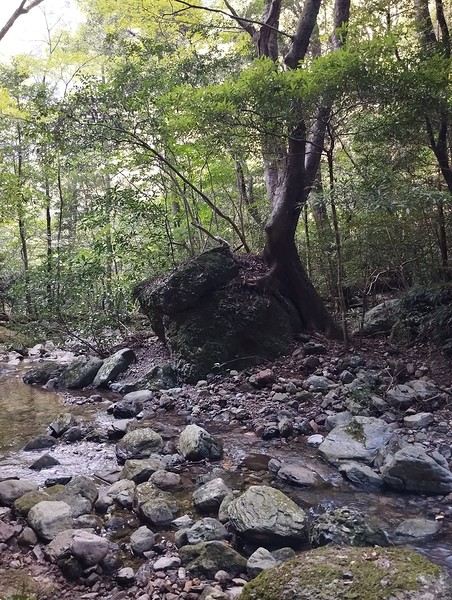
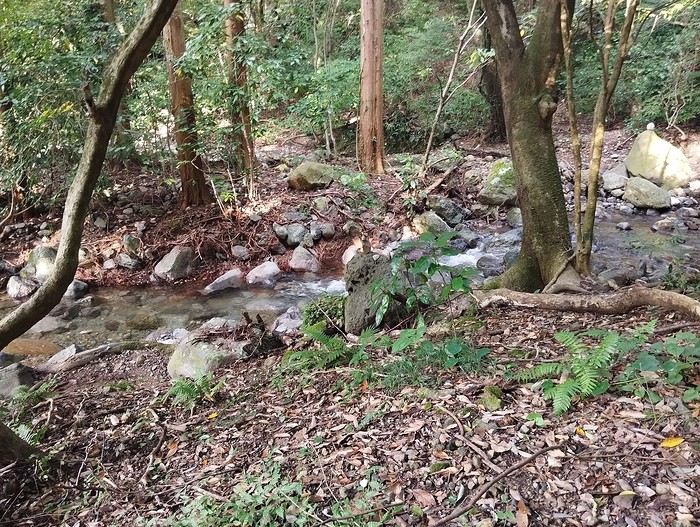
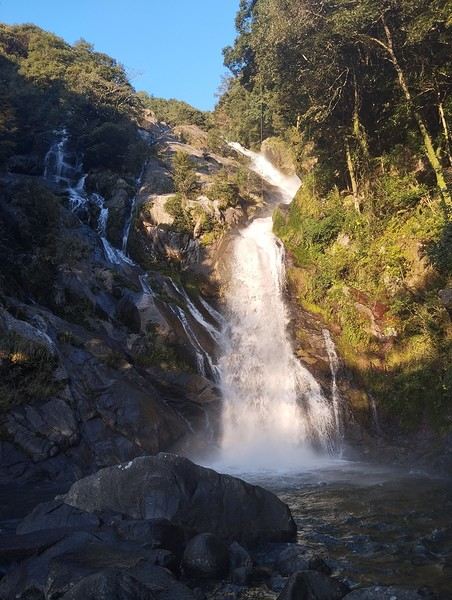
There’s only one other car in the parking lot. There are several trails we could take, but everything is in Japanese, and we don’t see any visible signs pointing to the waterfall. Then a man emerges from the forest—we ask him which path leads to the waterfall, and he decides to guide us there even though he’d finished his own hike. He walks at a quick, energetic pace. The trail is made of stones and branches, running alongside a river we can hear flowing. This lush green space is so refreshing. When we arrive at the waterfall, the man says goodbye—and to do so, he shakes our hands with both of his. Again. Because this isn’t the first time here in the south; people seem much more tactile, and it happens so naturally. It’s so unusual for their culture that every time, it catches us off guard during this trip.

We then enjoy the tranquility of the spot, with the small waterfall flowing under the bridge and the foliage around us. We take the chance to try the dried peaches we bought at Minufeyama Garden in Takeo. After that, we extend the walk by crossing the bridge and climbing up the other side. You can get above the waterfall. Further on, the trail continues—signs indicate it’s part of a longer hike. But the afternoon is already well underway, and the sun won’t be up much longer, so we turn back to retrace our steps to the parking lot.


Even in the parking lot, you can hear lots of birds. The place is so peaceful. Two other cars are parked there now. At one of them, a man is packing up his things. As we drive past, he gives us a big smile and waves enthusiastically, like he wants to talk to us. We roll down the window, and I think he was just surprised to see two foreigners here. After saying hello, he asks, "Shashin shimasu daisobu?"—meaning, "Is it okay if I take your photo?" We say yes—everyone gets their turn being someone else’s exotic subject. Click, we’re in the shot, and bye-bye.

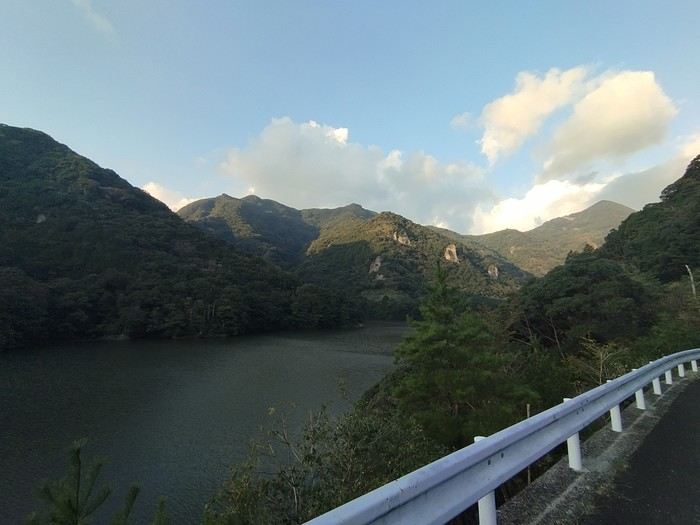
The sun is setting, so the light is gorgeous, highlighting the dam lake surrounded by forest.


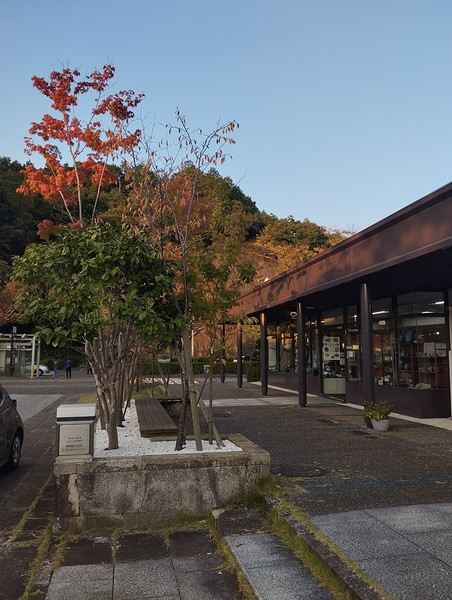
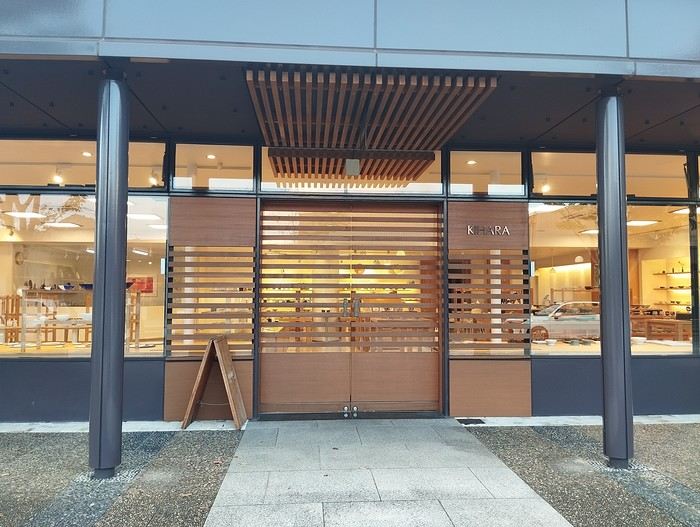
As night falls, we decide to check out a ceramics shopping district a tourism office agent told us about this morning before we started our visits. It’s an open, straight-line area with shops on both sides. The walkway is lined with trees starting to turn red, and with the evening light, the atmosphere feels cool and soft.


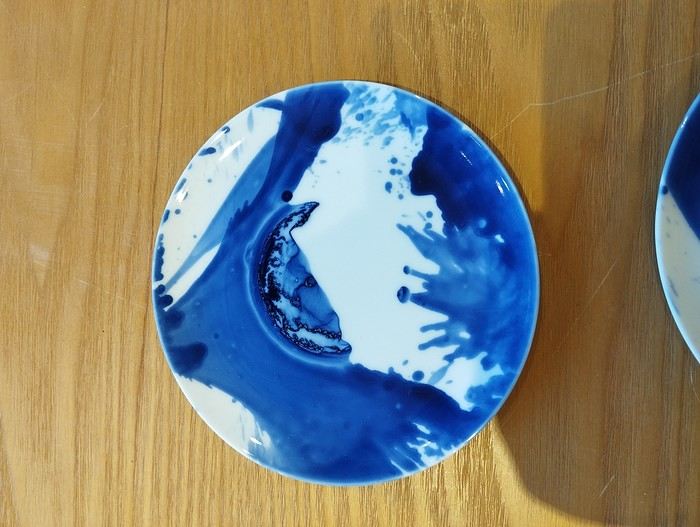
Here, the shops are clearly high-end. The pieces on display are works of art—some sleek and modern, others more understated. They’re showcased with different setups depending on the store, but every shop exudes quiet luxury and beauty. When we arrive, many stores are already closed. We go into the ones still open, and instead of telling customers, "Sorry, we’re about to close," they let us browse peacefully without making us feel like we’re in the way. On the contrary, the staff just continue their tasks calmly. They simply close up after we leave.


We regret not being able to explore the other shops because the zen atmosphere—with music playing in the street, the light illuminating the reddening leaves, and the beautiful ceramics on display—was so pleasant.

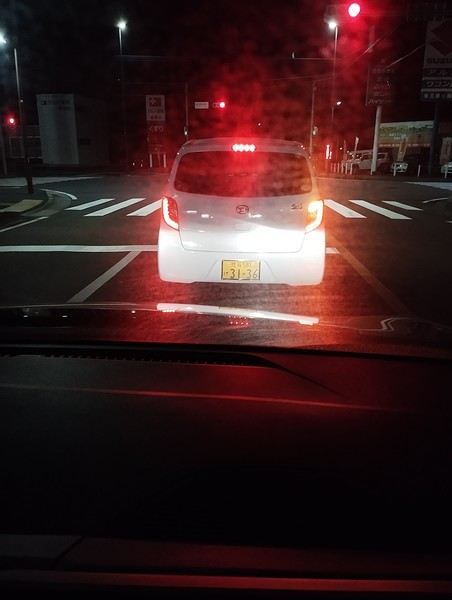
After that, we wanted to go to a yakitori (grilled skewers) restaurant we’d spotted on Google Maps. After doubting the directions because we ended up in a dead-end on a mountainside, we realized it was just someone who’d set up a street stand in front of their house and only offered takeout. Since we wanted to sit down and the restaurant didn’t seem open, we gave up on the place. In the end, we head back to Arita for yakitori. There were only the two of us and one regular. The meal was okay—not exactly unforgettable—but we had a fantastic evening. Sitting at the counter, we got to know the owner and his wife, who does the cooking. She’s from Nagasaki, and he’s from Arita. They were shocked and burst out laughing when they learned that in France, the rice is often bigger than the piece of fish on sushi. They once had the chance to be invited to a meal at a mixed French-Japanese couple’s home in Arita. That’s when they discovered and tried ratatouille. We chatted for a long time, and it was really nice. When we gave them a small gift before leaving, the husband spontaneously wanted me to take a gift too—one of the few items they sell in the restaurant. Of course, the couple walks us outside. What’s surprising is how Japanese people seem to pay attention to where a car comes from—they notice rental cars (on this trip and others) based on the license plate. Once again, in Kyushu, we shake hands, and we keep waving until we can’t see each other on the road anymore.


End of the day. To be continued on the road to Nagasaki.
https://voyageforum.com/forum/decouverte-japon-tokyo-archipel-ryukyu-okinawa-d9857265/ https://voyageforum.com/forum/escapade-japonaise-shikoku-kyushu-yakushima-tokyo-d9999494/ https://voyageforum.com/forum/kyushu-entre-fukuoka-nagasaki-automne-2024-japon-d10654938/
NA Nathalie971 Regular ·
Day 10 - In the Japanese countryside from Hasami to Nagasaki

It's already time to leave the town of Hasami, where we've been staying for four days to explore a part of Saga Prefecture. This region is amazing, and there are still so many places to discover here. The blue sky and bright sunshine help us leave this spot with enthusiasm as we head to our next destination, Nagasaki. Today's goal is to reach the city while making a few stops—a road trip for the day.

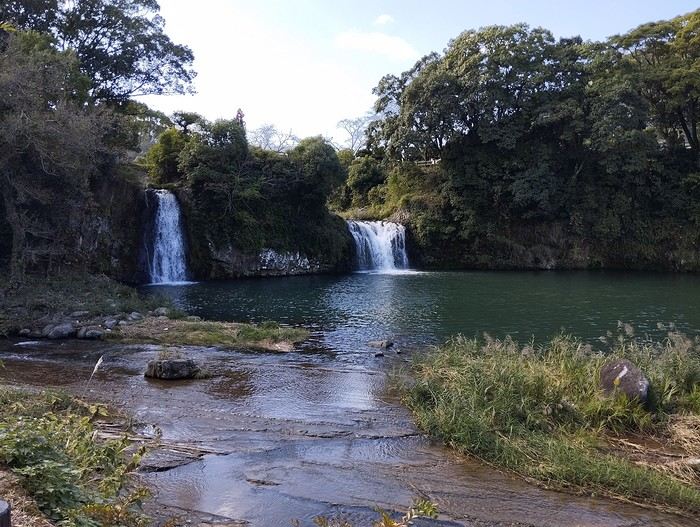
Saga Prefecture still has a lovely surprise in store for our first stop: Todoroki Falls. As usual, the drive to the spot is very pleasant, with roads surrounded by lush green mountains. When we arrive in Ureshino, the town where the falls are located, I start to doubt whether a waterfall even exists here. We're in the middle of town, and nothing I see suggests a waterfall is nearby. Still, we park in the lot. While my travel buddy finishes their konbini brunch, I step out to enjoy the sun and try to figure out where the waterfall might be. Three Japanese men are standing near the signpost, and I can tell from their looks that they're surprised to see me here. We greet each other, and I check the sign. It's a roughly drawn map, but the waterfall is clearly marked. Best of all, I can hear water flowing.

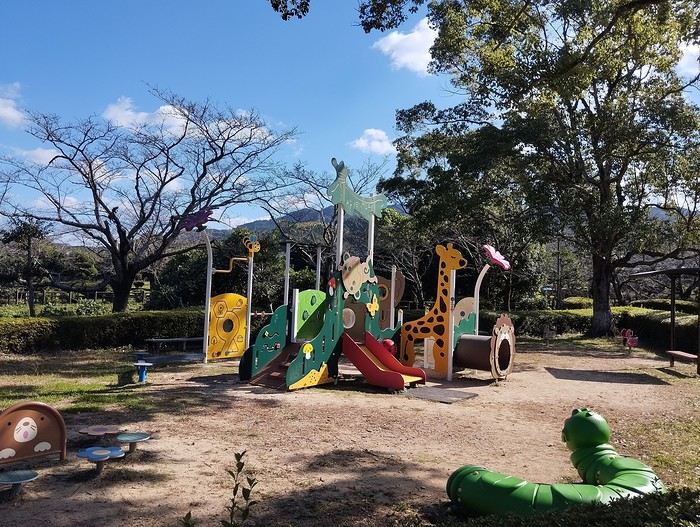
Once brunch is done, we set off down the path. Gradually, we discover that the area is a fairly large park surrounded by mountain forests and rice fields. There’s a playground for kids and plenty of spots to relax, along with different viewpoints of the waterfall. The place pleasantly surprises us, and we think a picnic here would’ve been perfect. We were expecting a waterfall in a forest setting, not a family-friendly park in town—especially since the falls are still impressive in their own right. We enjoy this peaceful walk, and what’s more, we’re almost alone. We only ran into four people.


We hit the road again, this time heading to our second planned stop.

In Nagasaki Prefecture, just next door—about 20 minutes from the falls—the town of Higashi-Sonogi is known for its tea production. As tea lovers, we wanted this third trip to include a tea tasting, preferably at a small-scale producer. So, I found a place on Google Maps that seemed to fit our criteria.

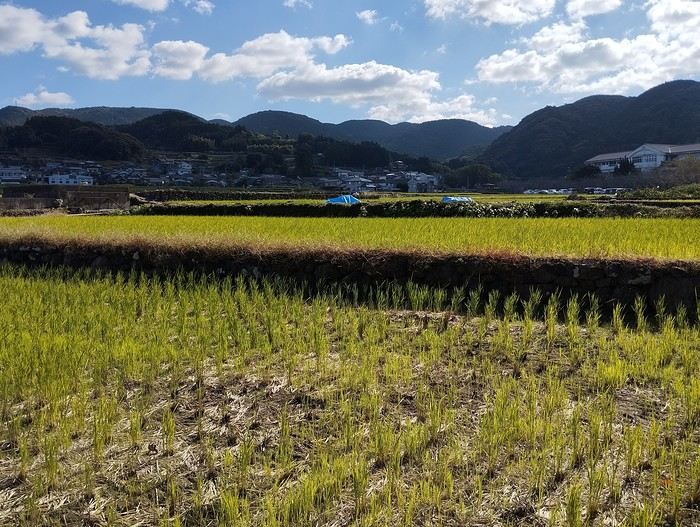
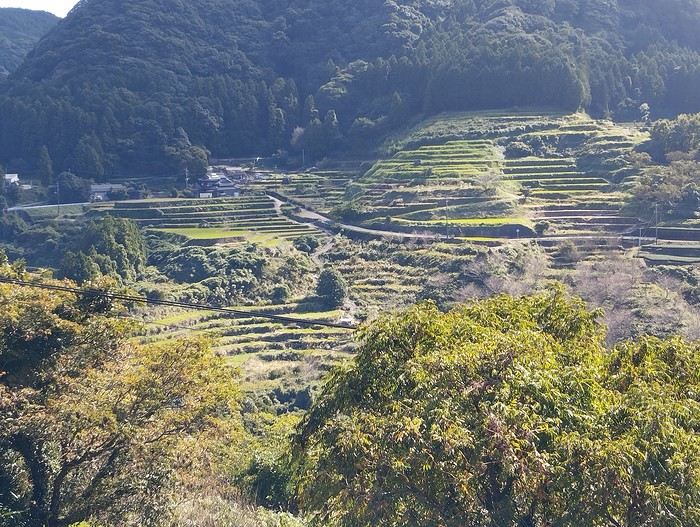
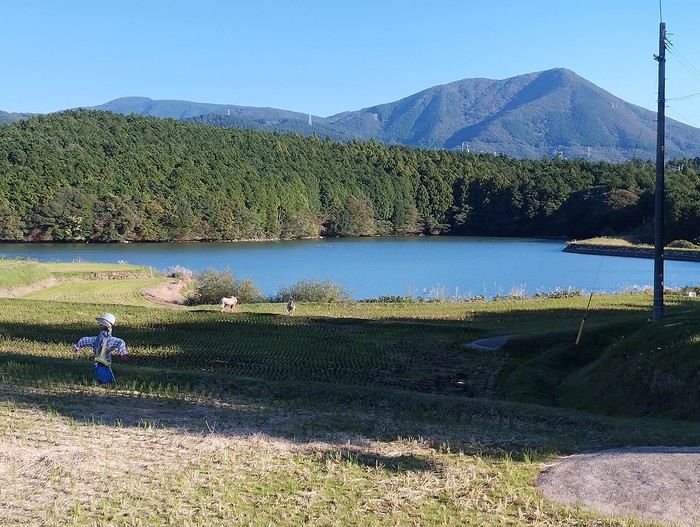
On the way to the tea producer, we pass by a stunning panoramic view of rice fields. I decide to stop and take a better look than the 30 seconds we had while driving by. But there’s no parking right in front, so we pull over a little farther down the road. We walk back up the hill toward the viewpoint, following what’s basically just the roadside along the gray highway barriers. An older gentleman is cutting bamboo nearby. We greet him as always, and he responds. We stop, mumble a few more words in Japanese, and the exchange starts off a bit hesitant, but eventually, he opens up. We learn that he’s traveled to several countries, including Sweden, and that the panorama in front of us—a spot that caught our attention—is a famous photogenic location during sakura season (cherry blossom time) because of the rice fields, the sakura, and the shinkansen emerging from a tunnel. He shows us a photo online.

He also explains that the bamboo he’s cutting is for making a musical instrument used every year during a matsuri at sakura time. I’m sorry, I don’t remember the name.

We were about to say goodbye when I ask his name. And it’s strange how sometimes a simple question can turn a nice moment into one that’ll stay in our memories even longer. To answer my question, he wanted to give us his business card, which is pretty common. But he didn’t have any left in his wallet. So, in one swift move, he tells us to follow him because he lives right across the street and points to his house. He’s already walking briskly toward it while we try to keep up.

We reach his house in less than two minutes. He leads us to the garage, tells us to wait there, goes to get a business card, and comes back to hand it to us with both hands. We keep chatting, and then he offers us tea. We gladly accept. While we’re talking, someone arrives to enter a house, and he explains that it’s his daughter. She laughs kindly when her father tells her who we are, and then she goes inside.

For the tea, he first wanted us to sit in the garage but changes his mind within seconds and tells us to come sit on the outdoor terrace of his house, which is right across from his daughter’s on the same property.


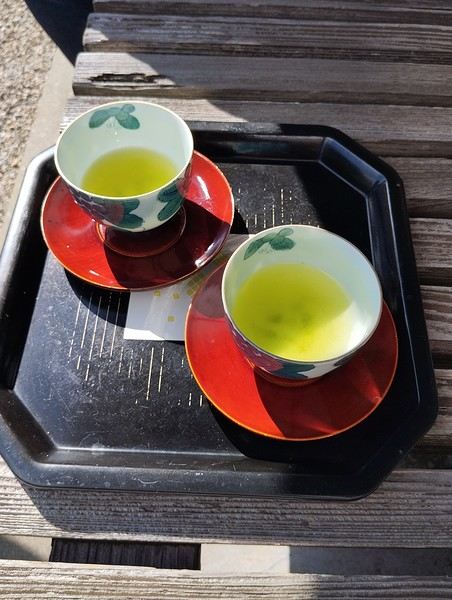
As for the terrace, it offers a clear and stunning view of the rice fields. So there we are, enjoying this magnificent view while waiting for the gentleman on his terrace, all under a beautiful blue and warm sky. What more could we ask for? He joins us shortly after with a tray and two cups of tea. He didn’t prepare any for himself but had a nice surprise in store for us. He brought out a bamboo instrument because he makes them every year. And he treats us to a little 5-minute concert. A really lovely moment. After finishing our tea, this beautiful encounter ends with a souvenir photo for both him and us, and we exchange contact information.

https://voyageforum.com/forum/decouverte-japon-tokyo-archipel-ryukyu-okinawa-d9857265/ https://voyageforum.com/forum/escapade-japonaise-shikoku-kyushu-yakushima-tokyo-d9999494/ https://voyageforum.com/forum/kyushu-entre-fukuoka-nagasaki-automne-2024-japon-d10654938/
NA Nathalie971 Regular ·
Day 10 - Continued - Higashi-Sonogi Tea Tasting

We then set off again. Since I had spotted the place on Google Maps, the GPS didn’t take us directly to the producer. We ended up in the middle of nowhere—just houses, nature as far as the eye could see, and no one around. We drove in circles for a good half-hour but kept at it. From the reviews, people had mentioned it wasn’t easy to find but had shared a photo that gave us some clues. That’s how we realized we weren’t looking in the right spot along the road. We needed to go down the left side, below the road, but couldn’t see anything from where we were. We parked the car and walked the rest of the way.

Taking a narrow, overgrown path, I heard a rustling and then caught a glimpse of a snake slithering behind my travel companion for a few seconds. Not a huge fan of those creatures, we turned back and decided to drive instead.

We reached the tiny hamlet below and finally spotted the building from the Google Maps photo. We parked in front, but it didn’t seem open—more like a warehouse, really.

There was a house behind it, and a man came out. We approached to ask if this was the right place. After his dog’s loud greeting and having to repeat ourselves, he pointed out that it wasn’t here but to the left. We went back down and walked along a stone wall to follow the factory and the producer’s house. From the outside, it looked more like a home than a "shop" for visitors. Still, I recognized the place.

As we got closer to the house, the producer came out, mid-phone call. He didn’t see us at first, but when he turned and noticed us, he looked really surprised, slightly flustered. He quickly wrapped up his call and joined us. He understood why we were there without us needing to explain much. His first question was, *How did you find this place?* Ah, the magic of the internet!

Someone must have alerted him about our car, and he asked us to move it since we weren’t parked in the right spot. We carefully maneuvered along the very narrow path and parked on his property next to the house.

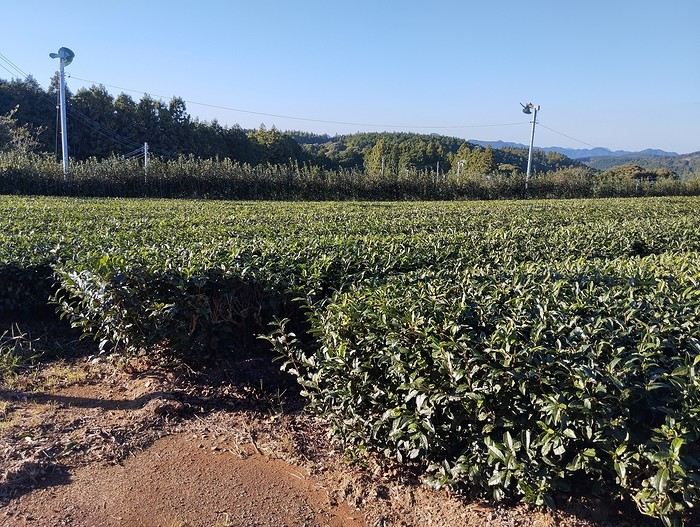
While we waited and he and an elderly woman quickly tidied up, we enjoyed the beautiful view of the tea fields from the house’s terrace.


We were then invited to sit in a room that seemed to double as a living room. There were quite a few personal and professional items scattered around, but it had that unmistakable Japanese vibe.

As we tried to get comfortable sitting on the floor, he set up and prepared everything for the tasting.

We managed to chat a bit about tea and his work, but the conversation wasn’t smooth—my Japanese isn’t great, and he doesn’t speak French. Still, we got the gist of things. Diving deeper into the details of his work and the teas he offers was trickier, though. We tasted all of them, including one he hadn’t brought out but that we knew he had thanks to a review left by someone else on Google—his yuzu tea. When we asked about it, he smiled.


During the tasting, two more people arrived: a Dutch woman who’s been living in Japan for a year and a half, and an American or Australian volunteer who’d just arrived a week ago. The Dutch woman had started a business—more like a cooperative—to promote Higashi-Sonogi tea, which is often resold under the Ureshino tea label since it’s bought at auctions.

She spoke a little French, which changed the conversational dynamic and helped translate for us at times.

The producer is one of the few who makes organic tea, which is still rare in Japan. It’s quite challenging because the plots are small and close together, and not all producers are on board yet.

He supplies tea to luxury ryokans in Unzen. The yuzu (non-organic) in his tea comes from Iki Island.

We bought a good amount of tea from him, which surprised him a bit, and he threw in an extra bag as a gift.

The prices, if I remember correctly, were:

1000 yen for 50 grams of non-organic green tea (some of his plots are still in conversion to organic) 1500 yen for 50 grams of organic green tea or hojicha (roasted tea) 1600 yen for 5 individual yuzu tea sachets

For tea lovers who might be interested, here’s the website of the Dutch woman and her partners:

https://ikedokitea.com/

Just so you know, the prices on the site are higher than what I mentioned because there are middlemen involved.

The producer we met was Tozaka Chaen.
https://voyageforum.com/forum/decouverte-japon-tokyo-archipel-ryukyu-okinawa-d9857265/ https://voyageforum.com/forum/escapade-japonaise-shikoku-kyushu-yakushima-tokyo-d9999494/ https://voyageforum.com/forum/kyushu-entre-fukuoka-nagasaki-automne-2024-japon-d10654938/
NA Nathalie971 Regular ·
Part 2 and end of Day 10 – Train station and arrival in Nagasaki

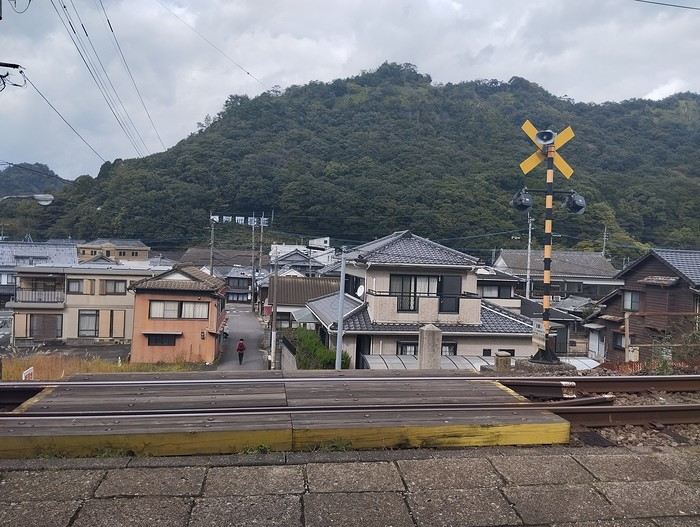
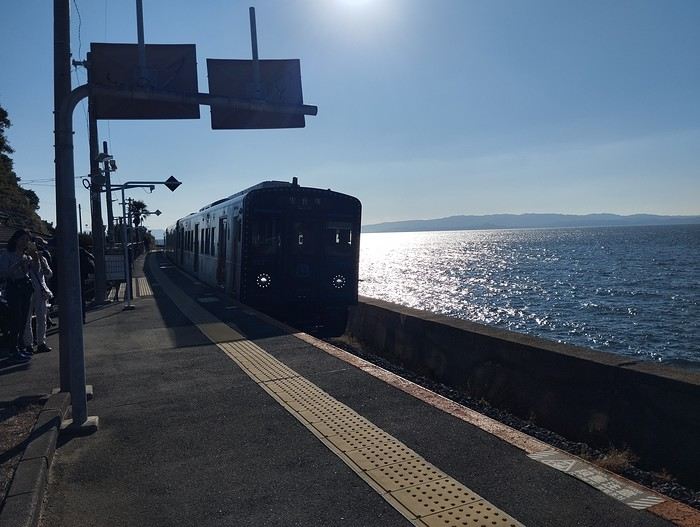
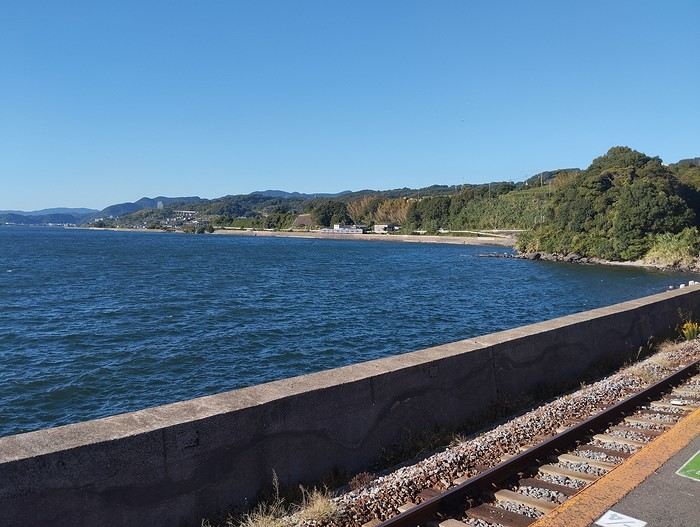
After that pleasant tea tasting, we hit the road again. The sun is still with us. This time, we stop by the coast to visit the charming Chiwata train station. This wooden station overlooks Omura Bay in Nagasaki Prefecture. The vibe is retro, with a few vintage decor items—looks like an old school desk, framed black-and-white photos. The station’s location is super photogenic. We hadn’t checked the train schedule, but luckily there’s one in 15 minutes. Otherwise, trains run about every hour. When we arrived, four people got off the train just to wait for the next one in the opposite direction and snap a few photos. Of course, it’s broad daylight, so it’s not the best time for a great shot—sunset would’ve been prettier. Still, standing on the platform almost at sea level, with the horizon in view, is really nice. The train from Nagasaki pulls in. Click, click, and off it goes along the bay.


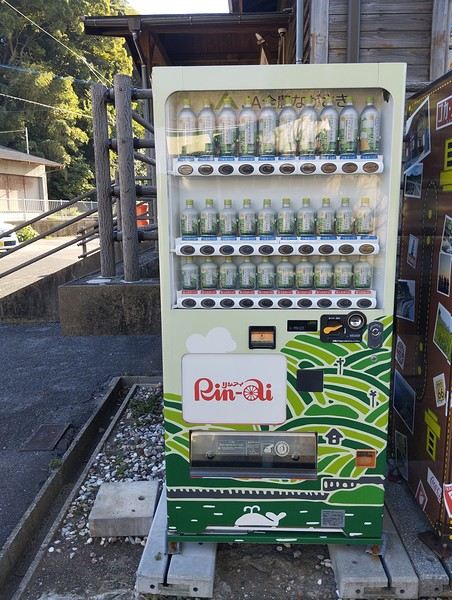
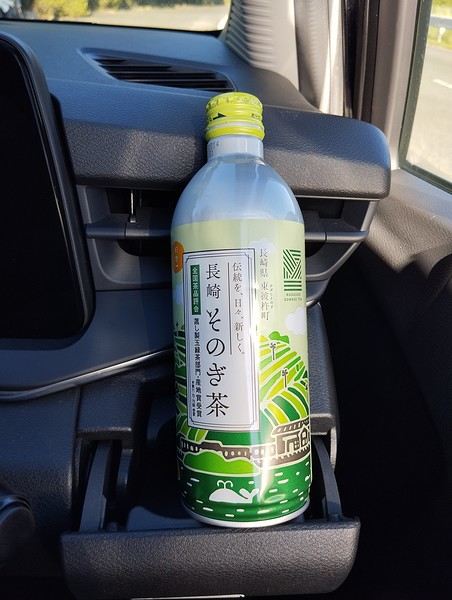
At this station, we make a little discovery. Since it’s so hot, we want to grab a cold drink from one of the many vending machines. There are two here, and one catches our eye because it’s stocked with just one type of drink. A young woman who got off the train from Nagasaki tells us it’s a delicious local tea. We grab one to try it—it’s Higashi-Sonogi cold green tea. There’s no shortage of cold tea bottles in Japanese convenience stores, but if you ever get the chance, don’t hesitate! The bottle has a sleek design, the material keeps the drink colder longer, there’s a little gas release when you open it, and most importantly, the taste is smooth—neither sweet nor bitter, with a unique green tea flavor. Higashi-Sonogi tea is a must-try! Convinced, we buy several, thinking we might not find it again later.


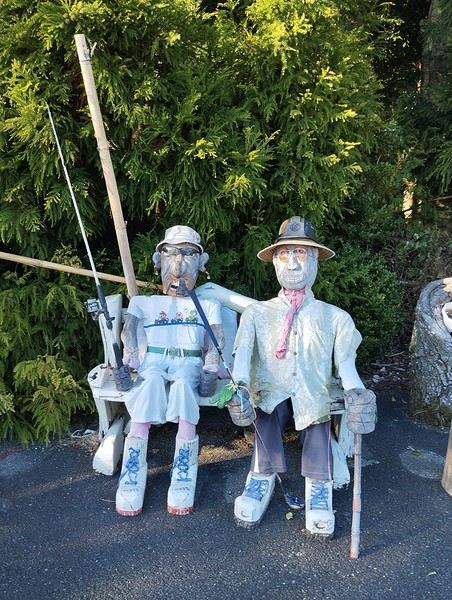
We get back on the road toward Nagasaki, but a sign for a waterfall catches our eye and tempts us to take a detour. We drive through a lovely countryside spot, including a view of a pond with some funny doll-like figures set up in a comical scene.


Further on, there’s a controlled burn happening right next to a tea field.


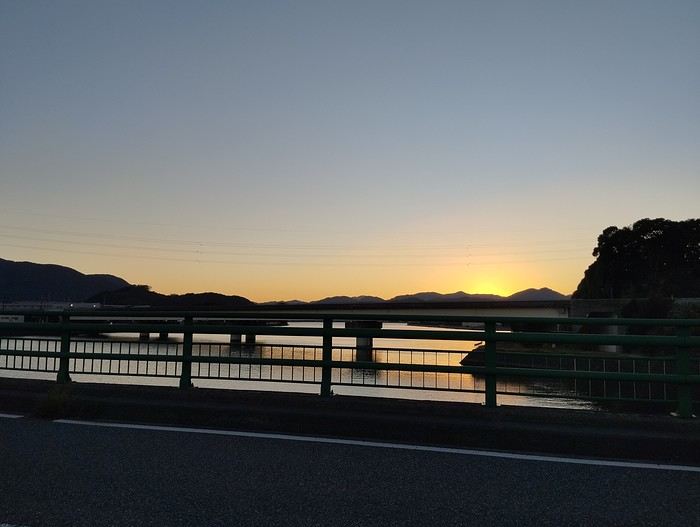
We don’t take the right entrance to the waterfall, so there’s no parking. I stay in the car with the hazard lights on while my buddy heads down the steep, uneven stone steps to see it. When he gets back, we head to Nagasaki. At a 7-Eleven stop, we discover fried chicken with a flavor we’ve never seen before—chili and yuzu. It’s really tasty. On the road, we’re treated to a gorgeous sunset.


Finally, we arrive in Nagasaki in the late afternoon. We’re supposed to meet up with the French couple we met a few days earlier at the festival in Karatsu. But first, we need to check into our hotel. The parking lot is right across the street, which is super convenient. We’re staying at Candeo Hotel in the Chinese Quarter. It’s a nice chain hotel with a rooftop spa. The room is spacious and cozy. The best part is the large window overlooking the outside—though we’ll see more of that tomorrow when it’s daylight.

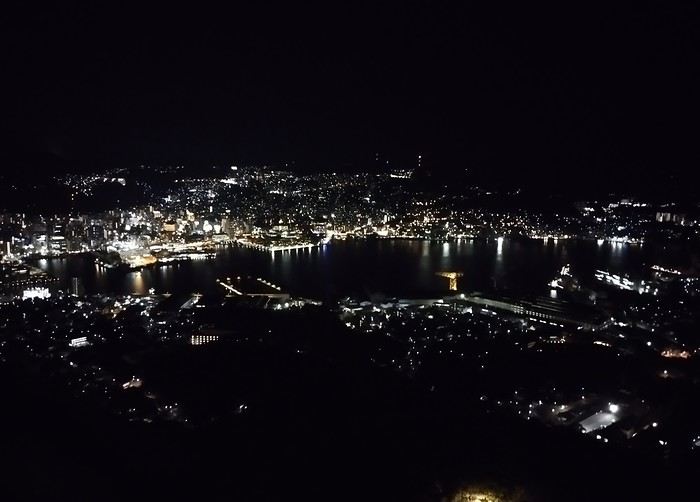
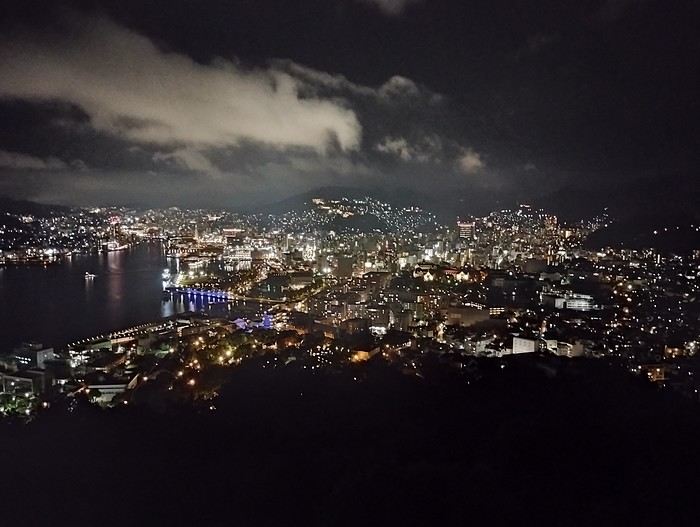
After checking in and dropping off our stuff, our travel friends pick us up in their rental car, and we head to Nagasaki’s famous viewpoint, considered one of the three most beautiful night views. Here we are at Mount Inasa. There’s a fee of 100 or 200 yen to access the platform by car. It’s a well-known spot, so there are quite a few people, but it’s not so crowded that you’re bumping into everyone. The view of Nagasaki and its bay is indeed lovely. We enjoy it for a while before heading up to the building’s floors, where there’s a restaurant and restrooms. We hear different languages—international tourism is back!


We end the evening at a restaurant downtown near Meganebashi Bridge.

After our friends drop us off in our neighborhood, we’re on our own again. We take a little evening stroll through the Chinese Quarter before heading back to the hotel. The Chinese Quarter—well, the few dedicated streets—is completely dark.
https://voyageforum.com/forum/decouverte-japon-tokyo-archipel-ryukyu-okinawa-d9857265/ https://voyageforum.com/forum/escapade-japonaise-shikoku-kyushu-yakushima-tokyo-d9999494/ https://voyageforum.com/forum/kyushu-entre-fukuoka-nagasaki-automne-2024-japon-d10654938/
NA Nathalie971 Regular ·
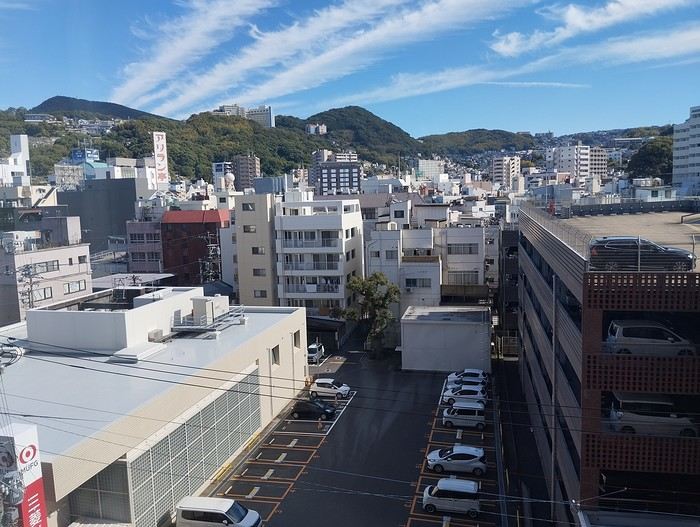
Day 11 - Nagasaki We’ll be spending several days in Nagasaki, but I might as well mention this now for those waiting for visits to the war-related tourist sites: you won’t find them in this travel journal. We deliberately skipped those places. Our first day will be a very relaxed one, or "chill" as they say these days. First, let’s take in the view from the large bay window while comfortably seated on the bench attached to it. The view is clear, with mountains in the distance.


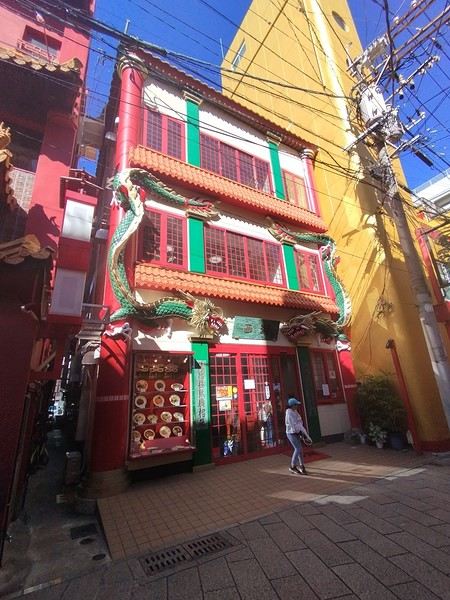
Since our day isn’t starting off happily, we decide to grab breakfast/lunch at a Chinese restaurant in the Chinese quarter. The Chinese quarter consists of just a few short streets. I don’t think you’ll find anything authentic here, and the meal at the restaurant we chose confirmed that. It wasn’t bad, but it wasn’t great either—the taste of Chinese cuisine just wasn’t there.


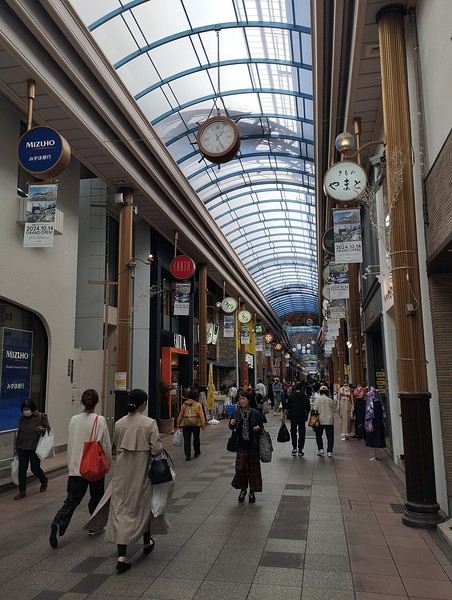
After that, the day was all about wandering aimlessly through the streets. We strolled through the shotengai (shopping arcade), which was really pleasant. It was busy but easy to move around in.


A small market in the middle of the arcade.

We also visited Kofukuji Temple, the oldest Chinese temple in Nagasaki. The woman at the entrance was very smiley.


Right after the temple, we visited a cemetery on a hillside that offered a view of the Buddhist complex. Inside the cemetery, it seemed like people might live there—there was laundry drying and a beautiful traditional house.

We also noticed how tidy the trash bins were kept.

We continued our walk through the shopping streets. Surprisingly, there weren’t many people, and wandering around was really enjoyable.


At one point, we thought there was a Chinese herbalist shop because it displayed so many related items. We tried asking for Chinese herbs, but the language barrier made the communication hilarious—we ended up miming symptoms. After a long, awkward moment for both us and the young man trying to help, we finally realized it wasn’t an herbalist shop but a regular pharmacy. The decor was like a small museum of Chinese herbalism, and the mix-up left us with a funny memory. A little further on, while crossing a bridge, we got lost trying to find the way to the station. A sweet elderly woman we asked for help was determined to assist us. When we asked for the station, she asked which one—bus, train, or subway—but we didn’t understand each other well. Even though she was going in the opposite direction, she offered to walk us there. We chatted a bit—she was happy to tell us she’d learned a little English when she was young. She has 4 children and 8 grandchildren.

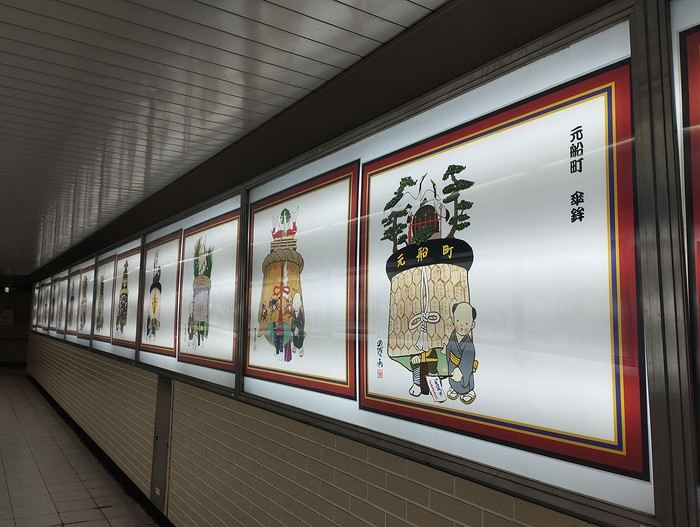
When we reached a subway station, she wanted to go underground with us to take the subway. But we were actually looking for the train station. Not wanting to tell her that wasn’t what we needed, we tried gently to avoid her accompanying us further to save her an unnecessary trip. But Japanese kindness isn’t so easily deterred, so after several failed attempts, we finally told her we’d walk, and she let us go. We never get tired of this Japanese warmth. We continued on our way but still had to take the underground pedestrian crossing to reach a street on the other side of the road intersection. There was an art exhibition.


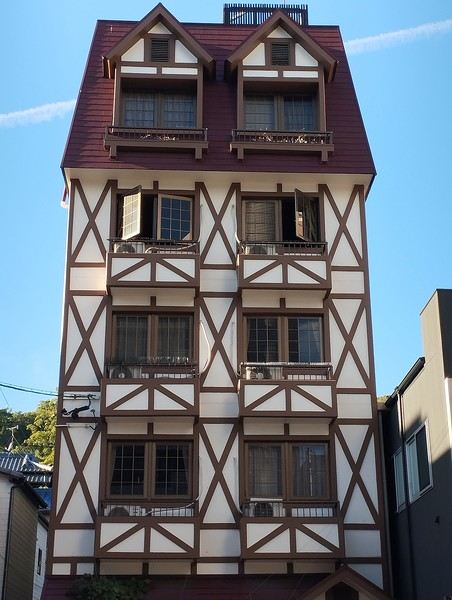
We came across a half-timbered building that looked like it was from Normandy.


Later, we asked a young man for directions to the station, and he also wanted to take us there. We walked together for about 15 minutes, chatting a bit. He’s a high school student and wants to become a firefighter. View of the train tracks between the roads from one of the footbridges crossing the tracks to reach the station.

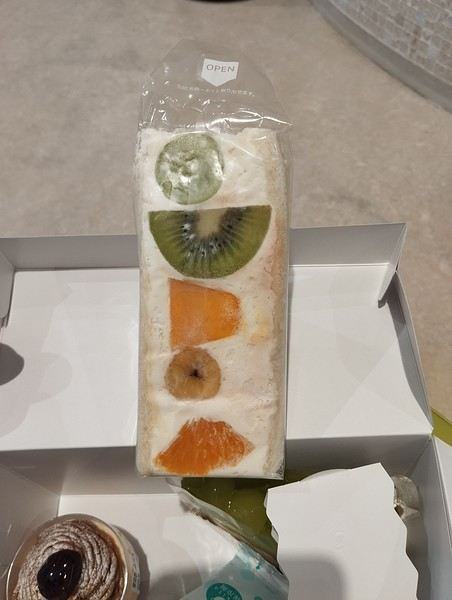
Nagasaki Station is a beautiful, large, modern building that’s really pleasant. We stopped by the tourist office to pick up some brochures and ask a few questions about getting to Kumamoto. At that point, we’d only booked two nights in Nagasaki and weren’t sure if we wanted to stay longer or go somewhere else. We took a little break in a shopping center at the station, trying some desserts, including the famous fruit sandwiches. They weren’t bad, but personally, I prefer fruit on its own—they’re so delicious that the thick cream and bread just get in the way of enjoying the flavors.


Cleaning robot


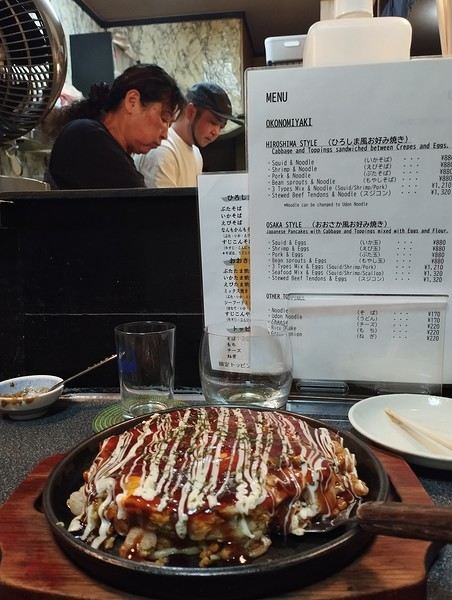
Eventually, night fell, and we walked back to our hotel. We took the opportunity to ask about the price if we wanted to stay longer. We also tried to negotiate the rate since we were currently in a deluxe room at the price of a standard one, but no luck. We went out again for dinner at an okonomiyaki restaurant. We each ordered one—one Osaka-style and one Hiroshima-style. The Hiroshima version had a fish-flavored paste that was *very* strong—I wasn’t a fan because the fish taste was overpowering. We preferred the Osaka version without that paste. We ate at the counter, watching the mother and son prepare the dishes. After each cooking session on the teppan, it was cleaned meticulously before the next dish, which was really impressive. We also met a Dutch guy who travels to Japan regularly.


We walked back to the hotel again, passing through the Dutch quarter, which is also just a few streets. But there wasn’t much open by then.

The evening ended quietly at the hotel.
https://voyageforum.com/forum/decouverte-japon-tokyo-archipel-ryukyu-okinawa-d9857265/ https://voyageforum.com/forum/escapade-japonaise-shikoku-kyushu-yakushima-tokyo-d9999494/ https://voyageforum.com/forum/kyushu-entre-fukuoka-nagasaki-automne-2024-japon-d10654938/
NA Nathalie971 Regular ·
Day 12 - Gastronomy in Nagasaki

Second day in Nagasaki. This one will be just as relaxed as yesterday but with a strong focus on culinary pleasure.

It starts with lunch.

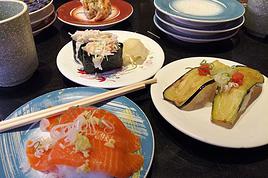
We head out to try a sushi restaurant we spotted on Google Maps. After our excellent experience with a master sushi chef last year during our trip to the north, in Sakata in the Tohoku region, we’re excited at the chance to eat at a master sushi restaurant again.

To get to the restaurant, we need to take the bus.

At the station, we find the stop for our bus, and when we see it, we hop on. I follow the route on Google. But at some point, after we’ve left the urban center for a while, I realize the bus isn’t taking the right route. I ask an elderly woman behind me (there are almost only elderly people left on the bus at this point) who lets me know we’ve taken the wrong one. She then speaks loudly from the back of the bus to the driver, and at the next stop, we’re told to get off. The woman gestures for us to cross the street to catch a bus going in the opposite direction.

On the other side of the street, we’re now looking at the signs, trying to figure out which bus to take. But very quickly, a young woman waiting for a bus offers to help. She tells us to wait and that she’s taking the same bus as us. She speaks a few words of English, and we speak a few words of Japanese. We start chatting. She asks what we’re doing here since there’s nothing to visit in this area.

The bus arrives, so we get on. It’s pretty full.

My companion sits down while I continue the conversation with the young woman. I explain that we’re going to eat at a sushi restaurant and show her the photo on Google Maps. Apparently, the restaurant is well-known. I ask if it’s good. She replies via voice translator that it’s a place for people with particular tastes and that there are many regulars, though she’s never been there herself.

She’s a salesperson in a store in downtown Nagasaki. Unfortunately, our stop comes up quickly, and our conversation is cut short because we have to get off, as the woman indicates. We thank her warmly and hurry to disembark so we don’t hold anyone up.

As we get off the bus, just like at the previous stop, we immediately feel a very peaceful atmosphere. We see that the restaurant is on the other side of the intersection, so we head over. In front, we approach the entrance, and on the side of the house, an elderly woman is watering her plants. When she hears us, she invites us in. We open the door, and the master sushi chef is at the counter. We’re greeted with a smile and invited to sit at the counter. Anyway, the restaurant isn’t very big—just 4 seats at the counter and 2 tables for 2-3 people, but they’re "cluttered" with stuff.

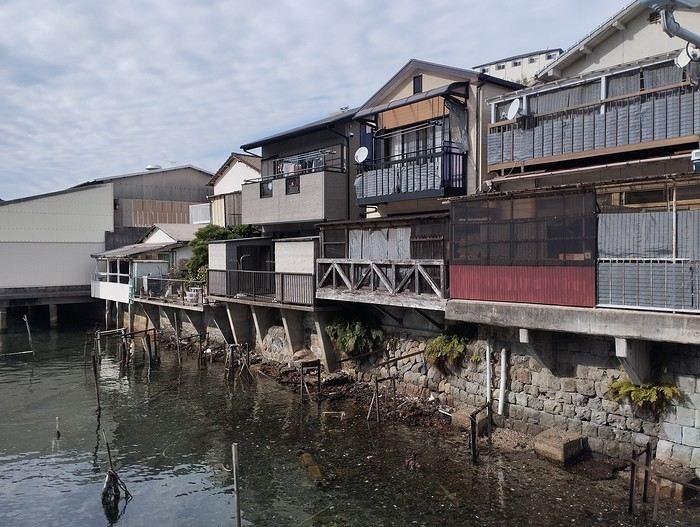
The restaurant is in a neighborhood bordered by water.


The restaurant’s decor is Japanese and cute. The chef and his wife are pleasant—well, normal, since we’re in Japan.

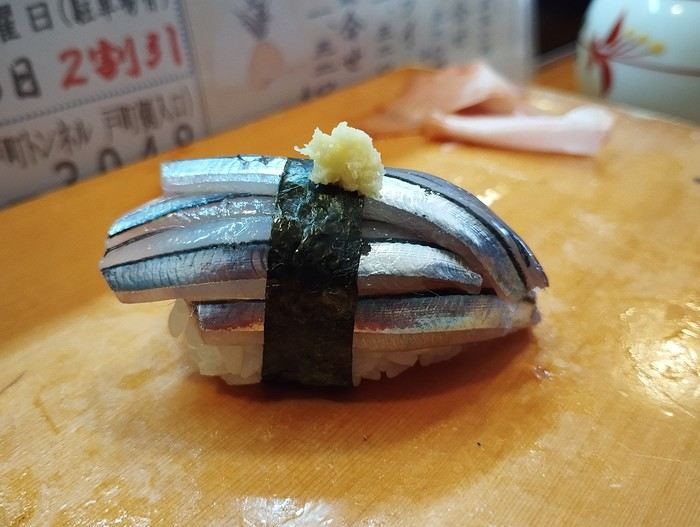
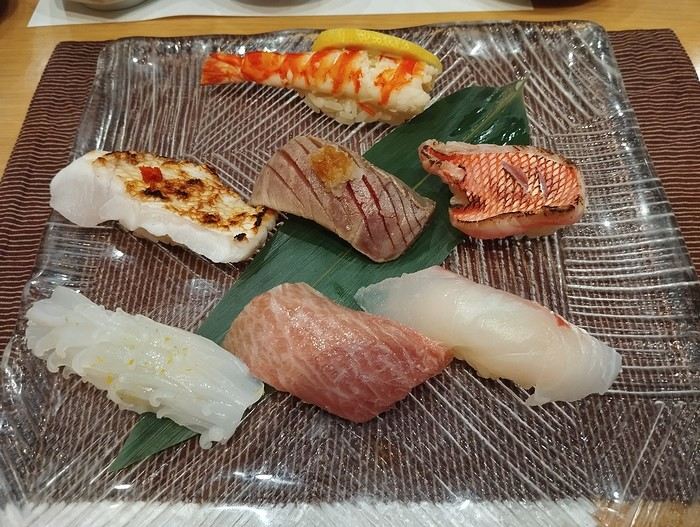
We order an omakase menu. The chef systematically asks us if we eat this or that fish. Every sushi is fantastic in taste, absolutely divine:

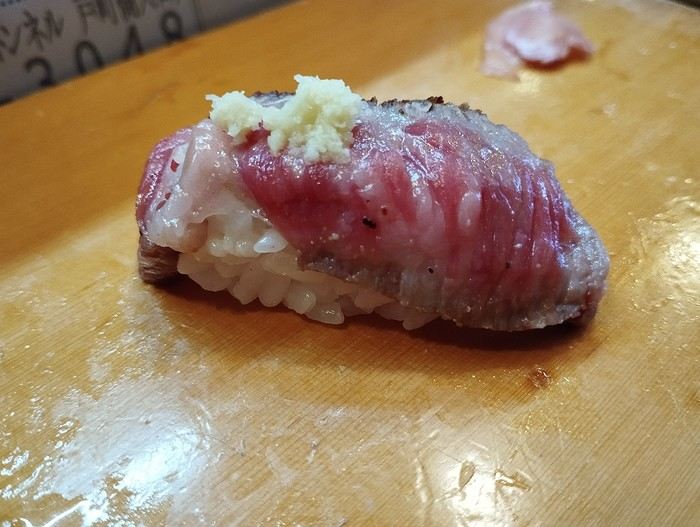
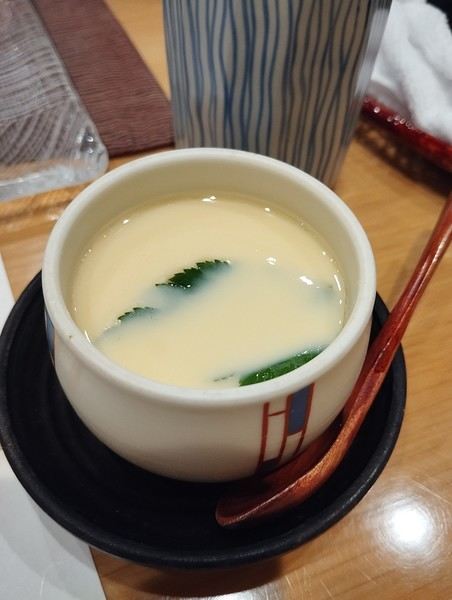
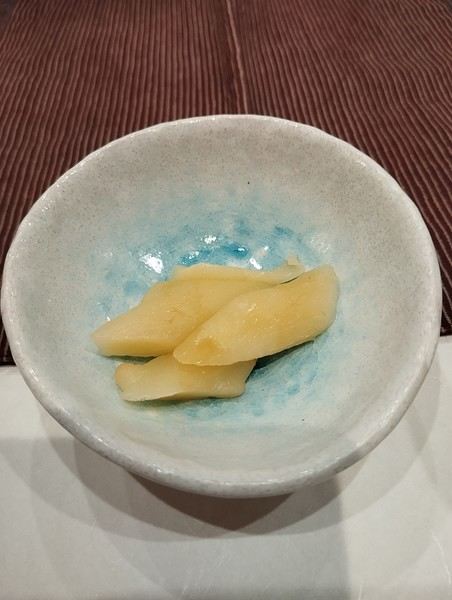
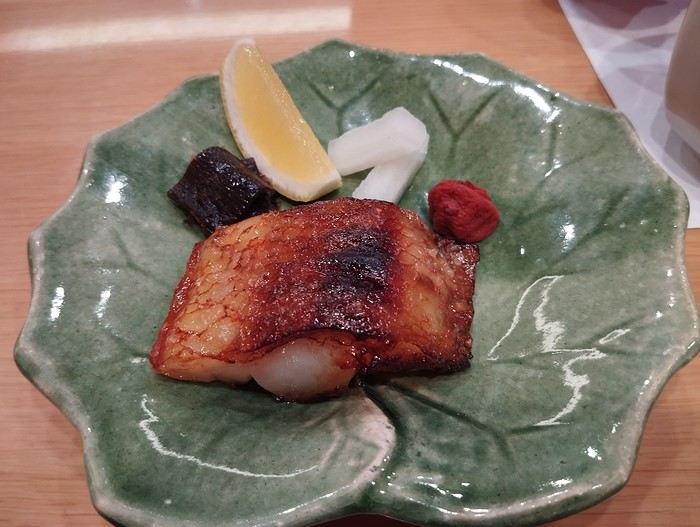
One of the fish looks like a jewel, like a magnificent sparkling diamond the omelet is meltingly perfect—we’ve never had one this good the shrimp sushi has an exquisite briny taste the pickled ginger is tender and delicate what to say about the wagyu sushi: simply delicious an excellent green tea in short, everything was mouthwatering!


Plus, we chat as best we can, and little by little, a sense of closeness develops. We teach each other words in Japanese and French. The chef compliments us on our chopstick skills and shares tips like how to hold soy sauce or how to say "sushi" or "sashimi" with your hands. We learn that the chef has been working here in his house/restaurant for 33 years, is only closed on Wednesdays, and takes just one week of vacation a year—much to his wife’s dismay, who clearly wouldn’t mind having more time to enjoy life.

We also learn that this is only the third time foreigners have come to his restaurant. There have been Spaniards and French. He shows us photos of them on his camera. With one click, we’ll be in his memory box too.

The couple has never left Japan and has only visited Kumamoto and Beppu in Japan. Their life revolves around work.

We take our time because, on one hand, the dishes are so good that we order some again, we have the master sushi chef all to ourselves (no one else comes the whole time we’re there), and most importantly, we’re having a great time.

When I give a small gift to the wife, who’s delighted, the husband immediately reacts by giving us a gift in return—a cup with the fish and their names on it.

Though she’s shy, the wife agrees to take a photo with her husband.

All good things must come to an end, and we have to leave. We pay the bill, which offers excellent value for money.

The couple walks us out, of course. And when I say a certain closeness developed during the meal, well, the master sushi chef touches (without asking) my partner’s lower belly to tease him about how much he ate!! And he shakes both our hands. That’s really not common in Japan, as far as I know.

We take the bus back to the city center.

We stop by the hotel quickly and decide to extend our stay in Nagasaki because we like it here. We try to negotiate with the hotel, but it’s impossible. Online, the prices are cheaper than at the hotel directly. Still, the prices remain high, and there aren’t many options. We decide to stay at the same hotel but won’t get the same deal, so we won’t be in a deluxe room anymore. We’ll have to change rooms tomorrow morning.

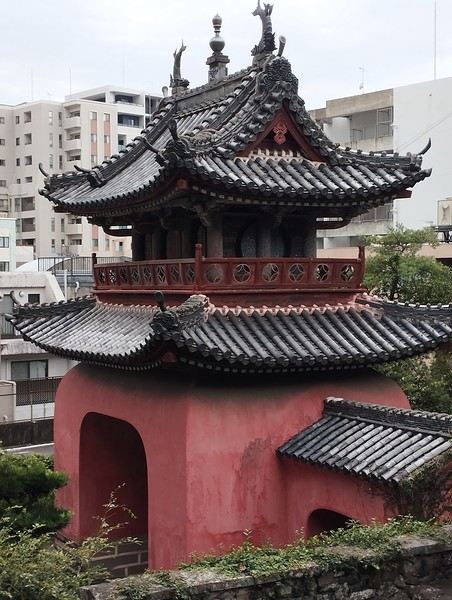
Then, we head out for another walk. We visit the Sofuku-ji Temple, which has a Chinese-style wooden architecture.


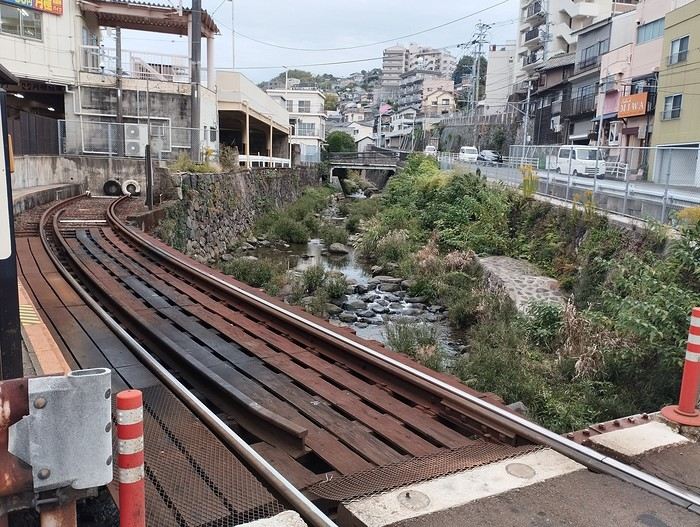
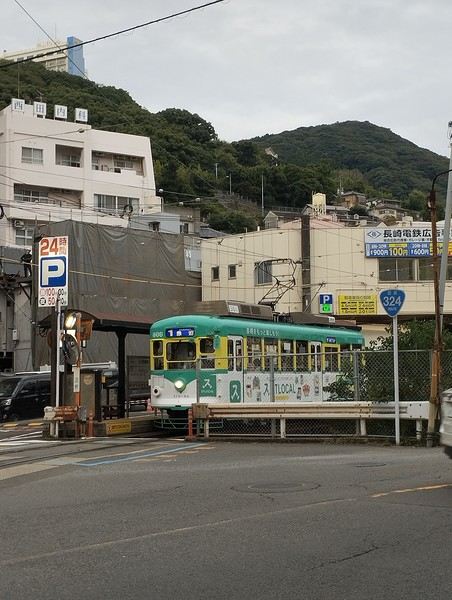
The terminus and starting point for some tram lines. By the canal, it’s nice.


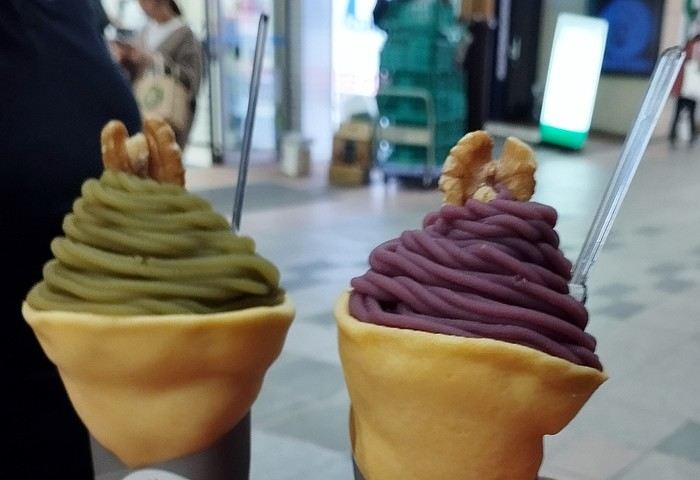
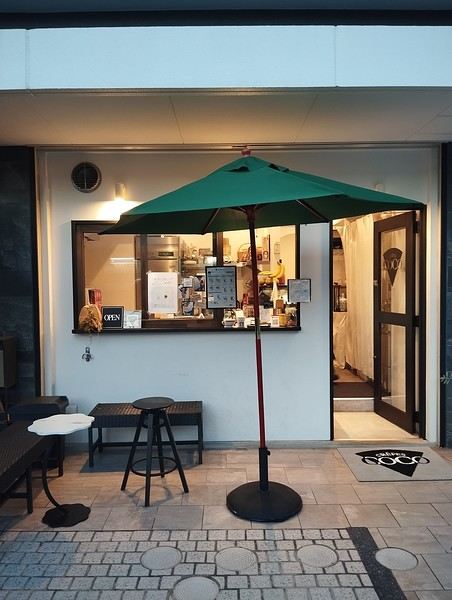
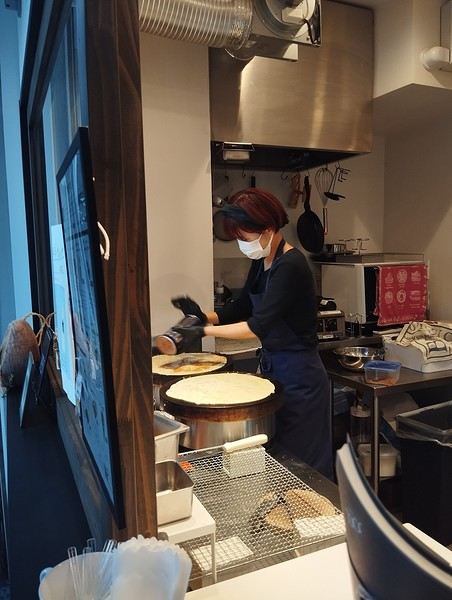
We then stroll through a shopping arcade again, where we treat ourselves to a little snack—a crepe filled with cream and sweet potato paste for one and matcha for the other. Not bad, but not exceptional either, and the crepes taste different from French crepes.


In the gallery, we’re shocked by the price of school bags for kids. There are different prices, but the cheapest is still over 200 €. They do seem very sturdy, though.

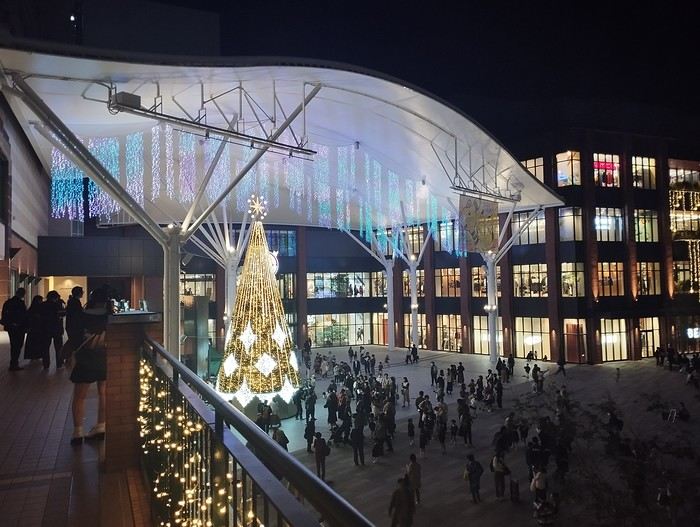
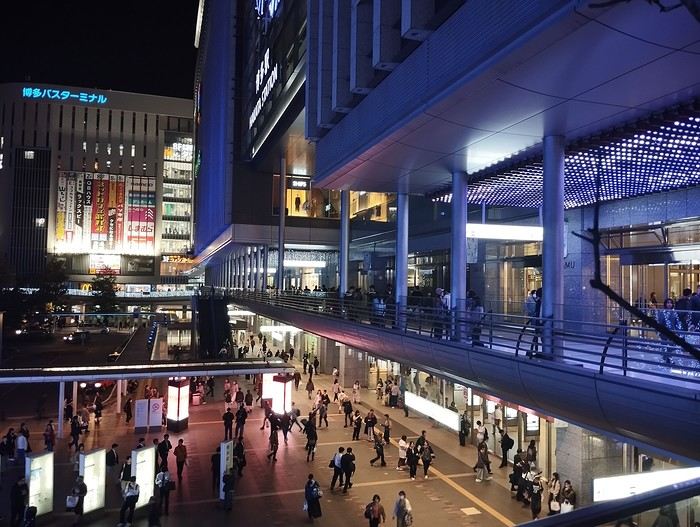
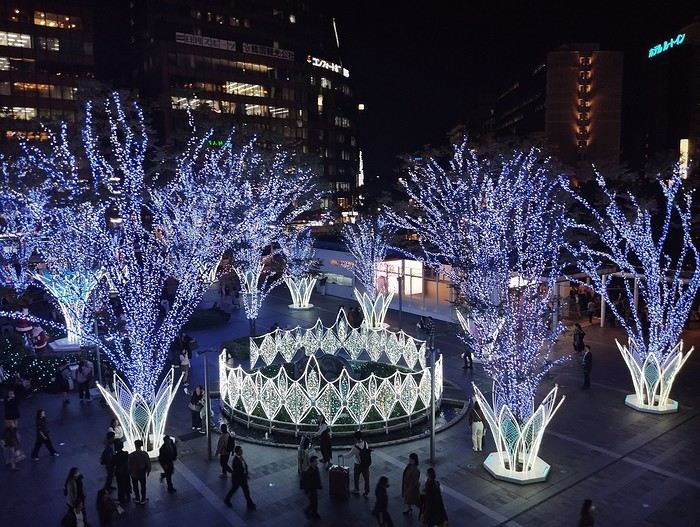
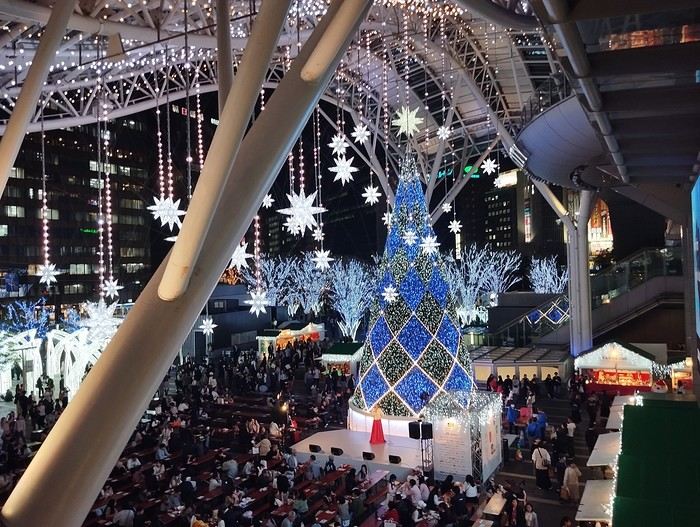
In the evening, we decide to walk to a restaurant I spotted—it’ll take about an hour. We pass by Nagasaki Station again, which tonight is decked out in Christmas lights with a sparkling tree and a snowfall animation, all accompanied by music. Young kids are having a blast trying to catch the "snowflakes."


Further on, we pass the Hilton Hotel, whose interior staircase architecture is stunning.

Finally, we arrive at the location of the restaurant, which is at the sports stadium. Now we just have to find the restaurant.

While we’re looking for the entrance, we discover that the stadium is lively even though there’s no game. The stands are open to the public, and you can sit there to eat. There’s a food hall. We learn that you can only pay by credit card here—cash isn’t accepted.

For 30 minutes, we go in circles and can’t find the restaurant, and no one seems to know where it is. After struggling for a while, we’re in front of elevators that only go up to the 7th floor, but the restaurant is supposed to be on the 14th. The person we asked doesn’t know, but luckily, a group of three friends passes by, and one of them has heard of the restaurant. She tells us to follow her. Phew! On the 7th floor, we have to take another elevator to reach the higher floors, but it wasn’t indicated.

On the 14th floor, the young woman shows us the restaurant. She and her friends are heading to a pretty classy-looking jazz club.

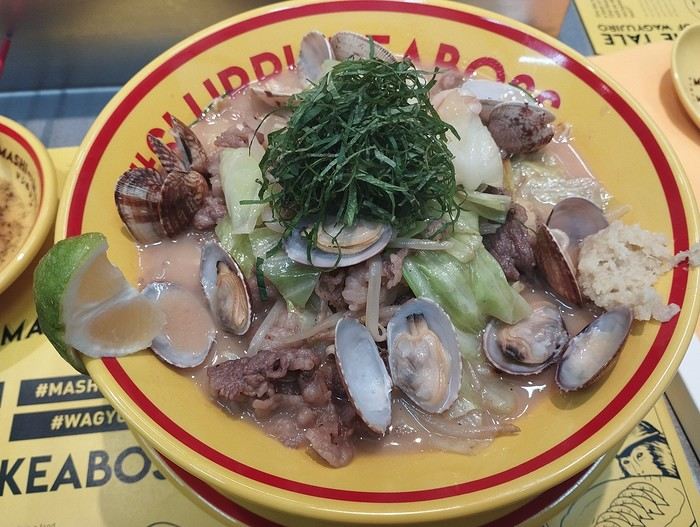
Why did I choose this restaurant? Well, because it offers land-and-sea ramen with wagyu and clams.

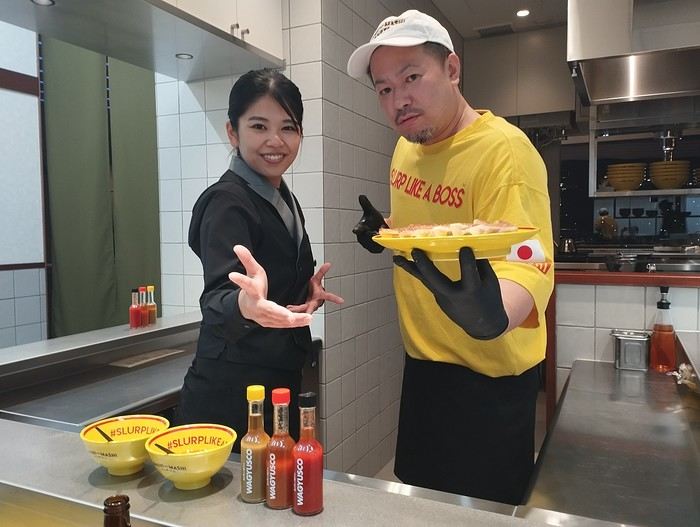
The restaurant is actually tiny—maybe 6 seats around a stainless steel bar. It has a 1950s American diner vibe. A waitress stands in front of you while the cooks work behind the counter. But when we arrive, there’s no one there. Only an older man shows up a little later. We learn from the waitress that he’s a grandfather today—he’s thrilled.

The team is young. The restaurant opened just a month ago, and they ask how we found it. This is the 4th location in the chain. The first restaurant opened in Hong Kong. It offers a modern take on one of Nagasaki’s specialties, champon ramen.

The ramen is made only with top-quality ingredients. The broth is prepared with wagyu bones (apparently from Ozaki in Kyushu) 24 hours in advance.

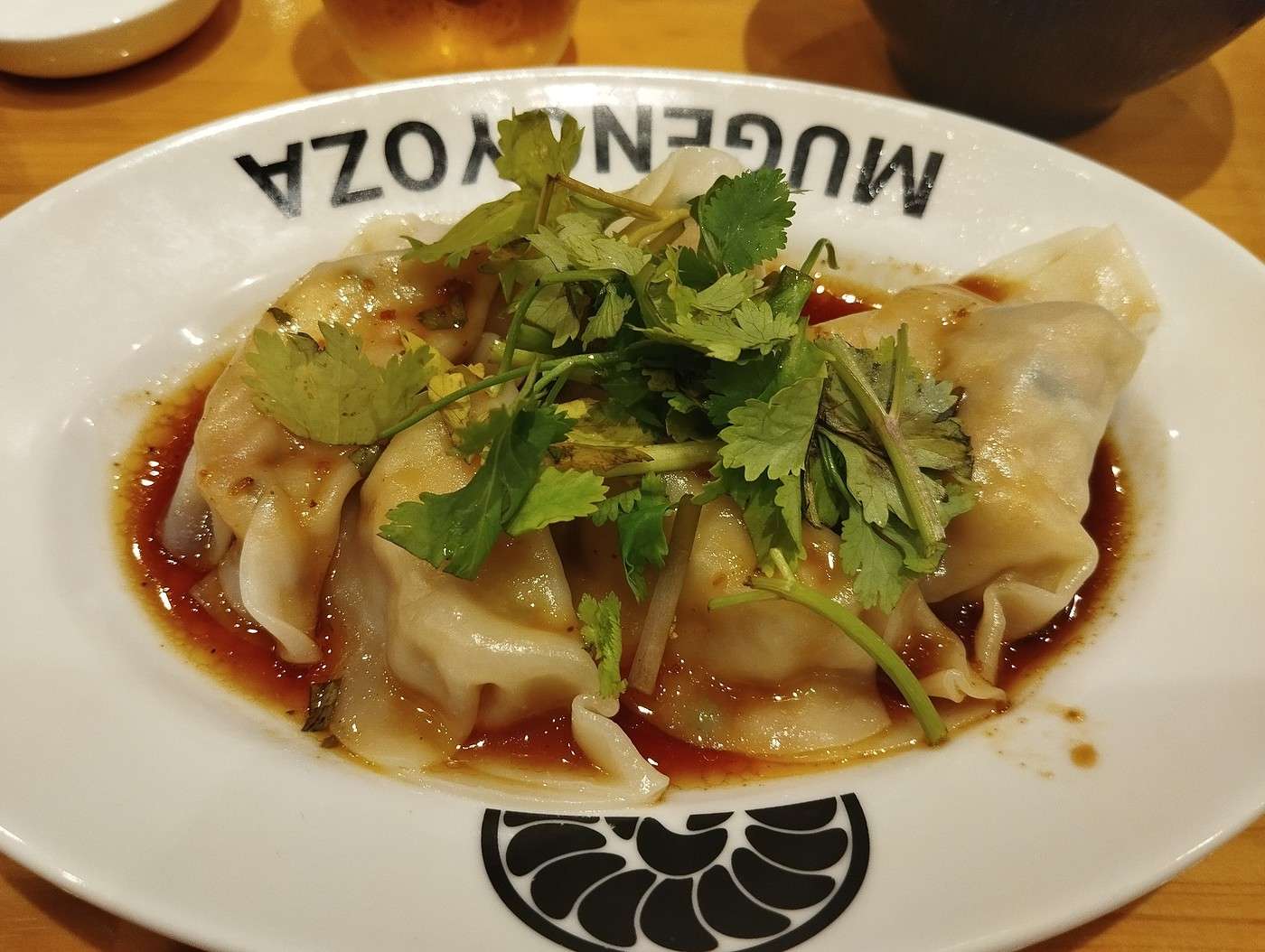
They also offer wagyu gyoza.

The service is Japanese—attentive. Since the team is young, it’s easy to chat with a few words of Japanese and English. The young waitress lived in Tokyo for 5 years and dreams of visiting France. We give her some regional suggestions.

The meal is excellent and generous. However, quality ingredients come at a price. The bill is steep. So it’s not a restaurant for small budgets or those who don’t prioritize food. But the taste was on point, and the experience was worth it. Here too, you can only pay by credit card—no cash.


As a bonus, we get to access the terrace on the other side, which faces Mount Inasa. Lit up at night, it’s beautiful. We can’t sit down, and the staff stay with us, so we can’t stay long. As we leave, the team shakes our hands.

We walk back home in the gentle night air.
https://voyageforum.com/forum/decouverte-japon-tokyo-archipel-ryukyu-okinawa-d9857265/ https://voyageforum.com/forum/escapade-japonaise-shikoku-kyushu-yakushima-tokyo-d9999494/ https://voyageforum.com/forum/kyushu-entre-fukuoka-nagasaki-automne-2024-japon-d10654938/
YV Yves33 Regular ·
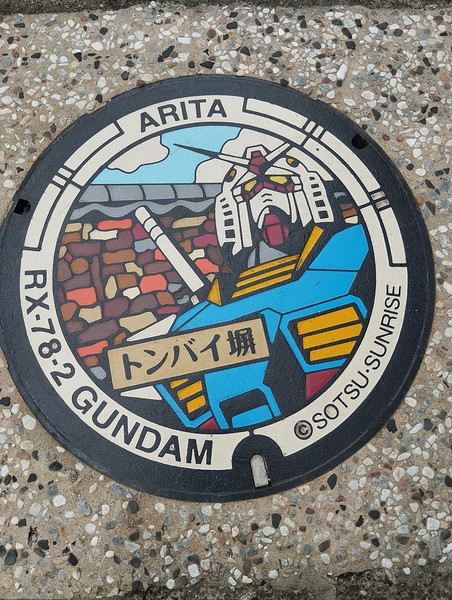
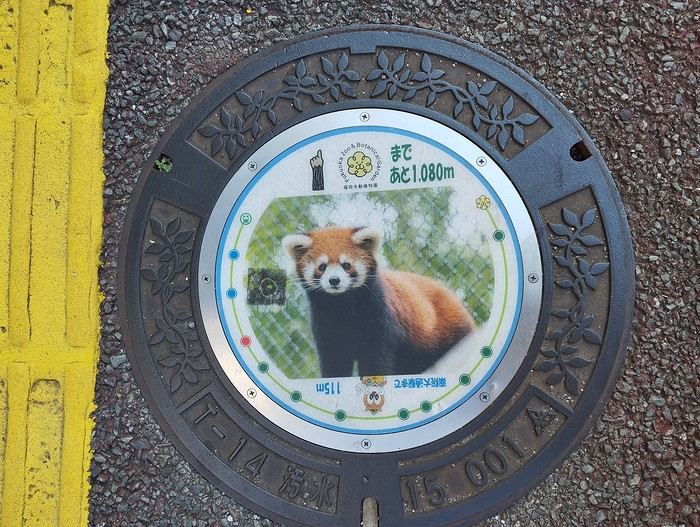
Hi there, Really late to reply (maybe already answered), but I haven’t been on this site much since it closed and reopened. The "decorated manhole cover" isn’t actually a manhole cover—it’s a fire hydrant (it even says so on it) that firefighters can connect to. It’s the equivalent of our red hydrants here.
NA Nathalie971 Regular ·
Hi Yves,

Better late than never, as they say.

Thanks for the correction. Indeed, someone else (on another site) had pointed out that it was a fire hydrant, as the drawing on the hydrant mouth suggests, by the way.
https://voyageforum.com/forum/decouverte-japon-tokyo-archipel-ryukyu-okinawa-d9857265/ https://voyageforum.com/forum/escapade-japonaise-shikoku-kyushu-yakushima-tokyo-d9999494/ https://voyageforum.com/forum/kyushu-entre-fukuoka-nagasaki-automne-2024-japon-d10654938/
NA Nathalie971 Regular ·
Day 13 – Fumaroles at Unzen

Today’s adventure is a trip to Unzen. It takes us about 2 hours by car. The last stretch is really enjoyable as we wind along the mountain roads, which twist and turn and offer stunning views of the peaks. Before you know it, we’re pretty high up.

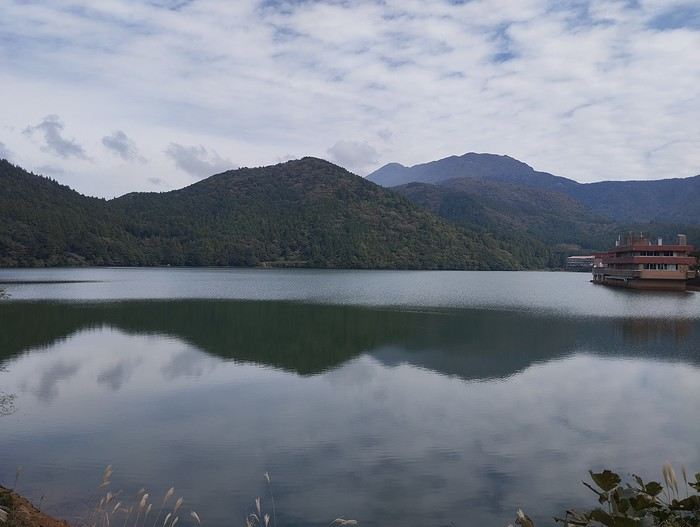
Along the way, we stop for a stroll around Lake Oshinori. The surrounding nature is so peaceful. We walk the path along the lake until we reach the stone Buddha sculpture in the forest.

We only run into one Western couple.


After that, we quickly drive to the famous Hells of Unzen. First, we have to park. There are only paid parking lots.

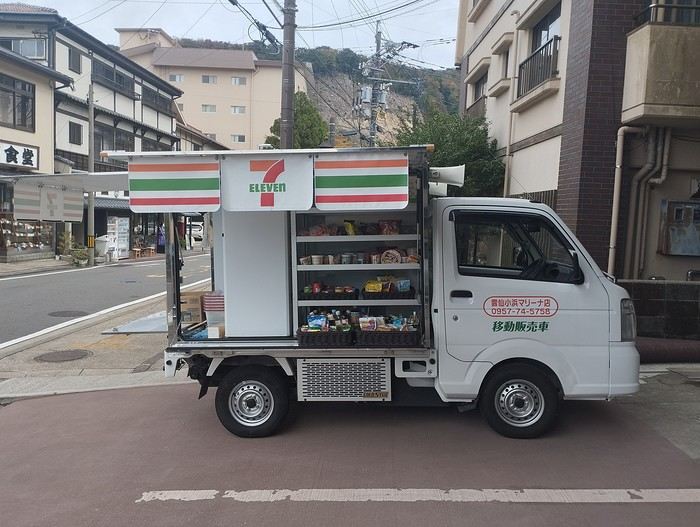
We make an unusual discovery—a mobile 7-Eleven konbini. I’m not sure how common these are, but it’s the first time I’ve seen one!


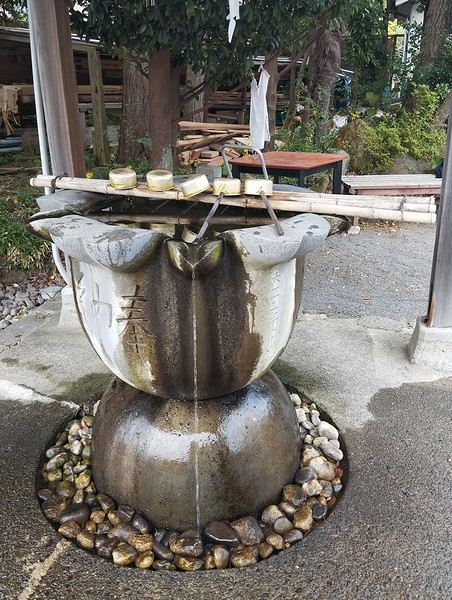
We start with a visit to Unzen Onsen Shrine.


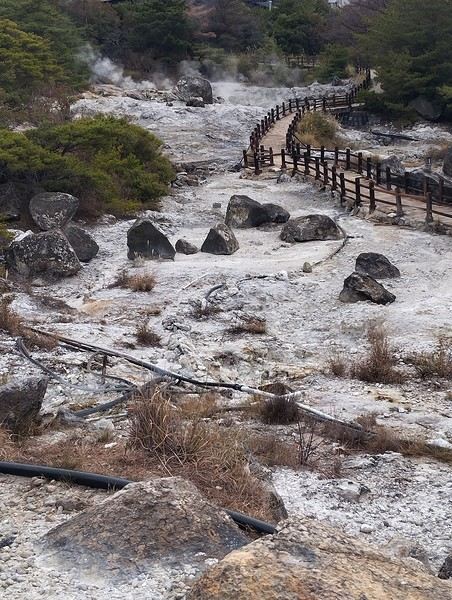
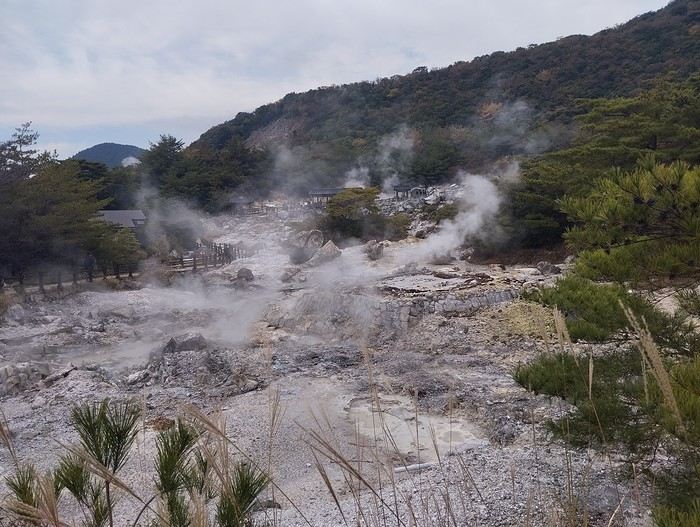
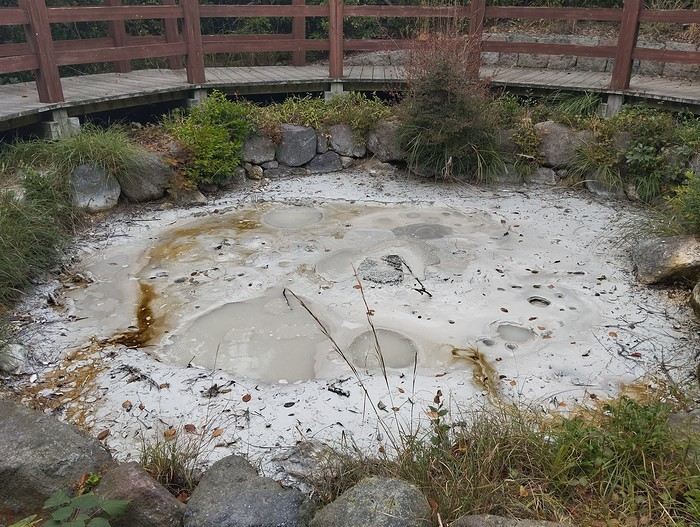
Then, we head to the Hells. The closer we get, the more fumaroles there are. The white smoke sends waves of heat our way. We can see the mud bubbling. The Hells are explored via a walk along different paths winding through these volcanic lands, which bubble more or less depending on the spot. The landscape is lunar and really pleasant to take in.


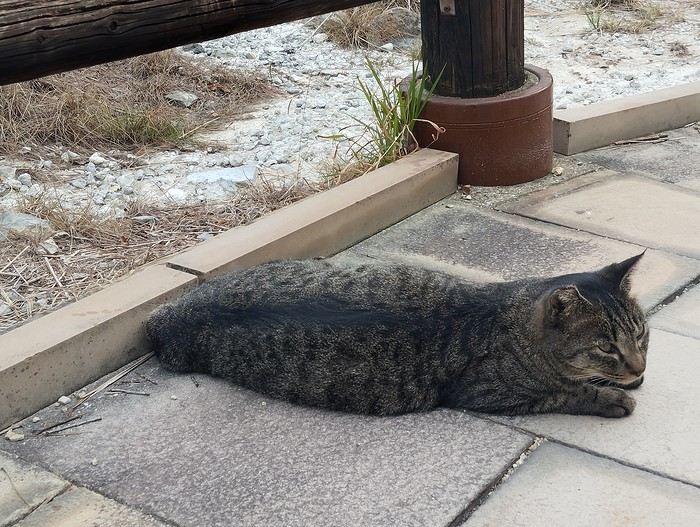
Cats have made this their territory. They nap on the paths and roam around freely.


There are different Hells you can reach by walking along the various paths. In some places, there are muddy areas bubbling from the heat beneath the ground.


We stopped by the information center and then wanted to visit Misojien Garden. Unfortunately, it wasn’t open yet—it was too early in the season for koyo. It only opens on November 22. However, the staff were busy preparing the place to welcome visitors in a few days.

We wanted to continue to Shimabara, but the drive took a bit longer, and we arrived a little late, so we decided to head back.

In hindsight, even though it’s possible to visit Unzen as a day trip from Nagasaki, I think it’s worth staying at least one night—maybe two or three—to really take the time to explore the area. That said, the Hells were still a fantastic discovery.

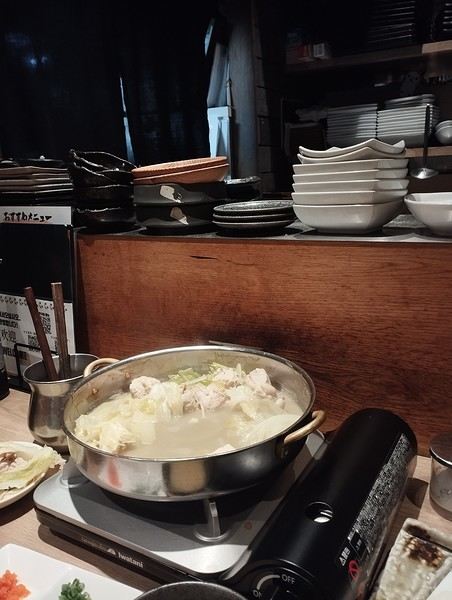
We return to the hotel, stopping at a supermarket along the way to grab some food. Once we arrive, we ask the staff if we can eat in the breakfast area. They say yes, so we settle in comfortably at the bar-style space by the large windows with a view of the neighborhood. They turn on the lights for us, and we have access to a microwave. They even happily take care of our trash. We end the evening relaxing at the hotel.
https://voyageforum.com/forum/decouverte-japon-tokyo-archipel-ryukyu-okinawa-d9857265/ https://voyageforum.com/forum/escapade-japonaise-shikoku-kyushu-yakushima-tokyo-d9999494/ https://voyageforum.com/forum/kyushu-entre-fukuoka-nagasaki-automne-2024-japon-d10654938/
MA Mahayana ·
Hi Nathalie, Thank you so much for sharing this. I’m heading to Japan for three weeks starting October 28th. All my hotels are booked, which isn’t my usual way of traveling. It doesn’t leave much room for "adventure"! But I’ve been told that in Japan, you can’t just show up at a hotel and ask for a room. My travel partner backed out due to personal issues. I really want to go alone to have the freedom to meditate in temples if I feel like it, but I’m scared—scared of missing a transport and, as a result, my hotels. Getting around seems complicated. I don’t speak English, and the destinations are listed in English. I heard there are no street names in Tokyo. How do you find your way and get to your hotel? What do you think? Best regards, Solange
Fleur de Neige
NA Nathalie971 Regular ·
Hello Nathalie, Thank you so much for sharing.

Hello Mahâyâna, and thanks for reading.

I have to spend 3 weeks in Japan starting October 28th. All my hotels are booked, which isn’t my usual way of traveling. Solange

Same for my first trip. But you’ll see that once you’re there, you’ll be glad you did it because it frees up time to enjoy the moment, especially since the days aren’t long enough given all the possibilities.

It doesn’t leave room for "adventure"!

Adventure in Japan is elsewhere. In the encounters with people, the detours down a side street, the little details that catch your eye left and right, in the cultural differences, the varied landscapes, and so on.

But I’ve heard that in Japan, you can’t just show up at a hotel and ask for a room.

I’ve never tried it myself, but I asked the same question and here’s the answer I got: While it’s true that you can’t just show up without a reservation, you *can* book the night before or even the same morning. This is possible if you book step by step using international apps or by asking the hotel reception to call the next hotel for you. Plus, if you use international apps that offer tons of accommodation options with free cancellation, you can still change your initial plans.

For example: - On my last trip, which I talk about in this travel journal, I had booked accommodations for the whole route, but my itinerary wasn’t set in stone. Once there, we let our feelings and desires guide us—canceling, rescheduling, extending, and postponing many times.

- On my second trip, we stayed at one hotel for 2 nights and had another 2 nights booked elsewhere. We wanted to stay longer at the first hotel, but the second one no longer allowed free cancellation on the app. We explained the situation to someone at the hotel, and they kindly called for us. They said we were sick, and our reservation was canceled without fees. So we ended up staying 4 nights instead of 2 at the first hotel.

My travel partner backed out due to personal issues. I really want to go alone to have the freedom to meditate in temples if I feel like it, but I’m scared—scared of missing a transport and, as a result, my hotels. Getting around seems complicated.

Japan is safe, and *everything* is simple in daily life. For transportation, I don’t know your exact itinerary, but I assume it’s based on public transit. Just know that: - 99% of the time, transport is on time - Bus/train/flight schedules are designed so connections make logical sense without long waits - Signage is highly developed and easy to understand: lots of color codes, floor markings, overhead signs, and clear paths

Look up transport schedules and plan accordingly—everything will go smoothly.

I don’t speak English, and destinations are indicated in English. I’ve heard there are no street names in Tokyo. How do you find your way to your hotel?

Most tourists don’t speak Japanese, just like they don’t speak the language in many other countries (India, Iran, Thailand, etc.), and that’s not a barrier to traveling there. As for English, many people don’t speak it either, and that doesn’t hold them back. Sure, communication can sometimes be slower or more laborious, but that’s part of the adventure. Plus, there’s Wi-Fi in many places, so you can use translators. But most importantly, Japanese people are *incredibly* helpful. They won’t let you go until they’ve helped you—even if it means taking a detour to walk you to your destination if it’s too hard to explain, or pulling out their phone to translate, or asking other people on the street for help. The kindness, hospitality, and goodwill of Japanese people aren’t just a myth.

You can also use the Maps.me app offline if you download the maps beforehand.

In Japan, you won’t stay lost for long if it happens—rest assured.

What do you think?

I think that based on your profile, you love Asia, and it would be a shame not to give Japan a try. It’ll likely be easier than other countries like China, not to mention it’s a beautiful place.

But hey, that’s just my opinion—it’s up to you to decide.

Take care and happy thinking.
https://voyageforum.com/forum/decouverte-japon-tokyo-archipel-ryukyu-okinawa-d9857265/ https://voyageforum.com/forum/escapade-japonaise-shikoku-kyushu-yakushima-tokyo-d9999494/ https://voyageforum.com/forum/kyushu-entre-fukuoka-nagasaki-automne-2024-japon-d10654938/
NA Nathalie971 Regular ·
Day 14 - Nagasaki

Another day, but the weather isn’t cooperating. The sky is very gray, so we change our initial plans to stay in Nagasaki.

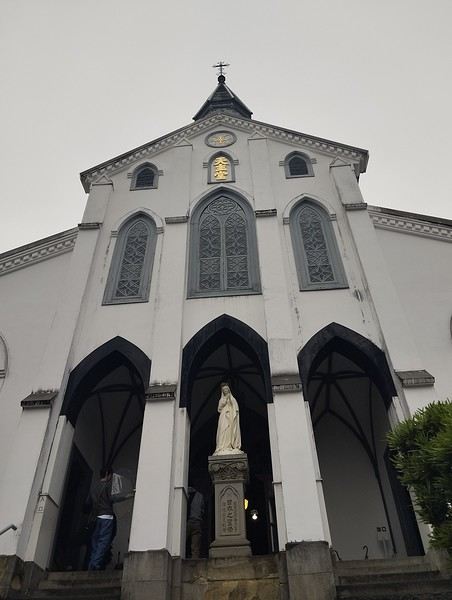
We start with Oura Cathedral. We’d barely parked when it started raining. A shopping alley leads up to the cathedral. It’s actually a paid entry—it’s been turned into an informative museum about the history of Christians in Japan. We learn there are 183 churches in Japan, many of them in Kyushu, especially in Nagasaki Prefecture. We also discover how Catholicism took root in Japan. The museum includes the cathedral itself plus other rooms with videos, information panels, photos, old objects, and costumes—basically, a fascinating and historical discovery.


When we leave, the weather still hasn’t improved, and the dark gray sky doesn’t look promising. We try to find a nice café and then a restaurant, but there isn’t much open or that interests us.

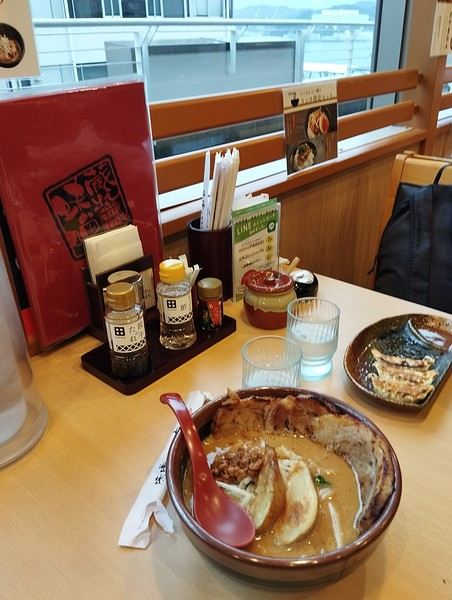
The rain gets heavier, so we have to revise our plans. We decide to head somewhere dry—a shopping mall. We drive there, and it’s busy; we even have to queue for the parking lot. The mall is spread over several floors and has a bit of an old-school vibe. We stop at the restaurant floor to eat. We go for a Hokkaido ramen.


We make a stop at Daiso. We find some objects and utensils that are unusual for us French folks.

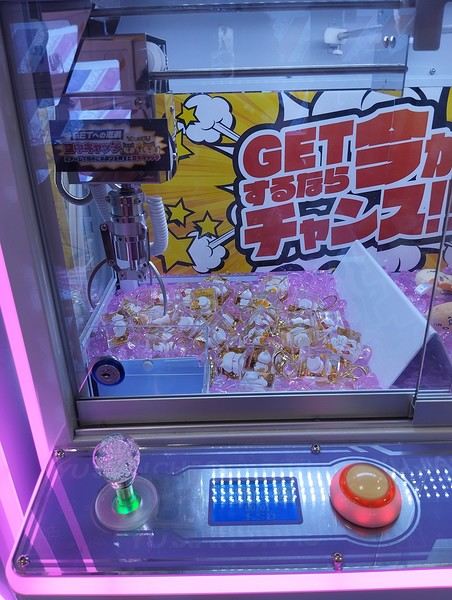
We try our luck in the arcade area, but no dice—we strike out.


We also hit the supermarket to pick up some things for dinner. The rain isn’t motivating us to go out to a restaurant.

Parking is paid, but every purchase in a restaurant or shop gives you a discount. When it’s time to leave, you have to scan all your "special parking discount" tickets to find out how much you owe. Our tickets cover the full cost, so we don’t pay anything for parking.

Before heading back, we decide to visit another viewpoint over the city and Nagasaki Bay. It’s about a 20-minute drive. We head up into the hills, where the streets narrow and slopes appear. We reach the small parking lot for the observatory. It’s free, and the open-air observatory is really nice. The view of the bay is magical—it sparkles with a thousand lights. We’re much closer than at Mount Inasa. It’s lovely, and besides two young Japanese women, there’s no one else around. It’s much more intimate than at Mount Inasa. I’d recommend this observatory. There’s a third one, but we didn’t check it out.


Back in the Chinatown district, we stop at a konbini. Here, cold green tea called *sonogi tea* is sold in every konbini. We go on a little spree, buying several bottles because we love this tea so much. A surprised Japanese guy watches us take so many. We explain it’s good tea and that it’s from near Nagasaki. He doesn’t know the tea, so he checks it out, and we later see him talking to his friend about it. They each end up buying a bottle.

Back at the hotel, we eat in the lobby again before ending the evening quietly.
https://voyageforum.com/forum/decouverte-japon-tokyo-archipel-ryukyu-okinawa-d9857265/ https://voyageforum.com/forum/escapade-japonaise-shikoku-kyushu-yakushima-tokyo-d9999494/ https://voyageforum.com/forum/kyushu-entre-fukuoka-nagasaki-automne-2024-japon-d10654938/
CA Capucine33 Veteran ·
Hello, Could you please give more details about the observatory? Is it only accessible by car? I’ve spotted Mount Inasa, which is accessible by cable car... Thanks a lot! I’m following your travel journal with great interest—it’s really inspiring me for my upcoming trip to Kyushu this November.
capucine
NA Nathalie971 Regular ·
Hello Could you please give more details about the observatory? Is it only accessible by car? I spotted Mount Inasa, which is accessible by cable car.. Thanks a lot! I’m following your travel journal with great interest—it’s really inspiring for my upcoming trip to Kyushu this November.

Hi Capucine, and thanks for keeping up!

I can just say that it’s located on the other side of Mount Inasa, and it’s actually visible from that observatory. Do you already have your itinerary planned?
https://voyageforum.com/forum/decouverte-japon-tokyo-archipel-ryukyu-okinawa-d9857265/ https://voyageforum.com/forum/escapade-japonaise-shikoku-kyushu-yakushima-tokyo-d9999494/ https://voyageforum.com/forum/kyushu-entre-fukuoka-nagasaki-automne-2024-japon-d10654938/
CA Capucine33 Veteran ·
Yeah, I’ve planned my trip: a few days in Kyoto when I arrive, then I’m taking a ferry to Beppu (departing from Osaka), followed by Aoshima, Kagoshima, Yakushima, Kumamoto, Unzen Onsen, Nagasaki, Takeo Onsen, Fukuoka, and 3 nights in Tokyo before heading back... I’ll be there the whole month of November—I can’t wait! Wishing you all the best on your travels
capucine
NA Nathalie971 Regular ·
DAY 15 - SOTOME

The sun is back for our getaway in Nagasaki Prefecture, north of the city. Our goal is to discover some of the Hidden Christian churches while enjoying a coastal stroll.

We hit the road and stop for brunch when we spot a lovely view of the sea and cliffs.
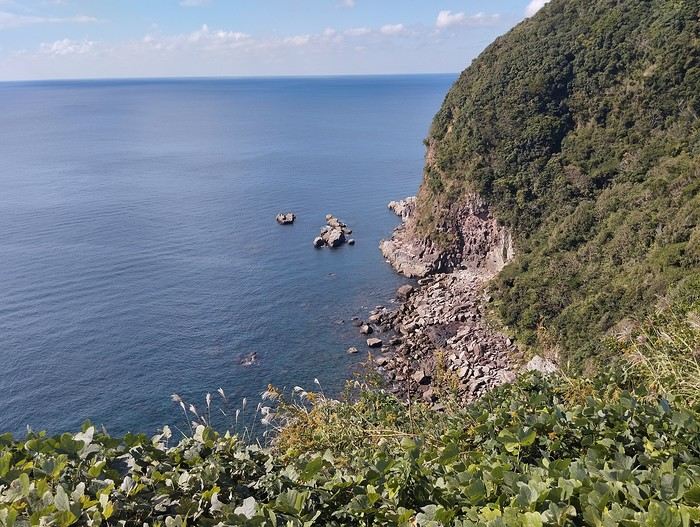


We continue on the very pleasant road.

Our first stop is Kurosaki Catholic Church.

Here’s a description from the Nagasaki tourism site: "Father de Rotz was a French missionary who contributed to the industrial development and social welfare of the Sotome region during the Meiji period. The Kurosaki Church site was established in 1897 under Father de Rotz’s direction and completed in 1920. It’s also known as the setting for Shusaku Endo’s novel *Silence*, and from where the church stands, you can see the dazzling blue sea of Sumonada.

The church is made of bricks laid one by one by the faithful through their service and sacrifice. The simple structure of the single-story tiled roof highlights the beauty of the masonry. The deep interior is known for its rib-vaulted ceiling, and the stained glass that glows with a soft light will touch your heart. The adjacent bell tower was built to pray for the conversion of Hidden Christians. The statue of Saint Mary with outstretched arms welcomes visitors gently and offers an impressive sight."

The church, with its red-brick color and blue shutters, is indeed very impressive and bright, especially with the sunlight. It overlooks the road but isn’t visible from it. You can visit—it’s free to enter. You have to take off your shoes to go inside. Inside, where photos are forbidden, a warm atmosphere is palpable thanks to the simple wooden decor and colorful stained glass, through which sunlight streams. On many tables, members of the church have left their belongings. The cultural mix is striking.
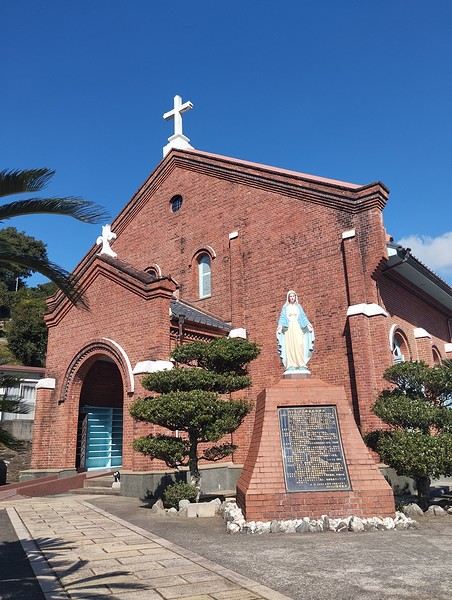


Next, the road leads us by chance to stop near an observatory and a prefectural rest area because the ocean view from the site is stunning.

A sign warns to be careful with food because birds of prey might snatch it.
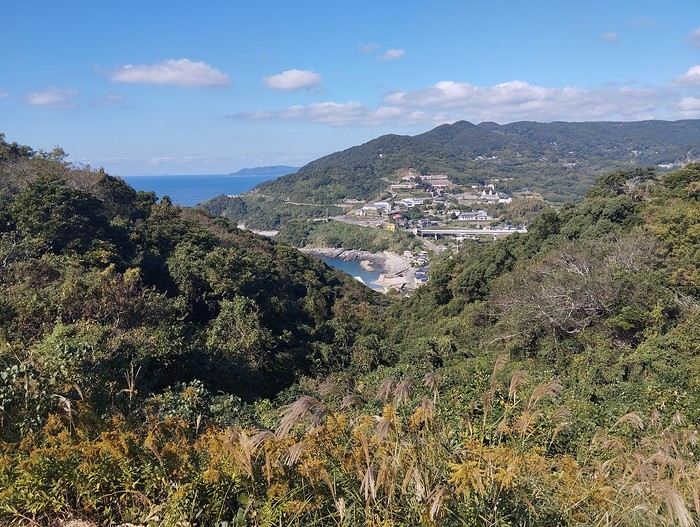


A building below catches our attention. On the way down, we’re stopped by a couple of bikers we chat with for a few minutes. They’re also visiting Nagasaki Prefecture and have been to an island that used to be a coal mine.

We go down the stairs and the road to reach the building, but first, we enjoy the coastal view—again, but different—and a plaza below. A group of Korean women are on a guided tour, taking photos. The Koreans are cheerful and louder than the Japanese. We share a laugh together for a few minutes thanks to a couple of Korean words we know.
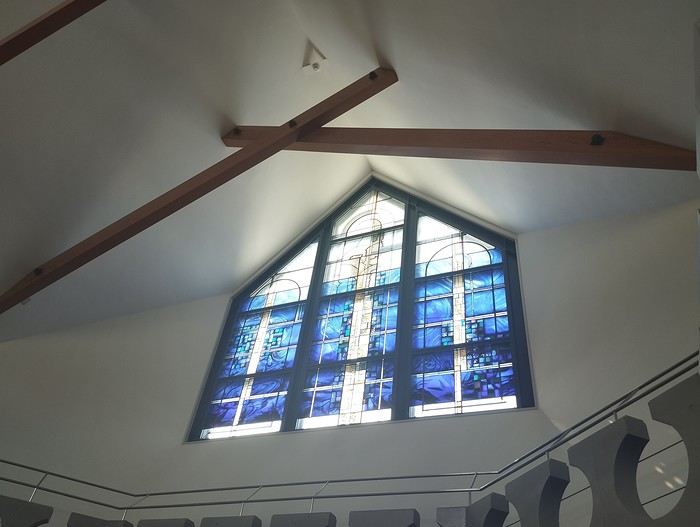


The building turns out to be the Shusaku Endo Literary Museum. As mentioned earlier, Endo is the author of the novel *Silence*, which inspired Martin Scorsese’s 2016 film of the same name.

Here’s a description of the museum: "We exhibit precious documents of Shusaku Endo, a novelist with deep ties to Nagasaki. The Sotome region was one of the models for the village of Tomogi, which appears in his masterpiece *Silence*. *Silence* is a work that describes the importance of God and faith through the story of a Portuguese priest who infiltrated Japan with missionary ideals during the severe persecution of Christians in the early Edo period. It was published in 1941. The literary museum was built in 2012 after Shusaku Endo’s death at the request of his grieving family and displays precious items such as the desk, glasses, and pencils Endo used in his lifetime, as well as original manuscripts and letters.

The museum features many works, including some translated into French. All comments and information are in Japanese, so we couldn’t understand the details, but the visit is still enjoyable for the various objects, and it’s free. Good to know: right across from the main building, there’s a fantastic spot set up for reading and contemplating the coastal view through a large bay window. The place is tastefully and elegantly decorated and air-conditioned. Books are available for free on request. Eating is the only thing not allowed.
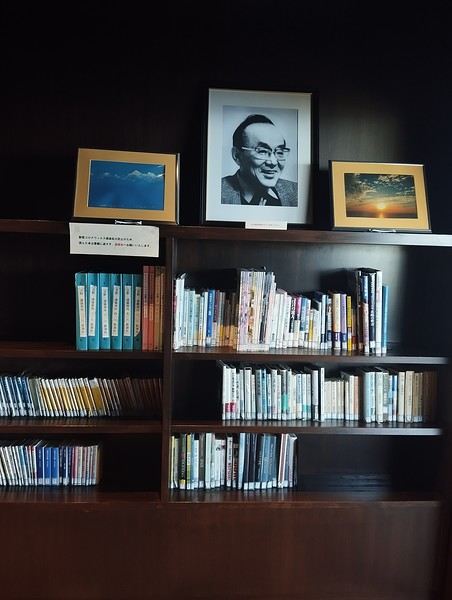


We then continue our tour of the churches to visit Shitsu Church. "During the period when Christianity was banned, a small group of Hidden Christians worked together to secretly pass down sacred paintings, doctrinal books, religious calendars, and other information, continuing their faith on their own. After the ban on Christianity was lifted, the religion split between those who gradually returned to Catholicism and those who continued with the form of faith that existed during the ban (Hidden Christians).

In 1882, Father de Rotz built Shitsu Church on a hill overlooking the village. This symbolized the end of ‘hiding’ in Shitsu village."

The church is indeed at the top of a steep hill. The street was very narrow, and we didn’t dare drive all the way up, so we parked halfway and walked the rest. Turns out, there’s a parking lot in front. The church is simpler than the previous one. We also take off our shoes to visit, and interior photos are forbidden. When we leave, an elderly man stops to talk to us. He’s a volunteer for tourist information. We chat a bit, but it’s tricky with the language barrier. He knows a few words of French.

We head to a third church: Ono Church in the village of the same name, on a very steep but charming hill, tucked away and rural. Here’s some historical context:

"Ono Village in Sotome is one of the four representative villages where Hidden Christians worshipped to perpetuate their secret faith. The Hidden Christians of Ono Village outwardly behaved as Buddhists and Shinto followers, secretly praying to their own deities in the village’s Shinto shrines. They thus concealed their deep faith under the guise of Buddhism or Shintoism. Facing the ban on Christianity, many Hidden Christians from Sotome migrated to isolated islands, particularly the Goto Islands, contributing to the expansion of Hidden Christian communities there. After the ban on Christianity was lifted, the Hidden Christians of Ono joined the Catholic Church and walked to Shitsu Church to attend services. They eventually built Ono Church in the center of their village, marking the end of their secrecy. Ono Village is located on a steep hill facing the East China Sea on the west coast of the Nishisonogi Peninsula. It includes several Shinto shrines that the Hidden Christians openly belonged to, where they secretly kept worship objects, their cemeteries, and the church built after the ban was lifted. Christianity was introduced to the village and its surroundings by the Jesuit Francisco Cabral in 1571. Ono Village was then part of the Konoura region, governed by the Omura clan, and many villagers were baptized, suggesting that missionary work had progressed well, as in Shitsu Village.

When Christianity was banned nationwide in 1614, the Omura clan apostatized, and subsequently, all Catholics in its territory were persecuted. Nevertheless, the Hidden Christians preserved their faith in Ono Village. Although the ban on Christianity became even stricter and missionaries could no longer stay in Japan, the Hidden Christians of Ono Village organized religious communities and maintained their faith by outwardly behaving as Buddhists and followers of three Shinto shrines in the village: Ono Shrine, Kado Shrine, and Tsuji Shrine.

Ono Shrine, located in the south of the village, was the most important of the three Shinto shrines and was revered as the seat of a protective deity for the entire village. The village chiefs (Shoya) served as the main priests from generation to generation, and most villagers were affiliated with this shrine. The Hidden Christians also outwardly behaved as its followers, like the other villagers, to conceal their secret faith. At the more familiar Kado and Tsuji shrines, they practiced their religious faith by secretly dedicating their own deities and offering prayers. Kado Shrine, located in the southwest of the village, was said to be the seat of various deities, according to legend, including a Japanese Catholic named Honda Toshimitsu. He reportedly took refuge in the village when the Shimabara-Amakusa Rebellion broke out. The Hidden Christian villagers called him ‘Sanjuwan,’ after one of the Portuguese missionaries active in Sotome at the beginning of the ban, and dedicated him to Kado Shrine. The third shrine, Tsuji Shrine, is located in the east of the village and is dedicated to the mountain deity, stemming from the ancient Japanese mountain worship. The Hidden Christians called this deity ‘Sanjuwan-sama’ and secretly worshipped it.

During the ban, villagers developed their farmland by building stone retaining walls on the steep slopes, mainly to grow sweet potatoes. At the end of the 18th century, some inhabitants of Sotome, including the villagers of Ono, migrated to the Goto Islands, in accordance with an agreement between the Goto and Omura clans, to cultivate new lands.

After the ‘Discovery of the Hidden Christians’ in 1865 at Oura Cathedral, the Hidden Christian leaders of the Nagasaki region began to secretly contact the cathedral’s missionaries. The Hidden Christian leaders of the Sotome region also visited the cathedral, and the missionaries secretly went to Shitsu Village, south of Ono Village. The Hidden Christians of Ono Village also took this opportunity to contact the missionaries and join the Catholic Church, as their ancestors had done in the 16th century.

The Hidden Christians’ cemetery is located on the mountain slopes northeast of Tsuji Shrine. This cemetery was recently established when the Hidden Christians publicly professed their faith just before the ban on Christianity was lifted and were therefore denied access to the village cemetery. Their graves, built from rubble, are still present in the cemetery.

In the early years after their return to the Catholic Church, the villagers walked to Shitsu Church, about 3 km from Ono Village. In 1893, over 200 villagers were baptized. That same year, Ono Church was built in the center of the village to accommodate 26 Catholic households who couldn’t make it to Shitsu. Since no priest was permanently at Ono Church, priests from Shitsu Church regularly visited and took care of both churches. Ono Church symbolically marks the end of the Hidden Christians’ secrecy.

Another 200 villagers were baptized in 1912. However, over time, most villagers converted to Buddhism, and today, only a small number of Catholic households remain in the village.

The ‘Ono Village in Sotome’ is one of the four villages that demonstrate what objects Hidden Christians worshipped to practice their faith. During the ban on Christianity, the Hidden Christians of Ono Village outwardly became Buddhists or served as assistants at the local Shinto temple to practice their faith, secretly worshipping their own objects of devotion that they would offer to the Shinto shrines. Moreover, many Hidden Christians from the region migrated to isolated islands like the Goto Islands, thus spreading their communities to various locations on these islands. After the ban was lifted, they returned to Catholicism and attended Shitsu Church in ‘Shitsu Village in Sotome.’ Shortly after, the construction of a church in the middle of Ono Village visually ended their ‘secrecy.’
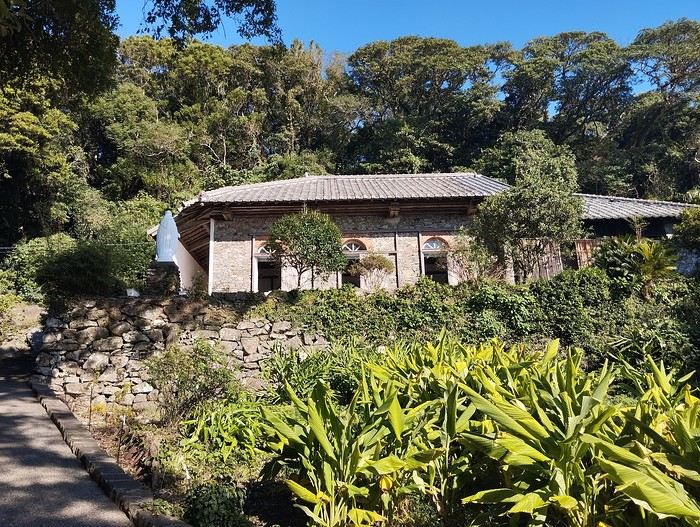


At Ono Church, there’s also a person in their car waiting to provide information to visitors—Japanese visitors, that is. The person seemed intimidated; foreign visitors here must be quite rare. They only spoke Japanese. We exchanged a few words and then only visited the church from the outside since it’s very small and the interior isn’t accessible. The windows are open, so we can see inside from the outside, but photos are also forbidden. It’s tiny and looks like a school classroom. People didn’t sit on benches but in the Japanese style here. We quickly look around, but the setting is charming.

We then visit Tsuji Shrine nearby, hidden in the mountains. The streets here are barely the width of a car, and they’re all uphill. We can’t park, so we leave the car where it is and walk up the hill. We take a stone path that climbs and sometimes runs alongside houses, sometimes nature. We pass the first house, where a family, surprised to see us, smiles and laughs. The path to the shrine isn’t very long. It’s lost in the heart of the mountain, just past some houses.
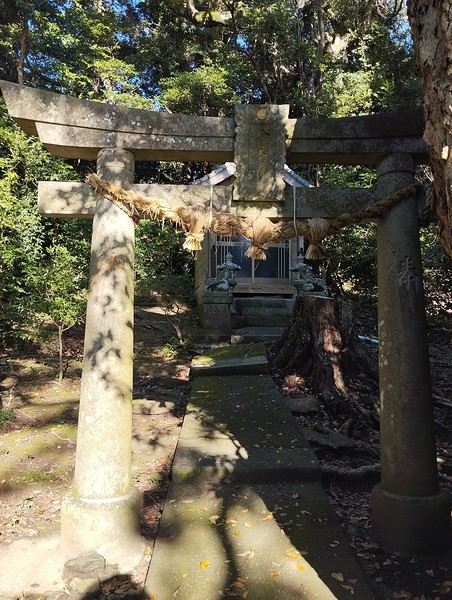


We had planned to continue along the coast and go further. On the way, we stop at a small port, Konoura Port, where absolute calm reigns.
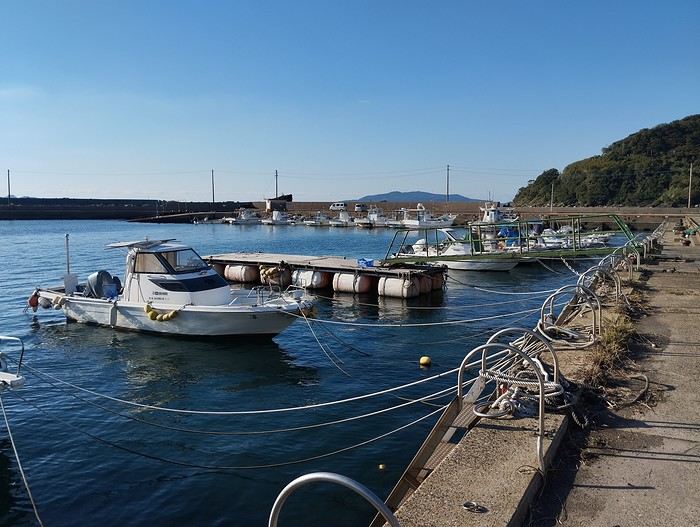


We need to get gas, so we stop as soon as we see a station—the first of the day. We’re greeted with big smiles. They point us to a konbini further ahead. In the end, we didn’t find the konbini but a small local supermarket with a human scale. We enjoy an ice cream there and also pick up some yakitori to nibble on. We also buy some matcha candies from the famous Higashi-sonogi tea. The candies are delicious—bitter but not too much, sweet but not too much.

Given the late hour, we decide not to go further but to visit Tsugane Otoshi waterfall, which we saw a sign for. To get there, we turn around, pass the gas station again, then turn left onto country roads, almost into the forest. We arrive at the starting point for the waterfall. There’s no one around. We have to go through a dark tunnel and walk a few minutes before discovering a beautiful, refreshing, and pleasant spot.
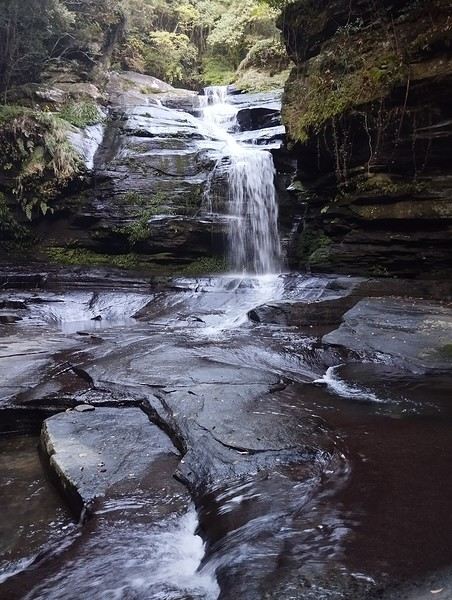


To end the day, we return to a beach we spotted earlier to enjoy a quiet moment with the sunset. We park a little higher up and go down the stairs to reach the beach, surrounded by trees. There’s absolutely no one, so we enjoy the sound of the waves peacefully. As for the sunset, it’s splendid—the sky shifting from yellow to orange and blue-violet. This is Yukinoura Seaside Park.
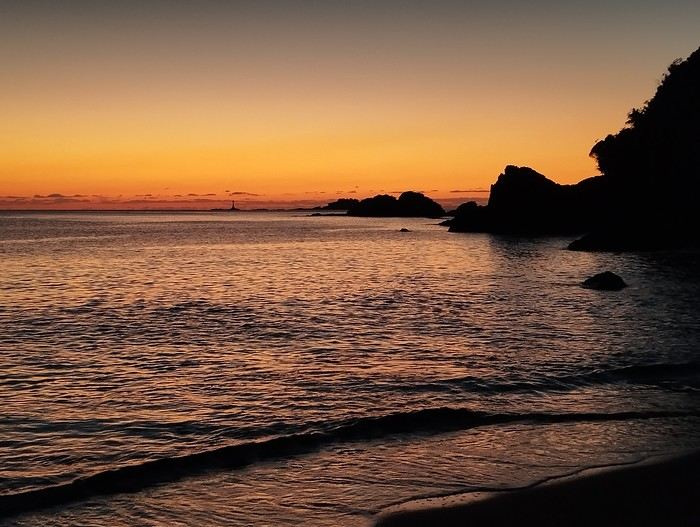


We tried to go to a pizzeria we found on Google Maps, but no luck—it was closed. So we head back to the hotel quietly. We meet an American in the elevator who came to work as an actor for the Disney show. The tour in Japan lasts 2 months.

Tonight is our last night in Nagasaki. Tomorrow, we’re heading back to Fukuoka.

We really liked Nagasaki Prefecture. There’s so much to discover if you take the time to stay, and we wish we’d had more time to explore it further.
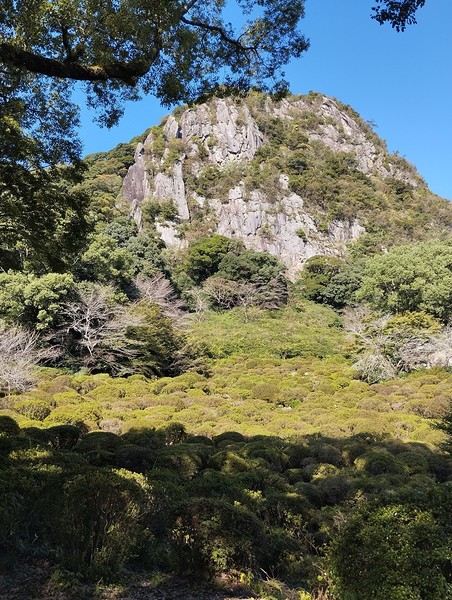
https://voyageforum.com/forum/decouverte-japon-tokyo-archipel-ryukyu-okinawa-d9857265/ https://voyageforum.com/forum/escapade-japonaise-shikoku-kyushu-yakushima-tokyo-d9999494/ https://voyageforum.com/forum/kyushu-entre-fukuoka-nagasaki-automne-2024-japon-d10654938/
NA Nathalie971 Regular ·
Yeah, I did my route A few days in Kyoto when I arrived, then I take a ferry to Beppu (departing from Osaka), then Aoshima, Kagoshima, Yakushima, Kumamoto, Unzen Onsen, Nagasaki, Takeo Onsen, Fukuoka, and 3 nights in Tokyo before heading back... I’ll be there the whole month of November, can’t wait! Good luck to you all

Looks like a great loop! 🙂
https://voyageforum.com/forum/decouverte-japon-tokyo-archipel-ryukyu-okinawa-d9857265/ https://voyageforum.com/forum/escapade-japonaise-shikoku-kyushu-yakushima-tokyo-d9999494/ https://voyageforum.com/forum/kyushu-entre-fukuoka-nagasaki-automne-2024-japon-d10654938/
GR Grandgognand ·
Thanks again for this amazing travel journal—it’s such a pleasure to follow this trip.
NA Nathalie971 Regular ·
Day 16 - On the way back to Fukuoka

It’s time for us to leave Nagasaki. We’d hesitated a lot about coming to this city for no real reason, but we had some kind of unexplained aversion to it. We ended up visiting without being sure we’d stay long, but in the end, we extended our stay and have no regrets—this city really won us over. It’s retro and peaceful. Strolling around is really enjoyable, and the surrounding area is full of discoveries. We’ll definitely come back with pleasure.
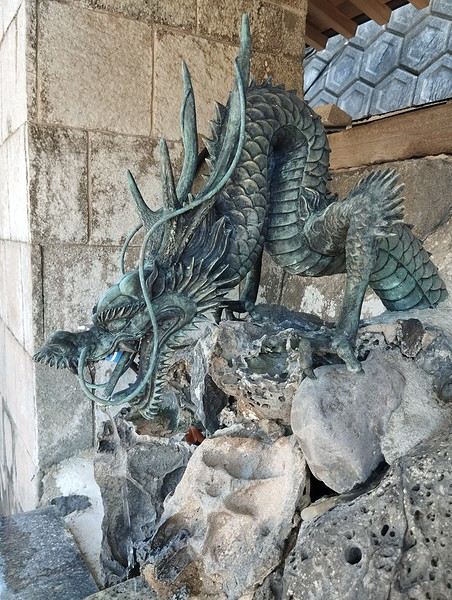
We left calmly in the morning. We have about 2-3 hours of driving ahead because, as usual, we didn’t plan to take the highway, and we also wanted to make two sightseeing stops in Saga Prefecture.

Our first stop was a private 20-hectare forest garden designed by Masaaki Tsuruda, a famous environmental artist and Japanese master gardener. It took 30 years to plant over 10,000 maple trees and arrange natural elements like ponds and stones to create a pleasant natural space. To get there, we wound our way up the mountain roads of Mount Sakurei, reaching an altitude of 887 meters.
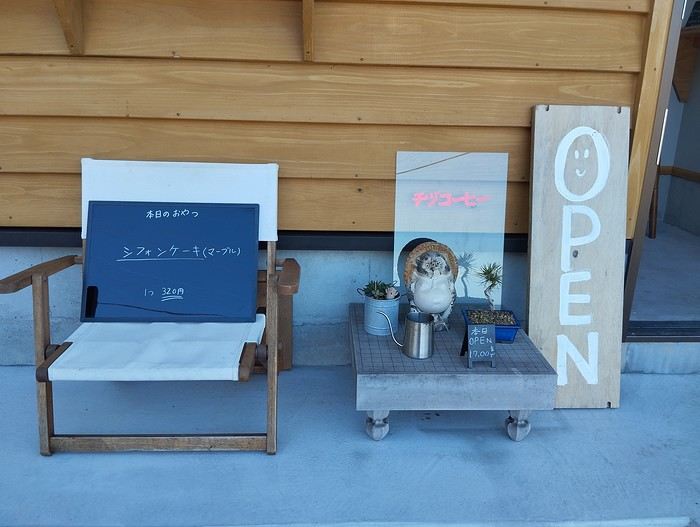
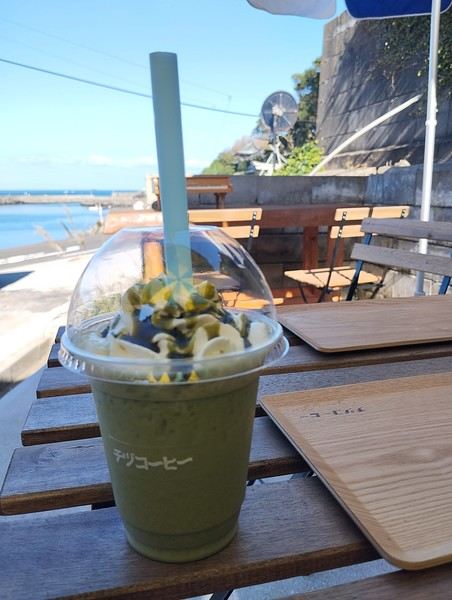
There was staff at the entrance directing traffic, even though there wasn’t a huge crowd. Staff to welcome you, staff to help you buy tickets from the machine, staff to guide you to the restrooms, and staff for the forest’s highlight spot... the place seemed touristy for the area.

We laughed with the two women helping us buy tickets from the machine because it’s autumn and for them, it’s "cold," while for us, the temperatures were still mild, and we were wearing short sleeves.

Naturally, the staff immediately guided us to the garden’s highlight... Fuyusansō, a spacious villa nestled in the heart of the forest. It’s said to have been built using recycled materials from a century-old house. Large windows replace the walls, and the view that unfolds before us is breathtaking. It’s stunning and a particularly photogenic spot. In fact, staff manage the rotation of the two lacquered tables dedicated to photos, even going so far as to take your phone and snap the picture for you. You can tell this place is popular, and there might be a line, so you can’t linger too long. You can still take a little time to look around the room, but you won’t be able to sit down and sip tea while enjoying this dreamy landscape—that’s a real shame! The outdoor scenery is reflected like a mirror. It’s absolutely beautiful!


We then strolled through the forest garden. There are plenty of trees, a flowing river whose sound fills the air, and a pond... We wandered and took the time to appreciate the landscapes around us. The *koyo* (reddening of the leaves) had started to make its appearance.


We ran into a Korean couple and chatted for a few minutes with the woman, who, because we could say hello in Korean, assumed we were into K-pop. When we told her no, she seemed shocked! We reassured her that we still knew what it was, though. The lively and bubbly energy of Koreans is really fun.

We finished our walk and headed to our next destination, about 30 minutes away.

It was Mikaeri No Taki waterfall, on the Ikisa River in Ouchi, Karatsu. The waterfall, over 100 meters high, is ranked among Japan’s 100 most beautiful waterfalls. It’s surrounded by lush vegetation. The road to the small parking lot nearby is also picturesque, as it follows the river for several minutes. Again, we weren’t expecting such a spectacle. The waterfall is simply impressive and exhilarating. You can approach it from one side and walk around via a bridge where you can see it from a distance. When you get up close, you’re completely splashed by the water. You feel the power of the waterfall, and it’s a real rush—we loved this breath of fresh air.
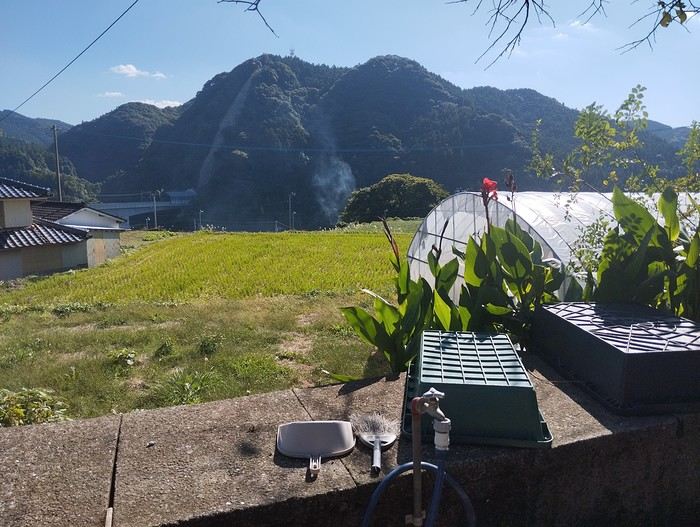
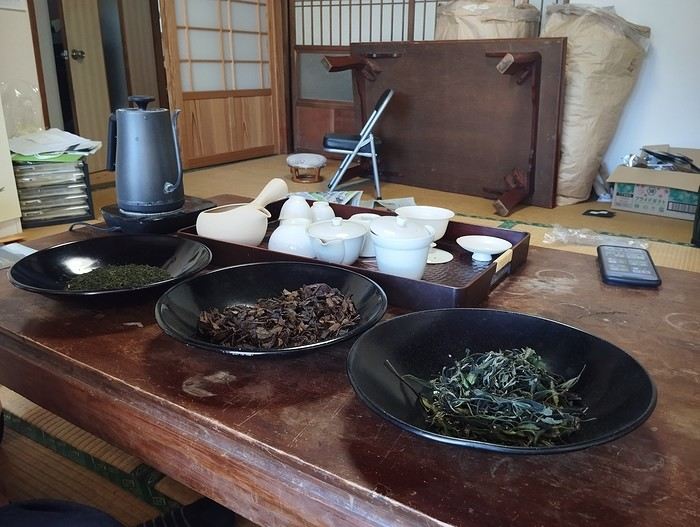


We took the time to enjoy it before getting back in the car as the sunset painted the sky.
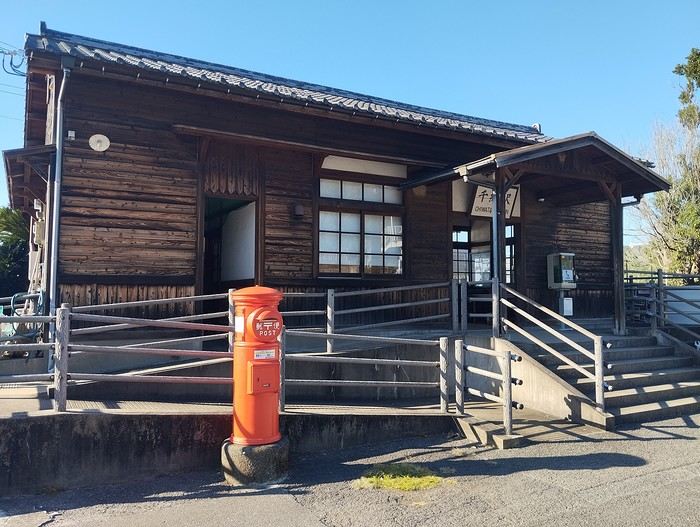
We had to return the car by 7:45 PM, and it was already 7:15 PM when we arrived in Fukuoka. We found our accommodation, but since there was no parking and this time we were in a livelier, more dynamic neighborhood, we parked at a 7-Eleven despite the sign saying it was only for konbini customers. We struggled to get into the building and then check in because there was no staff—just a tablet. It was funny trying to figure it out with our limited English, but we managed in the end. We dropped off our things and quickly headed out to get gas. Here, we saw something we hadn’t seen before: the gas pumps were mounted on the ceiling to save space.

We made it to the car rental agency just in time at 7:45 PM. Thankfully, because the welcome here wasn’t exactly warm or friendly. Our two-week road trip was over. Now, it was back to urban travel and exploring Fukuoka for three days.

We ate at a Korean restaurant that evening. You could choose your spice level from 1 to 6. We wanted to play it tough since we like spicy food, but level 5 was a challenge. It was extremely hot. The Korean fried chicken with sweet and spicy sauce, though, was delicious.


To end the evening, we wandered the streets, soaking up the dynamic energy of the city at night, especially since we were in the Tenjin district.


There are lots of *yatai* (street food stalls). We even walked past the famous French *yatai* "Chez Rémi." Its reputation clearly isn’t exaggerated—there was a long line of Japanese people waiting to eat there.

Photo of a *yatai* (not "Chez Rémi") and "Chez Rémi"


When we got back late, we checked out our apartment. It was very comfortable—two double beds, a large bathroom and shower, a washing machine, a small living room, a kitchenette, all in a simple, understated decor.

End of the day. Fukuoka to be continued.
https://voyageforum.com/forum/decouverte-japon-tokyo-archipel-ryukyu-okinawa-d9857265/ https://voyageforum.com/forum/escapade-japonaise-shikoku-kyushu-yakushima-tokyo-d9999494/ https://voyageforum.com/forum/kyushu-entre-fukuoka-nagasaki-automne-2024-japon-d10654938/
NA Nathalie971 Regular ·
Day 17 - Fukuoka city - Sweetness of life

The day is sunny but not too much, with a bit of wind but not too strong. In short, perfect weather for strolling around the city. We take the subway to Akasaka station and then walk to Maizuru Park, not far from there. This park is home to the ruins of Fukuoka Castle... the ramparts. The interesting part is that it offers a lovely high-up view of Ohori Park and a bit of the city.


We then continued to Ohori Park, where we first took some time to relax by the pond. It was peaceful. Ducks were swimming, and some office workers were collecting algae that had clumped together in the water.

We continued our visit with the pleasant Ohori Teien garden. A newlywed couple was leaving just as we arrived. The garden is lovely and worth the visit. There weren’t many people there.


We then resumed our walk in the park, this time circling the pond. It was the perfect opportunity to see that this park is a regular part of daily life, much loved by the Japanese: jogging, walking, outings with pets, kids’ games, pedal boats, and quiet contemplation by the pond, etc... We enjoyed a beautiful sunset that was truly delightful. This park is a green lung you definitely shouldn’t miss.


We left the park to find a cocktail bar/tea salon I wanted to try. To get there, we walked through quiet little streets dotted with charming shops. We finally arrived at the place in a quiet alley. We could see it through the large windows. From the outside, we could already sense its cozy atmosphere. Two young women came out. They were thrilled with their experience but mentioned it was very expensive. We had read that reservations were recommended, but since we don’t plan our schedule too far in advance, we decided to try our luck without one. And it wasn’t a problem at all—there weren’t many people inside.

Why this place? Because it’s a bar specializing in tea-based cocktails. The setting: a copper counter open in the center of the room. The space was lit by very dim lighting, giving it a very intimate feel. A bartender dressed in a white lab coat, like a scientist, all set to a background of jazzy soul music. Seated on our bar stools, it was time to choose from the menu, which was printed on aged paper and entirely in Japanese. The bartender gave us some explanations, and we made our choices. Shortly after, one of the servers came by to offer us pastries to enjoy with our cocktails. It was also possible to have tea, but we were intrigued by the mix of alcohol and tea.
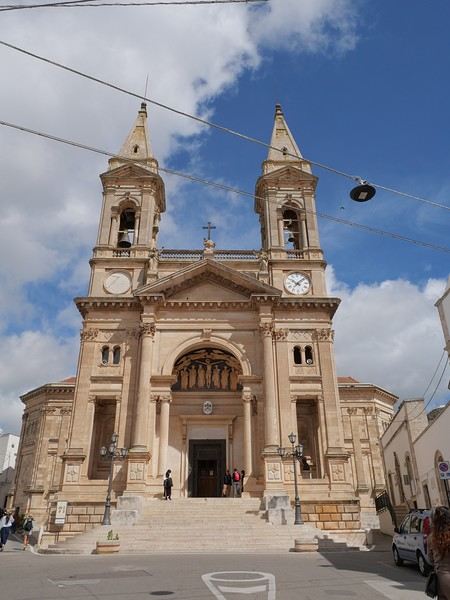
For my partner, it was a matcha cocktail based on martini, if I remember correctly, and for me, it was a whisky based on hojicha, a roasted tea. The preparation of my cocktail was a treat for the senses—the hojicha was pan-toasted, releasing a warm aroma. They brought us our pastries. Being foodies, we each had two: a matcha fondant and a chestnut dessert. The cakes were small, but the flavors exploded in our mouths. Pure gustatory wonders! As for the cocktails, they were refreshing, delicate, and original. We extended the experience with another cocktail, this time plum-based.


It was really nice. However, the bill was steep, as the two young women had mentioned earlier. I must say, we didn’t quite understand the final price. I had read that after a certain hour, an additional fee is applied—maybe that was the case.
https://voyageforum.com/forum/decouverte-japon-tokyo-archipel-ryukyu-okinawa-d9857265/ https://voyageforum.com/forum/escapade-japonaise-shikoku-kyushu-yakushima-tokyo-d9999494/ https://voyageforum.com/forum/kyushu-entre-fukuoka-nagasaki-automne-2024-japon-d10654938/
NA Nathalie971 Regular ·
We then wandered around the neighborhood. We noticed that it has some really beautiful shops and seems to be a trendy area. Later, it was time to eat. We found ourselves in a livelier part of town. We stopped a family coming out of a yakitori restaurant to ask if it was any good. The woman thought about it and let us know it was just okay. The family then pointed us to another yakitori place a little further down the street, saying it was really good. The restaurant was packed. It had warm decor and a relaxed, cheerful vibe. We were seated at a table that could fit 8 people. In Japan, large tables are often shared with other customers.

To choose the skewers, they brought us a nice basket with all the options, making it easy to pick what we wanted.

We ordered a delicious fatty horse tartare and a plate of udon with kimchi and seaweed (a real treat). The skewers were amazing. The family hadn’t steered us wrong about the restaurant’s quality. What’s great in Japan is that even if the chefs seem a bit intimidating at times, they always care about the customers and keep an eye on you to make sure everything’s going well. Before leaving, we shared a few words to thank him for the meal.


We decided to walk back since the night was mild. We passed through several neighborhoods, including two very lively ones, without ever feeling unsafe. It was really pleasant.

https://voyageforum.com/forum/decouverte-japon-tokyo-archipel-ryukyu-okinawa-d9857265/ https://voyageforum.com/forum/escapade-japonaise-shikoku-kyushu-yakushima-tokyo-d9999494/ https://voyageforum.com/forum/kyushu-entre-fukuoka-nagasaki-automne-2024-japon-d10654938/
NA Nathalie971 Regular ·
Day 18 - Fukuoka

A day where we simply enjoyed Fukuoka. Stopped by the train station for the panoramic view from the top floor. The view isn’t breathtaking or very wide, but it’s free.


Lunch was gyozas instead of sushi. The restaurant we wanted to go to, even though it wasn’t full at all, turned us away because we didn’t have a reservation. We’ll go in the evening. Restaurant in a hotel near the station.


Strolled through the streets in the afternoon, with a relaxing moment in the quiet Shofuen Garden. A cute little Japanese garden with no one around.


The garden is near the zoo, so the manhole covers in the streets feature animal designs.

https://voyageforum.com/forum/decouverte-japon-tokyo-archipel-ryukyu-okinawa-d9857265/ https://voyageforum.com/forum/escapade-japonaise-shikoku-kyushu-yakushima-tokyo-d9999494/ https://voyageforum.com/forum/kyushu-entre-fukuoka-nagasaki-automne-2024-japon-d10654938/
NA Nathalie971 Regular ·
The enticing smell of a treat led us to a small crêperie in a completely residential neighborhood. While we were hesitating over whether to get a crêpe or not, the Japanese customer in front of us surprised us—she understood and spoke French. And it turned out the manager did too! Incredibly, she had even trained at Breizh Café in Cancale, Brittany. She was amazed to see us in this residential area. We chatted a bit in French and Japanese while enjoying some delicious crêpes with that authentic taste of Brittany.


That evening, we dined at the sushi restaurant we’d reserved at lunchtime. While the welcome was professional and quite cold, with a somewhat stiff atmosphere, the tasting menu was fabulous—a real treat for the taste buds. The chef was also keeping an eye on things from afar.


We also enjoyed the Christmas festivities in front of the station, with a small Christmas market, lights, and a concert.


https://voyageforum.com/forum/decouverte-japon-tokyo-archipel-ryukyu-okinawa-d9857265/ https://voyageforum.com/forum/escapade-japonaise-shikoku-kyushu-yakushima-tokyo-d9999494/ https://voyageforum.com/forum/kyushu-entre-fukuoka-nagasaki-automne-2024-japon-d10654938/
NA Nathalie971 Regular ·
DAY 19 - The last one before departure

This last day wasn’t spent on sightseeing but rather on final shopping and last-minute treats.

We also got to test the Japanese postal service for the first time. What can I say: efficiency and service! We barely waited 3 minutes to get to a counter. We had a package to send but didn’t actually have a box—just a gift, a card in an open paper bag. We filled out a form with the delivery address. Normally, you’d also need to write your return address in case of issues, but since we don’t live in Japan, the staff took care of writing the name in kanji for us (I had a photo of the recipient’s name in kanji). We chose express shipping and only paid 6.50 €, even though it was going to a pretty remote part of the Izu Peninsula. It was 4 PM, and the package would be delivered by 3 PM the next day (which it was). We didn’t have to pack anything—we just left our items, and the staff handled the rest. All of this in a surprisingly short amount of time.

For comparison, in France, to send a package to the south of the country, I had to pack it myself at the post office and paid 13.50 € for delivery in *at best* 7 days (and that was during the holiday season).

For treats, we tried a Chinese steamed bun restaurant—though it wasn’t *just* buns—and it was divine. The buns were freshly steamed, generously filled, and bursting with juice inside. A special shoutout to the tomato one (bright red color).


We also visited a fabulous, intimate tea salon run by two incredibly talented men: one handles the pastries, and the other the teas. The decor is soft and warm, all wood, with gentle music in the background. Seated around a counter, we watched the two work with fierce concentration and precision—it was truly an art. They gave us personalized advice on tea pairings for the desserts. The teas and pastries were divine, served in beautiful tableware. In short, a tea salon for gourmet epicureans.


In the evening, we wanted to go to Dai-dai, a restaurant recommended by the crepe vendor. Apparently, Dai-dai is well-known. Unfortunately, we struck out because we hadn’t made a reservation. Instead, we had the last regional specialty of this trip at another place. We tried *mizutaki*, a Japanese chicken and vegetable hot pot, sitting at the counter and chatting with a man in his fifties who had two dogs because, as he put it, "women are too complicated."

https://voyageforum.com/forum/decouverte-japon-tokyo-archipel-ryukyu-okinawa-d9857265/ https://voyageforum.com/forum/escapade-japonaise-shikoku-kyushu-yakushima-tokyo-d9999494/ https://voyageforum.com/forum/kyushu-entre-fukuoka-nagasaki-automne-2024-japon-d10654938/
NA Nathalie971 Regular ·
Epilogue

Third trip to the Land of the Rising Sun, and the pleasure remains intact with the desire to discover even more, perhaps another time... Kyushu is diverse and fascinating: a great mix of nature and city. And what amazing culinary discoveries! The prefectures of Saga and Nagasaki are very pleasant.

Thanks for your silent and/or active reading, whether it sparked the desire to explore this corner of the world or not...
https://voyageforum.com/forum/decouverte-japon-tokyo-archipel-ryukyu-okinawa-d9857265/ https://voyageforum.com/forum/escapade-japonaise-shikoku-kyushu-yakushima-tokyo-d9999494/ https://voyageforum.com/forum/kyushu-entre-fukuoka-nagasaki-automne-2024-japon-d10654938/
CA Capucine33 Veteran ·
Thanks for your story—it’s really inspiring! I’m planning a trip mostly in Kyushu this coming November, so there are lots of great discoveries and anecdotes in your post! Thanks
capucine
NA Nathalie971 Regular ·
Hi Capucine,

Thanks for keeping me posted. Did any places catch your eye? I hope your trip in November goes smoothly. Using public transport really adds another layer to the journey.
https://voyageforum.com/forum/decouverte-japon-tokyo-archipel-ryukyu-okinawa-d9857265/ https://voyageforum.com/forum/escapade-japonaise-shikoku-kyushu-yakushima-tokyo-d9999494/ https://voyageforum.com/forum/kyushu-entre-fukuoka-nagasaki-automne-2024-japon-d10654938/
FA Fairytitania Regular ·
Thanks for this story with such beautiful photos! 😊
Juillet 2010 : La Dolce Vita / Costa Concordia Février 2018 : Perle des Caraïbes / Costa Pacifica
CA Capucine33 Veteran ·
Hi there! I’ve planned my itinerary using info from different forums and Facebook groups. I’ll be in Kyushu for almost my entire stay—25 days in November. I’m planning to travel slowly and only use public transport (ferries, buses, trains, etc.). It’s super exciting to plan, can’t wait... Have a great day everyone
capucine
NA Nathalie971 Regular ·
Hi there! I planned my itinerary using info from different forums and Facebook groups. I’ll be in Kyushu for almost my entire stay—25 days in November. I’m planning to travel slowly and only use public transport (ferries, buses, trains, etc.). It’s quite something to organize, I can’t wait... Have a great day, everyone!

Sorry for the delayed reply. I’ll be following your trip with pleasure when you return. I haven’t used trains much in Japan yet, so I’m interested.

Planning a trip to Japan is definitely a source of joy. I’m right in the middle of it myself for an upcoming departure.

Happy planning and have a great day.
https://voyageforum.com/forum/decouverte-japon-tokyo-archipel-ryukyu-okinawa-d9857265/ https://voyageforum.com/forum/escapade-japonaise-shikoku-kyushu-yakushima-tokyo-d9999494/ https://voyageforum.com/forum/kyushu-entre-fukuoka-nagasaki-automne-2024-japon-d10654938/
CA Capucine33 Veteran ·
Meet-up in December... 😊
capucine
NA Nathalie971 Regular ·
Hi there,

Sorry I just realized I never replied. Better late than never, right? So, I’ll catch up with you in December for your trip recap—I hope it’ll be everything you dreamed of, but I’ve no doubt Kyushu is amazing.
https://voyageforum.com/forum/decouverte-japon-tokyo-archipel-ryukyu-okinawa-d9857265/ https://voyageforum.com/forum/escapade-japonaise-shikoku-kyushu-yakushima-tokyo-d9999494/ https://voyageforum.com/forum/kyushu-entre-fukuoka-nagasaki-automne-2024-japon-d10654938/
CA Capucine33 Veteran ·
Thanks! I feel ready to go... 🍁🍁🍁
capucine

Similar discussions

You might also like