c'est vous qui ne regardez pas votre histoire .... vous n'en êtes personnellement pas responsable, mais oui on a (vos ancêtres ont.....) "zigouillé" au Canada des peuples et des cultures.
arrangez vous avec ce passé en n'employant pas certains mots., en ne dénaturant pas leur sens premier.
salut bea
je n ai jamais nie le fait que les premiers francais avant les colons n aient pas participer a la disparition des peuples et des cultures c est un fait comme aux usa
les populations mouraient meme avant tout contact de maladies importees c etait la conquete de nouveaux territoires tres en vogue a l epoque d ou la rivalite france angleterre
mon propos etait qu apres cette tragique histoire de mon pays des colons francais ont ete encourages a venir s installer en nouvelle france pour creer une colonie permanente on leur offrait des terres a eux de defricher et de survivre
on a meme envoye des militaires le regiment de carignan salieres et les filles du roi pour leurs uterus pour encourager le peuplement
et puis apres la defaite des plaines d abraham a quebec la france s est desinteressee de son nouveau territoire louis 14 voltaire quelques arpents de neige
la les anglais ont pris le dessus et essaye d assimiler cette bandes de colons francais par tout les moyens linguistiques culturels d ou la deportation des acadiens l interdiction de parler francais d ou mon propos de colonises
le refuge de ses colons francais a ete dans la religion et dans ce qu on a appele la guerre des berceaux 15 enfants ou plus etait courant pour eviter l assimilation
mes ancetres etaient francais peut etre certains des votres sont aussi partis
l un des miens etait explorateur marchand de peaux de castors et une autre en religion mais pas proselyte il n y avait plus d indiens a evangeliser a l epoque
je connais parfaitement mon histoire et je ne vois pas pourquoi dire que la nouvelle france a ete colonisee par les anglais dechaine tant de passion imprecation
salut
ma mere a connu l occupation allemande
je suis la 10eme generation nee au quebec donc je n ai souffert de rien si ce n est l echec des referendum mais tout ca n est plus d actualite les jeunes generations ne se battent plus pour la langue francaise
quand ma mere est arrivee au quebec il fallait obligatoirement parler anglais pour trouver du boulot c etait dans les annees 60 donc on s est bien battus quand meme on a des lois sur la langue francaise loi 101
maintenant tout le monde s en fout c est la barbarophonie
A 67 ans tu as souffert de l'occupation allemande ? 🤪
Tout autant sinon plus que n'a souffert l'auteur du post de la colonisation anglaise au Québec! ( en 1763!)
Si sa mère s'est vue contrainte de parler l' anglais pour bosser la mienne en a vu d'autre. Même en parlant l'allemand elle n'avait que le droit de se cacher.
si on revient sur ce qui a ete ecrit sur ce forum j ai lu romain wisigoth et autres goth et envahisseurs donc je ne vois pas ce qui a se bidonner pour une histoire plus recente
ca a l air d etre la derive de ces forum tout le monde s insulte incognito et deverse sa bile de frustres
oui ca derive parce que un gogo sort une phrase de son contexte et se dechaine on se demande pourquoi
Cette discussion, que je découvre à peine, me rappelle une réflexion entendue à la radio récemment. Elle était prononcée par un ethnologue/anthropologue reconnu qui faisait remarquer que les Himbas, et autres, connaissent probablement mieux les ethnologues que les ethnologues ne connaissent les Himbas, et autres...
oui ça fait hurler de rire ..... les canadiens français colonisés 😉 on aura tout entendu tout lu !
que venaient donc faire au Canada les français ???? vous vous sentez "chez voius" à ce point ?
faire passer vos querelles internes de colonisateurs pour de la colonisation .... san rire ?🤪
Les arabes ont colonisé l'Algérie, imposant au passage une nouvelle religion, l'islam, aux peuples autochtones. Quelques siècles plus tard, les français ont colonisé l'Algérie. Les arabes peuvent-ils prétendre avoir été colonisés par les français, sans déclencher chez vous des crises de fou rire ?😉 Ou s'agissait-il juste d'une querelle entre colonisateurs ?😏
Bonjour, je trouve ce sujet très intéressant. De ce que je sache, , il y a plusieurs formes de tourisme ethnique. Il y a des grandes agences qui ne reversent pas grand chose aux locaux et qui imposent ce qu'ils doivent faire, qui n'ont pas d'intérêt pour les us et coutumes (A qui faut-il verser l'argent pour qu'il profite à la majorité, par exemple).
Il y a aussi des initiatives locale, gérées par les personnes concernées elles-mêmes, qui donc leur permet de gagner plus d'argent et de maîtriser les conditions de visites.
Je pense par exemple à Taquile sur le lac Titicaca (j'espère que je ne me trompe pas d'Ile). Dans ce 2e cas, les gens ont un vrai travail et ils sont rémunérés pour cela, c'est une valorisation de la culture et des personnes.
Certains évoquaient l'idée de ne pas voyager et de donner l'argent. Une démarche qui n'a rien à voir et qui maintient dans la dépendance.
Je pense donc qu'il vaut mieux privilégier le second mode de tourisme et encourager le travail des gens en achetant chez eux. Pas besoin de leurs amener des stylos, mieux vaut acheter des stylos dans une boutique qui fait vivre une famille ou acheter de l'artisanat, etc...
c'est vous qui ne regardez pas votre histoire.... vous n'en êtes personnellement pas responsable, mais oui on a (vos ancêtres ont.....) "zigouillé" au Canada des peuples et des cultures.
Je n'y connais rien en histoire canadienne mais je suis surprise d'apprendre qu'avant l'arrivée des européens, les amérindiens ne se faisaient jamais la guerre et restaient toujours tranquillement chacun dans son petit coin sans déterrer la fameuse hache, sans piquer femmes et enfants au voisin, sans vouloir conquérir de nouveaux territoires.
Je pensais aussi que certaines tribus s' étaient alliées avec les européens dans l'espoir d'en décimer d'autres.
Comme quoi, les idées reçues. ...
C'est d'ailleurs pareil en Afrique du Nord.
Je croyais que les romains puis les arabes avaient été les premiers colonisateurs (et j'en oublie) et j'ai récemment appris que seuls les méchants européens avaient été des colonisateurs, les autres ayant été reçus bras ouverts par l ' autochtone d'alors.
Je vais bientôt apprendre que la Normandie ne doit pas son nom à l'envahisseur viking mais à Jessie Norman ?
Je n'y connais rien en histoire canadienne mais je suis surprise d'apprendre qu'avant l'arrivée des européens, les amérindiens ne se faisaient jamais la guerre et restaient toujours tranquillement chacun dans son petit coin sans déterrer la fameuse hache, sans piquer femmes et enfants au voisin, sans vouloir conquérir de nouveaux territoires.
A mon avis rien de comparable entre les guerres menées entre les différentes tribus et l'ethnocide du 19 ieme siecle suivi de déportations, d'assimilations forcées , de spoliations des terres, de parcage dans des réserves...
tout n etait pas si rose en amerique du nord
il y avaient des rivalites entre amerindiens et les francais anglais ont utilise ca pour tirer leur epingle du jeu
c est abomifreux
mes ancetres ont fait ca
sais tu ce que les tiens on fait
Le plus grand génocide de tous les temps a été commis par les migrants Yamnayas au néolithique!
Ils ont fait mieux que les musulmans en Inde bien plus tard. A coté, les génocides contemporains semblent être de petites entreprises artisanales de pompes funèbres.
Des pasteurs arrivés de la steppe eurasienne qui ont vidé toute une partie de l'Europe de ses habitants. Leur patrimoine génétique est encore décelable aujourd'hui. Nous sommes donc tous des descendants de génocidaires. La différence entre les Européens continentaux et d'ailleurs avec les autres peuples de la planète est que eux connaissent, s'intéressent à leur passé y compris pour les aspects les plus sombres. Les autres bien souvent l'ignorent ou feignent de l'enfouir. D'où des visions victimaires et binaires sur des questions comme l'esclavage, la colonisation et même les "zoos humains" ...
excuse moi ton message est ambigu
sont ce les europeens ou les autres qui s interessent a leur passe
La quasi totalité des recherches historiques, anthropologiques.. sont menées par des Occidentaux ou Européens au choix. Même en Chine parler d'ethnologie reste une gageure et ce malgré la diversité de sa population. Le centralisme de l'Etat ne s'y prête pas. Il existe bien entendu des spécialistes sur ces questions en Afrique et ailleurs mais le plus souvent leurs travaux sont imbibés d'idéologie tiers-mondiste qui servent d'autres causes que la connaissance.
Sur un plan général encore aujourd'hui l'humanité vit grâce aux découvertes matérielles et intellectuelles de l'Occident.
d accord recentrons le sujet
personnellement j ai toujours ete etonne dans le bon sens du terme par la facilite avec laquelle certains touristes pas ethnologues sont capables de vivre quelques heures ou jours avec des tribus
j ai un probleme de communication langue culture qui m empeche d en profiter
j ai ete en contact avec peu de tribus mais a chaque fois ca a ete fugace
autant je peux passer une semaine sur un point d eau a attendre les animaux autant je m ennuie vite a regarder les gens vivrent leur vie quotidienne
donc a la fin du compte il n y a pas d echange
que se raconter nous ne vivons pas dans le meme siecle
mais bon des gens y arrivent
Le plus grand génocide de tous les temps a été commis par les migrants Yamnayas au néolithique!
Ils ont fait mieux que les musulmans en Inde bien plus tard. A coté, les génocides contemporains semblent être de petites entreprises artisanales de pompes funèbres.
Toujours dans l'excès Encorlol.
On parlera plutôt de migration massive. Un génocide laisse des traces. Même s'il a eu lieu au néolithique. Et pour l'instant, l'étude des sépultures de cette époque ne valide en rien la thèse génocidaire.
Grrrr.... 😏
"Génocide" est un terme juridique. Qu'on ne peut pas utiliser n'importe comment. Et surtout pas en conclusion d'une étude archéogénétique.Quant aux constatations de terrain, elles ne vont pas non plus dans ce sens.
On le sait, Encorlol est un habitué de l'immodération.
Le plus grand génocide de tous les temps a été commis par les migrants Yamnayas au néolithique!
Ils ont fait mieux que les musulmans en Inde bien plus tard. A coté, les génocides contemporains semblent être de petites entreprises artisanales de pompes funèbres.
Toujours dans l'excès Encorlol.
On parlera plutôt de migration massive. Un génocide laisse des traces. Même s'il a eu lieu au néolithique. Et pour l'instant, l'étude des sépultures de cette époque ne valide en rien la thèse génocidaire.
Fin de la parenthèse. 😉
S'agissant du néolithique, il n'y a bien sûr pas de sources écrites ou encore d'images, mais l'ADN fossile a parlé. 100% de la lignée masculine a disparu dans la péninsule ibérique et en Angleterre, les femmes non. Ces dernières contraintes à se reproduire avec les nouveaux arrivants. Difficile d'accréditer la thèse d'une épidémie qui n'aurait touché que les hommes. La plupart des Européens descendent de là (réf David Reich Harvard -Boston). Même s'il y a encore débat; la thèse du génocide n'a rien de fantaisiste. Elle s'appuie sur des faits et constatations solides.
Sur un plan plus général, croire que les sociétés primitives étaient égalitaristes et économes en vie humaines relèvent du fantasme.
pardon?
je reve ou quoi
l occident a tout invente?
Absolument, c'est ainsi que vit l'humanité aujourd'hui, juste une évidence.
D'où sans doute la fascination qu'exerce sur le voyageur ces derniers "musées humains" dont les indigènes soit dit en passant ne sont pas plus légitimes sur "leurs terres" que les agriculteurs qui s'y implantent.
A en croire certains, les indiens amazoniens auraient un titre de propriété éternel sur l'Amazonie délivré par "Laforêt immobilier"...
Sur un plan plus général, croire que les sociétés primitives étaient égalitaristes et économes en vie humaines relèvent du fantasme.
En admettant qu'il y ait une part de vérité tu penses vraiment qu'avec les moyens techniques et les armes dont ils disposaient à cette époque ils pouvaient anéantir plusieurs millions d'êtres humains?! Tu te représentes la superficie que couvrait l'habitat de 6 millions de personnes au néolithique alors qu'il n'existait encore aucune ville ( enfin digne de ce nom)?!
Ce "génocide" s'est perpétré sur plusieurs millénaires sans doute...
S'agissant du néolithique, il n'y a bien sûr pas de sources écrites ou encore d'images, mais l'ADN fossile a parlé.
Les fouilles archéologiques parlent aussi. On fouille du néo dans toute l'Europe et pour l'instant, rien n'accrédite la thèse d'un génocide, au sens strict, des populations locales. Migration conviendrait mieux. Les études archéogénétiques se basent sur des échantillons et donnent des pistes. Jamais des certitudes. Rien n'est jamais définitif concernant les périodes anciennes. Un petit tour en labo et tu serais surpris de découvrir comment tout ça fonctionne.
Je ne sais pas où tu es allé chercher ce terme de "génocide". Maintenant, c'est sûr que ça claque. D'autant que l'archéologie de la violence et de la mort en masse est un sujet dans l'air du temps. Avec les fouilles archéologiques des camps d'extermination, du site de la Berezina et autres, on n'en a jamais autant parlé.
Je suis désolée auprès de Zezette qui doit être toute verte de colère, son sujet ayant considérablement dévié.
Sur un plan plus général, croire que les sociétés primitives étaient égalitaristes et économes en vie humaines relèvent du fantasme.
En admettant qu'il y ait une part de vérité tu penses vraiment qu'avec les moyens techniques et les armes dont ils disposaient à cette époque ils pouvaient anéantir plusieurs millions d'êtres humains?! Tu te représentes la superficie que couvrait l'habitat de 6 millions de personnes au néolithique alors qu'il n'existait encore aucune ville ( enfin digne de ce nom)?!
Ce "génocide" s'est perpétré sur plusieurs millénaires sans doute...
Peu importe les moyens planifiés ou instinctifs, on peut gloser là-dessus sans fin. Prendre le ventre des femmes leur fut le plus commode. Le grand remplacement a été fait, c'est bien là le but ultime de tout génocide qui réussit.
j ai toujours ete etonne dans le bon sens du terme par la facilite avec laquelle certains touristes pas ethnologues sont capables de vivre quelques heures ou jours avec des tribus
j ai un probleme de communication langue culture qui m empeche d en profiter
On recentre le sujet
Si c'est pour faire un travail d'ethnologue c'est sûr mais pour vivre simplement plusieurs jours à leur côté pas besoin de connaitre la langue ni la culture de la tribu et même si on n' en sait pas plus sur leur culture ou le pourquoi de telle pratique quand on a quitté leur village on peut cependant passer de très bon moments riches en émotions! Des tribus j'en ai rencontré une bonne dizaine et dans plusieurs continents.
Que veux tu savoir de plus Comment je m'y suis pris? avec quels moyens? quelles tribus, ce que j'en ai tiré?
quant aux indiens du continent américain ce sont les conquérants qui les ont anéantis , parfaitement déterminés , ils ont bien réussi leur coup !
où as-tu vu que les indiens du continent américain ont été anéantis?
Dans beaucoup de pays d'Amérique centrale et du sud ils sont toujours majoritaires. Dans d'autres sur tout le continent le métissage est largement présent. C'est comme ceux qui s'interrogent sur la disparition mystérieuse des Mayas alors qu'il suffit d'ouvrir les yeux et des voir leurs descendants déambuler dans les rues de Guatemala la Ciudad et ailleurs...
"Génocide" est un terme juridique. Qu'on ne peut pas utiliser n'importe comment.
Bonsoir.
Le terme "génocide" est à l’origine un terme juridique. C’est bien vrai. Pourtant, le terme n’est pas du tout réservé à la jurisprudence mais est également adopté par d’autres sciences, p.ex. dans l’ethnologie (au moins dans la germanophone) ...
Je ne veux pas me permettre de connaître la situation en France. En Allemagne, il y a les termes Genozid et Völkermord. Genozid est le terme juridico-technique pendant que Völkermord est le terme plutôt descriptif de Genozid. Tous les deux sont utilisés comme synonymes. Outre le massacre collectif de membres d’une minorité ethnique, religieuse ou n’importe comment, il s’agit de toutes les mesures visant à assurer la disparition forcée de ce groupe à moyen ou long terme ...
Beaucoup d’historiens et historiennes se plaignent qu’il n’est pas applicable pour pouvoir l’utiliser pour l’analyse concrète des cas historiques. Par le passé, il s’est également avéré que le terme de "génocide" est moralement très fortement chargé, présent à l’oeil du public dans divers contextes, mais en même temps mal défini, ce qui constitue davantage un obstacle à la recherche historique.
Certes, le terme "génocide" soit considéré par le public comme le pire de tous les crimes concevables, mais il ne signifie pas un déclassement des victimes ou une banalisation des auteurs s’il s’avère que son utilisation n’est pas de façon sensée dans un cas particulier. Les massacres d’Etat sont toujours un crime contre l’humanité quels qu’en soient la terminologie et les motifs.
bref , des millions d'Indiens sont morts on les a assassinés!
Petite parenthèse, épisode mal connu... Le sort des populations indiennes auraient pu être différent si le Sud confédéré l'avait emporté. En effet, bien qu'esclavagiste envers les Noirs, les Indiens étaient mieux considérés dans ces Etats. Ils avaient leurs représentants à l'Assemblée des Etats sudistes. Des bataillons indiens intégrés dans l'armée . Le dernier général sudiste à s'être rendu aux nordistes, 1 mois et demi après la dernière bataille fut un indien Stand Wattie à la tête de ses Cherokees et Creeks.
Si l'issue de la guerre avait tourné à l'avantage du Sud, cela aurait été savoureux d'épingler les indiens pour complicité d'esclavagisme
pardon?
je reve ou quoi
l occident a tout invente?
Non, les recherches menées par les occidentaux ont établi les bases.
Et je ne suis pas d'accord quand Encorlol écrit
La quasi totalité des recherches historiques, anthropologiques.. sont menées par des Occidentaux ou Européens au choix. Même en Chine parler d'ethnologie reste une gageure et ce malgré la diversité de sa population. Le centralisme de l'Etat ne s'y prête pas. Il existe bien entendu des spécialistes sur ces questions en Afrique et ailleurs mais le plus souvent leurs travaux sont imbibés d'idéologie tiers-mondiste qui servent d'autres causes que la connaissance.
Sur un plan général encore aujourd'hui l'humanité vit grâce aux découvertes matérielles et intellectuelles de l'Occident.
C'est méconnaître ce qui se fait en Asie par exemple (je ne peux pas évoquer l'Afrique, l'Amérique ou l'Océanie, je ne connais pas ). Il existe en Asie des programmes de recherches archéologiques et anthropologiques transdisciplinaires qui ont pour acteurs l'Academia Sinica de Taïwan, les universités thaïs, indonésiennes et j'en passe. Nous ne sommes plus au XXème siècle, encore moins au XIXe, époques où ces disciplines étaient réservées aux occidentaux. Cette époque est révolue et c'est tant mieux.
Pour en revenir au questionnement de zezette ici , je me demande si au 19E siecle il y avait beaucoup de voyageurs capables d'aborder les tribus indiennes sans risquer leur peau tout simplement , ils devaient être rares ?
Avec le scalp au nord du continent américain et les sacrifices humains plus au sud, difficile de ne voir que d'innocentes victimes chez les Amérindiens.
Au XXIe siècle, les populations qui vivent encore à l'age de pierre sont toujours aussi peu accueillantes... dernièrement un jeune américain en a fait les frais aux îles Andaman.
Je ne comprends d'ailleurs toujours pas la fascination qu'exerce ces peuples premiers dans les milieux progressistes et écologistes alors que dans le même temps les phénomènes migratoires sont célébrés partout ailleurs comme étoile polaire de la pensée. A croire que la race pure devient acceptable qu'à partir du moment où elle n'est pas blanche.
c'est vous qui ne regardez pas votre histoire.... vous n'en êtes personnellement pas responsable, mais oui on a (vos ancêtres ont.....) "zigouillé" au Canada des peuples et des cultures.
Je n'y connais rien en histoire canadienne mais je suis surprise d'apprendre qu'avant l'arrivée des européens, les amérindiens ne se faisaient jamais la guerre et restaient toujours tranquillement chacun dans son petit coin sans déterrer la fameuse hache, sans piquer femmes et enfants au voisin, sans vouloir conquérir de nouveaux territoires.
Je pensais aussi que certaines tribus s' étaient alliées avec les européens dans l'espoir d'en décimer d'autres.
Comme quoi, les idées reçues. ...
C'est d'ailleurs pareil en Afrique du Nord.
Je croyais que les romains puis les arabes avaient été les premiers colonisateurs (et j'en oublie) et j'ai récemment appris que seuls les méchants européens avaient été des colonisateurs, les autres ayant été reçus bras ouverts par l ' autochtone d'alors.
Je vais bientôt apprendre que la Normandie ne doit pas son nom à l'envahisseur viking mais à Jessie Norman ?
Conclusion tu ne connais pas l histoire de l Afrique du Nord’... en Algérie par exemples les arabes ont été très mal reçus par les Kabyles .... ceux ci ont refusé de parler la langue ( aujourd’hui encore de nombreux Kabyles ne parlent pas la langue arabe mais parlent le français...) donc bras ouverts ne me parait pas le mot approprié ...les romains 9´t effectivement été les premiers colonisateurs... comme en France d ailleurs ... Quoi nos ancêtres ne seraient pas les Gaulois .... une certitude qui s effondre encore.....
quant aux indiens du continent américain ce sont les conquérants qui les ont anéantis , parfaitement déterminés , ils ont bien réussi leur coup !
où as-tu vu que les indiens du continent américain ont été anéantis?
Dans beaucoup de pays d'Amérique centrale et du sud ils sont toujours majoritaires. Dans d'autres sur tout le continent le métissage est largement présent. C'est comme ceux qui s'interrogent sur la disparition mystérieuse des Mayas alors qu'il suffit d'ouvrir les yeux et des voir leurs descendants déambuler dans les rues de Guatemala la Ciudad et ailleurs...
Les indiens. Amérique ont été consciencieusement éliminés par les blancs colonisateurs que ce soient en Amérique du Sud ou en Amérique du Nord.....je t invite à te documenter à aller sur place... comme d hab tes approximations vont dans le même sens.
Avec le scalp au nord du continent américain et les sacrifices humains plus au sud, difficile de ne voir que d'innocentes victimes chez les Amérindiens.
Au XXIe siècle, les populations qui vivent encore à l'age de pierre sont toujours aussi peu accueillantes... dernièrement un jeune américain en a fait les frais aux îles Andaman.
Je ne comprends d'ailleurs toujours pas la fascination qu'exerce ces peuples premiers dans les milieux progressistes et écologistes alors que dans le même temps les phénomènes migratoires sont célébrés partout ailleurs comme étoile polaire de la pensée. A croire que la race pure devient acceptable qu'à partir du moment où elle n'est pas blanche.
Tu mélanges tout les guerres éclair que se faisaient les tribus amérindiennes depuis des siècles pour piller leurs voisins en cas de disette ou pour avoir la maitrise d'un territoire de chasse, les sacrifices humains tec.. et l'invasion d'un continent par une civilisation totalement différente dans sa conception du monde.
Il n'est pas question de dénoncer cette invasion ni de faire son mea culpa parcequ'on fait partie de cette "race" blanche mais de comparer ce qui est comparable .
Tu fais également un amalgame stupide entre l'absorption de migrants au sein de la civilisation occidentale et l'anéantissement assuré de peuples autochtones minoritaires par la destruction de leur milieu naturel.La aussi il n'est pas question de culpabiliser sur ce qui se passe pour ces peuples ni de donner des leçons de morale mais toujours de comparer ce qui est vraiment comparable sans besoin d'y ajouter des termes racistes et provocateurs comme "la race pure acceptable"
Au XXIe siècle, les populations qui vivent encore à l'age de pierre sont toujours aussi peu accueillantes... dernièrement un jeune américain en a fait les frais aux îles Andaman.
Tu choisis tjrs les cas extrêmes! ici une poignée d'autochtones qui n'a jamais eu ou que très épisodiquement des contacts avec d'autres peuples...
Je ne comprends d'ailleurs toujours pas la fascination qu'exerce ces peuples premiers dans les milieux progressistes et écologistes
Peut être qu'ils ont plus à nous apporter que Greta Thunberg!
Une race pure ça n'existe pas.
Nous sommes le fruit de multiples colonisations, de multiples flux migratoires.
Une autre discussion indique que nos origines seraient enfouies dans les sables du Botswana.
Les nations indiennes n'ont pas toujours accueilli d'un bon oeil les réfugiés européens fuyant leur terre natale pour des motifs alimentaires ou religieux ( faisait pas bon d'être parpaillot...)
Comme nous le faisons aujourd'hui, comme chaque peuple l'a fait un jour ou l'autre.
Réflexions de voyageurs › Afrique de l'Ouest et du Centre · 120 replies
Que ca fait mal et meme tres mal cette facon ou les hommes les femmes et les enfants venant d'afrique sont cruellement arrache a la vie parce qu ils essayent…
Réflexions de voyageurs › Afrique du Sud · 192 replies
En Afrique du Sud, depuis quelques années, un peu partout sur le territoire mais principalement dans les zones les plus touristiques (tiens donc)...les…
Même en Corée du Nord, Afghanistan ou Syrie ce taux doit être probablement supérieur, malheureusement! Le pays a fait de très gros efforts depuis 2015, et va…
Bonjour à tous.
je prépare mon voyage et d'après tous les post lus, ce pays est incroyable.
Evidemment j'ai une tonne de questions à vous poser.
voici l'itinéraire possible - Vientiane - Vang Vien - Phonsavan - Sam Neua - Nong Khiaw + villages - Phongsali - Luanh Namtha et région - Udomxai - Huay Xai - Luang Prabang et retour sur Vientiane
qu'en pensez-vous ?
nous allons privilégié les transports locaux, est-il possible d'effectuer cette boucle ?
Nous aimerions également faire du kayak mais je ne sais pas si la saison s'y prête et quel est le meilleur endroit pour le faire.
Concernant le trekking - j'ai lu de Phongsali était le spot le plus authentique pour visiter les villages et la faune ? - connaissez-vous une agence sérieuse et une guesthouse qui pratiquent des prix raisonnables ?
cela vaut-il le coup de prendre un bateau lent pour un trajet sur le Mékong et si oui quel trajet ?
Concernant les hébergements, est il préférable de passer par booking et Agoda ou chercher en arrivant ?
est ce que les moustiques sont voraces au Laos et faut-il un traitement contre le paludisme ?
quel est le budget moyen par jour environ (hébergement - nourriture- visite)
est-ce une bonne option de louer des scooters pour visiter les villes et si oui lesquelles ?
d'après ce que je lis, il est préférable d'avoir des espèces sur soi - euros ou dollars ? ce n'est pas trop dangereux de se promener avec autant de billets ?
j'ai encore des tas de questions . Merci à ceux qui peuvent m'aider et preneuse de tout conseils, infos etc...
encore merci
Hello everyone on this forum!
I know in advance that what I'm about to say here won't please everyone, but honesty is a virtue, isn't it?
Here's the thing: for many years now, I've noticed a habit in French-speaking posts of using abbreviations left and right, as if to show that we're "in the know." Let me explain with a few examples:
- - In discussions about Peru, I see "Aguas" for "Aguas Calientes." And if it's Mexico, well, it'll be "Aguas" for "Aguascalientes"!
- - For Guatemala, "travelers" will say "Guaté." Come on, saying "Guatemalas" would maybe be the undeniable sign that you know nothing about the country???
- - Back from Indonesia, many will talk about how familiar they've become with the country's language: "bahasa." Of course, everyone will know what you're talking about, but it still gets on my nerves because the language (one of the many languages) of Indonesia is "bahasa Indonesia." "Bahasa" actually means "language," and you'll find this word of Indian origin ‘Bhāṣā’ (it's Sanskrit originally) outside Indonesia too: in Thailand, for example, any language will be "phasa" as in "phasa thai" (official Thai), "phasa isan" (what's spoken in northeastern Thailand), "phasa angkrit" = English, etc.
Am I an incorrigible nitpicker? Maybe. But I'd also find it ridiculous if a foreigner came and told me they visited "Monte" during their trip to France, when it was actually Monte Carlo.
I read a lot in English and don't think I've encountered such a habit among English speakers.
Who’d like to share their best and worst travel memories in a few lines?
For me, it’s watching the TAJ MAHAL at sunrise and getting chased by dogs at the top of a mountain pass in GREECE on the way back from ISTANBUL.
THANKS GUYS
This is my 15,000th post, and it's a message I would have preferred never to write.
Patrick—Yangguizi—won’t be returning from his trek in Uganda. His health betrayed him in the mountains.
Like many of you, I laughed until I couldn’t anymore at his travel stories. I met him in Shanghai, then in Istanbul... We scoured restaurants—he was an incredible expert on world cuisines. We relived Korea, China. Always brilliant, so sharp, so funny, so down-to-earth. Being even a little bit his friend was something to be proud of. I think I envied him.
Patrick is still out there, of course...
He found his happiness running across the world. He’s on his path. He never doubted that "the traveler doesn’t even know if he’ll return one day."
Not sure this would’ve suited him, but his departure devastates me.
Alright,
Farewell, you foreign devil. Safe travels.
hello to all travelers with their eyes wide open to the desert...
I’ve always wondered what I was "doing" on this earth. And why my father, who died a few months after I was born—a former youngest French resistance fighter—joined the First Saharan Motorized Company in Atar and spent the rest of his life repairing army engines in Algeria, Mauritania, Senegal, Mali (which didn’t exist under that name back then), Morocco, and finally Algeria, where my mother was born and raised. (Believe me, it’s not "cool" being the child of a soldier in a country occupied by France, and even less so the child of a "pied-noir.")
Of course, I never got an answer: the dead don’t talk, and the army doesn’t either.
But here’s the thing—I had photos...
So naturally, one day I hit the road. I wanted to see, to understand.
It’s thanks to VF that I was able to do a little research on crossing the Morocco-Mauritania border, and I’m grateful to its members, just as I’m grateful to all those who welcomed me on the road for 14 years.
For the past few weeks, I’ve been wondering if I should talk about this or not...
It turns out the Mauritanians changed my life by asking for my help... And that started as early as February 2012... (Did I owe them something? No answer to that question.)
Ah, the irony—they saw me coming. But when you’re handed sick children and begged to do something, what would you have done? I’d worked in a hospital, so I knew a bit about the rules to follow. I didn’t hesitate.
And well, over all these years, I met doctors, surgeons, and together we organized care, evacuations of children, training for surgeons—even trying to stop children from having to travel outside their country. It was never easy. I’d like to thank those who supported us, as well as *La Chaîne de l’Espoir*, *La Fondation Face au Monde*, and everyone who built bridges between our two countries.
Unfortunately, despite the constant efforts of Mauritanian doctors and surgeons, some children couldn’t be helped in time. Today, I want to talk about four siblings—orphans of their mother—suffering from congenital glaucoma causing irreversible blindness. Their case was entrusted to me in 2020, just weeks before the big lockdown. We couldn’t do anything for them then, but when their father asked me for a gift, I rushed to my computer and wrote a story.
Through a tale, the children take a great journey, explore their country, and fulfill a dream. I never thought this book would be published—it was, in 2023.
This book pays tribute to Mauritania. It’s a message for those who know nothing about the hardships of life there, carrying both the harshness and beauty of an immense desert where you can travel by 4x4, bike, on foot, or by camel in complete safety. It bears witness to the kindness of Mauritanians toward travelers.
As a woman traveling alone in my vehicle—a now-rusted old Mercedes that no longer runs—I had the most beautiful encounters of my life there (I’ve seen other parts of the world...). The blind children of Choum, Atar, Nouadhibou, and Nouakchott will forever be in my heart.
Volunteer readers transcribed the book into a free audio version for the visually impaired. It’s available in sound libraries in France, the *Fondation Valentin Haüy*, and the Swiss Romande library.
I made my last trip to Mauritania in my old 4x4 to distribute the book everywhere, especially to its heroes and the school for the visually impaired in Nouakchott.
After that, I thought it was time to close the chapter because I no longer have the means or the strength to travel.
My publishers chose this title for it: *The Blue Eyes of the Desert*.
This publication helped a mission of Swiss volunteer ophthalmologists come to operate on glaucomas in Mauritania. I’m thrilled because they come back every year!
This adventure is ending, yes—everything must come to an end—but ultimately, it was born here, on the VF site!! So yes, I had to say it: THANK YOU!!!!!
Hi everyone,
I’m Loulou, a French expat who’s been living in Southeast Asia for about fifteen years, currently in Phnom Penh, Cambodia. A passionate walker at heart, I’ve trekked in Nepal (Thorung La, Mardi Himal), India, Vietnam, and I’m still planning new hikes (Char Dham, Langtang, Annapurna).
I’ve just published my first travel journal, recounting three months of walking and encounters across India. A portion of the sales goes to an educational center I support in Kep, for children whose parents work in the salt marshes.
I’m also working on a second book about Nepal with a musician friend, focusing on the Mardi Himal trek—two independent perspectives on the same journey.
Happy to swap stories with you about the Himalayas, India, Southeast Asia, or just the urge to hit the road and walk far from home.
Safe travels,
Loulou
Hi! It was totally by chance that I stumbled upon VoyageForum (an ad online and a story lol), and I’ve been reading some really old posts from 2011 about Thai massage schools—discussions on how to get by, accommodation, prices, etc. It reminded me of my own experience: I kept things simple by staying with a local family during my entire trip. I only shared all the expenses with them, which, I’ll admit, was super cheap… and I often traveled with them, which naturally opened a lot of doors for me. To start, at the school in Salaya, my Thai friend immediately connected me with Teacher Phong (the school’s mentor and teacher of teachers, a former monk). I was supposed to join a group session with other foreigners, but for some reason I don’t know, I got two days of private lessons for free with this expert… incredible! And on top of that, he loved France! It was an amazing experience. I "discovered" massage by chance—the Thai family just told me: "Try it, you’ll see!" (I’d had a pretty intense massage in the capital before 😅… but the next day, I felt unbelievably great!))
Every morning, I’d take a taxi (chosen by the Thai family at prices that beat all the competition) to this school—I’ve forgotten the name of the little village now… right in the heart of the countryside. Then, in the evenings, I’d keep practicing massage on all the family members… and they’d teach me Thai at the same time!))
Since then, I’ve practiced a bit, with lots of positive feedback. Following Teacher Phong’s advice—he thought my pressure was deep, firm, and precise—he strongly encouraged me to take this seriously.
I love Thailand so much. It’s a whole different way of living… and it’s a real blessing, even if I couldn’t live there full-time. Anyway, that was an unforgettable memory, and sometimes the Thai family and I still say hi—from 2011, 2013… right up to today!
"It seems to me that poverty would be less painful in the sun" wrote Aznavour...
Not sure...😕 Who can prove that people in hot countries are happier than others?
What do you think?
Is it better to live in Montpellier than in Lille?
Are the Pygmies happier than the Inuit?
Are Canadians less happy than the people of Louisiana?
Are there more French expats in hot countries?
And your travels? Do you choose your destinations based on the climate?
Do you rejoice when a bit of sunshine appears?
Hi everyone, just this once I’m not posting for a travel story, but to share a thought for Venezuela.
If you didn’t know—since it’s not making headlines—the country was hit by two 7.5-magnitude earthquakes last week. Over 2,200 people have died, more than 50,000 are missing, and some coastal towns have been completely destroyed.
Maybe when the scale of the humanitarian crisis becomes clear, our media will cover it a bit more... especially since earthquakes with this many casualties usually make the front page, but there’s been nothing in France.
So here’s a thought for this country, which, whatever you think of its politics, is a true jewel of South America, both for its landscapes and its people.
hi there
I’d like to invite you to discover my coastal province in central Vietnam: Quang Ngai.
This year, my province has really improved its infrastructure—mountains, countryside, and sea are all authentic here.
No harassers or thieves, and no Russians either.
A local lunch costs around 1 €.
A *** hotel room is about 25 €, and you can find hotels right on My Khe Beach.
We have a specialty: *banh xeo*—10 crepes for just 1.5 €.
You can rent motorbikes to explore the province and maybe visit the many ethnic minorities.
I live here—I’m not selling anything, but I can help if needed (my father-in-law is a traditional Vietnamese doctor and he’s very skilled).
Hi everyone! 😉
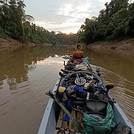
I’m Typhaine, 35 years old. Five years ago, I left France for a solo round-the-world trip—no planes, just a van, hitchhiking, cycling, and even a canoe in the Amazon! Today, I work as a naturalist guide in Argentine Patagonia.
Wherever I go, my compass stays the same: observing and photographing wildlife, which I deeply admire and respect.
My project: I’d love to share this experience through a sustainable, authentic, and immersive nature tourism initiative. But to build something meaningful, I need to understand how other nature enthusiasts experience their own adventures.
If you:
Are over 20 years old
Have a true passion for Nature
Have already taken at least one trip lasting more than 3 nights (in your country or abroad) in your life
Promise: I’m not selling anything, this isn’t marketing. Your answers are 100% anonymous and will only help me shape this wild project.
A huge thank you to everyone for your help and kindness! Looking forward to chatting in this thread 😛
(Dear admins, this is purely a collaborative effort for my project study, with no commercial purpose. Thank you so much for your support!)
Photo: Grizzly Bear (Ursus arctos horribilis), female on the left and her cub on the right. Photo taken by me in Alaska, Denali National Park.
It’s something we often notice in this forum—and many others—this behavioral shift.
A long-time member, or even a new one, asks a question.
They get one or more answers, some brief, some detailed, and then... nothing???
Not even a simple thank you!!!
From what I’ve gathered, if the answers don’t align with what they wanted to hear, it seems natural for the asker to just disappear!! 😕
Unless—(and I fear this is the case)—basic politeness is no longer part of our society????
I spent 3 weeks in Bali last summer (+ 3 nights on Gili Meno and a day trip to Kawah Ijen in Java). So I wanted to see what ChatGPT could suggest for comparison...
Here’s the prompt I gave:
"You’re a local expert guide for Bali.
- Plan a 20-day itinerary for Bali with a side trip to Gili Meno and a day trip to Kawah Ijen in Java without staying overnight.
- I’m traveling with my wife, and I love visiting historical sites, hiking, relaxing at the beach, snorkeling, and exploring rice terraces...
- For the duration of the stay, I don’t want more than 8 places to sleep, and I’d like to stay at least 2 days at each stop to avoid unpacking too often. Except for the last night, where I’m okay with just one night near the airport.
- I prefer neighborhoods that are walkable and try to avoid typical tourist traps, though I don’t want to miss the must-see spots. So suggest a mix of iconic sites and hidden gems.
- Recommend hotels or guesthouses with a budget of 50 to 100 € per night, including breakfast. Make suggestions in areas popular with travelers, specifying the vibe (I prefer quiet), and consider safety and proximity to attractions.
- For lunch and dinner, suggest two to three restaurants that are well-rated by customers.
- Give me a day-by-day program with details on travel times, visiting times for each point of interest, and recommendations for transportation (taxi, train, bike, etc.).
Estimate the total cost of the trip, including accommodations, food, transportation, and activities, and suggest two tips for saving money in each category.
- Don’t make anything up—be realistic about travel times, take into account the opening dates and hours of sites, and give me the entry fees for places to visit.
- Ask me all the questions until you’re 95% sure you understand what’s being asked. Don’t generate your response until you’ve understood."
The AI asked for a few clarifications:
"Great request—I can build you a really optimized and enjoyable itinerary, but to be 95% sure I hit the mark, I need a few key clarifications (this will really influence the pace, areas, and accommodations)."
In the end, it proposed a program very close to what we actually did.
I’ll skip its accommodation and restaurant suggestions...
Its proposal:
"Ubud (4 nights) => we did 5 nights
Sidemen (2 nights)
Amed (3 nights) => we’d planned 2 nights
Gili Meno (3 nights) => we did Gili between Sidemen and Amed
Munduk (3 nights) => we did 2 nights before Pemuteran
Pemuteran (3 nights) with Ijen => we did 4 nights
Sanur (2 nights + 1 last night) => we chose Jatiluwih instead of Sanur
It suggested "activities" (and accommodations too):
IN UBUD:
- Walk around central Ubud (1–2h)
- Campuhan Ridge Walk
- Tegalalang Rice Terrace
- Tirta Empul
- Gunung Kawi
- Massage / market / slow café
IN SIDEMEN:
- Rice terrace hike (2–3h)
- Cooking class
IN AMED:
- Snorkeling
- Japanese Shipwreck
- Beach + relaxation
- Volcano sunset
ON GILI:
- Snorkeling at Gili Meno Turtle Point, Nest Underwater Statues
IN MUNDUK:
- Jungle & waterfall hike - Munduk Waterfall + Melanting Waterfall
- Loop: 3–4h (perfect for your level)
- Ulun Danu Bratan Temple
- Twin Lakes
IN PEMUTERAN
- Snorkeling: Menjangan Island
For Kawah Ijen, it detailed the day well:
👍 from Pemuteran = best possible option
12 PM: leave hotel (we left at 10 PM)
1 PM: ferry
3 PM: arrival in Java + transfer
11 PM: start ascent
2 AM–6 AM: volcano
Return to Bali around 11 AM–12 PM (we got back at 4 PM)
👍 still very intense, but doable with an agency
💰 ~80–120 €/person all-inclusive
IN SANUR:
- Relaxation
- Quiet beach
- Proximity to airport (30 min)"
I’ve kept the habit of blowing my nose in the sink and then washing my hands—a custom I picked up in India. Sometimes, non-travelers are shocked when they catch me in the act... 🤪
Also, when I run out of toilet paper, it doesn’t bother me—unless I’ve got company over... 🤪
Just got back from walking a friend’s dog (while they’re on vacation), wearing a djellaba and Tibetan boots... 😏😏😏 Oh, for sure, if I’d run into locals, I probably would’ve shocked them? 😏
Anyway, as long as I’m not spitting on the floor at a restaurant or squatting on the side of a highway with a water bottle in hand...
After taking a little trip around the world, I came back a few months ago with an idea in mind.
I mostly do diving, and I love observing animals in their natural habitat without disturbing them.
During the trip, I realized it was quite complicated to know where and when to see certain species.
For example:
where to dive with sharks or manta rays
where you might get a chance to swim with whales
I even discovered thresher sharks during my trip… I didn’t even know this species existed before, even though they’re incredible to see.
We spent a ton of time searching for info all over the place, especially on social media, without ever getting a clear picture.
So I started putting all this together on my own, in the form of a map, to make it easier to visualize where to go depending on the seasons.
I recently put a first version online (it’s called Fauneya).
There are probably mistakes, inconsistencies, or things to improve, and that’s partly why I’m posting here.
I’d really love to know how you all go about planning this kind of trip.
As part of my Master’s thesis, I’m currently conducting a public survey on a topic that concerns all of us when planning a trip: artificial intelligence and the role of human contact in travel planning.
These days, we’re using more and more digital tools to find ideas, compare options, and book trips... but is the role of human advisors still essential? At what moments? And for what types of trips?
The survey is anonymous and takes about 7 minutes.
It’s aimed at anyone who travels (or has traveled) for leisure, whether you plan everything yourself or go through an agency.
While browsing the forum to gather info for my upcoming trip to Thailand, I often see the terms "traveler," "great traveler," and also "tourist"—so what’s the nuance for you?
I've traveled quite a bit in Vietnam over the past few years—from the southern delta to bustling cities and even some small islands—but what really sticks with me is the north, the high mountains.
Up there, there's something different—maybe slower, more raw. The morning markets with ethnic groups, women in traditional clothes, the colors...
The stilt houses, kids following you and laughing for no reason, the terraced rice fields—it almost feels unreal at times, so vast and quiet, yet so human and simple.
You often hear that Sapa has become too touristy, and that's partly true, especially in the center. But as soon as you move a little farther away, everything changes quickly. The landscapes open up, encounters feel more natural, and you rediscover something truly authentic.
I think it's that contrast that struck me—the difference between what you imagine before going and what you actually discover when you take the time.
And you—what memory do you hold onto from Vietnam? A particular place that touched you more than others?
Hello,
We’re finalizing the plans for our upcoming trip to China in May 2025. The second-to-last stop will be in Zhangjiajie, where we’ve planned to stay for 2 full days before heading to Shanghai.
We’re traveling solo using local transport and have arranged to stay in the city of Zhangjiajie.
We’ve seen that there’s a lot to see:
Tianmen Mountain, the Grand Canyon and the glass bridge, Zhangjiajie National Park, and that the sites are quite far apart with fairly expensive entry fees.
We’re thinking of dedicating one day to the national park and the Grand Canyon (glass bridge) and one day to Tianmen Mountain.
But we’re not sure if this plan is realistic—any thoughts would be much appreciated!
I should be serving a warming drink to the participants in the discussion about gardens and parks that provide us with beautiful photos, I could mention the delicious buttery scent wafting from bakeries in the thread about returning to France, but my heart, its powerful pulse that nourishes my entire being, is elsewhere.
Dasht-e Lut, Yazd, Esfahan, Bam, Kerman, Qeshm, Hormuz—a melody, a prayer at the heart of desire.
A dream, an unattainable fantasy? No. Not anymore.
A very serious Italian travel agency is organizing this trip for 6 people this winter. I’m signed up, I’m going, I’m living. Maybe.
"But you’re completely crazy!!!!"
I know... I know that every civilization, every society has a vital need to create scapegoats to define and justify itself, pathetically. And Iran is one of them, top of the list. I laugh or sigh, and it doesn’t bother me.
But that unchanging red, deep red and garnet, so beautiful in itself, in all the Western chancelleries repeats, whispers, shouts: don’t go, don’t go, don’t go, you’re putting yourself in danger and we can’t do anything for you. You’ll be turned into mere bargaining chips, into arguments for endless negotiations. Fear must be instilled, its power absolutely preserved, no concessions made to the enemy. The information (how many French hostages, real or fake, compared to the number of travelers?) is always lacking.
Traveling becomes a merciless confrontation between desire, the vital pulse, and anxiety, its ghosts.
Hi everyone, here’s our itinerary. Arriving on the evening of December 13th. Departing on January 7th.
Thanks in advance for your tips and valuable feedback.
Manila – 1 night
Coron – 4 nights
Coron to El Nido cruise – 2 nights
El Nido – 4 nights
Port Barton – 5 nights
Flight from Puerto Princesa to Vigan
Vigan – 2 nights
Sagada – 2 nights
Banaue – 2 nights
Bagabag – 1 night
Manila – 1 night
I’ve only booked the flight to Manila and the Manila/Coron flight so far. Is it possible to book boat trips, accommodations, and the Puerto Princesa flight last-minute?
Really disappointed with Costa Rica! Pura vida? The scam of the century!
(Costa Rica pure emptiness).
The country where animals are free and people are in cages.
3 weeks in December in this country and never again. Imagine the trailer of a movie that seems interesting, and when you go see it, you realize it’s a flop and the best moments were in the trailer.
Well, that’s exactly how we felt with Costa Rica pure emptiness.
My wife and I have traveled quite a bit and didn’t expect to be so wrong about a place.
On the main routes, we visited:
San José
Alajuela
Limón, Cahuita, Puerto Viejo, Manzanillo (Caribbean side)
Jaco, Quepos, Manuel Antonio (Pacific side)
And a few short stops in intermediate towns.
Our dissatisfaction grew gradually like this:
When we arrived at the hotel, the taxi dropped us off on a small street in front of a white metal gate with ground-floor windows barred. We looked at it skeptically, but the sign matched.
He approached the gate, rang the bell, the buzzer sounded, and the door opened slightly. The hotel wasn’t bad for the price, a 10-minute walk from downtown, but with a "Fleury-Mérogis" vibe guaranteed.
So far, so good.
After showering and regaining our bearings, we headed downtown.
What started to unsettle us on the way was seeing houses with bars on the ground-floor windows and even on the second floor.
At first, we thought the hotel’s neighborhood wasn’t great.
Downtown San José:
It’s a generic city, not very exotic, with a pedestrian street and a small mercado where you can eat local food without frills. Very few tourists—if any—which let you blend in with the locals. We had lunch and struggled to make ourselves understood because, aside from one or two shops, English wasn’t spoken.
On the way back to the hotel, we took a different route, and while chatting and strolling, my wife pointed out a beautiful two-story white house completely barricaded like Fort Knox.
From that moment, we started noticing the facades of houses and buildings, and wow, it was creepy—most looked like prisons, some even with barbed wire.
Though put off, we told ourselves it was probably a big-city thing and the rest of the country couldn’t be like this.
So far, so good.
We relaxed at the hotel and had a drink at the bar. Night falls early, around 5:30 PM. By 7:30 PM, we headed back downtown for dinner. A bit unsettling for a capital—downtown was almost deserted, and aside from fast-food chains, very few restaurants were open, with hardly anyone on the streets.
Bars with security guards out front.
I won’t say we felt unsafe that night, but once it got dark, we realized the bars on the windows weren’t for nothing. First day in, and our impression was already mixed.
The next day, we explored the city and surroundings, and our feelings didn’t change.
So far, so good.
Off to Cahuita by bus—4 hours of travel.
The landscapes are very green but quickly become monotonous. The road runs alongside the forest and passes through a few towns and villages, and even in the countryside, there were just as many prison-like houses.
The bus dropped us off at Cahuita’s terminal station—only four of us got off. It’s a village, or rather, a small town. Cahuita is basically one straight road and a perpendicular one, and honestly, doubt started to creep in.
A few restaurants that add 13% tax and 10% service charge—so 23% extra. We dropped our stuff at the hotel and went to explore. In 20 minutes, we’d seen it all. We had lunch and planned to check out the famous park.
Entry is by donation—well, the "entry" is a joke. There’s a path along the forest by the sea, and that’s it.
Nothing’s going right anymore.
We thought it was a total scam, but since we hadn’t gone far, we decided to come back the next day to explore further.
We returned to the hotel, relaxed, and around 8:00 PM, we went out for dinner. Only two restaurants were open, and the streets were deserted.
Creepy!
The next day, we explored the so-called park more thoroughly and really got it.
A path along the forest by the sea—2 hours there and 2 hours back, where you see animals that feel like showing their faces.
A total joke—"all that for this?"
The beach was full of wood debris and coconut husks. We wondered if the photos online were edited because the sea, very rough, wasn’t the azure blue we’d seen in pictures.
But calling this a park is a joke—it’s like a new concept.
When we thought about the reviews online, we started to suspect that professionals with interests in the country were monitoring and countering any negative feedback that could harm their business.
Too bad we didn’t check the negative reviews beforehand—we did while we were there, and it helped. We wondered if we’d become too demanding after all our travels, but no—when something’s bad, it’s bad.
Manuel Antonio’s park is even more ridiculous—there’s a short path along the sea for about 500 meters, and then nothing. You have to climb through mud and hack your way through the forest. We ended up barefoot because the mud was up to our calves. All that to see a raccoon and a few parrots flying overhead.
We didn’t expect Noah’s Ark, but we’ve seen more animals in Bali, Mexico, and Thailand while visiting temples or just walking around than in these so-called parks!
Puerto Viejo, not far from Cahuita and supposedly livelier—well, it couldn’t be worse!
According to Lonely Planet, it had a Caribbean vibe and wild nights, but maybe that was a long time ago. The good reggae music playing everywhere isn’t enough.
In the evening, Puerto Viejo was a bit livelier than Cahuita, but that’s not saying much. Very few tourists—if any—no night market, just two or three shops open selling $20 T-shirts. Same vibe as San José.
No big deal—we enjoyed the beach and the sun, which was reliable.
Our itinerary was supposed to include Tortuguero Park, but after talking to other travelers who’d just been, we changed our minds, knowing we’d be visiting Manuel Antonio Park on the Pacific side.
To get back to the Pacific side, you have to take the bus and go through San José again—5 hours this time—then switch bus terminals and another 4.5 hours to Quepos.
A stopover town to get to Manuel Antonio’s beach and park!
A town just like the others we’d seen—deserted as soon as the sun sets, and not exactly bustling during the day either. (Where are all the tourists?)
Still as many bars on the windows and that feeling of being in the wrong place.
7 km later: Manuel Antonio beach and park.
The beach is very beautiful and quite large, but don’t expect turquoise blue water—the waves stir up the sand, giving the water a brownish color.
Along the beach, shops and restaurants for about 300 meters, and then nothing. At night, after sunset, the town shuts down too.
Manuel Antonio Park is highly praised for its wildlife, so we were eager to see it. When you express dissatisfaction with Cahuita or Manzanillo parks, the response is always, "But you should’ve gone to Monteverde or Manuel Antonio!" No matter what you do or say, they’ll tell you, "You should’ve gone there or here."
Back to our famous park—entry was about $16, and contrary to what we’d heard, it wasn’t crowded!
Guides at the entrance with spotting scopes offered their services for about $30.
The park: a mix of boardwalk and dirt paths through the forest, sometimes running alongside beautiful coves and beaches.
As soon as we entered, a crowd was taking photos of a deer eating leaves.
A little further on, a guide with a group of five stopped. The guide raised his arm and set up his spotting scope! He showed them, about 100 meters away, a hummingbird perched on a branch. Some, looking through the scope, exclaimed, "Oh my God! Amazing! Incredible!"
For a moment, we thought they’d discovered a unicorn or were in Jurassic Park and had just crossed paths with a T-Rex!
The concept is comical—looking at a bird or another animal through a spotting scope because it’s too far away. Isn’t that what TV is for?
For our part, we saw monkeys, ants, an armadillo, an iguana, and the backside of a sloth climbing a tree. Amazing, incredible!
We stayed a few days in Manuel Antonio to enjoy the beach, changing hotels often because prices varied wildly from one day to the next for shameful services. On top of that, they’d quote a price in dollars and convert it at their discretion—thieves!
Alajuela, a city near the airport, has a two-story mall and a local market downtown! No interest except its proximity to the airport.
What we liked:
The climate and, in hindsight, San José—the most authentic city we visited.
What we didn’t like, in addition to what we’ve already mentioned:
Costa Ricans aren’t very friendly or communicative. English is barely spoken, not even by doctors at Quepos Hospital, where my wife ended up with food poisoning (thanks, Google Translate). The widespread obesity among Costa Ricans, who eat like Americans. The insecurity. The eco-hipsters who leave their $150 lodges in minivans with guides to visit parks and other sites, then return to barricade themselves in their fortresses at nightfall (oh my God, amazing, incredible). The blue signs at the entrance of towns that accept this payment method: "We accept American Express." Parking lots that become paid just because a guy is watching your car. Prices displayed in dollars. The cost of living (hotels, restaurants, taxes). Landscapes that are too green and not flowery enough. Beaches—nothing exceptional. Pollution in cities where big American trucks rule. Sewage dumped directly into the sea. Aside from the jungle, there’s nothing to visit—no ruins, monuments, or anything worth seeing.
In short, my wife and I think the hype about this supposedly eco-friendly country is overrated. It’s just the trendy destination of the moment. There are much better, cheaper, and more authentic places.
In hindsight, we keep the good memories and our beautiful photos, but if we had to do it over...
Before signing off, a little message to those who don’t like hearing opinions different from theirs:
Well, some things aren’t up for debate. And to those who’d have us believe that in 3 weeks, we don’t have the right to criticize a country or express our feelings—how can you praise it in so little time? What a scam. Costa Rica is a money pit. Pura vida? Pure cosmic emptiness.
If you like spending your evenings barricaded in your cozy hotel after dark, this country is for you.
For everyone else: run!
Hello,
Since the war between Russia and Ukraine, nothing is simple anymore for traveling to Belarus due to sanctions.
No more direct flights from the EU to Minsk.
Driving is a huge hassle, especially crossing through Poland at the only open border in Brest—you can wait 2, 3, or even 4 days just to get through by car.
The least painful driving option is to come via Lithuania and cross at the only open border, with a minimum wait time of 8 hours, sometimes up to 20 hours or more!!
Controls are very strict and annoying on both the Lithuanian and Belarusian sides. Avoid bringing alcohol, food, or cigarettes—everything will end up in the trash, especially when leaving Belarus for Vilnius, where the Lithuanians are tough, even with EU citizens.
The joy I once knew when visiting my wife in Minsk is sadly over—it’s now a real ordeal.
The fastest solution is to fly. My wife travels to France by taking a bus to Kaunas in Lithuania, where you can catch a flight (though not daily) to Paris Beauvais or Charleroi in Belgium with Ryanair, for example.
For the return trip, it’s the same: a flight to Kaunas and then a direct bus from the airport to Minsk.
The bus crossing is quicker than driving—the 250 km journey, including border checks, takes about 6 to 8 hours for buses leaving Lithuania around midnight, but controls are still strict at the border.
The biggest challenge is finding flight schedules that align with the bus routes between the two countries, given the unpredictable border crossing times.
Now, my wife travels via Charleroi in Belgium (near Brussels), and you can take a train to Paris. Alternatively, you can fly into Beauvais and take a bus to Paris (Porte Maillot).
For those driving, note that EU insurance and assistance policies no longer work in Belarus or Russia. You’ll need to get local insurance, usually limited to third-party liability (I don’t think full coverage exists?), as well as mandatory medical insurance. This is available at the border.
You now have to pay highway tolls—no more BELTOLL boxes. Instead, you pay a flat fee for the duration of your stay. Stop at the first gas station after crossing from Lithuania to fill up on fuel and cigarettes.
From what I know, Lithuania bans carrying more than 60 € in cash, but there’s no limit for USD (though it’s capped at $10,000??).
With a Visa card, you can now withdraw 1,000 rubles per week (about 270 €)—two months ago, it was only 500 rubles!!
For now, you can still pay by card in shops and gas stations.
However, major retailers like KORONA (which may be Russian-owned??) no longer accept foreign Visa cards.
Unfortunately, the additional sanctions announced by the U.S. on August 5, 2025, against Russia—and possibly Belarus—aren’t promising for the future.
After 20 years of visiting Belarus, I’m truly saddened to see the joy of living in this country with my wonderful wife turn into such a bleak situation, all because of human folly.
Hi everyone!
I’m putting together our travel itinerary for Veneto at the end of April. And the more I look and research potential sites to visit, the more I find!
We’ll only be there for a week—my family and I—including 3 days in Venice. So we have to make some choices...
I plan to rent a car when we arrive in Venice and head straight to Bergamo, which would be our first stop. We’d leave the car at the airport when we return to Venice so we can explore the city at our leisure.
What do you think:
1 night in Bergamo (a 2h15 drive from Venice airport),
1 night in Garda,
1 night in Verona,
1 in Padua, and
3 in Venice—would that be doable?
Thanks in advance for your tips and experiences! :)
Now that the curtain has fallen on the past year, it’s time to see what’s happening around here.
It seems pretty quiet, but I’ll read more in detail later.
First, I need to tell you all an anecdote.
My eldest little girl, in her third year of law school, was really scared she wouldn’t pass the year.
I told her:
“Trust yourself, you’ve worked so hard, and worst case, if you fail, you’ll just redo the year.”
“But I don’t think I’ll make it—they changed the rules, and if I mess up even one unit, I have to start all over.”
I knew her grades weren’t exactly stellar, and with what I was about to say, I wasn’t taking much of a risk.
“Here’s the deal, sweetheart: if you pass, I promise I’ll take you to India, just the two of us.”
I have to admit, India is a country I’ve talked about so much to all my grandchildren that in their minds, it’s become a magical, mythical place (hmm).
July had barely begun when my phone rang, her name flashing on the screen.
“Mamido, I did it!”
My promise came rushing back—oh no, oh no, oh no!
“Congratulations, sweetheart!”
A little shyly, she said:
“Is the India trip still on?”
And me, replying:
“Of course it is!”
And that’s that—a promise is a promise, or you risk losing that precious trust that keeps hearts warm and at peace.
We’re leaving in February. Only 8 days—yikes, the carbon footprint!
But we can’t miss her tutorials, or she’ll be kicked out.
Personally, that works just fine for me.
Going to India has become a challenge for me. It’s far, it’s exhausting, I sweat, I hate mosquitoes, the spices bother my mouth when I used to love them. There’s noise all the time—at night, the dogs bark nonstop, and we almost get run over. I’ll get lost in the streets because my sense of direction has vanished. I don’t like rice anymore. All that chaos and those cultural differences that once enchanted me now just overwhelm me.
But I promised.
The upside—and it’s a big one—Raman, the same driver I’ve had forever, will be at the airport with a sign with our names. We’ll stop at the same little shop for chai (or tea, plain and simple) with that aroma that intoxicates me, halfway through the trip.
It’ll be a tiny trip—staying with friends, I’ll show her a few places I love: Chidambaram, Mamallapuram, and the clinic where I worked. Then we’ll head back.
My little girl will go home to her parents.
As for me, I’ll leave right away for our Scottish island with Homme for our chilly winter.
How can you love a country so much you want to live there, then suddenly reject it, no longer able to appreciate what once made it special?
That’s the mystery of love, I guess.
I’ve visited the U.S. four times myself, including two long road trips. The last one was just this past August...
I won’t be going back. I already felt guilty last August, but recent policies have finally convinced me: the humiliation of Zelensky, authoritarian excesses, Gestapo-like methods for detaining people of foreign origin, the murder of innocent people (a mother shot dead), corruption, insane "tariffs," skyrocketing healthcare costs for Americans, the abduction of foreign figures to secure oil, the requirement to disclose social media accounts, and now... threats and blackmail to forcibly take Greenland—a region that belongs to Denmark and thus the European Union!
The reality is that simply posting this could get me denied entry to the U.S.!
In this context, I just can’t keep spending money there. I loved my trips, but there are so many other countries with stunning landscapes to explore.
So I get why you’d want to travel there. I did, and I loved it. But once a country no longer respects any of the values that made us love it, why go?
How can we even consider traveling to a country that threatens to take one of our territories by force?
Hello everyone,
Controversial topic? Not necessarily—maybe just a reflection on a world to come.
I spent the last 15 days of August on a cruise in Greenland, from Kangerlussuaq to Tasiilaq.
I was utterly amazed by this unique world of rock and ice, the little houses in every color, a simple life that’s also complicated by isolation and climate, among other things...
I carry in my heart the kindness of the people I met, the raw and gentle majesty of the icebergs, the colors of the sky...
So, I can’t even imagine a massive presence of raw material prospectors, heavy machinery requiring roads to be built—if that’s even possible—changing their way of life... putting sled dogs out to pasture!
Do fast food and Greenland’s northern lights really mix?
I wouldn’t trade my memories for an ESTA!
All opinions are respectable, which is why this isn’t a controversy—but I’m sorry, I have a soft spot for *my* Greenland.
















 .
.
.
.