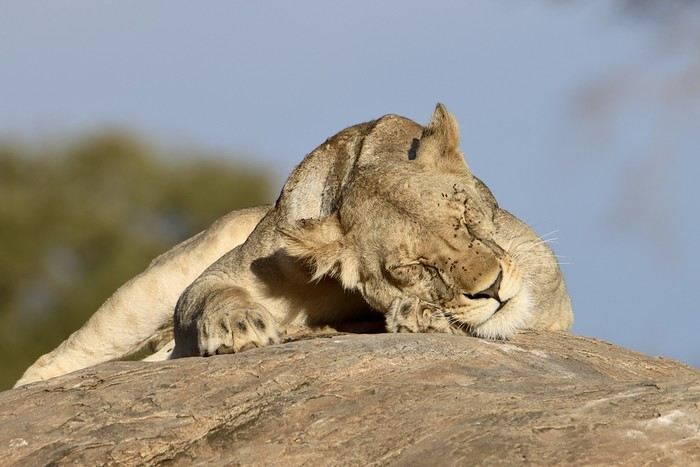
In South Africa, over the past few years, places offering interactions with lions have exploded across the country—but mainly in the most tourist-heavy areas (well, well...).
Under various names ("reserve," "center," "park," "institute"), tourists are lured in with the chance to pet lion cubs, walk alongside lions—all for a fee, of course.
Volunteers are even recruited to support the animal cause—also for a fee.
The origin story of these big cats is always noble: orphaned cubs rescued from the wild, or from terrible places, or from an injured mother that was saved.
(That’s an awful lot of orphaned lion cubs... a real epidemic?)
The future of these felines is supposedly bright—either a return to the wild or retirement in a reserve.
The "center’s" activities—the rescue of these poor cubs or lions, the study of their behavior, genetic improvement, repopulating the wild, and lately, advertising.
What will the tourist do?
How can you resist the incredible opportunity to pet a lion cub, walk beside a lion, get up close without barriers, see them so near?
Plus, you’re doing a good deed by funding the rescue of these magnificent animals, cared for with such dedication by these passionate people!
What have you actually just done?
What are the facts? (Conclusions from a very interesting report)
There are over 200 lion breeding farms, currently holding more than 12,000 captive felines, most of which are lions. (Up from 8,000 in recent years.)
More than 800 captive lions are killed each year by hunters. Who, by the way, try to establish ethical hunting rules.
Almost none of these places have any real connection to animal protection agencies or wildlife conservation scientists.
It’s a commercial operation, generating over $100,000 USD/month, particularly through volunteer programs.
The real rescue centers can be counted on one hand!
There are no reintroduction programs for captive lions. They aren’t needed—lions don’t require captive-bred animals for reintroduction, especially not those imprinted by humans or genetically compromised.
And they don’t breed, sell, or interact with the animals in any way!
(They don’t breed, trade—mostly receiving animals rather than acquiring them—or interact with the animals in any way.)
Taking a lion cub from its mother is unnatural and only done to exploit the animals, visitors, and volunteers.
(Taking lion cubs away from their mothers isn’t natural and is only done to exploit the animals and you as the visitor or volunteer.)
Obviously, the number of animals actually "rescued from the wild" is minuscule.
Information provided at these places is poor, confusing, and biased—or outright false.
They exploit people’s gullibility and empathy for a commercial operation under the guise of animal welfare.
Under the pretense of animal protection and research, many lions end up sold to zoos.
Most are sold to hunting reserves.
The use of big cat bones in traditional Chinese medicine is ancient and growing rapidly—over 1,000 lions are killed each year for this purpose.
The uncomfortable questions!
* Is there interaction with the lions?
* Where are the old lions?
* Do you buy or sell animals?
* Where do the animals come from, and where do they go? Where do all these cubs come from?
* Do you have a recognized predator specialist?
* If you release animals, when and where?
The right answers!
We interact minimally, if at all! They need to stay wild!
The old lions are here.
Never buying. Selling is extremely rare. It’d be like an animal shelter buying dogs!
We have few animals, all rescued. No breeding, ever. It’d be like an animal shelter breeding dogs!
Yes.
Extremely rare!
It’s clear this is purely a financial operation, and there’s a 99% chance you’re participating in what I’d call a scam.
Basically, lions are bred on farms. When they’re cubs, you pay to pet them. When they’re older, you pay to walk with them or get close. And when they’re fully grown, they either become breeders on the farm or end up as targets—in a zoo, as bone powder, or worse.
Pet a lion cub, and you’re sentencing it to a lifetime in captivity or death!
The same principle applies to leopards—though not exactly to cheetahs.
Real rescue and conservation centers exist, but they’re rare. The others are everywhere.
On the absolute necessity of not interacting with a lion unless you're condemning it to a life of captivity or certain death in the near future.
Wild animals have learned to flee from humans over millions of years—and thousands with Homo sapiens. Humans are the greatest predators. When they arrived on untouched lands like Australia, the Americas, or Réunion Island, they decimated animal populations within just a few years (or decades) because those animals didn’t know them.
A lion flees from humans... unless cornered or if it’s learned that it can win without too much fear.
Take the example of baboons. Don’t feed them.
If you do, you’re sentencing them to death.
Why? Because they’ll understand and teach their young that food is easy to find near humans—in trash cans, cars, or even houses. Our clever baboon will learn to open doors, break into them, and steal backpacks.
And a baboon has big teeth!
The same goes for lions, but on a much larger scale.
Interacting with a lion teaches it not to fear humans.
Releasing it afterward is impossible—you’d be unleashing a dangerous predator with no self-control into the wild!
So, a lion cub that’s been petted becomes an extremely dangerous adult lion, even in a reserve. And what’s worse, the mother lion can pass this behavior on to her cubs!
What do we do with all these dangerous adult lions?
What do you think?
Example:
A woman in a truly wild private reserve, breaking all the rules, decides to go alone at night to fetch her sweater from her room.
Her husband doesn’t see her return.
They search for her.
They find her body attacked by a lion.
The lion was tracked down and killed because it might have learned that this lodge was part of its hunting territory... and could return... and not alone, either.
I applaud your initiative in posting such a message.
While reading, it occurred to me that since we can no longer practice slavery, we’ve turned to animals instead.
You can’t watch a wildlife documentary without starting with a smile and ending up in tears. A mass extinction has been underway for a long time, only slowed here and there by a few individual efforts. A major step forward—at least for Africa—would be if the Chinese finally moved away from their traditional medicine.
Unfortunately, nothing will improve without global population stagnation or decline. And good luck trying to convince people to have fewer or no children.
I’d love to be wrong, but I think we’ve already passed the point of no return.
« Tout le monde s'interroge sur comment laisser une meilleure planète à nos enfants, mais on devrait plutôt penser à laisser de meilleurs enfants pour notre planète. » Clint Eastwood
Here’s a discussion that could serve as an answer to many questions posted on this forum.
The mods pinned a topic about Vietnam at the top of the messages indefinitely. Maybe they could do the same for this one in the Southern Africa section.
I just hope to make travelers heading to this country think twice.
I hope they’ll ask themselves questions before deciding whether or not to take part in such activities.
In this specific case, I believe (and I’m not the only one) that there’s deception toward the traveler and animal mistreatment.
This post echoes many TV reports (including a French one aired a few months ago on France 2). It also echoes travel agencies that have clearly decided to stop offering this activity, as well as numerous associations and real advocates for animal protection and preservation.
South Africa is still a country that can offer unique opportunities to discover and observe nature—the real kind (if any truly untouched nature still exists).
Great initiative!
Of course, we agree with you, even if animal contact might tempt a nature lover!
In 8 days, we’ll be there for 6 weeks, and after several trips, we still haven’t exhausted the topic—so petting a feline? It used to happen not so long ago in France for that unforgettable PHOTO!!!!
In our zoos, lion cubs and other felines are quickly taken from their mothers and often end up euthanized—it’s even worse.
Best regards and thanks for thinking to inform VF readers.
Yolande and Jacky.
The moderation team has pinned a topic indefinitely at the top of the Vietnam destination messages.
Perhaps they could do the same for this one in the Southern Africa section.
That’s a great idea. I don’t think the moderator would face any criticism if they supported this initiative.
« Tout le monde s'interroge sur comment laisser une meilleure planète à nos enfants, mais on devrait plutôt penser à laisser de meilleurs enfants pour notre planète. » Clint Eastwood
Thanks for this great initiative. This topic should definitely stay at the top of the posts. Maybe you could make a request to that effect? Also, this topic would be really useful for other destinations. In a travel journal, someone shared their walk with lions at Victoria Falls. Unfortunately, this kind of experience can give others ideas. 🙁 It’s important to raise awareness about this issue. Thanks!
Hi Michel,
Indeed, it’s important to raise awareness among people who might be tempted to think these reserves exist for animal conservation 🤪 😠.
Thanks for taking this initiative,
Isabelle
"Voyager est un triple plaisir : l'attente, l'éblouissement et le souvenir." Ilka Chase
Great initiative!
Of course, we agree with you, even if animal contact might tempt a nature lover!
In 8 days, we’ll be there for 6 weeks, and after several trips, we still haven’t exhausted the topic. Petting a feline? It used to be done not so long ago in France for that unforgettable PHOTO!!!!
In our zoos, lion cubs and other felines are quickly taken from their mothers and often end up euthanized—it’s even worse.
Best regards and thanks for thinking to inform VF readers.
Yolande and Jacky.
Hello,
I completely agree with the post’s initiator... However, regarding Europe and felines born in zoos, I don’t agree. These animals aren’t euthanized—they’re bred in captivity, not taken from the wild.... Major European institutions are all part of conservation, breeding, and exchange programs. Some animals will only survive thanks to these zoos.
What’s terrible is that little by little, humans, with their ever-expanding presence, are invading animal territories.... The natural balance no longer exists....
What’s horrifying is that little by little, humans, ever more expansive, are invading animal territories.... the natural balance no longer exists....
Totally agree, it’s absolutely horrifying!
We should forcibly remove all those African populations still encroaching on wild animal territories and restore that natural balance so there’s more space for wildlife *and* for tourists eager to photograph animals!
We’ve already confined the Maasai in Tanzania, the Bushmen in Botswana and Namibia, and the indigenous people of Kruger, but it’s still not enough!
books.google.fr/...20kruger&f=false
And even in Benin, the populations that lived in the Pendjari Park have been relocated to its outskirts. They aren’t "put on display" for tourists like the Maasai (whom I don’t know personally, just seen quite a few TV segments on the topic), but they’re still far from being treated fairly. It’s probably not on the same scale, but the philosophy is the same.
Pendjari has just been sold (at least its management) to a South African firm, and W Park too. That doesn’t bode well.
and even in Benin, they relocated the populations living in the Pendjari Park to its outskirts.
Lions, even if you still can’t pet them, are still more important than those human beings we know nothing about. Anyway, these people are from another era and will be rehoused on the outskirts of a small town; they’ll surely find a way to adapt!
Local populations aren’t displaced to create "lion zoos" as mentioned in this post.
These lion farms are concentrated on private land owned by one or more individuals.
Kind of like if a French farmer decided to replace their cows with lions because it’s more profitable.
As for private wildlife reserves, their goal is to protect species from humans since coexistence is impossible and ultimately leads to the extermination of the animals.
You who know Morocco, can you tell us if lions still exist there?
Should wolves and bears be exterminated for the well-being of shepherds?
Opposing animal species preservation just because it requires reducing human space is a choice that, personally, I disapprove of.
I don’t want the Earth to end up with only humans and domesticated animals left.
You're right, these aren't lion zoo areas, but a photo safari reserve (in Benin) next to a hunting reserve. For the local populations, "relocation" is six of one, half a dozen of the other.
As for the Africa you're talking about, it's not just lion zoos and displaced populations—there are also most of the big tourist parks, even without lions to pet.
I don’t advocate for the destruction of wolves or bears, but I also understand the concerns of livestock farmers.
I wouldn’t talk about the "well-being" of shepherds... that’s a bit reductive.
Pastoralism has changed its form... should we regret it or not?
I find it pretty easy to advocate for measures like shrinking human activity zones when you’re preaching these ideas from the comfort of an urban living room.
I’d rather leave the priority to the people on the ground (affected populations and researchers). The debate must continue—it’s far from settled. Maybe we’ll find solutions where everyone benefits: humans and the wild animal world.
I don’t think there are still lions in Morocco. The last one was killed in 1922.
Only Europeans seem to regret it. I’ve never heard a Moroccan farmer or rancher bring it up.
But people will say Morocco is "behind" 😕—just like our farmers!
Populations are not relocated to create "lion zoos" as mentioned in this post.
No, but simply to clear the spaces for animals—lions and others—of indigenous populations that are inconvenient for wildlife tourism. For indigenous peoples, whether it’s lions, elephants, giraffes, or cheetahs, it’s all the same!
Did you ask the Bushmen of the Kalahari what they thought about it? Or the Maasai in Tanzania and Kenya? Everywhere wildlife reserves have been created (including Kruger!), indigenous people have been displaced, and hundreds of kilometers of barbed wire have been put up to stop them from resettling!
books.google.fr/...20kruger&f=false
Sorry if I care more about protecting human beings in general than the animals of the savanna.
A bit like if a French farmer decided to replace his cows with lions because they’re more profitable.
A French farmer who’d set aside an area the size of the Vercors and Chartreuse combined to let ibexes, chamois, foxes, and wolves thrive—and who, with or without state help, would expel any farmers or herders he found inconvenient for the well-being and proliferation of wild animals and 4x4 tourists—and who’d locked all this nature behind barbed wire!!
"You can come in with your cameras and 4x4s, but you’ve gotta go through the gatehouse and buy your entry tickets!"
We're getting a bit off track...
This is all very interesting, but...
The point was to highlight a practice:
The breeding of lions in near-battery-farm conditions.
Why?
To make money by allowing travelers—usually misled by the claims—to pet lions and/or walk with them.
To make money by selling lions over two years old to "hunting" reserves, zoos, or circuses, or even using their bodies for "traditional medicine."
So, I was speaking out against this breeding and the misleading claims.
As for the rest...
I’d like to point out that large protected areas in South Africa (which I know well) and Namibia (which I know a little) also benefit local communities.
Jobs and income, because some of these areas are managed by local communities—some have even been returned to communities that were dispossessed in the past.
And benefits for the broader population, because without these spaces, would we visit these two countries in such numbers?
Most of these areas (I’m specifically talking about South Africa and Namibia) are managed as well as possible—or at least not badly—for both local people and wildlife, with a certain level of ethics (and presentations that are mostly clear and accurate).
In my opinion—but it’s just my opinion—the local populations appreciate the efforts now being made to help them live from their work and in better conditions (at least more aligned with what they want).
Why am I saying this?
I recently saw a documentary in Zululand with a "traditional village"... Zulus were working there... (it’s a bit like an eco-museum in France)... Japanese tourists thought the Zulus still lived like that.
Well, no. They dress in Western clothes, have cell phones, and live in permanent houses (for the luckier ones, of course).
Baviaanskloof. The expansion of the nature reserve meant some communities ended up inside it.
They weren’t evicted but kept the right to live there... and are happy to have jobs (rare in that area) thanks to travelers...
If we go down that road, the very principle of national parks or protected areas, or even historical heritage, could be called into question.
Let’s drill every oil well and mine there is to drill, farm all the land, and cut down every forest.... That’s the Trump-style vision of heritage—you’re free to think that, and people on this forum are free to believe that biodiversity and remarkable landscapes have an intrinsic value that goes beyond the mere interests of local stakeholders.
Fortunately, reality is much more complex and nuanced. If we’re talking about South Africa, the issue isn’t really a lack of land (South Africa has fewer than 50 million inhabitants for three times the area of France) but rather its distribution between white and Black populations since apartheid. As for safaris, which you don’t seem to like much (and that’s your right), it’s a growing economic sector that generates significant economic benefits, especially for local communities when well-managed (and I’d like to think that’s the case in South Africa).
I’d point you to Jane Goodall’s work—she quickly realized she could only protect chimpanzees by finding a win-win model with local populations, and today, it’s a success.
I’d also point you to the work of African Parks, an NGO that takes over national parks devastated by poaching (where, oddly enough, local populations haven’t found prosperity despite the disappearance of wildlife) and rehabilitates them to create models that balance preservation and local wealth creation: https://www.african-parks.org/
I’ll close this big parenthesis (sorry, Michel) and take the opportunity to commend the original post for highlighting a real issue in tourism—one that many people fall into while convinced they’re doing good.
Let's drill all the oil wells and mine every possible deposit, cultivate all the land, and cut down all the forests.... That's the Trump-style view of heritage—you're free to think that, and people on this forum are free to believe that biodiversity and remarkable landscapes have an intrinsic value that goes beyond the interests of local stakeholders....
No, I’m not defending the Trump-style view of heritage! But if defending biodiversity means expelling humans from that biodiversity and locking nature (meant for everyone) behind barbed wire, then I say no!
It’s true that the Bushmen of the Kalahari were a huge threat to the "environment"!! So why were they expelled? Can you tell me, someone who’s ignorant and dishonest?..www.survivalinternational.org/peoples/bushmen
Everywhere I’ve been in the most remote corners of the planet, I’ve seen that where Indigenous peoples live, the "environment" (I don’t like that term) that’s an integral part of their lives is protected. But where they’ve been displaced, evangelized, or stripped of their culture, their "environment" has deteriorated rapidly.
As for safaris, which you don’t seem to like much (that’s your right), it’s a growing economic sector that generates significant economic benefits, especially for local populations when well-managed (I naively believe this is the case in South Africa).
I don’t doubt for a second that it generates huge profits, but after seeing how the Zulus living in villages on the edge of Kruger Park live, I have my doubts about how much of those profits actually reach them! Some might say that some have found jobs in the reserve—that’s possible—but how many others are barely surviving? No means of transport to get to the nearest town! Even in West Africa (without wildlife parks), I’d never seen anything like it!
I’ll refer you to Jane Goodall’s work, who quickly realized she could only protect chimpanzees by finding a win-win model with local populations—today, it’s a success.
We’re not even talking about the same thing anymore... If, as you say, she found a win-win model with the local population, that’s great, but I haven’t gone to check for myself.
Some prioritize defending wildlife at all costs by excluding the human populations that have lived among it for millennia—that’s one way of seeing things, but it’s not mine. My priority is defending Indigenous peoples first and their right to live in their natural environment as they always have. On that note, I’ll close the parenthesis and let other members discuss the right and relevance (or not) of petting wild or "domesticated" lions.
What strikes me as a bit odd is that apparently, there are people motivated by this "activity"—which seems strange to me (petting or walking with lions)—but curiously, they’re not speaking up. So, for now, everyone seems to agree with the post’s author. Good!
I’m done intervening, I promise!
Well, I’m not sure that flying over South Africa for a few weeks with hardly any contact with the Black population (which you even regretted) really gives you a strong enough opinion on the matter.
So I’ll just say that local communities—Zulu or otherwise—genuinely appreciate the creation of parks and reserves. In fact, they’re even asking to be more involved, even to manage ancestral lands, and they do benefit from them. Sure, it doesn’t solve all of South Africa’s unemployment issues, but it does help.
I’m saying this because by May, I’ll have made over 15 trips to the region. I’ve had a few conversations with locals—so much so that I’ve decided to learn Zulu to move beyond the typical European tourist vs. Black South African dynamic (for Afrikaners, my blond hair, blue eyes, and last name are enough… and for English speakers, well, my Franglais does the trick).
It’s your comment about Zulu villages near Kruger that got me thinking…
But we’re getting off topic, we’re getting off topic….
My latest contribution to this thread that has strayed quite far from its starting point, which shouldn’t be controversial.
Once again, you’re mixing up a lot of things.
The cause of "indigenous" peoples is a real issue, and I find it a bit much to blame safari-goers for it.
The Bushmen and the San in Southern Africa, the Pygmies in Central Africa, or the Sámi in Lapland, or the peoples of the Amazon rainforest, are primarily victims of institutionalized racism in their respective countries, which consider their ways of life obsolete and refuse to take them into account when they conflict with resource exploitation. It’s not really safari-goers but rather mining, logging, and oil companies that harass them. Your source even says so:
"In the early 1980s, significant diamond deposits were discovered in the reserve. Shortly afterward, government representatives visited the reserve and told the Bushmen they had to leave because of these deposits on their land."
Now, regarding Kruger. The park is over a century old and was originally a hunting area, not exactly a densely populated region that was emptied of its inhabitants.
Of course, there are poor people around the park. Decades of racial segregation don’t disappear overnight, and the tourism industry isn’t meant to employ everyone, but it does create a real ripple effect in the region, which would otherwise be just another peripheral area of the country...
I don’t advocate for the destruction of wolves or bears, but I also understand the concerns of livestock farmers
A farmer can change professions without dying.
A bear or a wolf can’t...
The disappearance of wildlife and plant life is the result of human exploitation of nature, whether they’ve been local for generations or come from elsewhere.
Finding a balance seems completely utopian, given history shows that animal and plant life have no chance against the predator at the top of the food chain—humans.
I find it quite easy to preach such measures (shrinking human activity zones) when you espouse these ideas from the comfort of an urban living room.
At least I’m consistent with my beliefs.
Only Europeans seem to regret it. I’ve never heard a Moroccan farmer or rancher speak about the issue.
I don’t think only Europeans regret it. Would Moroccans have named their soccer team the Atlas Lions if they didn’t see this animal as a symbol of their country?
Besides, reintroduction studies are being discussed.
Maybe the Atlas lion will one day retrace its ancestors’ steps?🙂
Humans are the leprosy, the cancer of the universe. Animals would be happier without us—except for my cat, who’s convinced I’m his dad.
« Tout le monde s'interroge sur comment laisser une meilleure planète à nos enfants, mais on devrait plutôt penser à laisser de meilleurs enfants pour notre planète. » Clint Eastwood
Humanity is the leprosy, the cancer of the universe. Animals would be happier without us—except for my cat, who’s convinced I’m his dad.
The day will come when animal life, whether domestic or wild, will matter more than human life. For many Indigenous peoples we’ve left to die on the edges of parks, that day is already here.
Your reasoning is flawed from the start. You're separating two things that can't be separated.
But from the perspective of a regular at the local pub, we couldn't expect more.
« Tout le monde s'interroge sur comment laisser une meilleure planète à nos enfants, mais on devrait plutôt penser à laisser de meilleurs enfants pour notre planète. » Clint Eastwood
What’s horrifying is that little by little, humans, ever-expanding, are invading animal territories.... the natural balance no longer exists....
I totally agree, it’s truly horrifying!
We should forcibly remove all those African populations still encroaching on wild animal territories and restore that natural balance so there’s more space for wildlife—and for tourists eager to photograph animals!
We’ve already confined the Maasai in Tanzania, the Bushmen in Botswana and Namibia, and the indigenous people in Kruger, but it’s still not enough!
books.google.fr/...20kruger&f=false
Hello,
You misunderstood what I was saying, and I never suggested we should confine people—what a way to stir up controversy where there isn’t any.... The expansion of human territory is primarily due to the establishment of intensive farming and increasingly vast agricultural lands (which benefit the locals very little). As for restoring the natural balance, yes, absolutely.... Not for photographing them, but simply to respect nature’s equilibrium....
Personally, I don’t have any qualms about the subject. Throughout human history, many cultures and civilizations have disappeared—even the most glorious ones—and it’s a natural fact that’s always been the case. Humans can’t be the solution since they’re the problem. We absolutely must protect wildlife if we want this planet to remain livable.
The day bees disappear...... A. Einstein
Throughout the history of humanity, many cultures and civilizations have disappeared, even among the most glorious—it’s a natural fact, and it’s always been that way.
A natural fact!
Oh, come on... I think we sometimes give nature a little help.
It’s always been that way
So no reason for things to change!
We must protect wildlife imperatively if we want this planet to remain livable.
Wildlife and nature protectors sometimes forget that it’s Indigenous peoples who have always protected and respected them. Where they still live in harmony with nature, where they haven’t been driven out, evangelized, or stripped of their culture, wildlife isn’t endangered at all.
- "Oh no! The Amazon rainforest is shrinking like a shagreen leather, and this will increase CO₂ levels in the atmosphere!" And then, "The jaguars and freshwater dolphins are going extinct!"
- "Yes, but they’re also killing the Indigenous peoples who live there."
- "Who cares about them? They just need to adapt. Besides, it’s natural—it’s always been this way. What really matters is the CO₂ levels, the climate change that comes with it, and of course, the animals in that forest. The Jivaro? They’re useless to the planet! We’d be better off relocating them and creating wildlife parks for tourism."
Last night, France O aired a repeat of one of the many documentaries on this topic.
It showed a farm where lion cubs were made available for visitors to pet and photograph.
We then learned that it was possible to organize a hunt with an adult lion for a few thousand euros.
And that for roughly the same amount, you could bring home a trophy to decorate your living room.
The interested but nervous visitor was finally reassured about the lack of danger in this hunt.
The lion would be drugged beforehand, and the hunt could take place from the safety of a 4x4.
Final scene: the killing of a poor, weak lion lured by a carcass to where the caricature of a hunter was waiting. A magazine emptied blindly, then a suffering animal....
Petting the idea of petting a lion—now there’s one that wouldn’t have crossed the mind of a San. Let’s just say they’re no Mowglis, and storytime around the fire isn’t Disney Channel.
Hi there,
What’s truly outrageous is not just the lack of respect for the animal,
but the exploitation of people’s good intentions—most of whom genuinely believe this spiel in good faith,
even thinking they’re helping.
And since they’re not exactly Mufasa,
and have watched *The Lion King*, just like I have.
Thanks, Michel, for refreshing this post.
And what about cheetahs?
We’re about to head to South Africa, and I’ve noted some "conservation centers" like Cheetah Outreach, 50 km from Cape Town, and Daniell Cheetah Project west of Addo NP.
Could you share your thoughts? Thanks in advance
"Voyager est un triple plaisir : l'attente, l'éblouissement et le souvenir." Ilka Chase
The cheetah is
In my opinion
A special case
A highly endangered species
A species that’s easier to domesticate or nearly so
These cheetahs are far less subject to trafficking
A real return to the wild remains very unlikely, but conservation in dedicated spaces is possible
If there are only cheetahs and no other big cats, I’d be less suspicious
The question is always
Is there reproduction or not?
How many cheetahs are there?
Cheetah outreach
Okay
We're in an area where cheetahs haven't been around for ages
They breed them
In the videos, you see a crowd waiting to pet the cubs
Six hours a day
So
Not my thing
The second one seems more serious.
No cubs to pet.
Limited visiting time, which doesn’t guarantee you’ll be with cheetahs.
No cubs.
That’s a good sign.
Cheetahs are less subject to trafficking: really???????
I don’t know about Namibia, but I can tell you that in East Africa, it’s a whole different story.
Among oil merchants and other wealthy individuals in the Gulf, it’s fashionable to have a wild animal as a pet, and unfortunately, cheetahs are the victims. To make them docile, they must be taken when they’re very young.
It’s very easy to capture the cubs because the mothers have no means of defense against poachers, knowing full well that their survival depends solely on their speed and that an injury would jeopardize their future. Parks like the Maasai Mara, Serengeti, Tsavo, and others are seeing their populations decline year after year.
In Namibia, many national reserves or other such places were, not so long ago, breeding farms where predators—especially cheetahs—were unwelcome, and they were shot without mercy (I remember those not-so-distant times). Today, it’s become a business: people approach them, touch them, sell them to zoos or elsewhere, and sometimes, I hope, they’re left in peace for the enjoyment of curious nature lovers.
It’s true that seeing the faces of these little cheetahs makes you want to pet them, play with them—this is coming from a senior who’s never done it, but I can imagine what it’d be like for a child!
Once again, bravo for all the topics you cover on the site.
As you mentioned, trafficking isn’t absent, and the same stories are told about cheetahs and lions.
Still, I think some places are genuine rescue centers, especially in Namibia.
The problem with cheetahs is that their population is so small that genetic diversity is extremely poor.
For example, skin grafts can be done from one cheetah to another without any rejection!
Several organizations, including one with French involvement (yay!), are helping restore genetic diversity through artificial insemination.
This is far from those pseudo-rescue centers and pseudo-reserves—I’ve seen one run by a French speaker near Hoedspruit, with supposedly wild cheetahs roaming freely near the lodge pool, letting people approach... fed with kibble, these "wild" cheetahs.
That’s why we, as gullible tourists, need to be extremely cautious...
Already, places where cheetahs are born and where you can pet cubs... avoid them!
Just to revive this post and remind future travelers of a few things.
The industry is estimated to be worth as much as R1bn.
The Network for Animals (NFA) has called on South African decision-makers to urgently address the legislative gaps around canned lion hunting.
The lion population is dropping rapidly across Africa. A century ago, around 200,000 lions roamed the continent, and now there are only about 25,000 left. At this rate, by 2119, there may be none left. About 200 facilities across South Africa breed lions for canned hunting, and as many as 6,000 lions are stockpiled for hunters, the NFA said in a statement on Saturday.
"South Africa is considered the top destination for canned lion hunting, and we urgently call on South African decision-makers to address the legislative gaps around this cruel practice," said NFA chief campaigner David Barritt in the statement.
"Canned lion hunting is illegal in South Africa, but captive-bred lion hunting is allowed. Lions are bred in captivity and kept in small enclosures until they are shot and killed," he said.
There’s a fine line between the two—and regulations differ by province, creating confusion that canned lion hunters take advantage of.
"The result is that South Africa is now the worst offender in Africa for a practice that has been universally condemned as cruel. Our country is now the world’s largest exporter of trophy lion heads," he said.
No government could condone the drugging and shooting of captive animals in a travesty of hunting that frequently leads to a lion dying a slow, lingering death, riddled with bullets. It’s time to close the legislative loopholes because canned lion hunting brings shame to South Africa.
Barritt said the government had so far been ignoring calls to completely outlaw canned lion hunting.
Trophy hunting is big business in South Africa and, according to BBC News, it was worth almost R1 billion in 2013.
"But this is generally understood to be for wild animals, not those bred in captivity just to be shot," the BBC reported, posing the question: "Are lion hunters in South Africa shooting tame animals?" Barritt said.
"The clear answer to that is yes. When a lioness gives birth, her cubs are forcibly taken from her and used as a petting tool for tourists, who often pose and take photos with them. When these tamed lions get bigger and harder to handle, they’re moved to an enclosed area and stay there until someone pays to shoot them," said Barritt.
"They can’t run, hide, or defend themselves in any way. These animals are frequently drugged to make it easier for hunters, who often shoot the creature while sitting in their nearby vehicles. In most cases, it takes several shots before the animal dies. And canned lion hunting isn’t the only danger lions face.
"Lions are being poached for their paws and bones to be exported to Asian countries, where they’re marketed as virtual magic potions, a cure for all ills. It’s ridiculous nonsense with no scientific foundation, and if left unchecked, it will wipe out the lion population in Africa," said Barritt.
– African News Agency (ANA)
(Okay... I can't translate all that into Zulu—I’m past my first year of kindergarten level...)
Even if you're not a native English speaker, I think the general idea comes across.
Activities for gullible tourists.
Lions sacrificed on the altar of profit and the exploitation of goodwill.
Fake hunters who must have some serious complexes (the kind below the belt and above the knees).
Asians who believe in traditional medicine... when it’s good old penicillin that saves them.
"Are you going to South Africa? Don’t go petting lions... no matter what tall tales they feed you!"
"Look for them in Kruger or elsewhere... and if you don’t find any, go back!"
Hello everyone on this forum!
I know in advance that what I'm about to say here won't please everyone, but honesty is a virtue, isn't it?
Here's the thing: for many years now, I've noticed a habit in French-speaking posts of using abbreviations left and right, as if to show that we're "in the know." Let me explain with a few examples:
- - In discussions about Peru, I see "Aguas" for "Aguas Calientes." And if it's Mexico, well, it'll be "Aguas" for "Aguascalientes"!
- - For Guatemala, "travelers" will say "Guaté." Come on, saying "Guatemalas" would maybe be the undeniable sign that you know nothing about the country???
- - Back from Indonesia, many will talk about how familiar they've become with the country's language: "bahasa." Of course, everyone will know what you're talking about, but it still gets on my nerves because the language (one of the many languages) of Indonesia is "bahasa Indonesia." "Bahasa" actually means "language," and you'll find this word of Indian origin ‘Bhāṣā’ (it's Sanskrit originally) outside Indonesia too: in Thailand, for example, any language will be "phasa" as in "phasa thai" (official Thai), "phasa isan" (what's spoken in northeastern Thailand), "phasa angkrit" = English, etc.
Am I an incorrigible nitpicker? Maybe. But I'd also find it ridiculous if a foreigner came and told me they visited "Monte" during their trip to France, when it was actually Monte Carlo.
I read a lot in English and don't think I've encountered such a habit among English speakers.
Who’d like to share their best and worst travel memories in a few lines?
For me, it’s watching the TAJ MAHAL at sunrise and getting chased by dogs at the top of a mountain pass in GREECE on the way back from ISTANBUL.
THANKS GUYS
This is my 15,000th post, and it's a message I would have preferred never to write.
Patrick—Yangguizi—won’t be returning from his trek in Uganda. His health betrayed him in the mountains.
Like many of you, I laughed until I couldn’t anymore at his travel stories. I met him in Shanghai, then in Istanbul... We scoured restaurants—he was an incredible expert on world cuisines. We relived Korea, China. Always brilliant, so sharp, so funny, so down-to-earth. Being even a little bit his friend was something to be proud of. I think I envied him.
Patrick is still out there, of course...
He found his happiness running across the world. He’s on his path. He never doubted that "the traveler doesn’t even know if he’ll return one day."
Not sure this would’ve suited him, but his departure devastates me.
Alright,
Farewell, you foreign devil. Safe travels.
hello to all travelers with their eyes wide open to the desert...
I’ve always wondered what I was "doing" on this earth. And why my father, who died a few months after I was born—a former youngest French resistance fighter—joined the First Saharan Motorized Company in Atar and spent the rest of his life repairing army engines in Algeria, Mauritania, Senegal, Mali (which didn’t exist under that name back then), Morocco, and finally Algeria, where my mother was born and raised. (Believe me, it’s not "cool" being the child of a soldier in a country occupied by France, and even less so the child of a "pied-noir.")
Of course, I never got an answer: the dead don’t talk, and the army doesn’t either.
But here’s the thing—I had photos...
So naturally, one day I hit the road. I wanted to see, to understand.
It’s thanks to VF that I was able to do a little research on crossing the Morocco-Mauritania border, and I’m grateful to its members, just as I’m grateful to all those who welcomed me on the road for 14 years.
For the past few weeks, I’ve been wondering if I should talk about this or not...
It turns out the Mauritanians changed my life by asking for my help... And that started as early as February 2012... (Did I owe them something? No answer to that question.)
Ah, the irony—they saw me coming. But when you’re handed sick children and begged to do something, what would you have done? I’d worked in a hospital, so I knew a bit about the rules to follow. I didn’t hesitate.
And well, over all these years, I met doctors, surgeons, and together we organized care, evacuations of children, training for surgeons—even trying to stop children from having to travel outside their country. It was never easy. I’d like to thank those who supported us, as well as *La Chaîne de l’Espoir*, *La Fondation Face au Monde*, and everyone who built bridges between our two countries.
Unfortunately, despite the constant efforts of Mauritanian doctors and surgeons, some children couldn’t be helped in time. Today, I want to talk about four siblings—orphans of their mother—suffering from congenital glaucoma causing irreversible blindness. Their case was entrusted to me in 2020, just weeks before the big lockdown. We couldn’t do anything for them then, but when their father asked me for a gift, I rushed to my computer and wrote a story.
Through a tale, the children take a great journey, explore their country, and fulfill a dream. I never thought this book would be published—it was, in 2023.
This book pays tribute to Mauritania. It’s a message for those who know nothing about the hardships of life there, carrying both the harshness and beauty of an immense desert where you can travel by 4x4, bike, on foot, or by camel in complete safety. It bears witness to the kindness of Mauritanians toward travelers.
As a woman traveling alone in my vehicle—a now-rusted old Mercedes that no longer runs—I had the most beautiful encounters of my life there (I’ve seen other parts of the world...). The blind children of Choum, Atar, Nouadhibou, and Nouakchott will forever be in my heart.
Volunteer readers transcribed the book into a free audio version for the visually impaired. It’s available in sound libraries in France, the *Fondation Valentin Haüy*, and the Swiss Romande library.
I made my last trip to Mauritania in my old 4x4 to distribute the book everywhere, especially to its heroes and the school for the visually impaired in Nouakchott.
After that, I thought it was time to close the chapter because I no longer have the means or the strength to travel.
My publishers chose this title for it: *The Blue Eyes of the Desert*.
This publication helped a mission of Swiss volunteer ophthalmologists come to operate on glaucomas in Mauritania. I’m thrilled because they come back every year!
This adventure is ending, yes—everything must come to an end—but ultimately, it was born here, on the VF site!! So yes, I had to say it: THANK YOU!!!!!
Hi everyone,
I’m Loulou, a French expat who’s been living in Southeast Asia for about fifteen years, currently in Phnom Penh, Cambodia. A passionate walker at heart, I’ve trekked in Nepal (Thorung La, Mardi Himal), India, Vietnam, and I’m still planning new hikes (Char Dham, Langtang, Annapurna).
I’ve just published my first travel journal, recounting three months of walking and encounters across India. A portion of the sales goes to an educational center I support in Kep, for children whose parents work in the salt marshes.
I’m also working on a second book about Nepal with a musician friend, focusing on the Mardi Himal trek—two independent perspectives on the same journey.
Happy to swap stories with you about the Himalayas, India, Southeast Asia, or just the urge to hit the road and walk far from home.
Safe travels,
Loulou
Hi! It was totally by chance that I stumbled upon VoyageForum (an ad online and a story lol), and I’ve been reading some really old posts from 2011 about Thai massage schools—discussions on how to get by, accommodation, prices, etc. It reminded me of my own experience: I kept things simple by staying with a local family during my entire trip. I only shared all the expenses with them, which, I’ll admit, was super cheap… and I often traveled with them, which naturally opened a lot of doors for me. To start, at the school in Salaya, my Thai friend immediately connected me with Teacher Phong (the school’s mentor and teacher of teachers, a former monk). I was supposed to join a group session with other foreigners, but for some reason I don’t know, I got two days of private lessons for free with this expert… incredible! And on top of that, he loved France! It was an amazing experience. I "discovered" massage by chance—the Thai family just told me: "Try it, you’ll see!" (I’d had a pretty intense massage in the capital before 😅… but the next day, I felt unbelievably great!))
Every morning, I’d take a taxi (chosen by the Thai family at prices that beat all the competition) to this school—I’ve forgotten the name of the little village now… right in the heart of the countryside. Then, in the evenings, I’d keep practicing massage on all the family members… and they’d teach me Thai at the same time!))
Since then, I’ve practiced a bit, with lots of positive feedback. Following Teacher Phong’s advice—he thought my pressure was deep, firm, and precise—he strongly encouraged me to take this seriously.
I love Thailand so much. It’s a whole different way of living… and it’s a real blessing, even if I couldn’t live there full-time. Anyway, that was an unforgettable memory, and sometimes the Thai family and I still say hi—from 2011, 2013… right up to today!
"It seems to me that poverty would be less painful in the sun" wrote Aznavour...
Not sure...😕 Who can prove that people in hot countries are happier than others?
What do you think?
Is it better to live in Montpellier than in Lille?
Are the Pygmies happier than the Inuit?
Are Canadians less happy than the people of Louisiana?
Are there more French expats in hot countries?
And your travels? Do you choose your destinations based on the climate?
Do you rejoice when a bit of sunshine appears?
Hi everyone, just this once I’m not posting for a travel story, but to share a thought for Venezuela.
If you didn’t know—since it’s not making headlines—the country was hit by two 7.5-magnitude earthquakes last week. Over 2,200 people have died, more than 50,000 are missing, and some coastal towns have been completely destroyed.
Maybe when the scale of the humanitarian crisis becomes clear, our media will cover it a bit more... especially since earthquakes with this many casualties usually make the front page, but there’s been nothing in France.
So here’s a thought for this country, which, whatever you think of its politics, is a true jewel of South America, both for its landscapes and its people.
hi there
I’d like to invite you to discover my coastal province in central Vietnam: Quang Ngai.
This year, my province has really improved its infrastructure—mountains, countryside, and sea are all authentic here.
No harassers or thieves, and no Russians either.
A local lunch costs around 1 €.
A *** hotel room is about 25 €, and you can find hotels right on My Khe Beach.
We have a specialty: *banh xeo*—10 crepes for just 1.5 €.
You can rent motorbikes to explore the province and maybe visit the many ethnic minorities.
I live here—I’m not selling anything, but I can help if needed (my father-in-law is a traditional Vietnamese doctor and he’s very skilled).
Hi everyone! 😉
I’m Typhaine, 35 years old. Five years ago, I left France for a solo round-the-world trip—no planes, just a van, hitchhiking, cycling, and even a canoe in the Amazon! Today, I work as a naturalist guide in Argentine Patagonia.
Wherever I go, my compass stays the same: observing and photographing wildlife, which I deeply admire and respect.
My project: I’d love to share this experience through a sustainable, authentic, and immersive nature tourism initiative. But to build something meaningful, I need to understand how other nature enthusiasts experience their own adventures.
If you:
Are over 20 years old
Have a true passion for Nature
Have already taken at least one trip lasting more than 3 nights (in your country or abroad) in your life
Promise: I’m not selling anything, this isn’t marketing. Your answers are 100% anonymous and will only help me shape this wild project.
A huge thank you to everyone for your help and kindness! Looking forward to chatting in this thread 😛
(Dear admins, this is purely a collaborative effort for my project study, with no commercial purpose. Thank you so much for your support!)
Photo: Grizzly Bear (Ursus arctos horribilis), female on the left and her cub on the right. Photo taken by me in Alaska, Denali National Park.
It’s something we often notice in this forum—and many others—this behavioral shift.
A long-time member, or even a new one, asks a question.
They get one or more answers, some brief, some detailed, and then... nothing???
Not even a simple thank you!!!
From what I’ve gathered, if the answers don’t align with what they wanted to hear, it seems natural for the asker to just disappear!! 😕
Unless—(and I fear this is the case)—basic politeness is no longer part of our society????
I spent 3 weeks in Bali last summer (+ 3 nights on Gili Meno and a day trip to Kawah Ijen in Java). So I wanted to see what ChatGPT could suggest for comparison...
Here’s the prompt I gave:
"You’re a local expert guide for Bali.
- Plan a 20-day itinerary for Bali with a side trip to Gili Meno and a day trip to Kawah Ijen in Java without staying overnight.
- I’m traveling with my wife, and I love visiting historical sites, hiking, relaxing at the beach, snorkeling, and exploring rice terraces...
- For the duration of the stay, I don’t want more than 8 places to sleep, and I’d like to stay at least 2 days at each stop to avoid unpacking too often. Except for the last night, where I’m okay with just one night near the airport.
- I prefer neighborhoods that are walkable and try to avoid typical tourist traps, though I don’t want to miss the must-see spots. So suggest a mix of iconic sites and hidden gems.
- Recommend hotels or guesthouses with a budget of 50 to 100 € per night, including breakfast. Make suggestions in areas popular with travelers, specifying the vibe (I prefer quiet), and consider safety and proximity to attractions.
- For lunch and dinner, suggest two to three restaurants that are well-rated by customers.
- Give me a day-by-day program with details on travel times, visiting times for each point of interest, and recommendations for transportation (taxi, train, bike, etc.).
Estimate the total cost of the trip, including accommodations, food, transportation, and activities, and suggest two tips for saving money in each category.
- Don’t make anything up—be realistic about travel times, take into account the opening dates and hours of sites, and give me the entry fees for places to visit.
- Ask me all the questions until you’re 95% sure you understand what’s being asked. Don’t generate your response until you’ve understood."
The AI asked for a few clarifications:
"Great request—I can build you a really optimized and enjoyable itinerary, but to be 95% sure I hit the mark, I need a few key clarifications (this will really influence the pace, areas, and accommodations)."
In the end, it proposed a program very close to what we actually did.
I’ll skip its accommodation and restaurant suggestions...
Its proposal:
"Ubud (4 nights) => we did 5 nights
Sidemen (2 nights)
Amed (3 nights) => we’d planned 2 nights
Gili Meno (3 nights) => we did Gili between Sidemen and Amed
Munduk (3 nights) => we did 2 nights before Pemuteran
Pemuteran (3 nights) with Ijen => we did 4 nights
Sanur (2 nights + 1 last night) => we chose Jatiluwih instead of Sanur
It suggested "activities" (and accommodations too):
IN UBUD:
- Walk around central Ubud (1–2h)
- Campuhan Ridge Walk
- Tegalalang Rice Terrace
- Tirta Empul
- Gunung Kawi
- Massage / market / slow café
IN SIDEMEN:
- Rice terrace hike (2–3h)
- Cooking class
IN AMED:
- Snorkeling
- Japanese Shipwreck
- Beach + relaxation
- Volcano sunset
ON GILI:
- Snorkeling at Gili Meno Turtle Point, Nest Underwater Statues
IN MUNDUK:
- Jungle & waterfall hike - Munduk Waterfall + Melanting Waterfall
- Loop: 3–4h (perfect for your level)
- Ulun Danu Bratan Temple
- Twin Lakes
IN PEMUTERAN
- Snorkeling: Menjangan Island
For Kawah Ijen, it detailed the day well:
👍 from Pemuteran = best possible option
12 PM: leave hotel (we left at 10 PM)
1 PM: ferry
3 PM: arrival in Java + transfer
11 PM: start ascent
2 AM–6 AM: volcano
Return to Bali around 11 AM–12 PM (we got back at 4 PM)
👍 still very intense, but doable with an agency
💰 ~80–120 €/person all-inclusive
IN SANUR:
- Relaxation
- Quiet beach
- Proximity to airport (30 min)"
I’ve kept the habit of blowing my nose in the sink and then washing my hands—a custom I picked up in India. Sometimes, non-travelers are shocked when they catch me in the act... 🤪
Also, when I run out of toilet paper, it doesn’t bother me—unless I’ve got company over... 🤪
Just got back from walking a friend’s dog (while they’re on vacation), wearing a djellaba and Tibetan boots... 😏😏😏 Oh, for sure, if I’d run into locals, I probably would’ve shocked them? 😏
Anyway, as long as I’m not spitting on the floor at a restaurant or squatting on the side of a highway with a water bottle in hand...
After taking a little trip around the world, I came back a few months ago with an idea in mind.
I mostly do diving, and I love observing animals in their natural habitat without disturbing them.
During the trip, I realized it was quite complicated to know where and when to see certain species.
For example:
where to dive with sharks or manta rays
where you might get a chance to swim with whales
I even discovered thresher sharks during my trip… I didn’t even know this species existed before, even though they’re incredible to see.
We spent a ton of time searching for info all over the place, especially on social media, without ever getting a clear picture.
So I started putting all this together on my own, in the form of a map, to make it easier to visualize where to go depending on the seasons.
I recently put a first version online (it’s called Fauneya).
There are probably mistakes, inconsistencies, or things to improve, and that’s partly why I’m posting here.
I’d really love to know how you all go about planning this kind of trip.
As part of my Master’s thesis, I’m currently conducting a public survey on a topic that concerns all of us when planning a trip: artificial intelligence and the role of human contact in travel planning.
These days, we’re using more and more digital tools to find ideas, compare options, and book trips... but is the role of human advisors still essential? At what moments? And for what types of trips?
The survey is anonymous and takes about 7 minutes.
It’s aimed at anyone who travels (or has traveled) for leisure, whether you plan everything yourself or go through an agency.
While browsing the forum to gather info for my upcoming trip to Thailand, I often see the terms "traveler," "great traveler," and also "tourist"—so what’s the nuance for you?
I've traveled quite a bit in Vietnam over the past few years—from the southern delta to bustling cities and even some small islands—but what really sticks with me is the north, the high mountains.
Up there, there's something different—maybe slower, more raw. The morning markets with ethnic groups, women in traditional clothes, the colors...
The stilt houses, kids following you and laughing for no reason, the terraced rice fields—it almost feels unreal at times, so vast and quiet, yet so human and simple.
You often hear that Sapa has become too touristy, and that's partly true, especially in the center. But as soon as you move a little farther away, everything changes quickly. The landscapes open up, encounters feel more natural, and you rediscover something truly authentic.
I think it's that contrast that struck me—the difference between what you imagine before going and what you actually discover when you take the time.
And you—what memory do you hold onto from Vietnam? A particular place that touched you more than others?
Hello,
We’re finalizing the plans for our upcoming trip to China in May 2025. The second-to-last stop will be in Zhangjiajie, where we’ve planned to stay for 2 full days before heading to Shanghai.
We’re traveling solo using local transport and have arranged to stay in the city of Zhangjiajie.
We’ve seen that there’s a lot to see:
Tianmen Mountain, the Grand Canyon and the glass bridge, Zhangjiajie National Park, and that the sites are quite far apart with fairly expensive entry fees.
We’re thinking of dedicating one day to the national park and the Grand Canyon (glass bridge) and one day to Tianmen Mountain.
But we’re not sure if this plan is realistic—any thoughts would be much appreciated!
I should be serving a warming drink to the participants in the discussion about gardens and parks that provide us with beautiful photos, I could mention the delicious buttery scent wafting from bakeries in the thread about returning to France, but my heart, its powerful pulse that nourishes my entire being, is elsewhere.
Dasht-e Lut, Yazd, Esfahan, Bam, Kerman, Qeshm, Hormuz—a melody, a prayer at the heart of desire.
A dream, an unattainable fantasy? No. Not anymore.
A very serious Italian travel agency is organizing this trip for 6 people this winter. I’m signed up, I’m going, I’m living. Maybe.
"But you’re completely crazy!!!!"
I know... I know that every civilization, every society has a vital need to create scapegoats to define and justify itself, pathetically. And Iran is one of them, top of the list. I laugh or sigh, and it doesn’t bother me.
But that unchanging red, deep red and garnet, so beautiful in itself, in all the Western chancelleries repeats, whispers, shouts: don’t go, don’t go, don’t go, you’re putting yourself in danger and we can’t do anything for you. You’ll be turned into mere bargaining chips, into arguments for endless negotiations. Fear must be instilled, its power absolutely preserved, no concessions made to the enemy. The information (how many French hostages, real or fake, compared to the number of travelers?) is always lacking.
Traveling becomes a merciless confrontation between desire, the vital pulse, and anxiety, its ghosts.
Hi everyone, here’s our itinerary. Arriving on the evening of December 13th. Departing on January 7th.
Thanks in advance for your tips and valuable feedback.
Manila – 1 night
Coron – 4 nights
Coron to El Nido cruise – 2 nights
El Nido – 4 nights
Port Barton – 5 nights
Flight from Puerto Princesa to Vigan
Vigan – 2 nights
Sagada – 2 nights
Banaue – 2 nights
Bagabag – 1 night
Manila – 1 night
I’ve only booked the flight to Manila and the Manila/Coron flight so far. Is it possible to book boat trips, accommodations, and the Puerto Princesa flight last-minute?
Really disappointed with Costa Rica! Pura vida? The scam of the century!
(Costa Rica pure emptiness).
The country where animals are free and people are in cages.
3 weeks in December in this country and never again. Imagine the trailer of a movie that seems interesting, and when you go see it, you realize it’s a flop and the best moments were in the trailer.
Well, that’s exactly how we felt with Costa Rica pure emptiness.
My wife and I have traveled quite a bit and didn’t expect to be so wrong about a place.
On the main routes, we visited:
San José
Alajuela
Limón, Cahuita, Puerto Viejo, Manzanillo (Caribbean side)
Jaco, Quepos, Manuel Antonio (Pacific side)
And a few short stops in intermediate towns.
Our dissatisfaction grew gradually like this:
When we arrived at the hotel, the taxi dropped us off on a small street in front of a white metal gate with ground-floor windows barred. We looked at it skeptically, but the sign matched.
He approached the gate, rang the bell, the buzzer sounded, and the door opened slightly. The hotel wasn’t bad for the price, a 10-minute walk from downtown, but with a "Fleury-Mérogis" vibe guaranteed.
So far, so good.
After showering and regaining our bearings, we headed downtown.
What started to unsettle us on the way was seeing houses with bars on the ground-floor windows and even on the second floor.
At first, we thought the hotel’s neighborhood wasn’t great.
Downtown San José:
It’s a generic city, not very exotic, with a pedestrian street and a small mercado where you can eat local food without frills. Very few tourists—if any—which let you blend in with the locals. We had lunch and struggled to make ourselves understood because, aside from one or two shops, English wasn’t spoken.
On the way back to the hotel, we took a different route, and while chatting and strolling, my wife pointed out a beautiful two-story white house completely barricaded like Fort Knox.
From that moment, we started noticing the facades of houses and buildings, and wow, it was creepy—most looked like prisons, some even with barbed wire.
Though put off, we told ourselves it was probably a big-city thing and the rest of the country couldn’t be like this.
So far, so good.
We relaxed at the hotel and had a drink at the bar. Night falls early, around 5:30 PM. By 7:30 PM, we headed back downtown for dinner. A bit unsettling for a capital—downtown was almost deserted, and aside from fast-food chains, very few restaurants were open, with hardly anyone on the streets.
Bars with security guards out front.
I won’t say we felt unsafe that night, but once it got dark, we realized the bars on the windows weren’t for nothing. First day in, and our impression was already mixed.
The next day, we explored the city and surroundings, and our feelings didn’t change.
So far, so good.
Off to Cahuita by bus—4 hours of travel.
The landscapes are very green but quickly become monotonous. The road runs alongside the forest and passes through a few towns and villages, and even in the countryside, there were just as many prison-like houses.
The bus dropped us off at Cahuita’s terminal station—only four of us got off. It’s a village, or rather, a small town. Cahuita is basically one straight road and a perpendicular one, and honestly, doubt started to creep in.
A few restaurants that add 13% tax and 10% service charge—so 23% extra. We dropped our stuff at the hotel and went to explore. In 20 minutes, we’d seen it all. We had lunch and planned to check out the famous park.
Entry is by donation—well, the "entry" is a joke. There’s a path along the forest by the sea, and that’s it.
Nothing’s going right anymore.
We thought it was a total scam, but since we hadn’t gone far, we decided to come back the next day to explore further.
We returned to the hotel, relaxed, and around 8:00 PM, we went out for dinner. Only two restaurants were open, and the streets were deserted.
Creepy!
The next day, we explored the so-called park more thoroughly and really got it.
A path along the forest by the sea—2 hours there and 2 hours back, where you see animals that feel like showing their faces.
A total joke—"all that for this?"
The beach was full of wood debris and coconut husks. We wondered if the photos online were edited because the sea, very rough, wasn’t the azure blue we’d seen in pictures.
But calling this a park is a joke—it’s like a new concept.
When we thought about the reviews online, we started to suspect that professionals with interests in the country were monitoring and countering any negative feedback that could harm their business.
Too bad we didn’t check the negative reviews beforehand—we did while we were there, and it helped. We wondered if we’d become too demanding after all our travels, but no—when something’s bad, it’s bad.
Manuel Antonio’s park is even more ridiculous—there’s a short path along the sea for about 500 meters, and then nothing. You have to climb through mud and hack your way through the forest. We ended up barefoot because the mud was up to our calves. All that to see a raccoon and a few parrots flying overhead.
We didn’t expect Noah’s Ark, but we’ve seen more animals in Bali, Mexico, and Thailand while visiting temples or just walking around than in these so-called parks!
Puerto Viejo, not far from Cahuita and supposedly livelier—well, it couldn’t be worse!
According to Lonely Planet, it had a Caribbean vibe and wild nights, but maybe that was a long time ago. The good reggae music playing everywhere isn’t enough.
In the evening, Puerto Viejo was a bit livelier than Cahuita, but that’s not saying much. Very few tourists—if any—no night market, just two or three shops open selling $20 T-shirts. Same vibe as San José.
No big deal—we enjoyed the beach and the sun, which was reliable.
Our itinerary was supposed to include Tortuguero Park, but after talking to other travelers who’d just been, we changed our minds, knowing we’d be visiting Manuel Antonio Park on the Pacific side.
To get back to the Pacific side, you have to take the bus and go through San José again—5 hours this time—then switch bus terminals and another 4.5 hours to Quepos.
A stopover town to get to Manuel Antonio’s beach and park!
A town just like the others we’d seen—deserted as soon as the sun sets, and not exactly bustling during the day either. (Where are all the tourists?)
Still as many bars on the windows and that feeling of being in the wrong place.
7 km later: Manuel Antonio beach and park.
The beach is very beautiful and quite large, but don’t expect turquoise blue water—the waves stir up the sand, giving the water a brownish color.
Along the beach, shops and restaurants for about 300 meters, and then nothing. At night, after sunset, the town shuts down too.
Manuel Antonio Park is highly praised for its wildlife, so we were eager to see it. When you express dissatisfaction with Cahuita or Manzanillo parks, the response is always, "But you should’ve gone to Monteverde or Manuel Antonio!" No matter what you do or say, they’ll tell you, "You should’ve gone there or here."
Back to our famous park—entry was about $16, and contrary to what we’d heard, it wasn’t crowded!
Guides at the entrance with spotting scopes offered their services for about $30.
The park: a mix of boardwalk and dirt paths through the forest, sometimes running alongside beautiful coves and beaches.
As soon as we entered, a crowd was taking photos of a deer eating leaves.
A little further on, a guide with a group of five stopped. The guide raised his arm and set up his spotting scope! He showed them, about 100 meters away, a hummingbird perched on a branch. Some, looking through the scope, exclaimed, "Oh my God! Amazing! Incredible!"
For a moment, we thought they’d discovered a unicorn or were in Jurassic Park and had just crossed paths with a T-Rex!
The concept is comical—looking at a bird or another animal through a spotting scope because it’s too far away. Isn’t that what TV is for?
For our part, we saw monkeys, ants, an armadillo, an iguana, and the backside of a sloth climbing a tree. Amazing, incredible!
We stayed a few days in Manuel Antonio to enjoy the beach, changing hotels often because prices varied wildly from one day to the next for shameful services. On top of that, they’d quote a price in dollars and convert it at their discretion—thieves!
Alajuela, a city near the airport, has a two-story mall and a local market downtown! No interest except its proximity to the airport.
What we liked:
The climate and, in hindsight, San José—the most authentic city we visited.
What we didn’t like, in addition to what we’ve already mentioned:
Costa Ricans aren’t very friendly or communicative. English is barely spoken, not even by doctors at Quepos Hospital, where my wife ended up with food poisoning (thanks, Google Translate). The widespread obesity among Costa Ricans, who eat like Americans. The insecurity. The eco-hipsters who leave their $150 lodges in minivans with guides to visit parks and other sites, then return to barricade themselves in their fortresses at nightfall (oh my God, amazing, incredible). The blue signs at the entrance of towns that accept this payment method: "We accept American Express." Parking lots that become paid just because a guy is watching your car. Prices displayed in dollars. The cost of living (hotels, restaurants, taxes). Landscapes that are too green and not flowery enough. Beaches—nothing exceptional. Pollution in cities where big American trucks rule. Sewage dumped directly into the sea. Aside from the jungle, there’s nothing to visit—no ruins, monuments, or anything worth seeing.
In short, my wife and I think the hype about this supposedly eco-friendly country is overrated. It’s just the trendy destination of the moment. There are much better, cheaper, and more authentic places.
In hindsight, we keep the good memories and our beautiful photos, but if we had to do it over...
Before signing off, a little message to those who don’t like hearing opinions different from theirs:
Well, some things aren’t up for debate. And to those who’d have us believe that in 3 weeks, we don’t have the right to criticize a country or express our feelings—how can you praise it in so little time? What a scam. Costa Rica is a money pit. Pura vida? Pure cosmic emptiness.
If you like spending your evenings barricaded in your cozy hotel after dark, this country is for you.
For everyone else: run!
Hello,
Since the war between Russia and Ukraine, nothing is simple anymore for traveling to Belarus due to sanctions.
No more direct flights from the EU to Minsk.
Driving is a huge hassle, especially crossing through Poland at the only open border in Brest—you can wait 2, 3, or even 4 days just to get through by car.
The least painful driving option is to come via Lithuania and cross at the only open border, with a minimum wait time of 8 hours, sometimes up to 20 hours or more!!
Controls are very strict and annoying on both the Lithuanian and Belarusian sides. Avoid bringing alcohol, food, or cigarettes—everything will end up in the trash, especially when leaving Belarus for Vilnius, where the Lithuanians are tough, even with EU citizens.
The joy I once knew when visiting my wife in Minsk is sadly over—it’s now a real ordeal.
The fastest solution is to fly. My wife travels to France by taking a bus to Kaunas in Lithuania, where you can catch a flight (though not daily) to Paris Beauvais or Charleroi in Belgium with Ryanair, for example.
For the return trip, it’s the same: a flight to Kaunas and then a direct bus from the airport to Minsk.
The bus crossing is quicker than driving—the 250 km journey, including border checks, takes about 6 to 8 hours for buses leaving Lithuania around midnight, but controls are still strict at the border.
The biggest challenge is finding flight schedules that align with the bus routes between the two countries, given the unpredictable border crossing times.
Now, my wife travels via Charleroi in Belgium (near Brussels), and you can take a train to Paris. Alternatively, you can fly into Beauvais and take a bus to Paris (Porte Maillot).
For those driving, note that EU insurance and assistance policies no longer work in Belarus or Russia. You’ll need to get local insurance, usually limited to third-party liability (I don’t think full coverage exists?), as well as mandatory medical insurance. This is available at the border.
You now have to pay highway tolls—no more BELTOLL boxes. Instead, you pay a flat fee for the duration of your stay. Stop at the first gas station after crossing from Lithuania to fill up on fuel and cigarettes.
From what I know, Lithuania bans carrying more than 60 € in cash, but there’s no limit for USD (though it’s capped at $10,000??).
With a Visa card, you can now withdraw 1,000 rubles per week (about 270 €)—two months ago, it was only 500 rubles!!
For now, you can still pay by card in shops and gas stations.
However, major retailers like KORONA (which may be Russian-owned??) no longer accept foreign Visa cards.
Unfortunately, the additional sanctions announced by the U.S. on August 5, 2025, against Russia—and possibly Belarus—aren’t promising for the future.
After 20 years of visiting Belarus, I’m truly saddened to see the joy of living in this country with my wonderful wife turn into such a bleak situation, all because of human folly.
Hi everyone!
I’m putting together our travel itinerary for Veneto at the end of April. And the more I look and research potential sites to visit, the more I find!
We’ll only be there for a week—my family and I—including 3 days in Venice. So we have to make some choices...
I plan to rent a car when we arrive in Venice and head straight to Bergamo, which would be our first stop. We’d leave the car at the airport when we return to Venice so we can explore the city at our leisure.
What do you think:
1 night in Bergamo (a 2h15 drive from Venice airport),
1 night in Garda,
1 night in Verona,
1 in Padua, and
3 in Venice—would that be doable?
Thanks in advance for your tips and experiences! :)
Now that the curtain has fallen on the past year, it’s time to see what’s happening around here.
It seems pretty quiet, but I’ll read more in detail later.
First, I need to tell you all an anecdote.
My eldest little girl, in her third year of law school, was really scared she wouldn’t pass the year.
I told her:
“Trust yourself, you’ve worked so hard, and worst case, if you fail, you’ll just redo the year.”
“But I don’t think I’ll make it—they changed the rules, and if I mess up even one unit, I have to start all over.”
I knew her grades weren’t exactly stellar, and with what I was about to say, I wasn’t taking much of a risk.
“Here’s the deal, sweetheart: if you pass, I promise I’ll take you to India, just the two of us.”
I have to admit, India is a country I’ve talked about so much to all my grandchildren that in their minds, it’s become a magical, mythical place (hmm).
July had barely begun when my phone rang, her name flashing on the screen.
“Mamido, I did it!”
My promise came rushing back—oh no, oh no, oh no!
“Congratulations, sweetheart!”
A little shyly, she said:
“Is the India trip still on?”
And me, replying:
“Of course it is!”
And that’s that—a promise is a promise, or you risk losing that precious trust that keeps hearts warm and at peace.
We’re leaving in February. Only 8 days—yikes, the carbon footprint!
But we can’t miss her tutorials, or she’ll be kicked out.
Personally, that works just fine for me.
Going to India has become a challenge for me. It’s far, it’s exhausting, I sweat, I hate mosquitoes, the spices bother my mouth when I used to love them. There’s noise all the time—at night, the dogs bark nonstop, and we almost get run over. I’ll get lost in the streets because my sense of direction has vanished. I don’t like rice anymore. All that chaos and those cultural differences that once enchanted me now just overwhelm me.
But I promised.
The upside—and it’s a big one—Raman, the same driver I’ve had forever, will be at the airport with a sign with our names. We’ll stop at the same little shop for chai (or tea, plain and simple) with that aroma that intoxicates me, halfway through the trip.
It’ll be a tiny trip—staying with friends, I’ll show her a few places I love: Chidambaram, Mamallapuram, and the clinic where I worked. Then we’ll head back.
My little girl will go home to her parents.
As for me, I’ll leave right away for our Scottish island with Homme for our chilly winter.
How can you love a country so much you want to live there, then suddenly reject it, no longer able to appreciate what once made it special?
That’s the mystery of love, I guess.
I’ve visited the U.S. four times myself, including two long road trips. The last one was just this past August...
I won’t be going back. I already felt guilty last August, but recent policies have finally convinced me: the humiliation of Zelensky, authoritarian excesses, Gestapo-like methods for detaining people of foreign origin, the murder of innocent people (a mother shot dead), corruption, insane "tariffs," skyrocketing healthcare costs for Americans, the abduction of foreign figures to secure oil, the requirement to disclose social media accounts, and now... threats and blackmail to forcibly take Greenland—a region that belongs to Denmark and thus the European Union!
The reality is that simply posting this could get me denied entry to the U.S.!
In this context, I just can’t keep spending money there. I loved my trips, but there are so many other countries with stunning landscapes to explore.
So I get why you’d want to travel there. I did, and I loved it. But once a country no longer respects any of the values that made us love it, why go?
How can we even consider traveling to a country that threatens to take one of our territories by force?
Hello everyone,
Controversial topic? Not necessarily—maybe just a reflection on a world to come.
I spent the last 15 days of August on a cruise in Greenland, from Kangerlussuaq to Tasiilaq.
I was utterly amazed by this unique world of rock and ice, the little houses in every color, a simple life that’s also complicated by isolation and climate, among other things...
I carry in my heart the kindness of the people I met, the raw and gentle majesty of the icebergs, the colors of the sky...
So, I can’t even imagine a massive presence of raw material prospectors, heavy machinery requiring roads to be built—if that’s even possible—changing their way of life... putting sled dogs out to pasture!
Do fast food and Greenland’s northern lights really mix?
I wouldn’t trade my memories for an ESTA!
All opinions are respectable, which is why this isn’t a controversy—but I’m sorry, I have a soft spot for *my* Greenland.



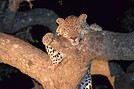
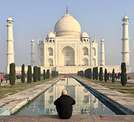

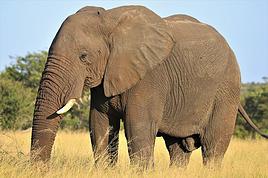

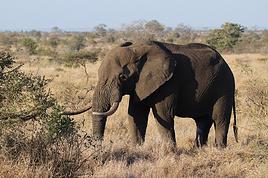





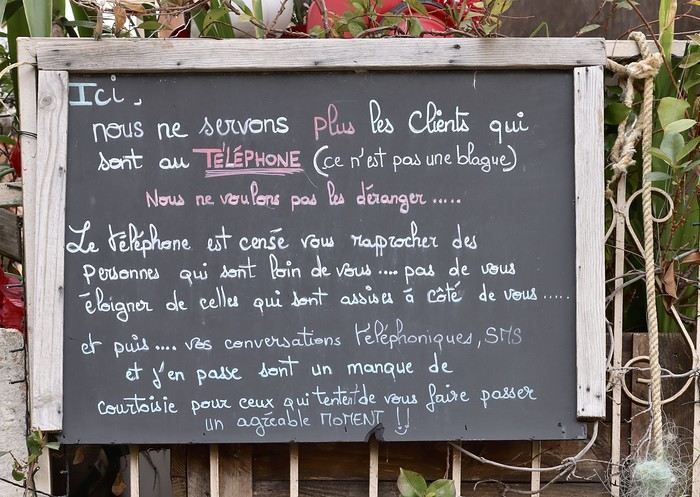 .
.
.
.