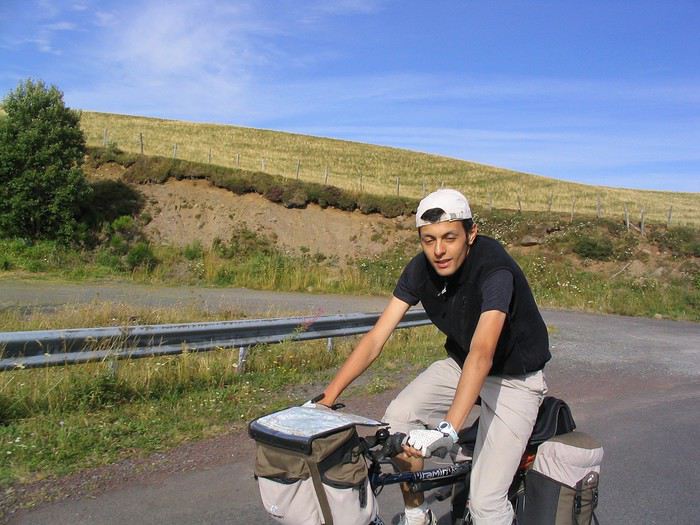
The photo’s a bit old (2005), but it’s an experience I’m happy to share.
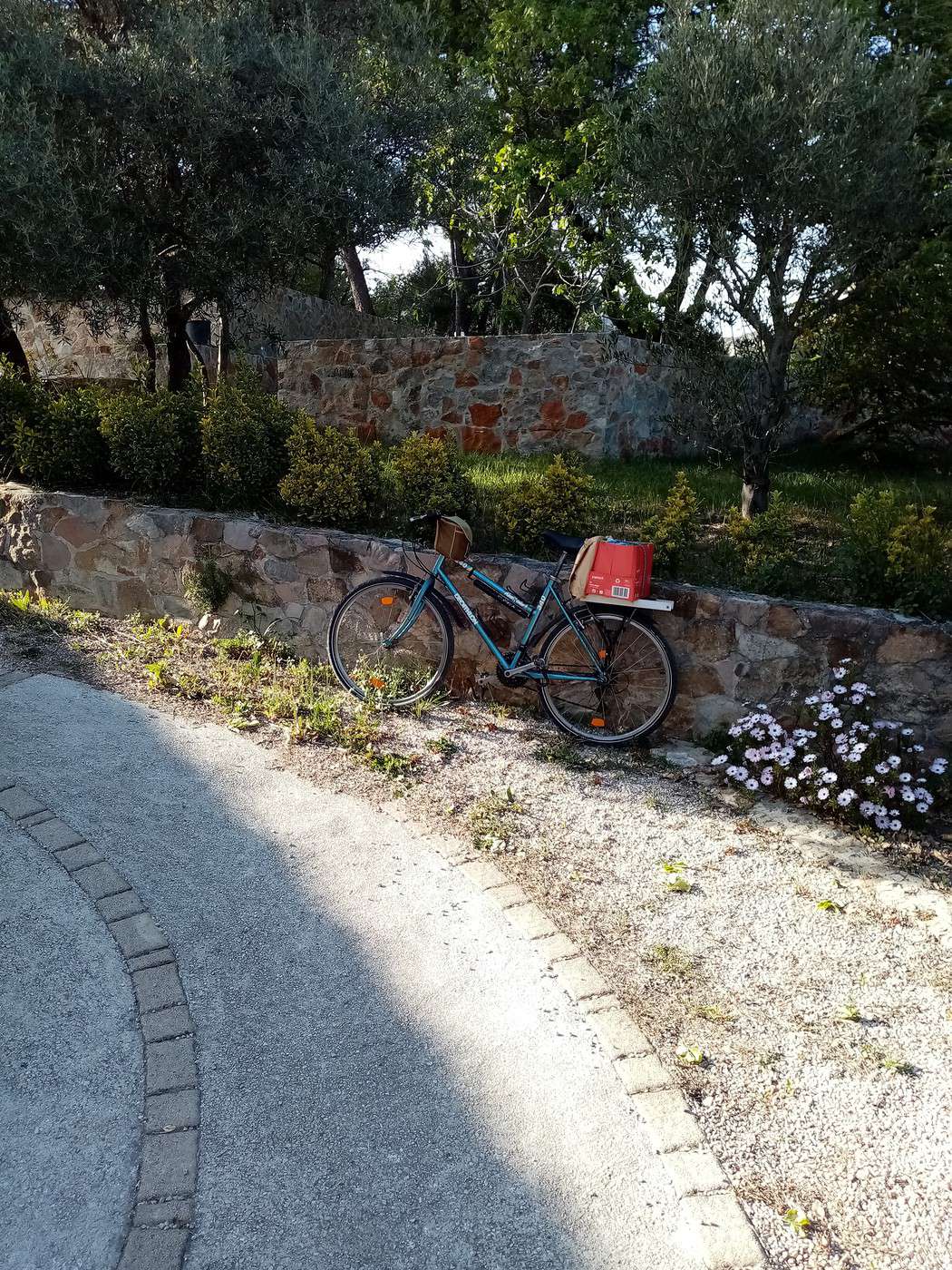
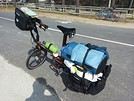
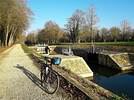
This bike with this setup took me on a Clermont-Ferrand to Montpellier trip, among others.
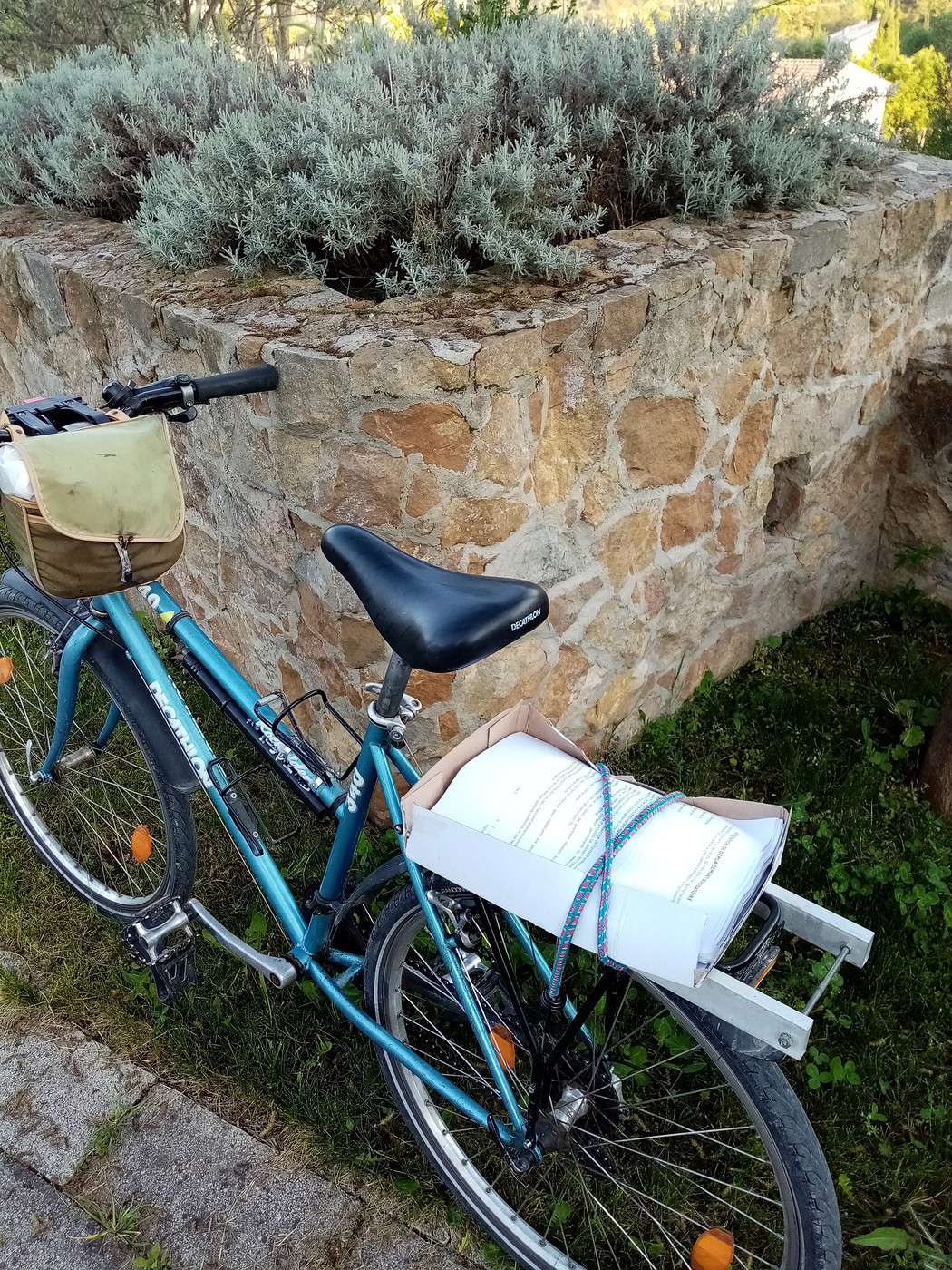
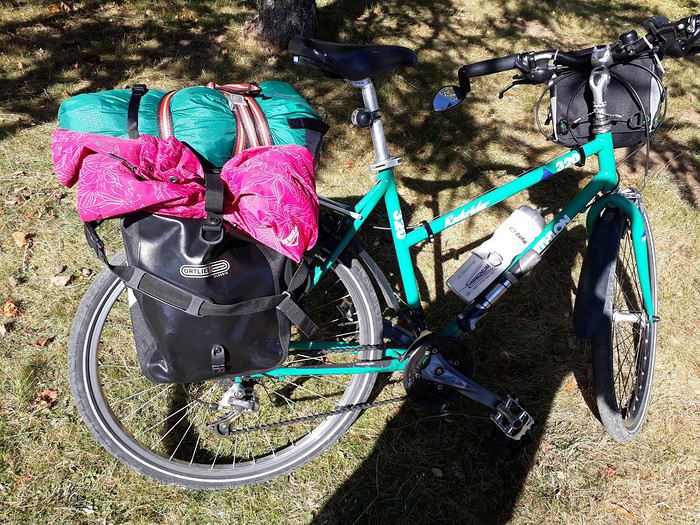
It’s a Decathlon entry-level bike. The "Vitamin" cost around 90 € back then. I added (all entry-level too): fenders, a rear rack, "Go-Sport" rear panniers, and a handlebar bag.
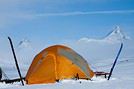
I managed to fit: a two-person dome tent, sleeping mat, sleeping bag, small stove, cookware, bike-repair kit, and a few other things.
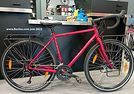
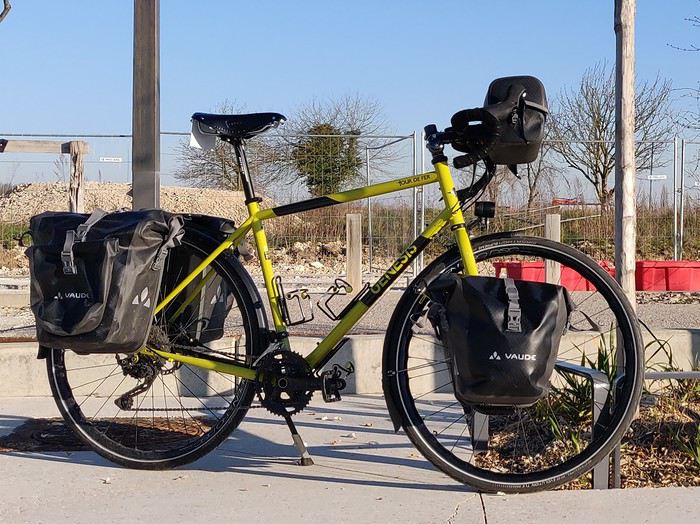
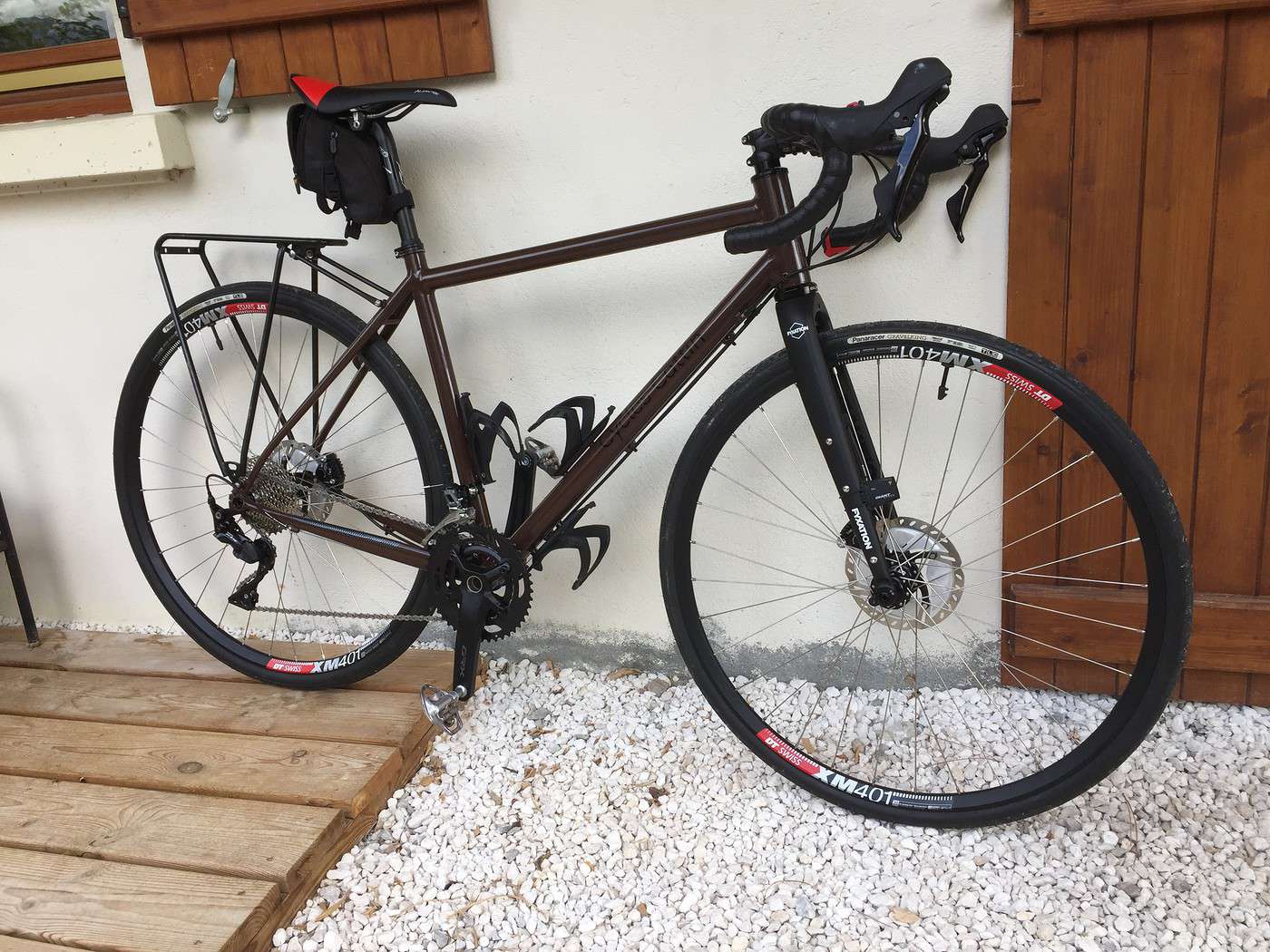
For me, like Andre029, it's a custom build on a Genesis Tour de Fer frame kit. I haven't had the chance to take it on a trip yet—I finished it just before lockdown (the bottle cages were installed the night before). In the meantime, I've been bike-commuting with it and loaded it up just to test how it handles: it's almost more manageable with luggage than without. Anyway, this bike is already over two months old and only has 300 km on the odometer... luckily, that's about to change!
This weekend’s plan: a long day ride. For this summer, it’ll be a family trip—easy route, with all the family gear. My partner will be on her usual steel RR520 with less luggage, kid #1 (8 years old) on their bike with panniers, and kid #2 (4 years old) in a Weehoo that I’ll tow.
Hello,
I see in the photo that you installed a Shimano Gravel GRX crankset. Did you install the entire groupset—derailleurs, crankset, and brakes?
Hello,
I installed the crankset, brifters, and derailleurs in GRX 400 (2x10 only, but the widest range for GRX with a 30/36 on the far left). For the brakes, I went with SLX calipers (like the 11-36 cassette) on XT rotors. I initially considered hybrid calipers and cable brifters, but when you see the price of TRP Hy-Rd brakes, the savings on the calipers cover a big part of the extra cost of the brifters.
I wanted the bike to be versatile for rides—relaxed Sunday outings (100-150 km), family vacations, or solo multi-day trips.
Hello,
I see in the photo that you installed a Shimano Gravel GRX crankset. Did you install the entire groupset—derailleurs, crankset, and brakes?
Hello,
I installed the crankset, brifters, and derailleurs in GRX 400 (2x10 only, but the widest range for GRX with a 30/36 on the far left). For the brakes, I went with SLX calipers (like the 11-36 cassette) on XT discs. I initially considered hybrid calipers and cable brifters, but when you see the price of TRP Hy-Rd, the savings on the calipers cover a big part of the extra cost of the brifters.
I wanted the bike to be versatile for relaxed Sunday rides (100-150 km), family vacations, or solo multi-day trips.
ok thanks. Have you tried traveling with tubeless tires?
I use this system for mountain biking and I’m so happy with it that I was wondering if I should do the same for travel! ...
No, since I alternate between Suprêmes for smooth weekend rides and Mondials for slightly less road-focused outings, it wouldn’t be cost-effective.
But a well-sealed tubeless setup... why not? Most small punctures are barely noticeable with tubeless (and fixing a flat on a fully loaded bike always takes more time than on a bare one).
Otherwise, there are tubes with sealant... a good compromise.
Here’s my trusty steed, which I’ve been riding for about fifteen years:
Cannondale Furio:
Varnished aluminum frame, polished welds—absolutely stunning!
Magura hydraulic brakes, and so far, no maintenance done.
Super Fatty Ultra fork: my favorite component for its vibration absorption, lockable for climbs, adjustable stiffness, monthly check-ups, and no maintenance done.
26-inch wheels, 36 DT Swiss spokes, XT or Deore hub (replaced or fully serviced every 10,000 km).
Tires: currently Marathon + (how many punctures? Fewer than the fingers on one hand). I still have a spare pair of Marathon GT Tour tires. Considering a switch—thanks to this forum—for something lighter and more flexible.
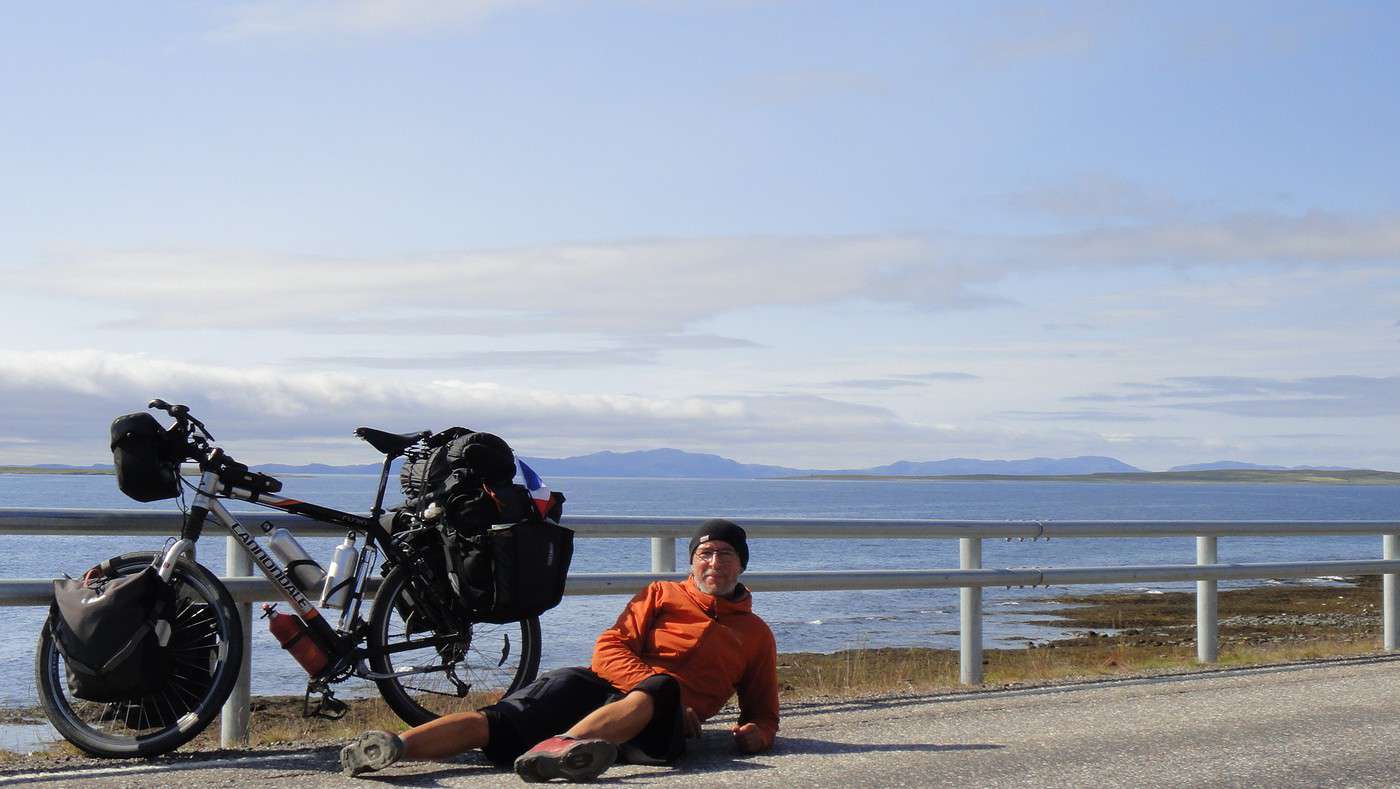
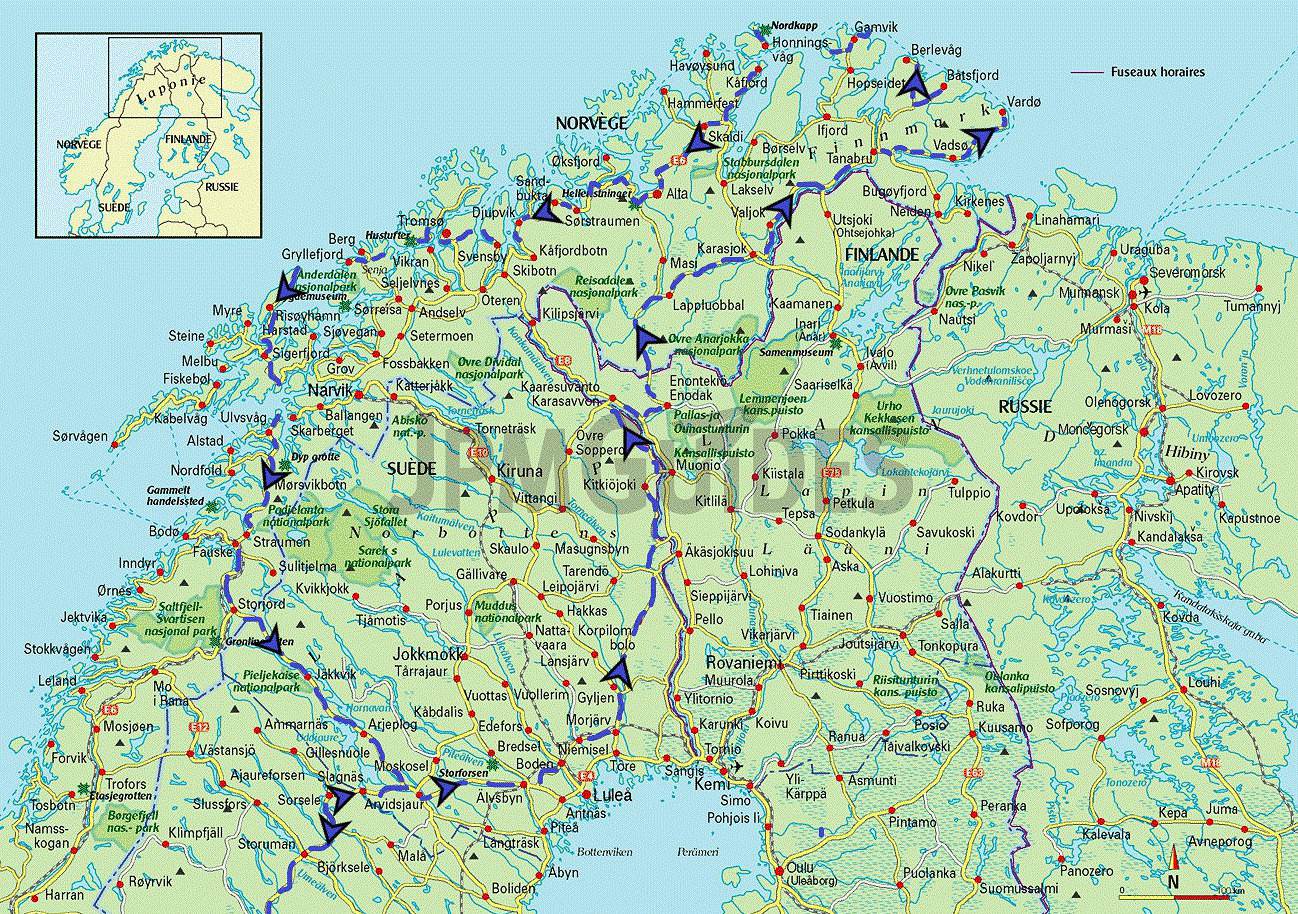
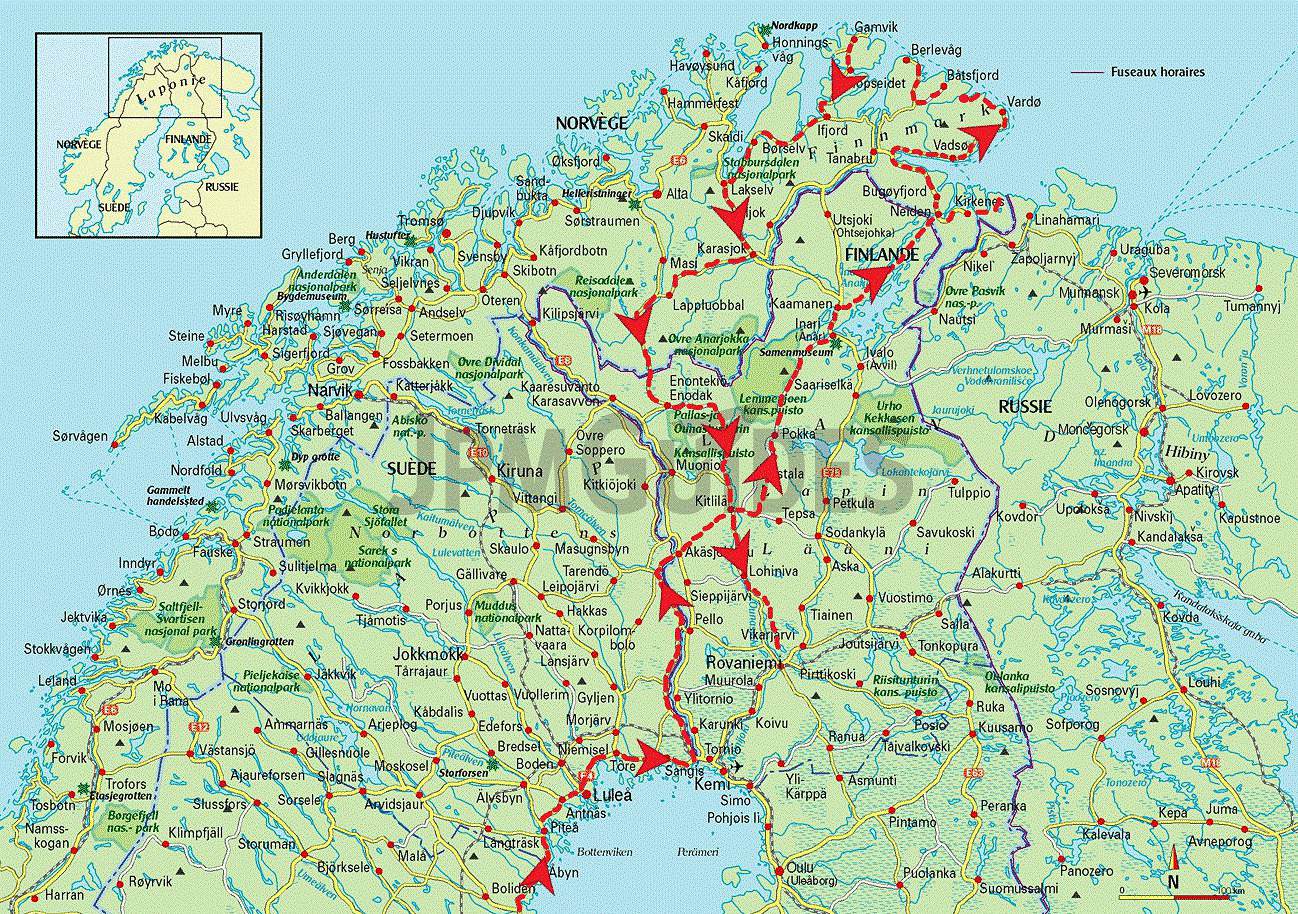
On average, I take a trip every two years, covering around 10,000 km in six months, exclusively in Nordic countries: Iceland, Scotland, Scandinavia, with a major crush on Lapland!
I’m all about wild camping, self-sufficiency for food (at least a week’s worth), and top-notch fishing gear for salmon, sea trout, and mackerel.
And let’s not forget my ultimate charm weapon: the Trangia 25 stove, running on alcohol and gas. I love cooking fresh meals: salmon with pears, goat cheese/honey toasties, rice with mackerel/coconut milk/pineapple, blueberry compote pancakes... in short, nothing too heavy.
I’d been dreaming of a bike made just for me for years. I defined the specifications myself, and we exchanged a lot of ideas with frame builder Fabien Bonnet (he took over Cattin Cycles in Grenoble).
I wanted a bike that could travel, be comfortable, handle backroads, and still be sporty.
A lightweight, sporty touring bike—a French gravel bike!
It replaced my sluggish touring bike and my zippy carbon one.
Steel frame (Columbus Life and Dedaccia Zero), Shimano 105 and GRX components, handmade DT Swiss wheels, 32mm Panaracer GravelKing tubeless tires.
The "Fixation" carbon fork is one of the few that can handle heavy luggage.
I haven’t ridden much yet, but the first tests show perfect comfort.
The custom fit makes a difference.
It’s not much less responsive than my old carbon frame—even though it’s heavier, I feel like it climbs just as well, and the bike is stiff, way more than I expected.
Next weekend, I’ll start a crossing of the Alps that will take me to the Giens peninsula via the limestone Prealps, with a little detour to the Verdon Gorge and the Maures massif.
I’ll know more about my new companion then!
First comments:
Lightweight, stiff, with 32 mm tires—this is my ideal setup for traveling. Plus, you’re supporting one of our local artisans, hats off to you!
What’s the weight of the bike without accessories? Do you know the type of steel (tubes)?
The stem looks short from the 3/4 front view, but given the endless length of the shifters (GRX?), it makes sense.
What’s the handlebar model?
What’s your drivetrain setup? Probably 30-46 up front, but what about the rear—11-30?
I think you’ve got a Fizik Aliante saddle—be careful with those. They’re very curved and don’t let you change positions easily. I much prefer the Arione from the same brand, which I’ve been using for a few years.
Reading what came before, I was thinking I’d never dare post a photo of my old bike... But screw the technicalities! 😄
I travel with a 1992 Giant old bike. It suits me perfectly, and I have no intention of changing it. Back then, I was so proud of my first 1,000 km trip. The last two summers, Norway and back. In 2019, Greece. No issues. I get my bike serviced once a year, and off we go again... So, to all the non-techies, non-DIYers, and those on a budget—don’t hesitate. Maybe not for a world tour, but as long as you’re in Europe, it’s super easy.
All that to say, it doesn’t matter what bike you have, as long as you’ve got the thrill! 😆
First comments:
Lightweight, stiff, with 32 mm tires—this is ideal for traveling, in my opinion. Plus, you're supporting one of our local craftsmen, hats off.
What’s the weight of the bike without accessories? Do you know the type of steel (tubes)?
The stem looks short from the 3/4 front view, but given the endless length of the levers (GRX?), it makes sense.
What’s the handlebar model?
What’s your drivetrain setup? Probably 30–46 up front, but what about the rear—11–30?
I see you’ve got a Fizik Aliante saddle—be careful, they’re very curved and don’t allow for much position change. I much prefer the Arione from the same brand, which I’ve been using for a few years.
Safe travels through the Alps! !
I didn’t weigh the bike, but it should be around 9.5–10 kg in this setup.
The tubes are a mix of Columbus Life and Dedacciai Zero.
The photo is misleading regarding the stem—it’s not that short.
The handlebar, seatpost, and stem are all PRO brand.
Drivetrain is 46/30 and 11/34. Unloaded, it’s a bit short, but with some weight in tough climbs, I prefer having the range.
For the saddle, I find both the Aliante and Arione models fine, and I don’t really have a preference.
This is the first time I’ve ridden a steel frame of this quality, and what’s more, it’s custom-built. I’m truly amazed at how easy it is to accelerate on steep sections compared to my carbon bike, which was less forgiving if I lost momentum.
The extra 2 kg of the bike isn’t noticeable at all on the road.
For the tires, I agree with you. After testing quite a few, 32 mm is the sweet spot—big enough for comfort and grip but not so wide that you’re glued to the tarmac.
Reading what came before, I was thinking I’d never dare post a photo of my old bike... But screw the technicalities! 😄
I travel with a 1992 Giant old bike. It suits me perfectly, and I have no intention of changing it. Back then, I was so proud of my first 1,000 km trip. The last two summers: Norway and back. In 2019: Greece. No issues. I get my bike serviced once a year, and off we go again... So, non-techies, non-DIYers, and those on a budget—don’t hesitate. Maybe not for a world tour, but as long as you’re in Europe, it’s super easy. All that to say: it doesn’t matter what bike you have, as long as you’ve got the thrill! 😆
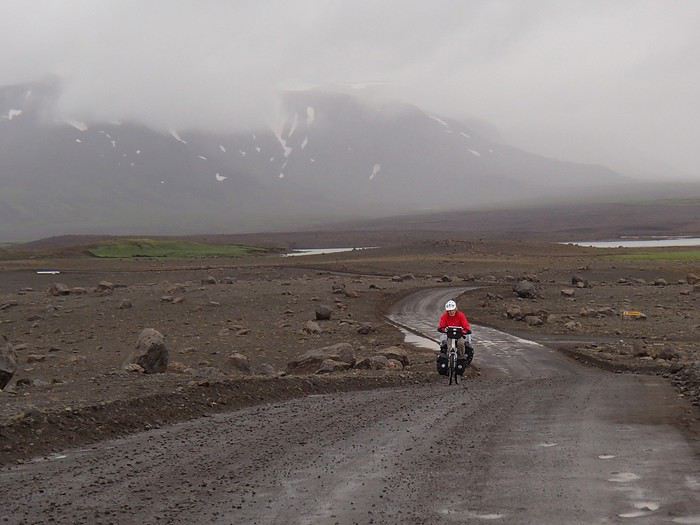
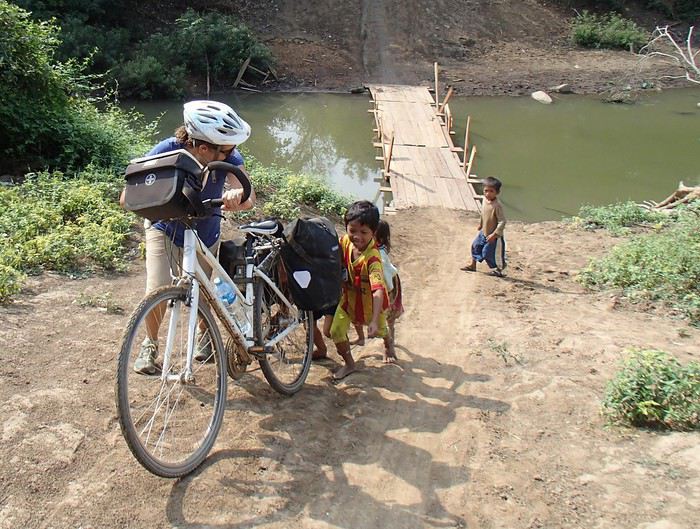
For the budget-conscious but still adventurous, here are two photos of my partner’s bike—a Giant Escape 2, "women’s" frame, aluminum, bought new for 600 €. A few tweaks over time.
On Iceland’s trails:
On the trails along the Mekong (Cambodia). Upright position, city-bike style, with stages up to 145 km:
Recently picked up second-hand, a pristine 2015 Koga World Traveller (the tires still had their knobs...), back when Koga still made rear wheels with 40 spokes. New tires, new Brooks saddle, and we're off... This bike is pretty much the one I'd set off on for three to four years on the world's roads with...
Hi there,
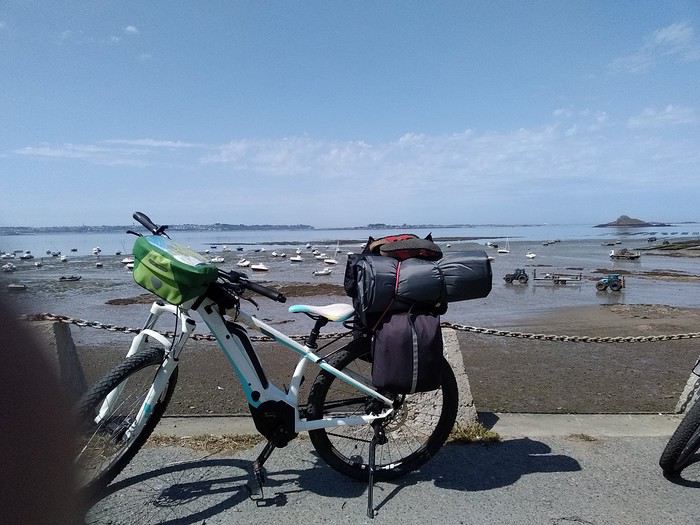
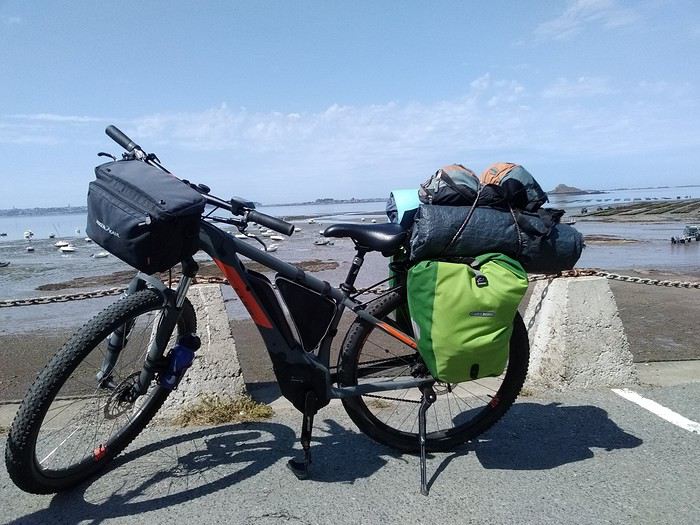
For those who aren’t closed off to e-bikes... Here are our touring e-bikes equipped for road trips on pavement, trails, and dirt tracks. Whether in Brittany (Loguivy here in Armor), on cross-country ski trails in Autrans, or on the tracks of the Saghro in Morocco.
In short, for us retirees, it’s the perfect way to access the landscapes we love. Thanks!
« On parle toujours de la violence du fleuve qui déborde ses berges - jamais de la violence des berges qui enserrent le fleuve... » disait Berthold Brecht
what kind of bike is it? battery power? as I approach 60, I'm starting to think about it😛
the problem for me is air travel because of the battery... and the weight too... and with the pandemic, air travel might become unaffordable for this kind of trip🙁
as I approach 60, I’m starting to think about it😛
the issue for me is air travel because of the battery
I’m starting to consider it too. I figure that in some cases, depending on the destination country, it should be possible to send the battery by mail (or DHL, Chronopost, UPS, FedEx, etc.) to the hotel where you’ll spend the first night.
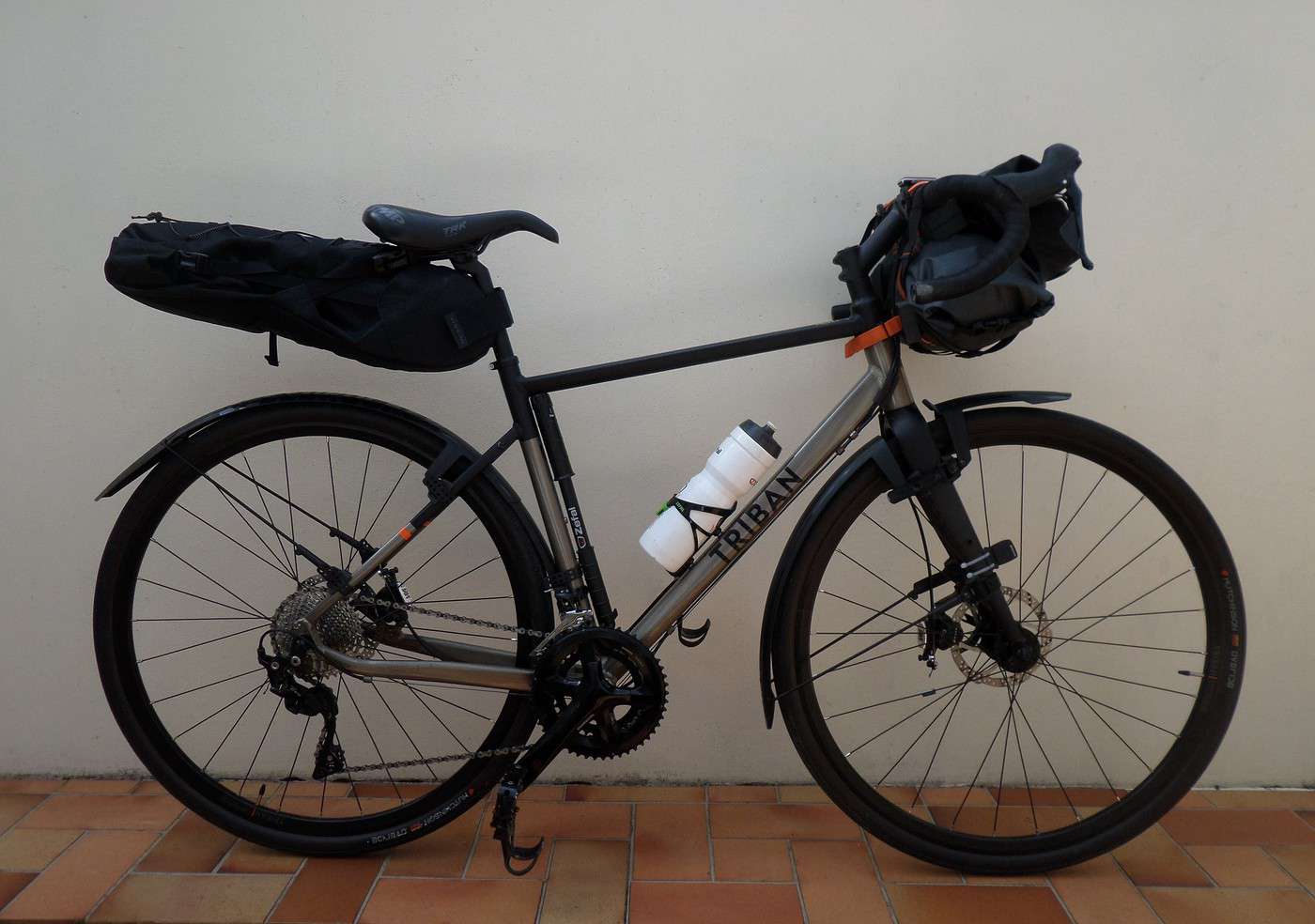
A Triban RC520: aluminum-carbon, Shimano 105 groupset (34-50/11-36), which I use in two different configurations depending on the type of trip:
1° With a Tubus Fly rear rack and Ortlieb panniers when I leave home by bike without needing to take the train.
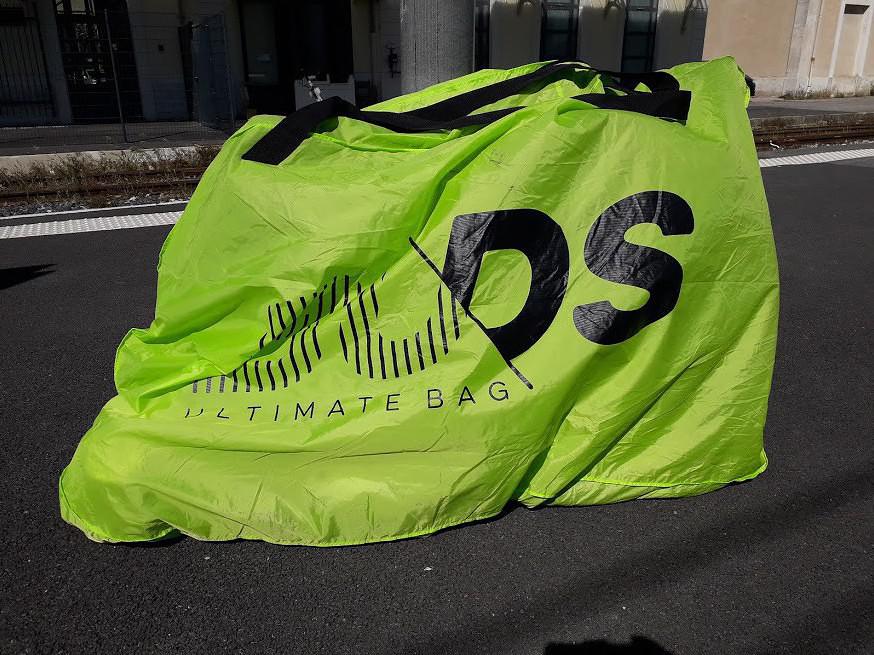
2° With bike-packing bags (like in the photo) when I need to use intermodal transport (train + bike or other). In this case, I equip it with detachable pedals and fenders, and by removing the front wheel (or both wheels), I put the bike in a lightweight bag (Buds) for TGV transport.
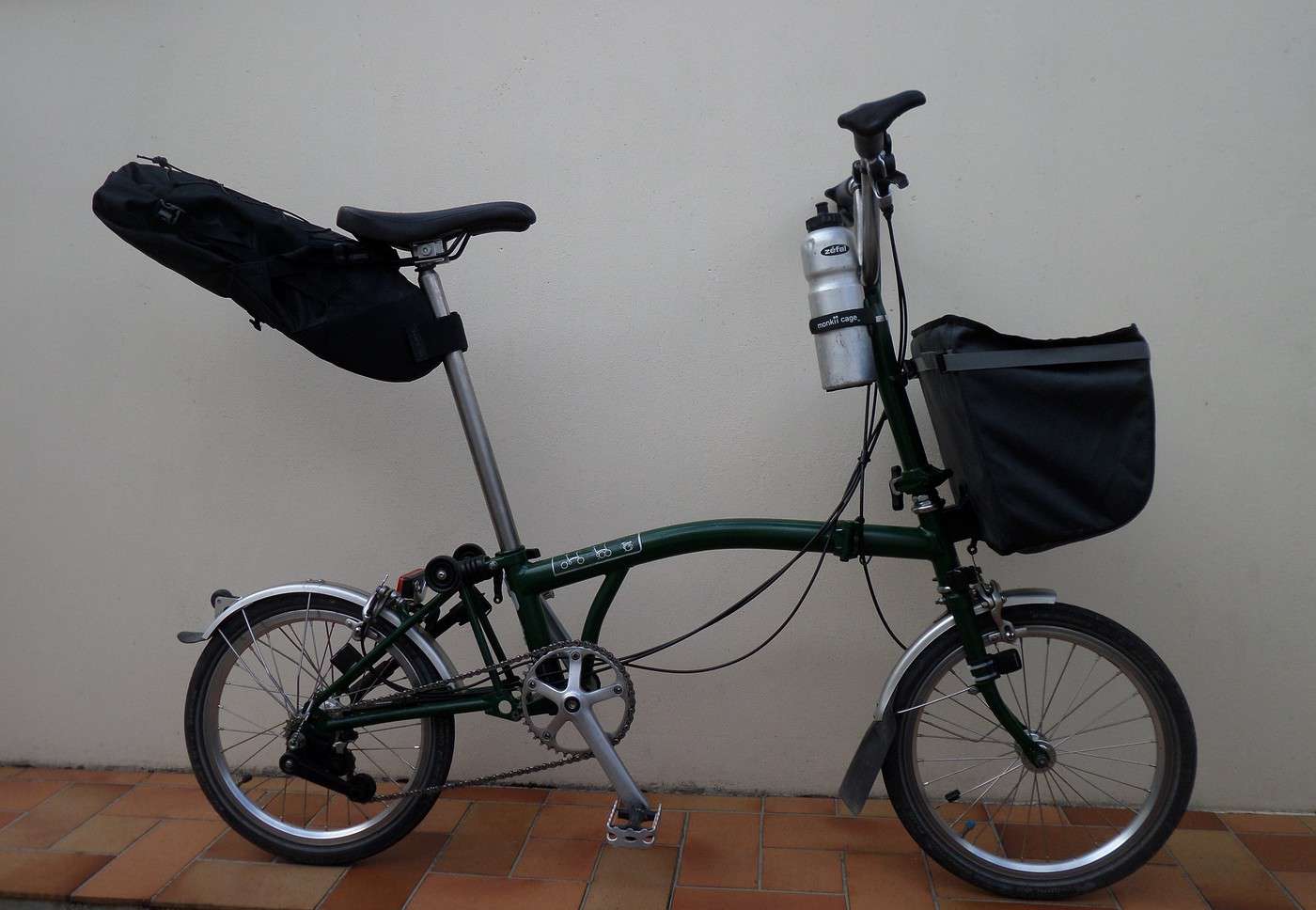
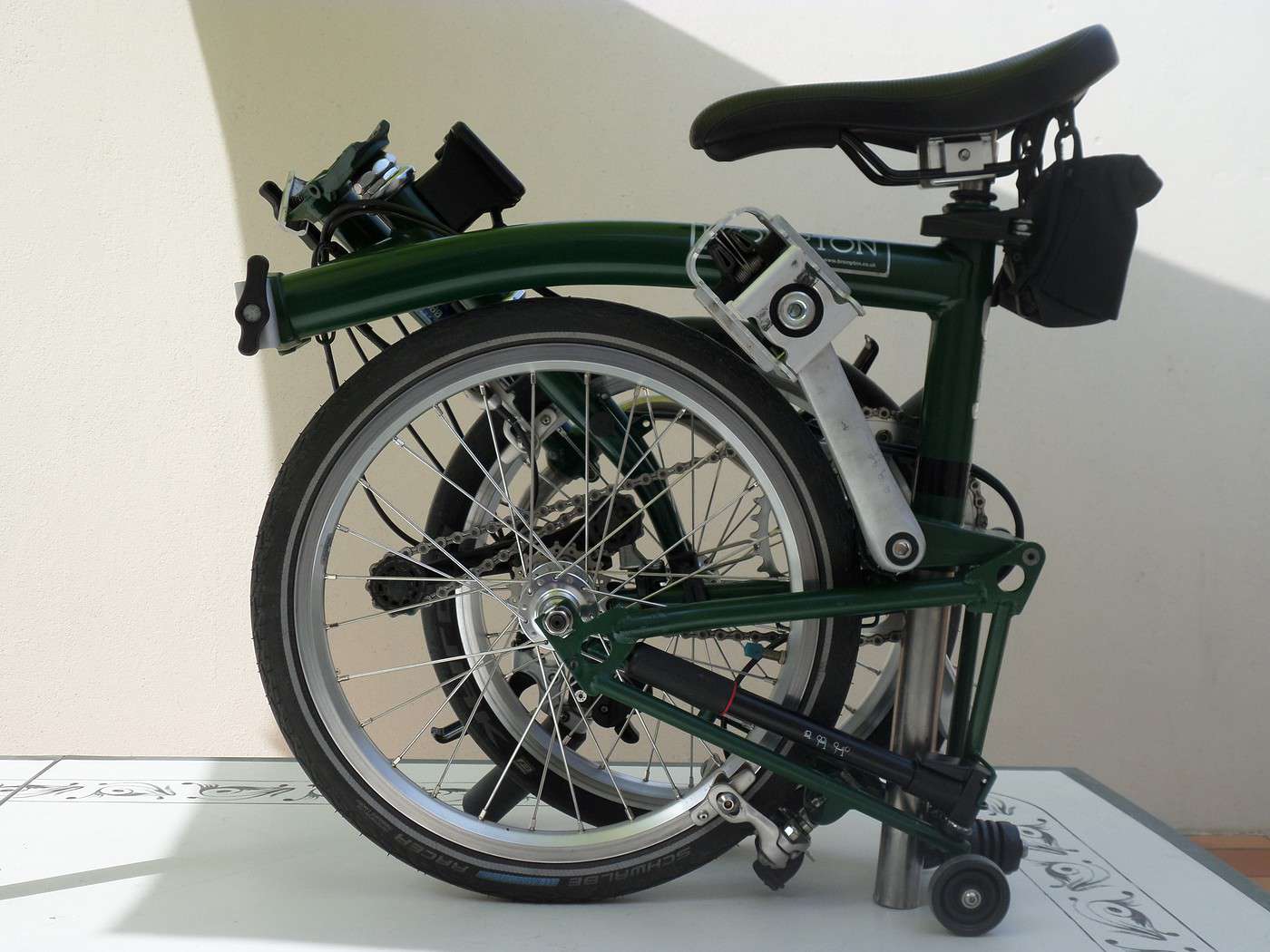
A Brompton M6L (6-speed) folding bike for trips on flat or nearly flat terrain, requiring intermodal transport (bike + train, plane, boat...) with a Brompton front bag and saddle bag. When folded, it fits in a 75x60 cm bag and goes everywhere—on transport and even in the tent at the stop or in the hostel room.
Good evening,
We have Cube 500Wh e-MTBs from the 2018 model.
E-MTBs for both small paved roads and trails (still smooth ones, since we're taking it easier than before)—27.5" for my wife and 29" for me. Width: 2.20. Range: 100 km or 1,000 m of positive elevation gain without any issues. Just watch out for the ability to fit a proper rear rack.
The 2020 versions seem even nicer with a Bosch motor that disengages and 625Wh, which depends on your use (need to bivouac every other day?).
Happy trails to everyone!
« On parle toujours de la violence du fleuve qui déborde ses berges - jamais de la violence des berges qui enserrent le fleuve... » disait Berthold Brecht
Hi
The cost of shipping a battery by freight is prohibitive... And buses and TGVs in France won’t take them unless they’re dismantled.
So, we aim for TERs or German/Swiss trains, or head to regions/countries accessible by car or ferry!
That’s what we do—Morocco in particular is great (outside of COVID times, of course).
« On parle toujours de la violence du fleuve qui déborde ses berges - jamais de la violence des berges qui enserrent le fleuve... » disait Berthold Brecht
The cost of shipping a battery as freight is prohibitive
I didn’t look up the rates, but for air freight, it can be really expensive or even banned. On the other hand, by postal parcel, the rate is around 40 € for 2 kg, but with a typical delay of 2-3 weeks once you leave the EU, and it can stretch to 6-8 weeks in some countries.
Hello
A 500Wh battery in a postal package? By declaring the battery? Not forbidden? Which means of transport? What possible destinations?
If anyone has already tried this, thanks for the feedback—it’d open up new possibilities...
« On parle toujours de la violence du fleuve qui déborde ses berges - jamais de la violence des berges qui enserrent le fleuve... » disait Berthold Brecht
Hello,
A 500Wh battery in a postal package? Declaring the battery? Not forbidden? Which means of transport? What possible destinations?
If anyone knows where it’s already been tried, thanks for the feedback—it’d open up new possibilities...
Yes, obviously, it’s forbidden as a dangerous product, but La Poste (French postal service) still accepts a battery of up to 100 watt-hours if it’s installed in the bike.
According to La Poste:
Electronic devices containing lithium batteries, such as mobile phones, MP3 players, digital cameras, etc., are allowed in postal transport, provided that the battery is installed in the device, it’s in excellent condition, and the package complies with the permitted quantities of batteries or cells.
A package cannot contain more than two batteries or four cells contained in one (or more) device(s). For lithium-ion batteries, the energy must not exceed 20 Wh per cell or 100 Wh per battery.
2009 MBK Greenfield - 3x9 (not originally bought for travel)
Suspension fork – SR Suntour – NEX4610 V2 MLO (well rinsed, but hey!)
Front mudguard Zéfal Raider Front (mounted with clamps, zip ties, and bits of inner tube—not too pretty but indestructible!)
Rear mudguard Tubus Cargo
V-Brake brakes – Iltech (not exactly top-notch! considering Magura, at least one of the two)
4 Ortlieb Back Roller Plus brown panniers (maybe a bit too discreet on the road)
SKS mudguards
Rohloff Speedhub 500 with internal gearing, bought second-hand + Mavic A719 – 622x19C + chain tensioner (easy to switch back to a classic derailleur since the derailleur hanger is there)
Shimano LX FC-M661 crankset + TA Specialités 40-tooth outer chainring mounted with short singlespeed bolts (easy to switch back too)
Shimano hybrid pedals (never used the locking mechanism)
Pletscher Zoom kickstand (finally one that works)
Schwalbe Marathon GT 40x622 tires (yeah, it’s heavy, but so’s the rider! Still better than my previous Plus version in 47x622)
Ergotec Moon MAS handlebar (love it)
Ergon GP3 Biokork cork grips
Brooks B17 Standard saddle (finally broken in, phew! When it’s hot, I much prefer leather over plastic…)
Adjustable Ergotec Swell Eco stem (heavy but sturdy—don’t trust it when there’s only one bolt! Maybe one day I’ll switch to a fixed stem with the same features now that I don’t adjust it anymore)
Vaude handlebar bag on Clikfix mount (a lockable one might be nice!)
Busch & Müller Toplight Flat S Senso battery-powered rear light (nothing up front—headlamp in flash mode around the handlebar bag if needed)
Total weight without water: 36 kg
In short, lots of tinkering, but I love it, and I know this beast inside out!
Actually, my question was: does it absorb sweat from your hands well when you're hot? Because the top is plastic—yeah, they have two models, with and without bar-ends.
The Fahradfabrik T400 steel bike—I only use it on remote trails now. Super comfortable for 10-hour rides, but the brakes are a pain to adjust, and it’s as heavy as a dead horse to transport.
My aluminum Trek—I take it even for routes with trails in Europe. It’s stiffer than the T400, but I’m really comfortable on it. It’s lighter, and I’ve also used it in tough conditions: a 4,000 km crossing of the Andes with plenty of trails and a trip through the Atacama Desert. The photo was taken in the Sud Lípez, by the way.
My carbon Lapierre—for short rides of a few days around home. I avoid trails with it, though I do a bit since I put Schwalbe tires on. Some people told me it didn’t make sense for this type of bike. Even with luggage, it’s nothing like my other two bikes.
I have a ROCK RIDER 340 for hiking—similar model. It works great for me, really well-balanced, though the braking is a bit weak. Bought it second-hand for 50 €. I added a rear rack with two panniers, a homemade front rack to support the front pannier, and touring tires (way more efficient than knobby ones). And that’s it!
Those who are equipped can attach a photo here and describe their bike, its qualities, and of course its flaws.
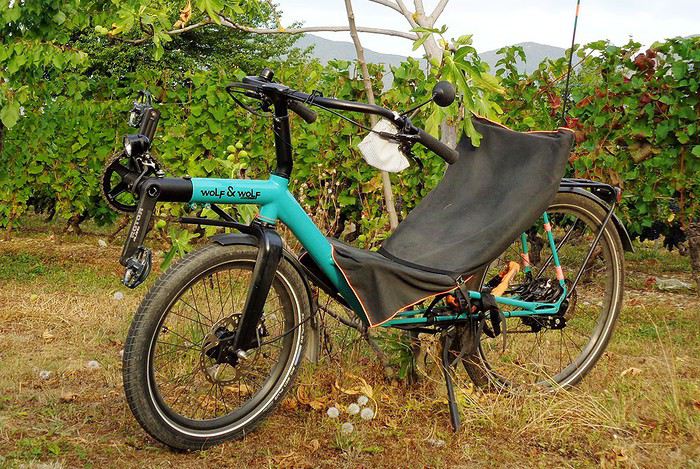
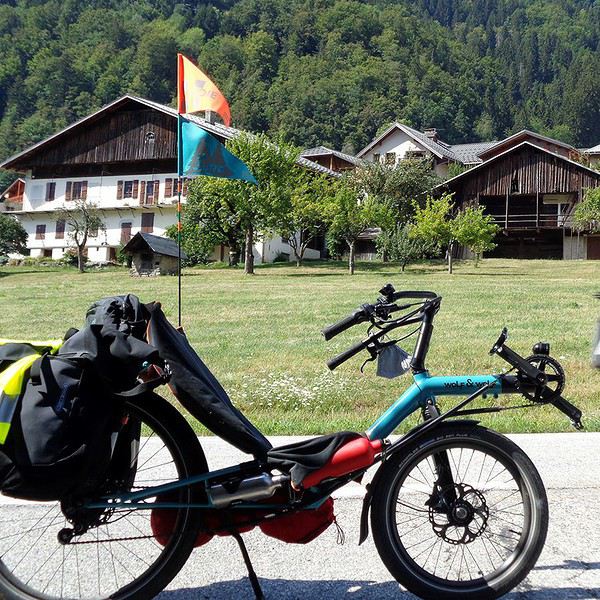
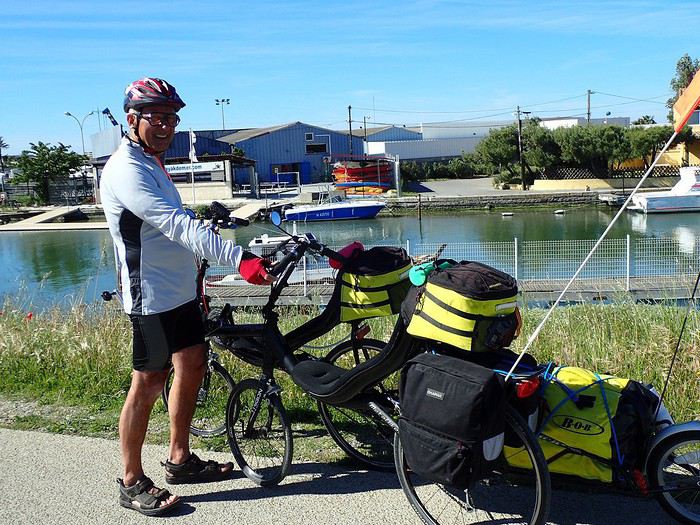
Since my blog doesn’t have any posts about my two new bikes yet, let me introduce you to the latest one.
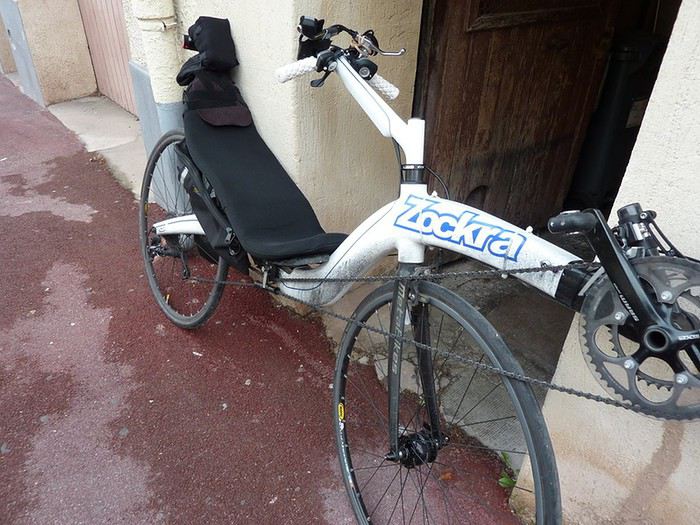
Without going into too much detail, this little Alpentourer by Wolf & Wolf(a Swiss artisan who only makes touring recumbent bikes) has some great qualities, starting with excellent comfort, good road handling (a great balance between maneuverability and stability), solid efficiency, and a weight just slightly higher than a good upright touring bike. Downsides: it’s a bit tougher on climbs than an upright bike, but I plan to improve with some training. Also, you can only fit two rear panniers, but you can attach water bottles and a cylindrical bundle (tent + sleeping pad) under both sides of the seat.
Here’s the first recumbent bike in this thread—no ordinary one, either!
I’ve been wanting to try one for ages, just out of curiosity, but I haven’t found any bike shops that carry them in the Rhône-Alpes region. If you happen to have any addresses, I’d love to know, and I’m sure other forum members would too.
I’ve got a few questions about this machine:
- How does it work for train or plane travel? (Recumbent bikes are much longer.) Can it be disassembled?
- In traffic, don’t you feel more vulnerable because of your low position? Or do other road users show more respect because the bike looks so unusual?
- I’ve heard that recumbent bikes don’t climb as well—I don’t get why, since the position seems ideal for powerful pedaling. Do you have an explanation?
I have a few questions about this bike:
- How does transportation work for trains or planes? (Recumbent bikes are much longer.) Is it disassemblable?
- In traffic, don’t you feel more vulnerable because of your low position? Or do other users show more respect because of the exotic nature of the bike?
- It’s said that recumbent bikes climb less well—I don’t understand why, since the position seems to favor powerful pedaling. Do you have an explanation?
Hello,
Currently on a touring bike (Surly LHT), I’ve had a few recumbents (20x26, 2x700) and even a trike. With my wife, we followed the EV6 from Ulm to Constanta on two 20x26 Metabikes, completely unloaded—just two small panniers. It went well. We returned by bus that takes recumbent bikes packed but not disassembled, in a trailer (Atlasib).
Then we traveled to Croatia from Montpellier—two 20x26 Metabikes, much more loaded (tent, bivouac gear) but with a Bob trailer. Returned by train from Ancona—6 regional trains. It went pretty smoothly each time, bikes not disassembled.
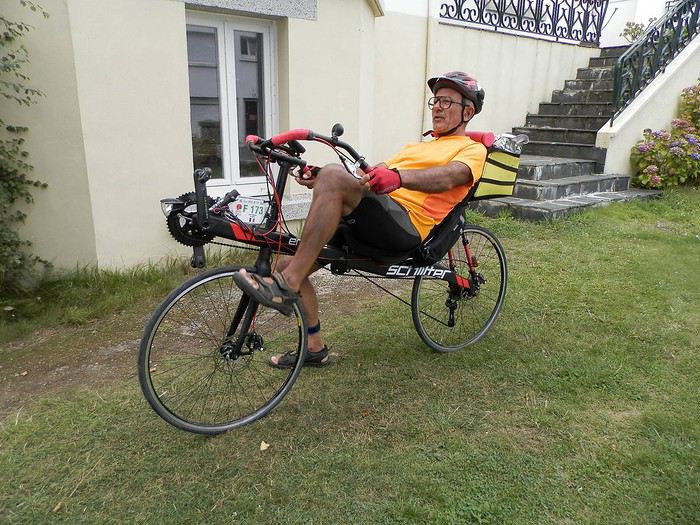
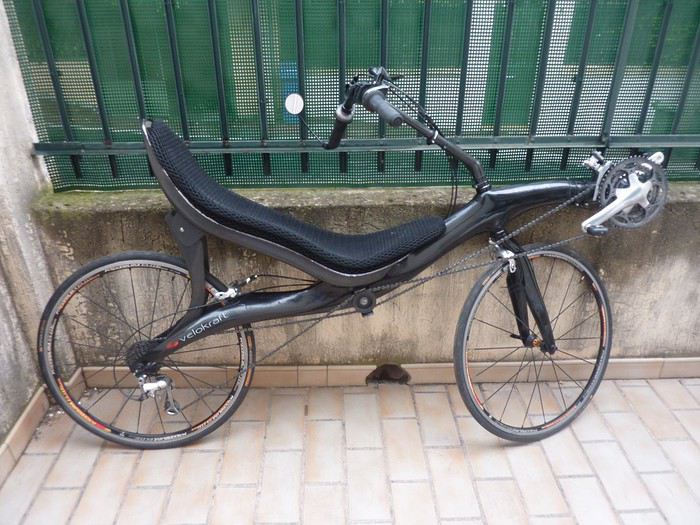
I’ve done a lot of BRMs (long, even very long distances) on different bikes: carbon VKHI, Zockra, and currently a Schlitter. But these last three are lightweight BRM bikes, not suited for touring.
I’ve even had a Catrike (recumbent trike).
Well, the verdict: they climb less well, much less well (unless you’re a young, trained athlete, of course). The reason is simple—you can’t use your body weight to "push" on the descending pedal. And the reclined seat position requires a very different pedaling style. Some tendonitis at first if you’re not careful. But on flat terrain, you go fast—really, *really* fast. Even when loaded. The position is very aerodynamic, and on descents, you hit insane speeds.
With cars, it always goes well—only a few grumblers say, "But we can’t see you!" A rolling object 1m to 1.5m high—they don’t see it, but they see a rock on the road or a child? It’s mostly the "unidentified strange object" effect that scares people. Scares horses (be very careful), scares Romanians in the countryside who cross themselves as we pass!
Finally, recumbents like Meg’s (uh, a Rolls-Royce—single-arm, 14kg, Rolhoff hub... I’d rather not know the price, but it’s itching me) are obviously made for riding loaded, safely, without back-butt-arms-wrists pain.
The downside that made me switch back to a classic touring bike is handling very rough terrain: gravel, rocks, single-track MTB trails. Where an upright bike handles fairly well, a recumbent is harder to control. Though, well, my wife struggles more with it.
And balance control at very low speeds is trickier. For example, hairpin turns on climbs require anticipating.
Anyway, that’s that.
Oh, shoot—after seeing Meg’s bike pics, I obviously went to the Swiss manufacturers’ site. *Ahhh.*
I've wanted to try one for a while, just out of curiosity, but I haven't found a bike shop in the Rhône-Alpes region.
Two specialized "recumbent bike" shops in Rhône-Alpes: Cyclociel in the very near suburbs of Lyon in Villeurbanne, and Bentoline in the less near suburbs of Grenoble in Crolles. They have a few demo models, but with limited choice due to the high prices (and more trikes than bikes because they sell better). There was also M5-France in Doussart near Annecy, but I don’t know if they still distribute recumbent bikes.
Another option: post on the velorizontal forum explaining what you're looking for (road- or touring-style recumbent bike, size, etc.) and in which region. Recumbent bike owners often agree to let you try their machine, since the wide variety of models and high prices make testing before buying highly recommended.
How does it work for transport by train or plane? (The recumbent bike is much longer.) Is it disassemblable?
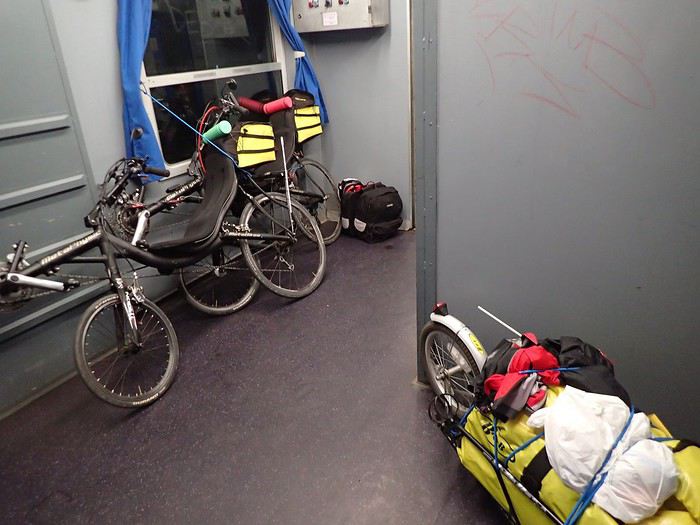
Length varies depending on frame geometry, wheel diameter, and rider size. If the bike isn’t too long, some manage to hang their recumbent bike from a bike hook by the rear wheel, but it’s not very practical. Even though mine is very compact for a recumbent (wheelbase 1.05m, length < 1.70m), I leave it on the floor along a row of fold-down seats or under the bike hooks, and if needed, I help other cyclists lift and strap their bikes onto mine. Luckily, on my usual routes, I often board at the train’s starting station and against peak traffic, which makes things easier. My recumbent bike hasn’t flown yet; max dimensions and fees vary widely by airline. I’d like to thank Turkish Airlines, which last year accepted my recumbent trike for the price of a regular bike!
In traffic, don’t you feel more vulnerable due to your low position? Or do other users show more respect because the bike is so unusual?
Both! I slow down more when approaching intersections because I’m more hidden by parked cars (despite my fluorescent flag), but once drivers spot me, they respect me more than when I was on a regular bike.
I’ve heard that recumbent bikes don’t climb as well. I don’t understand why, since the position seems to favor powerful pedaling. Do you have an explanation?
I don’t have a rigorous explanation. On gentle slopes, it’s probably just a matter of practice—you don’t use exactly the same muscles in the same proportions. On steep slopes, you *can* push hard when your pelvis is well-seated, but you always have to push (or pull); you can’t rely much on body weight (no equivalent of "dancing" on the pedals).
But on flat terrain with momentum, you go fast—really, really fast. Even when loaded. The position is super aerodynamic, and on descents, you hit crazy speeds.
yeah, and it's fun to see how easily you pick up speed on the slightest downhill slope 🙂 On the other hand, at low speeds uphill, it can be a bit tricky, depending on the bike's geometry. I'm also a little less comfortable on switchbacks uphill, especially if the panniers are fully loaded at the back. I think I'll end up changing the type of panniers to move the center of gravity forward a bit, or maybe try a lightweight single-wheel trailer.
The Rock Rider 320 is my wife’s bike—she really wanted to keep it. While refurbishing it, I noticed the frame is actually better than my T100’s (central heating pipes, lol).
I've wanted to try one for a long time, just out of curiosity, but I couldn't find a bike shop in the Rhône-Alpes region.
Oh, I almost forgot—it’s not in Rhône-Alpes, but 3 hours by train from Geneva, right at the source: the Wolf & Wolf workshop has a small stock of 6 or 7 Alpentourers in different sizes, available for test rides. I tried one for half a day before "caving in." Through the velorizontal forum, I know a Belgian cyclist who was able to test one for 2 or 3 days before ordering his. In both cases, we were hooked pretty quickly, but it wasn’t our first recumbent bike, so the risk of addiction was already high for us...
😎Fellow traveling cyclists or not, all of you who love travel, the pleasure of physical effort, nature, beautiful machines, people with true passions they seek to fulfill, and who also enjoy reading great literature about all this—the *200* magazine is for you just as it is for me. I should mention I have no financial or other interest in this (in an era where we accuse our politicians of all sorts of vile interests, I prefer to take precautions). I’ve been subscribed since the beginning, and every three months, I get my 130 pages of dreams (the magazine just went from 110 to 130 pages).
It covers everything from the trans-America route to the TCR (Trans Continental Race) from Belgium to a small town in Turkey, with mind-blowing averages—4,000 km and 80,000 m of elevation gain in 8 days and 15 hours for the winner. Let that sink in, and all of it without assistance—accepting a patch could penalize you. There’s also a story about crossing Iran, encountering one of the world’s most welcoming populations, following in the footsteps of Nicolas Bouvier, as well as retirees leisurely traversing France. The common thread in all these stories? Beautiful writing. Take, for example, a stunning article: *"Passengers of the Cold: From Edinburgh to Thurso, at the very north of Scotland, 550 km of moors, coasts, and icy wind. In Thurso, the road ends at a quay, facing the Orkney Islands. We wanted a November trip, off-season. We wanted to surprise winter. Just before the snow."* A sublime piece on the experience of facing adversity and the chance encounters along the road and in the elements.
Before I embarked on my own bike trips, I dreamed a lot about them—from the Atacama to the Gobi, along the Mekong, and not forgetting France. And now, these 130 pages every quarter keep those dreamy vibes alive through stories written in the most beautiful prose.
I’ll stop here because it might sound like I’m advertising, but if you don’t know *200*, I invite you to discover it. It’ll give you wings for the most incredible challenges or simply reinforce your desire for slow rides with your eyes open to others and nature.
A little news to wrap up: Axel Carion and a friend just broke the record for crossing South America from Colombia to Ushuaia in 59 days. On its own, that doesn’t mean much, but I can’t help it—it makes me dream. You should see how he talks about it, the flashes of that wild nature he’s stored away: a snowstorm at Paso Jama and the surreal sight of the suddenly snow-covered Licancabur!
Luc
PS: The magazine is called *200* because a day’s ride starts at 200 km—well, I’ve never done a ride like that since my longest was 167 km (with 18 kg of luggage, mind you), but why not one day? The magazine will explain how to tackle your first 200, and then the question in conclusion: when will you do your first 300?😏
Recherche coéquipière de voyage à vélo (arrivée en avion à Porto Alegre Brésil et pédaler direction Montevideo, Uruguay, retour par avion vers la France de Buenos AiresArgentine)1500 KM
Bonjour à toutes !
Je prépare un voyage à vélo à travers le Brésil, l'Uruguay et l'Argentine, avec un départ envisagé entre fin octobre, novembre ou décembre. Je recherche compagne de route pour partager cette aventure au long cours.
expérience :
J'ai déjà une bonne expérience du cyclotourisme Géorgie, Kazakhstan et Kirghizistan. Actuellement, je garde une excellente condition physique en pédalant en moyenne 250 km sur 3 jours par semaine.(chaque jour 4h , 20 km/h)
Le voyage & le rythme :
Rythme quotidien : Entre 50 et 80 km par jour, pour progresser régulièrement tout en prenant le temps de découvrir.
Hébergement : Mode flexible et authentique. Nous alternerons entre bivouac sauvage, camping, Warmshowers, petites pensions et petits hôtels selon les opportunités et la météo.
Au plaisir de lire ton message et de préparer cette belle traversée ensemble !
I’ve got my flight ticket sorted—departing in mid-November and returning in mid-March. I’ll arrive in Santiago and leave from Buenos Aires.
I’ve already been to southern Argentina, specifically Torres del Paine National Park, and I’d love to go back to do the full W trek (I only did the shorter version last time).
I also want to do some hiking and maybe even tackle a summit. I climb and occasionally do some mountaineering, so I’ll definitely be going with a guide.
I plan to start around Temuco in Chile, with the idea of heading toward the lakes, then taking the Carretera Austral.
I’m not sure if I’ll go all the way to Ushuaia—it’s supposed to not be *that* worth it, except for the bragging rights of saying you’ve been to the end of the world.
I saw there are lakes in Argentina too.
I don’t have a precise itinerary, but what I’d love is, once I reach the southernmost point of my trip, to take a mini-cruise to see some wildlife. Any tips for that?
What kind of sleeping bag did you take? Is a 0°C (32°F) one enough?
And one last question: white gas stove or can I get by with my gas stove?
I'm developing a free and open-source web app for planning walking and cycling trips (and even car trips). You can create a route by clicking directly on the map to add waypoints, and it can consist of multiple stages. The app provides tools to edit the stages and the overall route, and to display useful information (distances, altitudes, and elevation changes). A relief profile can be shown as a graph for a specific stage or the entire route.
Once the route is ready, it can be exported as a GPX file, which can then be used with a GPS or a mobile navigation app.
The app is built in JavaScript and runs entirely in the web browser. It uses the Leaflet library and several OpenStreetMap-based services. Initially developed for my personal needs (I enjoy hiking and cycle touring), I’d be happy to share it with anyone who might find it useful. It’s free to use, doesn’t require an account, and the source code is available.
hello fellow cycling enthusiasts
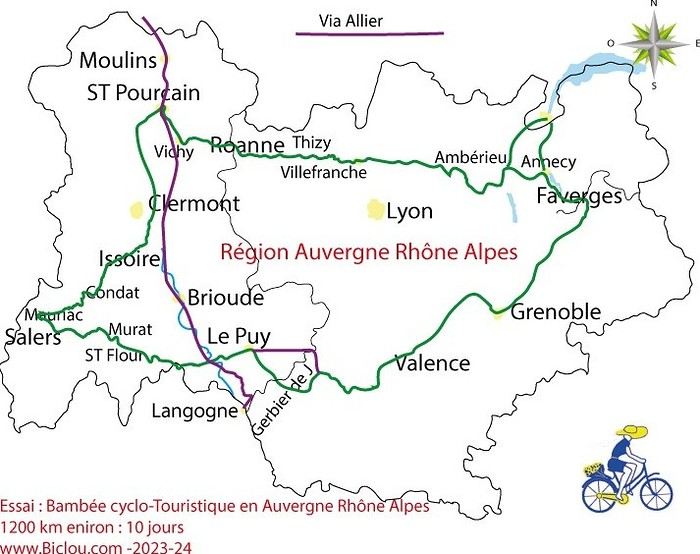
here’s a travel journal of the cycling tour through the Rhône-Alpes Auvergne region by Claudio
zouli
it was the plan
http://cbandiera.free.fr/parcours/auvergne-Ralpes/
the trip was completed
story being posted online soon
1100 km in 11 days
beautiful and varied regions
Hello,
We’d like to go on a 3- to 4-month bike trip starting in December, crossing from Assam (northeast India) to New Delhi via Nepal.
Are there routes with light traffic along the Brahmaputra and through Nepal?
We’re also looking for any info on accommodations, wild camping, local interactions, etc.
Thanks,
Michel
Hello,
Has anyone here had experience using a gas stove in Sardinia and Sicily? I’m wondering if screw-on gas canisters (not the blue Campingaz ones, but brands like Coleman, Primus, etc.) are easy to find.
I’m planning to cycle from Morlaix to Brest (via Roscoff and the V45 coastal route). We’ll start riding on August 16th for 13 days (with stops for island visits, surfing, etc.). Is there a lot of traffic at this time of year? I’ve got two kids, 11 and 13, and we don’t like riding in the middle of cars (we’ve already done the Vélomaritime—Caen to Cherbourg—the Loire route from Orléans to Saumur, the Vélodyssée from Nantes to Royans, and the canals like the Nivernais and Bourgogne, where there were plenty of bike-only lanes, which isn’t the case on this route).
Thanks for your help if you’ve already done this route in late August!
Virginie
Hi there,
I’ve been road cycling for several years, and I’m about to switch to gravel in the next few days—I’m waiting for my bike, which should arrive this week.
I’m planning a bikepacking trip in a few weeks along the Véloroute V81, also known as the Vélosud, from Biarritz to Le Barcarès.
Has anyone here already done this route? Any info is welcome, whether it’s about the route itself, gear, or accommodation. I’ll prioritize staying with locals as much as possible. On that note, I just signed up for the brand-new site *Guidon et Couette* ((www.guidon-et-couette.fr)), which offers free accommodation between cyclists across the country, but there’s almost no one listed along my route!
Thanks in advance.
Laurent.
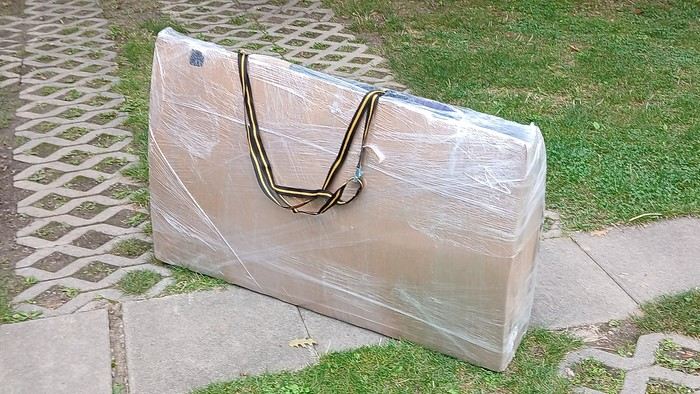
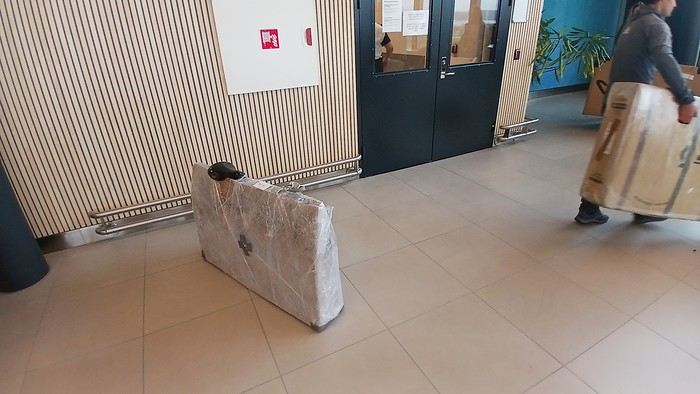
After testing it for three years across various modes of transport, I’m sharing this video of a bike packing case. It’s made from recycled cardboard and shrink-wrapped, with adjustable thickness and added bubble wrap depending on the level of protection you want.
Installing spacers at the fork and chainstays makes the packaging compact. With the fifteen-odd euros for shrink-wrapping at the airport, this case travels really well.
https://youtu.be/_GDJi-GqmkM
- Low bulk (1.10m x 0.70m x 0.25m for a large frame), it fits vertically in train luggage compartments and the total dimensions (x+y+z) don’t exceed 2.40m.
- Two carrying solutions for public transport and easy handling by airport staff (no more tears in the cardboard from openings).
- Discreet packaging when dealing with bus drivers and train conductors, as it looks like an ordinary parcel.
- No need to return to the starting point to retrieve the case from your outbound trip, which you’d otherwise have to store somewhere, or deal with a bulky cover to pack in your panniers.
- You can still check tire pressure through the plastic film without damaging the packaging too much.
Drawbacks: Around 3 hours for this lengthy and meticulous process—removing the wheels, pedals, handlebars, and derailleur without misaligning them, then securing all components to the frame.
If you get a chance to test it, send me your feedback for future improvements.
Hi there, I’m planning a cross-Canada bike trip, and I’ve got a question that might seem silly, but could someone tell me how to pack a bike (in a box, with a fragile sticker... I don’t know) for a flight? Thanks in advance!
This summer, we’re planning to cycle along the EV 19 that follows the Meuse River from Langres all the way to Rotterdam.
My question is about getting back to Nantes.
Do any of you know what the best return option might be? I’d love to hear about your experiences.
I saw that FlixBus doesn’t take bikes.
By train, I think it’s possible but would involve multiple local trains.
We were also wondering if there’s a boat from Rotterdam to Saint-Nazaire that could take passengers with bikes.
Any tips or experiences you can share would be really helpful—thanks in advance!
Have a great evening
I’ve gotten used to crossing Europe by bus to return by bike.
It was really convenient to take the bike without having to disassemble it.
But FlixBus no longer accepts bikes...
What alternatives do you know about?
Thanks.
Hi there,
I’m planning to ride the Dutch section of the EuroVelo 19, from Maastricht to Rotterdam.
Since it’s too complicated to bring my bike on the train, I’m looking to rent one locally.
I’d love any tips or bike rental shop recommendations—I’m struggling to find options even in Rotterdam.
The plan is to rent in Rotterdam, take the train to Maastricht with the bike, then cycle back to Rotterdam.
Thanks in advance for any advice or suggestions!
Nath
I’m planning to build a new touring bike.
I want to prioritize lightness.
That said, I’m tempted by a suspension fork that could offer some comfort on rougher roads.
The recent appearance of gravel suspension forks on the market might meet my needs—at least on paper.
I’m particularly considering the RockShox Rudy Ultimate XPLR fork.
Unlike MTB forks, its travel is short: either 30 mm or 40 mm.
It weighs 1400 g, which is 400/500 g more than a steel fork.
Any thoughts or real-world feedback on this?
I’m also wondering about the durability of magnesium (lower leg) for long-distance bike touring.
And what’s the impact of skipping the manufacturer-recommended maintenance every 50 and 200 hours? That’s bound to happen on a long trip unless you carry extra gear.
More generally, how reliable are these kinds of forks?
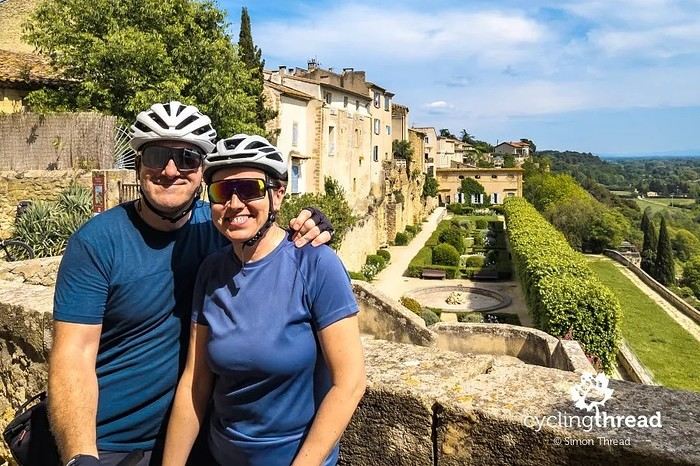
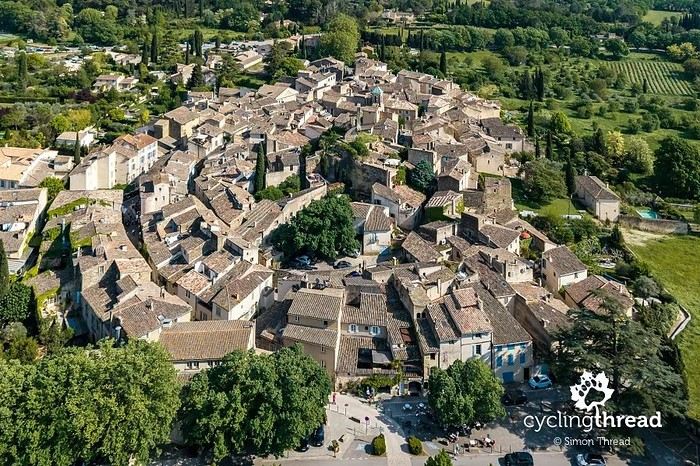
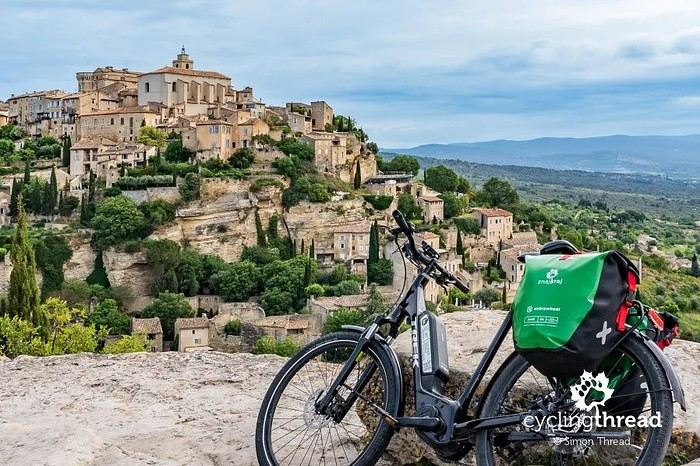
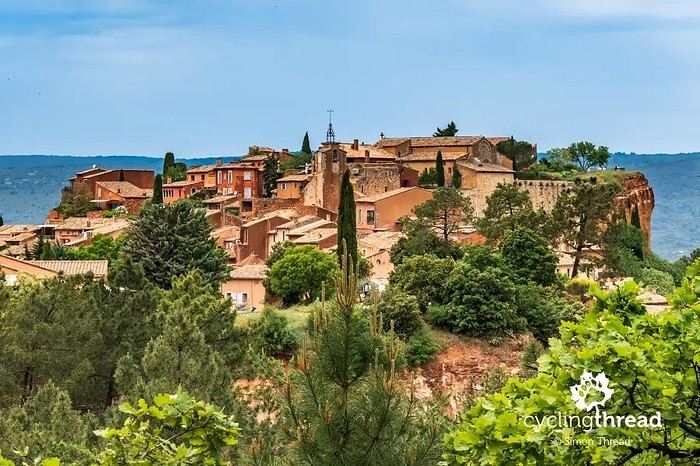
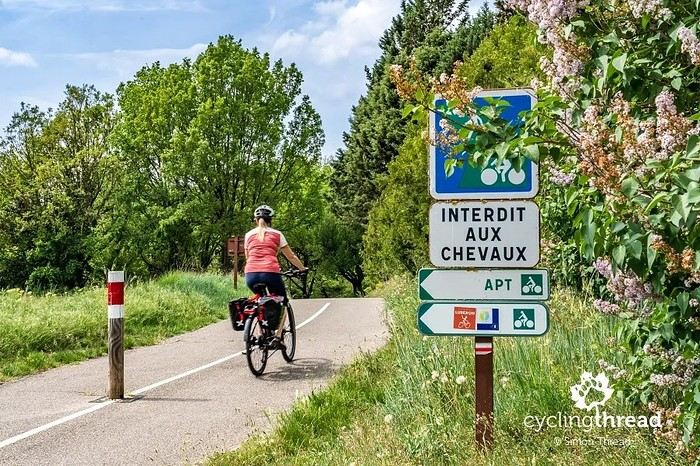
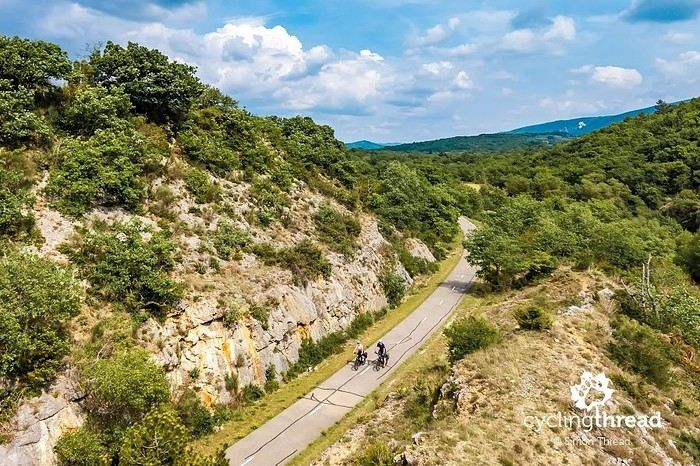
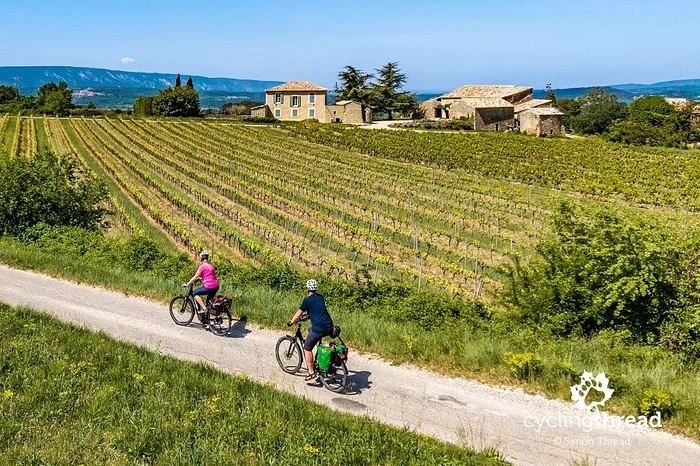
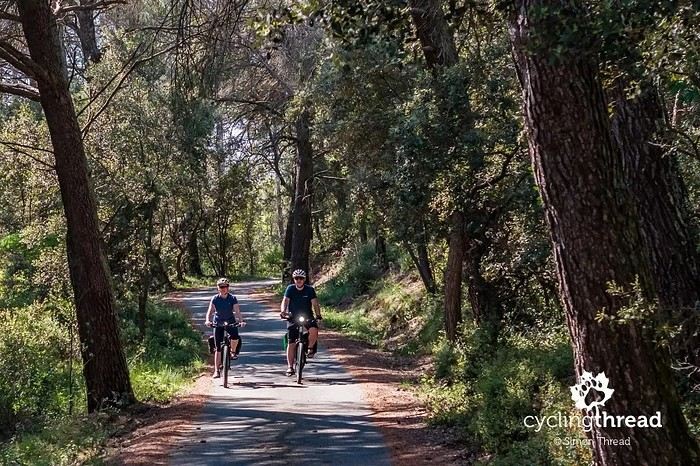
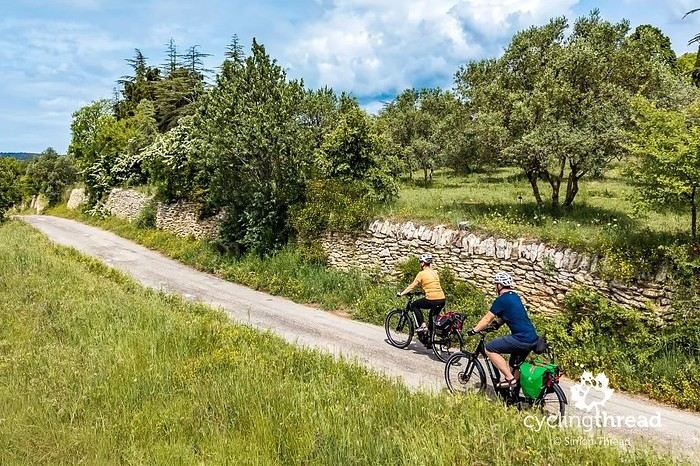
I’m making an exception and creating a separate post this time, since it’s all about France. In May, we spent a week in Provence, specifically in the Luberon, exploring the cycling routes *Autour du Luberon à Vélo*, the *Véloroute du Calavon* (part of EuroVelo 8), and the shorter *Les Ocres à Vélo* route. Together, they gave us an amazing journey through rolling hills, vineyards, lavender fields still green in spring, and some of the most stunning landscapes in southern France.
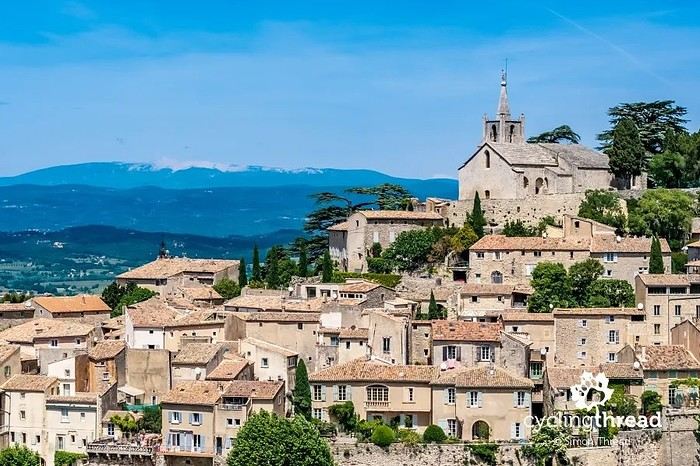
It was, of course, the perched villages that impressed us the most. We visited Gordes, Roussillon, Bonnieux, Lacoste, Lourmarin, Ménerbes, Oppède-le-Vieux, Cucuron, and Lauris. Many of them are among the most beautiful villages in Provence, and it’s hard not to agree with that reputation.
One interesting point is the route of EuroVelo 8 in this part of the region. The official path mainly follows the old railway line of the *Véloroute du Calavon*, which is very comfortable and safe. But in our opinion, cyclists traveling EuroVelo 8 around the Mediterranean would discover even more treasures if the route passed through villages like Bonnieux, Lacoste, or Oppède-le-Vieux.
We were also pleasantly surprised by how safe cycling felt. Most of the route takes small local roads, but traffic is light, drivers are respectful, and road design really takes cyclists into account. It’s one of those places where you can ride peacefully even without separated bike lanes.
Our full story:
Around Luberon by bicycle - the most beautiful villages of Provence
You can also find all our cycling travel stories on the forum:
Cycling Thread - Europe’s most beautiful bike routes
Hi there, we’re a group of 4 cyclists looking to get from Treviso in Italy to Munich with our 4 non-folding bikes. It seems complicated! Are there any solutions? Thanks so much.
Hi there, we’re planning a Munich to Venice bike trip at the end of June 2026. Getting back from Venice to Toulouse by train with 4 bikes isn’t straightforward. What return options have others who’ve done this trip chosen? Any tips or great deals would be much appreciated. Thanks a bunch! !
Hi everyone,
Happy owner of a Pegasus Estremo bike with a Rohloff hub, which is giving me trouble with the SF11-NCX-FT-E-LITE 700C TS 300/0 fork (serial number TD01329060). It’s starting to show its age, and I’d like to repair it to extend the life of my beloved bike.
The suspension is gone, and there’s an oil leak from the seals.
Does anyone know how to repair it? Where can I find parts that are about fifteen years old? Or where to find an identical replacement fork? Just to clarify, the Magura HS11 brakes are mounted using Firm Tech, meaning they’re on pivots behind the fork, facing the frame.
Hi, I'd like to know if anyone has done this route recently or has reliable info.
Does the track exist, and most importantly, is there sand (for biking)?
Any info is welcome.
Cheers,
diego ambilobe: mangaoka, manondro, ramena
vohemar sambava: masondrono, tanambao
Hi there,
New to bike touring,
I’d love to start with a section of the Via Rhona to explore and share (route to be decided).
Looking forward to exchanging tips!
I’m landing in Madagascar with a buddy before the end of April 2026. We’re planning to bike around for about twenty days or so. We don’t have a specific goal other than exploring the country and meeting the locals.
Ideally, we’d prefer a loop route starting from Antananarivo with a good chunk of it along the coast. On the bike side, we’re used to riding 6 to 8 hours a day, depending on the needs, encounters, and mood 😉 Any feedback or tips from trips around this length?
A big thank you to Lazarou for all the info you share in this forum!
I'm passionate about Morocco, which I cycled through back in 2009.
Last year, my wife and I explored the High Atlas by tandem. Completely smitten, we're heading back in April (Anti Atlas) and May (High and Middle Atlas), still on our tandem.
Do you have any info on the track between Amezri and Ali Ait Nito? Are the river crossings in the Tessaout still there? It's not easy to navigate with a loaded tandem... especially if the river level is high due to this year's heavy snowmelt!
Thanks in advance for any tips you might have, and best wishes for health in this new year!
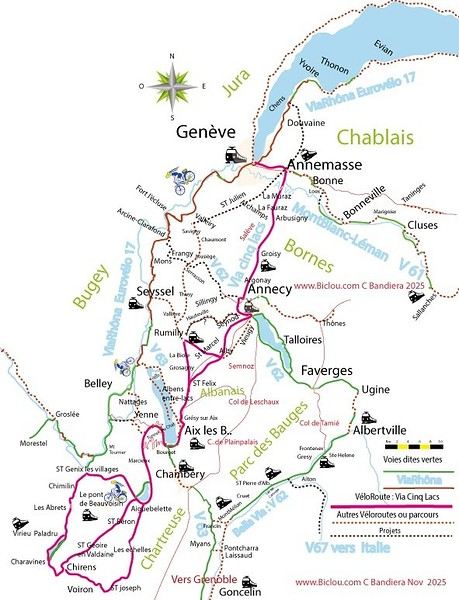
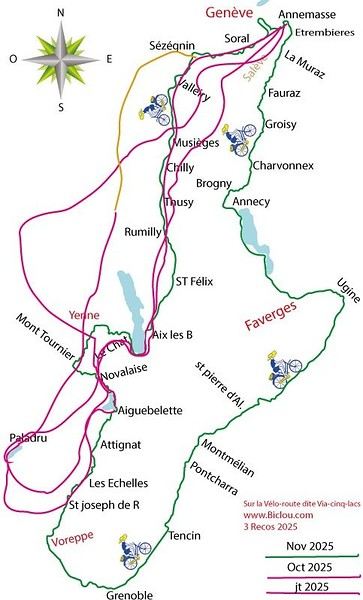
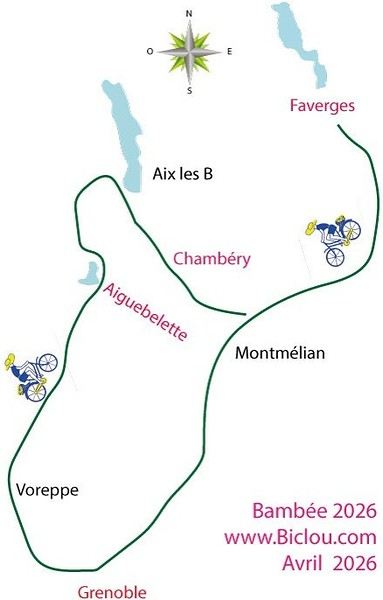
Claudio specializes in the route of the Savoie lakes
Here are his travels
Between Bornes, Chartreuse, the Savoie foothills, and Dauphiné
Five lakes: Léman, Annecy, Paladru, Aiguebelette, Bourget, not to mention a few ponds along the way
Plenty of accommodation options: camping, hotels, and more...
A lovely route not far from his place
Rural and quite peaceful
A road cycling route created by Serge B...
First of all... happy New Year! Wishing you great roads in 2017!
I’ve been traveling for a few years now with a high-quality mountain bike, but it’s equipped with hydraulic disc brakes. I live (pedal) with the constant worry of a breakdown (leak, air bubble, heat causing the fluid to...). My bike mechanic tells me it’s impossible to switch them out for V-brakes.
What do you all think? Am I taking a big risk continuing (alone) with these brakes? Thanks in advance for your great tips!
First post here to share a quick recap of our west-to-east bike trip along Algeria’s coast in January 2025.
It was just the two of us—my partner and I—with French passports and not a word of Arabic. No friends or welcoming hosts in the country.
Under those conditions, we’d strongly advise against going.
Our original plan was to follow the coast from Algiers to Tunis. We ended up cycling from Algiers to Béjaia, then took the train from Béjaia to Annaba (with a stop in Constantine), and finally biked to the border.
We were tailed by police the whole way—whether on our bikes, on the train, or even on foot while exploring towns. On top of that, we couldn’t wild camp and were limited to the few state-approved hotels that accept foreigners. Under those circumstances, connecting with locals was especially tough.
With such an omnipresent and intrusive police presence, we’d definitely recommend against this destination for bike touring. A really sad situation that completely cuts you off from the local population...
We’d been warned, we went to check it out, and we weren’t disappointed!
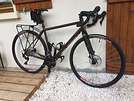
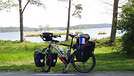
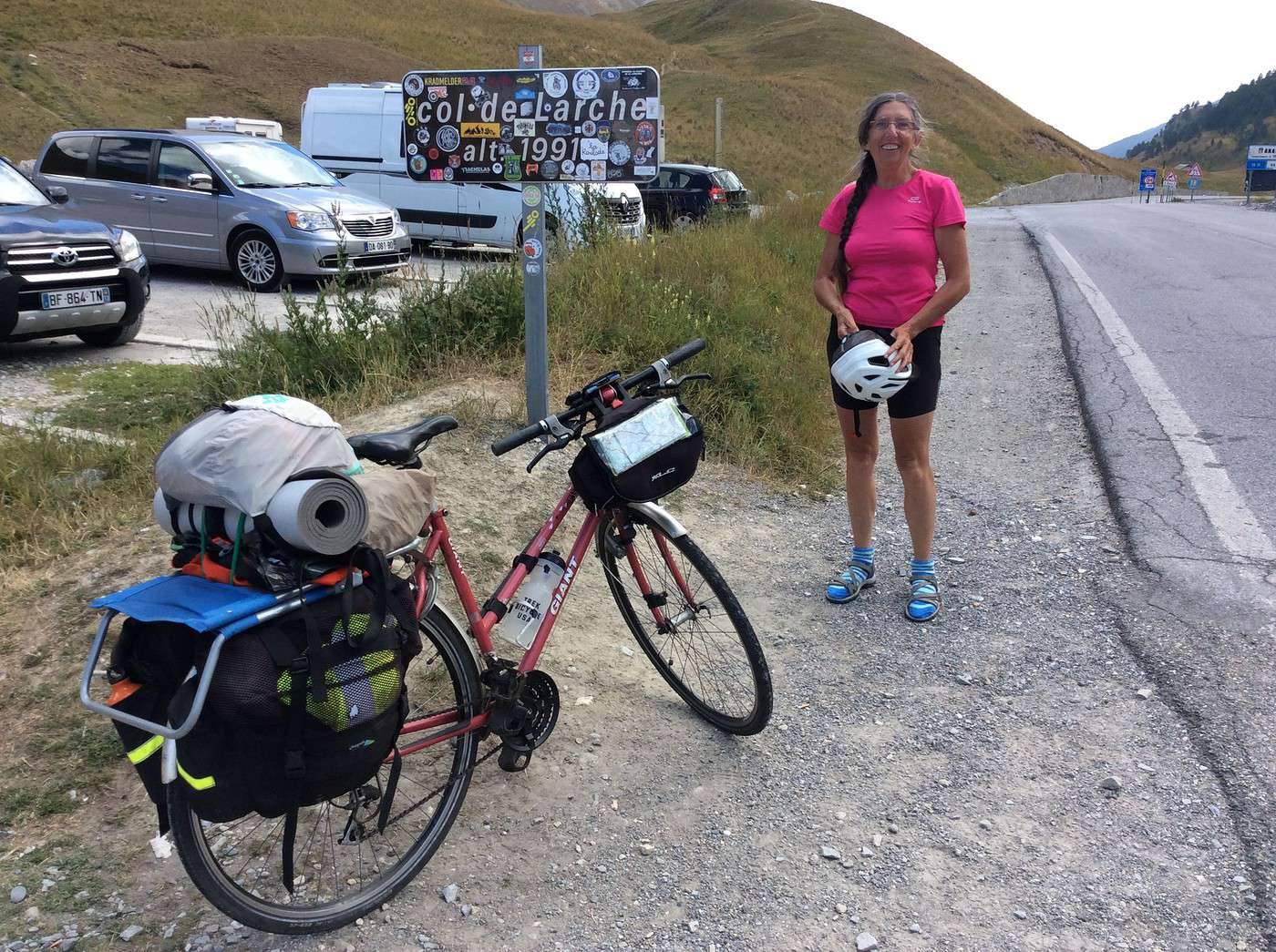
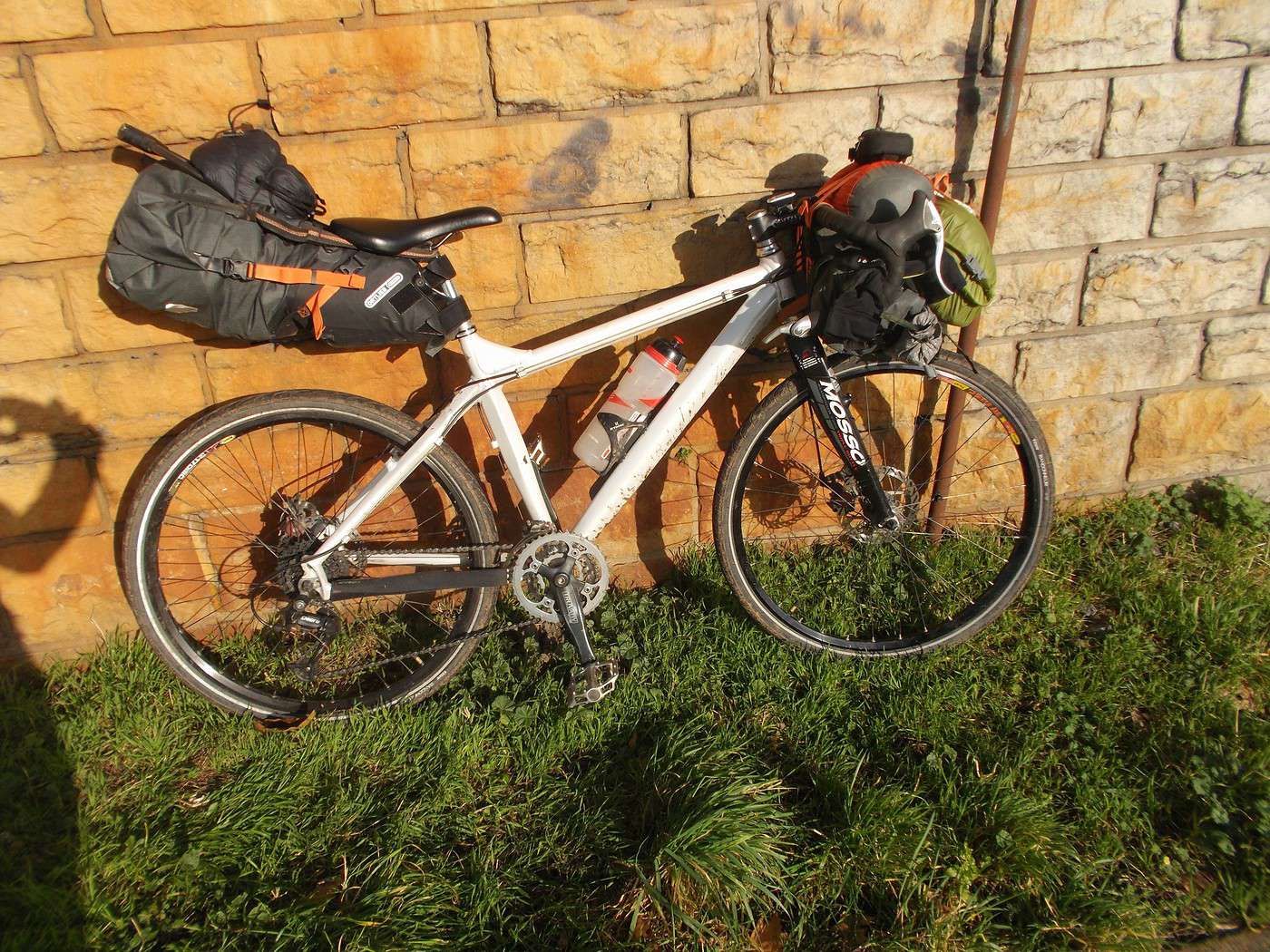
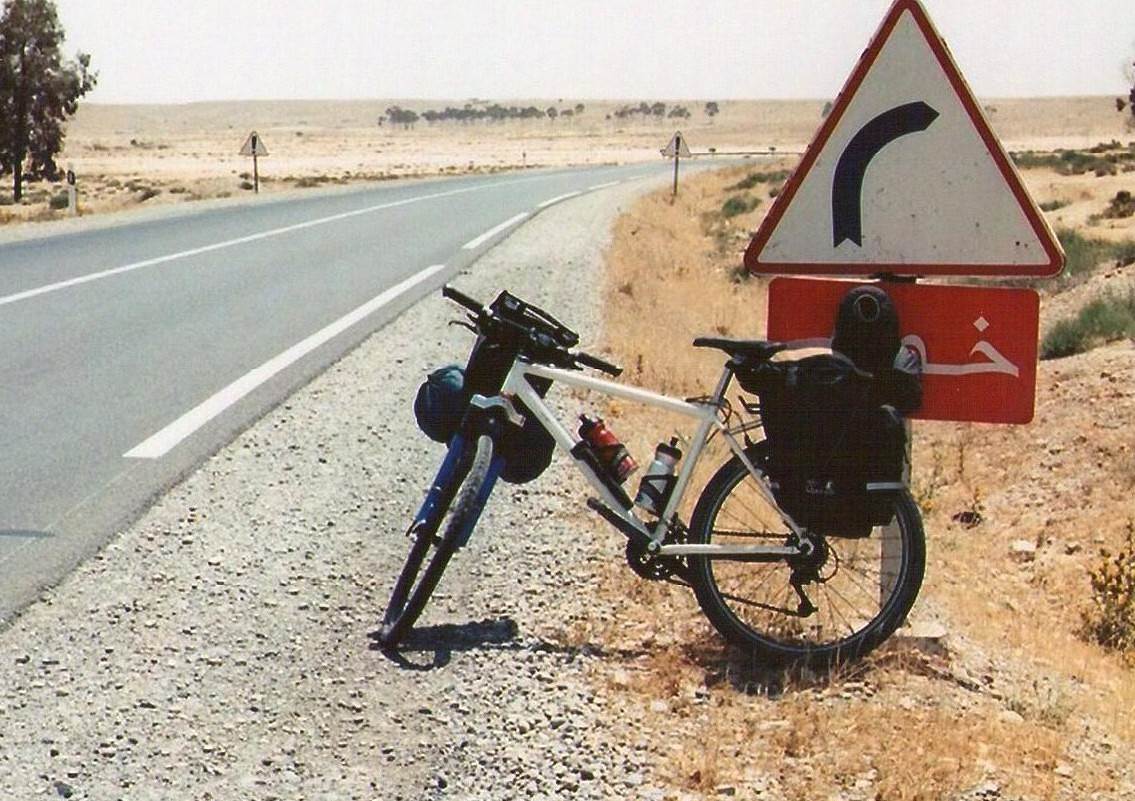
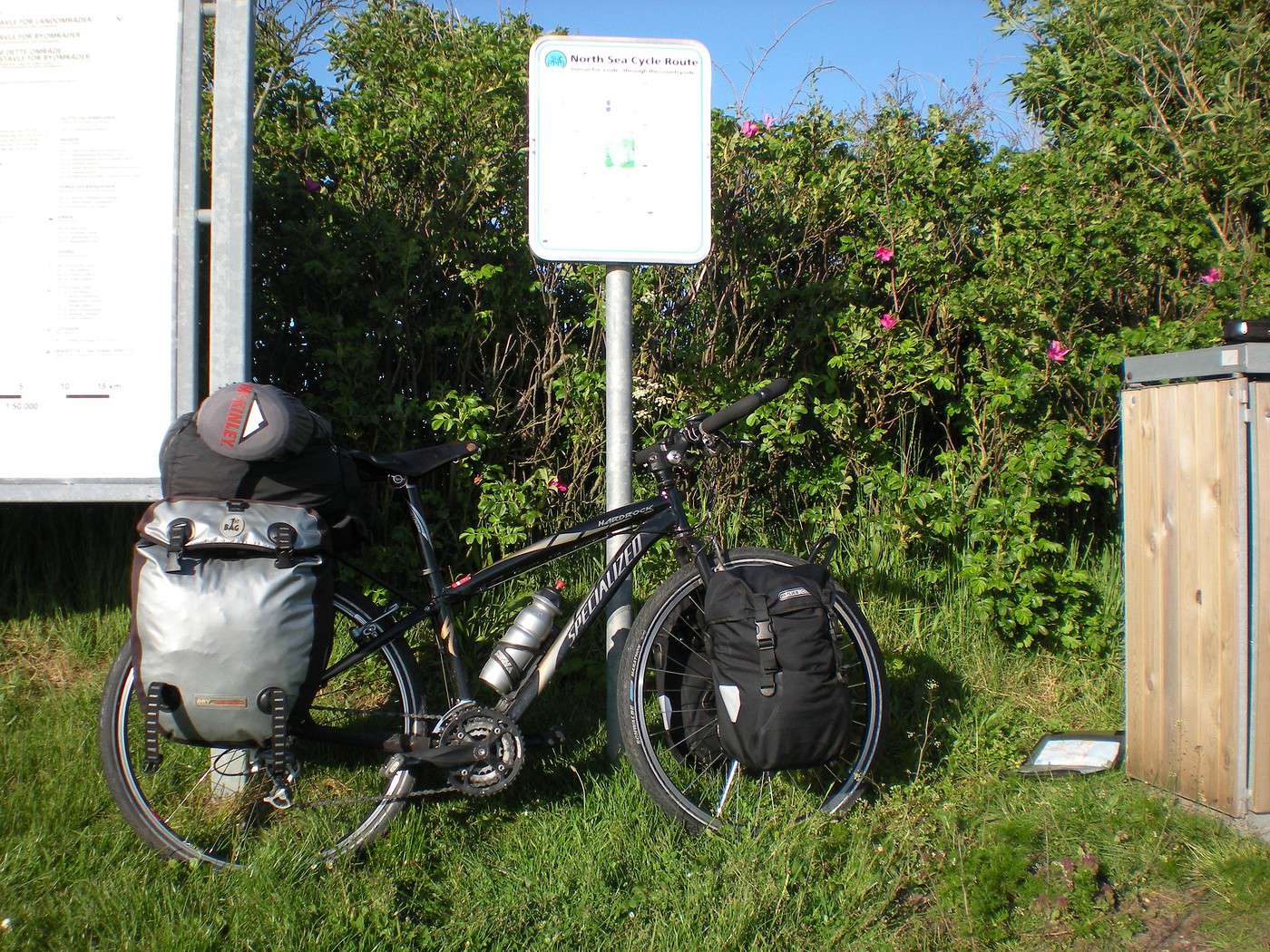
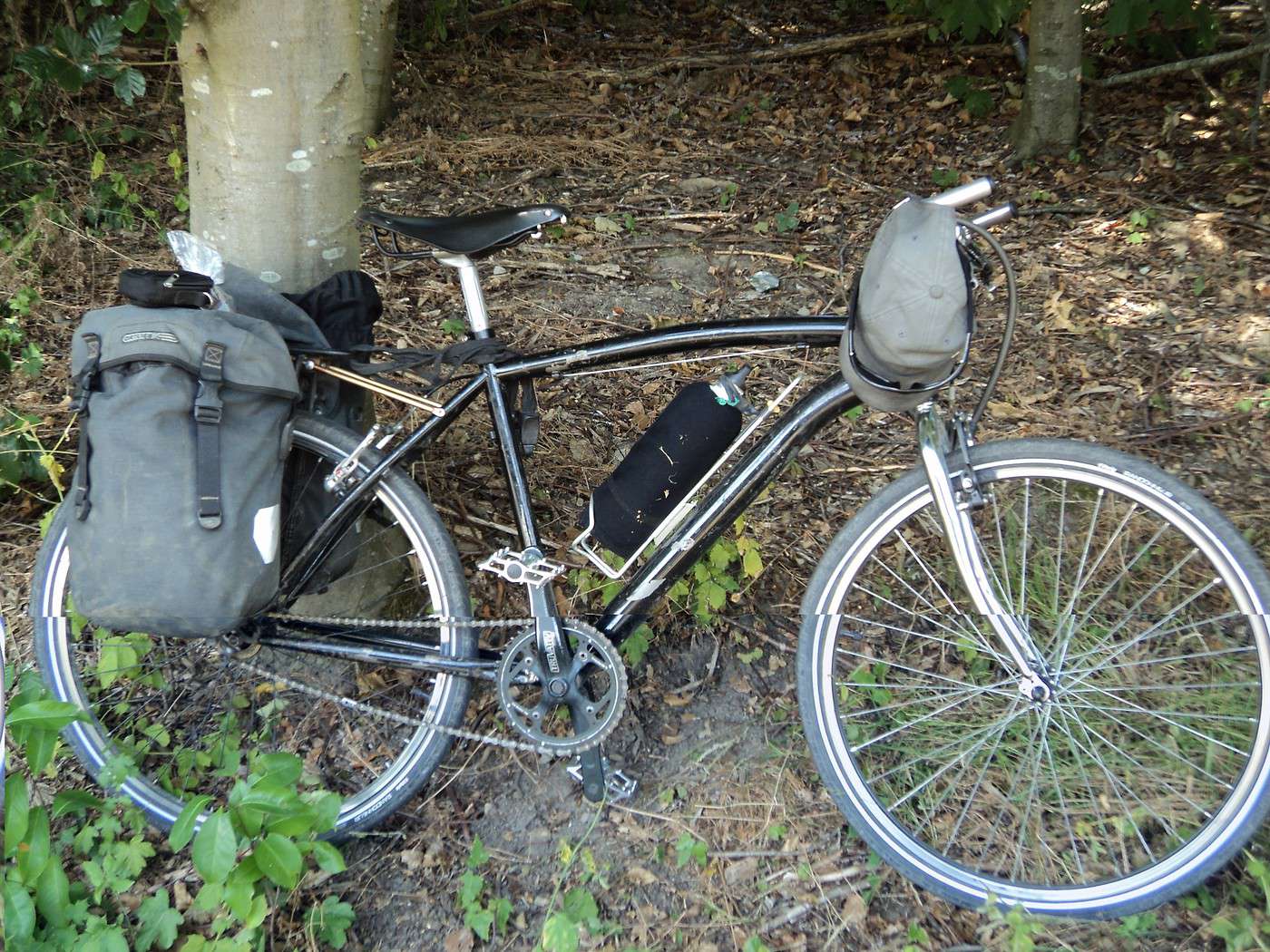
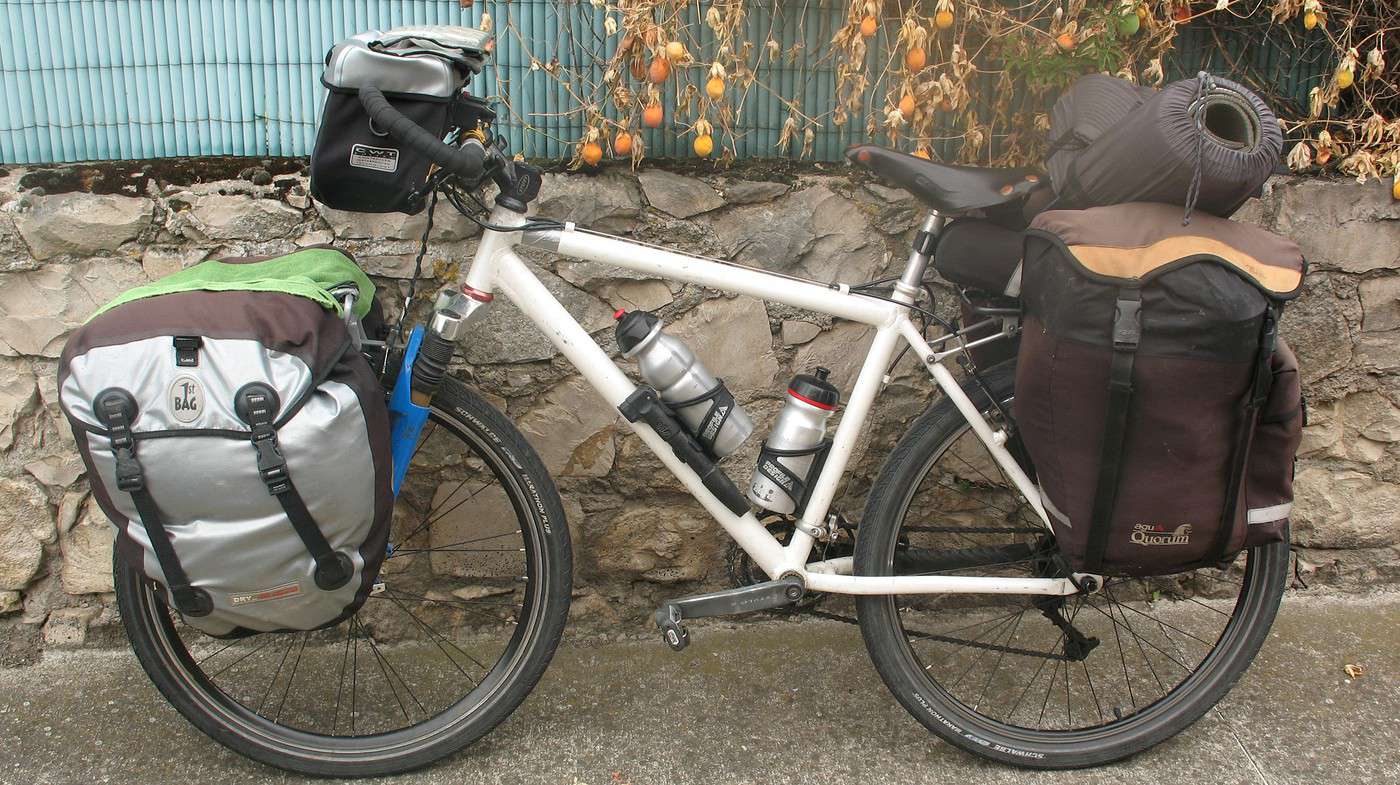
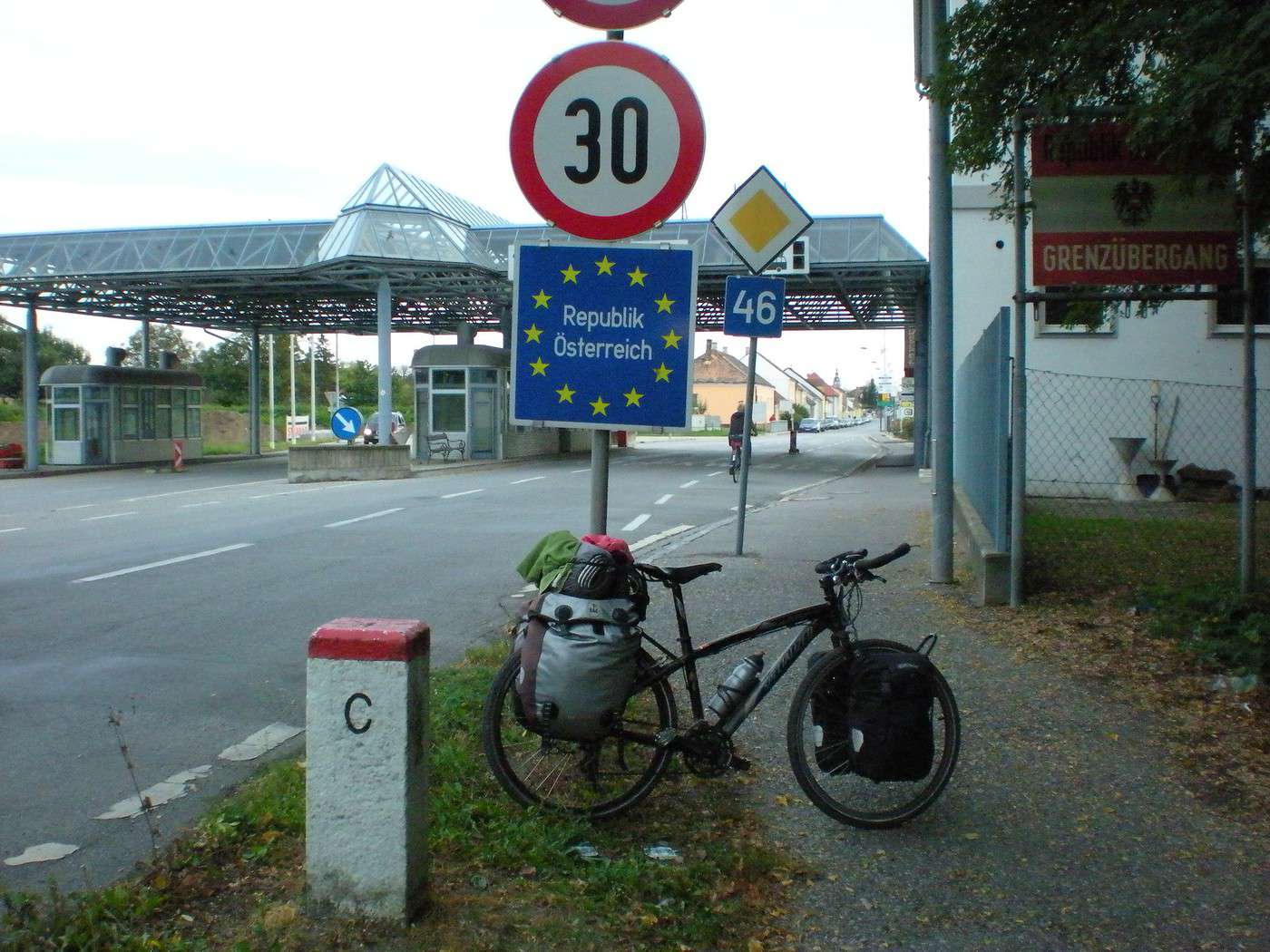
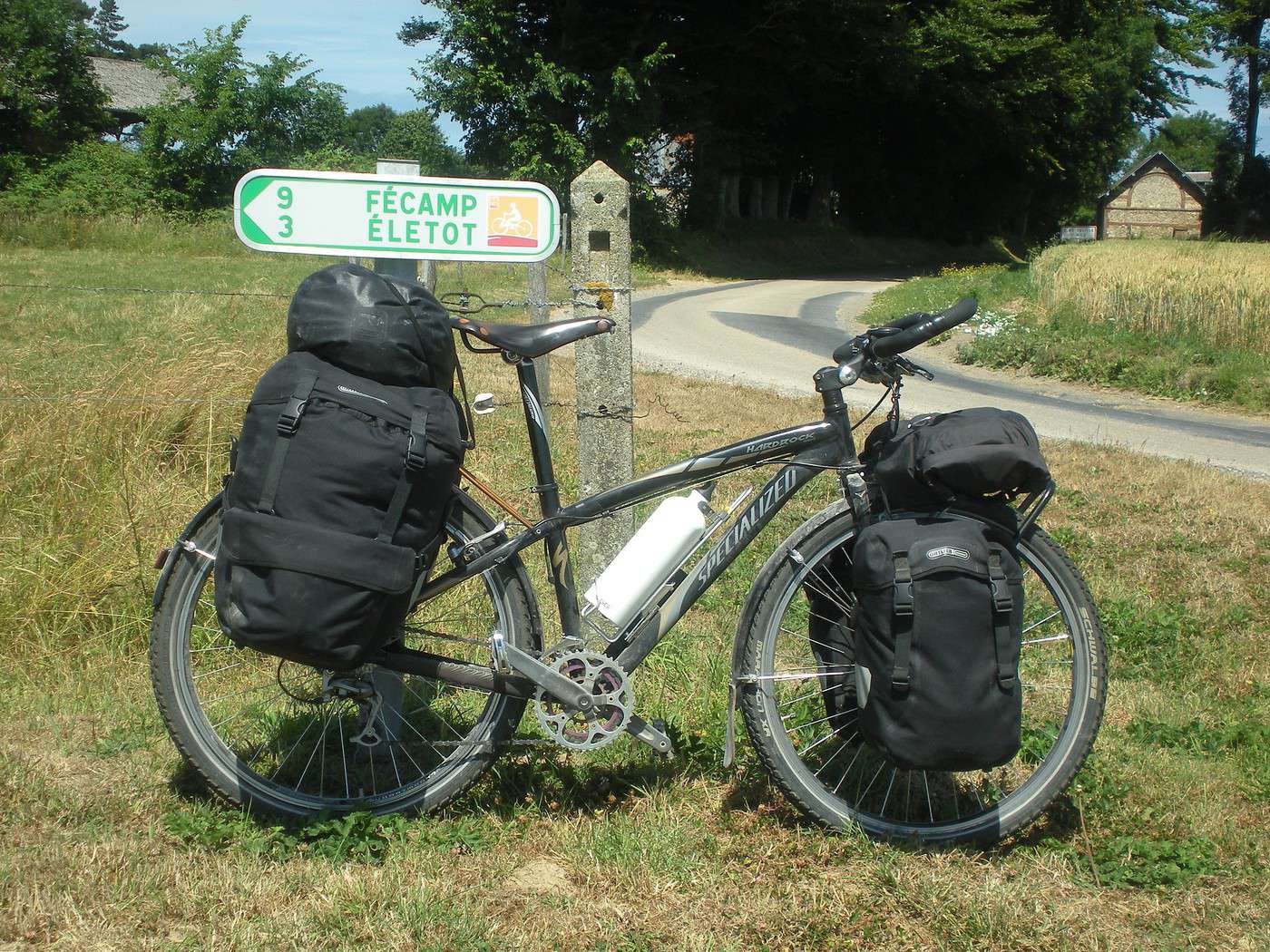
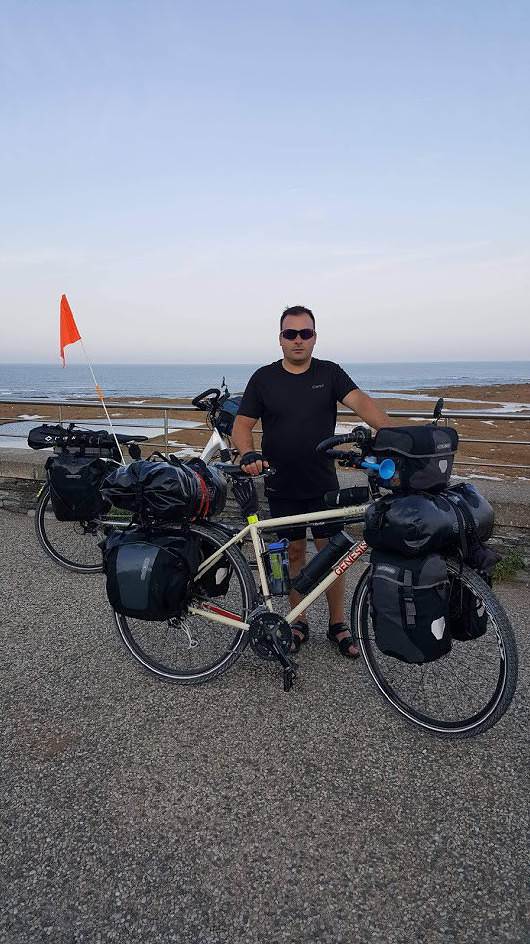
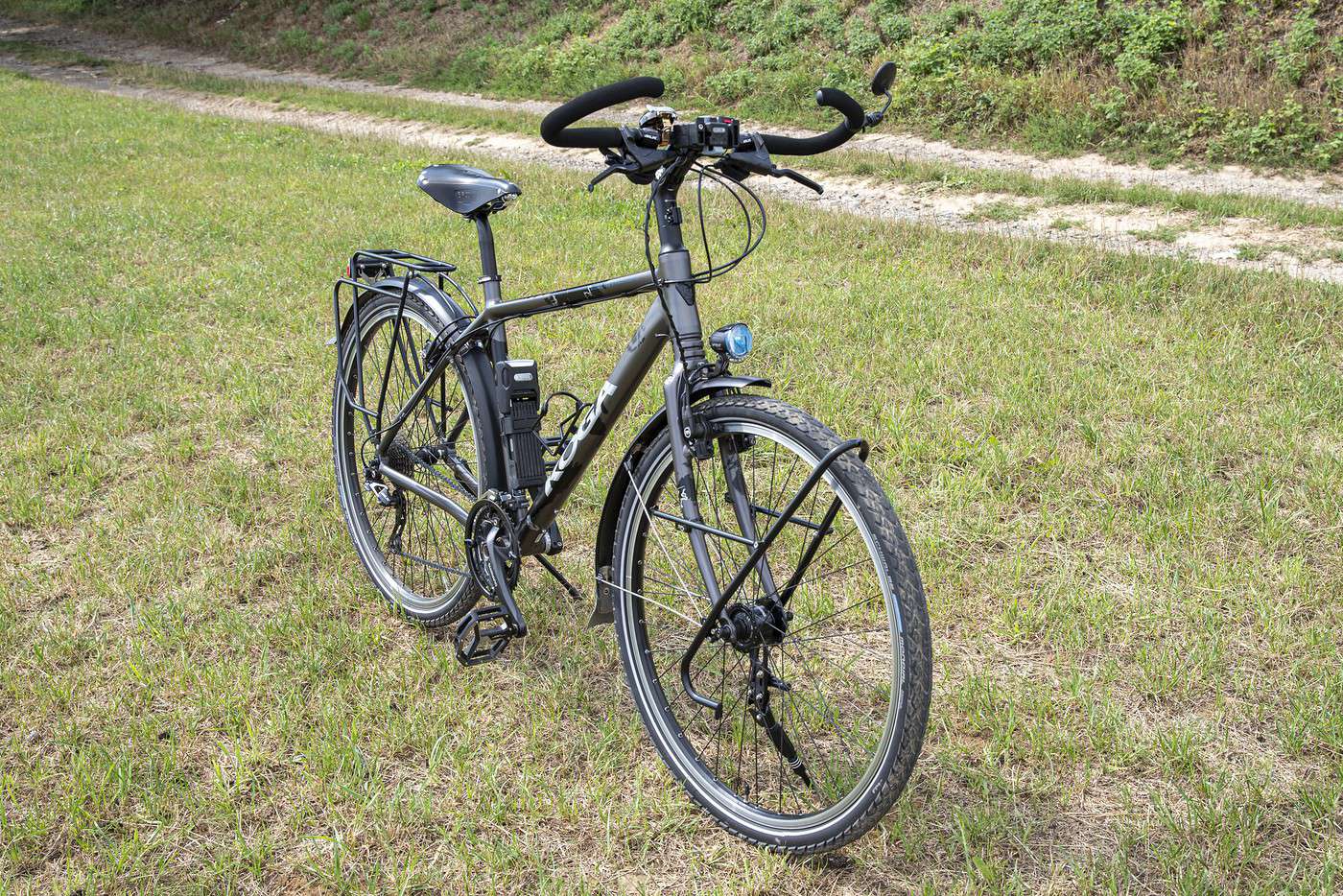
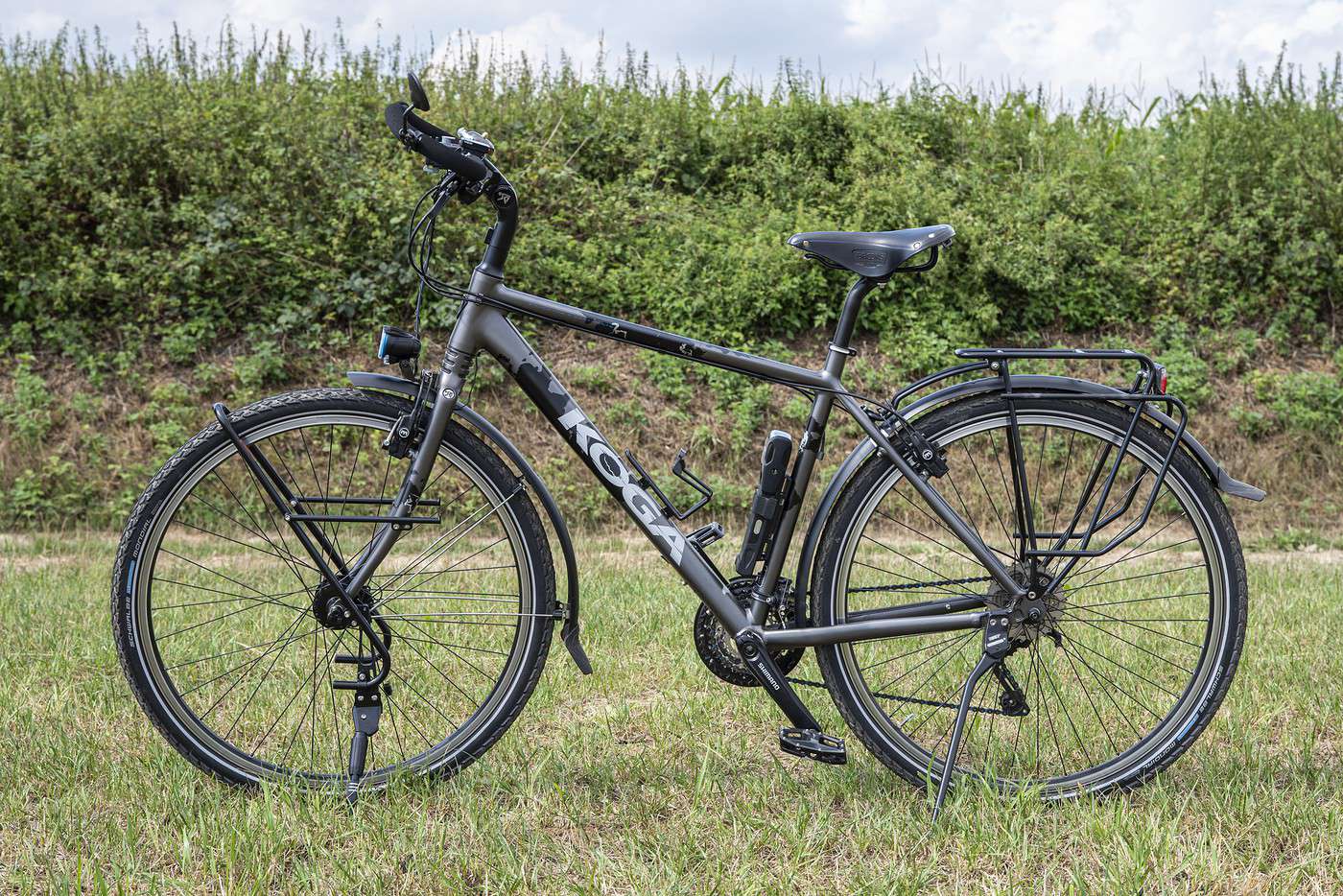

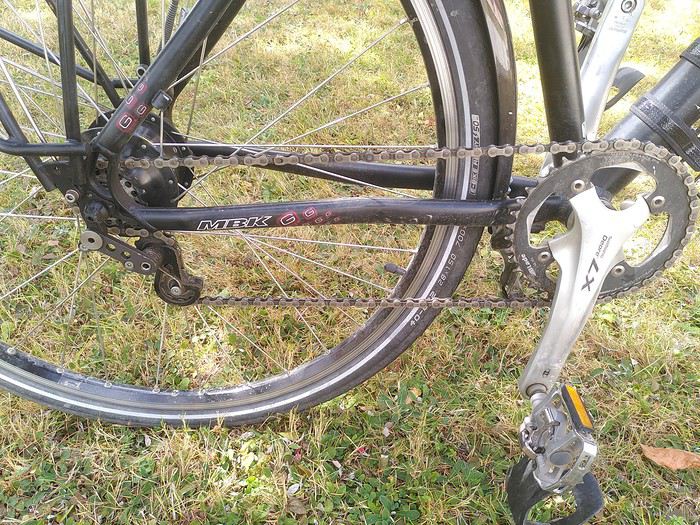
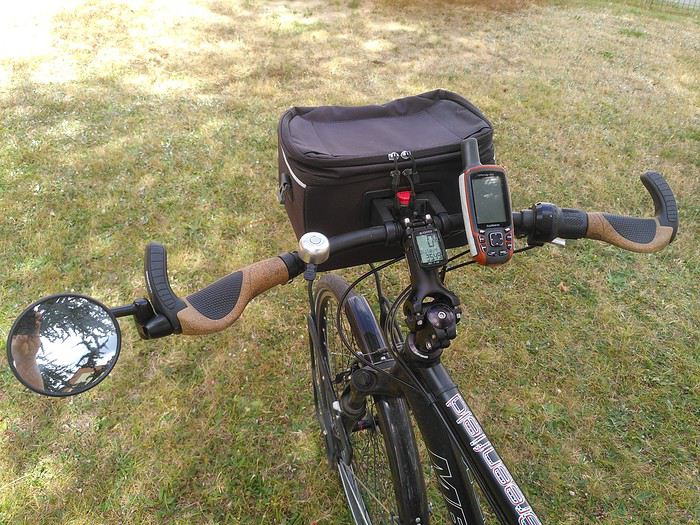
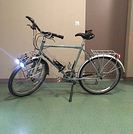
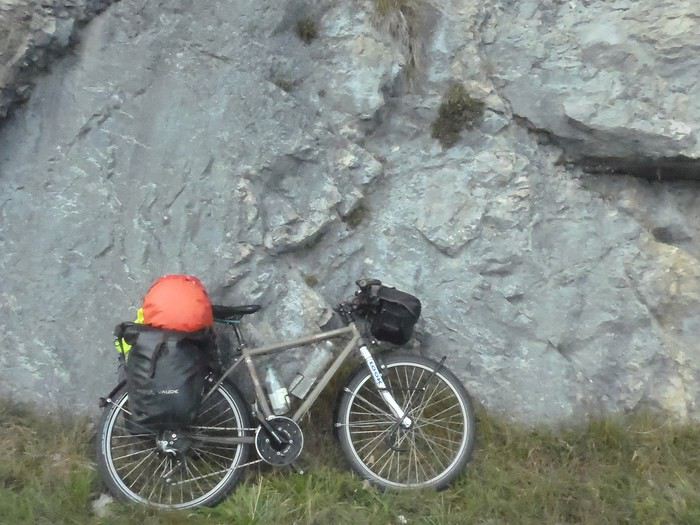
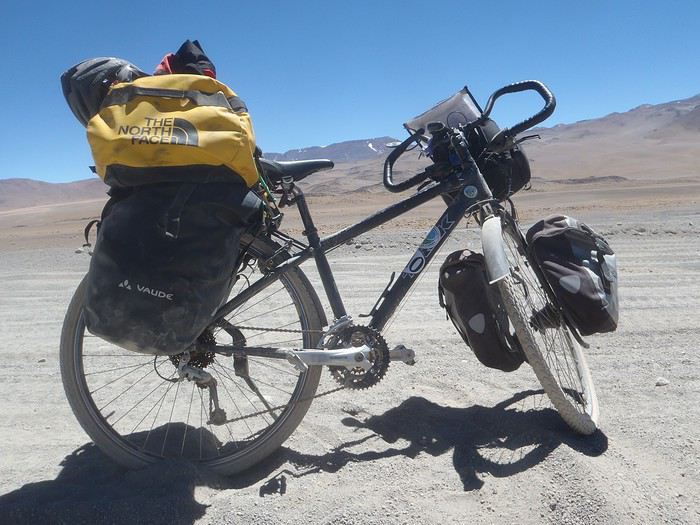
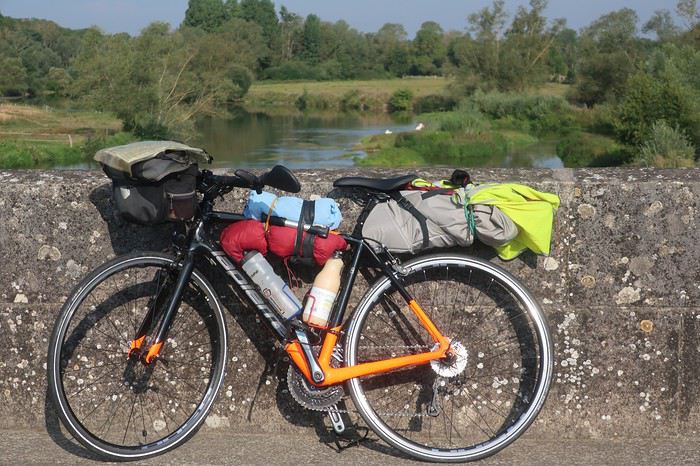


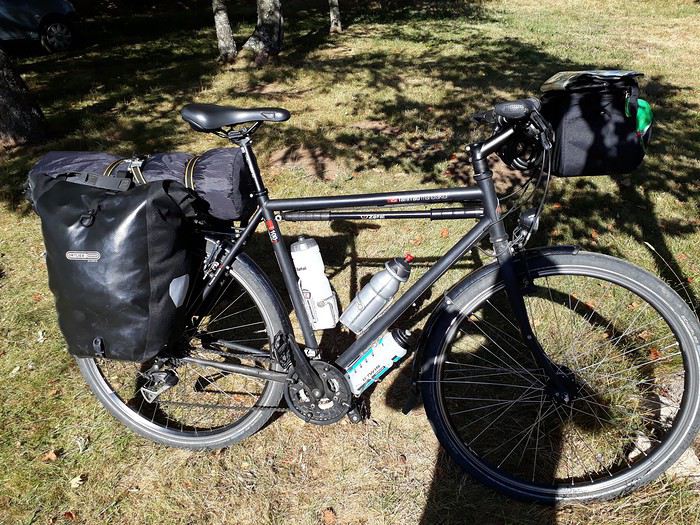 Modified Fahrrad T100 with MTB gears 44x32x22/12x36 or 11x34
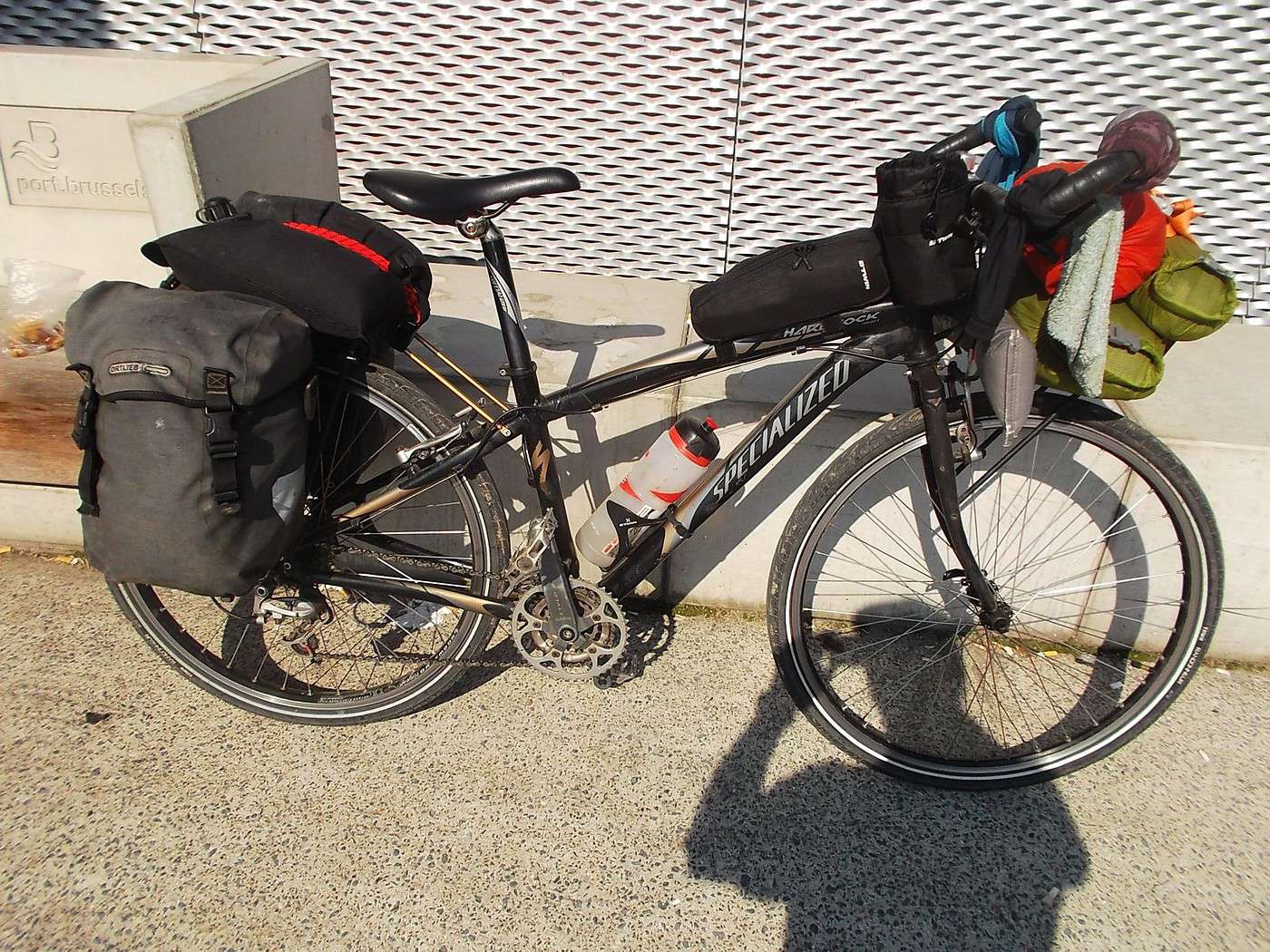
 Refurbished Rock Rider 320 with MTB drivetrain 42x32x22/13x32 + V-brakes