

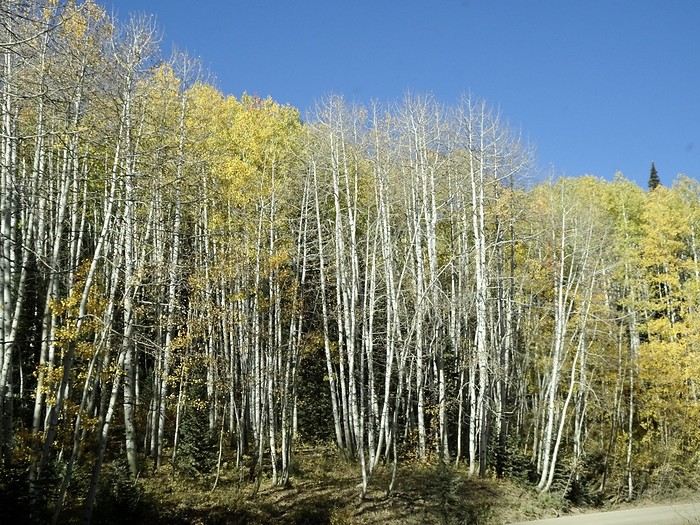
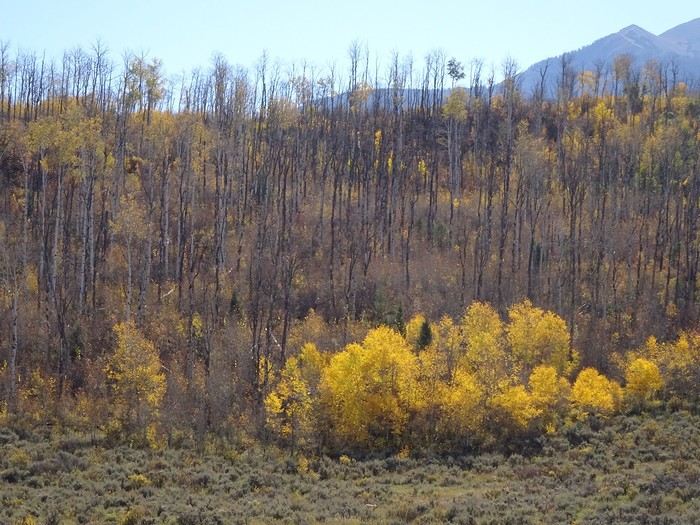
 Some are completely bare now, and even though the road is still stunning, it doesn’t give us the same “Wow” as on the way there. That doesn’t stop us from stopping to take more photos—some spots are still absolutely gorgeous.
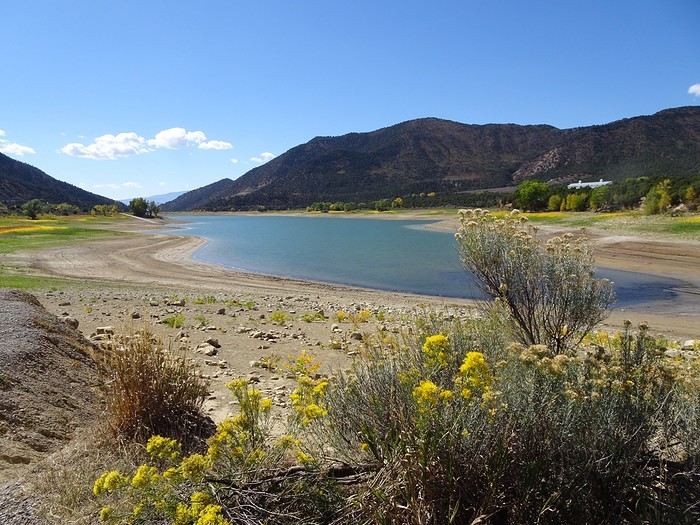
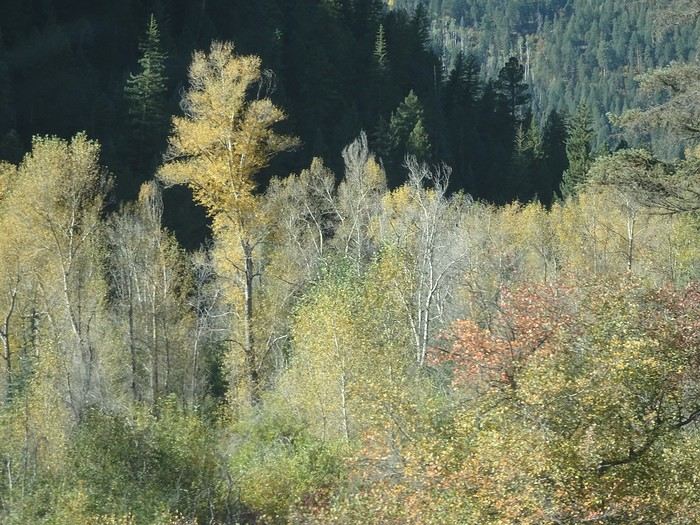 DD is thrilled to leave the dirt road for the asphalt of the West Elk byway. We drive alongside a nearly dry dam for kilometers, with the river reduced to a tiny stream.
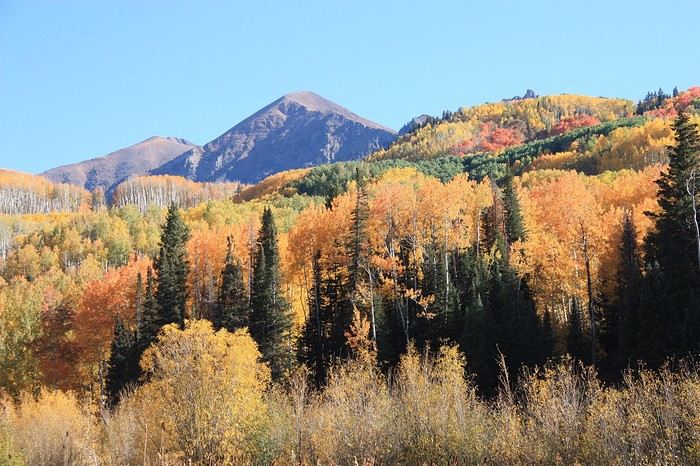
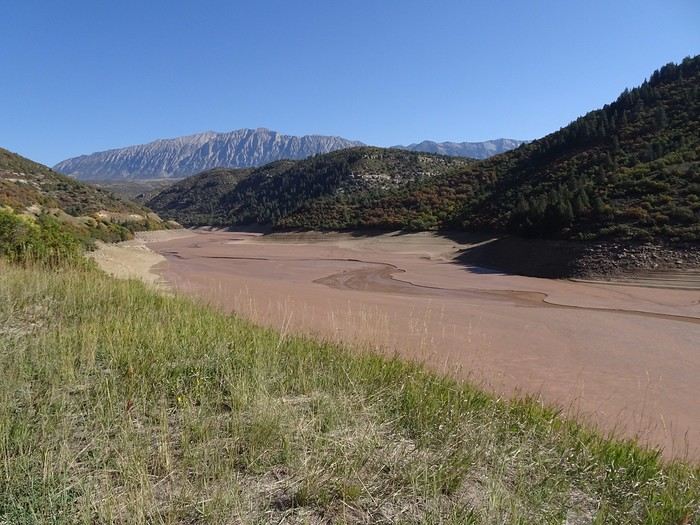 Seeing the distance between the two banks, you can’t help but worry about the drought. This road is breathtaking, winding between mountains and valleys.
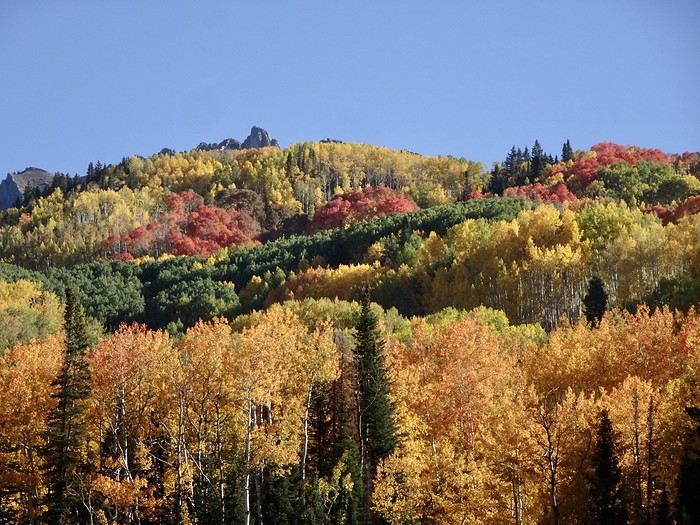
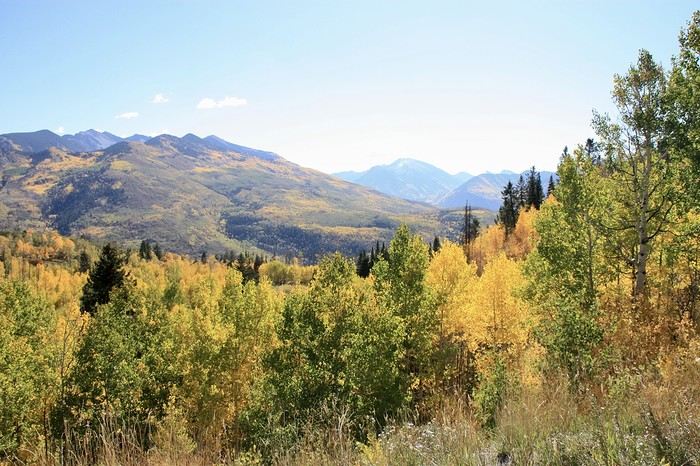
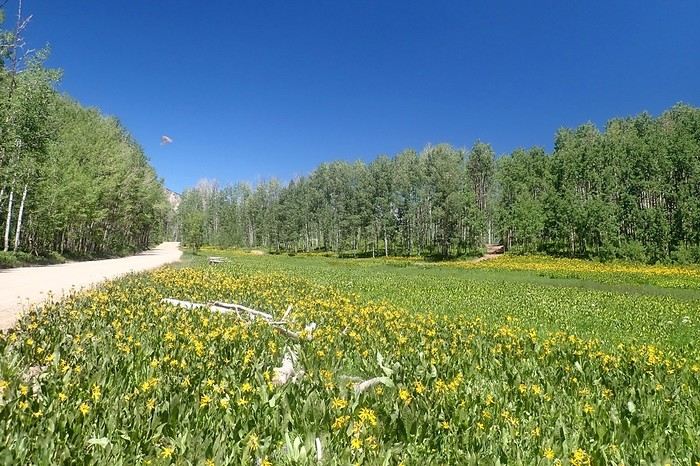
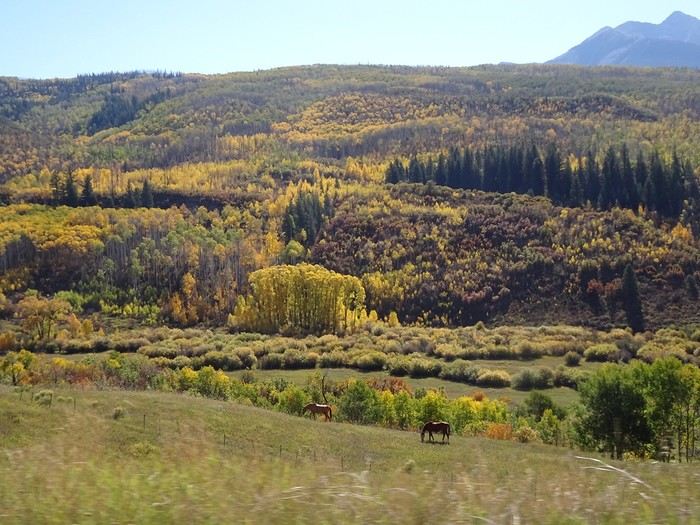 It offers us even more stunning views after Mac Clure Summit—a beautiful mosaic of greens and yellows that would make any painter envious!
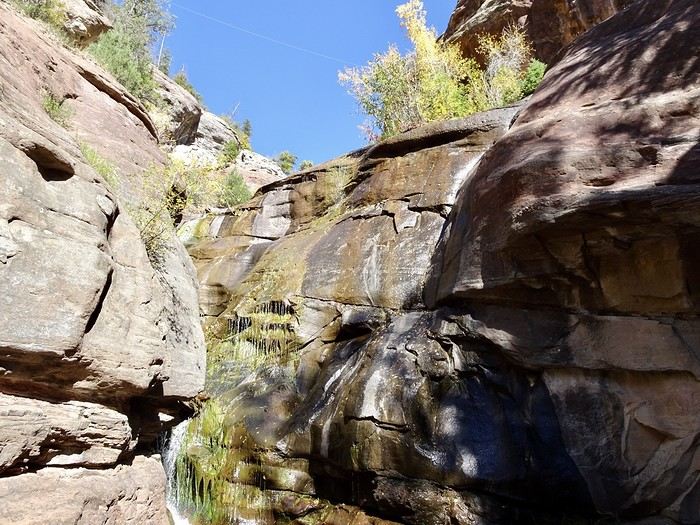
 Quick stop at Hayes Creek Falls (right by the road).
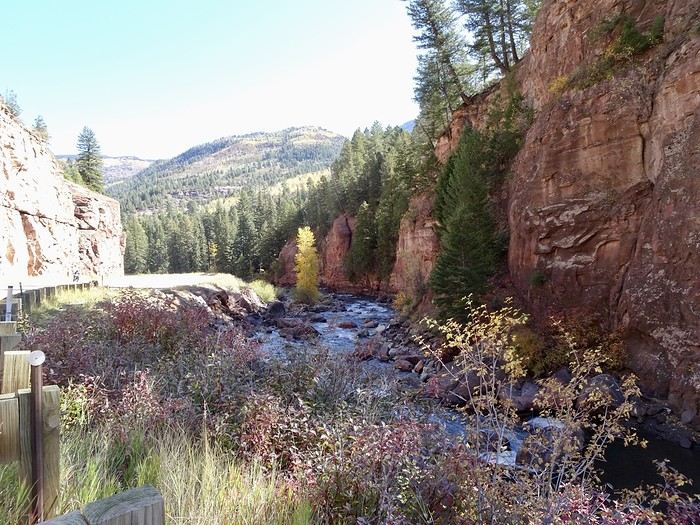
 On the other side of the Crystal River.
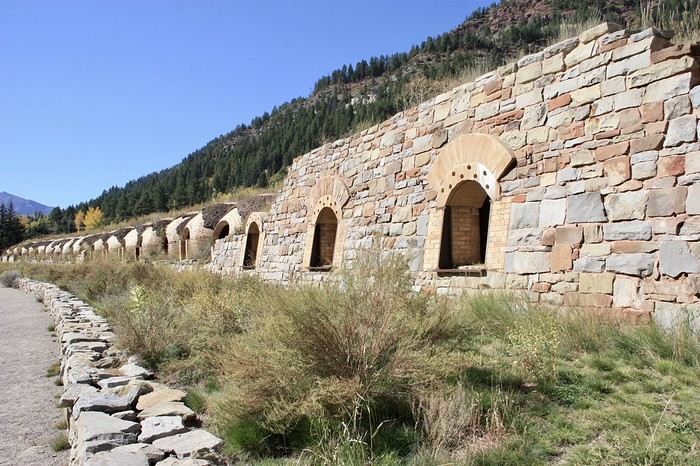
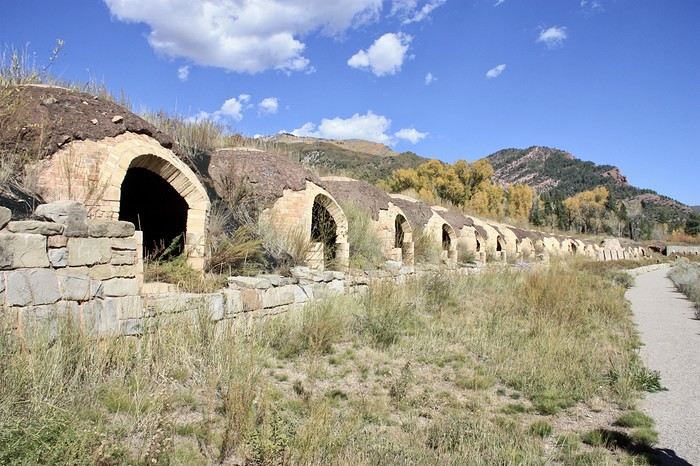 The back of the ovens
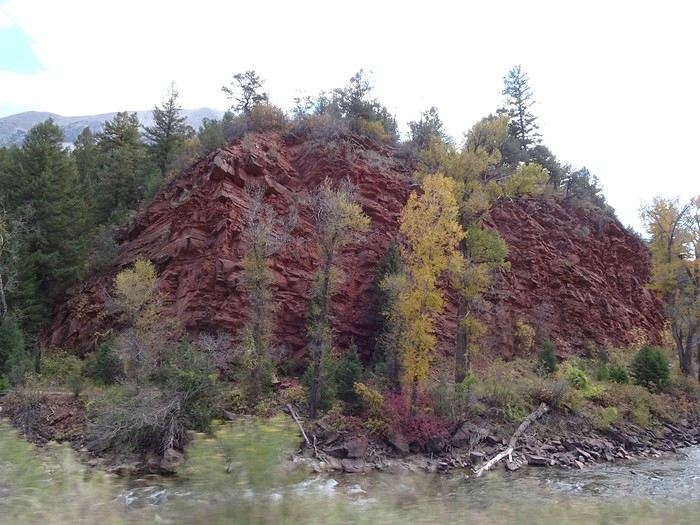
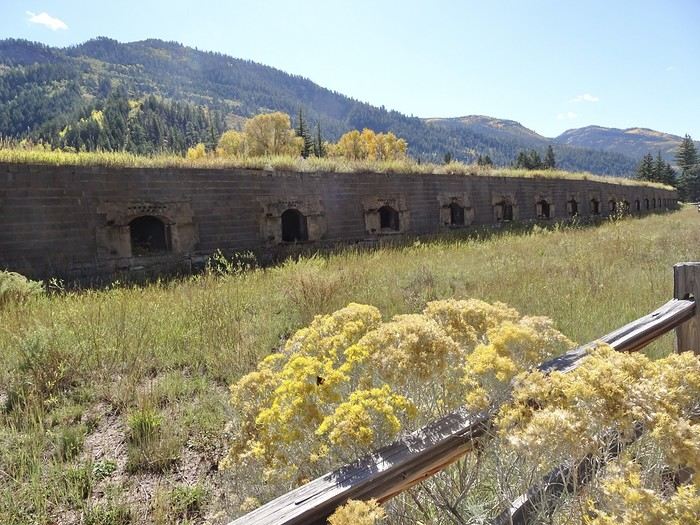 The coal from the surrounding mountains was ideal for turning into coke, but less than 10 years later, the mines closed (I won’t tell you why because I don’t know!!), and the ovens fell into disuse.
Many deteriorated, others were looted, but 90 ovens are still relatively intact, and some have been restored to their early 20th-century state to preserve the memory of a time when life was incredibly tough for both people and animals.
When in operation, the ovens were surrounded by stones like this
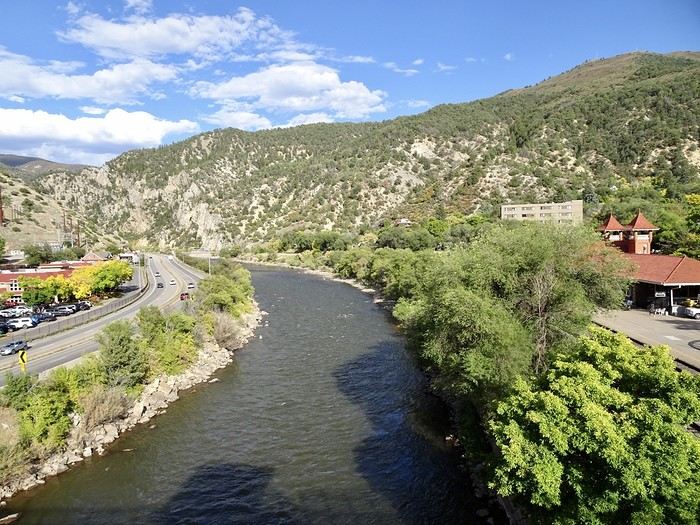 and the famous large hot springs pools the town is known for.
I’d kind of planned to spend a few hours there the next day, but seeing the crowds from the bridge, we decide to skip it and visit a small state park about 45 km north of the city instead.
A little more nature will be welcome to enjoy our last few days.
After that, some relaxation in the hot tub before dinner.
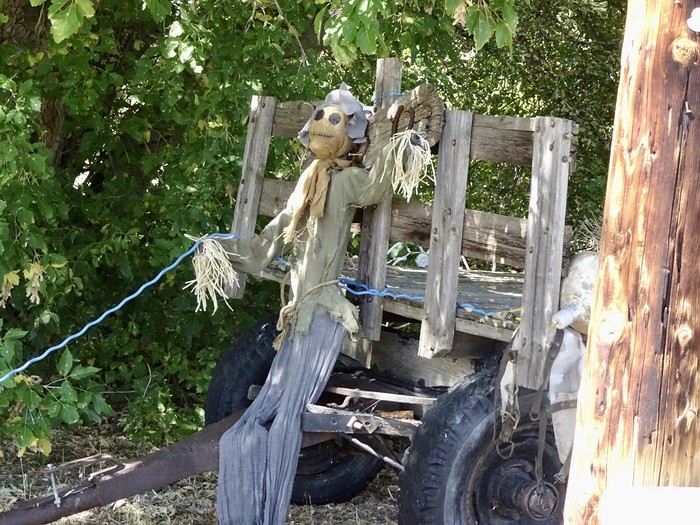
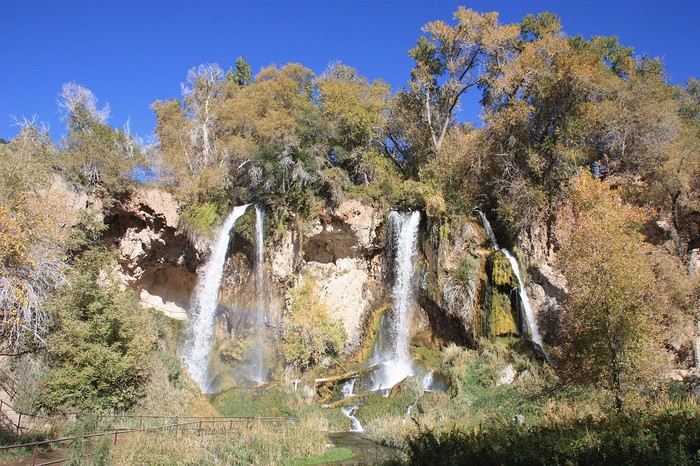
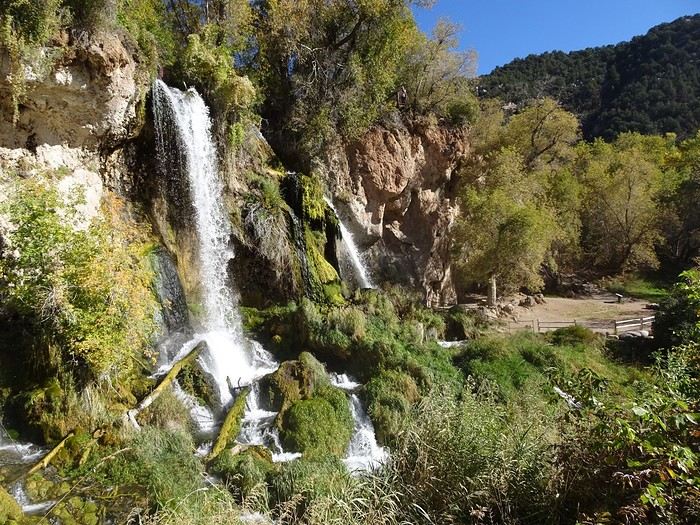
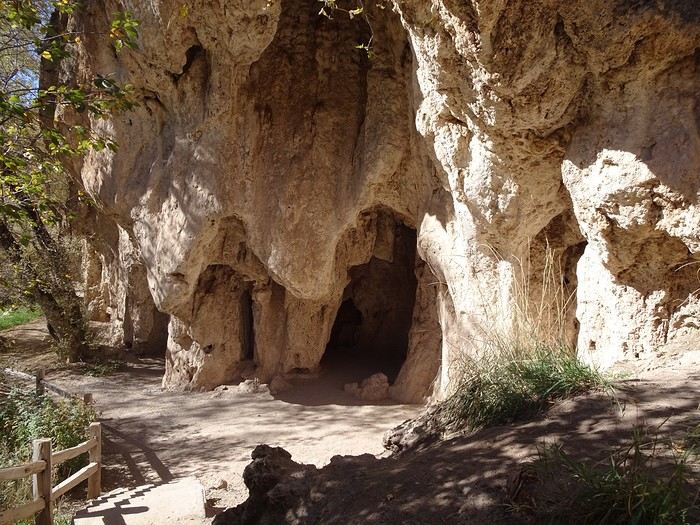 The master of the place (a face appeared when we looked at the photos).
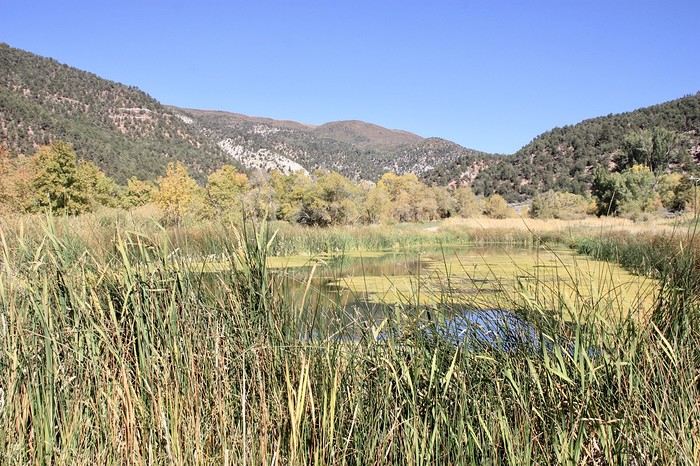
 And two small ponds.
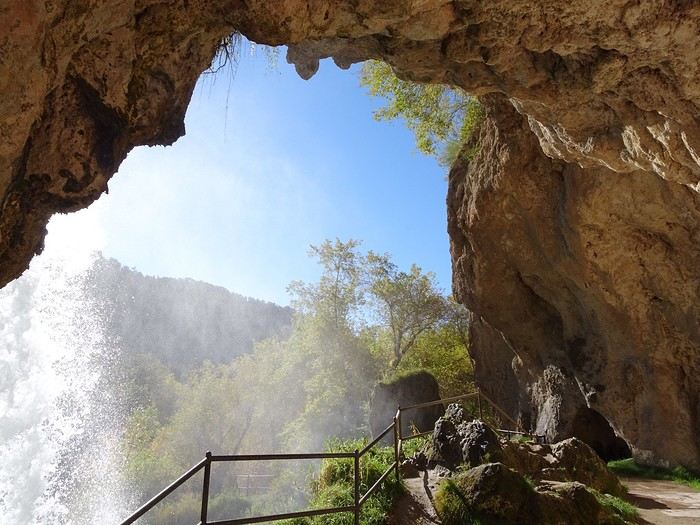
 Before reaching the top of the falls, where viewpoints are set up so we can see them from different angles.
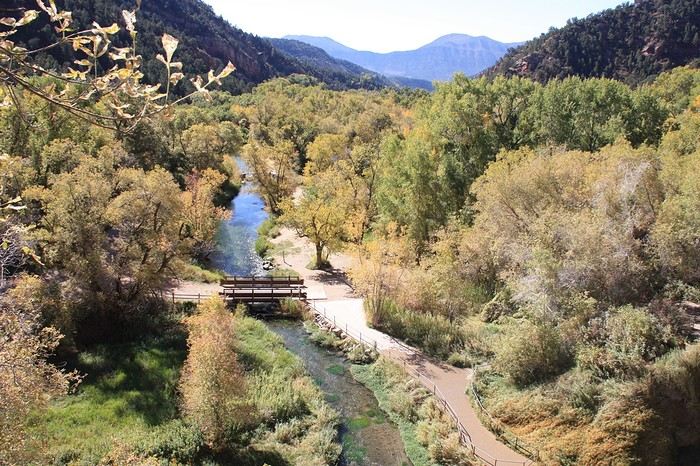
We return downhill via a trail reinforced with wooden steps. This little walk is easier in a counterclockwise direction, and the place is really worth the trip.
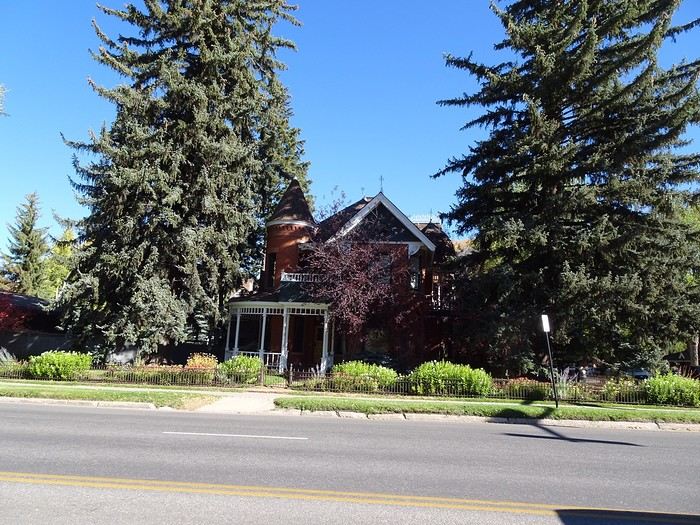 but didn’t stop—our failed Telluride experience left us a bit cold about towns that are too fancy for us. We spotted a whole flock of geese on a golf course, likely stopping over during their long migration. Too bad they weren’t in flight.
We found those lovely autumn colors again on the pretty, narrow road leading to the pass.
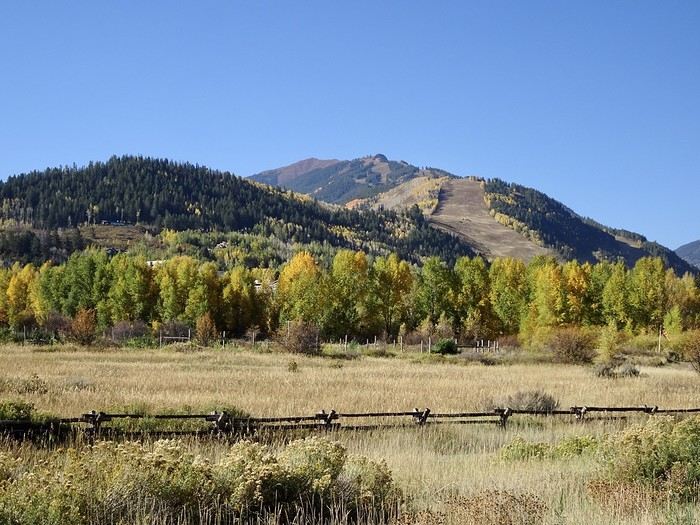
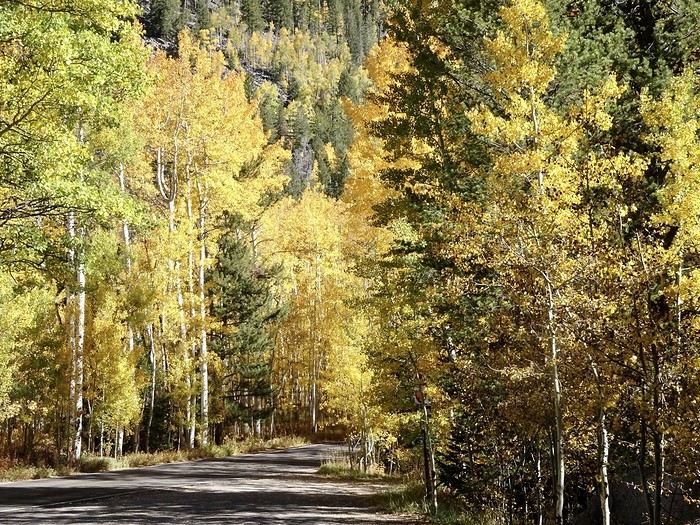
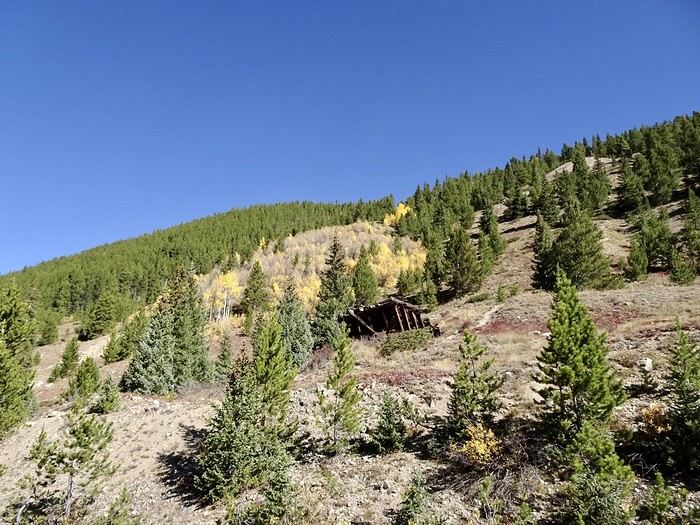
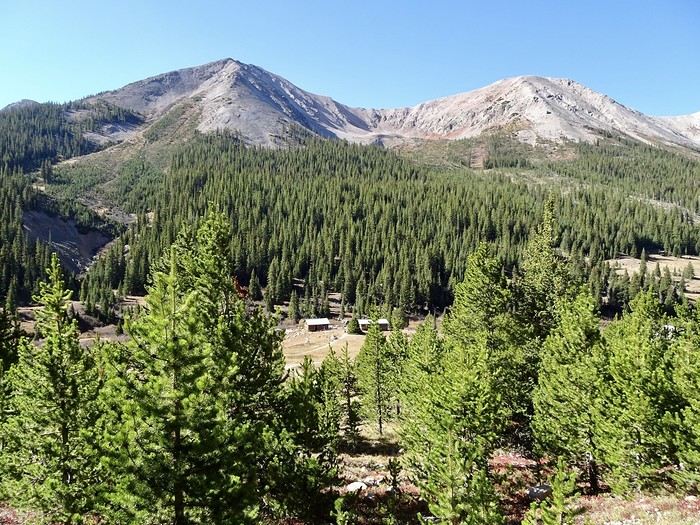 We didn’t go down into the valley to explore—just admired it from the viewpoint.
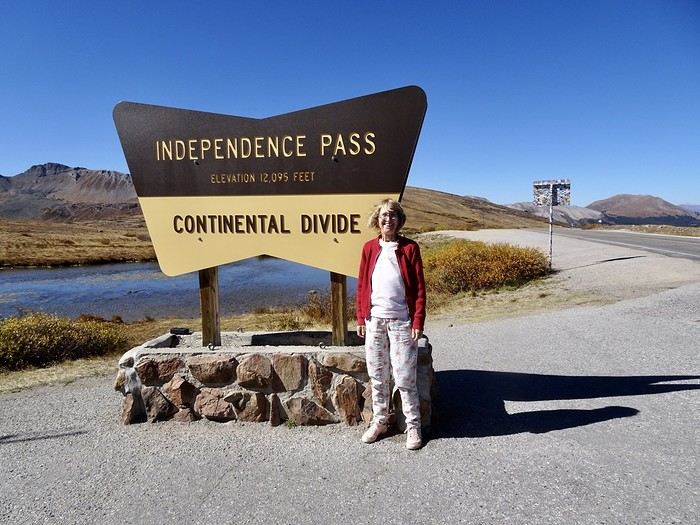
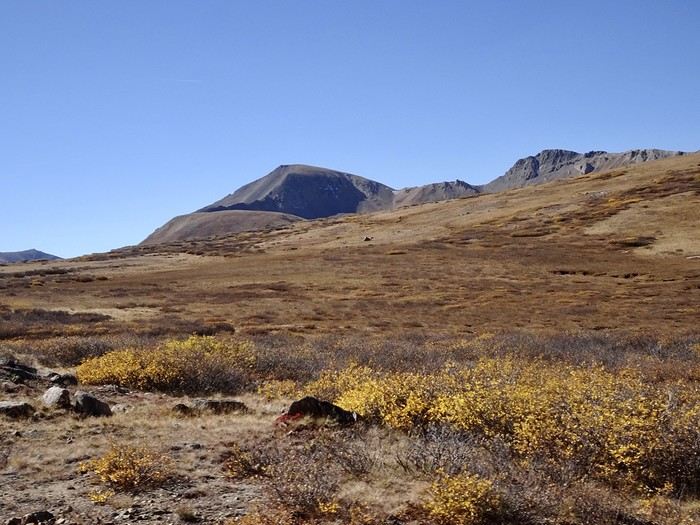
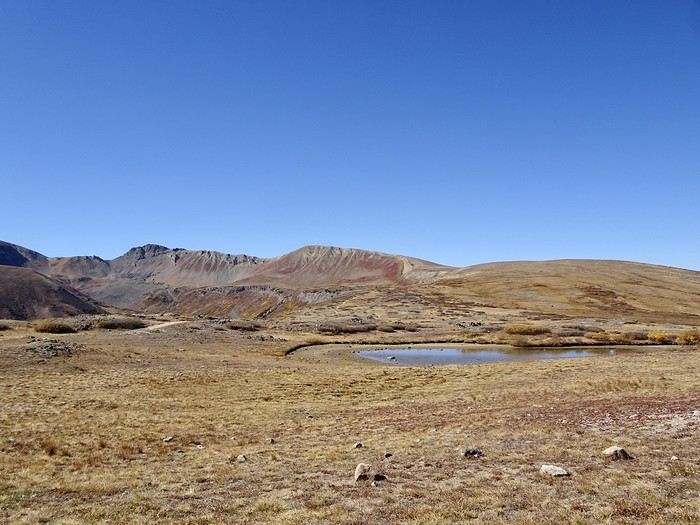 and took in the surrounding peaks
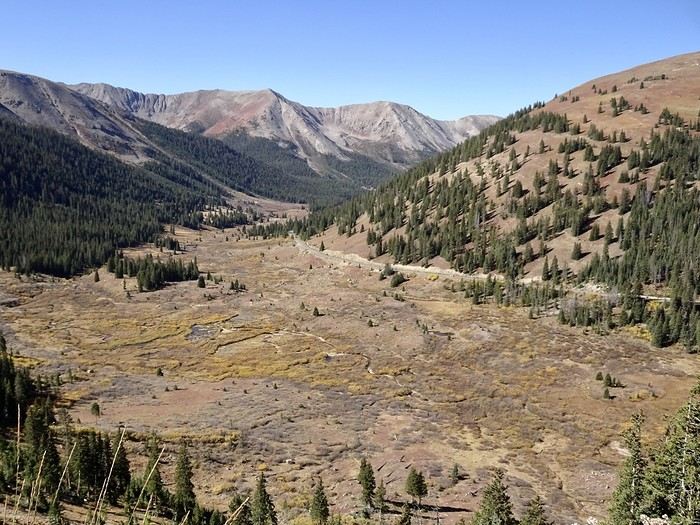 before continuing toward Twin Lakes
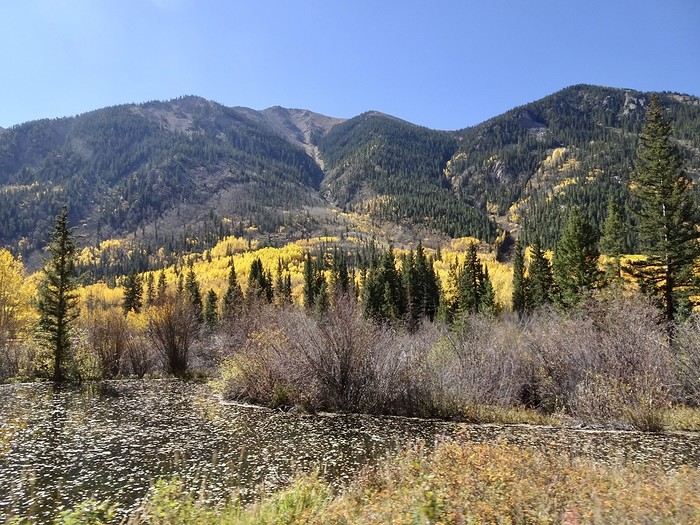
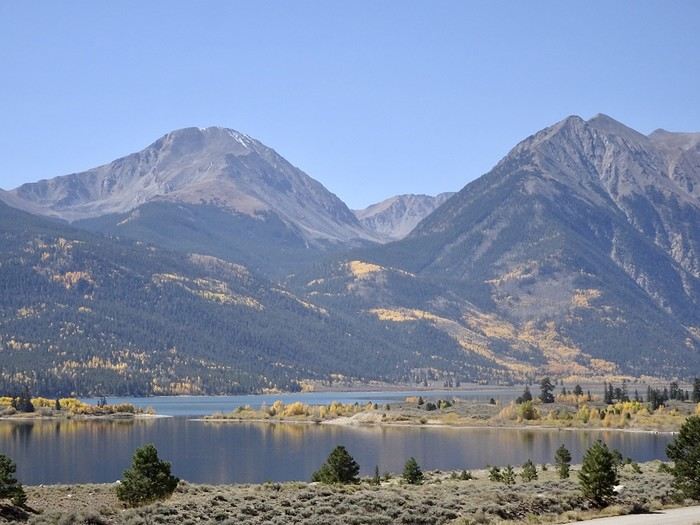
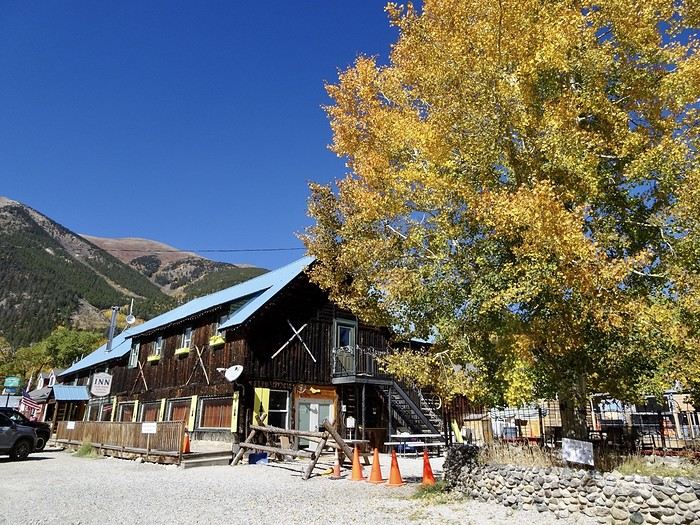 The road continues along the Arkansas River through valleys and plains with large herds, ranches, and old barns.
Leadville, where you can see the charming chaos of this former mining town and its historic buildings.
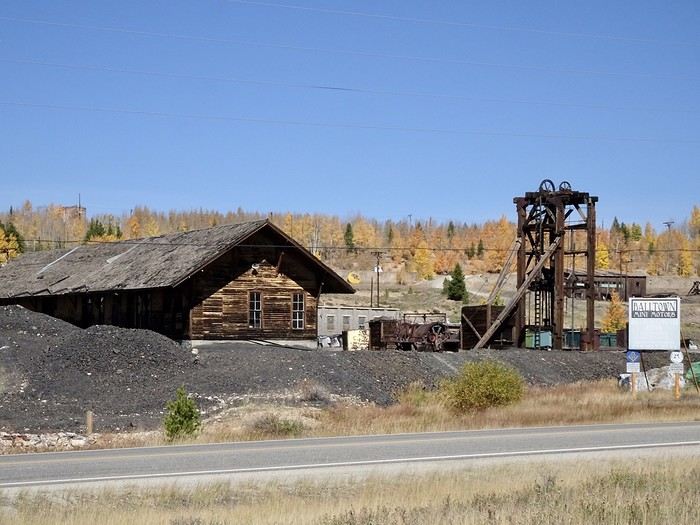 We tackle Fremont Pass and its gently sloping mountains before hitting I-70.
By 2 p.m., we’re in Georgetown.
Honestly, taking this route to get to Georgetown was a great choice, even if it was longer. This beautiful state of Colorado gave us one last gift by offering us stunning landscapes once again.
A quick visit to this cute little town, with lovely buildings—maybe a bit too quiet (I love seeing the younger generations wandering around!!!).
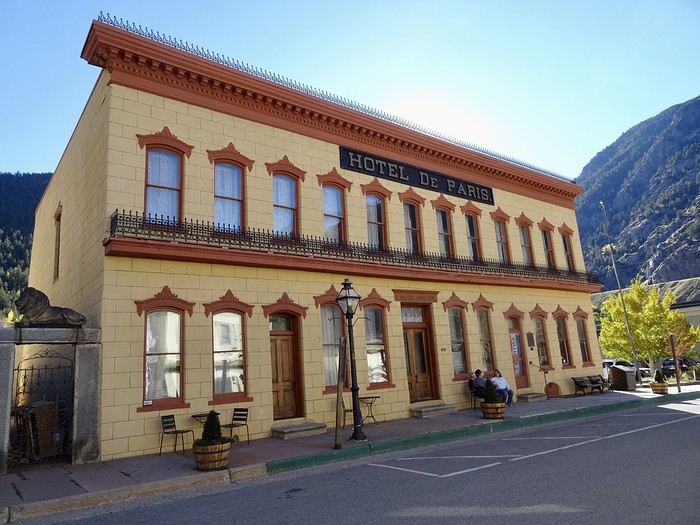
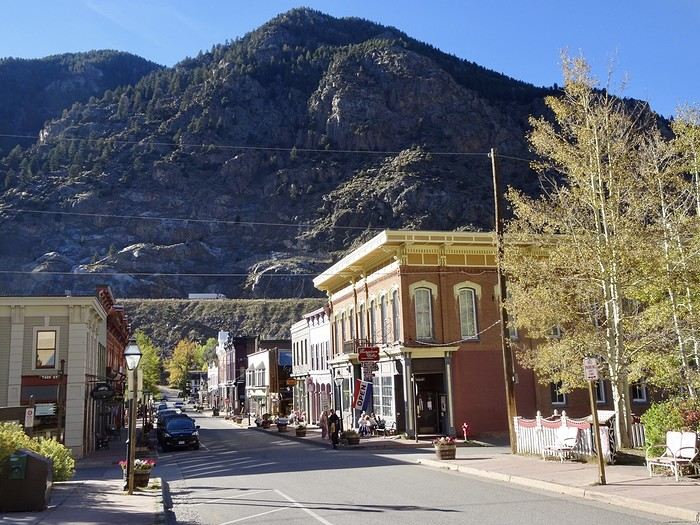 Not many Halloween decorations yet, except at the tourist attraction Georgetown Loop Railroad.
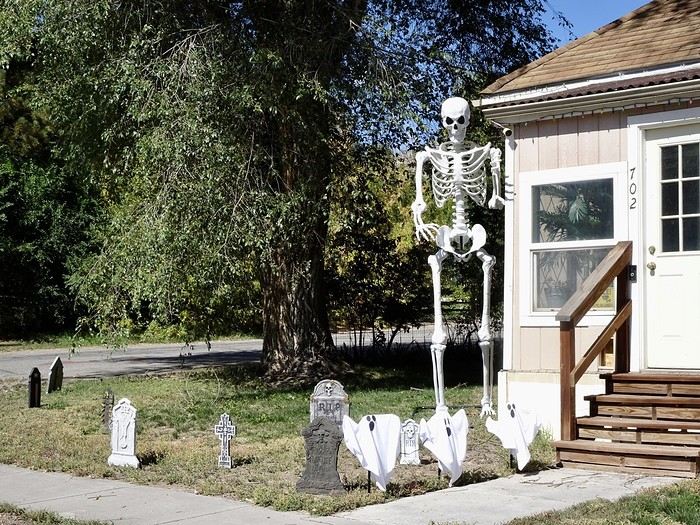
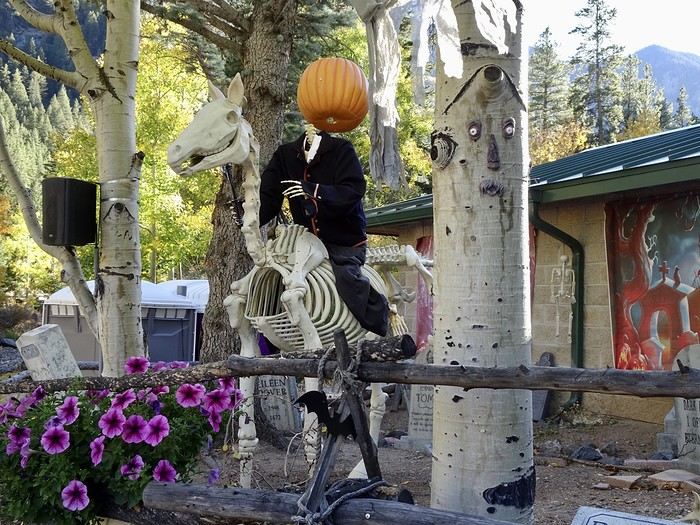 Help, I’m being attacked by a skeleton!
 The suitcases are packed, last dip in the hot tub before walking to dinner at the friendly and delicious Cooper’s on the Creek, and now we’re ready for our last night in Colorado 😢
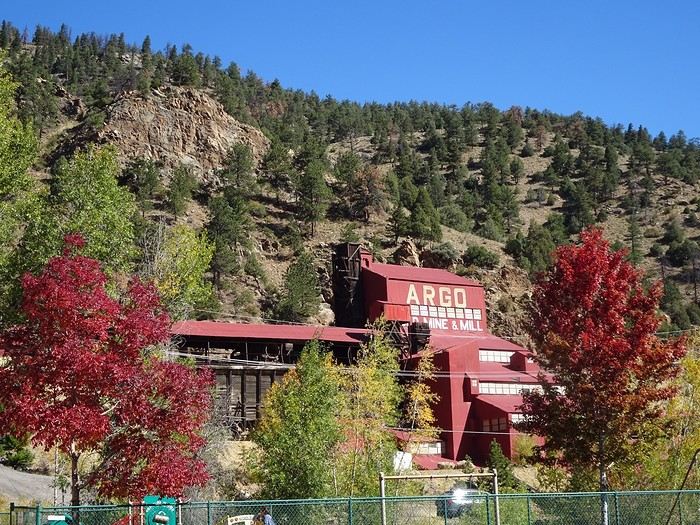
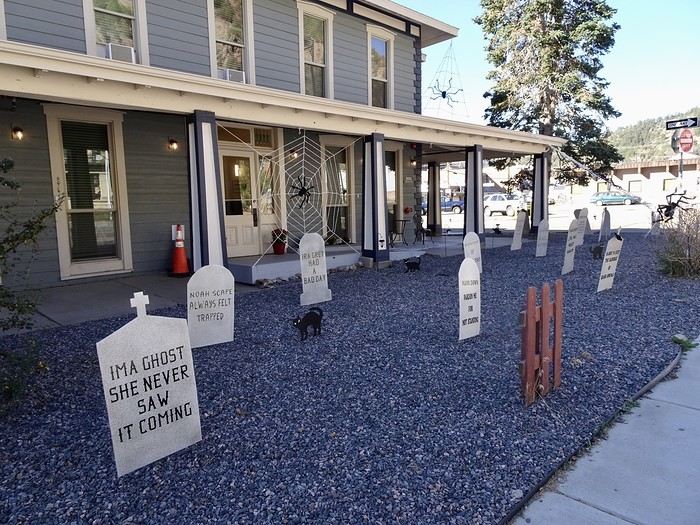
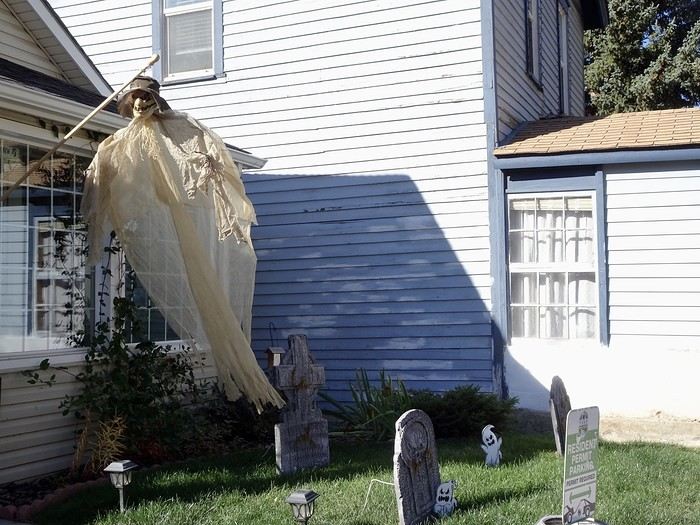
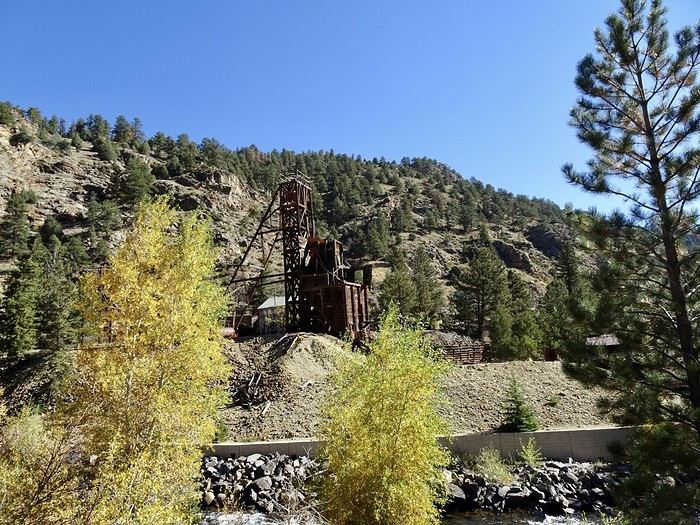 and look for a spot to walk around downtown since we see lots of houses decorated for Halloween. The big kids we are just love it!!!!
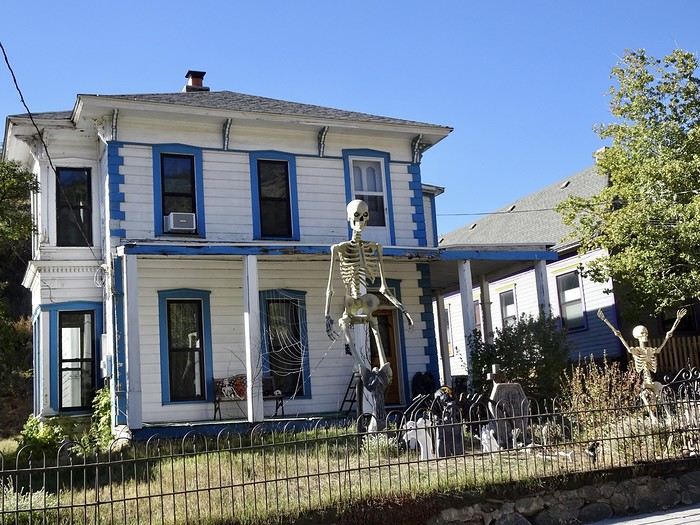
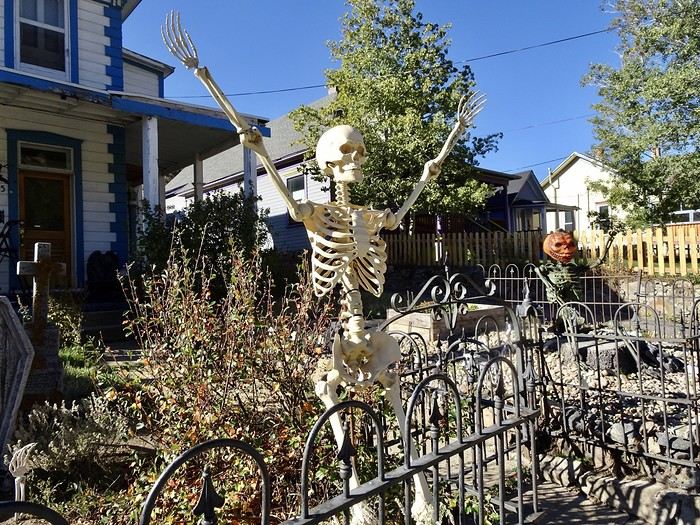


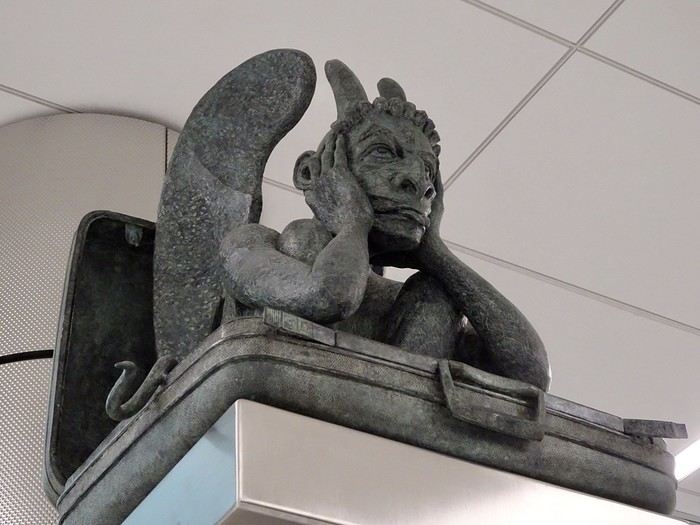
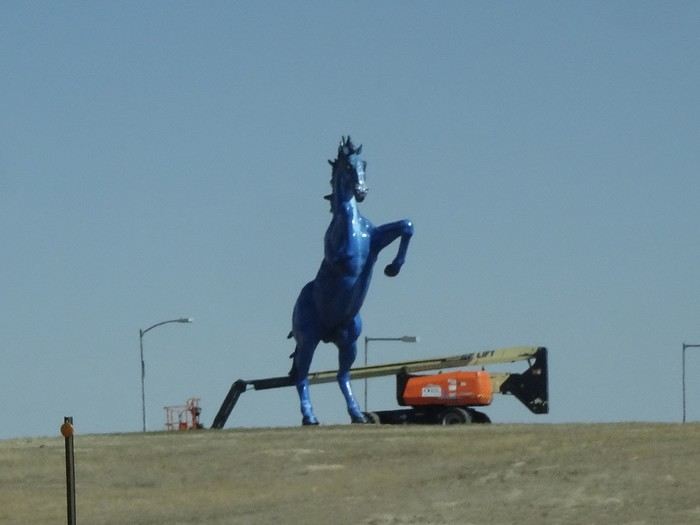 I looked for the apocalyptic murals inside the airport (we’d seen them on our last trip), but since it was under construction, they weren’t visible, and all I found were some gargoyles.







I love islands...
I love islands. So it’s no surprise that the Azores have been catching my eye for a few years now. The first time I suggested them to my dear partner back in 2021, he preferred the Lofoten Islands—an excellent choice, as it turned out, since we got to visit with hardly any crowds. But for various reasons, the opportunity didn’t come up again in the following years. Until last year, that is. But by then, we’d left it too late—too late for the Azores, I mean—and the accommodation options on Flores and São Jorge were extremely limited. We decided to skip it without even looking at car rentals. So this year, we booked our flights, lodging, and cars *way* in advance (between December of last year and early this year).
The Azores consist of nine islands, so you have to make choices. I quickly ruled out São Miguel, which deserves a week all to itself: from what I’d read on various blogs, some travelers seemed disappointed after visiting the other islands, even feeling it lacked the Azores’ unique charm. True or not, that was reason enough to skip it.
In the end, we wanted to go to Flores for its lush nature (and because it’s reputed to be the most breathtaking), São Jorge for its rural/nature vibe, and Terceira for its cultural side and *impérios* (more on that later). With the time we had, we could add another island without rushing. We like to take our time and wander a bit—whether it’s a viewpoint or a hike, we always spend longer than *everyone* else. Pico won out over Faial thanks to its wine culture. And of course, there’s Corvo, which is usually visited as a day trip from Flores. I thought it’d be nice to spend the night there to experience the atmosphere once most tourists had left. I hesitated between one or two nights but ultimately went with two (so we wouldn’t be rushed by the boat schedule). It was an excellent decision.
Here’s how it all panned out:
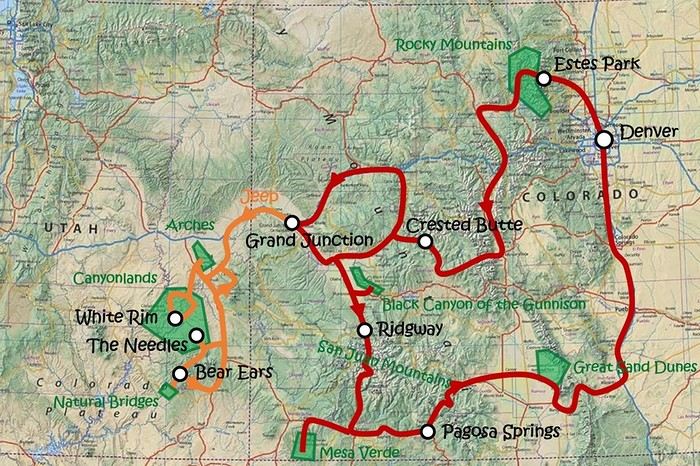
August 25: departure for Terceira via Lisbon at 7:40 AM; August 25–29: Terceira; August 29: flight to Corvo. It was supposed to take half a day, and we were meant to arrive in the early afternoon, but between schedule changes and delays, it ended up taking almost the whole day; August 29–31: Corvo; August 31: boat to Flores around 8:30 AM; August 31–September 5: Flores; September 5: flight to Faial in the early afternoon (originally scheduled for the morning, but the times changed)—visit to Horta; September 6: boat to São Jorge around 9:00 AM; September 6–11: São Jorge; September 11: boat to Pico at 11:15 AM; September 11–16: Pico; September 16: flight to Paris via Lisbon from Pico around 10:30 AM.
We had to juggle a bit to optimize the prices of our flight tickets from Paris and the inter-island travel.








 Roundabouts are particularly interesting because they feature emblems of Turkmen culture, like the dog, a carpet, the Ahal Teke horse, or Muslim symbols, even though the presence of Islamic artifacts is quite limited.



























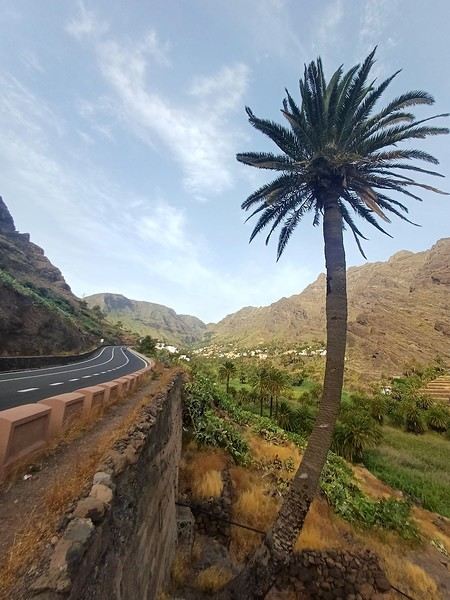
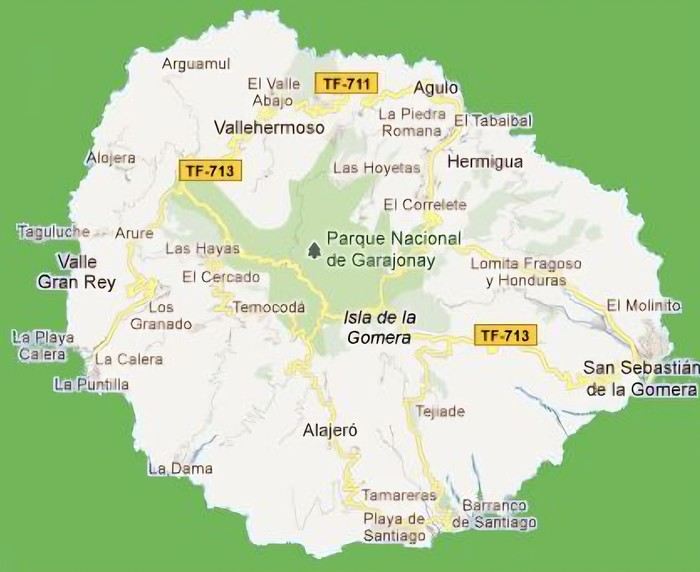 The large solidified magma massifs that shape the heart of the island have created a large depression more protected from the sun at its center, allowing the growth of a vast laurel forest, today grouped within the Garajonay National Park, La Gomera’s green lung, which has earned it the status of a World Biosphere Reserve. Its completely European appearance contrasts sharply with the rocky and tropical landscapes of the rest of the island. Thus, the climate varies greatly from one point to another on the island: in summer, you can quickly go from a dry and sunny valley at 35°C to a humid forest area at altitude at 18°C.






















 Why this country?
After visiting Hungary, Slovenia, Romania, and Poland in recent years, I’ve fallen in love with Eastern European countries. I adore the Slavic soul, its Austro-Hungarian villages, the gentle landscapes, the Carpathian Mountains, and that slightly mysterious atmosphere.
Slovakia evokes a certain imagination with its deep forests, medieval castles, and cobbled villages.
After seeing photos of the High Tatras—especially Lake Štrbské Pleso and Spiš Castle—I thought, "Let’s do it! We’re going!"
So, will Slovakia live up to what I imagine?
We’ll find out together.
We decided to travel as a group of six (five adults and a six-year-old child), by car (we needed two).
Here’s the day-by-day itinerary for this family trip, which started with a 3-day stay in Vienna (see the dedicated travel journal):















 When it comes to the Caribbean island of Saint-Martin, it's customary to praise its coastline and dreamy beaches—and they certainly deserve it.
But in this story, I’d like to highlight other memories, aspects, and impressions for a slightly different change of scenery.
Enjoy the read—some text and, above all, lots of photos.
« Byenveni sou zile Sen Maten! » (Welcome to the island of Saint-Martin)




































 Come along, I'm taking you to this country where it's so nice to wander and slow down...










