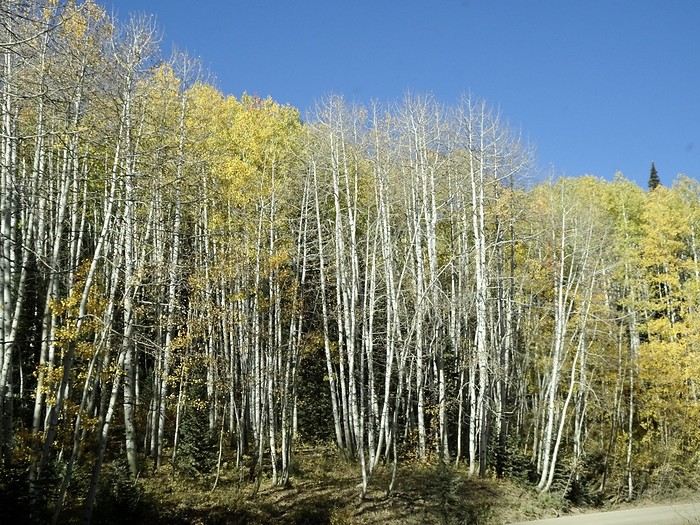
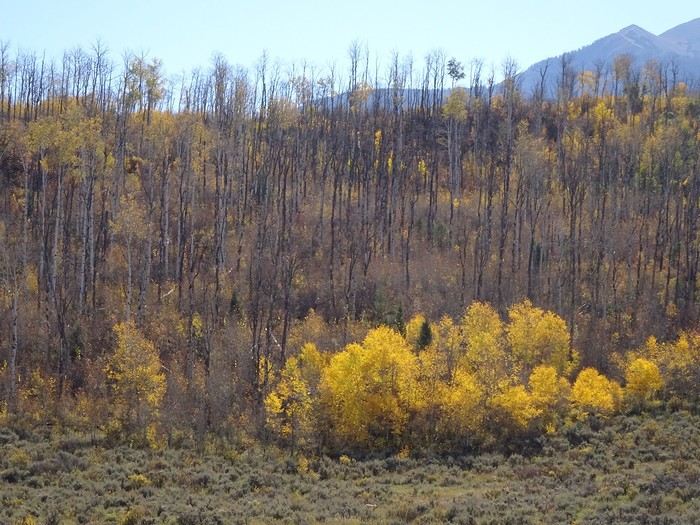
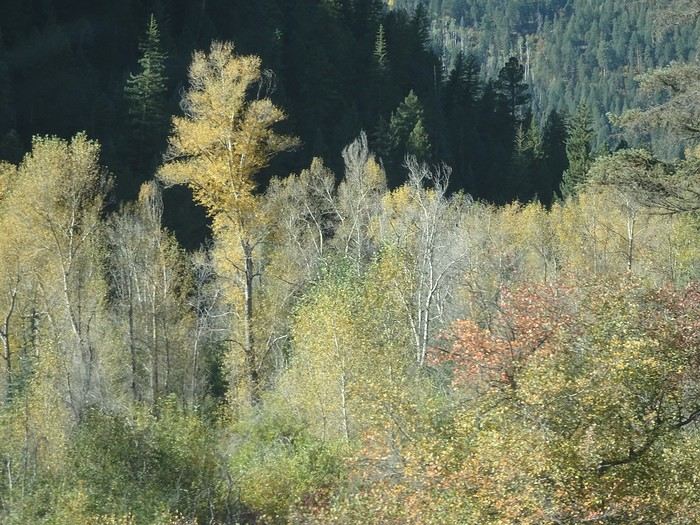
 Some are completely bare now, and even though the road is still stunning, it doesn’t give us the same “Wow” as on the way there. That doesn’t stop us from stopping to take more photos—some spots are still absolutely gorgeous.
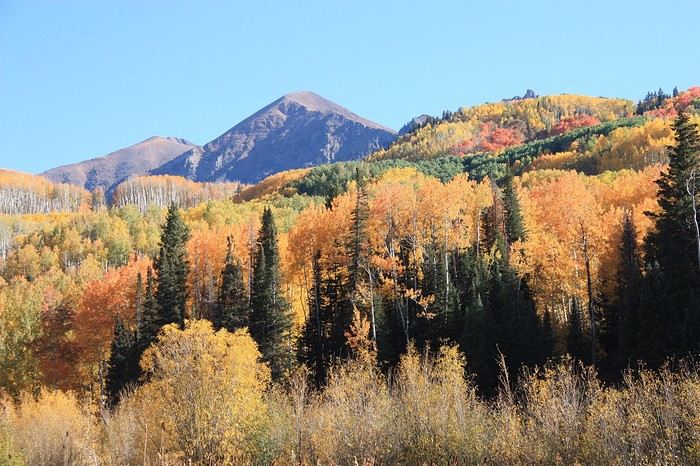
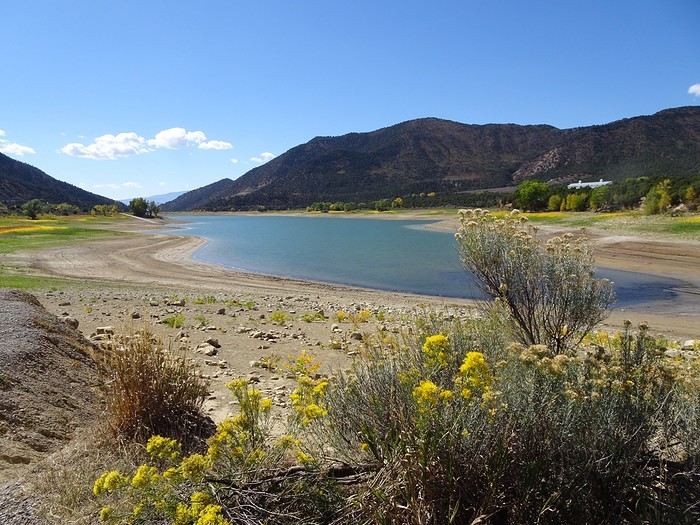
 DD is thrilled to leave the dirt road for the asphalt of the West Elk byway. We drive alongside a nearly dry dam for kilometers, with the river reduced to a tiny stream.
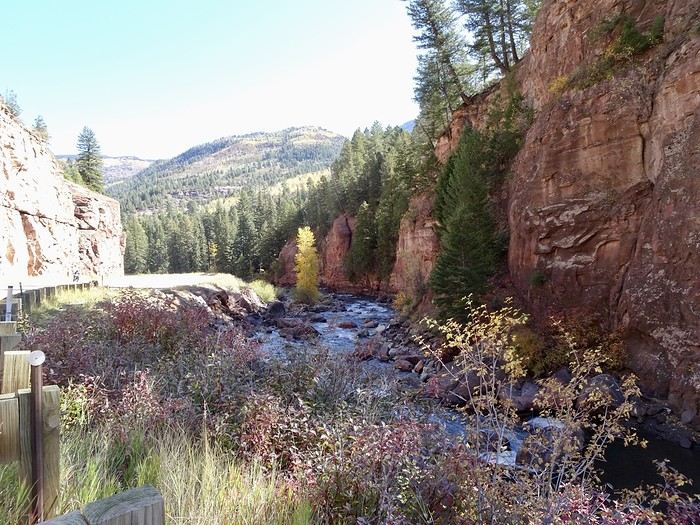
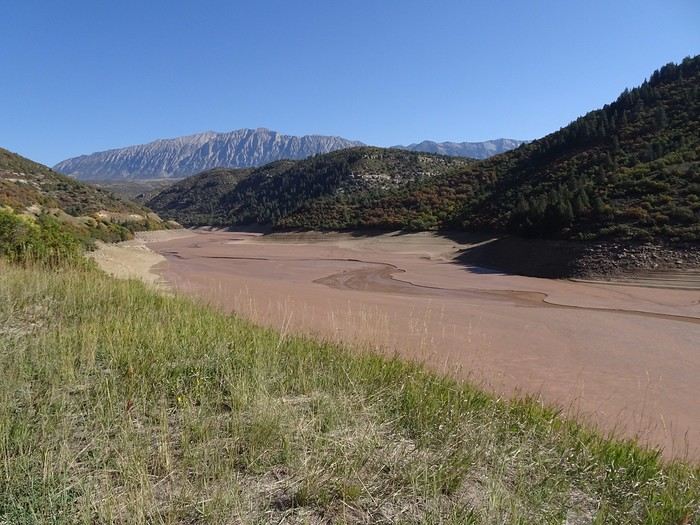 Seeing the distance between the two banks, you can’t help but worry about the drought. This road is breathtaking, winding between mountains and valleys.
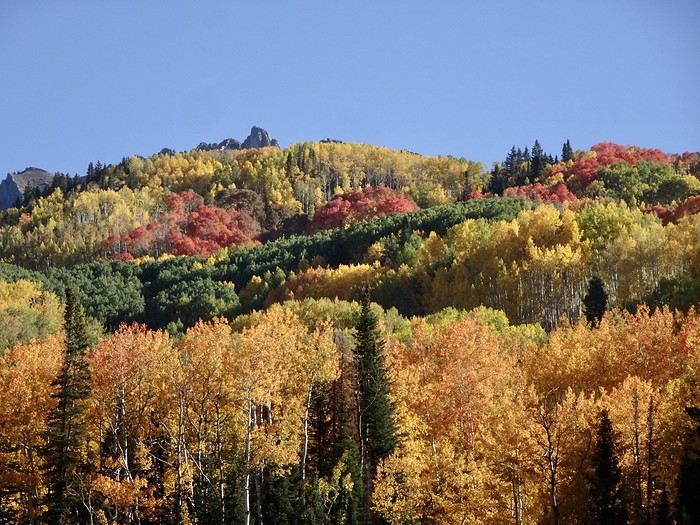
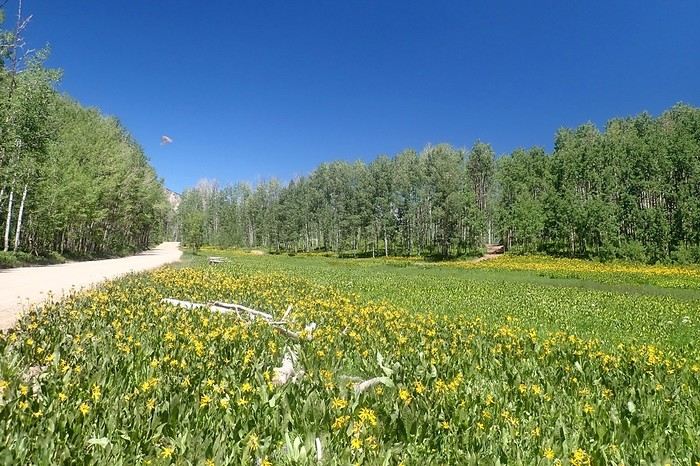
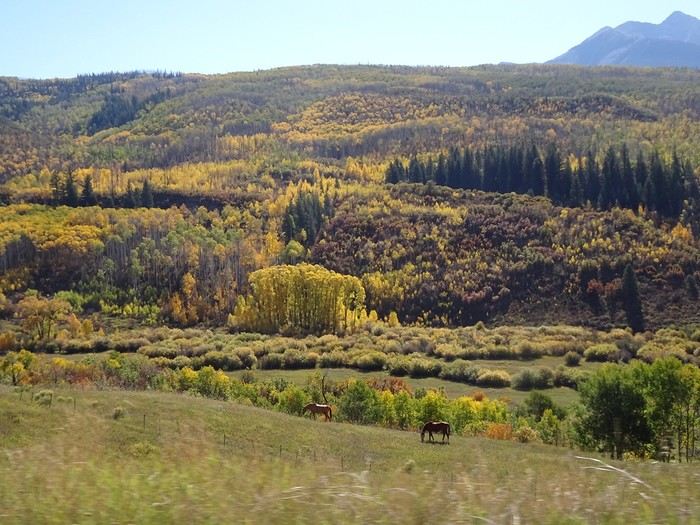 It offers us even more stunning views after Mac Clure Summit—a beautiful mosaic of greens and yellows that would make any painter envious!
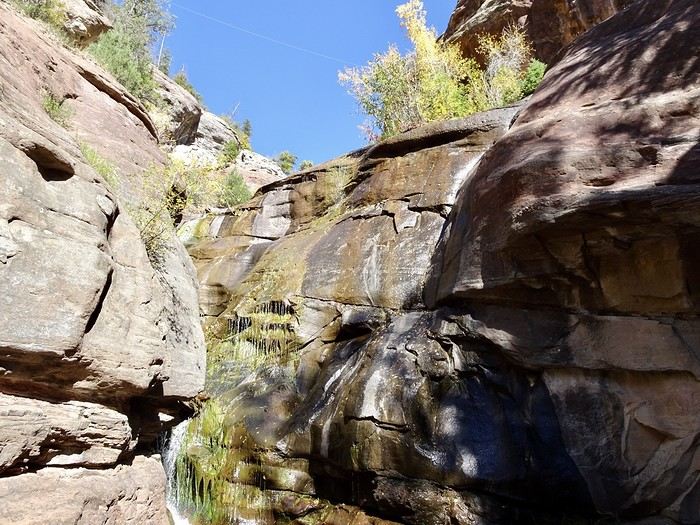
 Quick stop at Hayes Creek Falls (right by the road).
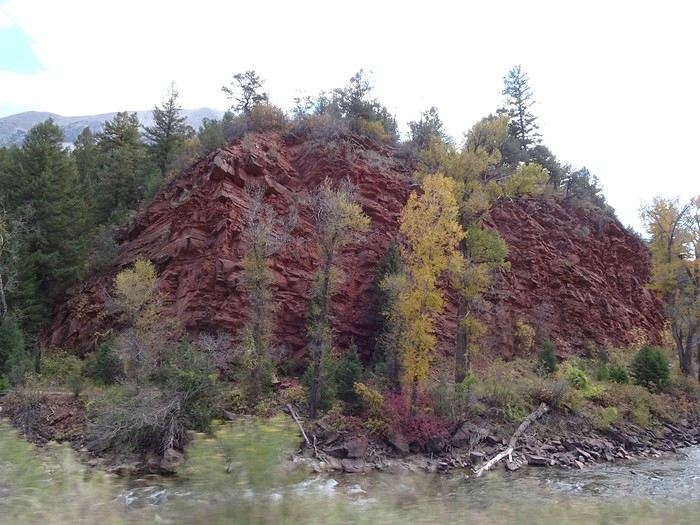
 On the other side of the Crystal River.
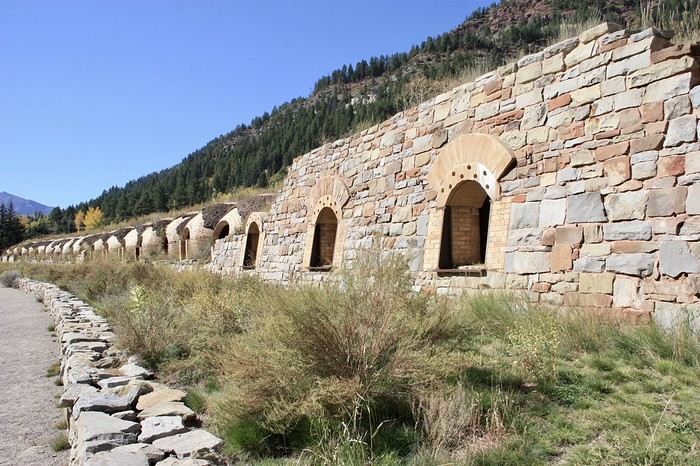
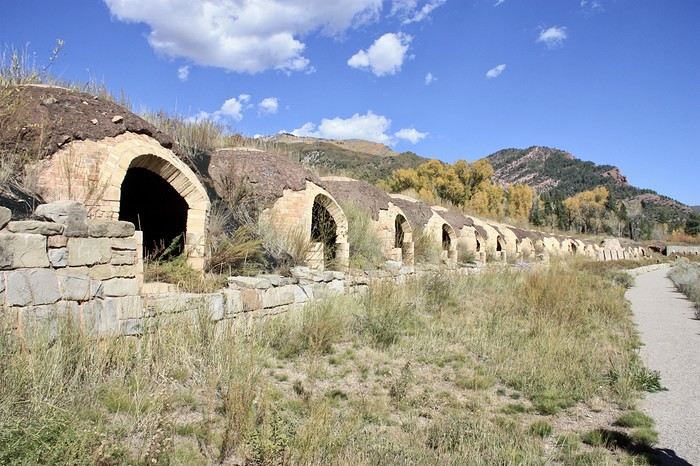 The back of the ovens
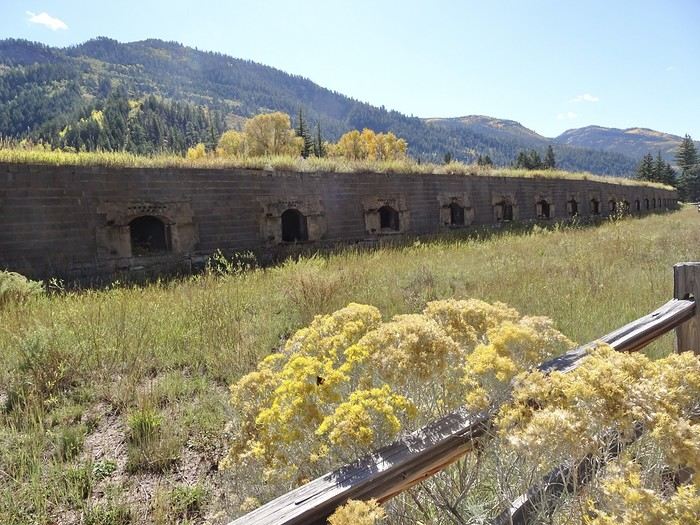 The coal from the surrounding mountains was ideal for turning into coke, but less than 10 years later, the mines closed (I won’t tell you why because I don’t know!!), and the ovens fell into disuse.
Many deteriorated, others were looted, but 90 ovens are still relatively intact, and some have been restored to their early 20th-century state to preserve the memory of a time when life was incredibly tough for both people and animals.
When in operation, the ovens were surrounded by stones like this
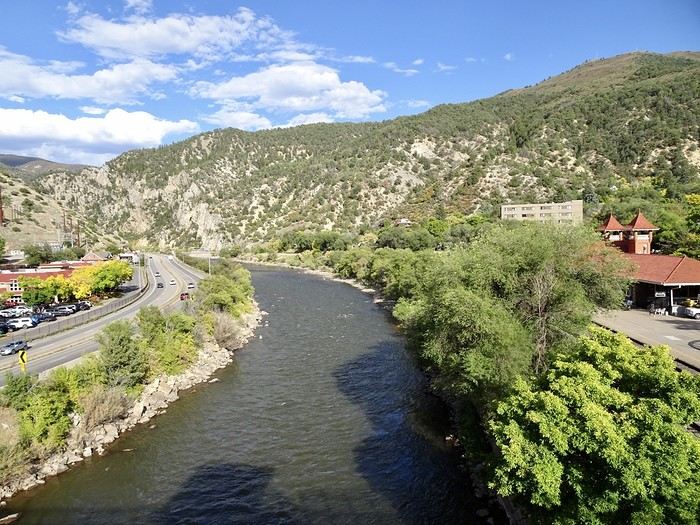 and the famous large hot springs pools the town is known for.
I’d kind of planned to spend a few hours there the next day, but seeing the crowds from the bridge, we decide to skip it and visit a small state park about 45 km north of the city instead.
A little more nature will be welcome to enjoy our last few days.
After that, some relaxation in the hot tub before dinner.
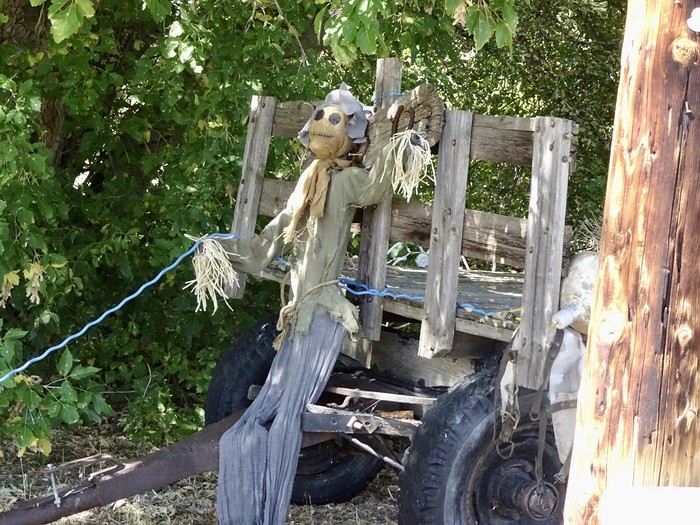
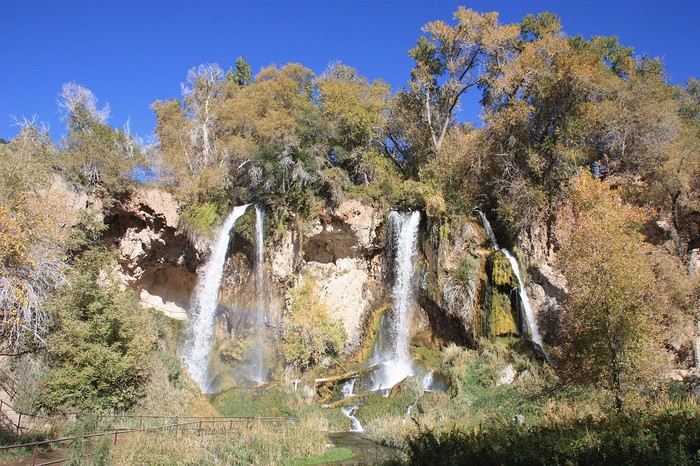
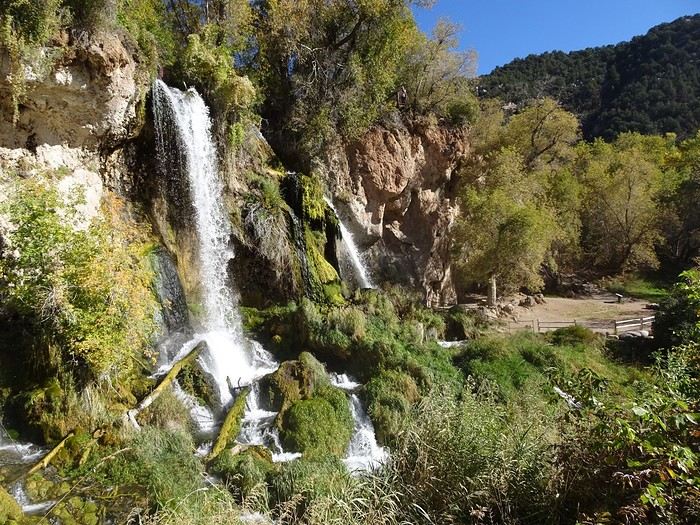
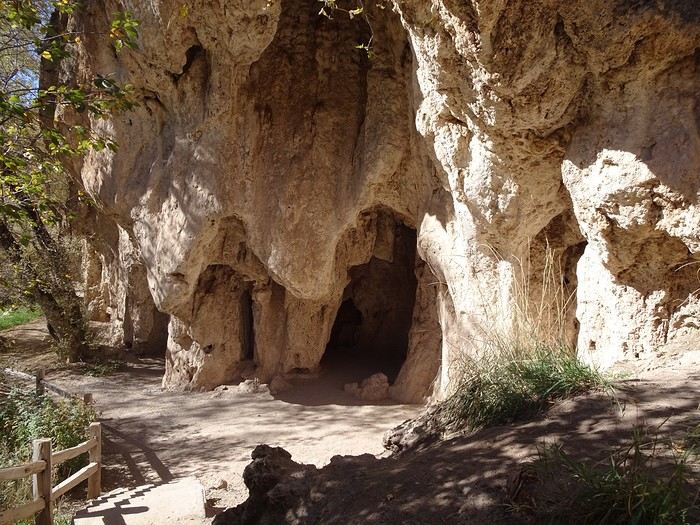 The master of the place (a face appeared when we looked at the photos).
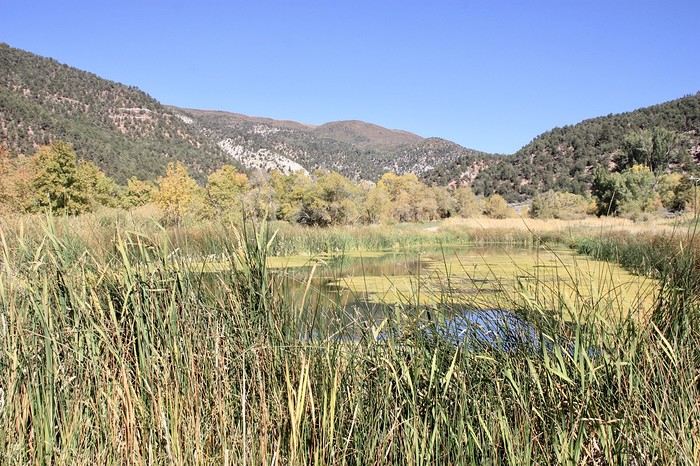
 And two small ponds.
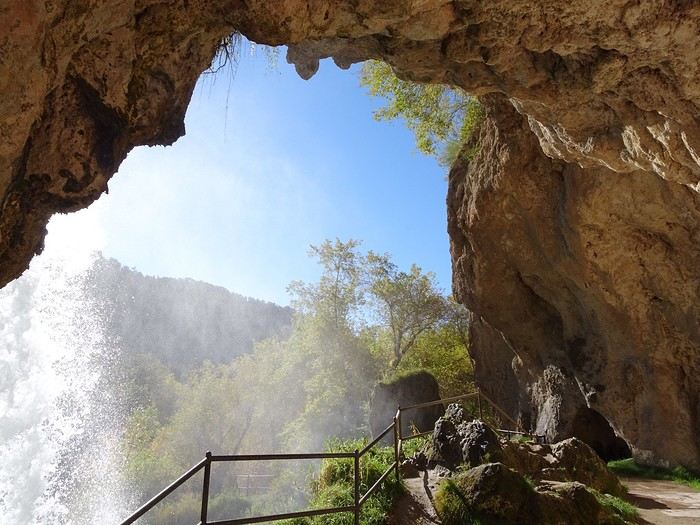
 Before reaching the top of the falls, where viewpoints are set up so we can see them from different angles.
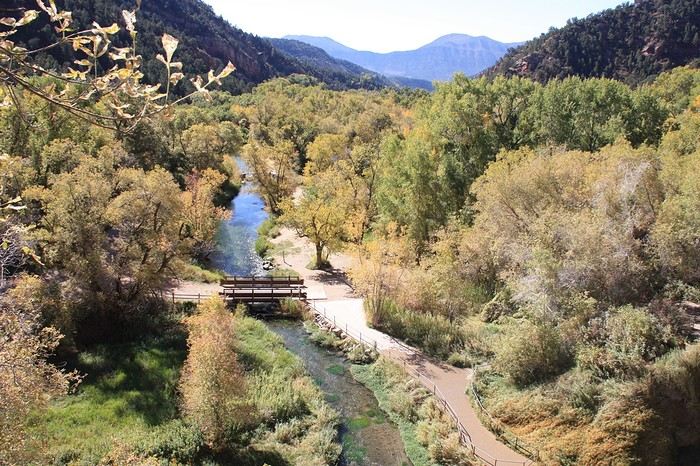
We return downhill via a trail reinforced with wooden steps. This little walk is easier in a counterclockwise direction, and the place is really worth the trip.
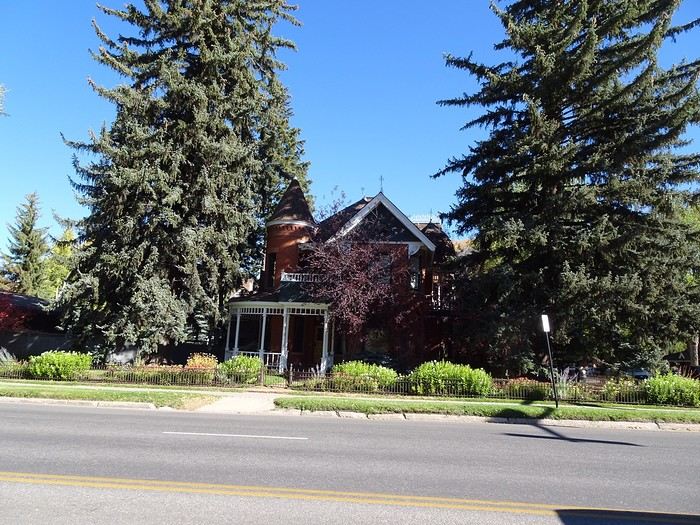 but didn’t stop—our failed Telluride experience left us a bit cold about towns that are too fancy for us. We spotted a whole flock of geese on a golf course, likely stopping over during their long migration. Too bad they weren’t in flight.
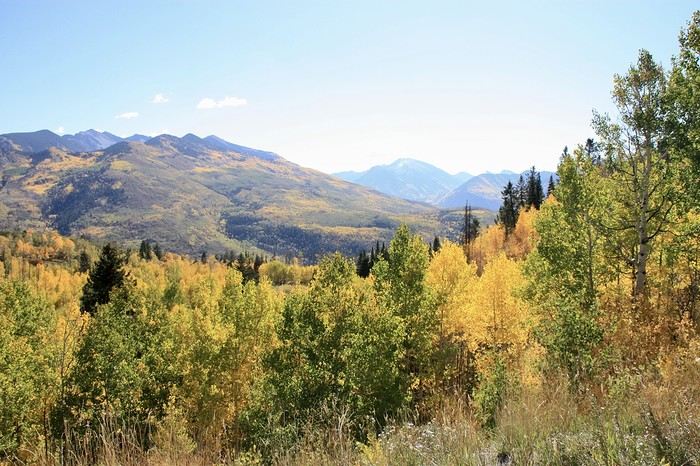
We found those lovely autumn colors again on the pretty, narrow road leading to the pass.
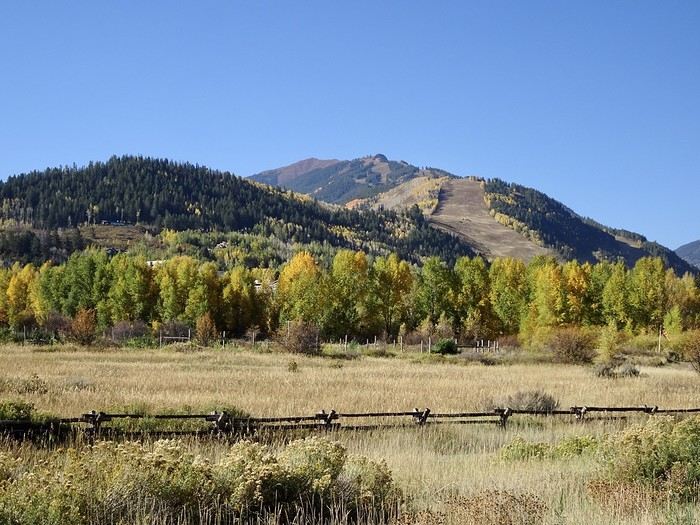
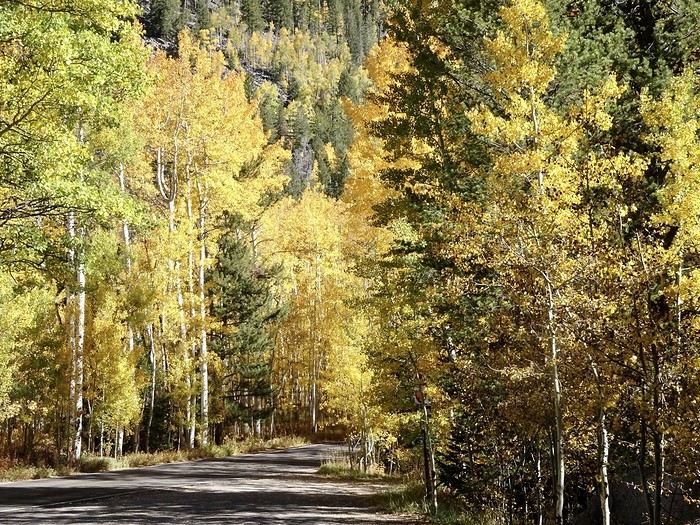
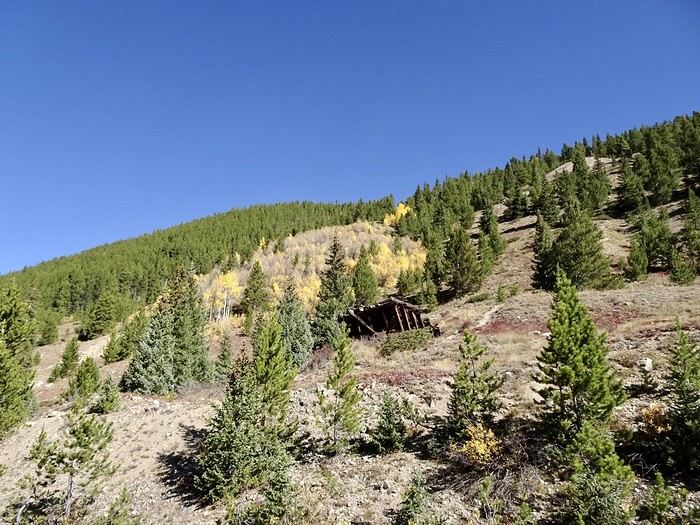
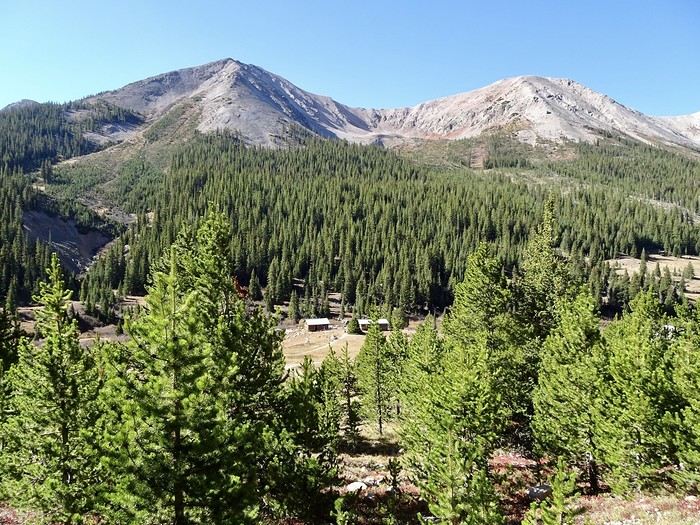 We didn’t go down into the valley to explore—just admired it from the viewpoint.
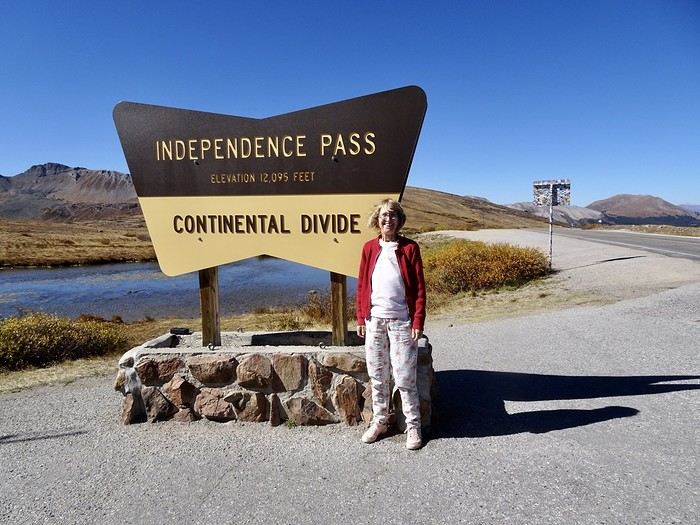
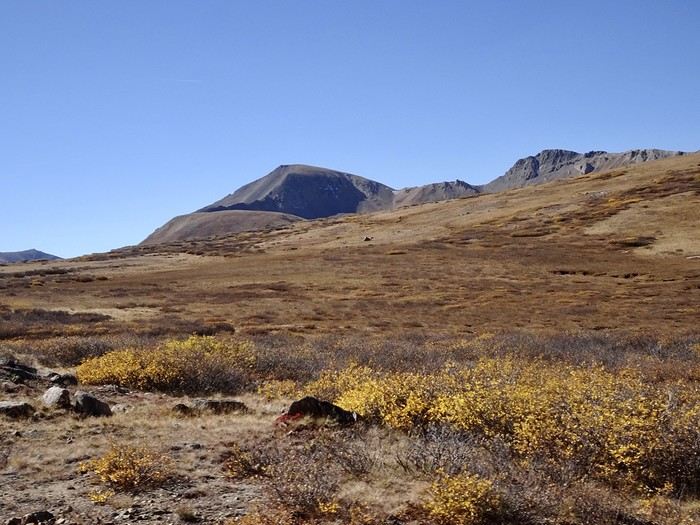
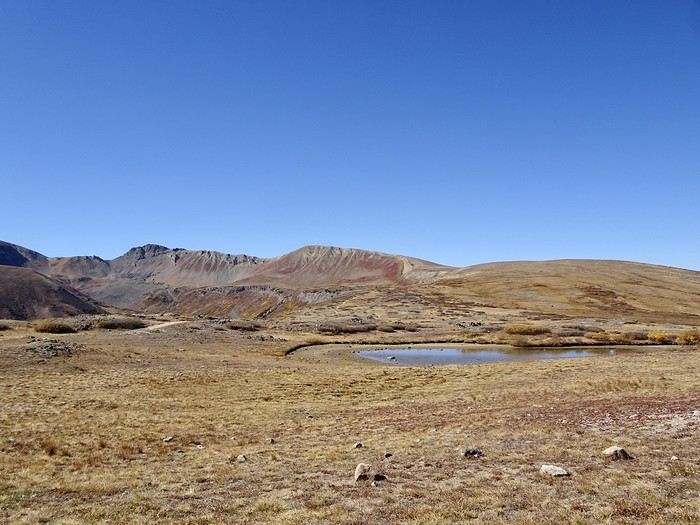 and took in the surrounding peaks
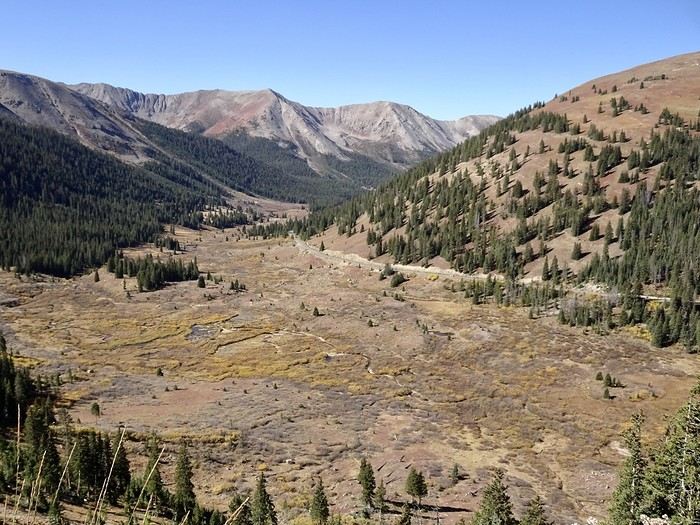 before continuing toward Twin Lakes
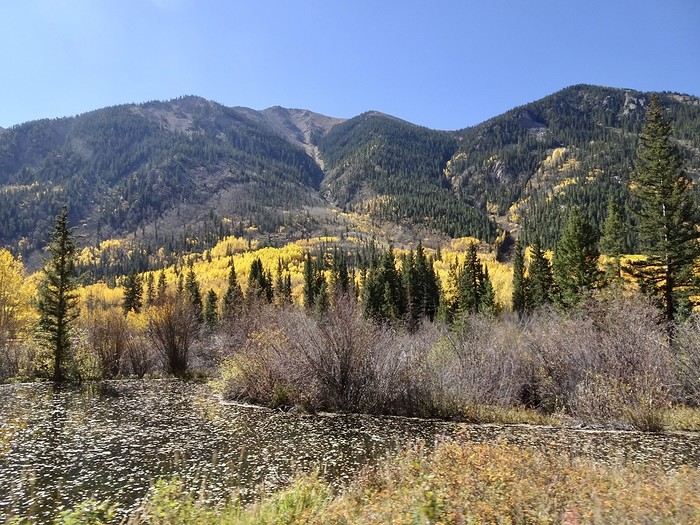
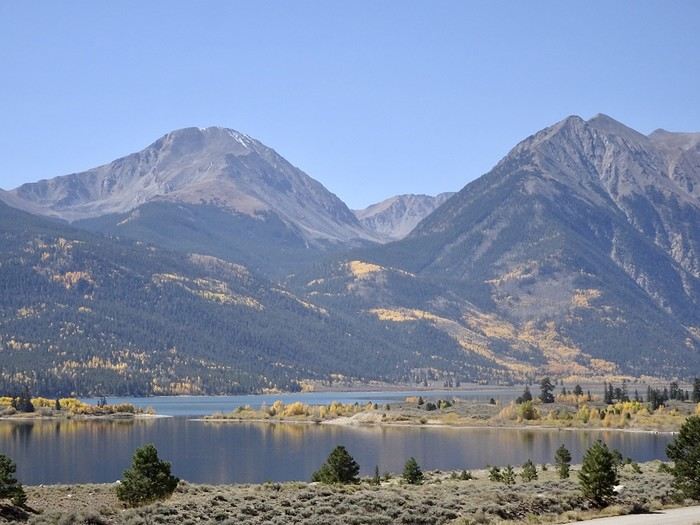
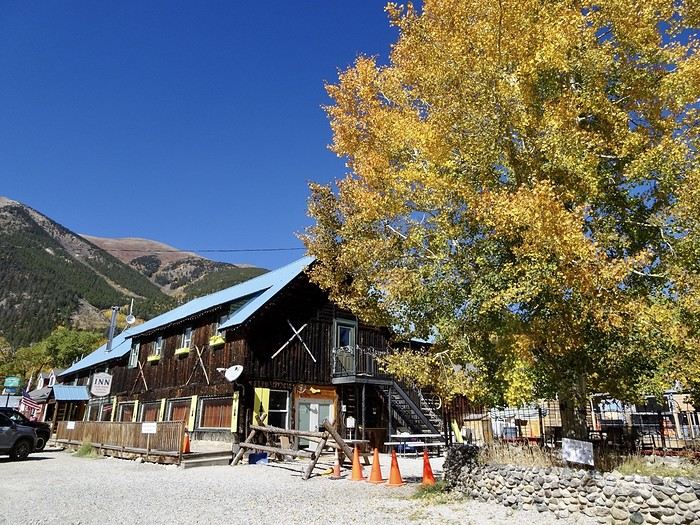 The road continues along the Arkansas River through valleys and plains with large herds, ranches, and old barns.
Leadville, where you can see the charming chaos of this former mining town and its historic buildings.
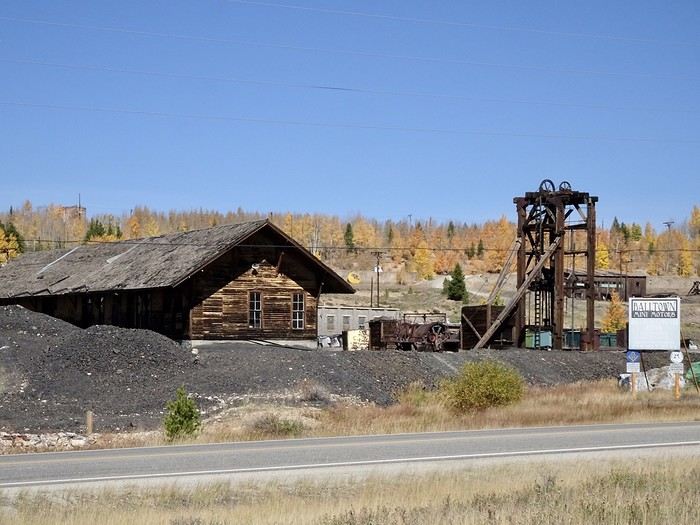 We tackle Fremont Pass and its gently sloping mountains before hitting I-70.
By 2 p.m., we’re in Georgetown.
Honestly, taking this route to get to Georgetown was a great choice, even if it was longer. This beautiful state of Colorado gave us one last gift by offering us stunning landscapes once again.
A quick visit to this cute little town, with lovely buildings—maybe a bit too quiet (I love seeing the younger generations wandering around!!!).
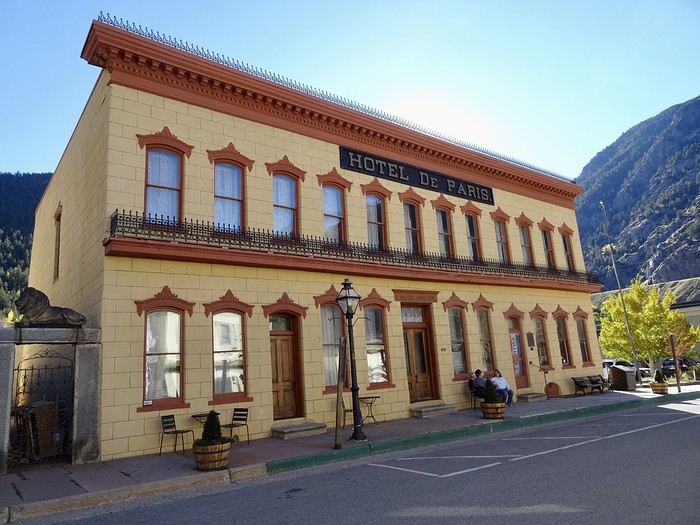
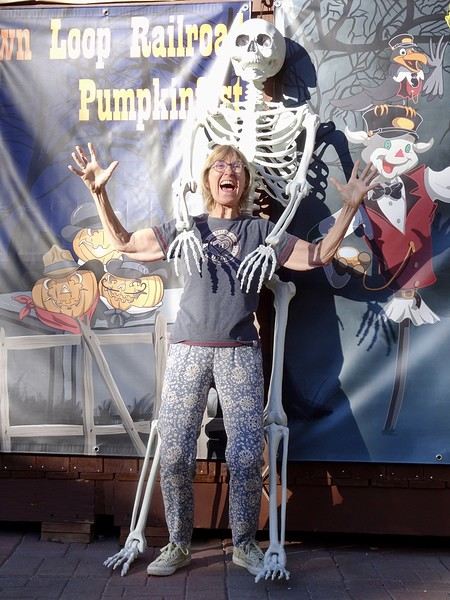
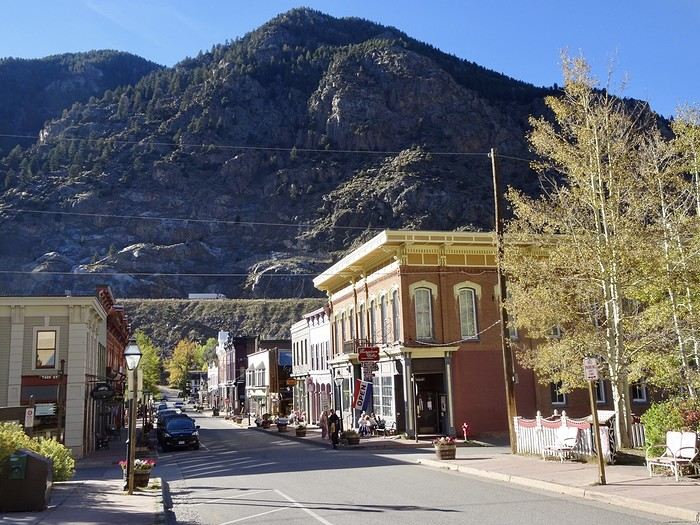 Not many Halloween decorations yet, except at the tourist attraction Georgetown Loop Railroad.
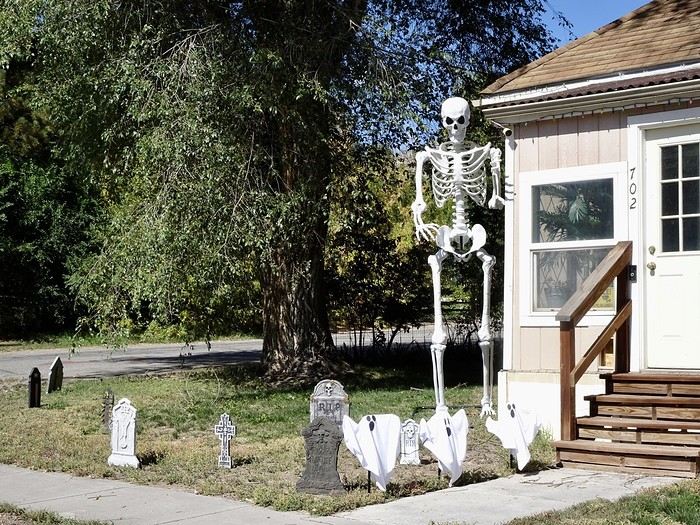
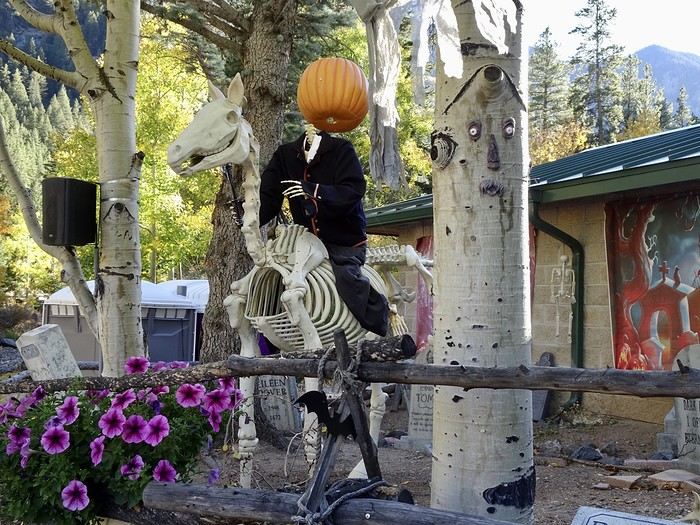 Help, I’m being attacked by a skeleton!
 The suitcases are packed, last dip in the hot tub before walking to dinner at the friendly and delicious Cooper’s on the Creek, and now we’re ready for our last night in Colorado 😢
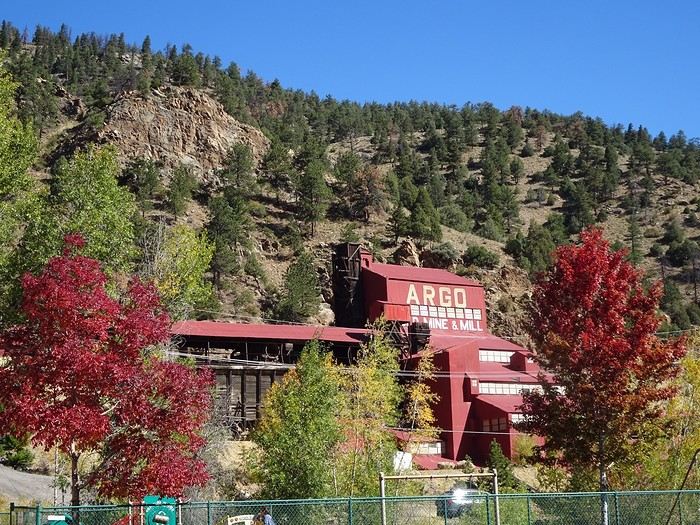
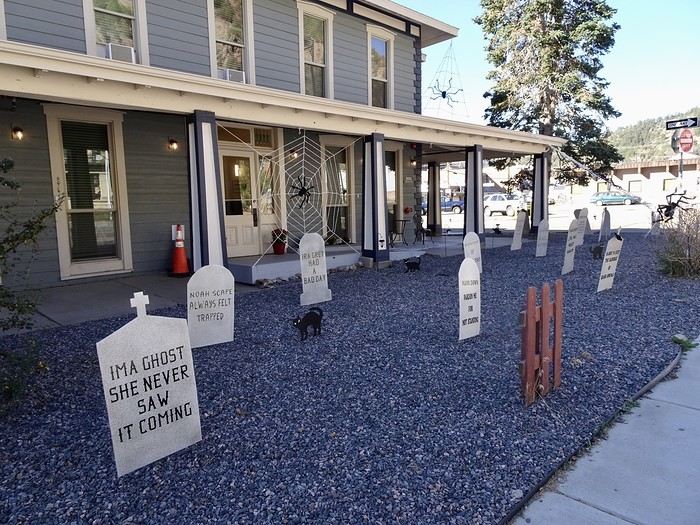
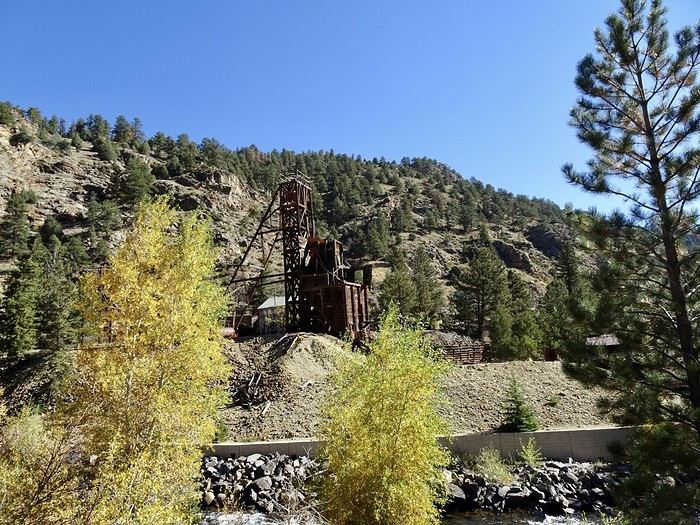 and look for a spot to walk around downtown since we see lots of houses decorated for Halloween. The big kids we are just love it!!!!
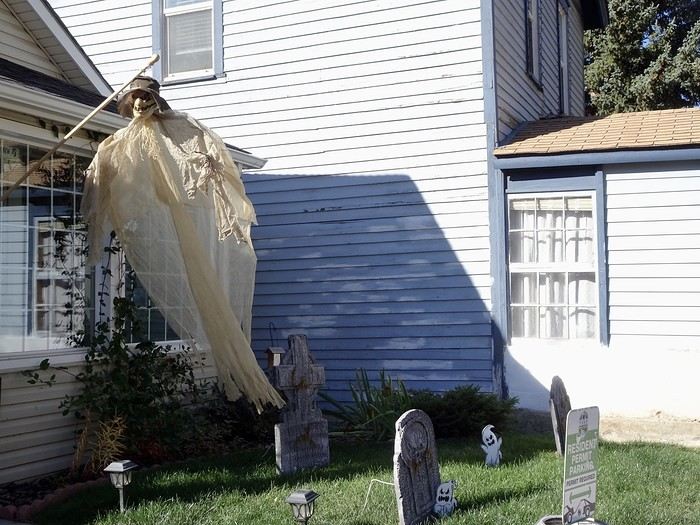
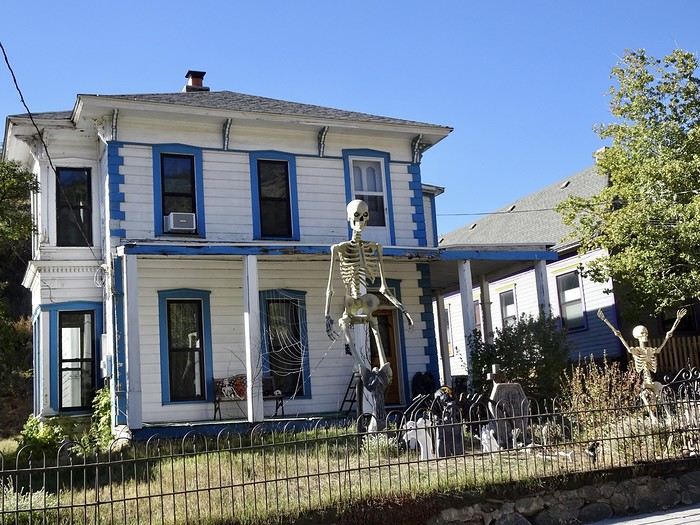
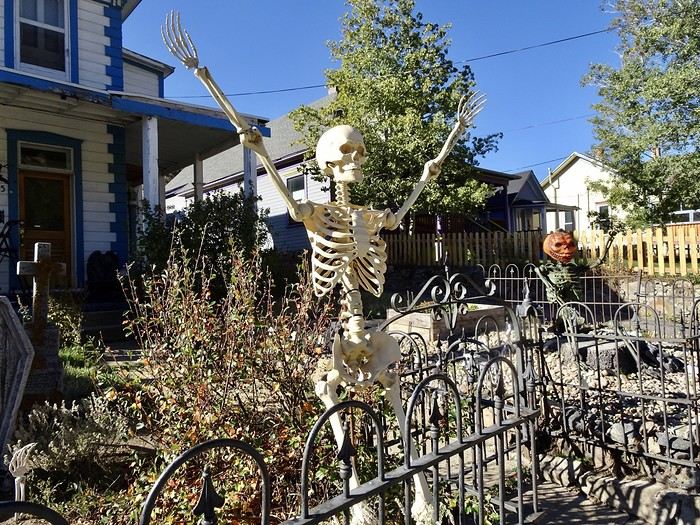
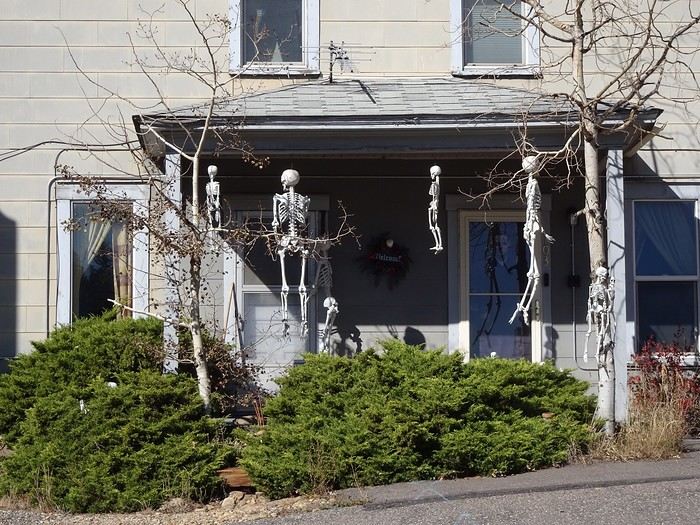
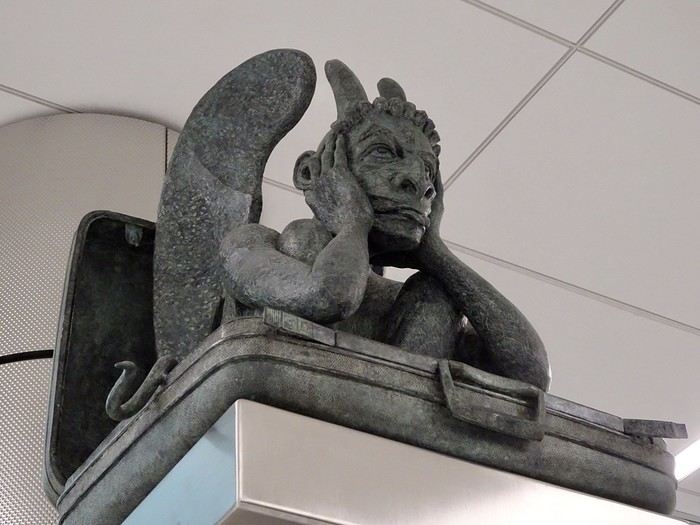
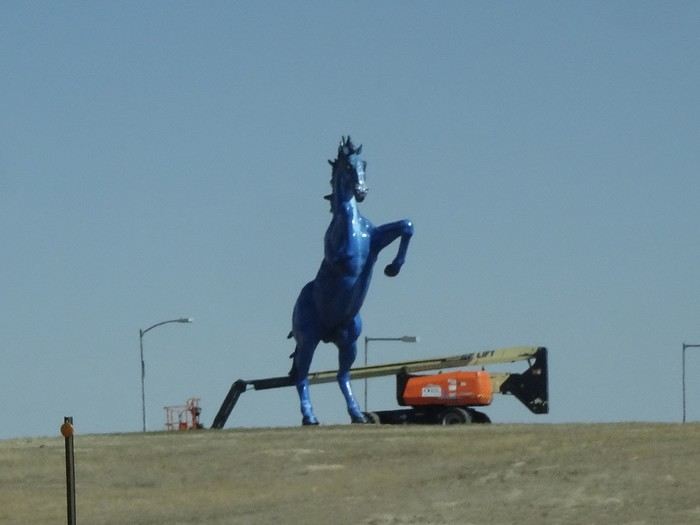 I looked for the apocalyptic murals inside the airport (we’d seen them on our last trip), but since it was under construction, they weren’t visible, and all I found were some gargoyles.







After a first trip in 2009 (already!) where we basically did a circuit passing through Hazyview, a private reserve in Sabi Sands, Santa Lucia and iSimangaliso, Hluhluwe, and the South African part of Kgalagadi Transfrontier Park, then a quick stop in 2013 to go to Lesotho, we wanted to come back to this country.
Why not the Cape Town region this time, but there was no way we’d return to this part of the world without going on a safari. Mountain Zebra or the Karoo seem more about landscapes than animals, and Addo doesn’t excite me much either... So it’ll be Kruger.
Flight prices, schedules, and durations led us to a Paris-Cape Town trip, returning from Johannesburg to Paris with British Airways, so via Heathrow.
Now we just have to figure out how to fit in a lot of things without driving too many kilometers or changing accommodations every day, at least in the Cape Town region. Here’s what we ended up with:
Arrival in Cape Town on Saturday, October 10 at 11 AM
2 nights in Hermanus
1 night in Franschhoek
2 nights in Mountceder in the Cederberg
3 nights in Hout Bay
Sunday: transition day—flight to Johannesburg, drive toward Kruger, night in Lydenburg.
Kruger: 1 night in Letaba, 2 in Satara, 1 in Lower Sabie.
Last night in Mbombela (formerly Nelspruit) before heading back to the airport for an evening return flight.
Friday, October 9
Pretty stressful departure.
First, I woke up in the middle of the night, convinced I’d swapped my first and last names during check-in 🤪... Couldn’t fall back asleep, even though I knew British Airways wouldn’t answer before 9 AM.
Well, for them, everything was fine... but then they started talking about ETA... an ETA for England 😮? ?? Yes, it’s recent. Apparently, you don’t need one for an air-to-air transit... but you never know, it’s better to have it just in case. No one could clearly tell me it wasn’t necessary. In the end, we didn’t get it... and we didn’t need it.
But then, our flight ended up leaving Paris 45 minutes late (10 minutes due to a schedule change and 35 minutes of actual delay), so our 2-hour layover shrank to 1 hour and 15 minutes. That should be enough, right? The board showed our flight at Gate B: great, it’s right next door! But at Gate B, three employees were just there to tell everyone who showed up that security had to be done at Gate A... and off we went running through the corridors, endless escalators going up and down, a little shuttle ride, security at Gate A (“You’re going to be cutting it close!” Oh really? 😠), then pretty much the same route back to end up just a few dozen meters from our starting point! 😠
Boarding was already well underway, and after all that running, we were hot and thirsty, but phew! We made it onto the plane!
Saturday, October 10 On the other hand, nothing to complain about on this London-Cape Town flight—it arrived early!
I booked a (small) Suzuki S-Presso because it seemed to have a higher ground clearance than its competitors. Unfortunately, we ended up with a Tata Tiago (yes, it exists), which is lower (and also smaller and with an even more sluggish engine... yes, we were able to compare because in Johannesburg, we *did* get an S-Presso). Somehow, we managed to fit everything in the trunk (“Above all, don’t leave anything visible!”), and off we went to our first accommodation in Hermanus, under glorious sunshine.
Nikki welcomed us warmly, explained what there was to see in the area, and advised us to book a restaurant for that evening.
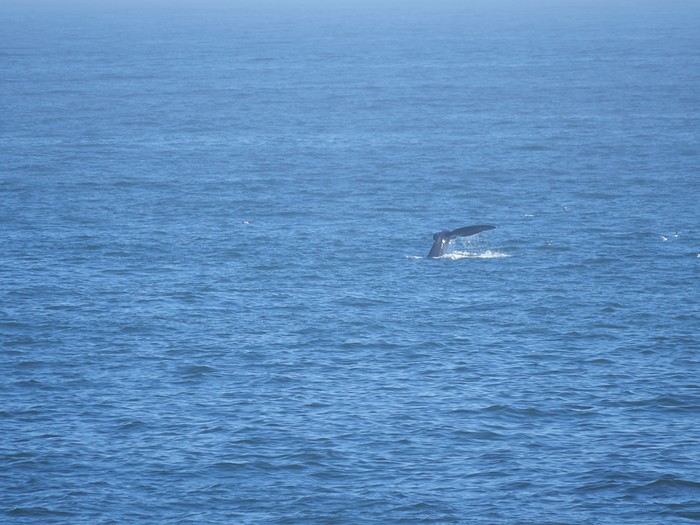
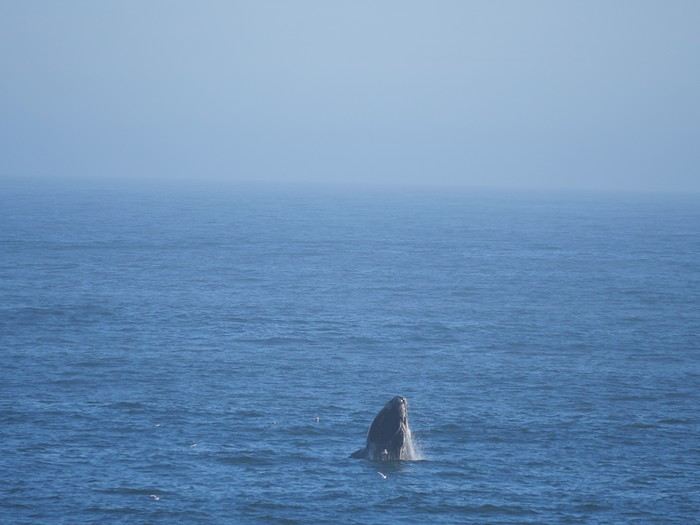
After dropping off our bags, we headed to the “cliff path,” just 3 minutes from our lodging. This part of the coast is famous for southern right whales from June to November. Let’s cut to the chase: there *are* whales, but they’re very far away and seem to be sleeping 😕. At best, we saw (photos taken at 600mm): A few ripples or a faint spout,
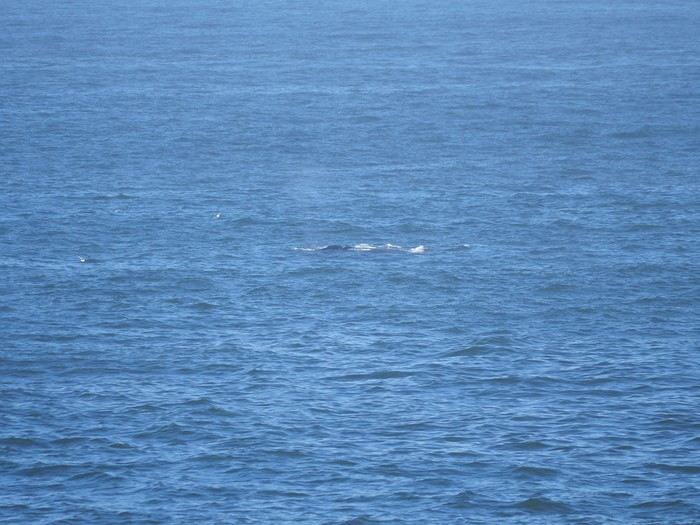
a bit of tail...
...or head.
Too bad—the owner of our next accommodation told us she’d seen around thirty whales up close here in early September.
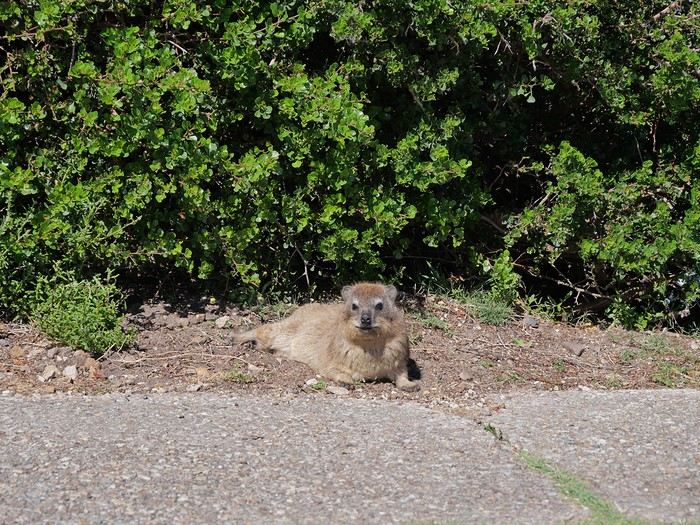
Without whales, the dassies (or rock hyraxes) are everywhere... and fun to watch.
The other local star (when there are no whales 😏)
Why not the Cape Town region this time, but there was no way we’d return to this part of the world without going on a safari. Mountain Zebra or the Karoo seem more about landscapes than animals, and Addo doesn’t excite me much either... So it’ll be Kruger.
Flight prices, schedules, and durations led us to a Paris-Cape Town trip, returning from Johannesburg to Paris with British Airways, so via Heathrow.
Now we just have to figure out how to fit in a lot of things without driving too many kilometers or changing accommodations every day, at least in the Cape Town region. Here’s what we ended up with:
Arrival in Cape Town on Saturday, October 10 at 11 AM
2 nights in Hermanus
1 night in Franschhoek
2 nights in Mountceder in the Cederberg
3 nights in Hout Bay
Sunday: transition day—flight to Johannesburg, drive toward Kruger, night in Lydenburg.
Kruger: 1 night in Letaba, 2 in Satara, 1 in Lower Sabie.
Last night in Mbombela (formerly Nelspruit) before heading back to the airport for an evening return flight.
Friday, October 9
Pretty stressful departure.
First, I woke up in the middle of the night, convinced I’d swapped my first and last names during check-in 🤪... Couldn’t fall back asleep, even though I knew British Airways wouldn’t answer before 9 AM.
Well, for them, everything was fine... but then they started talking about ETA... an ETA for England 😮? ?? Yes, it’s recent. Apparently, you don’t need one for an air-to-air transit... but you never know, it’s better to have it just in case. No one could clearly tell me it wasn’t necessary. In the end, we didn’t get it... and we didn’t need it.
But then, our flight ended up leaving Paris 45 minutes late (10 minutes due to a schedule change and 35 minutes of actual delay), so our 2-hour layover shrank to 1 hour and 15 minutes. That should be enough, right? The board showed our flight at Gate B: great, it’s right next door! But at Gate B, three employees were just there to tell everyone who showed up that security had to be done at Gate A... and off we went running through the corridors, endless escalators going up and down, a little shuttle ride, security at Gate A (“You’re going to be cutting it close!” Oh really? 😠), then pretty much the same route back to end up just a few dozen meters from our starting point! 😠
Boarding was already well underway, and after all that running, we were hot and thirsty, but phew! We made it onto the plane!
Saturday, October 10 On the other hand, nothing to complain about on this London-Cape Town flight—it arrived early!
I booked a (small) Suzuki S-Presso because it seemed to have a higher ground clearance than its competitors. Unfortunately, we ended up with a Tata Tiago (yes, it exists), which is lower (and also smaller and with an even more sluggish engine... yes, we were able to compare because in Johannesburg, we *did* get an S-Presso). Somehow, we managed to fit everything in the trunk (“Above all, don’t leave anything visible!”), and off we went to our first accommodation in Hermanus, under glorious sunshine.
Nikki welcomed us warmly, explained what there was to see in the area, and advised us to book a restaurant for that evening.
After dropping off our bags, we headed to the “cliff path,” just 3 minutes from our lodging. This part of the coast is famous for southern right whales from June to November. Let’s cut to the chase: there *are* whales, but they’re very far away and seem to be sleeping 😕. At best, we saw (photos taken at 600mm): A few ripples or a faint spout,
a bit of tail...
...or head.
Too bad—the owner of our next accommodation told us she’d seen around thirty whales up close here in early September.
Without whales, the dassies (or rock hyraxes) are everywhere... and fun to watch.
The other local star (when there are no whales 😏)


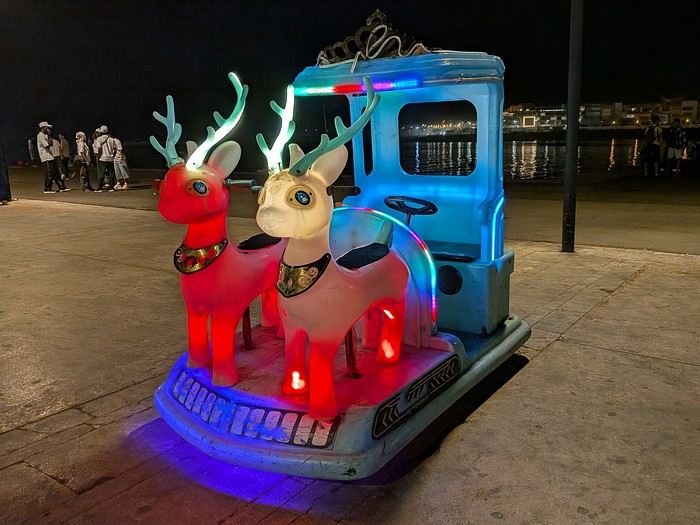
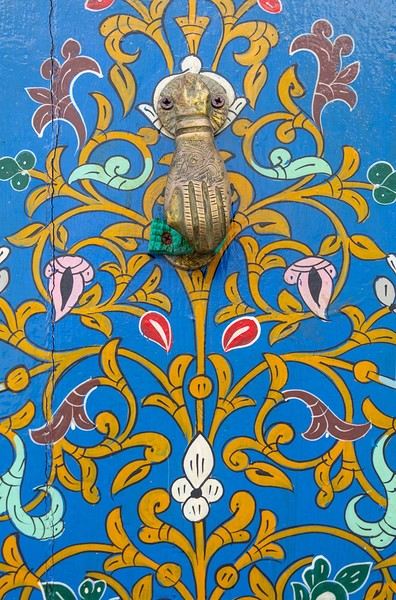




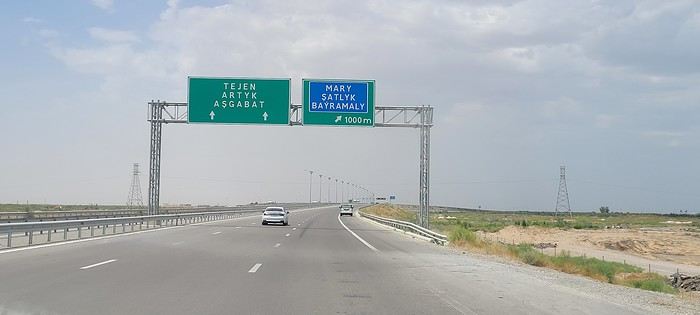
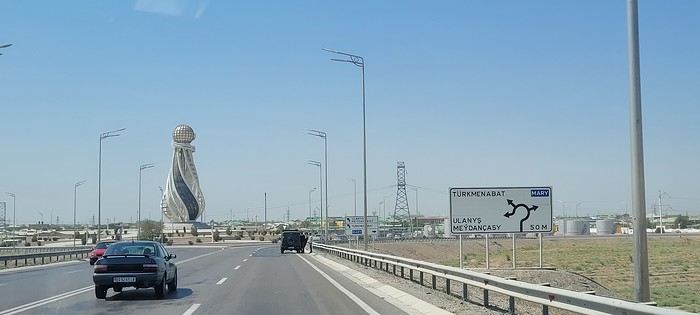
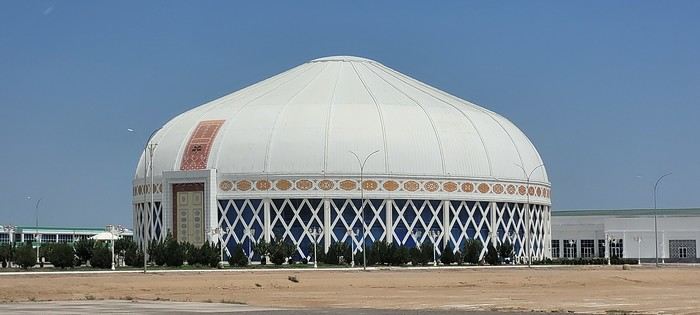
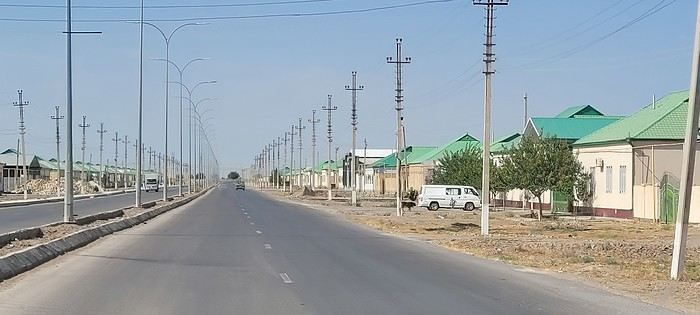 Roundabouts are particularly interesting because they feature emblems of Turkmen culture, like the dog, a carpet, the Ahal Teke horse, or Muslim symbols, even though the presence of Islamic artifacts is quite limited.

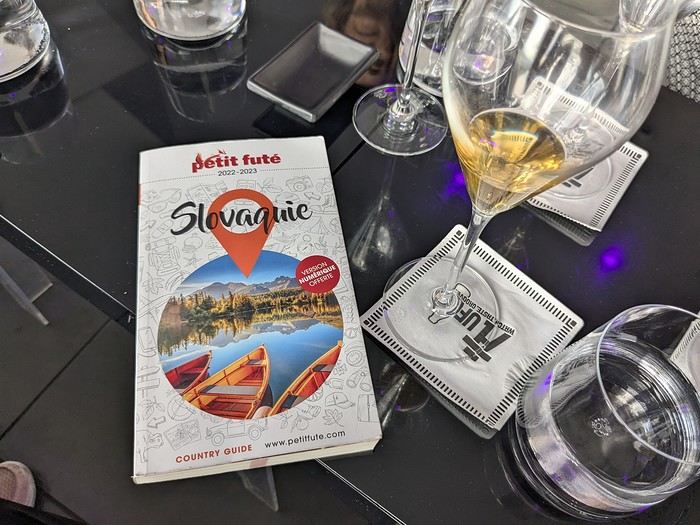 Why this country?
After visiting Hungary, Slovenia, Romania, and Poland in recent years, I’ve fallen in love with Eastern European countries. I adore the Slavic soul, its Austro-Hungarian villages, the gentle landscapes, the Carpathian Mountains, and that slightly mysterious atmosphere.
Slovakia evokes a certain imagination with its deep forests, medieval castles, and cobbled villages.
After seeing photos of the High Tatras—especially Lake Štrbské Pleso and Spiš Castle—I thought, "Let’s do it! We’re going!"
So, will Slovakia live up to what I imagine?
We’ll find out together.
We decided to travel as a group of six (five adults and a six-year-old child), by car (we needed two).
Here’s the day-by-day itinerary for this family trip, which started with a 3-day stay in Vienna (see the dedicated travel journal):

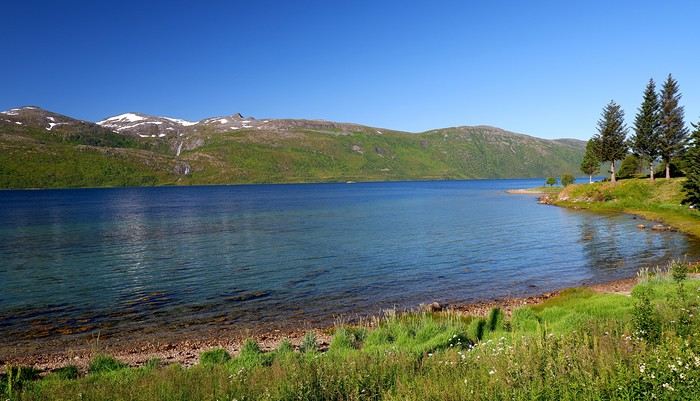
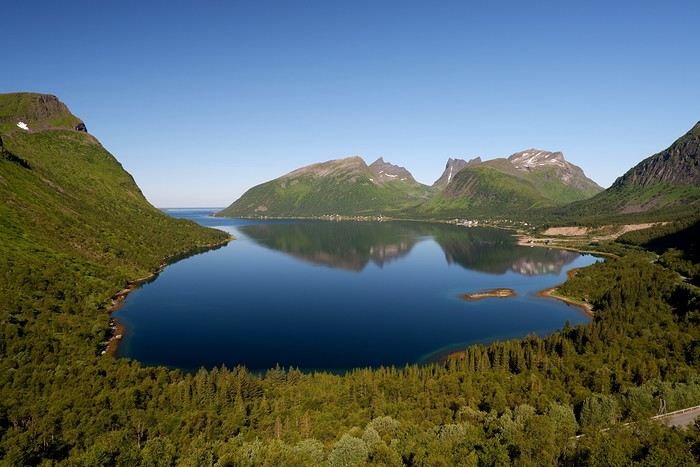
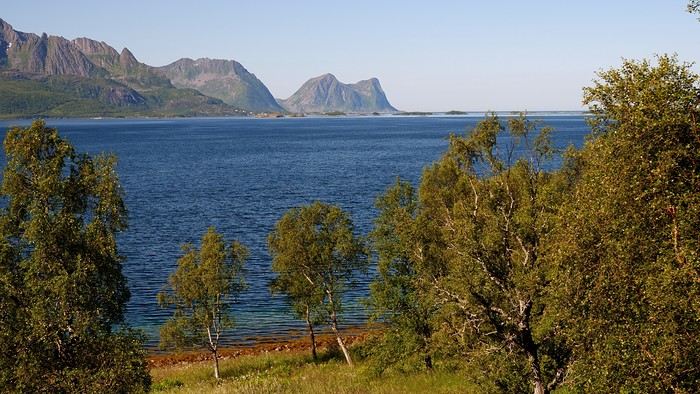
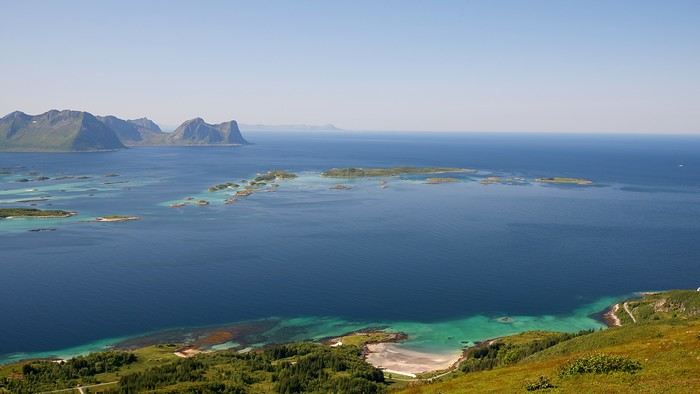
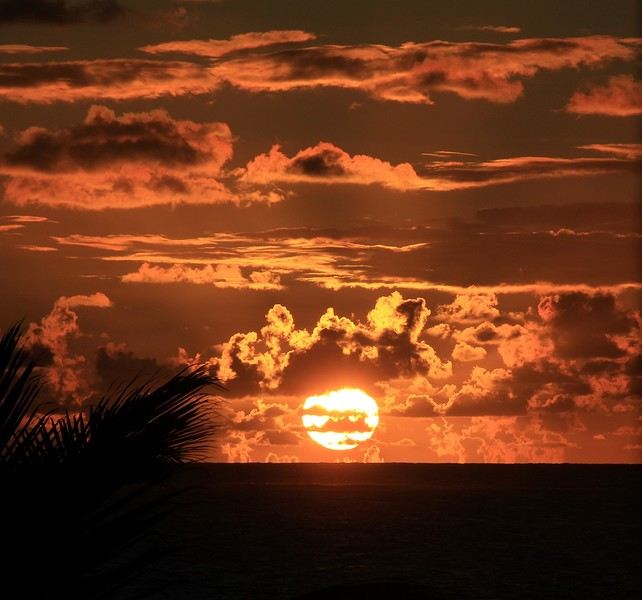
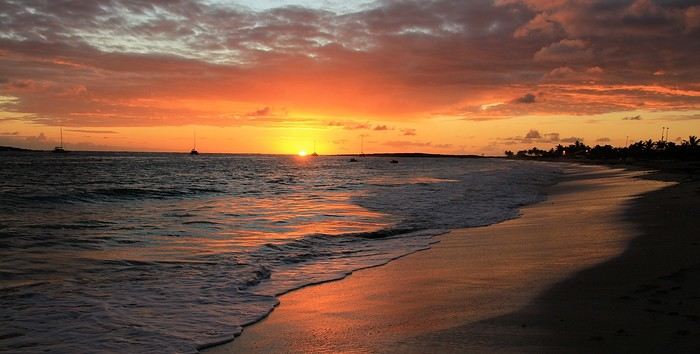
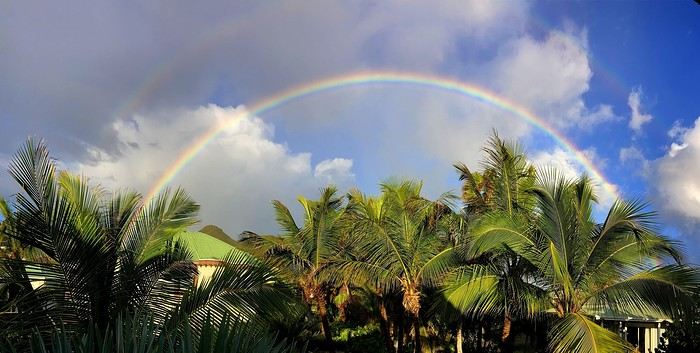
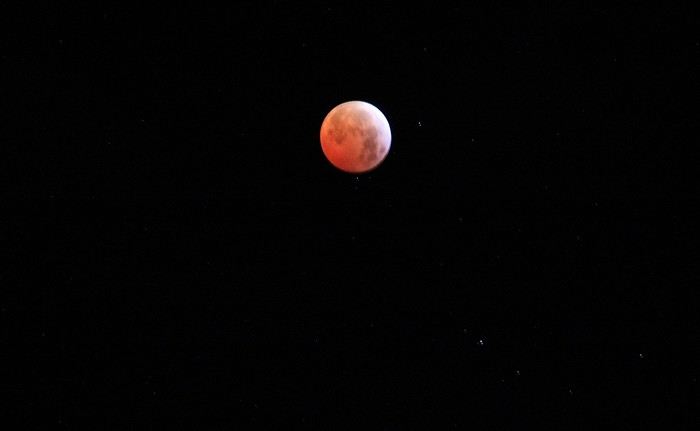
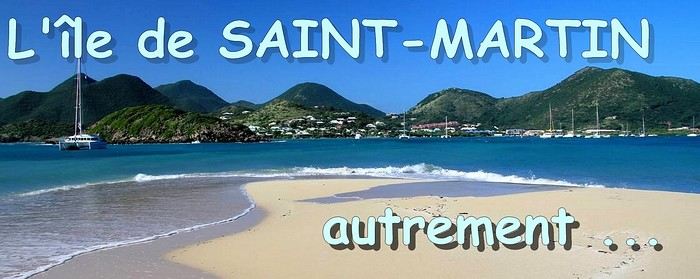 When it comes to the Caribbean island of Saint-Martin, it's customary to praise its coastline and dreamy beaches—and they certainly deserve it.
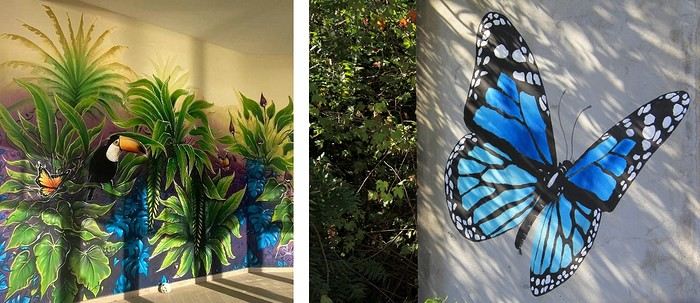
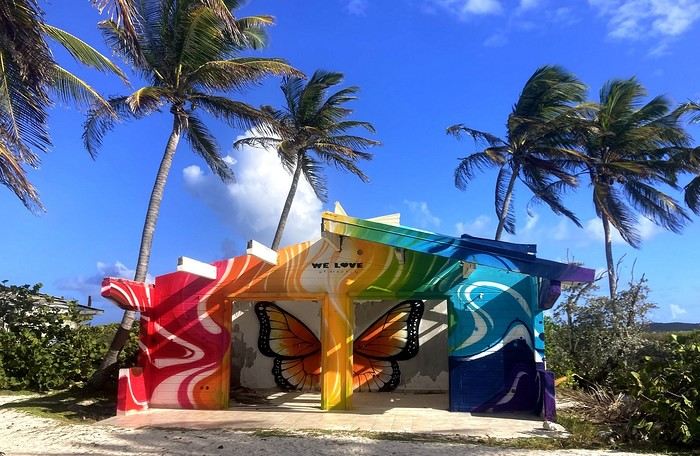
But in this story, I’d like to highlight other memories, aspects, and impressions for a slightly different change of scenery.
Enjoy the read—some text and, above all, lots of photos.
« Byenveni sou zile Sen Maten! » (Welcome to the island of Saint-Martin)
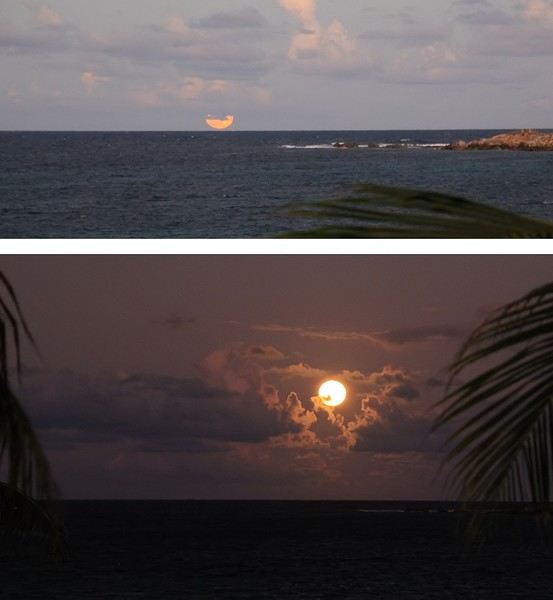




 Come along, I'm taking you to this country where it's so nice to wander and slow down...