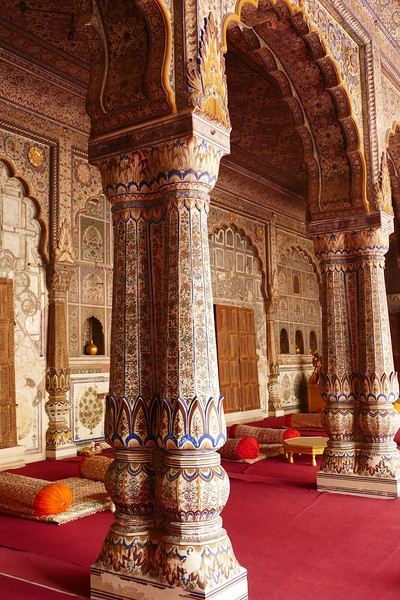
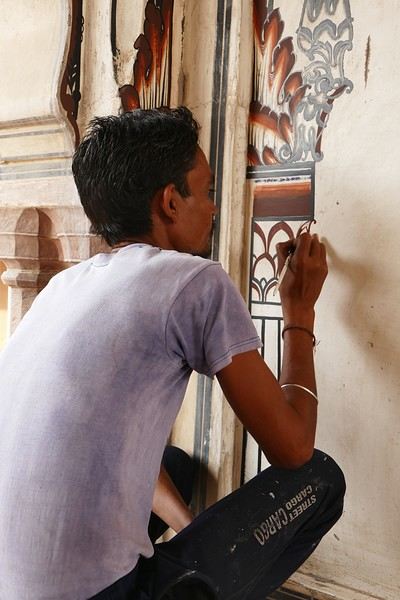
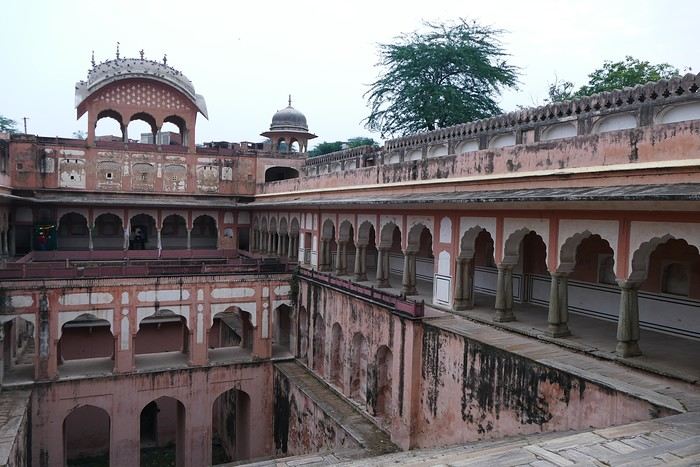
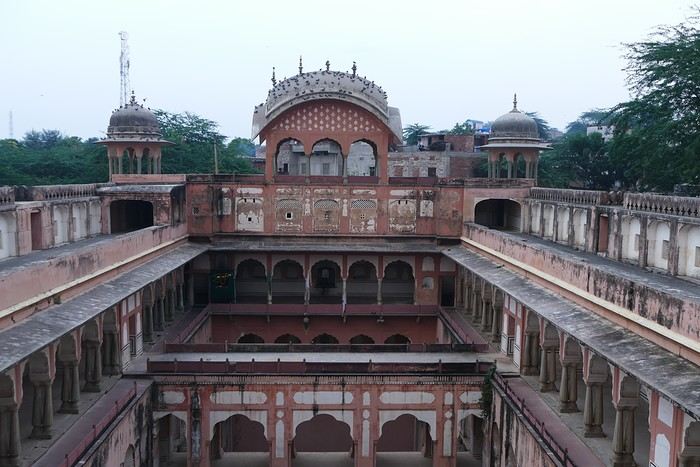
Unusual trip to Rajasthan November 2022
FR

Translated into English.

Original post
AL
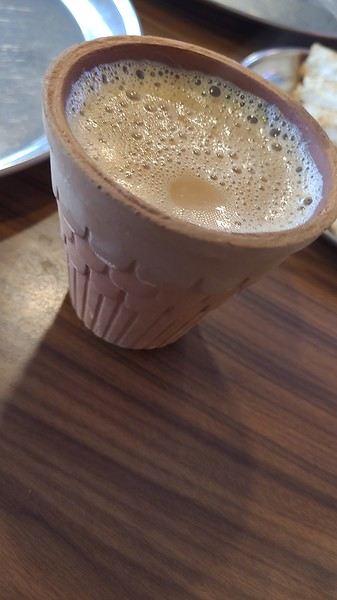
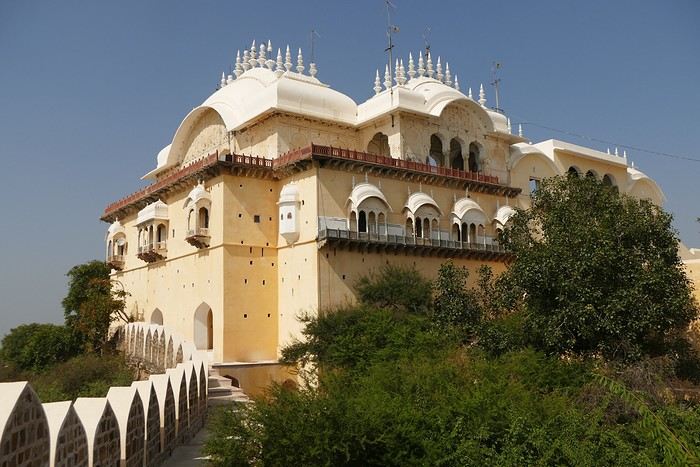
Friday, November 4 My flight Barcelona - Abu Dhabi - Delhi went smoothly, it’s on time, and here I am back in India after 3 long years. As I step off the plane, we head toward customs. It’s 3 AM, I’m tired but happy. The huge customs hall is below ground level and buzzing with people who’ve just arrived. In the end, they’re well organized—Indians to the left, foreigners to the right, and all along the hall, the customs officers’ posts, who remain very zen despite the crowd. It took me less than 2 hours to get out of the airport, which was pretty quick. For this return trip, I got in touch with a driver from the "Lovers of India" group who was supposed to take me from the airport to Udaipur, passing through non-touristy villages like I love. This French-speaking driver had convinced me to travel by car, which was supposed to make moving from village to village easier. Two or three days before departure, I receive a message from the driver saying he was sick with a cold and sending another driver, his very kind brother who knows Rajasthan well but doesn’t speak French. I’m a bit disappointed by this message and doubtful about the driver’s sincerity, but I don’t have time to find another driver, so I stick to my plans, though I’m not at ease. At the exit, the driver hasn’t arrived, and I wait half an hour before seeing him show up with a big smile, "Namaste." We don’t waste time and head to the car, which is clean and new. We get to know each other in the car and hit the road toward Alwar. Along the way, we stop for lunch and to taste my first masala chai, which wakes up my taste buds.


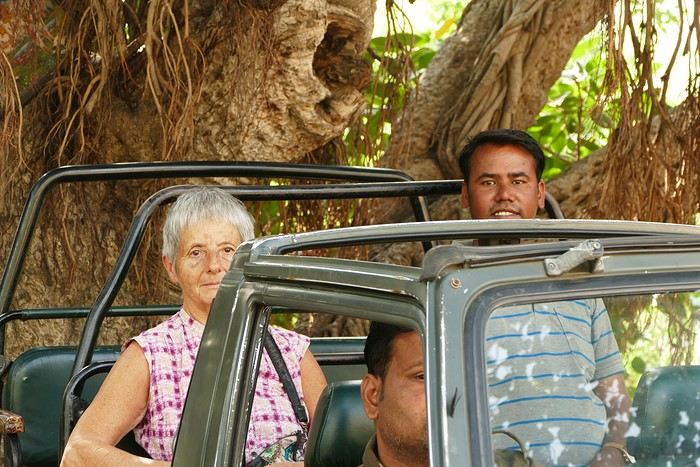
I doze off during the drive, and we arrive at the Atlantic Hotel in Alwar at 10:30 AM. My room is on the ground floor, and I settle in quickly. The Wi-Fi isn’t working, but the staff do everything they can to fix it. At noon, Gajender, the driver, suggests visiting the Qila Fort, which is on the heights of Alwar. The fort is closed for restoration, but safari tours are offered—jeep, guide, driver, and visit for 1600 Rs.


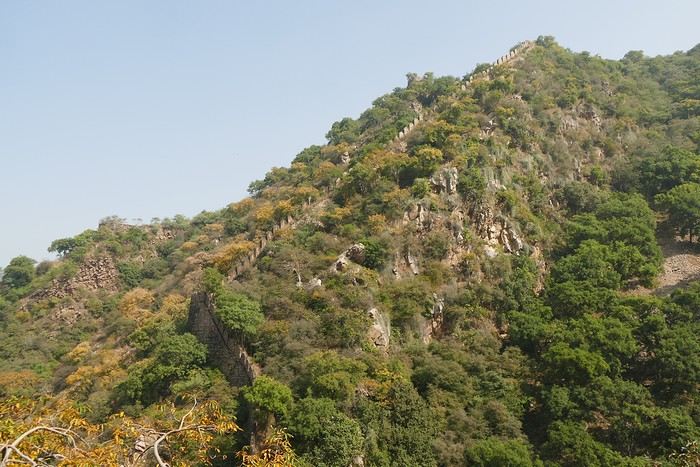
We follow the great wall, which is impressive—the second largest in India and the third in the world.


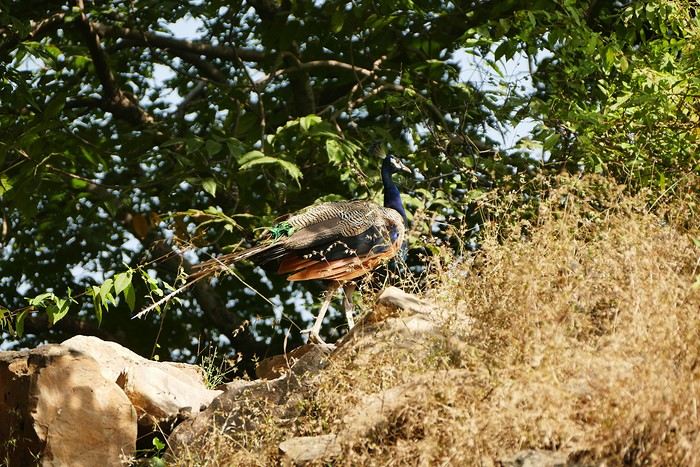
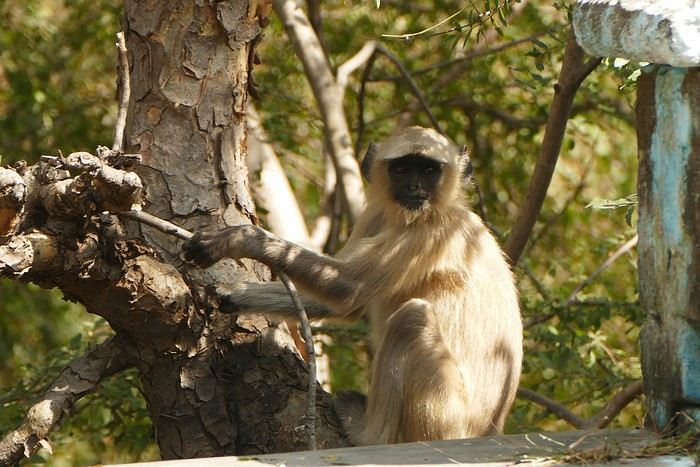
We spot peacocks and monkeys.


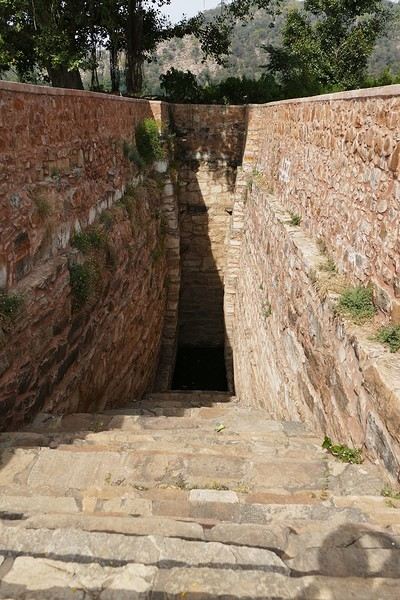
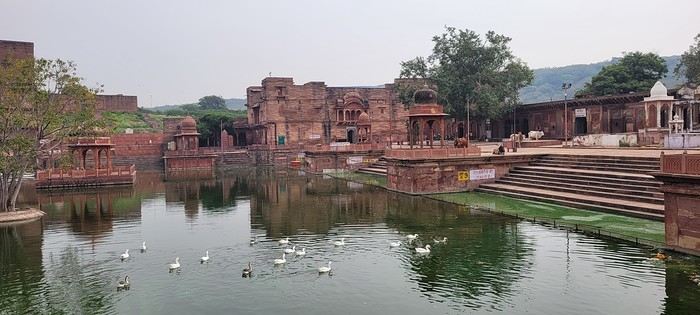
The guide shows me an old stepwell lost in nature. It’s always my thing to check out these baoris, which can be stunning, but this one isn’t anything special. We arrive at the palace overlooking the city.


We walk around the palace, and I discover another stepwell that’s not worth lingering over.

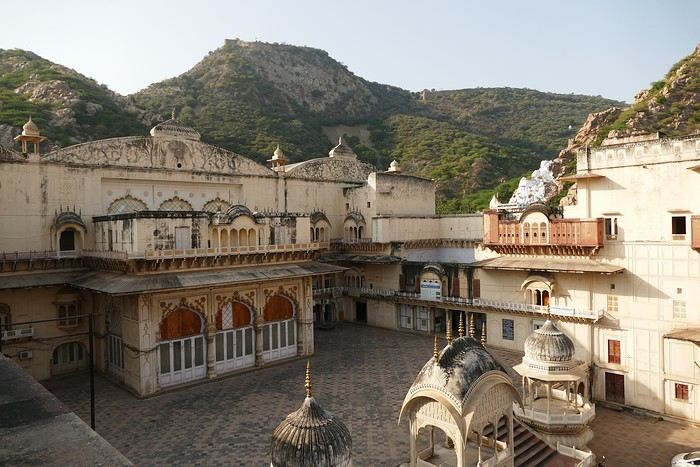
The tour is over, and I had a great time despite the fatigue. We head back down to Alwar, near the City Palace, which has been turned into administrative offices. Gaju (the driver’s nickname) finds a parking spot near a dhaba where we have lunch (paneer masala, chapatis, chai)—it’s delicious. With my energy restored, we head to the palace. On the top floor is a museum that I visit.


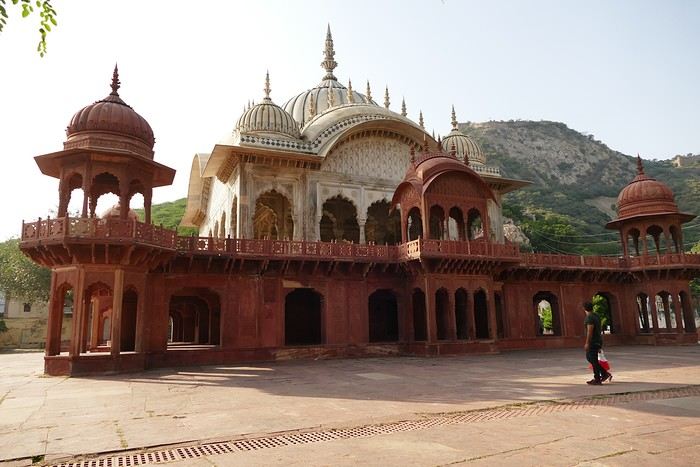
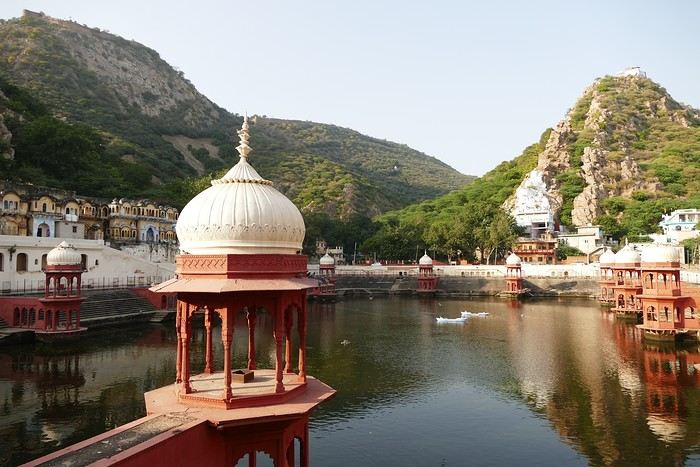
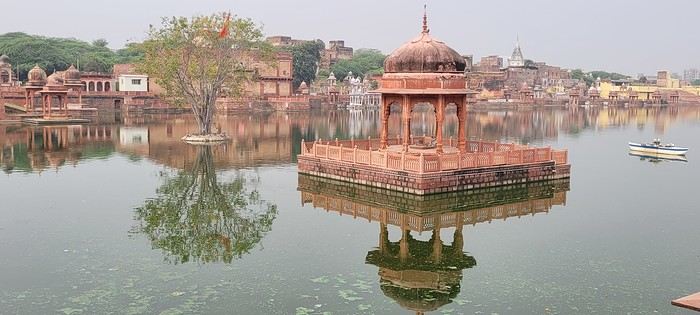
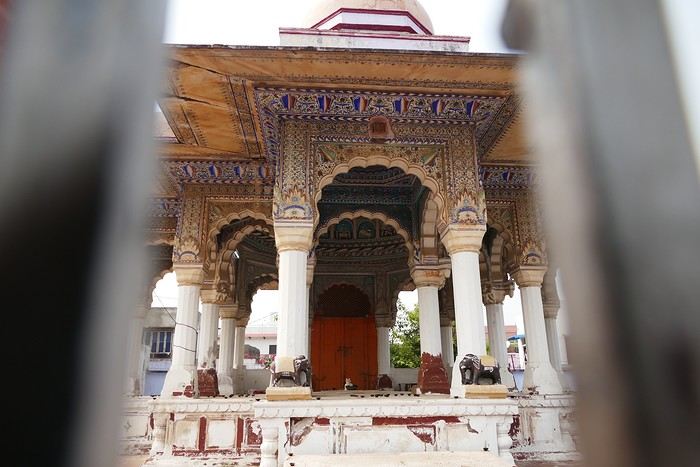
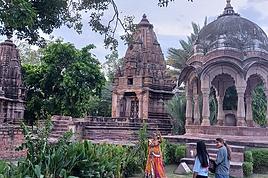
At the exit of the museum, we have to go back down and walk around the palace to get to the Moosi Maharani Chhatri. I’ve been here once before and really liked it, and the place is still the same—calm and relaxing.


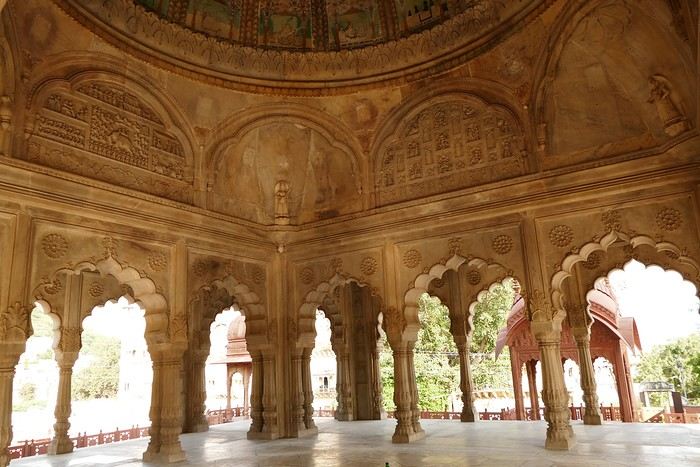
"This monument is the most artistic in Alwar and also the most royal, filled with fascinating history. Maharaja Vinay Singh of Alwar built this two-story cenotaph in 1815 in memory of his father, Maharaja Bakhtawar Singh. It’s also known as Moosi Maharani ki Chhatri, named after the king’s mistress, who performed sati upon his death. After the sati, she was accepted as the king’s wife. It’s an elegant monument, shaped like a flower and built with a mix of brown sandstone and white marble. The first floor is made of sandstone, while the upper floor and the chhatris (cenotaphs) are in white marble. Its sculpted pavilion has dome-shaped arches with intricate lace-like and exquisite floral patterns. There are complex motifs that shine brightly in the sunlight. The colorful circular ceiling is an important part of Moosi Maharani Ki Chhatri and is adorned with faded gold-leaf paintings of mythological figures and scenes. The footprints of Maharaja and Moosi Rani are engraved in marble inside the cenotaph, and locals pay their respects to them."


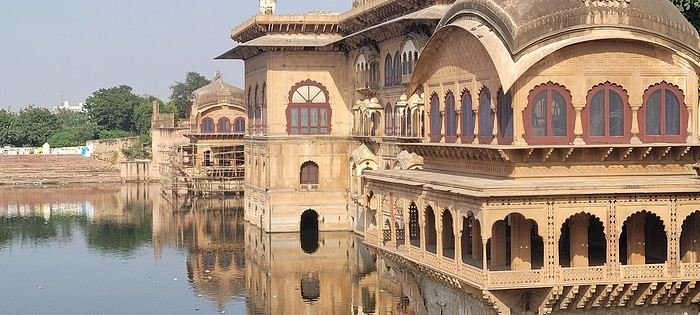
Near the chhatri, there’s a large water reservoir with a magnificent view. The place is peaceful and relaxing, and I stay here for a while, contemplating and daydreaming before heading back to the hotel for some well-deserved rest. The Wi-Fi is working now. I’m the only foreign guest, and since my room is near the entrance, I’ll be well taken care of throughout my stay.

AL Aleph240758 Veteran ·
Saturday, November 5th This really quiet hotel is in a little alley where you can’t hear any traffic noise. After a good night’s sleep and a nice breakfast, I’m ready for another day of exploring. Before leaving, Gaju, who doesn’t have a shower in his room, asks to use my bathroom.

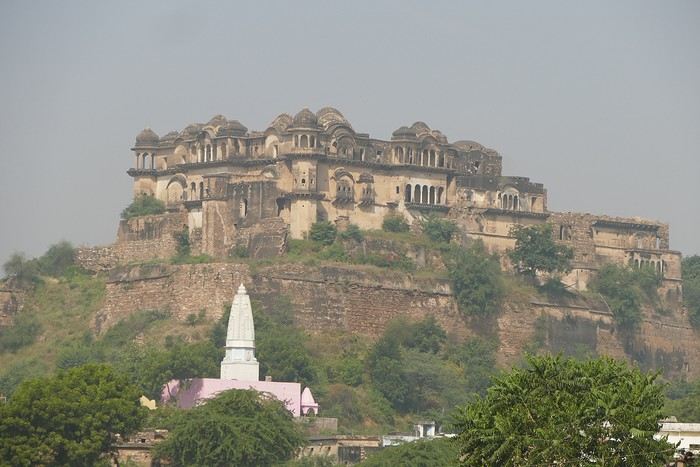
We set off around 9 AM, and to start the day, we head to the Tatarpur Fort on the way to Neemrana. This 450-year-old fort sits on the edge of the Aravalli ravines, perched on a hilltop overlooking the village and offering a beautiful view of the rolling landscapes.


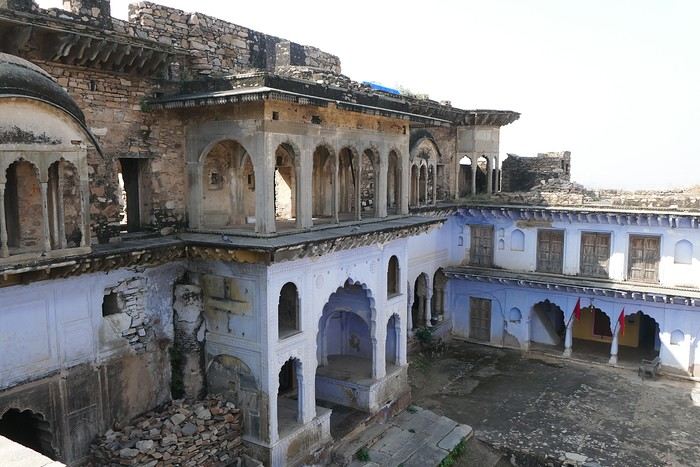
Today, the fort is abandoned. Most of the building is in poor condition, but the temple still welcomes devotees.


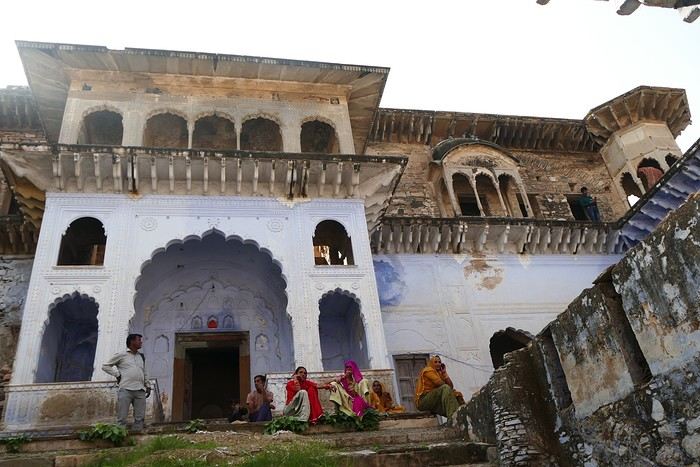
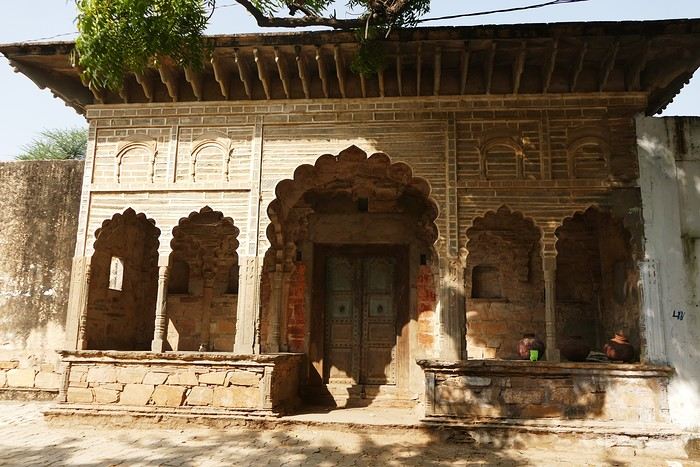
Entrance to a haveli house in the village.


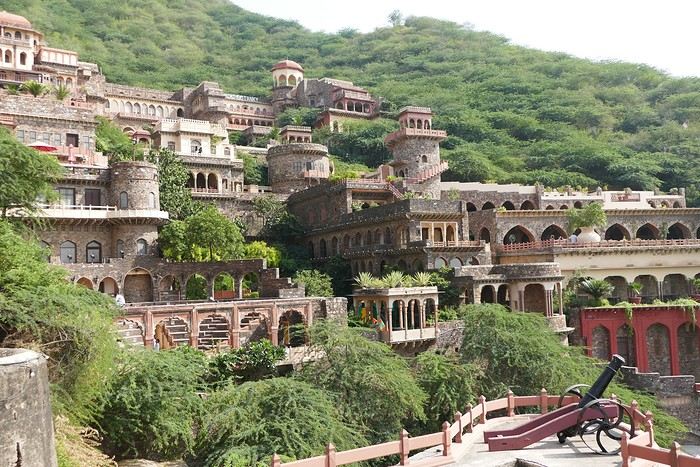
We hit the road again for Neemrana. The fort has been turned into a hotel, and visits are allowed for a fee (500 Rs—still a bit pricey), and you can even have lunch there.


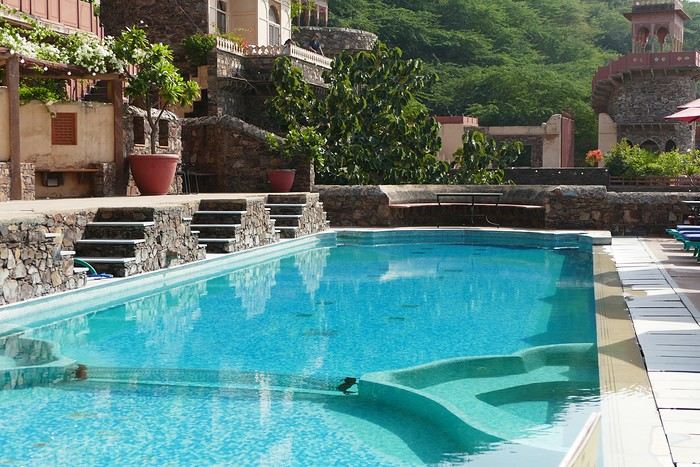
I explore it at my own pace, wandering from courtyard to courtyard, past private pools, and no one seems to mind my presence.


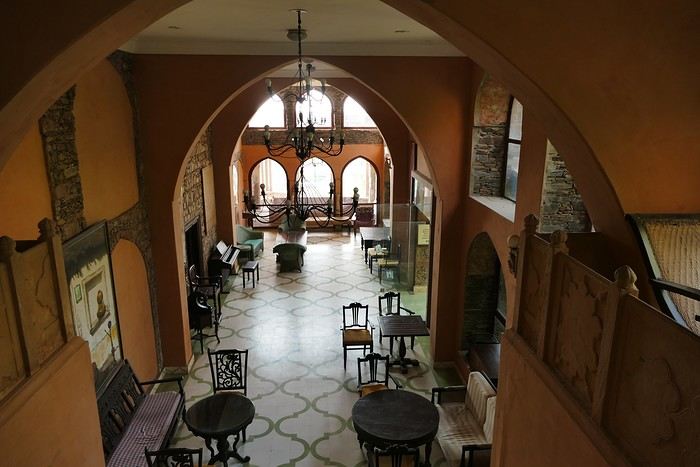
I walk through a reception hall and head toward the exit.


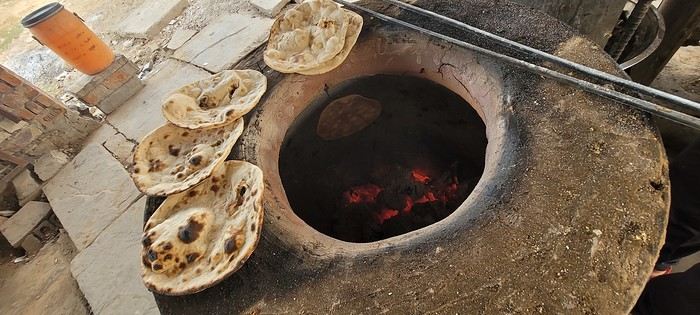
Since I haven’t eaten lunch, a little restaurant near the parking lot does the trick with an aloo paratha and a chai. We get back in the car to head to the Bawdi Deep Water Stepwell, though I could’ve easily walked there. (I’m not sure if I’ll like having a driver follow me everywhere, but for visiting isolated villages, I don’t have much choice.)


This one is impressive.

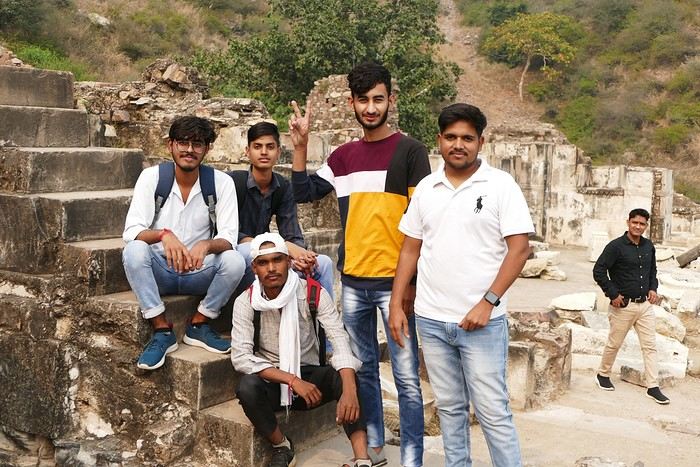
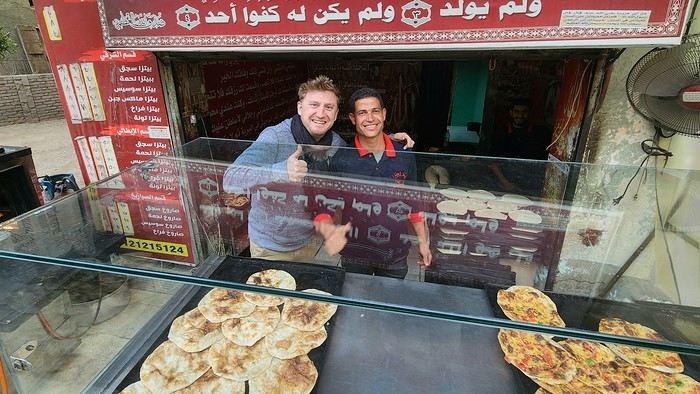
A really warm encounter.


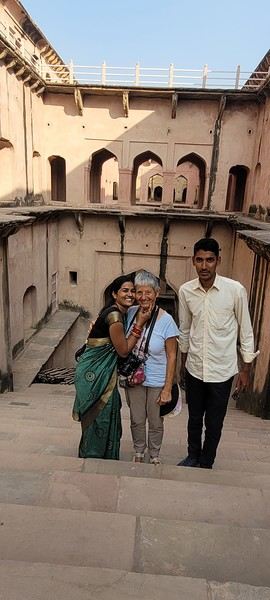
The first selfie sessions are off to a great start. We return to Alwar after a peaceful and enjoyable day. I have dinner at the hotel and spend some time with the young people playing in the courtyard—I’m the only guest tonight.
AL Aleph240758 Veteran ·
Sunday, November 6th. At 9 AM, we head to Rajgarh, a 1-hour drive. The village we pass through is lively, and the main street is quite narrow—you’ve got to stay alert. I hope we’ll come back this way because I’d love to wander around this street, but for now, Gaju isn’t planning to drop me off. The climb up to the fort is a bit steep, and our visit draws curious onlookers. The fort is imposing, and through the mist, you can make out the great wall. The young guys on motorbikes who came to meet us tell us the fort has been closed and abandoned for 10 years. Luckily, Christine sent me photos of a beautiful *baori*, so all we have to do is find it. The young guys don’t know it, but some elderly men sitting on a bench explain the way to Gaju—the photos really helped us track it down. We don’t go back through town; the road is wider and faster. Gaju parks near a tea shop that points us to the *baori*, which is just 200 meters from the road, right after the railway tracks.

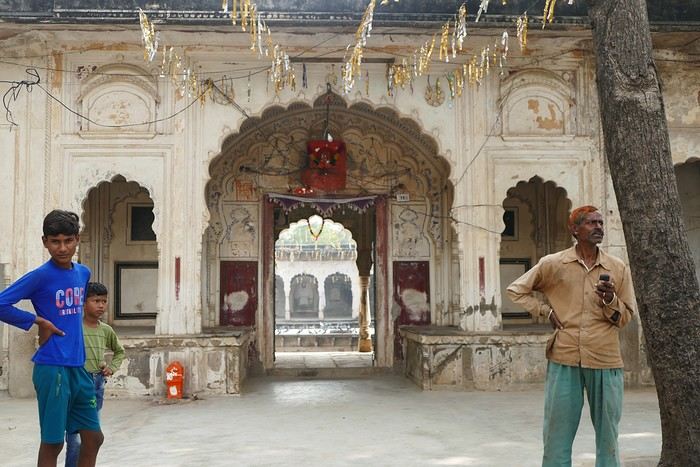
The entrance to this *baori* looks like a *haveli* temple.


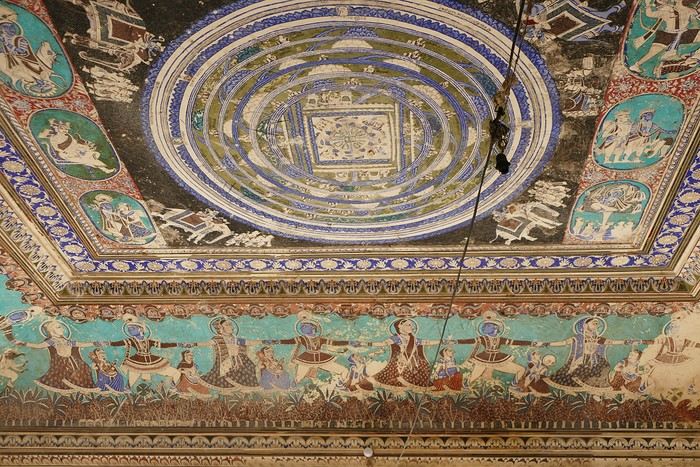
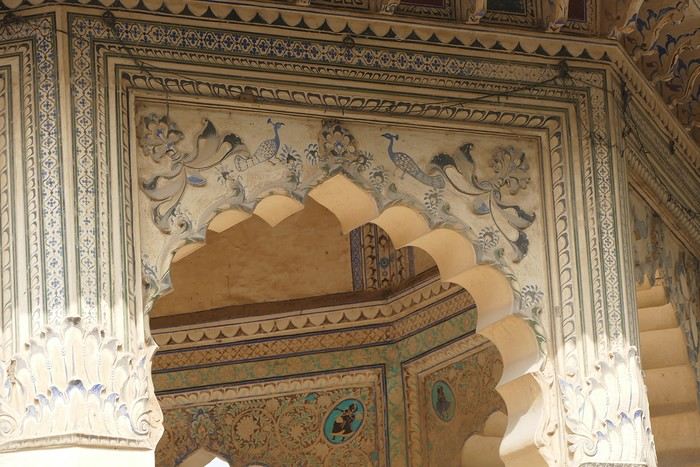
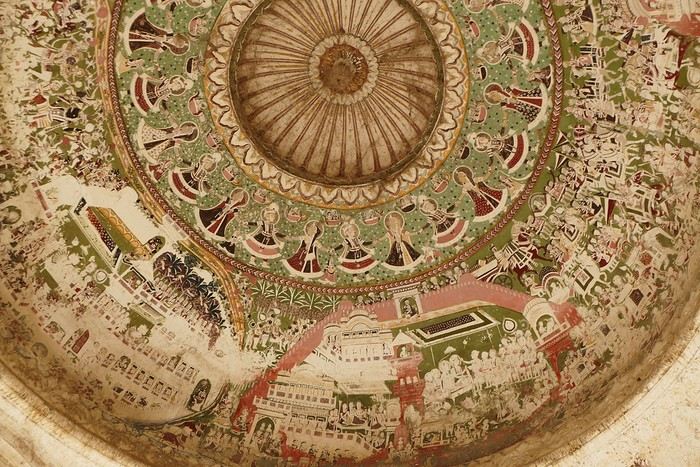
The dome at the entrance is covered in paintings of Krishna, Radha, and dancers.


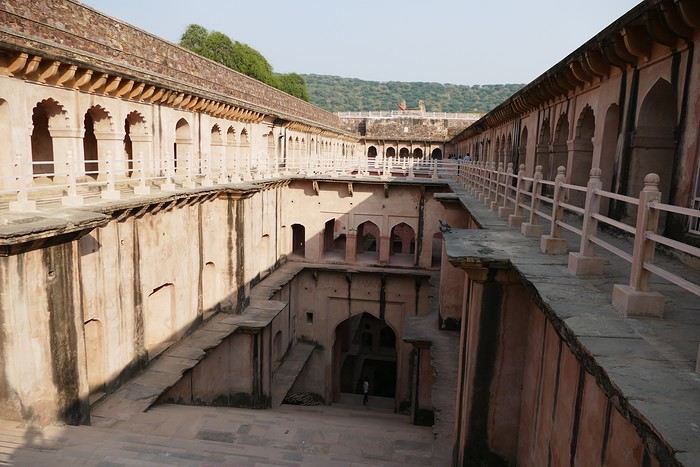
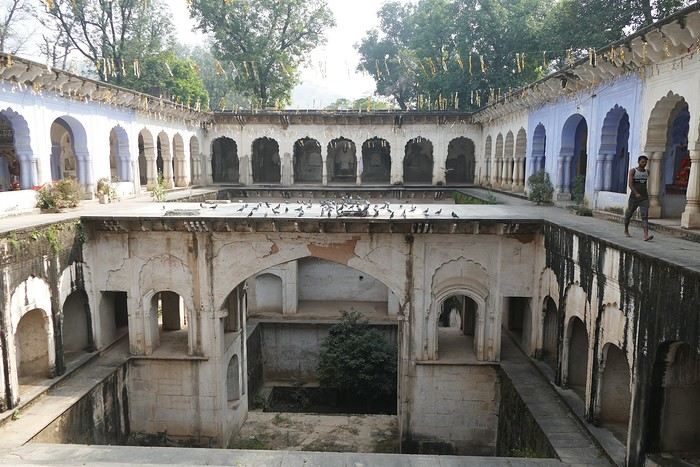
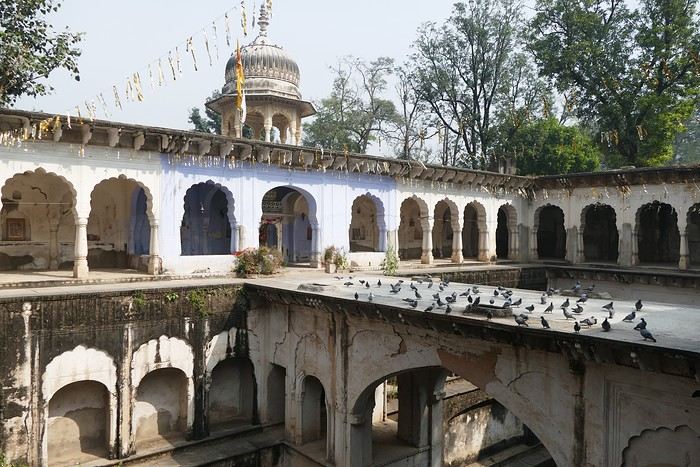
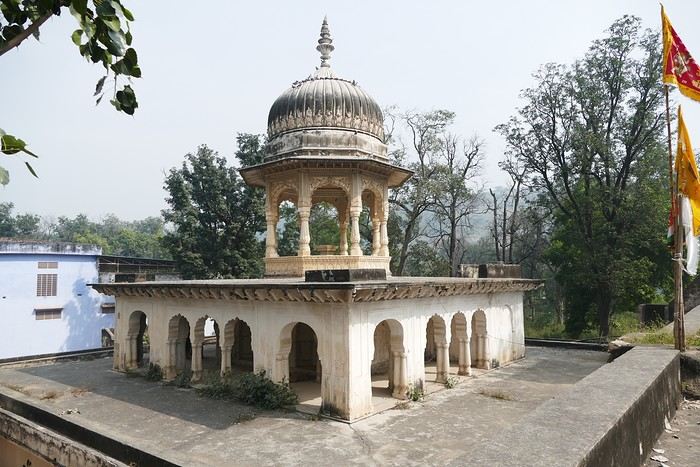
This stunning entrance hides the *baori*, which is actually quite imposing. It’s truly a hidden gem, and I’m so grateful Christine gave me the tip. As I walk around, I spot two *chhatris* on either side of the *baori*. I need to find the stairs—I’m barefoot, and it’s not exactly clean, but nothing’s going to stop me.


From here, I can see the *chhatri*.


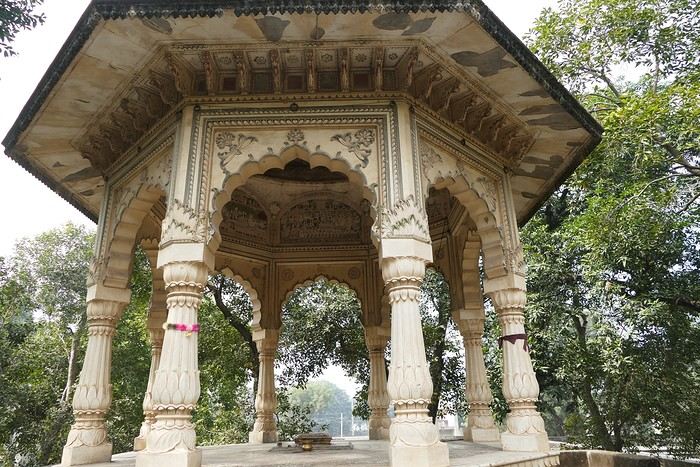
The *chhatri* is on a platform, and as I reach it, I spot the second one, hidden by a tree. The craftsmanship is so delicate—I love these discoveries.


Curiosity leads me to the hidden one, and I’m extra careful where I step.


This one is even more beautiful, with all the Krishna paintings—just extraordinary.


*Chhatris* (or cenotaphs) are very common in India, and the royal ones are often stunning. *Chhatris* are pavilion-like structures with square domed roofs, typical of Indian architecture. They symbolize pride, honor, and commemoration in Rajput architecture in Rajasthan. You’ll find them in palaces, fortresses, or marking funerary sites.


I go back to find Gaju and suggest he check out the *chhatris*. He goes quickly and comes back with photos on his phone—he’s just as happy to have discovered this treasure.

I’ve noted the exact location to find it more easily: 6JH6+RX, RJ SH 25, Shreenagar, Rajasthan.
KA Kate Globetrotter ·
Hi Marie Jo

An unusual Rajasthan for me too 😉 I see you're traveling solo. Is that the case? Sometimes you say "we," but I assume you mean the driver.
AL Aleph240758 Veteran ·
You got it!🤗 I always travel solo and I never get bored.😊🤙
RO Rouquine38 Globetrotter ·
Well, Marie Jo, you sure don’t slow down 😉 No sooner is one travel journal finished than here’s another one I’ll be following too. Right now, India’s front and center on VF 🙂
AL Aleph240758 Veteran ·
Thanks Isabelle! Yep, I’m on a roll—I’ve got several to post before my next trip… to India again, of course!!! The itinerary’s pretty much locked in!! It’ll be off the beaten path. And no time to waste.
AL Aleph240758 Veteran ·
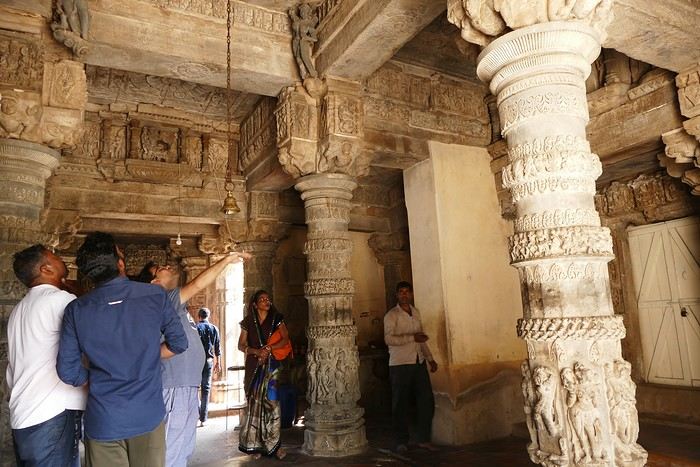
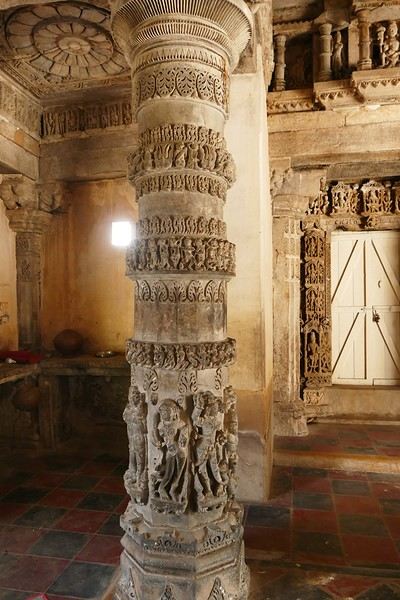
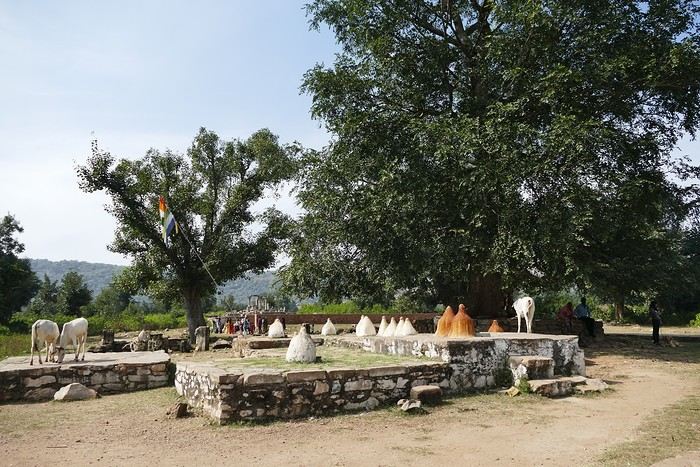
We head back to the car and drive off to another discovery. We continue on this beautiful road, and at the first intersection, we turn left toward Sariska. Once we arrive in Sariska, the road turns into a rough track, and we pass cars and trucks loaded with Indians who wave enthusiastically as we cross paths. This track leads us to the Neelkhand Mahadev Temple. It’s a group of temples scattered in nature among the fields. The first, the most imposing, has beautifully carved columns inside. The complex was built between the 6th and 9th centuries.


I walk past a platform occupied by curious little temples shaped like mushrooms.


I follow a group of women heading toward the ruins after stopping by the well.


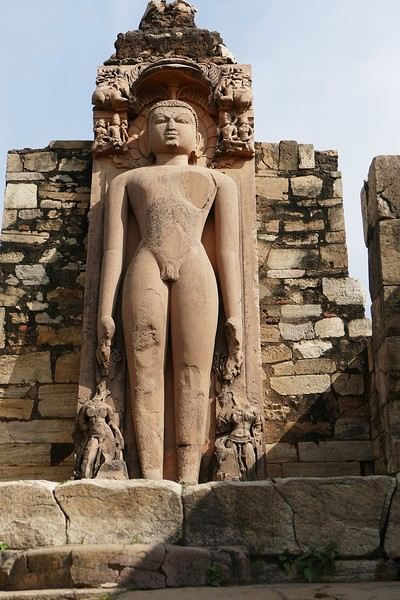
Farther on, more ruined temples and a Jain statue.


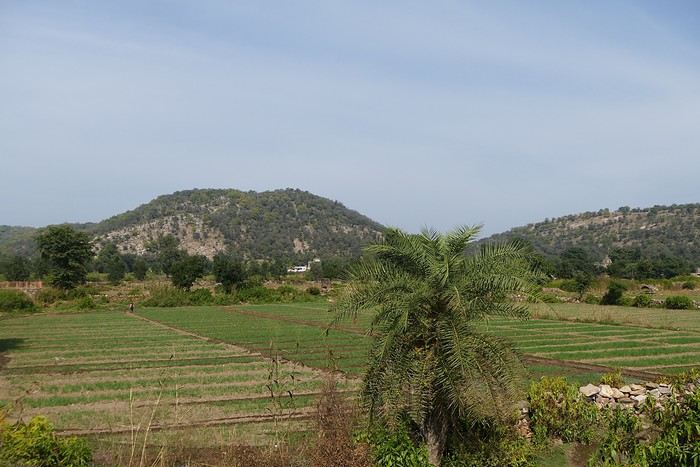
The landscapes are green and rolling—it’s beautiful and peaceful.


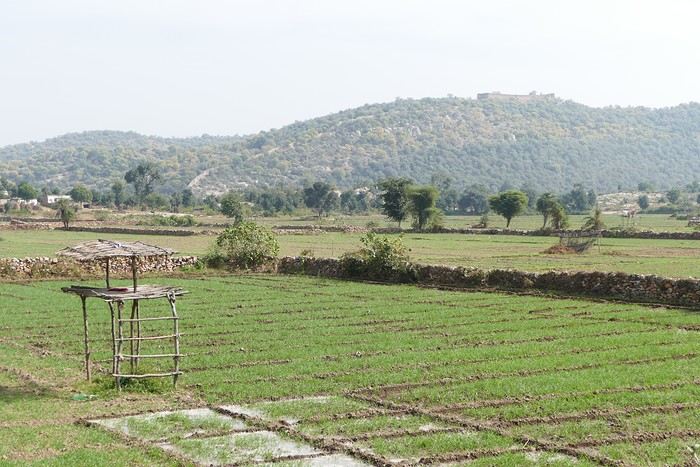
This shelter isn’t just for napping—it’s also used to watch for wild animals that come into the crops. We spot them in all the fields along the road.


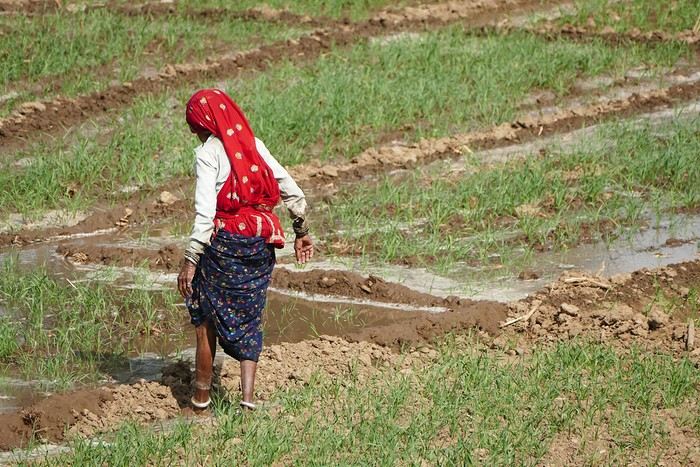
A woman works in her field.


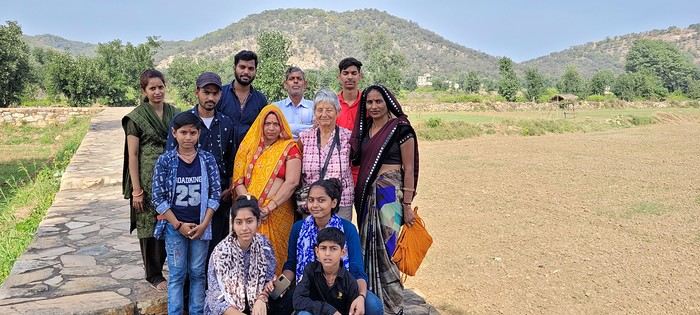
A souvenir photo before we leave—and I’m the only one who blinks, while they’re proud to pose.


It’s 3 PM, time to head back and find a little restaurant. On the way back, Gaju asks if he can go home—it’s a 1.5-hour drive from Alwar, and his brother’s wedding is today. He’ll come pick me up tomorrow around 9 AM, and we’ll leave Alwar.
AL Aleph240758 Veteran ·
Monday, Nov 7 Gaju arrives after 9 AM, and we leave Alwar without delay. We take the scenic route to Bharatpur, heading toward Deeg and making a detour to Kaman—a little-known town with rough roads. In this region, cotton has just been harvested. The cotton branches are bundled along the roadsides and will be collected as needed for cooking fires or lamps.

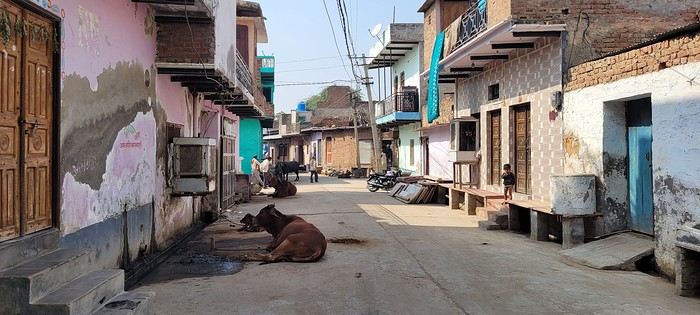
Driving through Kaman is quite a challenge—narrow streets, cows on the sides, and we even follow a tractor doing garbage collection at a snail’s pace.


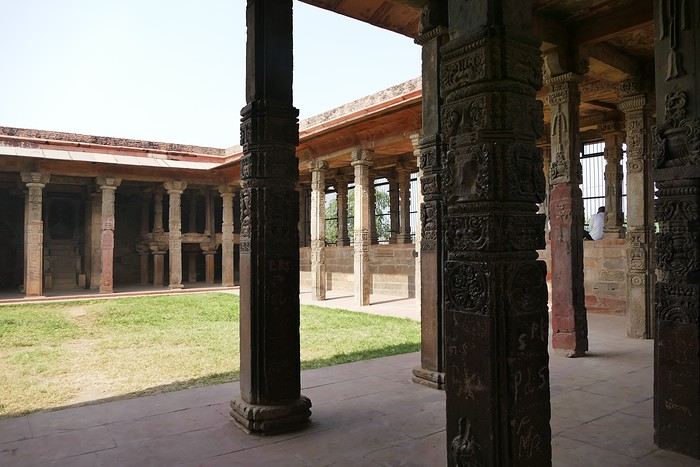
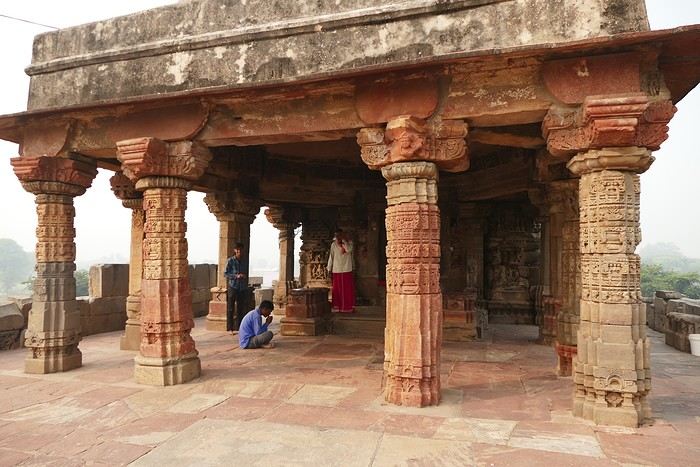
While planning my trip, I came across a blog that made me want to visit the Charasi Khamba Mosque, built using pillars from Hindu temples. This mosque stands on a vacant lot on the outskirts of town. Chaurasi Khamba is a small mosque compared to the one in Mandu (Madhya Pradesh). So if you’re not familiar with M.P. and love unusual places, this one’s for you.


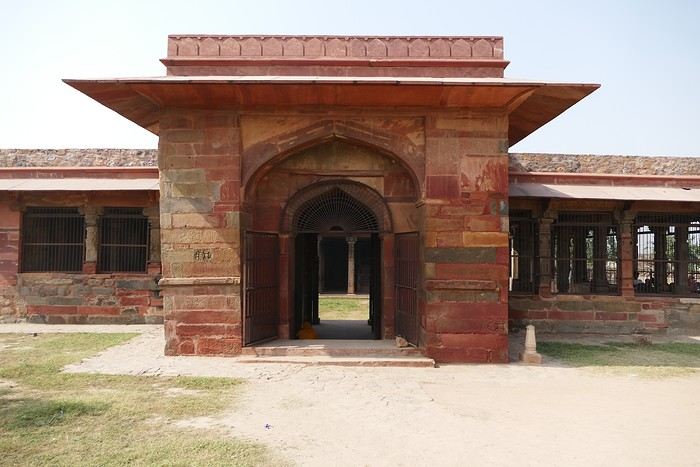
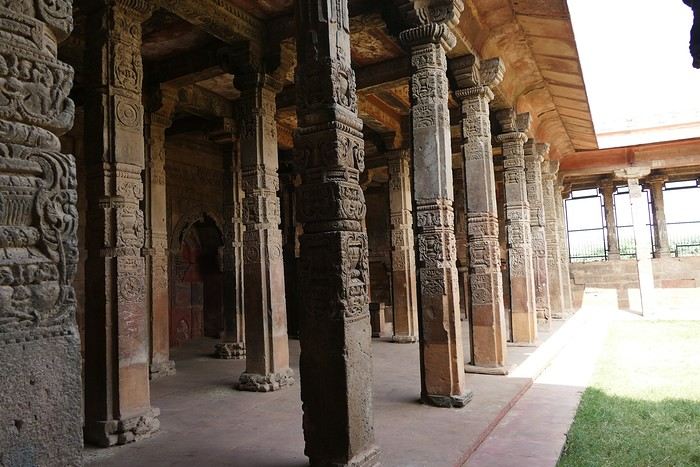
The temple pillars are arranged in colonnades on three sides.


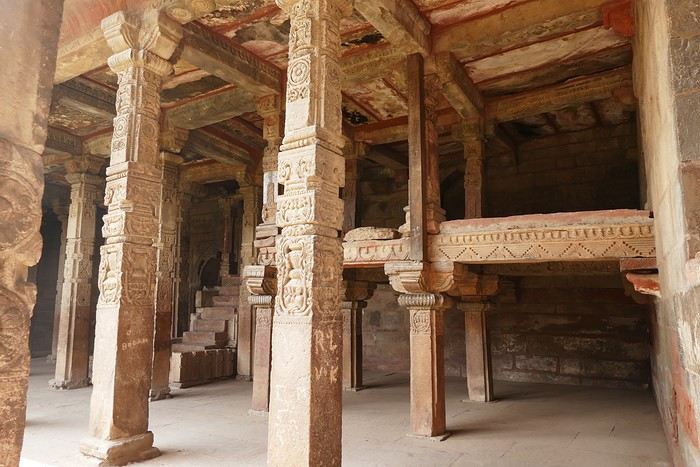
The western wall features the mihrab (an architectural niche indicating the qibla) and a minbar (a staircase-like pulpit). Here, it designates the king’s throne seat. In the corner of the prayer hall, there’s a raised chamber for the royal family or women.


All the pillars are richly decorated and completely unique.


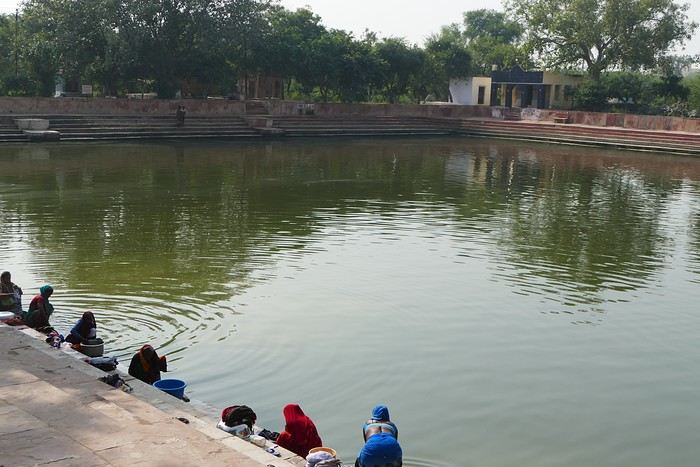
On the way out of Kaman toward Deeg, a sign catches my eye: Vimal Kund. It’s a massive kund that reminds me of Machkund in Dholpur, where I’ll be in two days.


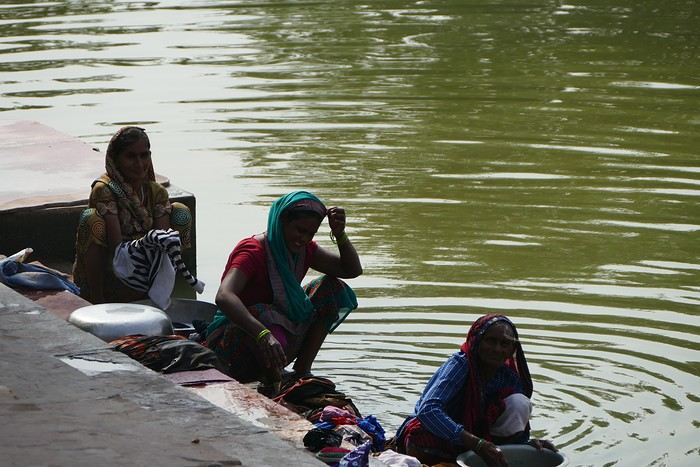
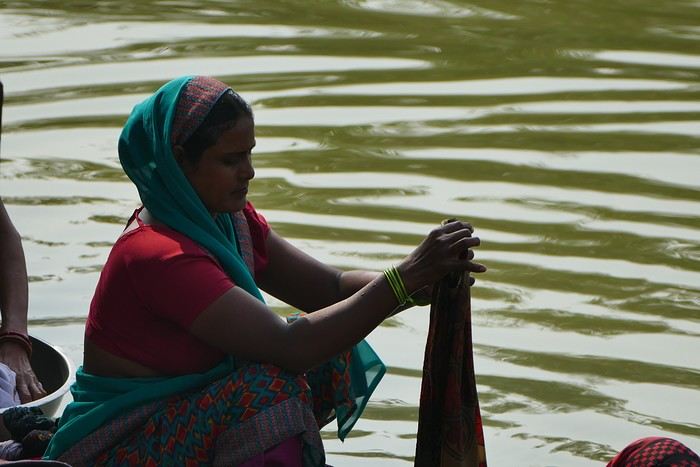
The women still do their laundry here, always in good spirits.


We’ve got about an hour’s drive left before reaching Deeg, where we’ll have lunch upon arrival.
AL Aleph240758 Veteran ·
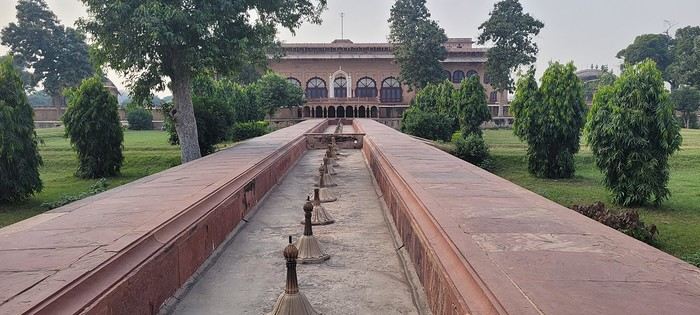
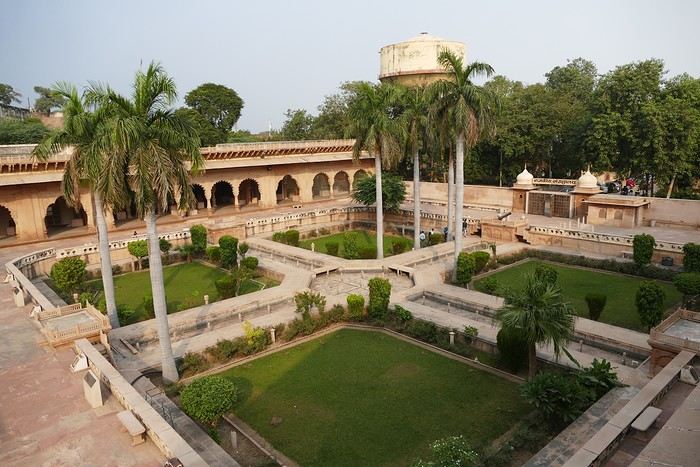
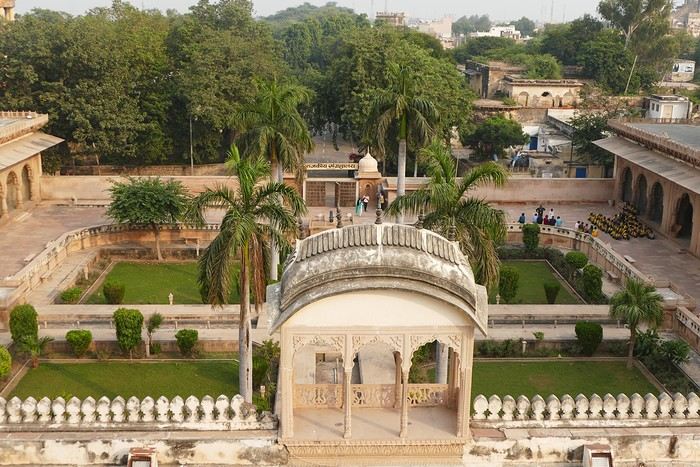
We’re visiting Deeg Palace (entry is 300 rs for foreigners and 25 rs for Indians). Gaju is coming with me and really enjoying all these sights he’s discovering for the first time. Here, we have several small palaces and a large Mughal garden with a thousand fountains, which unfortunately no longer work today. The most important building is the king’s residence.


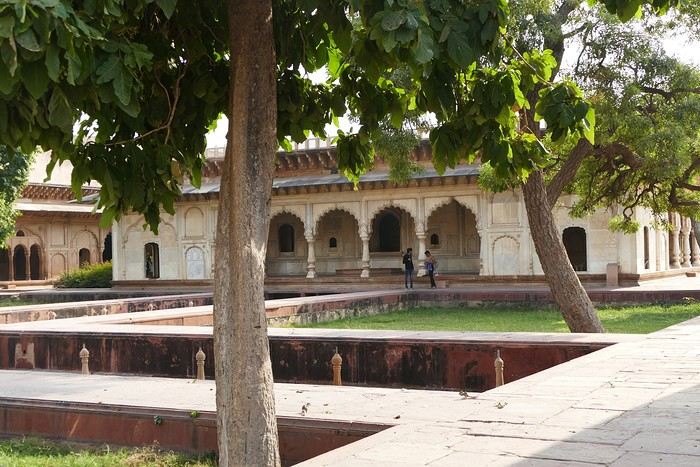
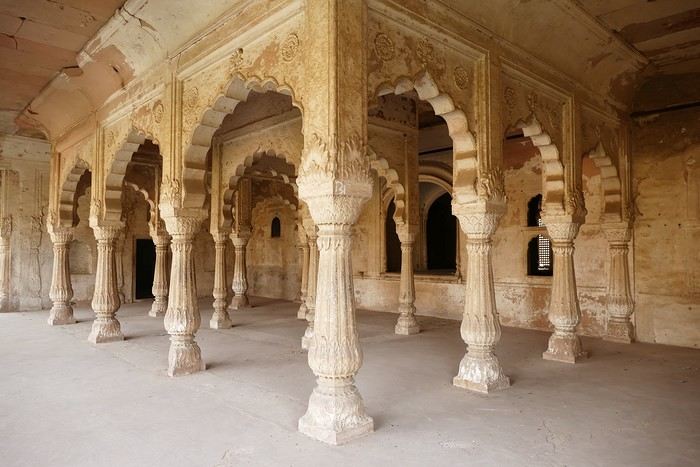
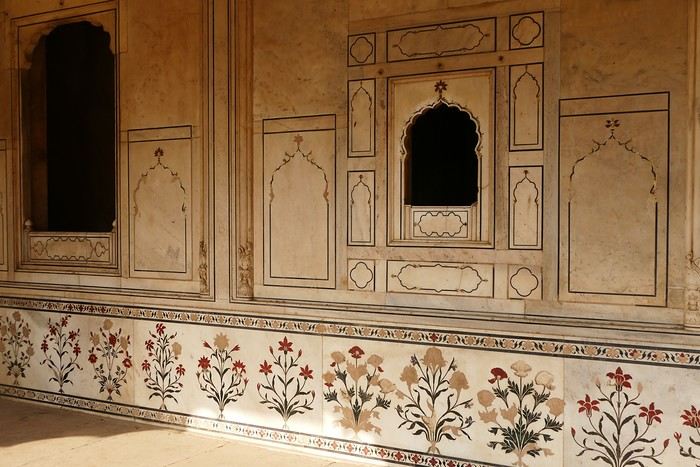
The marble palace is the women’s residence.


The floral paintings are made of pietra dura, a type of marble inlay developed by the Florentines during the Renaissance and later adopted by the Mughals.


Visiting this palace is relaxing and not very touristy.


It’s really pleasant, but it must be spectacular when the fountains are working. Bharatpur is just half an hour away, and I’m staying at the Iora Guesthouse, which is nice and close to Keoladeo National Park, which I’ll visit tomorrow.
SO Solene40 Globetrotter ·
Hi Marie Jo, Thanks for taking me back to some great memories—and as always, giving me ideas for my next visit! 😊 See you soon, Christelle
AL Aleph240758 Veteran ·
Hey Christelle! Yes, there are still places you haven’t discovered yet, but you’ve found quite a few thanks to that travel journal you posted on other forums and on FB. 😁 All that’s left is to take some notes! 📝😄
AL Aleph240758 Veteran ·
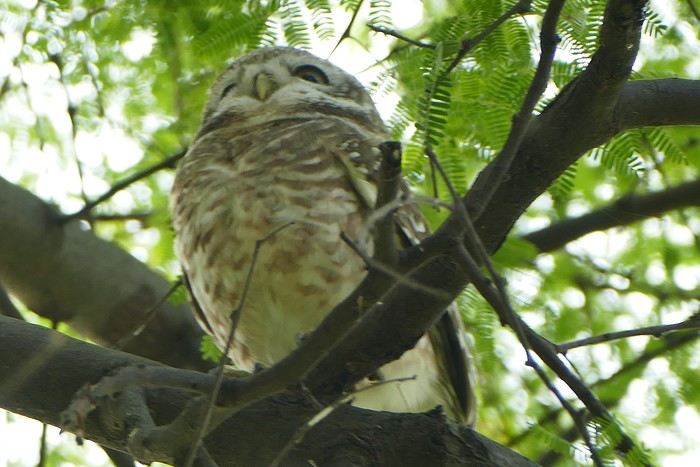
Tuesday, November 8 The morning is set aside for visiting Keoladeo Park. I rent a bike at the park entrance (150 rs for the day, park entry 671 rs). It’s a birdwatcher’s paradise, and I hope to spot a few. I follow a rickshaw wallah who’s guiding a group of tourists. They stop by the side of the road and head into the wild on foot. I tag along, and they wave me over to join them. Everyone’s looking up at a tree—my first discovery: an owl.


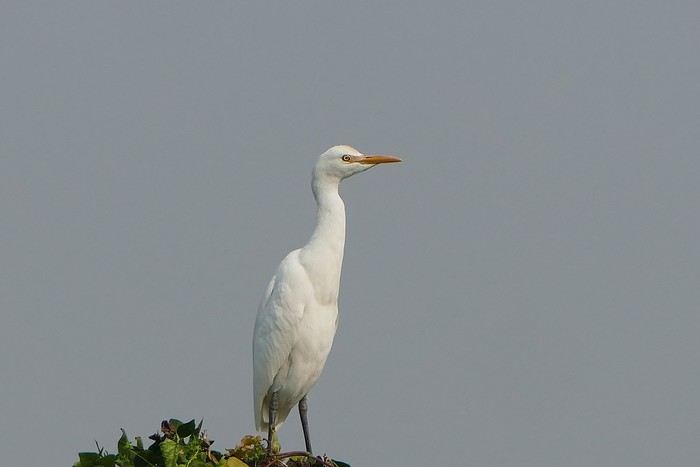
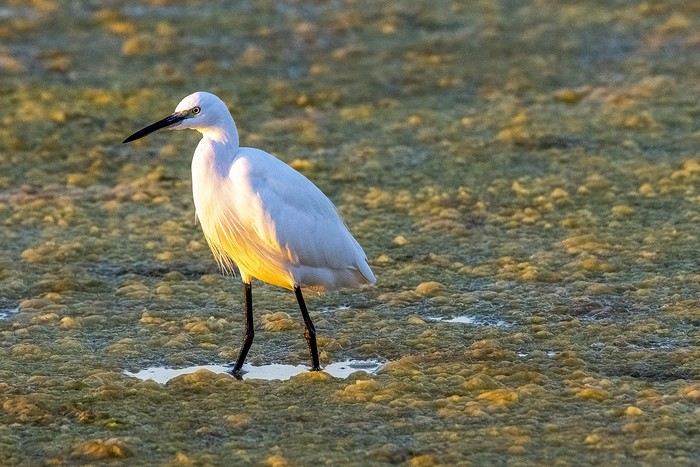
A little further on, an egret.


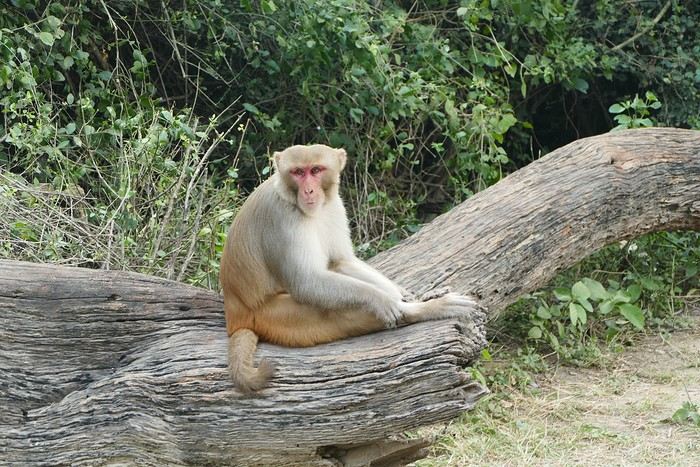
Monkeys are also around.


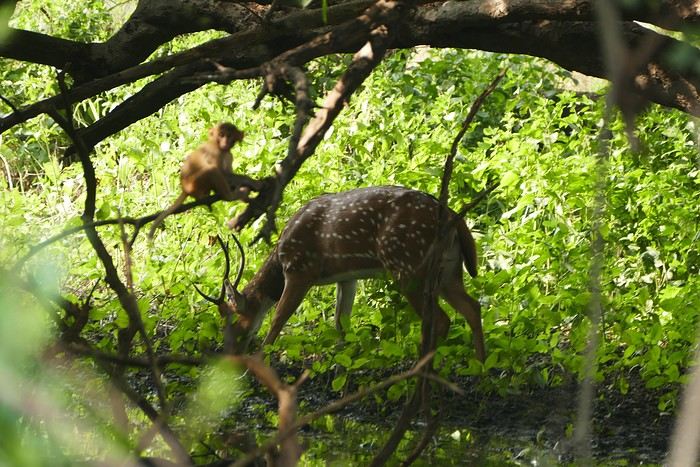
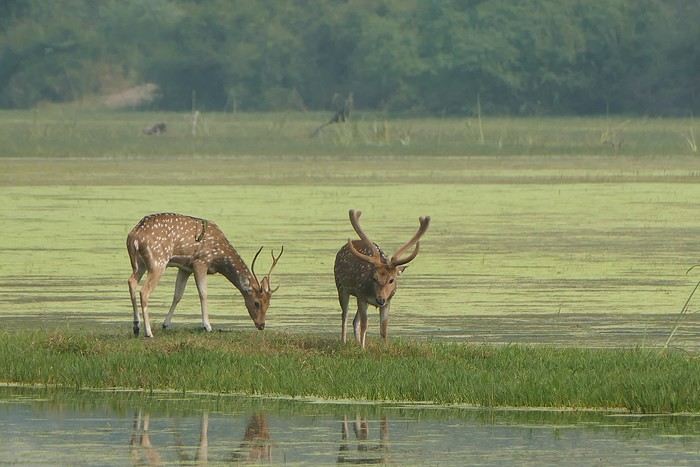
I hear a noise near a pond, and wow—a deer appears. I’ve never seen one this close before. What luck! The day’s off to a great start.


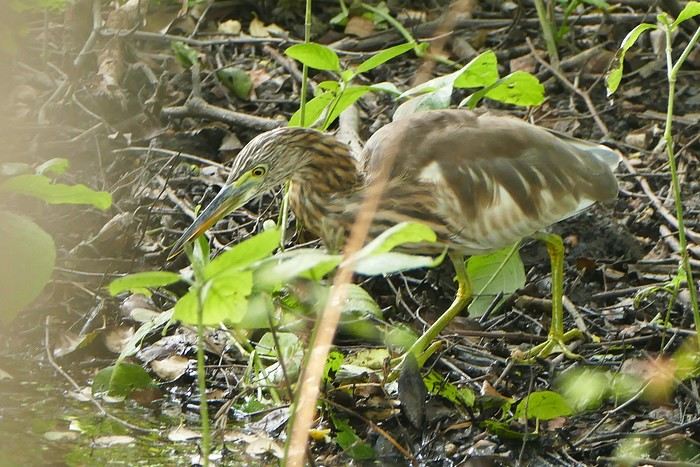
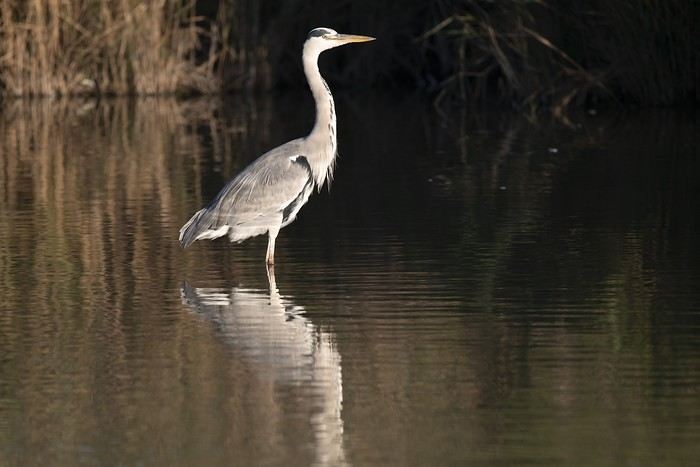
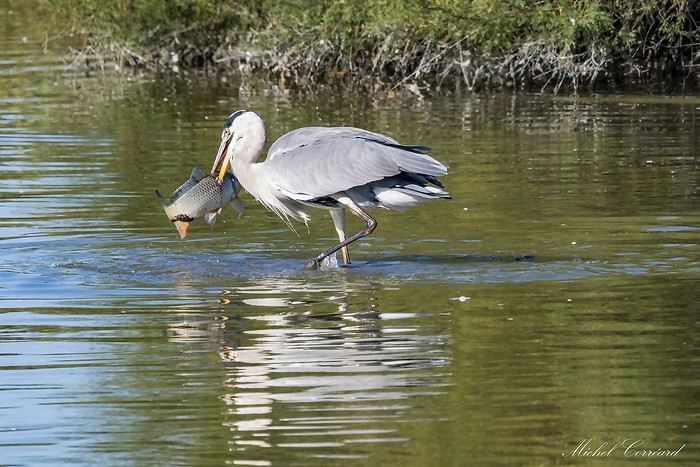
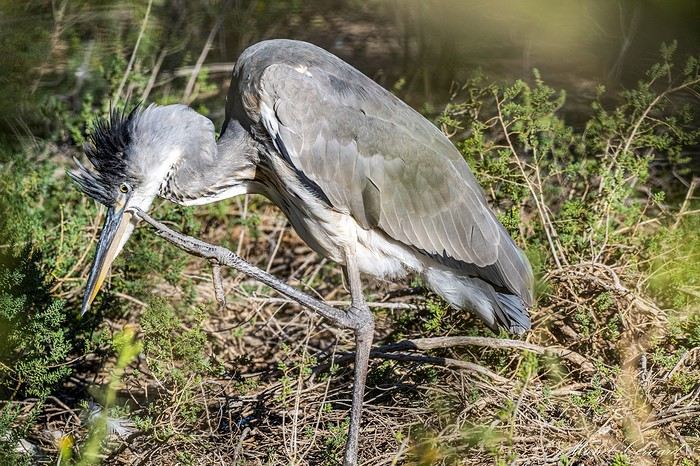
Then, a heron—maybe a Gray Heron.


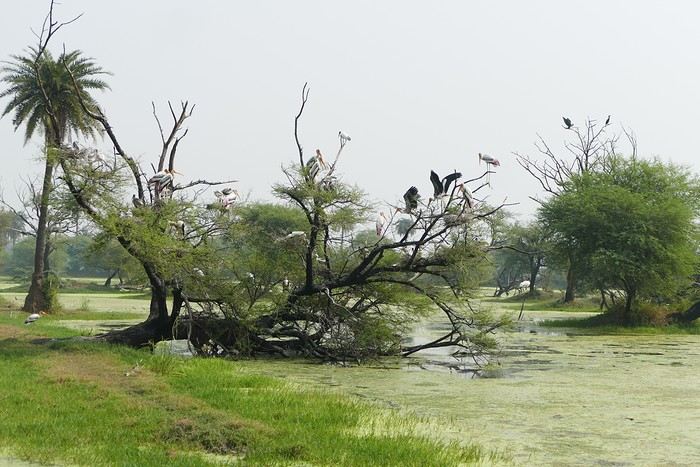
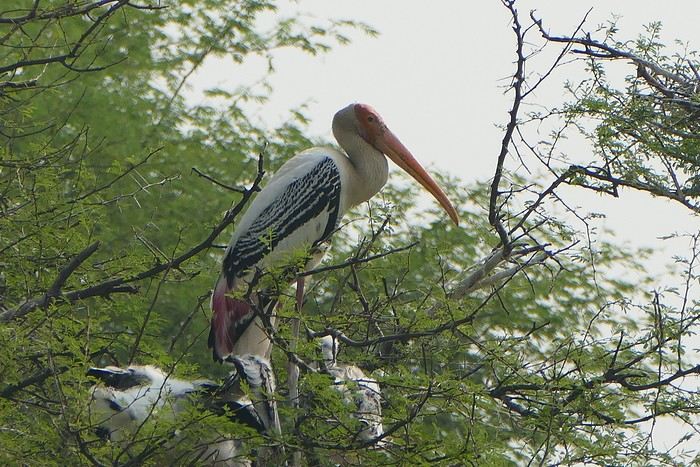
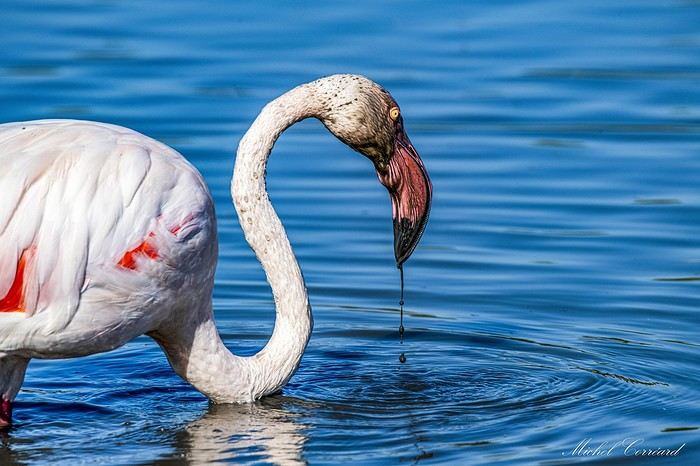
Further on, the storks are noisy and everywhere.


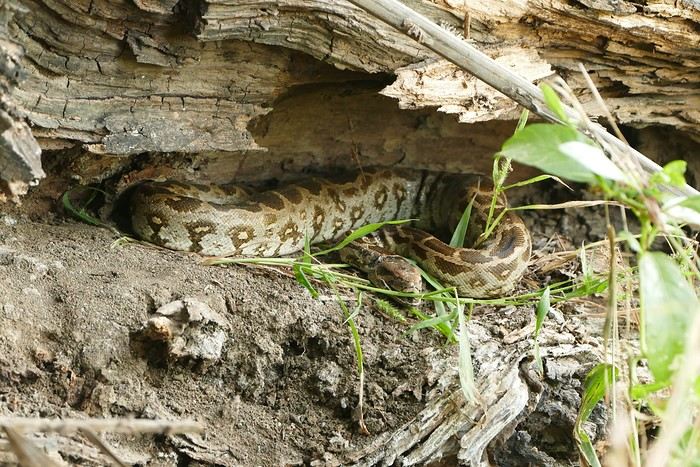
A man comes to find me, motions for me to follow him into the bushes, and says "python, python." Wow—it’s right there, impressive!


Two more deer.


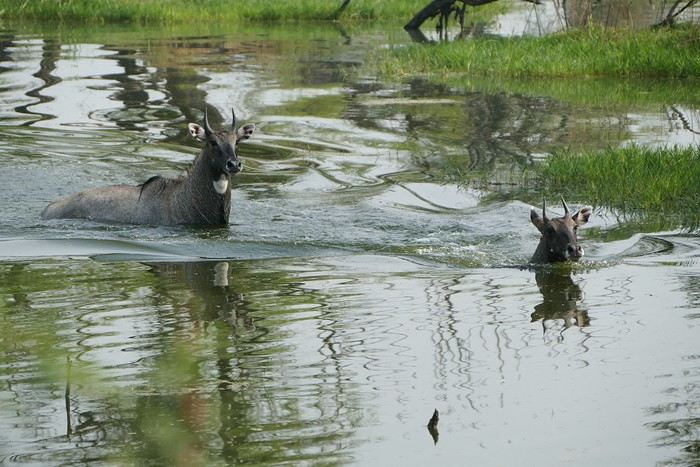
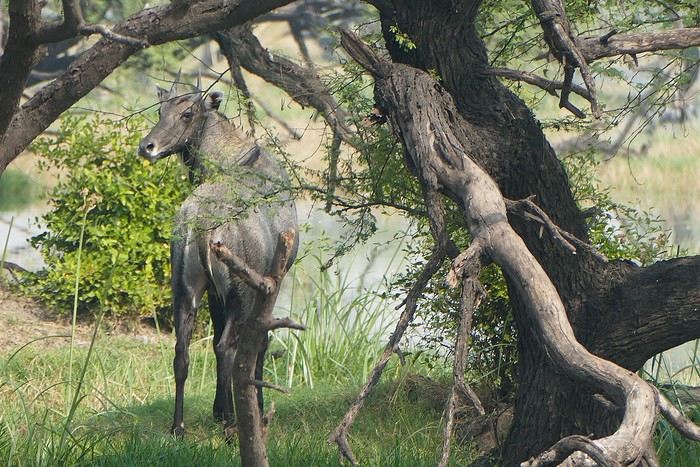
Two nilgai antelopes.

AL Aleph240758 Veteran ·
so, are you coming?


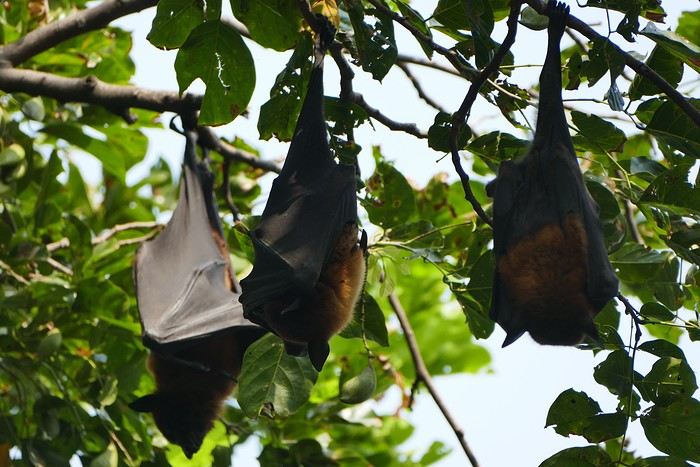
bats


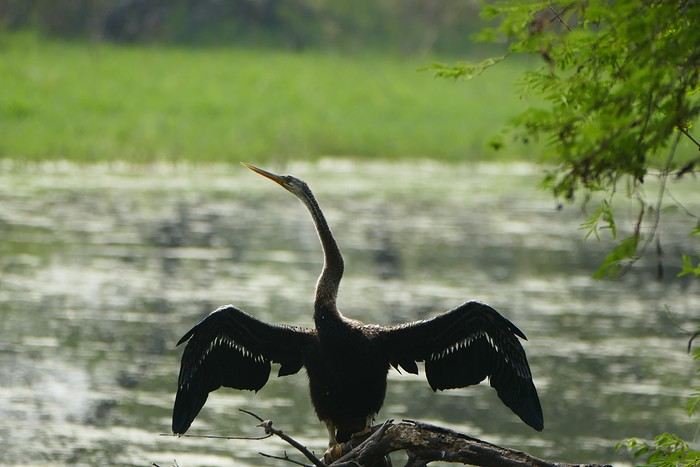
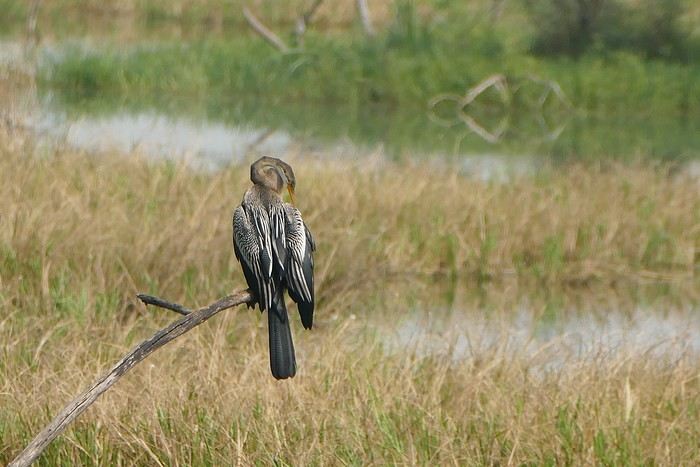
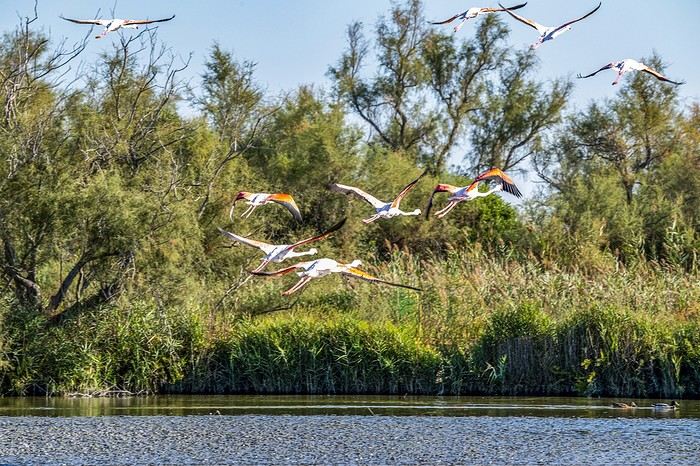
cormorants and lots of other wading birds.


A real treat, the morning flew by, and I’ve got a meet-up with Gaju at 2 PM. I’m starting to feel hungry, so I head back to the park entrance with some great photos. We’re off to visit the palace (entry 100 rs).


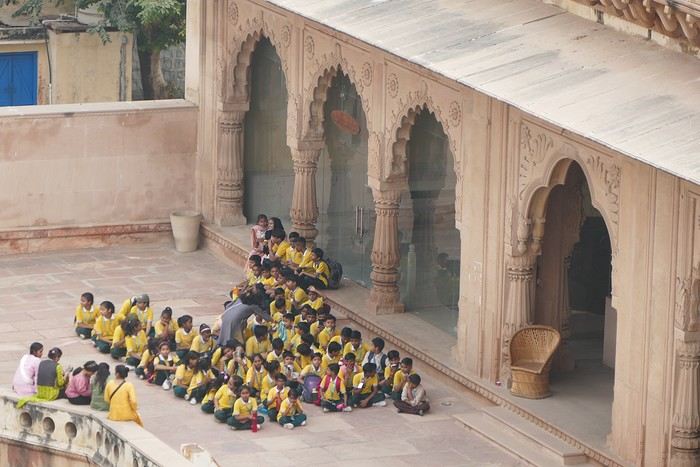
A school just arrived—both girls and boys are wearing pants. This is the first time in India I’ve seen this uniform. A recent TV report covered this topic. School uniforms are now, and have been for a short while, the same for girls and boys to promote gender equality and equal opportunities. The little girls interviewed were thrilled to have more freedom of movement to play. It’s also said to change their behavior in class, helping them participate more easily and assert themselves better.


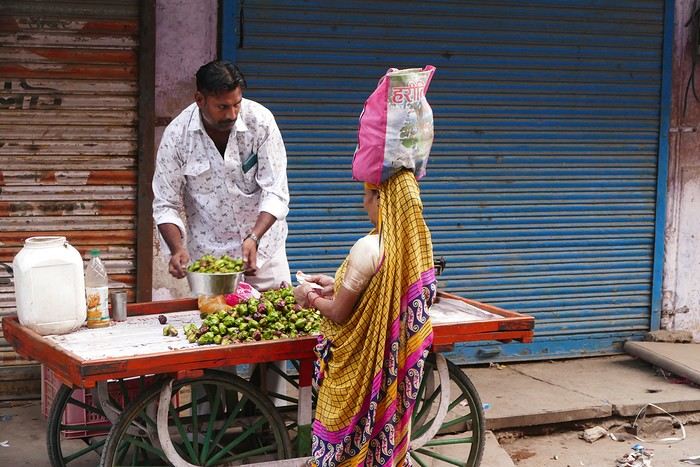
All the temples are closed today—lunar eclipse. A fruit vendor; this fruit grows in water. Along the road, I saw people in boats harvesting them several times, as well as roadside stalls selling them, but I don’t know the name and I didn’t like it—no taste.


Back at the guesthouse, and no sooner had I arrived than the rain and storm showed up, keeping me company all night.
AL Aleph240758 Veteran ·
Wednesday, Nov 9. I leave the Iota Gh around 9 AM—it’s a place I’d definitely recommend. We hit the road for Dholpur. I ask Gaju to turn off the AC since I can’t stand it, and I’ve caught a bad cold. He doesn’t understand why I want to go to Dholpur—he’s never heard of it and thinks there’s nothing to see. I try to explain, but it’s tough since I don’t speak English or Hindi, and convincing him to trust me—that Dholpur has some great surprises in store—isn’t easy. Thankfully, Google Translate helps, but communicating like this for three weeks is going to be rough. I’d hired Rakesh, his boss, because he spoke French, but I feel like I got scammed. For visiting the villages I’ve planned, I need a car, so Marie, just stay zen.

We arrive in Dholpur at 10:30 AM, and 10 minutes later, we’re at Machkund Temple. It’s a historic and sacred site in Dholpur. I’ve been here before, and it’s still peaceful and beautiful—a hidden gem in the region between Agra and Gwalior, and we’re the only visitors.

As we walk around, the sky is overcast after last night’s storm—too bad, but the rain has stopped. Gaju’s smiling again. He takes photos and thinks Machkund is stunning. He’s never had a tourist like me, searching for unknown places… and this is just the beginning.


We pass through the temple, and at the exit, a man tells me that photos are forbidden with a camera but allowed with a phone.


Back at the car, I point out the other discoveries ahead. We need to pass by the clock tower, built between 1880 and 1910, known as Ghanta Ghar. It’s looking more and more rundown. I ask him to park nearby so we can walk to the baori, but he doesn’t see it that way and weaves through the alleys searching for a parking spot. It’s a shame because I’d love to stroll through the streets and soak in the Indian life like I do on every trip. We end up parked near the royal baori, built between 1873 and 1880.


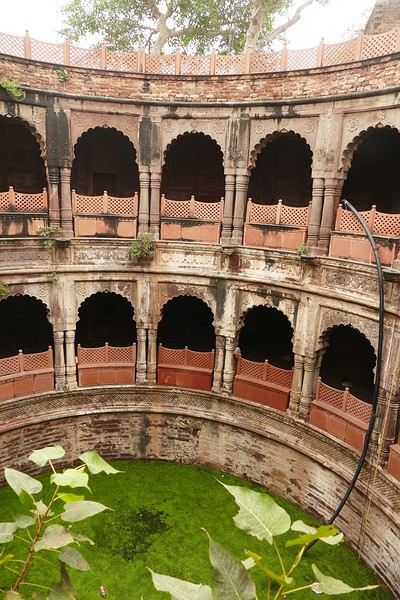
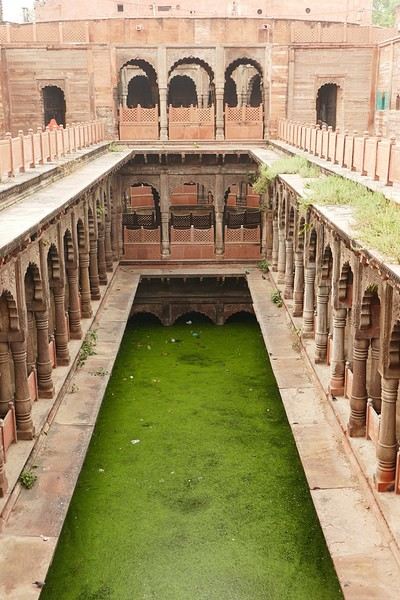
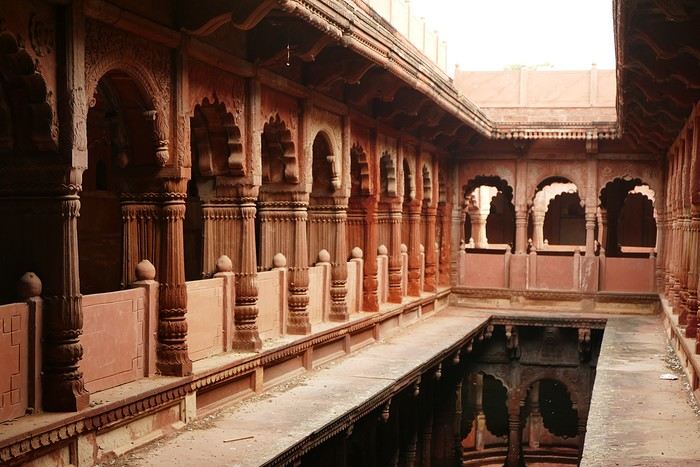
This baori has two parts—a circular one and a rectangular one—spread over several levels. Right now, we can only see two levels with intricately carved columns.


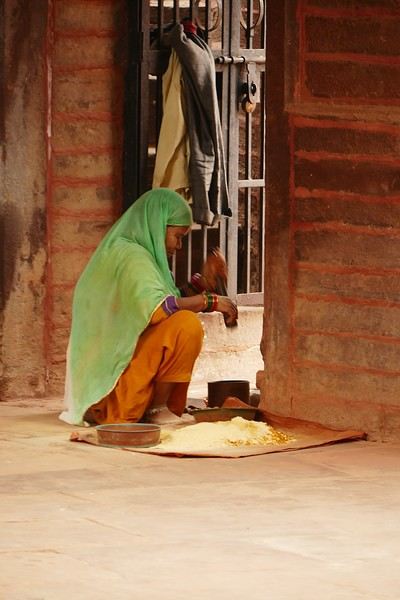
In one corner, a woman sifts turmeric and ginger, which will be used to make ointments. She works crouched down, breathing in the dust for long hours.


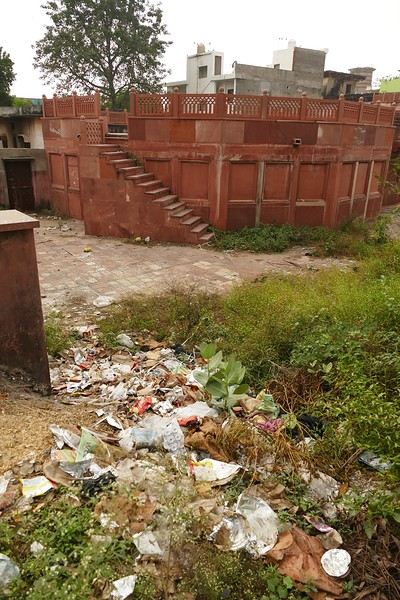
It’s beautiful, but a second one is hidden just a 5-minute walk away in an alley. We arrive at a locked entrance, but a man in a shop across the street signals for us to climb over the fence to get in. Okay, let’s go—we have to step over some trash.


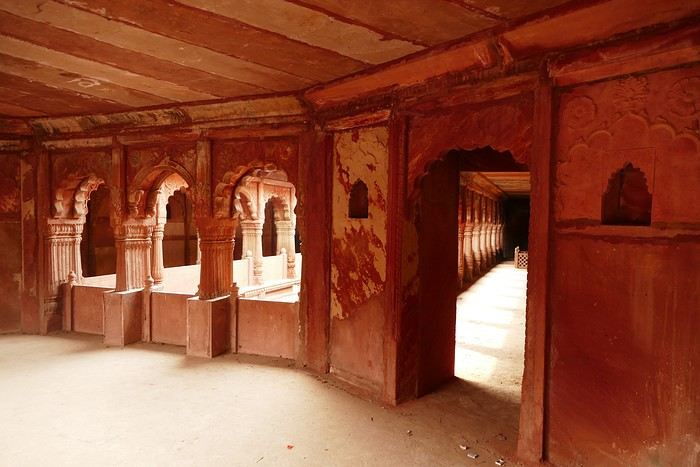
The view from the top shows it’s also in two parts and looks even more stunning. The columns and arches are all carved—it’s truly magnificent. I hope it’ll be preserved; it’s so beautiful. On my last trip, I came back here, and it’s still in the same condition.


All along the corridors, I notice small niches in the walls. Women used to come in the evening to fetch water and would light oil lamps in each niche for light.


It’s lunchtime, and we head to a dhaba we spotted when we arrived.


We hit the road again for Karauli, where we spend the night at Hotel Shree Gopel (1500 ₹ including breakfast). I have dinner at the restaurant across from the hotel—a delicious malai kofta and butter naan. I spend a good part of the night coughing, exhausted from this cold.
AL Aleph240758 Veteran ·
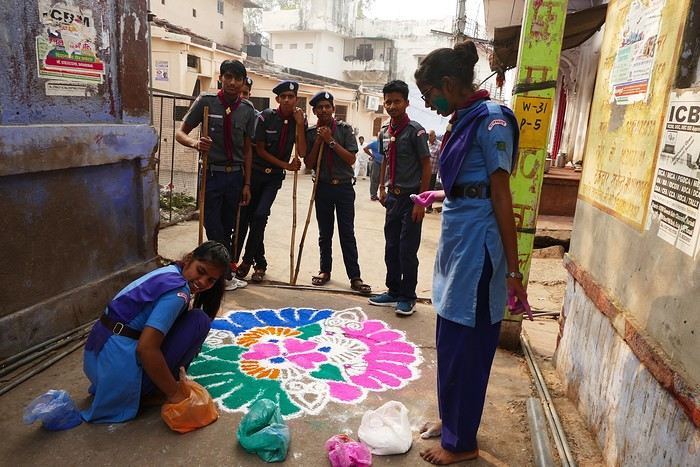
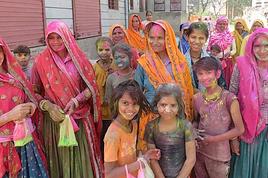
Thursday, November 10 We’re in front of the Palace at 9 AM, but it doesn’t open until 10. The shopping street is lively, lined with little stalls, and the vibe is really nice. I walk up to a group of scouts— the girls are drawing a colorful kolam while the boys watch, amused.


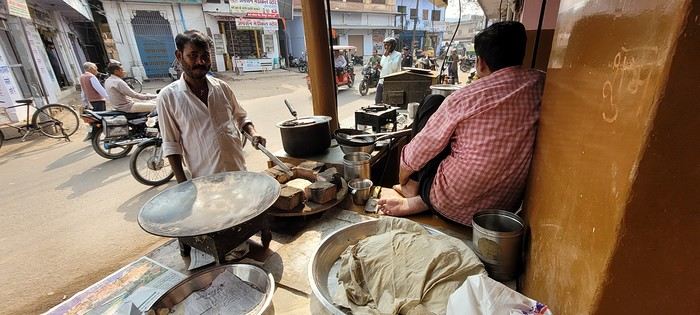
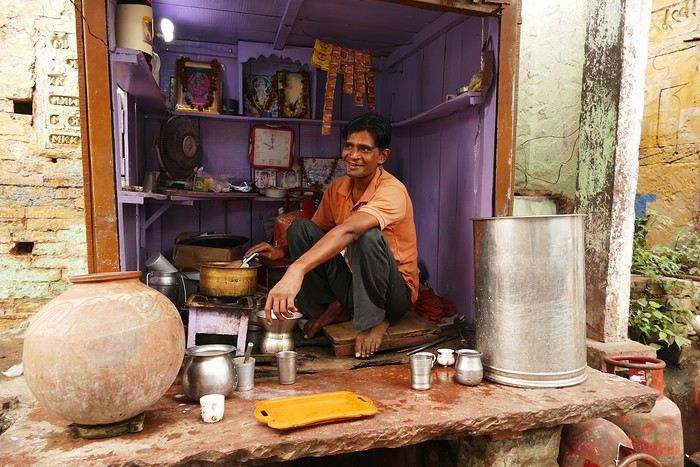
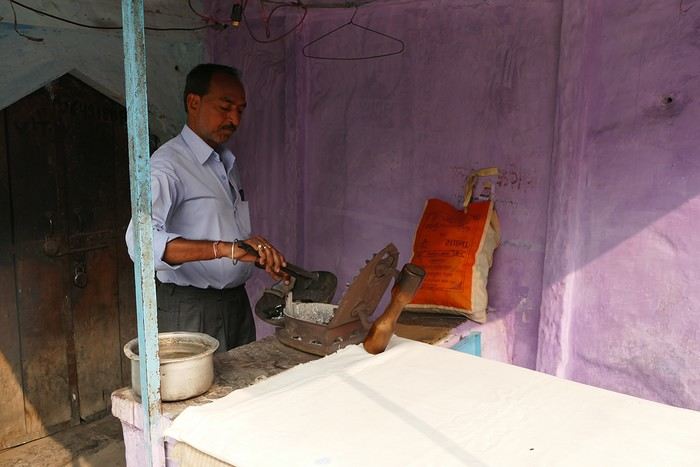
A leader takes me to their meeting place to show me their bamboo creations. They’re waiting for the Maharani’s visit, which happens after I leave— everyone snaps to attention as she passes. I keep walking down the shopping street, where the tea shop is right next to the ironing man.


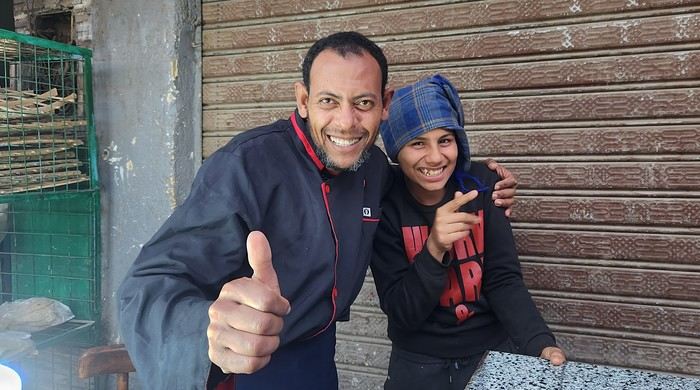
There don’t seem to be many tourists here, so I can take photos freely. Everyone’s happy to pose, and I’m having a great time.


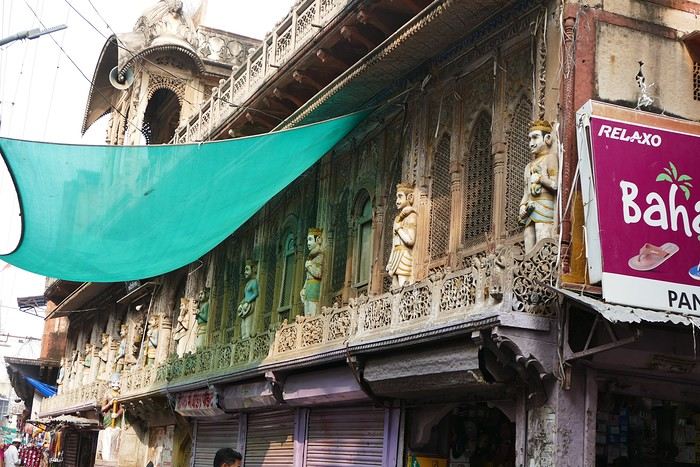
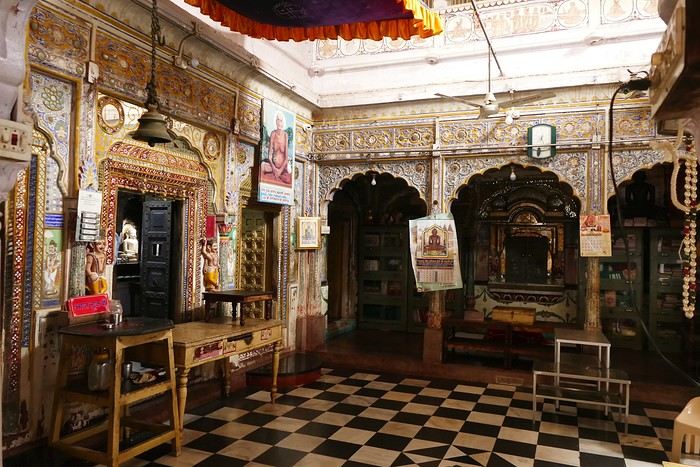
Above one of the shops, I spot the façade of a temple, with the entrance tucked away in a side alley. It’s a lovely little Jain temple.


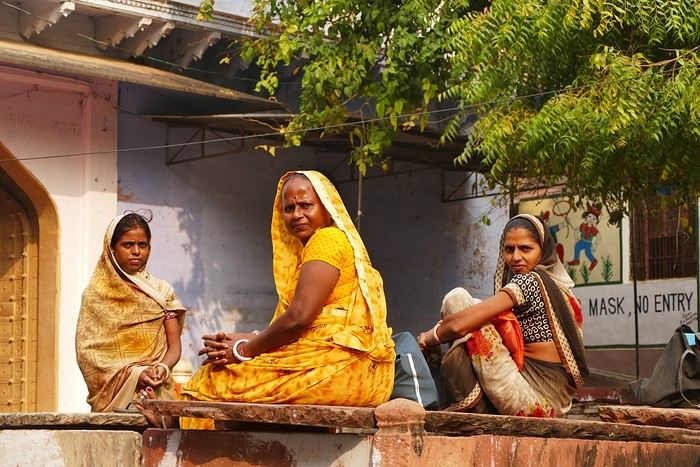
The women are chatting at the entrance.


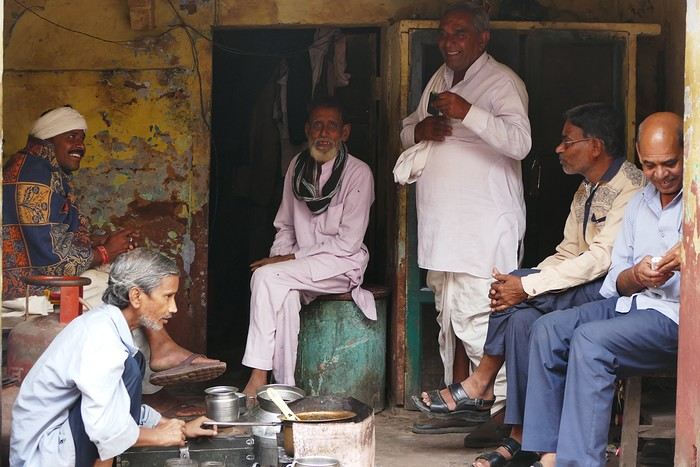
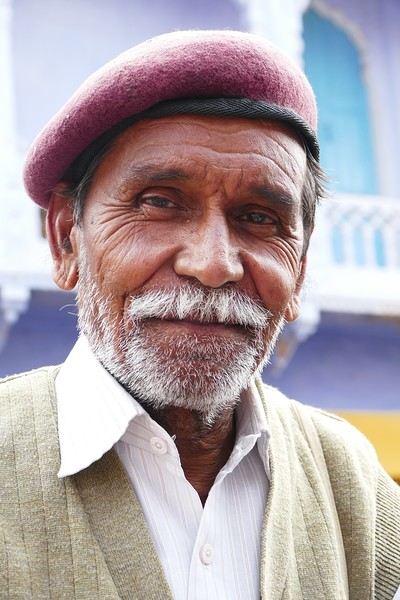
I grab a chai before heading to the Palace. A friendly man comes over— he’s wearing a gorgeous beret but won’t sell it to me. He did let me try it on though, and I loved the color.

AL Aleph240758 Veteran ·
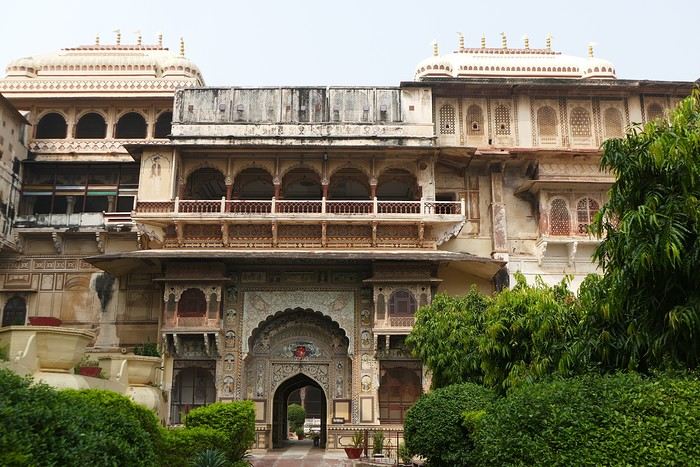
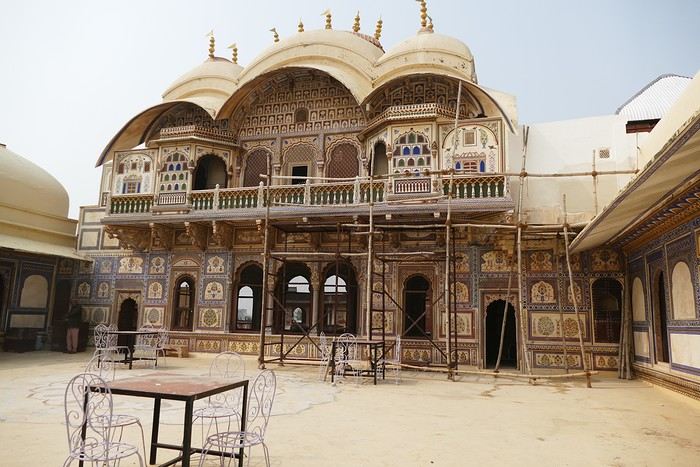
Gaju is accompanying me; the entry fee is 300 rs. We’re the only visitors, and a guard is showing us around. This palace was built in the 14th century, and each Maharajah added their own palace within it. The royal family lived here until 1938.


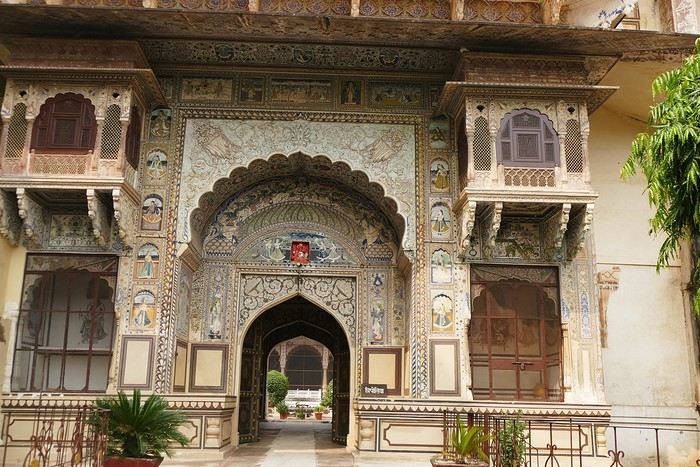
From the entrance, this palace feels extraordinary—the frescoes and sculptures are stunning.


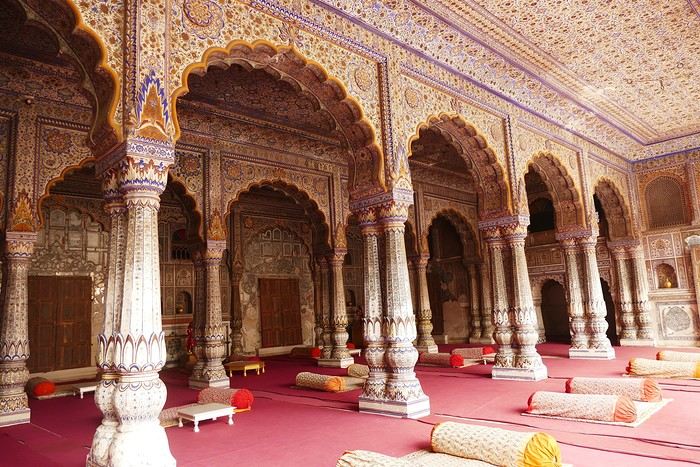
The first inner courtyard leads us to the women’s dance hall.


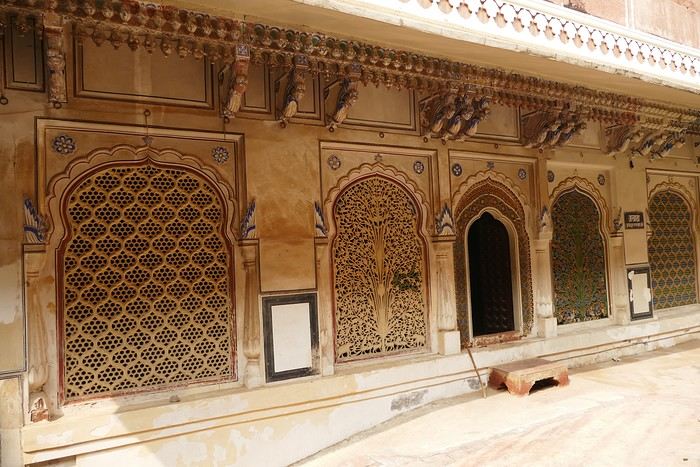
Upstairs, a façade covered in intricately carved *jalis*—all unique and so delicate—I love it.


The gym and weightlifting room.


We continue to the section under restoration.


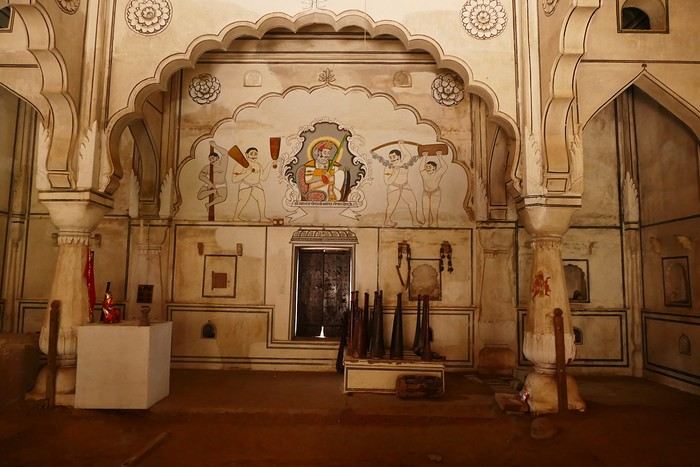
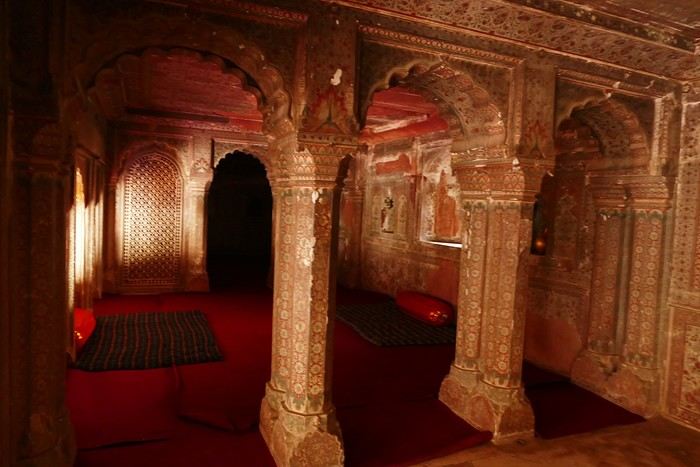
A room painted red seems older.


What a visit! The guard took his time, and it felt like a private tour—just for us. Incredible. From the terraces, I spotted *chhatris*—the Chhatri Palace of Raja Gopal Singh. We walk there; a road runs alongside the Palace. The enclosure is locked, and no one has the key. Everyone just says “close,” so I settle for admiring it from the fence. Too bad—not every gamble pays off.

AL Aleph240758 Veteran ·
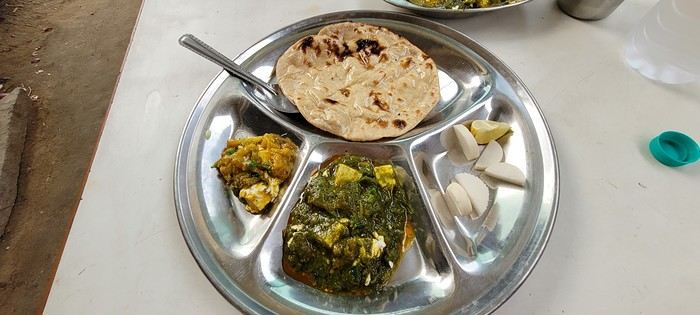
We’re leaving Karauli with stars in our eyes—I loved this village and the Palace so much, it deserves to be visited regularly. We’re hitting the road for Dausa. We grab lunch along the way—palak paneer, veg masala, chapatis—and it’s delicious.


We stop at Bhandrej Baori, 10 km from Dausa. It’s also called Badi Bawdi. At the entrance of the bawdi, you can see a chhatri-style arch built above the main courtyard. There are four chhatriyas at each corner. It was built in 1789, is rectangular in shape over three floors, and has rooms on each level that were likely used for changing or praying. Some say this bawdi was built by ghosts in a single night, just like Chand Baori.


It’s magnificent and little-known—I hope this travel journal inspires future travelers.


Night in Dausa
AL Aleph240758 Veteran ·
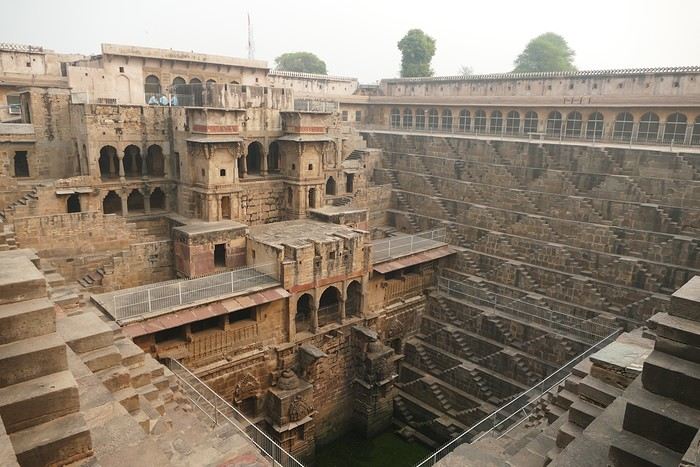
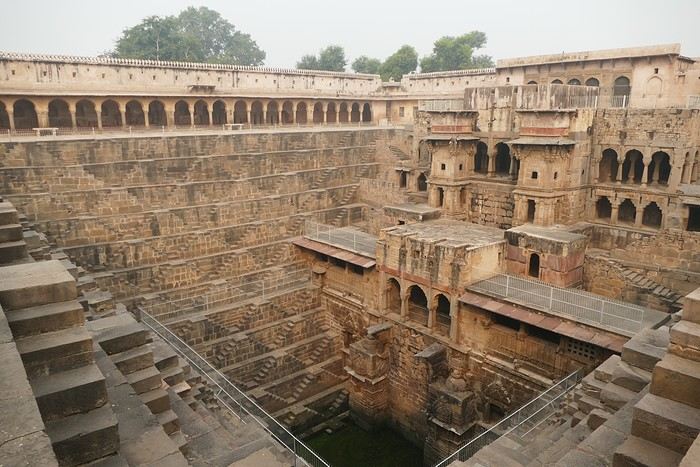
Friday, Nov 11 This morning we head to Abhaneri, 35 km from Dausa, where the Chand Baori, India’s largest stepwell, is located. The well is 30 meters deep, with 3,500 steps leading down, and there’s a palace with several floors resting on pillars. Today, you can no longer descend into the baori, which is protected by grilles. It’s one of the oldest baoris in India. When we arrive, I’m the only tourist. Entry is paid—300 rs.


Across from the baori is the Harshat Mata Temple, the goddess of happiness and joy.


We leave Abhaneri to visit the Bhangarh Fort, 53 km away. It takes us 1.5 hours to get there—the road is in very poor condition. We pass through mustard fields. When we arrive, the parking lot is already packed with cars and motorbikes. Entry is paid—300 rs for tourists and 25 rs for Indians.

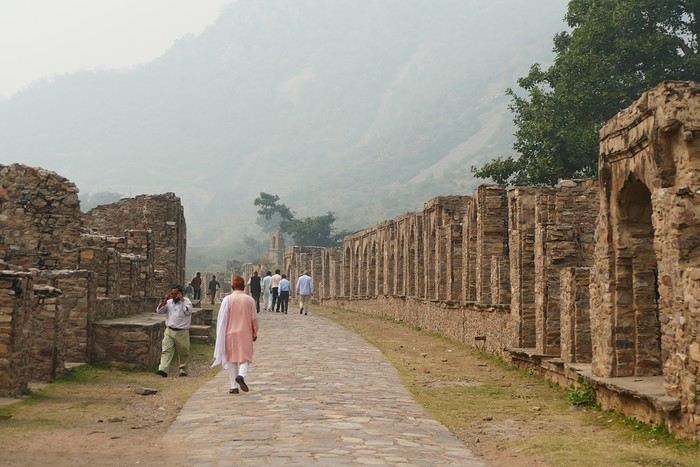
You have to follow a long alley lined with ruins to reach the fort.


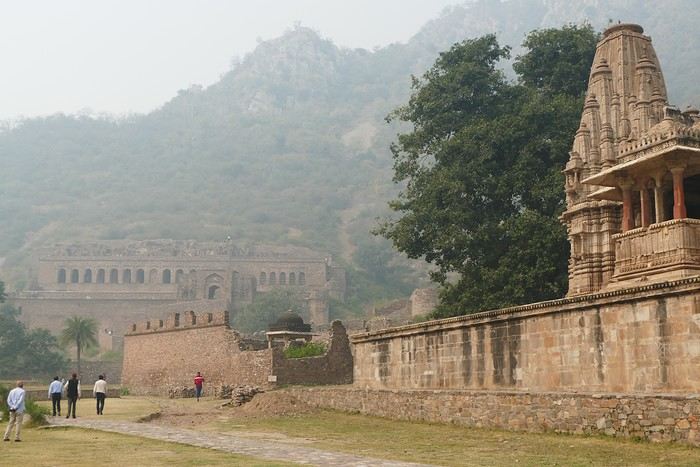
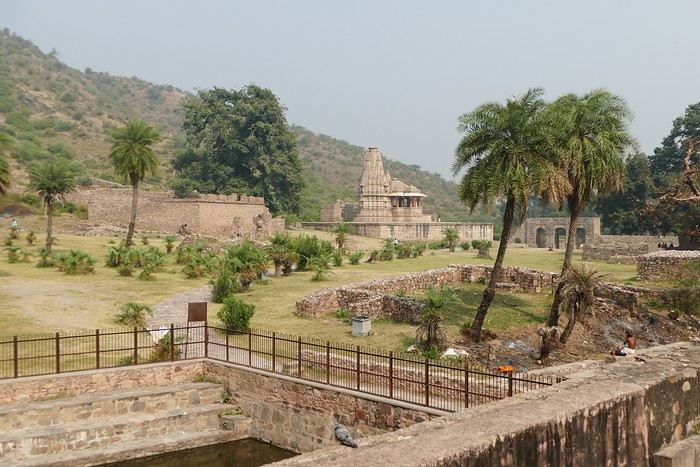
There are temples and a baori within the fort’s walls.


It was built in the 17th century. This fort is considered one of the most haunted and cursed places in India. There are several legends associated with it, but two are particularly popular among the locals. The first legend is about a sadhu named Baba Balau Nath, who used to meditate here before the fort was built. He gave his approval for the fort’s construction on the condition that neither it nor any building inside would be taller than his house, and if the shadow of any structure fell on his house, it would lead to the fort’s destruction. The grandson of King Madho Singh ignored the warning and raised the fort’s height significantly. The resulting shadow fell on the sadhu’s house, leading to the fort’s downfall. The second legend is about Princess Ratnavati, who was very beautiful and had many suitors from royal families across the country. A sorcerer, skilled in black magic, fell in love with the princess. One day, while the princess was shopping with her friends, the sorcerer saw her buying ittar (perfume) and replaced it with a love potion. The princess discovered the sorcerer’s trick and threw the potion onto a rock. The rock rolled toward the sorcerer, crushing him to death. Before dying, he cursed the city, declaring it would soon be destroyed and that no one could live within its walls. The kingdom was later ravaged by Mughal forces, killing all the fort’s inhabitants, including Princess Ratnavati. The fort is closed between sunset and sunrise.


I’m the only foreign tourist, and some young people quickly spot me—photo time is mandatory.


We take the same bad road to the village of Aandhi, 28 km away, and it takes us 50 minutes to get there. I read on a blog that there’s also an old stepwell here in the village. It’s in poor condition and abandoned.

The street is lively, and tourists don’t usually come here. They call out to me for photos and love looking at themselves—the atmosphere is very friendly, with lots of laughter. They show me the products they sell, and I have a great time.


The road to Jaipur is good. I got in touch with my friend Ashok, who now works at the Ratangarh Palace Hotel, and he reserved a room for me. It’s in the same neighborhood as the Sunder Palace, which is closed for renovations.
PO Pondy Veteran ·
Hi Marie, There are so many lovely travel journals about India, Rajasthan, and Tamil Nadu. These are very common routes, which doesn’t take away from the beauty of the photos and storytelling, but I love yours infinitely because it’s unusual, and I’m discovering your hidden gems with great pleasure. I won’t be going back to India. I’ve traveled through many regions—by bus, train, taxi, and even motorcycle—I worked there for months, and today, I have a little pang of regret for not having visited what you’ve shared so beautifully. Thanks

Similar discussions

You might also like