The Two of Us in Istanbul: A Turkish Blue Round
FR

Translated into English.

RI RichardXI Regular ·
15/09. Ottoman Splendors in Sultanahmet (I): Topkapi, the Blue Mosque...

Sultanahmet... the district that tourists want to visit above all else. We come to Istanbul primarily for this—to discover the Byzantine and Ottoman splendors. The Topkapi Palace, Hagia Sophia, the Blue Mosque, the Basilica Cistern—so many heritage treasures gathered in one place, so many chapters of a brilliant, centuries-old history.... Three little backpacks from the *Routard*, three stars in the *Green Michelin Guide*, the must-sees from *Cartoville* (which, by the way, is really well done—I recommend it). The place is unanimously loved.

So how do we approach it all without being too bothered by the crowds? How do we find the right balance between a quick visit and an in-depth exploration? How do we avoid missing out, as sometimes happens in these situations? And most importantly—what on earth am I going to write in our travel journal without just copying and pasting from guidebooks?

Not too many people on the main square at this hour—it’s still early, visits start at 9 AM. We decided not to see everything at once to avoid feeling overwhelmed. Topkapi and the Blue Mosque for today, Hagia Sophia and the Basilica Cistern for our last half-day before departure.

I’ll visit the palace alone—Kate’s already seen it on a previous trip. We agreed to meet up in two and a half hours. I booked the visit online from France: a Harem/Palace ticket with skip-the-line access and an audio guide—69 € all the same! I have to go to a meeting point where a palace employee is waiting to let us bypass the line. There are about forty of us in front of the guide, who explains—in ultra-fast English—how he’ll lead the tour. I don’t catch everything, but I’ll follow the herd and its leader, who’s waving a purple umbrella like a banner.

We go through security and enter the palace gardens. I don’t lose sight of the purple umbrella glinting in the bright autumn sun of Istanbul. We cut ahead of everyone. Great! The guide takes us to the entrance of the harem and tells us the visit is now self-guided. We’re on our own—the palace is mine.

Two and a half hours exploring this sultan’s palace, continuously occupied from the 16th to the 19th century. I take my time, paper guide in hand, having ditched the audio guide to feel less dependent on technology. I’m guiding myself, sometimes walking ahead of the big groups or letting them pass to carve out moments of relative solitude. The visit enchants me—I dive into a history I actually know very little about, but I’m not trying to grasp everything. I let my gaze wander from room to room, courtyard to courtyard. The decor is sumptuous, often Baroque and Rococo in style. I try to imagine what daily life was like in this palace-city, especially in the harem, where all those women—wives, concubines, favorites—lived, served and closely watched by eunuchs.

Leaving the harem, I stroll through the palace’s four large courtyards, landscaped gardens dotted with pavilions and kiosks, each with a specific function—political, religious, scholarly, or recreational. From the vast terraces, I lose myself in the view below: the Bosphorus, the Sea of Marmara...

Crrr, crrr, a WhatsApp: “I’m at the café on the square.” Oops, it’s 12:30—I lost track of time. Kate’s waiting...


A pleasant lunch at a slightly out-of-the-way restaurant recommended by the *Routard*: *Palatium*. We’re comfortably settled on low banquettes in a lovely terrace surrounded by galleries, in the shade. The welcome was a bit stiff, but after my repeated teşekkür ederim, the waiter relaxed and even started smiling. We order a single dish—a very Mediterranean spread with şakşuka, hummus, yogurt sauce with herbs, grated beets, and stuffed vine leaves.

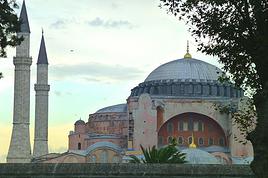
Before heading to the Blue Mosque, we wander around the main square, and Kate takes some lovely photos of Hagia Sophia, the magnificent Christian basilica built by Justinian, later turned into a mosque, then a museum, and now a mosque again by Erdogan’s decision. But as we’d planned, *Sophie’s Choice* will have to wait for another day.
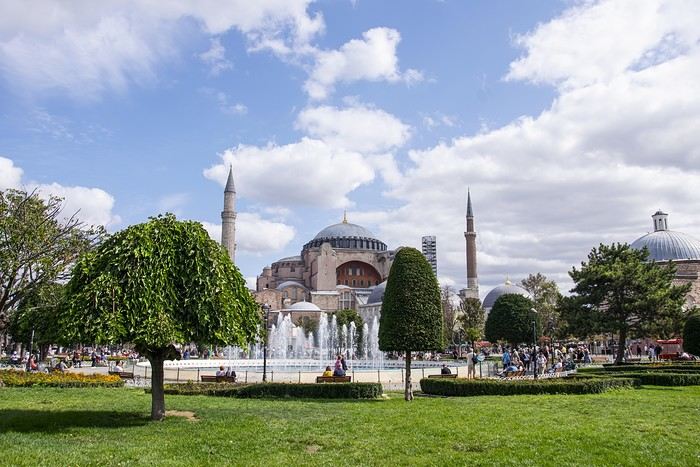


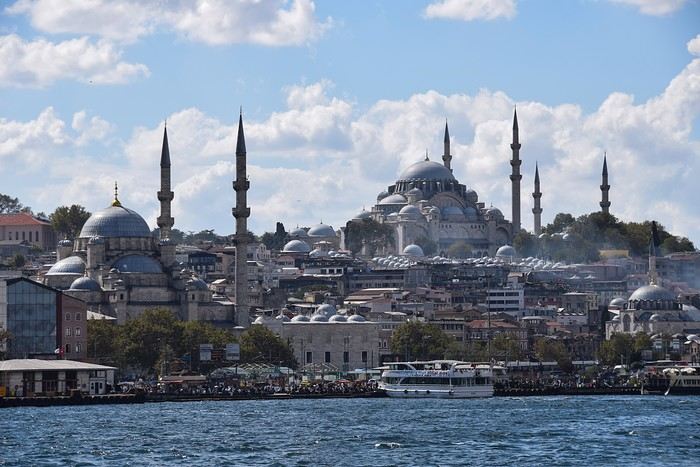
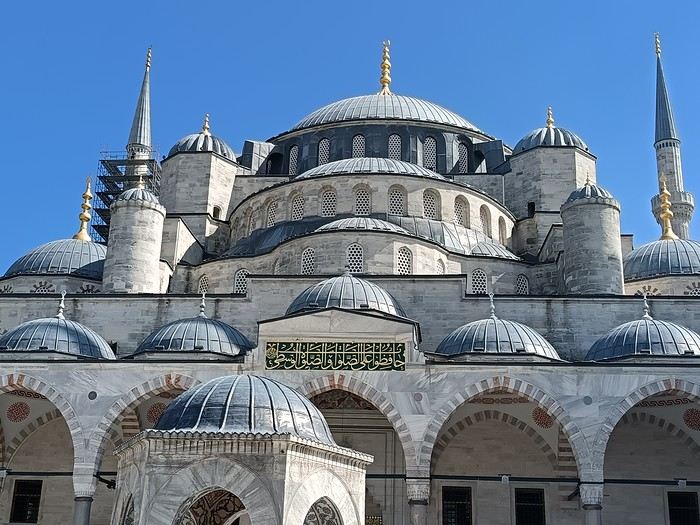
Now we’re heading to Sultanahmet Camii, also known as the Blue Mosque, built in the early 17th century by Sultan Ahmed I to rival Hagia Sophia across the way. You’ve got 4 minarets, Sophia? Bam! I’ll put up six! The audacity of man...

We enter the large ablution courtyard in front of the sanctuary. The mosque emerges into view. It’s a shock—an aesthetic emotion that stirs the whole body. I remember feeling something similar when discovering a work of art: Michelangelo’s Pietà in the Vatican, the view of the Grand Canal in Venice from the train station, the Taj Mahal in Agra...

The mosque, with its gigantic yet harmonious proportions, all curves and power, seems to both overwhelm and envelop us. We stand there, mouths agape, floating between dream and reality, deaf to the constant buzz of the courtyard.

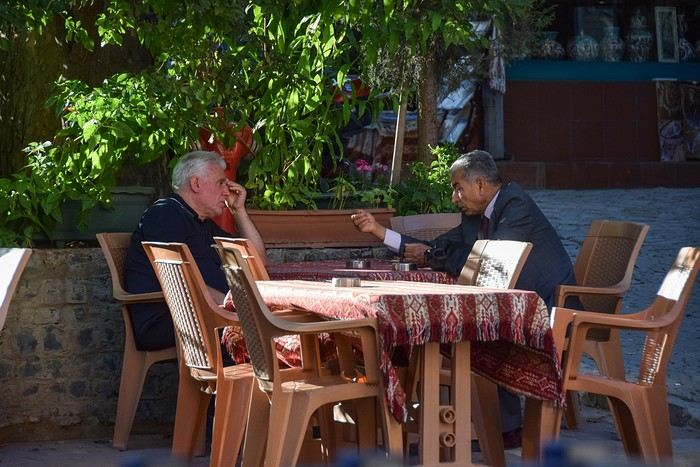
But reality quickly reasserts itself. Kate gets annoyed because some “old guy”—her words—planted himself right in front of her Nikon’s lens! Judging by appearances, he’s about our age...

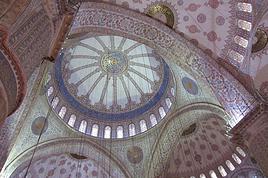
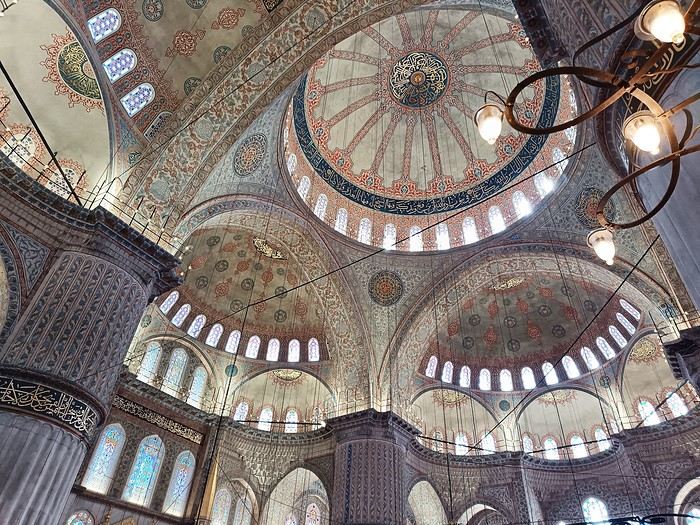
We now enter the place of worship. The space is immense, and despite the crowds, it’s easy to move around. The domes and semi-domes perforating the ceiling, all in a delicate pink, seem to swirl in a kind of mystical dance.

The visit comes to an end... Kate exits through the entrance (the mosque *is* vast, but still...). I call her back and gently steer her in the right direction.


I spotted in the guide a Byzantine church also turned into a mosque, which the Turks call “Little Hagia Sophia.” Before heading there, we take a stroll through the bazaar next to the main esplanade. Lots of souvenir shops, but also some luxury jewelry stores and artisan boutiques. I step into one of the latter to buy a small metal statuette of a whirling dervish, seemingly handcrafted by an artist. It’ll be for my son—he likes gifts with meaning...

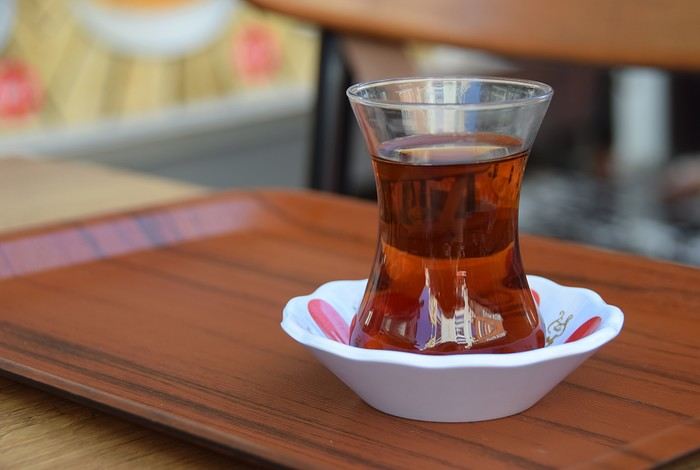
One last effort—fatigue is starting to set in. Near the church/mosque, we spot a lovely shaded garden flanked by old buildings. It’s the former madrasa of the mosque, now a craft center and café. We sit down for tea and enjoy the tranquility of the place, far from the hustle and bustle of Sultanahmet.

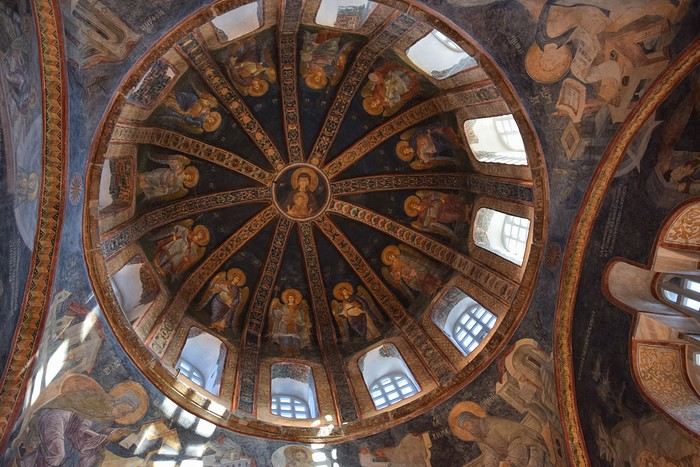
The little Byzantine church has kept its original octagonal layout, though the mosaics are gone. The atmosphere is soothing in this place, which *Cartoville* describes as having “discreet beauty.”
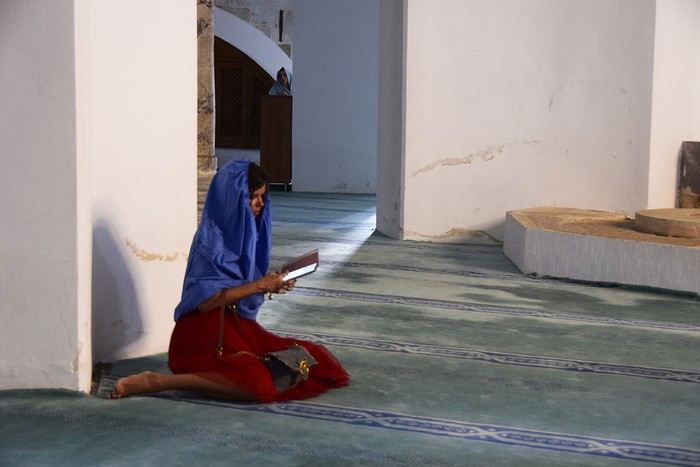


The day was more than packed—quite a few visits, I know, and Kate prefers immersing herself in street life. But it was a must, and I don’t regret a thing.

We’re tempted to dive into the youthful energy of upper Galata in the evening, but the “old folks”—much like the gentleman at the Blue Mosque, I suppose—are exhausted.
VO Voyajou Globetrotter ·
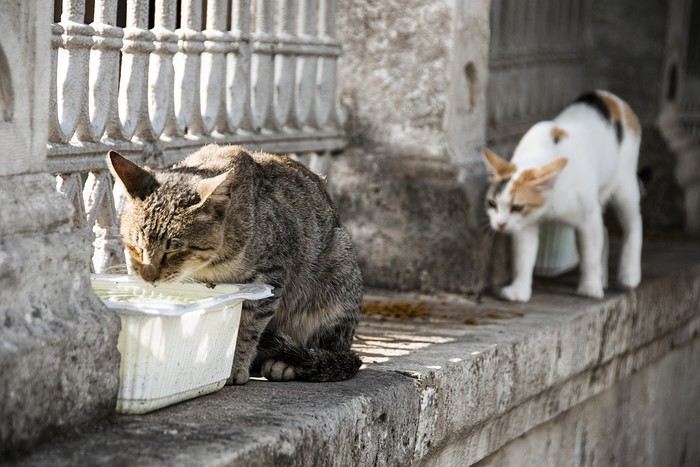
A blue that lights up stars in Istanbul’s seven nights and one. One that doesn’t return from the harem until you WhatsApp it. A cat-hunting huntress who evades the Grey Wolves (though I don’t want to start a political debate 😉). Like two parallel stories that merge into one. Two different ways of seeing and experiencing a place that are really just one. Brilliant!

(Since we’re talking colors: did you notice that for its first birthday, the new VF dressed up in baby green?)
PA Pagaljavab Globetrotter ·
Hey Richard (and Kate),

Back in 2017, during a 3-week trip to Turkey, I spent almost a full week in Istanbul, and even in just four days of my travel journal, I had way too much to say...

First, let’s talk about the present. We’re heading to Turkey in 3 weeks (a future travel journal?). Our initial plan was Istanbul—a sprawling, stunning city, one of my favorites in the world. But while doing some initial prep, I noticed that the economic crisis the country is going through, along with the latest devaluation of the Turkish lira, has led to skyrocketing inflation, which is even worse in Istanbul than elsewhere. I’ve seen the outrageous prices (even in Paris, they wouldn’t dare charge a third of that!) for visiting the "must-sees" (and there are *so* many). Bottom line, it’s a crazy budget if you want to do the city justice. Even in Norway, they wouldn’t dare charge those prices! Back in 2017, I remember a city where you could still eat well for 2 or 3 €, and where monument entry fees, though already pricey for Turkey, were still affordable. I think Istanbul has now decided to make tourists pay for its crisis. But let’s not forget that Turks are the ones hit hardest. I’ve read on forums that Turks say prices will drop and return to normal in 5 to 10 years, before another devaluation. It’s cyclical... So we boycotted and chose Ankara and Cappadocia instead, where inflation hasn’t been used to fleece visitors as much.

Anyway, I recognized your description of the dock where you see the Bosphorus and the Golden Horn. Your words captured the exact feeling I had in 2017 in that same spot. To me, that’s the place that symbolizes Istanbul. I *love* kuru fasulye—it was my "go-to" dish throughout my Turkish trip. I immediately perked up when you mentioned it. And please, stop with your "téchékoudérim" 😂 It’s phonetically "téchékûr édérim"!!

Anyway, I really relate to this style of storytelling—it’s totally my thing—so I’ll keep following with enthusiasm!
PA Pagaljavab Globetrotter ·
(Since we're talking about colors: did you notice that for its first anniversary, the new VF went baby blue-green?)

Yeah, and it’s even a little shocking, isn’t it?
JO Jojoone1 Globetrotter ·
(Since we're talking about colors: did you notice that for its first anniversary, the new VF got dressed in baby blue?)

Yeah, and it’s even a bit shocking, isn’t it?

Let’s let this travel journal unfold without interfering, please
TA Tatra Globetrotter ·
Hello,

Do you see it as baby blue? To me, it's blue. That said, the green/blue distinction isn’t the same in Turkish as it is in French—and doesn’t even exist in Breton, for example. But you're right, let’s not make it a debate, even if *gök* and *mavi* are key to Turkey’s national imagery.

Michel
PA Pagaljavab Globetrotter ·
Oh, shouldn’t I have chimed in? I didn’t know, sorry... I thought there were some good points to build on, but I’ll stop jumping in then...

PS: Should I delete my messages? Thanks in advance.
MA Masterpo Globetrotter ·
Did you notice that for its first anniversary, the new VF got dressed in baby blue-green?

The hex code is #32bcc5. If we ask AIs to define the color, here’s what we get:

Copilot Light blue-green (medium turquoise, light teal, soft cyan)

Perplixity Bright blue-green (between cyan and turquoise, lagoon blue)

Grok Bright blue-green (light cyan, aquamarine)

ChatGPT Soft cyan (between turquoise blue and light teal)

Claude Turquoise or turquoise cyan (between blue and green, with a cyan dominance, lagoon blue)

Gemini Shade of cyan and turquoise (aquamarine)

Deepseek Light cyan or turquoise (lagoon blue)

So basically, we can say it’s a blue-green.
PA Pagaljavab Globetrotter ·
I would’ve loved some feedback on those interferences too 😉
KO Kola Globetrotter ·
“If I had but one glance to cast upon the world, it would be upon Istanbul.”

A travel journal immersed in this gaze of passing travelers/tourists, eyes wide open to every moment of a short week.

Neither pretentious, nor moralizing, nor naively candid, the account captures the colors, the alignments, the winding alleys, the street delicacies, the delicacy of the tiles, the finesse of the calligraphy... And the people! And the cats! with a lightness that surprises coming from something that weighs so heavy around the neck. No doubt the know-how of a well-made head sitting atop that neck.

Around these luminous images, the precise and erudite prose weaves like a silken ribbon, unfolding the dazzlement of first impressions while recounting this Orient that wavers between the West and a Thousand and One Nights... sketching feelings, brushing past tiny annoyances, highlighting the complicity—touches of humanity that give the story a soul and distance it from mere vacation memories. You did good buying new kicks! Don’t you wanna take the Nikon? My neck hurts. But I’m telling you it’s to the right! You go up alone, I’m out of breath. I know Bruno... but who the heck is this Vazyvite again?!!

Getting lost, understanding each other, disagreeing, finding each other again, sharing...

The two of us is a lovely mix, a charming alchemy, a beautiful novel, a beautiful story...

Every gal in Constantinople Lives in Istanbul, not Constantinople So if you've got a date in Constantinople She'll be waiting in Istanbul

(from the two of us)
KA Kate Globetrotter ·
You did the right thing buying new kicks! Don’t wanna take the Nikon, my neck’s killing me. But I’m telling you, it’s to the right! You go up alone, I’m out of breath. Bruno I know... but who the heck is this Vazyvite again?!!

That’s so spot on! Feels like you know us well...

Alright, I’ll let Richard take the floor—he’s busy crafting his answers. Nothing’s left to chance, just like his exams—20 minutes for a high school senior paper! And here, we’re way above high school level
RI RichardXI Regular ·
Voyajou and Pagaljavab

Thanks to both of you for your relevant and kind posts. I won’t say it in Turkish, since reading you, Pagal, I realize I’ve basically been linguistically lisping the whole trip without noticing. How embarrassing! 🤪 So I’ll continue my story in "blue that lights up stars"—borrowing your lovely phrase, Voyajou.
RI RichardXI Regular ·
16/09. Between bell towers and minarets: A stroll through the neighborhoods of Fener, Balat, and Fatih

Ding, dong! Ding, dong! From the shores of the Golden Horn, as I step off the tram, I hear the ringing of church bells. A sound that might seem almost incongruous. We’re in Fener, the former Greek Orthodox quarter of Istanbul. The community has dwindled to just a few hundred people today, but it’s in Fener that you’ll find the seat of the Ecumenical Patriarchate of Constantinople, a major religious institution for Orthodox Christians worldwide. In practice, it takes the form of a religious complex, with a place of worship, administrative buildings, and gardens. A mini-Vatican, if you will. We’re curious to explore it. While checking the map, we spot a crowd of visitors lining up. I ask, « Church? » « Yes, yes, mosque, mosque... » A bit skeptical, I then ask a young Turkish couple who seem better informed. Yes, this is the place. I sigh, thinking that this group of tourists on a guided tour doesn’t even know what they’re about to visit. The entrance to the site is paid but inexpensive. We step into a shaded courtyard surrounded by buildings. To our left, the Church of St. George is packed—we’ve arrived in the middle of a service. Oh well, at least it’s a chance to observe the Orthodox ritual up close.

After leaving the church, we decide to grab a coffee on a terrace in this sunny, flower-filled neighborhood. Then, a brain glitch—probably triggered by the identity of the previous place—I confidently order in English: « Two Greek coffees please! » ??? Are we heading for a diplomatic incident? My face flushes, and I laugh nervously. The young waitress gives a mischievous smile. Phew, no need to call the French embassy.


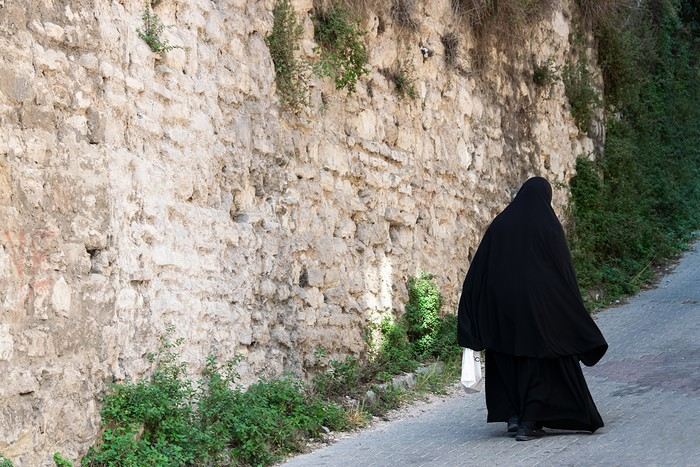
To stay on theme, I suggest to Kate that we visit the former Byzantine church of Pammakaristos, now a mosque, and its remarkable 13th-century mosaics. And as is often the case in Istanbul, we have to climb. We’re on the heights of Fatih. Gradually, the atmosphere changes, as does the sociology of the area. We’re in a fairly working-class neighborhood, much less gentrified than down below. But that’s not what strikes us. More and more black-clad figures are walking the steep streets of the district. Elderly women, but also many much younger ones. All are wearing the niqab, the full-face veil, some even have their faces completely covered. This is not at all a traditional Turkish Islamic garment, unlike the headscarf, the hijab. It’s the attire of ultra-conservative or very radical Islam, imported from Saudi Arabia or Syria. The emblematic dress of Salafism. We’re in a very religious neighborhood; the men wear beards, often very thick. The atmosphere isn’t exactly oppressive, but we don’t feel entirely at ease. It feels like an episode of *The Bureau*. And I’m struck by the stark contrasts in this Istanbul society, where the dark ghosts of Fatih coexist with the lip-injected bimbos of Galata.


Turkey is a secular country, even if the principle is applied a bit differently than in France, and its Sunni Islam of the Hanafi tradition is inherently very tolerant. But Erdogan’s rise to power has led to a re-Islamization of society, imbued with more conservative values. Sure, Turkey remains a republic based on civil law, but President Erdogan has gradually chipped away at the principles of secularism by, for example, allowing the wearing of headscarves in schools and the civil service—previously banned—by restoring Hagia Sophia and Chora Church to their original function as mosques. And regarding the niqab, there’s no explicit ban, unlike in France... We reach a plateau—the former church/mosque is closed. Disappointment. Oh well, no mosaics for us.

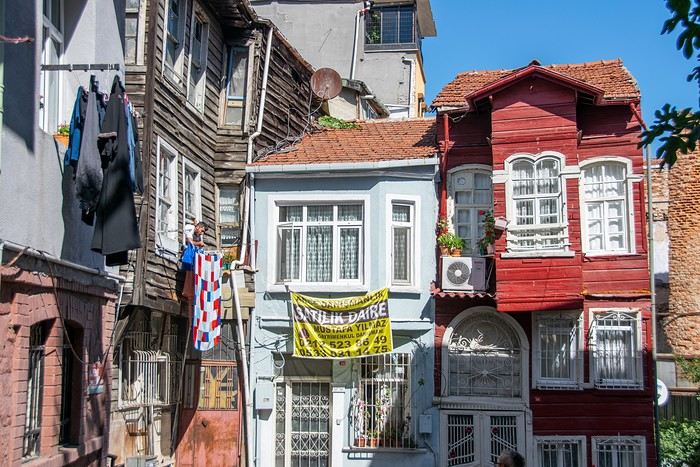
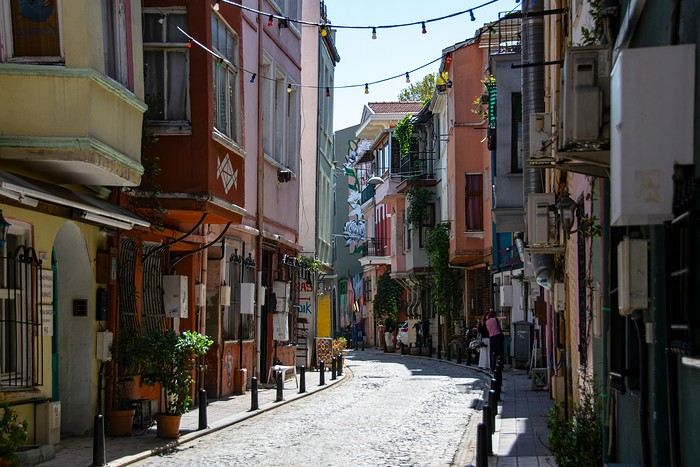
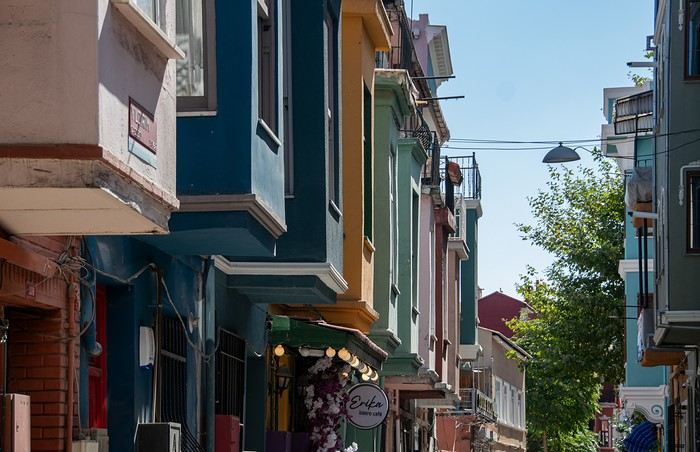
We head back down toward the Balat neighborhood, an extension of Fener. This was once the Jewish and Armenian quarter, but those communities, once deeply rooted here, have almost disappeared. Balat was first a fairly upscale commercial district in the 18th century, then it gradually became impoverished during the 20th century with the arrival of Anatolian populations. Now, it’s undergoing gentrification: renovated facades, designer workshops, bars and restaurants with flower-filled storefronts, and plenty of tourists. A fairly classic evolution for the historic centers of major cities. From the small terrace where we’ve settled to enjoy an excellent fresh orange juice, I admire the colorful row of beautiful overhanging houses, typical of 18th-century Ottoman architecture, called « Cumbalı evler » in Turkish. They belonged to the wealthy merchant families I just mentioned.


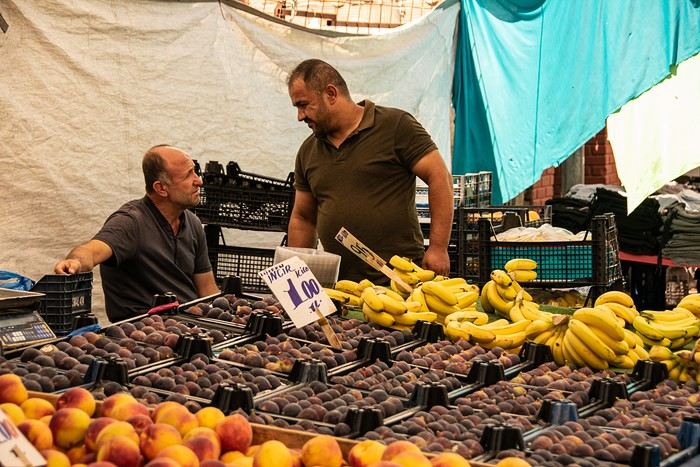
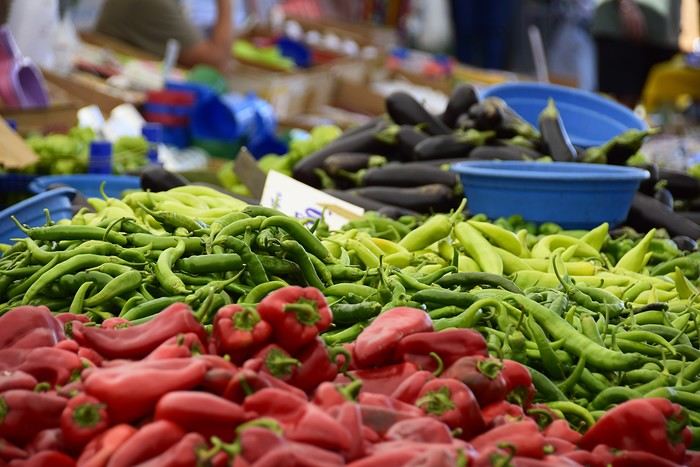
As we move deeper into the neighborhood, we pass through more working-class, less touristy areas, including a huge open-air market stretching its fragrant and colorful stalls along a narrow but seemingly endless straight street. The street is shaded by a clever system of canopies attached to pillars along the edges of the houses.


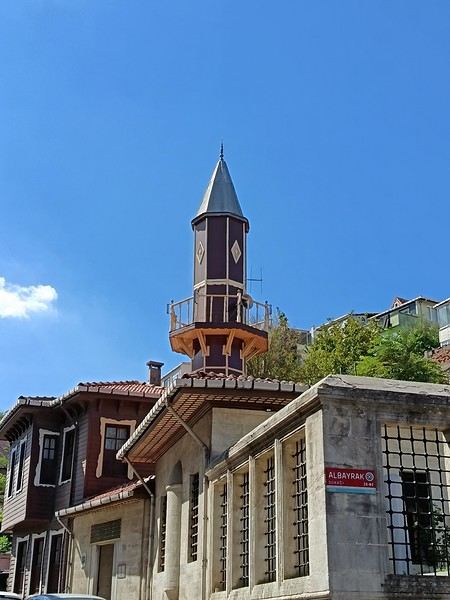
Just before lunch, a quick cat-stroking break during the call to prayer in front of a pretty little wooden mosque.

RI RichardXI Regular ·
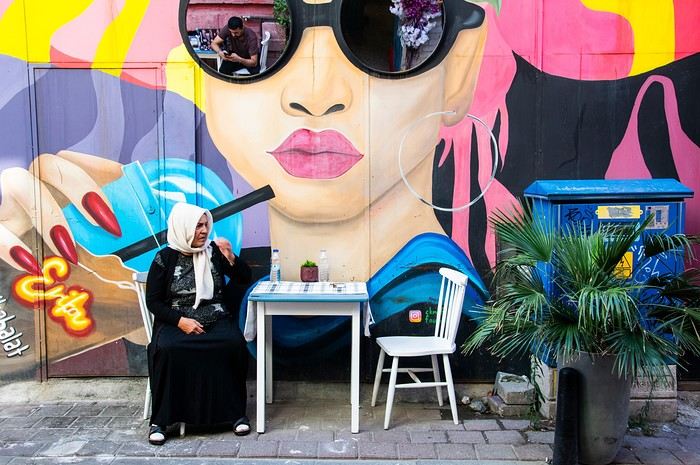
In the afternoon, Kate got it into her head to photograph the many "street art" pieces covering the neighborhood’s facades. We set off on the hunt. Settings, resets, presets. "It’s fine! No, it’s not fine! This camera’s useless, I’m not inspired!"

Traveling as a couple also means practicing the art of patience and compromise. And I can be just as annoying with my Byzantine mosaics, my mihrâb, and my overhanging houses. So I wait, I "compromise."


Especially since I’ve got my heart set on visiting the stunning former Byzantine church of Saint-Sauveur-in-Chora, which became a museum and has recently been turned back into a mosque by Erdogan’s decision. I’ll have to sell the idea to Kate because the afternoon is stretching on, and the site is a 20-minute walk up a hillside. Gorgeous mosaics and frescoes, a UNESCO World Heritage site, a place steeped in tranquility. It’s all good—she’ll "compromise" too.

As we climb the steep slope, we pass a young woman in a niqab, her face uncovered, who seems lost. She calls out to us and asks for directions to a mosque in English. I pull up Google Maps to locate the place. While I try to get my bearings, Kate chats with the woman and learns she’s Kurdish. Maybe she’s looking for accommodation, but our communication is too limited to find out more. I find the address and point her in the right direction. She thanks us warmly.

We arrive at Saint-Sauveur. The spot, nestled on a tree- and flower-covered hillside, is indeed peaceful and soothing. Entry isn’t cheap—20 €.


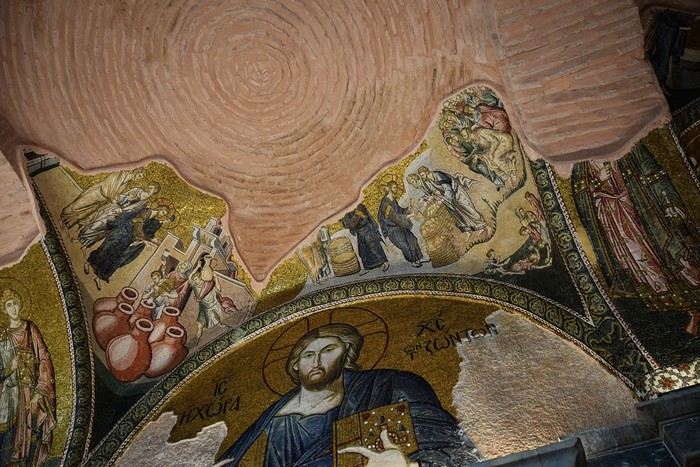
The brick-clad church/mosque is medium-sized and beautifully proportioned. We enter through the narthex. Absolutely stunning frescoes and mosaics depict scenes from the life of Jesus. I haven’t seen anything this beautiful since my trip to Greece ages ago. On the ceiling and walls, we’re in a world of imagery. A guide seems to be explaining the significance of these iconographic representations to a small group of Turkish tourists—each one a story to tell. As I wander around, head tilted up, I step into a large, well-lit room. This is the mosque’s prayer hall. A man is prostrating alone in front of the mihrâb. I notice two enormous mosaics on the side walls—one of Christ and, if I remember correctly, one of Mary—with a curtain system at the top, though they’re not drawn at this hour. I understand: during official prayer times, the curtains cover the images so worshippers aren’t distracted. Two religions, two ways of connecting with the divine—so close, yet so far apart.
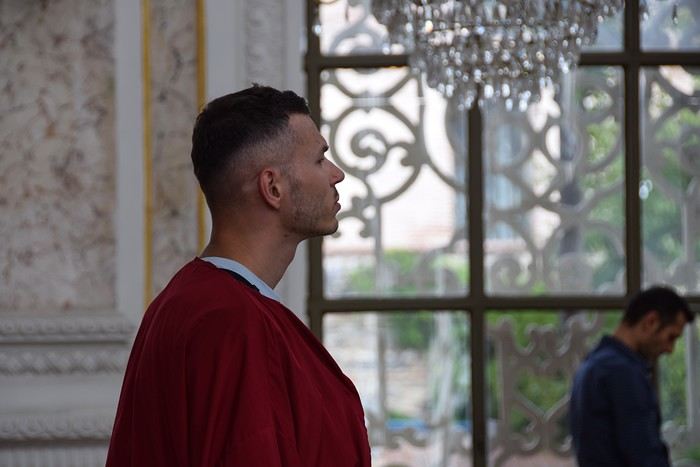


Back to our cozy nest in Galata, now feeling like home. Tomorrow, we set sail—tomorrow, we’ll breathe in the sea air of the Bosphorus.
PA Pagaljavab Globetrotter ·
Thanks for these photos—they take me back a few years to Fener, where I used to stay. Fener and Balat are among my favorite neighborhoods in Istanbul, and they’re definitely quite conservative. And the Chora Church (Saint Savior in Chora) is one of the most beautiful monuments in the city.
KA Kate Globetrotter ·
Fener and Balat are among my favorite neighborhoods in Istanbul

Me too! In fact, next time I might choose our accommodation there. I love its cobblestone streets, its little colorful cafés, its street art, its second-hand shops, its street life... It all has such charm.

KA Kate Globetrotter ·
Traveling as a couple is also about practicing the art of patience and compromise. And I can be just as annoying with my Byzantine mosaics, my mihrâb, my overhanging houses...

I’ll keep it simple so your genius has room to shine ;)

MO Montagnard74 Globetrotter ·
Traveling as a couple also means practicing the art of patience and compromise. And hey, I can be annoying too with my Byzantine mosaics, my mihrâb, my corbelled houses...

I keep it simple so your genius has room to shine ;)


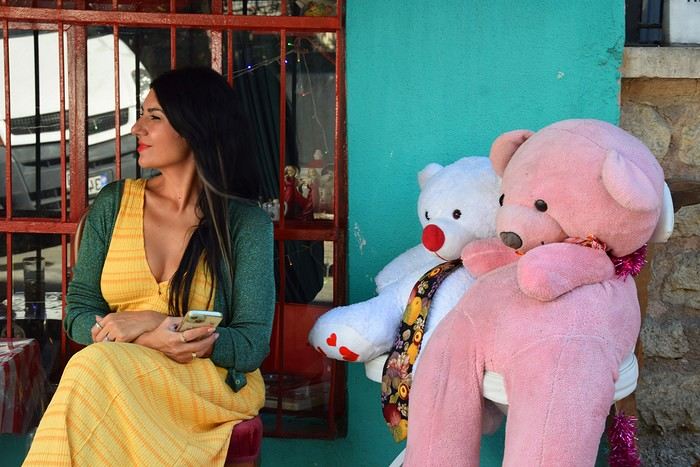
I NEED to know where we can score these kinds of plushies!! :p
PA Pagaljavab Globetrotter ·
The one on the left?
RI RichardXI Regular ·
17/09. Along the Bosphorus: Beşiktaş, Ortaköy

I love the atmosphere of great maritime cities, their unique identities: Marseille, Venice, New York, Istanbul... They always take me back to the childhood memories of my hometown, Sète. The mingled scents of iodine and salt, the gentle breeze coming from the open sea, the horizon lines, the embrace of sky and sea, the mixed aromas of fish and diesel, the deep echo of boat sirens, the seagulls’ cries... For this reunion with the sea, we take the public ferry with our Istanbul kart. The idea is to do a bit of coastal hopping along the Bosphorus shores, on the European side toward the neighborhoods of Beşiktaş and Ortaköy, though we’re skipping the visit to Dolmabahçe Palace.


Before boarding, I watch the bustling parade of boats crowding the docks. While these ferries are certainly useful for tourists, they’re first and foremost a convenient way for Istanbulites to get around, easily reaching workplaces and homes spread along the Golden Horn, the Bosphorus, or on the Asian side. The ferry-bus is on time, and we step aboard. Kate settles into the passenger cabin to quietly adjust her settings. The weather is perfect: blue skies, sunshine, a light sea breeze. Encouraged by these ideal conditions, I take my place at the bow. The wind briskly but gently caresses my face and fills my chest. I go into "Jack Dawson" mode. I’m the master of the...! I smile—I may have exaggerated a little, of course—but the feeling is so pleasant, as if life itself is flowing into me.
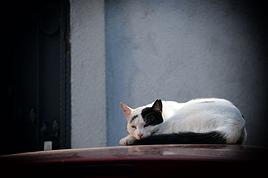
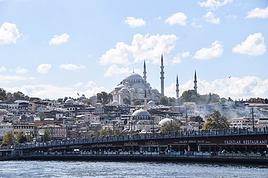
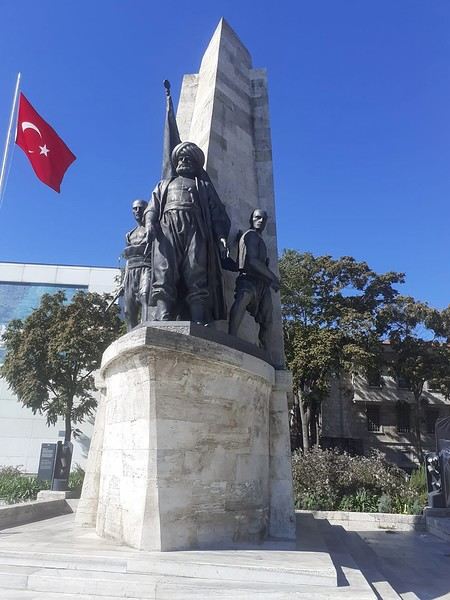
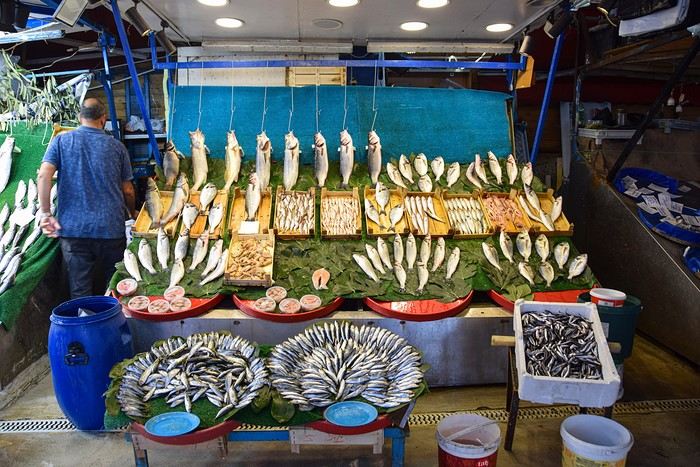
Docking at Beşiktaş. On the large esplanade along the quay near the naval museum stands a colossal bronze statue of Barbarossa, flanked by two fierce-looking warriors. A feared corsair who later became an admiral of the Ottoman fleet in the 16th century, he’s one of the legendary figures of Turkish history. In general, I get the sense that Turks are proud of their past, as well as their flag, which you see displayed at every street corner on the facades of both public and private buildings. We enter the neighborhood. The walk is lovely on this mild late morning, winding through the maze of tidy little streets with renovated facades. The area doesn’t seem very touristy, but the abundance of bars and terrace restaurants catches my attention. Turkish students? White-collar workers? It doesn’t appear to be a specifically working-class zone, but given the number of people carrying shopping bags, I can still sense a lively local life. We arrive just in front of a modern-looking hall housing a fish market with beautifully arranged stalls.




A charming little terrace beckons us. I order çay for myself and Türk kahvesi for Kate. I’d practiced the translation and must have mispronounced it because the server asks me to repeat. Okay, "Turkish coffee" then... But time is ticking, and it’s time to continue our coastal hopping. Back to the dock, now heading to Ortaköy.

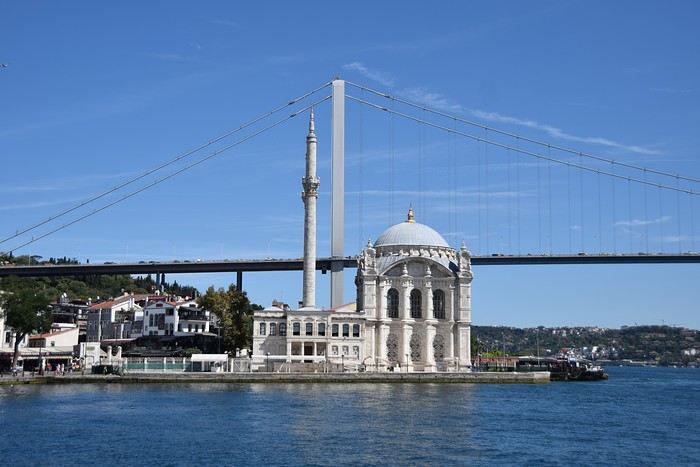
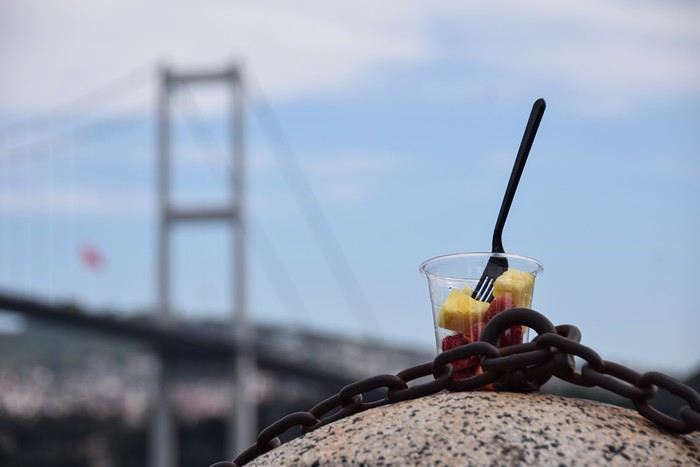
Nothing remains of the old fishing port. Ortaköy has become a fairly touristy spot, also popular with Istanbulites for their Sunday strolls. A few pretty terraces line the waterfront, offering views of the beautiful white mosque and the Asian side connected to Europe by the monumental Bogaziçi Bridge spanning the Bosphorus. Bars, restaurants, art and souvenir shops—everything is packed into a small perimeter along the quays. Not too crowded since it’s a weekday and the end of the season, but I can easily imagine the hustle and bustle of a Sunday in the heart of summer.


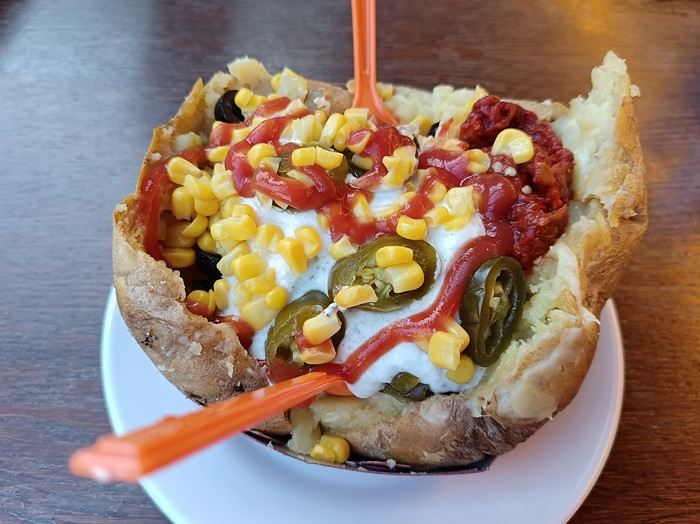
There’s a curious smell of baked potatoes in the air. Nothing unusual, really, since the neighborhood is famous for its Kumpir, a local specialty of baked potatoes stuffed with all sorts of ingredients (sauces, raw vegetables, olives, mushrooms, beans...) and eaten with a small spoon. One street leading up from the quay is lined with little stalls selling Kumpir to take away or enjoy on the spot. To try them, we prefer to sit down and choose a restaurant that doesn’t seem too touristy. The culinary experience is interesting, if not unforgettable...


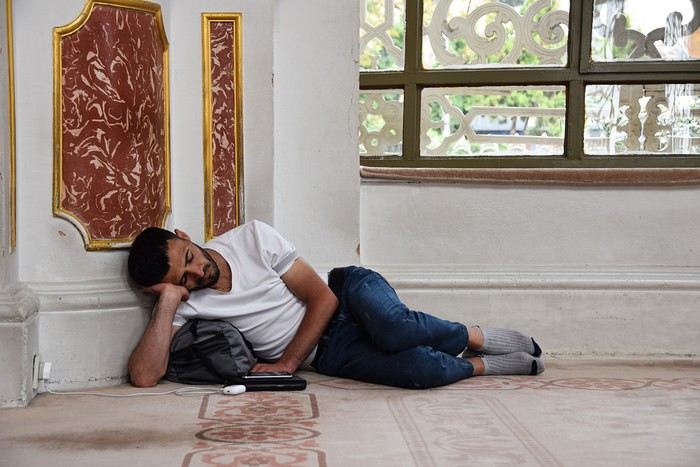
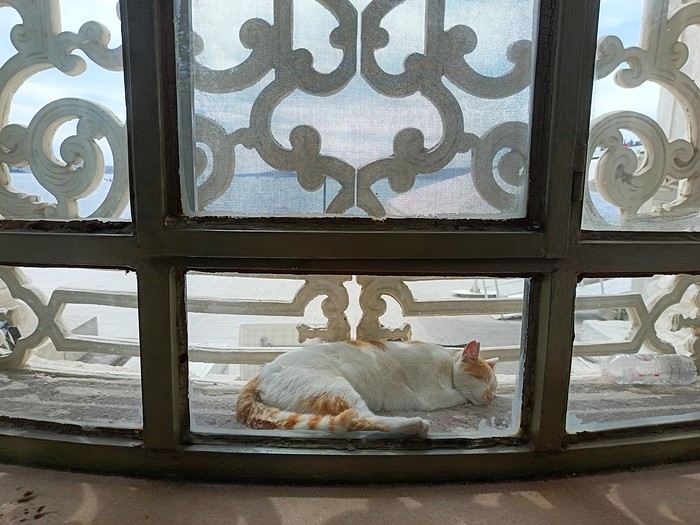
Perched on the water, Ortaköy’s little white mosque had caught my eye as soon as we got off the ferry. From a distance, if not for the elegant minarets surrounding it, you might mistake it for one of those Venetian churches on the lagoon. Baroque in style—actually neo-Baroque, since it dates from the 19th century—it has a graceful form. The interior doesn’t have the Oriental feel I’ve seen in other Istanbul mosques; it feels more like a Renaissance building. But what struck me most was the soft, white light filtering through the large windows. A place of tranquility, of rest. Comfortably stretched out on the carpet, a young man—jeans, white t-shirt, neatly trimmed beard—rests his temple on his forearm, his chest pressed against his bag, seemingly sleeping peacefully. Outside the mosque, on the other side of the window, a cat is doing the same.


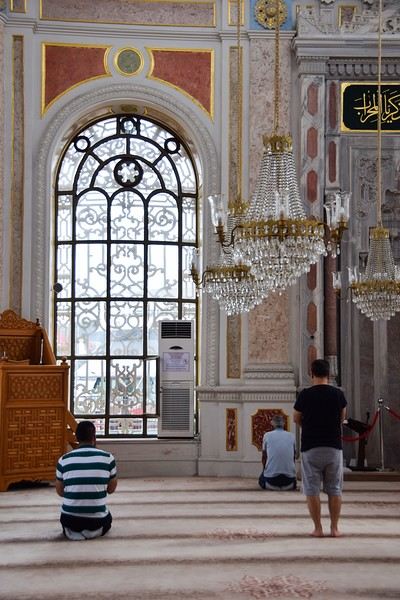
In the quiet of this early afternoon, a few worshippers come to pray. I discreetly observe the precise, harmonious movements of their hands, the way they bow in silence—first kneeling, then prostrating themselves face down on the floor. In front of the beautifully decorated but image-free mihrab, I reflect on Muslims’ ability to pray before an abstract divine principle, not embodied in any form. No value judgment on my part, no stance, nor any form of adherence to anything. But I remain sensitive, in churches as in mosques, to these restrained, unostentatious devotions imbued with spirituality...


Back to Galata. The ferry drops us off at Eminönü station, packed as usual. While Kate lingers near the bazaar, I sit on the steps of the New Mosque, on the large esplanade, to soak in the street scene. Here, everyone crosses paths in the bustling energy of a great metropolis. The day is ending, and I feel good in this city, which I’m slowly starting to make my own. I’m not naive, of course—I know how fleeting and somewhat superficial a tourist’s encounter with a city or country can be. But this trip to Istanbul was my gift, my birthday cake, and I intend to savor every last bite.

Similar discussions

You might also like