Three beautiful weeks during the Japanese autumn
FR

Translated into English.

Original post
PA
I’m sharing our three-week trip to Japan from late October to mid-November 2025. There were four of us—my partner and a couple of friends. I’ve traveled often with my friend Christian (Bolivia, Argentina, Costa Rica, Namibia, Laos), but this time our partners joined us. The rough itinerary: Arrival in Tokyo. Visiting Shinjuku/Shibuya districts + day trip to Kamakura 5 days in the Japanese Alps, from Matsumoto to Kanazawa (via Kamikochi, Hirayu Onsen, and Takayama) 5 days in Kyoto Nara, Osaka, Koyasan Return to Tokyo (Asakusa district), with a day trip to Nikko We booked our flights well in advance (9 months ahead): the flight cost 1086 € per person. Compared to over 2000 € if we’d booked for the same dates just 3 months prior. For accommodations, we mostly used Booking.com. The onsen was booked via Japanican, and in Kyoto, we stayed in an Airbnb. We also made 5 train reservations a month in advance on Klook or directly on the train’s website.

Day 1: Departure from Brussels (October 24, 2025) Early morning takeoff at 6 AM to Munich (1.5-hour layover) with Lufthansa, then a 12-hour flight with ANA, arriving the next morning at 7 AM at Tokyo Haneda.

Day 2: Arrival in Tokyo Airport formalities were quick. The eSIM we bought before leaving activated as soon as we landed (10 GB plan with Saily—more than enough for our mobile internet needs, mainly Google Maps and Google Translate). We’d received 4 ICOCA cards from our neighbors, which we loaded with 15000 ¥ each. We took the Keihin train, then the Yamanote Line. It’s easy to navigate since everything is in English, and each station is announced on scrolling displays in English too.

We got off the Yamanote Line at the station just after Shinjuku because it’s easier to exit that massive station with our luggage. So we ended up in Shin-Okubo, right in the Korean district. A 10-minute walk took us to Villa Fontaine Hotel. A great hotel, well-located north of the Kabukichō district. The room even seemed bigger than we’d expected.

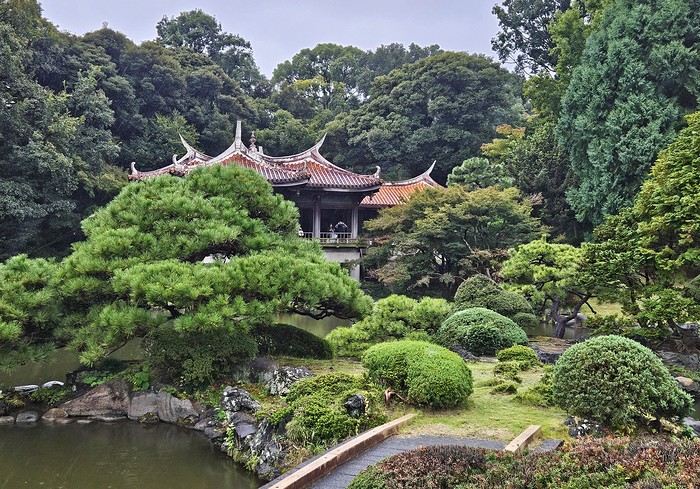
It was 15°C, but it rained—and kept raining on and off all day. Belgian weather, basically. We went for a walk in Shinjuku Gyoen Park. Not as pretty in the rain, but the big greenhouse was interesting.
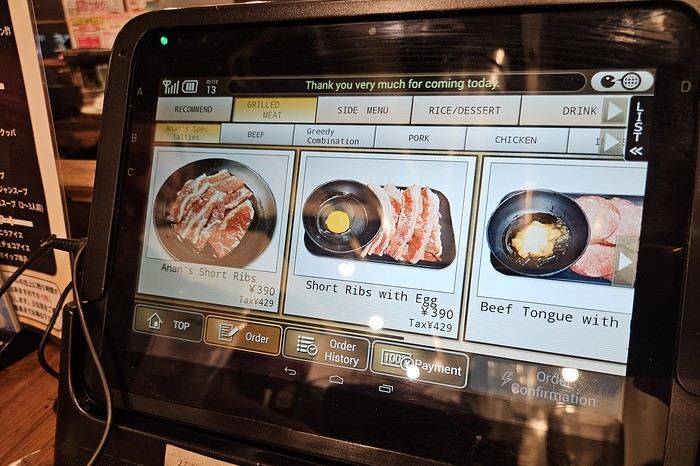
Then our first ramen (hearty and for 1000 ¥—pretty much the price of all our ramen during the trip). We headed back to the hotel since check-in was after 3 PM. Shower and relax before going out for dinner. Dinner was barbecue at Shichirin Yakiniku Anan (1700 ¥ each—good and cheap). Ordering via tablet wasn’t easy, but luckily it was in English.

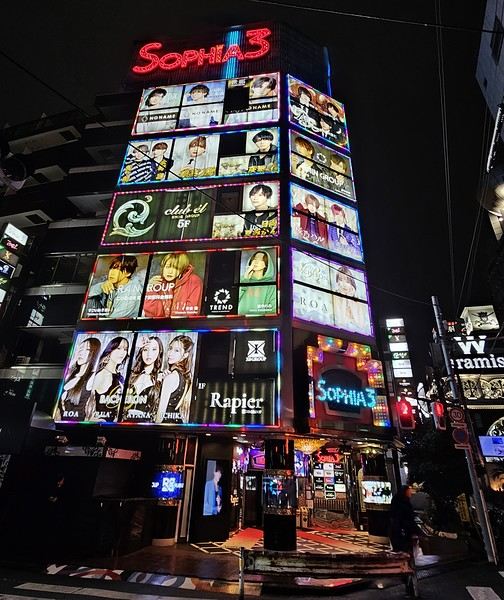
We ended the evening with a stroll through Kabukichō before a well-deserved sleep.

PA Patbill Veteran ·
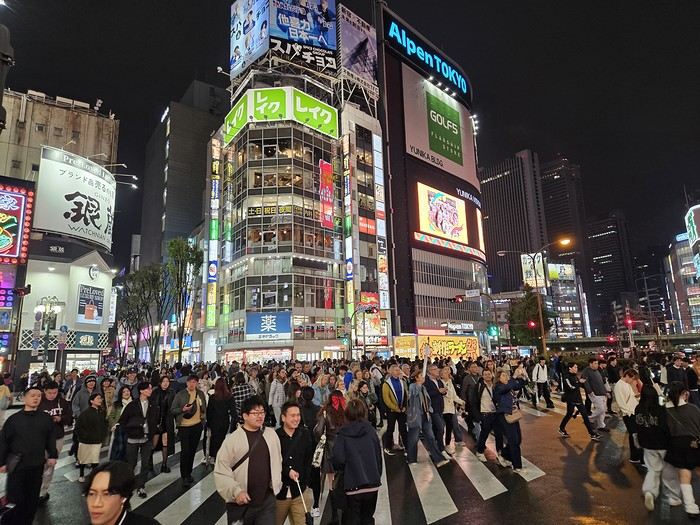
Day 3: In Tokyo: Shibuya/Harajuku Good breakfast near the hotel (the Tully’s Coffee chain), and what’s more, it opens early for Japan (from 7 AM). Since the days are short at the end of October (sunrise at 6 AM and sunset at 4:50 PM), we always made sure to start early in the morning. Subway to Shibuya. Still a light rain. We decided to try the view from Shibuya Sky on the 47th floor, but it was pretty overcast for seeing into the distance. Still, we could see the hustle and bustle of Shibuya Crossing.

Stroll through Shibuya’s shopping streets. Nothing special for us.


I’d booked a timed entry slot yesterday for a 15-minute window at Kura, the conveyor-belt sushi chain, which let us get a table right away. We tried all kinds of sushi (squid, sea bream, different tunas, salmon, and other fish we didn’t recognize). Everything was excellent. The total came to 5500 yen for the four of us.

The pile of plates at the end of the meal...

We continued to Meiji Jingu Shrine. Quite a crowd here, including a wedding. Comparing it afterward to the temples in Takayama and Kyoto, there’s no contest—the others are prettier.


We finished the afternoon on Takeshita Street, packed with people. So many shops aimed at young teens. Not really our cup of tea, but you’ve got to see all those girls dressed up in "kawaii" style.


Yes, those are little pigs you can cuddle with! :-) We headed back to Shibuya via "Cat Street," a nicer street lined with more shops, to grab dinner in a narrow alley packed with about twenty small izakaya restaurants (Yokocho Hokuriku Food Market). Well... the quality wasn’t great in our opinion, and the offal skewers were gross.

After taking the subway to Shinjuku, we stopped by a konbini again (we alternated between FamilyMart and 7-Eleven) to pick up stuff for tomorrow’s breakfast on the train. The convenient part is that we paid each time with our IC Card.
PA Patbill Veteran ·
Day 4: Excursion to Kamakura Early morning train departure at 6:40 AM for a 50-minute ride to Kamakura.


We get off the train one stop before central Kamakura (specifically at Kita Kamakura) to start the Daibutsu trail hike—just as the name suggests—toward the great Buddha Daibutsu. A 2-hour walk covering 3 km through the hills of the city, in the forest, with stops at two lovely, tourist-free shrines (Kuzuharahoka and Zeniarai Benzaiten Jinja). The first shrine’s unique feature is a sacred rock where you forcefully throw a small dish (available for 100 yen) to break it, which is meant to ward off evil spirits and bring good luck. As for the second, you have to go through a cave to reach it. People visit to wash their coins in a sacred spring as a wish for good fortune.


Since it rained the two previous days, the path is quite muddy in places, which led to a few fun slides. At the end of the hike, we reach the 13-meter-tall Great Buddha.

PA Patbill Veteran ·
Day 4 (continued): Kamakura: We wrap up the morning visit with the Hasedera temple, perched on the lush green hills.

There are small stone figurines dedicated to deceased children. Plus, it offers a panoramic view of the city and the sea.


On our way back—still on foot—toward the city center, we stumble upon a tiny restaurant (only 6 seats at a counter facing the chef) at Hamazen Iwashi. We had to wait outside a bit for seats to free up before enjoying an excellent meal of raw and cooked fish (2700 Y per person). We really appreciated the smiling chef’s efforts to explain the dishes in a mix of Japanese and English.


We also enjoyed wandering around Kamakura’s city center, with two parallel streets of cute shops and food stores (Wakamiya Oji and Komachi). The perfect opportunity to try some mochi. Our afternoon wraps up with a visit to the Tsurugaoka Shrine before taking the train back to Shinjuku.

We might’ve been able to spend a night here to see even more beautiful temples like Hokoku-ji, Kencho-ji, and Engaku-ji, but we had to make a choice, and we’ll see more temples in Kyoto. Kamakura = a real favorite. Back in Shinjuku in the early evening, I’d booked a great restaurant with stunning decor (Kyomachi Koisigure). Not easy to find—the sign is in Japanese, and you have to take an elevator to the 6th floor to step right into a movie-like setting. Lots of small dining booths with amazing decor. We didn’t go for a set menu but tried various dishes (a large, elaborate sushi called *atamaki*, different sashimi, *obenzai*, and wagyu beef teppanyaki—plus fries instead of rice, Belgian obliges), along with the usual good beer. The total came to 19000 Y for the four of us.


BL Bluequark Veteran ·
Great start! I'm figuratively feasting my eyes on the photos and literally drooling over all these dishes. Thanks so much.
PA Patbill Veteran ·
Great start! I'm figuratively feasting on the photos and literally drooling over all these dishes. Thanks a bunch!

Yeah, I love photographing our meals—they’re so often beautifully presented. The Japanese really have a knack for decoration!
PA Patbill Veteran ·
Day 5: Heading to Matsumoto A beautiful blue sky like yesterday, but only 12°C when we arrived after a 2h40 train ride. The maze-like layout of Shinjuku Station wasn’t a problem since everything was well signposted. In Matsumoto, our hotel (lidaya) is right in front of the station, which always seems super convenient.

Mount Fuji in passing The town center is pretty deserted. Not much going on. Not many cars, and the ones there are super quiet. A few shops. Quite a change from yesterday.


We grabbed some skewers from a food truck lined up along the river before visiting the castle. The outside seemed more appealing since inside, it’s a single-file tour up endless steep wooden staircases.


An amazing seafood barbecue dinner tonight (isomaru). The scallops were to die for, and so was the hot sake served in generous amounts. 19,000 Y for 4 of us.

PA Patbill Veteran ·
Day 6: Heading to Hirayu Onsen via Kamikochi The train leaves super early at 6:30 AM. Then we have a 10-minute connection in Shinshimashima for a bus (reservation required) that takes us to Kamikochi in 1 hour.


We arrive early at 8:15 AM in the heart of the Japanese Alps. It’s only 2°C because of the altitude—brrr, it’s freezing! After dropping our bags at the bus terminal’s luggage storage, we set off on a 5-hour hike along the Azusa River.


PA Patbill Veteran ·
Day 6 continued: Hirayu Onsen Then another 30-minute bus ride to the small village of Hirayu Onsen, famous for its hot springs.

We stayed in a fantastic hotel that I’d highly recommend. Everything was great: the welcome, the spacious rooms with futons, the kimono rentals, the excellent evening and morning buffet, and the beautiful outdoor baths surrounded by maple trees (Hirayukan).


MA Max68 Globetrotter ·
Hi Patrick,

Nice travel journal! It’s great because this way I’ll get to see the region of Japan I was hesitating about (the Alps). Kamakura seems really charming. Looks like you had the same not-so-great weather...

I’m happily joining in! 🙂
PA Patbill Veteran ·
Hello Patrick, Clearly you had the same not-so-great weather...

No, the rain was only when we were in the big cities—that is, Tokyo and Osaka. The rest was sunshine, except for 3 cloudy days in Takayama, Kyoto, and Nikko
PA Patbill Veteran ·
Day 7: Heading to Takayama We still enjoy the onsen before a 1-hour bus ride to Takayama. We drop off our luggage at the hotel across from the bus station (Country Hotel) before starting our visit of the city.

We loved Takayama so much!


First, the two streets of the charming tourist center Sanmachi.


Next, we head to the Hachimangu shrine through another old district (shimoninomachi). Strangely, the streets in this area are deserted. We found it really authentic, and the buildings are even prettier. You’d think tourists only stick to the two streets in the center.


We won’t go into the Matsuri Kaikan museum to see the folk festival floats due to lack of time, but we continue toward the hills east of the city to take the Higashiyama walk.
PA Patbill Veteran ·
Day 7: More of Takayama During our Higashiyama walk, we stumbled upon Café Kikaku, run by a former geisha. It was a wonderful encounter with this colorful person who—while we waited for our lunch—shared some facets of geisha art with us (music, fan handling, dice games). A truly special moment.


The afternoon wrapped up with a continued stroll through the hills to visit various shrines and temples (Daihō, Sōgen, Hokke-ji, and Hondō-ji—all free, by the way, and with no tourists) until sunset (early, as I mentioned—5 PM).


PA Patbill Veteran ·
Day 7: End of Takayama We head back to the city center with a quick matcha tea stop at a lovely café (Jiro), before exploring the history and art museum a bit, then enjoying some delicious Hida beef barbecue with a sake tasting.


There’s no one left in the center by the evening.


RO Rouquine38 Globetrotter ·
Thanks Patrick for taking us on a trip to Japan 😊 It’s on my "to-do list" but still just a dream for now 😅
BL Bluequark Veteran ·
Awesome follow-up. Like you, we really enjoyed Takayama. Like you, we were struck by the lack of tourists as soon as you move away from the two main streets. Yet, we were there in August during Obon. Proof in pictures: https://voyageforum.com/v.f?post=8778881;a=8778881
PA Patbill Veteran ·
Day 8: Takayama I wanted to keep a good memory of Japanese toilets (heated and with various intimate jets)

and a hello from Spiderman too


This morning, we’re visiting the village of Hida no Sato, a beautiful collection of traditional old houses. Inside each one is interesting, telling the story of life from that era.



Back in the center, we stroll through the “morning market,” which isn’t super interesting. We try some street food like Nikuman (buns with minced meat), Taiyaki (fish-shaped waffles with beans), and mochi (soft sweet rice balls with fruit inside).


PA Patbill Veteran ·
Day 8: Takayama continued:

After that culinary experience, we set off to explore the Showa Museum. How to describe it? Reconstructed streets showcasing countless vintage items from the 1950s to 1970s. There are great recreations like the classroom or children’s bedrooms.


We had a blast here. A real throwback to childhood... Back to the hotel in the late afternoon since our bus leaves at 4:30 PM for a 3-hour trip to Kanazawa.
PA Patbill Veteran ·
Day 9: Kanazawa We start exploring the city on foot under the sun after a good Japanese breakfast at the hotel—mackerel, miso soup with tofu, rice, and pickled vegetables. My three travel buddies stuck with the American version (the cowards, haha).


First stop: Oyama Shrine and the Gyokusen garden right next to it.


Second stop: Kenrokuen Garden, described (rightly so) as one of the most beautiful in Japan.



PA Patbill Veteran ·
Day 9: Kanazawa continued:

Third stop: Kanazawa Castle. We only see it from the outside because compared to Matsumoto Castle, it seems less appealing to us. We’re picky like that.


Fourth stop: Omicho Market. Even though we’re there at 11:30 AM, it’s already packed. We snag a table at a small restaurant to enjoy some delicious sashimi. I also try a scallop skewer (meh). We also sample a local specialty: gold-leaf ice cream—tastes like nothing special, except for the price.


Similar discussions

You might also like