14 Days in Japan – September-October 2026
FR

Translated into English.

GE GeorgesOZ Globetrotter ·
Wednesday, September 30 – Kyoto (1) A train ride to Kyoto, along the narrow plain between Lake Biwa to the west and a mountain range to the east. This country is really made of mountains! Several small towns and villages, fields, often charming houses—modern or in a traditional wooden style. The mountains close in south of Lake Biwa, and the train passes through a short tunnel before emerging into the Kyoto valley, southwest of the lake.

I almost forgot: the trip is about 70 km, and the ticket only costs 2,720 yen, or 15 € for two people.

From the station, we walk the 2 km to the hotel. Our luggage is pretty light, and I like to scope out the area right away when I arrive somewhere. We pass by the Nishi Hongan-ji Temple, an imposing Buddhist temple, on Horikawa Street. It’s worth visiting if we get the chance.

Along the way, we notice that many people get around by bicycle, switching between the roadside and the pedestrian path on a whim. We drop off our bags at the hotel, located on Gojo-Ōmiya Avenue. Across the intersection, a ramen restaurant looks perfect for lunch. In the evening, we walk to Ōmiya-Goji Station, 1 km away on Shijo-Ōmiya Avenue.

The names of these east-west avenues: ‘go’ = 5, ‘shi’ = 4. And sure enough, there’s a Sanjo-dori and a Nijo-dori further north—‘san’ = 3, ‘ni’ = 2. Central Kyoto, west of the Kamo River, is laid out in an American-style grid. But of course, it has nothing to do with Americans!

From Ōmiya-Goji Station, we head east toward the Kamo River but only walk about a hundred meters before being drawn into a Chinese restaurant. We’re not disappointed—the dishes are excellent!

That’s it for now—very brief and probably not very informative. Just jotting this down so I don’t lose track of our trip!
GE GeorgesOZ Globetrotter ·
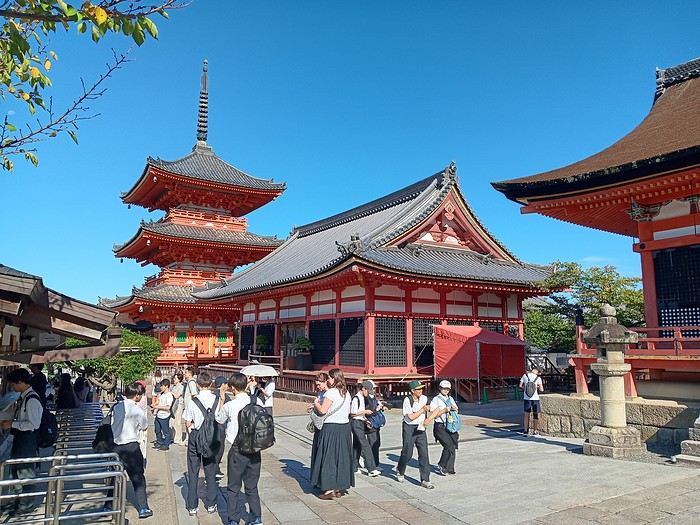
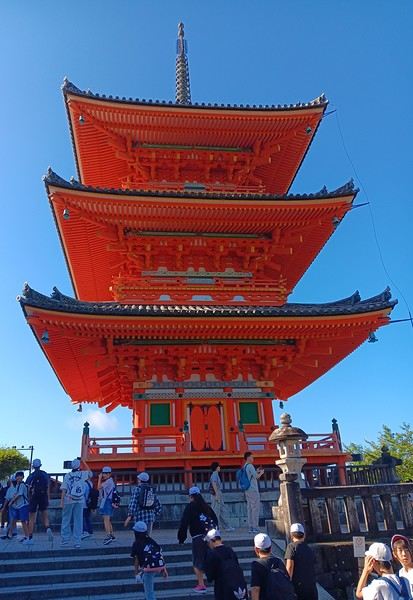
Thursday, October 1st – Kyoto (2) – Kiyomizu and Kennin-ji The bus 207 we take near Omiya-Shijo Station is packed with locals heading to work. A few stops later, we cross the Kamo River, which you really can’t miss, even if you’re stuck standing in the crowd of passengers. We get off at the second stop after that. Easy to find your way! We walk up a winding street, and it’s already pretty hot, with the morning sun right in our eyes.

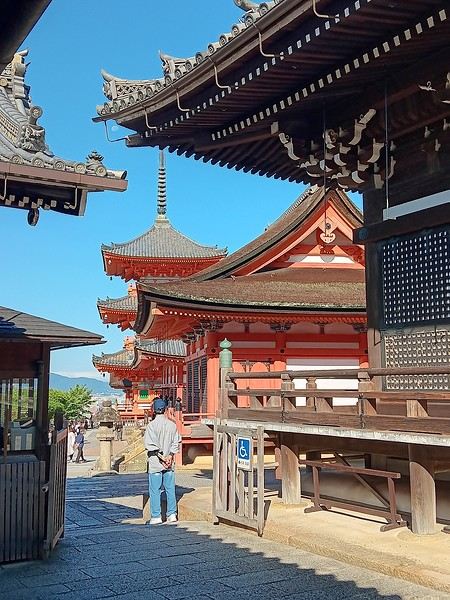
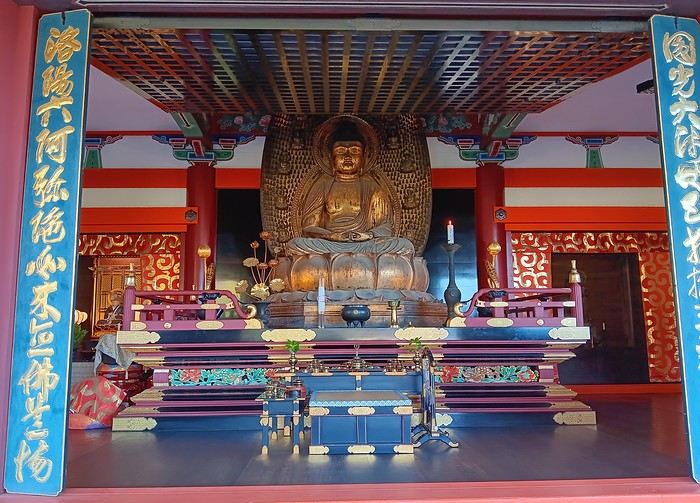
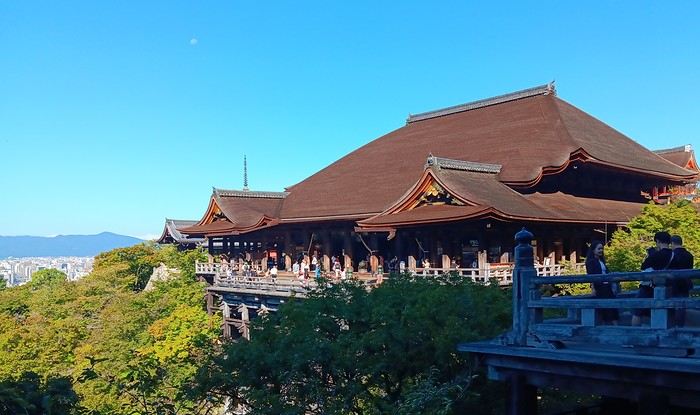
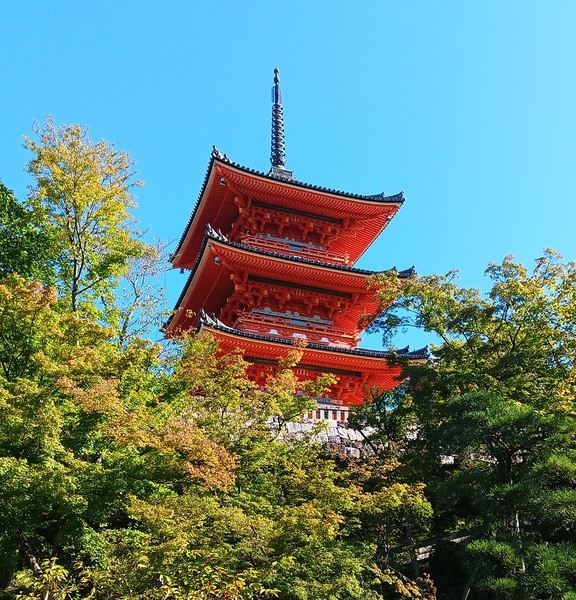
Visit to the famous Kiyomizu-dera temple. Entry is 500 JPY per person (just under 3 €). We’re there practically at opening time, around 9 a.m., but it’s already packed with tourists—both Japanese and foreign. It’s stunning and breathtaking—what else can I say? A few Japanese women in kimonos make for a lovely sight. They rented them from a shop before heading up to the temple, of course. There are plenty of shops offering that.


I’ll keep it short today because I’m getting tired of writing all this without getting any comments. I guess it’s not really interesting to most people.
AN Annestef ·
Hi there, I’ve been following your travel journal with so much interest—keep spoiling us with your detailed tips! 🙂 I’m really looking forward to the Kyoto section, as we’ll be visiting there starting tomorrow. Currently in Osaka. Have a great day, and thanks for sharing!
TF Tfcboy31 Regular ·
Hi there, I’m also following with great interest! And every travel journal serves travelers for many years to come, so keep it up!
GE GeorgesOZ Globetrotter ·
Hello, I’ve been following your travel journal with great interest—keep spoiling us with those meticulous details! 🙂 I’m really looking forward to the Kyoto section, as we’ll be visiting there starting tomorrow. Currently in Osaka. Have a great day, and thanks for sharing!
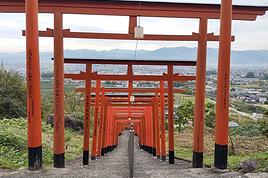
Thanks, Anne Stéphanie! I’m relieved!
GE GeorgesOZ Globetrotter ·
Friday, October 2nd – Kyoto (3) - Yasaka-jinja – Teramachi Shopping I forgot to mention our visit to the Nishiki Market the day before. After crossing the Gion district, we continued on foot toward the city center. The market is only 500 meters from the bridge. It’s a long, narrow street, and while all the little shops are, of course, very well presented, it’s honestly a hyper-touristy nightmare. There couldn’t have been more than one-tenth Japanese people in the crowd pressing through. Y found it more interesting than I did—she’s easily drawn to the flashy stuff. I had a hard time pulling her away from that street, by far my worst experience in two weeks in Japan.

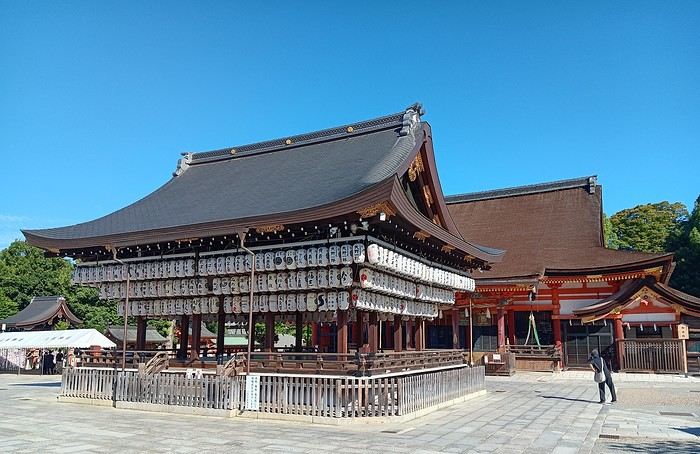
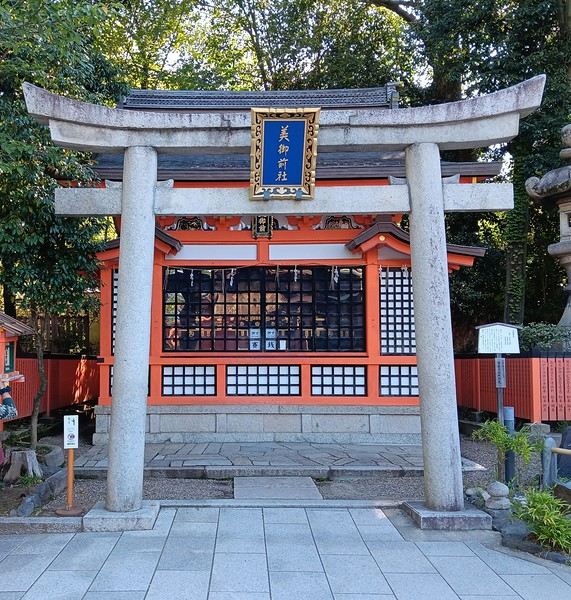
Friday morning, same bus as the day before, but we got off one stop earlier, at the ‘Gion’ stop: the first stop after crossing the river. We only had a few steps to reach Yasaka-jinja, a Shinto shrine. I don’t remember having to pay an entrance fee.

The (few) temples are beautiful, of course, but they didn’t particularly catch our attention. After reading about Shinto, I understand better now: they’re more understated than Buddhist temples. It’s less impressive than the places we visited the day before, Kiyomizu and Kennin-ji.


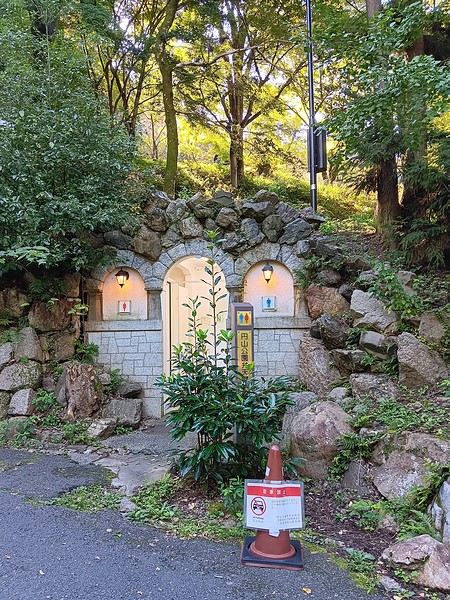
The gardens right behind the temples are pleasant. There’s almost no one there. One detail that struck me (a change from the repetitive ‘oh, how beautiful this temple is’), are the toilets halfway up the hill: they totally deserve a photo!


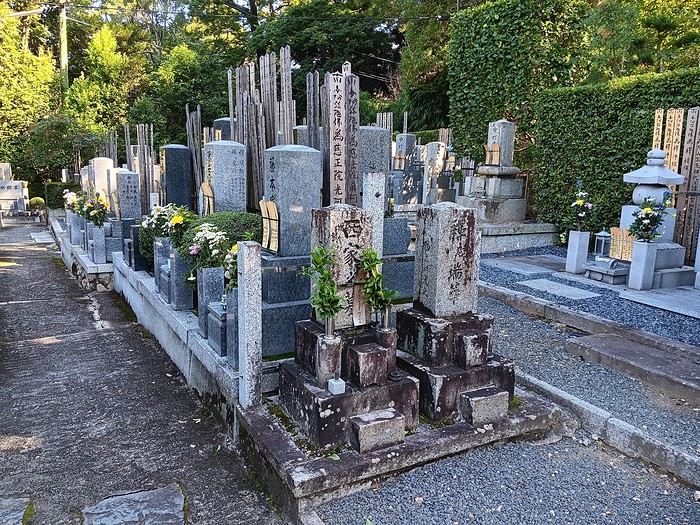
Higher up (we’re on the mountainside east of Kyoto), a small cemetery. And a few isolated houses in nature. The tranquility mixes with a mysterious atmosphere. There are old stones everywhere—you can feel the place has a long history!


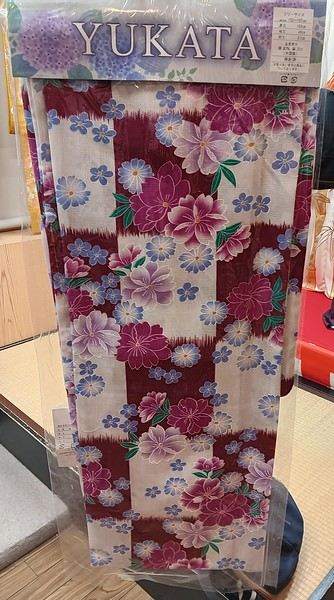
In the afternoon, we visit the lovely Teramachi shopping street. It intersects Nishiki Market but runs north-south, while Nishiki heads west. In a shop 450 meters from the main avenue (Kimono Suzaku Teramachi), we bought 4 yukatas to treat ourselves and also as little gifts, for 41,250 JPY = 232 €. This street is much more pleasant than Nishiki—there are tourists, but it’s totally manageable. And there are even Japanese people, which is nice, right? It’s a street covered by large arcades, like the whole neighborhood, so you can walk around comfortably no matter the weather.
GE GeorgesOZ Globetrotter ·
Hi there, I’m also following with great interest! And each travel journal serves travelers for many years to come, so keep it up! 😊

Thanks!
GE GeorgesOZ Globetrotter ·
I don’t know what’s going on, but I can’t seem to add my few photos to my last post... 😕
GE GeorgesOZ Globetrotter ·
Saturday, October 3 – Kyoto (3) - Kinkaku-ji - Ryoan-ji - Ninna-ji We left the hotel at 8 a.m. Walked to Omiya-Shijo. Took the Hankyu-Kyoto line to Karasuma, the next stop. We took the passage to Shijo subway station, just 100 meters away. We took the Karasuma Line, heading north, and got off at Kitaoji (a few kilometers and 10 minutes). The bus to Kinkaku-ji leaves from Kitaoji Station, but you have to look around a bit in the different passages. It’s less than 3 km from Kitaoji to Kinkaku-ji.

If this itinerary seems complicated, let me reassure you: it’s a piece of cake. What makes it even easier is that you don’t need to buy a ticket every time. Everything works with our Welcome SUICA card, without a hitch!

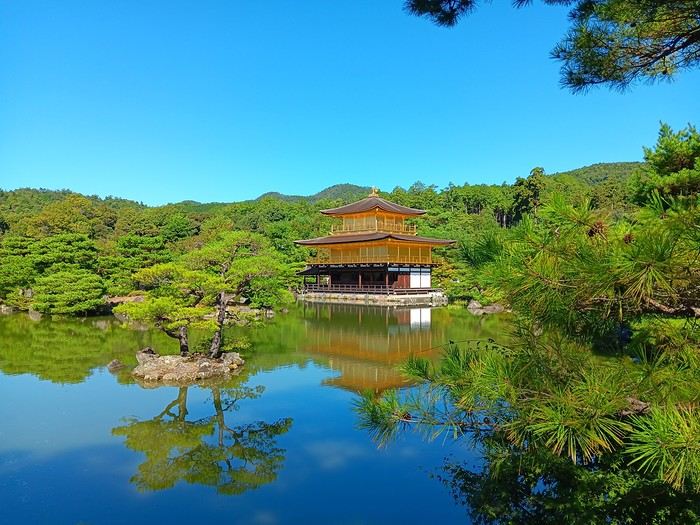
Visit to Kinkaku-ji, entry 500 JPY pp (less than 6 € for 2). This is where the famous Golden Pavilion is located.


There are a lot of people, but fewer than when we visited Kiyomizu. Tourist buses are numerous in the parking lot. I strongly recommend going right at opening or maybe just before closing.

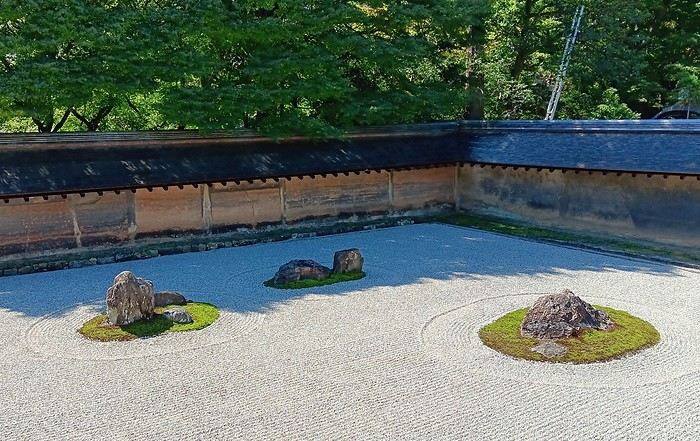
Bus from Kinkaku-ji-michi (200 meters from the temple entrance) to Ryoan-ji. Entry 600 JPY pp (less than 7 € for 2). Fewer tourists here! This is where the famous Rock Garden is, which anyone interested in Zen Buddhism will have heard of.


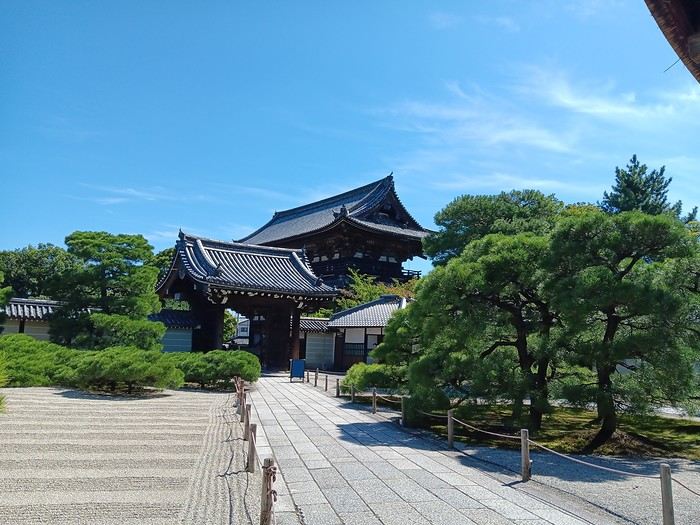
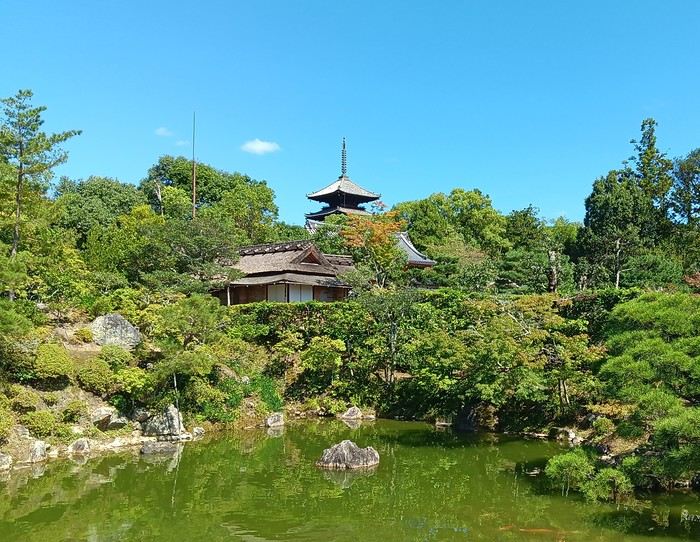
We walked through the charming neighboring village—quiet and clean—to reach Ninna-ji, less than 1 km away. Entry 800 JPY pp (9 € for 2). I have a few photos to add here to show the beauty of this site, but it turns out I’ve been having issues with photos since yesterday. Once the problem is resolved, I promise I’ll come back to update this post!


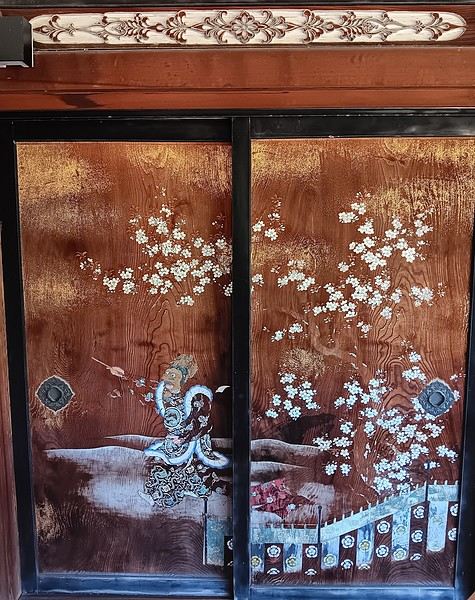
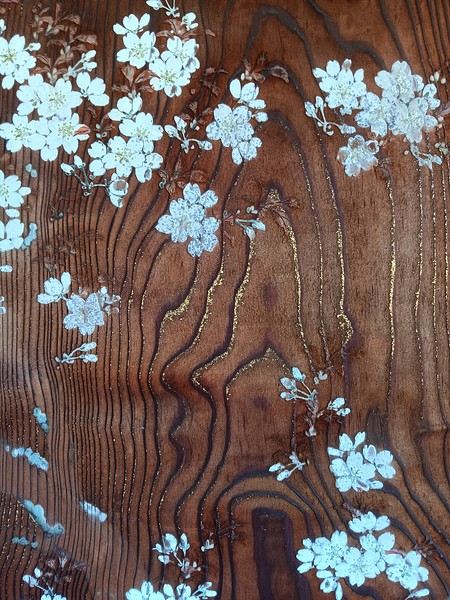
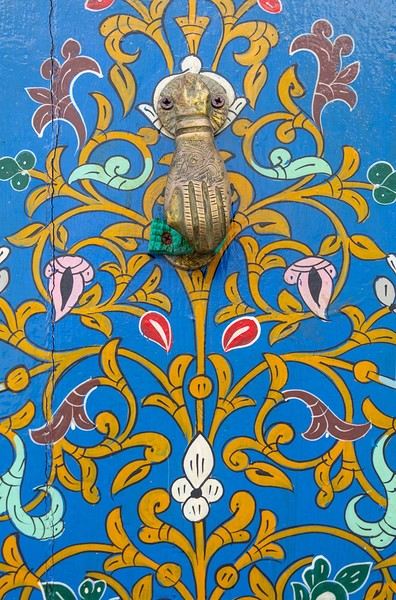
There’s so much more to say. Among the details that caught my attention are these finely decorated sliding doors. They deserve close-up shots to really show the intricacy and delicacy of the artwork!


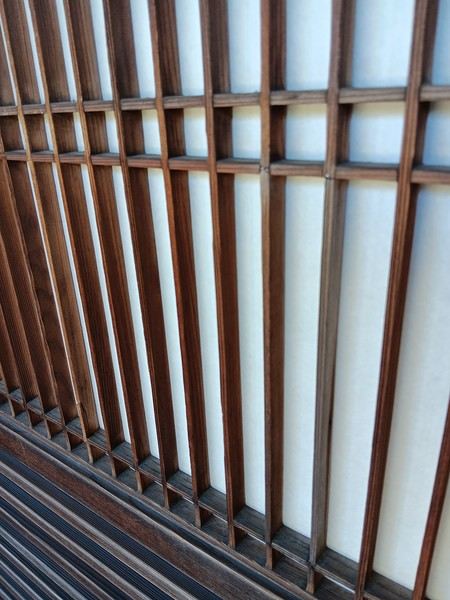
I also particularly appreciate the understated elegance, so typically Japanese, of the sliding doors even when they’re not decorated.


We took a bus back to central Kyoto. The stop is right outside the temple. I tracked our route on my phone (using MapME) to see when we needed to transfer. The next bus stop was 200 meters before where we got off, which caused a bit of confusion. It’s our third day in Kyoto, and I’m starting to get my bearings. We got off at a stop just a few steps from the hotel.

As I mentioned, I’m having issues with photos. So, I won’t describe these three sites in detail—it would quickly become too abstract. I’ll just conclude by saying that these three sites in northwest Kyoto are truly extraordinary.
GE GeorgesOZ Globetrotter ·
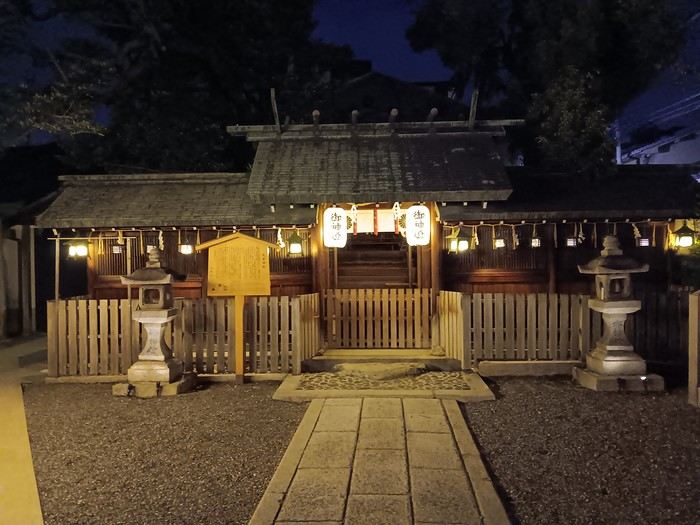
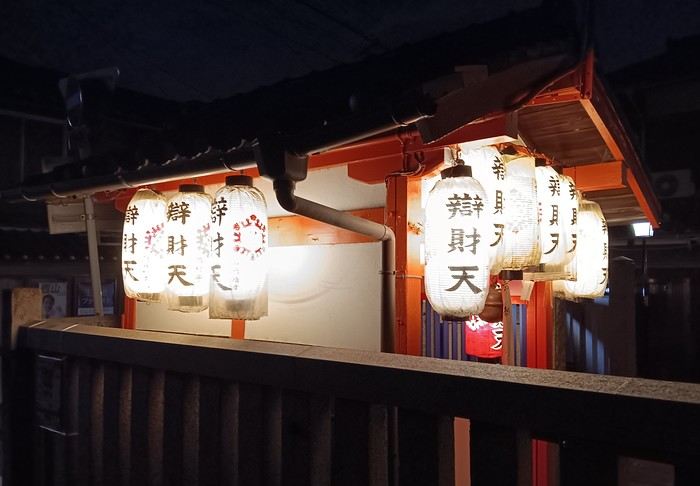
I finally managed to add some photos to the previous post. This was our third and last day in Kyoto. Here are a few random shots taken in the streets near our hotel. It’s such a pleasure to wander around there in the evening.

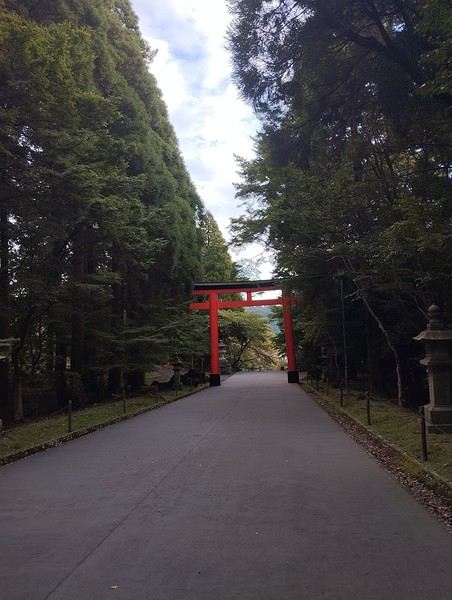
A Shinto temple, for example, with its lanterns.


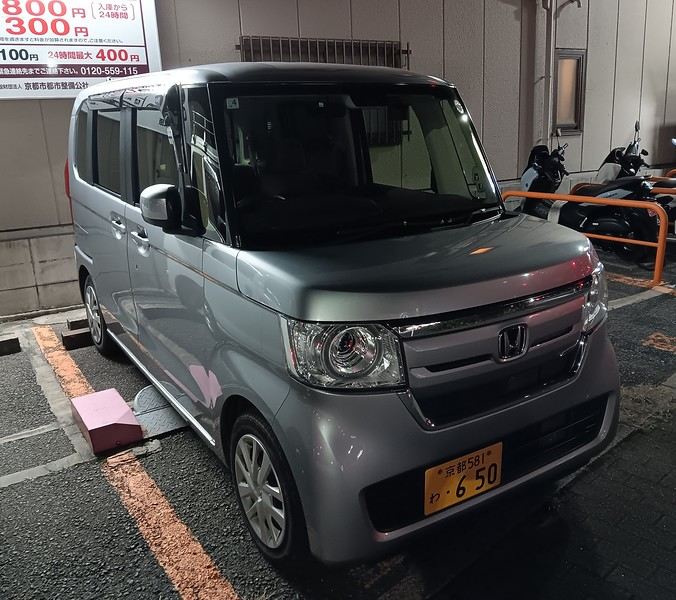
Small cars are everywhere—parked on the street or often in garages that open right onto the road, just big enough to fit them. Clearly, there’s no security issue at all!


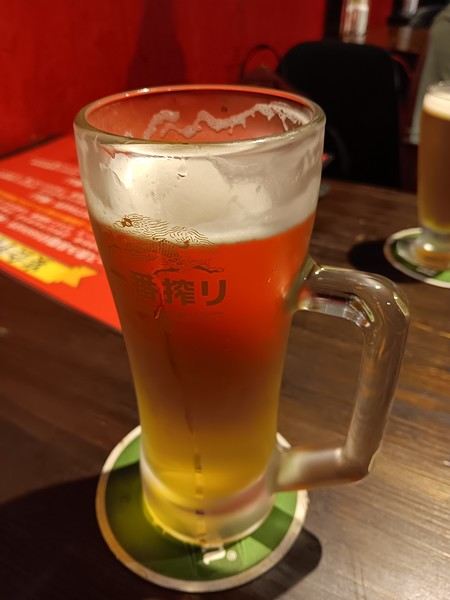
We went back to a bar we’d spotted the night before. It’s a local spot. The owner and his wife recognized us—they probably don’t get many foreign customers. This time, we ate there, but of course, we didn’t forget to order one of those excellent draft beers! For those with a keen eye, you might spot the Heineken beer coaster, but it’s definitely a Japanese beer!

GE GeorgesOZ Globetrotter ·
Sunday, October 4 – Osaka (1)

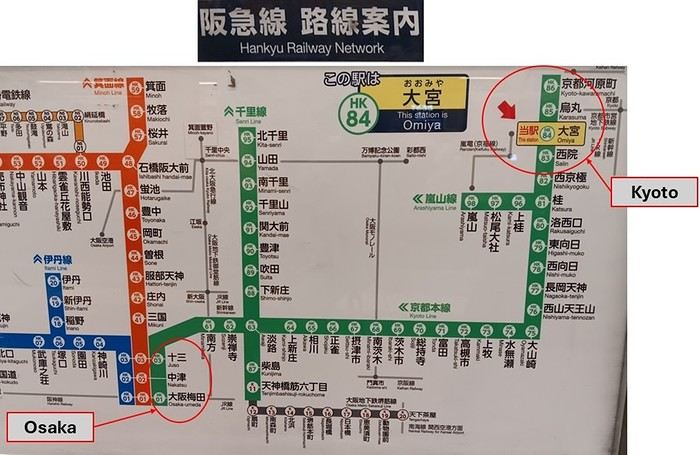
There are probably 36 ways to get from Kyoto to Osaka. One of the simplest is taking the Kankyu Railway Line train from one of the central Tokyo stations. It’s the train that runs on the green line (see the attached map). It stops at several stations before arriving at Osaka Umeda Station. It’s direct, and Osaka is the terminus, so there’s no way to get it wrong. It takes about 45 minutes. No need to reserve seats. By late morning, there’s no problem finding seats. No issue with our luggage either, but we’re traveling light! One last detail: no special ticket to buy—we just use the SUICA card at the entry and exit gates. Easy as pie, and it was probably just a few euros.


It takes us a good 5-10 minutes to get our bearings in Umeda Station. It’s a whole world—hallways and stairs everywhere, plus lots of commercial spaces. Everything seems well-marked, except we’re looking for the Midosuji subway line to get to Hommachi. At the last moment, where we need to go down the stairs on our left, there’s no sign, and we end up taking a long detour through the station before finally figuring it out. Again, no tickets to buy: SUICA card, *click-clack*, and we’re on the subway! This card is truly a marvel!

Hommachi is just 2 stops from Umeda. After dropping off our bags at the hotel, our first exploration of the immediate area leads us to Semba Shinsaibashisuji shopping street. It’s covered with arcades—perfect since it’s raining! We don’t have to look far before finding a ramen restaurant for lunch. The owner quickly explains how to make the most of our tsukemen ramen. It only takes two words for Y to recognize her as Thai, leading to hugs, gossip, and all that—such a warm interaction typical of Thais among themselves. What a contrast to the Japanese reserve!

The afternoon is spent exploring the shops along this shopping street, which stretches at least 2 km all the way to Namba. In short, there’s absolutely everything. We linger in a store selling kimonos, yukatas, and other Japanese clothing. A women’s yukata catches our eye—it’s really beautiful, but we hesitate about the size. I don’t remember the price, but it doesn’t matter—we didn’t buy it. Maybe a regret…


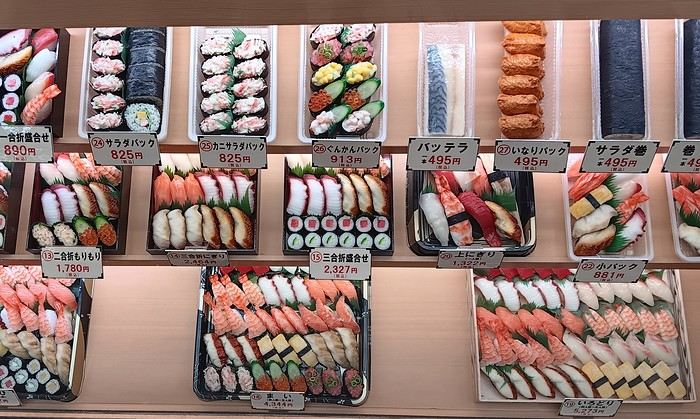
On our way back to the hotel, a sushi restaurant is too tempting with its gorgeous display. So far, the only sushi we’d eaten was from kombinis. For just a few euros, we feast. We’ll be back!
GE GeorgesOZ Globetrotter ·
Monday, October 5 – Osaka (2) – Shopping and sushi The weather is still rainy, so our day’s plan boils down to hunting for a few souvenirs to bring back from Japan. We’ve already bought yukatas in Kyoto, so now it’s about reproductions of Japanese prints, some clothes, and traditional ceramic tableware.

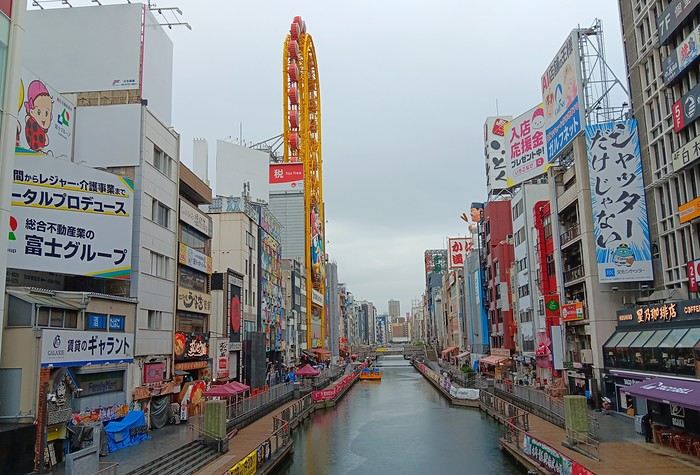
Our first stop: department stores. Takashimaya at Namba Station is gorgeous but a waste of time—the prices are sky-high, way too luxurious for us. We walk up the street and cross Ebisu Bridge over the Dotonbori River. The view of the river with all those typical signs is probably amazing at night when everything’s lit up!


It’s on the 5th or 6th floor of PARCO, another department store near Shinsaibashi Station, that we find what we’re looking for. That’s the floor with Muji, which is supposed to be more down-to-earth but actually has a great selection of clothes and home goods—and honestly, the quality’s pretty good (for us, at least!). We can’t resist the clothing section—especially the pajamas! You’ve got to understand, we’re heading back to Thailand without stopping in Bangkok, and the options in the provinces just aren’t the same! We walk out with 90 € worth of purchases.

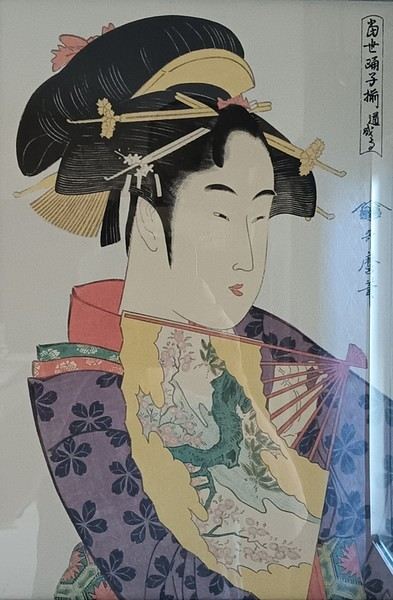
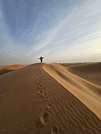
Lucky us: just 20-30 meters from the PARCO exit, a small shop (Nakao Shoten) has a selection of affordable print reproductions right by the door. Exactly what we needed! We grab a good dozen for around fifty euros. The ones we don’t keep for ourselves will make great gifts. Cheap but still presentable—check out this one I had framed in our local ‘big city’ (amphoe) in Thailand. Not bad, right?



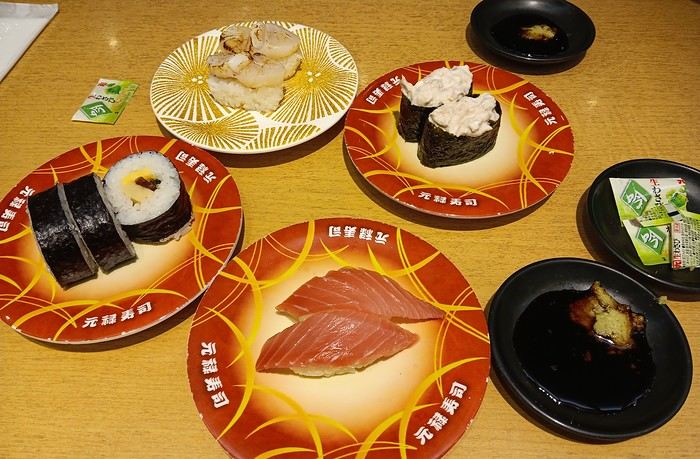
In the evening, we head back to the sushi restaurant we discovered the night before. Here’s how it works: each table has a tablet where you place your order. There’s a rail system built into the dividers between tables, and that’s how your sushi arrives. While you’re waiting, you can watch the little plates zoom by, wondering if they’re yours. Nope, those ones glide past and ignore us, heading to the next table. But yes—these ones arrive, and a switch diverts them to us. Those are ours! And it doesn’t take long, either! A server brings our beers—way too risky to send those on the rails!


Our little plates pile up, and we’re loving it. Press a button on the tablet to call for the bill: the server scans the stack of plates (they’re magnetically coded), and that generates the total. So efficient! Japan, really…

Tomorrow’s our last day in Osaka, and since the weather forecast looks better, we’ll finally get to do our last ‘real’ outing.
GE GeorgesOZ Globetrotter ·
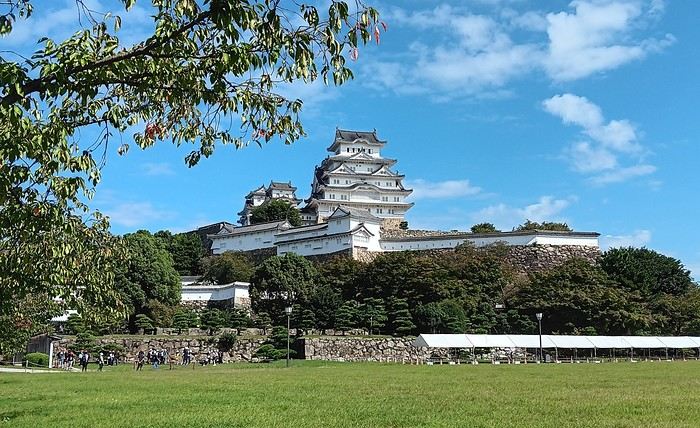
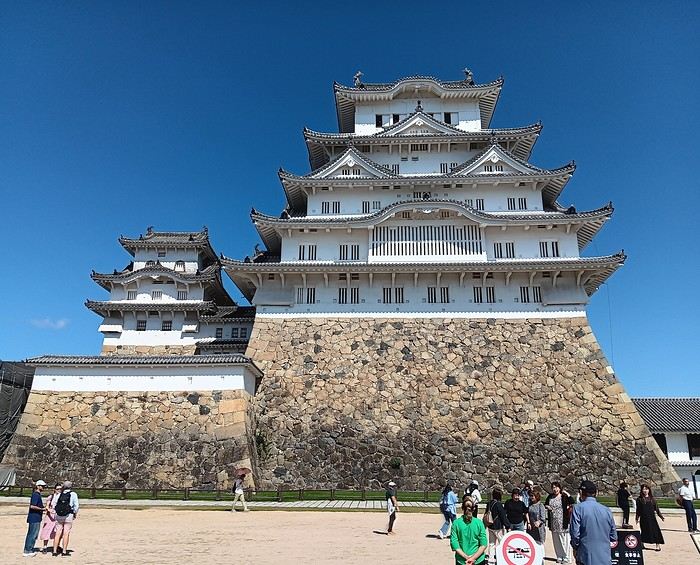
Tuesday, October 6 – Osaka (3) – Himeji Himeji is located 100 km west of Osaka. Although the train runs along the coast, you rarely catch a glimpse of the sea through more than 50 km of urban and industrial jungle. It’s only after passing Akashi that the mountains give way, making room for a bit of countryside. As soon as you leave the station, Himeji’s main attraction jumps out at you: you can see the famous castle at the end of a long, straight avenue. It takes just about fifteen minutes to get there. It’s only 10 a.m., and there are already a lot of people—just as many foreigners as Japanese—but it’s manageable. We pay 5,200 JPY = 29 € for 2 people, which will be by far our biggest tourist expense of the trip.

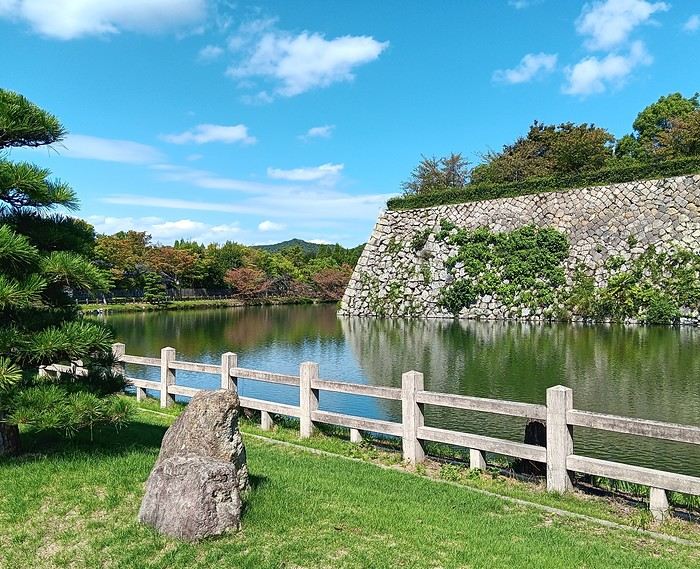
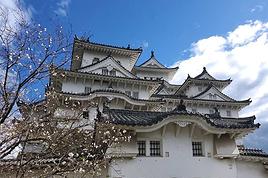
I’m sure this castle has already been talked about a lot—the famous ‘White Heron,’ known worldwide. So I don’t want to dwell on its description, but I should say a few words. First of all, it’s enormous. Many photos focus on the two keeps, and you’d easily forget there’s so much more to see. The fortifications surrounding the castle’s perimeter are massive. In total, it covers 233 hectares—six times the size of the Louvre and Tuileries combined.


The first structures date back to the 14th century. There have been many additions and modifications up until the early 17th century. You can really see the style of castles like Matsumoto and Hikone. One detail among many: an impressive number of racks for storing weapons—muskets, katanas, etc. The inhabitants were well-prepared to defend themselves in case of an attack!

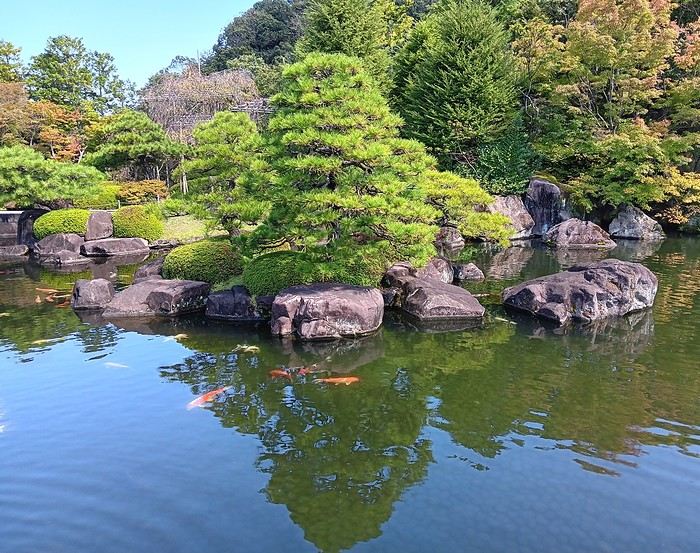
We also visit the Koko-en gardens, right next to the castle.


I had hesitated about making this trip from Osaka. No regrets—Himeji is absolutely extraordinary.

It’s past noon, and we walk through the few shops and restaurants near the castle, looking for something less touristy in Himeji itself. The streets are pleasant, but we don’t find anything open and end up buying snacks at a 7-Eleven.

Back at the station. On the platform, we hesitate—the signs give directions we don’t quite understand. If only we could see a scrolling display with all the stops for each train... but no. A Japanese man waiting on the same platform answers my question: ‘Yes, this train does go to Osaka.’ As usual, I’m tracking our route on my phone. There we go—we’ve just passed the Kakogawa River and the city of the same name. The train makes 2 or 3 more stops, then halts for several minutes before heading back... in the opposite direction! We start to worry. Luckily, I spot two employees at the far end of our carriage. With the three Japanese words I know and the three English words they know, we manage to understand each other. The train will pass through Kakogawa again—we need to get off and take another train.

This time, we see the cities we’d noticed on the way out: Akashi, Kobe... and finally Osaka! This little adventure cost us a good two hours. Having left our Osaka hotel shortly after 8 a.m., we’re back by 4 p.m.
GE GeorgesOZ Globetrotter ·
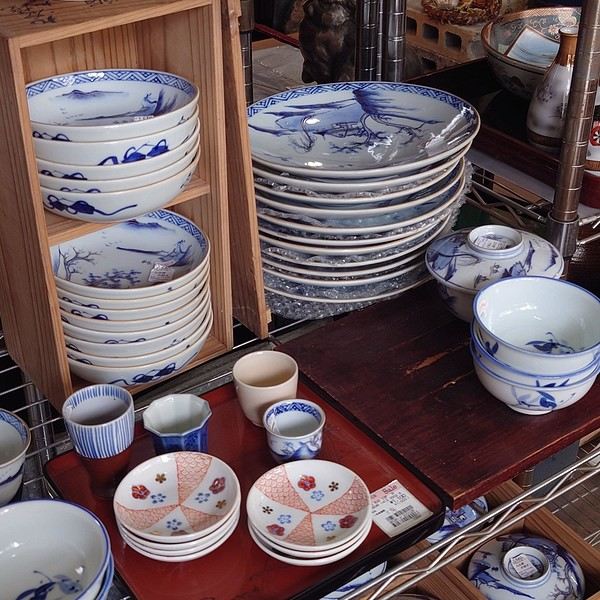
Tuesday, October 6 – Osaka (4) – Tableware After a short rest following our return from Himeji, our consumer appetites kick back in. There’s one last category of souvenirs we want to bring back from Japan: some traditional tableware. A great tip for those who don’t know Osaka well (which is our case): Sennichimae Doguyasuji - Cookware Shopping Street. It’s a street just outside Namba Station. We head there on our favorite subway line, the Midosuji... it’s the only one we know!

Namba Station is huge and can be really disorienting. I make sure to note the signs for the subway (or train?) that goes from this station to the airport, so we don’t have any nasty surprises the next day, when we fly back to Bangkok. On the other hand, we get completely lost in Takashimaya, which takes up a large part of the complex around the station. There are no signs for the exit—zero, zilch! We wonder if it’s intentional, to keep people around the amazing, perfect displays for as long as possible. Bravo, but where on earth is the exit? I usually have a good sense of direction, but there are limits!

I decide to try the impossible: asking in one of the stores lining the corridors where we’ve been wandering for a good 10 minutes. I approach an employee—she’s kind, but she doesn’t understand a word of English, and my Japanese is too limited. I gesture in a way that, in my opinion, should make it clear we’re going in circles and want to get outside. No luck, except that she keeps smiling and telling me we’re in Namba (that’s what I gather). Thanks, we didn’t know that—we thought we were in the Sahara... I ask her for paper and scribble a drawing that, in my mind, should be understandable even in the Andromeda galaxy: us going in circles, ending with an arrow pointing outside the scribble and a big question mark. Result: still nothing! But what patience, what kindness—it’s worth mentioning!

Then, a sudden flash of inspiration hits her, and she points in the direction we should go. Finally, we find the stairs leading us to the street. Luckily, it’s on the side we’re looking for: Sennichimae Doguyasuji - Cookware Shopping Street. It’s just a few steps away, a small street with several shops offering a wide variety of kitchen equipment. We check out the first 3 or 4 to get a sense of what’s available. The selection is impressive, and the prices are very reasonable. I’ll just share one photo—I hope it gives you an idea of what we’re looking for.


The shops are already closing, so we hurry to gather what we like most, pay for it... and pack it ourselves using the newspaper sheets provided for customers. We spend 75 € in total.

A very full day, then—we’ve definitely earned a beer, which we enjoy at a bar just outside this shopping street. There’s a lot more activity around Namba than elsewhere, and especially a lot more foreigners. Everyone seems to have heard of Namba. Still, I’m sure the vibe changes just a few streets away from the station. Namba is a major district—you’d need time to explore it properly.
GE GeorgesOZ Globetrotter ·
Wednesday, October 7 – Osaka (5) - Airport Breakfast as soon as the restaurant opened. We were the only foreign guests in this hotel, it seems. It was the same in all the previous hotels too. Was it the way we chose them? I don’t think so. Just to remind you, we booked rooms averaging 82 euros, including breakfast. The prices ranged from 52 (Hikone) to 113 (Matsumoto). The rooms were always spotless, and the hotels were very clean and well-located.

Most of the guests having breakfast were alone at their tables. Probably on business trips. As always, there was absolute silence, just slightly covered by some background music.

This last hotel offered the best breakfast, with a wide selection and, among other things, excellent croissants. The only downside was the coffee. It wasn’t bad, but there’s better. Same observation in all the hotels we stayed in during these two weeks in Japan, and also during the two weeks we spent in Taiwan before—is it a coincidence?

We took the Midosuji subway line and arrived at Namba around 9 a.m. There were already a lot of people moving around, but we timed it well to avoid the rush-hour crowds, especially now that we had a bit more luggage to carry! No problem finding the train to the airport. The train left the urban jungle and turned toward Osaka Bay: the airport (KIX) was built on an artificial island. The trip took about forty-five minutes.

For years, we haven’t checked any luggage on the way out. We travel light, and it makes things so much simpler! You can find everything everywhere: toothbrushes, shampoo, extra clothes if needed... and while I’m at it, konbinis in Japan always have a great selection of socks and underwear!

Since it’s almost inevitable to buy a few souvenirs along the way, we check a bag on the return trip. We checked a 15 kg bag with Thai Air Asia X. We had two quiet hours to wait before boarding our flight to Bangkok—a five-and-a-half-hour flight. And we still had 3000 yen left, plus a little credit on our SUICA cards that we’re keeping for our next trip to Japan.

Because yes, we definitely want to go back! For 36 reasons.

My last words before closing my travel journal. I’m surprised by the silence of those who were kind enough to follow along. I was so used to being bombarded, when I used to frequent pages about Thailand (a country I think I know very well), by big fans of ‘but I...’, ‘you’re completely wrong’, ‘let me add more’ and so on—I was so put off that I’ve stayed away from Thailand discussions for years!
NA Nathalie971 Regular ·
Hi,

Thanks for sharing this. I was there at the same time but in different places. It helped me discover spots I didn’t know, even in classics like some temples in Kyoto. I loved the historical and linguistic details—they really flesh out the travel journal.

What makes you want to go back?
GE GeorgesOZ Globetrotter ·
Hello,

Thanks for sharing this. I was there at the same time but in a different place. It helped me discover spots I didn’t know, including some classics like certain temples in Kyoto. I appreciated the historical and linguistic insights that add depth to the travel journal.

What makes you want to go back?

Hello Nathalie,

The reasons: great question! I said we want to return for 36 reasons—it’d be a bit long to list them all in writing!

But to start, in no particular order: - the comfort of travel. Despite the language barrier, we found traveling in Japan easy. Transportation runs like clockwork. After a few initial hiccups, buying train tickets is simple, even last-minute. - the comfort of accommodation. The hotels are impeccable. - the cities are pleasant. The streets aren’t architecturally spectacular like many European cities or the colonial towns of Mexico, but they’re enjoyable for their cleanliness, safety, and the number of beautiful temples and charming houses. The covered shopping streets are lovely. - the food. There’s an incredible variety, from konbini to izakayas and larger restaurants. Always fresh and clean—no risk of stomach issues. It’s consistently good. We can compare to many countries we’ve traveled to (India, Thailand, Mexico, Nepal, etc.): even when it’s good, it’s often too heavy or risky hygiene-wise. - the cultural sites. An obvious draw! - the landscapes. Another obvious one! - the shops. A joy to get lost in for hours. Makes you wonder what Japanese travelers find in Europe that they don’t already have at home—sometimes better or cheaper. - the people. So much to say! Their quiet kindness, courtesy, calm, and general good behavior. - the cost of living. Once you’re there, only hotels really weigh on the budget. Otherwise, it’s often cheaper than Europe or even Thailand.

In short: admirable and enjoyable! I’m sure I’ve forgotten some things...

And for us personally, it’s a welcome change after months in Southeast Asia.
NA Nathalie971 Regular ·
Hello,

Thanks for sharing this. I was there at the same time but in different places. It helped me discover spots I didn’t know, including some classics like certain temples in Kyoto. I appreciated the historical and linguistic insights that add depth to the travel journal.

What makes you want to go back?

Hi Nathalie,

The reasons: great question! I said we want to return for 36 reasons—it’d be a bit long to list them all in writing!

But to start, in no particular order: - the comfort of travel. Despite the language barrier, we found traveling in Japan easy. Transportation runs like clockwork. After a few initial hiccups, buying train tickets is simple, even last-minute. - the comfort of accommodation. Hotels are impeccable. - the cities are pleasant. The streets aren’t architecturally spectacular like many European cities or the ‘colonial’ towns in Mexico. But they’re enjoyable for their cleanliness, safety, the number of beautiful temples, and charming houses. The covered shopping streets are lovely. - the food. There’s an incredible variety, from konbinis to izakayas and larger restaurants. Always healthy and clean—no risk of digestive issues. It’s always good. We can compare to many countries we’ve traveled to (India, Thailand, Mexico, Nepal, etc.): even when it’s good, it’s often too heavy or risky hygiene-wise. - the cultural sites. A no-brainer! - the landscapes. Another obvious one! - the shops. A joy to get lost in for hours. Makes you wonder what Japanese travelers could possibly find in Europe that they don’t already have at home—sometimes better or cheaper. - the people. So much to say! The quiet kindness, courtesy, calm, and general good behavior. - the cost of living. Once you’re there, really only hotels weigh heavily on the budget. Otherwise, it’s often cheaper than in Europe or even Thailand.

In short: admirable and enjoyable! I’m sure I’ve forgotten some things...

And for us personally, it’s a welcome change after months spent in Southeast Asia.

Hi Georges,

Thanks for this quick and very complete response. There aren’t 36, but these are already great reasons I agree with. I’m surprised, though—you mentioned prices can be cheaper than in Thailand?
GE GeorgesOZ Globetrotter ·
Hi Nathalie,

The reasons: good question! I said we want to go back for 36 reasons—it’d be a bit long to list them all in writing! ..... - the cost of living. Once you’re there, it’s really only hotels that weigh heavily on the budget. Otherwise, it’s often cheaper than in Europe or even Thailand.

And for us in particular, it’s a welcome change after months spent in Southeast Asia.

Hi Georges,

Thanks for this quick and very thorough reply. There aren’t 36, but they’re already great reasons I agree with. I’m still surprised, though, because you mentioned prices can be cheaper than in Thailand??

Of course, it all depends on what we’re talking about and where! And also on how much time you spend in a given country, since your perception changes over time and with accumulated experiences.

We’ve spent hours and hours in shops everywhere we’ve gone. They’re amazing. The selection is extraordinary, and we find the quality-to-price ratio is often better than in Thailand: clothes, food, household items, etc. A good beer in a restaurant or an izakaya is much more satisfying—at a fairly comparable price—than the junk served in Thailand. We tend to romanticize Thailand a bit too quickly and marvel at its supposedly cheap cost of living. The truth is, it’s not that cheap anymore, and the quality is often lacking.

We know Lisbon, Portugal, very well, and for several years now, we’ve noticed the same trend there, relatively speaking (relatively because we all know prices have risen everywhere).

I saw a week or two ago that, on average, the cost of housing in Osaka is 4 times lower than in Bangkok when you factor in people’s salaries. Is that exaggerated? Maybe, but it’s still thought-provoking!

I also said that, roughly speaking, Japan becomes a ‘refreshing’ stop after spending months in Southeast Asia. I’m thinking especially of Thailand (but not only). To keep it short, I see the contrast between:

- Japan: orderly + clean and well-maintained + quiet and discreet people. - Thailand: chaotic + dirty and polluted + frequent loud behavior.

There are factors that are harder to judge, like the friendly and courteous attitude of people, which you often find (but not everywhere) in Asia.
NA Nathalie971 Regular ·
Thanks, Georges, for this detailed answer. I agree that Japan is more affordable than urban legends suggest, especially when you compare the price to the quality you get.

Similar discussions

You might also like