Kyoto, Shinkansen, Tokyo: three first-timers in Japan via Air China
FR

Translated into English.

Original post
OL
Hi everyone,

The idea of visiting Japan goes back a year now. I remember because I was looking for cheap flights to Europe from Paris. Surprisingly, the round-trip to Japan with Air China was just as affordable—if not cheaper—than many European destinations.

So, the tickets were booked. Three seats (including one for a 12-year-old), ten days over Easter 2018, AirBnB accommodation. Of course, in ten days, you visit without *really* visiting—you only scratch the surface. Just the classics: Kyoto, temples, moonlit rivers; the Shinkansen; and Tokyo, gardens, wandering, high-tech, and... maids.

I have to admit, we don’t know much about the country, and the thought of how we’d manage is a constant source of worry. What if this trip reveals my inability to open up to other cultures?

We board the first Air China flight with that question on our minds.
FR FrançoiseVec Regular ·
Hi Alain,

I really enjoyed reading your American travel journal, and I’m excited to follow along on your Japanese adventure (we’re planning our own trip in April 2019). Looking forward to your updates! Françoise
OL Oltean Regular ·


Air China? No problem. At least, nothing like the shambles some predicted. Clean, on time, professional. Sure, the food wasn’t great, and economy class comfort is pretty basic. But no more, no less than on Air France transatlantic flights. As for the in-flight entertainment, no miracles: the usual jumble of blockbusters—the same ones that make me walk away during the year—and a long-haul flight just reminds you they exist. One curiosity: a surprisingly large catalog of Chinese comedy films (I had no idea comedy was such a big deal in that country). Didn’t have the energy to watch any, so I’ll never know if China has its own equivalent of Gérard Oury.

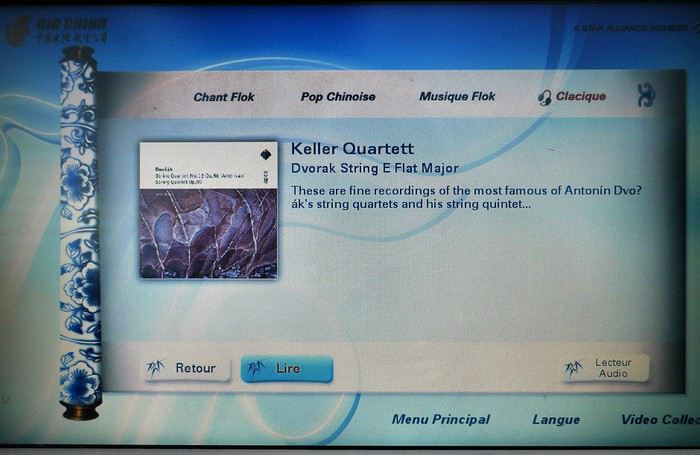
Dvořák on Air China

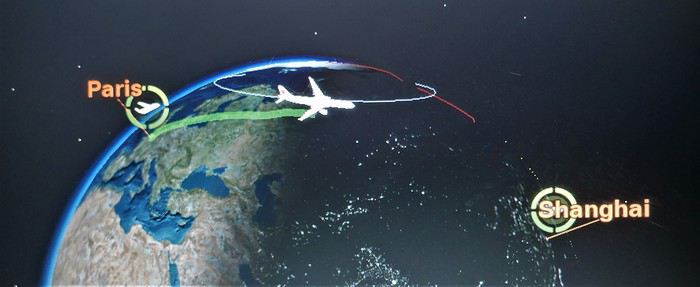
For music, the "Classical" selection ranged from Debussy/Ravel to the American Quartet, unexpectedly taking me back to my last big vacation in Iowa. From Paris to Shanghai, along the Arctic Circle
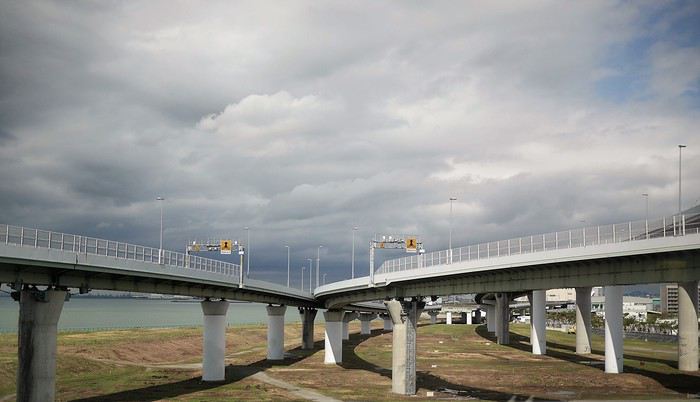
Shanghai Airport, let’s say it right away, is impressive. Not dirty at all, bright, and sprawling endlessly across what first seems like a vast plain. But on second glance, every perspective—even nearby—is obscured by a thick haze of grime. A vertical city looms in the distance, while in the other direction, massive structures cut through the smog, moving almost imperceptibly: cargo ships making their way through the pea soup. What looked like a plain is actually the sea—a shoreless expanse with no horizon, where ghostly vessels glide silently.

We won’t get to visit Shanghai or its surroundings. The airport alone keeps us busy during our four-hour layover, interrupted by persistent iPhone resellers. Three solicitations in a row—my long-nosed profile doesn’t go unnoticed in this crowd of locals, whether traveling with family or on business. Many wear masks (anti-pollution?). In a typically non-European posture, a young executive squats, feet flat, scrolling on his tablet.

Our first wait, at customs, introduces us to a sharply dressed officer with very limited authority—"like in some corporations," as they say. His role doesn’t allow him to grant foreigners a few hours in the Middle Kingdom. He scrutinizes us, takes our photos, confiscates our passports, and places them on his superior’s desk. Or at least, we assume it’s his superior. This other officer is a virtuoso on his landline phone (the touch-tone kind, an ‘80s classic), answering it faster than his own shadow. Practicing for *China’s Got Talent*? Maybe that’s why he’s the boss. Eventually, he examines our passports and temporary immigration forms—one to declare our arrival, the other to confirm our quick departure—decides we’re acceptable, and hands everything back to his lower-ranking colleague, along with a brief grunt. The junior officer, duly equipped with a seal bearing the People’s Republic’s emblem, stamps our passports with a broad gesture and a sharp *thwack*.

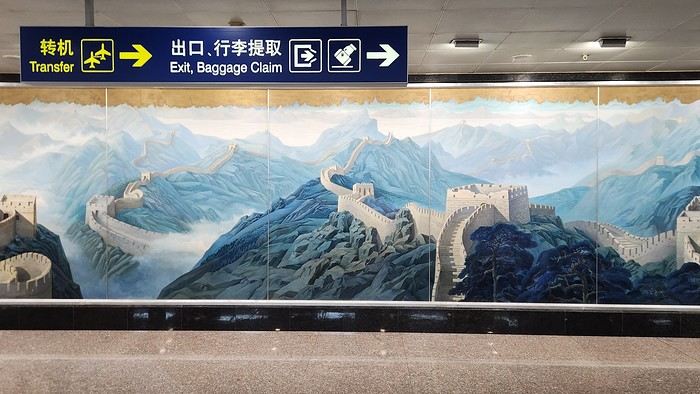
We had no idea we’d face half a dozen more queues. As modern as it looks, Shanghai Airport suffers from omnipresent, cumbersome bureaucracy (like, we imagine, much of the country). We wait for customs, fume while heading to Terminal 1 (after being casually told our flight to Japan left from there), then backtrack once the mistake is realized. We shuffle along with other bewildered French travelers in a line labeled "Foreigners" to access the international departures area (despite having just landed there), and finally show our papers to a team of inspectors who, for the *n*th time, dunk our luggage in an X-ray soup.

The Air China flight to KIX (Osaka-Kyoto) is just as impeccable. Clearly, this Chinese airline is a great find. The landing is almost on the deep blue, on a man-made embankment in Osaka Bay. Of course, just like the Chinese, the Japanese want to know who’s visiting their land. Fair enough. We hand over our fingerprints to machines, fill out yellow and white cardboard forms, and wait for a Japanese version of Justin Bieber to glance at them with a bored expression before declaring us admissible. One thing’s for sure: it’s much better organized than in China. Advisors are everywhere, helpful and smiling. We finally retrieve the suitcase we checked in Paris hours ago (what day is it again?) and escape customs—at least one queue we’re spared. Maybe next time on the way back.


On the JR train from Haruka to Kyoto, I discover the face of this new world.
OL Oltean Regular ·
Hi Alain,

I thoroughly enjoyed reading your American travel journal, and I’m excited to follow along on your Japanese adventure (we’re planning a trip there in April 2019). Looking forward to your updates! Françoise

That’s so nice! And I’m thrilled to have a reader in Corsica—the homeland of half my ancestors.
ER Erjome Globetrotter ·
Hi Alain,

I’m boarding my Air China flight and heading off on this adventure. I’ve flown with them on domestic Chinese routes before and didn’t have an unforgettable experience. Since they often offer great prices from Barcelona, I’ll take a closer look next time if I can’t find what I want with my favorite airlines.
OL Oltean Regular ·
Hi Alain,

I’m boarding the Air China flight and heading off on this adventure. I’ve flown with them on domestic Chinese flights before and didn’t have an unforgettable experience. Since they often offer great prices from Barcelona, I’ll take a closer look next time if I can’t find what I want with my favorite airlines.

Hey Eric,

Thanks for the info! Which airlines would you recommend based on your experience? And are they reasonably priced? When I booked, Air China was unbeatable for my chosen dates.
CL Clabin Regular ·
"On the JR train connecting Haruka to Kyoto, I'm discovering the face of this new world."

Note: It's the train called "Haruka" that connects KIX to Kyoto (and sometimes beyond).
OL Oltean Regular ·
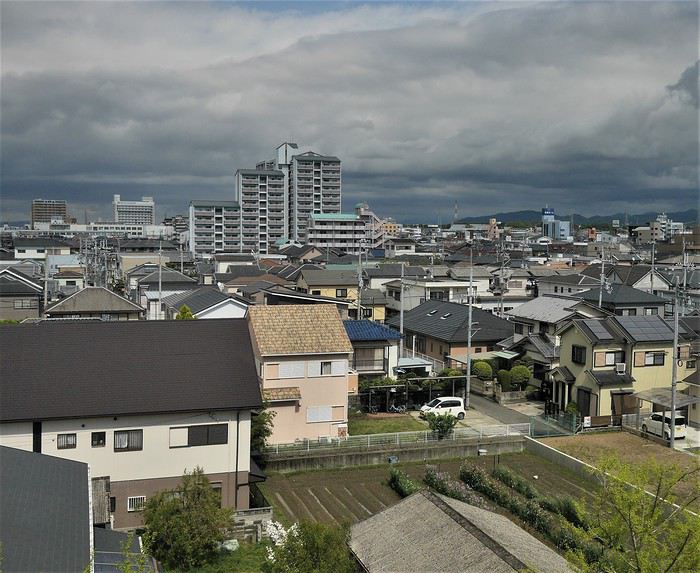
Small houses, gardens. Skyscrapers are rare.

Outskirts of Kyoto

From the train, Kyoto announces itself with modesty. Here and there in this residential suburb, you spot cubic cars neatly parked in their garages.

Tokyo Station: no trouble finding the subway line that’s supposed to whisk us five stops north. It’s marked in English, and very clear. One downside: the Suica card, bought specially before departure, sets off the electronic gate alarm like crazy. This prepaid pass, super useful in Tokyo, was supposed to work elsewhere too. Not on this subway, apparently, which belongs to a rival system called Icoca. The Suica’s mascot is a penguin, Icoca’s is a platypus: Japanese transport networks seem to have a soft spot for egg-laying mammals or birds. Back home, we often use the pigeon as a symbol too, but more for the passengers. A matter of perspective.

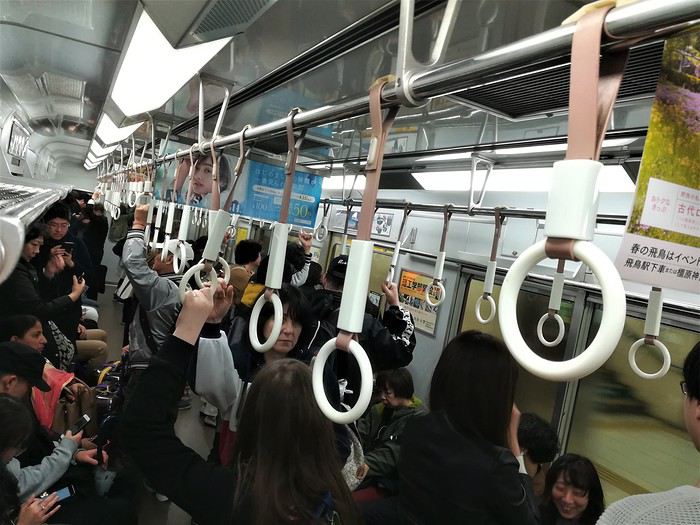
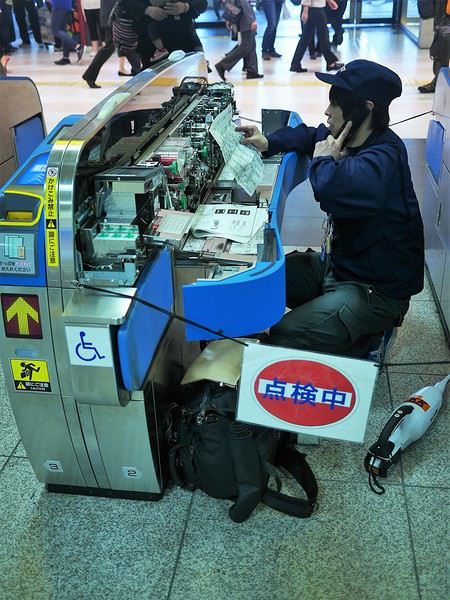
Kyoto subway

Subway, work, Kyoto

Repairs
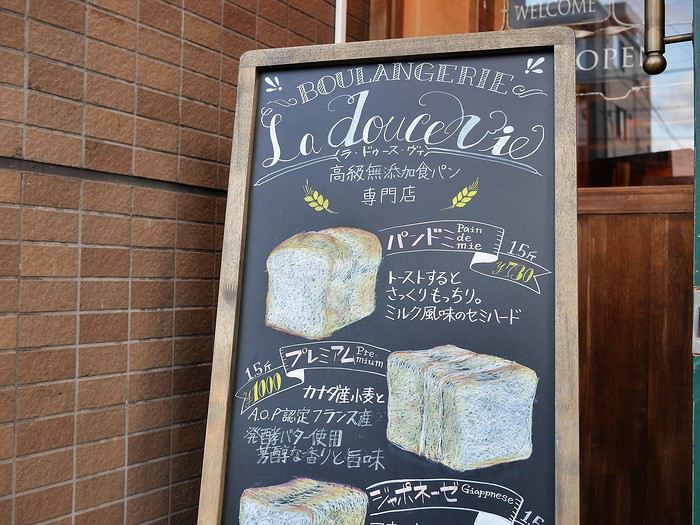
The neighborhood where we’re staying is close to Imadegawa Station. It’s not a wildly lively area, but it’s welcoming with its small streets and scattered shops, often advertised in our language.

Bakery

France still has a great reputation in a certain Japanese imagination. That explains some of the surprises: here, trains and subways run on time, everyone queues up neatly to board. I didn’t see a single piece of paper on the ground—neither in the trains, nor in the stations, nor anywhere else. What a contrast with Paris and its suburbs, where stations often look like so many Cour des Miracles—even the most touristy ones. The first thing that strikes you in Kyoto is the bikes zooming out of nowhere when you least expect them. There, it’s just like Paris.

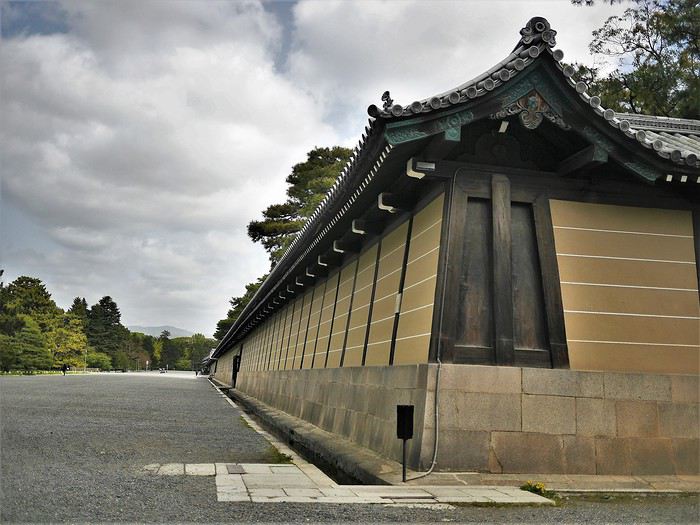
Imperial Palace (closed)

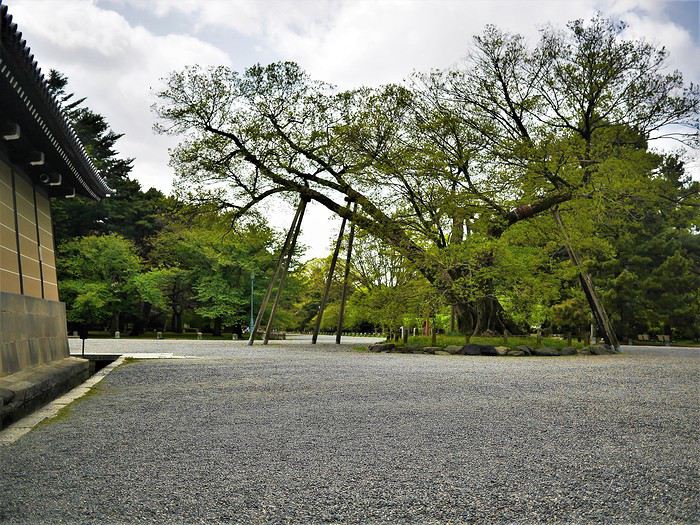
In the Imperial Palace Park
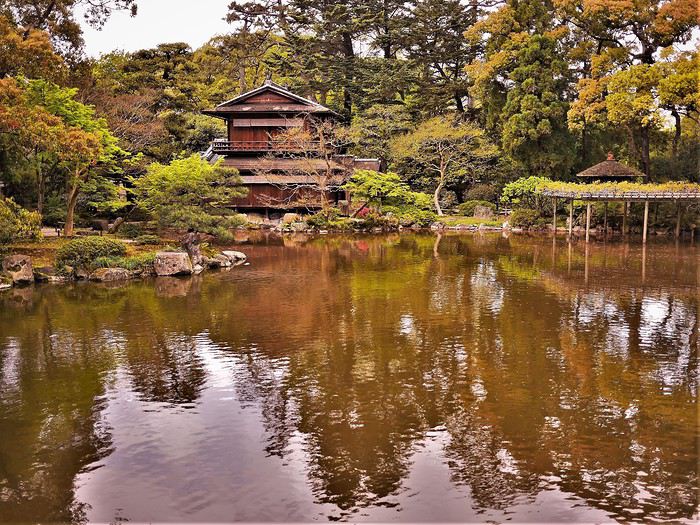
Mirror
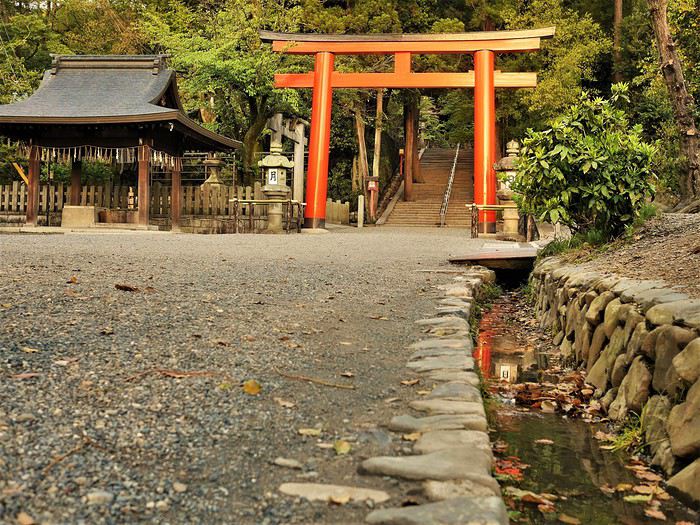
We’re just steps away from the vast Imperial Palace Park. The Palace itself is closed for now, but the surrounding nature is wonderfully soothing for the jet lag haze. We head to the southeast corner and continue on foot toward the historic Higashiyama district, famous for its shrines discovered along hilly paths.


A street in Gion

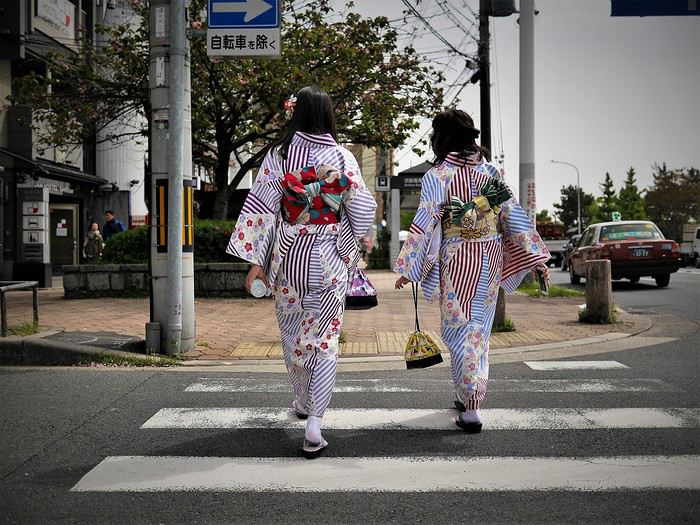
Ten minutes away, Gion, the geisha district, is very quiet on this Monday lunchtime. We spot a few apprentices, and I chase them briefly with my camera, wondering what would happen if you pulled the big bow on the back of their outfits.

Following geishas

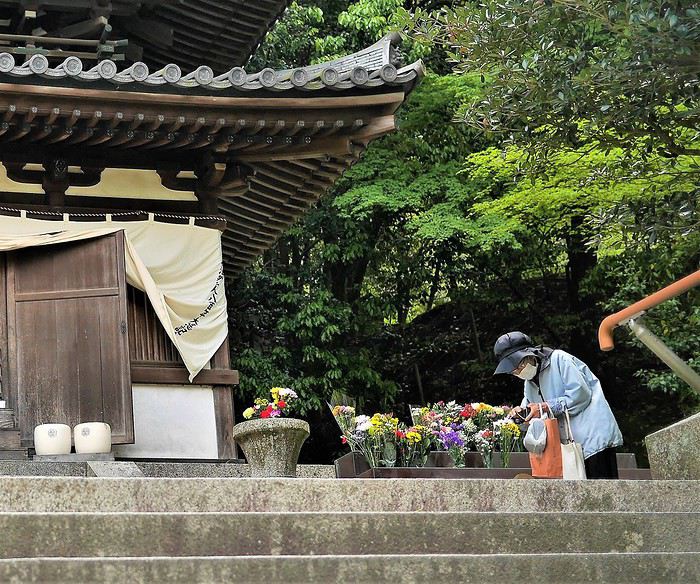
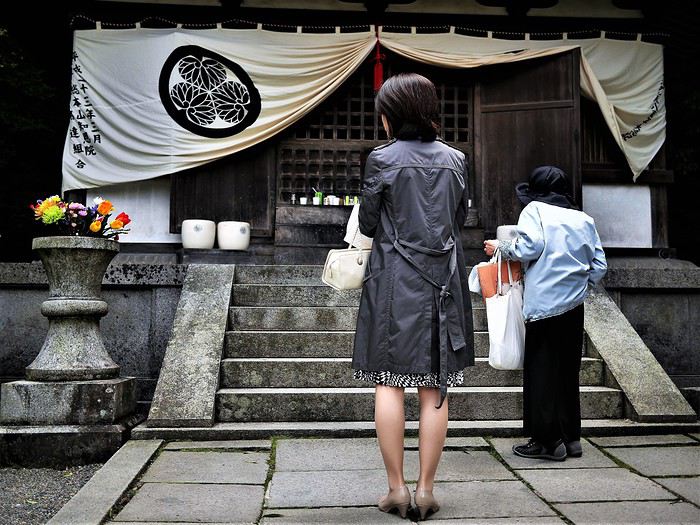
Memorial


I’m surprised to find people on this island who speak worse English than I do. Some clues during the Airbnb booking had already tipped me off: "I’ll send you a rink," the hostess had written. Luckily, that link didn’t lead to nowhere. The same person thanked us for the corporation, instead of cooperation. At our first restaurant, the young staff tried hard to speak English to us. A commendable effort, but it showed its limits when I asked for the bill at the end of dinner, "the bill, please." "The bil?" the waiter replied. "Of course, just now." Thirty seconds later, he came back with a beer in hand and placed the glass in front of me with a big smile. "Youl bil, mister." With all the self-control of someone from the East, I thanked him profusely and, careful not to embarrass the friendly but clumsy waiter, I took it upon myself to down the good beer, all while asking for the bill again—this time avoiding English.

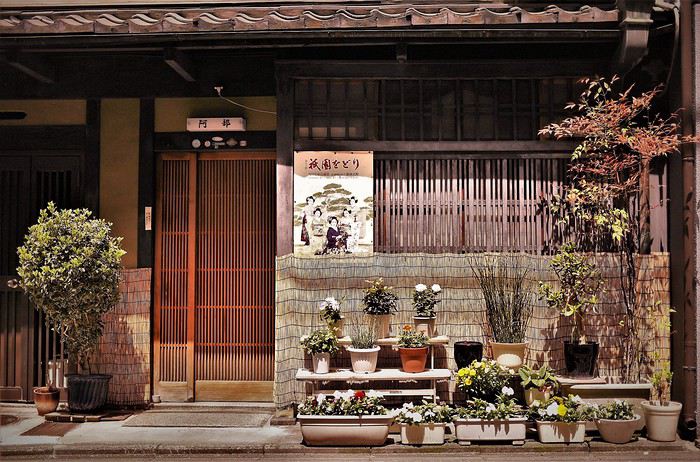
Facade Reminder

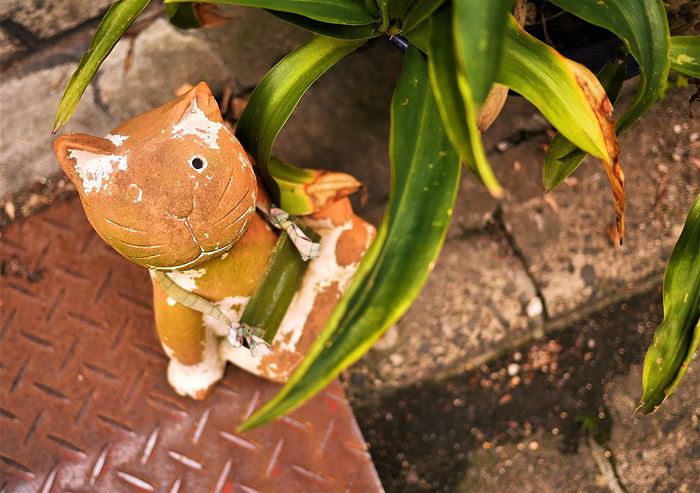
Cute cat

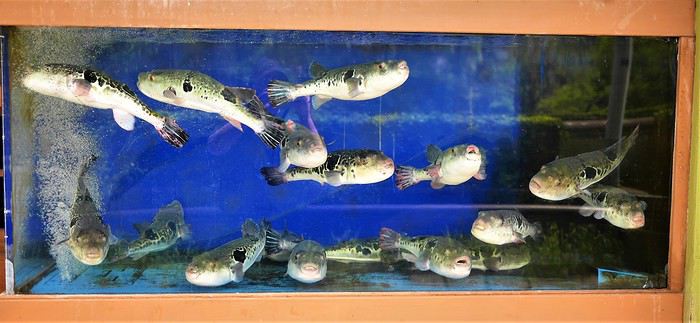
A fish called Fugu
Healthy motto
OL Oltean Regular ·
"On the JR train that connects Haruka to Kyoto, I discover the face of this new world."

Watch out: It's the train called "Haruka" that connects KIX to Kyoto (and sometimes beyond)

Oh perfect, thanks for correcting that mistake. I guess it won’t be the only one! :)
ER Erjome Globetrotter ·
Hi Eric,

Thanks for the info. Which airlines would you recommend based on your experience? And are they not too expensive? When I booked, Air China was unbeatable for the dates I chose.

Good evening Alain,

Choosing an airline depends on criteria that vary in importance for each person. In your case, Air China was the cheapest, and you're happy with it—that's what matters most. If the airline had disappointed you, at least you'd have known it was budget-friendly, and that's all you would've remembered. Good call for you, and next time I plan a trip, I'll take a closer look at them.

And "check" works way better than "bill" for the tab. At least you got to enjoy a good beer too 🙂.
CL Clabin Regular ·
"Oh perfect, thanks for correcting that blunder. I guess it won’t be the only one :)"

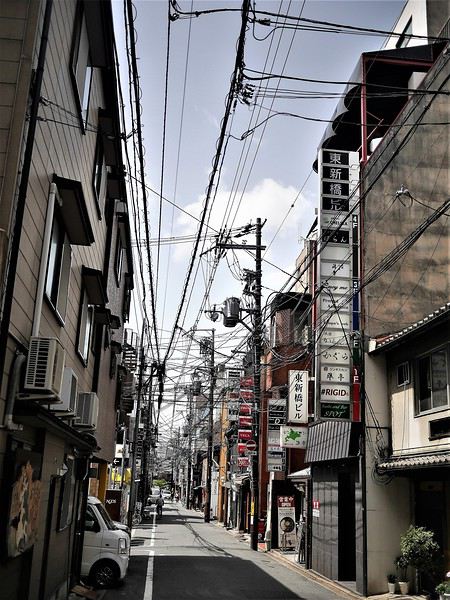
And thanks for these gorgeous photos that give away your favorite spots! :-) I love the one of that little street in Gijon with all its electrical wires—it’s so typical of the old streets in small neighborhoods.
GL Glamys24 Regular ·
Hi Alain,

Regarding airline choices, I’ll share my thoughts after nearly 40 years of traveling. For about 20 years (roughly 1980–2000), I often flew with Aeroflot, which offered great prices to Asia and even Africa, despite long overnight layovers in Moscow. Finnair also had a great period. Then, until around 2010, I favored Gulf airlines while they were undercutting European carriers. Those were the golden years of Etihad, Qatar Airways, Emirates, and also Saudi and Kuwait Airways, which are less well-known. Nowadays, Chinese airlines are dominating the market, almost without any advertising. That’s the case with Air China, but also Southern, Eastern, Hainan, and Xiamen Airlines. Worth noting that these "regional" airlines originated from the People’s Liberation Army Air Force.

A few key points: - These choices are based solely on price. When my ticket was covered, I really enjoyed Qatar Airways’ business class and their dedicated terminal in Doha. But that was then... - Little experience flying to the Americas and none to Oceania. - One exception: for trips to the Middle East and Central Asia (the "Stans"), Pegasus from Marseille.

To wrap up, a fond memory: in 1977, my first long-haul flight—Orly to Beijing on an Air France 707, with stops in Athens, Karachi, and Bombay. *That* was travel...
BE BeneFukuoka Veteran ·
We came across a few trainees I briefly photographed

In the photo, they’re just two tourists who rented kimonos—a very common practice 🙂

wondering what would happen if you pulled the big knot decorating the back of their outfit.

It depends on the tying. Best case, almost nothing happens, and worst case, the obi unravels and falls to their feet. Since the kimono is held together with ties underneath, you won’t end up exposed without the obi (the "belt").

I really like the tone of this travel journal—it’s refreshing.
CL Clabin Regular ·
"... a great memory: in 1977, my first long-haul flight, Orly/Beijing on an Air France 707, with stopovers in Athens, Karachi, and Bombay. Now *that* was traveling....."

I also remember my first two long-haul flights with quite a few stopovers in 1963 and 1967, also on 707s; the first was with Pan Am (PA 1): Frankfurt-Vienna-Istanbul-Beirut-Tehran-Delhi-Bangkok-Hong Kong (same route on the way back) + the connections Brussels-Frankfurt round-trip on a Sabena Convair 240 (Metropolitan) the second was with Air France: Orly-Hamburg-Anchorage-Haneda then Haneda-Hong Kong-Bangkok-Delhi-Tehran-Beirut-Athens-Orly + the round-trip connections by train Brussels-Midi/Paris-Nord with stops in Mons-Quevy-Aulnoye-St Quentin. I also remember that back then, at every landing, condensation water that had built up during the previous four hours of flight would drip on our heads. Another memory: it was forbidden to get off the plane during the stopover in Delhi, but we were thoroughly sprayed with Fly-Tox by the airport staff.
OL Oltean Regular ·
Hi Eric,

And "check" works much better than "bill" for the tab. At least you got to enjoy a good beer too 🙂.

Oh yeah, for sure! Thanks for the "check" tip.
OL Oltean Regular ·
In the photo, it's just two tourists who rented kimonos, a very common practice 🙂

Indeed, I saw quite a few foreign women (including veiled women) trying on kimonos. The two I followed looked just like young Japanese women (though you could say the same about Japanese tourists).

wondering what would happen if you pulled on the big knot decorating the back of their outfit.

It depends on the tying. Best case scenario, almost nothing happens, and in the worst case, the obi unravels and falls to their feet. Since the kimono is held together with ties underneath, you won’t end up exposed without the obi (the "belt").

Good to know... I’m not saying it’ll ever come in handy, but hey, I’ll keep it in mind.

I really like the tone of this travel journal—it’s refreshing.

That’s so nice to hear! I’m walking on eggshells, given all the experts chiming in here :)
OL Oltean Regular ·


Impeccably gloved in white, the driver’s cap adorned with gold braiding, the bus 59 conductor, strapped into an unmistakable uniform, gives me a surprised look as I hand him the money. Is it really that hard to buy three one-way tickets? I can’t figure out what he wants, and afraid of looking like a fare-dodger, I make sure not to step away from the driver’s seat. But the local RATP employee leaves me in the dark about what to do next.

The man, very professional in his uniform, only speaks in a measured voice when the bus is stopped. Most of the time, though, it’s just to tell me to let passengers off first. I finally start to understand what’s off: you pay for the ticket when you leave the bus, not before you’ve enjoyed the service—unlike back home. Maybe this should be added to the list Claude Lévi-Strauss made of reversed customs in Europe and Japan in his book The Other Side of the Moon.


We’re heading to one of the city’s—and probably all of Japan’s—most famous spots. Unfortunately, we’re not the only ones with that idea, and the beauties of Kyoto suffer from the same affliction as Prague’s Old Town, Montmartre, or Venice: a tidal wave of loud, ill-mannered tourists. We explore amid a dense crowd, all shouting variations of “Hey, Bob, check this out!” in different languages.

But maybe, in situations like this, “you’ve got to look at people from above,” as a melancholic Black hero in Sartre once said.


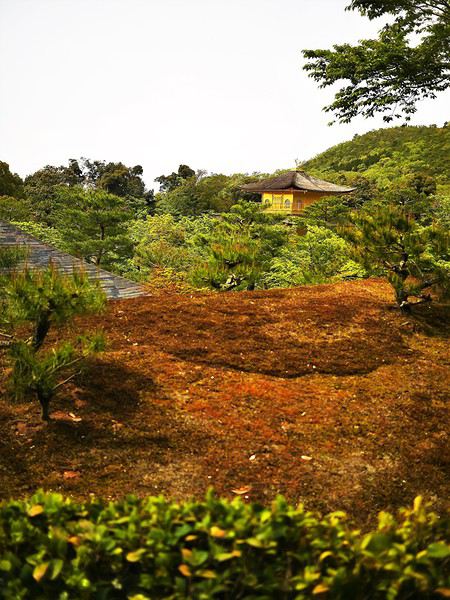
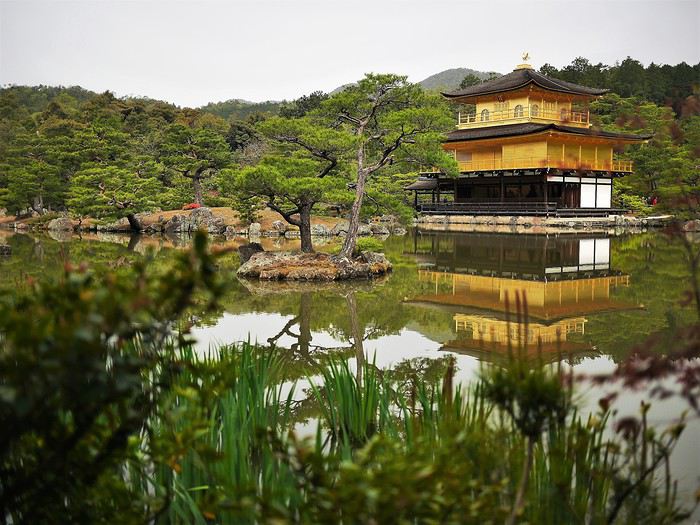
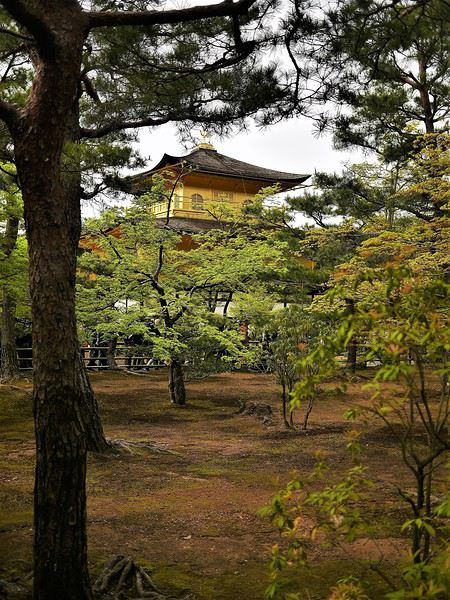
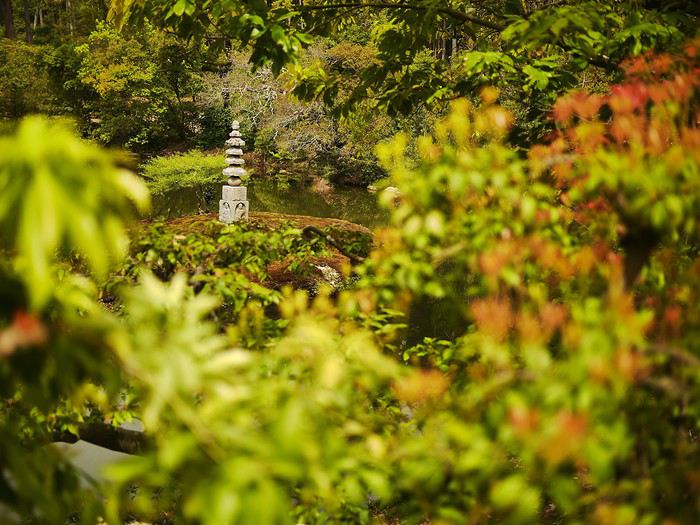
No matter! The sheer beauty of the Golden Pavilion—a modest, unassuming structure simply set by a pond stirred by venerable carp—makes up for a lot. The original pavilion was burned down by a local arsonist, as Mishima recounts in his most famous book, and what we see today is a reconstruction. Does it matter? The power of this place lies in the sincere harmony of a simple, moving scene—or rather, moving *because* it’s simple. We weave through visitors waving smartphones and bulky cameras with long lenses, trying to savor the serene image of the spot between shoves. Higher up, along a wisdom path trampled by the masses and cone-lickers, a solitary tower catches the eye.

In the park of the Golden Pavilion
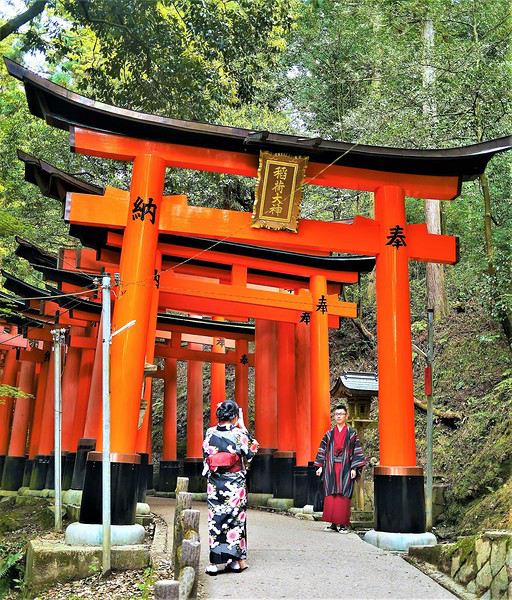
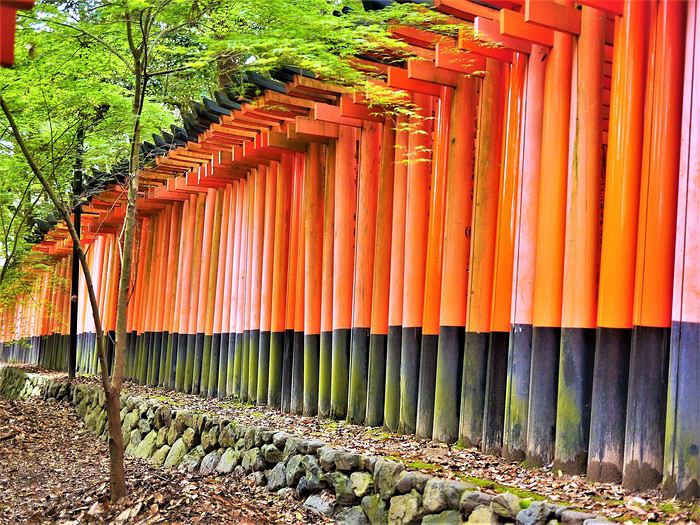
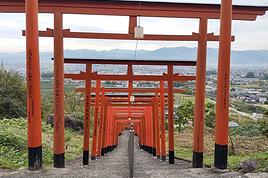
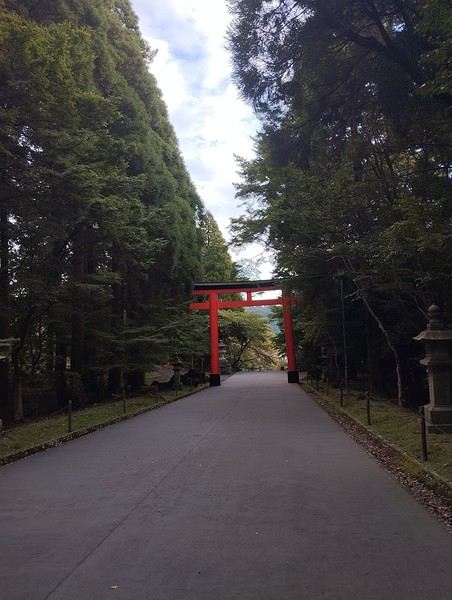
The same goes—times a hundred—at Fushimi Inari Taisha, a shrine dedicated to a clever little fox who was granted divine power to make rice grow. The image is in every guidebook, right next to the Golden Pavilion: a series of vermilion torii gates protecting a steep path to the inner sanctuary.

Fushimi Inari Taisha

The very layout of the place is the root of its misfortune: the entire international crowd, chattering and packed in tight, gathers here, united in their love of selfies. The spot is stunning, no doubt about it; you tell yourself you’ll have to come back outside peak season to truly appreciate the path that invites you to rise above.

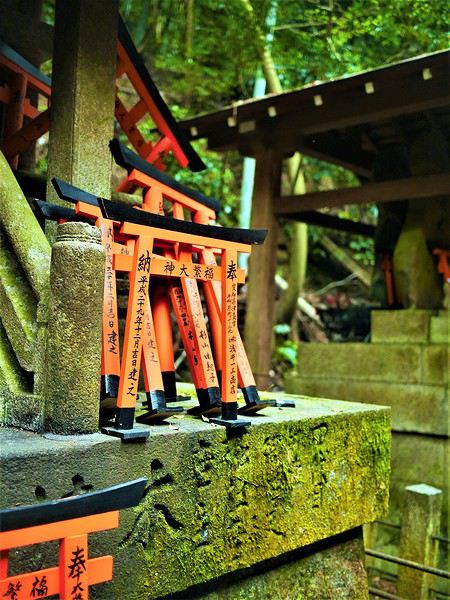
Fushimi Inari Taisha, from the outside


KA Kate Globetrotter ·
Hi there

I’ve been following this thread step by step—I love the storytelling tone and the photos that go with it. It’s fun, informative, and crystal clear 🙂
OL Oltean Regular ·
Good evening Alain, Regarding airline choices, I’ll share my thoughts after nearly 40 years of travel adventures.

For about 20 years (roughly 1980–2000), I often flew with Aeroflot, which offered great prices to Asia and even Africa, despite long overnight layovers in Moscow. Finnair also had an interesting period. Then, until around 2010, Gulf airlines won my favor as they disrupted European carriers. That was the golden age of Etihad, Qatar Airways, Emirates, and also Saudi and Kuwait Airways, which were less well-known. Today, Chinese airlines are dominating the market, almost without any advertising. This includes Air China, as well as Southern, Eastern, Hainan, and Xiamen Airlines. It’s worth noting that these "regional" airlines originated from the People’s Liberation Army Air Force. A few important details: - These choices were based solely on price. When my ticket was covered, I really enjoyed Qatar Airways’ business class and their dedicated terminal in Doha. But that was then... - I have little experience flying to the Americas and none to Oceania. - One exception: for trips to the Middle East and Central Asia (the "Stans"), Pegasus from Marseille. Anyway, to wrap up, a fond memory: in 1977, my first long-haul flight, Orly to Beijing on an Air France 707, with stops in Athens, Karachi, and Bombay. Now *that* was travel...

40 years of flying experience—respect! What a story.
OL Oltean Regular ·
Hi there

I’ve been following you step by step on this thread—I love the tone of your narration and the photos that illustrate it. It’s fun, informative, and crystal clear 🙂

Hi Catherine,

It’s always a joy to be read, and even more so to be appreciated. Thanks for your message.

Similar discussions

You might also like