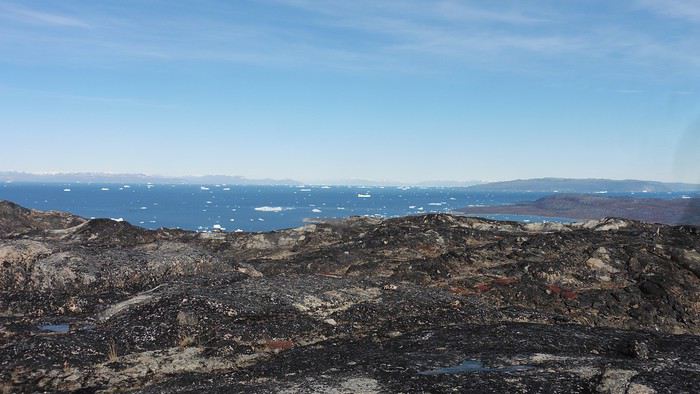
Kayaking in Greenland - Disko Bay: Circumnavigation of Arve Princess Island
FR

Translated into English.

Original post
PI
After two rather rainy kayaking experiences in Alaska at the end of summer in recent years, we chose a slightly drier destination for this late August 2018: the west coast of Greenland. The temperature will certainly be a bit colder, especially at this time of year, but we’re betting on a beautiful end to the season. According to temperature charts, it should be around 5 to 10°C with a few night frosts. The tundra will already have its autumn colors, and by the end of the trip, we might be lucky enough to see the northern lights when the nights get darker.

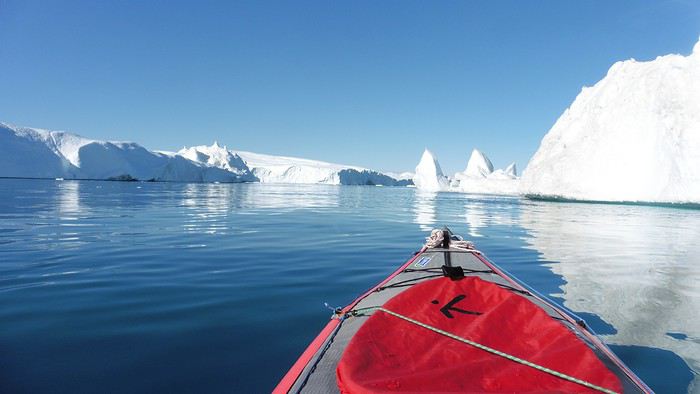
We’re setting off as a group of three in two inflatable double-seater kayaks (Gumotex) brought from France. The plan is to spend two weeks circumnavigating Arve Princess Island, located north of Ilulissat in Disko Bay, with a possible boat drop-off at the southern tip of the island.

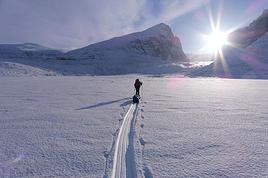
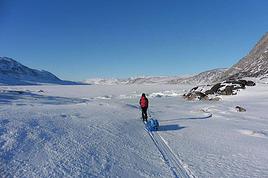
This seems like a fairly classic route in the area—we found several descriptions online (thanks to the authors). With their help and Google Earth, we identified all potential campsites and entered their coordinates into a GPS. The western part of the island, facing the bay, seems ideal for whale watching, while the more rugged eastern side offers access to several glacial walls. We’re somewhat familiar with the area from two winter expeditions on skis and pulkas.

Plus, the commitment is limited due to the island’s proximity to several small villages, including Qeqertaq, Oqaatsut, and even Ilulissat. In fact, we saw fishing boats almost every day. The distance suits us well: 200 kilometers in 16 full days on site, which should leave some leeway in case of bad weather or for hiking.

We booked our flights in June with Air Greenland to Ilulissat for the last week of August and the first week of September. On both the outbound and return trips, we stayed overnight in Copenhagen. The France-Copenhagen flight was with Air France.

We were allowed 3 x 20 kg in the hold. Each kayak with its accessories fits into a 20 kg bag; the last hold bag is for shared gear: tent, stoves, dry bags… We only brought 1.5 kg of semolina for food. In the end, we had 61 kg of gear, and no excess baggage was charged.

Individual gear (clothes and sleeping bags…) was distributed in the cabin luggage.

For the boat transfer, we contacted an agency: Blue Jay, which gave us a number to call upon arrival.

Day 0: Wednesday, August 22 Departure day. After work, I drove from Gap to Marseille’s Marignane Airport for the first leg of the trip to Copenhagen. I enjoyed the rather mild local temperatures: 35°C in the shade. After a layover in Paris, I arrived at the Copenhagen hotel, located two train stops from the airport, where my companions were already settled. No issues—everyone was on time with their luggage.

Day 1 The flight to Greenland was at 9 AM. We had a layover in Kangerlussuaq, where we changed planes, then stopped in Aasiaat before reaching Ilulissat Airport at 3 PM under beautiful sunshine.

We called Blue Jay for the boat transfer: they could take us to the island as early as 6 PM; otherwise, we’d have to wait until the next day. That left us 3 hours to prepare our gear and, most importantly, do our shopping for the two-week trip—it seemed tight, but we gave it a shot.

A quick taxi ride took us to Pisiffik, where we easily found everything we needed: bread, butter, cheese, cold cuts, rice, pasta, jam, muesli… There was no C fuel or methylated spirits for the stoves, but this time we knew the trick: at Stark, a bit uphill from the town, we found the precious liquids. Two hours later, we filled our dry bags and containers with our purchases, and by 5:30 PM, we met Klaus, the Blue Jay manager, directly at the port.

The vacation seemed to truly begin as we sped by boat through the icebergs toward Arve Princess Island. Forty-five minutes later, we spotted a beach lined with rocks where Klaus dropped us off quickly (he had another transfer to make right after).
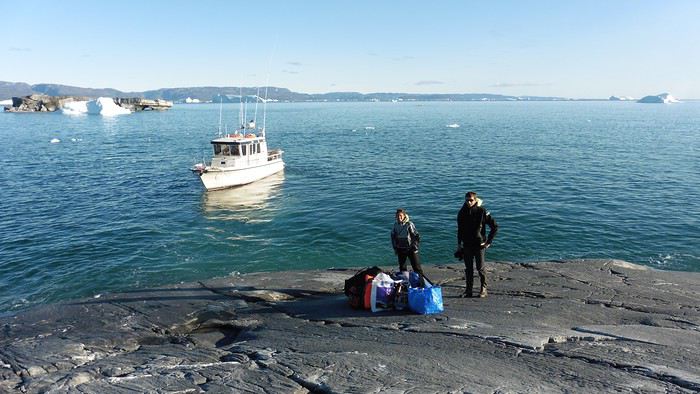
Here we were on the island, in the middle of nowhere, with all our luggage and food to organize, the tent to set up, and the kayaks to inflate—just 10 hours after leaving the Copenhagen hotel. We got to work, bothered by the flies. Despite our head nets, it was barely tolerable—there were so many of them. They swarmed by the dozens into every bag we opened. It was quite mild: 10°C.

Everything was ready by evening, and we were very happy to have completed all these transfers (planes and boat in a single day) as we slipped into our sleeping bags.
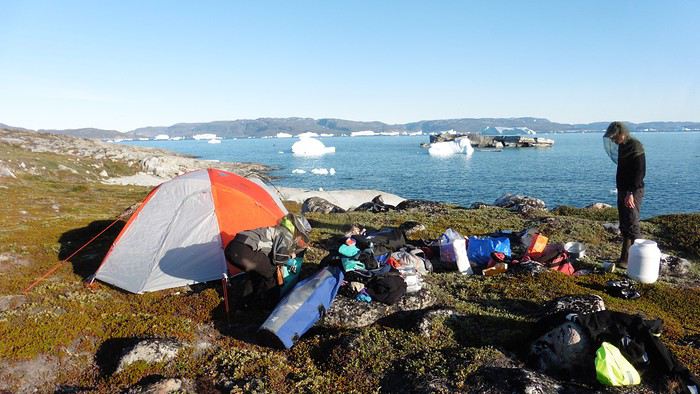
During the night, the wind picked up, and we went out several times to check the tent and kayak anchors. We noticed how bright it was—it was still quite twilight even at 1 AM.

Day 2 5:30 AM wake-up—the south wind was still strong, but since we were heading north, we decided to give it a try anyway.

This was also the moment we loaded the kayaks: since there were only three of us for two double-seater kayaks, we filled the hatch of one kayak, which allowed us to fit all our food. It would have been very difficult if there had been four of us for two kayaks.

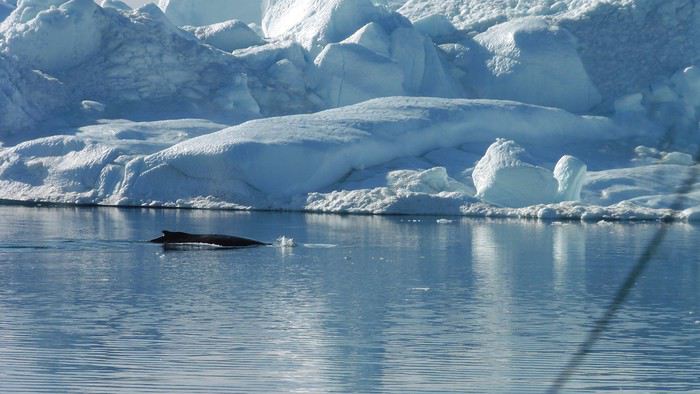
Finally, we set off north along the western coast of the island. The conditions were far from ideal—the sea was rough, and the kayaks had a lot of wind resistance. But the main problem was the spray skirt: the gear on deck weighed it down, and the skirt kept coming off… We’d have to deal with it. Barely underway, and whales were already breaking the surface—it was our first time seeing them, and we were very impressed. Too bad the wind didn’t allow for longer contemplation; stopping paddling was impossible with such strong gusts.

We passed a few headlands and even considered stopping due to the conditions. To find some semblance of shelter, we had to hug the coast closely without cutting across the numerous bays, which significantly lengthened the journey. But as the morning went on, the wind died down, and the sea calmed. We spotted several whales and our first seals. It was almost pleasant during the picnic break. By late afternoon, we reached Kangerup Sarqâ Bay, where we had identified a great campsite with a very large beach and a river. But the wind had shifted—it was now coming from the north, making the last hour difficult due to fatigue and headwinds.

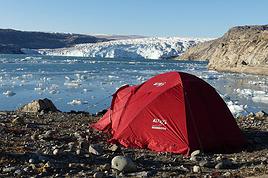
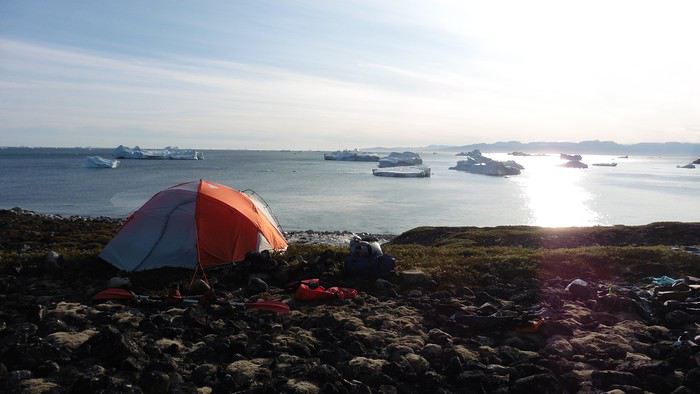
The campsite was ideal and beautiful, facing numerous icebergs grounded in the bay.
The GPS alerted us to another major drawback of inflatable kayaks: their slowness. It took us 7.5 hours of actual paddling (excluding breaks) to cover 28 km, averaging 3.7 km/h—somewhat disappointing. But we knew this before leaving, and once again, we’d have to make do!

Day 3 Surprise: at 6 AM wake-up, it was raining, foggy, with a south wind, and the sea was choppy even in the bay. It seemed wise to skip paddling, even though stopping on the second day was tough on morale. We went back to sleep, especially since the travel fatigue and the harsh conditions of the previous day had taken their toll.

At 11 AM, the navigation conditions weren’t any better—at the ends of the bay, we saw huge waves crashing onto the rocks, and giving up for the day became obvious. However, the rain had stopped, so we set off for a hike along the large lake bordering the bay. The wind hadn’t let up, and it was quite cold.

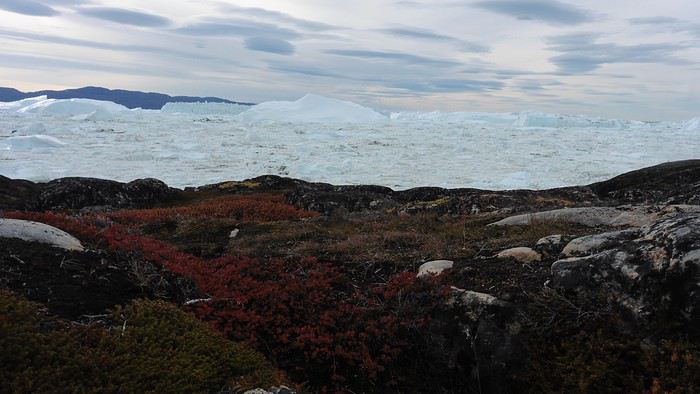
The tundra was starting to take on its autumn colors, and the contrast between the white lichens and the red vegetation was stunning. At the lake, we took out the fishing rods and quickly caught two beautiful Arctic char over 50 cm long.

As the afternoon wore on, the sun seemed closer. Along the beach, we gathered driftwood (mostly old planks) to cook our catch in foil over a fire. Eating our own food in such a beautiful place next to a good fire was comforting after the day’s setback.
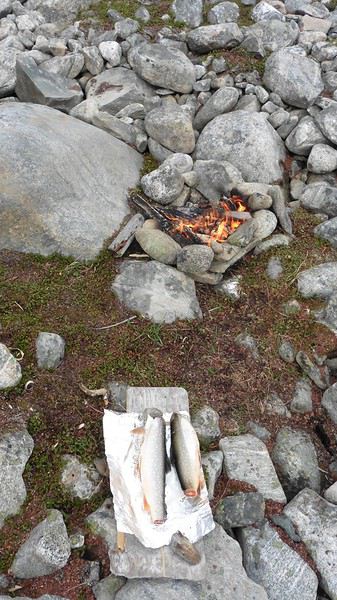


In the middle of the night, an Arctic fox entered the tent’s rear awning. It seemed barely intimidated when we shooed it away with loud shouts and then with stones.

Day 4 6:15 AM wake-up—3°C. We were on the water by 8 AM. The wind had dropped significantly, but the sea was shrouded in fog, and it was very cold in these damp conditions.
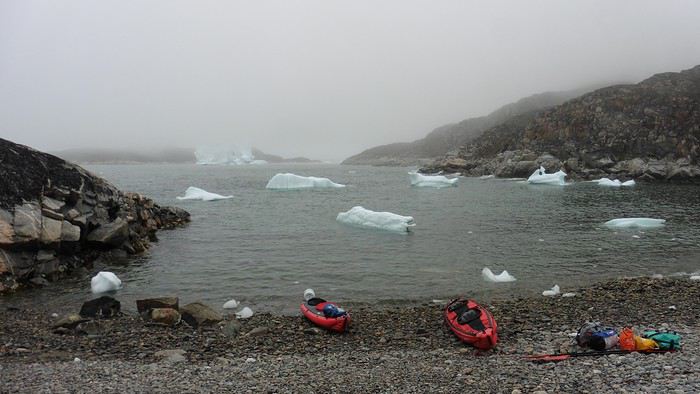


We passed the bay’s headland, Kangea, and headed toward the abandoned village of Agpat. The atmosphere was very austere—we hugged black rocks in fog that limited visibility to 50 meters, revealing large icebergs as we went.
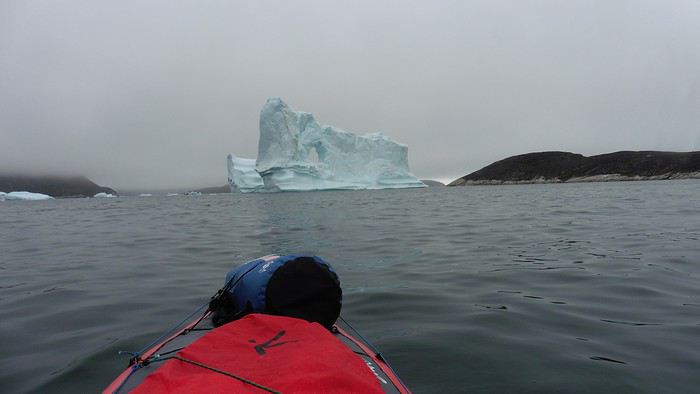
Suddenly, the water’s surface stirred in front of my kayak, and a huge gray back emerged from the sea. The collision was inevitable, but the whale seemed to understand and dove immediately, passing under the kayak and resurfacing a few meters away. I felt the kayak rock in the white foam and quickly paddled to escape the turbulence. What an emotion!

A light wind began to clear the fog, and the sun made beautiful appearances. Despite the cold, we stopped to visit the abandoned village, which left a strange impression. All the houses were still in good condition and wide open—some must have been very spacious in their time. We went back to sea, and in front of the large Kaangerdluk Bay, we hesitated—the headwind was strong, and large waves split the water. The next beach, from the island of Nua where we stopped to think, was over 8 km away. It was barely 2 PM, but caution led us to stop here for the day. We had covered 12 km—exactly the distance needed to stay on schedule. The afternoon was spent hiking on the island’s hills and gathering mussels and wood.
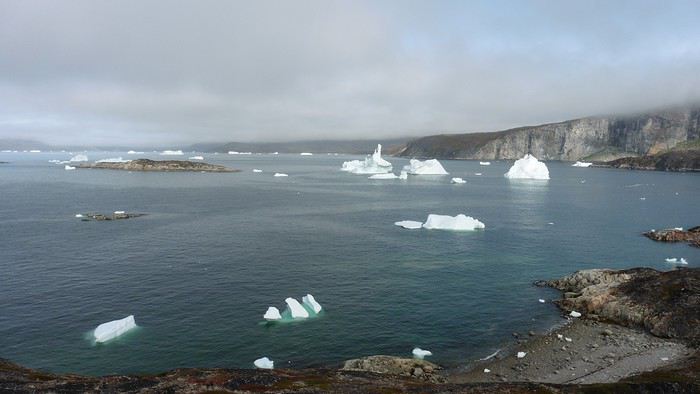


In the evening, we cooked these large Greenlandic mussels over a wood fire and savored them under the beautiful evening light. The weather was now fine, but the thermometer read -5°C in the sun…

Day 5 Bright sunshine, a glassy sea, and -8°C at 6 AM. Everything was green for setting off, even if putting on damp kayaking gear was a bit unpleasant in the cold. It was the first time we’d paddled on a flat sea since the start of the trip, and our average speed increased slightly.
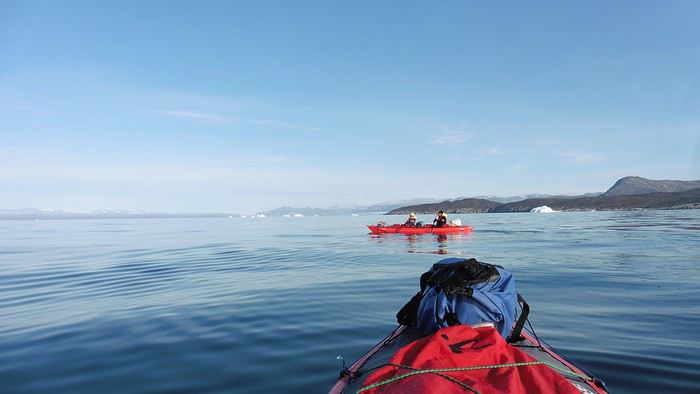


We entered the Smallesund Strait, marking the end of the island’s west coast. We were close to the large Torssukatak Fjord, where two glaciers flow. The access pass to the fjord was very narrow, and numerous ice chunks blocked access to the beaches. The wind had picked up and was now hitting us head-on (again). Just before entering the fjord, we landed on a steep beach made of large pebbles on Oqaitsut Island. It was very cold with the wind, and moving forward became difficult. We decided to stop for the day both because of the conditions and because the next campsite was far away, given how rugged the fjord was.
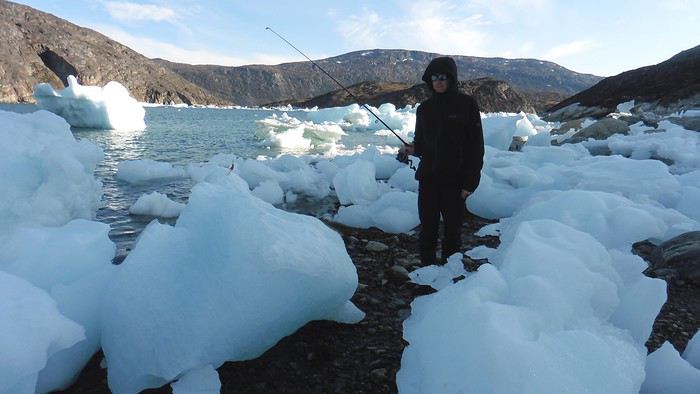
We eventually found a flat spot for the tent despite the steep slope. Even with the wind, the weather was beautiful, and we set off on foot for the northeastern cape of the island, overlooking the fjord. The view was far-reaching and exceptional—up close, the large fjord filled with ice and its steep granite cliffs, and in the distance, the ice cap and glacial walls.
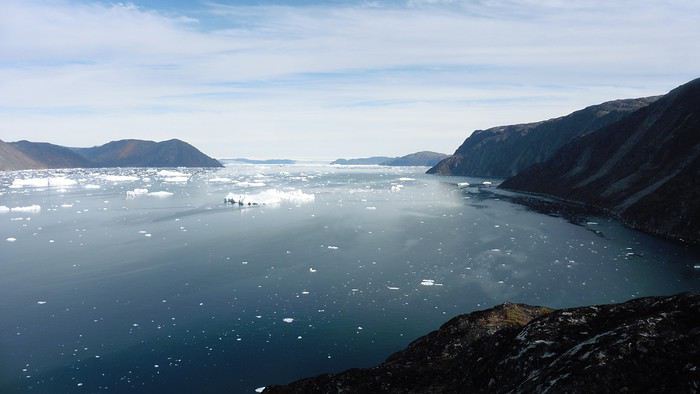
We spotted the village of Qeqertaq, whose network we could pick up, allowing us to check the weather forecast, which was rather good. While securing the kayaks in the evening, I noticed the strange behavior of one kayak at the end of the stage was due to the loss of the skeg—impossible to know where it detached. We’d have to do without it.

Day 6 Still that icy headwind from the northeast. We set off anyway for a long stage to reach the large pass connecting the Torssukatak and Ata Fjords.
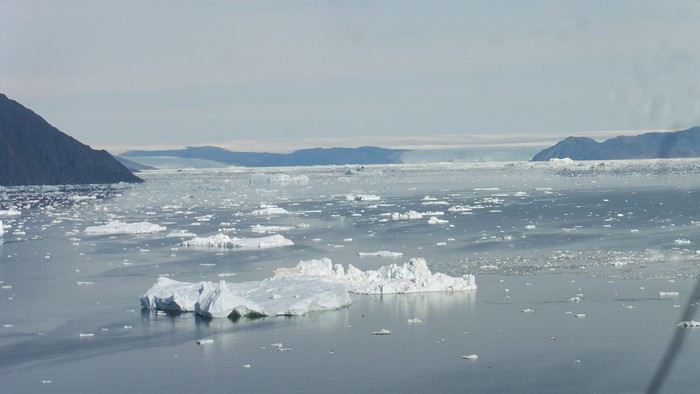
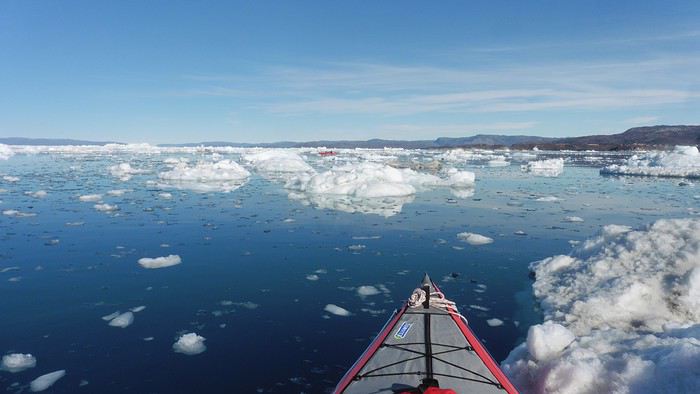
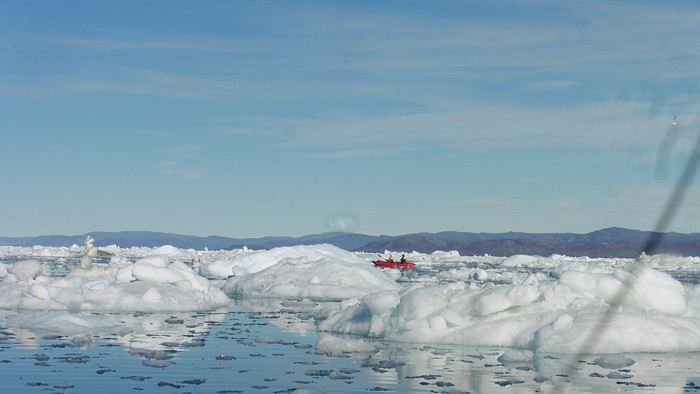
We advanced laboriously along the high cliffs of the fjord’s southern shore. They faced due north and blocked the sun. We felt the cold and dampness of the rock. It was really cold, especially in the extremities. We picnicked on the western cape of Qeqertakavasak Island. The cold didn’t allow us to stop for more than 20 minutes… But the wind dropped, and the sea was now very smooth. It was heavily cluttered with ice between the icebergs and old pack ice. The goal was to reach the large rocky promontory of Anapnuna, wedged between the Kujatdleq and Kangilerngata Glaciers, but the ice made progress difficult. We stopped to gain height on a small island and spot a passage of open water, but all we saw was white—passing seemed impossible. The currents were very complex, and entire sections of ice were being swept in one direction and then another at an impressive speed.
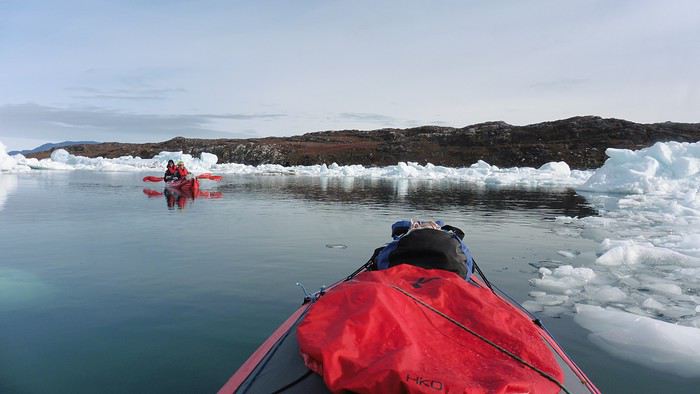


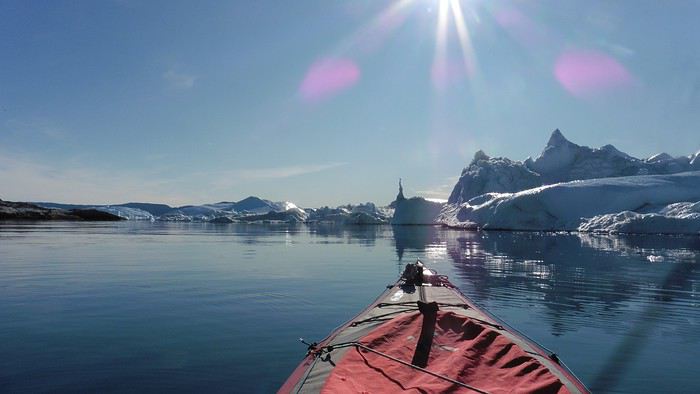
We wandered through this labyrinth until landing on a beach on the small island of Takissut, where we set up camp, exhausted from the 30 km covered and the vigilance required by the abundance of ice. The place was sublime under the evening sun—we were surrounded by ice and mountains, with the Kangilerngata Glacier in the distance. The summer contrasts were striking between the water, icebergs, sky, and flaming tundra—all colors were represented. Absolute calm reigned.
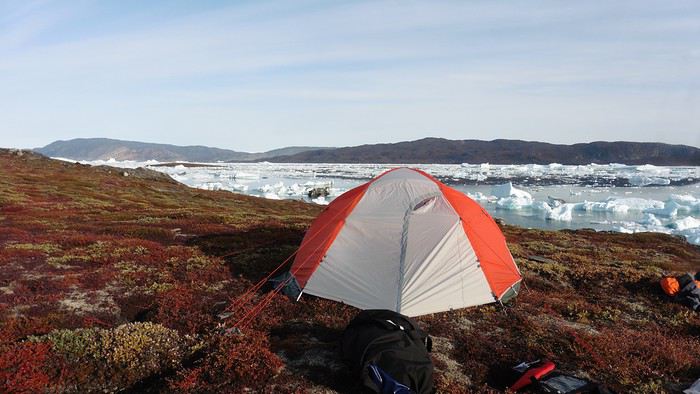
The lack of drinking water at this spot wasn’t too much of a constraint: as soon as we arrived on the beach, we placed containers under the icebergs stranded in the intertidal zone. They were all full by the time we finished setting up.

Day 7 We had to change our plans: we wouldn’t reach the rocky promontory, too well protected by the ice. We set off under the sun for Igdluluarssuit Island. Although we had spotted a passage just before launching, we quickly found ourselves surrounded by ice. It was everywhere, and finding water to paddle became complicated. We tried to force our way in every direction, even retracing our steps. Everything moved at an impressive speed—we were in the middle of a whirlpool of ice.
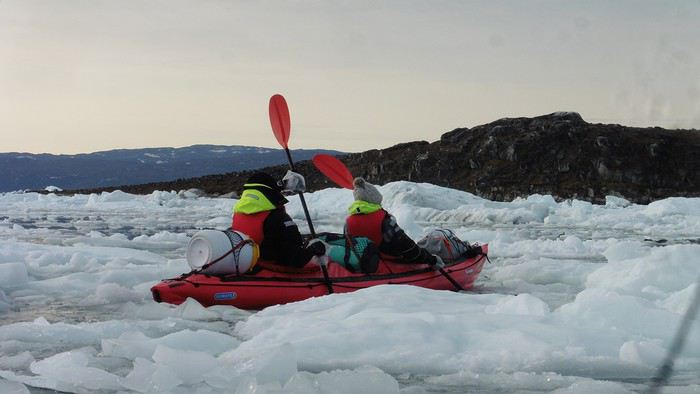
The tension rose, and each boat had its share of big scares. I was trapped against ice floes that dragged me toward an iceberg—the pressure on the kayak was enormous; it was going to capsize or puncture! But with a few strong strokes and paddling against the ice, I managed to free myself from the trap. Barely 10 minutes later, my companions were sandwiched perpendicularly between two icebergs that were closing in. The situation was desperate—the kayak was bending and twisting more and more, but with some strong paddle strokes, it finally freed itself. After these particularly unpleasant moments, we were completely blocked. The drifting ice floes had tightened, and the kayaks were no longer even in the water… The only solution: wait with the kayaks on these floes, which were too thin to walk on (even though we didn’t try). Within minutes, the situation cleared—a waterway opened, and we rushed into it. We paddled with one goal: find a larger pool of water. After going back and forth, our path took shape—we had to force the passage several times, attacking the ice directly with the kayaks, and finally, we escaped the worst of the labyrinth. We reached land on the west side of the island and saw that the rest would be easier. To reach the island, we just had to cross the Arsiviup Ikera Strait, which was lightly cluttered. We reached the eastern cape of the island, ideal for camping, even though we had only paddled for 3 hours. We set up camp and hiked to the island’s summit, which overlooks the entire pass and the glaciers.
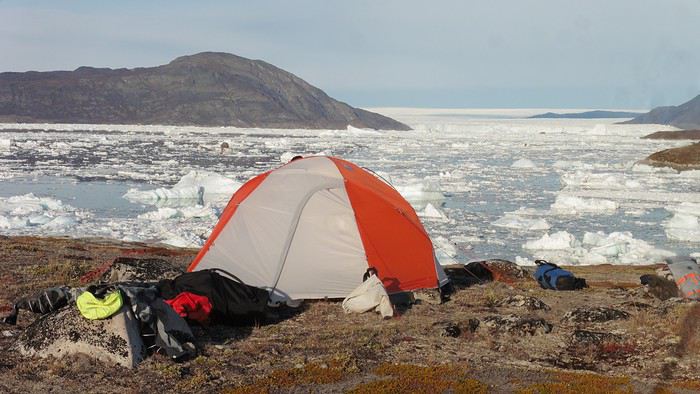
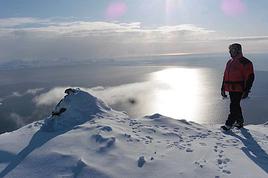
Everything was magnificent, no matter the direction. At 2 PM, we were at the summit—the beauty of the place and the picnic facing the glacier in the sun without wind made us forget the near-disaster from a few hours earlier. It would be impossible to approach the glacier by kayak, but from our summit on foot, it seemed so close, and contemplating it safely on solid ground was a great moment.
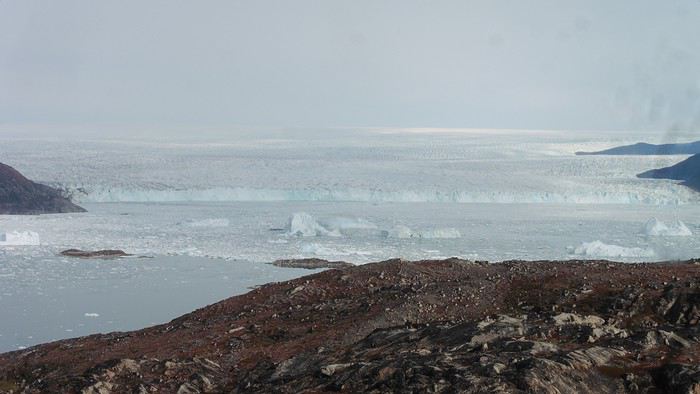
The pass was incredibly complex—everything was in motion, and an impassable passage could become open water within minutes. We were delighted when we returned to camp. A slightly lost whale among the ice accompanied us along the shore. The place was truly beautiful, but the temperature dropped again under the clear sky, preventing us from eating outside.

Day 8 Clear and cold at wake-up: -9°C. The sea had frozen in many places. We hesitated about the rest of the trip—should we start heading back to Ilulissat or linger in the pass, especially to approach the Eqi Glacier? After the incidents of the previous day, we decided to think carefully and paddled to the southern cape of our island to check the ice conditions toward Eqi. The weather had clouded over in the meantime, and the sky was quite gray. At the cape, we spotted the glacier’s wall, still 15 km away.
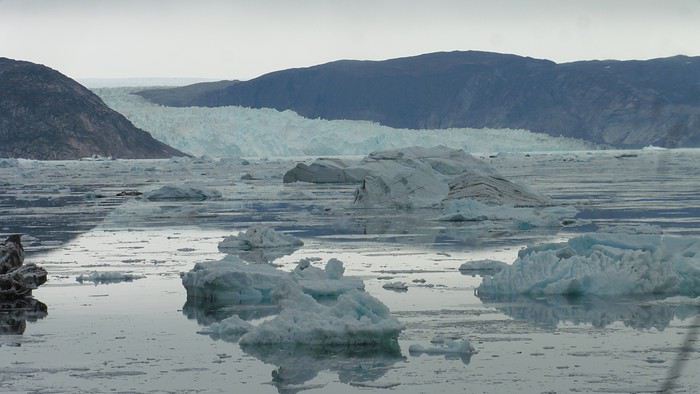


The fjord was quite cluttered, but it seemed passable. However, there was no guarantee the view would be much better 1 km from the glacier than 15 km away, especially since the front was quite active and therefore dangerous. We decided to head south without passing by the glacier. The cold temperatures encountered in the pass also motivated us to move away from the glaciers and the ice cap. We navigated under a threatening sky but without wind. The kayaks cut through the thin layer of ice on the surface with a crinkling paper sound. We reached the Ata campsite in the late afternoon after 5 hours of rowing without a single break…
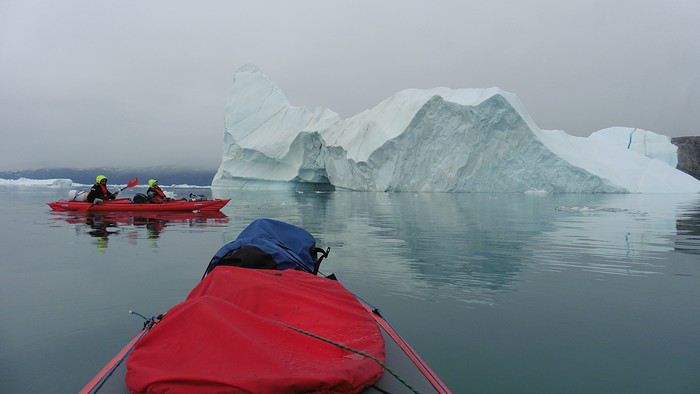
The wind had picked up, and we discovered a nice surprise: a refuge with a table and a comfortable bench lined with mattresses. Facing the worsening weather, we settled in comfortably. The kerosene stove was too complex for our three brains—we couldn’t get it started, too bad, as it was 0°C inside. The rest of the afternoon was spent fishing in the large lake, where we landed a beautiful Arctic char, more than enough for three. A good night’s sleep without the risk of foxes or the sound of a tent shaking in the wind.

Day 9 6 AM wake-up to the sound of rain hitting the cabin. The decision was made looking out the window—wind, rain, and fog obscured the sea: we went back to sleep.

New wake-up, and the rain had stopped—we could go out and stock up on fish. We set off on foot toward the lake, following its western shore. It was very overcast, and the wind encouraged us to keep moving. We made our way to a smaller lake at the end of the large one, where we caught a huge Arctic char. A small clearing brightened the picnic, and we headed back to our cabin.

This 20 km hike kept us busy all day: walking on slippery scree and the micro-relief of the peat bogs took time.

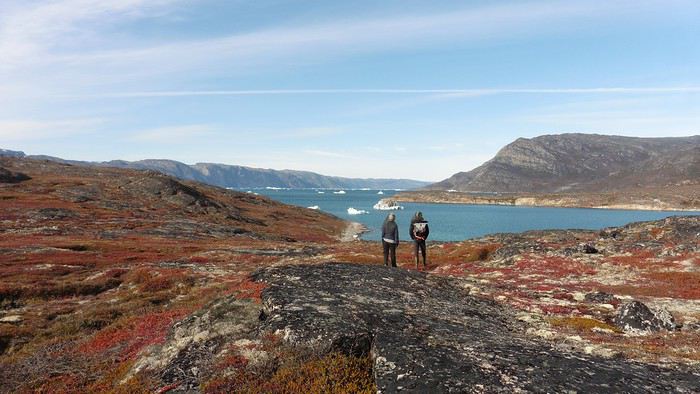
Day 10 The sky was clear, but a light south wind made paddling intense. We set off southeast to reach the opposite shore of the fjord. It was very cold, and it was impossible to stop paddling for even a moment without immediately losing ground due to the wind. We crossed the Kangerluarsuk Fjord. I recognized the cape I had reached on skis in the winter of 2017. We found a nice campsite on the southern shore of the fjord: Uiartag. It wasn’t even noon, but facing this headwind, we preferred to stop here rather than exhaust ourselves for a few extra kilometers. Like the previous ones, this campsite was very comfortable: the ground was covered with a thick layer of lichens and mosses, very pleasant to lie on.
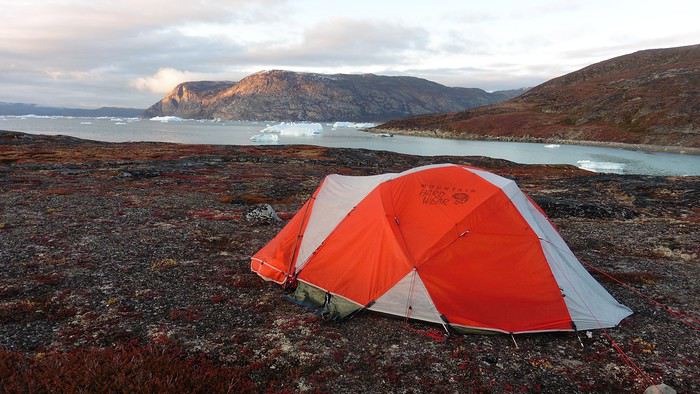
We set off on a hike to the heights of the cape, where the weather alternated between large clearings and snow showers. We noticed the loss of the thermometer, poorly attached to the backpack. On the way back, in the small bay of our beach, a whale swam calmly 10 meters from the shore—a beautiful surprise.
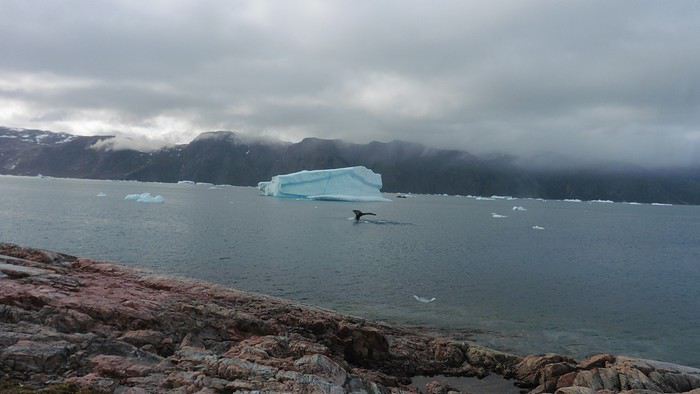
The sky cleared completely, and the temperature dropped as night approached.
PI Pierresd ·
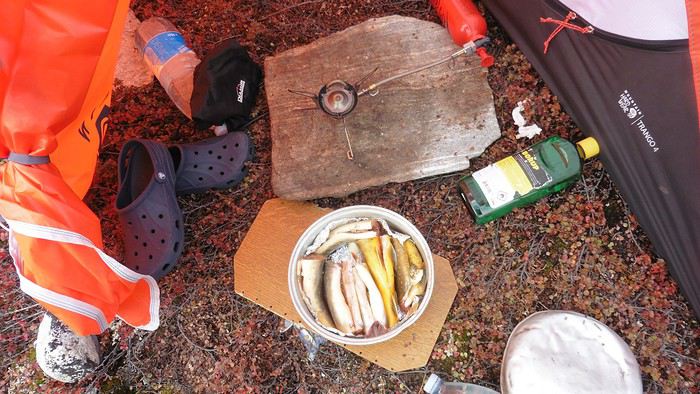
Day 11 Woke up to a freezing morning with a strong, steady north wind this time. At least we’d have a tailwind. Everything was frozen: the bay, the water runoff, and the puddles scattered across the ground. It was one of the coldest mornings we’d had. We set off, thrilled to finally see the sun that had been hidden behind the cliffs. But we quickly fell into the trap that overconfident kayakers do when they have a tailwind. The sea started to swell, the wind picked up, and big whitecaps appeared. We should’ve stopped right away—or better yet, not gone out at all. Now we were in the middle of the fjord, surrounded by a sea white with foam and huge waves crashing over our kayaks. We lost sight of each other. I decided to stop at the first beach, even if it meant searching for my companions on foot later. The waves were enormous, and the wind was powerful. I made it into the sheltered Qitermiunnquit Bay, where I spotted my companions’ kayak on the beach with relief. We celebrated our reunion with one of the three beers we’d packed—each of us had feared the other might’ve capsized. 12 km in 2 hours: at least we’d made progress. A sailboat was anchored there—it was Thierry Dubois’s *Louise*. He gave us the weather forecast: strong winds expected overnight. We secured the tent and kayaks like never before, and since it was still early, we headed out to fish under the sun in the chain of lakes above the cove.

The sea was still raging while we took a short nap sheltered by a rock… We hit the jackpot in the last lake we tried—three beautiful fish ended up in the pot.


Day 12

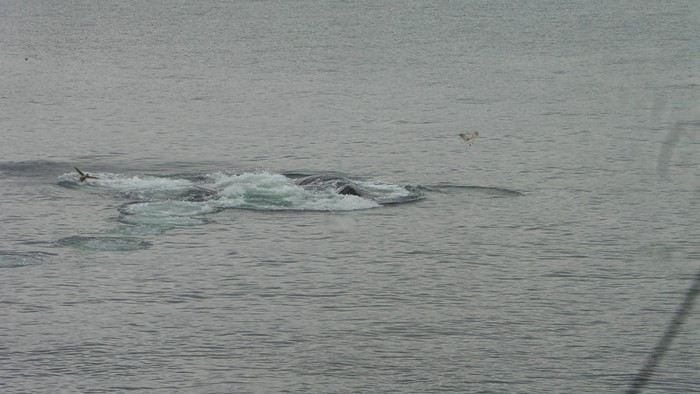
It was cloudy, and the sea was fairly calm. No storm overnight—we hoped it wouldn’t hit while we were on the water. We passed the high cliffs of Paakitsoq Cape, stunning and jagged, and set off across Paakitsoq Fjord. Suddenly, a strong south wind picked up as we started the crossing. The sea turned white, and waves formed. We paddled hard to escape the trap and reach the shelter of the fjord’s south shore. The crossing took an hour in winds at least as strong as the day before, leaving us soaked from the spray. Sheltered by the cape, we decided to call it a day. It made for a great campsite, even if the steep slope made access a bit tough. We were happy with the short total distance of our loop—this was the third leg in a row where we’d barely covered 10 km, yet we were still well ahead of schedule. As we set up camp, an incredible sight unfolded: whales were hunting in the small cove below us. We spotted the huge bubbles they use to corral their prey, then suddenly, they burst through the surface with their mouths wide open. It was breathtaking, and our viewpoint was perfect. This made up for an otherwise gloomy day, especially since it started raining. We spent the afternoon playing cards in the dry tent and celebrated the crossing with our second beer.
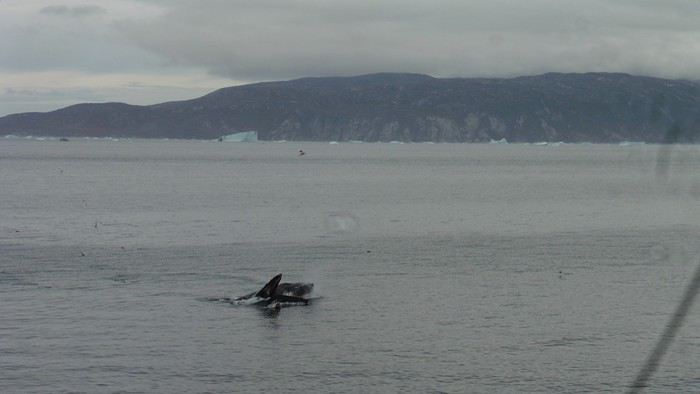
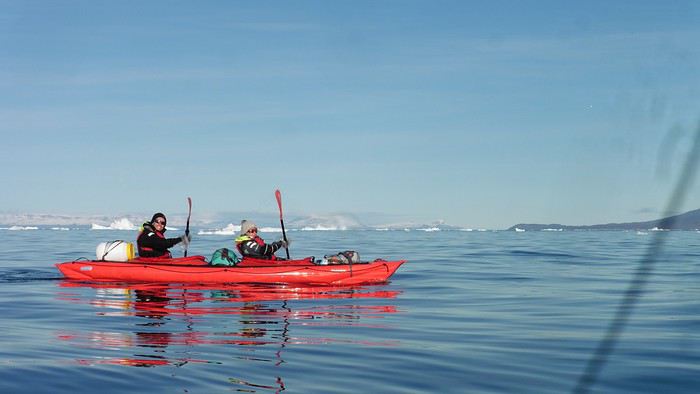
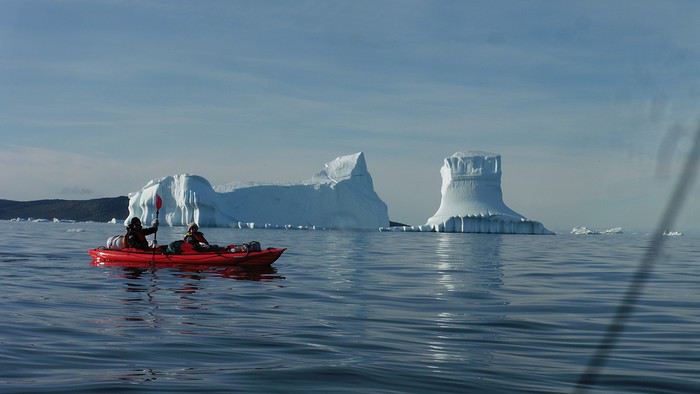
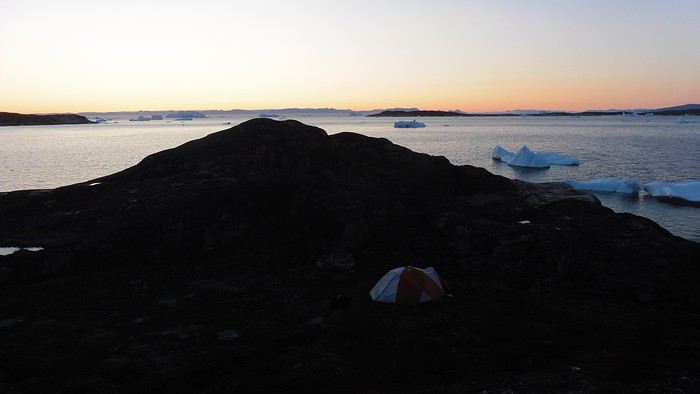
Day 13 It had rained all evening, but at dawn, the sun dominated the sky. The sound of whales had lulled us to sleep all night, and we watched them hunt again as we packed up camp. The sea was smooth, with no wind. We headed south, a little anxious—the last 40 km would take us straight into Disko Bay.


The coastline was beautiful, with many bays where we spotted whale spouts. From the start of the trip, we’d had the idea of eating at H8, the restaurant in Oqaatsut run by Julien’s wife—a Frenchman we’d met in winter. Everything aligned perfectly: at exactly noon, we landed at the restaurant’s dock. Finally, a warm midday meal with something other than that bland black bread we’d been eating with our picnics for 15 days. Julien was there, but unfortunately, the restaurant was closed! We chatted for a good hour before heading back out to sea, southbound.

A light tailwind accompanied us, and we sped south at a good pace. The picnic break was almost pleasant. We passed the Saveerneq Islands and entered the large Kangerluarsuk Bay, north of Ilulissat, where we set up our tent 5 km from the airport after 35 km of kayaking.

We’d completed the loop and now had three full days to explore the area on foot and by kayak, including Ilulissat’s ice fjord. That evening, we savored mussels we’d gathered at low tide earlier, along with our third and final beer to celebrate the end of the journey.

Day 14 Still windy, we set off on foot into the Ivangernarsuit mountains to test the many lakes on the summit plateaus. The view of Disko Bay was stunning—the number of icebergs drifting north was impressive.

In the distance, we spotted the snow-capped peaks of Disko Island, topped with a beautiful ice cap. Fishing wasn’t very successful, and we returned to camp empty-handed after a great day of hiking.

Day 15 Another windy day, making any navigation impossible. It felt like the wind was at its strongest. We were perfectly happy on land and set off on foot toward Ilulissat to reach the shores of the Icefjord. We could tell the area was popular—the trails were well-marked, with boardwalks to avoid bogs and wooden stairs on steep slopes. After all those days scrambling in boots over the mountains, this was a welcome change. The Icefjord was absolutely worth the detour—it was a tangle of ice where you could barely see the water. The sky was dark with ominous clouds, creating beautiful contrasts.

It was sublime, even if the wind kept us from picnicking peacefully on the benches along the trail.

Day 16 The night had been cold, which meant clear skies. We spotted a faint aurora around 1:30 AM. The weather was perfect, and the sea was smooth. We packed up camp and kayaked to the airport to set up the tent one last time. We found a somewhat hidden spot in the cove just below the terminal and paddled toward the mouth of the Icefjord for our final day.

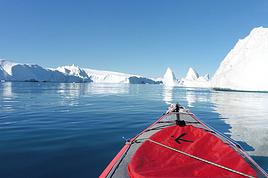
Soon, we were surrounded by massive icebergs wedged at the fjord’s exit.

We could make out the water channels forming between these giants—they must’ve been stunning but incredibly dangerous to navigate.

A huge block suddenly broke off, creating a sizable wave—enough to keep us at a safe distance. We picnicked under the radiant sun on Kingittoq Cape. It was warm, and we weren’t cold. A whale made several passes between the shore and the icebergs right in front of us—it was magnificent.

This day left us with a strong impression—between the views and the mild temperatures, we were spoiled.


That evening, we even ate outside for the first time during the trip! From the tent, we walked to Ilulissat for one last beer. We were surprised to run into Thierry, the skipper we’d met near Ata, and spent part of the evening with him. On the way back to the tent, the end of the trip started to sink in.

Day 17 The sky was overcast, and fog blocked all visibility. Our flight was at 11 AM, and we feared a cancellation or delay. But finally, two planes landed during a brief clearing. We took off on time and reached our hotel in Copenhagen without issue by midnight.

Day 18 Back to Marseille and then home.

Miscellaneous - Kayaking in Disko Bay in late August: We left a bit late in the season due to work constraints, and autumn had already set in. The cold temperatures were tough, especially in the mornings when it was hard to keep our hands warm. Picnic breaks were downright unpleasant, so we quickly got into the habit of kayaking in half-days, stopping around 1 PM. This let us eat in dry clothes—or even inside the tent at midday. That was the main challenge of the trip, though the season did offer remarkable lighting and contrasts. We don’t know if there are more people earlier in the season, but we didn’t cross paths with any tourists except in Ilulissat. The wind also forced us to skip kayaking many times and contributed to the trip’s chilliness. For kayaking, our gear was as follows: on top, a long-sleeve T-shirt with a thick fleece under a Tribord kayak jacket with a hood; on the bottom, neoprene pants with a K-way over them. For our feet, we wore boots for both kayaking and hiking, and for our hands, neoprene gloves or poggies—but neither solution was effective. Maybe we should’ve worn neoprene gloves *and* poggies. A drysuit would’ve clearly been a plus in case of capsizing, but since the inflatable kayaks were very stable and easy to reboard, not having one didn’t feel "suicidal." The advantage of kayaking is that when conditions don’t feel right, you can just head out to fish on foot on dry land—and that eliminates all the dangers. We used this technique almost every day! On the other hand, drysuits might offer better thermal protection, but we’ve never tested them. For the rest of our gear, we were equipped in a classic and satisfactory way: a complete change of clothes with a thick down jacket and Gore-Tex, fleece gloves, a 0°C sleeping bag, self-inflating pads, an MSR gasoline stove and a Trangia alcohol stove for heating, a 4-season 4-person tent with a tarp to reinforce the groundsheet, fishing rods, various tools and a first-aid kit, a GPS with beach coordinates, 1:100,000 maps for the southern part of the trip and 1:250,000 for the northern part, and a SPOT beacon in case of emergencies. The GPS only really came in handy once in the fog. Finding water was never a problem, but it wasn’t always easy. After a bit of walking, we’d always find a stream, even if we had to go a little farther. Only once did we have to melt iceberg chunks. We could store 10 liters of water, which was ideal for three people. However, we only had one thermos, and that was a bit limiting since the weather didn’t exactly make us want to drink cold water.

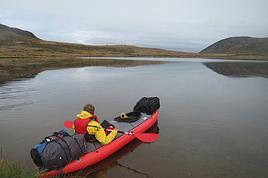
- Navigating in inflatable kayaks We had two different models: a Gumotex Swing 2, a "beach"-style kayak with a (too) large flat bottom, and a Gumotex Seawave, a decked two-person kayak with a V-shaped hull much narrower than the Swing’s, giving it more of a "touring" profile. The Swing’s non-removable deck was more effective than the Seawave’s, which tended to sag under the weight of the luggage. This created a pool of stagnant water under the bags and made it hard to keep the spray skirt securely in place. It’s tough to compare the two boats’ speed since we were three people for two kayaks. Clearly, the Seawave was faster due to its profile. Their main advantages are easy to spot: they’re lightweight and compact, making them easy to transport. Each kayak, with its paddles, skirts, and life jackets, fit into a 100-liter bag and weighed about 20 kg. They’re also very stable—it would take some serious waves to flip one. And even if you did capsize, getting back in is easy. We’d tested this several times in the calanques before the trip. Water doesn’t enter the cockpits; you just flip the kayak (doable with almost one hand) and climb back in (probably harder in a rough sea at 0°C than in Marseille at the end of July). The brand is a quality guarantee—we didn’t have to reinflate them during the trip, and they’re very sturdy. No issues to report, even though their sides rubbed for hours against sharp ice blocks and their bottoms scraped over pebbles and bushes at the campsites. They also provide good thermal insulation in cold water and are relatively easy to repair. But it’s not all rosy—far from it. Inflatable kayaks have a lot of wind and water resistance, which significantly reduces cruising speed. Based on previous trips in rented rigid kayaks, I’d say inflatables lose between 1.5 and 2.5 km/h, which is a huge time loss on a long trip. Plus, the spray skirt issue is really annoying—even dangerous. As soon as the sea gets choppy, the waves’ energy transfers to the deck, and the skirt inevitably comes loose. And if a wave breaks over the deck, it’s certain to enter the cockpit and pop the skirt off. Finally, the internal volume taken up by the air in the tubes is space lost for storage. In my opinion, for a two-week trip like this one with the same start and end point, renting a rigid kayak is still the best compromise. We were aware of all these drawbacks, but the desire to test inflatable kayaks in real conditions on an Arctic itinerary made us set aside the rental option.

Costs The trip cost 1650 € per person from Marseille for 16 full days of kayaking or hiking, with the following breakdown per person: - 240 € for the Marseille-Copenhagen flight - 930 € for the Copenhagen-Ilulissat flight - 220 € for groceries on site - 155 € for boat transfers - 100 € for hotels and taxis

The route: A 210 km "loop" with a boat transfer to the south of the island to avoid retracing our steps by kayak and to stay on schedule.

https://voyageforum.com/images/posts/small/1537288521-uCWziIaWtOagQ8v.jpg
ML Mlefevre Globetrotter ·
Hi Pierre! I really enjoyed reading about your latest adventures! How lucky you were to see the whales! Didn’t you find any kayaks to rent locally? At the start of your story, I was already picturing myself there with our "folding" kayak, but I quickly came back down to earth when I saw all the ice you had to deal with! Do you have any other plans in the works? Cheers, Marie
Nos voyages en images : https://www.sibellelaterre.fr/
LO Louxor71 Veteran ·
Good evening,

Really interesting travel journal—it’s not something you see every day. I read it all the way through, even though I’m sure I’d never do the same thing. But I’m curious, and everything interests me! One question I have: how did you manage to bring all that gear? Just the weight of your two kayaks alone!
louxor71
MA Mathews Globetrotter ·
hey PierreD just one word, mind-blowing!
MA Mathews Globetrotter ·
Didn’t you find any kayaks to rent locally?

Renting locally has its pros and cons... Plus, there needs to be rental shops where you want to paddle.

When you started your story, I was already picturing myself there with our "folding" kayak, but I quickly got discouraged when I saw how much ice you had to deal with!

You just have to drag the kayak over the ice—the problem is that a folding kayak like a Nautiraid isn’t a good idea at all because it’ll wear out the "skin." You’ll need a small cart.
LH Lhorizon Veteran ·
Amazing! It’s off the beaten path, beautiful, and so tempting. Well done and thanks.
Le blog voyages : http://derrierelhorizon.fr/accueil/
PI Pierresd ·
Hi Marie, Thanks a lot! For whales, Disko seems to be a major spot, especially the southern part of the bay around Aasiaat (according to the regulars). We didn’t really look for a rental since we’d decided to bring our own kayaks. But a quick search suggested it wasn’t that easy to find a good deal. There was an agency in town, PGI, which had dozens of nice kayaks, but it seemed like they were mostly for guided day trips... I also checked out Uummannaq, which is supposedly a really beautiful area, and I had a solid lead with Ummanaqseasafaris for rentals. Otherwise, with folding kayaks, it should be no problem—except near the glaciers, the navigation was easy. We got a bit lost on our own trying to get close to the ice walls. Taking the time to scout passages from shore and waiting for the right moments, the crossing should be doable in one go... It’s definitely an incredible place, a little less alpine than Narsaq, but the icebergs and whales make up for it! For future plans, we’ll see—it’ll be ski/pulk in March...
PI Pierresd ·
Good evening,

Very interesting travel journal, quite unusual. I read it all the way through even though I’m sure I’d never do the same thing. But I’m curious and everything interests me—one question I have is, how did you manage to bring all that gear? Just the weight of your two kayaks alone!

Hello, We didn’t actually bring that much since we did our grocery shopping on-site and packed very few clothes. Two of us had a large 100-liter backpack (like for long hikes) weighing 20 kg each, with a kayak, and the third had a large travel bag with shared gear also weighing 20 kg. Plus, everyone had a small 30-liter backpack weighing 8-10 kg in the cabin.
ML Mlefevre Globetrotter ·
Yeah, the Uummannaq area looks amazing, but the coast is less rugged and sheltered than in the south... I’ve got my eye on the Nanortalik area, but I think the weather’s wetter there...
Nos voyages en images : https://www.sibellelaterre.fr/
MA Marifb Veteran ·
This is the perfect story for me! I'm trying to organize the same kind of trip in Disko Bay. We're not used to sea kayaking, but we've done some beginner-level river kayaking. I do a descent of the Ardèche every year. We have a friend who can lend us a Nautiraid and we're thinking of investing in dry suits for safety. We'd leave from Sarqaq for a week, as boats only pass through every Thursday anyway. We'd do a round trip to Qeqertaq. We'll stay a week beforehand in Sarqaq in a rental (we found a great deal) to ease into it gently. We're used to hiking, though—our last trip was a week in Kyrgyzstan self-sufficiently. Do you think this project is crazy or not? What advice can you give us? Where did you find your maps? Anyway, thanks for this story!
Marifb
PI Pierresd ·
replied in PM
MA Marifb Veteran ·
For Mlefevre: I did some research and renting seems truly impossible around Disko Bay...
Marifb
ML Mlefevre Globetrotter ·
Hi Marie Flore, Yes, I came to the same conclusion! See you soon, Marie
Nos voyages en images : https://www.sibellelaterre.fr/
MA Marifb Veteran ·
On the other hand, rentals are possible in the south, in Narsaq I think.
Marifb
ML Mlefevre Globetrotter ·
I don’t know about Narsaq, but in Narsarsuaq, yes—I’ve already tried it: https://sites.google.com/site/sibellelaterre/
Nos voyages en images : https://www.sibellelaterre.fr/
MA Marifb Veteran ·
Yeah, that's what I was thinking.
Marifb
LE Leboukant ·
Good evening everyone,

It’s totally possible to rent all the nautical gear in Ilulissat via Altai Greenland. http://66-greenland.com/en/theme/12/equipment-rental-and-logistics

That said, I’d *really* recommend bringing dry suits. If Pierre and his team hadn’t desalted the gear or if your kayak had been crushed by the ice and you ended up in the water miles from shore, it would’ve been game over...

Thanks for this new story, Pierre, by the way.

Maybe we’ll cross paths up there again (Quentin, the 66 guide you ran into 3 years ago pulling a pulka in Ilulissat...)
MA Marifb Veteran ·
Thanks for the info! So we found a Nautiraid kayak and we're going to invest in dry suits. There was no way I was leaving without a dry suit, and I already found a cheap one for my husband. But if we run into trouble transporting the gear, we'll reach out to your address. I'm especially thinking about an emergency beacon or a satellite phone, just in case. Something for rescue if we hit a major snag.
Marifb
PI Pierresd ·
Hi

Thanks for this info—it’ll come in handy for future summers!

Definitely, hope to cross paths again. We’re in the middle of planning for March!!

Pierre
ME Messi57 Regular ·
Pierre,

Great story and trip—it’s so inspiring! I was expecting it to be way more expensive, honestly. 😉
Il faut se perdre pour trouver l’introuvable, sinon tout le monde trouverai l’introuvable.

Jack Sparrow
ML Mlefevre Globetrotter ·
Hi Pierre, You mentioned the phone: did you buy a local SIM card or just use your usual one (roaming fees?)? Are there any freeze-dried meals in Ilulissat? Is it tough to identify the food (English or Danish on the products?) in the stores? And the flies at the start of your trip? Did they last long? Any mosquitoes? Thanks! Marie
Nos voyages en images : https://www.sibellelaterre.fr/
PI Pierresd ·
Hi there, No, these were our regular French phones. Free and Bouygues worked all around the villages, but the rates were very high (Free rates): - 2.20 €/min for a call to France - 1 €/min for a call to Greenland - 0.27 € for a text and 9 €/MB for internet. The only freeze-dried food we found in Ilulissat was Chinese noodles and Knorr soups. Otherwise, Pisifik is huge, and you can find everything without any issues. It’s like a medium-sized French supermarket with the same brands. There’s always at least Danish on the labels... For mosquitoes, we saw very few, but the flies were really numerous at the beginning of the trip (enough to be a bit annoying). After that, we had wind and cold, and it calmed down. A head net is really essential. But since we were never in shorts or T-shirts, it was manageable.
ML Mlefevre Globetrotter ·
Ok, thanks Pierre! Do you know if they also sell gas cartridges (screw valve) at this store? Cheers, Marie
Nos voyages en images : https://www.sibellelaterre.fr/
UI Uiop ·
Awesome story, it was so exciting to read! I’d love to do this kind of trip in Greenland, but it’s clear you need kayaking experience and endurance to take it on. After trying it for a few hours in Norway and Svalbard, I quickly realized that the stamina required for kayaking isn’t quite the same as for a trek. You had some stressful moments among the ice and whales, but you made the right calls and stayed sensible when it mattered.
MA Marifb Veteran ·
For endurance, I’d say this is how beginners like us will experience it... What seems great is that there are plenty of possible bivouac spots, which lets you shorten your stages if needed. That’s exactly what we’re planning to do, anyway.
Marifb
PI Pierresd ·
Yes, there were screw-in gas cartridges in the right section of the store. But it's enough to show up right after travelers who took 10 of them, and it gets tricky. A liquid-fuel stove still seems more reliable. We had an MSR WhisperLite Universal that works with both gas and liquid fuel (maybe a good compromise...)

For the kayaking effort, I don’t think it’s harder than a trek—there’s never any climbing, and you’re not carrying anything on your back. If you’ve got plenty of time and avoid going out on windy days, there aren’t really any major issues...
ML Mlefevre Globetrotter ·
Yeah, we also have a dual-fuel stove, but it's heavier and bulkier, and I'm not comfortable with gasoline—best to avoid using it in the tent...

True, if you factor in the weather, kayaking isn’t any more tiring than trekking, but on the water, you’re still not in your element—more vulnerable—and you have to keep that in mind. The key is having enough time ahead of you so you don’t take unnecessary risks...
Nos voyages en images : https://www.sibellelaterre.fr/
CA Casamayou ·
Hello, we’d also like to kayak around Disko Bay independently next summer in July 2019. We can’t find a kayak rental place in Ilulissat. Like you, we have a Gumotex—based on your experience, would you recommend bringing it, or is it too risky? Also, how did you handle food? Thanks for any tips. Best regards, Valérie CASAMAYOU
PI Pierresd ·
Hi there

No, I’d recommend going with a rigid kayak. A link for rentals was shared in the comments:

http://altai-greenland.com/en/theme/12/equipment-rental-and-logistics

For food, as mentioned in the travel journal, you can find everything on-site—the store is like a medium-sized French supermarket.

Pierre
MA Marifb Veteran ·
Be aware that these rental places are in Oqaatsut, so it's not straightforward since the boats only run once a week (unless you want to depart from Oqaatsut). Plus, you have to prove you have Arctic experience, and the prices are pretty steep... 140 € per day for 2 weeks for 2 people. Just the drysuit alone costs less to buy than to rent for 2 weeks... In short, it's good to know...
Marifb
CA Casamayou ·
Thanks Pierre. Valerie
CA Casamayou ·
Thanks so much, Marie! Have you ever gone kayaking in Disko Bay before? Valerie
MA Marifb Veteran ·
No way, we're going there in July 2019.
Marifb
MA Marifb Veteran ·
Here’s a quick recap of my research for kayaking in Disko Bay. We had access to a Nautiraid-style kayak, but after looking into it, getting it there seems tricky. Even via Royal Arctic Line, it’s still really expensive. I’m waiting for the final price, but transporting the Nautiraid from Denmark to Ilulissat is already 270 € round trip. That’s actually cheap if you think about it, but since we’ll likely need to double that to get it to Denmark, we’re looking at around 600 €... And if we factor in that Diskoline might charge us extra if we’re overloaded (we’re spending a week in Saqqaq in a cabin first to get used to things), well, the conclusion is simple: invest in a Gumotex like Pierre’s. For 1350 €, it comes fully equipped with a deck, skirts, life jackets, a pump, and paddles, and we can probably resell it easily since they seem to be in high demand. Anyway, thanks Pierre for the great tip!
Marifb
ML Mlefevre Globetrotter ·
Hi Marie Flore, Did you look into the postal shipping option? Marie
Nos voyages en images : https://www.sibellelaterre.fr/
MA Marifb Veteran ·
Yeah, all of that is completely prohibitive... I checked UPS (way too expensive), and when I see that I paid 90 € to send two small packages to Indonesia, I didn’t even bother asking La Poste.

The cheapest option is this Danish royal shipping company, but even then, it costs me half the price of my kayak, which itself could be transported as normal luggage (we’ll take the bare minimum and buy food on-site instead...). Plus, I could keep it if I love it or resell it without any hassle.

Actually, the Nautiraid looks amazing, but it’s still pretty bulky (over 1.30 m long) and comes in two packages.

I’ve been searching for weeks, and nothing—it’s all too expensive... So I caved and bought the Gumotex. On top of that, I got a discounted one for a bit less—lucky break...
Marifb
CA Casamayou ·
Hi everyone, after some research and thinking, we’ve decided to go with our GUMOTEX too. We’ve taken it to the Lofoten Islands in Norway, Corsica, and Greece. We’ve already booked our tickets and arrive in Ilulissat on the night of Tuesday, July 2nd for three weeks. We’ve also booked the youth hostel for the first two nights in Ilulissat to prepare our gear. If you’d like to get in touch, here’s our number: 06 65 39 86 79. Maybe see you soon! Valérie and André
MA Marifb Veteran ·
Oh awesome! Looks like you’ve come to the same conclusions as we have. We’ll probably cross paths! We arrive in Ilulissat on the 14th and take the Diskoline ferry on the 18th to spend a week in Saqqaq (we rented an Arctic cabin). We’ll use the time to train a bit and explore. Then we’ll kayak back down for about a week. I see you already have some kayaking experience—we’ll need to train hard! 😉.
Marifb
CA Casamayou ·
Well, that sounds amazing! Don’t hesitate to give us a call, even if our experience is more in mountaineering than kayaking! 😉 We live in Pau in the Southwest. And you?
PI Pierresd ·
Hello

Thanks for the details!

I strongly recommend doing lots of test runs before you leave. Carrying two weeks’ worth of supplies in a two-person Gumotex is still pretty tricky in terms of storage space. It’s not exactly roomy... We managed it because there were only three of us for two double kayaks.

But for me, the big issue is the skirt’s grip: when you load the kayak deck by stacking bags, the skirt comes loose from the cockpit coaming. In rough seas, you’ll have to refit the skirt 20 to 30 times a day...

Anyway, it’s all doable, but this problem can quickly become really annoying—or even dangerous.

If you’re handy, maybe adding some hoops would make the deck a bit stiffer...
MA Marifb Veteran ·
Thanks for the warnings—I took them seriously. We’re only going for a week on our own, and we can even restock in Qeqertaq, so no issues on that front.

I mentioned the skirt problem to the seller, and they were really surprised. But of course, we’ll train—we’ve got a high-altitude lake that must be freezing right now, which will be perfect. We’ll probably do some sea trials too, to get used to a few waves. And we’re bringing dry suits, so no worries there 😉.

We’ll see about reinforcing the deck a bit, but maybe we’ll manage to fit everything inside.

We’ve planned a super reasonable route, which will let us take plenty of breaks for exploring. Basically, we’re going from Saqqaq to Qeqertaq, and then we’ll see. Maybe head toward the glacier to the south, but carefully. We’ll return to Qeqertaq to catch the Diskoline ferry, so you see, we’ve left ourselves a *lot* of wiggle room. If there’s too much ice, we’ll just stay in Qeqertaq Bay and take it easy.

Thanks again for the warnings—you can’t be too crazy in these kinds of conditions.
Marifb
MA Marifb Veteran ·
First try was super convincing! But we’re wondering about hands and feet. What did you all use?

Another thing—dry bags. What did you go with? For transport, aside from the boat bag, we’re thinking of putting small and medium dry bags inside a Decathlon duffel. But not sure what to do with carry-on luggage. Did you use dry bags or just regular backpacks?

True, there’s not much space on this boat—it’s gonna be tight. Almost no clothes, wood and alcohol stoves—should help cut down on weight and space.

Thanks in advance for your tips!

What are your adventures this summer?
Marifb
MA Marifb Veteran ·
Hi there

How are your preparations coming along? We’re only just getting back into it now. We tried the dry suit and Gumotex combo last Friday—loved it! We’re wondering about our hands and feet, and about carry-on luggage: backpacks (which’ll get in the way on the boat) or waterproof bags (which might not be big enough for everything we need to take...) What are you doing? Oh, and we had a Wow Air flight... had to buy a new one—what a pain.
Marifb
MA Marifb Veteran ·
Just clarifying a few things. What are poggies for the hands? For the deck issue, did you have any deck arches on your kayak, because I found that the skirts weren’t holding too badly. I see you were in boots. We were thinking of wearing cheap boat shoes (like 10 € ones) and keeping our hiking shoes for bivouacs. Are boots really necessary? (That would mean lugging boots from Ardèche to Roissy...) Given that our hiking shoes are Gore-Tex. Thanks for all the info.
Marifb
PI Pierresd ·
Hi there, No, in a dry suit I don’t think boots are useful. Personally, I bought a pair, but for my next trip, I’ll go with Crocs for kayaking and sneakers for hiking. The issue with the skirts was the combined effect of the bags on deck, the waves, and the kayaker’s movement—when it’s windy, you’ve got to paddle harder! Poggies, right? I find them really handy. Tying rope to your paddle must feel nice because frozen aluminum is *so* cold... https://www.nootica.fr/canoe-kayak/equipement-du-kayakiste/gant-et-manchon/manchon/manchons-hiko-nylon.html?referer=gshopping&gclid=EAIaIQobChMI3fOB_63L4gIVhynTCh22nwigEAYYAyABEgLvwfD_BwE For the bags, we had 30 L Decathlon dry bags as carry-on—they worked for both kayaking and hiking. In the hold, we had a big fabric travel bag that we stuffed into the bottom of the kayak during the trip. If you can leave it somewhere at your starting point, that could be really convenient...
MA Marifb Veteran ·
Awesome! Thanks for all this info! Great news about the boots. We hesitated about Crocs too, but the little boat shoes don’t take up as much space as Crocs, which is why we went with them. Poggies do seem like a good idea. Now we just need to decide whether to spend 60 euros or make something similar and add insulation to protect against the aluminum of the paddles. For dry bags, that’s what I was thinking too. I was this close to buying those Decathlon bags on sale. Do they fit sleeping bags and clothes, including dry suits? Since we’re so far from everything, we’ll have to order them... Otherwise, we won’t be able to leave anything behind, especially since we’re camping in Ilulissat too. That brings me to my last question: is it risky to leave a boat in our tent in Ilulissat when we go for walks, shopping, etc. (we’ll be there for 3 days each way)? How did you find the vibe there? By the way, I saw you camped near the airport, but we won’t be able to since we’re leaving for Saqqaq from the port. What’s it like to camp there? Is it even possible? I can’t find any info anywhere since everyone stays in hotels in blogs (way too expensive for us...). I’m having trouble picturing the size of Ilulissat. Also, getting around Ilulissat is a problem for us since we’ll be loaded like pack mules—I can already tell it’s going to be a hassle. Are taxis expensive? Thanks again for your tips—they’re super helpful. And bravo on your latest pulka story, it’s starting to give us ideas... So I’m really looking forward to your summer trip report. I’m guessing there’s already a new project in the works.
Marifb
PI Pierresd ·
Neoprene gloves or even fleece ones can be enough. Otherwise, for the bags, we had a bit over 120 liters of waterproof storage per person, and we were relatively comfortable. That included two 25-liter containers, which were quite handy—at least for sleeping bags and a change of clothes (you know they’ll stay safe and dry, no risk of holes or leaks). Try to stack your gear in pyramids on the front and back decks. For example, two 60-liter bags with a third one between them, or three 60-liter bags with two on top. You might need to add extra straps (available from Gumotex) and bring extra bungee cords.

There’s a campsite in Ilulissat up on the hillside—from what I remember, the harbor area is really tight and enclosed, so I don’t think pitching a tent there would work. You could probably leave a tent without issues, but there are still a few stray dogs roaming around untied. That worried me the most. For three days, I’d still head toward the airport or a quieter spot. As for taxis, I’d say it’s like in France: about 10 € for a trip from the city center to the airport. I don’t see another way to do it with all the gear—unless you want to make a bunch of round trips...

You might be able to stash your travel bags near the airport in some rock piles...

This summer, yes—we just bought our tickets. We’re doing Nanortalik to Narsarsuaq in an inflatable at the end of August. Hopefully, the temperatures will be better than around Ilulissat since we’re heading back at the end of August/early September.
MA Marifb Veteran ·
Thanks for all this info, it's perfect! You're heading back to Greenland again—you're going to become real experts! Have a great summer!
Marifb
PI Pierresd ·
By the way, a good site with lots of info:

https://www.pulkayak.fr/randos-en-kayak-de-mer/

Similar discussions

You might also like