Back from two weeks in Karamoja, northeastern Uganda, from Moroto to Kidepo Valley National Park.
A few notes from a few months ago for those who might be interested and whom this area wouldn’t leave indifferent. And rightly so.
First, about access to the region:
There have been huge improvements to the infrastructure lately. Although not yet finished, the roadworks have made a big difference, and it’ll be even quicker to get there soon.
Currently, allow 8 hours.
First from Kampala to Mbale, then from Mbale to Moroto via Soroti. The Jinja to Mbale section is under construction, so that slows things down—count 3.5 to 4 hours from Kampala if there aren’t too many traffic jams on the way out or back. From Mbale to Moroto via Soroti, allow another 4 hours, with only a few kilometers of good dirt road left now that the tarmac is being laid. In a few months, it’ll be done, maybe even sooner.
You can do it in two legs with an overnight in Mbale itself or at Sipi Falls, or go direct. In Mbale, stay at Nurali’s if you really want to keep costs down—also a great spot for Indian food. The vibe is nostalgic, like stepping back in time with granny’s oilcloth table cover (if your granny were Indian). Otherwise, Wash and Wills has a nice pool and a view of the mountains across the way. Lovely garden.
For those who don’t mind driving on dirt roads when it hasn’t rained too much, or who aren’t afraid of taking longer, I’d still recommend going via Nakapiripirit from Mbale. It’s longer, more tiring, and tougher (and if it rains a lot, it can be a real hassle), but wow, is it ever more beautiful. Your call.
Once you arrive in Karamoja, it’s time to enjoy the region you’ve taken the time to reach. So many people only go for Kidepo—what a shame, since the area has so much more to offer. The people are incredibly friendly, and the local culture is so diverse and fascinating.
In Moroto, accommodation options are multiplying like loaves and fishes. At Tita’s, the Karatunga campsite, and of course the institution, Mount Moroto Hotel, which feels a bit stuck in time but is where you’ll find a bit of Moroto’s history. In short, something for every taste and budget. The same goes for meals—you can eat for 5,000 UGX (1.25 €) in local spots or 25,000 UGX (6 €) at the fancier places in town. No risk of going broke here.
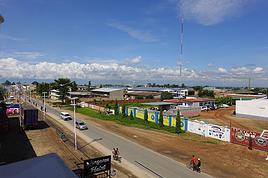
Same in Kaabong. From a sleepy little town, it’s slowly but surely moving toward a gentle, steady kind of modernity. There are hotels and guesthouses like Kaabong Resort, which I’d recommend. Forget the name and the appearances—ignore the "Resort" part that’s just there to lure you in. In the end, it’s a cozy little place where you’ll hear both local radio and Madonna’s greatest hits (from the late ‘90s). The staff are welcoming and attentive. They really want to make you happy, and it shows. Here too, you can eat for 5,000 UGX in the village or 15,000–20,000 UGX at the hotels.
Between Moroto and Kaabong, stop in Kotido—more new developments there too. And more guesthouses and restaurants with very reasonable prices. La Maison is a spot that, for the more Francophone among us, will feel like a little taste of France. But Kotido is really worth it for the Karamoja region’s biggest livestock market, held on Wednesdays. Colors, noise, smells—so much joy in being there, right in the middle of all that energy pulsing with the pastoral life of Karamoja. Not a single herder will refuse a photo, proudly sporting the "Karamojong package": a vibrant piece of fabric, a military jacket harking back to the Karamojong’s glorious fighting days, an ostrich-feather hat (or a Guangzhou knockoff), a walking stick, and the dual-purpose stool (for sitting or resting your head, used vertically or horizontally depending on how tired you are and how much local beer you’ve had).
In Moroto, take the local tracks—either across the plains or along the Mount Moroto range. The area is mostly pastoral, with manyattas seeking protection not just from raiders (now rare) but also from grazing animals. On the tracks along the mountains, you’ll cross a few small streams and see some camps for gold prospectors or marble cutters, as well as other geological wonders that are putting pressure on the area from unscrupulous investors. You can also follow the tracks into the valleys to discover the Tepeth villages—more agricultural, more remote, surrounded by unexpected greenery.
KaraTunga can help you explore all this. It’s a local agency I haven’t used myself, but they can provide guides and offer services like mountain hikes or manyatta visits...
2,761 similar discussions in English
Hi everyone,
I’m sharing a little recap of this new 4-week trip to China—nothing fancy, just my experience.
We’re taking advantage of the extended visa exemption to return to China for the 4th time. I loved last summer’s trip so much that I’m a bit worried about being disappointed this year. Plus, I’ve had a few hiccups before this departure: my WeChat account got blocked, and I couldn’t recover it (luckily, Alipay still works fine); I couldn’t verify my 12306 account for weeks; Trip.com failed to book our second train; and I’ve got an injury that’ll slow me down during the trip... Ugh, I hate starting a trip with these kinds of issues. Then, oh surprise! Just before leaving, my 12306 account got verified! Super easy to use from that point on—I could book a few train tickets without fees.
We’re sticking with Free’s e-SIMs, which work great in China.
August 2–3
Anyway, on the morning of August 2nd, we took the RER to CDG. As usual, we couldn’t check in online. It’s always a bit frustrating, especially since we didn’t have any checked luggage. We flew with Air China. We arrived at the check-in counter at 9:50 AM, 2 hours and 40 minutes before the flight. The line for our check-in stretched 300 meters across the airport in both directions. What a joke!! We spent 1 hour and 45 minutes in that line just to reach the counter and get our boarding passes. By then, it was 11:35 AM, and boarding had already started at 11:20 AM. The screens showed a 25-minute walk to our gate—on the other side of the airport, of course—plus we had to go through passport control and security... Long story short, the plane didn’t leave without us 🙂 We boarded among the last passengers, and we took off at 12:30 PM. We’d flown Air China four times before, but this time, it felt *really* low-cost. The check-in chaos, the cramped seats (12 seats per row), no music by artists known outside China, mediocre food, and a boarding area at Beijing Airport with only 10 seats—worthy of Ryanair or EasyJet. And yet, the price was sky-high. Again, D.’s vacation requests were denied outside of July and August, so we’re traveling from August 2nd to 30th. We couldn’t have picked a worse time for inflated prices, and with the situation in Iran, we got hit with a 390 € fuel surcharge. I’ve never paid so much for flights—I felt like I’d bought business class, but nope, far from it!!
We landed in Beijing around 4:15 AM. It was 28°C with thick fog. We drove and drove and drove for 20 minutes, as usual in Beijing. Then we went through a first check, a second check, a third check, and waited for our connecting flight at 6:40 AM. A small Airbus A320, but way more space than in the Boeing 777 from the first flight. We landed in Kunming, Yunnan, around 10:15 AM in the rain.
We headed to the subway. You can’t pay at the machines with Alipay here either, so we set up the transport QR code directly in Alipay to scan at the subway gates. The process is a bit long the first time if you haven’t entered your info before, but once it’s done, it’s *so* much easier! We took Line 6 to the terminus for 6 yuan each.
We’d booked a hotel nearby, on the 16th floor. It’s actually studios on different floors of a huge residential building. The view’s pretty nice from here. We settled in quickly—back to those wooden beds, or rather, mattresses as hard as wood, which we *hadn’t* missed... Then we went out for our first bowl of noodles of the trip and wandered through the shopping streets of the old town.

It was crowded, and the weather was cool—around 19–20°C. We tried a local specialty: milk skin, thick, dried, then grilled with rose jam. Yeah... we won’t be having that again. The taste and texture of the milk skin... no thanks.

We saw a lot of wild mushroom hotpot too. It’s on our list for later. We also passed through the Jinma and Biji gates, where I played with reflections in puddles. I *love* doing that 🙂

At the end of the day, we headed to a temple advertised as open 24/7 on Amap. Of course, when we got there, it was closed. We’ll go back tomorrow. That was the first of many disappointments with Amap this trip—I hadn’t had that issue on previous visits.
We were exhausted after that sleepless flight. Night was falling, and we decided to grab a quick bite without much appetite. We shared a delicious vegetable fried rice for 12 yuan—we even left half of it. The portions are *huge*.
After a couple of small purchases, we headed back at 9 PM, wiped out, after walking 17 km between the airports and these first steps in Kunming. I expected to see quite a few Western travelers here, but we didn’t spot a single one. Instead, we met lots of curious Chinese people, many of them super friendly and helpful—almost *too* eager, like when they’d run to serve us as fast as possible. It’s a bit much, but it’s great to be back!
I’m sharing a little recap of this new 4-week trip to China—nothing fancy, just my experience.
We’re taking advantage of the extended visa exemption to return to China for the 4th time. I loved last summer’s trip so much that I’m a bit worried about being disappointed this year. Plus, I’ve had a few hiccups before this departure: my WeChat account got blocked, and I couldn’t recover it (luckily, Alipay still works fine); I couldn’t verify my 12306 account for weeks; Trip.com failed to book our second train; and I’ve got an injury that’ll slow me down during the trip... Ugh, I hate starting a trip with these kinds of issues. Then, oh surprise! Just before leaving, my 12306 account got verified! Super easy to use from that point on—I could book a few train tickets without fees.
We’re sticking with Free’s e-SIMs, which work great in China.
August 2–3
Anyway, on the morning of August 2nd, we took the RER to CDG. As usual, we couldn’t check in online. It’s always a bit frustrating, especially since we didn’t have any checked luggage. We flew with Air China. We arrived at the check-in counter at 9:50 AM, 2 hours and 40 minutes before the flight. The line for our check-in stretched 300 meters across the airport in both directions. What a joke!! We spent 1 hour and 45 minutes in that line just to reach the counter and get our boarding passes. By then, it was 11:35 AM, and boarding had already started at 11:20 AM. The screens showed a 25-minute walk to our gate—on the other side of the airport, of course—plus we had to go through passport control and security... Long story short, the plane didn’t leave without us 🙂 We boarded among the last passengers, and we took off at 12:30 PM. We’d flown Air China four times before, but this time, it felt *really* low-cost. The check-in chaos, the cramped seats (12 seats per row), no music by artists known outside China, mediocre food, and a boarding area at Beijing Airport with only 10 seats—worthy of Ryanair or EasyJet. And yet, the price was sky-high. Again, D.’s vacation requests were denied outside of July and August, so we’re traveling from August 2nd to 30th. We couldn’t have picked a worse time for inflated prices, and with the situation in Iran, we got hit with a 390 € fuel surcharge. I’ve never paid so much for flights—I felt like I’d bought business class, but nope, far from it!!
We landed in Beijing around 4:15 AM. It was 28°C with thick fog. We drove and drove and drove for 20 minutes, as usual in Beijing. Then we went through a first check, a second check, a third check, and waited for our connecting flight at 6:40 AM. A small Airbus A320, but way more space than in the Boeing 777 from the first flight. We landed in Kunming, Yunnan, around 10:15 AM in the rain.
We headed to the subway. You can’t pay at the machines with Alipay here either, so we set up the transport QR code directly in Alipay to scan at the subway gates. The process is a bit long the first time if you haven’t entered your info before, but once it’s done, it’s *so* much easier! We took Line 6 to the terminus for 6 yuan each.
We’d booked a hotel nearby, on the 16th floor. It’s actually studios on different floors of a huge residential building. The view’s pretty nice from here. We settled in quickly—back to those wooden beds, or rather, mattresses as hard as wood, which we *hadn’t* missed... Then we went out for our first bowl of noodles of the trip and wandered through the shopping streets of the old town.
It was crowded, and the weather was cool—around 19–20°C. We tried a local specialty: milk skin, thick, dried, then grilled with rose jam. Yeah... we won’t be having that again. The taste and texture of the milk skin... no thanks.
We saw a lot of wild mushroom hotpot too. It’s on our list for later. We also passed through the Jinma and Biji gates, where I played with reflections in puddles. I *love* doing that 🙂
At the end of the day, we headed to a temple advertised as open 24/7 on Amap. Of course, when we got there, it was closed. We’ll go back tomorrow. That was the first of many disappointments with Amap this trip—I hadn’t had that issue on previous visits.
We were exhausted after that sleepless flight. Night was falling, and we decided to grab a quick bite without much appetite. We shared a delicious vegetable fried rice for 12 yuan—we even left half of it. The portions are *huge*.
After a couple of small purchases, we headed back at 9 PM, wiped out, after walking 17 km between the airports and these first steps in Kunming. I expected to see quite a few Western travelers here, but we didn’t spot a single one. Instead, we met lots of curious Chinese people, many of them super friendly and helpful—almost *too* eager, like when they’d run to serve us as fast as possible. It’s a bit much, but it’s great to be back!
Hi everyone.
I’m leaving for almost 3 months in the Philippines (11 weeks total) starting in early May.
I already have my round-trip ticket.
The problem is, I don’t have time to get a 2-month visa because the process takes nearly a month.
From what I’ve read here and there, I need a return ticket valid for less than a month when I arrive in the Philippines to prove my good faith.
After that, I can apply for a 30-day extension at the immigration office.
I’m planning to either buy a fully refundable ticket to the nearest country or a fake ticket.
For 3 months, I’ll need to extend my visa two more times before my return date to France.
My question is this:
Will immigration ask me each time I extend my visa by one month to show proof of an exit ticket matching the new visa extension date?
Is it possible to extend directly by 2 months before the initial 30 days expire?
Thanks in advance for your experiences and tips! 😊
Hi there,
My wife, our 3-year-old son, and I are planning a trip along Australia’s East Coast, leaving in early October and returning in mid-November. The plan is to do a 4-week road trip in a campervan, then settle down for about ten days.
The question I’m asking myself is: which way should we go? From Sydney to Cairns or the other way around? Despite all the documentation I’ve read, I’m still struggling to decide the best direction based on the climate at that time and swimming conditions.
Up north, the weather will be warmer, and the water too, unlike the south. However, in the north, there are swimming restrictions, especially because of jellyfish, whereas in the south, there seems to be less danger (apart from sharks, maybe). Are there many protected beaches in the north where we can swim safely? Also, I should consider that in the south, the Great Barrier Reef no longer protects the beaches, so I imagine there are fewer calm spots for swimming?
I’d love any tips or advice you can share, and thanks in advance!
A dad keen to make this trip a success
Hi there, we're heading to Nepal in a few weeks and planning a relaxed trek from Jomsom to Tatopani along the left bank of the Kali Gandaki. Starting from Kokhetanti, we'd like to do a day loop to Sekong Lake, then head to Naurikot and return (possibly by road). We’ve found—well, *found* might be a strong word—a path to the lake, but we can’t see any route continuing to Naurikot. Can anyone help us out? Thanks so much! !
Hi there,
I’m leaving for Tunisia in five weeks for a full 15-day trip. I’ll be arriving in Monastir and departing from there as well.
I’d like to do a route that’s a bit different from my first stay, which was more focused on cities and culture (Tunis, Sousse, Kairouan, El Jem).
I’ll be getting around by public transport.
I’d like to head south toward Tozeur, and I saw that you can take a *louage* from Monastir to Sbeitla (2h30). I imagine it’s not too complicated to get to Tozeur from there afterward? The issue is the return trip to Monastir and safety in Sbeitla.
If this route seems too complicated, I might opt for Djerba instead, which looks simpler.
Thanks in advance.
Hi everyone,
We’re heading to Chile and Argentina for 4 weeks (Atacama Desert, Easter Island, and Chilean and Argentine Patagonia).
For Patagonia, our itinerary (rental car) is as follows:
1 night in Puerto Natales
2 nights in Torres del Paine.
Then we’ll drive back up to El Chaltén, where we’ll spend 3 nights (fingers crossed the weather lets us do the two hikes we’ve planned). After that, we’re off to El Calafate for 2 nights (Perito Moreno Glacier). Our last day and night in Argentina will be spent at an estancia (Nibepo Aike). This is where I’m wondering: We have to drive in one day from the estancia (1.5 hours of dirt road from El Calafate) all the way to Punta Arenas. On paper, it seems doable. But what’s it like in reality? Is it too long? Thanks for your thoughts and advice—I hope I’ve been clear. Pilar
Then we’ll drive back up to El Chaltén, where we’ll spend 3 nights (fingers crossed the weather lets us do the two hikes we’ve planned). After that, we’re off to El Calafate for 2 nights (Perito Moreno Glacier). Our last day and night in Argentina will be spent at an estancia (Nibepo Aike). This is where I’m wondering: We have to drive in one day from the estancia (1.5 hours of dirt road from El Calafate) all the way to Punta Arenas. On paper, it seems doable. But what’s it like in reality? Is it too long? Thanks for your thoughts and advice—I hope I’ve been clear. Pilar
Hi there,
We're planning a 2-week trip to Cape Verde, departing from Nantes in February 2027.
The only direct flight from Nantes goes to SAO VICENTE.
We'd like to visit a maximum of 3 or 4 islands—could you guide us in our choices?
THANKS SO MUCH TO FELLOW TRAVELERS!!!!!!!
C & JP
Hi everyone,
I’m trying to finalize my 2-week itinerary for mid-February.
We’ll have traveled from Port Elizabeth to George, stopping by Plettenberg and Knysna, and we’ll be around De Rust at the end.
We want to take the return route to Port Elizabeth with an overnight stop since we don’t like driving for long hours.
We’re torn between going through the Karoo with a stop in Steytlerville or taking the R62 via Joubertina and Kareedouw.
Which option would you recommend, please?
Just to clarify, we’ll have a compact car.
Thanks for your help!
Maeva
Hello,
I’m heading to Réunion in early October with my girlfriend for two weeks.
Out of the 15 days, we’d like to do about 5 days of hiking—maybe a 3-day/2-night trek and two day hikes.
I’ve seen tons of hiking options online, but I’m a bit overwhelmed when it comes to choosing. Hikes like the Tour de Mafate trek, Piton des Neiges, Piton de la Fournaise… we’d love to do those too.
We’ll have a rental car if needed. No problem walking for 6 hours a day (we’re pretty active).
Which hikes would you recommend?
Thanks in advance!
Hi everyone,
I’m planning a two-week trip to Iran in September and I’m reaching out for some valuable tips....
After doing a bit of research, I’ve sketched out a rough itinerary.
I plan to spend 2–3 days in Tehran, then head down to Isfahan for 4–5 days with an overnight stop in Kashan. After that, I’m thinking of going to Shiraz for 2–3 days, including a visit to Persepolis. Then back to Tehran with a 2-day stop in Yazd.
What do you think? Is this doable? Are there any other must-see spots?
The north, with Tabriz and Masuleh, also caught my eye, but what should I cut to fit them in?
If you have any recommendations for high-quality, authentic hotels, I’d love to hear them.
And one last (silly) question—I’m a smoker (unfortunately!), so is it allowed for women to smoke in Iran? If so, under what conditions?
Thanks in advance for your help, and I’m all ears for any advice!
Hi there,
We’re arriving as a group of three in Tokyo on Saturday, October 17th, then heading straight to Kyoto by direct train. On Sunday and Monday, we’ll explore Kyoto, and in the evening, we’ll take a train to Osaka to spend the night. On Tuesday, we’ll pick up a rental car at Itami Airport for a 6-day/5-night road trip around Shikoku: - 2 nights in the Iya Valley - Thursday morning, we’ll head to Matsuyama for 2 nights. - Saturday, we’ll visit Mima (town, a few temples + overnight stay) and return on Sunday to drop off the car in Osaka. We’ll leave very early on Monday the 26th by plane for Aomori in northern Honshu, where we’ll pick up another rental car at the airport for a 5-day/4-night trip: - Day 1: Tsugaru Peninsula (Takayam Inari, Cape Tappi, Kanita); overnight in Kanita - Day 2: Ferry transfer to the Mutsu Peninsula (cliffs, Lake Usori); overnight in Shimofuro - Day 3: Head to the Hakkoda Mountains and onsens galore; overnight TBD - Day 4: Return the car in Aomori by noon and explore the city before taking the train to Tokyo in the evening We’ll spend Friday night in Tokyo, wander around on Saturday, and head home on Sunday.
Thoughts on the road feasibility of this trip? We’ll be there right in the middle of Koyo season, so it’ll be busy... I know it’s a lot of driving, but there are two of us who can take turns. We’re not afraid of driving, even in the mountains and on the left side! Just wondering, are we going to be rushing, or is this manageable? AI says it’s all good, but it’s not the one driving... Any tips for booking accommodations in the Iya Valley? Not many places have email addresses or websites (I know Booking.com exists, but not all listings are on there... and given the season, I think it’s better to book ahead!). Same question applies for northern Honshu. For the rental car, I’m thinking of going with Alamo since at least it’s in French and straightforward, but are there any direct rental companies with user-friendly websites (Toyota Rentacar, ugh... 🏴☠️)? Another question: With so many trains, is it even necessary to book them in advance? Can we just go to the ticket counter and grab seats on the spot? For paying for the rental car, do we need a credit or debit card?
Thanks for your help!
Hi there,
My daughter, wife, and I are starting to plan a two-week trip to Japan for... April 2026. My wife wants us to really treat ourselves, so we’re considering business class (we usually fly premium economy or even economy). Since we’re departing from Paris and want a direct flight, we have three options: JAL, ANA, or Air France.
I’ve flown Air France in business quite a bit for work, and I do find it very comfortable. But I wonder if I’m just defaulting to a national bias—maybe the other two airlines have advantages I’m not considering.
If I’m looking at criteria like: - Comfort (especially for sleeping) - Meals - Entertainment
Any advice? Personal experiences? Have any of the three airlines updated their business class on this route recently?
Thanks! !
Hi there!
Phew, this feels really strange—it’s my very first post after the forum’s long closure... like stepping back into that carefree pre-COVID time...
I’m trying to plan a short trip (just under two weeks) to Flores at the end of March, beginning of April, and I’ve got *so* many questions... - **Transport**: From what I’ve gathered, the only flights to Maumere are from Denpasar (or Labuan Bajo), right? Did I get that right? And for getting around the island, I was thinking of hiring a car with a driver for the main routes (we don’t ride motorbikes...). Any idea what the going rate is? And do you have any trusted contacts to recommend? - **Timing**: Even though the best season is later, is the weather still manageable at that time—especially for snorkeling with calm seas and good visibility? - **Komodo archipelago cruise**: I was considering a 3-day, 2-night cruise at the end of the trip, from Labuan Bajo to Komodo. Something comfortable (cabin with private facilities). I saw what Captain Komodo offers on the Alcira—has anyone tried it? Otherwise, any other recommendations?
Yeah, I know it’s a lot of questions! Usually, I travel a bit more spontaneously, but the transport logistics are making me a little nervous—we only have two weeks, so if it takes 5 flights and 3 days of travel just to get to Maumere, we might have to pick a more accessible destination...
Thanks in advance!
Cyrille
Hi everyone, I’m heading to Île aux Nattes in a few weeks and I’d like to know if euros are accepted in the island’s restaurants.
At the hotel where I’ll be staying, they take card payments, but for activities, I can’t find any reliable info.
Could anyone tell me the approximate cost in euros and/or ariary for a week (food outside the hotel) on the island for two people?
Also, has anyone ever exchanged money at the Paris Magenta exchange bureau? Thanks!
Also, has anyone ever exchanged money at the Paris Magenta exchange bureau? Thanks!
Hi everyone,
I’m heading to Thailand for the first time at the end of January 2026 for two weeks. I’m traveling with someone who’s already been there, so we’re planning to hit some of the must-see spots but also visit places my partner wants to see—like Krabi, for example. We want a bit of everything: cities, food, culture, walks, but also beach time and relaxation. I’d love your thoughts on this itinerary idea—is it doable without feeling too rushed? We’ve got 16 nights there. There’s a part of the trip that’s still up in the air where I’m not sure what to do. Either we add a national park or a city like Erawan? The goal is to see beautiful landscapes, waterfalls (if there’s water at that time of year!), and wildlife... Or maybe we don’t add anything and just extend our time in the other stops! Depending on the final choice, the order might need adjusting 🙂
Day 1: Land in Bangkok from Paris at 2 PM—either we take a direct flight to Krabi to start our trip there (and end in Bangkok on the way back), or we stay in Bangkok for 3 days. Day 1/Day 2/Day 3/Day 4 (3.5 days, 4 nights): Bangkok (temples, floating market, possibly a day trip to Ayutthaya) Day 5/Day 6/Day 7/Day 8: Travel to Krabi, Railay, and day trips to the surrounding islands Day 9/Day 10/Day 11/Day 12: Travel to an island (probably Koh Tao), snorkeling, diving, trekking, Ang Thong excursion? Day 13/Day 14/Day 15: Leave the island for an undecided destination—a national park (Khao Sok? Khao Sam Roi Yot?)? Or Phang Nga Bay? Or Erawan? Day 16: Return to Bangkok Day 17: Departure (flight at 2 PM)
What do you think? Any advice or tips on the itinerary or the ideas for Days 13-15? (Which could be moved to another part of the trip depending on the route.) Just to note, we’re not big hikers or adventurers, but we do enjoy discovery, nature, and cultural visits like temples. Thanks in advance for your valuable tips 🙂
Florence
A message in a bottle:
For a three-week trip in November... is it possible to go hiking without a guide in northern Vietnam, getting around to the hiking sites by public transport, bikes, or on foot? And if so, which areas specifically?
Thanks to anyone who replies!8
Hello fellow cycling friends,
I’m heading out very soon for a few weeks in France and elsewhere on my trusty two-wheeled steel steed, with a total of me + luggage = around 120 kg gross weight, and I’ve never really tackled mountain passes before—something I’ll definitely be facing this time...
Currently, I’m running 700c wheels and a Deore XT 10-speed drivetrain (long-cage derailleur) with a 26/36/48 chainring setup and an 11-36 cassette. I’m considering two options (and possible modifications) to get a lower gear ratio (currently 0.72) and spin more easily on steep and mountainous climbs...
1 – Install an 11-42 cassette This would give me a gear ratio of 0.61. Would this be feasible with my current rear derailleur, please?
I have several new chains with 116 links—would these work for this cassette, which would have 6 more teeth on the largest cog, or would I need a longer chain?
2 – Swap the 26-tooth small chainring for a 24-tooth one This would give me a gear ratio of 0.66. Would this be feasible, please?
When switching to a 24T, will the gap be accepted by the 36-tooth middle chainring, and will shifting remain as smooth as it is now? Will this setup (24/36/48 + 11-36 cassette) still work well together, in your opinion?
Which of these two options do you think would be more feasible and preferable?
What drivetrain and gearing do you use on your bikes for loaded touring that sometimes involves climbing mountain passes and other steep ascents?
So many questions... Thanks for your answers and advice! Have a great day,
Spady
Hey everyone,
I’m prepping for a long trip (3 months between Asia and Eastern Europe), and I’m looking for a backpack that can go everywhere with me while properly protecting my laptop (15 inches).
The goal isn’t a big 70L backpack, but rather a secondary bag I can keep with me in the cabin, to carry my laptop, documents, a change of clothes or two, chargers, etc. I work remotely as a freelancer, so I’ll be opening it often in cafés, co-working spaces, and airports.
Any recommendations? What do you take with you when you need to work while traveling? Any reliable brands or models to suggest?
Thanks in advance for your tips—it’ll help me avoid a bad purchase right before my departure!
Hey everyone!
I’m heading to Morocco in 2 weeks to climb M'Goun.
Which side is the most practical for logistics, please? I’ll be hiring a muleteer/cook.
I’m torn between starting from the Happy Valley (Agouti, Aït Bouguemez) or the southern slope (Skoura, Kalaat El M'Gouna).
I tried to go 5 years ago, 2 weeks before COVID, and ended up switching to Siroua based on Willempsie’s advice, given the season... but mid-May should be fine now, right?
Thanks for your help,
Pacoloco
Hi,
I’m traveling with my 13-year-old son in June and July 2025 for 6 weeks—2 weeks in Flores and 4 in Sulawesi. I don’t want a super "roots" trip because long transport times eat up too much time, so I’d prefer to use only private or shared drivers whenever possible since I’ve read that public transport really slows you down. That said, I don’t want to hire the same driver for the whole trip because I think it’d be way over budget.
My first question is about transport times and approximate costs. I’d like to double-check the times I’ve seen because it’s not clear to me whether they’re for private vehicles or public buses: - Labuan Bajo – Denge (Wae Rebo): 5–6 hours ???? - Denge – Ruteng: 3 hours ???? - Ruteng – Bajawa: 4 hours ???? - Bajawa – Moni (Kelimutu Volcano): 3.5 hours ???? - Moni – Koka Beach: 1.5 hours ???? - Maumere – Koka Beach: 2 hours ????
My second question is about the Maumere–Makassar ferry. It’s impossible to find a clear answer—PELNI’s website shows only about 2 ferries per month, but Rome2Rio mentions a daily departure (with a return the next day, like the Labuan Bajo–Makassar route, I assume). I’d really like to avoid flying since it’s so expensive on this route.
My third question: I’ve read that flight tickets are more expensive when bought from France than from Indonesia. Has anyone else heard this?
Thanks so much for your help! This is my first post on the forum in ages, so I hope the length doesn’t scare anyone off.
Best, Vanessa
Hi there,
I’ve just finished putting together a little article with my notes, photos, impressions, and feelings from my two-week trip visiting Ethiopia: Abyssinia, Erta Ale, and Dallol.
You can read it at the link below:
http://voyagesalain26.over-blog.com/2019/04/ethiopie-abyssinie-erta-ale-dallol.html
Happy reading and safe travels!
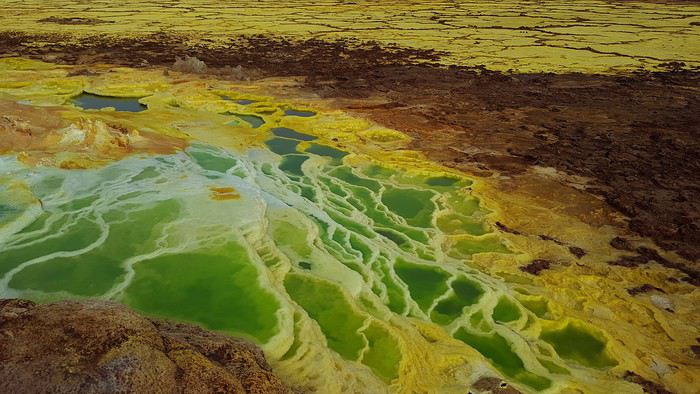
http://voyagesalain26.over-blog.com/2019/04/ethiopie-abyssinie-erta-ale-dallol.html
Happy reading and safe travels!
Hello to all travel lovers!
I'm leaving for several weeks to accompany groups in Namibia (I'm over the moon). It's a country I know because I've already spent three months there.
I'll be talking about culture, geography, history... but I'd also like to see my "clients" touched by the wildlife, maybe more specifically the birds. Unfortunately, I'm a lousy ornithologist.
:-p
So, if you could recommend a book on the world of birds we're about to see, that would be... awesome!
For those who are on the same journey as me and to avoid duplicates, here are the ones I've found (but haven't bought yet):
- *Compagnon de safari* by Oriol (2003) ??
- *Les oiseaux de l'ouest africain* by Serle and Morel (2005) ??
- *Guide des mammifères d'Afrique* by Kingdom (2013) ?? (No, birds aren't mammals!!)
- And then... that's not much 😕
Haven't found anything specific to Namibia.
So there you go, thank you all, and I wish you a very happy journey too!
I rarely post on the forum, but I've talked (well... written) a lot. Thanks for your attention! :-)
Nathaniel. (For those interested, I could share the link to photos from my previous trips.)
Beace!
I rarely post on the forum, but I've talked (well... written) a lot. Thanks for your attention! :-)
Nathaniel. (For those interested, I could share the link to photos from my previous trips.)
Beace!
Bom dia, travelers,
A little feedback from our discovery of Madeira—there aren’t many out there! Hoping it might be useful to some of you 🙂
We stayed 7 days in Madeira between May 18th and 25th.
Base: Funchal, the Lido hotel area. A practical neighborhood (lots of restaurants, shops, buses, etc.) but lacking charm. While getting back to Funchal is quick thanks to the road infrastructure, the outskirts of the city are particularly congested in the morning and evening, often due to tourist buses blocking traffic. Plus, even though Funchal enjoys milder weather compared to the rest of the island, you won’t see any sunrises or sunsets there! In short, if I were to do it again, I wouldn’t stay in Funchal for 7 days, even if it’s convenient to unpack once and for all.
Car rental for the week with Avis through locationdevoiture.fr (now Carigami). Zero-excess insurance, two drivers included, full tank on pickup, return with a full tank. After everything I’d read, I was dreading it. No issues at pickup or return. A Citroën C3 with 4,000 km on the clock, which served us perfectly. We brought our own GPS and map, which came in handy. There are signs, of course, but not always where you need them 😛.
Guides & maps: The Rother for hikes, the *Évasion* guide (quite general but very complete), and the Sunflower (borrowed), which I liked less—I found the explanations less clear and a bit messy, but maybe it was just me being unclear 😇. We also had the Freytag & Berndt map at 1:40,000, very useful when exploring the tiniest roads.
Day 1: In the morning, we head to CURRAL DAS FREIRAS. The viewpoint is pretty, very well developed (too much?). We take a short walk down the path as recommended in the Sunflower guide. The environment is wild but doesn’t offer much in terms of views.


We then head east via the expressway. Destination: PONTA DE SÃO LOURENÇO. The sky is overcast there, while just earlier, we were under the sun 😕! We’ll have to deal with the weather’s whims—a constant in Madeira! Off we go for a 3.5-hour round-trip hike, including photo stops, a picnic, and the climb to Ponta do Furado at the very end.


It’s nice, very open, and unlike anywhere else on the island. But it’s also *very* crowded. Mass tourism where everyone’s staring at their feet, barely a smile, hardly a hello 😠. The vibe kind of kills the charm. We were there at lunchtime but didn’t escape the crowds.


Practical detail that matters: no restrooms at the parking lot, none at the Casa do Sardinha, and an environment with no trees or bushes where you can see for miles. Ladies, plan ahead... A hike you should do regardless, with no major difficulty aside from the final climb, though it "undulates" constantly. The trail is perfectly safe.

Back at the parking lot, we take the road to PORTO DA CRUZ, a small village nestled at the foot of the mountain. The natural pools, being cleaned, are empty, and the seaside promenade, splashed by waves, feels a bit gloomy. The charm isn’t there. Return to Funchal via PORTELA and the MIRADOURO DOS INGLESES, which is tricky to find—hidden at the back of a lovely park, tended like an old lady from the 19th century, maybe the former owner of the place...


To be continued... 😉
We stayed 7 days in Madeira between May 18th and 25th.
Base: Funchal, the Lido hotel area. A practical neighborhood (lots of restaurants, shops, buses, etc.) but lacking charm. While getting back to Funchal is quick thanks to the road infrastructure, the outskirts of the city are particularly congested in the morning and evening, often due to tourist buses blocking traffic. Plus, even though Funchal enjoys milder weather compared to the rest of the island, you won’t see any sunrises or sunsets there! In short, if I were to do it again, I wouldn’t stay in Funchal for 7 days, even if it’s convenient to unpack once and for all.
Car rental for the week with Avis through locationdevoiture.fr (now Carigami). Zero-excess insurance, two drivers included, full tank on pickup, return with a full tank. After everything I’d read, I was dreading it. No issues at pickup or return. A Citroën C3 with 4,000 km on the clock, which served us perfectly. We brought our own GPS and map, which came in handy. There are signs, of course, but not always where you need them 😛.
Guides & maps: The Rother for hikes, the *Évasion* guide (quite general but very complete), and the Sunflower (borrowed), which I liked less—I found the explanations less clear and a bit messy, but maybe it was just me being unclear 😇. We also had the Freytag & Berndt map at 1:40,000, very useful when exploring the tiniest roads.
Day 1: In the morning, we head to CURRAL DAS FREIRAS. The viewpoint is pretty, very well developed (too much?). We take a short walk down the path as recommended in the Sunflower guide. The environment is wild but doesn’t offer much in terms of views.
We then head east via the expressway. Destination: PONTA DE SÃO LOURENÇO. The sky is overcast there, while just earlier, we were under the sun 😕! We’ll have to deal with the weather’s whims—a constant in Madeira! Off we go for a 3.5-hour round-trip hike, including photo stops, a picnic, and the climb to Ponta do Furado at the very end.
It’s nice, very open, and unlike anywhere else on the island. But it’s also *very* crowded. Mass tourism where everyone’s staring at their feet, barely a smile, hardly a hello 😠. The vibe kind of kills the charm. We were there at lunchtime but didn’t escape the crowds.
Practical detail that matters: no restrooms at the parking lot, none at the Casa do Sardinha, and an environment with no trees or bushes where you can see for miles. Ladies, plan ahead... A hike you should do regardless, with no major difficulty aside from the final climb, though it "undulates" constantly. The trail is perfectly safe.
Back at the parking lot, we take the road to PORTO DA CRUZ, a small village nestled at the foot of the mountain. The natural pools, being cleaned, are empty, and the seaside promenade, splashed by waves, feels a bit gloomy. The charm isn’t there. Return to Funchal via PORTELA and the MIRADOURO DOS INGLESES, which is tricky to find—hidden at the back of a lovely park, tended like an old lady from the 19th century, maybe the former owner of the place...
To be continued... 😉
hi everyone,
just back from a little trip to the French Ardennes, and well, it wasn’t great...😕
people are cold, it’s depressing, the activities are just walks or the pool (when it’s even open...).
it feels like there’s a lot of poverty and tourism seems like an afterthought.
if anyone’s been there...
Is it possible to rent a motorcycle in Dakar for a medium-term period (5 weeks) to travel to Labé and back? Several guides told me the trip is worth it (max 200 km per day) since the roads in Senegal are paved. If you have experience with this, I’d appreciate any tips!
Hi there,
I’ve been looking for a destination for a 2-week trip early next spring, and Cape Verde has been growing on me. (The flight isn’t too long, the temperatures are more than pleasant, and it’s an unknown country for me.)
The thing is, Cape Verde is pretty complicated when it comes to inter-island transfers, and I don’t want to spend my time in airports or on ferries—especially since those transfers aren’t exactly known for their reliability...
So, I’d like to limit internal flights to just 2, meaning the island I arrive on plus one other.
I’ve ruled out the all-inclusive islands: Sal and Boa Vista.
I’m torn between combining Santo Antão + São Vicente or Fogo + Santiago.
The goal of the trip is to see beautiful landscapes, go on day hikes (nothing multi-day), swim a little—though I prefer quiet spots—and enjoy 1 or 2 days in a city, but not much more than that!
In your opinion, which option would be the best, and why?
Thanks! :)
Hi everyone!
We’re heading to Egypt for two weeks at the beginning of April. Here’s our current itinerary:
|02/04/2026 - Cairo (arriving at 8:00 PM)
|03/04/2026 - Cairo|
|04/04/2026 - Dahshur / Saqqara / overnight in Giza
|05/04/2026 - Giza / Cairo|
|06/04/2026 - Cairo - Abu Simbel
|07/04/2026 - Abu Simbel to Aswan
|08/04/2026 - Aswan
|09/04/2026 - Aswan
|10/04/2026 - Aswan to Luxor
|11/04/2026 - Luxor
|12/04/2026 - Luxor
|13/04/2026 - Luxor
|14/04/2026 - Luxor to Hurghada/Safaga
|15/04/2026 - Hurghada / Safaga
|16/04/2026 - Red Sea / Cairo|
|17/04/2026 - Cairo
|18/04/2026 - Cairo (return to Belgium at 10:00 AM)
I’d love to hear your thoughts on this itinerary, but mostly I’m wondering if it’s possible—and worth it—to take a one-way flight to Abu Simbel. We’d like to spend a night there to take our time visiting the site early in the morning and catch the sound-and-light show in the evening, then head to Aswan with a private driver or by bus.
Your feedback would be super helpful in planning this part of our trip!
Have a great day! 🙂 Luis
hi everyone, and first of all, I wish you all a happy new year and good health!
This coming October or November, we’re planning our first trip to Japan. The only downside is we’ll only have two weeks off.
For this first visit, I’m thinking of sticking to the Kyoto and Osaka area… saving Tokyo for another trip. Do you think that’s a good choice for a first-time visit?
I’ve put together a little itinerary below to get some feedback from those in the know. I’m only counting the days we’re actually there, not travel days.
Day 1: Kyoto Ginkaku-ji – Philosopher’s Path with stops at a few shrines temples Eikan-dō and Nanzen-ji visit to the Samurai Ninja Museum in the late afternoon
Day 2: Kyoto Fushimi Inari (allow 4 hours for the hike through the park) visit to Sanjūsangen-dō temple Shōseien garden participate in a tea ceremony
Day 3: Kyoto Kiyomizu-dera temple stroll through the historic district up to Kennin-ji temple visit Kennin-ji temple Yasaka-jinja shrine and Gion district in the late afternoon return to the hotel via Pontochō Street
Day 4: Kyoto visit Kinkaku-ji and Nijō Castle visit the Imperial Palace gardens end the day in the shopping streets (Shibkyogoku and Teramachi, among others)
Day 5: Kyoto Arashiyama area Togetsukyo Bridge, walk along the river, visit the Bamboo Forest explore the area up to Otagi Nenbutsu-ji temple
Day 6: Kyoto hike from Kibune to Kurama
Day 7: Kyoto day trip to Nara (full day)
Day 8: stroll around Kyoto before heading to Osaka
Day 9: Osaka Katsuo-ji temple, then head to Minoh Falls and hike back via the Minoh Trail end the day in the Osaka Castle area
Day 10: Osaka Himeji Castle and an afternoon in Osaka
Day 11: Osaka Osaka and return to the airport in the late afternoon for the flight home
Do you think this itinerary is doable? Are some days too relaxed or too packed? I was thinking of adding a trip to Lake Biwa and Uji, but in that case, I’d have to cut some things. Are those places worth dropping some of the planned spots? And if so, which ones would you recommend cutting or shortening?
Thanks in advance—I’m all ears for both positive and negative feedback! stephane
Dear VoyageForum members,
For the past two months, I’ve been checking flight ticket prices to spend 4.5 weeks in Thailand from early July to early August. I’m traveling from Brussels with a young child, so I want to avoid layovers. That’s why I’m only looking at Thai Airways’ website and only choosing direct flights.
At the end of August, I saw tickets for 955 € per person. On October 1st, they were 1,225 €. Today (October 22nd), the price is the same as on October 1st. (Same dates: Departure: July 4th, Return: August 7th.)
My question is: Is it possible these prices will drop significantly in the coming months?
Note: I clear my browser cache before every search, which I always do during the week and in the evening. This time, I also checked with my work computer, which has a VPN. So, the price isn’t influenced by cookies.
Thanks in advance for your feedback and tips.
Damien