The title might be a bit long, but I hope it’s completely understandable!
When it comes to choosing your next trip, what tips the scales in favor of Eritrea over Ibiza?
Why pick Canada over French Polynesia?
The price?
A magazine or TV report, a travel journal, an Instagram ad?
Ease of travel?
Minimal time difference?
The country that has the most in common with all the trip participants?
Activities?
Relaxation?
The desire to push your limits?
A photo?
What else, I wonder...
Personally, I often prioritize simple destinations (no administrative hassles), where I’m not at risk (nothing extraordinary like getting kidnapped by Daesh or ending up in a jail cell because the current geopolitics aren’t favorable to my passport, etc.), and where I can drive.
Wide-open natural spaces are more my thing than urban anthills.
Finally, I try not to spend three days on a plane to reach my destination, and I aim for a maximum budget of 3500 € (for 3 weeks) in comfortable conditions—that means charming hotels, good meals, etc.
Eastern Canada: the Eastern Townships, Gaspésie, New Brunswick, Acadia, and Nova Scotia.
Forests, lakes, lighthouses, parks, and encounters.
To sum up this trip: amazing encounters, stunning parks, wildlife, and passionate, fascinating Parks Rangers.
Bic Park, Gaspésie, Forillon, Bonaventure Island, Cape Breton Highlands Park, Hopewell Rock
My tips:
Don’t hesitate to chat with the park rangers and check out the activities they organize—it’s really interesting.
If you want to see wildlife, get up early.
The kilometers go by pretty easily; driving 500 km in Canada with an automatic car on long, straight roads with light traffic isn’t much more tiring than doing 120 km on Ireland’s narrow roads...
Try to catch a Quebecois film at the cinema or on TV.
For the ferry, plan ahead. Taking it at least once is a great experience.
For the rest, once you know what you want to see, just go with your gut—it’s easy.
The Trip:
Arrived in Montreal on 09/02. Family meal where we tried homemade *pouding chômeur*.
We spent 3 days exploring the Eastern Townships: the Abbey of Saint-Benoît-du-Lac, Bolton, Magog (its wine fair and thunderstorms), Granby, Bromont and its little lake, and its spa…
Gaspésie, New Brunswick, Nova Scotia:
We didn’t stop in Quebec City or at the Montmorency Falls, as we’d already visited them on a previous trip. Otherwise, plan an extra day and a stop in the lovely city of Quebec.
Day 1: Left on 09/05 for Saint-Fabien and Bic Park, famous for its coastline, marshy landscapes, and harbor seals (brochure). About 500 km. Stayed overnight in Saint-Fabien.
Along the way, we saw *barachois*—bodies of water usually at the mouth of a river, separated from the sea by a gravel, sand, or pebble barrier. They can be freshwater or saltwater. The fresh water of the St. Lawrence River mixes with the sea up to Orléans Island. And there’s a measurable tide up to the Trois-Rivières bridge.
Visited Bic Park and observed seals molting with the park rangers. More park photos.
Days 2 & 3: Headed to Sainte-Anne-des-Monts (about 200 km). The lighthouse route guided us 😊.
Two nights in Sainte-Anne-des-Monts for a short hike in Gaspésie Park (brochure) and its stunning landscapes between mountains, forests, rivers, and lakes. We didn’t see any caribou or moose, but from the top of Xalibu (a well-marked 5-hour round-trip hike), we had a 360° view of Mont Jacques-Cartier and Mont Albert. More photos.
This was Muriel’s favorite park—it’s exactly what she imagined Canadian forests, rivers, and lakes to be. You can also stay overnight in the park (especially by Lac Cascapédia), which is better but pricier 😢.
Days 4 to 6: Left for Forillon Park (brochure) near Gaspé (200 km). Magical... We were lucky—we came face-to-face with a mother bear and her cubs (brown bears). It was incredible. We also saw beavers at work...
Our lodging was out of the ordinary—what luck! A ranch in the middle of the woods. We stayed 3 nights. This is my favorite park. More Forillon photos.
Gaspé in Mi’gmaq means "end of the land." But for Jacques Cartier, it was the beginning of the country. On July 6, 1534, he and his crew made contact with the first Indigenous people of the Mi’gmaq Nation off the Baie des Chaleurs. On July 24, 1534, he landed in Gaspé, planted a 30-foot cross, and claimed the region for the King of France, where they met the St. Lawrence Iroquoians.
Visited Bonaventure Island (brochure) and its 100,000 northern gannets. Bonaventure Park photos.
Not to mention our first freshly caught and cooked lobster, bought at a fish market on the port.
Day 7: Finished the Gaspésie loop with a stop in Campbellton (300 km) before crossing into New Brunswick. Stopped at Bourdage Tradition farm. We could’ve gone as far as Caraquet, which would’ve been better. Rain all day.
Day 8: Headed to Cape Breton Highlands National Park in Nova Scotia. Overnight in Moncton to split the drive (500 km). We stopped in Acadia, a truly unique region with incredibly friendly and open people. New Brunswick is over 80% forest—it’s impressive how many trucks and dead raccoons you see on the side of the road.
Sunset at Hopewell Rock—bring mosquito repellent! There are thousands, it’s awful. Photos.
Days 9 to 11: Left for Sydney (500 km) for 3 days exploring Cape Breton Highlands Park. If you have time, stop at the "Train Station Inn in Tatamagouche"—I love the concept. You can eat there, sleep there, or just visit.
The Cape Breton Highlands Park loop is over 300 km. Photos. Our apartment was in North Sydney, a bit far from Chéticamp (2-hour drive) and 1.5 hours from the park entrance. But the road itself is beautiful. We should’ve found lodging in Chéticamp or Ingonish. At the time, we were also planning to visit Louisbourg, but it was too much.
Day 12: Time to head back, but there were still over 1,500 km to go. We’d planned to stop at "Le Pays de la Sagouine," a local heroine from Antonine Maillet’s imagination, played by the wonderful local actress Viola Léger. A fantastic place for shows and passion—don’t miss it if you get the chance. Another overnight in Moncton to split the trip (550 km).
Returned through Gaspésie and the Matapédia Valley, famous for its salmon fishing. We met a guy from Haute-Savoie who’d been living there for 15 years, making a living from fishing (he runs a shop) and dog sledding in winter.
Day 13: Things didn’t go exactly as planned. We were supposed to take the ferry from Rimouski to Tadoussac and the Saguenay Fjord. But due to Storm Florence, all boats were docked. We tried the ferry from Trois-Pistoles, but all crossings were canceled. The only other way was a 500 km detour to Quebec City. So we decided to spend the night of 09/17 in Trois-Pistoles (we’d already driven 600–700 km that day).
Days 14 & 15: We changed our plans, heading to Trois-Rivières and La Mauricie Park for a quick seaplane tour. There, we had an amazing encounter at the "Gîte de la Vieille Caisse" (the Old Bank Inn). The welcome was warm, breakfast was hearty, and the outdoor spa in the rain was great. We took our flight with Hydravion Aventure—the team was super friendly, and it was close to our inn. We’ll be back to explore this side of the St. Lawrence 😊.
Returned to family for a quiet end to the trip, with a little hike on Bromont Mountain, a visit to the Bombardier Museum, and a detour to local vineyards to buy a few bottles as souvenirs.
Bromont is the local ski resort, open until midnight on weekends.
We were 10 days too early for the fall colors and the cranberry harvest. I think it’s worth seeing.
If we go back, we’ll try to combine a trip to the north shore of the St. Lawrence (Mauricie, Lac Saint-Jean, Saguenay), the cranberry harvest, and a day at the Saint-Tite Festival. It must be amazing...
In summary:
Parks, forests, but also plains, fields, farms, lighthouses, beaches, small fishing ports, hikes, family moments, and encounters...
Trip Cost:
We spent 3,400 € total for two, including souvenirs. The exchange rate with the Canadian dollar was pretty good.
Flights: 830 € for two.
Accommodations: 750 € for 14 nights, averaging 54 € per night in B&Bs and Airbnbs (family stays not included).
Car rental: 600 € for 3 weeks + 350 € for gas. We drove over 6,000 km—it’s a lot but doable. We wanted to go to New Brunswick and Nova Scotia.
Park entry fees were about 8 CAD per person. We didn’t get a pass because some parks are national (Forillon), others are Quebec national parks, and some are neither.
The seaplane cost 99 CAD per person for 30 minutes.
For meals, we had a cooler to do some basic cooking in apartments or hostels. We ate out 4 evenings.
My name’s Emilie, and my view of travel has changed. I used to travel just to tick off the "places and things to do/see" boxes. But lately, I’ve realized that encounters have become really important to me while traveling. In fact, the people I’ve met and what they’ve brought to my life are now my best travel memories. What do you think? Have you had a similar shift in perspective? Are you more interested in meeting people while traveling now?
To be totally honest, I’m training to become a travel planner (a trip organizer), and I was thinking of focusing on organizing trips that are more centered around encounters. So I’d love to know if this makes sense—if travelers are interested in this kind of experience. Just to be clear, I’m not selling anything; I just want to chat and hear your thoughts.
Hi,
I’m planning a trip to Germany for 2027, and I’d like to visit places with lots of history. I’m thinking of renting an Airbnb or something similar. Is it possible to travel around Germany by train? Can I cross into Austria without any complications, obviously with my passport? It’ll be a two-week trip roughly.
Thanks in advance for your tips—they’ll be much appreciated.
We’re thinking of heading back to the US but we’re still debating the itinerary. We’d love to revisit New York, but after that...? We’ve already explored the East Coast without making it down to Florida. So we’re wondering if we should go there. New Orleans has been catching our eye, and Memphis with its blues-rock vibe is also really appealing.
A road trip that would start on the East Coast and head inland/mid-country. Any suggestions?
Or... we’re even considering stretching all the way to the West Coast:
- Passing through LA, which we’d ultimately skipped on our West Coast trip, but maybe it’s not the best time to go with all those wildfires that have devastated iconic spots...
- Or heading north to Washington and/or Oregon states, or closer, Montana.
Anyway, I’d love to hear your thoughts on what kind of loop we could do in 4 weeks... Given that in 2023, we spent nearly 6 weeks in the West, covering San Francisco, Yosemite, Death Valley, Mammoth Lake, Monument Valley, Grand Canyon, Page and its surroundings, Arches, Canyonlands, Grand Teton, Yellowstone, Zion, Bryce, and Las Vegas.
On that note, I have to give a big shout-out to Thibaut, aka ITAT, for his time and invaluable advice in planning that West Coast trip. Since then, I’ve really enjoyed taking the time to share tips about places I’ve visited!
Speaking of which, don’t hesitate to PM me for West Coast advice! Otherwise, I’ll be sharing a recap of that trip in a travel journal—currently in Word—that I’ll post on the forum later. For those interested, I also made a video montage (with clickable chapters in the description) of those 5 weeks here: https://www.youtube.com/watch?v=Wx8d4ommhv4. Just a heads-up: the Bodie videos aren’t mine (my GoPro died), and the grass was completely green when we passed through, unlike in the video.
Hi there,
I’m planning a trip to the White Villages and noticed that many are in the Province of Cádiz—like Setenil de las Bodegas, Olvera, Ubrique, Grazalema, Zahara de la Sierra, Medina-Sidonia, and Vejer de la Frontera. Are all of these worth visiting, or are there others you’d recommend? I’ve already been to Arcos de la Frontera and Ronda in the area and wouldn’t mind returning, of course. I’m also considering the Caminito del Rey, so maybe a few interesting villages in the province of Málaga too. Do you think an itinerary starting from Málaga (arriving at the airport) with 2 or 3 stops (like Ronda, Arcos, and a third in one of these villages) would work?
Thanks for your tips!
As soon as I return to France, I catch myself thinking, "it’s better elsewhere."
Wherever we’ve been, I feel this lightness of living—less restriction, less pressure, less sadness—and I start dreaming of somewhere else, of living somewhere else, a simpler life, more authentic, with colors everywhere: markets, clothes, homes...!!! Meeting kindred spirits, genuine people, gentle and kind, and letting go of all this modernism, this technological rat race, the indifference toward others, the confinement, the racism against the elderly in France, against the poor, the weak, the beautiful... fleeing the news, politics, jealousy, meanness, stupidity, greed... And in my moments of clarity, I tell myself that every country, every city has its pros and cons, and that maybe the best of all worlds isn’t down here. But I also remind myself that you have to know how to COME BACK in order to LEAVE again... yet still...!!! IS IT REALLY BETTER ELSEWHERE?😏😏😏
hi everyone 🙂, I’d like to know if any of you have recently—or within the last 2 years—built a house in Thailand and could give me an idea of the all-in price. I’m not looking for luxury, just a comfortable home with 3 bedrooms. I already have the land, which is in the Khorat region for those who know it. I’d really appreciate any info you can share—thanks in advance!
Best regards.
I’m finally getting around to writing about this 20-day trip to southern Italy: we didn’t travel this summer, and luckily, we found beautiful light and dreamy weather there at the end of September.
First, here’s the context of the trip: we’re both "confirmed seniors" but still curious and alert enough to enjoy the itinerary we’d imagined! We wanted a mix of discoveries—culture, cities, and nature—with guaranteed sunshine and the occasional short hike...
We’re flying to Naples, round-trip, because the flight times work better for us. We rented a car online, picked it up at the airport (details to come... and it won’t be the highlight of the trip!), and booked our hotels in advance.
A quick overview of the itinerary: leaving Naples on September 15th, early in the morning, we’ll drive straight across the boot of Italy to Bari.
After 11 days in Puglia, we’ll head back toward our starting point, taking our time: Matera in Basilicata, Maratea by the sea, and finally Paestum with its incredible temples.
Day 1: Brussels-Naples flight (Brussels Airlines) went smoothly; it landed an hour early, and we were thrilled, thinking we could use that time for a quick visit or two...
Everything went well until we left the airport. We took the shuttle to the car rental offices, and at first glance, we realized this wouldn’t be smooth sailing!!!
In front of every office (they’re side by side), there were already lines and kids sitting on suitcases—everyone looked exhausted...
We resigned ourselves to waiting: nothing moved until tempers flared at the counters, and two people nearly came to blows. Things sped up a little, and after 2 (two...) hours of waiting, we finally got our chariot: a black Fiat Tipo, dirty, with a few dents and scratches that we made sure to note in the contract... but it ran!
Off to Bari, then: no time for sightseeing along the way!
From there, we headed straight to our hotel in the countryside near Polignano a Mare.
A recurring detail: this happened constantly during our travels.
We’d installed our own GPS, fully updated...
In recent years, many dirt roads have become drivable, and lots of hotels and hostels have opened in the outskirts of towns. It was extremely rare for our ‘guide’ to recognize the street—let alone the number—we entered.
Often, we got by calling the hotel reception: it might seem like a small thing, but it happened so often it became frustrating.
In hindsight, it seems like without Google Maps, we’d have been lost!
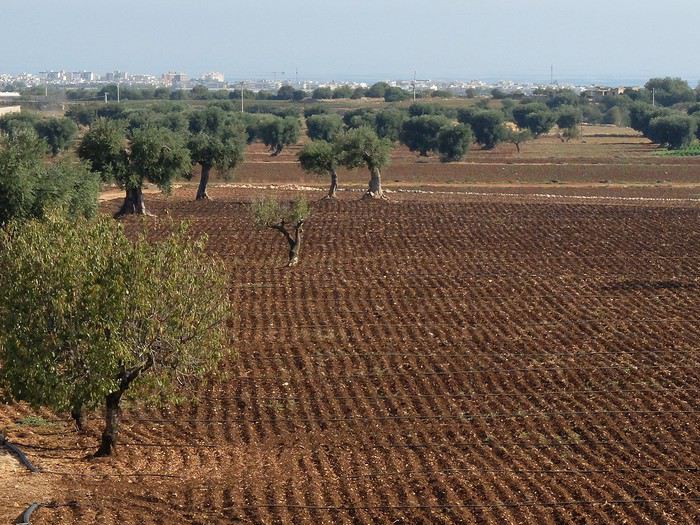
Anyway, we were beautifully settled, with a terrace overlooking olive groves and the sea in the distance: all was well.
It's all in the title—I'm 70, and I've been traveling by bike (tent and camp stove) for five years now. Statistically, how many more years do I have left to plan my destinations and see (almost) everything?
Question is half realistic, half humorous.
To keep it simple: how old are you, fellow senior cyclists still on the road? And what are your biggest challenges?
Personally, I'm in good physical shape, though my cruising speed has dropped from 3–4 km/h over the past five years.
But arthritis (hip) is starting to make it tricky to swing my leg over the frame.
Hi there!
We’re a group of 4 heading to Indonesia in April. We’d like to visit Sumba and could use some info on the island and the connections between Flores and Sumba—either by plane or ferry. Is it easy to find accommodations, and how’s the safety? Does anyone know a good guide?
January 12, 2013, 5:30 AM, Flight BA043 London-Cape Town
Directly below, Windhoek glittered like a tangle of fairy lights still lit and tossed into a box.
The horizon, edged in purple, was setting up a backup fireworks display, and suddenly, like a cherry on the platter and with unbearable intensity, in less than two minutes the entire sun revealed a gray dam and then a vast, untouched massif.
A few more minutes and the glare to the east of the plane was total. In Africa, the sun is swift.
We still had a France to cross before landing, but it felt as if we were already there. To the west, the raking light revealed what looked like acne and long, swollen scars in a desert region that might be the Swartkloofberg. Further still, straight as far as the eye could see, the two parallel tracks of a dirt road.
At 11,500 meters altitude and 940 km/h, we had a sense of stillness until the Orange River appeared, an incongruous serpent, gray edged with green.
The first South African settlements were dotted with trees providing shade, then rivers highlighted by continuous lines of vegetation.
Water and shade that make life possible.
We’ll return here by the backroads.
Half an hour from Cape Town, the plane tilted toward the sea, crossing plantations (likely citrus) and then an explosion of cultivated greenery in circles on either side of an unruly river. Finally, the coastline was no longer just sand and water—a frothy hem, a suture?
A peninsula came into view, forming two magnificent bays, and... a flight attendant firmly instructed me to return to my seat: we’d arrived!
The Colors of Cape Town
The city was dressed up as I like them—deserted, fluid, free of its vendors.
In the parking lot of the endless beach next to the commercial port north of the city, about two hundred people were unloading their goods in front of their pickups or combis, none of which were from this century: mixed-race, ageless Black people, and white folks who looked like they’d stepped out of another era.
After a few minutes, intrigued, I played a game: first looking at the merchandise, then imagining who was selling it, and finally looking at who was actually manning the stall. Tall Black vendors were selling what they often sell in Europe—leather, sunglasses, watches; mixed-race folks offered discount bundles, and the tanned older white people seemed to have emptied their attics.
We left with an antique tin kettle for morning tea over an open fire, a pack of five exercise books (that’s 600 pages to fill), Bill Bryson’s earliest stories in English, some snoek rillettes (a local fish), and—never seen before—tuna biltong and snoek biltong.
In so-called advanced countries, Sunday is for sports: white cyclists dressed like pros sweating diligently, Black street vendors running in loops at red lights to sell trash bags that day; white golfers losing their balls, which a scantily clad Black man retrieves from the water; under the sails of kite surf boards, it’s all blondes, and in the foam, joyful splashes from a bunch of Black kids.
Searching for an unusual spot for lunch, we drove through the fishing port looking for a dive and, at the end of a dead-end road with no warning, we arrived at the Shimmy Beach Club—quite the program.
The place, open for just three weeks, aims to be ultra-trendy. You could be in San Francisco, Lisbon’s docks, or St. Barth. This time, the "visible" staff was diverse, but the clientele was exclusively white, except for one mixed-race couple.
For this Sunday lunch, the women had pulled out all the stops, and local starlets—who’d make ours look tame—were turning the terrace into a frenzy.
At Cape Town’s port, the girls have *port*. The trend seems to be crochet dresses over swimsuits.
For two hours, a team of employees watered and raked the sand, starting over when they finished. A child in a floaty pink dress and a gold headband, but a future adventurer, stepped onto the freshly raked artificial beach sand for the first time.
A lanky mixed-race man dragged a hose across the ground, followed by a white woman—enchanted?—who then started watering the sand herself, carelessly splashing the glass terrace her colleague had just swept. I suspect a tacit work arrangement to keep everyone employed.
A galleon packed with tourists (are there any in the hold? Does it take tourists to Robben Island?) left the port. A helicopter took off in its wake. Trawlers returned, cutting through a ballet of catamarans, their waterlines well above the water: a bad catch.
If there’s one country where you can’t pretend to ignore skin color, it’s this one. The question is in everyone’s mind, and here more than anywhere else, it’s a decisive economic and political factor.
Columbine of Brittany
200 km north of Cape Town and 9,000 km south of the Breton coast, but on the same cold ocean, we camped on the shore of the Columbine Cape Nature Reserve, sheltered by a rocky chaos that, at first light tomorrow, would transport us to Perros-Guirec.
Our first encounter with wild animals wouldn’t end well for them: it was crayfish season, and they were the size of lobsters at Lorient’s fish market. Bought for R60 (5.5 €) a pair from kids in Pater Noster, they’d end up between two rocks, over a fire. But first, we had to pair the Chenin blanc with some snoek biltong.
With no wood, I lit a fire at dawn with dried seaweed and kelp, as if petrified; it gave off a smell of court-bouillon and... tires. Two hundred fathoms away, on an outpost, an army of cormorants stood at attention, unmoved among the frolicking seals.
At the reserve’s exit, the guard spoke French; Patrick Mwanba had arrived from Congo three years earlier to study, but the cost of living here forced him to drop out. He’d like to return home because life is cheaper there, but the war made him hesitate.
Ding ding dong! Vroom! Arf arf, Woof! Buzz! (A night from hell!)
I’d long planned to visit Calvinia, the center of a region known for extensive sheep farming. An excellent provincial museum, run by an enthusiastic curator, kept us too late to start the drive north.
So we camped in a tiny, charming campsite set up in the garden of a house. A few trees, a patch of resilient grass, and a view of a pretty lit-up steeple—what else?
Well, it turned out to be a sound-and-light show, with the pretty steeple chiming the hours and half-hours. Then suddenly, we were in the VIP stands of the Karoo-Kalahari Truck Race: roaring trucks paraded under our canvas windows, and we realized we were on the main road through town. To top it off, we enjoyed an uninterrupted canine cacophony, from the *arf arf* of little dogs to the *woof* of a mastiff. Oh, and some mosquitoes—the first ones—insisted on keeping us company in the tent, and we hadn’t yet bought the arsenal to neutralize them.
I walked through Calvinia at night; the house gardens weren’t fenced, nor did they have the «Armed Response» signs so common in the country.
The Kalahari Trails
(No, no, I haven’t converted to hiking.)
North of Calvinia, in the south of the Northern Cape, small towns follow one another up to Upington, about a hundred kilometers apart—welcome havens. Between them, with no trees in sight, we stopped in the shade of a motionless cloud: the temperature exceeded 40°C in mid-January.
We were almost out of the High Karoo and into a region of pans drying up, until the first red dunes appeared, precursors of the Kalahari. In the sparse veld vegetation, gatherings of quiver trees in the kopjes, and a caravan of camels without a handler or packs, marching in perfect formation across a pan (no, I hadn’t overdone the Windhoek at the last stop, and no, I wasn’t dehydrated enough to hallucinate).
The historic part of these towns, European in style, was built on the same plans as those in the American Midwest or the Australian Outback: a grid of streets wide enough to turn a wagon pulled by eight pairs of oxen. The architecture was Dutch-inspired, tropicalized with awnings.
Then came more recent housing, functional in style, where the wealthier mixed-race people—who make up the majority of this state—lived, and further on, the township, an assemblage of corrugated iron and plastic, like everywhere else.
Orange, Right Bank
North of Augrabies Falls National Park, on the other side of the Orange River, stretches a rugged and wild territory the size of fifty Groix islands, crisscrossed by a few tracks—the Riemvasmaak.
The inhabitants were driven out half a century ago for a military base, and as soon as President Mandela was elected, he made it a symbol by allowing the exiled populations to return. Several ethnic groups live here on almost nothing, in government-built shacks.
A community camp is set up in a small cirque at the end of a canyon that, while not in the history books, offers a good descent. By mid-afternoon, the air was at 44°C, but luckily there was a spring... except it was a hot spring, with water at 38°C. And they haven’t invented a reversible spring yet. Once the birds and baboons had settled in, in absolute silence and far from any light pollution, we enjoyed the stars like nowhere else (well, that’s what they claim in the region).
The Orange didn’t choose the easy path: arriving from Lesotho, it was almost at the ocean. The terrain to the south and north of this massif seemed easier to cross. Was it to avoid the curse of the Okavango, whose waters disappear into the sands without ever seeing the sea, that it chose this rocky route, thinking that at least the granite wouldn’t steal its water?
I Love You, I Eat You
In the dry bed of the Auob, it lay panting, head raised, alert, between its paws but head-to-tail, a tawny springbok, motionless.
A few minutes earlier, their story had been written in a lightning-fast chase, captured in photos by the driver of the car that alerted us.
It would be a long time before it started eating at the groin without breaking its surveillance.
Earlier, there was a lion lounging in the shade and hundreds of antelopes: springboks and gemsboks (oryx) in herds, hartebeests and steenboks alone. Strange pairs, apart several times, formed by a springbok and a gemsbok.
A few solitary jackals moved slightly sideways, looking furtive. Ostriches, alone, looking a bit dazed.
It was a lucky morning in the Kgalagadi (KTP).
In and Out
Kgalagadi, Nossob Camp.
We were at the very end of the almost-empty camp, ten meters from the fence, whose structure wouldn’t resist an elephant (though there aren’t any here), but it was electrified.
At dusk, on the other side, ten meters away, three lions passed in a row, as if on parade, seemingly focused on their goal and indifferent to the camp, though they glanced at it.
A jackal had gotten into the camp and was trying to get out without success while scavenging. I offered it two pieces of snoek biltong (Don’t feed the animals!) from three meters away—it smelled strong and had bones (bones in biltong!). When it passed by again, it sniffed but didn’t dare approach. Curled up in the chair, motionless, by the faint moonlight, I finally saw it come closer, grab the nearest piece, and move ten meters away to enjoy it (how many jackals know the finer points of sea biltong?). A little reassured, it came back for the second piece.
Another Morning
By morning, the jackal was gone, but our luck hadn’t left us. Two cheetahs again, who found me in the way and slowly moved toward a calmer shadow. Enough birds of prey to form a squadron, but they’re solitary hunters. Two ostriches busy with their dozen unruly chicks. And while we’re at it, a group of four Kalahari lions, sprawled under a thorny bush. Lots of oryx crossing the dunes and herds of red hartebeest. Kori bustards and secretary birds.
It was the first time the Kgalagadi had spoiled us so much.
I’d love to hear your thoughts and experiences about marrying a Cuban and moving to Cuba (not the other way around!). Yes, some of us actually *want* to stay on the island! Is it possible to work there without too much hassle, or is it really complicated?
Who’d like to share their best and worst travel memories in a few lines?
For me, it’s watching the TAJ MAHAL at sunrise and getting chased by dogs at the top of a mountain pass in GREECE on the way back from ISTANBUL.
THANKS GUYS
In this age of zero-commission cards and fee-free accounts, I’m curious why some travelers still prefer to set off with a wallet stuffed with bills and exchange money on the spot.
I get it for those whose income comes from undeclared activities, but what about everyone else?
Between the risk of theft, scams at exchange counters, and fees that often end up being higher, I’m really puzzled.
The last time I traveled with a wad of cash was because I had to pay for accommodation in cash only, the local currency was the dollar (easy to exchange at a very low cost), and I was still paying some fees.
I’m still wondering about my next trip to Argentina because the situation there is very specific, but otherwise?
Is it an allergy to modern payment methods?
A budget so tight that an extra 20 € (the fees some local banks charge for withdrawals) on a 2000 € budget would be impossible to manage?
So, I’m putting into action an idea I had two years ago... I’m inviting anyone who’s interested to help build a beautiful collaborative project—a shared travel journal!!!
The concept: one post =
a photo you’ve taken in the American West that means something to you
and your thoughts on that photo or about it: where and when it was taken, the story behind it, why it’s special to you...
Grab your pens!!!!
(And I hope this doesn’t flop, but if it does, at least I’ll have tried!!!)
When I set off for Bolivia, like many Europeans, I was full of illusions (fed by the propaganda of President Evo Morales, a would-be dictator with limited intelligence). I quickly became disillusioned—everything there seems to be built on lies: political disaster, ecological disaster, economic disaster despite drug trafficking and smuggling with China, dietary disaster, intellectual disaster... Its only saving grace is being a vast, sparsely populated country, so nature lovers can still find rich, relatively untouched landscapes far from human settlements (but for how long?)
Where humans dominate, the disaster worsens year by year: water, soil, and air are contaminated, meat is pumped full of hormones, GMOs are everywhere, fish are loaded with lead and mercury (thousands of tons of waste are dumped into Lake Titicaca on both the Bolivian and Peruvian sides), and the food is ultra-artificial (all the additives banned in Europe are abundant there). For example, out of 50 fruit yogurts, only two actually contain fruit... In short, don’t expect to go there for a health retreat.
As for its capital, even though you’ll see "wonderful" written everywhere, the city is ugly, extremely polluted, and not particularly interesting. But since few Bolivians leave Bolivia and the public education system is one of the dumbest in the world, they don’t care. A stupid law decreeing that taxes are only paid once construction is finished means thousands of buildings will never be completed... Anyway, you’ve probably gathered by now that it’s not worth wasting too much time there. If you decide to go to Bolivia, it’s best to know what you’re getting into...
So what should you do? A stop in Copacabana is pleasant, as is one in Tiwanaku. A stay in Samaipata is nice, and the cities of Sucre and Potosí still have charm. The Uyuni salt flats are also worth seeing. Venture off the beaten path, even if transportation is complicated and sometimes dangerous.
Don’t be surprised by the omnipresent police (many of whom are corrupt) and military, or by the almost daily protests... These are just some of Bolivia’s characteristics. But when you pass through quickly, you tend to see what you want to see.
On the gastronomy front, aside from the fact that in many places the food is a cocktail of pesticides, GMOs, heavy metals, and dangerous additives—all washed down with plenty of Coca-Cola—don’t expect refined cuisine... That said, like everywhere, you’ll find kind people (though relationships are often superficial) and stunning landscapes. There you go—just offering a different perspective from the dazzled accounts of tourists who only scratch the surface without understanding the harsh realities. And I haven’t even touched on the administrations, social disparities, the TIPNIS conflict, disappearances (girls for prostitution and boys for organ trafficking), etc...
I assume many of you already know, but the America the Beautiful annual pass, which was $80, will increase to $250 starting January 1, 2026.
So if you're planning to travel before the end of December 2026, it's in your best interest to buy your pass in December 2025, since it will still cost $80 and be valid until the end of December 2026 if you purchase it in December 2025.
This price increase only applies to non-U.S. residents.
Additionally, for those who planned to visit just one park, a $100 surcharge per person will apply to access a list of 11 national parks...
For example, if there are 4 of you in a car, you’ll have to pay $35 + $400,
which comes to $435 to visit one of the 11 parks on the list (I don’t have all of them... Bryce, Zion, Grand Canyon, Yellowstone, Grand Teton, etc.).
Total madness.
The goal is to push people who only visit one park into buying the annual pass.
Last point: free entry days are over for non-residents!
I’d love to share a little travel journal from our 14-day/12-night road trip with our two teens (14 and 17) in February/March 2020.
A huge thank you to all of you who helped me plan this trip to South Africa—your patience with my endless questions was amazing!
We left Lyon on Saturday, February 22 at 7:00 AM and arrived in Johannesburg at 10:00 PM after a short layover in Amsterdam. Flights cost 440 € per person (booked in October), with carry-on luggage. We added just one checked bag for the whole family (80 € round-trip with the free Flying Blue membership). Since we’d be moving around a lot, we packed light! In Lyon, we reserved parking at P5 in advance for 70 € for 14 days. The Air France/KLM flight was smooth.
When we landed, we picked up our bags and had booked a night at the Aero Guest Lodge, just 5 minutes from the airport, with a free shuttle and breakfast.
All you have to do is send a WhatsApp message when you arrive at the airport to let the shuttle driver know. The tricky part? Finding him in the terminal—he wasn’t holding a sign with the hotel’s name. 🤪 A South African called him for me since my English wasn’t great (and I had to get used to the accent 😛), and helped us spot the driver (who was actually less than 5 meters away!) with other guests.
When we got to the hotel: all good, except we were 10 people in a van meant for 7.
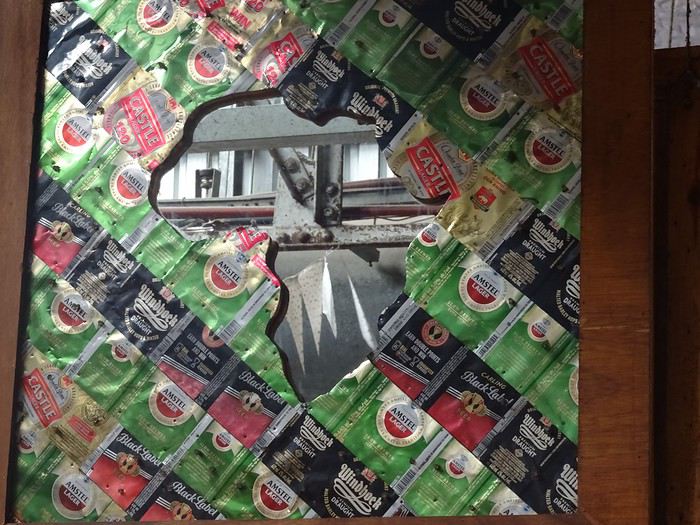
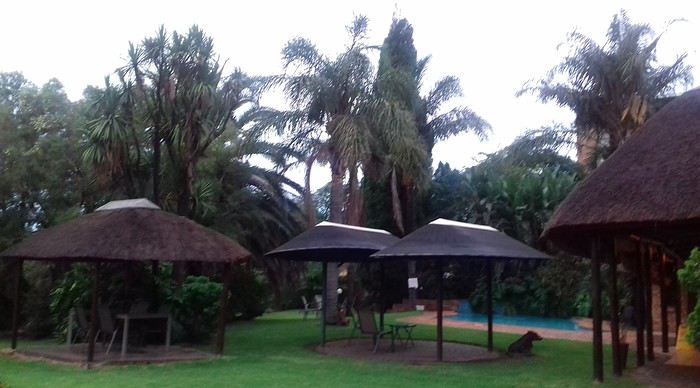
The room was spacious—one king-size bed and two single beds for the kids—with a simple but clean bathroom, a garden, pool, and breakfast (which we didn’t try). All for 65 €, so an awesome value!
After a restful night, we woke up at 6:00 AM to catch the shuttle back to the airport. Just a heads-up: there’s only one shuttle per hour in the morning, and Kulula canceled our 9:00 AM flight, moving it to 8:00 AM—so no time for breakfast (it starts at 6:30).
We waited 15 minutes in the lovely garden for the driver, who dropped us off at the airport in 5 minutes.
We checked in for our flight to Cape Town, which cost around 40 € (including two checked bags per person).
We grabbed breakfast at the airport instead (less than 20 € for all four of us—one of the nice surprises of South Africa!), and arrived in Cape Town at 10:20 AM.
After quickly picking up our bags, we headed to the Avis counter and left with a Toyota Corolla for 80 € for 4 days (rented with the Flying Blue card—free additional driver).
Everything’s on the left... not easy, but it works if you plan your route well.
We drove to our Airbnb in Constantia. We were surprised to see animals, bikes, and pedestrians on the highway!
We arrived around 11:30 AM at our rental—a huge house in the vineyards, in a super secure neighborhood, about 15-20 minutes from Hout Bay. It felt like Beverly Hills, but with super-high walls and barbed wire around the villas. 😕
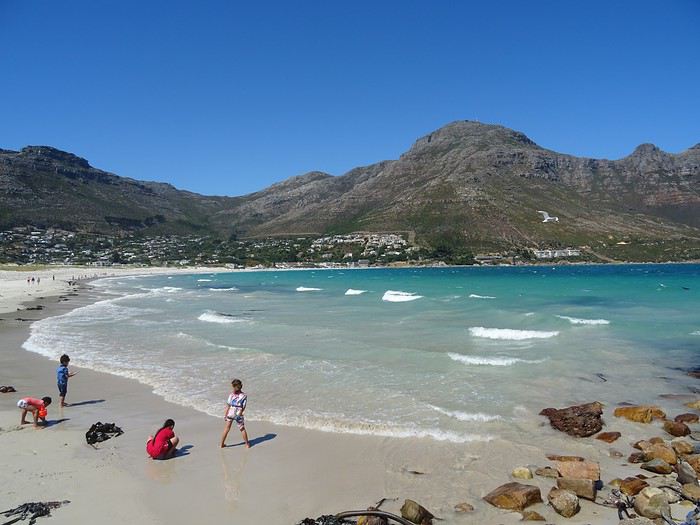
We dropped off our bags, changed into shorts (it was around 30°C/86°F), and headed to the Bay Harbour Market in Hout Bay.
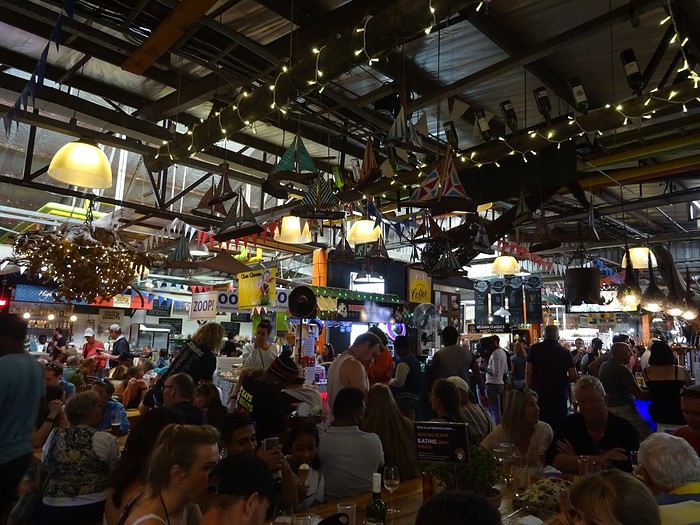
We had lunch there—such a great vibe! We wandered through the stalls, everyone picked their own dish, and we sat down on the terrace. There was music, artisans of all kinds... a really nice moment.
I’d withdrawn 50 € before leaving... and that gave me change to pay the parking attendant. Lunch cost around 30 € for four, including food and drinks.
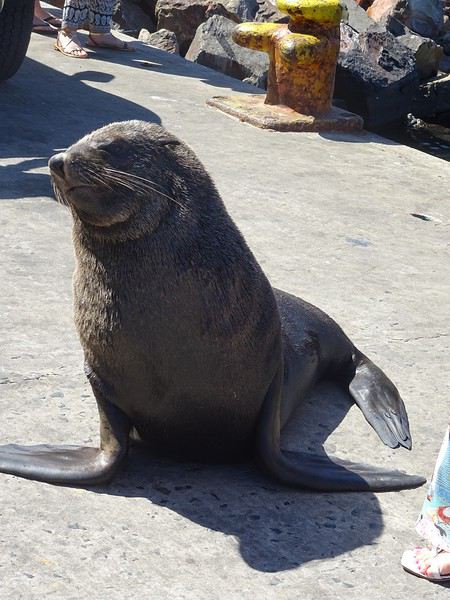
After browsing the artisan stalls, we headed to Hout Bay Beach near the restaurant, Marina Wharf (another small tip for the parking attendant—we’d have to get used to that!). We stopped to admire the sea lions. An ice cream for 1 €? No way we were saying no! 🙂
The fatigue was starting to hit, so we headed to the grocery store 10 minutes away (Constantia shopping center) and then had an aperitif in front of the vineyards, opening a delicious bottle of white wine.
I’ve been putting off posting my Quebec travel experience for a long time. Two years later, I’ve finally decided to share it. The memories are still vivid. I hope this gives you the urge to visit this beautiful region, which I literally fell in love with.
We’re traveling as four adults: my brother Guy, my sister-in-law Martine, my friend Pascal, and myself (Christian).
We entrusted the flight, hotel, and car reservations to the travel agency Amplitudes in Toulouse. Planning the day-to-day activities was up to us. We scheduled a few must-see visits, but for the rest, we’d figure it out on the spot.
06/25 Here we are at Roissy Charles de Gaulle for the usual pre-flight formalities. Everything goes smoothly and quickly. The hardest part is waiting for takeoff.
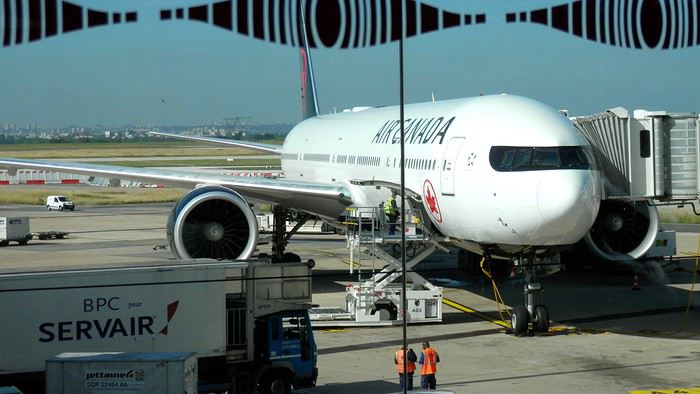
After an uneventful flight on an Air Canada Boeing 777-300ER, we land at Montréal-Pierre Elliott Trudeau Airport (YUL) in the early afternoon.
At customs, a surprise—no grumpy officer, but a smiling customs agent who jokingly asks me to name three tourist spots in Quebec, or else he won’t let me in. I pass the test easily and enter Quebec!
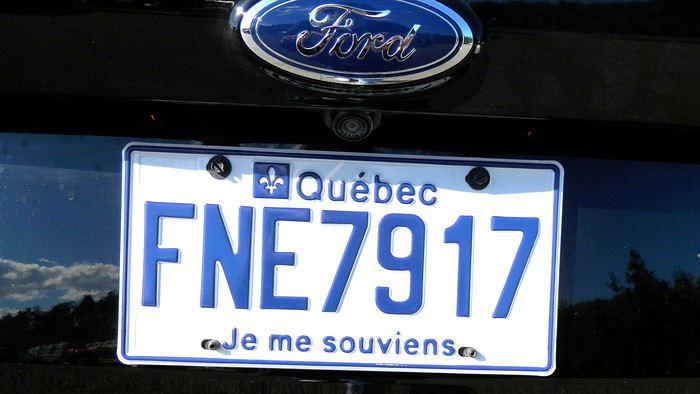
We head to the Alamo counter at Trudeau Airport to pick up our car: a Ford Escape with only 300 kilometers on the odometer.
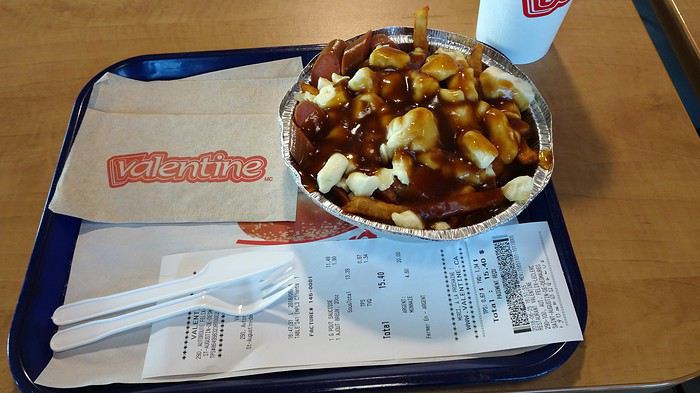
We decided to head straight to Quebec City, saving Montreal for the end of the trip. Pascal takes the wheel and gets on the Trans-Canada Highway E20 for a 255 km drive, taking about 2 hours and 45 minutes. With the time difference, we’re already feeling hungry, so we stop for our first poutine at a highway restaurant.
When we arrive in Quebec City, we go straight to the Clarendon Hotel, located right in the heart of Old Quebec. We’ll be staying there for three nights.
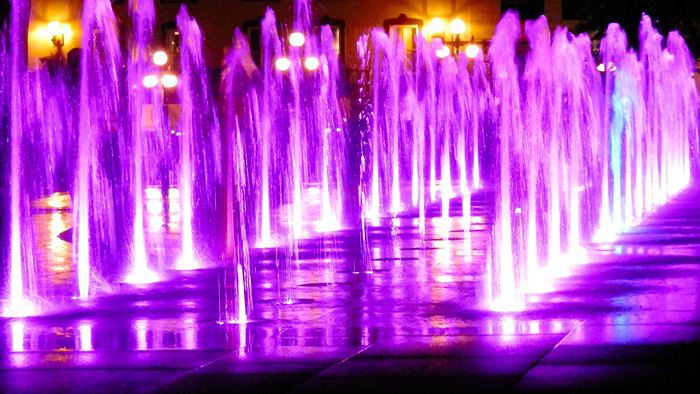
Tonight, no restaurant—just a short walk around the hotel before bed. We discover a square with pretty colored water fountains near the city hall.
It’s only 9 PM, but our body clocks say it’s 3 AM.
I’m a bit embarrassed because I need to travel to Quebec from February 27th to March 13th. I’m a regular visitor to Canada—this will be my 10th trip since 1997, plus a year as a permanent resident (2000–2001) and a cross-country run from Vancouver to Halifax in 2011. So, I’m definitely not a terrorist!
But since our last trip in July 2015, they’ve introduced this eTA thing. Seems more like a way to make money than to actually secure Canada, if you ask me, but anyway, that’s not the point.
I applied for an eTA for myself, my wife, and our two kids. They all got approved within hours, but not me! I was asked to create a GC key and then an IRCC account, which I did. Normally, you get news within 72 hours, but since Monday, January 15th, nothing!
In the "message" section of the account, it says "explanation letter (required)" with a deadline of January 25th, but I can’t find any explanation anywhere—despite searching the Canadian government website and Google. No links, nothing!
I’ve emailed them but haven’t heard back yet. I’m thinking of calling the Canadian embassy in Paris tomorrow. Even though I’m not stressing yet, it’d be a bummer if everyone else got to go without me!
If anyone’s had this issue before or knows what this explanation letter is about, I’d love to hear more.
Hello,
After much hesitation about the direction, we finally bought our flight tickets (we splurged on Premium): it’ll be a 15-day road trip starting from Los Angeles in June 2025. We want to do our "farewell tour" by saying goodbye one last time to the landscapes of the "Grand Circle" that amazed and fascinated us during 4 trips between 2008 and 2012.
Practical question for choosing a vehicle (possibly a Toyota RAV4 from Alamo): should we opt for the GPS supplement (over 200 € for 15 days; they only "gift" the second driver)?
In our previous trips, we didn’t have one, and we don’t really remember struggling in L.A., San Francisco, Las Vegas, Salt Lake City, or Denver. It would mainly be useful for driving through Los Angeles at the start and end of the trip, but not really elsewhere...
On the other hand, I’m thinking that there must be few vehicles without GPS in service in the U.S. these days, and maybe an upgrade at pickup isn’t out of the question (?). If that doesn’t happen and we have last-minute regrets, can we change our minds and take the option without being too financially penalized compared to booking in advance?
That’s the (very 😉) little dilemma of the moment. Thanks for your insights and advice!
Namaste!
Here I am live from Delhi, past midnight, at least 30 degrees....
I wanted to post the start of this France travel journal but couldn’t find the time, so here it is live!
Off we go for a third trip, but this time for double the duration—6 weeks with the goal of discovering Ladakh and Spiti, starting with a detour to Varanasi to meet up with Babeli and her family.
Why bike (MTB) along the canal between the Two Seas: the lateral canal of the Garonne from Bordeaux to Toulouse, and the Midi Canal from Toulouse to the Mediterranean?
This canal was created to connect the Mediterranean to the Atlantic without going around Spain, and along its entire length, there’s an old towpath (used to pull barges).
Since this path is closed to traffic (except for service vehicles from Voies Navigables de France), no cars drive on it—it’s dangerous, noisy, and polluting.
The Canal between the Two Seas was built for transporting goods, so it passes through many towns you can explore without dealing with traffic. You can stock up on supplies or spend the night. You’ll discover the varied landscapes of the countryside, always in the serenity brought by the calm and slow flow of the canal’s water. Most of the time, you’ll be in the shade of trees planted to stabilize the banks with their roots.
All you have to do is follow this blue—or rather green—ribbon without needing to consult a map. But the biggest advantage is that it’s flat!
Of course, on the Canal du Midi, water flows from the watershed divide at Naurouze eastward to the Mediterranean and westward to Toulouse. On the lateral canal of the Garonne, water flows toward Bordeaux. But this slope is almost imperceptible, which is a huge plus when you want to travel by bike for several days with luggage.
When I say "bike," I really mean MTB because, while the towpath has been replaced in some places by a paved bike path, it mostly resembles a dirt trail—sometimes smooth, sometimes rocky, and often cluttered with roots from the magnificent trees lining it.
Since the canal was classified as a UNESCO World Heritage site, improvements have been underway, but it won’t be tomorrow that you’ll be able to ride from Bordeaux to Sète on a road bike. And I’m afraid the first sections of the path will be worn out before the rest is finished.
You might even run into construction work for this bike path. That’s what happened to me during the spring of 2007.
Sunday, 03/11 – Valence d'Agen 08:15 to Toulouse (Rangueil) 16:30
97 km in 8h15 (6h on the bike)
I started on the recently paved path along the lateral canal of the Garonne. The first locks appeared, and as I approached Moissac, the path turned into a billiard table until Castelsarrasin. After the Cousteau port, I was back on the classic dirt towpath with its rocks, roots, and nutria holes. But not for long—soon, I hit ruts left by backhoes and bulldozers, which, fortunately, were resting for the Sunday. A pile of rubble taller than me blocked the entire width of the path. I didn’t want to turn back to find the previous bridge and ride on the other bank, which was just as impassable (dense grass). It wasn’t easy to carry a bike with full panniers, so I lifted it over several mounds. I kept going, sometimes on foot, unsure how far the construction extended. Another bulldozer—luckily, the ground was dry. The work went all the way to Montech, making the path impassable. I recommend taking the N113, which runs parallel (that’s what I did on the way back).
In Montech, the famous water slope was at rest, waiting for tourists. For many kilometers, I was back on the traditional towpath. The closer I got to Toulouse, the better the surface became, and the more cyclists and pedestrians I saw—until the city center, where there was nonstop bike traffic, especially students heading to Rangueil.
Monday, 03/12 – Rangueil 09:10 to Revel 16:30
86 km in 7h20 (5h30 on the bike)
As soon as you reach Toulouse, you make a 90° turn to follow the connection between the lateral canal and the Canal du Midi.
Heading east, you pass the barge selling the famous Toulouse violet souvenirs.
A real bike path has been built for 50 km to Port Lauragais. It’s a true joy for Toulousains and travelers. Restrooms have been installed or shared with highway rest areas, allowing you to refill water (of course, bikes are banned from ASF rest areas, but cleverly placed racks let you secure your bike and walk in).
At Port Lauragais, it’s another rest area shared by highway users, cyclists, and boaters. You’ll find a cafeteria, restaurant, hotel, and a shop selling regional souvenirs.
But the real pleasure is reaching the watershed divide at Naurouze, where water flows toward the Mediterranean on one side and the Atlantic on the other.
There, I decided to leave the Canal du Midi, which continues toward Castelnaudary with a much rougher towpath, to follow the *Rigole* that feeds the canal with water from the Saint-Ferréol basin. For me, it was like returning to the source—a bit like a pilgrimage in honor of the brilliant Pierre-Paul Riquet, the designer of this magnificent work. I followed the service trail along the *Rigole*. It’s actually a variant of the GR 653, leading to Revel alongside this artificial waterway.
It’s fed by water from the Montagne Noire, and I was worried about a steep climb. But that wasn’t the case—the *Rigole* winds for 40 km, flowing gently under the trees. It was better than a dream: a smooth dirt path with the crunch of pine needles under the wheels, where I only crossed paths with a few fishermen... And to soothe sore buns, the last kilometers were on packed earth—a paradise (ATVs, stay away!). More walkers and cyclists appeared there.
Tuesday, 03/13
After a restful night in Revel, I started the morning with a walk around Lake Saint-Ferréol. A very pleasant 10 km hike, but I don’t recommend it for mountain bikers unless you’re used to mountain terrain and have strong calves. Otherwise, you can take the road—there are at least two hotels near the lake.
In the afternoon, I began the return trip to Tarn-et-Garonne via the same path, with the same pleasure.
Total: 378 km of suffering and bliss, for which I must thank the departmental and regional councils for their funding, Voies Navigables de France for maintenance, and the volunteers who mark the hiking trails.
And don’t you think you’re exaggerating a bit with your 378 km of bliss and the paradise of the *Rigole*?
Okay, fine—it wasn’t always idyllic. Sometimes the path was downright *pierrique*... but I had great weather, and the landscapes were so beautiful (water, sun, vegetation). In the rain or mud, it would’ve been less fun.
What does *pierrique* even mean?
*Pierrique* is worse than rocky. I know a Pierrick, and he’s tough.
And why *Facteur4*?
It’s France’s goal to reduce greenhouse gas emissions by a factor of 4 by 2050.
I’m doing my part by biking to work 3 out of 4 times.
And your cassoulet?
Guilty as charged. I ate the best cassoulet of my life at the Hôtel du Midi in Revel. But it was very productive in methane. My stomach hurt so much I couldn’t sleep and ended up writing my postcards between 3 and 4 AM.
So many great memories!
This time, I landed in Monastir on a direct flight from Nice, again with Tunisair. We left about ten minutes late, and the flight lasted around 1 hour 30 minutes. A meal was served on board (cucumber salad with Edam-like cheese, carrots, and two small portions of dishes I couldn’t identify—semolina with peppers, olives, and parsley, two small rolls, a square of processed cheese, and a chocolate cake). It’s worth noting because it’s not common on flights this short.
In February, France and Tunisia were in the same time zone, but now Tunisia is one hour behind. This time difference and the flight duration work perfectly for a short 15-day trip since it takes me a few days to adjust to jet lag.
Luckily, I’d asked my hotel about the taxi fare from the airport because the drivers (there were several around me) didn’t hesitate to quote outrageous prices. The actual fare is 20 dinars, but one asked for 120 dinars. I refused, and another offered 60 dinars. I replied, "That’s too expensive—I’ll take the metro!" (Having tried the Tunis metro, I had no desire to repeat the experience in Monastir with a suitcase!). I started walking toward the metro, and one of the drivers caught up with me, saying, "20 dinars is fine!" I’ll skip the details, but the negotiation took a little while.
When I arrived at the hotel, I told the receptionist someone had asked for 120 dinars. He put his hands to his head and said, "They’re awful!" He remembered our phone call two days earlier when I’d booked (he’s the one who told me I could take the metro).
The Mezri Hotel isn’t expensive. I got a sea-view room for 75 dinars (22 €). (I’d booked a balcony room for 90 dinars but wouldn’t have had time to enjoy it.) It’s well-located but noisy because there’s no double glazing.
The receptionist is a very kind older gentleman. He called a friend whose wife is from Tozeur to find out if I should take a bus or a *louage* tomorrow and what time.
I arrived at the hotel around 7:00 PM and had time to stroll along the corniche to the ribat. Despite some run-down buildings, the seaside seemed livelier and cheerier than Sousse’s.
Monastir is the hometown of former president Bourguiba. I passed his mausoleum by taxi. There are Tunisian flags along the avenue by the sea because every year on April 6—the anniversary of Habib Bourguiba’s death—the president of the Republic visits the Bourguiba Mausoleum in Monastir to pay respects.
The taxi driver mentioned other Tunisian presidents. He complained about rising prices and insecurity, blaming President Kaïs Saïed (I’d already heard that security was better under Ben Ali).
At the end of my stay, I’ll take time to explore Monastir, but tomorrow morning, I’m off to Tozeur—a long bus ride awaits me.
I arrived in Tunisia this afternoon for a full 14-day stay.
I took a direct Tunisair flight from Nice, which departed about thirty minutes late (that’s nothing compared to the "nightmares" I’ve had on some of my recent trips).
The flight lasts around 1 hour and 20 minutes, and a small snack was served on board (a sort of quiche with chickpea purée, a small bread roll, a portion of cheese like La Vache qui rit, and a small chocolate cake). It’s worth mentioning because it’s becoming increasingly rare on short flights.
I was seated between two Tunisian gentlemen who gave me some great tips for my trip, especially about negotiating prices. One of them is a former cameraman for France Télévisions, very cultured and well-traveled—his daughter is a journalist at France Télévisions (I found some of her articles online). In short, the flight was very pleasant and quick.
I’m staying at the Hôtel Royal Victoria. I booked it yesterday afternoon by email without providing my credit card number. The room costs 241 TND (71 €) with breakfast included. It has heating, a small fridge, a safe, a hairdryer, Wi-Fi, and a TV with international channels.
There’s a police van permanently parked in the square where the hotel is located.
This hotel is housed in the former British consulate and later embassy. It has a lot of charm with its painted wood ceilings and doors, and its bathroom covered in ceramic tiles. The tiny elevator is from another era.
The main advantage of the hotel is its location between the medina and Avenue Bourguiba. Nearby, there’s the Magasin Général, where you can find groceries and some typical products like rose water, geranium water, and tons of halwa (a customer kindly explained how to eat it and which is the best).
After nightfall, I took a short stroll down Avenue Bourguiba. There weren’t many people around—it’s windy and cold.
I’ve already noticed the warm welcome from Tunisians. The supermarket cashier welcomed me to Tunisia, and a gentleman I asked for directions to the Magasin Général (I was about to climb stairs leading to a mosque!) insisted on inviting me for coffee, but I declined.
The rest of my itinerary will depend on the weather. If it doesn’t rain tomorrow, I might visit Carthage since the Bardo Museum is closed on Mondays, as are the museums in Sidi Bou Said.
While browsing the forum to gather info for my upcoming trip to Thailand, I often see the terms "traveler," "great traveler," and also "tourist"—so what’s the nuance for you?
Hi,
I’m traveling with my 6-year-old daughter this summer, and since her father hasn’t seen her in 3 months, he won’t be able to sign a travel consent form for me.
He’s been completely out of touch since early March, and I have no idea where he is.
We’re heading to Montreal for 2 weeks in early July—I have both the outbound and return tickets.
Am I required to provide a signed consent letter from the father, even though she’s traveling with a parent who has legal custody?
If I don’t have one but can prove my good faith—explaining that he’s completely unreachable—will that be enough?
Thanks for your help!
Hi there,
We’re heading to Quebec from July 7 to 21 with our two kids (ages 5 and 7) and my wife, and we’re putting together an itinerary while keeping some flexibility (though much less than we’d hoped, since we’re realizing accommodations are already filling up fast!).
Below is our draft plan—pretty far along since we’ve booked 9 out of 14 nights—but it’s definitely not perfect.
We’d love some advice on what to do after Parc du Bic (3 nights to improvise) before heading back to Parc Omega, where we’ve booked a tipi :-)
It seems clear that a 3-day Gaspésie loop isn’t doable (too bad about Percé and Parc Forillon, but I think we’re already covering a lot of ground with this route!). But what about the option of driving up to Sainte-Anne-des-Monts to spend a day in Parc de la Gaspésie before the (long) drive back, and still enjoying part of the coastal road, which looks stunning? Thanks in advance for your thoughts!
3 nights in Montreal (booked)
Day 1 to 3 – July 7 to 9: Montreal
2 nights near Lac Saint-Charles, 20 min from Quebec City (booked)
Day 4 – July 10: Montreal → Montmorency Falls → Quebec City (~3h drive)
Day 5 – July 11: Quebec City
2 nights in the Saguenay region (booked)
Day 6 – July 12: Quebec City → Baie-Saint-Paul → Canopée Lit (Saguenay), 20 min from Tadoussac
Day 7 – July 13: Day in Tadoussac/Les Bergeronnes for a whale-watching excursion, then back toward the Saguenay Fjord for the evening and overnight stay
1 night in Parc du Bic (booked)
Day 8 – July 14: Ferry from Les Escoumins (2 PM) → Trois-Pistoles → Parc du Bic
3 nights to improvise—is it even feasible to go without reservations in July for a family of 4?
Day 9 – July 15: Hikes/activities in Parc du Bic – overnight near Cap-Chat/Sainte-Anne-des-Monts??? Other ideas?
Day 10 – July 16: Parc de la Gaspésie?
Day 11 – July 17: More hikes? Then drive back toward the Mont-Joli area?
1 night at Parc Omega (booked)
Day 12 – July 18: Long drive back from Mont-Joli? Maybe via Kamouraska for a meal break, then overnight at Parc Omega
2 nights near Montreal or surrounding area
Day 13 – July 19: Visit Parc Omega, then a relaxed drive back via scenic routes to Montreal or nearby
Day 14 – July 20: Last day and night in Montreal or the suburbs, fun activities with the kids
 After a restful night, we woke up at 6:00 AM to catch the shuttle back to the airport. Just a heads-up: there’s only one shuttle per hour in the morning, and Kulula canceled our 9:00 AM flight, moving it to 8:00 AM—so no time for breakfast (it starts at 6:30).
We waited 15 minutes in the lovely garden for the driver, who dropped us off at the airport in 5 minutes.
We checked in for our flight to Cape Town, which cost around 40 € (including two checked bags per person).
We grabbed breakfast at the airport instead (less than 20 € for all four of us—one of the nice surprises of South Africa!), and arrived in Cape Town at 10:20 AM.
 After quickly picking up our bags, we headed to the Avis counter and left with a Toyota Corolla for 80 € for 4 days (rented with the Flying Blue card—free additional driver).
Everything’s on the left... not easy, but it works if you plan your route well.
We drove to our Airbnb in Constantia. We were surprised to see animals, bikes, and pedestrians on the highway!
We arrived around 11:30 AM at our rental—a huge house in the vineyards, in a super secure neighborhood, about 15-20 minutes from Hout Bay. It felt like Beverly Hills, but with super-high walls and barbed wire around the villas. 😕



 It’s only 9 PM, but our body clocks say it’s 3 AM.