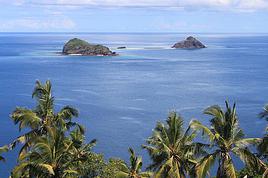
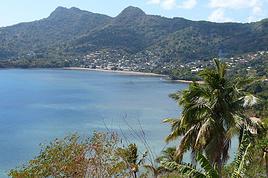
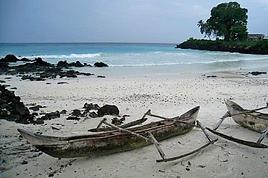
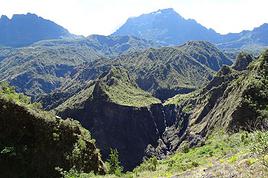
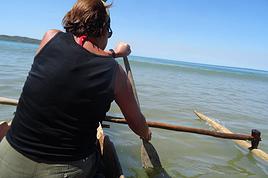
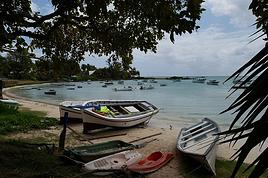
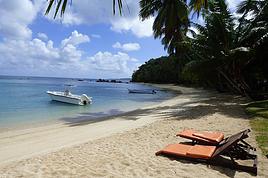
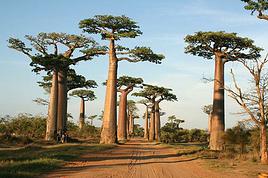
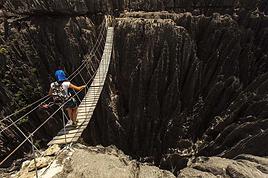
Bonjour à vous tous qui nous avez bien renseigné avant nos vacances à Mayotte.
Nous rentrons de Mayotte, où nous avons passé 3 semaines de vacances et malgré la pénurie d'essence (nous avons revu à la baisse les parcours à l’intérieur des terres et manqué certains sites) nous avons passé un très bon séjour avec des mahorais très accueillants et qui avaient beaucoup d'humour (compte tenu de cette période pénible pour eux).Et DES PAYSAGES FANTASTIQUES (après la 1ère impression passée...
En relisant le carnet de voyage d' Estonien j'y retrouve notre arrivée Très surprenante, car contrairement à lui, nous ne connaissions rien de "l'ambiance" en Afrique et nous pensions même arriver dans un département. Alors je crois que si il n'y a pas "de petit personnage jaune" qui se promène dans les rue de Mamoudzou ou Dzoudzy sur Google, c'est pour mieux nous laisser la surprise d'une France oubliée de l'Outre...Mer... et pour ne pas stopper net l'élan des gens comme nous qui pourraient avoir l'idée d'aller en vacances à Mayotte pour voir le lagon le corail et les baleines. Et c'est bien comme ça, car si on avait vu les vrai photos des "2 Villes" que d’ailleurs nous avons évité au maximum...
Bref,
je commence le récit.
Encore Merci à tous ceux qui nous ont apporté leur aide pour préparer nos 3 semaines (où nous n'avions aucune connaissance sur place).
Je posterais en plusieurs épisodes le parcours,
pour le moment juste un 1er aperçu (LE CHOC en arrivant le soir) ensuite notre vision changera beaucoup :
Arrivée le 10 août à 16h30 après de longues escales dans les aéroports d'Amsterdam et de Nairobi.
(vue d'avion Géniale et comme le dit Estonien : "C ’est comme si l’île entière était recouverte d’une épaisse forêt tropicale" ((ça c'est moi;Magnifique et des Ilots de corail partout))...
Nous voilà enfin à Mayotte, le loueur de voiture (nous avions réservé le tarif le moins cher (voiture publicitaire) Nous en avons eu pour notre argent : Une carrosserie digne de la "casse auto" sans pub (étonnant). Plein de carburant à faire. Et Nous avons fait refaire les pleins de liquide de freins, de lave glace et pression des pneus avant de la prendre (en espérant ne pas perdre une roue. Bon ensuite vu l'état des routes à Mayotte, nous n'avions pas peur d'abimé quoi que ce soit sur la voiture ou qu'elle soit fouillée... TRANQUILLE.
Comme nous devions prendre le bac, et rouler 1h pour atteindre M'tsamboro pour nos 1eres soirées et qu'il allait faire nuit le temps encore de trouver la station essence pour faire le plein (mais pas trop plein, en se disant qu'elle pouvait tomber en panne dans pas longtemps) nous sommes partis comme ça. (La 1ere station essence et unique de Petite Terre, ressemble aux anciens dépôts abandonnés à 2 pompes que l'on trouve parfois en traversant les campagnes en Métropole, sauf qu'il y a en plus 5 ou 6 énormes bidons en fer qui semblent être en train de se remplir à coté de la
pompe et débordent sur le sol de la "station" où de la sciure rouge absorbe ce qu'elle peut...)
(un extrait des description d'ESTONIEN car nous avons ce soir là une vue semblable :"Dès l’arrivée, je suis comme happé ; Alors que les uniformes et les panneaux de signalisation propres à la France sont tout de même plus discrets que les femmes en boubou ((ça c'est moiMagnifiques)), l’état des infrastructures me rappelle(( les images de la France d'après Guerre))... et rejoignons l'embarcadère de Dzaoudzi. De là, la traversée vers Mamoudzou dure un (( beau)) quart d'heure. Tandis qu'on laisse s'échapper Petite Terre, les reliefs de la Grande apparaissent...")
-Notre 1ère impression en traversant Mamoudzou au crépuscule en direction du Nord, après une sortie de la barge typique, colorée et rigolote ...Notre première impression donc :
Traverser une série de bidonvilles crasseux, et des enfants qui traversaient dans tous les sens tout le long de la route(moins de 8 ans).
Donc avec un "code" droit flageolant, nous sommes enfin arrivé de nuit 18h45 à M'tsamboro dans des rues encore plus surprenantes que celles d'avant... Le goudron qui reste est utile pour former les trous! On se dit alors :
Pauvres Français oubliés... de l'Outre... Mer !
On arrive quand même devant le portail de CocoLodge.
On arrive à se garer.(Dans une rue, qui ici pourrait porter le nom de chemin très pentu, caillouteux et longeant un terrain vague). Ce sera la 1ère de toute une série jusqu'à la fin de notre voyage (Vive les voitures déjà cabossées!)
On sort tous nos bagages, car on nous a répété 10 fois ne ne rien laisser dans le véhicule.
Et nous sommes enfin accueillis à Mayotte...
La suite au prochain épisode.
A Bientôt
(PS :les photos c'est seulement la beauté que nous avons retenue, donc à partir de demain, 1er réveil sur l'Ile)
bonjour
nous serons en vacances à mayotte pr 3 semaines et nous voulions faire une petite balade à partir de là mais seulement pr quels jours (puisque nous allons à mayotte pour voir ma fille qui y travaille)
un des vols directs étant nairobi, pensez vous qu'il réalisable, souhaitable, intéressant … de passer une petite semaine à nairobi?
on m'a parlé d'un parc tt proche de nairobi?
merci
anne
Bonjour,
Apres 2 semaines de visites et randonnées prévues à La Réunion en novembre, nous souhaiterions prendre 1 semaine de repos (plage, snorkelling, détente). Nous hésitons entre Mayotte et l'île Maurice. Quelqu'un a-t-il deja fait les 2? Qu'avez-vous préféré?
Merci!
Julie
Bonjour,
j'habite Marseille et on me propose de venir pour minimum 6 mois travailler en tant qu'infirmière libérale sur Mayotte.
J'ai beaucoup de mal à trouver où se renseigner pour les formalités administratives.
Si vous pouvez me dire s'il faut un visa, s'il faut des vaccins spécifiques et où les faire, comment s'inscrire à la caisse de sécurité sociale sur place...
Et petit détails j'ai un lapin nain, et je voudrais savoir s'il peut venir avec moi et s'il y a quelque chose à faire pour lui.
J'aimerais tellement que ça marche, depuis toute petite, je rêve de voir d'autres façon de vivre.
Merci d'avance
salut a tous, on doit passer 3 mois a mayotte cet été avec mon cheri ( c son pays d'origine et je n'y suis jamais allé, lui n'y ai pas retourné depuis ses 12ans quand il est parti)
que va t on bien pouvoir faire pdt 3mois? vous pouvez me donner les endroits a visiter, les truc a faire (et a pas faire :lol: )
doit on prevoir des vaccins? c quel saison juin juillet aout la bas 🤪
enfin g besoin du plus d'info possible pask lui se souvient pas trop, et puis sa a du changer...
merci d'avance
que va t on bien pouvoir faire pdt 3mois? vous pouvez me donner les endroits a visiter, les truc a faire (et a pas faire :lol: )
doit on prevoir des vaccins? c quel saison juin juillet aout la bas 🤪
enfin g besoin du plus d'info possible pask lui se souvient pas trop, et puis sa a du changer...
merci d'avance
😛Bonjour, j'habite à Mayotte et je me mets à votre disposition pour répondre à vos interrogations concernant votre future mutation professionnelle ici même.
Je pourrais vous donner quelques conseils objectifs pour préparer votre séjour.
Voici déjà quelques indications:
- Le véhicule: Si votre véhicule à plus de un an et que vous étes sûr de celui-ci, amener le votre! Faire une bonne révision.
Pourquoi? ici, les véhicules sont chers, et vous ne savez pas sur quoi vous allez tomber!
Quel type de véhicule?: Peu importe! ici tout roule! Bien sûr une petite préférence pour les véhicules 4x4 ( j'ai perso un scénic 4x4), mais si vous n'en avez pas ne faites pas l'investissement! A savoir qu'il y a de nombreux garages automobiles toutes marques, euromaster etc...
- Les logements: soit vous étes logés par votre organisme, soit a vous de trouver mais alors là... les prix des loyers sont prohibitifs! Le moindre appartement coûte 1000 euros/mois! Je parle bien sûr d'appart' correct.
- La vie au quotidien
1/ Alimentation: Ce qui va être parlant pour une famille voici un exemple de ticket de caisse de mes courses de hier: Tomates locales 6€50 le kilos ( info: prix variable 2.50€ le moins cher en saison) Pain de mie longue conservation: 3€90, 1L huile 2€55, Fromage de chèvre la bûche casino: 4.95€, 30 oeufs: 8.40€, jambon blanc à la coupe le moins cher: 12€95/kg, beurre premier prix:1€85, nutella:6€90, lait premier prix: 1€03/litre... en gros oui c'est plus cher qu'en métropole! Et honnetement contrairement à ce que j'ai pu lire sur le forum, les prix sont kifkif de petite terre ou grande terre c'est pareil!
Sur petite terre y'a le SHOPI( produits intermarché) et le SCORE ( produits casino) Globalement moins cher chez SHOPI, mais trés bonne viande chez SCORE et même moins chère qu'en métropole du moins pour le boeuf!
2/Habillement: Bien sûr si vous avez les moyens habillez-vous avant de partir et chaussez-vous surtout! En clair, ici on trouve de quoi shabiller et des choses sympas! par contre au niveau du prix c'est moins sympa^^ alors le tee-shirt souvenir baobab, tee et cie etc... de jolis ensembles pour les enfants, de jolies robes et tenues pour les femmes etc... mais faites vous votre garde robe globale en métropole c'est mieux! Quoi? tee-shirt anti-uv, maillots de bains, chaussures deplage, oui je sais c'est ringard mais aprés avoir vécue l'expérience OURSIN dans le pied... croyez moi on mets des chaussures pour aller se baigner! ici on en trouve mais c'est encore une fois trés trés cher!!!Donc ici on s'habillera plaisir ( le tee-shirt touriste!) ou vraiment au pire dépannage mais vaut mieux partir avec sa garde robe. INNEVITABLE: Partir avec toutes ses chaussures de sport! ici soit on en trouve pas soit elles coûte un bras et pour des modèles limites limites! A savoir que les chaussures s'abîme 3 fois plus vite u'en métro. A savoir aussi que LA chaussure ici c'est la TONG!!! on en trouve ici pas de soucis mais pas trop le choix ou alors des havaianas a 25 € pour un enfant par exemple! Donc prévoir un petit stock aussi! pour les enfants en particulier franchement les tongs sont suffisantes +une paire de baskets pour le sport a l'école et une paire de chaussure de marche ( si vous avez envie de visiter la forêt tropicale)
- la vie ici: perso, j'aime beaucoup je suis sur petite terre et bien contente par rapport a grande terre. Demandez moi plus d'info si besoin.
Je reste à votre disposition
Bonjour!
Je suis fonctionnaire de Police en région parisienne et compte partir à MAYOTTE premier semestre 2008! Marié et papa de deux enfants (2 ans et 6 ans), ma femme et moi nous posons beaucoup de questions qui nous freinent dans notre décision de partir, même si nous en mourrons d'envie!
Je vous demanderai de nous répondre avec objectivité car même si je sais que Mayotte et une île magnifique (lbeau lagon, faune et flore excpetionnelee), ça ne fait pas tout.
Quatre thèmes nous préocupent:
LE LOGEMENT: est il vraiment galère de trouver un logement avec au moins deux chambres?
Les loyers sont ils si élevés que cela! Trouve t on beaucoup de meublés à Mayotte!
LES GARDES D'ENFANTS: Ya t il des assistantes maternelles agrées où si ce n'est pas le cas, quel est le mode de garde d'enfants là bas? Et quels sont leurs honoraires?
LE TRAVAIL DANS LE PRIVE: Ma femme a un diplome d'auxiliaire de puériculture et travaille actuellement comme aide soignante en maison de retraite, y a t il du boulot dans ce secteur a Mayotte? Quel est le secteur qui recrute le plus? Voila une petite partie des questions que nous nous posons!
LES QUALITES DE SOINS: Faut il attendre 4 heures dans la salle d'attente d'un médecin avant de se faire examiner! La sécu est elle en place?
Enfin, moi, et la, ceux qui pourront me répondre seront peu nombreux, j'aimerai savoir ce que donne le métier de policier sur cet île! Je me doute que ce doit être différent de la métrople. Je voudrai connaître les coté positif et négatif de la vie à Mayotte dans le contexte professionnel! Merci d'avoir pris le temps de me lire et de me répondre!
LES GARDES D'ENFANTS: Ya t il des assistantes maternelles agrées où si ce n'est pas le cas, quel est le mode de garde d'enfants là bas? Et quels sont leurs honoraires?
LE TRAVAIL DANS LE PRIVE: Ma femme a un diplome d'auxiliaire de puériculture et travaille actuellement comme aide soignante en maison de retraite, y a t il du boulot dans ce secteur a Mayotte? Quel est le secteur qui recrute le plus? Voila une petite partie des questions que nous nous posons!
LES QUALITES DE SOINS: Faut il attendre 4 heures dans la salle d'attente d'un médecin avant de se faire examiner! La sécu est elle en place?
Enfin, moi, et la, ceux qui pourront me répondre seront peu nombreux, j'aimerai savoir ce que donne le métier de policier sur cet île! Je me doute que ce doit être différent de la métrople. Je voudrai connaître les coté positif et négatif de la vie à Mayotte dans le contexte professionnel! Merci d'avoir pris le temps de me lire et de me répondre!
There exists a rare land where life expresses itself, a land where everything is destroyed, patched up, where everything is dirty and faded, yet paradoxically, each passing day is synonymous with light and joy. Seen from the sea, magnified by its translucent waters, the island is splendid; seen from inland, ochre and green dress a landscape one would wish to be pristine. As you approach the coast with the tides, countless boat wrecks never finish dying; returning from a hike, you know you’re nearing the city by the increasingly obvious proliferation of all kinds of trash. Overflowing the towns, makeshift homes made of corrugated iron stand here and there, wherever the eye lands; from a height, looking toward the horizon, you find the calm blue of the ocean and the beauty of infinity.
But where does all this corrugated iron come from? Blue, gray, red, or black, you find it pretty much everywhere—except, of course, on the island’s heights, where the heat is such that all life seems impossible. Yet, a few kilometers from the capital, more than an hour’s walk away, the corrugated iron is very much there, omnipresent, guaranteeing a land registry as hypothetical for us Europeans as it is very real for those who live there, far from civilization and comfort. I keep climbing. I’m precisely looking to meet these people who live on very little, if not nothing.
- Jéjé Mogné (Hello, sir in Shimahorais)! Where do you get water here, in this place? How do you drink, irrigate your plants?
- I wait for the rain. We have tanks that fill up well with each rainfall. But right now, it’s not raining much.
At the top of the next hill, lost in the bushes, it’s easier for me to guess the distant city, Mamoudzou, than the rest of the path, a remnant of a magnificent GR called the Island Tour, abandoned for the most part, sometimes maintained between two lost hamlets. The city, the pulse, water. Below, the ocean, running water, drinking water—despite regular interruptions; here, up high, an hour and a half’s walk away, tanks, arbitrariness. On other slopes, however, during another hike, I saw the water supply network, made of sturdy pipes tangled in the earth, right there by the path. It seems there are places where water climbs. Others not. Each to their own karma. In 2025. In a French department.
A path of misfortune, lost and regained, thanks to a sign, an inscription, or the compass’s directions. No one walks here anymore, except those who live here or come to harvest their crops. I remember that breathtaking hike in 2013, when I connected Bandrélé to Mamoudzou, passing by the peaks of Bénara (660m) and Bépilipili (643m), barely pausing at Tsararano and Vahibé: 34 km of intense effort on a rollercoaster path, along a trail that was still discernible. Today, it’s as if everything had disappeared. By also destroying the paths and vegetation, Chido* broke the last momentum of these cautious hikers: insecurity has made its way across the archipelago, and Sunday strolls are no longer the norm. Me, I keep going. I will have walked here and there during these three weeks to get an idea of the places, the people, the landscapes, and the superhuman effort required to move forward in over 40°C. To tell the truth, during my last hike, I cut my plans short and let myself be carried by a group of young people heading back to the city. The path is now just an inextricable network of small trails, the specter of Providence** comes to mind. True wisdom is knowing when to give up. I leave.
* A cyclone named "desire" (in Shona), which ravaged the island of Mayotte on December 14, 2024. ** June 2023, a very poorly prepared hike on Providence Island (Caribbean) from which I miraculously escaped.
On Petite-Terre, Marie takes me to visit some locals, white people who have lived there for a long time and make a living from their art; jewelry for her, all kinds of objects for him. We love this little shop, this oasis amid the chaos that embodies Dostoevsky’s phrase: "Beauty will save the world." It’s clean and tidy, beautiful, well-kept. Invariably, the question of insecurity resurfaces in the middle of the conversation. The woman says:
- I know someone who slipped in their bathtub. Still, I keep taking baths…
So, is this insecurity a myth or reality? I hear stories that are often true but sometimes seemingly exaggerated through the lens of misunderstanding and one-upmanship. Like that of this midwife assaulted one evening (it gets dark early) on her way home from work. Sometimes she was attacked on the path, dragged by the hair for several meters, sometimes she made it home, but it was her roommate who let the two men in. One version talks about a snatched phone and gratuitous violence, another about violence outright. In short, one thing is certain: walking around at night flaunting your phone isn’t a good idea, no more in Mamoudzou than in the rough neighborhoods of Nantes. Also, I played it safe: nothing flashy, nothing bling-bling, and always something to give if needed. I was never approached. It’s not easy to get a sense of the realities, between the hazy reports from journalists sensationalizing everything and the real lives of real people. But I know I can’t rely on these few ideas I’ve formed: I’m nobody, and above all, I don’t live here. What I do know, however, is that since my last visit to the island in 2017, over 80,000 babies have been born, and tens of thousands of immigrants have reached the archipelago’s shores. What’s also obvious is that poverty, hunger, and—let’s say it—indignity foster delinquency and insecurity. So, without taking journalists’ alarmist speeches at face value, we’ll try to keep in mind that a young person rendered orphaned by circumstances (parents expelled), poor and often hungry, involved more or less against their will in village wars and fueled by synthetic drugs*, will readily turn to violence when they truly have nothing to lose. We can trace the origin of this despair to the fact that in Mayotte, those without legal existence have virtually no hope of accessing anything.
* "Chimique" is a series of synthetic cannabinoids
Meanwhile, in the evening, it’s good to go home before the time of stone-throwing. From time to time, along the roads, gangs throw stones at vehicles and school buses, but mostly at police cars—almost all the white Dusters on the island! In front of the Mamoudzou police station, all parked vehicles—mostly Dusters—bear the scars of these attacks. Maybe it’s only at night that gangs unleash and all the burglaries happen? I saw nothing, heard nothing. I lived three weeks in a sort of bunker with no real access to outside light, protected by a fake wooden door doubled with a real metal door, both locked at all times. You don’t tempt fate. You endure it differently.
Today, extraordinarily, it’s raining. Yet, it’s the rainy season! But with my karma helping (what selfishness to want to walk dry when so many souls live off the rain) or is it climate change? The rain only falls once I’ve put on my horrible green pajamas. In front of the board outlining the program, I’m told that out of the six scheduled C-sections today (sic), they’ll probably only do two, maybe three. Because it’s raining. And when it rains, people don’t move around. Not for lack of will. Rather, for lack of means. And that ties into those sad days when the police patrol around the hospital: patients don’t come. They’ll come back tomorrow. To compensate, I’m happy at the thought of tackling the abscess program, but the sterilization unit is acting up and blocking the instrument trays. When it’s not the rain, it’s the unions. And when both finally quiet down, there’s always someone to find fault with the order of operations. You have to imagine an operating room where the question of urgency reigns supreme. Here, no surgery is scheduled more than 24 hours in advance—only emergencies, nothing but emergencies. So, following that reasonable adage that what’s done is no longer to be done, it’s sheer madness when the rain meets the interests of Force Ouvrière and the bad will of some combines with the laziness of others. To tell the truth, I’ve never seen so much energy expended to… do nothing. Hallucinating. But who am I, a small-time striver, an islander in my spare time, a temporary worker at the end of the world? I came, I saw, I was disappointed? Not really. Here again, I can’t judge a system in so little time. I can barely utter a few bitter words in front of obvious facts. But nothing will take away my joy of being here for three weeks. Here, they heal with somewhat outdated but still functional means. You do what you can with what you have, 8,000 km from the Métropole. Yes, the operating room doors hesitate, and the operating tables stutter, but in this blessed period, we lack neither medicines nor supplies. So we examine, anesthetize, and repair, far more undocumented people than French—if I may play with somewhat borderline statistics here; we deliver babies, dress wounds, and relieve pain in this hospital at the end of the world where neither white women nor Mahorais women would ever consider giving birth or getting treated.
What’s the solution? The obstetrician talks to the woman during a C-section under spinal anesthesia:
- Bouéni! (Madame, in Shimahorais) You need to think about tubal ligation. This is your fourth C-section. Your uterus is like tissue paper. Your next pregnancy will be very risky.
No answer. Culture. It’s all about culture. The funniest thing is that France also gets bogged down with the idea of other cultures’… cultures. The woman in question arrived illegally a few years ago to give birth to her first child. Since then, rejecting the very idea of contraception—her husband, for his part, will invoke God or Allah to refuse a vasectomy—she comes back every 12-14 months. And the obstetrician explains to me how his idea of making information about permanent contraception mandatory was deemed racist by associations. It’s always the same story. I suggest to the associations that they take charge of all these extra births, not only the medical costs but also the entire education, not just financial, of all these children doomed to live a life of misery on this forsaken archipelago. The probability that one of these offspring will emerge as a gifted, sensitive, and fiercely happy individual must truly be weighed against the degradation and abandonment that will invariably afflict the thousands of others living around him. In reality, simply mentioning a very real danger to the mother should be enough to impose sterilization. But we are a country whose greatness of soul is measured by the number of heads cut off to uphold the famous rights of man... Already a proponent at home of ending family allowances after the third child—you can’t subscribe to a certain idea of society and, at the same time, accept that tens of thousands of children are sacrificed on the altar of thoughtlessness and financial interest*—I will weakly advocate here for a controlled right to have children. Well, what will they say about me when I express the idea of imposing sterilization on women in irregular situations after the birth of their third child? National solidarity funds the noblest ideals? In Mayotte? Let’s be serious. It’s so much easier to hide behind the inalienable right of women to control their bodies than to acknowledge one’s own powerlessness to assume the consequences of such a policy. Because after 18 years of struggles as a second-class citizen, the young stateless person will have no choice but to live in hiding: faced with the impossibility of claiming birthright citizenship**, they will be deportable. In Mayotte, there aren’t enough schools, not enough housing, not enough projects for youth, not enough jobs, not enough money, not enough future… In Mayotte, an average of 5 children are born per woman. In reality, we never ask about the right of children to control their own lives.
* Single parent with 4 children: RSA at 1937 € + family allowances… ** Law of May 12, 2025 aiming to strengthen the conditions for accessing French nationality in Mayotte.
I live in the city in a clean apartment where air conditioning eases my aches and sweat, and where water flows abundantly, thanks to huge tanks that fill up between water cuts. On the hills of Koungou, I was struck by this image: there, women (a matriarchal society?) do the dishes in a miserable stream. Upstream of the same stream, the same image as downstream: disgusting water with bits of foam floating on it. A little further, however, there are taps with running water that children play with. Strange. In any case, water is a question. They tell me it’s drinkable; I doubt it. A system that’s regularly cut doesn’t seem reliable to me. In any case, I can’t help but think of the Canary Islands and their chronic water shortage, especially in Lanzarote. Without entering the debate on desalination plants—I’m quite ignorant about environmental repercussions—I’ll just say that in the Canary Islands, you can buy 8 L jugs of purified water for less than 2 €. Here, in Mayotte, the price of water—as is the price of gasoline—is the same everywhere: 0.65 € for a bottle of Cristaline (1 €/L)*. While I was walking up there with a couple of farmers shuttling between two remote spots, I know I hit the mark by offering them one of my two bottles I’d brought for the occasion.
* At home, we find Cristaline at 1.14 € for a 9 L pack, i.e., 0.13 € per liter.
Outside, everything is broken, abandoned, old, worn, torn, faded, heavy, dirty, forsaken. But life goes on. And that’s fascinating. At home, at 5:45 PM, people close their shutters and watch cable TV, sometimes late into the night, emptying the streets of any salutary clamor, unwittingly extinguishing the necessary pulse of life. At home, we die of boredom. In Mamoudzou, between two dying trash cans, metal frames laid on the ground are covered by the elements of a broken garden set. A bare concrete staircase, without railings, provides access to the upper floor of a dwelling. On the steps, you can read: Private space - Please take your trash with you. Metal rods protrude from the said dwelling. On the ground, it’s a festival of screws and nails… A cat passes by. It doesn’t look great. A madwoman crosses the street dancing. A slightly hurried driver brakes. A six- or seven-year-old boy comes out in his underwear from his low house made of corrugated iron. He smiles. He’s having fun doing acrobatic figures over an old mattress on the sidewalk. Forward roll, backward roll. You wonder if he eats enough. Different culture. Different customs.
I will remember for a long time this blinding morning light, a raw, vital, striking light. I almost forgot where I came from, the grayness and boredom of that continental European country where nothing really happens anymore. Here, I could join Camus, contemplating these people placed halfway between misery and the sun, resigned for the most part and, for the other part, not too unhappy with their lot. But the Mahorais discourse is unanimous: "France really screwed us over!" Today, more than half of the island’s inhabitants are undocumented; a tremendous amount of energy is spent expelling 20,000 to 25,000 of them each year; colossal sums are swallowed up to care for all these people, and the island is drifting. I talk with some gendarmes. One of them tells me:
- They intercept one kwassa* out of three… Can you explain to me why they can’t catch everyone? It’s 2025! Can’t they put the necessary boats in place?
Clearly, and this is also my opinion, this whole mess serves interests beyond us. For who can believe for a second that this glaring incompetence isn’t orchestrated? Shared interests between secret France and the Union of the Comoros? A desire to bring insecurity to its peak, either by the Comoros to eventually take back control of Mayotte, or by our own government, in a deliberate effort to see all the white people leave the archipelago and let the Mahorais fend for themselves? At one point, I’m even told about an extraordinary deposit beneath Mayotte’s soil, a promise of infinite wealth**. Not to infringe on human rights, to do some cleaning from time to time, to calm things down to avoid implosion, while waiting to go after this providential bounty? Decidedly, Mayotte hasn’t said its last word!
*What’s paradoxical is that in the early 2010s, to revive traditional fishing activity, the UN financed in Anjouan the construction of a factory to produce these light boats, 7-10m long and 1m wide, which largely served the interests of smugglers. This skiff owes its name to a Congolese dance known for being as rhythmic as it is jerky, much like the navigation experience offered during a crossing to Mayotte. ** A 2025 study revealed the existence of a gigantic magmatic reservoir located 23km beneath the archipelago. If the Icelandic experiment succeeds (Project KMT, see here), Mayotte will then possess almost unlimited energy.
Hell on earth. Paradise at sea. The world’s largest lagoon offering spectacular marine depths, Mayotte’s coral reef suffers less from the abundance of tourists* than from tropical storms**. So, let’s admit that Mayotte is best appreciated when approached from the lagoon. The heights are for old hands like me. The sea spray is rather for the snobs who shun the sun god Ra, risking too much exposure and ending up on sick leave for sunstroke! But I’m not exclusive: I twice don my snob attire and head out to tackle the waves, the seabeds, and the elusive. Because yes, underwater, we leave our landlubber reflexes behind, and flying over corals and other magnificent drop-offs, it’s as if we’re soaring, keeping in memory only what our eyes can store. Multicolored, even phosphorescent fish, sharks, rays, the immensity of the blue, and then, there, dolphins, just a few meters from me, underwater. Incredible.
* 70,000 tourists annually, mostly affinity tourism (links with family or an expatriate). ** Present almost at the water’s surface, the reefs were largely destroyed by Chido.
Paradise at sea? When you think that Mayotte comes from the Arabic Jazirat al Mawet—literally, Island of Death—because of its double coral barrier where many skiffs have run aground and continue to do so… Paradise. Eldorado. The Comoros now face an unprecedented influx of immigrants from the African Great Lakes. And Mayotte, for its part, continues to attract relentlessly, thanks to the evolution of the law*. In reality, whether hidden interests exist or not, France remains bound hand and foot by international, European, and French rules: it can’t do much. Barely has it boarded a kwassa when the one who flees by swimming cries attempted murder; barely has one been sent back to the Comoros when an association will look into their detention conditions and find a loophole; barely has one told a bouéni how her next pregnancy could be fatal when so-called human voices cry scandal.
* Regarding the Métropole, the rights of squatters and other bad payers against the notion of private property, legally violated in favor of the right to housing… ** You can read about France being condemned for its illegal practices of expelling Comorian minors. Inhumane treatment, arbitrary detention, collective expulsion.
Everyone forms their own idea of justice, and no one can claim a monopoly on good thinking. So, as long as I treat without prejudice, as long as my hands are sincerely guided by the love I bear for our humanity, I’ll allow myself to think what I think, understanding that I’m rather open to dialogue and that my opinions evolve with time and events. Today, Mayotte represents for me the failure of a model, a European one in this case, where opulence quickly meets its limits. For it’s not wrong to think that our society can’t share more than it produces, nor is it wrong to think that every human being has a right to their share of the pie; in Mayotte, you’ll find the proven result of our civilization: it doesn’t work. Exclusively financed by the right, the ideas of the left jam in Mayotte more than anywhere else: national solidarity coupled with a sense of guilt creates chaos. Political courage, or true social justice, would be to offer a future to those who have no choice—the one who’s already here, the child to be born—not to offer a present to those who can choose or to whom one can give keys to understanding—the woman of childbearing age, the candidate for exile. Ultimately, the Comoros’ coup d’état over France comes at the cost of many innocent victims, starting with the children*.
* Tens of thousands of deaths by drowning between Anjouan and Mayotte, tens of thousands of children left to fend for themselves and doomed to a non-existent future.
On the evening of the 31st, I go for my usual run and notice near a roundabout a fool in rags pedaling the wrong way. A police car passes by: the guy gets stopped. A rather quick identity check. The guy is taken away. Would he still be among us if he had ridden the right way? In the evening, the line is long in front of the club near the dock. Me, I’m just passing by, greeting my friends of the season, much more inclined to savor rest than to exhaust myself on an overheated dance floor. There, a man, thirty or forty years old, clearly in a world of his own, is searching the trash for something to eat. He’s barefoot. I console myself by thinking that at least he won’t die of cold. Out of ten children born in Mayotte, I can reasonably think that only one will be able to afford an existence that minimally meets any of our criteria.
It’s time to go home. After sweating and thinking so much about this gem of the Mozambique Channel, I spend peaceful hours by the pool at a hotel next to the airport. We checked out at 8 AM, and the flight is at 7 PM. The perfect opportunity to slack off and chat a bit more. I’m happy to get to know one of the co-pilots of tonight’s flight, staying at this hotel, while one of my flight attendant friends from this airline had already recommended me to the crew. But it’s not the captain’s day, who’s in a rather gloomy mood. I’ll travel in the back, up to the vertical of Cairo. Midnight has just struck; it’s January 2nd, my name day. Concerned about solving an unsolvable problem with a passenger, the crew asks me to give up my exit row seat and takes me to the front for the last four hours of the flight. In the end, the captain gave in? I laugh to myself: if there’s one thing I mustn’t forget, it’s that God never abandons me!
But where does all this corrugated iron come from? Blue, gray, red, or black, you find it pretty much everywhere—except, of course, on the island’s heights, where the heat is such that all life seems impossible. Yet, a few kilometers from the capital, more than an hour’s walk away, the corrugated iron is very much there, omnipresent, guaranteeing a land registry as hypothetical for us Europeans as it is very real for those who live there, far from civilization and comfort. I keep climbing. I’m precisely looking to meet these people who live on very little, if not nothing.
- Jéjé Mogné (Hello, sir in Shimahorais)! Where do you get water here, in this place? How do you drink, irrigate your plants?
- I wait for the rain. We have tanks that fill up well with each rainfall. But right now, it’s not raining much.
At the top of the next hill, lost in the bushes, it’s easier for me to guess the distant city, Mamoudzou, than the rest of the path, a remnant of a magnificent GR called the Island Tour, abandoned for the most part, sometimes maintained between two lost hamlets. The city, the pulse, water. Below, the ocean, running water, drinking water—despite regular interruptions; here, up high, an hour and a half’s walk away, tanks, arbitrariness. On other slopes, however, during another hike, I saw the water supply network, made of sturdy pipes tangled in the earth, right there by the path. It seems there are places where water climbs. Others not. Each to their own karma. In 2025. In a French department.
A path of misfortune, lost and regained, thanks to a sign, an inscription, or the compass’s directions. No one walks here anymore, except those who live here or come to harvest their crops. I remember that breathtaking hike in 2013, when I connected Bandrélé to Mamoudzou, passing by the peaks of Bénara (660m) and Bépilipili (643m), barely pausing at Tsararano and Vahibé: 34 km of intense effort on a rollercoaster path, along a trail that was still discernible. Today, it’s as if everything had disappeared. By also destroying the paths and vegetation, Chido* broke the last momentum of these cautious hikers: insecurity has made its way across the archipelago, and Sunday strolls are no longer the norm. Me, I keep going. I will have walked here and there during these three weeks to get an idea of the places, the people, the landscapes, and the superhuman effort required to move forward in over 40°C. To tell the truth, during my last hike, I cut my plans short and let myself be carried by a group of young people heading back to the city. The path is now just an inextricable network of small trails, the specter of Providence** comes to mind. True wisdom is knowing when to give up. I leave.
* A cyclone named "desire" (in Shona), which ravaged the island of Mayotte on December 14, 2024. ** June 2023, a very poorly prepared hike on Providence Island (Caribbean) from which I miraculously escaped.
On Petite-Terre, Marie takes me to visit some locals, white people who have lived there for a long time and make a living from their art; jewelry for her, all kinds of objects for him. We love this little shop, this oasis amid the chaos that embodies Dostoevsky’s phrase: "Beauty will save the world." It’s clean and tidy, beautiful, well-kept. Invariably, the question of insecurity resurfaces in the middle of the conversation. The woman says:
- I know someone who slipped in their bathtub. Still, I keep taking baths…
So, is this insecurity a myth or reality? I hear stories that are often true but sometimes seemingly exaggerated through the lens of misunderstanding and one-upmanship. Like that of this midwife assaulted one evening (it gets dark early) on her way home from work. Sometimes she was attacked on the path, dragged by the hair for several meters, sometimes she made it home, but it was her roommate who let the two men in. One version talks about a snatched phone and gratuitous violence, another about violence outright. In short, one thing is certain: walking around at night flaunting your phone isn’t a good idea, no more in Mamoudzou than in the rough neighborhoods of Nantes. Also, I played it safe: nothing flashy, nothing bling-bling, and always something to give if needed. I was never approached. It’s not easy to get a sense of the realities, between the hazy reports from journalists sensationalizing everything and the real lives of real people. But I know I can’t rely on these few ideas I’ve formed: I’m nobody, and above all, I don’t live here. What I do know, however, is that since my last visit to the island in 2017, over 80,000 babies have been born, and tens of thousands of immigrants have reached the archipelago’s shores. What’s also obvious is that poverty, hunger, and—let’s say it—indignity foster delinquency and insecurity. So, without taking journalists’ alarmist speeches at face value, we’ll try to keep in mind that a young person rendered orphaned by circumstances (parents expelled), poor and often hungry, involved more or less against their will in village wars and fueled by synthetic drugs*, will readily turn to violence when they truly have nothing to lose. We can trace the origin of this despair to the fact that in Mayotte, those without legal existence have virtually no hope of accessing anything.
* "Chimique" is a series of synthetic cannabinoids
Meanwhile, in the evening, it’s good to go home before the time of stone-throwing. From time to time, along the roads, gangs throw stones at vehicles and school buses, but mostly at police cars—almost all the white Dusters on the island! In front of the Mamoudzou police station, all parked vehicles—mostly Dusters—bear the scars of these attacks. Maybe it’s only at night that gangs unleash and all the burglaries happen? I saw nothing, heard nothing. I lived three weeks in a sort of bunker with no real access to outside light, protected by a fake wooden door doubled with a real metal door, both locked at all times. You don’t tempt fate. You endure it differently.
Today, extraordinarily, it’s raining. Yet, it’s the rainy season! But with my karma helping (what selfishness to want to walk dry when so many souls live off the rain) or is it climate change? The rain only falls once I’ve put on my horrible green pajamas. In front of the board outlining the program, I’m told that out of the six scheduled C-sections today (sic), they’ll probably only do two, maybe three. Because it’s raining. And when it rains, people don’t move around. Not for lack of will. Rather, for lack of means. And that ties into those sad days when the police patrol around the hospital: patients don’t come. They’ll come back tomorrow. To compensate, I’m happy at the thought of tackling the abscess program, but the sterilization unit is acting up and blocking the instrument trays. When it’s not the rain, it’s the unions. And when both finally quiet down, there’s always someone to find fault with the order of operations. You have to imagine an operating room where the question of urgency reigns supreme. Here, no surgery is scheduled more than 24 hours in advance—only emergencies, nothing but emergencies. So, following that reasonable adage that what’s done is no longer to be done, it’s sheer madness when the rain meets the interests of Force Ouvrière and the bad will of some combines with the laziness of others. To tell the truth, I’ve never seen so much energy expended to… do nothing. Hallucinating. But who am I, a small-time striver, an islander in my spare time, a temporary worker at the end of the world? I came, I saw, I was disappointed? Not really. Here again, I can’t judge a system in so little time. I can barely utter a few bitter words in front of obvious facts. But nothing will take away my joy of being here for three weeks. Here, they heal with somewhat outdated but still functional means. You do what you can with what you have, 8,000 km from the Métropole. Yes, the operating room doors hesitate, and the operating tables stutter, but in this blessed period, we lack neither medicines nor supplies. So we examine, anesthetize, and repair, far more undocumented people than French—if I may play with somewhat borderline statistics here; we deliver babies, dress wounds, and relieve pain in this hospital at the end of the world where neither white women nor Mahorais women would ever consider giving birth or getting treated.
What’s the solution? The obstetrician talks to the woman during a C-section under spinal anesthesia:
- Bouéni! (Madame, in Shimahorais) You need to think about tubal ligation. This is your fourth C-section. Your uterus is like tissue paper. Your next pregnancy will be very risky.
No answer. Culture. It’s all about culture. The funniest thing is that France also gets bogged down with the idea of other cultures’… cultures. The woman in question arrived illegally a few years ago to give birth to her first child. Since then, rejecting the very idea of contraception—her husband, for his part, will invoke God or Allah to refuse a vasectomy—she comes back every 12-14 months. And the obstetrician explains to me how his idea of making information about permanent contraception mandatory was deemed racist by associations. It’s always the same story. I suggest to the associations that they take charge of all these extra births, not only the medical costs but also the entire education, not just financial, of all these children doomed to live a life of misery on this forsaken archipelago. The probability that one of these offspring will emerge as a gifted, sensitive, and fiercely happy individual must truly be weighed against the degradation and abandonment that will invariably afflict the thousands of others living around him. In reality, simply mentioning a very real danger to the mother should be enough to impose sterilization. But we are a country whose greatness of soul is measured by the number of heads cut off to uphold the famous rights of man... Already a proponent at home of ending family allowances after the third child—you can’t subscribe to a certain idea of society and, at the same time, accept that tens of thousands of children are sacrificed on the altar of thoughtlessness and financial interest*—I will weakly advocate here for a controlled right to have children. Well, what will they say about me when I express the idea of imposing sterilization on women in irregular situations after the birth of their third child? National solidarity funds the noblest ideals? In Mayotte? Let’s be serious. It’s so much easier to hide behind the inalienable right of women to control their bodies than to acknowledge one’s own powerlessness to assume the consequences of such a policy. Because after 18 years of struggles as a second-class citizen, the young stateless person will have no choice but to live in hiding: faced with the impossibility of claiming birthright citizenship**, they will be deportable. In Mayotte, there aren’t enough schools, not enough housing, not enough projects for youth, not enough jobs, not enough money, not enough future… In Mayotte, an average of 5 children are born per woman. In reality, we never ask about the right of children to control their own lives.
* Single parent with 4 children: RSA at 1937 € + family allowances… ** Law of May 12, 2025 aiming to strengthen the conditions for accessing French nationality in Mayotte.
I live in the city in a clean apartment where air conditioning eases my aches and sweat, and where water flows abundantly, thanks to huge tanks that fill up between water cuts. On the hills of Koungou, I was struck by this image: there, women (a matriarchal society?) do the dishes in a miserable stream. Upstream of the same stream, the same image as downstream: disgusting water with bits of foam floating on it. A little further, however, there are taps with running water that children play with. Strange. In any case, water is a question. They tell me it’s drinkable; I doubt it. A system that’s regularly cut doesn’t seem reliable to me. In any case, I can’t help but think of the Canary Islands and their chronic water shortage, especially in Lanzarote. Without entering the debate on desalination plants—I’m quite ignorant about environmental repercussions—I’ll just say that in the Canary Islands, you can buy 8 L jugs of purified water for less than 2 €. Here, in Mayotte, the price of water—as is the price of gasoline—is the same everywhere: 0.65 € for a bottle of Cristaline (1 €/L)*. While I was walking up there with a couple of farmers shuttling between two remote spots, I know I hit the mark by offering them one of my two bottles I’d brought for the occasion.
* At home, we find Cristaline at 1.14 € for a 9 L pack, i.e., 0.13 € per liter.
Outside, everything is broken, abandoned, old, worn, torn, faded, heavy, dirty, forsaken. But life goes on. And that’s fascinating. At home, at 5:45 PM, people close their shutters and watch cable TV, sometimes late into the night, emptying the streets of any salutary clamor, unwittingly extinguishing the necessary pulse of life. At home, we die of boredom. In Mamoudzou, between two dying trash cans, metal frames laid on the ground are covered by the elements of a broken garden set. A bare concrete staircase, without railings, provides access to the upper floor of a dwelling. On the steps, you can read: Private space - Please take your trash with you. Metal rods protrude from the said dwelling. On the ground, it’s a festival of screws and nails… A cat passes by. It doesn’t look great. A madwoman crosses the street dancing. A slightly hurried driver brakes. A six- or seven-year-old boy comes out in his underwear from his low house made of corrugated iron. He smiles. He’s having fun doing acrobatic figures over an old mattress on the sidewalk. Forward roll, backward roll. You wonder if he eats enough. Different culture. Different customs.
I will remember for a long time this blinding morning light, a raw, vital, striking light. I almost forgot where I came from, the grayness and boredom of that continental European country where nothing really happens anymore. Here, I could join Camus, contemplating these people placed halfway between misery and the sun, resigned for the most part and, for the other part, not too unhappy with their lot. But the Mahorais discourse is unanimous: "France really screwed us over!" Today, more than half of the island’s inhabitants are undocumented; a tremendous amount of energy is spent expelling 20,000 to 25,000 of them each year; colossal sums are swallowed up to care for all these people, and the island is drifting. I talk with some gendarmes. One of them tells me:
- They intercept one kwassa* out of three… Can you explain to me why they can’t catch everyone? It’s 2025! Can’t they put the necessary boats in place?
Clearly, and this is also my opinion, this whole mess serves interests beyond us. For who can believe for a second that this glaring incompetence isn’t orchestrated? Shared interests between secret France and the Union of the Comoros? A desire to bring insecurity to its peak, either by the Comoros to eventually take back control of Mayotte, or by our own government, in a deliberate effort to see all the white people leave the archipelago and let the Mahorais fend for themselves? At one point, I’m even told about an extraordinary deposit beneath Mayotte’s soil, a promise of infinite wealth**. Not to infringe on human rights, to do some cleaning from time to time, to calm things down to avoid implosion, while waiting to go after this providential bounty? Decidedly, Mayotte hasn’t said its last word!
*What’s paradoxical is that in the early 2010s, to revive traditional fishing activity, the UN financed in Anjouan the construction of a factory to produce these light boats, 7-10m long and 1m wide, which largely served the interests of smugglers. This skiff owes its name to a Congolese dance known for being as rhythmic as it is jerky, much like the navigation experience offered during a crossing to Mayotte. ** A 2025 study revealed the existence of a gigantic magmatic reservoir located 23km beneath the archipelago. If the Icelandic experiment succeeds (Project KMT, see here), Mayotte will then possess almost unlimited energy.
Hell on earth. Paradise at sea. The world’s largest lagoon offering spectacular marine depths, Mayotte’s coral reef suffers less from the abundance of tourists* than from tropical storms**. So, let’s admit that Mayotte is best appreciated when approached from the lagoon. The heights are for old hands like me. The sea spray is rather for the snobs who shun the sun god Ra, risking too much exposure and ending up on sick leave for sunstroke! But I’m not exclusive: I twice don my snob attire and head out to tackle the waves, the seabeds, and the elusive. Because yes, underwater, we leave our landlubber reflexes behind, and flying over corals and other magnificent drop-offs, it’s as if we’re soaring, keeping in memory only what our eyes can store. Multicolored, even phosphorescent fish, sharks, rays, the immensity of the blue, and then, there, dolphins, just a few meters from me, underwater. Incredible.
* 70,000 tourists annually, mostly affinity tourism (links with family or an expatriate). ** Present almost at the water’s surface, the reefs were largely destroyed by Chido.
Paradise at sea? When you think that Mayotte comes from the Arabic Jazirat al Mawet—literally, Island of Death—because of its double coral barrier where many skiffs have run aground and continue to do so… Paradise. Eldorado. The Comoros now face an unprecedented influx of immigrants from the African Great Lakes. And Mayotte, for its part, continues to attract relentlessly, thanks to the evolution of the law*. In reality, whether hidden interests exist or not, France remains bound hand and foot by international, European, and French rules: it can’t do much. Barely has it boarded a kwassa when the one who flees by swimming cries attempted murder; barely has one been sent back to the Comoros when an association will look into their detention conditions and find a loophole; barely has one told a bouéni how her next pregnancy could be fatal when so-called human voices cry scandal.
* Regarding the Métropole, the rights of squatters and other bad payers against the notion of private property, legally violated in favor of the right to housing… ** You can read about France being condemned for its illegal practices of expelling Comorian minors. Inhumane treatment, arbitrary detention, collective expulsion.
Everyone forms their own idea of justice, and no one can claim a monopoly on good thinking. So, as long as I treat without prejudice, as long as my hands are sincerely guided by the love I bear for our humanity, I’ll allow myself to think what I think, understanding that I’m rather open to dialogue and that my opinions evolve with time and events. Today, Mayotte represents for me the failure of a model, a European one in this case, where opulence quickly meets its limits. For it’s not wrong to think that our society can’t share more than it produces, nor is it wrong to think that every human being has a right to their share of the pie; in Mayotte, you’ll find the proven result of our civilization: it doesn’t work. Exclusively financed by the right, the ideas of the left jam in Mayotte more than anywhere else: national solidarity coupled with a sense of guilt creates chaos. Political courage, or true social justice, would be to offer a future to those who have no choice—the one who’s already here, the child to be born—not to offer a present to those who can choose or to whom one can give keys to understanding—the woman of childbearing age, the candidate for exile. Ultimately, the Comoros’ coup d’état over France comes at the cost of many innocent victims, starting with the children*.
* Tens of thousands of deaths by drowning between Anjouan and Mayotte, tens of thousands of children left to fend for themselves and doomed to a non-existent future.
On the evening of the 31st, I go for my usual run and notice near a roundabout a fool in rags pedaling the wrong way. A police car passes by: the guy gets stopped. A rather quick identity check. The guy is taken away. Would he still be among us if he had ridden the right way? In the evening, the line is long in front of the club near the dock. Me, I’m just passing by, greeting my friends of the season, much more inclined to savor rest than to exhaust myself on an overheated dance floor. There, a man, thirty or forty years old, clearly in a world of his own, is searching the trash for something to eat. He’s barefoot. I console myself by thinking that at least he won’t die of cold. Out of ten children born in Mayotte, I can reasonably think that only one will be able to afford an existence that minimally meets any of our criteria.
It’s time to go home. After sweating and thinking so much about this gem of the Mozambique Channel, I spend peaceful hours by the pool at a hotel next to the airport. We checked out at 8 AM, and the flight is at 7 PM. The perfect opportunity to slack off and chat a bit more. I’m happy to get to know one of the co-pilots of tonight’s flight, staying at this hotel, while one of my flight attendant friends from this airline had already recommended me to the crew. But it’s not the captain’s day, who’s in a rather gloomy mood. I’ll travel in the back, up to the vertical of Cairo. Midnight has just struck; it’s January 2nd, my name day. Concerned about solving an unsolvable problem with a passenger, the crew asks me to give up my exit row seat and takes me to the front for the last four hours of the flight. In the end, the captain gave in? I laugh to myself: if there’s one thing I mustn’t forget, it’s that God never abandons me!
En vue d'un prochain voyage, j'aimerais avoir le plus d'infos sur la Réunion et Mayotte.
Comment aller de la Réunion à Mayotte ? Bateau ou avion ? A quel coût ? Comment loger pas cher, chez l'habitant notament ? Comment se déplacer ? Peut on circuler en transport en commun ? en stop ? Que faut il voir ? Quelle est la meilleure époque pour y aller ?
merci pour votre aide.
Comment aller de la Réunion à Mayotte ? Bateau ou avion ? A quel coût ? Comment loger pas cher, chez l'habitant notament ? Comment se déplacer ? Peut on circuler en transport en commun ? en stop ? Que faut il voir ? Quelle est la meilleure époque pour y aller ?
merci pour votre aide.
Bonjour
en suivant la croisière qui se déroule actuellement dans l'Océan Indien, grâce au site de Costa Croisière, j'ai vu que le bateau n'avait pas fait l'escale prévue à Mayotte!
Quelqu'un en connaitrait-il la raison s'il vous plait?
Quelqu'un en connaitrait-il la raison s'il vous plait?
Bonjour à tous!
On m'a proposé un poste à Mayotte à partir du 15 novembre alors j'aimerais avoir plusieurs renseignements sur cette île que je connais très peu, mais que je ne demande qu'à connaître!
1)Tout d'abord au niveau santé, l'eau du robinet n'est-elle vraiment pas du tout potable? Quels sont les vaccins recommandés, fièvre jaune, etc?? et combien de temps faut-il les faire avant le départ? La carte vitale française fonctionne t-elle là bas ou faudra t-il que je m'inscrive dans un autre organisme? De même au niveau des mutuelles, peut-on en conserver une de métropole? (celle de sa banque par exemple)? Au niveau des moustiques, quelles précautions prendre? Traitement préventif anti-palu même pour un long séjour (trois mois au moins)? comment se protéger du chikungunya? est-ce qu'il sévit vraiment là bas ou est-ce juste des rumeurs? Enfin au niveau protection solaire, car j'ai malheureusement la peau assez sensible (bcp de grains de beauté), qu'est ce qu'il faut prévoir?
2) maintenant au niveau bancaire, une carte bleue (eurocard mastercard credit agricole) fonctionne t-elle la bas? peut-on retirer et payer partout avec ? de même pour les chèques?
3)au niveau logement, quels sont les prix d'une location à peu près pour une personne, appart ou petite maison? trouve-t-on facilement?
4) au niveau "ambiance" : en tant que métropolitaine, serais-je bien accueuillie ou dois-je m'attendre à quelques hostilités? est-ce que les locaux sont énervés par l'arrivée de métropolitains pour s'installer sur leur ile?
5) au niveau "rumeurs en tous genres", la majorité de la population étant musulmane, est-il vrai qu'en tant que femme, il vaut mieux ne pas trop s'exposer, genre pas d'épaules nues, pas de jambes nues, etc... Et est-il vrai que les vols et cambriolages sont nombreux?
6) au niveau climat, je pars définitivement là bas pour m'y installer alors que me conseillez vous d'emmener d'indispensable au niveau vêtements ou autres? je suppose que le manteau d'hiver et les bottes ne sont pas forcément obligatoires!
7) au niveau billet d'avion, y-a t'il des vols directs? où peut-on trouver les billets d'avion les moins chers, sachant que je ne prendrais qu'un aller simple vers le 13-14 ou 15 novembre.
Si vous voyez d'autres choses importantes à me préciser, n'hésitez pas! je sais que je pose beaucoup de questions, et que certaines peuvent peut-etre vous paraitre idiotes, mais je pars là bas en m'étant renseigné un petit peu mais en ne sachant pas vraiment déméler le vrai du faux de tout ça...le mieux serait donc que quelqu'un qui vive actuellment là bas ou qui y a vécu il n'y a pas longtemps me fasse part de son expérience et m'apporte ses réponses!
merci beaucoup d'avance!!!
Emilie
On m'a proposé un poste à Mayotte à partir du 15 novembre alors j'aimerais avoir plusieurs renseignements sur cette île que je connais très peu, mais que je ne demande qu'à connaître!
1)Tout d'abord au niveau santé, l'eau du robinet n'est-elle vraiment pas du tout potable? Quels sont les vaccins recommandés, fièvre jaune, etc?? et combien de temps faut-il les faire avant le départ? La carte vitale française fonctionne t-elle là bas ou faudra t-il que je m'inscrive dans un autre organisme? De même au niveau des mutuelles, peut-on en conserver une de métropole? (celle de sa banque par exemple)? Au niveau des moustiques, quelles précautions prendre? Traitement préventif anti-palu même pour un long séjour (trois mois au moins)? comment se protéger du chikungunya? est-ce qu'il sévit vraiment là bas ou est-ce juste des rumeurs? Enfin au niveau protection solaire, car j'ai malheureusement la peau assez sensible (bcp de grains de beauté), qu'est ce qu'il faut prévoir?
2) maintenant au niveau bancaire, une carte bleue (eurocard mastercard credit agricole) fonctionne t-elle la bas? peut-on retirer et payer partout avec ? de même pour les chèques?
3)au niveau logement, quels sont les prix d'une location à peu près pour une personne, appart ou petite maison? trouve-t-on facilement?
4) au niveau "ambiance" : en tant que métropolitaine, serais-je bien accueuillie ou dois-je m'attendre à quelques hostilités? est-ce que les locaux sont énervés par l'arrivée de métropolitains pour s'installer sur leur ile?
5) au niveau "rumeurs en tous genres", la majorité de la population étant musulmane, est-il vrai qu'en tant que femme, il vaut mieux ne pas trop s'exposer, genre pas d'épaules nues, pas de jambes nues, etc... Et est-il vrai que les vols et cambriolages sont nombreux?
6) au niveau climat, je pars définitivement là bas pour m'y installer alors que me conseillez vous d'emmener d'indispensable au niveau vêtements ou autres? je suppose que le manteau d'hiver et les bottes ne sont pas forcément obligatoires!
7) au niveau billet d'avion, y-a t'il des vols directs? où peut-on trouver les billets d'avion les moins chers, sachant que je ne prendrais qu'un aller simple vers le 13-14 ou 15 novembre.
Si vous voyez d'autres choses importantes à me préciser, n'hésitez pas! je sais que je pose beaucoup de questions, et que certaines peuvent peut-etre vous paraitre idiotes, mais je pars là bas en m'étant renseigné un petit peu mais en ne sachant pas vraiment déméler le vrai du faux de tout ça...le mieux serait donc que quelqu'un qui vive actuellment là bas ou qui y a vécu il n'y a pas longtemps me fasse part de son expérience et m'apporte ses réponses!
merci beaucoup d'avance!!!
Emilie