Bonjour,
Nous partons mon mari et moi, début janvier pour un mois en Inde du Nord... destination NEW DELHI ou nous souhaitons rester 2 - 3 jours histoire de découvrir les sites majeurs ... mais ensuite je me pose un quiz... si j'ai bien évidemment identifié mes buts, à savoir JAIPUR - BIKANER - JAISALMER - JODHPUR, UDAIPUR, dont je me réjouis à l'avance (je ne connais que le sud fais à plusieurs reprises, et rêve depuis longtemps de la spiritualité et de la magie de l'Inde du Nord...
Je souhaite par ailleurs même si AGRA me décevra surement, aller voir le Taj Mahal .. et ensuite aller sur VARANASI (BENARES) et puis LUMBINI (ou RUMMINDEI)...
Ma question est dois je aller en train directement de DELHI sur AGRA pour ensuite repartir sur le circuit que nous avons prévu au Rajasthan à savoir JAIPUR, etc .. jusqu'à JAISALMER .. ou bien vais-je directement à JAIPUR en train depuis DELHI en poursuivant mon voyage et ensuite revenir sur DELHI pour repartir sur AGRA, BENARES, etc ...
Merci de vos conseils ...
Dominique
Bonjour,
Quelqu'un aurait il une expérience à partager pour Holi à Katmandou? Un lieu à privilégier?
Idéalement j'aimerais trouver un endroit en hauteur, dans un temple ou au dessus d'une rue comme sur cette photo; Une idée?
Quelqu'un aurait il une expérience à partager pour Holi à Katmandou? Un lieu à privilégier?
Idéalement j'aimerais trouver un endroit en hauteur, dans un temple ou au dessus d'une rue comme sur cette photo; Une idée?
Bonjour à tous,
Voilà qu'une envie m'a pris: fêter Holi en Inde!
Y a-t-il des lieux à privilégier dans ce cadre?
Savez-vous si Holi est fêté à Mac Leod Ganj?
Merci pour vos avis!
Pierre
Bonjour,
Nous partons en Inde au mois de mars au moment du Holi Festival. Nous serons à Varanasi à ce moment-là et je m'interroge. Est-ce que quelqu'un a déjà connu Varanasi pendant Holi ? En effet, j'entends beaucoup de choses négatives. Certains touristes (pourtant bien baroudeurs) resteraient coincés dans leur hôtel car "agressés" par des gens qui leur jetaient violemment des peintures toxiques sur le visage. J'ai également entendu de la bouche d'Hindous que ceux-ci n'aimaient pas trop la présence de touristes pendant leur Festival. Déconseilleriez-vous d'aller visiter Varanasi pendant le Holi Festival ? A quoi s'attendre en terme de sécurité ?
Merci !
Nous partons en Inde au mois de mars au moment du Holi Festival. Nous serons à Varanasi à ce moment-là et je m'interroge. Est-ce que quelqu'un a déjà connu Varanasi pendant Holi ? En effet, j'entends beaucoup de choses négatives. Certains touristes (pourtant bien baroudeurs) resteraient coincés dans leur hôtel car "agressés" par des gens qui leur jetaient violemment des peintures toxiques sur le visage. J'ai également entendu de la bouche d'Hindous que ceux-ci n'aimaient pas trop la présence de touristes pendant leur Festival. Déconseilleriez-vous d'aller visiter Varanasi pendant le Holi Festival ? A quoi s'attendre en terme de sécurité ?
Merci !
Bonjour
Nous sommes un couple. Nous aimons bien voyager tranquille, et selon les endroits où nous allons , nous aimons bien y rester plus ou moins longtemps que prévu. Ma question est la suivante. Nous voulons visiter le Tamil Nadu à notre rhytme, est il possible de louer un chauffeur de ville en ville en fonction de nos envies et sur place d’utiliser des taxis où tuk tuk Ou doit on prendre un chauffeur avec nous pour toute la durée de notre séjour (qui est de 2 semaines en avril.) en sachant que nous n.aurons pas besoin de ses services tout les jours ? Merci pour vos réponses.
Nous sommes un couple. Nous aimons bien voyager tranquille, et selon les endroits où nous allons , nous aimons bien y rester plus ou moins longtemps que prévu. Ma question est la suivante. Nous voulons visiter le Tamil Nadu à notre rhytme, est il possible de louer un chauffeur de ville en ville en fonction de nos envies et sur place d’utiliser des taxis où tuk tuk Ou doit on prendre un chauffeur avec nous pour toute la durée de notre séjour (qui est de 2 semaines en avril.) en sachant que nous n.aurons pas besoin de ses services tout les jours ? Merci pour vos réponses.
Nous serons à Jaipur le 13 Mars 2017, jour de la fête de Holi . Qui peut me parler de son expérience pendant cette fête.
Merci d'avance
Bonjour, je pars au Rajasthan du 8 fevrier au 8 mars.Je cherche à me poser dans des petites villes faciles d'accès en train ou bus, avec possibilité d'hébergement pas trop cher, sur le trajet Udaipur , Agra, Delhi, dernière partie de notre périple.
Bundi est déjà prévu; j'hésite pour Orchha, à cause de la distance (2 françaises sympas m'avaient accepté dans leur voiture avec chauffeur, suite à une grêve des trains, le trajet Bundi Orchha m'avait paru très long.
Mathura est aussi sur le chemin, mais c'est la fête de Holi les 1er et 2 mars; ça risque d'être blindé.
Quelqu'un connaît- il Sawai Madhopur, à côté de Ranthambore reserv; il y a l'air d'y avoir beaucoup de trains et ça fait une étape après Udaipur..
Fathepur Sikri est elle bien desservie?
merci
Bonjour chers voyageurs,
Nous avons comme projet de partir en Inde du Sud 1 mois en février-mars 2019 et j'ai déjà une idée du circuit que nous souhaiterions faire (ce sera notre toute première fois en Inde) mais j'aimerais votre avis sur la faisabilité de celui-ci et si le nombre de jours alloués aux étapes est suffisant. De plus, j'aimerais savoir si le fait d'engager un chauffeur privé est intéressant pour effectuer de grands trajets notamment entre les villes que nous allons visiter dans ce circuit ou si le train est amplement suffisant pour cela, et si c'est le cas, dans quelles conditions est-il intéressant de prendre un chauffeur privé?
J1-2: Vol Paris > Chennai J3: Vol Chennai > Port Blair J4-5-6: Iles Andaman J7: Vol Port Blair > Chennai, direction Pondichéry J8-9: Pondichéry J10: Chidambaram (nous y serons pendant le festival Natyansali) J11: Thamjavur J12-13-14: Chettinad J15-16: Madurai J17: Munnar J18: Thekkady J19: Allepey J20: Allepey, direction Kochi J21: Kochi, direction Ooty J22: Parc national Mudumalai J23: Parc national Wayanad J24: Vol Kochi > Bangalore, direction Mysore J25: Mysore J26: Mysore, temple Cheluvanarayana (nous y seront pendant le festival Vaisamudi) J27: Mysore, direction Hassan J28: Hassan, direction Hospet J29: Hampi J30-31: Goa J32: Vol Goa > Paris
Merci beaucoup d'avance pour vos précieux conseils.
Cordialement,
Pauline & Etienne
Nous avons comme projet de partir en Inde du Sud 1 mois en février-mars 2019 et j'ai déjà une idée du circuit que nous souhaiterions faire (ce sera notre toute première fois en Inde) mais j'aimerais votre avis sur la faisabilité de celui-ci et si le nombre de jours alloués aux étapes est suffisant. De plus, j'aimerais savoir si le fait d'engager un chauffeur privé est intéressant pour effectuer de grands trajets notamment entre les villes que nous allons visiter dans ce circuit ou si le train est amplement suffisant pour cela, et si c'est le cas, dans quelles conditions est-il intéressant de prendre un chauffeur privé?
J1-2: Vol Paris > Chennai J3: Vol Chennai > Port Blair J4-5-6: Iles Andaman J7: Vol Port Blair > Chennai, direction Pondichéry J8-9: Pondichéry J10: Chidambaram (nous y serons pendant le festival Natyansali) J11: Thamjavur J12-13-14: Chettinad J15-16: Madurai J17: Munnar J18: Thekkady J19: Allepey J20: Allepey, direction Kochi J21: Kochi, direction Ooty J22: Parc national Mudumalai J23: Parc national Wayanad J24: Vol Kochi > Bangalore, direction Mysore J25: Mysore J26: Mysore, temple Cheluvanarayana (nous y seront pendant le festival Vaisamudi) J27: Mysore, direction Hassan J28: Hassan, direction Hospet J29: Hampi J30-31: Goa J32: Vol Goa > Paris
Merci beaucoup d'avance pour vos précieux conseils.
Cordialement,
Pauline & Etienne
Bonjour,
Je m'adresse à vous pour obtenir des infos pertinentes, commentaires, suggestions sur mon projet de voyage au Rajasthan dans quelques mois. Ce projet n'est pas très ambitieux ni original, mais pour un premier voyage en Inde, je préfère ne pas avoir un itinéraire trop chargé car j'aime séjourner 3-4 nuits à chacune des étapes. Je ne veux pas visiter que des temples, des forts, du matin au soir, mais voir la vie de la population.
Pour mes déplacements, je n'aime pas vraiment les transports de nuit, donc je vais privilégier les bus de jour, car chaque trajet n'est en principe pas excessivement long. Mais il n'est pas exclu que je prenne aussi le train ou à l’occasion une voiture avec chauffeur ou même l'avion. Je compte me rendre à chaque étape dans une agence de voyage locale pour régler le déplacement vers l'étape suivante et voir sur place quel est le transport le plus pertinent. D’après vous, si je fais cette démarche un ou deux jours d'avance, c'est OK ? Les bus, est-ce qu'ils arrêtent disons chaque 3 heures pour entre autres aller aux toilettes ?
Pour les guesthouses ou hôtels, je compte réserver au fur et à mesure avec une liste que je me confectionnerai à partir de Booking.com. Je peux payer pour une chambre autour de 400 à 750 roupies. Je ne suis pas difficile; tout ce que je recherche c'est la propreté et pas de bestioles.
En ce qui concerne la période de l'année, ma première idée était d'y aller en octobre mais je crois que la chaleur est moins accablante, un peu, en mars ?? Vrai ? Bref, que me conseillez-vous ? -- Delhi, >> avion Udaipur(4 nuits). Aéroport = à 25 km. De là >> Jodhpur: 254 km (3 nuits) ?? Possible arrêt aux temples Jaïn de Ranakpur ?? (6-8 h en bus : 10 par jour). Si arrêt à Ranakpur > transport par taxi. Pushkar: 188 km (3 nuits) (5 h en bus : 5 par jour), Jaipur, (visite Amber ?? 11 km) : 145 km (4 nuits) (4 h en bus). Aéroport = à 5 km. (Vols : Delhi, Jodhpur, Udaipur (Indian Airlines)) Delhi : 267 km : bus 6-7 h, toutes les heures.
-- Voilà, merci beaucoup.
Je m'adresse à vous pour obtenir des infos pertinentes, commentaires, suggestions sur mon projet de voyage au Rajasthan dans quelques mois. Ce projet n'est pas très ambitieux ni original, mais pour un premier voyage en Inde, je préfère ne pas avoir un itinéraire trop chargé car j'aime séjourner 3-4 nuits à chacune des étapes. Je ne veux pas visiter que des temples, des forts, du matin au soir, mais voir la vie de la population.
Pour mes déplacements, je n'aime pas vraiment les transports de nuit, donc je vais privilégier les bus de jour, car chaque trajet n'est en principe pas excessivement long. Mais il n'est pas exclu que je prenne aussi le train ou à l’occasion une voiture avec chauffeur ou même l'avion. Je compte me rendre à chaque étape dans une agence de voyage locale pour régler le déplacement vers l'étape suivante et voir sur place quel est le transport le plus pertinent. D’après vous, si je fais cette démarche un ou deux jours d'avance, c'est OK ? Les bus, est-ce qu'ils arrêtent disons chaque 3 heures pour entre autres aller aux toilettes ?
Pour les guesthouses ou hôtels, je compte réserver au fur et à mesure avec une liste que je me confectionnerai à partir de Booking.com. Je peux payer pour une chambre autour de 400 à 750 roupies. Je ne suis pas difficile; tout ce que je recherche c'est la propreté et pas de bestioles.
En ce qui concerne la période de l'année, ma première idée était d'y aller en octobre mais je crois que la chaleur est moins accablante, un peu, en mars ?? Vrai ? Bref, que me conseillez-vous ? -- Delhi, >> avion Udaipur(4 nuits). Aéroport = à 25 km. De là >> Jodhpur: 254 km (3 nuits) ?? Possible arrêt aux temples Jaïn de Ranakpur ?? (6-8 h en bus : 10 par jour). Si arrêt à Ranakpur > transport par taxi. Pushkar: 188 km (3 nuits) (5 h en bus : 5 par jour), Jaipur, (visite Amber ?? 11 km) : 145 km (4 nuits) (4 h en bus). Aéroport = à 5 km. (Vols : Delhi, Jodhpur, Udaipur (Indian Airlines)) Delhi : 267 km : bus 6-7 h, toutes les heures.
-- Voilà, merci beaucoup.
Bonjour à tous, je serais au nepal durant la fetes national et Shiva Ratri ( 19 et 21 fevrier).
Je serais avec ma fille de 18 ans et je pensais vivre ces deux fetes à Kathmandou, est ce que c'est une bonne idée? et comment les passer au mieux?
ou sinon serait-il plus interessant d'aller en dehors de kathmandou?
merci d'avance de vos avis ou retour d'experience.
Je serais avec ma fille de 18 ans et je pensais vivre ces deux fetes à Kathmandou, est ce que c'est une bonne idée? et comment les passer au mieux?
ou sinon serait-il plus interessant d'aller en dehors de kathmandou?
merci d'avance de vos avis ou retour d'experience.
bonjour
nous sommes à Varanasi pendant la fete de Shiva, le Kedareshwarguesthouse est complet
Nous avons besoin de 3 chambres aves salle de bains, ou éventuellement 2 chambres de 3, avez vous des hotels à nous conseiller, pas les loin des ghats plusieurs sont complets déja.
merci de vos adresses
Bonjour, nous serons probablement le 31 décembre entre Pondichéry et Tanjore .
Quel endroit serait le mieux et relativement au calme ? Merci beaucoup Brigitte
Bonjour à tous,
Voilà, tout est dans le titre... pouvez-vous me conseiller une ville au Tamil Nadu (Tanjore ? ou autre) où la fête de Pongal est la plus intéressante... et savez-vous s'il vaut mieux réserver à l'avance un hébergement durant ces trois jours de fête.
Merci pour vos conseils avisés
Anne
Bonjour,
Nous sommes 4 qui iront en Inde du 1er Mars au 17 Mars. Nous commencerons notre périple à Mumbai (car nous rejoignons une amie qui sera à Mumbai pour son travail) et nous arriverons au moment de la fête des couleurs et nous aimerions passer la première semaine de Mars à visiter les villes du triangle d'or et ensuite nous aimerions descendre dans le sud pour visiter Tanjavur et repartir vers l'Europe de Chennai. Ne connaissant pas l'Inde je me demande si cet itinéraire est possible et si il est facile de se déplacer de ville en ville en Inde (notamment entre les villes composant le triangle d'or). Nous hésitons encore à organiser ce voyage nous même ou à faire appel à une agence qui pourrait nous organiser nos déplacement intérieurs ainsi que de réserver nos hôtels. Merci de vos recommandations .
Nous sommes 4 qui iront en Inde du 1er Mars au 17 Mars. Nous commencerons notre périple à Mumbai (car nous rejoignons une amie qui sera à Mumbai pour son travail) et nous arriverons au moment de la fête des couleurs et nous aimerions passer la première semaine de Mars à visiter les villes du triangle d'or et ensuite nous aimerions descendre dans le sud pour visiter Tanjavur et repartir vers l'Europe de Chennai. Ne connaissant pas l'Inde je me demande si cet itinéraire est possible et si il est facile de se déplacer de ville en ville en Inde (notamment entre les villes composant le triangle d'or). Nous hésitons encore à organiser ce voyage nous même ou à faire appel à une agence qui pourrait nous organiser nos déplacement intérieurs ainsi que de réserver nos hôtels. Merci de vos recommandations .
Hi, I'm thinking of attending the Nagaur Fair in Rajasthan, which takes place from February 12 to 15, 2027.
Has anyone been to this fair? Is it just a livestock market or a real festival with music and dancing? Since it’s quite a detour for me, I wanted to know if it’s worth it. Thanks!
We’re back from an amazing trip to Northern India, which was incredible largely thanks to our driver Harpal, who accompanied us for nearly three weeks. Harpal isn’t just a driver—he’s also a guide. He knows the region perfectly and showed us the authentic side of India, with stops along the way to see peanut farmers at work, a family making bricks, an unlikely temple where devotees offer whisky to the deity, and so much more. Not to mention the conversations over a cup of chai!
Harpal is a very cautious driver, speaks English fluently, is attentive, and incredibly kind. On our first day, his family welcomed us like friends at their home in his village, and we even took part in a wedding celebration—an unforgettable moment. We contacted him through the Routard forum. We’d already planned our itinerary, and he gave us advice and even booked our train tickets. In short, I highly recommend Harpal for showing you his country off the beaten path. Contact details via PM.
Harpal is a very cautious driver, speaks English fluently, is attentive, and incredibly kind. On our first day, his family welcomed us like friends at their home in his village, and we even took part in a wedding celebration—an unforgettable moment. We contacted him through the Routard forum. We’d already planned our itinerary, and he gave us advice and even booked our train tickets. In short, I highly recommend Harpal for showing you his country off the beaten path. Contact details via PM.
Bonjour, je viens visiter le nepal avec ma fille de 18 ans.
Ni elle ni moi ne sommes partant pour des treks de plusieurs jours (ballade à la journée autour des villes visitée)
Nous venons 19 jours mais avec l'envie de profiter de shiva ratri au milieu du sejour que nous pensons passer à Kathmandou. ce qui complique pour faire un grand tour.
Je pensais donc passer les Premiers jours à et autour de kathmandou puis partir un peu plus loin.
que faire donc autour de kathmandou?
Pour un tour de 8 jours? le classique Bandipur - pokhara - lumbini - chitwan ?? ce n'est pas beaucoup de route en si peu de temps?
merci de vos conseils
Ni elle ni moi ne sommes partant pour des treks de plusieurs jours (ballade à la journée autour des villes visitée)
Nous venons 19 jours mais avec l'envie de profiter de shiva ratri au milieu du sejour que nous pensons passer à Kathmandou. ce qui complique pour faire un grand tour.
Je pensais donc passer les Premiers jours à et autour de kathmandou puis partir un peu plus loin.
que faire donc autour de kathmandou?
Pour un tour de 8 jours? le classique Bandipur - pokhara - lumbini - chitwan ?? ce n'est pas beaucoup de route en si peu de temps?
merci de vos conseils
Bonjour à tous et toutes les spécialistes de l'Inde,
Fin janvier dernier, à Kanyakumari, nous avons assisté à une cérémonie que nous n'avons pas pu définir. Quelques jours plus tard, nous avons encore vu une procession y ressemblant, à Mysore, cette fois. Voilà ce que j'écris sur mon site où je parle de ce voyage :
Au moment où nous y arrivons, toute une file d’hommes et de femmes en sortent portant des pots de fleurs dégoulinants d’eau sur la tête. Au milieu des fleurs, une noix de coco et à leur cou, des colliers de fleurs. Un tambour et un hautbois les accompagne. Le prêtre, tout à coup, lance brutalement une noix de coco à terre (ça surprend!) Et la procession s’ébranle vers le temple. Serait-ce pour célébrer le dieu Murugan au moment de Thaipusan ? Je ne sais pas à quoi peut correspondre cette procession. Nous n’avons pas vu d’autres manifestations liés à cette fête… alors ???
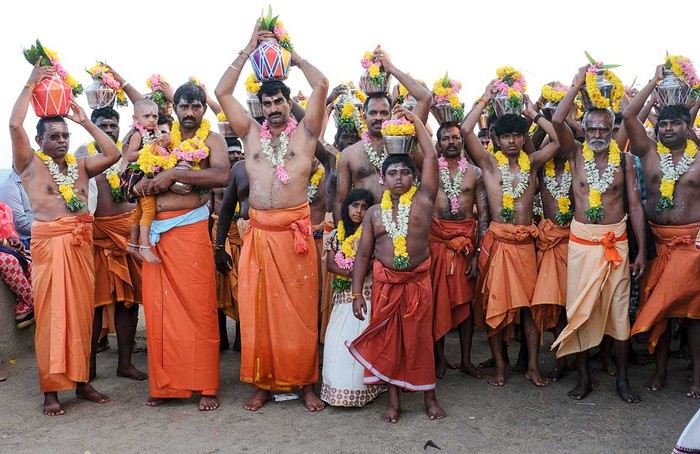 A Kanyakumari
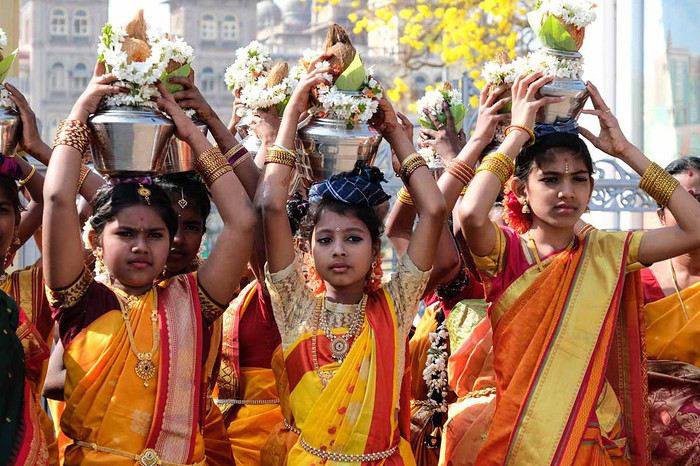 A Mysore
Quelqu'un peut-il me renseigner sur ce que ce peut être... Merci Anne
Fin janvier dernier, à Kanyakumari, nous avons assisté à une cérémonie que nous n'avons pas pu définir. Quelques jours plus tard, nous avons encore vu une procession y ressemblant, à Mysore, cette fois. Voilà ce que j'écris sur mon site où je parle de ce voyage :
Au moment où nous y arrivons, toute une file d’hommes et de femmes en sortent portant des pots de fleurs dégoulinants d’eau sur la tête. Au milieu des fleurs, une noix de coco et à leur cou, des colliers de fleurs. Un tambour et un hautbois les accompagne. Le prêtre, tout à coup, lance brutalement une noix de coco à terre (ça surprend!) Et la procession s’ébranle vers le temple. Serait-ce pour célébrer le dieu Murugan au moment de Thaipusan ? Je ne sais pas à quoi peut correspondre cette procession. Nous n’avons pas vu d’autres manifestations liés à cette fête… alors ???
A Kanyakumari A MysoreQuelqu'un peut-il me renseigner sur ce que ce peut être... Merci Anne
Bonjour Bonjour,
Quelqu'un a t'il participé aux célébrations de DIWALI ?? Dans l'une des villes suivantes : AGRA, VARANASI, HARIDWAR, RISHIKESH ??
Des infos particulières ??
Enfin, pour se déplacer en Inde (bus, train, taxi...), y a t'il des sites de réservation online??
D'avance, Merci !!!
Quelqu'un a t'il participé aux célébrations de DIWALI ?? Dans l'une des villes suivantes : AGRA, VARANASI, HARIDWAR, RISHIKESH ??
Des infos particulières ??
Enfin, pour se déplacer en Inde (bus, train, taxi...), y a t'il des sites de réservation online??
D'avance, Merci !!!
Bonjour à tous
En pleine préparation d'un circuit classique de 15 nuits en novembre au Rajasthan (notre première incursion en Inde), on s'interroge sur l'intérêt de s'arrêter à cette foire.
J'ai fait une recherche sur le forum, les avis datent un peu et semblent partagés, mais je compte sur votre retour éclairé 🙂 pour avancer.
Merci d'avance Gérard
En pleine préparation d'un circuit classique de 15 nuits en novembre au Rajasthan (notre première incursion en Inde), on s'interroge sur l'intérêt de s'arrêter à cette foire.
J'ai fait une recherche sur le forum, les avis datent un peu et semblent partagés, mais je compte sur votre retour éclairé 🙂 pour avancer.
Merci d'avance Gérard
Bonjour,
Ça y est c'est décidé, nous partons en Avril/Mai dans la région de Pondicherry, et plus exactement pour assister à ce grand rassemblement annuel des Hijras à Koovogan.
Nous sommes très conscients que le climat à cette époque ne nous sera pas très favorable car sans doute très chaud.
En ce moment je rassemble le maximum d'information sur la région mais surtout sur l'évènement en question. Par l'intermédiaire de VF j'ai déjà reçu les coordonnées d'un guide mais il se trouve qu'il ne répond pas à mes messages. Je suis donc à la recherche de personnes (pas spécialement guide de profession mais par exemple, un étudiant de l'Alliance française) parlant français ou anglais pour nous permettre d'échanger facilement avec la communauté des Hijras.
Par ailleurs, si l'un d'entre vous peut m'indiquer des adresses d'hotel à Koovogan, je suis preneuse.
Et je serais d'autant plus ravie si un membre VF a déjà vécu cette expérience à Koovogan.
Merci
Cordialement
NAMASTE NEPAL! PRACTICAL INFO AND EXPERIENCE FEEDBACK
Stay from March 25 to April 16, 2025
· Flight tickets Air India (via Delhi) (via Skyscanner) = 1130 € per person · Planned budget (and respected without too many restrictions and while buying a few small gifts) = 2000 € for the stay for two. Buses, taxis, and entrance fees to various sites represent a budget to consider. Meals are cheap. Drinks like beer/Coke, however, are not cheap and cost the equivalent of a meal. · Exchange rate of the rupee during our stay = 0.0064 € (the exchange rate is almost identical everywhere, including at the airport). · At the airport, purchase of two SIM cards (phone) = 1000 NPR x 2 for 28 days. · Kathmandu: we had booked the hotel upon arrival: Kathmandu Boutique Hotel (+977 015 357 446 – email: booking@kathmanduboutiquehotel.com), very well located in a quiet alley off the street, south of Thamel, a 10-minute walk from Durbar Square. A hotel like Nepal knows how to do, where tall people will have to duck. Night + breakfast = 18 € for two. Very warm welcome, great location, excellent value for money. · Bhaktapur: we had also booked a hotel for the end of our stay because the chance of the year 2025 made the Nepali New Year and Bisket Jatra particularly festive in Bhaktapur: Manju Baha Hotel School (+977 976 7234014 – email: manjubahahotel@gmail.com) located in an old monastery. "A social enterprise transforming an old monastery into a charming hotel, offering professional hospitality training to underprivileged Nepali youth." Night + breakfast = 32 € for two. Beautifully decorated room. Very warm welcome. Don’t miss the Changunarayan site (near Bhaktapur), it’s amazing. And if you’re lucky enough to be in Bhaktapur in mid-April for 3 days, there’s the Bisket Jatra festivities (Newari festival), joyful, noisy, fun, and wild… · Pokhara (hotel recommended by the Kathmandu hotel): Hotel Green Tara, Lakeside, 10th street, set back, quiet (Tel. +977 61 462698 – email: greentara_67@hotmail.com) · Trek permit (Lower Mustang, no need for an agency or guide, permits checked at Ghasa and Jomsom) = 2000 NPR per person (2 ID photos) · Bus Kathmandu/Pokhara and return = 2000 NPR per person · Bus Pokhara/Jomsom, 2 one-way tickets = 2800 NPR. · Taxi: negotiation with a driver we recommend, Vicky (+977 984 075 599). You explain what you want, negotiate the price, and he waits for you during the visit. Very charming, we used him several times. For example: departure from our hotel at 10 AM -> Boudhanath/Pashupatinath/Patan return at 5 PM to the hotel = 6500 NPR – Swayambhunath (round trip) = 1200 NPR · Site prices: https://ntb.gov.np/plan-your-trip/before-you-come/heritage-site-entry-fees o Visitor Pass for Kathmandu Durbar Square (for the duration of the stay, show your visa) = 1000 NPR per person (1 ID photo) o Bhaktapur Durbar Square (old town) = 1800 NPR per person o Patan = 1000 NPR per person o Swayambhu Stupa = 200 NPR per person o Boudha Stupa = 200 NPR per person o Pashupatinath Temple = 1000 NPR per person (interesting to take a guide) o Changunarayan Temple (6 km north of Bhaktapur) = 400 NPR per person o Mountain Museum in Pokhara = 750 NPR per person · E-cigarettes: e-cigarettes are banned in India and confiscated whether they’re in carry-on or checked luggage. On the way there, we had kept them in our carry-on, they were confiscated in Delhi. On the way back, learning from our previous experience, we put them in our checked luggage. Someone came to get us to take them out of our bags and confiscate them… You can find e-cigarettes and products in Kathmandu.
* * *
I’m 74 years old. I went to Nepal in 1982, 1983, and the last time in 1986. I wanted to introduce this beautiful and endearing country to my husband, and it was… now or never. So we decided it was now.
I knew the trek starting from Pokhara: Naudanda/Birethanti/Ghorepani/Tatopani/Kalopani. There was no way I was going to do that trek, especially the 1000-meter staircase to reach Ghorepani… You have to stay humble with age.
Back then, the road didn’t exist. I didn’t consider, with the construction of this road (NH48) along the western bank of the Kali Gandaki, doing a trek along a windy and dusty road. Was there an alternative hiking trail on the eastern bank? No one answered my question on VoyageForum, so I did my research online. And I found this site: "Andrées de Ruiter and Prem Rai - Trekking the Annapurna Circuit, including the new NATT trails that avoid the road - A guide to one of the most beautiful trekking regions in Nepal and the world (2011) - NATT = New Annapurna Trekking Trail".
Phew! A solution was emerging. This circuit from 2011 wasn’t fully marked. The idea was to go from Jomsom to Tatopani, so we needed to make sure the path was well-marked all the way, which we did, and the path exists, marked in red and white!
So, with the walking times information, we built our 8-day circuit:
· Jomsom/Thinigaon · Thinigaon/Chimang · Chimang/Saura · Saura/Kokhetanti · Rest day or, if in good shape: loop to Sekong Lake · Kokhetanti/Jhipra Deurali · Jhipra Deurali/Kopchepani · Kopchepani/Tatopani
It’s a senior trek, after all. So the walking times noted on the sites indicated 3 hours or even 4 hours for the two longest stages. That pace suited us fine.
On March 29, we left Kathmandu (1400m), after visiting the must-see sites, by bus to Pokhara: 200 km and 8.5 hours on a chaotic road under construction. I had a memory of Pokhara where it was the first city where you could see the Himalayan range, especially Machhapuchhare. But the pollution is such, the dust raised by traffic and construction, that no horizon is visible except the first hills around Pokhara.
We stayed 24 hours in Pokhara (820m), and on March 31, we left our luggage at the hotel and set off with our lightest backpacks: change of clothes, toiletries, first aid kit, anti-chafing cream, water bottle, sleeping bag liner, and light shoes for the stages.
We took the bus to Jomsom: 160 km/7.5 hours including stops for bathroom breaks, tea, and lunch. The road is nothing but a chaos of potholes, landslides, construction, dust, rebuilding, and mudslides. In Ghasa, the bus stops, and we’re told we’re at a checkpoint and that the two foreigners in the bus, my husband and I, need to have our permits checked, which takes a few minutes. The driving is rock-and-roll, surprising, and courteous. The drivers have their codes, and on these improbable roads, they’re virtuosos.
We could have chosen the plane, but several reasons dissuaded us: if there’s too much wind, the planes don’t take off; personally, I wasn’t reassured about landing in Jomsom, and this transport has a cost.
We arrived around 2 PM in Jomsom (2720m), and despite the early wake-up, the nearly 8 hours on the bus, and the altitude, we decided to head straight to Thinigaon (2840m). At the Jomsom checkpoint, they told us it was a 30-minute walk. Great! Except we took an hour and a half on an uphill road, bent over to fight a strong wind. But the Himalayan range is there! The Dhaulagiri, the Nilgiri, the Annapurnas as a reward.
In Thinigaon, we found a room at the "Nilgiri View Hotel" run by a didi (big sister in Nepali). From the lodge’s roof, she proudly showed us the different peaks surrounding the village and told us, worried, that it hadn’t snowed here for 3 years. She said there are very few tourists, that the season is rather in September/October/November. It seems there’s not a soul in this village, yet mules pass through the narrow street paved with large flat stones, their bells ringing. We dine at 6 PM and go to bed… Room = 1200 NPR and dinner, breakfast, and drinks = 2560 NPR.
On April 1, we set off at 9 AM, not for Chimang as planned but for Marpha! The didi from the Thinigaon lodge had said it was a 3-hour walk. The first part of this stage is attractive, the mountains are magnificent and imposing, the landscape is superb, there’s no one around, a feeling of being "alone in the world." We follow Dhumbra Tal, this small green lake. The path is a rocky track that climbs steeply. Then, around a hill, we start the big descent that joins the Kali Gandaki. We face the wind head-on, and the violent gusts take our breath away, throw us off balance, and envelop us in dust. We see the road on the other side of the Kali Gandaki. We arrive in the village of Chhairo at 2 PM, completely exhausted and with blistered feet, after 5 hours of walking instead of the planned 3.5 hours.
We’re welcomed by the village nurse, who tells us there’s a lodge in the village. Chhairo is a Tibetan village, a 20-minute walk from Marpha (according to the locals, multiply by 2 or even 3 for us…). We’re going to revise our trek plan and, first of all, spend the night in Chhairo.
The lodge is quite pleasant, and Karma, the hostess, is very friendly. She asks about our plans and suggests we stay in Chhairo the next day, from where we can visit Marpha and also Chimang, a 1-hour walk away, in light mode, meaning without backpacks. She invites us to participate in a village ceremony the next evening.
We immediately accept the proposal, as our feet need rest and the welcome is so warm… Dinner and bed!
We reworked our trek plan, which was too ambitious for our untrained bodies and, let’s face it… no longer in our first youth. In the initial plan, we thought there wouldn’t be too much elevation gain following the Kali Gandaki, but checking the map, we realize there might be significant elevation changes between Sauru and Sirkung. So we plan:
· Tomorrow: visit Marpha (2670m) and Chimang (2744m) · April 3: bus from Chhairo (2700m) to Kalopani (2530m) and continue on foot to Ghasa (2010m) · April 4: Ghasa/Pairataplo (1940m) · April 5: Pairatapla/Gadpar (1580m) · April 6: Gadpar/Narchyang (1510m) · April 7: Narchyang/Tatopani (1190m) · April 8: return to Pokhara.
Normally, it’s all downhill…
April 2, a rest day then… We set off in the morning to explore Marpha. We have to take a temporary bridge because the suspension bridge is closed due to road construction. We join the road and arrive in Marpha, a village famous for its apple orchards, brandy, cider, and apple juice production. This village is magnificent with its stone houses and monastery clinging to the hillside. The road construction spared it. There are people, but very few Western tourists.
We have lunch in Marpha and go back through Chhairo to take the path to Chimang. We cross a fragrant pine forest and find the rocky path; the landscape is splendid. We walk quietly, passing peaceful buffaloes and cows, and arrive at the foot of a stone staircase… 275 steps (which we counted on the way back) leading us to the village of Chimang. Chimang is an isolated Newari village that seems a bit desolate. Despite the slopes, there are crops on every little bit of land. Thankfully, we changed our initial program because there’s no lodge in this village, contrary to what we saw on a map… We wander through the village, which seems very deserted, have coffee in a house from another world, and then head back to Chhairo.
A rest day? = 5 hours of walking!!
Dinner and village ceremony. From what we understand, this ceremony is in honor of the Dalai Lama. Men, women, and children in traditional costumes gather twice a month; they dance, make, and offer small sweet cakes with Tibetan tea (made from tea, yak butter—often rancid—water, and salt). Surprising for first-timers…
Around 10 PM, we leave the ceremony; tomorrow morning, we need to be on the roadside by 7 AM to catch the bus to Kalopani…
This village of Chhairo is very pleasant and welcoming, no tourists, just two motorcyclists who arrived in the evening, one of whom participated in the ceremony and discreetly poured his Tibetan tea outside.
Lodge: "Norsang Tibetan Guesthouse and Restaurant". Total bill for 2 nights, 2 dinners, 2 breakfasts, and drinks = 8000 NPR.
April 3: bus from Chhairo to Kalopani, about 1.5 hours for the 20 km (200 NPR per person). We descend on the right bank of the Kali Gandaki. We find the red and white markings to resume the trek toward Ghasa. We’re in a fragrant pine forest, the Dhaulagiri on one side and the Annapurnas on the other, magnificent, and the path is pleasant and easy. We get a bit lost in this forest, always looking for the markings. Near Lete, two trekkers pass us, and we meet them again a little further on with two very young children, to whom we give the 2 hard-boiled eggs I didn’t eat this morning. They accepted them without hesitation.
We arrive in a village and ask for directions to Ghasa. The young girls point the way. But we come across a forest being logged, trees cut in all directions. We turn back and ask for confirmation. They confirm… But the two young girls catch up with us and clear the way. We have to step over, go around, and cross the felled trees, with no indication at all. Through this pick-up sticks of felled trees, the girls lead us to the top of a stone staircase, indicating that was the path. It’s the only place where we saw rhododendrons in bloom.
We descend the staircase. At the bottom, to the left, there’s a bridge to go toward Choyo, and to the right, a path to Ghasa. We take the right path and join the road. We should normally find the red and white markings, but we don’t… So we continue on the western bank road of the Kali Gandaki.
A little before the village of Misi, we see fumaroles on the opposite bank that seem to come from the ground. We don’t understand. We stopped to eat in the village of Misi (noodle soup = 600 NPR), but it’s hard to communicate with the elderly people running the guesthouse.
We continued on the road, not finding the marked path parallel to the road. Landslides, both on the left and right banks, seem to have taken over the marked routes. It’s a place where the Kali Gandaki gorge narrows, and on the opposite bank, the mountain smokes more and more, and we now hear the crackling of fire. Across from us, the mountain is burning… Our initial plan had us passing on that burning bank right now…
We arrive in Ghasa at 3:30 PM, a 6.5-hour stage but with a 1-hour stop at noon. We’re at the "Florida Guesthouse and Restaurant." From our room, we see the mountain smoking on the other side of the river, and at night, we see the flames. In this village, posters show Himalayan eagles and vultures that seem to be protected species. Indeed, we saw (and heard) 3 eagles circling today.
April 4 – Today, heading to Pairothapla or Kopchepani depending on our feet, accommodation options, and simply our desires.
No more smoke on the mountain this morning. It’s chilly, 7:45 AM, the sky is clear, just a smell of smoke outside.
Price of the lodge = 1000 NPR for the night + 3580 NPR for meals.
We cross Ghasa, which stretches over more than a kilometer. We have a drink at the last guesthouse in the village, and the didi, when she learns our destination, tells us to be careful because the villages we’re going to aren’t safe. Should we distribute our rupees in different pockets? Nah, we kept going.
At the exit of Ghasa, we find the red and white markings and take the suspension bridge to cross the boiling waters of the Kali Gandaki. The passage is impressive because the river is tumultuous. Lots of climbs and even more descents. We’re back on the eastern bank. It’s hot! On the narrow path, we meet a group of buffaloes. Who has the right of way? We decide to stick as close as possible to the rock wall and move forward calmly. The buffaloes look at us, chewing placidly, with no intention of jumping on us. Phew!
After a 5-hour stage (including stops), we arrive in Pairothapla, with hot feet and firm thighs, and decide we won’t go any further. It’s a good thing because there’s a lodge, the most basic so far, but with a great welcome. We have a meal and a short nap. The buffaloes we met on the way belong to this house. They come to drink at the fountain by the path.
Our host, very pleasant, doesn’t know what to do to please us and is very attentive. He wants to chat. He has two children, a 4-year-old girl and a 7-year-old boy. Where do they go to school? Do they go? He tells us that the fires in the mountain are caused by people, but for what reason? We won’t find out, but it’s illegal. From here, we can still see smoke rising in the distance. The wife is a bit less friendly. Corn kernels dry on a woven straw mat on the ground, and the mom sorts them.
From where we are, we overlook the valley and see the road under construction winding along the mountainside on the other bank.
Dinner on the terrace of the house overlooking the path, windbreaker and fleece on: dal bhat chicken for me and chicken curry for my husband: "organic" products, at least local production. There are small vegetable gardens everywhere with all sorts of vegetables.
April 5 – While we’re having breakfast on the terrace of our lodge, 5 porters, straps on their foreheads, heavily loaded, pass by on the path. A few minutes later, a group of 9 people appears. It must be said that since the beginning of our journey, we’ve met very few hikers. Two backpackers in Chhairo, the two hikers near Lete, two female hikers passed us before Pairothapla, a solo female hiker passed us…
The lodge in Pairothapla is called "Bimala Lodge & Thakali Kitchen" – Price for night + 4 meals + 2 breakfasts = 3000 NPR.
The descent toward the Kali Gandaki involves climbs whose steps we didn’t count. Clearly, the landslides on the mountain cause changes to the official ACAP trek marked in red and white, and the marking updates can’t keep up with the pace of these landslides. It’s almost always by chance that we find the markings. Fortunately, we can follow the power line that guides us somewhat.
Drink stop in Kopchepani, the legs are fine, but the feet don’t like being tightly enclosed. A group of trekkers with porters passes on the path. We met buffaloes that we kindly let pass; the path was wide enough, but it was a staircase going up, and we didn’t want to take any risks.
Across, a view of the magnificent Rupse Waterfall on the other bank of the Kali Gandaki, at the bottom, lots of vehicles and people.
Arrival in Gadpar after crossing a rather unwelcoming small village and cultivated gardens between dry stone walls, each better built than the last.
First lodge spotted, first lodge adopted to answer the call of our feet, and a very warm welcome from the owner. Since we hadn’t eaten at noon, we had Tibetan bread/jam. 6-hour stage including 1 hour of stops. Night + dinner + breakfast + drinks = 5060 NPR
April 6 – Today, heading to Narchyang.
For several days, we’ve seen banana trees with their bunches of fruit and even a prickly pear with large fruits ripening.
This stage is quite peaceful and pleasant. We take a suspension bridge to cross a tributary of the Kali Gandaki. While we’re resting for a moment before crossing the bridge, a couple of porters, a man and a woman, arrive and start across the bridge with their wood load in a basket held by a strap on their forehead, making them bend. We set off too… lighter than them.
On the other side of the bridge… a stone staircase, and it climbs steeply. The porter couple didn’t take this staircase; they went right on the path.
At the top of the staircase, we arrive in Narchyang after a 4-hour stage. A magnificent waterfall overlooks the village. We get lost in this fairly large village looking for a lodge. After wandering around for a while, we ask for directions, and an 84-year-old man takes us through the whole village and accompanies us to a very nice lodge run by a woman.
We chat with our hostess, who asks where we’re from and where we’re going. We explain that we want to reach Tatopani the next day and then return to Pokhara. She tells us there are 4x4s going directly to Pokhara and that it would probably be easier than taking a bus that might be full in Tatopani. After a quick consultation, we decide to return to Pokhara the next day by 4x4. She finds us a 4x4 with 2 seats left, departure at 8 AM – 5 hours on the road and 1500 NPR per person. A charming didi who does everything to be pleasant and helpful.
Narchyang community lodge = night + snacks + dinner + breakfast = 3000 NPR.
There you go, our trek ends tomorrow. Many necessary changes and adaptations to our initial trek, but no regrets, it was superb and a great experience that, for my part, I won’t be able to repeat. Always this encounter with the endearing, welcoming, curious, and very kind Nepali people. It was now or never, and we did it!
* * *
In conclusion, 3 full weeks in Nepal is a duration that allows visiting Kathmandu, Patan, and Bhaktapur, enjoying the various sites, and soaking in the atmosphere and urban Nepali life.
The trek, even revised and corrected, allowed us to get close to the impressive Annapurna and Dhaulagiri peaks. One or two acclimatization days might be necessary to get the body in tune with this magical and extraordinary land.
Stay from March 25 to April 16, 2025
· Flight tickets Air India (via Delhi) (via Skyscanner) = 1130 € per person · Planned budget (and respected without too many restrictions and while buying a few small gifts) = 2000 € for the stay for two. Buses, taxis, and entrance fees to various sites represent a budget to consider. Meals are cheap. Drinks like beer/Coke, however, are not cheap and cost the equivalent of a meal. · Exchange rate of the rupee during our stay = 0.0064 € (the exchange rate is almost identical everywhere, including at the airport). · At the airport, purchase of two SIM cards (phone) = 1000 NPR x 2 for 28 days. · Kathmandu: we had booked the hotel upon arrival: Kathmandu Boutique Hotel (+977 015 357 446 – email: booking@kathmanduboutiquehotel.com), very well located in a quiet alley off the street, south of Thamel, a 10-minute walk from Durbar Square. A hotel like Nepal knows how to do, where tall people will have to duck. Night + breakfast = 18 € for two. Very warm welcome, great location, excellent value for money. · Bhaktapur: we had also booked a hotel for the end of our stay because the chance of the year 2025 made the Nepali New Year and Bisket Jatra particularly festive in Bhaktapur: Manju Baha Hotel School (+977 976 7234014 – email: manjubahahotel@gmail.com) located in an old monastery. "A social enterprise transforming an old monastery into a charming hotel, offering professional hospitality training to underprivileged Nepali youth." Night + breakfast = 32 € for two. Beautifully decorated room. Very warm welcome. Don’t miss the Changunarayan site (near Bhaktapur), it’s amazing. And if you’re lucky enough to be in Bhaktapur in mid-April for 3 days, there’s the Bisket Jatra festivities (Newari festival), joyful, noisy, fun, and wild… · Pokhara (hotel recommended by the Kathmandu hotel): Hotel Green Tara, Lakeside, 10th street, set back, quiet (Tel. +977 61 462698 – email: greentara_67@hotmail.com) · Trek permit (Lower Mustang, no need for an agency or guide, permits checked at Ghasa and Jomsom) = 2000 NPR per person (2 ID photos) · Bus Kathmandu/Pokhara and return = 2000 NPR per person · Bus Pokhara/Jomsom, 2 one-way tickets = 2800 NPR. · Taxi: negotiation with a driver we recommend, Vicky (+977 984 075 599). You explain what you want, negotiate the price, and he waits for you during the visit. Very charming, we used him several times. For example: departure from our hotel at 10 AM -> Boudhanath/Pashupatinath/Patan return at 5 PM to the hotel = 6500 NPR – Swayambhunath (round trip) = 1200 NPR · Site prices: https://ntb.gov.np/plan-your-trip/before-you-come/heritage-site-entry-fees o Visitor Pass for Kathmandu Durbar Square (for the duration of the stay, show your visa) = 1000 NPR per person (1 ID photo) o Bhaktapur Durbar Square (old town) = 1800 NPR per person o Patan = 1000 NPR per person o Swayambhu Stupa = 200 NPR per person o Boudha Stupa = 200 NPR per person o Pashupatinath Temple = 1000 NPR per person (interesting to take a guide) o Changunarayan Temple (6 km north of Bhaktapur) = 400 NPR per person o Mountain Museum in Pokhara = 750 NPR per person · E-cigarettes: e-cigarettes are banned in India and confiscated whether they’re in carry-on or checked luggage. On the way there, we had kept them in our carry-on, they were confiscated in Delhi. On the way back, learning from our previous experience, we put them in our checked luggage. Someone came to get us to take them out of our bags and confiscate them… You can find e-cigarettes and products in Kathmandu.
* * *
I’m 74 years old. I went to Nepal in 1982, 1983, and the last time in 1986. I wanted to introduce this beautiful and endearing country to my husband, and it was… now or never. So we decided it was now.
I knew the trek starting from Pokhara: Naudanda/Birethanti/Ghorepani/Tatopani/Kalopani. There was no way I was going to do that trek, especially the 1000-meter staircase to reach Ghorepani… You have to stay humble with age.
Back then, the road didn’t exist. I didn’t consider, with the construction of this road (NH48) along the western bank of the Kali Gandaki, doing a trek along a windy and dusty road. Was there an alternative hiking trail on the eastern bank? No one answered my question on VoyageForum, so I did my research online. And I found this site: "Andrées de Ruiter and Prem Rai - Trekking the Annapurna Circuit, including the new NATT trails that avoid the road - A guide to one of the most beautiful trekking regions in Nepal and the world (2011) - NATT = New Annapurna Trekking Trail".
Phew! A solution was emerging. This circuit from 2011 wasn’t fully marked. The idea was to go from Jomsom to Tatopani, so we needed to make sure the path was well-marked all the way, which we did, and the path exists, marked in red and white!
So, with the walking times information, we built our 8-day circuit:
· Jomsom/Thinigaon · Thinigaon/Chimang · Chimang/Saura · Saura/Kokhetanti · Rest day or, if in good shape: loop to Sekong Lake · Kokhetanti/Jhipra Deurali · Jhipra Deurali/Kopchepani · Kopchepani/Tatopani
It’s a senior trek, after all. So the walking times noted on the sites indicated 3 hours or even 4 hours for the two longest stages. That pace suited us fine.
On March 29, we left Kathmandu (1400m), after visiting the must-see sites, by bus to Pokhara: 200 km and 8.5 hours on a chaotic road under construction. I had a memory of Pokhara where it was the first city where you could see the Himalayan range, especially Machhapuchhare. But the pollution is such, the dust raised by traffic and construction, that no horizon is visible except the first hills around Pokhara.
We stayed 24 hours in Pokhara (820m), and on March 31, we left our luggage at the hotel and set off with our lightest backpacks: change of clothes, toiletries, first aid kit, anti-chafing cream, water bottle, sleeping bag liner, and light shoes for the stages.
We took the bus to Jomsom: 160 km/7.5 hours including stops for bathroom breaks, tea, and lunch. The road is nothing but a chaos of potholes, landslides, construction, dust, rebuilding, and mudslides. In Ghasa, the bus stops, and we’re told we’re at a checkpoint and that the two foreigners in the bus, my husband and I, need to have our permits checked, which takes a few minutes. The driving is rock-and-roll, surprising, and courteous. The drivers have their codes, and on these improbable roads, they’re virtuosos.
We could have chosen the plane, but several reasons dissuaded us: if there’s too much wind, the planes don’t take off; personally, I wasn’t reassured about landing in Jomsom, and this transport has a cost.
We arrived around 2 PM in Jomsom (2720m), and despite the early wake-up, the nearly 8 hours on the bus, and the altitude, we decided to head straight to Thinigaon (2840m). At the Jomsom checkpoint, they told us it was a 30-minute walk. Great! Except we took an hour and a half on an uphill road, bent over to fight a strong wind. But the Himalayan range is there! The Dhaulagiri, the Nilgiri, the Annapurnas as a reward.
In Thinigaon, we found a room at the "Nilgiri View Hotel" run by a didi (big sister in Nepali). From the lodge’s roof, she proudly showed us the different peaks surrounding the village and told us, worried, that it hadn’t snowed here for 3 years. She said there are very few tourists, that the season is rather in September/October/November. It seems there’s not a soul in this village, yet mules pass through the narrow street paved with large flat stones, their bells ringing. We dine at 6 PM and go to bed… Room = 1200 NPR and dinner, breakfast, and drinks = 2560 NPR.
On April 1, we set off at 9 AM, not for Chimang as planned but for Marpha! The didi from the Thinigaon lodge had said it was a 3-hour walk. The first part of this stage is attractive, the mountains are magnificent and imposing, the landscape is superb, there’s no one around, a feeling of being "alone in the world." We follow Dhumbra Tal, this small green lake. The path is a rocky track that climbs steeply. Then, around a hill, we start the big descent that joins the Kali Gandaki. We face the wind head-on, and the violent gusts take our breath away, throw us off balance, and envelop us in dust. We see the road on the other side of the Kali Gandaki. We arrive in the village of Chhairo at 2 PM, completely exhausted and with blistered feet, after 5 hours of walking instead of the planned 3.5 hours.
We’re welcomed by the village nurse, who tells us there’s a lodge in the village. Chhairo is a Tibetan village, a 20-minute walk from Marpha (according to the locals, multiply by 2 or even 3 for us…). We’re going to revise our trek plan and, first of all, spend the night in Chhairo.
The lodge is quite pleasant, and Karma, the hostess, is very friendly. She asks about our plans and suggests we stay in Chhairo the next day, from where we can visit Marpha and also Chimang, a 1-hour walk away, in light mode, meaning without backpacks. She invites us to participate in a village ceremony the next evening.
We immediately accept the proposal, as our feet need rest and the welcome is so warm… Dinner and bed!
We reworked our trek plan, which was too ambitious for our untrained bodies and, let’s face it… no longer in our first youth. In the initial plan, we thought there wouldn’t be too much elevation gain following the Kali Gandaki, but checking the map, we realize there might be significant elevation changes between Sauru and Sirkung. So we plan:
· Tomorrow: visit Marpha (2670m) and Chimang (2744m) · April 3: bus from Chhairo (2700m) to Kalopani (2530m) and continue on foot to Ghasa (2010m) · April 4: Ghasa/Pairataplo (1940m) · April 5: Pairatapla/Gadpar (1580m) · April 6: Gadpar/Narchyang (1510m) · April 7: Narchyang/Tatopani (1190m) · April 8: return to Pokhara.
Normally, it’s all downhill…
April 2, a rest day then… We set off in the morning to explore Marpha. We have to take a temporary bridge because the suspension bridge is closed due to road construction. We join the road and arrive in Marpha, a village famous for its apple orchards, brandy, cider, and apple juice production. This village is magnificent with its stone houses and monastery clinging to the hillside. The road construction spared it. There are people, but very few Western tourists.
We have lunch in Marpha and go back through Chhairo to take the path to Chimang. We cross a fragrant pine forest and find the rocky path; the landscape is splendid. We walk quietly, passing peaceful buffaloes and cows, and arrive at the foot of a stone staircase… 275 steps (which we counted on the way back) leading us to the village of Chimang. Chimang is an isolated Newari village that seems a bit desolate. Despite the slopes, there are crops on every little bit of land. Thankfully, we changed our initial program because there’s no lodge in this village, contrary to what we saw on a map… We wander through the village, which seems very deserted, have coffee in a house from another world, and then head back to Chhairo.
A rest day? = 5 hours of walking!!
Dinner and village ceremony. From what we understand, this ceremony is in honor of the Dalai Lama. Men, women, and children in traditional costumes gather twice a month; they dance, make, and offer small sweet cakes with Tibetan tea (made from tea, yak butter—often rancid—water, and salt). Surprising for first-timers…
Around 10 PM, we leave the ceremony; tomorrow morning, we need to be on the roadside by 7 AM to catch the bus to Kalopani…
This village of Chhairo is very pleasant and welcoming, no tourists, just two motorcyclists who arrived in the evening, one of whom participated in the ceremony and discreetly poured his Tibetan tea outside.
Lodge: "Norsang Tibetan Guesthouse and Restaurant". Total bill for 2 nights, 2 dinners, 2 breakfasts, and drinks = 8000 NPR.
April 3: bus from Chhairo to Kalopani, about 1.5 hours for the 20 km (200 NPR per person). We descend on the right bank of the Kali Gandaki. We find the red and white markings to resume the trek toward Ghasa. We’re in a fragrant pine forest, the Dhaulagiri on one side and the Annapurnas on the other, magnificent, and the path is pleasant and easy. We get a bit lost in this forest, always looking for the markings. Near Lete, two trekkers pass us, and we meet them again a little further on with two very young children, to whom we give the 2 hard-boiled eggs I didn’t eat this morning. They accepted them without hesitation.
We arrive in a village and ask for directions to Ghasa. The young girls point the way. But we come across a forest being logged, trees cut in all directions. We turn back and ask for confirmation. They confirm… But the two young girls catch up with us and clear the way. We have to step over, go around, and cross the felled trees, with no indication at all. Through this pick-up sticks of felled trees, the girls lead us to the top of a stone staircase, indicating that was the path. It’s the only place where we saw rhododendrons in bloom.
We descend the staircase. At the bottom, to the left, there’s a bridge to go toward Choyo, and to the right, a path to Ghasa. We take the right path and join the road. We should normally find the red and white markings, but we don’t… So we continue on the western bank road of the Kali Gandaki.
A little before the village of Misi, we see fumaroles on the opposite bank that seem to come from the ground. We don’t understand. We stopped to eat in the village of Misi (noodle soup = 600 NPR), but it’s hard to communicate with the elderly people running the guesthouse.
We continued on the road, not finding the marked path parallel to the road. Landslides, both on the left and right banks, seem to have taken over the marked routes. It’s a place where the Kali Gandaki gorge narrows, and on the opposite bank, the mountain smokes more and more, and we now hear the crackling of fire. Across from us, the mountain is burning… Our initial plan had us passing on that burning bank right now…
We arrive in Ghasa at 3:30 PM, a 6.5-hour stage but with a 1-hour stop at noon. We’re at the "Florida Guesthouse and Restaurant." From our room, we see the mountain smoking on the other side of the river, and at night, we see the flames. In this village, posters show Himalayan eagles and vultures that seem to be protected species. Indeed, we saw (and heard) 3 eagles circling today.
April 4 – Today, heading to Pairothapla or Kopchepani depending on our feet, accommodation options, and simply our desires.
No more smoke on the mountain this morning. It’s chilly, 7:45 AM, the sky is clear, just a smell of smoke outside.
Price of the lodge = 1000 NPR for the night + 3580 NPR for meals.
We cross Ghasa, which stretches over more than a kilometer. We have a drink at the last guesthouse in the village, and the didi, when she learns our destination, tells us to be careful because the villages we’re going to aren’t safe. Should we distribute our rupees in different pockets? Nah, we kept going.
At the exit of Ghasa, we find the red and white markings and take the suspension bridge to cross the boiling waters of the Kali Gandaki. The passage is impressive because the river is tumultuous. Lots of climbs and even more descents. We’re back on the eastern bank. It’s hot! On the narrow path, we meet a group of buffaloes. Who has the right of way? We decide to stick as close as possible to the rock wall and move forward calmly. The buffaloes look at us, chewing placidly, with no intention of jumping on us. Phew!
After a 5-hour stage (including stops), we arrive in Pairothapla, with hot feet and firm thighs, and decide we won’t go any further. It’s a good thing because there’s a lodge, the most basic so far, but with a great welcome. We have a meal and a short nap. The buffaloes we met on the way belong to this house. They come to drink at the fountain by the path.
Our host, very pleasant, doesn’t know what to do to please us and is very attentive. He wants to chat. He has two children, a 4-year-old girl and a 7-year-old boy. Where do they go to school? Do they go? He tells us that the fires in the mountain are caused by people, but for what reason? We won’t find out, but it’s illegal. From here, we can still see smoke rising in the distance. The wife is a bit less friendly. Corn kernels dry on a woven straw mat on the ground, and the mom sorts them.
From where we are, we overlook the valley and see the road under construction winding along the mountainside on the other bank.
Dinner on the terrace of the house overlooking the path, windbreaker and fleece on: dal bhat chicken for me and chicken curry for my husband: "organic" products, at least local production. There are small vegetable gardens everywhere with all sorts of vegetables.
April 5 – While we’re having breakfast on the terrace of our lodge, 5 porters, straps on their foreheads, heavily loaded, pass by on the path. A few minutes later, a group of 9 people appears. It must be said that since the beginning of our journey, we’ve met very few hikers. Two backpackers in Chhairo, the two hikers near Lete, two female hikers passed us before Pairothapla, a solo female hiker passed us…
The lodge in Pairothapla is called "Bimala Lodge & Thakali Kitchen" – Price for night + 4 meals + 2 breakfasts = 3000 NPR.
The descent toward the Kali Gandaki involves climbs whose steps we didn’t count. Clearly, the landslides on the mountain cause changes to the official ACAP trek marked in red and white, and the marking updates can’t keep up with the pace of these landslides. It’s almost always by chance that we find the markings. Fortunately, we can follow the power line that guides us somewhat.
Drink stop in Kopchepani, the legs are fine, but the feet don’t like being tightly enclosed. A group of trekkers with porters passes on the path. We met buffaloes that we kindly let pass; the path was wide enough, but it was a staircase going up, and we didn’t want to take any risks.
Across, a view of the magnificent Rupse Waterfall on the other bank of the Kali Gandaki, at the bottom, lots of vehicles and people.
Arrival in Gadpar after crossing a rather unwelcoming small village and cultivated gardens between dry stone walls, each better built than the last.
First lodge spotted, first lodge adopted to answer the call of our feet, and a very warm welcome from the owner. Since we hadn’t eaten at noon, we had Tibetan bread/jam. 6-hour stage including 1 hour of stops. Night + dinner + breakfast + drinks = 5060 NPR
April 6 – Today, heading to Narchyang.
For several days, we’ve seen banana trees with their bunches of fruit and even a prickly pear with large fruits ripening.
This stage is quite peaceful and pleasant. We take a suspension bridge to cross a tributary of the Kali Gandaki. While we’re resting for a moment before crossing the bridge, a couple of porters, a man and a woman, arrive and start across the bridge with their wood load in a basket held by a strap on their forehead, making them bend. We set off too… lighter than them.
On the other side of the bridge… a stone staircase, and it climbs steeply. The porter couple didn’t take this staircase; they went right on the path.
At the top of the staircase, we arrive in Narchyang after a 4-hour stage. A magnificent waterfall overlooks the village. We get lost in this fairly large village looking for a lodge. After wandering around for a while, we ask for directions, and an 84-year-old man takes us through the whole village and accompanies us to a very nice lodge run by a woman.
We chat with our hostess, who asks where we’re from and where we’re going. We explain that we want to reach Tatopani the next day and then return to Pokhara. She tells us there are 4x4s going directly to Pokhara and that it would probably be easier than taking a bus that might be full in Tatopani. After a quick consultation, we decide to return to Pokhara the next day by 4x4. She finds us a 4x4 with 2 seats left, departure at 8 AM – 5 hours on the road and 1500 NPR per person. A charming didi who does everything to be pleasant and helpful.
Narchyang community lodge = night + snacks + dinner + breakfast = 3000 NPR.
There you go, our trek ends tomorrow. Many necessary changes and adaptations to our initial trek, but no regrets, it was superb and a great experience that, for my part, I won’t be able to repeat. Always this encounter with the endearing, welcoming, curious, and very kind Nepali people. It was now or never, and we did it!
* * *
In conclusion, 3 full weeks in Nepal is a duration that allows visiting Kathmandu, Patan, and Bhaktapur, enjoying the various sites, and soaking in the atmosphere and urban Nepali life.
The trek, even revised and corrected, allowed us to get close to the impressive Annapurna and Dhaulagiri peaks. One or two acclimatization days might be necessary to get the body in tune with this magical and extraordinary land.
My partner and I are planning a 2-week trip to Goa from late September to early October. It’s sandwiched between a trip to Nepal (September) and our return home to Thailand. We can’t stay longer, but cutting it shorter wouldn’t be worth the effort or flight costs.
I’ve visited several regions of India in the past (between 2000 and 2020) and spent a total of about 4 months there. My only time in Goa was a few days in Palolem in 2007—I didn’t like it. I found the place almost sordid with all the crowds... not at all the India I love.
But I have an Indian friend with 2 or 3 apartments in a residence in North Goa who keeps telling me to visit. I’m tempted. But where should we go? I don’t want to rent from him because it’s expensive (high-end) and I don’t want to feel too dependent on him either.
After 2 days in Panaji (since it’s near GOI), I’ve booked 5 days in Mandrem, which I’ve heard great things about. This’ll let us explore the Arambol area. I’m hesitant to stay there longer—if we don’t like it or get bored after a few days, spending the full 2 weeks there isn’t ideal! I’m thinking of trying South Goa instead, somewhere between Benaulim and Agonda. The downside? All the rumors about the vibe in different spots—loud techno here, jet skis there, "paunchy English tourists" elsewhere, package tours everywhere... not to mention the expected influx of Russians and/or Israelis (I’ve seen this in other parts of India, Thailand, and Vietnam). Plus, accommodation options are way more limited in the south.
Basically, I’m leaning toward Agonda—relaxed but not too quiet or isolated. But there’s so little availability on sites like Booking and Agoda...
Any recent tips or advice from folks who’ve been to Goa lately? I’d really appreciate it, thanks in advance!
I’ve visited several regions of India in the past (between 2000 and 2020) and spent a total of about 4 months there. My only time in Goa was a few days in Palolem in 2007—I didn’t like it. I found the place almost sordid with all the crowds... not at all the India I love.
But I have an Indian friend with 2 or 3 apartments in a residence in North Goa who keeps telling me to visit. I’m tempted. But where should we go? I don’t want to rent from him because it’s expensive (high-end) and I don’t want to feel too dependent on him either.
After 2 days in Panaji (since it’s near GOI), I’ve booked 5 days in Mandrem, which I’ve heard great things about. This’ll let us explore the Arambol area. I’m hesitant to stay there longer—if we don’t like it or get bored after a few days, spending the full 2 weeks there isn’t ideal! I’m thinking of trying South Goa instead, somewhere between Benaulim and Agonda. The downside? All the rumors about the vibe in different spots—loud techno here, jet skis there, "paunchy English tourists" elsewhere, package tours everywhere... not to mention the expected influx of Russians and/or Israelis (I’ve seen this in other parts of India, Thailand, and Vietnam). Plus, accommodation options are way more limited in the south.
Basically, I’m leaning toward Agonda—relaxed but not too quiet or isolated. But there’s so little availability on sites like Booking and Agoda...
Any recent tips or advice from folks who’ve been to Goa lately? I’d really appreciate it, thanks in advance!
Bonjour à tous et toutes,
Pour vous distraire un peu en attendant de pouvoir retourner en Inde, je vous propose de profiter de quelques danses auxquelles nous avions eu la chance extraordinaire d'assister pendant notre séjour à Ooty, dans les Nilgiri Mountains, dans le sud de l'Inde (Karnataka).
J'en fais le récit ici : https://www.unendroitoualler.fr/ooty-via-metuppelayam/
Et les danses, c'est ici : https://youtu.be/58UuAzI63Zo
Bon visionnage Anne
Et les danses, c'est ici : https://youtu.be/58UuAzI63Zo
Bon visionnage Anne
Bonjour à tous,
J'envisage un circuit organisé de 13 jours avec ASIA au Rajasthan, appelé l'essentiel du Rajasthan.
Quelqu'un a t-il déjà fait ce circuit et quelles ont été vos impressions ?
D'autre part, adaptateur pour prises de courant ou pas ?
En tout état de cause, je souhaite de bonnes fêtes de fin d'année à tous.
En tout état de cause, je souhaite de bonnes fêtes de fin d'année à tous.
Lors d'un court séjour à Amritsar en Septembre dernier, je n'ai pu résister à l'envie d'aller voir la cérémonie de descente des drapeaux indiens et pakistanais communément appelée "Wagah border ceremony", Wagah étant le nom de la localité pakistanaise qui fait face à celle d'Attari côté indien.
Cette cérémonie martiale a lieu tous les jours en fin d'après-midi et elle est en soi un spectacle absolument unique et qu'il faut voir au moins une fois si vous êtes dans les parages d'Amritsar.
Lors de cette cérémonie toute militaire, les drapeaux des deux pays ennemis sont descendus simultanément selon un protocole particulier et bien huilé.
A cette occasion les militaires des forces de sécurité indiennes et pakistanaises se toisent du regard et adoptent des postures de défi visant à impressionner l'adversaire. Et que dire de leur pas martial qui rendrait ridicule le pas de l'oie d'un défilé de l'armée nord-coréenne !
Ce cérémonial déplace des foules considérables surtout côté indien et donne lieu à des manifestations patriotiques délirantes. Les gradins sont bondés comme dans un stade lors d'une finale de coupe du monde. Plus drôle : un militaire en treillis camouflage "chauffe la salle" encouragent les spectateurs à crier et agiter les drapeaux indiens.
Conseils pratiques : partir d'Amritsar vers 15h30 de manière à être dans les premiers à arriver. Vous doublerez sur la route en chemin des centaines et des centaines de rickshaws bondés dont les passagers brandissent petits et grands drapeaux.
Les étrangers bénéficient d'un traitement de faveur à l'arrivée et sont dirigés par un accès particulier vers les tribunes qui leur sont réservées (les mieux placées avec celles des VIP !)
Dans les gradins, vous serez placés par un militaire (hors de question de demander un autre emplacement...).
Quand la fin de la cérémonie se profile, n'hésitez pas à quitter la tribune en peu en avance pour éviter l'énorme foule qui va sortir peu après. Cela vous permettra de rejoindre votre taxi et quitter les lieux sans avoir à supporter l'immense bouchon qui se forme à la sortie.
Franchement, cette cérémonie vaut le déplacement. Il faut la voir comme un show à la sauce militaire.
Quelques clichés pour illustrer ce propos.
Je construis mon périple entre ces 2 destinations et me voilà bloquée. Help!
6 semaines pour faire ce voyage et après un petit break d’acclimatation vers Gokarna, je remonte lentement en suivant tous les bons conseils du forum de Badami à Indore en une trentaine de jours
De Indore l’idée était de redescendre sur Bombay en passant par Nasik mais entre ces deux villes c’est bien long et je n’y vois pas de points d’intérêt.
Arrivée à Indore ou Ujjain j’ai encore du temps une grosse semaine et je peux m’écarter du chemin. J’aimerais juste éviter de revenir sur mes pas.
Alors si vous avez des conseils à me donner Je vous en remercie d’avance.
Bonjour à tous !
Après des semaines que dis-je des mois à épucher les sujets sur différents forum j'ai besoin d'un petit coup de main.
J'ai 19ans et je pars dans 10jours en solo au Tamil Nadu et Kerala, n'ayant aucune experience en solo j'aimerais pouvoir prendre mon temps et ne pas rusher tout les jours en me préoccupant des transports sans arrêt.
Voici l'itinéraire que j'ai pensé :
19/10 : trichy
20/10 : trichy
21/10 : arrivée rameswaram tôt matin
22/10 : rameswaram
23/10 : départ de rameswaram pour madurai arrivée dans l’aprem
24/10 : madurai
25/10 : madurai
26/10 : munar
27/10 : munnar
28/10 : cochin
29/10 : cochin départ allepey dans la journée
30 : alleppey
31 : cochin
01/11 : avion retour 12h
Ma question est la suivante : j'ai l'impression que il y a une ville en trop, je me dis que en enlevant 1 ville je serais surement beaucoup plus relax et aurait du coup moins de stress, plus de temps pour m'imprégner des lieux visiter. Or j'ai vraiment envie de voir toutes ces destinations alors selon vous, laquelle est la moins obligatoire ? sachant que je veux absolument faire rameswaram.
Merci beaucoup à vous les routards expérimentés qui vont aider un jeune novice !
Après des semaines que dis-je des mois à épucher les sujets sur différents forum j'ai besoin d'un petit coup de main.
J'ai 19ans et je pars dans 10jours en solo au Tamil Nadu et Kerala, n'ayant aucune experience en solo j'aimerais pouvoir prendre mon temps et ne pas rusher tout les jours en me préoccupant des transports sans arrêt.
Voici l'itinéraire que j'ai pensé :
19/10 : trichy
20/10 : trichy
21/10 : arrivée rameswaram tôt matin
22/10 : rameswaram
23/10 : départ de rameswaram pour madurai arrivée dans l’aprem
24/10 : madurai
25/10 : madurai
26/10 : munar
27/10 : munnar
28/10 : cochin
29/10 : cochin départ allepey dans la journée
30 : alleppey
31 : cochin
01/11 : avion retour 12h
Ma question est la suivante : j'ai l'impression que il y a une ville en trop, je me dis que en enlevant 1 ville je serais surement beaucoup plus relax et aurait du coup moins de stress, plus de temps pour m'imprégner des lieux visiter. Or j'ai vraiment envie de voir toutes ces destinations alors selon vous, laquelle est la moins obligatoire ? sachant que je veux absolument faire rameswaram.
Merci beaucoup à vous les routards expérimentés qui vont aider un jeune novice !
bonjour à tous
l'inde sera notre première étape d'un tour du monde, nous allons consacrer 25/30 jours pour visiter le nord à partir d'octobre 2019.
voici ce que nous envisageons, merci pour votre aide, critique et avis !
New delhi Agra Jaipur Pushkar Bundi Chitturgarh Udaipur Jodhpur Jaiselmer Bikaner
puis retour à New-Delhi pour prendre un train direction Varanassi - Lucknow et retour à New-Delhi.
Nous aurions aimé aller dans le ladhak mais pour notre tour du monde, nous ne pourrons pas trop nous charger avec des affaires pour temps froid et en octobre, la météo prévoit surement froid et neige déjà.
l'inde sera notre première étape d'un tour du monde, nous allons consacrer 25/30 jours pour visiter le nord à partir d'octobre 2019.
voici ce que nous envisageons, merci pour votre aide, critique et avis !
New delhi Agra Jaipur Pushkar Bundi Chitturgarh Udaipur Jodhpur Jaiselmer Bikaner
puis retour à New-Delhi pour prendre un train direction Varanassi - Lucknow et retour à New-Delhi.
Nous aurions aimé aller dans le ladhak mais pour notre tour du monde, nous ne pourrons pas trop nous charger avec des affaires pour temps froid et en octobre, la météo prévoit surement froid et neige déjà.
Bonjour, je dois aller en Inde aux prochaines vacances de Février.
Je recherche un moyen de transport pour les trajets suivants.
28 février (matin): Udaipur --> Jodhpu
2 mars (matin): Jodhpur --> Jaipur
5 mars (matin): Jaipur --> Agra
7 mars : Agra --> Délhi
J'ai tenté le train mais, je n'ai pas réussi. Comment faire ? Et à quels prix ?
J'ai tenté le train mais, je n'ai pas réussi. Comment faire ? Et à quels prix ?