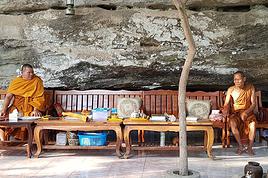
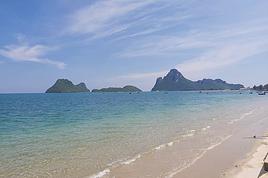
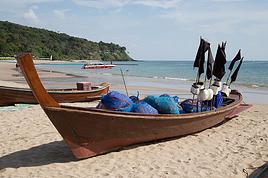
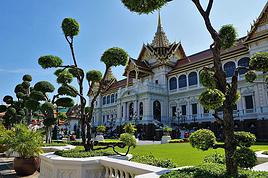
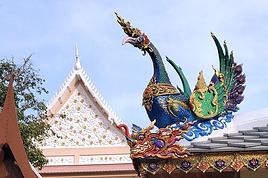
I really loved Thailand, but it was too touristy for my taste. So I'm hesitating about going back and wondering if Cambodia or Vietnam would be less crowded with tourists...
Hi everyone,
I’m starting to plan my next trip to Southeast Asia this winter (2.5 months, leaving in early December), and here’s a rough outline of my route—I’d love to share it with you and hear your thoughts and tips.
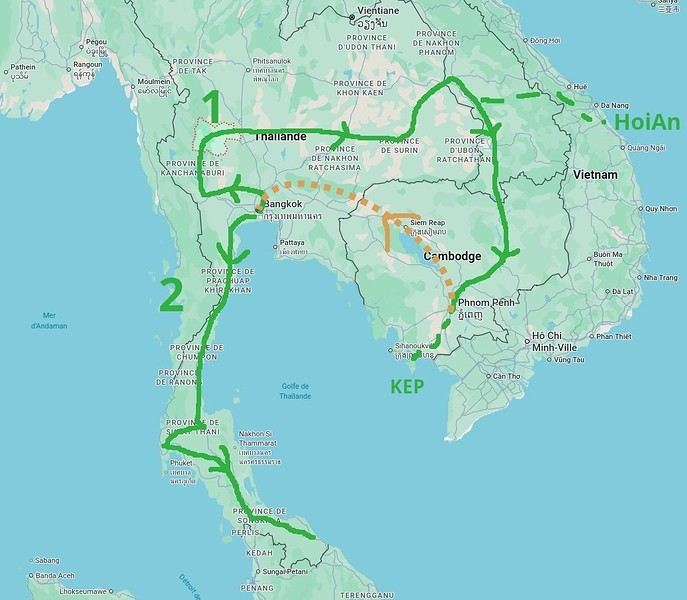
- I’ll start in Bangkok and already have three spots I’ve marked: Ayutthaya, Kanchanaburi, and Uthai Thani (I haven’t been to any of these places yet). - Next, I’d like to cross the country from west to east to reach the Laos border. I’d love suggestions for any interesting stops along this route—I don’t know this part of Thailand at all... - Then I’ll head into Laos, probably at Savannakhet (you can usually get a visa at the border). - > I’m tempted to spend a week in Hoi An, Vietnam, since I loved that city and the area when I visited two years ago. No visa needed for Vietnam now, so it could be a nice little detour. On the map, it doesn’t look too far, but I know you’ve got to be careful with these things, and I’m not sure if it’s a good idea. Any opinions on this? - Back to Laos (maybe via Dakta), and I’ll head south along the Mekong, probably doing the Bolaven Plateau loop that I missed last time. Then Paksé, the 4,000 Islands... I’ve been before, but I’d happily go back. - Crossing into Cambodia, I’ll follow the Mekong down to Phnom Penh (I know this area and love how untouristy it is). From there, I’ll probably spend a few days in Kep (quieter than Kampot). Still undecided, though. - Then back to Thailand (BKK), likely by plane from Phnom Penh since the borders between the two countries are currently closed (plus, let’s be honest, Cambodian roads... ;-). We’ll see how things look when the time comes. - After that, I’d like to explore southern Thailand, taking it slow with short hops. I’ve got my eye on Khao Sok National Park, and I’ve heard good things about Krabi... Again, I don’t know this region well, so any info or tips would be great.
So, I think this should be doable in 2.5 months, especially since I prefer short hops of 300 km max to avoid getting too tired, and I like staying 2-3 days in each place to explore. Plus, I’ll take a week off to relax if I find a spot I love—maybe by the sea for some real downtime.
Thanks for your feedback and for sharing your favorite spots! Pascal
- I’ll start in Bangkok and already have three spots I’ve marked: Ayutthaya, Kanchanaburi, and Uthai Thani (I haven’t been to any of these places yet). - Next, I’d like to cross the country from west to east to reach the Laos border. I’d love suggestions for any interesting stops along this route—I don’t know this part of Thailand at all... - Then I’ll head into Laos, probably at Savannakhet (you can usually get a visa at the border). - > I’m tempted to spend a week in Hoi An, Vietnam, since I loved that city and the area when I visited two years ago. No visa needed for Vietnam now, so it could be a nice little detour. On the map, it doesn’t look too far, but I know you’ve got to be careful with these things, and I’m not sure if it’s a good idea. Any opinions on this? - Back to Laos (maybe via Dakta), and I’ll head south along the Mekong, probably doing the Bolaven Plateau loop that I missed last time. Then Paksé, the 4,000 Islands... I’ve been before, but I’d happily go back. - Crossing into Cambodia, I’ll follow the Mekong down to Phnom Penh (I know this area and love how untouristy it is). From there, I’ll probably spend a few days in Kep (quieter than Kampot). Still undecided, though. - Then back to Thailand (BKK), likely by plane from Phnom Penh since the borders between the two countries are currently closed (plus, let’s be honest, Cambodian roads... ;-). We’ll see how things look when the time comes. - After that, I’d like to explore southern Thailand, taking it slow with short hops. I’ve got my eye on Khao Sok National Park, and I’ve heard good things about Krabi... Again, I don’t know this region well, so any info or tips would be great.
So, I think this should be doable in 2.5 months, especially since I prefer short hops of 300 km max to avoid getting too tired, and I like staying 2-3 days in each place to explore. Plus, I’ll take a week off to relax if I find a spot I love—maybe by the sea for some real downtime.
Thanks for your feedback and for sharing your favorite spots! Pascal
Bonjour, je voudrais aller 3 ou 4 jours sur le Delta Mékong (en mai). Possible seule ou c'est mieux de passer par une agence (pas trop chère). Itinéraire souhaité : Sa Dec, Ben tre, my tho, cai be, can tho. J'habite à HCMC. A plus, bonne journée
Je vous donne mon avis sincère de voyageur sur le Vietnam sachant que j'ai voyagé là-bas en février et que je ne suis pas allé au nord de Hanoï ni au sud de Nha Trang.
Pour juger un voyage, j'ai l'habitude de séparer l'aspect pratique d'un côté et l'intérêt des sites de l'autre.
Du côté « pratique », le Vietnam obtient un 19/20. Je n'entre pas dans le détail mais il est incroyablement facile et bon marché de voyager dans ce pays. Et avec des standards occidentaux voire meilleurs. Enormément de moyens de transport, hôtels d'excellente qualité et vraiment pas chers...
Entre l'aspect pratique et l'intérêt des sites, je mets la cuisine et le climat. Je ne vais pas écrire des lignes sur la cuisine qui fait tout simplement partie des tops mondiaux. Juste 2 bémols : les prix sont très élevés dans les restaus raffinés par rapport aux prix du pays. Et contrairement à la Chine, on peut tomber sur des restaus où on se moque des touristes. Résultat : un repas perdu alors que chaque repas peut se transformer en souvenir de rêve au Vietnam. Donc attention. Les guides touristiques écrits sont ici très utiles.
On est averti qu'au Vietnam le temps peu être gris. Et selon les sources, on peut reprendre espoir et se dire que finalement cette saison n'a pas l'air si mal. Pour ma part, je n'ai peut-être pas eu de chance mais alors j'en ai eu beaucoup dans les nombreux autres pays où je suis allé. Le ciel est souvent gris. Au nord, ça peut même être une attraction pour curieux de voir cette grisaille prête à vous tomber sur la tête. D'autre part, j'ai rarement vu une telle fraîcheur à une telle lattitude.
Les gens sont très sympas. Certains parlent anglais et il est très intéressant d'échanger avec les vietnamiens mais il faut savoir qu'ils ont un caractère trempé dans l'acier...
Les sites sont d'un intérêt limité. Le pays est surpeuplé et avide de développement. L'aspect traditionnel et religieux est quasi absent notamment par rapport à la Thaïlande. La nature est très très abîmée. Quand vous lisez les guides, vous vous dîtes que vous allez vous régaler à explorer les côtes ou qu'il y a des animaux à voir. C'est le problèmes des guides écrits qui ne comparent pas les pays entre eux. Ils vont utiliser les même adjectifs pour un pays moyen et pour les plus beaux pays. Oui, il y a des pays beaucoup mieux que d'autres ! En fait les côtes vietnamiennes ne sont pas terribles. Selon un guide les îles Cham sont un « époustouflant archipel ». Peut-être que si le Vietnam était le seul pays sur terre ce serait vrai mais il n'en est rien et il y a beaucoup mieux ailleurs. Les grottes de Phong Nha ouvertes au grand public sont d'un intérêt très limité et les autres sont vraiment très très chères d'accès et nécessitent souvent des réservations.
Mon but n'est pas de dénigrer le Vietnam mais d'éclairer les voyageurs car les guides ne le font pas. Je pense que le Vietnam est un pays idéal pour un retraité ou pour vivre quelques mois. Par contre si vous souhaitez découvrir ce qu'il y a de mieux en Asie du sud-est et que vous n'avez que quelques semaines par an, ne commencez pas par le Vietnam.
Pour juger un voyage, j'ai l'habitude de séparer l'aspect pratique d'un côté et l'intérêt des sites de l'autre.
Du côté « pratique », le Vietnam obtient un 19/20. Je n'entre pas dans le détail mais il est incroyablement facile et bon marché de voyager dans ce pays. Et avec des standards occidentaux voire meilleurs. Enormément de moyens de transport, hôtels d'excellente qualité et vraiment pas chers...
Entre l'aspect pratique et l'intérêt des sites, je mets la cuisine et le climat. Je ne vais pas écrire des lignes sur la cuisine qui fait tout simplement partie des tops mondiaux. Juste 2 bémols : les prix sont très élevés dans les restaus raffinés par rapport aux prix du pays. Et contrairement à la Chine, on peut tomber sur des restaus où on se moque des touristes. Résultat : un repas perdu alors que chaque repas peut se transformer en souvenir de rêve au Vietnam. Donc attention. Les guides touristiques écrits sont ici très utiles.
On est averti qu'au Vietnam le temps peu être gris. Et selon les sources, on peut reprendre espoir et se dire que finalement cette saison n'a pas l'air si mal. Pour ma part, je n'ai peut-être pas eu de chance mais alors j'en ai eu beaucoup dans les nombreux autres pays où je suis allé. Le ciel est souvent gris. Au nord, ça peut même être une attraction pour curieux de voir cette grisaille prête à vous tomber sur la tête. D'autre part, j'ai rarement vu une telle fraîcheur à une telle lattitude.
Les gens sont très sympas. Certains parlent anglais et il est très intéressant d'échanger avec les vietnamiens mais il faut savoir qu'ils ont un caractère trempé dans l'acier...
Les sites sont d'un intérêt limité. Le pays est surpeuplé et avide de développement. L'aspect traditionnel et religieux est quasi absent notamment par rapport à la Thaïlande. La nature est très très abîmée. Quand vous lisez les guides, vous vous dîtes que vous allez vous régaler à explorer les côtes ou qu'il y a des animaux à voir. C'est le problèmes des guides écrits qui ne comparent pas les pays entre eux. Ils vont utiliser les même adjectifs pour un pays moyen et pour les plus beaux pays. Oui, il y a des pays beaucoup mieux que d'autres ! En fait les côtes vietnamiennes ne sont pas terribles. Selon un guide les îles Cham sont un « époustouflant archipel ». Peut-être que si le Vietnam était le seul pays sur terre ce serait vrai mais il n'en est rien et il y a beaucoup mieux ailleurs. Les grottes de Phong Nha ouvertes au grand public sont d'un intérêt très limité et les autres sont vraiment très très chères d'accès et nécessitent souvent des réservations.
Mon but n'est pas de dénigrer le Vietnam mais d'éclairer les voyageurs car les guides ne le font pas. Je pense que le Vietnam est un pays idéal pour un retraité ou pour vivre quelques mois. Par contre si vous souhaitez découvrir ce qu'il y a de mieux en Asie du sud-est et que vous n'avez que quelques semaines par an, ne commencez pas par le Vietnam.
Est-ce quelqu'un peut me dire pourquoi ils manque de franchise à ce point ?
J'ai fait 2 voyages, j'y ai passé plusieurs mois, j'en ai jamais rencontré un seul d'honnête, j'en viens à me demander si ils connaissent ce terme.
Souvent c'est bête. Dernier exemple en date. Je demande à une copine ou plutôt pas en tout cas je ne doit pas être son ami malgré que sa mère me dise qu'elle aime m'avoir en ami si un n° est son Zalo. C'est pas dur de me dire oui ou non ou oui mais je ne m'en sert plus (vrai ou pas) et bien non elle a lu mais pas répondu, sa mère pareil.Elles utilisent les mêmes compte, c'est compliqué de savoir à qui je parle. Elle veux pas m'ajouter sur Zalo mais en même temps elle ne veux pas me mentir donc elle ne réponds pas.
J'ai pris cette exemple car c'est le plus récent mais en gros c'est ça : ne pas répondre, ne pas être honnête pour ne pas blesser. Ça part peut-être d'un bon sentiment mais c'est flagrant qu'ils ne sont pas honnête, ça me blesse encore plus.
J'ai fait 2 voyages, j'y ai passé plusieurs mois, j'en ai jamais rencontré un seul d'honnête, j'en viens à me demander si ils connaissent ce terme.
Souvent c'est bête. Dernier exemple en date. Je demande à une copine ou plutôt pas en tout cas je ne doit pas être son ami malgré que sa mère me dise qu'elle aime m'avoir en ami si un n° est son Zalo. C'est pas dur de me dire oui ou non ou oui mais je ne m'en sert plus (vrai ou pas) et bien non elle a lu mais pas répondu, sa mère pareil.Elles utilisent les mêmes compte, c'est compliqué de savoir à qui je parle. Elle veux pas m'ajouter sur Zalo mais en même temps elle ne veux pas me mentir donc elle ne réponds pas.
J'ai pris cette exemple car c'est le plus récent mais en gros c'est ça : ne pas répondre, ne pas être honnête pour ne pas blesser. Ça part peut-être d'un bon sentiment mais c'est flagrant qu'ils ne sont pas honnête, ça me blesse encore plus.
Bonjour!
Nous envisageons de retourner au Vietnam fin janvier début février pour 15 jours.
Nous avons déjà vu la boucle du nord: Hanoï - Sapa - Baie d'Ha Long - Ninh Binh puis Hoï An.
Nous voulons retourner à Hanoï, passer plus de temps à Ninh Binh puis découvrir Hue et retourner quelques heures à Hoï An car le temps sera peut-être meilleur à cette époque.
Pourquoi pas continuer à descendre jusqu'à HCM pour rentrer en France.
Hate de vous lire
Nous voulons retourner à Hanoï, passer plus de temps à Ninh Binh puis découvrir Hue et retourner quelques heures à Hoï An car le temps sera peut-être meilleur à cette époque.
Pourquoi pas continuer à descendre jusqu'à HCM pour rentrer en France.
Hate de vous lire
Hi everyone,
I couldn’t find any recent posts on this topic, so I thought I’d create a new one. We’ve just started planning our family trip to Vietnam this coming August. We’d like to travel from North to South, starting in Hanoi and ending in Ho Chi Minh.
Usually, we rent a car when we arrive and manage on our own. But I get the feeling that in Vietnam, it’s more complicated... It seems like the only option we have is to rent a car with a driver? Is that really the case?
I’m thinking of starting with a cruise in Halong Bay since we arrive on my partner’s birthday, and I wanted a beautiful setting to celebrate it. So, is the option of having a driver wait for 2 days while we’re on the cruise really feasible?
The rest of the itinerary isn’t planned at all yet. I’d love to hear your tips. We’re traveling from August 8th (morning) to the 26th (afternoon).
Thanks for your advice.
I couldn’t find any recent posts on this topic, so I thought I’d create a new one. We’ve just started planning our family trip to Vietnam this coming August. We’d like to travel from North to South, starting in Hanoi and ending in Ho Chi Minh.
Usually, we rent a car when we arrive and manage on our own. But I get the feeling that in Vietnam, it’s more complicated... It seems like the only option we have is to rent a car with a driver? Is that really the case?
I’m thinking of starting with a cruise in Halong Bay since we arrive on my partner’s birthday, and I wanted a beautiful setting to celebrate it. So, is the option of having a driver wait for 2 days while we’re on the cruise really feasible?
The rest of the itinerary isn’t planned at all yet. I’d love to hear your tips. We’re traveling from August 8th (morning) to the 26th (afternoon).
Thanks for your advice.
Bonjour,
Y a t'il plus de monde pour visiter le temple d'Angkor à Siem Reap le samedi et le dimanche ?
J'ai vu un billet d'avion pas cher mais il me fait arriver pour la visite du temple d'Angkor un samedi et un dimanche. Merci pour votre réponse rapide car j'hésite à le prendre.
Bromovol
LES BAS-RELIEFS D'ANGKOR VAT
PREMIERE PARTIE
SOURCES
- "Le Cambodge, le groupe d'Angkor et l'histoire" d'Etienne Aymonier – Edité en 1904 (Tome III)
- "Guide Aux Ruines d'Angkor" de Jean Commaille – Edité en 1916
- "Les monuments du groupe d'Angkor" de Maurice Glaize – Edité en 1944
- "Angkor cité khmère" de Claude Jacques
- "Le guide des temples d'Angkor" de Michel Petrotchenko
VISITE DES BAS-RELIEFS D'ANGKOR VAT
- La galerie des bas-reliefs se trouve au premier étage. Ces bas-reliefs ont été sculptés sur une longueur d'environ 600 m. et sur une hauteur de plus de 2 m – soit 8 panneaux – ainsi que dans deux pavillons d'angle : Nord-Ouest et Sud-Ouest.
- Je conseille de visiter ces bas-reliefs dans le sens inverse des aiguilles d'une montre car les descriptions de Maurice Glaize, Claude Jacques et de Michel Petrotchenko se font dans ce sens.
- Une description très détaillée de ces bas-reliefs leur sera très utile. Pour cela je leur conseille deux livres : "Angkor cité khmère" : description très détaillée mais pas assez "aérée" ce qui rend difficile la compréhension des scènes décrites. "Le guide des temples d'Angkor" : description également très complète, avec des schémas détaillés qui permettent de bien repérer les endroits particuliers.
- Suryavarman II qui a régné de 1113 - 1150 est le roi constructeur d'Angkor Vat. Nous ne savons pas combien de temps il a fallu pour cette construction, peut-être le temps de son règne ? A sa mort les bas-reliefs n'étaient pas terminés.
Nous savons par une inscription que deux panneaux ont été sculptés au milieu du 16ème siècle : - Victoire de Vishnu sur les Asuras : selon Claude Jacques ce panneau aurait été sculpté entre 1546 et 1564 - Victoire de Krishna sur l'asura Bana
LES BAS-RELIEFS A VOIR J'ai retenu quatre bas-reliefs, lesquels à mon avis, méritent une attention particulière :
1°) GALERIE HISTORIQUE, SURYAVARMAN II - La première section : on peut voir Suryavarman II qui donne ses instructions aux dignitaires agenouillés devant lui – Derrière le roi, un groupe de prêtres et une rangée de soldats - D'autres soldats escortent la procession qui emmène les princesses - Les jeunes femmes sont transportées dans des chariots tirés par des soldats – un nain accompagne une des princesses - Les troupes partent rejoindre la procession.
- La seconde section : l'armée khmère en procession, sur une longueur de plus de 90 mètres. Le roi Suryavarman II (sur le douzième éléphant) dont son statut royal est exprimé par sa taille, qui est supérieure à celle des 19 généraux qui l'entourent.
- Ces généraux sont représentés, montés sur des éléphants revêtus de leur harnachement de parade. Leurs rangs se reconnait au nombre de parasols qui les entourent. - Le nom de chacun des personnages nous a été livré par de petites inscriptions gravées sur le bas-relief. Le roi est identifié sous le nom de Paramavishnuloka, son nom posthume qui l'identifie à son dieu après la mort. Ceci indique peut-être que le roi est représenté ici sur le chemin des Paradis illustrant le bas-relief de la galerie suivante "Les cieux et les enfers".
- Le registre inférieur : montre une procession de cavaliers et de fantassins, un groupe de prêtres suit – un groupe de musiciens et des porteurs de bannières précèdent l'arche ou urne, qui contenait, croit-on, le feu sacré
- Partie droite (fin du bas-relief) : identifié au 20ème siècle par une petite inscription, un général d'un régiment, cette inscription a, depuis, fait l'objet d'un acte de vandalisme
- Rompant avec l'alignement strict observé par les troupes khmères, des soldats siamois semblent moins disciplinés.
2°) LE BARATTAGE DE LA MER DE LAIT Ce grand mythe hindou de la Création tirée du Bhâgavata-Pourâna est ici spectaculairement réalisé sur ce panneau long de 49 m.
A noter que dans la représentation d'Angkor Vat on peut voir les personnages suivants : Ravana, Hanuman ou Sugriva ? Or ceux-ci sont des personnages d'une autre légende le Ramayana. Il s'agit donc d'un ajout khmer. La version khmère du Ramayana se nomme le Reamker, voir http://vorasith.online.fr/cambodge/
Voici un résumé de ce barattage de la mer de lait : L'amrita, nectar garantissant l'immortalité, n'avait pas resurgi de l'océan cosmique (l'Océan ou Mer de lait) lors d'un des cycles de création d'un monde nouveau. Ceci constituait une grave menace pour l'ordre établi, car les Dévas (dieux) avaient besoin de ce nectar pour maintenir leur supériorité sur les Asuras (démonsou anti-dieux. Il fut donc décidé de baratter l'Océan cosmique pour récupérer l'amrita.
Cette tâche formidable nécessitait la participation des dieux, mais ceux-ci ne suffisaient pas. Vishnu s'assura de la collaboration des asuras en leur promettant, en cas de succès, une part de la liqueur d'immortalité. Les dieux n'acceptèrent ce plan que lorsque Vishnu leur promit qu'une fois l'amrita récupérée, il interviendrait pour que les asuras ne puissent pas en boire une goutte.
On arracha le Mont Mandara pour servir de baratte. Le naga géant Vasuki qui reposait au fond de l'océan, fut réquisitionné pour servir de corde géante, enroulée autour du Mont le Mandara. En tirant tour à tour sur le corps de Vâsuki, les devas et les asuras font tourner la montagne pendant 1000 ans pour baratter la mer cosmique pour produire de cette façon l'amrita. L'entente entre les dieux et les asuras cessa dès que l'amrita apparut : les dieux ne tinrent pas leur promesse d'en donner la moitié aux asuras qui dès lors tentèrent de la voler...
Le barattage fit également surgir de nombreuses créatures de l'océan dont les apsaras : les inscriptions disent qu'elles étaient la récompense des guerriers morts héroïquement au combat. Il s'agit de danseuses célestes.
La représentation du barattage - A gauche on voit Ravana, à dix têtes, qui tient les cinq têtes du naga Vasuki. Dans le bas du panneau, Vasuki est représenté à nouveau, reposant sur le fond de l'océan. - On voit ensuite 92 assuras qui tiennent dans les bras le naga Vasuki. - Au centre on voit Vishnou qui contrôle la manœuvre. Les opinions divergent sur l'identité du dieu de plus petite taille qui vole au-dessus de Vishnu (une seconde représentation de Vishnu ? Indra ?) - L'avatar de Vishnu, la tortue Kurma, empêche la montagne-pivot de sombrer dans l'océan. - A droite on voit 88 dévas qui tiennent le naga Vazuki. - En haut du panneau on voit les apsaras qui dansent - A la fin du panneau, c'est un singe, pas un dieu comme ce devrait être le cas, qui tire la queue de Vasuki, ici également les experts ne s'accordent pas sur son identité : Hanuman ? Sugriva ?
Nota : après le Barattage de la mer de lait, sur le mur il y a une inscription du début du XVIIIème siècleracontant la construction du chedei, monument funéraire, aujourd'hui ruiné, juste en dehors de la galerie. (Claude Jacques).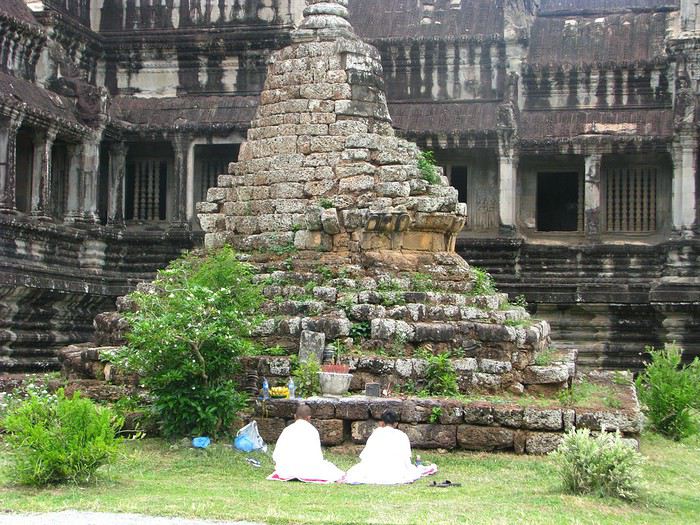
Jacques
VISITE DES BAS-RELIEFS D'ANGKOR VAT
- La galerie des bas-reliefs se trouve au premier étage. Ces bas-reliefs ont été sculptés sur une longueur d'environ 600 m. et sur une hauteur de plus de 2 m – soit 8 panneaux – ainsi que dans deux pavillons d'angle : Nord-Ouest et Sud-Ouest.
- Je conseille de visiter ces bas-reliefs dans le sens inverse des aiguilles d'une montre car les descriptions de Maurice Glaize, Claude Jacques et de Michel Petrotchenko se font dans ce sens.
- Une description très détaillée de ces bas-reliefs leur sera très utile. Pour cela je leur conseille deux livres : "Angkor cité khmère" : description très détaillée mais pas assez "aérée" ce qui rend difficile la compréhension des scènes décrites. "Le guide des temples d'Angkor" : description également très complète, avec des schémas détaillés qui permettent de bien repérer les endroits particuliers.
- Suryavarman II qui a régné de 1113 - 1150 est le roi constructeur d'Angkor Vat. Nous ne savons pas combien de temps il a fallu pour cette construction, peut-être le temps de son règne ? A sa mort les bas-reliefs n'étaient pas terminés.
Nous savons par une inscription que deux panneaux ont été sculptés au milieu du 16ème siècle : - Victoire de Vishnu sur les Asuras : selon Claude Jacques ce panneau aurait été sculpté entre 1546 et 1564 - Victoire de Krishna sur l'asura Bana
LES BAS-RELIEFS A VOIR J'ai retenu quatre bas-reliefs, lesquels à mon avis, méritent une attention particulière :
1°) GALERIE HISTORIQUE, SURYAVARMAN II - La première section : on peut voir Suryavarman II qui donne ses instructions aux dignitaires agenouillés devant lui – Derrière le roi, un groupe de prêtres et une rangée de soldats - D'autres soldats escortent la procession qui emmène les princesses - Les jeunes femmes sont transportées dans des chariots tirés par des soldats – un nain accompagne une des princesses - Les troupes partent rejoindre la procession.
- La seconde section : l'armée khmère en procession, sur une longueur de plus de 90 mètres. Le roi Suryavarman II (sur le douzième éléphant) dont son statut royal est exprimé par sa taille, qui est supérieure à celle des 19 généraux qui l'entourent.
- Ces généraux sont représentés, montés sur des éléphants revêtus de leur harnachement de parade. Leurs rangs se reconnait au nombre de parasols qui les entourent. - Le nom de chacun des personnages nous a été livré par de petites inscriptions gravées sur le bas-relief. Le roi est identifié sous le nom de Paramavishnuloka, son nom posthume qui l'identifie à son dieu après la mort. Ceci indique peut-être que le roi est représenté ici sur le chemin des Paradis illustrant le bas-relief de la galerie suivante "Les cieux et les enfers".
- Le registre inférieur : montre une procession de cavaliers et de fantassins, un groupe de prêtres suit – un groupe de musiciens et des porteurs de bannières précèdent l'arche ou urne, qui contenait, croit-on, le feu sacré
- Partie droite (fin du bas-relief) : identifié au 20ème siècle par une petite inscription, un général d'un régiment, cette inscription a, depuis, fait l'objet d'un acte de vandalisme
- Rompant avec l'alignement strict observé par les troupes khmères, des soldats siamois semblent moins disciplinés.
2°) LE BARATTAGE DE LA MER DE LAIT Ce grand mythe hindou de la Création tirée du Bhâgavata-Pourâna est ici spectaculairement réalisé sur ce panneau long de 49 m.
A noter que dans la représentation d'Angkor Vat on peut voir les personnages suivants : Ravana, Hanuman ou Sugriva ? Or ceux-ci sont des personnages d'une autre légende le Ramayana. Il s'agit donc d'un ajout khmer. La version khmère du Ramayana se nomme le Reamker, voir http://vorasith.online.fr/cambodge/
Voici un résumé de ce barattage de la mer de lait : L'amrita, nectar garantissant l'immortalité, n'avait pas resurgi de l'océan cosmique (l'Océan ou Mer de lait) lors d'un des cycles de création d'un monde nouveau. Ceci constituait une grave menace pour l'ordre établi, car les Dévas (dieux) avaient besoin de ce nectar pour maintenir leur supériorité sur les Asuras (démonsou anti-dieux. Il fut donc décidé de baratter l'Océan cosmique pour récupérer l'amrita.
Cette tâche formidable nécessitait la participation des dieux, mais ceux-ci ne suffisaient pas. Vishnu s'assura de la collaboration des asuras en leur promettant, en cas de succès, une part de la liqueur d'immortalité. Les dieux n'acceptèrent ce plan que lorsque Vishnu leur promit qu'une fois l'amrita récupérée, il interviendrait pour que les asuras ne puissent pas en boire une goutte.
On arracha le Mont Mandara pour servir de baratte. Le naga géant Vasuki qui reposait au fond de l'océan, fut réquisitionné pour servir de corde géante, enroulée autour du Mont le Mandara. En tirant tour à tour sur le corps de Vâsuki, les devas et les asuras font tourner la montagne pendant 1000 ans pour baratter la mer cosmique pour produire de cette façon l'amrita. L'entente entre les dieux et les asuras cessa dès que l'amrita apparut : les dieux ne tinrent pas leur promesse d'en donner la moitié aux asuras qui dès lors tentèrent de la voler...
Le barattage fit également surgir de nombreuses créatures de l'océan dont les apsaras : les inscriptions disent qu'elles étaient la récompense des guerriers morts héroïquement au combat. Il s'agit de danseuses célestes.
La représentation du barattage - A gauche on voit Ravana, à dix têtes, qui tient les cinq têtes du naga Vasuki. Dans le bas du panneau, Vasuki est représenté à nouveau, reposant sur le fond de l'océan. - On voit ensuite 92 assuras qui tiennent dans les bras le naga Vasuki. - Au centre on voit Vishnou qui contrôle la manœuvre. Les opinions divergent sur l'identité du dieu de plus petite taille qui vole au-dessus de Vishnu (une seconde représentation de Vishnu ? Indra ?) - L'avatar de Vishnu, la tortue Kurma, empêche la montagne-pivot de sombrer dans l'océan. - A droite on voit 88 dévas qui tiennent le naga Vazuki. - En haut du panneau on voit les apsaras qui dansent - A la fin du panneau, c'est un singe, pas un dieu comme ce devrait être le cas, qui tire la queue de Vasuki, ici également les experts ne s'accordent pas sur son identité : Hanuman ? Sugriva ?
Nota : après le Barattage de la mer de lait, sur le mur il y a une inscription du début du XVIIIème siècleracontant la construction du chedei, monument funéraire, aujourd'hui ruiné, juste en dehors de la galerie. (Claude Jacques).
Jacques
Hi everyone!
I’m heading back to Thailand in July 2026 with a stopover in Cambodia to visit the Angkor site.
After Angkor, I’ve booked a stay on Ko Chang island. Does anyone know if there are direct transport options from Cambodia to Ko Chang without having to go back through Bangkok? That would be amazing!!
I think there are, but I’d need more details!!
I went to Thailand in February 2025 and don’t remember having to apply for a visa—is that still the case now? And for Cambodia too?
Thanks so much!!!
Laurence from Bayonne
Bonjour à tous,
Je pars avec des amis 12 jours au Cambodge au mois de janvier, et nous allons passer rapidement Phnom Penh, visiter Siem Reap (3j) et aller sur la cote pendant 4 jours. J'aimerais bien faire un petit tour dans une ville afin de voir un peu de campagne, pourquoi pas faire des petites randonnées, si possible dans des coins authentiques.
J'hésite entre aller 3 jours soit à Battambang ou soit à Kampong Cham. Quel coin me conseillez-vous ? Ce serait plutôt pour des visites de lieux culturels, voir de beaux paysages et trouver des villages avec des gens sympas.
Merci par avance pour votre aide !
Je pars avec des amis 12 jours au Cambodge au mois de janvier, et nous allons passer rapidement Phnom Penh, visiter Siem Reap (3j) et aller sur la cote pendant 4 jours. J'aimerais bien faire un petit tour dans une ville afin de voir un peu de campagne, pourquoi pas faire des petites randonnées, si possible dans des coins authentiques.
J'hésite entre aller 3 jours soit à Battambang ou soit à Kampong Cham. Quel coin me conseillez-vous ? Ce serait plutôt pour des visites de lieux culturels, voir de beaux paysages et trouver des villages avec des gens sympas.
Merci par avance pour votre aide !
DANANG
A big city in the midst of an economic boom. The setting is stunning, with its large bay, the Son Tra Peninsula, and the Annamite Mountains on the horizon.
Where to stay and eat? Da Nang is a bustling business hub, so hotels are pricier and often fully booked. I was lucky to find a motorbike taxi driver who, after six full hotels, took me to Mai Son Hotel, 113 Nguyen Van Linh, a spotless 2-star place. Plus, right next door, there’s a great restaurant that seems popular with locals, and a good Chinese restaurant just a 5-minute walk away, Phi Lu (178 Nguyen Van Linh), recommended by the *Guide du Routard*. So, I’d definitely recommend this hotel. For a pricier option, the very Christian Dai A Hotel, near the tiny pink cathedral, is nice, but why pay more?
Actually, why stay in Da Nang when the gorgeous Hoi An is just 34 km to the south?
What to see? - The lovely Cham Museum (small, takes at most an hour) - The climb up Son Tra Peninsula (great views of the whole area) - The “tour” of the peninsula—quotation marks because the road stops two-thirds of the way. There’s an interesting little museum on the left before reaching the base of the huge statue, the Đong Đinh (large entrance on the left side of the hill), with traditional houses in the jungle holding artifacts over 2,000 years old (Sa Huynh culture; if you’re interested, check out the small Sa Huynh Museum in Hoi An, just before the Japanese Bridge). However, the big Linh Ung Pagoda is just colorful concrete! A beautiful resort, the Son Tra Beach Resort and Spa, sits on a pristine beach and isn’t too expensive: $120 for a garden room and $200–$270 for duplexes with a pool, where you can sleep six. Before reaching the resort, you’ll find two excellent seafood restaurants with large beachfront terraces on your right. - On the way to Hoi An, Marble Mountain, where I loved the village of marble sculpture workshops, the pretty pagodas and caves, and the stunning view from the top of the last promontory (the stairs are steep!). However, you can skip the famous China Beach and its resorts—all pretentious and expensive, not to mention the ones under construction on both sides of the road (they’re multiplying like crazy!). So, when traveling from Da Nang to Hoi An, I recommend two stops: the Cham Museum and Marble Mountain. - The beautiful drive to the Hai Van Pass (there weren’t any clouds!), offering spectacular views of the Da Nang region to the south and the coast to the north. The descent leads to the fishing village and beach of Lang Co, which is lovely but destined for rampant resort development, judging by the huge projects advertised on billboards along the road after the village. - Some affordable guesthouses ($15) and big resorts, including the lovely Lang Co Beach Resort, with a large pool and great value given the beautiful gardens and elegant bungalows. Recommended in Lang Co: lunch at one of the two stilt restaurants over the lagoon—great views and fresh seafood.
The public bus to Hoi An, 34 km south of Da Nang, takes 45 minutes for 50,000 dong. There’s one every half hour.
HOI AN This is a “must-see” for so many reasons: stunning old houses, temples, and pagodas; a colorful daily open-air and covered market near the bridge; charming little streets in the old quarter—especially at night, with all the multicolored lanterns and riverside restaurant terraces, it’s very romantic. The local food is delicious, the people are friendly and kind, there are two beautiful beaches, and attractions like the Cham ruins of My Son. Some say Hoi An is overrun with tourists and should be avoided. That’s true for the historic center and An Bang Beach, but not at all once you step outside.
WHERE TO STAY For a 2-star option, I recommend Ngo House Villa (99 Nguyen Phuc Tan St), very quiet on the island just across from the Old Quarter: 3-star rooms + suites, a large “Family” room, and a nice pool, all for $20 ($40 for the “Family” room). The same charming owner has a second hotel 20 meters away (No. 74), Phan Ngô, which is older but has a large terrace and a small pool—I prefer this one. For 3 stars, Thuy Duong 3 (92 Ba Trieu) is perfect, with a pool and garden ($40–$60). A bit pricier but great is A Han on Phan Bai Chau, with a large garden and terrace restaurant.
For those with a bigger budget, I recommend two riverside spots with rooms, suites, and pools, priced at $200–$350: the secluded Coco River Resort (formerly Ancient House River, with a large wooden terrace for romantic dinners by the river) and Anantara, (formerly Heritage), with bungalows close to the old town—but pricey.
Outside the city, my favorite hotel is Villa Loan, the new place from the famous Loan of Tam Coc, very quiet in the countryside, 15 minutes by bike from Old Hoi An and An Bang Beach. Beautiful rooms ($35), a Family room with two double beds ($55), two 65 m² twins that can sleep six (two large beds + two single beds—$80), a terrace restaurant, and a lovely pool. Prices include a buffet breakfast and a bike.
Also great is Daisy Anbang on An Bang Beach, elegant with a pool and beach just 50 meters away (skip the Aira next door—too expensive).
WHERE TO EAT Hoi An is Vietnam’s culinary capital. For Vietnamese food, I recommend Dao Tien, 21 Phan Bai Chau. No surprise—the chef is a former chef at the luxury 4-star Victoria Hoi An, a solid reference. The restaurant now has a beautiful terrace by the river (take the alley on the right side of the main street Dao Tien). Plus, you’re doing a good deed: a large part of the profits goes toward educating underprivileged children—one year of free hospitality, cooking, and English training, followed by job placement in local establishments. Madame Hien Hoi An (formerly Co Mai), 2 Nguyen Thai Hoc (left of the market), is another great spot—the chef is Didier Corlou, formerly of the famous *Porte d’Annam* and *Madame Hien* in Hanoi (closed in March 2022 due to COVID, so foreign tourists are still scarce). Also worth checking out is Secret Garden, in the Phuong Minh An alley (entrance at 60 Le Loi), set in a beautiful space. One of my favorites is Madam Kieu, 43 Nguyen Phuc Chu, right on the river across from the little bridge—very elegant with excellent Vietnamese cuisine. Unfortunately, all the restaurants on this esplanade blast “music” (boom boom boom yeah yeah yeah) in the evenings, so it’s impossible to talk—go for lunch instead.
For a break from Vietnamese food, try Good Morning Vietnam, a ridiculous name for an excellent Italian restaurant (11 Le Loi). The cheerful chef is from Bologna, the “Lyon of Italy”: lasagna like an Italian *mama*’s, delicious tagliatelle ai porcini (porcini mushrooms imported from Italy), and a divine homemade tiramisu (pro tip: order a grappa and drizzle a few drops on the tiramisu). It’s also one of the few places where you can get an excellent bottle of red wine for 350,000 dong instead of the usual 600,000–800,000 dong (South African Robertson Chapel). Another gem: the Japanese restaurant Samurai Kitchen (no sushi, but divine gyoza), 21 Phan Chau Trinh—the street on the right side of the market when you turn your back to the river. Finally, Ganesh, which I consider the best Indian restaurant in Vietnam (99 Tran Hung Dao St).
At An Bang, there are plenty of beachfront restaurants. The two best are the large one at the far right of the parking lot (huge seafood selection) and the fantastic La Luna d’Autumno, owned by the same person as the Italian restaurant of the same name, once considered the best in Vietnam but closed in 2020 due to COVID. Divine pizzas, including the vegetariana.
WHAT TO VISIT The Japanese Bridge and all the old Chinese houses, temples, and pagodas in the three historic streets. Don’t miss the extraordinary gallery-museum of the great French photographer Réhahn, the Precious Heritage Museum at 26 Phan Boi Chau. His remarkable photo collection—including the famous shot of the little Cham girl with clear blue eyes—has graced the covers of many magazines. His Montagnard Museum is a wonder, with a larger collection of tribal women’s costumes than the Museum of Ethnology in Hanoi. Free entry.
THE BEACHES Cua Dai Beach has mostly disappeared, a victim of the waves, except in a few spots. The beautiful An Bang Beach remains, with great beachfront restaurants, or you can head to Cham Island.
MY SON A beautiful complex of Cham ruins surrounded by mountains, 50 km southwest of Hoi An via a scenic road. You can rent a motorbike, take a motorbike taxi, or join a half-day organized tour. It’s best to go in the afternoon—less crowded than in the morning.
CHAM ISLANDS (Cu Lao Cham) Wow, I loved it! It reminded me of St. Barts 35 years ago. The archipelago, 19 km from Hoi An, consists of eight small islands within the Cu Lao Cham Marine Reserve, declared a “Biosphere Reserve” by UNESCO. The largest and only inhabited island, Hon Lao (Pearl Island), covers 1,317 hectares, and its highest peak reaches 517 meters. Hon Lao has two villages: Bai Lang, where the boats from Hoi An dock, and the charming little fishing port of Bai Huong. Part of the island is a military zone, so only the east coast is accessible to tourists.
To get there, you have three options: - The public boat (100,000 dong) that leaves from in front of Café des Amis at 7:30 AM. The catch is it returns to Hoi An at noon, so to enjoy the charm of the place, you’ll need to spend a night on the island (which I highly recommend). - Organized tours by Cham Diving Club, with two options: diving or snorkeling only. - A private speedboat, but it’s not cheap: $200 for the day!
Note: Even if the weather seems fine, the large public boat won’t leave if the sea is too rough. The only solution is to go to the port around 7:30 AM and check (easy, since it brings all the supplies for the island’s locals—if it’s leaving, it’ll be loading up). Avoid weekends—it gets swarmed with locals.
Small coves with dreamy beaches, as they say. Two are very close to Bai Lang: one to the left (facing the village), Bai Ong, lined with restaurants, and a tiny one to the right of the village. The other two beaches, including Bai Chong and the little fishing port of Bai Huong, are accessible by motorbike or boat. I recommend renting a motorbike (biking is tough due to steep hills) and taking the road that overlooks the coast—it’s stunning.
Great diving. The Cham Diving Club is superbly organized by a very friendly Italian, Lodovico, and two French guys (www.chamislanddiving.com).
When you arrive at Bai Lang’s pier, they’ll offer you TWO family-run guesthouses in the village. There are also homestays, but they’re really basic (usually bamboo mats on wooden planks as beds), no English or French is spoken, and locals speak a dialect that’s hard to understand even if you’re decent at Vietnamese. Anyway, I don’t recommend staying in Bai Lang because of the public loudspeakers. Two options if you want a quiet night: - A small guesthouse facing the tiny rice field on the way to Bai Ong Beach. Very clean rooms and a large terrace overlooking the “rice field.” 300,000 dong, with meals available on the terrace. Nha Nghi Vu Truong Tel: 235 386 4783 Mobile: 01 67 76 63 110. - Homestays in the little fishing port of Bai Huong.
Where to stay and eat? Da Nang is a bustling business hub, so hotels are pricier and often fully booked. I was lucky to find a motorbike taxi driver who, after six full hotels, took me to Mai Son Hotel, 113 Nguyen Van Linh, a spotless 2-star place. Plus, right next door, there’s a great restaurant that seems popular with locals, and a good Chinese restaurant just a 5-minute walk away, Phi Lu (178 Nguyen Van Linh), recommended by the *Guide du Routard*. So, I’d definitely recommend this hotel. For a pricier option, the very Christian Dai A Hotel, near the tiny pink cathedral, is nice, but why pay more?
Actually, why stay in Da Nang when the gorgeous Hoi An is just 34 km to the south?
What to see? - The lovely Cham Museum (small, takes at most an hour) - The climb up Son Tra Peninsula (great views of the whole area) - The “tour” of the peninsula—quotation marks because the road stops two-thirds of the way. There’s an interesting little museum on the left before reaching the base of the huge statue, the Đong Đinh (large entrance on the left side of the hill), with traditional houses in the jungle holding artifacts over 2,000 years old (Sa Huynh culture; if you’re interested, check out the small Sa Huynh Museum in Hoi An, just before the Japanese Bridge). However, the big Linh Ung Pagoda is just colorful concrete! A beautiful resort, the Son Tra Beach Resort and Spa, sits on a pristine beach and isn’t too expensive: $120 for a garden room and $200–$270 for duplexes with a pool, where you can sleep six. Before reaching the resort, you’ll find two excellent seafood restaurants with large beachfront terraces on your right. - On the way to Hoi An, Marble Mountain, where I loved the village of marble sculpture workshops, the pretty pagodas and caves, and the stunning view from the top of the last promontory (the stairs are steep!). However, you can skip the famous China Beach and its resorts—all pretentious and expensive, not to mention the ones under construction on both sides of the road (they’re multiplying like crazy!). So, when traveling from Da Nang to Hoi An, I recommend two stops: the Cham Museum and Marble Mountain. - The beautiful drive to the Hai Van Pass (there weren’t any clouds!), offering spectacular views of the Da Nang region to the south and the coast to the north. The descent leads to the fishing village and beach of Lang Co, which is lovely but destined for rampant resort development, judging by the huge projects advertised on billboards along the road after the village. - Some affordable guesthouses ($15) and big resorts, including the lovely Lang Co Beach Resort, with a large pool and great value given the beautiful gardens and elegant bungalows. Recommended in Lang Co: lunch at one of the two stilt restaurants over the lagoon—great views and fresh seafood.
The public bus to Hoi An, 34 km south of Da Nang, takes 45 minutes for 50,000 dong. There’s one every half hour.
HOI AN This is a “must-see” for so many reasons: stunning old houses, temples, and pagodas; a colorful daily open-air and covered market near the bridge; charming little streets in the old quarter—especially at night, with all the multicolored lanterns and riverside restaurant terraces, it’s very romantic. The local food is delicious, the people are friendly and kind, there are two beautiful beaches, and attractions like the Cham ruins of My Son. Some say Hoi An is overrun with tourists and should be avoided. That’s true for the historic center and An Bang Beach, but not at all once you step outside.
WHERE TO STAY For a 2-star option, I recommend Ngo House Villa (99 Nguyen Phuc Tan St), very quiet on the island just across from the Old Quarter: 3-star rooms + suites, a large “Family” room, and a nice pool, all for $20 ($40 for the “Family” room). The same charming owner has a second hotel 20 meters away (No. 74), Phan Ngô, which is older but has a large terrace and a small pool—I prefer this one. For 3 stars, Thuy Duong 3 (92 Ba Trieu) is perfect, with a pool and garden ($40–$60). A bit pricier but great is A Han on Phan Bai Chau, with a large garden and terrace restaurant.
For those with a bigger budget, I recommend two riverside spots with rooms, suites, and pools, priced at $200–$350: the secluded Coco River Resort (formerly Ancient House River, with a large wooden terrace for romantic dinners by the river) and Anantara, (formerly Heritage), with bungalows close to the old town—but pricey.
Outside the city, my favorite hotel is Villa Loan, the new place from the famous Loan of Tam Coc, very quiet in the countryside, 15 minutes by bike from Old Hoi An and An Bang Beach. Beautiful rooms ($35), a Family room with two double beds ($55), two 65 m² twins that can sleep six (two large beds + two single beds—$80), a terrace restaurant, and a lovely pool. Prices include a buffet breakfast and a bike.
Also great is Daisy Anbang on An Bang Beach, elegant with a pool and beach just 50 meters away (skip the Aira next door—too expensive).
WHERE TO EAT Hoi An is Vietnam’s culinary capital. For Vietnamese food, I recommend Dao Tien, 21 Phan Bai Chau. No surprise—the chef is a former chef at the luxury 4-star Victoria Hoi An, a solid reference. The restaurant now has a beautiful terrace by the river (take the alley on the right side of the main street Dao Tien). Plus, you’re doing a good deed: a large part of the profits goes toward educating underprivileged children—one year of free hospitality, cooking, and English training, followed by job placement in local establishments. Madame Hien Hoi An (formerly Co Mai), 2 Nguyen Thai Hoc (left of the market), is another great spot—the chef is Didier Corlou, formerly of the famous *Porte d’Annam* and *Madame Hien* in Hanoi (closed in March 2022 due to COVID, so foreign tourists are still scarce). Also worth checking out is Secret Garden, in the Phuong Minh An alley (entrance at 60 Le Loi), set in a beautiful space. One of my favorites is Madam Kieu, 43 Nguyen Phuc Chu, right on the river across from the little bridge—very elegant with excellent Vietnamese cuisine. Unfortunately, all the restaurants on this esplanade blast “music” (boom boom boom yeah yeah yeah) in the evenings, so it’s impossible to talk—go for lunch instead.
For a break from Vietnamese food, try Good Morning Vietnam, a ridiculous name for an excellent Italian restaurant (11 Le Loi). The cheerful chef is from Bologna, the “Lyon of Italy”: lasagna like an Italian *mama*’s, delicious tagliatelle ai porcini (porcini mushrooms imported from Italy), and a divine homemade tiramisu (pro tip: order a grappa and drizzle a few drops on the tiramisu). It’s also one of the few places where you can get an excellent bottle of red wine for 350,000 dong instead of the usual 600,000–800,000 dong (South African Robertson Chapel). Another gem: the Japanese restaurant Samurai Kitchen (no sushi, but divine gyoza), 21 Phan Chau Trinh—the street on the right side of the market when you turn your back to the river. Finally, Ganesh, which I consider the best Indian restaurant in Vietnam (99 Tran Hung Dao St).
At An Bang, there are plenty of beachfront restaurants. The two best are the large one at the far right of the parking lot (huge seafood selection) and the fantastic La Luna d’Autumno, owned by the same person as the Italian restaurant of the same name, once considered the best in Vietnam but closed in 2020 due to COVID. Divine pizzas, including the vegetariana.
WHAT TO VISIT The Japanese Bridge and all the old Chinese houses, temples, and pagodas in the three historic streets. Don’t miss the extraordinary gallery-museum of the great French photographer Réhahn, the Precious Heritage Museum at 26 Phan Boi Chau. His remarkable photo collection—including the famous shot of the little Cham girl with clear blue eyes—has graced the covers of many magazines. His Montagnard Museum is a wonder, with a larger collection of tribal women’s costumes than the Museum of Ethnology in Hanoi. Free entry.
THE BEACHES Cua Dai Beach has mostly disappeared, a victim of the waves, except in a few spots. The beautiful An Bang Beach remains, with great beachfront restaurants, or you can head to Cham Island.
MY SON A beautiful complex of Cham ruins surrounded by mountains, 50 km southwest of Hoi An via a scenic road. You can rent a motorbike, take a motorbike taxi, or join a half-day organized tour. It’s best to go in the afternoon—less crowded than in the morning.
CHAM ISLANDS (Cu Lao Cham) Wow, I loved it! It reminded me of St. Barts 35 years ago. The archipelago, 19 km from Hoi An, consists of eight small islands within the Cu Lao Cham Marine Reserve, declared a “Biosphere Reserve” by UNESCO. The largest and only inhabited island, Hon Lao (Pearl Island), covers 1,317 hectares, and its highest peak reaches 517 meters. Hon Lao has two villages: Bai Lang, where the boats from Hoi An dock, and the charming little fishing port of Bai Huong. Part of the island is a military zone, so only the east coast is accessible to tourists.
To get there, you have three options: - The public boat (100,000 dong) that leaves from in front of Café des Amis at 7:30 AM. The catch is it returns to Hoi An at noon, so to enjoy the charm of the place, you’ll need to spend a night on the island (which I highly recommend). - Organized tours by Cham Diving Club, with two options: diving or snorkeling only. - A private speedboat, but it’s not cheap: $200 for the day!
Note: Even if the weather seems fine, the large public boat won’t leave if the sea is too rough. The only solution is to go to the port around 7:30 AM and check (easy, since it brings all the supplies for the island’s locals—if it’s leaving, it’ll be loading up). Avoid weekends—it gets swarmed with locals.
Small coves with dreamy beaches, as they say. Two are very close to Bai Lang: one to the left (facing the village), Bai Ong, lined with restaurants, and a tiny one to the right of the village. The other two beaches, including Bai Chong and the little fishing port of Bai Huong, are accessible by motorbike or boat. I recommend renting a motorbike (biking is tough due to steep hills) and taking the road that overlooks the coast—it’s stunning.
Great diving. The Cham Diving Club is superbly organized by a very friendly Italian, Lodovico, and two French guys (www.chamislanddiving.com).
When you arrive at Bai Lang’s pier, they’ll offer you TWO family-run guesthouses in the village. There are also homestays, but they’re really basic (usually bamboo mats on wooden planks as beds), no English or French is spoken, and locals speak a dialect that’s hard to understand even if you’re decent at Vietnamese. Anyway, I don’t recommend staying in Bai Lang because of the public loudspeakers. Two options if you want a quiet night: - A small guesthouse facing the tiny rice field on the way to Bai Ong Beach. Very clean rooms and a large terrace overlooking the “rice field.” 300,000 dong, with meals available on the terrace. Nha Nghi Vu Truong Tel: 235 386 4783 Mobile: 01 67 76 63 110. - Homestays in the little fishing port of Bai Huong.
Hello,
I’m planning and organizing a wonderful trip to Vietnam from mid-March to mid-April 2026, traveling independently for a month with my wife to enjoy her new retirement. Here’s a summary of our itinerary: We arrive in Ho Chi Minh City on the morning of Wednesday, March 18, and depart from Hanoi on the evening of Thursday, April 16. First, I’d like to head to Ho Chi Minh City because the temperatures are high in that region in mid-March. After that, we’ll visit Phu Quoc Island and then the Mekong Delta. We’ll return to Ho Chi Minh City and take a flight to Hue for 2 days, then Tam Coc / Ninh Binh (2-3 days), and Cat Ba Island with a visit to Lan Ha Bay (4 days). We’ll spend a few days in Hanoi, followed by 3-4 days in Sapa with some hikes, and then the Ha Giang loop (4 days). (I’m a motorcyclist—I ride a BMW trail bike and have taken care of renewing my international license.) We’re considering renting a motorcycle or bicycles when needed, except in Ho Chi Minh City and Hanoi. The weather in northern Vietnam in early April should theoretically be decent. Finally, we’ll return to Hanoi before heading back to Paris and the Pays de la Loire. Unfortunately, I’m skipping Angkor in Cambodia. I’d like to have a guide for 1 or 2 days in Sapa (which typical agency would you recommend?), and I’m wondering if I should book an agency for the 4 days in Ha Giang. I prefer my independence and don’t really like the "group" aspect of agencies. I’ll rent a 150cc motorcycle, and my wife will ride with me. Other questions: What are some good, typical accommodations to book in the places we’ve identified? Thanks for any info. Did I forget anything, or should we adjust our itinerary? Thanks for your help and advice. Pimarguibou
I’m planning and organizing a wonderful trip to Vietnam from mid-March to mid-April 2026, traveling independently for a month with my wife to enjoy her new retirement. Here’s a summary of our itinerary: We arrive in Ho Chi Minh City on the morning of Wednesday, March 18, and depart from Hanoi on the evening of Thursday, April 16. First, I’d like to head to Ho Chi Minh City because the temperatures are high in that region in mid-March. After that, we’ll visit Phu Quoc Island and then the Mekong Delta. We’ll return to Ho Chi Minh City and take a flight to Hue for 2 days, then Tam Coc / Ninh Binh (2-3 days), and Cat Ba Island with a visit to Lan Ha Bay (4 days). We’ll spend a few days in Hanoi, followed by 3-4 days in Sapa with some hikes, and then the Ha Giang loop (4 days). (I’m a motorcyclist—I ride a BMW trail bike and have taken care of renewing my international license.) We’re considering renting a motorcycle or bicycles when needed, except in Ho Chi Minh City and Hanoi. The weather in northern Vietnam in early April should theoretically be decent. Finally, we’ll return to Hanoi before heading back to Paris and the Pays de la Loire. Unfortunately, I’m skipping Angkor in Cambodia. I’d like to have a guide for 1 or 2 days in Sapa (which typical agency would you recommend?), and I’m wondering if I should book an agency for the 4 days in Ha Giang. I prefer my independence and don’t really like the "group" aspect of agencies. I’ll rent a 150cc motorcycle, and my wife will ride with me. Other questions: What are some good, typical accommodations to book in the places we’ve identified? Thanks for any info. Did I forget anything, or should we adjust our itinerary? Thanks for your help and advice. Pimarguibou
Bonjour,
je suis en train de faire le planning pour notre voyage du Delta du Mekong en janvier2020.
J'ai déjà pu trouver la première partie, c'est à dire le nord et Hanoi puis Phu Quoc. Nous rentrons donc de Phu Quoc le 3 Janvier et nous voulons faire de Ha Tien, en bus à Rach Gia, puis en speedboat sur le canal jusqu'à Ca Mau, monter vers Soc Trang en bus ou si cela existe en canalboat, vers Can Tho, puis Vinh Long -marché flottant de Cai Be, Ben Tre pour finir à Ho Chi Minh 2-3 jours. Nous ne parlons pas le vietnamien, mais anglais et aurons un Translator comme petite aide. Qui peut nous donner des adresses et infos pour avoir un maximum de belles choses à voir? Merci pour vos infos
Bonjour,
Nous allons effectuer un voyage au Vietnam fin octobre à mi novembre.
Nous arrivons au Nord et descendons vers le sud.
Nous souhaitons pour finir le voyage ce poser sur une île 4 à 5 jour. Nous hésitons entre koh rong et phu quoc.
Phu quoc semble plus accessible étant déjà dans le sud du Vietnam mais selon mes commentaires lu cette ile s'est très devellope et donc a perdu du charme, beaucoup de saletés... contrairement à l'île de koh rong qui semble plus paisible et avec de très belle plage.
Si des personnes sont aller à l'un ou les deux, je suis preneuse d'avis...
Merci
Nous allons effectuer un voyage au Vietnam fin octobre à mi novembre.
Nous arrivons au Nord et descendons vers le sud.
Nous souhaitons pour finir le voyage ce poser sur une île 4 à 5 jour. Nous hésitons entre koh rong et phu quoc.
Phu quoc semble plus accessible étant déjà dans le sud du Vietnam mais selon mes commentaires lu cette ile s'est très devellope et donc a perdu du charme, beaucoup de saletés... contrairement à l'île de koh rong qui semble plus paisible et avec de très belle plage.
Si des personnes sont aller à l'un ou les deux, je suis preneuse d'avis...
Merci
Bonjour a tous,
pour les prochaines vacances en avril, nous pensons a aller visiter le centre vietnam. On part en famille (2 adultes et 2 enfants en bas age), en sachant qu'on habite la region, donc pas un trop long voyage. On cherche donc un programme sympa mais pas non plus trop difficile niveau rythme.
Du coup des questions : - Hoi An : On pensait y passer 2 voire 3 nuits. -> Est ce que ca vaut le coup de rester plus longtemps ? - Da Nang : ce sera notre pricipal camp de base pour faire un peu de plage -> un coin / hotel particulier a recommander (30-40e par nuit) ? - Hue : en one day trip ou il est recommande de passer une (ou plus) nuit la bas ?
Aussi question : vue la duree, je me demandais si ca vaudrait pas le coup de prendre 2 jours plein pour aller a Ho Chi Minh ? Je n'y suis passe qu'une soiree et j'en ai eu beaucoup de retours positifs.
pour les prochaines vacances en avril, nous pensons a aller visiter le centre vietnam. On part en famille (2 adultes et 2 enfants en bas age), en sachant qu'on habite la region, donc pas un trop long voyage. On cherche donc un programme sympa mais pas non plus trop difficile niveau rythme.
Du coup des questions : - Hoi An : On pensait y passer 2 voire 3 nuits. -> Est ce que ca vaut le coup de rester plus longtemps ? - Da Nang : ce sera notre pricipal camp de base pour faire un peu de plage -> un coin / hotel particulier a recommander (30-40e par nuit) ? - Hue : en one day trip ou il est recommande de passer une (ou plus) nuit la bas ?
Aussi question : vue la duree, je me demandais si ca vaudrait pas le coup de prendre 2 jours plein pour aller a Ho Chi Minh ? Je n'y suis passe qu'une soiree et j'en ai eu beaucoup de retours positifs.
Hi there,
we’re currently in Mai Chau and tomorrow we’re hitting the road back to Hanoi to head up toward Bac Ha and Sapa.
We haven’t really had a set plan since we arrived—we’ve already done the Halong Bay on land and by sea.
I’ve got 2 free days before heading to Bac Ha and Sapa.
Any tips?
Thanks, and looking forward to hearing from you.
Hello!
We’re heading to Cambodia for a month in March. We’re planning to visit Phnom Penh, Battambang, Siem Reap, the Angkor temples, Kompong Luong, then head down to Kampot, Kep, and finish our trip on the islands of Koh Rong. Has anyone done this trip recently?
Any great spots to recommend? Neighborhoods to stay in Phnom Penh (lively but not too touristy)?
Tips for getting around between the major cities—bus, train, boat, motorbike?
Thanks for all the advice!
Fabienne
Hi everyone,
I have a Visa card with international option.
How do I pay in Vietnam?
Hotels booked on Booking—do hotel owners charge a commission?
How do I withdraw money? ATM fees?
Where can I exchange euros at the lowest cost?
Thanks in advance for your tips!
Larri
Good evening,
Exceptional floods occurred last week in central Vietnam, in the Hoi An and Hue regions. These areas get a lot of rain every year, but this time it's historically devastating.
The images are striking, horrifying, and surreal for those of us—like me—who walked these beautiful streets not long ago: the old town of Hoi An completely submerged, water up to the rooftops, the Japanese Bridge barely peeking out of the water... In Hue, the flag monument in front of the Imperial City entrance was nothing more than an island...
I’m not posting any links, but anyone can find them online if they wish.
Stay strong to our Vietnamese friends. And a strong warning to all tourists: avoid these regions. The water levels are receding, but more rain is on the way...
Exceptional floods occurred last week in central Vietnam, in the Hoi An and Hue regions. These areas get a lot of rain every year, but this time it's historically devastating.
The images are striking, horrifying, and surreal for those of us—like me—who walked these beautiful streets not long ago: the old town of Hoi An completely submerged, water up to the rooftops, the Japanese Bridge barely peeking out of the water... In Hue, the flag monument in front of the Imperial City entrance was nothing more than an island...
I’m not posting any links, but anyone can find them online if they wish.
Stay strong to our Vietnamese friends. And a strong warning to all tourists: avoid these regions. The water levels are receding, but more rain is on the way...
Good evening,
I’m posting a new message after browsing the forum.
Our 16-day backpacking trip (late June to mid-July 2026) focused on hiking and connecting with locals is starting to take shape, but I’d love your input.
I’m torn between two routes:
Option 1: A loop from Hanoi to Hanoi, starting with Bai Tu Long Bay, then Tam Coc, Mai Chau, Pu Luong, Mu Cang Chai, and the area around Sapa, before taking the train back to Hanoi.
Option 2: The same loop but starting in Sapa and ending in Bai Tu Long Bay.
What do you think?
Thanks in advance for your help—I’m looking forward to reading your thoughts.
Cédric
Hi there,
I’m currently in Hoi An—I hadn’t set foot here for 8 years. The city has already changed a lot, with lots of construction, and even in the old town, along one side of the riverbank, there are huge residential buildings going up that take away some of the charm of this place. But the worst part is the overtourism—it’s impossible to walk across the famous bridge in the middle of the canal in the evening because it’s so packed with people. There’s also a new trend: massage parlors have opened in the old town and around the city. I was shocked—people call out to you or even grab your arm on the sidewalk, and it’s everywhere. Bangkok and Phuket might start shaking—Hanoi’s the same way.
Anyway, let’s talk about the dual pricing specifically for non-Vietnamese tourists. We went to a restaurant near our hotel last night, and they gave us an English menu—okay, fine! But I noticed the table next to us, where Vietnamese tourists had a different menu. Weird! I asked to see the same menu as my neighbors, but the waitress refused, saying it was in Vietnamese and we wouldn’t understand. I insisted, and she finally agreed. Surprise!!! The prices on the two menus were different, with the English one up to 50% more expensive. I asked why, and she got flustered, telling me to just order from the Vietnamese menu, which I translated with my phone to see the local prices. I mentioned this to the hotel this morning, and the receptionist told me to go to restaurants where prices are displayed at the entrance to avoid getting ripped off. I just bought fresh bread this morning, and it was the same thing—the little loaf costs 4000 dong for Vietnamese people and 5000 dong for non-Vietnamese. It’s not a huge difference, but this way of doing things isn’t right. At supermarkets like VinMart+, prices are displayed, so there’s no surprise or dual pricing there.
I’m currently in Hoi An—I hadn’t set foot here for 8 years. The city has already changed a lot, with lots of construction, and even in the old town, along one side of the riverbank, there are huge residential buildings going up that take away some of the charm of this place. But the worst part is the overtourism—it’s impossible to walk across the famous bridge in the middle of the canal in the evening because it’s so packed with people. There’s also a new trend: massage parlors have opened in the old town and around the city. I was shocked—people call out to you or even grab your arm on the sidewalk, and it’s everywhere. Bangkok and Phuket might start shaking—Hanoi’s the same way.
Anyway, let’s talk about the dual pricing specifically for non-Vietnamese tourists. We went to a restaurant near our hotel last night, and they gave us an English menu—okay, fine! But I noticed the table next to us, where Vietnamese tourists had a different menu. Weird! I asked to see the same menu as my neighbors, but the waitress refused, saying it was in Vietnamese and we wouldn’t understand. I insisted, and she finally agreed. Surprise!!! The prices on the two menus were different, with the English one up to 50% more expensive. I asked why, and she got flustered, telling me to just order from the Vietnamese menu, which I translated with my phone to see the local prices. I mentioned this to the hotel this morning, and the receptionist told me to go to restaurants where prices are displayed at the entrance to avoid getting ripped off. I just bought fresh bread this morning, and it was the same thing—the little loaf costs 4000 dong for Vietnamese people and 5000 dong for non-Vietnamese. It’s not a huge difference, but this way of doing things isn’t right. At supermarkets like VinMart+, prices are displayed, so there’s no surprise or dual pricing there.
Hello everyone!
I just got back from a little trip to Cambodia, and I really wanted to share this experience with you—because honestly, it was wow from start to finish. I set my bags down in Siem Reap, and even though I knew the temples would be amazing… I wasn’t expecting that much beauty.
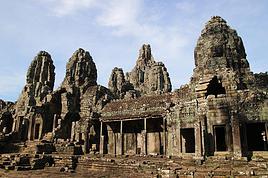
Angkor Wat, of course, is THE classic, and you quickly understand why. I went super early in the morning to see the sunrise (yes, 4:30 AM wake-up, and no complaining 😊), and I don’t regret a second of it: that soft light, the silhouettes of the towers in the mist… you feel so small. I also loved Bayon, with its mysterious faces, and Ta Prohm, overrun by giant roots—guaranteed Tomb Raider vibes, but without the crowds of Lara Croft.
What I found amazing is that beyond the big temples, there are plenty of quieter, almost forgotten spots where you can sit, listen to the birds, and just soak in the moment. It was hot (really hot!), so I didn’t hesitate to take breaks in the shade with a nice cold mango juice.
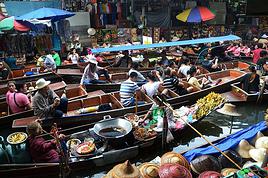
For nature, I took a little trip to Tonlé Sap Lake. Very different, more raw, but super interesting. The floating villages are surprising—it makes you think about life at the rhythm of the water, and I was lucky enough to chat a bit with a local thanks to my guide. Authentic, simple, and touching. And then those kids rowing like pros in plastic boats… respect.
In short, this trip did me so much good. Landscapes that filled my eyes, sincere smiles, and that feeling of having brushed against something bigger, something older. Cambodia—I’m not really leaving it behind; I’m bringing a little piece of it with me.
If you’re hesitating about going: just go for it! And if you have any practical questions, I’d be happy to chat 😊
Hi there,
I need your thoughts on the rest of my itinerary.
We’re spending two nights in Phnom Penh and five in Siem Reap.
That leaves us with six days, and we’d like to do Kampot-Kep and Koh Rong Sanloem.
Originally, I wanted to go to Battambang, but I’m worried it might be too much.
Our flight back is on 22/03 at 6:30 PM from Phnom Penh.
Thanks in advance for your feedback and tips!
Hi! We’d like to work with local agencies to organize tours to Halong Bay, the Mekong Delta, etc. There are so many agencies in Vietnam—any you’d recommend?
Bonjour à toutes et tous,
Si - pour un circuit d'une dizaine de jours au mois de février - vous aviez à choisir entre le Vietnam et la Malaisie (la partie continentale) ... vers quelle destination pencheriez-vous ? Merci de vos conseils.
Bonjour!
Sommes ici depuis 05 Janvier et repartiront que 25 mars. Sommes à Nha Trang où notre russe s’améliore énormément plus chaque jour! ;)O
Recherchons destinations avant de terminer le 20\21 mars à HCM ville.
Avons fait beaucoup de « homestay » chez l’Habitant et pourrions continuer mais où?
Dalat?
Avons été très déçu par My Son. Ponagar en vaut-il le coup?
Un bain de boue? Non, merci...
Merci beaucoup! Marc Lamarre
Sommes ici depuis 05 Janvier et repartiront que 25 mars. Sommes à Nha Trang où notre russe s’améliore énormément plus chaque jour! ;)O
Recherchons destinations avant de terminer le 20\21 mars à HCM ville.
Avons fait beaucoup de « homestay » chez l’Habitant et pourrions continuer mais où?
Dalat?
Avons été très déçu par My Son. Ponagar en vaut-il le coup?
Un bain de boue? Non, merci...
Merci beaucoup! Marc Lamarre
bonjours à tous habituée à ko samui en thailande j'aimerai changer et trouver un hôtel à échelle humaine en bord de plage avec piscine
au vietnam qui serait en mesure de me recommander quelque chose
Trés important je souhaite qu'il y ai un village (superette, marché, restaurant) tout prés à pieds
merci d'avance
merci d'avance
Bonjour,
Tout est dans le titre. Cela serait pour le 24 février au 6 mars, pour 5 ou 6 personnes
Hanoï - Ninh-Ninh Binh - Ha Long Baie - Hué - Danang -Hoi An - Can Tho -Sadec- HCM
ou
Hanoï-Ninh-Ninh Binh - Ha Long Baie
(puis avion jusqu'à Hué)
Hué - Danang -Hoi An
(puis avion jusqu'à Can Tho ou HCM)
Can Tho -Sadec- HCM
En vous remerciant.
Lethi
Tout est dans le titre. Cela serait pour le 24 février au 6 mars, pour 5 ou 6 personnes
Hanoï - Ninh-Ninh Binh - Ha Long Baie - Hué - Danang -Hoi An - Can Tho -Sadec- HCM
ou
Hanoï-Ninh-Ninh Binh - Ha Long Baie
(puis avion jusqu'à Hué)
Hué - Danang -Hoi An
(puis avion jusqu'à Can Tho ou HCM)
Can Tho -Sadec- HCM
En vous remerciant.
Lethi
So, my flight tickets have just been booked for a trip to Cambodia from November 4th to 27th, 2025.
I’ll be traveling solo and want to explore this amazing country while getting a bit off the beaten path.
I’m arriving in Phnom Penh and also departing from Phnom Penh.
My goal is to travel as much as possible by bus and scooter.
What itinerary would you recommend?
What are the must-do things?
I’m open to all tips and info.
Thanks in advance for your help and responses.