Bonjour!
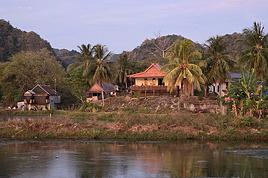
Pourriez-vous me conseiller des romans sur cette partie de l'Asie? Mis à part l'ouvrage de Pierre Loti sur Angkor...
Merci!
Fabrice
An 80-Day Tour of Southern Africa
Back in South Africa
January 12, 2013, 5:30 AM, Flight BA043 London-Cape Town
Directly below, Windhoek glittered like a tangle of fairy lights still lit and tossed into a box.
The horizon, edged in purple, was setting up a backup fireworks display, and suddenly, like a cherry on the platter and with unbearable intensity, in less than two minutes the entire sun revealed a gray dam and then a vast, untouched massif.
A few more minutes and the glare to the east of the plane was total. In Africa, the sun is swift.
We still had a France to cross before landing, but it felt as if we were already there. To the west, the raking light revealed what looked like acne and long, swollen scars in a desert region that might be the Swartkloofberg. Further still, straight as far as the eye could see, the two parallel tracks of a dirt road.
At 11,500 meters altitude and 940 km/h, we had a sense of stillness until the Orange River appeared, an incongruous serpent, gray edged with green.
The first South African settlements were dotted with trees providing shade, then rivers highlighted by continuous lines of vegetation.
Water and shade that make life possible.
We’ll return here by the backroads.
Half an hour from Cape Town, the plane tilted toward the sea, crossing plantations (likely citrus) and then an explosion of cultivated greenery in circles on either side of an unruly river. Finally, the coastline was no longer just sand and water—a frothy hem, a suture?
A peninsula came into view, forming two magnificent bays, and... a flight attendant firmly instructed me to return to my seat: we’d arrived!
The Colors of Cape Town
The city was dressed up as I like them—deserted, fluid, free of its vendors.
In the parking lot of the endless beach next to the commercial port north of the city, about two hundred people were unloading their goods in front of their pickups or combis, none of which were from this century: mixed-race, ageless Black people, and white folks who looked like they’d stepped out of another era.
After a few minutes, intrigued, I played a game: first looking at the merchandise, then imagining who was selling it, and finally looking at who was actually manning the stall. Tall Black vendors were selling what they often sell in Europe—leather, sunglasses, watches; mixed-race folks offered discount bundles, and the tanned older white people seemed to have emptied their attics.
We left with an antique tin kettle for morning tea over an open fire, a pack of five exercise books (that’s 600 pages to fill), Bill Bryson’s earliest stories in English, some snoek rillettes (a local fish), and—never seen before—tuna biltong and snoek biltong.
In so-called advanced countries, Sunday is for sports: white cyclists dressed like pros sweating diligently, Black street vendors running in loops at red lights to sell trash bags that day; white golfers losing their balls, which a scantily clad Black man retrieves from the water; under the sails of kite surf boards, it’s all blondes, and in the foam, joyful splashes from a bunch of Black kids.
Searching for an unusual spot for lunch, we drove through the fishing port looking for a dive and, at the end of a dead-end road with no warning, we arrived at the Shimmy Beach Club—quite the program.
The place, open for just three weeks, aims to be ultra-trendy. You could be in San Francisco, Lisbon’s docks, or St. Barth. This time, the "visible" staff was diverse, but the clientele was exclusively white, except for one mixed-race couple.
For this Sunday lunch, the women had pulled out all the stops, and local starlets—who’d make ours look tame—were turning the terrace into a frenzy.
At Cape Town’s port, the girls have *port*. The trend seems to be crochet dresses over swimsuits.
For two hours, a team of employees watered and raked the sand, starting over when they finished. A child in a floaty pink dress and a gold headband, but a future adventurer, stepped onto the freshly raked artificial beach sand for the first time.
A lanky mixed-race man dragged a hose across the ground, followed by a white woman—enchanted?—who then started watering the sand herself, carelessly splashing the glass terrace her colleague had just swept. I suspect a tacit work arrangement to keep everyone employed.
A galleon packed with tourists (are there any in the hold? Does it take tourists to Robben Island?) left the port. A helicopter took off in its wake. Trawlers returned, cutting through a ballet of catamarans, their waterlines well above the water: a bad catch.
If there’s one country where you can’t pretend to ignore skin color, it’s this one. The question is in everyone’s mind, and here more than anywhere else, it’s a decisive economic and political factor.
Columbine of Brittany
200 km north of Cape Town and 9,000 km south of the Breton coast, but on the same cold ocean, we camped on the shore of the Columbine Cape Nature Reserve, sheltered by a rocky chaos that, at first light tomorrow, would transport us to Perros-Guirec.
Our first encounter with wild animals wouldn’t end well for them: it was crayfish season, and they were the size of lobsters at Lorient’s fish market. Bought for R60 (5.5 €) a pair from kids in Pater Noster, they’d end up between two rocks, over a fire. But first, we had to pair the Chenin blanc with some snoek biltong.
With no wood, I lit a fire at dawn with dried seaweed and kelp, as if petrified; it gave off a smell of court-bouillon and... tires. Two hundred fathoms away, on an outpost, an army of cormorants stood at attention, unmoved among the frolicking seals.
At the reserve’s exit, the guard spoke French; Patrick Mwanba had arrived from Congo three years earlier to study, but the cost of living here forced him to drop out. He’d like to return home because life is cheaper there, but the war made him hesitate.
Ding ding dong! Vroom! Arf arf, Woof! Buzz! (A night from hell!)
I’d long planned to visit Calvinia, the center of a region known for extensive sheep farming. An excellent provincial museum, run by an enthusiastic curator, kept us too late to start the drive north.
So we camped in a tiny, charming campsite set up in the garden of a house. A few trees, a patch of resilient grass, and a view of a pretty lit-up steeple—what else?
Well, it turned out to be a sound-and-light show, with the pretty steeple chiming the hours and half-hours. Then suddenly, we were in the VIP stands of the Karoo-Kalahari Truck Race: roaring trucks paraded under our canvas windows, and we realized we were on the main road through town. To top it off, we enjoyed an uninterrupted canine cacophony, from the *arf arf* of little dogs to the *woof* of a mastiff. Oh, and some mosquitoes—the first ones—insisted on keeping us company in the tent, and we hadn’t yet bought the arsenal to neutralize them.
I walked through Calvinia at night; the house gardens weren’t fenced, nor did they have the «Armed Response» signs so common in the country.
The Kalahari Trails
(No, no, I haven’t converted to hiking.)
North of Calvinia, in the south of the Northern Cape, small towns follow one another up to Upington, about a hundred kilometers apart—welcome havens. Between them, with no trees in sight, we stopped in the shade of a motionless cloud: the temperature exceeded 40°C in mid-January.
We were almost out of the High Karoo and into a region of pans drying up, until the first red dunes appeared, precursors of the Kalahari. In the sparse veld vegetation, gatherings of quiver trees in the kopjes, and a caravan of camels without a handler or packs, marching in perfect formation across a pan (no, I hadn’t overdone the Windhoek at the last stop, and no, I wasn’t dehydrated enough to hallucinate).
The historic part of these towns, European in style, was built on the same plans as those in the American Midwest or the Australian Outback: a grid of streets wide enough to turn a wagon pulled by eight pairs of oxen. The architecture was Dutch-inspired, tropicalized with awnings.
Then came more recent housing, functional in style, where the wealthier mixed-race people—who make up the majority of this state—lived, and further on, the township, an assemblage of corrugated iron and plastic, like everywhere else.
Orange, Right Bank
North of Augrabies Falls National Park, on the other side of the Orange River, stretches a rugged and wild territory the size of fifty Groix islands, crisscrossed by a few tracks—the Riemvasmaak.
The inhabitants were driven out half a century ago for a military base, and as soon as President Mandela was elected, he made it a symbol by allowing the exiled populations to return. Several ethnic groups live here on almost nothing, in government-built shacks.
A community camp is set up in a small cirque at the end of a canyon that, while not in the history books, offers a good descent. By mid-afternoon, the air was at 44°C, but luckily there was a spring... except it was a hot spring, with water at 38°C. And they haven’t invented a reversible spring yet. Once the birds and baboons had settled in, in absolute silence and far from any light pollution, we enjoyed the stars like nowhere else (well, that’s what they claim in the region).
The Orange didn’t choose the easy path: arriving from Lesotho, it was almost at the ocean. The terrain to the south and north of this massif seemed easier to cross. Was it to avoid the curse of the Okavango, whose waters disappear into the sands without ever seeing the sea, that it chose this rocky route, thinking that at least the granite wouldn’t steal its water?
I Love You, I Eat You
In the dry bed of the Auob, it lay panting, head raised, alert, between its paws but head-to-tail, a tawny springbok, motionless.
A few minutes earlier, their story had been written in a lightning-fast chase, captured in photos by the driver of the car that alerted us.
It would be a long time before it started eating at the groin without breaking its surveillance.
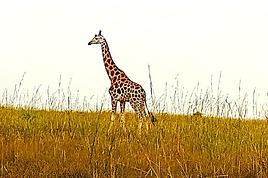
Earlier, there was a lion lounging in the shade and hundreds of antelopes: springboks and gemsboks (oryx) in herds, hartebeests and steenboks alone. Strange pairs, apart several times, formed by a springbok and a gemsbok.
A few solitary jackals moved slightly sideways, looking furtive. Ostriches, alone, looking a bit dazed.
It was a lucky morning in the Kgalagadi (KTP).
In and Out
Kgalagadi, Nossob Camp.
We were at the very end of the almost-empty camp, ten meters from the fence, whose structure wouldn’t resist an elephant (though there aren’t any here), but it was electrified.
At dusk, on the other side, ten meters away, three lions passed in a row, as if on parade, seemingly focused on their goal and indifferent to the camp, though they glanced at it.
A jackal had gotten into the camp and was trying to get out without success while scavenging. I offered it two pieces of snoek biltong (Don’t feed the animals!) from three meters away—it smelled strong and had bones (bones in biltong!). When it passed by again, it sniffed but didn’t dare approach. Curled up in the chair, motionless, by the faint moonlight, I finally saw it come closer, grab the nearest piece, and move ten meters away to enjoy it (how many jackals know the finer points of sea biltong?). A little reassured, it came back for the second piece.
Another Morning
By morning, the jackal was gone, but our luck hadn’t left us. Two cheetahs again, who found me in the way and slowly moved toward a calmer shadow. Enough birds of prey to form a squadron, but they’re solitary hunters. Two ostriches busy with their dozen unruly chicks. And while we’re at it, a group of four Kalahari lions, sprawled under a thorny bush. Lots of oryx crossing the dunes and herds of red hartebeest. Kori bustards and secretary birds.
It was the first time the Kgalagadi had spoiled us so much.
Back in South Africa
January 12, 2013, 5:30 AM, Flight BA043 London-Cape Town
Directly below, Windhoek glittered like a tangle of fairy lights still lit and tossed into a box.
The horizon, edged in purple, was setting up a backup fireworks display, and suddenly, like a cherry on the platter and with unbearable intensity, in less than two minutes the entire sun revealed a gray dam and then a vast, untouched massif.
A few more minutes and the glare to the east of the plane was total. In Africa, the sun is swift.
We still had a France to cross before landing, but it felt as if we were already there. To the west, the raking light revealed what looked like acne and long, swollen scars in a desert region that might be the Swartkloofberg. Further still, straight as far as the eye could see, the two parallel tracks of a dirt road.
At 11,500 meters altitude and 940 km/h, we had a sense of stillness until the Orange River appeared, an incongruous serpent, gray edged with green.
The first South African settlements were dotted with trees providing shade, then rivers highlighted by continuous lines of vegetation.
Water and shade that make life possible.
We’ll return here by the backroads.
Half an hour from Cape Town, the plane tilted toward the sea, crossing plantations (likely citrus) and then an explosion of cultivated greenery in circles on either side of an unruly river. Finally, the coastline was no longer just sand and water—a frothy hem, a suture?
A peninsula came into view, forming two magnificent bays, and... a flight attendant firmly instructed me to return to my seat: we’d arrived!
The Colors of Cape Town
The city was dressed up as I like them—deserted, fluid, free of its vendors.
In the parking lot of the endless beach next to the commercial port north of the city, about two hundred people were unloading their goods in front of their pickups or combis, none of which were from this century: mixed-race, ageless Black people, and white folks who looked like they’d stepped out of another era.
After a few minutes, intrigued, I played a game: first looking at the merchandise, then imagining who was selling it, and finally looking at who was actually manning the stall. Tall Black vendors were selling what they often sell in Europe—leather, sunglasses, watches; mixed-race folks offered discount bundles, and the tanned older white people seemed to have emptied their attics.
We left with an antique tin kettle for morning tea over an open fire, a pack of five exercise books (that’s 600 pages to fill), Bill Bryson’s earliest stories in English, some snoek rillettes (a local fish), and—never seen before—tuna biltong and snoek biltong.
In so-called advanced countries, Sunday is for sports: white cyclists dressed like pros sweating diligently, Black street vendors running in loops at red lights to sell trash bags that day; white golfers losing their balls, which a scantily clad Black man retrieves from the water; under the sails of kite surf boards, it’s all blondes, and in the foam, joyful splashes from a bunch of Black kids.
Searching for an unusual spot for lunch, we drove through the fishing port looking for a dive and, at the end of a dead-end road with no warning, we arrived at the Shimmy Beach Club—quite the program.
The place, open for just three weeks, aims to be ultra-trendy. You could be in San Francisco, Lisbon’s docks, or St. Barth. This time, the "visible" staff was diverse, but the clientele was exclusively white, except for one mixed-race couple.
For this Sunday lunch, the women had pulled out all the stops, and local starlets—who’d make ours look tame—were turning the terrace into a frenzy.
At Cape Town’s port, the girls have *port*. The trend seems to be crochet dresses over swimsuits.
For two hours, a team of employees watered and raked the sand, starting over when they finished. A child in a floaty pink dress and a gold headband, but a future adventurer, stepped onto the freshly raked artificial beach sand for the first time.
A lanky mixed-race man dragged a hose across the ground, followed by a white woman—enchanted?—who then started watering the sand herself, carelessly splashing the glass terrace her colleague had just swept. I suspect a tacit work arrangement to keep everyone employed.
A galleon packed with tourists (are there any in the hold? Does it take tourists to Robben Island?) left the port. A helicopter took off in its wake. Trawlers returned, cutting through a ballet of catamarans, their waterlines well above the water: a bad catch.
If there’s one country where you can’t pretend to ignore skin color, it’s this one. The question is in everyone’s mind, and here more than anywhere else, it’s a decisive economic and political factor.
Columbine of Brittany
200 km north of Cape Town and 9,000 km south of the Breton coast, but on the same cold ocean, we camped on the shore of the Columbine Cape Nature Reserve, sheltered by a rocky chaos that, at first light tomorrow, would transport us to Perros-Guirec.
Our first encounter with wild animals wouldn’t end well for them: it was crayfish season, and they were the size of lobsters at Lorient’s fish market. Bought for R60 (5.5 €) a pair from kids in Pater Noster, they’d end up between two rocks, over a fire. But first, we had to pair the Chenin blanc with some snoek biltong.
With no wood, I lit a fire at dawn with dried seaweed and kelp, as if petrified; it gave off a smell of court-bouillon and... tires. Two hundred fathoms away, on an outpost, an army of cormorants stood at attention, unmoved among the frolicking seals.
At the reserve’s exit, the guard spoke French; Patrick Mwanba had arrived from Congo three years earlier to study, but the cost of living here forced him to drop out. He’d like to return home because life is cheaper there, but the war made him hesitate.
Ding ding dong! Vroom! Arf arf, Woof! Buzz! (A night from hell!)
I’d long planned to visit Calvinia, the center of a region known for extensive sheep farming. An excellent provincial museum, run by an enthusiastic curator, kept us too late to start the drive north.
So we camped in a tiny, charming campsite set up in the garden of a house. A few trees, a patch of resilient grass, and a view of a pretty lit-up steeple—what else?
Well, it turned out to be a sound-and-light show, with the pretty steeple chiming the hours and half-hours. Then suddenly, we were in the VIP stands of the Karoo-Kalahari Truck Race: roaring trucks paraded under our canvas windows, and we realized we were on the main road through town. To top it off, we enjoyed an uninterrupted canine cacophony, from the *arf arf* of little dogs to the *woof* of a mastiff. Oh, and some mosquitoes—the first ones—insisted on keeping us company in the tent, and we hadn’t yet bought the arsenal to neutralize them.
I walked through Calvinia at night; the house gardens weren’t fenced, nor did they have the «Armed Response» signs so common in the country.
The Kalahari Trails
(No, no, I haven’t converted to hiking.)
North of Calvinia, in the south of the Northern Cape, small towns follow one another up to Upington, about a hundred kilometers apart—welcome havens. Between them, with no trees in sight, we stopped in the shade of a motionless cloud: the temperature exceeded 40°C in mid-January.
We were almost out of the High Karoo and into a region of pans drying up, until the first red dunes appeared, precursors of the Kalahari. In the sparse veld vegetation, gatherings of quiver trees in the kopjes, and a caravan of camels without a handler or packs, marching in perfect formation across a pan (no, I hadn’t overdone the Windhoek at the last stop, and no, I wasn’t dehydrated enough to hallucinate).
The historic part of these towns, European in style, was built on the same plans as those in the American Midwest or the Australian Outback: a grid of streets wide enough to turn a wagon pulled by eight pairs of oxen. The architecture was Dutch-inspired, tropicalized with awnings.
Then came more recent housing, functional in style, where the wealthier mixed-race people—who make up the majority of this state—lived, and further on, the township, an assemblage of corrugated iron and plastic, like everywhere else.
Orange, Right Bank
North of Augrabies Falls National Park, on the other side of the Orange River, stretches a rugged and wild territory the size of fifty Groix islands, crisscrossed by a few tracks—the Riemvasmaak.
The inhabitants were driven out half a century ago for a military base, and as soon as President Mandela was elected, he made it a symbol by allowing the exiled populations to return. Several ethnic groups live here on almost nothing, in government-built shacks.
A community camp is set up in a small cirque at the end of a canyon that, while not in the history books, offers a good descent. By mid-afternoon, the air was at 44°C, but luckily there was a spring... except it was a hot spring, with water at 38°C. And they haven’t invented a reversible spring yet. Once the birds and baboons had settled in, in absolute silence and far from any light pollution, we enjoyed the stars like nowhere else (well, that’s what they claim in the region).
The Orange didn’t choose the easy path: arriving from Lesotho, it was almost at the ocean. The terrain to the south and north of this massif seemed easier to cross. Was it to avoid the curse of the Okavango, whose waters disappear into the sands without ever seeing the sea, that it chose this rocky route, thinking that at least the granite wouldn’t steal its water?
I Love You, I Eat You
In the dry bed of the Auob, it lay panting, head raised, alert, between its paws but head-to-tail, a tawny springbok, motionless.
A few minutes earlier, their story had been written in a lightning-fast chase, captured in photos by the driver of the car that alerted us.
It would be a long time before it started eating at the groin without breaking its surveillance.
Earlier, there was a lion lounging in the shade and hundreds of antelopes: springboks and gemsboks (oryx) in herds, hartebeests and steenboks alone. Strange pairs, apart several times, formed by a springbok and a gemsbok.
A few solitary jackals moved slightly sideways, looking furtive. Ostriches, alone, looking a bit dazed.
It was a lucky morning in the Kgalagadi (KTP).
In and Out
Kgalagadi, Nossob Camp.
We were at the very end of the almost-empty camp, ten meters from the fence, whose structure wouldn’t resist an elephant (though there aren’t any here), but it was electrified.
At dusk, on the other side, ten meters away, three lions passed in a row, as if on parade, seemingly focused on their goal and indifferent to the camp, though they glanced at it.
A jackal had gotten into the camp and was trying to get out without success while scavenging. I offered it two pieces of snoek biltong (Don’t feed the animals!) from three meters away—it smelled strong and had bones (bones in biltong!). When it passed by again, it sniffed but didn’t dare approach. Curled up in the chair, motionless, by the faint moonlight, I finally saw it come closer, grab the nearest piece, and move ten meters away to enjoy it (how many jackals know the finer points of sea biltong?). A little reassured, it came back for the second piece.
Another Morning
By morning, the jackal was gone, but our luck hadn’t left us. Two cheetahs again, who found me in the way and slowly moved toward a calmer shadow. Enough birds of prey to form a squadron, but they’re solitary hunters. Two ostriches busy with their dozen unruly chicks. And while we’re at it, a group of four Kalahari lions, sprawled under a thorny bush. Lots of oryx crossing the dunes and herds of red hartebeest. Kori bustards and secretary birds.
It was the first time the Kgalagadi had spoiled us so much.
Le laboratoire de recherche SET (Société, Environnement et Territoire) de l’Université de Pau (CNRS-UMR 5603) mène actuellement un projet de recherche sur les backpackers. Cette recherche a pour objectif de mieux comprendre comment les backpackers se « déconnectent » de leur vie quotidienne. Dans un monde où le téléphone portable et les ordinateurs nous lient en permanence aux autres, est-il encore possible de se retrouver ailleurs ou avec soi-même le temps d’un voyage ?
Pour une interview d’une durée d’environ 30 à 40 minutes, nous sommes donc à la recherche de voyageurs qui ont décidé de se déconnecter totalement, partiellement, ou provisoirement pendant leur séjour (éteindre occasionnellement son téléphone portable, restreindre son accès à internet, limiter son usage de l’ordinateur, etc.). Cette interview se déroule sous la forme d’une discussion pendant laquelle nous vous demandons de raconter votre voyage.
Les résultats de cette recherche serviront, entre autre, à réfléchir aux solutions envisageables pour les personnes souffrant d’une dépendance aux technologies de l’information et de la communication.
Les chercheurs se plieront aux exigences des voyageurs, en termes d’horaires, et sont donc disposés à vous rencontrer au moment que vous préférerez (en face-à-face, par skype ou par téléphone).
Pour plus d’informations ou pour convenir d’un rendez-vous, nous vous invitons à nous contacter :
Mail : jocelyn.lachance@univ-pau.fr Téléphone : 07.78.69.46.17
Jocelyn Lachance
SET Chercheur postdoctoral en sociologie
Pour une interview d’une durée d’environ 30 à 40 minutes, nous sommes donc à la recherche de voyageurs qui ont décidé de se déconnecter totalement, partiellement, ou provisoirement pendant leur séjour (éteindre occasionnellement son téléphone portable, restreindre son accès à internet, limiter son usage de l’ordinateur, etc.). Cette interview se déroule sous la forme d’une discussion pendant laquelle nous vous demandons de raconter votre voyage.
Les résultats de cette recherche serviront, entre autre, à réfléchir aux solutions envisageables pour les personnes souffrant d’une dépendance aux technologies de l’information et de la communication.
Les chercheurs se plieront aux exigences des voyageurs, en termes d’horaires, et sont donc disposés à vous rencontrer au moment que vous préférerez (en face-à-face, par skype ou par téléphone).
Pour plus d’informations ou pour convenir d’un rendez-vous, nous vous invitons à nous contacter :
Mail : jocelyn.lachance@univ-pau.fr Téléphone : 07.78.69.46.17
Jocelyn Lachance
SET Chercheur postdoctoral en sociologie
Monte-Carlo : un long week-end entre riviera italienne et riviera française : (1)
L’automne est l’occasion de longues escapades autoroutières entre deux « travailler plus… » Il s’agit alors de retrouver mer et nature entre deux plongées de « work alcoolic »…et là, les hebdos de l’automne vous proposent plein d’idées de longs week-ends…
Rien de tel qu’une escapade autoroutière sur la riviera française à cheval sur la riviera italienne : Monte-carlo, Menton, Bordighera, San Remo…
Quand vous avez enfilé vos cinq cents kilomètres d’autoroute sans bouchon( vous êtes en septembre : les juilletistes et les aoûtiens sont rentrés…) seuls les allemands, belges et hollandais retraités s’essaient encore à gagner le grand Sud de la France…
Vous les quittez à l’embranchement d’Aix en Provence, où, désormais, la Montagne Sainte Victoire vous guide avec ses éclairages et ses aspects changeant. : à Salon, elle vous nargue, effilée et austère au soleil de Midi, à Vidauban, elle ressemble plus à un massif du Lubéron fatigué et modeste…(cf. photo)
Heureusement que le Massif de la sainte Baume est là pour durcir le paysage…
Les maures vous semblent longtemps sans reliefs et puis vous débusquez le Massif de l’Estérel et c’est là qu’il s’agit de se poser avant de vous plonger dans les délices des deux rivieras…
Vous dénichez alors un hôtel de charme entre Montauroux et Grasse, surplombant le Lac de Saint Cassien (cf.photo) que vous aurez eu soin de repérer lors de l’un de vos raids précédents : seuls les anglais ont le bon goût d’y demeurer encore( merci, Lonely Planet)
Le soir, vous partagerez avec eux un foie de veau à la provençale et un fromage blanc au coulis de framboise…
L’automne est l’occasion de longues escapades autoroutières entre deux « travailler plus… » Il s’agit alors de retrouver mer et nature entre deux plongées de « work alcoolic »…et là, les hebdos de l’automne vous proposent plein d’idées de longs week-ends…
Rien de tel qu’une escapade autoroutière sur la riviera française à cheval sur la riviera italienne : Monte-carlo, Menton, Bordighera, San Remo…
Quand vous avez enfilé vos cinq cents kilomètres d’autoroute sans bouchon( vous êtes en septembre : les juilletistes et les aoûtiens sont rentrés…) seuls les allemands, belges et hollandais retraités s’essaient encore à gagner le grand Sud de la France…
Vous les quittez à l’embranchement d’Aix en Provence, où, désormais, la Montagne Sainte Victoire vous guide avec ses éclairages et ses aspects changeant. : à Salon, elle vous nargue, effilée et austère au soleil de Midi, à Vidauban, elle ressemble plus à un massif du Lubéron fatigué et modeste…(cf. photo)
Heureusement que le Massif de la sainte Baume est là pour durcir le paysage…
Les maures vous semblent longtemps sans reliefs et puis vous débusquez le Massif de l’Estérel et c’est là qu’il s’agit de se poser avant de vous plonger dans les délices des deux rivieras…
Vous dénichez alors un hôtel de charme entre Montauroux et Grasse, surplombant le Lac de Saint Cassien (cf.photo) que vous aurez eu soin de repérer lors de l’un de vos raids précédents : seuls les anglais ont le bon goût d’y demeurer encore( merci, Lonely Planet)
Le soir, vous partagerez avec eux un foie de veau à la provençale et un fromage blanc au coulis de framboise…
Emission de Daniel Mermet sur france Inter à propos du dernier livre de Maurice Lemoine Chavez presidente! --
Chavez Presidente !
Entretien avec Maurice Lemoine, rédacteur en chef adjoint du Monde diplomatique, spécialiste de l’Amérique Latine et auteur de Chavez Presidente ! (aux éditions Flammarion) Chávez presidente ! est un roman d’espionnage qui constitue à la fois une chronique du coup d’Etat contre le président vénézuélien Hugo Chavez en 2002 et une mise au jour des mécanismes des jeux de pouvoirs internationaux.
http://www.la-bas.org/ram/050617.ram
http://www.la-bas.org/article.php3?id_article=714
Chavez Presidente !
Entretien avec Maurice Lemoine, rédacteur en chef adjoint du Monde diplomatique, spécialiste de l’Amérique Latine et auteur de Chavez Presidente ! (aux éditions Flammarion) Chávez presidente ! est un roman d’espionnage qui constitue à la fois une chronique du coup d’Etat contre le président vénézuélien Hugo Chavez en 2002 et une mise au jour des mécanismes des jeux de pouvoirs internationaux.
http://www.la-bas.org/ram/050617.ram
http://www.la-bas.org/article.php3?id_article=714
Je voudrais réserver une nuit aux Ile Aux Nattes dans le mois d'août. Je suis intéressé à Chez Regine, Les Lemuriens, Meva Paradis, mais je ne réussis pas à contacter aucune des trois. Quelqu'un connaît une adresse email * fonctionnante * ou autres modalités pour contacter ces hôtels ? Merci Edoardo
Hello my fellow globetrotters, could anyone tell me how to find the French colonial cemetery in Pondicherry? It seems tricky to locate.
Thanks so much for your help! Take care, pace yourselves, and travel far.
Cheers, Régine
Thanks so much for your help! Take care, pace yourselves, and travel far.
Cheers, Régine
Hi, I’d love to know if there’s a website that gives a rough idea of how much time you should spend visiting a particular city or country.
I know my question is super general, but it’d be really great if such a site existed.
Thanks in advance for your help. Take care and happy travels.
Régine
Thanks in advance for your help. Take care and happy travels.
Régine
Bonjour à tous les croisièristes,
En projet d'une croisière avec Costa pour la 1ère fois, pouvez vous me dire si les pourboires prélevés en fin de séjour sont obligatoires ou non?
Sur MSC nous pouvons les faire retirer. je les donne directement au personnel.
Merci beaucoup de me renseigner
En projet d'une croisière avec Costa pour la 1ère fois, pouvez vous me dire si les pourboires prélevés en fin de séjour sont obligatoires ou non?
Sur MSC nous pouvons les faire retirer. je les donne directement au personnel.
Merci beaucoup de me renseigner
Bonjour à tous,
Un petit renseignement concernant le projet d'une croisière sur le Splendida début Octobre . Quelqu'un a t-il fait l'escale de Palma de Majorque : débarquement 15h retour 24h. Cela me parait tard pour visiter la ville...Doit-on diner en ville ? Pourriez-vous me dire vos impressions ? Merci d'avance
Un petit renseignement concernant le projet d'une croisière sur le Splendida début Octobre . Quelqu'un a t-il fait l'escale de Palma de Majorque : débarquement 15h retour 24h. Cela me parait tard pour visiter la ville...Doit-on diner en ville ? Pourriez-vous me dire vos impressions ? Merci d'avance
Bonjour
Le 20 décembre, nous commençons sac à dos le chemin de St Jacques depuis Porto jusqu'à Fisterra.
Allons essayer de longer la côte.
Si vous avez déjà effectué ce voyage, avez vous des conseils à nous transmettre.
Merci et bon Noël🙁
Régine et André
bonjour à tous,
Nous sommes équipées d'un moyeu dynamo shimano, l'idée reste de compléter la charge d'une petite batterie d'appoint est-il possible de la brancher directement sur la connectique de la dynamo sans mettre de régulateur de type E-WERK ? merci de vos retours
régine
Nous sommes équipées d'un moyeu dynamo shimano, l'idée reste de compléter la charge d'une petite batterie d'appoint est-il possible de la brancher directement sur la connectique de la dynamo sans mettre de régulateur de type E-WERK ? merci de vos retours
régine
Bonjour à tous,
J'aimerais avoir des infos pour accéder à Santorin.
Des renseignements pour aller à Athènes sans que cela me coûte trop cher....
Merci d'avance .😁😎
Bonjour, qui aurait louer avec Lokizy ou GD ou autres expérience bonne ou pas.......
Merci.
Ce message s'adresse aux "dames cyclotouristes"
Je pars fin aout pour un long périple le long du Danube
Merci de bien vouloir me conseiller sur précaution à prendre pour éviter les douleurs, brulures, infections urinaires, etc... dues au bec de selle. Nous sommes fragiles !!!! Merci de votre expérience. Régine
Je pars fin aout pour un long périple le long du Danube
Merci de bien vouloir me conseiller sur précaution à prendre pour éviter les douleurs, brulures, infections urinaires, etc... dues au bec de selle. Nous sommes fragiles !!!! Merci de votre expérience. Régine
Bonjour les vélocipédistes..
Partons le long du Danube. Arrivée en Roumanie (Constanza ou Tulcea). Souhaiterions connaître votre expérience de retour (en train ou en bus ??) Merci de bien vouloir nous informer.
Régine et André
Partons le long du Danube. Arrivée en Roumanie (Constanza ou Tulcea). Souhaiterions connaître votre expérience de retour (en train ou en bus ??) Merci de bien vouloir nous informer.
Régine et André
bonjour,
Je m'y perds un peu sur l'ascension du kilimandjaro, le thème génère beaucoup d'informations alors ceux qui ont fait cette experience peuvent m'apporter leur point de vue de terrain je serai ravie de les lire merci
régine
Je m'y perds un peu sur l'ascension du kilimandjaro, le thème génère beaucoup d'informations alors ceux qui ont fait cette experience peuvent m'apporter leur point de vue de terrain je serai ravie de les lire merci
régine
Bonjour à tous,
Faisant la croisière Sérénissime qui dure 15j, quelqu'un sait si sur le bateau il y a un service de blanchisserie ou si vous avez de petites astuces pour laver son linge? Malgré , la prévisions d'un bon nombre de vêtements.
Merci à tous
Régine
Faisant la croisière Sérénissime qui dure 15j, quelqu'un sait si sur le bateau il y a un service de blanchisserie ou si vous avez de petites astuces pour laver son linge? Malgré , la prévisions d'un bon nombre de vêtements.
Merci à tous
Régine
Bonjour
Disposons de 45 jours (juin/juillet 2015) pour effectuer une rando à vélo depuis source du Danube jusqu'à fin des 45 jours !!!!😉
Sommes intéressés par votre expérience, vos conseils (hébergements, topoguide, balisage etc. etc...)
Sommes un couple de "jeunes retraités" qui pratiquerons le camping de temps à autre..
Merci pour votre aide précieuse.
Régine et André Montaut 64800
Disposons de 45 jours (juin/juillet 2015) pour effectuer une rando à vélo depuis source du Danube jusqu'à fin des 45 jours !!!!😉
Sommes intéressés par votre expérience, vos conseils (hébergements, topoguide, balisage etc. etc...)
Sommes un couple de "jeunes retraités" qui pratiquerons le camping de temps à autre..
Merci pour votre aide précieuse.
Régine et André Montaut 64800
J'arrive à Van Vieng début février par le bus en provenance de Vientiane
Je ne dispose que d'une demi journée et soirée 😕
en effet je reprends le bus pour Luang Prabang le lendemain
Quels sont les priorités à voir en une demi journée D'avance merci Régine
Quels sont les priorités à voir en une demi journée D'avance merci Régine
Bonsoir
Enfin notre rêve va se réaliser : passer Noël à Colmar . Souhaiterions découvrir marché de Noël et faire aussi quelques randos à pied dans les vignobles.
Connaissez vous des restaurants typiques (pas de piège à touristes) avec cuisine de qualité et prix corrects ainsi que d'agréables balades à pied. Merci Régine et André
Enfin notre rêve va se réaliser : passer Noël à Colmar . Souhaiterions découvrir marché de Noël et faire aussi quelques randos à pied dans les vignobles.
Connaissez vous des restaurants typiques (pas de piège à touristes) avec cuisine de qualité et prix corrects ainsi que d'agréables balades à pied. Merci Régine et André
Bonjour des Pyrénées
Avons projet partir à vélo (Atlantique/ Méditérannée par le canal) Nous nous renseignons pour acheter matériel de camping : sleeping bed et tente le + léger possible. Sollicitons vos conseils avertis . ? Merci Régine et André
Avons projet partir à vélo (Atlantique/ Méditérannée par le canal) Nous nous renseignons pour acheter matériel de camping : sleeping bed et tente le + léger possible. Sollicitons vos conseils avertis . ? Merci Régine et André
Bonsoir et bonne année à tous les membres de Forum Voyage
Avons entendu parlé d'un chemin qui s'appelerait "Camino del Cid" et qui en Espagne partirait de Burgos Connaissez vous ce chemin ? si oui existe t il un topoguide.
Merci Régine et André Montaut 64800
Avons entendu parlé d'un chemin qui s'appelerait "Camino del Cid" et qui en Espagne partirait de Burgos Connaissez vous ce chemin ? si oui existe t il un topoguide.
Merci Régine et André Montaut 64800
Bonjour
Envisageons de passer Noël au Portugal. Allons passer quelques jours à FARO (Noël) ensuite Lisbonne etc... Connaissez vous des lieux d'hébergement sympa où les hôtes sont chaleureux.
Merci de votre aide.
Régine et André
Envisageons de passer Noël au Portugal. Allons passer quelques jours à FARO (Noël) ensuite Lisbonne etc... Connaissez vous des lieux d'hébergement sympa où les hôtes sont chaleureux.
Merci de votre aide.
Régine et André
Bonjour à tous ! je me rends à Bali en septembre et vais passer 3 à 4 jours à Sanur avec 2 amis. nous cherchons un hôtel aux alentours de 15E par nuit par personne. Auriez-vous des suggestions ?
Merci 🙂
bonjour,
j'ai pris un vol pour londres pendant les fêtes avec arrivée à l'aéroport london city, quel est le moyen le plus adapté pour rejoindre coven garden :
taxi : pas trop cher ?
metro ou bus : pas trop ch... ?
merci d'avance
régine
Bonjour,
je souhaite partir en voyage au Québec avec ma famille fin avril -début mai 2013. Nous souhaitons louer une voiture . Quel est l'état des routes en général à cette période? A quelle température faut il s'attendre?
Merci d'avance pour vos conseils.
Régine
je souhaite partir en voyage au Québec avec ma famille fin avril -début mai 2013. Nous souhaitons louer une voiture . Quel est l'état des routes en général à cette période? A quelle température faut il s'attendre?
Merci d'avance pour vos conseils.
Régine
Bonsoir
Souhaitons organiser un voyage à pied depuis FARO au Portugal jusqu'à St Jacques de Compostelle. Auriez vous des infos sur le chemin Faro-Lisbonne ? Merci jacquaires André et Régine
Souhaitons organiser un voyage à pied depuis FARO au Portugal jusqu'à St Jacques de Compostelle. Auriez vous des infos sur le chemin Faro-Lisbonne ? Merci jacquaires André et Régine
Bonjour
Existe -t- il une liaison ferroviaire entre GRAMAT (46) et LES EYZIES (24) via SARLAT (24) ou bien la même liaison par autobus. Ceci.... pour effectuer une future rando pedestre sur le GR 64 (Rocamadour /Les Eyzies).
Avec tous nos remerciements
Régine et André Montaut 64800
Existe -t- il une liaison ferroviaire entre GRAMAT (46) et LES EYZIES (24) via SARLAT (24) ou bien la même liaison par autobus. Ceci.... pour effectuer une future rando pedestre sur le GR 64 (Rocamadour /Les Eyzies).
Avec tous nos remerciements
Régine et André Montaut 64800