Hello François, and the new team!
Like many others, I’m overjoyed to hear that VoyageForum is reopening! I’ve been waiting hopefully for this, and it’s wonderful that it’s finally happening!
I just couldn’t bring myself to actively participate in other French-language travel forums—their format and way of doing things never appealed to me as much. I really hope that VF’s structure, categories, and interface won’t change too much despite the handover, because I’m very attached to them. Through thick and thin, the site has held strong—it’s amazing!
In a previous message, François mentioned that there were positions to fill ahead of the reopening, including moderators...
I’ve been eagerly waiting for this and hoping to send in my CV.
Now, after reading the latest message, it seems like the team is already fully formed. But are there still a few spots left to fill?
I’ve been a VF member for 20 years (since 2004). I’d love to contribute to this wonderful adventure as a moderator if VF would trust me with the role. If the team is open to reviewing it, I’m ready to send my CV. Could you let me know the next steps?
Best regards,
Marine/eversmile
228 similar discussions in English
Hi,
Our trip is planned for 20 days in Japan next April. We have a free subscription that would allow us to use 35 GB (I’m a bit confused), but we also need to be able to make phone calls with a French couple traveling with us for a few days, and that seems impossible due to cost... Any solutions for using GPS while keeping those 35 GB? Used to traveling in Southeast Asia, we usually rely on local SIM cards. Is it easy to do the same in Japan?
Thanks for your help!
Best,
Tialou
Hello,
For a week-long trip starting from Marrakech with a rental car, if you had to choose between these two loops, which one would you go for and why? 1) Marrakech - Ouarzazate - Dades Gorges - Merzouga - Marrakech (map itinerary) 2) Marrakech - Ouarzazate - Dades Gorges - Zagora - Marrakech (map itinerary)
Important info: this is for mid-February, so nights will be cold. For option 1, we’re thinking of staying in a "solid" hotel in Merzouga rather than camping in a tent without heating (our 10-year-old might not like that ^^). If you’ve got any experience to share about cold winter nights in the desert while camping, that’d be super helpful!
Thanks so much in advance!
We’re wrapping up our Sardinia tour by camper van. We stayed for 5 weeks, covered 2,150 km on this island, and will leave with mixed feelings!!
While the island is beautiful—especially for those who love beaches and all kinds of water sports—it’s also appealing for history buffs and archaeology enthusiasts. The mountains, scenic roads, and small villages are really lovely too.
That said, driving here can be pretty hazardous. Locals don’t respect speed limits or road rules, they roll through stops, zoom out of side streets, and often overtake without proper visibility. On top of that, the quality of roads and highways is really disappointing!! And service areas, whether paid or free, are few and far between and often poorly maintained.
One last thing: we’d heard Sardinians were welcoming... I don’t know if it’s because they’ve "endured" waves of tourists from all over during the summer months, but unfortunately, we didn’t find that to be true. Most seemed rather gloomy or even unwelcoming, with just a few exceptions saving Sardinia’s reputation!!
It’s a real shame for an island with so much potential. I think a serious review of how tourism is managed would be worth considering. That aside, we did notice some efforts and goodwill that were nice to see.
First of all... happy New Year! Wishing you great roads in 2017!
I’ve been traveling for a few years now with a high-quality mountain bike, but it’s equipped with hydraulic disc brakes. I live (pedal) with the constant worry of a breakdown (leak, air bubble, heat causing the fluid to...). My bike mechanic tells me it’s impossible to switch them out for V-brakes.
What do you all think? Am I taking a big risk continuing (alone) with these brakes? Thanks in advance for your great tips!
Hi there,
We had planned a trip to Sicily in August, and due to the volcanic eruption of Mount Etna, my flight was canceled. The airline is refunding the outbound flight, but none of the non-refundable expenses: accommodation booked through Booking, rental car, and the return flight aren’t covered. My SUPER Gold card doesn’t work in this specific case! :( If anyone has been in this situation, could you let me know if you were able to get any recourse and, if so, how?
Thanks in advance
Hi there,
This August, I hiked the Vosges section (Vosges massif) of the GR5 (Lauterbourg-Wissembourg-gr53-gr5-Belfort) using the TopoGuide "Traversée du Massif des Vosges" (ref 502, April 2024 edition). My experience was partly ruined by a few things I feel I should share here to help others avoid the same pitfalls—or at least disappointments.
Having used "TopoGuide" books before, I’d always trusted them for organizing treks lasting several weeks, or even months.
Beyond the satisfactory mapping (reproductions of IGN 1:25,000 maps), these guides include route descriptions that are usually enough to find your way. On that point, I have no serious criticism of the Vosges crossing guide.
In addition to the route details, the guide provides "average" time estimates for traveling from point A to point B—useful info for gauging effort and planning likely stages. However, I eventually realized I couldn’t rely on these time estimates. I’d assumed they were calculated by the FFRP, considering that 100m of positive elevation gain roughly equals 1km on flat terrain, with an average walking speed of 4km/h. So, I’d recommend anyone using this guide to recalculate all the time estimates to avoid nasty surprises on tight stages. 🤪
Another key feature of the guide, in my opinion, is its info on accommodation options—especially budget-friendly ones suited for long-distance hikers on a tight budget. A section called "préparation des étapes" includes a table with a column meant to highlight "refuges" and "gîtes d'étapes." That column had me feeling optimistic: these budget accommodations were listed as plentiful along the route. After all, we were in the territory of the famous Club Vosgien—it made sense there’d be plenty of hiker-friendly lodging options. The reality on the ground was quite different. The TopoGuide wasn’t really to blame here, except that a serious warning wouldn’t have hurt. First, regarding the "refuges," most were run by associations. With rare exceptions, the volunteers only opened them on weekends. You can’t really blame people for not volunteering on weekdays, but it makes things tricky when the info about weekend-only openings often turns out to be wrong. As for the "gîtes d'étape," I was mostly disappointed when I was told that a place was booked for weeks: the vast majority of what was listed as a "gîte d'étape" turned out to be "gîtes ruraux." The advice here? If you don’t want to—or can’t—camp, double-check all the accommodation details before you set off. It’s time-consuming and tedious, but if you can, camping is still the best option. 😐 On a brighter note, during the first part of my trip, I came across several cabins that offered alternatives to camping. 🙂
P.S.: Even the youth hostel in Saverne was closed in the middle of August... 😕
Our long-term travel road trip continues in Africa... Our 3rd country will be Rwanda. I invite you to discover and visit this country over 2 months through these few lines and photos that will follow as the days go by and as I find time to write. The goal won’t be safaris or gorillas, but rather getting to know the Rwandan people and their environment.
For tips or questions about Rwanda, don’t hesitate to reach out.
I’m opening this new thread with this first step...
Km 88281 - Rwanda intro
Rwanda is just a tad smaller than Brittany, so we should be able to explore it, delve into its heart, and understand a bit of what’s happening here... When we entered the country on January 2nd, we didn’t think it would become somewhat of a center of international news with a bit of turbulence... Over the coming weeks, we’ll learn to share the lives of Rwandans, grasp their history that still shapes their daily lives, and discover what lies behind these 1,000 hills... In France, over 2 centuries have passed since the Revolution, but here, it’s been just 30 years since the chaos of the genocide. Inside Rwanda...
More details and photos here: https://www.magicargol.fr/carnet/rwanda/t/1649539
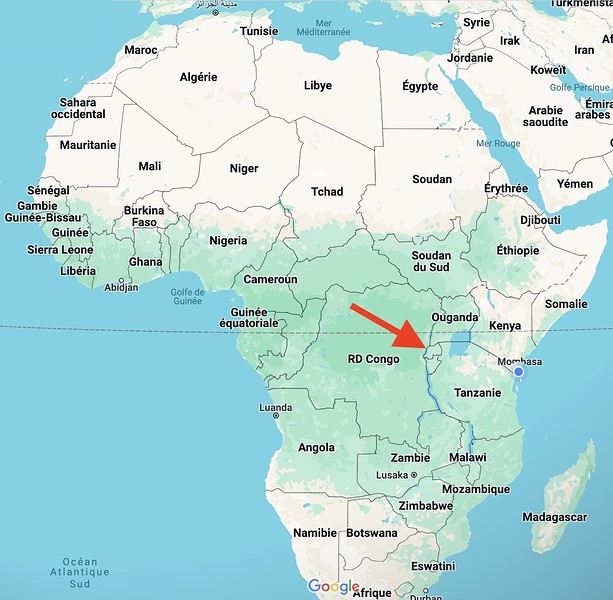

:arrow: More details and photos here: https://www.magicargol.fr/carnet/rwanda/t/1649539
#Rwanda #Cargol #Magirus #170D11 #nomad #VanLife #RoadTrip #Travel #OnTheRoadAgain #Travelling #Campervan #Overland #ExploreWorld
For tips or questions about Rwanda, don’t hesitate to reach out.
I’m opening this new thread with this first step...
Km 88281 - Rwanda intro
Rwanda is just a tad smaller than Brittany, so we should be able to explore it, delve into its heart, and understand a bit of what’s happening here... When we entered the country on January 2nd, we didn’t think it would become somewhat of a center of international news with a bit of turbulence... Over the coming weeks, we’ll learn to share the lives of Rwandans, grasp their history that still shapes their daily lives, and discover what lies behind these 1,000 hills... In France, over 2 centuries have passed since the Revolution, but here, it’s been just 30 years since the chaos of the genocide. Inside Rwanda...
More details and photos here: https://www.magicargol.fr/carnet/rwanda/t/1649539
:arrow: More details and photos here: https://www.magicargol.fr/carnet/rwanda/t/1649539
#Rwanda #Cargol #Magirus #170D11 #nomad #VanLife #RoadTrip #Travel #OnTheRoadAgain #Travelling #Campervan #Overland #ExploreWorld
Hi there,
We’ve just returned from 15 days in Cape Verde, including 8 days of hiking in Santo Antão. It was a fantastic trip with great weather and heat that stayed manageable. Everything was organized by a highly competent local agency that really listened to our requests. I’m happy to share more details about the hikes, hotels, etc. if you’d like!
Because of a miscalculation on extra costs (non-hotel expenses and transfers), I’ve got 18,000 escudos left—I’d be more than happy to exchange them for a more widely used currency!
"400 pages of verbal pyrotechnics and animal magic" — The Times
"Bulawayo leans into exaggeration and irony to tell hard truths. *Glory* is jam-packed with comedy and farce, poking fun at an autocratic regime while illustrating the absurdity and surreal nature of a police state." — The Guardian
The cruelty and savagery of Zimbabwe’s (and Africa’s in general) "powerful animals"
Zimbabwean author NoViolet Bulawayo has written a novel that illustrates better than any documentary the complexity of colonial legacy. In doing so, she revisits George Orwell’s Animal Farm. Her novel *Glory* is a political satire about Zimbabwe—and it’s brimming with humor.
For thirty years, Zimbabwe has been stagnating under Robert Mugabe’s presidency. Human rights violations, corruption, and international sanctions have kept the population mired in poverty and oppression, while the regime exploits the meager earnings of the economy. As the 2017 elections approach, a power struggle erupts over the succession of the very elderly Father of the Nation (Mugabe). On the streets, people hope for long-awaited reforms; the people feel their moment has come.
And indeed, the army ousts Mugabe and his wife—"with her Gucci heels" (p.32)—who was positioning herself for the presidency. Hopes are dashed, however. The generals install former vice-president Emmerson Mnangagwa in power; the regime merely changes faces, but the problems remain the same.
In the novel, the country is called "Jidada, with a -da and another -da" (p.1); there’s no mistaking that this fictional state is Zimbabwe.
For *Glory*, her second novel, NoViolet Bulawayo invents a whole series of codes whose strength lies precisely in how easy they are to decipher. Like George Orwell’s Animal Farm, the characters populating Bulawayo’s universe aren’t humans but horses, goats, or crocodiles with all-too-human traits. Mugabe and Mnangagwa are horses, the spiritual leader is a pig, the soldiers are all bloodthirsty dogs, while the populace consists of goats, chickens, donkeys, and cats. The shift to the animal world serves only to better grasp the laws of despotism—and to ridicule real-life models. On one hand, the animals are humanized: they tweet, torture, travel in private jets. On the other, their greed, stupidity, and brutality stem from their animal nature.
It’s the old trick of fable: dressing men in animal disguises to make them easier to recognize. That’s how Orwell, in Animal Farm, traced how the promise of liberation from the Russian Revolution turned into Stalinist terror. In his 1945 fable, George Orwell describes how the animals of a farm drive out their farmer to organize the exploitation themselves, collectively. For a time, they truly taste freedom, but a clique of pigs ends up taking control. The central figures of the Soviet story—Stalin, Trotsky, Molotov—were easily recognizable.
Yet Bulawayo departs sharply from Orwell. She’s less concerned with precision and the force of argument than with satirical exaggeration. The deposed president is a senile old man who believes he can control even the sun’s course. The new stallion in power is a greedy debaucher. His soldiers sniff respectfully at his tail and backside.
In Bulawayo’s *Glory*, things are more complicated, but her novel also tells of a failed, incomplete liberation. In the author’s Animal Farm, Jidada, the colonial exploiters are followed by new forms of oppression. Because the former liberators become tyrants themselves. And because global power dynamics persist in neocolonial structures.
Wouldn’t that be enough to fuel a deeply depressing narrative? No—Bulawayo turns it into a blazing satire, full of wit and uncompromising criticism of power, a thread running through contemporary (not just) Zimbabwean history. The old warhorses in NoViolet Bulawayo’s Jidada, who continue to act as pack leaders, are easily recognizable as caricatures of the longtime dictator Robert Mugabe and his successor, current president Emmerson Mnangagwa.
The plot kicks off in high gear with independence day festivities. From the crack of dawn, everyone waits on Jidada Square for the Old Horse, the Father of the Nation and former liberator, whose reign "was nearing all of—not one, not two, not three, but four solid decades" (p.1). Everywhere, the colors of the Jidada Party shine; everywhere, true supporters cheer. Even the scorching sun plays its part: "At this point the sun, upon seeing arrive the leader who was decreed by God himself to rule and rule and keep ruling, a leader who'd in turn decreed the very sun to head his cheerleading squad, took a deep, deep breath and thoroughly blazed to impress" (p.2).
Finally, the Old Horse’s luxury carriage approaches "with the slowness of a hearse" (p.2), and "hoping to catch a glimpse of the legendary Father of the Nation," which causes "the animals fell over themselves like intoxicated frogs" (p.2). The sovereign’s speech is delayed a moment longer: "what I really want is a nap," groans the Old Horse as he takes his seat with such care "like his backside was made of expensive porcelain" (p.6).
Meanwhile, Bulawayo parades his entourage: the president’s wife (who earns her doctorate at Jidada University faster than "you could say diss, for dissertation. Tholukuthi it was as easy as ordering from a KFC drive-through, or perhaps even easier being that it was cheaper than KFC; it in fact cost her nothing and the degree actually came with a zero-calorie Diet Coke and a purple straw" (p.41), and she’s now known as Dr Sweet Mother. The cabinet includes "the Minister of the Revolution, the Minister of Corruption, the Minister of Order, the Minister of Things, the Minister of Nothing, the Minister of Propaganda, the Minister of Homophobic Affairs, the Minister of Disinformation and the Minister of Looting" (p.9). And of course the vice-president, who will soon become interim president when the Old Horse finally kicks the bucket—and then settle in as the new long-term president, who in the novel is called Tuvius Delight Shasha, or "Tuvy" for short (p.253), none other than Emmerson Mnangagwa. It’s him Bulawayo reserves her most merciless character description for.
"New Dispensation" (p.109) is Tuvy’s slogan for Jidada, and he loves repeating it so much he even named his parrot after it ("So inspired was Tuvy by the realisation that he rechristened his new pet parrot with the name New Dispensation—tholukuthi the bird having been acquired explicitly for the purposes of tweeting eulogies and accordingly glorifying the Saviour throughout the airs and skies of the nation. Tuvy then went on to hire a lecturer in English from the University of Jidada to teach New Dispensation to say the phrase 'New Dispensation'" p.110). But Tuvy’s Zimbabwe remains a nation without free, fair, and credible elections ("#freefairncredibleelection" p.161), and the promised equal treatment applies only insofar as Zimbabweans now queue up without discrimination in endless lines—and everyone is as poor as the next in the "queuenation" (p.283). Except for the powerful. They can "yes, tholukuthi, her immeasurable riches theirs to take. And take they did—
just take—take—take—take—take—take—take—take—take—take—take—take—take—take—take—take—take—take—take—take—take—take—take—take—take—take—take" (p.249-250).
In short: Bulawayo brilliantly depicts how former independence fighters become exploiters themselves. And how the country threatens to suffocate under the weight of corruption and repression. But she also literally stages the polyphony with which the people oppose imposed obedience to the official line.
Controversial online discussions keep interrupting the narrative—dialogues and social threads (see photo below) that Bulawayo masterfully integrates. From a literary standpoint, it’s a brilliant idea. And it shows, above all, that the author’s sympathy—so likeable—goes to all those who refuse to let their dream of true freedom be stolen, not even by the corrupt elites of their own country.
In the book’s acknowledgments, the first tribute goes to "The Jidadas of the world, clamouring for freedom on many fronts—A luta continua." (p.401) This reflects the realization that, not only in Jidada-Zimbabwe but in many other corners of the world, the end of colonial domination is still far from meaning the freedom hoped for by the vast majority of people. But it also means, more broadly, that this freedom must be won "on many fronts" (see above), both domestically and geopolitically.
That’s precisely what *Glory* so vividly highlights: how complex the project behind the term "postcolonialism" really is. With *Glory*, Bulawayo also delivers a scathing critique of the persistence of colonial mindsets in the West.
In the novel, the murder of George Floyd, racist police violence, and white-supremacist ideology in Trump’s United States perfectly illustrate the persistence of racism. It’s especially in the final chapters that Bulawayo lets Jidada’s inhabitants explicitly and unflinchingly criticize a neocolonial world order:
"It was not lost on us how the West, which loved to 'save' Africa and announce every action to the whole world, did so with one limb while manipulating, looting and fleecing us with the rest of its limbs so that more money in fact poured out of the continent than trickled in." (p.376)
"It was no mistake that multinational corporations yearly reaped and shipped colossal profits from Africa back to their countries as had been the case during colonial times. Even the sticks and stones would tell you that the African earth at any given time howled and shook and heaved from the extraction of its precious minerals that rarely benefited its own miserable children." (p.376)
"(...) we vowed to wage yet another war for Africa's second Liberation from neocolonial oppression. From exploitation. From plunder. From Western dominion. From indignity. From Abuse. We wanted real freedom. We wanted greedy, thieving paws off our wealth. We wanted Justice. We wanted a new world; we wanted a brand-new world so much we didn't sleep a wink that night." (p.377)
The Jidadas of this world must fight two enemies: Western neocolonialism and the autocratic instrumentalization of that argument; the persistence of Western racism and the populist appropriation of that humiliation by tyrants from their own ranks. Neither of these obstacles to freedom diminishes the historical and current guilt of the other. But the path to postcolonial liberation must overcome all these forms of oppression. After all, the colonizers didn’t bequeath democracies to formerly dominated nations, but instability and the principles of oppression and exploitation—which the so-called liberators have also internalized. Yet the fact that a satirical novel can capture the complexity of historical relationships while remaining, despite all the darkness of the subject, hilarious—well, that’s truly astonishing.
Finally, *Glory* ties into a major trauma in Zimbabwe’s post-independence history: the so-called Gukurahundi massacres. Between 1983 and 1987, tens of thousands of civilians were murdered by Mugabe’s bloody henchmen, most of them Ndebele. The State Security Minister and head of secret services at the time? You guessed it—Emmerson Mnangagwa.
When *Glory* turns to the massacres, the novel’s tone shifts completely. The story is now told through the narrative of the goat called Destiny, who, like NoViolet Bulawayo herself, left her home country at 18 for the United States and only returned after 13 years. In the book, the city of Bulawayo becomes a village where Destiny retraces her family’s history—and learns that part of it was also brutally murdered during the massacres.
The abuse of power and life under a dictatorship, dispossession, and a fiercely proud awareness of the psychological wounds and emotional vulnerability of a uprooted and disenfranchised people who had to forge a new language—a new set of names—to express their lived experiences are at the heart of this wonderful Zimbabwean author’s literary work, NoViolet Bulawayo. Shortly after her studies, she was already writing short stories about postcolonial power dynamics in Africa. But her playful, masterful, and often unconventional approach to language also plays a key role in her work. With virtuosity, she shifts from cynical images of power-obsessed elites to compassionate descriptions of the people’s suffering, ending with a hopeful sermon on courage—the courage to break free from fear and thus gain the strength for change ("And every one of them understood that whatever they heard within those hearts was the new national anthem, tholukuthi an anthem that spoke of the kind of glory that burns eternal and glows with living light." p.400). This novel is a genuine pleasure to read. And it’s exceptional. Good, African...
Book info (original English and German translation):
NoViolet Bulawayo. Glory. Chatto & Windus, 2022. NoViolet Bulawayo. Glory. Suhrkamp, 2023.
Hery
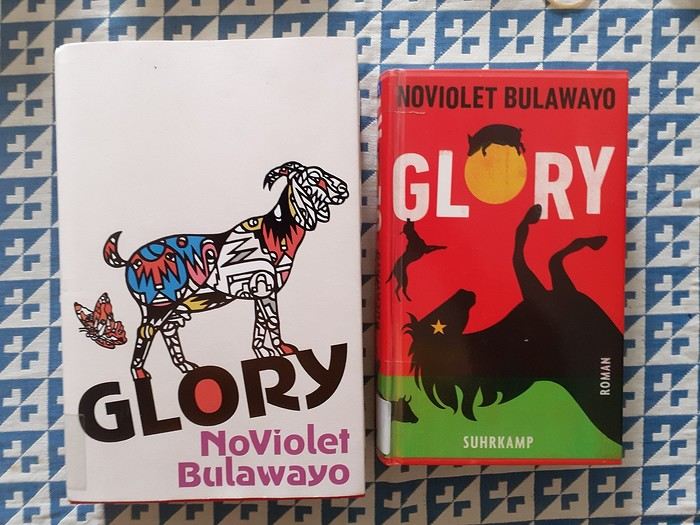 The books (in English, in German)
 Author NoViolet Bulawayo, Zimbabwe
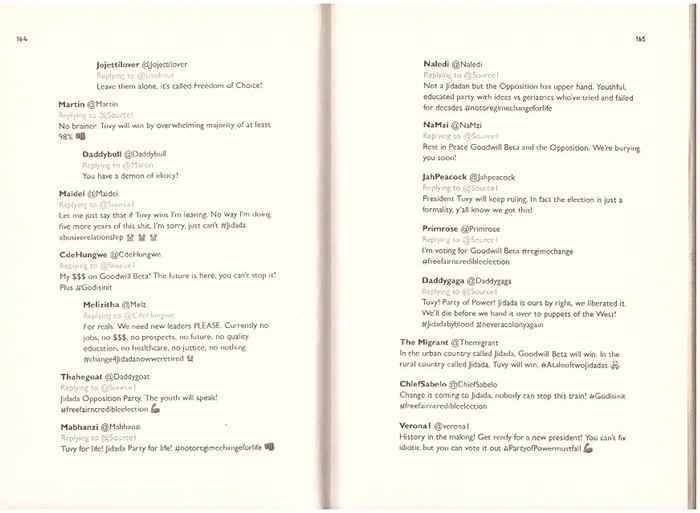 Threads (p.164-165)
"Bulawayo leans into exaggeration and irony to tell hard truths. *Glory* is jam-packed with comedy and farce, poking fun at an autocratic regime while illustrating the absurdity and surreal nature of a police state." — The Guardian
The cruelty and savagery of Zimbabwe’s (and Africa’s in general) "powerful animals"
Zimbabwean author NoViolet Bulawayo has written a novel that illustrates better than any documentary the complexity of colonial legacy. In doing so, she revisits George Orwell’s Animal Farm. Her novel *Glory* is a political satire about Zimbabwe—and it’s brimming with humor.
For thirty years, Zimbabwe has been stagnating under Robert Mugabe’s presidency. Human rights violations, corruption, and international sanctions have kept the population mired in poverty and oppression, while the regime exploits the meager earnings of the economy. As the 2017 elections approach, a power struggle erupts over the succession of the very elderly Father of the Nation (Mugabe). On the streets, people hope for long-awaited reforms; the people feel their moment has come.
And indeed, the army ousts Mugabe and his wife—"with her Gucci heels" (p.32)—who was positioning herself for the presidency. Hopes are dashed, however. The generals install former vice-president Emmerson Mnangagwa in power; the regime merely changes faces, but the problems remain the same.
In the novel, the country is called "Jidada, with a -da and another -da" (p.1); there’s no mistaking that this fictional state is Zimbabwe.
For *Glory*, her second novel, NoViolet Bulawayo invents a whole series of codes whose strength lies precisely in how easy they are to decipher. Like George Orwell’s Animal Farm, the characters populating Bulawayo’s universe aren’t humans but horses, goats, or crocodiles with all-too-human traits. Mugabe and Mnangagwa are horses, the spiritual leader is a pig, the soldiers are all bloodthirsty dogs, while the populace consists of goats, chickens, donkeys, and cats. The shift to the animal world serves only to better grasp the laws of despotism—and to ridicule real-life models. On one hand, the animals are humanized: they tweet, torture, travel in private jets. On the other, their greed, stupidity, and brutality stem from their animal nature.
It’s the old trick of fable: dressing men in animal disguises to make them easier to recognize. That’s how Orwell, in Animal Farm, traced how the promise of liberation from the Russian Revolution turned into Stalinist terror. In his 1945 fable, George Orwell describes how the animals of a farm drive out their farmer to organize the exploitation themselves, collectively. For a time, they truly taste freedom, but a clique of pigs ends up taking control. The central figures of the Soviet story—Stalin, Trotsky, Molotov—were easily recognizable.
Yet Bulawayo departs sharply from Orwell. She’s less concerned with precision and the force of argument than with satirical exaggeration. The deposed president is a senile old man who believes he can control even the sun’s course. The new stallion in power is a greedy debaucher. His soldiers sniff respectfully at his tail and backside.
In Bulawayo’s *Glory*, things are more complicated, but her novel also tells of a failed, incomplete liberation. In the author’s Animal Farm, Jidada, the colonial exploiters are followed by new forms of oppression. Because the former liberators become tyrants themselves. And because global power dynamics persist in neocolonial structures.
Wouldn’t that be enough to fuel a deeply depressing narrative? No—Bulawayo turns it into a blazing satire, full of wit and uncompromising criticism of power, a thread running through contemporary (not just) Zimbabwean history. The old warhorses in NoViolet Bulawayo’s Jidada, who continue to act as pack leaders, are easily recognizable as caricatures of the longtime dictator Robert Mugabe and his successor, current president Emmerson Mnangagwa.
The plot kicks off in high gear with independence day festivities. From the crack of dawn, everyone waits on Jidada Square for the Old Horse, the Father of the Nation and former liberator, whose reign "was nearing all of—not one, not two, not three, but four solid decades" (p.1). Everywhere, the colors of the Jidada Party shine; everywhere, true supporters cheer. Even the scorching sun plays its part: "At this point the sun, upon seeing arrive the leader who was decreed by God himself to rule and rule and keep ruling, a leader who'd in turn decreed the very sun to head his cheerleading squad, took a deep, deep breath and thoroughly blazed to impress" (p.2).
Finally, the Old Horse’s luxury carriage approaches "with the slowness of a hearse" (p.2), and "hoping to catch a glimpse of the legendary Father of the Nation," which causes "the animals fell over themselves like intoxicated frogs" (p.2). The sovereign’s speech is delayed a moment longer: "what I really want is a nap," groans the Old Horse as he takes his seat with such care "like his backside was made of expensive porcelain" (p.6).
Meanwhile, Bulawayo parades his entourage: the president’s wife (who earns her doctorate at Jidada University faster than "you could say diss, for dissertation. Tholukuthi it was as easy as ordering from a KFC drive-through, or perhaps even easier being that it was cheaper than KFC; it in fact cost her nothing and the degree actually came with a zero-calorie Diet Coke and a purple straw" (p.41), and she’s now known as Dr Sweet Mother. The cabinet includes "the Minister of the Revolution, the Minister of Corruption, the Minister of Order, the Minister of Things, the Minister of Nothing, the Minister of Propaganda, the Minister of Homophobic Affairs, the Minister of Disinformation and the Minister of Looting" (p.9). And of course the vice-president, who will soon become interim president when the Old Horse finally kicks the bucket—and then settle in as the new long-term president, who in the novel is called Tuvius Delight Shasha, or "Tuvy" for short (p.253), none other than Emmerson Mnangagwa. It’s him Bulawayo reserves her most merciless character description for.
"New Dispensation" (p.109) is Tuvy’s slogan for Jidada, and he loves repeating it so much he even named his parrot after it ("So inspired was Tuvy by the realisation that he rechristened his new pet parrot with the name New Dispensation—tholukuthi the bird having been acquired explicitly for the purposes of tweeting eulogies and accordingly glorifying the Saviour throughout the airs and skies of the nation. Tuvy then went on to hire a lecturer in English from the University of Jidada to teach New Dispensation to say the phrase 'New Dispensation'" p.110). But Tuvy’s Zimbabwe remains a nation without free, fair, and credible elections ("#freefairncredibleelection" p.161), and the promised equal treatment applies only insofar as Zimbabweans now queue up without discrimination in endless lines—and everyone is as poor as the next in the "queuenation" (p.283). Except for the powerful. They can "yes, tholukuthi, her immeasurable riches theirs to take. And take they did—
just take—take—take—take—take—take—take—take—take—take—take—take—take—take—take—take—take—take—take—take—take—take—take—take—take—take—take" (p.249-250).
In short: Bulawayo brilliantly depicts how former independence fighters become exploiters themselves. And how the country threatens to suffocate under the weight of corruption and repression. But she also literally stages the polyphony with which the people oppose imposed obedience to the official line.
Controversial online discussions keep interrupting the narrative—dialogues and social threads (see photo below) that Bulawayo masterfully integrates. From a literary standpoint, it’s a brilliant idea. And it shows, above all, that the author’s sympathy—so likeable—goes to all those who refuse to let their dream of true freedom be stolen, not even by the corrupt elites of their own country.
In the book’s acknowledgments, the first tribute goes to "The Jidadas of the world, clamouring for freedom on many fronts—A luta continua." (p.401) This reflects the realization that, not only in Jidada-Zimbabwe but in many other corners of the world, the end of colonial domination is still far from meaning the freedom hoped for by the vast majority of people. But it also means, more broadly, that this freedom must be won "on many fronts" (see above), both domestically and geopolitically.
That’s precisely what *Glory* so vividly highlights: how complex the project behind the term "postcolonialism" really is. With *Glory*, Bulawayo also delivers a scathing critique of the persistence of colonial mindsets in the West.
In the novel, the murder of George Floyd, racist police violence, and white-supremacist ideology in Trump’s United States perfectly illustrate the persistence of racism. It’s especially in the final chapters that Bulawayo lets Jidada’s inhabitants explicitly and unflinchingly criticize a neocolonial world order:
"It was not lost on us how the West, which loved to 'save' Africa and announce every action to the whole world, did so with one limb while manipulating, looting and fleecing us with the rest of its limbs so that more money in fact poured out of the continent than trickled in." (p.376)
"It was no mistake that multinational corporations yearly reaped and shipped colossal profits from Africa back to their countries as had been the case during colonial times. Even the sticks and stones would tell you that the African earth at any given time howled and shook and heaved from the extraction of its precious minerals that rarely benefited its own miserable children." (p.376)
"(...) we vowed to wage yet another war for Africa's second Liberation from neocolonial oppression. From exploitation. From plunder. From Western dominion. From indignity. From Abuse. We wanted real freedom. We wanted greedy, thieving paws off our wealth. We wanted Justice. We wanted a new world; we wanted a brand-new world so much we didn't sleep a wink that night." (p.377)
The Jidadas of this world must fight two enemies: Western neocolonialism and the autocratic instrumentalization of that argument; the persistence of Western racism and the populist appropriation of that humiliation by tyrants from their own ranks. Neither of these obstacles to freedom diminishes the historical and current guilt of the other. But the path to postcolonial liberation must overcome all these forms of oppression. After all, the colonizers didn’t bequeath democracies to formerly dominated nations, but instability and the principles of oppression and exploitation—which the so-called liberators have also internalized. Yet the fact that a satirical novel can capture the complexity of historical relationships while remaining, despite all the darkness of the subject, hilarious—well, that’s truly astonishing.
Finally, *Glory* ties into a major trauma in Zimbabwe’s post-independence history: the so-called Gukurahundi massacres. Between 1983 and 1987, tens of thousands of civilians were murdered by Mugabe’s bloody henchmen, most of them Ndebele. The State Security Minister and head of secret services at the time? You guessed it—Emmerson Mnangagwa.
When *Glory* turns to the massacres, the novel’s tone shifts completely. The story is now told through the narrative of the goat called Destiny, who, like NoViolet Bulawayo herself, left her home country at 18 for the United States and only returned after 13 years. In the book, the city of Bulawayo becomes a village where Destiny retraces her family’s history—and learns that part of it was also brutally murdered during the massacres.
The abuse of power and life under a dictatorship, dispossession, and a fiercely proud awareness of the psychological wounds and emotional vulnerability of a uprooted and disenfranchised people who had to forge a new language—a new set of names—to express their lived experiences are at the heart of this wonderful Zimbabwean author’s literary work, NoViolet Bulawayo. Shortly after her studies, she was already writing short stories about postcolonial power dynamics in Africa. But her playful, masterful, and often unconventional approach to language also plays a key role in her work. With virtuosity, she shifts from cynical images of power-obsessed elites to compassionate descriptions of the people’s suffering, ending with a hopeful sermon on courage—the courage to break free from fear and thus gain the strength for change ("And every one of them understood that whatever they heard within those hearts was the new national anthem, tholukuthi an anthem that spoke of the kind of glory that burns eternal and glows with living light." p.400). This novel is a genuine pleasure to read. And it’s exceptional. Good, African...
Book info (original English and German translation):
NoViolet Bulawayo. Glory. Chatto & Windus, 2022. NoViolet Bulawayo. Glory. Suhrkamp, 2023.
Hery
The books (in English, in German)
Author NoViolet Bulawayo, Zimbabwe
Threads (p.164-165)Hi there,
Just a few words about the loop I did by bike in Yunnan.
Entry and exit
I entered China through the Sino-Vietnamese border crossing at Lào Cai / Hekou under the 30-day visa exemption currently available to French nationals and others.
The process was simple and quick. A Chinese police officer even helped me complete my electronic pre-registration at a computer kiosk. I wasn’t aware this formality was required—it’s similar to Thailand’s TM6.
No issues with the bike.
I left the country via the Sino-Laotian border crossing at Mohan / Boten.
The atmosphere was a bit chaotic there, but again, no problems with the bike.
The timing
I visited Yunnan in February 2026.
Weather-wise, at higher altitudes (between 1,500 and 2,000 meters), it was around ten degrees at night and in the mornings, and around twenty degrees at the hottest part of the day.
I had two days of rain, so I took the bus to keep moving. Otherwise, clear blue skies.
Culturally, Chinese New Year fell on February 17th (and the 15 days following), right in the middle of my trip. Because of this, my take on the traffic might be off.
Accommodation and food I always found a hotel to stay in for prices ranging from 8 to 15 €. Except in Kunming (the capital), where many hotels were fully booked (Chinese New Year). I ended up at a 100 € hotel with great value for money.
A bowl of noodles costs about 1.5 € on average.
Onboard electronics Since my smartphone doesn’t support eSIMs, I subscribed to a China plan with my carrier. Otherwise, for much cheaper, Alipay offers eSIMs for foreigners that allow access to services usually blocked for Chinese users (WhatsApp, Facebook, etc.).
An internet connection is essential for paying with Alipay or WeChat, as this payment method is widespread.
I only managed to use Alipay.
Either way, always carry cash because sometimes there’s no signal, or the merchant only accepts WeChat.
Also, it’s best to bring a power adapter when you arrive rather than struggling to find one.
Traffic and roads The Chinese aren’t reckless drivers. They follow traffic rules and watch out for cyclists. This is slightly less true in Xishuangbanna (the region bordering Myanmar and Laos).
In urban areas, there are almost always wide bike lanes, separated from other roads, where bikes, electric mini-scooters, and scooters share the space pretty harmoniously.
The roads are in great condition, and traffic is generally manageable—even light—except for one stretch (Eshan -> Yangwu).
Most traffic is absorbed by expressways, China’s equivalent of highways: toll roads that are off-limits to slow vehicles.
You’re never far from these expressways; sometimes you even ride alongside them, which can be noisy at times.
The climbs are usually reasonable, around 5% to 6%. From what I remember, the steepest section was between Menglun and Mengla, with gradients of 8% to 10%, sometimes more.
Riding at these altitudes—though modest—took a bit of getting used to.
The route I didn’t plan anything in advance. My only goal was to reach Kunming. I don’t know why, but just hearing the name of that city, like Yunnan, always felt dreamy to me.
Here’s the breakdown: Hekou -> Man Hao (94 km); Man Hao -> Yuanyang (64 km); Yuanyang -> Jianshui (bus); Jianshui -> Tong Hai (78 km); Tong Hai -> Chenjiang (85 km); Chenjiang -> Kunming (60 km); Kunming -> Kunyang (60 km); Kunyang -> Eshan (67 km); Eshan -> Yangwu (58 km); Yangwu -> Yuanjiang (59 km); Yuanjiang -> Pu'er (bus); Pu'er -> Dadugang (75 km); Dadugang -> Jinghong (80 km); Jinghong -> Menglun (67 km); Menglun -> Mengyuancun (51 km); Mengyuancun -> Mengla (43 km); Mengla -> Boten (67 km).
Otherwise, I’m currently in Thailand and just hoping my return flight with Qatar won’t get canceled.
Oh well... 😉
Now that the curtain has fallen on the past year, it’s time to see what’s happening around here.
It seems pretty quiet, but I’ll read more in detail later.
First, I need to tell you all an anecdote.
My eldest little girl, in her third year of law school, was really scared she wouldn’t pass the year. I told her: “Trust yourself, you’ve worked so hard, and worst case, if you fail, you’ll just redo the year.” “But I don’t think I’ll make it—they changed the rules, and if I mess up even one unit, I have to start all over.” I knew her grades weren’t exactly stellar, and with what I was about to say, I wasn’t taking much of a risk. “Here’s the deal, sweetheart: if you pass, I promise I’ll take you to India, just the two of us.” I have to admit, India is a country I’ve talked about so much to all my grandchildren that in their minds, it’s become a magical, mythical place (hmm).
July had barely begun when my phone rang, her name flashing on the screen. “Mamido, I did it!” My promise came rushing back—oh no, oh no, oh no! “Congratulations, sweetheart!” A little shyly, she said: “Is the India trip still on?”
And me, replying: “Of course it is!”
And that’s that—a promise is a promise, or you risk losing that precious trust that keeps hearts warm and at peace.
We’re leaving in February. Only 8 days—yikes, the carbon footprint! But we can’t miss her tutorials, or she’ll be kicked out. Personally, that works just fine for me.
Going to India has become a challenge for me. It’s far, it’s exhausting, I sweat, I hate mosquitoes, the spices bother my mouth when I used to love them. There’s noise all the time—at night, the dogs bark nonstop, and we almost get run over. I’ll get lost in the streets because my sense of direction has vanished. I don’t like rice anymore. All that chaos and those cultural differences that once enchanted me now just overwhelm me. But I promised.
The upside—and it’s a big one—Raman, the same driver I’ve had forever, will be at the airport with a sign with our names. We’ll stop at the same little shop for chai (or tea, plain and simple) with that aroma that intoxicates me, halfway through the trip.
It’ll be a tiny trip—staying with friends, I’ll show her a few places I love: Chidambaram, Mamallapuram, and the clinic where I worked. Then we’ll head back. My little girl will go home to her parents.
As for me, I’ll leave right away for our Scottish island with Homme for our chilly winter.
How can you love a country so much you want to live there, then suddenly reject it, no longer able to appreciate what once made it special? That’s the mystery of love, I guess.
We just got back from a trip to Egypt: 2 days in Cairo, then a week on the Nile with a cruise through a tour operator.
An incredible discovery of the Pyramids of Cairo—such an emotional moment! Then a wonderful stroll along the Nile, where we leisurely soaked in the "life" along this river.
An exceptional guide who transported us back less than 4,000–5,000 years BC...
But here’s the thing—because there’s often a "BUT"—the flip side is discovering a *very* polluted country! Even on the Nile, the number of boats is staggering (I went barefoot on the boat one day, and by the end of the day, my feet were black with soot?).
In Cairo, with nearly 20 million inhabitants, there’s trash everywhere (except around the airport and villa areas). We even saw a dead cow with stray dogs eating its "innards"—but no one seemed bothered! By the way, there are *tons* of wild dogs in Egypt and very few... cats!
One day after our arrival, we had to pay our entry visa to the guide on the bus—and *only* in cash? 95 EUROS???? A disgrace, since the visa price is $25 (as stated on the visa stamp)... Someone needs to explain where that money goes???
The excursions (optional ones) are *five times* more expensive than the posted rates for tourists. There are two prices: one for Egyptians (which makes sense, given an average salary of 360 euros/month). On top of that, the cruise manager asked us to pay half in cash and half by card (we refused and paid everything in cash). First time I’ve ever seen that payment method for excursions—where *does* the money go?...
During a stop in Aswan, we wanted to visit the Nubian Museum (amazing!). We took a carriage, and before leaving, we agreed on a round-trip price of 20 euros for 4 people to take us to the museum. It was all good with the driver—who called himself "Michel" and his poor horse, Rambo. On the way back, of course, he caused a scene, demanding *much* more... We refused and gave him the 20 euros we’d agreed on. But then, as if by chance, this same carriage driver stopped for a man who asked us to exchange two 20-euro bills and 10 one-euro coins for a 50-euro bill. I pulled out my 50-euro note while talking to Michel, and the other guy claimed I’d given him a 10-euro bill?? He handed me the bill—so you get the scam!
So, be *very* careful with carriage drivers and their "colleagues"!
Drinks on board are outrageously priced—a simple beer (Stella) costs 5 euros, and the wine is undrinkable...
Tips are expected in euros—they won’t accept Egyptian pounds... and of course, you’re constantly harassed to exchange 5-euro or 10-euro bills, or even more! They end up with tons of coins, so we did it at first, but after a while, it’s just not possible—they insist way too much!
I’ll stop here—it’s already quite long. So, a mixed-feelings trip overall...
philippe
philippe
Hi everyone,
We’re heading to Cairo in April 2025 and would love to do a 3-day desert excursion. Either the trip to SIWA or the classic "Bahariya Oasis and White Desert" circuit, ideally private or in a small group.
We’d prefer to go through a local agency in Cairo. Does anyone know a reliable one?
Thanks in advance!
Gaby
Hi everyone,
I’m planning a trip to South Africa / Zimbabwe this summer—4x4 with camping gear... After some reading, I’ve put together this first draft of an itinerary:
D0 Johannesburg - arrive around 11 AM + visit Soweto? D1 Vic Falls - arrive around noon D2 Vic Falls D3 4x4 familiarization + Hwange NP D4 Hwange NP D5 Hwange NP D6 Bulawayo D7 Bulawayo / Matobo NP D8 Mapungubwe D9 Mapungubwe D10 Waterberg D11 Waterval Boven D12 Golden Gate Highlands NP D13 Sentinel Peak D14 Tugela Falls or another hike D15 Additional hike to be determined D16 Return to Johannesburg + drop off 4x4 - flight at 5 PM
Any thoughts on this itinerary? Ideas for improving it?
One alternative would be to visit Gonarezhou Park, which really appeals to me... But that would take more time and change the rest of the route: probably going back through Kruger. And I’m not sure I’d have enough time for the Drakensberg.
I still have other questions... But I’d rather finalize the general itinerary first to sort out the 4x4 rental...
Big thanks to the travel community 😉
Good evening! 🙂,
I’m paraphrasing the title of discussions that were popping up back in 2020. Back then, the obstacles were travel restrictions and all sorts of often very arbitrary "health" rules. Today, it feels like we’re facing an epidemic of wanderlust that’s piling up in certain places—places that keep expanding. Places that end up feeling like wallpaper, just part of the scenery, more or less exotic, since the people, the dominant crowd, are always the same. And they’re especially overwhelming in limited spaces like villages, museums, and other remarkable sites.
Personally, it tends to send my cortisol levels through the roof, leading to desperate attempts to salvage what I can (the stress when I saw a travel journal about eastern Crete—then, phew, at least this little piece of old Greece hasn’t been exposed yet. Maybe it’ll survive a little longer). So, no more weekends in beautiful European cities. So, adjusted visiting hours, but that’s not always enough (I’ll still have to say goodbye to Caravaggio’s *Madeleine* since I can’t have a quiet moment with her anymore, even late in the day). So, outright giving up: I’ll never see Machu Picchu. Too late. So, shifting travel dates to minimize the damage (Uzbekistan was originally planned for Easter—with April 24th and May 1st to limit vacation days—but the anxiety of tourist crowds during that mild climate period, with few days off, led me to reschedule the trip for winter. Short days and possible rain are a thousand times better).
Avoiding crowds has become a fundamental criterion for choosing destinations and timing.
And you? Are you able to tune out this identical crowd everywhere, or has it changed your relationship with travel/tourism?
Catherine
Japan, five weeks between unknown lands and familiar paths
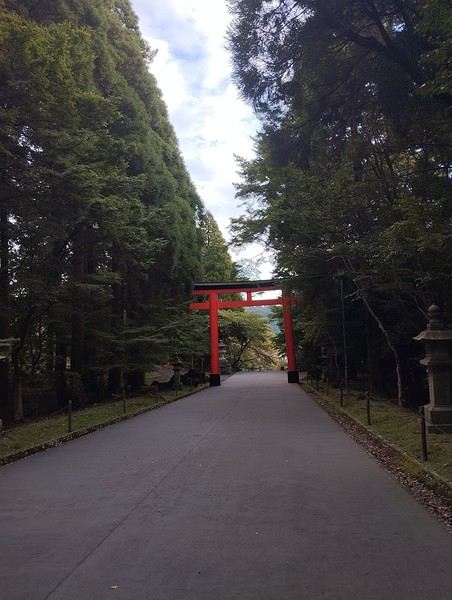
Hello everyone,
I invite you to follow me on this fifth exploration trip to Japan.
Five weeks or so!
For the itinerary, my usual mix: New discoveries, well-known places, and others less so.
At the heart of the trip, a two-week road trip by car. I wavered for a long time between the San'in region, from Tottori to Yamaguchi, and southern Kyushu. By a narrow margin, southern Kyushu won out.
Waterfalls that seem even more impressive. A more exotic atmosphere. Tea-growing lands to savor... Kagoshima will be the starting point. Then a loop from west to east.
And, of course, the must-see stops... Those little Japanese touches. Gourmet cuisine. Japanese, but not only!
And then, the soul of the trip, I hope: Human connections. Big or small.
Otherwise? Several local festivals. Osaka, unexpected. Miyakojima, between beauty and small disappointments. Tokyo... it's Tokyo!
So, travel with me. The suitcase is waiting, with stories that are sometimes generous, but always driven by the love of travel experienced firsthand.
Yōkoso, Nihon! Welcome to Japan!
Here’s my second travel journal since my 2017 one. You can check it out here if you’d like: https://voyageforum.com/forum/densha-otaku-passion-japonaise-d9177495/
This was my first trip back to Japan since the COVID lockdown. Between 2017 (with a short visit in 2018) and 2024, a lot has unfortunately changed. Economic and demographic shifts have led—and will continue to lead—to the closure of many rural railway lines. Fewer residents, fewer travelers, rising operating costs, staffing shortages, and increasingly precarious funding. Then there’s the ever-growing number of tourists who damage everything in their path and frustrate locals. Fortunately, there are still plenty of ways to escape the crowds, even if you do run into groups of Chinese tourists arriving by bus at the Mino Railway Museum or aboard a Kiha 120 crossing the Izumo-Sakane switchback. (Oops, spoiler alert—that’s for my 2025 travel journal.) We’ll see if PM Takaichi has as much success on the ground as he does in his speeches.
I’m lucky to love remote regions and places most tourists don’t know about. Taking public transport—mostly trains—and living like the locals do. That’s what my trips are all about. Those who’ve followed me on these pages know I love trains, especially older ones. These are becoming rarer in regular service, and Japan still isn’t ready to allow even certified museums to run historic trains on public lines, unlike many other countries. I even have my own license to drive historic trams, despite being an IT specialist in my day job. You’ll find some comments that clearly reflect my opinions and experience with the operation and rolling stock of certain lines—sometimes positive, sometimes not.
My trips are always intense. This isn’t about relaxing. It’s about discovering, blending in with locals, being welcomed by associations and museums, and uncovering things most people wouldn’t even imagine exist halfway across the world.
Sorry for the long intro.
Hello! The itinerary is pretty much set for August 2026. Yeah, I know it’s gonna be *super* hot. But it’s the only time we can get away.
So, here’s the plan: Montpellier-CDG-Dallas.
Stay from July 31 to August 26, 2026: Car rental – check, Hotels – check, Itinerary – almost check, Photo gear – check, Budget – check, 🤪 Meal planning – meh, we’ll see... Walmart, of course, for the cooler when we arrive.
And now, without too much detail...
Fort Worth: The Longhorns and the Stockyards; JR’s ranch (for the missus); Medal of Honor Museum – Arlington.
Houston and NASA Space Center: See the Gulf of Mexico/America.
San Antonio and the missions.
Fort Stockton for an overnight stop.
El Paso via Guadalupe Mountains: El Paso and White Sands.
Tucson and the Pima Air & Space Museum: Tombstone, Bisbee.
Phoenix:
Still working on the program.
Sedona: Round trip around the area via Flagstaff and Williams, or the Grand Canyon (already done) – we’ll decide on the spot.
Albuquerque: Santa Fe, Turquoise Trail, Los Alamos.
Amarillo via Route 66: Old Route 66 in the city; Big Texas Ranch Steak 😏.
Dallas: JFK Museum; Perot Museum; West End district.
And through it all – the road, the road, and more road!!!
We’ll adapt day by day based on our mental and physical state (we’re not exactly spring chickens).
Return to France: Dallas-Montpellier via CDG.
Cheers!
Hi there,
On this forum, I shared my first trip to Tunisia from mid-February to early March (https://voyageforum.com/forum/impressions-tunisiennes-en-direct-d11460662/), a stay I enjoyed so much that six weeks later, I’m back in Tunisia for a full 15 days (I return on April 27).
This time, I landed in Monastir on a direct flight from Nice, again with Tunisair. We left about ten minutes late, and the flight lasted around 1 hour 30 minutes. A meal was served on board (cucumber salad with Edam-like cheese, carrots, and two small portions of dishes I couldn’t identify—semolina with peppers, olives, and parsley, two small rolls, a square of processed cheese, and a chocolate cake). It’s worth noting because it’s not common on flights this short.
In February, France and Tunisia were in the same time zone, but now Tunisia is one hour behind. This time difference and the flight duration work perfectly for a short 15-day trip since it takes me a few days to adjust to jet lag.
Luckily, I’d asked my hotel about the taxi fare from the airport because the drivers (there were several around me) didn’t hesitate to quote outrageous prices. The actual fare is 20 dinars, but one asked for 120 dinars. I refused, and another offered 60 dinars. I replied, "That’s too expensive—I’ll take the metro!" (Having tried the Tunis metro, I had no desire to repeat the experience in Monastir with a suitcase!). I started walking toward the metro, and one of the drivers caught up with me, saying, "20 dinars is fine!" I’ll skip the details, but the negotiation took a little while. When I arrived at the hotel, I told the receptionist someone had asked for 120 dinars. He put his hands to his head and said, "They’re awful!" He remembered our phone call two days earlier when I’d booked (he’s the one who told me I could take the metro).
The Mezri Hotel isn’t expensive. I got a sea-view room for 75 dinars (22 €). (I’d booked a balcony room for 90 dinars but wouldn’t have had time to enjoy it.) It’s well-located but noisy because there’s no double glazing. The receptionist is a very kind older gentleman. He called a friend whose wife is from Tozeur to find out if I should take a bus or a *louage* tomorrow and what time.
I arrived at the hotel around 7:00 PM and had time to stroll along the corniche to the ribat. Despite some run-down buildings, the seaside seemed livelier and cheerier than Sousse’s.
Monastir is the hometown of former president Bourguiba. I passed his mausoleum by taxi. There are Tunisian flags along the avenue by the sea because every year on April 6—the anniversary of Habib Bourguiba’s death—the president of the Republic visits the Bourguiba Mausoleum in Monastir to pay respects.
The taxi driver mentioned other Tunisian presidents. He complained about rising prices and insecurity, blaming President Kaïs Saïed (I’d already heard that security was better under Ben Ali).
At the end of my stay, I’ll take time to explore Monastir, but tomorrow morning, I’m off to Tozeur—a long bus ride awaits me.
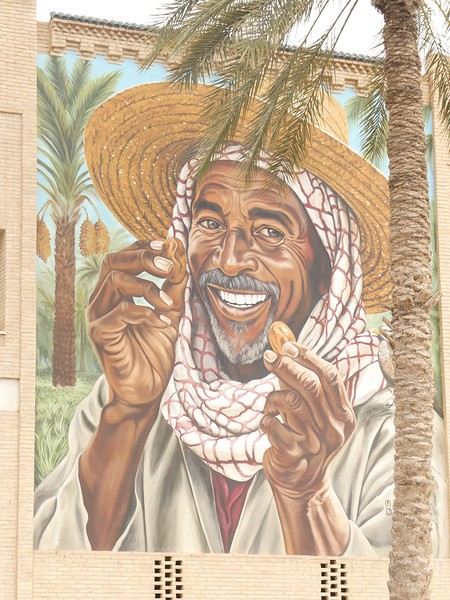

TO BE CONTINUED....
On this forum, I shared my first trip to Tunisia from mid-February to early March (https://voyageforum.com/forum/impressions-tunisiennes-en-direct-d11460662/), a stay I enjoyed so much that six weeks later, I’m back in Tunisia for a full 15 days (I return on April 27).
This time, I landed in Monastir on a direct flight from Nice, again with Tunisair. We left about ten minutes late, and the flight lasted around 1 hour 30 minutes. A meal was served on board (cucumber salad with Edam-like cheese, carrots, and two small portions of dishes I couldn’t identify—semolina with peppers, olives, and parsley, two small rolls, a square of processed cheese, and a chocolate cake). It’s worth noting because it’s not common on flights this short.
In February, France and Tunisia were in the same time zone, but now Tunisia is one hour behind. This time difference and the flight duration work perfectly for a short 15-day trip since it takes me a few days to adjust to jet lag.
Luckily, I’d asked my hotel about the taxi fare from the airport because the drivers (there were several around me) didn’t hesitate to quote outrageous prices. The actual fare is 20 dinars, but one asked for 120 dinars. I refused, and another offered 60 dinars. I replied, "That’s too expensive—I’ll take the metro!" (Having tried the Tunis metro, I had no desire to repeat the experience in Monastir with a suitcase!). I started walking toward the metro, and one of the drivers caught up with me, saying, "20 dinars is fine!" I’ll skip the details, but the negotiation took a little while. When I arrived at the hotel, I told the receptionist someone had asked for 120 dinars. He put his hands to his head and said, "They’re awful!" He remembered our phone call two days earlier when I’d booked (he’s the one who told me I could take the metro).
The Mezri Hotel isn’t expensive. I got a sea-view room for 75 dinars (22 €). (I’d booked a balcony room for 90 dinars but wouldn’t have had time to enjoy it.) It’s well-located but noisy because there’s no double glazing. The receptionist is a very kind older gentleman. He called a friend whose wife is from Tozeur to find out if I should take a bus or a *louage* tomorrow and what time.
I arrived at the hotel around 7:00 PM and had time to stroll along the corniche to the ribat. Despite some run-down buildings, the seaside seemed livelier and cheerier than Sousse’s.
Monastir is the hometown of former president Bourguiba. I passed his mausoleum by taxi. There are Tunisian flags along the avenue by the sea because every year on April 6—the anniversary of Habib Bourguiba’s death—the president of the Republic visits the Bourguiba Mausoleum in Monastir to pay respects.
The taxi driver mentioned other Tunisian presidents. He complained about rising prices and insecurity, blaming President Kaïs Saïed (I’d already heard that security was better under Ben Ali).
At the end of my stay, I’ll take time to explore Monastir, but tomorrow morning, I’m off to Tozeur—a long bus ride awaits me.
TO BE CONTINUED....
I took a few days to get some fresh air outside the Schengen-NATO prison. Between March 18, 2026, and March 25, 2026, as shown by the passport stamps:
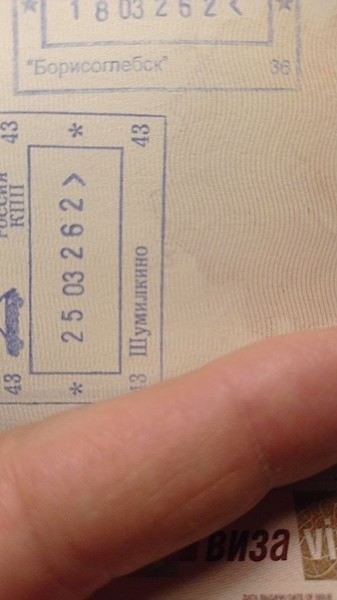
Borisoglebsk is the Russian border checkpoint after Kirkenes, on the road to Murmansk.
Kirkenes is a tiny town with a correspondingly small airport. Nothing has changed there: the minibuses to Murmansk wait on the right as you exit the airport. They’re synchronized with the two daily flights from Oslo—the SAS around 11:00 AM and Norwegian around 11:30 AM. They stop in Kirkenes at the corner of the Scandic for an hour, where other passengers can board, then head straight to the nearby border.
This is the least hassle Frontex/Schengen border. The Norwegian agent quickly scans your passport, and that’s it. No customs, since Norway is Schengen but not in the EU. On the Russian side, there’s a passport check and a quick customs inspection. All in all, crossing both the Norwegian and Russian checkpoints takes about 15 minutes.
A paper visa is required; e-visas aren’t accepted.
Two companies run the route: Avto Ekspress and Borodin: https://ae51.ru/routes/kirkenes-murmansk/ https://borodinbus.com/
The one-way fare is 5,500 ₽. You can either buy it online in rubles with a MIR card or make a formal reservation and pay in NOK cash to the driver. I took Borodin, and the price in NOK was much more expensive than in ₽.
=========================
On March 25, I left from Pskov via the Estonian border post at Luhaama. I spent three days in Murmansk, flew to St. Petersburg (SPB), stayed there for two days, then took an evening train to Pskov.
Since the end of February—and reportedly until the end of May—the Estonians have restricted the opening hours of the two border crossings near Pskov: Koidula (Pechory on the Russian side) and Luhaama (Izborsk on the Russian side). They’re closed at night between 7:00 PM and 7:00 AM. Right now, there’s a bus from Pskov at 7:00 AM to the border. It drops you off at the end of the road where truckers—many Kazakh and Serbian—are parked on the side. You finish the rest on foot to the barrier, where there’s a quick initial check for Ukrainian stamps in passports. Then you walk to the customs building, followed by passport control at the kiosk for motorists. After that, it’s a 500-meter walk to the Estonian checkpoint. At the moment, things seem calmer. Passport control is quick. The usual silly questions in English: "Where were you? Where are you going?" I just gave my most clueless smile: "Sorry, I don’t understand." Yeah, right—I don’t speak English, especially not at an Estonian border with a French passport. If they’re in a mood, though... A very quick bag inspection. Once you exit the Estonian post, walk to the bus stop sign by the road where another coach takes you to Riga.
The catch: in my case, last Wednesday, there were two passengers (Russians) with old Ukrainian stamps in their passports. The bus from the Estonian post to Riga was supposed to leave around 9:30 AM. We ended up leaving around noon after the two were grilled by the FSB. Since it was a weekday outside of holidays, the bus was half-empty. The fuller the bus and the more people with Ukrainian stamps, the worse the nightmare. Don’t book a same-day flight from Riga. I had a flight at 6:00 PM, so it worked out.
=============
The Kirkenes-Murmansk route is still clearly the easiest and fastest. But it’s not the most convenient since it’s way up north.
Next, I’d say the Gdansk-Kaliningrad route in the middle of the week. Avoid weekends and holiday departures/returns.
Avoid the Narva-Ivangorod route during Christmas, Easter, May 9, and *all* summer.
==============
About flights from Murmansk to St. Petersburg: prices are good. I bought my ticket the day before departure on Rossiya for 7,500 ₽, including 10 kg of luggage + a handbag.
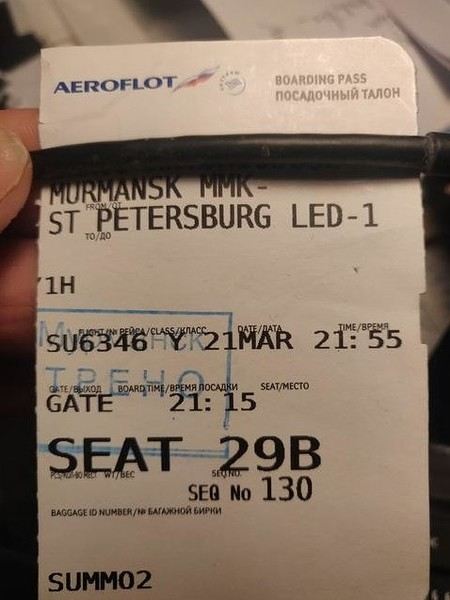
It’s the tail end of the northern lights season, and there were still crowds of Chinese tourists.
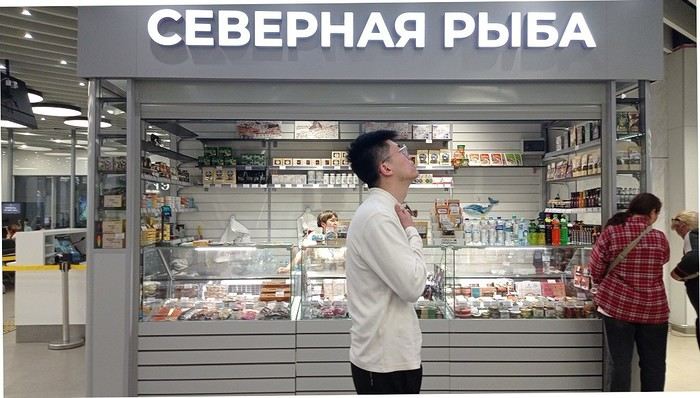
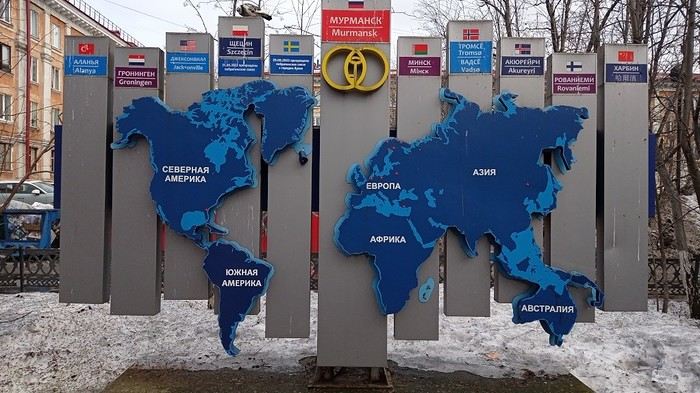
By the way, Murmansk is twinned with Harbin:
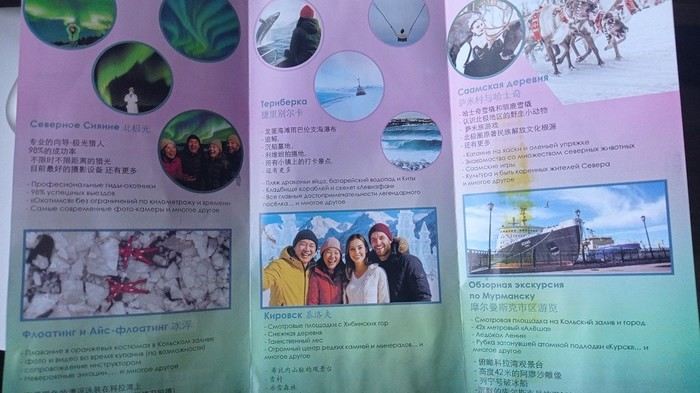
Chinese tourists are the largest foreign group, followed by Indians, then a mix of others from the Far East, Turks, Arabs, etc. Brochures are bilingual—Russian and Chinese:
============================
But let’s talk practical stuff. --
My domestic SIM card was restricted for SMS and internet for 24 hours. After that, if you want to keep using SMS, don’t turn off your phone—restarting triggers another 24-hour purgatory.
My Russian SIM cards (Megafon, MTS, Beeline) were activated as soon as I logged into their respective apps with my credentials.
Internet --
Telegram is heavily slowed down by authorities. To use it, you need to connect through proxy servers, which you load into the latest version of the app. Traffic is then rerouted internally within Telegram to servers outside Russia (Germany, Poland, Sweden, etc.). You can find these proxies on various channels. One is ChatVPN—check their website too.
For general internet use, like browsing the web, VPNs that work right now use the VLESS protocol. You can find several on Telegram by searching "VPN." A few free days, then payment in rubles or crypto.
Rozkomnadzor’s team are experts at this, so things can change. It’s a constant cat-and-mouse game.
Pskov is a special case. The city is near Estonia and has a large military base. Depending on NATO drone swarms launched from the Baltics, Wi-Fi can be completely suspended except for the most essential mobile apps. The drone swarms use the 4G network, and the powerful electronic jamming and drone suppression systems cause periods without Wi-Fi—including in hotels. Wired connections aren’t affected.
Borisoglebsk is the Russian border checkpoint after Kirkenes, on the road to Murmansk.
Kirkenes is a tiny town with a correspondingly small airport. Nothing has changed there: the minibuses to Murmansk wait on the right as you exit the airport. They’re synchronized with the two daily flights from Oslo—the SAS around 11:00 AM and Norwegian around 11:30 AM. They stop in Kirkenes at the corner of the Scandic for an hour, where other passengers can board, then head straight to the nearby border.
This is the least hassle Frontex/Schengen border. The Norwegian agent quickly scans your passport, and that’s it. No customs, since Norway is Schengen but not in the EU. On the Russian side, there’s a passport check and a quick customs inspection. All in all, crossing both the Norwegian and Russian checkpoints takes about 15 minutes.
A paper visa is required; e-visas aren’t accepted.
Two companies run the route: Avto Ekspress and Borodin: https://ae51.ru/routes/kirkenes-murmansk/ https://borodinbus.com/
The one-way fare is 5,500 ₽. You can either buy it online in rubles with a MIR card or make a formal reservation and pay in NOK cash to the driver. I took Borodin, and the price in NOK was much more expensive than in ₽.
=========================
On March 25, I left from Pskov via the Estonian border post at Luhaama. I spent three days in Murmansk, flew to St. Petersburg (SPB), stayed there for two days, then took an evening train to Pskov.
Since the end of February—and reportedly until the end of May—the Estonians have restricted the opening hours of the two border crossings near Pskov: Koidula (Pechory on the Russian side) and Luhaama (Izborsk on the Russian side). They’re closed at night between 7:00 PM and 7:00 AM. Right now, there’s a bus from Pskov at 7:00 AM to the border. It drops you off at the end of the road where truckers—many Kazakh and Serbian—are parked on the side. You finish the rest on foot to the barrier, where there’s a quick initial check for Ukrainian stamps in passports. Then you walk to the customs building, followed by passport control at the kiosk for motorists. After that, it’s a 500-meter walk to the Estonian checkpoint. At the moment, things seem calmer. Passport control is quick. The usual silly questions in English: "Where were you? Where are you going?" I just gave my most clueless smile: "Sorry, I don’t understand." Yeah, right—I don’t speak English, especially not at an Estonian border with a French passport. If they’re in a mood, though... A very quick bag inspection. Once you exit the Estonian post, walk to the bus stop sign by the road where another coach takes you to Riga.
The catch: in my case, last Wednesday, there were two passengers (Russians) with old Ukrainian stamps in their passports. The bus from the Estonian post to Riga was supposed to leave around 9:30 AM. We ended up leaving around noon after the two were grilled by the FSB. Since it was a weekday outside of holidays, the bus was half-empty. The fuller the bus and the more people with Ukrainian stamps, the worse the nightmare. Don’t book a same-day flight from Riga. I had a flight at 6:00 PM, so it worked out.
=============
The Kirkenes-Murmansk route is still clearly the easiest and fastest. But it’s not the most convenient since it’s way up north.
Next, I’d say the Gdansk-Kaliningrad route in the middle of the week. Avoid weekends and holiday departures/returns.
Avoid the Narva-Ivangorod route during Christmas, Easter, May 9, and *all* summer.
==============
About flights from Murmansk to St. Petersburg: prices are good. I bought my ticket the day before departure on Rossiya for 7,500 ₽, including 10 kg of luggage + a handbag.
It’s the tail end of the northern lights season, and there were still crowds of Chinese tourists.
By the way, Murmansk is twinned with Harbin:
Chinese tourists are the largest foreign group, followed by Indians, then a mix of others from the Far East, Turks, Arabs, etc. Brochures are bilingual—Russian and Chinese:
============================
But let’s talk practical stuff. --
My domestic SIM card was restricted for SMS and internet for 24 hours. After that, if you want to keep using SMS, don’t turn off your phone—restarting triggers another 24-hour purgatory.
My Russian SIM cards (Megafon, MTS, Beeline) were activated as soon as I logged into their respective apps with my credentials.
Internet --
Telegram is heavily slowed down by authorities. To use it, you need to connect through proxy servers, which you load into the latest version of the app. Traffic is then rerouted internally within Telegram to servers outside Russia (Germany, Poland, Sweden, etc.). You can find these proxies on various channels. One is ChatVPN—check their website too.
For general internet use, like browsing the web, VPNs that work right now use the VLESS protocol. You can find several on Telegram by searching "VPN." A few free days, then payment in rubles or crypto.
Rozkomnadzor’s team are experts at this, so things can change. It’s a constant cat-and-mouse game.
Pskov is a special case. The city is near Estonia and has a large military base. Depending on NATO drone swarms launched from the Baltics, Wi-Fi can be completely suspended except for the most essential mobile apps. The drone swarms use the 4G network, and the powerful electronic jamming and drone suppression systems cause periods without Wi-Fi—including in hotels. Wired connections aren’t affected.
Hi,
Right now, with the war raging in Iran and affecting all the neighboring countries of the Persian Gulf, many airports are completely closed to all traffic.
Several airlines like Qatar Airways, Emirates, and others have almost completely halted their operations.
Whether in the Middle East or Africa, many travelers are stranded—maybe for a long time... A heartfelt thought for them and the struggles this will cause.
Four months ago, I was in Kenya with a flight booked through Qatar Airways... I can’t even imagine how I’d react if I were stuck there now. ??
Wishing all these travelers courage, patience, and success in making it back home.
...
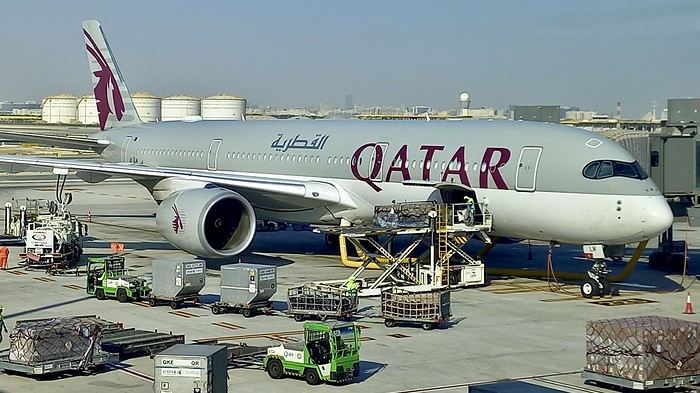
Doha Airport on October 21, 2025:
...
Right now, with the war raging in Iran and affecting all the neighboring countries of the Persian Gulf, many airports are completely closed to all traffic.
Several airlines like Qatar Airways, Emirates, and others have almost completely halted their operations.
Whether in the Middle East or Africa, many travelers are stranded—maybe for a long time... A heartfelt thought for them and the struggles this will cause.
Four months ago, I was in Kenya with a flight booked through Qatar Airways... I can’t even imagine how I’d react if I were stuck there now. ??
Wishing all these travelers courage, patience, and success in making it back home.
...
Doha Airport on October 21, 2025:
...
Hi there,
I arrived in Tunisia this afternoon for a full 14-day stay.
I took a direct Tunisair flight from Nice, which departed about thirty minutes late (that’s nothing compared to the "nightmares" I’ve had on some of my recent trips).
The flight lasts around 1 hour and 20 minutes, and a small snack was served on board (a sort of quiche with chickpea purée, a small bread roll, a portion of cheese like La Vache qui rit, and a small chocolate cake). It’s worth mentioning because it’s becoming increasingly rare on short flights. I was seated between two Tunisian gentlemen who gave me some great tips for my trip, especially about negotiating prices. One of them is a former cameraman for France Télévisions, very cultured and well-traveled—his daughter is a journalist at France Télévisions (I found some of her articles online). In short, the flight was very pleasant and quick.

I’m staying at the Hôtel Royal Victoria. I booked it yesterday afternoon by email without providing my credit card number. The room costs 241 TND (71 €) with breakfast included. It has heating, a small fridge, a safe, a hairdryer, Wi-Fi, and a TV with international channels. There’s a police van permanently parked in the square where the hotel is located.
This hotel is housed in the former British consulate and later embassy. It has a lot of charm with its painted wood ceilings and doors, and its bathroom covered in ceramic tiles. The tiny elevator is from another era. The main advantage of the hotel is its location between the medina and Avenue Bourguiba. Nearby, there’s the Magasin Général, where you can find groceries and some typical products like rose water, geranium water, and tons of halwa (a customer kindly explained how to eat it and which is the best).
After nightfall, I took a short stroll down Avenue Bourguiba. There weren’t many people around—it’s windy and cold.
I’ve already noticed the warm welcome from Tunisians. The supermarket cashier welcomed me to Tunisia, and a gentleman I asked for directions to the Magasin Général (I was about to climb stairs leading to a mosque!) insisted on inviting me for coffee, but I declined.
The rest of my itinerary will depend on the weather. If it doesn’t rain tomorrow, I might visit Carthage since the Bardo Museum is closed on Mondays, as are the museums in Sidi Bou Said.
TO BE CONTINUED...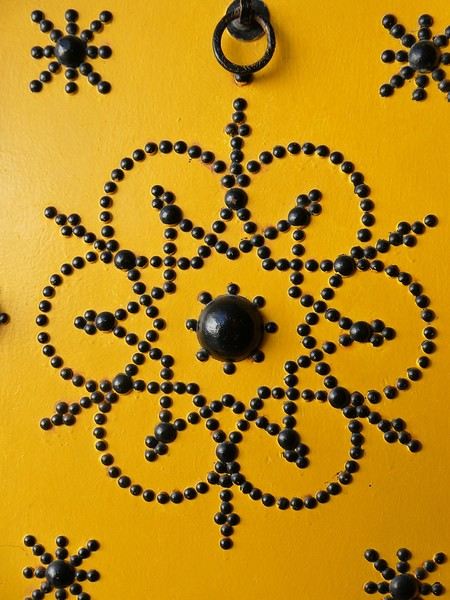


I arrived in Tunisia this afternoon for a full 14-day stay.
I took a direct Tunisair flight from Nice, which departed about thirty minutes late (that’s nothing compared to the "nightmares" I’ve had on some of my recent trips).
The flight lasts around 1 hour and 20 minutes, and a small snack was served on board (a sort of quiche with chickpea purée, a small bread roll, a portion of cheese like La Vache qui rit, and a small chocolate cake). It’s worth mentioning because it’s becoming increasingly rare on short flights. I was seated between two Tunisian gentlemen who gave me some great tips for my trip, especially about negotiating prices. One of them is a former cameraman for France Télévisions, very cultured and well-traveled—his daughter is a journalist at France Télévisions (I found some of her articles online). In short, the flight was very pleasant and quick.
I’m staying at the Hôtel Royal Victoria. I booked it yesterday afternoon by email without providing my credit card number. The room costs 241 TND (71 €) with breakfast included. It has heating, a small fridge, a safe, a hairdryer, Wi-Fi, and a TV with international channels. There’s a police van permanently parked in the square where the hotel is located.
This hotel is housed in the former British consulate and later embassy. It has a lot of charm with its painted wood ceilings and doors, and its bathroom covered in ceramic tiles. The tiny elevator is from another era. The main advantage of the hotel is its location between the medina and Avenue Bourguiba. Nearby, there’s the Magasin Général, where you can find groceries and some typical products like rose water, geranium water, and tons of halwa (a customer kindly explained how to eat it and which is the best).
After nightfall, I took a short stroll down Avenue Bourguiba. There weren’t many people around—it’s windy and cold.
I’ve already noticed the warm welcome from Tunisians. The supermarket cashier welcomed me to Tunisia, and a gentleman I asked for directions to the Magasin Général (I was about to climb stairs leading to a mosque!) insisted on inviting me for coffee, but I declined.
The rest of my itinerary will depend on the weather. If it doesn’t rain tomorrow, I might visit Carthage since the Bardo Museum is closed on Mondays, as are the museums in Sidi Bou Said.
TO BE CONTINUED...
I would wish never to go to bed where I had woken up, to wander my tent from the shores of Egypt to those of the Persian Gulf; to have no goal for the evening other than the evening itself; to traverse on foot, with my eyes and my heart, all these unknown lands, all these races of people so different from my own; to contemplate humanity, God’s finest creation, in all its forms.
Lamartine in Fatalla Sayeghir’s Account (1861)
As soon as it’s about flying, I lose all willpower. Being reasonable and thoughtful, I still lose all my composure at the mere possibility of a flight—especially if it’s piloted by F.—and even more so if that flight can take me to unexplored lands. I’ve long wanted to unravel the mystery of animal tourism, and why not in Tanzania, following up on my trip from four years ago, when I was already questioning the glaring inequalities in Zanzibar: the coastal strip sacrificed to capitalism, and the inland areas, just a hundred meters from the waves, where you find—though a bit more peaceful than elsewhere on the continent—the chaos of Africa.
I’m an adventurer at heart. When it comes to the terrain, though, it’s a whole different story. I see people setting off for months at a time; I know my endurance doesn’t last beyond three days. It’s not that I’m afraid of this unfamiliar environment when it comes to embracing different realities. I’m mostly afraid of myself—of this heightened sensitivity that makes me see things I’d rather not see and understand others that sometimes overwhelm me.
After an absolutely fantastic daytime flight, I land in Zanzibar and have to resign myself—this is the whole point of the trip—to what feels like a real spacewalk. I’m alone. My lucky star, backed up by my phone, will serve as my lifeline. I step out of the airport and breathe in the scent of Africa full-on: a mix of exotic perfumes, baked earth, and poorly refined fuel, inevitably mingled with the smell of wood smoke. So many images come flooding back. So many stories. Another world.
I head to Arusha the very next day. The gateway to the country’s northern national parks, this city of half a million offers one of those rare breath-holding dives that Africa keeps secret. As the only white person walking the streets, I know I’m visible and vulnerable, yet I move forward confidently, barely bothered. But where are all my fellow Westerners? While this city draws countless tourists, I only cross paths with one white couple in nearly three hours of walking. Because you have to hold on tight to wander here. You have to stay alert. The traffic is dense and erratic—don’t even trust the fact that in Tanzania, people drive on the left. That can change from one minute to the next, especially with motorbikes. With barely centimeters between vehicles, I weave my way through the urban jungle, trying not to stumble into the huge ditch on my left or get sideswiped by cars brushing past me on the right. Speakers blare music, ads, or political speeches at will—the explosion of yellow and green tells us we’re on the eve of the presidential election—but they barely compete with the calls to prayer, nearly nonstop on this holy Friday. The vital space is as saturated as the sound. Imagine an unbroken line of shops and stalls of every kind—supermarkets haven’t made it here yet—where you can find just about anything: phones, copper pipes, Chinese-made hardware, shoes, clothes, basins, and professional tools… The luckiest own a big store; others spend their lives trying to survive on the profits from selling toothbrushes one at a time on the streets. But maybe it’s more lucrative than spending the day slumped on the sidewalk, preferably missing a limb, trusting your survival to the mercy of passersby.
I think I’ll escape the street by slipping into the narrow alleys of the central market. Here, I know I won’t run into anyone like me! The vendors’ stalls start at waist height; the sellers, perched higher up, haggle or not while discussing prices. Here, colorful fruits and vegetables; there, huge piles of dried fish. Spices, seeds, roots. Smells. Noises. Africa. Life. Further on, the fresh fish aisle makes a right angle with the butchers’. Everywhere, flies—everywhere, the same gesture from vendors swatting blindly at these relentless pests. Aware that I’ll be eating this same meat within the hour, displayed with total disregard for basic hygiene, I reassure myself that Arusha sits at 1400m altitude. Yes, we can probably do without a fridge.
*
It’s time to leave the city and go wildlife spotting in the surrounding parks. To that end, I’ve negotiated a package deal with a local agency that prides itself on grouping solo travelers into a vehicle meant for seven. We leave behind the imposing masses of Mount Meru and Kilimanjaro, peaking at 4565m and 5895m respectively, and head west to conquer Tarangire and Ngorongoro parks. I’ve been promised a spectacle; I remain cautious. I’ve read rave reviews; I know how to temper my expectations. Above all, I know what I came for—and paradoxically, my hopes are less about animals than strictly anthropological. So I’m sure I won’t go home disappointed.
I’m in the thick of it. Since 2021, tourism has been booming: I’m one of the two million tourists who come here every year seeking thrills. I also contribute, in a small way, to the 20% of the country’s GDP generated by tourism revenue. Around 3 billion € annually… Tanzania has 16 national parks, twice as many reserves; it charges meticulously for every entry, every night, every activity, to the tune of several dozen euros. I calculated that Tarangire Park alone rakes in around 15 million € a year. Mind-boggling. Yet to get there, a dusty, rickety old track is used daily by hundreds of vehicles that literally saturate the surrounding area with white dust and exhaust fumes. At the park entrance, we wait a good hour while the driver pays the entry fees. Then it’s a free-for-all: dozens of 4x4s try to enter at the same time through the single access point, to the left of the building, while the three barriers are stuck due to a computer glitch. It’s pure chaos: no way to buy your ticket in advance—the QR code revolution hasn’t arrived; no smart layout before the barriers; nothing smooth, nothing practical, everything improvised.
So, the animals? Given the time and money involved, I’d be tempted to say it’s not worth the hassle and there’s really no need to break five legs off one of the too-many zebras we pass. Hours and hours of travel to get to Tanzania, specifically Arusha; hours and hours on the road—up to 12 hours a day—to spend barely three in the parks; at least 200 € per day for the most basic option, so 400 € in my case, and up to several thousand for those wealthy couples opting for the luxury package with a private vehicle. Sure, I saw zebras and elephants in their natural habitat, wildebeest, buffalo, and a few hippos, but I didn’t feel the thrill touted in the articles or even by my two-day trip organizer. Would I have been more satisfied if I’d seen the lion, the leopard, and the rhino? Maybe. But the story won’t be rewritten in light of those assumptions.
Yet I’m not disappointed. As I said earlier: I know what I came for. I wanted to see the world as it is with my own eyes. And the safari world fascinates me more for its anthropological aspect than for what it offers. Yes, the fact that people from all over the world come here, juggling hotels and big 4x4s—while notably avoiding the streets of cities and villages—truly fascinates me. Two worlds coexist on either side of a barely porous border. As soon as the tourist sets foot in the airport, they’re whisked away, sight unseen, into a tourist vehicle. Dropped off at the hotel, they rest there, shielded from view, until the 4x4 departs. Then they speed through those same cities and villages they scorn out of fear or disdain, leaving on the roadside the Maasai herding their flocks and all those poignant or mundane scenes that make up daily African life. In the evening, in their lodge, far from the city’s pulse, they fall asleep thinking about the images they’ve collected, those long hours on the road, the wait for the animals. And the days go by… Maybe the term *luxury*, whether for food or accommodation, refers to what we experience as utterly ordinary in the West? Forgetting that you’re there, in Africa, just steps away from poverty and a certain arbitrariness. And at the end of the journey: back to the airport, back to normal life.
Maybe we need to take a broader view. All that money seems invisible, yet it must serve the population at some point, right? The main roads are passable, the power grid seems well-maintained—I can tell by the excellent condition of the high-voltage transmission towers. Is it really too expensive to significantly improve all the infrastructure? I hoped this windfall would truly serve the people’s interests. The driver taking me back to the airport on the last evening dashes my sweet illusions: « All this is bad. Africa is bad. But you have no choice. The hospitals don’t work, the schools don’t work, the roads don’t work (just as he says this, roadworks force us onto a terrible detour for several kilometers—a rutted track, in fact), and if you say anything, if you speak up too much, they come for you and then you disappear. » That’s just one opinion. Nothing empirical. But I don’t need to be a West Point graduate to realize how rampant corruption is in these regions: while the muezzin bellows the greatness of Allah, I consider the dilapidated equipment and the energy expended by the masses just to survive here. But maybe all that money keeps the country afloat by paying civil servants’ salaries? Meanwhile, one thing is certain: regardless of where the profits go, tourism supports millions of people, and I’m in no position to judge this system too harshly. Maybe I’m too much of an aesthete to appreciate the almost exclusive use of corrugated iron at its true value…
*
I’ll give this system credit for one thing: the chance to set foot in spaces impossible to visit otherwise. At one point, in the heart of the Ngorongoro Crater—a vast 20km-wide plain topped by a 600m-high caldera—I was simply happy to be there. Barely bothered by the constant ballet of 4x4s—the space is vast—I contemplate the simple life of the local animals. Buffalo, wildebeest, zebras as numerous as the flamingos patiently standing on one leg, waiting for the day to pass. Over there, you can make out a few hyenas with vultures circling above. Finally, in a large body of water, hippos surface at regular intervals. I’m aware of my luck. I’m especially aware that, unlike all the people I’ve met there, a lot of money and a little resourcefulness greatly favor the luck factor.
I’m heading home. I soak up the last images of this improbable Africa as night falls quickly over the countryside. I’m fascinated by the number of Maasai herding their livestock along the main road. Some pass the time, globalization obliges, on an old phone; others, sometimes as young as my eldest—barely 10 years old—watch us pass, indifferent. We overtake or are overtaken; the two-lane road is the stage for a majestic ballet of semi-trailers, *dalas-dalas*, and other 4x4s, as numerous as the names of their companies: Leopard Tours, Climbing Kilimanjaro, Smiling Zebra, Nomad Life Enhanced, Elephant Roaming, Mountain Warrior, Master of the Ambush… They drop me off at the hotel, where I have an hour to shower and change into clean clothes before my return flight. Already, I’m slipping back into my own world without really seeing it, leaving behind the hotel’s glass window that African life to which nothing truly binds me. Then that chaotic, suffocating nighttime drive to the airport. Check-in; the stupid questions (« Where are you going? »); the slow police officer who, in the end, stamps my passport anywhere; the idiocy of the security agent (my empty 33cl bottle is forbidden); the rather shabby lounge at Kilimanjaro Airport. Then the return to the vessel—to the Air France plane that left Zanzibar an hour earlier—after this 72-hour spacewalk without a real lifeline. I’ve never been so happy to see F. again.
Hi,
I’m leaving this Saturday for Northern India from 15/02 to 27/02. I’m planning to visit New Delhi, Agra, Chand Baori, Jaipur, Ranthambore, Bundi, Udaipur, and Jodhpur.
What’s the best way to get around? I was thinking of doing everything by train. Maybe taking the bus for some stretches?
As for renting a car with a driver, it seems expensive, so I’ve pretty much ruled that out. Unless someone’s got space for the same dates?
Thanks for your insights!
What’s the best way to get around? I was thinking of doing everything by train. Maybe taking the bus for some stretches?
As for renting a car with a driver, it seems expensive, so I’ve pretty much ruled that out. Unless someone’s got space for the same dates?
Thanks for your insights!
Hi everyone,
This trip report covers a journey along the Silk Road in China (see detailed description below) undertaken in October 2025. The goal isn’t to recount the trip but to provide information that might help those who want to take a similar journey. Much of the information is valid for any trip to China.
Who we are: a retired couple, aged 63 and 65 (age gives discounts on entry to various sites and museums in China, which is why I won’t list prices here—I don’t know them, but you can easily find them online). We’re used to traveling independently. We speak English, which is the only foreign language spoken in China, though by very few people. I speak and read a little Chinese, which helped, but you can easily get by without it (without any English at all, I think it would be more difficult).
Period: We arrived just after "Golden Week," when all of China is on vacation, and after the summer, when schools are out, so we encountered very few tourists (99.99% of whom were Chinese). Our experience with booking visits in advance (which we didn’t need to do) isn’t representative for those who want to travel in the summer! The October-November period was perfect for our trip—it wasn’t too hot or too cold (one day of snow on the Tibetan Plateau), though it was only a few degrees on the Tibetan part, with altitudes between 2,000 and 3,000 meters. The trees were beautifully colored.
General remarks: Everyone we dealt with was very kind and perfectly honest. If you order a meal without really understanding what to do and the person modifies your order, trust them—the result is what you need. If a taxi driver signals that they’ll wait for you to finish your visit and pick you up afterward, trust them. It means there aren’t many taxis where you are, and it’ll be more convenient. For prices at street vendors, we always found the right ballpark, and sometimes they even added a little extra to please us. A taxi driver treated us to lunch, and an employee drove us back to the hotel after a visit because there were no taxis. If you struggle to buy a ticket online because there’s no counter, someone will come to help. People even spontaneously ask if everything’s okay and if you need anything.
Everywhere we went was very clean, including restrooms (trains, stations, hotels, museums, tourist sites) and streets. The old stereotypes about this no longer apply.
The trip can be challenging for those who have difficulty walking. The distances to cover on foot in stations, to access sites, and within the sites themselves can sometimes be really long.
We used the Lonely Planet guide in English (published at the end of August 2025) a little for preparation, but mostly relied on the internet.
Before leaving: No visa is needed for French citizens for stays under 30 days. You get a stamp on your passport upon arrival and departure, and the formalities themselves are very quick in both directions (excluding any potential queues). Just a photo and fingerprints upon arrival, and welcome to China’s facial recognition system.
Money: All your payments (see below) will go through your Visa card—there will be hundreds, including many payments of 20 cents to a few euros. So, you need an international option that allows unlimited card transactions. Since cash is rarely needed, the allowed number of ATM withdrawals can be low. We made 3 withdrawals totaling 800 € for a month and could have managed with just 2. The exchange rate charged on our Visa card was 12 € for 100 RMB (yuan).
Install the following apps on your smartphone before leaving (otherwise, you’ll only have access to the Chinese versions, if available): - Alipay, which is used to pay everywhere in China (details below). You need to link it to your credit card, then provide proof of identity by uploading a passport photo and completing a facial recognition session. Alipay gives access to Didi (China’s Uber), public transport (metro/bus), and can also translate phrases. - WeChat (Weixin in Chinese, pronounced *weishin*), which is also used for payments but also replaces WhatsApp. Unfortunately, to activate your account, you need someone who already has WeChat to sponsor you (preferably a Chinese person). We asked someone at our first accommodations to do this—no problem. By sharing your WeChat number with accommodations, they can send you messages that are automatically translated, and you can communicate with people thanks to the translation (translation to French is very poor; it’s much better in English, but unfortunately, WeChat detects your phone’s language). Alipay and WeChat are accepted almost everywhere, but some places only accept WeChat. - Amap, the international version of Baidu Maps, which replaces Google Maps (not at all up-to-date in China). The English names of hotels often have little to do with the Chinese names except for a phonetic resemblance. To find them on Amap, it’s best to copy the Chinese name found on your Trip reservation under "show address in Chinese." - A VPN. We had CyberGhost, which didn’t work, but according to other travelers, NordVPN and Windscribe do. Without a VPN, you can’t access Google services, on WhatsApp you can send and receive text but not photos, and you can’t send or receive emails on Gmail addresses. We managed without a VPN by using Firefox as a browser and Bing as a search engine. - Trip, for booking trains and accommodations, and buying some tickets. It’s the equivalent of Booking for accommodations, but Booking has very few listings in China, while Trip has hundreds in every city. Most hotels and trains are exchangeable and refundable until the day before, with no or minimal fees.
You don’t need contactless (NFC) payment on your phone. Either you scan a barcode and enter the amount to pay, or you display a barcode, and they scan it with a scanner, and the amount is deducted directly.
Upon arrival: - Buy a Chinese SIM card: 100 RMB for 300 GB of data and several hours of talk time (we didn’t use it). Set the Chinese number as a reference on Alipay, WeChat, and Amap. - Find someone to sponsor you on WeChat.
Transportation: - **Plane**: China Eastern, Paris-Canton then Canton-Urumqi on the way out, and Xian-Canton then Canton-Paris on the way back. International flights were smooth, but the schedules for the two domestic flights were changed. It was fine on the way out because we had some leeway, but on the way back, we were notified the morning of that our flight was canceled and replaced with one that didn’t allow for the connection. We called and changed to an earlier flight (I think we were lucky to find available seats). - **Train**: Most long distances were covered by high-speed trains (called D or G in China) at 240 or 300 km/h. Second class is perfect—just as comfortable and clean as our TGVs. The only advantage of first class is the wider seats for larger people, but the downside is that seats are often booked in advance and thus less available. You can book trains long in advance on Trip, but they only go on sale in China 15 days before departure, so that’s when you’ll know if you have a ticket. Initially, we booked first class, but there were no seats available on the day, so we ended up booking everything in second class, which was perfect. There’s no paper ticket—if you’ve bought one, you go to the station, show your passport, and enter. You do the same to access the platform 15 minutes before the train, and that’s it. Our train was canceled twice, but no problem—we went to the ticket counter, got a refund, and were offered a replacement. It didn’t delay us by more than an hour (maybe it would be harder in peak season). For prices, check Trip.com, but it’s significantly cheaper than in France. - **Bus**: We took the bus between Xining and Tongren, Tongren to Xiahe, and Hezuo to Lanzhou—about 3 hours each time for 200 km, 6 € per person, and departures were right on time. - **Taxi**: For trips between the station and hotel, or hotel and visits. If you take a Didi via the Alipay app, you activate your location, enter your destination, and it offers several taxis. You accept, and you get the car’s license plate and its real-time position on the map. When you get in, the driver often asks for the last four digits of your phone number to confirm. Otherwise, you go to the taxi stand outside the station. The price per kilometer is around 20 cents, so for a 30 km trip from the station to the hotel, you’ll pay about 6 €. We never tried to save more by taking local buses, but since the metro in Xian costs 25 cents per trip, it’s probably in the same ballpark. Amap provides public transport routes like Google Maps. - **Driver**: We hired a taxi/driver for the day several times for sightseeing. Prices ranged from 350 to 1,000 RMB (the most expensive was arranged through the Sofitel Xining concierge) for trips ranging from a few hours to a full day, sometimes covering over 300 km (see the detailed trip description).
Accommodations: All booked in advance on Trip, but several were changed during the trip. Off-season, there were no issues. We mostly stayed in upscale places, but in China, that means 50 to 60 € per night in the most central or convenient neighborhood. Note: Almost all hotels have a 5/5 rating on Trip, but it seems the Chinese avoid giving lower ratings to be polite. So, you have to read the comments to realize that in France, we might have given a 2 or 3!
Food: At the table, you’re served hot water or a hot infusion, presumably made with purified water. We never got sick from drinking it, but don’t drink tap water. Purified or mineral water is easy to find.
In restaurants, you can manage by pointing to the dish you want from another diner, on the wall where there are photos, or on the menu with pictures. The food in the region isn’t often spicy, and people usually ask or signal before adding the red spicy sauce, so you should be able to handle it if you don’t like chili at all.
The "fake old quarters" in several cities are great places to find all kinds of restaurants (see detailed trip below).
Like Google Maps, Amap can show you nearby restaurants.
Shopping: For dried fruits, buy them in Turfan—you won’t find the same variety and quality even in Xian. Generally, if you like something, buy it. If you wait, you might not find it outside the region where you are.
In Xian, there’s a "Tea City" where you can find all kinds of tea (from cheap to very expensive).
The trip in more detail: I won’t dwell on the beauty or interest of the sites here since that’s a matter of personal taste. However, I will do so for lesser-known places to give an idea to those who might be interested.
For many sites, there are shuttles (sometimes not included in the ticket price but costing around 1 €) that take you to the interesting spots. We always took them—it saves you from walking past countless shops or along uninteresting paths.
- **Urumqi**: We spent only one night there, arriving in the middle of the afternoon and leaving the next morning. We stayed at the Dana Hotel in the bazaar. Given the size of the city, it’s a good option because I don’t think there are many other interesting places. The bazaar is brand new and not at all "typical" (Turfan’s bazaar is infinitely more interesting), but the dining area is very nice.
- **Turfan**: Stayed at the New Dap Hostel, which was great. The neighborhood is nice, not far from the city, and easy to find food. The museum is closed until 2026 (Amap provides museum hours and closures). We took a day trip (for the two of us) with a driver to the Bezeklik Caves, Flaming Mountains, the abandoned city of Gaochang, the Tuyuk Village Museum, and the Emin Minaret for 500 RMB from 9 AM to 8 PM (arranged by the hostel). The landscape during the excursion was quite fabulous. We also visited the Karez Museum and the abandoned city of Jiaohe on our own the next day. At this time of year, the sun sets around 6 PM, and there’s often haze after 5 PM, so for Jiaohe, for example, which takes about 3 hours to visit, it’s best to be there by 1 or 2 PM at the latest.
The Dahua Market area is perfect for dried fruits (including the famous grapes), and you can eat there among locals in their traditional costumes. Next to it, there are buildings full of shops selling made-in-China items—it kept us busy for a good half-day, if not more.
- **Dunhuang**: Stayed in a guesthouse near the dunes—the city center isn’t far but seems quite artificial. Visited the dunes, with a ticket valid for 3 days. Lots of Chinese tourists—very typical and interesting from an ethnological perspective 😊. We got up early one morning to climb the highest dune, just beyond the one everyone goes to. It’s a bit long and tiring, but the view is worth it. Visited the Mogao Caves, buying the ticket on-site (no chance in season without booking in advance). We met two other French people and got a French-speaking guide (by pretending not to understand English). It was really worth it—a group of 4 instead of 20, and they took their time (2 hours) for the visit. We took a day trip to the Yulin Caves (2.5 hours by road and 160 km one way) with a driver for 350 RMB. We liked it a lot, but if the Mogao Caves are enough for you, it’s not very different.
- **Jiayuguan**: Stayed in a city-center hotel. Visited the Wei and Jin tombs (actually just one)—that’s where we were told the taxi should wait to take us back to the city. We went down into a crypt with lots of decorated bricks from the 3rd century. We really liked it, but it’s not as spectacular as the fort if you’re not a fan. Visited the Jiayuguan Fort and, with the same ticket, climbed a small section of the Great Wall 10 km away. Plan at least 3 good hours for all this—there’s plenty to see.
- **Zhangye**: Stayed at The Silk Road Travelers Hostel, rustic but very nice and organizes excursions. Visited the Danxia (colored mountains)—just as spectacular as the photos. You can easily spend 3 hours there, so plan to finish before sunset to avoid the haze (you can always stay longer for the sunset if the weather’s nice). The next day, visited the Mati Si Temple in the cliff. The 10,000 Buddha Caves are under renovation, but the setting and the main temple are well worth the visit (the paths through the cliff tunnels must be hellish in peak season). You can probably organize these two excursions yourself by asking any taxi driver. Also visited the Giant Buddha Temple in the city center—really worth it.
- **Xining**: Stayed in a city-center hotel. Visited the Tibetan Medicine Museum to see the world’s largest thangka (1 km long), made over 40 years by renowned artists. It’s absolutely magnificent, on par with the virtuosity (but over 1 km) of the thangkas painted by famous artists in Xiahe (see below). Hired a female taxi driver for the day to visit Kumbum Monastery (Ta’er Si in Chinese) and the Danxia area in Guide, 50 km beyond the monastery. It’s less spectacular than Zhangye’s Danxia, but we really liked it (including the journey’s landscape). The next day, visited the old Ming-era Qutan Monastery—no visitors, with beautiful murals (half under renovation). Accessible by train to Haidong or Ledu, then a taxi. Xining’s mosque is of no interest, but there’s a pedestrian street with food stalls nearby that’s very nice.
- **Tongren**: Stayed near the main monastery. Visited Longwu Monastery (several hours), with lots of nice shops along the street leading to it. Then visited Wutun Monastery, which is less lively but beautiful and close to thangka workshops. You can go in and watch the painters at work. For a thangka made by a renowned artist, count about a year of work for 1 m² and around 10,000 €.
- **Xiahe**: Stayed in a city-center hotel. Visited Labrang Monastery—very nice but not as much as Tongren’s because many halls were closed. I think it’s better to go in season and take an English-guided tour (but it’s still worth the trip, even off-season).
- **Langmusi**: Took a taxi, but you can also take a bus (though very early in the morning and longer). Particularly beautiful for us because we woke up to bright sunshine and 5 cm of snow everywhere. Visited the two temples (really nice) and did the classic hike in the gorges starting at the Fairy Cave. For those interested, we continued along the canyon path, and after the meadow where marmots are clearly visible in summer, we climbed toward a pass on the left at 3,800 meters. The view of Langmusi and, above all, the vast grasslands and distant mountains was fabulous (3 hours round trip from the temple). You could probably reach the 4,000-meter summit by continuing up the valley instead of turning left, but according to guides, it’s better to count 7 hours round trip (no technical difficulty). You can leave Langmusi by bus, but off-season, you first have to take a taxi to a stop outside the city and wait for the bus. We didn’t try and took a taxi to Hezuo instead.
Note on this region: A high-speed train is under construction from Xining to Langmusi and beyond (never seen such an impressive construction site!). When it’s operational (in one or two years, I think), access to the area will be revolutionized, and perhaps some of the charm will be lost.
- **Hezuo**: Stopped on the way from Langmusi to Lanzhou. Visited the Milarepa Pagoda, entirely destroyed during the Cultural Revolution and since rebuilt. We liked it since we were passing through, but it doesn’t necessarily justify a long detour.
- **Lanzhou**: Reached by one of the many buses from Hezuo. Stayed in the "fake old quarter," which is extremely pleasant, especially in the evening with restaurants, groups of Chinese women dancing to loud music, etc. Visited Bingling Si with a driver, 120 km away—the landscape and site are absolutely magnificent, with no one around at our time of year. Visited the Gansu Museum (where the famous Flying Horse is, but it’s a replica). We bought the ticket on entry, but in season, you probably need to book in advance.
- **Yinchuan**: Stayed in the city center. A city we discovered by chance in the Lonely Planet—worth it if you have time. On the way, we stopped for a few hours in Zhongwei, where there’s an incredible Taoist temple (I’ll let you be surprised). Visited the Western Xia tombs—we took the short option, which visits Tomb 3. We think the others are similar but less impressive. The surrounding landscape and site are quite spectacular. Visited the film sets (really fun if you like Chinese movies), the short but interesting Ningxia Museum, and finally the modern art museum. The architecture is avant-garde, and there are some beautiful works (we like it, but it’s far from the center—hire a driver who waits, or you might have to wait for an employee to offer a ride back).
- **Tianshui**: Stayed in the suburbs, but you should find a hotel near the "fake old quarter" between the Fu Xi Temples and the Taoist temple—it’s a very nice area, and the two temples (especially the Taoist one) are within walking distance. Visited the Maijishan Caves—the ticket includes the shuttle to get there. Took a taxi from Lanzhou for about 10 € in 45 minutes. We found these caves fabulous.
- **Xi’an**: Stayed 500 meters from the Bell Tower at Hantang Inn—very convenient. We’d been before, so we didn’t revisit the Terracotta Army. The calligraphy district is worth it, as is the Muslim Quarter, though it’s very touristy. The area indicated on the Lonely Planet’s walking tour near the old fruit and vegetable market isn’t very interesting. To buy tea, you can go to the Northwest International Tea City, with dozens of shops. We chose one at random, tasted, and bought various teas. There’s everything from cheap to extremely expensive, but you can find reasonable prices even in seemingly luxurious shops. Along the street north of this area, there are large stores with tons of Chinese goods selling dishes, wedding items, etc. We spent hours there. In the city center, there are only malls with more or less international brands.
- **Longmen Grottoes**: Visited as a round trip by high-speed train from Xian—1 hour 15 minutes to Longmen’s high-speed train station, and the site entrance is 15 minutes by taxi.
We didn’t go to Mount Hua Shan, but there’s a high-speed train station nearby, and there were people on the train who were clearly going there. So, you can probably do this excursion in a day from Xian as well.
Conclusion: We hope this report makes you want to go or helps you if you’re already planning to. If you have questions that you can’t find the answer to by searching properly online and we can answer, don’t hesitate.
Hi everyone,
I have a Ryanair flight scheduled for 10/14 (outbound, returning on the 16th) from Charleroi in Belgium. A strike is confirmed, and the airport will be closed on the 14th. But Ryanair is still saying the flight is confirmed. I get that they’re trying to make us change and pay extra fees rather than wait for the free compensation.
If I make a new booking, can I still claim a refund for the first one?
Thanks in advance for your help—this is the first time I’ve faced this situation.
Hi everyone,
I’m 66 and just discovered solo travel in Uzbekistan—I loved it! So I’ve decided to explore Africa, starting with Senegal. I’m just beginning my research, but if anyone can give me advice on which month to go, what to see, and whether this destination is safe—or maybe suggest another African country—I’d really appreciate your tips!
From Southern Shikoku, between land and sea, to the blue waters of Miyakojima and finally Tokyo’s megacity
Hi everyone,
I have to admit, I really hesitated before deciding to write this travel journal... Writing one takes a lot of time and energy, and since this is my 4th trip, I wondered if it would actually interest anyone other than myself (both for the discovery and the writing). But after a few "Are you going to write a journal?" requests and especially the renewed pleasure from reading other travelers’ travel journals about Japan or elsewhere on this forum or elsewhere, I’ve decided to share this 4th installment in the Land of the Rising Sun here.
The itinerary: 27 full days, from late May to late June 2025, right in the middle of the rainy season, including:
-->13 days in Shikoku, from Kochi (Kochi Prefecture) to Matsuyama (Ehime Prefecture)
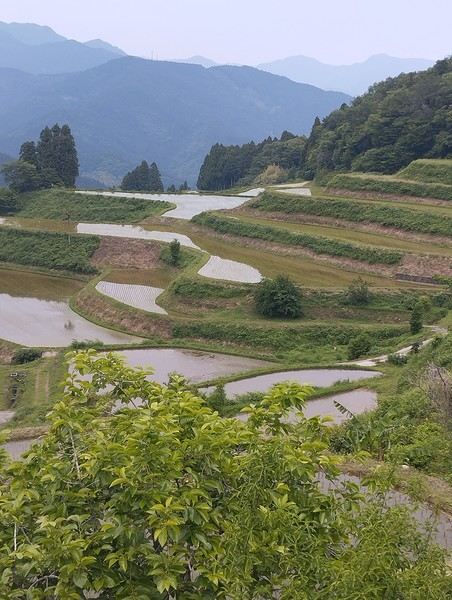
-->7 days in Miyakojima (Okinawa Prefecture)
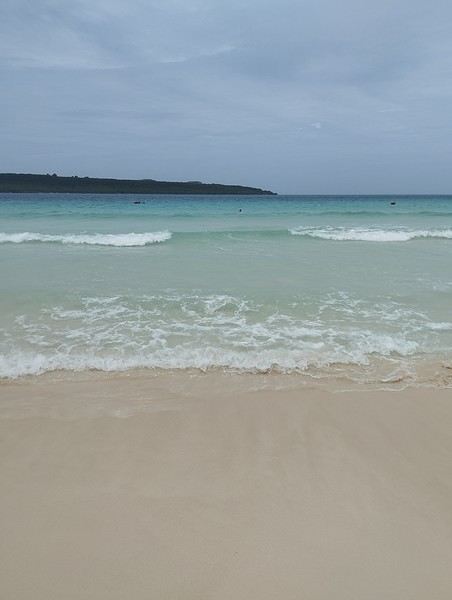
-->7 days in Tokyo
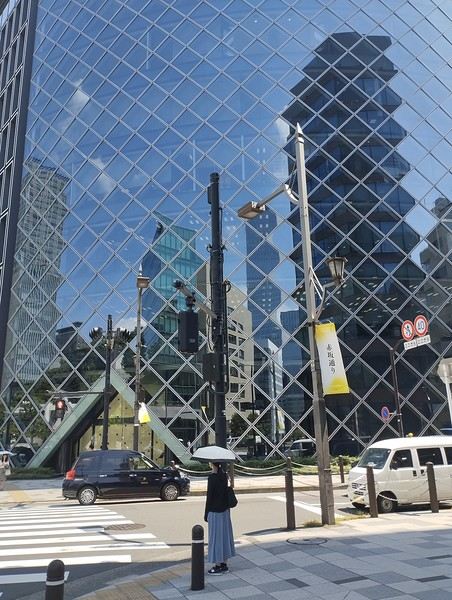
The trip was decided on fairly last-minute this year, as usual.
I regularly check flight prices to track fluctuations for this destination, even without concrete plans. Finding a slightly cheaper direct flight (900 €) than what I’d seen in previous months (around 1,200–1,400 € on average) for a Paris-Tokyo route with Japanese airline ANA was too tempting to resist the urge to return to this enchanting country. After long hesitations between exploring the San’in region (Matsue, Tottori, Yamaguchi) and southern Shikoku, the decision was made—I took the plunge! The tickets are booked: Paris to Kochi with a layover in Tokyo, all with ANA, the airline I’d been dreaming of... for 1,120 € per person. Okay, it’s not cheap, but it’s still better than in 2023.
We leave in 2 weeks!! Now it’s just a matter of getting everything ready!
Intense work ahead in these 2 weeks to:
finalize a more precise itinerary and reach an agreement—yep, because even though we both love Japan, our preferences differ slightly, and we have to choose between exploring new places or taking time to revisit beloved spots... decide how much time to spend in each selected area without rushing while still exploring research places that might interest us and watch videos about Japan book accommodations: yes, it’s possible to do this on the spot as we go, but last year, we noticed that last-minute options were pretty expensive, so we’re booking ahead—even if it means keeping a few options open while we decide or see if better deals pop up later reserve rental cars order yen check the weather regularly and wonder if choosing the *tsuyu* (rainy season) was really a good idea—and whether we’ll be stuck in non-stop rain???
What a tough job, right? Traveling to Japan for a month—such a hard life! Despite this being my 4th trip, the excitement is just as intense as the first time.
The only small downside is that when we booked the flight tickets, there were only a few seats left, so we’re only sitting together on the international return flight. Plus, on the outbound flight, we’ve got the middle seats. Another lingering question: what French-language films will be available? According to the internet, the selection seems limited. Oh well, these are just minor details—it’s almost time to fly!
PS: I’ll be posting slowly and irregularly... so for those interested, be patient or maybe set an alert...
Hi everyone,
I have to admit, I really hesitated before deciding to write this travel journal... Writing one takes a lot of time and energy, and since this is my 4th trip, I wondered if it would actually interest anyone other than myself (both for the discovery and the writing). But after a few "Are you going to write a journal?" requests and especially the renewed pleasure from reading other travelers’ travel journals about Japan or elsewhere on this forum or elsewhere, I’ve decided to share this 4th installment in the Land of the Rising Sun here.
The itinerary: 27 full days, from late May to late June 2025, right in the middle of the rainy season, including:
-->13 days in Shikoku, from Kochi (Kochi Prefecture) to Matsuyama (Ehime Prefecture)
-->7 days in Miyakojima (Okinawa Prefecture)
-->7 days in Tokyo
The trip was decided on fairly last-minute this year, as usual.
I regularly check flight prices to track fluctuations for this destination, even without concrete plans. Finding a slightly cheaper direct flight (900 €) than what I’d seen in previous months (around 1,200–1,400 € on average) for a Paris-Tokyo route with Japanese airline ANA was too tempting to resist the urge to return to this enchanting country. After long hesitations between exploring the San’in region (Matsue, Tottori, Yamaguchi) and southern Shikoku, the decision was made—I took the plunge! The tickets are booked: Paris to Kochi with a layover in Tokyo, all with ANA, the airline I’d been dreaming of... for 1,120 € per person. Okay, it’s not cheap, but it’s still better than in 2023.
We leave in 2 weeks!! Now it’s just a matter of getting everything ready!
Intense work ahead in these 2 weeks to:
finalize a more precise itinerary and reach an agreement—yep, because even though we both love Japan, our preferences differ slightly, and we have to choose between exploring new places or taking time to revisit beloved spots... decide how much time to spend in each selected area without rushing while still exploring research places that might interest us and watch videos about Japan book accommodations: yes, it’s possible to do this on the spot as we go, but last year, we noticed that last-minute options were pretty expensive, so we’re booking ahead—even if it means keeping a few options open while we decide or see if better deals pop up later reserve rental cars order yen check the weather regularly and wonder if choosing the *tsuyu* (rainy season) was really a good idea—and whether we’ll be stuck in non-stop rain???
What a tough job, right? Traveling to Japan for a month—such a hard life! Despite this being my 4th trip, the excitement is just as intense as the first time.
The only small downside is that when we booked the flight tickets, there were only a few seats left, so we’re only sitting together on the international return flight. Plus, on the outbound flight, we’ve got the middle seats. Another lingering question: what French-language films will be available? According to the internet, the selection seems limited. Oh well, these are just minor details—it’s almost time to fly!
PS: I’ll be posting slowly and irregularly... so for those interested, be patient or maybe set an alert...











