Vous est-il arrivé d'avoir des "regrets" lors d'un voyage, c'est-à-dire des choses que vous vouliez voir et faire et que vous n'avez pas pu ? Et pourquoi ? Avis et expériences...
Bonjour!
Encore 2 mois avant notre escale en Russie, nous serons à bord du MSC Magnifica.
Je fais beaucoup de recherches sur les forums, pour savoir ce qu'il ne faut pas manquer lors de cette escale et il s'agira sans doute de la seule pour laquelle nous prendrons une excursion MSC et vu le budget j'espère faire le bon choix... Merci d'avance pour vos avis sur les excursions testées, vos critiques, vos coups de coeur, une journée c'est si court, j'aurai sans doute envie d'y retourner un jour pour en profiter pleinement mais j'ai vraiment peur que les excursions se résume à une sorte de "safari" photo sans avoir le droit de quitter le bus ni de prendre de photos d'ailleurs!!!
Bref j'attends vos commentaires pour profiter au mieux de cette escale.
Twinneez - départ de Kiel le 29/07/2012
Encore 2 mois avant notre escale en Russie, nous serons à bord du MSC Magnifica.
Je fais beaucoup de recherches sur les forums, pour savoir ce qu'il ne faut pas manquer lors de cette escale et il s'agira sans doute de la seule pour laquelle nous prendrons une excursion MSC et vu le budget j'espère faire le bon choix... Merci d'avance pour vos avis sur les excursions testées, vos critiques, vos coups de coeur, une journée c'est si court, j'aurai sans doute envie d'y retourner un jour pour en profiter pleinement mais j'ai vraiment peur que les excursions se résume à une sorte de "safari" photo sans avoir le droit de quitter le bus ni de prendre de photos d'ailleurs!!!
Bref j'attends vos commentaires pour profiter au mieux de cette escale.
Twinneez - départ de Kiel le 29/07/2012
Bonsoir à tout le monde
Je passe ce petit post pour demander s'il y a des personnes françaises qui se sont expatriées en Egypte pour y travailler et y vivre et dans quel domaine et avec quelles connaissances linguistiques; quelles ont été les difficultés que vous avez rencontrées lors de votre expatriation et puis plutard, quels sont vos regrets et quelles ont été vos motivations pour choisir l'expatriation et pourquoi l'egypte ? Souhaiterez vous revenir en France???
Bref quelques questions qui ne trottent dans la tête 😇
Dans l'attente de vos témoignages, je vous remercie par avance
@ +
Laure
je compte voyager un peu partout dans le pays soit en arrivant directement dans le territoire soit en passant par le chili et visiter le nord à partir d'iquique en rajoutant 2 semaines qui me semble suffisantes
lere question : avion ou bus
2e question : mars avril ou mai pour Uyuni, je lis partout qu'il y fait froid la nuit, n'y a -t-il que des refuges non chauffés? Pas d'hôtels de catégorie moyenne et chauffés
faut-il passé obligatoirement par 1 agence, peut-on louer 1 voiture
L'argentine parait un tremplin moins onéreux?
merci pour tout conseil et vos coups de coeur ou vos regrets
Soyons clair, j'adore la géographie de ce pays que nous commençons à bien connaître (on a passé le cap des 26 Etats visités) et je sais que c'est un forum de voyage où l'enthousiasme est toujours plus facile à partager que la deception.
Mais quand même, y a t'il parmi vous, des déçus de leur séjour aux Etats-Unis (en particulier de l'Ouest) ? Si oui, quelles sont vos regrets...
Mais quand même, y a t'il parmi vous, des déçus de leur séjour aux Etats-Unis (en particulier de l'Ouest) ? Si oui, quelles sont vos regrets...
Bonjour,
nous voulons faire un voyage au kenya.
En circulant sur le net nous sommes tombés sur ca : kinondo khaya
Quelqun connait il?
L'accueil y est il bien? les commodités pour visiter, se deplacer?
Jai beau chercher je ne trouve aucun avis sur cet hebergement!!
merci a vous pour vos reponses
Jai beau chercher je ne trouve aucun avis sur cet hebergement!!
merci a vous pour vos reponses
Rebonjour à tous! hé bien l'itinéraire du 'voyage de noces' se concrétise petit-à-petit et nous aurons une ''belle grosse'' journée pour tout voir à Paris; quelqu'un m'a suggéré une excursion en péniche - vos opinions et suggestions seront trés appréciées, comme d'habitude 😛
à + et grosses bises du Québec
wherever you go, there you are......Jon Kabat-Zinn
à + et grosses bises du Québec
wherever you go, there you are......Jon Kabat-Zinn
Bonjour,
Mon compagnon et moi avons booké nos billets pour Denver du 26/04 au 13/05 2019. Après grosse réflexion sur le moyen de transport nous avons opté pour le 4x4 vu que conditions sur les routes seront encore difficiles à cette période de l'année. Nous allons opter pour les Motels et j'en ai déjà réservé quelques uns avec annulation gratuite mais c'est plutôt difficile car je ne sais pas quels endroit vont mériter plus que d'autres qu'on y reste plus d'une journée.
Nous partirons donc de DENVER et avons 14 journées pour faire la boucle et visiter un max avant de passer le dernier week-end à DENVER.
Nous savons à peu près quels sont les spots à visiter absolument mais nous sommes plutôt à la recherche d'endroits moins connus et fréquentés mais qui sont tout aussi fabuleux, bref des pépites 😉 Nous sommes bien sur très intéressés par tous les parcs nationaux, nous allons prendre le pass "America the beautiful" et faire des randonnées (nous avons un bon niveau).
Ce que je vous demande, si vous acceptez cette mission, c'est de me dire quels endroits ont été vos coups de coeur et pour quelle(s) raison(s). Nous ne vibrons pas tous pour les mêmes choses c'est pour cela que je vous demande vos raisons car mes coups de coeur ne seront pas forcément les votres. Mais aussi combien de temps le site mérite qu'on y reste (je parle surtout pour les parcs) , vos regrets si vous n'avez pas pu rester ou faire telle ou telle chose. Cela nous aiderait pas mal dans nos choix étant donné que nous ne pourrons pas tout visiter.
Merci d'avance pour votre collaboration 😊
Caroline & Romain
Etapes prévues de notre road trip (les nuit sont réservées mais peuvent être annulées) 27/04 : Denver (récup voiture) -> Boulder (petite visite) -> Estes Park (promenade et nuit) 28/04 : Estes Park (rando) -> Grand Lake (nuit) 29/04 : Grand Lake (rando?) -> steamboat Springs (sources eau chaude).. 08/05 : nuit à Alamosa pour Great sand dunes 09/05 : nuit à Colorado Springs 10/05 au 13/05 : DENVER
Mon compagnon et moi avons booké nos billets pour Denver du 26/04 au 13/05 2019. Après grosse réflexion sur le moyen de transport nous avons opté pour le 4x4 vu que conditions sur les routes seront encore difficiles à cette période de l'année. Nous allons opter pour les Motels et j'en ai déjà réservé quelques uns avec annulation gratuite mais c'est plutôt difficile car je ne sais pas quels endroit vont mériter plus que d'autres qu'on y reste plus d'une journée.
Nous partirons donc de DENVER et avons 14 journées pour faire la boucle et visiter un max avant de passer le dernier week-end à DENVER.
Nous savons à peu près quels sont les spots à visiter absolument mais nous sommes plutôt à la recherche d'endroits moins connus et fréquentés mais qui sont tout aussi fabuleux, bref des pépites 😉 Nous sommes bien sur très intéressés par tous les parcs nationaux, nous allons prendre le pass "America the beautiful" et faire des randonnées (nous avons un bon niveau).
Ce que je vous demande, si vous acceptez cette mission, c'est de me dire quels endroits ont été vos coups de coeur et pour quelle(s) raison(s). Nous ne vibrons pas tous pour les mêmes choses c'est pour cela que je vous demande vos raisons car mes coups de coeur ne seront pas forcément les votres. Mais aussi combien de temps le site mérite qu'on y reste (je parle surtout pour les parcs) , vos regrets si vous n'avez pas pu rester ou faire telle ou telle chose. Cela nous aiderait pas mal dans nos choix étant donné que nous ne pourrons pas tout visiter.
Merci d'avance pour votre collaboration 😊
Caroline & Romain
Etapes prévues de notre road trip (les nuit sont réservées mais peuvent être annulées) 27/04 : Denver (récup voiture) -> Boulder (petite visite) -> Estes Park (promenade et nuit) 28/04 : Estes Park (rando) -> Grand Lake (nuit) 29/04 : Grand Lake (rando?) -> steamboat Springs (sources eau chaude).. 08/05 : nuit à Alamosa pour Great sand dunes 09/05 : nuit à Colorado Springs 10/05 au 13/05 : DENVER
Bonjour à tous chers voyageurs,
Je prépare un circuit en Malaisie de 26 jours pour Août 2012, avec 2 enfants (12 et 11 ans). J'envisage de visiter la Péninsule puis Bornéo, en ciblant les sites pour prendre le temps d'apprécier chacun.
Les vols CDG-KL AR sont bloqués.
Je regarde à présent les vols locaux et j'aurai besoin de quelques conseils pour obtenir les meilleurs tarifs sur les vols ci-dessous. ps : En effet les tarifs indiqués actuellement sont exhorbitants !! 1200 euros pour 4 AR !! => impossible
Kuala Lumpur => Kota Bahru Kuala Lumpur => Kuching Kota Bahru => Kuching Kuching => vers le SABAH Le SABAH => Kuala Lumpur
Ce sont des idées pour construire mon parcours, rien n'est figé. Vos remarques sont les bienvenues.
Questions: - Sur quel site réserver ? - Quelle compagnie, Air Asia ? - Quand réserver ? A l'avance ou peut on envisager de réserver sur place ? - Quel parcours recommandez vous pour optimiser les déplacements ?
Merci de votre aide .
Je prépare un circuit en Malaisie de 26 jours pour Août 2012, avec 2 enfants (12 et 11 ans). J'envisage de visiter la Péninsule puis Bornéo, en ciblant les sites pour prendre le temps d'apprécier chacun.
Les vols CDG-KL AR sont bloqués.
Je regarde à présent les vols locaux et j'aurai besoin de quelques conseils pour obtenir les meilleurs tarifs sur les vols ci-dessous. ps : En effet les tarifs indiqués actuellement sont exhorbitants !! 1200 euros pour 4 AR !! => impossible
Kuala Lumpur => Kota Bahru Kuala Lumpur => Kuching Kota Bahru => Kuching Kuching => vers le SABAH Le SABAH => Kuala Lumpur
Ce sont des idées pour construire mon parcours, rien n'est figé. Vos remarques sont les bienvenues.
Questions: - Sur quel site réserver ? - Quelle compagnie, Air Asia ? - Quand réserver ? A l'avance ou peut on envisager de réserver sur place ? - Quel parcours recommandez vous pour optimiser les déplacements ?
Merci de votre aide .
Bonjour à tous
Nous venons de réserver une croisière du 05 au 12 mai sur le POESIA (compagnie MSC) pour les capitales du Nord. Pouvez-vous nous parler des pourboires, sont ils obligatoires ? car aucun renseignements lors de la réservation. L'embarquement est-il long sur le bateau ? Comment se passe les repas ? comment réserve t-on (la veille ?) ou a t-on une table de réserver chaque soir dans tous les restaurants ? Merci de votre aide.
Bonne journée à tous
Nous venons de réserver une croisière du 05 au 12 mai sur le POESIA (compagnie MSC) pour les capitales du Nord. Pouvez-vous nous parler des pourboires, sont ils obligatoires ? car aucun renseignements lors de la réservation. L'embarquement est-il long sur le bateau ? Comment se passe les repas ? comment réserve t-on (la veille ?) ou a t-on une table de réserver chaque soir dans tous les restaurants ? Merci de votre aide.
Bonne journée à tous
Bonjour,
J'envisage de partir en Namibie, fin février début mars prochain. Quelles sont les conditions météo à cette période? Ce voyage sera mon premier en Afrique (hormis le Maroc).
Je ne dispose malheureusement pas de beaucoup de temps sur place : environ 7-8 jours
Pouvez me conseiller les sites à privilegier (sachant que les villes en général m'interessent peu) ? Un semblant d'itinéraire ? (je compte louer un 4x4)
Merci pour vos réponses.
J'envisage de partir en Namibie, fin février début mars prochain. Quelles sont les conditions météo à cette période? Ce voyage sera mon premier en Afrique (hormis le Maroc).
Je ne dispose malheureusement pas de beaucoup de temps sur place : environ 7-8 jours
Pouvez me conseiller les sites à privilegier (sachant que les villes en général m'interessent peu) ? Un semblant d'itinéraire ? (je compte louer un 4x4)
Merci pour vos réponses.
Je m'absente de mon pays natal la Belgique, durant 9 mois sur l'année civile, pour 1 autre le Cameroun, au centre de l'Afrique.
L'Europe est loin avec son système de consommation, son temps, son climat.
La vie est bien meilleure ainsi !
Je suis à Dschang, au beau milieu d'enfants issus d'1 orphelinat. 25 bambins de 1 à 15 ans.
Du haut de mes 44 ans (enfin bas, vu que je suis en chaise roulante !), je me retrouve éducateur ! Quel changement !
Malheureusement, le temps passe vite lorsqu'on s'amuse, et je me voici à la veille de mon retour aux sources. Aux sources de l'ennui, du fric, du froid, de la pluie...
Enfin courage ! La vie n'est mise qu'entre parenthèses...
Séba
Séba
Nous revenons de 1 mois passé à Cuba :
Transports : Viazul ou taxis partagés avec d'autres voyageurs
- Nous avons pris un avion de La Havane à Santiago de Cuba.
L'Oriente est la région qui nous a le plus plu. Authentique, peu de touristes, beaucoup de contacts avec la population. Nous vous conseillons fortement de visiter cette région.
- Santiago de Cuba : Nous vous recommandons l'excellent restaurant El Alazan San Felix 909 (entre San Carlos et Santa Rosa) Cuisine très fine. 10 cuc environ
- Baracoa : notre coup de coeur; Jolie ville, beaucoup de contacts avec les cubains, excursions à vélo et taxi aux alentours très belles.
- Baracoa/Moa/Gibara en taxi partagé avec autres touristes 130 cuc
- Gibara
- Holguin
- Camaguey
- Santa Clara : bof
- Trinidad : ne pas rater la visite en train de la vallée de los ingenios(aller directement à la gare; départ 9H30 ) et Topes de Collantes.
Plein de resto avec orchestre le soir.
- Cienfuegos : aller à pied à Punta Gorda
- Playa Larga : sommes déçus par les fonds sous marins; Beaucoup de moustiques
- La Havane
- Vinales : belles randonnées dans les mogottes - Aller à pied au resto bio Finca Wilfredo, délicieux.
- Habane
Les cubains sont accueillants et adorables. Nous avions apporté des clés USB, vieux appareils photos et portables, dentifrice, savon, vetements, parfums, que nous avons donné aux personnes avec lesquelles nous avions de réels contacts et il y en a eu beaucoup.
Bonjour,
Opodo m'a redonné le goût des vrais agences où l'on a un interlocuteur en face ! Le 03 mars j'achète un AR Marseille-Dublin (tournoi des 6 nations oblige...). Une fois le paiement électronique fait je ne reçois aucune confirmation ni référence de dossier. Le lendemain j'essaie de les contacter... Mis à part les enrichir via un numéro surtaxé ce numéro ne sert à rien. J'ai du en tout les appeler une cinquantaine de fois et seulement 3 fois j'ai pu tomber sur quelqu'un qui n' jamais pu m'apporter quoi que ce soit. Sauf une fois ils m'ont passé un manager ( à ma demande), j'ai attendu, attendu et puis ils ont raccroché. Un numéro "client" ou plutôt numéro-pigeon qui ne sert à rien. J'ai adressé 4 mails à opodo-compta@fr.travel-agency.travel . Je n'ai JAMAIS eu de réponse. Je me demande si ce site existe vraiment ou si c'est une façade pour arnaquer les clients ? Savez- vous comment me faire rembourser cette somme ? DGCCRF, association de consommateurs, Tribunal de Proximité ... .
Merci par avance de vos retours et surtout méfiez-vous d'Opodo et faites le savoir autour de vous.
Opodo m'a redonné le goût des vrais agences où l'on a un interlocuteur en face ! Le 03 mars j'achète un AR Marseille-Dublin (tournoi des 6 nations oblige...). Une fois le paiement électronique fait je ne reçois aucune confirmation ni référence de dossier. Le lendemain j'essaie de les contacter... Mis à part les enrichir via un numéro surtaxé ce numéro ne sert à rien. J'ai du en tout les appeler une cinquantaine de fois et seulement 3 fois j'ai pu tomber sur quelqu'un qui n' jamais pu m'apporter quoi que ce soit. Sauf une fois ils m'ont passé un manager ( à ma demande), j'ai attendu, attendu et puis ils ont raccroché. Un numéro "client" ou plutôt numéro-pigeon qui ne sert à rien. J'ai adressé 4 mails à opodo-compta@fr.travel-agency.travel . Je n'ai JAMAIS eu de réponse. Je me demande si ce site existe vraiment ou si c'est une façade pour arnaquer les clients ? Savez- vous comment me faire rembourser cette somme ? DGCCRF, association de consommateurs, Tribunal de Proximité ... .
Merci par avance de vos retours et surtout méfiez-vous d'Opodo et faites le savoir autour de vous.
Pour obtenir mon visa d'un an les autorités Thailandaises m'ont demandées la validation de
mon mariage français à faire au ministere des affaires étrangéres à Bangkok, je suppose qu'il
faut faire traduire mon livret de famille en Thai, quelqu'un peut-il me renseigner?
Je n'ai pas en memoire l'adresse du site d'Udon Thani, mais je sais qu'il pourra me renseigner
Merci à tous
J'ai réservé une croisière de 10 nuits sur le Millenium de Celebrity du 12 février au 22 février avec escales à Tortola, St-Marteen, Ste-Lucie, Barbade, Grenade, Curaçao et Aruba. Est-ce que quelqu'un d'entre vous serez sur ce voyage? J'ai remarqué que plusieurs personnes ont réservé la croisière de 11 nuits du 22 fevrier au 5 mars qui fait à peu près les mêmes escales mais pour une raison que j'ignore, celle de 10 nuits nous a coûté presque 1000 $ de moins que celle de 11 nuits, d'où notre choix. C'est notre deuxième croisière. Nous avons déjà visité Ste-Lucie et Barbade mais les autres destinations seront des découvertes pour nous. Donc si vous êtes du voyage, faites le moi savoir. J'attends de vos nouvelles.
Bonjour, nous sommes un couple vivant en france. En septembre prochain nous partons en coopération à Ivato pour minimum deux ans.
Après moults réflexions et recherches nous avons décidé d'avoir, si la nature nous en donne la chance 😉, un bébé. Nous savons que cette région de Mada(la capitale) est peu concerné par le palu contrairement à d'autres régions ( la principale précaution à prendre est de porter des vêtements longs dès le coucher du soleil); nous savons qu'il existe tout les spécialistes utiles pour le suivi d'une grosse et d'un enfant( kiné, pédiatre..), enfin l'association qui nous accueille dans ce projet de coopération est tout à fait partante dan notre désir d'enfant. Reste une question: Où acocucher???pour l'instant, nous pensons prévoir accoucher à l'île de la réunion mais nous voudrions savoir si il existe une maternité sur la capitale où je pourrai accoucher convenablement....Et par ailleurs, si nous prévoyons d'accoucher à la réunion et que le bébé arrive "en avance" il faudra bien accoucher à Mada!!!
J'en profitte aussi pour demander si les prix pour tout ce qu'il faut pour un petit (habits, couches, lit enfant) est moins cher en france ou à mada.
Merci par avance. LN et david.
Après moults réflexions et recherches nous avons décidé d'avoir, si la nature nous en donne la chance 😉, un bébé. Nous savons que cette région de Mada(la capitale) est peu concerné par le palu contrairement à d'autres régions ( la principale précaution à prendre est de porter des vêtements longs dès le coucher du soleil); nous savons qu'il existe tout les spécialistes utiles pour le suivi d'une grosse et d'un enfant( kiné, pédiatre..), enfin l'association qui nous accueille dans ce projet de coopération est tout à fait partante dan notre désir d'enfant. Reste une question: Où acocucher???pour l'instant, nous pensons prévoir accoucher à l'île de la réunion mais nous voudrions savoir si il existe une maternité sur la capitale où je pourrai accoucher convenablement....Et par ailleurs, si nous prévoyons d'accoucher à la réunion et que le bébé arrive "en avance" il faudra bien accoucher à Mada!!!
J'en profitte aussi pour demander si les prix pour tout ce qu'il faut pour un petit (habits, couches, lit enfant) est moins cher en france ou à mada.
Merci par avance. LN et david.
Salut à tous VoyagesForumiennes, -iens !
Voilà, aujourd'hui je voudrais vous poser une question :
Nous sommes une bande de jeunes très fêtards qui avons l'habitude de partir à Barcelone pour faire la fête en été. Cependant, cette année, on a évoqué la possibilité de la Croatie, et plus particulièrement de Pakostane car nous y avons une amie. Cependant j'ai peur que, fêtards comme nous sommes, cette destinations fasse un trop gros contraste avec Barcelone point de vue vie nocturne. Comme je l'ai compris jusqu'ici, je vois plus Pakostane comme un petit village sans grande animation. Me trompe-je ?
Alors voilà, si quelqu'un peut éclairer ma lanterne sur le sujet vie nocturne à Pakostane, je le/la remercie d'avance !
Voilà, aujourd'hui je voudrais vous poser une question :
Nous sommes une bande de jeunes très fêtards qui avons l'habitude de partir à Barcelone pour faire la fête en été. Cependant, cette année, on a évoqué la possibilité de la Croatie, et plus particulièrement de Pakostane car nous y avons une amie. Cependant j'ai peur que, fêtards comme nous sommes, cette destinations fasse un trop gros contraste avec Barcelone point de vue vie nocturne. Comme je l'ai compris jusqu'ici, je vois plus Pakostane comme un petit village sans grande animation. Me trompe-je ?
Alors voilà, si quelqu'un peut éclairer ma lanterne sur le sujet vie nocturne à Pakostane, je le/la remercie d'avance !
Que diriez-vous de nous retrouver, le vendredi 22 juin au soir, autour d'un pique-nique dans Lyon, puis, pour ceux qui le souhaitent, de poursuivre le samedi et le dimanche par une rando en montagne, au dessus de Grenoble? 🙂
Vendredi 22 juin à partir de 19h Rendez-vous au Parc Naturel de la Feyssine, au dessus du campus de la Doua. Amenez votre pique-nique et tout ce que vous voulez: photos, dessins, projets, musique, ... et n'oubliez pas de vous inscrire par message public à la suite de cette discussion (ainsi on sait qui vient!).
Accès facile depuis le centre de Lyon: tramway: arrêt IUT Feyssine vélo: plusieurs bornes Velov autour du campus voiture: stationnement facile à l'entrée du parc ou dans le campus. train: gare Part Dieu puis tramway direct direction IUT Feyssine
Lieu de Rendez-vous au bord de l'eau, à côté de l'Ile aux Castors:

 (plan univ-lyon1.fr)
Samedi 23 juin et dimanche 24 juin
Prenez votre tente (tente de rando, donc légère, si vous en avez une), vos chaussures de rando, votre duvet, votre bouffe pour le samedi midi, samedi soir, dimanche matin et dimanche midi, direction le massif de Belledonne. Nous monterons samedi après-midi au Lac de la Coche (600m de dénivelé, voir le topo de la rando) et nous camperons au bord du lac le soir.
 (photo montagne.plisson.org)
Le lendemain, certains pourront causer au bord du lac, d'autres rayonner autour (plusieurs randos possibles dans le coin, suggestions bienvenues), puis redescendre dans l'après-midi.
Vu qu'on se sera certainement couchés un peu tard le vendredi 😉 RDV le samedi à 9h45 sur le parking de Décathlon St Priest. Pour ceux qui ne partiraient pas de Lyon, RDV à Prabert (38) en fin de matinée. Je pense qu'on prendra le repas de midi avant de s'attaquer à la montée.
Pour s'inscrire, il suffit d'envoyer un message public à la suite de cette discussion, en précisant le cas échéant si vous avez une tente de rando (combien de places) et une voiture (combien de places).
Espérons que nous ayons le même temps que l'an dernier à Dieulefit, même sans piscine... mais y'a le lac 😛
Vendredi 22 juin à partir de 19h Rendez-vous au Parc Naturel de la Feyssine, au dessus du campus de la Doua. Amenez votre pique-nique et tout ce que vous voulez: photos, dessins, projets, musique, ... et n'oubliez pas de vous inscrire par message public à la suite de cette discussion (ainsi on sait qui vient!).
Accès facile depuis le centre de Lyon: tramway: arrêt IUT Feyssine vélo: plusieurs bornes Velov autour du campus voiture: stationnement facile à l'entrée du parc ou dans le campus. train: gare Part Dieu puis tramway direct direction IUT Feyssine
Lieu de Rendez-vous au bord de l'eau, à côté de l'Ile aux Castors:
(plan univ-lyon1.fr)Samedi 23 juin et dimanche 24 juin
Prenez votre tente (tente de rando, donc légère, si vous en avez une), vos chaussures de rando, votre duvet, votre bouffe pour le samedi midi, samedi soir, dimanche matin et dimanche midi, direction le massif de Belledonne. Nous monterons samedi après-midi au Lac de la Coche (600m de dénivelé, voir le topo de la rando) et nous camperons au bord du lac le soir.
(photo montagne.plisson.org)Le lendemain, certains pourront causer au bord du lac, d'autres rayonner autour (plusieurs randos possibles dans le coin, suggestions bienvenues), puis redescendre dans l'après-midi.
Vu qu'on se sera certainement couchés un peu tard le vendredi 😉 RDV le samedi à 9h45 sur le parking de Décathlon St Priest. Pour ceux qui ne partiraient pas de Lyon, RDV à Prabert (38) en fin de matinée. Je pense qu'on prendra le repas de midi avant de s'attaquer à la montée.
Pour s'inscrire, il suffit d'envoyer un message public à la suite de cette discussion, en précisant le cas échéant si vous avez une tente de rando (combien de places) et une voiture (combien de places).
Espérons que nous ayons le même temps que l'an dernier à Dieulefit, même sans piscine... mais y'a le lac 😛
Une des plaies en Thaîlande !!!!!
Même si cela est tendance dans certains pays ?
Jouer à faire les clochards (qu'ils ne sont pas, par ailleurs) avec son look vestimentaire n'est pas du tout bien considéré sous des latitudes comme la Thaïlande...
Au contraire, ce spectacle donne du grain à moudre aux partisans du nationalisme rigide de certains thaïlandais aux manettes du pouvoir. Un argument supplémentaire pour entretenir voir renforcer le mépris vis à vis de tous ces gens venus de pays riches et à leurs yeux enclins à une déchéance de soi inexorable.
Même constat pour certains de ces vieillards qui par leur retraite pécuniaire peuvent trainer leur perversité en déambulant jusqu'à mort s'en suive. Et pour lesquels, prendre une douche et mettre des vêtements propres finissent par tomber dans les oubliettes.
c'est pourquoi, riches ou modestes, hommes et femmes, il n'est vraiment pas difficile de se vêtir correctement mais aussi avec élégance pour quelques centaines de bahts...
Nous aimons la Thaîlande, montrons le et elle nous appréciera d'autant plus... 🙂😕
Même si cela est tendance dans certains pays ?
Jouer à faire les clochards (qu'ils ne sont pas, par ailleurs) avec son look vestimentaire n'est pas du tout bien considéré sous des latitudes comme la Thaïlande...
Au contraire, ce spectacle donne du grain à moudre aux partisans du nationalisme rigide de certains thaïlandais aux manettes du pouvoir. Un argument supplémentaire pour entretenir voir renforcer le mépris vis à vis de tous ces gens venus de pays riches et à leurs yeux enclins à une déchéance de soi inexorable.
Même constat pour certains de ces vieillards qui par leur retraite pécuniaire peuvent trainer leur perversité en déambulant jusqu'à mort s'en suive. Et pour lesquels, prendre une douche et mettre des vêtements propres finissent par tomber dans les oubliettes.
c'est pourquoi, riches ou modestes, hommes et femmes, il n'est vraiment pas difficile de se vêtir correctement mais aussi avec élégance pour quelques centaines de bahts...
Nous aimons la Thaîlande, montrons le et elle nous appréciera d'autant plus... 🙂😕
Salut à tous!
Ce sujet a déjà été évoqué y'a 10 ans, mais le mien est un peu plus perturbant : je suis prise entre deux choix. D'une part, je brûle de voyager, de m'enrichir, de découvrir le monde, et d'une autre, j'ai envie de fonder une famille avec mon amoureux qui ne partage pas ma passion des voyages (lui c'est la zic)...d'une part, j'ai peur de partir et de regretter de quitter mon amour (ma formation actuelle c'est prof de français pour étrangers, mais je peux le faire ne France), de plus, j'ai 28 ans et jveux pas faire des enfants dans mille ans. Surtout que c'est avec lui que je veux avoir des enfants. D'une autre, j'ai peur de regretter toute ma vie de pas avoir profité de ma jeunesse et de mes envies d'aventures... La plupart des gens à qui j'en ai parlé m'ont conseillé de pas laisser tomber mon couple, ce que je n'ai pas envie! Mais d'un autre, je souffre à l'idée de rester.
Bref, je suis prise entre deux choix impossibles à prendre sans regrets...vos avis? Votre vécu?
Merci :)
Ce sujet a déjà été évoqué y'a 10 ans, mais le mien est un peu plus perturbant : je suis prise entre deux choix. D'une part, je brûle de voyager, de m'enrichir, de découvrir le monde, et d'une autre, j'ai envie de fonder une famille avec mon amoureux qui ne partage pas ma passion des voyages (lui c'est la zic)...d'une part, j'ai peur de partir et de regretter de quitter mon amour (ma formation actuelle c'est prof de français pour étrangers, mais je peux le faire ne France), de plus, j'ai 28 ans et jveux pas faire des enfants dans mille ans. Surtout que c'est avec lui que je veux avoir des enfants. D'une autre, j'ai peur de regretter toute ma vie de pas avoir profité de ma jeunesse et de mes envies d'aventures... La plupart des gens à qui j'en ai parlé m'ont conseillé de pas laisser tomber mon couple, ce que je n'ai pas envie! Mais d'un autre, je souffre à l'idée de rester.
Bref, je suis prise entre deux choix impossibles à prendre sans regrets...vos avis? Votre vécu?
Merci :)
Bonjour,
Avec mon conjoint, nous souhaiterions programmer « tour » d’Europe pour l’été prochain (2019).
Nous comptons nous déplacer par le train avec la formule Interrail Global Pass, qui sous semble être la solution la plus économique (outre le stop) et confortable.
Nous en sommes pour le moment à l’élaboration d’un budget, afin de mettre suffisamment de côté d’ici là. Pour ceux qui ont fait un tel voyage, à combien cela leur est-il revenu, niveau transport, hébergement, nourriture, et activités sur place. Et donc en élaborant le budget, on travaille forcément sur l’itinéraire.
Pour le moment, nous partons plutôt dans l’idée de passer au moins 3 jours par escale, voire plus si ça vaut le coup plutôt que de prendre le train tous les deux jours sans vraiment profiter. Nous avons 3 destinations que nous souhaiterions vraiment visiter : commencer par l’Italie, puis prendre un ferry jusqu’en Grèce pour si possible en visiter les îles, remonter (avec des escales bien sûr) jusqu’en Pologne où nous avons une amie qui réside (Cracovie) et rentrer par les Pays-Bas.
Nous ne sommes pas spécialement férus des grosses villes et des capitales, d’autant que, organisation oblige, nous ne pourrons faire ce voyage qu’en juillet, et nous aimerions autant que faire se peut éviter les flots touristiques.
Nous voilà donc à la recherche de témoignages de personnes ayant pu réaliser un tel périple, son itinéraire, des coins phares à visiter ou activités à faire (même si je me doute qu’il y en a des tas). A combien ça vous est revenu au final, avec les extraits et compagnie, quels sont vos meilleurs souvenirs, vos éventuels regrets, etc….
Merci d’avance de vos retours !
Nous comptons nous déplacer par le train avec la formule Interrail Global Pass, qui sous semble être la solution la plus économique (outre le stop) et confortable.
Nous en sommes pour le moment à l’élaboration d’un budget, afin de mettre suffisamment de côté d’ici là. Pour ceux qui ont fait un tel voyage, à combien cela leur est-il revenu, niveau transport, hébergement, nourriture, et activités sur place. Et donc en élaborant le budget, on travaille forcément sur l’itinéraire.
Pour le moment, nous partons plutôt dans l’idée de passer au moins 3 jours par escale, voire plus si ça vaut le coup plutôt que de prendre le train tous les deux jours sans vraiment profiter. Nous avons 3 destinations que nous souhaiterions vraiment visiter : commencer par l’Italie, puis prendre un ferry jusqu’en Grèce pour si possible en visiter les îles, remonter (avec des escales bien sûr) jusqu’en Pologne où nous avons une amie qui réside (Cracovie) et rentrer par les Pays-Bas.
Nous ne sommes pas spécialement férus des grosses villes et des capitales, d’autant que, organisation oblige, nous ne pourrons faire ce voyage qu’en juillet, et nous aimerions autant que faire se peut éviter les flots touristiques.
Nous voilà donc à la recherche de témoignages de personnes ayant pu réaliser un tel périple, son itinéraire, des coins phares à visiter ou activités à faire (même si je me doute qu’il y en a des tas). A combien ça vous est revenu au final, avec les extraits et compagnie, quels sont vos meilleurs souvenirs, vos éventuels regrets, etc….
Merci d’avance de vos retours !
Bonsoir à tous
tout d'abord un joyeux noel!
J'aurais besoin de témoignages. En pleine préparation pour mo nTDM qui démarrera cet été, (http://ensmelle.blogspot.ch/) je suis allé cette aprem au Vieux Campeur dans le but de m'acheter une veste. J'en avais repéré une pas trop mal mais voila que le vendeur est venu m'embrouiller. :) En gros, étant donné que je compte porter un sac à dos, il me faut forcement une veste solide et donc en plusieurs couches (il me proposait une 3 couches) ce qui implique du coup plus de poids et plus de place dans le sac.
Mais bon, quand je lui ai dit que je comptais voyager partout, il m'a du coup conseillé un Poncho car cela évite les points de contact comme les bretelles de sac à dos et donc le fait d'être trempé!
Du coup je suis ressorti du magasin 1h30 plus tard.... sans veste! :D
J'aurais aimé savoir ce que vous avez pris vous? Parce que j'ai pour l'instant un soft shell que je mettrais par dessus une polaire. Je comptais juste donc prendre une couche étanche en gore tex pour la pluie.
Oui mais je ne vais pas non plus rester sous la pluis dès qu'il pleuvra des cordes. Je me protègerai au max donc la GTX à 400 boules est peut être pas nécessaire dans ce cas la.... Oui mais en même temps avec un poncho, ça fait vite cocote minute!
bref je suis super paumé! pis la différence de prix entre une GTX et un poncho laisse aussi à réfléchir!
Bref, si vous pouviez me faire part de vos choix/regrets, ...
Merci!
J'aurais besoin de témoignages. En pleine préparation pour mo nTDM qui démarrera cet été, (http://ensmelle.blogspot.ch/) je suis allé cette aprem au Vieux Campeur dans le but de m'acheter une veste. J'en avais repéré une pas trop mal mais voila que le vendeur est venu m'embrouiller. :) En gros, étant donné que je compte porter un sac à dos, il me faut forcement une veste solide et donc en plusieurs couches (il me proposait une 3 couches) ce qui implique du coup plus de poids et plus de place dans le sac.
Mais bon, quand je lui ai dit que je comptais voyager partout, il m'a du coup conseillé un Poncho car cela évite les points de contact comme les bretelles de sac à dos et donc le fait d'être trempé!
Du coup je suis ressorti du magasin 1h30 plus tard.... sans veste! :D
J'aurais aimé savoir ce que vous avez pris vous? Parce que j'ai pour l'instant un soft shell que je mettrais par dessus une polaire. Je comptais juste donc prendre une couche étanche en gore tex pour la pluie.
Oui mais je ne vais pas non plus rester sous la pluis dès qu'il pleuvra des cordes. Je me protègerai au max donc la GTX à 400 boules est peut être pas nécessaire dans ce cas la.... Oui mais en même temps avec un poncho, ça fait vite cocote minute!
bref je suis super paumé! pis la différence de prix entre une GTX et un poncho laisse aussi à réfléchir!
Bref, si vous pouviez me faire part de vos choix/regrets, ...
Merci!
bonjour, nous partons le 7 novembre sur le costa Deliziosa" Iles et terres du soleil", à ceux qui ont déjà fait ou ferons cette croisière, que pouvez vous nous en dire? joies, déception, regrets...tous vos commentaires ou suggestions nous serons utiles, merci
Bonjour à vous,
On s'est décidé pour cette été, 2 semaine debut aout (pas le choix des dates), ce sera la Corse. Les Différente conversation sur le Forum, la possibilité de camping et mes finances m'ont convaincu, le Cambodge attendra un an :) L'aide apporté par le forum sur mon précédent voyage au Maroc m'insite à m'adresser à nouveau à vous.
Je suis bordelais, je prévois donc de prendre le Ferry depuis Marseille (le plus proche) pour Ajaccio (qui semble etre la meilleurs ville de départ). Actuellement la SNCM fait un A/R pour environs 350 euros. Ca me parait pas trop chert.
Ma question, quand dois je réserver pour avoir le meilleurs tarif, au plus tard?
Merci, je reviendrais vers vous quand j'aurais préparer les étapes du périple!
On s'est décidé pour cette été, 2 semaine debut aout (pas le choix des dates), ce sera la Corse. Les Différente conversation sur le Forum, la possibilité de camping et mes finances m'ont convaincu, le Cambodge attendra un an :) L'aide apporté par le forum sur mon précédent voyage au Maroc m'insite à m'adresser à nouveau à vous.
Je suis bordelais, je prévois donc de prendre le Ferry depuis Marseille (le plus proche) pour Ajaccio (qui semble etre la meilleurs ville de départ). Actuellement la SNCM fait un A/R pour environs 350 euros. Ca me parait pas trop chert.
Ma question, quand dois je réserver pour avoir le meilleurs tarif, au plus tard?
Merci, je reviendrais vers vous quand j'aurais préparer les étapes du périple!
Bonsoir,
J'envisage de partir une semaine en avril avec ma petite famille.
Plusieurs destinations et hotels me sont proposés mais je n'arrive pas à me décider. Majorque ? Fuerteventura ? grandes canaries ?
J'aimerai beaucoup avoir votre avis pour faire un choix (plages, paysages, météo...)
Merci
J'envisage de partir une semaine en avril avec ma petite famille.
Plusieurs destinations et hotels me sont proposés mais je n'arrive pas à me décider. Majorque ? Fuerteventura ? grandes canaries ?
J'aimerai beaucoup avoir votre avis pour faire un choix (plages, paysages, météo...)
Merci
5 jours de trek, de Cachora à Hornopampa, complété par la visite de Machu Picchu.
Ce trek du Choquequirao était le principal objectif de mon second voyage au Pérou (1er en 2006), avant qu'un téléphérique (projet retardé) assure un accès aisé au site archéologique, et donc son envahissement par un tourisme de masse.
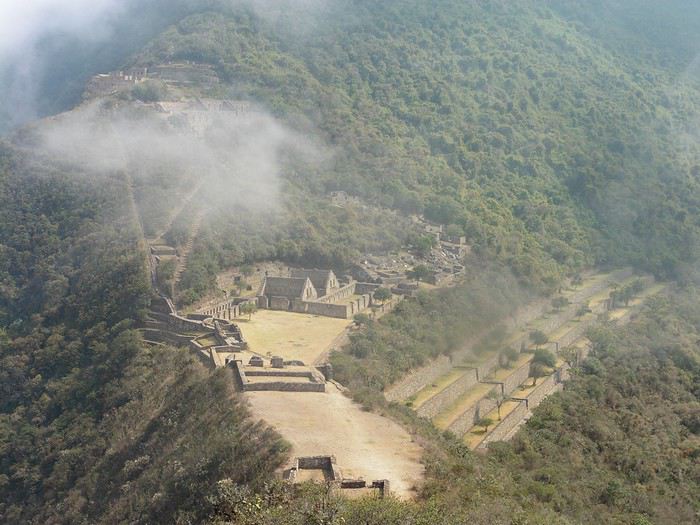 (cité inca de Choquequirao photographiée depuis l'ushnu, pas un visiteur en vue alors qu'il est déjà 09h20)
Mes remerciements à Cocuy, Simon, et Mayakke dont les contributions sur VoyageForum ont facilité ma préparation.
Voici quel a été le déroulé général de ce trek.
J0 / 7-sept-16 : venant de Andahuaylas, transports via Abancay jusqu'à Limatambo, visite du beau site inca de Tarahuasi, puis du site inca Sayhuite, nuit à Cachora. J1 / 8-sept-16 : marche Cachora -> Marampata J2 / 9-sept-16 : visite de Choquequirao J3 / 10-sept-16 : fin de visite de Choquequirao, marche -> Maizal J4 / 11-sept-16 : Maizal -> Yanama J5 / 12-sept-16 : Yanama -> Hornopampa, transport -> Santa Teresa J6 / 13-sept-16 : Santa Teresa -> Hidroelectrica -> Aguas Calientes J7 / 14-sept-16 ; Machu Picchu, La Montana, retour Santa Teresa J8 / 15-sept-16 : transports Santa Teresa -> Santa Maria -> Cuzco
Ci-après, la relation de ce trek, réalisé en solo et sans portage. Sac-à-dos complet, car je ne revenais pas sur mes pas.
Fabrice 55 ans lors du trek, bonne condition physique (en dépit d'une spondyl-arthrite ankylosante), non sportif, expérience réduite du trekking (4 j pour une traversée express du Zanskar Nord, 2 j au Quilotoa/Equateur), bon marcheur en terrain plat et physiquement endurant.
Ce trek du Choquequirao était le principal objectif de mon second voyage au Pérou (1er en 2006), avant qu'un téléphérique (projet retardé) assure un accès aisé au site archéologique, et donc son envahissement par un tourisme de masse.
(cité inca de Choquequirao photographiée depuis l'ushnu, pas un visiteur en vue alors qu'il est déjà 09h20)Mes remerciements à Cocuy, Simon, et Mayakke dont les contributions sur VoyageForum ont facilité ma préparation.
Voici quel a été le déroulé général de ce trek.
J0 / 7-sept-16 : venant de Andahuaylas, transports via Abancay jusqu'à Limatambo, visite du beau site inca de Tarahuasi, puis du site inca Sayhuite, nuit à Cachora. J1 / 8-sept-16 : marche Cachora -> Marampata J2 / 9-sept-16 : visite de Choquequirao J3 / 10-sept-16 : fin de visite de Choquequirao, marche -> Maizal J4 / 11-sept-16 : Maizal -> Yanama J5 / 12-sept-16 : Yanama -> Hornopampa, transport -> Santa Teresa J6 / 13-sept-16 : Santa Teresa -> Hidroelectrica -> Aguas Calientes J7 / 14-sept-16 ; Machu Picchu, La Montana, retour Santa Teresa J8 / 15-sept-16 : transports Santa Teresa -> Santa Maria -> Cuzco
Ci-après, la relation de ce trek, réalisé en solo et sans portage. Sac-à-dos complet, car je ne revenais pas sur mes pas.
Fabrice 55 ans lors du trek, bonne condition physique (en dépit d'une spondyl-arthrite ankylosante), non sportif, expérience réduite du trekking (4 j pour une traversée express du Zanskar Nord, 2 j au Quilotoa/Equateur), bon marcheur en terrain plat et physiquement endurant.
Nous sommes donc rentrés de notre voyage de noce en Alaska et souhaitons faire partager notre expérience d'un road trip d'un mois à travers la Péninsule du Kenai, la vallée Matanuska et le Denali National Park. Nous n'avons pas pu aller au Nord car en un mois ce n'était pas possible de tout concilier, nous n'avons pas non plus fait les îles Aléoutiennes et le Sud Est.
Notre voyage a lieu 1 an et demi après notre retour du Chili e où nous avions mis la barre très haute au niveau des paysages et où nous avions eu beaucoup de chance avec le climat.
Les paysages alaskaiens ne nous ont pas déçus et se sont avérés très différents de ceux de la Patagonie chilienne, nous avons vu beaucoup plus d'animaux mais nous avons été beaucoup moins chanceux avec la météo : sur un mois, nous avons eu quasiment 3 semaines de pluie/brouillard/nuages bas.
Jour 1 : Nice - Anchorage Nous sommes partis de Nice, trois jours après notre mariage avec la compagnie aérienne Lufthansa. Départ très matinal et arrivée à Anchorage à 16H (heure locale) avec 10 heures de décalage horaire et 2 escales (Francfort et Seattle). Attention, il faut récupérer les bagages à Seattle donc prévoir une correspondance en conséquence (nous on avait prévu 1h30 ça passait mais c'était juste). Arrivés à Anchorage, nous récupérons le véhicule loué chez avis (une nissan sentra bien confortable avec un bel espace de rangement pour nos bagages dans le coffre). On file à l'auberge de jeunesse où nous avions réservé notre première nuit. On était tellement fatigué qu'on n'a même pas eu le courage de ressortir et on s'est endormi très rapidement malgré le jour qui ne tombe presque pas ! (2 heures de "nuit claire" au début de notre voyage)
Jour 2 : Anchorage - Girdwood Il fait beau. Nous passons la matinée au Wallmart et au REI (magasin de sport outdoor où nous achetons des recharges coleman pour notre réchaud à gaz, un bear proof container et un pepper spray - ce dernier élément est indispensable si vous prévoyez de randonner en territoire ours). Départ vers Girdwood sur la Seward Highway. Excellents points de vue sur le Turnagain Arm et les montagnes. Nous déjeunons à Bird Point face au Turnagain Arm . Passage par Indian Meat Valley pour acheter quelques produits alimentaire locaux style saucisse de caribou ou onserve de saumon (on a pas trop été emballé à l'usage). Arrivée à Alyeska et rando "Winner creek trail" (facile et sympa). On continue après les gorges jusqu'au handtram au dessus de Glacier Creek. On plante la tente au camping de Girdwood. Les campings en Alaska sont super, on choisit un emplacement dispo et on paye dans une petite boite au lettre (entre 15 et 20 dollars). Il n'y a presque jamais de douche mais toujours des toilettes et souvent des bears proof containers (et des poubelles anti ours).

Jour 3 : Girdwood - Crow Pass Trail Ce matin, reveil sous la pluie. Nous partons tardivement pour la randonnée de crow pass trail en espérant une amélioration du temps. Belle randonnée de 8 km A/R jusqu'au Crystal Lake (. Au col, le vent souffle et il fait bien froid. On pic nic et on redescend car vu le brouillard ça ne sert à rien de continuer jusqu'à Raven Glacier. Au retour on passe par les vestige d'une ancienne mine d'or. Nuit au camping de Girdwood (il y a un abris en bois pour pic-niquer quand il pleut !)

Jour 4 : Girdwood – Hope Journée pluvieuse. Visite du Alaska Wildlige center (pas prévu au programme mais une bonne activité à faire quand il pleut). On a bien aimé la visite de ce parc animalier (qui n’est pas du tout un zoo mais plutôt un centre où sont récupérés et soignés les animaux malades). On a vu de très près des caribous, des élans, des renards, des lynxs, des bisons, des porcs-épics, des cerfs, des daims de Sitka, des bœufs musqués, des ours bruns et des ours noirs. Ça nous a appris à connaître les différentes espèces présentes en Alaska afin de mieux les reconnaitre plus tard. On reprend ensuite la route (toujours sous la pluie) vers Whittier. Vu le temps, on renonce à la randonnée jusqu'à Portage Glacier. On n’a pas vu grand-chose de la ville à part l’excellent Swiftwater seafood cafe (fish and chips de Halibut). C'est un peu dommage, me direz-vous, de payer le tunnel pour juste aller manger un bout au resto, c'est clair ... On continue vers Hope. Nuit en cabine rustique donnant sur la rivière (Discovery cabins) et repas au Seaview café (super ambiance, bières locales et bons burgers).
Jour 5 : Hope - Canyoning sur la Sixmiles Creek
Belles éclaircies. Petite visite de Hope et de ses mignonnes petites cabanes en bois. Nous nous attardons à observer les nombreux pêcheurs sur la Resurrection Creek et promenade au bord du Turnagain Arm (dans des herbiers bien marécageux). On a réservé une après-midi de rafting avec NovaRiver sur la Six Miles Creek. L'équipement fourni est super (combinaison étanche car l'eau est très froide). Petit entraînement en rivière pour vérifier si on arrive à nager dans le courant (en cas de chute) et départ pour les 3 canyons où les rapides vont crescendo de classe 3 à classe 5 ! Super expérience et jolis paysages . On ne regrette vraiment pas.
Le soir on profite du beau temps pour retourner à Portage et on randonne jusqu'à Byron Glacier (rando facile et jolis paysages). On termine la soirée au bord du lac Portage avec un très bel éclairage sur le glacier du même nom. On monte notre tente au camping Tenderfoot sur la Seward Highway à 22H30 avec le jour !


Jour 6 : Seward Jolis paysages sur la Seward Highway malgré la pluie. On tente d’aller jusqu’à Exit glacier pour faire une randonnée mais la météo est vraiment mauvaise on renonce. On fait le Coastal Trail au départ de Lowell Point. Après un passage dans une belle forêt d’épicéas (spruce), on arrive Tonsina Creek où on voit plein de saumons. On continue le long de la mer on voit plusieurs bald eagle et des loutres mais on doit faire demi-tour à cause de la marée montante. Déception de débutants : on aurait vraiment dû regarder les tables de marée car cette randonnée est très sympa, même sous la pluie. Par beau temps, on doit probablement avoir un très bel aperçu des fjords de Resurection Bay. Camping à Seward au bord de la mer (avec le spectacles des loutres). Repas du soir à la Seward Brewery Company : excellentes bières locales, délicieux burgers et playlist rock (notre coup de cœur).

Jour 7 : Seward Pluie toute la journée. Visite du Sealife Center (notre plan B en cas de pluie) très intéressant : phoques, lions de mer, nombreux oiseaux (dont macareux). Assez utiles pour repérer plus tard les différentes espèces dans la nature. On visite ensuite le port puis on randonne autour de bear Lake. Nombreux saumons qui sautent dans la rivière un peu avant bear lake (indiqué dans le Milepost). On a croisé (de beaucoup trop près) une maman ours et ses bébés tout près du lac. Une bonne dose de panique mais plus de peur que de mal. Nuit au camping de Seward.


Jour 1 : Nice - Anchorage Nous sommes partis de Nice, trois jours après notre mariage avec la compagnie aérienne Lufthansa. Départ très matinal et arrivée à Anchorage à 16H (heure locale) avec 10 heures de décalage horaire et 2 escales (Francfort et Seattle). Attention, il faut récupérer les bagages à Seattle donc prévoir une correspondance en conséquence (nous on avait prévu 1h30 ça passait mais c'était juste). Arrivés à Anchorage, nous récupérons le véhicule loué chez avis (une nissan sentra bien confortable avec un bel espace de rangement pour nos bagages dans le coffre). On file à l'auberge de jeunesse où nous avions réservé notre première nuit. On était tellement fatigué qu'on n'a même pas eu le courage de ressortir et on s'est endormi très rapidement malgré le jour qui ne tombe presque pas ! (2 heures de "nuit claire" au début de notre voyage)
Jour 2 : Anchorage - Girdwood Il fait beau. Nous passons la matinée au Wallmart et au REI (magasin de sport outdoor où nous achetons des recharges coleman pour notre réchaud à gaz, un bear proof container et un pepper spray - ce dernier élément est indispensable si vous prévoyez de randonner en territoire ours). Départ vers Girdwood sur la Seward Highway. Excellents points de vue sur le Turnagain Arm et les montagnes. Nous déjeunons à Bird Point face au Turnagain Arm .
Passage par Indian Meat Valley pour acheter quelques produits alimentaire locaux style saucisse de caribou ou onserve de saumon (on a pas trop été emballé à l'usage). Arrivée à Alyeska et rando "Winner creek trail" (facile et sympa). On continue après les gorges jusqu'au handtram au dessus de Glacier Creek. On plante la tente au camping de Girdwood. Les campings en Alaska sont super, on choisit un emplacement dispo et on paye dans une petite boite au lettre (entre 15 et 20 dollars). Il n'y a presque jamais de douche mais toujours des toilettes et souvent des bears proof containers (et des poubelles anti ours).
Jour 3 : Girdwood - Crow Pass Trail Ce matin, reveil sous la pluie. Nous partons tardivement pour la randonnée de crow pass trail en espérant une amélioration du temps. Belle randonnée de 8 km A/R jusqu'au Crystal Lake (. Au col, le vent souffle et il fait bien froid. On pic nic et on redescend car vu le brouillard ça ne sert à rien de continuer jusqu'à Raven Glacier. Au retour on passe par les vestige d'une ancienne mine d'or. Nuit au camping de Girdwood (il y a un abris en bois pour pic-niquer quand il pleut !)
Jour 4 : Girdwood – Hope Journée pluvieuse. Visite du Alaska Wildlige center (pas prévu au programme mais une bonne activité à faire quand il pleut). On a bien aimé la visite de ce parc animalier (qui n’est pas du tout un zoo mais plutôt un centre où sont récupérés et soignés les animaux malades). On a vu de très près des caribous, des élans, des renards, des lynxs, des bisons, des porcs-épics, des cerfs, des daims de Sitka, des bœufs musqués, des ours bruns et des ours noirs. Ça nous a appris à connaître les différentes espèces présentes en Alaska afin de mieux les reconnaitre plus tard. On reprend ensuite la route (toujours sous la pluie) vers Whittier. Vu le temps, on renonce à la randonnée jusqu'à Portage Glacier. On n’a pas vu grand-chose de la ville à part l’excellent Swiftwater seafood cafe (fish and chips de Halibut). C'est un peu dommage, me direz-vous, de payer le tunnel pour juste aller manger un bout au resto, c'est clair ... On continue vers Hope. Nuit en cabine rustique donnant sur la rivière (Discovery cabins) et repas au Seaview café (super ambiance, bières locales et bons burgers).
Jour 5 : Hope - Canyoning sur la Sixmiles Creek
Belles éclaircies. Petite visite de Hope et de ses mignonnes petites cabanes en bois. Nous nous attardons à observer les nombreux pêcheurs sur la Resurrection Creek et promenade au bord du Turnagain Arm (dans des herbiers bien marécageux). On a réservé une après-midi de rafting avec NovaRiver sur la Six Miles Creek. L'équipement fourni est super (combinaison étanche car l'eau est très froide). Petit entraînement en rivière pour vérifier si on arrive à nager dans le courant (en cas de chute) et départ pour les 3 canyons où les rapides vont crescendo de classe 3 à classe 5 ! Super expérience et jolis paysages . On ne regrette vraiment pas.
Le soir on profite du beau temps pour retourner à Portage et on randonne jusqu'à Byron Glacier (rando facile et jolis paysages). On termine la soirée au bord du lac Portage avec un très bel éclairage sur le glacier du même nom. On monte notre tente au camping Tenderfoot sur la Seward Highway à 22H30 avec le jour !
Jour 6 : Seward Jolis paysages sur la Seward Highway malgré la pluie. On tente d’aller jusqu’à Exit glacier pour faire une randonnée mais la météo est vraiment mauvaise on renonce. On fait le Coastal Trail au départ de Lowell Point. Après un passage dans une belle forêt d’épicéas (spruce), on arrive Tonsina Creek où on voit plein de saumons. On continue le long de la mer on voit plusieurs bald eagle et des loutres mais on doit faire demi-tour à cause de la marée montante. Déception de débutants : on aurait vraiment dû regarder les tables de marée car cette randonnée est très sympa, même sous la pluie. Par beau temps, on doit probablement avoir un très bel aperçu des fjords de Resurection Bay. Camping à Seward au bord de la mer (avec le spectacles des loutres). Repas du soir à la Seward Brewery Company : excellentes bières locales, délicieux burgers et playlist rock (notre coup de cœur).
Jour 7 : Seward Pluie toute la journée. Visite du Sealife Center (notre plan B en cas de pluie) très intéressant : phoques, lions de mer, nombreux oiseaux (dont macareux). Assez utiles pour repérer plus tard les différentes espèces dans la nature. On visite ensuite le port puis on randonne autour de bear Lake. Nombreux saumons qui sautent dans la rivière un peu avant bear lake (indiqué dans le Milepost). On a croisé (de beaucoup trop près) une maman ours et ses bébés tout près du lac. Une bonne dose de panique mais plus de peur que de mal. Nuit au camping de Seward.
Bonjour voyageurs,
Voici une série d'images que je baptise modestement "Points de vue" et qui pourra peut-être donner des idées de promenade à ceux qui se rendront prochainement dans le sud du Vietnam (région du delta). J'ai pris ces images un mois de juin. Les endroits sont aisément accessibles.
1 : Mékong à Vinh Long. 2 : Rivière de Co Chien à Vinh Long. 3 : Mise en pelotes de nouilles de blé chez Phuoc Thanh à Vinh Long. A bientôt pour la suite.
1 : Mékong à Vinh Long. 2 : Rivière de Co Chien à Vinh Long. 3 : Mise en pelotes de nouilles de blé chez Phuoc Thanh à Vinh Long. A bientôt pour la suite.