Results for "Roumanie+déplacer"
About 3,907 results.
More options
Many results are in French, the community’s main language. English translations are added over time.
Search results
Russie à vélo
Bonjour, est ce que certain d'entre vous on une expérience concernant la Russie en Vélo. Difficulté ou problème particulier? Merci d'avance
La vie à Papeete
La connaissez-vous ?
Elle a la réputation d'être la plus désagréable des villes polynésiennes ? ( Circulation, prix excessifs, ... )
Qu'en est-il vraiment ?
Quelles en sont les avantages et inconvénients ?
Laissez ici vos témoignages et autres infos !
Merci à vous. 😉
Elle a la réputation d'être la plus désagréable des villes polynésiennes ? ( Circulation, prix excessifs, ... )
Qu'en est-il vraiment ?
Quelles en sont les avantages et inconvénients ?
Laissez ici vos témoignages et autres infos !
Merci à vous. 😉
Coût de mon voyage autour du monde
J'ai fait un voyage autour du monde avec mon copain. Nous on a dépensé 30000 euros en tout avec les billets d avion et a 2 bien sur.
On a visité l inde 20 euros/ j a 2 pers.
Thailande : 25 eur
Japon : 85 eur
Australie : 80 eur
NZ : 80
Californie : 80 eur
Mexique : 50 eur
Guatemala : 20 eur
Mais c est vrai que quand on partage les frais pour la bouffe et le logement ca baisse le budget. On en a profité normalement en prenant les logements les moins chers.
crevetterose😛
crevetterose
crevetterose
Conseil pour un vélo de randonnée!
Bonjour à tous.
Je suis nouveau ici et suis ravi d'avoir trouvé ce forum.
J'ai l'intention de faire Le Havre-Nîmes pour la troisème fois, mais avec un vélo de randonnée digne de ce nom...et non pas avec un vélo de route (avec deux plateaux🤪 ) comme les fois précédentes.
Je louche chez Décathlon sur un Triban road 7 , ou un Triban trail 5 moins couteux. Sinon chez MBK dans la série VTC les Greenfield semble pas mal.
Mais ce qui me pose un pb c'est le choix de la fourche: rigide ou suspendue ? Certains disent que le "pompage" en montée est génant. De plus le vélo est plus lourd en fourche suspendue, mais plus confortable peut-être ?
Merci beaucoup pour vos conseils 🙂
Miloc
Je suis nouveau ici et suis ravi d'avoir trouvé ce forum.
J'ai l'intention de faire Le Havre-Nîmes pour la troisème fois, mais avec un vélo de randonnée digne de ce nom...et non pas avec un vélo de route (avec deux plateaux🤪 ) comme les fois précédentes.
Je louche chez Décathlon sur un Triban road 7 , ou un Triban trail 5 moins couteux. Sinon chez MBK dans la série VTC les Greenfield semble pas mal.
Mais ce qui me pose un pb c'est le choix de la fourche: rigide ou suspendue ? Certains disent que le "pompage" en montée est génant. De plus le vélo est plus lourd en fourche suspendue, mais plus confortable peut-être ?
Merci beaucoup pour vos conseils 🙂
Miloc
Tour de l'Europe 2007-2008
Bonjour je m'appelle Marie-Eve et je voudrais partir pour le tour de l'europe en 2007-2008 en vélo ! je commence mes recherches sur le sujets auriex-vous des infos sur l'itinéraire, le choix de vélo, accessoires, etc. tout ce qui pourrais toucher ce voyage. Je pars seul ou accompagner et je ne sais pas ma date de retour. Merci d'avance🙂
Tchequie Hongrie Autriche
Bonsoir,
Je viens juste de m inscrire sur ce site qui a l air plutot sympa.Est il beaucoup frequente? Bon, je me presente, Manuel 24 ans professeur des ecoles et passionne de voyages ! Cet ete, je pars avec des potes en Autriche, Hongrie et Tchequie, pour environ 3 semaines et en camping car.Est ce que quelqu un aurait des tuyaux pour organiser un itineraire sympa a travers ces 3 pays ? Quel budget faut il prevoir pour ces 3 semaines ? Je pense que les prix en Autriche doivent etre similaires a ceux rencontres en France, qu en est il pour la Hongrie et la tchequie?
Merci pour vos reponses.
Je viens juste de m inscrire sur ce site qui a l air plutot sympa.Est il beaucoup frequente? Bon, je me presente, Manuel 24 ans professeur des ecoles et passionne de voyages ! Cet ete, je pars avec des potes en Autriche, Hongrie et Tchequie, pour environ 3 semaines et en camping car.Est ce que quelqu un aurait des tuyaux pour organiser un itineraire sympa a travers ces 3 pays ? Quel budget faut il prevoir pour ces 3 semaines ? Je pense que les prix en Autriche doivent etre similaires a ceux rencontres en France, qu en est il pour la Hongrie et la tchequie?
Merci pour vos reponses.
Practical aspects spring 2026: border to Murmansk, to Pskov, SIM cards, internet.
I took a few days to get some fresh air outside the Schengen-NATO prison. Between March 18, 2026, and March 25, 2026, as shown by the passport stamps:
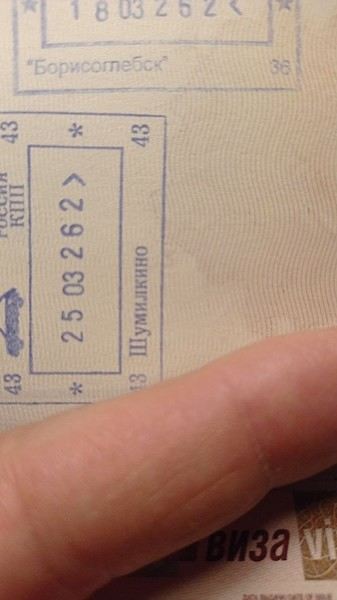
Borisoglebsk is the Russian border checkpoint after Kirkenes, on the road to Murmansk.
Kirkenes is a tiny town with a correspondingly small airport. Nothing has changed there: the minibuses to Murmansk wait on the right as you exit the airport. They’re synchronized with the two daily flights from Oslo—the SAS around 11:00 AM and Norwegian around 11:30 AM. They stop in Kirkenes at the corner of the Scandic for an hour, where other passengers can board, then head straight to the nearby border.
This is the least hassle Frontex/Schengen border. The Norwegian agent quickly scans your passport, and that’s it. No customs, since Norway is Schengen but not in the EU. On the Russian side, there’s a passport check and a quick customs inspection. All in all, crossing both the Norwegian and Russian checkpoints takes about 15 minutes.
A paper visa is required; e-visas aren’t accepted.
Two companies run the route: Avto Ekspress and Borodin: https://ae51.ru/routes/kirkenes-murmansk/ https://borodinbus.com/
The one-way fare is 5,500 ₽. You can either buy it online in rubles with a MIR card or make a formal reservation and pay in NOK cash to the driver. I took Borodin, and the price in NOK was much more expensive than in ₽.
=========================
On March 25, I left from Pskov via the Estonian border post at Luhaama. I spent three days in Murmansk, flew to St. Petersburg (SPB), stayed there for two days, then took an evening train to Pskov.
Since the end of February—and reportedly until the end of May—the Estonians have restricted the opening hours of the two border crossings near Pskov: Koidula (Pechory on the Russian side) and Luhaama (Izborsk on the Russian side). They’re closed at night between 7:00 PM and 7:00 AM. Right now, there’s a bus from Pskov at 7:00 AM to the border. It drops you off at the end of the road where truckers—many Kazakh and Serbian—are parked on the side. You finish the rest on foot to the barrier, where there’s a quick initial check for Ukrainian stamps in passports. Then you walk to the customs building, followed by passport control at the kiosk for motorists. After that, it’s a 500-meter walk to the Estonian checkpoint. At the moment, things seem calmer. Passport control is quick. The usual silly questions in English: "Where were you? Where are you going?" I just gave my most clueless smile: "Sorry, I don’t understand." Yeah, right—I don’t speak English, especially not at an Estonian border with a French passport. If they’re in a mood, though... A very quick bag inspection. Once you exit the Estonian post, walk to the bus stop sign by the road where another coach takes you to Riga.
The catch: in my case, last Wednesday, there were two passengers (Russians) with old Ukrainian stamps in their passports. The bus from the Estonian post to Riga was supposed to leave around 9:30 AM. We ended up leaving around noon after the two were grilled by the FSB. Since it was a weekday outside of holidays, the bus was half-empty. The fuller the bus and the more people with Ukrainian stamps, the worse the nightmare. Don’t book a same-day flight from Riga. I had a flight at 6:00 PM, so it worked out.
=============
The Kirkenes-Murmansk route is still clearly the easiest and fastest. But it’s not the most convenient since it’s way up north.
Next, I’d say the Gdansk-Kaliningrad route in the middle of the week. Avoid weekends and holiday departures/returns.
Avoid the Narva-Ivangorod route during Christmas, Easter, May 9, and *all* summer.
==============
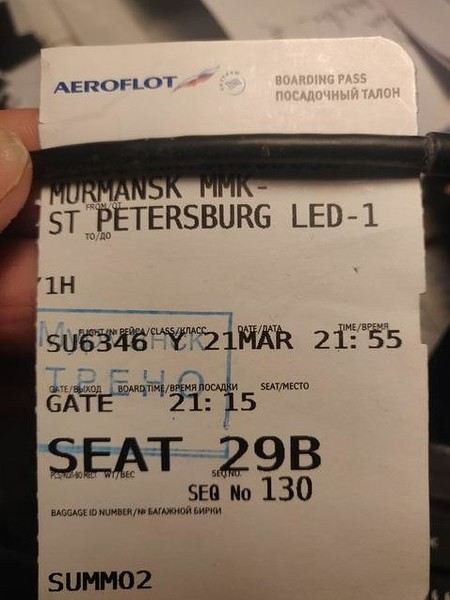
About flights from Murmansk to St. Petersburg: prices are good. I bought my ticket the day before departure on Rossiya for 7,500 ₽, including 10 kg of luggage + a handbag.
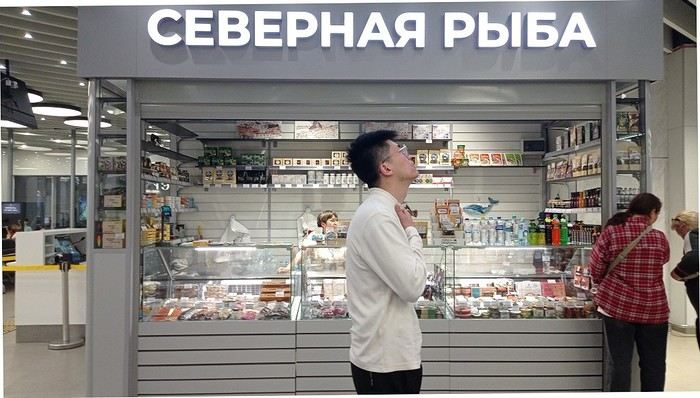
It’s the tail end of the northern lights season, and there were still crowds of Chinese tourists.
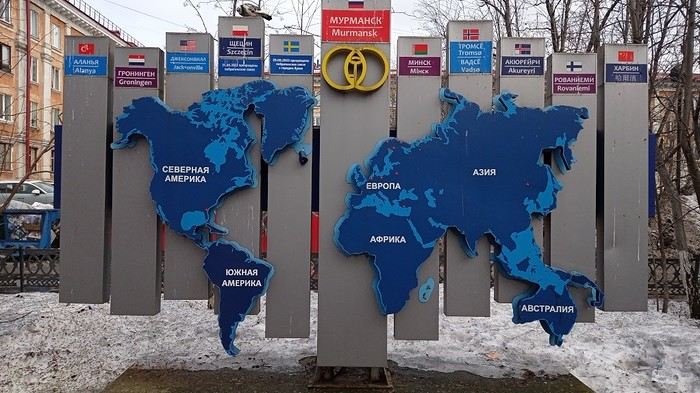
By the way, Murmansk is twinned with Harbin:
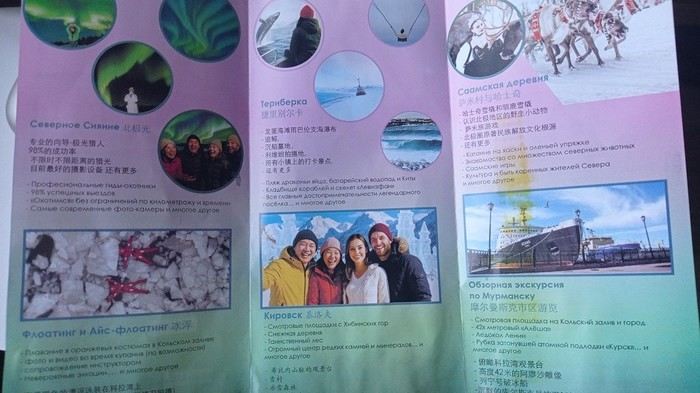
Chinese tourists are the largest foreign group, followed by Indians, then a mix of others from the Far East, Turks, Arabs, etc. Brochures are bilingual—Russian and Chinese:
============================
But let’s talk practical stuff. --
My domestic SIM card was restricted for SMS and internet for 24 hours. After that, if you want to keep using SMS, don’t turn off your phone—restarting triggers another 24-hour purgatory.
My Russian SIM cards (Megafon, MTS, Beeline) were activated as soon as I logged into their respective apps with my credentials.
Internet --
Telegram is heavily slowed down by authorities. To use it, you need to connect through proxy servers, which you load into the latest version of the app. Traffic is then rerouted internally within Telegram to servers outside Russia (Germany, Poland, Sweden, etc.). You can find these proxies on various channels. One is ChatVPN—check their website too.
For general internet use, like browsing the web, VPNs that work right now use the VLESS protocol. You can find several on Telegram by searching "VPN." A few free days, then payment in rubles or crypto.
Rozkomnadzor’s team are experts at this, so things can change. It’s a constant cat-and-mouse game.
Pskov is a special case. The city is near Estonia and has a large military base. Depending on NATO drone swarms launched from the Baltics, Wi-Fi can be completely suspended except for the most essential mobile apps. The drone swarms use the 4G network, and the powerful electronic jamming and drone suppression systems cause periods without Wi-Fi—including in hotels. Wired connections aren’t affected.
Borisoglebsk is the Russian border checkpoint after Kirkenes, on the road to Murmansk.
Kirkenes is a tiny town with a correspondingly small airport. Nothing has changed there: the minibuses to Murmansk wait on the right as you exit the airport. They’re synchronized with the two daily flights from Oslo—the SAS around 11:00 AM and Norwegian around 11:30 AM. They stop in Kirkenes at the corner of the Scandic for an hour, where other passengers can board, then head straight to the nearby border.
This is the least hassle Frontex/Schengen border. The Norwegian agent quickly scans your passport, and that’s it. No customs, since Norway is Schengen but not in the EU. On the Russian side, there’s a passport check and a quick customs inspection. All in all, crossing both the Norwegian and Russian checkpoints takes about 15 minutes.
A paper visa is required; e-visas aren’t accepted.
Two companies run the route: Avto Ekspress and Borodin: https://ae51.ru/routes/kirkenes-murmansk/ https://borodinbus.com/
The one-way fare is 5,500 ₽. You can either buy it online in rubles with a MIR card or make a formal reservation and pay in NOK cash to the driver. I took Borodin, and the price in NOK was much more expensive than in ₽.
=========================
On March 25, I left from Pskov via the Estonian border post at Luhaama. I spent three days in Murmansk, flew to St. Petersburg (SPB), stayed there for two days, then took an evening train to Pskov.
Since the end of February—and reportedly until the end of May—the Estonians have restricted the opening hours of the two border crossings near Pskov: Koidula (Pechory on the Russian side) and Luhaama (Izborsk on the Russian side). They’re closed at night between 7:00 PM and 7:00 AM. Right now, there’s a bus from Pskov at 7:00 AM to the border. It drops you off at the end of the road where truckers—many Kazakh and Serbian—are parked on the side. You finish the rest on foot to the barrier, where there’s a quick initial check for Ukrainian stamps in passports. Then you walk to the customs building, followed by passport control at the kiosk for motorists. After that, it’s a 500-meter walk to the Estonian checkpoint. At the moment, things seem calmer. Passport control is quick. The usual silly questions in English: "Where were you? Where are you going?" I just gave my most clueless smile: "Sorry, I don’t understand." Yeah, right—I don’t speak English, especially not at an Estonian border with a French passport. If they’re in a mood, though... A very quick bag inspection. Once you exit the Estonian post, walk to the bus stop sign by the road where another coach takes you to Riga.
The catch: in my case, last Wednesday, there were two passengers (Russians) with old Ukrainian stamps in their passports. The bus from the Estonian post to Riga was supposed to leave around 9:30 AM. We ended up leaving around noon after the two were grilled by the FSB. Since it was a weekday outside of holidays, the bus was half-empty. The fuller the bus and the more people with Ukrainian stamps, the worse the nightmare. Don’t book a same-day flight from Riga. I had a flight at 6:00 PM, so it worked out.
=============
The Kirkenes-Murmansk route is still clearly the easiest and fastest. But it’s not the most convenient since it’s way up north.
Next, I’d say the Gdansk-Kaliningrad route in the middle of the week. Avoid weekends and holiday departures/returns.
Avoid the Narva-Ivangorod route during Christmas, Easter, May 9, and *all* summer.
==============
About flights from Murmansk to St. Petersburg: prices are good. I bought my ticket the day before departure on Rossiya for 7,500 ₽, including 10 kg of luggage + a handbag.
It’s the tail end of the northern lights season, and there were still crowds of Chinese tourists.
By the way, Murmansk is twinned with Harbin:
Chinese tourists are the largest foreign group, followed by Indians, then a mix of others from the Far East, Turks, Arabs, etc. Brochures are bilingual—Russian and Chinese:
============================
But let’s talk practical stuff. --
My domestic SIM card was restricted for SMS and internet for 24 hours. After that, if you want to keep using SMS, don’t turn off your phone—restarting triggers another 24-hour purgatory.
My Russian SIM cards (Megafon, MTS, Beeline) were activated as soon as I logged into their respective apps with my credentials.
Internet --
Telegram is heavily slowed down by authorities. To use it, you need to connect through proxy servers, which you load into the latest version of the app. Traffic is then rerouted internally within Telegram to servers outside Russia (Germany, Poland, Sweden, etc.). You can find these proxies on various channels. One is ChatVPN—check their website too.
For general internet use, like browsing the web, VPNs that work right now use the VLESS protocol. You can find several on Telegram by searching "VPN." A few free days, then payment in rubles or crypto.
Rozkomnadzor’s team are experts at this, so things can change. It’s a constant cat-and-mouse game.
Pskov is a special case. The city is near Estonia and has a large military base. Depending on NATO drone swarms launched from the Baltics, Wi-Fi can be completely suspended except for the most essential mobile apps. The drone swarms use the 4G network, and the powerful electronic jamming and drone suppression systems cause periods without Wi-Fi—including in hotels. Wired connections aren’t affected.
Bright red and a headache
Hello 🙂
I should be serving a warming drink to the participants in the discussion about gardens and parks that provide us with beautiful photos, I could mention the delicious buttery scent wafting from bakeries in the thread about returning to France, but my heart, its powerful pulse that nourishes my entire being, is elsewhere.
Dasht-e Lut, Yazd, Esfahan, Bam, Kerman, Qeshm, Hormuz—a melody, a prayer at the heart of desire.
A dream, an unattainable fantasy? No. Not anymore. A very serious Italian travel agency is organizing this trip for 6 people this winter. I’m signed up, I’m going, I’m living. Maybe.
"But you’re completely crazy!!!!"
I know... I know that every civilization, every society has a vital need to create scapegoats to define and justify itself, pathetically. And Iran is one of them, top of the list. I laugh or sigh, and it doesn’t bother me.
But that unchanging red, deep red and garnet, so beautiful in itself, in all the Western chancelleries repeats, whispers, shouts: don’t go, don’t go, don’t go, you’re putting yourself in danger and we can’t do anything for you. You’ll be turned into mere bargaining chips, into arguments for endless negotiations. Fear must be instilled, its power absolutely preserved, no concessions made to the enemy. The information (how many French hostages, real or fake, compared to the number of travelers?) is always lacking.
Traveling becomes a merciless confrontation between desire, the vital pulse, and anxiety, its ghosts.
Catherine
I should be serving a warming drink to the participants in the discussion about gardens and parks that provide us with beautiful photos, I could mention the delicious buttery scent wafting from bakeries in the thread about returning to France, but my heart, its powerful pulse that nourishes my entire being, is elsewhere.
Dasht-e Lut, Yazd, Esfahan, Bam, Kerman, Qeshm, Hormuz—a melody, a prayer at the heart of desire.
A dream, an unattainable fantasy? No. Not anymore. A very serious Italian travel agency is organizing this trip for 6 people this winter. I’m signed up, I’m going, I’m living. Maybe.
"But you’re completely crazy!!!!"
I know... I know that every civilization, every society has a vital need to create scapegoats to define and justify itself, pathetically. And Iran is one of them, top of the list. I laugh or sigh, and it doesn’t bother me.
But that unchanging red, deep red and garnet, so beautiful in itself, in all the Western chancelleries repeats, whispers, shouts: don’t go, don’t go, don’t go, you’re putting yourself in danger and we can’t do anything for you. You’ll be turned into mere bargaining chips, into arguments for endless negotiations. Fear must be instilled, its power absolutely preserved, no concessions made to the enemy. The information (how many French hostages, real or fake, compared to the number of travelers?) is always lacking.
Traveling becomes a merciless confrontation between desire, the vital pulse, and anxiety, its ghosts.
Catherine
How do you feel about coming back to France?
Hi there, I’ve been traveling for 18 years now, at least 6 months a year, and as the years go by, I actually enjoy coming back to France more and more—a feeling I struggled with at first. I mean, we always think the grass is greener elsewhere.
But in the end, I find meaning in that saying about how there’s no place like home. I still love traveling just as much, but now my trips are shorter, and I enjoy spending more time in our beautiful country, even though I don’t hesitate to criticize it.
How about you? How do you handle coming back from your travels?
Croatia, Montenegro – two victims of overtourism?
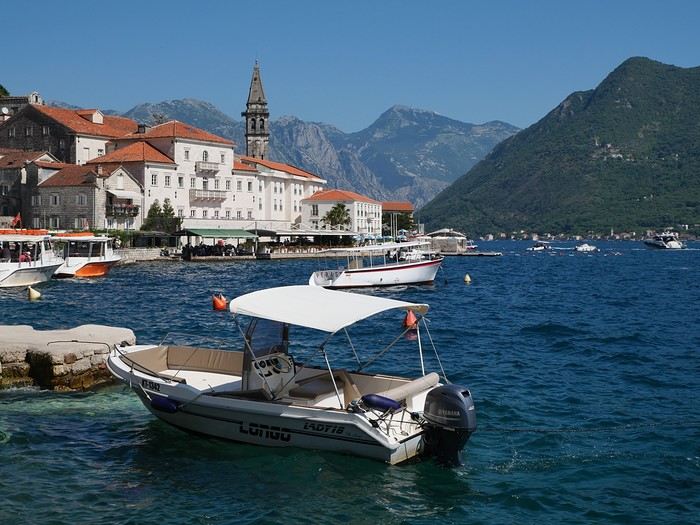
Mid-June, two Auvergnats on the starting blocks—off we go to the former Yugoslavia!
We’d already explored some nooks and crannies of northern Croatia back in 2019, so we’re keeping the momentum going by planning a trip to the south of the country and then Montenegro.
On the way back, we’ll drift into Bosnia-Herzegovina just to mix things up a bit!
We’re a little unsure about what to expect in terms of tourist crowds.
Dubrovnik has a reputation for being the hardest-hit city by overtourism, and Kotor and the whole Dalmatian coast aren’t exactly empty...
Luckily, most European countries haven’t started school holidays yet, and some measures seem to have been put in place to limit the flow (like restrictions on the number of cruise ships allowed to dock at the same time).
Maybe we’ll manage to escape the promised hell?
For now, we’re slamming the doors of the Scirocco and heading off to our first stop: northern Italy!
On the way back, we’ll drift into Bosnia-Herzegovina just to mix things up a bit!
We’re a little unsure about what to expect in terms of tourist crowds.
Dubrovnik has a reputation for being the hardest-hit city by overtourism, and Kotor and the whole Dalmatian coast aren’t exactly empty...
Luckily, most European countries haven’t started school holidays yet, and some measures seem to have been put in place to limit the flow (like restrictions on the number of cruise ships allowed to dock at the same time).
Maybe we’ll manage to escape the promised hell?
For now, we’re slamming the doors of the Scirocco and heading off to our first stop: northern Italy!
So where are they and what are they doing?
This catchy and somewhat mysterious title comes from several questions I’ve been asking myself.
VF has been back open for a reasonable number of weeks and months now. The number of visitors overall matches past averages, but the number of members online in the last 24 hours seems relatively lower than what we used to see.
Yet, to my surprise, I’m seeing fewer travel journals, way fewer messages, and way fewer questions. I don’t see many new registered users online, and I notice a number of members who are logged in but either aren’t participating or have stopped participating.
Something’s not adding up for me because, in my opinion, VF is still appealing, and I don’t see which other sites could really compete.
Was there a real break between pre- and post-Covid? Does it just take more time for some people to discover the site or learn that it’s active again? Do people now prefer quick consumption on sites like FB or others I’m not familiar with? Where have the site’s old-timers gone, and what are they doing with their time now? What’s really going on here?
VF has been back open for a reasonable number of weeks and months now. The number of visitors overall matches past averages, but the number of members online in the last 24 hours seems relatively lower than what we used to see.
Yet, to my surprise, I’m seeing fewer travel journals, way fewer messages, and way fewer questions. I don’t see many new registered users online, and I notice a number of members who are logged in but either aren’t participating or have stopped participating.
Something’s not adding up for me because, in my opinion, VF is still appealing, and I don’t see which other sites could really compete.
Was there a real break between pre- and post-Covid? Does it just take more time for some people to discover the site or learn that it’s active again? Do people now prefer quick consumption on sites like FB or others I’m not familiar with? Where have the site’s old-timers gone, and what are they doing with their time now? What’s really going on here?
What’s your definition of a nature destination?
Hi,
I’m starting this thread after a digression that began in the India section and continued in a travel journal about Kerala.
The original topic was whether India is—or isn’t—a nature destination.
I’ll let you all discuss and share your own definition of a nature destination. 🙂
I’m starting this thread after a digression that began in the India section and continued in a travel journal about Kerala.
The original topic was whether India is—or isn’t—a nature destination.
I’ll let you all discuss and share your own definition of a nature destination. 🙂
La Bretagne avec le Jacques Cartier "Ponant" du 18 au 25 juillet 2020
Bonjour
J'avais envisagé d'attendre début Octobre et notre retour à Rennes pour faire le C/R
de notre croisière " La Bretagne : entre côtes sauvages et phares "
Mais tout compte fait , je change d'avis et démarre ce C/R dès maintenant :
Au retour de notre 20 ème croisière , fin Novembre 2019 , ( Transat de Marseille à
Miami sur le MSC Divina ) , nous avions décidé de faire une (petite ) pause pour les
croisières et donc de ne rien réserver avant plusieurs mois .
Sage décision en fait au vu des évènements sanitaires du Printemps puisque nous
avons échappé aux problèmes subis par nombre de touristes qui se sont retrouvés
avec des avoirs qu'il ne pourront utiliser ( au mieux ) que dans plusieurs mois .
A la fin de l'an dernier , je m'étais inscrit à la newsletter de Ponant , plus pour rêver
qu'autre chose .
Mais début Juin , alors que toutes les croisières sont annulées les unes après les autres ,
Ponant , profitant notamment de la capacité réduite de ses navires et du retour en
France métropolitaine de presque tous , met en place 2 itinéraires en Méditerranée et
3 en Manche et Atlantique .
La croisière au départ de Nice pour contourner la Corse nous plaisait bien mais rejoindre
Nice posait , à ce moment là , problème .
Nous décidons donc de nous rabattre sur la croisière au départ de St Malo car là , pas de
souci pour nous y rendre 🙂
Les raisons de notre choix : de mémoire , St Malo est fréquemment une ville d'escale pour
les bateaux de croisière mais quasiment jamais une ville d'embarquement ( et là aussi
de débarquement ) , donc autant en profiter .
De plus l'itinéraire nous plait avec la visite d'iles connues ( mais que nous reverrons avec
plaisir ) et de vraies découvertes dont les Scilly , au large de la Cornouaille britannique .
Mi Juin , nous décidons de réserver la croisière au départ de St Malo du 18 Juillet , sachant
que nous avons la possibilité d'annuler , sans pénalités , jusqu'à 72 heures avant le départ .
L'annulation , nous y avons pensé quand , fin Juin , nous avons appris que l'escale aux
Scilly était supprimée 😠 , remplacée par Ouessant , une escale à Groix se substituant
à celle de Hoëdic .
Toutes les autres croisières étaient aussi affectées par la suppression des escales à l'étranger
pour raisons sanitaires ( jours de quarantaine )
Nous trouverons donc peut-être une autre occasion pour nous rendre aux Scilly
Comme d'habitude , je m'égare avec ce préambule un peu long .
Je vais donc faire une pause avant de vous embarquer sur le Jacques Cartier .
A plus
Jean-Pierre
Discussion autour du concours de juillet 2020: Verticale(s)
Pour discuter autour du concours de juillet 2020, Verticale(s), ça se passe ici.
Fermeture des frontières Schengen jusqu'au 31 août 2020?
Bjr
Les dirigeants des pays de l’espace Schengen sont en concertations afin de fermer les frontières Schengen jusqu’à la rentrée de septembre afin des voyageurs ou autres hors ces frontières ne viennent contaminés cette espace une fois le confinement terminé. Ce qui veut dire plus de vols hors ces états juqu'a cette date. On en saura plus dans les jours qui viennent peut être lundi soir lors de l'intervention à 2Oh du président Macron. A suivre.
Les dirigeants des pays de l’espace Schengen sont en concertations afin de fermer les frontières Schengen jusqu’à la rentrée de septembre afin des voyageurs ou autres hors ces frontières ne viennent contaminés cette espace une fois le confinement terminé. Ce qui veut dire plus de vols hors ces états juqu'a cette date. On en saura plus dans les jours qui viennent peut être lundi soir lors de l'intervention à 2Oh du président Macron. A suivre.
Norway to hell
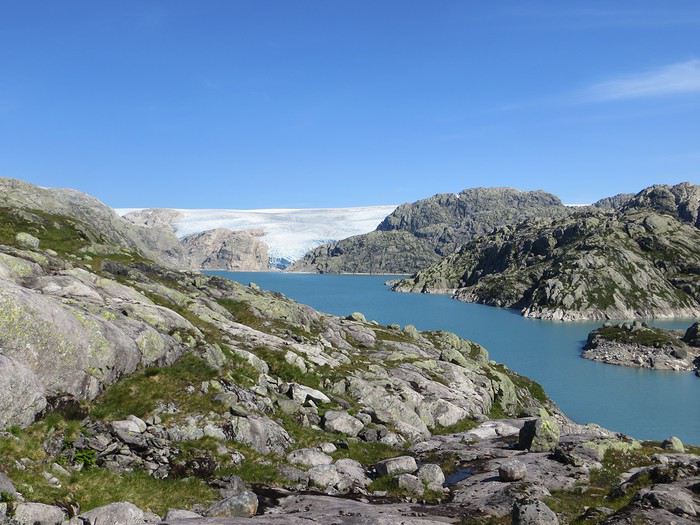
En ces temps coronatroublés, rien ne vaut de se remémorer le dernier voyage touristique que l’on a fait avant le plongeon dans le néant sanitaro-économique. La Norvège, plus précisément sa côte ouest et ses fjords, sera donc le sujet de ce carnet en 31 épisodes dotés chacun d’une bande-son, plutôt rock d’ailleurs. Attention, lecteur, vous vous exposez à un certain nombre de clichés pas du tout exagérés et de blagues pourries. I have nothing to offer but fjord, joy, tears (of the sky) and sweat.
Donc la Norvège, c’est l’apocalypse budgétaire dans votre portefeuille. D’où le titre (c’est tiré par les cheveux mais je ne refuse jamais un jeu de mots). Mais ce n’est pas que cela, c’est aussi fort joli, propre, policé et réellement rempli de charmantes têtes blondes. La Norvège, c’est également une monarchie pétrolière du golfe persique qui s’est égarée sur des terres glacées. Eh oui, c’est tout de suite plus facile d’être riche quand ils ont du pétrole (« mais ils n’ont que ça » aurait ajouté un jaloux), qu’ils sont peu nombreux et pas très partageurs. Allez, quelques détails pour commencer sur un plan aussi bien techeunique que tacqueutique
Le trajet En voiture Simone ! Depuis le Massif Central jusqu’à la Norvège avec une C3. J’avais décrété 2019, année sans avion. Donc c’était la voiture, certes petite mais costaude, où l’on a pu entasser notre matériel de camping. On en a profité pour prendre un covoitureur qui allait se perdre en Norvège pour l’été. Plus on est de fous entassés, plus on rit. Sur place, j'ai limité fortement notre aire d'action géographique. Je le connais le piège de faire une liste longue comme le bras et de courir tout le voyage tel un chien de ferme après un mollet cycliste. Il s'agissait de se cantonner au riz euh pardon à la façade sud-ouest du pays sans aller plus haut qu'Ålesund. Et comme il y avait un certain nombre de lieux qui me faisaient de l’œil, nous avons quand même eu un trajet digne d’une otarie bourrée essayant d’échapper à une orque affamée. On a finalement fait l’essuie-glace obliquement dans l’Ouest : à gauche, à droite, à gauche, à droite, à droite, A DROITE . Il faut dire que les fjords et les montagnes n’arrangent pas les affaires du voyageur adepte des routes rectilignes, et cela malgré la passion tunnelière locale.
Le lien vers la carte du trajet : http://u.osmfr.org/m/434267/
Les Norvégiens Les Norvégiens sont des êtres blonds aux yeux bleus, parfois d’un blond tellement blond qu’on dirait qu’ils ont appliqué de la javel sur leurs cheveux. Effet secondaire qui donne la chair de poule, cela fait disparaître les sourcils… Le Norvégien est réservé et poli. L’été, soit il se balade torse nu, soit il quitte le pays pour des horizons plus propices au rougeoiement de sa peau laiteuse où il pourra faire valoir son pouvoir d’achat dément. La Norvégienne quant à elle a une prédisposition naturelle à se promener en sous-tif ou brassière dès le premier rayon de soleil. Le dimanche, jour du Seigneur et de l’hypocrisie, le Norvégienne ne boit pas (vente d’alcool interdit !) les autres jours, iel se cache pour boire puis déambule cahin-caha entre les maisons de bois à la pelouse verdoyante. La Norvégien apprécie également les sorties familiales du dimanche après-midi où il peut effectuer 1000 mètres de dénivelé en 3,5km avec ses enfants de 7 et 9 ans. Le tout les doigts dans le nez.
Le logement Le logement, c’était principalement notre tente de 2 m² que nous avons montée/démontée dans des campings de qualité très variable pour un prix pas donné. Souvent les sites sont jolis mais plantés en bordure de route malgré l’espace qu’offre le pays. Ca manque quand même d’arbres ou arbustes et d’emplacements un tant soit peu délimités. Ce dernier point permet pendant les nuits les plus chaudes de l’été d’entasser les touristes de passage dans une promiscuité certaine et de rentabiliser un maximum l’espace. Malynx le Norvégynx ! Par contre, les sanitaires sont en général en bon état mais avec douche payante. Bref, le camping c’est le moyen de logement le plus abordable hors camping sauvage mais en général, la qualité est moyennasse au vu des prix. J’ai séché une petite larme en pensant à feus les campings des parcs nationaux et provinciaux canadiens. Requiescat in pace. Pour reprendre notre souffle, nous avons quand même varié les plaisirs avec des logements en b&b, du camping sauvage, des hytter (des petites cabanes souvent présentes dans les campings mais également ailleurs, très pratiques, pas trop chères pour la Norvège et aux prestations variables : électricité, eaux courantes en option par exemple) et une nuit en « refuge ». Les refuges, il y en a partout la plupart sont accessibles à pied, non gardés avec parfois une sorte de self-service payant.
La bouffe Courez en Norvège (ah mince vous êtes confinés) et vous me direz des nouvelles du Brunost . Sinon c’est cher mais pas mauvais globalement, peu porté sur le poisson hors saumon d’élevage et assez roboratif. Et bonne surprise pour moi, il y a quand même une tradition boulangère et même s’il y a peu de boulangeries, on peut trouver pleins de pains et de sorte de viennoiseries dans les supermarchés. Cela égaie les multiples piques-niques.
Avant de commencer le carnet proprement dit, entamons notre hymne norvégien : So many stop signs Speed limit Curves’ gonna slow me down Like a wheel Gonna spin it Tourists’ gonna mess me around Hey, Satan Payin' my tolls Bein’ among sheepin' bands Hey, mamma Look at me I'm on the way to the promised land
Jour 1,5 60 mph – New Order Clermont-Ferrand - Neumünster A nous les petites autoroutes allemandes tant prisées de ce côté du Rhin pour l’absence de limites de vitesse. Parcours Montbéliard – Fribourg – Karlsruhe – Francfort – Kassel – Hannovre – Hambourg – Neumünster. C’est long et pénible avec des travaux publics pas très deutsche Qualität tous les 20 kms, un trafic chargé et des zones limitées sans limite de vitesse qui rendent la conduite dangereuse : à droite ça roule à 90, à gauche à 200 pour les plus fous et comme c’est saturé, ça donne un résultat sportif et désagréable. Je me demande comment ils font pour avoir aussi peu de morts sur les routes en Allemagne. A part ça, le voyage est sans histoire, le colis covoitureur est livré à Fribourg et on arrive entiers et fatigués à Cathédraleneuve.
Jour 2 Seemann – Rammstein Neumünster - Kristiansand
Les autoroutes allemandes c’est rapidement fini, on revient à de la tranquillité avec le Danemark. Nous avons choisi de prendre le ferry Hirtshals-Kristiansand qui permet d'arriver plus rapidement sur la côte ouest Et comme on a beaucoup d’avance sur l’horaire du ferry Hirtshals-Kristiansand, on se permet un détour vers une dune danoise dominant la mer du Nord. Le temps est pas idéal et le coin est assez fréquenté. Bof. Le voyage en ferry est sans histoire, les Norvégiens en profitent pour faire des réserves d’alcool et de legos (les deux produits les plus présents dans les magasins du bateau). Nous voilà enfin en Norvège, 1900 kilomètres plus tard, sur la plage de Christian. Sacré Clavier qui a fait des fidèles un peu partout en Scandinavie.
Jour 3 Why does it always rain on me? - Travis 180 km Kristiansand – Hauge Notre premier jour en Norvège et ça ne s’annonce pas glorieux, plutôt gris tendance pluie. Nous commençons par un rapide passage par un bout de zone payante de Kristiansand juste pour le plaisir et accessoirement quitter cette ville. Je me suis inscrit, par honnêteté, sur le site internet des péages norvégiens (gérés d’ailleurs par une société anglaise) et par la grâce de caméras bien placées, nous allons devoir payer quelques euros pour à peu près 100 mètres dans ladite ville. Pfff. Quant au programme aujourd’hui, nous allons à la conquête de l’ouest, l’ouest de Kristiansand et nos plans capotent très largement. Ca tombe, ça tombe, ça dégouline, dégringole, s’abat, déverse, pleuvoche, tantôt torrentiel, tantôt bruineux. Pas question de faire une rando ou toute autre activité de plein air. Je m’aperçois en plus dans la journée que mon imper n’est plus imperméable et que j’ai oublié mon surpantalon. Prions, mes bien chers Frères, mes bien chères Sœurs pour que la météo soit clémente. Sinon ça va être long. Dans un premier temps, jusqu’à Flekkefjord, nous nous mouvons plus ou moins le long de la côte sans l’apercevoir, d’une parce que c’est complètement bouché, de deux parce qu’il est difficile de distinguer ce qui tient d’un lac ou d’un fjord, de trois parce que la route principale ne suit pas la côte. Nous nous rabattons donc sur la visite sans trop musarder des petites villes blanches du sud de la Norvège, leurs villages blancs andalous à eux mais en différent : avec du bois, de la pluie et de la mer. Premier arrêt à Mandal, un vrai coup dans le cœur. Deuxième arrêt : Flekkefjord, très mignon. Troisième arrêt version hameau, Stornes en entrée de fjord, très, très mignon. Quatrième arrêt : Sognalstranda, très, très, très mignon. C’est le règne de la mignonitude humide. Une maison en bois par ci, un entrepôt en bois par-là, et des garages à bateau à foison.
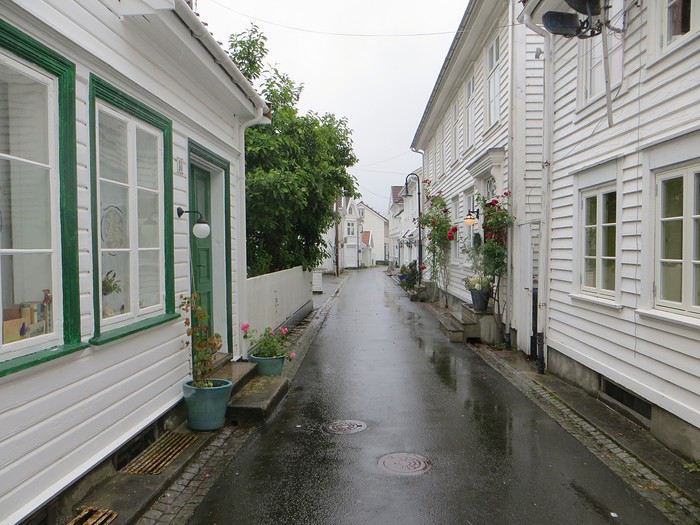 Pas un temps à mettre un chat norvégien dehors (Flekkefjord)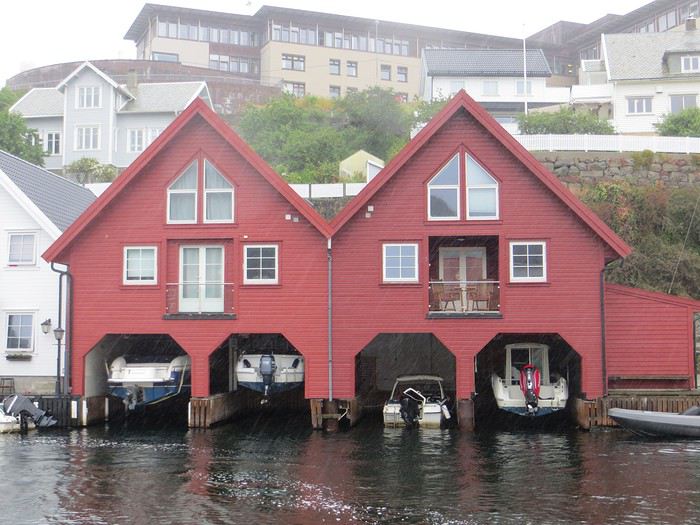
Pas un temps à mettre un bateau norvégien dehors
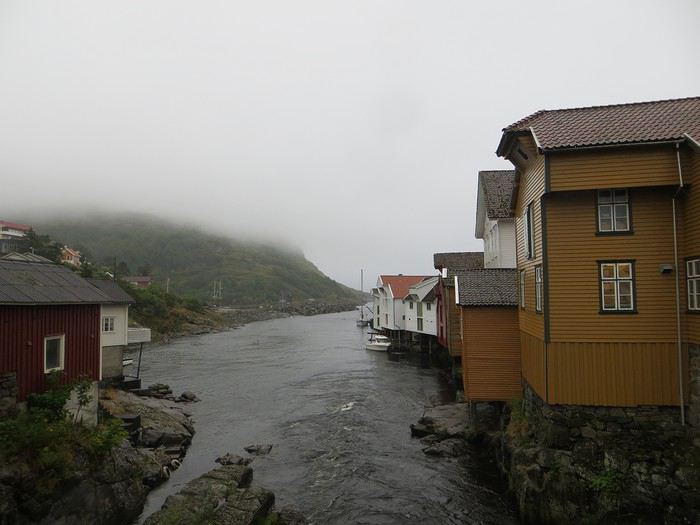 Mais pourquoi on est dehors nous alors ? (Sognalstranda)
Interlude de pipeau très intéressant : ces villes/villages, souvent fondés aux 17ème et 18ème siècle, sont les témoins de la politique mercantiliste du royaume du Danemark. L’État balbutiant entend organiser la production, la commercialisation et l’exportation des ressources comme le bois, les poissons et certains métaux de Norvège. Cette politique passe par la mise en place d’exploitations/manufactures à tendance monopolistique et la spécialisation des ports avec monopole des marchands d’abord hanséatiques (16ème siècle) puis néerlandais (17ème siècle) et enfin danois (17-18ème siècle). C’est d’ailleurs pour cela que le vieux centre de Flekkefjord est surnommé la ville hollandaise. Ce système mercantiliste fera par ailleurs les malheurs de l’Islande forcée de se soumettre pendant deux siècles à une compagnie royale danoise monopolistique à même d’imposer ses tarifs et ses conditions d’échange de marchandise. Les siècles sombres comme les appellent les Islandais ont en grande partie comme origine cette organisation économique très profitable pour la royauté danoise, beaucoup moins pour les habitants de l’île. La route 44 après Flekkefjord vaut par ailleurs son pesant de cacahuètes même si les conditions ne sont pas optimales pour en profiter. Tout le coin a été nommé magma geopark (patrimoine de l’UNESCO) dans une poussée de marketing touristique, des roches de la croûte terrestre d’une zone de subduction ayant fini par apparaître sous l’effet de l’érosion si j’ai bien compris. Point de volcan donc mais des effleurements d’anorthosites qui forment des paysage rocailleux arrondis et stériles comme autour d’Helleren et d’Åna Sira où devait se dérouler notre première randonnée norvégienne, projet qui tombe à l’eau (ahahah), noyé sous les larmes du ciel (ahahah). La partie la plus spectaculaire du trajet se trouve entre Åna Sira et Hauge où la route serpente tant bien mal entre les rochers. Nous goûtons le soir venu à la douceur des campings norvégiens : une espèce de carrière dans un espace réduit entre deux collines, un sol gravillonneux, pas de végétation et roule ma poule. Le seul avantage réside dans la vue en bout de carrière sur la côte. Pas vraiment de cuisine aménagée, des douches payantes : prometteur ! Le coupable aujourd’hui est le Vågan camping (garanti sans viande).
Jour 4 Sous le soleil exactement – Serge Gainsbourg 186km Hauge – Lysebotn Nuit et brouillard ce matin sur la Norvège et pourtant nous gardons espoir, le soleil vaincra. Nous continuons la route côtière pour faire une petite balade (4km aller-retour) jusqu’au Hådyr. C’est humide, boueux, bourbeux, fangeux, marécageux, tourbeux, machineux. C’est également l’occasion de compter la deuxième victime du voyage : le terrain a raison de mes chaussures de marche basses. Flap flap, bain de pieds et macération. Décidément, je suis équipé pour affronter l’humidité scandinave ! Arrivés au rocher censé donner un point de vue sympa sur la côte, c’est la douche froide (avec beaucoup de vapeur d’eau, la douche) : à gauche, du brouillard, à droite, du brouillard, droit devant, du brouillard, derrière, du brouillard et un bruit de ressac à nos pieds. Comme on est patient et qu’on croit en dame météo, nous nous asseyons pour attendre la percée du soleil. Une heure et quelques hésitations plus tard, ça se déchire (très) petit à petit, de quoi entrapercevoir une côte que je qualifierai de dantesque. J’adore ces rochers granitiques usés par les siècles, qui forment des forêts de sentinelles face à la mer.
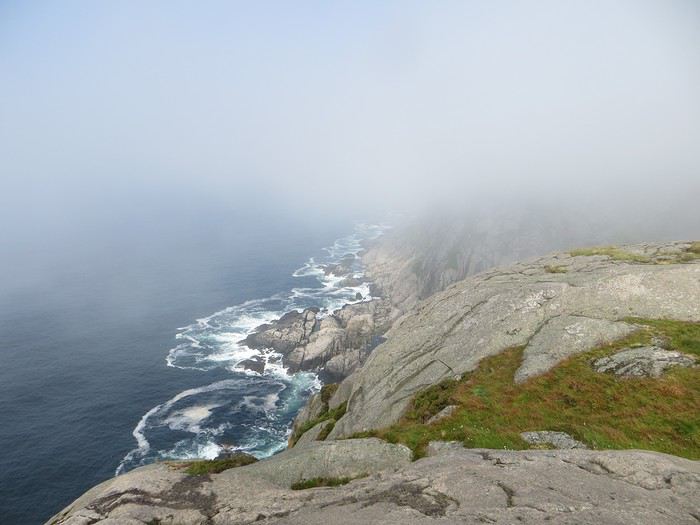 Les portes de l'Hådyr s'ouvrent et pas de cerbères à l'horizon
Et ça tombe bien que j’adore ce paysage puisque pour l’étape suivante (décidément le gentil organisateur a tout prévu !), nous traversons sans s’arrêter Egersund, autre petite ville en bois, pour Eigerøya, son phare et son paysage rocailleux sous le soleil exactement, un soleil de plomb je dirais même plus. La baladounette de l’après-midi de 4 km est sans difficulté sur une autoroute pédestre et permet d’accéder à un point de vue maousse costaud sur l’île d’Eiger et son phare.
Les portes de l'Hådyr s'ouvrent et pas de cerbères à l'horizon
Et ça tombe bien que j’adore ce paysage puisque pour l’étape suivante (décidément le gentil organisateur a tout prévu !), nous traversons sans s’arrêter Egersund, autre petite ville en bois, pour Eigerøya, son phare et son paysage rocailleux sous le soleil exactement, un soleil de plomb je dirais même plus. La baladounette de l’après-midi de 4 km est sans difficulté sur une autoroute pédestre et permet d’accéder à un point de vue maousse costaud sur l’île d’Eiger et son phare.
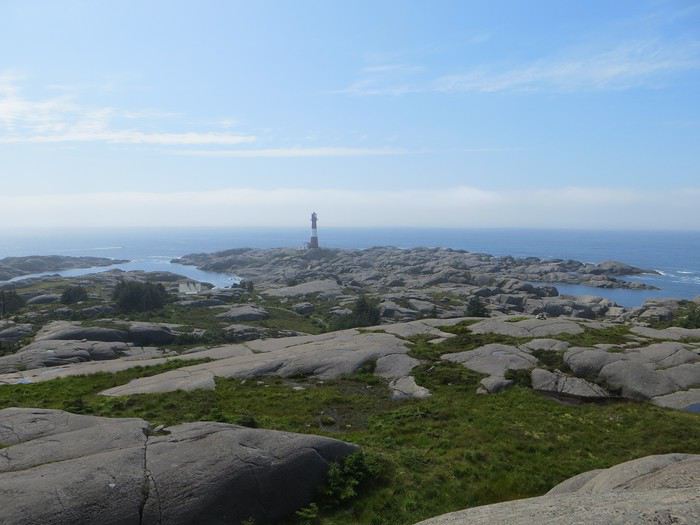 C'est un roc ! C'est un pic ! C'est un cap ! Que dis-je c'est une péninsule !
 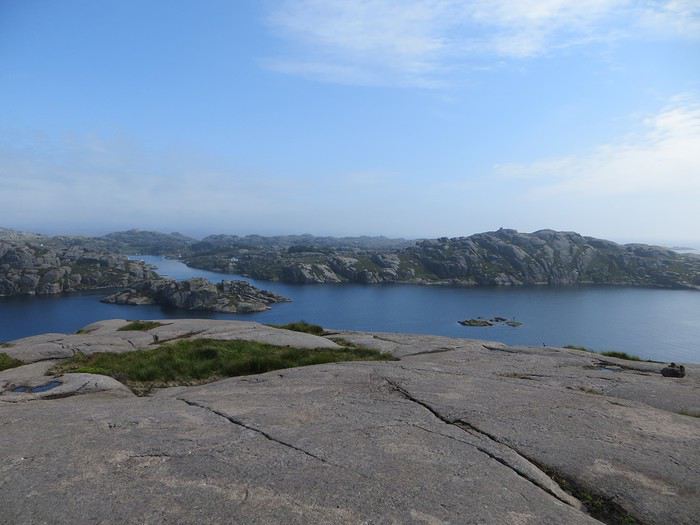 Eigerøya en beauté
Si j’ai bien compris le norvégien, øy est le suffixe pour île et a celui pour « la » en général, même si la langue se scinde en deux types distincts nynorsk et bokmål et en de nombreuses variantes dialectiques locales qui provoquent des orthographes changeantes des panneaux et des cartes. Par exemple, kirke (église en bokmål) s’écrit aussi kyrkje en nynorsk, voire a d’autres déclinaisons locales plus obscures. Le nynorsk, pour ceux qui ne connaissent pas, est issu d’une (re)création linguistique du 19ème siècle type occitan ou breton en France : pour donner à la Norvège une langue pure de toute saleté étrangère, danoise plus particulièrement, des linguistes ont construit une langue sur un mélange des dialectes considérés comme les moins viciés par l’outre-Skagerrak, c’est-à-dire ceux du Telemark et des fjords du sud-ouest. A contrario, le bokmål est un dérivé dédanoiïsé de la langue parlée (du danois grosso modo) dans les villes comme Oslo au début du 19ème siècle. De nos jours, il y a donc deux langues officielles et le nynorsk est très connoté nationaliste et perd du terrain : 13% des Norvégiens, principalement dans l’ouest, le parlent comme langue maternelle. Nous nous dirigeons ensuite vers l’intérieur des terres en direction de Lysebotn, le paysage change, pâturage, forêt et lacs avant de rentrer dans des zones à l’environnement plus âpre et tourmenté. Gloppedalsura (à vos souhaits) est l’occasion d’un arrêt bienvenu pour un point de vue sur un chaos de rochers impressionnant et son lac attenant.
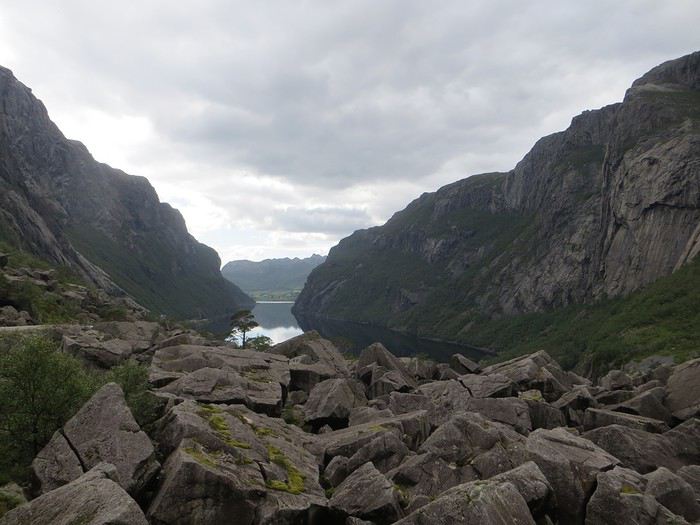 Gloppedalsura, lieu de franche rigolade entre Allemands et Norvégiens pendant la Seconde Guerre Mondiale
Nous remontons ensuite la Øvstabødalen, vallée glaciaire à citer dans toute conférence de géologie de bon niveau pour la perfection de sa forme en auge. Le parcours est varié, peu fréquenté et plaisant avant de plonger sur une zone moins sympa bien dotée en stations de ski et en habitat folklorico-traditionnel, ici des immeubles/chalets en bois sombre et toit végétalisé. L’avantage, au-delà du côté très artificiel des stations, c’est que les bâtiments se fondent dans la végétation.
Gloppedalsura, lieu de franche rigolade entre Allemands et Norvégiens pendant la Seconde Guerre Mondiale
Nous remontons ensuite la Øvstabødalen, vallée glaciaire à citer dans toute conférence de géologie de bon niveau pour la perfection de sa forme en auge. Le parcours est varié, peu fréquenté et plaisant avant de plonger sur une zone moins sympa bien dotée en stations de ski et en habitat folklorico-traditionnel, ici des immeubles/chalets en bois sombre et toit végétalisé. L’avantage, au-delà du côté très artificiel des stations, c’est que les bâtiments se fondent dans la végétation.La dernière partie du trajet, très belle mais pas très agréable à conduire tant la petite route est saturée par la circulation, traverse un plateau rocailleux avant de plonger vers le Lysefjord. Malheureusement, la route de descente, assez connue (elle est le lieu d’une compétition estivale de ski sur route très cotée) une fois passée le restaurant et bien que sûrement impressionnante vue d’un drone, n’offre quasiment aucune vue sur la vallée et le fjord. Ce qu’elle offre par contre, c’est un tunnel en épingle à cheveux, un classique que l’on retrouvera à plusieurs reprises dans les fantaisies souterraines norvégiennes. Le camping du soir, bonsoir, le Kjerag Lysebotn camping, jouit d’un site splendide et est bien équipé (cuisine, sanitaire). Malheureusement, comme on est en Norvège, il n’y a aucun arbre/arbuste et une promiscuité assez forte et accentuée par l’affluence d’un jour de juillet ensoleillé. Bref on se marche dessus comme des manchots en période de reproduction dans leur colonie.
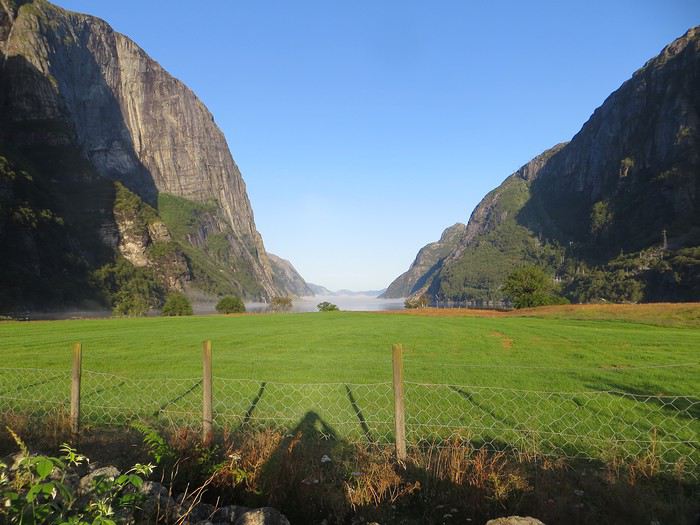 Quand je vous dis que le site est splendide...
Jour 5 Highway song – System of a Down 78km Lysebotn - Hjelmeland Aujourd’hui, c’est notre journée rando de masse dit trek pour ceux qui se sentent une âme d’aventurier, juste une âme, il ne faut pas trop abuser de l’aventure. Donc aujourd’hui, c’est le Kjeragbolten, concession faite à la liste des randonnées obligatoires. La Norvège fait partie de ces pays où la randonnée est l’une des activités touristiques obligatoires y compris pour des personnes qui ne marchent jamais par ailleurs. Pour la Norvège, l’activité s’effectue bien sûr en masse sur les mêmes chemins en cochant les fameuses cases de la to do list comprenant dans l’Ouest Preikestolen, Trolltunga, Kjeragbolten, Bessegen et Aurlandsdalen. Nous nous sommes contentés du rocher suspendu Kjerag, choisi car dans mon esprit, moins facilement accessible au commun du touriste (et moi je suis un touriste hors du commun, un tourista). C’est sûrement vrai mais cela n’empêche pas le monde… Je le savais, je le savais, j’étais prévenu, j’ai râlé avant, j’ai râlé pendant, je râle encore après et pourtant je n’ai pas d’oiseau dans la gorge et il n’y avait pas de genêts dans la balade (cf le râle des genêts pour comprendre la blagounette). La randonnée commence par un parking gigantesque au tarif prohibitif. Nous payons sans moufter nos 30 euros (un repas dans un resto semi gastro en France pour ceux qui n’ont pas le sens des valeurs). J’espère que personne ne s’arrête juste pour voir la vue car de vue il n’y en a point : le point de vue est occupé par un restaurant qui met un point d’honneur à boucher accessoirement la vue. Et pour accéder à sa terrasse/point de vue, il faut payer. Bon, nous, on a du pain sur la planche et quelques montées raidasses en attente. Dont acte. Trafic fluide en ce début de matinée, quelques problèmes de surchauffe moteur pour la première montée puis la vitesse de croisière est atteinte pour une arrivée prévue à 10h30. Ce n’est pas encore un bouchon au niveau du rocher mais la circulation est déjà dense à l’approche. Au retour, le trafic est extrêmement chargé et les comportements touristico-idiots se multiplient (équipement inadéquat, coupage des routes à travers champs, ralentissements dus aux selfies intempestifs. Ne pas utiliser votre téléphone en conduisant, que la sécurité routière vous dit !).
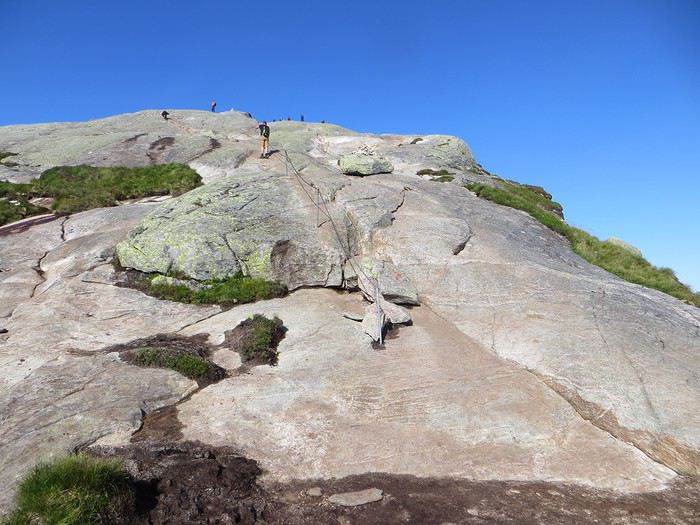
Pas un coin où amener sa traban
Sur le fond, la rando, 12 km et 700 mètres de dénivelée, est très chouette avec de belles vues sur le fjord et Lysebotn en particulier au début de la 3ème montée et tout au bout.
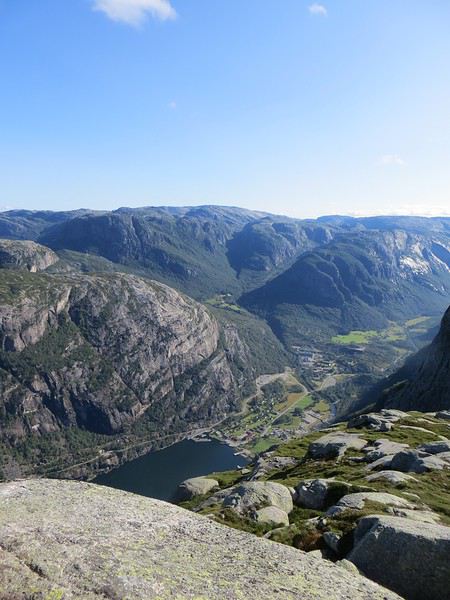
Le Lysefjord
Le caillou est flippant et spectaculaire tout comme la plateforme juste à côté. Une queue au bord d'un à pic de 1000 mètres se forme pour monter dessus (même pas en rêve, je fais un truc pareil).
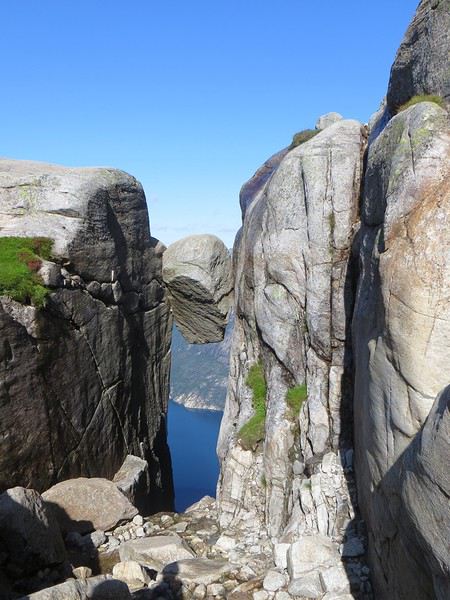 Le mythe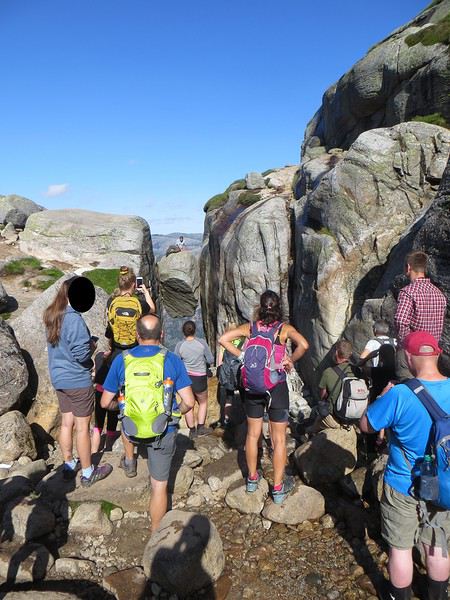
La réalité
Il est loisible d’explorer les environs du Kjeragbolten pour profiter d’un peu de la tranquillité des avancées rocheuses spectaculaires et des vues majestueuses sur le fjord. Bref ça claque grave.
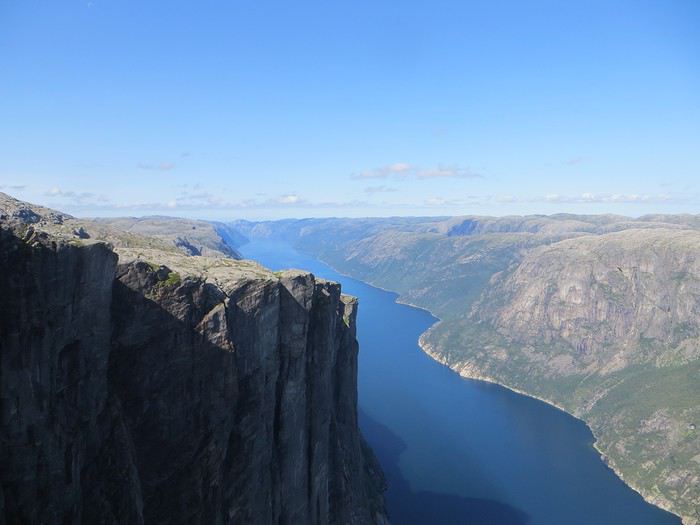 Le Lysefjord n'a pas bougé
On redescend à Lysebotn pour prendre un ferry réservé à l’avance. Et quand on voit le « ferry » arriver, on se dit que la réservation était une bonne idée. Rentrée en marche arrière et tassage de voitures dans un espace réduit pour notre mini-croisière sur le Lysefjord. Très bien la mini-croisière qui permet de s’apercevoir de la hauteur des falaises entourant le Kjeragbolten et d’apercevoir le Preikestolen où nous n’irons pas.
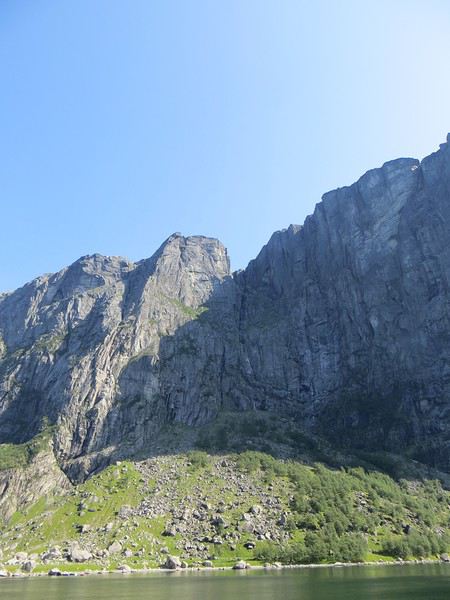
Le Kjeragbolten vu d'en bas. Les 1000 mètres de vide y sont bien
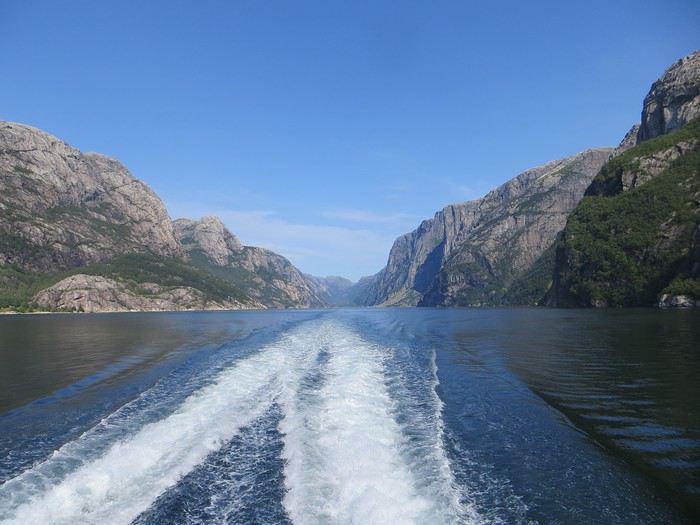 La croisière s'amuse
Le camping du soir se trouve à Hjelmeland et est ingénieusement intitulé Hjelmeland camping. Celui-ci fait dans l’original puisque nous avons planté notre tente dans le parc arboré d’une sorte de manoir qui sert de dortoir. Une chouette vue, une cuisine bien équipée et assez d’espace pour ne pas se marcher dessus (en principe, avec les Norvégiens, on ne sait jamais, ils pourraient parquer votre tente ou votre van à 50 cm du voisin), voilà pour les avantages. Pour les inconvénients, les sanitaires sont peu nombreux, peu pratiques et se salissent vite (forcément).
Eternal Russia! A deep dive into rural, provincial, and everyday Russia...
Hello 😏
Four trips to Russia in our little camper van have allowed us to meet ordinary Russians, those who live far from the Westernized elites of the country's major western cities.
Even with our few words of Russian, we clearly understood what we were so often told: Russia is not just Moscow or St. Petersburg.
This post doesn’t claim to address the sociological realities of this magnificent country. More modestly, it aims to take you on a visual journey to discover the three fundamentals that shape Russian identity: rural life, religion, and patriotism.
VoyageForum allows 20 photos per post, so we’ll stick to this selection. They were taken during our fourth road trip, in April and May 2019.
RURAL LIFE
For this dive into rural Russia, we deliberately left the paved roads to take small dirt tracks and country lanes.
We traveled through the oblasts of Ulyanovsk (Ульяновск), Nizhny Novgorod (Нижний Новгород), and the Republic of Mordovia (Республика Мордовия).
1. We leave the main road to enter the first villages. Very quickly, we find these splendid homes that make up the historical heritage of rural Russia.
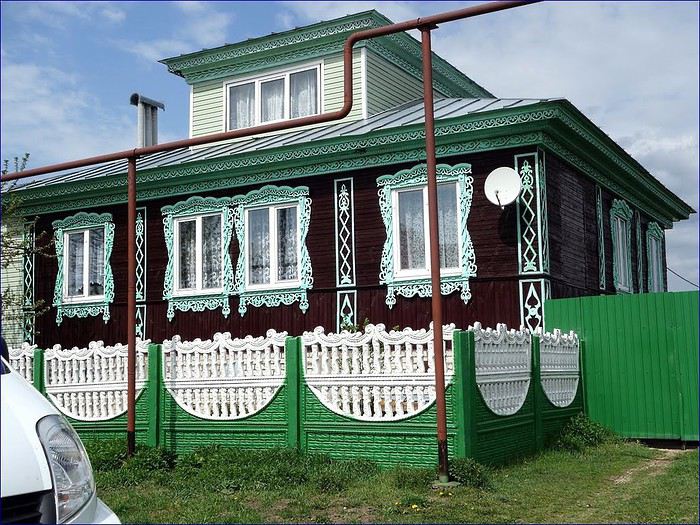
2. A little further on, we enter a village where time seems to have stood still. A single street, izbas on either side, small plots of land behind, a few wells for water...

3. Shopping in rural Russia isn’t like GUM! Here, no luxury boutiques—vendors set up right by the roadside!
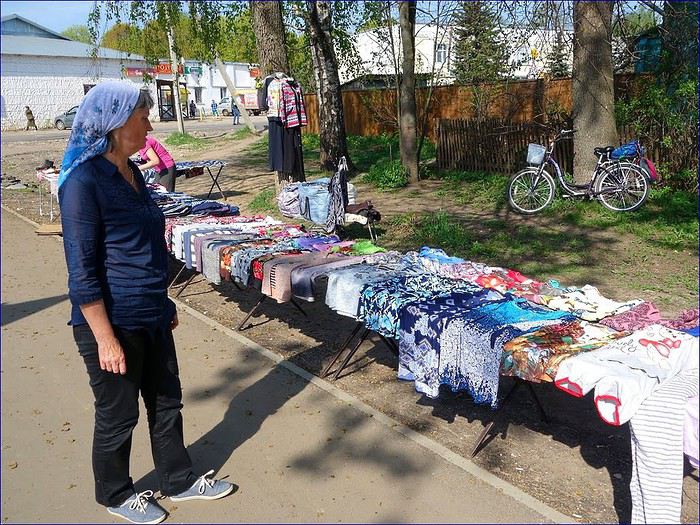
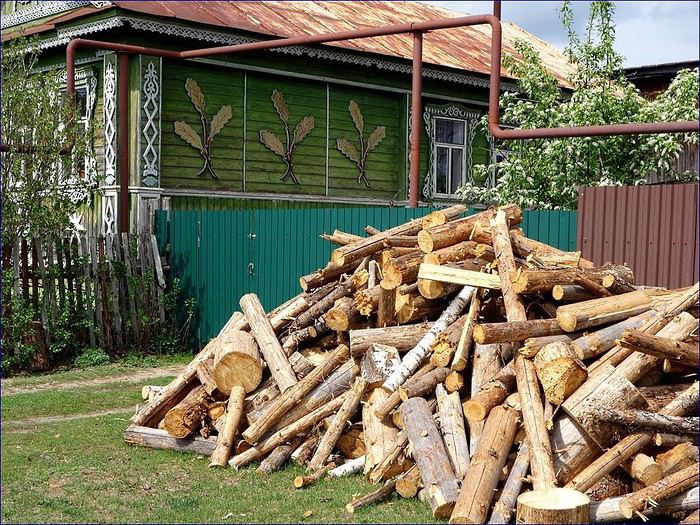
4. In another village, with a few words of Russian, I ask the owner of this house why he’s bringing in firewood in spring. From what I understood, you shouldn’t wait for autumn when everyone needs it and prices go up.
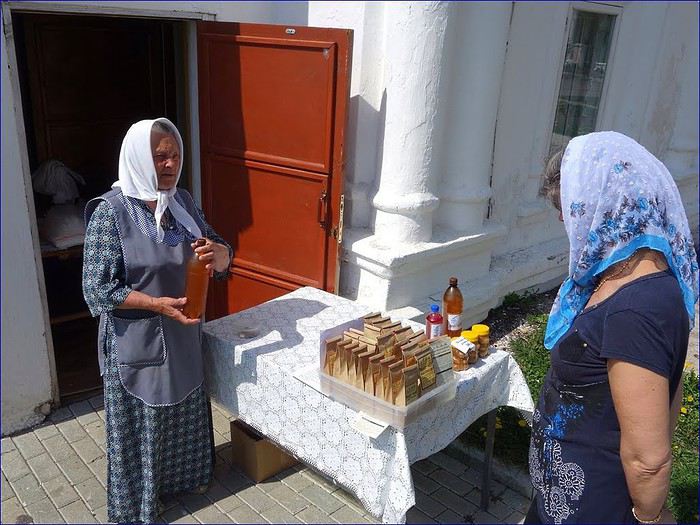
5. In the Nizhny Novgorod Oblast, we stop near a small church that the parishioners show us around. To thank them, Sylvie buys them fruit juice and delicious honey cakes. Generously, the priest gives us permission to sleep in the parking lot!
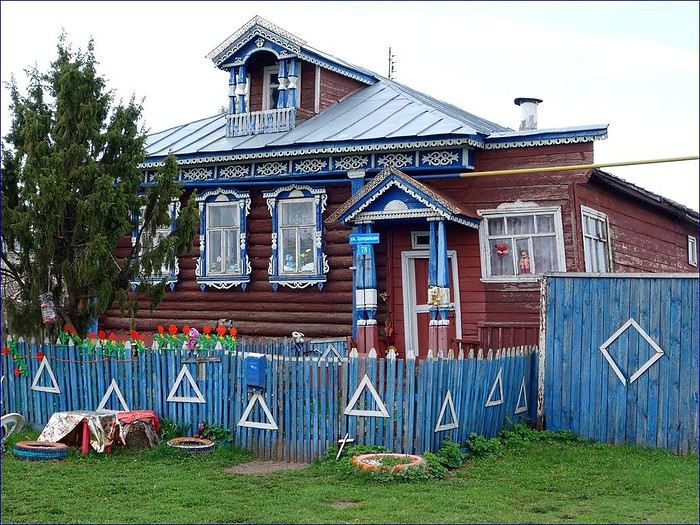
6. The next day, wandering rural roads, we admire this house for a long time, with its traditional wooden figurines behind the windows.
7. We hit the road again toward a small town where, of course, they sell local fish. We know Russians are the biggest consumers of freshwater fish in the world. And here, we’re in the central Volga basin with its dozens of tributaries!

RELIGION
A few years ago, we visited the Makaryevo Monastery. That’s where we learned about the Saint Seraphimo convent for nuns. It was hard to find, on the border of the Republic of Mordovia and the Nizhny Novgorod Oblast.
We discovered a place of pilgrimage, a space for religious expression, authentic, popular, and very Russian—where nuns, believers, and (most importantly) no tourists mix! Just 500 km from Moscow and the Golden Ring, the monastery mainly welcomes groups and families staying in the huge pilgrim house.
We’d only planned a quick visit but ended up staying two full days! Thanks to the staff for letting us park and sleep in the pilgrims’ parking lot.
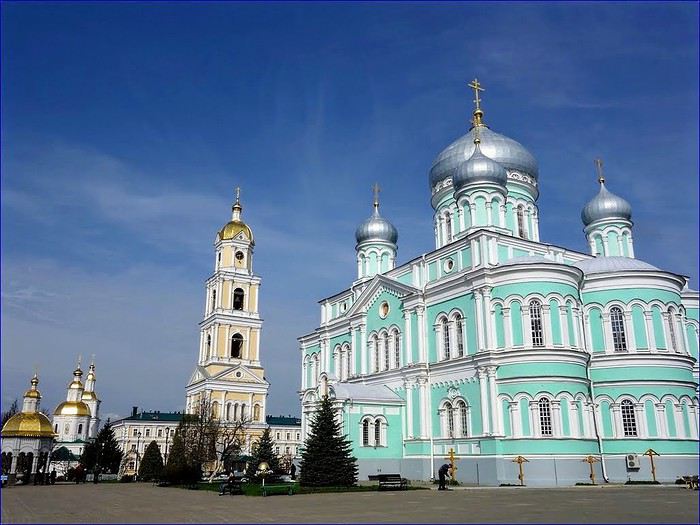
8. The site is much larger than we imagined. Over several hectares, religious buildings, the nuns’ living quarters, visitor accommodations, and schools all coexist...
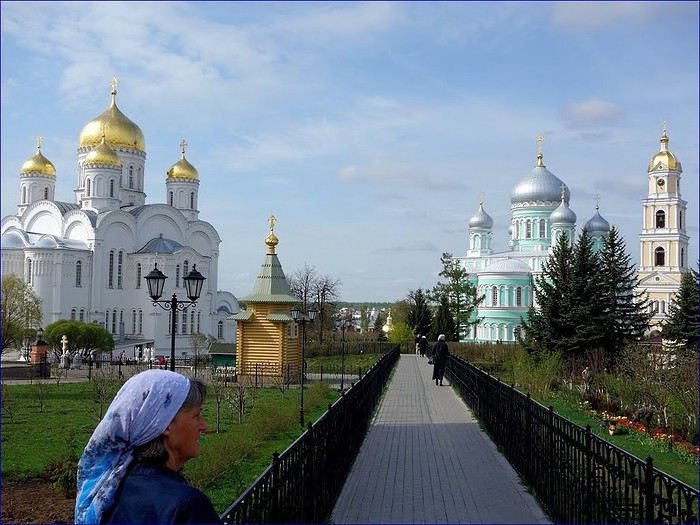
9. For two days, we mixed with kind religious figures and pilgrims—welcoming even to non-Orthodox folks like us!
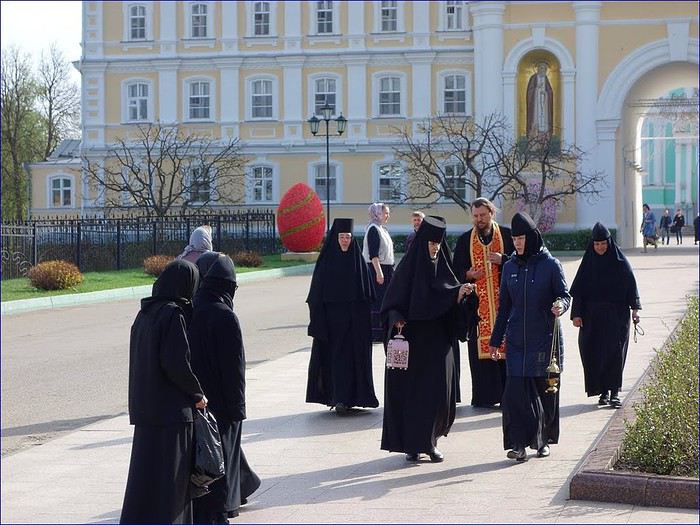
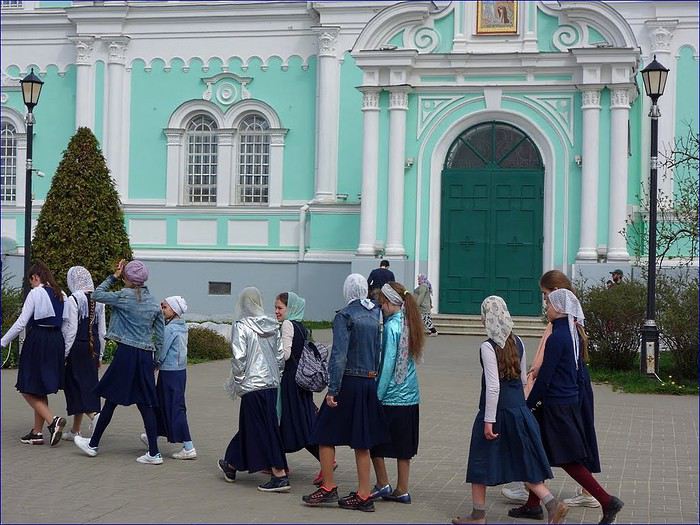
10. But what really stood out was the presence of groups of young people. We were also struck by how young the religious figures we met were.
11. The next morning, having slept in the pilgrims’ parking lot, we were the first visitors. It was a special moment to walk the grounds alone.
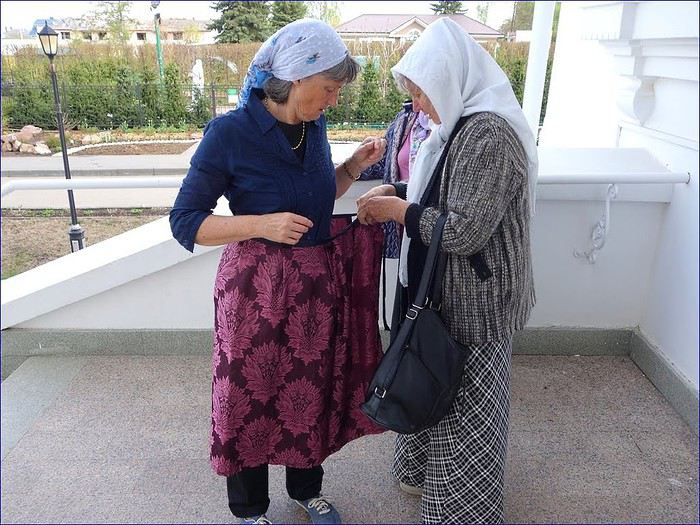
12. That morning was marked by an unlikely event. Sylvie chats with a nun who speaks English. Perhaps touched that we’d driven from France, she offers Sylvie a private tour. She asks two parishioners to dress her and grants her the privilege of seeing the sacred places closed to the public. Me? I got nothing—I was left outside!
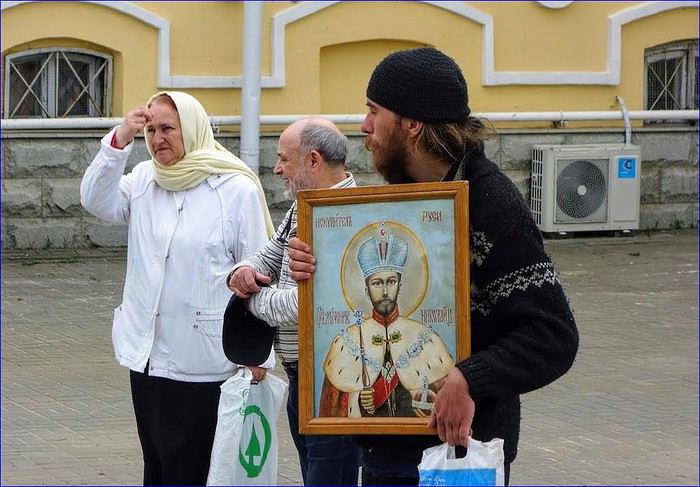
13. I take the chance to observe pilgrims in prayer. I meet a small group of believers gathered around a portrait of Nicholas II, praying for him.
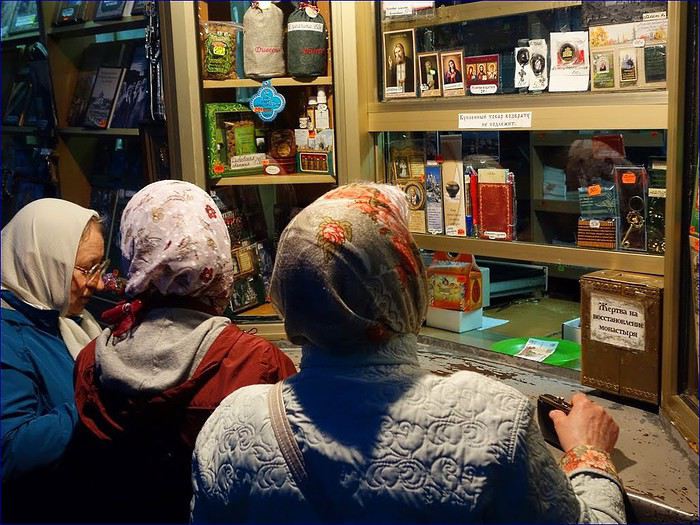
14. In the evening, after dinner, we attend the last service of the day. Until the site closes, we mingle with the *babushkas* buying icons, sacred images, and religious objects blessed by the priest—for just a few rubles.
PATRIOTISM
May 9, 1945, is the day Germany signed its surrender in Berlin. In Russia, it’s celebrated as День Победы—Victory Day. As we know, the Soviet Union paid the heaviest price: nearly 22 million dead. Not a single Russian family was spared.
We wanted to share this special moment, but far from the official ceremonies of the military parade on Red Square. We chose a provincial city, 180 km east of Moscow.
15. By 10 a.m., the crowd starts gathering downtown. Right away, what stands out is the family makeup of the procession.
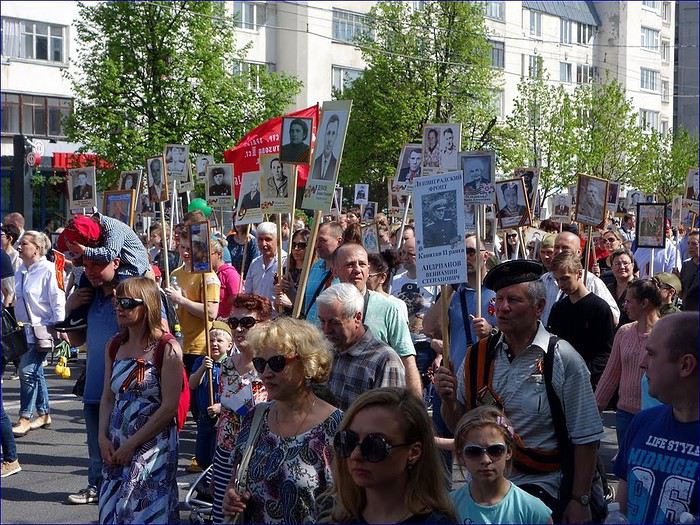
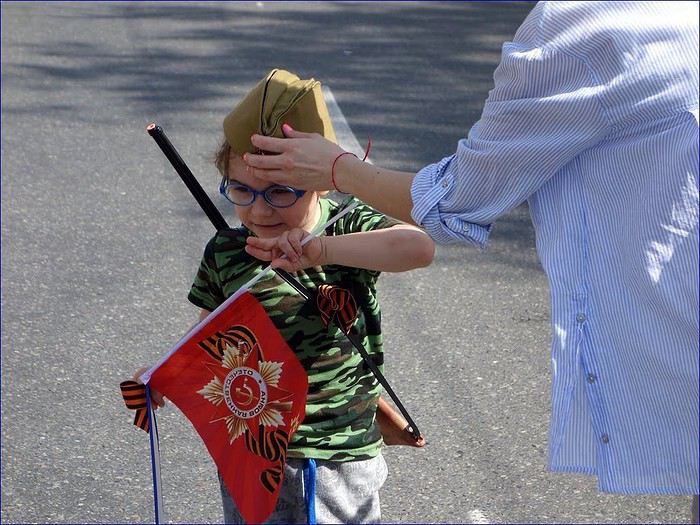
16. We walk among the families, like this mom adjusting her daughter’s cap. The atmosphere is a mix of solemnity and reflection, punctuated by the joyful laughter of children.
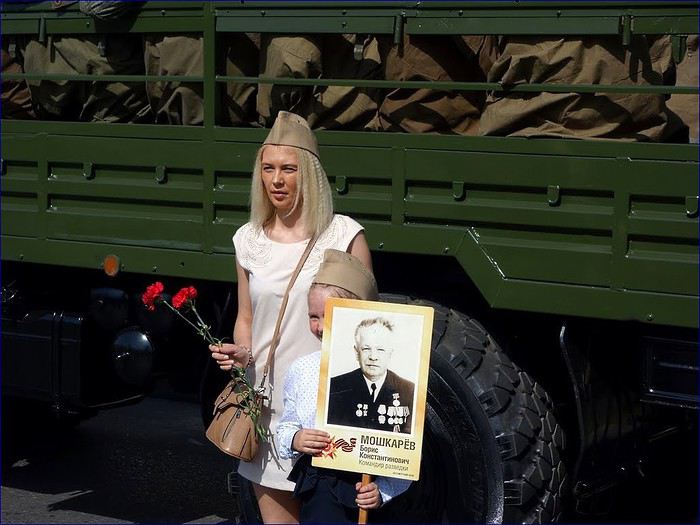
17. This mother and daughter pose behind a portrait of their grandfather.
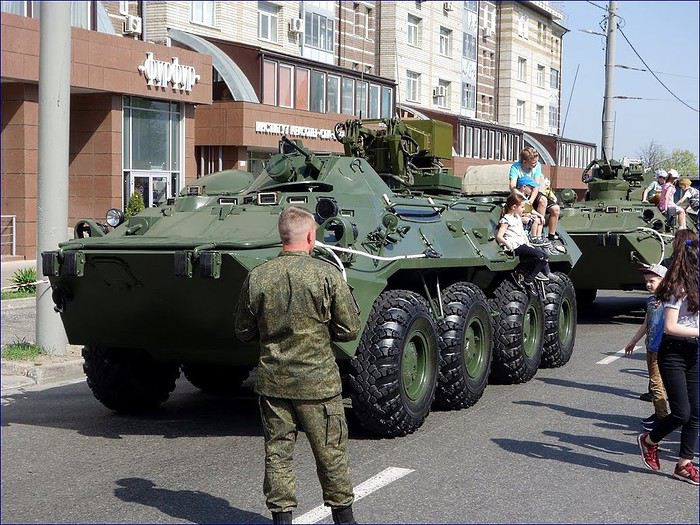
18. I spend a long time watching how patient and helpful the soldiers are. They lift kids onto the vehicles, make sure they don’t slip, then hand them back to their parents.
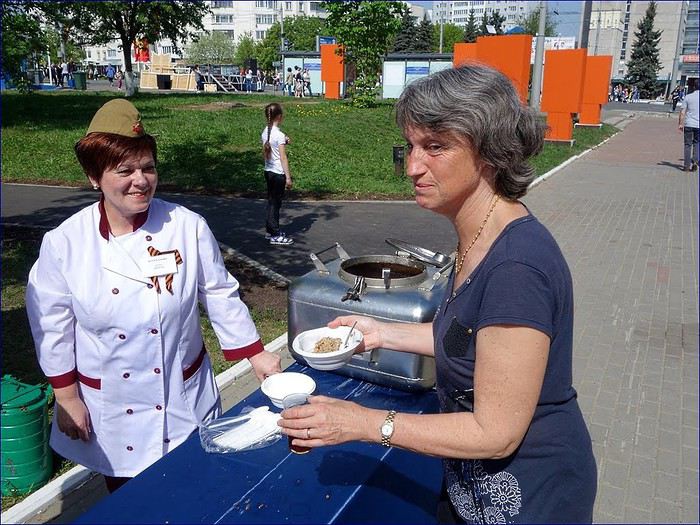
19. Around noon, we’re introduced to a tradition we didn’t know about. On May 9, in some cities, neighborhood committees made up of volunteers offer meals and drinks to participants. So we have lunch with families—parents, kids, and grandparents—all surprised we came from France.
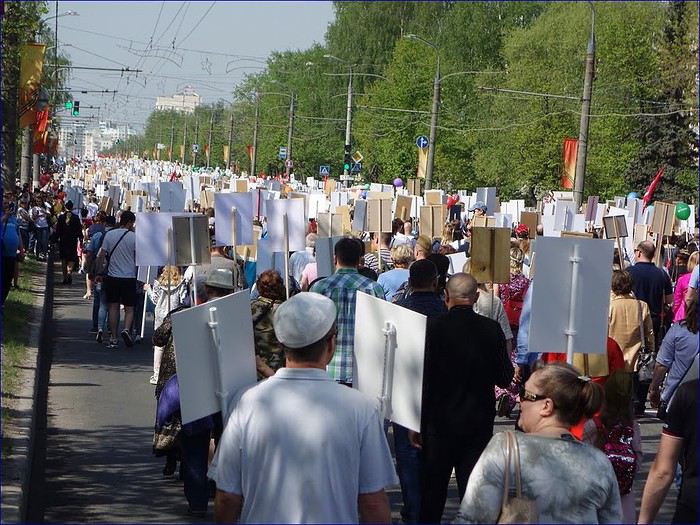
20. By afternoon, the crowd has grown dense, with a procession stretching over 2 km! We stay until the end of the day, impressed by this authentic, popular demonstration of Russians’ attachment to the Motherland.
That’s all 😏
The full story is online here: ETERNAL RUSSIA.
Those who want to discover the world through the eyes of a plumber’s little van can check out Trafic Life.
Best regards,
Sylvie & Bernard
Four trips to Russia in our little camper van have allowed us to meet ordinary Russians, those who live far from the Westernized elites of the country's major western cities.
Even with our few words of Russian, we clearly understood what we were so often told: Russia is not just Moscow or St. Petersburg.
This post doesn’t claim to address the sociological realities of this magnificent country. More modestly, it aims to take you on a visual journey to discover the three fundamentals that shape Russian identity: rural life, religion, and patriotism.
VoyageForum allows 20 photos per post, so we’ll stick to this selection. They were taken during our fourth road trip, in April and May 2019.
RURAL LIFE
For this dive into rural Russia, we deliberately left the paved roads to take small dirt tracks and country lanes.
We traveled through the oblasts of Ulyanovsk (Ульяновск), Nizhny Novgorod (Нижний Новгород), and the Republic of Mordovia (Республика Мордовия).
1. We leave the main road to enter the first villages. Very quickly, we find these splendid homes that make up the historical heritage of rural Russia.
2. A little further on, we enter a village where time seems to have stood still. A single street, izbas on either side, small plots of land behind, a few wells for water...
3. Shopping in rural Russia isn’t like GUM! Here, no luxury boutiques—vendors set up right by the roadside!
4. In another village, with a few words of Russian, I ask the owner of this house why he’s bringing in firewood in spring. From what I understood, you shouldn’t wait for autumn when everyone needs it and prices go up.
5. In the Nizhny Novgorod Oblast, we stop near a small church that the parishioners show us around. To thank them, Sylvie buys them fruit juice and delicious honey cakes. Generously, the priest gives us permission to sleep in the parking lot!
6. The next day, wandering rural roads, we admire this house for a long time, with its traditional wooden figurines behind the windows.
7. We hit the road again toward a small town where, of course, they sell local fish. We know Russians are the biggest consumers of freshwater fish in the world. And here, we’re in the central Volga basin with its dozens of tributaries!
RELIGION
A few years ago, we visited the Makaryevo Monastery. That’s where we learned about the Saint Seraphimo convent for nuns. It was hard to find, on the border of the Republic of Mordovia and the Nizhny Novgorod Oblast.
We discovered a place of pilgrimage, a space for religious expression, authentic, popular, and very Russian—where nuns, believers, and (most importantly) no tourists mix! Just 500 km from Moscow and the Golden Ring, the monastery mainly welcomes groups and families staying in the huge pilgrim house.
We’d only planned a quick visit but ended up staying two full days! Thanks to the staff for letting us park and sleep in the pilgrims’ parking lot.
8. The site is much larger than we imagined. Over several hectares, religious buildings, the nuns’ living quarters, visitor accommodations, and schools all coexist...
9. For two days, we mixed with kind religious figures and pilgrims—welcoming even to non-Orthodox folks like us!
10. But what really stood out was the presence of groups of young people. We were also struck by how young the religious figures we met were.
11. The next morning, having slept in the pilgrims’ parking lot, we were the first visitors. It was a special moment to walk the grounds alone.
12. That morning was marked by an unlikely event. Sylvie chats with a nun who speaks English. Perhaps touched that we’d driven from France, she offers Sylvie a private tour. She asks two parishioners to dress her and grants her the privilege of seeing the sacred places closed to the public. Me? I got nothing—I was left outside!
13. I take the chance to observe pilgrims in prayer. I meet a small group of believers gathered around a portrait of Nicholas II, praying for him.
14. In the evening, after dinner, we attend the last service of the day. Until the site closes, we mingle with the *babushkas* buying icons, sacred images, and religious objects blessed by the priest—for just a few rubles.
PATRIOTISM
May 9, 1945, is the day Germany signed its surrender in Berlin. In Russia, it’s celebrated as День Победы—Victory Day. As we know, the Soviet Union paid the heaviest price: nearly 22 million dead. Not a single Russian family was spared.
We wanted to share this special moment, but far from the official ceremonies of the military parade on Red Square. We chose a provincial city, 180 km east of Moscow.
15. By 10 a.m., the crowd starts gathering downtown. Right away, what stands out is the family makeup of the procession.
16. We walk among the families, like this mom adjusting her daughter’s cap. The atmosphere is a mix of solemnity and reflection, punctuated by the joyful laughter of children.
17. This mother and daughter pose behind a portrait of their grandfather.
18. I spend a long time watching how patient and helpful the soldiers are. They lift kids onto the vehicles, make sure they don’t slip, then hand them back to their parents.
19. Around noon, we’re introduced to a tradition we didn’t know about. On May 9, in some cities, neighborhood committees made up of volunteers offer meals and drinks to participants. So we have lunch with families—parents, kids, and grandparents—all surprised we came from France.
20. By afternoon, the crowd has grown dense, with a procession stretching over 2 km! We stay until the end of the day, impressed by this authentic, popular demonstration of Russians’ attachment to the Motherland.
That’s all 😏
The full story is online here: ETERNAL RUSSIA.
Those who want to discover the world through the eyes of a plumber’s little van can check out Trafic Life.
Best regards,
Sylvie & Bernard
Currency exchange while traveling: why do some still carry wads of cash?
Hi everyone,
In this age of zero-commission cards and fee-free accounts, I’m curious why some travelers still prefer to set off with a wallet stuffed with bills and exchange money on the spot.
I get it for those whose income comes from undeclared activities, but what about everyone else?
Between the risk of theft, scams at exchange counters, and fees that often end up being higher, I’m really puzzled.
The last time I traveled with a wad of cash was because I had to pay for accommodation in cash only, the local currency was the dollar (easy to exchange at a very low cost), and I was still paying some fees.
I’m still wondering about my next trip to Argentina because the situation there is very specific, but otherwise?
Is it an allergy to modern payment methods?
A budget so tight that an extra 20 € (the fees some local banks charge for withdrawals) on a 2000 € budget would be impossible to manage?
Thanks for shedding some light on this!
In this age of zero-commission cards and fee-free accounts, I’m curious why some travelers still prefer to set off with a wallet stuffed with bills and exchange money on the spot.
I get it for those whose income comes from undeclared activities, but what about everyone else?
Between the risk of theft, scams at exchange counters, and fees that often end up being higher, I’m really puzzled.
The last time I traveled with a wad of cash was because I had to pay for accommodation in cash only, the local currency was the dollar (easy to exchange at a very low cost), and I was still paying some fees.
I’m still wondering about my next trip to Argentina because the situation there is very specific, but otherwise?
Is it an allergy to modern payment methods?
A budget so tight that an extra 20 € (the fees some local banks charge for withdrawals) on a 2000 € budget would be impossible to manage?
Thanks for shedding some light on this!
Discussions du concours "Les édifices religieux dans le monde"
C'est ici que l'on discute dans la bonne humeur et le respect de l'autre du concours du mois de novembre.😏
C'est aussi ici que l'on partage des photos en "OFF du concours" avant d'avoir trouver "la" bonne photo pour le concours.
Retour au concours de novembre:
voyageforum.com/...5795;live=1;#9805795
Un train de nuit Vienne-Bruxelles dès janvier 2020
La société de chemins de fer autrichienne ÖBB prévoit de mettre en service un train de nuit entre Bruxelles et Vienne dès le mois de janvier.
'ÖBB a posté samedi sur Twitter une photo de l'Atomium, sans donner davantage de détails sur la fréquence, l'itinéraire précis et les tarifs de cette nouvelle ligne.
https://www.lalibre.be/economie/entreprises-startup/un-train-de-nuit-entre-bruxelles-et-vienne-des-janvier-5d998c0dd8ad5841fc4f1075
La concurrence sera rude : Lauda Air propose un Vienne-Charleroi en1h50 de vol (de jour) à partir de 9,99 €.
La concurrence sera rude : Lauda Air propose un Vienne-Charleroi en1h50 de vol (de jour) à partir de 9,99 €.