Results for "Chine+événement"
About 48,507 results.
More options
Many results are in French, the community’s main language. English translations are added over time.
Search results
Sanklaburi en Thaïlande
À l'extrémié ouest du pays, à l'opposé de l'Isaan souvent évoquée ici, il existe une autre région qui mérite le déplacement : Sanklaburi, aux confins de la provinde de Kanchanaburi, à quelques km de la frontière avec le Myanmar (on peut même y aller pour la journée à condition de ne pas oublier son passeport 🤪).
Petite ville peuplée de Monhs, Karens, Birmans, mais aussi de Thaïs (nous sommes en Thaïlande quand même 🙂), on y trouve notamment le pont en teck le plus long de Thaïlande, un marché d'artisanat birman très intéressant, un lac artificiel immense de près de 80 km de long (la province de Kanchanaburi, qui est l'une des plus grandes du royaume, produit près de 40 % de l'électricité du pays), sans parler de la route 323 qui traverse des paysages magnifiques.


Un peu plus au nord, en continuant sur la route 323, se trouve la passe des 3 pagodes, un lieu chargé d'histoire. Point de passage privilégié des armées birmanes, et ensuite des armées japonaises avec leur fameux chemin de fer de la mort. On peut obtenir un visa d'une journée pour aller faire un tour au Myanmar voisin (à condition de ne pas oublier son passeport, mais je crois que je l'ai déjà dit 😕. J'ai prévu d'y retourner fin avril AVEC MON PASSEPORT cette-fois ci).

Pour information, la région de Kanchaburi ne se limite pas au touristique pont de la rivière Kwai. C'est l'une des provinces les plus grandes de Thaïlande et on peut y passer aisément une semaine avec une diversité de paysages et de populations extraordinaire. Quelques exemples : Le temple des tigres (on en a déjà parlé ici) Le parc national d'Erawan avec les chutes du même nom Le parc national de Sayok Yai (possibilités de séjour, camping, VTT dans la jungle, pour toutes les conditions physiques, du sportif accompli aux enfants en bas âge) Thong Pa Phum, le barrage (bon, si on y passe) et l'arrière-pays, villages Monhs Sources thermales après le parc de Sayok Yai
Plus d'infos ici : http://www.kanchanaburi-info.com
Petite ville peuplée de Monhs, Karens, Birmans, mais aussi de Thaïs (nous sommes en Thaïlande quand même 🙂), on y trouve notamment le pont en teck le plus long de Thaïlande, un marché d'artisanat birman très intéressant, un lac artificiel immense de près de 80 km de long (la province de Kanchanaburi, qui est l'une des plus grandes du royaume, produit près de 40 % de l'électricité du pays), sans parler de la route 323 qui traverse des paysages magnifiques.
Un peu plus au nord, en continuant sur la route 323, se trouve la passe des 3 pagodes, un lieu chargé d'histoire. Point de passage privilégié des armées birmanes, et ensuite des armées japonaises avec leur fameux chemin de fer de la mort. On peut obtenir un visa d'une journée pour aller faire un tour au Myanmar voisin (à condition de ne pas oublier son passeport, mais je crois que je l'ai déjà dit 😕. J'ai prévu d'y retourner fin avril AVEC MON PASSEPORT cette-fois ci).
Pour information, la région de Kanchaburi ne se limite pas au touristique pont de la rivière Kwai. C'est l'une des provinces les plus grandes de Thaïlande et on peut y passer aisément une semaine avec une diversité de paysages et de populations extraordinaire. Quelques exemples : Le temple des tigres (on en a déjà parlé ici) Le parc national d'Erawan avec les chutes du même nom Le parc national de Sayok Yai (possibilités de séjour, camping, VTT dans la jungle, pour toutes les conditions physiques, du sportif accompli aux enfants en bas âge) Thong Pa Phum, le barrage (bon, si on y passe) et l'arrière-pays, villages Monhs Sources thermales après le parc de Sayok Yai
Plus d'infos ici : http://www.kanchanaburi-info.com
Phuket: n'importe quoi!
Bonjour,
Ceci s'adresse tout specialement a ceux qui connaissent tres bien Phuket.
Voici le lien qui mene au recit d'une affabulatrice a un journaliste en mal de copie. C'est chouette car on peut cliquer sur le nom du "baveux" et lui mettre le nez dans ses mensonges.
http://www.hebdosquebecor.com/bem/01062006/bem_01062006_A3.shtml
R.
Ceci s'adresse tout specialement a ceux qui connaissent tres bien Phuket.
Voici le lien qui mene au recit d'une affabulatrice a un journaliste en mal de copie. C'est chouette car on peut cliquer sur le nom du "baveux" et lui mettre le nez dans ses mensonges.
http://www.hebdosquebecor.com/bem/01062006/bem_01062006_A3.shtml
R.
Liste des sites classés de l'UNESCO, un outil essentiel pour organiser son itinéraire.
salut à tous,
J'ai chez moi un poster consolidé et plastifié des sites classés par l'UNESCO sur tous les continents. J'ai également un poster des sites classés par l'UNESCO en Europe, il se trouve sur la porte de mes WC ! quelle invitation à se rendre sur place pour comtempler les merveilles humaines et naturelles du monde et de l'Europe en particulier !!
Depuis 3 ans, j'organise mes itinéraires en grande partie en fonction de ces cartes et de ces sites classés. De quoi s'agit-il? tous les ans, l'UNESCO, organe culturel dépendant de de l'ONU, publie une liste des nouveaux sites culturels (en fait surtout historiques), naturels et mixtes parmi les plus significatifs et et les plus remarquables du monde. Les pays proposent les sites, des ''spécialistes'' de l'UNESCO les sélectionnent. L'intérêt pour nous, voyageurs, c'est de savoir quels sont les sites culturels(villes, monuments religieux, militaires, etc.) qui ont un intérêt essentiel dans l'histoire de l'humanité. Pour les sites naturels, sont classés les sites les plus beaux, les plus sauvages et possédant des spécificités rares (espèces en voie de disparition, par exemple).
Donc un petit conseil, avant de partir, consulter cette liste pour les endroits que vous désirez visiter et, faites comme moi, écrivez à l'UNESCO (à Paris) afin qu'ils vous envoient gratuitement ce poster des sites mondiaux !
bye
Tour du monde à pied
Vous allez me trouver surement assez rêveur ou utopiste, mais j'aimerais bien faire un tour du monde à pied, en stop et en train. J'ai déjà tracé une ligne d'est en ouest sur un planisphère et j'envisage de le réaliser en trois ans, tout au plus.
J'aimerais vos conseils. A savoir si c'est réalisable. A quoi je dois faire attention. Quelles formalités je dois m'astreindre pour passer les frontières, etc ...
Merci d'avance.
J'aimerais vos conseils. A savoir si c'est réalisable. A quoi je dois faire attention. Quelles formalités je dois m'astreindre pour passer les frontières, etc ...
Merci d'avance.
Bridges numériques: bof!
Bonjour,
Je vois des questions sur le choix du matériel photo, la réponse allant toujours de soi : "il faut du numérique". Pourquoi pas, à condition d'accepter certaines limitations avant d'acheter et non de les subir après. Et pour ne pas partir dans un fil de discussion polémique, j'ai joint une série de photos qui illustre les ratages réguliers du coûteux "bridge numérique" que je viens d'essayer pendant quelques semaines (un Canon Power Pro S1, 8 MPix, zoom optique x 7, optique "L" pour les adorateurs des sigles), dès que le sujet est en mouvement. Et j'ai observé les mêmes soucis avec des Panasonic et Minolta... Aucune des photos n'aurait été raté avec un reflex argentique à 300 € (test déjà effectué 🙂), trois fois moins cher.
Et merci à l'A380 pour sa participation.
A+
PS : inutile de dire que j'étais exaspéré après l'appareil (dont j'avais lu les 200 pages de notice et appris l'usage des 15 boutons, roues et sélecteurs !), que je l'ai rendu et continue sans regret avec du matériel réactif, à la visée claire et aux bonnes optiques !
Je vois des questions sur le choix du matériel photo, la réponse allant toujours de soi : "il faut du numérique". Pourquoi pas, à condition d'accepter certaines limitations avant d'acheter et non de les subir après. Et pour ne pas partir dans un fil de discussion polémique, j'ai joint une série de photos qui illustre les ratages réguliers du coûteux "bridge numérique" que je viens d'essayer pendant quelques semaines (un Canon Power Pro S1, 8 MPix, zoom optique x 7, optique "L" pour les adorateurs des sigles), dès que le sujet est en mouvement. Et j'ai observé les mêmes soucis avec des Panasonic et Minolta... Aucune des photos n'aurait été raté avec un reflex argentique à 300 € (test déjà effectué 🙂), trois fois moins cher.
Et merci à l'A380 pour sa participation.
A+
PS : inutile de dire que j'étais exaspéré après l'appareil (dont j'avais lu les 200 pages de notice et appris l'usage des 15 boutons, roues et sélecteurs !), que je l'ai rendu et continue sans regret avec du matériel réactif, à la visée claire et aux bonnes optiques !
Panique à bord sur le Paris-Djerba
Je viens d'apprendre que des gens ont une nouvelle fois refusé d'embarquer sur un vol Paris Djerba apres un pb technique sur l'avion pourtant reparé par la compagnie!! (je felicite la compagnie qui à payé le logement de tous ses passagers pour cette nuit avant qu'il ne redecolle ce soir).
Ca devient du n'importe quoi, une personne panique, plus personne ne veut partir!! Une paranoïa s'est installé dans l'aérien et des comportements non-adultes viennent accentuer la chose!! Soyons rationnels, soyons adultes!!! Le pilote et l'aeroport de Roissy n'auraient jamais autorisé l'avion à redecoller s'il n'etait pas en etat de marche!! Je pars le 03 septembre, et ma peur avant celle de l'avion vient de plus en plus du fait "est ce que nous allons decoller, ne va t'il pas y avoir de mouvement de panique" En 1 mois c'est la 3eme fois que cela se produit, les passagers paniques et mm les membres d'equipage affirment avoir des apprehensions, où va t'on??
Une petite pensée pour les passagers des vols Hélios, West Carribean et Tans. Puis pour les passagers du vol Bari-Tunis.
Malgré tous ces crash, l'avion reste de loin le moyen le plus de sur de voyager: 13 fosi plus quer le train et 39 fois plus que la voiture (chiffres LCI)
Vos reactions??
Jours de la semaine en Asie Sud-Est
Une question bête 😮 :
Est-ce que les jours de la semaine sont les mêmes qu'en Europe, ou sont-ils décalés à cause du calendrier lunaire?
Combien sommes-nous à préparer un tour du monde?
Bonjour à Tous,
Comme nombreux d’entre vous ici, je prépare un Tour du Monde, en lisant les différents forums, je constate que nous sommes vraiment beaucoup à partir dans les 12 prochains mois, alors ce serait sympa de recenser tous les projets de tour du monde en préparation, en donnant quelques infos,
Je me lance :
Dates de départ...................................env 15 janvier 2006 Nombres de mois, années....................env 2 ans En solo, duo, voir plus ........................solo Continent par ordre de passage ..........Asie, Océanie, Amérique du Sud et Centrale, Afrique Premier pays ......................................Inde Dernier pays ......................................Israel Nombre de vols prévus ......................entre 12 et 20 Site Web de votre tour .......................oui en construction
Et le LIEU incontournable de votre tour : ( si vous arrivez à répondre )
Voila pour moi, j’attend vos merveilleux projets ....
Mpolo57
« Il arriva à la croisée de 2 chemins, et là il décida d’aller là où il n’allait pas «
Comme nombreux d’entre vous ici, je prépare un Tour du Monde, en lisant les différents forums, je constate que nous sommes vraiment beaucoup à partir dans les 12 prochains mois, alors ce serait sympa de recenser tous les projets de tour du monde en préparation, en donnant quelques infos,
Je me lance :
Dates de départ...................................env 15 janvier 2006 Nombres de mois, années....................env 2 ans En solo, duo, voir plus ........................solo Continent par ordre de passage ..........Asie, Océanie, Amérique du Sud et Centrale, Afrique Premier pays ......................................Inde Dernier pays ......................................Israel Nombre de vols prévus ......................entre 12 et 20 Site Web de votre tour .......................oui en construction
Et le LIEU incontournable de votre tour : ( si vous arrivez à répondre )
Voila pour moi, j’attend vos merveilleux projets ....
Mpolo57
« Il arriva à la croisée de 2 chemins, et là il décida d’aller là où il n’allait pas «
Nouvelles du Népal 08/03/2004 Figaro International
ASIE L'insurrection, active depuis 1996, a juré de faire tomber la monarchie et contrôle la quasi-totalité du pays
Le Népal sous le joug maoïste
Plus d'un mois après le coup de force du roi Gyanendra, qui a démis le 1er février dernier le gouvernement parlementaire et a suspendu les libertés publiques, la monarchie népalaise est plus seule que jamais face à une guérilla communiste d'un autre âge. Se réclamant du maoïsme, les rebelles ont juré la chute de la monarchie et tiennent d'une main de fer la quasi-totalité du pays. Retranchée dans les villes, l'armée népalaise a reçu carte blanche du roi pour tenter de juguler l'insurrection par tous les moyens. Soixante-dix personnes, présentées comme des rebelles, auraient été tuées dans des affrontements par l'armée avant-hier. L'organisation de défense des droits de l'homme Human Rights Watch dénonce dans un récent rapport l'ampleur des «disparitions» causées par l'armée et le «bilan atroce de meurtres, tortures et intimidations causées par les maoïstes». Et ce petit royaume hindouiste des contreforts de l'Himalaya, paradis des randonneurs et des alpinistes, glisse peu à peu vers le chaos. Dans les montagnes népalaises, le pays mao s'organise selon les préceptes du collectivisme.
District de Rolpa : de notre envoyé spécial Adrien Jaulmes [08 mars 2005]
Le visage de l'aubergiste se ferme d'un seul coup. Il jette un regard inquiet vers trois hommes qui viennent d'arriver à l'autre bout de la passerelle suspendue, au fond d'une étroite vallée de l'ouest du Népal. Puis il rentre précipitamment dans sa chaumière où il fait mine de s'affairer. Au débouché du pont qui oscille sous leur poids, les nouveaux arrivants grimpent d'un pas rapide vers l'auberge.
Le premier, la cinquantaine d'années, a le visage dépigmenté d'un albinos et porte une barbe blanche. Derrière lui marchent deux adolescents au visage masqué par un foulard. L'un porte un sac à dos sous lequel est roulé un duvet. L'autre un vieux fusil anglais Enfield presque aussi grand que lui. «Salut, camarades !», dit l'homme âgé en levant le poing comme dans un vieux film de propagande communiste. Ses deux compagnons l'imitent.
Les villageois répondent sans enthousiasme à leur salut. L'aubergiste, lui, regarde ses pieds. Les arrivants ne portent pas d'uniforme et n'ont qu'un fusil pour trois. Mais tous les paysans ont reconnu la longue silhouette de l'albinos, Kuber Oli, surnommé «camarade Surya», la principale autorité du district de Rolpa. Cette région reculée de l'ouest du Népal, dont les vallées ne sont généralement accessibles qu'au terme de plusieurs jours de marche, a été l'une des premières à tomber aux mains de la guérilla maoïste lors du déclenchement de l'insurrection en 1996.
Depuis, les représentants de l'Etat népalais n'ont pas reparu, et les habitants vivent sous l'autorité d'une «République populaire népalaise» autoproclamée. A l'entrée de chaque village, entre les champs en escalier de ces contreforts de l'Himalaya, flottent des rangées de drapeaux rouges frappés d'une faucille et d'un marteau. Des banderoles signées du «Parti communiste népalais-maoïste» souhaitent partout «longue vie au marxisme-léninisme-maoïsme» et invitent à «célébrer le dixième anniversaire de la grande guerre populaire».
Tout sourire, le camarade Surya est intarissable sur le sujet.
«Nous sommes dans la phase finale de la conquête du pouvoir», dit-il. «La dictature féodale du roi Gyanendra est vouée à disparaître, ajoute-t-il avec certitude. Ce sont le matérialisme dialectique et le déterminisme historique qui décident, pas les individus.»
Niant tranquillement les crimes communistes du XXe siècle, le camarade Surya affirme sa foi dans le succès de ce dernier avatar de l'idéologie de Karl Marx.
«Ce n'est pas Mao Tsé Toung qui a échoué, explique-t-il. C'est l'héritage de Mao Tsé Toung qui a été trahi par ses successeurs. Nous avons tiré les leçons des exemples étrangers, comme les revers du Sentier lumineux au Pérou. Et nous nous appuyons sur les principes du marxisme-léninisme-maoïsme, revus à la lumière de la Voie de Prachenda, pour réussir à instaurer au Népal une véritable république populaire.»
Président du parti et chef suprême de l'Armée populaire de Libération, le «camarade Prachenda», de son vrai nom Pushpa Kamal Dahal, est le fondateur et l'âme du mouvement. Intellectuel dévoyé et communiste convaincu, Prachenda est l'un des fondateurs de la branche maoïste du Parti communiste népalais, qui prône la lutte armée après ses échecs électoraux aux premiers scrutins du régime parlementaire népalais au début des années 90, et l'auteur de la Voie de Prachenda, contribution népalaise au renouveau de la pensée marxiste.
Mais les succès fulgurants de la guérilla utilisent plutôt les bonnes vieilles méthodes de tous les mouvements communistes. Le camarade Surya et ses deux gardes du corps repartis, l'aubergiste garde le visage fermé. Sa femme est la seule à accepter de parler, une fois les portes closes. «Tout le monde a peur. Personne n'ose parler, les maos ont leurs espions dans chaque village. Il faut leur donner de l'argent, et personne ne peut nous défendre contre eux», explique-t-elle.
Attaquant des postes de police isolés, chassant les «propriétaires terriens», généralement des paysans à peine moins pauvres que les autres, rançonnant et terrorisant, les maoïstes ont en quelques années pris le contrôle de la quasi-totalité du pays, en dehors de la vallée de Katmandou, la capitale, et de quelques grandes villes. Mais ils n'ont jamais réussi à s'emparer durablement de la moindre capitale régionale, en partie en raison d'un manque chronique d'armement.
Ils ne bénéficient ni du soutien de la Chine populaire, embarrassée par ces encombrants émules et occupée à siniser le Tibet voisin, ni de celui de l'Inde, qui craint l'extension de l'insurrection à ses propres jacqueries paysannes, les «Naxalites».
Les maoïstes népalais s'arment en pillant les postes de police et en fabriquant des bombes artisanales, les socket bombs, sorte de bouts de tuyau remplis d'explosifs qui constituent l'armement de base des militants, avec des fusils Enfield datant de la campagne de Birmanie.
Mais, malgré leur idéologie aussi désuète que leur armement, les maoïstes représentent un adversaire redoutable pour la petite armée népalaise, mal équipée pour reprendre le contrôle d'un pays aux vallées encaissées et aux routes inexistantes.
COMPLEMENT 🤪
Une route qui ne mène nulle part
A. J. [08 mars 2005]
Arc-boutés sur des barres à mine, une dizaine d'hommes tente de faire basculer au fond de la vallée un énorme rocher. Le bloc oscille sur le bord de la route avant de basculer dans un fracas. Des femmes armées de pelles aplanissent le sol, pendant que les hommes attaquent un autre rocher. La scène se répète sur des dizaines de kilomètres, le long du flanc escarpé d'une vallée du district de Rolpa, au coeur de zones tenues par la guérilla maoïste. «Cette route constitue un modèle de développement pour tout le pays», explique le camarade Surya, l'un des membres du comité central maoïste. Le tracé qui serpente vers un col fait selon lui 90 kilomètres. «10 000 personnes travaillent en permanence volontairement sur le chantier, explique-t-il fièrement, tout est fait à la main.» Les barres à mine sont raffûtées sur des forges artisanales improvisées, les gravats portés dans des paniers d'osier. Aucun garde armé ne semble surveiller le chantier, mais à chaque virage des jeunes gens avec des foulards autour du cou ne perdent pas de vue les équipes. Ce travail éreintant, réalisé avec une technique moyenâgeuse, semble susciter plus de fierté chez le camarade Surya que chez les centaines de paysans réquisitionnés, qui gardent le visage fermé au passage du chef rebelle. «Nous sommes obligés de venir de nos villages, à plus de quatre jours de marche d'ici, et fournissons notre propre nourriture», explique un travailleur appuyé sur son pic. La route sera achevée d'ici à cinq ans. «Mais elle n'est pas reliée au reste du réseau, explique l'homme. Elle ne mène nulle part.»
District de Rolpa : de notre envoyé spécial Adrien Jaulmes [08 mars 2005]
Le visage de l'aubergiste se ferme d'un seul coup. Il jette un regard inquiet vers trois hommes qui viennent d'arriver à l'autre bout de la passerelle suspendue, au fond d'une étroite vallée de l'ouest du Népal. Puis il rentre précipitamment dans sa chaumière où il fait mine de s'affairer. Au débouché du pont qui oscille sous leur poids, les nouveaux arrivants grimpent d'un pas rapide vers l'auberge.
Le premier, la cinquantaine d'années, a le visage dépigmenté d'un albinos et porte une barbe blanche. Derrière lui marchent deux adolescents au visage masqué par un foulard. L'un porte un sac à dos sous lequel est roulé un duvet. L'autre un vieux fusil anglais Enfield presque aussi grand que lui. «Salut, camarades !», dit l'homme âgé en levant le poing comme dans un vieux film de propagande communiste. Ses deux compagnons l'imitent.
Les villageois répondent sans enthousiasme à leur salut. L'aubergiste, lui, regarde ses pieds. Les arrivants ne portent pas d'uniforme et n'ont qu'un fusil pour trois. Mais tous les paysans ont reconnu la longue silhouette de l'albinos, Kuber Oli, surnommé «camarade Surya», la principale autorité du district de Rolpa. Cette région reculée de l'ouest du Népal, dont les vallées ne sont généralement accessibles qu'au terme de plusieurs jours de marche, a été l'une des premières à tomber aux mains de la guérilla maoïste lors du déclenchement de l'insurrection en 1996.
Depuis, les représentants de l'Etat népalais n'ont pas reparu, et les habitants vivent sous l'autorité d'une «République populaire népalaise» autoproclamée. A l'entrée de chaque village, entre les champs en escalier de ces contreforts de l'Himalaya, flottent des rangées de drapeaux rouges frappés d'une faucille et d'un marteau. Des banderoles signées du «Parti communiste népalais-maoïste» souhaitent partout «longue vie au marxisme-léninisme-maoïsme» et invitent à «célébrer le dixième anniversaire de la grande guerre populaire».
Tout sourire, le camarade Surya est intarissable sur le sujet.
«Nous sommes dans la phase finale de la conquête du pouvoir», dit-il. «La dictature féodale du roi Gyanendra est vouée à disparaître, ajoute-t-il avec certitude. Ce sont le matérialisme dialectique et le déterminisme historique qui décident, pas les individus.»
Niant tranquillement les crimes communistes du XXe siècle, le camarade Surya affirme sa foi dans le succès de ce dernier avatar de l'idéologie de Karl Marx.
«Ce n'est pas Mao Tsé Toung qui a échoué, explique-t-il. C'est l'héritage de Mao Tsé Toung qui a été trahi par ses successeurs. Nous avons tiré les leçons des exemples étrangers, comme les revers du Sentier lumineux au Pérou. Et nous nous appuyons sur les principes du marxisme-léninisme-maoïsme, revus à la lumière de la Voie de Prachenda, pour réussir à instaurer au Népal une véritable république populaire.»
Président du parti et chef suprême de l'Armée populaire de Libération, le «camarade Prachenda», de son vrai nom Pushpa Kamal Dahal, est le fondateur et l'âme du mouvement. Intellectuel dévoyé et communiste convaincu, Prachenda est l'un des fondateurs de la branche maoïste du Parti communiste népalais, qui prône la lutte armée après ses échecs électoraux aux premiers scrutins du régime parlementaire népalais au début des années 90, et l'auteur de la Voie de Prachenda, contribution népalaise au renouveau de la pensée marxiste.
Mais les succès fulgurants de la guérilla utilisent plutôt les bonnes vieilles méthodes de tous les mouvements communistes. Le camarade Surya et ses deux gardes du corps repartis, l'aubergiste garde le visage fermé. Sa femme est la seule à accepter de parler, une fois les portes closes. «Tout le monde a peur. Personne n'ose parler, les maos ont leurs espions dans chaque village. Il faut leur donner de l'argent, et personne ne peut nous défendre contre eux», explique-t-elle.
Attaquant des postes de police isolés, chassant les «propriétaires terriens», généralement des paysans à peine moins pauvres que les autres, rançonnant et terrorisant, les maoïstes ont en quelques années pris le contrôle de la quasi-totalité du pays, en dehors de la vallée de Katmandou, la capitale, et de quelques grandes villes. Mais ils n'ont jamais réussi à s'emparer durablement de la moindre capitale régionale, en partie en raison d'un manque chronique d'armement.
Ils ne bénéficient ni du soutien de la Chine populaire, embarrassée par ces encombrants émules et occupée à siniser le Tibet voisin, ni de celui de l'Inde, qui craint l'extension de l'insurrection à ses propres jacqueries paysannes, les «Naxalites».
Les maoïstes népalais s'arment en pillant les postes de police et en fabriquant des bombes artisanales, les socket bombs, sorte de bouts de tuyau remplis d'explosifs qui constituent l'armement de base des militants, avec des fusils Enfield datant de la campagne de Birmanie.
Mais, malgré leur idéologie aussi désuète que leur armement, les maoïstes représentent un adversaire redoutable pour la petite armée népalaise, mal équipée pour reprendre le contrôle d'un pays aux vallées encaissées et aux routes inexistantes.
COMPLEMENT 🤪
Une route qui ne mène nulle part
A. J. [08 mars 2005]
Arc-boutés sur des barres à mine, une dizaine d'hommes tente de faire basculer au fond de la vallée un énorme rocher. Le bloc oscille sur le bord de la route avant de basculer dans un fracas. Des femmes armées de pelles aplanissent le sol, pendant que les hommes attaquent un autre rocher. La scène se répète sur des dizaines de kilomètres, le long du flanc escarpé d'une vallée du district de Rolpa, au coeur de zones tenues par la guérilla maoïste. «Cette route constitue un modèle de développement pour tout le pays», explique le camarade Surya, l'un des membres du comité central maoïste. Le tracé qui serpente vers un col fait selon lui 90 kilomètres. «10 000 personnes travaillent en permanence volontairement sur le chantier, explique-t-il fièrement, tout est fait à la main.» Les barres à mine sont raffûtées sur des forges artisanales improvisées, les gravats portés dans des paniers d'osier. Aucun garde armé ne semble surveiller le chantier, mais à chaque virage des jeunes gens avec des foulards autour du cou ne perdent pas de vue les équipes. Ce travail éreintant, réalisé avec une technique moyenâgeuse, semble susciter plus de fierté chez le camarade Surya que chez les centaines de paysans réquisitionnés, qui gardent le visage fermé au passage du chef rebelle. «Nous sommes obligés de venir de nos villages, à plus de quatre jours de marche d'ici, et fournissons notre propre nourriture», explique un travailleur appuyé sur son pic. La route sera achevée d'ici à cinq ans. «Mais elle n'est pas reliée au reste du réseau, explique l'homme. Elle ne mène nulle part.»
Nouvelles du Népal (la presse)
KATMANDOU, 9 fév (AFP)
Première fronde de la justice contre le roi du Népal
Le roi du Népal a fait face mercredi à une première fronde, la justice ayant interpellé son gouvernement sur une des nombreuses arrestations depuis l'instauration de l'état d'urgence alors que des défenseurs des droits de l'Homme se préparaient à protester jeudi.
Dans une première décision de justice depuis que le roi Gyanendra a pris les pleins pouvoirs et instauré l'état d'urgence, un juge de la Cour Suprême a ordonné au nouveau gouvernement présidé par le souverain de s'expliquer sur l'arrestation d'un ancien président de l'Association du barreau du Népal.
La Cour suprême a pris cette décision après qu'une requête eut été déposée en vertu de l'Habeas Corpus par le président de l'Association du barreau, Shambhu Thapa, selon une source judiciaire. Le roi, en vertu de l'état d'urgence, a suspendu tous les droits fondamentaux sauf l'Habeas Corpus. De ce fait les dossiers portant sur la détention illégale peuvent encore être déposés devant la Cour Suprême et la cour d'appel.
L'ancien président de cette association de juristes, Sindhunath Pyakurel, avait été arrêté le 1er février, jour où le roi a limogé son gouvernement.
Selon des partis politiques et organisations de défense des droits de l'Homme, des centaines de dirigeants et militants politiques, syndicaux, étudiants, journalistes ont été arrêtés depuis dans tout le pays.
Un porte-parole de l'armée a estimé mardi qu'il n'y en avait qu'une centaine et a indiqué qu'ils pouvaient être détenus pour une durée d'au moins trois mois.
Les défenseurs des droits de l'Homme qui ont échappé à cette vague d'arrestation ont mis la dernière touche à l'organisation d'une action de protestation contre le roi et pour la démocratie, prévue jeudi à Katmandou, la première depuis le coup de force royal. Comme le droit d'expression, les rassemblements publics ont été interdits.
Krishna Pahadi, ancien président de Human Rights and Peace Societya indiqué à l'AFP qu'une vingtaine d'organisations seraient représentées et a dit s'attendre à ce que tous les participants soient arrêtés. "Il est certain que ceux qui participeront au meeting seront arrêtés", a-t-il déclaré.
M. Pahadi a insisté sur le fait que le nombre de personnes qui participeraient à cette action était moins important que le message symbolique qu'elle permettrait de faire passer.
"Demain, même s'il y a peu de monde, la présence des différentes organisations permettra de délivrer un message symbolique, (...) un message clair selon lequel nous sommes contre la décision du roi, qu'il n'y a pas de compromis sur le dos de la démocratie", a-t-il dit.
M. Pahadi, un des instigateurs de cette action, a espéré que cela ne serait qu'un "début" qui permettrait de mobiliser dans la foulée les mouvements politiques et étudiants.
Peu après une réunion clandestine, M. Pahadi a été arrêté, a indiqué l'HURPES qui a précisé que l'action de protestation était toujours à l'ordre du jour.
De nombreux militants politiques et associatifs sont passés dans la clandestinité depuis une semaine tandis que d'autres ont fui le pays, notamment des dirigeants du Congrès népalais, a indiqué un porte-parole de ce parti.
Les autres se réunissent clandestinement et "préparent une stratégie (pour organiser) des protestations de rue pacifiques contre la décision du roi", a dit Arjun Narsingha.
Le roi a limogé le gouvernement de Sher Bahadur Deuba notamment parce qu'il lui reprochait de n'avoir pas réussi à entamer des négociations avec les maoïstes en guerre contre le pouvoir depuis 1996. Il s'est donné trois ans pour ramener la paix et restaurer la démocratie.
kms-ss-dp/jhl
Le roi du Népal a fait face mercredi à une première fronde, la justice ayant interpellé son gouvernement sur une des nombreuses arrestations depuis l'instauration de l'état d'urgence alors que des défenseurs des droits de l'Homme se préparaient à protester jeudi.
Dans une première décision de justice depuis que le roi Gyanendra a pris les pleins pouvoirs et instauré l'état d'urgence, un juge de la Cour Suprême a ordonné au nouveau gouvernement présidé par le souverain de s'expliquer sur l'arrestation d'un ancien président de l'Association du barreau du Népal.
La Cour suprême a pris cette décision après qu'une requête eut été déposée en vertu de l'Habeas Corpus par le président de l'Association du barreau, Shambhu Thapa, selon une source judiciaire. Le roi, en vertu de l'état d'urgence, a suspendu tous les droits fondamentaux sauf l'Habeas Corpus. De ce fait les dossiers portant sur la détention illégale peuvent encore être déposés devant la Cour Suprême et la cour d'appel.
L'ancien président de cette association de juristes, Sindhunath Pyakurel, avait été arrêté le 1er février, jour où le roi a limogé son gouvernement.
Selon des partis politiques et organisations de défense des droits de l'Homme, des centaines de dirigeants et militants politiques, syndicaux, étudiants, journalistes ont été arrêtés depuis dans tout le pays.
Un porte-parole de l'armée a estimé mardi qu'il n'y en avait qu'une centaine et a indiqué qu'ils pouvaient être détenus pour une durée d'au moins trois mois.
Les défenseurs des droits de l'Homme qui ont échappé à cette vague d'arrestation ont mis la dernière touche à l'organisation d'une action de protestation contre le roi et pour la démocratie, prévue jeudi à Katmandou, la première depuis le coup de force royal. Comme le droit d'expression, les rassemblements publics ont été interdits.
Krishna Pahadi, ancien président de Human Rights and Peace Societya indiqué à l'AFP qu'une vingtaine d'organisations seraient représentées et a dit s'attendre à ce que tous les participants soient arrêtés. "Il est certain que ceux qui participeront au meeting seront arrêtés", a-t-il déclaré.
M. Pahadi a insisté sur le fait que le nombre de personnes qui participeraient à cette action était moins important que le message symbolique qu'elle permettrait de faire passer.
"Demain, même s'il y a peu de monde, la présence des différentes organisations permettra de délivrer un message symbolique, (...) un message clair selon lequel nous sommes contre la décision du roi, qu'il n'y a pas de compromis sur le dos de la démocratie", a-t-il dit.
M. Pahadi, un des instigateurs de cette action, a espéré que cela ne serait qu'un "début" qui permettrait de mobiliser dans la foulée les mouvements politiques et étudiants.
Peu après une réunion clandestine, M. Pahadi a été arrêté, a indiqué l'HURPES qui a précisé que l'action de protestation était toujours à l'ordre du jour.
De nombreux militants politiques et associatifs sont passés dans la clandestinité depuis une semaine tandis que d'autres ont fui le pays, notamment des dirigeants du Congrès népalais, a indiqué un porte-parole de ce parti.
Les autres se réunissent clandestinement et "préparent une stratégie (pour organiser) des protestations de rue pacifiques contre la décision du roi", a dit Arjun Narsingha.
Le roi a limogé le gouvernement de Sher Bahadur Deuba notamment parce qu'il lui reprochait de n'avoir pas réussi à entamer des négociations avec les maoïstes en guerre contre le pouvoir depuis 1996. Il s'est donné trois ans pour ramener la paix et restaurer la démocratie.
kms-ss-dp/jhl
Démocratie made in USA...
Je suis entrain de regarder le second débat Bush-Kerry et suis obligé de rallumer mon PC...
Je n'aimerais pas être un citoyen américain ce soir... On me demanderai de choisir entre un menteur et un menteur !...
Bush est entrain de dire qu'il fallait taper sur la gueule de l'Iraq (alors que c'était le seul pays laïque de cette partie du monde) pour éradiquer la menace du terrorisme international islamique... Amusant lorsque l'on pense qu'il a été prouvé et re-prouvé (par ses propres conseillers) que l'Arabie Saoudite était le réel creusot de cet axe du mal... De plus les conclusions des experts de l'ONU sont accablantes : l'Iraq n'avait pas d'armes de destruction massive et n'avait pas l'intention d'en acquérir... Et Bush de surenchérir "c'était un risque potentiel, il fallait intervenir"... sic.
Kerry, se débat en disant à qui veut l'entendre qu'il a un plan... Quel plan ? Enfin !! il vient de cracher le morceau !! : "se rapprocher de nos alliés"... Confondant et imparrable ! N'oublions pas que ce sont les démocrates qui ont maintenu cet odieux embargo en Iraq qui a fait crever plus de 500000 enfants de sous nutrition...
Je suis d'habitude d'un naturel compréhensif vis à vis des USA, mais franchement...
De qui se moque t'on ?
Je n'aimerais pas être un citoyen américain ce soir... On me demanderai de choisir entre un menteur et un menteur !...
Bush est entrain de dire qu'il fallait taper sur la gueule de l'Iraq (alors que c'était le seul pays laïque de cette partie du monde) pour éradiquer la menace du terrorisme international islamique... Amusant lorsque l'on pense qu'il a été prouvé et re-prouvé (par ses propres conseillers) que l'Arabie Saoudite était le réel creusot de cet axe du mal... De plus les conclusions des experts de l'ONU sont accablantes : l'Iraq n'avait pas d'armes de destruction massive et n'avait pas l'intention d'en acquérir... Et Bush de surenchérir "c'était un risque potentiel, il fallait intervenir"... sic.
Kerry, se débat en disant à qui veut l'entendre qu'il a un plan... Quel plan ? Enfin !! il vient de cracher le morceau !! : "se rapprocher de nos alliés"... Confondant et imparrable ! N'oublions pas que ce sont les démocrates qui ont maintenu cet odieux embargo en Iraq qui a fait crever plus de 500000 enfants de sous nutrition...
Je suis d'habitude d'un naturel compréhensif vis à vis des USA, mais franchement...
De qui se moque t'on ?
Vos conseils sur la Mongolie à cheval
une idée qui germe depuis un certain temps déjà et qu'il devient imperieux de concrétiser : une escapade au coeur des grands espaces mongols à cheval du début à la fin ! mais pour cela je manque d'info quant à la façon de l'organiser. help, quelqu'un l'a t'il déjà fait et aurait il quelques renseignements à me donner (agences à contacter qui organiserait ce genre de voyage ?)
merci d'avance
merci d'avance
Tour du monde en solo
Je suis en train de réfléchi à un projet de tour du monde sur 6-7mois en passant surtout du temps en Asie du Sud Est et en Indonésie.
L'une d'entre vous a-t-elle effectué une expérience du même ordre dont elle pourrait me parler car j'hésite encore à me lançer en solo.
Merci d'avance😏
L'une d'entre vous a-t-elle effectué une expérience du même ordre dont elle pourrait me parler car j'hésite encore à me lançer en solo.
Merci d'avance😏
Suggestions de films - puisque l'on ne peut pas voyager tout le temps...
Voici quelques films qui permettent de voyager un peu alors que le budget se fait trop restreint
Baraka de R. Fricke, un incontournable
Kundun de scorsese, pour les amateurs du Tibet
Little Buddha de Bertoluci, conseillé par un boudhiste (Pettit Boudha)
Ulysse's Gaze de Theopoulos, pour ceux qui aiment les voyages intiatiques (Le Regard d'Ulysse)
A River Run's Throught it de Redford, pour les paysages et la simplicité (La Rivière du 6ème Jour)
3 Seasons de Bui, encore pour la beauté de la simplicité, mais version vietnamiène cette fois (Trois saisons)
la liste pourrait encore être longue, mais je dois vous laisser un peu de place pour me faire une suite...
Baraka de R. Fricke, un incontournable
Kundun de scorsese, pour les amateurs du Tibet
Little Buddha de Bertoluci, conseillé par un boudhiste (Pettit Boudha)
Ulysse's Gaze de Theopoulos, pour ceux qui aiment les voyages intiatiques (Le Regard d'Ulysse)
A River Run's Throught it de Redford, pour les paysages et la simplicité (La Rivière du 6ème Jour)
3 Seasons de Bui, encore pour la beauté de la simplicité, mais version vietnamiène cette fois (Trois saisons)
la liste pourrait encore être longue, mais je dois vous laisser un peu de place pour me faire une suite...
3 weeks in Laos, stress-free
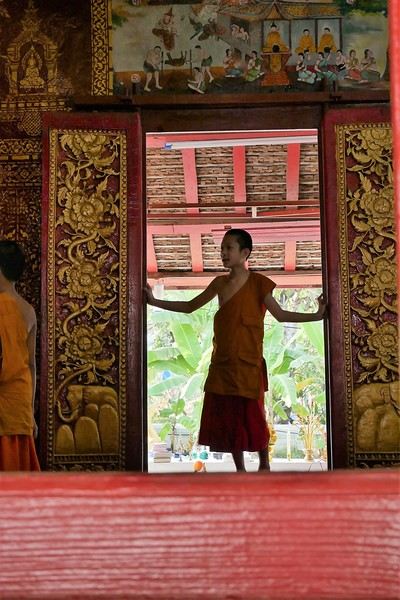 Come along, I'm taking you to this country where it's so nice to wander and slow down...
This trip was in 2023, but when I wanted to write my travel journal, VF was still closed to contributions... So, now that I've just finished my Japan travel journal here, I figured it was high time to honor this destination we came back from so enchanted. Disclaimer 1: This is a written travel journal. There’ll be text! Too much, for some! Disclaimer 2: This is an illustrated travel journal. There’ll be photos! Too many, for some!
I have to say, every time I try to discipline myself, to keep it shorter, to include fewer photos... I end up adding more. It feels like my dear Aunt Nicole, who exhausted us with her slide-show evenings in the 70s/80s, decided to take her revenge. The upside for you, readers, is that you can slip away anytime without offending Aunt Nicole. I won’t even notice!
Anyway, since I love maps, here’s one to give you an idea of where I’m taking you. As you can see, we only saw a tiny part of Laos (the areas circled in red); we only had 3 weeks for ourselves (my husband’s newly retired, I still work), and we prefer taking our time over rushing around like crazy.
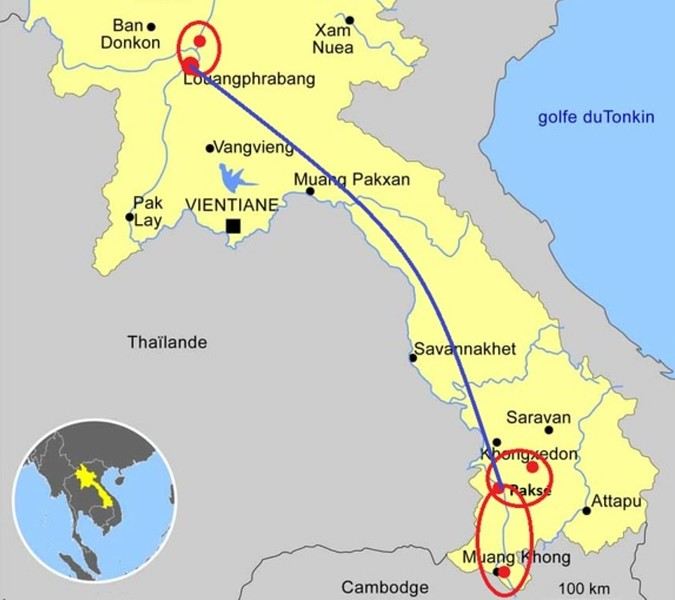
In broad strokes, it was very classic:
First, we “settled in” at Luang Prabang (8 days), because we wanted and needed to. From there, we took three days to venture a little further north—not far in kilometers, but as we know, distances aren’t just about km! Then we flew south to Paksé, letting ourselves drift down to the 4,000 Islands while stopping by the pre-Angkorian archaeological sites. We wrapped up with the Bolaven Plateau.
A few practical notes: We arrived via Bangkok, then took a Bangkok-Luang Prabang flight, having picked up our luggage in Bangkok to check it in for Luang Prabang. No issues—the Bangkok airport, which many of you know, is very well organized. We got our visas on arrival in Luang Prabang. Quick, but to be fair, we were on a “small” plane, and the big flights had arrived earlier, so we weren’t too crowded in line! At the end of our trip, we didn’t fly out of Paksé but from the nearby airport in Thailand, Ubon Ratchathani (a 2.5-hour drive from Paksé), then Bangkok and Paris. You’ll notice we skipped Vientiane to stay longer in Luang Prabang. That said, there’s now a high-speed train between Vientiane and Luang Prabang—good to know—and soon the (Chinese) train will go all the way to Bangkok and even Kuala Lumpur!
With that intro out of the way, let’s dive into the heart of the matter. To be continued: Slowing down the pace... in Luang Prabang
Practical aspects spring 2026: border to Murmansk, to Pskov, SIM cards, internet.
I took a few days to get some fresh air outside the Schengen-NATO prison. Between March 18, 2026, and March 25, 2026, as shown by the passport stamps:
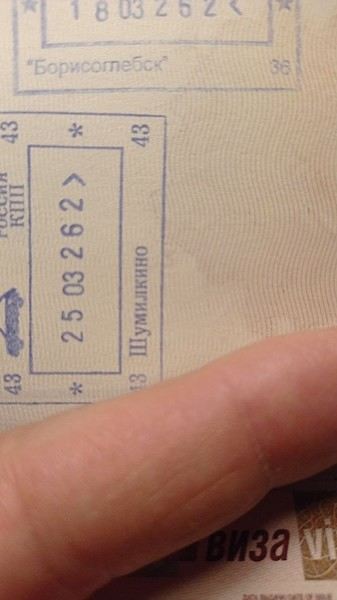
Borisoglebsk is the Russian border checkpoint after Kirkenes, on the road to Murmansk.
Kirkenes is a tiny town with a correspondingly small airport. Nothing has changed there: the minibuses to Murmansk wait on the right as you exit the airport. They’re synchronized with the two daily flights from Oslo—the SAS around 11:00 AM and Norwegian around 11:30 AM. They stop in Kirkenes at the corner of the Scandic for an hour, where other passengers can board, then head straight to the nearby border.
This is the least hassle Frontex/Schengen border. The Norwegian agent quickly scans your passport, and that’s it. No customs, since Norway is Schengen but not in the EU. On the Russian side, there’s a passport check and a quick customs inspection. All in all, crossing both the Norwegian and Russian checkpoints takes about 15 minutes.
A paper visa is required; e-visas aren’t accepted.
Two companies run the route: Avto Ekspress and Borodin: https://ae51.ru/routes/kirkenes-murmansk/ https://borodinbus.com/
The one-way fare is 5,500 ₽. You can either buy it online in rubles with a MIR card or make a formal reservation and pay in NOK cash to the driver. I took Borodin, and the price in NOK was much more expensive than in ₽.
=========================
On March 25, I left from Pskov via the Estonian border post at Luhaama. I spent three days in Murmansk, flew to St. Petersburg (SPB), stayed there for two days, then took an evening train to Pskov.
Since the end of February—and reportedly until the end of May—the Estonians have restricted the opening hours of the two border crossings near Pskov: Koidula (Pechory on the Russian side) and Luhaama (Izborsk on the Russian side). They’re closed at night between 7:00 PM and 7:00 AM. Right now, there’s a bus from Pskov at 7:00 AM to the border. It drops you off at the end of the road where truckers—many Kazakh and Serbian—are parked on the side. You finish the rest on foot to the barrier, where there’s a quick initial check for Ukrainian stamps in passports. Then you walk to the customs building, followed by passport control at the kiosk for motorists. After that, it’s a 500-meter walk to the Estonian checkpoint. At the moment, things seem calmer. Passport control is quick. The usual silly questions in English: "Where were you? Where are you going?" I just gave my most clueless smile: "Sorry, I don’t understand." Yeah, right—I don’t speak English, especially not at an Estonian border with a French passport. If they’re in a mood, though... A very quick bag inspection. Once you exit the Estonian post, walk to the bus stop sign by the road where another coach takes you to Riga.
The catch: in my case, last Wednesday, there were two passengers (Russians) with old Ukrainian stamps in their passports. The bus from the Estonian post to Riga was supposed to leave around 9:30 AM. We ended up leaving around noon after the two were grilled by the FSB. Since it was a weekday outside of holidays, the bus was half-empty. The fuller the bus and the more people with Ukrainian stamps, the worse the nightmare. Don’t book a same-day flight from Riga. I had a flight at 6:00 PM, so it worked out.
=============
The Kirkenes-Murmansk route is still clearly the easiest and fastest. But it’s not the most convenient since it’s way up north.
Next, I’d say the Gdansk-Kaliningrad route in the middle of the week. Avoid weekends and holiday departures/returns.
Avoid the Narva-Ivangorod route during Christmas, Easter, May 9, and *all* summer.
==============
About flights from Murmansk to St. Petersburg: prices are good. I bought my ticket the day before departure on Rossiya for 7,500 ₽, including 10 kg of luggage + a handbag.
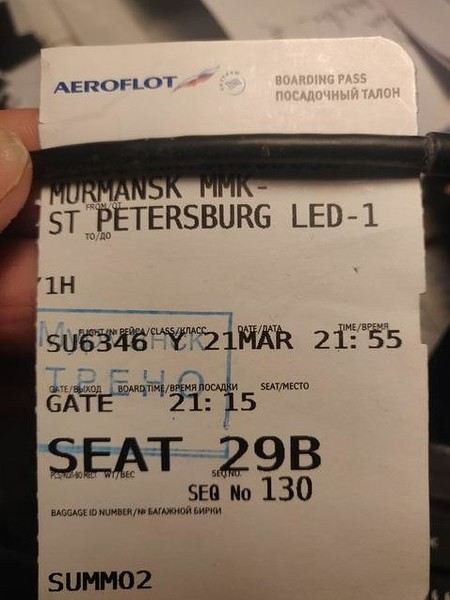
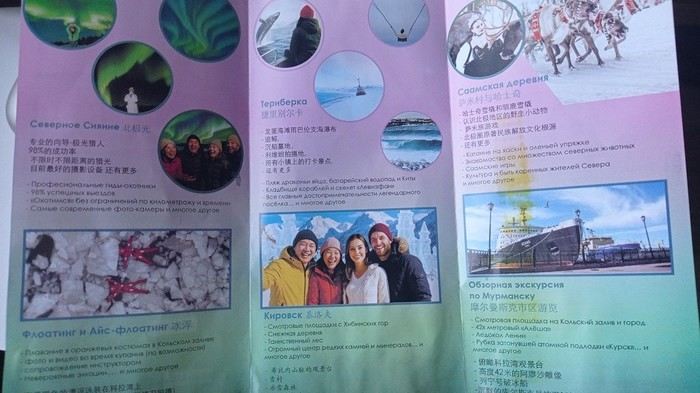
It’s the tail end of the northern lights season, and there were still crowds of Chinese tourists.
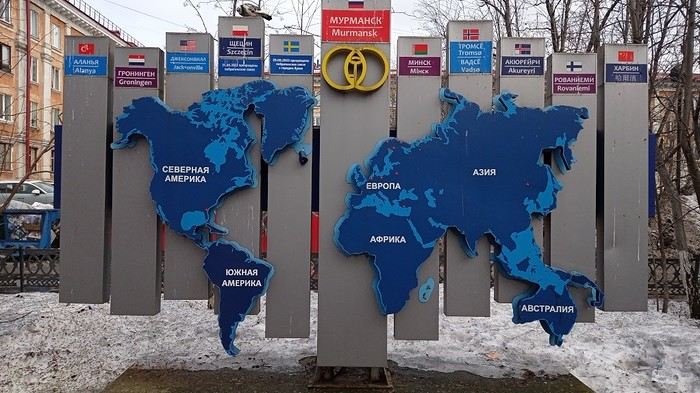
By the way, Murmansk is twinned with Harbin:
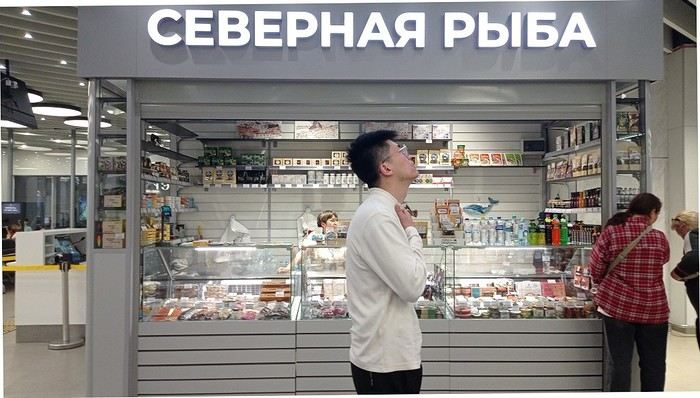
Chinese tourists are the largest foreign group, followed by Indians, then a mix of others from the Far East, Turks, Arabs, etc. Brochures are bilingual—Russian and Chinese:
============================
But let’s talk practical stuff. --
My domestic SIM card was restricted for SMS and internet for 24 hours. After that, if you want to keep using SMS, don’t turn off your phone—restarting triggers another 24-hour purgatory.
My Russian SIM cards (Megafon, MTS, Beeline) were activated as soon as I logged into their respective apps with my credentials.
Internet --
Telegram is heavily slowed down by authorities. To use it, you need to connect through proxy servers, which you load into the latest version of the app. Traffic is then rerouted internally within Telegram to servers outside Russia (Germany, Poland, Sweden, etc.). You can find these proxies on various channels. One is ChatVPN—check their website too.
For general internet use, like browsing the web, VPNs that work right now use the VLESS protocol. You can find several on Telegram by searching "VPN." A few free days, then payment in rubles or crypto.
Rozkomnadzor’s team are experts at this, so things can change. It’s a constant cat-and-mouse game.
Pskov is a special case. The city is near Estonia and has a large military base. Depending on NATO drone swarms launched from the Baltics, Wi-Fi can be completely suspended except for the most essential mobile apps. The drone swarms use the 4G network, and the powerful electronic jamming and drone suppression systems cause periods without Wi-Fi—including in hotels. Wired connections aren’t affected.
Borisoglebsk is the Russian border checkpoint after Kirkenes, on the road to Murmansk.
Kirkenes is a tiny town with a correspondingly small airport. Nothing has changed there: the minibuses to Murmansk wait on the right as you exit the airport. They’re synchronized with the two daily flights from Oslo—the SAS around 11:00 AM and Norwegian around 11:30 AM. They stop in Kirkenes at the corner of the Scandic for an hour, where other passengers can board, then head straight to the nearby border.
This is the least hassle Frontex/Schengen border. The Norwegian agent quickly scans your passport, and that’s it. No customs, since Norway is Schengen but not in the EU. On the Russian side, there’s a passport check and a quick customs inspection. All in all, crossing both the Norwegian and Russian checkpoints takes about 15 minutes.
A paper visa is required; e-visas aren’t accepted.
Two companies run the route: Avto Ekspress and Borodin: https://ae51.ru/routes/kirkenes-murmansk/ https://borodinbus.com/
The one-way fare is 5,500 ₽. You can either buy it online in rubles with a MIR card or make a formal reservation and pay in NOK cash to the driver. I took Borodin, and the price in NOK was much more expensive than in ₽.
=========================
On March 25, I left from Pskov via the Estonian border post at Luhaama. I spent three days in Murmansk, flew to St. Petersburg (SPB), stayed there for two days, then took an evening train to Pskov.
Since the end of February—and reportedly until the end of May—the Estonians have restricted the opening hours of the two border crossings near Pskov: Koidula (Pechory on the Russian side) and Luhaama (Izborsk on the Russian side). They’re closed at night between 7:00 PM and 7:00 AM. Right now, there’s a bus from Pskov at 7:00 AM to the border. It drops you off at the end of the road where truckers—many Kazakh and Serbian—are parked on the side. You finish the rest on foot to the barrier, where there’s a quick initial check for Ukrainian stamps in passports. Then you walk to the customs building, followed by passport control at the kiosk for motorists. After that, it’s a 500-meter walk to the Estonian checkpoint. At the moment, things seem calmer. Passport control is quick. The usual silly questions in English: "Where were you? Where are you going?" I just gave my most clueless smile: "Sorry, I don’t understand." Yeah, right—I don’t speak English, especially not at an Estonian border with a French passport. If they’re in a mood, though... A very quick bag inspection. Once you exit the Estonian post, walk to the bus stop sign by the road where another coach takes you to Riga.
The catch: in my case, last Wednesday, there were two passengers (Russians) with old Ukrainian stamps in their passports. The bus from the Estonian post to Riga was supposed to leave around 9:30 AM. We ended up leaving around noon after the two were grilled by the FSB. Since it was a weekday outside of holidays, the bus was half-empty. The fuller the bus and the more people with Ukrainian stamps, the worse the nightmare. Don’t book a same-day flight from Riga. I had a flight at 6:00 PM, so it worked out.
=============
The Kirkenes-Murmansk route is still clearly the easiest and fastest. But it’s not the most convenient since it’s way up north.
Next, I’d say the Gdansk-Kaliningrad route in the middle of the week. Avoid weekends and holiday departures/returns.
Avoid the Narva-Ivangorod route during Christmas, Easter, May 9, and *all* summer.
==============
About flights from Murmansk to St. Petersburg: prices are good. I bought my ticket the day before departure on Rossiya for 7,500 ₽, including 10 kg of luggage + a handbag.
It’s the tail end of the northern lights season, and there were still crowds of Chinese tourists.
By the way, Murmansk is twinned with Harbin:
Chinese tourists are the largest foreign group, followed by Indians, then a mix of others from the Far East, Turks, Arabs, etc. Brochures are bilingual—Russian and Chinese:
============================
But let’s talk practical stuff. --
My domestic SIM card was restricted for SMS and internet for 24 hours. After that, if you want to keep using SMS, don’t turn off your phone—restarting triggers another 24-hour purgatory.
My Russian SIM cards (Megafon, MTS, Beeline) were activated as soon as I logged into their respective apps with my credentials.
Internet --
Telegram is heavily slowed down by authorities. To use it, you need to connect through proxy servers, which you load into the latest version of the app. Traffic is then rerouted internally within Telegram to servers outside Russia (Germany, Poland, Sweden, etc.). You can find these proxies on various channels. One is ChatVPN—check their website too.
For general internet use, like browsing the web, VPNs that work right now use the VLESS protocol. You can find several on Telegram by searching "VPN." A few free days, then payment in rubles or crypto.
Rozkomnadzor’s team are experts at this, so things can change. It’s a constant cat-and-mouse game.
Pskov is a special case. The city is near Estonia and has a large military base. Depending on NATO drone swarms launched from the Baltics, Wi-Fi can be completely suspended except for the most essential mobile apps. The drone swarms use the 4G network, and the powerful electronic jamming and drone suppression systems cause periods without Wi-Fi—including in hotels. Wired connections aren’t affected.
Old Burmese Adventures (oh, so many!)
Hey everyone,
Yesterday, I checked the Thailand forum to see if there were any questions to answer, but not much was happening—it was pretty quiet. Then I scrolled through the Southeast Asia section and realized that, even though Burma (Myanmar) was included, there weren’t many posts about it... I’ve only been there once, back in 1987, so it’s hard to create a photo thread about multiple trips like I sometimes do for Thailand. Still, that one trip was packed with unusual adventures, so I thought I’d share a few stories from it.
Since I didn’t take any notes at the time, this is all from memory—it’s not an exhaustive travel journal and isn’t meant to help plan a future trip to Myanmar.
Don’t expect photos; there won’t be any. I have some, but they’re slides that would need scanning and editing one by one to fix the wear and tear of time—way too much work.
The Context.
Back then (reminder: 1987), I was volunteering in Paris at the counter of a travel agency on Rue des Écoles. The agency was part of a well-known organization based in Mulhouse that mostly offered scheduled flights to Asia, charter flights to the Mediterranean, and flights to Mali with their own plane. They also had a few rare "roots"-style trips to certain destinations—trips where you didn’t bring your tennis racket but were ready to soak in everything, even if it meant tough conditions.
I’d already been to Thailand, Indonesia, and the Philippines in Asia. The director knew this, so he asked me to accompany a group to Burma. At the time, tours to Burma were already being sold by competitors, but they all had to go through the state-run agency, Touristburma (buses and hotels for tourists, and they only showed you what they wanted you to see—kind of like traveling in North Korea today). The service was only payable in dollars at the official exchange rate (which was six times worse than the black market rate, mind you...), and since it went through the state agency, all the money ended up with the junta.
My job was to do everything *without* going through Touristburma, which was completely illegal there. Nothing would be booked in advance. Back then, the Burmese visa was only valid for 8 days/7 nights, and since clients were paying for the experience, the itinerary was planned ahead. I’d have to find transport and a guide on the black market as soon as I arrived.
The clients weren’t misled—they knew from the start that the trip would be off the books, that officially we’d be a small group of friends (not an agency), unlike the truth (Touristburma wasn’t mandatory for individual travelers), and that it would be challenging. They also knew their trip would cost 3-4 times less while giving them a much better experience of Burma. As for pretending to be a group of friends, there were only six of us, so it worked out.
To cover all expenses (accommodation, transport, excursions), the agency gave me a sufficient budget. They also gave me the *same* budget a second time, which was strictly for bribing officials who might cause trouble, for backshish (tips), and, if needed, to "help" me get out of prison.
Before I left, I was thoroughly briefed by another guy who’d led the previous trip (he’d dealt with all the initial challenges). He explained everything I needed to know, what to watch out for, and advised me on what to bring as "gifts" (samples of well-known perfumes, specific cigarette and whisky brands, etc.). For the perfume samples, I rallied my family, friends, and even stores. For the rest, I’d pick things up at the duty-free shops in Don Muang (Bangkok’s only airport at the time)—I had the budget for it.
I couldn’t wait to leave...
Yesterday, I checked the Thailand forum to see if there were any questions to answer, but not much was happening—it was pretty quiet. Then I scrolled through the Southeast Asia section and realized that, even though Burma (Myanmar) was included, there weren’t many posts about it... I’ve only been there once, back in 1987, so it’s hard to create a photo thread about multiple trips like I sometimes do for Thailand. Still, that one trip was packed with unusual adventures, so I thought I’d share a few stories from it.
Since I didn’t take any notes at the time, this is all from memory—it’s not an exhaustive travel journal and isn’t meant to help plan a future trip to Myanmar.
Don’t expect photos; there won’t be any. I have some, but they’re slides that would need scanning and editing one by one to fix the wear and tear of time—way too much work.
The Context.
Back then (reminder: 1987), I was volunteering in Paris at the counter of a travel agency on Rue des Écoles. The agency was part of a well-known organization based in Mulhouse that mostly offered scheduled flights to Asia, charter flights to the Mediterranean, and flights to Mali with their own plane. They also had a few rare "roots"-style trips to certain destinations—trips where you didn’t bring your tennis racket but were ready to soak in everything, even if it meant tough conditions.
I’d already been to Thailand, Indonesia, and the Philippines in Asia. The director knew this, so he asked me to accompany a group to Burma. At the time, tours to Burma were already being sold by competitors, but they all had to go through the state-run agency, Touristburma (buses and hotels for tourists, and they only showed you what they wanted you to see—kind of like traveling in North Korea today). The service was only payable in dollars at the official exchange rate (which was six times worse than the black market rate, mind you...), and since it went through the state agency, all the money ended up with the junta.
My job was to do everything *without* going through Touristburma, which was completely illegal there. Nothing would be booked in advance. Back then, the Burmese visa was only valid for 8 days/7 nights, and since clients were paying for the experience, the itinerary was planned ahead. I’d have to find transport and a guide on the black market as soon as I arrived.
The clients weren’t misled—they knew from the start that the trip would be off the books, that officially we’d be a small group of friends (not an agency), unlike the truth (Touristburma wasn’t mandatory for individual travelers), and that it would be challenging. They also knew their trip would cost 3-4 times less while giving them a much better experience of Burma. As for pretending to be a group of friends, there were only six of us, so it worked out.
To cover all expenses (accommodation, transport, excursions), the agency gave me a sufficient budget. They also gave me the *same* budget a second time, which was strictly for bribing officials who might cause trouble, for backshish (tips), and, if needed, to "help" me get out of prison.
Before I left, I was thoroughly briefed by another guy who’d led the previous trip (he’d dealt with all the initial challenges). He explained everything I needed to know, what to watch out for, and advised me on what to bring as "gifts" (samples of well-known perfumes, specific cigarette and whisky brands, etc.). For the perfume samples, I rallied my family, friends, and even stores. For the rest, I’d pick things up at the duty-free shops in Don Muang (Bangkok’s only airport at the time)—I had the budget for it.
I couldn’t wait to leave...
Yet Another Travel Journal in this (Too) Familiar Rajasthan, But with Family and Kids
Prologue
This journal recounts a trip to Rajasthan that’s already over a year old and that I’ve only now found the chance to write about. The summer of 2024 marked my return to India—my tenth trip—after six long years away since my last solo wanderings in Tamil Nadu in 2018 (the journal of which is published on this site). That absence was partly (but not only) due to the long COVID and post-COVID period, which saw a complete halt and then a major slowdown in global tourism. To top it off, Voyage Forum announced its closure in an end-of-the-world atmosphere. A sad time for our favorite social activity…
A few weeks after returning from Rajasthan, I tried to motivate myself to start writing a journal to publish on a forum claiming to be VF’s successor, which I’d eventually signed up for out of desperation. But I kept hesitating and putting the project off because, for one, I no longer have the time I used to. For another, the vibe wasn’t really taking off on that forum—it was overrun with ads and not very active, contrary to what its host’s name suggested. Despite its good intentions and commendable role as a stopgap, it also turned out to be very impractical to use, especially when you don’t have much time like me. I’ll admit I’d occasionally check back on VF to see if anything was happening. But all the discussions remained frozen in time, stuck in that fateful year, 2020. Then, rumors swirled online about shady reasons behind its closure, leaving little room for hope.
And then, one fine morning, I got a message at work from Marien informing me that VF had reopened. What a huge surprise! Even though the forum’s “end” had played out in a somewhat apocalyptic atmosphere, the memories of passionate and heated discussions, the frank debates, and the useful exchanges that made this site a traveler’s goldmine and a unique hub of conviviality all came rushing back to me like a breath of fresh air. I finally saw a sign and tried to motivate myself to find the time to publish the journal of this tenth trip to India and fifth to Rajasthan. But in the end, I got bogged down in professional and family obligations and never managed to find the time to get started. That’s now fixed, though, because I had two reasons for wanting to do it: I find that looking back on a trip to tell others about it is a highly beneficial introspective exercise. Also, I thought this journal could be useful to other travelers on a few points.
Because, “do we really need yet another journal about Rajasthan?” you might rightly ask! Especially in a time when so many journals about the “Land of Kings” have been published since VF’s return, not to mention the countless stories you can already find online about this region, one of India’s most touristy. And I’d add, why go back to Rajasthan for a fifth time, where I’ve already dragged my feet more than enough—through its forts, deserts, temples, cities, villages, bumpy roads, train stations, tasty street food stalls, cheap guesthouses, and more? Where some might see just another overhyped tourist destination full of the same old *Arabian Nights* clichés, worn to a thread, that I mentioned earlier, when there’s so much else to see in India? Well, first because it’s a magnificent country I never tire of, where I started an academic study and made so many connections. It’s also packed with places where you won’t find a single tourist (right, Marie-Jo?), even in the heart of well-trodden paths and classic itineraries. And most importantly, as I said earlier, things have changed in recent years. First, after six years without traveling far, the urge to go back to India was getting stronger. But this time, no more solo trips (often) or duo adventures (sometimes)—now it’s a team of four that has to come along! And even if you can argue with that, what better place than Rajasthan to introduce India to people who’ve never seen it? To kids you want to amaze? Plus, traveling with your new little family to your favorite country isn’t the same as going solo in often spartan conditions that only affect you. It’s a different challenge, but ultimately probably much harder. So, is it really reasonable to take two kids to India, including a two-year-old baby? That’s one of the main goals of this journal (but not the only one)—to try to answer that question.
As you can tell, it’s not so much the destination but the slightly unusual setup of this trip that, in my opinion, will make this journal interesting. Despite my experience and expertise (yes, I dare say it) in India, there were plenty of questions before we finalized the plan and said, “Alright, let’s go!” The questions were flying for us parents. Is it wise to travel to India with a two-year-old? What would we do (it happened) if the kids got very sick? Would they be able to handle a road trip on Rajasthan’s bumpy, dusty roads using public transport? Could they handle the shock of such a different world—the dirt, poverty, pollution, noise (…and the smell, as they say), the spicy food, monkeys, mosquitoes, snakes, tigers, leopards, and so on? In short, all the clichés that I usually joke about suddenly became potential realities. Another concern: as a mixed Franco-African family (not me, but my partner and her oldest), wouldn’t we risk not always being well received, given what you sometimes hear about that in India? How would Indians react to seeing a mixed-race family, the ultimate taboo in a country of purity and social segregation, which would undoubtedly raise many questions for them? Of course, not everything went as expected… Because, as you know, with India—and what makes it charming for some—there are always complications: sometimes where you don’t expect them… and sometimes where you do. I’ll go into detail about that in the journal to come (not right away) and in the final review (even later). These experiences could be useful to travelers who find themselves in similar situations and have the same questions we did before embarking on such a journey. And maybe it’ll spark the curiosity of those who aren’t concerned and will read yet another Rajasthan journal, but with its own unique twists.
Despite my unchanged constraints, which mean I have little time to write this, I don’t want to rush the story, so I’ll take my time. There will probably be lulls. I hope that won’t stop people from coming to react, debate, share their impressions, or ask for information.
This journal recounts a trip to Rajasthan that’s already over a year old and that I’ve only now found the chance to write about. The summer of 2024 marked my return to India—my tenth trip—after six long years away since my last solo wanderings in Tamil Nadu in 2018 (the journal of which is published on this site). That absence was partly (but not only) due to the long COVID and post-COVID period, which saw a complete halt and then a major slowdown in global tourism. To top it off, Voyage Forum announced its closure in an end-of-the-world atmosphere. A sad time for our favorite social activity…
A few weeks after returning from Rajasthan, I tried to motivate myself to start writing a journal to publish on a forum claiming to be VF’s successor, which I’d eventually signed up for out of desperation. But I kept hesitating and putting the project off because, for one, I no longer have the time I used to. For another, the vibe wasn’t really taking off on that forum—it was overrun with ads and not very active, contrary to what its host’s name suggested. Despite its good intentions and commendable role as a stopgap, it also turned out to be very impractical to use, especially when you don’t have much time like me. I’ll admit I’d occasionally check back on VF to see if anything was happening. But all the discussions remained frozen in time, stuck in that fateful year, 2020. Then, rumors swirled online about shady reasons behind its closure, leaving little room for hope.
And then, one fine morning, I got a message at work from Marien informing me that VF had reopened. What a huge surprise! Even though the forum’s “end” had played out in a somewhat apocalyptic atmosphere, the memories of passionate and heated discussions, the frank debates, and the useful exchanges that made this site a traveler’s goldmine and a unique hub of conviviality all came rushing back to me like a breath of fresh air. I finally saw a sign and tried to motivate myself to find the time to publish the journal of this tenth trip to India and fifth to Rajasthan. But in the end, I got bogged down in professional and family obligations and never managed to find the time to get started. That’s now fixed, though, because I had two reasons for wanting to do it: I find that looking back on a trip to tell others about it is a highly beneficial introspective exercise. Also, I thought this journal could be useful to other travelers on a few points.
Because, “do we really need yet another journal about Rajasthan?” you might rightly ask! Especially in a time when so many journals about the “Land of Kings” have been published since VF’s return, not to mention the countless stories you can already find online about this region, one of India’s most touristy. And I’d add, why go back to Rajasthan for a fifth time, where I’ve already dragged my feet more than enough—through its forts, deserts, temples, cities, villages, bumpy roads, train stations, tasty street food stalls, cheap guesthouses, and more? Where some might see just another overhyped tourist destination full of the same old *Arabian Nights* clichés, worn to a thread, that I mentioned earlier, when there’s so much else to see in India? Well, first because it’s a magnificent country I never tire of, where I started an academic study and made so many connections. It’s also packed with places where you won’t find a single tourist (right, Marie-Jo?), even in the heart of well-trodden paths and classic itineraries. And most importantly, as I said earlier, things have changed in recent years. First, after six years without traveling far, the urge to go back to India was getting stronger. But this time, no more solo trips (often) or duo adventures (sometimes)—now it’s a team of four that has to come along! And even if you can argue with that, what better place than Rajasthan to introduce India to people who’ve never seen it? To kids you want to amaze? Plus, traveling with your new little family to your favorite country isn’t the same as going solo in often spartan conditions that only affect you. It’s a different challenge, but ultimately probably much harder. So, is it really reasonable to take two kids to India, including a two-year-old baby? That’s one of the main goals of this journal (but not the only one)—to try to answer that question.
As you can tell, it’s not so much the destination but the slightly unusual setup of this trip that, in my opinion, will make this journal interesting. Despite my experience and expertise (yes, I dare say it) in India, there were plenty of questions before we finalized the plan and said, “Alright, let’s go!” The questions were flying for us parents. Is it wise to travel to India with a two-year-old? What would we do (it happened) if the kids got very sick? Would they be able to handle a road trip on Rajasthan’s bumpy, dusty roads using public transport? Could they handle the shock of such a different world—the dirt, poverty, pollution, noise (…and the smell, as they say), the spicy food, monkeys, mosquitoes, snakes, tigers, leopards, and so on? In short, all the clichés that I usually joke about suddenly became potential realities. Another concern: as a mixed Franco-African family (not me, but my partner and her oldest), wouldn’t we risk not always being well received, given what you sometimes hear about that in India? How would Indians react to seeing a mixed-race family, the ultimate taboo in a country of purity and social segregation, which would undoubtedly raise many questions for them? Of course, not everything went as expected… Because, as you know, with India—and what makes it charming for some—there are always complications: sometimes where you don’t expect them… and sometimes where you do. I’ll go into detail about that in the journal to come (not right away) and in the final review (even later). These experiences could be useful to travelers who find themselves in similar situations and have the same questions we did before embarking on such a journey. And maybe it’ll spark the curiosity of those who aren’t concerned and will read yet another Rajasthan journal, but with its own unique twists.
Despite my unchanged constraints, which mean I have little time to write this, I don’t want to rush the story, so I’ll take my time. There will probably be lulls. I hope that won’t stop people from coming to react, debate, share their impressions, or ask for information.
From Southern Shikoku, between land and sea, to the blue waters of Miyakojima and finally the Tokyo metropolis
From Southern Shikoku, between land and sea, to the blue waters of Miyakojima and finally Tokyo’s megacity
Hi everyone,
I have to admit, I really hesitated before deciding to write this travel journal... Writing one takes a lot of time and energy, and since this is my 4th trip, I wondered if it would even interest anyone other than myself (both for the discovery and the writing). But after a few people asked, "Are you going to write a journal?" and especially after rediscovering the joy of reading other travelers’ journals about Japan or elsewhere on this forum, I’ve decided to share my 4th installment in the Land of the Rising Sun here.
The itinerary: 27 full days, from late May to late June 2025, right in the middle of the rainy season, including:
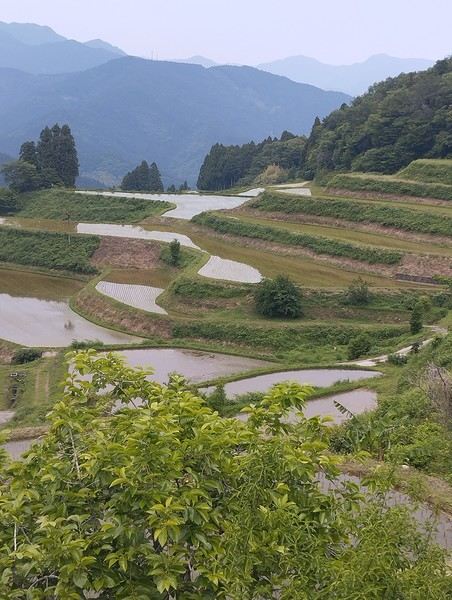
-->13 days in Shikoku, from Kochi (Kochi Prefecture) to Matsuyama (Ehime Prefecture)
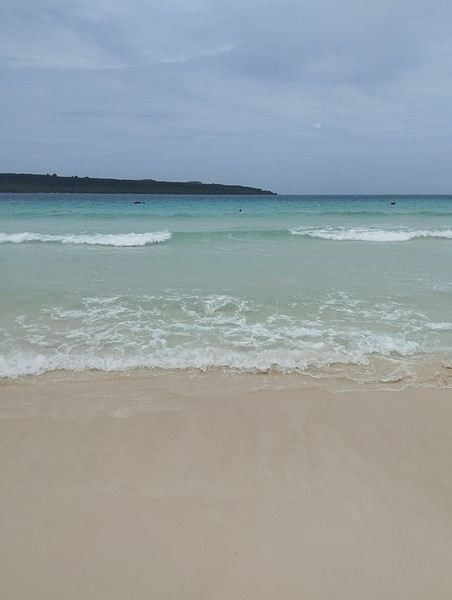
-->7 days in Miyakojima (Okinawa Prefecture)
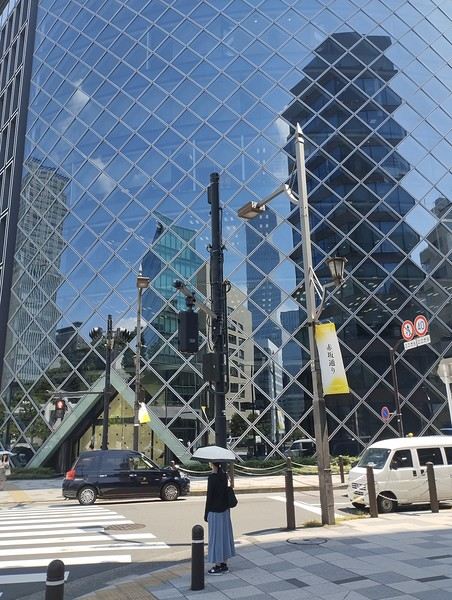
-->7 days in Tokyo
The trip was decided on fairly last-minute again this year.
Since I regularly check flight prices to track fluctuations for this destination even without concrete plans, stumbling upon a slightly cheaper direct flight (900 €) than what I’d seen in previous months (around 1,200–1,400 € on average) for a Paris-Tokyo route with Japanese airline ANA was too tempting to resist the urge to return to this enchanting country. After much hesitation between exploring the San’in region (Matsue, Tottori, Yamaguchi) and Southern Shikoku, the decision was made—I took the plunge! The ticket is booked: Paris to Kochi with a layover in Tokyo, all with ANA, the airline I’d been dreaming of... for 1,120 € per person. Okay, it’s not cheap, but it’s better than in 2023.
Departure in 2 weeks! Now I just have to get everything ready!
Intense prep work over these next 2 weeks to:
finalize a more precise itinerary and reach an agreement—yep, because even though we both love Japan, our preferences differ slightly, and we have to choose between exploring new places or revisiting beloved spots... decide how much time to spend in each area without rushing while still exploring research places that might interest us and watch videos about Japan book accommodations: yes, it’s possible to do this on the spot, but last year, we realized that last-minute options were pretty expensive, so we’re booking ahead—though we’ll keep a few options open in case better deals pop up later reserve rental cars order yen check the weather regularly and wonder if choosing the *tsuyu* (rainy season) was really a good idea—are we going to be drenched the whole time???
"What hard work," you might say! Going to Japan for a month—what a tough life! Despite this being my 4th trip, the excitement is just as intense as the first time.
The only small downside is that when we booked the flight, there weren’t many seats left, so we’re only sitting together on the international return flight. Plus, on the way there, we have middle seats. Another lingering question: what French-language films will be available? According to the internet, the selection seems limited. Oh well, these are just minor details—it’s already time to fly! PS: I’ll be posting slowly and irregularly... so for those interested, be patient, and maybe set an alert...
Hi everyone,
I have to admit, I really hesitated before deciding to write this travel journal... Writing one takes a lot of time and energy, and since this is my 4th trip, I wondered if it would even interest anyone other than myself (both for the discovery and the writing). But after a few people asked, "Are you going to write a journal?" and especially after rediscovering the joy of reading other travelers’ journals about Japan or elsewhere on this forum, I’ve decided to share my 4th installment in the Land of the Rising Sun here.
The itinerary: 27 full days, from late May to late June 2025, right in the middle of the rainy season, including:
-->13 days in Shikoku, from Kochi (Kochi Prefecture) to Matsuyama (Ehime Prefecture)
-->7 days in Miyakojima (Okinawa Prefecture)
-->7 days in Tokyo
The trip was decided on fairly last-minute again this year.
Since I regularly check flight prices to track fluctuations for this destination even without concrete plans, stumbling upon a slightly cheaper direct flight (900 €) than what I’d seen in previous months (around 1,200–1,400 € on average) for a Paris-Tokyo route with Japanese airline ANA was too tempting to resist the urge to return to this enchanting country. After much hesitation between exploring the San’in region (Matsue, Tottori, Yamaguchi) and Southern Shikoku, the decision was made—I took the plunge! The ticket is booked: Paris to Kochi with a layover in Tokyo, all with ANA, the airline I’d been dreaming of... for 1,120 € per person. Okay, it’s not cheap, but it’s better than in 2023.
Departure in 2 weeks! Now I just have to get everything ready!
Intense prep work over these next 2 weeks to:
finalize a more precise itinerary and reach an agreement—yep, because even though we both love Japan, our preferences differ slightly, and we have to choose between exploring new places or revisiting beloved spots... decide how much time to spend in each area without rushing while still exploring research places that might interest us and watch videos about Japan book accommodations: yes, it’s possible to do this on the spot, but last year, we realized that last-minute options were pretty expensive, so we’re booking ahead—though we’ll keep a few options open in case better deals pop up later reserve rental cars order yen check the weather regularly and wonder if choosing the *tsuyu* (rainy season) was really a good idea—are we going to be drenched the whole time???
"What hard work," you might say! Going to Japan for a month—what a tough life! Despite this being my 4th trip, the excitement is just as intense as the first time.
The only small downside is that when we booked the flight, there weren’t many seats left, so we’re only sitting together on the international return flight. Plus, on the way there, we have middle seats. Another lingering question: what French-language films will be available? According to the internet, the selection seems limited. Oh well, these are just minor details—it’s already time to fly! PS: I’ll be posting slowly and irregularly... so for those interested, be patient, and maybe set an alert...
Another side of my trip to Thailand: Villages, nature, countryside, mountains...
February 9th is a pivotal day during my trip to Thailand. Up until this date, my focus had been on cities, temples, and other urban landmarks. Starting February 10th, I’ll finally leave the city behind for the outskirts—one town, one life, farther from tourism, more real, more authentic... Then comes the bucolic surroundings of Chiang Mai, nature, the countryside, the mountains.
This morning, I head to visit the ethnographic museum. I’d been told about another one, but it’s permanently closed. I wonder if it’s the same one that might have changed its name and location.
I thoroughly enjoy visiting this museum. At first, I’m a bit annoyed because the place is packed with noisy school groups blocking the display cases without even showing the slightest interest. But soon, their chaperones manage to lead them into another room, giving me some peace. They maintain this distance throughout the tour, allowing me to explore the museum in complete tranquility. I really appreciate their tact.
I’m amazed by the absolutely stunning fabric displays and the countless everyday objects, especially the very old pottery. There’s so much beautiful basketry and intricately carved wood. The statues are also incredible... After seeing all of them, I no longer feel like buying any from the shops.
On my way back, not far from my hotel, I discover a rather unique place that only serves one drink, which they’ve made their specialty: egg coffee! A pretty surprising novelty. I have to try it.

At the bottom of the cup, they pour a layer of milk, topped with a layer of liquid coffee, followed by a layer of egg yolk, and finally a top layer that turns out to be a mix of coffee and cocoa powder. It’s a cold drink that, in the end, doesn’t have much flavor, and the price is pretty steep for such a small cup. You’re paying for the exclusivity!
Later in the day, I venture once again into small alleys, something I love doing when exploring a new city—no specific goal, just wandering east of the city, outside the walls.

I encounter very few tourists there and discover unsuspected little shops overflowing with lovely items, much cheaper than what you find in the heart of the tourist district. Then I wander through the floors of Warorot Market. I discover another kind of temple there: the temple of good deals. I love finding clothes that are really original for locals, not the flood of shirts and pants that tourists love but no Thai would ever buy, which invade the shops in the "Historic Square." I stop in my tracks in front of a stall with beautiful shirts featuring stunning geometric patterns in elegant color combinations and very short sleeves. Hmm, these would be perfect for showing off my biceps, one of which is adorned with the magnificent Ganesh tattoo I got last year in Bali. "When you’ve got nice things, you’ve got to show them off!" he said. 😜🙏💪 I pick out two for 380 baht and negotiate them down to 300. But the seller won’t go any lower. I understand I’ve reached the limit of her commercial possibilities. Just as I’m leaving the shop, happy with my purchase, my ever-helpful inner voice, Petite Voix, suggests: - You didn’t try them on because you were too lazy to take off the one you’re wearing and also because of the sweat, but you could just put one on over the one you’re wearing. It’s light enough that it won’t bother you.
I go back to the two sellers, who burst out laughing when I ask to try them on. - Oh no, it’s way too small for you! It’s a women’s shirt! - But they don’t look particularly feminine in style! And I chose XXL... I put the shirt on, and of course, it won’t close. Then I notice the buttons are on the wrong side. That’s why the sleeves seemed so short!!! They put the shirts back on the rack and refund me without any fuss, commenting amid total hilarity: - Well, thank goodness you tried it on just as you were leaving the shop!
Since I don’t want to walk too much before tomorrow’s first Big Outing with the driver, I end my stroll with a visit to two very pretty temples recommended by Joël.

I’d rather not post more temple photos. But these ones smell like village and countryside...


I’ve never seen anything like Wat Ket Karam, so extravagant...


And I end my day with two other lesser-known temples: Wat Noung Kham, simple and finally free of gold and glitter,

and Wat Dap Phai, where an intimate ceremony is taking place at the end of the day.
This morning, I head to visit the ethnographic museum. I’d been told about another one, but it’s permanently closed. I wonder if it’s the same one that might have changed its name and location.
I thoroughly enjoy visiting this museum. At first, I’m a bit annoyed because the place is packed with noisy school groups blocking the display cases without even showing the slightest interest. But soon, their chaperones manage to lead them into another room, giving me some peace. They maintain this distance throughout the tour, allowing me to explore the museum in complete tranquility. I really appreciate their tact.
I’m amazed by the absolutely stunning fabric displays and the countless everyday objects, especially the very old pottery. There’s so much beautiful basketry and intricately carved wood. The statues are also incredible... After seeing all of them, I no longer feel like buying any from the shops.
On my way back, not far from my hotel, I discover a rather unique place that only serves one drink, which they’ve made their specialty: egg coffee! A pretty surprising novelty. I have to try it.
At the bottom of the cup, they pour a layer of milk, topped with a layer of liquid coffee, followed by a layer of egg yolk, and finally a top layer that turns out to be a mix of coffee and cocoa powder. It’s a cold drink that, in the end, doesn’t have much flavor, and the price is pretty steep for such a small cup. You’re paying for the exclusivity!
Later in the day, I venture once again into small alleys, something I love doing when exploring a new city—no specific goal, just wandering east of the city, outside the walls.
I encounter very few tourists there and discover unsuspected little shops overflowing with lovely items, much cheaper than what you find in the heart of the tourist district. Then I wander through the floors of Warorot Market. I discover another kind of temple there: the temple of good deals. I love finding clothes that are really original for locals, not the flood of shirts and pants that tourists love but no Thai would ever buy, which invade the shops in the "Historic Square." I stop in my tracks in front of a stall with beautiful shirts featuring stunning geometric patterns in elegant color combinations and very short sleeves. Hmm, these would be perfect for showing off my biceps, one of which is adorned with the magnificent Ganesh tattoo I got last year in Bali. "When you’ve got nice things, you’ve got to show them off!" he said. 😜🙏💪 I pick out two for 380 baht and negotiate them down to 300. But the seller won’t go any lower. I understand I’ve reached the limit of her commercial possibilities. Just as I’m leaving the shop, happy with my purchase, my ever-helpful inner voice, Petite Voix, suggests: - You didn’t try them on because you were too lazy to take off the one you’re wearing and also because of the sweat, but you could just put one on over the one you’re wearing. It’s light enough that it won’t bother you.
I go back to the two sellers, who burst out laughing when I ask to try them on. - Oh no, it’s way too small for you! It’s a women’s shirt! - But they don’t look particularly feminine in style! And I chose XXL... I put the shirt on, and of course, it won’t close. Then I notice the buttons are on the wrong side. That’s why the sleeves seemed so short!!! They put the shirts back on the rack and refund me without any fuss, commenting amid total hilarity: - Well, thank goodness you tried it on just as you were leaving the shop!
Since I don’t want to walk too much before tomorrow’s first Big Outing with the driver, I end my stroll with a visit to two very pretty temples recommended by Joël.
I’d rather not post more temple photos. But these ones smell like village and countryside...
I’ve never seen anything like Wat Ket Karam, so extravagant...
And I end my day with two other lesser-known temples: Wat Noung Kham, simple and finally free of gold and glitter,
and Wat Dap Phai, where an intimate ceremony is taking place at the end of the day.