Results for "Corse+événement"
About 34,918 results.
More options
Many results are in French, the community’s main language. English translations are added over time.
Search results
Fêtes du Monde entier
Pourquoi pas un petit fil sur les nombreuses fêtes du monde entier, histoire de diversifier un peu les célébrations? On pourrait présenter en quelques mots ou quelques lignes celles dont on a connaissance ou qui nous tiennent à coeur. Pour donner un peu plus d'intérêt à ce fil et éviter les inévitables copier collers se voulant exhaustifs, je propose que l'on ne parle des fêtes que le jour où elles ont lieu (ou à un ou deux jours près). Ce serait vraiment plus intéressant si vous évitiez les copier collers pour les explications, car sur un forum, les expériences et explications personnelles sont plus agréables à lire. Si les intervenants participent bien, ça devrait donner quelque chose d'intéressant d'ici quelques mois.
Je vais donner le mauvais exemple et tricher dès le premier post en évoquant la Fête des Lanternes qui a eu lieu il y a déjà quelques jours en Chine et ailleurs où il y a des communautés chinoises. Cette année, elle est tombée le 12 février, et a été bruyamment fêtée par des pétards et feux d'artifice dans la nuit du 11 au 12. Elle a lieu chaque année, deux semaines après le Nouvel An chinois. On peut voir des vraies ou fausses lanternes rouges (surtout des fausses, à Shanghai) un peu partout.
14 février (il y a deux jours, ouf, on est dans les délais), Saint Valentin. Hum, ça tout le monde connait. Dans les grandes villes chinoises, ça prend des proportions assez délirantes, avec concerts de musique à l'eau de rose (enfin de musique chinoise moderne, quoi) et couples d'amoureux qui envahissent les rues et les restaurants avec des bouquets de fleurs à la main. Je me demande si la Chine ne bat pas les records de popularité de cette fête.
16 février (aujourd'hui): Anniversaire du Cher Leader Kim Jong Il, soleil du XXIème siècle, pompeusement célébré en Corée du Nord. C'est un des moments les plus importants de l'année, avec je crois deux jours de repos à la clé. Pour la petite histoire, on ne sait plus trop bien en quelle année il est né, car il a un jour décidé de faire changer tous les livres d'histoire, car il avait décidé que les chiffres de son année de naissance ne lui plaisaient pas. Ce serait entre 1941 et 42 il me semble.
Je vais donner le mauvais exemple et tricher dès le premier post en évoquant la Fête des Lanternes qui a eu lieu il y a déjà quelques jours en Chine et ailleurs où il y a des communautés chinoises. Cette année, elle est tombée le 12 février, et a été bruyamment fêtée par des pétards et feux d'artifice dans la nuit du 11 au 12. Elle a lieu chaque année, deux semaines après le Nouvel An chinois. On peut voir des vraies ou fausses lanternes rouges (surtout des fausses, à Shanghai) un peu partout.
14 février (il y a deux jours, ouf, on est dans les délais), Saint Valentin. Hum, ça tout le monde connait. Dans les grandes villes chinoises, ça prend des proportions assez délirantes, avec concerts de musique à l'eau de rose (enfin de musique chinoise moderne, quoi) et couples d'amoureux qui envahissent les rues et les restaurants avec des bouquets de fleurs à la main. Je me demande si la Chine ne bat pas les records de popularité de cette fête.
16 février (aujourd'hui): Anniversaire du Cher Leader Kim Jong Il, soleil du XXIème siècle, pompeusement célébré en Corée du Nord. C'est un des moments les plus importants de l'année, avec je crois deux jours de repos à la clé. Pour la petite histoire, on ne sait plus trop bien en quelle année il est né, car il a un jour décidé de faire changer tous les livres d'histoire, car il avait décidé que les chiffres de son année de naissance ne lui plaisaient pas. Ce serait entre 1941 et 42 il me semble.
Hôtel Portofino, Margarita
Bonjour,
J'aimerais savoir si les problèmes reliés à l'eau courante à l'hôtel Portofino de Margarita sont réglés. De plus, j'ai entendu dire que le site était un peu dévasté. Ce ne sont que des suppositions, mais nous partons en mars 2005 et voulons nous assurer que nous avons fait un bon choix d'hôtel. Merci pour tous les renseignements que vous pourriez nous fournir concernant cet hôtel.
Flo-Gel
J'aimerais savoir si les problèmes reliés à l'eau courante à l'hôtel Portofino de Margarita sont réglés. De plus, j'ai entendu dire que le site était un peu dévasté. Ce ne sont que des suppositions, mais nous partons en mars 2005 et voulons nous assurer que nous avons fait un bon choix d'hôtel. Merci pour tous les renseignements que vous pourriez nous fournir concernant cet hôtel.
Flo-Gel
Rencontre à Lyon le 10 décembre 2005
Bon ça fait un moment que je n'étais pas passé par ici, (panne d'ordi oblige entre autres) alors je vais aux renseignements, ma curiosité ne se tarit pas...où sont donc les Lyonnais ?
j'en connais un qui doit toujours être sur New York et puis les autres ché pas trop...alors ?
Qui serait ok pour une rencontre dans un salon de thé (10-15 personne max ça serait faisable) fin novembre, genre le 25, 26 ou 27 ?
Qui serait ok pour une rencontre dans un salon de thé (10-15 personne max ça serait faisable) fin novembre, genre le 25, 26 ou 27 ?
Itinéraire en Amérique du Sud
Ce site est passionnant et tellement riche que le doute m'envahit sur mon futur itinéraire en Amérique du Sud.
Je pars entre mars 2006 et aout 2007 (5 mois en tout) et je souhaite sillonner l'amérique du Sud sachant que j'ai déjà décidé de ne pas visiter le Brésil (et oui ! choisir c'est renoncer).
Initialement je pensais commencer par l'Argentine (Buenos Aires) en descendant jusqu'en terre de feu puis remonter par le Chili, le Pérou et finir par le Vénezuela.
Cet itinéraire n'est aujourd'hui pas figé et s'adaptera à vos conseils !
Visiblement la Bolivie est un pays magnifique mais terriblement instable et surtout très froid à la période ou je compte aller. Quant au Paraguay et l'Uruguay, je ne parviens pas à savoir si ils sont incontounables.
Bref, quel circuit me conseillez vous pour concilier logique, climat et endroits incontournables.
Merci d'avance
Une apprenti-voyageuse
Merci d'avance
Une apprenti-voyageuse
Namibie: à emporter pour être utile sur place?
Bonjour,
Nous partons en Namibie bientôt et nous aimerions emporter des choses qui pourraient être utiles là-bas : nous avons pensé à emporter des cahiers, des stylos et des crayons pour les écoles. Est-ce utile ? Avez-vous d'autres idées ?
Merci beaucoup ! Batuc
Nous partons en Namibie bientôt et nous aimerions emporter des choses qui pourraient être utiles là-bas : nous avons pensé à emporter des cahiers, des stylos et des crayons pour les écoles. Est-ce utile ? Avez-vous d'autres idées ?
Merci beaucoup ! Batuc
Financement d'un long périple
Bonjour à tous.
Je me tourne vers vous pour en savoir davantage sur les solutions que vous avez pu mettre de l'avant pour financer de très longs (un an ou plus) périples à vélo sur la planète. Pour ma part, j'ai déjà quelques idées pour celui que je prépare et je sais d'ores et déjà, entre autres, que je ne ferai pas la course aux commandites et aux associations humanitaires - Je dis probablement ça pour me protéger psychologiquement de leur refus - mais même si ces solutions ont été les vôtres, je suis très curieux de lire vos expériences (bonnes ou mauvaises). Vous pouvez aussi me contacter par courrier électronique si vous le souhaitez ou si vous ne voulez pas impliquer nommément des organismes ou des entreprises.
J'ai très hâte de vous lire.
Durell N. Moriarty
Je me tourne vers vous pour en savoir davantage sur les solutions que vous avez pu mettre de l'avant pour financer de très longs (un an ou plus) périples à vélo sur la planète. Pour ma part, j'ai déjà quelques idées pour celui que je prépare et je sais d'ores et déjà, entre autres, que je ne ferai pas la course aux commandites et aux associations humanitaires - Je dis probablement ça pour me protéger psychologiquement de leur refus - mais même si ces solutions ont été les vôtres, je suis très curieux de lire vos expériences (bonnes ou mauvaises). Vous pouvez aussi me contacter par courrier électronique si vous le souhaitez ou si vous ne voulez pas impliquer nommément des organismes ou des entreprises.
J'ai très hâte de vous lire.
Durell N. Moriarty
Liste des compagnies aériennes à risque
Bonjour je vous transmets un article publié par le journal VSD du 06 au 12 juillet 2005 relatif à la "blacklist" des compagnies aériennes, en aucun cas pour polémiquer, uniquement pour porter à votre connaissance cette liste 😉
ooo0ooo
"Cette liste noire a été réalisée selon plusieurs critères non exclusifs. Nous avons fait figurer les compagnies interdites pr le Direction générale de l'aviation civile (DGAC) et celles interdites par les aviations civiles britannique et suisse connues pour être intransigeantes. Puis nous avons fait appel à un expert international en investigations aériennes, Serge Roche, qui a mis à notre disposition sa base de données compilant tous les accidents ou incidents d'avions, mortels ou non (crash, sortie de piste, etc...) depuis 1952. VSD s'est concentré sur l'analyse des années 1995-2005.
1 AEROFLOT. RUSSIE 2 AIR ALGERIE. ALGERIE 3 AIR KORYO. COREE DU NORD (interdite en France) 4 AEROMEXICO. MEXIQUE 5 AIR MEMPHIS. EGYPTE 6 AIR MAURITANIA. MAURITANIE (interdite en Grande-Bretagne) 7 AIR UNIVERSAL. SIERRA LEONE (interdite en Grande-Bretagne) 8 ALBANIAN AIRLINES. ALBANIE (interdite en Grande-Bretagne) 9 CAMEROON AIRLINES. CAMEROUN (interdite en Grande-Bretagne) 10 CENTRAL AIR EXPRESS. REPUBLIQUE DEMOCRATIQUE DU CONGO (interdite en Grande-Bretagne) 11 CHINA AIRLINES. TAIWAN 12 CHINA SOUTHERN AIRLINES. CHINE 13 CHINA NORTHERN AIRLINES. CHINE 14 CONTINENTAL WINGS COMORES AIRLINES. COMORES (interdite en France) 15 CUBANA DE AVIACION. CUBA 16 CROSSAIR. SUISSE 17 DNIPROVIA. UKRAINE (interdite en Suisse) 18 EGYPTAIR. EGYPTE 19 GHANA AIRWAYS. GHANA 20 GIRJET. ESPAGNE (interdite en Suisse) 21 GULF AIR. BAHREIN 22 HEMUS AIR. BULGARIE (interdite en Suisse) 23 IRAN AIR. IRAN 24 LION AIR. INDONESIE 25 PAKISTAN AIRLINES. PAKISTAN 26 PREMIUM AIR SHUTTLE. NIGERIA (interdite en Suisse) 27 SAUDI ARABIAN AIRLINES. ARABIE SAOUDITE 28 SUDAN AIRWAYS. SOUDAN 29 SIBIR AIRLINES. RUSSIE 30 SRILANKAN. SRI LANKA 31 TAJKISTAN AIRLINES. TADJIKISTAN (interdite en Grande-Bretagne) 32 TAM. BRESIL 33 TAME. EQUATEUR 34 TURKISH AIRLINES. TURQUIE 35 VARIG. BRESIL 36 VIETNAM AIRLINES. VIETNAM
Sans grosse surprise, cette liste pointe les trois grandes zones du monde où il est plus dangereux de voler : l'Afrique, l'Asie et les républiques de l'ex-URSS. Si beaucoup de compagnies mentionnées sont inconnues du grand public ou volent dans des zones peu fréquentées par le touriste lambda (Sierra Leone, Tadjikistan), quelques grandes compagniesd'aviation nationale y figurent également. Certaines comme Varig, la compagnie brésiliennes, ou Turkish airlines, sont concernées sur leurs vols intérieurs, parfois moins sécurisés. Ainsi que le reconnait Marc Foucault, directeur de cabinet de l'ex-ministre des transports Gilles de Robien, qui fut l'initiateur du futur "label bleu" pour les compagnies aériennes, "c'est sur les petites distances, les bouts de ligne ou correspondances pour une petite ville d'un grand pays que se rencontrent souvent les gros problème". Parce que les avions sont vieux (Boeing 707, 727, Ilyushin II, Douglas DC-3, Fokker F-70...) et tournent beaucoup, que le personnel formé pour leur maintenance est de plus en plus rare et que le coût des formations est élevé, etc. "Certaines petites compagnies étrangères utilisent ainsi des Caravelle abandonnées par Air Inter en 1982 ! explose Serge Roche. Et les DC-3 datent des années cinquante. Mais même les grande compagnies ne sont pas exemptes de pépins, comme le montre cette blacklist, et le nombre de morts n'est pas forcément le critère en matière de sécurité". En ligne de mire par exemple : Aeroflot, qui, si elle n'a eu qu'un seul crash fatal en dix ans, connaît pratiquement un accident par an. " ooo0ooo
Voilà bon voyage à tous et toutes...
"Cette liste noire a été réalisée selon plusieurs critères non exclusifs. Nous avons fait figurer les compagnies interdites pr le Direction générale de l'aviation civile (DGAC) et celles interdites par les aviations civiles britannique et suisse connues pour être intransigeantes. Puis nous avons fait appel à un expert international en investigations aériennes, Serge Roche, qui a mis à notre disposition sa base de données compilant tous les accidents ou incidents d'avions, mortels ou non (crash, sortie de piste, etc...) depuis 1952. VSD s'est concentré sur l'analyse des années 1995-2005.
1 AEROFLOT. RUSSIE 2 AIR ALGERIE. ALGERIE 3 AIR KORYO. COREE DU NORD (interdite en France) 4 AEROMEXICO. MEXIQUE 5 AIR MEMPHIS. EGYPTE 6 AIR MAURITANIA. MAURITANIE (interdite en Grande-Bretagne) 7 AIR UNIVERSAL. SIERRA LEONE (interdite en Grande-Bretagne) 8 ALBANIAN AIRLINES. ALBANIE (interdite en Grande-Bretagne) 9 CAMEROON AIRLINES. CAMEROUN (interdite en Grande-Bretagne) 10 CENTRAL AIR EXPRESS. REPUBLIQUE DEMOCRATIQUE DU CONGO (interdite en Grande-Bretagne) 11 CHINA AIRLINES. TAIWAN 12 CHINA SOUTHERN AIRLINES. CHINE 13 CHINA NORTHERN AIRLINES. CHINE 14 CONTINENTAL WINGS COMORES AIRLINES. COMORES (interdite en France) 15 CUBANA DE AVIACION. CUBA 16 CROSSAIR. SUISSE 17 DNIPROVIA. UKRAINE (interdite en Suisse) 18 EGYPTAIR. EGYPTE 19 GHANA AIRWAYS. GHANA 20 GIRJET. ESPAGNE (interdite en Suisse) 21 GULF AIR. BAHREIN 22 HEMUS AIR. BULGARIE (interdite en Suisse) 23 IRAN AIR. IRAN 24 LION AIR. INDONESIE 25 PAKISTAN AIRLINES. PAKISTAN 26 PREMIUM AIR SHUTTLE. NIGERIA (interdite en Suisse) 27 SAUDI ARABIAN AIRLINES. ARABIE SAOUDITE 28 SUDAN AIRWAYS. SOUDAN 29 SIBIR AIRLINES. RUSSIE 30 SRILANKAN. SRI LANKA 31 TAJKISTAN AIRLINES. TADJIKISTAN (interdite en Grande-Bretagne) 32 TAM. BRESIL 33 TAME. EQUATEUR 34 TURKISH AIRLINES. TURQUIE 35 VARIG. BRESIL 36 VIETNAM AIRLINES. VIETNAM
Sans grosse surprise, cette liste pointe les trois grandes zones du monde où il est plus dangereux de voler : l'Afrique, l'Asie et les républiques de l'ex-URSS. Si beaucoup de compagnies mentionnées sont inconnues du grand public ou volent dans des zones peu fréquentées par le touriste lambda (Sierra Leone, Tadjikistan), quelques grandes compagniesd'aviation nationale y figurent également. Certaines comme Varig, la compagnie brésiliennes, ou Turkish airlines, sont concernées sur leurs vols intérieurs, parfois moins sécurisés. Ainsi que le reconnait Marc Foucault, directeur de cabinet de l'ex-ministre des transports Gilles de Robien, qui fut l'initiateur du futur "label bleu" pour les compagnies aériennes, "c'est sur les petites distances, les bouts de ligne ou correspondances pour une petite ville d'un grand pays que se rencontrent souvent les gros problème". Parce que les avions sont vieux (Boeing 707, 727, Ilyushin II, Douglas DC-3, Fokker F-70...) et tournent beaucoup, que le personnel formé pour leur maintenance est de plus en plus rare et que le coût des formations est élevé, etc. "Certaines petites compagnies étrangères utilisent ainsi des Caravelle abandonnées par Air Inter en 1982 ! explose Serge Roche. Et les DC-3 datent des années cinquante. Mais même les grande compagnies ne sont pas exemptes de pépins, comme le montre cette blacklist, et le nombre de morts n'est pas forcément le critère en matière de sécurité". En ligne de mire par exemple : Aeroflot, qui, si elle n'a eu qu'un seul crash fatal en dix ans, connaît pratiquement un accident par an. " ooo0ooo
Voilà bon voyage à tous et toutes...
Circuits ou lieux historiques en Turquie?
Je viens de terminer la relecture d'un livre que j'affectionne beaucoup (La Dame de Topkapi, pour ceux que ça pourrait intéresser) qui relate la vie d'une puissante sultane vénérée de l'Empire Islamique dans les années 1600. Les lieux ou évolue cette histoire me fascinent et j'aimerais savoir s'ils sont encore existants et, mieux encore, s'ils sont accessibles aux visiteurs.
Je prends pour exemple le Palais de Topkapi, la prison des femmes du Vieux Sérail, la Vallée des Larmes...
Quelqu'un peut-il m'éclairer sur la possibilité de retracer les lieux ou cette puissante validé que fut Kossem la Grecque a vécu?
Je prends pour exemple le Palais de Topkapi, la prison des femmes du Vieux Sérail, la Vallée des Larmes...
Quelqu'un peut-il m'éclairer sur la possibilité de retracer les lieux ou cette puissante validé que fut Kossem la Grecque a vécu?
Circuit au Maroc fin août/début septembre
Bonjour à tous,
Je regarde pour partir 15 jours à partir du 22 août (approximatif) au Maroc. J'aimerais organiser un petit circuit sans trop de difficultés pour une première approche.
Je sais qu'il y a du monde durant cette période et que le soleil tape fort!
Est-ce possible de partir à cette période sans réservation d'hôtels? Lers transports locaux sont-ils aisés? Quel circuit peut-être envisagé pour profiter au mieux de ces 15 jours?
Merci d'avance.
Thierry.
Je regarde pour partir 15 jours à partir du 22 août (approximatif) au Maroc. J'aimerais organiser un petit circuit sans trop de difficultés pour une première approche.
Je sais qu'il y a du monde durant cette période et que le soleil tape fort!
Est-ce possible de partir à cette période sans réservation d'hôtels? Lers transports locaux sont-ils aisés? Quel circuit peut-être envisagé pour profiter au mieux de ces 15 jours?
Merci d'avance.
Thierry.
J'ai vécu l'Everest
J'ai lu sur le sujet "livre culte" que beaucoup d'entre vous aviez lu et aimé Tragédie à l'Everest de Jon Krakauer.
Etant amateur de livre de montagnes j'avais bien entendu repéré depuis longtemps ce livre à la fnac mais je repoussai sans cesse son achat sous le pretexte idiot que je trouvais le titre un peu commercial. De surcroit je craignais que le livre ne soit qu'un mauvais plagiat de Fascination du K2 de Jim Currian qui relate de façon poignante l'été 1986 sur le deuxième toit du monde.
Malgré mes craintes j'ai suivi vos conseils et je ne le regrette pas. Tragédie à l'Everest est un témoignage sincère, tragique et émouvant. Je remercie donc ceux qui l'ont conseillé.
A noter que le titre original 'Into thin air' est beaucoup moins racoleur que dans la version française.
Pour les spécialistes et anglophiles, il faut noter aussi que le guide de l'expédition "Madness Mountain", Anatoli Boukreev, qui s'est senti mis en cause par Krakauer a écrit sa version des évènements dans un livre "The climb" qui n'a guère été traduit. Je ne me suis pas encore procuré l'ouvrage.
Sur ma lancée j'ai lu " J'ai vécu l'Everest" de Pierre Paperon Quelle déception !!! Un navet, mal écrit, ou l'auteur, un cadre supérieur de DANONE, ancien fondateur d'ALTAVISTA n'arrete pas de se plaindre des mauvaises conditions de vie camp de base de l'everest (qu'il compare à un camp de concentration dont le gardien serait son chef d'expédition). Il expose ses vues intolérentes sur les sherpas, la "bouffe népalo-tibétaine" le tout au milieu d'un charabia incompréhensible où se mêle ascension dans l'entreprise, pseudo-spiritualité. L'auteur nous dit sans fausse honte, qu'il a lâché ses compagnons, préférant monter s'acclimater seul plus haut, avant de s'étonner que ceux ci l'oublient en cours de route et gravissent le sommet sans l'encombrant donneur de leçon. Au retour, dépité de son échec, il les lâche à nouveau, fuyant le camp de base, pour éviter les "bla bla bla habituels des vainqueurs de l'Everest"car il "prétend connaitre le processus de fabriquation des épopées individuelles et collectives".
Enfin il nous avoue qu'il y reviendra peut être pour "ne pas laisser un espace libre à ses enfants", afin que ceux ci ne soient pas tenté d'accomplir ce que leur père aurait échoué. (qu'est ce qu'il ne va pas s'inventer comme pretexte !!!). Le tout est pitoyable et décevra les amateurs de ce genre de récits. Si je ne vous ai pas convaincu et que vous désiriez lire ce livre, ne l'achetez pas je vous l'offre.
Cependant je vous conseillerais plutot les autres livres cités plus hauts ou encore "la mort suspendue " de Joe Simpson.
Etant amateur de livre de montagnes j'avais bien entendu repéré depuis longtemps ce livre à la fnac mais je repoussai sans cesse son achat sous le pretexte idiot que je trouvais le titre un peu commercial. De surcroit je craignais que le livre ne soit qu'un mauvais plagiat de Fascination du K2 de Jim Currian qui relate de façon poignante l'été 1986 sur le deuxième toit du monde.
Malgré mes craintes j'ai suivi vos conseils et je ne le regrette pas. Tragédie à l'Everest est un témoignage sincère, tragique et émouvant. Je remercie donc ceux qui l'ont conseillé.
A noter que le titre original 'Into thin air' est beaucoup moins racoleur que dans la version française.
Pour les spécialistes et anglophiles, il faut noter aussi que le guide de l'expédition "Madness Mountain", Anatoli Boukreev, qui s'est senti mis en cause par Krakauer a écrit sa version des évènements dans un livre "The climb" qui n'a guère été traduit. Je ne me suis pas encore procuré l'ouvrage.
Sur ma lancée j'ai lu " J'ai vécu l'Everest" de Pierre Paperon Quelle déception !!! Un navet, mal écrit, ou l'auteur, un cadre supérieur de DANONE, ancien fondateur d'ALTAVISTA n'arrete pas de se plaindre des mauvaises conditions de vie camp de base de l'everest (qu'il compare à un camp de concentration dont le gardien serait son chef d'expédition). Il expose ses vues intolérentes sur les sherpas, la "bouffe népalo-tibétaine" le tout au milieu d'un charabia incompréhensible où se mêle ascension dans l'entreprise, pseudo-spiritualité. L'auteur nous dit sans fausse honte, qu'il a lâché ses compagnons, préférant monter s'acclimater seul plus haut, avant de s'étonner que ceux ci l'oublient en cours de route et gravissent le sommet sans l'encombrant donneur de leçon. Au retour, dépité de son échec, il les lâche à nouveau, fuyant le camp de base, pour éviter les "bla bla bla habituels des vainqueurs de l'Everest"car il "prétend connaitre le processus de fabriquation des épopées individuelles et collectives".
Enfin il nous avoue qu'il y reviendra peut être pour "ne pas laisser un espace libre à ses enfants", afin que ceux ci ne soient pas tenté d'accomplir ce que leur père aurait échoué. (qu'est ce qu'il ne va pas s'inventer comme pretexte !!!). Le tout est pitoyable et décevra les amateurs de ce genre de récits. Si je ne vous ai pas convaincu et que vous désiriez lire ce livre, ne l'achetez pas je vous l'offre.
Cependant je vous conseillerais plutot les autres livres cités plus hauts ou encore "la mort suspendue " de Joe Simpson.
Que signifie ton pseudo?
En me balladant sur le site le coeur ouvert à l'inconnu, je découvre des pseudos magnifiques.
Pour certains j'en comprends la portée et le sens. POur d'autres pas du tout?
Peut être pourriez expliquer ici"le comment du pourquoi " du choix de votre pseudo. Une manière de dévoiler sous un jour nouveau....
Pour moi, c'est Ukrainski, avec ma singature Cyril, l'Ukrainski
3 raisons ont motivé ce choix: 1/ le manque d'imagination 2/ l'intérêt particulier que je porte à l'Ukraine 3/ un certain amusement à parodier l'ukrainien dans sa façon de composer les noms...
"N'y voyez pas un désir pervers "de moquerie"* mais le délire de l'artiste " - les bronzés * ajout personnel...
Au final, les gens comprennent directment qui je suis...
Pour certains j'en comprends la portée et le sens. POur d'autres pas du tout?
Peut être pourriez expliquer ici"le comment du pourquoi " du choix de votre pseudo. Une manière de dévoiler sous un jour nouveau....
Pour moi, c'est Ukrainski, avec ma singature Cyril, l'Ukrainski
3 raisons ont motivé ce choix: 1/ le manque d'imagination 2/ l'intérêt particulier que je porte à l'Ukraine 3/ un certain amusement à parodier l'ukrainien dans sa façon de composer les noms...
"N'y voyez pas un désir pervers "de moquerie"* mais le délire de l'artiste " - les bronzés * ajout personnel...
Au final, les gens comprennent directment qui je suis...
Partir ou rester?
Bonjour à Tous,
😛
Je viens demander un peu d'aide auprès de vous!! Ma question partir ou rester??
situation :Je suis actuellement, comme on dit, "une jeune diplomée" en communication. J'ai fait mes études sur paris. Mais voilà...j'ai travaillé sur annecy l'été, en mission pour une boite de sport (cela fait 3ans que je fais ca...) mais cet été j'ai rencontré quelqu'un et cela fait 4 mois que nous sommes ensemble. Il est québecois, et cela fait 3ans et demi qu'il habite à Annecy. Et bien sur...car mes histoires ne sont jamais simples...et tant mieux quelques part...il s'installe à Montréal pour monter sa boite. Avant de le rencontrer j'avais décidé de partir dans un an à Montréal (j'ai de la famille là bas aussi) ou étranger pour travailler (1 an pour pouvoir mettre de l'argent de côté). Mais voilà le fait d'être avec lui me donne envie de me lancer maintenant.Aujourd'hui je me suis installé provisoirement sur Annecy et je cherche un job 😐 soit missions ou autres! Lui, fait des allez retour entre montréal et annecy (perso et professionnel car client en france)....c simple !
Mes craintes : Partir, ok ! mais j'ai peur de ne pas trouver un job qui me corresponde la bas ou que cela mette du tps. Je travaille dans la com et l'événementiel. Y'a t'il des opportunités là bas intéressantes ? Je suis consciente que je pourrai commencer par un p'tit job (en espérant que l'on trouve rapidement...) mais j'aime ce que je fais et j'ai envie de trouver une job passionnant.Vaut il mieux regarder déjà les opportunités d'ici (envoyer des lettres...) et voir. Ou dois je faire le grand saut et on verra là bas???tout en sachant que j'ai un budget relativement bas.....je pars pour les fetes à montréal...!!!!!???
si quelqu'un peu m'informer sur les opportunités???ou si vous avee vécu des histoires semblables...ca m'interrese aussi!
bye bye.becs de france🙂
😛
Je viens demander un peu d'aide auprès de vous!! Ma question partir ou rester??
situation :Je suis actuellement, comme on dit, "une jeune diplomée" en communication. J'ai fait mes études sur paris. Mais voilà...j'ai travaillé sur annecy l'été, en mission pour une boite de sport (cela fait 3ans que je fais ca...) mais cet été j'ai rencontré quelqu'un et cela fait 4 mois que nous sommes ensemble. Il est québecois, et cela fait 3ans et demi qu'il habite à Annecy. Et bien sur...car mes histoires ne sont jamais simples...et tant mieux quelques part...il s'installe à Montréal pour monter sa boite. Avant de le rencontrer j'avais décidé de partir dans un an à Montréal (j'ai de la famille là bas aussi) ou étranger pour travailler (1 an pour pouvoir mettre de l'argent de côté). Mais voilà le fait d'être avec lui me donne envie de me lancer maintenant.Aujourd'hui je me suis installé provisoirement sur Annecy et je cherche un job 😐 soit missions ou autres! Lui, fait des allez retour entre montréal et annecy (perso et professionnel car client en france)....c simple !
Mes craintes : Partir, ok ! mais j'ai peur de ne pas trouver un job qui me corresponde la bas ou que cela mette du tps. Je travaille dans la com et l'événementiel. Y'a t'il des opportunités là bas intéressantes ? Je suis consciente que je pourrai commencer par un p'tit job (en espérant que l'on trouve rapidement...) mais j'aime ce que je fais et j'ai envie de trouver une job passionnant.Vaut il mieux regarder déjà les opportunités d'ici (envoyer des lettres...) et voir. Ou dois je faire le grand saut et on verra là bas???tout en sachant que j'ai un budget relativement bas.....je pars pour les fetes à montréal...!!!!!???
si quelqu'un peu m'informer sur les opportunités???ou si vous avee vécu des histoires semblables...ca m'interrese aussi!
bye bye.becs de france🙂
Déplacements en Syrie
Bonjour,
je serai en Syrie début septembre pour une petite dizaine de jours et je souhaitais savoir s'il était facile de se déplacer en bus et microbus.
Est-il facile de se rendre à l'Eglise Saint Simeon depuis Alep (les différents guides ne sont pas vraiment très explicites). De même je compte visiter le krak des chvaliers y-a-til des bus (microbus) depuis Homs.
Si vous avez des recommandations en ce qui concerne les itinéraires que je pourrais suivre et les sites à ne pas manquer, je suis preneuse.
Merci à tous
je serai en Syrie début septembre pour une petite dizaine de jours et je souhaitais savoir s'il était facile de se déplacer en bus et microbus.
Est-il facile de se rendre à l'Eglise Saint Simeon depuis Alep (les différents guides ne sont pas vraiment très explicites). De même je compte visiter le krak des chvaliers y-a-til des bus (microbus) depuis Homs.
Si vous avez des recommandations en ce qui concerne les itinéraires que je pourrais suivre et les sites à ne pas manquer, je suis preneuse.
Merci à tous
En direct d'Inde - Acte I (Rajasthan & Delhi)
Namaste,
Ca y est me voila a Delhi... je vais faire bref pour profiter au maximum de tout ca...
juste une impression : arrivee tardive hier soir, toutes ces vaches sur la route vu du taxi, et encore plus nombreux, les rickshaws wallahs qui dorment dans leur gagne pain... Et la ce matin, decouvrir la vie grouillante des rues de Delhi.... le pied !
Bisous a vous tous, A bientot
Modification de Novembre 2005 : J'ai rajouté à la fin de la discussion, l'intégrale du récit, avec accents, après correction des fautes et suppression des codes diverses apparus dans les cyber-cafés indiens... cela perd de son charme mais pour ceux qui le découvre maintenant c'est plus agréable à lire... Pour ceux qui seraient interressés, je viens de publier l'intégrale de mon carnet de route illustré des croquis & aquarelles faits sur le vif... (visible ici)
Ca y est me voila a Delhi... je vais faire bref pour profiter au maximum de tout ca...
juste une impression : arrivee tardive hier soir, toutes ces vaches sur la route vu du taxi, et encore plus nombreux, les rickshaws wallahs qui dorment dans leur gagne pain... Et la ce matin, decouvrir la vie grouillante des rues de Delhi.... le pied !
Bisous a vous tous, A bientot
Modification de Novembre 2005 : J'ai rajouté à la fin de la discussion, l'intégrale du récit, avec accents, après correction des fautes et suppression des codes diverses apparus dans les cyber-cafés indiens... cela perd de son charme mais pour ceux qui le découvre maintenant c'est plus agréable à lire... Pour ceux qui seraient interressés, je viens de publier l'intégrale de mon carnet de route illustré des croquis & aquarelles faits sur le vif... (visible ici)
Népal, Maoïstes et éthique personnelle
Bonjour à tous,
Je tenais à apporter ma contribution au débat sur la situation au Népal. En tant que voyageur quelle position adopter, quelles questions peut-on se poser en dehors de ses préoccupations personnelles (sécurité, désagréments divers…), comment s’intéresser au drame vécu par le peuple népalais et dont très peu semblent se soucier.
J’apprécie beaucoup ce pays et ses habitants que j’ai eu la chance de côtoyer lors de multiples voyages en individuel. J’avais prévu d’y retourner avec ma famille en octobre prochain pour un trek vers le camp de base des Annapurnas.
C’est la raison pour laquelle je suis de très près l’actualité de ce pays dont la situation se dégrade de manière constante, en particulier depuis les évènements du 20 mars 2004 à Béni (attaque maoïste ayant fait des centaines de victimes).
Le peuple népalais vit actuellement une terrible guerre civile et il faut bien avouer que l’information subit un quasi embargo soit par désintérêt des médias, soit par calcul économique (faites l’exercice de questionner les agences qui vivent du voyage, pour la plupart ils répondront qu’il n’y a pas de problèmes sérieux…).
Pourtant l’information est disponible, les sources sont multiples sur le Web et se recoupent malheureusement fort bien : Les Népalais sont pris en tenaille par cette guerre civile et ses atrocités. Peut-on passer sous silence – ou se désintéresser - des terribles exactions des groupes Maoïstes (ou de l’armée officielle) qui semblent dans une véritable dérive de type Khmer Rouge ?
Les informations existent sur divers sites accessibles à qui le souhaite. Pour faciliter ces recherches, je joins ci-après quelques liens Web qui permettent un suivi de l’actualité du Népal au quotidien.
A titre d’introduction, lire absolument le remarquable article « Trekkers' paradise is Nepalis' hell » du journaliste Julian Gearing paru fin Janvier dernier dans Asia Times. Il met en perspective le conflit et son histoire, les parties prenantes, la personnalité, les méthodes et la « philosophie » du top leader maoïste Prachanda, les terribles exactions…et l’attitude des touristes occidentaux. http://www.atimes.com/atimes/South_Asia/FA30Df03.html
Prachanda est un grand admirateur de Mao et de ses méthodes, il pense que « la guerre tue des gens…mais les gens ne comprennent pas que la guerre est un grand processus de construction. La guerre a un très grand effet de nettoyage »…
Les voyageurs se sentent actuellement protégés, mais pouvons-nous en toute conscience verser une contribution financière (qui donne droit à un reçu que certains sont fiers d’exhiber) à des groupes qui enlèvent, torturent, assassinent et enrôlent de force les enfants pour les faire massacrer dans les attaques des postes militaires ?
Pour ma part je n’irai donc pas au Népal en octobre prochain.
Bon trek à tous, au Népal …ou ailleurs
Patrice
Sites d’information sur la situation politique au Népal
RA Online Actualités et infos sur le conflit avec les Maoïstes au Nepal (site suisse très complet et actualisé avec de nombreux liens - Incontournable) http://www.raonline.ch/rao_promonp2.html
Liens avec les sites d’info :
- CNN
- Time Asia
- Washington Post
- CBS
- Asia Times (Hong Kong)
- Himal South Asia
- Nepal Newslook Online
Liens avec des sites sur les droits de l’homme:
- Amnesty International
- Reporters sans frontières
Nepalnews.com Actualités sur le Népal (site népalais indépendant – critique aussi bien vis à vis du gouvernement népalais que des Maoïstes - édition hebdomadaire, nombreux reportages – liens avec d’autres sites d’infos et d’actualités sur le Népal).http://www.nepalnews.com.np/ntimes/issue199/
Asia Times Online
Article: Trekkers' paradise is Nepalis' hell (remarquable article du journalisteJulian Gearing que tout trekker devrait lire pour s’éclairer sur la situation du Népal et se questionner sur sa propre démarche). http://www.atimes.com/atimes/South_Asia/FA30Df03.html
Je tenais à apporter ma contribution au débat sur la situation au Népal. En tant que voyageur quelle position adopter, quelles questions peut-on se poser en dehors de ses préoccupations personnelles (sécurité, désagréments divers…), comment s’intéresser au drame vécu par le peuple népalais et dont très peu semblent se soucier.
J’apprécie beaucoup ce pays et ses habitants que j’ai eu la chance de côtoyer lors de multiples voyages en individuel. J’avais prévu d’y retourner avec ma famille en octobre prochain pour un trek vers le camp de base des Annapurnas.
C’est la raison pour laquelle je suis de très près l’actualité de ce pays dont la situation se dégrade de manière constante, en particulier depuis les évènements du 20 mars 2004 à Béni (attaque maoïste ayant fait des centaines de victimes).
Le peuple népalais vit actuellement une terrible guerre civile et il faut bien avouer que l’information subit un quasi embargo soit par désintérêt des médias, soit par calcul économique (faites l’exercice de questionner les agences qui vivent du voyage, pour la plupart ils répondront qu’il n’y a pas de problèmes sérieux…).
Pourtant l’information est disponible, les sources sont multiples sur le Web et se recoupent malheureusement fort bien : Les Népalais sont pris en tenaille par cette guerre civile et ses atrocités. Peut-on passer sous silence – ou se désintéresser - des terribles exactions des groupes Maoïstes (ou de l’armée officielle) qui semblent dans une véritable dérive de type Khmer Rouge ?
Les informations existent sur divers sites accessibles à qui le souhaite. Pour faciliter ces recherches, je joins ci-après quelques liens Web qui permettent un suivi de l’actualité du Népal au quotidien.
A titre d’introduction, lire absolument le remarquable article « Trekkers' paradise is Nepalis' hell » du journaliste Julian Gearing paru fin Janvier dernier dans Asia Times. Il met en perspective le conflit et son histoire, les parties prenantes, la personnalité, les méthodes et la « philosophie » du top leader maoïste Prachanda, les terribles exactions…et l’attitude des touristes occidentaux. http://www.atimes.com/atimes/South_Asia/FA30Df03.html
Prachanda est un grand admirateur de Mao et de ses méthodes, il pense que « la guerre tue des gens…mais les gens ne comprennent pas que la guerre est un grand processus de construction. La guerre a un très grand effet de nettoyage »…
Les voyageurs se sentent actuellement protégés, mais pouvons-nous en toute conscience verser une contribution financière (qui donne droit à un reçu que certains sont fiers d’exhiber) à des groupes qui enlèvent, torturent, assassinent et enrôlent de force les enfants pour les faire massacrer dans les attaques des postes militaires ?
Pour ma part je n’irai donc pas au Népal en octobre prochain.
Bon trek à tous, au Népal …ou ailleurs
Patrice
Sites d’information sur la situation politique au Népal
RA Online Actualités et infos sur le conflit avec les Maoïstes au Nepal (site suisse très complet et actualisé avec de nombreux liens - Incontournable) http://www.raonline.ch/rao_promonp2.html
Liens avec les sites d’info :
- CNN
- Time Asia
- Washington Post
- CBS
- Asia Times (Hong Kong)
- Himal South Asia
- Nepal Newslook Online
Liens avec des sites sur les droits de l’homme:
- Amnesty International
- Reporters sans frontières
Nepalnews.com Actualités sur le Népal (site népalais indépendant – critique aussi bien vis à vis du gouvernement népalais que des Maoïstes - édition hebdomadaire, nombreux reportages – liens avec d’autres sites d’infos et d’actualités sur le Népal).http://www.nepalnews.com.np/ntimes/issue199/
Asia Times Online
Article: Trekkers' paradise is Nepalis' hell (remarquable article du journalisteJulian Gearing que tout trekker devrait lire pour s’éclairer sur la situation du Népal et se questionner sur sa propre démarche). http://www.atimes.com/atimes/South_Asia/FA30Df03.html
Africa: A Heartfelt Love for a Continent
“When the Whites came to Africa, we had the land and they had the Bible. They taught us to pray with our eyes closed: when we opened them, the Whites had the land and we had the Bible.” Jomo Kenyatta (p.7)
The Maggi cube, an unchallenged hegemony, and so much more
“The hopeless continent,” headlined The Economist, a British magazine, in July 2000 about Africa. Eleven years later, the same magazine headlined “Africa rising” instead. Images of Africa in the prosperous North constantly oscillate between apocalyptic scenarios and enthusiastic projections. A key issue with such images lies in the generalization they entail. If you look at the continent, considerable contrasts emerge depending on space and time. It’s no surprise that a region of the world encompassing such diverse ecological zones, maintaining such varied ties with other continents, comprising nearly fifty nation-states in sub-Saharan Africa alone, and characterized by a great diversity of languages, belief systems, and historical paths, doesn’t share a single destiny.
And yet, for many people outside Africa, as well as for many Africans, the continent constitutes a single entity, defined by criteria such as skin color, a colonial past, poverty, and the art of survival. Until now, these perspectives were generally accompanied by the idea that Africa had to—or should have—followed a single path together, sometimes called development, sometimes modernization, sometimes liberation, then a market economy. None of these paths delivered on their promises.
The two writers Alain Mabanckou and Abdourahman Waberi—one from Congo, the other raised in Djibouti, both long settled in France and now professors at renowned North American universities (Los Angeles, Washington)—have had enough of pessimistic scenarios: “We are aware that Africa is in the world and the world is in Africa. The same goes for all other continents, as our destinies are inextricably linked for better or worse. We refuse to see Africa as a reservoir of misfortunes or a continent cursed by atavistic misfortune and characterized by ethnic conflicts. [...] It’s this passionate flame we wanted to capture in a book [...] a kind of stroll through African cultures, without any demands, each letter of the alphabet leading us to a notion, a practice, a concept, a moment in history, literature, painting, politics, economics, cuisine, etc.” (p.10-11). Africa, they write, is on the verge of “imposing a signature, a style, a way of being in the world and in relation to the rest of the world.” (p.11) To put words to the continent’s diversity and dynamism, the two authors created a “rambling ABC,” a kind of portrait—or more precisely, a mythography—that lets you see and feel the pulse of a vast continent whose cultural power is unfolding before our eyes. Once marginalized or even mocked, the voice and importance of the Continent in global affairs are now undeniable” (p.11), containing over a hundred entries, mostly concise, written in a relaxed and casual style. The optimistic, even exuberant tone is set from the brief introduction. The duo of authors wants to “sing a love song to the cultures of our continent, to its inhabitants past and present, to its exceptional resources and its spectacular globalization despite a certain pollution that still clouds our skies due to the unmatched duration of dictatorships in some of our regions.” (p.12) In doing so, they don’t want to be too distracted by today’s Afewerki-Biya-Bongo-Déby & Co. ...
Of course, you’ll find tributes to great precursors like Frantz Fanon (“[...] it was a love story and admiration that wasn’t dimmed by the four decades separating his birth from ours. Let’s add that we were born while the native of Fort-de-France had left the world’s stage four years earlier, in the prime of life” p.141), Mongo Beti (“You must read and reread Mongo Beti, a genius who used his fame to support often just causes in Africa, like defending oppressed groups. His place is already in History. His oppressors, like the dictators Ahmadou Ahidjo and Paul Biya, can’t compete in the same category” p.64), the Malian Amadou Hampâté Bâ
(“Posterity remembers him mainly as an tireless defender of African cultures. His plea for the collection and preservation of traditional African knowledge remains a major event for all men and women of good will. One day in 1960, at the UNESCO podium, the native of Bandiagara sounded the alarm: ‘[...] Since we’ve admitted that the humanity of each people is the heritage of all humanity, if African traditions aren’t collected in time and written down, they’ll one day be missing from the universal archives of humanity.’” p.51),
Kwame Nkrumah, “one of the founders of Pan-Africanism, father of Ghana’s independence” (p.239), as well as the historian Cheikh Anta Diop, the writer, poet, and politician Aimé Césaire, and the economist and thinker Samir Amin, but also very warm tributes to certain contemporary African intellectuals like Souleymane Bachir Diagne and Achille Mbembe
(“A few years ago, in dominant economic circles, a rumor often resurfaced, usually disguised as a cold and scientifically proven analysis: Africa is useless. It’s a burden for the rest of the human community. With its 2% share in world trade, it would disappear from stock market radars without anyone noticing. So? Maybe it’ll be pulled up by other continents. Wanting to surpass itself is a crazy bet for Africans, they concluded. Arrogant or clueless, President Nicolas Sarkozy declared before an audience of students and teachers at Cheikh Anta Diop University in Dakar: ‘The African man hasn’t entered history enough [...] He only knows the eternal repetition of time marked by the endless repetition of the same gestures and words.’ That was in 2007. For decades, armed only with reason, an intellectual often steps up to debunk prejudices, lazy readings, and dishonest frameworks used as false fronts by those who, like Nicolas Sarkozy or former journalist Stephen Smith, out of ignorance, contempt, or condescension, distort African reality. This intellectual is none other than the historian and political scientist Achille Mbembe. This heir of Frantz Fanon, Amílcar Cabral, Jean-Marc Ela, and Fabien Eboussi-Boulaga was born in 1957 in Cameroon, in the Bassa region. Marked early by the upheavals of a fratricidal war, Achille Mbembe became the guardian of the memory of martyrs. After brilliant studies in Paris, he went on to teach at the best American universities, but the call of the Continent was stronger than anything else. In Dakar, he once directed CODESRIA (Council for the Development of Social Science Research in Africa) before joining the University of the Witwatersrand in Johannesburg, South Africa. Even though the author of *Critique of Black Reason* (Éditions La Découverte, 2015) spends a few months at Duke University in North Carolina, his observation post remains South Africa. From Johannesburg, Achille Mbembe scrutinizes Africa and the whole world. A lucid observer with an elegant and generous pen, Achille Mbembe knows how to blend big and small history: ‘I was born one day in July, as the month was drawing to a close. It was 1957, in that part of Africa recently named ‘Cameroon,’ a memory of the wonder that seized Portuguese sailors in the 15th century when, sailing up the river near Douala, they couldn’t help but note the presence of a multitude of crustaceans, and named it *Rio dos Camarões*, meaning ‘River of Shrimp.’ I grew up in the shadow of this nameless land, since, in a way, the name it bears is only the product of someone else’s astonishment: a lexical mistake, if you will.’ From this mistake or wound, he made leaven, a springboard to compose a rich work, recognized worldwide. To denounce barriers and barbarians too. But that’s not enough. Among his peers in circles of thought and action, Achille Mbembe passionately and consistently defends human dignity and the beauty of the world. In doing so, he fulfills the mission Frantz Fanon entrusted to him.” (p.227-229),
as well as entries dedicated to lesser-known artists and intellectuals, like the French journalist and activist Rokhaya Diallo, daughter of Senegalese and Gambian parents, or the Ethiopian filmmaker Haile Gerima, who has long lived in the United States. Other names from politics, sports, music, art, and literature: Kofi Annan, p.36; Barack Obama, p.243; Thomas Sankara, p.277; Ousmane Sow, p.285; Yambo Ouologuem, p.250; Léopold Sédar Senghor, p.282; Muhammad Ali, p.30; Nuruddin Farah, p.146; Salif Keita, p.203; Ahmadou Kourouma, p.206; Ngũgĩ wa Thiong’o, p.236; Winnie Mandela, p.224; Kylian Mbappé, p.226 ...
The authors, who resolutely commit to a “mythography” (p.11) of Africa, also pay special attention to local social movements, cultural events, and aspects of daily life. *Y’en a marre*, “which also meant ‘we’re fed up with sitting on our hands’” (p.320-321), emerged about a decade ago in Senegal as a citizen movement of peaceful resistance and symbolizes, the authors emphasize, the fact that African youth are increasingly fed up “with the political circus deployed in Africa since independence, as our parents would say, ‘since the White man left’...” (p.321). A full entry is dedicated to the Maggi bouillon cube, which has flooded African markets for about forty years and enjoys immense popularity (“It’s everywhere in Africa, from Dakar to Djibouti, and from Tangier to Cape Town. It’s in every pot, every stew. Little hands put it in every sauce, every local or adapted dish. An unchallenged hegemony! You’ll find it in diasporas too. The culinary strolls in Paris, in the [...] neighborhood” p.90). Critics blame it not only for impoverishing the aromatic diversity of local dishes but also for being harmful to health. And yet, “he poorest Africans, those who eat only once a day, a few spoonfuls of white beans and a ball of *foufou*, for example, are the most fervent users of the magic cube.” (p.92-93)
For *fonio*, “the new trendy cereal. [...] From the millet family, fonio is probably the oldest cereal cultivated in West Africa, and mainly in its sub-Saharan part, for millennia. [...] Easy to grow, water-efficient, fonio grows everywhere except on clay soils. Long neglected because it was considered the poor man’s crop, fonio is now a source of pride for the farmers who cultivate it and cherish it like the apple of their eye” (p.156-157), the authors immediately offer a detailed recipe, letting the reader know that “e can’t resist sharing this fonio with chicken recipe from Mali with you:
Ingredients: 1 chicken 3 large ripe red tomatoes 4 tbsp tomato paste 4 large onions 1 garlic clove 1/2 cup oil 2 Maggi cubes or salt 2 large carrots 1 turnip 1 large cabbage 2 large potatoes 1 celery stalk 1 packet pre-cooked fonio 4 okra (or okra powder) salt, pepper
Preparation: 1. Prepare the sauce: wash and cut the chicken. Peel the onions, garlic, and vegetables. 2. In a pot, fry the chicken pieces. 3. Dice the onions, tomatoes, carrots, and turnip very small and add them to the pot. 4. Add the tomato paste, salt, and pepper. 5. Simmer for 15 min, then add 2 L of water and the cooked chicken pieces. 6. Simmer for 30 min, then add the crushed garlic and celery, plus the cabbage cut into 4 and the potatoes cut in half. 7. Prepare the fonio: cover it with warm water, let it rest for 15 min, and cook it over low heat. 8. In a small pot, boil the okra and crush them. 9. Mix the crushed okra with the cooked fonio, then salt. Serve hot.” (p.158-159)
The comedy *Black Mic Mac*, released in French theaters in 1986 and addressing France’s increasingly restrictive immigration policy at the time, also gets an entry, as do *Tintin in the Congo*, the popular comic, and *Jip’s Café* (“[...] a little Africa in the heart of Paris, with passersby stopping to admire the ‘ambianceurs’ on the dance floor or attend the cultural events offered by the place” (p.194), an African establishment in Paris that Alain Mabanckou already immortalized in one of his novels.
The duo of authors also tackles thorny subjects like jihadism (p.119), the Rwandan genocide (p.272), the CFA franc (p.82), and dictatorship (p.110). While the two strike the right tone here, many entries leave a slightly bitter taste. Two examples: why doesn’t the text on Barack Obama mention the great disappointment of many people in Africa, who expected more from the African policy of the first U.S. president with African roots than just occasional warm words? Why do the comments on Winnie Mandela gloss over the fact that she was a highly controversial icon of the anti-apartheid movement due to her involvement in kidnappings, acts of torture, and murders of alleged apartheid collaborators? Instead, there’s a compassion that brings tears to the eyes: “She was often reduced to a secondary role, the wife of a great man” or “When victory came, she didn’t taste its fruits. Divorced, isolated. She would never be a ‘first lady’ in an evening gown, posing before a bed of chrysanthemums. They’d keep her far from the circles of power” (p.224-225). At this point, I would’ve liked the authors to take a slightly more critical stance...
That said, these “weaknesses” (if you can call them that) shouldn’t overshadow the book as a whole. It remains an informative, sometimes very entertaining, and often even original work in its own way.
Book information (the original French and the German translation):
Alain Mabanckou/Abdourahman Waberi. Dictionnaire enjoué des cultures africaines. Fayard, 2019. Alain Mabanckou/Abdourahman Waberi. Der Puls Afrikas. Eine Liebeserklärung von A bis Z. Reclam, 2022.
Hery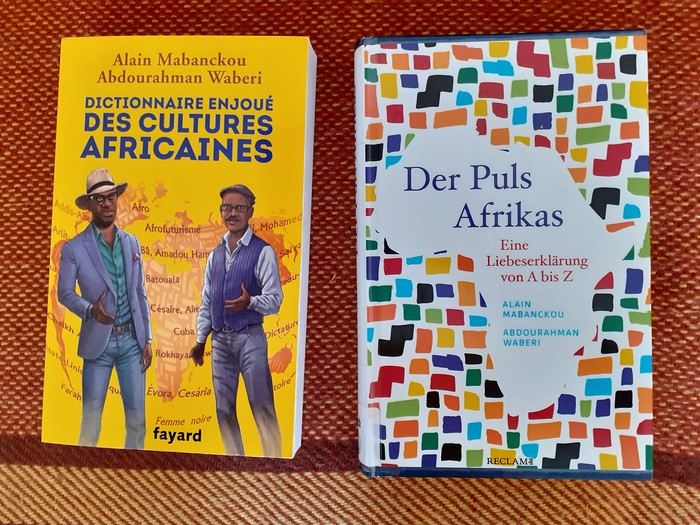
The Maggi cube, an unchallenged hegemony, and so much more
“The hopeless continent,” headlined The Economist, a British magazine, in July 2000 about Africa. Eleven years later, the same magazine headlined “Africa rising” instead. Images of Africa in the prosperous North constantly oscillate between apocalyptic scenarios and enthusiastic projections. A key issue with such images lies in the generalization they entail. If you look at the continent, considerable contrasts emerge depending on space and time. It’s no surprise that a region of the world encompassing such diverse ecological zones, maintaining such varied ties with other continents, comprising nearly fifty nation-states in sub-Saharan Africa alone, and characterized by a great diversity of languages, belief systems, and historical paths, doesn’t share a single destiny.
And yet, for many people outside Africa, as well as for many Africans, the continent constitutes a single entity, defined by criteria such as skin color, a colonial past, poverty, and the art of survival. Until now, these perspectives were generally accompanied by the idea that Africa had to—or should have—followed a single path together, sometimes called development, sometimes modernization, sometimes liberation, then a market economy. None of these paths delivered on their promises.
The two writers Alain Mabanckou and Abdourahman Waberi—one from Congo, the other raised in Djibouti, both long settled in France and now professors at renowned North American universities (Los Angeles, Washington)—have had enough of pessimistic scenarios: “We are aware that Africa is in the world and the world is in Africa. The same goes for all other continents, as our destinies are inextricably linked for better or worse. We refuse to see Africa as a reservoir of misfortunes or a continent cursed by atavistic misfortune and characterized by ethnic conflicts. [...] It’s this passionate flame we wanted to capture in a book [...] a kind of stroll through African cultures, without any demands, each letter of the alphabet leading us to a notion, a practice, a concept, a moment in history, literature, painting, politics, economics, cuisine, etc.” (p.10-11). Africa, they write, is on the verge of “imposing a signature, a style, a way of being in the world and in relation to the rest of the world.” (p.11) To put words to the continent’s diversity and dynamism, the two authors created a “rambling ABC,” a kind of portrait—or more precisely, a mythography—that lets you see and feel the pulse of a vast continent whose cultural power is unfolding before our eyes. Once marginalized or even mocked, the voice and importance of the Continent in global affairs are now undeniable” (p.11), containing over a hundred entries, mostly concise, written in a relaxed and casual style. The optimistic, even exuberant tone is set from the brief introduction. The duo of authors wants to “sing a love song to the cultures of our continent, to its inhabitants past and present, to its exceptional resources and its spectacular globalization despite a certain pollution that still clouds our skies due to the unmatched duration of dictatorships in some of our regions.” (p.12) In doing so, they don’t want to be too distracted by today’s Afewerki-Biya-Bongo-Déby & Co. ...
Of course, you’ll find tributes to great precursors like Frantz Fanon (“[...] it was a love story and admiration that wasn’t dimmed by the four decades separating his birth from ours. Let’s add that we were born while the native of Fort-de-France had left the world’s stage four years earlier, in the prime of life” p.141), Mongo Beti (“You must read and reread Mongo Beti, a genius who used his fame to support often just causes in Africa, like defending oppressed groups. His place is already in History. His oppressors, like the dictators Ahmadou Ahidjo and Paul Biya, can’t compete in the same category” p.64), the Malian Amadou Hampâté Bâ
(“Posterity remembers him mainly as an tireless defender of African cultures. His plea for the collection and preservation of traditional African knowledge remains a major event for all men and women of good will. One day in 1960, at the UNESCO podium, the native of Bandiagara sounded the alarm: ‘[...] Since we’ve admitted that the humanity of each people is the heritage of all humanity, if African traditions aren’t collected in time and written down, they’ll one day be missing from the universal archives of humanity.’” p.51),
Kwame Nkrumah, “one of the founders of Pan-Africanism, father of Ghana’s independence” (p.239), as well as the historian Cheikh Anta Diop, the writer, poet, and politician Aimé Césaire, and the economist and thinker Samir Amin, but also very warm tributes to certain contemporary African intellectuals like Souleymane Bachir Diagne and Achille Mbembe
(“A few years ago, in dominant economic circles, a rumor often resurfaced, usually disguised as a cold and scientifically proven analysis: Africa is useless. It’s a burden for the rest of the human community. With its 2% share in world trade, it would disappear from stock market radars without anyone noticing. So? Maybe it’ll be pulled up by other continents. Wanting to surpass itself is a crazy bet for Africans, they concluded. Arrogant or clueless, President Nicolas Sarkozy declared before an audience of students and teachers at Cheikh Anta Diop University in Dakar: ‘The African man hasn’t entered history enough [...] He only knows the eternal repetition of time marked by the endless repetition of the same gestures and words.’ That was in 2007. For decades, armed only with reason, an intellectual often steps up to debunk prejudices, lazy readings, and dishonest frameworks used as false fronts by those who, like Nicolas Sarkozy or former journalist Stephen Smith, out of ignorance, contempt, or condescension, distort African reality. This intellectual is none other than the historian and political scientist Achille Mbembe. This heir of Frantz Fanon, Amílcar Cabral, Jean-Marc Ela, and Fabien Eboussi-Boulaga was born in 1957 in Cameroon, in the Bassa region. Marked early by the upheavals of a fratricidal war, Achille Mbembe became the guardian of the memory of martyrs. After brilliant studies in Paris, he went on to teach at the best American universities, but the call of the Continent was stronger than anything else. In Dakar, he once directed CODESRIA (Council for the Development of Social Science Research in Africa) before joining the University of the Witwatersrand in Johannesburg, South Africa. Even though the author of *Critique of Black Reason* (Éditions La Découverte, 2015) spends a few months at Duke University in North Carolina, his observation post remains South Africa. From Johannesburg, Achille Mbembe scrutinizes Africa and the whole world. A lucid observer with an elegant and generous pen, Achille Mbembe knows how to blend big and small history: ‘I was born one day in July, as the month was drawing to a close. It was 1957, in that part of Africa recently named ‘Cameroon,’ a memory of the wonder that seized Portuguese sailors in the 15th century when, sailing up the river near Douala, they couldn’t help but note the presence of a multitude of crustaceans, and named it *Rio dos Camarões*, meaning ‘River of Shrimp.’ I grew up in the shadow of this nameless land, since, in a way, the name it bears is only the product of someone else’s astonishment: a lexical mistake, if you will.’ From this mistake or wound, he made leaven, a springboard to compose a rich work, recognized worldwide. To denounce barriers and barbarians too. But that’s not enough. Among his peers in circles of thought and action, Achille Mbembe passionately and consistently defends human dignity and the beauty of the world. In doing so, he fulfills the mission Frantz Fanon entrusted to him.” (p.227-229),
as well as entries dedicated to lesser-known artists and intellectuals, like the French journalist and activist Rokhaya Diallo, daughter of Senegalese and Gambian parents, or the Ethiopian filmmaker Haile Gerima, who has long lived in the United States. Other names from politics, sports, music, art, and literature: Kofi Annan, p.36; Barack Obama, p.243; Thomas Sankara, p.277; Ousmane Sow, p.285; Yambo Ouologuem, p.250; Léopold Sédar Senghor, p.282; Muhammad Ali, p.30; Nuruddin Farah, p.146; Salif Keita, p.203; Ahmadou Kourouma, p.206; Ngũgĩ wa Thiong’o, p.236; Winnie Mandela, p.224; Kylian Mbappé, p.226 ...
The authors, who resolutely commit to a “mythography” (p.11) of Africa, also pay special attention to local social movements, cultural events, and aspects of daily life. *Y’en a marre*, “which also meant ‘we’re fed up with sitting on our hands’” (p.320-321), emerged about a decade ago in Senegal as a citizen movement of peaceful resistance and symbolizes, the authors emphasize, the fact that African youth are increasingly fed up “with the political circus deployed in Africa since independence, as our parents would say, ‘since the White man left’...” (p.321). A full entry is dedicated to the Maggi bouillon cube, which has flooded African markets for about forty years and enjoys immense popularity (“It’s everywhere in Africa, from Dakar to Djibouti, and from Tangier to Cape Town. It’s in every pot, every stew. Little hands put it in every sauce, every local or adapted dish. An unchallenged hegemony! You’ll find it in diasporas too. The culinary strolls in Paris, in the [...] neighborhood” p.90). Critics blame it not only for impoverishing the aromatic diversity of local dishes but also for being harmful to health. And yet, “he poorest Africans, those who eat only once a day, a few spoonfuls of white beans and a ball of *foufou*, for example, are the most fervent users of the magic cube.” (p.92-93)
For *fonio*, “the new trendy cereal. [...] From the millet family, fonio is probably the oldest cereal cultivated in West Africa, and mainly in its sub-Saharan part, for millennia. [...] Easy to grow, water-efficient, fonio grows everywhere except on clay soils. Long neglected because it was considered the poor man’s crop, fonio is now a source of pride for the farmers who cultivate it and cherish it like the apple of their eye” (p.156-157), the authors immediately offer a detailed recipe, letting the reader know that “e can’t resist sharing this fonio with chicken recipe from Mali with you:
Ingredients: 1 chicken 3 large ripe red tomatoes 4 tbsp tomato paste 4 large onions 1 garlic clove 1/2 cup oil 2 Maggi cubes or salt 2 large carrots 1 turnip 1 large cabbage 2 large potatoes 1 celery stalk 1 packet pre-cooked fonio 4 okra (or okra powder) salt, pepper
Preparation: 1. Prepare the sauce: wash and cut the chicken. Peel the onions, garlic, and vegetables. 2. In a pot, fry the chicken pieces. 3. Dice the onions, tomatoes, carrots, and turnip very small and add them to the pot. 4. Add the tomato paste, salt, and pepper. 5. Simmer for 15 min, then add 2 L of water and the cooked chicken pieces. 6. Simmer for 30 min, then add the crushed garlic and celery, plus the cabbage cut into 4 and the potatoes cut in half. 7. Prepare the fonio: cover it with warm water, let it rest for 15 min, and cook it over low heat. 8. In a small pot, boil the okra and crush them. 9. Mix the crushed okra with the cooked fonio, then salt. Serve hot.” (p.158-159)
The comedy *Black Mic Mac*, released in French theaters in 1986 and addressing France’s increasingly restrictive immigration policy at the time, also gets an entry, as do *Tintin in the Congo*, the popular comic, and *Jip’s Café* (“[...] a little Africa in the heart of Paris, with passersby stopping to admire the ‘ambianceurs’ on the dance floor or attend the cultural events offered by the place” (p.194), an African establishment in Paris that Alain Mabanckou already immortalized in one of his novels.
The duo of authors also tackles thorny subjects like jihadism (p.119), the Rwandan genocide (p.272), the CFA franc (p.82), and dictatorship (p.110). While the two strike the right tone here, many entries leave a slightly bitter taste. Two examples: why doesn’t the text on Barack Obama mention the great disappointment of many people in Africa, who expected more from the African policy of the first U.S. president with African roots than just occasional warm words? Why do the comments on Winnie Mandela gloss over the fact that she was a highly controversial icon of the anti-apartheid movement due to her involvement in kidnappings, acts of torture, and murders of alleged apartheid collaborators? Instead, there’s a compassion that brings tears to the eyes: “She was often reduced to a secondary role, the wife of a great man” or “When victory came, she didn’t taste its fruits. Divorced, isolated. She would never be a ‘first lady’ in an evening gown, posing before a bed of chrysanthemums. They’d keep her far from the circles of power” (p.224-225). At this point, I would’ve liked the authors to take a slightly more critical stance...
That said, these “weaknesses” (if you can call them that) shouldn’t overshadow the book as a whole. It remains an informative, sometimes very entertaining, and often even original work in its own way.
Book information (the original French and the German translation):
Alain Mabanckou/Abdourahman Waberi. Dictionnaire enjoué des cultures africaines. Fayard, 2019. Alain Mabanckou/Abdourahman Waberi. Der Puls Afrikas. Eine Liebeserklärung von A bis Z. Reclam, 2022.
Hery
Trip to Israel / Holy Land in 2022
For once, given the destination, the author can’t set aside their religious beliefs, which inevitably shape this kind of journey.
The Trip
Early in the morning at Orly Airport, in the departure lounge for Tel Aviv, a group of about forty young men arrives, all looking identical! The same neatly trimmed beards, the same identical haircuts, the same outfits with a touch of whimsy… The effect of seeing these forty “clones” is striking and raises questions! Why such perfect uniformity among this group of guys? Do they belong to the same family, sports club, cultural association, or religious group? A mystery! At the same time, the waiting area fills up with men who are more expected, given our destination: they wear large felt hats and dress in black suits with white shirts—Hassidim? The ones I’ve glimpsed fleetingly in Paris or New York, who have always been a mystery to me. More discreet-looking women accompany them.
I’m already in Israel without even setting foot there! Plus, I witness the preparations for an improvised show.
The “clones” start a flash mob at seven in the morning in a Paris airport departure lounge! Some pull out musical instruments, others begin singing and dancing. A music with strange, unfamiliar sounds enchants the waiting passengers.
The flight crew finally arrives, cutting through the flash mob, bringing us back to the reality of the moment: waiting to take off soon for this so troubling and mysterious Middle East. We go through passport control, presenting our faces to the scanners that operate the exit gate. The group of “identical” young men gets held up by the system: logically, a scanner let the first one through but blocked the second because of his perfect resemblance to the first. To the machine, the same person shouldn’t be able to cross the border twice? But eventually, the whole group makes it through the glass doors, leaving the Republic behind. My simplistic explanation is left looking ridiculous.
At every new destination, I ask myself countless questions, revealing a certain anxiety tied to the unknown: fear of attacks (one just happened at a bus station in Jerusalem), possible police pressure, unexpected events. Israel isn’t known for being a relaxing destination. In reality, if I did face a serious difficulty in this country, it wasn’t one I had anticipated—and it wasn’t particularly tied to Israel!
I take my seat by the window, which is already occupied by a little girl. Her father, a Hassidic man, politely asks if I’d be willing to give up my seat for his daughter. I tell him I’d be happy to make her happy. Seeing me masked, he asks if I’d like him and his daughter to wear masks too. In response, I take off my mask so as not to impose any constraints on them and wish them a good flight.
It was the first time I’d approached and spoken to a Hassidic man. He didn’t speak the way I might have expected after watching *Rabbi Jacob* with Louis de Funès; he spoke perfectly without an accent, just like you and me! Beware of stereotypes! Throughout the flight, I sneak glances at my strange neighbor: he prayed silently without stopping for a minute. His daughter, as good as gold, never interrupted him. He used several religious accessories during his three-hour continuous prayer: a kippa, a prayer shawl, and a rosary?… I left that plane deeply impressed, me, who has a very distant relationship with my Creator and only prays now and then.
The Trip
Early in the morning at Orly Airport, in the departure lounge for Tel Aviv, a group of about forty young men arrives, all looking identical! The same neatly trimmed beards, the same identical haircuts, the same outfits with a touch of whimsy… The effect of seeing these forty “clones” is striking and raises questions! Why such perfect uniformity among this group of guys? Do they belong to the same family, sports club, cultural association, or religious group? A mystery! At the same time, the waiting area fills up with men who are more expected, given our destination: they wear large felt hats and dress in black suits with white shirts—Hassidim? The ones I’ve glimpsed fleetingly in Paris or New York, who have always been a mystery to me. More discreet-looking women accompany them.
I’m already in Israel without even setting foot there! Plus, I witness the preparations for an improvised show.
The “clones” start a flash mob at seven in the morning in a Paris airport departure lounge! Some pull out musical instruments, others begin singing and dancing. A music with strange, unfamiliar sounds enchants the waiting passengers.
The flight crew finally arrives, cutting through the flash mob, bringing us back to the reality of the moment: waiting to take off soon for this so troubling and mysterious Middle East. We go through passport control, presenting our faces to the scanners that operate the exit gate. The group of “identical” young men gets held up by the system: logically, a scanner let the first one through but blocked the second because of his perfect resemblance to the first. To the machine, the same person shouldn’t be able to cross the border twice? But eventually, the whole group makes it through the glass doors, leaving the Republic behind. My simplistic explanation is left looking ridiculous.
At every new destination, I ask myself countless questions, revealing a certain anxiety tied to the unknown: fear of attacks (one just happened at a bus station in Jerusalem), possible police pressure, unexpected events. Israel isn’t known for being a relaxing destination. In reality, if I did face a serious difficulty in this country, it wasn’t one I had anticipated—and it wasn’t particularly tied to Israel!
I take my seat by the window, which is already occupied by a little girl. Her father, a Hassidic man, politely asks if I’d be willing to give up my seat for his daughter. I tell him I’d be happy to make her happy. Seeing me masked, he asks if I’d like him and his daughter to wear masks too. In response, I take off my mask so as not to impose any constraints on them and wish them a good flight.
It was the first time I’d approached and spoken to a Hassidic man. He didn’t speak the way I might have expected after watching *Rabbi Jacob* with Louis de Funès; he spoke perfectly without an accent, just like you and me! Beware of stereotypes! Throughout the flight, I sneak glances at my strange neighbor: he prayed silently without stopping for a minute. His daughter, as good as gold, never interrupted him. He used several religious accessories during his three-hour continuous prayer: a kippa, a prayer shawl, and a rosary?… I left that plane deeply impressed, me, who has a very distant relationship with my Creator and only prays now and then.
Yet Another Travel Journal in this (Too) Familiar Rajasthan, But with Family and Kids
Prologue
This journal recounts a trip to Rajasthan that’s already over a year old and that I’ve only now found the chance to write about. The summer of 2024 marked my return to India—my tenth trip—after six long years away since my last solo wanderings in Tamil Nadu in 2018 (the journal of which is published on this site). That absence was partly (but not only) due to the long COVID and post-COVID period, which saw a complete halt and then a major slowdown in global tourism. To top it off, Voyage Forum announced its closure in an end-of-the-world atmosphere. A sad time for our favorite social activity…
A few weeks after returning from Rajasthan, I tried to motivate myself to start writing a journal to publish on a forum claiming to be VF’s successor, which I’d eventually signed up for out of desperation. But I kept hesitating and putting the project off because, for one, I no longer have the time I used to. For another, the vibe wasn’t really taking off on that forum—it was overrun with ads and not very active, contrary to what its host’s name suggested. Despite its good intentions and commendable role as a stopgap, it also turned out to be very impractical to use, especially when you don’t have much time like me. I’ll admit I’d occasionally check back on VF to see if anything was happening. But all the discussions remained frozen in time, stuck in that fateful year, 2020. Then, rumors swirled online about shady reasons behind its closure, leaving little room for hope.
And then, one fine morning, I got a message at work from Marien informing me that VF had reopened. What a huge surprise! Even though the forum’s “end” had played out in a somewhat apocalyptic atmosphere, the memories of passionate and heated discussions, the frank debates, and the useful exchanges that made this site a traveler’s goldmine and a unique hub of conviviality all came rushing back to me like a breath of fresh air. I finally saw a sign and tried to motivate myself to find the time to publish the journal of this tenth trip to India and fifth to Rajasthan. But in the end, I got bogged down in professional and family obligations and never managed to find the time to get started. That’s now fixed, though, because I had two reasons for wanting to do it: I find that looking back on a trip to tell others about it is a highly beneficial introspective exercise. Also, I thought this journal could be useful to other travelers on a few points.
Because, “do we really need yet another journal about Rajasthan?” you might rightly ask! Especially in a time when so many journals about the “Land of Kings” have been published since VF’s return, not to mention the countless stories you can already find online about this region, one of India’s most touristy. And I’d add, why go back to Rajasthan for a fifth time, where I’ve already dragged my feet more than enough—through its forts, deserts, temples, cities, villages, bumpy roads, train stations, tasty street food stalls, cheap guesthouses, and more? Where some might see just another overhyped tourist destination full of the same old *Arabian Nights* clichés, worn to a thread, that I mentioned earlier, when there’s so much else to see in India? Well, first because it’s a magnificent country I never tire of, where I started an academic study and made so many connections. It’s also packed with places where you won’t find a single tourist (right, Marie-Jo?), even in the heart of well-trodden paths and classic itineraries. And most importantly, as I said earlier, things have changed in recent years. First, after six years without traveling far, the urge to go back to India was getting stronger. But this time, no more solo trips (often) or duo adventures (sometimes)—now it’s a team of four that has to come along! And even if you can argue with that, what better place than Rajasthan to introduce India to people who’ve never seen it? To kids you want to amaze? Plus, traveling with your new little family to your favorite country isn’t the same as going solo in often spartan conditions that only affect you. It’s a different challenge, but ultimately probably much harder. So, is it really reasonable to take two kids to India, including a two-year-old baby? That’s one of the main goals of this journal (but not the only one)—to try to answer that question.
As you can tell, it’s not so much the destination but the slightly unusual setup of this trip that, in my opinion, will make this journal interesting. Despite my experience and expertise (yes, I dare say it) in India, there were plenty of questions before we finalized the plan and said, “Alright, let’s go!” The questions were flying for us parents. Is it wise to travel to India with a two-year-old? What would we do (it happened) if the kids got very sick? Would they be able to handle a road trip on Rajasthan’s bumpy, dusty roads using public transport? Could they handle the shock of such a different world—the dirt, poverty, pollution, noise (…and the smell, as they say), the spicy food, monkeys, mosquitoes, snakes, tigers, leopards, and so on? In short, all the clichés that I usually joke about suddenly became potential realities. Another concern: as a mixed Franco-African family (not me, but my partner and her oldest), wouldn’t we risk not always being well received, given what you sometimes hear about that in India? How would Indians react to seeing a mixed-race family, the ultimate taboo in a country of purity and social segregation, which would undoubtedly raise many questions for them? Of course, not everything went as expected… Because, as you know, with India—and what makes it charming for some—there are always complications: sometimes where you don’t expect them… and sometimes where you do. I’ll go into detail about that in the journal to come (not right away) and in the final review (even later). These experiences could be useful to travelers who find themselves in similar situations and have the same questions we did before embarking on such a journey. And maybe it’ll spark the curiosity of those who aren’t concerned and will read yet another Rajasthan journal, but with its own unique twists.
Despite my unchanged constraints, which mean I have little time to write this, I don’t want to rush the story, so I’ll take my time. There will probably be lulls. I hope that won’t stop people from coming to react, debate, share their impressions, or ask for information.
This journal recounts a trip to Rajasthan that’s already over a year old and that I’ve only now found the chance to write about. The summer of 2024 marked my return to India—my tenth trip—after six long years away since my last solo wanderings in Tamil Nadu in 2018 (the journal of which is published on this site). That absence was partly (but not only) due to the long COVID and post-COVID period, which saw a complete halt and then a major slowdown in global tourism. To top it off, Voyage Forum announced its closure in an end-of-the-world atmosphere. A sad time for our favorite social activity…
A few weeks after returning from Rajasthan, I tried to motivate myself to start writing a journal to publish on a forum claiming to be VF’s successor, which I’d eventually signed up for out of desperation. But I kept hesitating and putting the project off because, for one, I no longer have the time I used to. For another, the vibe wasn’t really taking off on that forum—it was overrun with ads and not very active, contrary to what its host’s name suggested. Despite its good intentions and commendable role as a stopgap, it also turned out to be very impractical to use, especially when you don’t have much time like me. I’ll admit I’d occasionally check back on VF to see if anything was happening. But all the discussions remained frozen in time, stuck in that fateful year, 2020. Then, rumors swirled online about shady reasons behind its closure, leaving little room for hope.
And then, one fine morning, I got a message at work from Marien informing me that VF had reopened. What a huge surprise! Even though the forum’s “end” had played out in a somewhat apocalyptic atmosphere, the memories of passionate and heated discussions, the frank debates, and the useful exchanges that made this site a traveler’s goldmine and a unique hub of conviviality all came rushing back to me like a breath of fresh air. I finally saw a sign and tried to motivate myself to find the time to publish the journal of this tenth trip to India and fifth to Rajasthan. But in the end, I got bogged down in professional and family obligations and never managed to find the time to get started. That’s now fixed, though, because I had two reasons for wanting to do it: I find that looking back on a trip to tell others about it is a highly beneficial introspective exercise. Also, I thought this journal could be useful to other travelers on a few points.
Because, “do we really need yet another journal about Rajasthan?” you might rightly ask! Especially in a time when so many journals about the “Land of Kings” have been published since VF’s return, not to mention the countless stories you can already find online about this region, one of India’s most touristy. And I’d add, why go back to Rajasthan for a fifth time, where I’ve already dragged my feet more than enough—through its forts, deserts, temples, cities, villages, bumpy roads, train stations, tasty street food stalls, cheap guesthouses, and more? Where some might see just another overhyped tourist destination full of the same old *Arabian Nights* clichés, worn to a thread, that I mentioned earlier, when there’s so much else to see in India? Well, first because it’s a magnificent country I never tire of, where I started an academic study and made so many connections. It’s also packed with places where you won’t find a single tourist (right, Marie-Jo?), even in the heart of well-trodden paths and classic itineraries. And most importantly, as I said earlier, things have changed in recent years. First, after six years without traveling far, the urge to go back to India was getting stronger. But this time, no more solo trips (often) or duo adventures (sometimes)—now it’s a team of four that has to come along! And even if you can argue with that, what better place than Rajasthan to introduce India to people who’ve never seen it? To kids you want to amaze? Plus, traveling with your new little family to your favorite country isn’t the same as going solo in often spartan conditions that only affect you. It’s a different challenge, but ultimately probably much harder. So, is it really reasonable to take two kids to India, including a two-year-old baby? That’s one of the main goals of this journal (but not the only one)—to try to answer that question.
As you can tell, it’s not so much the destination but the slightly unusual setup of this trip that, in my opinion, will make this journal interesting. Despite my experience and expertise (yes, I dare say it) in India, there were plenty of questions before we finalized the plan and said, “Alright, let’s go!” The questions were flying for us parents. Is it wise to travel to India with a two-year-old? What would we do (it happened) if the kids got very sick? Would they be able to handle a road trip on Rajasthan’s bumpy, dusty roads using public transport? Could they handle the shock of such a different world—the dirt, poverty, pollution, noise (…and the smell, as they say), the spicy food, monkeys, mosquitoes, snakes, tigers, leopards, and so on? In short, all the clichés that I usually joke about suddenly became potential realities. Another concern: as a mixed Franco-African family (not me, but my partner and her oldest), wouldn’t we risk not always being well received, given what you sometimes hear about that in India? How would Indians react to seeing a mixed-race family, the ultimate taboo in a country of purity and social segregation, which would undoubtedly raise many questions for them? Of course, not everything went as expected… Because, as you know, with India—and what makes it charming for some—there are always complications: sometimes where you don’t expect them… and sometimes where you do. I’ll go into detail about that in the journal to come (not right away) and in the final review (even later). These experiences could be useful to travelers who find themselves in similar situations and have the same questions we did before embarking on such a journey. And maybe it’ll spark the curiosity of those who aren’t concerned and will read yet another Rajasthan journal, but with its own unique twists.
Despite my unchanged constraints, which mean I have little time to write this, I don’t want to rush the story, so I’ll take my time. There will probably be lulls. I hope that won’t stop people from coming to react, debate, share their impressions, or ask for information.
From Southern Shikoku, between land and sea, to the blue waters of Miyakojima and finally the Tokyo metropolis
From Southern Shikoku, between land and sea, to the blue waters of Miyakojima and finally Tokyo’s megacity
Hi everyone,
I have to admit, I really hesitated before deciding to write this travel journal... Writing one takes a lot of time and energy, and since this is my 4th trip, I wondered if it would even interest anyone other than myself (both for the discovery and the writing). But after a few people asked, "Are you going to write a journal?" and especially after rediscovering the joy of reading other travelers’ journals about Japan or elsewhere on this forum, I’ve decided to share my 4th installment in the Land of the Rising Sun here.
The itinerary: 27 full days, from late May to late June 2025, right in the middle of the rainy season, including:
-->13 days in Shikoku, from Kochi (Kochi Prefecture) to Matsuyama (Ehime Prefecture)
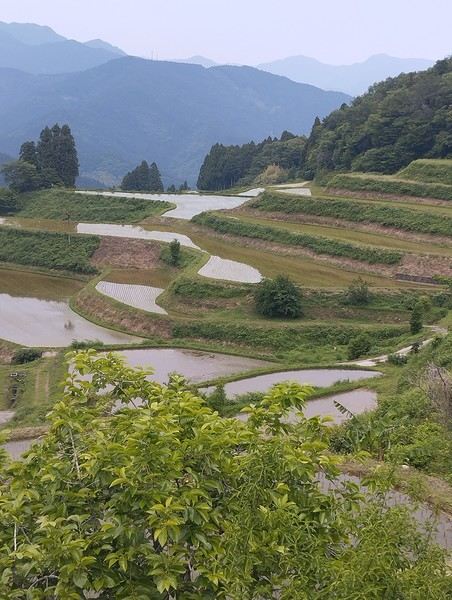
-->7 days in Miyakojima (Okinawa Prefecture)
-->7 days in Tokyo
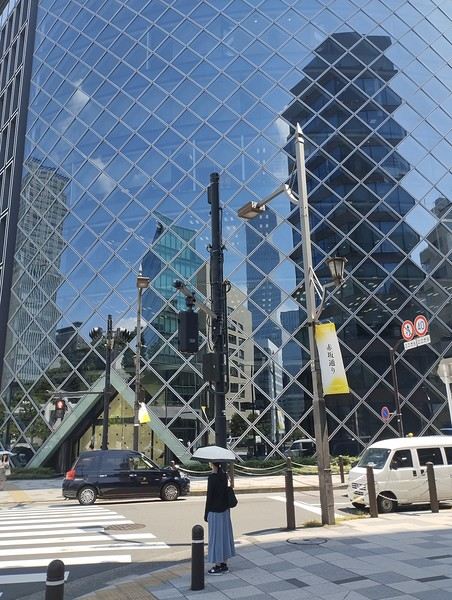
The trip was decided on fairly last-minute again this year.
Since I regularly check flight prices to track fluctuations for this destination even without concrete plans, stumbling upon a slightly cheaper direct flight (900 €) than what I’d seen in previous months (around 1,200–1,400 € on average) for a Paris-Tokyo route with Japanese airline ANA was too tempting to resist the urge to return to this enchanting country. After much hesitation between exploring the San’in region (Matsue, Tottori, Yamaguchi) and Southern Shikoku, the decision was made—I took the plunge! The ticket is booked: Paris to Kochi with a layover in Tokyo, all with ANA, the airline I’d been dreaming of... for 1,120 € per person. Okay, it’s not cheap, but it’s better than in 2023.
Departure in 2 weeks! Now I just have to get everything ready!
Intense prep work over these next 2 weeks to:
finalize a more precise itinerary and reach an agreement—yep, because even though we both love Japan, our preferences differ slightly, and we have to choose between exploring new places or revisiting beloved spots... decide how much time to spend in each area without rushing while still exploring research places that might interest us and watch videos about Japan book accommodations: yes, it’s possible to do this on the spot, but last year, we realized that last-minute options were pretty expensive, so we’re booking ahead—though we’ll keep a few options open in case better deals pop up later reserve rental cars order yen check the weather regularly and wonder if choosing the *tsuyu* (rainy season) was really a good idea—are we going to be drenched the whole time???
"What hard work," you might say! Going to Japan for a month—what a tough life! Despite this being my 4th trip, the excitement is just as intense as the first time.
The only small downside is that when we booked the flight, there weren’t many seats left, so we’re only sitting together on the international return flight. Plus, on the way there, we have middle seats. Another lingering question: what French-language films will be available? According to the internet, the selection seems limited. Oh well, these are just minor details—it’s already time to fly! PS: I’ll be posting slowly and irregularly... so for those interested, be patient, and maybe set an alert...
Hi everyone,
I have to admit, I really hesitated before deciding to write this travel journal... Writing one takes a lot of time and energy, and since this is my 4th trip, I wondered if it would even interest anyone other than myself (both for the discovery and the writing). But after a few people asked, "Are you going to write a journal?" and especially after rediscovering the joy of reading other travelers’ journals about Japan or elsewhere on this forum, I’ve decided to share my 4th installment in the Land of the Rising Sun here.
The itinerary: 27 full days, from late May to late June 2025, right in the middle of the rainy season, including:
-->13 days in Shikoku, from Kochi (Kochi Prefecture) to Matsuyama (Ehime Prefecture)
-->7 days in Miyakojima (Okinawa Prefecture)
-->7 days in Tokyo
The trip was decided on fairly last-minute again this year.
Since I regularly check flight prices to track fluctuations for this destination even without concrete plans, stumbling upon a slightly cheaper direct flight (900 €) than what I’d seen in previous months (around 1,200–1,400 € on average) for a Paris-Tokyo route with Japanese airline ANA was too tempting to resist the urge to return to this enchanting country. After much hesitation between exploring the San’in region (Matsue, Tottori, Yamaguchi) and Southern Shikoku, the decision was made—I took the plunge! The ticket is booked: Paris to Kochi with a layover in Tokyo, all with ANA, the airline I’d been dreaming of... for 1,120 € per person. Okay, it’s not cheap, but it’s better than in 2023.
Departure in 2 weeks! Now I just have to get everything ready!
Intense prep work over these next 2 weeks to:
finalize a more precise itinerary and reach an agreement—yep, because even though we both love Japan, our preferences differ slightly, and we have to choose between exploring new places or revisiting beloved spots... decide how much time to spend in each area without rushing while still exploring research places that might interest us and watch videos about Japan book accommodations: yes, it’s possible to do this on the spot, but last year, we realized that last-minute options were pretty expensive, so we’re booking ahead—though we’ll keep a few options open in case better deals pop up later reserve rental cars order yen check the weather regularly and wonder if choosing the *tsuyu* (rainy season) was really a good idea—are we going to be drenched the whole time???
"What hard work," you might say! Going to Japan for a month—what a tough life! Despite this being my 4th trip, the excitement is just as intense as the first time.
The only small downside is that when we booked the flight, there weren’t many seats left, so we’re only sitting together on the international return flight. Plus, on the way there, we have middle seats. Another lingering question: what French-language films will be available? According to the internet, the selection seems limited. Oh well, these are just minor details—it’s already time to fly! PS: I’ll be posting slowly and irregularly... so for those interested, be patient, and maybe set an alert...
Biking and Beer in Belgium
"The Most Refreshing Way to Travel Around Belgium"
This is the title of the guide published by Pierre Pauquay at Éditions HELVETIQ Sàrl, Lausanne, Switzerland, 2023.
I set off for Belgium with my camper van and my electric-assist bike, eager to deepen both my theoretical and practical knowledge of this country’s emblematic beverage while exploring the land. This guide became my trusted companion throughout the journey, which took place from June 4 to July 4, 2024.
Out of the 40 routes presented, I chose 21, covering a broad swath of Belgium—both Wallonia (14 routes) and Flanders (6 routes), plus one route around the Brussels-Capital region with a visit to the famous Grimbergen brewery.
Every route included a stop at a brewery, whether lesser-known or famous, artisanal or industrial, family-run or Trappist.
In total, I logged 1,111.2 km of biking over 58 hours and 42 minutes of pedaling, averaging 3 hours of cycling per ride of 55.6 km. I visited 21 breweries, toured a few, and had just one flat tire (I didn’t count the number of beers, but I tasted them all...).
I wasn’t always able to park my camper van near the brewery planned for that day’s route, but I made sure to enjoy the famous nectar only after completing the physical exercise required by the loops.
Traveling by camper van, I needed routes that formed a loop, starting and ending in the same place. Except in Brussels, I never had to rely on campsites for a safe night’s stay. I always found a welcoming public or private parking spot, secure enough to prepare for the next day’s ride.
I discovered Belgium from top to bottom, through hills (not very high) and valleys (very flat and often windy), at my own pace. I stopped whenever a photo caught my eye, grabbed a bite or a drink in the villages I passed through, and often felt like I was truly part of the landscape, in sync with the country’s rhythm and curious to see how people lived...
More to come, with photos in a future post...
Thanks for reading...