Results for "Nouvelle-Calédonie+événement"
About 85,412 results.
More options
Many results are in French, the community’s main language. English translations are added over time.
Search results
Che: mythe ou mystification
A l'occasion du 40ème anniversaire de la mort du Che en Bolivie, on voit fleurir une littérature visant à démolir l'image pieuse de robin des bois du Che. Qu'en pensez-vous?
Pour ma part, j'aurai tendance à renvoyer dos à dos ceux qui aimeraient le voir monter au cieux et ceux qui maintenant par réaction en font un ogre sanguinaire.
Compagnie aérienne avec les meilleurs uniformes pour ses hôtesses?
Voici un petit sondage:
Selon vous quelle compagnie à les meilleurs uniformes pour ses PNC (hotesses)?
N'hésiter pas à laisser vos opinions.
Merci
Full moon party en Thaïlande!
Salut a tous, tout dabord merci a tous ceux qui ont pris du temps pour repondre a ma question precedente. J'ai bcp entendu parler de la full moon party, jai vu qu elle se passait le 9 aout 2006 donc jyserais certainement. je voudrais savoir si la pluparts des personnes etaient des touristes ou des thailandais. Aussi le moyen de transport le plus rapide et le moins cher pour se rendre a koh phangan en partant de pattaya. Puyis si l'on pouvait y aller a moto jusqu'au lieu ou il fo prendre le bateaui merci a vous..................le ké de marseille du parc
Peur de prendre l'avion
Bonjour a tous.
Voilà, je me prépare a partir pour le belgique prochainement, j'Ai besoin de conseille car j'ai la peur bleu de l'Avion je vais avoir 40 ans et j'ai toujours dit que jamais j'irais dans un avion je panique juste a l'idée de les voirs.
J'aimerais savoir comment voyager sans capoter ha ha ha ql compagnie prendre et ou m'assoire, voyager de jour ou soir, je ne veux pas faire d'escale déjà embarquer une fois va être déjà bcp pour moi.
Existe t'il des endroits ou je pourrais aller voir l'intérieur d'un avion pour me sécuriser je vous le dit j'ai horriblement peur, je vais en belgique par amour non mais faut tu etres en amour pour affronter une si grosse peur.
merci pour l'aide
déjà la panique moi
Voilà, je me prépare a partir pour le belgique prochainement, j'Ai besoin de conseille car j'ai la peur bleu de l'Avion je vais avoir 40 ans et j'ai toujours dit que jamais j'irais dans un avion je panique juste a l'idée de les voirs.
J'aimerais savoir comment voyager sans capoter ha ha ha ql compagnie prendre et ou m'assoire, voyager de jour ou soir, je ne veux pas faire d'escale déjà embarquer une fois va être déjà bcp pour moi.
Existe t'il des endroits ou je pourrais aller voir l'intérieur d'un avion pour me sécuriser je vous le dit j'ai horriblement peur, je vais en belgique par amour non mais faut tu etres en amour pour affronter une si grosse peur.
merci pour l'aide
déjà la panique moi
Surclassement chez Air France?
bonjour à tous,
est ce qu'il y a des bons plans pour se faire surclasser chez Air France sur des vols comme Paris - Fort de France par exemple ??? Merci pour vos réponses
est ce qu'il y a des bons plans pour se faire surclasser chez Air France sur des vols comme Paris - Fort de France par exemple ??? Merci pour vos réponses
Idées de circuit pour 4 semaines en Australie en août
Bonjour à tous !🙂
Je souhaite partir avec mon ami au mois d'août en Australie pour 4 semaines. Etant donné le climat, je pensais atterrir à Sydney (dommage de ne pas la visiter même si ce sera l'hiver) puis remonter la côte Est jusqu'au Nord et peut être décoller du Nord pour ne pas perdre du temps.
A part ça, je n'ai pas beaucoup avancé. Si j'ai l'habitude de concocter mes circuits moi-même, le dernier en date fut le Rajasthan, je suis un peu perdue dans l'immensité de l'Australie...🤪 J'ai regardé avec le moteur de recherche de VF mais je ne trouve pas grand chose pour m'aider. Je fais donc appel à vous qui êtes allés fouler le sol ozien...😊
Pour vous "aider" à cerner le type de voyage que nous cherchons : nous aimons les vieilles pierres dans une mesure raisonnable, nous aimons la nature et les grands espaces (bonus pour les coins de pêche en eau douce) nous aimons la plongée sans être des pros (aller là-bas et ne pas plonger sur la barrière de corail serait pour moi bien dommage...mais je ne veux pas jouer à collé/serré avec les autres touristes...dons pas de hot spot s'il vous plait ! 😉 ) nous aimons les villes quand elles sont extraordinaires (je pense à New York, Prague et donc Sydney !) et sont pleines de surprises pour des français comme nous...vivant à Marseille de surcroît !😉 nous aimons rencontrer les gens, connaitre la culture du pays, etc. nous pensons voyager "backpackers" mais des bonnes adresses de charme pour un jeune couple seront appréciées !😊
En gros nous aimons rencontrer un pays et pas trop nos collègues touristes (mais ça je crois que c'est un mode de voyage assez répandu sur VF !😇). Nous ne courrons pas après les lieux incontournables même si certains le seront pour nous (vous me suivez ?!). En fait, je me pose la question de l'intérêt d'aller à Ayers Rock...ça semble prendre pas mal de temps...
Je suis aussi preneuse de toutes les bonnes adresses sur les circuits que vous me proposerez. Je me demande aussi comment me déplacer, location d'un 4x4 voire d'un camping-car ? Quels sont les temps de trajet ? Quel est le budget à prévoir ?
Merci d'avance à vous !🙂🙂🙂
Je souhaite partir avec mon ami au mois d'août en Australie pour 4 semaines. Etant donné le climat, je pensais atterrir à Sydney (dommage de ne pas la visiter même si ce sera l'hiver) puis remonter la côte Est jusqu'au Nord et peut être décoller du Nord pour ne pas perdre du temps.
A part ça, je n'ai pas beaucoup avancé. Si j'ai l'habitude de concocter mes circuits moi-même, le dernier en date fut le Rajasthan, je suis un peu perdue dans l'immensité de l'Australie...🤪 J'ai regardé avec le moteur de recherche de VF mais je ne trouve pas grand chose pour m'aider. Je fais donc appel à vous qui êtes allés fouler le sol ozien...😊
Pour vous "aider" à cerner le type de voyage que nous cherchons : nous aimons les vieilles pierres dans une mesure raisonnable, nous aimons la nature et les grands espaces (bonus pour les coins de pêche en eau douce) nous aimons la plongée sans être des pros (aller là-bas et ne pas plonger sur la barrière de corail serait pour moi bien dommage...mais je ne veux pas jouer à collé/serré avec les autres touristes...dons pas de hot spot s'il vous plait ! 😉 ) nous aimons les villes quand elles sont extraordinaires (je pense à New York, Prague et donc Sydney !) et sont pleines de surprises pour des français comme nous...vivant à Marseille de surcroît !😉 nous aimons rencontrer les gens, connaitre la culture du pays, etc. nous pensons voyager "backpackers" mais des bonnes adresses de charme pour un jeune couple seront appréciées !😊
En gros nous aimons rencontrer un pays et pas trop nos collègues touristes (mais ça je crois que c'est un mode de voyage assez répandu sur VF !😇). Nous ne courrons pas après les lieux incontournables même si certains le seront pour nous (vous me suivez ?!). En fait, je me pose la question de l'intérêt d'aller à Ayers Rock...ça semble prendre pas mal de temps...
Je suis aussi preneuse de toutes les bonnes adresses sur les circuits que vous me proposerez. Je me demande aussi comment me déplacer, location d'un 4x4 voire d'un camping-car ? Quels sont les temps de trajet ? Quel est le budget à prévoir ?
Merci d'avance à vous !🙂🙂🙂
La vérité sur Aeroflot?
Salut!
Comme à mon avis beaucoup d'entre nous, je me pose la question de savoir VRAIMENT ce que vaut cette compagnie, sachant que mon billet pour la Chine me coûte 250 euros de moins avec aeroflot qu'avec le 2eme meilleur prix!!! J'ai eu des avis partagés, mais c'est surtout un pilote de ligne qui m'a recommandé de ne pas la prendre...
Si vous avez donc des expériences avec aeroflot (sans parler des vols paris/londres-moscou qui a mon avis sont ok, mais surtout par exemple les vosl moscou-pékin/shangai/oulan bator), ou des renseignements, ça m'aiderait pas mal à faire mlon choix!!
merci!!
Comme à mon avis beaucoup d'entre nous, je me pose la question de savoir VRAIMENT ce que vaut cette compagnie, sachant que mon billet pour la Chine me coûte 250 euros de moins avec aeroflot qu'avec le 2eme meilleur prix!!! J'ai eu des avis partagés, mais c'est surtout un pilote de ligne qui m'a recommandé de ne pas la prendre...
Si vous avez donc des expériences avec aeroflot (sans parler des vols paris/londres-moscou qui a mon avis sont ok, mais surtout par exemple les vosl moscou-pékin/shangai/oulan bator), ou des renseignements, ça m'aiderait pas mal à faire mlon choix!!
merci!!
Réenregistrement bagages sur Air Tahiti Nui à Los Angeles
Bonjour, Ia ora na.
J'ai acheté pour ma compagne et moi même 2 billets allers retour : Voyage 1 : de Tahiti à Los Angeles / de Los angeles à Tahiti aller le 08.02 retour le 29.02
Voyage 2 : De los angeles à Paris / de Paris à los angeles , aller le 09.02 retour le 29.02 .
En fait , afin de payer moins cher j'ai choisis le même avion, même vol qui devait alelr en direct de Tahiti Vers Paris avec escale technique à Los angeles, mais en choisissant 2 allers retours différents...
Je viens d'apprendre que je ne pourrai apparament pas voyager car je ne dispose pas du temps nécessaire afin de récupérer mes bagages et les réenregistrer! Sauf qu'il s'agit de la même compagnie aérienne Air Tahiti Nui et du même avion....
Y a T'il un moyen de se faire enregistrer en une seule fois afin de ne pas avoir à récupérer nos bagages ! je n'ai pas pris de billet modifiables donc j'aimerais ne pas avoir perdu ces billets ....
Je précise également que le temps entre les 2 vols est de 2h ( arrivée à 8h55 départ 11h35 à Los angeles et arrivé à 14h15 et départ à 16h15 ) SVP aidez nous :( SVP aidez nous :(
J'ai acheté pour ma compagne et moi même 2 billets allers retour : Voyage 1 : de Tahiti à Los Angeles / de Los angeles à Tahiti aller le 08.02 retour le 29.02
Voyage 2 : De los angeles à Paris / de Paris à los angeles , aller le 09.02 retour le 29.02 .
En fait , afin de payer moins cher j'ai choisis le même avion, même vol qui devait alelr en direct de Tahiti Vers Paris avec escale technique à Los angeles, mais en choisissant 2 allers retours différents...
Je viens d'apprendre que je ne pourrai apparament pas voyager car je ne dispose pas du temps nécessaire afin de récupérer mes bagages et les réenregistrer! Sauf qu'il s'agit de la même compagnie aérienne Air Tahiti Nui et du même avion....
Y a T'il un moyen de se faire enregistrer en une seule fois afin de ne pas avoir à récupérer nos bagages ! je n'ai pas pris de billet modifiables donc j'aimerais ne pas avoir perdu ces billets ....
Je précise également que le temps entre les 2 vols est de 2h ( arrivée à 8h55 départ 11h35 à Los angeles et arrivé à 14h15 et départ à 16h15 ) SVP aidez nous :( SVP aidez nous :(
Cuba... à la recherche du temps passé
4 juillet : Arrivée à La Havane
Partis ce matin de Marseille, nous sommes arrivés à Cuba ce même jour grâce au décalage horaire. A l'aéroport les formalités n'ont pris que 5 minutes. Pour les bagages nous avons patienté une quarantaine de minutes. Sortis de l'aéroport nous voyons notre nom sur une pancarte. C'est bon le taxi commandé auprès de la casa est bien là. Climatisé OUF! il est 22 h une chaleur écrasante pire que notre canicule du départ. Nous sommes plongés dans l'ambiance direct ! une vieille voiture, il fait nuit, je n'ai pas vu la marque. Nous circulons sur des axes peu éclairés et une trentaine de minutes plus tard nous arrivons chez nos hôtes Maria et Javier. Très bonne impression ce couple est charmant. Notre chambre est spacieuse. Climatisation + ventilateur. Une douche avec peu de pression mais ça il faudra que l'on s'y habitue car c'est souvent à Cuba. Nous nous mettons au lit vers 23h00 soit 4h00 du matin à Marseille à J+1. Le sommeil est long a venir mais finira par nous prendre.
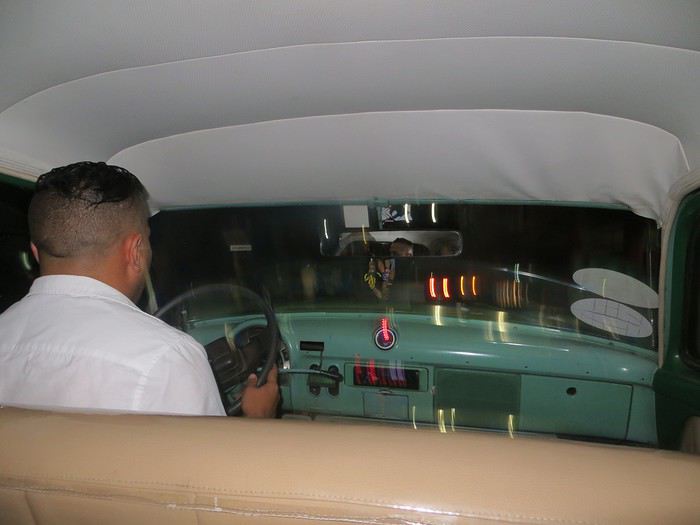
Partis ce matin de Marseille, nous sommes arrivés à Cuba ce même jour grâce au décalage horaire. A l'aéroport les formalités n'ont pris que 5 minutes. Pour les bagages nous avons patienté une quarantaine de minutes. Sortis de l'aéroport nous voyons notre nom sur une pancarte. C'est bon le taxi commandé auprès de la casa est bien là. Climatisé OUF! il est 22 h une chaleur écrasante pire que notre canicule du départ. Nous sommes plongés dans l'ambiance direct ! une vieille voiture, il fait nuit, je n'ai pas vu la marque. Nous circulons sur des axes peu éclairés et une trentaine de minutes plus tard nous arrivons chez nos hôtes Maria et Javier. Très bonne impression ce couple est charmant. Notre chambre est spacieuse. Climatisation + ventilateur. Une douche avec peu de pression mais ça il faudra que l'on s'y habitue car c'est souvent à Cuba. Nous nous mettons au lit vers 23h00 soit 4h00 du matin à Marseille à J+1. Le sommeil est long a venir mais finira par nous prendre.
Tour du monde Costa 2020
Bonjour, j'aimerais faire le tour du monde avec Costa en janvier 2020 mais comme j'envisage ce projet seule , je souhaiterais rencontrer des gens qui ont également l'intention de faire ce voyage ; créer des liens avant de partir me rassurerait et m'encouragerait à m'inscrire car j'ai peur de m'ennuyer notamment les jours en mer. J'ai déjà fait des croisières mais à deux.
Si vous partez seul ou seule, contactez-moi.
Liserons33
Escapade à Tetiaroa au départ de Tahiti
Cette excursion se fait en 1 jour ou en deux jours si l'on veut dormir dans une couchette de catamaran ( ou carrément sur le pont si la nuit est étoilée et sans averses ).
Il vaut mieux réserver à l' avance et plutôt le week-end car les bateaux sont grands et l'on part à 7 ou 8, parfois moins, mais il faut rentabiliser la traversée tout de même.
Il faut environ 2 heures pour atteindre l' atoll.
Les catamarans sont ancrés sur le Front de mer à Papeete, on a du choix.
Les prix comprenant la traversée et les repas.
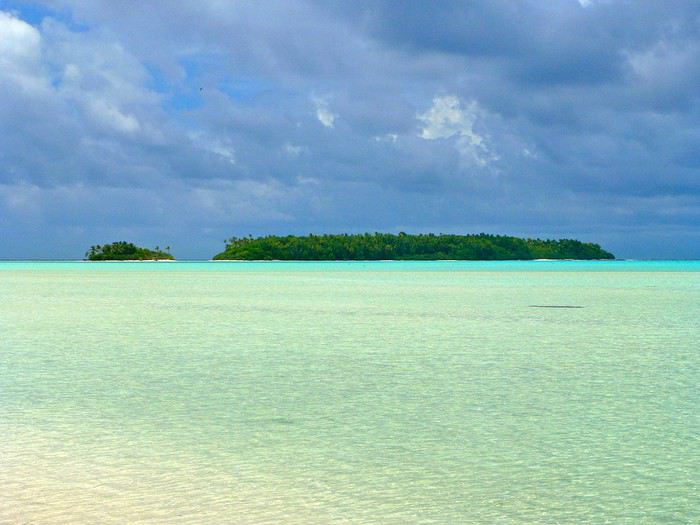
L' atoll de Tetiaroa était autrefois résidence d'été de la Reine Pomaré et de sa famille. Ensuite l' atoll a été racheté par l' acteur américain Marlon Brando à l' époque où il tournait à Tahiti le film " Mutiny on the Bounty " ) et était tombé amoureux de sa partenaire et du pays.
A la mort de Brando, l' atoll a été retrocédé par la famille-et dans un cadre d'obligations strictes-à une société qui a construit l'hôtel Brando, occupant une bonne partie de l'atoll, un hôtel de luxe écologique et auto-suffisant, aussi bien en eau douce qu'en climatisation ou légumes bio du potager. L' hôtel, est une réussite architecturale et écologique selon les voeux de l' acteur disparu.
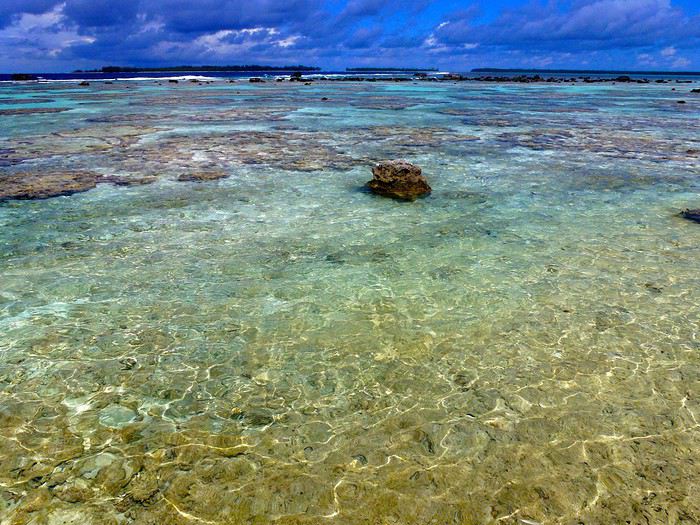
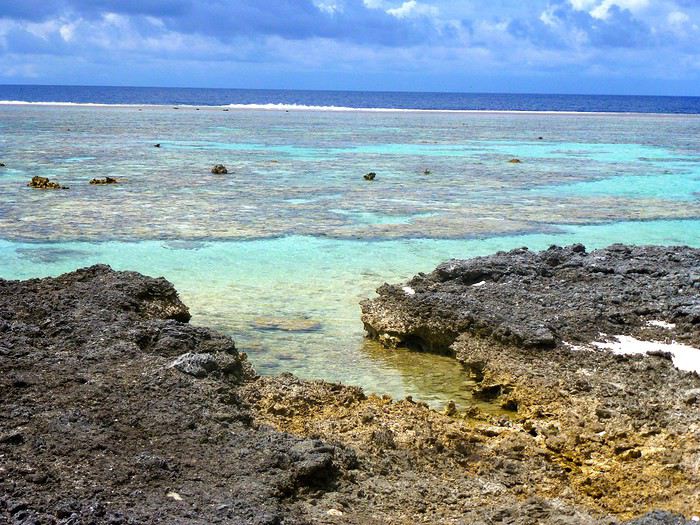
Voilà pour l'histoire rapide de cet atoll qui est magnifique sous le soleil comme par temps d'orage.
On part du front de mer de Tahiti le matin assez tôt pour une traversée qui peut se faire sur mer plate ou plus creusée. La houle est généralement plus formée en fin de journée, donc au retour.
J' ai fait l' excursion ce mois de janvier qui est particulièrement ensoleillé cette année, et la qualité de l' excursion en a été magnifiée. Le ciel, la mer, les couleurs éclatantes.
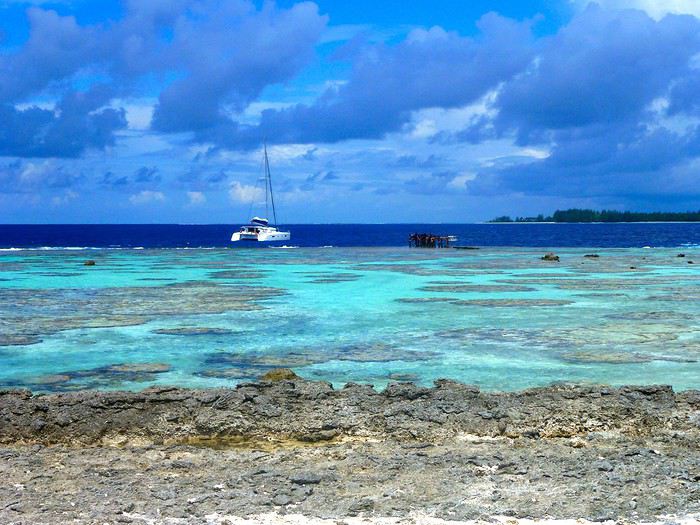
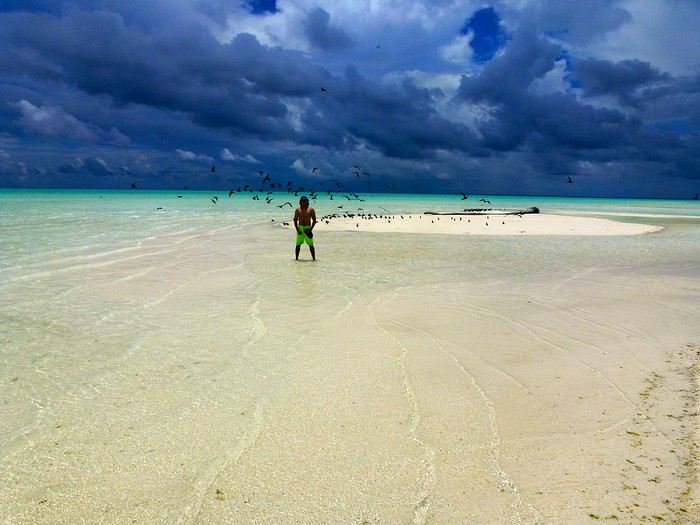
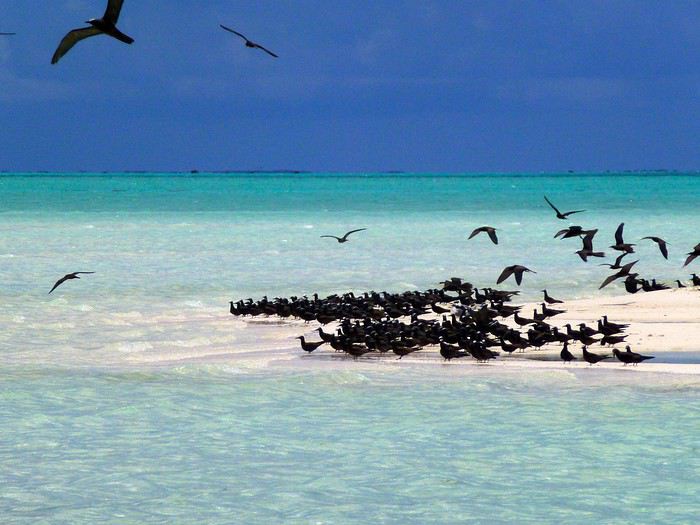
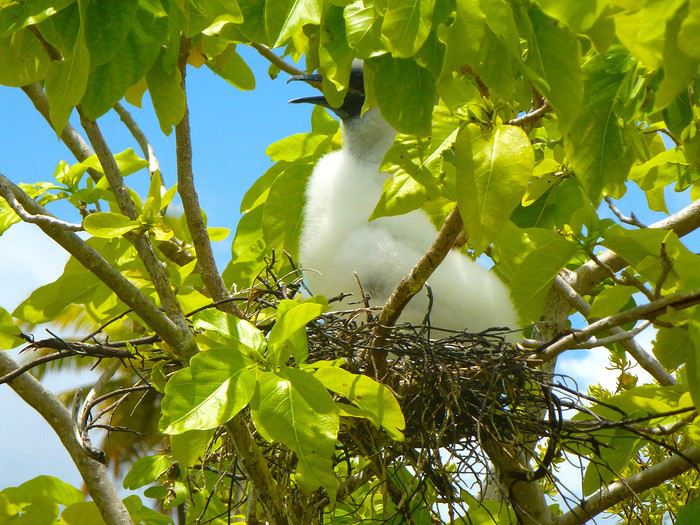
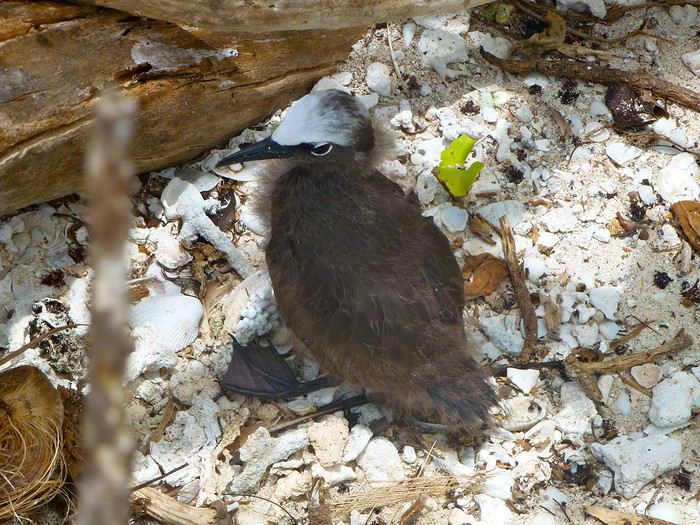
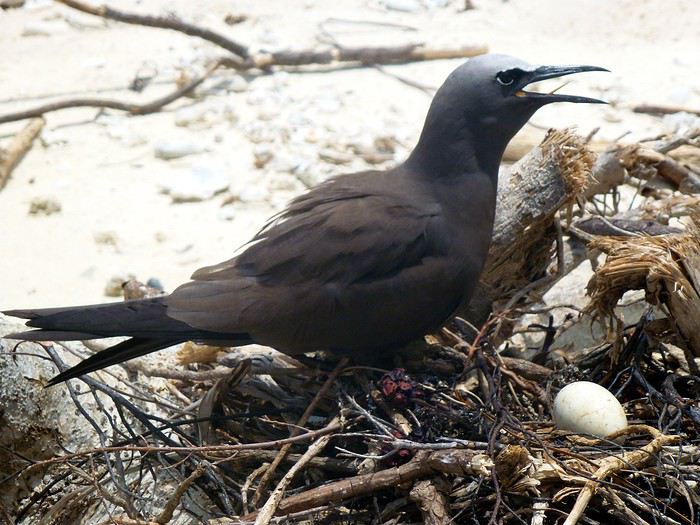
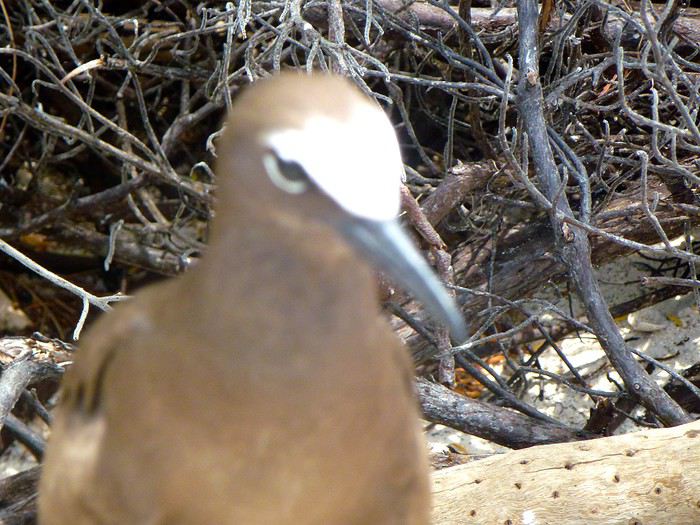
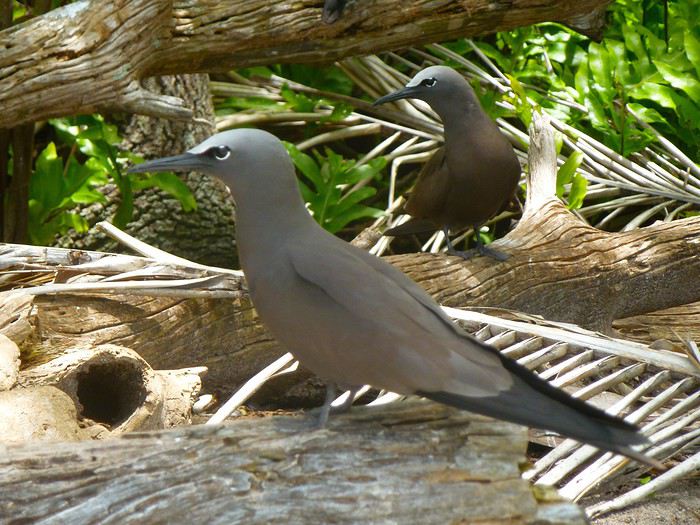
On ancre derrière le récif car l' atoll n' a pas de passe. il faut donc franchir la barrière sur la vague montante dans les deux sens avec un canot pneumatique. Cela peut vite devenir acrobatique s'il y a de la mer. On débarque sur la plage que l'on va longer jusqu'au bout de l' atoll ( partie publique ) où se trouve l' île aux oiseaux, un petit paradis préservé où nichent des centaines d'oiseaux de mer peu sauvages ( principalement des sternes blancs, blancs et noirs , gris et des fous de Bassan, dont les oeufs sont la plupart du temps à même le sol dans le sable et le corail.
Il faut voir les bébés fous couverts de duvet blanc dans leur nid un peu grossier et qui deviennent très vite aussi gros que leurs parents. ils finissent par tomber du nid et se faire nourrir au sol par des parents exténués... on comprend qu'il n' y ait qu'un oeuf unique !
Endroit naturellement magnifique où l'on peut se baigner pendant des heures dans une eau cristalline à 30°. Attention aux coups de soleil.
Le retour se fait en fin d'après-midi ou bien le lendemain, ce qui permet d'avoir du temps et de profiter du crépuscule et du coucher de soleil sur ou derrière l' atoll. toujours un moment rare en Polynésie quand toutes les perfections sont réunies.
Mon petit carnet vous parlera davantage quand vous aurez vu les photos que l'on peut faire en cet endroit si préservé.
Moana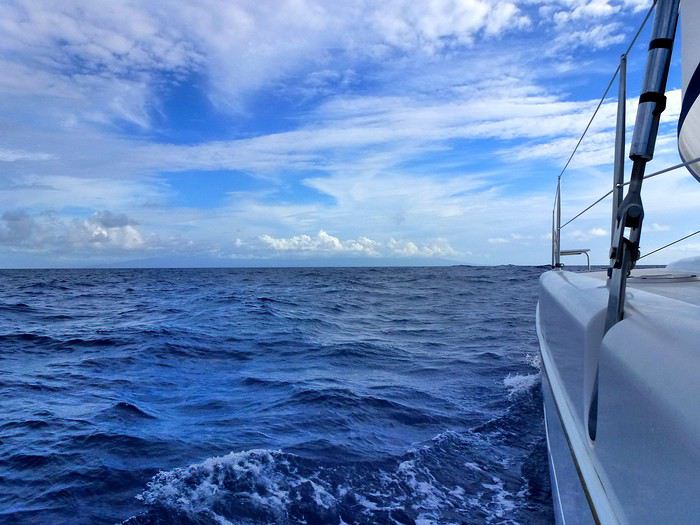





De Seattle à Los Angeles: carnet d'un voyage en famille le long du Pacifique (ou presque), été 2016
Allez je me lance dans la rédaction du carnet de nos vacances !
En préambule, je voudrais remercier tous ceux sur ce forum qui m'ont aidée à préparer ce voyage et qui ont si gentiment et patiemment répondu à toutes les questions que je me posais pendant son organisation ! C'est grâce à eux que ce périple a été une réussite !
Petite présentation des voyageurs d'abord :
 De droite à gauche, entre Bob le minion et Gru : P. mon mari, L. 15 ans, M. 17 ans (si si, la petite tête au chapeau tout derrière !), T. 12 ans et moi !
Nous souhaitions faire un grand voyage aux Etats-Unis avec nos enfants et j'imaginais que cela se ferait plutôt à l'été 2017, lorsque nous aurions enfin fini de rembourser notre maison. Mais à l'automne dernier, nous avons réalisé que notre fille allait passer le bac en 2017, puis enchaînerait sur des études et que donc l'été 2016 serait certainement le dernier où cela serait facile d'organiser des vacances en famille au complet. Alors zou, on casse la tirelire et à nous les Usa !
La décision du grand voyage prise, il a fallu déterminer le parcours.
J'avais le vieux rêve de descendre le long du Pacifique par la route 101/1, les enfants voulaient voir Seattle pour la Space Needle (à force de la voir en fond d'écran sur leur ordi 😏) et pour se rendre sur les terres de leur chanteur préféré, Macklemore, ils souhaitaient aller à San Francisco parce que San Francisco et à Los Angeles pour les studios Universal, et mon mari, accommodant comme toujours était d'accord pour tout. De plus, une de nos belles-soeurs vit à Los Angeles et cela nous donnait enfin une occasion de lui rendre visite. Le trajet était trouvé !
De droite à gauche, entre Bob le minion et Gru : P. mon mari, L. 15 ans, M. 17 ans (si si, la petite tête au chapeau tout derrière !), T. 12 ans et moi !
Nous souhaitions faire un grand voyage aux Etats-Unis avec nos enfants et j'imaginais que cela se ferait plutôt à l'été 2017, lorsque nous aurions enfin fini de rembourser notre maison. Mais à l'automne dernier, nous avons réalisé que notre fille allait passer le bac en 2017, puis enchaînerait sur des études et que donc l'été 2016 serait certainement le dernier où cela serait facile d'organiser des vacances en famille au complet. Alors zou, on casse la tirelire et à nous les Usa !
La décision du grand voyage prise, il a fallu déterminer le parcours.
J'avais le vieux rêve de descendre le long du Pacifique par la route 101/1, les enfants voulaient voir Seattle pour la Space Needle (à force de la voir en fond d'écran sur leur ordi 😏) et pour se rendre sur les terres de leur chanteur préféré, Macklemore, ils souhaitaient aller à San Francisco parce que San Francisco et à Los Angeles pour les studios Universal, et mon mari, accommodant comme toujours était d'accord pour tout. De plus, une de nos belles-soeurs vit à Los Angeles et cela nous donnait enfin une occasion de lui rendre visite. Le trajet était trouvé !
Voici au jour le jour nos nuitées : - Du 11/07 au 14/07 Seattle - 14/07 - 15/07 Port Angeles - 15/07 - 17/07 La Push - 17/07 - 19/07 Ilwaco - 19/07 - 21/07 Portland - 21/07 - 23/07 Bend - 23/07 - 24/07 White city - 24/07 - 25/07 Eureka - 25/07 - 26/07 Mendocino - 26/07 - 29/07 San Francisco - 29/07 - 31/07 Pacific Grove (Monterey) - 31/07 - 01/08 Morro Bay - 01/08 - 02/08 Santa Barbara - 02/08 - 04/08 Los Angeles
Nous sommes rentrés depuis un peu plus de quinze jours maintenant, et je vis encore ce voyage. J'essaie de faire un bilan, de définir ce qui m'a le plus étonnée, le plus marquée, et c'est difficile parce que tout se bouscule dans ma tête et que nous avons vécu tant de chose pendant ces 24 jours ! J'espère que raconter au jour le jour ce voyage en reprenant les notes prises chaque soir va m'aider à faire le tri... En tout cas, nous avons fait un séjour inoubliable, tous les jours l'un d'entre nous y fait référence... et j'ai déjà envie de repartir ! Pour ce qui est de la logistique et de l'organisation matérielle : - billets d'avion pris chez Air France en novembre. Vols multidestinations Paris-Seattle et Los Angeles-Paris, opérés à l'aller par Delta Airlines et au retour par Air France. 6500 euros pour nous 5 (4 prix adultes et 1 jeune), j'ai privilégié les vols directs. Les vols se sont bien passés, malgré du retard au départ à chaque fois. - voiture réservée en janvier chez Alamo. Catégorie Dodge Gran Caravan. Grâce à un lien donné par un forumeur (je suis désolée, je ne sais plus qui exactement, en tout cas merci infiniment encore !), j'obtiens une réduction de 10 %, le conducteur additionnel gratuit et la possibilité de rendre le réservoir d'essence vide. Nous aurons une Toyota Sienna, parfaite pour nous 5 et nos 5 valises. - nuits en hôtels uniquement, quasiment tous réservés via booking.com. Aucun souci concernant les réservations. A 5 personnes nécessitant un couchage adulte, j'ai dû la plupart du temps réserver deux chambres séparées. Il y a également eu des fois où nous étions dans un seul logement, avec deux chambres et parfois une cuisine. - repas pris le plus souvent sous forme de pique-nique le midi et au restaurant le soir. Restaurants souvent fast-food, nous ne sommes pas de grands gastronomes, et nos 3 ados étaient ravis de toute façon. T. s'est même lancé le challenge de manger le plus de hamburgers possibles pendant le séjour, et est arrivé à 13 ! La plupart des petits déjeuners ont été pris à l'hôtel. - les billets pour la majorité des attractions prévues ont été pris à l'avance, pour bénéficier de prix intéressants (Universal studios à 85 $) et de places disponibles (Alcatraz). Ils avaient été offert comme cadeaux de Noël en avance aux enfants par leurs grands-parents. Pour ceux que ça intéresserait, au total ce voyage nous a coûté presque 18000 euros pour nous 5.
Dans le prochain message, notre arrivée à Seattle ! (ici )

De droite à gauche, entre Bob le minion et Gru : P. mon mari, L. 15 ans, M. 17 ans (si si, la petite tête au chapeau tout derrière !), T. 12 ans et moi !
Nous souhaitions faire un grand voyage aux Etats-Unis avec nos enfants et j'imaginais que cela se ferait plutôt à l'été 2017, lorsque nous aurions enfin fini de rembourser notre maison. Mais à l'automne dernier, nous avons réalisé que notre fille allait passer le bac en 2017, puis enchaînerait sur des études et que donc l'été 2016 serait certainement le dernier où cela serait facile d'organiser des vacances en famille au complet. Alors zou, on casse la tirelire et à nous les Usa !
La décision du grand voyage prise, il a fallu déterminer le parcours.
J'avais le vieux rêve de descendre le long du Pacifique par la route 101/1, les enfants voulaient voir Seattle pour la Space Needle (à force de la voir en fond d'écran sur leur ordi 😏) et pour se rendre sur les terres de leur chanteur préféré, Macklemore, ils souhaitaient aller à San Francisco parce que San Francisco et à Los Angeles pour les studios Universal, et mon mari, accommodant comme toujours était d'accord pour tout. De plus, une de nos belles-soeurs vit à Los Angeles et cela nous donnait enfin une occasion de lui rendre visite. Le trajet était trouvé !Voici au jour le jour nos nuitées : - Du 11/07 au 14/07 Seattle - 14/07 - 15/07 Port Angeles - 15/07 - 17/07 La Push - 17/07 - 19/07 Ilwaco - 19/07 - 21/07 Portland - 21/07 - 23/07 Bend - 23/07 - 24/07 White city - 24/07 - 25/07 Eureka - 25/07 - 26/07 Mendocino - 26/07 - 29/07 San Francisco - 29/07 - 31/07 Pacific Grove (Monterey) - 31/07 - 01/08 Morro Bay - 01/08 - 02/08 Santa Barbara - 02/08 - 04/08 Los Angeles
Nous sommes rentrés depuis un peu plus de quinze jours maintenant, et je vis encore ce voyage. J'essaie de faire un bilan, de définir ce qui m'a le plus étonnée, le plus marquée, et c'est difficile parce que tout se bouscule dans ma tête et que nous avons vécu tant de chose pendant ces 24 jours ! J'espère que raconter au jour le jour ce voyage en reprenant les notes prises chaque soir va m'aider à faire le tri... En tout cas, nous avons fait un séjour inoubliable, tous les jours l'un d'entre nous y fait référence... et j'ai déjà envie de repartir ! Pour ce qui est de la logistique et de l'organisation matérielle : - billets d'avion pris chez Air France en novembre. Vols multidestinations Paris-Seattle et Los Angeles-Paris, opérés à l'aller par Delta Airlines et au retour par Air France. 6500 euros pour nous 5 (4 prix adultes et 1 jeune), j'ai privilégié les vols directs. Les vols se sont bien passés, malgré du retard au départ à chaque fois. - voiture réservée en janvier chez Alamo. Catégorie Dodge Gran Caravan. Grâce à un lien donné par un forumeur (je suis désolée, je ne sais plus qui exactement, en tout cas merci infiniment encore !), j'obtiens une réduction de 10 %, le conducteur additionnel gratuit et la possibilité de rendre le réservoir d'essence vide. Nous aurons une Toyota Sienna, parfaite pour nous 5 et nos 5 valises. - nuits en hôtels uniquement, quasiment tous réservés via booking.com. Aucun souci concernant les réservations. A 5 personnes nécessitant un couchage adulte, j'ai dû la plupart du temps réserver deux chambres séparées. Il y a également eu des fois où nous étions dans un seul logement, avec deux chambres et parfois une cuisine. - repas pris le plus souvent sous forme de pique-nique le midi et au restaurant le soir. Restaurants souvent fast-food, nous ne sommes pas de grands gastronomes, et nos 3 ados étaient ravis de toute façon. T. s'est même lancé le challenge de manger le plus de hamburgers possibles pendant le séjour, et est arrivé à 13 ! La plupart des petits déjeuners ont été pris à l'hôtel. - les billets pour la majorité des attractions prévues ont été pris à l'avance, pour bénéficier de prix intéressants (Universal studios à 85 $) et de places disponibles (Alcatraz). Ils avaient été offert comme cadeaux de Noël en avance aux enfants par leurs grands-parents. Pour ceux que ça intéresserait, au total ce voyage nous a coûté presque 18000 euros pour nous 5.
Dans le prochain message, notre arrivée à Seattle ! (ici )
8-Day Trip to the Marquesas Islands from Papeete
This trip is a more budget-friendly—and shorter—alternative to the 14-day Aranui 5 cruise, which includes a few days at sea and a detour to Bora Bora in the Leeward Islands on the way back. The advantage of the cruise is that it lets you see and visit (though far too quickly) the two islands of Tahuata and Fatu Hiva, which don’t have airports. By plane, you’ll only be able to land on 4 of the 6 islands. However, Tahuata is accessible from Hiva Oa via a day trip (or two-day trip) shuttle. Plan for two extra days in your total time dedicated to the Marquesas Islands (called *Fenua Enata* in Marquesan language).
Our itinerary is perfect for those who aren’t excited by cruises and prefer to get closer to the local communities. This 9-day trip cost us around 2500 € all-inclusive. For a 14-day cruise on the Aranui, expect to pay 2300 € per person for a basic cabin for four, or 3800 € per person for a superior double cabin.
Air Tahiti offers a 4-island Marquesas Pass (Nuku Hiva, Ua Pou, Ua Huka, and Hiva Oa) for 86,000 XPF (about 700 €). The journey is made on an ATR 72 from Tahiti to Nuku Hiva or Hiva Oa, and on a 19-seat Twin Otter between the islands (often only 13 or 15 seats are available due to cargo, so book well in advance). We’re traveling as a couple. We booked our family-run guesthouse stays at the Tourism Fair in early February, where you can meet the owners and make your choice. Stays are almost always half-board or breakfast-only. Transfers are usually included, but you can always book a car or taxi.
**NUKU HIVA**
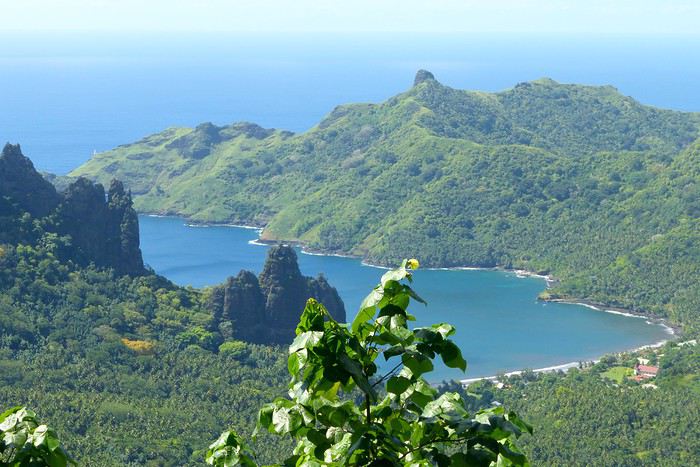
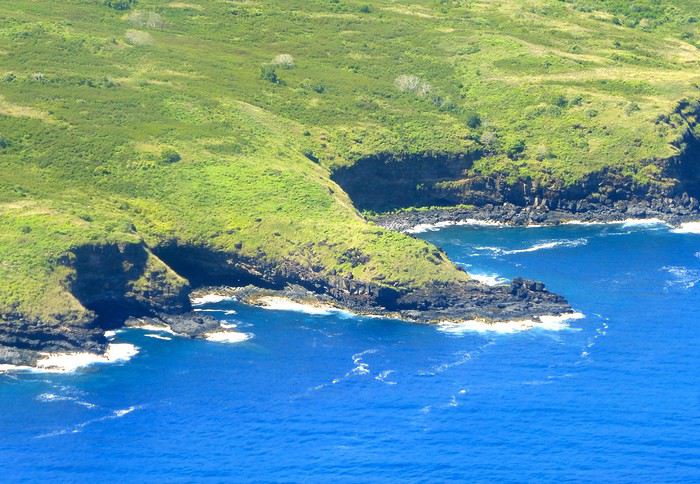
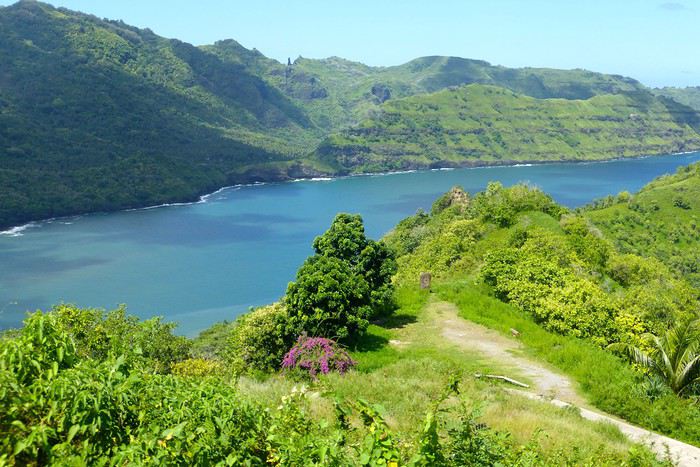
**A LITTLE GEOGRAPHY** Nuku Hiva (NH) is located about 1,500 km from Tahiti, in the north of French Polynesia. At 387 km², it’s the second-largest island in French Polynesia after Tahiti. It was formed by incredible volcanic phenomena and cataclysms between 1 and 6 million years ago, which lifted the island thousands of meters above the sea. Even after millennia of slow erosion, collapses, and settling, NH remains the most majestic of the Marquesas, with its sheer cliffs, deep valleys featuring immense waterfalls, and black walls that were once the inner walls of enormous volcanoes.
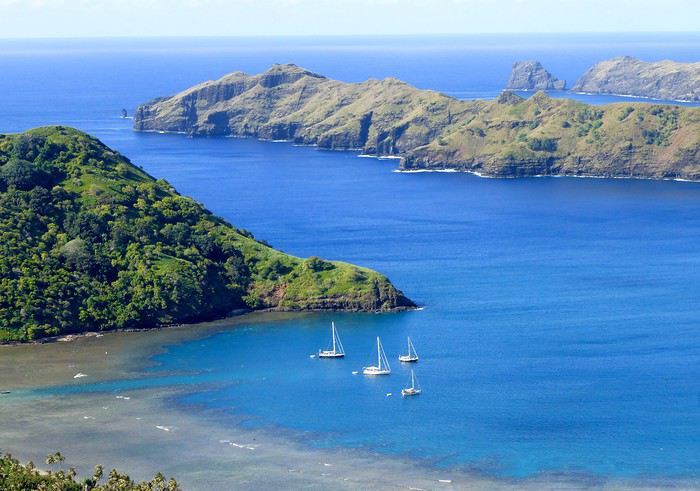
**A LITTLE HISTORY** The first contact between NH’s inhabitants and Europeans was in 1595 with Spanish navigators who only stayed briefly. It wasn’t until the late 18th century that Europeans arrived in greater numbers on NH (and the other Marquesas Islands), disrupting a very fragile social and cultural balance. It’s believed that nearly 100,000 people lived on Nuku Hiva at that time—a population decimated over the decades by epidemics, diseases brought by Europeans, and alcohol used for barter. The disastrous result: by the 1930s, only 2,500 people remained, having largely lost their identity and living in poverty. Today, the island has about 2,600 inhabitants spread across several villages, with Taiohae as the main one.
**NUKU HIVA IN LITERATURE**
1 / One of the famous writers who visited NH and stayed there was Herman Melville, who arrived in July 1842, the author of *Moby Dick*. The island had just come under French protectorate. Seduced by the enchanting *vahinés* and dazzled by his paradisiacal vision of the place, Melville deserted his ship. He ended up a prisoner of a local tribe, the Taipi, in Taipivai, where he stayed for a month and a half until an Australian ship captain secured his release in exchange for a musket and a roll of cotton fabric! Melville wrote a novel about this tumultuous episode in his life, considered a classic of travel literature. The book, *Typee: A Peep at Polynesian Life*, published in 1846 in the United States, was a huge success.
2 / Another famous Scottish writer, Robert Louis Stevenson, arrived in NH aboard a yacht that anchored in Anaho Bay, the island’s most beautiful, in July 1888. Stevenson was already known for two magnificent novels that marked their era: *Treasure Island* and *Dr. Jekyll & Mr. Hyde*. Stevenson, too, was captivated by the island’s natural beauty, though he also noted the devastating decline in identity, socio-cultural life, and physical health of a population ravaged by disease and alcohol. His account of his stay, *In the South Seas: An Account of Experiences and Observations in the Marquesas, Paumotus, and Gilbert Islands During Two Cruises on the Yacht Casco (1888) and the Schooner Equator (1889)*, was published in 1896 in New York, four years after his death in Apia, Western Samoa, where he had settled. It was also published in London in 1900.
3 / In August 1903, Victor Segalen, a French naval doctor, ethnologist, and archaeologist, landed in NH from the ship *La Durance*, sent to Polynesia to recover the possessions of the painter Paul Gauguin, who had died in April of that year. He, too, was enthralled by the Marquesas but lamented the loss of identity, dignity, and pride of the Māori, alienated by a Christianization that destroyed their culture and customs, denied their gods, and erased their past. He wrote about his experience, doubts, and fears in *Les Immémoriaux*.
4 / In December 1907, Jack London arrived in NH aboard the sailboat *Stark*, following in the footsteps of his illustrious predecessor, Herman Melville. London was in poor physical condition, exhausted from his relentless travels that had taken him from the Klondike in Canada to Japan, Australia, and London in Europe. He was appalled and shocked by Nuku Hiva’s degraded health situation: where Melville had encountered over 2,000 vigorous and healthy Marquesan warriors, London found only 12 suffering from various diseases—the rest had been wiped out by tuberculosis! His approach remained humanistic, and he maintained a sharp geopolitical awareness of these traditional Polynesian cultures, weakened by the inexorable advance of modernity in the early 20th century. He continued his journey to the Tuamotu Islands and Tahiti, publishing *Martin Eden*, the moving account of his initiatory voyage in the South Pacific, in 1911.
5 / Finally, Alain Gerbault, a writer, linguist, ethnologist, and tireless traveler, arrived in the Marquesas via the Panama Canal in December 1933. He was completely exhausted after an endless crossing on a small sailboat, the *Firecrest*. Enthralled by his stay in the Marquesas, he continued to the Tuamotu Islands in 1934, then Tahiti in 1935. Gerbault fought for the preservation of traditions, as well as the songs and dances banned by the Churches and the French Administration (these bans lasted over 50 years, mind you...!!!). Bora Bora remained his favorite island. A staunch Pétainist during World War II, he was forced to flee Bora Bora for Samoa, then Tonga, and finally Timor, a half-Portuguese island and thus neutral during the war. His travel accounts, *In Pursuit of the Sun: Logbook from New York to Tahiti* and *A Paradise Is Dying*, were published in the late 1940s. He died in Timor in 1941, and his ashes were repatriated to Bora Bora.
Back to our trip and stay.
**Day 1: April 27**
Departure from Papeete at 6:30 AM—we had to wake up two hours earlier and reach the airport in the dark. Takeoff at dawn, good weather en route, flight duration: 4 hours.
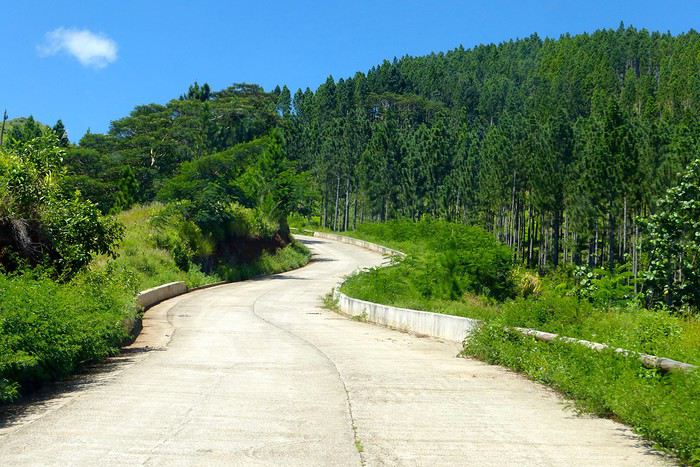
Arrival around 10:30 AM in Nuku Hiva, the first stop of this trip. We booked two nights in half-board at Pension Koku’u, transfers included. Maybe not such a great idea, those included transfers, especially on this unique island where the airport is located on *Terre Déserte*, on the other side of the mountain, opposite and about 45 km from the main village of Taiohae. They’re charged at a steep price. Expect 6,000 XPF round-trip by taxi, but 15,000 XPF charged by guesthouses or hotels. The difference is notable. It wasn’t the best idea, but we can’t go back. Even for residents like us who know how to travel in Polynesia, the Air Tahiti employee who sold me the Pass couldn’t give any useful advice about the stay itself—probably because he’d never been to the Marquesas. It’s really annoying! In short, the good idea to remember is renting a car (like a Suzuki) to be free to manage your time and stop at leisure. The road signage is a bit basic, but you’ll manage just fine. Our host Alvane waits for us—without a sign (sic!)—and after searching for each other for 5 minutes, we’re off on a journey of over an hour (with photo stops) in a Land Rover with smooth tires (luckily, it’s not raining!). The recently paved and marked mountain road is impeccable. No time to catch our breath at the guesthouse; we leave immediately (not a great idea after waking up at dawn plus 4 hours on a plane) for a half-day hike that was also included in the prepaid stay. A sandwich was provided (really pathetic for the physical effort required), we have water, and we fill a few bottles at the spring near the ceremonial site of Taipivai, our first stop. Then the hike begins in the Hanaheu Valley, descending toward Anaho Bay and its namesake beach. A magnificent and wild spot, a few sailboats anchored, we swim—the water is really warm, over 30°C at the shore. That warm is rare and not necessarily pleasant. We then have to climb a very steep slope; this hike is actually quite tough. The air is still, humid, and stifling under the foliage, there’s a bit of mud, and tiny ants (which don’t bite, I’ll have you know), locally called *fofolles*, running over shoes, ankles, and calves. Not very pleasant...! On top of that, there are mosquitoes to protect against! In hindsight, it seems wise to bring energy bars from Papeete if you plan to hike on the afternoon of your arrival day. We weren’t careful... Result: a moment of weakness for me and a hyperventilation attack climbing back up from Anaho Bay!!! We return to the guesthouse at night. There we find Claudine and her four children—Marquesan-style atmosphere, friendly and casual. We share family life. Very simple room with a bathroom, no mosquitoes, we can sleep with the window open, but the night will be noisy, as is often the case in Polynesia. Roosters are everywhere and don’t sleep, dogs bark or whine. So we end up waking up early... like everyone else.
**Day 2: April 28**
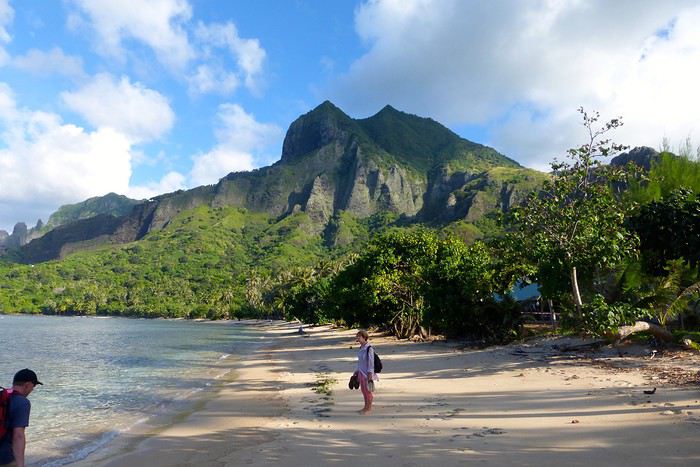
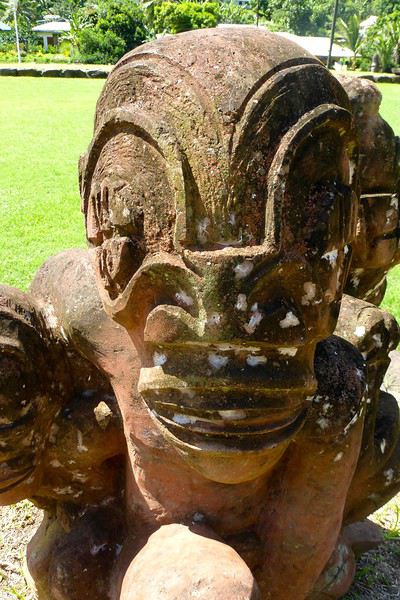
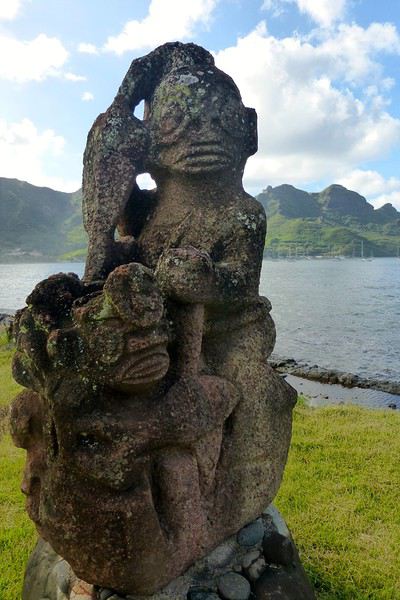
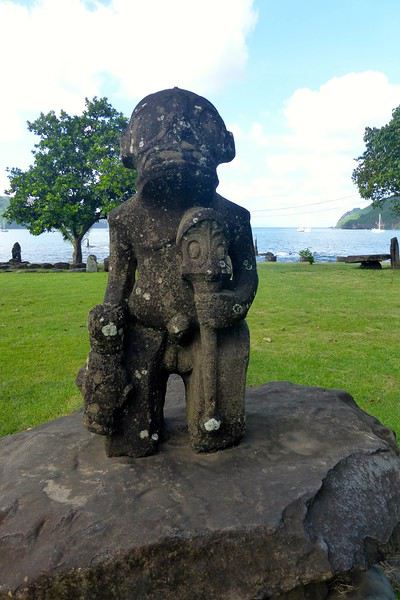
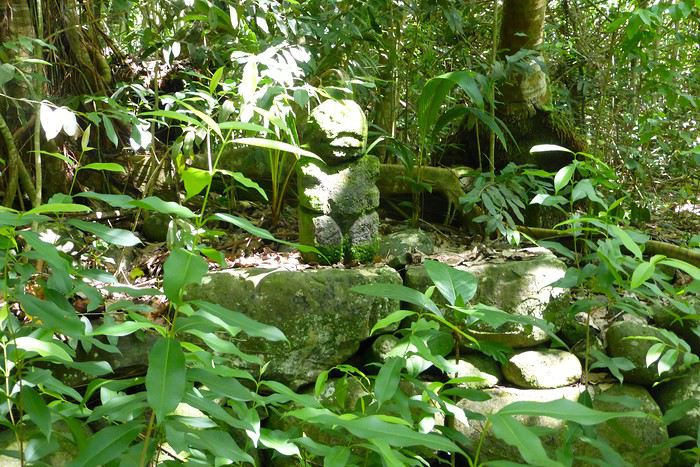
We booked a full-day excursion with Thierry: it starts with a 45-minute boat ride to reach Hakatea Beach, hidden in a small secret bay like many along Nuku Hiva’s coasts. From there, the hike lasts all day—11 km round-trip on flat but also rugged terrain (ancient paved and elevated paths over 1,000 years old)—and river crossings. Bring the right shoes (like plastic Crocs with high socks—not very stylish but practical). We cross the former village of Hakaui, walk along the foundations of dwellings, and there are still weathered tikis in the lush vegetation. The ultimate goal of this hike is to reach the tall Vaipo waterfall. The place is magical, with openings in the vegetation and immense trees allowing photos of the treetops and caves where funeral canoes containing the bones of chiefs or great warriors were once placed. We return the same way to the beach and take another boat ride to reach Taihoae’s port. Back at the guesthouse after a glimpse of Taihoae’s waterfront.
**UA POU**
**Day 3: April 29**
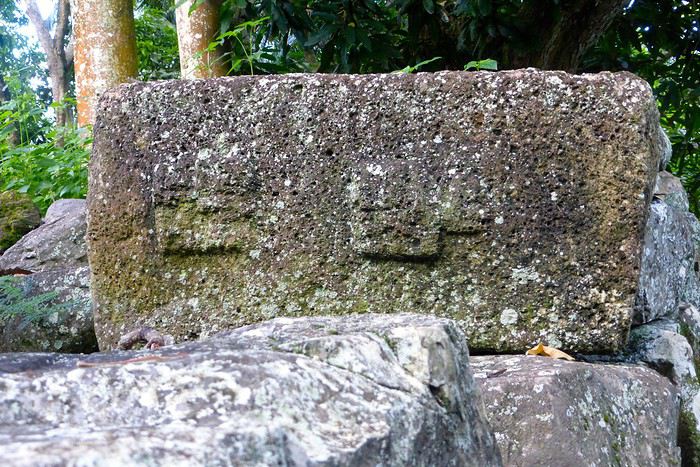
Back to the airport in the late morning for the second flight of the trip to Ua Pou. 20-minute crossing in a Twin Otter (18 seats but only 13 occupied due to cargo between the islands). Beautiful weather, blue sea, nice photos to take upon departure from NH and arrival in UP. We’re greeted by Jérôme, a former military man turned tourism professional, who runs Pension Pukue’e with his wife Elisa, a native of UP. We’re in for two exceptional days. The guesthouse is comfortable, Jérôme and Elisa are very professional and pleasant. Jérôme is also a professional hiker, and Elisa is an excellent cook. We leave quickly for a half-day excursion to Hohoi, after a stop at the archaeological, cultural, and religious site of Maui’a, the Tavaka tribe’s territory. Jérôme is there to explain how Marquesan society functioned at the time and the events that took place on a site still largely buried under vegetation. Then we visit a flower-stone sculptor he knows—the only place in the Marquesas where you’ll find these stones. They’re collected in the river flowing into the sea at Hohoi, sometimes on the beach itself. Back to the guesthouse.
**Day 4: April 30**
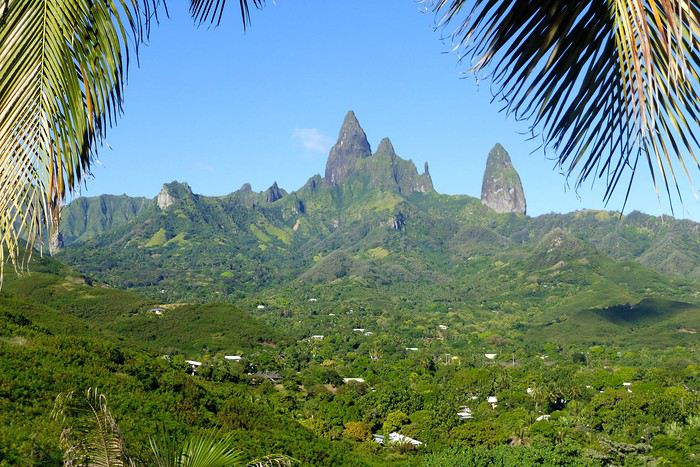
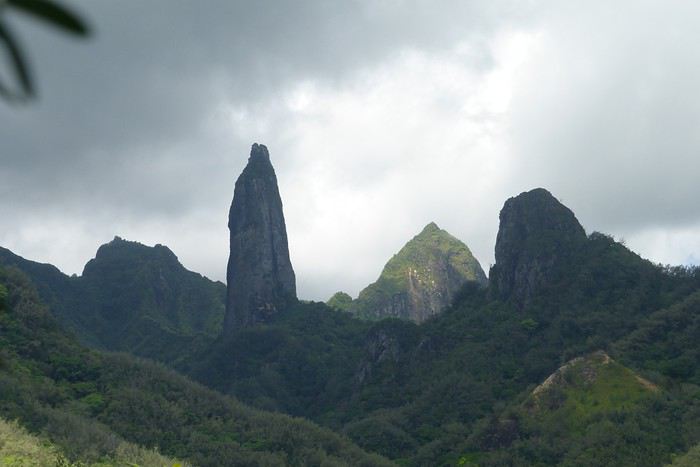
A nature hike in the mountains—moderately difficult—toward the Vaiea waterfall is on our program for a good 4 hours. It’s hot, there are mosquitoes, and the dip in the pool under the waterfall (24°C water) is a rare pleasure. Lunch at a friend of Jérôme’s, a former chef for French minister François Fillon, who prepares delicious food. Elisa picks us up by car to return to the guesthouse. Ua Pou is a beautiful and elegant island with its sharp peaks and wild nature. Our favorite, thanks to Jérôme and his wife.
**UA HUKA**
**Day 4: May 1**
Departure for Ua Huka, the smallest inhabited island in the northern group of the Marquesas, located about 1,300 km northeast of Tahiti. Landing is at the oldest airfield in the Marquesas, built in 1972, between the villages of Vaipaee and Hane. Ua Huka has about 680 inhabitants, according to the last census, spread across 3 villages (since the 1870s): Vaipaee, Hane, and Hokatu. The island peaks at Mount Hitikau at only 884 meters. Its origin: a Hawaiian-type shield volcano that—over a few million years—collapsed to become a caldera (or elliptical depression) in which two small volcanoes appeared, the craters of Tahoatikiau and Teepoepo, now part of the Vaikivi Park. The island is rugged and wild, lower than the others, so less cloud-covered and drier. The bays are jagged, the coastline in ochre tones above the intense blue of the sea, and the beaches are constantly disturbed by the powerful surf. The village of Hokatu is only a few kilometers away (just 14 km of road on the island), but Maurice, our host, drives slowly, and it takes time to go up and down. The road is entirely paved or concreted, which isn’t the case on Ua Pou, for example. The guesthouse is disappointing, perched above the village and thus isolated. Beautiful view of the famous Hane motu and the sparkling sea under the bright sun. Apart from that, there are mosquitoes and cockroaches, the bungalow isn’t clean. Meals are taken with Maurice and Delphine in the village—fine dining isn’t on the menu! Ouch!!! We didn’t luck out...
**Day 5: May 2**
Early in the morning, after breakfast, Delphine takes us to the craft center, which turns out to be a letdown—the items for sale are, in my opinion, crude and poorly carved. Nothing like what’s offered at the Marquesas Fair, held twice a year in Papeete, where you can admire and buy small wonders: wood carvings, flower stone, and coral. Delphine is disappointed we’re not interested, and it shows... She’s a bit sulky! These are items meant for Aranui cruise passengers who land on Ua Huka once every two weeks... Solo travelers like us don’t seem to interest her much. The rest of the day—spent with Maurice—is dedicated to visiting cultural centers and small museums, like the Sea Museum in Hane with its ancient canoes, the municipal archaeological museum on the Te Tumu site above the airfield, the petroglyph house near Hokatu Beach, and finally the Papuakeikaraa arboretum, which gathers endemic plants from all over Polynesia and an impressive citrus collection. No excursion planned to Vaikivi Park, toward the previously mentioned craters that recall the island’s volcanic past. Also missing are the viewpoints, the unique endemic vegetation, and especially the petroglyphs. Too bad... at that price!!! Still, in the evening, we go fishing—with sandwiches and drinks in coolers—with other villagers from the dock at the end of the paved road. It’s cool, windy, no mosquitoes, lots of fish caught, and a great atmosphere. Plus, magnificently starry skies.
Ua Huka is one of the rare islands not invaded by the black rat, which has preserved its birdlife, particularly the ultramarine lorikeet (or *pihiti* in Marquesan), which feeds almost exclusively on flower nectar (banana, coconut, hibiscus, mango, guava trees). A dog imported from New Zealand has been specially trained to detect rats: it inspects cargo unloaded from boats and the docks.
I recommend spending two full days on the island—one for visiting the various museums, the other for hiking in the island’s center park, where the archaeological sites are in their raw state: foundations of agricultural terrace walls, gathering places (or *tohua*), dwelling pavements (or *paepae*), sacred sites (or *me’ae* in Marquesan, *marae* in Tahitian) with their tikis and petroglyphs.
To finish, a bit of info on the island’s name, tied to Marquesan oral culture: according to the legend of the creation of the six Marquesas Islands, Ua Huka is the one that puts the finishing touch on the construction of the god Oatea’s house, each island having a defined architectural function. Ua Huka represents the hole (*ua*) where the god deposits what’s left (*huka* in Marquesan) of the unused materials during construction.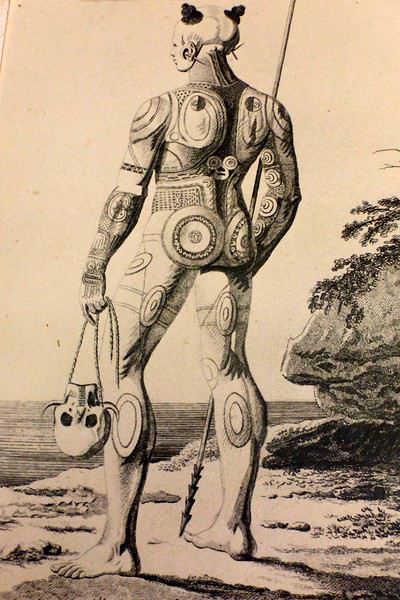
**HIVA OA**
**Day 6: May 3**
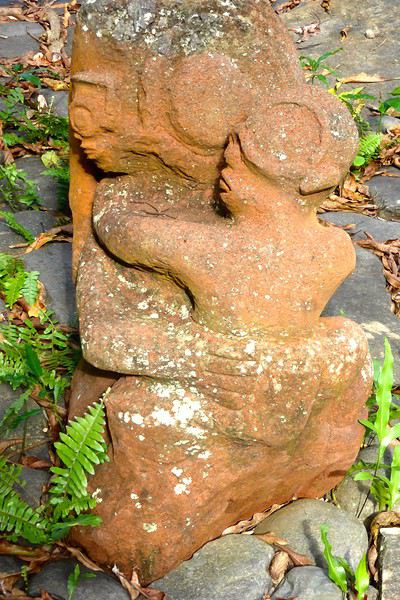
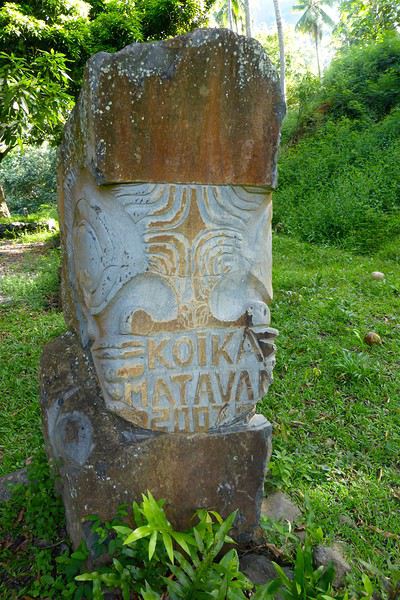
Departure in the late morning for Hiva Oa. Maurice—who had other things to do—dropped us off at the airfield 3 hours early... so this stop is a bit of a flop, even if we decided to stay positive! Hiva Oa is the third-largest island in French Polynesia after Tahiti and Nuku Hiva, and before Raiatea in the Leeward Islands. The island is beautiful, lush, verdant, and jagged. The mountains soar into the sky, the sea views are grand, the light is sublime—we’re lucky. Beautiful weather. Tania from Pension Kanahau waits for us at the airport. We’re in for two wonderful days with her. Tania is welcoming, smiling, and dynamic. What a pleasure to be with her, at her place—she cooks divinely and serves the best tuna in the world (the Big Eye reserved for the Japanese) and croquettes made with lobster, shrimp, and crab with breadfruit cubes, for example. Comfortable bungalow, no mosquitoes at night, we can sleep with the window open. It’s fantastic! After settling in, Tania takes us to town in Atuona, a pleasant and well-laid-out little village. We start with lunch—a delicious raw fish in coconut milk—then continue with the must-see attractions: the Catholic cemetery where Paul Gauguin and Jacques Brel’s graves are, overlooking the town; the abandoned Protestant cemetery, reclaimed by the bush, with impressive Marquesan warrior tombs made of huge coral slabs and adorned with a tiki head (harder to find, as no one goes there... ask for directions!); the craft center; the Gauguin Museum (and the Jacques Brel Museum); and the waterfront. While we stroll peacefully, Tania organizes an excursion for the next day, May 4, a full day with Pifa O’Connor, a 36-year-old who knows his island inside out, is passionate about local history, and with whom we’ll hit it off.
**Day 7: May 4**
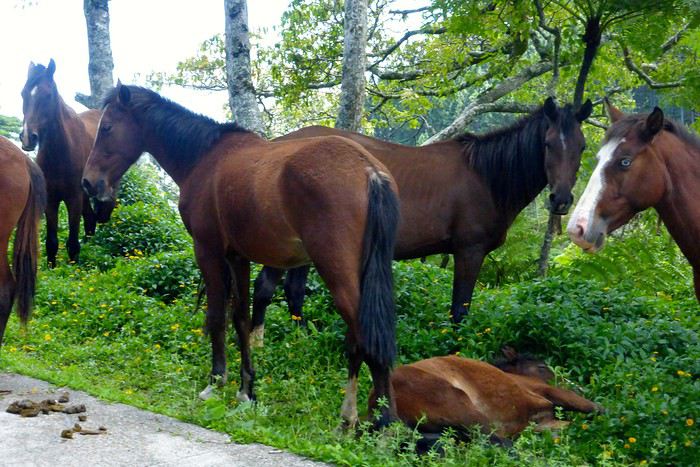
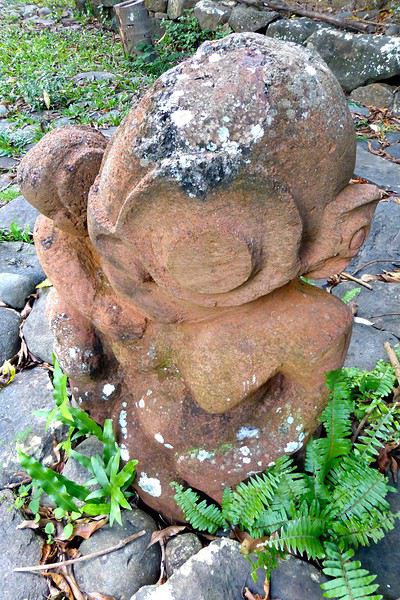
Pifa arrives at 8 AM sharp at the guesthouse, and we immediately buy sandwiches and water at a small supermarket in Atuona. First, we make a brief stop by the roadside at an unmarked spot, from which we descend a small path through dense vegetation leading to the famous smiling tiki—the only one of its kind in the Marquesas and Polynesia. The place is improbable, the tiki isn’t huge, but it’s beautiful and impressive. Then we’re off on the road that, dizzyingly, runs along and overlooks the island’s northern coast, at the edge of the ancient volcano. Few vehicles pass, the road—now a rocky track—is full of potholes, and we proceed slowly. (Note that this road has been fully paved since 2018.) The panoramas are majestic, with every shade of green against the blue sea. We stop again at the top of a cliff adorned with a huge stone, the *sacrifice stone*, from which young virgin girls were once thrown into the sea to appease angry gods. Another pause for lunch this time, at a small restaurant near the exceptional archaeological site of Puamau. We’ll experience the highlights of this trip during this excursion with our guide, Pifa, who spares no explanations. We discover, on a vast esplanade, the ceremonial complexes of Ta’a Oa and Meae Te I’Ipona, the latter featuring superb tikis, particularly the reclining tiki—or *Maki Taua Pepe*—representing Motherhood, a woman giving birth in a squatting position, as was often the case in many civilizations. Also notable is the *Takaii*, the largest tiki recorded in Polynesia to date. There’s also a huge stone with a now-blunt edge, on which the circumcision of chiefs’ and notables’ pre-adolescent sons was performed. A tough ordeal! But that’s not all! It seems there are more on the mountainside rising steeply behind the archaeological site—overturned tikis, platforms, and, apparently, a giant tiki at the top, which must have fallen but was visible from afar on the sea 30 or 40 years ago, according to the island’s elders. This meeting, worship, and living place—it was actually a small town—is immense. Thousands of people once lived in this part of the island. The site—a religious, social, and cultural sanctuary—would be the size of the largest Mayan sites in Yucatán, but the few concerned owners—two or three families who own the mountainside—don’t want to hear about intensive clearing or tree cutting for now. UNESCO rightly asks for some compliance efforts to grant special treatment to Hiva Oa in particular and the Marquesas in general. We’re not there yet, unfortunately, due to insurmountable local rigidities! This kind of attitude is quite typical in Polynesia: people are afraid to uncover *marae* buried under vegetation—they’re taboo and sometimes said to emit negative and deadly waves, so it’s better not to disturb or anger the ancient spirits or gods who might take revenge. The old religion is never far away in Polynesia, despite the successes of the missionaries.
We return to the guesthouse in the late afternoon. Last night in the Marquesas with Tania, who prepares a fine and delicious meal. Note that dinner costs 2,500 XPF per person.
**Day 8: May 5**
We take the plane as planned, via Nuku Hiva (short stopover). Arrival on time in Papeete.
May this travel journal inspire many of you to visit the Marquesas one day. It’s far, it’s expensive, it’s the trip of a lifetime—it’s unforgettable and unmissable.
Our itinerary is perfect for those who aren’t excited by cruises and prefer to get closer to the local communities. This 9-day trip cost us around 2500 € all-inclusive. For a 14-day cruise on the Aranui, expect to pay 2300 € per person for a basic cabin for four, or 3800 € per person for a superior double cabin.
Air Tahiti offers a 4-island Marquesas Pass (Nuku Hiva, Ua Pou, Ua Huka, and Hiva Oa) for 86,000 XPF (about 700 €). The journey is made on an ATR 72 from Tahiti to Nuku Hiva or Hiva Oa, and on a 19-seat Twin Otter between the islands (often only 13 or 15 seats are available due to cargo, so book well in advance). We’re traveling as a couple. We booked our family-run guesthouse stays at the Tourism Fair in early February, where you can meet the owners and make your choice. Stays are almost always half-board or breakfast-only. Transfers are usually included, but you can always book a car or taxi.
**NUKU HIVA**
**A LITTLE GEOGRAPHY** Nuku Hiva (NH) is located about 1,500 km from Tahiti, in the north of French Polynesia. At 387 km², it’s the second-largest island in French Polynesia after Tahiti. It was formed by incredible volcanic phenomena and cataclysms between 1 and 6 million years ago, which lifted the island thousands of meters above the sea. Even after millennia of slow erosion, collapses, and settling, NH remains the most majestic of the Marquesas, with its sheer cliffs, deep valleys featuring immense waterfalls, and black walls that were once the inner walls of enormous volcanoes.
**A LITTLE HISTORY** The first contact between NH’s inhabitants and Europeans was in 1595 with Spanish navigators who only stayed briefly. It wasn’t until the late 18th century that Europeans arrived in greater numbers on NH (and the other Marquesas Islands), disrupting a very fragile social and cultural balance. It’s believed that nearly 100,000 people lived on Nuku Hiva at that time—a population decimated over the decades by epidemics, diseases brought by Europeans, and alcohol used for barter. The disastrous result: by the 1930s, only 2,500 people remained, having largely lost their identity and living in poverty. Today, the island has about 2,600 inhabitants spread across several villages, with Taiohae as the main one.
**NUKU HIVA IN LITERATURE**
1 / One of the famous writers who visited NH and stayed there was Herman Melville, who arrived in July 1842, the author of *Moby Dick*. The island had just come under French protectorate. Seduced by the enchanting *vahinés* and dazzled by his paradisiacal vision of the place, Melville deserted his ship. He ended up a prisoner of a local tribe, the Taipi, in Taipivai, where he stayed for a month and a half until an Australian ship captain secured his release in exchange for a musket and a roll of cotton fabric! Melville wrote a novel about this tumultuous episode in his life, considered a classic of travel literature. The book, *Typee: A Peep at Polynesian Life*, published in 1846 in the United States, was a huge success.
2 / Another famous Scottish writer, Robert Louis Stevenson, arrived in NH aboard a yacht that anchored in Anaho Bay, the island’s most beautiful, in July 1888. Stevenson was already known for two magnificent novels that marked their era: *Treasure Island* and *Dr. Jekyll & Mr. Hyde*. Stevenson, too, was captivated by the island’s natural beauty, though he also noted the devastating decline in identity, socio-cultural life, and physical health of a population ravaged by disease and alcohol. His account of his stay, *In the South Seas: An Account of Experiences and Observations in the Marquesas, Paumotus, and Gilbert Islands During Two Cruises on the Yacht Casco (1888) and the Schooner Equator (1889)*, was published in 1896 in New York, four years after his death in Apia, Western Samoa, where he had settled. It was also published in London in 1900.
3 / In August 1903, Victor Segalen, a French naval doctor, ethnologist, and archaeologist, landed in NH from the ship *La Durance*, sent to Polynesia to recover the possessions of the painter Paul Gauguin, who had died in April of that year. He, too, was enthralled by the Marquesas but lamented the loss of identity, dignity, and pride of the Māori, alienated by a Christianization that destroyed their culture and customs, denied their gods, and erased their past. He wrote about his experience, doubts, and fears in *Les Immémoriaux*.
4 / In December 1907, Jack London arrived in NH aboard the sailboat *Stark*, following in the footsteps of his illustrious predecessor, Herman Melville. London was in poor physical condition, exhausted from his relentless travels that had taken him from the Klondike in Canada to Japan, Australia, and London in Europe. He was appalled and shocked by Nuku Hiva’s degraded health situation: where Melville had encountered over 2,000 vigorous and healthy Marquesan warriors, London found only 12 suffering from various diseases—the rest had been wiped out by tuberculosis! His approach remained humanistic, and he maintained a sharp geopolitical awareness of these traditional Polynesian cultures, weakened by the inexorable advance of modernity in the early 20th century. He continued his journey to the Tuamotu Islands and Tahiti, publishing *Martin Eden*, the moving account of his initiatory voyage in the South Pacific, in 1911.
5 / Finally, Alain Gerbault, a writer, linguist, ethnologist, and tireless traveler, arrived in the Marquesas via the Panama Canal in December 1933. He was completely exhausted after an endless crossing on a small sailboat, the *Firecrest*. Enthralled by his stay in the Marquesas, he continued to the Tuamotu Islands in 1934, then Tahiti in 1935. Gerbault fought for the preservation of traditions, as well as the songs and dances banned by the Churches and the French Administration (these bans lasted over 50 years, mind you...!!!). Bora Bora remained his favorite island. A staunch Pétainist during World War II, he was forced to flee Bora Bora for Samoa, then Tonga, and finally Timor, a half-Portuguese island and thus neutral during the war. His travel accounts, *In Pursuit of the Sun: Logbook from New York to Tahiti* and *A Paradise Is Dying*, were published in the late 1940s. He died in Timor in 1941, and his ashes were repatriated to Bora Bora.
Back to our trip and stay.
**Day 1: April 27**
Departure from Papeete at 6:30 AM—we had to wake up two hours earlier and reach the airport in the dark. Takeoff at dawn, good weather en route, flight duration: 4 hours.
Arrival around 10:30 AM in Nuku Hiva, the first stop of this trip. We booked two nights in half-board at Pension Koku’u, transfers included. Maybe not such a great idea, those included transfers, especially on this unique island where the airport is located on *Terre Déserte*, on the other side of the mountain, opposite and about 45 km from the main village of Taiohae. They’re charged at a steep price. Expect 6,000 XPF round-trip by taxi, but 15,000 XPF charged by guesthouses or hotels. The difference is notable. It wasn’t the best idea, but we can’t go back. Even for residents like us who know how to travel in Polynesia, the Air Tahiti employee who sold me the Pass couldn’t give any useful advice about the stay itself—probably because he’d never been to the Marquesas. It’s really annoying! In short, the good idea to remember is renting a car (like a Suzuki) to be free to manage your time and stop at leisure. The road signage is a bit basic, but you’ll manage just fine. Our host Alvane waits for us—without a sign (sic!)—and after searching for each other for 5 minutes, we’re off on a journey of over an hour (with photo stops) in a Land Rover with smooth tires (luckily, it’s not raining!). The recently paved and marked mountain road is impeccable. No time to catch our breath at the guesthouse; we leave immediately (not a great idea after waking up at dawn plus 4 hours on a plane) for a half-day hike that was also included in the prepaid stay. A sandwich was provided (really pathetic for the physical effort required), we have water, and we fill a few bottles at the spring near the ceremonial site of Taipivai, our first stop. Then the hike begins in the Hanaheu Valley, descending toward Anaho Bay and its namesake beach. A magnificent and wild spot, a few sailboats anchored, we swim—the water is really warm, over 30°C at the shore. That warm is rare and not necessarily pleasant. We then have to climb a very steep slope; this hike is actually quite tough. The air is still, humid, and stifling under the foliage, there’s a bit of mud, and tiny ants (which don’t bite, I’ll have you know), locally called *fofolles*, running over shoes, ankles, and calves. Not very pleasant...! On top of that, there are mosquitoes to protect against! In hindsight, it seems wise to bring energy bars from Papeete if you plan to hike on the afternoon of your arrival day. We weren’t careful... Result: a moment of weakness for me and a hyperventilation attack climbing back up from Anaho Bay!!! We return to the guesthouse at night. There we find Claudine and her four children—Marquesan-style atmosphere, friendly and casual. We share family life. Very simple room with a bathroom, no mosquitoes, we can sleep with the window open, but the night will be noisy, as is often the case in Polynesia. Roosters are everywhere and don’t sleep, dogs bark or whine. So we end up waking up early... like everyone else.
**Day 2: April 28**
We booked a full-day excursion with Thierry: it starts with a 45-minute boat ride to reach Hakatea Beach, hidden in a small secret bay like many along Nuku Hiva’s coasts. From there, the hike lasts all day—11 km round-trip on flat but also rugged terrain (ancient paved and elevated paths over 1,000 years old)—and river crossings. Bring the right shoes (like plastic Crocs with high socks—not very stylish but practical). We cross the former village of Hakaui, walk along the foundations of dwellings, and there are still weathered tikis in the lush vegetation. The ultimate goal of this hike is to reach the tall Vaipo waterfall. The place is magical, with openings in the vegetation and immense trees allowing photos of the treetops and caves where funeral canoes containing the bones of chiefs or great warriors were once placed. We return the same way to the beach and take another boat ride to reach Taihoae’s port. Back at the guesthouse after a glimpse of Taihoae’s waterfront.
**UA POU**
**Day 3: April 29**
Back to the airport in the late morning for the second flight of the trip to Ua Pou. 20-minute crossing in a Twin Otter (18 seats but only 13 occupied due to cargo between the islands). Beautiful weather, blue sea, nice photos to take upon departure from NH and arrival in UP. We’re greeted by Jérôme, a former military man turned tourism professional, who runs Pension Pukue’e with his wife Elisa, a native of UP. We’re in for two exceptional days. The guesthouse is comfortable, Jérôme and Elisa are very professional and pleasant. Jérôme is also a professional hiker, and Elisa is an excellent cook. We leave quickly for a half-day excursion to Hohoi, after a stop at the archaeological, cultural, and religious site of Maui’a, the Tavaka tribe’s territory. Jérôme is there to explain how Marquesan society functioned at the time and the events that took place on a site still largely buried under vegetation. Then we visit a flower-stone sculptor he knows—the only place in the Marquesas where you’ll find these stones. They’re collected in the river flowing into the sea at Hohoi, sometimes on the beach itself. Back to the guesthouse.
**Day 4: April 30**
A nature hike in the mountains—moderately difficult—toward the Vaiea waterfall is on our program for a good 4 hours. It’s hot, there are mosquitoes, and the dip in the pool under the waterfall (24°C water) is a rare pleasure. Lunch at a friend of Jérôme’s, a former chef for French minister François Fillon, who prepares delicious food. Elisa picks us up by car to return to the guesthouse. Ua Pou is a beautiful and elegant island with its sharp peaks and wild nature. Our favorite, thanks to Jérôme and his wife.
**UA HUKA**
**Day 4: May 1**
Departure for Ua Huka, the smallest inhabited island in the northern group of the Marquesas, located about 1,300 km northeast of Tahiti. Landing is at the oldest airfield in the Marquesas, built in 1972, between the villages of Vaipaee and Hane. Ua Huka has about 680 inhabitants, according to the last census, spread across 3 villages (since the 1870s): Vaipaee, Hane, and Hokatu. The island peaks at Mount Hitikau at only 884 meters. Its origin: a Hawaiian-type shield volcano that—over a few million years—collapsed to become a caldera (or elliptical depression) in which two small volcanoes appeared, the craters of Tahoatikiau and Teepoepo, now part of the Vaikivi Park. The island is rugged and wild, lower than the others, so less cloud-covered and drier. The bays are jagged, the coastline in ochre tones above the intense blue of the sea, and the beaches are constantly disturbed by the powerful surf. The village of Hokatu is only a few kilometers away (just 14 km of road on the island), but Maurice, our host, drives slowly, and it takes time to go up and down. The road is entirely paved or concreted, which isn’t the case on Ua Pou, for example. The guesthouse is disappointing, perched above the village and thus isolated. Beautiful view of the famous Hane motu and the sparkling sea under the bright sun. Apart from that, there are mosquitoes and cockroaches, the bungalow isn’t clean. Meals are taken with Maurice and Delphine in the village—fine dining isn’t on the menu! Ouch!!! We didn’t luck out...
**Day 5: May 2**
Early in the morning, after breakfast, Delphine takes us to the craft center, which turns out to be a letdown—the items for sale are, in my opinion, crude and poorly carved. Nothing like what’s offered at the Marquesas Fair, held twice a year in Papeete, where you can admire and buy small wonders: wood carvings, flower stone, and coral. Delphine is disappointed we’re not interested, and it shows... She’s a bit sulky! These are items meant for Aranui cruise passengers who land on Ua Huka once every two weeks... Solo travelers like us don’t seem to interest her much. The rest of the day—spent with Maurice—is dedicated to visiting cultural centers and small museums, like the Sea Museum in Hane with its ancient canoes, the municipal archaeological museum on the Te Tumu site above the airfield, the petroglyph house near Hokatu Beach, and finally the Papuakeikaraa arboretum, which gathers endemic plants from all over Polynesia and an impressive citrus collection. No excursion planned to Vaikivi Park, toward the previously mentioned craters that recall the island’s volcanic past. Also missing are the viewpoints, the unique endemic vegetation, and especially the petroglyphs. Too bad... at that price!!! Still, in the evening, we go fishing—with sandwiches and drinks in coolers—with other villagers from the dock at the end of the paved road. It’s cool, windy, no mosquitoes, lots of fish caught, and a great atmosphere. Plus, magnificently starry skies.
Ua Huka is one of the rare islands not invaded by the black rat, which has preserved its birdlife, particularly the ultramarine lorikeet (or *pihiti* in Marquesan), which feeds almost exclusively on flower nectar (banana, coconut, hibiscus, mango, guava trees). A dog imported from New Zealand has been specially trained to detect rats: it inspects cargo unloaded from boats and the docks.
I recommend spending two full days on the island—one for visiting the various museums, the other for hiking in the island’s center park, where the archaeological sites are in their raw state: foundations of agricultural terrace walls, gathering places (or *tohua*), dwelling pavements (or *paepae*), sacred sites (or *me’ae* in Marquesan, *marae* in Tahitian) with their tikis and petroglyphs.
To finish, a bit of info on the island’s name, tied to Marquesan oral culture: according to the legend of the creation of the six Marquesas Islands, Ua Huka is the one that puts the finishing touch on the construction of the god Oatea’s house, each island having a defined architectural function. Ua Huka represents the hole (*ua*) where the god deposits what’s left (*huka* in Marquesan) of the unused materials during construction.
**HIVA OA**
**Day 6: May 3**
Departure in the late morning for Hiva Oa. Maurice—who had other things to do—dropped us off at the airfield 3 hours early... so this stop is a bit of a flop, even if we decided to stay positive! Hiva Oa is the third-largest island in French Polynesia after Tahiti and Nuku Hiva, and before Raiatea in the Leeward Islands. The island is beautiful, lush, verdant, and jagged. The mountains soar into the sky, the sea views are grand, the light is sublime—we’re lucky. Beautiful weather. Tania from Pension Kanahau waits for us at the airport. We’re in for two wonderful days with her. Tania is welcoming, smiling, and dynamic. What a pleasure to be with her, at her place—she cooks divinely and serves the best tuna in the world (the Big Eye reserved for the Japanese) and croquettes made with lobster, shrimp, and crab with breadfruit cubes, for example. Comfortable bungalow, no mosquitoes at night, we can sleep with the window open. It’s fantastic! After settling in, Tania takes us to town in Atuona, a pleasant and well-laid-out little village. We start with lunch—a delicious raw fish in coconut milk—then continue with the must-see attractions: the Catholic cemetery where Paul Gauguin and Jacques Brel’s graves are, overlooking the town; the abandoned Protestant cemetery, reclaimed by the bush, with impressive Marquesan warrior tombs made of huge coral slabs and adorned with a tiki head (harder to find, as no one goes there... ask for directions!); the craft center; the Gauguin Museum (and the Jacques Brel Museum); and the waterfront. While we stroll peacefully, Tania organizes an excursion for the next day, May 4, a full day with Pifa O’Connor, a 36-year-old who knows his island inside out, is passionate about local history, and with whom we’ll hit it off.
**Day 7: May 4**
Pifa arrives at 8 AM sharp at the guesthouse, and we immediately buy sandwiches and water at a small supermarket in Atuona. First, we make a brief stop by the roadside at an unmarked spot, from which we descend a small path through dense vegetation leading to the famous smiling tiki—the only one of its kind in the Marquesas and Polynesia. The place is improbable, the tiki isn’t huge, but it’s beautiful and impressive. Then we’re off on the road that, dizzyingly, runs along and overlooks the island’s northern coast, at the edge of the ancient volcano. Few vehicles pass, the road—now a rocky track—is full of potholes, and we proceed slowly. (Note that this road has been fully paved since 2018.) The panoramas are majestic, with every shade of green against the blue sea. We stop again at the top of a cliff adorned with a huge stone, the *sacrifice stone*, from which young virgin girls were once thrown into the sea to appease angry gods. Another pause for lunch this time, at a small restaurant near the exceptional archaeological site of Puamau. We’ll experience the highlights of this trip during this excursion with our guide, Pifa, who spares no explanations. We discover, on a vast esplanade, the ceremonial complexes of Ta’a Oa and Meae Te I’Ipona, the latter featuring superb tikis, particularly the reclining tiki—or *Maki Taua Pepe*—representing Motherhood, a woman giving birth in a squatting position, as was often the case in many civilizations. Also notable is the *Takaii*, the largest tiki recorded in Polynesia to date. There’s also a huge stone with a now-blunt edge, on which the circumcision of chiefs’ and notables’ pre-adolescent sons was performed. A tough ordeal! But that’s not all! It seems there are more on the mountainside rising steeply behind the archaeological site—overturned tikis, platforms, and, apparently, a giant tiki at the top, which must have fallen but was visible from afar on the sea 30 or 40 years ago, according to the island’s elders. This meeting, worship, and living place—it was actually a small town—is immense. Thousands of people once lived in this part of the island. The site—a religious, social, and cultural sanctuary—would be the size of the largest Mayan sites in Yucatán, but the few concerned owners—two or three families who own the mountainside—don’t want to hear about intensive clearing or tree cutting for now. UNESCO rightly asks for some compliance efforts to grant special treatment to Hiva Oa in particular and the Marquesas in general. We’re not there yet, unfortunately, due to insurmountable local rigidities! This kind of attitude is quite typical in Polynesia: people are afraid to uncover *marae* buried under vegetation—they’re taboo and sometimes said to emit negative and deadly waves, so it’s better not to disturb or anger the ancient spirits or gods who might take revenge. The old religion is never far away in Polynesia, despite the successes of the missionaries.
We return to the guesthouse in the late afternoon. Last night in the Marquesas with Tania, who prepares a fine and delicious meal. Note that dinner costs 2,500 XPF per person.
**Day 8: May 5**
We take the plane as planned, via Nuku Hiva (short stopover). Arrival on time in Papeete.
May this travel journal inspire many of you to visit the Marquesas one day. It’s far, it’s expensive, it’s the trip of a lifetime—it’s unforgettable and unmissable.
Retour de trois grosses semaines en famille en Afrique du Sud avec un peu de Lesotho et de Swaziland
Retour de trois grosses semaines en famille en Afrique du Sud avec un peu de Lesotho et de Swaziland
Etablissement du parcours
L’Afrique du Sud fait partie de nos vieux projets. Déjà envisagée en 2007 puis écartée au profit de la Namibie en partie par crainte des problèmes de sécurité (j’y reviendrai), l’AFS m’a refait de l’œil grâce au carnet d’Ericb (merci à lui). Quand notre ainée a suggéré cette destination pour notre voyage de l’été 2015, c’est avec enthousiasme que l’ensemble de la famille l’a adoptée.
Initialement, j’envisageais un parcours assez classique : quelques jours au Cap, vol pour Durban, remontée via Hluhluwe – iMfolozi/ Sainte-Lucia, Swaziland, Kruger, Blyde river canyon, Johannesburg. Il me restait quelques jours supplémentaires : pourquoi ne pas rajouter un petit détour par le Drakensberg ? Oui, mais….. c’est alors que CarineNed qui vit (ou plutôt vivait) au Lesotho a commencé la publication de son carnet. J’ai aussi croisé celui de Maouh (là) et ai eu alors une terrible envie de découvrir le Royaume du ciel. Comme nous nous risquions de ne pas revenir dans le coin avant un moment, la tentation de l’inclure dans le parcours était grande. Oui mais… du coup le timing de très cool devenait un peu serré. Sans 4x4, l’option Sani Pass était exclue. Carine m’a fourni une partie de la solution en me suggérant un vol Le Cap- Bloemfontein et j’ai complété en supprimant un jour au Cap. Tant pis pour la route des vins ! Ainsi résumé, le choix a l’air simple mais j’ai longtemps hésité, partagée entre mon envie d’aller au Lesotho et la crainte d’une trop longue route. Personne dans la famille n’avait un avis tranché sauf mon tendre et cher qui disait « allons au Lesotho ». Je le soupçonnais de vouloir avant tout me faire plaisir sans bien en mesurer les conséquences. (C’est lui qui conduit). Merci à tous les membres du forum (CarineNed, Michel85200, Attila, Voyajou, Kafouniet, Maouh...) qui m’ont assistée dans mes errances.
Finalement, nous n’avons arrêté cette partie du parcours que peu de temps avant le départ (avion pour Bloemfontein réservé le 19 juillet), ce qui a donné :
Jeudi 30 juillet : départ de Paris Vendredi 31 juillet : arrivée au Cap- visite centre ville et Bo Kap Samedi 1 août : Le Cap -Woodstock et Lion’s head Dimanche 2 août : péninsule Lundi 3 août : Hermanus Mardi 4 août : Le Cap - musée district –Waterfront - Hout bay Mercredi 5 août : avion Bloemfontein- route vers le Lesotho- Morija Jeudi 6 août : Morija- Semonkong Vendredi 7 août : Semonkong Dimanche 8 août : route Golden Gate Highlands Lundi 9 août : Golden Gate Highlands – route vers Antbear Drakensberg Lodge Mardi 10 août : chemin Hluhluwe - iMfolozi Mardi 11 août : Hluhluwe – iMfolozi Mercredi 12 août : Hluhluwe – iMfolozi - Sainte Lucia Jeudi 13 août : Sainte Lucia - balade en bateau et Cape Vidal Vendredi 14 août : Swaziland - Mikhaya Samedi 15 août : Mikhaya -Milwane Dimanche 16 août : route pour Kruger (Berg-en-Dal) Lundi 17 août : Kruger (Berg-en-Dal) Mardi 18 août : Kruger (Lower Sabie) Mercredi 19 août : Kruger (Timalati) Jeudi 20 août : Blyde canyon - Graskop Vendredi 21 août : chemin pour Johannesburg - visite de la mine de diamant de Cullinam Samedi 22 août : balade en vélo dans Soweto - Musée de l'apartheid Dimanche 23 août : retour en France


Même si la partie Drakenseberg a été un peu trop précipitée pour pouvoir en profiter pleinement, nous sommes contents de notre choix et ne regrettons pas, bien au contraire, notre détour par le Lesotho. Idéalement, il aurait fallu quelques jours de plus mais à contraintes données, c’est un bon compromis. Je reprogrammerais le parcours de la même façon sauf à Kruger, où je remplacerais la deuxième nuit à Berg-en-Dal par une nuit à Lower Sabie (C’était d’ailleurs ce que je souhaitais initialement mais les disponibilités dans les camps ont fait que..). Pour la deuxième nuit au Swaziland, je dormirais peut-être plutôt dans une guesthouse de la vallée de Ezulwini qu’à Milwane dont nous n’avons pas pu profiter - mais c’était prévu - et où la restauration n’était pas terrible et chère – ce qui l’était moins.
Les hébergements
Pour les hébergements, j’ai privilégié les solutions familiales, cottages, appartements ou chambre de 4. Et oui, bien que nos enfants soient maintenant grands, 15 et 17 ans, nous aimons bien nous retrouver groupés. En Afrique du Sud en cette saison, c’est d’autant plus appréciable que les journées finissent tôt. Etre ensemble permet de multiplier les échanges et les parties de belotte. Nous en avons bien profité. C’est ça aussi les vacances. J’ai aussi mixé les hébergements avec restauration extérieure et « self cartering ». Là aussi, nous avons tous été contents de ce choix les enfants, et les grands aussi, ont bien apprécié que nous puissions parfois faire notre propre popote.
Bilan
Nous avons été tous les quatre ravis de notre voyage, avons bien profité des animaux et découvert un pays fascinant même s’il est parfois, disons, déroutant. Quant à l’insécurité, nous ne l’avons pas ressentie. Attention ! Je ne dis pas qu’il y en a pas : les barbelés et les panneaux «armed response » sont là pour nous le rappeler mais simplement que nous ne sommes jamais sentis en insécurité. Il faut dire que nous n’avons jamais trainé dans Durban ou Johannesburg, ni même dans Le Cap la nuit tombée.
Etablissement du parcours
L’Afrique du Sud fait partie de nos vieux projets. Déjà envisagée en 2007 puis écartée au profit de la Namibie en partie par crainte des problèmes de sécurité (j’y reviendrai), l’AFS m’a refait de l’œil grâce au carnet d’Ericb (merci à lui). Quand notre ainée a suggéré cette destination pour notre voyage de l’été 2015, c’est avec enthousiasme que l’ensemble de la famille l’a adoptée.
Initialement, j’envisageais un parcours assez classique : quelques jours au Cap, vol pour Durban, remontée via Hluhluwe – iMfolozi/ Sainte-Lucia, Swaziland, Kruger, Blyde river canyon, Johannesburg. Il me restait quelques jours supplémentaires : pourquoi ne pas rajouter un petit détour par le Drakensberg ? Oui, mais….. c’est alors que CarineNed qui vit (ou plutôt vivait) au Lesotho a commencé la publication de son carnet. J’ai aussi croisé celui de Maouh (là) et ai eu alors une terrible envie de découvrir le Royaume du ciel. Comme nous nous risquions de ne pas revenir dans le coin avant un moment, la tentation de l’inclure dans le parcours était grande. Oui mais… du coup le timing de très cool devenait un peu serré. Sans 4x4, l’option Sani Pass était exclue. Carine m’a fourni une partie de la solution en me suggérant un vol Le Cap- Bloemfontein et j’ai complété en supprimant un jour au Cap. Tant pis pour la route des vins ! Ainsi résumé, le choix a l’air simple mais j’ai longtemps hésité, partagée entre mon envie d’aller au Lesotho et la crainte d’une trop longue route. Personne dans la famille n’avait un avis tranché sauf mon tendre et cher qui disait « allons au Lesotho ». Je le soupçonnais de vouloir avant tout me faire plaisir sans bien en mesurer les conséquences. (C’est lui qui conduit). Merci à tous les membres du forum (CarineNed, Michel85200, Attila, Voyajou, Kafouniet, Maouh...) qui m’ont assistée dans mes errances.
Finalement, nous n’avons arrêté cette partie du parcours que peu de temps avant le départ (avion pour Bloemfontein réservé le 19 juillet), ce qui a donné :
Jeudi 30 juillet : départ de Paris Vendredi 31 juillet : arrivée au Cap- visite centre ville et Bo Kap Samedi 1 août : Le Cap -Woodstock et Lion’s head Dimanche 2 août : péninsule Lundi 3 août : Hermanus Mardi 4 août : Le Cap - musée district –Waterfront - Hout bay Mercredi 5 août : avion Bloemfontein- route vers le Lesotho- Morija Jeudi 6 août : Morija- Semonkong Vendredi 7 août : Semonkong Dimanche 8 août : route Golden Gate Highlands Lundi 9 août : Golden Gate Highlands – route vers Antbear Drakensberg Lodge Mardi 10 août : chemin Hluhluwe - iMfolozi Mardi 11 août : Hluhluwe – iMfolozi Mercredi 12 août : Hluhluwe – iMfolozi - Sainte Lucia Jeudi 13 août : Sainte Lucia - balade en bateau et Cape Vidal Vendredi 14 août : Swaziland - Mikhaya Samedi 15 août : Mikhaya -Milwane Dimanche 16 août : route pour Kruger (Berg-en-Dal) Lundi 17 août : Kruger (Berg-en-Dal) Mardi 18 août : Kruger (Lower Sabie) Mercredi 19 août : Kruger (Timalati) Jeudi 20 août : Blyde canyon - Graskop Vendredi 21 août : chemin pour Johannesburg - visite de la mine de diamant de Cullinam Samedi 22 août : balade en vélo dans Soweto - Musée de l'apartheid Dimanche 23 août : retour en France
Même si la partie Drakenseberg a été un peu trop précipitée pour pouvoir en profiter pleinement, nous sommes contents de notre choix et ne regrettons pas, bien au contraire, notre détour par le Lesotho. Idéalement, il aurait fallu quelques jours de plus mais à contraintes données, c’est un bon compromis. Je reprogrammerais le parcours de la même façon sauf à Kruger, où je remplacerais la deuxième nuit à Berg-en-Dal par une nuit à Lower Sabie (C’était d’ailleurs ce que je souhaitais initialement mais les disponibilités dans les camps ont fait que..). Pour la deuxième nuit au Swaziland, je dormirais peut-être plutôt dans une guesthouse de la vallée de Ezulwini qu’à Milwane dont nous n’avons pas pu profiter - mais c’était prévu - et où la restauration n’était pas terrible et chère – ce qui l’était moins.
Les hébergements
Pour les hébergements, j’ai privilégié les solutions familiales, cottages, appartements ou chambre de 4. Et oui, bien que nos enfants soient maintenant grands, 15 et 17 ans, nous aimons bien nous retrouver groupés. En Afrique du Sud en cette saison, c’est d’autant plus appréciable que les journées finissent tôt. Etre ensemble permet de multiplier les échanges et les parties de belotte. Nous en avons bien profité. C’est ça aussi les vacances. J’ai aussi mixé les hébergements avec restauration extérieure et « self cartering ». Là aussi, nous avons tous été contents de ce choix les enfants, et les grands aussi, ont bien apprécié que nous puissions parfois faire notre propre popote.
Bilan
Nous avons été tous les quatre ravis de notre voyage, avons bien profité des animaux et découvert un pays fascinant même s’il est parfois, disons, déroutant. Quant à l’insécurité, nous ne l’avons pas ressentie. Attention ! Je ne dis pas qu’il y en a pas : les barbelés et les panneaux «armed response » sont là pour nous le rappeler mais simplement que nous ne sommes jamais sentis en insécurité. Il faut dire que nous n’avons jamais trainé dans Durban ou Johannesburg, ni même dans Le Cap la nuit tombée.
Blogs tour du monde 2013/2014
Plusieurs sujets fleurissent en ce moment sur les préparatifs et projets de tour du monde pour 2013 et 2014. Certains donnent leurs adresses de blogs, mais je trouve que tout cela se perd un peu dans la masse et moi j'aimerais découvrir tous vos blogs et pas passer à côté de petites perles!
Je propose donc de regrouper ici les blogs de tous ceux qui préparent leur tour du monde et seront sur la route en 2013 et 2014, histoire que l'on s'aide et se suive mutuellement et peut-être même que l'on se croise sur la route.
Alors qui est partant? Je propose le mien et j'attends les vôtres!!!
BLOGS TOUR DU MONDE 2013/2014:
Voyages et Vagabondages: http://voyagesetvagabondages.com
Je propose donc de regrouper ici les blogs de tous ceux qui préparent leur tour du monde et seront sur la route en 2013 et 2014, histoire que l'on s'aide et se suive mutuellement et peut-être même que l'on se croise sur la route.
Alors qui est partant? Je propose le mien et j'attends les vôtres!!!
BLOGS TOUR DU MONDE 2013/2014:
Voyages et Vagabondages: http://voyagesetvagabondages.com
Confort et sécurité vs Vivre son épanouissement
Bonjour à tous,
Je préviens ca peut être ennuyant...
J'aimerais avoir l'avis de ceux qui ont été confrontés de près ou de loin à cette question : quitter son confort pour risquer de "vivre" un rêve qui risque de ne jamais se réaliser mais d'avoir pris au moins la peine d'essayer.
Je m'explique par rapport à ma situation. Je suis diplômé en Ingénieur en Construction et je déteste mon boulot. Enfin je déteste le contenu de mon travail mais j'apprécie tous les avantages extérieurs (statut, congés, ambiance travail, proche du domicile, ...). Je me rends compte que mes études ont été très intéressantes mais je n'aime aucune finalité qui s'offre à moi dans mon pays. Le seul domaine intéressant pour moi lié à mon diplome est la destruction de batiment par explosif (pas possible en belgique). Et pourtant, je vois tellement de gens qui ont des conditions moins bonnes que moi et qui apprécient encore moins leurs boulots. Mais ils semblent compenser par leur épanouissement social. moi je ne sais pas, je me tate à gouter l'herbe d'une autre vie...
Et à côté, mes amis qui n'ont pas de gros diplomes décident de quitter notre pays parcimonie pour la Suisse, Thailande, Brazil, Canada, ... Je prends le cas de mes amis qui partent au Brazil ou en Thailande. Ils partent travailler mais doivent encore dévelloper leur capital. Ou une autre amie qui à moins de 30 ans et est partie vivre dans un ecovillage en espagne depuis 3 ans, elle est heureuse! mais pourront t ils subvenir à ses besoins et à son confort dans les plus vieux jours? Partir pour moins de sécurité mais plus d'épanouissement au risque de détruire une sécurité social qu'on batit sur une vie? Nous n'avons pas d'enfants donc on pense certainement encore différement...
La peur de l'inconnu... Que choisissez vous: la zone de confort ou la zone de l'inconnu où la magie peut opérer ou pas...
Je voulais connaitre vos expériences sur des (no)succes story.
Merci
Je préviens ca peut être ennuyant...
J'aimerais avoir l'avis de ceux qui ont été confrontés de près ou de loin à cette question : quitter son confort pour risquer de "vivre" un rêve qui risque de ne jamais se réaliser mais d'avoir pris au moins la peine d'essayer.
Je m'explique par rapport à ma situation. Je suis diplômé en Ingénieur en Construction et je déteste mon boulot. Enfin je déteste le contenu de mon travail mais j'apprécie tous les avantages extérieurs (statut, congés, ambiance travail, proche du domicile, ...). Je me rends compte que mes études ont été très intéressantes mais je n'aime aucune finalité qui s'offre à moi dans mon pays. Le seul domaine intéressant pour moi lié à mon diplome est la destruction de batiment par explosif (pas possible en belgique). Et pourtant, je vois tellement de gens qui ont des conditions moins bonnes que moi et qui apprécient encore moins leurs boulots. Mais ils semblent compenser par leur épanouissement social. moi je ne sais pas, je me tate à gouter l'herbe d'une autre vie...
Et à côté, mes amis qui n'ont pas de gros diplomes décident de quitter notre pays parcimonie pour la Suisse, Thailande, Brazil, Canada, ... Je prends le cas de mes amis qui partent au Brazil ou en Thailande. Ils partent travailler mais doivent encore dévelloper leur capital. Ou une autre amie qui à moins de 30 ans et est partie vivre dans un ecovillage en espagne depuis 3 ans, elle est heureuse! mais pourront t ils subvenir à ses besoins et à son confort dans les plus vieux jours? Partir pour moins de sécurité mais plus d'épanouissement au risque de détruire une sécurité social qu'on batit sur une vie? Nous n'avons pas d'enfants donc on pense certainement encore différement...
La peur de l'inconnu... Que choisissez vous: la zone de confort ou la zone de l'inconnu où la magie peut opérer ou pas...
Je voulais connaitre vos expériences sur des (no)succes story.
Merci
Vivre sa retraite à Madagascar
conditions pour vivre retraite a MADAGASCAR .? papiers? revenus minimum ? cout de la vie etc.....
région NOSY BAY .Merci pour vos réponses et témiognages de retraités a MADA
Danger en Thaïlande: vos avis?
Bonjour à toutes et à tous,
J'ai booké un voyage en Thailande il y une semaine maintenant sur les conseils d'amis qui sont revenus enchantés de leur périple.
Cependant ne connaissant pas la Thailande (nous partons à 2 à Koh Samui du 3 au 13 août 2011), je me pose pas mal de questions apres avoir fait un peu le tour du Web et je sollicite vos avis aiguisés.
En effet, je me suis fait peur en voyant la quantité d'animaux venimeux : serpents, scolopandre, araignées et surtout méduse dont une semble mortelle. Nous qui recherchons un peu de farniente je me pose la question de la baignade je suis assez affolé... Qu'en est t il aussi de la sécurité sur l'île ?
Je n'ai aucun a priori mais sollicite vos points de vue car j'espère passer des vacances mémorables mais petites inquiétudes par rapport aux questions ci dessus.
Je vous remercie par avance de vos réponses
J'ai booké un voyage en Thailande il y une semaine maintenant sur les conseils d'amis qui sont revenus enchantés de leur périple.
Cependant ne connaissant pas la Thailande (nous partons à 2 à Koh Samui du 3 au 13 août 2011), je me pose pas mal de questions apres avoir fait un peu le tour du Web et je sollicite vos avis aiguisés.
En effet, je me suis fait peur en voyant la quantité d'animaux venimeux : serpents, scolopandre, araignées et surtout méduse dont une semble mortelle. Nous qui recherchons un peu de farniente je me pose la question de la baignade je suis assez affolé... Qu'en est t il aussi de la sécurité sur l'île ?
Je n'ai aucun a priori mais sollicite vos points de vue car j'espère passer des vacances mémorables mais petites inquiétudes par rapport aux questions ci dessus.
Je vous remercie par avance de vos réponses
Cuba: risques d'ouragans plus pour septembre ou octobre?
Bonjour, nous désirons partir deuz semaines fin août début septembre à Cuba (Varadero). Nous savons très bien que c'est la période des ouragans mais avons décidé de partir en connaissance de cause vu les prix. Notre agent de voyage nous disait qu'il n'y a pas plus de chance qu'il y ait un ouragan en septembre qu'en octobre et pas plus début septembre que fin septembre. Quelqu'un peut-il me confirmer s'il a raison? Je vous remercie!
Trouver un camping à Bora Bora?
difficile même avec la fonction rechercher, de trouver un camping sur bora bora, j'ai entendu parler de chez celio ? faut il louer une voiture ou est ce inutile vu la dimension de l'île
merci pour tout vos conseils