Results for "Éthiopie+hébergement"
About 2,360 results.
More options
Many results are in French, the community’s main language. English translations are added over time.
Search results
besoin conseils pour voyage en vélo en Afrique (tente)
Bonjour à toutes et à tous.
Nouveau sur ce forum, mais pas sur la terre ... la retraite dans un an, un vélo en commande.
Départ vers l'Afrique projeté dans un an .
J'ai donc du temps pour me préparer et m'équiper.
Je recherche des conseils pour l'achat d'une tente(1 place +vélo!)
pour ce genre de voyage.
merci
Francis
Info visa Soudan
Salut à tous,
Je suis en train de préparer une traversée de l'Afrique de Dakar à Djibouti en moto. J'ai un soucis concernant le Soudan. En gros, je ne pense pas pouvoir rentrer au niveau des Darfours. Donc j'ai deux solution : soit passer par le nord, mais ca m'oblige à remonter le nord du Tchad, en plein Sahara, et je ne suis pas Stephane Peterhensel... Soit un petit détour par la Centrafrique, et entrée au Soudan par le sud du pays. Problème : je ne sais absolument pas si le sud est accessible, et l'ambassade a une pratique très étudiée de la langue de bois. Est-ce que quelqu'un sait si les visiteurs étrangers ont une chance d'acceder au sud du pays?
Tous les renseignements, conseils, encouragement et lettres d'insulte seront vraiment les bienvenus Merci d'avance!
Je suis en train de préparer une traversée de l'Afrique de Dakar à Djibouti en moto. J'ai un soucis concernant le Soudan. En gros, je ne pense pas pouvoir rentrer au niveau des Darfours. Donc j'ai deux solution : soit passer par le nord, mais ca m'oblige à remonter le nord du Tchad, en plein Sahara, et je ne suis pas Stephane Peterhensel... Soit un petit détour par la Centrafrique, et entrée au Soudan par le sud du pays. Problème : je ne sais absolument pas si le sud est accessible, et l'ambassade a une pratique très étudiée de la langue de bois. Est-ce que quelqu'un sait si les visiteurs étrangers ont une chance d'acceder au sud du pays?
Tous les renseignements, conseils, encouragement et lettres d'insulte seront vraiment les bienvenus Merci d'avance!
Aller au Tibet depuis la Thaïlande
Bonjour,
Je souhaite me faire un combiné Tibet-Birmanie cet été (j'avais envisagé Nepal-Birmanie mais les récents événements au Népal m'en dissuadent fortement, quoique si vous avez une opinion contraire, elle sera bienvenue, je ne suis pas encore fixée...)
Je n'ai qu'un AR Paris/Bagkok. Ma question est : existe-t-il des AR Bangkok-Lhassa et Lhassa-Yangoon (voire Lhassa-Kunming et Kunming Heho).
De plus, quelle est la situation actuelle en terme de visa pour aller au Tibet ?
Merci d'avance
Shaiia
Je souhaite me faire un combiné Tibet-Birmanie cet été (j'avais envisagé Nepal-Birmanie mais les récents événements au Népal m'en dissuadent fortement, quoique si vous avez une opinion contraire, elle sera bienvenue, je ne suis pas encore fixée...)
Je n'ai qu'un AR Paris/Bagkok. Ma question est : existe-t-il des AR Bangkok-Lhassa et Lhassa-Yangoon (voire Lhassa-Kunming et Kunming Heho).
De plus, quelle est la situation actuelle en terme de visa pour aller au Tibet ?
Merci d'avance
Shaiia
Voyage magnifique au Cameroun
Bonjour à tous,
quelques petits mots pour partager avec vous mon voyage au Cameroun. Je suis partie deux semaines avec une amie. Nous sommes arrivées à Douala début décembre; nous avons passé quelques jours à Kribi (côte d'azur camerounaise; paysage magnifique avec l'Océan). Puis avec le train et un bus nous sommes arrivées à Maroua (dans l'extrême Nord). Nous avons fait un treck de deux jours et nous avons découvert une région magnifique, Kapsiki. C'est un paysage lunaire avec un grand nombre de rochers qui parsèment la région. Il y a très peu de culture vivirère dans cette partie assez aride du Cameroun. Nous avons bien sûr fait un tour dans le parc de Wasa où nous avons pu admirer de nombreux troupeaux d'éléphants (c'est assez impressionnants!!!) et puis des girafes très peu peureuses. Retour par le bus puis le train (où nous avons rencontré des gens très gentils) vers Yaoundé puis vers Douala (cette ville ne m'a pas plu du tout; très bruyante, immense avec un traffic dingue) et enfin dernière étape Limbe. C'est dans la partie anglophone du Cameroun. C'est une région tropicale avec la majorité des cultures vivrières. C'est vert partout et c'est magnifique. Petit tour vers le Mont Cameroun à Buea (assez déçue car le guide n'etait absolument pas locace et était super pressé). Limbe est une ville magnifique avec un jardin botanique exceptionnel et un guide extraordinaire (il connaissait chaque plante du jardin et leurs applications).
C'était vraiment un voyage extraordinaire; A conseiller.
Joyeux Noël à tous et à bientôt sur la route 😉.
quelques petits mots pour partager avec vous mon voyage au Cameroun. Je suis partie deux semaines avec une amie. Nous sommes arrivées à Douala début décembre; nous avons passé quelques jours à Kribi (côte d'azur camerounaise; paysage magnifique avec l'Océan). Puis avec le train et un bus nous sommes arrivées à Maroua (dans l'extrême Nord). Nous avons fait un treck de deux jours et nous avons découvert une région magnifique, Kapsiki. C'est un paysage lunaire avec un grand nombre de rochers qui parsèment la région. Il y a très peu de culture vivirère dans cette partie assez aride du Cameroun. Nous avons bien sûr fait un tour dans le parc de Wasa où nous avons pu admirer de nombreux troupeaux d'éléphants (c'est assez impressionnants!!!) et puis des girafes très peu peureuses. Retour par le bus puis le train (où nous avons rencontré des gens très gentils) vers Yaoundé puis vers Douala (cette ville ne m'a pas plu du tout; très bruyante, immense avec un traffic dingue) et enfin dernière étape Limbe. C'est dans la partie anglophone du Cameroun. C'est une région tropicale avec la majorité des cultures vivrières. C'est vert partout et c'est magnifique. Petit tour vers le Mont Cameroun à Buea (assez déçue car le guide n'etait absolument pas locace et était super pressé). Limbe est une ville magnifique avec un jardin botanique exceptionnel et un guide extraordinaire (il connaissait chaque plante du jardin et leurs applications).
C'était vraiment un voyage extraordinaire; A conseiller.
Joyeux Noël à tous et à bientôt sur la route 😉.
Aller en Afrique par voie terrestre
Bonjour à tous,
Je m'apprete a partir sur ce continent qu'on appelle l'Afrique pour environ 6 mois. Mon idée est d'y aller par voie terrestre (pour l'instant j''en privilégie pas une plus que les autres.)... Et ce serait sympa si vous pouviez me faire partager vos expériences dans le domaine !
Périple africain en camionnette
salut, nous partons en decembre pour un periple africain cet hiver en camionette.nous passerons par le maroc, et la mauritanie tranquillement jusqu'au mali ou nous esperons rejoindre un ami pour un festival de contes(je compte monter un spectacle d'ombres, il ne sera sans doute pas pret mais j'espere y puiser qq bonnes idees!).en fevrier, nous sommes attendus au togo pour un chantier de reboissement(a zafi), et devons confirmer pour un autre projet en mars.c'est notre premier voyage en afrique et nous nous pausons pleins de questions: nous avons une compagne poilue qui nous suit depuis 4 ans, elle est vraiment tres cool et on a du mal a la laisser en belgique.mais comment expliquer a des gens ayant du mal a nourrir leur famille que l'on nourrit un animal(parait-il tres mal vu dans les pays musulman?).😕 a propos du vehicule a combien est le gazoil et est-ce possible de trouver de l'huile(la camionette sera peut-etre transformee pou cela)et combien de km du nord du maroc au cameround?je jongle avec desv chaines enflammees et j'aimerais connaitre les differentes croyance si rapportant.bon j'arrete la tartine et a+ pour le reste.bon voyage a tous!😏-
Achat à Madagascar
Bonjour,
Je voudrais savoir si il est possible d'acheter une maison à Madagascar avec un terrain, en nom propre et si cela est possible, est-on propriétaire à vie ?
Sinon, faut il créer une sté ? et si t'elle est le cas, doit-on incorporer des malgaches et qui est majoritaire ?
Merci d'avance pour vos réponses.
M.
Je voudrais savoir si il est possible d'acheter une maison à Madagascar avec un terrain, en nom propre et si cela est possible, est-on propriétaire à vie ?
Sinon, faut il créer une sté ? et si t'elle est le cas, doit-on incorporer des malgaches et qui est majoritaire ?
Merci d'avance pour vos réponses.
M.
Visa TDM
Voila je suis en pleine preparation pour un tour du monde, une question me vient à l esprit 😇
Pour les pays Mexique, Perou, Hawai(usa), Ile Fidji, Nouvelle Zelande, Australie, Thaillande, Nepal est il preferable de prendre les visas avant de partir ou de les prendre sur place?
Pour les pays Mexique, Perou, Hawai(usa), Ile Fidji, Nouvelle Zelande, Australie, Thaillande, Nepal est il preferable de prendre les visas avant de partir ou de les prendre sur place?
Quelqu'un part à Delhi fin septembre?
786
🙁 Mes réserves de café en poudre pour machine à espresso fondent à vue d'oeil. A vrai dire, je n'en ai plus que pour quelques jours... Après, je suis condamné soit au filtre, soit à l'hypersomnie (on trouve du café en poudre en Inde, et même du très bon, mais pas une mouture adaptée à ma machine...).
A moins que...
Y aurait-il quelqu'un par ici :
* qui parte à Delhi dans les jours qui viennent * qui pourrait rajouter dans ses valises entre un et quatre paquets de café ?
Je propose en échange :
* de payer le café en roupies au taux du jour (et sans commission !) * de vous inviter à dîner pour dire merci * de vous donner un coup de main ou des conseils à Delhi si vous en avez besoin.
Si le deal vous convient, merci de m'envoyer un message privé (clic sur mon nom depuis la page d'adresse de ce message) ! Pyaasa Caféinomane pas encore repenti 😇
🙁 Mes réserves de café en poudre pour machine à espresso fondent à vue d'oeil. A vrai dire, je n'en ai plus que pour quelques jours... Après, je suis condamné soit au filtre, soit à l'hypersomnie (on trouve du café en poudre en Inde, et même du très bon, mais pas une mouture adaptée à ma machine...).
A moins que...
Y aurait-il quelqu'un par ici :
* qui parte à Delhi dans les jours qui viennent * qui pourrait rajouter dans ses valises entre un et quatre paquets de café ?
Je propose en échange :
* de payer le café en roupies au taux du jour (et sans commission !) * de vous inviter à dîner pour dire merci * de vous donner un coup de main ou des conseils à Delhi si vous en avez besoin.
Si le deal vous convient, merci de m'envoyer un message privé (clic sur mon nom depuis la page d'adresse de ce message) ! Pyaasa Caféinomane pas encore repenti 😇
Traverser le désert de Gobie à cheval (Mongolie)?
je commence a rever a mon prochain voyage, et j ai une idee qui me trotte dans le tete.. traverser le desert de gobie a cheval!
quelqu un ici l'a-t-il deja fait? ou simplement aurait qq renseignements, ou quelques idees pour savoir si c est possible, et comment?
ou encore mieux, quelques souvenirs? faites moi rever! je suis a bangkok, mais mon avion est demain pour reprendre la fac, c est la deprime a mort!!
quelqu un ici l'a-t-il deja fait? ou simplement aurait qq renseignements, ou quelques idees pour savoir si c est possible, et comment?
ou encore mieux, quelques souvenirs? faites moi rever! je suis a bangkok, mais mon avion est demain pour reprendre la fac, c est la deprime a mort!!
Que pensez vous de St Marie en Camargue? (France)
Bonjours à 😉tous
Je reviens de St maries de la mer, j'y ai fait quelques activitées, canoé, bateau sur le Rhone(le TIKI) pmd à cheval dans une manade, petit train de megeane, parc ornithologique ou j'ai été déçu, hors mis les flaments roses et les ragondins tout les animaux sont en cages méme les aigrettes, les oies etc....
ceci en 1 semaine en camping au clo du rhone pour au total à deux, tout frais compris(de l'autoroute aux cadeaux)à900 euros.
M'en suis je bien sortis, oubien vous pensez que pour le prix, j'aurais put faire des choses en plus?Qu'ai je manqué?????????
Merci pour vos commentéres😎 PetitePlume alias KATHY😊 A+
Je reviens de St maries de la mer, j'y ai fait quelques activitées, canoé, bateau sur le Rhone(le TIKI) pmd à cheval dans une manade, petit train de megeane, parc ornithologique ou j'ai été déçu, hors mis les flaments roses et les ragondins tout les animaux sont en cages méme les aigrettes, les oies etc....
ceci en 1 semaine en camping au clo du rhone pour au total à deux, tout frais compris(de l'autoroute aux cadeaux)à900 euros.
M'en suis je bien sortis, oubien vous pensez que pour le prix, j'aurais put faire des choses en plus?Qu'ai je manqué?????????
Merci pour vos commentéres😎 PetitePlume alias KATHY😊 A+
Dollars ou euros pour le Moyen-Orient?
Bonjour,
Pour ma tournée Liban/Syrie/jordanie/Israel, il est plus interressant de partir avec des dollars ou des euros ?
Merci pour vos réponses.
Pour ma tournée Liban/Syrie/jordanie/Israel, il est plus interressant de partir avec des dollars ou des euros ?
Merci pour vos réponses.
Passage Inde/Sri Lanka?
Salut,
Bon je part en INDE dans 2 mois et je me demandais comment on fait pour rejoindre le sri lanka ? Il y a un pont, non?
Est ce que ca vaut vraiment le coup d'y aller?
Merci,
Silvere.
Bon je part en INDE dans 2 mois et je me demandais comment on fait pour rejoindre le sri lanka ? Il y a un pont, non?
Est ce que ca vaut vraiment le coup d'y aller?
Merci,
Silvere.
Syrie-Jordanie en 4x4
Je pars en 4x4 le 2 juillet pour la Syrie et la Jordanie.
Peut-on payer la taxe d'entrée des véhicules en euros ( et pas en dollars)?
Quelqu'un a-t-il des points GPS d'itinéraires sympas dans ces pays ?
Africantreck
Hello tous,
Une ptit question, comme sa en passant, est ce que vous savez si africantreck des époux poussin (lui avait déjas écrit deux bouquin avec un de ses potes), et si par hazard quelqu'un la lu, il ets comment ???
think, see you
Philo
Une ptit question, comme sa en passant, est ce que vous savez si africantreck des époux poussin (lui avait déjas écrit deux bouquin avec un de ses potes), et si par hazard quelqu'un la lu, il ets comment ???
think, see you
Philo
TDM 2004 Afrique et Australie
Bonjour,
Je prépare un périple d'un an en 4x4 à travers l'Afrique puis l'Australie.
Départ Janvier 2004
Itinéraire prévu :
Maroc -> Mauritanie -> Mali -> Burkina -> Bénin -> Togo -> Niger -> Tchad -> Caméroun -> (Bateau jusqu'en Namibie si possible) -> Namibie -> Botswana -> Zambie -> Malawi -> Tanzanie -> Madagascar (si bateau Tanzanie / Madagascar) -> Tanzanie Mozambique -> Afrique du Sud -> Nouvelle Zélande + Australie.
Plusieurs questions
1° - Frontières
Ce qui me préoccupe le plus pour l'instant, c'est le passage de frontière pour certains pays. En fait je recherche des témoignages récents ou des infos officielles sur itinéraire et postes frontières recommandés que je peux comparer avec les conseils du site diplomatique français and Co:
Pour l'Afrique de l'Ouest : Passage Niger -> Tchad -> Caméroun ou alternative possible : Niger -> Nigéria -> Caméroun
Pour l'Afrique australe : Passage Namibie -> Bostwana -> Zambie -> Tanzanie
2° - Voiture : Nous sommes en train de demander le carnet de passage en douane. Par contre, comment peut-on assurer notre véhicule sur le continent africain. Pour le Maroc, no pb, pour la Mauritanie on prendra l'assurance à la frontière. Par contre pour les pays de l'Afrique de l'Ouest ou Australe, j'e n'ai pas d'info. J'ai entendu parler d'une "carte brune". Quelles sont les possibilités de contracter une assurance auto pour ces pays ? Quelqu'un a-t'il déjà utilisé les services de la société d'assurance africaine Colina SA ou de la Compagnie Caisse nationale d'assurance du Mali ?
3° - Liaisons maritimes pour la voiture Nous comptons envoyer notre voiture par bateau à plusieurs reprises. Si vous avez des contacts ou expériences similaires pour les liaisons suivantes (cout ? durée ? périodicité des liaisons maritimes ?) : a) Depuis Caméroun (Doula ?) vers Namibie (???) ou Afrique du Sud b) Depuis Tanzanie (Dar-es-Salaam ?) -> Madagascar (???) : Aller ? retour ? c) Depuis Madagascar vers Afrique du Sud (Durban) d) Depuis Afrique du Sud (Durban) vers AUstralie (?)
4° - Billet d'avion pour nous Pendant que la voiture voguera, nous irons directement par avion à destination. Je n'ai pas du tout creusé le sujet donc tuyaux et bons plans bienvenus. : Vols prévus (en fonction des liaisons maritimes possibles ) : Caméroun -> Namibie + Tanzanie -> Madagascar + Madagascar -> Afrique du Sud + Afrique du Sud -> Nouvelle-Zélande (éventuellement Australie).
5° - L'argent Comment avez-vous prévu de vous ravitailler en argent pendant votre périple : Carte Bleu, Traveller Cheque, Liquide. Comment s'en procurer sur place.
6° - Système de navigation embarqué (GPS + informatique), système de communication (Téléphone satellite) Avez-vous envisagé un de ces systèmes ? Si oui quelques informations techniques et financières seraient fort appréciées ;-)
Bref beaucoup de questions et à mon goût pas encore assez de réponses ! Bien sûr si vous avez des conseils, des recommandations, des contacts sur une partie de notre périple, ça sera avec grand plaisir. En espérant, de mon côté, pouvoir refiler des infos !
Merci d'avance Nadine
2° - Voiture : Nous sommes en train de demander le carnet de passage en douane. Par contre, comment peut-on assurer notre véhicule sur le continent africain. Pour le Maroc, no pb, pour la Mauritanie on prendra l'assurance à la frontière. Par contre pour les pays de l'Afrique de l'Ouest ou Australe, j'e n'ai pas d'info. J'ai entendu parler d'une "carte brune". Quelles sont les possibilités de contracter une assurance auto pour ces pays ? Quelqu'un a-t'il déjà utilisé les services de la société d'assurance africaine Colina SA ou de la Compagnie Caisse nationale d'assurance du Mali ?
3° - Liaisons maritimes pour la voiture Nous comptons envoyer notre voiture par bateau à plusieurs reprises. Si vous avez des contacts ou expériences similaires pour les liaisons suivantes (cout ? durée ? périodicité des liaisons maritimes ?) : a) Depuis Caméroun (Doula ?) vers Namibie (???) ou Afrique du Sud b) Depuis Tanzanie (Dar-es-Salaam ?) -> Madagascar (???) : Aller ? retour ? c) Depuis Madagascar vers Afrique du Sud (Durban) d) Depuis Afrique du Sud (Durban) vers AUstralie (?)
4° - Billet d'avion pour nous Pendant que la voiture voguera, nous irons directement par avion à destination. Je n'ai pas du tout creusé le sujet donc tuyaux et bons plans bienvenus. : Vols prévus (en fonction des liaisons maritimes possibles ) : Caméroun -> Namibie + Tanzanie -> Madagascar + Madagascar -> Afrique du Sud + Afrique du Sud -> Nouvelle-Zélande (éventuellement Australie).
5° - L'argent Comment avez-vous prévu de vous ravitailler en argent pendant votre périple : Carte Bleu, Traveller Cheque, Liquide. Comment s'en procurer sur place.
6° - Système de navigation embarqué (GPS + informatique), système de communication (Téléphone satellite) Avez-vous envisagé un de ces systèmes ? Si oui quelques informations techniques et financières seraient fort appréciées ;-)
Bref beaucoup de questions et à mon goût pas encore assez de réponses ! Bien sûr si vous avez des conseils, des recommandations, des contacts sur une partie de notre périple, ça sera avec grand plaisir. En espérant, de mon côté, pouvoir refiler des infos !
Merci d'avance Nadine
Inde: informations sur Assam, Arunachal Pradesh
Namaskar😏
Quelqu'un aurait il des infos sur cette région? Qui aurait déjà été? Les permis sont ils facilement délivrés? Février n'est pas trop froid pour y aller?
Merci d'avance! Donievad 🙂
Off on an adventure in Namibia!
April 11 – Day 1
It was winter, a winter with beautiful weather, A season that only exists in the southwest of America, I remember very well what I told you that morning A month ago... A century ago, an eternity ago... We’ll go... wherever you want, whenever you want...
Well, yeah, back from our adventure in our enchanting American West just a month ago, we’re already taking a bite out of one of its lesser-known competitors. "Flo, if you had to pick just one reason to justify your love for the U.S., what would it be?" The greasy, dripping burgers? No, I don’t think I’m going out on a limb by saying it’d be the wide-open spaces... And that’s exactly what our new quest is taking us to—a land on the other side of the globe where the horizon also seems endless, where silence tastes like salty wind and sand, where freedom is measured in kilometers of desert tracks, where the GPS is mostly there to confirm you’re lost in the middle of nowhere... Add to that magic formula the fact that you’ll see more zebras, giraffes, wildebeest, and elephants than people per square kilometer, and you can imagine us setting foot in Southern Africa for the first time, more precisely at the small airport in Windhoek, capital of... of...? Brush up on your geography, damn it! We’re landing in Namibia!!!
To be honest, Namibian landscapes have been flirting with me for ages. So how did I resist this island of temptation for so long? First, the budget. Let’s just say that for the same amount of effort (and kidneys), the bank lets you choose two other adventures almost anywhere else on the planet. Then there were my girls. Yeah, back then, they were too little to dose up on Malarone, the only malaria remedy at the time... Long story short, ten years later, all the planets have aligned. First, I won the Euromillions! Well, almost... Let’s just say my girls are now old enough... not to take Malarone, but to stop following me on all my adventures! Jackpot! "Flo, how about a little two-person caprice, just the two of us, tackling the Namibian tracks?"
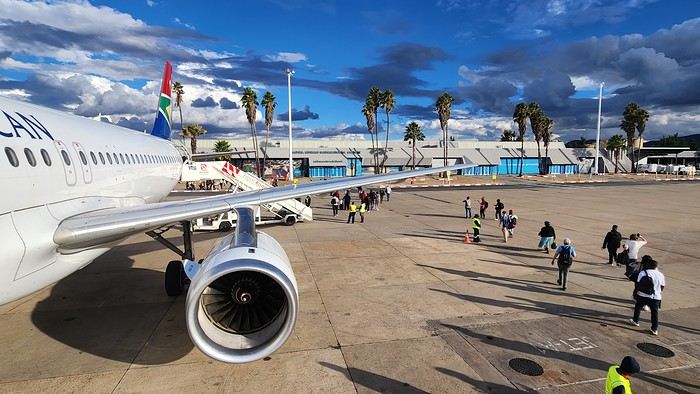
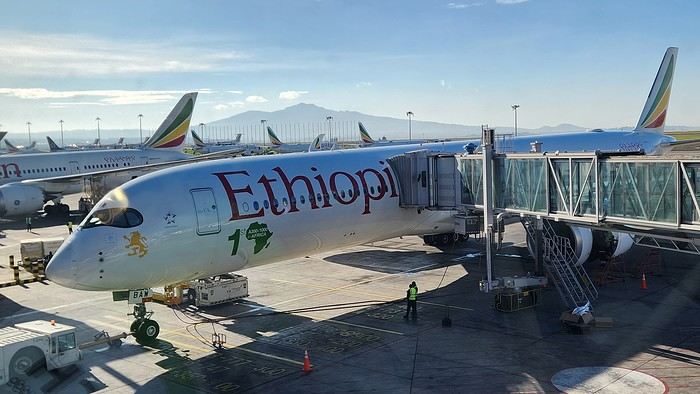
As we landed on the runway, first wow effect: The horizon is immense. It’s flat as can be, incredibly flat... So much flat space! Did I mention it was flat?... Looking into the distance, it feels like your gaze could circle the Earth without hitting a single obstacle—until you end up staring at your own backside. "Oh, what a nice view!" Well, it’s the first time I’ve seen my butt from this angle! Touching moment... Sorry, I’m rambling—must be the exhaustion from the three-flight marathon we just powered through via Ethiopia and South Africa... And yet, no time to philosophize about my anatomy. As usual, we want to rack up our first kilometers to be front and center at dawn tomorrow. After wrapping up the tedious Namibian immigration formalities and meeting the 4x4 that’ll be our companion day and night for the next fifteen days, we’re off! We’re not exactly fresh, but we’re ready to tackle the next five hundred kilometers in night mode, cruise control set due south! Just outside Windhoek, the local wildlife—a jackal—welcomes us with a smile: "Welcome to Namibia!" That’s what it said! Honest... Okay, first endless straight road, first flaming sunset, first corrugated dirt track, first Milky Way with zero light pollution... You get it—it’s definitely the day of firsts... First night camping, too, in the big trunk of our Toyota Fortuner parked by the side of the track... The real adventure, the kind that smells under the arms, can finally begin...
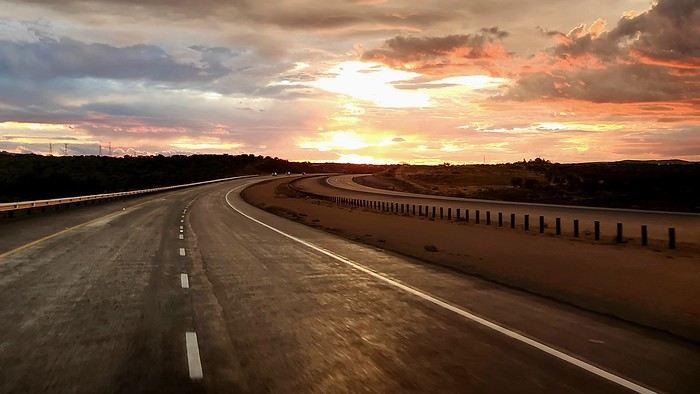
It was winter, a winter with beautiful weather, A season that only exists in the southwest of America, I remember very well what I told you that morning A month ago... A century ago, an eternity ago... We’ll go... wherever you want, whenever you want...
Well, yeah, back from our adventure in our enchanting American West just a month ago, we’re already taking a bite out of one of its lesser-known competitors. "Flo, if you had to pick just one reason to justify your love for the U.S., what would it be?" The greasy, dripping burgers? No, I don’t think I’m going out on a limb by saying it’d be the wide-open spaces... And that’s exactly what our new quest is taking us to—a land on the other side of the globe where the horizon also seems endless, where silence tastes like salty wind and sand, where freedom is measured in kilometers of desert tracks, where the GPS is mostly there to confirm you’re lost in the middle of nowhere... Add to that magic formula the fact that you’ll see more zebras, giraffes, wildebeest, and elephants than people per square kilometer, and you can imagine us setting foot in Southern Africa for the first time, more precisely at the small airport in Windhoek, capital of... of...? Brush up on your geography, damn it! We’re landing in Namibia!!!
To be honest, Namibian landscapes have been flirting with me for ages. So how did I resist this island of temptation for so long? First, the budget. Let’s just say that for the same amount of effort (and kidneys), the bank lets you choose two other adventures almost anywhere else on the planet. Then there were my girls. Yeah, back then, they were too little to dose up on Malarone, the only malaria remedy at the time... Long story short, ten years later, all the planets have aligned. First, I won the Euromillions! Well, almost... Let’s just say my girls are now old enough... not to take Malarone, but to stop following me on all my adventures! Jackpot! "Flo, how about a little two-person caprice, just the two of us, tackling the Namibian tracks?"
As we landed on the runway, first wow effect: The horizon is immense. It’s flat as can be, incredibly flat... So much flat space! Did I mention it was flat?... Looking into the distance, it feels like your gaze could circle the Earth without hitting a single obstacle—until you end up staring at your own backside. "Oh, what a nice view!" Well, it’s the first time I’ve seen my butt from this angle! Touching moment... Sorry, I’m rambling—must be the exhaustion from the three-flight marathon we just powered through via Ethiopia and South Africa... And yet, no time to philosophize about my anatomy. As usual, we want to rack up our first kilometers to be front and center at dawn tomorrow. After wrapping up the tedious Namibian immigration formalities and meeting the 4x4 that’ll be our companion day and night for the next fifteen days, we’re off! We’re not exactly fresh, but we’re ready to tackle the next five hundred kilometers in night mode, cruise control set due south! Just outside Windhoek, the local wildlife—a jackal—welcomes us with a smile: "Welcome to Namibia!" That’s what it said! Honest... Okay, first endless straight road, first flaming sunset, first corrugated dirt track, first Milky Way with zero light pollution... You get it—it’s definitely the day of firsts... First night camping, too, in the big trunk of our Toyota Fortuner parked by the side of the track... The real adventure, the kind that smells under the arms, can finally begin...
Africa: A Heartfelt Love for a Continent
“When the Whites came to Africa, we had the land and they had the Bible. They taught us to pray with our eyes closed: when we opened them, the Whites had the land and we had the Bible.” Jomo Kenyatta (p.7)
The Maggi cube, an unchallenged hegemony, and so much more
“The hopeless continent,” headlined The Economist, a British magazine, in July 2000 about Africa. Eleven years later, the same magazine headlined “Africa rising” instead. Images of Africa in the prosperous North constantly oscillate between apocalyptic scenarios and enthusiastic projections. A key issue with such images lies in the generalization they entail. If you look at the continent, considerable contrasts emerge depending on space and time. It’s no surprise that a region of the world encompassing such diverse ecological zones, maintaining such varied ties with other continents, comprising nearly fifty nation-states in sub-Saharan Africa alone, and characterized by a great diversity of languages, belief systems, and historical paths, doesn’t share a single destiny.
And yet, for many people outside Africa, as well as for many Africans, the continent constitutes a single entity, defined by criteria such as skin color, a colonial past, poverty, and the art of survival. Until now, these perspectives were generally accompanied by the idea that Africa had to—or should have—followed a single path together, sometimes called development, sometimes modernization, sometimes liberation, then a market economy. None of these paths delivered on their promises.
The two writers Alain Mabanckou and Abdourahman Waberi—one from Congo, the other raised in Djibouti, both long settled in France and now professors at renowned North American universities (Los Angeles, Washington)—have had enough of pessimistic scenarios: “We are aware that Africa is in the world and the world is in Africa. The same goes for all other continents, as our destinies are inextricably linked for better or worse. We refuse to see Africa as a reservoir of misfortunes or a continent cursed by atavistic misfortune and characterized by ethnic conflicts. [...] It’s this passionate flame we wanted to capture in a book [...] a kind of stroll through African cultures, without any demands, each letter of the alphabet leading us to a notion, a practice, a concept, a moment in history, literature, painting, politics, economics, cuisine, etc.” (p.10-11). Africa, they write, is on the verge of “imposing a signature, a style, a way of being in the world and in relation to the rest of the world.” (p.11) To put words to the continent’s diversity and dynamism, the two authors created a “rambling ABC,” a kind of portrait—or more precisely, a mythography—that lets you see and feel the pulse of a vast continent whose cultural power is unfolding before our eyes. Once marginalized or even mocked, the voice and importance of the Continent in global affairs are now undeniable” (p.11), containing over a hundred entries, mostly concise, written in a relaxed and casual style. The optimistic, even exuberant tone is set from the brief introduction. The duo of authors wants to “sing a love song to the cultures of our continent, to its inhabitants past and present, to its exceptional resources and its spectacular globalization despite a certain pollution that still clouds our skies due to the unmatched duration of dictatorships in some of our regions.” (p.12) In doing so, they don’t want to be too distracted by today’s Afewerki-Biya-Bongo-Déby & Co. ...
Of course, you’ll find tributes to great precursors like Frantz Fanon (“[...] it was a love story and admiration that wasn’t dimmed by the four decades separating his birth from ours. Let’s add that we were born while the native of Fort-de-France had left the world’s stage four years earlier, in the prime of life” p.141), Mongo Beti (“You must read and reread Mongo Beti, a genius who used his fame to support often just causes in Africa, like defending oppressed groups. His place is already in History. His oppressors, like the dictators Ahmadou Ahidjo and Paul Biya, can’t compete in the same category” p.64), the Malian Amadou Hampâté Bâ
(“Posterity remembers him mainly as an tireless defender of African cultures. His plea for the collection and preservation of traditional African knowledge remains a major event for all men and women of good will. One day in 1960, at the UNESCO podium, the native of Bandiagara sounded the alarm: ‘[...] Since we’ve admitted that the humanity of each people is the heritage of all humanity, if African traditions aren’t collected in time and written down, they’ll one day be missing from the universal archives of humanity.’” p.51),
Kwame Nkrumah, “one of the founders of Pan-Africanism, father of Ghana’s independence” (p.239), as well as the historian Cheikh Anta Diop, the writer, poet, and politician Aimé Césaire, and the economist and thinker Samir Amin, but also very warm tributes to certain contemporary African intellectuals like Souleymane Bachir Diagne and Achille Mbembe
(“A few years ago, in dominant economic circles, a rumor often resurfaced, usually disguised as a cold and scientifically proven analysis: Africa is useless. It’s a burden for the rest of the human community. With its 2% share in world trade, it would disappear from stock market radars without anyone noticing. So? Maybe it’ll be pulled up by other continents. Wanting to surpass itself is a crazy bet for Africans, they concluded. Arrogant or clueless, President Nicolas Sarkozy declared before an audience of students and teachers at Cheikh Anta Diop University in Dakar: ‘The African man hasn’t entered history enough [...] He only knows the eternal repetition of time marked by the endless repetition of the same gestures and words.’ That was in 2007. For decades, armed only with reason, an intellectual often steps up to debunk prejudices, lazy readings, and dishonest frameworks used as false fronts by those who, like Nicolas Sarkozy or former journalist Stephen Smith, out of ignorance, contempt, or condescension, distort African reality. This intellectual is none other than the historian and political scientist Achille Mbembe. This heir of Frantz Fanon, Amílcar Cabral, Jean-Marc Ela, and Fabien Eboussi-Boulaga was born in 1957 in Cameroon, in the Bassa region. Marked early by the upheavals of a fratricidal war, Achille Mbembe became the guardian of the memory of martyrs. After brilliant studies in Paris, he went on to teach at the best American universities, but the call of the Continent was stronger than anything else. In Dakar, he once directed CODESRIA (Council for the Development of Social Science Research in Africa) before joining the University of the Witwatersrand in Johannesburg, South Africa. Even though the author of *Critique of Black Reason* (Éditions La Découverte, 2015) spends a few months at Duke University in North Carolina, his observation post remains South Africa. From Johannesburg, Achille Mbembe scrutinizes Africa and the whole world. A lucid observer with an elegant and generous pen, Achille Mbembe knows how to blend big and small history: ‘I was born one day in July, as the month was drawing to a close. It was 1957, in that part of Africa recently named ‘Cameroon,’ a memory of the wonder that seized Portuguese sailors in the 15th century when, sailing up the river near Douala, they couldn’t help but note the presence of a multitude of crustaceans, and named it *Rio dos Camarões*, meaning ‘River of Shrimp.’ I grew up in the shadow of this nameless land, since, in a way, the name it bears is only the product of someone else’s astonishment: a lexical mistake, if you will.’ From this mistake or wound, he made leaven, a springboard to compose a rich work, recognized worldwide. To denounce barriers and barbarians too. But that’s not enough. Among his peers in circles of thought and action, Achille Mbembe passionately and consistently defends human dignity and the beauty of the world. In doing so, he fulfills the mission Frantz Fanon entrusted to him.” (p.227-229),
as well as entries dedicated to lesser-known artists and intellectuals, like the French journalist and activist Rokhaya Diallo, daughter of Senegalese and Gambian parents, or the Ethiopian filmmaker Haile Gerima, who has long lived in the United States. Other names from politics, sports, music, art, and literature: Kofi Annan, p.36; Barack Obama, p.243; Thomas Sankara, p.277; Ousmane Sow, p.285; Yambo Ouologuem, p.250; Léopold Sédar Senghor, p.282; Muhammad Ali, p.30; Nuruddin Farah, p.146; Salif Keita, p.203; Ahmadou Kourouma, p.206; Ngũgĩ wa Thiong’o, p.236; Winnie Mandela, p.224; Kylian Mbappé, p.226 ...
The authors, who resolutely commit to a “mythography” (p.11) of Africa, also pay special attention to local social movements, cultural events, and aspects of daily life. *Y’en a marre*, “which also meant ‘we’re fed up with sitting on our hands’” (p.320-321), emerged about a decade ago in Senegal as a citizen movement of peaceful resistance and symbolizes, the authors emphasize, the fact that African youth are increasingly fed up “with the political circus deployed in Africa since independence, as our parents would say, ‘since the White man left’...” (p.321). A full entry is dedicated to the Maggi bouillon cube, which has flooded African markets for about forty years and enjoys immense popularity (“It’s everywhere in Africa, from Dakar to Djibouti, and from Tangier to Cape Town. It’s in every pot, every stew. Little hands put it in every sauce, every local or adapted dish. An unchallenged hegemony! You’ll find it in diasporas too. The culinary strolls in Paris, in the [...] neighborhood” p.90). Critics blame it not only for impoverishing the aromatic diversity of local dishes but also for being harmful to health. And yet, “he poorest Africans, those who eat only once a day, a few spoonfuls of white beans and a ball of *foufou*, for example, are the most fervent users of the magic cube.” (p.92-93)
For *fonio*, “the new trendy cereal. [...] From the millet family, fonio is probably the oldest cereal cultivated in West Africa, and mainly in its sub-Saharan part, for millennia. [...] Easy to grow, water-efficient, fonio grows everywhere except on clay soils. Long neglected because it was considered the poor man’s crop, fonio is now a source of pride for the farmers who cultivate it and cherish it like the apple of their eye” (p.156-157), the authors immediately offer a detailed recipe, letting the reader know that “e can’t resist sharing this fonio with chicken recipe from Mali with you:
Ingredients: 1 chicken 3 large ripe red tomatoes 4 tbsp tomato paste 4 large onions 1 garlic clove 1/2 cup oil 2 Maggi cubes or salt 2 large carrots 1 turnip 1 large cabbage 2 large potatoes 1 celery stalk 1 packet pre-cooked fonio 4 okra (or okra powder) salt, pepper
Preparation: 1. Prepare the sauce: wash and cut the chicken. Peel the onions, garlic, and vegetables. 2. In a pot, fry the chicken pieces. 3. Dice the onions, tomatoes, carrots, and turnip very small and add them to the pot. 4. Add the tomato paste, salt, and pepper. 5. Simmer for 15 min, then add 2 L of water and the cooked chicken pieces. 6. Simmer for 30 min, then add the crushed garlic and celery, plus the cabbage cut into 4 and the potatoes cut in half. 7. Prepare the fonio: cover it with warm water, let it rest for 15 min, and cook it over low heat. 8. In a small pot, boil the okra and crush them. 9. Mix the crushed okra with the cooked fonio, then salt. Serve hot.” (p.158-159)
The comedy *Black Mic Mac*, released in French theaters in 1986 and addressing France’s increasingly restrictive immigration policy at the time, also gets an entry, as do *Tintin in the Congo*, the popular comic, and *Jip’s Café* (“[...] a little Africa in the heart of Paris, with passersby stopping to admire the ‘ambianceurs’ on the dance floor or attend the cultural events offered by the place” (p.194), an African establishment in Paris that Alain Mabanckou already immortalized in one of his novels.
The duo of authors also tackles thorny subjects like jihadism (p.119), the Rwandan genocide (p.272), the CFA franc (p.82), and dictatorship (p.110). While the two strike the right tone here, many entries leave a slightly bitter taste. Two examples: why doesn’t the text on Barack Obama mention the great disappointment of many people in Africa, who expected more from the African policy of the first U.S. president with African roots than just occasional warm words? Why do the comments on Winnie Mandela gloss over the fact that she was a highly controversial icon of the anti-apartheid movement due to her involvement in kidnappings, acts of torture, and murders of alleged apartheid collaborators? Instead, there’s a compassion that brings tears to the eyes: “She was often reduced to a secondary role, the wife of a great man” or “When victory came, she didn’t taste its fruits. Divorced, isolated. She would never be a ‘first lady’ in an evening gown, posing before a bed of chrysanthemums. They’d keep her far from the circles of power” (p.224-225). At this point, I would’ve liked the authors to take a slightly more critical stance...
That said, these “weaknesses” (if you can call them that) shouldn’t overshadow the book as a whole. It remains an informative, sometimes very entertaining, and often even original work in its own way.
Book information (the original French and the German translation):
Alain Mabanckou/Abdourahman Waberi. Dictionnaire enjoué des cultures africaines. Fayard, 2019. Alain Mabanckou/Abdourahman Waberi. Der Puls Afrikas. Eine Liebeserklärung von A bis Z. Reclam, 2022.
Hery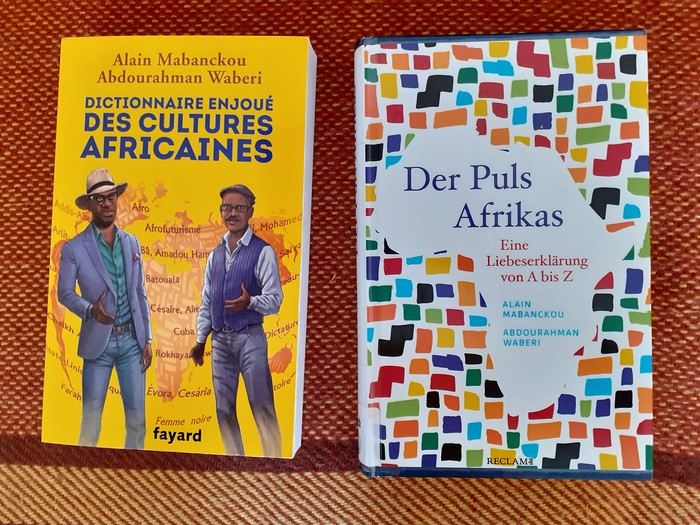
The Maggi cube, an unchallenged hegemony, and so much more
“The hopeless continent,” headlined The Economist, a British magazine, in July 2000 about Africa. Eleven years later, the same magazine headlined “Africa rising” instead. Images of Africa in the prosperous North constantly oscillate between apocalyptic scenarios and enthusiastic projections. A key issue with such images lies in the generalization they entail. If you look at the continent, considerable contrasts emerge depending on space and time. It’s no surprise that a region of the world encompassing such diverse ecological zones, maintaining such varied ties with other continents, comprising nearly fifty nation-states in sub-Saharan Africa alone, and characterized by a great diversity of languages, belief systems, and historical paths, doesn’t share a single destiny.
And yet, for many people outside Africa, as well as for many Africans, the continent constitutes a single entity, defined by criteria such as skin color, a colonial past, poverty, and the art of survival. Until now, these perspectives were generally accompanied by the idea that Africa had to—or should have—followed a single path together, sometimes called development, sometimes modernization, sometimes liberation, then a market economy. None of these paths delivered on their promises.
The two writers Alain Mabanckou and Abdourahman Waberi—one from Congo, the other raised in Djibouti, both long settled in France and now professors at renowned North American universities (Los Angeles, Washington)—have had enough of pessimistic scenarios: “We are aware that Africa is in the world and the world is in Africa. The same goes for all other continents, as our destinies are inextricably linked for better or worse. We refuse to see Africa as a reservoir of misfortunes or a continent cursed by atavistic misfortune and characterized by ethnic conflicts. [...] It’s this passionate flame we wanted to capture in a book [...] a kind of stroll through African cultures, without any demands, each letter of the alphabet leading us to a notion, a practice, a concept, a moment in history, literature, painting, politics, economics, cuisine, etc.” (p.10-11). Africa, they write, is on the verge of “imposing a signature, a style, a way of being in the world and in relation to the rest of the world.” (p.11) To put words to the continent’s diversity and dynamism, the two authors created a “rambling ABC,” a kind of portrait—or more precisely, a mythography—that lets you see and feel the pulse of a vast continent whose cultural power is unfolding before our eyes. Once marginalized or even mocked, the voice and importance of the Continent in global affairs are now undeniable” (p.11), containing over a hundred entries, mostly concise, written in a relaxed and casual style. The optimistic, even exuberant tone is set from the brief introduction. The duo of authors wants to “sing a love song to the cultures of our continent, to its inhabitants past and present, to its exceptional resources and its spectacular globalization despite a certain pollution that still clouds our skies due to the unmatched duration of dictatorships in some of our regions.” (p.12) In doing so, they don’t want to be too distracted by today’s Afewerki-Biya-Bongo-Déby & Co. ...
Of course, you’ll find tributes to great precursors like Frantz Fanon (“[...] it was a love story and admiration that wasn’t dimmed by the four decades separating his birth from ours. Let’s add that we were born while the native of Fort-de-France had left the world’s stage four years earlier, in the prime of life” p.141), Mongo Beti (“You must read and reread Mongo Beti, a genius who used his fame to support often just causes in Africa, like defending oppressed groups. His place is already in History. His oppressors, like the dictators Ahmadou Ahidjo and Paul Biya, can’t compete in the same category” p.64), the Malian Amadou Hampâté Bâ
(“Posterity remembers him mainly as an tireless defender of African cultures. His plea for the collection and preservation of traditional African knowledge remains a major event for all men and women of good will. One day in 1960, at the UNESCO podium, the native of Bandiagara sounded the alarm: ‘[...] Since we’ve admitted that the humanity of each people is the heritage of all humanity, if African traditions aren’t collected in time and written down, they’ll one day be missing from the universal archives of humanity.’” p.51),
Kwame Nkrumah, “one of the founders of Pan-Africanism, father of Ghana’s independence” (p.239), as well as the historian Cheikh Anta Diop, the writer, poet, and politician Aimé Césaire, and the economist and thinker Samir Amin, but also very warm tributes to certain contemporary African intellectuals like Souleymane Bachir Diagne and Achille Mbembe
(“A few years ago, in dominant economic circles, a rumor often resurfaced, usually disguised as a cold and scientifically proven analysis: Africa is useless. It’s a burden for the rest of the human community. With its 2% share in world trade, it would disappear from stock market radars without anyone noticing. So? Maybe it’ll be pulled up by other continents. Wanting to surpass itself is a crazy bet for Africans, they concluded. Arrogant or clueless, President Nicolas Sarkozy declared before an audience of students and teachers at Cheikh Anta Diop University in Dakar: ‘The African man hasn’t entered history enough [...] He only knows the eternal repetition of time marked by the endless repetition of the same gestures and words.’ That was in 2007. For decades, armed only with reason, an intellectual often steps up to debunk prejudices, lazy readings, and dishonest frameworks used as false fronts by those who, like Nicolas Sarkozy or former journalist Stephen Smith, out of ignorance, contempt, or condescension, distort African reality. This intellectual is none other than the historian and political scientist Achille Mbembe. This heir of Frantz Fanon, Amílcar Cabral, Jean-Marc Ela, and Fabien Eboussi-Boulaga was born in 1957 in Cameroon, in the Bassa region. Marked early by the upheavals of a fratricidal war, Achille Mbembe became the guardian of the memory of martyrs. After brilliant studies in Paris, he went on to teach at the best American universities, but the call of the Continent was stronger than anything else. In Dakar, he once directed CODESRIA (Council for the Development of Social Science Research in Africa) before joining the University of the Witwatersrand in Johannesburg, South Africa. Even though the author of *Critique of Black Reason* (Éditions La Découverte, 2015) spends a few months at Duke University in North Carolina, his observation post remains South Africa. From Johannesburg, Achille Mbembe scrutinizes Africa and the whole world. A lucid observer with an elegant and generous pen, Achille Mbembe knows how to blend big and small history: ‘I was born one day in July, as the month was drawing to a close. It was 1957, in that part of Africa recently named ‘Cameroon,’ a memory of the wonder that seized Portuguese sailors in the 15th century when, sailing up the river near Douala, they couldn’t help but note the presence of a multitude of crustaceans, and named it *Rio dos Camarões*, meaning ‘River of Shrimp.’ I grew up in the shadow of this nameless land, since, in a way, the name it bears is only the product of someone else’s astonishment: a lexical mistake, if you will.’ From this mistake or wound, he made leaven, a springboard to compose a rich work, recognized worldwide. To denounce barriers and barbarians too. But that’s not enough. Among his peers in circles of thought and action, Achille Mbembe passionately and consistently defends human dignity and the beauty of the world. In doing so, he fulfills the mission Frantz Fanon entrusted to him.” (p.227-229),
as well as entries dedicated to lesser-known artists and intellectuals, like the French journalist and activist Rokhaya Diallo, daughter of Senegalese and Gambian parents, or the Ethiopian filmmaker Haile Gerima, who has long lived in the United States. Other names from politics, sports, music, art, and literature: Kofi Annan, p.36; Barack Obama, p.243; Thomas Sankara, p.277; Ousmane Sow, p.285; Yambo Ouologuem, p.250; Léopold Sédar Senghor, p.282; Muhammad Ali, p.30; Nuruddin Farah, p.146; Salif Keita, p.203; Ahmadou Kourouma, p.206; Ngũgĩ wa Thiong’o, p.236; Winnie Mandela, p.224; Kylian Mbappé, p.226 ...
The authors, who resolutely commit to a “mythography” (p.11) of Africa, also pay special attention to local social movements, cultural events, and aspects of daily life. *Y’en a marre*, “which also meant ‘we’re fed up with sitting on our hands’” (p.320-321), emerged about a decade ago in Senegal as a citizen movement of peaceful resistance and symbolizes, the authors emphasize, the fact that African youth are increasingly fed up “with the political circus deployed in Africa since independence, as our parents would say, ‘since the White man left’...” (p.321). A full entry is dedicated to the Maggi bouillon cube, which has flooded African markets for about forty years and enjoys immense popularity (“It’s everywhere in Africa, from Dakar to Djibouti, and from Tangier to Cape Town. It’s in every pot, every stew. Little hands put it in every sauce, every local or adapted dish. An unchallenged hegemony! You’ll find it in diasporas too. The culinary strolls in Paris, in the [...] neighborhood” p.90). Critics blame it not only for impoverishing the aromatic diversity of local dishes but also for being harmful to health. And yet, “he poorest Africans, those who eat only once a day, a few spoonfuls of white beans and a ball of *foufou*, for example, are the most fervent users of the magic cube.” (p.92-93)
For *fonio*, “the new trendy cereal. [...] From the millet family, fonio is probably the oldest cereal cultivated in West Africa, and mainly in its sub-Saharan part, for millennia. [...] Easy to grow, water-efficient, fonio grows everywhere except on clay soils. Long neglected because it was considered the poor man’s crop, fonio is now a source of pride for the farmers who cultivate it and cherish it like the apple of their eye” (p.156-157), the authors immediately offer a detailed recipe, letting the reader know that “e can’t resist sharing this fonio with chicken recipe from Mali with you:
Ingredients: 1 chicken 3 large ripe red tomatoes 4 tbsp tomato paste 4 large onions 1 garlic clove 1/2 cup oil 2 Maggi cubes or salt 2 large carrots 1 turnip 1 large cabbage 2 large potatoes 1 celery stalk 1 packet pre-cooked fonio 4 okra (or okra powder) salt, pepper
Preparation: 1. Prepare the sauce: wash and cut the chicken. Peel the onions, garlic, and vegetables. 2. In a pot, fry the chicken pieces. 3. Dice the onions, tomatoes, carrots, and turnip very small and add them to the pot. 4. Add the tomato paste, salt, and pepper. 5. Simmer for 15 min, then add 2 L of water and the cooked chicken pieces. 6. Simmer for 30 min, then add the crushed garlic and celery, plus the cabbage cut into 4 and the potatoes cut in half. 7. Prepare the fonio: cover it with warm water, let it rest for 15 min, and cook it over low heat. 8. In a small pot, boil the okra and crush them. 9. Mix the crushed okra with the cooked fonio, then salt. Serve hot.” (p.158-159)
The comedy *Black Mic Mac*, released in French theaters in 1986 and addressing France’s increasingly restrictive immigration policy at the time, also gets an entry, as do *Tintin in the Congo*, the popular comic, and *Jip’s Café* (“[...] a little Africa in the heart of Paris, with passersby stopping to admire the ‘ambianceurs’ on the dance floor or attend the cultural events offered by the place” (p.194), an African establishment in Paris that Alain Mabanckou already immortalized in one of his novels.
The duo of authors also tackles thorny subjects like jihadism (p.119), the Rwandan genocide (p.272), the CFA franc (p.82), and dictatorship (p.110). While the two strike the right tone here, many entries leave a slightly bitter taste. Two examples: why doesn’t the text on Barack Obama mention the great disappointment of many people in Africa, who expected more from the African policy of the first U.S. president with African roots than just occasional warm words? Why do the comments on Winnie Mandela gloss over the fact that she was a highly controversial icon of the anti-apartheid movement due to her involvement in kidnappings, acts of torture, and murders of alleged apartheid collaborators? Instead, there’s a compassion that brings tears to the eyes: “She was often reduced to a secondary role, the wife of a great man” or “When victory came, she didn’t taste its fruits. Divorced, isolated. She would never be a ‘first lady’ in an evening gown, posing before a bed of chrysanthemums. They’d keep her far from the circles of power” (p.224-225). At this point, I would’ve liked the authors to take a slightly more critical stance...
That said, these “weaknesses” (if you can call them that) shouldn’t overshadow the book as a whole. It remains an informative, sometimes very entertaining, and often even original work in its own way.
Book information (the original French and the German translation):
Alain Mabanckou/Abdourahman Waberi. Dictionnaire enjoué des cultures africaines. Fayard, 2019. Alain Mabanckou/Abdourahman Waberi. Der Puls Afrikas. Eine Liebeserklärung von A bis Z. Reclam, 2022.
Hery
Trip to Madagascar in 2026: Nosy Be or Île Sainte-Marie?
Hi everyone,
I’m planning a third trip to Madagascar in 2026. This time, heading north and then part of the west coast before going back up.
The question I’m asking myself—same as during our first visits—is Nosy Be or not?
Of course, the photos show stunning beaches, and when you mention Madagascar, almost everyone says Nosy Be or at least has heard of it. That’s actually why we didn’t include it in our itineraries before, especially since we’d already seen paradise-like beaches in the south, and we had them all to ourselves because they were hard to reach.
On the other hand, I’ve always been drawn to Île Sainte-Marie, but from the north, you have to go back down to Tana, which I’m okay with in principle.
So, what’s your take? Nosy Be and its surroundings—what do you think? Just tourists looking to party?
Thanks