Results for "Éthiopie+déplacer"
About 2,360 results.
More options
Many results are in French, the community’s main language. English translations are added over time.
Search results
Aller en Afrique par voie terrestre
Bonjour à tous,
Je m'apprete a partir sur ce continent qu'on appelle l'Afrique pour environ 6 mois. Mon idée est d'y aller par voie terrestre (pour l'instant j''en privilégie pas une plus que les autres.)... Et ce serait sympa si vous pouviez me faire partager vos expériences dans le domaine !
Achat à Madagascar
Bonjour,
Je voudrais savoir si il est possible d'acheter une maison à Madagascar avec un terrain, en nom propre et si cela est possible, est-on propriétaire à vie ?
Sinon, faut il créer une sté ? et si t'elle est le cas, doit-on incorporer des malgaches et qui est majoritaire ?
Merci d'avance pour vos réponses.
M.
Je voudrais savoir si il est possible d'acheter une maison à Madagascar avec un terrain, en nom propre et si cela est possible, est-on propriétaire à vie ?
Sinon, faut il créer une sté ? et si t'elle est le cas, doit-on incorporer des malgaches et qui est majoritaire ?
Merci d'avance pour vos réponses.
M.
Visa TDM
Voila je suis en pleine preparation pour un tour du monde, une question me vient à l esprit 😇
Pour les pays Mexique, Perou, Hawai(usa), Ile Fidji, Nouvelle Zelande, Australie, Thaillande, Nepal est il preferable de prendre les visas avant de partir ou de les prendre sur place?
Pour les pays Mexique, Perou, Hawai(usa), Ile Fidji, Nouvelle Zelande, Australie, Thaillande, Nepal est il preferable de prendre les visas avant de partir ou de les prendre sur place?
Quelqu'un part à Delhi fin septembre?
786
🙁 Mes réserves de café en poudre pour machine à espresso fondent à vue d'oeil. A vrai dire, je n'en ai plus que pour quelques jours... Après, je suis condamné soit au filtre, soit à l'hypersomnie (on trouve du café en poudre en Inde, et même du très bon, mais pas une mouture adaptée à ma machine...).
A moins que...
Y aurait-il quelqu'un par ici :
* qui parte à Delhi dans les jours qui viennent * qui pourrait rajouter dans ses valises entre un et quatre paquets de café ?
Je propose en échange :
* de payer le café en roupies au taux du jour (et sans commission !) * de vous inviter à dîner pour dire merci * de vous donner un coup de main ou des conseils à Delhi si vous en avez besoin.
Si le deal vous convient, merci de m'envoyer un message privé (clic sur mon nom depuis la page d'adresse de ce message) ! Pyaasa Caféinomane pas encore repenti 😇
🙁 Mes réserves de café en poudre pour machine à espresso fondent à vue d'oeil. A vrai dire, je n'en ai plus que pour quelques jours... Après, je suis condamné soit au filtre, soit à l'hypersomnie (on trouve du café en poudre en Inde, et même du très bon, mais pas une mouture adaptée à ma machine...).
A moins que...
Y aurait-il quelqu'un par ici :
* qui parte à Delhi dans les jours qui viennent * qui pourrait rajouter dans ses valises entre un et quatre paquets de café ?
Je propose en échange :
* de payer le café en roupies au taux du jour (et sans commission !) * de vous inviter à dîner pour dire merci * de vous donner un coup de main ou des conseils à Delhi si vous en avez besoin.
Si le deal vous convient, merci de m'envoyer un message privé (clic sur mon nom depuis la page d'adresse de ce message) ! Pyaasa Caféinomane pas encore repenti 😇
Traverser le désert de Gobie à cheval (Mongolie)?
je commence a rever a mon prochain voyage, et j ai une idee qui me trotte dans le tete.. traverser le desert de gobie a cheval!
quelqu un ici l'a-t-il deja fait? ou simplement aurait qq renseignements, ou quelques idees pour savoir si c est possible, et comment?
ou encore mieux, quelques souvenirs? faites moi rever! je suis a bangkok, mais mon avion est demain pour reprendre la fac, c est la deprime a mort!!
quelqu un ici l'a-t-il deja fait? ou simplement aurait qq renseignements, ou quelques idees pour savoir si c est possible, et comment?
ou encore mieux, quelques souvenirs? faites moi rever! je suis a bangkok, mais mon avion est demain pour reprendre la fac, c est la deprime a mort!!
Que pensez vous de St Marie en Camargue? (France)
Bonjours à 😉tous
Je reviens de St maries de la mer, j'y ai fait quelques activitées, canoé, bateau sur le Rhone(le TIKI) pmd à cheval dans une manade, petit train de megeane, parc ornithologique ou j'ai été déçu, hors mis les flaments roses et les ragondins tout les animaux sont en cages méme les aigrettes, les oies etc....
ceci en 1 semaine en camping au clo du rhone pour au total à deux, tout frais compris(de l'autoroute aux cadeaux)à900 euros.
M'en suis je bien sortis, oubien vous pensez que pour le prix, j'aurais put faire des choses en plus?Qu'ai je manqué?????????
Merci pour vos commentéres😎 PetitePlume alias KATHY😊 A+
Je reviens de St maries de la mer, j'y ai fait quelques activitées, canoé, bateau sur le Rhone(le TIKI) pmd à cheval dans une manade, petit train de megeane, parc ornithologique ou j'ai été déçu, hors mis les flaments roses et les ragondins tout les animaux sont en cages méme les aigrettes, les oies etc....
ceci en 1 semaine en camping au clo du rhone pour au total à deux, tout frais compris(de l'autoroute aux cadeaux)à900 euros.
M'en suis je bien sortis, oubien vous pensez que pour le prix, j'aurais put faire des choses en plus?Qu'ai je manqué?????????
Merci pour vos commentéres😎 PetitePlume alias KATHY😊 A+
Dollars ou euros pour le Moyen-Orient?
Bonjour,
Pour ma tournée Liban/Syrie/jordanie/Israel, il est plus interressant de partir avec des dollars ou des euros ?
Merci pour vos réponses.
Pour ma tournée Liban/Syrie/jordanie/Israel, il est plus interressant de partir avec des dollars ou des euros ?
Merci pour vos réponses.
Passage Inde/Sri Lanka?
Salut,
Bon je part en INDE dans 2 mois et je me demandais comment on fait pour rejoindre le sri lanka ? Il y a un pont, non?
Est ce que ca vaut vraiment le coup d'y aller?
Merci,
Silvere.
Bon je part en INDE dans 2 mois et je me demandais comment on fait pour rejoindre le sri lanka ? Il y a un pont, non?
Est ce que ca vaut vraiment le coup d'y aller?
Merci,
Silvere.
Syrie-Jordanie en 4x4
Je pars en 4x4 le 2 juillet pour la Syrie et la Jordanie.
Peut-on payer la taxe d'entrée des véhicules en euros ( et pas en dollars)?
Quelqu'un a-t-il des points GPS d'itinéraires sympas dans ces pays ?
TDM 2004 Afrique et Australie
Bonjour,
Je prépare un périple d'un an en 4x4 à travers l'Afrique puis l'Australie.
Départ Janvier 2004
Itinéraire prévu :
Maroc -> Mauritanie -> Mali -> Burkina -> Bénin -> Togo -> Niger -> Tchad -> Caméroun -> (Bateau jusqu'en Namibie si possible) -> Namibie -> Botswana -> Zambie -> Malawi -> Tanzanie -> Madagascar (si bateau Tanzanie / Madagascar) -> Tanzanie Mozambique -> Afrique du Sud -> Nouvelle Zélande + Australie.
Plusieurs questions
1° - Frontières
Ce qui me préoccupe le plus pour l'instant, c'est le passage de frontière pour certains pays. En fait je recherche des témoignages récents ou des infos officielles sur itinéraire et postes frontières recommandés que je peux comparer avec les conseils du site diplomatique français and Co:
Pour l'Afrique de l'Ouest : Passage Niger -> Tchad -> Caméroun ou alternative possible : Niger -> Nigéria -> Caméroun
Pour l'Afrique australe : Passage Namibie -> Bostwana -> Zambie -> Tanzanie
2° - Voiture : Nous sommes en train de demander le carnet de passage en douane. Par contre, comment peut-on assurer notre véhicule sur le continent africain. Pour le Maroc, no pb, pour la Mauritanie on prendra l'assurance à la frontière. Par contre pour les pays de l'Afrique de l'Ouest ou Australe, j'e n'ai pas d'info. J'ai entendu parler d'une "carte brune". Quelles sont les possibilités de contracter une assurance auto pour ces pays ? Quelqu'un a-t'il déjà utilisé les services de la société d'assurance africaine Colina SA ou de la Compagnie Caisse nationale d'assurance du Mali ?
3° - Liaisons maritimes pour la voiture Nous comptons envoyer notre voiture par bateau à plusieurs reprises. Si vous avez des contacts ou expériences similaires pour les liaisons suivantes (cout ? durée ? périodicité des liaisons maritimes ?) : a) Depuis Caméroun (Doula ?) vers Namibie (???) ou Afrique du Sud b) Depuis Tanzanie (Dar-es-Salaam ?) -> Madagascar (???) : Aller ? retour ? c) Depuis Madagascar vers Afrique du Sud (Durban) d) Depuis Afrique du Sud (Durban) vers AUstralie (?)
4° - Billet d'avion pour nous Pendant que la voiture voguera, nous irons directement par avion à destination. Je n'ai pas du tout creusé le sujet donc tuyaux et bons plans bienvenus. : Vols prévus (en fonction des liaisons maritimes possibles ) : Caméroun -> Namibie + Tanzanie -> Madagascar + Madagascar -> Afrique du Sud + Afrique du Sud -> Nouvelle-Zélande (éventuellement Australie).
5° - L'argent Comment avez-vous prévu de vous ravitailler en argent pendant votre périple : Carte Bleu, Traveller Cheque, Liquide. Comment s'en procurer sur place.
6° - Système de navigation embarqué (GPS + informatique), système de communication (Téléphone satellite) Avez-vous envisagé un de ces systèmes ? Si oui quelques informations techniques et financières seraient fort appréciées ;-)
Bref beaucoup de questions et à mon goût pas encore assez de réponses ! Bien sûr si vous avez des conseils, des recommandations, des contacts sur une partie de notre périple, ça sera avec grand plaisir. En espérant, de mon côté, pouvoir refiler des infos !
Merci d'avance Nadine
2° - Voiture : Nous sommes en train de demander le carnet de passage en douane. Par contre, comment peut-on assurer notre véhicule sur le continent africain. Pour le Maroc, no pb, pour la Mauritanie on prendra l'assurance à la frontière. Par contre pour les pays de l'Afrique de l'Ouest ou Australe, j'e n'ai pas d'info. J'ai entendu parler d'une "carte brune". Quelles sont les possibilités de contracter une assurance auto pour ces pays ? Quelqu'un a-t'il déjà utilisé les services de la société d'assurance africaine Colina SA ou de la Compagnie Caisse nationale d'assurance du Mali ?
3° - Liaisons maritimes pour la voiture Nous comptons envoyer notre voiture par bateau à plusieurs reprises. Si vous avez des contacts ou expériences similaires pour les liaisons suivantes (cout ? durée ? périodicité des liaisons maritimes ?) : a) Depuis Caméroun (Doula ?) vers Namibie (???) ou Afrique du Sud b) Depuis Tanzanie (Dar-es-Salaam ?) -> Madagascar (???) : Aller ? retour ? c) Depuis Madagascar vers Afrique du Sud (Durban) d) Depuis Afrique du Sud (Durban) vers AUstralie (?)
4° - Billet d'avion pour nous Pendant que la voiture voguera, nous irons directement par avion à destination. Je n'ai pas du tout creusé le sujet donc tuyaux et bons plans bienvenus. : Vols prévus (en fonction des liaisons maritimes possibles ) : Caméroun -> Namibie + Tanzanie -> Madagascar + Madagascar -> Afrique du Sud + Afrique du Sud -> Nouvelle-Zélande (éventuellement Australie).
5° - L'argent Comment avez-vous prévu de vous ravitailler en argent pendant votre périple : Carte Bleu, Traveller Cheque, Liquide. Comment s'en procurer sur place.
6° - Système de navigation embarqué (GPS + informatique), système de communication (Téléphone satellite) Avez-vous envisagé un de ces systèmes ? Si oui quelques informations techniques et financières seraient fort appréciées ;-)
Bref beaucoup de questions et à mon goût pas encore assez de réponses ! Bien sûr si vous avez des conseils, des recommandations, des contacts sur une partie de notre périple, ça sera avec grand plaisir. En espérant, de mon côté, pouvoir refiler des infos !
Merci d'avance Nadine
Inde: informations sur Assam, Arunachal Pradesh
Namaskar😏
Quelqu'un aurait il des infos sur cette région? Qui aurait déjà été? Les permis sont ils facilement délivrés? Février n'est pas trop froid pour y aller?
Merci d'avance! Donievad 🙂
Africa: A Heartfelt Love for a Continent
“When the Whites came to Africa, we had the land and they had the Bible. They taught us to pray with our eyes closed: when we opened them, the Whites had the land and we had the Bible.” Jomo Kenyatta (p.7)
The Maggi cube, an unchallenged hegemony, and so much more
“The hopeless continent,” headlined The Economist, a British magazine, in July 2000 about Africa. Eleven years later, the same magazine headlined “Africa rising” instead. Images of Africa in the prosperous North constantly oscillate between apocalyptic scenarios and enthusiastic projections. A key issue with such images lies in the generalization they entail. If you look at the continent, considerable contrasts emerge depending on space and time. It’s no surprise that a region of the world encompassing such diverse ecological zones, maintaining such varied ties with other continents, comprising nearly fifty nation-states in sub-Saharan Africa alone, and characterized by a great diversity of languages, belief systems, and historical paths, doesn’t share a single destiny.
And yet, for many people outside Africa, as well as for many Africans, the continent constitutes a single entity, defined by criteria such as skin color, a colonial past, poverty, and the art of survival. Until now, these perspectives were generally accompanied by the idea that Africa had to—or should have—followed a single path together, sometimes called development, sometimes modernization, sometimes liberation, then a market economy. None of these paths delivered on their promises.
The two writers Alain Mabanckou and Abdourahman Waberi—one from Congo, the other raised in Djibouti, both long settled in France and now professors at renowned North American universities (Los Angeles, Washington)—have had enough of pessimistic scenarios: “We are aware that Africa is in the world and the world is in Africa. The same goes for all other continents, as our destinies are inextricably linked for better or worse. We refuse to see Africa as a reservoir of misfortunes or a continent cursed by atavistic misfortune and characterized by ethnic conflicts. [...] It’s this passionate flame we wanted to capture in a book [...] a kind of stroll through African cultures, without any demands, each letter of the alphabet leading us to a notion, a practice, a concept, a moment in history, literature, painting, politics, economics, cuisine, etc.” (p.10-11). Africa, they write, is on the verge of “imposing a signature, a style, a way of being in the world and in relation to the rest of the world.” (p.11) To put words to the continent’s diversity and dynamism, the two authors created a “rambling ABC,” a kind of portrait—or more precisely, a mythography—that lets you see and feel the pulse of a vast continent whose cultural power is unfolding before our eyes. Once marginalized or even mocked, the voice and importance of the Continent in global affairs are now undeniable” (p.11), containing over a hundred entries, mostly concise, written in a relaxed and casual style. The optimistic, even exuberant tone is set from the brief introduction. The duo of authors wants to “sing a love song to the cultures of our continent, to its inhabitants past and present, to its exceptional resources and its spectacular globalization despite a certain pollution that still clouds our skies due to the unmatched duration of dictatorships in some of our regions.” (p.12) In doing so, they don’t want to be too distracted by today’s Afewerki-Biya-Bongo-Déby & Co. ...
Of course, you’ll find tributes to great precursors like Frantz Fanon (“[...] it was a love story and admiration that wasn’t dimmed by the four decades separating his birth from ours. Let’s add that we were born while the native of Fort-de-France had left the world’s stage four years earlier, in the prime of life” p.141), Mongo Beti (“You must read and reread Mongo Beti, a genius who used his fame to support often just causes in Africa, like defending oppressed groups. His place is already in History. His oppressors, like the dictators Ahmadou Ahidjo and Paul Biya, can’t compete in the same category” p.64), the Malian Amadou Hampâté Bâ
(“Posterity remembers him mainly as an tireless defender of African cultures. His plea for the collection and preservation of traditional African knowledge remains a major event for all men and women of good will. One day in 1960, at the UNESCO podium, the native of Bandiagara sounded the alarm: ‘[...] Since we’ve admitted that the humanity of each people is the heritage of all humanity, if African traditions aren’t collected in time and written down, they’ll one day be missing from the universal archives of humanity.’” p.51),
Kwame Nkrumah, “one of the founders of Pan-Africanism, father of Ghana’s independence” (p.239), as well as the historian Cheikh Anta Diop, the writer, poet, and politician Aimé Césaire, and the economist and thinker Samir Amin, but also very warm tributes to certain contemporary African intellectuals like Souleymane Bachir Diagne and Achille Mbembe
(“A few years ago, in dominant economic circles, a rumor often resurfaced, usually disguised as a cold and scientifically proven analysis: Africa is useless. It’s a burden for the rest of the human community. With its 2% share in world trade, it would disappear from stock market radars without anyone noticing. So? Maybe it’ll be pulled up by other continents. Wanting to surpass itself is a crazy bet for Africans, they concluded. Arrogant or clueless, President Nicolas Sarkozy declared before an audience of students and teachers at Cheikh Anta Diop University in Dakar: ‘The African man hasn’t entered history enough [...] He only knows the eternal repetition of time marked by the endless repetition of the same gestures and words.’ That was in 2007. For decades, armed only with reason, an intellectual often steps up to debunk prejudices, lazy readings, and dishonest frameworks used as false fronts by those who, like Nicolas Sarkozy or former journalist Stephen Smith, out of ignorance, contempt, or condescension, distort African reality. This intellectual is none other than the historian and political scientist Achille Mbembe. This heir of Frantz Fanon, Amílcar Cabral, Jean-Marc Ela, and Fabien Eboussi-Boulaga was born in 1957 in Cameroon, in the Bassa region. Marked early by the upheavals of a fratricidal war, Achille Mbembe became the guardian of the memory of martyrs. After brilliant studies in Paris, he went on to teach at the best American universities, but the call of the Continent was stronger than anything else. In Dakar, he once directed CODESRIA (Council for the Development of Social Science Research in Africa) before joining the University of the Witwatersrand in Johannesburg, South Africa. Even though the author of *Critique of Black Reason* (Éditions La Découverte, 2015) spends a few months at Duke University in North Carolina, his observation post remains South Africa. From Johannesburg, Achille Mbembe scrutinizes Africa and the whole world. A lucid observer with an elegant and generous pen, Achille Mbembe knows how to blend big and small history: ‘I was born one day in July, as the month was drawing to a close. It was 1957, in that part of Africa recently named ‘Cameroon,’ a memory of the wonder that seized Portuguese sailors in the 15th century when, sailing up the river near Douala, they couldn’t help but note the presence of a multitude of crustaceans, and named it *Rio dos Camarões*, meaning ‘River of Shrimp.’ I grew up in the shadow of this nameless land, since, in a way, the name it bears is only the product of someone else’s astonishment: a lexical mistake, if you will.’ From this mistake or wound, he made leaven, a springboard to compose a rich work, recognized worldwide. To denounce barriers and barbarians too. But that’s not enough. Among his peers in circles of thought and action, Achille Mbembe passionately and consistently defends human dignity and the beauty of the world. In doing so, he fulfills the mission Frantz Fanon entrusted to him.” (p.227-229),
as well as entries dedicated to lesser-known artists and intellectuals, like the French journalist and activist Rokhaya Diallo, daughter of Senegalese and Gambian parents, or the Ethiopian filmmaker Haile Gerima, who has long lived in the United States. Other names from politics, sports, music, art, and literature: Kofi Annan, p.36; Barack Obama, p.243; Thomas Sankara, p.277; Ousmane Sow, p.285; Yambo Ouologuem, p.250; Léopold Sédar Senghor, p.282; Muhammad Ali, p.30; Nuruddin Farah, p.146; Salif Keita, p.203; Ahmadou Kourouma, p.206; Ngũgĩ wa Thiong’o, p.236; Winnie Mandela, p.224; Kylian Mbappé, p.226 ...
The authors, who resolutely commit to a “mythography” (p.11) of Africa, also pay special attention to local social movements, cultural events, and aspects of daily life. *Y’en a marre*, “which also meant ‘we’re fed up with sitting on our hands’” (p.320-321), emerged about a decade ago in Senegal as a citizen movement of peaceful resistance and symbolizes, the authors emphasize, the fact that African youth are increasingly fed up “with the political circus deployed in Africa since independence, as our parents would say, ‘since the White man left’...” (p.321). A full entry is dedicated to the Maggi bouillon cube, which has flooded African markets for about forty years and enjoys immense popularity (“It’s everywhere in Africa, from Dakar to Djibouti, and from Tangier to Cape Town. It’s in every pot, every stew. Little hands put it in every sauce, every local or adapted dish. An unchallenged hegemony! You’ll find it in diasporas too. The culinary strolls in Paris, in the [...] neighborhood” p.90). Critics blame it not only for impoverishing the aromatic diversity of local dishes but also for being harmful to health. And yet, “he poorest Africans, those who eat only once a day, a few spoonfuls of white beans and a ball of *foufou*, for example, are the most fervent users of the magic cube.” (p.92-93)
For *fonio*, “the new trendy cereal. [...] From the millet family, fonio is probably the oldest cereal cultivated in West Africa, and mainly in its sub-Saharan part, for millennia. [...] Easy to grow, water-efficient, fonio grows everywhere except on clay soils. Long neglected because it was considered the poor man’s crop, fonio is now a source of pride for the farmers who cultivate it and cherish it like the apple of their eye” (p.156-157), the authors immediately offer a detailed recipe, letting the reader know that “e can’t resist sharing this fonio with chicken recipe from Mali with you:
Ingredients: 1 chicken 3 large ripe red tomatoes 4 tbsp tomato paste 4 large onions 1 garlic clove 1/2 cup oil 2 Maggi cubes or salt 2 large carrots 1 turnip 1 large cabbage 2 large potatoes 1 celery stalk 1 packet pre-cooked fonio 4 okra (or okra powder) salt, pepper
Preparation: 1. Prepare the sauce: wash and cut the chicken. Peel the onions, garlic, and vegetables. 2. In a pot, fry the chicken pieces. 3. Dice the onions, tomatoes, carrots, and turnip very small and add them to the pot. 4. Add the tomato paste, salt, and pepper. 5. Simmer for 15 min, then add 2 L of water and the cooked chicken pieces. 6. Simmer for 30 min, then add the crushed garlic and celery, plus the cabbage cut into 4 and the potatoes cut in half. 7. Prepare the fonio: cover it with warm water, let it rest for 15 min, and cook it over low heat. 8. In a small pot, boil the okra and crush them. 9. Mix the crushed okra with the cooked fonio, then salt. Serve hot.” (p.158-159)
The comedy *Black Mic Mac*, released in French theaters in 1986 and addressing France’s increasingly restrictive immigration policy at the time, also gets an entry, as do *Tintin in the Congo*, the popular comic, and *Jip’s Café* (“[...] a little Africa in the heart of Paris, with passersby stopping to admire the ‘ambianceurs’ on the dance floor or attend the cultural events offered by the place” (p.194), an African establishment in Paris that Alain Mabanckou already immortalized in one of his novels.
The duo of authors also tackles thorny subjects like jihadism (p.119), the Rwandan genocide (p.272), the CFA franc (p.82), and dictatorship (p.110). While the two strike the right tone here, many entries leave a slightly bitter taste. Two examples: why doesn’t the text on Barack Obama mention the great disappointment of many people in Africa, who expected more from the African policy of the first U.S. president with African roots than just occasional warm words? Why do the comments on Winnie Mandela gloss over the fact that she was a highly controversial icon of the anti-apartheid movement due to her involvement in kidnappings, acts of torture, and murders of alleged apartheid collaborators? Instead, there’s a compassion that brings tears to the eyes: “She was often reduced to a secondary role, the wife of a great man” or “When victory came, she didn’t taste its fruits. Divorced, isolated. She would never be a ‘first lady’ in an evening gown, posing before a bed of chrysanthemums. They’d keep her far from the circles of power” (p.224-225). At this point, I would’ve liked the authors to take a slightly more critical stance...
That said, these “weaknesses” (if you can call them that) shouldn’t overshadow the book as a whole. It remains an informative, sometimes very entertaining, and often even original work in its own way.
Book information (the original French and the German translation):
Alain Mabanckou/Abdourahman Waberi. Dictionnaire enjoué des cultures africaines. Fayard, 2019. Alain Mabanckou/Abdourahman Waberi. Der Puls Afrikas. Eine Liebeserklärung von A bis Z. Reclam, 2022.
Hery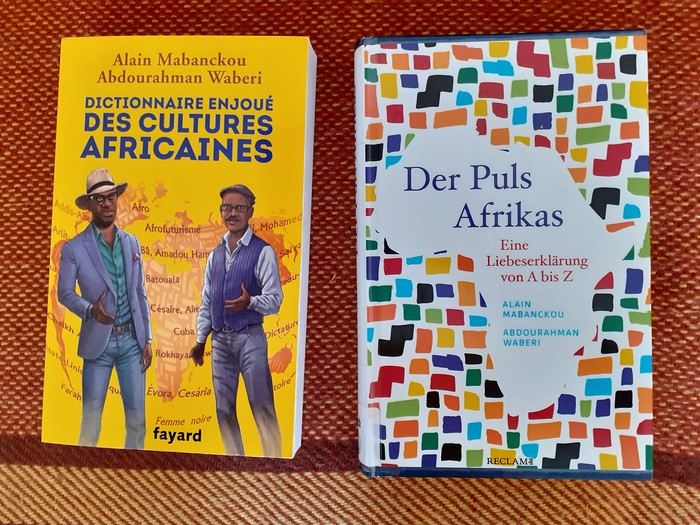
The Maggi cube, an unchallenged hegemony, and so much more
“The hopeless continent,” headlined The Economist, a British magazine, in July 2000 about Africa. Eleven years later, the same magazine headlined “Africa rising” instead. Images of Africa in the prosperous North constantly oscillate between apocalyptic scenarios and enthusiastic projections. A key issue with such images lies in the generalization they entail. If you look at the continent, considerable contrasts emerge depending on space and time. It’s no surprise that a region of the world encompassing such diverse ecological zones, maintaining such varied ties with other continents, comprising nearly fifty nation-states in sub-Saharan Africa alone, and characterized by a great diversity of languages, belief systems, and historical paths, doesn’t share a single destiny.
And yet, for many people outside Africa, as well as for many Africans, the continent constitutes a single entity, defined by criteria such as skin color, a colonial past, poverty, and the art of survival. Until now, these perspectives were generally accompanied by the idea that Africa had to—or should have—followed a single path together, sometimes called development, sometimes modernization, sometimes liberation, then a market economy. None of these paths delivered on their promises.
The two writers Alain Mabanckou and Abdourahman Waberi—one from Congo, the other raised in Djibouti, both long settled in France and now professors at renowned North American universities (Los Angeles, Washington)—have had enough of pessimistic scenarios: “We are aware that Africa is in the world and the world is in Africa. The same goes for all other continents, as our destinies are inextricably linked for better or worse. We refuse to see Africa as a reservoir of misfortunes or a continent cursed by atavistic misfortune and characterized by ethnic conflicts. [...] It’s this passionate flame we wanted to capture in a book [...] a kind of stroll through African cultures, without any demands, each letter of the alphabet leading us to a notion, a practice, a concept, a moment in history, literature, painting, politics, economics, cuisine, etc.” (p.10-11). Africa, they write, is on the verge of “imposing a signature, a style, a way of being in the world and in relation to the rest of the world.” (p.11) To put words to the continent’s diversity and dynamism, the two authors created a “rambling ABC,” a kind of portrait—or more precisely, a mythography—that lets you see and feel the pulse of a vast continent whose cultural power is unfolding before our eyes. Once marginalized or even mocked, the voice and importance of the Continent in global affairs are now undeniable” (p.11), containing over a hundred entries, mostly concise, written in a relaxed and casual style. The optimistic, even exuberant tone is set from the brief introduction. The duo of authors wants to “sing a love song to the cultures of our continent, to its inhabitants past and present, to its exceptional resources and its spectacular globalization despite a certain pollution that still clouds our skies due to the unmatched duration of dictatorships in some of our regions.” (p.12) In doing so, they don’t want to be too distracted by today’s Afewerki-Biya-Bongo-Déby & Co. ...
Of course, you’ll find tributes to great precursors like Frantz Fanon (“[...] it was a love story and admiration that wasn’t dimmed by the four decades separating his birth from ours. Let’s add that we were born while the native of Fort-de-France had left the world’s stage four years earlier, in the prime of life” p.141), Mongo Beti (“You must read and reread Mongo Beti, a genius who used his fame to support often just causes in Africa, like defending oppressed groups. His place is already in History. His oppressors, like the dictators Ahmadou Ahidjo and Paul Biya, can’t compete in the same category” p.64), the Malian Amadou Hampâté Bâ
(“Posterity remembers him mainly as an tireless defender of African cultures. His plea for the collection and preservation of traditional African knowledge remains a major event for all men and women of good will. One day in 1960, at the UNESCO podium, the native of Bandiagara sounded the alarm: ‘[...] Since we’ve admitted that the humanity of each people is the heritage of all humanity, if African traditions aren’t collected in time and written down, they’ll one day be missing from the universal archives of humanity.’” p.51),
Kwame Nkrumah, “one of the founders of Pan-Africanism, father of Ghana’s independence” (p.239), as well as the historian Cheikh Anta Diop, the writer, poet, and politician Aimé Césaire, and the economist and thinker Samir Amin, but also very warm tributes to certain contemporary African intellectuals like Souleymane Bachir Diagne and Achille Mbembe
(“A few years ago, in dominant economic circles, a rumor often resurfaced, usually disguised as a cold and scientifically proven analysis: Africa is useless. It’s a burden for the rest of the human community. With its 2% share in world trade, it would disappear from stock market radars without anyone noticing. So? Maybe it’ll be pulled up by other continents. Wanting to surpass itself is a crazy bet for Africans, they concluded. Arrogant or clueless, President Nicolas Sarkozy declared before an audience of students and teachers at Cheikh Anta Diop University in Dakar: ‘The African man hasn’t entered history enough [...] He only knows the eternal repetition of time marked by the endless repetition of the same gestures and words.’ That was in 2007. For decades, armed only with reason, an intellectual often steps up to debunk prejudices, lazy readings, and dishonest frameworks used as false fronts by those who, like Nicolas Sarkozy or former journalist Stephen Smith, out of ignorance, contempt, or condescension, distort African reality. This intellectual is none other than the historian and political scientist Achille Mbembe. This heir of Frantz Fanon, Amílcar Cabral, Jean-Marc Ela, and Fabien Eboussi-Boulaga was born in 1957 in Cameroon, in the Bassa region. Marked early by the upheavals of a fratricidal war, Achille Mbembe became the guardian of the memory of martyrs. After brilliant studies in Paris, he went on to teach at the best American universities, but the call of the Continent was stronger than anything else. In Dakar, he once directed CODESRIA (Council for the Development of Social Science Research in Africa) before joining the University of the Witwatersrand in Johannesburg, South Africa. Even though the author of *Critique of Black Reason* (Éditions La Découverte, 2015) spends a few months at Duke University in North Carolina, his observation post remains South Africa. From Johannesburg, Achille Mbembe scrutinizes Africa and the whole world. A lucid observer with an elegant and generous pen, Achille Mbembe knows how to blend big and small history: ‘I was born one day in July, as the month was drawing to a close. It was 1957, in that part of Africa recently named ‘Cameroon,’ a memory of the wonder that seized Portuguese sailors in the 15th century when, sailing up the river near Douala, they couldn’t help but note the presence of a multitude of crustaceans, and named it *Rio dos Camarões*, meaning ‘River of Shrimp.’ I grew up in the shadow of this nameless land, since, in a way, the name it bears is only the product of someone else’s astonishment: a lexical mistake, if you will.’ From this mistake or wound, he made leaven, a springboard to compose a rich work, recognized worldwide. To denounce barriers and barbarians too. But that’s not enough. Among his peers in circles of thought and action, Achille Mbembe passionately and consistently defends human dignity and the beauty of the world. In doing so, he fulfills the mission Frantz Fanon entrusted to him.” (p.227-229),
as well as entries dedicated to lesser-known artists and intellectuals, like the French journalist and activist Rokhaya Diallo, daughter of Senegalese and Gambian parents, or the Ethiopian filmmaker Haile Gerima, who has long lived in the United States. Other names from politics, sports, music, art, and literature: Kofi Annan, p.36; Barack Obama, p.243; Thomas Sankara, p.277; Ousmane Sow, p.285; Yambo Ouologuem, p.250; Léopold Sédar Senghor, p.282; Muhammad Ali, p.30; Nuruddin Farah, p.146; Salif Keita, p.203; Ahmadou Kourouma, p.206; Ngũgĩ wa Thiong’o, p.236; Winnie Mandela, p.224; Kylian Mbappé, p.226 ...
The authors, who resolutely commit to a “mythography” (p.11) of Africa, also pay special attention to local social movements, cultural events, and aspects of daily life. *Y’en a marre*, “which also meant ‘we’re fed up with sitting on our hands’” (p.320-321), emerged about a decade ago in Senegal as a citizen movement of peaceful resistance and symbolizes, the authors emphasize, the fact that African youth are increasingly fed up “with the political circus deployed in Africa since independence, as our parents would say, ‘since the White man left’...” (p.321). A full entry is dedicated to the Maggi bouillon cube, which has flooded African markets for about forty years and enjoys immense popularity (“It’s everywhere in Africa, from Dakar to Djibouti, and from Tangier to Cape Town. It’s in every pot, every stew. Little hands put it in every sauce, every local or adapted dish. An unchallenged hegemony! You’ll find it in diasporas too. The culinary strolls in Paris, in the [...] neighborhood” p.90). Critics blame it not only for impoverishing the aromatic diversity of local dishes but also for being harmful to health. And yet, “he poorest Africans, those who eat only once a day, a few spoonfuls of white beans and a ball of *foufou*, for example, are the most fervent users of the magic cube.” (p.92-93)
For *fonio*, “the new trendy cereal. [...] From the millet family, fonio is probably the oldest cereal cultivated in West Africa, and mainly in its sub-Saharan part, for millennia. [...] Easy to grow, water-efficient, fonio grows everywhere except on clay soils. Long neglected because it was considered the poor man’s crop, fonio is now a source of pride for the farmers who cultivate it and cherish it like the apple of their eye” (p.156-157), the authors immediately offer a detailed recipe, letting the reader know that “e can’t resist sharing this fonio with chicken recipe from Mali with you:
Ingredients: 1 chicken 3 large ripe red tomatoes 4 tbsp tomato paste 4 large onions 1 garlic clove 1/2 cup oil 2 Maggi cubes or salt 2 large carrots 1 turnip 1 large cabbage 2 large potatoes 1 celery stalk 1 packet pre-cooked fonio 4 okra (or okra powder) salt, pepper
Preparation: 1. Prepare the sauce: wash and cut the chicken. Peel the onions, garlic, and vegetables. 2. In a pot, fry the chicken pieces. 3. Dice the onions, tomatoes, carrots, and turnip very small and add them to the pot. 4. Add the tomato paste, salt, and pepper. 5. Simmer for 15 min, then add 2 L of water and the cooked chicken pieces. 6. Simmer for 30 min, then add the crushed garlic and celery, plus the cabbage cut into 4 and the potatoes cut in half. 7. Prepare the fonio: cover it with warm water, let it rest for 15 min, and cook it over low heat. 8. In a small pot, boil the okra and crush them. 9. Mix the crushed okra with the cooked fonio, then salt. Serve hot.” (p.158-159)
The comedy *Black Mic Mac*, released in French theaters in 1986 and addressing France’s increasingly restrictive immigration policy at the time, also gets an entry, as do *Tintin in the Congo*, the popular comic, and *Jip’s Café* (“[...] a little Africa in the heart of Paris, with passersby stopping to admire the ‘ambianceurs’ on the dance floor or attend the cultural events offered by the place” (p.194), an African establishment in Paris that Alain Mabanckou already immortalized in one of his novels.
The duo of authors also tackles thorny subjects like jihadism (p.119), the Rwandan genocide (p.272), the CFA franc (p.82), and dictatorship (p.110). While the two strike the right tone here, many entries leave a slightly bitter taste. Two examples: why doesn’t the text on Barack Obama mention the great disappointment of many people in Africa, who expected more from the African policy of the first U.S. president with African roots than just occasional warm words? Why do the comments on Winnie Mandela gloss over the fact that she was a highly controversial icon of the anti-apartheid movement due to her involvement in kidnappings, acts of torture, and murders of alleged apartheid collaborators? Instead, there’s a compassion that brings tears to the eyes: “She was often reduced to a secondary role, the wife of a great man” or “When victory came, she didn’t taste its fruits. Divorced, isolated. She would never be a ‘first lady’ in an evening gown, posing before a bed of chrysanthemums. They’d keep her far from the circles of power” (p.224-225). At this point, I would’ve liked the authors to take a slightly more critical stance...
That said, these “weaknesses” (if you can call them that) shouldn’t overshadow the book as a whole. It remains an informative, sometimes very entertaining, and often even original work in its own way.
Book information (the original French and the German translation):
Alain Mabanckou/Abdourahman Waberi. Dictionnaire enjoué des cultures africaines. Fayard, 2019. Alain Mabanckou/Abdourahman Waberi. Der Puls Afrikas. Eine Liebeserklärung von A bis Z. Reclam, 2022.
Hery
Need help organizing a trip to Cape Verde during Carnival
Hi everyone,
After a year where I’ve worked way too much and with a house under renovation, it’s become essential to take a breather. My contract ends on 01/30, and I’ll try to find a new client for early March, so overall, let’s go somewhere in February!
I thought Réunion with the full trek around the Mafate cirque for reconnecting with Nature would be perfect, but since it’s cyclone season, it wasn’t such a great idea. Then came the idea that Southeast Asia could fulfill the peace-and-beach vibe, especially Cambodia with its cultural past, but the flight ticket price and a chat with a friend made me change my mind—and boom, Cape Verde popped up, with Santo Antão for hiking and São Vicente for culture and the beach.
So I bought a ticket a week ago, and oh, what a coincidence—it’s during Carnival!
Except now, I don’t know if it’s reality or just exhaustion talking, but I feel like I’m making a mess of things.
I’ve traveled a lot without even booking the first night, but this time, I pre-booked 2 nights in Mindelo (though one of them ended up canceling itself).
But the main issue is that I arrive on Monday, 02/09 at 6 PM and leave on Sunday, 02/22 at 11 AM, and there’s a little hiccup in the logical organization—actually, several hiccups—since I don’t really have any organization right now, and that’s where I need help
Because Carnival is in full swing from 02/15 to 02/17, right in the middle of my trip, so the logic of my visit to Santo Antão isn’t clicking for me. Plus, I just checked, and there’s zero accommodation available in Mindelo from 02/15 to 02/18 😕
So I don’t know: should I skip Carnival, should I forget about planning and just wing it once I’m there, should I stay on São Vicente after Carnival (because I read Montaganrd’s trip report, and he made São Vicente sound like a rock !), or should I keep in mind the option of heading to Santiago afterward and buying a return flight to Paris from Praia?
I need help 🏴☠️
White as snow, let's chat here!
And nowhere else...😉
Recap of our family trip to Romania in 2019
Hi everyone,
Better late than never—I’m finally getting around to sharing our trip to Romania from last year.
Before I start, I have a personal history with this country: I lived there in 2004 for three and a half months during a student internship. I still have friends there and a decent grasp of Romanian. That helps. But more than anything, I’ve grown attached to the country. It’s well-deserved—Romania gives back just as much. That said, when I talk about it, maybe I see things differently than someone visiting for the first time.
This was my third trip to Romania. This time, I brought my wife and our two daughters. After years of wanting to take a family trip there, this was finally the right moment. My wife wasn’t exactly thrilled at first—she’d been hesitant for years. But she ended up loving it, and we’ll definitely go back together. For our 6- and 8-year-old girls, the trip was fascinating in so many ways: the sights, learning about communism and totalitarian regimes, the Roma community, how different religions coexist, the Saxon minorities...
We landed in Bucharest last July. We spent two and a half weeks in the country. We took off from Toulouse early in the morning and arrived at Bucharest airport around noon. We flew with Lufthansa because it’s a solid airline and the cheapest option we found.
We rented a car. I don’t remember the rental agency’s name, but we got scammed a bit. We’d booked insurance through Booking, but when we arrived, we couldn’t print a credit card receipt. The issue? We only had debit cards, not credit cards (or vice versa), and without one, we couldn’t pick up the car without buying their on-site insurance. It was buried in the fine print—I’d read it but naively assumed a gold card would work. So, we had to take extra insurance. Basically, we threw 120 € in insurance fees out the window. Still, we got a Dacia Logan, and it ran like a dream the whole trip.
Here’s our rough itinerary: - Bucharest Airport => Sinaia => Brasov - Brasov => Viscri => Sighișoara => Sovata - Sovata => Bicaz Gorge => Iași - Iași => Bucharest
**Sinaia** We started in Sinaia, in the Carpathians. It’s an old Romanian vacation spot from the country’s golden age. A really nice place with great hikes. The mountains are stunning, covered in tall fir trees. There are beautiful buildings and old houses—it’s all very charming. We took the cable car up to the summit (no time to hike with the kids). It’s an old 1960s cable car with two sections (there are also detachable chairlifts). The view from the top is amazing. Then, Peles Castle—a must-see.
**On the road to Brasov** We stayed in a homestay in the village of Purcareni (15 minutes from Brasov by car) through an association called "L’Arbre de Joie." We spent a few days there. The association was founded by a French woman in the 90s and runs local projects. The family we stayed with was Hungarian. The price was around 90 € per day, including breakfast and dinner. The host spoke a little French, and her 16-year-old daughter spoke English fluently. We had great conversations. This family lives like a typical French family—they work at a clinic and a factory, own a car, and have a small chalet in the nearby mountains. From Purcareni, we explored: - **Bran Castle**: The iconic castle. There are way more tourist stalls now than when I first visited in 2004, but it’s still charming and worth seeing. - **Zărnești Bear Reserve**: Interesting—you learn a lot about bears. But it’s expensive, and it’s sad to see these beautiful animals in captivity. - **Râșnov Citadel**: Right near Zărnești. We did Bran, the bears, and this citadel all in one day last year. It’s pretty—you hike up a trail to get there. The view is gorgeous, but the site feels a bit neglected (or not fully restored yet). Some people love it, others don’t, but at least it’s authentic and not some Disneyland with fry stands everywhere. - **Brasov**: Of course! We went twice. It’s beautiful and nothing like what you’d imagine Romania to look like. We hiked up the hill overlooking the city—about 45 to 60 minutes with the kids. The view from the top is incredible, especially over the medieval rooftops. I wasn’t expecting much—I thought we’d see rundown buildings, but the "new" part of town is built farther to the right, so you barely notice it. - One day, we took a horse-drawn carriage (a touristy thing to do for the kids) to our hosts’ second home. It was still really fun. The area is super wild—just a few kilometers from the village, so close to Brasov. We ate *amazingly* with them. Traditional Romanian food is best enjoyed in people’s homes, not restaurants. So, I’d recommend eating at small guesthouses or homestays as much as possible.
**On the road to Viscri** No stops—just straight to Viscri. I found Viscri just as I’d left it in 2004. Maybe a few more tourists, maybe one or two new restaurants. The road still isn’t paved in the village. Viscri is my favorite place in Romania—a simple village with colorful houses. We found a reasonably priced Airbnb and had a great evening with our hosts. They were fascinating people, and we talked about Romania, Saxon minorities, Europe... The next morning, I went for a run and found a trail in the nearby forest. I followed it for a while before turning back. We also visited the fortified church.
**Sighișoara** I’d been there in 2004 and wasn’t particularly moved or impressed. I felt the same way in 2019. But that’s just our take.
**Sovata** In Sovata, we traveled the way I love—arriving around 5 PM with nothing booked and finding a place to stay by asking around. We ended up in homestays for two nights, and both were great. It’s a Hungarian-Romanian thermal spa town. The place is nice but nothing extraordinary, except when you get closer (but not too close) to the thermal complexes. There, you’ll find beautiful mansions and hotels from the early 19th century. It’s touristy, but only Romanians go there. We visited a warm-water lake—it was fun for the folklore, though the water wasn’t exactly inviting. Apparently, there’s another lake higher up that’s so salty you float in it, but we didn’t go. In the afternoon, we took the tourist steam train ("mocăniță" in Romanian). It was a blast—we chatted with people in the carriage. The train covers about 20 kilometers, then turns around (the locomotive detaches, spins, and reattaches). Everyone gets off at the halfway point, where people grill corn on the cob. Then the train heads back. The scenery isn’t breathtaking, but the fields were full of flowers, and the ride was lovely.
**Toward Bicaz Gorge** The next day, we headed to Bicaz Gorge and the Ceahlău Massif in Neamț (pronounced "Nyamts"). We passed through Corund, a village known for local crafts. Whether it’s actually made there or not is always up for debate in a society where cutting corners is common. Still, we found some nice plates, dishes, and souvenirs to bring home. Funny story: I was chatting with a young saleswoman in Romanian and was shocked to realize she didn’t understand me—not because my Romanian was bad, but because she *didn’t speak Romanian at all*. She only spoke Hungarian. Mind-blowing: you’re Romanian and don’t speak Romanian? We crossed a mountain (or big hill) before reaching the Gheorgheni plain—a small town nestled in the mountains, feeling like the end of the world. Was it the season? We saw *so many* storks, and they were *so close*. It was adorable.
**Bicaz Gorge** We stopped at "Lacul Roșu" (Red Lake) to take a boat ride with the kids. (Yeah, we did things we don’t usually do—gotta keep everyone engaged! And maybe that’s why they have such great memories of the trip.) Then, the Bicaz Gorge—one of my favorite spots in Romania. We stayed at Pensiunea Paleu in Bicazu Ardelean, a place I already knew. I think the price for four people, half-board (with delicious home-cooked meals), was around 90 € per day. The rooms are clean and simple, and there’s a big garden with a vegetable patch, a cow, and a pig. Most of the food served comes straight from the garden.
In the afternoon, after much hesitation, we headed to Ceahlău National Park. About 30 minutes by car, we entered the park (after waking up the park ranger, who reeked of booze and was napping). We drove to the end of the road, and then—against all odds—the four of us made it to the summit of Toaca Peak. This peak towers over the surrounding mountains. It was a great hike—starting in the Carpathian fir forests, then crossing a plateau covered in flowers (mid-July). We stopped for a drink at Cabana Dochia before heading up. The summit is a bit unusual because they’ve installed a big metal staircase. It’s steep in places—straight up, and I wouldn’t want to fall. There’s a sturdy railing, though. Even if the "normal route" doesn’t seem too hard. The view from the top is stunning—you can see the entire Carpathian region, vast forests, and the Bicaz Lake below.
**Iași** I used to live in Iași. We stayed with my former internship supervisor and his family. It’s not the first time we’ve crashed at people’s places. In Iași, we visited: - **The Opera House**: A beautiful building from the early 20th century, if I’m not mistaken. Our friends arranged a tour with the firefighters, who let us in and showed us around. It was fun. - **The "Hall of Lost Steps"**: You enter a massive room with stunning woodwork. It’s a huge university library, home to around a million books. The whole place is meticulously decorated. Visiting this room makes you wonder how Romania could have such a grand image. This country, in its golden age, had universities and thinkers. When you build something like this for knowledge and science, you’ve come a long way. - **The Palace of Culture**: This building was completely run-down in 2004 but has since been fully renovated. Where it was once gray, dull, and dirty, it now shines in the sunlight. It’s magnificent.
Beyond these three sights, we explored parks, wandered the city, went treetop climbing, and spent time with friends. Sure, Iași is way over in the east on a map of Romania, but it’s worth the detour.
After Iași, we headed back.
**In conclusion**, we spent three weeks in Romania. Here’s a rough breakdown of expenses (in €, all taxes included): - Flight tickets: 660 € - Car rental for 2.5 weeks: 250 € - Everything else (accommodation, food, activities, etc.): around 1,500 €
All in all, the trip wasn’t exactly cheap—around 2,500 to 2,800 € total. But we had a blast, and that’s what matters.
I had tons of great photos and wanted to share some, but I couldn’t upload them. If anyone’s interested, I can send them along.
Better late than never—I’m finally getting around to sharing our trip to Romania from last year.
Before I start, I have a personal history with this country: I lived there in 2004 for three and a half months during a student internship. I still have friends there and a decent grasp of Romanian. That helps. But more than anything, I’ve grown attached to the country. It’s well-deserved—Romania gives back just as much. That said, when I talk about it, maybe I see things differently than someone visiting for the first time.
This was my third trip to Romania. This time, I brought my wife and our two daughters. After years of wanting to take a family trip there, this was finally the right moment. My wife wasn’t exactly thrilled at first—she’d been hesitant for years. But she ended up loving it, and we’ll definitely go back together. For our 6- and 8-year-old girls, the trip was fascinating in so many ways: the sights, learning about communism and totalitarian regimes, the Roma community, how different religions coexist, the Saxon minorities...
We landed in Bucharest last July. We spent two and a half weeks in the country. We took off from Toulouse early in the morning and arrived at Bucharest airport around noon. We flew with Lufthansa because it’s a solid airline and the cheapest option we found.
We rented a car. I don’t remember the rental agency’s name, but we got scammed a bit. We’d booked insurance through Booking, but when we arrived, we couldn’t print a credit card receipt. The issue? We only had debit cards, not credit cards (or vice versa), and without one, we couldn’t pick up the car without buying their on-site insurance. It was buried in the fine print—I’d read it but naively assumed a gold card would work. So, we had to take extra insurance. Basically, we threw 120 € in insurance fees out the window. Still, we got a Dacia Logan, and it ran like a dream the whole trip.
Here’s our rough itinerary: - Bucharest Airport => Sinaia => Brasov - Brasov => Viscri => Sighișoara => Sovata - Sovata => Bicaz Gorge => Iași - Iași => Bucharest
**Sinaia** We started in Sinaia, in the Carpathians. It’s an old Romanian vacation spot from the country’s golden age. A really nice place with great hikes. The mountains are stunning, covered in tall fir trees. There are beautiful buildings and old houses—it’s all very charming. We took the cable car up to the summit (no time to hike with the kids). It’s an old 1960s cable car with two sections (there are also detachable chairlifts). The view from the top is amazing. Then, Peles Castle—a must-see.
**On the road to Brasov** We stayed in a homestay in the village of Purcareni (15 minutes from Brasov by car) through an association called "L’Arbre de Joie." We spent a few days there. The association was founded by a French woman in the 90s and runs local projects. The family we stayed with was Hungarian. The price was around 90 € per day, including breakfast and dinner. The host spoke a little French, and her 16-year-old daughter spoke English fluently. We had great conversations. This family lives like a typical French family—they work at a clinic and a factory, own a car, and have a small chalet in the nearby mountains. From Purcareni, we explored: - **Bran Castle**: The iconic castle. There are way more tourist stalls now than when I first visited in 2004, but it’s still charming and worth seeing. - **Zărnești Bear Reserve**: Interesting—you learn a lot about bears. But it’s expensive, and it’s sad to see these beautiful animals in captivity. - **Râșnov Citadel**: Right near Zărnești. We did Bran, the bears, and this citadel all in one day last year. It’s pretty—you hike up a trail to get there. The view is gorgeous, but the site feels a bit neglected (or not fully restored yet). Some people love it, others don’t, but at least it’s authentic and not some Disneyland with fry stands everywhere. - **Brasov**: Of course! We went twice. It’s beautiful and nothing like what you’d imagine Romania to look like. We hiked up the hill overlooking the city—about 45 to 60 minutes with the kids. The view from the top is incredible, especially over the medieval rooftops. I wasn’t expecting much—I thought we’d see rundown buildings, but the "new" part of town is built farther to the right, so you barely notice it. - One day, we took a horse-drawn carriage (a touristy thing to do for the kids) to our hosts’ second home. It was still really fun. The area is super wild—just a few kilometers from the village, so close to Brasov. We ate *amazingly* with them. Traditional Romanian food is best enjoyed in people’s homes, not restaurants. So, I’d recommend eating at small guesthouses or homestays as much as possible.
**On the road to Viscri** No stops—just straight to Viscri. I found Viscri just as I’d left it in 2004. Maybe a few more tourists, maybe one or two new restaurants. The road still isn’t paved in the village. Viscri is my favorite place in Romania—a simple village with colorful houses. We found a reasonably priced Airbnb and had a great evening with our hosts. They were fascinating people, and we talked about Romania, Saxon minorities, Europe... The next morning, I went for a run and found a trail in the nearby forest. I followed it for a while before turning back. We also visited the fortified church.
**Sighișoara** I’d been there in 2004 and wasn’t particularly moved or impressed. I felt the same way in 2019. But that’s just our take.
**Sovata** In Sovata, we traveled the way I love—arriving around 5 PM with nothing booked and finding a place to stay by asking around. We ended up in homestays for two nights, and both were great. It’s a Hungarian-Romanian thermal spa town. The place is nice but nothing extraordinary, except when you get closer (but not too close) to the thermal complexes. There, you’ll find beautiful mansions and hotels from the early 19th century. It’s touristy, but only Romanians go there. We visited a warm-water lake—it was fun for the folklore, though the water wasn’t exactly inviting. Apparently, there’s another lake higher up that’s so salty you float in it, but we didn’t go. In the afternoon, we took the tourist steam train ("mocăniță" in Romanian). It was a blast—we chatted with people in the carriage. The train covers about 20 kilometers, then turns around (the locomotive detaches, spins, and reattaches). Everyone gets off at the halfway point, where people grill corn on the cob. Then the train heads back. The scenery isn’t breathtaking, but the fields were full of flowers, and the ride was lovely.
**Toward Bicaz Gorge** The next day, we headed to Bicaz Gorge and the Ceahlău Massif in Neamț (pronounced "Nyamts"). We passed through Corund, a village known for local crafts. Whether it’s actually made there or not is always up for debate in a society where cutting corners is common. Still, we found some nice plates, dishes, and souvenirs to bring home. Funny story: I was chatting with a young saleswoman in Romanian and was shocked to realize she didn’t understand me—not because my Romanian was bad, but because she *didn’t speak Romanian at all*. She only spoke Hungarian. Mind-blowing: you’re Romanian and don’t speak Romanian? We crossed a mountain (or big hill) before reaching the Gheorgheni plain—a small town nestled in the mountains, feeling like the end of the world. Was it the season? We saw *so many* storks, and they were *so close*. It was adorable.
**Bicaz Gorge** We stopped at "Lacul Roșu" (Red Lake) to take a boat ride with the kids. (Yeah, we did things we don’t usually do—gotta keep everyone engaged! And maybe that’s why they have such great memories of the trip.) Then, the Bicaz Gorge—one of my favorite spots in Romania. We stayed at Pensiunea Paleu in Bicazu Ardelean, a place I already knew. I think the price for four people, half-board (with delicious home-cooked meals), was around 90 € per day. The rooms are clean and simple, and there’s a big garden with a vegetable patch, a cow, and a pig. Most of the food served comes straight from the garden.
In the afternoon, after much hesitation, we headed to Ceahlău National Park. About 30 minutes by car, we entered the park (after waking up the park ranger, who reeked of booze and was napping). We drove to the end of the road, and then—against all odds—the four of us made it to the summit of Toaca Peak. This peak towers over the surrounding mountains. It was a great hike—starting in the Carpathian fir forests, then crossing a plateau covered in flowers (mid-July). We stopped for a drink at Cabana Dochia before heading up. The summit is a bit unusual because they’ve installed a big metal staircase. It’s steep in places—straight up, and I wouldn’t want to fall. There’s a sturdy railing, though. Even if the "normal route" doesn’t seem too hard. The view from the top is stunning—you can see the entire Carpathian region, vast forests, and the Bicaz Lake below.
**Iași** I used to live in Iași. We stayed with my former internship supervisor and his family. It’s not the first time we’ve crashed at people’s places. In Iași, we visited: - **The Opera House**: A beautiful building from the early 20th century, if I’m not mistaken. Our friends arranged a tour with the firefighters, who let us in and showed us around. It was fun. - **The "Hall of Lost Steps"**: You enter a massive room with stunning woodwork. It’s a huge university library, home to around a million books. The whole place is meticulously decorated. Visiting this room makes you wonder how Romania could have such a grand image. This country, in its golden age, had universities and thinkers. When you build something like this for knowledge and science, you’ve come a long way. - **The Palace of Culture**: This building was completely run-down in 2004 but has since been fully renovated. Where it was once gray, dull, and dirty, it now shines in the sunlight. It’s magnificent.
Beyond these three sights, we explored parks, wandered the city, went treetop climbing, and spent time with friends. Sure, Iași is way over in the east on a map of Romania, but it’s worth the detour.
After Iași, we headed back.
**In conclusion**, we spent three weeks in Romania. Here’s a rough breakdown of expenses (in €, all taxes included): - Flight tickets: 660 € - Car rental for 2.5 weeks: 250 € - Everything else (accommodation, food, activities, etc.): around 1,500 €
All in all, the trip wasn’t exactly cheap—around 2,500 to 2,800 € total. But we had a blast, and that’s what matters.
I had tons of great photos and wanted to share some, but I couldn’t upload them. If anyone’s interested, I can send them along.
Photo Contest, September 2020: Departure or Arrival Scenes and Places
Hello everyone, 🙂
This month’s theme is: places, departure or arrival scenes.
The places include: train or bus stations, passenger ports, and airports.
Here, for example, is Beijing West Railway Station
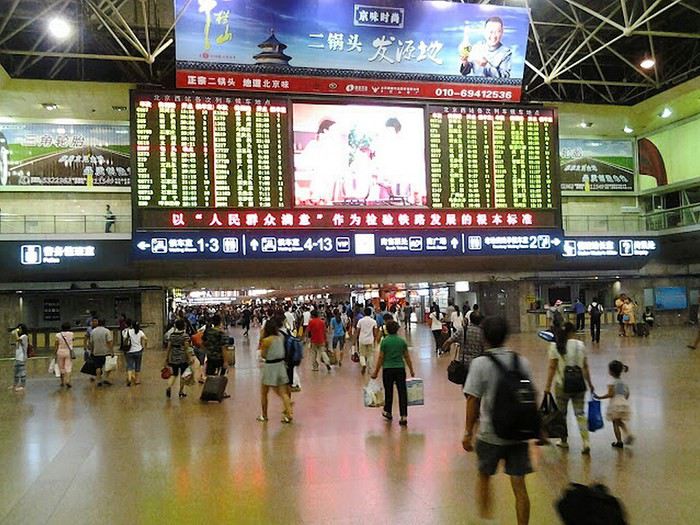 This is Beijing West Railway Station.
You can submit a photo of the whole place, a part of it (inside or outside, the platforms), or a detail (like a station clock) as long as it clearly shows it’s a departure or arrival spot—such as a timetable display.
Or here’s another example:
This is Beijing West Railway Station.
You can submit a photo of the whole place, a part of it (inside or outside, the platforms), or a detail (like a station clock) as long as it clearly shows it’s a departure or arrival spot—such as a timetable display.
Or here’s another example:
Even if you’re not in one of these places, a departure or arrival scene is welcome: Example: Early morning departure from a pagoda at Inle Lake (Myanmar) as people head back to their villages in the surrounding hills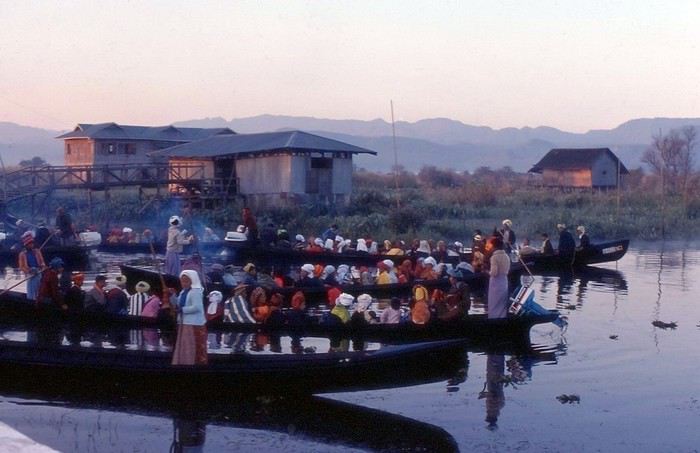
A vehicle about to leave: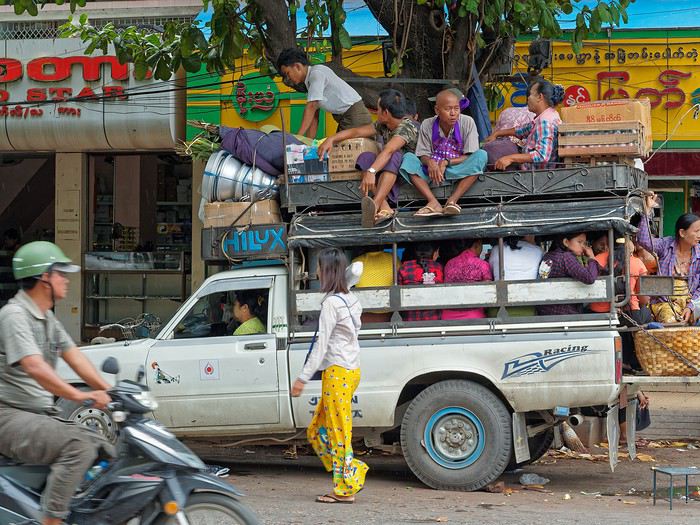
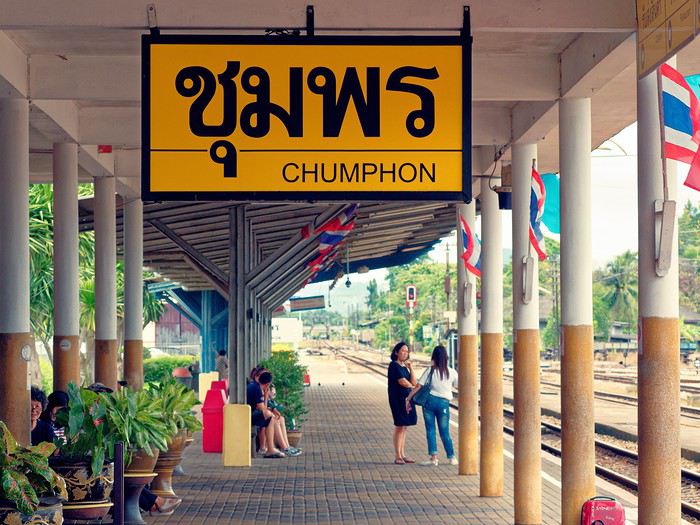
People are also allowed, as long as they’re clearly identified as travelers about to depart or who have just arrived. Bus station in Thailand (a photo I’d shared for the "solitude" theme)
Another example: in the foreground, a boat docked, and just above, another that has just left (Rangoon, Myanmar—these boats serve cities in the Irrawaddy Delta, and in some areas, they’re still the only means of transport for locals).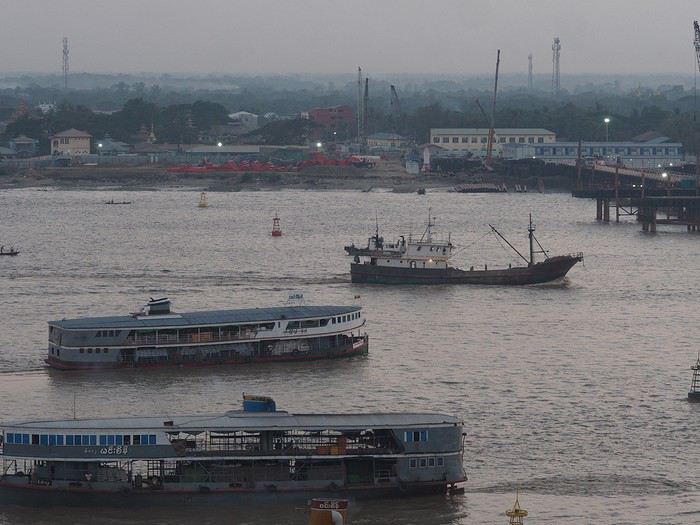
You can also include departures or arrivals from races, but again, it must be at the start or finish, not during the race: Boats before the start of the Route du Rhum in Saint-Malo: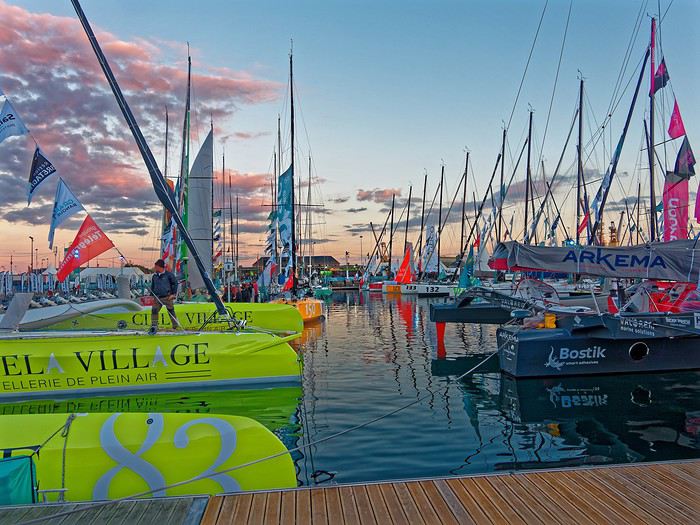
Participation: Each participant can submit up to 3 photos, until Tuesday, September 22 at 11:59 PM Paris time. Each photo must be posted in a separate message, with its number (1, 2, or 3). Don’t forget to add a short description (comment, location, etc.).
Voting: Every VoyageForum member can vote for the 4 photos they think are the best, based on their own criteria and the theme (I’m trying this format this month). Voting will take place from Wednesday, September 23 to Tuesday, September 29 at 11:59 PM Paris time.
Photos should be ranked in order of preference: - 1st photo: 4 points - 2nd: 3 points - 3rd: 2 points - 4th: 1 point
Each member can vote only once for 4 photos. No ties for 4th place with half a point each.
The winner is the photographer whose photo receives the most points. Results will be announced on September 30. In case of a tie, the number of first-place votes will decide. The winner will have the honor of organizing October’s contest.
Give me two or three days to put together the slideshow—I’ll definitely reach out to Masterpo via PM for advice if I’m stuck (and if he’s willing).
Good luck to everyone—may the best photographer win! Let’s get started! For discussion, it’s here
This is Beijing West Railway Station.
You can submit a photo of the whole place, a part of it (inside or outside, the platforms), or a detail (like a station clock) as long as it clearly shows it’s a departure or arrival spot—such as a timetable display.
Or here’s another example:
Even if you’re not in one of these places, a departure or arrival scene is welcome: Example: Early morning departure from a pagoda at Inle Lake (Myanmar) as people head back to their villages in the surrounding hills
A vehicle about to leave:
People are also allowed, as long as they’re clearly identified as travelers about to depart or who have just arrived. Bus station in Thailand (a photo I’d shared for the "solitude" theme)
Another example: in the foreground, a boat docked, and just above, another that has just left (Rangoon, Myanmar—these boats serve cities in the Irrawaddy Delta, and in some areas, they’re still the only means of transport for locals).
You can also include departures or arrivals from races, but again, it must be at the start or finish, not during the race: Boats before the start of the Route du Rhum in Saint-Malo:
Participation: Each participant can submit up to 3 photos, until Tuesday, September 22 at 11:59 PM Paris time. Each photo must be posted in a separate message, with its number (1, 2, or 3). Don’t forget to add a short description (comment, location, etc.).
Voting: Every VoyageForum member can vote for the 4 photos they think are the best, based on their own criteria and the theme (I’m trying this format this month). Voting will take place from Wednesday, September 23 to Tuesday, September 29 at 11:59 PM Paris time.
Photos should be ranked in order of preference: - 1st photo: 4 points - 2nd: 3 points - 3rd: 2 points - 4th: 1 point
Each member can vote only once for 4 photos. No ties for 4th place with half a point each.
The winner is the photographer whose photo receives the most points. Results will be announced on September 30. In case of a tie, the number of first-place votes will decide. The winner will have the honor of organizing October’s contest.
Give me two or three days to put together the slideshow—I’ll definitely reach out to Masterpo via PM for advice if I’m stuck (and if he’s willing).
Good luck to everyone—may the best photographer win! Let’s get started! For discussion, it’s here
Concours photo, août 2020: Le voyage en noir et blanc
Bonjour à tous
En préambule je rappelle que ma présence ici est tout à fait fortuite, j'ai l'honneur de remplacer Av31, gagnant du concours sur le thème "Verticales" avec sa photo de Devil's Tower.
« Je préfère photographier en noir et blanc qu’en couleurs. Le noir et blanc va à l'essentiel, la couleur aurait distrait l'histoire que je voulais raconter ».Kadir Van Lohuize
Je vous propose un concours dont le sujet sera complètement libre (youpi) mais avec une petite contrainte technique (pffff...). Nous regarderons la vie en noir & blanc.
Vos photos devront évoquer le voyage mais je laisse à chacun une petite marge de manœuvre, par exemple celle de nous présenter un portrait (d'ici ou d'ailleurs), une image macro (fleur, insecte...), une image graphique (lignes et courbes). Mais sur vos 3 photos je n'accepterai qu'une seule exception, nous sommes ensemble pour parler voyage !
Il existe sur le net un tas de petits logiciels très faciles d'utilisation mais si vous rencontrez des difficultés pour convertir une image en noir et blanc je le ferai pour vous.
Quelques astuces pour choisir vos photos: Le noir et blanc convient à des sujets très variés mais vous pouvez donner un impact bien plus fort à votre image en tenant compte de certains points. La texture. La couleur aura tendance à l'éclipser alors que le noir et blanc lui donnera toute son importance en faisant ressortir l'intensité des détails: les stries et les nœuds du bois, le tissus, la pierre, les rides de la peau... Les lignes. Celles d’un bâtiment, d’une rue pavée, un marquage au sol ou bien les lumières de la rue. Diriger l'attention dessus, c’est faire ressortir un détail que l’on ne voit pas avec les couleurs. Les formes géométriques. Symétriques ou non, triangulaires, carrées ou rondes, dessinées par l’homme ou naturelles les formes attireront l’œil et se démarqueront bien plus qu'en couleur. Les contrastes. Ils sont vos amis ! Une lumière forte avec des zones d’ombre va créer une image avec des tonalités, c’est ce contraste qui est l'élément essentiel pour réussir une photographie en noir et blanc par exemple un ciel chargé de gros nuages percés par des rayons de soleil.
Vous pourrez participer jusqu’au samedi 22 août à 23h59, heure de Paris. Chaque participant est autorisé à poster jusqu’à trois photos, numérotées de 1 à 3, en précisant le lieu de prise de vue.
Le vote aura lieu du dimanche 23 à 0h01 au dimanche 30 août à 23h59. Il est accessible à tous, participants ou non, dans la limite d’un vote, et se fera par l’attribution d’un total de six points répartis sur 3 ou 4 photos : Photo n°1 : 3 points Photo n°2 : 2 points Photo n°3 : 1 point
La photo gagnante sera celle qui aura remporté le plus de points. En cas d’égalité pour la première position, les photos seront départagées par le nombre de votes à 3 points, puis, si l'égalité persiste, par le nombre de votes à 2 points, etc.
Le ou la gagnant(e) aura le privilège d’organiser le concours de septembre.
Ce fil est réservé aux photos participantes et aux votes. La discussion liée aux à-cotés se passe par là: https://voyageforum.com/v.f?post=10330486;a=10330486
Le lien pour le diaporama: https://flic.kr/s/aHsmPLqy2E
Les précédents concours: herikles.free.fr/.VF/VFconcours.html
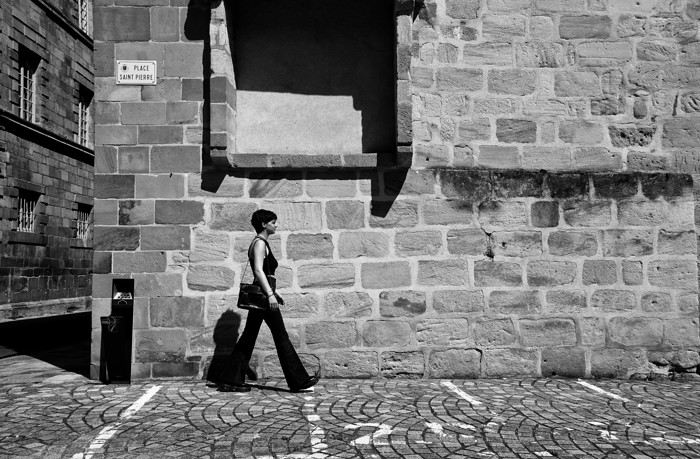
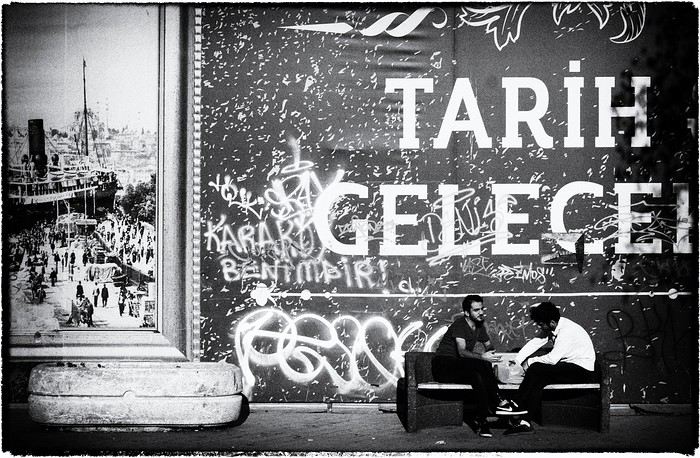
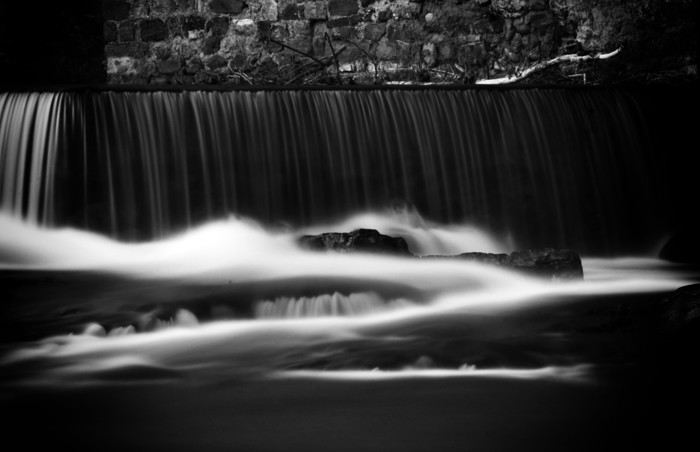
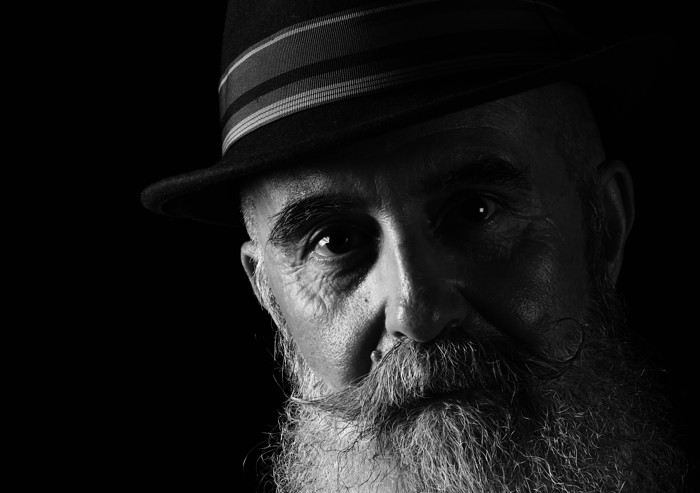
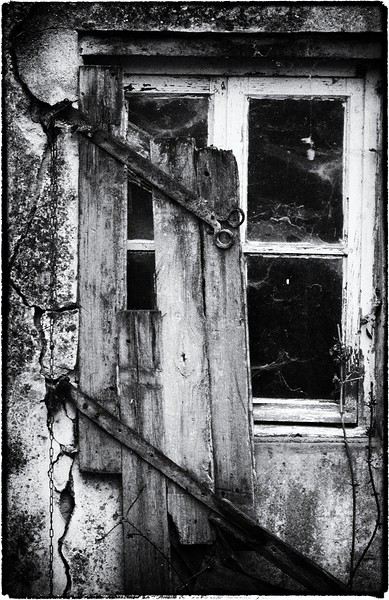
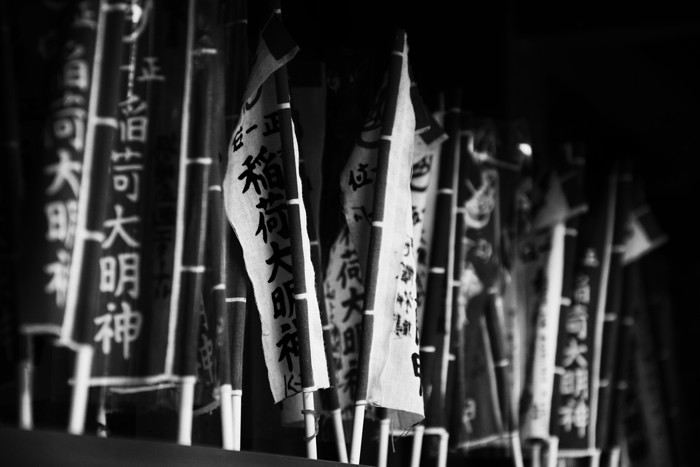
En préambule je rappelle que ma présence ici est tout à fait fortuite, j'ai l'honneur de remplacer Av31, gagnant du concours sur le thème "Verticales" avec sa photo de Devil's Tower.
« Je préfère photographier en noir et blanc qu’en couleurs. Le noir et blanc va à l'essentiel, la couleur aurait distrait l'histoire que je voulais raconter ».Kadir Van Lohuize
Je vous propose un concours dont le sujet sera complètement libre (youpi) mais avec une petite contrainte technique (pffff...). Nous regarderons la vie en noir & blanc.
Vos photos devront évoquer le voyage mais je laisse à chacun une petite marge de manœuvre, par exemple celle de nous présenter un portrait (d'ici ou d'ailleurs), une image macro (fleur, insecte...), une image graphique (lignes et courbes). Mais sur vos 3 photos je n'accepterai qu'une seule exception, nous sommes ensemble pour parler voyage !
Il existe sur le net un tas de petits logiciels très faciles d'utilisation mais si vous rencontrez des difficultés pour convertir une image en noir et blanc je le ferai pour vous.
Quelques astuces pour choisir vos photos: Le noir et blanc convient à des sujets très variés mais vous pouvez donner un impact bien plus fort à votre image en tenant compte de certains points. La texture. La couleur aura tendance à l'éclipser alors que le noir et blanc lui donnera toute son importance en faisant ressortir l'intensité des détails: les stries et les nœuds du bois, le tissus, la pierre, les rides de la peau... Les lignes. Celles d’un bâtiment, d’une rue pavée, un marquage au sol ou bien les lumières de la rue. Diriger l'attention dessus, c’est faire ressortir un détail que l’on ne voit pas avec les couleurs. Les formes géométriques. Symétriques ou non, triangulaires, carrées ou rondes, dessinées par l’homme ou naturelles les formes attireront l’œil et se démarqueront bien plus qu'en couleur. Les contrastes. Ils sont vos amis ! Une lumière forte avec des zones d’ombre va créer une image avec des tonalités, c’est ce contraste qui est l'élément essentiel pour réussir une photographie en noir et blanc par exemple un ciel chargé de gros nuages percés par des rayons de soleil.
Vous pourrez participer jusqu’au samedi 22 août à 23h59, heure de Paris. Chaque participant est autorisé à poster jusqu’à trois photos, numérotées de 1 à 3, en précisant le lieu de prise de vue.
Le vote aura lieu du dimanche 23 à 0h01 au dimanche 30 août à 23h59. Il est accessible à tous, participants ou non, dans la limite d’un vote, et se fera par l’attribution d’un total de six points répartis sur 3 ou 4 photos : Photo n°1 : 3 points Photo n°2 : 2 points Photo n°3 : 1 point
La photo gagnante sera celle qui aura remporté le plus de points. En cas d’égalité pour la première position, les photos seront départagées par le nombre de votes à 3 points, puis, si l'égalité persiste, par le nombre de votes à 2 points, etc.
Le ou la gagnant(e) aura le privilège d’organiser le concours de septembre.
Ce fil est réservé aux photos participantes et aux votes. La discussion liée aux à-cotés se passe par là: https://voyageforum.com/v.f?post=10330486;a=10330486
Le lien pour le diaporama: https://flic.kr/s/aHsmPLqy2E
Les précédents concours: herikles.free.fr/.VF/VFconcours.html
Triptyque gorilles - lions aboricoles - ascension du Nyiragongo
Bonjour à tous,
Désolé si mes questions vous semblent assez basiques mais cela ne fait que peu de temps que je parcours la partie du forum relative à cette partie de l'Afrique. Je souhaitais avoir si il était possible de faire un voyage de 2 semaines dans cette région en couplant : - Une rencontre avec les gorilles (j'ai vu que c'était bien moins cher en Ouganda qu'en Rwanda) - Un safari nous permettant de voir des Lions Aboricoles (Queen Elizabeth) - Une ascension du Nyiragongo pour voir ce magnifique lac de lave. C'est cependant en RdC dans le Virunga et j'ai peur que ça soit dangereux.
Pour faire cela j'ai l'impression que le plus simple serait d'atterrir à Kigali qui semble le plus proche des lieux concernés. Si il y a un parc où on peut rencontrer des Chimpanzés dans le coin cela m'intéresserait aussi bien sûr.
Voilà je vais creuser un tel itinéraire mais si ceux qui connaissent bien la région peuvent m'aider ça me serait très utile :) Merci Pierre
Désolé si mes questions vous semblent assez basiques mais cela ne fait que peu de temps que je parcours la partie du forum relative à cette partie de l'Afrique. Je souhaitais avoir si il était possible de faire un voyage de 2 semaines dans cette région en couplant : - Une rencontre avec les gorilles (j'ai vu que c'était bien moins cher en Ouganda qu'en Rwanda) - Un safari nous permettant de voir des Lions Aboricoles (Queen Elizabeth) - Une ascension du Nyiragongo pour voir ce magnifique lac de lave. C'est cependant en RdC dans le Virunga et j'ai peur que ça soit dangereux.
Pour faire cela j'ai l'impression que le plus simple serait d'atterrir à Kigali qui semble le plus proche des lieux concernés. Si il y a un parc où on peut rencontrer des Chimpanzés dans le coin cela m'intéresserait aussi bien sûr.
Voilà je vais creuser un tel itinéraire mais si ceux qui connaissent bien la région peuvent m'aider ça me serait très utile :) Merci Pierre
Discussion du concours photo de mai 2020: "Défilés et Cortèges"
Suivant la formule consacrée :
Pour discuter, partager, c'est ici ! Pour participer et poser vos photos le concours est là.
Pour discuter, partager, c'est ici ! Pour participer et poser vos photos le concours est là.
Mais où donc est ce truc là? (5)
Bonjour
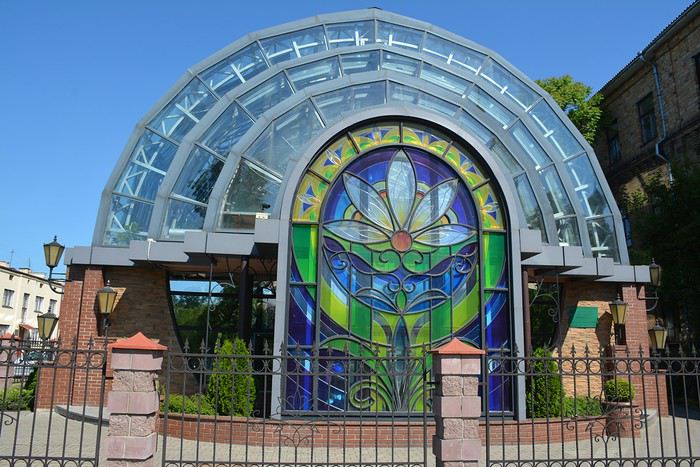
Où se trouve cette serre ?
En premier chercher le pays et ensuite la ville
Françoise