Results for "Havane+et+casa+|+50+>+142"
6934 results found.
Voyage d'une semaine à Cuba depuis La Havane English translation pending
Bonjour, nous partons une semaine (8 nuits, mais arrivée en soirée et départ le matin) à la Havane.
Je pensais faire 2 jours complet à la Havane à notre arrivée puis ensuite prendre un taxi vers les plages. Pour l'instant j'hésite entre aller vers la région de Trinidad pour 4 jours ou aller moins loin à Playa Jibacoa et consacrer plus de temps à la Havane.
Ce n'est pas mon premier voyage à Cuba et je n'ai pas l'intention de tout voir pendant ce voyage. Je veux simplement visiter la ville pendant quelques jours, puis relaxer sur des superbes plages et faire quelques petites visites.
J'ai aussi pensé à Vinales, cependant en une semaine c'est court si je veux avoir le temps de relaxer à la plage et visiter la Havane!
Donc ma question est la suivante : Trinidad 4 nuits ou Playa Jibacoa et plus de temps vers la Havane et les plages plus locales?
Si je choisis Trinidad, est-ce mieux d'être placé directement en ville ou plutôt à playa Ancon? Je n'ai aucun problème à prendre le taxi tous les jours si nécessaire!
Je tiens à préciser que je ne recherche absolument pas une plage déserte, isolée et totalement locale. J'aime les endroits locaux, mais j'aime aussi voir un peu de touristes!
Je pensais faire 2 jours complet à la Havane à notre arrivée puis ensuite prendre un taxi vers les plages. Pour l'instant j'hésite entre aller vers la région de Trinidad pour 4 jours ou aller moins loin à Playa Jibacoa et consacrer plus de temps à la Havane.
Ce n'est pas mon premier voyage à Cuba et je n'ai pas l'intention de tout voir pendant ce voyage. Je veux simplement visiter la ville pendant quelques jours, puis relaxer sur des superbes plages et faire quelques petites visites.
J'ai aussi pensé à Vinales, cependant en une semaine c'est court si je veux avoir le temps de relaxer à la plage et visiter la Havane!
Donc ma question est la suivante : Trinidad 4 nuits ou Playa Jibacoa et plus de temps vers la Havane et les plages plus locales?
Si je choisis Trinidad, est-ce mieux d'être placé directement en ville ou plutôt à playa Ancon? Je n'ai aucun problème à prendre le taxi tous les jours si nécessaire!
Je tiens à préciser que je ne recherche absolument pas une plage déserte, isolée et totalement locale. J'aime les endroits locaux, mais j'aime aussi voir un peu de touristes!
Trois semaines de La Havane à Baracoa English translation pending
Bonjour à tous
pour notre voyage je me suis beaucoup inspirée de toutes ces discussions alors aujourd'hui à mon tour d'essayer de vous aider dans vos préparatifs. Je vais faire simple et reste ouverte à vos questions
Nous sommes donc partis le 31 janvier 2018 de Roissy par Air France sans escale - aéroport : nous avons retiré 150 CUC au guichet automatique du 1er étage (aux arrivées il était en panne et trop de monde au change) et pris un taxi à 30 CUC (négociable car ds l'autre sens pour repartir c'était 25 CUC)
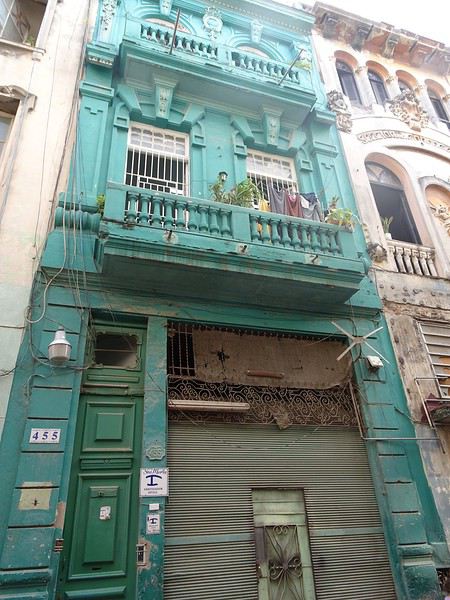
- 3 nuits à La Havane : réservées à l'avance sur booking chez Caty et Léo (photo, en plein centre de Habana Vieja), nous verrons par la suite que ce n'était pas la peine de réserver, il vaut mieux préparer une liste en France des casas qui vous vont le mieux et voir sur place : c'est moins cher, plus fiable et plus sympa)
- 1er jour : 8h30 devant Etecsa pour acheter une carte wifi (queue+procédé "el ultimo" et ça va), visite de Habana vieja - 2ème jour : grand périple à pied jusqu'à la place de la révolution en passant par la fabrica de habana, coco taxi jusqu'à l'hôtel nacional, calejon del hamel, sud de habana vieja
3ème jour : départ en bus viazul (que j'avais réservé en france) à 7h, direction playa giron (10h), le fils de Mario vient nous chercher, nous installe dans sa casa (la "casa del barbero") et nous prête 2 vélos, balades tranquilles (playa coco, terrain de baseball…)
Nous sommes donc partis le 31 janvier 2018 de Roissy par Air France sans escale - aéroport : nous avons retiré 150 CUC au guichet automatique du 1er étage (aux arrivées il était en panne et trop de monde au change) et pris un taxi à 30 CUC (négociable car ds l'autre sens pour repartir c'était 25 CUC)
- 3 nuits à La Havane : réservées à l'avance sur booking chez Caty et Léo (photo, en plein centre de Habana Vieja), nous verrons par la suite que ce n'était pas la peine de réserver, il vaut mieux préparer une liste en France des casas qui vous vont le mieux et voir sur place : c'est moins cher, plus fiable et plus sympa)
- 1er jour : 8h30 devant Etecsa pour acheter une carte wifi (queue+procédé "el ultimo" et ça va), visite de Habana vieja - 2ème jour : grand périple à pied jusqu'à la place de la révolution en passant par la fabrica de habana, coco taxi jusqu'à l'hôtel nacional, calejon del hamel, sud de habana vieja
3ème jour : départ en bus viazul (que j'avais réservé en france) à 7h, direction playa giron (10h), le fils de Mario vient nous chercher, nous installe dans sa casa (la "casa del barbero") et nous prête 2 vélos, balades tranquilles (playa coco, terrain de baseball…)
Voyage et itinéraire pour 15 jours à Cuba English translation pending
Bonjour,
Je pars en couple pour 15j sur place à CUBA début mars 2018. J'aime les voyages ou on intégre la culture du pays (je suis déjà parti 1 mois au perou et bolivie en sac à dos). Je ne suis pas trop lieux TROP touristiques. J'aime les plages pour la plongée /snorkelling et les randonnées.
En me renseignant j'aimerai faire : LA HAVANE 3j Vinales 2j Trinidad 2/3j Santa Clara 1/2j Santiago 2/3j Baracoa 2j
Pensez vous que cela est possible ? Me conseillez vous d'autres villes sympathiques ou la culture est mise en avant ? J'aime aussi les activités qui changent de l'ordinaire....si vous avez des idées ?
Je pense qu'on ça prendre une agence qui organisera un peu notre voyage pour le transport et les casas.
Hâte de partir et de découvrir ce beau pays. J'espère être ébloui 😉.
Merci d'avance pour vos réponses.
Je pars en couple pour 15j sur place à CUBA début mars 2018. J'aime les voyages ou on intégre la culture du pays (je suis déjà parti 1 mois au perou et bolivie en sac à dos). Je ne suis pas trop lieux TROP touristiques. J'aime les plages pour la plongée /snorkelling et les randonnées.
En me renseignant j'aimerai faire : LA HAVANE 3j Vinales 2j Trinidad 2/3j Santa Clara 1/2j Santiago 2/3j Baracoa 2j
Pensez vous que cela est possible ? Me conseillez vous d'autres villes sympathiques ou la culture est mise en avant ? J'aime aussi les activités qui changent de l'ordinaire....si vous avez des idées ?
Je pense qu'on ça prendre une agence qui organisera un peu notre voyage pour le transport et les casas.
Hâte de partir et de découvrir ce beau pays. J'espère être ébloui 😉.
Merci d'avance pour vos réponses.
Hébergement à La Havane English translation pending
Bonjour,
1 : Je pars pour Cuba(Havane) (clinique centrale Cira Garcia) le 4 novembre prochain; j'aimerais savoir où je pourrais me loger près de la clinique pour une dizaine de jours à un prix modéré : pas d'hôtel 4 *?
2 : Est-ce près du Centre-ville (accessible ) pour me promener à pied..et faire des petites emplettes...je vois sur la carte où est situé la clinique mais n'ayant jamais été à Cuba de ma vie...😕
Merci
Logement chez l'habitant à La Havane English translation pending
Bonjour,
Je suis à la recherche de chambre chez l'habitant à La Havane, quartier Habana Vieja et Centro Habana. Merci de vos réponses
Où acheter des cigares à La Havane? English translation pending
Bonjour,
Je part en croisière en début 2017, départ et retour à la Havane. Je pensait qu'il était simple de trouver de bons cigares facilement, mais ce que je lit (sur internet) met plutôt en garde sur le arnaques et déconseille l'achat à l'aéroport.
Ma question est simple Où Acheter des Cigares à la Havane?
Le croisiériste (MSC) propose une visite à une fabrique. Conseillez vous d'autres possibilités?
D'avance merci.
😎 Alain.
Je part en croisière en début 2017, départ et retour à la Havane. Je pensait qu'il était simple de trouver de bons cigares facilement, mais ce que je lit (sur internet) met plutôt en garde sur le arnaques et déconseille l'achat à l'aéroport.
Ma question est simple Où Acheter des Cigares à la Havane?
Le croisiériste (MSC) propose une visite à une fabrique. Conseillez vous d'autres possibilités?
D'avance merci.
😎 Alain.
Parking sécurisé à La Havane (vieille Havane) English translation pending
Bonjour,
Bientôt nous voulons réserver un voiture pour voyager à Cuba. L' idéal scénario est pick-up notre car à 9 h 00 le matin dans la vieille Havane et puis sortir rapidement Havana . Mais hier j’ai lu quelque part que c'est mieux pour ramasser le votre voiture à la veille de la jour précédent dans le but d’éviter le risque que le véhicule n’est pas déjà présent sur le temps de ramassage . Pas de problème car essentiellement ça ne fait aucune différence dans le prix, étant donné le régime de 24heures. Cependant, je m’inquiète : où dois-je mettre mon voiture avec sécurité pour la nuit. Notre préférence hébergement va à vieille Havane, mais quoi avec la voiture dans le nuit ? Ou est-il vraiment préférable de trouver un autre hébergement-emplacement dans un autre part de Havana . Ou ? et ça coutte environs combien ?
C'est urgent parce que cette choix détermine notre lieu de dormir . Et aussi on doit donner en avant le lieu ou nous voulons ramasser le voiture ...
Merci d’avance, Geert ,
Varadero: de l'aéroport à la casa English translation pending
Re-bonjour
De l'aéroport de Varadero à une casa ( sans doute autour de la calle 40 : je trouverai sur place), comment m'y rendre : taxi? autobus? ...? tarifs?
De l'aéroport de Varadero à une casa ( sans doute autour de la calle 40 : je trouverai sur place), comment m'y rendre : taxi? autobus? ...? tarifs?
Vol intérieur Baracoa - La Havane English translation pending
bonjour,
je prépare mon premier voyage à cuba, je vais traverser d'ouest en est en car, et retour en avion
comme écrit dans le titre je cherche des renseignements sur vol intérieur baracoa la havane
j'ai trouvé le site havanaflight mais départs dimanche et jeudi uniquement, pas compatibles avec mes réservations
sur Cuba Startravel BARACOA mar, jeu, dim mais impossible de savoir avec quelle compagnie, de plus ils indiquent 172€ ce qui me parait un peu cher ...
est-ce moins cher d'acheter le billet sur place en arrivant à la havane que de réserver depuis la france ?
quelqu'un a-t-il des infos récentes ?
merci d'avance
bonne journée
Contournement de La Havane English translation pending
Bonjour,
Pourriez-vous m'expliquer comment contourner La Havane, en revenant
de Vinales.
Je ne retrouve plus le renseignement sur le Forum
Merci
Marie
Déplacements et logement (Ouest cubain) English translation pending
Bonjour à tous et merci encore de prendre le temps de me lire !
Nous terminons notre préparation et quelques questions subsistent:
1) Existe t il une liaison (viazul ou transtur) directe entre Cienfuegos et Vinalès ? Ou quel est le plus pratique ? Aussi impossible de trouver un site avec les horaires et les trajets opérés par Transtur (si quelqu'un peut aider !!)
2) Meilleur endroit pour loger du côté de Las Terrazas ? Las Terrazas même à l'hotel Moka ou San Juan sachant que nous y allons pour se poser, profiter de la nature avant de terminer notre voyage à la Havane. Et se déplacer sur place ??
3) Meilleur moyen d'aller en excursion à la journée de Vinalès sur Cayo Jutya ? J'ai pu lire que Cubacan organiserait des sorties à la journée, tarif intéressant par rapport à la sortie taxi, mais une fois encore je ne trouve aucun endroit pour avoir des renseignements...Nous y serons 3-4jours mais c'est surtout pour savoir également si des sorties sont organisées le 1er mai et si oui, cela vaut il la peine (fête du travail, donc plages prises d'assaut ??)
Merci d'avance pour les plus courageux d'avoir pris le temps de lire, de chercher et de répondre (Félicitations !!)
Merci d'avance pour les plus courageux d'avoir pris le temps de lire, de chercher et de répondre (Félicitations !!)
Régions de Cuba pour randonnées et plages? English translation pending
Bonjour,
nous partons avec mon amie 10 jours à Cuba mi avril. Nous comptons passer 2/ 3 jours à La Havane et ensuite nous aimerions nous poser dans un endroit qui nous permettrai de faire un peu de randonner mais aussi de profiter de belles plages.
Avez vous des régions qui nous permettrai de réunir ces 2 critères?
Si non, ou peut on trouver les plus belles plages à Cuba?
Merci Xavier
Si non, ou peut on trouver les plus belles plages à Cuba?
Merci Xavier
Se rendre à La Havane arrivant tard le soir à l'aéroport de Varadero? English translation pending
Salut a tous😉
il y en a t il d entre vous qui ont des idees ou savent comment faire pour se rendre a la Havane de l aeroport de Varadero...Nous arivons a 20 heures 30 le soir et nous n avons pas de transport pour se rendre a la Havane...Nous avons quand meme pas mal de bagages car nous amenons dans des boites nos velos...on se demande s il y aura des taxis de disponible et si oui a quel prix se fera le transport....ou il y a la possibilite de louer une casa pas loin de l aeroport...ou un hotel a varadero pour une nuit ou deux...qu en pensez vous...
La Havane en octobre? English translation pending
Bonjour,
Je désire partir 4 ou 5 jours a la havane mais mon horaire me permettrait de partir en octobre...comme je ne peux me permettre je partirais peut-etre 4 jours ou 5 !! Ca serait plus un voyage culturel que autre chose! Est ce quil y a des plage dans ce coin ??? Et connaissez vous des agence que cest moins cher que dautres pour un cour séjour??
Merci
Je désire partir 4 ou 5 jours a la havane mais mon horaire me permettrait de partir en octobre...comme je ne peux me permettre je partirais peut-etre 4 jours ou 5 !! Ca serait plus un voyage culturel que autre chose! Est ce quil y a des plage dans ce coin ??? Et connaissez vous des agence que cest moins cher que dautres pour un cour séjour??
Merci
Bonne adresses à La Havane avec des enfants English translation pending
Bonjour à tous! Nous partons une semaine en février (du 20 au 27) avec nos enfants de 7 et 4 ans. Nous allons en tout inclus dans un hôtel de Varadero, mais nous aimerions passer 1 ou 2 journées dans la capitale afin de faire vivre une expérience culturelle, (et sociale!) des plus enrichissantes à nos enfants. À votre avis, quels endroits pourrions-nous visiter avec eux? La Habana Vieja? La calle Obispo? Je pense qu'une promenade sur le Prado pourrait être une idée intéressante. Pour ce qui est des musées, y en a-t-il qu'il serait agréable de visiter avec des enfants de cet âge? Nous voulons surtout passer un bon moment, entendre la musique, discuter avec les Cubains... Je suis ouverte à vos suggestions! Merci.
Adresses pour faire la fête à La Havane? English translation pending
bonjour ,
on part à cuba dans 1 mois avec 1 petit groupe d'amis . Nous restons 3 nuits à la havane et je voudrais feter mon anniversaire là-bas dans 1 ambiance de folie , si possible . Quelqu'un a-t-il des adresses ou une expérience à me donner . Je cherche un endroit authentique . il semble qu'à la havane , les fêtes s'improvisent dans la rue , est-ce vraiment la réalité ?? Je suis preneuse de toutes les bonnes idées
Merci d'avance 😏
on part à cuba dans 1 mois avec 1 petit groupe d'amis . Nous restons 3 nuits à la havane et je voudrais feter mon anniversaire là-bas dans 1 ambiance de folie , si possible . Quelqu'un a-t-il des adresses ou une expérience à me donner . Je cherche un endroit authentique . il semble qu'à la havane , les fêtes s'improvisent dans la rue , est-ce vraiment la réalité ?? Je suis preneuse de toutes les bonnes idées
Merci d'avance 😏
La Havane-Varadero en taxi le soir? English translation pending
Bonjour à tous,
Nous partons une semaine à Varadero mais aimerions biensur aussi voir la Havane ! Pour ce faire, on partirais de Varadero en bus le matin tôt.
Mais le problème est que le dernier bus le soir en partance pour Varadero est à 18h...c'est un peu tôt pour rentrer. Nous aimerions beaucoup rester plus tard pour profiter un peu de l'ambiance Havanaise nocturne.
On a donc pensé prendre un taxi (tant pis pour le prix) pour retourner à Varadero vers 22h ou 23h.
Pensez-vous que c'est risqué de prendre un taxi à cette heure là pour un si long trajet ?
Un tout grand merci.
Nous partons une semaine à Varadero mais aimerions biensur aussi voir la Havane ! Pour ce faire, on partirais de Varadero en bus le matin tôt.
Mais le problème est que le dernier bus le soir en partance pour Varadero est à 18h...c'est un peu tôt pour rentrer. Nous aimerions beaucoup rester plus tard pour profiter un peu de l'ambiance Havanaise nocturne.
On a donc pensé prendre un taxi (tant pis pour le prix) pour retourner à Varadero vers 22h ou 23h.
Pensez-vous que c'est risqué de prendre un taxi à cette heure là pour un si long trajet ?
Un tout grand merci.
Heure à laquelle on doit quitter sa chambre lorsqu'on loue une "casa particular" à Cuba? English translation pending
Bonjour à tous,
je suis nouveau sur ce forum et je suis content d'avoir pu trouver pleins d'informations qui me seront tres utiles durant mon sejour à Cuba..
Je voudrais savoir l'heure à laquelle on dois quitter sa chambre lorsqu'on va dans une ''casa particular'' est-ce comme dans les hotels ici au Québec où l'on doit quitter la chambre à midi le lendemain.
merci d'avance pour vos réponses
will.
je suis nouveau sur ce forum et je suis content d'avoir pu trouver pleins d'informations qui me seront tres utiles durant mon sejour à Cuba..
Je voudrais savoir l'heure à laquelle on dois quitter sa chambre lorsqu'on va dans une ''casa particular'' est-ce comme dans les hotels ici au Québec où l'on doit quitter la chambre à midi le lendemain.
merci d'avance pour vos réponses
will.
Casa particular Havana de Varadero English translation pending
Bonjour !! J'aimerais avoir vos informations si précieuses !! Je lis beaucoup sur le forum mais il s'agit de la premiere fois que je pose moi même une question... habituellement je trouve réponse à mes questions facilement.
Je part le 24 octobre pour 14 jours à Varadero dans un tout inclu au Barcelo Solymar. Cette option nous a parru la meilleur question de pouvoir se reposer et de visiter compte tenu la duré de notre voyage... nous avons eu un deal a 1300$ pour 14 jours alors nous n'allons pas nous gener pour sortir de Varadero et visiter.
Mes questions concerne notre éventuel visite à la Havane, selon ce que j'ai lu sur le forum il serait mieux d'y passer 2 jours je crois bien !??!? Nous désirons prendre le bus de Viazul de varadero le matin et revenir le lendemain avec celui du soir, est-ce que quelqu'un connait les horaires exactes des départ et arrivé ?? Nous voulons dormir en Casa Particular mas je n'y connais rien, ais-je besoin de réserver tôt ou si la journée même il sera facile d'en trouver une plutot bien ?? Chose certaine nous voulons crecher dans le ''Habana Centro'' ?? Nous ne parlons pas l'espagnol mais pour ma part très bien l'anglais, Est-ce que quelqu'un connait une bonne adresse en francais ou anglais ??
On ma parlé en bien de la Casa chez Ivette, est-ce que quelqu'un y est deja allé et pourrait me faire ses commentaires ???
Merci de répondre a mes questions et n'hésitez surtout pas a me donner des infos supplémentaires, je suis du genre aventureuse et je n'ai pas l'intention de passer mes 14 jours a me faire dorer sur ma plage de Varadero .... alors si il y a dautres chose a ne pas manquer merci de m'en faire part... ( il s'agit de mon premier voyage a cuba).
Je part le 24 octobre pour 14 jours à Varadero dans un tout inclu au Barcelo Solymar. Cette option nous a parru la meilleur question de pouvoir se reposer et de visiter compte tenu la duré de notre voyage... nous avons eu un deal a 1300$ pour 14 jours alors nous n'allons pas nous gener pour sortir de Varadero et visiter.
Mes questions concerne notre éventuel visite à la Havane, selon ce que j'ai lu sur le forum il serait mieux d'y passer 2 jours je crois bien !??!? Nous désirons prendre le bus de Viazul de varadero le matin et revenir le lendemain avec celui du soir, est-ce que quelqu'un connait les horaires exactes des départ et arrivé ?? Nous voulons dormir en Casa Particular mas je n'y connais rien, ais-je besoin de réserver tôt ou si la journée même il sera facile d'en trouver une plutot bien ?? Chose certaine nous voulons crecher dans le ''Habana Centro'' ?? Nous ne parlons pas l'espagnol mais pour ma part très bien l'anglais, Est-ce que quelqu'un connait une bonne adresse en francais ou anglais ??
On ma parlé en bien de la Casa chez Ivette, est-ce que quelqu'un y est deja allé et pourrait me faire ses commentaires ???
Merci de répondre a mes questions et n'hésitez surtout pas a me donner des infos supplémentaires, je suis du genre aventureuse et je n'ai pas l'intention de passer mes 14 jours a me faire dorer sur ma plage de Varadero .... alors si il y a dautres chose a ne pas manquer merci de m'en faire part... ( il s'agit de mon premier voyage a cuba).
Durée du trajet La Havane - Vinales? English translation pending
Bonjour !
Quelqu'un peut-il me dire quel laps de temps il faut compter pour aller de la Havane à Vinales ? Etat des routes ? d'avance merci !
Quelqu'un peut-il me dire quel laps de temps il faut compter pour aller de la Havane à Vinales ? Etat des routes ? d'avance merci !
Transport Varadero-La Havane English translation pending
j aimerais savoir de quel maniere aller a la havane a partir de varadero.....quel est le meilleur tour qui existe et quel est le prix.....j aurais bien aimé m arranger avec une personne a varadero mais si impossible je prendrai un tour organisé....merci
Visiter la Havane en solo English translation pending
Bonjour,
Je planifie une visite d'une semaine à la Havane cet hiver.
Je voyage solo (mon conjoint n'a pas assez de vacances). Je ne conduis pas. J'aimerai mieux une casa qu'un hôtel. Je ne sais pas trop par où commencer: quoi voir, que faire, si je devrais engager un guide.
J'aime bien me mêler à la population... J'ai déjà pris des vacances seule à Cuba, et les hommes étaient un peu un problème (une femme seule, ça doit chercher une aventure, selon eux). Par contre, je ne veux pas me priver du contact de ces gens chaleureux. Est-ce naïf?
Comme vous pouvez le voir à mes questions, je ne sais pas trop comment m'y prendre pour profiter au max de mon séjour à La Havane. Votre aide sera appréciée.
Merci!
Je planifie une visite d'une semaine à la Havane cet hiver.
Je voyage solo (mon conjoint n'a pas assez de vacances). Je ne conduis pas. J'aimerai mieux une casa qu'un hôtel. Je ne sais pas trop par où commencer: quoi voir, que faire, si je devrais engager un guide.
J'aime bien me mêler à la population... J'ai déjà pris des vacances seule à Cuba, et les hommes étaient un peu un problème (une femme seule, ça doit chercher une aventure, selon eux). Par contre, je ne veux pas me priver du contact de ces gens chaleureux. Est-ce naïf?
Comme vous pouvez le voir à mes questions, je ne sais pas trop comment m'y prendre pour profiter au max de mon séjour à La Havane. Votre aide sera appréciée.
Merci!
Hébergement près de l'aéroport de La Havane? English translation pending
Bonjour, je recherche pour début décembre un hébergement près de l'aéroport de la Havane car j'arriverai le soir et repartirai de ce même aéroport tôt le lendemain matin. J'ai recherché mais en vain dans les guides, aussi je me tourne vers vous qui peut être avez une adresse à me fournir . je vous en remercie d'avance .
un papy lyonnais qui découvre enfin le monde
Voyager entre Varadero et Santiago de Cuba? English translation pending
Pour notre second voyage à Cuba, nous aimerions visiter l’est de l’île par nos propres moyens, en louant une voiture. Nous partirions de Varadéro et irions jusqu’à Santiago de Cuba. Nous prendrions la « Route Centrale » et nous pensons en profiter pour visiter Santa Clara – Camagüey – Holguin – Santiago de Cuba et Baracoa.
Quelqu’un a-t-il déjà roulé de la Havane/Varadéro jusqu’à Santiago ?
Avez-vous des conseils à nous donner ?
Combien de temps ce voyage dure –t-il, où loger …
L'avez-vous fait via un autre moyen de transport ?
Vaut-il mieux faire ce trajet en avion et louer une voiture à Santiago, et connaissez-vous le prix d’un tel billet d’avion ?
Bref, tous les conseils sont les biens venus !
Merci
🙂
Hôtel à la Havane English translation pending
Je cherche un hotel à la Havane.
J'y serais du 28 janvier au 4 février 2006.
Départ de Montréal ou Ottawa.
Quelqu'un a des suggestions?
Logement à Cuba (la Havane) English translation pending
Je par dans un voyage etudiant d'ethnologie, nous arrivons un dimanche soir a la havane (22:00) et on ne c'est pas ou loger. Car nous partons avec un tout petit budget et qu'une nuit a l'hotel nous mettrait dans une mauvaise condition pour la suite de notre voyage.Nous avons l'intention de resté 2 a 3 semaines a la havane on voudrait savoire si les casas particulares ont l'habitude de faire des prix selon la durée du sejour.
Connaissez vous des gens a Cuba ( dans toute l'ile) qui puissent nous loger.
Connaissez vous des gens a Cuba ( dans toute l'ile) qui puissent nous loger.
Havana, Cuba / January 2026
I got into music with the will
To light up many hearths like Che could do,
To circulate ideas, to advance utopia
Alternating barricades, sharp thought, and poetry.
Mc Solaar, Guérilla
Subscribing without a fight to the slightest line of my itinerary sometimes feels like an illusion. Because there are countries where, despite the fever and enthusiasm, despite the triumphant revolution, certain elements block my path. And if I had planned, for F. and me, a beautiful ascent up Tabouret Hill (Loma del Taburete, 453m), it was without accounting for vegetation as dense as it was thorny, which barred our way after just a few quarters of an hour of walking. Exhausted, I had to face the facts: we wouldn’t go any further. I needed to come up with some kind of Plan B.
But what is this country, an unwitting laboratory of the worst that white civilization has done during its reign? What is this magnificent place—yet another—entrusted to the care of oblivion, just 150 km from the land of freedom? According to Donald Trump, a country supporting terrorism; according to the locals, the vast battlefield of 20th-century ideologies; according to the average tourist, a hot country, a beautiful country, a country where the last illusions of a lost paradise are dying.
On the other side of Havana Bay, we love that statue of Christ blessing the city. There’s something gentle, soothing, in that patriarchal gesture. You’d almost be tempted to forget that at the dawn of the 16th century, those who claimed to represent the Church had no scruples about eradicating the Ciboney and Taíno populations. Worse, you’ll find magnificent this cathedral dedicated to the Virgin Mary, right in the heart of the old city. Under the guise of a civilizing necessity, Havana became, like so many other places, the gilded seat of European pretensions, at the expense of local populations doomed to extermination, then enslaved populations—more or less indigenous—who, you can imagine, didn’t often set foot in this holy place.
Lost in my thoughts, I try to push through this tangled vegetation. Nature reclaims its rights; nature abhors a vacuum. Yes, the well-trodden path of revolution couldn’t stay free of weeds! The road is buried. We give up and turn back, until that fork I’d noted before leaving, which would let us reach the top of the hill by skirting its northern slope.
So the white man arrives, settles, and gets rid of everything that bothers him. He has two unstoppable forces at his disposal: gunpowder and the spiritual certainty of being on the side of an all-powerful god. While the first gives him an unmatched material advantage over his new enemy, the second lets him use the first without feeling too guilty. That’s the magic of this supreme Church: it condemns all forms of pleasure—calling them impurity—while promoting plunder and crime under the cover of evangelization.
Walking through the city, you find a bit of Algiers, except that here, the decay is almost irreversible. You feel the splendor of the past, a disconcerting image of all vanity, from an era when men knew how to build beauty—especially if they didn’t have to share it. We’ll debate the benefits of colonialism for a long time, while glossing over the fact that those benefits often stopped at the city limits, limits all too obvious to the indigenous people. Havana isn’t just one or a few buildings; it’s an impressive collection of works of art built one after another, in what I think was a spirit of healthy competition. Yes, you find Algiers in this exuberance. As if these distant cities were the receptacle of everything that was best in the lands of origin. Atlantes and lintels, golds, blues, ogives, and monumental windows—exceptional architecture in an exceptional place.
Some streets are clean, swept with care; others are not, scattered here and there with potholes filled with water. A rather persistent smell of urine invades us regularly. We move on. And we look up: Havana is visited with your nose in the air. Because the beauty is truly up there, on those magnificent balconies and terracotta arches. Also because it’s not impossible that a piece of that balcony might suddenly detach, hurling our ends into an overseas tragedy we’d rather avoid. On the ground, here and there, rubble. Inexorably, this city is returning to dust.
My Plan B turns out to be no more successful than the first attempt. After a cheerful progression of a few hundred meters, same outcome, same struggle—the vegetation opposes any revolution: impossible to go around the hill! Once again, we have to turn back. We’ll try Plan C. I reassure myself by convincing myself to stay in the logic of this country: Cuba has been searching for itself for five centuries.
Coffee, tobacco, and sugarcane—the green gold of the colonies—so that money could flow and Europe could enjoy itself. Cuba’s history isn’t original. In reality, all the hot lands at these latitudes suffer the same fate: to serve the white man. While waiting for the awakening of consciences, UN Resolution 1514 and more or less affirmed revolutionary desires. Except that—and this reflection is just my own—if the awakening of consciences and the revolutionary will don’t play into what Resolution 1514 hides, there’s a good chance the said state will become a pariah. Those who don’t follow the American doctrine risk a lot; those who decide to follow Moscow risk everything. Independence was only the barely discreet instrument of American views. Patrice Lumumba will gladly enlighten us on the subject.
Turning back is good. Setting up Plan C is better. I won’t deviate from my goal: we will reach the top of Tabouret, whatever the cost! Near a small country road, I hesitate to change the program. Time is ticking—is it really reasonable to attempt the ascent? Then a tricycle taxi appears, a kind of tuk-tuk powered by an electric moped. I take it as a sign from fate, and we board for the starting point of Plan C.
In Cuba, even before Resolution 1514, independence was assured by a pawn of the United States, Fulgencio Batista. There’s no need to go over the whole history here; we’ll just remember that if you know how to give without counting to your former masters, you can enjoy a facade of freedom. Fidel Castro, on the other hand, didn’t know how to give. It never even occurred to him. That’s why the United States harbors such terrible hatred for this rebellious state, opposed to capitalist values and political prostitution. From there to slowly killing its people for nearly seventy years, one can legitimately cry injustice. But there are other priorities. Oh yes! Greenland...
Do Cubans eat their fill? Does seeing overweight people mean opulence? Food grows, no doubt about it. The soil is fertile, the climate favorable. No, what shocks here is the absolute precarity, the feeling of a people living in survival mode, and the decay of both goods and hope. Where to go? What’s the point? The stubbornness of the United States in wanting to impose its views on the Cuban government is felt much more by an overwhelmed people than by those few elites—caricatures of communism—who instill their vision of happiness with a crowbar. The embargo imposed in 1960; the false-flag attacks—American planes flying the colors of the Cuban revolution during the Bay of Pigs invasion in 1961—the exasperation of placing Cuba on the list of countries supporting terrorism. More recently, Donald Trump decided to heavily tax countries supplying Cuba with fuel. The last time I saw such long lines near gas stations was during my first trip to Romania... in 1991. It’s not for me to judge whether Raúl and his clique are playing fair by thumbing their noses at the West. I don’t hold the ins and outs of this war of egos that keeps the world’s great powers awake. I only caught a glimpse of the poverty of an island in 2026, while we in Europe are buried under an avalanche of the useless and superficial.
At the start of the San Juan baths, we find the trailhead. It climbs steeply. But the weather is relatively mild, thanks to a cold wave hitting higher up in the United States. Dallas is under snow; we’re walking in 16°C, a stroke of luck. We climb over rocks, under fairly decent vegetation, sometimes low but passable. And we succeed in the ascent in an hour. Up there, the top of the hill is somewhat maintained, at a minimum, but maintained, as if to honor Che through an awful monument erected in his glory—a stubborn specimen from those years when good taste was inversely proportional to the delusional ideas of those being honored. Birds of prey (raptors?) circle overhead; the monument is dying, crumbling, falling into ruin. *Hasta siempre*—forever—will be for the words. Nature, erosion, life itself will have the last word over all revolutions.
Back at the foot of the hill, just before a memorable swim, we talk with a family living there in miserable shacks whose stability wasn’t unlike that of the Leaning Tower of Pisa. The grandmother holds an animal, a rodent, by its feet. The grandfather has just killed it; she’s plucking its fur. A few steps away, water boils in a pot. She plunges the beast into the container. Tonight, the family will eat ragondin stew. Further on, another shack where, in a disorder rivaling the filth, a mother breastfeeds while sitting on the edge of a bed. Then, on the way down, we’ll meet a middle-aged man carrying a large jerrycan of water on his shoulder. Are these people happy here, far from the cities and their stakes? Is it too much to ask that they at least have access to electricity, running water, and decent, safe housing?
Outside the old city, Havana reveals wide avenues serving imposing institutions here and there. But whether in the colorful alleys of the old town or on the majestic and austere Plaza de la Revolución, the same feeling moves me: sadness. Seeing that only chaos has come from ideas crushes me. We praise, we sing the revolution—above all, we impose it in people’s minds as a necessity, when it’s nothing of the sort. Revolution is just the fruit of a few tortured minds who, once in power, do nothing better than all those before them. Enjoy power. Impose their views. It’s just a matter of color. Fidel saw red and knew how to persuade—or silence forever—his many detractors. The West sees everything in white, through the prism of human rights, and also knows how to persuade and silence its slightest detractors forever.
Paradoxically, Cuba survives largely thanks to tourism, a key element—let’s not be afraid to say it—of capitalism. And when a few players pick up the crumbs from transactions, the lion’s share and the foreign currency go to the government. So we won’t go to Varadero, the high place of relaxation overrun by Canadians. Instead, we’ll limit ourselves to crossing the ocean 30 minutes from the capital, at Santa María del Mar, to get an idea of cheaper tourism and to splash around for a few minutes in turquoise water invaded by sargassum. At the heart of the tourist season, we’ll meet few people. Like Havana, and according to its inhabitants, the high season is rather dead. But we won’t have come for nothing: we particularly love this return where, feverish, the taxi driver pushes his Moskvitch 2140 to the max on the highway, singing karaoke versions of hits at the top of his lungs from an onboard DVD player. East/West, the culture clash with a hint of Latino.
It’s time to leave this country of resourcefulness where extremes are very present. We’re leaving a 5-star hotel in front of yet another crumbling building. We’ve known restaurants at 40,000 pesos while in the street people eat for 400. We’ve seen those countless cars from another era and another culture—Pontiac, Lada, Chevrolet, Moskvitch—being overtaken by gleaming Mercedes and other Porsche Cayennes, the prerogative—if it still needed to be demonstrated—of the newly rich in search of recognition. Boarding the plane, we also understand that we’re not just traveling with tourists: there’s undoubtedly a rich and prosperous diaspora, just as there are relatively wealthy Cubans—well, wealthy enough to travel comfortably in the front of the aircraft. Meanwhile, on all the country’s roads, other Cubans try hitchhiking, their wives and children perched on a suitcase by the roadside. The father holds out his arm and holds a few bills in his hand like a card game. Where are they going? Who will pick them up?
Behind me, the gold of the Capitol. I’m told this gold comes from Russia. Like Marx and Lenin’s smoky theories? Like Stalin’s subtle and delicate paternalism? Let’s bet that, like the other buildings crumbling around it, the Capitol will also collapse one day, to avenge the Indians who perished from the diseases and guns of the whites, to avenge the Africans who obliterated their lives so Europeans could enjoy themselves, finally, to avenge all this abandoned people, left to the arbitrariness of democratic or non-democratic elections.
A sign in the street: We understand history. This is the revolution! We understand history. That’s the revolution.
No comment.
Subscribing without a fight to the slightest line of my itinerary sometimes feels like an illusion. Because there are countries where, despite the fever and enthusiasm, despite the triumphant revolution, certain elements block my path. And if I had planned, for F. and me, a beautiful ascent up Tabouret Hill (Loma del Taburete, 453m), it was without accounting for vegetation as dense as it was thorny, which barred our way after just a few quarters of an hour of walking. Exhausted, I had to face the facts: we wouldn’t go any further. I needed to come up with some kind of Plan B.
But what is this country, an unwitting laboratory of the worst that white civilization has done during its reign? What is this magnificent place—yet another—entrusted to the care of oblivion, just 150 km from the land of freedom? According to Donald Trump, a country supporting terrorism; according to the locals, the vast battlefield of 20th-century ideologies; according to the average tourist, a hot country, a beautiful country, a country where the last illusions of a lost paradise are dying.
On the other side of Havana Bay, we love that statue of Christ blessing the city. There’s something gentle, soothing, in that patriarchal gesture. You’d almost be tempted to forget that at the dawn of the 16th century, those who claimed to represent the Church had no scruples about eradicating the Ciboney and Taíno populations. Worse, you’ll find magnificent this cathedral dedicated to the Virgin Mary, right in the heart of the old city. Under the guise of a civilizing necessity, Havana became, like so many other places, the gilded seat of European pretensions, at the expense of local populations doomed to extermination, then enslaved populations—more or less indigenous—who, you can imagine, didn’t often set foot in this holy place.
Lost in my thoughts, I try to push through this tangled vegetation. Nature reclaims its rights; nature abhors a vacuum. Yes, the well-trodden path of revolution couldn’t stay free of weeds! The road is buried. We give up and turn back, until that fork I’d noted before leaving, which would let us reach the top of the hill by skirting its northern slope.
So the white man arrives, settles, and gets rid of everything that bothers him. He has two unstoppable forces at his disposal: gunpowder and the spiritual certainty of being on the side of an all-powerful god. While the first gives him an unmatched material advantage over his new enemy, the second lets him use the first without feeling too guilty. That’s the magic of this supreme Church: it condemns all forms of pleasure—calling them impurity—while promoting plunder and crime under the cover of evangelization.
Walking through the city, you find a bit of Algiers, except that here, the decay is almost irreversible. You feel the splendor of the past, a disconcerting image of all vanity, from an era when men knew how to build beauty—especially if they didn’t have to share it. We’ll debate the benefits of colonialism for a long time, while glossing over the fact that those benefits often stopped at the city limits, limits all too obvious to the indigenous people. Havana isn’t just one or a few buildings; it’s an impressive collection of works of art built one after another, in what I think was a spirit of healthy competition. Yes, you find Algiers in this exuberance. As if these distant cities were the receptacle of everything that was best in the lands of origin. Atlantes and lintels, golds, blues, ogives, and monumental windows—exceptional architecture in an exceptional place.
Some streets are clean, swept with care; others are not, scattered here and there with potholes filled with water. A rather persistent smell of urine invades us regularly. We move on. And we look up: Havana is visited with your nose in the air. Because the beauty is truly up there, on those magnificent balconies and terracotta arches. Also because it’s not impossible that a piece of that balcony might suddenly detach, hurling our ends into an overseas tragedy we’d rather avoid. On the ground, here and there, rubble. Inexorably, this city is returning to dust.
My Plan B turns out to be no more successful than the first attempt. After a cheerful progression of a few hundred meters, same outcome, same struggle—the vegetation opposes any revolution: impossible to go around the hill! Once again, we have to turn back. We’ll try Plan C. I reassure myself by convincing myself to stay in the logic of this country: Cuba has been searching for itself for five centuries.
Coffee, tobacco, and sugarcane—the green gold of the colonies—so that money could flow and Europe could enjoy itself. Cuba’s history isn’t original. In reality, all the hot lands at these latitudes suffer the same fate: to serve the white man. While waiting for the awakening of consciences, UN Resolution 1514 and more or less affirmed revolutionary desires. Except that—and this reflection is just my own—if the awakening of consciences and the revolutionary will don’t play into what Resolution 1514 hides, there’s a good chance the said state will become a pariah. Those who don’t follow the American doctrine risk a lot; those who decide to follow Moscow risk everything. Independence was only the barely discreet instrument of American views. Patrice Lumumba will gladly enlighten us on the subject.
Turning back is good. Setting up Plan C is better. I won’t deviate from my goal: we will reach the top of Tabouret, whatever the cost! Near a small country road, I hesitate to change the program. Time is ticking—is it really reasonable to attempt the ascent? Then a tricycle taxi appears, a kind of tuk-tuk powered by an electric moped. I take it as a sign from fate, and we board for the starting point of Plan C.
In Cuba, even before Resolution 1514, independence was assured by a pawn of the United States, Fulgencio Batista. There’s no need to go over the whole history here; we’ll just remember that if you know how to give without counting to your former masters, you can enjoy a facade of freedom. Fidel Castro, on the other hand, didn’t know how to give. It never even occurred to him. That’s why the United States harbors such terrible hatred for this rebellious state, opposed to capitalist values and political prostitution. From there to slowly killing its people for nearly seventy years, one can legitimately cry injustice. But there are other priorities. Oh yes! Greenland...
Do Cubans eat their fill? Does seeing overweight people mean opulence? Food grows, no doubt about it. The soil is fertile, the climate favorable. No, what shocks here is the absolute precarity, the feeling of a people living in survival mode, and the decay of both goods and hope. Where to go? What’s the point? The stubbornness of the United States in wanting to impose its views on the Cuban government is felt much more by an overwhelmed people than by those few elites—caricatures of communism—who instill their vision of happiness with a crowbar. The embargo imposed in 1960; the false-flag attacks—American planes flying the colors of the Cuban revolution during the Bay of Pigs invasion in 1961—the exasperation of placing Cuba on the list of countries supporting terrorism. More recently, Donald Trump decided to heavily tax countries supplying Cuba with fuel. The last time I saw such long lines near gas stations was during my first trip to Romania... in 1991. It’s not for me to judge whether Raúl and his clique are playing fair by thumbing their noses at the West. I don’t hold the ins and outs of this war of egos that keeps the world’s great powers awake. I only caught a glimpse of the poverty of an island in 2026, while we in Europe are buried under an avalanche of the useless and superficial.
At the start of the San Juan baths, we find the trailhead. It climbs steeply. But the weather is relatively mild, thanks to a cold wave hitting higher up in the United States. Dallas is under snow; we’re walking in 16°C, a stroke of luck. We climb over rocks, under fairly decent vegetation, sometimes low but passable. And we succeed in the ascent in an hour. Up there, the top of the hill is somewhat maintained, at a minimum, but maintained, as if to honor Che through an awful monument erected in his glory—a stubborn specimen from those years when good taste was inversely proportional to the delusional ideas of those being honored. Birds of prey (raptors?) circle overhead; the monument is dying, crumbling, falling into ruin. *Hasta siempre*—forever—will be for the words. Nature, erosion, life itself will have the last word over all revolutions.
Back at the foot of the hill, just before a memorable swim, we talk with a family living there in miserable shacks whose stability wasn’t unlike that of the Leaning Tower of Pisa. The grandmother holds an animal, a rodent, by its feet. The grandfather has just killed it; she’s plucking its fur. A few steps away, water boils in a pot. She plunges the beast into the container. Tonight, the family will eat ragondin stew. Further on, another shack where, in a disorder rivaling the filth, a mother breastfeeds while sitting on the edge of a bed. Then, on the way down, we’ll meet a middle-aged man carrying a large jerrycan of water on his shoulder. Are these people happy here, far from the cities and their stakes? Is it too much to ask that they at least have access to electricity, running water, and decent, safe housing?
Outside the old city, Havana reveals wide avenues serving imposing institutions here and there. But whether in the colorful alleys of the old town or on the majestic and austere Plaza de la Revolución, the same feeling moves me: sadness. Seeing that only chaos has come from ideas crushes me. We praise, we sing the revolution—above all, we impose it in people’s minds as a necessity, when it’s nothing of the sort. Revolution is just the fruit of a few tortured minds who, once in power, do nothing better than all those before them. Enjoy power. Impose their views. It’s just a matter of color. Fidel saw red and knew how to persuade—or silence forever—his many detractors. The West sees everything in white, through the prism of human rights, and also knows how to persuade and silence its slightest detractors forever.
Paradoxically, Cuba survives largely thanks to tourism, a key element—let’s not be afraid to say it—of capitalism. And when a few players pick up the crumbs from transactions, the lion’s share and the foreign currency go to the government. So we won’t go to Varadero, the high place of relaxation overrun by Canadians. Instead, we’ll limit ourselves to crossing the ocean 30 minutes from the capital, at Santa María del Mar, to get an idea of cheaper tourism and to splash around for a few minutes in turquoise water invaded by sargassum. At the heart of the tourist season, we’ll meet few people. Like Havana, and according to its inhabitants, the high season is rather dead. But we won’t have come for nothing: we particularly love this return where, feverish, the taxi driver pushes his Moskvitch 2140 to the max on the highway, singing karaoke versions of hits at the top of his lungs from an onboard DVD player. East/West, the culture clash with a hint of Latino.
It’s time to leave this country of resourcefulness where extremes are very present. We’re leaving a 5-star hotel in front of yet another crumbling building. We’ve known restaurants at 40,000 pesos while in the street people eat for 400. We’ve seen those countless cars from another era and another culture—Pontiac, Lada, Chevrolet, Moskvitch—being overtaken by gleaming Mercedes and other Porsche Cayennes, the prerogative—if it still needed to be demonstrated—of the newly rich in search of recognition. Boarding the plane, we also understand that we’re not just traveling with tourists: there’s undoubtedly a rich and prosperous diaspora, just as there are relatively wealthy Cubans—well, wealthy enough to travel comfortably in the front of the aircraft. Meanwhile, on all the country’s roads, other Cubans try hitchhiking, their wives and children perched on a suitcase by the roadside. The father holds out his arm and holds a few bills in his hand like a card game. Where are they going? Who will pick them up?
Behind me, the gold of the Capitol. I’m told this gold comes from Russia. Like Marx and Lenin’s smoky theories? Like Stalin’s subtle and delicate paternalism? Let’s bet that, like the other buildings crumbling around it, the Capitol will also collapse one day, to avenge the Indians who perished from the diseases and guns of the whites, to avenge the Africans who obliterated their lives so Europeans could enjoy themselves, finally, to avenge all this abandoned people, left to the arbitrariness of democratic or non-democratic elections.
A sign in the street: We understand history. This is the revolution! We understand history. That’s the revolution.
No comment.
Voyage de 4 semaines à Cuba et casas particulares English translation pending
bonjour à tous,
mon mari et moi profitons de ce confinement pour préparer notre voyage de 4 semaines à Cuba; on ne sait pas bien sûr s'il aura lieu, mais nos billets d'avion sont déjà achetés! Nous avons fait le choix d'arriver à la Havane, et 2 jours aprés prendre un avion pour Baracoa; ainsi, nous comptons remonter Cuba :Santiago, Camaguey avec peut-être une halte à Bayamo ou Las Tunas, puis Trinidad pour rayonner (Sancti Spiritus, Santa Clara, Valle de Los Ingenios), Cienfuegos, Vinales et enfin la Havane.
Cet itinéraire, vous parait-il faisable? Avez vous de bonnes adresses de casa particular sans passer par Airb&b ou autres sites? Preneurs d'idées hors des sentiers battus, nous comptons sur vous pour nous donner des astuces, ou des coups de cœur que vous avez eu.
en attendant, prenez soin de vous et restez confinés.
Agnès
Cuba près des plages et de la population ou chez l'habitant English translation pending
bonjour
souhaitons partir à cuba mars 2019, pour la première fois
quel endroit vous me conseillez??
près des plages et de la population !!!!! ou chez l habitant ????
merci de vos réponses
amicalement
MIMITCH
Vinales, Cayo Levisa et Las Terrazas / Soroa English translation pending
Bonjour à tous, amis voyageurs !
Nous sommes en train de prévoir notre voyage à Cuba pour fin juin/début juillet. Voici le programme : - 3 nuits à La Havane - 3 nuits à Trinidad - 1 nuit - 1 nuit (Vinales ?) - 2 nuits à Cayo Levisa
Après 3 nuits à La Havane et 3 nuits à Trinidad, nous irons de l'autre côté de l'ile (si d'ailleurs vous avez un plan pour le transport depuis Trinidad je suis preneuse). Ici nous avons deux nuits devant nous sachant qu'on veut dormir à Vinales une nuit et donc nous avons encore une destination à trouver.
Plusieurs choix donc : - Après Trinidad, partir à Soroa ou las Terrazas pour une nuit (est-ce que ça vaut le coup ??) - Après Trinidad, dormir à Vinales puis trouver une autre destination dans le coin où dormir avant d'aller à Cayo Levisa. - Une autre idée peut-être de nos amis voyageurs ?
J'attends avec impatience vos avis et suggestions :). À savoir que nous n'avons pas de voiture, on compte se déplacer en bus ou taxi dans la limite du possible !
Merci d'avance à tous,
Carla & Aymeric
Nous sommes en train de prévoir notre voyage à Cuba pour fin juin/début juillet. Voici le programme : - 3 nuits à La Havane - 3 nuits à Trinidad - 1 nuit - 1 nuit (Vinales ?) - 2 nuits à Cayo Levisa
Après 3 nuits à La Havane et 3 nuits à Trinidad, nous irons de l'autre côté de l'ile (si d'ailleurs vous avez un plan pour le transport depuis Trinidad je suis preneuse). Ici nous avons deux nuits devant nous sachant qu'on veut dormir à Vinales une nuit et donc nous avons encore une destination à trouver.
Plusieurs choix donc : - Après Trinidad, partir à Soroa ou las Terrazas pour une nuit (est-ce que ça vaut le coup ??) - Après Trinidad, dormir à Vinales puis trouver une autre destination dans le coin où dormir avant d'aller à Cayo Levisa. - Une autre idée peut-être de nos amis voyageurs ?
J'attends avec impatience vos avis et suggestions :). À savoir que nous n'avons pas de voiture, on compte se déplacer en bus ou taxi dans la limite du possible !
Merci d'avance à tous,
Carla & Aymeric