Results for "Château-Thierry+|+127"
21388 results found.
2 months cycling as a family: Denmark/Sweden/Finland and Estonia?
Hello fellow cycle-tourers!
First post on this site for our first big family cycling adventure with our two teens (12 and 16 years old) over 2 months. We're preparing to leave in June/July from Erdeven by bike, then take the train from Auray to Paris, followed by a FlixBus from Paris to Copenhagen with our 4 bikes. After that, we're looking to refine our route: Should we go to Sweden via Helsingborg and then head up to Stockholm along the west or east coast? Maybe passing through the Gotland islands, then via the Åland Islands, why not Turku? Then off to Estonia to Tallinn, ride a bit along the coast, and return by bus if we can find one that takes 4 bikes. :))
Could you share any tips on routes in Sweden: west coast or east coast to prioritize in the south? We’ve heard it’s a shame not to go up to Norway, but we’re worried about the elevation and don’t see how to make a loop work in our 2 months / 1500 km. Any ideas? And the southern Finnish coast: should we go all the way to Helsinki or not? Maybe at the expense of Estonia?
In short, we know choosing means giving something up, but if we can do it with advice from fellow cyclists, that would be amazing! Thanks in advance for your tips! Anne-Sophie and the whole Breton family: David, Axel, and Maude
Could you share any tips on routes in Sweden: west coast or east coast to prioritize in the south? We’ve heard it’s a shame not to go up to Norway, but we’re worried about the elevation and don’t see how to make a loop work in our 2 months / 1500 km. Any ideas? And the southern Finnish coast: should we go all the way to Helsinki or not? Maybe at the expense of Estonia?
In short, we know choosing means giving something up, but if we can do it with advice from fellow cyclists, that would be amazing! Thanks in advance for your tips! Anne-Sophie and the whole Breton family: David, Axel, and Maude
Feedback on 3-week itinerary: Atlantic Coast - Spanish Basque Country - Northern Spain
Hello everyone,
So, summer 2025 is when I turn 40, and to mark the occasion, I had the idea of doing a road trip through Northern Spain. Since I’ll be traveling with my two kids (9 and 6½ years old), I’m tied to school holidays, but I’m hoping the northern regions of Spain are a little less crowded than the Costa Brava.
We’d leave from Lyon to reach the Atlantic coast, head down to the Basque Country, cross the Spanish border, and then visit: Cantabria - Asturias - Galicia. It’s not exactly around the corner—I’ve seen that it’s about 1,500 km (one way) from Lyon to Galicia. But for this adventure, I’ve got 3 to 3½ weeks. The twist would be doing it in an electric car, stopping for 2-3 days here and there before moving on (alternating between wild camping and hotels). Why electric? Because it’s my company car, and my employer covers the charging and toll costs. Over 3 weeks of vacation, that adds up to big savings.
Question: Do you think this plan is doable? Aside from the charging stops, does the route seem too ambitious for 3 weeks with two kids? And in July/August, are these regions not too packed?
Thanks for your feedback and experiences!
So, summer 2025 is when I turn 40, and to mark the occasion, I had the idea of doing a road trip through Northern Spain. Since I’ll be traveling with my two kids (9 and 6½ years old), I’m tied to school holidays, but I’m hoping the northern regions of Spain are a little less crowded than the Costa Brava.
We’d leave from Lyon to reach the Atlantic coast, head down to the Basque Country, cross the Spanish border, and then visit: Cantabria - Asturias - Galicia. It’s not exactly around the corner—I’ve seen that it’s about 1,500 km (one way) from Lyon to Galicia. But for this adventure, I’ve got 3 to 3½ weeks. The twist would be doing it in an electric car, stopping for 2-3 days here and there before moving on (alternating between wild camping and hotels). Why electric? Because it’s my company car, and my employer covers the charging and toll costs. Over 3 weeks of vacation, that adds up to big savings.
Question: Do you think this plan is doable? Aside from the charging stops, does the route seem too ambitious for 3 weeks with two kids? And in July/August, are these regions not too packed?
Thanks for your feedback and experiences!
7-day mini road trip in Corsica: your thoughts?
Hi everyone, after a stay in the South and one in the North, I’m planning a mini road trip in Corsica (Bastia-Bastia) in June to explore places I haven’t seen yet. Since we’re heading to the mountains later this year, we’ve deliberately skipped the Corsican mountains. Could you share your thoughts and, most importantly, suggest things to see? We love nature, reasonable hikes, peaceful spots, and small villages. No cities. No boat excursions (yes, that includes Piana and Scandola). We already know the area between Bastia and Calvi.
June 7 Flight arrival in Bastia and night at the hotel
June 8 Drive to Calvi (beach and/or fortress) Meal at Les Boucaniers restaurant Night in Calvi
June 9 Walk from Calvi fortress to Alga beach Charcuterie platter at A Casetta Calvi Night in Calvi
June 10 Drive from Calvi to Piana Buvette du col de la Croix and visit the orientation table Chemin des muletiers (Muleteers’ Path) Or Sentier de la source des roches bleues (Blue Rocks Spring Trail) counterclockwise Or (less scenic) Tête du chien (Dog’s Head, starting at the parking lot) Dinner at Épicerie Castellani in Piana Night in Piana
June 11 Drive from Piana to Propriano Arone beach and meal at Le Café de la plage Drive along the coast, stopping wherever we like Night in Propriano
June 12 Hike starting from Campomoro in the Jardin du Vent (Wind Garden), and visit the Genoese tower of Campomoro Meal in Campomoro: restaurant Chez Pierre Paul U spuntinu Night in Propriano
June 13 Around Propriano (avoid Capu Laurosu beach—sewage treatment plant...) Night in Propriano
June 14 Drive from Propriano to Bastia airport Meal at L’Éternisula in Zonza Aiguilles de Bavella (Hole of the Bomb) Night at the same hotel as arrival
June 15 Departure
June 7 Flight arrival in Bastia and night at the hotel
June 8 Drive to Calvi (beach and/or fortress) Meal at Les Boucaniers restaurant Night in Calvi
June 9 Walk from Calvi fortress to Alga beach Charcuterie platter at A Casetta Calvi Night in Calvi
June 10 Drive from Calvi to Piana Buvette du col de la Croix and visit the orientation table Chemin des muletiers (Muleteers’ Path) Or Sentier de la source des roches bleues (Blue Rocks Spring Trail) counterclockwise Or (less scenic) Tête du chien (Dog’s Head, starting at the parking lot) Dinner at Épicerie Castellani in Piana Night in Piana
June 11 Drive from Piana to Propriano Arone beach and meal at Le Café de la plage Drive along the coast, stopping wherever we like Night in Propriano
June 12 Hike starting from Campomoro in the Jardin du Vent (Wind Garden), and visit the Genoese tower of Campomoro Meal in Campomoro: restaurant Chez Pierre Paul U spuntinu Night in Propriano
June 13 Around Propriano (avoid Capu Laurosu beach—sewage treatment plant...) Night in Propriano
June 14 Drive from Propriano to Bastia airport Meal at L’Éternisula in Zonza Aiguilles de Bavella (Hole of the Bomb) Night at the same hotel as arrival
June 15 Departure
22-day itinerary in Bosnia and Herzegovina and Croatia: your thoughts and advice?
Hello,
After spending some time reading through the forum posts, I’m finally taking the plunge to ask for your help. We’re planning a family trip—a couple with two kids aged 10 and 12—and we’ll be driving from the Paris region. Flying isn’t an option for us. We’ll pass through Munich on the way out and Mantua on the way back. I’ve tried to design an itinerary that suits our preferences: moving at a relaxed pace, avoiding constant packing and unpacking, and keeping the kids engaged. To give you an idea, our oldest wasn’t too impressed with Corsica because "it was meh, just pretty landscapes to look at." Our youngest is only happy when she can dip her feet in the water, and the parents aren’t fans of lounging on a towel for too long.
After all my research, I’ll admit I’m feeling a bit overwhelmed. Is this itinerary doable without turning into a mad dash? Am I missing any must-see spots? Is the Croatia leg realistic? Is it worth staying 4 nights on Brač, given we’re not big beach fans? Have I accounted for enough time at the border crossings? I’d love to hear your thoughts and advice.
Here’s the planned itinerary from July 21 to August 17: Day 1 to 4: Munich Day 5: Depart Munich for Plitvice Lakes (overnight there) Day 6: Visit Plitvice Lakes (overnight there) Day 7: Drive to Una (overnight in Cardaklije) Day 8: Visit Una (overnight in Cardaklije) Day 9: Rafting? (overnight in Cardaklije) Day 10: Drive to Sarajevo. Visit Jajce and Travnik? (overnight in Sarajevo) Day 11: Visit Sarajevo (overnight in Sarajevo) Day 12: Skakavac Waterfalls or other points of interest in the area (overnight in Sarajevo) Day 13: Drive to Mostar. Visit Konjic and Jablanica (overnight in Mostar or Blagaj?) Day 14: Kravica Waterfalls (overnight in Mostar or Blagaj?) Day 15: Visit Blagaj (overnight in Mostar or Blagaj?) Day 16: Visit Počitelj—drive to Hutovo Blato (overnight where???) Day 17: Visit (overnight where??) Day 18: Visit Split (and Trogir?) (overnight in Split or nearby) Day 19: Ferry to Brač (4 nights on Brač) Day 23: Ferry back to Split—drive to Šibenik (overnight in Šibenik or nearby) Day 24: Day trip to the Kornati Islands? (overnight in Šibenik) Day 25: Krka National Park (overnight in Šibenik) Day 26: Depart for Mantua
What do you think? I’m eagerly awaiting your responses. Thanks so much for your help!
After spending some time reading through the forum posts, I’m finally taking the plunge to ask for your help. We’re planning a family trip—a couple with two kids aged 10 and 12—and we’ll be driving from the Paris region. Flying isn’t an option for us. We’ll pass through Munich on the way out and Mantua on the way back. I’ve tried to design an itinerary that suits our preferences: moving at a relaxed pace, avoiding constant packing and unpacking, and keeping the kids engaged. To give you an idea, our oldest wasn’t too impressed with Corsica because "it was meh, just pretty landscapes to look at." Our youngest is only happy when she can dip her feet in the water, and the parents aren’t fans of lounging on a towel for too long.
After all my research, I’ll admit I’m feeling a bit overwhelmed. Is this itinerary doable without turning into a mad dash? Am I missing any must-see spots? Is the Croatia leg realistic? Is it worth staying 4 nights on Brač, given we’re not big beach fans? Have I accounted for enough time at the border crossings? I’d love to hear your thoughts and advice.
Here’s the planned itinerary from July 21 to August 17: Day 1 to 4: Munich Day 5: Depart Munich for Plitvice Lakes (overnight there) Day 6: Visit Plitvice Lakes (overnight there) Day 7: Drive to Una (overnight in Cardaklije) Day 8: Visit Una (overnight in Cardaklije) Day 9: Rafting? (overnight in Cardaklije) Day 10: Drive to Sarajevo. Visit Jajce and Travnik? (overnight in Sarajevo) Day 11: Visit Sarajevo (overnight in Sarajevo) Day 12: Skakavac Waterfalls or other points of interest in the area (overnight in Sarajevo) Day 13: Drive to Mostar. Visit Konjic and Jablanica (overnight in Mostar or Blagaj?) Day 14: Kravica Waterfalls (overnight in Mostar or Blagaj?) Day 15: Visit Blagaj (overnight in Mostar or Blagaj?) Day 16: Visit Počitelj—drive to Hutovo Blato (overnight where???) Day 17: Visit (overnight where??) Day 18: Visit Split (and Trogir?) (overnight in Split or nearby) Day 19: Ferry to Brač (4 nights on Brač) Day 23: Ferry back to Split—drive to Šibenik (overnight in Šibenik or nearby) Day 24: Day trip to the Kornati Islands? (overnight in Šibenik) Day 25: Krka National Park (overnight in Šibenik) Day 26: Depart for Mantua
What do you think? I’m eagerly awaiting your responses. Thanks so much for your help!
Train from Charleroi to Orly Airport (Terminal 4)
Hi,
I'm looking for a train to get to Orly Terminal 4—I'm leaving from Charleroi in Belgium.
Does it seem complicated?
I'm looking for a train to get to Orly Terminal 4—I'm leaving from Charleroi in Belgium.
Does it seem complicated?
The Carpathians, Budapest, or Krakow for a road trip
Hi there! This summer, we're planning a 2- to 3-week road trip in one of these countries!! But despite all the reviews we’ve read on the forum, we still can’t decide... It’s so hard to choose between the Carpathians, Budapest, and Krakow!!! Could you give us some advice based on what you know? Thanks, Karine and Christophe
Unusual Night on a Boat: The New Trend
Looking for a new way to travel that’s both unusual, affordable, and comfortable? Look no further—renting a docked boat is THE trend right now. As accessible as a hotel room, as unique as a treehouse, and with the comfort of a real floating home, this innovative concept is sure to appeal to anyone craving new experiences.
I. Why Spend an Unusual Night on a Boat?
Imagine this: you wake up to the sound of gentle waves, a soft ray of sunlight dancing on the water’s surface as you enjoy breakfast on deck. You’re just steps away from restaurants, shops, and points of interest, since your accommodation is perfectly located in the heart of the harbor. This experience, which few have had the chance to try yet, is within everyone’s reach thanks to docked boat rentals.
Discover why spending an unusual night on a boat is the next big trend. Whether it’s for a romantic weekend, a family vacation, or a getaway with friends, a night on a docked boat offers a one-of-a-kind experience. Unlike a standard hotel room, where walls limit your view, on a boat, it’s the vast expanse of water that surrounds you. It’s a refreshing and calming escape, where simply waking up on the water turns your stay into a memorable moment. Another plus? The variety of boats available.
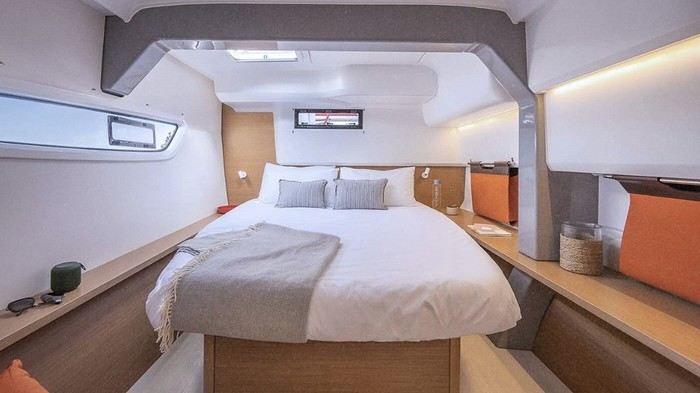
Each type of boat brings its own advantages and a different experience:
Sailboat: Ideal for families or couples looking for an authentic experience. Sailboats offer irresistible nautical charm with their optimized spaces and cozy atmosphere. Catamaran: Spacious and stable, perfect for groups of friends or large families. With its wide outdoor areas, it’s made for socializing. Yacht: Synonymous with luxury and elegance, it’s the perfect choice for marking a special occasion, like a birthday or a marriage proposal. Houseboat: For those who prefer a more nature-focused vibe, houseboats offer a bucolic experience along canals or rivers.
Beyond their unique charm, these boats are often just as affordable as a hotel room. Take, for example, a sailboat in Hendaye priced at 129 € per night for four people. For that price, you’re not just getting an unusual place to stay—you’re getting the equivalent of a floating cottage with a bedroom, bathroom, fully equipped kitchen, and outdoor spaces. It’s the perfect choice for anyone looking to combine comfort, authenticity, and originality.
II. Sleeping on a Boat—Yes, But Where?
Docked boat rentals aren’t limited to just one or two destinations—far from it. With BedBoat, you can explore numerous ports in France and even the Caribbean.
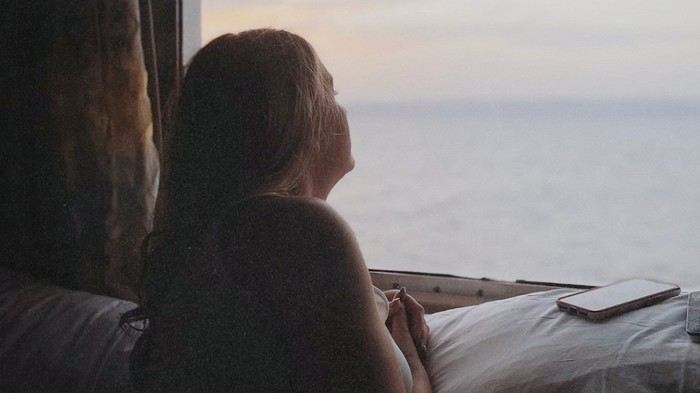
Here’s a look at some top destinations:
Atlantic Coast:
Hendaye: This Basque port offers a picturesque setting between sea and mountains. Perfect for discovering Basque culture and traditions. La Rochelle: With its iconic old port, medieval towers, and cobbled streets, it’s an ideal city for a historic and gastronomic weekend. Arcachon: Known for its oysters and the majestic Dune of Pilat, this destination is a must for nature lovers.
Mediterranean Coast:
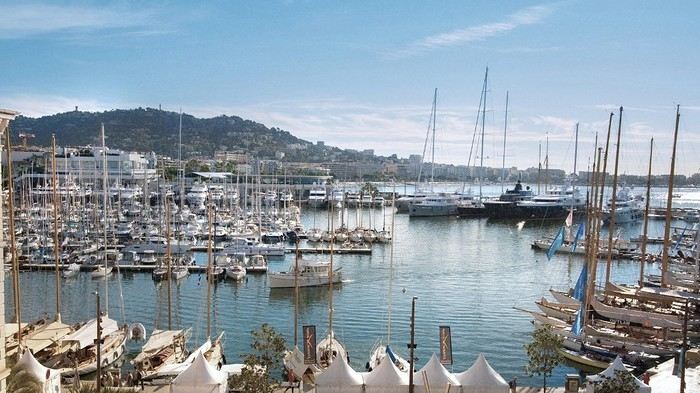
Cannes: Who hasn’t dreamed of spending a night in the port of this legendary city, surrounded by yachts and just steps from the Croisette? Toulon: A dynamic and authentic port, perfect for a getaway between land and sea. Mandelieu-La Napoule: A charming town just a few kilometers from Cannes, known for its peaceful landscapes and seaside château.
The Caribbean:
Martinique and Guadeloupe: Here, the experience takes on a whole new dimension. Picture yourself on a catamaran, lulled by turquoise waters. It’s the ultimate dream for anyone seeking a paradise getaway.
Rivers:
Bordeaux: Docked in the heart of this historic city, your boat lets you explore its vineyards and UNESCO-listed architecture. Lyon: Enjoy the Rhône or Saône rivers for a unique experience in this foodie city. Asnières-sur-Seine: Just a stone’s throw from Paris, discover a surprising stay at the capital’s doorstep. Saint-Florentin: A more rural option for those seeking tranquility and nature.
No matter the destination, spending an unusual night on a boat gives you the luxury of choosing between the buzz of big cities or the peace of more secluded spots. Unlike treehouses, which are often remote, boats let you be right in the heart of the action while still enjoying privacy.
III. BedBoat: An Innovative Startup
Did you know France has over a million boats docked in its ports? Yet, on average, these boats are only used 10 to 15 days a year. Based on this observation, three friends—Félix, Fabian, and Luke—decided to create BedBoat, the first platform dedicated to docked boat rentals.
The idea is simple but brilliant: turn these underused boats into tourist accommodations. This not only helps owners cover their costs but also lets travelers live a unique experience—all without building new infrastructure, making it both an economical and eco-friendly solution. Far from being just a booking platform, BedBoat offers a true immersion into the world of boating. It’s an innovative way to discover France’s and the Caribbean’s most beautiful ports while enjoying all the perks of an unusual stay. For cities, it’s also a great opportunity. Boats allow them to welcome more tourists without overloading the traditional rental market. Everyone wins: owners, travelers, and even locals.
Docked boat rentals are much more than just a trend—they’re a revolution in the world of tourism. Whether you’re looking for a romantic getaway, a family vacation, or a trip with friends, BedBoat opens the door to a whole new world. So, ready to set sail on your next adventure?
I. Why Spend an Unusual Night on a Boat?
Imagine this: you wake up to the sound of gentle waves, a soft ray of sunlight dancing on the water’s surface as you enjoy breakfast on deck. You’re just steps away from restaurants, shops, and points of interest, since your accommodation is perfectly located in the heart of the harbor. This experience, which few have had the chance to try yet, is within everyone’s reach thanks to docked boat rentals.
Discover why spending an unusual night on a boat is the next big trend. Whether it’s for a romantic weekend, a family vacation, or a getaway with friends, a night on a docked boat offers a one-of-a-kind experience. Unlike a standard hotel room, where walls limit your view, on a boat, it’s the vast expanse of water that surrounds you. It’s a refreshing and calming escape, where simply waking up on the water turns your stay into a memorable moment. Another plus? The variety of boats available.
Each type of boat brings its own advantages and a different experience:
Sailboat: Ideal for families or couples looking for an authentic experience. Sailboats offer irresistible nautical charm with their optimized spaces and cozy atmosphere. Catamaran: Spacious and stable, perfect for groups of friends or large families. With its wide outdoor areas, it’s made for socializing. Yacht: Synonymous with luxury and elegance, it’s the perfect choice for marking a special occasion, like a birthday or a marriage proposal. Houseboat: For those who prefer a more nature-focused vibe, houseboats offer a bucolic experience along canals or rivers.
Beyond their unique charm, these boats are often just as affordable as a hotel room. Take, for example, a sailboat in Hendaye priced at 129 € per night for four people. For that price, you’re not just getting an unusual place to stay—you’re getting the equivalent of a floating cottage with a bedroom, bathroom, fully equipped kitchen, and outdoor spaces. It’s the perfect choice for anyone looking to combine comfort, authenticity, and originality.
II. Sleeping on a Boat—Yes, But Where?
Docked boat rentals aren’t limited to just one or two destinations—far from it. With BedBoat, you can explore numerous ports in France and even the Caribbean.
Here’s a look at some top destinations:
Atlantic Coast:
Hendaye: This Basque port offers a picturesque setting between sea and mountains. Perfect for discovering Basque culture and traditions. La Rochelle: With its iconic old port, medieval towers, and cobbled streets, it’s an ideal city for a historic and gastronomic weekend. Arcachon: Known for its oysters and the majestic Dune of Pilat, this destination is a must for nature lovers.
Mediterranean Coast:
Cannes: Who hasn’t dreamed of spending a night in the port of this legendary city, surrounded by yachts and just steps from the Croisette? Toulon: A dynamic and authentic port, perfect for a getaway between land and sea. Mandelieu-La Napoule: A charming town just a few kilometers from Cannes, known for its peaceful landscapes and seaside château.
The Caribbean:
Martinique and Guadeloupe: Here, the experience takes on a whole new dimension. Picture yourself on a catamaran, lulled by turquoise waters. It’s the ultimate dream for anyone seeking a paradise getaway.
Rivers:
Bordeaux: Docked in the heart of this historic city, your boat lets you explore its vineyards and UNESCO-listed architecture. Lyon: Enjoy the Rhône or Saône rivers for a unique experience in this foodie city. Asnières-sur-Seine: Just a stone’s throw from Paris, discover a surprising stay at the capital’s doorstep. Saint-Florentin: A more rural option for those seeking tranquility and nature.
No matter the destination, spending an unusual night on a boat gives you the luxury of choosing between the buzz of big cities or the peace of more secluded spots. Unlike treehouses, which are often remote, boats let you be right in the heart of the action while still enjoying privacy.
III. BedBoat: An Innovative Startup
Did you know France has over a million boats docked in its ports? Yet, on average, these boats are only used 10 to 15 days a year. Based on this observation, three friends—Félix, Fabian, and Luke—decided to create BedBoat, the first platform dedicated to docked boat rentals.
The idea is simple but brilliant: turn these underused boats into tourist accommodations. This not only helps owners cover their costs but also lets travelers live a unique experience—all without building new infrastructure, making it both an economical and eco-friendly solution. Far from being just a booking platform, BedBoat offers a true immersion into the world of boating. It’s an innovative way to discover France’s and the Caribbean’s most beautiful ports while enjoying all the perks of an unusual stay. For cities, it’s also a great opportunity. Boats allow them to welcome more tourists without overloading the traditional rental market. Everyone wins: owners, travelers, and even locals.
Docked boat rentals are much more than just a trend—they’re a revolution in the world of tourism. Whether you’re looking for a romantic getaway, a family vacation, or a trip with friends, BedBoat opens the door to a whole new world. So, ready to set sail on your next adventure?
Matsumoto - Shirakawa-go - Magome getaway: what's the best way to get around?
Hello,
What a joy to be back on this forum that I’ve browsed for so many years :-)!
I’m heading to Japan with my partner in November 2025. This will be my second trip there and his first.
I was planning to go from Tokyo to Matsumoto, which I haven’t visited before, and from there, check out Shirahone Onsen and then hike from Magome to Tsumago. However, after reading several travel journals, I’ve realized that the village of Shirakawa-go and its surroundings look amazing. Back in 2006, I visited Takayama, which I loved, but I don’t want to stay there again.
To visit the places mentioned above (Shirahone Onsen, Shirakawa-go, Magome, and Tsumago), I’m thinking that a car might be more convenient than public transport, especially for getting from Shirakawa-go to Magome. Could you confirm if that’s the case? If so, is it easy to rent a car for a few days to do a loop starting from Matsumoto?
Thanks in advance for your valuable tips.
Have a great evening
What a joy to be back on this forum that I’ve browsed for so many years :-)!
I’m heading to Japan with my partner in November 2025. This will be my second trip there and his first.
I was planning to go from Tokyo to Matsumoto, which I haven’t visited before, and from there, check out Shirahone Onsen and then hike from Magome to Tsumago. However, after reading several travel journals, I’ve realized that the village of Shirakawa-go and its surroundings look amazing. Back in 2006, I visited Takayama, which I loved, but I don’t want to stay there again.
To visit the places mentioned above (Shirahone Onsen, Shirakawa-go, Magome, and Tsumago), I’m thinking that a car might be more convenient than public transport, especially for getting from Shirakawa-go to Magome. Could you confirm if that’s the case? If so, is it easy to rent a car for a few days to do a loop starting from Matsumoto?
Thanks in advance for your valuable tips.
Have a great evening
Ha Giang and Dong Van in Vietnam
Back from Dong Van
Big plus: a brand-new highway between Hanoi airport and Tuyen Quang, halfway between Hanoi and Ha Giang. The speed limit is usually 50 km/h, but it still saves time.
In Ha Giang, the Truong Xuan Hotel (Ha Giang Resort) has gone downhill. Stay at the gorgeous guesthouse (varnished wooden bungalows with panoramic terrace and excellent meals) run by Mr. WIN (03 64 86 67 66) in Thôn Tha village, 5 kilometers before Ha Giang. If it's full, try next door at Mr. Cay’s place—also bungalows, but with a less stunning view: 09 79 76 94 67.
Dong Van has become so popular that there are now over 200 hotels and guesthouses (only one existed 5 years ago). I stayed at my usual spot, the Hoang Ngoc, which now has an elevator, but it’s gotten expensive (450,000 VND). Instead, check out one of the two 2-star hotels across the street.
On the other hand, dining options have really improved. The excellent Green Karst (one of the servers, Mr. Hung, is also a French-speaking guide) has two locations—one on the main street and another a bit uphill to the left. Go to the latter.
I revisited Lung Cu, still just as spectacular. There are now small electric trains that take you up to the viewpoint (30,000 VND per person round trip). The Hmong King’s Palace in Sa Phin is still standing strong. Small shops to the left of the staircase—the closest one is run by a descendant of the king, actually a traditional costume chief.
There’s a lovely guesthouse at the top of Ma Pi Leng, run by a super-friendly Hmong guy in a beret (a French legacy) who speaks decent French. The terrace overlooks the Nho Qué River canyon. 250,000 VND for two, breakfast included (dinner is 200,000 VND).
In Ha Giang, the Truong Xuan Hotel (Ha Giang Resort) has gone downhill. Stay at the gorgeous guesthouse (varnished wooden bungalows with panoramic terrace and excellent meals) run by Mr. WIN (03 64 86 67 66) in Thôn Tha village, 5 kilometers before Ha Giang. If it's full, try next door at Mr. Cay’s place—also bungalows, but with a less stunning view: 09 79 76 94 67.
Dong Van has become so popular that there are now over 200 hotels and guesthouses (only one existed 5 years ago). I stayed at my usual spot, the Hoang Ngoc, which now has an elevator, but it’s gotten expensive (450,000 VND). Instead, check out one of the two 2-star hotels across the street.
On the other hand, dining options have really improved. The excellent Green Karst (one of the servers, Mr. Hung, is also a French-speaking guide) has two locations—one on the main street and another a bit uphill to the left. Go to the latter.
I revisited Lung Cu, still just as spectacular. There are now small electric trains that take you up to the viewpoint (30,000 VND per person round trip). The Hmong King’s Palace in Sa Phin is still standing strong. Small shops to the left of the staircase—the closest one is run by a descendant of the king, actually a traditional costume chief.
There’s a lovely guesthouse at the top of Ma Pi Leng, run by a super-friendly Hmong guy in a beret (a French legacy) who speaks decent French. The terrace overlooks the Nho Qué River canyon. 250,000 VND for two, breakfast included (dinner is 200,000 VND).
Holiday in Brittany with 3 kids (5 months, 4 and 7 years old)
I’m starting to plan our summer 2025 holiday.
Yes, I know, I’m getting a head start 😄, but since I’m pregnant, I’d rather have as much ready as possible before baby arrives at the end of March 👶.
We’re a family of 5, and this year, we’d like to visit Brittany (not too hot—perfect for us! 🌡️). We already know the southern area a bit, as well as the Saint-Malo region, but this time, we’d like to explore the north of Finistère. We’re looking for an area that’s still quite wild, away from the crowds.
We’d also like to find some fun activities to keep our two older kids (4 and 7) busy 👧🧒.
We’re good walkers, and we’ll have a baby carrier for the youngest.
Which area would you recommend? Any ideas for places to visit, beaches, or family-friendly activities?
Thanks in advance for your recommendations! 🙏
Elise
Romania with the wind in my face
Hi there,
In spring 2023, I headed to Romania by motorcycle. I’ve been going there for over 20 years—by car, bike, and plane—and I’ve really fallen for this country. I feel so at home there. The big difference this time? I had all the time in the world, no constraints at all.
I left the Paris region (IDF) and headed for the Sundgau, avoiding the motorways. I know a little hotel tucked away in the countryside there. The next day, I followed the Swiss border on a small road along the Lucelle River, which acts as the frontier. Around a bend, you cross to the other side and then back into France—kind of fun.

I crossed Switzerland via the motorway—I know the route well, so no sightseeing. I arrived in Austria, which I also know pretty well, and took the Arlberg Pass. It was deserted, everything was closed, and there was still snow.

The weather wasn’t great—it was raining—so I stopped for the night at a remote inn. Perfect for drying off! I set off in the rain the next morning and kept going. Gradually, the rain stopped. I took a detour through the Trentino-Alto Adige region and the Sella Pass. Up there, it was rain, snow, and a bit of black ice in a tunnel (wind + rain + sub-zero temps = skating rink).

I arrived in Burgenland to see the famous giant glass-and-metal grape cluster, the largest in Europe. The region is hilly, full of tiny roads, and covered in vineyards.

Burgenland

Then into Slovenia.

I stopped for the night at a winegrower’s B&B perched on a ridge straddling the Croatian border. The welcome was fantastic—I spent the evening with the owners and their friends who arrived later. The white wine was amazing! The next day, I hit the road again.

I headed for Vukovar, on the Danube, a symbol of resistance during the Balkan War. I found a really comfortable B&B by the river and stayed for two nights to explore. What a strange monument!

I visited the water tower, which you can go inside—it’s riddled with bullet holes. There’s an exhibition inside. I also checked out a museum of equipment used during the Balkan War. Since it’s in a barracks, it’s guarded. I asked if I could bring my motorcycle in, and a Croatian officer came to meet me and gave me permission, along with a sticker to put on the bike. I met some fellow bikers from Marseille riding beautiful vintage bikes.

I left Vukovar following the Danube toward Serbia. The rain caught up with me. The roads were busy, with construction causing mud everywhere and crazy truck drivers. At one point, I cut through the construction zone! I stopped for coffee in a village—it had a *Deliverance* vibe. Total silence when I walked in, and the owner gave me a suspicious look. Finally, the Romanian border... and the sun came out! The Romanian customs officer asked if I had anything to declare. "Yes—just happy to be back in Romania!" I stopped for the night at a *cabana* (mountain hut) lost in the forest. Chaos ensued—a tourist! So they rushed to get supplies, quench my thirst, give me a room, and then the owner took charge: țuică (plum brandy), omelette, beers... Everyone bent over backwards to make me happy.
I love these Romanian roads!


I passed through Băile Herculane, which isn’t as beautiful as it once was—everything’s run-down. What are they waiting for to restore this *Mittel Europa*-style spa town that’s still active?
I stopped at the birthplace of Constantin Brâncuși.

Keep your eyes peeled on the roads!

Via the Jiu Valley, I arrived in Craiova to visit my in-laws. A few days of laughs and outings. I picked up my wife at the airport.
My favorite brand

We took a trip to Horezu, a village famous for its beautiful ceramics.


After those few days together, I dropped my wife off at the airport, and the next day, I set off for Dobrogea, a region split in two after the war with Bulgaria. The road was dull—flat as far as the eye could see—but the sun was out. I followed a military convoy of about fifty vehicles, with orders not to overtake. I stopped by the roadside for some homemade *ciorbă* (sour soup). That evening, I stopped in Călărași. The next day, I crossed the Danube by ferry. There are two ferries—one goes to Bulgaria, the other stays in Romania.

A priest on board came over to bless the motorcycle, the rider, and the ferry. I arrived on the other side with some traffic. Dobrogea

It’s like that all the way to the Bulgarian border—no restaurants, hotels, or gas stations, just old collective farms. And it’s the same in Bulgaria! I stopped at Adamclisi, site of a major battle in Moesia (now Dobrogea) in 101–102 BC, one of Trajan’s most important Dacian Wars.

An oasis in the agricultural steppe.

I arrived at the Bulgarian border.

A customs officer—built like a weightlifter, shaved head, thick neck, and as square as a truck—saw me take this photo and came over to ask me to delete it. I did... but I didn’t empty the trash! The weather turned stormy. I arrived in Balchik, a resort town where the last queen of Romania, Maria, used to vacation.
The Black Sea and the Bulgarian coast

The weather wasn’t great, so I headed back to Romania to follow the coastline. Constanța and its casino

Then came the seaside resorts—just as ugly as each other: Neptun, Mangalia, Eforie Nord, Eforie Sud. I stopped at a B&B near the Danube Delta, in some random village. The welcome was nice. The next day, I headed for Dunavățu de Jos, the last stretch of tarmac in Romania. After that, it’s the Danube Delta. The area is flat and sandy, with typical houses featuring reed roofs.

Now, I’m following the Ukrainian border. I passed the last active quarantine station in Europe. I came across a funeral procession—it’s customary to honk as you pass. If you’re on foot, you cross yourself. When I arrived in Galați, it was raining. I boarded the ferry in a downpour. On board, we were packed in like sardines. As soon as the ramp hit land, the drivers rushed out, revving their engines and honking. I let them go and exited calmly. I continued toward the Székely Land. These are Hungarians who, back in the day, were border guards for the king. They’ve kept their own script (it looks like runes), their flag, and their independence streak. For them, Romania is Hungarian, despite the Treaty of Sèvres in 1920. There are still clashes between Romanians and Székely Hungarians now and then. Since I speak a bit of Romanian, I used it—logical, since it’s the language there—and it put everyone in a good mood! Székely flag

I passed through Bicaz Chei, arriving via one of my favorite kinds of roads. During a break, a bear came to check me out from a distance.

Bicaz Chei

I arrived at the "Heart of Jesus" monument, built by public subscription to thank God for sparing the village from severe flooding.

Now, I’m heading west—next stop, Transylvania, with the in-laws. On the road

Roma house

Bozorka—a Hungarian specialty... 450 grams of meat!
I made it back to France without any issues, already thinking about my next trip. Actually, I just got back from one!
I left the Paris region (IDF) and headed for the Sundgau, avoiding the motorways. I know a little hotel tucked away in the countryside there. The next day, I followed the Swiss border on a small road along the Lucelle River, which acts as the frontier. Around a bend, you cross to the other side and then back into France—kind of fun.
I crossed Switzerland via the motorway—I know the route well, so no sightseeing. I arrived in Austria, which I also know pretty well, and took the Arlberg Pass. It was deserted, everything was closed, and there was still snow.
The weather wasn’t great—it was raining—so I stopped for the night at a remote inn. Perfect for drying off! I set off in the rain the next morning and kept going. Gradually, the rain stopped. I took a detour through the Trentino-Alto Adige region and the Sella Pass. Up there, it was rain, snow, and a bit of black ice in a tunnel (wind + rain + sub-zero temps = skating rink).
I arrived in Burgenland to see the famous giant glass-and-metal grape cluster, the largest in Europe. The region is hilly, full of tiny roads, and covered in vineyards.
Burgenland
Then into Slovenia.
I stopped for the night at a winegrower’s B&B perched on a ridge straddling the Croatian border. The welcome was fantastic—I spent the evening with the owners and their friends who arrived later. The white wine was amazing! The next day, I hit the road again.
I headed for Vukovar, on the Danube, a symbol of resistance during the Balkan War. I found a really comfortable B&B by the river and stayed for two nights to explore. What a strange monument!
I visited the water tower, which you can go inside—it’s riddled with bullet holes. There’s an exhibition inside. I also checked out a museum of equipment used during the Balkan War. Since it’s in a barracks, it’s guarded. I asked if I could bring my motorcycle in, and a Croatian officer came to meet me and gave me permission, along with a sticker to put on the bike. I met some fellow bikers from Marseille riding beautiful vintage bikes.
I left Vukovar following the Danube toward Serbia. The rain caught up with me. The roads were busy, with construction causing mud everywhere and crazy truck drivers. At one point, I cut through the construction zone! I stopped for coffee in a village—it had a *Deliverance* vibe. Total silence when I walked in, and the owner gave me a suspicious look. Finally, the Romanian border... and the sun came out! The Romanian customs officer asked if I had anything to declare. "Yes—just happy to be back in Romania!" I stopped for the night at a *cabana* (mountain hut) lost in the forest. Chaos ensued—a tourist! So they rushed to get supplies, quench my thirst, give me a room, and then the owner took charge: țuică (plum brandy), omelette, beers... Everyone bent over backwards to make me happy.
I love these Romanian roads!
I passed through Băile Herculane, which isn’t as beautiful as it once was—everything’s run-down. What are they waiting for to restore this *Mittel Europa*-style spa town that’s still active?
I stopped at the birthplace of Constantin Brâncuși.
Keep your eyes peeled on the roads!
Via the Jiu Valley, I arrived in Craiova to visit my in-laws. A few days of laughs and outings. I picked up my wife at the airport.
My favorite brand
We took a trip to Horezu, a village famous for its beautiful ceramics.
After those few days together, I dropped my wife off at the airport, and the next day, I set off for Dobrogea, a region split in two after the war with Bulgaria. The road was dull—flat as far as the eye could see—but the sun was out. I followed a military convoy of about fifty vehicles, with orders not to overtake. I stopped by the roadside for some homemade *ciorbă* (sour soup). That evening, I stopped in Călărași. The next day, I crossed the Danube by ferry. There are two ferries—one goes to Bulgaria, the other stays in Romania.
A priest on board came over to bless the motorcycle, the rider, and the ferry. I arrived on the other side with some traffic. Dobrogea
It’s like that all the way to the Bulgarian border—no restaurants, hotels, or gas stations, just old collective farms. And it’s the same in Bulgaria! I stopped at Adamclisi, site of a major battle in Moesia (now Dobrogea) in 101–102 BC, one of Trajan’s most important Dacian Wars.
An oasis in the agricultural steppe.
I arrived at the Bulgarian border.
A customs officer—built like a weightlifter, shaved head, thick neck, and as square as a truck—saw me take this photo and came over to ask me to delete it. I did... but I didn’t empty the trash! The weather turned stormy. I arrived in Balchik, a resort town where the last queen of Romania, Maria, used to vacation.
The Black Sea and the Bulgarian coast
The weather wasn’t great, so I headed back to Romania to follow the coastline. Constanța and its casino
Then came the seaside resorts—just as ugly as each other: Neptun, Mangalia, Eforie Nord, Eforie Sud. I stopped at a B&B near the Danube Delta, in some random village. The welcome was nice. The next day, I headed for Dunavățu de Jos, the last stretch of tarmac in Romania. After that, it’s the Danube Delta. The area is flat and sandy, with typical houses featuring reed roofs.
Now, I’m following the Ukrainian border. I passed the last active quarantine station in Europe. I came across a funeral procession—it’s customary to honk as you pass. If you’re on foot, you cross yourself. When I arrived in Galați, it was raining. I boarded the ferry in a downpour. On board, we were packed in like sardines. As soon as the ramp hit land, the drivers rushed out, revving their engines and honking. I let them go and exited calmly. I continued toward the Székely Land. These are Hungarians who, back in the day, were border guards for the king. They’ve kept their own script (it looks like runes), their flag, and their independence streak. For them, Romania is Hungarian, despite the Treaty of Sèvres in 1920. There are still clashes between Romanians and Székely Hungarians now and then. Since I speak a bit of Romanian, I used it—logical, since it’s the language there—and it put everyone in a good mood! Székely flag
I passed through Bicaz Chei, arriving via one of my favorite kinds of roads. During a break, a bear came to check me out from a distance.
Bicaz Chei
I arrived at the "Heart of Jesus" monument, built by public subscription to thank God for sparing the village from severe flooding.
Now, I’m heading west—next stop, Transylvania, with the in-laws. On the road
Roma house
Bozorka—a Hungarian specialty... 450 grams of meat!
I made it back to France without any issues, already thinking about my next trip. Actually, I just got back from one!
November 2024 Photo Contest: Art Nouveau Around the World
Hello!
With no authority whatsoever, I’m taking the liberty of relaunching the photo contests on VoyageForum, which is now active and alive again 😉
The theme for November 2024 is Art Nouveau, an artistic and architectural movement (1893 to 1913—just before, well, World War I) that has nothing to do with (or does it?) Art Deco, another artistic and architectural movement (1925 to 1940—right before World War II).
**Participation** Every VF member can submit up to 3 photos, until Monday, November 25 at 11:59 PM Brussels time. Each photo must be posted in a separate message, with its number (1, 2, or 3) indicated. Don’t forget to add a short explanation (commentary, location, etc.).
**Voting** Every VF member can vote for the 3 photos they consider the best, based on their own criteria and the theme. Voting will take place from Tuesday, November 26 to Saturday, November 30 at 11:59 PM Brussels time.
Photos will be ranked in order of preference: - 1st photo: 3 points - 2nd photo: 2 points - 3rd photo: 1 point
The winner is the photographer whose photo receives the most points. Results will be published on December 1. In case of a tie, the number of first-place votes will decide. The winner will have the honor of organizing December’s contest.
Photos that have already been nominated (1st, 2nd, or 3rd place) in another contest are not eligible for this one.
**Example of Art Nouveau architecture**
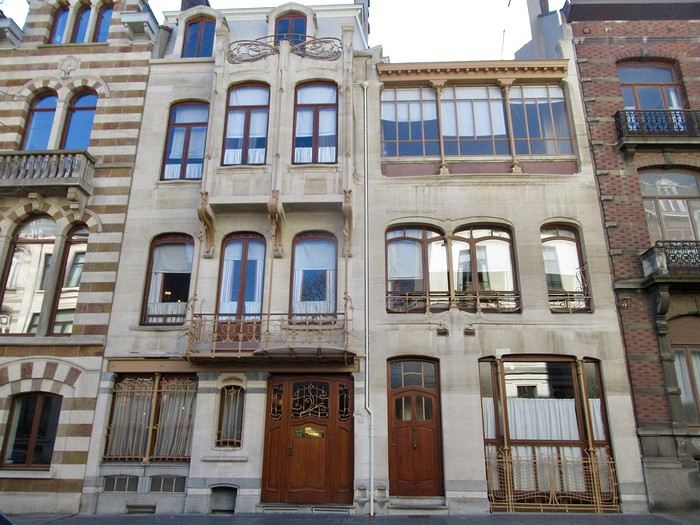
Victor Horta’s house and workshop (considered the "Father of Art Nouveau") on Rue Américaine in Saint-Gilles (Brussels, Belgium).
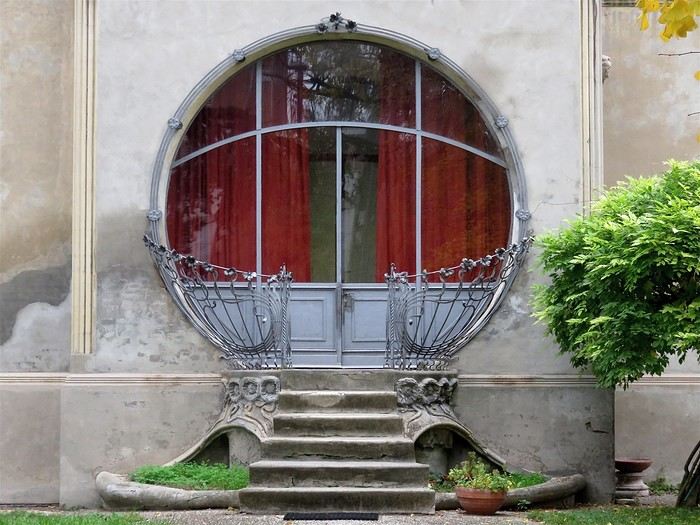
Villa Melchiorri, Via Cavour in Ferrara (Emilia-Romagna, Italy).
Art Nouveau Around the World – discussion post
With no authority whatsoever, I’m taking the liberty of relaunching the photo contests on VoyageForum, which is now active and alive again 😉
The theme for November 2024 is Art Nouveau, an artistic and architectural movement (1893 to 1913—just before, well, World War I) that has nothing to do with (or does it?) Art Deco, another artistic and architectural movement (1925 to 1940—right before World War II).
**Participation** Every VF member can submit up to 3 photos, until Monday, November 25 at 11:59 PM Brussels time. Each photo must be posted in a separate message, with its number (1, 2, or 3) indicated. Don’t forget to add a short explanation (commentary, location, etc.).
**Voting** Every VF member can vote for the 3 photos they consider the best, based on their own criteria and the theme. Voting will take place from Tuesday, November 26 to Saturday, November 30 at 11:59 PM Brussels time.
Photos will be ranked in order of preference: - 1st photo: 3 points - 2nd photo: 2 points - 3rd photo: 1 point
The winner is the photographer whose photo receives the most points. Results will be published on December 1. In case of a tie, the number of first-place votes will decide. The winner will have the honor of organizing December’s contest.
Photos that have already been nominated (1st, 2nd, or 3rd place) in another contest are not eligible for this one.
**Example of Art Nouveau architecture**
Victor Horta’s house and workshop (considered the "Father of Art Nouveau") on Rue Américaine in Saint-Gilles (Brussels, Belgium).
Villa Melchiorri, Via Cavour in Ferrara (Emilia-Romagna, Italy).
Art Nouveau Around the World – discussion post
Naples, à moitié déçu... English translation pending
Bonjour à tous,
Me voilà revenu de Naples. Je ne savais pas où partager mon ressenti, les forums de Tripadvisor et du Routard semblent morts. J'espère qu'ici j'aurais des retours.
Grand amoureux de l'Italie, et surtout grand lecteur, je me suis rendu cette année à Naples pour la première fois. Autant vous dire que de Stendhal, à Goethe, en passant par Lamartine, Dumas ou plus récemment Jean-Noël Schifano, Naples me faisait "littéralement" rêver.
En ce qui me concerne, je suis un jeune qui tend vers la trentaine. Je parle encore mal l'italien, mais suffisamment assez pour maintenir de petites discussions, manger au restaurant, commander, ou comprendre ce qu'on me dit.
J'ai longtemps hésité avant d'aller à Naples avec tout ce qu'on pouvait lire sur Internet et dans les guides. Je ne suis pas du genre à m'habiller touriste. J'aime les beaux vêtements, même à l'étranger. Et emporter mon appareil photo ne me rassurait guère.
Arrivé sur place je me suis rendu compte que sur ce point tout était faux. Les jeunes napolitains aiment d'autant plus les beaux vêtements. Je n'ai pas compté le nombre de Balenciaga aux pieds des jeunes filles du Quartier Espagnol. Naples n'est pas plus, ni moins dangereuse que Paris. J'y rentrai tard le soir (avant minuit tout de même) entre les courses nocturnes de scooters sans que je sois embêté. J'ai néanmoins trouvé le centre historique et les alentours de la gare un peu plus suspects le soir. Certainement car ce sont des passages touristiques dans lesquels il est plus facile d'y repérer le touriste
Sur la question de l'insalubrité, même constat que le point précédent. Les Quartiers Espagnols et Rione Sanità sont étonnement propres comparés au centre historique, aux alentours de la gare, ou encore du Longomare qui pour le coup était vraiment sale. Mais ayant voyagé dans d'autres pays, ce n'est pas ce qui a retenu mon attention. De toute façon, j'étais prévenu. A titre de comparaison, Rome est une réelle déchetterie ! J'ai visité des capitales pauvres, et pourtant impeccables. Mais ce n'est pas le sujet
Nous arrivons aux points qui m'ont déçus. Mes amis m'ont vendu Naples comme "la ville la plus chaleureuse d'Italie" dans laquelle "Je me ferai des amis". J'ai personnellement jamais été aussi mal accueilli dans cette ville. Je pensais qu'après un confinement qui a fait du mal à l'Italie, et qu'en l'absence de plus de la moitié des touristes extra-européens, ils seraient "heureux" de me recevoir au restaurant. Pourtant, à chaque fois j'avais l'impression de déranger. On me poussait vers la sortie alors que le restaurant était vide à 12h, on ne faisait pas l'effort de me parler ni de me comprendre. J'étais souvent servi en dernier après les locaux
De même, en ce qui concerne l'amabilité générale, c'est l'unique ville d'Italie où je n'ai rencontré personne. J'ai été perdu une fois au début de mon voyage, j'ai du demander 5 fois avant que quelqu'un m'indique le chemin. Par chance, c'était une française expatriée ! Les autres se détournaient, et pourtant je demandais en Italien.
J'ai longtemps rêvé de Naples, d'y rencontrer ses gens, de pratiquer mon italien, de partager un café, de parler à un pêcheur, de faire le tour de la ville avec un local. Et me voilà rentré bredouille
J'ai certainement généralisé, mais sur toutes les villes que j'ai visité, c'est la première fois que ça m'arrive. J'aimerais y retourner néanmoins, j'ai beaucoup aimé l’atmosphère, les paysages, et surtout essayer de rencontrer 1 ou 2 napolitains. Je ne sais pas s'il existe des associations de bénévolat ou des choses similaires où je pourrai rencontrer du monde, je vais essayer de me renseigner
Que pensez-vous des napolitains, pour ceux qui y sont allés ? Peut-être que des gens y vivent ? Ou mieux, des napolitains seraient présents sur ce forum ?
Peut être que je n'ai juste pas eu de chance cette fois-ci, mais le ressenti était général, l'ambiance était "froide"...
Me voilà revenu de Naples. Je ne savais pas où partager mon ressenti, les forums de Tripadvisor et du Routard semblent morts. J'espère qu'ici j'aurais des retours.
Grand amoureux de l'Italie, et surtout grand lecteur, je me suis rendu cette année à Naples pour la première fois. Autant vous dire que de Stendhal, à Goethe, en passant par Lamartine, Dumas ou plus récemment Jean-Noël Schifano, Naples me faisait "littéralement" rêver.
En ce qui me concerne, je suis un jeune qui tend vers la trentaine. Je parle encore mal l'italien, mais suffisamment assez pour maintenir de petites discussions, manger au restaurant, commander, ou comprendre ce qu'on me dit.
J'ai longtemps hésité avant d'aller à Naples avec tout ce qu'on pouvait lire sur Internet et dans les guides. Je ne suis pas du genre à m'habiller touriste. J'aime les beaux vêtements, même à l'étranger. Et emporter mon appareil photo ne me rassurait guère.
Arrivé sur place je me suis rendu compte que sur ce point tout était faux. Les jeunes napolitains aiment d'autant plus les beaux vêtements. Je n'ai pas compté le nombre de Balenciaga aux pieds des jeunes filles du Quartier Espagnol. Naples n'est pas plus, ni moins dangereuse que Paris. J'y rentrai tard le soir (avant minuit tout de même) entre les courses nocturnes de scooters sans que je sois embêté. J'ai néanmoins trouvé le centre historique et les alentours de la gare un peu plus suspects le soir. Certainement car ce sont des passages touristiques dans lesquels il est plus facile d'y repérer le touriste
Sur la question de l'insalubrité, même constat que le point précédent. Les Quartiers Espagnols et Rione Sanità sont étonnement propres comparés au centre historique, aux alentours de la gare, ou encore du Longomare qui pour le coup était vraiment sale. Mais ayant voyagé dans d'autres pays, ce n'est pas ce qui a retenu mon attention. De toute façon, j'étais prévenu. A titre de comparaison, Rome est une réelle déchetterie ! J'ai visité des capitales pauvres, et pourtant impeccables. Mais ce n'est pas le sujet
Nous arrivons aux points qui m'ont déçus. Mes amis m'ont vendu Naples comme "la ville la plus chaleureuse d'Italie" dans laquelle "Je me ferai des amis". J'ai personnellement jamais été aussi mal accueilli dans cette ville. Je pensais qu'après un confinement qui a fait du mal à l'Italie, et qu'en l'absence de plus de la moitié des touristes extra-européens, ils seraient "heureux" de me recevoir au restaurant. Pourtant, à chaque fois j'avais l'impression de déranger. On me poussait vers la sortie alors que le restaurant était vide à 12h, on ne faisait pas l'effort de me parler ni de me comprendre. J'étais souvent servi en dernier après les locaux
De même, en ce qui concerne l'amabilité générale, c'est l'unique ville d'Italie où je n'ai rencontré personne. J'ai été perdu une fois au début de mon voyage, j'ai du demander 5 fois avant que quelqu'un m'indique le chemin. Par chance, c'était une française expatriée ! Les autres se détournaient, et pourtant je demandais en Italien.
J'ai longtemps rêvé de Naples, d'y rencontrer ses gens, de pratiquer mon italien, de partager un café, de parler à un pêcheur, de faire le tour de la ville avec un local. Et me voilà rentré bredouille
J'ai certainement généralisé, mais sur toutes les villes que j'ai visité, c'est la première fois que ça m'arrive. J'aimerais y retourner néanmoins, j'ai beaucoup aimé l’atmosphère, les paysages, et surtout essayer de rencontrer 1 ou 2 napolitains. Je ne sais pas s'il existe des associations de bénévolat ou des choses similaires où je pourrai rencontrer du monde, je vais essayer de me renseigner
Que pensez-vous des napolitains, pour ceux qui y sont allés ? Peut-être que des gens y vivent ? Ou mieux, des napolitains seraient présents sur ce forum ?
Peut être que je n'ai juste pas eu de chance cette fois-ci, mais le ressenti était général, l'ambiance était "froide"...
Three weeks in Quebec at the start of summer 2018, on a "semi-organized" trip
I’ve been putting off posting my Quebec travel experience for a long time. Two years later, I’ve finally decided to share it. The memories are still vivid. I hope this gives you the urge to visit this beautiful region, which I literally fell in love with.
We’re traveling as four adults: my brother Guy, my sister-in-law Martine, my friend Pascal, and myself (Christian).
We entrusted the flight, hotel, and car reservations to the travel agency Amplitudes in Toulouse. Planning the day-to-day activities was up to us. We scheduled a few must-see visits, but for the rest, we’d figure it out on the spot.
Our itinerary: Quebec City / Rimouski / Carleton-sur-Mer / Percé / Sainte-Anne-des-Monts / Matane / Tadoussac / Sainte-Rose-du-Nord / Chambord / Saint-Alexis-des-Monts / Montreal
06/25 Here we are at Roissy Charles de Gaulle for the usual pre-flight formalities. Everything goes smoothly and quickly. The hardest part is waiting for takeoff. After an uneventful flight on an Air Canada Boeing 777-300ER, we land at Montréal-Pierre Elliott Trudeau Airport (YUL) in the early afternoon.
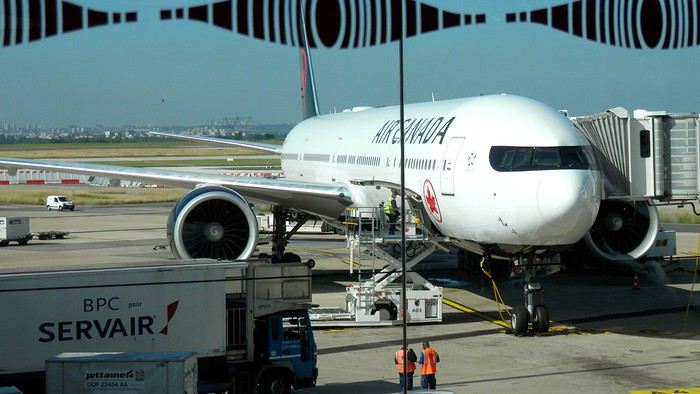
At customs, a surprise—no grumpy officer, but a smiling customs agent who jokingly asks me to name three tourist spots in Quebec, or else he won’t let me in. I pass the test easily and enter Quebec!
We head to the Alamo counter at Trudeau Airport to pick up our car: a Ford Escape with only 300 kilometers on the odometer.
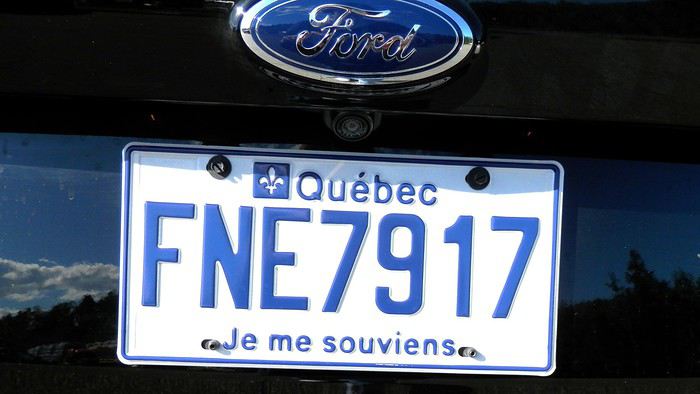
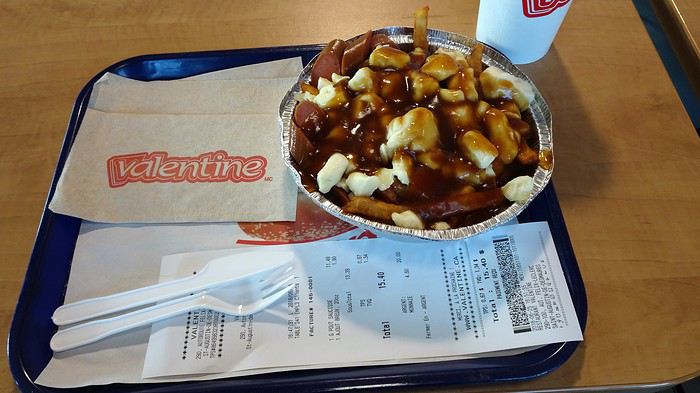
We decided to head straight to Quebec City, saving Montreal for the end of the trip. Pascal takes the wheel and gets on the Trans-Canada Highway E20 for a 255 km drive, taking about 2 hours and 45 minutes. With the time difference, we’re already feeling hungry, so we stop for our first poutine at a highway restaurant.
When we arrive in Quebec City, we go straight to the Clarendon Hotel, located right in the heart of Old Quebec. We’ll be staying there for three nights. Tonight, no restaurant—just a short walk around the hotel before bed. We discover a square with pretty colored water fountains near the city hall.
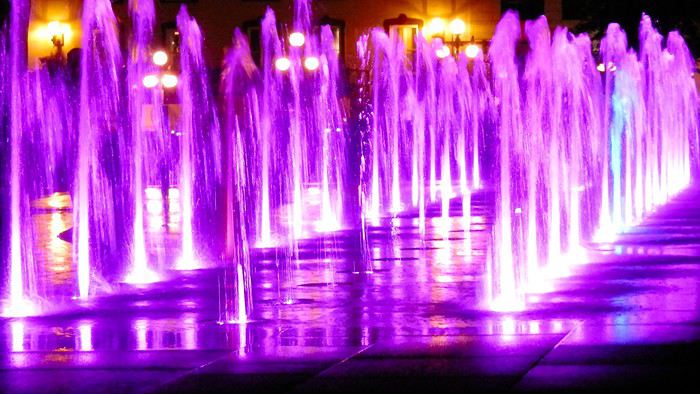 It’s only 9 PM, but our body clocks say it’s 3 AM.
We’re traveling as four adults: my brother Guy, my sister-in-law Martine, my friend Pascal, and myself (Christian).
We entrusted the flight, hotel, and car reservations to the travel agency Amplitudes in Toulouse. Planning the day-to-day activities was up to us. We scheduled a few must-see visits, but for the rest, we’d figure it out on the spot.
Our itinerary: Quebec City / Rimouski / Carleton-sur-Mer / Percé / Sainte-Anne-des-Monts / Matane / Tadoussac / Sainte-Rose-du-Nord / Chambord / Saint-Alexis-des-Monts / Montreal
06/25 Here we are at Roissy Charles de Gaulle for the usual pre-flight formalities. Everything goes smoothly and quickly. The hardest part is waiting for takeoff. After an uneventful flight on an Air Canada Boeing 777-300ER, we land at Montréal-Pierre Elliott Trudeau Airport (YUL) in the early afternoon.
At customs, a surprise—no grumpy officer, but a smiling customs agent who jokingly asks me to name three tourist spots in Quebec, or else he won’t let me in. I pass the test easily and enter Quebec!
We head to the Alamo counter at Trudeau Airport to pick up our car: a Ford Escape with only 300 kilometers on the odometer.
We decided to head straight to Quebec City, saving Montreal for the end of the trip. Pascal takes the wheel and gets on the Trans-Canada Highway E20 for a 255 km drive, taking about 2 hours and 45 minutes. With the time difference, we’re already feeling hungry, so we stop for our first poutine at a highway restaurant.
When we arrive in Quebec City, we go straight to the Clarendon Hotel, located right in the heart of Old Quebec. We’ll be staying there for three nights. Tonight, no restaurant—just a short walk around the hotel before bed. We discover a square with pretty colored water fountains near the city hall.
It’s only 9 PM, but our body clocks say it’s 3 AM.Recap of our family trip to Romania in 2019
Hi everyone,
Better late than never—I’m finally getting around to sharing our trip to Romania from last year.
Before I start, I have a personal history with this country: I lived there in 2004 for three and a half months during a student internship. I still have friends there and a decent grasp of Romanian. That helps. But more than anything, I’ve grown attached to the country. It’s well-deserved—Romania gives back just as much. That said, when I talk about it, maybe I see things differently than someone visiting for the first time.
This was my third trip to Romania. This time, I brought my wife and our two daughters. After years of wanting to take a family trip there, this was finally the right moment. My wife wasn’t exactly thrilled at first—she’d been hesitant for years. But she ended up loving it, and we’ll definitely go back together. For our 6- and 8-year-old girls, the trip was fascinating in so many ways: the sights, learning about communism and totalitarian regimes, the Roma community, how different religions coexist, the Saxon minorities...
We landed in Bucharest last July. We spent two and a half weeks in the country. We took off from Toulouse early in the morning and arrived at Bucharest airport around noon. We flew with Lufthansa because it’s a solid airline and the cheapest option we found.
We rented a car. I don’t remember the rental agency’s name, but we got scammed a bit. We’d booked insurance through Booking, but when we arrived, we couldn’t print a credit card receipt. The issue? We only had debit cards, not credit cards (or vice versa), and without one, we couldn’t pick up the car without buying their on-site insurance. It was buried in the fine print—I’d read it but naively assumed a gold card would work. So, we had to take extra insurance. Basically, we threw 120 € in insurance fees out the window. Still, we got a Dacia Logan, and it ran like a dream the whole trip.
Here’s our rough itinerary: - Bucharest Airport => Sinaia => Brasov - Brasov => Viscri => Sighișoara => Sovata - Sovata => Bicaz Gorge => Iași - Iași => Bucharest
**Sinaia** We started in Sinaia, in the Carpathians. It’s an old Romanian vacation spot from the country’s golden age. A really nice place with great hikes. The mountains are stunning, covered in tall fir trees. There are beautiful buildings and old houses—it’s all very charming. We took the cable car up to the summit (no time to hike with the kids). It’s an old 1960s cable car with two sections (there are also detachable chairlifts). The view from the top is amazing. Then, Peles Castle—a must-see.
**On the road to Brasov** We stayed in a homestay in the village of Purcareni (15 minutes from Brasov by car) through an association called "L’Arbre de Joie." We spent a few days there. The association was founded by a French woman in the 90s and runs local projects. The family we stayed with was Hungarian. The price was around 90 € per day, including breakfast and dinner. The host spoke a little French, and her 16-year-old daughter spoke English fluently. We had great conversations. This family lives like a typical French family—they work at a clinic and a factory, own a car, and have a small chalet in the nearby mountains. From Purcareni, we explored: - **Bran Castle**: The iconic castle. There are way more tourist stalls now than when I first visited in 2004, but it’s still charming and worth seeing. - **Zărnești Bear Reserve**: Interesting—you learn a lot about bears. But it’s expensive, and it’s sad to see these beautiful animals in captivity. - **Râșnov Citadel**: Right near Zărnești. We did Bran, the bears, and this citadel all in one day last year. It’s pretty—you hike up a trail to get there. The view is gorgeous, but the site feels a bit neglected (or not fully restored yet). Some people love it, others don’t, but at least it’s authentic and not some Disneyland with fry stands everywhere. - **Brasov**: Of course! We went twice. It’s beautiful and nothing like what you’d imagine Romania to look like. We hiked up the hill overlooking the city—about 45 to 60 minutes with the kids. The view from the top is incredible, especially over the medieval rooftops. I wasn’t expecting much—I thought we’d see rundown buildings, but the "new" part of town is built farther to the right, so you barely notice it. - One day, we took a horse-drawn carriage (a touristy thing to do for the kids) to our hosts’ second home. It was still really fun. The area is super wild—just a few kilometers from the village, so close to Brasov. We ate *amazingly* with them. Traditional Romanian food is best enjoyed in people’s homes, not restaurants. So, I’d recommend eating at small guesthouses or homestays as much as possible.
**On the road to Viscri** No stops—just straight to Viscri. I found Viscri just as I’d left it in 2004. Maybe a few more tourists, maybe one or two new restaurants. The road still isn’t paved in the village. Viscri is my favorite place in Romania—a simple village with colorful houses. We found a reasonably priced Airbnb and had a great evening with our hosts. They were fascinating people, and we talked about Romania, Saxon minorities, Europe... The next morning, I went for a run and found a trail in the nearby forest. I followed it for a while before turning back. We also visited the fortified church.
**Sighișoara** I’d been there in 2004 and wasn’t particularly moved or impressed. I felt the same way in 2019. But that’s just our take.
**Sovata** In Sovata, we traveled the way I love—arriving around 5 PM with nothing booked and finding a place to stay by asking around. We ended up in homestays for two nights, and both were great. It’s a Hungarian-Romanian thermal spa town. The place is nice but nothing extraordinary, except when you get closer (but not too close) to the thermal complexes. There, you’ll find beautiful mansions and hotels from the early 19th century. It’s touristy, but only Romanians go there. We visited a warm-water lake—it was fun for the folklore, though the water wasn’t exactly inviting. Apparently, there’s another lake higher up that’s so salty you float in it, but we didn’t go. In the afternoon, we took the tourist steam train ("mocăniță" in Romanian). It was a blast—we chatted with people in the carriage. The train covers about 20 kilometers, then turns around (the locomotive detaches, spins, and reattaches). Everyone gets off at the halfway point, where people grill corn on the cob. Then the train heads back. The scenery isn’t breathtaking, but the fields were full of flowers, and the ride was lovely.
**Toward Bicaz Gorge** The next day, we headed to Bicaz Gorge and the Ceahlău Massif in Neamț (pronounced "Nyamts"). We passed through Corund, a village known for local crafts. Whether it’s actually made there or not is always up for debate in a society where cutting corners is common. Still, we found some nice plates, dishes, and souvenirs to bring home. Funny story: I was chatting with a young saleswoman in Romanian and was shocked to realize she didn’t understand me—not because my Romanian was bad, but because she *didn’t speak Romanian at all*. She only spoke Hungarian. Mind-blowing: you’re Romanian and don’t speak Romanian? We crossed a mountain (or big hill) before reaching the Gheorgheni plain—a small town nestled in the mountains, feeling like the end of the world. Was it the season? We saw *so many* storks, and they were *so close*. It was adorable.
**Bicaz Gorge** We stopped at "Lacul Roșu" (Red Lake) to take a boat ride with the kids. (Yeah, we did things we don’t usually do—gotta keep everyone engaged! And maybe that’s why they have such great memories of the trip.) Then, the Bicaz Gorge—one of my favorite spots in Romania. We stayed at Pensiunea Paleu in Bicazu Ardelean, a place I already knew. I think the price for four people, half-board (with delicious home-cooked meals), was around 90 € per day. The rooms are clean and simple, and there’s a big garden with a vegetable patch, a cow, and a pig. Most of the food served comes straight from the garden.
In the afternoon, after much hesitation, we headed to Ceahlău National Park. About 30 minutes by car, we entered the park (after waking up the park ranger, who reeked of booze and was napping). We drove to the end of the road, and then—against all odds—the four of us made it to the summit of Toaca Peak. This peak towers over the surrounding mountains. It was a great hike—starting in the Carpathian fir forests, then crossing a plateau covered in flowers (mid-July). We stopped for a drink at Cabana Dochia before heading up. The summit is a bit unusual because they’ve installed a big metal staircase. It’s steep in places—straight up, and I wouldn’t want to fall. There’s a sturdy railing, though. Even if the "normal route" doesn’t seem too hard. The view from the top is stunning—you can see the entire Carpathian region, vast forests, and the Bicaz Lake below.
**Iași** I used to live in Iași. We stayed with my former internship supervisor and his family. It’s not the first time we’ve crashed at people’s places. In Iași, we visited: - **The Opera House**: A beautiful building from the early 20th century, if I’m not mistaken. Our friends arranged a tour with the firefighters, who let us in and showed us around. It was fun. - **The "Hall of Lost Steps"**: You enter a massive room with stunning woodwork. It’s a huge university library, home to around a million books. The whole place is meticulously decorated. Visiting this room makes you wonder how Romania could have such a grand image. This country, in its golden age, had universities and thinkers. When you build something like this for knowledge and science, you’ve come a long way. - **The Palace of Culture**: This building was completely run-down in 2004 but has since been fully renovated. Where it was once gray, dull, and dirty, it now shines in the sunlight. It’s magnificent.
Beyond these three sights, we explored parks, wandered the city, went treetop climbing, and spent time with friends. Sure, Iași is way over in the east on a map of Romania, but it’s worth the detour.
After Iași, we headed back.
**In conclusion**, we spent three weeks in Romania. Here’s a rough breakdown of expenses (in €, all taxes included): - Flight tickets: 660 € - Car rental for 2.5 weeks: 250 € - Everything else (accommodation, food, activities, etc.): around 1,500 €
All in all, the trip wasn’t exactly cheap—around 2,500 to 2,800 € total. But we had a blast, and that’s what matters.
I had tons of great photos and wanted to share some, but I couldn’t upload them. If anyone’s interested, I can send them along.
Better late than never—I’m finally getting around to sharing our trip to Romania from last year.
Before I start, I have a personal history with this country: I lived there in 2004 for three and a half months during a student internship. I still have friends there and a decent grasp of Romanian. That helps. But more than anything, I’ve grown attached to the country. It’s well-deserved—Romania gives back just as much. That said, when I talk about it, maybe I see things differently than someone visiting for the first time.
This was my third trip to Romania. This time, I brought my wife and our two daughters. After years of wanting to take a family trip there, this was finally the right moment. My wife wasn’t exactly thrilled at first—she’d been hesitant for years. But she ended up loving it, and we’ll definitely go back together. For our 6- and 8-year-old girls, the trip was fascinating in so many ways: the sights, learning about communism and totalitarian regimes, the Roma community, how different religions coexist, the Saxon minorities...
We landed in Bucharest last July. We spent two and a half weeks in the country. We took off from Toulouse early in the morning and arrived at Bucharest airport around noon. We flew with Lufthansa because it’s a solid airline and the cheapest option we found.
We rented a car. I don’t remember the rental agency’s name, but we got scammed a bit. We’d booked insurance through Booking, but when we arrived, we couldn’t print a credit card receipt. The issue? We only had debit cards, not credit cards (or vice versa), and without one, we couldn’t pick up the car without buying their on-site insurance. It was buried in the fine print—I’d read it but naively assumed a gold card would work. So, we had to take extra insurance. Basically, we threw 120 € in insurance fees out the window. Still, we got a Dacia Logan, and it ran like a dream the whole trip.
Here’s our rough itinerary: - Bucharest Airport => Sinaia => Brasov - Brasov => Viscri => Sighișoara => Sovata - Sovata => Bicaz Gorge => Iași - Iași => Bucharest
**Sinaia** We started in Sinaia, in the Carpathians. It’s an old Romanian vacation spot from the country’s golden age. A really nice place with great hikes. The mountains are stunning, covered in tall fir trees. There are beautiful buildings and old houses—it’s all very charming. We took the cable car up to the summit (no time to hike with the kids). It’s an old 1960s cable car with two sections (there are also detachable chairlifts). The view from the top is amazing. Then, Peles Castle—a must-see.
**On the road to Brasov** We stayed in a homestay in the village of Purcareni (15 minutes from Brasov by car) through an association called "L’Arbre de Joie." We spent a few days there. The association was founded by a French woman in the 90s and runs local projects. The family we stayed with was Hungarian. The price was around 90 € per day, including breakfast and dinner. The host spoke a little French, and her 16-year-old daughter spoke English fluently. We had great conversations. This family lives like a typical French family—they work at a clinic and a factory, own a car, and have a small chalet in the nearby mountains. From Purcareni, we explored: - **Bran Castle**: The iconic castle. There are way more tourist stalls now than when I first visited in 2004, but it’s still charming and worth seeing. - **Zărnești Bear Reserve**: Interesting—you learn a lot about bears. But it’s expensive, and it’s sad to see these beautiful animals in captivity. - **Râșnov Citadel**: Right near Zărnești. We did Bran, the bears, and this citadel all in one day last year. It’s pretty—you hike up a trail to get there. The view is gorgeous, but the site feels a bit neglected (or not fully restored yet). Some people love it, others don’t, but at least it’s authentic and not some Disneyland with fry stands everywhere. - **Brasov**: Of course! We went twice. It’s beautiful and nothing like what you’d imagine Romania to look like. We hiked up the hill overlooking the city—about 45 to 60 minutes with the kids. The view from the top is incredible, especially over the medieval rooftops. I wasn’t expecting much—I thought we’d see rundown buildings, but the "new" part of town is built farther to the right, so you barely notice it. - One day, we took a horse-drawn carriage (a touristy thing to do for the kids) to our hosts’ second home. It was still really fun. The area is super wild—just a few kilometers from the village, so close to Brasov. We ate *amazingly* with them. Traditional Romanian food is best enjoyed in people’s homes, not restaurants. So, I’d recommend eating at small guesthouses or homestays as much as possible.
**On the road to Viscri** No stops—just straight to Viscri. I found Viscri just as I’d left it in 2004. Maybe a few more tourists, maybe one or two new restaurants. The road still isn’t paved in the village. Viscri is my favorite place in Romania—a simple village with colorful houses. We found a reasonably priced Airbnb and had a great evening with our hosts. They were fascinating people, and we talked about Romania, Saxon minorities, Europe... The next morning, I went for a run and found a trail in the nearby forest. I followed it for a while before turning back. We also visited the fortified church.
**Sighișoara** I’d been there in 2004 and wasn’t particularly moved or impressed. I felt the same way in 2019. But that’s just our take.
**Sovata** In Sovata, we traveled the way I love—arriving around 5 PM with nothing booked and finding a place to stay by asking around. We ended up in homestays for two nights, and both were great. It’s a Hungarian-Romanian thermal spa town. The place is nice but nothing extraordinary, except when you get closer (but not too close) to the thermal complexes. There, you’ll find beautiful mansions and hotels from the early 19th century. It’s touristy, but only Romanians go there. We visited a warm-water lake—it was fun for the folklore, though the water wasn’t exactly inviting. Apparently, there’s another lake higher up that’s so salty you float in it, but we didn’t go. In the afternoon, we took the tourist steam train ("mocăniță" in Romanian). It was a blast—we chatted with people in the carriage. The train covers about 20 kilometers, then turns around (the locomotive detaches, spins, and reattaches). Everyone gets off at the halfway point, where people grill corn on the cob. Then the train heads back. The scenery isn’t breathtaking, but the fields were full of flowers, and the ride was lovely.
**Toward Bicaz Gorge** The next day, we headed to Bicaz Gorge and the Ceahlău Massif in Neamț (pronounced "Nyamts"). We passed through Corund, a village known for local crafts. Whether it’s actually made there or not is always up for debate in a society where cutting corners is common. Still, we found some nice plates, dishes, and souvenirs to bring home. Funny story: I was chatting with a young saleswoman in Romanian and was shocked to realize she didn’t understand me—not because my Romanian was bad, but because she *didn’t speak Romanian at all*. She only spoke Hungarian. Mind-blowing: you’re Romanian and don’t speak Romanian? We crossed a mountain (or big hill) before reaching the Gheorgheni plain—a small town nestled in the mountains, feeling like the end of the world. Was it the season? We saw *so many* storks, and they were *so close*. It was adorable.
**Bicaz Gorge** We stopped at "Lacul Roșu" (Red Lake) to take a boat ride with the kids. (Yeah, we did things we don’t usually do—gotta keep everyone engaged! And maybe that’s why they have such great memories of the trip.) Then, the Bicaz Gorge—one of my favorite spots in Romania. We stayed at Pensiunea Paleu in Bicazu Ardelean, a place I already knew. I think the price for four people, half-board (with delicious home-cooked meals), was around 90 € per day. The rooms are clean and simple, and there’s a big garden with a vegetable patch, a cow, and a pig. Most of the food served comes straight from the garden.
In the afternoon, after much hesitation, we headed to Ceahlău National Park. About 30 minutes by car, we entered the park (after waking up the park ranger, who reeked of booze and was napping). We drove to the end of the road, and then—against all odds—the four of us made it to the summit of Toaca Peak. This peak towers over the surrounding mountains. It was a great hike—starting in the Carpathian fir forests, then crossing a plateau covered in flowers (mid-July). We stopped for a drink at Cabana Dochia before heading up. The summit is a bit unusual because they’ve installed a big metal staircase. It’s steep in places—straight up, and I wouldn’t want to fall. There’s a sturdy railing, though. Even if the "normal route" doesn’t seem too hard. The view from the top is stunning—you can see the entire Carpathian region, vast forests, and the Bicaz Lake below.
**Iași** I used to live in Iași. We stayed with my former internship supervisor and his family. It’s not the first time we’ve crashed at people’s places. In Iași, we visited: - **The Opera House**: A beautiful building from the early 20th century, if I’m not mistaken. Our friends arranged a tour with the firefighters, who let us in and showed us around. It was fun. - **The "Hall of Lost Steps"**: You enter a massive room with stunning woodwork. It’s a huge university library, home to around a million books. The whole place is meticulously decorated. Visiting this room makes you wonder how Romania could have such a grand image. This country, in its golden age, had universities and thinkers. When you build something like this for knowledge and science, you’ve come a long way. - **The Palace of Culture**: This building was completely run-down in 2004 but has since been fully renovated. Where it was once gray, dull, and dirty, it now shines in the sunlight. It’s magnificent.
Beyond these three sights, we explored parks, wandered the city, went treetop climbing, and spent time with friends. Sure, Iași is way over in the east on a map of Romania, but it’s worth the detour.
After Iași, we headed back.
**In conclusion**, we spent three weeks in Romania. Here’s a rough breakdown of expenses (in €, all taxes included): - Flight tickets: 660 € - Car rental for 2.5 weeks: 250 € - Everything else (accommodation, food, activities, etc.): around 1,500 €
All in all, the trip wasn’t exactly cheap—around 2,500 to 2,800 € total. But we had a blast, and that’s what matters.
I had tons of great photos and wanted to share some, but I couldn’t upload them. If anyone’s interested, I can send them along.
Avis sur un circuit Ontario et Québec pour l'été 2021 English translation pending
bonjour à tous,
je commence à etablir un itineraire pour nos prochaines vacances d'ete. on partir vers mi-juillet. j'ai deja bien parcouru le forum mais il me reste des interrogations ou j'espere que vous pourrez nous conseiller. nous serons 2 famille avec nos enfants (4 adultes et 4 enfants 8,8,5,6 ans) . voici le circuit envisagé : (vol multidestination arrivee toront et retour montreal).
Jour 1 - Toronto
Jour 2 - Toronto (chute niagara)
Jour 3 - Toronto
Jour 4 - Toronto / Ottawa (449 km / 04h13)
Jour 5 - Ottawa
Jour 6 - Ottawa / Mauricie (370 km / 03h36)
Jour 7 - Mauricie / Québec (160 km / 2h00)
Jour 8 - Québec
Jour 9 - Québec / Tadoussac (216 km / 03h17)
Jour 10 - Tadoussac / Fjord du Saguenay (130 km / 2h00)
Jour 11 - Fjord du Saguenay
Jour 12 - Fjord du Saguenay / Charlevoix (190 km / 02h50)
Jour 13 - Charlevoix / Montréal (380 km / 04h00)
Jour 14 - Montréal
Jour 15 - Montréal
Jour 16 - Montreal
Jour 17 - retour montréal
mes questions sont :
-cet itineraire semble-t-il coherent et juste pour une premiere visite ? - tadoussac et fjord saguenay sont assez proches, vaut-il mieux loger à un seul endroit et silloner? si oui de quel cote? sinon vers quelle coin est-il conseille de loger pour les fjords ? - j'aurais aime voir le zoo de saint-felicien mais cela me semble complique sur notre itineraire, nous avons deja bcp de route ? une suggestion pour adapter l'itineraire ? - nous avions egalement pense louer un camping car de quebec et le remettre a montreal pour faire la partir nord de notre itineraire mais je ne trouve aucune location possible au depart de quebec et remise montreal. -autres suggestions/ conseils de votre part ?
merci à tous
belle journee
Debo
je commence à etablir un itineraire pour nos prochaines vacances d'ete. on partir vers mi-juillet. j'ai deja bien parcouru le forum mais il me reste des interrogations ou j'espere que vous pourrez nous conseiller. nous serons 2 famille avec nos enfants (4 adultes et 4 enfants 8,8,5,6 ans) . voici le circuit envisagé : (vol multidestination arrivee toront et retour montreal).
Jour 1 - Toronto
Jour 2 - Toronto (chute niagara)
Jour 3 - Toronto
Jour 4 - Toronto / Ottawa (449 km / 04h13)
Jour 5 - Ottawa
Jour 6 - Ottawa / Mauricie (370 km / 03h36)
Jour 7 - Mauricie / Québec (160 km / 2h00)
Jour 8 - Québec
Jour 9 - Québec / Tadoussac (216 km / 03h17)
Jour 10 - Tadoussac / Fjord du Saguenay (130 km / 2h00)
Jour 11 - Fjord du Saguenay
Jour 12 - Fjord du Saguenay / Charlevoix (190 km / 02h50)
Jour 13 - Charlevoix / Montréal (380 km / 04h00)
Jour 14 - Montréal
Jour 15 - Montréal
Jour 16 - Montreal
Jour 17 - retour montréal
mes questions sont :
-cet itineraire semble-t-il coherent et juste pour une premiere visite ? - tadoussac et fjord saguenay sont assez proches, vaut-il mieux loger à un seul endroit et silloner? si oui de quel cote? sinon vers quelle coin est-il conseille de loger pour les fjords ? - j'aurais aime voir le zoo de saint-felicien mais cela me semble complique sur notre itineraire, nous avons deja bcp de route ? une suggestion pour adapter l'itineraire ? - nous avions egalement pense louer un camping car de quebec et le remettre a montreal pour faire la partir nord de notre itineraire mais je ne trouve aucune location possible au depart de quebec et remise montreal. -autres suggestions/ conseils de votre part ?
merci à tous
belle journee
Debo
Itinéraire d'une semaine pour visiter les lacs italiens en voiture English translation pending
Bonjour à tous
Nous envisageons d'aller visiter les lacs italiens (1ere fois) pour les vacances de la Toussaint, nous disposons d'une petite semaine à partir du 17 octobre. Nous partons en voiture depuis le Var.
J'ai commencé à planifier un petit itinéraire. Qu'en pensez vous? On hésite à inclure Milan! Nous ne savons pas encore si nous devrons rentrer le vendredi ou le samedi soir chez nous.. Donc'il y a 3 possibilités de fin de séjour...
samedi 17 : route tôt vers orta San Giulio. Lac d'orta (5h30) 493km, dejeuner tardif ;parking à l'entrée de la ville. visite village face isola San Giulio. Ascension sacré monte Di orta. . Puis route vers Stresa.30 min, 26 km. nuit à Stresa.
dimanche 18 : iles Borromées, lac Majeur – prendre des tickets pour visiter l'ensemble des îles villas et jardins. Isola Bella puis isola superiore (déjeuner) puis isola madre. nuit à Stresa
Lundi 19 : route vers Menaggio avec visite en route de la ville de Côme. 1h15 de route. Visite de Côme 3h et déjeuner sur place. Puis route vers Lenno 45 min. Arrêt à villa Olmo. Visite du bord du lac. Proximité de l'hôtel. ( ou passage par lac de Lugano avec arrêt shopping store Factory fowtown)? Vous connaissez ce leur de shopping ??
mardi 20 : visite lac de come ( villa del Balbianello. Accès en bateau ou à pied par sentier ) puis villa Carlotta. visite Menaggio en fin de journée.
mercredi 21 : transfert en bateau vers 9h30 vers Bellagio le matin pour visite et dejeuner ( jardin villa melzi, quartier de pescallo et ruelles de Bellagio) , puis l’après midi à Varenna ( village et villa monastero).
jeudi 22 : le matin, route vers Vérone. 3h de route. 200km. Visite Vérone. Puis route vers Sirmione. 40 min. Nuit à Sirmione
vendredi 23 : visite de Sirmione le matin et début après-midi puis retour maison 6h30 de route . 580 km.
Ou
Jeudi 22: route vers Sirmione avec visite de Côme puis Bergame au passage.( 3h de route au total), nuit à Sirmione
Vendredi 23: visite de Vérone et fin de visite Sirmione
Samedi 24: retour maison
Ou
Jeudi 22: route vers Milan. 1h15.,72 km. Visite Milan.
Vendredi 23: visite Milan matin et début après-midi. Retour maison 5h10. 482 km
Je n'arrive pas à me rendre compte si tout est faisable ? Merci pour vos suggestions Marie
Nous envisageons d'aller visiter les lacs italiens (1ere fois) pour les vacances de la Toussaint, nous disposons d'une petite semaine à partir du 17 octobre. Nous partons en voiture depuis le Var.
J'ai commencé à planifier un petit itinéraire. Qu'en pensez vous? On hésite à inclure Milan! Nous ne savons pas encore si nous devrons rentrer le vendredi ou le samedi soir chez nous.. Donc'il y a 3 possibilités de fin de séjour...
samedi 17 : route tôt vers orta San Giulio. Lac d'orta (5h30) 493km, dejeuner tardif ;parking à l'entrée de la ville. visite village face isola San Giulio. Ascension sacré monte Di orta. . Puis route vers Stresa.30 min, 26 km. nuit à Stresa.
dimanche 18 : iles Borromées, lac Majeur – prendre des tickets pour visiter l'ensemble des îles villas et jardins. Isola Bella puis isola superiore (déjeuner) puis isola madre. nuit à Stresa
Lundi 19 : route vers Menaggio avec visite en route de la ville de Côme. 1h15 de route. Visite de Côme 3h et déjeuner sur place. Puis route vers Lenno 45 min. Arrêt à villa Olmo. Visite du bord du lac. Proximité de l'hôtel. ( ou passage par lac de Lugano avec arrêt shopping store Factory fowtown)? Vous connaissez ce leur de shopping ??
mardi 20 : visite lac de come ( villa del Balbianello. Accès en bateau ou à pied par sentier ) puis villa Carlotta. visite Menaggio en fin de journée.
mercredi 21 : transfert en bateau vers 9h30 vers Bellagio le matin pour visite et dejeuner ( jardin villa melzi, quartier de pescallo et ruelles de Bellagio) , puis l’après midi à Varenna ( village et villa monastero).
jeudi 22 : le matin, route vers Vérone. 3h de route. 200km. Visite Vérone. Puis route vers Sirmione. 40 min. Nuit à Sirmione
vendredi 23 : visite de Sirmione le matin et début après-midi puis retour maison 6h30 de route . 580 km.
Ou
Jeudi 22: route vers Sirmione avec visite de Côme puis Bergame au passage.( 3h de route au total), nuit à Sirmione
Vendredi 23: visite de Vérone et fin de visite Sirmione
Samedi 24: retour maison
Ou
Jeudi 22: route vers Milan. 1h15.,72 km. Visite Milan.
Vendredi 23: visite Milan matin et début après-midi. Retour maison 5h10. 482 km
Je n'arrive pas à me rendre compte si tout est faisable ? Merci pour vos suggestions Marie
Une dizaine de jours dans le Gard English translation pending
Bonjour,
Breton, je vais me baser une dizaine de jours à Connaux dans le Gard à la mi septembre avec quelques amis.
Nous serons 6.
Nous sommes assez éclectiques et indépendants : 4 en voiture et 2 à moto, 4 assez agiles et 2 contemplatifs qui le sont fort peu.
Nous ne détestons pas faire des choses ensemble dans la journée, bien loin de là quand c’est possible, mais notre grand plaisir est en toutes hypothèses de partager nos soirées.
Je pense à priori que nous devrions pouvoir rayonner chaque jour dans un rayon maximum d’une centaine de km, en sachant bien sûr que l’objectif n’est pas de cumuler ces km.
Evidemment, j’ai consulté la documentation touristique accessible par internet et je dois recevoir bientôt un peu de complément par courrier : je me sens donc « armé » pour les « fondamentaux ».
Mais je suis à la recherche de projets plus originaux, plus insolites, éventuellement plus relationnels car je suis convaincu que le sel des voyages ce sont les rencontres.
Toute suggestion serait très bienvenue.
A charge de revanche… ;-)
Breton, je vais me baser une dizaine de jours à Connaux dans le Gard à la mi septembre avec quelques amis.
Nous serons 6.
Nous sommes assez éclectiques et indépendants : 4 en voiture et 2 à moto, 4 assez agiles et 2 contemplatifs qui le sont fort peu.
Nous ne détestons pas faire des choses ensemble dans la journée, bien loin de là quand c’est possible, mais notre grand plaisir est en toutes hypothèses de partager nos soirées.
Je pense à priori que nous devrions pouvoir rayonner chaque jour dans un rayon maximum d’une centaine de km, en sachant bien sûr que l’objectif n’est pas de cumuler ces km.
Evidemment, j’ai consulté la documentation touristique accessible par internet et je dois recevoir bientôt un peu de complément par courrier : je me sens donc « armé » pour les « fondamentaux ».
Mais je suis à la recherche de projets plus originaux, plus insolites, éventuellement plus relationnels car je suis convaincu que le sel des voyages ce sont les rencontres.
Toute suggestion serait très bienvenue.
A charge de revanche… ;-)
Plus de deux-tiers des Français envisagent un séjour en France lors des 6 prochains mois English translation pending
Assez logiquement, les Français vont continuer à plébisciter l'hexagone pour leurs prochaines vacances ou week-ends dans les mois à venir.
Lire la suite...
Train et bus pour Budapest English translation pending
Bonsoir, je pars pour Budapest fin août une semaine et je souhaiterai visiter Budapest 2 jours l’Autriche deux jours et Prague 2 jours et 1 jour Bratislava je souhaiterai avoir les connexions entre ses villes train et bus c’est quoi le plus rapide et les visites importantes de ses villes merci.
Itinéraire pour 17 jours au Japon English translation pending
Hello,
J'aimerai partir au Japon en décembre pour 17 jours. Pensez-vous que cette itinéraire soit adapté ? Je veux voir pleins de chose mais profiter quand même un minimum des endroits où je vais. Pensez-vous que je dois enlever une ou deux villes de mon voyage ?
Tokyo : 10 jours
Je prendrais le JR pass pour 7 jours pour visiter les différentes villes hors Tokyo :
Mont fuji : 1 jour Nagoya : 1/2 journée Kyoto : 1 jour 1/2 Nara : 1 jour Osaka : 2 jours
Merci d'avance pour vos réponses et recommandations,
J'aimerai partir au Japon en décembre pour 17 jours. Pensez-vous que cette itinéraire soit adapté ? Je veux voir pleins de chose mais profiter quand même un minimum des endroits où je vais. Pensez-vous que je dois enlever une ou deux villes de mon voyage ?
Tokyo : 10 jours
Je prendrais le JR pass pour 7 jours pour visiter les différentes villes hors Tokyo :
Mont fuji : 1 jour Nagoya : 1/2 journée Kyoto : 1 jour 1/2 Nara : 1 jour Osaka : 2 jours
Merci d'avance pour vos réponses et recommandations,
Destinations à faire en famille en Italie English translation pending
Bonjour,
Je cherche LES destinations en Italie à faire absolument en famille, on est très paysage si possible des glissades d'eau de quoi du genre.
Je prendrais tous vos conseils et après on choisira ce qui nous corresponds. Merci beaucoup :)
Pour le moment on a ça, est-ce qu'il y en a qui sont à déconseiller ou alors d'autres à rajouter ? : Colisée Panthéon Fontaine de Trévi Tour de PIse Cinque Terre (Monteresso)
Je cherche LES destinations en Italie à faire absolument en famille, on est très paysage si possible des glissades d'eau de quoi du genre.
Je prendrais tous vos conseils et après on choisira ce qui nous corresponds. Merci beaucoup :)
Pour le moment on a ça, est-ce qu'il y en a qui sont à déconseiller ou alors d'autres à rajouter ? : Colisée Panthéon Fontaine de Trévi Tour de PIse Cinque Terre (Monteresso)
Le Kansai un peu différent avec de jeunes enfants (Japon) English translation pending
bonjour,
nous espérons pouvoir nous rendre au Japon avec nos 2 enfants (7 et presque 4 ans au moment du voyage). les billets sont réservés avec Finn Air
Arrivée Osaka le 20/02/21 retour Osaka le 03/03/21
Nous avons l'habitude de voyager sans courir, ni faire trop de déplacements. Nous préférons rester plus longtemps au même endroit et "errer" au grès de nos envies en nous baladant hors des sentiers battus plutôt que d'enchainer les lieux et les visites "incontournables"et dire "ça je l'ai visité".
Notre idées c'était de rester du 20 au 25 à Osaka
le 20: arrivée vers midi à l’hôtel , repos l’après midi + balade suivant la fatigue 21: visite d'osaka 22: visite d'osaka 23: parc Universal studio 24: hime-ji
puis du 25 au 3 : kyoto
25: départ pour kyoto depuis Oksaka + visites 26 au 2/03: visites et balades 3 au matin : départ pour l’aéroport et décollage à midi
côté logements: - sur Osaka, pour l'instant je n'ai rien trouvé intéressant, donc si vous avez des bons plans de logement familial, nous sommes preneurs... - sur Kyoto nous aimerions loger dans le quartier nord-ouest, nous souhaitons volontairement sortir du quartier touristique. quelqu'un a-t-il déjà pris un logement avec Ben's Guesthouse ? Nous aurions souhaité un logement avec 2 "chambres séparées" mais je n'arrive pas à trouver mon bonheur dans ce qui colle dans mon budget. si vous avez des idées ....
concernant les visites: -Sur Kyoto nous avons 2-3 points que chacun souhaite voir mais nous n'allons pas enchainer les longues journées surtout avec nos 2 petits marcheurs (vraiment, la marche ce n'est pas leur truc). Nous verrons en fonction des envies de chacun. Pour les enfants nous avions vu le studio de film samouraï , si quelqu'un l'a testé, combien de temps avez vous mis pour le visiter? Seulement, Mon fils de 7 ans me supplie pour aller visiter la maison de Totoro en banlieue de Nagoya ainsi que la ville de Iga qui est une ancienne ville de Ninja (avec maison à visiter et musée) mais je ne sais pas trop où les caser ? depuis Kyoto? sachant que dans les 2 cas il faudrait compter 1 journée chaque... Il resterait 3.5 jours pour Kyoto, cela semble jouable mais dans ce cas j’enlève le studio de film et la journée à Ohara...Aller sur Iga permettra, du coup de découvrir la campagne japonaise de ce côté là. Ces 2 destinations sont elles facilement accessibles? -Pour Osaka, nous n'avons pas d'objectifs particulier si ce n'est le château d'Osaka, Universal studio et Himeji. pour le reste, on verra sur place. si nous avions eu un peu plus de temps, nous aurions aimé pousser jusqu'à la région autour de wakayama et nous y "perdre" en train le temps de 2 jours.
Un temps nous avions penser visiter osaka en 1ere partie et remplacer Kyoto par kanazawa et takayama. Mais nous avons peur que pour les enfants cette partie soit moins attractive, enfin surtout moins variée pour eux.
merci d'avance pour vos conseils
nous espérons pouvoir nous rendre au Japon avec nos 2 enfants (7 et presque 4 ans au moment du voyage). les billets sont réservés avec Finn Air
Arrivée Osaka le 20/02/21 retour Osaka le 03/03/21
Nous avons l'habitude de voyager sans courir, ni faire trop de déplacements. Nous préférons rester plus longtemps au même endroit et "errer" au grès de nos envies en nous baladant hors des sentiers battus plutôt que d'enchainer les lieux et les visites "incontournables"et dire "ça je l'ai visité".
Notre idées c'était de rester du 20 au 25 à Osaka
le 20: arrivée vers midi à l’hôtel , repos l’après midi + balade suivant la fatigue 21: visite d'osaka 22: visite d'osaka 23: parc Universal studio 24: hime-ji
puis du 25 au 3 : kyoto
25: départ pour kyoto depuis Oksaka + visites 26 au 2/03: visites et balades 3 au matin : départ pour l’aéroport et décollage à midi
côté logements: - sur Osaka, pour l'instant je n'ai rien trouvé intéressant, donc si vous avez des bons plans de logement familial, nous sommes preneurs... - sur Kyoto nous aimerions loger dans le quartier nord-ouest, nous souhaitons volontairement sortir du quartier touristique. quelqu'un a-t-il déjà pris un logement avec Ben's Guesthouse ? Nous aurions souhaité un logement avec 2 "chambres séparées" mais je n'arrive pas à trouver mon bonheur dans ce qui colle dans mon budget. si vous avez des idées ....
concernant les visites: -Sur Kyoto nous avons 2-3 points que chacun souhaite voir mais nous n'allons pas enchainer les longues journées surtout avec nos 2 petits marcheurs (vraiment, la marche ce n'est pas leur truc). Nous verrons en fonction des envies de chacun. Pour les enfants nous avions vu le studio de film samouraï , si quelqu'un l'a testé, combien de temps avez vous mis pour le visiter? Seulement, Mon fils de 7 ans me supplie pour aller visiter la maison de Totoro en banlieue de Nagoya ainsi que la ville de Iga qui est une ancienne ville de Ninja (avec maison à visiter et musée) mais je ne sais pas trop où les caser ? depuis Kyoto? sachant que dans les 2 cas il faudrait compter 1 journée chaque... Il resterait 3.5 jours pour Kyoto, cela semble jouable mais dans ce cas j’enlève le studio de film et la journée à Ohara...Aller sur Iga permettra, du coup de découvrir la campagne japonaise de ce côté là. Ces 2 destinations sont elles facilement accessibles? -Pour Osaka, nous n'avons pas d'objectifs particulier si ce n'est le château d'Osaka, Universal studio et Himeji. pour le reste, on verra sur place. si nous avions eu un peu plus de temps, nous aurions aimé pousser jusqu'à la région autour de wakayama et nous y "perdre" en train le temps de 2 jours.
Un temps nous avions penser visiter osaka en 1ere partie et remplacer Kyoto par kanazawa et takayama. Mais nous avons peur que pour les enfants cette partie soit moins attractive, enfin surtout moins variée pour eux.
merci d'avance pour vos conseils
Visites et hébergements à Prague English translation pending
Bonjour, normalement je devais aller à bran en Roumanie seul mais mon amie veut qu’on aille à Prague 2 nuits ou 3 nuits j’aimerai savoir y’a t’il une rue ou un boulevard ou quartier où tout est rassemblé pour visiter les principaux et on cherche un hôtel sympa avec une terrasse pour le petit-déjeuner toujours très central et bien sûr les cafés et les restaurants centraux aussi merci
Des activités avec ados entre lacs de Côme et Venise? English translation pending
Bonjour,
Nous partirons 2 semaines en Italie, de Chamonix à Venise puis Florence - Sienne les 5 terres et retour en France. Nous sommes 9, donc 4 ados de 11 à 16 ans.
Auriez-vous des suggestions d'activités autour des lacs de Côme? du lac de Garde et entre les Alpes et Venise svp? Puis des visites plus adaptées et ludiques ?
J'ai par exemple vu le parc d'attractions Gardaland
Merci
Descendre la France du Nord (Belgique) au Sud (Aveyron) English translation pending
Bonjour à tous,
Je m'apprête à partir de chez moi en Belgique pour rejoindre ma famille en Aveyron, le tout à vélo évidemment. Ca fait des années que je caresse l'idée et la j'ai vraiment besoin de tenter l'expérience. Après quelques recherches via différents calculateurs d'itinéraires (francevélotourisme, openstreetmap, googlemaps), je suis face à des itinéraires très semblables sur la carte mais avec des distances variant de centaines de kilomètres, pareillement pour le dénivelé (openstreetmap: + 7000m -6000m ; francevélotourisme +15000 m -14000m).
Niveau condition physique, j'étais plutôt un cycliste urbain ou de balade, le maximum que j'avais fait était 140km en une journée. J'ai passé l'hiver entier au fond d'une cuvette dont je devais sortir tous les jours donc je m'étais fait de bons cuissots, cependant j'étais assez peu actif ces derniers mois dû à un problème de tendinite au pied et mes jambes ont fondu. Les montées sont bien plus poussives qu'avant. J'ai donc un peu peur pour la traversée du massif central, qui constituerait les derniers 200km environ.
Le trajet à pied de googlemaps à l'air intéressant, il évite la plupart des agglomérations pour moins de 800km
trajet à pied: https://goo.gl/maps/2B8Yeuw8fNaAaNm17 trajet vélo: https://goo.gl/maps/xShUEvwiyuYwbuKa9
J'ai épluché quelques fils sur le forum, et il en ressort que je devrais faire marquer mon itinéraire sur un atlas michelin (j'ai pas de smartphone ni gps). Est-ce que vous pensez que le trajet à pied peut-être une bonne base à marquer sur l'atlas où il vaut mieux prendre l'itinéraire vélo?
J'avais pensé à m'arrêter à Clermont-Ferrand et prendre le train jusqu'à Rodez au cas où mes jambes lacheraient/je serais trop lent pour arriver avant que ma famille reparte, mais apparemment impossible de trouver un train qui accepte les vélos non-démontés (pareil en venant de Lyon)
Merci bien
Je m'apprête à partir de chez moi en Belgique pour rejoindre ma famille en Aveyron, le tout à vélo évidemment. Ca fait des années que je caresse l'idée et la j'ai vraiment besoin de tenter l'expérience. Après quelques recherches via différents calculateurs d'itinéraires (francevélotourisme, openstreetmap, googlemaps), je suis face à des itinéraires très semblables sur la carte mais avec des distances variant de centaines de kilomètres, pareillement pour le dénivelé (openstreetmap: + 7000m -6000m ; francevélotourisme +15000 m -14000m).
Niveau condition physique, j'étais plutôt un cycliste urbain ou de balade, le maximum que j'avais fait était 140km en une journée. J'ai passé l'hiver entier au fond d'une cuvette dont je devais sortir tous les jours donc je m'étais fait de bons cuissots, cependant j'étais assez peu actif ces derniers mois dû à un problème de tendinite au pied et mes jambes ont fondu. Les montées sont bien plus poussives qu'avant. J'ai donc un peu peur pour la traversée du massif central, qui constituerait les derniers 200km environ.
Le trajet à pied de googlemaps à l'air intéressant, il évite la plupart des agglomérations pour moins de 800km
trajet à pied: https://goo.gl/maps/2B8Yeuw8fNaAaNm17 trajet vélo: https://goo.gl/maps/xShUEvwiyuYwbuKa9
J'ai épluché quelques fils sur le forum, et il en ressort que je devrais faire marquer mon itinéraire sur un atlas michelin (j'ai pas de smartphone ni gps). Est-ce que vous pensez que le trajet à pied peut-être une bonne base à marquer sur l'atlas où il vaut mieux prendre l'itinéraire vélo?
J'avais pensé à m'arrêter à Clermont-Ferrand et prendre le train jusqu'à Rodez au cas où mes jambes lacheraient/je serais trop lent pour arriver avant que ma famille reparte, mais apparemment impossible de trouver un train qui accepte les vélos non-démontés (pareil en venant de Lyon)
Merci bien
Avis sur itinéraire road trip Sud Allemagne/Bavière English translation pending
Bonjour tout le monde,
Après une grosse période d'incertitude liée à ce fameux CoVid, on est en train de se décider pour faire un road trip au sud de l'Allemagne.
Pour vous donner un peu de contexte, on part en famille avec ma femme et mes 3 enfants de 4, 6 et 9 ans. Donc on avait comme objectif d'aller visiter les parcs Lego et Playmobil tant que les âges des enfants le permettaient. A partir de là, j'ai essayé de faire un itinéraire assez complet en partant par la Forêt Noire, les châteaux de Louis II, Munich et autres.
Voilà la liste des villes où on compte faire étape :
Fribourg Meersburg Schwangau Ulm Munich Ratisbonne Nuremberg Heidelberg
Et je vous ai mis en PJ mon itinéraire détaillé pour le moment, n'hésitez pas à me faire vos commentaires si vous trouvez que c'est trop dense ou si j'ai oublié des choses.
Merci pour votre aide !
Clément
Après une grosse période d'incertitude liée à ce fameux CoVid, on est en train de se décider pour faire un road trip au sud de l'Allemagne.
Pour vous donner un peu de contexte, on part en famille avec ma femme et mes 3 enfants de 4, 6 et 9 ans. Donc on avait comme objectif d'aller visiter les parcs Lego et Playmobil tant que les âges des enfants le permettaient. A partir de là, j'ai essayé de faire un itinéraire assez complet en partant par la Forêt Noire, les châteaux de Louis II, Munich et autres.
Voilà la liste des villes où on compte faire étape :
Fribourg Meersburg Schwangau Ulm Munich Ratisbonne Nuremberg Heidelberg
Et je vous ai mis en PJ mon itinéraire détaillé pour le moment, n'hésitez pas à me faire vos commentaires si vous trouvez que c'est trop dense ou si j'ai oublié des choses.
Merci pour votre aide !
Clément
Balade au pays des beaux châteaux romains English translation pending
C'était le deuxième jour du sentier Via Francigena lorsque nous avons parcouru environ 20 kms du village de Saint Vicent jusqu'à la ville de Verres.
Regardez la vidéo complète ici: https://youtu.be/iVpURU1A93s N'oubliez pas de cliquer sur les sous-titres français dans la vidéo.
Nous nous sommes réveillés dans un camping calme que nous avons trouvé hier et nous avions tout pour nous. Hier soir, il y a eu un orage qui a beaucoup perturbé notre sommeil et nous ne pouvions donc pas nous endormir à l'heure. Pour cette raison, nous nous sommes levés une heure plus tard que prévu et avons commencé la journée un peu en retard.
Le début de la journée a été ensoleillé et chaud et a été très similaire à la précédente. L'air était plus frais après la pluie et c'était une grande sensation.
Nous sommes descendus à la ville de Saint Vicent et avons acheté deux glaces aux cerises pour avoir quelque chose de sucré après le petit déjeuner. Seulement ici en Italie, nous avons découvert la meilleure crème glacée de notre vie et ce qui est plus incroyable facilement disponible dans n'importe quel supermarché. La saveur de cerise était également très nouvelle pour nous et nous l'avons adorée.
Après cette belle petite pause sucrée, nous nous sommes dirigés vers le début du sentier. Toute la première partie se déroulait bien à travers les sentiers forestiers ombragés profonds et nous l'avons beaucoup apprécié car nous savions que cela ne durera pas éternellement. Partout, nous avons vu beaucoup de matériel d'irrigation qui ruisselait une grande eau coule sur les champs et les prairies. Il était difficile de les traverser sans se mouiller, mais par ces journées chaudes, c'était bien et même rafraîchissant. Nous avons également remarqué beaucoup de pas du cheval et nous nous sommes dit que peut-être quelqu'un faisait la Via Francigena à cheval, même si c'est un spectacle rare à voir de nos jours. Il s'agissait plutôt d'un court sentier pédestre pour quelqu'un.
Nous traversions beaucoup de cerisiers sauvages et de jardins fruitiers remplis de nectarines et d'abricots qui étaient très tentants. Soudain, nous sommes tombés sur un couple de cyclistes que nous faisions la Via Francigena à vélo et nous étions déterminés à aller jusqu'à Rome. C'était notre première rencontre avec de vrais pèlerins en chemin.
Ensuite, lorsque nous avons eu une petite pause dans l'ombre, nous avons vu un spectacle incroyable. Au début, nous pensions que c'était une guêpe volant de part et d'autre de la paroi rocheuse, mais nous avons réalisé que c'était une sorte de mouche camouflée comme une guêpe. Mais ce qui nous a le plus impressionné, c'est qu'elle transportait de petits bâtons et des rochers jusqu'au petit trou dans les rochers et construisait probablement son nid de cette façon. Nous n'avons jamais pensé que l'insecte comme une mouche peut réellement transporter des objets. C'était donc une découverte incroyable pour nous et c'était si spécial que nous avons pu le voir en personne.
Le sentier tourbillonnait entre les champs et les petits villages aux toits rocheux, les montagnes étaient toujours autour de nous, nous offrant un beau paysage à regarder. Nous marchions dans une sorte de gorge entre les montagnes et les montées et les descentes étaient toujours là mais pas tant que ça. Le deuxième jour, nous avons vu beaucoup de vieux châteaux au sommet des collines. Il semblait que chaque village avait un château où vivait un major ou un roi. Cela a définitivement rendu le sentier plus spécial à parcourir.
Parce que nous avons commencé la journée un peu plus tôt qu'hier et que le climat était meilleur pour marcher, nous avons pu faire 18 kms jusqu'à Verres vers 14h ce qui n'était pas mal du tout. Nous sommes entrés au supermarché pour faire nos courses habituelles et avons fait une petite pause au banc de la ville. Les nuages apparaissaient dans le ciel et nous avons entendu le tonnerre quelque part dans les montagnes. Soudain, il a commencé à pleuvoir mais ça n'a pas duré longtemps heureusement.
Aujourd'hui, nous savions que nous allions au camp sauvage parce qu'il n'y avait pas de camping aux alentours et nous ne voulions pas prendre un bus pour le plus proche à 13 km et sauter une partie du sentier. Nous avons donc quitté la ville, traversé le pont de la rivière et heureusement trouvé un endroit très proche du sentier dans la petite forêt. C'était assez isolé et dans l'ombre des arbres, personne ne pouvait nous repérer de n'importe quelle route. Il y avait de nombreuses routes et même une autoroute à proximité mais c'était une réalité de ces endroits très difficiles pour ce genre de camping. Les montagnes étaient assez raides et rocheuses et tout l'espace plat était généralement utilisé à des fins de construction et d'agriculture, malheureusement. Nous sommes donc arrivés à cet endroit assez tôt à 18 heures, avons pris une douche de notre réservoir d'eau, pris une petite collation parce que nous avions déjà déjeuné il n'y a pas longtemps et que nous étions bien pour dormir parce que demain nous voulions commencer la journée encore plus tôt pour marcher dans des conditions météorologiques plus fraîches. Donc, après avoir fait tout ce que nous avons appelé un jour, nous nous sommes endormis.
Quel est le plus beau château que vous ayez jamais visité?
Regardez la vidéo complète ici: https://youtu.be/iVpURU1A93s N'oubliez pas de cliquer sur les sous-titres français dans la vidéo.
Nous nous sommes réveillés dans un camping calme que nous avons trouvé hier et nous avions tout pour nous. Hier soir, il y a eu un orage qui a beaucoup perturbé notre sommeil et nous ne pouvions donc pas nous endormir à l'heure. Pour cette raison, nous nous sommes levés une heure plus tard que prévu et avons commencé la journée un peu en retard.
Le début de la journée a été ensoleillé et chaud et a été très similaire à la précédente. L'air était plus frais après la pluie et c'était une grande sensation.
Nous sommes descendus à la ville de Saint Vicent et avons acheté deux glaces aux cerises pour avoir quelque chose de sucré après le petit déjeuner. Seulement ici en Italie, nous avons découvert la meilleure crème glacée de notre vie et ce qui est plus incroyable facilement disponible dans n'importe quel supermarché. La saveur de cerise était également très nouvelle pour nous et nous l'avons adorée.
Après cette belle petite pause sucrée, nous nous sommes dirigés vers le début du sentier. Toute la première partie se déroulait bien à travers les sentiers forestiers ombragés profonds et nous l'avons beaucoup apprécié car nous savions que cela ne durera pas éternellement. Partout, nous avons vu beaucoup de matériel d'irrigation qui ruisselait une grande eau coule sur les champs et les prairies. Il était difficile de les traverser sans se mouiller, mais par ces journées chaudes, c'était bien et même rafraîchissant. Nous avons également remarqué beaucoup de pas du cheval et nous nous sommes dit que peut-être quelqu'un faisait la Via Francigena à cheval, même si c'est un spectacle rare à voir de nos jours. Il s'agissait plutôt d'un court sentier pédestre pour quelqu'un.
Nous traversions beaucoup de cerisiers sauvages et de jardins fruitiers remplis de nectarines et d'abricots qui étaient très tentants. Soudain, nous sommes tombés sur un couple de cyclistes que nous faisions la Via Francigena à vélo et nous étions déterminés à aller jusqu'à Rome. C'était notre première rencontre avec de vrais pèlerins en chemin.
Ensuite, lorsque nous avons eu une petite pause dans l'ombre, nous avons vu un spectacle incroyable. Au début, nous pensions que c'était une guêpe volant de part et d'autre de la paroi rocheuse, mais nous avons réalisé que c'était une sorte de mouche camouflée comme une guêpe. Mais ce qui nous a le plus impressionné, c'est qu'elle transportait de petits bâtons et des rochers jusqu'au petit trou dans les rochers et construisait probablement son nid de cette façon. Nous n'avons jamais pensé que l'insecte comme une mouche peut réellement transporter des objets. C'était donc une découverte incroyable pour nous et c'était si spécial que nous avons pu le voir en personne.
Le sentier tourbillonnait entre les champs et les petits villages aux toits rocheux, les montagnes étaient toujours autour de nous, nous offrant un beau paysage à regarder. Nous marchions dans une sorte de gorge entre les montagnes et les montées et les descentes étaient toujours là mais pas tant que ça. Le deuxième jour, nous avons vu beaucoup de vieux châteaux au sommet des collines. Il semblait que chaque village avait un château où vivait un major ou un roi. Cela a définitivement rendu le sentier plus spécial à parcourir.
Parce que nous avons commencé la journée un peu plus tôt qu'hier et que le climat était meilleur pour marcher, nous avons pu faire 18 kms jusqu'à Verres vers 14h ce qui n'était pas mal du tout. Nous sommes entrés au supermarché pour faire nos courses habituelles et avons fait une petite pause au banc de la ville. Les nuages apparaissaient dans le ciel et nous avons entendu le tonnerre quelque part dans les montagnes. Soudain, il a commencé à pleuvoir mais ça n'a pas duré longtemps heureusement.
Aujourd'hui, nous savions que nous allions au camp sauvage parce qu'il n'y avait pas de camping aux alentours et nous ne voulions pas prendre un bus pour le plus proche à 13 km et sauter une partie du sentier. Nous avons donc quitté la ville, traversé le pont de la rivière et heureusement trouvé un endroit très proche du sentier dans la petite forêt. C'était assez isolé et dans l'ombre des arbres, personne ne pouvait nous repérer de n'importe quelle route. Il y avait de nombreuses routes et même une autoroute à proximité mais c'était une réalité de ces endroits très difficiles pour ce genre de camping. Les montagnes étaient assez raides et rocheuses et tout l'espace plat était généralement utilisé à des fins de construction et d'agriculture, malheureusement. Nous sommes donc arrivés à cet endroit assez tôt à 18 heures, avons pris une douche de notre réservoir d'eau, pris une petite collation parce que nous avions déjà déjeuné il n'y a pas longtemps et que nous étions bien pour dormir parce que demain nous voulions commencer la journée encore plus tôt pour marcher dans des conditions météorologiques plus fraîches. Donc, après avoir fait tout ce que nous avons appelé un jour, nous nous sommes endormis.
Quel est le plus beau château que vous ayez jamais visité?
Deux semaines en famille en Gaspésie cet été English translation pending
Bonjour !
Nous sommes en train de remplacer notre été sur la cote d'azur + crête :-( par deux semaines en Gaspésie :-)
Nous sommes une famille avec deux filles de 5 et 7 ans.
Nous aimons le plein air et la nature essentiellement.
Nous pensions aller camper une semaine au parc Forillon et une autre semaine a Cime aventure.
C'est notre première fois en Gaspésie.
Est-ce que notre séjour divisé entre ces deux parcs est une bonne idée ?
Nous conseillez vous d'autres campings/parcs nationaux plutôt ?
Que nous conseillez vous de visiter en route (depuis Montréal) et une fois sur place, dans notre 2 semaines svp ?
Merci d'avance !!
Merci d'avance !!
Ville et région au Portugal pour une dizaine de jours avec un bébé English translation pending
Dans le cas ou les frontières rouvrent cet été... ( ce que je ne comprends pas c'est qu'il y a deja des vols dispos mais bon)
Avez- vous une ville/ région à me conseiller pour passer une dizaine de jours sans s'ennuyer, avec un bébé de 1 an (donc temperatures clémentes) ? Nous aimons un peu de plage, de belles balades, des randos, des beaux paysages...
Merci !🙂
Avez- vous une ville/ région à me conseiller pour passer une dizaine de jours sans s'ennuyer, avec un bébé de 1 an (donc temperatures clémentes) ? Nous aimons un peu de plage, de belles balades, des randos, des beaux paysages...
Merci !🙂