Results for "massif+Maures+|+127"
6840 results found.
Come discover the island of Madeira with me
Introduction
We arrived on the island of Madeira (Portugal) at the beginning of May 2023 and stayed for 5 weeks.
This island is renowned for its rich cultural heritage, its famous hikes through lush landscapes, and its seaside resorts. It offers an unforgettable experience for nature lovers.
In this travel journal, you’ll find a list of the many activities we did during our stay to explore the different attractions of this magnificent island.
These attractions are categorized to make it easier to search based on your interests, if needed.
Videos are included throughout the summary. Please click on the image to start the video.
To jump to a specific post, here are the appropriate links:
HIKES:
Calheta - PR19 Caminho Real do Paúl do Mar Santana - Ribeiro Frio - PR11 Vereda dos Balcões Sao Vicente - Gingas - PR16 Levada Fajã do Rodrigues Rabaçal - PR6.1 Levada do Risco & PR6 Levada das 25 fontes Rabaçal - PR6.2 Levada do Alecrim & PR6.3 Vereda da Lagoa do Vento Caniçal - PR8 Vereda da Ponta de São Lourenço São Jorge - PR18 Levada do Rei Ponta do Sol - PR7 modified - Levada Nova & Levada do Moinho Machico - PR5 Vereda das Funduras Funchal - PR1 Vereda do Areeiro (Pico do Areeiro to Pico Ruivo) Funchal - PR1 Vereda do Areeiro (Pico Ruivo to Pico do Areeiro) Funchal - PR1.2 Vereda do Pico Ruivo (outbound) Funchal - PR1.2 Vereda do Pico Ruivo (return) Porto Moniz - Fanal Forest Porto Moniz - PR14 Levada dos Cedros Ribeira Brava - PR17 Caminho do Pináculo e Folhadal (Encumeada) Ribeira Brava - PR17 Caminho do Pináculo e Folhadal (Lombo do Mouro) Ribeira Brava - PR17 Caminho do Pináculo e Folhadal (Bica da Cana) Santana - PR9 Levada do Caldeirão Verde Lamaceiros - Levada Ribeira da Janela Ribeiro Frio - PR10 Levada do Furado Tabua - Levada da Nova (Eastern Sector) Tabua - Levada da Nova (Western Sector) Boa Morte - Levada do Norte Verada da Levada do Facho - Levada do Norte (South) Vale Paraiso - Levada da Serra do Faial Porto Moniz - PR13 Vereda do Fanal Referta - Levada do Castelejo Porto da Cruz - Levada do Castelejo Estanquinhos - Pico Ruivo do Paul da Serra Boaventura - Levada de Cima & Levada da Acha Grande
SEASIDE RESORTS & NATURAL POOLS:
Natural pools of Seixal Seixal Naval Club Seaside Resort - Natural pool Natural pools of Porto Moniz Funchal - Lido Seaside Resort Santana - Foz da Ribeira do Faial Seaside Resort Câmara de Lobos - Salinas Seaside Resort Porto Moniz - Aquário/Cachalote Natural Pools Funchal - Doca do Cavacas Seaside Resort Funchal - Ponta Gorda Seaside Resort Caniço - Roca Mar Hotel Seaside Resort Caniço - Lido Galoma Seaside Resort Calhau de São Jorge Seaside Resort Ribeira Brava Seaside Resort
BEACHES:
São Jorge Beach Calheta Beach Seixal - Laje Beach (Jamaica) Porto de Seixal Beach Caniço - Reis Magos Beach Machico - Machico Beach (Banda d'Além) Machico - São Roque Beach Machico - Ribeira Natal Beach Caniçal - Prainha Beach Porto da Cruz - Alagoa Beach
TOWNS:
Stroll through the town of Ponta do Sol Stroll through the town of Câmara de Lobos Stroll through the town of Ribeira Brava Stroll through the town of Funchal Funchal - Wicker toboggan ride Stroll through the town of Machico Stroll through the town of Santana Stroll through the town of São Vicente São Vicente Caves Park
VIEWPOINTS:
Calheta Region Ponta do Sol Region Ribeira Brava Region Câmara de Lobos Region Funchal Region Santa Cruz Region Porto Moniz Region São Vicente Region Santana Region Machico Region On the road in Madeira
WATERFALLS ALONG THE WAY
Ponta do Sol - Anjos Waterfall Sao Vicente - Água d'Alto Waterfall Seixal - Córrego da Furna Waterfall
We arrived on the island of Madeira (Portugal) at the beginning of May 2023 and stayed for 5 weeks.
This island is renowned for its rich cultural heritage, its famous hikes through lush landscapes, and its seaside resorts. It offers an unforgettable experience for nature lovers.
In this travel journal, you’ll find a list of the many activities we did during our stay to explore the different attractions of this magnificent island.
These attractions are categorized to make it easier to search based on your interests, if needed.
Videos are included throughout the summary. Please click on the image to start the video.
To jump to a specific post, here are the appropriate links:
HIKES:
Calheta - PR19 Caminho Real do Paúl do Mar Santana - Ribeiro Frio - PR11 Vereda dos Balcões Sao Vicente - Gingas - PR16 Levada Fajã do Rodrigues Rabaçal - PR6.1 Levada do Risco & PR6 Levada das 25 fontes Rabaçal - PR6.2 Levada do Alecrim & PR6.3 Vereda da Lagoa do Vento Caniçal - PR8 Vereda da Ponta de São Lourenço São Jorge - PR18 Levada do Rei Ponta do Sol - PR7 modified - Levada Nova & Levada do Moinho Machico - PR5 Vereda das Funduras Funchal - PR1 Vereda do Areeiro (Pico do Areeiro to Pico Ruivo) Funchal - PR1 Vereda do Areeiro (Pico Ruivo to Pico do Areeiro) Funchal - PR1.2 Vereda do Pico Ruivo (outbound) Funchal - PR1.2 Vereda do Pico Ruivo (return) Porto Moniz - Fanal Forest Porto Moniz - PR14 Levada dos Cedros Ribeira Brava - PR17 Caminho do Pináculo e Folhadal (Encumeada) Ribeira Brava - PR17 Caminho do Pináculo e Folhadal (Lombo do Mouro) Ribeira Brava - PR17 Caminho do Pináculo e Folhadal (Bica da Cana) Santana - PR9 Levada do Caldeirão Verde Lamaceiros - Levada Ribeira da Janela Ribeiro Frio - PR10 Levada do Furado Tabua - Levada da Nova (Eastern Sector) Tabua - Levada da Nova (Western Sector) Boa Morte - Levada do Norte Verada da Levada do Facho - Levada do Norte (South) Vale Paraiso - Levada da Serra do Faial Porto Moniz - PR13 Vereda do Fanal Referta - Levada do Castelejo Porto da Cruz - Levada do Castelejo Estanquinhos - Pico Ruivo do Paul da Serra Boaventura - Levada de Cima & Levada da Acha Grande
SEASIDE RESORTS & NATURAL POOLS:
Natural pools of Seixal Seixal Naval Club Seaside Resort - Natural pool Natural pools of Porto Moniz Funchal - Lido Seaside Resort Santana - Foz da Ribeira do Faial Seaside Resort Câmara de Lobos - Salinas Seaside Resort Porto Moniz - Aquário/Cachalote Natural Pools Funchal - Doca do Cavacas Seaside Resort Funchal - Ponta Gorda Seaside Resort Caniço - Roca Mar Hotel Seaside Resort Caniço - Lido Galoma Seaside Resort Calhau de São Jorge Seaside Resort Ribeira Brava Seaside Resort
BEACHES:
São Jorge Beach Calheta Beach Seixal - Laje Beach (Jamaica) Porto de Seixal Beach Caniço - Reis Magos Beach Machico - Machico Beach (Banda d'Além) Machico - São Roque Beach Machico - Ribeira Natal Beach Caniçal - Prainha Beach Porto da Cruz - Alagoa Beach
TOWNS:
Stroll through the town of Ponta do Sol Stroll through the town of Câmara de Lobos Stroll through the town of Ribeira Brava Stroll through the town of Funchal Funchal - Wicker toboggan ride Stroll through the town of Machico Stroll through the town of Santana Stroll through the town of São Vicente São Vicente Caves Park
VIEWPOINTS:
Calheta Region Ponta do Sol Region Ribeira Brava Region Câmara de Lobos Region Funchal Region Santa Cruz Region Porto Moniz Region São Vicente Region Santana Region Machico Region On the road in Madeira
WATERFALLS ALONG THE WAY
Ponta do Sol - Anjos Waterfall Sao Vicente - Água d'Alto Waterfall Seixal - Córrego da Furna Waterfall
Draft itinerary for Greece
Hi everyone,
I’m planning my first trip to Greece from October 29th to November 23rd and I’d love to hear your thoughts and suggestions on the itinerary I’m considering. For a first visit, I’ll definitely cover the traditional tourist route, but I’m also open to off-the-beaten-path ideas. I’m curious and interested in history, archaeological sites, and the islands—more for culture than beaches, anyway, especially in November!
Here’s the plan: 3–4 days in Athens, 2 days in Nafplio: visiting Epidaurus and Mycenae, Stop in Olympia on the way to Delphi via Patras by bus? To avoid backtracking to Athens; 2 days in Delphi, including the site and Mount Parnassus, Explore the Ionian coast and a few islands? A few days in Corfu, 3 days in Meteora, 2–3 days in Thessaloniki, Direct flight from Thessaloniki to Heraklion, Crete, 3–4 days in Crete, November 22nd–23rd: overnight ferry back to Athens to catch my return flight to Montreal.
You’ve probably guessed I’m traveling solo. It might seem a bit scattered right now—I’ve started reading up on Greece, and there are must-see spots. What feels unclear are the 4–5 days between Delphi and Corfu. Also, mid-November in the islands might not be ideal if the weather’s bad.
Is Corfu worth it? Maybe there are other options—like a few days in Albania? Just throwing the idea out there.
Thanks for your input! I’d love to hear about your experiences to help enrich my upcoming trip.
Here’s the plan: 3–4 days in Athens, 2 days in Nafplio: visiting Epidaurus and Mycenae, Stop in Olympia on the way to Delphi via Patras by bus? To avoid backtracking to Athens; 2 days in Delphi, including the site and Mount Parnassus, Explore the Ionian coast and a few islands? A few days in Corfu, 3 days in Meteora, 2–3 days in Thessaloniki, Direct flight from Thessaloniki to Heraklion, Crete, 3–4 days in Crete, November 22nd–23rd: overnight ferry back to Athens to catch my return flight to Montreal.
You’ve probably guessed I’m traveling solo. It might seem a bit scattered right now—I’ve started reading up on Greece, and there are must-see spots. What feels unclear are the 4–5 days between Delphi and Corfu. Also, mid-November in the islands might not be ideal if the weather’s bad.
Is Corfu worth it? Maybe there are other options—like a few days in Albania? Just throwing the idea out there.
Thanks for your input! I’d love to hear about your experiences to help enrich my upcoming trip.
Short family trek options in Nepal?
I’m heading to Nepal at the end of April 2026 with my brother, the two kids, and my mom.
My mom is 75, in good shape, she walks but isn’t a big sports enthusiast. My daughter is 16, she’s not really into hiking but with the right vibe, she’ll step up.
I’m looking for a 5-6 day trek that’s not too difficult—around 4-5 hours of walking and 500-600m of elevation gain per day. What’s our goal?
Well, like everyone, we’d love something not too crowded. We want to experience Nepali village life away from the main routes—terraced fields, all that. Some encounters, authenticity, sharing... And if we can catch a glimpse of some high peaks, even better.
Any suggestions?
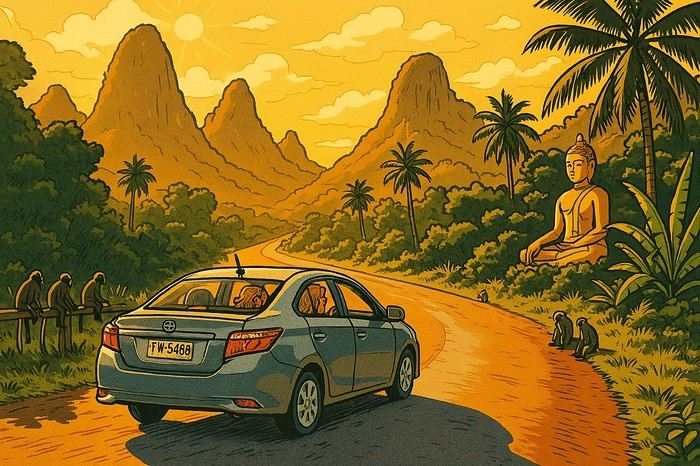
From Bangkok to Krabi, Thailand by Car!
This first trip of 2025 will have the taste of Asia.
More precisely, Thailand!
It’s not my first time—I’ve often traveled across Southeast Asia between 2000 and 2015. (This travel journal, for example...)
But it’ll be my partner’s first steps in this part of the world.
The itinerary we’ve chosen will alternate between familiar sights for me and new discoveries for both of us.
I’ll get to see how the country has changed in 20 years—and what’s stayed the same!
We were torn between the north and the south of the kingdom. Fears of smoke from slash-and-burn farming and a desire to relax on the sand tipped the scales toward the south...
What if we rented a car?
I think driving in sprawling Bangkok would be a bit ambitious, so we’ll only book our vehicle from Hua Hin to return it in Surat Thani.
Other transportation will range from tuk-tuks to overnight trains and ride-hailing services.
And of course, the plane!
I’d love to travel from Auvergne to Bangkok by road, but 15 days wouldn’t be enough...
Plus, the current geopolitical situation isn’t exactly favorable...
So, once again, we’ll be stuck for hours in the less-than-comfortable economy class of Qatar Airways.
The arrival time was on schedule, entry formalities were quick, and all our luggage made it.
We left Lyon in wind and cold—now we’re breathing in the warm, humid air of กรุงเทพมหานคร.
To reach our hotel, we first took the metro, which dropped us off in the city center in about 30 minutes for the incredible price of 1.18 €.
A few taps on the GRAB app, and we booked a ride-hailing service for the last few kilometers.
We waited a while for our driver due to insane traffic in the area, but once in the 4x4, we were at our lodging in no time.
We chose this small hotel for its riverside location, tranquility, and price.
It’ll do the job perfectly—the only downside is the weak breakfast.
The room is inviting, and we collapse onto the bed for a well-deserved short nap.
Wake-up call in an hour for our first visits!
See you soon...
More precisely, Thailand!
It’s not my first time—I’ve often traveled across Southeast Asia between 2000 and 2015. (This travel journal, for example...)
But it’ll be my partner’s first steps in this part of the world.
The itinerary we’ve chosen will alternate between familiar sights for me and new discoveries for both of us.
I’ll get to see how the country has changed in 20 years—and what’s stayed the same!
We were torn between the north and the south of the kingdom. Fears of smoke from slash-and-burn farming and a desire to relax on the sand tipped the scales toward the south...
What if we rented a car?
I think driving in sprawling Bangkok would be a bit ambitious, so we’ll only book our vehicle from Hua Hin to return it in Surat Thani.
Other transportation will range from tuk-tuks to overnight trains and ride-hailing services.
And of course, the plane!
I’d love to travel from Auvergne to Bangkok by road, but 15 days wouldn’t be enough...
Plus, the current geopolitical situation isn’t exactly favorable...
So, once again, we’ll be stuck for hours in the less-than-comfortable economy class of Qatar Airways.
The arrival time was on schedule, entry formalities were quick, and all our luggage made it.
We left Lyon in wind and cold—now we’re breathing in the warm, humid air of กรุงเทพมหานคร.
To reach our hotel, we first took the metro, which dropped us off in the city center in about 30 minutes for the incredible price of 1.18 €.
A few taps on the GRAB app, and we booked a ride-hailing service for the last few kilometers.
We waited a while for our driver due to insane traffic in the area, but once in the 4x4, we were at our lodging in no time.
We chose this small hotel for its riverside location, tranquility, and price.
It’ll do the job perfectly—the only downside is the weak breakfast.
The room is inviting, and we collapse onto the bed for a well-deserved short nap.
Wake-up call in an hour for our first visits!
See you soon...
The Kingdom of Lions...
 Hello everyone!
This trip dates back to late 2021, but since Voyage Forum reopened for writing, I haven’t seen many travel journals about Tanzania, so I decided to repost this one, which I originally shared on another well-known travelers’ site—even though I prefer Voyage Forum’s user experience.
It’s also a chance for me to relive this exhilarating trip... So, if you’re up for it, let me take you on a classic adventure: Tarangire - Ngorongoro - Serengeti, plus a little bonus—the small Arusha Park.
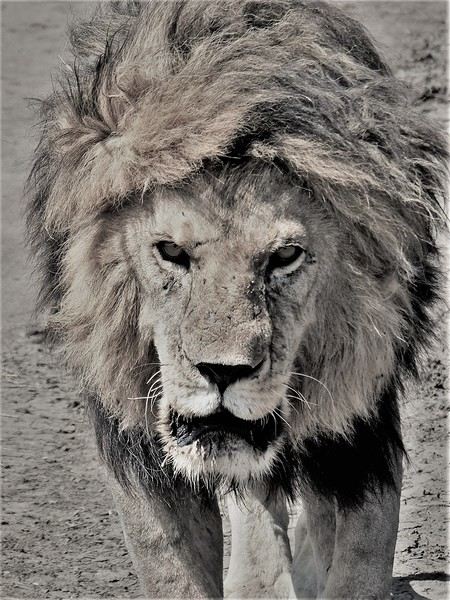
First off, yes, as the title of this journal suggests, we were lucky enough to spot *tons* of lions. The power they exude is incredible, even if most of the time they just look like big cats napping or strolling around. But lock eyes with one, and you’ll be glad you’re in the jeep.
Hello everyone!
This trip dates back to late 2021, but since Voyage Forum reopened for writing, I haven’t seen many travel journals about Tanzania, so I decided to repost this one, which I originally shared on another well-known travelers’ site—even though I prefer Voyage Forum’s user experience.
It’s also a chance for me to relive this exhilarating trip... So, if you’re up for it, let me take you on a classic adventure: Tarangire - Ngorongoro - Serengeti, plus a little bonus—the small Arusha Park.
First off, yes, as the title of this journal suggests, we were lucky enough to spot *tons* of lions. The power they exude is incredible, even if most of the time they just look like big cats napping or strolling around. But lock eyes with one, and you’ll be glad you’re in the jeep.
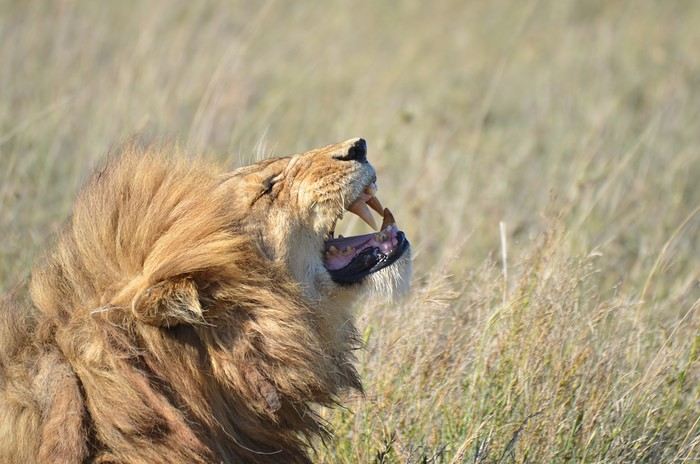
But let’s not forget the rest of the wildlife—and the landscapes, which are absolutely stunning, with those iconic tree silhouettes.
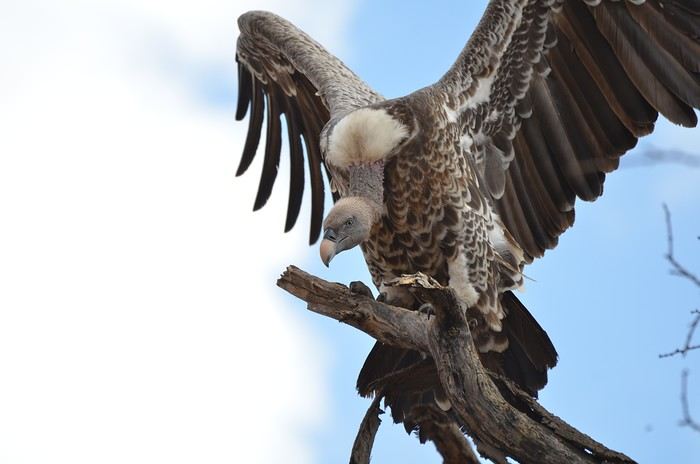
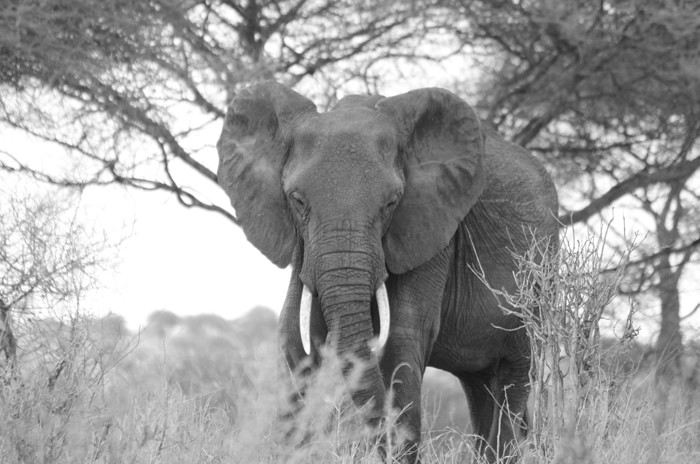
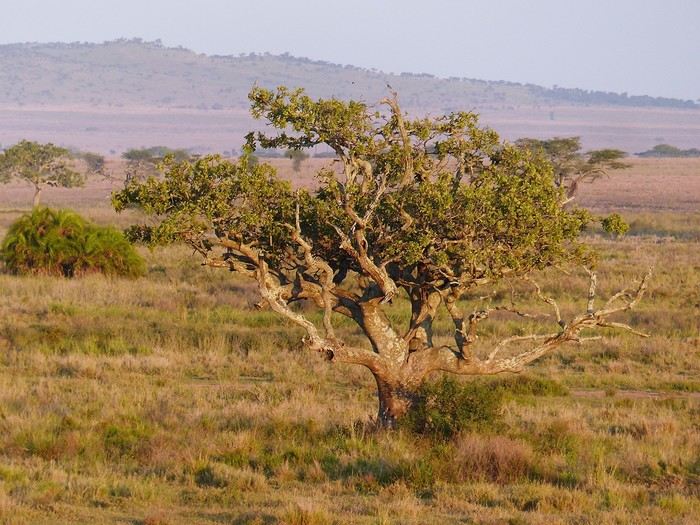
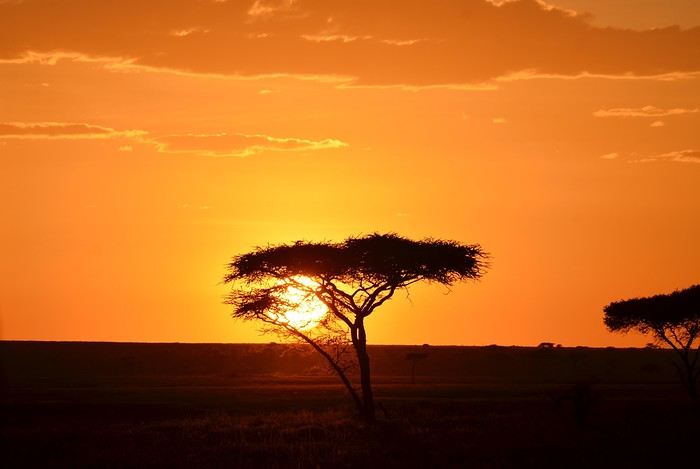
I remember before leaving, I was a little worried I wouldn’t feel that same sense of wonder I’d experienced two years earlier in Botswana (see my travel journal). That fear was unfounded—the magic worked its charm once again! Note: Since we had limited time, we focused our trip entirely on safari, so this journal is 100% animals and landscapes—and 0% Maasai. Next post: TARANGIRE
4- to 5-day itinerary for Madagascar
Hi there, following a work trip, I’ll have 4.5 days left to get a quick overview of Madagascar during the last week of February. I’ll already have had a good look around Tana (3 days of work and 1.5 days beforehand to see 1 or 2 points of interest 2-3 hours from Tana).
Is it feasible to spend the remaining 4.5 days like this:
- Day 1 & 2 (and maybe the morning of Day 3): relaxing on a coast with a pleasant climate, for example, a one-way flight to Tuléar (there’s a flight on Day 1 at 3 AM) and heading to a nice beach. Ideally, I’d have liked to go toward Morondava (baobabs, beautiful beaches near Belo), but the flight schedules don’t really work, and it wouldn’t let me visit Isalo.
- Then 2 days to head back up via the RN7, ideally with a stop in Isalo, which really appeals to me (I’m an experienced hiker in France), and/or Ranomafana. But do the weather conditions allow for long hikes in that area? Ideally, I’d like to do Tuléar–Tana by public transport up to my first road stop (shared bus? To Isalo?), then find a local hiking guide for the day. And take another transport to another point of interest before returning to Tana, where I have my return flight to France on Day 5 at noon.
My questions: - How to travel from Day 3 to Day 5 from the west coast (Tuléar? Morondava?) back to Tana? I’d prefer not to depend on a guide the whole way, but if I have to 🤷🏽♂️) If I choose Morondava, will I miss out on really interesting spots I could’ve seen along the RN7?
I’m open to any suggestions or ideas to make the most of these 4.5 days, like another beach destination I might not have considered (I ruled out Nosy Bé because of the February weather—maybe I was wrong?)
Is it feasible to spend the remaining 4.5 days like this:
- Day 1 & 2 (and maybe the morning of Day 3): relaxing on a coast with a pleasant climate, for example, a one-way flight to Tuléar (there’s a flight on Day 1 at 3 AM) and heading to a nice beach. Ideally, I’d have liked to go toward Morondava (baobabs, beautiful beaches near Belo), but the flight schedules don’t really work, and it wouldn’t let me visit Isalo.
- Then 2 days to head back up via the RN7, ideally with a stop in Isalo, which really appeals to me (I’m an experienced hiker in France), and/or Ranomafana. But do the weather conditions allow for long hikes in that area? Ideally, I’d like to do Tuléar–Tana by public transport up to my first road stop (shared bus? To Isalo?), then find a local hiking guide for the day. And take another transport to another point of interest before returning to Tana, where I have my return flight to France on Day 5 at noon.
My questions: - How to travel from Day 3 to Day 5 from the west coast (Tuléar? Morondava?) back to Tana? I’d prefer not to depend on a guide the whole way, but if I have to 🤷🏽♂️) If I choose Morondava, will I miss out on really interesting spots I could’ve seen along the RN7?
I’m open to any suggestions or ideas to make the most of these 4.5 days, like another beach destination I might not have considered (I ruled out Nosy Bé because of the February weather—maybe I was wrong?)
Albania in Autumn Colors
A new work assignment means our vacation dates can't stay the same.
We had planned to go to the Canary Islands, but flight prices are skyrocketing with this new holiday schedule.
So, I’m looking for an alternative to Gran Canaria and El Hierro and found two round-trip flights with Wizz Air to Tirana.
398 €, including baggage and seats—perfect!
Plus, the departure and return times are great, which is pretty rare for a low-cost flight!
All that’s left is to rent a car, plan the route, and book accommodations.
With two weeks, we’ll have to make some choices!
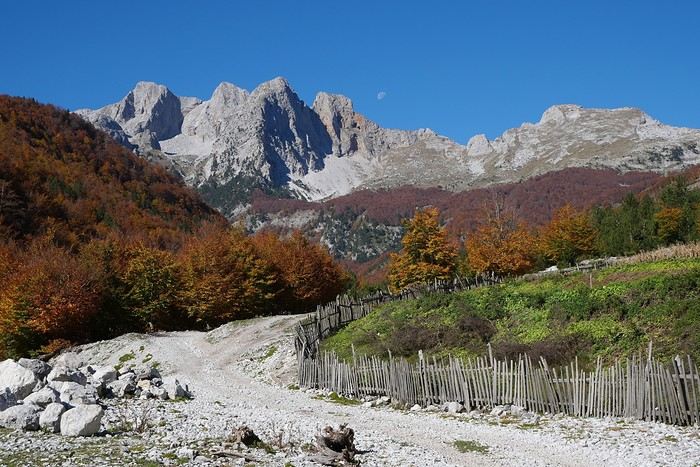
Here’s the final itinerary: Shkodra (2 nights), Valbonë (3 nights), Tirana (1 night), Lake Ohrid (1 night), Korçë (1 night), Përmet (1 night), Gjirokastër (1 night), Himarë (2 nights), Berat (2 nights), and Krujë (1 night).
A mix of countryside and small towns, a bit of the Mediterranean, and some mountains!
Late October isn’t the best season, so let’s keep our fingers crossed for the rest...
We had planned to go to the Canary Islands, but flight prices are skyrocketing with this new holiday schedule.
So, I’m looking for an alternative to Gran Canaria and El Hierro and found two round-trip flights with Wizz Air to Tirana.
398 €, including baggage and seats—perfect!
Plus, the departure and return times are great, which is pretty rare for a low-cost flight!
All that’s left is to rent a car, plan the route, and book accommodations.
With two weeks, we’ll have to make some choices!
Here’s the final itinerary: Shkodra (2 nights), Valbonë (3 nights), Tirana (1 night), Lake Ohrid (1 night), Korçë (1 night), Përmet (1 night), Gjirokastër (1 night), Himarë (2 nights), Berat (2 nights), and Krujë (1 night).
A mix of countryside and small towns, a bit of the Mediterranean, and some mountains!
Late October isn’t the best season, so let’s keep our fingers crossed for the rest...
Hiking fees in national parks in South Africa
Hi! In March, we’ll be spending two weeks in the Drakensberg region and Golden Highlands National Park (Clarens). From what I understand, you have to pay to hike if you're in a national park. I can’t find the rates or info on whether there are multi-day passes if we hike for several days. Could you help me out, please?
Thanks
White as snow, let's chat here!
And nowhere else...😉
Tips for a 9-day itinerary in southern Morocco
Hi there!
As mentioned in a previous post, we're heading to Morocco in April for 9 days instead of the originally planned 7.
Here's the itinerary I've mapped out to ideally have a complete trip, but I think it might be too ambitious. What do you think? Here's the itinerary (click)
For those who can't open the link: Marrakech (the afternoon of our arrival + 1 day, we’ve already been there without the kids, the goal is not to stay too long) – night Aït Ben Haddou Ouarzazate Skoura – night Oasis de Fint Dadès Gorges Tinghir – night Merzouga – night Zagora – night M’hamid – ideally a night in the desert Agdz Marrakech – night (itinerary via Telouet)
What do you think of this plan? Will it feel too rushed, or is it manageable? Since we don’t know the places, it’s hard to tell if we’ll want to stop everywhere along the way or if there’s enough time to spend at each spot. I’ve included some night-stop assumptions (1 or 2 nights).
We’d love to hear your thoughts! We’re traveling with my wife, a 13-year-old teen, and a 10-year-old. We’ll have our own rental car.
Thanks! !
As mentioned in a previous post, we're heading to Morocco in April for 9 days instead of the originally planned 7.
Here's the itinerary I've mapped out to ideally have a complete trip, but I think it might be too ambitious. What do you think? Here's the itinerary (click)
For those who can't open the link: Marrakech (the afternoon of our arrival + 1 day, we’ve already been there without the kids, the goal is not to stay too long) – night Aït Ben Haddou Ouarzazate Skoura – night Oasis de Fint Dadès Gorges Tinghir – night Merzouga – night Zagora – night M’hamid – ideally a night in the desert Agdz Marrakech – night (itinerary via Telouet)
What do you think of this plan? Will it feel too rushed, or is it manageable? Since we don’t know the places, it’s hard to tell if we’ll want to stop everywhere along the way or if there’s enough time to spend at each spot. I’ve included some night-stop assumptions (1 or 2 nights).
We’d love to hear your thoughts! We’re traveling with my wife, a 13-year-old teen, and a 10-year-old. We’ll have our own rental car.
Thanks! !
Tuscany: Arezzo province and the Siena area
So happy the forum reopened last October!!!
I’ve started reading again (posts, travel journals) and chiming in on a few discussions. Now I’m stepping it up by writing a new travel journal—I’ve already posted a few between 2018 and 2020.
My latest trip was to Italy from August 27 to September 26, 2024. As the title says, it was a wander through Tuscany in parts of the region that aren’t the most visited. No Firenze-Siena-Pisa trilogy, no San Gimignano; there’ll be a quick detour into Siena, but I’ll skip the best-known sights. That choice, plus traveling in September, should help dodge overtourism. It worked out—crowds were light, sometimes very light, the whole way. Here’s the practical rundown: - a long trip outside peak season (ah, retirees!) - solo camping (caravan) - a mix of activities (hiking, mountain biking, sightseeing) in places that aren’t always packed with tourists. Still, I don’t feel like I ended up in some hidden-away spots. Not sure if this will draw any readers.
DAY 1: Tuesday, August 27, 2024 The heat was intense on the drive in across the plain; two big storms—more rain and hail than lightning and thunder—threw the weather off, the first near Imola, the second on the four-lane road up the Savio valley. I left the Cesena-Roma four-lane at the Verghereto exit and climbed up to Balze (1,100 meters). The campsite is even higher (1,200 meters), in the forest near the source of the Tevere (Tiber). Staying up here will cut down on driving for the first part of the trip: a route through the Appennino (Apennines) on the border between Toscana and Emilia-Romagna. The temperature was surprisingly mild for the altitude, the air thick with moisture by late afternoon. I drove back down from the campsite to Balze (2 km on the road) to grab groceries (it’s doable) and scout tomorrow’s hike. .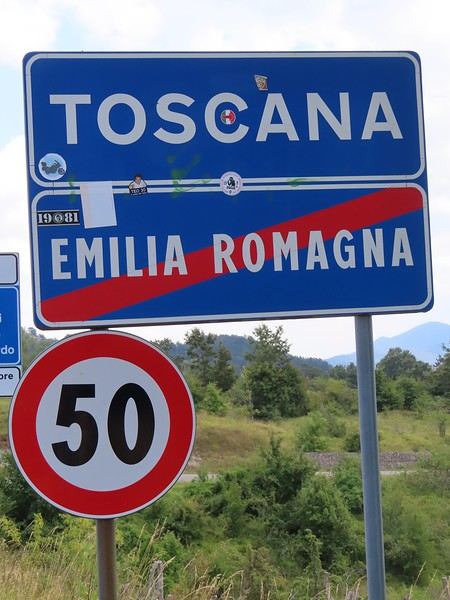
The endpoint of the planned hike is just a few meters from this sign (the trail crosses this road about 3 km from Balze). I realized Balze and the source of the Tevere (Tiber) are actually in Emilia-Romagna, not Toscana. I always thought the Tevere (Tiber), which flows toward Roma (Tyrrhenian side), started in Toscana! I’ll come back to this quirk in Day 3’s write-up.
My latest trip was to Italy from August 27 to September 26, 2024. As the title says, it was a wander through Tuscany in parts of the region that aren’t the most visited. No Firenze-Siena-Pisa trilogy, no San Gimignano; there’ll be a quick detour into Siena, but I’ll skip the best-known sights. That choice, plus traveling in September, should help dodge overtourism. It worked out—crowds were light, sometimes very light, the whole way. Here’s the practical rundown: - a long trip outside peak season (ah, retirees!) - solo camping (caravan) - a mix of activities (hiking, mountain biking, sightseeing) in places that aren’t always packed with tourists. Still, I don’t feel like I ended up in some hidden-away spots. Not sure if this will draw any readers.
DAY 1: Tuesday, August 27, 2024 The heat was intense on the drive in across the plain; two big storms—more rain and hail than lightning and thunder—threw the weather off, the first near Imola, the second on the four-lane road up the Savio valley. I left the Cesena-Roma four-lane at the Verghereto exit and climbed up to Balze (1,100 meters). The campsite is even higher (1,200 meters), in the forest near the source of the Tevere (Tiber). Staying up here will cut down on driving for the first part of the trip: a route through the Appennino (Apennines) on the border between Toscana and Emilia-Romagna. The temperature was surprisingly mild for the altitude, the air thick with moisture by late afternoon. I drove back down from the campsite to Balze (2 km on the road) to grab groceries (it’s doable) and scout tomorrow’s hike. .
The endpoint of the planned hike is just a few meters from this sign (the trail crosses this road about 3 km from Balze). I realized Balze and the source of the Tevere (Tiber) are actually in Emilia-Romagna, not Toscana. I always thought the Tevere (Tiber), which flows toward Roma (Tyrrhenian side), started in Toscana! I’ll come back to this quirk in Day 3’s write-up.
Nothing’s stopping you from going to Ampefy (Madagascar)
During these three big weeks in Madagascar, one week in Sainte Marie, a few days for a little loop in the west/south, and the rest in Tana.
This loop I’m talking about covers an area I’d never taken the time to visit before. A recent road in good condition, the chance to pass through beautiful highland landscapes, and a few free days made it the perfect opportunity. Destination: Ampefy, west of Tana via the RN1, then a turn south onto the recently rehabilitated RN43 to reach Antsirabe before heading back to Tana. Four days planned—perfect, since an extra day wouldn’t have been a problem given all the activities in Ampefy.
First day: a relaxed and fairly late departure for Ampefy. We weren’t in a rush and took our time. Traffic leaving Tana to get back on the RN1 cost us the head start we had on our original schedule. An hour and a half bumper-to-bumper with the *buxis*, inching painfully toward the roundabout and then the bridge that acts as a bottleneck—we dove in like all our fellow sufferers. It’s not our everyday reality, and we were early, so no big deal, but man, it’s long and slow. Once past that obstacle, traffic flowed smoothly, and the road was good (all the way to Ampefy). We moved through highland landscapes, bustling villages full of activity, and countless agricultural supply shops—clear proof, if any were needed, that we were crossing a prime farming region. Around Arivonimamo, we passed through a forest with a Mediterranean vibe: a single-species forest of stout little trees with glossy, elongated light-green leaves—these are *tapia*. An endemic tree in Madagascar, and a pretty unique forest as a result (you can see them elsewhere, like between Antsirabe and Ambositra). There are efforts to protect it from illegal logging because the wood is fire-resistant, which helps shield the forest from wildfires. Beyond its biodiversity value, the *tapia* hosts silkworms, giving it economic and cultural importance.
As we kept going, we started spotting a lake and mountains with the rounded shapes typical of extinct volcanoes worn down by time and the elements. We were approaching Lake Itasy and, by extension, Ampefy. We stopped at a *hotely* for a plate of *tongon’kisoa*—pig’s trotters caramelized by cooking, with thick, flavorful skin—along with the obligatory portion of rice, which we took the time to drizzle with cooking juices to make it a bit more appetizing. Full, we turned left to reach Ampefy and our hotel. The landscape was dotted with collapsed, dormant volcanic cones, and suddenly, the view opened up onto the lake. Shallow and expansive, we followed it, losing sight of it now and then before finding it again in Ampefy itself, which we entered after crossing the Lily, a beautiful river that drains the lake. Lots of hotels and restaurants, with plenty of options at all price points. We chose the *Farihy*, about 5 km past Ampefy. A gorgeous spot by the lake, with a pool and lovely bungalows—some with picture windows overlooking the lake. Really nice. In the evening, a drink and some *sak sak* for aperitif on the terrace. It wasn’t warm, there was a lot of wind, and a storm was brewing. Off to bed quickly to start the next day’s visits.
After buying some lychees—we hadn’t seen many this year, and these were fresh from the field, picked in Ampefy—we headed to the Lily Falls. Well signposted, with a paved road in great condition, we stopped at the kiosk for the entrance fee and parking (1 euro for one *vahiny* and 10 cents for one Malagasy). We set off down the path and quickly reached the first waterfall, then continued for maybe 1 km on a well-marked trail to the second. A guide led us to the third, which is harder to spot and isn’t actually on the Lily itself. Beautiful countryside scenery: fishermen straight out of *Tom Sawyer*, straw hats on their heads, lying down with one foot hooked to a fragile bamboo rod, their line dipping into the calm river. Men preparing rice paddies with their *angady*, women transplanting rice, bent over the water. At some points, we walked along the dikes between paddies almost ready for harvest. It’s peaceful and beautiful when you’re strolling or fishing, but working the paddies is grueling, especially under that beating sun. A really nice walk—2 hours and a bit, going at a leisurely pace. A guide isn’t mandatory; only the entrance fee is. We took one because it provides a bit of work and puts money in the hands of locals, giving them more incentive to protect the site. But you can easily skip it, like most people do. Lots of visitors since it was the weekend—Tananarivians with family or groups of young people, scout groups organized under their chaperones’ direction. Very few foreign tourists, though—that’s a general observation. It’s great to see this growth in domestic tourism, giving Malagasy people the chance to discover their own country and allowing those in the sector to rely less on foreign visitors, who’ve been scarce for years.
Next, we headed to the "geysers" (which aren’t actually geysers, but whatever). We had to go back to the RN1, head toward Tsiroanomandidy, and a few kilometers later, a well-marked sign and a newly paved track led us to a pretty site. Again, lots of people, another kiosk, more fees to pay, and guides available. This time, we skipped the guide. A downpour caught us in front of the "geysers," so we took shelter under a little shop, grabbing an ice cream and some drinks. We didn’t stay long—we weren’t interested in a massage or a dip in the thermal water. The countryside and barren mountain landscapes were stunning on the way back to the hotel. We noticed you could go paragliding right in front of the bungalow, so we booked a session for the next morning. After eating at the *Auberge* in the town center (it was good), we headed back to the hotel to turn in early. Once again, a storm rolled in during the afternoon, and the temperature dropped significantly.
The next morning, around 8 a.m., we walked to the takeoff zone near the hotel. Towed by a small boat, we took off for a flight over the lake and the volcanic domes before landing back at the same spot. Two companies handle this. I’m no expert, but it seemed safe and well-organized.
To be continued...
First day: a relaxed and fairly late departure for Ampefy. We weren’t in a rush and took our time. Traffic leaving Tana to get back on the RN1 cost us the head start we had on our original schedule. An hour and a half bumper-to-bumper with the *buxis*, inching painfully toward the roundabout and then the bridge that acts as a bottleneck—we dove in like all our fellow sufferers. It’s not our everyday reality, and we were early, so no big deal, but man, it’s long and slow. Once past that obstacle, traffic flowed smoothly, and the road was good (all the way to Ampefy). We moved through highland landscapes, bustling villages full of activity, and countless agricultural supply shops—clear proof, if any were needed, that we were crossing a prime farming region. Around Arivonimamo, we passed through a forest with a Mediterranean vibe: a single-species forest of stout little trees with glossy, elongated light-green leaves—these are *tapia*. An endemic tree in Madagascar, and a pretty unique forest as a result (you can see them elsewhere, like between Antsirabe and Ambositra). There are efforts to protect it from illegal logging because the wood is fire-resistant, which helps shield the forest from wildfires. Beyond its biodiversity value, the *tapia* hosts silkworms, giving it economic and cultural importance.
As we kept going, we started spotting a lake and mountains with the rounded shapes typical of extinct volcanoes worn down by time and the elements. We were approaching Lake Itasy and, by extension, Ampefy. We stopped at a *hotely* for a plate of *tongon’kisoa*—pig’s trotters caramelized by cooking, with thick, flavorful skin—along with the obligatory portion of rice, which we took the time to drizzle with cooking juices to make it a bit more appetizing. Full, we turned left to reach Ampefy and our hotel. The landscape was dotted with collapsed, dormant volcanic cones, and suddenly, the view opened up onto the lake. Shallow and expansive, we followed it, losing sight of it now and then before finding it again in Ampefy itself, which we entered after crossing the Lily, a beautiful river that drains the lake. Lots of hotels and restaurants, with plenty of options at all price points. We chose the *Farihy*, about 5 km past Ampefy. A gorgeous spot by the lake, with a pool and lovely bungalows—some with picture windows overlooking the lake. Really nice. In the evening, a drink and some *sak sak* for aperitif on the terrace. It wasn’t warm, there was a lot of wind, and a storm was brewing. Off to bed quickly to start the next day’s visits.
After buying some lychees—we hadn’t seen many this year, and these were fresh from the field, picked in Ampefy—we headed to the Lily Falls. Well signposted, with a paved road in great condition, we stopped at the kiosk for the entrance fee and parking (1 euro for one *vahiny* and 10 cents for one Malagasy). We set off down the path and quickly reached the first waterfall, then continued for maybe 1 km on a well-marked trail to the second. A guide led us to the third, which is harder to spot and isn’t actually on the Lily itself. Beautiful countryside scenery: fishermen straight out of *Tom Sawyer*, straw hats on their heads, lying down with one foot hooked to a fragile bamboo rod, their line dipping into the calm river. Men preparing rice paddies with their *angady*, women transplanting rice, bent over the water. At some points, we walked along the dikes between paddies almost ready for harvest. It’s peaceful and beautiful when you’re strolling or fishing, but working the paddies is grueling, especially under that beating sun. A really nice walk—2 hours and a bit, going at a leisurely pace. A guide isn’t mandatory; only the entrance fee is. We took one because it provides a bit of work and puts money in the hands of locals, giving them more incentive to protect the site. But you can easily skip it, like most people do. Lots of visitors since it was the weekend—Tananarivians with family or groups of young people, scout groups organized under their chaperones’ direction. Very few foreign tourists, though—that’s a general observation. It’s great to see this growth in domestic tourism, giving Malagasy people the chance to discover their own country and allowing those in the sector to rely less on foreign visitors, who’ve been scarce for years.
Next, we headed to the "geysers" (which aren’t actually geysers, but whatever). We had to go back to the RN1, head toward Tsiroanomandidy, and a few kilometers later, a well-marked sign and a newly paved track led us to a pretty site. Again, lots of people, another kiosk, more fees to pay, and guides available. This time, we skipped the guide. A downpour caught us in front of the "geysers," so we took shelter under a little shop, grabbing an ice cream and some drinks. We didn’t stay long—we weren’t interested in a massage or a dip in the thermal water. The countryside and barren mountain landscapes were stunning on the way back to the hotel. We noticed you could go paragliding right in front of the bungalow, so we booked a session for the next morning. After eating at the *Auberge* in the town center (it was good), we headed back to the hotel to turn in early. Once again, a storm rolled in during the afternoon, and the temperature dropped significantly.
The next morning, around 8 a.m., we walked to the takeoff zone near the hotel. Towed by a small boat, we took off for a flight over the lake and the volcanic domes before landing back at the same spot. Two companies handle this. I’m no expert, but it seemed safe and well-organized.
To be continued...
Texas, Louisiana, and a Touch of Florida
After five trips to the American West, we had planned to switch countries and continents to visit Turkey. However, by the time we made up our minds, flight ticket prices had nearly doubled, reaching 400 € for a round-trip ticket. A bit disappointed, I started looking at transatlantic flight prices and stumbled upon discounted tickets from Basel-Mulhouse to Dallas—at the same price as our tickets to Turkey!
No hesitation needed; we bought the five tickets for a total of 1,860 € excluding baggage!
From Fort Worth Airport, we had two options: - Head west on a loop through Texas, New Mexico, and southern Colorado - Head east to change the scenery and explore East Texas, Louisiana, with a possible detour into Florida.
The latter option won unanimously, so here we are, off to discover new states, mainly Louisiana and Texas.
One of the main post-COVID challenges is finding a reasonably priced car rental. After an initial booking around 1,300 €, we kept an eye on prices a few weeks before departure and managed to snag a better deal at around 900 € for a comfortable sedan.
Yes, this summer will also be a first: no 4x4, no camping, and plenty of restaurants!
As always, I’ve planned a packed itinerary, ready to adjust on the go. A few weeks before departure, we learned we’d be at full capacity—our eldest son, Maxime, got his first-year med school results. By finishing as a top admit, he avoided the mandatory July-August internship that would’ve kept him from joining us. Instead, he wrapped up his internship at the last minute the night before our big departure.
We’ll get to savor these special moments together.
The itinerary: Day 1 - 07/15: Fort Worth Day 2: Dallas Day 3: Jefferson - Caddo Lake Day 4: Black Bayou Lake - Natchez - Stanton Hall and Rosalie Mansion Day 5: St. Francisville - Rosedown Plantation - Cat Island Wildlife Refuge Day 6: Mobile - USS Alabama Battleship Memorial Park Day 7 - 8: Pensacola Beach Day 9: Bellingrath Gardens - New Orleans Day 10 - 11: New Orleans Day 12: Plantation Route Day 13: Jungle Gardens - Tabasco Factory - Vermilionville - Lake Martin Day 14: Baton Rouge - USS Kidd Day 15: Houma - Cajun Man's Swamp Tour Day 16: Galveston, Texas Day 17: Space Center Houston - Painted Churches Day 18: San Antonio Day 19: Texas Hill Country Day 20: Texas Hill Country and evening in San Antonio Day 21: Austin and Waco
Day 0 - 07/14: The departure timing isn’t exactly relaxing. On Thursday late afternoon, we hit the road to Alsace, aiming to drop off our two cockers with family before reaching the airport at 2 AM for a 3-hour power nap. Not exactly fresh, we arrive at the terminal looking for a British Airways counter. None in sight, so we try our luck at a United Airlines counter—who knows, maybe it’ll work out. And bingo! The agent checks us in. We didn’t quite understand why, but maybe there’s some agreement between airlines. For the first time, we’re traveling without checked baggage, so no extra fees. Not a huge feat, given the scorching temperatures awaiting us!
The connecting flight to London goes smoothly.
During the layover, liquid checks get stricter—now requiring small bottles to be in a pre-approved clear bag, with only one bag allowed per passenger. Normally, no big deal, but between deodorant, sunscreen, after-sun lotion, hand sanitizer, contact lens solution, etc., we spend 20 minutes optimizing the arrangement! When we finally succeed, one of the security staff bursts out laughing and congratulates us!
With our stomachs growling, we grab an American breakfast before browsing the airport shops.
We then discover our plane for the long-haul flight and are thrilled to see it’s an A380—a first for Laetitia, though the rest of the family experienced it during our winter getaway. Still just as impressive!
With a hint of uncertainty, we take off for the States—my third trip in barely 12 months. This time, no endless badlands, canyons, slot canyons, hoodoos, or brain rocks, but a journey through five states (Texas, Louisiana, a quick stop in Mississippi, Alabama, and the northwest tip of Florida), where we hope to soak up a unique vibe... with a packed schedule of diverse visits.
Arrival at Fort Worth Airport and customs go smoothly. Since we have no checked baggage, we’re first in line at the Dollar counter. In just 3 minutes, the formalities are done. We decline the Toll Pass, which I don’t think we’ll need based on my "calculations," and head to the Dollar parking lot, where an employee tells us we can pick any car we want!
There are about thirty cars waiting. Too many choices!
After last year’s mishap in Oakland, where our 4x4’s trunk was broken into, we’re looking for a sedan to hide our luggage this time. Unfortunately, there are none—only SUVs. We finally settle on a comfortable 7-seater Ford SUV with a massive trunk when set up for five.
On the road from Fort Worth to Dallas, we accidentally take a toll highway without realizing until it’s too late to exit. Let’s hope Dollar doesn’t charge us a week’s worth of their pricey Toll Pass for a $2 toll. We’ll see... In the meantime, Maxime sets up Google Maps to avoid toll roads.
Since it’s not too late, we stop by the nearest Walmart for groceries before checking into our hotel room for three nights in East Dallas suburb.
No hesitation needed; we bought the five tickets for a total of 1,860 € excluding baggage!
From Fort Worth Airport, we had two options: - Head west on a loop through Texas, New Mexico, and southern Colorado - Head east to change the scenery and explore East Texas, Louisiana, with a possible detour into Florida.
The latter option won unanimously, so here we are, off to discover new states, mainly Louisiana and Texas.
One of the main post-COVID challenges is finding a reasonably priced car rental. After an initial booking around 1,300 €, we kept an eye on prices a few weeks before departure and managed to snag a better deal at around 900 € for a comfortable sedan.
Yes, this summer will also be a first: no 4x4, no camping, and plenty of restaurants!
As always, I’ve planned a packed itinerary, ready to adjust on the go. A few weeks before departure, we learned we’d be at full capacity—our eldest son, Maxime, got his first-year med school results. By finishing as a top admit, he avoided the mandatory July-August internship that would’ve kept him from joining us. Instead, he wrapped up his internship at the last minute the night before our big departure.
We’ll get to savor these special moments together.
The itinerary: Day 1 - 07/15: Fort Worth Day 2: Dallas Day 3: Jefferson - Caddo Lake Day 4: Black Bayou Lake - Natchez - Stanton Hall and Rosalie Mansion Day 5: St. Francisville - Rosedown Plantation - Cat Island Wildlife Refuge Day 6: Mobile - USS Alabama Battleship Memorial Park Day 7 - 8: Pensacola Beach Day 9: Bellingrath Gardens - New Orleans Day 10 - 11: New Orleans Day 12: Plantation Route Day 13: Jungle Gardens - Tabasco Factory - Vermilionville - Lake Martin Day 14: Baton Rouge - USS Kidd Day 15: Houma - Cajun Man's Swamp Tour Day 16: Galveston, Texas Day 17: Space Center Houston - Painted Churches Day 18: San Antonio Day 19: Texas Hill Country Day 20: Texas Hill Country and evening in San Antonio Day 21: Austin and Waco
Day 0 - 07/14: The departure timing isn’t exactly relaxing. On Thursday late afternoon, we hit the road to Alsace, aiming to drop off our two cockers with family before reaching the airport at 2 AM for a 3-hour power nap. Not exactly fresh, we arrive at the terminal looking for a British Airways counter. None in sight, so we try our luck at a United Airlines counter—who knows, maybe it’ll work out. And bingo! The agent checks us in. We didn’t quite understand why, but maybe there’s some agreement between airlines. For the first time, we’re traveling without checked baggage, so no extra fees. Not a huge feat, given the scorching temperatures awaiting us!
The connecting flight to London goes smoothly.
During the layover, liquid checks get stricter—now requiring small bottles to be in a pre-approved clear bag, with only one bag allowed per passenger. Normally, no big deal, but between deodorant, sunscreen, after-sun lotion, hand sanitizer, contact lens solution, etc., we spend 20 minutes optimizing the arrangement! When we finally succeed, one of the security staff bursts out laughing and congratulates us!
With our stomachs growling, we grab an American breakfast before browsing the airport shops.
We then discover our plane for the long-haul flight and are thrilled to see it’s an A380—a first for Laetitia, though the rest of the family experienced it during our winter getaway. Still just as impressive!
With a hint of uncertainty, we take off for the States—my third trip in barely 12 months. This time, no endless badlands, canyons, slot canyons, hoodoos, or brain rocks, but a journey through five states (Texas, Louisiana, a quick stop in Mississippi, Alabama, and the northwest tip of Florida), where we hope to soak up a unique vibe... with a packed schedule of diverse visits.
Arrival at Fort Worth Airport and customs go smoothly. Since we have no checked baggage, we’re first in line at the Dollar counter. In just 3 minutes, the formalities are done. We decline the Toll Pass, which I don’t think we’ll need based on my "calculations," and head to the Dollar parking lot, where an employee tells us we can pick any car we want!
There are about thirty cars waiting. Too many choices!
After last year’s mishap in Oakland, where our 4x4’s trunk was broken into, we’re looking for a sedan to hide our luggage this time. Unfortunately, there are none—only SUVs. We finally settle on a comfortable 7-seater Ford SUV with a massive trunk when set up for five.
On the road from Fort Worth to Dallas, we accidentally take a toll highway without realizing until it’s too late to exit. Let’s hope Dollar doesn’t charge us a week’s worth of their pricey Toll Pass for a $2 toll. We’ll see... In the meantime, Maxime sets up Google Maps to avoid toll roads.
Since it’s not too late, we stop by the nearest Walmart for groceries before checking into our hotel room for three nights in East Dallas suburb.
Photo Safaris in Kenya
Back on the forum, I’m starting to write up two 3-week trips to Kenya in August 2021 and 2023.
In 2021, Quynh and I traveled with Régis (Rjulie95 on VF). Our son joined us in Baringo for the second half of the trip.
In 2023, we went with two friends who’d been dreaming of seeing wild animals ever since we got back from Kenya. We didn’t need much convincing to go with them!
The two itineraries are almost identical (well, when you love something...) but we did make a few tweaks.
- The first part of the trip was with a local driver/guide, Félix, who was recommended by Sylvie56. Sylvie and her husband Ben are Kenya enthusiasts—they’ve been there countless times, always with Félix... and for good reason! He’s fantastic!
- The second part was with Melting Pot Safari, an agency that adapted to our photography needs. Tony Crocetta, the co-founder (along with his Kenyan friend Simon Chebon), is a wildlife photographer himself.
Here are the itineraries for both trips, including accommodations:
In 2021: Day 0: Paris / Nairobi - 67 Airport Hotel Day 1: Nairobi / Amboseli - Simba Cottage Day 2: Amboseli - Simba Cottage Day 3: Amboseli / Aberdares - Fishing Lodge Day 4: Aberdares - Fishing Lodge Day 5: Aberdares - Fishing Lodge Day 6: Aberdares / Samburu - Riverside Camp Day 7: Samburu - Riverside Camp Day 8: Samburu - Riverside Camp Day 9: Samburu / Nakuru - Merica Hotel Day 10: Nakuru / Baringo - Tumbili Cliff Lodge Day 11: Baringo - Tumbili Cliff Lodge Day 12: Baringo - Tumbili Cliff Lodge Day 13: Baringo / Maasai Mara – Meltingpot Bush Camp Day 14 to 18: Maasai Mara – Meltingpot Bush Camp Day 19: Maasai Mara / Nairobi – Roussel Guest House Day 20: Nairobi / Paris
In 2023: Day 0: Lyon / Paris / Nairobi - 67 Airport Hotel Day 1: Nairobi / Meru - Ikweta Camp Day 2: Meru - Ikweta Camp Day 3: Meru - Ikweta Camp Day 4: Meru / Samburu - Riverside Camp Day 5: Samburu – Riverside Camp Day 6: Samburu / Buffalo Springs – Samburu Simba Day 7: Buffalo Springs / Ol Pejeta – Sweetwater Camp Day 8: Ol Pejeta / Amboseli - Simba Cottage Day 9: Amboseli - Simba Cottage Day 10: Amboseli - Simba Cottage Day 11: Amboseli / Nakuru – Lake Nakuru Lodge Day 12: Nakuru / Baringo - Tumbili Cliff Lodge Day 13: Baringo - Tumbili Cliff Lodge Day 14: Baringo - Tumbili Cliff Lodge Day 15: Baringo / Maasai Mara – Meltingpot Bush Camp Day 16 to 20: Maasai Mara – Meltingpot Bush Camp Day 21: Maasai Mara / Nairobi / Paris
Here’s an itinerary—it’s not exactly what we did, but a combination of both.
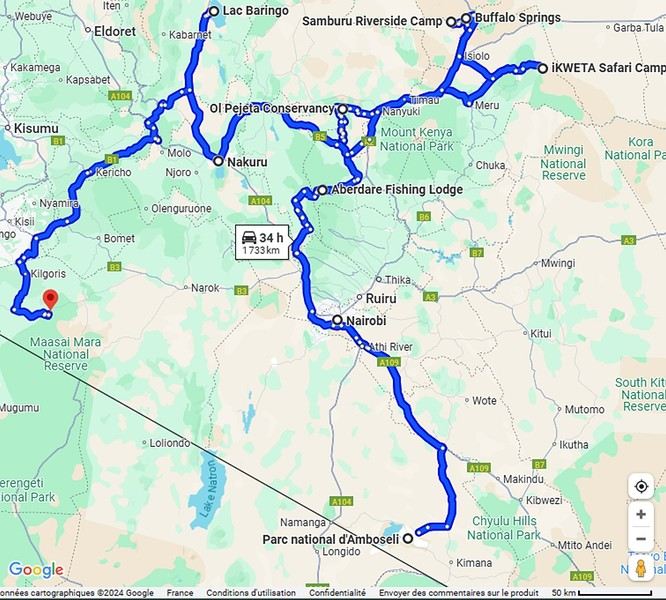
Ready to join us on safari to see some wild animals?
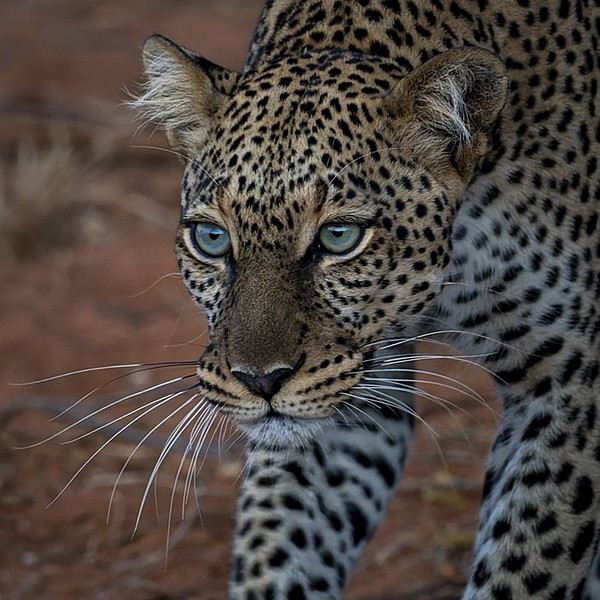
The two itineraries are almost identical (well, when you love something...) but we did make a few tweaks.
- The first part of the trip was with a local driver/guide, Félix, who was recommended by Sylvie56. Sylvie and her husband Ben are Kenya enthusiasts—they’ve been there countless times, always with Félix... and for good reason! He’s fantastic!
- The second part was with Melting Pot Safari, an agency that adapted to our photography needs. Tony Crocetta, the co-founder (along with his Kenyan friend Simon Chebon), is a wildlife photographer himself.
Here are the itineraries for both trips, including accommodations:
In 2021: Day 0: Paris / Nairobi - 67 Airport Hotel Day 1: Nairobi / Amboseli - Simba Cottage Day 2: Amboseli - Simba Cottage Day 3: Amboseli / Aberdares - Fishing Lodge Day 4: Aberdares - Fishing Lodge Day 5: Aberdares - Fishing Lodge Day 6: Aberdares / Samburu - Riverside Camp Day 7: Samburu - Riverside Camp Day 8: Samburu - Riverside Camp Day 9: Samburu / Nakuru - Merica Hotel Day 10: Nakuru / Baringo - Tumbili Cliff Lodge Day 11: Baringo - Tumbili Cliff Lodge Day 12: Baringo - Tumbili Cliff Lodge Day 13: Baringo / Maasai Mara – Meltingpot Bush Camp Day 14 to 18: Maasai Mara – Meltingpot Bush Camp Day 19: Maasai Mara / Nairobi – Roussel Guest House Day 20: Nairobi / Paris
In 2023: Day 0: Lyon / Paris / Nairobi - 67 Airport Hotel Day 1: Nairobi / Meru - Ikweta Camp Day 2: Meru - Ikweta Camp Day 3: Meru - Ikweta Camp Day 4: Meru / Samburu - Riverside Camp Day 5: Samburu – Riverside Camp Day 6: Samburu / Buffalo Springs – Samburu Simba Day 7: Buffalo Springs / Ol Pejeta – Sweetwater Camp Day 8: Ol Pejeta / Amboseli - Simba Cottage Day 9: Amboseli - Simba Cottage Day 10: Amboseli - Simba Cottage Day 11: Amboseli / Nakuru – Lake Nakuru Lodge Day 12: Nakuru / Baringo - Tumbili Cliff Lodge Day 13: Baringo - Tumbili Cliff Lodge Day 14: Baringo - Tumbili Cliff Lodge Day 15: Baringo / Maasai Mara – Meltingpot Bush Camp Day 16 to 20: Maasai Mara – Meltingpot Bush Camp Day 21: Maasai Mara / Nairobi / Paris
Here’s an itinerary—it’s not exactly what we did, but a combination of both.
Ready to join us on safari to see some wild animals?
Discussion Embracing Dawn: December 2024 Photo Contest
Hey there,
This is where we chat and share photos outside the contest.
Good night! 😛
This is where we chat and share photos outside the contest.
Good night! 😛
Western USA Oct 2024 - Arches and Other Delights...
Aaah, I'm so glad Voyage Forum is back up and running. For reading... and for writing...
My last travel journal was from 2019, when I went hiking and backpacking with my son, who was 15 at the time. We visited some places that were still pretty unknown back then! I was supposed to go in April 2020, still solo, with arches as the main focus. I’d spent nearly two months getting physically prepared, and had managed to snag a bunch of permits for CBS, The Needles, and so on... Of course, it all got postponed—first to October 2020, then April 2021, then October 2021, and finally it happened in April 2022. Maybe I’ll write about that in another journal. The thing is, every time, I spend at least 6 to 8 weeks getting physically ready, even though I work out all year. Huge disappointment during that trip—so much had changed because of Covid, kind of like in the mountains back home. Overcrowding, not just in the national parks (we knew about that), but also in a lot of remote, lesser-known spots. Like the French, Americans realized they had a lot of beautiful places in their own country during those travel bans. And they kept exploring... Prices for pretty much everything had already gone up a lot. Gas, restaurants, cars, but especially lodging! Then, after dealing with so much wind in April, I got a little "fed up" with that time of year. It felt like I had strong winds and sandstorms for 3 out of the 3.5 weeks I was there...
So, the next trip was October 2023, to catch the partial eclipse in New Mexico, and of course, a bunch of arches ;). So many arches. Maybe I’ll write about that one too... Then came (among others) April 2024 for the total eclipse, in Texas, but starting from L.A., with my partner Valérie. Since I’d never visited some places I wanted to see further south of my usual loops, it was the perfect opportunity... And here we are at the end of September 2024. Another trip focused on arches—I never get tired of them. Every time I check one off my list, another gets added. Often it’s a photo I’ve seen online or in the NABS (Natural Arches and Bridges Society) magazine, which I’m a member of. I also scour the WAD (World Arches Database) and make a list of arches I want to visit. Fewer and fewer "viewpoints"—I’ve done all the most famous ones, and unless the sky is amazing, the photos all look the same. Since my goal is always photography *and* hiking, I’m always on the lookout. So this time, a packed itinerary—27 days, very busy. In past trips, if I didn’t plan enough and hiked fast, I’d end up with too many "gaps" in my days. This time, I’d rather have too much than too little (like in 2023, actually).
A few stats: - 6,589 km, including +/-1,400 km of off-road trails - 323 km of hiking, 8,829 m of elevation gain - 142 new arches for my collection, including some stunning ones, some less so, and some downright ugly—but all in the WAD. - Two outings with a Navajo guide - Almost no injuries - 8 bivouacs, including 2 backpacking trips - 4 days of backpacking - 22 freeze-dried meals and 15 Subways eaten - 6 thorns in my shoes (long live the tweezers in my backpack) - 3 kg lost (plus the 5 kg lost during prep)
Almost every day, I posted a little update on Facebook for family and friends. So I’ll be copy-pasting those texts here, written "my way" as usual. Some will like it, some won’t—that’s just how it is... 😏
For months, I planned this trip—looking for info, creating GPS tracks on Google Earth, exchanging tips with NABS members and other passionate friends. I snagged permits for The Needles again (4-5 days), for Fiery Furnace, timed entries for Arches National Park (2), and booked just one campsite, a "triple tour" in Monument Valley, and the first night in a motel. This is the first time I haven’t booked 80% of the motels—I was tired of having constraints because of the weather. This time, I want to be able to adjust my plans based on the weather and what I feel like doing more or less of. Camp when the weather’s nice, hotel/motel when it’s crappy.
Here we go...
Day 1
As usual, early morning flights: BRU-AMS, then AMS-SLC. Those who follow me know I’ve been renting a Rubicon from Rugged for years, which "forces" me to land in SLC. Up at 3:30 AM, but I’d been awake since 2:00 AM—the day’s going to be long. Shuttle to the airport. In Brussels, only two check-in counters open. I get there—no cabin baggage weigh-in, while the agent next to me is weighing everyone’s, even kids’ backpacks! A bit of luck, because as usual, if they weighed my backpack *and* my cabin bag, I’d already be over 20 kg. I check two hold bags, since I’ve got a lot of camping/backpacking gear, lots of freeze-dried meals, the backpacking bag, the Bear Canister needed for The Needles, etc. First flight is 30 minutes late, so the second one is already boarding. I’ve got the SSSS mark on my ticket (extra security check), so I head straight to the front when I arrive at the same time as Zone 3, even though I’m Zone 6. I pretend the check will take a while, and it "works"—they didn’t notice! No way I want to board last and risk them making me check my cabin bag. It’s packed with photo gear, laptop, drone, etc.—unthinkable to have to put it in the hold. Always a worry... SLC: baggage claim, customs, and out in 32 minutes. The MPC app makes something that was already quick even faster at this airport. And all the bags are there. That’s always a relief too. Since I drive at least 3 hours straight after landing, losing a hold bag would really mess up the trip and force me to spend the first night closer to SLC. On the way to Rugged. A young French couple from Reims is in the shuttle with me—they discovered Rugged thanks to my post in a Facebook group! Well, the team has changed again, and they lost half the stuff I’d left last October (plastic boxes, pillow, sugar, gas cartridges, folding chair, Crocs, etc.), but at least there are gas cartridges, so I don’t have to go to REI. REI would’ve been at least an hour out of my way. But as far as I know, there are no gas cartridges in Green River. I still get my tent stake hammer back, and a folding chair—different from mine but identical.
20,000 km Rubicon 4Xe, white. I check the tires—they’re in great shape, as requested. I’ll come back to the hybrid later. I didn’t want a hybrid, but that’s all they had this year. Why? Higher fuel consumption, smaller tank, higher cargo floor.
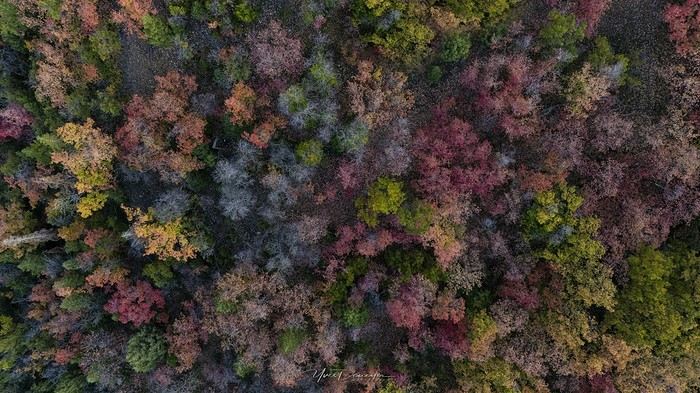
Stop at the Walmart near Provo, whose layout I know like the back of my hand (Walmarts are often similar). Start-of-trip shopping: water, Coke, Gatorade, UHT milk for cereal (not very common in the US), Special K "Almond and Vanilla", cold meds that work well (and don’t exist back home—you never know), two plastic bins, a pillow for the tent, Trail Mix, that’s about it. On the road to Nebo Loop for the fall colors. I’d driven this route last year, in the opposite direction on my way back to SLC, but it was a bit too late. This time, I’m a little early. At the start of the road, the maples are in the sun, so I go up to 2,200 m for the bright yellow aspens, then head back down. Mostly drone shots—no time to go for a walk. After a day like this, 4.5-5 hours of driving is already a lot... Arrived in Green River at 9:00 PM. Organize all the stuff from the bags properly, then sleep.
A few photos from these first few hours.
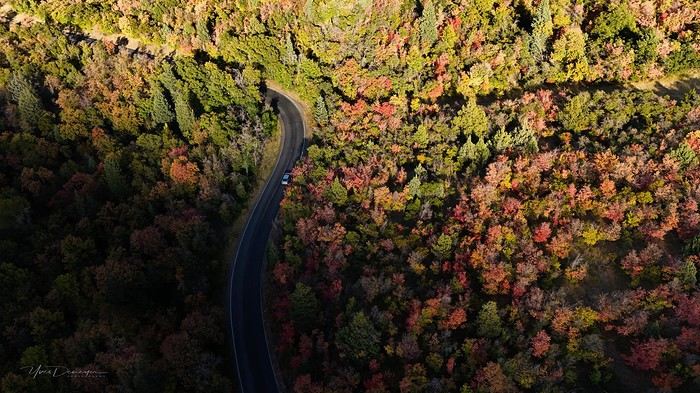
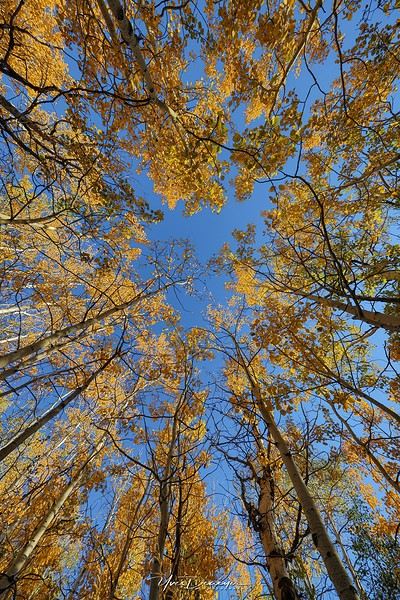
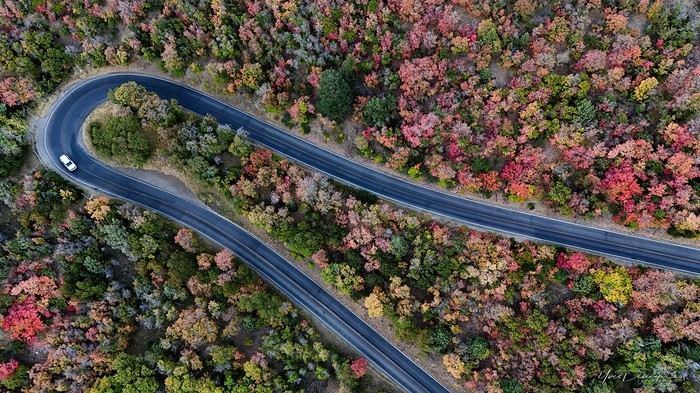
My last travel journal was from 2019, when I went hiking and backpacking with my son, who was 15 at the time. We visited some places that were still pretty unknown back then! I was supposed to go in April 2020, still solo, with arches as the main focus. I’d spent nearly two months getting physically prepared, and had managed to snag a bunch of permits for CBS, The Needles, and so on... Of course, it all got postponed—first to October 2020, then April 2021, then October 2021, and finally it happened in April 2022. Maybe I’ll write about that in another journal. The thing is, every time, I spend at least 6 to 8 weeks getting physically ready, even though I work out all year. Huge disappointment during that trip—so much had changed because of Covid, kind of like in the mountains back home. Overcrowding, not just in the national parks (we knew about that), but also in a lot of remote, lesser-known spots. Like the French, Americans realized they had a lot of beautiful places in their own country during those travel bans. And they kept exploring... Prices for pretty much everything had already gone up a lot. Gas, restaurants, cars, but especially lodging! Then, after dealing with so much wind in April, I got a little "fed up" with that time of year. It felt like I had strong winds and sandstorms for 3 out of the 3.5 weeks I was there...
So, the next trip was October 2023, to catch the partial eclipse in New Mexico, and of course, a bunch of arches ;). So many arches. Maybe I’ll write about that one too... Then came (among others) April 2024 for the total eclipse, in Texas, but starting from L.A., with my partner Valérie. Since I’d never visited some places I wanted to see further south of my usual loops, it was the perfect opportunity... And here we are at the end of September 2024. Another trip focused on arches—I never get tired of them. Every time I check one off my list, another gets added. Often it’s a photo I’ve seen online or in the NABS (Natural Arches and Bridges Society) magazine, which I’m a member of. I also scour the WAD (World Arches Database) and make a list of arches I want to visit. Fewer and fewer "viewpoints"—I’ve done all the most famous ones, and unless the sky is amazing, the photos all look the same. Since my goal is always photography *and* hiking, I’m always on the lookout. So this time, a packed itinerary—27 days, very busy. In past trips, if I didn’t plan enough and hiked fast, I’d end up with too many "gaps" in my days. This time, I’d rather have too much than too little (like in 2023, actually).
A few stats: - 6,589 km, including +/-1,400 km of off-road trails - 323 km of hiking, 8,829 m of elevation gain - 142 new arches for my collection, including some stunning ones, some less so, and some downright ugly—but all in the WAD. - Two outings with a Navajo guide - Almost no injuries - 8 bivouacs, including 2 backpacking trips - 4 days of backpacking - 22 freeze-dried meals and 15 Subways eaten - 6 thorns in my shoes (long live the tweezers in my backpack) - 3 kg lost (plus the 5 kg lost during prep)
Almost every day, I posted a little update on Facebook for family and friends. So I’ll be copy-pasting those texts here, written "my way" as usual. Some will like it, some won’t—that’s just how it is... 😏
For months, I planned this trip—looking for info, creating GPS tracks on Google Earth, exchanging tips with NABS members and other passionate friends. I snagged permits for The Needles again (4-5 days), for Fiery Furnace, timed entries for Arches National Park (2), and booked just one campsite, a "triple tour" in Monument Valley, and the first night in a motel. This is the first time I haven’t booked 80% of the motels—I was tired of having constraints because of the weather. This time, I want to be able to adjust my plans based on the weather and what I feel like doing more or less of. Camp when the weather’s nice, hotel/motel when it’s crappy.
Here we go...
Day 1
As usual, early morning flights: BRU-AMS, then AMS-SLC. Those who follow me know I’ve been renting a Rubicon from Rugged for years, which "forces" me to land in SLC. Up at 3:30 AM, but I’d been awake since 2:00 AM—the day’s going to be long. Shuttle to the airport. In Brussels, only two check-in counters open. I get there—no cabin baggage weigh-in, while the agent next to me is weighing everyone’s, even kids’ backpacks! A bit of luck, because as usual, if they weighed my backpack *and* my cabin bag, I’d already be over 20 kg. I check two hold bags, since I’ve got a lot of camping/backpacking gear, lots of freeze-dried meals, the backpacking bag, the Bear Canister needed for The Needles, etc. First flight is 30 minutes late, so the second one is already boarding. I’ve got the SSSS mark on my ticket (extra security check), so I head straight to the front when I arrive at the same time as Zone 3, even though I’m Zone 6. I pretend the check will take a while, and it "works"—they didn’t notice! No way I want to board last and risk them making me check my cabin bag. It’s packed with photo gear, laptop, drone, etc.—unthinkable to have to put it in the hold. Always a worry... SLC: baggage claim, customs, and out in 32 minutes. The MPC app makes something that was already quick even faster at this airport. And all the bags are there. That’s always a relief too. Since I drive at least 3 hours straight after landing, losing a hold bag would really mess up the trip and force me to spend the first night closer to SLC. On the way to Rugged. A young French couple from Reims is in the shuttle with me—they discovered Rugged thanks to my post in a Facebook group! Well, the team has changed again, and they lost half the stuff I’d left last October (plastic boxes, pillow, sugar, gas cartridges, folding chair, Crocs, etc.), but at least there are gas cartridges, so I don’t have to go to REI. REI would’ve been at least an hour out of my way. But as far as I know, there are no gas cartridges in Green River. I still get my tent stake hammer back, and a folding chair—different from mine but identical.
20,000 km Rubicon 4Xe, white. I check the tires—they’re in great shape, as requested. I’ll come back to the hybrid later. I didn’t want a hybrid, but that’s all they had this year. Why? Higher fuel consumption, smaller tank, higher cargo floor.
Stop at the Walmart near Provo, whose layout I know like the back of my hand (Walmarts are often similar). Start-of-trip shopping: water, Coke, Gatorade, UHT milk for cereal (not very common in the US), Special K "Almond and Vanilla", cold meds that work well (and don’t exist back home—you never know), two plastic bins, a pillow for the tent, Trail Mix, that’s about it. On the road to Nebo Loop for the fall colors. I’d driven this route last year, in the opposite direction on my way back to SLC, but it was a bit too late. This time, I’m a little early. At the start of the road, the maples are in the sun, so I go up to 2,200 m for the bright yellow aspens, then head back down. Mostly drone shots—no time to go for a walk. After a day like this, 4.5-5 hours of driving is already a lot... Arrived in Green River at 9:00 PM. Organize all the stuff from the bags properly, then sleep.
A few photos from these first few hours.
The "Must-Sees" of the American West
This adventure began during Covid... Yep, Covid turned a lot of things upside down, but most of all, it kept us cooped up for a few months and stopped us from traveling for a while—even longer for a die-hard fan of the American West like me.
While borders were closed, I started imagining what an ideal itinerary might look like—one that would string together all the Southwest must-sees in just two weeks, during the best time of year: September and October. When the U.S. announced in September 2021 that borders would reopen in the coming weeks, I regained hope and began scouting flight tickets for a departure in September 2022.
But here’s the thing: tackling solo hikes, each one tougher than the last, right in the heart of the Wilderness, could be a risky—even reckless—endeavor for a father of three. After a quick chat with some virtual friends who are just as passionate about the Southwest as I am, with good physical condition and nearly the same list of must-visit spots, Franck and his brother Sullivan were in! 🙂
In November, we snagged flight tickets from Nice to San Francisco for the modest sum of 400 €, and a few days later, I booked a Toyota Tacoma pickup for 840 € !
It’s not cheap for just 15 days, and a pickup isn’t exactly ideal for luggage, but the prices for full-size 4x4s have become totally outrageous! Due to border closures, rental companies had to offload a lot of these big 4x4s, which tourists love. Then, supply and demand did the rest !
Franck and I spent the winter and spring trying to cram the equivalent of three weeks of hikes into two. But even with physical limits, we had to stay reasonable! Three to four months before departure, we entered the lotteries for different must-see spots: The Subway, Coyote Buttes North (home to the famous Wave), and Coyote Buttes South (CBS).
The Wave is the holy grail for any Southwest enthusiast. Since 2015, we’ve tried our luck with the online and on-site lotteries about ten times, but the spots are unfortunately limited: just 20 per day. A glimmer of hope, though—since early 2022, that number has increased to 64 people allowed per day, with 48 spots awarded via the online lottery.
After all three of us tried our luck for The Wave, on June 1st at exactly 5 PM, I got an email that started with, "Congratulations! You were successful in the Coyote Buttes North (The Wave) September 2022 Permit Lottery at Coyote Buttes North (The Wave)...". At 5:01 PM, I called Franck, whose dream it’s been for over 20 years—ever since the first photos were published in a travel magazine! He didn’t believe me when I told him, and I had to forward the email for him to finally accept the unbelievable: we were going to The Wave and all the incredible spots scattered across the protected area of Coyote Buttes North.
I’ve already been to Coyote Buttes South twice, but there are areas I couldn’t explore in the middle of summer because they were too remote. So, I had no trouble letting my buddies convince me to go back for a third time. Plus, given how hard it is to access, we had no trouble securing a permit online as long as we logged in at exactly 8 PM on the dot!
For The Subway, all three of us struck out. No big deal—we won at CBN and CBS!
Among the sites to visit, there are two that I’m particularly attached to because I know my chances of wanting to see them again are slim. The first is Angel Arch, one of the most legendary arches in the Southwest, due to its remoteness from any trace of civilization. To get there, the recommended hike is Upper Salt Creek, and you’re looking at a 50 km round-trip in an area with no water (in September) and populated by bears.
The second site is the Hopi Salt Trail, in Navajo land, which, after a very tough hike, lets you marvel at the turquoise-blue waters of the Little Colorado before it meets the Colorado River. The Hopi Salt Trail is, like The Wave, the holy grail for any Southwest enthusiast, and the windows of opportunity to see the water in that magical color are very short each year. For this, you have to monitor the Little Colorado’s gauges downstream from Cameron: if the level stays at its lowest for 10 consecutive days—meaning no rain—you can hope for turquoise water. The ideal period rarely exceeds 30 days a year, and it’s usually in June that all the stars align.
But unfortunately, one month before departure, while the flow rate at Cameron looked promising, several storms in September dashed our hopes of doing the Hopi Salt Trail, even at the end of the road trip.
We still had two consolation prizes, though:
After a last-minute cancellation, while keeping an eye out for available spots for The Subway, it turned out that three spots opened up exactly on the day we’d planned to go—so we rushed to grab them!! Regarding the 4x4 rental, the prices for full-size models dropped by several hundred dollars, and we ended up finding a Chevrolet Tahoe for less than $1000. A steal and a serious boost in comfort, so we could store all our gear and food without worry!
Here’s the initial plan in a perfect world: D1 The White Domes - Camping D2 Sunrise at The White Domes - The Subway D3 Coyote Buttes North D4 Coyote Buttes South - White Pocket D5 Wahweap Hoodoos - Sidestep Canyon - Colourful Canyon - White Rocks - Sunset at Yellow Rock D6 Broken Bow Arch - Reflection Canyon D7 Coyote Gulch D8 The Volcano (or The Oasis - Zebra Slot Canyon if the weather’s good) - North Caineville Mesa D9 The Needles: Squaw Canyon - Lost Canyon combo - Druid Arch - Chesler Park D10 Upper Salt Creek Day 1 - Camping D11 Upper Salt Creek Day 2 D12 Hopi-Navajo Territory: Ha Ho No Geh Canyon, Coal Mine Canyon, Bends of the Little Colorado D13 Grand Canyon: South Kaibab Trail and Bright Angel Trail D14 Upper East Zion: East Temple Loop, Jughandle Arch, Center of the Universe, and Checkerboard Mesa Summit And several backup options in case of bad weather, including Spencer Trail, West Cove, and Buffington Pockets.
Enough talking—time for action!
While borders were closed, I started imagining what an ideal itinerary might look like—one that would string together all the Southwest must-sees in just two weeks, during the best time of year: September and October. When the U.S. announced in September 2021 that borders would reopen in the coming weeks, I regained hope and began scouting flight tickets for a departure in September 2022.
But here’s the thing: tackling solo hikes, each one tougher than the last, right in the heart of the Wilderness, could be a risky—even reckless—endeavor for a father of three. After a quick chat with some virtual friends who are just as passionate about the Southwest as I am, with good physical condition and nearly the same list of must-visit spots, Franck and his brother Sullivan were in! 🙂
In November, we snagged flight tickets from Nice to San Francisco for the modest sum of 400 €, and a few days later, I booked a Toyota Tacoma pickup for 840 € !
It’s not cheap for just 15 days, and a pickup isn’t exactly ideal for luggage, but the prices for full-size 4x4s have become totally outrageous! Due to border closures, rental companies had to offload a lot of these big 4x4s, which tourists love. Then, supply and demand did the rest !
Franck and I spent the winter and spring trying to cram the equivalent of three weeks of hikes into two. But even with physical limits, we had to stay reasonable! Three to four months before departure, we entered the lotteries for different must-see spots: The Subway, Coyote Buttes North (home to the famous Wave), and Coyote Buttes South (CBS).
The Wave is the holy grail for any Southwest enthusiast. Since 2015, we’ve tried our luck with the online and on-site lotteries about ten times, but the spots are unfortunately limited: just 20 per day. A glimmer of hope, though—since early 2022, that number has increased to 64 people allowed per day, with 48 spots awarded via the online lottery.
After all three of us tried our luck for The Wave, on June 1st at exactly 5 PM, I got an email that started with, "Congratulations! You were successful in the Coyote Buttes North (The Wave) September 2022 Permit Lottery at Coyote Buttes North (The Wave)...". At 5:01 PM, I called Franck, whose dream it’s been for over 20 years—ever since the first photos were published in a travel magazine! He didn’t believe me when I told him, and I had to forward the email for him to finally accept the unbelievable: we were going to The Wave and all the incredible spots scattered across the protected area of Coyote Buttes North.
I’ve already been to Coyote Buttes South twice, but there are areas I couldn’t explore in the middle of summer because they were too remote. So, I had no trouble letting my buddies convince me to go back for a third time. Plus, given how hard it is to access, we had no trouble securing a permit online as long as we logged in at exactly 8 PM on the dot!
For The Subway, all three of us struck out. No big deal—we won at CBN and CBS!
Among the sites to visit, there are two that I’m particularly attached to because I know my chances of wanting to see them again are slim. The first is Angel Arch, one of the most legendary arches in the Southwest, due to its remoteness from any trace of civilization. To get there, the recommended hike is Upper Salt Creek, and you’re looking at a 50 km round-trip in an area with no water (in September) and populated by bears.
The second site is the Hopi Salt Trail, in Navajo land, which, after a very tough hike, lets you marvel at the turquoise-blue waters of the Little Colorado before it meets the Colorado River. The Hopi Salt Trail is, like The Wave, the holy grail for any Southwest enthusiast, and the windows of opportunity to see the water in that magical color are very short each year. For this, you have to monitor the Little Colorado’s gauges downstream from Cameron: if the level stays at its lowest for 10 consecutive days—meaning no rain—you can hope for turquoise water. The ideal period rarely exceeds 30 days a year, and it’s usually in June that all the stars align.
But unfortunately, one month before departure, while the flow rate at Cameron looked promising, several storms in September dashed our hopes of doing the Hopi Salt Trail, even at the end of the road trip.
We still had two consolation prizes, though:
After a last-minute cancellation, while keeping an eye out for available spots for The Subway, it turned out that three spots opened up exactly on the day we’d planned to go—so we rushed to grab them!! Regarding the 4x4 rental, the prices for full-size models dropped by several hundred dollars, and we ended up finding a Chevrolet Tahoe for less than $1000. A steal and a serious boost in comfort, so we could store all our gear and food without worry!
Here’s the initial plan in a perfect world: D1 The White Domes - Camping D2 Sunrise at The White Domes - The Subway D3 Coyote Buttes North D4 Coyote Buttes South - White Pocket D5 Wahweap Hoodoos - Sidestep Canyon - Colourful Canyon - White Rocks - Sunset at Yellow Rock D6 Broken Bow Arch - Reflection Canyon D7 Coyote Gulch D8 The Volcano (or The Oasis - Zebra Slot Canyon if the weather’s good) - North Caineville Mesa D9 The Needles: Squaw Canyon - Lost Canyon combo - Druid Arch - Chesler Park D10 Upper Salt Creek Day 1 - Camping D11 Upper Salt Creek Day 2 D12 Hopi-Navajo Territory: Ha Ho No Geh Canyon, Coal Mine Canyon, Bends of the Little Colorado D13 Grand Canyon: South Kaibab Trail and Bright Angel Trail D14 Upper East Zion: East Temple Loop, Jughandle Arch, Center of the Universe, and Checkerboard Mesa Summit And several backup options in case of bad weather, including Spencer Trail, West Cove, and Buffington Pockets.
Enough talking—time for action!
Getting around Zambia and choosing wildlife parks
Hello,
We’re planning a trip to Zambia in 2 years. This will be our 4th trip to Southern Africa—the last one this year was Moremi, Boteti, KCGR, and KTP as a self-drive with campsites and no guide, just my wife and me. For this year’s trip, we prepared 2 years in advance—bookings are really complicated. We were lucky to get a spot at Bitterpan in KTP (there are only 4 chalets).
We’d like to know if it’s easy to get around Zambia, especially when it comes to restocking supplies. Should we rent a 4x4 in Zambia, Namibia, or South Africa? Botswana is very expensive. Which parks are the most interesting? We’re into wildlife photography.
Looking forward to hearing from you. Thanks in advance! Best regards, Jean-Marc
We’d like to know if it’s easy to get around Zambia, especially when it comes to restocking supplies. Should we rent a 4x4 in Zambia, Namibia, or South Africa? Botswana is very expensive. Which parks are the most interesting? We’re into wildlife photography.
Looking forward to hearing from you. Thanks in advance! Best regards, Jean-Marc
Preparing for a one-month road trip in Uganda
Yiiihiiiiii😎
Hey everyone, and warm greetings to all you Southern African wanderers exploring the eastern lands of this African forum!
Four years later, I can finally create a new thread about my next trip—and not just any trip: Uganda! 🙂 A destination that’s been making me dream more and more over the past few years. Originally planned for 2019 but swapped for Tanzania, Kilimanjaro, and Zanzibar. Then pushed aside for another well-known African destination, Namibia, with 6 friends in 2021 (but ultimately done with just 2 because of Covid). 2022 was supposed to be the year of our Canada trip (initially planned for 2020 and canceled two years in a row for the same health reasons). The 2021 safari with friends finally happened in South Africa in 2023—a classic loop that didn’t require much planning and let me start dreaming about my next African destination while devouring all the Uganda travel journals, frustrated I couldn’t reply or comment. Uganda was then reconsidered for 2024 as a follow-up to a 6-week road trip in Finland and Norway, starting from Paris to save time, money, and the ecological footprint of a transatlantic round trip—but ultimately canceled due to budget constraints, the start of my freelance work (no more paid leave), the high cost of 6 weeks in Scandinavia, and no desire to cheapen our first Uganda trip.
Uganda will be the absolute priority for 2025! 😉 And I plan to use this time to prepare for the trip properly. I also hope to use this period to get back to writing our travel journals. By absolute priority, I mean minimal restrictions and compromises on budget and travel time. 🙂
So, we’re planning to spend a month in Uganda next summer (2025). The exact month will be decided in the coming weeks. Why a month? To explore a good part of the country (really want to go up to Kidepo), enjoy the stops, and avoid putting ourselves at risk on the roads. Also, several rental companies offered me 4x4 quotes with a 10% discount for 30+ days of rental...
Here’s my humble draft itinerary:
Day 1: Late arrival in Entebbe around 11 PM. Day 2: Pick up 4x4 vehicle. Night in Jinja.
Day 3: Drive and night in Sipi Falls. Day 4: Night in Sipi Falls. Day 5: Night in Moroto. Day 6: Night in Moroto. Day 7: Drive to Kidepo NP. Day 8: Safari in Kidepo NP. Day 9: Safari in Kidepo NP. Day 10: Full day drive to Murchison Falls. Day 11: Safari in Murchison Falls. Day 12: Safari in Murchison Falls. Day 13: Ziwa Rhino Sanctuary. Day 14: Lake Albert. Day 15: Full day drive to Kibale Forest. Day 16: Kibale Forest NP. Day 17: Drive to Kilembe (Rwenzori NP). Day 18: Hike in southern Rwenzori region. OR start Weismann’s Peak trek (Day 1). Day 19: Weismann’s Peak trek (Day 2). Day 20: Weismann’s Peak trek (Day 3). Day 21: Weismann’s Peak trek (Day 4). Day 22: Weismann’s Peak trek (Day 5), night in QENP. Day 23: QENP. Day 24: Visit Ishasha and drive to Lake Bunyonyi. Day 25: Drive to Ruhija. Day 26: Ruhija, Bwindi NP, gorilla tracking. Day 27: Mgahinga Gorilla NP... Day 28: Morning trek (gorillas or golden monkeys). Drive and night in Mburo NP.
Day 31: Visit Mburo NP and drive to Entebbe. Mabamba Swamp if we haven’t seen shoebills yet? Return 4x4 (30 days rental). Day 32: Departure from Entebbe (flight at 7:30 PM direct to Johannesburg with Uganda Airlines).
It’s not easy to visualize such a long itinerary. In terms of nights, it would look like this:
● Entebbe (1 night)
● Jinja (1 night)
● Sipi Falls (2 nights) ● Moroto (2 nights) ● Kidepo NP (3 nights) ● Murchison Falls (3 nights)
● Ziwa Rhino Sanctuary (1 night)
● Lake Albert (1 night) ● Kibale Forest (2 nights)
● Rwenzori NP (5 nights) ● QENP (2 nights)
● Lake Bunyonyi (1 night)
● Ruhija (2 nights)
● Mgahinga Gorilla NP (1 night?)
● Mburo NP (2 nights)
● Entebbe (1 night)
Obviously, I already have a lot of questions .
A question I really like: Where would you add extra nights? Keeping the 5 days in Rwenzori, we still have at least 2 nights to add to this itinerary.
Also, I don’t really have a clear idea about the loop’s direction. Instinctively, I thought of doing the gorillas last to end on a high note, but given the state of rental vehicles and traveler feedback, it seems we might not even make it to the end of the trip . Is there a meteorologically better direction? Given we’re likely leaving from early August to early September.
We’ve debated a lot about renting a vehicle with or without a guide, RAV4 or a proper 4x4, rooftop tent or not... In the end, after testing the guided experience in Tanzania and noting the relatively reasonable prices of hard lodgings (compared to Tanzania, Namibia, or Botswana, for example), the high cost of equipped 4x4s, and their unpredictable condition... We’re currently leaning toward a non-equipped 4x4, opting for the newest and most reliable vehicle possible to minimize breakdowns and missed stops. Any agencies/vehicles you’d recommend? Any recent feedback from the past few years?
Where’s the best place to see golden monkeys? I read that the southern part of QENP is no longer accessible. Can’t we go to Ishasha anymore? I’ve seen a lot of disappointed reviews about QENP, but it still seems like a good place to spot leopards and hyenas. If we stick with hard lodgings, which lodge is worth it in QENP, and how many nights should we plan? Are there night drives in Uganda to observe nocturnal wildlife? Initially, I thought of doing two gorilla treks—one in Bwindi (Ruhija) and another in Mgahinga Gorilla NP. But I got excited about Rwenzori (especially with the option to extend the stay a bit) and now I’m considering a trek there instead. However, the trek to Margherita Peak’s summit takes at least 7 days at 1580 $/person (plus extra rental days...), so I’m leaning toward the 5-day Weismann’s Peak trek. Has anyone done the Weissman’s Peak trek? If we skip the gorilla trek, is Mgahinga Gorilla NP still worth visiting?
Thanks in advance for all your comments, answers, feedback, favorite spots, and tips! 🙂
Looking forward to chatting with you all on this forum again! 😉
Pierre & Alison
Hey everyone, and warm greetings to all you Southern African wanderers exploring the eastern lands of this African forum!
Four years later, I can finally create a new thread about my next trip—and not just any trip: Uganda! 🙂 A destination that’s been making me dream more and more over the past few years. Originally planned for 2019 but swapped for Tanzania, Kilimanjaro, and Zanzibar. Then pushed aside for another well-known African destination, Namibia, with 6 friends in 2021 (but ultimately done with just 2 because of Covid). 2022 was supposed to be the year of our Canada trip (initially planned for 2020 and canceled two years in a row for the same health reasons). The 2021 safari with friends finally happened in South Africa in 2023—a classic loop that didn’t require much planning and let me start dreaming about my next African destination while devouring all the Uganda travel journals, frustrated I couldn’t reply or comment. Uganda was then reconsidered for 2024 as a follow-up to a 6-week road trip in Finland and Norway, starting from Paris to save time, money, and the ecological footprint of a transatlantic round trip—but ultimately canceled due to budget constraints, the start of my freelance work (no more paid leave), the high cost of 6 weeks in Scandinavia, and no desire to cheapen our first Uganda trip.
Uganda will be the absolute priority for 2025! 😉 And I plan to use this time to prepare for the trip properly. I also hope to use this period to get back to writing our travel journals. By absolute priority, I mean minimal restrictions and compromises on budget and travel time. 🙂
So, we’re planning to spend a month in Uganda next summer (2025). The exact month will be decided in the coming weeks. Why a month? To explore a good part of the country (really want to go up to Kidepo), enjoy the stops, and avoid putting ourselves at risk on the roads. Also, several rental companies offered me 4x4 quotes with a 10% discount for 30+ days of rental...
Here’s my humble draft itinerary:
Day 1: Late arrival in Entebbe around 11 PM. Day 2: Pick up 4x4 vehicle. Night in Jinja.
Day 3: Drive and night in Sipi Falls. Day 4: Night in Sipi Falls. Day 5: Night in Moroto. Day 6: Night in Moroto. Day 7: Drive to Kidepo NP. Day 8: Safari in Kidepo NP. Day 9: Safari in Kidepo NP. Day 10: Full day drive to Murchison Falls. Day 11: Safari in Murchison Falls. Day 12: Safari in Murchison Falls. Day 13: Ziwa Rhino Sanctuary. Day 14: Lake Albert. Day 15: Full day drive to Kibale Forest. Day 16: Kibale Forest NP. Day 17: Drive to Kilembe (Rwenzori NP). Day 18: Hike in southern Rwenzori region. OR start Weismann’s Peak trek (Day 1). Day 19: Weismann’s Peak trek (Day 2). Day 20: Weismann’s Peak trek (Day 3). Day 21: Weismann’s Peak trek (Day 4). Day 22: Weismann’s Peak trek (Day 5), night in QENP. Day 23: QENP. Day 24: Visit Ishasha and drive to Lake Bunyonyi. Day 25: Drive to Ruhija. Day 26: Ruhija, Bwindi NP, gorilla tracking. Day 27: Mgahinga Gorilla NP... Day 28: Morning trek (gorillas or golden monkeys). Drive and night in Mburo NP.
Day 31: Visit Mburo NP and drive to Entebbe. Mabamba Swamp if we haven’t seen shoebills yet? Return 4x4 (30 days rental). Day 32: Departure from Entebbe (flight at 7:30 PM direct to Johannesburg with Uganda Airlines).
It’s not easy to visualize such a long itinerary. In terms of nights, it would look like this:
● Entebbe (1 night)
● Jinja (1 night)
● Sipi Falls (2 nights) ● Moroto (2 nights) ● Kidepo NP (3 nights) ● Murchison Falls (3 nights)
● Ziwa Rhino Sanctuary (1 night)
● Lake Albert (1 night) ● Kibale Forest (2 nights)
● Rwenzori NP (5 nights) ● QENP (2 nights)
● Lake Bunyonyi (1 night)
● Ruhija (2 nights)
● Mgahinga Gorilla NP (1 night?)
● Mburo NP (2 nights)
● Entebbe (1 night)
Obviously, I already have a lot of questions .
A question I really like: Where would you add extra nights? Keeping the 5 days in Rwenzori, we still have at least 2 nights to add to this itinerary.
Also, I don’t really have a clear idea about the loop’s direction. Instinctively, I thought of doing the gorillas last to end on a high note, but given the state of rental vehicles and traveler feedback, it seems we might not even make it to the end of the trip . Is there a meteorologically better direction? Given we’re likely leaving from early August to early September.
We’ve debated a lot about renting a vehicle with or without a guide, RAV4 or a proper 4x4, rooftop tent or not... In the end, after testing the guided experience in Tanzania and noting the relatively reasonable prices of hard lodgings (compared to Tanzania, Namibia, or Botswana, for example), the high cost of equipped 4x4s, and their unpredictable condition... We’re currently leaning toward a non-equipped 4x4, opting for the newest and most reliable vehicle possible to minimize breakdowns and missed stops. Any agencies/vehicles you’d recommend? Any recent feedback from the past few years?
Where’s the best place to see golden monkeys? I read that the southern part of QENP is no longer accessible. Can’t we go to Ishasha anymore? I’ve seen a lot of disappointed reviews about QENP, but it still seems like a good place to spot leopards and hyenas. If we stick with hard lodgings, which lodge is worth it in QENP, and how many nights should we plan? Are there night drives in Uganda to observe nocturnal wildlife? Initially, I thought of doing two gorilla treks—one in Bwindi (Ruhija) and another in Mgahinga Gorilla NP. But I got excited about Rwenzori (especially with the option to extend the stay a bit) and now I’m considering a trek there instead. However, the trek to Margherita Peak’s summit takes at least 7 days at 1580 $/person (plus extra rental days...), so I’m leaning toward the 5-day Weismann’s Peak trek. Has anyone done the Weissman’s Peak trek? If we skip the gorilla trek, is Mgahinga Gorilla NP still worth visiting?
Thanks in advance for all your comments, answers, feedback, favorite spots, and tips! 🙂
Looking forward to chatting with you all on this forum again! 😉
Pierre & Alison
How surprising this Sultanate of Oman is
Hey fellow travelers,
We’re a couple in our fifties who’ve been traveling independently for ages—mostly in Asia, a bit in Africa, very little in the Americas, and never ever in West Asia until November 2023, when we discovered the Sultanate of Oman.
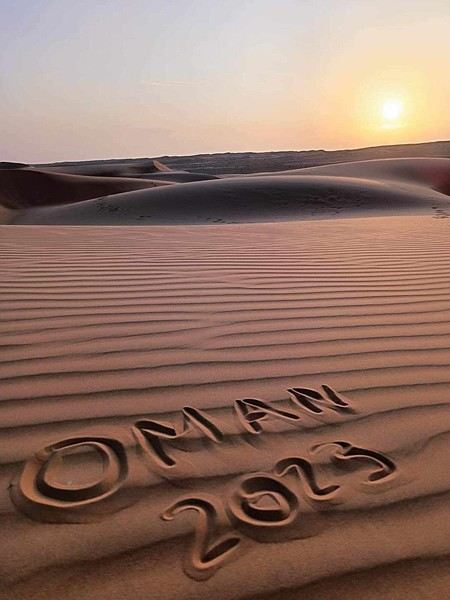
If we waited so long to explore this part of the world, it’s because a few questions were nagging at us, like: Can two Landais party lovers like us survive 15 days without apéro 😄? Or, more seriously: Can a feminist like me enjoy traveling in such a conservative country?
That is the question (and I feel your pain with this unbearable suspense 😅).
Ready to dive in?
PS: Apologies in advance for the casual tone of this travel journal—it’s the one I shared with our loved ones in real time, which explains everything.
We’re a couple in our fifties who’ve been traveling independently for ages—mostly in Asia, a bit in Africa, very little in the Americas, and never ever in West Asia until November 2023, when we discovered the Sultanate of Oman.
If we waited so long to explore this part of the world, it’s because a few questions were nagging at us, like: Can two Landais party lovers like us survive 15 days without apéro 😄? Or, more seriously: Can a feminist like me enjoy traveling in such a conservative country?
That is the question (and I feel your pain with this unbearable suspense 😅).
Ready to dive in?
PS: Apologies in advance for the casual tone of this travel journal—it’s the one I shared with our loved ones in real time, which explains everything.
Resuming discussions and returning to Madagascar
Oh, the good news—the site is back up after such a long closure. I think many of us were really missing it, though some have moved on to other forums like Routard.
Hopefully, activity will pick up little by little. Travel habits have probably changed post-Covid, and some regulars won’t be coming back for all sorts of reasons.
But for the rest of us, the forum is here for travel journals and pre-trip questions. Anyway…
Back to the main point: my last trip to Madagascar was a while ago now—about a year—on the High Plateaus during the austral winter. It was really chilly, and to be honest, my feelings were mixed between the joy of returning to Madagascar and the sadness of seeing the state of the country. The infrastructure is crumbling, and the population is sinking into poverty at unprecedented levels. The country’s closure likely had immeasurable consequences, compounded by destructive cyclones. Even secondary cities have seen large numbers of rural people arriving in search of work, while some rural areas barely allow survival. I’ve never felt such despair over the situation in 20 years.
From Tana to Fianar, it was nothing but heartbreaking observations. Probably made worse by the drizzle and cold typical of that season in the region.
In a few weeks, I’m planning to return to the High Plateaus and also Sainte Marie. On that note, a few questions: has anyone stayed at Samaria Cosy Lodge, and what did you think of it? On Île aux Nattes, which hotel would you recommend for a few peaceful days, ideally on the coast best suited for snorkeling?
Thanks in advance
Back to the main point: my last trip to Madagascar was a while ago now—about a year—on the High Plateaus during the austral winter. It was really chilly, and to be honest, my feelings were mixed between the joy of returning to Madagascar and the sadness of seeing the state of the country. The infrastructure is crumbling, and the population is sinking into poverty at unprecedented levels. The country’s closure likely had immeasurable consequences, compounded by destructive cyclones. Even secondary cities have seen large numbers of rural people arriving in search of work, while some rural areas barely allow survival. I’ve never felt such despair over the situation in 20 years.
From Tana to Fianar, it was nothing but heartbreaking observations. Probably made worse by the drizzle and cold typical of that season in the region.
In a few weeks, I’m planning to return to the High Plateaus and also Sainte Marie. On that note, a few questions: has anyone stayed at Samaria Cosy Lodge, and what did you think of it? On Île aux Nattes, which hotel would you recommend for a few peaceful days, ideally on the coast best suited for snorkeling?
Thanks in advance
To the Top West End
In this time of general travel-journal scarcity, I’m stepping up to tell you about a far-too-short getaway to the Top West End, a local term for the very northern part of Western Australia, right on the border ( ;) ) with the Northern Territory.
As usual, I didn’t manage to keep it short, but this time I’ve got photos to go with it!
August 2020. Since the opportunities to explore the world are extremely limited right now, all we (R&X) can do is explore our own island! Well, just a part of it, because with the state borders still closed, we’re stuck in Western Australia (WA).
Luckily, we’re pretty fortunate because this state is huge: over 2.5 million km² (that’s more than four times the size of France or 1.5 times Quebec). What’s more, stretching over 20 degrees of latitude between the Antarctic Ocean and the Timor Sea, you’ll find climates ranging from Mediterranean to arid to tropical. That’s actually why we decided to head as far north as possible. Sick of the endless rainy winter in Perth, bring on the heat of the Kimberley... way up Nooorth!
Friday. At the airport, the main terminal was closed (not enough flights), so we ended up in the annex (where flights to the various mines usually depart from). There was no crowd at the gate, and in this huge, single departure lounge, empty seats were plentiful. Only three flights were listed on the screens for the rest of the morning: the first to Coondewanna (?), the second to Darwin, and ours to Kununurra (code KNX).
A cool breeze swept through the half-open corridors along the runways. At the top of the walkway leading to the Fokker 100 (the Airbuses and Boeings are now parked!), a flight attendant greeted us with a basket full of sanitary masks. We were actually the only masked passengers (the staff weren’t wearing them either). With zero Covid-19 cases in WA at the time, the only rule was to maintain social distancing—something pretty hard to do on a full plane!
It was also my first time wearing a mask—it felt weird, pretty uncomfortable, and after a while, painful behind the ears. I really feel for those who have to wear one all day, every day. The flight lasted three long hours, but luckily, I had a good book. From the window, I watched an endless expanse of salt lakes in all shapes and sizes—round, elongated, gray, white, sometimes blue and green—and an infinity of winding, capricious meanders, along with long straight lines that led nowhere. The last half-hour got more interesting as rocky, swollen formations and long, sloping plateaus appeared. Against the vast ochre landscape, green patches became more frequent.
Just before landing, rows of green fields briefly appeared, along with an surprisingly wide river—but we were already rolling down the tarmac. A few hangars, a myriad of small, stationary planes, and a tiny terminal topped with a sign: “Welcome to Kununurra.”
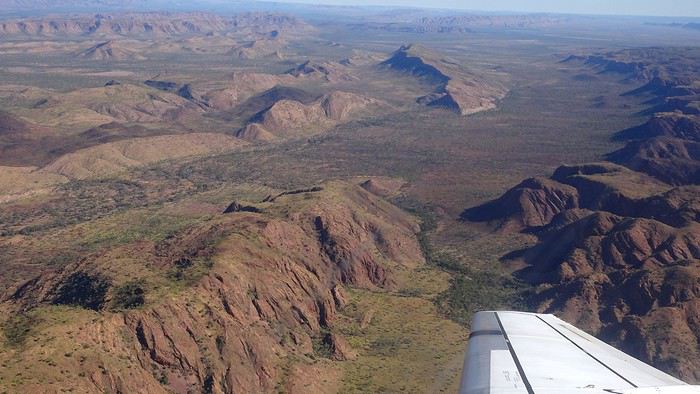
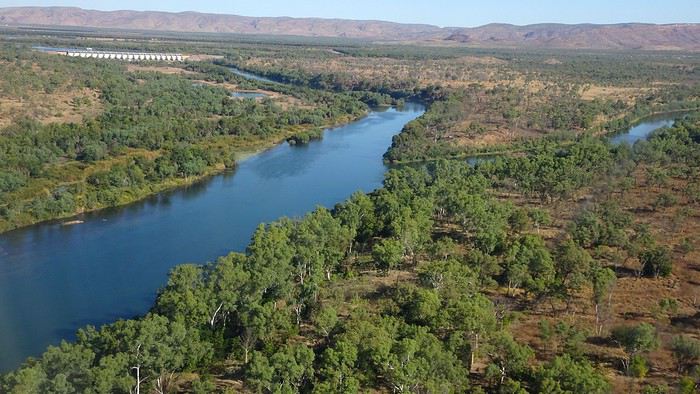
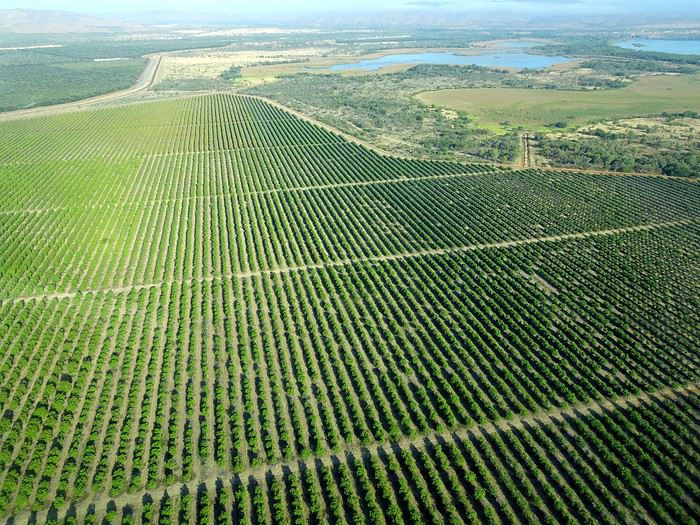
We wanted heat, and here it was—34°C the moment we stepped off the plane! We felt alive again and totally ridiculous in our jeans and sweaters. We quickly grabbed our suitcase and picked up the 4x4 we’d rented—more out of necessity, since only that type of vehicle can access the national parks we planned to visit.
Just four kilometers separated us from Kununurra, a town of 5,000 people founded in 1961 during the construction of the Lake Argyle Dam and the development of the Ord River Irrigation Area Scheme (more on that later). On the horizon, mountain ranges (a bit of an exaggeration, since we know Mt. Meharry, WA’s highest ‘mountain,’ doesn’t even reach 1,250 meters!) and closer to the road, a few irrigation canals cutting through stretches of bush, then a huge park overlooking a small lake lined with reeds.
A row of baobabs (yes, there are baobabs in Australia too!), a series of motels with immaculate lawns, a gas station, and there’s the main street leading to the town center—that is, the parking lots of the two supermarkets, the bottleshop, the pub, the Town Hall, the municipal pool, and the Tourist Office (already closed!), and at the next roundabout, another park, the Presbyterian church, and a few other shops. In short, two or three green blocks that you can explore in no time.
One road leads to the small industrial area and one of the town’s three or four campgrounds, while another heads toward the residential neighborhoods, which look just like the typical suburbs you find in any Australian city—except with tropical vegetation. We stocked up at Coles, an identical copy of the one near our place, and—surprise—the prices were practically the same.
We checked into one of the motels. The receptionist listed the town’s three or four restaurants, insisting that it’s always better to book a table. She recommended the Pump House, a bit outside town on the lake’s edge. “Best spot to watch the sunset, but hurry up.” she told us. It was only 5:00 PM!
When we got there half an hour later, the place was packed, and the sun had already disappeared behind a row of trees! Sure enough, we’d see a few days later that the sunset can be a stunning spectacle—if you wait a bit for the sky (especially if it’s cloudy) to blaze and reflect in the lake’s calm waters. A little disappointed, we headed back into town, where we easily found the other lively spot in town: the pub (nothing like an old English pub). Above the long L-shaped bar, several giant screens (thankfully muted) were broadcasting live footy, rugby league, etc. In one corner, players circled the pool table, while in another, customers were digging into plates of the day’s special. Instead of rooms, there were various patios where groups of friends and coworkers (easily recognizable by the fluoro vests they were still wearing) were gathered. We found a table under a mango tree—unfortunately, a little too close to the guitarist strumming his entire Country Music repertoire, complete with Keith Urban-style tremolos. Guaranteed culture shock!
Since it’s the custom here, we called the Country Club to book a table before the kitchen closed! The CC is the town’s—and even the region’s—fancy spot. Dark decor, modern furniture, dim lighting, and the air conditioning blasting. The twenty or so customers had taken refuge on the vast terrace, lit by torches. The view of the tall eucalyptus trees, illuminated by spotlights shifting from red to blue, was breathtaking.
The menu was minimal, but the grilled salmon was excellent, and the Pavlova (the meringue dessert Kiwis and Aussies have been arguing over since 1906) with melon and watermelon was absolutely divine.
It wasn’t even 9:00 PM, and we were already in bed. Had we already adopted the Top West End’s chicken schedule?!
To be continued... Journal dedicated to Attila
As usual, I didn’t manage to keep it short, but this time I’ve got photos to go with it!
August 2020. Since the opportunities to explore the world are extremely limited right now, all we (R&X) can do is explore our own island! Well, just a part of it, because with the state borders still closed, we’re stuck in Western Australia (WA).
Luckily, we’re pretty fortunate because this state is huge: over 2.5 million km² (that’s more than four times the size of France or 1.5 times Quebec). What’s more, stretching over 20 degrees of latitude between the Antarctic Ocean and the Timor Sea, you’ll find climates ranging from Mediterranean to arid to tropical. That’s actually why we decided to head as far north as possible. Sick of the endless rainy winter in Perth, bring on the heat of the Kimberley... way up Nooorth!
Friday. At the airport, the main terminal was closed (not enough flights), so we ended up in the annex (where flights to the various mines usually depart from). There was no crowd at the gate, and in this huge, single departure lounge, empty seats were plentiful. Only three flights were listed on the screens for the rest of the morning: the first to Coondewanna (?), the second to Darwin, and ours to Kununurra (code KNX).
A cool breeze swept through the half-open corridors along the runways. At the top of the walkway leading to the Fokker 100 (the Airbuses and Boeings are now parked!), a flight attendant greeted us with a basket full of sanitary masks. We were actually the only masked passengers (the staff weren’t wearing them either). With zero Covid-19 cases in WA at the time, the only rule was to maintain social distancing—something pretty hard to do on a full plane!
It was also my first time wearing a mask—it felt weird, pretty uncomfortable, and after a while, painful behind the ears. I really feel for those who have to wear one all day, every day. The flight lasted three long hours, but luckily, I had a good book. From the window, I watched an endless expanse of salt lakes in all shapes and sizes—round, elongated, gray, white, sometimes blue and green—and an infinity of winding, capricious meanders, along with long straight lines that led nowhere. The last half-hour got more interesting as rocky, swollen formations and long, sloping plateaus appeared. Against the vast ochre landscape, green patches became more frequent.
Just before landing, rows of green fields briefly appeared, along with an surprisingly wide river—but we were already rolling down the tarmac. A few hangars, a myriad of small, stationary planes, and a tiny terminal topped with a sign: “Welcome to Kununurra.”
We wanted heat, and here it was—34°C the moment we stepped off the plane! We felt alive again and totally ridiculous in our jeans and sweaters. We quickly grabbed our suitcase and picked up the 4x4 we’d rented—more out of necessity, since only that type of vehicle can access the national parks we planned to visit.
Just four kilometers separated us from Kununurra, a town of 5,000 people founded in 1961 during the construction of the Lake Argyle Dam and the development of the Ord River Irrigation Area Scheme (more on that later). On the horizon, mountain ranges (a bit of an exaggeration, since we know Mt. Meharry, WA’s highest ‘mountain,’ doesn’t even reach 1,250 meters!) and closer to the road, a few irrigation canals cutting through stretches of bush, then a huge park overlooking a small lake lined with reeds.
A row of baobabs (yes, there are baobabs in Australia too!), a series of motels with immaculate lawns, a gas station, and there’s the main street leading to the town center—that is, the parking lots of the two supermarkets, the bottleshop, the pub, the Town Hall, the municipal pool, and the Tourist Office (already closed!), and at the next roundabout, another park, the Presbyterian church, and a few other shops. In short, two or three green blocks that you can explore in no time.
One road leads to the small industrial area and one of the town’s three or four campgrounds, while another heads toward the residential neighborhoods, which look just like the typical suburbs you find in any Australian city—except with tropical vegetation. We stocked up at Coles, an identical copy of the one near our place, and—surprise—the prices were practically the same.
We checked into one of the motels. The receptionist listed the town’s three or four restaurants, insisting that it’s always better to book a table. She recommended the Pump House, a bit outside town on the lake’s edge. “Best spot to watch the sunset, but hurry up.” she told us. It was only 5:00 PM!
When we got there half an hour later, the place was packed, and the sun had already disappeared behind a row of trees! Sure enough, we’d see a few days later that the sunset can be a stunning spectacle—if you wait a bit for the sky (especially if it’s cloudy) to blaze and reflect in the lake’s calm waters. A little disappointed, we headed back into town, where we easily found the other lively spot in town: the pub (nothing like an old English pub). Above the long L-shaped bar, several giant screens (thankfully muted) were broadcasting live footy, rugby league, etc. In one corner, players circled the pool table, while in another, customers were digging into plates of the day’s special. Instead of rooms, there were various patios where groups of friends and coworkers (easily recognizable by the fluoro vests they were still wearing) were gathered. We found a table under a mango tree—unfortunately, a little too close to the guitarist strumming his entire Country Music repertoire, complete with Keith Urban-style tremolos. Guaranteed culture shock!
Since it’s the custom here, we called the Country Club to book a table before the kitchen closed! The CC is the town’s—and even the region’s—fancy spot. Dark decor, modern furniture, dim lighting, and the air conditioning blasting. The twenty or so customers had taken refuge on the vast terrace, lit by torches. The view of the tall eucalyptus trees, illuminated by spotlights shifting from red to blue, was breathtaking.
The menu was minimal, but the grilled salmon was excellent, and the Pavlova (the meringue dessert Kiwis and Aussies have been arguing over since 1906) with melon and watermelon was absolutely divine.
It wasn’t even 9:00 PM, and we were already in bed. Had we already adopted the Top West End’s chicken schedule?!
To be continued... Journal dedicated to Attila
Recap of our family trip to Romania in 2019
Hi everyone,
Better late than never—I’m finally getting around to sharing our trip to Romania from last year.
Before I start, I have a personal history with this country: I lived there in 2004 for three and a half months during a student internship. I still have friends there and a decent grasp of Romanian. That helps. But more than anything, I’ve grown attached to the country. It’s well-deserved—Romania gives back just as much. That said, when I talk about it, maybe I see things differently than someone visiting for the first time.
This was my third trip to Romania. This time, I brought my wife and our two daughters. After years of wanting to take a family trip there, this was finally the right moment. My wife wasn’t exactly thrilled at first—she’d been hesitant for years. But she ended up loving it, and we’ll definitely go back together. For our 6- and 8-year-old girls, the trip was fascinating in so many ways: the sights, learning about communism and totalitarian regimes, the Roma community, how different religions coexist, the Saxon minorities...
We landed in Bucharest last July. We spent two and a half weeks in the country. We took off from Toulouse early in the morning and arrived at Bucharest airport around noon. We flew with Lufthansa because it’s a solid airline and the cheapest option we found.
We rented a car. I don’t remember the rental agency’s name, but we got scammed a bit. We’d booked insurance through Booking, but when we arrived, we couldn’t print a credit card receipt. The issue? We only had debit cards, not credit cards (or vice versa), and without one, we couldn’t pick up the car without buying their on-site insurance. It was buried in the fine print—I’d read it but naively assumed a gold card would work. So, we had to take extra insurance. Basically, we threw 120 € in insurance fees out the window. Still, we got a Dacia Logan, and it ran like a dream the whole trip.
Here’s our rough itinerary: - Bucharest Airport => Sinaia => Brasov - Brasov => Viscri => Sighișoara => Sovata - Sovata => Bicaz Gorge => Iași - Iași => Bucharest
**Sinaia** We started in Sinaia, in the Carpathians. It’s an old Romanian vacation spot from the country’s golden age. A really nice place with great hikes. The mountains are stunning, covered in tall fir trees. There are beautiful buildings and old houses—it’s all very charming. We took the cable car up to the summit (no time to hike with the kids). It’s an old 1960s cable car with two sections (there are also detachable chairlifts). The view from the top is amazing. Then, Peles Castle—a must-see.
**On the road to Brasov** We stayed in a homestay in the village of Purcareni (15 minutes from Brasov by car) through an association called "L’Arbre de Joie." We spent a few days there. The association was founded by a French woman in the 90s and runs local projects. The family we stayed with was Hungarian. The price was around 90 € per day, including breakfast and dinner. The host spoke a little French, and her 16-year-old daughter spoke English fluently. We had great conversations. This family lives like a typical French family—they work at a clinic and a factory, own a car, and have a small chalet in the nearby mountains. From Purcareni, we explored: - **Bran Castle**: The iconic castle. There are way more tourist stalls now than when I first visited in 2004, but it’s still charming and worth seeing. - **Zărnești Bear Reserve**: Interesting—you learn a lot about bears. But it’s expensive, and it’s sad to see these beautiful animals in captivity. - **Râșnov Citadel**: Right near Zărnești. We did Bran, the bears, and this citadel all in one day last year. It’s pretty—you hike up a trail to get there. The view is gorgeous, but the site feels a bit neglected (or not fully restored yet). Some people love it, others don’t, but at least it’s authentic and not some Disneyland with fry stands everywhere. - **Brasov**: Of course! We went twice. It’s beautiful and nothing like what you’d imagine Romania to look like. We hiked up the hill overlooking the city—about 45 to 60 minutes with the kids. The view from the top is incredible, especially over the medieval rooftops. I wasn’t expecting much—I thought we’d see rundown buildings, but the "new" part of town is built farther to the right, so you barely notice it. - One day, we took a horse-drawn carriage (a touristy thing to do for the kids) to our hosts’ second home. It was still really fun. The area is super wild—just a few kilometers from the village, so close to Brasov. We ate *amazingly* with them. Traditional Romanian food is best enjoyed in people’s homes, not restaurants. So, I’d recommend eating at small guesthouses or homestays as much as possible.
**On the road to Viscri** No stops—just straight to Viscri. I found Viscri just as I’d left it in 2004. Maybe a few more tourists, maybe one or two new restaurants. The road still isn’t paved in the village. Viscri is my favorite place in Romania—a simple village with colorful houses. We found a reasonably priced Airbnb and had a great evening with our hosts. They were fascinating people, and we talked about Romania, Saxon minorities, Europe... The next morning, I went for a run and found a trail in the nearby forest. I followed it for a while before turning back. We also visited the fortified church.
**Sighișoara** I’d been there in 2004 and wasn’t particularly moved or impressed. I felt the same way in 2019. But that’s just our take.
**Sovata** In Sovata, we traveled the way I love—arriving around 5 PM with nothing booked and finding a place to stay by asking around. We ended up in homestays for two nights, and both were great. It’s a Hungarian-Romanian thermal spa town. The place is nice but nothing extraordinary, except when you get closer (but not too close) to the thermal complexes. There, you’ll find beautiful mansions and hotels from the early 19th century. It’s touristy, but only Romanians go there. We visited a warm-water lake—it was fun for the folklore, though the water wasn’t exactly inviting. Apparently, there’s another lake higher up that’s so salty you float in it, but we didn’t go. In the afternoon, we took the tourist steam train ("mocăniță" in Romanian). It was a blast—we chatted with people in the carriage. The train covers about 20 kilometers, then turns around (the locomotive detaches, spins, and reattaches). Everyone gets off at the halfway point, where people grill corn on the cob. Then the train heads back. The scenery isn’t breathtaking, but the fields were full of flowers, and the ride was lovely.
**Toward Bicaz Gorge** The next day, we headed to Bicaz Gorge and the Ceahlău Massif in Neamț (pronounced "Nyamts"). We passed through Corund, a village known for local crafts. Whether it’s actually made there or not is always up for debate in a society where cutting corners is common. Still, we found some nice plates, dishes, and souvenirs to bring home. Funny story: I was chatting with a young saleswoman in Romanian and was shocked to realize she didn’t understand me—not because my Romanian was bad, but because she *didn’t speak Romanian at all*. She only spoke Hungarian. Mind-blowing: you’re Romanian and don’t speak Romanian? We crossed a mountain (or big hill) before reaching the Gheorgheni plain—a small town nestled in the mountains, feeling like the end of the world. Was it the season? We saw *so many* storks, and they were *so close*. It was adorable.
**Bicaz Gorge** We stopped at "Lacul Roșu" (Red Lake) to take a boat ride with the kids. (Yeah, we did things we don’t usually do—gotta keep everyone engaged! And maybe that’s why they have such great memories of the trip.) Then, the Bicaz Gorge—one of my favorite spots in Romania. We stayed at Pensiunea Paleu in Bicazu Ardelean, a place I already knew. I think the price for four people, half-board (with delicious home-cooked meals), was around 90 € per day. The rooms are clean and simple, and there’s a big garden with a vegetable patch, a cow, and a pig. Most of the food served comes straight from the garden.
In the afternoon, after much hesitation, we headed to Ceahlău National Park. About 30 minutes by car, we entered the park (after waking up the park ranger, who reeked of booze and was napping). We drove to the end of the road, and then—against all odds—the four of us made it to the summit of Toaca Peak. This peak towers over the surrounding mountains. It was a great hike—starting in the Carpathian fir forests, then crossing a plateau covered in flowers (mid-July). We stopped for a drink at Cabana Dochia before heading up. The summit is a bit unusual because they’ve installed a big metal staircase. It’s steep in places—straight up, and I wouldn’t want to fall. There’s a sturdy railing, though. Even if the "normal route" doesn’t seem too hard. The view from the top is stunning—you can see the entire Carpathian region, vast forests, and the Bicaz Lake below.
**Iași** I used to live in Iași. We stayed with my former internship supervisor and his family. It’s not the first time we’ve crashed at people’s places. In Iași, we visited: - **The Opera House**: A beautiful building from the early 20th century, if I’m not mistaken. Our friends arranged a tour with the firefighters, who let us in and showed us around. It was fun. - **The "Hall of Lost Steps"**: You enter a massive room with stunning woodwork. It’s a huge university library, home to around a million books. The whole place is meticulously decorated. Visiting this room makes you wonder how Romania could have such a grand image. This country, in its golden age, had universities and thinkers. When you build something like this for knowledge and science, you’ve come a long way. - **The Palace of Culture**: This building was completely run-down in 2004 but has since been fully renovated. Where it was once gray, dull, and dirty, it now shines in the sunlight. It’s magnificent.
Beyond these three sights, we explored parks, wandered the city, went treetop climbing, and spent time with friends. Sure, Iași is way over in the east on a map of Romania, but it’s worth the detour.
After Iași, we headed back.
**In conclusion**, we spent three weeks in Romania. Here’s a rough breakdown of expenses (in €, all taxes included): - Flight tickets: 660 € - Car rental for 2.5 weeks: 250 € - Everything else (accommodation, food, activities, etc.): around 1,500 €
All in all, the trip wasn’t exactly cheap—around 2,500 to 2,800 € total. But we had a blast, and that’s what matters.
I had tons of great photos and wanted to share some, but I couldn’t upload them. If anyone’s interested, I can send them along.
Better late than never—I’m finally getting around to sharing our trip to Romania from last year.
Before I start, I have a personal history with this country: I lived there in 2004 for three and a half months during a student internship. I still have friends there and a decent grasp of Romanian. That helps. But more than anything, I’ve grown attached to the country. It’s well-deserved—Romania gives back just as much. That said, when I talk about it, maybe I see things differently than someone visiting for the first time.
This was my third trip to Romania. This time, I brought my wife and our two daughters. After years of wanting to take a family trip there, this was finally the right moment. My wife wasn’t exactly thrilled at first—she’d been hesitant for years. But she ended up loving it, and we’ll definitely go back together. For our 6- and 8-year-old girls, the trip was fascinating in so many ways: the sights, learning about communism and totalitarian regimes, the Roma community, how different religions coexist, the Saxon minorities...
We landed in Bucharest last July. We spent two and a half weeks in the country. We took off from Toulouse early in the morning and arrived at Bucharest airport around noon. We flew with Lufthansa because it’s a solid airline and the cheapest option we found.
We rented a car. I don’t remember the rental agency’s name, but we got scammed a bit. We’d booked insurance through Booking, but when we arrived, we couldn’t print a credit card receipt. The issue? We only had debit cards, not credit cards (or vice versa), and without one, we couldn’t pick up the car without buying their on-site insurance. It was buried in the fine print—I’d read it but naively assumed a gold card would work. So, we had to take extra insurance. Basically, we threw 120 € in insurance fees out the window. Still, we got a Dacia Logan, and it ran like a dream the whole trip.
Here’s our rough itinerary: - Bucharest Airport => Sinaia => Brasov - Brasov => Viscri => Sighișoara => Sovata - Sovata => Bicaz Gorge => Iași - Iași => Bucharest
**Sinaia** We started in Sinaia, in the Carpathians. It’s an old Romanian vacation spot from the country’s golden age. A really nice place with great hikes. The mountains are stunning, covered in tall fir trees. There are beautiful buildings and old houses—it’s all very charming. We took the cable car up to the summit (no time to hike with the kids). It’s an old 1960s cable car with two sections (there are also detachable chairlifts). The view from the top is amazing. Then, Peles Castle—a must-see.
**On the road to Brasov** We stayed in a homestay in the village of Purcareni (15 minutes from Brasov by car) through an association called "L’Arbre de Joie." We spent a few days there. The association was founded by a French woman in the 90s and runs local projects. The family we stayed with was Hungarian. The price was around 90 € per day, including breakfast and dinner. The host spoke a little French, and her 16-year-old daughter spoke English fluently. We had great conversations. This family lives like a typical French family—they work at a clinic and a factory, own a car, and have a small chalet in the nearby mountains. From Purcareni, we explored: - **Bran Castle**: The iconic castle. There are way more tourist stalls now than when I first visited in 2004, but it’s still charming and worth seeing. - **Zărnești Bear Reserve**: Interesting—you learn a lot about bears. But it’s expensive, and it’s sad to see these beautiful animals in captivity. - **Râșnov Citadel**: Right near Zărnești. We did Bran, the bears, and this citadel all in one day last year. It’s pretty—you hike up a trail to get there. The view is gorgeous, but the site feels a bit neglected (or not fully restored yet). Some people love it, others don’t, but at least it’s authentic and not some Disneyland with fry stands everywhere. - **Brasov**: Of course! We went twice. It’s beautiful and nothing like what you’d imagine Romania to look like. We hiked up the hill overlooking the city—about 45 to 60 minutes with the kids. The view from the top is incredible, especially over the medieval rooftops. I wasn’t expecting much—I thought we’d see rundown buildings, but the "new" part of town is built farther to the right, so you barely notice it. - One day, we took a horse-drawn carriage (a touristy thing to do for the kids) to our hosts’ second home. It was still really fun. The area is super wild—just a few kilometers from the village, so close to Brasov. We ate *amazingly* with them. Traditional Romanian food is best enjoyed in people’s homes, not restaurants. So, I’d recommend eating at small guesthouses or homestays as much as possible.
**On the road to Viscri** No stops—just straight to Viscri. I found Viscri just as I’d left it in 2004. Maybe a few more tourists, maybe one or two new restaurants. The road still isn’t paved in the village. Viscri is my favorite place in Romania—a simple village with colorful houses. We found a reasonably priced Airbnb and had a great evening with our hosts. They were fascinating people, and we talked about Romania, Saxon minorities, Europe... The next morning, I went for a run and found a trail in the nearby forest. I followed it for a while before turning back. We also visited the fortified church.
**Sighișoara** I’d been there in 2004 and wasn’t particularly moved or impressed. I felt the same way in 2019. But that’s just our take.
**Sovata** In Sovata, we traveled the way I love—arriving around 5 PM with nothing booked and finding a place to stay by asking around. We ended up in homestays for two nights, and both were great. It’s a Hungarian-Romanian thermal spa town. The place is nice but nothing extraordinary, except when you get closer (but not too close) to the thermal complexes. There, you’ll find beautiful mansions and hotels from the early 19th century. It’s touristy, but only Romanians go there. We visited a warm-water lake—it was fun for the folklore, though the water wasn’t exactly inviting. Apparently, there’s another lake higher up that’s so salty you float in it, but we didn’t go. In the afternoon, we took the tourist steam train ("mocăniță" in Romanian). It was a blast—we chatted with people in the carriage. The train covers about 20 kilometers, then turns around (the locomotive detaches, spins, and reattaches). Everyone gets off at the halfway point, where people grill corn on the cob. Then the train heads back. The scenery isn’t breathtaking, but the fields were full of flowers, and the ride was lovely.
**Toward Bicaz Gorge** The next day, we headed to Bicaz Gorge and the Ceahlău Massif in Neamț (pronounced "Nyamts"). We passed through Corund, a village known for local crafts. Whether it’s actually made there or not is always up for debate in a society where cutting corners is common. Still, we found some nice plates, dishes, and souvenirs to bring home. Funny story: I was chatting with a young saleswoman in Romanian and was shocked to realize she didn’t understand me—not because my Romanian was bad, but because she *didn’t speak Romanian at all*. She only spoke Hungarian. Mind-blowing: you’re Romanian and don’t speak Romanian? We crossed a mountain (or big hill) before reaching the Gheorgheni plain—a small town nestled in the mountains, feeling like the end of the world. Was it the season? We saw *so many* storks, and they were *so close*. It was adorable.
**Bicaz Gorge** We stopped at "Lacul Roșu" (Red Lake) to take a boat ride with the kids. (Yeah, we did things we don’t usually do—gotta keep everyone engaged! And maybe that’s why they have such great memories of the trip.) Then, the Bicaz Gorge—one of my favorite spots in Romania. We stayed at Pensiunea Paleu in Bicazu Ardelean, a place I already knew. I think the price for four people, half-board (with delicious home-cooked meals), was around 90 € per day. The rooms are clean and simple, and there’s a big garden with a vegetable patch, a cow, and a pig. Most of the food served comes straight from the garden.
In the afternoon, after much hesitation, we headed to Ceahlău National Park. About 30 minutes by car, we entered the park (after waking up the park ranger, who reeked of booze and was napping). We drove to the end of the road, and then—against all odds—the four of us made it to the summit of Toaca Peak. This peak towers over the surrounding mountains. It was a great hike—starting in the Carpathian fir forests, then crossing a plateau covered in flowers (mid-July). We stopped for a drink at Cabana Dochia before heading up. The summit is a bit unusual because they’ve installed a big metal staircase. It’s steep in places—straight up, and I wouldn’t want to fall. There’s a sturdy railing, though. Even if the "normal route" doesn’t seem too hard. The view from the top is stunning—you can see the entire Carpathian region, vast forests, and the Bicaz Lake below.
**Iași** I used to live in Iași. We stayed with my former internship supervisor and his family. It’s not the first time we’ve crashed at people’s places. In Iași, we visited: - **The Opera House**: A beautiful building from the early 20th century, if I’m not mistaken. Our friends arranged a tour with the firefighters, who let us in and showed us around. It was fun. - **The "Hall of Lost Steps"**: You enter a massive room with stunning woodwork. It’s a huge university library, home to around a million books. The whole place is meticulously decorated. Visiting this room makes you wonder how Romania could have such a grand image. This country, in its golden age, had universities and thinkers. When you build something like this for knowledge and science, you’ve come a long way. - **The Palace of Culture**: This building was completely run-down in 2004 but has since been fully renovated. Where it was once gray, dull, and dirty, it now shines in the sunlight. It’s magnificent.
Beyond these three sights, we explored parks, wandered the city, went treetop climbing, and spent time with friends. Sure, Iași is way over in the east on a map of Romania, but it’s worth the detour.
After Iași, we headed back.
**In conclusion**, we spent three weeks in Romania. Here’s a rough breakdown of expenses (in €, all taxes included): - Flight tickets: 660 € - Car rental for 2.5 weeks: 250 € - Everything else (accommodation, food, activities, etc.): around 1,500 €
All in all, the trip wasn’t exactly cheap—around 2,500 to 2,800 € total. But we had a blast, and that’s what matters.
I had tons of great photos and wanted to share some, but I couldn’t upload them. If anyone’s interested, I can send them along.
Selfie à Auschwitz English translation pending
Bonjour à tous,
Le hasard total de mes "promenades " sur le net m'ont amené à un article du Huffington post qui explique que le centre mémorial d'Auschwitz a été contraint de faire un " rappel à l'ordre " devant la recrudescence des visiteurs ( comme si on visitait en ce lieu ! ) faisant des selfies devant la porte, devant les bâtiments, devant des photos de prisonniers décharnés, sur les rails....
J'ai eu peine à le croire et en regardant sur G images en tapant selfie Auschwitz, j'ai pu constater le summum de la honte ! Déjà, cette mode des selfies m'agace un peu, mais alors là, cela dépasse mon entendement et le respect qui doit prévaloir en ce lieu.
C'était mon " coup de gueule de ce soir,
Respect à vous toutes et tous et bonne soirée.
Le hasard total de mes "promenades " sur le net m'ont amené à un article du Huffington post qui explique que le centre mémorial d'Auschwitz a été contraint de faire un " rappel à l'ordre " devant la recrudescence des visiteurs ( comme si on visitait en ce lieu ! ) faisant des selfies devant la porte, devant les bâtiments, devant des photos de prisonniers décharnés, sur les rails....
J'ai eu peine à le croire et en regardant sur G images en tapant selfie Auschwitz, j'ai pu constater le summum de la honte ! Déjà, cette mode des selfies m'agace un peu, mais alors là, cela dépasse mon entendement et le respect qui doit prévaloir en ce lieu.
C'était mon " coup de gueule de ce soir,
Respect à vous toutes et tous et bonne soirée.
La Bretagne avec le Jacques Cartier "Ponant" du 18 au 25 juillet 2020 English translation pending
Bonjour
J'avais envisagé d'attendre début Octobre et notre retour à Rennes pour faire le C/R
de notre croisière " La Bretagne : entre côtes sauvages et phares "
Mais tout compte fait , je change d'avis et démarre ce C/R dès maintenant :
Au retour de notre 20 ème croisière , fin Novembre 2019 , ( Transat de Marseille à
Miami sur le MSC Divina ) , nous avions décidé de faire une (petite ) pause pour les
croisières et donc de ne rien réserver avant plusieurs mois .
Sage décision en fait au vu des évènements sanitaires du Printemps puisque nous
avons échappé aux problèmes subis par nombre de touristes qui se sont retrouvés
avec des avoirs qu'il ne pourront utiliser ( au mieux ) que dans plusieurs mois .
A la fin de l'an dernier , je m'étais inscrit à la newsletter de Ponant , plus pour rêver
qu'autre chose .
Mais début Juin , alors que toutes les croisières sont annulées les unes après les autres ,
Ponant , profitant notamment de la capacité réduite de ses navires et du retour en
France métropolitaine de presque tous , met en place 2 itinéraires en Méditerranée et
3 en Manche et Atlantique .
La croisière au départ de Nice pour contourner la Corse nous plaisait bien mais rejoindre
Nice posait , à ce moment là , problème .
Nous décidons donc de nous rabattre sur la croisière au départ de St Malo car là , pas de
souci pour nous y rendre 🙂
Les raisons de notre choix : de mémoire , St Malo est fréquemment une ville d'escale pour
les bateaux de croisière mais quasiment jamais une ville d'embarquement ( et là aussi
de débarquement ) , donc autant en profiter .
De plus l'itinéraire nous plait avec la visite d'iles connues ( mais que nous reverrons avec
plaisir ) et de vraies découvertes dont les Scilly , au large de la Cornouaille britannique .
Mi Juin , nous décidons de réserver la croisière au départ de St Malo du 18 Juillet , sachant
que nous avons la possibilité d'annuler , sans pénalités , jusqu'à 72 heures avant le départ .
L'annulation , nous y avons pensé quand , fin Juin , nous avons appris que l'escale aux
Scilly était supprimée 😠 , remplacée par Ouessant , une escale à Groix se substituant
à celle de Hoëdic .
Toutes les autres croisières étaient aussi affectées par la suppression des escales à l'étranger
pour raisons sanitaires ( jours de quarantaine )
Nous trouverons donc peut-être une autre occasion pour nous rendre aux Scilly
Comme d'habitude , je m'égare avec ce préambule un peu long .
Je vais donc faire une pause avant de vous embarquer sur le Jacques Cartier .
A plus
Jean-Pierre
Nous testons la Flow Vélo en septembre (Sud-Ouest de la France) English translation pending
Bonjour ,
après 3 années d'interruption , C décidé la même équipe ( 4 personnes) repart vers le 14 septembre:
toujours en France et vu l'âge qui avance avec des vélos "nucléaire"; deux vélos montés avec des kits et 2 vélos de location Matra
Pas trop loin de chez nous , donc on y va en voitures : la Flow vélo , hébergement en mobilhomme , en auberges de jeunesse.
Aller et retour nous comptons 9 jours, 580km au total + les visites.
Si quelqu'un l'à déjà fait nous sommes preneur d'infos.
Cordialement
Trek le long des bisses valaisans en Suisse English translation pending
Samedi 11 juillet, je prends le train depuis mon domicile dans le canton de Vaud, direction Brigue et de là avec le car postal, je rejoins Blatten pour embarquer dans la télécabine qui m'emporte jusqu'à l'altitude de 2089 mètres au village de vacances de Belalp.
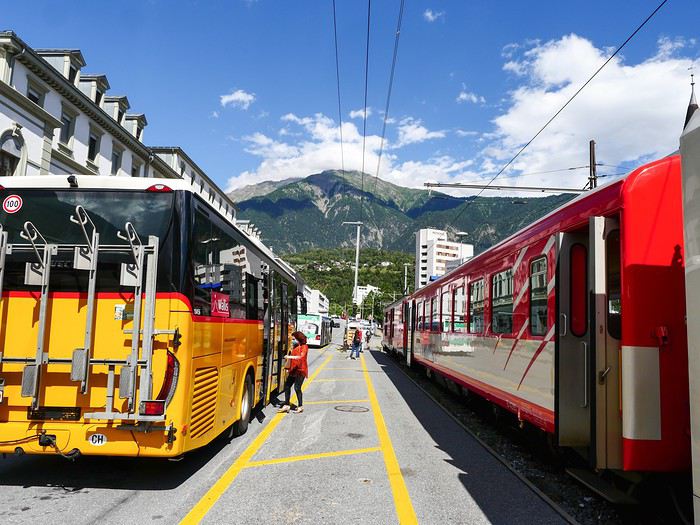
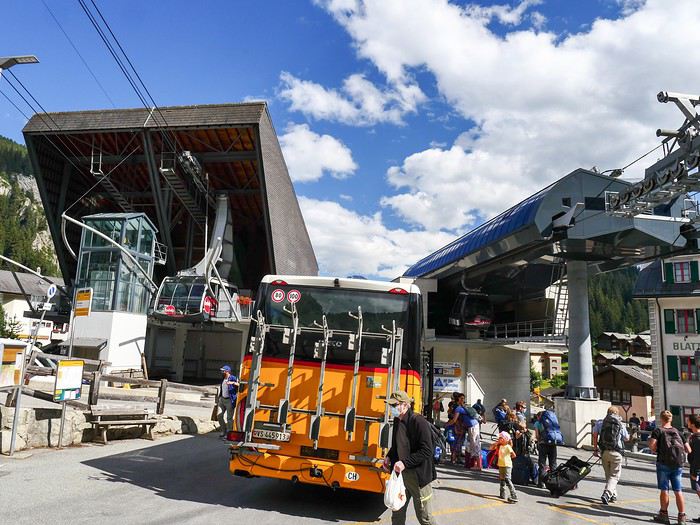
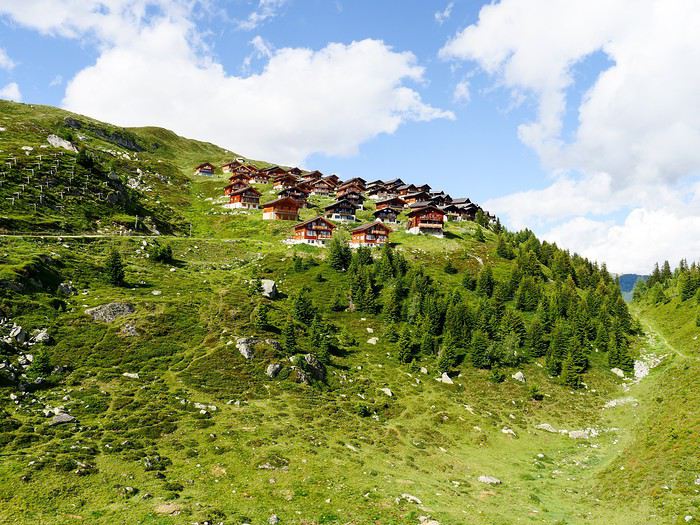
Le lendemain, dimanche 12 juillet, j'entame la 1ère étape d'un trek de 9 jours le long des bisses valaisans de la rive droite en suivant le guide réalisé par Armand Dussex et publié en 2018 aux éditions Rossolis, Bussigny, Vaud, Suisse 1er bisse ou suone en haut valaisan: le Nessjeri qui capte l'eau dans le Chelchbach, au pied du Grisighorn au dessus de Belalp
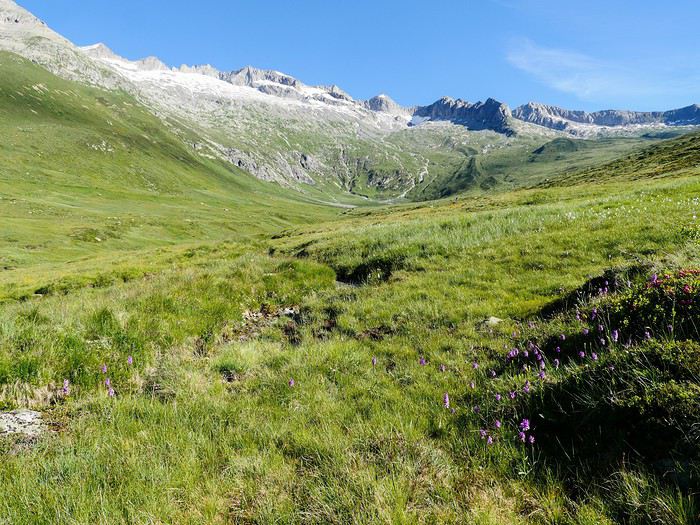
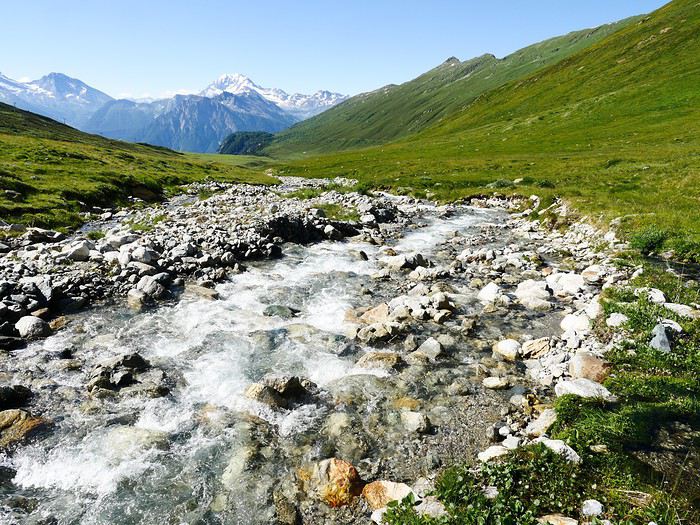
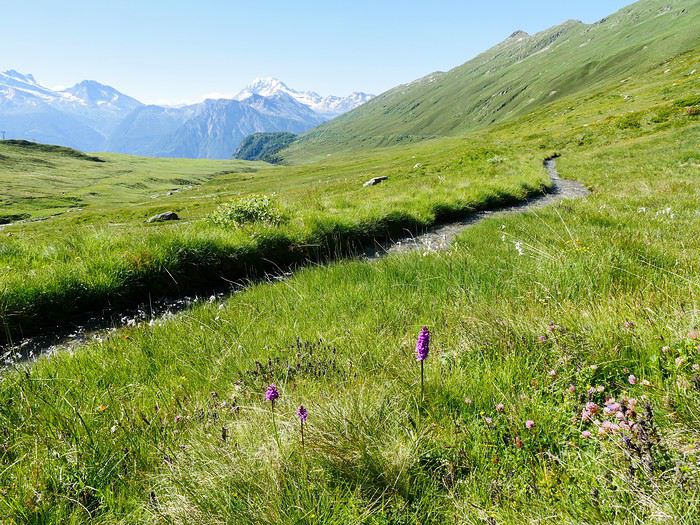
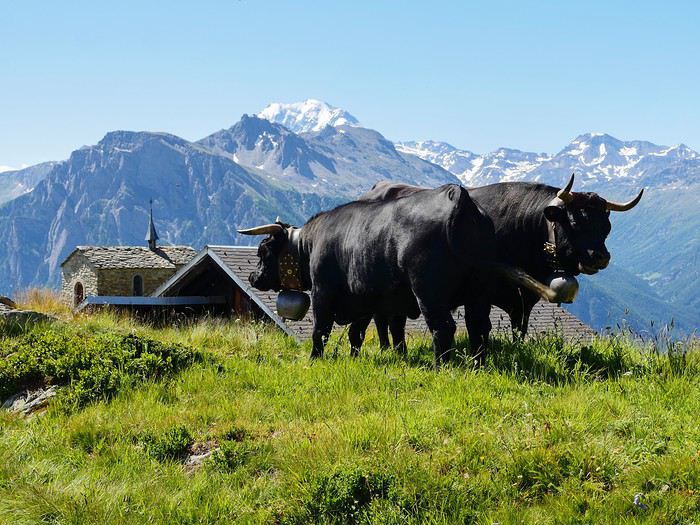
2ème bisse: Obersta connu déjà en 1435; il prend son eau dans le Mundbach et prend fin dans le Milchbach à l'est de Birgisch. Un bisse est un système d'irrigation qui va chercher l'eau dans la partie supérieure d'un torrent et qui détourne une partie de son eau pour la faire suivre à flanc coteau un cours qui permet aux villages d'altitude flanqués sur le flanc de montagnes peu "arrosées" de profiter de l'eau des glaciers qui naturellement file tout droit vers la plaine.
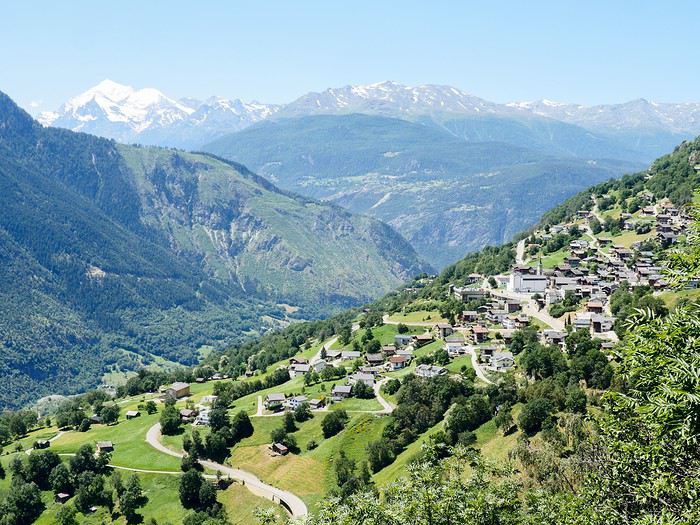
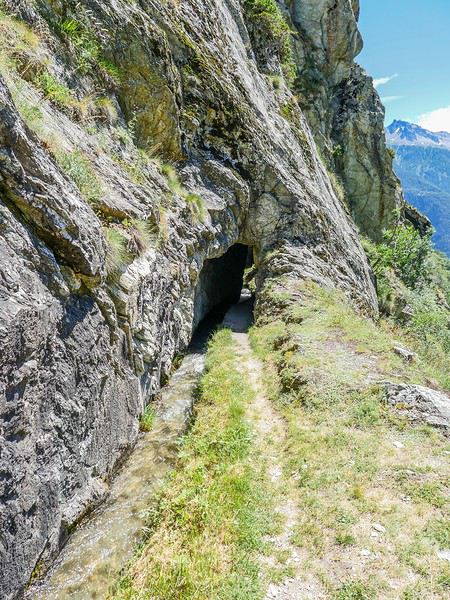
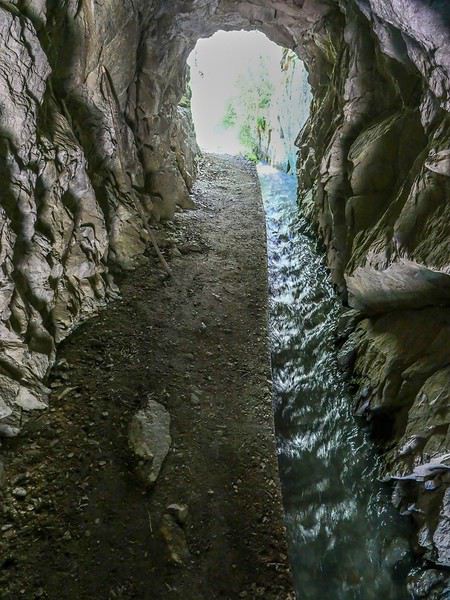
Comme on le voit, le trajet du bisse est parfois directement creuser dans le rocher pour éviter la difficulté de le faire suivre la pente d'une falaise abrupte... A suivre...
Le lendemain, dimanche 12 juillet, j'entame la 1ère étape d'un trek de 9 jours le long des bisses valaisans de la rive droite en suivant le guide réalisé par Armand Dussex et publié en 2018 aux éditions Rossolis, Bussigny, Vaud, Suisse 1er bisse ou suone en haut valaisan: le Nessjeri qui capte l'eau dans le Chelchbach, au pied du Grisighorn au dessus de Belalp
2ème bisse: Obersta connu déjà en 1435; il prend son eau dans le Mundbach et prend fin dans le Milchbach à l'est de Birgisch. Un bisse est un système d'irrigation qui va chercher l'eau dans la partie supérieure d'un torrent et qui détourne une partie de son eau pour la faire suivre à flanc coteau un cours qui permet aux villages d'altitude flanqués sur le flanc de montagnes peu "arrosées" de profiter de l'eau des glaciers qui naturellement file tout droit vers la plaine.
Comme on le voit, le trajet du bisse est parfois directement creuser dans le rocher pour éviter la difficulté de le faire suivre la pente d'une falaise abrupte... A suivre...
Choix de cadre acier cause douleur aux cervicales (à vélo) English translation pending
Bonjour,
Lors de mes recherches sur le net je suis tombé plusieurs fois sur ce forum donc je me suis dit que ce serait intéressant d'y demander de bons conseils.
Après 3 années à partir en vacances avec nos Peugeot ns pliant et la volonté d'utiliser le moins possible la voiture nous avons décidé d'investir dans des vélos un peux plus sérieux, histoire d'aller encore plus loin avec plus d'efficacité !
Je trouve en occaz un ktm pour ma femme, cadre alu roues de 700 et fourche télescopique avec tous les œillets qui vont bien pour recevoir de l'équipement plus tard. Pour moi je trouve un bmc alpen challenge à 40mn de chez moi à un bon prix et sur place je succombe à cette beauté. Frein à disque hydraulique, cadre alu, roue 700, Shimano 105.... Bref une belle bête !
Sauf que finalement c'est un bout de bois et qu'après chaque sortie je ressent des douleurs aux cervicales. J'ai joué sur tout ce que j'ai pu pour m'y faire, raccourcie la potence avec un angle plus grand, ajouté des cornes, joué sur différents réglages de selle mais rien n'y fait. J'en conclue donc que le soucis ne vient peut être pas de la position plutôt sportive sur ce vélo mais bien le retour des chocs dans directement dans mes cervicales !
Nous envisageons de faire une partie de la Loire à vélo l'année prochaine et je ne me voit pas partir avec le bmc.
Maintenant ce que j'en pense : à 43 ans j'ai été un peu prétentieux de prendre ce type de vélo hyper urbain pour finalement faire un peu de chemin.
Maintenant les solutions et c'est là que j'ai besoin de vos conseils : soit je revend le bmc et je me retrouve un vélo moins typé sportif, soit je trouve un kit cadre et je dépouille le bmc qui est bien équipé.
Cahier des charges : pour une utilisation mixte chemin + ou- roulant/ petite route à 20km/h maxi. En priorité je veux du confort, de bons freins car j'ai ma petite derrière moi, de quoi poser des sacoches avant par la suite, et un budget plutôt serré (disons 300/400e pour un kit cadre que je retrouverai en partie en revendant le bmc) ou 600/700e pour un vélo complet.
Voilà vous savez tout, j'attends vos avis et vos expériences pour m'aider dans mes choix.... Merci !
Avez-vous changé votre rapport aux voyages à cause du Covid? English translation pending
Bonsoir à tous,
Etant en train de réfléchir à d'éventuels futurs voyages, je me heurte bien sûr à la situation de la crise sanitaire.
Cela a-t-il affecté votre façon de voyager et prévoir vos voyages ?
Là par ex, je regarde les destinations où le masque n'est pas obligatoire à l'extérieur, où il n'y a pas (trop) de risque de quarantaine, etc.
Mais aussi les conditions d'annulations/report selon les pays.
Je vois qu'Airbnb ne remboursera pas les voyageurs en cas de confinement ou quarantaine. C'est donc la course aux logement flexibles, il y en a peu... pour l'avion cela dépend de la compagnie.
Mon prochain voyage prévu et payé, c'est avec Wizz Air pour la Pologne. Pas de remboursement (sauf si vol annulé bien sûr) mais les prix étant faibles, je prends le risque ! L'hébergement est annulable également.
Ces paramètres influent sur le choix des futurs destinations.
Et vous, comment procédez-vous ?
Etant en train de réfléchir à d'éventuels futurs voyages, je me heurte bien sûr à la situation de la crise sanitaire.
Cela a-t-il affecté votre façon de voyager et prévoir vos voyages ?
Là par ex, je regarde les destinations où le masque n'est pas obligatoire à l'extérieur, où il n'y a pas (trop) de risque de quarantaine, etc.
Mais aussi les conditions d'annulations/report selon les pays.
Je vois qu'Airbnb ne remboursera pas les voyageurs en cas de confinement ou quarantaine. C'est donc la course aux logement flexibles, il y en a peu... pour l'avion cela dépend de la compagnie.
Mon prochain voyage prévu et payé, c'est avec Wizz Air pour la Pologne. Pas de remboursement (sauf si vol annulé bien sûr) mais les prix étant faibles, je prends le risque ! L'hébergement est annulable également.
Ces paramètres influent sur le choix des futurs destinations.
Et vous, comment procédez-vous ?
Évasion en Thaïlande English translation pending
J'ai déjà expliqué ici le contexte de mes publications et pourquoi je remonte à ce point dans le temps. Cette fois-ci, on est en 2014. Je pars du présupposé que les choses n'ont pas considérablement changées et que ces voyages peuvent encore, malgré le temps passsé, en inspirer d'autres...
dimanche 30 novembre 2014 Mulhouse - Amsterdam
Bien sûr, tu le sais, ça fait des mois que j’en parle, ce matin on part vers Bangkok, Thaïlande. Pour Dom et moi, la voyago-thérapie : le must pour réduire à rien les agressions du moment, essentiellement liées à des histoires de boulot; mais je vais pas m'égarer là-dedans, ce n'est pas l'endroit!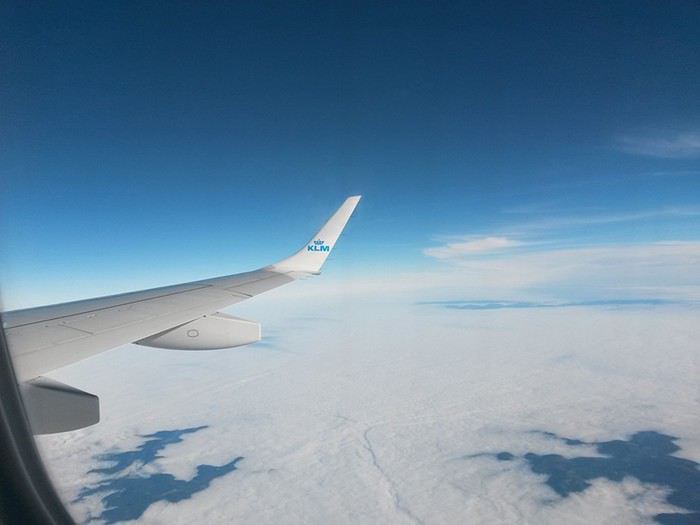
Escale à Amsterdam...
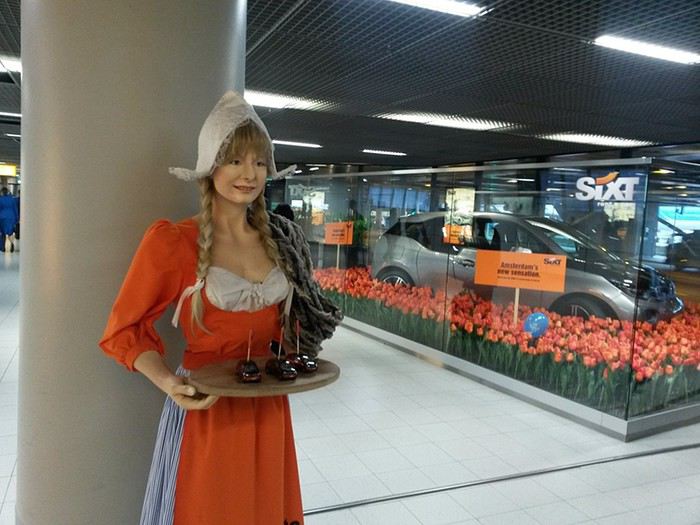
Lundi 1 décembre 2014 Bangkok
Même si c’est hautement probablement faux, on arrive à Bangkok alors qu’il m’a semblé n’avoir, à aucun moment, fermé l’œil. Les habituelles files d’attente à la douane présentent, il faut le souligner, des visages aimables… les bagages...Le taxi (rigolard comme ce n’est plus permis en occident :), l’hôtel...Nickel avec une magnifique terrasse au bord de la Navalaï River...Tous les flags sont au vert ! Tu nous connais, on traîne pas trop avant d’aller découvrir la ville ! On demande notre chemin à un type super accueillant qui hèle aussitôt un môme avec un « tuk tuk », une sorte de mobylette encarénée très appréciée des touristes because costless en diable ! Notre mentor négocie pour 40 baths (1 euro !), un tour des temples du nord. On se laisse driver sans discuter...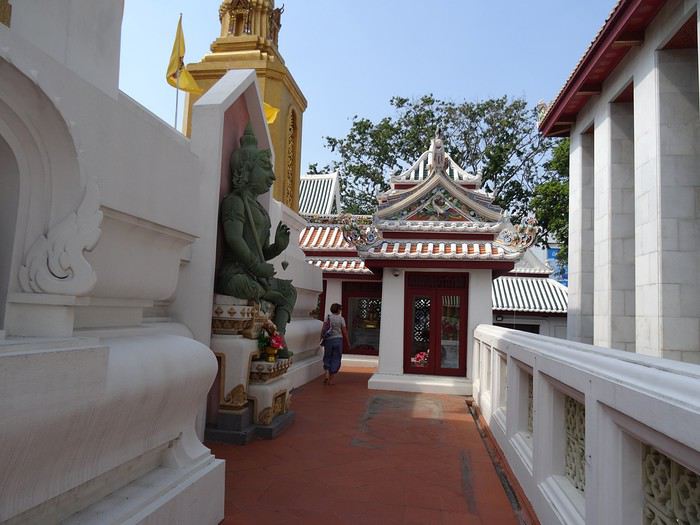
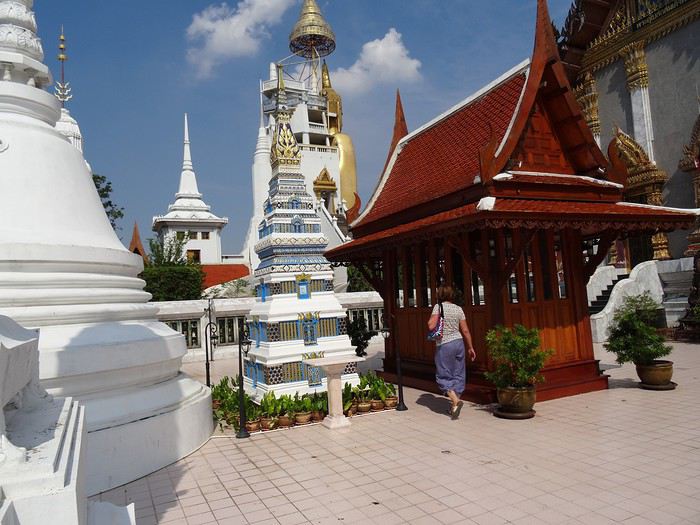
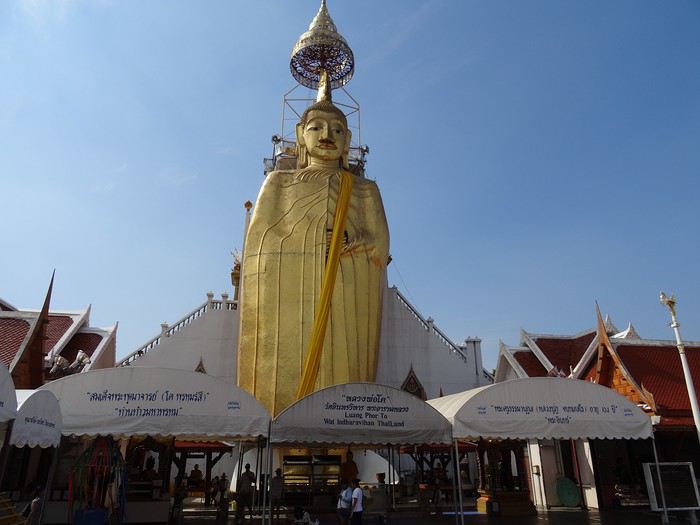
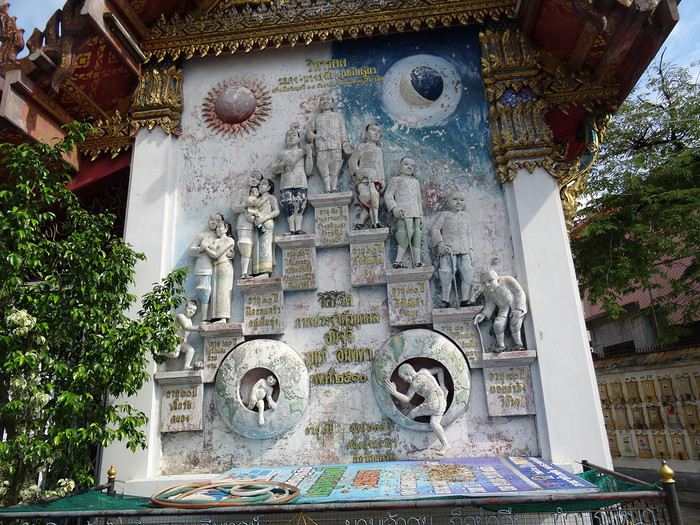
Après le troisième temple, le môme tourne bizarre. Il a arrêté d’être juste aimable. Nous presse. Puis, au milieu d’une visite, nous enjoint de le suivre, il veut nous montrer, dans une certaine urgence, quelque chose. Il nous emmène vers un homme d’âge respectable, une sorte de bonze aimable, affable, qui nous raconte, dans un français correct, sa jeunesse à Bordeaux, puis glisse insensiblement sur la théorie économique et ses inconstances, de la difficulté induite à placer le fruit de notre dur labeur dans quelque chose de pérenne. On le sentait venir. Devine où il est le plus sûr de placer son argent ? Dans la pierre précieuse, naturellement ! Et là, le monde est quand même bien fichu, figure toi que notre interlocuteur connait justement quelques joailliers d’art qui accepteraient de nous vendre à prix coûtant des saphirs de la région, et sans taxes encore! Bon. Le môme nous a embarqués dans un traquenard. On réussit cependant sans trop de difficulté à se débarrasser du fâcheux et reprenons l’expédition où nous l’avions laissée. Quand je demande au môme où se trouve la prochaine destination, je l’oblige à répéter plusieurs fois tant la chose me semble incongrue, mais c’est bien ça, sa réponse s’entend : « Thaï export !». On décide aussitôt d’abandonner la virée. On lâche 40 baths au gamin et sautons de sa mobylette au premier feu rouge. Ensuite, on a agité nos petites mains pour tenter d’attirer un taxi sous le cagnard, un Thaï d’un âge plus que respectable, nous a embarqué dans un véhicule qu’il a eu toute les peines du monde à maintenir sur la route, propulsés dans une sorte de jeu vidéo mortel, un grand thief auto à travers une circulation en délire… Mais ça va. Pour une poignée d’euros il nous a ramené à notre hôtel, sains et saufs ! Là, faut se remettre, pot au bord de la rivière... « Ça doit être possible de faire une ballade sur le fleuve, tu crois pas? » J’en parle à notre hôte à l’accueil, le truc est organisé dans la foulée ! Une efficacité qui laisse ébahi ! On a un bateau pour une virée d’une heure à travers la ville.
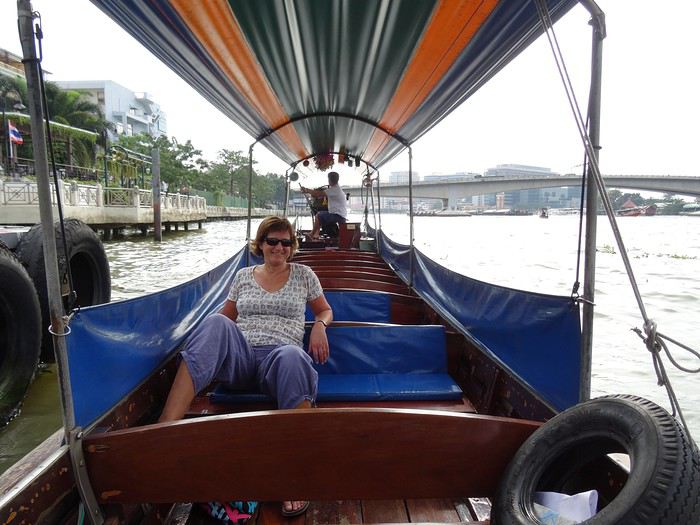
En traversant un petit village sur pilotis, je vois nager un drôle de truc, comme un chien. A force d’écarquiller les yeux, on distingue tout un groupe de Varans!
dimanche 30 novembre 2014 Mulhouse - Amsterdam
Bien sûr, tu le sais, ça fait des mois que j’en parle, ce matin on part vers Bangkok, Thaïlande. Pour Dom et moi, la voyago-thérapie : le must pour réduire à rien les agressions du moment, essentiellement liées à des histoires de boulot; mais je vais pas m'égarer là-dedans, ce n'est pas l'endroit!
Escale à Amsterdam...
Lundi 1 décembre 2014 Bangkok
Même si c’est hautement probablement faux, on arrive à Bangkok alors qu’il m’a semblé n’avoir, à aucun moment, fermé l’œil. Les habituelles files d’attente à la douane présentent, il faut le souligner, des visages aimables… les bagages...Le taxi (rigolard comme ce n’est plus permis en occident :), l’hôtel...Nickel avec une magnifique terrasse au bord de la Navalaï River...Tous les flags sont au vert ! Tu nous connais, on traîne pas trop avant d’aller découvrir la ville ! On demande notre chemin à un type super accueillant qui hèle aussitôt un môme avec un « tuk tuk », une sorte de mobylette encarénée très appréciée des touristes because costless en diable ! Notre mentor négocie pour 40 baths (1 euro !), un tour des temples du nord. On se laisse driver sans discuter...
Après le troisième temple, le môme tourne bizarre. Il a arrêté d’être juste aimable. Nous presse. Puis, au milieu d’une visite, nous enjoint de le suivre, il veut nous montrer, dans une certaine urgence, quelque chose. Il nous emmène vers un homme d’âge respectable, une sorte de bonze aimable, affable, qui nous raconte, dans un français correct, sa jeunesse à Bordeaux, puis glisse insensiblement sur la théorie économique et ses inconstances, de la difficulté induite à placer le fruit de notre dur labeur dans quelque chose de pérenne. On le sentait venir. Devine où il est le plus sûr de placer son argent ? Dans la pierre précieuse, naturellement ! Et là, le monde est quand même bien fichu, figure toi que notre interlocuteur connait justement quelques joailliers d’art qui accepteraient de nous vendre à prix coûtant des saphirs de la région, et sans taxes encore! Bon. Le môme nous a embarqués dans un traquenard. On réussit cependant sans trop de difficulté à se débarrasser du fâcheux et reprenons l’expédition où nous l’avions laissée. Quand je demande au môme où se trouve la prochaine destination, je l’oblige à répéter plusieurs fois tant la chose me semble incongrue, mais c’est bien ça, sa réponse s’entend : « Thaï export !». On décide aussitôt d’abandonner la virée. On lâche 40 baths au gamin et sautons de sa mobylette au premier feu rouge. Ensuite, on a agité nos petites mains pour tenter d’attirer un taxi sous le cagnard, un Thaï d’un âge plus que respectable, nous a embarqué dans un véhicule qu’il a eu toute les peines du monde à maintenir sur la route, propulsés dans une sorte de jeu vidéo mortel, un grand thief auto à travers une circulation en délire… Mais ça va. Pour une poignée d’euros il nous a ramené à notre hôtel, sains et saufs ! Là, faut se remettre, pot au bord de la rivière... « Ça doit être possible de faire une ballade sur le fleuve, tu crois pas? » J’en parle à notre hôte à l’accueil, le truc est organisé dans la foulée ! Une efficacité qui laisse ébahi ! On a un bateau pour une virée d’une heure à travers la ville.
En traversant un petit village sur pilotis, je vois nager un drôle de truc, comme un chien. A force d’écarquiller les yeux, on distingue tout un groupe de Varans!