Results for "Dakar+|+99+>+78"
5623 results found.
Article sur le pseudo humanitaire English translation pending
Bonjour
Ce poste va déranger, j'en suis sûr ... Je ne suis pas le créateur de l'article et je l'ai trouvé sur un autre site internet de voyage (ouais, je sais, j'ai fait une infidélité à VF)...
Un article du journal "La Croix":
"La truelle et le crayon" par Odon Vallet
Avec l’été voici le retour des voyages humanitaires, versions ethnologiques des safaris photos. En un mois, des jeunes croient pouvoir découvrir et secourir des populations inconnues et des civilisations ignorées. Ils vont aider des gens dont ils ne parlent pas la langue et méconnaissent les mœurs. Les résultats sont consternants. Tel groupe d’étudiants construit une école au Vietnam alors que pas un ne sait manier la truelle : les murs ne tiennent pas debout. Tel autre va lutter contre le sida en Afrique avec des affichettes représentant des phallus géants : il scandalise la population. Tel autre encore fait du soutien scolaire au Togo pendant les vacances d’été : les lycéens togolais étant aux champs pour gagner un peu d’argent, les tuteurs français ne soutiennent pas grand monde. Et avec le prix d’un seul billet d’avion aller retour Paris – Lomé, on peut faire vivre quatre élèves africains pendant un an. Certains de ces jeunes amènent du matériel scolaire inutile ou mal adapté qu’il aurait été moins coûteux d’acheter sur place. D’autres offrent des cédéroms à des écoles qui n’ont même pas l’électricité. Voici trente ans, un ministre français voulait sauver l’Afrique en parachutant des ordinateurs dans la brousse. Mais des petits écoliers africains n’ont toujours pas de quoi acheter des cahiers et des crayons au bazar du coin. Les organismes sérieux, comme la Délégation catholique à la coopération, se méfient de cette charité estivale et proposent aux jeunes de vraies missions d’un ou deux ans précédés d’une solide formation. Nombre de congrégations religieuses assaillies de demandes aussi brouillonnes que généreuses, ne savent plus quoi répondre. Il serait dommage de décevoir l’altruisme des jeunes, mais il serait tout aussi regrettable de gaspiller leurs ardeurs par des efforts inutiles et de dilapider leur enthousiasme par des gestes inefficaces. Il faudra donc inventer de nouvelles formes de solidarité conciliant spiritualité, générosité, efficacité. Ce sera long et difficile si l’on en juge par le déclin de la persévérance et la montée de l’éphémère. Il y a cent ans, un missionnaire partait pour sa vie entière dans une contrée où l’attendait sa tombe. Il y a vingt ans, un coopérant partait vers un pays où il enseignait durant deux années scolaires. Aujourd’hui des étudiants partent pour un mois, soit la moitié de leurs vacances. Il faudra renverser la vapeur en se souvenant qu’un mois, c’était la durée d’un Paris – Saigon à l’époque des steamers et d’un Paris – Dakar au temps des marines à voiles."
Inutile de vous dire que je suis d'accord avec l'article ...
Philo
Ce poste va déranger, j'en suis sûr ... Je ne suis pas le créateur de l'article et je l'ai trouvé sur un autre site internet de voyage (ouais, je sais, j'ai fait une infidélité à VF)...
Un article du journal "La Croix":
"La truelle et le crayon" par Odon Vallet
Avec l’été voici le retour des voyages humanitaires, versions ethnologiques des safaris photos. En un mois, des jeunes croient pouvoir découvrir et secourir des populations inconnues et des civilisations ignorées. Ils vont aider des gens dont ils ne parlent pas la langue et méconnaissent les mœurs. Les résultats sont consternants. Tel groupe d’étudiants construit une école au Vietnam alors que pas un ne sait manier la truelle : les murs ne tiennent pas debout. Tel autre va lutter contre le sida en Afrique avec des affichettes représentant des phallus géants : il scandalise la population. Tel autre encore fait du soutien scolaire au Togo pendant les vacances d’été : les lycéens togolais étant aux champs pour gagner un peu d’argent, les tuteurs français ne soutiennent pas grand monde. Et avec le prix d’un seul billet d’avion aller retour Paris – Lomé, on peut faire vivre quatre élèves africains pendant un an. Certains de ces jeunes amènent du matériel scolaire inutile ou mal adapté qu’il aurait été moins coûteux d’acheter sur place. D’autres offrent des cédéroms à des écoles qui n’ont même pas l’électricité. Voici trente ans, un ministre français voulait sauver l’Afrique en parachutant des ordinateurs dans la brousse. Mais des petits écoliers africains n’ont toujours pas de quoi acheter des cahiers et des crayons au bazar du coin. Les organismes sérieux, comme la Délégation catholique à la coopération, se méfient de cette charité estivale et proposent aux jeunes de vraies missions d’un ou deux ans précédés d’une solide formation. Nombre de congrégations religieuses assaillies de demandes aussi brouillonnes que généreuses, ne savent plus quoi répondre. Il serait dommage de décevoir l’altruisme des jeunes, mais il serait tout aussi regrettable de gaspiller leurs ardeurs par des efforts inutiles et de dilapider leur enthousiasme par des gestes inefficaces. Il faudra donc inventer de nouvelles formes de solidarité conciliant spiritualité, générosité, efficacité. Ce sera long et difficile si l’on en juge par le déclin de la persévérance et la montée de l’éphémère. Il y a cent ans, un missionnaire partait pour sa vie entière dans une contrée où l’attendait sa tombe. Il y a vingt ans, un coopérant partait vers un pays où il enseignait durant deux années scolaires. Aujourd’hui des étudiants partent pour un mois, soit la moitié de leurs vacances. Il faudra renverser la vapeur en se souvenant qu’un mois, c’était la durée d’un Paris – Saigon à l’époque des steamers et d’un Paris – Dakar au temps des marines à voiles."
Inutile de vous dire que je suis d'accord avec l'article ...
Philo
Premier grand voyage! English translation pending
bonjour, je suis une jeune étudiante de 20 ans et j interromps mes études durant un an pour bouger, voyager, "voir le monde"! Alors je cherche des conseils: combien faut il reunir comme somme de départ? faut il mieux partir seule? ou acompagnée? Y a t il des destinations plus faciles pour une premiere fois? Je compte partir avec mon sac a dos et compter sur ma chance mais tout reste encore trés vague...Donc voila si tu vous avez des idées ou si je pouvais accompagner l un de vous pour une premiere fois??😛
merci d avance, flo!
merci d avance, flo!
Etat de la route Nouadhibou-Nouakchott en Mauritanie? English translation pending
Bonjour,
Je suis à la recherche de renseignements récents sur les conditions de circulation entre Nouadhibou et Nouakchott. Où en est la route, combien de kilomètres encore non goudronnés ?
Je souhaite descendre sur Nouakchott cet été pour déménéger avec ma femme et nos 2 enfants car nous allons y travailler à partir de septembre . Est-ce que c'est envisageale avec une Xsara ??
Merci de nous renseigner !!
Yann
Je suis à la recherche de renseignements récents sur les conditions de circulation entre Nouadhibou et Nouakchott. Où en est la route, combien de kilomètres encore non goudronnés ?
Je souhaite descendre sur Nouakchott cet été pour déménéger avec ma femme et nos 2 enfants car nous allons y travailler à partir de septembre . Est-ce que c'est envisageale avec une Xsara ??
Merci de nous renseigner !!
Yann
Humanitaire au Mali English translation pending
Nous sommes les responsables d’une ONG humanitaire malienne dénommée Action Secours Sans Frontières (ASF). Nous cherchons des partenaires sur tous les continents.
ASF a pour objectif de : Apporter des aides aux personnes en difficultés :aide alimentaire, sanitaire, vestimentaire ou toute autre ressource disponible Soutenir les micro projets participatifs en faveur des personnes en situations difficiles Renforcer les systèmes d'alerte précoce pour prévenir les crises
Notre action va à l’endroit des groupes cibles suivants : les enfants de la rue les orphelins les handicapés physiques les personnes âgées les malades invalides les chômeurs les refugés des guerres
Actuellement nous assistons : une association de veuves, une association de femmes victimes de la lèpre, un groupe de jeunes handicapés artisants, un groupe d’enfants de la rue et un groupe de mères des jumeaux Nous sollicitons vivement votre coopération.
Notre contact : Action Secours Sans Frontières BP E-107 Bamako- Mali E-mail:ongasf@yahoo.fr
ASF a pour objectif de : Apporter des aides aux personnes en difficultés :aide alimentaire, sanitaire, vestimentaire ou toute autre ressource disponible Soutenir les micro projets participatifs en faveur des personnes en situations difficiles Renforcer les systèmes d'alerte précoce pour prévenir les crises
Notre action va à l’endroit des groupes cibles suivants : les enfants de la rue les orphelins les handicapés physiques les personnes âgées les malades invalides les chômeurs les refugés des guerres
Actuellement nous assistons : une association de veuves, une association de femmes victimes de la lèpre, un groupe de jeunes handicapés artisants, un groupe d’enfants de la rue et un groupe de mères des jumeaux Nous sollicitons vivement votre coopération.
Notre contact : Action Secours Sans Frontières BP E-107 Bamako- Mali E-mail:ongasf@yahoo.fr
Toulouse (France) Niamey (Niger) en voiture en trois semaines English translation pending
Je voudrais partir en voiture de Toulouse pour Niamey ou je vais travailler. Je ne dispose que de trois semaines un mois pour la traversee. Je passerais par maroc mauritanie senegal mali burkina niger. Est ce realisable en trois semaines?
Avez vous deja fait qqe chose de similaire?
Avez vous des conseil pour le choix d'un vehicule 4 4 et ou d'autres conseils consernant les formalites, visas...
Merci de votre aide.
Zappo.
Sirenis Cocotal Beach Resort English translation pending
Bonjour,
Nous partons dans cet hotel le 14/06 pour une période de 15 jours ? Quelqu'un connait-il cet hotel et pourrait-il m'en parler un peu.
Comment se passent les excurtions ?
Merci...😉
Nous partons dans cet hotel le 14/06 pour une période de 15 jours ? Quelqu'un connait-il cet hotel et pourrait-il m'en parler un peu.
Comment se passent les excurtions ?
Merci...😉
Descendre en voiture de France à Nouakchott (Mauritanie) en juillet English translation pending
Bonjour à tous les férus du voyage,
Nous commençons à préparer une descente fantastique avec une petite titine (205) pour rejoindre des amis qui travaillent à Nouakchott. Nous cherchons des renseignements sur la faisabilité de ce trajet, spécialeùment en ce qui concerne la descente du Maroc ( Etat des routes?) et sur la piste entre nouadhibou et Nouakchott ( Piste très sableuse, ; sable très fin? Possible en 205? Besoin de guide??).
ces questions doivent être relativement récurrentes mais nous aideraient beaucoup à préparer notre petit trip. Merci d'avance pour des infos.
Nous commençons à préparer une descente fantastique avec une petite titine (205) pour rejoindre des amis qui travaillent à Nouakchott. Nous cherchons des renseignements sur la faisabilité de ce trajet, spécialeùment en ce qui concerne la descente du Maroc ( Etat des routes?) et sur la piste entre nouadhibou et Nouakchott ( Piste très sableuse, ; sable très fin? Possible en 205? Besoin de guide??).
ces questions doivent être relativement récurrentes mais nous aideraient beaucoup à préparer notre petit trip. Merci d'avance pour des infos.
Sénégal: village Djembe à M'Bour English translation pending
Bonjour
Qqun connait -il ce village, le Club Djembé / Djembé Beach ? j'ai envie d'y passer 15 jours debut juillet, et j'aimerais bien avoir qques infos.
Merci d'avance😉
Qqun connait -il ce village, le Club Djembé / Djembé Beach ? j'ai envie d'y passer 15 jours debut juillet, et j'aimerais bien avoir qques infos.
Merci d'avance😉
Star Air Lines English translation pending
Nous sommes partis en République Dominicaine le 1er mars avec Star air line.Nous avons été bloqué sur Paris pendant 21 heures et logé a l'hotel IBIS 2* prés de l'aeroport mais loin de tout .La compagnie a tout pris a son compte le repas de midi du soir et le petit dejeuné le lendemain.en fait l'avion a eu probleme technique sur punta cana la compagnie a du envoyer des techniciens et la piece sur place afin de proceder aux reparations puis une fois de retour sur paris des mécanos ont revu la panne qui se située sous le reacteur droit de l'appareil.le soir à l'ibis un responsable de star air line est venu nous informer du retard et ce cers 21 h alors que nous devions partir vers 15 h.il nous affirmer que le départ aurait lieu le lendemain vers 11h30.en fait nous sommes partis vers 13h30 et le voyage s'est tres bien passé sans aucun incident.Star air line a été tres professionnel je pense quant au problème technique et tres prudent mais il aurait pu nous loger dans un hotel un peu plus select que l'ibis.par contre nous avons eté deçu du tour opérateur a savoir ( VACANCES AIR TRANSAT) qui ne nous ont jamais contacté alors que mon agence de voyage leur avait laissé mes coordonnées.je suis tres mécontent de ce tour opérateur et je me charge de leur faire de la pub
Air Mediterranée à éviter English translation pending
voir aussi www.carsurvey.org/air/
à quand des cies charters fiables et serieuses pour la france!
bon voyage!
à quand des cies charters fiables et serieuses pour la france!
bon voyage!
Stages musique/ percussions au Mali (ou autres)? English translation pending
Bonjour à tous les cyber-globe-trotters,
J'envisage actuellement de partir entre 1 et 2 mois cet ete au Mali, et pourquoi pas en profiter pour rayonner vers la Mauritanie et le Sénégal (projet en phase émergente, donc pas tres avancé pour le moment)..
Si quelqu'un a des tuyaux à me refiler je suis toujours preneur, les plans inoubliables à faire la-bas, sachant que ce ne sera peut-etre pas la bonne saison pour profiter du Niger...
Mais ce que j'aimerais par dessus tout c'est savoir si quelqu'un ne connaitrait pas des assocs, des personnes susceptibles de proposer des stages/cours de percussions sur place pour quelques semaines avec ou sans hébergement, j'ai déja entendu parler de ce genre de sjours a Bamako, ce ne sont pas les musiciens qui manquent la-bas.. mais je peine à trouver...
En tout cas, je me dis que ça peut etre un bon point de départ pour une decouverte du pays, surtout si comme moi, on est amateur de musique
Merci pour vos conseils!!
Eric
J'envisage actuellement de partir entre 1 et 2 mois cet ete au Mali, et pourquoi pas en profiter pour rayonner vers la Mauritanie et le Sénégal (projet en phase émergente, donc pas tres avancé pour le moment)..
Si quelqu'un a des tuyaux à me refiler je suis toujours preneur, les plans inoubliables à faire la-bas, sachant que ce ne sera peut-etre pas la bonne saison pour profiter du Niger...
Mais ce que j'aimerais par dessus tout c'est savoir si quelqu'un ne connaitrait pas des assocs, des personnes susceptibles de proposer des stages/cours de percussions sur place pour quelques semaines avec ou sans hébergement, j'ai déja entendu parler de ce genre de sjours a Bamako, ce ne sont pas les musiciens qui manquent la-bas.. mais je peine à trouver...
En tout cas, je me dis que ça peut etre un bon point de départ pour une decouverte du pays, surtout si comme moi, on est amateur de musique
Merci pour vos conseils!!
Eric
Domaine de Samba au Sénégal English translation pending
Hello,
Quelqu'un est-il déjà allé au domaine de samba et si oui, quel en fût le bilan ??
Merci !
Quelqu'un est-il déjà allé au domaine de samba et si oui, quel en fût le bilan ??
Merci !
Partir au Sénégal avec mon petit bébé English translation pending
Bonjour à toutes et à tous,
Jeune française mariée à un sénégalais, j'ai un bébé de 2 mois et demi. Je connais déjà bien le Sénégal et j'adore ce pays. Cependant, j'ai très peur à l'idée d'y emmener mon petit bout de chou, or c'est le souhait de mon mari qui a hâte de le présenter à toute sa famille (ce que je comprends bien). Il est d'accord pour attendre un peu, nous nous sommes donc fixé le mois d'octobre prochain (bébé aura 11 mois). J'attends vos conseils et avis sur le sujet, est-ce risqué?
merci d'avance
Jeune française mariée à un sénégalais, j'ai un bébé de 2 mois et demi. Je connais déjà bien le Sénégal et j'adore ce pays. Cependant, j'ai très peur à l'idée d'y emmener mon petit bout de chou, or c'est le souhait de mon mari qui a hâte de le présenter à toute sa famille (ce que je comprends bien). Il est d'accord pour attendre un peu, nous nous sommes donc fixé le mois d'octobre prochain (bébé aura 11 mois). J'attends vos conseils et avis sur le sujet, est-ce risqué?
merci d'avance
Moto en Argentine? English translation pending
je cherche des info pour acheminer ma moto de france en argentine pour un voyage de trois mois 😇 merci d'avance
Trouver un projet ou organisme? English translation pending
Je m'adresse ici à tous ceux qui ont participés ou veulent participés à un projet humanitaire... C'est quoi les bons sites, les organismes qui n'ont pas de "vice caché". Moi ca serait pour une période de 1-2 ou 3 mois dans la période de mi mai à mi-aôut 2004... J'ai 18 ans et j'aimerais beaucoup travailler dans un pays du tiers monde, avec des gens défavorisés....Je suis étudiante alors si vous savez quoi me conseiller pour que cela revienne le moins cher possible mais combien rapportant personnellement!! Je vous remercie énormément!!!!!
Merci!
Émilie
Merci!
Émilie
Billet d'avion simple pour le Sénégal? English translation pending
Bonjour à tous,
Je veux partir au Sénégal au cours du mois de décembre et ce pour une durée compris entre 5 et 7 mois.
Or j'aimerai savoir si il est possible de prendre un billet d'avion aller simple, et si cela ne pose pas de problème pour rentrer dans le pays.
Ensuite, connaissez vous des bons plans de billet d'avion.
Quelles sont les arnaques à éviter sur les billets d'avion?
Tout autres commentaires sont les biens venus
Merci
Je veux partir au Sénégal au cours du mois de décembre et ce pour une durée compris entre 5 et 7 mois.
Or j'aimerai savoir si il est possible de prendre un billet d'avion aller simple, et si cela ne pose pas de problème pour rentrer dans le pays.
Ensuite, connaissez vous des bons plans de billet d'avion.
Quelles sont les arnaques à éviter sur les billets d'avion?
Tout autres commentaires sont les biens venus
Merci
Monter un projet humanitaire English translation pending
Salut tout le monde,
J'aimerais avec des amis monter un projet humanitaire.
La destination m'est égal par contre ce qui me plairait c'est d'aider à construire une école et plus tard aider: par exemple alphabetiser les enfants ou les sensibiliser à quelque chose qui m'est chére comme le theatre. Evidemment il faudrait que ce soit dans un pays francophone. Le probléme c'est qu'il faut qu'il y est une volonté locale pour fonder une école et je ne sais pas comment entrer en contact avec des gens sur place capable d'assurer le fonctionnement de l'école une fois celle-ci construite.
Merci de m'aider car j'ai plein d'idées et de projets mais je ne sais pas comment les réaliser.
Salut.😉
J'aimerais avec des amis monter un projet humanitaire.
La destination m'est égal par contre ce qui me plairait c'est d'aider à construire une école et plus tard aider: par exemple alphabetiser les enfants ou les sensibiliser à quelque chose qui m'est chére comme le theatre. Evidemment il faudrait que ce soit dans un pays francophone. Le probléme c'est qu'il faut qu'il y est une volonté locale pour fonder une école et je ne sais pas comment entrer en contact avec des gens sur place capable d'assurer le fonctionnement de l'école une fois celle-ci construite.
Merci de m'aider car j'ai plein d'idées et de projets mais je ne sais pas comment les réaliser.
Salut.😉
De l'Afrique de l'Ouest à l'Amérique du Sud English translation pending
Salut aux aventuriers
Je pars début novembre de Toulouse pour rejoindre le Maroc, via l'Espagne, en stop.
Traversée du Maroc, puis Mauritanie, Sénégal, à la démerde. Je file ensuite vers le Mali, tjrs avec les moyens du bord (en stop, train, bus, voir dromadaires), rejoindre Tombouctou vers fin décembre.
Burkina Faso, Bénin, Togo pout tout le mois de janvier.
Traversée du sud du Niger, pour rejoindre le Tchad et redescendre sur le Cameroun vers fin février.
Ensuite l'idée et de chopper un cargo (voir un voilier) pour rejoindre l'Amérique du Sud et y passer 4 mois, jusqu'en juin-juillet.
Je pars en solo, j'ai quelques points de chutes et des rencontres de potes prévues. Je vais bosser, probablement, sur quelques chantiers (en recherche ou à trouver sur place). Budjet d'environ 1500 euros pour les 8 mois, je suis confiant.
Je suis à l'écoute de ttes suggestions, mises en garde ou autres. Si tu souhaite m'accompagner sur un bout de chemin, c'est avec plaisir. Je suis super ouvert et adore les plans de oufs!!!
Adrien, 22ans, en année sabatique
Je pars début novembre de Toulouse pour rejoindre le Maroc, via l'Espagne, en stop.
Traversée du Maroc, puis Mauritanie, Sénégal, à la démerde. Je file ensuite vers le Mali, tjrs avec les moyens du bord (en stop, train, bus, voir dromadaires), rejoindre Tombouctou vers fin décembre.
Burkina Faso, Bénin, Togo pout tout le mois de janvier.
Traversée du sud du Niger, pour rejoindre le Tchad et redescendre sur le Cameroun vers fin février.
Ensuite l'idée et de chopper un cargo (voir un voilier) pour rejoindre l'Amérique du Sud et y passer 4 mois, jusqu'en juin-juillet.
Je pars en solo, j'ai quelques points de chutes et des rencontres de potes prévues. Je vais bosser, probablement, sur quelques chantiers (en recherche ou à trouver sur place). Budjet d'environ 1500 euros pour les 8 mois, je suis confiant.
Je suis à l'écoute de ttes suggestions, mises en garde ou autres. Si tu souhaite m'accompagner sur un bout de chemin, c'est avec plaisir. Je suis super ouvert et adore les plans de oufs!!!
Adrien, 22ans, en année sabatique
Maroc-Sénégal en fourgon? English translation pending
salut a tous je vais au maroc bientot et je pense par la suite aller au senegal en fourgon?est ce que les douanes et la route sont difficile?plus est que ca passe si on a un chien et qu en est il des conditions sanitaire au nivau du palu fievre jaune
si certain sont interresse je pars dans 2 semaines
merci de vos reponses
Sénégal et Guinée en janvier 2004 English translation pending
Bonjour, j'ai déjà entamé une discussion qui comportait aussi le Mali mais à bien y réfléchir, nous nous contenterons de 2 semaines en Guinée et 2 semaines au Sénégal.
Ce qui serait génial, ce serait d'arriver à Conakry, passer du temps dans la famille d'un ami et nous diriger ensuite vers Kankan, en visitant les petites villes sur notre chemin. Revenir par le Sénégal, de l’ouest vers l’est pour finir par Dakkar d’où nous reviendrons. Nous voulons terminer par Dakkar puisque nous avons un ami francais qui se rend travailler à Dakkar pour un an. Il arrivera plus tard en janvier et nous voulons lui laissr le temps de s'installer avant notre arrivée. De plus, nous pourrions prendre l'avion de cette ville.
Qu'en pensez-vous?
Vous connaissez des gens qui habitent l'ouest de la Guinée et du Sénégal et chez qui nous pourrions habiter en toute sécurité?
Vous avez des endroits stratégiques à nous proposer pour visiter?
Merci!
Ce qui serait génial, ce serait d'arriver à Conakry, passer du temps dans la famille d'un ami et nous diriger ensuite vers Kankan, en visitant les petites villes sur notre chemin. Revenir par le Sénégal, de l’ouest vers l’est pour finir par Dakkar d’où nous reviendrons. Nous voulons terminer par Dakkar puisque nous avons un ami francais qui se rend travailler à Dakkar pour un an. Il arrivera plus tard en janvier et nous voulons lui laissr le temps de s'installer avant notre arrivée. De plus, nous pourrions prendre l'avion de cette ville.
Qu'en pensez-vous?
Vous connaissez des gens qui habitent l'ouest de la Guinée et du Sénégal et chez qui nous pourrions habiter en toute sécurité?
Vous avez des endroits stratégiques à nous proposer pour visiter?
Merci!
Interdiction voitures plus de 5 ans au Sénégal English translation pending
Le Sénégal interdit depuis fin Juillet l'importation des voitures de plus de 5 ans (minibus 8 ans et camions 10 ans) Les voitures plus vieilles ne peuvent passer la frontière qu'avec un carnet de douane.Actuellement, celles qui en sont démunies sont refoulées à la frontière
Désire participer à un projet de bénévolat à l'étranger English translation pending
bonjour,
je m'appelle Anne
ai 31 ans
célibataire..et non ce n'est pas un mari que je recherche!!
je souhaite partir en réserve naturelle comme bénévole.je viens de m'inscrire sur Forum afin d'obtenir plus de renseignement sur les démarches ou adresses que vous pourriez me fournir de personnes travaillant déjà dans une réserve ou ayant de l'expérience pour m'aider dans cette démarche.
mon but n'est pas de me faire des vacances...mais bien de réaliser un projet et de m'y investir.
je suis très ouverte...mais je ne parle que très peu l'Anglais...de ce fait l'idéal pour moi serait d'allier les deux.
l'apprentissage de la langue et un job.ça c'est évidement beaucoup demandé..mais...j'essaye!
L'australie...la nouvelle.Zéland..
je reste tout de même très attirée par Afrique..le Sénégal..
je sais en Afrique on ne parle pas l'Anglais...bon comme vous pouvez le constater, je reste très ouverte à vos propositions
je suis Bijoutière, joaillière de formation ( les pierres me passionnent)
je suis designer de métier, je sais dessiner!
et je suis sérieuse( pour cette recherche et pour le job)mais très rieuse dans la vie, sportive, aime la nature,
et attends très impatiement vos idées et remarques
😉 merci
je m'appelle Anne
ai 31 ans
célibataire..et non ce n'est pas un mari que je recherche!!
je souhaite partir en réserve naturelle comme bénévole.je viens de m'inscrire sur Forum afin d'obtenir plus de renseignement sur les démarches ou adresses que vous pourriez me fournir de personnes travaillant déjà dans une réserve ou ayant de l'expérience pour m'aider dans cette démarche.
mon but n'est pas de me faire des vacances...mais bien de réaliser un projet et de m'y investir.
je suis très ouverte...mais je ne parle que très peu l'Anglais...de ce fait l'idéal pour moi serait d'allier les deux.
l'apprentissage de la langue et un job.ça c'est évidement beaucoup demandé..mais...j'essaye!
L'australie...la nouvelle.Zéland..
je reste tout de même très attirée par Afrique..le Sénégal..
je sais en Afrique on ne parle pas l'Anglais...bon comme vous pouvez le constater, je reste très ouverte à vos propositions
je suis Bijoutière, joaillière de formation ( les pierres me passionnent)
je suis designer de métier, je sais dessiner!
et je suis sérieuse( pour cette recherche et pour le job)mais très rieuse dans la vie, sportive, aime la nature,
et attends très impatiement vos idées et remarques
😉 merci
Sénégal: pays Bassari English translation pending
Bonjour à tous,
Je voulais avoir vos expériences et/ou connaissances en lien avec le pays Bassari. Je vais être au Sénégal et je souhaiterais vivement être en contact avec cette région et ses gens... Je sais que c'est peu visité et sans doute difficile d'accès, c'est d'ailleurs pour cette raison que je suis à la recherche de commentaires. 😉
Merci à l'avance
Cathou
Aide au développement au Sénégal English translation pending
Je participe à un jumelage avec le lycée forestier de Zighinchor, et revient d'une mission d'évaluation sur ce projet. Je suis moi même enseignant forestier, et crois que le développement agricole, et par extension d'autosuffisance alimentaire ne peut se faire sans prise en compte des contraintes d'aménagement environnementale. Nos partenaires forestiers en sont également convaincus puisque leur mission essentielle est de former les élèves dans le cadre d'une chaine cohérente de production qui intègre la production d'arbres forestiers aux autres éléments de l'agriculture (élevage, production fruitière, maraichage...). Si des personnes souhaitant connaître le Sénégal, y voyager, participer à des actions, trouver des financements, je serai content de prendre contact avec eux.
Bien cordialement
Bien cordialement
Femme voyageant au Sénégal, vos commentaires? English translation pending
Bonjour à toutes, Je désirerais avoir vos commentaires sur vos expériences en tant que femme voyageant au SÉnégal, s'il y a lieu, bien sûr ! Merci😉
Projet Afrique de l'Ouest English translation pending
Salut ami(e)s voyageurs(ses),
Je voudrais réaliser un rêve, qui est de partir en Afrique pour une période de 6 mois environ, en passant par les pays tels que le Maroc, la Mauritanie, le Sénégal, le Mali, Bénin, Togo.... Sur place, je voudrais avoir des points de chutes dans des associations, communautés.. à qui je proposerais mon aide pendant 1 à 3 semaines en échange d'être nourri et logée. Si vous avez des conseils, infos, renseignements, idées, adresses, contacts... je suis preneuse! Si mon projet aboutit, je compte partir soit vers janvier 2004, soit septembre 2004. Pour l'instant, je partirai seule donc si quelqu'un est intéressé........
Merci d'avance 😉!!!!
A bientôt!!!
Travel insurance for pre-existing conditions
Hi there,
A friend has osteoarthritis in the knee and a meniscus problem, treated with regular injections.
Do you know of any insurance companies that cover pre-existing conditions in case their knee locks up in Africa?
Thanks a bunch!
Off on a winter adventure in the American West!
Day 1 – February 14
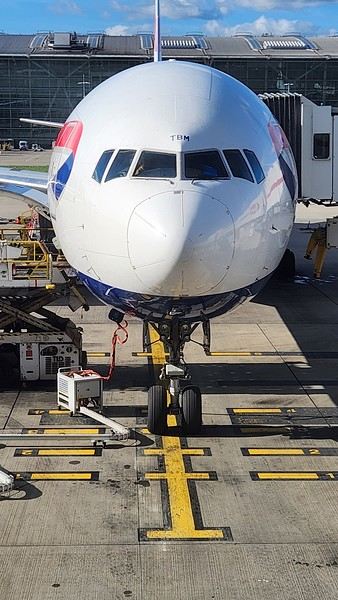
We all have two lives. And the second one kicks off the day you realize you only have one, with the determination to spend the time you have left on what truly adds sparkle to your life, Kevin! I like to elegantly introduce a trip with a philosophical quote. First, it gives you the illusion that I’m some kind of deep thinker, and second, it lets me fill up the first few lines of my blank page when I don’t know how to tell you I’m diving back into what really lights up my life: another adventure beyond the horizon! And nearly every other year, like a toxic relationship, my horizon tends to take shape in Uncle Sam’s backyard. And this, despite his cousin Donald calling the shots. Speaking of which, it was partly that impulsive guy who pushed us to be just as impulsive and snag our four flight tickets at a ridiculously low price—a direct result of foreign tourism taking a hit from BetaMax’s repeated antics... Four tickets? Who are the other lucky ones? In this case, our lucky ones are actually lucky ladies: My Flo, always up for exploring the world with me on foot, camelback, or scooter, is obviously in on the fun. The other two seats went to our daughters, Sasha and Luna, both thrilled to be part of this new American adventure...
But what’s the American West like in February?... A gamble. Let’s call it Russian roulette since we’re not landing during peak weather season. That’s why we encouraged our transportation and accommodation to get cozy and produce a little camper van, so we can stay ultra-flexible in the face of any weather tantrums. We’ll be roaming in Kara the van with the motto "Follow the sun!" Bad weather? We bolt. Snow? We speed up. Sunny? We act like it was the plan all along and soak it up.
"Okay, but why keep coming back to the same corner of the globe? After ten American adventures, you must be tired of seeing the same things, right?" But I’m not crazy, you know!... The American West is like making love to your gorgeous wife over and over, always enjoying it just as much. And contrary to what you might think, the American West isn’t just the Grand Canyon, Monument Valley, Las Vegas, and Bryce Canyon. Proof is, after ten trips to the U.S., my retinas are still untouched by three-quarters of the places I scribbled on a napkin for this adventure... Oh, and add to that my wife, who I’ve easily converted to my religion, and boom... relapse is even easier! Because yes, we’ve landed in Los Angeles after a sunny flight over Greenland, still under Danish flag for now. And we’re already heading east through the XXL traffic of L.A.’s eight-lane highways, eager to dive into our first discoveries. But first, night is taking over the sky, and second, we’ve been officially awake for 24 hours, so I suggest wrapping up this intro. I’ll tell you more tomorrow morning. Sound good?

We all have two lives. And the second one kicks off the day you realize you only have one, with the determination to spend the time you have left on what truly adds sparkle to your life, Kevin! I like to elegantly introduce a trip with a philosophical quote. First, it gives you the illusion that I’m some kind of deep thinker, and second, it lets me fill up the first few lines of my blank page when I don’t know how to tell you I’m diving back into what really lights up my life: another adventure beyond the horizon! And nearly every other year, like a toxic relationship, my horizon tends to take shape in Uncle Sam’s backyard. And this, despite his cousin Donald calling the shots. Speaking of which, it was partly that impulsive guy who pushed us to be just as impulsive and snag our four flight tickets at a ridiculously low price—a direct result of foreign tourism taking a hit from BetaMax’s repeated antics... Four tickets? Who are the other lucky ones? In this case, our lucky ones are actually lucky ladies: My Flo, always up for exploring the world with me on foot, camelback, or scooter, is obviously in on the fun. The other two seats went to our daughters, Sasha and Luna, both thrilled to be part of this new American adventure...
But what’s the American West like in February?... A gamble. Let’s call it Russian roulette since we’re not landing during peak weather season. That’s why we encouraged our transportation and accommodation to get cozy and produce a little camper van, so we can stay ultra-flexible in the face of any weather tantrums. We’ll be roaming in Kara the van with the motto "Follow the sun!" Bad weather? We bolt. Snow? We speed up. Sunny? We act like it was the plan all along and soak it up.
"Okay, but why keep coming back to the same corner of the globe? After ten American adventures, you must be tired of seeing the same things, right?" But I’m not crazy, you know!... The American West is like making love to your gorgeous wife over and over, always enjoying it just as much. And contrary to what you might think, the American West isn’t just the Grand Canyon, Monument Valley, Las Vegas, and Bryce Canyon. Proof is, after ten trips to the U.S., my retinas are still untouched by three-quarters of the places I scribbled on a napkin for this adventure... Oh, and add to that my wife, who I’ve easily converted to my religion, and boom... relapse is even easier! Because yes, we’ve landed in Los Angeles after a sunny flight over Greenland, still under Danish flag for now. And we’re already heading east through the XXL traffic of L.A.’s eight-lane highways, eager to dive into our first discoveries. But first, night is taking over the sky, and second, we’ve been officially awake for 24 hours, so I suggest wrapping up this intro. I’ll tell you more tomorrow morning. Sound good?
Africa: A Heartfelt Love for a Continent
“When the Whites came to Africa, we had the land and they had the Bible. They taught us to pray with our eyes closed: when we opened them, the Whites had the land and we had the Bible.” Jomo Kenyatta (p.7)
The Maggi cube, an unchallenged hegemony, and so much more
“The hopeless continent,” headlined The Economist, a British magazine, in July 2000 about Africa. Eleven years later, the same magazine headlined “Africa rising” instead. Images of Africa in the prosperous North constantly oscillate between apocalyptic scenarios and enthusiastic projections. A key issue with such images lies in the generalization they entail. If you look at the continent, considerable contrasts emerge depending on space and time. It’s no surprise that a region of the world encompassing such diverse ecological zones, maintaining such varied ties with other continents, comprising nearly fifty nation-states in sub-Saharan Africa alone, and characterized by a great diversity of languages, belief systems, and historical paths, doesn’t share a single destiny.
And yet, for many people outside Africa, as well as for many Africans, the continent constitutes a single entity, defined by criteria such as skin color, a colonial past, poverty, and the art of survival. Until now, these perspectives were generally accompanied by the idea that Africa had to—or should have—followed a single path together, sometimes called development, sometimes modernization, sometimes liberation, then a market economy. None of these paths delivered on their promises.
The two writers Alain Mabanckou and Abdourahman Waberi—one from Congo, the other raised in Djibouti, both long settled in France and now professors at renowned North American universities (Los Angeles, Washington)—have had enough of pessimistic scenarios: “We are aware that Africa is in the world and the world is in Africa. The same goes for all other continents, as our destinies are inextricably linked for better or worse. We refuse to see Africa as a reservoir of misfortunes or a continent cursed by atavistic misfortune and characterized by ethnic conflicts. [...] It’s this passionate flame we wanted to capture in a book [...] a kind of stroll through African cultures, without any demands, each letter of the alphabet leading us to a notion, a practice, a concept, a moment in history, literature, painting, politics, economics, cuisine, etc.” (p.10-11). Africa, they write, is on the verge of “imposing a signature, a style, a way of being in the world and in relation to the rest of the world.” (p.11) To put words to the continent’s diversity and dynamism, the two authors created a “rambling ABC,” a kind of portrait—or more precisely, a mythography—that lets you see and feel the pulse of a vast continent whose cultural power is unfolding before our eyes. Once marginalized or even mocked, the voice and importance of the Continent in global affairs are now undeniable” (p.11), containing over a hundred entries, mostly concise, written in a relaxed and casual style. The optimistic, even exuberant tone is set from the brief introduction. The duo of authors wants to “sing a love song to the cultures of our continent, to its inhabitants past and present, to its exceptional resources and its spectacular globalization despite a certain pollution that still clouds our skies due to the unmatched duration of dictatorships in some of our regions.” (p.12) In doing so, they don’t want to be too distracted by today’s Afewerki-Biya-Bongo-Déby & Co. ...
Of course, you’ll find tributes to great precursors like Frantz Fanon (“[...] it was a love story and admiration that wasn’t dimmed by the four decades separating his birth from ours. Let’s add that we were born while the native of Fort-de-France had left the world’s stage four years earlier, in the prime of life” p.141), Mongo Beti (“You must read and reread Mongo Beti, a genius who used his fame to support often just causes in Africa, like defending oppressed groups. His place is already in History. His oppressors, like the dictators Ahmadou Ahidjo and Paul Biya, can’t compete in the same category” p.64), the Malian Amadou Hampâté Bâ
(“Posterity remembers him mainly as an tireless defender of African cultures. His plea for the collection and preservation of traditional African knowledge remains a major event for all men and women of good will. One day in 1960, at the UNESCO podium, the native of Bandiagara sounded the alarm: ‘[...] Since we’ve admitted that the humanity of each people is the heritage of all humanity, if African traditions aren’t collected in time and written down, they’ll one day be missing from the universal archives of humanity.’” p.51),
Kwame Nkrumah, “one of the founders of Pan-Africanism, father of Ghana’s independence” (p.239), as well as the historian Cheikh Anta Diop, the writer, poet, and politician Aimé Césaire, and the economist and thinker Samir Amin, but also very warm tributes to certain contemporary African intellectuals like Souleymane Bachir Diagne and Achille Mbembe
(“A few years ago, in dominant economic circles, a rumor often resurfaced, usually disguised as a cold and scientifically proven analysis: Africa is useless. It’s a burden for the rest of the human community. With its 2% share in world trade, it would disappear from stock market radars without anyone noticing. So? Maybe it’ll be pulled up by other continents. Wanting to surpass itself is a crazy bet for Africans, they concluded. Arrogant or clueless, President Nicolas Sarkozy declared before an audience of students and teachers at Cheikh Anta Diop University in Dakar: ‘The African man hasn’t entered history enough [...] He only knows the eternal repetition of time marked by the endless repetition of the same gestures and words.’ That was in 2007. For decades, armed only with reason, an intellectual often steps up to debunk prejudices, lazy readings, and dishonest frameworks used as false fronts by those who, like Nicolas Sarkozy or former journalist Stephen Smith, out of ignorance, contempt, or condescension, distort African reality. This intellectual is none other than the historian and political scientist Achille Mbembe. This heir of Frantz Fanon, Amílcar Cabral, Jean-Marc Ela, and Fabien Eboussi-Boulaga was born in 1957 in Cameroon, in the Bassa region. Marked early by the upheavals of a fratricidal war, Achille Mbembe became the guardian of the memory of martyrs. After brilliant studies in Paris, he went on to teach at the best American universities, but the call of the Continent was stronger than anything else. In Dakar, he once directed CODESRIA (Council for the Development of Social Science Research in Africa) before joining the University of the Witwatersrand in Johannesburg, South Africa. Even though the author of *Critique of Black Reason* (Éditions La Découverte, 2015) spends a few months at Duke University in North Carolina, his observation post remains South Africa. From Johannesburg, Achille Mbembe scrutinizes Africa and the whole world. A lucid observer with an elegant and generous pen, Achille Mbembe knows how to blend big and small history: ‘I was born one day in July, as the month was drawing to a close. It was 1957, in that part of Africa recently named ‘Cameroon,’ a memory of the wonder that seized Portuguese sailors in the 15th century when, sailing up the river near Douala, they couldn’t help but note the presence of a multitude of crustaceans, and named it *Rio dos Camarões*, meaning ‘River of Shrimp.’ I grew up in the shadow of this nameless land, since, in a way, the name it bears is only the product of someone else’s astonishment: a lexical mistake, if you will.’ From this mistake or wound, he made leaven, a springboard to compose a rich work, recognized worldwide. To denounce barriers and barbarians too. But that’s not enough. Among his peers in circles of thought and action, Achille Mbembe passionately and consistently defends human dignity and the beauty of the world. In doing so, he fulfills the mission Frantz Fanon entrusted to him.” (p.227-229),
as well as entries dedicated to lesser-known artists and intellectuals, like the French journalist and activist Rokhaya Diallo, daughter of Senegalese and Gambian parents, or the Ethiopian filmmaker Haile Gerima, who has long lived in the United States. Other names from politics, sports, music, art, and literature: Kofi Annan, p.36; Barack Obama, p.243; Thomas Sankara, p.277; Ousmane Sow, p.285; Yambo Ouologuem, p.250; Léopold Sédar Senghor, p.282; Muhammad Ali, p.30; Nuruddin Farah, p.146; Salif Keita, p.203; Ahmadou Kourouma, p.206; Ngũgĩ wa Thiong’o, p.236; Winnie Mandela, p.224; Kylian Mbappé, p.226 ...
The authors, who resolutely commit to a “mythography” (p.11) of Africa, also pay special attention to local social movements, cultural events, and aspects of daily life. *Y’en a marre*, “which also meant ‘we’re fed up with sitting on our hands’” (p.320-321), emerged about a decade ago in Senegal as a citizen movement of peaceful resistance and symbolizes, the authors emphasize, the fact that African youth are increasingly fed up “with the political circus deployed in Africa since independence, as our parents would say, ‘since the White man left’...” (p.321). A full entry is dedicated to the Maggi bouillon cube, which has flooded African markets for about forty years and enjoys immense popularity (“It’s everywhere in Africa, from Dakar to Djibouti, and from Tangier to Cape Town. It’s in every pot, every stew. Little hands put it in every sauce, every local or adapted dish. An unchallenged hegemony! You’ll find it in diasporas too. The culinary strolls in Paris, in the [...] neighborhood” p.90). Critics blame it not only for impoverishing the aromatic diversity of local dishes but also for being harmful to health. And yet, “he poorest Africans, those who eat only once a day, a few spoonfuls of white beans and a ball of *foufou*, for example, are the most fervent users of the magic cube.” (p.92-93)
For *fonio*, “the new trendy cereal. [...] From the millet family, fonio is probably the oldest cereal cultivated in West Africa, and mainly in its sub-Saharan part, for millennia. [...] Easy to grow, water-efficient, fonio grows everywhere except on clay soils. Long neglected because it was considered the poor man’s crop, fonio is now a source of pride for the farmers who cultivate it and cherish it like the apple of their eye” (p.156-157), the authors immediately offer a detailed recipe, letting the reader know that “e can’t resist sharing this fonio with chicken recipe from Mali with you:
Ingredients: 1 chicken 3 large ripe red tomatoes 4 tbsp tomato paste 4 large onions 1 garlic clove 1/2 cup oil 2 Maggi cubes or salt 2 large carrots 1 turnip 1 large cabbage 2 large potatoes 1 celery stalk 1 packet pre-cooked fonio 4 okra (or okra powder) salt, pepper
Preparation: 1. Prepare the sauce: wash and cut the chicken. Peel the onions, garlic, and vegetables. 2. In a pot, fry the chicken pieces. 3. Dice the onions, tomatoes, carrots, and turnip very small and add them to the pot. 4. Add the tomato paste, salt, and pepper. 5. Simmer for 15 min, then add 2 L of water and the cooked chicken pieces. 6. Simmer for 30 min, then add the crushed garlic and celery, plus the cabbage cut into 4 and the potatoes cut in half. 7. Prepare the fonio: cover it with warm water, let it rest for 15 min, and cook it over low heat. 8. In a small pot, boil the okra and crush them. 9. Mix the crushed okra with the cooked fonio, then salt. Serve hot.” (p.158-159)
The comedy *Black Mic Mac*, released in French theaters in 1986 and addressing France’s increasingly restrictive immigration policy at the time, also gets an entry, as do *Tintin in the Congo*, the popular comic, and *Jip’s Café* (“[...] a little Africa in the heart of Paris, with passersby stopping to admire the ‘ambianceurs’ on the dance floor or attend the cultural events offered by the place” (p.194), an African establishment in Paris that Alain Mabanckou already immortalized in one of his novels.
The duo of authors also tackles thorny subjects like jihadism (p.119), the Rwandan genocide (p.272), the CFA franc (p.82), and dictatorship (p.110). While the two strike the right tone here, many entries leave a slightly bitter taste. Two examples: why doesn’t the text on Barack Obama mention the great disappointment of many people in Africa, who expected more from the African policy of the first U.S. president with African roots than just occasional warm words? Why do the comments on Winnie Mandela gloss over the fact that she was a highly controversial icon of the anti-apartheid movement due to her involvement in kidnappings, acts of torture, and murders of alleged apartheid collaborators? Instead, there’s a compassion that brings tears to the eyes: “She was often reduced to a secondary role, the wife of a great man” or “When victory came, she didn’t taste its fruits. Divorced, isolated. She would never be a ‘first lady’ in an evening gown, posing before a bed of chrysanthemums. They’d keep her far from the circles of power” (p.224-225). At this point, I would’ve liked the authors to take a slightly more critical stance...
That said, these “weaknesses” (if you can call them that) shouldn’t overshadow the book as a whole. It remains an informative, sometimes very entertaining, and often even original work in its own way.
Book information (the original French and the German translation):
Alain Mabanckou/Abdourahman Waberi. Dictionnaire enjoué des cultures africaines. Fayard, 2019. Alain Mabanckou/Abdourahman Waberi. Der Puls Afrikas. Eine Liebeserklärung von A bis Z. Reclam, 2022.
Hery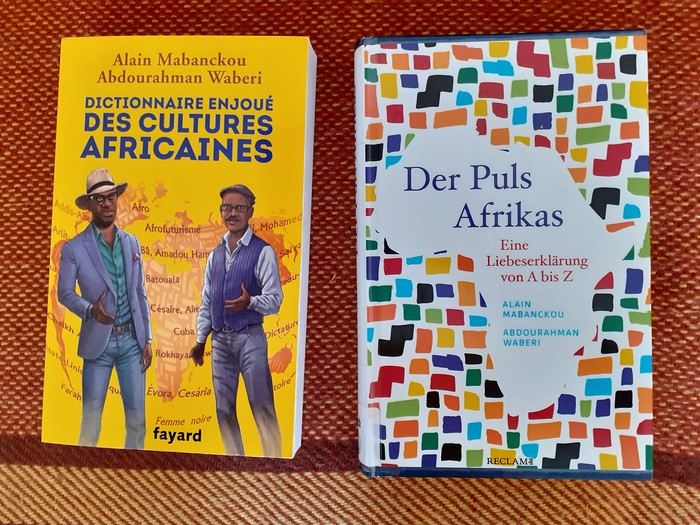
The Maggi cube, an unchallenged hegemony, and so much more
“The hopeless continent,” headlined The Economist, a British magazine, in July 2000 about Africa. Eleven years later, the same magazine headlined “Africa rising” instead. Images of Africa in the prosperous North constantly oscillate between apocalyptic scenarios and enthusiastic projections. A key issue with such images lies in the generalization they entail. If you look at the continent, considerable contrasts emerge depending on space and time. It’s no surprise that a region of the world encompassing such diverse ecological zones, maintaining such varied ties with other continents, comprising nearly fifty nation-states in sub-Saharan Africa alone, and characterized by a great diversity of languages, belief systems, and historical paths, doesn’t share a single destiny.
And yet, for many people outside Africa, as well as for many Africans, the continent constitutes a single entity, defined by criteria such as skin color, a colonial past, poverty, and the art of survival. Until now, these perspectives were generally accompanied by the idea that Africa had to—or should have—followed a single path together, sometimes called development, sometimes modernization, sometimes liberation, then a market economy. None of these paths delivered on their promises.
The two writers Alain Mabanckou and Abdourahman Waberi—one from Congo, the other raised in Djibouti, both long settled in France and now professors at renowned North American universities (Los Angeles, Washington)—have had enough of pessimistic scenarios: “We are aware that Africa is in the world and the world is in Africa. The same goes for all other continents, as our destinies are inextricably linked for better or worse. We refuse to see Africa as a reservoir of misfortunes or a continent cursed by atavistic misfortune and characterized by ethnic conflicts. [...] It’s this passionate flame we wanted to capture in a book [...] a kind of stroll through African cultures, without any demands, each letter of the alphabet leading us to a notion, a practice, a concept, a moment in history, literature, painting, politics, economics, cuisine, etc.” (p.10-11). Africa, they write, is on the verge of “imposing a signature, a style, a way of being in the world and in relation to the rest of the world.” (p.11) To put words to the continent’s diversity and dynamism, the two authors created a “rambling ABC,” a kind of portrait—or more precisely, a mythography—that lets you see and feel the pulse of a vast continent whose cultural power is unfolding before our eyes. Once marginalized or even mocked, the voice and importance of the Continent in global affairs are now undeniable” (p.11), containing over a hundred entries, mostly concise, written in a relaxed and casual style. The optimistic, even exuberant tone is set from the brief introduction. The duo of authors wants to “sing a love song to the cultures of our continent, to its inhabitants past and present, to its exceptional resources and its spectacular globalization despite a certain pollution that still clouds our skies due to the unmatched duration of dictatorships in some of our regions.” (p.12) In doing so, they don’t want to be too distracted by today’s Afewerki-Biya-Bongo-Déby & Co. ...
Of course, you’ll find tributes to great precursors like Frantz Fanon (“[...] it was a love story and admiration that wasn’t dimmed by the four decades separating his birth from ours. Let’s add that we were born while the native of Fort-de-France had left the world’s stage four years earlier, in the prime of life” p.141), Mongo Beti (“You must read and reread Mongo Beti, a genius who used his fame to support often just causes in Africa, like defending oppressed groups. His place is already in History. His oppressors, like the dictators Ahmadou Ahidjo and Paul Biya, can’t compete in the same category” p.64), the Malian Amadou Hampâté Bâ
(“Posterity remembers him mainly as an tireless defender of African cultures. His plea for the collection and preservation of traditional African knowledge remains a major event for all men and women of good will. One day in 1960, at the UNESCO podium, the native of Bandiagara sounded the alarm: ‘[...] Since we’ve admitted that the humanity of each people is the heritage of all humanity, if African traditions aren’t collected in time and written down, they’ll one day be missing from the universal archives of humanity.’” p.51),
Kwame Nkrumah, “one of the founders of Pan-Africanism, father of Ghana’s independence” (p.239), as well as the historian Cheikh Anta Diop, the writer, poet, and politician Aimé Césaire, and the economist and thinker Samir Amin, but also very warm tributes to certain contemporary African intellectuals like Souleymane Bachir Diagne and Achille Mbembe
(“A few years ago, in dominant economic circles, a rumor often resurfaced, usually disguised as a cold and scientifically proven analysis: Africa is useless. It’s a burden for the rest of the human community. With its 2% share in world trade, it would disappear from stock market radars without anyone noticing. So? Maybe it’ll be pulled up by other continents. Wanting to surpass itself is a crazy bet for Africans, they concluded. Arrogant or clueless, President Nicolas Sarkozy declared before an audience of students and teachers at Cheikh Anta Diop University in Dakar: ‘The African man hasn’t entered history enough [...] He only knows the eternal repetition of time marked by the endless repetition of the same gestures and words.’ That was in 2007. For decades, armed only with reason, an intellectual often steps up to debunk prejudices, lazy readings, and dishonest frameworks used as false fronts by those who, like Nicolas Sarkozy or former journalist Stephen Smith, out of ignorance, contempt, or condescension, distort African reality. This intellectual is none other than the historian and political scientist Achille Mbembe. This heir of Frantz Fanon, Amílcar Cabral, Jean-Marc Ela, and Fabien Eboussi-Boulaga was born in 1957 in Cameroon, in the Bassa region. Marked early by the upheavals of a fratricidal war, Achille Mbembe became the guardian of the memory of martyrs. After brilliant studies in Paris, he went on to teach at the best American universities, but the call of the Continent was stronger than anything else. In Dakar, he once directed CODESRIA (Council for the Development of Social Science Research in Africa) before joining the University of the Witwatersrand in Johannesburg, South Africa. Even though the author of *Critique of Black Reason* (Éditions La Découverte, 2015) spends a few months at Duke University in North Carolina, his observation post remains South Africa. From Johannesburg, Achille Mbembe scrutinizes Africa and the whole world. A lucid observer with an elegant and generous pen, Achille Mbembe knows how to blend big and small history: ‘I was born one day in July, as the month was drawing to a close. It was 1957, in that part of Africa recently named ‘Cameroon,’ a memory of the wonder that seized Portuguese sailors in the 15th century when, sailing up the river near Douala, they couldn’t help but note the presence of a multitude of crustaceans, and named it *Rio dos Camarões*, meaning ‘River of Shrimp.’ I grew up in the shadow of this nameless land, since, in a way, the name it bears is only the product of someone else’s astonishment: a lexical mistake, if you will.’ From this mistake or wound, he made leaven, a springboard to compose a rich work, recognized worldwide. To denounce barriers and barbarians too. But that’s not enough. Among his peers in circles of thought and action, Achille Mbembe passionately and consistently defends human dignity and the beauty of the world. In doing so, he fulfills the mission Frantz Fanon entrusted to him.” (p.227-229),
as well as entries dedicated to lesser-known artists and intellectuals, like the French journalist and activist Rokhaya Diallo, daughter of Senegalese and Gambian parents, or the Ethiopian filmmaker Haile Gerima, who has long lived in the United States. Other names from politics, sports, music, art, and literature: Kofi Annan, p.36; Barack Obama, p.243; Thomas Sankara, p.277; Ousmane Sow, p.285; Yambo Ouologuem, p.250; Léopold Sédar Senghor, p.282; Muhammad Ali, p.30; Nuruddin Farah, p.146; Salif Keita, p.203; Ahmadou Kourouma, p.206; Ngũgĩ wa Thiong’o, p.236; Winnie Mandela, p.224; Kylian Mbappé, p.226 ...
The authors, who resolutely commit to a “mythography” (p.11) of Africa, also pay special attention to local social movements, cultural events, and aspects of daily life. *Y’en a marre*, “which also meant ‘we’re fed up with sitting on our hands’” (p.320-321), emerged about a decade ago in Senegal as a citizen movement of peaceful resistance and symbolizes, the authors emphasize, the fact that African youth are increasingly fed up “with the political circus deployed in Africa since independence, as our parents would say, ‘since the White man left’...” (p.321). A full entry is dedicated to the Maggi bouillon cube, which has flooded African markets for about forty years and enjoys immense popularity (“It’s everywhere in Africa, from Dakar to Djibouti, and from Tangier to Cape Town. It’s in every pot, every stew. Little hands put it in every sauce, every local or adapted dish. An unchallenged hegemony! You’ll find it in diasporas too. The culinary strolls in Paris, in the [...] neighborhood” p.90). Critics blame it not only for impoverishing the aromatic diversity of local dishes but also for being harmful to health. And yet, “he poorest Africans, those who eat only once a day, a few spoonfuls of white beans and a ball of *foufou*, for example, are the most fervent users of the magic cube.” (p.92-93)
For *fonio*, “the new trendy cereal. [...] From the millet family, fonio is probably the oldest cereal cultivated in West Africa, and mainly in its sub-Saharan part, for millennia. [...] Easy to grow, water-efficient, fonio grows everywhere except on clay soils. Long neglected because it was considered the poor man’s crop, fonio is now a source of pride for the farmers who cultivate it and cherish it like the apple of their eye” (p.156-157), the authors immediately offer a detailed recipe, letting the reader know that “e can’t resist sharing this fonio with chicken recipe from Mali with you:
Ingredients: 1 chicken 3 large ripe red tomatoes 4 tbsp tomato paste 4 large onions 1 garlic clove 1/2 cup oil 2 Maggi cubes or salt 2 large carrots 1 turnip 1 large cabbage 2 large potatoes 1 celery stalk 1 packet pre-cooked fonio 4 okra (or okra powder) salt, pepper
Preparation: 1. Prepare the sauce: wash and cut the chicken. Peel the onions, garlic, and vegetables. 2. In a pot, fry the chicken pieces. 3. Dice the onions, tomatoes, carrots, and turnip very small and add them to the pot. 4. Add the tomato paste, salt, and pepper. 5. Simmer for 15 min, then add 2 L of water and the cooked chicken pieces. 6. Simmer for 30 min, then add the crushed garlic and celery, plus the cabbage cut into 4 and the potatoes cut in half. 7. Prepare the fonio: cover it with warm water, let it rest for 15 min, and cook it over low heat. 8. In a small pot, boil the okra and crush them. 9. Mix the crushed okra with the cooked fonio, then salt. Serve hot.” (p.158-159)
The comedy *Black Mic Mac*, released in French theaters in 1986 and addressing France’s increasingly restrictive immigration policy at the time, also gets an entry, as do *Tintin in the Congo*, the popular comic, and *Jip’s Café* (“[...] a little Africa in the heart of Paris, with passersby stopping to admire the ‘ambianceurs’ on the dance floor or attend the cultural events offered by the place” (p.194), an African establishment in Paris that Alain Mabanckou already immortalized in one of his novels.
The duo of authors also tackles thorny subjects like jihadism (p.119), the Rwandan genocide (p.272), the CFA franc (p.82), and dictatorship (p.110). While the two strike the right tone here, many entries leave a slightly bitter taste. Two examples: why doesn’t the text on Barack Obama mention the great disappointment of many people in Africa, who expected more from the African policy of the first U.S. president with African roots than just occasional warm words? Why do the comments on Winnie Mandela gloss over the fact that she was a highly controversial icon of the anti-apartheid movement due to her involvement in kidnappings, acts of torture, and murders of alleged apartheid collaborators? Instead, there’s a compassion that brings tears to the eyes: “She was often reduced to a secondary role, the wife of a great man” or “When victory came, she didn’t taste its fruits. Divorced, isolated. She would never be a ‘first lady’ in an evening gown, posing before a bed of chrysanthemums. They’d keep her far from the circles of power” (p.224-225). At this point, I would’ve liked the authors to take a slightly more critical stance...
That said, these “weaknesses” (if you can call them that) shouldn’t overshadow the book as a whole. It remains an informative, sometimes very entertaining, and often even original work in its own way.
Book information (the original French and the German translation):
Alain Mabanckou/Abdourahman Waberi. Dictionnaire enjoué des cultures africaines. Fayard, 2019. Alain Mabanckou/Abdourahman Waberi. Der Puls Afrikas. Eine Liebeserklärung von A bis Z. Reclam, 2022.
Hery
Back in Tunisia (live account)
Hi there,
On this forum, I shared my first trip to Tunisia from mid-February to early March (https://voyageforum.com/forum/impressions-tunisiennes-en-direct-d11460662/), a stay I enjoyed so much that six weeks later, I’m back in Tunisia for a full 15 days (I return on April 27).
This time, I landed in Monastir on a direct flight from Nice, again with Tunisair. We left about ten minutes late, and the flight lasted around 1 hour 30 minutes. A meal was served on board (cucumber salad with Edam-like cheese, carrots, and two small portions of dishes I couldn’t identify—semolina with peppers, olives, and parsley, two small rolls, a square of processed cheese, and a chocolate cake). It’s worth noting because it’s not common on flights this short.
In February, France and Tunisia were in the same time zone, but now Tunisia is one hour behind. This time difference and the flight duration work perfectly for a short 15-day trip since it takes me a few days to adjust to jet lag.
Luckily, I’d asked my hotel about the taxi fare from the airport because the drivers (there were several around me) didn’t hesitate to quote outrageous prices. The actual fare is 20 dinars, but one asked for 120 dinars. I refused, and another offered 60 dinars. I replied, "That’s too expensive—I’ll take the metro!" (Having tried the Tunis metro, I had no desire to repeat the experience in Monastir with a suitcase!). I started walking toward the metro, and one of the drivers caught up with me, saying, "20 dinars is fine!" I’ll skip the details, but the negotiation took a little while. When I arrived at the hotel, I told the receptionist someone had asked for 120 dinars. He put his hands to his head and said, "They’re awful!" He remembered our phone call two days earlier when I’d booked (he’s the one who told me I could take the metro).
The Mezri Hotel isn’t expensive. I got a sea-view room for 75 dinars (22 €). (I’d booked a balcony room for 90 dinars but wouldn’t have had time to enjoy it.) It’s well-located but noisy because there’s no double glazing. The receptionist is a very kind older gentleman. He called a friend whose wife is from Tozeur to find out if I should take a bus or a *louage* tomorrow and what time.
I arrived at the hotel around 7:00 PM and had time to stroll along the corniche to the ribat. Despite some run-down buildings, the seaside seemed livelier and cheerier than Sousse’s.
Monastir is the hometown of former president Bourguiba. I passed his mausoleum by taxi. There are Tunisian flags along the avenue by the sea because every year on April 6—the anniversary of Habib Bourguiba’s death—the president of the Republic visits the Bourguiba Mausoleum in Monastir to pay respects.
The taxi driver mentioned other Tunisian presidents. He complained about rising prices and insecurity, blaming President Kaïs Saïed (I’d already heard that security was better under Ben Ali).
At the end of my stay, I’ll take time to explore Monastir, but tomorrow morning, I’m off to Tozeur—a long bus ride awaits me.

TO BE CONTINUED....
On this forum, I shared my first trip to Tunisia from mid-February to early March (https://voyageforum.com/forum/impressions-tunisiennes-en-direct-d11460662/), a stay I enjoyed so much that six weeks later, I’m back in Tunisia for a full 15 days (I return on April 27).
This time, I landed in Monastir on a direct flight from Nice, again with Tunisair. We left about ten minutes late, and the flight lasted around 1 hour 30 minutes. A meal was served on board (cucumber salad with Edam-like cheese, carrots, and two small portions of dishes I couldn’t identify—semolina with peppers, olives, and parsley, two small rolls, a square of processed cheese, and a chocolate cake). It’s worth noting because it’s not common on flights this short.
In February, France and Tunisia were in the same time zone, but now Tunisia is one hour behind. This time difference and the flight duration work perfectly for a short 15-day trip since it takes me a few days to adjust to jet lag.
Luckily, I’d asked my hotel about the taxi fare from the airport because the drivers (there were several around me) didn’t hesitate to quote outrageous prices. The actual fare is 20 dinars, but one asked for 120 dinars. I refused, and another offered 60 dinars. I replied, "That’s too expensive—I’ll take the metro!" (Having tried the Tunis metro, I had no desire to repeat the experience in Monastir with a suitcase!). I started walking toward the metro, and one of the drivers caught up with me, saying, "20 dinars is fine!" I’ll skip the details, but the negotiation took a little while. When I arrived at the hotel, I told the receptionist someone had asked for 120 dinars. He put his hands to his head and said, "They’re awful!" He remembered our phone call two days earlier when I’d booked (he’s the one who told me I could take the metro).
The Mezri Hotel isn’t expensive. I got a sea-view room for 75 dinars (22 €). (I’d booked a balcony room for 90 dinars but wouldn’t have had time to enjoy it.) It’s well-located but noisy because there’s no double glazing. The receptionist is a very kind older gentleman. He called a friend whose wife is from Tozeur to find out if I should take a bus or a *louage* tomorrow and what time.
I arrived at the hotel around 7:00 PM and had time to stroll along the corniche to the ribat. Despite some run-down buildings, the seaside seemed livelier and cheerier than Sousse’s.
Monastir is the hometown of former president Bourguiba. I passed his mausoleum by taxi. There are Tunisian flags along the avenue by the sea because every year on April 6—the anniversary of Habib Bourguiba’s death—the president of the Republic visits the Bourguiba Mausoleum in Monastir to pay respects.
The taxi driver mentioned other Tunisian presidents. He complained about rising prices and insecurity, blaming President Kaïs Saïed (I’d already heard that security was better under Ben Ali).
At the end of my stay, I’ll take time to explore Monastir, but tomorrow morning, I’m off to Tozeur—a long bus ride awaits me.
TO BE CONTINUED....