Results for "Rab+|+123+>+204"
1238 results found.
Votre avis sur budget et itinéraire pour mon tour d'Asie English translation pending
Bonjour à tous mes futurs lecteurs😉!!
Je projette de partir dans quelques mois faire un petit tour en Asie. Au programme: Sud de l'Inde (8semaines), Nepal (4 semaines), Birmanie (3 s), Laos (3s), Vietnam (3s), Cambodge (3s) et Thailande (3s). Soit au total un voyage de près de 6 mois.
Question budget, j'ai compté:800€ d'avion (Paris/Delhi; Bangkok/Paris)...oui oui, je voyage dans le sud de l'Inde mais n'arrive pas à Bombay, c'est pour la seule et simple raison que je trouve ça rassurant d'arriver le 1er jour de voyage dans un endroit que je connais...🤪250 € de VisaVie sur place (logement (primaire), nourriture (je suis trop gourmande, mais la nourriture là-bas ne coûte pas cher), déplacements (trains et bus), qqs achats de bijoux (je suis fan!!), et qqs petits treks vers le Sikkim et le Nepal).😊. Donc pour la vie sur place, j'ai compté 3500€ (coût de la vie presque le même ds chacun de ces pays, sauf le népal légèrement plus cher)...soit 500€ pour 4 semaines.
TOTAL: 4550€. J'ai l'impression de prévoir large, mais peut-être que je me trompe? J'ai construit mon budget à partir d'infos récoltées sur le net (Lp et routard), et à partir d'une expérience d'1 mois et demi l'année dernière en inde du Nord. Donc il s'agit là d'un budget et d'un itinéraire approximatifs, et c'est pour ça que je fais appel à vos expériences pour confronter mes plans à la réalité😮
Donc voilou. J'attends vos réactions et suis ouverte à toute critique sur mon itinéraire et mon budget!
Merci d'avance!
Marion
Je projette de partir dans quelques mois faire un petit tour en Asie. Au programme: Sud de l'Inde (8semaines), Nepal (4 semaines), Birmanie (3 s), Laos (3s), Vietnam (3s), Cambodge (3s) et Thailande (3s). Soit au total un voyage de près de 6 mois.
Question budget, j'ai compté:800€ d'avion (Paris/Delhi; Bangkok/Paris)...oui oui, je voyage dans le sud de l'Inde mais n'arrive pas à Bombay, c'est pour la seule et simple raison que je trouve ça rassurant d'arriver le 1er jour de voyage dans un endroit que je connais...🤪250 € de VisaVie sur place (logement (primaire), nourriture (je suis trop gourmande, mais la nourriture là-bas ne coûte pas cher), déplacements (trains et bus), qqs achats de bijoux (je suis fan!!), et qqs petits treks vers le Sikkim et le Nepal).😊. Donc pour la vie sur place, j'ai compté 3500€ (coût de la vie presque le même ds chacun de ces pays, sauf le népal légèrement plus cher)...soit 500€ pour 4 semaines.
TOTAL: 4550€. J'ai l'impression de prévoir large, mais peut-être que je me trompe? J'ai construit mon budget à partir d'infos récoltées sur le net (Lp et routard), et à partir d'une expérience d'1 mois et demi l'année dernière en inde du Nord. Donc il s'agit là d'un budget et d'un itinéraire approximatifs, et c'est pour ça que je fais appel à vos expériences pour confronter mes plans à la réalité😮
Donc voilou. J'attends vos réactions et suis ouverte à toute critique sur mon itinéraire et mon budget!
Merci d'avance!
Marion
Que faire en Amérique du Sud quand on a le temps? English translation pending
Bonjour a tous!
Je relevé nombre de messages de gens se questionnant sur l'itineraire a faire quand on a 2-3 semaine de vacances. Or moi mon probleme c'est précisement l'inverse: je m'envole pour caracas en juin et j'ai un billet open 365j. Je pense rester 6 mois a peu pres et je n'ai encore aucun trajet precis (sauf celui de rejoindre Ushuaia). Et a vrai dire j'aimerai bien pouvoir poser mon sac a certains moment pour qcq temps histoire de prendre le rythme de l'endroit. Mais le probleme principal est de trouver une occupation aussi, travailler ou quelque chose comme ca. En Australie j'aurai trouvé un boulot dans un backpakers, en NZ j'aurai cueilli des poires mais la, en amé du sud, j'ai du mal a imaginer ce que je pourrais trouver. J'ai pensé faire qcq chose dans l'humanitaire au debut mais j'ai vite changé d'avis, ca n'a rien a voir avec un "passe temps" comme certains semblent le penser.
Enfin voila, je voulais m'adresser a vous, peut etre que qcq'un a une idée, un plan ou quoi que ce soit pour pouvoir explorer ces pays avec du temps et en profondeur. Le plus agreable et le plus grand luxe quand on voyage c'est de pouvoir s'installer a quelque part, de faire ce que tout le monde fait, des choses banales, ordinaires, de prendre des habitudes. Pour que, une fois rentré a la maison, on ai ce sentiment d'y avoir vécu, ou du moins presque.
Donc si vous avez des idées, des plans, n'hesitez pas svp!
Merci d'avance!
Bonne route!
Bonne route!
Retour du Kantenah Palladium Riviera Maya English translation pending
Bonjour à tous,
Eh oui je faisais partie des 580 furieux resté bloqué à Cancun 1 journée supp. pour une panne d'avio chez corsair.
Alors moi je suis resté 15 jours pour mon voyage de noces au Kantenah palladium et laissez moi vous dire que les commentaires sur cet hotel ne sont rein en comparaison de la réalité et ya pas de mot suffisant pour décrire cet hotel, extraordinaire et fantastique ne sont pas de trop. De la jungle partout, des batiments perdus dans celles-ci reliés par des chemins couverts par un toit de feuille de palmiers ou par des passerelles en bois au-dessus de la mangrove yum yum, des animaux partout (iguanes, singes, oiseaux, flamant roses et crocos en cages)
Le seul pont noir je le dite tout de suite, les buffets sont vraiment répétitifs (surtout au bout de 15 jours) mais bon ils sont bons et vastes donc ya quand même de quoi faire.
Pour le voyage de noces, l'agence avait juste envoyé un mail directement à l'hotel et là lorsque nous sommes arrivés : grande chambre avac un grand lit (pas de junior-suite mais bon vu le nombre de mariages vus sur place elles devait toutes être prises par les ricains...) et une corbeille de fruits dans la chambre et les petites animaux en serviettes presque tous les jours. Petit conseil, ils organisent un "diner romantique" spécial lune de miel 1 à 2 fois par semaine et 1 barbecue sur la plage tous les vendredis soir, pour y aller il suffit de s'inscrire au gichet des restaurants c'est gratuit bien entendu...
Les activités sur place, ben c'est un club voilà tout est dit, le mini golf est sympa, pensez-y si vous y allez car il ne figure pas sur le plan de l'hotel ni dans tous les descriptifs; les spectacles du soir, de la danse et encore de la danse à part le show maya (autour de la piscine) qui est plutôt sympa à regarder, le reste 🙁
Concernant les excursiosn je ne saurais que trop conseiller de louer une voiture (depuis la france c'est encore moins cher ) ou de prendre au pire les collectivos (15 psos le trajet soit 1 euros 10) : parce que sur place les prix des sites sont vraiment différentsd des excursions par exemple : 6 jours de voitures climatisés pour deux : 97 euros soit 16, 17 euros par jour entrée des sites de Coba, Chichen Itza et Tulum : 38 pesos chacune par personne soit 2, 7 euros entrée de Xel-Ha (basique +coffre+équipement) : 26 euros par personne
soitr un total de 165, 2 euros pour visiter le tout avec du rab en voiture, maintenant passons au prix des excursions : Xel-Ha - TUlum : 74 euros par personnes Chichen Itza : 70 euros par personne Coba : 54, 5 euros par personne Soit un total de 397 euros 🙁.
Pour la différence de prix vous pouvez même vous payer u guide francophone sur chacun des sites mais franchement le guide du routard fait la même chose et en plus à Xel-Ha ya vriament pas de trop d'une journée alors qu'en excursions les groupes restaient vraiment pas longtemps. En plus, ça nous a permis d'aller sur des plages désetes des cénotes pas trop fréquentés, Je peux pas vous détailler tout ce qu'on a fait en plus du dessus à des prix franchement différents des excursions...
Tout ce long paragraphe pour vous dire qu'il n'ya vraiment pas besoin d'être aventurier mais que ça sert pas à grand chose de se faire avoir.
Si vous avez des questions sur l'hotel Palladium ya pas de soucis j'y répond avec plaisir...
Alors moi je suis resté 15 jours pour mon voyage de noces au Kantenah palladium et laissez moi vous dire que les commentaires sur cet hotel ne sont rein en comparaison de la réalité et ya pas de mot suffisant pour décrire cet hotel, extraordinaire et fantastique ne sont pas de trop. De la jungle partout, des batiments perdus dans celles-ci reliés par des chemins couverts par un toit de feuille de palmiers ou par des passerelles en bois au-dessus de la mangrove yum yum, des animaux partout (iguanes, singes, oiseaux, flamant roses et crocos en cages)
Le seul pont noir je le dite tout de suite, les buffets sont vraiment répétitifs (surtout au bout de 15 jours) mais bon ils sont bons et vastes donc ya quand même de quoi faire.
Pour le voyage de noces, l'agence avait juste envoyé un mail directement à l'hotel et là lorsque nous sommes arrivés : grande chambre avac un grand lit (pas de junior-suite mais bon vu le nombre de mariages vus sur place elles devait toutes être prises par les ricains...) et une corbeille de fruits dans la chambre et les petites animaux en serviettes presque tous les jours. Petit conseil, ils organisent un "diner romantique" spécial lune de miel 1 à 2 fois par semaine et 1 barbecue sur la plage tous les vendredis soir, pour y aller il suffit de s'inscrire au gichet des restaurants c'est gratuit bien entendu...
Les activités sur place, ben c'est un club voilà tout est dit, le mini golf est sympa, pensez-y si vous y allez car il ne figure pas sur le plan de l'hotel ni dans tous les descriptifs; les spectacles du soir, de la danse et encore de la danse à part le show maya (autour de la piscine) qui est plutôt sympa à regarder, le reste 🙁
Concernant les excursiosn je ne saurais que trop conseiller de louer une voiture (depuis la france c'est encore moins cher ) ou de prendre au pire les collectivos (15 psos le trajet soit 1 euros 10) : parce que sur place les prix des sites sont vraiment différentsd des excursions par exemple : 6 jours de voitures climatisés pour deux : 97 euros soit 16, 17 euros par jour entrée des sites de Coba, Chichen Itza et Tulum : 38 pesos chacune par personne soit 2, 7 euros entrée de Xel-Ha (basique +coffre+équipement) : 26 euros par personne
soitr un total de 165, 2 euros pour visiter le tout avec du rab en voiture, maintenant passons au prix des excursions : Xel-Ha - TUlum : 74 euros par personnes Chichen Itza : 70 euros par personne Coba : 54, 5 euros par personne Soit un total de 397 euros 🙁.
Pour la différence de prix vous pouvez même vous payer u guide francophone sur chacun des sites mais franchement le guide du routard fait la même chose et en plus à Xel-Ha ya vriament pas de trop d'une journée alors qu'en excursions les groupes restaient vraiment pas longtemps. En plus, ça nous a permis d'aller sur des plages désetes des cénotes pas trop fréquentés, Je peux pas vous détailler tout ce qu'on a fait en plus du dessus à des prix franchement différents des excursions...
Tout ce long paragraphe pour vous dire qu'il n'ya vraiment pas besoin d'être aventurier mais que ça sert pas à grand chose de se faire avoir.
Si vous avez des questions sur l'hotel Palladium ya pas de soucis j'y répond avec plaisir...
Le Camp de Base de l'Everest en solo (Népal) English translation pending
Jeudi 8 avril 2004 / 9e jour de marche / Etape : Gorak Shep – Camp de Base – Gorak Shep – Lobuche – Dzonglha
A mon réveil, le ciel est tout bleu, magnifiquement bleu, à en faire regretter l'ascension du Kala Patthar d'hier matin. Mais je n'ai pas le courage d'y remonter aujourd'hui, la grimpette avait été trop éprouvante. Ce matin j'ai un coup de soleil sur le visage et le bout du nez tout cramé, c'est un comble quand même, j'ai chopé ça, le seul jour où le soleil ne s’est pas montré. Mais bon, d'un autre coté, je n'ai jamais été aussi prés du soleil qu'hier. Je prends la route du Camp de Base de bonne heure, il fait jour, mais le soleil ne s'est pas encore levé au-dessus des montagnes. La première heure, je la passe à l'ombre, il fait très froid, ma montre indique -7°C, j'ai les doigts gelés. Je marche vite pour ne pas me refroidir, la pente est douce. Je vois le soleil au loin, je me dépêche pour le rejoindre, car mes doigts sont de plus en plus frigorifiés, je n'arrive même plus à tenir mes bâtons de randonnée. Enfin, les premiers rayons de soleil me réchauffent, je sens mes mains renaître. La route est longue, je sais où se trouve le Camp de Base (je l'avais repéré depuis le Kala Patthar), mais je ne le vois toujours pas. A chaque virage, à chaque petite butte, j'espère tomber dessus, mais non, toujours pas… Quand, quelques minutes après que je sois passé à côté de la carcasse d'un hélicoptère qui s'est écrasé l'an dernier (pour le cinquantième anniversaire de la première ascension de l'Everest), je l'aperçois…
J'y suis après neuf jours de marche, près d'un an de préparation, moi qui l'ai tant rêvé. Aujourd'hui, le jeudi 8 avril 2004 à huit heures vingt cinq, je foule le sol du Camp de Base de l'Everest à 5380 mètres d'altitude. Je suis heureux d'y être enfin, et fière de moi d'avoir réussi cette victoire, j'ai atteint le but que je m'étais fixé. Le paysage ici est vraiment éblouissant, sur un gigantesque plateau de pierres, où campent plusieurs expéditions prêtes à se lancer à l'assaut de l'Everest. Tout autour se dressent des montagnes blanches s'élançant si haut dans le ciel bleu et pourtant j'ai l'impression qu'elles sont à portée de main. Je reste une demi-heure à contempler le paysage et à prendre des photos… Puis, il faut penser à poursuivre la route qui est encore longue.
Maintenant, je prends la direction de Dzonglha, avec la demi-journée que j'ai gagnée hier, et celle que je compte gagner aujourd'hui, je me retrouverai avec un jour en rab. Le retour jusqu'à Gorak Shep est un peu plus dur que l'aller, la neige a fondu et les traces que j'avais suivies ont disparu. Mais bon, je ne suis pas perdu pour autant, je dois aller toujours plein Sud, je mettrai juste un peu plus de temps. Quelques heures plus tard, quand j'arrive à Lobuche, là où j'étais hier matin, j'ai du mal à reconnaître les lieux. J'avais quitté le village sous la neige et là, tout à fondu. J'y retrouve Thomas (l'alpiniste Français que j'avais rencontré à Namche), je suis content de le croiser, il va pouvoir me donner quelques infos sur le col Cho La. Mauvaise nouvelle (pour lui), il a passé le col le jour de la tempête de neige et sans l'aide de Népalais qui y passaient aussi à ce moment là, il n'aurait pas pu le passer. Ce qui veut dire qu'il y a encore des chances qu'il soit enneigé à l'heure actuelle. Mais il me dit qu'avec du beau temps, ça devrait être bon pour moi. Après m'avoir montré l'embranchement pour Dzonglha, nous nous donnons rendez-vous dans quatre à cinq jours à Namche. Je quitte les sentiers des trekkeurs pour un chemin moins fréquenté, je me retrouve à flanc de montagne, ce n'est pas le moment de tomber, on ne me retrouverait pas avant plusieurs jours. Je me dépêche car le vent monte et les nuages arrivent…
Sous quelques flocons de neige, j'arrive au lodge l'Arakam Tse View après une longue journée de marche. Ici, il n'y a pas de groupe organisé, que des personnes seules ou à deux, sans porteur. J'ai un peu mal à mon œil gauche, je ne sais pas si c'est dû au froid et qu'il commence à congeler ou au coup de soleil que j'ai juste sous l'œil. Le quel des deux, le froid ou le chaud ? Dans le lodge, il y a une douzaine de personnes, dont trois qui passeront le col Cho La demain comme moi. Dany un Américain, Werner et Ralf deux Allemands. Ils sont tous les trois de grands costauds, bien équipés et à écouter l'Américain répondre aux dizaines de questions que tout le monde lui pose, je me sens confiant et bien entouré pour demain. Le départ est fixé à sept heures, je trouve ça un peu tard vu la longue journée qui nous attend, mais bon, ce sont sûrement de bons marcheurs.
Pour lire mon récit en entier et voir les photos : www.everest.dubuis.net
Vic.
A mon réveil, le ciel est tout bleu, magnifiquement bleu, à en faire regretter l'ascension du Kala Patthar d'hier matin. Mais je n'ai pas le courage d'y remonter aujourd'hui, la grimpette avait été trop éprouvante. Ce matin j'ai un coup de soleil sur le visage et le bout du nez tout cramé, c'est un comble quand même, j'ai chopé ça, le seul jour où le soleil ne s’est pas montré. Mais bon, d'un autre coté, je n'ai jamais été aussi prés du soleil qu'hier. Je prends la route du Camp de Base de bonne heure, il fait jour, mais le soleil ne s'est pas encore levé au-dessus des montagnes. La première heure, je la passe à l'ombre, il fait très froid, ma montre indique -7°C, j'ai les doigts gelés. Je marche vite pour ne pas me refroidir, la pente est douce. Je vois le soleil au loin, je me dépêche pour le rejoindre, car mes doigts sont de plus en plus frigorifiés, je n'arrive même plus à tenir mes bâtons de randonnée. Enfin, les premiers rayons de soleil me réchauffent, je sens mes mains renaître. La route est longue, je sais où se trouve le Camp de Base (je l'avais repéré depuis le Kala Patthar), mais je ne le vois toujours pas. A chaque virage, à chaque petite butte, j'espère tomber dessus, mais non, toujours pas… Quand, quelques minutes après que je sois passé à côté de la carcasse d'un hélicoptère qui s'est écrasé l'an dernier (pour le cinquantième anniversaire de la première ascension de l'Everest), je l'aperçois…
J'y suis après neuf jours de marche, près d'un an de préparation, moi qui l'ai tant rêvé. Aujourd'hui, le jeudi 8 avril 2004 à huit heures vingt cinq, je foule le sol du Camp de Base de l'Everest à 5380 mètres d'altitude. Je suis heureux d'y être enfin, et fière de moi d'avoir réussi cette victoire, j'ai atteint le but que je m'étais fixé. Le paysage ici est vraiment éblouissant, sur un gigantesque plateau de pierres, où campent plusieurs expéditions prêtes à se lancer à l'assaut de l'Everest. Tout autour se dressent des montagnes blanches s'élançant si haut dans le ciel bleu et pourtant j'ai l'impression qu'elles sont à portée de main. Je reste une demi-heure à contempler le paysage et à prendre des photos… Puis, il faut penser à poursuivre la route qui est encore longue.
Maintenant, je prends la direction de Dzonglha, avec la demi-journée que j'ai gagnée hier, et celle que je compte gagner aujourd'hui, je me retrouverai avec un jour en rab. Le retour jusqu'à Gorak Shep est un peu plus dur que l'aller, la neige a fondu et les traces que j'avais suivies ont disparu. Mais bon, je ne suis pas perdu pour autant, je dois aller toujours plein Sud, je mettrai juste un peu plus de temps. Quelques heures plus tard, quand j'arrive à Lobuche, là où j'étais hier matin, j'ai du mal à reconnaître les lieux. J'avais quitté le village sous la neige et là, tout à fondu. J'y retrouve Thomas (l'alpiniste Français que j'avais rencontré à Namche), je suis content de le croiser, il va pouvoir me donner quelques infos sur le col Cho La. Mauvaise nouvelle (pour lui), il a passé le col le jour de la tempête de neige et sans l'aide de Népalais qui y passaient aussi à ce moment là, il n'aurait pas pu le passer. Ce qui veut dire qu'il y a encore des chances qu'il soit enneigé à l'heure actuelle. Mais il me dit qu'avec du beau temps, ça devrait être bon pour moi. Après m'avoir montré l'embranchement pour Dzonglha, nous nous donnons rendez-vous dans quatre à cinq jours à Namche. Je quitte les sentiers des trekkeurs pour un chemin moins fréquenté, je me retrouve à flanc de montagne, ce n'est pas le moment de tomber, on ne me retrouverait pas avant plusieurs jours. Je me dépêche car le vent monte et les nuages arrivent…
Sous quelques flocons de neige, j'arrive au lodge l'Arakam Tse View après une longue journée de marche. Ici, il n'y a pas de groupe organisé, que des personnes seules ou à deux, sans porteur. J'ai un peu mal à mon œil gauche, je ne sais pas si c'est dû au froid et qu'il commence à congeler ou au coup de soleil que j'ai juste sous l'œil. Le quel des deux, le froid ou le chaud ? Dans le lodge, il y a une douzaine de personnes, dont trois qui passeront le col Cho La demain comme moi. Dany un Américain, Werner et Ralf deux Allemands. Ils sont tous les trois de grands costauds, bien équipés et à écouter l'Américain répondre aux dizaines de questions que tout le monde lui pose, je me sens confiant et bien entouré pour demain. Le départ est fixé à sept heures, je trouve ça un peu tard vu la longue journée qui nous attend, mais bon, ce sont sûrement de bons marcheurs.
Pour lire mon récit en entier et voir les photos : www.everest.dubuis.net
Vic.
Croatie: 1ere fois English translation pending
Je suis en train de préparer mon prochain voyage. Cette fois la destination sera la Croatie, pour la première fois!
Mes questions: Quels sont les meilleurs mois pour profiter des plages? L'Ile de Brak, c'est comment? L'accesibilité? Quels sont les lieux historique à privilégier? Biensûr Dubrovnik, mais encore! Est-ce que l'on peux se déplacer dans les différentes iles sans voiture? Merci à l'avance pour vos précieuses informations!
Mes questions: Quels sont les meilleurs mois pour profiter des plages? L'Ile de Brak, c'est comment? L'accesibilité? Quels sont les lieux historique à privilégier? Biensûr Dubrovnik, mais encore! Est-ce que l'on peux se déplacer dans les différentes iles sans voiture? Merci à l'avance pour vos précieuses informations!
Et les lits bébé dans tout ça? English translation pending
bonjour,
nous envisageons de partir en Guadeloupe en avril avec nos filles qui seront âgées de 20 mois à ce moment. la résidence choisie nous convient vraiment par rapport à ce que nous recherchons mais ne semble pas proposer de lits bébé.
Comment faire? Savez-vous si chez "Nouvelles Frontières" ils peuvent être arrangeants quelque soit le lieu de villégiature choisi?
savez-vous sinon ce que ça peut couter en sus si on doit emmener deux lits parapluie dans l'avion (car ça va dépasser le poids autorisé, évidemment 😕....)?
merci d'avance
nous envisageons de partir en Guadeloupe en avril avec nos filles qui seront âgées de 20 mois à ce moment. la résidence choisie nous convient vraiment par rapport à ce que nous recherchons mais ne semble pas proposer de lits bébé.
Comment faire? Savez-vous si chez "Nouvelles Frontières" ils peuvent être arrangeants quelque soit le lieu de villégiature choisi?
savez-vous sinon ce que ça peut couter en sus si on doit emmener deux lits parapluie dans l'avion (car ça va dépasser le poids autorisé, évidemment 😕....)?
merci d'avance
Combien de temps pour préparer un TDM? English translation pending
Hello a tous,
Voila j'ai une question crutial, depuis combien de temps et combien de temps avant, votre tour du monde vous avez commencer la préparation (itinéraire, budget, papiers, ect ....)
Pour ceux qui ont eu des financement, combien de temps avant vou avez contacter les entreprises et autres admin, ...
Bon en faite j'aimerais savoir si faut que je mette un coup de collier ou si je suis dans les temps, je prévoit sa pour Avril 2006 ...
@+
Philo
PS, je fait un doublon dans les post pour le vélo
Voila j'ai une question crutial, depuis combien de temps et combien de temps avant, votre tour du monde vous avez commencer la préparation (itinéraire, budget, papiers, ect ....)
Pour ceux qui ont eu des financement, combien de temps avant vou avez contacter les entreprises et autres admin, ...
Bon en faite j'aimerais savoir si faut que je mette un coup de collier ou si je suis dans les temps, je prévoit sa pour Avril 2006 ...
@+
Philo
PS, je fait un doublon dans les post pour le vélo
Hébergement sur London? English translation pending
😏 Hello a tous !
je vais debarquer fin aout avec 2 autres potes sur la capitale anglaise pour le carnaval jamaicain et nous cherchons a nous loger pour le moins cher possible...ce qui semble dur dans cette ville ....
Alors si vous avez des bons plans d'auberges pas trop cheres ou autres nous sommes preneurs ....pareil si vous avez des conseils de trucs a voir, a faire ou a eviter la bas ..
merci pour votre aide
a soon !
😛Fred🙂
je vais debarquer fin aout avec 2 autres potes sur la capitale anglaise pour le carnaval jamaicain et nous cherchons a nous loger pour le moins cher possible...ce qui semble dur dans cette ville ....
Alors si vous avez des bons plans d'auberges pas trop cheres ou autres nous sommes preneurs ....pareil si vous avez des conseils de trucs a voir, a faire ou a eviter la bas ..
merci pour votre aide
a soon !
😛Fred🙂
Location de voiture, logement et visite de la Croatie English translation pending
Bonjour à tous!!
Avec quelques amis, nous projetons de partir en croatie, cependant nous ne savons pas quoi faire là-bas a part se laisser griller sur les plages!!!😎
Quels sont les meilleurs plans pour séjourner? camping ou location d'appart?
Est-ce qu'il est possible de louer une voiture sur place sans trop se ruiner? Vaut-il mieux se contenter des réseaux de bus?
Qu' y a-t-il à voir dans les terres?
Nous nous demandons si des festivals seraient organisés dans la période du 20 aout au 10 septembre et quelles sont les villes où se trouvent les animations pour faire la fête du soir au matin??
Merçi à tous pour vos suggestions!!!
Avec quelques amis, nous projetons de partir en croatie, cependant nous ne savons pas quoi faire là-bas a part se laisser griller sur les plages!!!😎
Quels sont les meilleurs plans pour séjourner? camping ou location d'appart?
Est-ce qu'il est possible de louer une voiture sur place sans trop se ruiner? Vaut-il mieux se contenter des réseaux de bus?
Qu' y a-t-il à voir dans les terres?
Nous nous demandons si des festivals seraient organisés dans la période du 20 aout au 10 septembre et quelles sont les villes où se trouvent les animations pour faire la fête du soir au matin??
Merçi à tous pour vos suggestions!!!
S'installer en Croatie? English translation pending
😉Alors voilà ce qui se passe...
Je recherche des infos sur la Croatie, c'est assez important car on est 3 + 1 bébé à vouloir s'installer là-bas, loin de la métropole mais pas trop loin quant-même... En fait on voudrait y habiter et y travailler, créer 1 petite entreprise en fonction des besoins. merci de nous répondre et si vous souhaitez au passage avoir des infos sur St Martin en Guadeloupe, pas de problème!!! A +
Axelle
Je recherche des infos sur la Croatie, c'est assez important car on est 3 + 1 bébé à vouloir s'installer là-bas, loin de la métropole mais pas trop loin quant-même... En fait on voudrait y habiter et y travailler, créer 1 petite entreprise en fonction des besoins. merci de nous répondre et si vous souhaitez au passage avoir des infos sur St Martin en Guadeloupe, pas de problème!!! A +
Axelle
Route Kashgar-Lhassa (Tibet) via Ali (Chine) English translation pending
Bonjour,
je me prepare un voyage dans le Xinjiang / Tibet. D'ailleurs si quelqu'un est interesse, qu'il n'hesite pas a me contacter...😉 Ma question est la suivante : je lis ca et la des avis assez contradictoires sur la route de Kashgar a Lhassa via Ali. Est-elle dangeureuse durant l'ete (Juillet-Aout), a part la question de l'altitude (cols a 5000 m (?))? Est-ce que quelque'un a une idee du temps moyen que l'on peut esperer mettre pour ralier ces deux villes?
Merci d'avance pour la reponse,
Emmanuel
je me prepare un voyage dans le Xinjiang / Tibet. D'ailleurs si quelqu'un est interesse, qu'il n'hesite pas a me contacter...😉 Ma question est la suivante : je lis ca et la des avis assez contradictoires sur la route de Kashgar a Lhassa via Ali. Est-elle dangeureuse durant l'ete (Juillet-Aout), a part la question de l'altitude (cols a 5000 m (?))? Est-ce que quelque'un a une idee du temps moyen que l'on peut esperer mettre pour ralier ces deux villes?
Merci d'avance pour la reponse,
Emmanuel
Je vous aide pour la Croatie English translation pending
Croate ayant des origines francaise je vis sur la cote dalmate je serai heureux d'aider de donner des bons tuyaux ou meme d'acceuillir d'eventuel voyageur pour leur faire partager l'amour de mon pays. A charge de revanche! 😉
Besoin de conseils de voyageurs expérimentés English translation pending
Bonjour à tous,
Je suis une femme et j’ai 41 ans. Je suis d’origine canadienne. Il y a 3 ans, j’ai tout quitté pour venir m’installer en France. Le choc a été brutal. Ca n’a pas fonctionné. C’est peut-être l’occasion de prendre un nouveau départ. Qui sais ?
Depuis mon premier voyage, je rêve de faire le tour du monde. Mais j’ai peur. J’ai peu voyagé et surtout je n’ai été confronté qu’à des pays très sécuritaires tels : le Canada, la France, les Etats-Unis et la Belgique. J’ai peur de m’aventurer hors des sentiers non battus, mais en même temps, cela m’attire énormémént. J’adore la nature, les animaux, découvrir de nouvelles cultures, aller à la rencontre de gens authentiques… et les grandes villes ne m’attirent pas. De plus, je crains que plusieurs choses puissent nuirent à un tel voyage : j’ai le dos fragile, je ne suis pas en forme, je souffre d’insomnies, je dois me lever plusieurs fois durant la nuit pour uriner, je suis très émotive, je me débrouille en anglais sans plus, j’ai peu de temps pour préparer mon voyage et j’ai un budget très restreint. Par contre, j’ai aucune limite de temps.
Pourriez-vous me dire ce que vous pensez de tout ça ; me conseiller sur les destinations à prévilégier et à éviter ; enfin, tout ce qui peut m’aider pour mes préparatifs de voyage? J’ai besoin de conseils de voyageurs expérimentés. Merci à l’avance !
Je suis une femme et j’ai 41 ans. Je suis d’origine canadienne. Il y a 3 ans, j’ai tout quitté pour venir m’installer en France. Le choc a été brutal. Ca n’a pas fonctionné. C’est peut-être l’occasion de prendre un nouveau départ. Qui sais ?
Depuis mon premier voyage, je rêve de faire le tour du monde. Mais j’ai peur. J’ai peu voyagé et surtout je n’ai été confronté qu’à des pays très sécuritaires tels : le Canada, la France, les Etats-Unis et la Belgique. J’ai peur de m’aventurer hors des sentiers non battus, mais en même temps, cela m’attire énormémént. J’adore la nature, les animaux, découvrir de nouvelles cultures, aller à la rencontre de gens authentiques… et les grandes villes ne m’attirent pas. De plus, je crains que plusieurs choses puissent nuirent à un tel voyage : j’ai le dos fragile, je ne suis pas en forme, je souffre d’insomnies, je dois me lever plusieurs fois durant la nuit pour uriner, je suis très émotive, je me débrouille en anglais sans plus, j’ai peu de temps pour préparer mon voyage et j’ai un budget très restreint. Par contre, j’ai aucune limite de temps.
Pourriez-vous me dire ce que vous pensez de tout ça ; me conseiller sur les destinations à prévilégier et à éviter ; enfin, tout ce qui peut m’aider pour mes préparatifs de voyage? J’ai besoin de conseils de voyageurs expérimentés. Merci à l’avance !
Back to Swedish Lapland: Trekking the Kungsleden and Crossing Sarek
Summer 2022 left me with a sense of unfinished business, so here I am back in Swedish Lapland for summer 2024, ready to attempt the Sarek crossing again—and this time, tackle part of the Kungsleden too.
After much hesitation, my partner Jean Marie and I decided to start with the Kungsleden, which is, from what we’ve read, stunning but very busy (and it really is!!), and finish with the wilder option: SAREK! This park is known as Europe’s last true wilderness—sounds like a dream, right?! The downside of this plan is that there’s no way to resupply in Sarek, and the Kungsleden isn’t exactly set up for long-distance trekking either, so we’ll have to carry a lot of food for the first part of the trip with Sarek in mind. Oh well, we’re motivated!
Our plan is to start in Abisko (the classic route), head to Vakkotavare (also classic, but with some variations to avoid the official trail and the crowds), then continue the Kungsleden from Saltoluokta. Before reaching Aktse, we’ll set off on an east-to-west crossing of Sarek (weather-dependent, since aside from the Skarja hut in the center of the park, there’s no shelter if conditions turn bad). At least we’ll be on the right side of the park to climb Skierfe and enjoy the jaw-dropping view of Rappaladen if we have to bail on Sarek.
All in all, that’s 17 days of trekking, including 1 rest day and 1 buffer day for weather delays.
So if you’re interested, I invite you to follow our fully packed backpacks!
08/03 - Abisko – 5km before Abiskojaure Some info (guides we used for prep, SFT map, sending food to Saltoluokta) 08/04 – 5km before Abiskojaure - on the east shore of Lake Alisjavri 08/05 – East shore of Lake Alisjavri – just before Tjaktja 08/06 – Just before Tjaktja – above the Salka hut via Nallo 08/07 - Salka – just past Singi + side trip to Djalson Lake 08/08 - Singi – Teusajaure 08/09 - Teusajaure - Vakkotavare (end of the first section of the Kungsleden) 08/10 – rest day in Saltoluokta + round trip to the Sámi village of Pietjaure 08/11 – Saltoluokta – Sitojaure 08/12 - Sitojaure - Skierfe - Sarek or no Sarek? 08/13 – Skierfe – somewhere above Rapadalen 08/14 – Somewhere above Rapadalen – above the Skarki hut 08/15 – Above the Skarki hut - Skarja 08/16 – Camping at Skarja 08/17 – Ruohtesvagge 08/18 – Ruohtesvagge - Padjelantaleden 08/19 – Padjelantaleden - Ritsem – End of the trek 08/20–24 - End of the trip (Lullea - Stockholm) And of course, the recap
After much hesitation, my partner Jean Marie and I decided to start with the Kungsleden, which is, from what we’ve read, stunning but very busy (and it really is!!), and finish with the wilder option: SAREK! This park is known as Europe’s last true wilderness—sounds like a dream, right?! The downside of this plan is that there’s no way to resupply in Sarek, and the Kungsleden isn’t exactly set up for long-distance trekking either, so we’ll have to carry a lot of food for the first part of the trip with Sarek in mind. Oh well, we’re motivated!
Our plan is to start in Abisko (the classic route), head to Vakkotavare (also classic, but with some variations to avoid the official trail and the crowds), then continue the Kungsleden from Saltoluokta. Before reaching Aktse, we’ll set off on an east-to-west crossing of Sarek (weather-dependent, since aside from the Skarja hut in the center of the park, there’s no shelter if conditions turn bad). At least we’ll be on the right side of the park to climb Skierfe and enjoy the jaw-dropping view of Rappaladen if we have to bail on Sarek.
All in all, that’s 17 days of trekking, including 1 rest day and 1 buffer day for weather delays.
So if you’re interested, I invite you to follow our fully packed backpacks!
08/03 - Abisko – 5km before Abiskojaure Some info (guides we used for prep, SFT map, sending food to Saltoluokta) 08/04 – 5km before Abiskojaure - on the east shore of Lake Alisjavri 08/05 – East shore of Lake Alisjavri – just before Tjaktja 08/06 – Just before Tjaktja – above the Salka hut via Nallo 08/07 - Salka – just past Singi + side trip to Djalson Lake 08/08 - Singi – Teusajaure 08/09 - Teusajaure - Vakkotavare (end of the first section of the Kungsleden) 08/10 – rest day in Saltoluokta + round trip to the Sámi village of Pietjaure 08/11 – Saltoluokta – Sitojaure 08/12 - Sitojaure - Skierfe - Sarek or no Sarek? 08/13 – Skierfe – somewhere above Rapadalen 08/14 – Somewhere above Rapadalen – above the Skarki hut 08/15 – Above the Skarki hut - Skarja 08/16 – Camping at Skarja 08/17 – Ruohtesvagge 08/18 – Ruohtesvagge - Padjelantaleden 08/19 – Padjelantaleden - Ritsem – End of the trek 08/20–24 - End of the trip (Lullea - Stockholm) And of course, the recap
Off on an adventure in Sri Lanka
Day 1 – December 6
Our decision is our decision. And it’s firm and final. Next winter, our plane will spread its great wings toward the island of Ceylon! "Wait a minute... Ceylon... Ceylon... that name rings a bell, but I can’t quite place it on the globe Grandma gave me for Christmas! Ceylon... Oh right, I’ve got it: Ceylon is the name of my tea!" Exactly. But the name on your pretty tea box is also the one used until 1972 for this island nation, a speck on the Indian Ocean at the southern tip of the Indian subcontinent: Sri Lanka!
For this new adventure, I’m exceptionally leaving my Flo behind, cowardly replaced by a double dose of testosterone. To write the book of this journey with me, I’m bringing along my brother, who’s used to this kind of thing, and... a guest star: My model of resilience. My dad! All aboard! Or rather, all aboard our tuk-tuk! Yes, you read that right: A real tuk-tuk, a little colorful rolling box that putters along at two miles an hour. The idea? Well, Sri Lanka and its winding roads overlooking the vastness of lush nature are tailor-made for this kind of vehicle. And since it’s one of only two countries in the world that allow foreigners to rent and drive these mini speedsters, we’ll be crisscrossing the island in our two-square-meter rolling box. Plus, adopting this mode of transport is a surefire way to connect directly with the locals, who’ll surely be curious to see a foreigner driving their iconic vehicle. Not to mention the... let’s say... spicy anecdotes it might generate. I mean, heading into a subtropical zone with my jet-black dad and his unpredictable digestive flora while deliberately choosing the tuk-tuk as our *only* means of transport? That’s the winning combo for an unforgettable adventure! "More seriously, Dad, Sullivan, I’m already loving the idea of living this adventure together, the three of us—brothers and father..."
So, does the intro to this new adventure get your salivary glands going? Yes? Too bad. Because unfortunately, the program handed out by the lady at the entrance has been slightly... let’s say *crumpled*. Some might even say "scrunched up and nearly tossed in the trash." First, six days ago, as the countdown echoed in us like a call to adventure, Cyclone Ditwah grabbed Sri Lanka, played with it like a rag doll, and left it battered on the ground. The toll is devastating: over a thousand dead, thousands of homes wiped out by relentless rains, roads and railways swallowed by massive mudslides. A country wounded once again, after the civil war, the 2004 tsunami, and the post-Covid economic crisis.
But as if this weather disaster wasn’t enough to shake our unbreakable adventurer spirit, fate decided to mess with us further by cutting our trio down to two. The victim? My brother, violently turned away because of a simple date on his passport that didn’t match the border officials’ expectations. Return to sender!
So now it’s just the two of us allowed to board the Qatar Airways Airbus A380 for this trip. If he were here, Denis Brognart would say, "And in the end, only one remains!" Except I know you’ll be with us, following our adventures! Right?
Our decision is our decision. And it’s firm and final. Next winter, our plane will spread its great wings toward the island of Ceylon! "Wait a minute... Ceylon... Ceylon... that name rings a bell, but I can’t quite place it on the globe Grandma gave me for Christmas! Ceylon... Oh right, I’ve got it: Ceylon is the name of my tea!" Exactly. But the name on your pretty tea box is also the one used until 1972 for this island nation, a speck on the Indian Ocean at the southern tip of the Indian subcontinent: Sri Lanka!
For this new adventure, I’m exceptionally leaving my Flo behind, cowardly replaced by a double dose of testosterone. To write the book of this journey with me, I’m bringing along my brother, who’s used to this kind of thing, and... a guest star: My model of resilience. My dad! All aboard! Or rather, all aboard our tuk-tuk! Yes, you read that right: A real tuk-tuk, a little colorful rolling box that putters along at two miles an hour. The idea? Well, Sri Lanka and its winding roads overlooking the vastness of lush nature are tailor-made for this kind of vehicle. And since it’s one of only two countries in the world that allow foreigners to rent and drive these mini speedsters, we’ll be crisscrossing the island in our two-square-meter rolling box. Plus, adopting this mode of transport is a surefire way to connect directly with the locals, who’ll surely be curious to see a foreigner driving their iconic vehicle. Not to mention the... let’s say... spicy anecdotes it might generate. I mean, heading into a subtropical zone with my jet-black dad and his unpredictable digestive flora while deliberately choosing the tuk-tuk as our *only* means of transport? That’s the winning combo for an unforgettable adventure! "More seriously, Dad, Sullivan, I’m already loving the idea of living this adventure together, the three of us—brothers and father..."
So, does the intro to this new adventure get your salivary glands going? Yes? Too bad. Because unfortunately, the program handed out by the lady at the entrance has been slightly... let’s say *crumpled*. Some might even say "scrunched up and nearly tossed in the trash." First, six days ago, as the countdown echoed in us like a call to adventure, Cyclone Ditwah grabbed Sri Lanka, played with it like a rag doll, and left it battered on the ground. The toll is devastating: over a thousand dead, thousands of homes wiped out by relentless rains, roads and railways swallowed by massive mudslides. A country wounded once again, after the civil war, the 2004 tsunami, and the post-Covid economic crisis.
But as if this weather disaster wasn’t enough to shake our unbreakable adventurer spirit, fate decided to mess with us further by cutting our trio down to two. The victim? My brother, violently turned away because of a simple date on his passport that didn’t match the border officials’ expectations. Return to sender!
So now it’s just the two of us allowed to board the Qatar Airways Airbus A380 for this trip. If he were here, Denis Brognart would say, "And in the end, only one remains!" Except I know you’ll be with us, following our adventures! Right?
Sumatra and Bali in 20 days: possible with kids?
Hi there, we're planning our vacation in Indonesia. We're a family with two kids aged 11 and 14. We leave on July 26th and return on August 17th, 2026.
We initially planned to visit Bali, Komodo, and Flores, but after looking into it more, we came across Sumatra, which is less touristy... a real plus for us. However, skipping Bali might be a shame.
I was wondering if spending 12 days in Sumatra and finishing with about 7 days in Bali is a doable plan.
Thanks for your feedback!
We initially planned to visit Bali, Komodo, and Flores, but after looking into it more, we came across Sumatra, which is less touristy... a real plus for us. However, skipping Bali might be a shame.
I was wondering if spending 12 days in Sumatra and finishing with about 7 days in Bali is a doable plan.
Thanks for your feedback!
Langtang – Trekking in the Rain
We did the Langtang trek (hike) from September 10th to 17th, with the first and last days being the trip from Kathmandu and back—so 6 days of actual walking. It’s a fairly well-known trek but certainly not as famous or crowded as those in the Annapurna or Everest regions, which is why we chose it.
In theory, it’s mandatory to have a guide for this trek. In reality, it seems there are ways to bypass the regulations: we met at least two people hiking without a guide—a South Korean, a New Zealander, and possibly also a couple of English women and an American couple, though we’re not sure if they had a guide.
The agency we booked with had told us it was an affordable trek for relatively older people in good shape—which is our case (I’m 72 myself). I have to say upfront that we found it quite challenging, maybe because we didn’t have good weather—it was the end of the monsoon season. To be clear, no matter your fitness level, I’d say doing this trek in the middle of the monsoon season would be suicidal.
Day 1 – Journey from Kathmandu to Syapru Besi
On Monday, September 8th, there had been violent protests in Kathmandu against the government, which had, among other things, blocked access to social media and been accused of nepotism and corruption. There were 19 deaths. The situation was very tense on the day of our departure, Wednesday the 10th. The agency warned us that public transport was very unreliable. So, we decided to take a jeep, at an additional cost of $100 ($160 minus what was already budgeted for the bus).
We left a little before 7 a.m. and it took us a good hour just to reach the outskirts of Kathmandu. Along the way, we saw several houses and vehicles set on fire by protesters.
The road to Syapru Besi is only 120 km, but it’s frankly awful. It’s always narrow, winds through endless mountains, and the shoulders range from bad to confusing to nonexistent. Several sections are just dirt tracks. We didn’t regret opting for the jeep, as we could stop several times at our convenience—if only to let Y (my Thai partner) throw up everything she had. She’d taken her usual motion sickness medication, but the constant turns, accelerations, and braking eventually made her terribly carsick.
In Nuwakot, we stopped for breakfast at a nice little restaurant, Jimbu. It was around 8:30 a.m., and we’d barely covered 60 km. The restaurant has a lovely garden overlooking the Trishuli Ganga, the river flowing down from Syapru Besi. First photo: the river in the bottom right corner, mist and clouds over the mountain on the other side.
An hour later, my second photo: the hills along the Trishuli Ganga. You can see the different crops—lush green rice paddies in the lower right and corn, already yellowed and likely harvested, in the foreground on the left. And of course, the mist and clouds through which you can glimpse the mountain on the other side of the river.
In theory, it’s mandatory to have a guide for this trek. In reality, it seems there are ways to bypass the regulations: we met at least two people hiking without a guide—a South Korean, a New Zealander, and possibly also a couple of English women and an American couple, though we’re not sure if they had a guide.
The agency we booked with had told us it was an affordable trek for relatively older people in good shape—which is our case (I’m 72 myself). I have to say upfront that we found it quite challenging, maybe because we didn’t have good weather—it was the end of the monsoon season. To be clear, no matter your fitness level, I’d say doing this trek in the middle of the monsoon season would be suicidal.
Day 1 – Journey from Kathmandu to Syapru Besi
On Monday, September 8th, there had been violent protests in Kathmandu against the government, which had, among other things, blocked access to social media and been accused of nepotism and corruption. There were 19 deaths. The situation was very tense on the day of our departure, Wednesday the 10th. The agency warned us that public transport was very unreliable. So, we decided to take a jeep, at an additional cost of $100 ($160 minus what was already budgeted for the bus).
We left a little before 7 a.m. and it took us a good hour just to reach the outskirts of Kathmandu. Along the way, we saw several houses and vehicles set on fire by protesters.
The road to Syapru Besi is only 120 km, but it’s frankly awful. It’s always narrow, winds through endless mountains, and the shoulders range from bad to confusing to nonexistent. Several sections are just dirt tracks. We didn’t regret opting for the jeep, as we could stop several times at our convenience—if only to let Y (my Thai partner) throw up everything she had. She’d taken her usual motion sickness medication, but the constant turns, accelerations, and braking eventually made her terribly carsick.
In Nuwakot, we stopped for breakfast at a nice little restaurant, Jimbu. It was around 8:30 a.m., and we’d barely covered 60 km. The restaurant has a lovely garden overlooking the Trishuli Ganga, the river flowing down from Syapru Besi. First photo: the river in the bottom right corner, mist and clouds over the mountain on the other side.
An hour later, my second photo: the hills along the Trishuli Ganga. You can see the different crops—lush green rice paddies in the lower right and corn, already yellowed and likely harvested, in the foreground on the left. And of course, the mist and clouds through which you can glimpse the mountain on the other side of the river.
Off on an adventure to Java (and a bit of Bali)
Hey there, community! Back this weekend, below is my travel journal from my adventure in Indonesia. Enjoy the read!!!
Day 1 - August 10, 2025 New life downloading for three weeks! And for that, Flo and I launched a public tender... A public tender? What’s that got to do with a travel journal???... Well, when you think about it, few destinations tick all the boxes for an August adventure: Meaning, finding a place that’s exotic in the middle of August, not too expensive, not too packed with tourists, warm but not *too* warm, with postcard-perfect landscapes, dreamy beaches, tasty cuisine with a hint of exoticism, friendly and welcoming locals, where you’re free to sleep under the stars among the mosquitos, take transport surrounded by chickens, and even eat from a pig trough if you feel like it—well, turns out it’s not that easy to find! I’d even say, given how thick the list of requirements is, there’s a big risk the tender could be declared unsuccessful for failing to meet just one criterion. Let’s just say the candidates better submit a rock-solid proposal!
After reviewing all the responses and presentations from the candidates, the obvious choice for us is... Indonesia! Except that trying to explore a country as vast as Indonesia and its 17,504 islands in less than five years is a bit like reading the summary of a Proust novel without taking the time to savor each of its 950 pages! Don’t worry, I won’t name them all here. Besides, do they even all have names? No! Only 7,870 have been named—their parents clearly ran out of ideas for the rest. Anyway, our society, which worships the "work more to earn more" mantra, unfortunately limits our adventure time. So we’ll only get to see a small part of Indonesia, and we’ll have to make a tough choice to head for the best of the best in this archipelago of over seventeen thousand islands. Each one has its own selling points: Sumatra, Sulawesi, Java, the Celebes, Bali, Borneo, Papua, Timor, the Moluccas... So many names that smell of adventure... Another tender, another list of requirements, another review of proposals... Drumroll... Splash splash... And the lucky winner is... Ta-da... Java, Bali’s big sister, where I’ve already been eight years ago... Java the programming language. The Java of Broadway. We’re gonna *do* the Java. Java the coffee. And yes, Java is also an island!
This island, four times smaller than France, is home to 136 million people, making it the most populated island in the world! Fun fact: Indonesia, with its 260 million inhabitants, is just shy of the podium for the world’s most populated countries, after the winning trio of India, China, and the United States. And it’s on this island of Java that you’ll find Jakarta, the (soon-to-be-former) capital and main airport of the country, where we’ll soon land after our nineteen-hour flight! Yep, nineteen hours! I mean, Indonesia in general—and Java in particular—is a *tad* farther than going on vacation to Grandma Yoyo’s! Not sure where it is? Easy. Grab a map. Plant your finger on the big island at the bottom right—aka Australia for those who struggle with geography—move it up two centimeters, and bam, welcome to Indonesia!
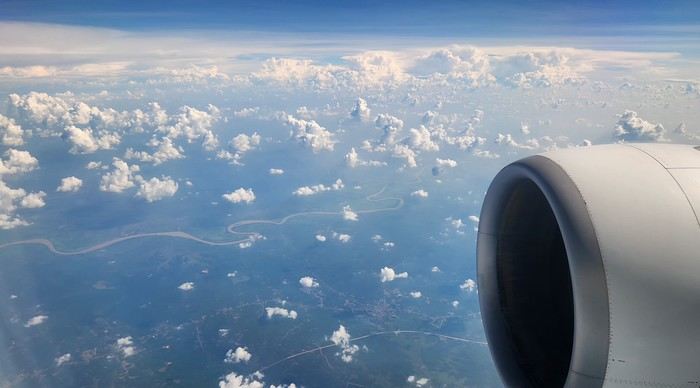
Nice transition, right? Because "Welcome to Indonesia" is exactly what the friendly flight attendant just said to me as we got off the plane! That’s it, our chakras are open, we’ve arrived at our (air)port. Time for rest, pool, cocktails, and a beach with our toes spread out... Wait, if you bought that, you clearly don’t know us yet! Since we still have energy to burn and need to adjust to the flight and time difference, we tackle the long administrative formalities to enter Indonesia, just to earn the right to hop in a 45-minute Grab taxi to the train station. The train station? What train station?... What do you usually do at a train station? Take a train, of course! Off we go for a three-hour train ride to Bandung, where we’ll officially start our adventure tomorrow after our first Indonesian night...
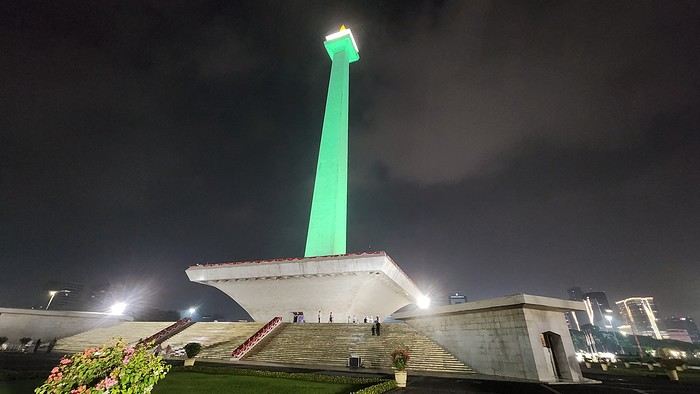
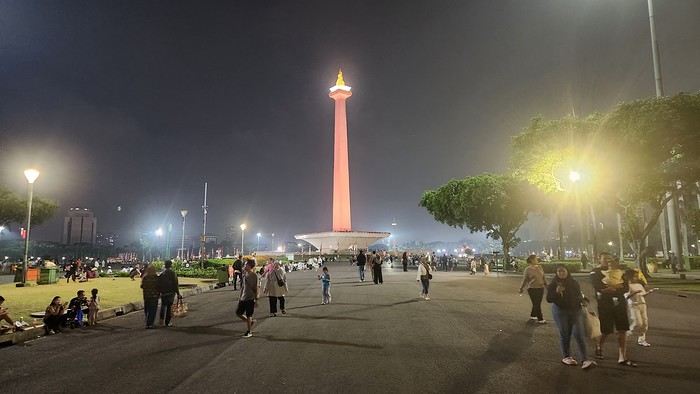
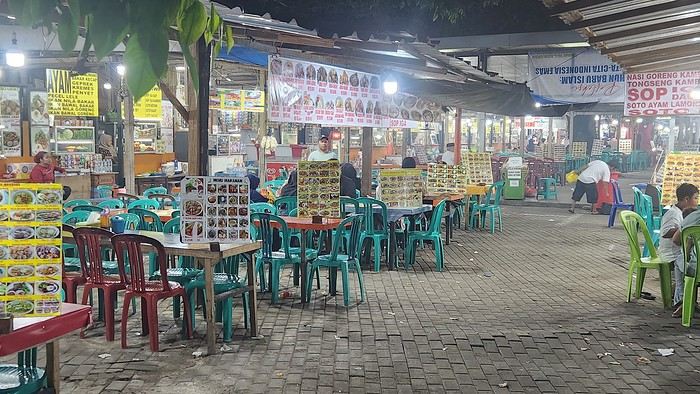
Unfortunately, we were a bit slow off the mark, which meant we missed the 6:25 PM train by two minutes. Oh well, we’ll have to wait until 11 PM. We take the opportunity to stretch our legs in Jakarta, soak up the atmosphere, and enjoy the delicious smells wafting from the *warungs*—those little typical street restaurants. A quick stop at the National Monument, a detour to a night market to devour our first *kwetiaw goreng* and *teh manis* for 60,000 rupiahs (that’s 3 € for two), and just like that, our penalty is lifted, and we’re allowed to hit the road again. Off to Bandung, where we arrive at 2 AM for... a *very* short night...
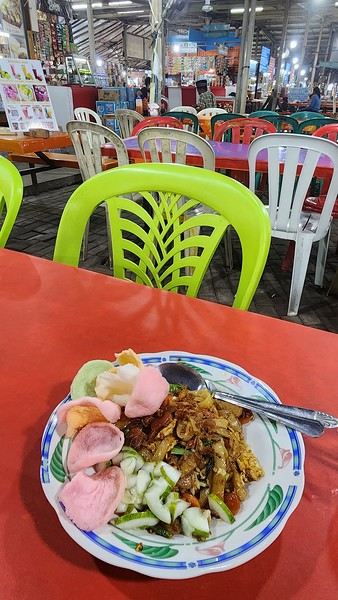
Day 1 - August 10, 2025 New life downloading for three weeks! And for that, Flo and I launched a public tender... A public tender? What’s that got to do with a travel journal???... Well, when you think about it, few destinations tick all the boxes for an August adventure: Meaning, finding a place that’s exotic in the middle of August, not too expensive, not too packed with tourists, warm but not *too* warm, with postcard-perfect landscapes, dreamy beaches, tasty cuisine with a hint of exoticism, friendly and welcoming locals, where you’re free to sleep under the stars among the mosquitos, take transport surrounded by chickens, and even eat from a pig trough if you feel like it—well, turns out it’s not that easy to find! I’d even say, given how thick the list of requirements is, there’s a big risk the tender could be declared unsuccessful for failing to meet just one criterion. Let’s just say the candidates better submit a rock-solid proposal!
After reviewing all the responses and presentations from the candidates, the obvious choice for us is... Indonesia! Except that trying to explore a country as vast as Indonesia and its 17,504 islands in less than five years is a bit like reading the summary of a Proust novel without taking the time to savor each of its 950 pages! Don’t worry, I won’t name them all here. Besides, do they even all have names? No! Only 7,870 have been named—their parents clearly ran out of ideas for the rest. Anyway, our society, which worships the "work more to earn more" mantra, unfortunately limits our adventure time. So we’ll only get to see a small part of Indonesia, and we’ll have to make a tough choice to head for the best of the best in this archipelago of over seventeen thousand islands. Each one has its own selling points: Sumatra, Sulawesi, Java, the Celebes, Bali, Borneo, Papua, Timor, the Moluccas... So many names that smell of adventure... Another tender, another list of requirements, another review of proposals... Drumroll... Splash splash... And the lucky winner is... Ta-da... Java, Bali’s big sister, where I’ve already been eight years ago... Java the programming language. The Java of Broadway. We’re gonna *do* the Java. Java the coffee. And yes, Java is also an island!
This island, four times smaller than France, is home to 136 million people, making it the most populated island in the world! Fun fact: Indonesia, with its 260 million inhabitants, is just shy of the podium for the world’s most populated countries, after the winning trio of India, China, and the United States. And it’s on this island of Java that you’ll find Jakarta, the (soon-to-be-former) capital and main airport of the country, where we’ll soon land after our nineteen-hour flight! Yep, nineteen hours! I mean, Indonesia in general—and Java in particular—is a *tad* farther than going on vacation to Grandma Yoyo’s! Not sure where it is? Easy. Grab a map. Plant your finger on the big island at the bottom right—aka Australia for those who struggle with geography—move it up two centimeters, and bam, welcome to Indonesia!
Nice transition, right? Because "Welcome to Indonesia" is exactly what the friendly flight attendant just said to me as we got off the plane! That’s it, our chakras are open, we’ve arrived at our (air)port. Time for rest, pool, cocktails, and a beach with our toes spread out... Wait, if you bought that, you clearly don’t know us yet! Since we still have energy to burn and need to adjust to the flight and time difference, we tackle the long administrative formalities to enter Indonesia, just to earn the right to hop in a 45-minute Grab taxi to the train station. The train station? What train station?... What do you usually do at a train station? Take a train, of course! Off we go for a three-hour train ride to Bandung, where we’ll officially start our adventure tomorrow after our first Indonesian night...
Unfortunately, we were a bit slow off the mark, which meant we missed the 6:25 PM train by two minutes. Oh well, we’ll have to wait until 11 PM. We take the opportunity to stretch our legs in Jakarta, soak up the atmosphere, and enjoy the delicious smells wafting from the *warungs*—those little typical street restaurants. A quick stop at the National Monument, a detour to a night market to devour our first *kwetiaw goreng* and *teh manis* for 60,000 rupiahs (that’s 3 € for two), and just like that, our penalty is lifted, and we’re allowed to hit the road again. Off to Bandung, where we arrive at 2 AM for... a *very* short night...
Yet Another Travel Journal in this (Too) Familiar Rajasthan, But with Family and Kids
Prologue
This journal recounts a trip to Rajasthan that’s already over a year old and that I’ve only now found the chance to write about. The summer of 2024 marked my return to India—my tenth trip—after six long years away since my last solo wanderings in Tamil Nadu in 2018 (the journal of which is published on this site). That absence was partly (but not only) due to the long COVID and post-COVID period, which saw a complete halt and then a major slowdown in global tourism. To top it off, Voyage Forum announced its closure in an end-of-the-world atmosphere. A sad time for our favorite social activity…
A few weeks after returning from Rajasthan, I tried to motivate myself to start writing a journal to publish on a forum claiming to be VF’s successor, which I’d eventually signed up for out of desperation. But I kept hesitating and putting the project off because, for one, I no longer have the time I used to. For another, the vibe wasn’t really taking off on that forum—it was overrun with ads and not very active, contrary to what its host’s name suggested. Despite its good intentions and commendable role as a stopgap, it also turned out to be very impractical to use, especially when you don’t have much time like me. I’ll admit I’d occasionally check back on VF to see if anything was happening. But all the discussions remained frozen in time, stuck in that fateful year, 2020. Then, rumors swirled online about shady reasons behind its closure, leaving little room for hope.
And then, one fine morning, I got a message at work from Marien informing me that VF had reopened. What a huge surprise! Even though the forum’s “end” had played out in a somewhat apocalyptic atmosphere, the memories of passionate and heated discussions, the frank debates, and the useful exchanges that made this site a traveler’s goldmine and a unique hub of conviviality all came rushing back to me like a breath of fresh air. I finally saw a sign and tried to motivate myself to find the time to publish the journal of this tenth trip to India and fifth to Rajasthan. But in the end, I got bogged down in professional and family obligations and never managed to find the time to get started. That’s now fixed, though, because I had two reasons for wanting to do it: I find that looking back on a trip to tell others about it is a highly beneficial introspective exercise. Also, I thought this journal could be useful to other travelers on a few points.
Because, “do we really need yet another journal about Rajasthan?” you might rightly ask! Especially in a time when so many journals about the “Land of Kings” have been published since VF’s return, not to mention the countless stories you can already find online about this region, one of India’s most touristy. And I’d add, why go back to Rajasthan for a fifth time, where I’ve already dragged my feet more than enough—through its forts, deserts, temples, cities, villages, bumpy roads, train stations, tasty street food stalls, cheap guesthouses, and more? Where some might see just another overhyped tourist destination full of the same old *Arabian Nights* clichés, worn to a thread, that I mentioned earlier, when there’s so much else to see in India? Well, first because it’s a magnificent country I never tire of, where I started an academic study and made so many connections. It’s also packed with places where you won’t find a single tourist (right, Marie-Jo?), even in the heart of well-trodden paths and classic itineraries. And most importantly, as I said earlier, things have changed in recent years. First, after six years without traveling far, the urge to go back to India was getting stronger. But this time, no more solo trips (often) or duo adventures (sometimes)—now it’s a team of four that has to come along! And even if you can argue with that, what better place than Rajasthan to introduce India to people who’ve never seen it? To kids you want to amaze? Plus, traveling with your new little family to your favorite country isn’t the same as going solo in often spartan conditions that only affect you. It’s a different challenge, but ultimately probably much harder. So, is it really reasonable to take two kids to India, including a two-year-old baby? That’s one of the main goals of this journal (but not the only one)—to try to answer that question.
As you can tell, it’s not so much the destination but the slightly unusual setup of this trip that, in my opinion, will make this journal interesting. Despite my experience and expertise (yes, I dare say it) in India, there were plenty of questions before we finalized the plan and said, “Alright, let’s go!” The questions were flying for us parents. Is it wise to travel to India with a two-year-old? What would we do (it happened) if the kids got very sick? Would they be able to handle a road trip on Rajasthan’s bumpy, dusty roads using public transport? Could they handle the shock of such a different world—the dirt, poverty, pollution, noise (…and the smell, as they say), the spicy food, monkeys, mosquitoes, snakes, tigers, leopards, and so on? In short, all the clichés that I usually joke about suddenly became potential realities. Another concern: as a mixed Franco-African family (not me, but my partner and her oldest), wouldn’t we risk not always being well received, given what you sometimes hear about that in India? How would Indians react to seeing a mixed-race family, the ultimate taboo in a country of purity and social segregation, which would undoubtedly raise many questions for them? Of course, not everything went as expected… Because, as you know, with India—and what makes it charming for some—there are always complications: sometimes where you don’t expect them… and sometimes where you do. I’ll go into detail about that in the journal to come (not right away) and in the final review (even later). These experiences could be useful to travelers who find themselves in similar situations and have the same questions we did before embarking on such a journey. And maybe it’ll spark the curiosity of those who aren’t concerned and will read yet another Rajasthan journal, but with its own unique twists.
Despite my unchanged constraints, which mean I have little time to write this, I don’t want to rush the story, so I’ll take my time. There will probably be lulls. I hope that won’t stop people from coming to react, debate, share their impressions, or ask for information.
This journal recounts a trip to Rajasthan that’s already over a year old and that I’ve only now found the chance to write about. The summer of 2024 marked my return to India—my tenth trip—after six long years away since my last solo wanderings in Tamil Nadu in 2018 (the journal of which is published on this site). That absence was partly (but not only) due to the long COVID and post-COVID period, which saw a complete halt and then a major slowdown in global tourism. To top it off, Voyage Forum announced its closure in an end-of-the-world atmosphere. A sad time for our favorite social activity…
A few weeks after returning from Rajasthan, I tried to motivate myself to start writing a journal to publish on a forum claiming to be VF’s successor, which I’d eventually signed up for out of desperation. But I kept hesitating and putting the project off because, for one, I no longer have the time I used to. For another, the vibe wasn’t really taking off on that forum—it was overrun with ads and not very active, contrary to what its host’s name suggested. Despite its good intentions and commendable role as a stopgap, it also turned out to be very impractical to use, especially when you don’t have much time like me. I’ll admit I’d occasionally check back on VF to see if anything was happening. But all the discussions remained frozen in time, stuck in that fateful year, 2020. Then, rumors swirled online about shady reasons behind its closure, leaving little room for hope.
And then, one fine morning, I got a message at work from Marien informing me that VF had reopened. What a huge surprise! Even though the forum’s “end” had played out in a somewhat apocalyptic atmosphere, the memories of passionate and heated discussions, the frank debates, and the useful exchanges that made this site a traveler’s goldmine and a unique hub of conviviality all came rushing back to me like a breath of fresh air. I finally saw a sign and tried to motivate myself to find the time to publish the journal of this tenth trip to India and fifth to Rajasthan. But in the end, I got bogged down in professional and family obligations and never managed to find the time to get started. That’s now fixed, though, because I had two reasons for wanting to do it: I find that looking back on a trip to tell others about it is a highly beneficial introspective exercise. Also, I thought this journal could be useful to other travelers on a few points.
Because, “do we really need yet another journal about Rajasthan?” you might rightly ask! Especially in a time when so many journals about the “Land of Kings” have been published since VF’s return, not to mention the countless stories you can already find online about this region, one of India’s most touristy. And I’d add, why go back to Rajasthan for a fifth time, where I’ve already dragged my feet more than enough—through its forts, deserts, temples, cities, villages, bumpy roads, train stations, tasty street food stalls, cheap guesthouses, and more? Where some might see just another overhyped tourist destination full of the same old *Arabian Nights* clichés, worn to a thread, that I mentioned earlier, when there’s so much else to see in India? Well, first because it’s a magnificent country I never tire of, where I started an academic study and made so many connections. It’s also packed with places where you won’t find a single tourist (right, Marie-Jo?), even in the heart of well-trodden paths and classic itineraries. And most importantly, as I said earlier, things have changed in recent years. First, after six years without traveling far, the urge to go back to India was getting stronger. But this time, no more solo trips (often) or duo adventures (sometimes)—now it’s a team of four that has to come along! And even if you can argue with that, what better place than Rajasthan to introduce India to people who’ve never seen it? To kids you want to amaze? Plus, traveling with your new little family to your favorite country isn’t the same as going solo in often spartan conditions that only affect you. It’s a different challenge, but ultimately probably much harder. So, is it really reasonable to take two kids to India, including a two-year-old baby? That’s one of the main goals of this journal (but not the only one)—to try to answer that question.
As you can tell, it’s not so much the destination but the slightly unusual setup of this trip that, in my opinion, will make this journal interesting. Despite my experience and expertise (yes, I dare say it) in India, there were plenty of questions before we finalized the plan and said, “Alright, let’s go!” The questions were flying for us parents. Is it wise to travel to India with a two-year-old? What would we do (it happened) if the kids got very sick? Would they be able to handle a road trip on Rajasthan’s bumpy, dusty roads using public transport? Could they handle the shock of such a different world—the dirt, poverty, pollution, noise (…and the smell, as they say), the spicy food, monkeys, mosquitoes, snakes, tigers, leopards, and so on? In short, all the clichés that I usually joke about suddenly became potential realities. Another concern: as a mixed Franco-African family (not me, but my partner and her oldest), wouldn’t we risk not always being well received, given what you sometimes hear about that in India? How would Indians react to seeing a mixed-race family, the ultimate taboo in a country of purity and social segregation, which would undoubtedly raise many questions for them? Of course, not everything went as expected… Because, as you know, with India—and what makes it charming for some—there are always complications: sometimes where you don’t expect them… and sometimes where you do. I’ll go into detail about that in the journal to come (not right away) and in the final review (even later). These experiences could be useful to travelers who find themselves in similar situations and have the same questions we did before embarking on such a journey. And maybe it’ll spark the curiosity of those who aren’t concerned and will read yet another Rajasthan journal, but with its own unique twists.
Despite my unchanged constraints, which mean I have little time to write this, I don’t want to rush the story, so I’ll take my time. There will probably be lulls. I hope that won’t stop people from coming to react, debate, share their impressions, or ask for information.
Another side of my trip to Thailand: Villages, nature, countryside, mountains...
February 9th is a pivotal day during my trip to Thailand. Up until this date, my focus had been on cities, temples, and other urban landmarks. Starting February 10th, I’ll finally leave the city behind for the outskirts—one town, one life, farther from tourism, more real, more authentic... Then comes the bucolic surroundings of Chiang Mai, nature, the countryside, the mountains.
This morning, I head to visit the ethnographic museum. I’d been told about another one, but it’s permanently closed. I wonder if it’s the same one that might have changed its name and location.
I thoroughly enjoy visiting this museum. At first, I’m a bit annoyed because the place is packed with noisy school groups blocking the display cases without even showing the slightest interest. But soon, their chaperones manage to lead them into another room, giving me some peace. They maintain this distance throughout the tour, allowing me to explore the museum in complete tranquility. I really appreciate their tact.
I’m amazed by the absolutely stunning fabric displays and the countless everyday objects, especially the very old pottery. There’s so much beautiful basketry and intricately carved wood. The statues are also incredible... After seeing all of them, I no longer feel like buying any from the shops.
On my way back, not far from my hotel, I discover a rather unique place that only serves one drink, which they’ve made their specialty: egg coffee! A pretty surprising novelty. I have to try it.

At the bottom of the cup, they pour a layer of milk, topped with a layer of liquid coffee, followed by a layer of egg yolk, and finally a top layer that turns out to be a mix of coffee and cocoa powder. It’s a cold drink that, in the end, doesn’t have much flavor, and the price is pretty steep for such a small cup. You’re paying for the exclusivity!
Later in the day, I venture once again into small alleys, something I love doing when exploring a new city—no specific goal, just wandering east of the city, outside the walls.

I encounter very few tourists there and discover unsuspected little shops overflowing with lovely items, much cheaper than what you find in the heart of the tourist district. Then I wander through the floors of Warorot Market. I discover another kind of temple there: the temple of good deals. I love finding clothes that are really original for locals, not the flood of shirts and pants that tourists love but no Thai would ever buy, which invade the shops in the "Historic Square." I stop in my tracks in front of a stall with beautiful shirts featuring stunning geometric patterns in elegant color combinations and very short sleeves. Hmm, these would be perfect for showing off my biceps, one of which is adorned with the magnificent Ganesh tattoo I got last year in Bali. "When you’ve got nice things, you’ve got to show them off!" he said. 😜🙏💪 I pick out two for 380 baht and negotiate them down to 300. But the seller won’t go any lower. I understand I’ve reached the limit of her commercial possibilities. Just as I’m leaving the shop, happy with my purchase, my ever-helpful inner voice, Petite Voix, suggests: - You didn’t try them on because you were too lazy to take off the one you’re wearing and also because of the sweat, but you could just put one on over the one you’re wearing. It’s light enough that it won’t bother you.
I go back to the two sellers, who burst out laughing when I ask to try them on. - Oh no, it’s way too small for you! It’s a women’s shirt! - But they don’t look particularly feminine in style! And I chose XXL... I put the shirt on, and of course, it won’t close. Then I notice the buttons are on the wrong side. That’s why the sleeves seemed so short!!! They put the shirts back on the rack and refund me without any fuss, commenting amid total hilarity: - Well, thank goodness you tried it on just as you were leaving the shop!
Since I don’t want to walk too much before tomorrow’s first Big Outing with the driver, I end my stroll with a visit to two very pretty temples recommended by Joël.

I’d rather not post more temple photos. But these ones smell like village and countryside...


I’ve never seen anything like Wat Ket Karam, so extravagant...


And I end my day with two other lesser-known temples: Wat Noung Kham, simple and finally free of gold and glitter,

and Wat Dap Phai, where an intimate ceremony is taking place at the end of the day.
This morning, I head to visit the ethnographic museum. I’d been told about another one, but it’s permanently closed. I wonder if it’s the same one that might have changed its name and location.
I thoroughly enjoy visiting this museum. At first, I’m a bit annoyed because the place is packed with noisy school groups blocking the display cases without even showing the slightest interest. But soon, their chaperones manage to lead them into another room, giving me some peace. They maintain this distance throughout the tour, allowing me to explore the museum in complete tranquility. I really appreciate their tact.
I’m amazed by the absolutely stunning fabric displays and the countless everyday objects, especially the very old pottery. There’s so much beautiful basketry and intricately carved wood. The statues are also incredible... After seeing all of them, I no longer feel like buying any from the shops.
On my way back, not far from my hotel, I discover a rather unique place that only serves one drink, which they’ve made their specialty: egg coffee! A pretty surprising novelty. I have to try it.
At the bottom of the cup, they pour a layer of milk, topped with a layer of liquid coffee, followed by a layer of egg yolk, and finally a top layer that turns out to be a mix of coffee and cocoa powder. It’s a cold drink that, in the end, doesn’t have much flavor, and the price is pretty steep for such a small cup. You’re paying for the exclusivity!
Later in the day, I venture once again into small alleys, something I love doing when exploring a new city—no specific goal, just wandering east of the city, outside the walls.
I encounter very few tourists there and discover unsuspected little shops overflowing with lovely items, much cheaper than what you find in the heart of the tourist district. Then I wander through the floors of Warorot Market. I discover another kind of temple there: the temple of good deals. I love finding clothes that are really original for locals, not the flood of shirts and pants that tourists love but no Thai would ever buy, which invade the shops in the "Historic Square." I stop in my tracks in front of a stall with beautiful shirts featuring stunning geometric patterns in elegant color combinations and very short sleeves. Hmm, these would be perfect for showing off my biceps, one of which is adorned with the magnificent Ganesh tattoo I got last year in Bali. "When you’ve got nice things, you’ve got to show them off!" he said. 😜🙏💪 I pick out two for 380 baht and negotiate them down to 300. But the seller won’t go any lower. I understand I’ve reached the limit of her commercial possibilities. Just as I’m leaving the shop, happy with my purchase, my ever-helpful inner voice, Petite Voix, suggests: - You didn’t try them on because you were too lazy to take off the one you’re wearing and also because of the sweat, but you could just put one on over the one you’re wearing. It’s light enough that it won’t bother you.
I go back to the two sellers, who burst out laughing when I ask to try them on. - Oh no, it’s way too small for you! It’s a women’s shirt! - But they don’t look particularly feminine in style! And I chose XXL... I put the shirt on, and of course, it won’t close. Then I notice the buttons are on the wrong side. That’s why the sleeves seemed so short!!! They put the shirts back on the rack and refund me without any fuss, commenting amid total hilarity: - Well, thank goodness you tried it on just as you were leaving the shop!
Since I don’t want to walk too much before tomorrow’s first Big Outing with the driver, I end my stroll with a visit to two very pretty temples recommended by Joël.
I’d rather not post more temple photos. But these ones smell like village and countryside...
I’ve never seen anything like Wat Ket Karam, so extravagant...
And I end my day with two other lesser-known temples: Wat Noung Kham, simple and finally free of gold and glitter,
and Wat Dap Phai, where an intimate ceremony is taking place at the end of the day.
Tips for a 3-week itinerary from north to south Vietnam
Hello everyone,
I’m planning my upcoming trip from North to South Vietnam for May 2026. There’ll be two couples in their sixties and older... I’ve received proposals from three agencies with a driver and French-speaking guide. The one I’ve chosen, which is often mentioned in this forum, suggests this itinerary, and I’d love to hear your thoughts: HANOI, arrival on 04/29/26, 2 nights BAC HA, 1 night HA GIANG, 1 night NAM DAM, 1 night DONG VAN, 1 night BAO LAC, 1 night BA BE, 1 night HANOI, 1 night NINH BINH, 2 nights HALONG BAY (BAI TULONG), 1 night HUE, 2 nights HOI AN, 3 nights SAIGON, 1 night CAN THO, 1 night SAIGON, 1 night I’d like to know if the stop in Nam Dam is worth staying overnight or if we should just visit and continue to Dong Van. Also, would it make more sense to fly from Hoi An to Can Tho and finish with 2 nights in Saigon instead? That’s what I’d like your input on. Thanks in advance, and have a great summer! 🌞 Monique
I’m planning my upcoming trip from North to South Vietnam for May 2026. There’ll be two couples in their sixties and older... I’ve received proposals from three agencies with a driver and French-speaking guide. The one I’ve chosen, which is often mentioned in this forum, suggests this itinerary, and I’d love to hear your thoughts: HANOI, arrival on 04/29/26, 2 nights BAC HA, 1 night HA GIANG, 1 night NAM DAM, 1 night DONG VAN, 1 night BAO LAC, 1 night BA BE, 1 night HANOI, 1 night NINH BINH, 2 nights HALONG BAY (BAI TULONG), 1 night HUE, 2 nights HOI AN, 3 nights SAIGON, 1 night CAN THO, 1 night SAIGON, 1 night I’d like to know if the stop in Nam Dam is worth staying overnight or if we should just visit and continue to Dong Van. Also, would it make more sense to fly from Hoi An to Can Tho and finish with 2 nights in Saigon instead? That’s what I’d like your input on. Thanks in advance, and have a great summer! 🌞 Monique
Aloha State: Hawaii February 2025
Alright, I'm diving into this Hawaiian travel journal!
I hope lots of you will follow along because the destination is absolutely charming. 🙂
Just a heads-up—I might take a while to finish it.
The trip took place from February 20th to March 3rd, 2025 (11 days total, with 9 days on-site). It was a trip with my friend Christelle, with whom I’ve already traveled to Iceland and Morocco in recent years. We’re totally on the same wavelength, with the same expectations and desires, which makes things a lot easier (and, as a bonus, it helps cut down the final bill). Being the generous soul I am, I asked Christelle which country she wanted to visit. Her answer: Asia, since I’ve never been, or Namibia... Hawaii is basically the same thing, right?!! All thanks to the search comparator—I stumbled upon round-trip tickets from Paris to Honolulu for 580 € per person during school holidays, with a layover in Canada (I don’t get to choose my vacation dates). We jumped on it on August 28th (didn’t take much convincing). For info, I always check flight tickets during the last week of August or the first half of September because there are always amazing deals.
Nine days on-site is short, so we had to make some tough choices for the islands we’d visit (I’m only listing the main ones): - Oahu: the most urbanized but also home to Honolulu, Pearl Harbor, and some stunning beaches.
Kauai: the Garden Isle. It’s the island from *Jurassic Park*, with lush vegetation—so it’s pretty rainy. Big Island: volcanoes, volcanoes, and more, but also things like night snorkeling with manta rays. Maui: very touristy, with a magnificent volcano, the Road to Hana, and the ultimate spot for whale watching (and we were there right in the middle of whale season).
We limited ourselves to two islands to avoid rushing, and in the end, we picked Kauai (non-negotiable) and Oahu (which saved us an extra domestic flight and, since we were there in winter, let us experience the BIG WAVES on the North Shore). We would’ve loved to visit Big Island, but we’d already seen volcanoes in Iceland, and the island is huge—we just didn’t have enough time. Maui was recently hit by a major wildfire and is also the most expensive island (along with Kauai). We were really hoping to see humpback whales (my favorite animal) on both Oahu and Kauai. Hawaii is far, and it’s worth the effort. The journey went smoothly. I took a 40-minute bus ride and a 1h32 RER trip just to get to Roissy, then a 9h15 flight to Calgary, with a two-hour layover before a 6h45 flight to Honolulu. 11 hours of time difference, arriving at 10 PM local time. And you know what? (spoiler alert) I’d do it a thousand times if I got the chance.
Alright, let’s go—here we go!
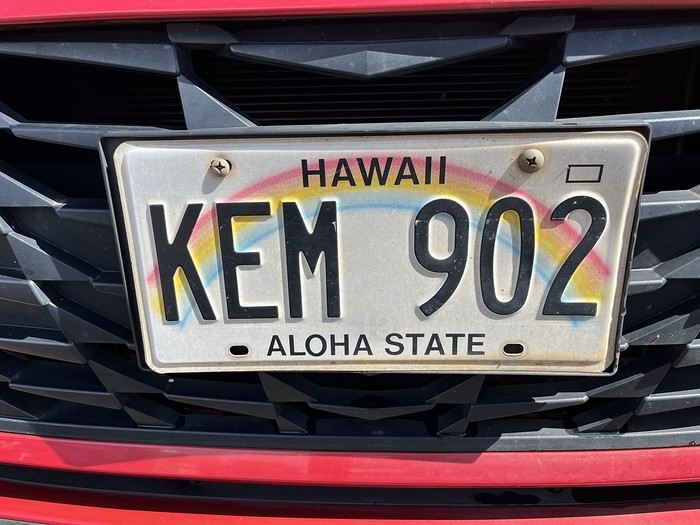
The trip took place from February 20th to March 3rd, 2025 (11 days total, with 9 days on-site). It was a trip with my friend Christelle, with whom I’ve already traveled to Iceland and Morocco in recent years. We’re totally on the same wavelength, with the same expectations and desires, which makes things a lot easier (and, as a bonus, it helps cut down the final bill). Being the generous soul I am, I asked Christelle which country she wanted to visit. Her answer: Asia, since I’ve never been, or Namibia... Hawaii is basically the same thing, right?!! All thanks to the search comparator—I stumbled upon round-trip tickets from Paris to Honolulu for 580 € per person during school holidays, with a layover in Canada (I don’t get to choose my vacation dates). We jumped on it on August 28th (didn’t take much convincing). For info, I always check flight tickets during the last week of August or the first half of September because there are always amazing deals.
Nine days on-site is short, so we had to make some tough choices for the islands we’d visit (I’m only listing the main ones): - Oahu: the most urbanized but also home to Honolulu, Pearl Harbor, and some stunning beaches.
Kauai: the Garden Isle. It’s the island from *Jurassic Park*, with lush vegetation—so it’s pretty rainy. Big Island: volcanoes, volcanoes, and more, but also things like night snorkeling with manta rays. Maui: very touristy, with a magnificent volcano, the Road to Hana, and the ultimate spot for whale watching (and we were there right in the middle of whale season).
We limited ourselves to two islands to avoid rushing, and in the end, we picked Kauai (non-negotiable) and Oahu (which saved us an extra domestic flight and, since we were there in winter, let us experience the BIG WAVES on the North Shore). We would’ve loved to visit Big Island, but we’d already seen volcanoes in Iceland, and the island is huge—we just didn’t have enough time. Maui was recently hit by a major wildfire and is also the most expensive island (along with Kauai). We were really hoping to see humpback whales (my favorite animal) on both Oahu and Kauai. Hawaii is far, and it’s worth the effort. The journey went smoothly. I took a 40-minute bus ride and a 1h32 RER trip just to get to Roissy, then a 9h15 flight to Calgary, with a two-hour layover before a 6h45 flight to Honolulu. 11 hours of time difference, arriving at 10 PM local time. And you know what? (spoiler alert) I’d do it a thousand times if I got the chance.
Alright, let’s go—here we go!
General 2022+ Update for Russia
This forum was closed for a long time after COVID, then due to its sale by the previous owner. Since 2022, there have been notable changes for Russia. It became possible to travel to Russia as a tourist again after COVID restrictions ended in summer 2022. But before that, in March 2022, the EU and member countries cut air links with Russia, as well as train lines. They also cut Russian banks off from the Euro-American banking network—meaning cards and wire transfers.
EU-based insurers stopped offering policies for Russia. The Green Card for cars in Russia was also discontinued. Then the EU abolished the simplified visa regime agreement with Russia. All in all, a summary of the current practical aspects would be helpful.
I’ve been traveling to Russia regularly for about twenty years, and after the long COVID break, I resumed in autumn 2022.
Visa
The usual paper visa is much more expensive. On one hand, because the previous regime was scrapped, and on the other, because invitations for multi-entry visas are pricier. A single-entry 30-day visa costs 80 €. The multi-entry one is 240 €. To be sure you’ll get a 12-month multi-entry, it’s best to buy a telex invitation from the MID (Russian Ministry of Foreign Affairs), though there are few resellers. Prices vary depending on the seller.
E-visas are now available for Schengen passport holders. A big simplification for trips up to 16 days within a 60-day validity period. You can apply from 40 days up to 5 days before your desired date. Issued in up to four days. The site is https://evisa.kdmid.ru/ Cost: 50 €. Processed through an Emirati bank (United Arab Emirates).
Medical Insurance
Medical insurance with repatriation is required to get a visa. So you’ll need to buy a policy. This brings up payment methods. If you’re already familiar with Russia and have a Russian bank account, you can pay with your Russian card. Otherwise, you’ll have to buy from a site that accepts payments via a Belarusian bank—which means your bank must work with Belarus—or go through https://goingrus.com/fr/insurance
Transport from the EU
Minibus (marshrutka) from Kirkenes (Norway) to Murmansk. Schedules are coordinated with flights from Oslo, which arrive between 11:00 and 12:00. They wait on the right as you exit the airport. Some are chartered by groups and leave directly, but may have space—ask the driver. Otherwise, two companies run the route, with a stop in town at the corner of the Scandic, where they depart around 14:00 or 15:00. Payment in cash (NOK or RUB) to the driver. Main operator: https://borodinbus.com Bus from Tallinn (Estonia) to St. Petersburg. The border crossing is on the Narva River. The Russian road checkpoint has been closed since January 2024 for construction expected to last 2.5 years, so reopening is possible in summer 2026. In the meantime, it’s a two-bus journey: Tallinn-Narva, then walk across the bridge between the Estonian and Russian checkpoints at Ivangorod, followed by another bus. Several companies: Luxexpress, Ecolines, Baltic Shuttle, Anniston, СКСавто. Bus from Riga to Pskov or St. Petersburg (final destination). Departs from Riga’s bus station (behind the train station) daily between 18:00 and 19:00. Arrives in Pskov between 01:00 and 02:00 (Russian time). Company: СКСавто. There’s another bus around 21:00 with Ecolines, but it’s longer, with a long stop at the border. Bus from Gdańsk to Kaliningrad. Several buses per day. From the PKS bus station, behind Gdańsk’s central station, on the other side of the boulevard. From Kaliningrad, a 1-hour flight to St. Petersburg costs around 5000 RUB.
Basically, unless you’re planning to go to Murmansk and the Kola Peninsula—and possibly from Murmansk, flights to Arkhangelsk, then Nenetsia (Naryan-Mar), etc.—the three main crossing points with airports are Tallinn, Riga, and Gdańsk.
The Gdańsk-Kaliningrad bus is the fastest, and the ticket to St. Petersburg is very reasonable.
The Narva-Ivangorod route is the riskiest in terms of potential queues and crossing time. Holiday periods are especially risky. Last mid-June, I took a 14:00 bus from Tallinn. I’d bought a single-berth compartment on the Grand Express St. Petersburg-Moscow train, leaving at 23:00, with the idea of a good night’s rest before a Moscow-Magadan flight. A 7-hour queue at the border meant I arrived at St. Petersburg’s bus station at 23:00—missed the train, had to book a room, and spent time finding a reasonably priced flight to Moscow the next day for the same airport as my Magadan flight.
The Riga-Pskov route is a bit long but relaxed. If you get off in Pskov, you can still get decent sleep between 02:00 and 12:00. The Oktyabrskaya Hotel is cheap. I’ve also stopped in Izborsk. You ask the driver when boarding in Riga. The stop is on the federal highway—cross the road, and the main inn is 200m away. You can explore the medieval site the next morning before taking a bus to Pskov (30 km).
From Pskov, there are fast regional Lastochka trains—three or four per day—to St. Petersburg, taking 3.5 hours. Very comfortable and affordable. Also, two daily flights with Azimuth to Moscow-Vnukovo from 5000 RUB. A one-hour flight. It’s a section of Pskov’s military airfield, just a few kilometers from the city center.
Money
Cash. The EU issued a nonsensical decree: a ban on importing EU currency (euros, zloty, kroner, forints, etc.) except for personal travel use. This doesn’t make sense because as a citizen of a eurozone country, you *have* to have euros—cash or electronic (card). You can’t travel without them. The stipulation about a limit for personal use is absurd because personal use can mean anything from a hostel bed to a luxury hotel room, plus transport (flight tickets, train tickets in Russia), restaurants, etc. Estonian customs officers ask about this at the border when leaving. They ask in Estonian, then Russian, then English, depending. Since I cross with a French passport, I just say, "Sorry, I don’t understand," no matter what. Then they ask with a questioning look, "Euro?" and I shake my head. I haven’t been searched, but they do ask to glance in your bag. Russians with large suitcases often get checked. Cards and phone apps: if you have a Russian bank account.
Telephony and Internet
Roaming works but is pricey. Okay for calls and SMS, but very expensive for data. In that case, use an e-SIM with your home carrier if your phone supports it. Otherwise, look into prepaid rechargeable SIMs in Russia for data only—like SIM cards for mobile modems.
Russian SIM: Since this year (2025), as of March, it’s mandatory to be registered in the EBS (Unified Biometric System) to buy a SIM card. For a non-resident foreigner, this means first registering for a SNILS at an MFC (Multifunctional Center)—also called "My Documents." The SNILS is the pension center, which doesn’t require residency. After getting your SNILS number and certificate, you register on the public services portal, Gosuslugi. Finally, you register in the EBS system (voice sample—you read numbers—and a biometric facial photo).
Personal Car
The Green Card no longer covers Russia, and neither do EU-based insurers. But third-party liability insurance (OSAGO) is mandatory. Since the closure of the Russian checkpoint at Ivangorod for construction and the Finnish border closure, the routes are from Kirkenes in Norway, the Estonia-Pskov route, and—since the Belarus-Russia joint visa this year—the Belarus route, e.g., Poland-Terespol-Brest or Lithuania-Belarus. No OSAGO sales if you cross via Kirkenes. I didn’t see any at Shumilkino, the Russian checkpoint after Estonia toward Pskov. If you have a Russian card, you can buy online, of course. Otherwise, pay in cash on-site at certain company offices (specific forms aren’t available at all agencies) or online by paying to a third-party account outside Russia—with added fees.
EU-based insurers stopped offering policies for Russia. The Green Card for cars in Russia was also discontinued. Then the EU abolished the simplified visa regime agreement with Russia. All in all, a summary of the current practical aspects would be helpful.
I’ve been traveling to Russia regularly for about twenty years, and after the long COVID break, I resumed in autumn 2022.
Visa
The usual paper visa is much more expensive. On one hand, because the previous regime was scrapped, and on the other, because invitations for multi-entry visas are pricier. A single-entry 30-day visa costs 80 €. The multi-entry one is 240 €. To be sure you’ll get a 12-month multi-entry, it’s best to buy a telex invitation from the MID (Russian Ministry of Foreign Affairs), though there are few resellers. Prices vary depending on the seller.
E-visas are now available for Schengen passport holders. A big simplification for trips up to 16 days within a 60-day validity period. You can apply from 40 days up to 5 days before your desired date. Issued in up to four days. The site is https://evisa.kdmid.ru/ Cost: 50 €. Processed through an Emirati bank (United Arab Emirates).
Medical Insurance
Medical insurance with repatriation is required to get a visa. So you’ll need to buy a policy. This brings up payment methods. If you’re already familiar with Russia and have a Russian bank account, you can pay with your Russian card. Otherwise, you’ll have to buy from a site that accepts payments via a Belarusian bank—which means your bank must work with Belarus—or go through https://goingrus.com/fr/insurance
Transport from the EU
Minibus (marshrutka) from Kirkenes (Norway) to Murmansk. Schedules are coordinated with flights from Oslo, which arrive between 11:00 and 12:00. They wait on the right as you exit the airport. Some are chartered by groups and leave directly, but may have space—ask the driver. Otherwise, two companies run the route, with a stop in town at the corner of the Scandic, where they depart around 14:00 or 15:00. Payment in cash (NOK or RUB) to the driver. Main operator: https://borodinbus.com Bus from Tallinn (Estonia) to St. Petersburg. The border crossing is on the Narva River. The Russian road checkpoint has been closed since January 2024 for construction expected to last 2.5 years, so reopening is possible in summer 2026. In the meantime, it’s a two-bus journey: Tallinn-Narva, then walk across the bridge between the Estonian and Russian checkpoints at Ivangorod, followed by another bus. Several companies: Luxexpress, Ecolines, Baltic Shuttle, Anniston, СКСавто. Bus from Riga to Pskov or St. Petersburg (final destination). Departs from Riga’s bus station (behind the train station) daily between 18:00 and 19:00. Arrives in Pskov between 01:00 and 02:00 (Russian time). Company: СКСавто. There’s another bus around 21:00 with Ecolines, but it’s longer, with a long stop at the border. Bus from Gdańsk to Kaliningrad. Several buses per day. From the PKS bus station, behind Gdańsk’s central station, on the other side of the boulevard. From Kaliningrad, a 1-hour flight to St. Petersburg costs around 5000 RUB.
Basically, unless you’re planning to go to Murmansk and the Kola Peninsula—and possibly from Murmansk, flights to Arkhangelsk, then Nenetsia (Naryan-Mar), etc.—the three main crossing points with airports are Tallinn, Riga, and Gdańsk.
The Gdańsk-Kaliningrad bus is the fastest, and the ticket to St. Petersburg is very reasonable.
The Narva-Ivangorod route is the riskiest in terms of potential queues and crossing time. Holiday periods are especially risky. Last mid-June, I took a 14:00 bus from Tallinn. I’d bought a single-berth compartment on the Grand Express St. Petersburg-Moscow train, leaving at 23:00, with the idea of a good night’s rest before a Moscow-Magadan flight. A 7-hour queue at the border meant I arrived at St. Petersburg’s bus station at 23:00—missed the train, had to book a room, and spent time finding a reasonably priced flight to Moscow the next day for the same airport as my Magadan flight.
The Riga-Pskov route is a bit long but relaxed. If you get off in Pskov, you can still get decent sleep between 02:00 and 12:00. The Oktyabrskaya Hotel is cheap. I’ve also stopped in Izborsk. You ask the driver when boarding in Riga. The stop is on the federal highway—cross the road, and the main inn is 200m away. You can explore the medieval site the next morning before taking a bus to Pskov (30 km).
From Pskov, there are fast regional Lastochka trains—three or four per day—to St. Petersburg, taking 3.5 hours. Very comfortable and affordable. Also, two daily flights with Azimuth to Moscow-Vnukovo from 5000 RUB. A one-hour flight. It’s a section of Pskov’s military airfield, just a few kilometers from the city center.
Money
Cash. The EU issued a nonsensical decree: a ban on importing EU currency (euros, zloty, kroner, forints, etc.) except for personal travel use. This doesn’t make sense because as a citizen of a eurozone country, you *have* to have euros—cash or electronic (card). You can’t travel without them. The stipulation about a limit for personal use is absurd because personal use can mean anything from a hostel bed to a luxury hotel room, plus transport (flight tickets, train tickets in Russia), restaurants, etc. Estonian customs officers ask about this at the border when leaving. They ask in Estonian, then Russian, then English, depending. Since I cross with a French passport, I just say, "Sorry, I don’t understand," no matter what. Then they ask with a questioning look, "Euro?" and I shake my head. I haven’t been searched, but they do ask to glance in your bag. Russians with large suitcases often get checked. Cards and phone apps: if you have a Russian bank account.
Telephony and Internet
Roaming works but is pricey. Okay for calls and SMS, but very expensive for data. In that case, use an e-SIM with your home carrier if your phone supports it. Otherwise, look into prepaid rechargeable SIMs in Russia for data only—like SIM cards for mobile modems.
Russian SIM: Since this year (2025), as of March, it’s mandatory to be registered in the EBS (Unified Biometric System) to buy a SIM card. For a non-resident foreigner, this means first registering for a SNILS at an MFC (Multifunctional Center)—also called "My Documents." The SNILS is the pension center, which doesn’t require residency. After getting your SNILS number and certificate, you register on the public services portal, Gosuslugi. Finally, you register in the EBS system (voice sample—you read numbers—and a biometric facial photo).
Personal Car
The Green Card no longer covers Russia, and neither do EU-based insurers. But third-party liability insurance (OSAGO) is mandatory. Since the closure of the Russian checkpoint at Ivangorod for construction and the Finnish border closure, the routes are from Kirkenes in Norway, the Estonia-Pskov route, and—since the Belarus-Russia joint visa this year—the Belarus route, e.g., Poland-Terespol-Brest or Lithuania-Belarus. No OSAGO sales if you cross via Kirkenes. I didn’t see any at Shumilkino, the Russian checkpoint after Estonia toward Pskov. If you have a Russian card, you can buy online, of course. Otherwise, pay in cash on-site at certain company offices (specific forms aren’t available at all agencies) or online by paying to a third-party account outside Russia—with added fees.
From Caño Cristales to Tayrona Park
After about 12 hours of flying from Toulouse (via Paris), we landed in Bogotá six years after our first trip to Colombia. This time, our journey will be very different, with only this stop in the Colombian capital in common.
Our travel itinerary
Bogotá / La Macarena (Caño Cristales) / Villa de Leyva / Barichara / San Gil / Girón / Mompox / Ciénaga and the Santa Marta lagoon / Minca / Los Naranjos (Tayrona Park) / Bogotá.
Step 1: Bogotá (and Nemecon)
Bogotá (1/3)
This morning, we had a meet-up with Flora from Aventure Colombia, who helped me organize one of our stops, a few transfers, and tomorrow’s day trip, the program of which I changed at the last minute after deciding to skip the visit to the Salt Cathedral of Zipaquirá. Flora is a kind and lovely person, always available, and she did everything to answer my questions and give me advice.
She’s a local contact I highly recommend. Flora can help you plan your trip, whether you want a fully organized tour or, like us, just need assistance with a specific stop or one or more transfers between cities.
We left Flora after setting a meet-up for our return to Bogotá in a month. As we walked out of her agency, we headed to the wonderful Gold Museum, located just a hundred meters away. I was excited to revisit this amazing museum.
Note: Free entry for those over 60, regardless of nationality. Just show your passport.
Like six years ago, I was amazed by its museography, the beauty of the pieces on display, and that breathtaking shamanic room.
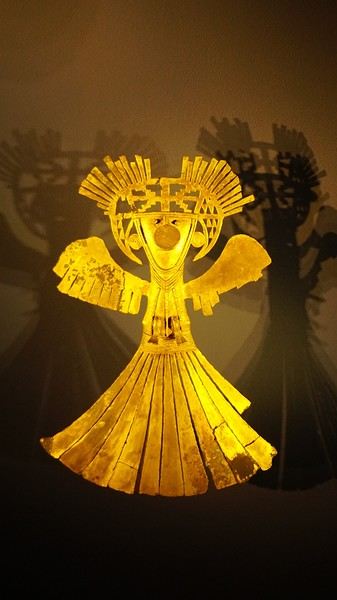
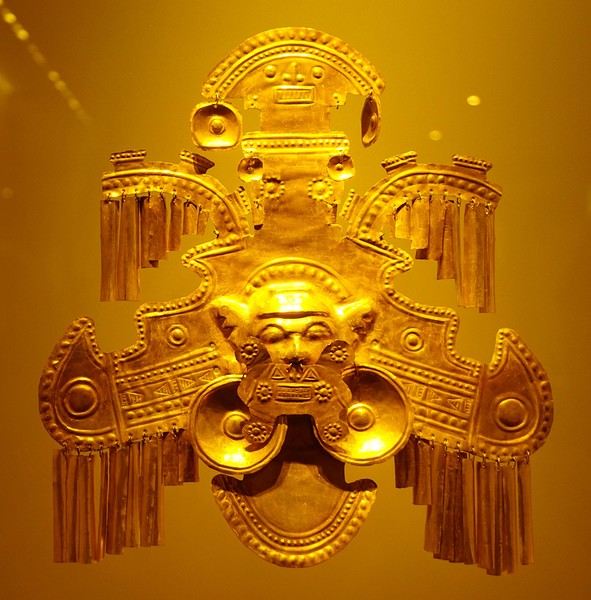
About two hours later, we decided to walk (careful, it’s a climb!) to the Monserrate cable car (3152m). Long wait to buy tickets and board the cable car! Once we arrived, a few raindrops, an impressive panoramic view of Bogotá’s vastness, a quick visit to the basilica (a pilgrimage site for Colombians), a walk through the tourist market, and at the top, plenty of small restaurants where we had our first Colombian meal. After our hearty lunch, we were lucky to see the sun return! No line for the descent. We then headed back to the hotel because Justine wanted to rest and recover from the trip. As for me, I continued my walk. I discovered a really nice craft market recommended by Flora, Pasaje Rivas, returned to Bolívar Square, and wandered through different streets, including the main pedestrian avenue (Calle 7), where there’s always something to see.
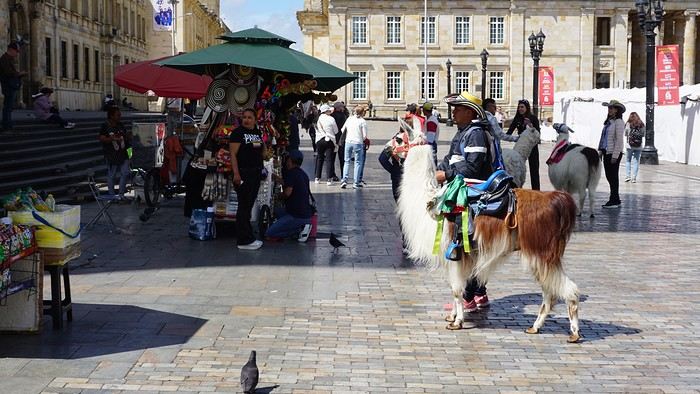
Tomorrow, a change of scenery as we head out for a hike in a small desert (Desierto de Chueca), located about 2 hours from Bogotá in the village of Nemecon. For this outing from Bogotá, with Flora’s help, we booked a car with a driver for the day. Flora also took care of booking the guide (since the site can only be visited with one). Nemecon (2/3) Today, we went to Nemecon to hike about 7.5 km in the ‘Desert of Checua.’ It’s nothing like sandy deserts! Instead, it’s geological formations sculpted by time, wind, and water. After two hours on the road—almost one of them spent navigating traffic jams with cars, trucks, buses, and a continuous flow of motorcycles on either side of our taxi—we reached Nemecon! The village center is really (too?) quiet. We met up with Deisy and headed toward the ‘desert,’ about twenty minutes away on a bumpy dirt road. Once there, a quick briefing, and off we went! Deisy didn’t stop talking (in Spanish) for over 3 hours!!! She told us so much about her region (flower farming, water management, traditions, songs, etc.), the origin of the site, and even mentioned Antonio Banderas, who filmed *The 33* in the village’s salt mine (the story of the survival of 33 Chilean miners after a collapse in their copper and gold mine). One hour of walking to reach the site, one hour to explore it, and one hour to return.
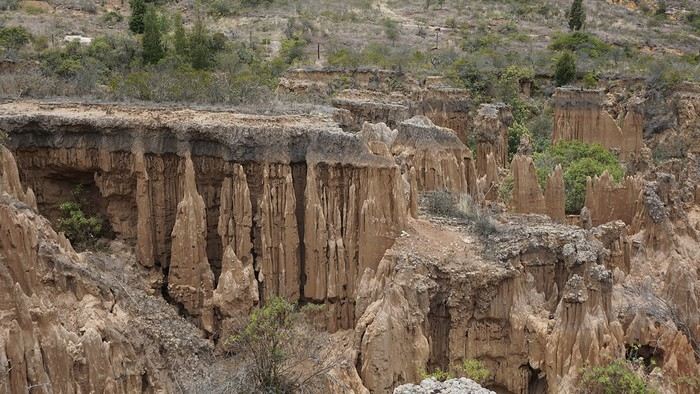
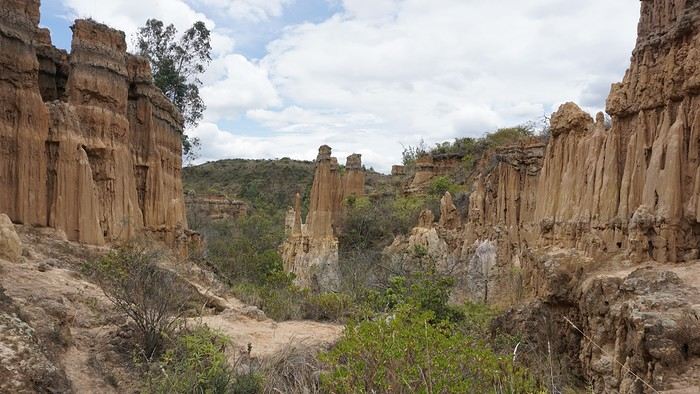
The advantage of this non-stop chatter was that it forced us to brush up on our Spanish at lightning speed. I even wondered if the effort to concentrate wasn’t more exhausting than the physical effort! Especially since on the way back, I got an oral quiz. Deisy wanted to make sure I remembered some of the information she’d given me during the visit: why is this rock white, that one red, and that one black? Back in the village, we had lunch at a restaurant recommended by Deisy before visiting the Nemecon salt mine. Before entering, a guide spent a good half-hour explaining the origin of the salt and the presence of many fossils in the area. Again, concentrating was tough because all the comments were exclusively in Spanish! An hour and a half wandering through the tunnels with a ‘lovely miner’s helmet’ on our heads!
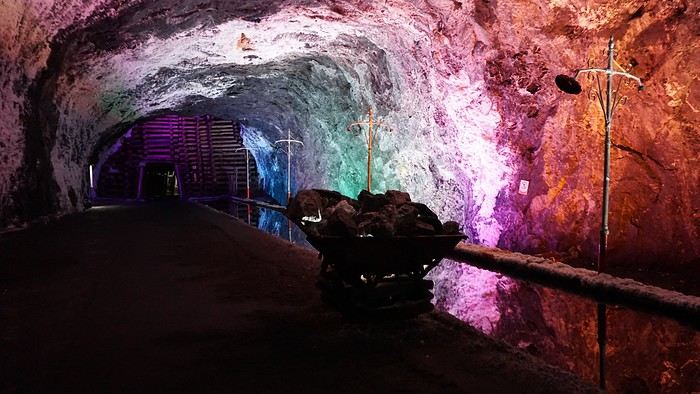
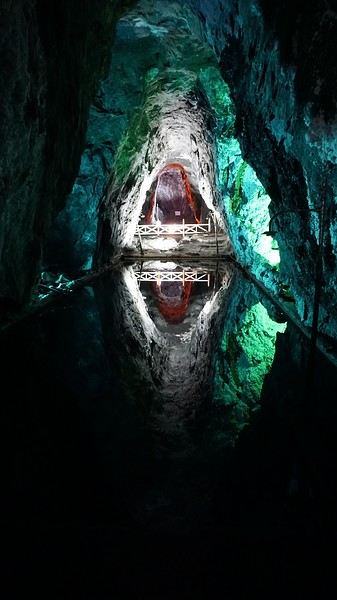
We met our driver at the mine entrance. The return to Bogotá was a bit faster, but traffic in the city center was still heavy! We arrived in front of our hotel between 8:00 and 8:30 PM. It’s been a pretty intense start to the trip! Tonight, our legs are tired. Hopefully, tomorrow will be a bit more relaxed! Bogotá (3/3) We started the day by visiting the Santa Clara Church Museum, located next to the presidential palace. Alejandra (from the local agency ‘Gaia Tours Colombia,’ which organized our stay in Caño Cristales (La Macarena)) had recommended this visit for its rich mural paintings.
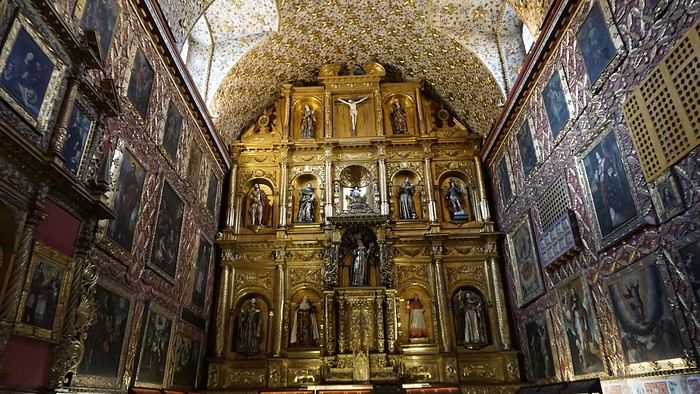
A few hundred meters further, after crossing the Plaza Mayor again, we visited the cultural complex housing the Botero Museum, the Mint Museum, and the Bank of the Republic Art Museum. Note that entry is free for all three museums. Botero Museum: There are fewer works by Botero here than in the Medellín museum, but more paintings and sculptures by other artists, all from Botero’s private collection (donated to Colombia). Mint Museum: We limited ourselves to visiting one room (on Flora’s advice) where three gold and gemstone monstrances and a Christ with a crown of emerald thorns are displayed. Photos are not allowed. Art Museum: We visited two temporary exhibitions. Lunchtime came quickly. We had a good meal at a reasonably priced small restaurant in the La Candelaria micro-district, near the Chorro de Quevedo square. We decided to spend the afternoon wandering the streets and alleys of the historic center to discover local street art.
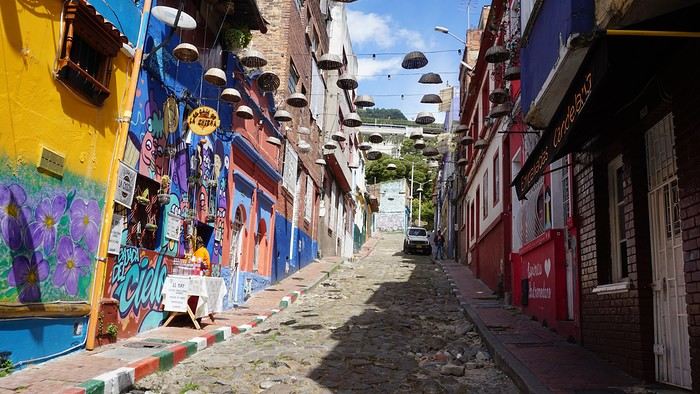
We also passed through very lively pedestrian streets. I also decided to revisit Pasaje Rivas to show Justine all the shops selling more or less artisanal products. Tomorrow morning, we fly to La Macarena at 10:30 AM. Not to dance (you’d be surprised if I told you we were going to take a South American dance class, right?!), but to visit the fabulous Caño Cristales, a river naturally colored by aquatic plants. The planned program includes hiking, horseback riding, canoeing, and swimming among these plants. This site was long inaccessible because the area was controlled by the FARC. Access and tourism development became possible after agreements and amnesty measures between the Colombian government and paramilitary groups. As in other regions, former FARC members have been able to transition into various tourism-related activities.
About two hours later, we decided to walk (careful, it’s a climb!) to the Monserrate cable car (3152m). Long wait to buy tickets and board the cable car! Once we arrived, a few raindrops, an impressive panoramic view of Bogotá’s vastness, a quick visit to the basilica (a pilgrimage site for Colombians), a walk through the tourist market, and at the top, plenty of small restaurants where we had our first Colombian meal. After our hearty lunch, we were lucky to see the sun return! No line for the descent. We then headed back to the hotel because Justine wanted to rest and recover from the trip. As for me, I continued my walk. I discovered a really nice craft market recommended by Flora, Pasaje Rivas, returned to Bolívar Square, and wandered through different streets, including the main pedestrian avenue (Calle 7), where there’s always something to see.
Tomorrow, a change of scenery as we head out for a hike in a small desert (Desierto de Chueca), located about 2 hours from Bogotá in the village of Nemecon. For this outing from Bogotá, with Flora’s help, we booked a car with a driver for the day. Flora also took care of booking the guide (since the site can only be visited with one). Nemecon (2/3) Today, we went to Nemecon to hike about 7.5 km in the ‘Desert of Checua.’ It’s nothing like sandy deserts! Instead, it’s geological formations sculpted by time, wind, and water. After two hours on the road—almost one of them spent navigating traffic jams with cars, trucks, buses, and a continuous flow of motorcycles on either side of our taxi—we reached Nemecon! The village center is really (too?) quiet. We met up with Deisy and headed toward the ‘desert,’ about twenty minutes away on a bumpy dirt road. Once there, a quick briefing, and off we went! Deisy didn’t stop talking (in Spanish) for over 3 hours!!! She told us so much about her region (flower farming, water management, traditions, songs, etc.), the origin of the site, and even mentioned Antonio Banderas, who filmed *The 33* in the village’s salt mine (the story of the survival of 33 Chilean miners after a collapse in their copper and gold mine). One hour of walking to reach the site, one hour to explore it, and one hour to return.
The advantage of this non-stop chatter was that it forced us to brush up on our Spanish at lightning speed. I even wondered if the effort to concentrate wasn’t more exhausting than the physical effort! Especially since on the way back, I got an oral quiz. Deisy wanted to make sure I remembered some of the information she’d given me during the visit: why is this rock white, that one red, and that one black? Back in the village, we had lunch at a restaurant recommended by Deisy before visiting the Nemecon salt mine. Before entering, a guide spent a good half-hour explaining the origin of the salt and the presence of many fossils in the area. Again, concentrating was tough because all the comments were exclusively in Spanish! An hour and a half wandering through the tunnels with a ‘lovely miner’s helmet’ on our heads!
We met our driver at the mine entrance. The return to Bogotá was a bit faster, but traffic in the city center was still heavy! We arrived in front of our hotel between 8:00 and 8:30 PM. It’s been a pretty intense start to the trip! Tonight, our legs are tired. Hopefully, tomorrow will be a bit more relaxed! Bogotá (3/3) We started the day by visiting the Santa Clara Church Museum, located next to the presidential palace. Alejandra (from the local agency ‘Gaia Tours Colombia,’ which organized our stay in Caño Cristales (La Macarena)) had recommended this visit for its rich mural paintings.
A few hundred meters further, after crossing the Plaza Mayor again, we visited the cultural complex housing the Botero Museum, the Mint Museum, and the Bank of the Republic Art Museum. Note that entry is free for all three museums. Botero Museum: There are fewer works by Botero here than in the Medellín museum, but more paintings and sculptures by other artists, all from Botero’s private collection (donated to Colombia). Mint Museum: We limited ourselves to visiting one room (on Flora’s advice) where three gold and gemstone monstrances and a Christ with a crown of emerald thorns are displayed. Photos are not allowed. Art Museum: We visited two temporary exhibitions. Lunchtime came quickly. We had a good meal at a reasonably priced small restaurant in the La Candelaria micro-district, near the Chorro de Quevedo square. We decided to spend the afternoon wandering the streets and alleys of the historic center to discover local street art.
We also passed through very lively pedestrian streets. I also decided to revisit Pasaje Rivas to show Justine all the shops selling more or less artisanal products. Tomorrow morning, we fly to La Macarena at 10:30 AM. Not to dance (you’d be surprised if I told you we were going to take a South American dance class, right?!), but to visit the fabulous Caño Cristales, a river naturally colored by aquatic plants. The planned program includes hiking, horseback riding, canoeing, and swimming among these plants. This site was long inaccessible because the area was controlled by the FARC. Access and tourism development became possible after agreements and amnesty measures between the Colombian government and paramilitary groups. As in other regions, former FARC members have been able to transition into various tourism-related activities.
Texas, Louisiana, and a Touch of Florida
After five trips to the American West, we had planned to switch countries and continents to visit Turkey. However, by the time we made up our minds, flight ticket prices had nearly doubled, reaching 400 € for a round-trip ticket. A bit disappointed, I started looking at transatlantic flight prices and stumbled upon discounted tickets from Basel-Mulhouse to Dallas—at the same price as our tickets to Turkey!
No hesitation needed; we bought the five tickets for a total of 1,860 € excluding baggage!
From Fort Worth Airport, we had two options: - Head west on a loop through Texas, New Mexico, and southern Colorado - Head east to change the scenery and explore East Texas, Louisiana, with a possible detour into Florida.
The latter option won unanimously, so here we are, off to discover new states, mainly Louisiana and Texas.
One of the main post-COVID challenges is finding a reasonably priced car rental. After an initial booking around 1,300 €, we kept an eye on prices a few weeks before departure and managed to snag a better deal at around 900 € for a comfortable sedan.
Yes, this summer will also be a first: no 4x4, no camping, and plenty of restaurants!
As always, I’ve planned a packed itinerary, ready to adjust on the go. A few weeks before departure, we learned we’d be at full capacity—our eldest son, Maxime, got his first-year med school results. By finishing as a top admit, he avoided the mandatory July-August internship that would’ve kept him from joining us. Instead, he wrapped up his internship at the last minute the night before our big departure.
We’ll get to savor these special moments together.
The itinerary: Day 1 - 07/15: Fort Worth Day 2: Dallas Day 3: Jefferson - Caddo Lake Day 4: Black Bayou Lake - Natchez - Stanton Hall and Rosalie Mansion Day 5: St. Francisville - Rosedown Plantation - Cat Island Wildlife Refuge Day 6: Mobile - USS Alabama Battleship Memorial Park Day 7 - 8: Pensacola Beach Day 9: Bellingrath Gardens - New Orleans Day 10 - 11: New Orleans Day 12: Plantation Route Day 13: Jungle Gardens - Tabasco Factory - Vermilionville - Lake Martin Day 14: Baton Rouge - USS Kidd Day 15: Houma - Cajun Man's Swamp Tour Day 16: Galveston, Texas Day 17: Space Center Houston - Painted Churches Day 18: San Antonio Day 19: Texas Hill Country Day 20: Texas Hill Country and evening in San Antonio Day 21: Austin and Waco
Day 0 - 07/14: The departure timing isn’t exactly relaxing. On Thursday late afternoon, we hit the road to Alsace, aiming to drop off our two cockers with family before reaching the airport at 2 AM for a 3-hour power nap. Not exactly fresh, we arrive at the terminal looking for a British Airways counter. None in sight, so we try our luck at a United Airlines counter—who knows, maybe it’ll work out. And bingo! The agent checks us in. We didn’t quite understand why, but maybe there’s some agreement between airlines. For the first time, we’re traveling without checked baggage, so no extra fees. Not a huge feat, given the scorching temperatures awaiting us!
The connecting flight to London goes smoothly.
During the layover, liquid checks get stricter—now requiring small bottles to be in a pre-approved clear bag, with only one bag allowed per passenger. Normally, no big deal, but between deodorant, sunscreen, after-sun lotion, hand sanitizer, contact lens solution, etc., we spend 20 minutes optimizing the arrangement! When we finally succeed, one of the security staff bursts out laughing and congratulates us!
With our stomachs growling, we grab an American breakfast before browsing the airport shops.
We then discover our plane for the long-haul flight and are thrilled to see it’s an A380—a first for Laetitia, though the rest of the family experienced it during our winter getaway. Still just as impressive!
With a hint of uncertainty, we take off for the States—my third trip in barely 12 months. This time, no endless badlands, canyons, slot canyons, hoodoos, or brain rocks, but a journey through five states (Texas, Louisiana, a quick stop in Mississippi, Alabama, and the northwest tip of Florida), where we hope to soak up a unique vibe... with a packed schedule of diverse visits.
Arrival at Fort Worth Airport and customs go smoothly. Since we have no checked baggage, we’re first in line at the Dollar counter. In just 3 minutes, the formalities are done. We decline the Toll Pass, which I don’t think we’ll need based on my "calculations," and head to the Dollar parking lot, where an employee tells us we can pick any car we want!
There are about thirty cars waiting. Too many choices!
After last year’s mishap in Oakland, where our 4x4’s trunk was broken into, we’re looking for a sedan to hide our luggage this time. Unfortunately, there are none—only SUVs. We finally settle on a comfortable 7-seater Ford SUV with a massive trunk when set up for five.
On the road from Fort Worth to Dallas, we accidentally take a toll highway without realizing until it’s too late to exit. Let’s hope Dollar doesn’t charge us a week’s worth of their pricey Toll Pass for a $2 toll. We’ll see... In the meantime, Maxime sets up Google Maps to avoid toll roads.
Since it’s not too late, we stop by the nearest Walmart for groceries before checking into our hotel room for three nights in East Dallas suburb.
No hesitation needed; we bought the five tickets for a total of 1,860 € excluding baggage!
From Fort Worth Airport, we had two options: - Head west on a loop through Texas, New Mexico, and southern Colorado - Head east to change the scenery and explore East Texas, Louisiana, with a possible detour into Florida.
The latter option won unanimously, so here we are, off to discover new states, mainly Louisiana and Texas.
One of the main post-COVID challenges is finding a reasonably priced car rental. After an initial booking around 1,300 €, we kept an eye on prices a few weeks before departure and managed to snag a better deal at around 900 € for a comfortable sedan.
Yes, this summer will also be a first: no 4x4, no camping, and plenty of restaurants!
As always, I’ve planned a packed itinerary, ready to adjust on the go. A few weeks before departure, we learned we’d be at full capacity—our eldest son, Maxime, got his first-year med school results. By finishing as a top admit, he avoided the mandatory July-August internship that would’ve kept him from joining us. Instead, he wrapped up his internship at the last minute the night before our big departure.
We’ll get to savor these special moments together.
The itinerary: Day 1 - 07/15: Fort Worth Day 2: Dallas Day 3: Jefferson - Caddo Lake Day 4: Black Bayou Lake - Natchez - Stanton Hall and Rosalie Mansion Day 5: St. Francisville - Rosedown Plantation - Cat Island Wildlife Refuge Day 6: Mobile - USS Alabama Battleship Memorial Park Day 7 - 8: Pensacola Beach Day 9: Bellingrath Gardens - New Orleans Day 10 - 11: New Orleans Day 12: Plantation Route Day 13: Jungle Gardens - Tabasco Factory - Vermilionville - Lake Martin Day 14: Baton Rouge - USS Kidd Day 15: Houma - Cajun Man's Swamp Tour Day 16: Galveston, Texas Day 17: Space Center Houston - Painted Churches Day 18: San Antonio Day 19: Texas Hill Country Day 20: Texas Hill Country and evening in San Antonio Day 21: Austin and Waco
Day 0 - 07/14: The departure timing isn’t exactly relaxing. On Thursday late afternoon, we hit the road to Alsace, aiming to drop off our two cockers with family before reaching the airport at 2 AM for a 3-hour power nap. Not exactly fresh, we arrive at the terminal looking for a British Airways counter. None in sight, so we try our luck at a United Airlines counter—who knows, maybe it’ll work out. And bingo! The agent checks us in. We didn’t quite understand why, but maybe there’s some agreement between airlines. For the first time, we’re traveling without checked baggage, so no extra fees. Not a huge feat, given the scorching temperatures awaiting us!
The connecting flight to London goes smoothly.
During the layover, liquid checks get stricter—now requiring small bottles to be in a pre-approved clear bag, with only one bag allowed per passenger. Normally, no big deal, but between deodorant, sunscreen, after-sun lotion, hand sanitizer, contact lens solution, etc., we spend 20 minutes optimizing the arrangement! When we finally succeed, one of the security staff bursts out laughing and congratulates us!
With our stomachs growling, we grab an American breakfast before browsing the airport shops.
We then discover our plane for the long-haul flight and are thrilled to see it’s an A380—a first for Laetitia, though the rest of the family experienced it during our winter getaway. Still just as impressive!
With a hint of uncertainty, we take off for the States—my third trip in barely 12 months. This time, no endless badlands, canyons, slot canyons, hoodoos, or brain rocks, but a journey through five states (Texas, Louisiana, a quick stop in Mississippi, Alabama, and the northwest tip of Florida), where we hope to soak up a unique vibe... with a packed schedule of diverse visits.
Arrival at Fort Worth Airport and customs go smoothly. Since we have no checked baggage, we’re first in line at the Dollar counter. In just 3 minutes, the formalities are done. We decline the Toll Pass, which I don’t think we’ll need based on my "calculations," and head to the Dollar parking lot, where an employee tells us we can pick any car we want!
There are about thirty cars waiting. Too many choices!
After last year’s mishap in Oakland, where our 4x4’s trunk was broken into, we’re looking for a sedan to hide our luggage this time. Unfortunately, there are none—only SUVs. We finally settle on a comfortable 7-seater Ford SUV with a massive trunk when set up for five.
On the road from Fort Worth to Dallas, we accidentally take a toll highway without realizing until it’s too late to exit. Let’s hope Dollar doesn’t charge us a week’s worth of their pricey Toll Pass for a $2 toll. We’ll see... In the meantime, Maxime sets up Google Maps to avoid toll roads.
Since it’s not too late, we stop by the nearest Walmart for groceries before checking into our hotel room for three nights in East Dallas suburb.
Bangkok - Chiang Mai - Koh Samui in summer
Hi everyone, I’ve spent two solid months reading the Lonely Planet and pretty much every post about Thailand here, plus French and English blogs. Now I’d love to get your expert opinions on our itinerary.
We’re heading off in August 2025 with our 7-year-old daughter. We only have a maximum of three weeks off, and I’m keeping an eye on flight prices before booking (1400 € per person really stings 😕).
So here’s what I’ve planned—let me know if you spot any major issues or if I’ve been way too "optimistic."
D1 - Arrival in Bangkok / rest, quick visit, overnight stay D2 - More temple visits, etc. D3 - Morning flight to Chiang Mai D4 - More Chiang Mai sightseeing D5 - Day trip to Chiang Rai (guided tour to book: blue and white temple), return to Chiang Mai late in the evening D6 - More Chiang Mai visits / Elephant Nature Park in the afternoon D7 - Morning flight to Koh Samui, sightseeing D8 to D10 - More Koh Samui visits D11 to D13 - Ferry to Koh Phangan D14 to D15 - Ferry to Koh Tao D16 - Return to Koh Samui, then flight to Bangkok D17 - Day trip to Ayutthaya, return to Bangkok in the evening D18 - Flight back to France :(
I know a lot of you recommend heading straight to Chiang Mai to recover from the international flight, but my partner and I NEVER sleep on planes (personally, I’ve been flying to Taiwan since I was little and have never slept more than an hour on a 14-hour flight...), so it’s essential for us to rest upon arrival . That’s also why I opted for domestic flights instead of the sleeper train—I know we’d lose over 10 hours and wouldn’t be able to rest properly in those conditions. And I’m sure you’ll also say BKK > North > South is too much for three weeks, but I really want to see as much as possible. Given how much the flights will cost, I’m not sure when we’ll be able to come back 🏴☠️.
So, questions: 1. Since we’ll only be in Bangkok for a maximum of two nights and need to easily reach the airport with luggage (and a child), which neighborhood should we prioritize? We’d love to experience the evening vibe of Asian night markets, ideally within walking distance of the hotel or just a few metro stops away. I’ve looked at Chinatown, but the BTS seems far... Should we go for somewhere near BTS Saphan Taksin or BTS Krungthonburi? But is the area lively in the evening with food courts, etc.? We’d also like to treat ourselves to a hotel with a pool.
2. Have we planned too many days in the south? Should I skip Koh Tao and just do Koh Samui + Koh Phangan? My partner and daughter aren’t strong swimmers, so we’re looking for beautiful beaches without too much current. Crowded beaches don’t bother us—we just want stunning turquoise waters without killer waves . Going all the way to Koh Tao and then back to Koh Samui to catch the flight to Bangkok seems too stressful. Is it still possible these days (I haven’t seen any recent posts on this) to head to Koh Samui in August and decide on the spot how many nights to spend in Koh Phangan or Koh Tao based on how we feel, booking hotels as we go? Or is that too risky?
If you have any better suggestions for fitting all this in while reducing internal flights, I’m all ears for your great tips
D1 - Arrival in Bangkok / rest, quick visit, overnight stay D2 - More temple visits, etc. D3 - Morning flight to Chiang Mai D4 - More Chiang Mai sightseeing D5 - Day trip to Chiang Rai (guided tour to book: blue and white temple), return to Chiang Mai late in the evening D6 - More Chiang Mai visits / Elephant Nature Park in the afternoon D7 - Morning flight to Koh Samui, sightseeing D8 to D10 - More Koh Samui visits D11 to D13 - Ferry to Koh Phangan D14 to D15 - Ferry to Koh Tao D16 - Return to Koh Samui, then flight to Bangkok D17 - Day trip to Ayutthaya, return to Bangkok in the evening D18 - Flight back to France :(
I know a lot of you recommend heading straight to Chiang Mai to recover from the international flight, but my partner and I NEVER sleep on planes (personally, I’ve been flying to Taiwan since I was little and have never slept more than an hour on a 14-hour flight...), so it’s essential for us to rest upon arrival . That’s also why I opted for domestic flights instead of the sleeper train—I know we’d lose over 10 hours and wouldn’t be able to rest properly in those conditions. And I’m sure you’ll also say BKK > North > South is too much for three weeks, but I really want to see as much as possible. Given how much the flights will cost, I’m not sure when we’ll be able to come back 🏴☠️.
So, questions: 1. Since we’ll only be in Bangkok for a maximum of two nights and need to easily reach the airport with luggage (and a child), which neighborhood should we prioritize? We’d love to experience the evening vibe of Asian night markets, ideally within walking distance of the hotel or just a few metro stops away. I’ve looked at Chinatown, but the BTS seems far... Should we go for somewhere near BTS Saphan Taksin or BTS Krungthonburi? But is the area lively in the evening with food courts, etc.? We’d also like to treat ourselves to a hotel with a pool.
2. Have we planned too many days in the south? Should I skip Koh Tao and just do Koh Samui + Koh Phangan? My partner and daughter aren’t strong swimmers, so we’re looking for beautiful beaches without too much current. Crowded beaches don’t bother us—we just want stunning turquoise waters without killer waves . Going all the way to Koh Tao and then back to Koh Samui to catch the flight to Bangkok seems too stressful. Is it still possible these days (I haven’t seen any recent posts on this) to head to Koh Samui in August and decide on the spot how many nights to spend in Koh Phangan or Koh Tao based on how we feel, booking hotels as we go? Or is that too risky?
If you have any better suggestions for fitting all this in while reducing internal flights, I’m all ears for your great tips
Voyage avec 3 enfants: 23 jours au Pérou pour débuter notre tour du monde en juillet 2019 English translation pending
Nous sommes rentrés il y a quelques mois d'un tour du monde en famille avec nos 3 enfants et j'ai enfin pris le temps de rédiger au propre nos carnets de voyage. Voici pour commencer le récit de nos 23 jours au Pérou en juillet 2019.
Jour 1 Après un départ chaotique, une correspndance loupée à Madrid, une courte dans la capitale espagnole, un 2ème vol non prévu pour Amsterdam, nous décollons enfin pour Lima. 12h de vol plus tard, nous y voilà. Même s'il n'est que 18h là-bas quand nous arrivons, il est 1h du matin en France. On trouve nos bagages et un bus rapidement mais les enfants sont crevés et s'écroulent dans le bus. La ville est bien embouteillée et il nous faut 1h pour rejoindre notre quartier. Les 500 mètres à faire à pied sont compliqués, ça râle dans tous les sens ! Il faut dire qu’il fait nuit, il bruine, ça fait 10 fois qu’on réveille les enfants pendant leur sommeil, mais on n’a pas le choix ! Nous prenons rapidement nos chambres, pas le top du confort cette 1ère auberge mais ça fera l'affaire pour une nuit. Il est presque 21h, tout le monde dors.
Jour 2
Malgré la fatigue, le décalage horaire nous fait réveiller assez tôt. On en profite pour réserver notre bus pour le soir.
Après une petite discussion avec le gérant de l'auberge pour quelques conseils, on part à la recherche d'un endroit où prendre un petit déjeuner. On trouve un café local qui nous parait pas mal, de bons jus de fruits frais et quelques sandwichs. Nous ne sommes encore pas très à l'aise avec l'espagnol et comme la personne ne parle pas du tout anglais, on prend plusieurs choses au hasard et on se retrouve avec un sandwich au fromage, à l'œuf et à l'avocat. Surprenant mais très bon !
Nous n'avons pas beaucoup de temps à consacrer à Lima alors on se contente de se promener dans notre quartier, Miraflores. On va jusqu'à l'océan, on y trouve une aire de jeux pour les enfants.
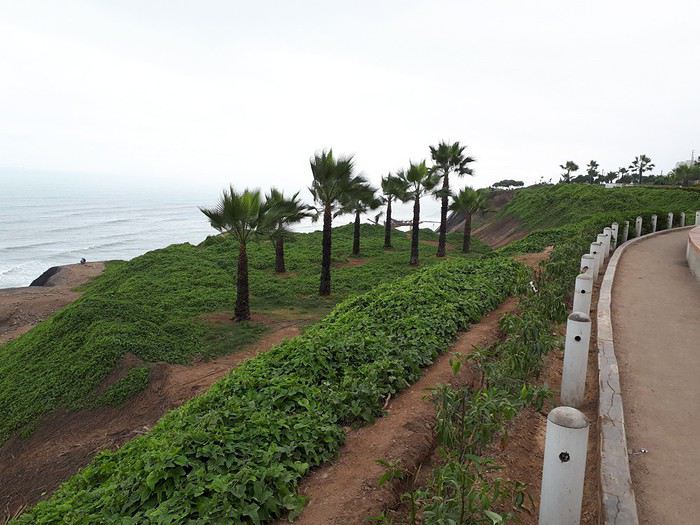
Retour à l’auberge, on saute dans un taxi direction la gare routière. On apprend que le repas du soir ainsi que le petit déjeuner sont servis à bord. On avait prévu quelques courses, tant pis ou tant mieux ! Nous embarquons donc pour Arequipa, notre prochaine étape, 19h de bus plus loin.
Jour 3
Nous nous réveillons en douceur dans le bus qui roule toujours. Les paysages qui défilent sont plutôt désertiques. On sait que la route est encore longue mais ça se passe bien. On nous sert un petit déjeuner basique mais appréciable. La grisaille laisse place peu à peu à un joli ciel bleu.
Il est midi lorsque nous arrivons à Arequipa. Un coup de taxi plus tard, nous découvrons notre hôtel pour les 3 prochaines nuits, une grande chambre confortable qui donne sur une jolie terrasse.
L’ambiance change complètement ici, il fait un grand soleil et une douce chaleur. Nous découvrons une ville plutôt calme avec des rues pavées et des bâtiments dans un style coloniale. C’est super sympa, on sent qu’on va s’y plaire ! Après avoir grignoté un morceau on part découvrir le centre-ville, on flâne, on boit du jus de fruit frais.
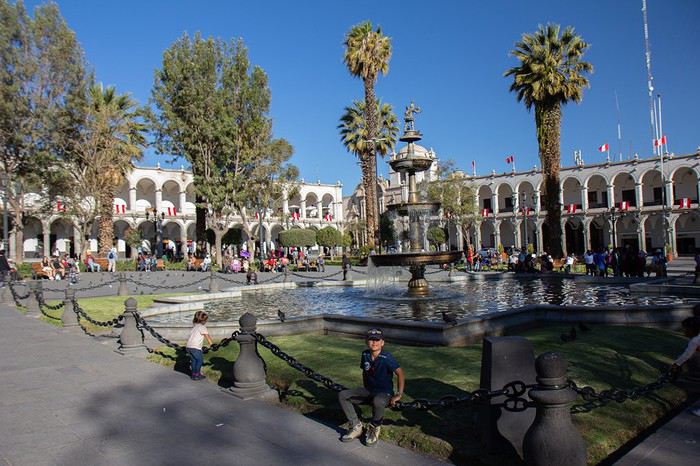
Le soir, on dîne dans un bar/restaurant qui diffuse la demi-finale de la Copa America, le Pérou joue contre le Chili, il y a de l’ambiance… Et c’est le Pérou qui se qualifie pour la finale 3-0 ! Déjà que les péruviens klaxonnent à longueur de journée, alors là c’était une symphonie !
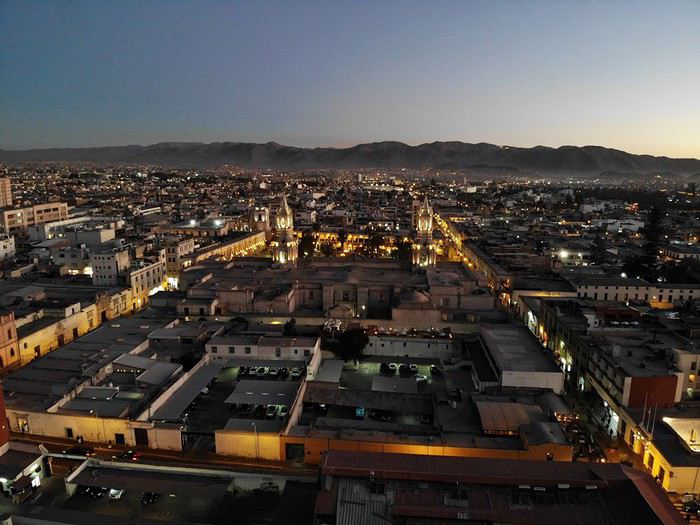
Jour 4
On découvre le copieux petit déjeuner de notre hôtel, on se régale et on prend des forces !
On part ensuite visiter le monastère Santa Catalina. C’était le lieu de résidences de religieuse jusqu’en 1969. Il est très bien préservé, ses murs sont colorés et l’endroit est très fleuri. C’est vraiment très beau. Les enfants ont aimé se perdre dans les nombreuses pièces qui communiquent entre-elles, jouer avec le grand lavoir ou encore se promener dans les étroites allées de ce beau monastère. On a bien pu se rendre compte de leurs conditions de vie.
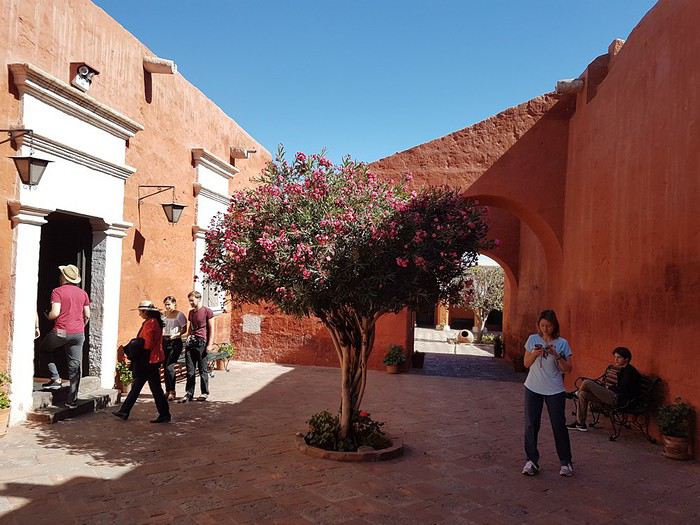
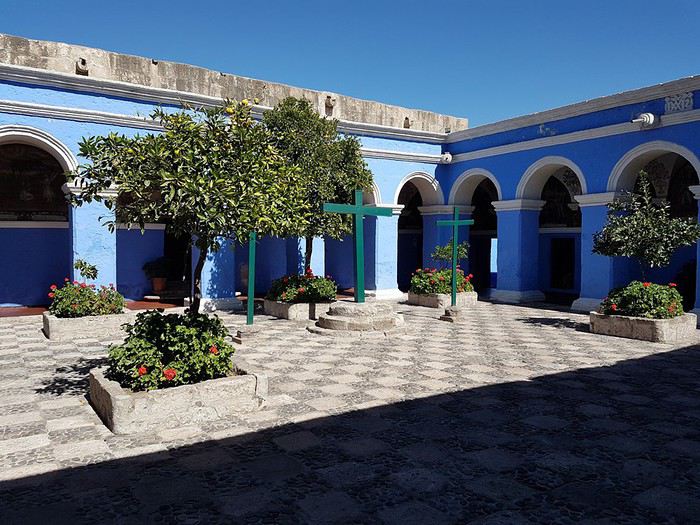
Pour le déjeuner, nous testons une adresse qui nous a été recommandé par d’autres voyageurs, le restaurant Ratatouille. Ils font de la cuisine française et les murs sont couverts de vieilles affiches de la côte d’Azur. On y mange très bien pour pas très cher. On reviendra !
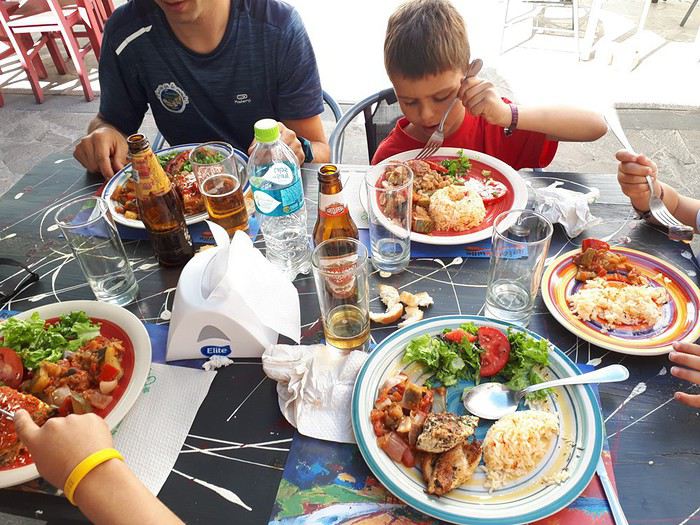
Les enfants fatiguent et on décide de rentrer pour une sieste. C’est l’occasion d’avancer les carnets de bord de chacun et pour d’autre de jouer avec le drone. On repart ensuite à la découverte des marchés couverts de souvenirs, un lieu de torture pour les enfants car ils voudraient tout acheter mais on ne peut plus rien mettre dans les sacs.
Jour 5
Nouveau petit déjeuner au calme sur notre terrasse. On se sent bien ici ! Ce matin, on décide de partir à la découverte d’un autre quartier d’Arequipa. On sort de la vieille ville. L’ambiance n’est pas la même, ça grouille de véhicules en tous genres, c’est bruyant et ça sent la pollution comme dirait Baptiste. On se dirige vers le quartier de Yanahueva qui a la particularité d’avoir une jolie petite place mais aussi un mirador avec une belle vue dégagée sur les volcans de la région. On confirme que la vue est superbe !
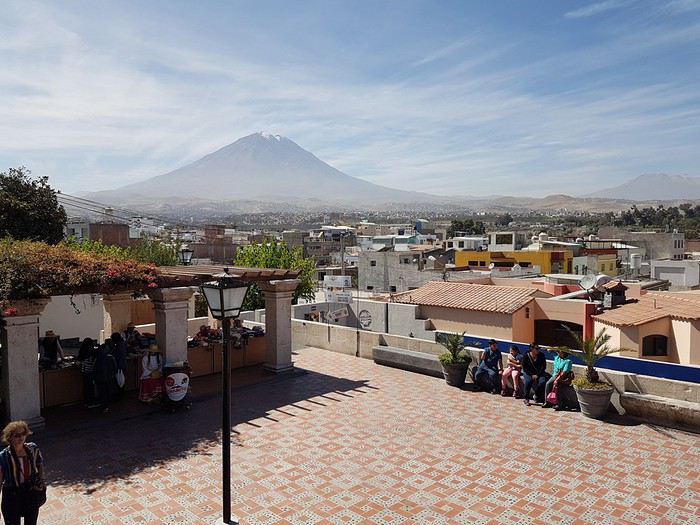
Puis les après-midis se suivent et se ressemblent, Julia fait la sieste, les garçons jouent aux cartes, on traîne et ça fait du bien après les semaines un peu speed d’avant le départ. On ressort ensuite se balader, cette ville est vraiment agréable, on découvre de nouveaux passages, on visite l’église de la Plaza de Armas.
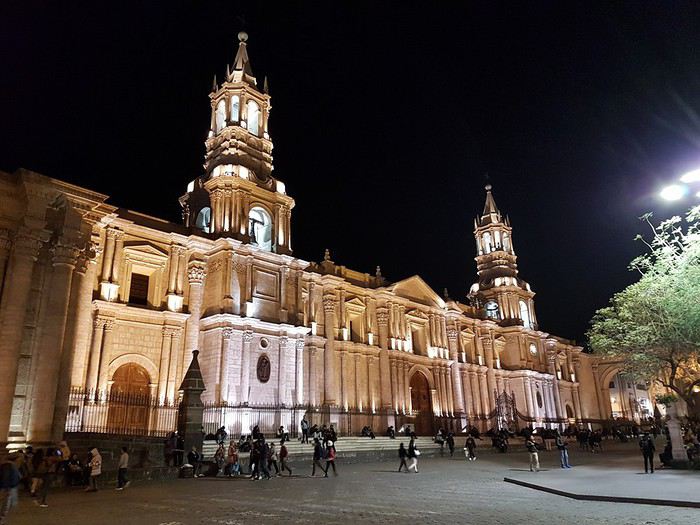
Puis il est temps de rentrer faire nos sacs, demain nous reprenons le bus pour une nouvelle destination : Yanque (dans un prochain article) !
Pour plus d'infos sur nos adresses et infos technique ICI.
Jour 1 Après un départ chaotique, une correspndance loupée à Madrid, une courte dans la capitale espagnole, un 2ème vol non prévu pour Amsterdam, nous décollons enfin pour Lima. 12h de vol plus tard, nous y voilà. Même s'il n'est que 18h là-bas quand nous arrivons, il est 1h du matin en France. On trouve nos bagages et un bus rapidement mais les enfants sont crevés et s'écroulent dans le bus. La ville est bien embouteillée et il nous faut 1h pour rejoindre notre quartier. Les 500 mètres à faire à pied sont compliqués, ça râle dans tous les sens ! Il faut dire qu’il fait nuit, il bruine, ça fait 10 fois qu’on réveille les enfants pendant leur sommeil, mais on n’a pas le choix ! Nous prenons rapidement nos chambres, pas le top du confort cette 1ère auberge mais ça fera l'affaire pour une nuit. Il est presque 21h, tout le monde dors.
Jour 2
Malgré la fatigue, le décalage horaire nous fait réveiller assez tôt. On en profite pour réserver notre bus pour le soir.
Après une petite discussion avec le gérant de l'auberge pour quelques conseils, on part à la recherche d'un endroit où prendre un petit déjeuner. On trouve un café local qui nous parait pas mal, de bons jus de fruits frais et quelques sandwichs. Nous ne sommes encore pas très à l'aise avec l'espagnol et comme la personne ne parle pas du tout anglais, on prend plusieurs choses au hasard et on se retrouve avec un sandwich au fromage, à l'œuf et à l'avocat. Surprenant mais très bon !
Nous n'avons pas beaucoup de temps à consacrer à Lima alors on se contente de se promener dans notre quartier, Miraflores. On va jusqu'à l'océan, on y trouve une aire de jeux pour les enfants.
Retour à l’auberge, on saute dans un taxi direction la gare routière. On apprend que le repas du soir ainsi que le petit déjeuner sont servis à bord. On avait prévu quelques courses, tant pis ou tant mieux ! Nous embarquons donc pour Arequipa, notre prochaine étape, 19h de bus plus loin.
Jour 3
Nous nous réveillons en douceur dans le bus qui roule toujours. Les paysages qui défilent sont plutôt désertiques. On sait que la route est encore longue mais ça se passe bien. On nous sert un petit déjeuner basique mais appréciable. La grisaille laisse place peu à peu à un joli ciel bleu.
Il est midi lorsque nous arrivons à Arequipa. Un coup de taxi plus tard, nous découvrons notre hôtel pour les 3 prochaines nuits, une grande chambre confortable qui donne sur une jolie terrasse.
L’ambiance change complètement ici, il fait un grand soleil et une douce chaleur. Nous découvrons une ville plutôt calme avec des rues pavées et des bâtiments dans un style coloniale. C’est super sympa, on sent qu’on va s’y plaire ! Après avoir grignoté un morceau on part découvrir le centre-ville, on flâne, on boit du jus de fruit frais.
Le soir, on dîne dans un bar/restaurant qui diffuse la demi-finale de la Copa America, le Pérou joue contre le Chili, il y a de l’ambiance… Et c’est le Pérou qui se qualifie pour la finale 3-0 ! Déjà que les péruviens klaxonnent à longueur de journée, alors là c’était une symphonie !
Jour 4
On découvre le copieux petit déjeuner de notre hôtel, on se régale et on prend des forces !
On part ensuite visiter le monastère Santa Catalina. C’était le lieu de résidences de religieuse jusqu’en 1969. Il est très bien préservé, ses murs sont colorés et l’endroit est très fleuri. C’est vraiment très beau. Les enfants ont aimé se perdre dans les nombreuses pièces qui communiquent entre-elles, jouer avec le grand lavoir ou encore se promener dans les étroites allées de ce beau monastère. On a bien pu se rendre compte de leurs conditions de vie.
Pour le déjeuner, nous testons une adresse qui nous a été recommandé par d’autres voyageurs, le restaurant Ratatouille. Ils font de la cuisine française et les murs sont couverts de vieilles affiches de la côte d’Azur. On y mange très bien pour pas très cher. On reviendra !
Les enfants fatiguent et on décide de rentrer pour une sieste. C’est l’occasion d’avancer les carnets de bord de chacun et pour d’autre de jouer avec le drone. On repart ensuite à la découverte des marchés couverts de souvenirs, un lieu de torture pour les enfants car ils voudraient tout acheter mais on ne peut plus rien mettre dans les sacs.
Jour 5
Nouveau petit déjeuner au calme sur notre terrasse. On se sent bien ici ! Ce matin, on décide de partir à la découverte d’un autre quartier d’Arequipa. On sort de la vieille ville. L’ambiance n’est pas la même, ça grouille de véhicules en tous genres, c’est bruyant et ça sent la pollution comme dirait Baptiste. On se dirige vers le quartier de Yanahueva qui a la particularité d’avoir une jolie petite place mais aussi un mirador avec une belle vue dégagée sur les volcans de la région. On confirme que la vue est superbe !
Puis les après-midis se suivent et se ressemblent, Julia fait la sieste, les garçons jouent aux cartes, on traîne et ça fait du bien après les semaines un peu speed d’avant le départ. On ressort ensuite se balader, cette ville est vraiment agréable, on découvre de nouveaux passages, on visite l’église de la Plaza de Armas.
Puis il est temps de rentrer faire nos sacs, demain nous reprenons le bus pour une nouvelle destination : Yanque (dans un prochain article) !
Pour plus d'infos sur nos adresses et infos technique ICI.
Quelle autonomie pour un voyage à vélo électrique? English translation pending
Bonjour. Nous envisageons de passer à l'électrique pour nos périples à vélo. Ce qui m'embête c'est l'autonomie des batteries.
Pensez vous qu'on peut faire 80 km avec une batterie de 500 wh, des sacoches pesant environ 25kilos, et 1000 mètres de dénivelé? Je ne pense pas acheter une batterie supplémentaire pour l'instant, le vélo que j'envisage d'acheter (Bergamont amsterdam) est bien assez cher comme ça. Je ne compte pas rouler en mode "sport" ou "turbo" non plus, et économiser ma batterie, étant plutôt sportifs.
Merci de me faire part de vos expériences.
Pensez vous qu'on peut faire 80 km avec une batterie de 500 wh, des sacoches pesant environ 25kilos, et 1000 mètres de dénivelé? Je ne pense pas acheter une batterie supplémentaire pour l'instant, le vélo que j'envisage d'acheter (Bergamont amsterdam) est bien assez cher comme ça. Je ne compte pas rouler en mode "sport" ou "turbo" non plus, et économiser ma batterie, étant plutôt sportifs.
Merci de me faire part de vos expériences.
Un bon itinéraire à vélo partant de Toulouse? English translation pending
Salut, j'ai 23 ans je viens de m'inscrire sur le forum.
Voila, j'ai récemment eu l'idée sur un coup de tête de faire Toulouse Bordeaux en vélo en suivant le canal de la garonne. J'ai donc enfilé mon sac à dos, je me suis empalé sur mon vélo decath entré de game et j'ai réalisé mes 270 bornes en 2 jours. Épuisé en arrivant à Bordeaux mais absolument ravis de mon expérience j'ai commencé à regarder des vidéos sur le bikepaking. Amateur de roadtrips et de randonnées je ne connaissais pas ce concept et j'ai eu comme un coup de foudre. Il était possible de parcourir des distances folles uniquement à la force de ses jambes. Le lendemain de mon arrivé je me suis fais voler mon vélo, j'ai eu tellement de mal à supporter cet odieux acte j'ai instinctivement saisi l'occasion comme excuse pour craquer mes économies d'étudiants dans un vélo excessivement coûteux pour mon expérience de cycliste du dimanche. https://www.cyclable.com/16200-velo-gravel-genesis-croix-de-fer-10.html
Coup de foudre, me voila accompagné d'une fidèle monture blanche avec presque tout en main pour partir vivre des aventures folles. ( j'ai plus d'argent pour équiper ma monture ).
Cependant même si tout bikepaker avec de l'expérience se moquerait de moi, j'ai un sac à dos et je me vois déjà partir faire le tour de l'espagne en vélo et vivre d'amour et d'eau fraiche durant tout l'été.
Sauf qu'on m'a toujours rappelé que peu importe le domaine il faut y aller "progressivement" et j'adore visiter nos petits villages français et contempler notre magnifique patrimoine culturel et surtout gastronomique!
Donc revenons en au sujet principal je cherche une idée d'itinéraire autre que "suivre le canal" pour aller vadrouiller dans le sud de la france ( en partant de toulouse ) équipé du strict minimum dans mon sac à dos millet de 40L.
Ou sinon je cherche toutes références ( littéraire numérique ) pédagogique concernant cette "nouvelle" mode qu'est le bikepacking.
merci.
Voila, j'ai récemment eu l'idée sur un coup de tête de faire Toulouse Bordeaux en vélo en suivant le canal de la garonne. J'ai donc enfilé mon sac à dos, je me suis empalé sur mon vélo decath entré de game et j'ai réalisé mes 270 bornes en 2 jours. Épuisé en arrivant à Bordeaux mais absolument ravis de mon expérience j'ai commencé à regarder des vidéos sur le bikepaking. Amateur de roadtrips et de randonnées je ne connaissais pas ce concept et j'ai eu comme un coup de foudre. Il était possible de parcourir des distances folles uniquement à la force de ses jambes. Le lendemain de mon arrivé je me suis fais voler mon vélo, j'ai eu tellement de mal à supporter cet odieux acte j'ai instinctivement saisi l'occasion comme excuse pour craquer mes économies d'étudiants dans un vélo excessivement coûteux pour mon expérience de cycliste du dimanche. https://www.cyclable.com/16200-velo-gravel-genesis-croix-de-fer-10.html
Coup de foudre, me voila accompagné d'une fidèle monture blanche avec presque tout en main pour partir vivre des aventures folles. ( j'ai plus d'argent pour équiper ma monture ).
Cependant même si tout bikepaker avec de l'expérience se moquerait de moi, j'ai un sac à dos et je me vois déjà partir faire le tour de l'espagne en vélo et vivre d'amour et d'eau fraiche durant tout l'été.
Sauf qu'on m'a toujours rappelé que peu importe le domaine il faut y aller "progressivement" et j'adore visiter nos petits villages français et contempler notre magnifique patrimoine culturel et surtout gastronomique!
Donc revenons en au sujet principal je cherche une idée d'itinéraire autre que "suivre le canal" pour aller vadrouiller dans le sud de la france ( en partant de toulouse ) équipé du strict minimum dans mon sac à dos millet de 40L.
Ou sinon je cherche toutes références ( littéraire numérique ) pédagogique concernant cette "nouvelle" mode qu'est le bikepacking.
merci.
La Zambie en été, parcours et distances English translation pending
Bonjour,
dans mon cerveau, l'Afrique Australe me relance (j'espère que ce n'est pas grave !) et du coup je me dis que la Zambie pourrait être une destination à connaitre au vu des quelques carnets parcourus.
J'en suis aux balbutiements. et donc je voudrais voir d'abord dans les grandes lignes si le parcours est jouable dans mon timing, car j'ai lu que les distances sont importantes en Zambie et je ne voudrais pas construire un trip trop chronophage en km par rapport au temps passé dans les parcs.
Bien entendu c'est en 4*4 avec tentes que je veux faire ce parcours. J'ai visité la Namibie (3 semaines) de cette façon en étant le chauffeur. Je n'ai pas une très grande expérience de 4*4 (l'autre fois c'était à Oman, deux semaines), mais je ne pense pas non plus être un lapin de 3 semaines. Au Botswana, j'avais un chauffeur, donc ça compte pas, même si j'ai bien observé sa façon de faire.
A mon avis l'arrivée à Lusaka semble un bon compromis (je suis allé à Victoria Falls côté Zimbawe, donc cela me permet de ne pas caler forcément Livingstone).
Les parcs que j'ai envie de voir sont Kafue, North Luangwa, South Luangwa et Lower Zambezi. Sur le dernier c'est qu'il me semble être sur la route entre Lusaka et South Luangwa, mais ce n'est pas celui qui est prioritaire. Il y a peut être d'autres lieux à conseiller ...
A la louche j'ai compté 3 jours par parc (c'est une moyenne car peut êrte certains méritent plus et d'autres moins), ce qui fait 12 jours en parc et comme je veux partir 3 semaines cela reste 9 jours pour caler les vols Europe/Afrique et les trajets entre parcs.
D'où la première question : C'est jouable ?
Deuxième question : Le loueur de voiture.
J'ai vu Hemingway basé sur Livingstone. J'imagine qu'ils acheminent des véhicules sur Lusaka
J'ai lu aussi que Bushlore pouvait d'AFS faire un transfert jusqu'en Zambie dans des prix corrects.
Y-a-t-il d'autres possibilités ?
Troisième question: Quand commencer le gros du boulot (réservations) ?
Merci à tous a+
Merci à tous a+