Results for "Egine+|+123+>+211"
1249 results found.
qui peut m'aider pour mes valises pour mon séjour à Cuba??? English translation pending
🙂bonjour tout le monde...
je vous écris, , car j ai un maususse de problème. 🤪
voyez-vous je suis entrain de me faire rire de moi, par mes copines qui partent avec moi. 😛
et comme c est mon premier voyage, je suis une personne insécure (un peu😕)mais tres prévoyante, et très (p-etre trop)organiser.
hors, cher(e) coovoyageur, je me retourne vers vous, vous qui avez voyager plus que moi,
donner moi des idées, à quoi mettre dans mes baguages et ne pas mettre dans mes baguages.
car je part juste une semaine à cuba.
alors, j attends de vos suggestions avec grand plaisir...
tendrement ...... capucine.
je vous écris, , car j ai un maususse de problème. 🤪
voyez-vous je suis entrain de me faire rire de moi, par mes copines qui partent avec moi. 😛
et comme c est mon premier voyage, je suis une personne insécure (un peu😕)mais tres prévoyante, et très (p-etre trop)organiser.
hors, cher(e) coovoyageur, je me retourne vers vous, vous qui avez voyager plus que moi,
donner moi des idées, à quoi mettre dans mes baguages et ne pas mettre dans mes baguages.
car je part juste une semaine à cuba.
alors, j attends de vos suggestions avec grand plaisir...
tendrement ......
capucine.Vélo dans les bus euroline ou équivalent English translation pending
Je veux passer un mois en Roumanie en cyclo-camping cet été 2005.
Mettre le vélo dans les bus euroline ou grandes lignes européennes posent-ils des problèmes ou des surcoûts ?
Merci pour toute info.
Mettre le vélo dans les bus euroline ou grandes lignes européennes posent-ils des problèmes ou des surcoûts ?
Merci pour toute info.
Vivre en Amérique Latine, rêve ou réalité? English translation pending
Bonjour, comme beaucoup j'aimerais partir travailler en Amérique du Sud; en effet le bac (L, spé espagnol) se rapprochant vite (un peu trop d'ailleurs), j'aimerais savoir si tout ce qui est Argentine, Pérou etc. j'oublie ou pas, sachant que je serais pas ingénieur ou super cadre. En fait j'aimerais savoir si le mieux serait d'aller dans une fac, étudier laba donc, ou passer un diplome ICI et aller exercer LA BAS. Dans ce dernier cas, quelle licence/BTS que sais-je, serait la " + mieux " ? Sachant que bon, je suis plutot littéraire/langue/art, . Mais je suis motivée (j'ai 17ans) je vais passer aussi mon BAFA (aucun rapport, mais peut-être que si en fait), et j'aimerais que vous m'aiguiller s'il vous plaît dans ces choix si cornéliens, en me confrontant à vos parcours divers et variés. Parce que franchement, j'ai l'impression que tous les outils d'informations à l'orientation (Forcing', ONISEP etc.) ils sont pas du tout dans le réel, ça à l'air assez abstrait, alors que VOUS vous savez où est le taf, et quelles licences ou diplomes ne valent rien.Muchas muchas gracias si pueden ayudame.Disfrutan tanbién a todos ya que son ahi, hasta luego
Train Lima - Huancayo (Pérou)? English translation pending
Bonjour,
Avec mon amie nous allons faire 2 semaines et demie au Pérou au début du mois de mars. Nous sommes très interessé à faire le trajet Lima-Huancayo en train. Cependant nous nous demandons si il est possible de faire une étape entre ces deux villes, notamment à cause du problème de l'altitude. Nous avons aussi pu lire que les horaires varient fréquement et qu'il n'y a plus beaucoup de train qui font ce trajet.
Pourriez-vous nous donner des idées concernant ce trajet?
merci
Avec mon amie nous allons faire 2 semaines et demie au Pérou au début du mois de mars. Nous sommes très interessé à faire le trajet Lima-Huancayo en train. Cependant nous nous demandons si il est possible de faire une étape entre ces deux villes, notamment à cause du problème de l'altitude. Nous avons aussi pu lire que les horaires varient fréquement et qu'il n'y a plus beaucoup de train qui font ce trajet.
Pourriez-vous nous donner des idées concernant ce trajet?
merci
Quelles villes d'Allemagne et d'Espagne visiter? English translation pending
Je vais voyager en Allemagne et en Espagne cette été. Je voudrais savoir quelle ville je devrais visiter et pourquoi. (Festivals, paysages, urbanité, culture, attractions, architecture, bars)
* *J'aimerais également me faire quelques contacts... si vous êtes intéressez, ajoutez-moi votre msn : mr_beebee@hotmail.com
Merci!
* *J'aimerais également me faire quelques contacts... si vous êtes intéressez, ajoutez-moi votre msn : mr_beebee@hotmail.com
Merci!
Club aldiana au Sénégal English translation pending
😉Bonsoir, Parmi tous les voyageurs de ce forum, y a t il quelqu'un qui soit allé au club ALDIANA au Sénégal. J'aimerai avoir vos impressions sur ce club.
Le mois de décembre est il un bonne période pour le Sénégal.
Merci d'avance pour tous vos renseignements. A bientot
😏Maxima
Le mois de décembre est il un bonne période pour le Sénégal.
Merci d'avance pour tous vos renseignements. A bientot
😏Maxima
Les Philippines, pour changer English translation pending
Dimanche 19/10/2003
Ouf, nous sommes enfin dans le 747 qui va nous amener à Manille. L'avion est plein comme un œuf. A Roissy, on nous a dit qu'il était surbooké de 73 places. Du coup, nous ne regrettons plus d'être arrivés un peu trop en avance. Nous avions prévu plus de temps que d'habitude à cause des factures de médicaments à faire viser par la Douane. En fait, l'opération a pris 5 mn. Aucun contrôle, il fallait seulement le double des factures que j'avais eu la bonne idée d'apporter.
Ensuite 55 mn de vol dans un B737 où nous étions bien serrés pour arriver à Francfort. Une heure plus tard, nous embarquons dans le 747, en premier SVP, grâce au jeune âge de Marc. Plus tard, nous regretterons le temps où voyager avec des enfants nous donnait des petits privilèges.
Lundi 20/10 22H
Manille, grande chambre d'hôtel impersonnelle, deux lits d'une personne seulement, mais deux grandes pièces et une banquette pour 1800P (les chambres à 1500P étant soi-disant toutes prises), et il y a une piscine. Pour la conversion des pesos en euros, ce n'est pas évident : 1€=63P, mais en francs, c'est très simple puisque 10P=1F. On va se retrouver à penser en francs alors que je fais la guerre à la maison pour qu'on n'en parle plus.
Nous devrions dormir car demain, nous nous levons à 6h pour prendre l'avion à 8h, mais pour notre horloge interne, il n'est que 16h. De plus, on se croirait à New-York à cause des incessants hurlements des sirènes que nous entendons depuis l'arrivée à l'hôtel. Eric a remarqué en descendant à la piscine un énorme incendie à 300m environ. D'où les sirènes. On dirait que tous les pompiers de Manille (12 millions d'habitants) convergent vers notre chambre. Pour dîner, nous sommes allés dans les rues adjacentes à l'hôtel et nous avons fini par manger dans la rue une soupe avec une assiette de riz et porc adobo, 190P pour nous 4. La sauce adobo est LA sauce philippine : sauce brune au soja, vinaigre et sucre. Nous voilà très vite dans le bain. Pas vu de blanc depuis notre arrivée à l'hôtel. Les sirènes continuent, le sommeil risque d'être léger. Vivement demain, Puerto Princesa devrait être beaucoup plus calme.
Mardi 21/10 le soir
Fin de la première journée, souvent la plus délicate dans ce genre de voyage. L'incendie d'hier était un très gros sinistre, c'est une gare de bus qui a brûlé, le feu s'étendant ensuit au bidonville voisin. Curieusement, la municipalité voulait récupérer le terrain du bidonville pour des projets immobiliers, mais les habitants s'y opposaient. Plus maintenant.
Pour arriver à Palawan, tout s'est passé comme prévu, après une nuit où personne n'a bien dormi sauf … moi. Incroyable. Une heure d'avion et nous voilà dans le petit aéroport provincial de Puerto. Nous récupérons les bagages et sortons.
Nous repérons immédiatement Lucie. Apparence sans surprise : femme brune, alerte, cheveux courts, lunettes, pas de maquillage. Pourrait interpréter une infirmière dans un téléfilm. Premier contact chaleureux. Elle est venue avec un couple d'amis philippins et leur véhicule, sorte de mini-songthaew (pour ceux qui connaissent la Thaïlande) bien pourri appelé ici multicab. Ouf, c'en est fini des 40 kg de médicaments et de vêtements que nous avons apportés pour le dispensaire.
10 mn plus tard, nous voilà à la pension où habite Lucie quand elle descend à Puerto. Le temps de poser les bagages et nous nous asseyons à l'extérieur avec Lucie. Nous avons bien sûr beaucoup à nous dire. Nous ne nous connaissons que par internet, il y a donc beaucoup de curiosité réciproque.
Comme nous l'avions deviné, son assoc se résume à 2 membres actifs, Lucie et Bernard, son ex-compagnon qui s'occupe de l'intendance en France. Le projet de dispensaire est un projet personnel de Lucie qu'elle mijote depuis une vingtaine d'années. Elle a attendu que ses 3 enfants (20, 23 et 25 ans maintenant) soient autonomes pour se lancer. Elle a beaucoup voyagé en Asie, avec en arrière-pensée le choix du pays où elle installerait son dispensaire. Elle a finalement choisi Palawan, à cause des besoins bien sûr, mais aussi parce que la majorité des habitants se débrouille bien en anglais. Le financement est en grande partie personnel. Le projet de couplage du dispensaire avec l'orphelinat a été abandonné, le directeur français de l'orphelinat étant parti avec la caisse après des rumeurs (fondées semble-t-il) de pédophilie (!). L'établissement est maintenant fermé.
Après quelques heures de papotage, nous allons faire un tour en ville. La pension est située en plein centre. Un bol de nouilles dans un resto viet, pas terribles, rien à voir avec les vietnamiens de l'avenue d'Ivry. Il y a sur Palawan, une minorité viet. A l'époque des boat people, les Philippines ont accueilli sou la pression "amicale" des USA, un contingent de réfugiés. Une partie d'entre eux a été installée sur Palawan où ils se sont assez bien intégrés. Il y a un quartier vietnamien, à la périphérie de Puerto, après l'aéroport.
Un petit tour chez un money changer pour changer quelques euros. Tout ça sans quitter l'avenue Rizal, épine dorsale de la ville qui n'a, de ce qu'on a vu aujourd'hui, aucun charme. Le pays est pauvre et ça se voit. Rizal est saturée de tricycles (prononcer à l'anglaise traillecikeul), sortes de tuk-tuk en plus rustique (si, si, c'est possible) qui créent un nuage de fumée puante nimbant tout le centre ville. Il y en avait 3000 à Puerto, mais le maire a récemment limité le nombre à 2000. C'est LE moyen de transport pour se déplacer en ville. Tarif : 4P/pers si la distance ne dépasse pas 2km ; au-delà, il faut négocier. On peut tenir à 5 dedans dont une personne sur la selle derrière le chauffeur. Ca paraît dingue, mais nous l'avons fait.
Petite sieste, puis nous allons dîner dans un des meilleurs restos de la ville, le Ka Lui, encore sur Rizal. Très belle salle joliment décorée avec parquet de bambou sur lequel nous marchons pieds nus. Pidio, le petit ami philippin de Lucie, nous accompagne. Il parle si doucement que nous avons du mal à le comprendre. Il est à Palawan pour son travail qui consiste à cartographier les zones de forêt vierge de l'île à partir de photos du satellite Spot, puis à vérifier sur place. Il est originaire de Manille. Le repas, constitué de plusieurs plats de poissons et crustacés est délicieux. Nous ne laissons rien. En amuse-gueule, nous avons dégusté des algues appelées ici "latok" et complètement inconnues chez nous. C'est croquant avec des vésicules qui craquent sous la dent et un goût de mer, un peu comme de l'huître. Ne pas confondre latok et lamok (moustique). Excellent repas, Lucie est étonnée de voir les garçons se régaler autant.
Mercredi 22/10, le soir
Hier, grosse nuit pour tout le monde (10 à 12 heures de sommeil selon les cas). Temps toujours menaçant. Un typhon passe près de nous, pas de chance. Déjeuner chez les amis de Lucie qui nous ont accueillis à l'aéroport. Malgré les consignes de Lucie, ils avaient préparé un super repas avec latok, coquillages, poulet adobo, et deux poissons différents servis avec une délicieuse sauce aigre-douce, le tout accompagné d'un légume inconnu (y compris de Lucie) et de riz bien sûr. C'était aussi bon qu'au resto d'hier soir. Accueil chaleureux de toute la famille, frères sœurs, grands-parents, … etc… plus en special guest, un beau-frère soi-disant journaliste pour l'armée et membre des services secrets en réalité. Rond, jovial, gourmand et très sympa, il a déjà rendu pas mal de services à Lucie depuis qu'elle a décidé de s'installer ici. Nous avons été reçus royalement alors que ce sont des gens très pauvres, Leia ne travaillant pas et Jong n'ayant pas de travail fixe. Leurs 2 fils de 8 et 10 ans (c'était l'anniversaire de ce dernier et nous lui avons offert 200P suivant le conseil de Lucie) étaient tétanisés et sont restés cloîtrés dans la petite maison. Il occupent 2 pièces d'une maison à loyer réduit appartenant à leur église, les logements voisins étant occupés par les frères de Jong. Si j'ai bien compris, le père, très malade, était le chef de cette communauté religieuse, avant de passer le relais à un de ses fils.
Avec Lucie, Jong et Leia, nous sommes ensuite allés voir un zoo à la sortie de la ville. Sorte de réserve d'animaux spécifiques de Palawan, nous avons vu des crocodiles de mer et de rivière (les plus gros, jusqu'à 9m), un aigle serpentaire, des aigles pêcheurs, …, et un animal que nous ne connaissions pas, le bearcat, petit plantigrade spécifique de Palawan. Sympa et ça nous sortait un peu. Chance, il n'a pas plu pendant la visite.
Le soir dîner au resto Kinabusch, très bon. Calamars grillés sur plaque de bronze pour les garçons, même chose mais avec du poisson en plus pour AM et soupe aigre aux crevettes, spécialité du coin pour moi. Pidio était avec nous. Il rentre demain à Manille pour 2 semaines de congés. Comme à chaque fois, il ira demain matin tôt au marché pour acheter 20 kg de poisson destiné �� sa famille. Le poisson est nettement moins cher ici qu'à Manille. Lucie semble bien amoureuse. Au resto, impossible de tout payer malgré nos efforts, Pidio a même payé plus de la moitié (850P en tout pour nous 6).
Pidio est marié, enfin officiellement. Aux Philippines, le divorce est interdit (toujours l'église catho), ce qui est embêtant quand on veut refaire sa vie. Le couple de Pidio ne marchait plus bien et sa santé non plus. Grosse fatigue et brûlures d'estomac. Pidio va faire des analyses et le médecin lui demande où il prend ses repas. Pidio répond qu'il mange toujours chez lui, le médecin lui conseille alors de manger à l'extérieur pendant quelques temps. Son épouse avait une liaison et, voulant mettre un terme définitif à leur union, avait commencé à l'empoisonner. Pidio est devenu méfiant avec les femmes.
Le soir, nous nous sommes esquivés tôt pour les laisser passer la soirée ensemble. Après le déjeuner, coupure générale d'électricité, il paraît que ça arrive souvent ici. Le courant n'est revenu qu'en fin d'après-midi, juste avant la nuit.
Vendredi 24/10 9h
Sommes dans le bus de Port Barton attendant le départ, il pleut à seaux. Hier, pluie quasi ininterrompue, ça devient pénible. Sommes allés à Luzviminda (LUZon-VIsaias-MINdanao, 3 îles dont sont originaires les habitants du village) pour voir la maison-dispensaire de Lucie. Elle a loué un multicab car celui de Jong est trop pourri pour faire la route. Il y a environ 80 kg de bagages dont les 2 sacs que nous avons apportés. Jong, Leia et leur plus jeune fils nous accompagnent.
Voyage très lent, 1h30 pour faire 35 km. Luziminda est sur la route du sud, et donne sur la baie de Puerto. C'est un village d'agriculteurs et de pêcheurs. Un petit sentier mène à une première grande maison. C'est celle d'un américain qui n'y passe que quelques jours par an. En son absence, son gardien Greg peut en user à sa guise. Greg est le propriétaire du terrain où Lucie a fait construire. Passé cette maison, nous suivons un sentier jusqu'à la maison de Lucie. La maison de Greg et Deborah est un peu plus loin. Située sur une petite colline, la maison de Lucie est fonctionnelle. Une partie habitation de 30 m² avec un séjour-cuisine et 2 petites chambres, plus une salle d'eau attenante (non comptée dans les 30 m² ; une pièce de 20 m² pour le dispensaire. Une terrasse orientée ouest. Confort minimum, mais il y a quand même un frigo, une gazinière, une télé et 2 ensembles de fauteuils et canapés en bambou. Pas d'eau courante pour le moment, une pompe à main en contrebas.
Le site est agréable, on domine la verdure de laquelle émerge le toit de 3 habitations éparpillées. La maison est construite sur une solide base de béton montant jusqu'à 50 cm du sol, puis des panneaux de bambou tressé qu'il faudra revernir régulièrement, de même qu'il faudra traiter souvent toutes les parties en bois contre les termites. Comme trou perdu, c'est réussi. Il y a un sari-sari (épicerie) pas loin et c'est tout. Tout le reste doit être acheté à Puerto.
Nous aurions bien aimé faire une promenade pour découvrir les alentours et descendre jusqu'au port de pêche distant de 5 km, mais il pleut trop. Sommes restés sur la terrasse de 11h à 16h avec Lucie, Greg et Deborah, Jong et Leia, et leur fils qui s'est enfin déridé et qui joue bien avec Marc. Ils ont passé des heures à jouer avec 3 élastiques, ça change des tonnes de jouets dont nos enfants ne se servent pas. Deborah va aider Lucie au dispensaire qui ouvrira dans quelques semaines. Elle a l'air très gentille, mais ne parle pas bien anglais.
De retour à Puerto, je fais un saut au seul hypermarché de l'île, le NCCC qui se trouve tout près de la pension et y achète du rhum et du coca pour prendre l'apéro avec Lucie. A l'entrée du magasin, il y a une pancarte qui demande de déposer ses armes à la consigne. Tout le monde se fait palper avant de pénétrer dans la grande surface. Devant chaque banque, il y a un garde armé d'un fusil à pompe. J'ai demandé à Lucie s'il y avait souvent des braquages, réponse : non. C'est peut-être du folklore.
Après l'apéritif, nous allons dîner au Balinsasayaw, grand et excellent resto qui se trouve dans une rue parallèle à Rizal. Eric et moi partageons un plat de poisson cru mariné au kalamansi (petits agrumes de la forme d'une grosse bille et dont le jus a un goût entre le citron et la clémentine) et bien épicé et de succulents travers de porc.
Pendant le dîner, nous reparlons de ce que nous voulons faire le lendemain. Au début, nous avions prévu d'aller à Sabang pour voir la fameuse rivière souterraine, mais la route passe par un gué et il est tombé tellement d'eau que nous risquons de pas pouvoir passer. Lucie nous parle alors de Narra, un bled à 1h30 de route au sud, où un de ses copains tient un hôtel avec piscine au bord de la plage. Elle lui envoie un SMS pour savoir s'il y a de la place (3 bungalows seulement), auquel cas elle viendrait avec nous. Malheureusement, c'est plein. Nous décidons alors d'aller à Port Barton. C'est un petit village sur une plage de la côte ouest, à 150km au nord de Puerto, soit entre 4 et 12h (!) de jeepney. De là, nous pourrons éventuellement aller à Sabang en banca (bateaux traditionnels à double balancier) ou repartir vers Taytay et El Nido. Nous avons besoin de bouger, rester coincés à Puerto sous la pluie nous plombe le moral, surtout Anne-Marie qui est arrivée fatiguée et qui a mal dormi depuis.
Retour à l'hôtel. Après le coucher des enfants, nous nous retrouvons dehors avec Lucie et Roberto, le proprio de l'hôtel et ami de Lucie. Je ressors le rhum et nous finissons la soirée en rigolant bien, Roberto est très amusant et le rhum philippin n'est pas mauvais du tout, il fait penser au rhum cubain. Précisons que j'ai acheté la qualité supérieure, vieillie en fûts de chêne, à moins de 2 euros la bouteille. Roberto fait partie d'une des grandes familles de Puerto et il nous raconte plein d'histoires.
Revenons à aujourd'hui. Nous sommes donc installés dans le jeepney de Port Barton attendant le départ. Le terminal de bus et le marché ont récemment été déplacés du centre ville vers San Jose, un village à quelques km de Puerto afin de désengorger Puerto. Mais il y a toujours des bus qui partent du centre et qui font un arrêt à San Jose. Ici, rien n'est vraiment certain.
Ce matin, Pete, l'employé de nuit de la pension, très gentil et serviable, est allé vérifier que l'unique bus quotidien pour Port Barton partait bien du centre à 9h et nous a réservé des places. Nous arrivons en tricycle à 8h45. Le chauffeur nous dit qu'il ne partira qu'à 10h. Il pleut à verse et nous n'avons pas vu Lucie ce matin. La reverrons-nous ? Nous n'en savons rien, n'ayant alors aucune idée de notre itinéraire. De plus, il est possible de quitter Palawan par El Nido en avion ou bateau. Les conditions de voyage sont beaucoup plus rudes qu'en Thaïlande. Si le temps ne s'améliore pas rapidement, nous allons vers la galère. A 10h, le chauffeur vient spontanément nous prévenir que nous partirons un peu plus tard car il pleut trop. Pourquoi ?
A 10h30, la pluie est moins forte et nous partons. Nous comprenons tout de suite le problème du chauffeur : il n'y a pas d'essuie-glaces ! D'ailleurs, il n'y a pas de vitres au fenêtres, comme dans tous les jeepneys. Il y a tout de même un pare-brise que le chauffeur soulève en le maintenant ouvert avec un tasseau quand il ne pleut pas trop.
A 11h, nous sommes enfin sur la route, seule route goudronnée de l'île, dénommée sans honte "highway" et correspondant à une départementale en France. Le jeepney roule à bonne allure et à 14h, nous quittons la highway pour la piste de Port Barton. Jusque là, pas de problème, le jeepney s'arrête souvent pour embarquer ou débarquer des passagers et nous avons fait une pause déjeuner de 20 mn.
Maintenant, il s'agit de traverser l'île dans sa largeur (ici 22 km) par une piste de terre. Nous sommes optimistes et pensons qu'une heure suffira. Quelle erreur ! La piste est détrempée, parsemée d'ornières boueuses. Comme l'île est montagneuse, c'est une succession de montées et de descentes assez raides. Le jeepney part plusieurs fois en dérapage. AM et moi sommes assez crispés mais les enfants s'amusent bien. Il faut juste que le passager côté jungle fasse très attention à ne pas prendre de branche d'arbre dans la figure. Après la première fois, on est vigilant.
Une femme nous raconte que, de temps à autre, le jeepney se retrouve coincé ou en panne et que les passagers doivent alors passer la nuit sur place. Elle-même y a eu droit quelques mois auparavant. Entendant cela, AM flippe à l'idée de passer la nuit dans la jungle avec les moustiques, sangsues et autres bestiaux inquiétants. La femme se marre et je me demande si elle n'est pas un peu taquine.
Le chauffeur Toto est un as et connaît la route par cœur. Il faut dire qu'il ne fait que cet itinéraire avec son propre jeepney dénommé "Tiger" et qu'il habite Port Barton. Nous avons droit à tout excepté l'accident et la panne, ce qui est déjà bien. Un pont est endommagé, nous descendons tous et traversons le pont à pied avant d'observer la manœuvre de Toto. Nous nous enlisons 3 fois. La première, les 2 jeunes acolytes du chauffeur et des passagers du bus remplissent les ornières de pierres et nous passons. Les 2 suivantes, le jeepney est bien coincé et se dégage grâce au treuil intégré à l'avant comme sur un 4X4. Une fois, au moment de descendre, un passager empêche Marc de saisir une barre verticale, montrant nonchalamment un ver qui se tortille sur la barre. C'est une sangsue ! Je la prends avec un mouchoir en papier et la jette.
Nous arrivons finalement à bon port (Barton) à 16h30, donc nous avons mis 2h30 pour 22km. Nous nous installons à l'Eldorado, au nord du village. La GH est vide de touristes. Dîner sur place préparé par la patronne Lucy, une veuve philippine d'une cinquantaine d'années, très accueillante. Son mari était un australien né en Norvège dont elle a eu deux enfants, un garçon de 8 ans et une fille de 10. Alors que le garçon fait philippin, la fille, déjà très grande, offre un mélange étonnant, on dirait une scandinave aux yeux bridés et aux cheveux noirs, très jolie.
Très rapidement, Marc joue avec le petit garçon. Souvent, les gens pensent que voyager avec des enfants est un handicap alors que c'est souvent un moyen d'approcher plus vite les locaux.
Espérons que le soleil se montre enfin demain. Port Barton a l'air très sympa et nous n'avons pas vu de touriste, le seul étranger étant Mike qui nous a invité à passer chez lui où il vit avec son jeune compagnon philippin.
Nous voulions venir ici, pour changer des pays un peu trop balisés que sont La Thaïlande, Bali ou la Malaisie, c'est réussi.
Ouf, nous sommes enfin dans le 747 qui va nous amener à Manille. L'avion est plein comme un œuf. A Roissy, on nous a dit qu'il était surbooké de 73 places. Du coup, nous ne regrettons plus d'être arrivés un peu trop en avance. Nous avions prévu plus de temps que d'habitude à cause des factures de médicaments à faire viser par la Douane. En fait, l'opération a pris 5 mn. Aucun contrôle, il fallait seulement le double des factures que j'avais eu la bonne idée d'apporter.
Ensuite 55 mn de vol dans un B737 où nous étions bien serrés pour arriver à Francfort. Une heure plus tard, nous embarquons dans le 747, en premier SVP, grâce au jeune âge de Marc. Plus tard, nous regretterons le temps où voyager avec des enfants nous donnait des petits privilèges.
Lundi 20/10 22H
Manille, grande chambre d'hôtel impersonnelle, deux lits d'une personne seulement, mais deux grandes pièces et une banquette pour 1800P (les chambres à 1500P étant soi-disant toutes prises), et il y a une piscine. Pour la conversion des pesos en euros, ce n'est pas évident : 1€=63P, mais en francs, c'est très simple puisque 10P=1F. On va se retrouver à penser en francs alors que je fais la guerre à la maison pour qu'on n'en parle plus.
Nous devrions dormir car demain, nous nous levons à 6h pour prendre l'avion à 8h, mais pour notre horloge interne, il n'est que 16h. De plus, on se croirait à New-York à cause des incessants hurlements des sirènes que nous entendons depuis l'arrivée à l'hôtel. Eric a remarqué en descendant à la piscine un énorme incendie à 300m environ. D'où les sirènes. On dirait que tous les pompiers de Manille (12 millions d'habitants) convergent vers notre chambre. Pour dîner, nous sommes allés dans les rues adjacentes à l'hôtel et nous avons fini par manger dans la rue une soupe avec une assiette de riz et porc adobo, 190P pour nous 4. La sauce adobo est LA sauce philippine : sauce brune au soja, vinaigre et sucre. Nous voilà très vite dans le bain. Pas vu de blanc depuis notre arrivée à l'hôtel. Les sirènes continuent, le sommeil risque d'être léger. Vivement demain, Puerto Princesa devrait être beaucoup plus calme.
Mardi 21/10 le soir
Fin de la première journée, souvent la plus délicate dans ce genre de voyage. L'incendie d'hier était un très gros sinistre, c'est une gare de bus qui a brûlé, le feu s'étendant ensuit au bidonville voisin. Curieusement, la municipalité voulait récupérer le terrain du bidonville pour des projets immobiliers, mais les habitants s'y opposaient. Plus maintenant.
Pour arriver à Palawan, tout s'est passé comme prévu, après une nuit où personne n'a bien dormi sauf … moi. Incroyable. Une heure d'avion et nous voilà dans le petit aéroport provincial de Puerto. Nous récupérons les bagages et sortons.
Nous repérons immédiatement Lucie. Apparence sans surprise : femme brune, alerte, cheveux courts, lunettes, pas de maquillage. Pourrait interpréter une infirmière dans un téléfilm. Premier contact chaleureux. Elle est venue avec un couple d'amis philippins et leur véhicule, sorte de mini-songthaew (pour ceux qui connaissent la Thaïlande) bien pourri appelé ici multicab. Ouf, c'en est fini des 40 kg de médicaments et de vêtements que nous avons apportés pour le dispensaire.
10 mn plus tard, nous voilà à la pension où habite Lucie quand elle descend à Puerto. Le temps de poser les bagages et nous nous asseyons à l'extérieur avec Lucie. Nous avons bien sûr beaucoup à nous dire. Nous ne nous connaissons que par internet, il y a donc beaucoup de curiosité réciproque.
Comme nous l'avions deviné, son assoc se résume à 2 membres actifs, Lucie et Bernard, son ex-compagnon qui s'occupe de l'intendance en France. Le projet de dispensaire est un projet personnel de Lucie qu'elle mijote depuis une vingtaine d'années. Elle a attendu que ses 3 enfants (20, 23 et 25 ans maintenant) soient autonomes pour se lancer. Elle a beaucoup voyagé en Asie, avec en arrière-pensée le choix du pays où elle installerait son dispensaire. Elle a finalement choisi Palawan, à cause des besoins bien sûr, mais aussi parce que la majorité des habitants se débrouille bien en anglais. Le financement est en grande partie personnel. Le projet de couplage du dispensaire avec l'orphelinat a été abandonné, le directeur français de l'orphelinat étant parti avec la caisse après des rumeurs (fondées semble-t-il) de pédophilie (!). L'établissement est maintenant fermé.
Après quelques heures de papotage, nous allons faire un tour en ville. La pension est située en plein centre. Un bol de nouilles dans un resto viet, pas terribles, rien à voir avec les vietnamiens de l'avenue d'Ivry. Il y a sur Palawan, une minorité viet. A l'époque des boat people, les Philippines ont accueilli sou la pression "amicale" des USA, un contingent de réfugiés. Une partie d'entre eux a été installée sur Palawan où ils se sont assez bien intégrés. Il y a un quartier vietnamien, à la périphérie de Puerto, après l'aéroport.
Un petit tour chez un money changer pour changer quelques euros. Tout ça sans quitter l'avenue Rizal, épine dorsale de la ville qui n'a, de ce qu'on a vu aujourd'hui, aucun charme. Le pays est pauvre et ça se voit. Rizal est saturée de tricycles (prononcer à l'anglaise traillecikeul), sortes de tuk-tuk en plus rustique (si, si, c'est possible) qui créent un nuage de fumée puante nimbant tout le centre ville. Il y en avait 3000 à Puerto, mais le maire a récemment limité le nombre à 2000. C'est LE moyen de transport pour se déplacer en ville. Tarif : 4P/pers si la distance ne dépasse pas 2km ; au-delà, il faut négocier. On peut tenir à 5 dedans dont une personne sur la selle derrière le chauffeur. Ca paraît dingue, mais nous l'avons fait.
Petite sieste, puis nous allons dîner dans un des meilleurs restos de la ville, le Ka Lui, encore sur Rizal. Très belle salle joliment décorée avec parquet de bambou sur lequel nous marchons pieds nus. Pidio, le petit ami philippin de Lucie, nous accompagne. Il parle si doucement que nous avons du mal à le comprendre. Il est à Palawan pour son travail qui consiste à cartographier les zones de forêt vierge de l'île à partir de photos du satellite Spot, puis à vérifier sur place. Il est originaire de Manille. Le repas, constitué de plusieurs plats de poissons et crustacés est délicieux. Nous ne laissons rien. En amuse-gueule, nous avons dégusté des algues appelées ici "latok" et complètement inconnues chez nous. C'est croquant avec des vésicules qui craquent sous la dent et un goût de mer, un peu comme de l'huître. Ne pas confondre latok et lamok (moustique). Excellent repas, Lucie est étonnée de voir les garçons se régaler autant.
Mercredi 22/10, le soir
Hier, grosse nuit pour tout le monde (10 à 12 heures de sommeil selon les cas). Temps toujours menaçant. Un typhon passe près de nous, pas de chance. Déjeuner chez les amis de Lucie qui nous ont accueillis à l'aéroport. Malgré les consignes de Lucie, ils avaient préparé un super repas avec latok, coquillages, poulet adobo, et deux poissons différents servis avec une délicieuse sauce aigre-douce, le tout accompagné d'un légume inconnu (y compris de Lucie) et de riz bien sûr. C'était aussi bon qu'au resto d'hier soir. Accueil chaleureux de toute la famille, frères sœurs, grands-parents, … etc… plus en special guest, un beau-frère soi-disant journaliste pour l'armée et membre des services secrets en réalité. Rond, jovial, gourmand et très sympa, il a déjà rendu pas mal de services à Lucie depuis qu'elle a décidé de s'installer ici. Nous avons été reçus royalement alors que ce sont des gens très pauvres, Leia ne travaillant pas et Jong n'ayant pas de travail fixe. Leurs 2 fils de 8 et 10 ans (c'était l'anniversaire de ce dernier et nous lui avons offert 200P suivant le conseil de Lucie) étaient tétanisés et sont restés cloîtrés dans la petite maison. Il occupent 2 pièces d'une maison à loyer réduit appartenant à leur église, les logements voisins étant occupés par les frères de Jong. Si j'ai bien compris, le père, très malade, était le chef de cette communauté religieuse, avant de passer le relais à un de ses fils.
Avec Lucie, Jong et Leia, nous sommes ensuite allés voir un zoo à la sortie de la ville. Sorte de réserve d'animaux spécifiques de Palawan, nous avons vu des crocodiles de mer et de rivière (les plus gros, jusqu'à 9m), un aigle serpentaire, des aigles pêcheurs, …, et un animal que nous ne connaissions pas, le bearcat, petit plantigrade spécifique de Palawan. Sympa et ça nous sortait un peu. Chance, il n'a pas plu pendant la visite.
Le soir dîner au resto Kinabusch, très bon. Calamars grillés sur plaque de bronze pour les garçons, même chose mais avec du poisson en plus pour AM et soupe aigre aux crevettes, spécialité du coin pour moi. Pidio était avec nous. Il rentre demain à Manille pour 2 semaines de congés. Comme à chaque fois, il ira demain matin tôt au marché pour acheter 20 kg de poisson destiné �� sa famille. Le poisson est nettement moins cher ici qu'à Manille. Lucie semble bien amoureuse. Au resto, impossible de tout payer malgré nos efforts, Pidio a même payé plus de la moitié (850P en tout pour nous 6).
Pidio est marié, enfin officiellement. Aux Philippines, le divorce est interdit (toujours l'église catho), ce qui est embêtant quand on veut refaire sa vie. Le couple de Pidio ne marchait plus bien et sa santé non plus. Grosse fatigue et brûlures d'estomac. Pidio va faire des analyses et le médecin lui demande où il prend ses repas. Pidio répond qu'il mange toujours chez lui, le médecin lui conseille alors de manger à l'extérieur pendant quelques temps. Son épouse avait une liaison et, voulant mettre un terme définitif à leur union, avait commencé à l'empoisonner. Pidio est devenu méfiant avec les femmes.
Le soir, nous nous sommes esquivés tôt pour les laisser passer la soirée ensemble. Après le déjeuner, coupure générale d'électricité, il paraît que ça arrive souvent ici. Le courant n'est revenu qu'en fin d'après-midi, juste avant la nuit.
Vendredi 24/10 9h
Sommes dans le bus de Port Barton attendant le départ, il pleut à seaux. Hier, pluie quasi ininterrompue, ça devient pénible. Sommes allés à Luzviminda (LUZon-VIsaias-MINdanao, 3 îles dont sont originaires les habitants du village) pour voir la maison-dispensaire de Lucie. Elle a loué un multicab car celui de Jong est trop pourri pour faire la route. Il y a environ 80 kg de bagages dont les 2 sacs que nous avons apportés. Jong, Leia et leur plus jeune fils nous accompagnent.
Voyage très lent, 1h30 pour faire 35 km. Luziminda est sur la route du sud, et donne sur la baie de Puerto. C'est un village d'agriculteurs et de pêcheurs. Un petit sentier mène à une première grande maison. C'est celle d'un américain qui n'y passe que quelques jours par an. En son absence, son gardien Greg peut en user à sa guise. Greg est le propriétaire du terrain où Lucie a fait construire. Passé cette maison, nous suivons un sentier jusqu'à la maison de Lucie. La maison de Greg et Deborah est un peu plus loin. Située sur une petite colline, la maison de Lucie est fonctionnelle. Une partie habitation de 30 m² avec un séjour-cuisine et 2 petites chambres, plus une salle d'eau attenante (non comptée dans les 30 m² ; une pièce de 20 m² pour le dispensaire. Une terrasse orientée ouest. Confort minimum, mais il y a quand même un frigo, une gazinière, une télé et 2 ensembles de fauteuils et canapés en bambou. Pas d'eau courante pour le moment, une pompe à main en contrebas.
Le site est agréable, on domine la verdure de laquelle émerge le toit de 3 habitations éparpillées. La maison est construite sur une solide base de béton montant jusqu'à 50 cm du sol, puis des panneaux de bambou tressé qu'il faudra revernir régulièrement, de même qu'il faudra traiter souvent toutes les parties en bois contre les termites. Comme trou perdu, c'est réussi. Il y a un sari-sari (épicerie) pas loin et c'est tout. Tout le reste doit être acheté à Puerto.
Nous aurions bien aimé faire une promenade pour découvrir les alentours et descendre jusqu'au port de pêche distant de 5 km, mais il pleut trop. Sommes restés sur la terrasse de 11h à 16h avec Lucie, Greg et Deborah, Jong et Leia, et leur fils qui s'est enfin déridé et qui joue bien avec Marc. Ils ont passé des heures à jouer avec 3 élastiques, ça change des tonnes de jouets dont nos enfants ne se servent pas. Deborah va aider Lucie au dispensaire qui ouvrira dans quelques semaines. Elle a l'air très gentille, mais ne parle pas bien anglais.
De retour à Puerto, je fais un saut au seul hypermarché de l'île, le NCCC qui se trouve tout près de la pension et y achète du rhum et du coca pour prendre l'apéro avec Lucie. A l'entrée du magasin, il y a une pancarte qui demande de déposer ses armes à la consigne. Tout le monde se fait palper avant de pénétrer dans la grande surface. Devant chaque banque, il y a un garde armé d'un fusil à pompe. J'ai demandé à Lucie s'il y avait souvent des braquages, réponse : non. C'est peut-être du folklore.
Après l'apéritif, nous allons dîner au Balinsasayaw, grand et excellent resto qui se trouve dans une rue parallèle à Rizal. Eric et moi partageons un plat de poisson cru mariné au kalamansi (petits agrumes de la forme d'une grosse bille et dont le jus a un goût entre le citron et la clémentine) et bien épicé et de succulents travers de porc.
Pendant le dîner, nous reparlons de ce que nous voulons faire le lendemain. Au début, nous avions prévu d'aller à Sabang pour voir la fameuse rivière souterraine, mais la route passe par un gué et il est tombé tellement d'eau que nous risquons de pas pouvoir passer. Lucie nous parle alors de Narra, un bled à 1h30 de route au sud, où un de ses copains tient un hôtel avec piscine au bord de la plage. Elle lui envoie un SMS pour savoir s'il y a de la place (3 bungalows seulement), auquel cas elle viendrait avec nous. Malheureusement, c'est plein. Nous décidons alors d'aller à Port Barton. C'est un petit village sur une plage de la côte ouest, à 150km au nord de Puerto, soit entre 4 et 12h (!) de jeepney. De là, nous pourrons éventuellement aller à Sabang en banca (bateaux traditionnels à double balancier) ou repartir vers Taytay et El Nido. Nous avons besoin de bouger, rester coincés à Puerto sous la pluie nous plombe le moral, surtout Anne-Marie qui est arrivée fatiguée et qui a mal dormi depuis.
Retour à l'hôtel. Après le coucher des enfants, nous nous retrouvons dehors avec Lucie et Roberto, le proprio de l'hôtel et ami de Lucie. Je ressors le rhum et nous finissons la soirée en rigolant bien, Roberto est très amusant et le rhum philippin n'est pas mauvais du tout, il fait penser au rhum cubain. Précisons que j'ai acheté la qualité supérieure, vieillie en fûts de chêne, à moins de 2 euros la bouteille. Roberto fait partie d'une des grandes familles de Puerto et il nous raconte plein d'histoires.
Revenons à aujourd'hui. Nous sommes donc installés dans le jeepney de Port Barton attendant le départ. Le terminal de bus et le marché ont récemment été déplacés du centre ville vers San Jose, un village à quelques km de Puerto afin de désengorger Puerto. Mais il y a toujours des bus qui partent du centre et qui font un arrêt à San Jose. Ici, rien n'est vraiment certain.
Ce matin, Pete, l'employé de nuit de la pension, très gentil et serviable, est allé vérifier que l'unique bus quotidien pour Port Barton partait bien du centre à 9h et nous a réservé des places. Nous arrivons en tricycle à 8h45. Le chauffeur nous dit qu'il ne partira qu'à 10h. Il pleut à verse et nous n'avons pas vu Lucie ce matin. La reverrons-nous ? Nous n'en savons rien, n'ayant alors aucune idée de notre itinéraire. De plus, il est possible de quitter Palawan par El Nido en avion ou bateau. Les conditions de voyage sont beaucoup plus rudes qu'en Thaïlande. Si le temps ne s'améliore pas rapidement, nous allons vers la galère. A 10h, le chauffeur vient spontanément nous prévenir que nous partirons un peu plus tard car il pleut trop. Pourquoi ?
A 10h30, la pluie est moins forte et nous partons. Nous comprenons tout de suite le problème du chauffeur : il n'y a pas d'essuie-glaces ! D'ailleurs, il n'y a pas de vitres au fenêtres, comme dans tous les jeepneys. Il y a tout de même un pare-brise que le chauffeur soulève en le maintenant ouvert avec un tasseau quand il ne pleut pas trop.
A 11h, nous sommes enfin sur la route, seule route goudronnée de l'île, dénommée sans honte "highway" et correspondant à une départementale en France. Le jeepney roule à bonne allure et à 14h, nous quittons la highway pour la piste de Port Barton. Jusque là, pas de problème, le jeepney s'arrête souvent pour embarquer ou débarquer des passagers et nous avons fait une pause déjeuner de 20 mn.
Maintenant, il s'agit de traverser l'île dans sa largeur (ici 22 km) par une piste de terre. Nous sommes optimistes et pensons qu'une heure suffira. Quelle erreur ! La piste est détrempée, parsemée d'ornières boueuses. Comme l'île est montagneuse, c'est une succession de montées et de descentes assez raides. Le jeepney part plusieurs fois en dérapage. AM et moi sommes assez crispés mais les enfants s'amusent bien. Il faut juste que le passager côté jungle fasse très attention à ne pas prendre de branche d'arbre dans la figure. Après la première fois, on est vigilant.
Une femme nous raconte que, de temps à autre, le jeepney se retrouve coincé ou en panne et que les passagers doivent alors passer la nuit sur place. Elle-même y a eu droit quelques mois auparavant. Entendant cela, AM flippe à l'idée de passer la nuit dans la jungle avec les moustiques, sangsues et autres bestiaux inquiétants. La femme se marre et je me demande si elle n'est pas un peu taquine.
Le chauffeur Toto est un as et connaît la route par cœur. Il faut dire qu'il ne fait que cet itinéraire avec son propre jeepney dénommé "Tiger" et qu'il habite Port Barton. Nous avons droit à tout excepté l'accident et la panne, ce qui est déjà bien. Un pont est endommagé, nous descendons tous et traversons le pont à pied avant d'observer la manœuvre de Toto. Nous nous enlisons 3 fois. La première, les 2 jeunes acolytes du chauffeur et des passagers du bus remplissent les ornières de pierres et nous passons. Les 2 suivantes, le jeepney est bien coincé et se dégage grâce au treuil intégré à l'avant comme sur un 4X4. Une fois, au moment de descendre, un passager empêche Marc de saisir une barre verticale, montrant nonchalamment un ver qui se tortille sur la barre. C'est une sangsue ! Je la prends avec un mouchoir en papier et la jette.
Nous arrivons finalement à bon port (Barton) à 16h30, donc nous avons mis 2h30 pour 22km. Nous nous installons à l'Eldorado, au nord du village. La GH est vide de touristes. Dîner sur place préparé par la patronne Lucy, une veuve philippine d'une cinquantaine d'années, très accueillante. Son mari était un australien né en Norvège dont elle a eu deux enfants, un garçon de 8 ans et une fille de 10. Alors que le garçon fait philippin, la fille, déjà très grande, offre un mélange étonnant, on dirait une scandinave aux yeux bridés et aux cheveux noirs, très jolie.
Très rapidement, Marc joue avec le petit garçon. Souvent, les gens pensent que voyager avec des enfants est un handicap alors que c'est souvent un moyen d'approcher plus vite les locaux.
Espérons que le soleil se montre enfin demain. Port Barton a l'air très sympa et nous n'avons pas vu de touriste, le seul étranger étant Mike qui nous a invité à passer chez lui où il vit avec son jeune compagnon philippin.
Nous voulions venir ici, pour changer des pays un peu trop balisés que sont La Thaïlande, Bali ou la Malaisie, c'est réussi.
Africa: A Heartfelt Love for a Continent
“When the Whites came to Africa, we had the land and they had the Bible. They taught us to pray with our eyes closed: when we opened them, the Whites had the land and we had the Bible.” Jomo Kenyatta (p.7)
The Maggi cube, an unchallenged hegemony, and so much more
“The hopeless continent,” headlined The Economist, a British magazine, in July 2000 about Africa. Eleven years later, the same magazine headlined “Africa rising” instead. Images of Africa in the prosperous North constantly oscillate between apocalyptic scenarios and enthusiastic projections. A key issue with such images lies in the generalization they entail. If you look at the continent, considerable contrasts emerge depending on space and time. It’s no surprise that a region of the world encompassing such diverse ecological zones, maintaining such varied ties with other continents, comprising nearly fifty nation-states in sub-Saharan Africa alone, and characterized by a great diversity of languages, belief systems, and historical paths, doesn’t share a single destiny.
And yet, for many people outside Africa, as well as for many Africans, the continent constitutes a single entity, defined by criteria such as skin color, a colonial past, poverty, and the art of survival. Until now, these perspectives were generally accompanied by the idea that Africa had to—or should have—followed a single path together, sometimes called development, sometimes modernization, sometimes liberation, then a market economy. None of these paths delivered on their promises.
The two writers Alain Mabanckou and Abdourahman Waberi—one from Congo, the other raised in Djibouti, both long settled in France and now professors at renowned North American universities (Los Angeles, Washington)—have had enough of pessimistic scenarios: “We are aware that Africa is in the world and the world is in Africa. The same goes for all other continents, as our destinies are inextricably linked for better or worse. We refuse to see Africa as a reservoir of misfortunes or a continent cursed by atavistic misfortune and characterized by ethnic conflicts. [...] It’s this passionate flame we wanted to capture in a book [...] a kind of stroll through African cultures, without any demands, each letter of the alphabet leading us to a notion, a practice, a concept, a moment in history, literature, painting, politics, economics, cuisine, etc.” (p.10-11). Africa, they write, is on the verge of “imposing a signature, a style, a way of being in the world and in relation to the rest of the world.” (p.11) To put words to the continent’s diversity and dynamism, the two authors created a “rambling ABC,” a kind of portrait—or more precisely, a mythography—that lets you see and feel the pulse of a vast continent whose cultural power is unfolding before our eyes. Once marginalized or even mocked, the voice and importance of the Continent in global affairs are now undeniable” (p.11), containing over a hundred entries, mostly concise, written in a relaxed and casual style. The optimistic, even exuberant tone is set from the brief introduction. The duo of authors wants to “sing a love song to the cultures of our continent, to its inhabitants past and present, to its exceptional resources and its spectacular globalization despite a certain pollution that still clouds our skies due to the unmatched duration of dictatorships in some of our regions.” (p.12) In doing so, they don’t want to be too distracted by today’s Afewerki-Biya-Bongo-Déby & Co. ...
Of course, you’ll find tributes to great precursors like Frantz Fanon (“[...] it was a love story and admiration that wasn’t dimmed by the four decades separating his birth from ours. Let’s add that we were born while the native of Fort-de-France had left the world’s stage four years earlier, in the prime of life” p.141), Mongo Beti (“You must read and reread Mongo Beti, a genius who used his fame to support often just causes in Africa, like defending oppressed groups. His place is already in History. His oppressors, like the dictators Ahmadou Ahidjo and Paul Biya, can’t compete in the same category” p.64), the Malian Amadou Hampâté Bâ
(“Posterity remembers him mainly as an tireless defender of African cultures. His plea for the collection and preservation of traditional African knowledge remains a major event for all men and women of good will. One day in 1960, at the UNESCO podium, the native of Bandiagara sounded the alarm: ‘[...] Since we’ve admitted that the humanity of each people is the heritage of all humanity, if African traditions aren’t collected in time and written down, they’ll one day be missing from the universal archives of humanity.’” p.51),
Kwame Nkrumah, “one of the founders of Pan-Africanism, father of Ghana’s independence” (p.239), as well as the historian Cheikh Anta Diop, the writer, poet, and politician Aimé Césaire, and the economist and thinker Samir Amin, but also very warm tributes to certain contemporary African intellectuals like Souleymane Bachir Diagne and Achille Mbembe
(“A few years ago, in dominant economic circles, a rumor often resurfaced, usually disguised as a cold and scientifically proven analysis: Africa is useless. It’s a burden for the rest of the human community. With its 2% share in world trade, it would disappear from stock market radars without anyone noticing. So? Maybe it’ll be pulled up by other continents. Wanting to surpass itself is a crazy bet for Africans, they concluded. Arrogant or clueless, President Nicolas Sarkozy declared before an audience of students and teachers at Cheikh Anta Diop University in Dakar: ‘The African man hasn’t entered history enough [...] He only knows the eternal repetition of time marked by the endless repetition of the same gestures and words.’ That was in 2007. For decades, armed only with reason, an intellectual often steps up to debunk prejudices, lazy readings, and dishonest frameworks used as false fronts by those who, like Nicolas Sarkozy or former journalist Stephen Smith, out of ignorance, contempt, or condescension, distort African reality. This intellectual is none other than the historian and political scientist Achille Mbembe. This heir of Frantz Fanon, Amílcar Cabral, Jean-Marc Ela, and Fabien Eboussi-Boulaga was born in 1957 in Cameroon, in the Bassa region. Marked early by the upheavals of a fratricidal war, Achille Mbembe became the guardian of the memory of martyrs. After brilliant studies in Paris, he went on to teach at the best American universities, but the call of the Continent was stronger than anything else. In Dakar, he once directed CODESRIA (Council for the Development of Social Science Research in Africa) before joining the University of the Witwatersrand in Johannesburg, South Africa. Even though the author of *Critique of Black Reason* (Éditions La Découverte, 2015) spends a few months at Duke University in North Carolina, his observation post remains South Africa. From Johannesburg, Achille Mbembe scrutinizes Africa and the whole world. A lucid observer with an elegant and generous pen, Achille Mbembe knows how to blend big and small history: ‘I was born one day in July, as the month was drawing to a close. It was 1957, in that part of Africa recently named ‘Cameroon,’ a memory of the wonder that seized Portuguese sailors in the 15th century when, sailing up the river near Douala, they couldn’t help but note the presence of a multitude of crustaceans, and named it *Rio dos Camarões*, meaning ‘River of Shrimp.’ I grew up in the shadow of this nameless land, since, in a way, the name it bears is only the product of someone else’s astonishment: a lexical mistake, if you will.’ From this mistake or wound, he made leaven, a springboard to compose a rich work, recognized worldwide. To denounce barriers and barbarians too. But that’s not enough. Among his peers in circles of thought and action, Achille Mbembe passionately and consistently defends human dignity and the beauty of the world. In doing so, he fulfills the mission Frantz Fanon entrusted to him.” (p.227-229),
as well as entries dedicated to lesser-known artists and intellectuals, like the French journalist and activist Rokhaya Diallo, daughter of Senegalese and Gambian parents, or the Ethiopian filmmaker Haile Gerima, who has long lived in the United States. Other names from politics, sports, music, art, and literature: Kofi Annan, p.36; Barack Obama, p.243; Thomas Sankara, p.277; Ousmane Sow, p.285; Yambo Ouologuem, p.250; Léopold Sédar Senghor, p.282; Muhammad Ali, p.30; Nuruddin Farah, p.146; Salif Keita, p.203; Ahmadou Kourouma, p.206; Ngũgĩ wa Thiong’o, p.236; Winnie Mandela, p.224; Kylian Mbappé, p.226 ...
The authors, who resolutely commit to a “mythography” (p.11) of Africa, also pay special attention to local social movements, cultural events, and aspects of daily life. *Y’en a marre*, “which also meant ‘we’re fed up with sitting on our hands’” (p.320-321), emerged about a decade ago in Senegal as a citizen movement of peaceful resistance and symbolizes, the authors emphasize, the fact that African youth are increasingly fed up “with the political circus deployed in Africa since independence, as our parents would say, ‘since the White man left’...” (p.321). A full entry is dedicated to the Maggi bouillon cube, which has flooded African markets for about forty years and enjoys immense popularity (“It’s everywhere in Africa, from Dakar to Djibouti, and from Tangier to Cape Town. It’s in every pot, every stew. Little hands put it in every sauce, every local or adapted dish. An unchallenged hegemony! You’ll find it in diasporas too. The culinary strolls in Paris, in the [...] neighborhood” p.90). Critics blame it not only for impoverishing the aromatic diversity of local dishes but also for being harmful to health. And yet, “he poorest Africans, those who eat only once a day, a few spoonfuls of white beans and a ball of *foufou*, for example, are the most fervent users of the magic cube.” (p.92-93)
For *fonio*, “the new trendy cereal. [...] From the millet family, fonio is probably the oldest cereal cultivated in West Africa, and mainly in its sub-Saharan part, for millennia. [...] Easy to grow, water-efficient, fonio grows everywhere except on clay soils. Long neglected because it was considered the poor man’s crop, fonio is now a source of pride for the farmers who cultivate it and cherish it like the apple of their eye” (p.156-157), the authors immediately offer a detailed recipe, letting the reader know that “e can’t resist sharing this fonio with chicken recipe from Mali with you:
Ingredients: 1 chicken 3 large ripe red tomatoes 4 tbsp tomato paste 4 large onions 1 garlic clove 1/2 cup oil 2 Maggi cubes or salt 2 large carrots 1 turnip 1 large cabbage 2 large potatoes 1 celery stalk 1 packet pre-cooked fonio 4 okra (or okra powder) salt, pepper
Preparation: 1. Prepare the sauce: wash and cut the chicken. Peel the onions, garlic, and vegetables. 2. In a pot, fry the chicken pieces. 3. Dice the onions, tomatoes, carrots, and turnip very small and add them to the pot. 4. Add the tomato paste, salt, and pepper. 5. Simmer for 15 min, then add 2 L of water and the cooked chicken pieces. 6. Simmer for 30 min, then add the crushed garlic and celery, plus the cabbage cut into 4 and the potatoes cut in half. 7. Prepare the fonio: cover it with warm water, let it rest for 15 min, and cook it over low heat. 8. In a small pot, boil the okra and crush them. 9. Mix the crushed okra with the cooked fonio, then salt. Serve hot.” (p.158-159)
The comedy *Black Mic Mac*, released in French theaters in 1986 and addressing France’s increasingly restrictive immigration policy at the time, also gets an entry, as do *Tintin in the Congo*, the popular comic, and *Jip’s Café* (“[...] a little Africa in the heart of Paris, with passersby stopping to admire the ‘ambianceurs’ on the dance floor or attend the cultural events offered by the place” (p.194), an African establishment in Paris that Alain Mabanckou already immortalized in one of his novels.
The duo of authors also tackles thorny subjects like jihadism (p.119), the Rwandan genocide (p.272), the CFA franc (p.82), and dictatorship (p.110). While the two strike the right tone here, many entries leave a slightly bitter taste. Two examples: why doesn’t the text on Barack Obama mention the great disappointment of many people in Africa, who expected more from the African policy of the first U.S. president with African roots than just occasional warm words? Why do the comments on Winnie Mandela gloss over the fact that she was a highly controversial icon of the anti-apartheid movement due to her involvement in kidnappings, acts of torture, and murders of alleged apartheid collaborators? Instead, there’s a compassion that brings tears to the eyes: “She was often reduced to a secondary role, the wife of a great man” or “When victory came, she didn’t taste its fruits. Divorced, isolated. She would never be a ‘first lady’ in an evening gown, posing before a bed of chrysanthemums. They’d keep her far from the circles of power” (p.224-225). At this point, I would’ve liked the authors to take a slightly more critical stance...
That said, these “weaknesses” (if you can call them that) shouldn’t overshadow the book as a whole. It remains an informative, sometimes very entertaining, and often even original work in its own way.
Book information (the original French and the German translation):
Alain Mabanckou/Abdourahman Waberi. Dictionnaire enjoué des cultures africaines. Fayard, 2019. Alain Mabanckou/Abdourahman Waberi. Der Puls Afrikas. Eine Liebeserklärung von A bis Z. Reclam, 2022.
Hery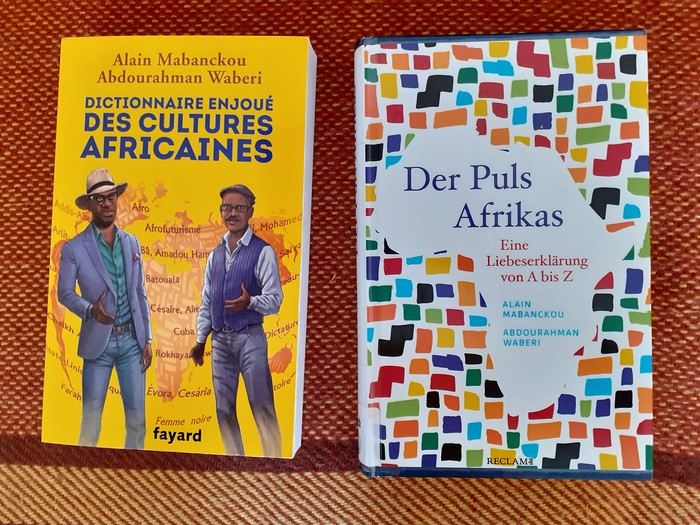
The Maggi cube, an unchallenged hegemony, and so much more
“The hopeless continent,” headlined The Economist, a British magazine, in July 2000 about Africa. Eleven years later, the same magazine headlined “Africa rising” instead. Images of Africa in the prosperous North constantly oscillate between apocalyptic scenarios and enthusiastic projections. A key issue with such images lies in the generalization they entail. If you look at the continent, considerable contrasts emerge depending on space and time. It’s no surprise that a region of the world encompassing such diverse ecological zones, maintaining such varied ties with other continents, comprising nearly fifty nation-states in sub-Saharan Africa alone, and characterized by a great diversity of languages, belief systems, and historical paths, doesn’t share a single destiny.
And yet, for many people outside Africa, as well as for many Africans, the continent constitutes a single entity, defined by criteria such as skin color, a colonial past, poverty, and the art of survival. Until now, these perspectives were generally accompanied by the idea that Africa had to—or should have—followed a single path together, sometimes called development, sometimes modernization, sometimes liberation, then a market economy. None of these paths delivered on their promises.
The two writers Alain Mabanckou and Abdourahman Waberi—one from Congo, the other raised in Djibouti, both long settled in France and now professors at renowned North American universities (Los Angeles, Washington)—have had enough of pessimistic scenarios: “We are aware that Africa is in the world and the world is in Africa. The same goes for all other continents, as our destinies are inextricably linked for better or worse. We refuse to see Africa as a reservoir of misfortunes or a continent cursed by atavistic misfortune and characterized by ethnic conflicts. [...] It’s this passionate flame we wanted to capture in a book [...] a kind of stroll through African cultures, without any demands, each letter of the alphabet leading us to a notion, a practice, a concept, a moment in history, literature, painting, politics, economics, cuisine, etc.” (p.10-11). Africa, they write, is on the verge of “imposing a signature, a style, a way of being in the world and in relation to the rest of the world.” (p.11) To put words to the continent’s diversity and dynamism, the two authors created a “rambling ABC,” a kind of portrait—or more precisely, a mythography—that lets you see and feel the pulse of a vast continent whose cultural power is unfolding before our eyes. Once marginalized or even mocked, the voice and importance of the Continent in global affairs are now undeniable” (p.11), containing over a hundred entries, mostly concise, written in a relaxed and casual style. The optimistic, even exuberant tone is set from the brief introduction. The duo of authors wants to “sing a love song to the cultures of our continent, to its inhabitants past and present, to its exceptional resources and its spectacular globalization despite a certain pollution that still clouds our skies due to the unmatched duration of dictatorships in some of our regions.” (p.12) In doing so, they don’t want to be too distracted by today’s Afewerki-Biya-Bongo-Déby & Co. ...
Of course, you’ll find tributes to great precursors like Frantz Fanon (“[...] it was a love story and admiration that wasn’t dimmed by the four decades separating his birth from ours. Let’s add that we were born while the native of Fort-de-France had left the world’s stage four years earlier, in the prime of life” p.141), Mongo Beti (“You must read and reread Mongo Beti, a genius who used his fame to support often just causes in Africa, like defending oppressed groups. His place is already in History. His oppressors, like the dictators Ahmadou Ahidjo and Paul Biya, can’t compete in the same category” p.64), the Malian Amadou Hampâté Bâ
(“Posterity remembers him mainly as an tireless defender of African cultures. His plea for the collection and preservation of traditional African knowledge remains a major event for all men and women of good will. One day in 1960, at the UNESCO podium, the native of Bandiagara sounded the alarm: ‘[...] Since we’ve admitted that the humanity of each people is the heritage of all humanity, if African traditions aren’t collected in time and written down, they’ll one day be missing from the universal archives of humanity.’” p.51),
Kwame Nkrumah, “one of the founders of Pan-Africanism, father of Ghana’s independence” (p.239), as well as the historian Cheikh Anta Diop, the writer, poet, and politician Aimé Césaire, and the economist and thinker Samir Amin, but also very warm tributes to certain contemporary African intellectuals like Souleymane Bachir Diagne and Achille Mbembe
(“A few years ago, in dominant economic circles, a rumor often resurfaced, usually disguised as a cold and scientifically proven analysis: Africa is useless. It’s a burden for the rest of the human community. With its 2% share in world trade, it would disappear from stock market radars without anyone noticing. So? Maybe it’ll be pulled up by other continents. Wanting to surpass itself is a crazy bet for Africans, they concluded. Arrogant or clueless, President Nicolas Sarkozy declared before an audience of students and teachers at Cheikh Anta Diop University in Dakar: ‘The African man hasn’t entered history enough [...] He only knows the eternal repetition of time marked by the endless repetition of the same gestures and words.’ That was in 2007. For decades, armed only with reason, an intellectual often steps up to debunk prejudices, lazy readings, and dishonest frameworks used as false fronts by those who, like Nicolas Sarkozy or former journalist Stephen Smith, out of ignorance, contempt, or condescension, distort African reality. This intellectual is none other than the historian and political scientist Achille Mbembe. This heir of Frantz Fanon, Amílcar Cabral, Jean-Marc Ela, and Fabien Eboussi-Boulaga was born in 1957 in Cameroon, in the Bassa region. Marked early by the upheavals of a fratricidal war, Achille Mbembe became the guardian of the memory of martyrs. After brilliant studies in Paris, he went on to teach at the best American universities, but the call of the Continent was stronger than anything else. In Dakar, he once directed CODESRIA (Council for the Development of Social Science Research in Africa) before joining the University of the Witwatersrand in Johannesburg, South Africa. Even though the author of *Critique of Black Reason* (Éditions La Découverte, 2015) spends a few months at Duke University in North Carolina, his observation post remains South Africa. From Johannesburg, Achille Mbembe scrutinizes Africa and the whole world. A lucid observer with an elegant and generous pen, Achille Mbembe knows how to blend big and small history: ‘I was born one day in July, as the month was drawing to a close. It was 1957, in that part of Africa recently named ‘Cameroon,’ a memory of the wonder that seized Portuguese sailors in the 15th century when, sailing up the river near Douala, they couldn’t help but note the presence of a multitude of crustaceans, and named it *Rio dos Camarões*, meaning ‘River of Shrimp.’ I grew up in the shadow of this nameless land, since, in a way, the name it bears is only the product of someone else’s astonishment: a lexical mistake, if you will.’ From this mistake or wound, he made leaven, a springboard to compose a rich work, recognized worldwide. To denounce barriers and barbarians too. But that’s not enough. Among his peers in circles of thought and action, Achille Mbembe passionately and consistently defends human dignity and the beauty of the world. In doing so, he fulfills the mission Frantz Fanon entrusted to him.” (p.227-229),
as well as entries dedicated to lesser-known artists and intellectuals, like the French journalist and activist Rokhaya Diallo, daughter of Senegalese and Gambian parents, or the Ethiopian filmmaker Haile Gerima, who has long lived in the United States. Other names from politics, sports, music, art, and literature: Kofi Annan, p.36; Barack Obama, p.243; Thomas Sankara, p.277; Ousmane Sow, p.285; Yambo Ouologuem, p.250; Léopold Sédar Senghor, p.282; Muhammad Ali, p.30; Nuruddin Farah, p.146; Salif Keita, p.203; Ahmadou Kourouma, p.206; Ngũgĩ wa Thiong’o, p.236; Winnie Mandela, p.224; Kylian Mbappé, p.226 ...
The authors, who resolutely commit to a “mythography” (p.11) of Africa, also pay special attention to local social movements, cultural events, and aspects of daily life. *Y’en a marre*, “which also meant ‘we’re fed up with sitting on our hands’” (p.320-321), emerged about a decade ago in Senegal as a citizen movement of peaceful resistance and symbolizes, the authors emphasize, the fact that African youth are increasingly fed up “with the political circus deployed in Africa since independence, as our parents would say, ‘since the White man left’...” (p.321). A full entry is dedicated to the Maggi bouillon cube, which has flooded African markets for about forty years and enjoys immense popularity (“It’s everywhere in Africa, from Dakar to Djibouti, and from Tangier to Cape Town. It’s in every pot, every stew. Little hands put it in every sauce, every local or adapted dish. An unchallenged hegemony! You’ll find it in diasporas too. The culinary strolls in Paris, in the [...] neighborhood” p.90). Critics blame it not only for impoverishing the aromatic diversity of local dishes but also for being harmful to health. And yet, “he poorest Africans, those who eat only once a day, a few spoonfuls of white beans and a ball of *foufou*, for example, are the most fervent users of the magic cube.” (p.92-93)
For *fonio*, “the new trendy cereal. [...] From the millet family, fonio is probably the oldest cereal cultivated in West Africa, and mainly in its sub-Saharan part, for millennia. [...] Easy to grow, water-efficient, fonio grows everywhere except on clay soils. Long neglected because it was considered the poor man’s crop, fonio is now a source of pride for the farmers who cultivate it and cherish it like the apple of their eye” (p.156-157), the authors immediately offer a detailed recipe, letting the reader know that “e can’t resist sharing this fonio with chicken recipe from Mali with you:
Ingredients: 1 chicken 3 large ripe red tomatoes 4 tbsp tomato paste 4 large onions 1 garlic clove 1/2 cup oil 2 Maggi cubes or salt 2 large carrots 1 turnip 1 large cabbage 2 large potatoes 1 celery stalk 1 packet pre-cooked fonio 4 okra (or okra powder) salt, pepper
Preparation: 1. Prepare the sauce: wash and cut the chicken. Peel the onions, garlic, and vegetables. 2. In a pot, fry the chicken pieces. 3. Dice the onions, tomatoes, carrots, and turnip very small and add them to the pot. 4. Add the tomato paste, salt, and pepper. 5. Simmer for 15 min, then add 2 L of water and the cooked chicken pieces. 6. Simmer for 30 min, then add the crushed garlic and celery, plus the cabbage cut into 4 and the potatoes cut in half. 7. Prepare the fonio: cover it with warm water, let it rest for 15 min, and cook it over low heat. 8. In a small pot, boil the okra and crush them. 9. Mix the crushed okra with the cooked fonio, then salt. Serve hot.” (p.158-159)
The comedy *Black Mic Mac*, released in French theaters in 1986 and addressing France’s increasingly restrictive immigration policy at the time, also gets an entry, as do *Tintin in the Congo*, the popular comic, and *Jip’s Café* (“[...] a little Africa in the heart of Paris, with passersby stopping to admire the ‘ambianceurs’ on the dance floor or attend the cultural events offered by the place” (p.194), an African establishment in Paris that Alain Mabanckou already immortalized in one of his novels.
The duo of authors also tackles thorny subjects like jihadism (p.119), the Rwandan genocide (p.272), the CFA franc (p.82), and dictatorship (p.110). While the two strike the right tone here, many entries leave a slightly bitter taste. Two examples: why doesn’t the text on Barack Obama mention the great disappointment of many people in Africa, who expected more from the African policy of the first U.S. president with African roots than just occasional warm words? Why do the comments on Winnie Mandela gloss over the fact that she was a highly controversial icon of the anti-apartheid movement due to her involvement in kidnappings, acts of torture, and murders of alleged apartheid collaborators? Instead, there’s a compassion that brings tears to the eyes: “She was often reduced to a secondary role, the wife of a great man” or “When victory came, she didn’t taste its fruits. Divorced, isolated. She would never be a ‘first lady’ in an evening gown, posing before a bed of chrysanthemums. They’d keep her far from the circles of power” (p.224-225). At this point, I would’ve liked the authors to take a slightly more critical stance...
That said, these “weaknesses” (if you can call them that) shouldn’t overshadow the book as a whole. It remains an informative, sometimes very entertaining, and often even original work in its own way.
Book information (the original French and the German translation):
Alain Mabanckou/Abdourahman Waberi. Dictionnaire enjoué des cultures africaines. Fayard, 2019. Alain Mabanckou/Abdourahman Waberi. Der Puls Afrikas. Eine Liebeserklärung von A bis Z. Reclam, 2022.
Hery
On the Roads of Costa Rica
Hello everyone, I’m happy to welcome you to this new travel journal.
We’re heading to Costa Rica together—a Central American destination that dreams are made of for many French travelers and attracts crowds from France.
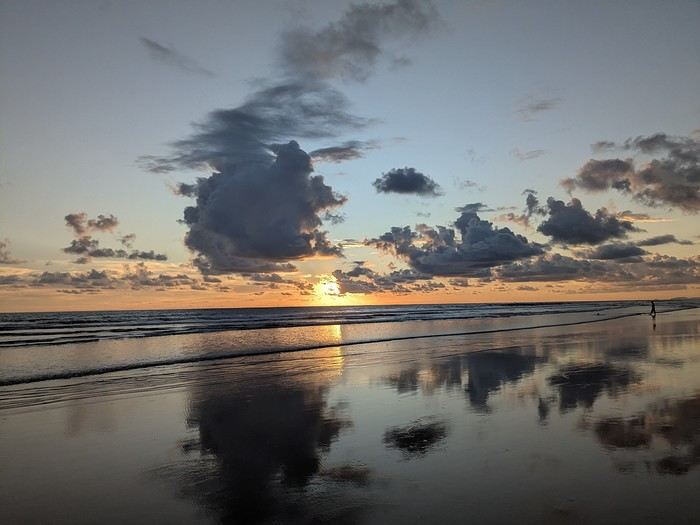
It was the country’s wild nature and safety that convinced us to go, since we’re traveling with our 7-year-old little one. We didn’t have much vacation time in February 2026 (only 12 days), so we optimized as much as possible.
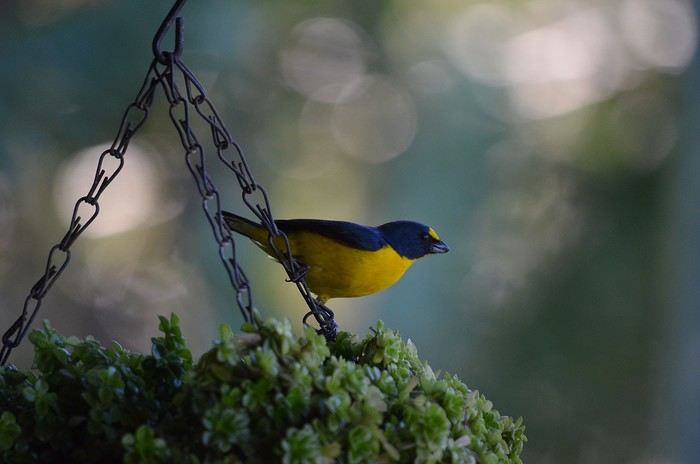
Here’s the itinerary: Wednesday, February 11: Flight from Marseille to San Jose via Paris and Atlanta Thursday, February 12: Pick up the car, drive to Poas Volcano, visit La Paz Waterfall Gardens Friday, February 13: Poas Volcano and drive to Manuel Antonio Saturday, February 14: Manuel Antonio National Park Sunday, February 15: Nauyaca Waterfall and Playa Linda Monday, February 16: Drive to Monte Verde and Santa Elena Reserve Tuesday, February 17: El Tigre Waterfall Reserve and Treetopia Park Wednesday, February 18: Monte Verde Reserve with a guide and drive to La Fortuna Thursday, February 19: Sloth guided tour, Observatory Lodge Park Friday, February 20: Arenal Volcano National Park, Termalistas del Arenal hot springs, and night tour Saturday, February 21: Return to San Jose, flight to Paris via Atlanta Sunday, February 22: Arrival in Paris and flight to Marseille. That gives us a solid 9 days in the country.
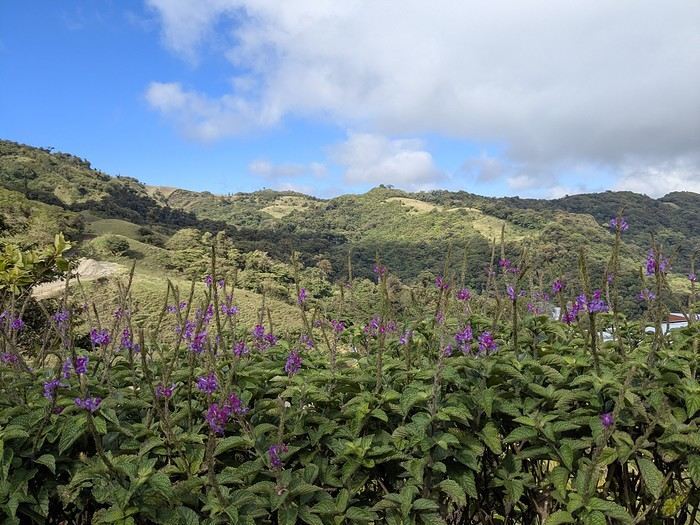
Budget breakdown: Costa Rica is an expensive country, but no more so than France. However, almost all hikes and waterfalls are paid entry, which can really add up. For meals, sodas (6–10 €) are cheaper than restaurants (10–20 € per dish).
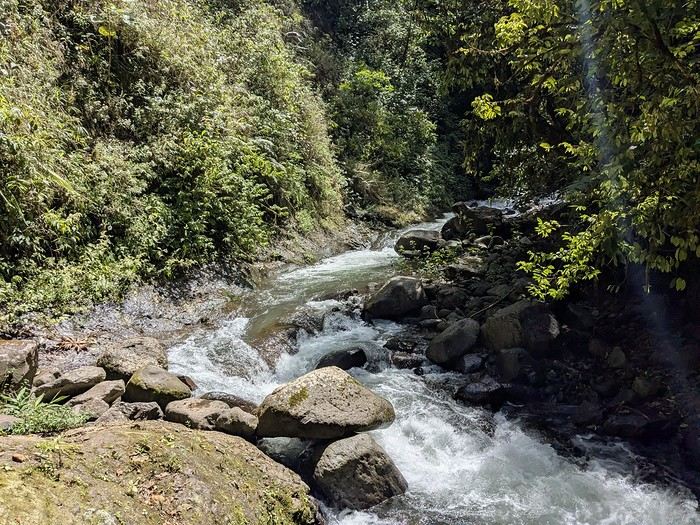
Flights: We chose Delta Airlines for the price: Marseille to San Jose was 740 € per person (modifiable, with checked baggage and seat selection included). Other direct flights from Europe were priced between 1200 € and 1600 € with more restrictive conditions. That’s 2220 € for the family.
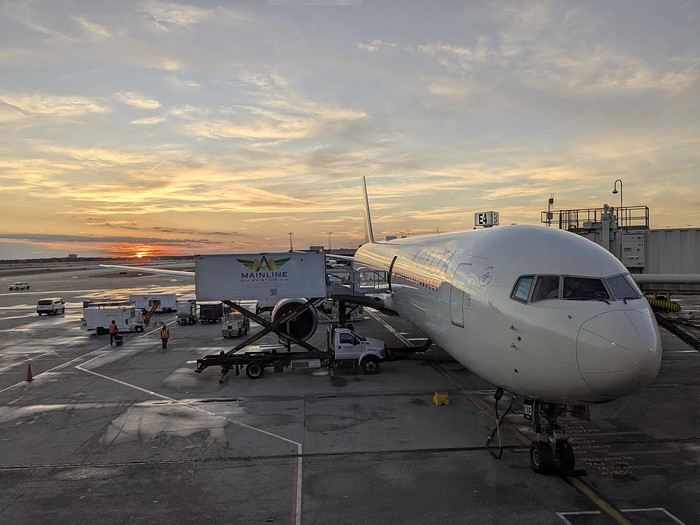
Accommodations: Alajuela, first night: 139 € (1 night) at Rodeo Estancia Boutique Hotel, with personalized airport pickup, transfer to the hotel, and a briefing from Vert Costa Rica agency the next day. Poas: 66 € (1 night) at Cabañas Tierra Fértil (entire apartment). Manuel Antonio: 394 € (3 nights) at La Palapa Ecolodge (hotel in the jungle). Monte Verde: Chalet Aloha Monteverde Cloud Forest (2 bedrooms): 125 € (2 nights). La Fortuna: Arenal Dream Garden (1 bedroom): 217 € (3 nights). Total: 941 €.
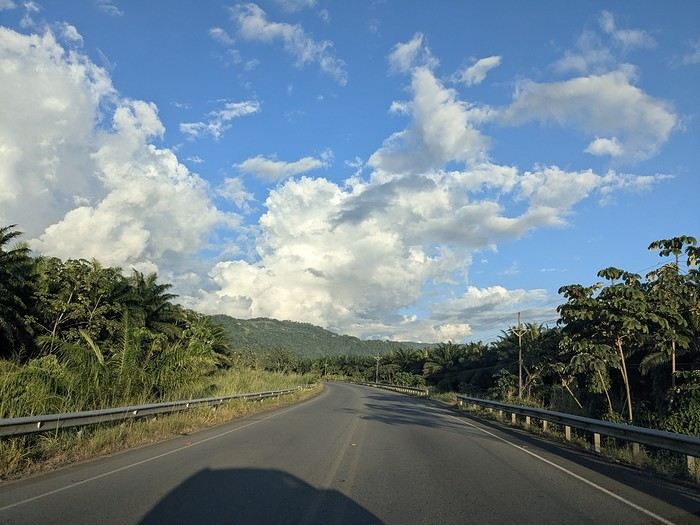
Car rental: I went through Vert Costa Rica agency (Vincent is a French expat who set up the agency in Costa Rica and makes great YouTube videos with useful tips). I rented a 4x4 that was delivered to the hotel the day after arrival and returned at the airport before the flight. The total was 772 €, including full insurance (zero deductible), a child seat, and a phone with a Costa Rican SIM and WhatsApp. The rental company was Poas Rent a Car. The vehicle was well-maintained—no complaints. Gas: 100 € for the whole trip (3 fill-ups).
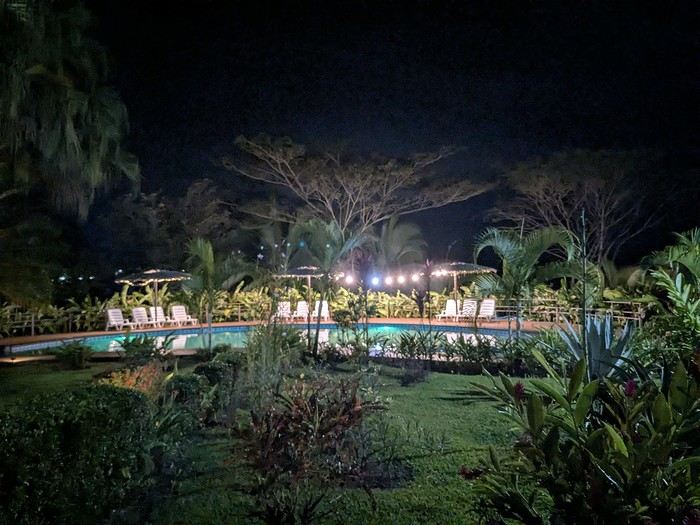
Activities: To get discounts, I bought the pass offered by Vincent, which paid for itself after just one activity. It cost me 30 € (promo since I rented the car through him). Prices are for 3 people. I’ve added stars to rate them: La Paz Waterfall Gardens ****: 112 € Poas Volcano National Park *: 33 € Manuel Antonio National Park ****: 35 € Nauyaca Waterfall ***: 25 € Santa Elena Reserve **: 45 € El Tigre Waterfall Reserve ****: 141 € (with meal) Treetopia (ziplining, suspension bridges) **: 250 € Guided tour of Monte Verde Reserve ***: 113 € Sloth guided tour (with breakfast) ***: 115 € Arenal Observatory Lodge (with meal) ****: 102 € Arenal Volcano National Park *: 34 € Termalistas del Arenal ****: 20 € Night tour ***: 116 € Total: 1171 €.
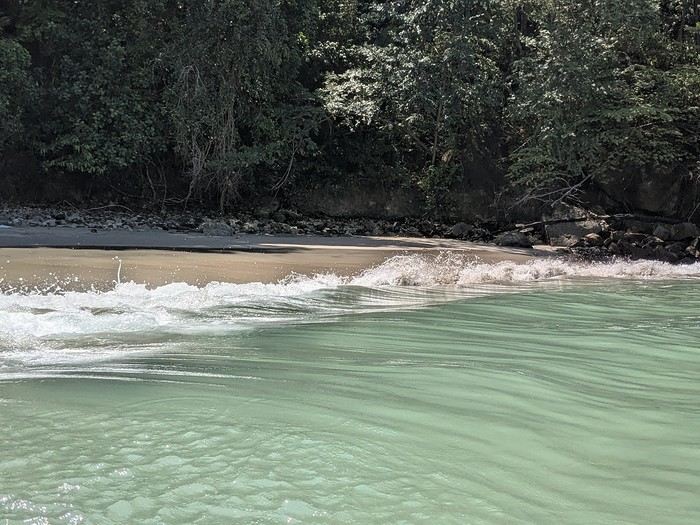
Meals: 600 € My favorite restaurants: Poas: Food court Mercaditas in Fraijanes Manuel Antonio (near La Palapa): La Langosta and also El Patio Near Nauyaca Waterfall: Ricar2 el Avión Between Manuel Antonio and Monte Verde: Soda D’Calle Santa Elena: HG’s Food Guadalupe (between Monte Verde and La Fortuna): Soda Río Piedras Arenal Observatory Lodge restaurant Arenal Oasis Ecolodge restaurant
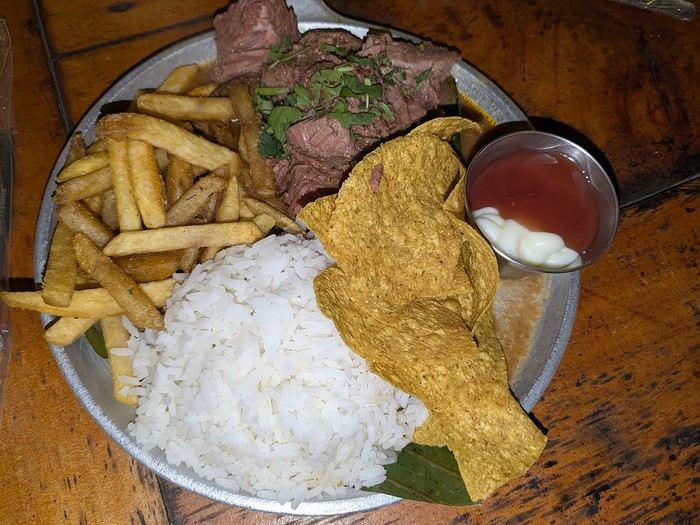
Other expenses: 300 € (groceries for breakfast, drinks, ice cream, souvenirs, etc.) Total overall: 6065 € (about 2020 € per person).
Now, here’s the day-by-day account of this beautiful trip.
https://voyageforum.com/images/posts/small/1772295011-z8mILBEUXHU8Ajz.jpg
It was the country’s wild nature and safety that convinced us to go, since we’re traveling with our 7-year-old little one. We didn’t have much vacation time in February 2026 (only 12 days), so we optimized as much as possible.
Here’s the itinerary: Wednesday, February 11: Flight from Marseille to San Jose via Paris and Atlanta Thursday, February 12: Pick up the car, drive to Poas Volcano, visit La Paz Waterfall Gardens Friday, February 13: Poas Volcano and drive to Manuel Antonio Saturday, February 14: Manuel Antonio National Park Sunday, February 15: Nauyaca Waterfall and Playa Linda Monday, February 16: Drive to Monte Verde and Santa Elena Reserve Tuesday, February 17: El Tigre Waterfall Reserve and Treetopia Park Wednesday, February 18: Monte Verde Reserve with a guide and drive to La Fortuna Thursday, February 19: Sloth guided tour, Observatory Lodge Park Friday, February 20: Arenal Volcano National Park, Termalistas del Arenal hot springs, and night tour Saturday, February 21: Return to San Jose, flight to Paris via Atlanta Sunday, February 22: Arrival in Paris and flight to Marseille. That gives us a solid 9 days in the country.
Budget breakdown: Costa Rica is an expensive country, but no more so than France. However, almost all hikes and waterfalls are paid entry, which can really add up. For meals, sodas (6–10 €) are cheaper than restaurants (10–20 € per dish).
Flights: We chose Delta Airlines for the price: Marseille to San Jose was 740 € per person (modifiable, with checked baggage and seat selection included). Other direct flights from Europe were priced between 1200 € and 1600 € with more restrictive conditions. That’s 2220 € for the family.
Accommodations: Alajuela, first night: 139 € (1 night) at Rodeo Estancia Boutique Hotel, with personalized airport pickup, transfer to the hotel, and a briefing from Vert Costa Rica agency the next day. Poas: 66 € (1 night) at Cabañas Tierra Fértil (entire apartment). Manuel Antonio: 394 € (3 nights) at La Palapa Ecolodge (hotel in the jungle). Monte Verde: Chalet Aloha Monteverde Cloud Forest (2 bedrooms): 125 € (2 nights). La Fortuna: Arenal Dream Garden (1 bedroom): 217 € (3 nights). Total: 941 €.
Car rental: I went through Vert Costa Rica agency (Vincent is a French expat who set up the agency in Costa Rica and makes great YouTube videos with useful tips). I rented a 4x4 that was delivered to the hotel the day after arrival and returned at the airport before the flight. The total was 772 €, including full insurance (zero deductible), a child seat, and a phone with a Costa Rican SIM and WhatsApp. The rental company was Poas Rent a Car. The vehicle was well-maintained—no complaints. Gas: 100 € for the whole trip (3 fill-ups).
Activities: To get discounts, I bought the pass offered by Vincent, which paid for itself after just one activity. It cost me 30 € (promo since I rented the car through him). Prices are for 3 people. I’ve added stars to rate them: La Paz Waterfall Gardens ****: 112 € Poas Volcano National Park *: 33 € Manuel Antonio National Park ****: 35 € Nauyaca Waterfall ***: 25 € Santa Elena Reserve **: 45 € El Tigre Waterfall Reserve ****: 141 € (with meal) Treetopia (ziplining, suspension bridges) **: 250 € Guided tour of Monte Verde Reserve ***: 113 € Sloth guided tour (with breakfast) ***: 115 € Arenal Observatory Lodge (with meal) ****: 102 € Arenal Volcano National Park *: 34 € Termalistas del Arenal ****: 20 € Night tour ***: 116 € Total: 1171 €.
Meals: 600 € My favorite restaurants: Poas: Food court Mercaditas in Fraijanes Manuel Antonio (near La Palapa): La Langosta and also El Patio Near Nauyaca Waterfall: Ricar2 el Avión Between Manuel Antonio and Monte Verde: Soda D’Calle Santa Elena: HG’s Food Guadalupe (between Monte Verde and La Fortuna): Soda Río Piedras Arenal Observatory Lodge restaurant Arenal Oasis Ecolodge restaurant
Other expenses: 300 € (groceries for breakfast, drinks, ice cream, souvenirs, etc.) Total overall: 6065 € (about 2020 € per person).
Now, here’s the day-by-day account of this beautiful trip.
https://voyageforum.com/images/posts/small/1772295011-z8mILBEUXHU8Ajz.jpg
Off we go on an adventure in Puglia!
Hey there, VF crew!
After wrapping up our travel journal on Java (link below), we’re now diving into our recent adventure in Puglia! Happy reading... Off we go on an adventure in Java (and a bit of Bali) | Travel journal > Indonesia | Voyage Forum
Day 1 - October 19
When you tell your friends and family you’re itching to escape to the other side of the planet to mingle with the Mongols, you can usually expect a barrage of questionable jokes and terrible puns. For this new adventure, it’s a different destination but the same old story—this time, we’re visiting the "pouilleux" (the "scruffy" ones). We’re taking off straight for Puglia! If you need a cheat sheet to remember where this oddly named place is on a world map, just think of it this way: Puglia is the maiden name on the ID card of the heel of the Italian boot! Personally, I prefer to remember it as the land of creamy burrata, the smell of focaccia fresh from the oven, orecchiette shaped by mamas, golden olive oil that shines like the sun (which beams down here 300 days a year), amaretto that makes you happy, and those famous trulli—those little hobbit-like dry-stone houses straight out of a movie set...
But I’ll stop spoiling the rest of our trip and focus on a factual rundown of this first Puglian day. So, are you joining us on this new adventure beyond our Gallic borders? Either way, Sasha (my youngest) and Luna (Flo’s daughter) didn’t need much convincing to stick with us and keep up the pace!
Our plane drops our little crew in Bari, the site of a famously tragic battle lost in 1991. But revenge is sweet! After renting a motorized carriage, we escape the landing zone and head to our military base of operations: Ostuni, a strategic little town where we’ll set up camp for the next four days. Why Ostuni? First, for its central location, which lets us explore a region packed with must-see gems. Second, for its vibe and beauty, which have earned it quite the reputation. Perched high on a hill, the *città bianca* (the "White City") lives up to its nickname. It literally dazzles visitors. The reason? The whitewashed facades of its houses, a testament to the region’s rich architectural heritage.
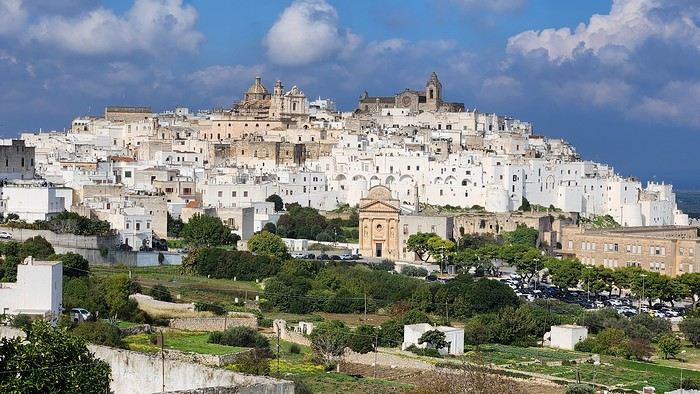
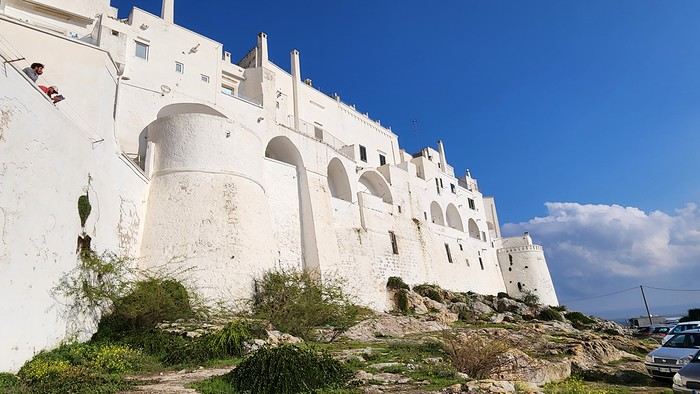
We arrived late last night, so only the two bravest soldiers volunteered to scout ahead at dawn, while the younger recruits stayed behind—for now. But not for long! After the first wave of streets and the next round of exploration, headquarters made the inevitable call to retreat. Reinforcements were needed! A few strategic errands, a breakfast ration, and our battalion marched in tight formation, flag held high, to conquer Ostuni the White! *Charge!* In my squadron leader’s memoirs, I’ll write that I didn’t expect Ostuni to put up such a fight. What I thought would take two hours to conquer turned into a humbling experience—we could only bow in respect to its beauty, its relentless charm. The alleys are whiter, more labyrinthine, narrower, and more photogenic than the last. *Veni, vidi, vici*—but what an entrance, my troops!
After wrapping up our travel journal on Java (link below), we’re now diving into our recent adventure in Puglia! Happy reading... Off we go on an adventure in Java (and a bit of Bali) | Travel journal > Indonesia | Voyage Forum
Day 1 - October 19
When you tell your friends and family you’re itching to escape to the other side of the planet to mingle with the Mongols, you can usually expect a barrage of questionable jokes and terrible puns. For this new adventure, it’s a different destination but the same old story—this time, we’re visiting the "pouilleux" (the "scruffy" ones). We’re taking off straight for Puglia! If you need a cheat sheet to remember where this oddly named place is on a world map, just think of it this way: Puglia is the maiden name on the ID card of the heel of the Italian boot! Personally, I prefer to remember it as the land of creamy burrata, the smell of focaccia fresh from the oven, orecchiette shaped by mamas, golden olive oil that shines like the sun (which beams down here 300 days a year), amaretto that makes you happy, and those famous trulli—those little hobbit-like dry-stone houses straight out of a movie set...
But I’ll stop spoiling the rest of our trip and focus on a factual rundown of this first Puglian day. So, are you joining us on this new adventure beyond our Gallic borders? Either way, Sasha (my youngest) and Luna (Flo’s daughter) didn’t need much convincing to stick with us and keep up the pace!
Our plane drops our little crew in Bari, the site of a famously tragic battle lost in 1991. But revenge is sweet! After renting a motorized carriage, we escape the landing zone and head to our military base of operations: Ostuni, a strategic little town where we’ll set up camp for the next four days. Why Ostuni? First, for its central location, which lets us explore a region packed with must-see gems. Second, for its vibe and beauty, which have earned it quite the reputation. Perched high on a hill, the *città bianca* (the "White City") lives up to its nickname. It literally dazzles visitors. The reason? The whitewashed facades of its houses, a testament to the region’s rich architectural heritage.
We arrived late last night, so only the two bravest soldiers volunteered to scout ahead at dawn, while the younger recruits stayed behind—for now. But not for long! After the first wave of streets and the next round of exploration, headquarters made the inevitable call to retreat. Reinforcements were needed! A few strategic errands, a breakfast ration, and our battalion marched in tight formation, flag held high, to conquer Ostuni the White! *Charge!* In my squadron leader’s memoirs, I’ll write that I didn’t expect Ostuni to put up such a fight. What I thought would take two hours to conquer turned into a humbling experience—we could only bow in respect to its beauty, its relentless charm. The alleys are whiter, more labyrinthine, narrower, and more photogenic than the last. *Veni, vidi, vici*—but what an entrance, my troops!
Trip to Israel / Holy Land in 2022
For once, given the destination, the author can’t set aside their religious beliefs, which inevitably shape this kind of journey.
The Trip
Early in the morning at Orly Airport, in the departure lounge for Tel Aviv, a group of about forty young men arrives, all looking identical! The same neatly trimmed beards, the same identical haircuts, the same outfits with a touch of whimsy… The effect of seeing these forty “clones” is striking and raises questions! Why such perfect uniformity among this group of guys? Do they belong to the same family, sports club, cultural association, or religious group? A mystery! At the same time, the waiting area fills up with men who are more expected, given our destination: they wear large felt hats and dress in black suits with white shirts—Hassidim? The ones I’ve glimpsed fleetingly in Paris or New York, who have always been a mystery to me. More discreet-looking women accompany them.
I’m already in Israel without even setting foot there! Plus, I witness the preparations for an improvised show.
The “clones” start a flash mob at seven in the morning in a Paris airport departure lounge! Some pull out musical instruments, others begin singing and dancing. A music with strange, unfamiliar sounds enchants the waiting passengers.
The flight crew finally arrives, cutting through the flash mob, bringing us back to the reality of the moment: waiting to take off soon for this so troubling and mysterious Middle East. We go through passport control, presenting our faces to the scanners that operate the exit gate. The group of “identical” young men gets held up by the system: logically, a scanner let the first one through but blocked the second because of his perfect resemblance to the first. To the machine, the same person shouldn’t be able to cross the border twice? But eventually, the whole group makes it through the glass doors, leaving the Republic behind. My simplistic explanation is left looking ridiculous.
At every new destination, I ask myself countless questions, revealing a certain anxiety tied to the unknown: fear of attacks (one just happened at a bus station in Jerusalem), possible police pressure, unexpected events. Israel isn’t known for being a relaxing destination. In reality, if I did face a serious difficulty in this country, it wasn’t one I had anticipated—and it wasn’t particularly tied to Israel!
I take my seat by the window, which is already occupied by a little girl. Her father, a Hassidic man, politely asks if I’d be willing to give up my seat for his daughter. I tell him I’d be happy to make her happy. Seeing me masked, he asks if I’d like him and his daughter to wear masks too. In response, I take off my mask so as not to impose any constraints on them and wish them a good flight.
It was the first time I’d approached and spoken to a Hassidic man. He didn’t speak the way I might have expected after watching *Rabbi Jacob* with Louis de Funès; he spoke perfectly without an accent, just like you and me! Beware of stereotypes! Throughout the flight, I sneak glances at my strange neighbor: he prayed silently without stopping for a minute. His daughter, as good as gold, never interrupted him. He used several religious accessories during his three-hour continuous prayer: a kippa, a prayer shawl, and a rosary?… I left that plane deeply impressed, me, who has a very distant relationship with my Creator and only prays now and then.
The Trip
Early in the morning at Orly Airport, in the departure lounge for Tel Aviv, a group of about forty young men arrives, all looking identical! The same neatly trimmed beards, the same identical haircuts, the same outfits with a touch of whimsy… The effect of seeing these forty “clones” is striking and raises questions! Why such perfect uniformity among this group of guys? Do they belong to the same family, sports club, cultural association, or religious group? A mystery! At the same time, the waiting area fills up with men who are more expected, given our destination: they wear large felt hats and dress in black suits with white shirts—Hassidim? The ones I’ve glimpsed fleetingly in Paris or New York, who have always been a mystery to me. More discreet-looking women accompany them.
I’m already in Israel without even setting foot there! Plus, I witness the preparations for an improvised show.
The “clones” start a flash mob at seven in the morning in a Paris airport departure lounge! Some pull out musical instruments, others begin singing and dancing. A music with strange, unfamiliar sounds enchants the waiting passengers.
The flight crew finally arrives, cutting through the flash mob, bringing us back to the reality of the moment: waiting to take off soon for this so troubling and mysterious Middle East. We go through passport control, presenting our faces to the scanners that operate the exit gate. The group of “identical” young men gets held up by the system: logically, a scanner let the first one through but blocked the second because of his perfect resemblance to the first. To the machine, the same person shouldn’t be able to cross the border twice? But eventually, the whole group makes it through the glass doors, leaving the Republic behind. My simplistic explanation is left looking ridiculous.
At every new destination, I ask myself countless questions, revealing a certain anxiety tied to the unknown: fear of attacks (one just happened at a bus station in Jerusalem), possible police pressure, unexpected events. Israel isn’t known for being a relaxing destination. In reality, if I did face a serious difficulty in this country, it wasn’t one I had anticipated—and it wasn’t particularly tied to Israel!
I take my seat by the window, which is already occupied by a little girl. Her father, a Hassidic man, politely asks if I’d be willing to give up my seat for his daughter. I tell him I’d be happy to make her happy. Seeing me masked, he asks if I’d like him and his daughter to wear masks too. In response, I take off my mask so as not to impose any constraints on them and wish them a good flight.
It was the first time I’d approached and spoken to a Hassidic man. He didn’t speak the way I might have expected after watching *Rabbi Jacob* with Louis de Funès; he spoke perfectly without an accent, just like you and me! Beware of stereotypes! Throughout the flight, I sneak glances at my strange neighbor: he prayed silently without stopping for a minute. His daughter, as good as gold, never interrupted him. He used several religious accessories during his three-hour continuous prayer: a kippa, a prayer shawl, and a rosary?… I left that plane deeply impressed, me, who has a very distant relationship with my Creator and only prays now and then.
Yet Another Travel Journal in this (Too) Familiar Rajasthan, But with Family and Kids
Prologue
This journal recounts a trip to Rajasthan that’s already over a year old and that I’ve only now found the chance to write about. The summer of 2024 marked my return to India—my tenth trip—after six long years away since my last solo wanderings in Tamil Nadu in 2018 (the journal of which is published on this site). That absence was partly (but not only) due to the long COVID and post-COVID period, which saw a complete halt and then a major slowdown in global tourism. To top it off, Voyage Forum announced its closure in an end-of-the-world atmosphere. A sad time for our favorite social activity…
A few weeks after returning from Rajasthan, I tried to motivate myself to start writing a journal to publish on a forum claiming to be VF’s successor, which I’d eventually signed up for out of desperation. But I kept hesitating and putting the project off because, for one, I no longer have the time I used to. For another, the vibe wasn’t really taking off on that forum—it was overrun with ads and not very active, contrary to what its host’s name suggested. Despite its good intentions and commendable role as a stopgap, it also turned out to be very impractical to use, especially when you don’t have much time like me. I’ll admit I’d occasionally check back on VF to see if anything was happening. But all the discussions remained frozen in time, stuck in that fateful year, 2020. Then, rumors swirled online about shady reasons behind its closure, leaving little room for hope.
And then, one fine morning, I got a message at work from Marien informing me that VF had reopened. What a huge surprise! Even though the forum’s “end” had played out in a somewhat apocalyptic atmosphere, the memories of passionate and heated discussions, the frank debates, and the useful exchanges that made this site a traveler’s goldmine and a unique hub of conviviality all came rushing back to me like a breath of fresh air. I finally saw a sign and tried to motivate myself to find the time to publish the journal of this tenth trip to India and fifth to Rajasthan. But in the end, I got bogged down in professional and family obligations and never managed to find the time to get started. That’s now fixed, though, because I had two reasons for wanting to do it: I find that looking back on a trip to tell others about it is a highly beneficial introspective exercise. Also, I thought this journal could be useful to other travelers on a few points.
Because, “do we really need yet another journal about Rajasthan?” you might rightly ask! Especially in a time when so many journals about the “Land of Kings” have been published since VF’s return, not to mention the countless stories you can already find online about this region, one of India’s most touristy. And I’d add, why go back to Rajasthan for a fifth time, where I’ve already dragged my feet more than enough—through its forts, deserts, temples, cities, villages, bumpy roads, train stations, tasty street food stalls, cheap guesthouses, and more? Where some might see just another overhyped tourist destination full of the same old *Arabian Nights* clichés, worn to a thread, that I mentioned earlier, when there’s so much else to see in India? Well, first because it’s a magnificent country I never tire of, where I started an academic study and made so many connections. It’s also packed with places where you won’t find a single tourist (right, Marie-Jo?), even in the heart of well-trodden paths and classic itineraries. And most importantly, as I said earlier, things have changed in recent years. First, after six years without traveling far, the urge to go back to India was getting stronger. But this time, no more solo trips (often) or duo adventures (sometimes)—now it’s a team of four that has to come along! And even if you can argue with that, what better place than Rajasthan to introduce India to people who’ve never seen it? To kids you want to amaze? Plus, traveling with your new little family to your favorite country isn’t the same as going solo in often spartan conditions that only affect you. It’s a different challenge, but ultimately probably much harder. So, is it really reasonable to take two kids to India, including a two-year-old baby? That’s one of the main goals of this journal (but not the only one)—to try to answer that question.
As you can tell, it’s not so much the destination but the slightly unusual setup of this trip that, in my opinion, will make this journal interesting. Despite my experience and expertise (yes, I dare say it) in India, there were plenty of questions before we finalized the plan and said, “Alright, let’s go!” The questions were flying for us parents. Is it wise to travel to India with a two-year-old? What would we do (it happened) if the kids got very sick? Would they be able to handle a road trip on Rajasthan’s bumpy, dusty roads using public transport? Could they handle the shock of such a different world—the dirt, poverty, pollution, noise (…and the smell, as they say), the spicy food, monkeys, mosquitoes, snakes, tigers, leopards, and so on? In short, all the clichés that I usually joke about suddenly became potential realities. Another concern: as a mixed Franco-African family (not me, but my partner and her oldest), wouldn’t we risk not always being well received, given what you sometimes hear about that in India? How would Indians react to seeing a mixed-race family, the ultimate taboo in a country of purity and social segregation, which would undoubtedly raise many questions for them? Of course, not everything went as expected… Because, as you know, with India—and what makes it charming for some—there are always complications: sometimes where you don’t expect them… and sometimes where you do. I’ll go into detail about that in the journal to come (not right away) and in the final review (even later). These experiences could be useful to travelers who find themselves in similar situations and have the same questions we did before embarking on such a journey. And maybe it’ll spark the curiosity of those who aren’t concerned and will read yet another Rajasthan journal, but with its own unique twists.
Despite my unchanged constraints, which mean I have little time to write this, I don’t want to rush the story, so I’ll take my time. There will probably be lulls. I hope that won’t stop people from coming to react, debate, share their impressions, or ask for information.
This journal recounts a trip to Rajasthan that’s already over a year old and that I’ve only now found the chance to write about. The summer of 2024 marked my return to India—my tenth trip—after six long years away since my last solo wanderings in Tamil Nadu in 2018 (the journal of which is published on this site). That absence was partly (but not only) due to the long COVID and post-COVID period, which saw a complete halt and then a major slowdown in global tourism. To top it off, Voyage Forum announced its closure in an end-of-the-world atmosphere. A sad time for our favorite social activity…
A few weeks after returning from Rajasthan, I tried to motivate myself to start writing a journal to publish on a forum claiming to be VF’s successor, which I’d eventually signed up for out of desperation. But I kept hesitating and putting the project off because, for one, I no longer have the time I used to. For another, the vibe wasn’t really taking off on that forum—it was overrun with ads and not very active, contrary to what its host’s name suggested. Despite its good intentions and commendable role as a stopgap, it also turned out to be very impractical to use, especially when you don’t have much time like me. I’ll admit I’d occasionally check back on VF to see if anything was happening. But all the discussions remained frozen in time, stuck in that fateful year, 2020. Then, rumors swirled online about shady reasons behind its closure, leaving little room for hope.
And then, one fine morning, I got a message at work from Marien informing me that VF had reopened. What a huge surprise! Even though the forum’s “end” had played out in a somewhat apocalyptic atmosphere, the memories of passionate and heated discussions, the frank debates, and the useful exchanges that made this site a traveler’s goldmine and a unique hub of conviviality all came rushing back to me like a breath of fresh air. I finally saw a sign and tried to motivate myself to find the time to publish the journal of this tenth trip to India and fifth to Rajasthan. But in the end, I got bogged down in professional and family obligations and never managed to find the time to get started. That’s now fixed, though, because I had two reasons for wanting to do it: I find that looking back on a trip to tell others about it is a highly beneficial introspective exercise. Also, I thought this journal could be useful to other travelers on a few points.
Because, “do we really need yet another journal about Rajasthan?” you might rightly ask! Especially in a time when so many journals about the “Land of Kings” have been published since VF’s return, not to mention the countless stories you can already find online about this region, one of India’s most touristy. And I’d add, why go back to Rajasthan for a fifth time, where I’ve already dragged my feet more than enough—through its forts, deserts, temples, cities, villages, bumpy roads, train stations, tasty street food stalls, cheap guesthouses, and more? Where some might see just another overhyped tourist destination full of the same old *Arabian Nights* clichés, worn to a thread, that I mentioned earlier, when there’s so much else to see in India? Well, first because it’s a magnificent country I never tire of, where I started an academic study and made so many connections. It’s also packed with places where you won’t find a single tourist (right, Marie-Jo?), even in the heart of well-trodden paths and classic itineraries. And most importantly, as I said earlier, things have changed in recent years. First, after six years without traveling far, the urge to go back to India was getting stronger. But this time, no more solo trips (often) or duo adventures (sometimes)—now it’s a team of four that has to come along! And even if you can argue with that, what better place than Rajasthan to introduce India to people who’ve never seen it? To kids you want to amaze? Plus, traveling with your new little family to your favorite country isn’t the same as going solo in often spartan conditions that only affect you. It’s a different challenge, but ultimately probably much harder. So, is it really reasonable to take two kids to India, including a two-year-old baby? That’s one of the main goals of this journal (but not the only one)—to try to answer that question.
As you can tell, it’s not so much the destination but the slightly unusual setup of this trip that, in my opinion, will make this journal interesting. Despite my experience and expertise (yes, I dare say it) in India, there were plenty of questions before we finalized the plan and said, “Alright, let’s go!” The questions were flying for us parents. Is it wise to travel to India with a two-year-old? What would we do (it happened) if the kids got very sick? Would they be able to handle a road trip on Rajasthan’s bumpy, dusty roads using public transport? Could they handle the shock of such a different world—the dirt, poverty, pollution, noise (…and the smell, as they say), the spicy food, monkeys, mosquitoes, snakes, tigers, leopards, and so on? In short, all the clichés that I usually joke about suddenly became potential realities. Another concern: as a mixed Franco-African family (not me, but my partner and her oldest), wouldn’t we risk not always being well received, given what you sometimes hear about that in India? How would Indians react to seeing a mixed-race family, the ultimate taboo in a country of purity and social segregation, which would undoubtedly raise many questions for them? Of course, not everything went as expected… Because, as you know, with India—and what makes it charming for some—there are always complications: sometimes where you don’t expect them… and sometimes where you do. I’ll go into detail about that in the journal to come (not right away) and in the final review (even later). These experiences could be useful to travelers who find themselves in similar situations and have the same questions we did before embarking on such a journey. And maybe it’ll spark the curiosity of those who aren’t concerned and will read yet another Rajasthan journal, but with its own unique twists.
Despite my unchanged constraints, which mean I have little time to write this, I don’t want to rush the story, so I’ll take my time. There will probably be lulls. I hope that won’t stop people from coming to react, debate, share their impressions, or ask for information.
Review of the Renaissance ship
Hi everyone,
In a month, I’ll be on the *Renaissance* with Compagnie Française de Croisières.
I’d just love to hear your thoughts on this ship—what you liked, what you liked less, etc.
Thanks to all of you!
Have a great day
Tanzania 2019 - Polé Polé
KARIBUUU
Over 5 years later, I’m finally getting around to writing the travel journal for our first trip to East Africa: Tanzania. *Polé Polé*, as they say! 😎
A trip I’d started planning just 6 years ago, in February 2019, for my post-internship exam vacation. After returning to South Africa in July 2019 with my family, this trip, planned for September 2019, would be all about discovery and a few firsts: first trip with friends, first trek, first time in East Africa. I really wanted to attempt the Kilimanjaro ascent, try to still see some of its "eternal" ice, and Alison wanted to do as much safari as possible. Unlike with the Zulus, Himbas, or San, visiting a Maasai village wasn’t on the agenda. Thanks to the Kessy Brothers agency, who were super responsive, Sandy from VF, and other members who helped prepare our trip, we settled on the following itinerary:
Day -1 (8/30): Departure from Pointe-à-Pitre Day 0 (8/31): Departure from Paris Day 1 (9/01): Arrival at Kilimanjaro Airport / Ameg Lodge (Moshi) DAY 2 (9/02): Machame gate / Machame camp DAY 3 (9/03): Shira / Shira camp DAY 4 (9/04): Baranco / Baranco camp DAY 5 (9/05): Barafu / Barafu camp DAY 6 (9/06): Barafu + Summit at midnight / Mweka camp DAY 7 (9/07): Mweka gate / Sal Salnero Hotel (Moshi) DAY 8 (9/08): Arusha National Park / Kanga camp DAY 9 (9/09): Tarangire National Park / Kanga camp DAY 10 (9/10): Tarangire National Park / Twiga Lodge DAY 11 (9/11): Lake Manyara / Twiga Lodge DAY 12 (9/12): Ngorongoro Crater / Simba campsite DAY 13 (9/13): Serengeti National Park / Seronera campsite DAY 14 (9/14): Serengeti National Park - Uoga Kuria Camp DAY 15 (9/15): Serengeti National Park / Waso campsite DAY 16 (9/16): Lake Natron / Maasai Giraffe Ecolodge DAY 17 (9/17): Kilimanjaro Airport Day 18 (9/18): Zanzibar Day 19 (9/19): Zanzibar Day 20 (9/20): Zanzibar Day 21 (9/21): Zanzibar
As I mentioned in my first travel journal about our South Africa trip, I’ve had a special connection to Tanzania for a long time. Growing up in the Indian Ocean without ever visiting Africa, those wildlife documentaries on TV when I skipped my pharmacy classes... I imagined and dreamed about this land and country so much.
The original plan was to go just the two of us with Alison, but somehow—though I don’t quite remember how—we ended up organizing the trip with our friends Mélissa and Doriane, who joined us in Arusha after our Kilimanjaro trek for the last two weeks and their very first safari. I think it was Melissa who had the idea to crash our trip, and she was right to do so! 😉 Flights: Pointe-à-Pitre-Grand Case and Grand Case-Paris with Air Caraïbes. Flights: Paris-JRO and ZNZ-Paris with Kenya Airways (layover in Nairobi). Flight: JRO-ZNZ with Air Tanzania.
Safe travels! !
Over 5 years later, I’m finally getting around to writing the travel journal for our first trip to East Africa: Tanzania. *Polé Polé*, as they say! 😎
A trip I’d started planning just 6 years ago, in February 2019, for my post-internship exam vacation. After returning to South Africa in July 2019 with my family, this trip, planned for September 2019, would be all about discovery and a few firsts: first trip with friends, first trek, first time in East Africa. I really wanted to attempt the Kilimanjaro ascent, try to still see some of its "eternal" ice, and Alison wanted to do as much safari as possible. Unlike with the Zulus, Himbas, or San, visiting a Maasai village wasn’t on the agenda. Thanks to the Kessy Brothers agency, who were super responsive, Sandy from VF, and other members who helped prepare our trip, we settled on the following itinerary:
Day -1 (8/30): Departure from Pointe-à-Pitre Day 0 (8/31): Departure from Paris Day 1 (9/01): Arrival at Kilimanjaro Airport / Ameg Lodge (Moshi) DAY 2 (9/02): Machame gate / Machame camp DAY 3 (9/03): Shira / Shira camp DAY 4 (9/04): Baranco / Baranco camp DAY 5 (9/05): Barafu / Barafu camp DAY 6 (9/06): Barafu + Summit at midnight / Mweka camp DAY 7 (9/07): Mweka gate / Sal Salnero Hotel (Moshi) DAY 8 (9/08): Arusha National Park / Kanga camp DAY 9 (9/09): Tarangire National Park / Kanga camp DAY 10 (9/10): Tarangire National Park / Twiga Lodge DAY 11 (9/11): Lake Manyara / Twiga Lodge DAY 12 (9/12): Ngorongoro Crater / Simba campsite DAY 13 (9/13): Serengeti National Park / Seronera campsite DAY 14 (9/14): Serengeti National Park - Uoga Kuria Camp DAY 15 (9/15): Serengeti National Park / Waso campsite DAY 16 (9/16): Lake Natron / Maasai Giraffe Ecolodge DAY 17 (9/17): Kilimanjaro Airport Day 18 (9/18): Zanzibar Day 19 (9/19): Zanzibar Day 20 (9/20): Zanzibar Day 21 (9/21): Zanzibar
As I mentioned in my first travel journal about our South Africa trip, I’ve had a special connection to Tanzania for a long time. Growing up in the Indian Ocean without ever visiting Africa, those wildlife documentaries on TV when I skipped my pharmacy classes... I imagined and dreamed about this land and country so much.
The original plan was to go just the two of us with Alison, but somehow—though I don’t quite remember how—we ended up organizing the trip with our friends Mélissa and Doriane, who joined us in Arusha after our Kilimanjaro trek for the last two weeks and their very first safari. I think it was Melissa who had the idea to crash our trip, and she was right to do so! 😉 Flights: Pointe-à-Pitre-Grand Case and Grand Case-Paris with Air Caraïbes. Flights: Paris-JRO and ZNZ-Paris with Kenya Airways (layover in Nairobi). Flight: JRO-ZNZ with Air Tanzania.
Safe travels! !
A Turquoise Dream Come True in Uzbekistan - 2022
We took this trip from September 12 to October 7, 2022. I didn’t post this travel journal earlier in Voyage Forum because the site wasn’t back up yet (and also because I was short on time).
Then, at the end of 2024, I made a promise to a friend: to publish my travel journal on VF. So here it is!
 We took off from Paris in the late afternoon on September 12 and arrived in Tashkent around 7:15 AM on the 13th.
This trip was the result of long contemplation and preparation (it was originally planned for the year of the lockdown (2020) and was prepared with the help and advice of Nasrullo Jumanov from Turquoise Travel.
Stages and Itinerary
Stage 1: Tashkent - September 13 and 14
Stage 2: Ferghana Valley – September 15 to 17
Stage 3: Nukus and Moynaq - September 18 and 19
Stage 4: Mysterious Khiva - September 20 to 22
Stage 5: Holy Bukhara - September 23 to 26
Stage 6: Asraf - September 27 and 28
Stage 7: Mythical Samarkand - September 29 to October 2
Stage 8: Tersak (via Shakhrisabz and Urgut) – October 3 and 4
Stage 9: Samarkand – October 5 and 6
Stage 10: Tashkent/Istanbul/Paris – October 6 and 7
Stage 1: Tashkent
September 13
At the airport exit, we were greeted by the owner of our B&B (B&B Gulnara).
Today was all about recovery and our first steps in the capital. Our first currency exchange made us feel like sudden millionaires.
Our first stroll down the avenue leading to Chorsu Market introduced us to the fact that 80 to 90% of the cars here are white Chevrolets.
A walk under the arcades facing Chorsu: hardware stores, cabinetmakers, lute makers (one of them gave me a little concert/demo of a few string instruments).
We took off from Paris in the late afternoon on September 12 and arrived in Tashkent around 7:15 AM on the 13th.
This trip was the result of long contemplation and preparation (it was originally planned for the year of the lockdown (2020) and was prepared with the help and advice of Nasrullo Jumanov from Turquoise Travel.
Stages and Itinerary
Stage 1: Tashkent - September 13 and 14
Stage 2: Ferghana Valley – September 15 to 17
Stage 3: Nukus and Moynaq - September 18 and 19
Stage 4: Mysterious Khiva - September 20 to 22
Stage 5: Holy Bukhara - September 23 to 26
Stage 6: Asraf - September 27 and 28
Stage 7: Mythical Samarkand - September 29 to October 2
Stage 8: Tersak (via Shakhrisabz and Urgut) – October 3 and 4
Stage 9: Samarkand – October 5 and 6
Stage 10: Tashkent/Istanbul/Paris – October 6 and 7
Stage 1: Tashkent
September 13
At the airport exit, we were greeted by the owner of our B&B (B&B Gulnara).
Today was all about recovery and our first steps in the capital. Our first currency exchange made us feel like sudden millionaires.
Our first stroll down the avenue leading to Chorsu Market introduced us to the fact that 80 to 90% of the cars here are white Chevrolets.
A walk under the arcades facing Chorsu: hardware stores, cabinetmakers, lute makers (one of them gave me a little concert/demo of a few string instruments).
As we entered the market, many vendors called out to us, including this florist who asked where we were from: ‘France? Ah! Macron! PSG!’ He then recited a list of players from the Parisian team as well as past (Platini, Zidane, etc.) and current (Giroud, Griezmann, Mbappé, etc.) French national team players. Since we’re more into rugby (we live near Toulouse), he knew more players than I did!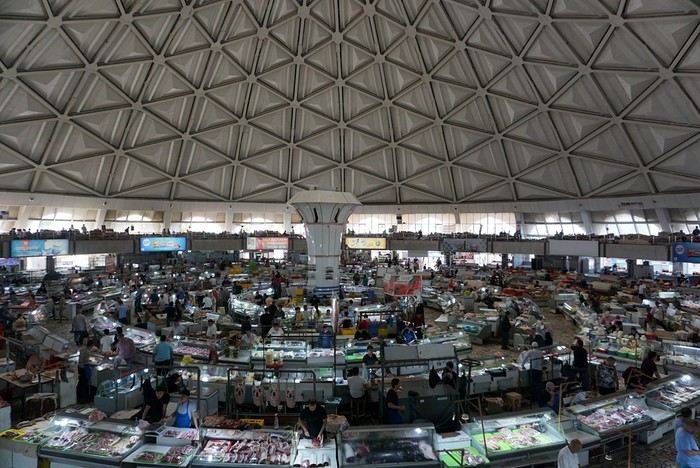
The market sprawls outside around the large circular, multi-story hall. We bought some grapes and bottles of freshly squeezed pomegranate juice for just a few sums. This evening, we had a meet-up with Nasrullo. The reunion was very warm: we’d been exchanging messages for over two years, and I’d been ‘torturing’ him with changes to our itinerary and trip duration. We were finally eager to meet, and honestly, I wasn’t disappointed—in fact, it was the opposite. Nasrullo was very attentive throughout our trip and always made sure, even from a distance (and most often from a distance!), that everything went smoothly. His goal was for us to leave delighted with our trip and, why not, indirectly become ambassadors for this destination. September 14 Breakfast with Nasrullo, then we set off with him by taxi to explore some of the capital’s sites.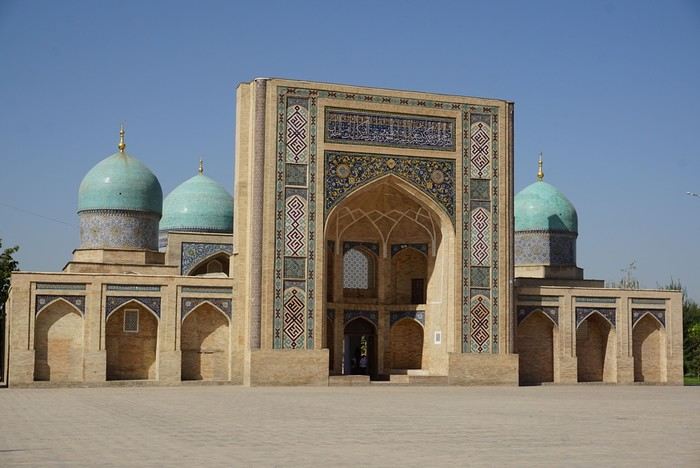
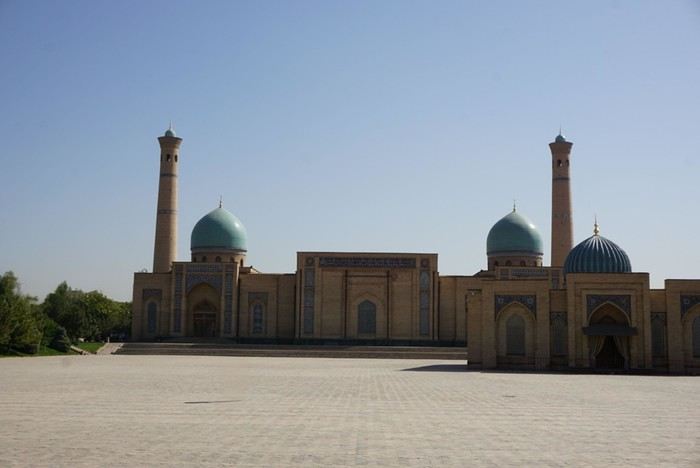
We started by visiting the Khazrati Imam complex, which includes the mausoleum of Kaffal Shashi, the Barak Khan and Muyi Muborak madrasas, and the great Khazrati Imam Mosque with its immense prayer hall.
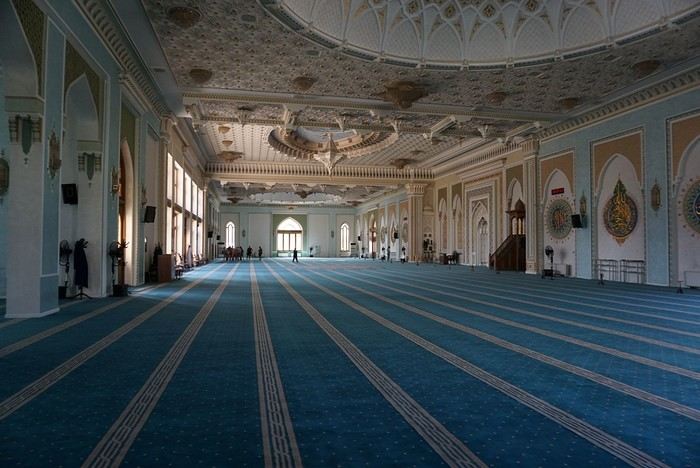
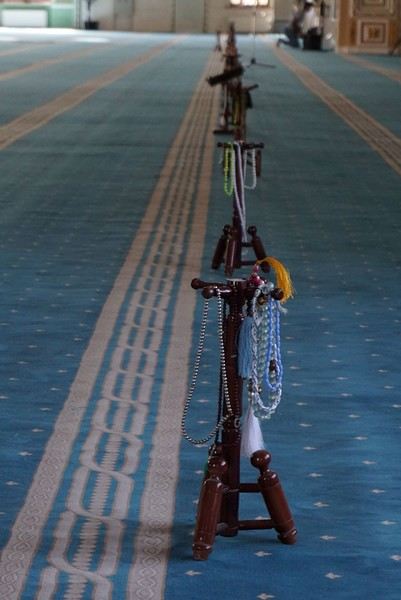
In the Muyi Muborak madrasa, now a museum, you can see the oldest Quran in the world. It was written by three religious scholars, including the secretary of the Prophet Muhammad, on large ‘pages’ made of antelope skin. Next, we explored Soviet-era Tashkent, discovering its parks, canals, and squares: Independence Square with its storks and phoenixes, Amir Temur Square with its large statue and, in the background, the massive Soviet-era hotel that has become one of Tashkent’s iconic buildings. Nasrullo took us through Broadway Boulevard and along what he calls ‘Tashkent’s Montmartre’… Well, it’s far, very far from Montmartre (in every sense of the word!). Then we took the metro to Chorsu station. Rush hour is pretty much the same everywhere in the metro… When we arrived at Chorsu, it was time to say goodbye. Nasrullo had to head back to Samarkand. Before leaving, he recommended some chaikhanas at the end of the galleries facing the market. We ate there for just a few euros (2 or 3 € for two people). After eating, we headed back to our room to cool off (our B&B is about a 10-minute walk away).
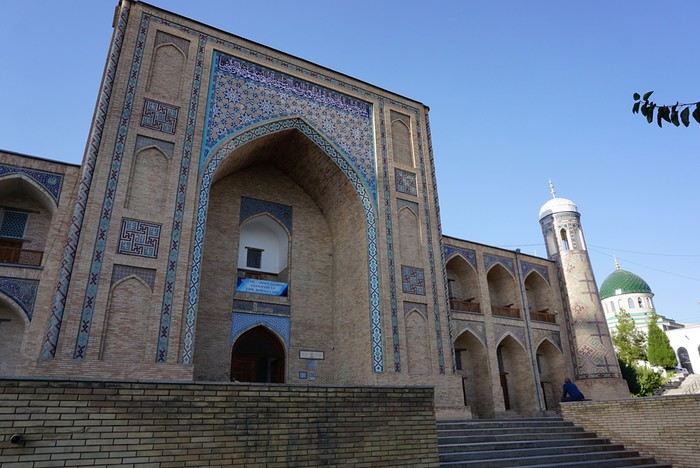
Around 4 PM, we set off to visit the Kokeldash Madrasa, which is still active. On the way, we stopped to watch some bread vendors and take a few photos. We were hesitating about buying some for our evening picnic when a young woman approached us. In perfect English, she asked: ‘Are you looking for something? Do you want to buy bread? Which one? How much?’ She then spoke to one of the vendors and negotiated the price. ‘Do you want one?’ And she took two. She paid directly. I took out my wallet to reimburse her, but she refused. It’s on the house! Then the vendor asked where we were from. And off we went again: Macron, PSG, football players… We’ll have to get used to it. The young woman smiled at the questions and comments, barely gave us time to thank her, and left as quickly as she had approached us.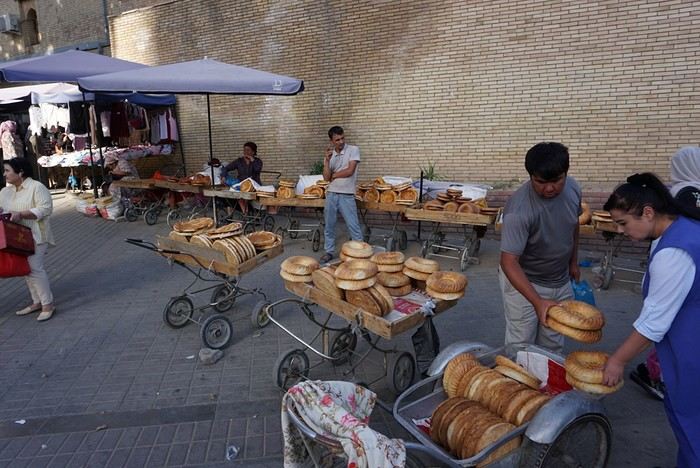
We continued our walk. Visited the madrasa. Then we crossed the boulevard to see the Tashkent Circus. I would’ve loved to go in and visit, but the ticket seller wouldn’t hear of it. We carried on around what should’ve been a park with old-fashioned rides and attractions. All we found was a construction site. Oh well! Back at our hotel, a message from Nasrullo was waiting for us. He had managed to change our train ticket for the next day. Instead of taking the 6:00 AM train, we’d take the 8:00 AM one. And instead of second class, we’d be in first class! Great! This evening, we had a picnic at one of the breakfast tables in the B&B courtyard. Under a shelter, the owner and his family were celebrating a birthday. The owner started by offering us some tea. Then they brought us some fruit (watermelon and melon). Finally, after the song, candles, and cake cutting, they brought us two generous slices of that beautiful birthday cake. Delicious!
We took off from Paris in the late afternoon on September 12 and arrived in Tashkent around 7:15 AM on the 13th.
This trip was the result of long contemplation and preparation (it was originally planned for the year of the lockdown (2020) and was prepared with the help and advice of Nasrullo Jumanov from Turquoise Travel.
Stages and Itinerary
Stage 1: Tashkent - September 13 and 14
Stage 2: Ferghana Valley – September 15 to 17
Stage 3: Nukus and Moynaq - September 18 and 19
Stage 4: Mysterious Khiva - September 20 to 22
Stage 5: Holy Bukhara - September 23 to 26
Stage 6: Asraf - September 27 and 28
Stage 7: Mythical Samarkand - September 29 to October 2
Stage 8: Tersak (via Shakhrisabz and Urgut) – October 3 and 4
Stage 9: Samarkand – October 5 and 6
Stage 10: Tashkent/Istanbul/Paris – October 6 and 7
Stage 1: Tashkent
September 13
At the airport exit, we were greeted by the owner of our B&B (B&B Gulnara).
Today was all about recovery and our first steps in the capital. Our first currency exchange made us feel like sudden millionaires.
Our first stroll down the avenue leading to Chorsu Market introduced us to the fact that 80 to 90% of the cars here are white Chevrolets.
A walk under the arcades facing Chorsu: hardware stores, cabinetmakers, lute makers (one of them gave me a little concert/demo of a few string instruments).As we entered the market, many vendors called out to us, including this florist who asked where we were from: ‘France? Ah! Macron! PSG!’ He then recited a list of players from the Parisian team as well as past (Platini, Zidane, etc.) and current (Giroud, Griezmann, Mbappé, etc.) French national team players. Since we’re more into rugby (we live near Toulouse), he knew more players than I did!
The market sprawls outside around the large circular, multi-story hall. We bought some grapes and bottles of freshly squeezed pomegranate juice for just a few sums. This evening, we had a meet-up with Nasrullo. The reunion was very warm: we’d been exchanging messages for over two years, and I’d been ‘torturing’ him with changes to our itinerary and trip duration. We were finally eager to meet, and honestly, I wasn’t disappointed—in fact, it was the opposite. Nasrullo was very attentive throughout our trip and always made sure, even from a distance (and most often from a distance!), that everything went smoothly. His goal was for us to leave delighted with our trip and, why not, indirectly become ambassadors for this destination. September 14 Breakfast with Nasrullo, then we set off with him by taxi to explore some of the capital’s sites.
We started by visiting the Khazrati Imam complex, which includes the mausoleum of Kaffal Shashi, the Barak Khan and Muyi Muborak madrasas, and the great Khazrati Imam Mosque with its immense prayer hall.
In the Muyi Muborak madrasa, now a museum, you can see the oldest Quran in the world. It was written by three religious scholars, including the secretary of the Prophet Muhammad, on large ‘pages’ made of antelope skin. Next, we explored Soviet-era Tashkent, discovering its parks, canals, and squares: Independence Square with its storks and phoenixes, Amir Temur Square with its large statue and, in the background, the massive Soviet-era hotel that has become one of Tashkent’s iconic buildings. Nasrullo took us through Broadway Boulevard and along what he calls ‘Tashkent’s Montmartre’… Well, it’s far, very far from Montmartre (in every sense of the word!). Then we took the metro to Chorsu station. Rush hour is pretty much the same everywhere in the metro… When we arrived at Chorsu, it was time to say goodbye. Nasrullo had to head back to Samarkand. Before leaving, he recommended some chaikhanas at the end of the galleries facing the market. We ate there for just a few euros (2 or 3 € for two people). After eating, we headed back to our room to cool off (our B&B is about a 10-minute walk away).
Around 4 PM, we set off to visit the Kokeldash Madrasa, which is still active. On the way, we stopped to watch some bread vendors and take a few photos. We were hesitating about buying some for our evening picnic when a young woman approached us. In perfect English, she asked: ‘Are you looking for something? Do you want to buy bread? Which one? How much?’ She then spoke to one of the vendors and negotiated the price. ‘Do you want one?’ And she took two. She paid directly. I took out my wallet to reimburse her, but she refused. It’s on the house! Then the vendor asked where we were from. And off we went again: Macron, PSG, football players… We’ll have to get used to it. The young woman smiled at the questions and comments, barely gave us time to thank her, and left as quickly as she had approached us.
We continued our walk. Visited the madrasa. Then we crossed the boulevard to see the Tashkent Circus. I would’ve loved to go in and visit, but the ticket seller wouldn’t hear of it. We carried on around what should’ve been a park with old-fashioned rides and attractions. All we found was a construction site. Oh well! Back at our hotel, a message from Nasrullo was waiting for us. He had managed to change our train ticket for the next day. Instead of taking the 6:00 AM train, we’d take the 8:00 AM one. And instead of second class, we’d be in first class! Great! This evening, we had a picnic at one of the breakfast tables in the B&B courtyard. Under a shelter, the owner and his family were celebrating a birthday. The owner started by offering us some tea. Then they brought us some fruit (watermelon and melon). Finally, after the song, candles, and cake cutting, they brought us two generous slices of that beautiful birthday cake. Delicious!
Iceland: A Week on the Land of Ice and Fire in April
4 years... it’s been so long!!!
What a pleasure to be back on VF and, most of all, to see all the forum members again 🙂
And what a joy to read the travel journals of those travel addicts who were quicker than their own shadow to share their discoveries. Their keyboards and mice must’ve been itching
I’ll admit I’m feeling a bit of that itch too, but I’m way too lazy to dive into the story of our latest trip—last summer in the northwest USA. I’ll probably get to it later, but it might take a while! So, I’m jumping into the short recap of our *way* too short trip to Iceland at the end of April 2024. And even though it’s not the done thing, I’m going to spoil it and start with the conclusion: it was *amazing*!!!
Back in February, on the eve of leaving for a few days’ holiday in Alsace, we started wondering what we could do for Easter break. Scotland and Iceland were the top contenders. The boys are growing up, but they still travel with us often, and they tipped the scales in favor of Iceland. Since we decided a bit late, before booking the flights, I took a quick look at available accommodations. There wasn’t much left, and some were at crazy prices, but I managed to line up a decent itinerary with places that seemed like good value for money. I read travel journals on VF and blogs I could find, picked up bits of info from Facebook groups, and the route quickly took shape—even if I struggled with the place names, mixing them up and forgetting them. The dream could begin...
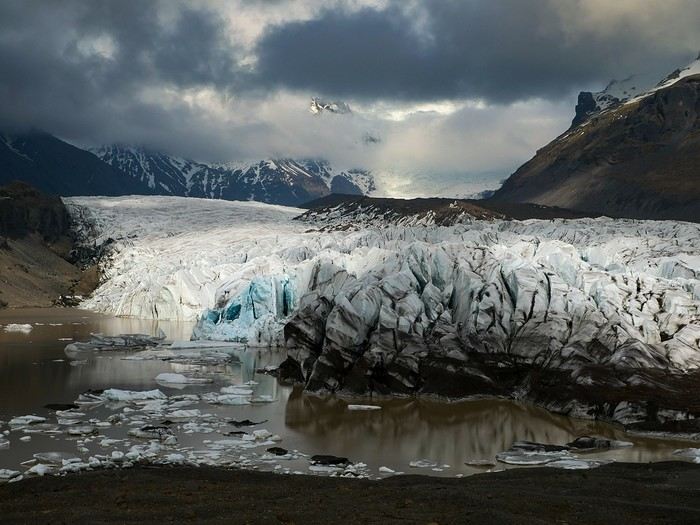
Bookings
Flight tickets bought directly from Fly Play’s website: 1520 € for the four of us (adult fare), with just two checked bags and one carry-on each. It was the compromise we found to keep costs down while still fitting all the bulky clothes we’d need. Late April isn’t quite winter anymore, but it’s not quite spring either, so we packed for chilly weather. Fly Play is Icelandair’s low-cost airline. No complaints: check-in was quick, service was efficient, and the flights were on time.
The car. Booked with Golden Circle car rental, a small family-run business with offices just 5 minutes from the airport. I’d read good things about them, and I can confirm everything went smoothly with our Dacia Duster—it wasn’t brand new, but it was reliable and spacious. We paid 463 € for the week, with full insurance included. The manager picked us up at the airport 10 minutes after I messaged him on WhatsApp to say we’d arrived. For the return trip, since our flight was super early and the agency wasn’t open yet, we agreed to leave the car in the airport parking lot and sent him a photo of the spot so he could find it. Super convenient! I read *so* many questions on Facebook groups about insurance: *Should I get the max coverage or not? I’ve got a Visa Premier, I’ve never had an accident, it adds 100 €...* Between sandstorms that can damage the bodywork and skidding off the road due to bad weather (we saw a few cars in ditches!), we decided to go for the rental company’s max insurance to be safe. It was also a requirement for leaving the car in the airport parking lot on our way back, since we couldn’t do the final inspection.
Accommodations were all booked on Booking.com and Hotels.com: - 2 nights in a cottage at Fossatun Country Hotel, near Borgarnes (we rented the sunset cottage—great spot, with a nice view and separate from the other lodgings) - 1 night in an apartment at Bakki Hostel and Apartments, in Eyrarbakki (top-notch) - 1 night in a gorgeous (and pricey!) apartment at Vik Apartments - 2 nights in a family room at Adventure Hof Hotel (perfect location) - 1 night at Blue Viking Studio near the airport (meh, but fine for a few hours’ sleep before an early flight) Total: 1234 €, averaging 176 € per night for 4-person accommodations.
The itinerary Day 1: Arrival around noon at the airport - Hraunfossar / Night at Fossatun Country Hotel Day 2: Snæfellsnes Peninsula / Night at Fossatun Country Hotel Day 3: Bruarfoss - Geysir - Gullfoss - Reykjadalur hot springs / Night in Eyrarbakki Day 4: Seljalandsfoss and Gljúfrafoss - DC-3 wreck (the one near Seljalandsfoss) - Skógafoss - Kvernufoss - Sólheimajökull (hike to the foot of the glacier) - Dyrhólaey - Reynisfjara Beach / Night in Vík Day 5: Fjaðrárgljúfur Canyon - Vatnajökull (3-hour hike to Svartifoss and Skaftafell) / Night in Hof Day 6: Múlagljúfur Canyon (2h45 hike) - Fjallsárlón - Jökulsárlón and Diamond Beach - Svínafellsjökull / Night in Hof Day 7: Drive back - Reykjavik - Sky Lagoon / Night in Keflavík Day 8: Flight back at 6 AM
That’s the practical side covered. I’ll leave you with a photo of our trusty steed.
And what a joy to read the travel journals of those travel addicts who were quicker than their own shadow to share their discoveries. Their keyboards and mice must’ve been itching
I’ll admit I’m feeling a bit of that itch too, but I’m way too lazy to dive into the story of our latest trip—last summer in the northwest USA. I’ll probably get to it later, but it might take a while! So, I’m jumping into the short recap of our *way* too short trip to Iceland at the end of April 2024. And even though it’s not the done thing, I’m going to spoil it and start with the conclusion: it was *amazing*!!!
Back in February, on the eve of leaving for a few days’ holiday in Alsace, we started wondering what we could do for Easter break. Scotland and Iceland were the top contenders. The boys are growing up, but they still travel with us often, and they tipped the scales in favor of Iceland. Since we decided a bit late, before booking the flights, I took a quick look at available accommodations. There wasn’t much left, and some were at crazy prices, but I managed to line up a decent itinerary with places that seemed like good value for money. I read travel journals on VF and blogs I could find, picked up bits of info from Facebook groups, and the route quickly took shape—even if I struggled with the place names, mixing them up and forgetting them. The dream could begin...
Bookings
Flight tickets bought directly from Fly Play’s website: 1520 € for the four of us (adult fare), with just two checked bags and one carry-on each. It was the compromise we found to keep costs down while still fitting all the bulky clothes we’d need. Late April isn’t quite winter anymore, but it’s not quite spring either, so we packed for chilly weather. Fly Play is Icelandair’s low-cost airline. No complaints: check-in was quick, service was efficient, and the flights were on time.
The car. Booked with Golden Circle car rental, a small family-run business with offices just 5 minutes from the airport. I’d read good things about them, and I can confirm everything went smoothly with our Dacia Duster—it wasn’t brand new, but it was reliable and spacious. We paid 463 € for the week, with full insurance included. The manager picked us up at the airport 10 minutes after I messaged him on WhatsApp to say we’d arrived. For the return trip, since our flight was super early and the agency wasn’t open yet, we agreed to leave the car in the airport parking lot and sent him a photo of the spot so he could find it. Super convenient! I read *so* many questions on Facebook groups about insurance: *Should I get the max coverage or not? I’ve got a Visa Premier, I’ve never had an accident, it adds 100 €...* Between sandstorms that can damage the bodywork and skidding off the road due to bad weather (we saw a few cars in ditches!), we decided to go for the rental company’s max insurance to be safe. It was also a requirement for leaving the car in the airport parking lot on our way back, since we couldn’t do the final inspection.
Accommodations were all booked on Booking.com and Hotels.com: - 2 nights in a cottage at Fossatun Country Hotel, near Borgarnes (we rented the sunset cottage—great spot, with a nice view and separate from the other lodgings) - 1 night in an apartment at Bakki Hostel and Apartments, in Eyrarbakki (top-notch) - 1 night in a gorgeous (and pricey!) apartment at Vik Apartments - 2 nights in a family room at Adventure Hof Hotel (perfect location) - 1 night at Blue Viking Studio near the airport (meh, but fine for a few hours’ sleep before an early flight) Total: 1234 €, averaging 176 € per night for 4-person accommodations.
The itinerary Day 1: Arrival around noon at the airport - Hraunfossar / Night at Fossatun Country Hotel Day 2: Snæfellsnes Peninsula / Night at Fossatun Country Hotel Day 3: Bruarfoss - Geysir - Gullfoss - Reykjadalur hot springs / Night in Eyrarbakki Day 4: Seljalandsfoss and Gljúfrafoss - DC-3 wreck (the one near Seljalandsfoss) - Skógafoss - Kvernufoss - Sólheimajökull (hike to the foot of the glacier) - Dyrhólaey - Reynisfjara Beach / Night in Vík Day 5: Fjaðrárgljúfur Canyon - Vatnajökull (3-hour hike to Svartifoss and Skaftafell) / Night in Hof Day 6: Múlagljúfur Canyon (2h45 hike) - Fjallsárlón - Jökulsárlón and Diamond Beach - Svínafellsjökull / Night in Hof Day 7: Drive back - Reykjavik - Sky Lagoon / Night in Keflavík Day 8: Flight back at 6 AM
That’s the practical side covered. I’ll leave you with a photo of our trusty steed.
South Africa in Three Trips
Hello,
In these post-COVID years, South Africa (SA) has drawn me back again... The long-time forum members will say I'm a bit obsessed (I've now surpassed 20 trips to this country, including 2 in Namibia)... But new readers can find my old travel journals and enjoy this new installment. So, three new trips... each lasting a month... always too short. I’ll try to be pragmatic.
Let’s start with the basics! You can plan your trip from your couch with complete peace of mind. Through any Booking site or directly (sometimes cheaper), I’ve never had any issues with my direct bookings—they’ve always matched what was promised. For national parks outside KwaZulu-Natal (where it’s KZN Wildlife), use the SANparks website, or Nature Reserve for that type of "accommodation." Air France, Lufthansa, or KLM... depending on the year and circumstances. Most flights are overnight, allowing you to arrive early in Joburg and... leave this city I don’t much like as quickly as possible. KLM offers a daytime flight to Cape Town... just arrange your first night’s stay. You drive on the left in SA (you knew that, right?)... you get used to it. Passport: must still be valid for 6 months with several blank pages... Car rental? A car is pretty much essential, whether for short or long trips. It’s safer too. Aside from the secure Gautrain in Joburg and Cape Town (CT from now on), I don’t take the train. Except for the red bus drop-off/pick-up in CT, I don’t take the bus. In this specific case, it’s practical because you can access all of CT’s spots—including the famous Lion’s Head—without worrying about parking or traffic. These past three years, I’ve chosen Around About Cars as my rental company. I’m very satisfied with them. What kind of car? It depends on what you’re doing and your budget. The vast majority of roads don’t require a special vehicle. In a park, the "high ground clearance" of SUVs lets you see animals better and helps avoid potholes (the SA version—ostrich-sized), speed bumps (our "sleeping policemen" with a big belly), and tackle the last few kilometers or 100 meters that can be a bit rough with complete peace of mind. Do your research. For me, it’s 4x2 or 4x4 depending on... South Africans drive fast... and I feel safer that way. International driver’s permit? Legally required! Never asked for by a rental company, only once by the police—but I stood my ground, confident, and it went smoothly. Road checks? Yes, often—at least two every time, but they’re relaxed... Note that if a police officer wants to give you a fine, it must be done at the police station—insist on going there... they’ll usually drop it. If they suggest paying on the spot in cash to "make things easier"... it’s just for their pocket. There’s a special "police alert" number—remind them of it! The rand is the South African currency. Nowadays, cards work in many places. But note: a car rental company will ask for a credit card, not a debit card. Be careful: cash is no longer accepted in SANparks camps and other places (entrances, etc.)! It’s card only! I always carry some cash. I order it from Yeschange (sounds dodgy, but it’s very reliable). Phew... What an introduction!
In these post-COVID years, South Africa (SA) has drawn me back again... The long-time forum members will say I'm a bit obsessed (I've now surpassed 20 trips to this country, including 2 in Namibia)... But new readers can find my old travel journals and enjoy this new installment. So, three new trips... each lasting a month... always too short. I’ll try to be pragmatic.
Let’s start with the basics! You can plan your trip from your couch with complete peace of mind. Through any Booking site or directly (sometimes cheaper), I’ve never had any issues with my direct bookings—they’ve always matched what was promised. For national parks outside KwaZulu-Natal (where it’s KZN Wildlife), use the SANparks website, or Nature Reserve for that type of "accommodation." Air France, Lufthansa, or KLM... depending on the year and circumstances. Most flights are overnight, allowing you to arrive early in Joburg and... leave this city I don’t much like as quickly as possible. KLM offers a daytime flight to Cape Town... just arrange your first night’s stay. You drive on the left in SA (you knew that, right?)... you get used to it. Passport: must still be valid for 6 months with several blank pages... Car rental? A car is pretty much essential, whether for short or long trips. It’s safer too. Aside from the secure Gautrain in Joburg and Cape Town (CT from now on), I don’t take the train. Except for the red bus drop-off/pick-up in CT, I don’t take the bus. In this specific case, it’s practical because you can access all of CT’s spots—including the famous Lion’s Head—without worrying about parking or traffic. These past three years, I’ve chosen Around About Cars as my rental company. I’m very satisfied with them. What kind of car? It depends on what you’re doing and your budget. The vast majority of roads don’t require a special vehicle. In a park, the "high ground clearance" of SUVs lets you see animals better and helps avoid potholes (the SA version—ostrich-sized), speed bumps (our "sleeping policemen" with a big belly), and tackle the last few kilometers or 100 meters that can be a bit rough with complete peace of mind. Do your research. For me, it’s 4x2 or 4x4 depending on... South Africans drive fast... and I feel safer that way. International driver’s permit? Legally required! Never asked for by a rental company, only once by the police—but I stood my ground, confident, and it went smoothly. Road checks? Yes, often—at least two every time, but they’re relaxed... Note that if a police officer wants to give you a fine, it must be done at the police station—insist on going there... they’ll usually drop it. If they suggest paying on the spot in cash to "make things easier"... it’s just for their pocket. There’s a special "police alert" number—remind them of it! The rand is the South African currency. Nowadays, cards work in many places. But note: a car rental company will ask for a credit card, not a debit card. Be careful: cash is no longer accepted in SANparks camps and other places (entrances, etc.)! It’s card only! I always carry some cash. I order it from Yeschange (sounds dodgy, but it’s very reliable). Phew... What an introduction!
My Battle with Excess Weight (How I Lost 5 Kilos in 2 Days, by Bike)
New, seen on TV, you won't believe it. Click here.
During my recent trek, I found that my bike—and my luggage—were heavy. Until now, the weight of my gear hadn’t been an issue. Maybe I’m getting old, or maybe I just can’t handle the SNCF’s stairs anymore.
It hit me in Toulouse. A 3-minute stop turned into a 6-hour delay because of a fire that was hard to control between Toulouse and Montauban. Eventually, our train was canceled, and we were told to take another train that was also waiting for the same destination. It was my fourth train of the day. It was 9:30 PM, and I’d left at 9:30 AM that morning. Suddenly, exhaustion took over.
That’s when I met two bike-packers who, without hesitation, lifted their bikes with all their gear attached, carried them down the steps of the Corail train, and then down the stairs to the underground passage. They were young and fit (they smelled like warm sand), and I definitely wasn’t. It was in that scorching heat, struggling up and down all those stairs (Oh Toulouse, as Nougaro would say, may you be cursed for seven generations), that I decided to go on a diet.
It’s a diet anyone can do, it works, and it’s free. So I’m sharing it right away.
No need to exercise or restrict yourself. No, all you have to do is think and do some research. You need a chair, a table, a scale, a computer, and a spreadsheet. Make a list of everything you’ve brought and weigh it all. Set a goal based on the type of trek and your comfort level. Remove everything that doesn’t help you reach that goal.
My goal: - Trekking in France from May to September, in the plains or at most on a plateau like Mont Aubrac, where at 800 m altitude, it can drop to 10 °C at night even in the middle of summer.
- Sleeping in a tent on a good mattress in a sleeping bag (I’m not changing that). Someone suggested I could sleep under the stars on bubble wrap. No way, are you crazy?
- Not cooking. I buy lunch on the way in the morning and dinner on the way in the afternoon (I’m not changing that either). Someone suggested Ducasse delivers everywhere in France. Uh, have you been smoking lemon weed?
That’s how I lost 5 kg, going from 17.7 kg to 12.8 kg, including luggage but not food or water. But I also reduced the volume and quantity of my gear.
Here are the before photos:
https://photos.app.goo.gl/XDfKaoVvHFNxDXrq5
And after:
https://photos.app.goo.gl/STRVKaWuVcNVeCfS9
of my bike.
You can see that a duffel bag is gone, as well as the extra bags behind the panniers. I don’t even use the mesh pockets at the bottom of each pannier anymore. You can also see I’m still carrying my 1 kg U-lock. I know, it’s unforgivable. I’m on the verge of being banned.
So I might do another trek in September to validate my choices.
For the rear panniers, I can save between 1 and 1.5 kg depending on the solution: Arkel Dry-lites (28 L pair, 0.540 kg) or Vaude Aqua Light (38 L pair, 1.080 kg).
I also need to cut down on the tools I bring. I should be able to shave off about 0.5 kg.
And the bike? I’m thinking about it. Someone suggested the folding Savadeck Z2, which only weighs 10 kg. Carbon? Oh, don’t spread the word—it’s even more taboo than aluminum in some circles, and I won’t even mention the belt drive.
During my recent trek, I found that my bike—and my luggage—were heavy. Until now, the weight of my gear hadn’t been an issue. Maybe I’m getting old, or maybe I just can’t handle the SNCF’s stairs anymore.
It hit me in Toulouse. A 3-minute stop turned into a 6-hour delay because of a fire that was hard to control between Toulouse and Montauban. Eventually, our train was canceled, and we were told to take another train that was also waiting for the same destination. It was my fourth train of the day. It was 9:30 PM, and I’d left at 9:30 AM that morning. Suddenly, exhaustion took over.
That’s when I met two bike-packers who, without hesitation, lifted their bikes with all their gear attached, carried them down the steps of the Corail train, and then down the stairs to the underground passage. They were young and fit (they smelled like warm sand), and I definitely wasn’t. It was in that scorching heat, struggling up and down all those stairs (Oh Toulouse, as Nougaro would say, may you be cursed for seven generations), that I decided to go on a diet.
It’s a diet anyone can do, it works, and it’s free. So I’m sharing it right away.
No need to exercise or restrict yourself. No, all you have to do is think and do some research. You need a chair, a table, a scale, a computer, and a spreadsheet. Make a list of everything you’ve brought and weigh it all. Set a goal based on the type of trek and your comfort level. Remove everything that doesn’t help you reach that goal.
My goal: - Trekking in France from May to September, in the plains or at most on a plateau like Mont Aubrac, where at 800 m altitude, it can drop to 10 °C at night even in the middle of summer.
- Sleeping in a tent on a good mattress in a sleeping bag (I’m not changing that). Someone suggested I could sleep under the stars on bubble wrap. No way, are you crazy?
- Not cooking. I buy lunch on the way in the morning and dinner on the way in the afternoon (I’m not changing that either). Someone suggested Ducasse delivers everywhere in France. Uh, have you been smoking lemon weed?
That’s how I lost 5 kg, going from 17.7 kg to 12.8 kg, including luggage but not food or water. But I also reduced the volume and quantity of my gear.
Here are the before photos:
https://photos.app.goo.gl/XDfKaoVvHFNxDXrq5
And after:
https://photos.app.goo.gl/STRVKaWuVcNVeCfS9
of my bike.
You can see that a duffel bag is gone, as well as the extra bags behind the panniers. I don’t even use the mesh pockets at the bottom of each pannier anymore. You can also see I’m still carrying my 1 kg U-lock. I know, it’s unforgivable. I’m on the verge of being banned.
So I might do another trek in September to validate my choices.
For the rear panniers, I can save between 1 and 1.5 kg depending on the solution: Arkel Dry-lites (28 L pair, 0.540 kg) or Vaude Aqua Light (38 L pair, 1.080 kg).
I also need to cut down on the tools I bring. I should be able to shave off about 0.5 kg.
And the bike? I’m thinking about it. Someone suggested the folding Savadeck Z2, which only weighs 10 kg. Carbon? Oh, don’t spread the word—it’s even more taboo than aluminum in some circles, and I won’t even mention the belt drive.
Avez-vous changé votre rapport aux voyages à cause du Covid? English translation pending
Bonsoir à tous,
Etant en train de réfléchir à d'éventuels futurs voyages, je me heurte bien sûr à la situation de la crise sanitaire.
Cela a-t-il affecté votre façon de voyager et prévoir vos voyages ?
Là par ex, je regarde les destinations où le masque n'est pas obligatoire à l'extérieur, où il n'y a pas (trop) de risque de quarantaine, etc.
Mais aussi les conditions d'annulations/report selon les pays.
Je vois qu'Airbnb ne remboursera pas les voyageurs en cas de confinement ou quarantaine. C'est donc la course aux logement flexibles, il y en a peu... pour l'avion cela dépend de la compagnie.
Mon prochain voyage prévu et payé, c'est avec Wizz Air pour la Pologne. Pas de remboursement (sauf si vol annulé bien sûr) mais les prix étant faibles, je prends le risque ! L'hébergement est annulable également.
Ces paramètres influent sur le choix des futurs destinations.
Et vous, comment procédez-vous ?
Etant en train de réfléchir à d'éventuels futurs voyages, je me heurte bien sûr à la situation de la crise sanitaire.
Cela a-t-il affecté votre façon de voyager et prévoir vos voyages ?
Là par ex, je regarde les destinations où le masque n'est pas obligatoire à l'extérieur, où il n'y a pas (trop) de risque de quarantaine, etc.
Mais aussi les conditions d'annulations/report selon les pays.
Je vois qu'Airbnb ne remboursera pas les voyageurs en cas de confinement ou quarantaine. C'est donc la course aux logement flexibles, il y en a peu... pour l'avion cela dépend de la compagnie.
Mon prochain voyage prévu et payé, c'est avec Wizz Air pour la Pologne. Pas de remboursement (sauf si vol annulé bien sûr) mais les prix étant faibles, je prends le risque ! L'hébergement est annulable également.
Ces paramètres influent sur le choix des futurs destinations.
Et vous, comment procédez-vous ?
Tubeless ou chambre à air? (à vélo) English translation pending
Je commence ce sujet suite a la lecture de plusieurs récits de personnes ayant parcourus des itinéraires longs et difficiles avec des pneus montés en Tubeless.
L'un sur la Great Divide , itinéraire TT sur les rocheuses de la frontière canadienne à celle du Mexique : 0 crevaisons !
L'autre de Tanger à Dakar 1 crevaison
Cela fait bien longtemps que j'ai adopté cette technique sur mon VTT , avec beaucoup de bonheur (crevaisons rarissimes, confort supérieur) Du coup je tenterais bien le coup en voyage...
Qui l'a déjà fait ? Quel bilan en tirez vous ?
Au plaisir de partager nos expériences
Cela fait bien longtemps que j'ai adopté cette technique sur mon VTT , avec beaucoup de bonheur (crevaisons rarissimes, confort supérieur) Du coup je tenterais bien le coup en voyage...
Qui l'a déjà fait ? Quel bilan en tirez vous ?
Au plaisir de partager nos expériences
27 jours à travers le Nord-ouest américain English translation pending
Plusieurs mois ont passé depuis notre retour du Nord-Ouest américain, et cette période un peu particulière est l’occasion rêvée de me consacrer enfin à la rédaction de ce carnet de voyage !
Quatrième roadtrip aux USA. C’est en Août 2019 que nous décollons pour Seattle. Cette fois, nous explorons la partie Nord-Ouest des USA, ce pays qui nous passionne depuis le premier roadtrip en 2014. 27 jours de voyage, au travers le Washington, l’Idaho, le Montana, le Wyoming et l’Oregon…ça promet encore de magnifiques découvertes 🙂 Cette année, certains grands parcs sont au programme comme Glacier NP ou encore Yellowstone (non, on ne s’en lassera jamais !), mais nous avons aussi mis sur notre parcours des State Park bien moins touristiques et des petits endroits isolés mais magnifiques comme on adore !
JOUR 1
Ma maman et mon frère sont arrivés chez moi la veille car ils vivent en province, et ce matin pas question d’avoir du retard. C’est le grand jour ! Celui qu’on prépare depuis un an !
Vers 5h du matin, nous recevons un mail de la compagnie aérienne qui nous indique 1h de retard au décollage, on se laisse donc 1h de sommeil supplémentaire.
Porte K49 - 11h10 l’avion décolle. Nous avons choisi à nouveau de voler avec Delta Airlines, et mis à part ce retard de 50min, nous n’avons, comme d’habitude rien à signaler. Les services sont au rendez-vous.
Cette année, nous avons un peu moins de chance que les voyages passés, en ce qui concerne la météo. Nous n’avons pas la chance de voir le Groenland, les côtes canadiennes.
Nous atterrissons à Seattle en début d’après-midi. Il fait gris, et froid ! On attend un moment près du hangar Alaska Airlines, et ben, étant donné la météo, on pourrait se croire en Alaska 😉
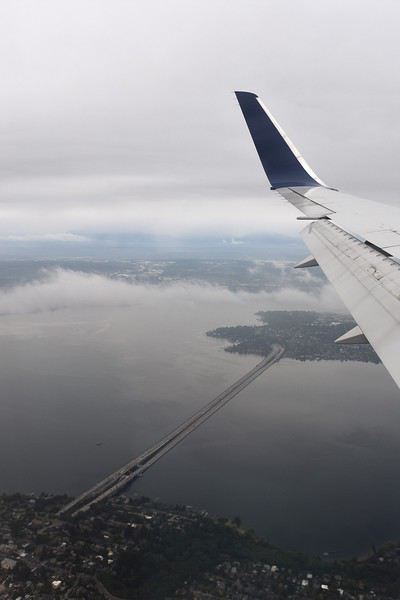
On arrive à la douane, ils nous séparent pour nous interroger un par un. Seul problème, maman parle très mal anglais, voire pas du tout ! Ce qu’on signale immédiatement, mais ils tiennent absolument à ce qu’elle réponse par elle-même aux questions. Ce qui après unpeu d’angoisse nous laisse un souvenir mémorable lorsque le douanier demande si elle a de la nourriture avec elle, sa réponse : « oui bonbonsss » 😄
Tout ça derrière nous, on se dirige vers le bâtiment qui regroupe tous les loueurs de voiture. Tout est très bien fléché dans l’aéroport de Seattle. Nous savons qu’il nous faut prendre un shuttle. Il y a la queue, et nous sommes sous la pluie ! Welcome !

Arrivé au guichet Hertz, pas d’attente. Nous sommes plutôt satisfaits de notre réservation car quelques jours avant le départ, je me reconnecte sur leur site pour vérifier que tout est en ordre. Je réalise alors que les tarifs pour notre catégorie de véhicule ont bien changé et qu’ils sont plus intéressants que lors de notre réservation il y a plusieurs mois. J’appelle Hertz qui constate également, modifie la réservation et s’engage immédiatement à rembourser les 400€ d’écart. Au guichet nous avons également une discussion concernant les assurances des passagers de la voiture. Et la personne est très à l’écoute, se renseigne plusieurs fois à notre demande, pour finalement nous éviter un surcoût, très peu courant chez les loueurs américains ça !!!
C’est donc de bonne humeur que nous descendons au parking, retrouver le véhicule qui nous est attribué. C’est un Chevrolet TAHOE. Maman fait quelques pas en arrière, stupéfaite. « Mais je ne pourrais jamais conduire cet engin !!! ». Avec mon frère Raphaël, nous, nous sommes ravis ! Après les contrôles d’usage, rayures, essuie-glace, niveaux, roue de secours… cette fois EN ROUTE !
On ne change pas les bonnes habitudes, premier arrêt, Walmart ! Il est à peine à 10min de l’aéroport. Nous arrivons sous une pluie battante, 30 secondes dehors pour rejoindre le magasin suffisent à nous tremper ! Nous sommes fatigués du voyage donc la liste de courses préparée à l’avance est bien utile. Seul petit problème, impossible de trouver une bombonne de gaz pour notre réchaud, et ce malgré l’aide d’un vendeur. Cette année, nous avons amené avec nous les barres de céréales pour les randos, on avait un mauvais souvenir des versions américaines et on a bien fait ! On arrive à la voiture, on se dit comme dans la pub, on va utiliser le pied pour ouvrir le coffre car nous sommes chargés et il pleut toujours. Mais rien ne fonctionne. La clé nous permet d’ouvrir chaque porte, chaque fenêtre, mais on ne trouve pas dans la précipitation comment ouvrir le coffre 😕 Quelques minutes plus tard, problème résolu, courses rangées… mais nous sommes trempés comme des soupes 😎
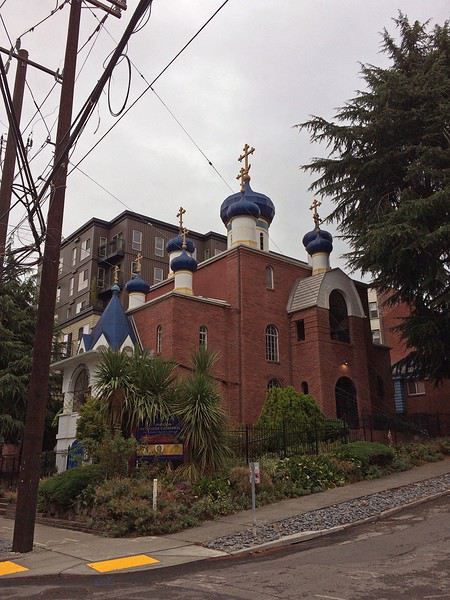
Maintenant, direction REI. C’est certainement notre seule occasion d’y faire un tour pendant ce voyage. Et puis, on a toujours besoin de gaz pour le réchaud. 25min plus tard, on arrive au parking sous-terrain, il est gratuit pendant 1h puis 2$ pour 3h. On a adoré ce magasin ! Et on a trouvé les quelques articles qui nous manquaient. Mais il est temps de partir. Nous avons décidé de ne pas dormir à Seattle, pour économiser un peu. Résultat, encore un peu de route.
Après 30min, nous arrivons au Best Value Inn de Lynnwood. Petit motel sans prétention, mais propre, personnel accueillant. Parfait pour une nuit d’après voyage. Une fois les bagages déchargés, on range les courses dans les glacières. Et on ne se fait pas prier pour se mettre au lit !
Quatrième roadtrip aux USA. C’est en Août 2019 que nous décollons pour Seattle. Cette fois, nous explorons la partie Nord-Ouest des USA, ce pays qui nous passionne depuis le premier roadtrip en 2014. 27 jours de voyage, au travers le Washington, l’Idaho, le Montana, le Wyoming et l’Oregon…ça promet encore de magnifiques découvertes 🙂 Cette année, certains grands parcs sont au programme comme Glacier NP ou encore Yellowstone (non, on ne s’en lassera jamais !), mais nous avons aussi mis sur notre parcours des State Park bien moins touristiques et des petits endroits isolés mais magnifiques comme on adore !
JOUR 1
Ma maman et mon frère sont arrivés chez moi la veille car ils vivent en province, et ce matin pas question d’avoir du retard. C’est le grand jour ! Celui qu’on prépare depuis un an !
Vers 5h du matin, nous recevons un mail de la compagnie aérienne qui nous indique 1h de retard au décollage, on se laisse donc 1h de sommeil supplémentaire.
Porte K49 - 11h10 l’avion décolle. Nous avons choisi à nouveau de voler avec Delta Airlines, et mis à part ce retard de 50min, nous n’avons, comme d’habitude rien à signaler. Les services sont au rendez-vous.
Cette année, nous avons un peu moins de chance que les voyages passés, en ce qui concerne la météo. Nous n’avons pas la chance de voir le Groenland, les côtes canadiennes.
Nous atterrissons à Seattle en début d’après-midi. Il fait gris, et froid ! On attend un moment près du hangar Alaska Airlines, et ben, étant donné la météo, on pourrait se croire en Alaska 😉
On arrive à la douane, ils nous séparent pour nous interroger un par un. Seul problème, maman parle très mal anglais, voire pas du tout ! Ce qu’on signale immédiatement, mais ils tiennent absolument à ce qu’elle réponse par elle-même aux questions. Ce qui après unpeu d’angoisse nous laisse un souvenir mémorable lorsque le douanier demande si elle a de la nourriture avec elle, sa réponse : « oui bonbonsss » 😄
Tout ça derrière nous, on se dirige vers le bâtiment qui regroupe tous les loueurs de voiture. Tout est très bien fléché dans l’aéroport de Seattle. Nous savons qu’il nous faut prendre un shuttle. Il y a la queue, et nous sommes sous la pluie ! Welcome !
Arrivé au guichet Hertz, pas d’attente. Nous sommes plutôt satisfaits de notre réservation car quelques jours avant le départ, je me reconnecte sur leur site pour vérifier que tout est en ordre. Je réalise alors que les tarifs pour notre catégorie de véhicule ont bien changé et qu’ils sont plus intéressants que lors de notre réservation il y a plusieurs mois. J’appelle Hertz qui constate également, modifie la réservation et s’engage immédiatement à rembourser les 400€ d’écart. Au guichet nous avons également une discussion concernant les assurances des passagers de la voiture. Et la personne est très à l’écoute, se renseigne plusieurs fois à notre demande, pour finalement nous éviter un surcoût, très peu courant chez les loueurs américains ça !!!
C’est donc de bonne humeur que nous descendons au parking, retrouver le véhicule qui nous est attribué. C’est un Chevrolet TAHOE. Maman fait quelques pas en arrière, stupéfaite. « Mais je ne pourrais jamais conduire cet engin !!! ». Avec mon frère Raphaël, nous, nous sommes ravis ! Après les contrôles d’usage, rayures, essuie-glace, niveaux, roue de secours… cette fois EN ROUTE !
On ne change pas les bonnes habitudes, premier arrêt, Walmart ! Il est à peine à 10min de l’aéroport. Nous arrivons sous une pluie battante, 30 secondes dehors pour rejoindre le magasin suffisent à nous tremper ! Nous sommes fatigués du voyage donc la liste de courses préparée à l’avance est bien utile. Seul petit problème, impossible de trouver une bombonne de gaz pour notre réchaud, et ce malgré l’aide d’un vendeur. Cette année, nous avons amené avec nous les barres de céréales pour les randos, on avait un mauvais souvenir des versions américaines et on a bien fait ! On arrive à la voiture, on se dit comme dans la pub, on va utiliser le pied pour ouvrir le coffre car nous sommes chargés et il pleut toujours. Mais rien ne fonctionne. La clé nous permet d’ouvrir chaque porte, chaque fenêtre, mais on ne trouve pas dans la précipitation comment ouvrir le coffre 😕 Quelques minutes plus tard, problème résolu, courses rangées… mais nous sommes trempés comme des soupes 😎
Maintenant, direction REI. C’est certainement notre seule occasion d’y faire un tour pendant ce voyage. Et puis, on a toujours besoin de gaz pour le réchaud. 25min plus tard, on arrive au parking sous-terrain, il est gratuit pendant 1h puis 2$ pour 3h. On a adoré ce magasin ! Et on a trouvé les quelques articles qui nous manquaient. Mais il est temps de partir. Nous avons décidé de ne pas dormir à Seattle, pour économiser un peu. Résultat, encore un peu de route.
Après 30min, nous arrivons au Best Value Inn de Lynnwood. Petit motel sans prétention, mais propre, personnel accueillant. Parfait pour une nuit d’après voyage. Une fois les bagages déchargés, on range les courses dans les glacières. Et on ne se fait pas prier pour se mettre au lit !
Voyage 5 mois et 3 semaines en Amérique du Sud English translation pending
Bonjour,
Il n'est jamais trop tard pour rendre compte de son voyage. Le confinement me laisse enfin du temps pour le faire.
Je suis parti le 17 août 2017 et je suis rentré le 7 février 2018. Entre temps, je suis allé en Argentine par cargo puis une fois sur ce continent, j'ai visité l'Uruguay, l'Argentine et le Chili.
Durant tout ce voyage, j'ai tenu un carnet journalier.
Je me propose de vous le livrer.
Retour de 8 jours en Côte d'Ivoire en février 2020 English translation pending
Bonjour
Habitués à voyager surtout en Asie, Amérique du Nord et du sud, nous voulions découvrir l'Afrique subsaharienne, ses traditions et ses villages apres juste un séjour au Kenya il y a 2 ans mais plutot consacré aux safaris. On voulait un pays peu perverti par le tourisme de masse et pas tres loin pour un voyage de 8 jours. Des billets d'avion trouvés avec la TAP pas très chers (280 euros de Toulouse) ont fini de nous convaincre de choisir la Cote d'Ivoire.Mais qui dit peu touristique dit aussi peu de retour par les touristes. Doù les difficultés de préparer à l'avance ce périple d'autant qu'il n'existe qu'un guide papier (le petit futé). Pour aider les futurs voyageurs, je vais vous résumer nos 8 jours en Cote d'Ivoire. Tout d'abord, nous avons voyagé à 6, mes 3 grands garçons agés de 16 à 20 ans, leur cousin de 21 ans, ma femme et moi meme. Il a été très difficile de trouver une voiture pour 6 sans chauffeur, solution que j'aurai sans doute priviligiée (ayant conduit dans presque tous les pays que nous avons fait) si ça avait été possible mais à tort. Nous avons donc fait appel à Ismael (merci Pascal ROTHER qui m'a donné ses coordonnées) qui nous a trouvé une voiture et un chauffeur, Thimothée avec qui le courant est vraiment bien passé, qui a été parfait dans son rôle (ni trop effacé ni trop exubérant). Je ne peux que vous le conseiller. Par contre ce n'est pas un guide mais seulement un chauffeur. C'est moi qui avait établi toutes les étapes et réservé tous les hotels. Il ne connaissait pas tous les lieux et le GPS maps.me a été précieux. Par contre l'intéret de voyager avec un chauffeur est de nous expliquer les us et coutumes du pays et mieux appréhénder comment vivent les ivoiriens. D'autre part, les trajets sont longs et fatigants ce qui a permis de nous reposer pendant qu'il conduisait.
Assez de bla-bla, place au récit de notre voyage (vous pouvez voir les photos de notre voyage sur ce lien https://photos.app.goo.gl/8z1555rVFpQ6XbcT9
J1 Arrivée à Abidjan à 23h15. Chaleur accablante plus de 32° à minuit. Premier contact avec Timothée, notre chauffeur, qui nous accompagne à notre hotel, assez loin de l'aeroport, au nord de la ville pour ne pas avoir à traverser Abidjan et ses célèbres embouteillages le lendemain matin car une longue route nous attend. Hotel Bonté divine : correct
J2 Abidjan- Man Depart assez tot à 8h (c'est diffile plus tot avec mes grands ados) pour une longue route qui nous attend. Heureusement car un incident mécanique (pb de boite à vitesse) nous a obligé à nous arreter 1 heure apres le depart avec une réparation de fortune par un garagiste sur le bord de la route (où probablement nous nous serions pas arrétés si nous avions été seuls). Le super garage :
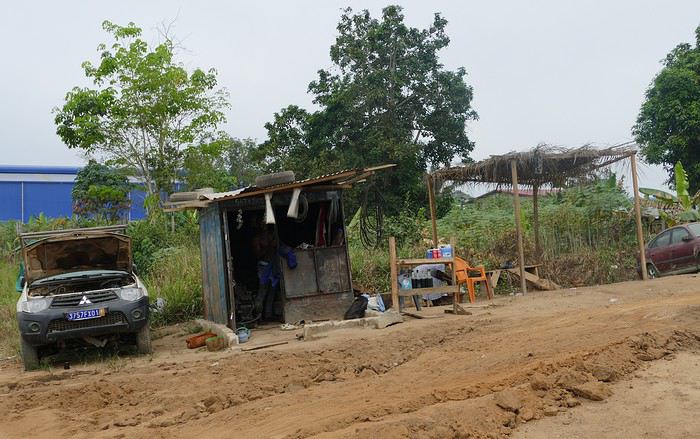
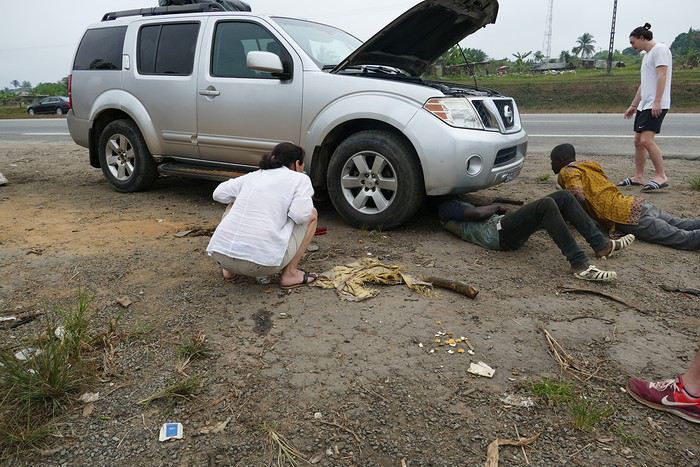
Ce qui nous a permis un premier contact avec les enfants (mais ausssi de perdre 1h30)
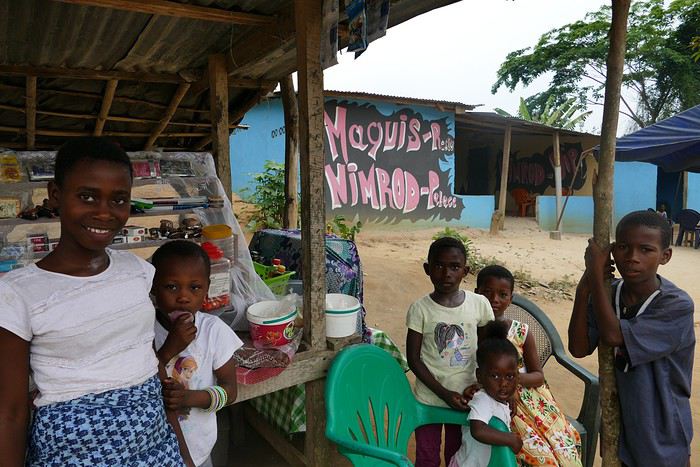
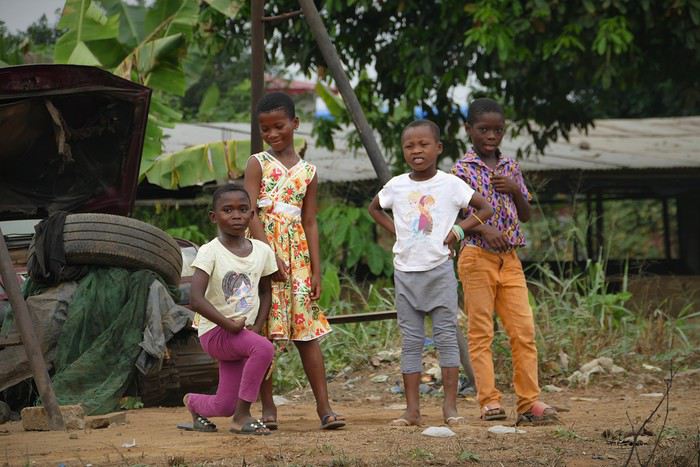
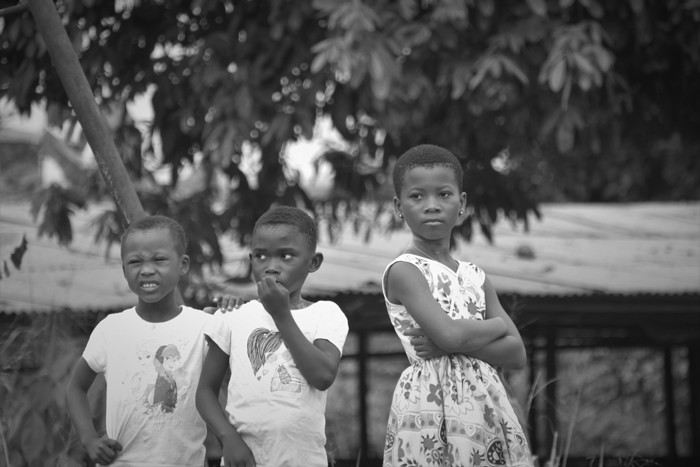
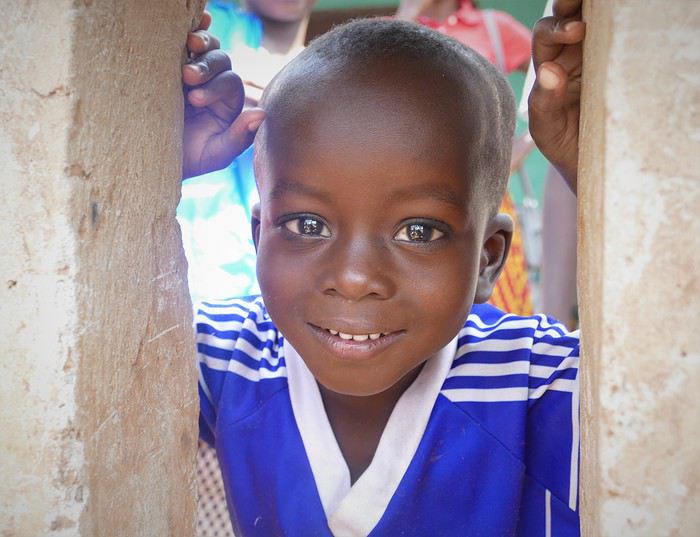
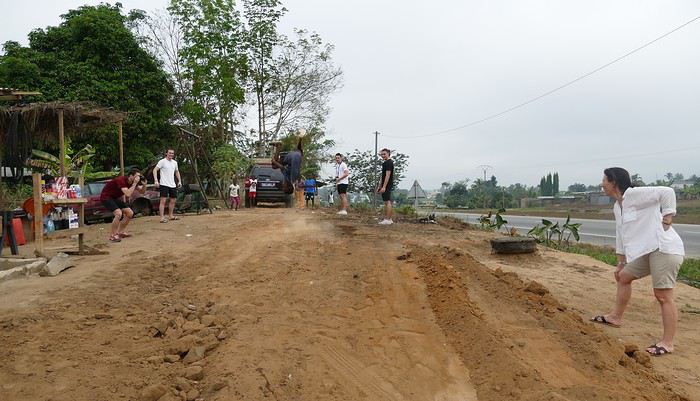
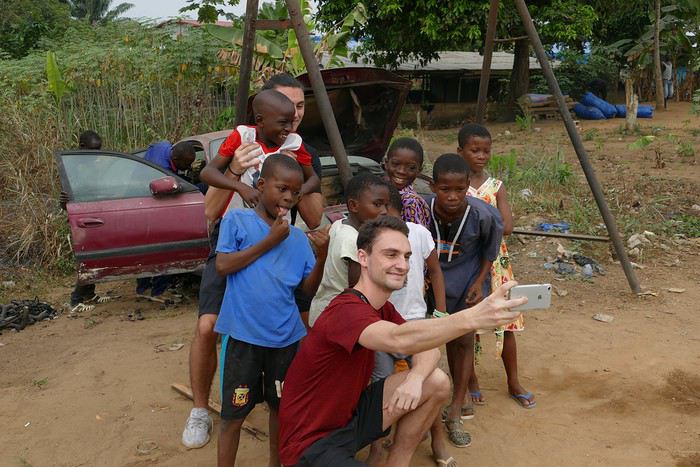

Après réparation, on reprend la route direction Yamoussoukro et sa basilique. Officiellement capitale politique de la Côte d'Ivoire depuis mars 1983, Yamoussoukro, ou familièrement «Yakro», est surtout le village natal du président Houphouët-Boigny.
Juste devant l’entrée de la Présidence, il y a le Lac aux caïmans. C’est un lac artificiel installé sur demande de l’ancien Président et qui longe le site comme une clôture
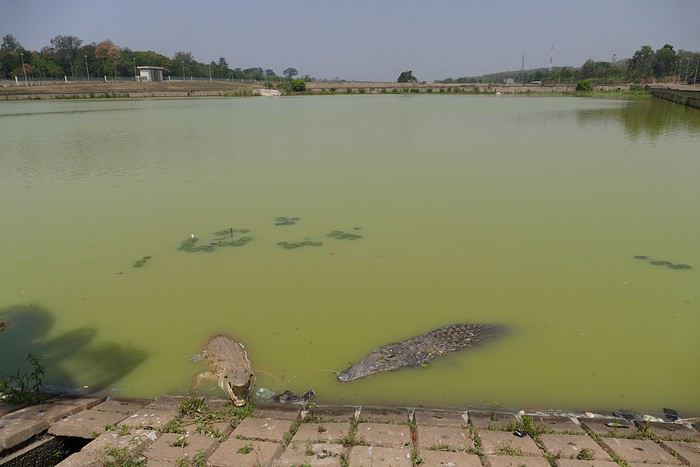
La Basilique Notre-Dame de la paix La Basilique de Yamoussoukro estLA PLUS GRANDE AU MONDE. (Eh oui, plus grande que la Basilique St Pierre du Vatican).
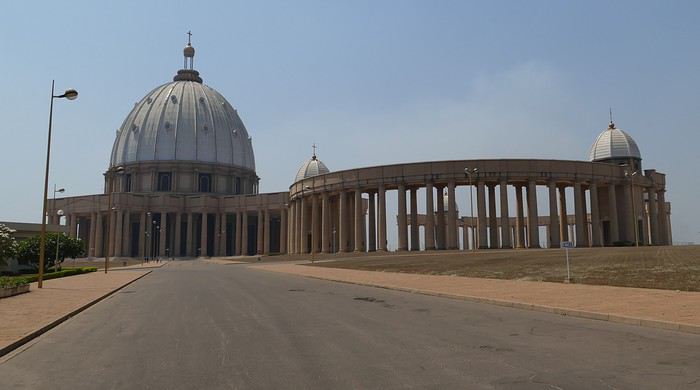
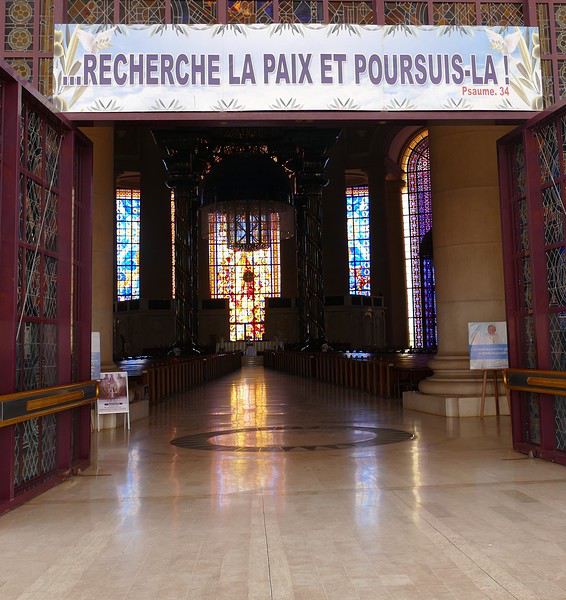
On reprend la route et on s'arrete dans un petit maquis en bord de route .
Apres cette halte, on reprend la tres longue route vers Man avec une route particulièrement défoncée avec des nids "d'éléphants " comme ils disent. Heureusement quelques scènes nous distraient de ce long voyage.

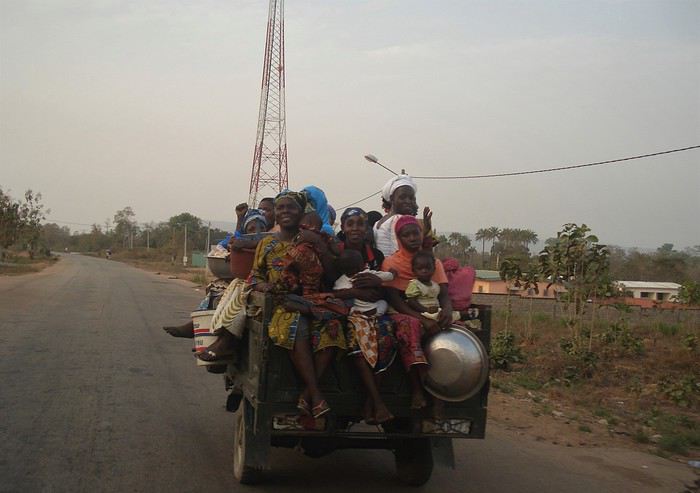
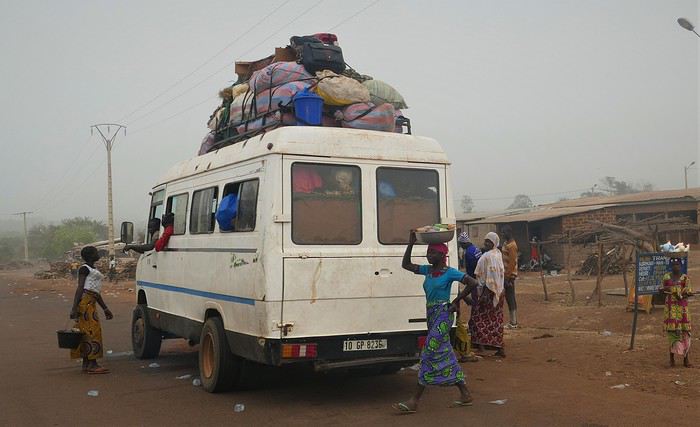
Avec l'incident mécanique nous avons du rouler de nuit ce qui est fortement déconseillé d'après ce que j'avais lu en raison de coupeurs de route (mais pas vus heureusement). Les seuls coupeurs de route que nous ayons vus, ce sont les gendarmes à l'entrée et sortie des grandes villes qui nous arretaient presque systematiquement pendant tout le voyage pour nous extorquer de l'argent. Ils vérifiaient tout pour trouver une faille (soit une perte à chaque fois de 10-20 mn) et malgré l'absence de délit et de possibilité de mettre une contravention, ils nous demandaient à chaque fois de l'argent. Nous avons fait semblant de pas comprendre et n'avons jamais payé. Mais cette corruption nous a gaché une partie du voyage (et fait perdre pas mal de temps).
Hotel Amoitrin à Man très bien avec piscine
Habitués à voyager surtout en Asie, Amérique du Nord et du sud, nous voulions découvrir l'Afrique subsaharienne, ses traditions et ses villages apres juste un séjour au Kenya il y a 2 ans mais plutot consacré aux safaris. On voulait un pays peu perverti par le tourisme de masse et pas tres loin pour un voyage de 8 jours. Des billets d'avion trouvés avec la TAP pas très chers (280 euros de Toulouse) ont fini de nous convaincre de choisir la Cote d'Ivoire.Mais qui dit peu touristique dit aussi peu de retour par les touristes. Doù les difficultés de préparer à l'avance ce périple d'autant qu'il n'existe qu'un guide papier (le petit futé). Pour aider les futurs voyageurs, je vais vous résumer nos 8 jours en Cote d'Ivoire. Tout d'abord, nous avons voyagé à 6, mes 3 grands garçons agés de 16 à 20 ans, leur cousin de 21 ans, ma femme et moi meme. Il a été très difficile de trouver une voiture pour 6 sans chauffeur, solution que j'aurai sans doute priviligiée (ayant conduit dans presque tous les pays que nous avons fait) si ça avait été possible mais à tort. Nous avons donc fait appel à Ismael (merci Pascal ROTHER qui m'a donné ses coordonnées) qui nous a trouvé une voiture et un chauffeur, Thimothée avec qui le courant est vraiment bien passé, qui a été parfait dans son rôle (ni trop effacé ni trop exubérant). Je ne peux que vous le conseiller. Par contre ce n'est pas un guide mais seulement un chauffeur. C'est moi qui avait établi toutes les étapes et réservé tous les hotels. Il ne connaissait pas tous les lieux et le GPS maps.me a été précieux. Par contre l'intéret de voyager avec un chauffeur est de nous expliquer les us et coutumes du pays et mieux appréhénder comment vivent les ivoiriens. D'autre part, les trajets sont longs et fatigants ce qui a permis de nous reposer pendant qu'il conduisait.
Assez de bla-bla, place au récit de notre voyage (vous pouvez voir les photos de notre voyage sur ce lien https://photos.app.goo.gl/8z1555rVFpQ6XbcT9
J1 Arrivée à Abidjan à 23h15. Chaleur accablante plus de 32° à minuit. Premier contact avec Timothée, notre chauffeur, qui nous accompagne à notre hotel, assez loin de l'aeroport, au nord de la ville pour ne pas avoir à traverser Abidjan et ses célèbres embouteillages le lendemain matin car une longue route nous attend. Hotel Bonté divine : correct
J2 Abidjan- Man Depart assez tot à 8h (c'est diffile plus tot avec mes grands ados) pour une longue route qui nous attend. Heureusement car un incident mécanique (pb de boite à vitesse) nous a obligé à nous arreter 1 heure apres le depart avec une réparation de fortune par un garagiste sur le bord de la route (où probablement nous nous serions pas arrétés si nous avions été seuls). Le super garage :
Ce qui nous a permis un premier contact avec les enfants (mais ausssi de perdre 1h30)
Après réparation, on reprend la route direction Yamoussoukro et sa basilique. Officiellement capitale politique de la Côte d'Ivoire depuis mars 1983, Yamoussoukro, ou familièrement «Yakro», est surtout le village natal du président Houphouët-Boigny.
Juste devant l’entrée de la Présidence, il y a le Lac aux caïmans. C’est un lac artificiel installé sur demande de l’ancien Président et qui longe le site comme une clôture
La Basilique Notre-Dame de la paix La Basilique de Yamoussoukro estLA PLUS GRANDE AU MONDE. (Eh oui, plus grande que la Basilique St Pierre du Vatican).
On reprend la route et on s'arrete dans un petit maquis en bord de route .
Apres cette halte, on reprend la tres longue route vers Man avec une route particulièrement défoncée avec des nids "d'éléphants " comme ils disent. Heureusement quelques scènes nous distraient de ce long voyage.
Avec l'incident mécanique nous avons du rouler de nuit ce qui est fortement déconseillé d'après ce que j'avais lu en raison de coupeurs de route (mais pas vus heureusement). Les seuls coupeurs de route que nous ayons vus, ce sont les gendarmes à l'entrée et sortie des grandes villes qui nous arretaient presque systematiquement pendant tout le voyage pour nous extorquer de l'argent. Ils vérifiaient tout pour trouver une faille (soit une perte à chaque fois de 10-20 mn) et malgré l'absence de délit et de possibilité de mettre une contravention, ils nous demandaient à chaque fois de l'argent. Nous avons fait semblant de pas comprendre et n'avons jamais payé. Mais cette corruption nous a gaché une partie du voyage (et fait perdre pas mal de temps).
Hotel Amoitrin à Man très bien avec piscine
Je vous invite à découvrir l'île de Curaçao English translation pending
INTRODUCTION
Des vidéos sont insérées tout au long du résumé. Veuillez cliquer sur l'image pour démarrer la vidéo.
En novembre dernier, nous avons séjourné 2 semaines sur l'île de Curaçao afin d'en découvrir les différents attraits touristiques.
Comme la plupart de nos précédents voyages, plusieurs semaines ont été consacrées à la création de notre itinéraire afin de pouvoir être en mesure d'atteindre parfaitement nos objectifs.
Lors de notre séjour, nous avons utilisé l'application Maps.me, une application mobile qui fournit des cartes hors ligne. Cette application s'avère très précieuse lors de nos déplacements en voiture, en randonnée et même lors de nos circuits à pied dans les grandes villes.
J'avais préalablement téléchargé les coordonnées GPS de toutes les attractions prévues à notre itinéraire dans l'application Maps.me, ce qui a facilité grandement nos déplacements.
La réservation de l'hébergement ainsi que la location d'une voiture ont été effectuées sur internet avant notre départ.
Pour faire une histoire courte, Curaçao se trouve dans la mer des Caraïbes entre les îles d'Aruba et Bonaire, à une soixantaine de kilomètres des côtes du Vénézuela.
Cette île n'est pas très grande puisqu'elle mesure 60 km de long par 11 km de large. Willemstad, sa magnifique capitale, est inscrite au patrimoine mondial de l'Unesco.
Elle jouit d'un climat tempéré et est reconnue pour ses splendides plages, ses eaux limpides, ses parcs nationaux, ses grottes et ses fameux flamants roses.
Des vidéos sont insérées tout au long du résumé. Veuillez cliquer sur l'image pour démarrer la vidéo.
En novembre dernier, nous avons séjourné 2 semaines sur l'île de Curaçao afin d'en découvrir les différents attraits touristiques.
Comme la plupart de nos précédents voyages, plusieurs semaines ont été consacrées à la création de notre itinéraire afin de pouvoir être en mesure d'atteindre parfaitement nos objectifs.
Lors de notre séjour, nous avons utilisé l'application Maps.me, une application mobile qui fournit des cartes hors ligne. Cette application s'avère très précieuse lors de nos déplacements en voiture, en randonnée et même lors de nos circuits à pied dans les grandes villes.
J'avais préalablement téléchargé les coordonnées GPS de toutes les attractions prévues à notre itinéraire dans l'application Maps.me, ce qui a facilité grandement nos déplacements.
La réservation de l'hébergement ainsi que la location d'une voiture ont été effectuées sur internet avant notre départ.
Pour faire une histoire courte, Curaçao se trouve dans la mer des Caraïbes entre les îles d'Aruba et Bonaire, à une soixantaine de kilomètres des côtes du Vénézuela.
Cette île n'est pas très grande puisqu'elle mesure 60 km de long par 11 km de large. Willemstad, sa magnifique capitale, est inscrite au patrimoine mondial de l'Unesco.
Elle jouit d'un climat tempéré et est reconnue pour ses splendides plages, ses eaux limpides, ses parcs nationaux, ses grottes et ses fameux flamants roses.
L'importance des voyages pour vous English translation pending
Bonjour
Nous sommes bien sûr tous des voyageurs et c'est ce qui nous rassemble ici.
Mais nous avons tous une vision différente du voyage et n'y accordons pas la même importance.
Quelle place accordez vous au voyage dans votre vie ?
Est ce un loisir comme un autre ? Une passion ? Un vrai besoin ? Pouvez vous vous en passer facilement ?
Nous sommes bien sûr tous des voyageurs et c'est ce qui nous rassemble ici.
Mais nous avons tous une vision différente du voyage et n'y accordons pas la même importance.
Quelle place accordez vous au voyage dans votre vie ?
Est ce un loisir comme un autre ? Une passion ? Un vrai besoin ? Pouvez vous vous en passer facilement ?
A la découverte du Japon, de Tokyo à l'archipel des Ryukyu (Okinawa) English translation pending
Bonjour à tous,
Rentrée il y a déjà un mois d'un merveilleux voyage au Japon, je me lance aujourd'hui à écrire mon premier essai de carnet de voyage. Il s'agit là de bien sûr, remercier tous les contributeurs de ce forum avec lesquels j'ai échangé ou simplement lu au travers de leurs carnets de voyage et questionnements, mais aussi de partager mon voyage qui fut en un mot "génialissime". Pourquoi? car, ce séjour fût un enchantement et comme nombre d'entre vous, je fais désormais partie de la catégorie des gens qui souhaitent avoir la chance d'y retourner un jour.
Pour commencer, voici les éléments contextuels du voyage:
Origine du projet de voyage: Mon compagnon rêvait depuis longtemps de découvrir le Japon. Pour ma part, je ne saurai expliquer pourquoi mais cela m'intéressait oui mais sans plus et peut être après être allés dans d'autres pays avant. Originaire des îles, j'ai un faible pour les plages paradisiaques...Et c'est au salon du tourisme que j'ai découvert par hasard que le Japon en possédait et ce fût un déclic pour moi car je me suis dit ce pays remplit tous nos critères de voyage... hormis le budget... mais bon ça y'est c'était décidé le Japon serait le pays pour lequel on accepte de casser la tirelire, une sorte de voyage de noces sans mariage 😉. Ce fût également le déclic pour mes beaux-parents. Étions tous plutôt libres en termes de disponibilité, nous nous sommes décidés mi-mai, un tour sur internet juste pour regarder les prix d'un billet d'avion histoire de voir.... et voilà les billets internationaux étaient achetés avec un départ prévu 4 mois et demi plus tard, fin septembre.
Typologie: Voyage de tourisme loisirs et familial, parents et enfants adultes (30 et 65 ans) Durée: 5 semaines et demi, 38 jours/37 nuits Période: l'automne au japon, de fin septembre à début novembre 2019 Organisation: par moi-même avec guides papier, sites internet d'échange et de partage (voyageforum, kanpai) et divers blogs de voyage. Aucun guide sur place.
Modes de transports utilisés: A pied, métro, bus, voiture en location, avion Type d'hébergements: guesthouse, hôtels de chaînes, ryokan, auberges de jeunesse, Budget global: environ 24 500 euros pour 4 personnes adultes Activités: spirituelles (temples, sanctuaires), gastronomiques, nature( jardins, balades), sports aquatiques (rafting, snorkelling) , détente (onsen, plage) Lieux visités:
Tokyo (ueno, tsukiji, ginza, marunouchi, asakusa), Kyoto (gare, château, marché nishiki, arashiyama, gion, fushimi inari), Miyakojima, Shikoku (Takamatsu, Kotohira, Vallée de l'iya, Tokushima), Yakushima, Kyushu (Kagoshima, Chiran, Ibusuki, Takachiho, Kumamoto) , Tokyo (shinjuku, shibuya)
Pour Shikoku, Yakushima et Kyushu, il vous faut aller sur un 2éme carnet. Le site a limité le nombre de photos, j'ai donc dû créer un 2éme carnet intitulé "Escapade japonaise à Shikoku, Kyushu, Yakushima et Tokyo".
Détails du budget:
Les déplacements:
Vols internationaux: 800 euros/ personne en A/R Paris Tokyo avec une courte escale (1h30/2h) à Helsinki en Finlande avec la JAL Vols internes (5): 700 euros/personne avec différents compagnies ANA, JAL et Jetcost 1 bus de nuit Tokyo-Kyoto en confort, 58 euros/ personne avec willer express 4 locations de voiture (miyakojima, shikoku, yakushima, kyushu): 1 300 euros au total pour 3 semaines, soit 13 euros/ jour/ personne
Les hébergements:
7500 euros pour 4 personnes pour 36 nuits soit environ 104 euros/couple ou 52 euros/ personne sachant que dans ce prix étaient inclus 14 petits-déjeuners, et 4 dîners kaiseiki, avec comme critère de recherche impératif 2 chambres séparées pour chaque couple, situation géographique de l'hébergement plutôt centrale et choix de toilettes privatives le plus souvent
Le reste: alimentation, sorties, essence, péage, et achats personnels
environ 2 600 euros/ personne soit environ 69 euros/ jour/ personne
Rentrée il y a déjà un mois d'un merveilleux voyage au Japon, je me lance aujourd'hui à écrire mon premier essai de carnet de voyage. Il s'agit là de bien sûr, remercier tous les contributeurs de ce forum avec lesquels j'ai échangé ou simplement lu au travers de leurs carnets de voyage et questionnements, mais aussi de partager mon voyage qui fut en un mot "génialissime". Pourquoi? car, ce séjour fût un enchantement et comme nombre d'entre vous, je fais désormais partie de la catégorie des gens qui souhaitent avoir la chance d'y retourner un jour.
Pour commencer, voici les éléments contextuels du voyage:
Origine du projet de voyage: Mon compagnon rêvait depuis longtemps de découvrir le Japon. Pour ma part, je ne saurai expliquer pourquoi mais cela m'intéressait oui mais sans plus et peut être après être allés dans d'autres pays avant. Originaire des îles, j'ai un faible pour les plages paradisiaques...Et c'est au salon du tourisme que j'ai découvert par hasard que le Japon en possédait et ce fût un déclic pour moi car je me suis dit ce pays remplit tous nos critères de voyage... hormis le budget... mais bon ça y'est c'était décidé le Japon serait le pays pour lequel on accepte de casser la tirelire, une sorte de voyage de noces sans mariage 😉. Ce fût également le déclic pour mes beaux-parents. Étions tous plutôt libres en termes de disponibilité, nous nous sommes décidés mi-mai, un tour sur internet juste pour regarder les prix d'un billet d'avion histoire de voir.... et voilà les billets internationaux étaient achetés avec un départ prévu 4 mois et demi plus tard, fin septembre.
Typologie: Voyage de tourisme loisirs et familial, parents et enfants adultes (30 et 65 ans) Durée: 5 semaines et demi, 38 jours/37 nuits Période: l'automne au japon, de fin septembre à début novembre 2019 Organisation: par moi-même avec guides papier, sites internet d'échange et de partage (voyageforum, kanpai) et divers blogs de voyage. Aucun guide sur place.
Modes de transports utilisés: A pied, métro, bus, voiture en location, avion Type d'hébergements: guesthouse, hôtels de chaînes, ryokan, auberges de jeunesse, Budget global: environ 24 500 euros pour 4 personnes adultes Activités: spirituelles (temples, sanctuaires), gastronomiques, nature( jardins, balades), sports aquatiques (rafting, snorkelling) , détente (onsen, plage) Lieux visités:
Tokyo (ueno, tsukiji, ginza, marunouchi, asakusa), Kyoto (gare, château, marché nishiki, arashiyama, gion, fushimi inari), Miyakojima, Shikoku (Takamatsu, Kotohira, Vallée de l'iya, Tokushima), Yakushima, Kyushu (Kagoshima, Chiran, Ibusuki, Takachiho, Kumamoto) , Tokyo (shinjuku, shibuya)
Pour Shikoku, Yakushima et Kyushu, il vous faut aller sur un 2éme carnet. Le site a limité le nombre de photos, j'ai donc dû créer un 2éme carnet intitulé "Escapade japonaise à Shikoku, Kyushu, Yakushima et Tokyo".
Détails du budget:
Les déplacements:
Vols internationaux: 800 euros/ personne en A/R Paris Tokyo avec une courte escale (1h30/2h) à Helsinki en Finlande avec la JAL Vols internes (5): 700 euros/personne avec différents compagnies ANA, JAL et Jetcost 1 bus de nuit Tokyo-Kyoto en confort, 58 euros/ personne avec willer express 4 locations de voiture (miyakojima, shikoku, yakushima, kyushu): 1 300 euros au total pour 3 semaines, soit 13 euros/ jour/ personne
Les hébergements:
7500 euros pour 4 personnes pour 36 nuits soit environ 104 euros/couple ou 52 euros/ personne sachant que dans ce prix étaient inclus 14 petits-déjeuners, et 4 dîners kaiseiki, avec comme critère de recherche impératif 2 chambres séparées pour chaque couple, situation géographique de l'hébergement plutôt centrale et choix de toilettes privatives le plus souvent
Le reste: alimentation, sorties, essence, péage, et achats personnels
environ 2 600 euros/ personne soit environ 69 euros/ jour/ personne
Restrictions du visa à l'arrivée pour le Laos English translation pending
Les visas à l’arrivée ne seront bientôt plus possibles à neuf points de contrôles avec la Thaïlande et le Viêtnam.
Le Laos annonce de prochaines restrictions portant sur les «Visa on arrival». En effet, neuf postes frontières vers la Thaïlande et le Viêtnam ne délivreront plus de tels visa dès l’an prochain. C’est ce qu’indique le ministère allemand des affaires étrangères sur son site web.
Les visa à l’arrivée seront émis jusqu’au 31 décembre 2019 à Pang Hok et Nam Soy (frontière avec le Viêtnam), ainsi qu’à Nam Ngeun (frontière avec la Thaïlande). Les postes de Nam Kanh (frontière avec le Viêtnam), de l’aéroport international de Savannakhet et de Nam Heugang (frontière avec la Thaïlande) fourniront le visa à l’arrivée jusqu’au 31 mars 2020. Enfin les postes de Nam Phao, Na Pao et Phoukeua (frontière avec le Viêtnam) établiront des visas à l’arrivée jusqu’au 30 juin 2020.
Les conditions pour obtenir un visa à l’arrivée sont d’avoir un passeport valable au moins encore six mois, 30 dollars et deux photos. Les voyageurs doivent en outre disposer de fonds suffisants. Il peut être obtenu pour un séjour allant jusqu’à 30 jours.
Les autres options pour obtenir un visa restent celle d’une demande avant le voyage auprès de l’ambassade à Berne ou la demande du visa électronique (e-visa). (TI)
Trois semaines entre Montréal, Ottawa, l'État de New York et la Nouvelle Angleterre English translation pending
Bonjour à tous
Après un été en Italie en 2018 , l’envie de repartir sur la côte est des USA pour « finir » notre voyage en Nouvelle Angleterre s’est concrétisé : 23 jours en partant de Montréal , tourner cette fois ci vers l’Ouest en passant par Ottawa, l’état de New York, le Connecticut, le Rhode Island, le Massachusetts, Le Vermont, à nouveau l’état de New York et enfin retour par Montréal .
Cette fois ci nous ne sommes que mon mari et moi , sans aucun enfant , les premières grandes vacances en couple depuis ...1990. Les billets d’avion sont achetés en Mars pour 1358€ pour 2 sur Air Canada directement -sièges et valises compris. Les AVE sont ok jusqu’en 2025. L’I94 sera réglé sur place . Les hôtels ont été réservés au fur et à mesure soit sur une centrale qui crédite une nuit gratuite pour 10 réservées- on en profitera deux fois, soit sur les sites directement des hôtels. Et ça ce fut un gros gros boulot en amont . Les repas seront surtout pris dans des restaurants et pique-nique le midi . Attention aux horaires des restos le soir , dans les coins pas touristiques, ils ferment souvent vers 21h-21h30.
Je me suis inspirée très fortement du guide « Escapades Américaines « de Marie France Bornais un des rares guides sur l’Etat de New York et du Guide Ulysse sur la Nouvelle Angleterre, des petits guides pour Montréal et Ottawa , les sites internet des régions parcourues , surtout https://parks.ny.gov/ et des demandes de documentations . Et bien sûr les quelques carnets et discussion sur ce forum.
Le trajet J1 mercredi 03 Juillet Paris-Montréal J2 jeudi 04 Juillet Montréal - Gatineau/Ottawa J3 Vendredi 05 Juillet Gatineau/Ottawa J4 Samedi 06 Juillet Ottawa-Gananoque J5 Dimanche 07 Juillet Gananoque J6 Lundi 08 Juillet Gananoque-Geneva J7 Mardi 09 Juillet Geneva-Ithaca J8 Mercredi 10 Juillet Ithaca J9 Jeudi 11 Juillet Ithaca-Pougkeepsie J10 Vendredi 12 Juillet Pougkeepsie-Mystic J11 Samedi 13 Juillet Mystic J12 Dimanche 14 Juillet Mystic J13 Lundi 15 Juillet Mystic J14 Mardi 16 Juillet. Mystic - Boston J15 Mercredi 17 Juillet Boston J16 Jeudi 18 Juillet Boston J17 Vendredi 19 Juillet Boston - Bennington J18 Samedi 20 Juillet Bennington J19 Dimanche 21 Juillet Bennington-Lake Placid J21 Lundi 22 Juillet Lake Placid J22 Mardi 23 Juillet Lake Placid -Montréal J23 Mercredi 24 Juillet Montréal J24 Jeudi 25 Juillet Montréal -Paris
Je vais essayer d'intégrer la photo du trajet mais celle que j’ai n’est pas assez « lourde ». Victoire :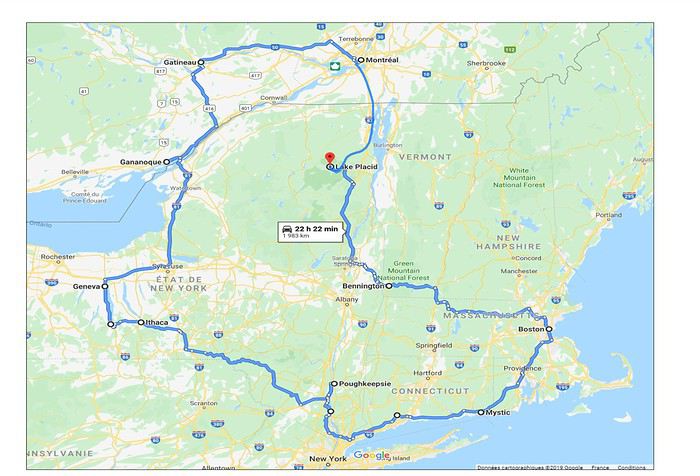
Après un été en Italie en 2018 , l’envie de repartir sur la côte est des USA pour « finir » notre voyage en Nouvelle Angleterre s’est concrétisé : 23 jours en partant de Montréal , tourner cette fois ci vers l’Ouest en passant par Ottawa, l’état de New York, le Connecticut, le Rhode Island, le Massachusetts, Le Vermont, à nouveau l’état de New York et enfin retour par Montréal .
Cette fois ci nous ne sommes que mon mari et moi , sans aucun enfant , les premières grandes vacances en couple depuis ...1990. Les billets d’avion sont achetés en Mars pour 1358€ pour 2 sur Air Canada directement -sièges et valises compris. Les AVE sont ok jusqu’en 2025. L’I94 sera réglé sur place . Les hôtels ont été réservés au fur et à mesure soit sur une centrale qui crédite une nuit gratuite pour 10 réservées- on en profitera deux fois, soit sur les sites directement des hôtels. Et ça ce fut un gros gros boulot en amont . Les repas seront surtout pris dans des restaurants et pique-nique le midi . Attention aux horaires des restos le soir , dans les coins pas touristiques, ils ferment souvent vers 21h-21h30.
Je me suis inspirée très fortement du guide « Escapades Américaines « de Marie France Bornais un des rares guides sur l’Etat de New York et du Guide Ulysse sur la Nouvelle Angleterre, des petits guides pour Montréal et Ottawa , les sites internet des régions parcourues , surtout https://parks.ny.gov/ et des demandes de documentations . Et bien sûr les quelques carnets et discussion sur ce forum.
Le trajet J1 mercredi 03 Juillet Paris-Montréal J2 jeudi 04 Juillet Montréal - Gatineau/Ottawa J3 Vendredi 05 Juillet Gatineau/Ottawa J4 Samedi 06 Juillet Ottawa-Gananoque J5 Dimanche 07 Juillet Gananoque J6 Lundi 08 Juillet Gananoque-Geneva J7 Mardi 09 Juillet Geneva-Ithaca J8 Mercredi 10 Juillet Ithaca J9 Jeudi 11 Juillet Ithaca-Pougkeepsie J10 Vendredi 12 Juillet Pougkeepsie-Mystic J11 Samedi 13 Juillet Mystic J12 Dimanche 14 Juillet Mystic J13 Lundi 15 Juillet Mystic J14 Mardi 16 Juillet. Mystic - Boston J15 Mercredi 17 Juillet Boston J16 Jeudi 18 Juillet Boston J17 Vendredi 19 Juillet Boston - Bennington J18 Samedi 20 Juillet Bennington J19 Dimanche 21 Juillet Bennington-Lake Placid J21 Lundi 22 Juillet Lake Placid J22 Mardi 23 Juillet Lake Placid -Montréal J23 Mercredi 24 Juillet Montréal J24 Jeudi 25 Juillet Montréal -Paris
Je vais essayer d'intégrer la photo du trajet mais celle que j’ai n’est pas assez « lourde ». Victoire :
In the Land of the Tswana (Botswana)
We’ve been back for a month now, so it’s high time I posted the story of our adventures! 😉 I’d also like to thank everyone who shared their own experiences on this forum (or elsewhere) and gave us tips—it really helped us plan our trip.
14/09/2019: Johannesburg - Vryburg After months of waiting and reading other travelers’ journals, it’s finally our turn! We arrived in Johannesburg from Nantes and Paris in the morning. We looked for the Bushlore rep—we’d rented our 4x4 from them—but there was no sign with our name! « Bushlore? She’s a woman, I saw her a few minutes ago, » someone told us. A minute later, the Bushlore employee showed up: a man! 🤪 He sped onto the highway, and just 30 minutes later, we arrived at the rental place. It’s a big operation with good organization and lots of vehicles—pretty reassuring. Our 4x4 was there, a classic Toyota Hilux fully equipped for safari: rooftop tent, dual diesel tanks, 60-liter water reserve, two batteries, two spare tires, all the camping gear, plus everything needed for *désensablement* (getting unstuck from sand). Speaking of which, is it "désensablage" or "désensablement"? Best to just avoid getting stuck in the first place! 😏 Good news… or not: the vehicle was brand new, with barely 100 kilometers on the odometer. On one hand, we figured we wouldn’t have mechanical issues or a fridge breakdown, but on the other, we knew it wouldn’t be easy to return it without a single scratch. Either way, it was our first time renting a 4x4, and we were impressed.
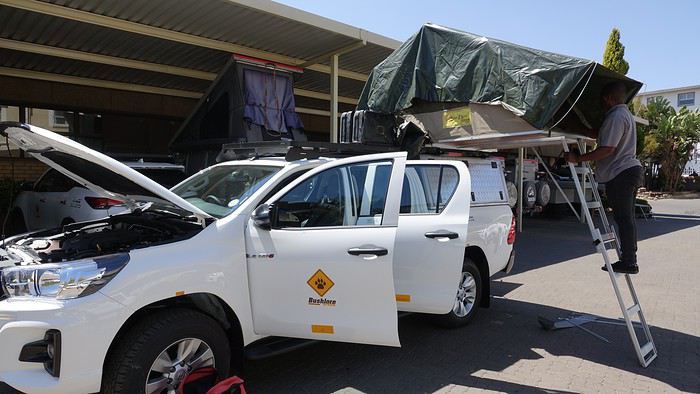
We set off toward Kgalagadi Transfrontier Park—it’s not exactly around the corner! In 1994 (when Mandela had just become President) and 2007, during our two previous trips to South Africa, we loved this park, so we couldn’t imagine going to Botswana without returning. The road was pretty monotonous, with not much to see except a few ostriches.
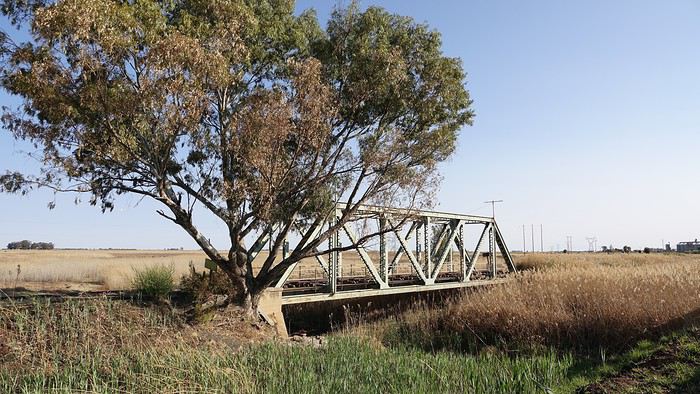
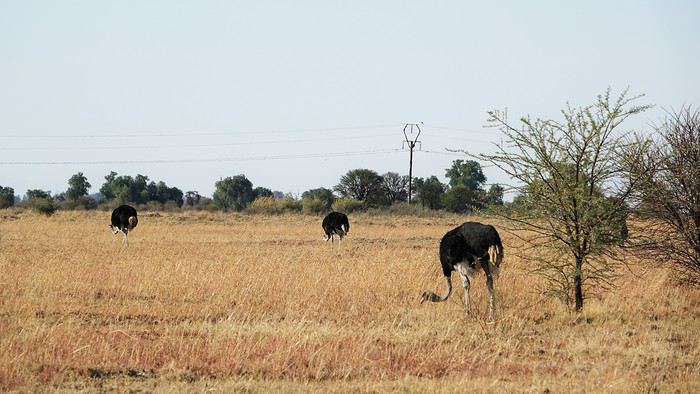
We stopped for the night in Vryburg at the Kameelboom Lodge campsite. It was a bit noisy since it’s close to the road, and the facilities weren’t great, but it was fine for one night.
14/09/2019: Johannesburg - Vryburg After months of waiting and reading other travelers’ journals, it’s finally our turn! We arrived in Johannesburg from Nantes and Paris in the morning. We looked for the Bushlore rep—we’d rented our 4x4 from them—but there was no sign with our name! « Bushlore? She’s a woman, I saw her a few minutes ago, » someone told us. A minute later, the Bushlore employee showed up: a man! 🤪 He sped onto the highway, and just 30 minutes later, we arrived at the rental place. It’s a big operation with good organization and lots of vehicles—pretty reassuring. Our 4x4 was there, a classic Toyota Hilux fully equipped for safari: rooftop tent, dual diesel tanks, 60-liter water reserve, two batteries, two spare tires, all the camping gear, plus everything needed for *désensablement* (getting unstuck from sand). Speaking of which, is it "désensablage" or "désensablement"? Best to just avoid getting stuck in the first place! 😏 Good news… or not: the vehicle was brand new, with barely 100 kilometers on the odometer. On one hand, we figured we wouldn’t have mechanical issues or a fridge breakdown, but on the other, we knew it wouldn’t be easy to return it without a single scratch. Either way, it was our first time renting a 4x4, and we were impressed.
We set off toward Kgalagadi Transfrontier Park—it’s not exactly around the corner! In 1994 (when Mandela had just become President) and 2007, during our two previous trips to South Africa, we loved this park, so we couldn’t imagine going to Botswana without returning. The road was pretty monotonous, with not much to see except a few ostriches.
We stopped for the night in Vryburg at the Kameelboom Lodge campsite. It was a bit noisy since it’s close to the road, and the facilities weren’t great, but it was fine for one night.
Un nouveau tête à tête mère-fils magnifique! Avril 2019 English translation pending
Après un road-trip multigénérationnel en juillet 2015, nous sommes retournés avec mon fils, surnommé T., dans l’ouest américain en avril 2017 pour un magnifique voyage en tête à tête ! Nous avions adoré partir en avril, températures plus clémentes, coup de cœur pour Death Valley… Donc, comme à chaque retour, une seule idée en tête, renouveler cette incroyable expérience !
Et cette année encore, grâce aux conseils puisés sur VF (une nouvelle fois merci à tous), le voyage fut merveilleux ! Tous les jours son lot de découvertes et d’émerveillements !
Nous avons été particulièrement touchés par le foisonnement de fleurs tout au long du voyage, par des milliers de papillons nous faisant tourner la tête à Death Valley et par l’impression d’être seuls au monde dans ces merveilleux paysages (très faible fréquentation à cette période) 😎! Comme à chaque fois, nous avons apprécié les rencontres et la gentillesse des américains !
Par contre nous avons été surpris par la chaleur 🤪: très heureux d’avoir beau temps, mais étonnés par les températures élevées (31° C dès midi toute la 1ere semaine) ! Aussi le programme a un peu évolué par rapport à celui d’origine en fonction de la météo essentiellement mais aussi en fonction de problèmes techniques rencontrés ou de notre état de fatigue.
Programme effectué avec 3212km au compteur :
JOUR 1 : France – LAS VEGAS. Nuit Las Vegas
JOUR 2 : Seven Magic Mountains - Amboy ROY'S café - JOSHUA TREE (Arch Rock trail, Cholla Cactus, Skull Rock, Hidden Valley et Keys View). Nuit Twentynine Palms voyageforum.com/...st=9647375;a=9647375
JOUR 3 : AMBOY Crater - Kelso Depot - Baker (plus grand thermomètre – Boutique Alien) - SOSHONE (Museum, Dublin Gulch) - DEATH VALLEY par badwater road (avec découverte pédestre de Badwater, Artists Palette et Mars Hill). Nuit1 Furnace Creek voyageforum.com/...st=9648823;a=9648823
JOUR 4 : DEATH VALLEY : lever de soleil à Zabriskie + trail pour Meanly Beacon - Piscine - Devil' s golf Course, Artist Drive, Mushroom Rock, coucher de soleil à Zabriskie. Nuit2 Furnace Creek voyageforum.com/...st=9649703;a=9649703
JOUR 5 : DEATH VALLEY ( Gnome's Workshop, Salt creek et Mustard Canyon). PARHUMP (museum + boulangerie O HAPPY BREAD) - RED ROCK CANYON (avec Calico Hills- Lost Creek). Nuit Las Vegas voyageforum.com/...st=9651800;a=9651800
JOUR 6 : SNOW CANYON (avec Sand Dunes, Hidden Pinyon - Petrified dunes trail et Lava Flow). Nuit ST GEORGE voyageforum.com/...st=9658216;a=9658216
JOUR 7 : ZION : avec Scout's Overlook - rim trail, Riverside Walk, Weeping Rock. Nuit Kanab. voyageforum.com/...st=9664493;a=9664493
JOUR 8 : Johnson Canyon - The Chains - MONUMENT VALLEY : Wildcat trail. Nuit cabin Monument Valley voyageforum.com/...st=9669060;a=9669060
JOUR 9 : MONUMENT VALLEY (Mesa rim trail + Lee Cly trail) - CANYON DE CHELLY : South rim avec White House trail. Nuit Chinle voyageforum.com/...st=9673898;a=9673898
JOUR 10 : PAINTED DESERT - PETRIFIED FOREST : avec Blue Mesa trail, Crystal Forest, Giant Logs, Long Logs et Agate house trail. HOLBROOK (Museum – Wigwam Hotel )- Nuit Flagstaff voyageforum.com/...st=9676578;a=9676578
JOUR 11 : Route 66 : SELIGMAN, HACKBERRY, KINGMAN. Nuit LAS VEGAS voyageforum.com/...st=9678172;a=9678172
JOUR 12 : LAS VEGAS avec Count's Kustom's, Old Las Vegas Mormon fort, Gold & Silver Pawn shop... voyageforum.com/...st=9678610;a=9678610
JOUR 13 : LAS VEGAS avec VOID Star Wars, spectacle LOVE (the Beatles)… voyageforum.com/...st=9678639;a=9678639
JOUR 14 : Retour FRANCEhttps://voyageforum.com/v.f?post=9678644;a=9678644
Voilà, un programme à notre image, nous sommes plutôt des contemplatifs, nous aimons nous perdre dans des lieux magnifiques, s'isoler pour s'imprégner des lieux, marcher pour découvrir des petites merveilles... mais pas des sportifs expérimentés comme on peut le voir sur d'autres carnets😉! Les photos, j'en fait beaucoup... trop d'après T😉! Mais pour moi, ça fait parti du plaisir, pouvoir s'imprégner de la beauté des lieux, partager des sensations et fixer à jamais des souvenirs😎!Les préparatifs :BUDGET TOTAL : 1500€/pers tout compris (souvenirs, loisirs, nourriture, avions, voiture, essence, parkings, hôtels…)Billets d’avions : 500€/pers, achetés sur Air Canada + 50€ bagage en soute! Alors nous ne sommes pas fidèles à une compagnie ! On change à chaque fois car on prend en fonction des meilleurs prix ! Mais Air Canada ne restera pas dans nos favoris 😕!
La voiture : 340€ pour 12 jours avec Alamo. Voiture Hyundai, super confortable, caméra de recul, écran avec affichage de la pression de chaque pneu (cela s’avérera utile😉) … ! Réservé sur Alamo.fr comme à chaque voyage, mais première fois que l’on rencontre un problème à la prise de voiture malgré Skip the Counter😠! Côté essence = 137$ !
Les hôtels : réservés majoritairement sur hotels.com… ce qui permet à chaque voyage d’utiliser des nuits gratuites! Et via Igraal et Poulpeo pour le cashback… Cette année j’ai beaucoup utilisé l’annulation gratuite et est modifié mes réservations à nombreuses reprises ce qui nous a permis de faire des économies conséquentes (plus de 200€) !
Les frais bancaires : Depuis notre voyage en avril 2017, j’ai conservé mon compte Boursorama, avec carte 1er gratuite (donc réservations d'avion faites avec pour l'assurance associée) et niveau frais pour les paiements aux USA, nettement plus intéressant qu’avec LCL! Pour tout achat important sur internet ou tout 1er achat à l'étranger, on reçoit un sms pour nous prévenir... rien à faire si c'est nous... et sinon, on peut de suite intervenir en cas de fraude! Essayé, c’est l’adopter !
GPS : Points préparés à l’avance… mais malheureusement pour rien, le GPS nous a lâché dès le 1er jour 😠 !
Forfait téléphonique : FREE avec USA et Canada! Grâce au bon plan de Gilles😉
La suite bientôt avec le voyage!
Programme effectué avec 3212km au compteur :
JOUR 1 : France – LAS VEGAS. Nuit Las Vegas
JOUR 2 : Seven Magic Mountains - Amboy ROY'S café - JOSHUA TREE (Arch Rock trail, Cholla Cactus, Skull Rock, Hidden Valley et Keys View). Nuit Twentynine Palms voyageforum.com/...st=9647375;a=9647375
JOUR 3 : AMBOY Crater - Kelso Depot - Baker (plus grand thermomètre – Boutique Alien) - SOSHONE (Museum, Dublin Gulch) - DEATH VALLEY par badwater road (avec découverte pédestre de Badwater, Artists Palette et Mars Hill). Nuit1 Furnace Creek voyageforum.com/...st=9648823;a=9648823
JOUR 4 : DEATH VALLEY : lever de soleil à Zabriskie + trail pour Meanly Beacon - Piscine - Devil' s golf Course, Artist Drive, Mushroom Rock, coucher de soleil à Zabriskie. Nuit2 Furnace Creek voyageforum.com/...st=9649703;a=9649703
JOUR 5 : DEATH VALLEY ( Gnome's Workshop, Salt creek et Mustard Canyon). PARHUMP (museum + boulangerie O HAPPY BREAD) - RED ROCK CANYON (avec Calico Hills- Lost Creek). Nuit Las Vegas voyageforum.com/...st=9651800;a=9651800
JOUR 6 : SNOW CANYON (avec Sand Dunes, Hidden Pinyon - Petrified dunes trail et Lava Flow). Nuit ST GEORGE voyageforum.com/...st=9658216;a=9658216
JOUR 7 : ZION : avec Scout's Overlook - rim trail, Riverside Walk, Weeping Rock. Nuit Kanab. voyageforum.com/...st=9664493;a=9664493
JOUR 8 : Johnson Canyon - The Chains - MONUMENT VALLEY : Wildcat trail. Nuit cabin Monument Valley voyageforum.com/...st=9669060;a=9669060
JOUR 9 : MONUMENT VALLEY (Mesa rim trail + Lee Cly trail) - CANYON DE CHELLY : South rim avec White House trail. Nuit Chinle voyageforum.com/...st=9673898;a=9673898
JOUR 10 : PAINTED DESERT - PETRIFIED FOREST : avec Blue Mesa trail, Crystal Forest, Giant Logs, Long Logs et Agate house trail. HOLBROOK (Museum – Wigwam Hotel )- Nuit Flagstaff voyageforum.com/...st=9676578;a=9676578
JOUR 11 : Route 66 : SELIGMAN, HACKBERRY, KINGMAN. Nuit LAS VEGAS voyageforum.com/...st=9678172;a=9678172
JOUR 12 : LAS VEGAS avec Count's Kustom's, Old Las Vegas Mormon fort, Gold & Silver Pawn shop... voyageforum.com/...st=9678610;a=9678610
JOUR 13 : LAS VEGAS avec VOID Star Wars, spectacle LOVE (the Beatles)… voyageforum.com/...st=9678639;a=9678639
JOUR 14 : Retour FRANCEhttps://voyageforum.com/v.f?post=9678644;a=9678644
Voilà, un programme à notre image, nous sommes plutôt des contemplatifs, nous aimons nous perdre dans des lieux magnifiques, s'isoler pour s'imprégner des lieux, marcher pour découvrir des petites merveilles... mais pas des sportifs expérimentés comme on peut le voir sur d'autres carnets😉! Les photos, j'en fait beaucoup... trop d'après T😉! Mais pour moi, ça fait parti du plaisir, pouvoir s'imprégner de la beauté des lieux, partager des sensations et fixer à jamais des souvenirs😎!Les préparatifs :BUDGET TOTAL : 1500€/pers tout compris (souvenirs, loisirs, nourriture, avions, voiture, essence, parkings, hôtels…)Billets d’avions : 500€/pers, achetés sur Air Canada + 50€ bagage en soute! Alors nous ne sommes pas fidèles à une compagnie ! On change à chaque fois car on prend en fonction des meilleurs prix ! Mais Air Canada ne restera pas dans nos favoris 😕!
La voiture : 340€ pour 12 jours avec Alamo. Voiture Hyundai, super confortable, caméra de recul, écran avec affichage de la pression de chaque pneu (cela s’avérera utile😉) … ! Réservé sur Alamo.fr comme à chaque voyage, mais première fois que l’on rencontre un problème à la prise de voiture malgré Skip the Counter😠! Côté essence = 137$ !
Les hôtels : réservés majoritairement sur hotels.com… ce qui permet à chaque voyage d’utiliser des nuits gratuites! Et via Igraal et Poulpeo pour le cashback… Cette année j’ai beaucoup utilisé l’annulation gratuite et est modifié mes réservations à nombreuses reprises ce qui nous a permis de faire des économies conséquentes (plus de 200€) !
Les frais bancaires : Depuis notre voyage en avril 2017, j’ai conservé mon compte Boursorama, avec carte 1er gratuite (donc réservations d'avion faites avec pour l'assurance associée) et niveau frais pour les paiements aux USA, nettement plus intéressant qu’avec LCL! Pour tout achat important sur internet ou tout 1er achat à l'étranger, on reçoit un sms pour nous prévenir... rien à faire si c'est nous... et sinon, on peut de suite intervenir en cas de fraude! Essayé, c’est l’adopter !
GPS : Points préparés à l’avance… mais malheureusement pour rien, le GPS nous a lâché dès le 1er jour 😠 !
Forfait téléphonique : FREE avec USA et Canada! Grâce au bon plan de Gilles😉
La suite bientôt avec le voyage!