Results for "Perros+Guirec+|+127"
1765 results found.
Philippines, pourquoi si peu d'infos? English translation pending
Bonjour a tous,
Preparant un grand periple en Asie, je suis en train de m'equiper en guide de voyage. Laos, Cambodge, Indonesie... le choix est vaste et les guides multiples... sauf pour les Philippines !
Le "LONELY" n'existe qu'en version anglaise, je n'ai pas trouvé de "ROUTARD" sur cette destination et meme sur internet, les infos sont nettement moins nombreuses.
Mon fournisseur d'acces (dont le nom commence par un A et se termine par un L...) met a la disposition de ses abonnes un service special voyage en partenariat avec le "ROUTARD". Se site propose une mine d'infos pour avoir une premiere approche d'une multitude de pays et a nouveau, les Philippines s'en trouvent absents.
A quoi est du cette carence en infos concernant ce pays ? On m'a pourtant dit qu'il ne manquait pas de charme et qu'il proposait des plages tout aussi blanches et ensoleillees que la Thailande. Qu'en est-il vraiment ?
Si vous avez des infos sur le pourquoi de la chose, tout comme sur le pays en lui-meme, je suis preneur.
Merci a tous.
Preparant un grand periple en Asie, je suis en train de m'equiper en guide de voyage. Laos, Cambodge, Indonesie... le choix est vaste et les guides multiples... sauf pour les Philippines !
Le "LONELY" n'existe qu'en version anglaise, je n'ai pas trouvé de "ROUTARD" sur cette destination et meme sur internet, les infos sont nettement moins nombreuses.
Mon fournisseur d'acces (dont le nom commence par un A et se termine par un L...) met a la disposition de ses abonnes un service special voyage en partenariat avec le "ROUTARD". Se site propose une mine d'infos pour avoir une premiere approche d'une multitude de pays et a nouveau, les Philippines s'en trouvent absents.
A quoi est du cette carence en infos concernant ce pays ? On m'a pourtant dit qu'il ne manquait pas de charme et qu'il proposait des plages tout aussi blanches et ensoleillees que la Thailande. Qu'en est-il vraiment ?
Si vous avez des infos sur le pourquoi de la chose, tout comme sur le pays en lui-meme, je suis preneur.
Merci a tous.
Escales à Dominique, St-Thomas, Barabde et Aruba English translation pending
Que me conseillez-vous? Visites organisées, libres, endroits à voir ou à ne pas vraiment voir... 🙂
nokia 7710 en voyage English translation pending
Je possede un nokia 7710, et aimerais savoir s'il peut marcher en dehors de europe
et si c'est une bonne solution pour stocker mes images numériques
Merci
et si c'est une bonne solution pour stocker mes images numériques
Merci
s'expatrier au maroc,conseils SVP English translation pending
Bonjour a tous,
voila, professionnellement je vais m'expatrier au Maroc, mais a part 1 sejour en tunisie d'1 semaine dans un grand hotel, je ne connais rien de ce coin du monde!!! donc, pas mal d'interrogations et beaucoup d'aprehensions...
quelques uns d'entre vous aurez des conseils avertis? comme par ex. dans quelle(s) ville(s) m'installer(s'il y avait 3 choix a faire, lequel?) afin que ma famille (j'ai 1 petite fille de 5 ans scolarisee a la maternelle) ne soyons pas trop bousculer dans un 1er temps dans nos habitudes afin que l'on puisse s'adapter petit a petit...car apres 1 an, on n'aura plus le choix car mobilite professionnelle oblige...
mes demandes concernent surtout:la scolarite dans une ecole française ou anglaise, des villes ou il y aurait une forte communaute française ou europeenne, que faire pour bien s'integrer et se faire accepter par la population sur place, des trucs et astuces pour ne pas se faire avoir comme le 1er touriste ou expatrier venu(des choses de la vie quotidienne), la securite(les choses a ne pas faire, meme anodines car a priori d'apres ce que j'ai pu voir on peut aller facilement en prison pour un rien et ça me fait un peu peur...cout de la vie(location d'une maison ou appart avec 3 chambres a coucher, pour 100 E de courses en supermarcher ici, on n'a pas grand chose toutes proportions gardees;peut on acheter plus de chose et combien fois 1, 2, 3... fois plus ou est-ce pareil;bref une personne qui gagne par ex.1000 E ici vit-elle mieux la-bas ou pas?...) la sante(la qualite des soins:medecins, medicaments achater sur place, hopitaux...) que doit-on apporter de primordiaux dans ses valises a part ses souvenirs persos...? le climat de janvier a decembre(fait-il chaud toute l'annee, l'amplitude thermique entre le matin et le soir...)...
merci d'avance pour les personnes qui repondront.
voila, professionnellement je vais m'expatrier au Maroc, mais a part 1 sejour en tunisie d'1 semaine dans un grand hotel, je ne connais rien de ce coin du monde!!! donc, pas mal d'interrogations et beaucoup d'aprehensions...
quelques uns d'entre vous aurez des conseils avertis? comme par ex. dans quelle(s) ville(s) m'installer(s'il y avait 3 choix a faire, lequel?) afin que ma famille (j'ai 1 petite fille de 5 ans scolarisee a la maternelle) ne soyons pas trop bousculer dans un 1er temps dans nos habitudes afin que l'on puisse s'adapter petit a petit...car apres 1 an, on n'aura plus le choix car mobilite professionnelle oblige...
mes demandes concernent surtout:la scolarite dans une ecole française ou anglaise, des villes ou il y aurait une forte communaute française ou europeenne, que faire pour bien s'integrer et se faire accepter par la population sur place, des trucs et astuces pour ne pas se faire avoir comme le 1er touriste ou expatrier venu(des choses de la vie quotidienne), la securite(les choses a ne pas faire, meme anodines car a priori d'apres ce que j'ai pu voir on peut aller facilement en prison pour un rien et ça me fait un peu peur...cout de la vie(location d'une maison ou appart avec 3 chambres a coucher, pour 100 E de courses en supermarcher ici, on n'a pas grand chose toutes proportions gardees;peut on acheter plus de chose et combien fois 1, 2, 3... fois plus ou est-ce pareil;bref une personne qui gagne par ex.1000 E ici vit-elle mieux la-bas ou pas?...) la sante(la qualite des soins:medecins, medicaments achater sur place, hopitaux...) que doit-on apporter de primordiaux dans ses valises a part ses souvenirs persos...? le climat de janvier a decembre(fait-il chaud toute l'annee, l'amplitude thermique entre le matin et le soir...)...
merci d'avance pour les personnes qui repondront.
Le profil d'un membre de VF English translation pending
dites moi, quand il vous arrive de regarder le profil d'un membre, qu'est ce que vous voulez y trouver ?
Et si son profil n'est pas bien comme il faut, vous perdez votre enthousiasme envers lui ? déçu par cet être si égoiste qui ne partage rien ? se méfie de cette énergumène cachotier ? le détestez pour de bon ? ne le fréquentez plus ?
Juste curieux
Et si son profil n'est pas bien comme il faut, vous perdez votre enthousiasme envers lui ? déçu par cet être si égoiste qui ne partage rien ? se méfie de cette énergumène cachotier ? le détestez pour de bon ? ne le fréquentez plus ?
Juste curieux
Panama? English translation pending
hola
une question pour bles routard qui connaissent bien le coin...
VOILA, JE SUIS EN CE MOMENT EN AM CENTRALE POUR PLUS OU MOINS 5 MOIS, EN ce moment au nicaragua, le paradis... je viens du mexique, et j y ai trouve mon bonheur ainsi qu a au guate, au honduras et au nica...le costa rica je connais un peu donc je ne vais pas trop m y attarder, mais je me demande vraiment pour le panamA... Culturellement, socialement, et niveau du temps a y passer, tient t il vraiment la comparaison avec ses voisins du nord et notemment le nica? selon vous, dois y aller y faire un tour, notemment dans le centre entre david et panama la ciudad, ou alors le nord, boquete et bocaqs del toros "suffit"? quid e la capitale? on m a dit que casco viejo, le vieux quartier etait splendide, parmi les plus beau d am centrale, mais est ce que ca vaut vraiment le gros detour? merci...
une question pour bles routard qui connaissent bien le coin...
VOILA, JE SUIS EN CE MOMENT EN AM CENTRALE POUR PLUS OU MOINS 5 MOIS, EN ce moment au nicaragua, le paradis... je viens du mexique, et j y ai trouve mon bonheur ainsi qu a au guate, au honduras et au nica...le costa rica je connais un peu donc je ne vais pas trop m y attarder, mais je me demande vraiment pour le panamA... Culturellement, socialement, et niveau du temps a y passer, tient t il vraiment la comparaison avec ses voisins du nord et notemment le nica? selon vous, dois y aller y faire un tour, notemment dans le centre entre david et panama la ciudad, ou alors le nord, boquete et bocaqs del toros "suffit"? quid e la capitale? on m a dit que casco viejo, le vieux quartier etait splendide, parmi les plus beau d am centrale, mais est ce que ca vaut vraiment le gros detour? merci...
taxi à buenos aires English translation pending
bonjour à tous,
Plus que quelques jours avant notre départ pour l'argentine, et j'ai encore quelques questions à vous poser. Peut-on prendre des taxi à 4 personnes ?
Nous partons, mon mari et moi avec nos deux enfants (des ados de 14 et 16 ans). et dans la mesure du possible, nous aimerions prendre tous le même taxi, lors de la visite dans buenos-aires. Est-ce possible ?
Est-il posible de visiter le quartier de la boca seuls ? On prétend que ce quartier est dangereux, mais nous aimerons tant le visiter...!!!
Si quelqu'un parmi vous l'a deja visité seul, pourra-til me donner des infos ?
merci d'avance
Plus que quelques jours avant notre départ pour l'argentine, et j'ai encore quelques questions à vous poser. Peut-on prendre des taxi à 4 personnes ?
Nous partons, mon mari et moi avec nos deux enfants (des ados de 14 et 16 ans). et dans la mesure du possible, nous aimerions prendre tous le même taxi, lors de la visite dans buenos-aires. Est-ce possible ?
Est-il posible de visiter le quartier de la boca seuls ? On prétend que ce quartier est dangereux, mais nous aimerons tant le visiter...!!!
Si quelqu'un parmi vous l'a deja visité seul, pourra-til me donner des infos ?
merci d'avance
Croisière sur le destiny English translation pending
je pars en croisière sur le destiny de carnival, j'entends beaucoup de choses négatives concernant cette croisière... est-ce quelqu'un pourrait me donner des informations ...C'est ma première croisière et j'ai très peur de l'eau...
Sites web carnets de voyage TDM English translation pending
Hello!
Voulant à mon tour partir un an pour explorer le monde, je voudrais savoir si vous connaissez vous de bons sites web de voyageurs qui réalisent ou ont réalisé un Tour du Monde, avec plein d'infos, de conseils (budget, qu'emporter avec soi...), de photos et de récits?
Merci 😉
Voulant à mon tour partir un an pour explorer le monde, je voudrais savoir si vous connaissez vous de bons sites web de voyageurs qui réalisent ou ont réalisé un Tour du Monde, avec plein d'infos, de conseils (budget, qu'emporter avec soi...), de photos et de récits?
Merci 😉
Recherche hôtel à Buenos Aires English translation pending
Salut !!!🙂
Je vais etre 3 jours sur Buenos aires, fin janvier, et je voudrais avoir une adresse d'un hotel crrect mais pas trop cher et dans un quartier qui ne craint pas pour une fille toute seule.
Si possible dans le centre.
Et aussi comment se rendre du centre ville a l'aeroport ?
Merci pour votre aide
Berenice
Je vais etre 3 jours sur Buenos aires, fin janvier, et je voudrais avoir une adresse d'un hotel crrect mais pas trop cher et dans un quartier qui ne craint pas pour une fille toute seule.
Si possible dans le centre.
Et aussi comment se rendre du centre ville a l'aeroport ?
Merci pour votre aide
Berenice
Téléphone & mail au Myanmar English translation pending
Bonjour à tous,
Je pars dans 10 jours au Myanmar et j'aurais voulu savoir s'il était possible d'envopyer des mails depuis là bas ou est ce mission impossible ? combien cela coute t il ? est ce facile à trouver ?
Idem pour les communications internationales.
Merci d'avance
Je pars dans 10 jours au Myanmar et j'aurais voulu savoir s'il était possible d'envopyer des mails depuis là bas ou est ce mission impossible ? combien cela coute t il ? est ce facile à trouver ?
Idem pour les communications internationales.
Merci d'avance
Pesos convertibles (CUC) English translation pending
Je suis revenue hier de Cuba et je suis arrivée là-bas le 4 novembre avec mes dollars américains car je pouvais les changer sans commission de 10% jusqu'au 7 novembre.
En passant, j'étais à Santa Lucia alors j'ai dû aller changer mes dollars U.S. à la banque. Pour le retour, nous pouvons changer nos pesos convertibles en dollars américains (pas de canadien) à l'aéroport juste avant de passer les douanes et par la suite, nous pouvons payer avec les dollars américains à la boutique hors-taxe, les petits comptoirs de souvenirs ainsi qu'aux restaurants.
À partir du 8 novembre, nous pouvions changer nos dollars canadiens à la réception de l'hôtel au taux équivalent au dollar U.S. et payer une commission de 5%.
Voilà, je voulais vous faire part de mon expérience et il est possible que ce soit différent à d'autres aéroports plus grands comme la Havane, ce sera à vérifier.
En passant, j'étais à Santa Lucia alors j'ai dû aller changer mes dollars U.S. à la banque. Pour le retour, nous pouvons changer nos pesos convertibles en dollars américains (pas de canadien) à l'aéroport juste avant de passer les douanes et par la suite, nous pouvons payer avec les dollars américains à la boutique hors-taxe, les petits comptoirs de souvenirs ainsi qu'aux restaurants.
À partir du 8 novembre, nous pouvions changer nos dollars canadiens à la réception de l'hôtel au taux équivalent au dollar U.S. et payer une commission de 5%.
Voilà, je voulais vous faire part de mon expérience et il est possible que ce soit différent à d'autres aéroports plus grands comme la Havane, ce sera à vérifier.
Du Honduras à la Bolivie? English translation pending
Bonjour à tous,
je vais passer 3 mois au Honduras. Ensuite, j'aimerais aller visiter une amie en Bolivie et passer quelques semaines là-bas. Que me conseillez-vous pour aller d'un endroit à l'autre? Savez-vous combien de temps me prendrait l'autobus? Je prévoierais disons un mois pour le déplacement... Aussi, pensez-vous qu'il est sécuritaire pour une fille de voyager seule en Amérique centrale ou du sud?...
Merci!
je vais passer 3 mois au Honduras. Ensuite, j'aimerais aller visiter une amie en Bolivie et passer quelques semaines là-bas. Que me conseillez-vous pour aller d'un endroit à l'autre? Savez-vous combien de temps me prendrait l'autobus? Je prévoierais disons un mois pour le déplacement... Aussi, pensez-vous qu'il est sécuritaire pour une fille de voyager seule en Amérique centrale ou du sud?...
Merci!
Aide humanitaire à Haïti English translation pending
Bonjour à vous tous, je cherche une asso pour faire de l'humanitaire à Haiti, j'attends vos adresses e-mail ou vos infos. Merci 🙂
Coût de la vie aux iles Fidji English translation pending
Salut a tous,
je ne reussis pas a trouver aucune info sur les iles fiji....pour nos 2 ans moi et mon chum voulons alles passer 1 mois la-bas. Nous sommes deja en australie donc notre billet d'avion ne nous coute pas tres cher...mais nous n'avons vraiment pas beaucoup d'$. nous cherchons une destination ou le cout de la vie est tres minime pour pouvoir rester longtemps et profiter de la vie. Nous ne connaisons pas du tout fiji et nous voudrions savoir ou aller koi visiter? les transports, les plages, la nourriture, les boutiques souvenirs est-ce que c'est cher? combien peu nous couter une hotel de niveau raisonnable?
nous voulons partir au milieu novembre et passer noel la-bas est-ce une bonne idee ou nous serions mieux d'aller ailleur ou de trouver autre chose!!!
j'attends de vos nouvelles avec impatience y faut faire vite car nous devons booker notre vol!!!
merci beaucoup
mary
je ne reussis pas a trouver aucune info sur les iles fiji....pour nos 2 ans moi et mon chum voulons alles passer 1 mois la-bas. Nous sommes deja en australie donc notre billet d'avion ne nous coute pas tres cher...mais nous n'avons vraiment pas beaucoup d'$. nous cherchons une destination ou le cout de la vie est tres minime pour pouvoir rester longtemps et profiter de la vie. Nous ne connaisons pas du tout fiji et nous voudrions savoir ou aller koi visiter? les transports, les plages, la nourriture, les boutiques souvenirs est-ce que c'est cher? combien peu nous couter une hotel de niveau raisonnable?
nous voulons partir au milieu novembre et passer noel la-bas est-ce une bonne idee ou nous serions mieux d'aller ailleur ou de trouver autre chose!!!
j'attends de vos nouvelles avec impatience y faut faire vite car nous devons booker notre vol!!!
merci beaucoup
mary
Musique à la mode en Espagne English translation pending
SI VS CONNAISSEZ DES TITRES DE CHANSONS NVELLES A LA MODE EN ESPAGNE INFORMEZ MOI CAR JADORE LES MUSIQUE DE LA BAS KI FON DANSER TTE LA NUIT!!!
jadore aussi la salsa, les musik des caraibes, amerik latine..
es ce ke vs connaissez plus specialemt la musik ki secoute aux iles canaries?!
ecrivez moi oh!!GRDS FAN DE MUSIK!!!
jadore aussi la salsa, les musik des caraibes, amerik latine..
es ce ke vs connaissez plus specialemt la musik ki secoute aux iles canaries?!
ecrivez moi oh!!GRDS FAN DE MUSIK!!!
L'échange de maison long terme et les enfants English translation pending
Bonjour,
Nous envisageons un échange de maison à l'étranger pour une durée de 5 à 12 mois. On se pose des questions par rapport à la scolarité des enfants ( 7 et 12 ans), les problèmes éventuels de réintégration dans le sysytème scolaire au retour, etc..
Si quelqu'un a déjà vécu une expérience similaire, peut-être pourra -t-il partager son expérience et nous avertir des pièges éventuels .
merci
Sac à dos ou valise pour l'Asie Sud-Est? English translation pending
Bonjour,
Question pour un Champion :
A votre avis pour un voyage de huit mois en pays tropical (Asie du Sud Est) que vaut-il mieux ?
a) Un sac à dos type randonée 65-70 littres
b) Deux sacs avec un de 25 littres et un de 55 littres
c) Les deux : un de25 littres et un de 65-70 littres (pour mettre le petit dans le grand)
Alors...
P.S.: Aucun gain n'est à la clé. 😉
Question pour un Champion :
A votre avis pour un voyage de huit mois en pays tropical (Asie du Sud Est) que vaut-il mieux ?
a) Un sac à dos type randonée 65-70 littres
b) Deux sacs avec un de 25 littres et un de 55 littres
c) Les deux : un de25 littres et un de 65-70 littres (pour mettre le petit dans le grand)
Alors...
P.S.: Aucun gain n'est à la clé. 😉
Le Tour du Québec English translation pending
Salut à tous
Je pars pour Québec le 16 août dans le cadre du PVT.
Je reste 8 mois et je commence par faire un tour du Québec de août à mi-octobre. Je vous indique le parcours que j'ai en tête pour info. Si vous avez des conseils à me donner (visites, transports, logements...), des bouts de parcours similaires, ... n'hésitez pas à me contacter.
J'arrive donc le 16 août à Montréal et puis en gros : 21 août : Départ pour le Lac Saint-Jean 21 août/ 27 août: Tour du Lac Saint-Jean, Fête à Alma, ... 28 août : Départ à Tadoussac, Kayak ou Zodiac pour aller voir les baleines 28 août / 15 septembre : Remonter le long du Saint-Laurent jusqu'au Havre Saint-Pierre 15 septembre / 18 septembre : rester au Havre Saint-Pierre et en profiter pour aller jusqu'à Natashquan et puis trouver un bateau qui m'emmènerait jusqu'à l'Ile d'Anticosti 18 au 25 septembre : REster sur l'ile et profiter de la faune puis trouver un bateau qui m'emmène à Gaspé. 25 septembre / 5 octobre : Gaspé pour une journée puis installation au national de la Gaspésie, Rando de plusieurs jours 6 octobre / 26 octobre : de Gaspé à Montréal en passant par TRois Pistoles, Bonaventure .... 26 Octobre : Arrivée à Montréal
Puis ensuite je reste dans le coin et j'essaie de trouver un boulot dans le développement local. JE rencontre une personne à SHerbrooke fin octobre.
Ce que je voudrais c'est travailler sur la préparation du Festival de Québec qui aura lieu fin janvier. Si vous avez aussi des conseils à ce niveau là, n'hésitez pas.
A bientôt
Je pars pour Québec le 16 août dans le cadre du PVT.
Je reste 8 mois et je commence par faire un tour du Québec de août à mi-octobre. Je vous indique le parcours que j'ai en tête pour info. Si vous avez des conseils à me donner (visites, transports, logements...), des bouts de parcours similaires, ... n'hésitez pas à me contacter.
J'arrive donc le 16 août à Montréal et puis en gros : 21 août : Départ pour le Lac Saint-Jean 21 août/ 27 août: Tour du Lac Saint-Jean, Fête à Alma, ... 28 août : Départ à Tadoussac, Kayak ou Zodiac pour aller voir les baleines 28 août / 15 septembre : Remonter le long du Saint-Laurent jusqu'au Havre Saint-Pierre 15 septembre / 18 septembre : rester au Havre Saint-Pierre et en profiter pour aller jusqu'à Natashquan et puis trouver un bateau qui m'emmènerait jusqu'à l'Ile d'Anticosti 18 au 25 septembre : REster sur l'ile et profiter de la faune puis trouver un bateau qui m'emmène à Gaspé. 25 septembre / 5 octobre : Gaspé pour une journée puis installation au national de la Gaspésie, Rando de plusieurs jours 6 octobre / 26 octobre : de Gaspé à Montréal en passant par TRois Pistoles, Bonaventure .... 26 Octobre : Arrivée à Montréal
Puis ensuite je reste dans le coin et j'essaie de trouver un boulot dans le développement local. JE rencontre une personne à SHerbrooke fin octobre.
Ce que je voudrais c'est travailler sur la préparation du Festival de Québec qui aura lieu fin janvier. Si vous avez aussi des conseils à ce niveau là, n'hésitez pas.
A bientôt
La route des fjords en Norvège English translation pending
Salut à tous,
La norvège devrait être un de mes prochains trips. Je cherche quelques conseils d'itinéraires réalisables en une dizaine de jours. J'ai pensé à la "route des fjords" entre stavanger et trondheim. Est ce valable ? Quid du dénivelé ? Merci
Au fin fond du mékong! English translation pending
Nous voici de retour à O mon village au fin fond du sud mékong. Cette fois-ci nous pouvons accéder à la maison par le petit chemin de terre. Nous sommes en février et ce n'est plus la saison des moussons.
Le taxi nous arrête en bord de route... la seule voiture d'ailleurs car nous croisons que des vélos ou des cyclo poussiéreux. Pour venir nous avons pris soin pour notre tenue de la rendre pratique et sobre. Le chemin est étroit et plein de trous...
Nous marchons sous le soleil, pfff quelle chaleur... des enfants nous accompagnent et nous regardent avec curiosité. Ils parlent tous en même temps. Tata et notre cousin nous précèdent nous marchons un bon moment et nous enfonçons au milieu des bois. La fraicheur soudaine nous redonne des forces et nous continuons notre petit bonhomme de chemin en longeant une rivière presque à sec. Tiens il me semble que c'est la rivière qui longe devant la maison de tata. Ah la voilà je re connais la grosse jarre devant. Oh, quel changement la maison est désormais carrelée, des fenêtres ont été créées et tout est peint en blanc. C'est joli et très propre, Tata me prend par la main, il faut dire que nous n'échangeons aucun mot je ne parle pas encore le vietnamien mais je compte bien m'y mettre, elle m'emmène au fond d'un couloir et me montre fière avec son sourire fendu jusqu'aux oreilles : les toilettes et la salle de bain. Waouhhhh, il faut savoir que dans cette région posséder des toilettes est signe de richesse. Comme elle est contente ma tata, j'en ai les larmes aux yeux d'émotion, elle m'invite à les utiliser et me montre un lavoir à côté des toilettes et une petite casserole en plastique. J'avais compris... la chasse d'eau système d made in Vietnam. Le lavoir c'est l'eau de récupération de pluie, en plus il est commun aux toilettes et à la salle de bain. Mais je vous assure c'est un grand luxe et je ressens comme une fierté moi aussi pour ma tata si grande si belle si.... ah !
Bien, notre interprète nous indique que le responsable du comité, le chef du village, et le directeur de l'école sont invité à notre table. Quel honneur ! Bien tata me refuse dans la cuisine, je m'incline et vais sur le perron. Puis tout à coup je vois les voisins passer un à un et je décide d'aller à leur rencontre pour les saluer, c'est la moindre des politesses. J'attrape mon appareil photo et me dirige vers le petit sentier, je souris et incline ma tête devant une petite mamie vietnamienne qui me rend un sourire immense. Je n'ose m'approcher et continue un peu plus loin... tiens un vieux tracteur bleu et deux vietnamiens l'un deux s'approche et me prend par la main en me montrant l'appareil photo et me fait monter sur l'engin, je suis émue et me prête à leur petit jeu, aller séquence photos avec grand sourire et bras autour des épaules, mon cousin est tout content ! Je n'oublie pas de m'incliner en partant en joignant mes mains.
De retour à la maison, ouh la la c'est gargantuesque Tata nous a concocté des nems, des brochettes de viande, des bin sao (crêpe vietn.) du riz cantonnais, du porc au caramel. Oh il y a même le porc comme me préparait maman, baignant dans une sauce marron clair avec des oeufs. Miam miam !!! Nous voilà installés pffff 12 autour d'une table ronde + 6 sur une autre table + 6 sur une autre. Et bien nous sommes tous rentrés et nous nous sommes régalés.
Nous avons partagé et échangé des rires des émotions, de la joie ! Les délégations officiels nous ont laissés après le déjeuner et sommes restés en famille. Une grosse sieste s'est fait ressentir, le ventre plein et la chaleur ... hop en deux temps trois mouvements les tables se sont transformées en lit... un ventilateur sur chaque avec un bac de glaçon devant et voilà notre petit lit pour la sieste était prêt. Mon mari ne s'est pas fait prié je l'ai même pris en photo sur la natte tressée. Moi j'ai préféré le hamac devant la maison et je suis restée avec tata et mes cousines. Séquences photos... émotions... rêves.
Je me dirige vers la cuisine oh la la promis je ne me plaindrais plus de ma cuisine qui est trop petite, celle de tata c'est un couloir long de 2m et large... on y rentre à peine à deux, au fond un petit poëlon et quelques casseroles wok au mur. C'EST TOUT et elle nous a préparé un repas gargantuesque et en plus avec le sourire. Oh mais elle est immensément gigantesque ma cuisine en france, un sentiment de honte m'envahit ! un peu avant une planche en bois et quelques récipients en plastique C'EST TOUT ! Ah la jarre, mais oui bien sûr l'eau c'est pour préparer le repas et faire la vaisselle.
Eh bien vous savez quoi, maintenant Tata on l'appelle MADAME maintenant et en plus elle est appelée par les gens du village pour leur faire la cuisine, comme c'est bon ce qu'elle prépare avec trois fois rien et un sourire immense. En plus, maintenant tata peut manger de la viande toute l'année et non plus une fois par an, en novembre je vais racheter des animaux... Cette année nous avons fait refaire le toit car un ouragan l'a emporté, je suis heureuse pour tata. Hung mon cousin est heureux aussi, grâce à notre interprète il a pu avoir à nouveau des papiers et un travail. (Le village avait été rasé lors de la guerre et tous les papiers ont brûlé...)
Il va bientôt être l'heure de partir, nous ne pouvons pas rester pour la nuit c'est interdit, l'eau de la rivière a monté brusquement, lorsque nous repartons nous rencontrons par ci par là ... c'est l'heure de la toilette... dans la rivière... les longs cheveux noirs... les lessives... et tout le reste.. nous approchons du taxi et repartons pour Sadec.
Le taxi nous arrête en bord de route... la seule voiture d'ailleurs car nous croisons que des vélos ou des cyclo poussiéreux. Pour venir nous avons pris soin pour notre tenue de la rendre pratique et sobre. Le chemin est étroit et plein de trous...
Nous marchons sous le soleil, pfff quelle chaleur... des enfants nous accompagnent et nous regardent avec curiosité. Ils parlent tous en même temps. Tata et notre cousin nous précèdent nous marchons un bon moment et nous enfonçons au milieu des bois. La fraicheur soudaine nous redonne des forces et nous continuons notre petit bonhomme de chemin en longeant une rivière presque à sec. Tiens il me semble que c'est la rivière qui longe devant la maison de tata. Ah la voilà je re connais la grosse jarre devant. Oh, quel changement la maison est désormais carrelée, des fenêtres ont été créées et tout est peint en blanc. C'est joli et très propre, Tata me prend par la main, il faut dire que nous n'échangeons aucun mot je ne parle pas encore le vietnamien mais je compte bien m'y mettre, elle m'emmène au fond d'un couloir et me montre fière avec son sourire fendu jusqu'aux oreilles : les toilettes et la salle de bain. Waouhhhh, il faut savoir que dans cette région posséder des toilettes est signe de richesse. Comme elle est contente ma tata, j'en ai les larmes aux yeux d'émotion, elle m'invite à les utiliser et me montre un lavoir à côté des toilettes et une petite casserole en plastique. J'avais compris... la chasse d'eau système d made in Vietnam. Le lavoir c'est l'eau de récupération de pluie, en plus il est commun aux toilettes et à la salle de bain. Mais je vous assure c'est un grand luxe et je ressens comme une fierté moi aussi pour ma tata si grande si belle si.... ah !
Bien, notre interprète nous indique que le responsable du comité, le chef du village, et le directeur de l'école sont invité à notre table. Quel honneur ! Bien tata me refuse dans la cuisine, je m'incline et vais sur le perron. Puis tout à coup je vois les voisins passer un à un et je décide d'aller à leur rencontre pour les saluer, c'est la moindre des politesses. J'attrape mon appareil photo et me dirige vers le petit sentier, je souris et incline ma tête devant une petite mamie vietnamienne qui me rend un sourire immense. Je n'ose m'approcher et continue un peu plus loin... tiens un vieux tracteur bleu et deux vietnamiens l'un deux s'approche et me prend par la main en me montrant l'appareil photo et me fait monter sur l'engin, je suis émue et me prête à leur petit jeu, aller séquence photos avec grand sourire et bras autour des épaules, mon cousin est tout content ! Je n'oublie pas de m'incliner en partant en joignant mes mains.
De retour à la maison, ouh la la c'est gargantuesque Tata nous a concocté des nems, des brochettes de viande, des bin sao (crêpe vietn.) du riz cantonnais, du porc au caramel. Oh il y a même le porc comme me préparait maman, baignant dans une sauce marron clair avec des oeufs. Miam miam !!! Nous voilà installés pffff 12 autour d'une table ronde + 6 sur une autre table + 6 sur une autre. Et bien nous sommes tous rentrés et nous nous sommes régalés.
Nous avons partagé et échangé des rires des émotions, de la joie ! Les délégations officiels nous ont laissés après le déjeuner et sommes restés en famille. Une grosse sieste s'est fait ressentir, le ventre plein et la chaleur ... hop en deux temps trois mouvements les tables se sont transformées en lit... un ventilateur sur chaque avec un bac de glaçon devant et voilà notre petit lit pour la sieste était prêt. Mon mari ne s'est pas fait prié je l'ai même pris en photo sur la natte tressée. Moi j'ai préféré le hamac devant la maison et je suis restée avec tata et mes cousines. Séquences photos... émotions... rêves.
Je me dirige vers la cuisine oh la la promis je ne me plaindrais plus de ma cuisine qui est trop petite, celle de tata c'est un couloir long de 2m et large... on y rentre à peine à deux, au fond un petit poëlon et quelques casseroles wok au mur. C'EST TOUT et elle nous a préparé un repas gargantuesque et en plus avec le sourire. Oh mais elle est immensément gigantesque ma cuisine en france, un sentiment de honte m'envahit ! un peu avant une planche en bois et quelques récipients en plastique C'EST TOUT ! Ah la jarre, mais oui bien sûr l'eau c'est pour préparer le repas et faire la vaisselle.
Eh bien vous savez quoi, maintenant Tata on l'appelle MADAME maintenant et en plus elle est appelée par les gens du village pour leur faire la cuisine, comme c'est bon ce qu'elle prépare avec trois fois rien et un sourire immense. En plus, maintenant tata peut manger de la viande toute l'année et non plus une fois par an, en novembre je vais racheter des animaux... Cette année nous avons fait refaire le toit car un ouragan l'a emporté, je suis heureuse pour tata. Hung mon cousin est heureux aussi, grâce à notre interprète il a pu avoir à nouveau des papiers et un travail. (Le village avait été rasé lors de la guerre et tous les papiers ont brûlé...)
Il va bientôt être l'heure de partir, nous ne pouvons pas rester pour la nuit c'est interdit, l'eau de la rivière a monté brusquement, lorsque nous repartons nous rencontrons par ci par là ... c'est l'heure de la toilette... dans la rivière... les longs cheveux noirs... les lessives... et tout le reste.. nous approchons du taxi et repartons pour Sadec.
LaRomana - Iberostar Hacienda Dominicus English translation pending
Bonjour,
Est-ce vrai qu'à La Romana (Bayahibe) le meilleur hôtel à aller est le IBEROSTAR HACIENDA DOMINICUS? Nous voulons y aller pour la semaine du Nouvel An.
Est-ce vrai qu'à La Romana (Bayahibe) le meilleur hôtel à aller est le IBEROSTAR HACIENDA DOMINICUS? Nous voulons y aller pour la semaine du Nouvel An.
Ile de Nias (Indonésie) English translation pending
Salut,
Merci à toi Alan pour m'avoir dirigé sur ce forum.
Je souhaite savoir si vous Pensez que l'ile de NIAS vaut vraiment le détour?
Savez-vous également dans qu'elle île et où se trouve des beaux magasins de meubles Indonésien?
Merci
Salut à tous.
Thai Massage School in Thailand
Hi! It was totally by chance that I stumbled upon VoyageForum (an ad online and a story lol), and I’ve been reading some really old posts from 2011 about Thai massage schools—discussions on how to get by, accommodation, prices, etc. It reminded me of my own experience: I kept things simple by staying with a local family during my entire trip. I only shared all the expenses with them, which, I’ll admit, was super cheap… and I often traveled with them, which naturally opened a lot of doors for me. To start, at the school in Salaya, my Thai friend immediately connected me with Teacher Phong (the school’s mentor and teacher of teachers, a former monk). I was supposed to join a group session with other foreigners, but for some reason I don’t know, I got two days of private lessons for free with this expert… incredible! And on top of that, he loved France! It was an amazing experience. I "discovered" massage by chance—the Thai family just told me: "Try it, you’ll see!" (I’d had a pretty intense massage in the capital before 😅… but the next day, I felt unbelievably great!))
Every morning, I’d take a taxi (chosen by the Thai family at prices that beat all the competition) to this school—I’ve forgotten the name of the little village now… right in the heart of the countryside. Then, in the evenings, I’d keep practicing massage on all the family members… and they’d teach me Thai at the same time!))
Since then, I’ve practiced a bit, with lots of positive feedback. Following Teacher Phong’s advice—he thought my pressure was deep, firm, and precise—he strongly encouraged me to take this seriously.
I love Thailand so much. It’s a whole different way of living… and it’s a real blessing, even if I couldn’t live there full-time. Anyway, that was an unforgettable memory, and sometimes the Thai family and I still say hi—from 2011, 2013… right up to today!
Take care, everyone! !
Every morning, I’d take a taxi (chosen by the Thai family at prices that beat all the competition) to this school—I’ve forgotten the name of the little village now… right in the heart of the countryside. Then, in the evenings, I’d keep practicing massage on all the family members… and they’d teach me Thai at the same time!))
Since then, I’ve practiced a bit, with lots of positive feedback. Following Teacher Phong’s advice—he thought my pressure was deep, firm, and precise—he strongly encouraged me to take this seriously.
I love Thailand so much. It’s a whole different way of living… and it’s a real blessing, even if I couldn’t live there full-time. Anyway, that was an unforgettable memory, and sometimes the Thai family and I still say hi—from 2011, 2013… right up to today!
Take care, everyone! !
Caribbean - Saint Martin Island: On the Beach and on Horseback
A horseback ride by the sea on the Caribbean island of Saint Martin
or ... on the beach, but at a walk and trot!
It was probably these visions that gave me the irresistible urge to do this horseback trek—to walk on the sand, but as a rider, and also enjoy a swim that was anything but ordinary.
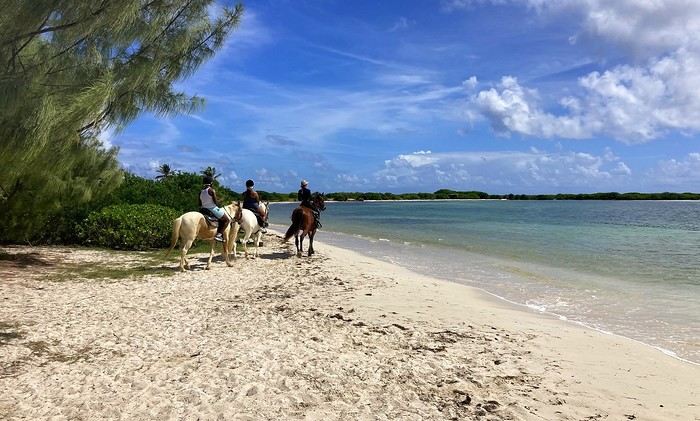
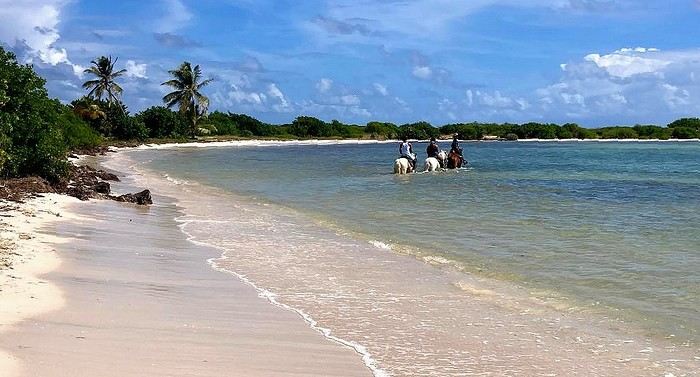
From wish to reality ... all it took was heading to Ranch du Galion. Here we are, on the heights of the east coast of the charming island of Saint Martin, in the heart of the Caribbean.
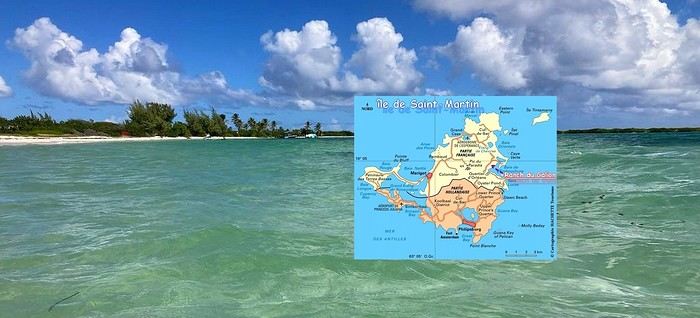
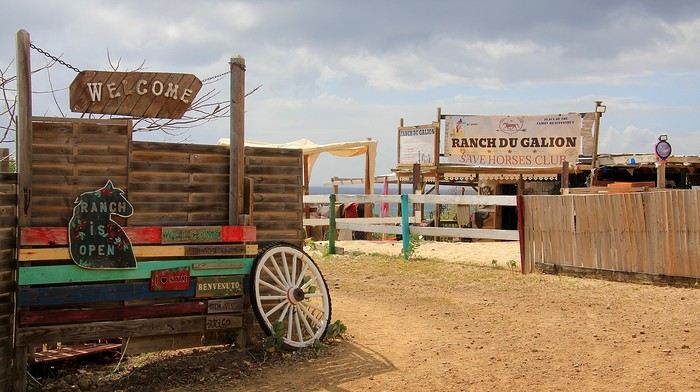
After a first horseback ride that we really enjoyed, with a simple trip to the beach, it didn’t take much to make us want to repeat the pleasant experience. My daughter Emma had been dreaming of it too—so why not share this change of scenery, but this time opting for a slightly longer trek? It’s the big day. And Jess is there to greet us this morning with a big smile. Jess—or Jessica—is the one who runs this tropical ranch with passion; she looks after a whole little family of horses. This morning, she’ll be our guide and companion for this seaside horseback ride.
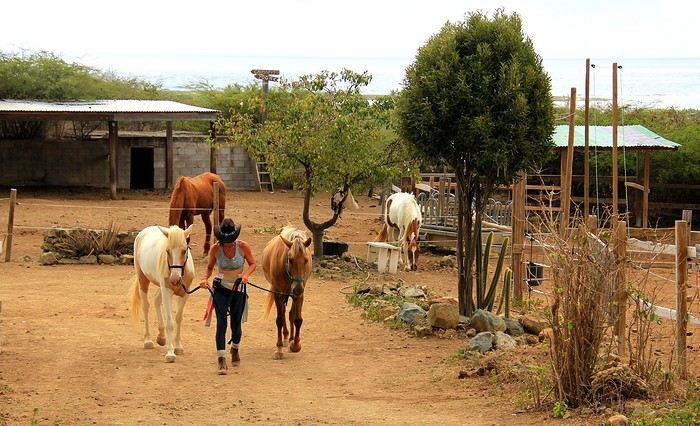
So, we set off along the wild shores of the stunning Anse du Galion.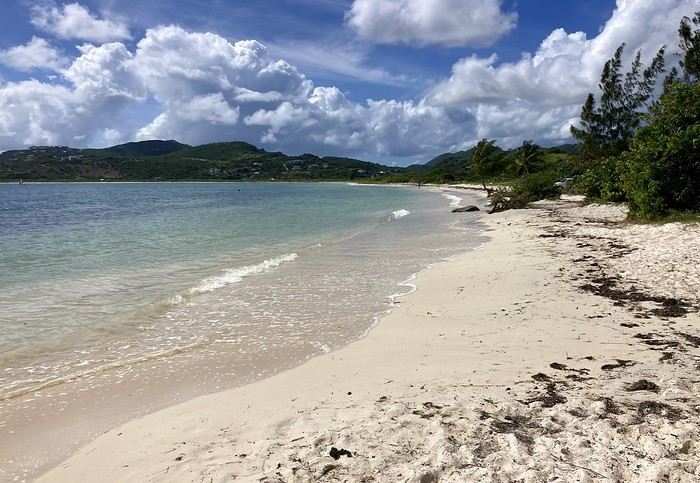
In the enclosures, behind the fences and ropes, some stallions already seem impatient to stretch their legs! They know the place, the routines, and the trails ... and the soothing reward halfway through—a dip in the sea. Maybe that’s what’s causing a little excitement among these mounts!
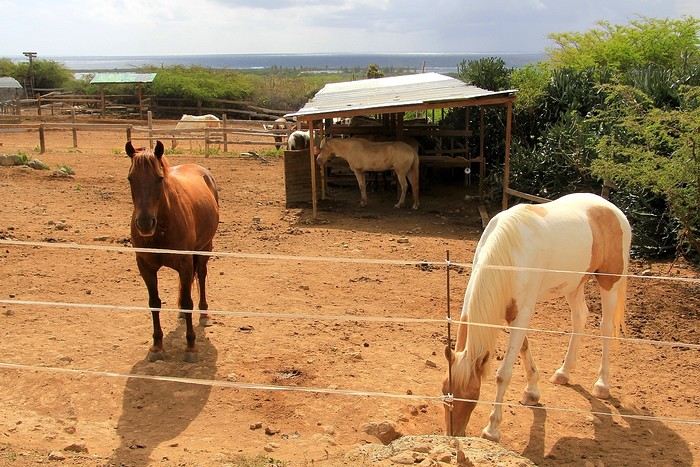
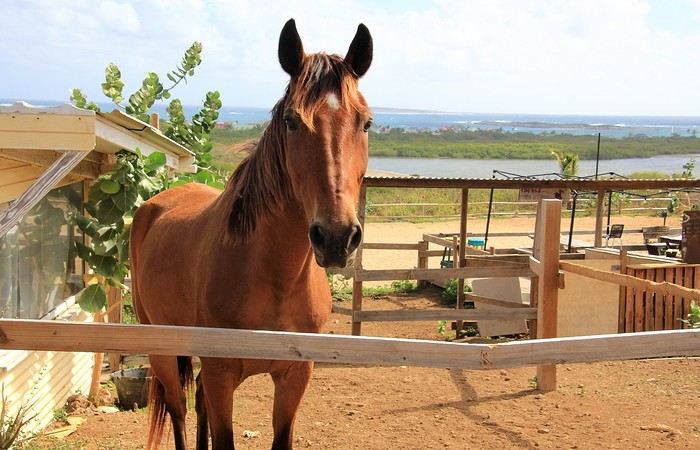
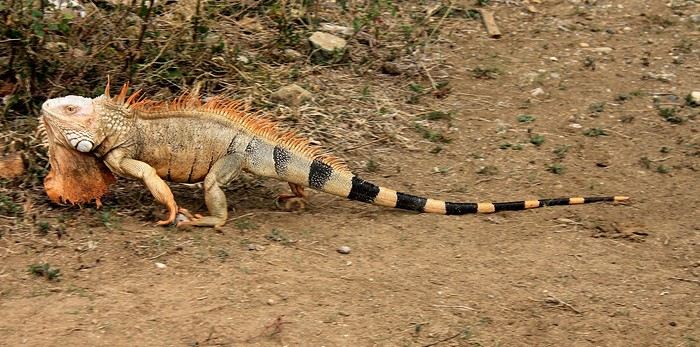
Horses and ... an iguana slipping into the bushes. Given its appearance—its crest, its parched skin, and the dewlap hanging under its head—you’d think it wasn’t exactly young.
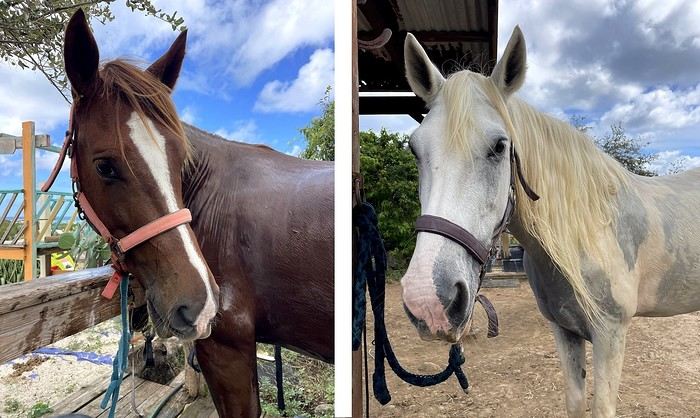
Anyway, back to the horses. Among the mares and stallions, I try to spot "Avenir" and his elegant gait—he was "my" horse during my last trek here, on the trails and sands of Galion. Well, spotting him isn’t going to be easy! My memories are a bit fuzzy, and several of these horses look like him ... -- Before setting off on the trek, it’s time for Jess to choose our mounts. For riders with little experience ... it’ll be calm horses, well-used to trekking—definitely easier and more enjoyable. Titia, a beautiful white mare for my daughter, and Prince, a gentle stallion for me. A little anecdote along the way: we’re really staying in the family for this horseback ride—these two horses are actually related: "my" Prince is the son of the lovely Titia!
to be continued -->
From wish to reality ... all it took was heading to Ranch du Galion. Here we are, on the heights of the east coast of the charming island of Saint Martin, in the heart of the Caribbean.
After a first horseback ride that we really enjoyed, with a simple trip to the beach, it didn’t take much to make us want to repeat the pleasant experience. My daughter Emma had been dreaming of it too—so why not share this change of scenery, but this time opting for a slightly longer trek? It’s the big day. And Jess is there to greet us this morning with a big smile. Jess—or Jessica—is the one who runs this tropical ranch with passion; she looks after a whole little family of horses. This morning, she’ll be our guide and companion for this seaside horseback ride.
So, we set off along the wild shores of the stunning Anse du Galion.
In the enclosures, behind the fences and ropes, some stallions already seem impatient to stretch their legs! They know the place, the routines, and the trails ... and the soothing reward halfway through—a dip in the sea. Maybe that’s what’s causing a little excitement among these mounts!
Horses and ... an iguana slipping into the bushes. Given its appearance—its crest, its parched skin, and the dewlap hanging under its head—you’d think it wasn’t exactly young.
Anyway, back to the horses. Among the mares and stallions, I try to spot "Avenir" and his elegant gait—he was "my" horse during my last trek here, on the trails and sands of Galion. Well, spotting him isn’t going to be easy! My memories are a bit fuzzy, and several of these horses look like him ... -- Before setting off on the trek, it’s time for Jess to choose our mounts. For riders with little experience ... it’ll be calm horses, well-used to trekking—definitely easier and more enjoyable. Titia, a beautiful white mare for my daughter, and Prince, a gentle stallion for me. A little anecdote along the way: we’re really staying in the family for this horseback ride—these two horses are actually related: "my" Prince is the son of the lovely Titia!
to be continued -->
Join me in discovering Gran Canaria
Introduction
We stayed on the island of Gran Canaria during the first three months of 2024. It’s the third Canary Island we’ve visited, after Tenerife and Lanzarote.
We rented an apartment in Temisas. By staying in the same place for such a long period, the total price dropped by 50%.
We also rented a vehicle to make getting around the island easier.
Why the Canary Islands, and Gran Canaria in particular? For its pleasant climate, the nature and diversity of its landscapes, the charming villages, and especially the beauty of its many beaches.
In this travel journal, you’ll find a list of the many activities we did during our stay to explore the different attractions of this island.
These attractions are categorized to make it easier to find what interests you.
Videos are included throughout the summary. Click on the image to start the video.
To jump to a specific post, here are the relevant links:
HIKES:
Roque Nublo Maspalomas Dunes - Part 1 Maspalomas Dunes - Part 2 Los Azulejos de Veneguera Barranco de Las Vacas Ventana del Bentayga (Arco del Aserrador) Caves of the King Ventana de Morro (Ventana de la Ganifa) The Dog of Bentayga Cave of the Four Doors Ventana del Nublo Artenera - Caves of Acusa Seca Temisas - El Gigante Cave Fortress of Ansite Puerto de Las Nieves - Roque de Las Nieves Temisas - Cuevas de la Audiencia Roque Bentayga Guayadeque Ravine (Guayadeque Hermitage) Guayadeque Ravine (Cueva de Bartalo) El Zumacal - Barranco Tauco Casablanca Dam (Los Dolores Dam) Ayagaures - La Angostura Dam & Gambuesa Dam Santa Brígida - Alonso Ravine & Centennial Dragon Tree Pino Santo Hike in the Azuaje Ravine Gáldar - Red Lands of Samarrita Tejeda - Charco de La Paloma Bandama Boiler (Camino Borde de Caldera Bandama) Teror - Alamo Ravine Trail – SL-4 Telde - Calasio Caves Special Natural Reserve of Los Tilos de Moya Los Azulejos - Charco de Las Aneas Fataga Ravine Arinaga Military Battery Trail Maspalomas - Las Fuentes and del Canizo Ravines Mogán - Tauro Mountain Trail Tamabada - Llanos de La Mimbre & Sobre la Cueva Viewpoints Trail Hike to the Coronadero Arch via Barranco Hondo Barranco de Silva - Hike to the Jerez Caves Gáldar - Samson Cave - La Atalaya Peak Agaete - Roque Guayedra and Guayedra Ravine Artenara - Caballero Caves Arucas - Bufadero Salt Flats Barranco de Pino Gordo - Natural Pools Telde - Los Cernícalos Ravine Las Cruces - Toba Caves & Picón Puerto de Las Nieves - Moro Cave Agüimes - Morros de Ávila Caves Juncalillo del Sur - Laguna & Salinas de Abajo Caves of Camino de San Felipe Cruz de Tejeda, Cruz Chico and Degollada Viewpoint Hike on the Patalavaca Circuit Motor Grande - Puerto Rico Arch El Montañón - Los Hornos Dam Seafront Walk - Amadores Beach – Puerto Rico Beach Las Niñas Dam El Hornillo - Omega & Omicron Caves Arteara Necropolis Mogán - El Mulato Dam Las Garzas - El Regante Dam La Plata Route - Cho Flores Dam & El Charco Hondo Vega de Acusa - La Candelaria Dam Candelaria Hermitage – Acusa Seca Viewpoint Valsequillo de Gran Canaria – Roque La Vela Ayagaures Dam – GC-602 Lomo del Palo - Monte Pavón Trail Lugar La Laguna - Levada Fataga Dam & Ravine
BEACHES:
Mogán Beach Taurito Beach Tauro Beach Amadores Beach Puerto Rico Beach Anfi del Mar Beach Patalavaca Beach Meloneras Beach Maspalomas Beach English Beach (Playa del Inglés) Las Burras Beach San Agustin Beach Las Alcaravaneras Beach Las Canteras Beach (La Cicer) Las Canteras Beach (La Puntilla) Las Canteras Beach (Santa Catalina) Aquamarina Beach El Agujero - Bocabarranco Beach Hoya Del Pozo Beach Hoya Del Pozo Beach - Lizard with amputated tail El Cabron Beach Ojos de Garza Beach El Burrero Beach
NATURAL POOLS:
Charco Azul - El Risco Agaete Salt Flats Charco de Los Espejos - Sardina del Norte Natural Pools of Punta de Gáldar Snorkeling in the natural pool of Punta de Gáldar Natural Pool La Furnia o El Clavo - Gáldar Natural Pool of Los Dos Roques Emiliano Natural Pool - El Agujero Natural Pool of El Agujero Natural Pools of Roque Prieto Natural Pool El Altillo Los Charcones de Bañaderos – Arucas Natural Pools of El Charco de Las Palomas – Arucas Natural Pools of La Laja - Las Palmas de Gran Canaria Cueva de la Reina Mora - La Garita Natural Pools of Castillo del Romeral
TOWNS:
Center
Santa Brigida Vega de San Mateo Tejeda Artenara Vallesco Teror
Southwest
Santa Lucia de Tirajana Fataga San Bartolomé de Tirajana Puerto de Mogán La Aldea de San Nicolas
North
Arucas Firgas Moya Santa Maria de Guia Gáldar Agaete Puerto de Las Nieves
East
Vegueta - Las Palmas de Gran Canaria Triana - Las Palmas de Gran Canaria Ciudad Jardin - Las Palmas de Gran Canaria Canteras - Las Palmas de Gran Canaria Telde Valsequillo de Gran Canaria Ingenio Agüimes Temisas
VIEWPOINTS:
GC-60 Route (or nearby) GC-210 Route (or nearby) GC-210 Route between the tunnel and La Aldea de San Nicolás GC-215 & GC-65 Routes (or nearby) GC-200 Route (or nearby) GC-130 Route (or nearby) & GC-605 GC-70 Route (or nearby) & GC-21 Sheep herd on GC-70 Route GC-150, GC-240, GC-305, GC-350 & GC-301 Routes GC-606, GC-295, GC-231 and GC-41 Routes (or nearby) Viewpoints – GC-1 Route (or nearby) Viewpoints - Las Palmas de Gran Canaria Viewpoints - GC-2, GC-21, GC-15, GC-216 and GC-132 Routes (or nearby) Viewpoints - GC-503 & GC-217 Routes Viewpoints - GC-604, GC-505, GC-132, GC-42 and GC-802 Routes
MISCELLANEOUS:
San Rafael Aqueduct - Telde Abandoned San Rafael Estate - La Higuera Cenobio de Valerón La Cesta - Tejeda Puerto de la Aldea Scenic Route GC-671 to El Espinillo Scenic Route GC-607 to El Chorrillo The Galdar Cube (Santiago Quarry) Scenic Route GC-504 to Ayagaures Abandoned seaside resort in the Azuaje Ravine El Bufadero de La Garita – Telde GC-505 Route Abandoned Finca Las Haciendas (Los Mocanes) – Las Vegas de Valsequillo Ruins of San Juan Battery - Las Palmas de Gran Canaria Viera y Clavijo Canarian Botanical Garden - Las Palmas de Gran Canaria Tenefé Salt Flats Los Pérez, Lugarejos & Las Hoyas Dams Monte Pavón, Gran Canaria’s little Ireland Valleseco Lagoon Recreational Area Climbing - Fataga Ravine Surfing – El Agujero El Cairete Restaurant - Carrizal de Tejeda Paragliding flight observation - Los Giles La Cuevita Ayagaures Restaurant Statues and Murals - Cruce de Arinaga Aviation Monument (Las Majoreras) & Murals – Carrizal Artistic recycling by Antonio Peñita - Ojos de Garza Rainbows
We stayed on the island of Gran Canaria during the first three months of 2024. It’s the third Canary Island we’ve visited, after Tenerife and Lanzarote.
We rented an apartment in Temisas. By staying in the same place for such a long period, the total price dropped by 50%.
We also rented a vehicle to make getting around the island easier.
Why the Canary Islands, and Gran Canaria in particular? For its pleasant climate, the nature and diversity of its landscapes, the charming villages, and especially the beauty of its many beaches.
In this travel journal, you’ll find a list of the many activities we did during our stay to explore the different attractions of this island.
These attractions are categorized to make it easier to find what interests you.
Videos are included throughout the summary. Click on the image to start the video.
To jump to a specific post, here are the relevant links:
HIKES:
Roque Nublo Maspalomas Dunes - Part 1 Maspalomas Dunes - Part 2 Los Azulejos de Veneguera Barranco de Las Vacas Ventana del Bentayga (Arco del Aserrador) Caves of the King Ventana de Morro (Ventana de la Ganifa) The Dog of Bentayga Cave of the Four Doors Ventana del Nublo Artenera - Caves of Acusa Seca Temisas - El Gigante Cave Fortress of Ansite Puerto de Las Nieves - Roque de Las Nieves Temisas - Cuevas de la Audiencia Roque Bentayga Guayadeque Ravine (Guayadeque Hermitage) Guayadeque Ravine (Cueva de Bartalo) El Zumacal - Barranco Tauco Casablanca Dam (Los Dolores Dam) Ayagaures - La Angostura Dam & Gambuesa Dam Santa Brígida - Alonso Ravine & Centennial Dragon Tree Pino Santo Hike in the Azuaje Ravine Gáldar - Red Lands of Samarrita Tejeda - Charco de La Paloma Bandama Boiler (Camino Borde de Caldera Bandama) Teror - Alamo Ravine Trail – SL-4 Telde - Calasio Caves Special Natural Reserve of Los Tilos de Moya Los Azulejos - Charco de Las Aneas Fataga Ravine Arinaga Military Battery Trail Maspalomas - Las Fuentes and del Canizo Ravines Mogán - Tauro Mountain Trail Tamabada - Llanos de La Mimbre & Sobre la Cueva Viewpoints Trail Hike to the Coronadero Arch via Barranco Hondo Barranco de Silva - Hike to the Jerez Caves Gáldar - Samson Cave - La Atalaya Peak Agaete - Roque Guayedra and Guayedra Ravine Artenara - Caballero Caves Arucas - Bufadero Salt Flats Barranco de Pino Gordo - Natural Pools Telde - Los Cernícalos Ravine Las Cruces - Toba Caves & Picón Puerto de Las Nieves - Moro Cave Agüimes - Morros de Ávila Caves Juncalillo del Sur - Laguna & Salinas de Abajo Caves of Camino de San Felipe Cruz de Tejeda, Cruz Chico and Degollada Viewpoint Hike on the Patalavaca Circuit Motor Grande - Puerto Rico Arch El Montañón - Los Hornos Dam Seafront Walk - Amadores Beach – Puerto Rico Beach Las Niñas Dam El Hornillo - Omega & Omicron Caves Arteara Necropolis Mogán - El Mulato Dam Las Garzas - El Regante Dam La Plata Route - Cho Flores Dam & El Charco Hondo Vega de Acusa - La Candelaria Dam Candelaria Hermitage – Acusa Seca Viewpoint Valsequillo de Gran Canaria – Roque La Vela Ayagaures Dam – GC-602 Lomo del Palo - Monte Pavón Trail Lugar La Laguna - Levada Fataga Dam & Ravine
BEACHES:
Mogán Beach Taurito Beach Tauro Beach Amadores Beach Puerto Rico Beach Anfi del Mar Beach Patalavaca Beach Meloneras Beach Maspalomas Beach English Beach (Playa del Inglés) Las Burras Beach San Agustin Beach Las Alcaravaneras Beach Las Canteras Beach (La Cicer) Las Canteras Beach (La Puntilla) Las Canteras Beach (Santa Catalina) Aquamarina Beach El Agujero - Bocabarranco Beach Hoya Del Pozo Beach Hoya Del Pozo Beach - Lizard with amputated tail El Cabron Beach Ojos de Garza Beach El Burrero Beach
NATURAL POOLS:
Charco Azul - El Risco Agaete Salt Flats Charco de Los Espejos - Sardina del Norte Natural Pools of Punta de Gáldar Snorkeling in the natural pool of Punta de Gáldar Natural Pool La Furnia o El Clavo - Gáldar Natural Pool of Los Dos Roques Emiliano Natural Pool - El Agujero Natural Pool of El Agujero Natural Pools of Roque Prieto Natural Pool El Altillo Los Charcones de Bañaderos – Arucas Natural Pools of El Charco de Las Palomas – Arucas Natural Pools of La Laja - Las Palmas de Gran Canaria Cueva de la Reina Mora - La Garita Natural Pools of Castillo del Romeral
TOWNS:
Center
Santa Brigida Vega de San Mateo Tejeda Artenara Vallesco Teror
Southwest
Santa Lucia de Tirajana Fataga San Bartolomé de Tirajana Puerto de Mogán La Aldea de San Nicolas
North
Arucas Firgas Moya Santa Maria de Guia Gáldar Agaete Puerto de Las Nieves
East
Vegueta - Las Palmas de Gran Canaria Triana - Las Palmas de Gran Canaria Ciudad Jardin - Las Palmas de Gran Canaria Canteras - Las Palmas de Gran Canaria Telde Valsequillo de Gran Canaria Ingenio Agüimes Temisas
VIEWPOINTS:
GC-60 Route (or nearby) GC-210 Route (or nearby) GC-210 Route between the tunnel and La Aldea de San Nicolás GC-215 & GC-65 Routes (or nearby) GC-200 Route (or nearby) GC-130 Route (or nearby) & GC-605 GC-70 Route (or nearby) & GC-21 Sheep herd on GC-70 Route GC-150, GC-240, GC-305, GC-350 & GC-301 Routes GC-606, GC-295, GC-231 and GC-41 Routes (or nearby) Viewpoints – GC-1 Route (or nearby) Viewpoints - Las Palmas de Gran Canaria Viewpoints - GC-2, GC-21, GC-15, GC-216 and GC-132 Routes (or nearby) Viewpoints - GC-503 & GC-217 Routes Viewpoints - GC-604, GC-505, GC-132, GC-42 and GC-802 Routes
MISCELLANEOUS:
San Rafael Aqueduct - Telde Abandoned San Rafael Estate - La Higuera Cenobio de Valerón La Cesta - Tejeda Puerto de la Aldea Scenic Route GC-671 to El Espinillo Scenic Route GC-607 to El Chorrillo The Galdar Cube (Santiago Quarry) Scenic Route GC-504 to Ayagaures Abandoned seaside resort in the Azuaje Ravine El Bufadero de La Garita – Telde GC-505 Route Abandoned Finca Las Haciendas (Los Mocanes) – Las Vegas de Valsequillo Ruins of San Juan Battery - Las Palmas de Gran Canaria Viera y Clavijo Canarian Botanical Garden - Las Palmas de Gran Canaria Tenefé Salt Flats Los Pérez, Lugarejos & Las Hoyas Dams Monte Pavón, Gran Canaria’s little Ireland Valleseco Lagoon Recreational Area Climbing - Fataga Ravine Surfing – El Agujero El Cairete Restaurant - Carrizal de Tejeda Paragliding flight observation - Los Giles La Cuevita Ayagaures Restaurant Statues and Murals - Cruce de Arinaga Aviation Monument (Las Majoreras) & Murals – Carrizal Artistic recycling by Antonio Peñita - Ojos de Garza Rainbows
What are the criteria that make you choose one destination over another?
Hi there,
The title might be a bit long, but I hope it’s completely understandable!
When it comes to choosing your next trip, what tips the scales in favor of Eritrea over Ibiza?
Why pick Canada over French Polynesia?
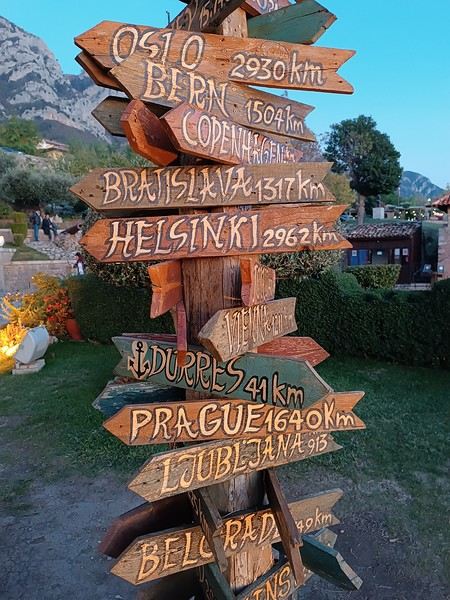
The price? A magazine or TV report, a travel journal, an Instagram ad? Ease of travel? Minimal time difference? The country that has the most in common with all the trip participants? Activities? Relaxation? The desire to push your limits?
A photo?
What else, I wonder...
Personally, I often prioritize simple destinations (no administrative hassles), where I’m not at risk (nothing extraordinary like getting kidnapped by Daesh or ending up in a jail cell because the current geopolitics aren’t favorable to my passport, etc.), and where I can drive.
Wide-open natural spaces are more my thing than urban anthills.
Finally, I try not to spend three days on a plane to reach my destination, and I aim for a maximum budget of 3500 € (for 3 weeks) in comfortable conditions—that means charming hotels, good meals, etc.
What about you?🙂
The title might be a bit long, but I hope it’s completely understandable!
When it comes to choosing your next trip, what tips the scales in favor of Eritrea over Ibiza?
Why pick Canada over French Polynesia?
The price? A magazine or TV report, a travel journal, an Instagram ad? Ease of travel? Minimal time difference? The country that has the most in common with all the trip participants? Activities? Relaxation? The desire to push your limits?
A photo?
What else, I wonder...
Personally, I often prioritize simple destinations (no administrative hassles), where I’m not at risk (nothing extraordinary like getting kidnapped by Daesh or ending up in a jail cell because the current geopolitics aren’t favorable to my passport, etc.), and where I can drive.
Wide-open natural spaces are more my thing than urban anthills.
Finally, I try not to spend three days on a plane to reach my destination, and I aim for a maximum budget of 3500 € (for 3 weeks) in comfortable conditions—that means charming hotels, good meals, etc.
What about you?🙂
4x4 Expeditions in Southern Africa
Hi there,
Here’s a quick summary of six trips across Southern Africa, covering South Africa, Namibia, Botswana, Zimbabwe, and more. I traveled for a total of 23 months, over 100,000 km, and crossed 9 countries from South Africa to Tanzania. To do this, I bought an old Land Cruiser—a 1989 BJ 75 with a long chassis and a 3.4L turbo engine—which I converted into a bush camper set up for self-sufficiency in Africa: dual fuel tanks (235 L total) plus 2 x 20-liter jerry cans of diesel, 2 spare tires, a compressor, a toolbox with repair gear, a 50-liter water tank plus 2 x 30-liter and 2 x 10-liter jerry cans, a roof tent, multiple storage boxes, a sturdy roof rack, and even a paramotor. I also packed a first-aid kit and shipped the camper to South Africa by freight. My son joined me for part of the journey.
Key countries and highlights: South Africa in every direction, including its wildlife parks; in Namibia, the classics like Etosha, Fish River, Sossusvlei, Kaudum, but especially Damaraland and Kaokoland; in Botswana, a full loop of the Okavango, crossing the Makgadikgadi Pan, Moremi Park, the Linyanti River; and a tour of Zimbabwe with its national parks. During the last trip in 2020, due to COVID, we found refuge on a 250 km² Namibian farm with its own wildlife reserve. While crossing Damaraland and Kaokoland, we were completely self-sufficient, with supplies for over a month and 130 L of water.
In South Africa and Namibia, one issue that surprised us was the fences stretching for millions of kilometers along the tracks. Namibia is one and a half times the size of France but has a population of only about 2.5 million, mostly concentrated in a dozen small towns of 10,000 to 50,000 people—except for the capital, Windhoek (296,000). Paradoxically, compared to France, the space for freedom is extremely limited. Everything is private and requires payment. Even the Namib Desert is fenced... and you need a permit just to pick up a rock! For someone used to wild camping, it can get frustrating. Sometimes we ignored the rules, but the best solution is to ask a farmer (a real one, like a sheep or cattle rancher—not the ones with 3-meter electrified fences, which are lodges or private reserves) if you can camp on their land.
To truly enjoy freedom in Namibia, you need to venture into the northwest, along the Skeleton Coast, in Damaraland and Kaokoland. However, it’s essential to know your vehicle inside out, be a good mechanic, bring spare parts, and plan for potential breakdowns. Take care of your ride because a major issue out there can be a matter of survival. My motto: "Don’t break down, don’t break down, don’t break down..." Safari pros only venture into this region with two 4x4s. In Messum Crater, we met a couple waiting for rescue (thanks to a satellite device from their rental company) after their driveshaft broke. Keep in mind that in these areas, you’ll cover about 80 km in 8 hours.
Here are some of the issues we faced: a broken rear suspension leaf, several broken bolts on the front leaf springs, the spare tire mount breaking multiple times (replaced on the spot), a cracked water radiator in 1998 causing overheating and a seized valve stem in its guide, plus a bent rocker arm (field repair, valve adjustment, damaged head gasket, daily radiator refills, and a scratched cylinder—engine fully rebuilt upon return). Five roof rack mounts broke and were repaired at a technical high school in South Africa. The battery mount also broke (fixed with a steel plate found on the trail). The fuel filter clogged several times (changed or cleaned on the spot). A huge impact on the windshield from a piece of coal falling from a power plant supply truck (temporary repair with Araldite). The brake master cylinder failed in Marienfluss (repaired, seals replaced in Tsumeb). Multiple flat tires from acacia thorns. The rear door latch broke (homemade aluminum rod repair in Franschhoek). The voltmeter and ammeter failed (repaired on the spot). During the freight trip, despite locking the doors and having a partition between the front and back, someone managed to get in through the small side window, forced open the locks on two accessible storage boxes, and stole my tools (replaced later). A ball joint on the paramotor frame came loose mid-flight, damaging the wing and propeller (propeller shipped from France, homemade repair).
Health issues on the way to Tanzania: a painful sciatica and many sleepless nights (cortisone injection in Dodoma).
Kaokoland, Namibia—the northwest region: https://youtu.be/DzGepFsrnZs
Damaraland: https://youtu.be/DITQj8NvLZ4
Botswana: https://youtu.be/TEvDG0S62hg
Kaudom and Mohembo Parks: https://youtu.be/wq_Yf7jNLhw
Here’s a quick summary of six trips across Southern Africa, covering South Africa, Namibia, Botswana, Zimbabwe, and more. I traveled for a total of 23 months, over 100,000 km, and crossed 9 countries from South Africa to Tanzania. To do this, I bought an old Land Cruiser—a 1989 BJ 75 with a long chassis and a 3.4L turbo engine—which I converted into a bush camper set up for self-sufficiency in Africa: dual fuel tanks (235 L total) plus 2 x 20-liter jerry cans of diesel, 2 spare tires, a compressor, a toolbox with repair gear, a 50-liter water tank plus 2 x 30-liter and 2 x 10-liter jerry cans, a roof tent, multiple storage boxes, a sturdy roof rack, and even a paramotor. I also packed a first-aid kit and shipped the camper to South Africa by freight. My son joined me for part of the journey.
Key countries and highlights: South Africa in every direction, including its wildlife parks; in Namibia, the classics like Etosha, Fish River, Sossusvlei, Kaudum, but especially Damaraland and Kaokoland; in Botswana, a full loop of the Okavango, crossing the Makgadikgadi Pan, Moremi Park, the Linyanti River; and a tour of Zimbabwe with its national parks. During the last trip in 2020, due to COVID, we found refuge on a 250 km² Namibian farm with its own wildlife reserve. While crossing Damaraland and Kaokoland, we were completely self-sufficient, with supplies for over a month and 130 L of water.
In South Africa and Namibia, one issue that surprised us was the fences stretching for millions of kilometers along the tracks. Namibia is one and a half times the size of France but has a population of only about 2.5 million, mostly concentrated in a dozen small towns of 10,000 to 50,000 people—except for the capital, Windhoek (296,000). Paradoxically, compared to France, the space for freedom is extremely limited. Everything is private and requires payment. Even the Namib Desert is fenced... and you need a permit just to pick up a rock! For someone used to wild camping, it can get frustrating. Sometimes we ignored the rules, but the best solution is to ask a farmer (a real one, like a sheep or cattle rancher—not the ones with 3-meter electrified fences, which are lodges or private reserves) if you can camp on their land.
To truly enjoy freedom in Namibia, you need to venture into the northwest, along the Skeleton Coast, in Damaraland and Kaokoland. However, it’s essential to know your vehicle inside out, be a good mechanic, bring spare parts, and plan for potential breakdowns. Take care of your ride because a major issue out there can be a matter of survival. My motto: "Don’t break down, don’t break down, don’t break down..." Safari pros only venture into this region with two 4x4s. In Messum Crater, we met a couple waiting for rescue (thanks to a satellite device from their rental company) after their driveshaft broke. Keep in mind that in these areas, you’ll cover about 80 km in 8 hours.
Here are some of the issues we faced: a broken rear suspension leaf, several broken bolts on the front leaf springs, the spare tire mount breaking multiple times (replaced on the spot), a cracked water radiator in 1998 causing overheating and a seized valve stem in its guide, plus a bent rocker arm (field repair, valve adjustment, damaged head gasket, daily radiator refills, and a scratched cylinder—engine fully rebuilt upon return). Five roof rack mounts broke and were repaired at a technical high school in South Africa. The battery mount also broke (fixed with a steel plate found on the trail). The fuel filter clogged several times (changed or cleaned on the spot). A huge impact on the windshield from a piece of coal falling from a power plant supply truck (temporary repair with Araldite). The brake master cylinder failed in Marienfluss (repaired, seals replaced in Tsumeb). Multiple flat tires from acacia thorns. The rear door latch broke (homemade aluminum rod repair in Franschhoek). The voltmeter and ammeter failed (repaired on the spot). During the freight trip, despite locking the doors and having a partition between the front and back, someone managed to get in through the small side window, forced open the locks on two accessible storage boxes, and stole my tools (replaced later). A ball joint on the paramotor frame came loose mid-flight, damaging the wing and propeller (propeller shipped from France, homemade repair).
Health issues on the way to Tanzania: a painful sciatica and many sleepless nights (cortisone injection in Dodoma).
Kaokoland, Namibia—the northwest region: https://youtu.be/DzGepFsrnZs
Damaraland: https://youtu.be/DITQj8NvLZ4
Botswana: https://youtu.be/TEvDG0S62hg
Kaudom and Mohembo Parks: https://youtu.be/wq_Yf7jNLhw
The "Must-Sees" of the American West
This adventure began during Covid... Yep, Covid turned a lot of things upside down, but most of all, it kept us cooped up for a few months and stopped us from traveling for a while—even longer for a die-hard fan of the American West like me.
While borders were closed, I started imagining what an ideal itinerary might look like—one that would string together all the Southwest must-sees in just two weeks, during the best time of year: September and October. When the U.S. announced in September 2021 that borders would reopen in the coming weeks, I regained hope and began scouting flight tickets for a departure in September 2022.
But here’s the thing: tackling solo hikes, each one tougher than the last, right in the heart of the Wilderness, could be a risky—even reckless—endeavor for a father of three. After a quick chat with some virtual friends who are just as passionate about the Southwest as I am, with good physical condition and nearly the same list of must-visit spots, Franck and his brother Sullivan were in! 🙂
In November, we snagged flight tickets from Nice to San Francisco for the modest sum of 400 €, and a few days later, I booked a Toyota Tacoma pickup for 840 € !
It’s not cheap for just 15 days, and a pickup isn’t exactly ideal for luggage, but the prices for full-size 4x4s have become totally outrageous! Due to border closures, rental companies had to offload a lot of these big 4x4s, which tourists love. Then, supply and demand did the rest !
Franck and I spent the winter and spring trying to cram the equivalent of three weeks of hikes into two. But even with physical limits, we had to stay reasonable! Three to four months before departure, we entered the lotteries for different must-see spots: The Subway, Coyote Buttes North (home to the famous Wave), and Coyote Buttes South (CBS).
The Wave is the holy grail for any Southwest enthusiast. Since 2015, we’ve tried our luck with the online and on-site lotteries about ten times, but the spots are unfortunately limited: just 20 per day. A glimmer of hope, though—since early 2022, that number has increased to 64 people allowed per day, with 48 spots awarded via the online lottery.
After all three of us tried our luck for The Wave, on June 1st at exactly 5 PM, I got an email that started with, "Congratulations! You were successful in the Coyote Buttes North (The Wave) September 2022 Permit Lottery at Coyote Buttes North (The Wave)...". At 5:01 PM, I called Franck, whose dream it’s been for over 20 years—ever since the first photos were published in a travel magazine! He didn’t believe me when I told him, and I had to forward the email for him to finally accept the unbelievable: we were going to The Wave and all the incredible spots scattered across the protected area of Coyote Buttes North.
I’ve already been to Coyote Buttes South twice, but there are areas I couldn’t explore in the middle of summer because they were too remote. So, I had no trouble letting my buddies convince me to go back for a third time. Plus, given how hard it is to access, we had no trouble securing a permit online as long as we logged in at exactly 8 PM on the dot!
For The Subway, all three of us struck out. No big deal—we won at CBN and CBS!
Among the sites to visit, there are two that I’m particularly attached to because I know my chances of wanting to see them again are slim. The first is Angel Arch, one of the most legendary arches in the Southwest, due to its remoteness from any trace of civilization. To get there, the recommended hike is Upper Salt Creek, and you’re looking at a 50 km round-trip in an area with no water (in September) and populated by bears.
The second site is the Hopi Salt Trail, in Navajo land, which, after a very tough hike, lets you marvel at the turquoise-blue waters of the Little Colorado before it meets the Colorado River. The Hopi Salt Trail is, like The Wave, the holy grail for any Southwest enthusiast, and the windows of opportunity to see the water in that magical color are very short each year. For this, you have to monitor the Little Colorado’s gauges downstream from Cameron: if the level stays at its lowest for 10 consecutive days—meaning no rain—you can hope for turquoise water. The ideal period rarely exceeds 30 days a year, and it’s usually in June that all the stars align.
But unfortunately, one month before departure, while the flow rate at Cameron looked promising, several storms in September dashed our hopes of doing the Hopi Salt Trail, even at the end of the road trip.
We still had two consolation prizes, though:
After a last-minute cancellation, while keeping an eye out for available spots for The Subway, it turned out that three spots opened up exactly on the day we’d planned to go—so we rushed to grab them!! Regarding the 4x4 rental, the prices for full-size models dropped by several hundred dollars, and we ended up finding a Chevrolet Tahoe for less than $1000. A steal and a serious boost in comfort, so we could store all our gear and food without worry!
Here’s the initial plan in a perfect world: D1 The White Domes - Camping D2 Sunrise at The White Domes - The Subway D3 Coyote Buttes North D4 Coyote Buttes South - White Pocket D5 Wahweap Hoodoos - Sidestep Canyon - Colourful Canyon - White Rocks - Sunset at Yellow Rock D6 Broken Bow Arch - Reflection Canyon D7 Coyote Gulch D8 The Volcano (or The Oasis - Zebra Slot Canyon if the weather’s good) - North Caineville Mesa D9 The Needles: Squaw Canyon - Lost Canyon combo - Druid Arch - Chesler Park D10 Upper Salt Creek Day 1 - Camping D11 Upper Salt Creek Day 2 D12 Hopi-Navajo Territory: Ha Ho No Geh Canyon, Coal Mine Canyon, Bends of the Little Colorado D13 Grand Canyon: South Kaibab Trail and Bright Angel Trail D14 Upper East Zion: East Temple Loop, Jughandle Arch, Center of the Universe, and Checkerboard Mesa Summit And several backup options in case of bad weather, including Spencer Trail, West Cove, and Buffington Pockets.
Enough talking—time for action!
While borders were closed, I started imagining what an ideal itinerary might look like—one that would string together all the Southwest must-sees in just two weeks, during the best time of year: September and October. When the U.S. announced in September 2021 that borders would reopen in the coming weeks, I regained hope and began scouting flight tickets for a departure in September 2022.
But here’s the thing: tackling solo hikes, each one tougher than the last, right in the heart of the Wilderness, could be a risky—even reckless—endeavor for a father of three. After a quick chat with some virtual friends who are just as passionate about the Southwest as I am, with good physical condition and nearly the same list of must-visit spots, Franck and his brother Sullivan were in! 🙂
In November, we snagged flight tickets from Nice to San Francisco for the modest sum of 400 €, and a few days later, I booked a Toyota Tacoma pickup for 840 € !
It’s not cheap for just 15 days, and a pickup isn’t exactly ideal for luggage, but the prices for full-size 4x4s have become totally outrageous! Due to border closures, rental companies had to offload a lot of these big 4x4s, which tourists love. Then, supply and demand did the rest !
Franck and I spent the winter and spring trying to cram the equivalent of three weeks of hikes into two. But even with physical limits, we had to stay reasonable! Three to four months before departure, we entered the lotteries for different must-see spots: The Subway, Coyote Buttes North (home to the famous Wave), and Coyote Buttes South (CBS).
The Wave is the holy grail for any Southwest enthusiast. Since 2015, we’ve tried our luck with the online and on-site lotteries about ten times, but the spots are unfortunately limited: just 20 per day. A glimmer of hope, though—since early 2022, that number has increased to 64 people allowed per day, with 48 spots awarded via the online lottery.
After all three of us tried our luck for The Wave, on June 1st at exactly 5 PM, I got an email that started with, "Congratulations! You were successful in the Coyote Buttes North (The Wave) September 2022 Permit Lottery at Coyote Buttes North (The Wave)...". At 5:01 PM, I called Franck, whose dream it’s been for over 20 years—ever since the first photos were published in a travel magazine! He didn’t believe me when I told him, and I had to forward the email for him to finally accept the unbelievable: we were going to The Wave and all the incredible spots scattered across the protected area of Coyote Buttes North.
I’ve already been to Coyote Buttes South twice, but there are areas I couldn’t explore in the middle of summer because they were too remote. So, I had no trouble letting my buddies convince me to go back for a third time. Plus, given how hard it is to access, we had no trouble securing a permit online as long as we logged in at exactly 8 PM on the dot!
For The Subway, all three of us struck out. No big deal—we won at CBN and CBS!
Among the sites to visit, there are two that I’m particularly attached to because I know my chances of wanting to see them again are slim. The first is Angel Arch, one of the most legendary arches in the Southwest, due to its remoteness from any trace of civilization. To get there, the recommended hike is Upper Salt Creek, and you’re looking at a 50 km round-trip in an area with no water (in September) and populated by bears.
The second site is the Hopi Salt Trail, in Navajo land, which, after a very tough hike, lets you marvel at the turquoise-blue waters of the Little Colorado before it meets the Colorado River. The Hopi Salt Trail is, like The Wave, the holy grail for any Southwest enthusiast, and the windows of opportunity to see the water in that magical color are very short each year. For this, you have to monitor the Little Colorado’s gauges downstream from Cameron: if the level stays at its lowest for 10 consecutive days—meaning no rain—you can hope for turquoise water. The ideal period rarely exceeds 30 days a year, and it’s usually in June that all the stars align.
But unfortunately, one month before departure, while the flow rate at Cameron looked promising, several storms in September dashed our hopes of doing the Hopi Salt Trail, even at the end of the road trip.
We still had two consolation prizes, though:
After a last-minute cancellation, while keeping an eye out for available spots for The Subway, it turned out that three spots opened up exactly on the day we’d planned to go—so we rushed to grab them!! Regarding the 4x4 rental, the prices for full-size models dropped by several hundred dollars, and we ended up finding a Chevrolet Tahoe for less than $1000. A steal and a serious boost in comfort, so we could store all our gear and food without worry!
Here’s the initial plan in a perfect world: D1 The White Domes - Camping D2 Sunrise at The White Domes - The Subway D3 Coyote Buttes North D4 Coyote Buttes South - White Pocket D5 Wahweap Hoodoos - Sidestep Canyon - Colourful Canyon - White Rocks - Sunset at Yellow Rock D6 Broken Bow Arch - Reflection Canyon D7 Coyote Gulch D8 The Volcano (or The Oasis - Zebra Slot Canyon if the weather’s good) - North Caineville Mesa D9 The Needles: Squaw Canyon - Lost Canyon combo - Druid Arch - Chesler Park D10 Upper Salt Creek Day 1 - Camping D11 Upper Salt Creek Day 2 D12 Hopi-Navajo Territory: Ha Ho No Geh Canyon, Coal Mine Canyon, Bends of the Little Colorado D13 Grand Canyon: South Kaibab Trail and Bright Angel Trail D14 Upper East Zion: East Temple Loop, Jughandle Arch, Center of the Universe, and Checkerboard Mesa Summit And several backup options in case of bad weather, including Spencer Trail, West Cove, and Buffington Pockets.
Enough talking—time for action!
Three weeks in Quebec at the start of summer 2018, on a "semi-organized" trip
I’ve been putting off posting my Quebec travel experience for a long time. Two years later, I’ve finally decided to share it. The memories are still vivid. I hope this gives you the urge to visit this beautiful region, which I literally fell in love with.
We’re traveling as four adults: my brother Guy, my sister-in-law Martine, my friend Pascal, and myself (Christian).
We entrusted the flight, hotel, and car reservations to the travel agency Amplitudes in Toulouse. Planning the day-to-day activities was up to us. We scheduled a few must-see visits, but for the rest, we’d figure it out on the spot.
Our itinerary: Quebec City / Rimouski / Carleton-sur-Mer / Percé / Sainte-Anne-des-Monts / Matane / Tadoussac / Sainte-Rose-du-Nord / Chambord / Saint-Alexis-des-Monts / Montreal
06/25 Here we are at Roissy Charles de Gaulle for the usual pre-flight formalities. Everything goes smoothly and quickly. The hardest part is waiting for takeoff. After an uneventful flight on an Air Canada Boeing 777-300ER, we land at Montréal-Pierre Elliott Trudeau Airport (YUL) in the early afternoon.
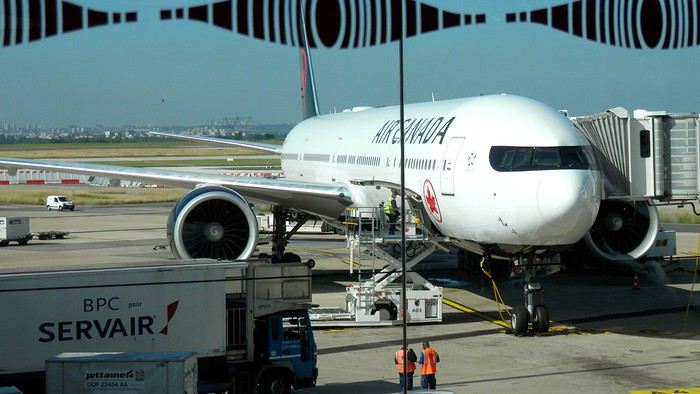
At customs, a surprise—no grumpy officer, but a smiling customs agent who jokingly asks me to name three tourist spots in Quebec, or else he won’t let me in. I pass the test easily and enter Quebec!
We head to the Alamo counter at Trudeau Airport to pick up our car: a Ford Escape with only 300 kilometers on the odometer.
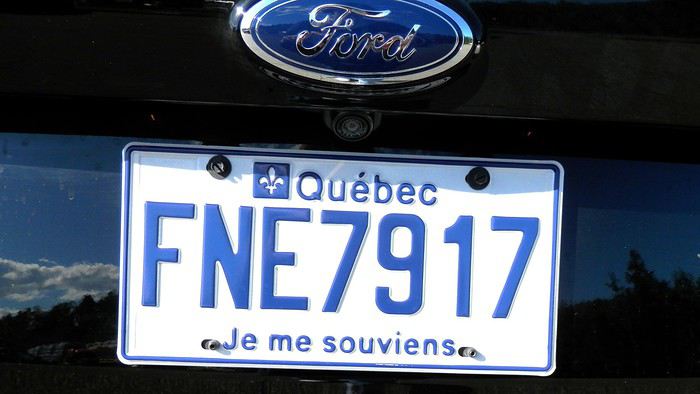
We decided to head straight to Quebec City, saving Montreal for the end of the trip. Pascal takes the wheel and gets on the Trans-Canada Highway E20 for a 255 km drive, taking about 2 hours and 45 minutes. With the time difference, we’re already feeling hungry, so we stop for our first poutine at a highway restaurant.
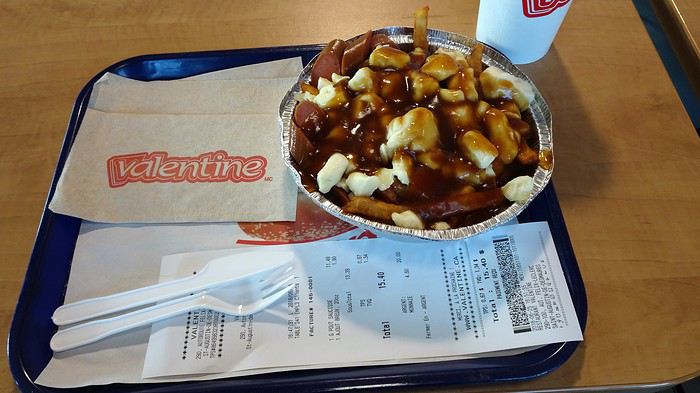
When we arrive in Quebec City, we go straight to the Clarendon Hotel, located right in the heart of Old Quebec. We’ll be staying there for three nights. Tonight, no restaurant—just a short walk around the hotel before bed. We discover a square with pretty colored water fountains near the city hall.
 It’s only 9 PM, but our body clocks say it’s 3 AM.
We’re traveling as four adults: my brother Guy, my sister-in-law Martine, my friend Pascal, and myself (Christian).
We entrusted the flight, hotel, and car reservations to the travel agency Amplitudes in Toulouse. Planning the day-to-day activities was up to us. We scheduled a few must-see visits, but for the rest, we’d figure it out on the spot.
Our itinerary: Quebec City / Rimouski / Carleton-sur-Mer / Percé / Sainte-Anne-des-Monts / Matane / Tadoussac / Sainte-Rose-du-Nord / Chambord / Saint-Alexis-des-Monts / Montreal
06/25 Here we are at Roissy Charles de Gaulle for the usual pre-flight formalities. Everything goes smoothly and quickly. The hardest part is waiting for takeoff. After an uneventful flight on an Air Canada Boeing 777-300ER, we land at Montréal-Pierre Elliott Trudeau Airport (YUL) in the early afternoon.
At customs, a surprise—no grumpy officer, but a smiling customs agent who jokingly asks me to name three tourist spots in Quebec, or else he won’t let me in. I pass the test easily and enter Quebec!
We head to the Alamo counter at Trudeau Airport to pick up our car: a Ford Escape with only 300 kilometers on the odometer.
We decided to head straight to Quebec City, saving Montreal for the end of the trip. Pascal takes the wheel and gets on the Trans-Canada Highway E20 for a 255 km drive, taking about 2 hours and 45 minutes. With the time difference, we’re already feeling hungry, so we stop for our first poutine at a highway restaurant.
When we arrive in Quebec City, we go straight to the Clarendon Hotel, located right in the heart of Old Quebec. We’ll be staying there for three nights. Tonight, no restaurant—just a short walk around the hotel before bed. We discover a square with pretty colored water fountains near the city hall.
It’s only 9 PM, but our body clocks say it’s 3 AM.